
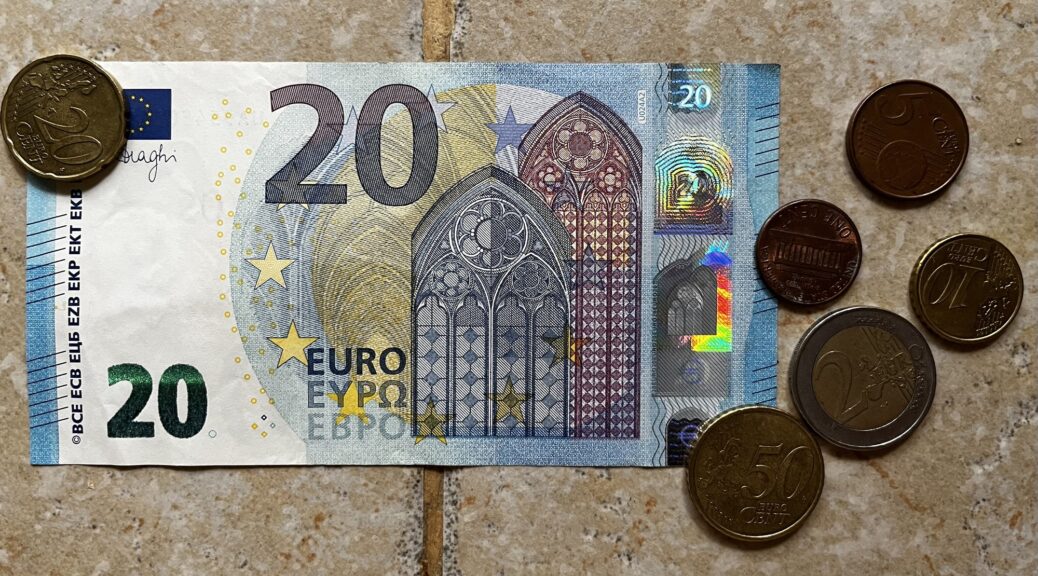
Although the word “cash” is widely used in French today, the real term is “argent liquide” or “espèces“.
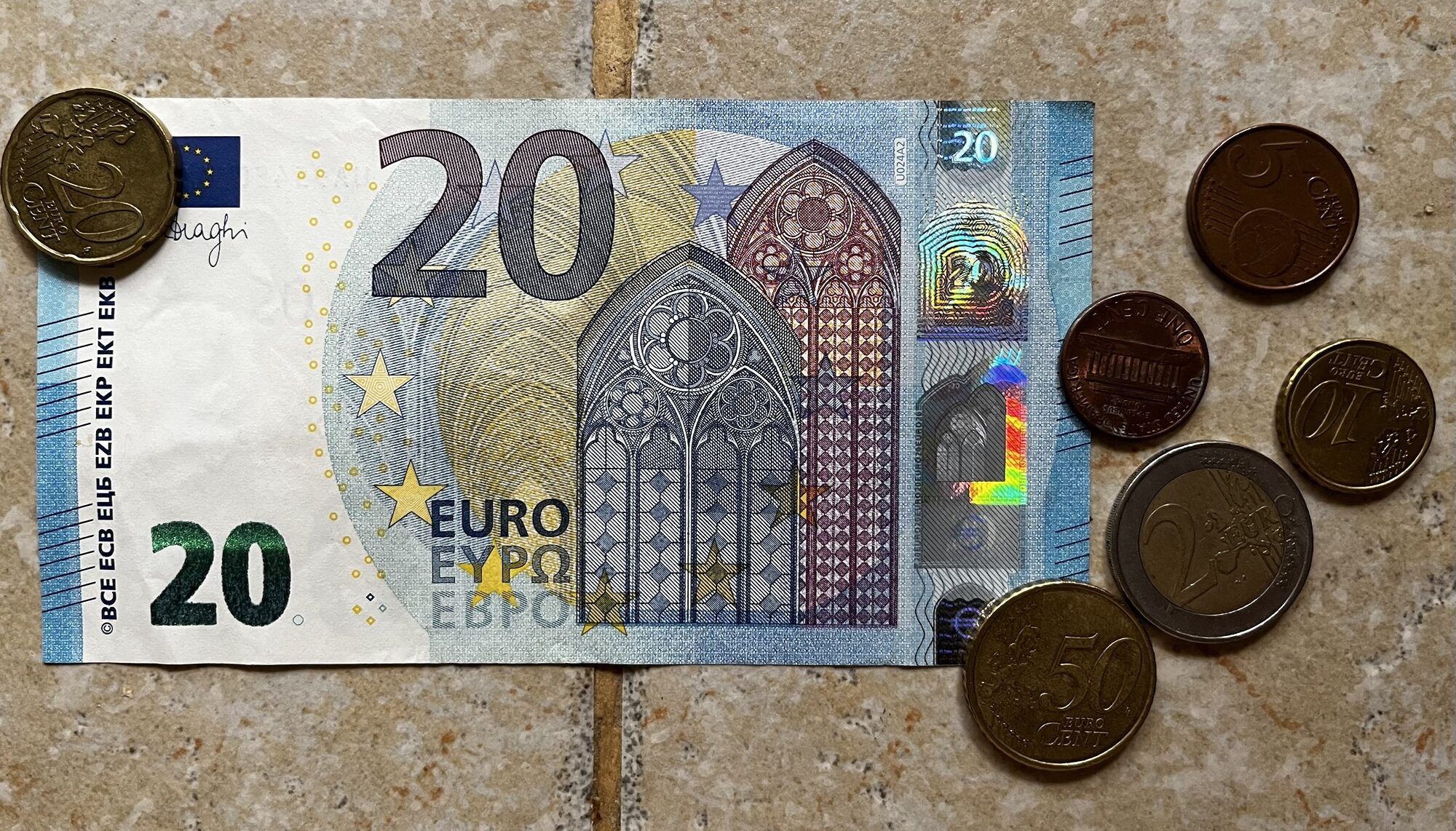
The origin of the term “liquide“
The term “liquide“, from the Italian meaning “fluid” came into use in the 14th century as a way of designating fully-paid up assets such as farming land and houses that could be easily transferred from one person to another.
Money also becomes “liquide“
Then, in the 17th century, the term “liquide” started to be used for money that was readily available and in large quantities, a bit like water coming out of a fountain. Today, it is also used to mean coins and paper money
Au-tu assez de liquide pour le marché ? – Do you have enough cash for the market?
Les frais de notaire doivent être payés en liquide. – Conveyancing fees must be paid to the notaire in cash.
N.B. This doesn’t actually mean that you hand over thousands of euros but that you transfer them to the notaire‘s bank account i.e. they are not part of a mortgage.
Liquid assets
This soon led to the use of “liquidités” to mean money in a bank account that can easily be withdrawn, which is exactly the same meaning as “liquid assets” in English.
Espèces
So why are bank notes (billets) and coins (pièces de monnaie) also called espèces?
The expression goes back to the Middle Ages and comes from the Latin “specie” which means “spice” (épice). Back in those days, spices, and pepper in particular, were imported from foreign countries and were rare, and therefore valuable.
As a result, they were often used to barter. Venetian, Portuguese and Spanish merchants paid “en épices” which gradually became “en espèces” which has the same Latin root.
Lorsqu’on achète d’occasion, il faut souvent payer en espèces. = When you buy secondhand, you often have to pay in cash.
The origin of cash
Our word cash to mean coins or paper money actually comes from the Old French casse, a box, which has evolved into the modern-day “caisse”, used to designate, amongst other things, a cash box or cash register. And the person at the check-out is called a “caissier” or “caissière“.
So the use of the word “cash” in French has come full circle!
One thought on “Friday’s French – Liquide, espèces and cash”