Use Your French to Help Combat Hunger – Paris for Lunch – Atlantic Coast by Bike

As usual on a Wednesday, here are some snippets from other blogs. Thank you to the authors: Femme Francophil, Petite Paris and Experience France by Bike!

Use Your French to Help Combat Hunger

by Femme Francophile

Each year, on 20 March, French-speakers around the world celebrate the International Day of Francophonie.

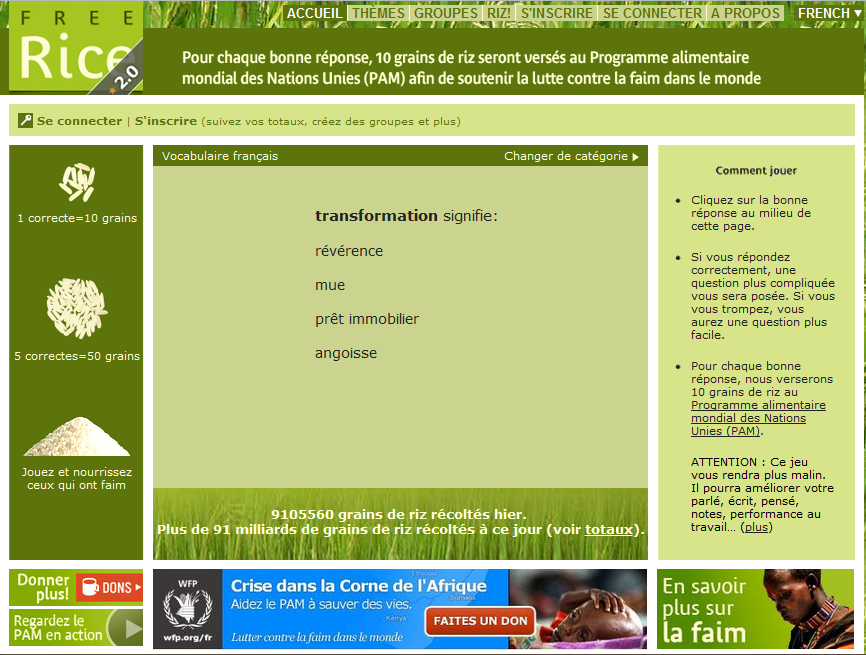
This year to mark the day the Organisation internationale de la Francophonie (OIF) and the United Nations’ Programme alimentaire mondial (PAM), known in English as the World Food Programme (WFP), provides you with the opportunity to not only extend your knowledge of the French language and the French-speaking countries but at the same time help those who are hungry. Read more

Paris for Lunch

by Petite Paris bed & breakfast accommodations in Paris

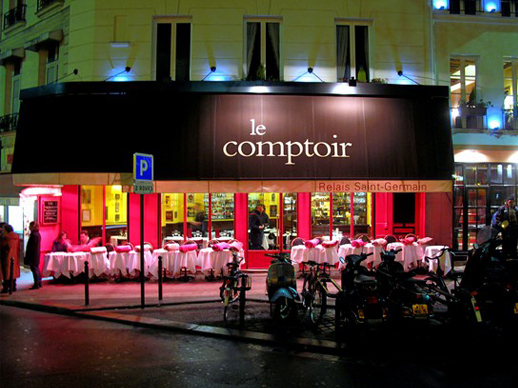
Bonjour Petite Friends. It’s 2.30pm and I havent had lunch yet. Looks like im going to work straight through AGAIN; picking away at an emergency (don’t have time to step away from le bureau) stash off tuna and crackers at my desk! If I were in Paris, I would eat at: Read more

The Atlantic Coast of France, My Destination for Spring 2012

by Experience France By Bike

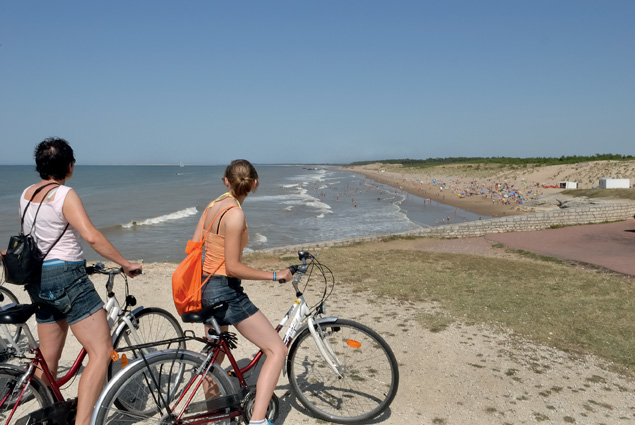
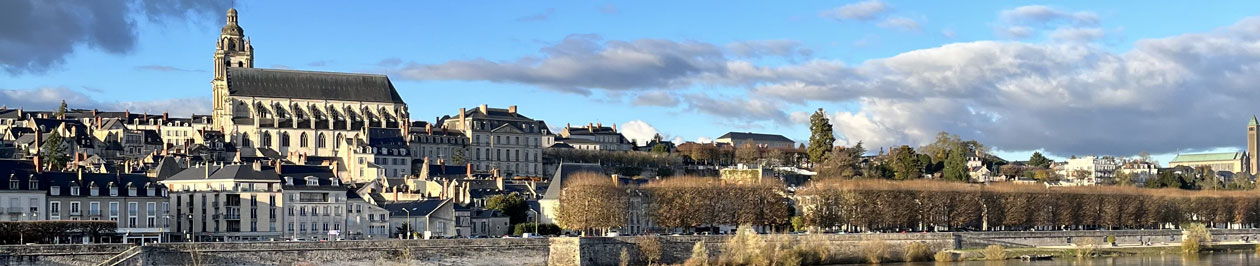
This is my 100th post about biking in France, and I thought it was the perfect occasion to reveal the destination for my upcoming trip to France.  Having spent the last two years exploring the Loire Valley, Burgundy, Brittany and the Dordogne, this spring I will finally journey back to the Atlantic Coast of France. Read more

Keep Those Clothes On!

Au mois d’avril ne te découvre pas d’un fil,
En mai fais ce qu’il te plaît.
(In April, don’t remove a stitch,
In May, do as you please.)

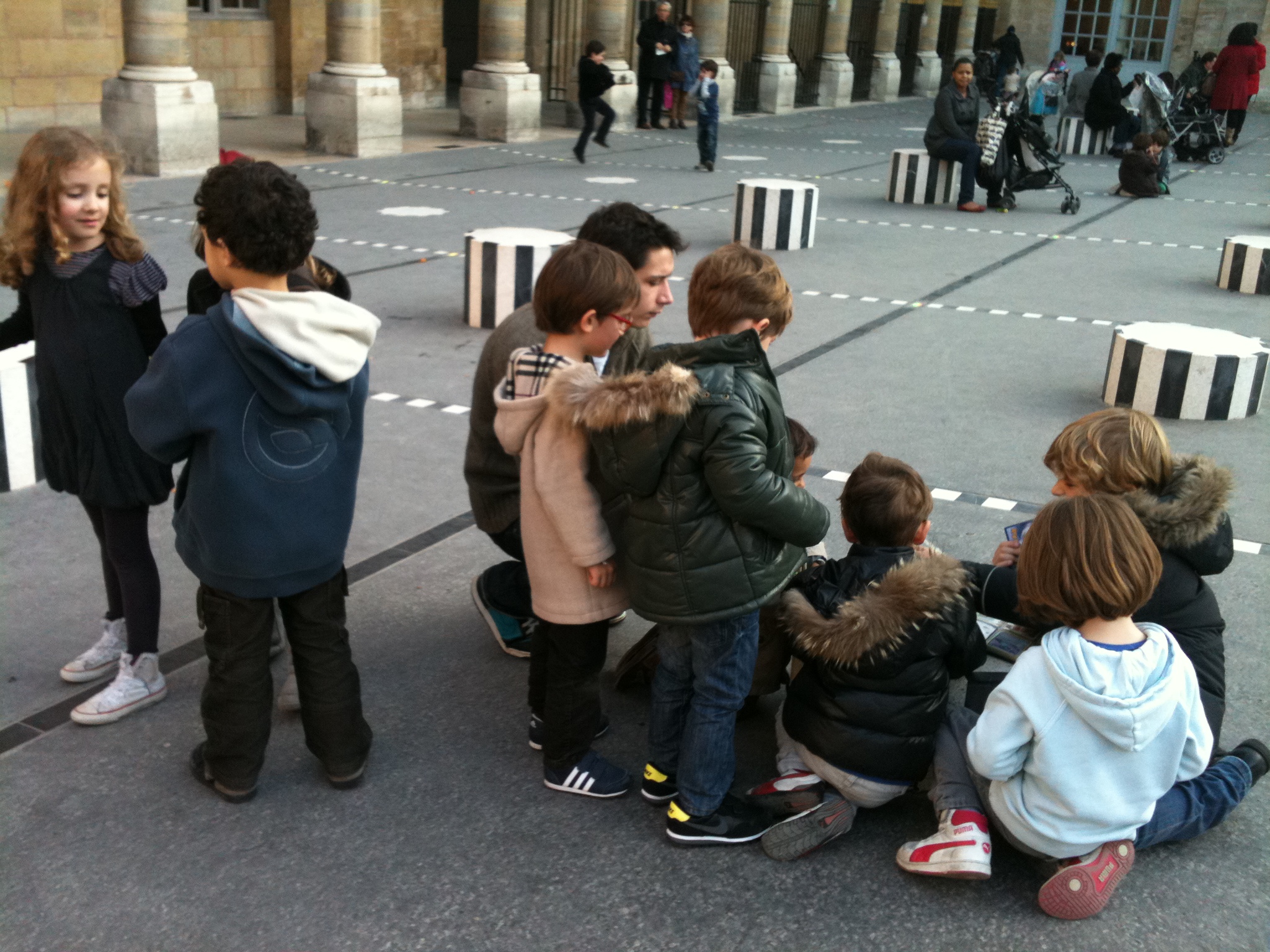
It’s 19°C today with bright sun and blue sky and I just powerwalked up to Concorde and back. And there they were, the poor little kids, all rugged up in their thick coats and boots and even hats. The luckier ones were bareheaded and some had even taken off their coats – but they were probably foreigners anyway!

I’ve heard this saying many times since I arrived in France in 1975 and not just in the north. It seems that the slightest little breeze will bring on immediate coughs and colds. In the metro, the kids must be so hot in the winter. I can’t bear keeping my coat on for any length of time and I certainly wouldn’t be able to put up with wearing a balaclava or a hood with a thick scarf around my neck in a train.

Our flat is totally overheated even though we turn the radiators off but if the heating is adjusted so that we have the regulatory 19°C on the fourth floor, the people on the ground floor will only have 16°C. It’s the hot water going through the pipes that heats our place. The trouble is, you get used to having 23°C all the time. When we move to Blois, I suspect that I’ll have to invest in some warmer clothes!

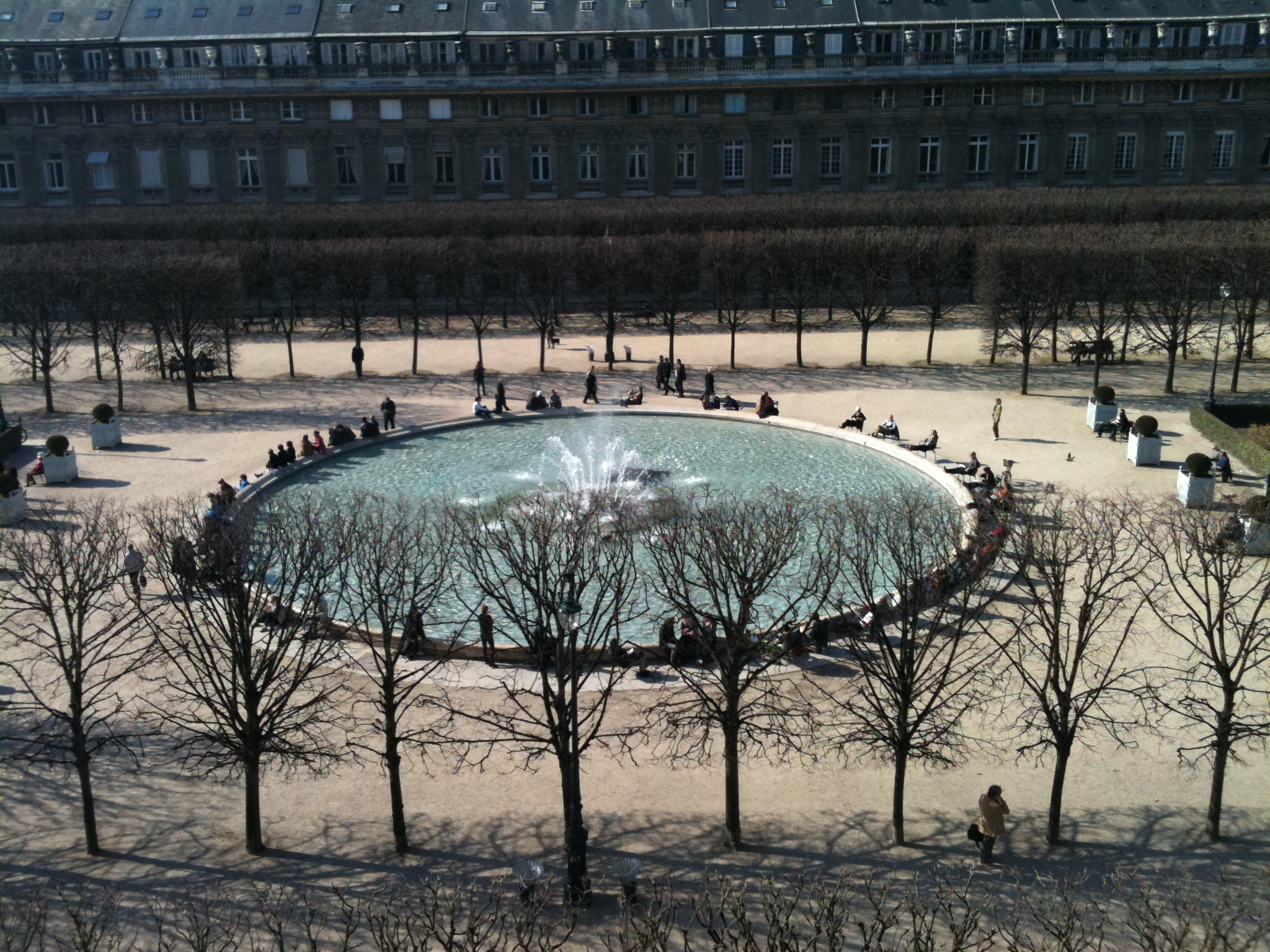
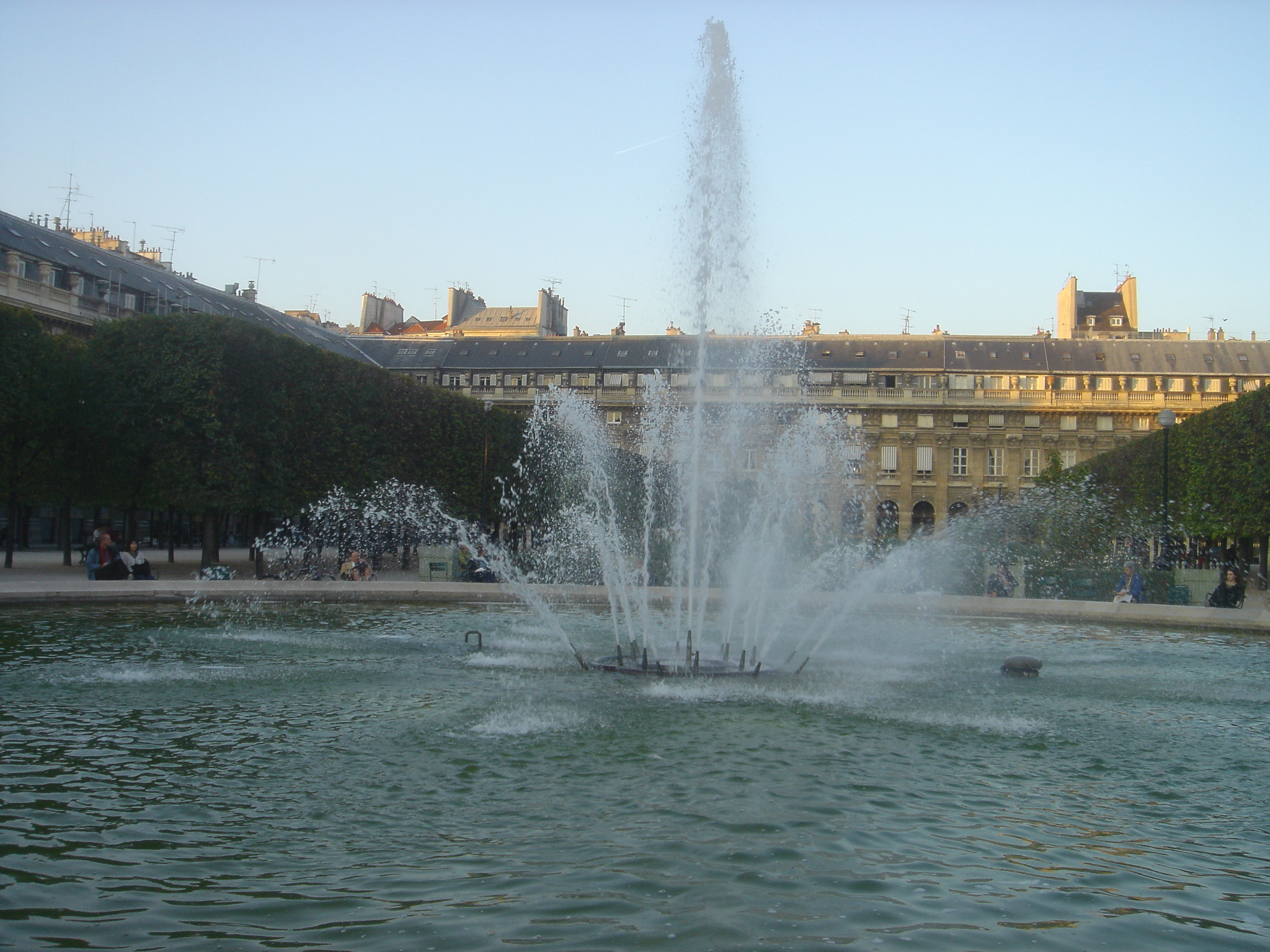
But spring is well on its way, with daffodils and hyacinths and magnolias out in the Palais Royal Gardens. I swear I can see my bulbs growing in the window boxes. Yesterday, there was only one crocus out and today there’s a whole crowd of them. Not easy to take a photo though. Our balcony is actually just a gutter but it’s just wide enough to fit a small table and two chairs if one person sits down first and pulls the table forward to let the other squeeze in.

The people are milling around the fountain soaking up the sun. I must say that Parisians are real sun lovers. I guess if you’re starved for it the rest of the time it’s understandable. It’s actually surprising weather for March when you’re supposed to be getting “giboulées” which means a sudden burst of rain, sometimes accompanied by wind, hail or even snow, and often followed by bright sunshine. Not my scene!

The Secret of Eating Out in Madrid

Not that I really discovered the secret. Our bacalao experience was only the start.

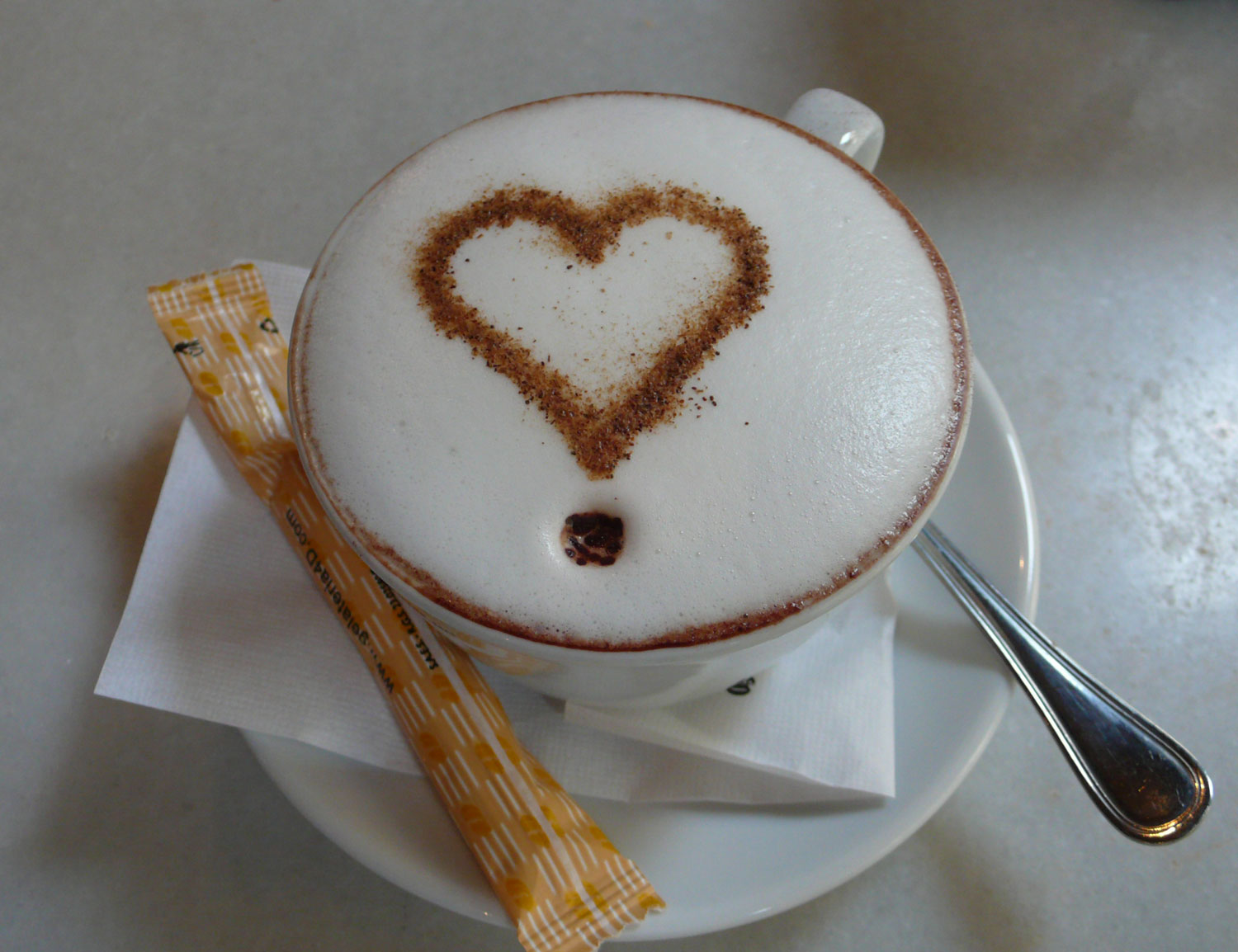
The first morning, we set off from our home exchange flat for desayuno and saw that a lot of cafés were offering the American-style breakfasts we had seen in Seville obviously geared towards tourists, with fried eggs and sausages. We ended up having a cute cappuccino and a somewhat disappointing cake and decided we’d have breakfast at home for the rest of our stay. I didn’t find any Earl Grey tea though and we had to make do with ordinary yoghurts as opposed to the Activia (bifidobacterium) we prefer. We couldn’t find a bakery either but I suspect they are called something I don’t know!

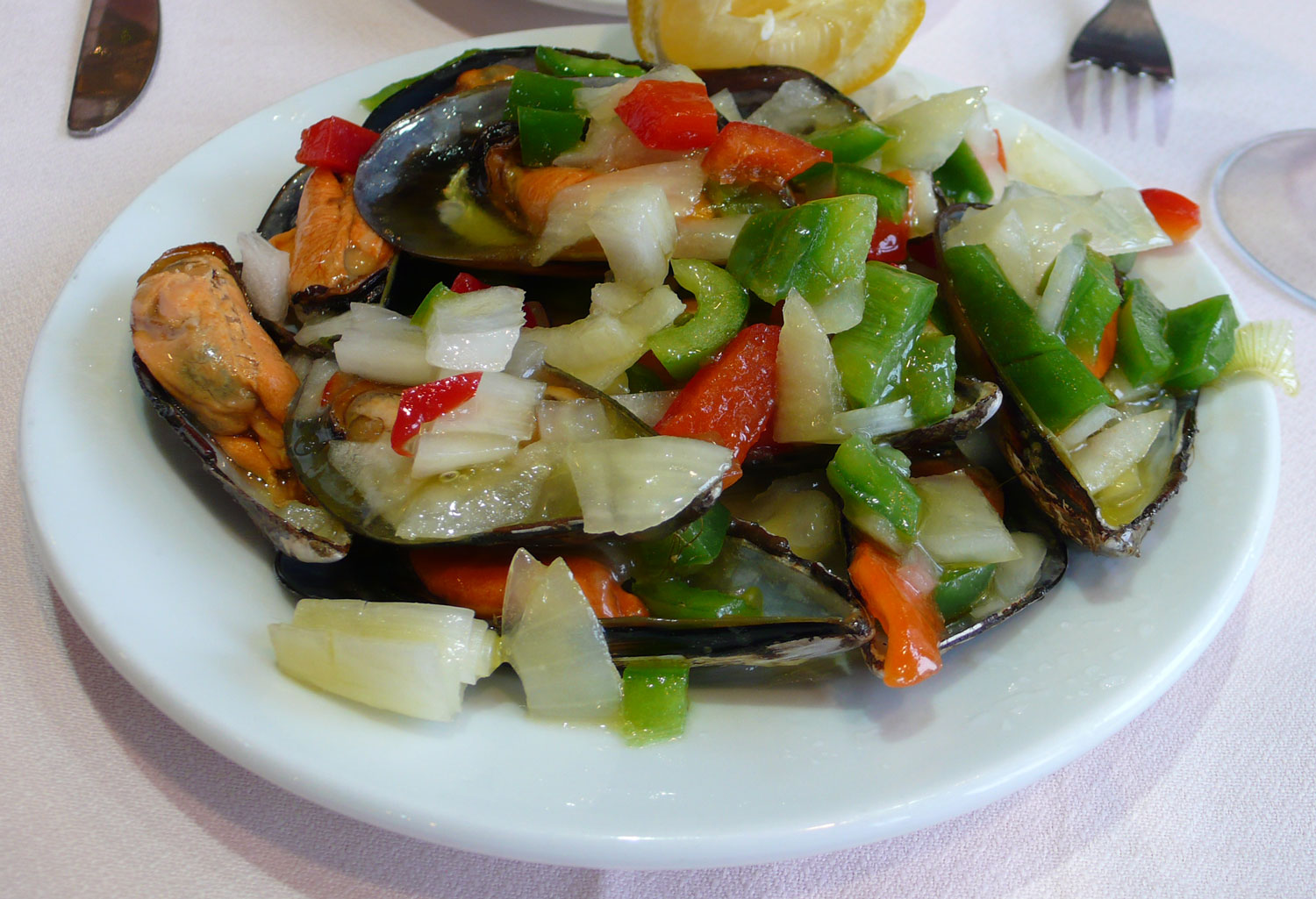
We had lunch at Eboli on Plaza Mayor. Relationnel chose from the counter – delicious mussels (mejillones) and some expensive rubbery octopus (pulpo). For our aperitivo in the evening, we went to an address given to us by our home exchange host but it was excessively noisy so we found a heated terrace at La Téa Cebolla with some good nibblies – mainly a dried sausage affair with little bread sticks and cheese. There were no tourists there. We then found a restaurant serving shoulder of lamb and went in.

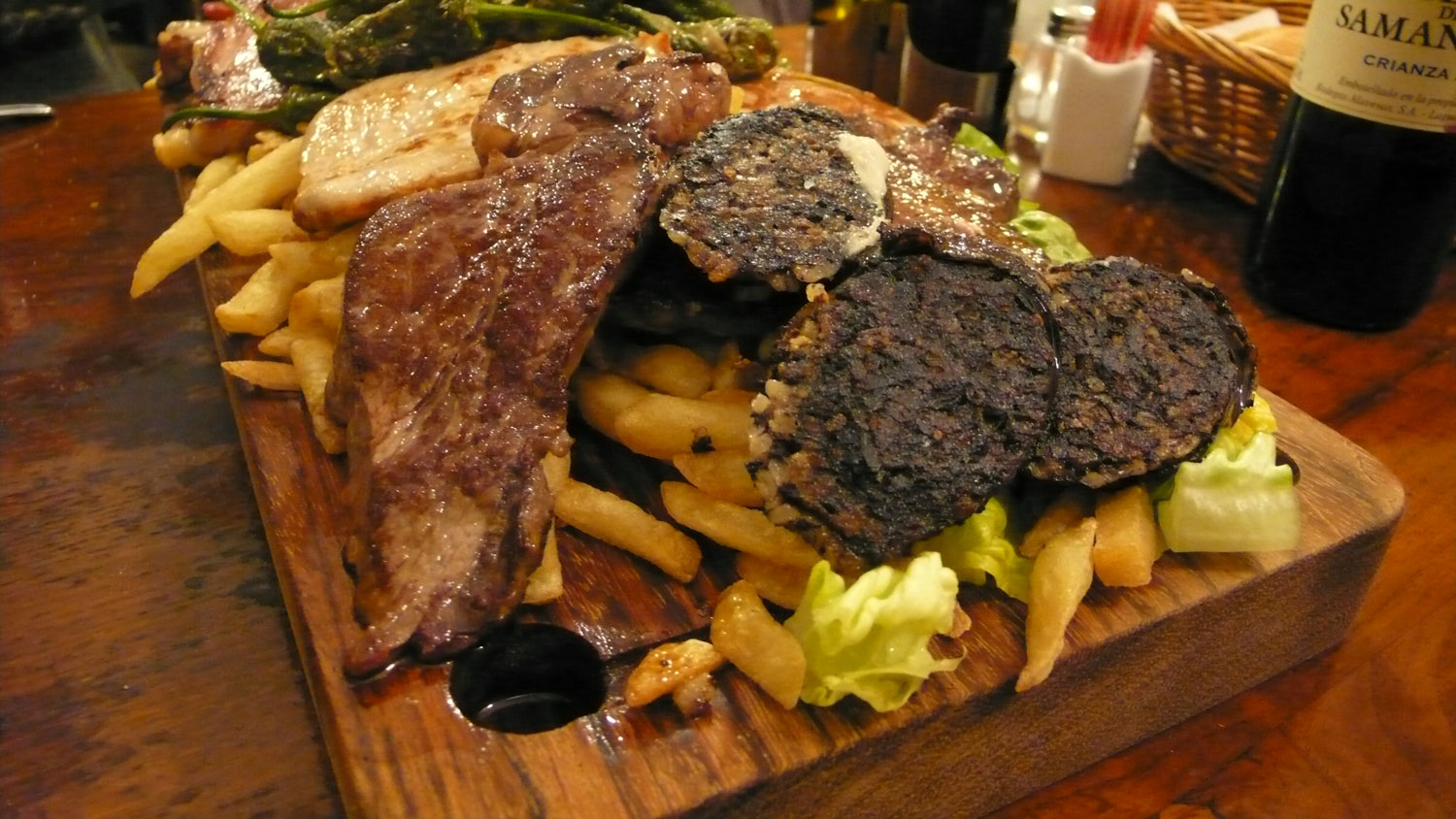
The bar area of the restaurants is always very animated and the food looks great but if you want to sit down, you find yourself in a very different atmosphere with practically no one else around and rather off-hand service. The lamb was off (of course) so we left. We were much happier at El Lacon where we had an ensalada mixta and a tabla de carne, which is a sort of mixed grill. The ensalada mixta consisted of iceberg lettuce, canned tuna, raw onion and some bits of tomatoes while the meat (very copious) was served with delicious grilled vegetables – sliced eggplant, zucchini, capsicum, tomatoes, onions and asparagus.

At lunch next day, we stupidly chose the ensalada mixta again (some people never learn!) and discovered that it’s always the same thing. We had tried to eat at the Mercado San Miguel, which I definitely recommend if you don’t mind standing up to eat (which is not my case unfortunately, due to my uncooperative feet). The ambiance is wonderful, they have a really wide selection of food and prices to suit every budget, but it is always chockablock, no matter what time of the day or night and, I can tell you, we tried several times.

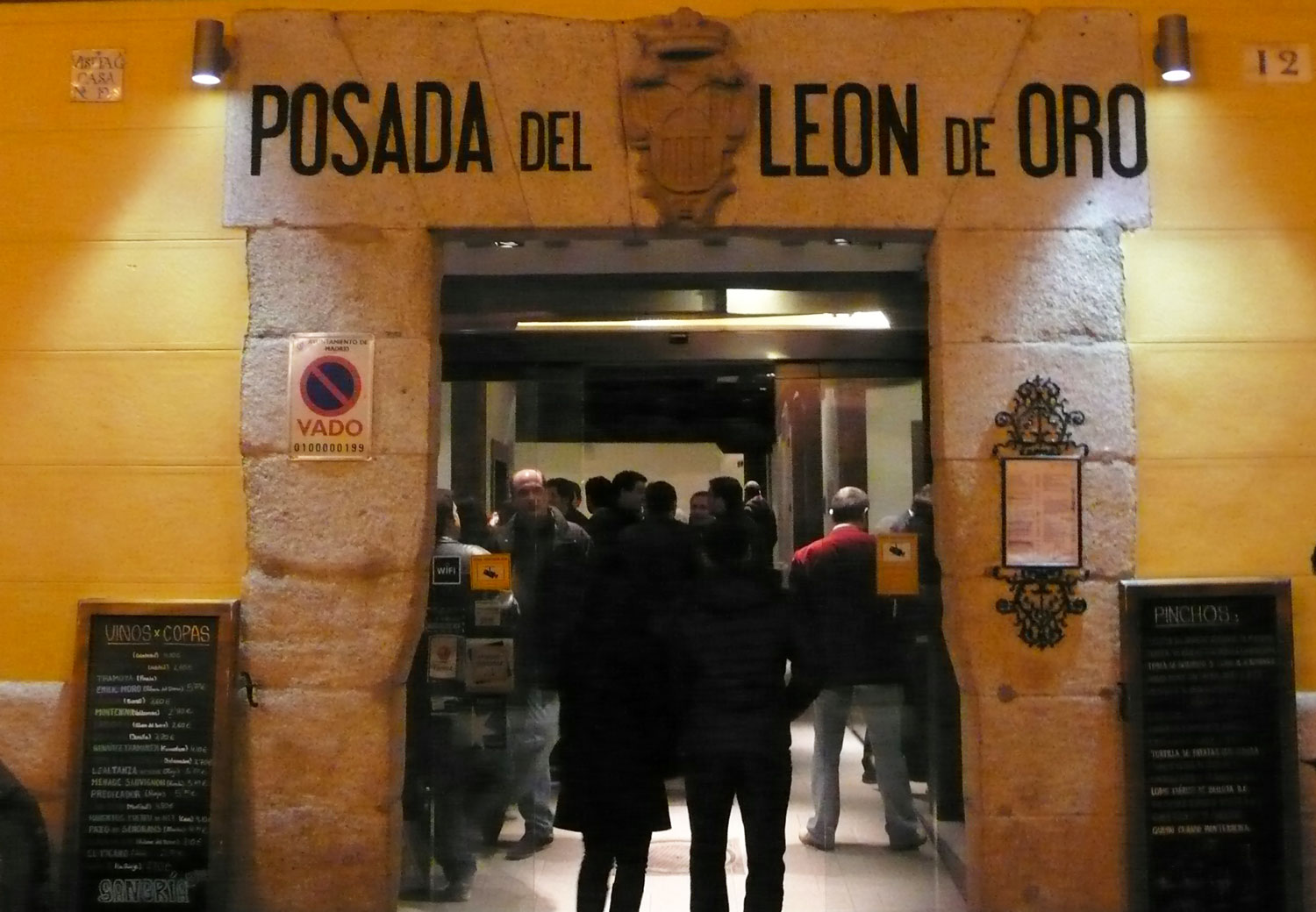
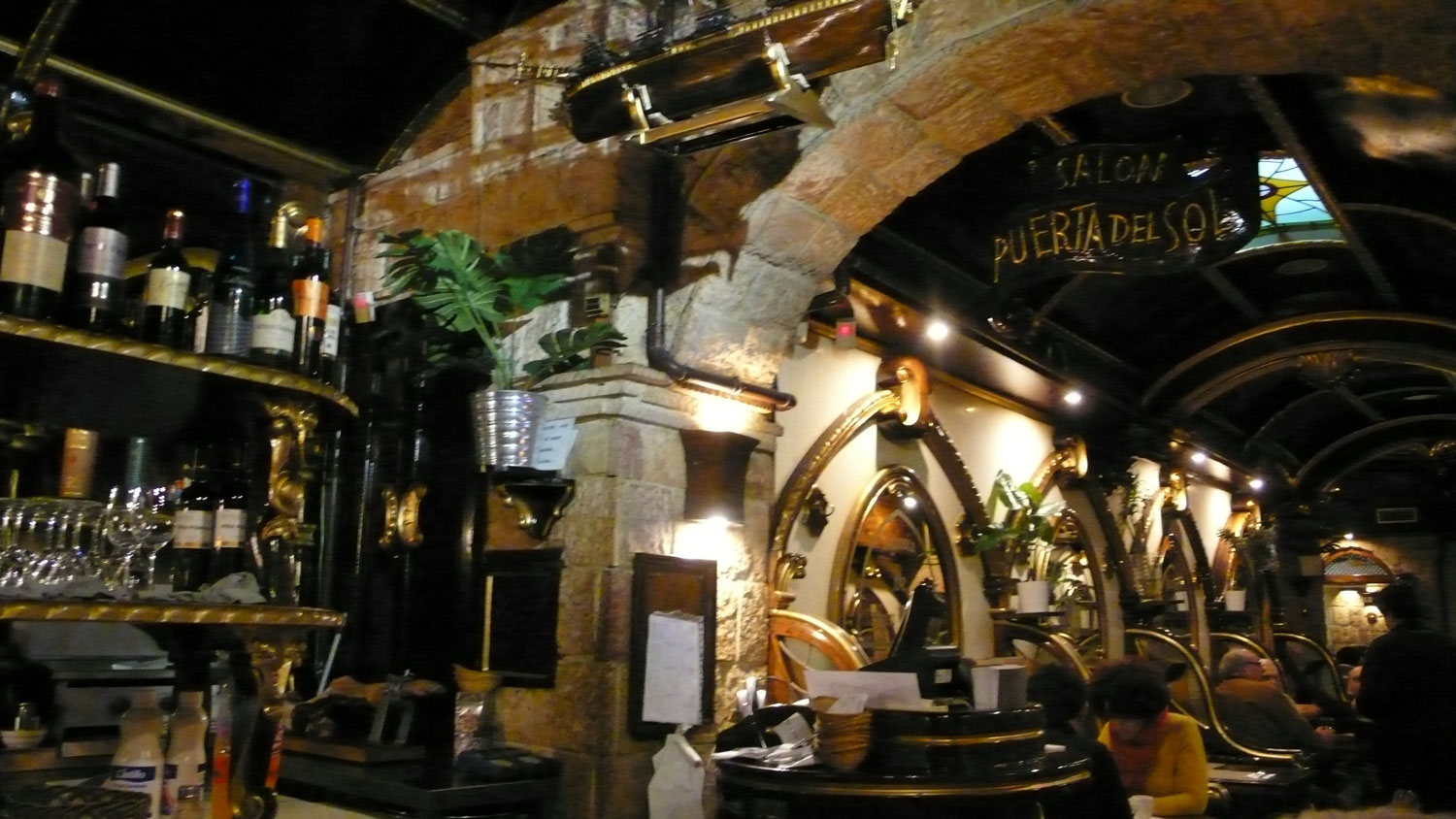
We had our aperitivo at Toma Jamon, which turned out to be a chain. It had typical barrel tables and ham legs strung from the ceiling which proved to be plastic on closer inspection! I ordered a mollete jamon iberico, thinking I was very smart, until we were given a thin steak sandwich on slightly sweet bread (that’s the mollete). After that we found a restaurant called Posada del Leon de Oro on Calle Baja which we think must be the “real” bacalao restaurant indicated on our mud map.

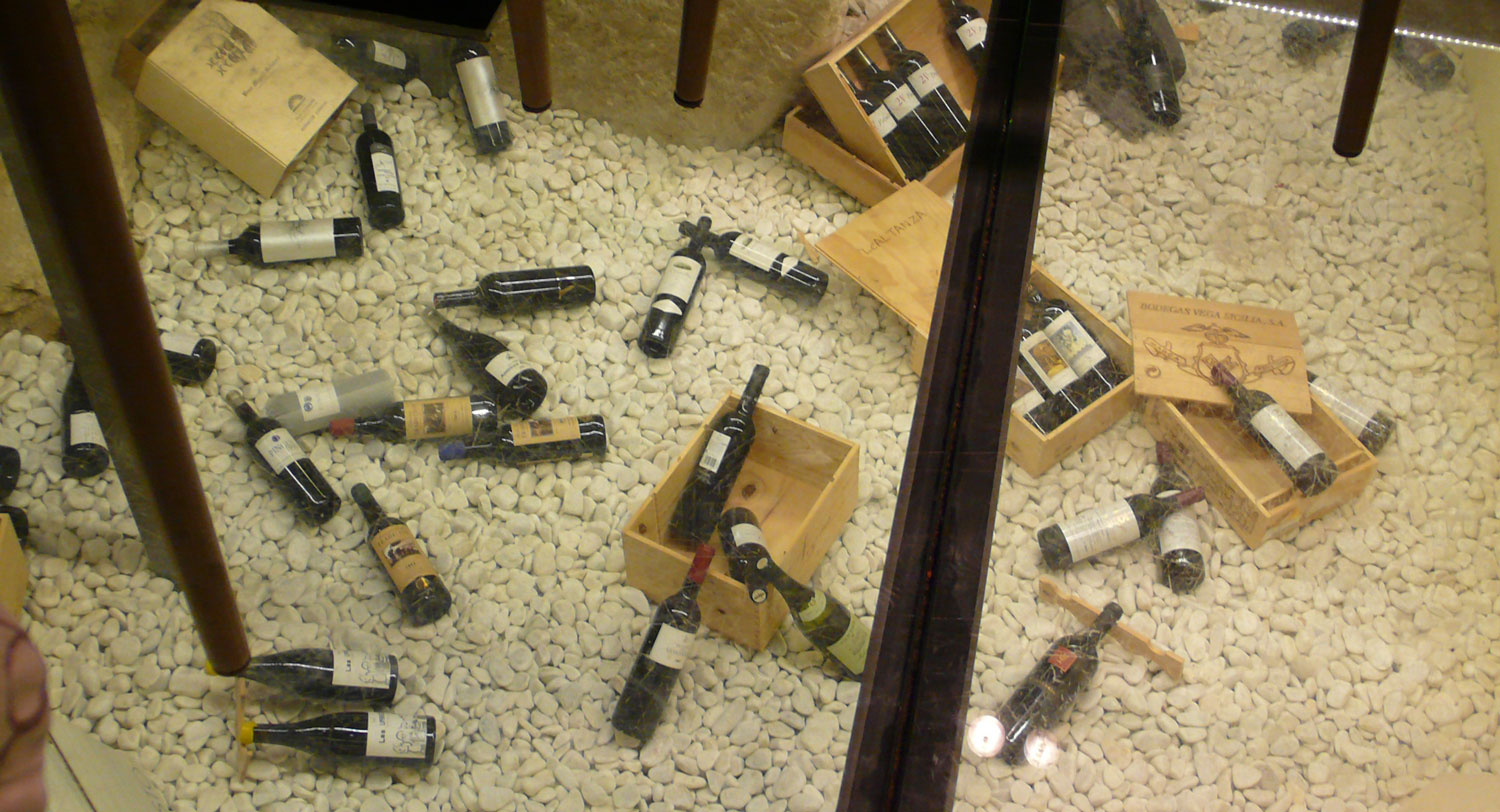
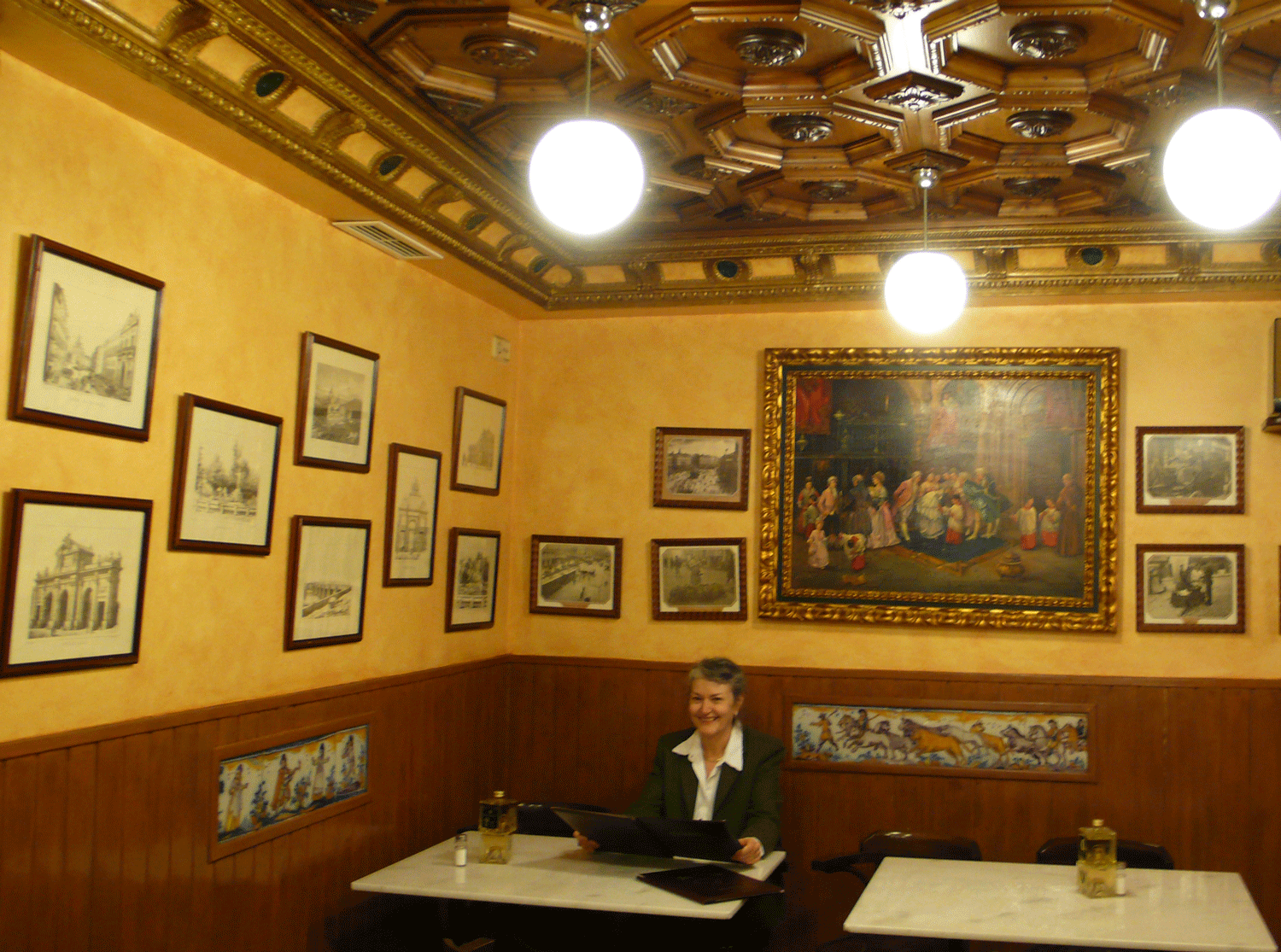
It was trendier than El Madroño and only slightly more expensive. You walk through an inner courtyard with several floors of wooden galleries (a hotel in fact, but it must be terribly noisy). The floor of the restaurant is made of glass and you can see wine bottles and cases on a sort of white gravel floor. Relationnel took the cod and found it excellent, but I thought it was rather dry. I was starving for vegetables so took the parrillada de verduras, much the same as the grilled vegetables we had at El Madroño, but with a lump of mozarella in the middle.

We had lunch again next day at El Madroño and I think we should have just adopted it for the rest of our stay because our eating experience went downhill from there on. We tried to have an aperitivo at the well-known Lardy on Carrera San Jeronimo, but it was closed on Sundays. We went to La Catedral next door, which made up in decor what it was lacking in gastronomy. I ordered some mushroom tapas (rollitos crujientes) which turned out to be little deep-fried bricks with mushroom stuffing. So much for the vegetables.

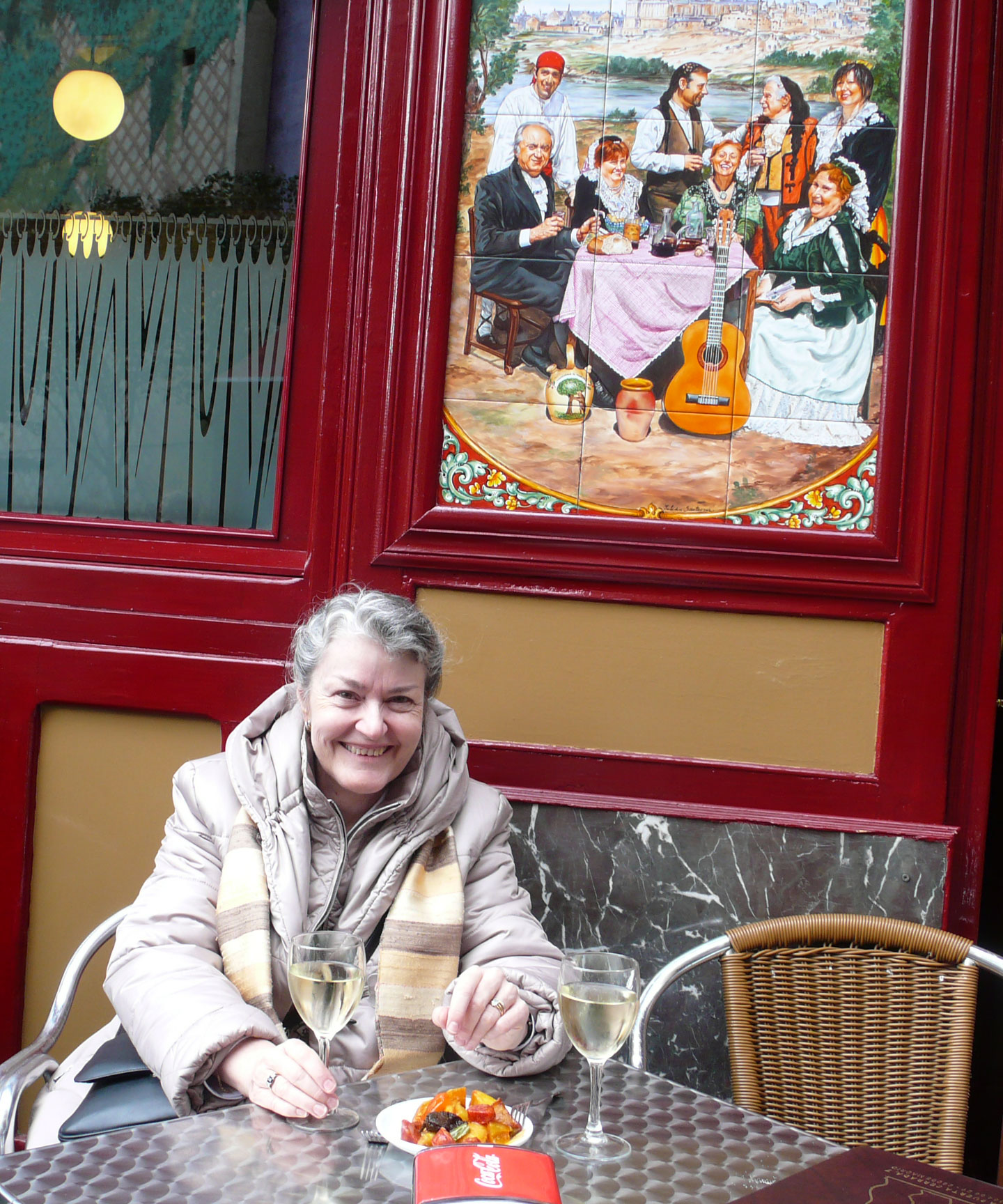
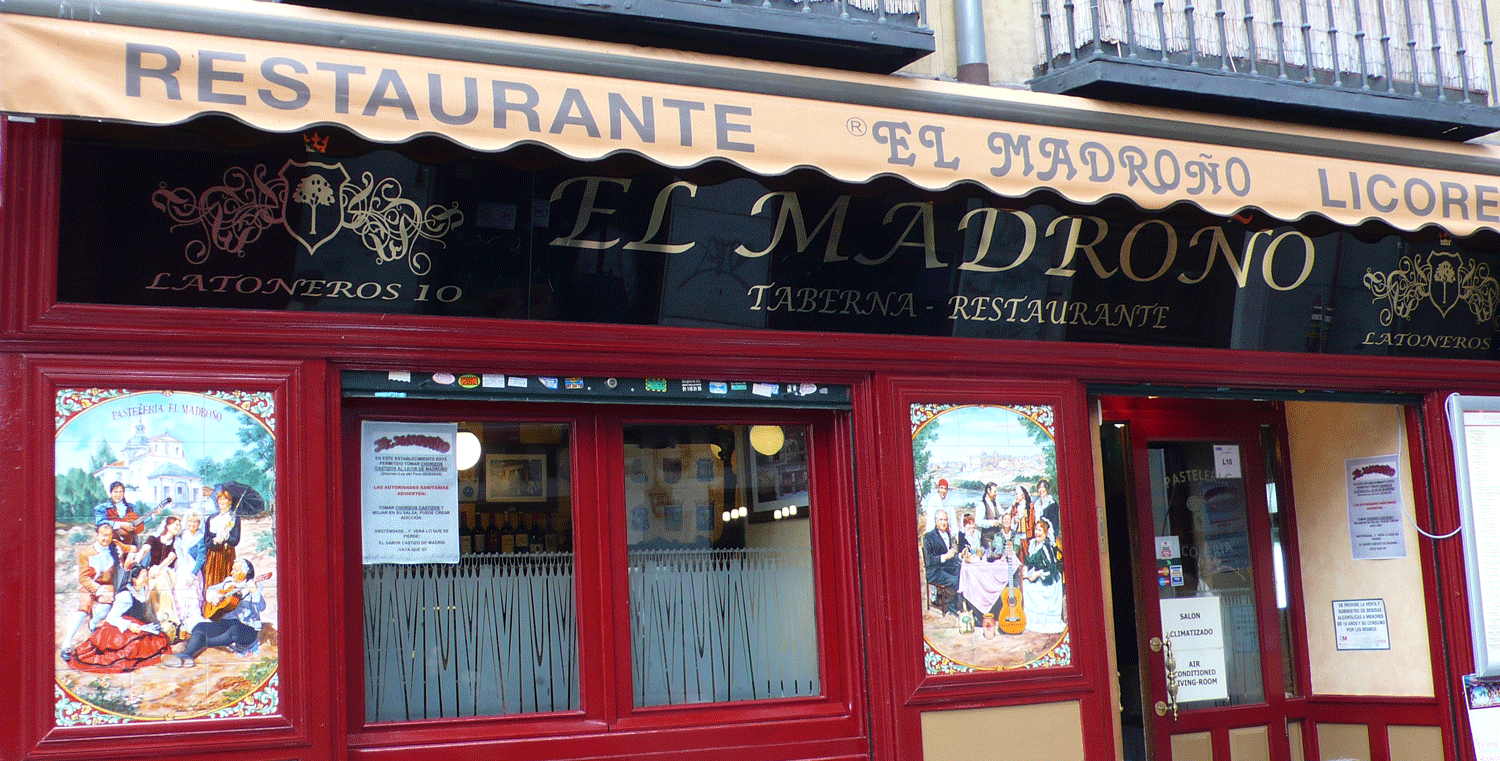
In front of El Madrono

We tried two restaurants and walked out of each of them after seeing the menu which had mysteriously changed by the time we sat down, either doubling in price or offering different food from what was indicated outside. I left my bag in the first one but the waiter very nicely ran after me in the street. I nearly forgot it the second time as well. We ended up in La Taverna San Isodoro which was full of joyous Spanish families. Unfortunately there were no lamb chops left and we ordered a parrillada de pescado for two. It looked most unappetizing so I just stuck to the prawns, the chips and a couple of rings of octopus. Relationnel, who loves fish of any shape or kind, attacked it with great gusto.

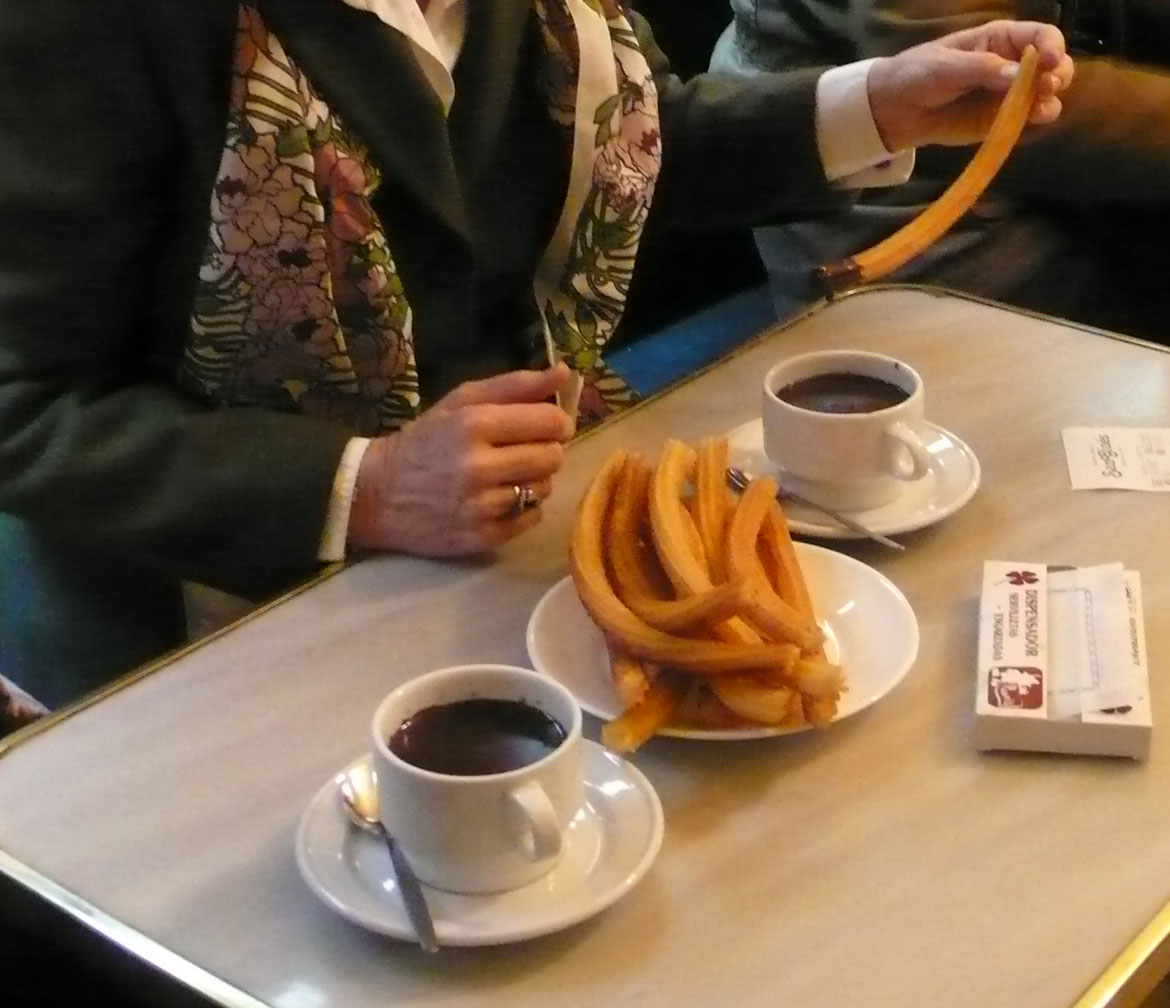
Breakfast next morning was an unforgettable experience at La Chocolateria San Ginès where we dipped wonderfully fresh churros in thick hot chocolate. We took two servings of churros but one would have been enough. They certainly kept us going while we visited the Palacio Real.

The next and last restaurant was our worst experience (mine in any case). There was bright sun at last and Relationnel wanted to have tapas on Plaza Mayor, but it’s a real tourist trap. At Bar Tinco, we were given absolutely nothing to nibble with our wine and were charged 15 euros for a few thin slices of manchego cheese! I got very angry with the waiter, but it didn’t do any good. Relationnel just shrugged it off. He was enjoying the sun.

This is a somewhat negative post but I have been travelling for very many years and usually enjoy my food experiences and am ready to try anything. We had lovely raciones and tapas in Seville and I was expecting the same in Madrid. Maybe it’s because we never learnt the secret of where to eat or what to order! I really must improve my Spanish.

Sunday’s Travel Photos – Madrid: Bronze Statues

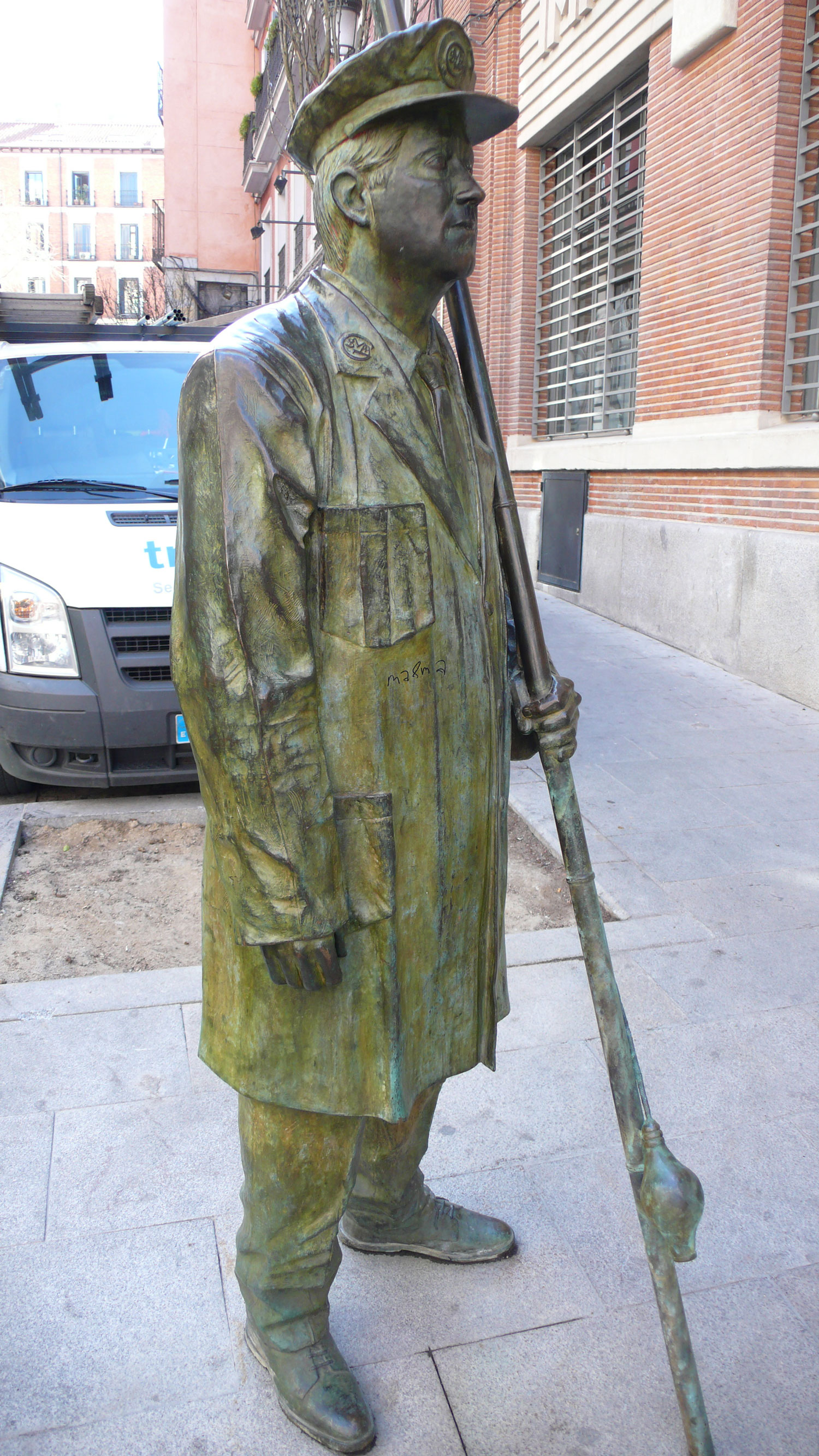
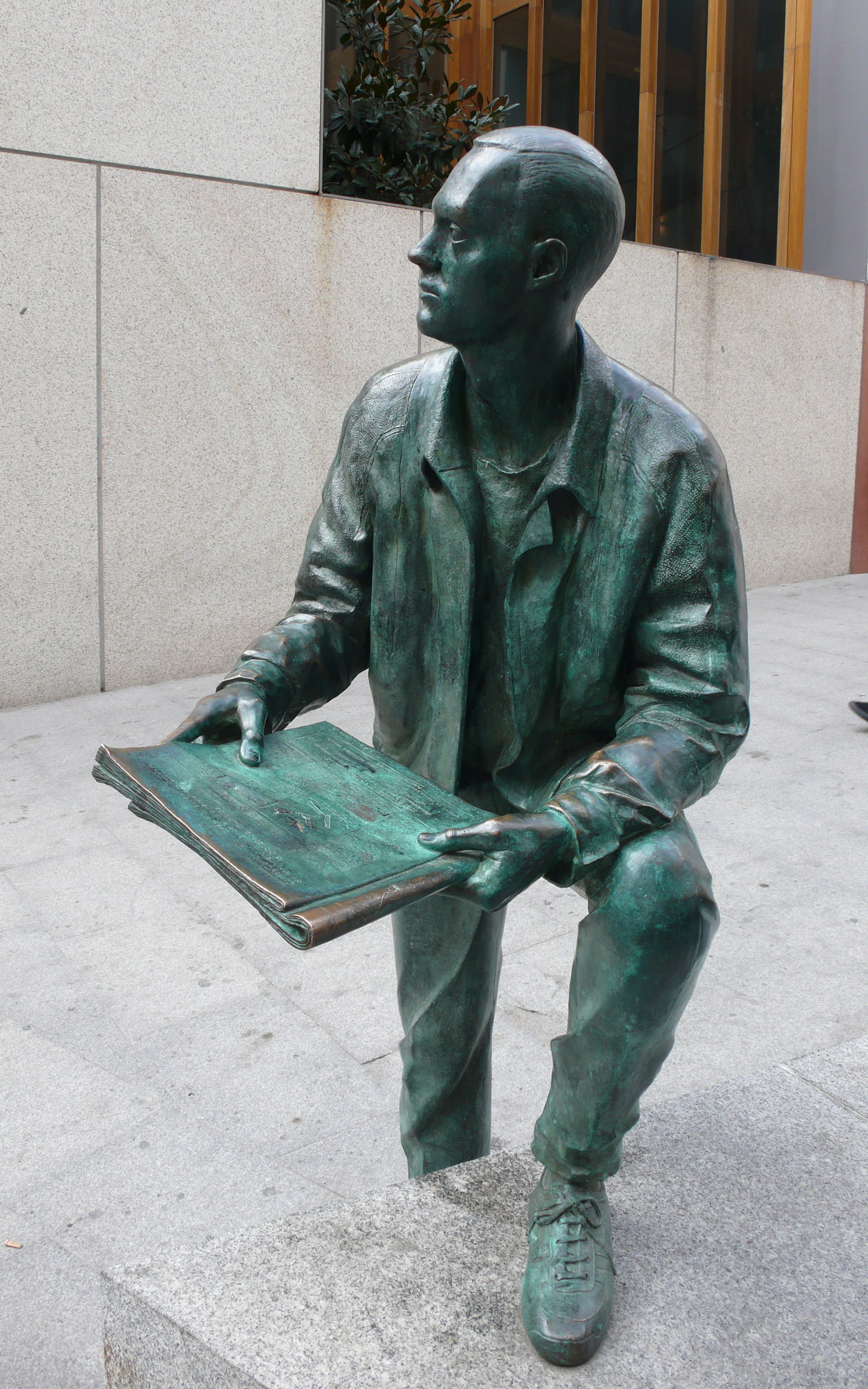
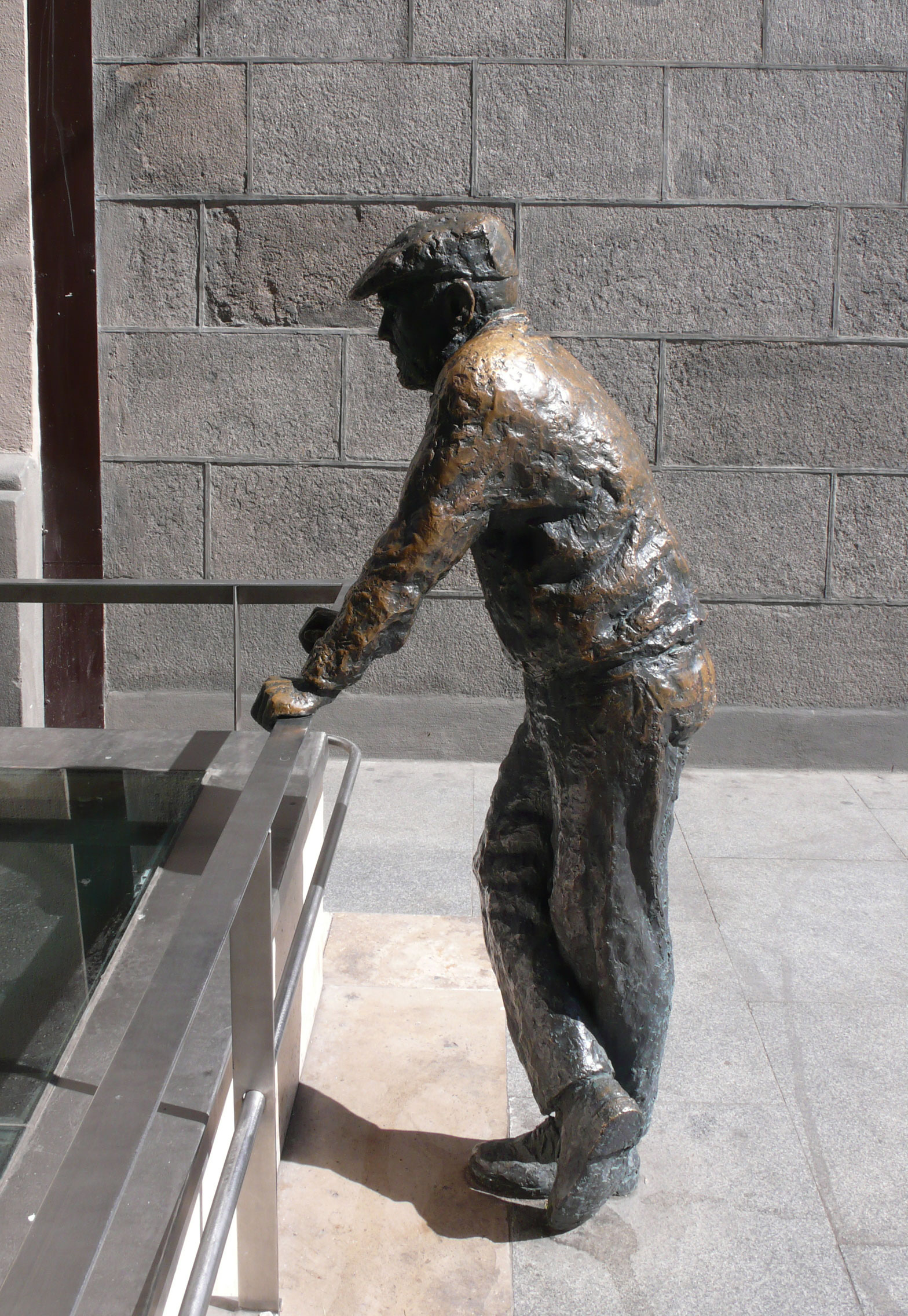
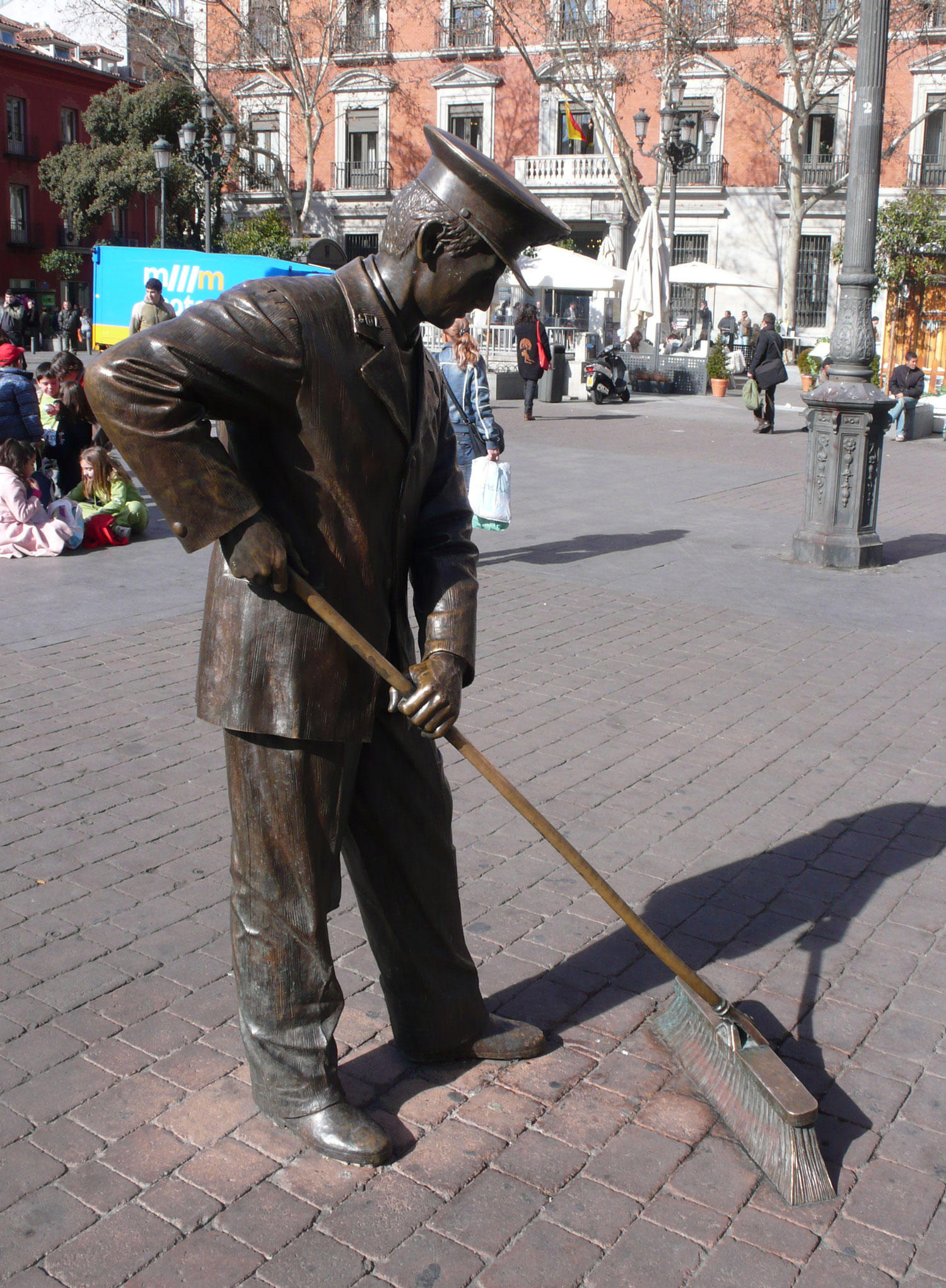
When we arrived at our home exchange flat in Madrid, the first thing we saw was an extremely realistic bronze lamp lighter. During our visit, we found four other bronze statues of the same kind plus a “fake” one in the form of a “living statue”. It was amusing to see how people would give them a friendly pat on the back as they went past.

Lamp lighter
Draftsman
The Reader
Contemplator
Street sweeper
Fake statue

Franco-Australian Curry!

When Fraussie suggested I write a post for her blog (I’m the Aussie exchange student who appears in this blog under the name of Brainy Pianist), I really didn’t have too many ideas. “Talk about food”, she told me, “everyone loves to read about food”. Fair enough, I thought, but how can I make it a bit different? And then it hit me. When I was leaving Australia last August, never having lived away from home, and (almost) never cooking (although I am capable), most people would ask what was the one thing I was going to miss most. Beyond my family and friends, the answer would inevitably come back to a good, home-cooked meal. In my case, that’s synonymous with pretty much everything that comes out of our kitchen, but especially a good curry.
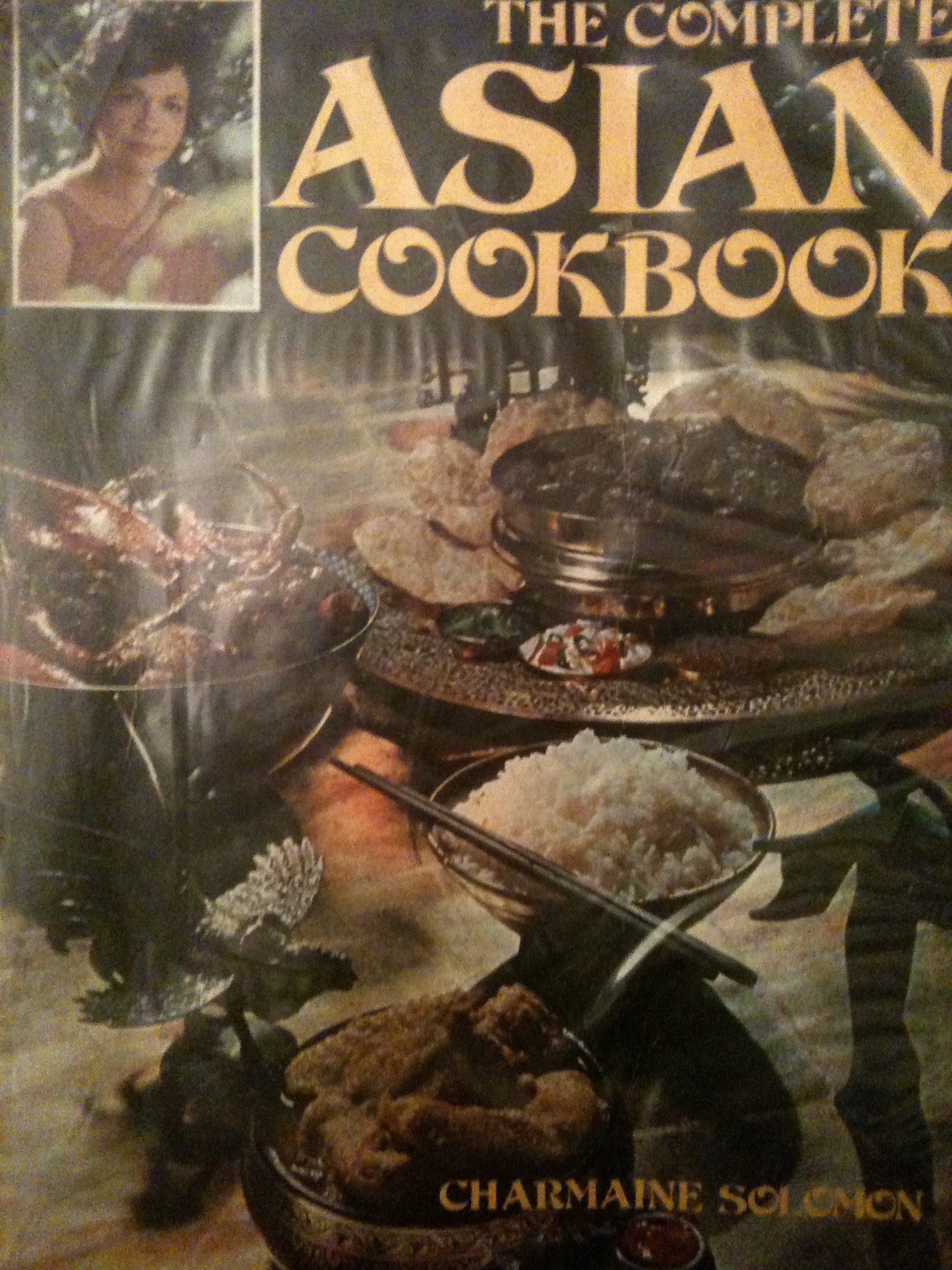
I guess in part that’s one of the greatest things coming from an Anglo-Indian/Australian background and being exposed to different cultures and cuisine. Dad grew up in India, and Mum spent hours and hours watching and learning from my grandmother (and the trusty copy of Charmaine Solomon’s The Complete Asian Cookbook). As a kid I couldn’t stand most curries, whereas my little brother was getting stuck in before he could even walk! But times have changed, and more often than not, I’ll be hankering after a good hot curry. And moving to Paris, it’s surprisingly easy to find fantastic Indian restaurants (particularly around the 10th arrondissement), and spice shops. I get a real kick ferretting around in the stores up near Gare du Nord on Rue du Faubourg Saint Denis.

So, here’s a recipe for one of our family’s favourites – and it’s easy as well!

The ingredients are:
–          500g mince (I generally use beef – but you could probably use lamb as well)
–          1-2 tablespoons oil
–          1 large brown onion, finely sliced
–          2 cloves garlic, crushed
–          1 piece of fresh ginger, about 2.5cm long – peeled and chopped
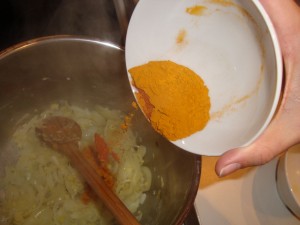
–          1 teaspoon ground turmeric
–          1 teaspoon chilli powder
–          ½ cup natural yoghurt
–          2 teaspoons garam masala
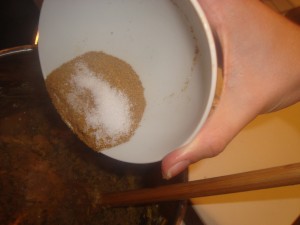
–          1 teaspoon salt
–          Freshly chopped coriander leaves to serve
 

Now the method:
1)     Heat oil in saucepan and fry onion until soft.

2)      Add garlic and ginger and fry until onion is golden brown.

3)      Add turmeric and chilli powder and fry for a few minutes.  If you like, you could add some ground coriander at this point as well.

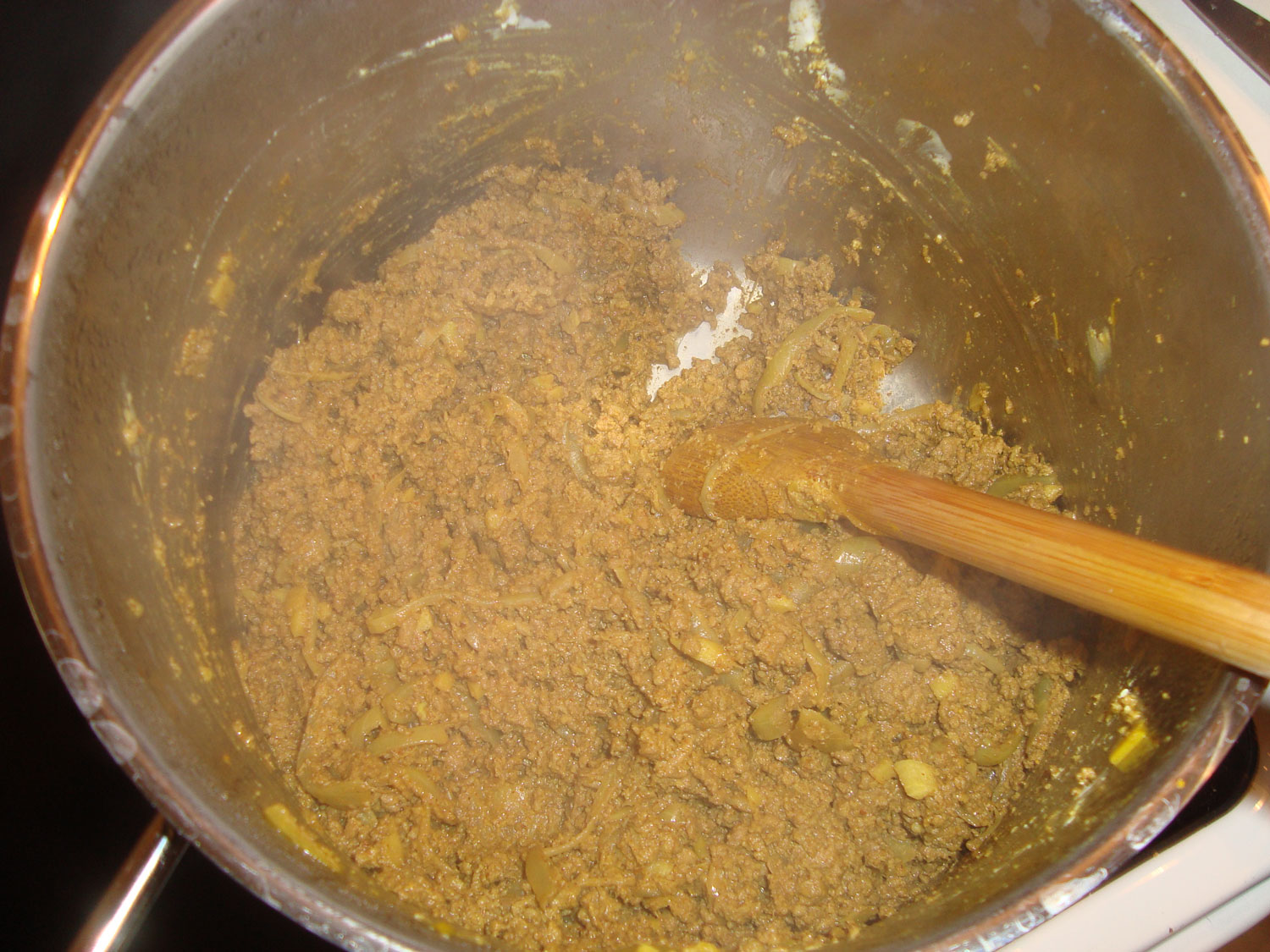
4)      Add meat and fry, turning meat constantly until colour changes.  Break up any large lumps of meat.

5)      Stir in the yoghurt, lower the heat, cover and cook for 15 minutes. (This should be a gentle simmer)

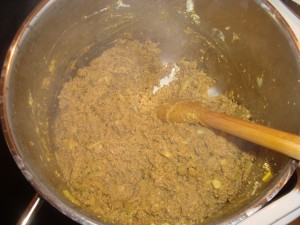
6)      Add garam masala and salt, leave the lid off, and continue cooking until meat is cooked.

7)      Stir through fresh coriander and serve.
Just a couple of helpful tips: the amount of chilli powder depends a) on how hot you want the curry to be, and b) the individual chilli powder. Every powder is slightly different in its strength, and its potency also changes with age. If you’re opening a new packet, be cautious in the quantities!

The final cooking stage varies, but Mum told me just to leave it as long as it takes to cook the rice.

You can also control the final consistency of the curry: if you like a lot of gravy, you can add a little water at the final stage (but be careful you don’t add too much, especially if the meat gives off a lot of fat or liquid). If you prefer a drier curry, you can increase the heat in the final stage – but watch it closely and stir frequently– with the yoghurt, the curry will have a tendency to stick to the saucepan.
And don’t forget – if you’re increasing the quantity of meat, you mustn’t increase the amount of spices in the same proportion. For instance, cooking a kilo of mince, I would only put 1 ½ teaspoon of chilli powder – otherwise it can be very spicy!

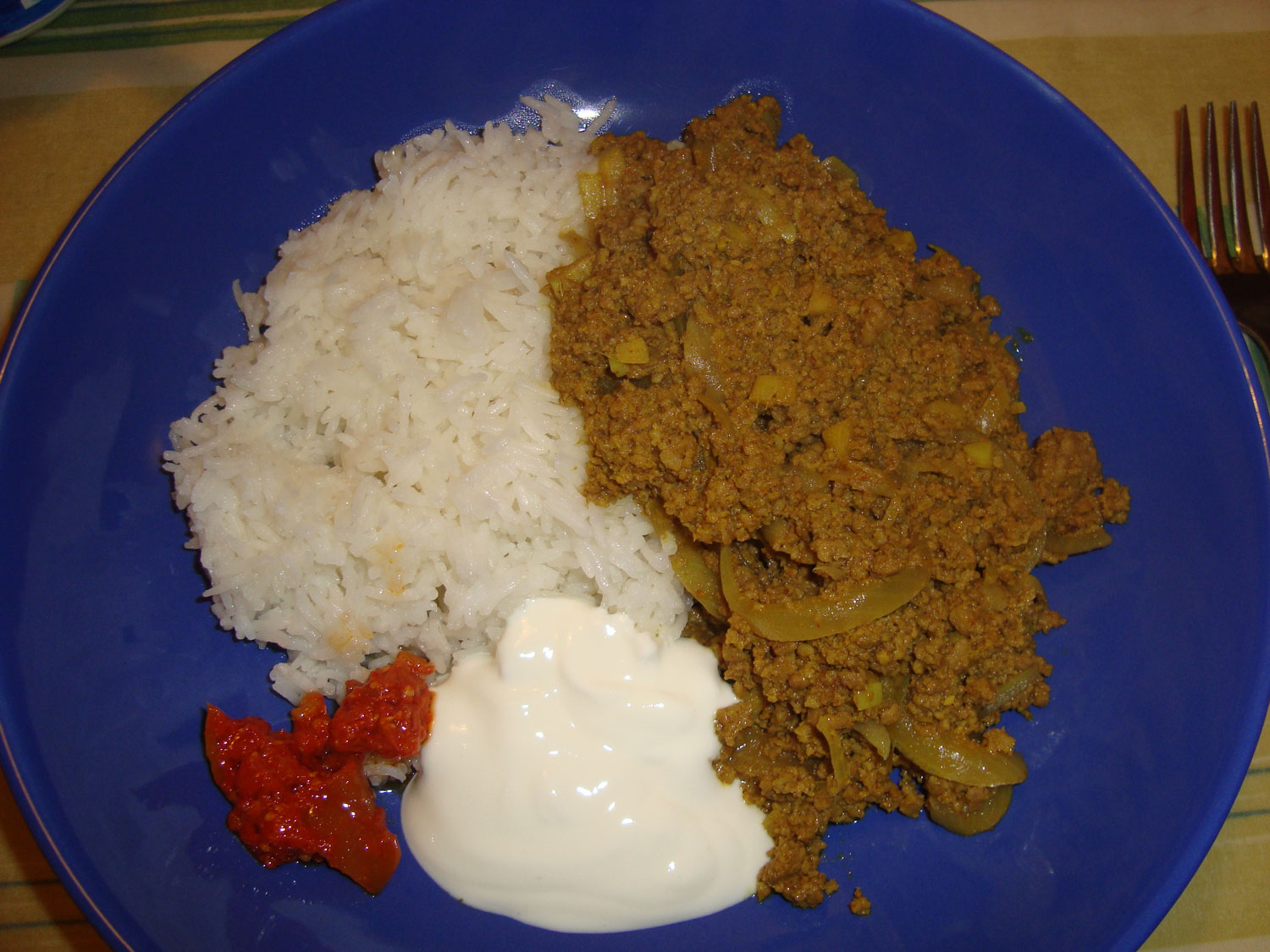
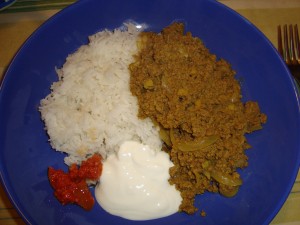
Serve with cooked basmati rice (I like to add some dried curry leaves while I’m cooking the rice – I can’t get the fresh ones we have in the garden back home, but dried ones give quite  a lot of flavour), natural yoghurt, pappadums, and for that extra kick, a spicy Indian pickle. Bon appétit!
Our First Home Exchange

The idea of a home exchange first came to me when a French friend told me that her stepson and his Australian wife were going back to Melbourne to live. I consoled her by saying she and her husband could visit them for longer and at less expense if she did a home exchange. I even recommended a website I’d been told about: www.homeexchange.com. And it has an iPhone app as well. The next thing I knew she had organised a 6-week stay. I immediately set about persuading Relationnel to do the same thing despite his reluctance in the past.

We were planning our next holiday in Australia to include a family reunion in Armidale. During our absence, friends from Canberra were to stay in our apartment in the Palais Royal in Paris for part of the time. They recommended that we go to Tasmania so we organised a 12-day exchange in Launceston and Coles Bay including a car. Our exchangers will be using Paris and our new house in Blois as well as our second car while they are in the Loire Valley. We then started receiving other offers – Victoria, Hobart and Adelaide – so we set up some non-simultaneous exchanges as well, some of which won’t be redeemed until our next trip in 2014!

Palais Royal Gardens

With Blois and the Palais Royal combined, the possibilities seem endless. I thought that we might appreciate a break in sunny Spain before the final signature in Blois in mid-March.  Miguel, who lives in Madrid, had written earlier on to see if we were interested in a swap over Christmas but we were having our bedroom ceiling repainted, so I contacted him again to see if there was a weekend in March that might suit us both. Bingo! We bought our airline tickets, arranging our flights so that he would arrive in Paris before we left and thus exchange instructions and keys.

The next question was how to get the apartment ready, especially for a short stay of four days. Should I empty the fridge or just leave a couple of shelves? What about sheets and towels? How about kitchen essentials? Our Adelaide exchanger, Kathy Stanford, a fellow blogger (Femmes Francophiles) is much more experienced (she uses www.homelink.org) and offered to share her “instruction manual”. It provided me with a good base that I could adapt to suit our particular situation (and country).

After a rather frenetic morning on the day we were going to Madrid, I now know that we need to have some spare room in our cupboards to be able to easily free up space for our guests. We had decided to buy extra sheets and towels so that there wouldn’t be the problem of changing our sheets before we left and finding enough clean sheets to make the bed when we got back. But just storing all this extra linen takes up space we don’t really have. Fortunately we will be able to transfer a lot of things to Blois which is much bigger. That should make things easier in the future.

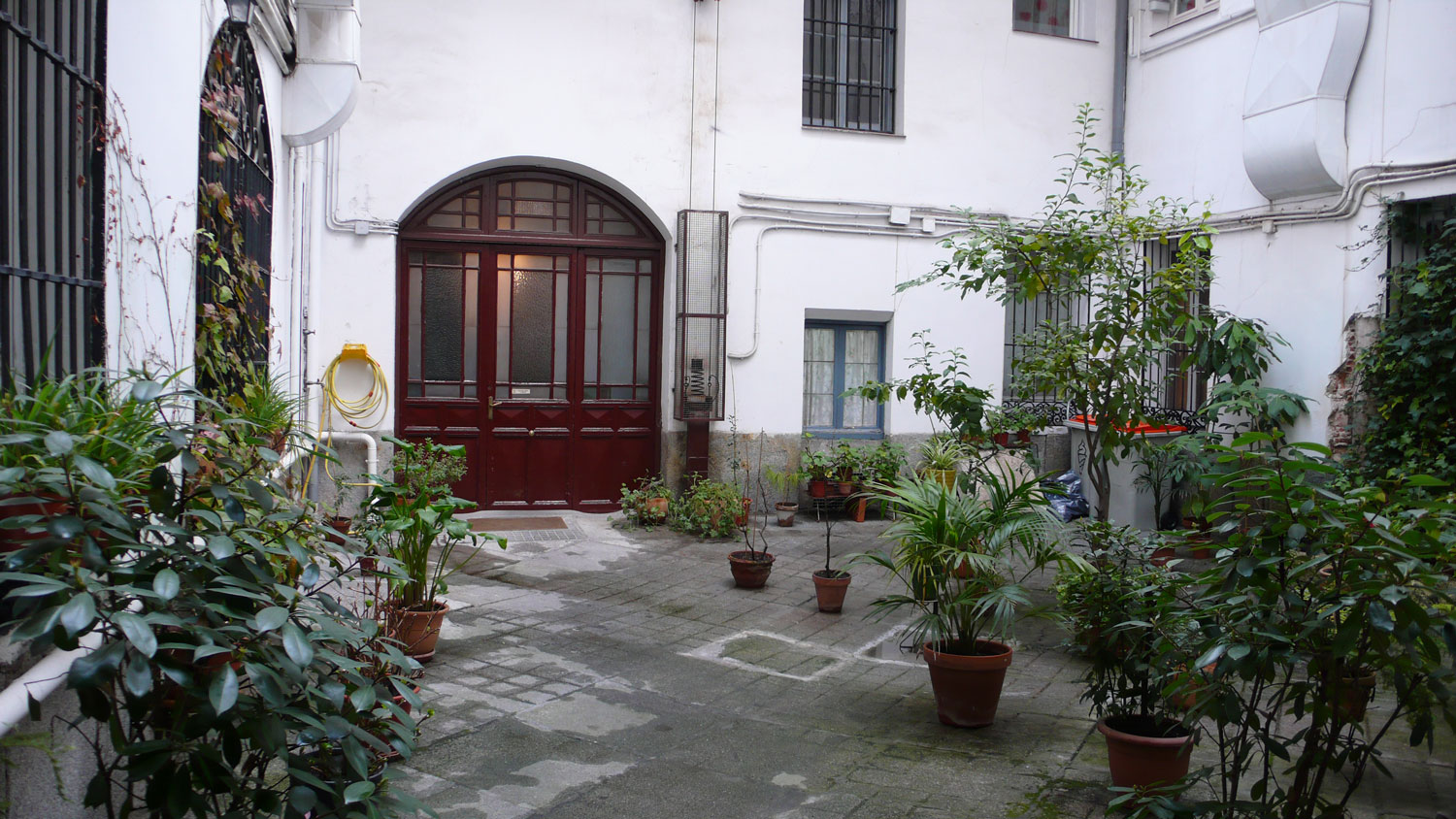
Courtyard in Madrid

Next time, I will specifically leave a tray with kitchen essentials that don’t need replacing and indicate food in the fridge that our exchangers are welcome to use. For just a few days, it’s rather silly to have to buy oil and vinegar, tea, coffee, butter and sugar, for instance. Miguel left us a basket of fruit which I thought was a great idea. I regretted not having done the same. I put clean tablecloths and serviettes in our usual drawer in the living room but it would have been much more sensible to leave them on the table as he did. I also forgot to put the remote controls for the TV in an obvious place.

The other thing I think is essential is to have a blown-up map of the local area and indicate the closest supermarkets, grocery stores, bakeries, restaurants, pharmacies, etc. We didn’t find the supermarket in Madrid until the day we were leaving! When you don’t know a country and language well, it’s not always easy to find such basic commodities. I’ll also take along some Earl Grey tea bags with me next time. I strongly believe in “When in Rome, do as the Romans”, but not for breakfast!

I’d love to have feedback on your home exchange experiences, particularly any advice you’d like to give a new home exchanger. Oh, and I nearly forgot to say that we found it a very positive experience and are looking forward to the next six we’ve already organised over the next year. Relationnel totally regrets his former reluctance!

www.homeexchange.com (which turns into www.trocmaison.com, www.intercambiocasas.com, www.scambiocasa.com, www.haustauschferien.com, etc. depending on your language!)
 
www.homelink.org (not always easy to follow, but you can sign up as a visitor to consult the listings without joining)
 
www.homeexchange50plus.com/ (a newcomer but promising because of its speciality)
 
http://www.lovehomeswap.com/

Summer in Paris – Obligatory Breathalyser – Let’s Make Duck

Snippets from other blogs that I’ve enjoyed recently. Thank you to all those who wrote the posts.

Summer in Paris by Petite Paris, an Australian based service for Australian travellers and fellow francophiles on www.petiteparis.com.au

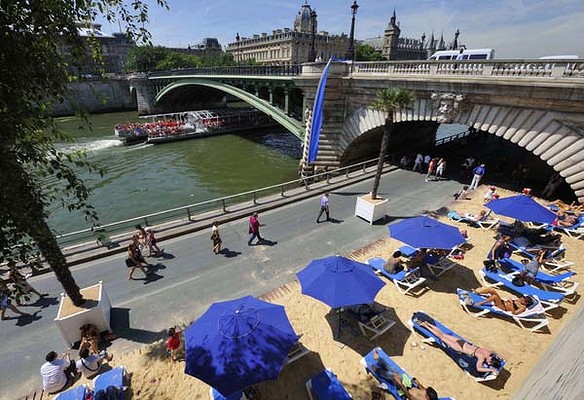
Summer transforms Paris!! To all our guests who have booked their summer in Paris…enjoy Paris Plages as the banks of the seine will be yet again be transformed into temporary sandy beaches with Palm trees brought in, deckchairs, ubiquitous ice cream sellers, and concerts for French and foreign guests! :). Read more
Obligatory Breathalyser by Kaz Reilly, Get Real France, an Irish Biddy living near Perpignan for the past 10 years.

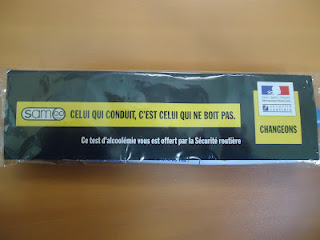
If you’re travelling by car to France this year, don’t forget to furnish yourself with a breathalyser which you must by law have in your car from July 1st, 2012. If you are found without an “alcootest” or an ” éthylotest ” , you will face an on the spot fine of 23 euros… Read more
 

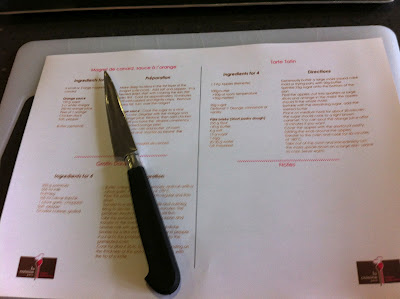
Let’s make duck! My lesson at La Cuisine Paris by Un Homme et une femme, Tales of Paris with Sir and Lady Lancelot

My second date with Sir Lancelot was planned for an early September night that turned out to be a horrible rainy day. Knowing that any plans to be outside were foiled, I received a text message from him that morning inviting me over for a “euro-trash” dinner cooked by Sir Lancelot himself. “Oh, a man who cooks!” I thought. Read more
Off the Beaten Track in Madrid

Apart from the Prado, Madrid’s main attraction to me are all the unusual things you keep coming across that I’ve never seen anywhere else. These are just some of them.

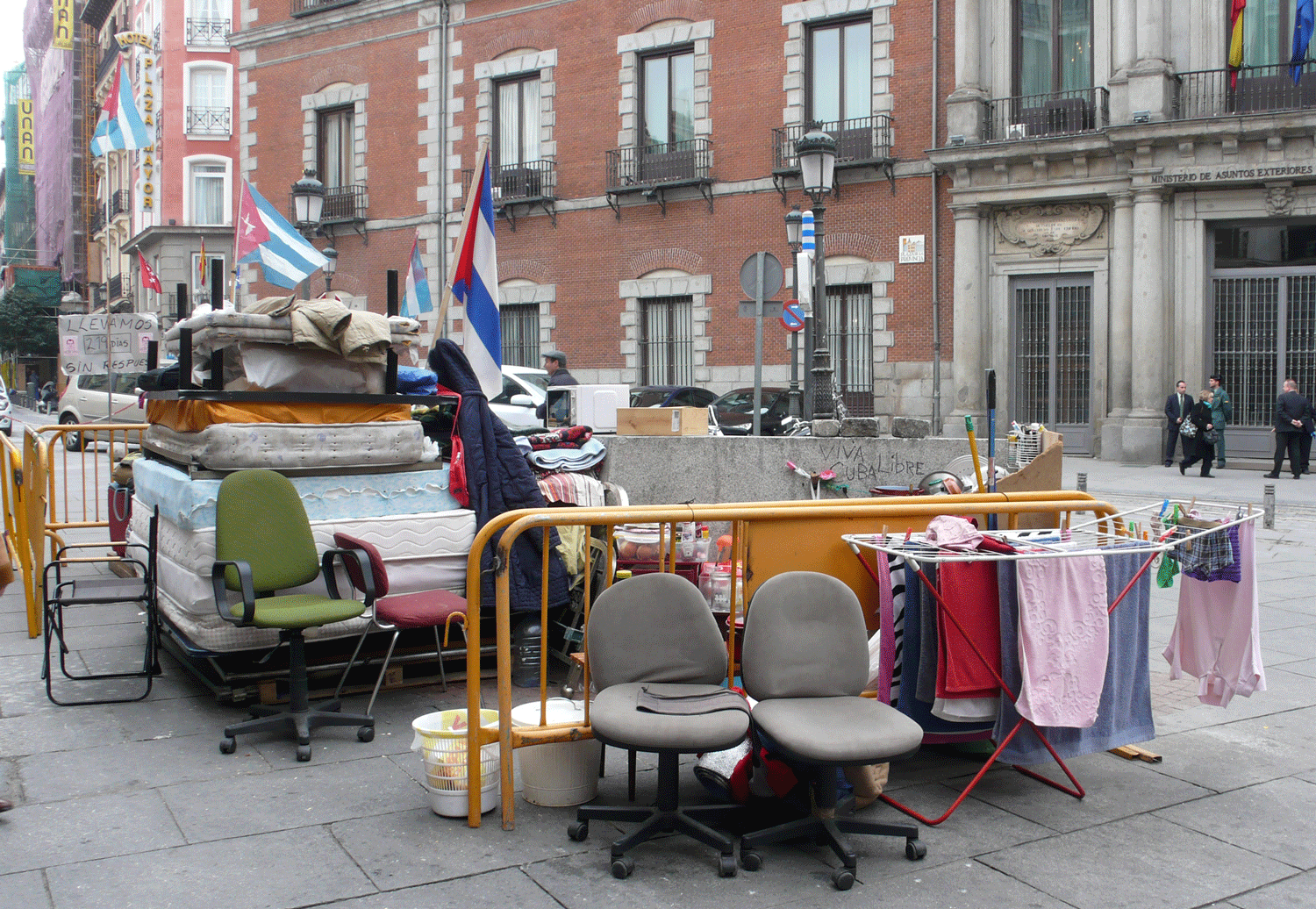
You can just see a building on the left that’s a squat and has signs up that seem to indicate the people have been evicted. During the day, all their clothes and furniture are gathered together in the middle of the square (Santa Cruz) and at night, they line up their mattresses under the nearby arches.

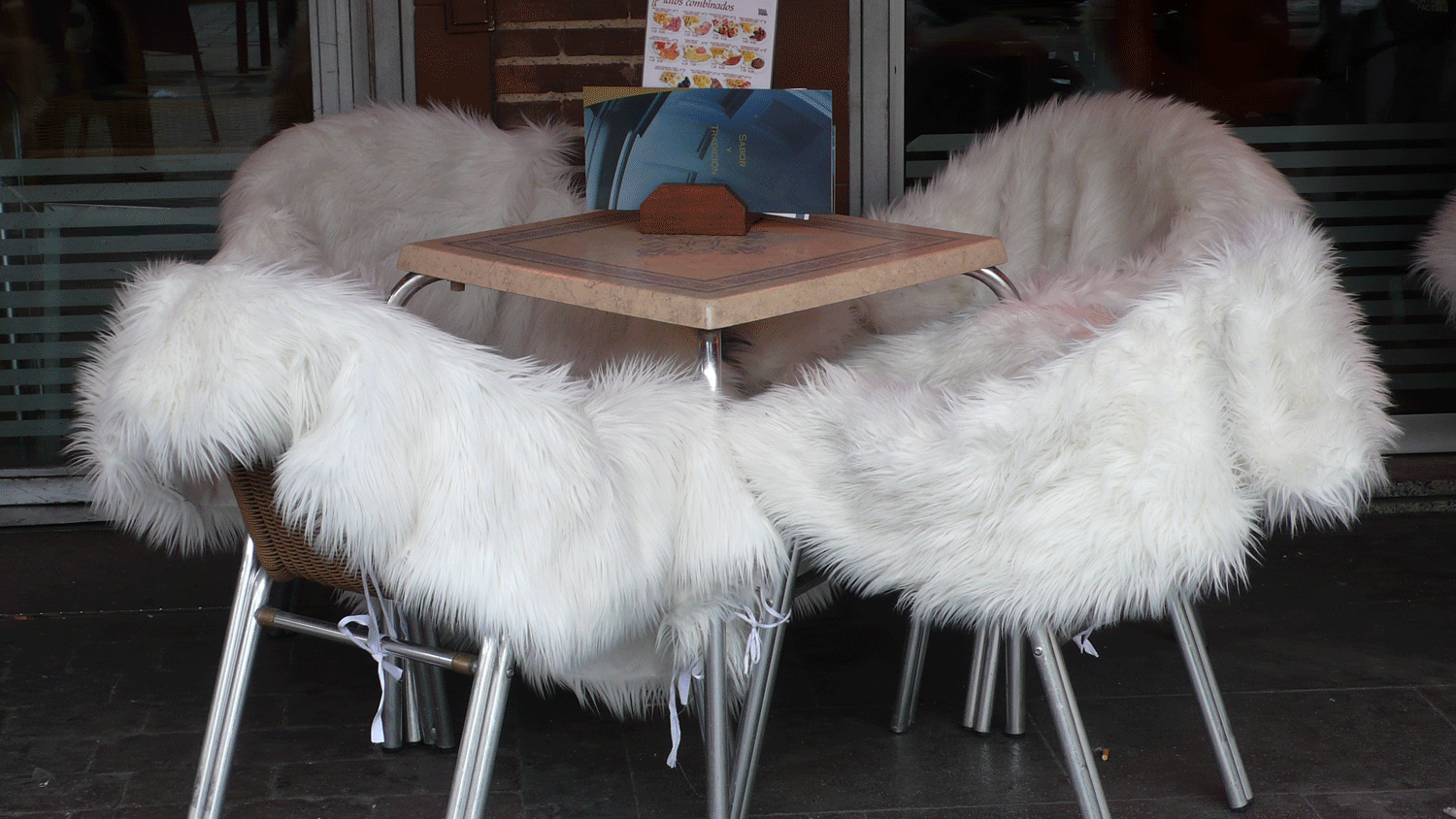
How to keep warm in a terrace café!

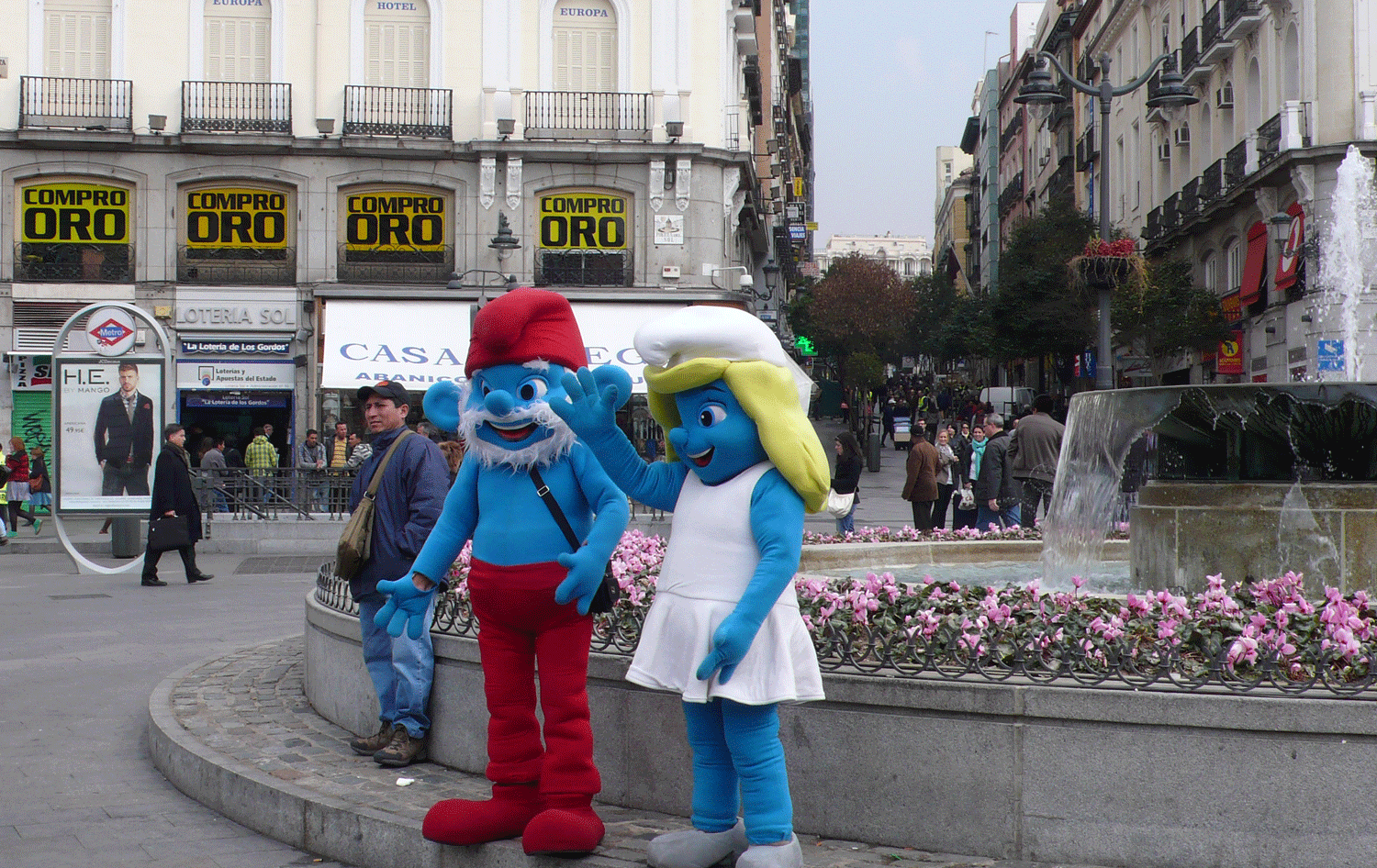
We saw a lot of cartoon characters in various places throughout Madrid posing for photos and asking for money.

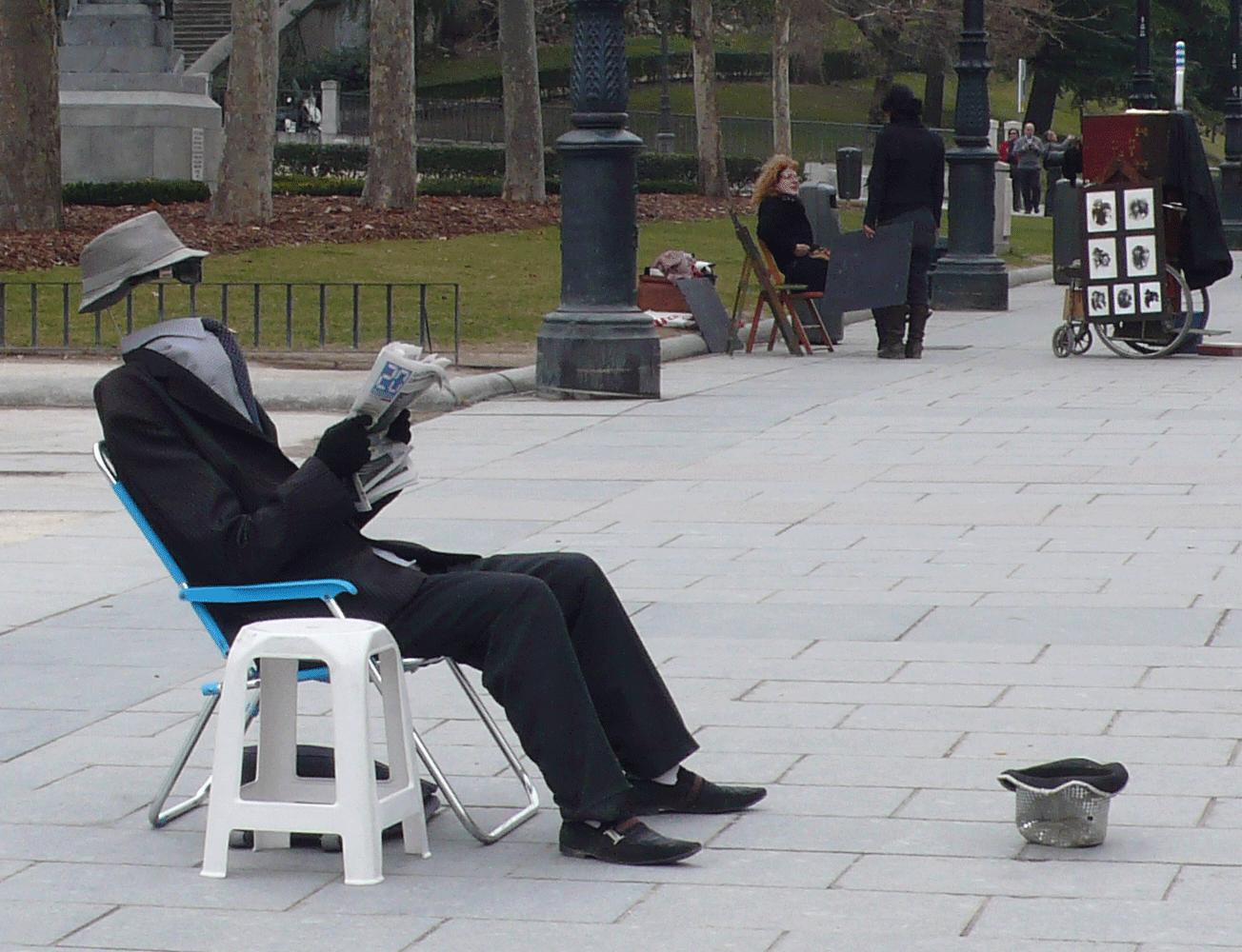
Particularly in front of the Palacio Real, various invisible men were to be seen. This was my favourite.

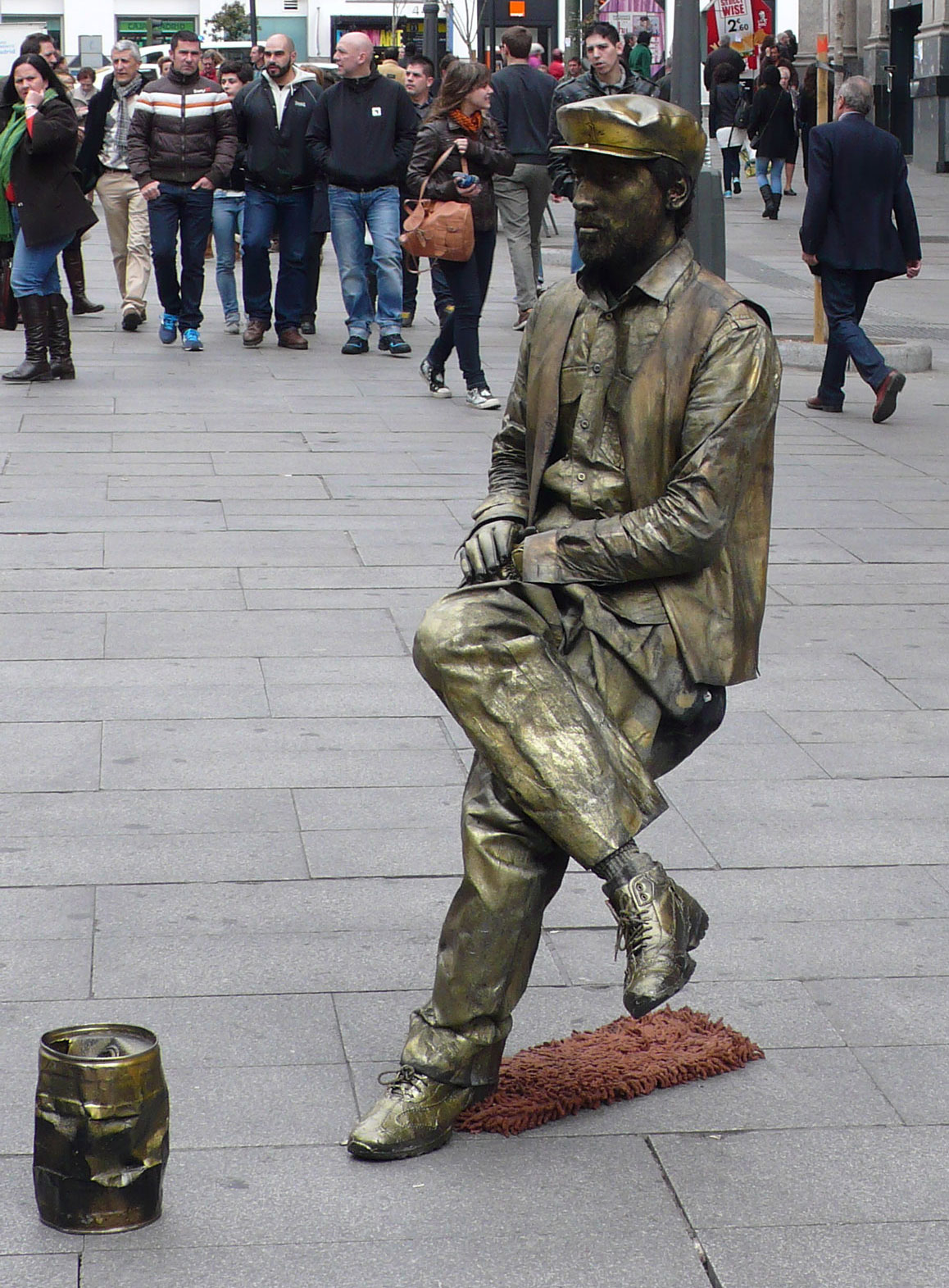
The “living statue” is a well-known attraction everywhere in Europe but we were not convinced that this “escapee from Vesusius” was really alive. I think he might just set up his plaster cast and collect the money at the end of the day!

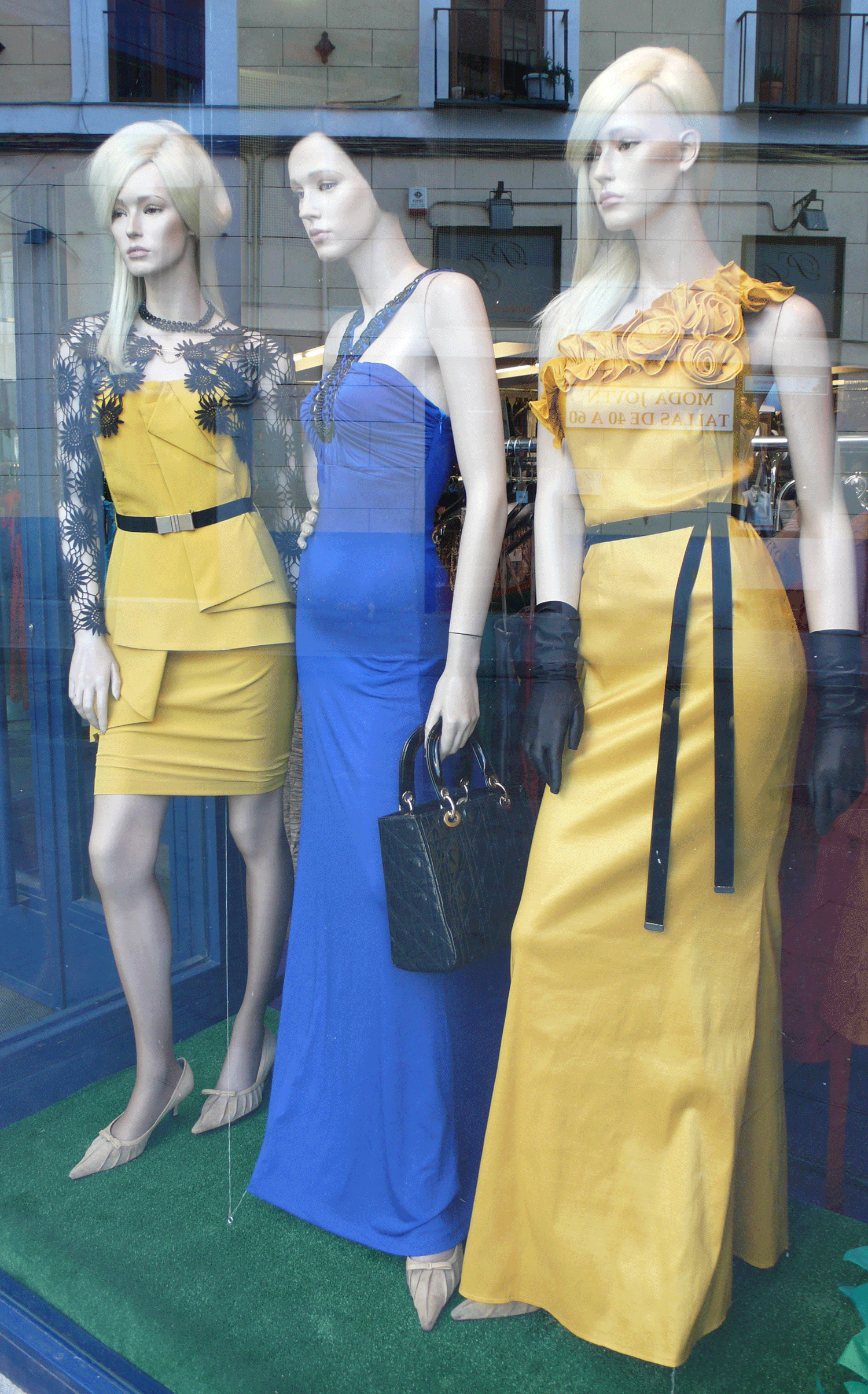
There are many shops with this type of fashion. Always very colourful. Lots of fabric shops as well which have virtually disappeared in Paris outside the Quartier Saint Pierre.

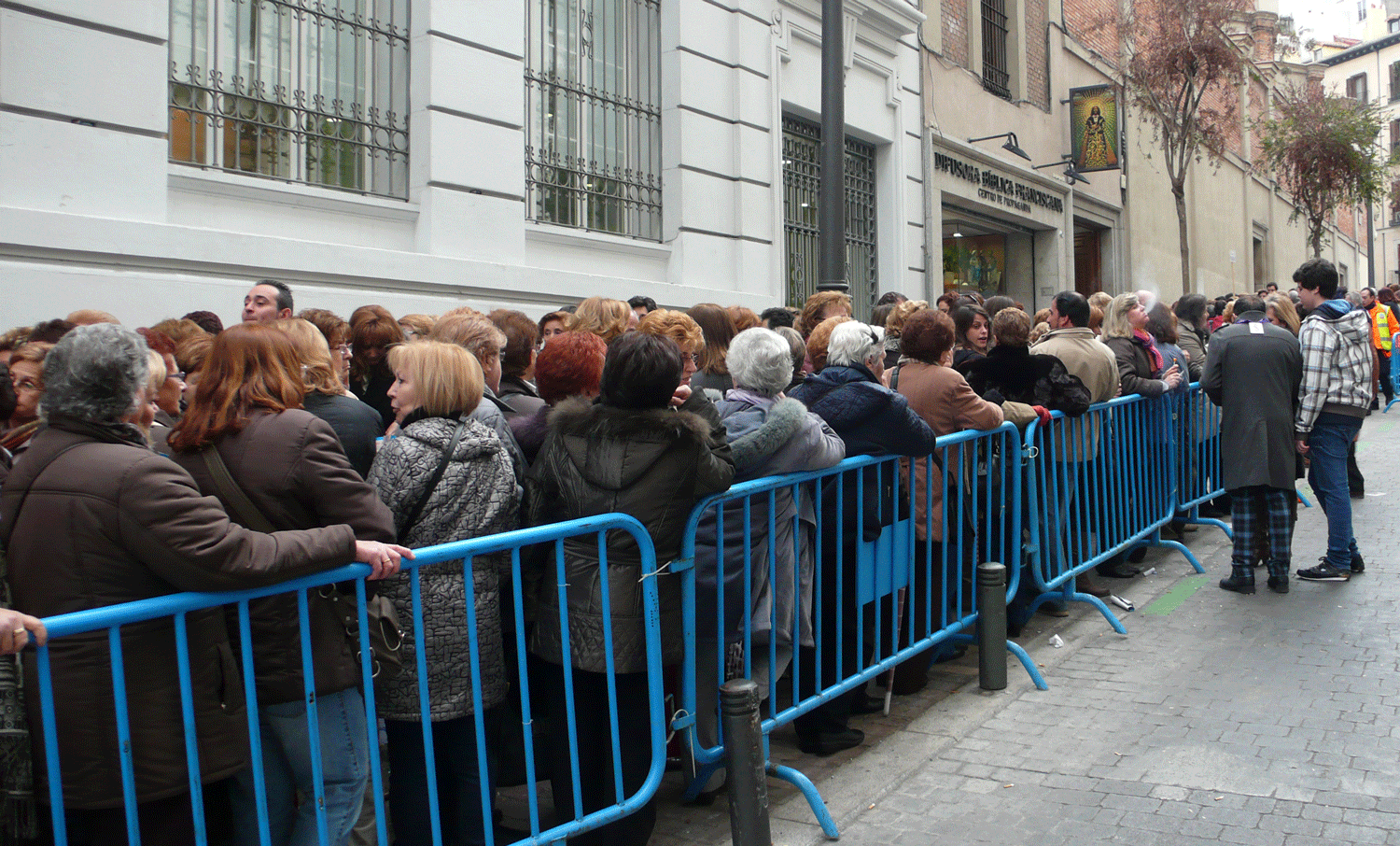
We came across seemingly hundreds of these queues and couldn’t work out what they were all about until we eventually came to a church that was bursting with people already.

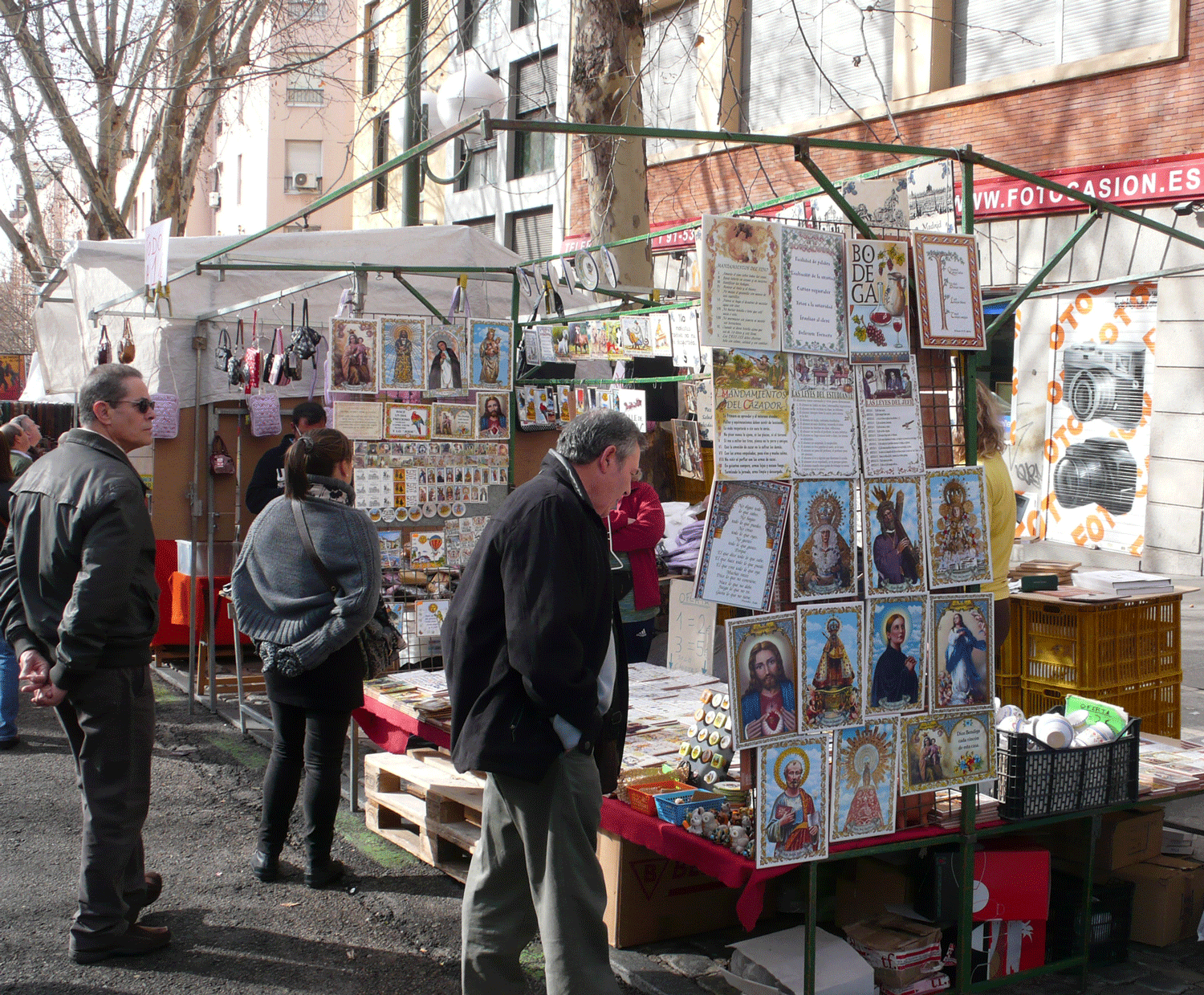
Another indication of how alive religion still is in Spain is this stall on the Sunday flea market.

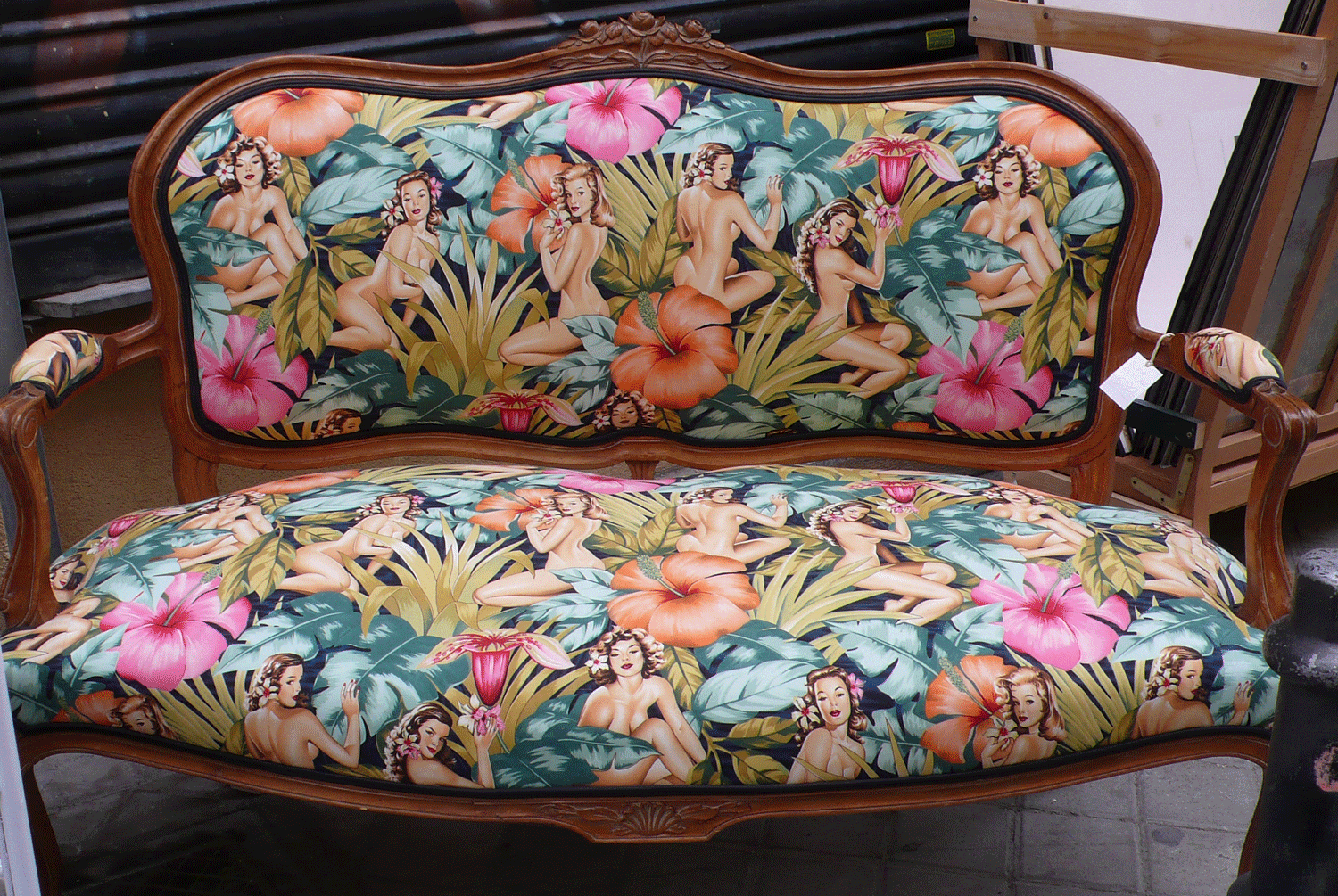
And on the same flea market, just look at this sofa!

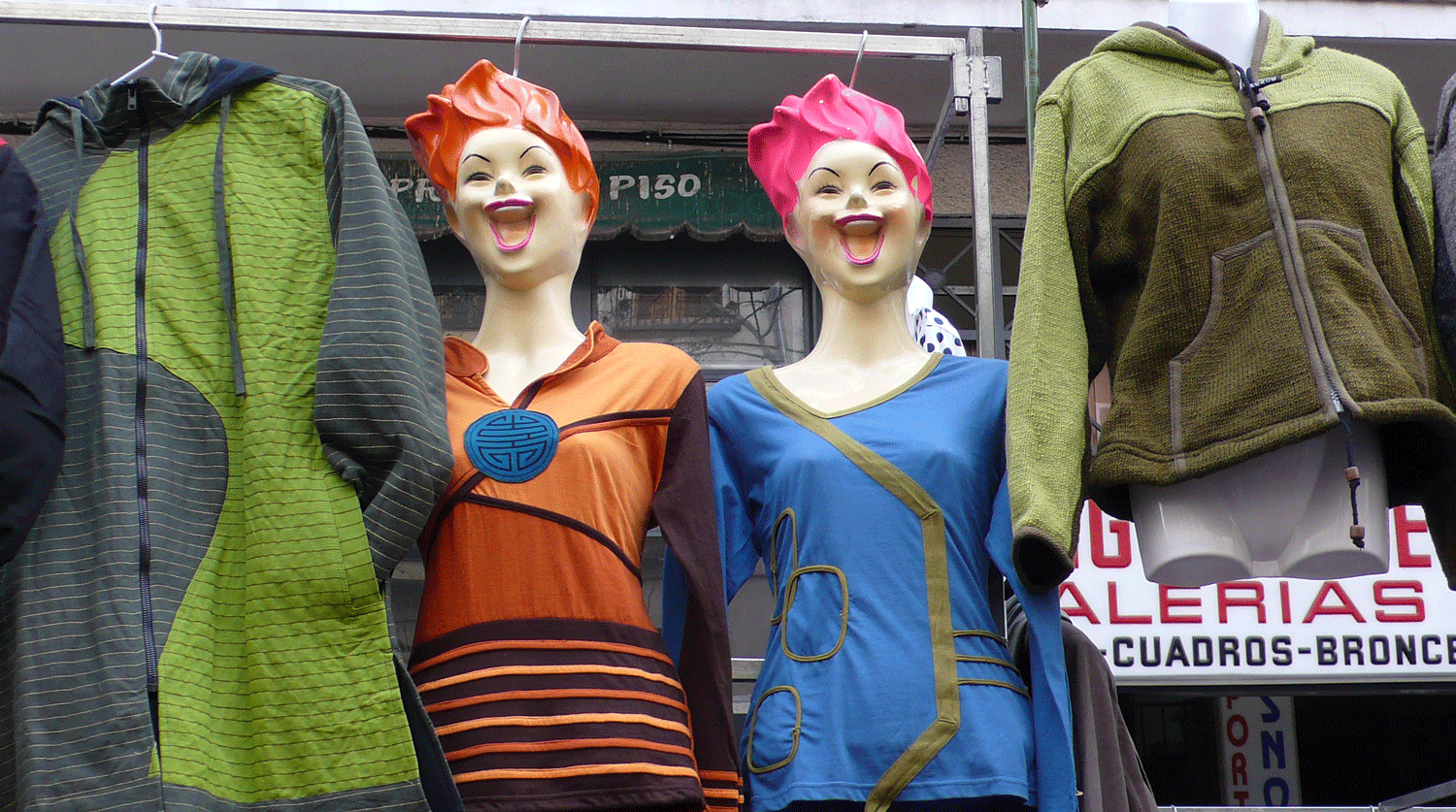
On the same market, the dummies are obviously having a whale of a time.

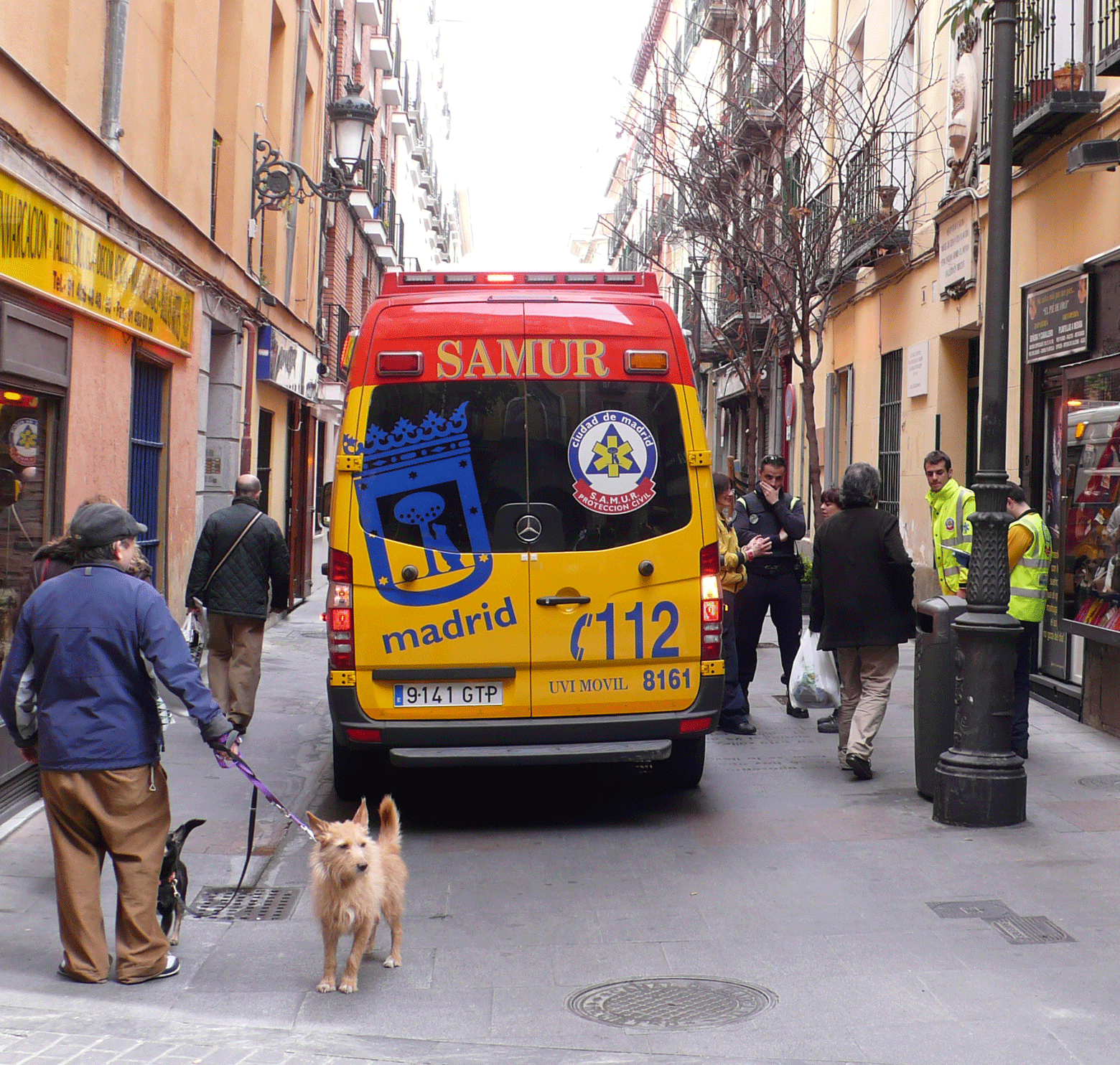
I don’t know whether the emergency medical service is a colourful in the rest of Spain!

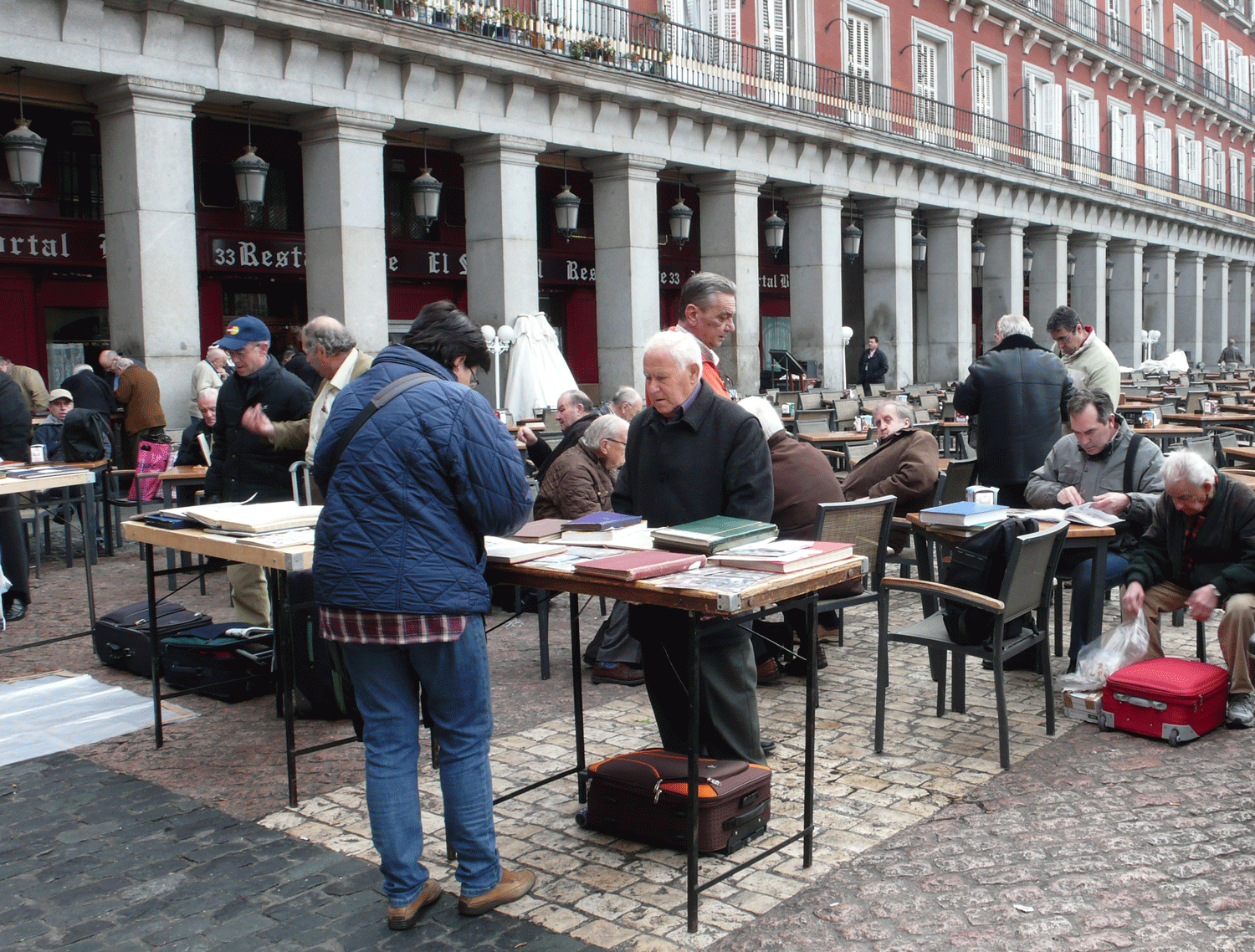
Our Plaza Mayor turned into a very busy and eclectic collectors’ market on Sunday.

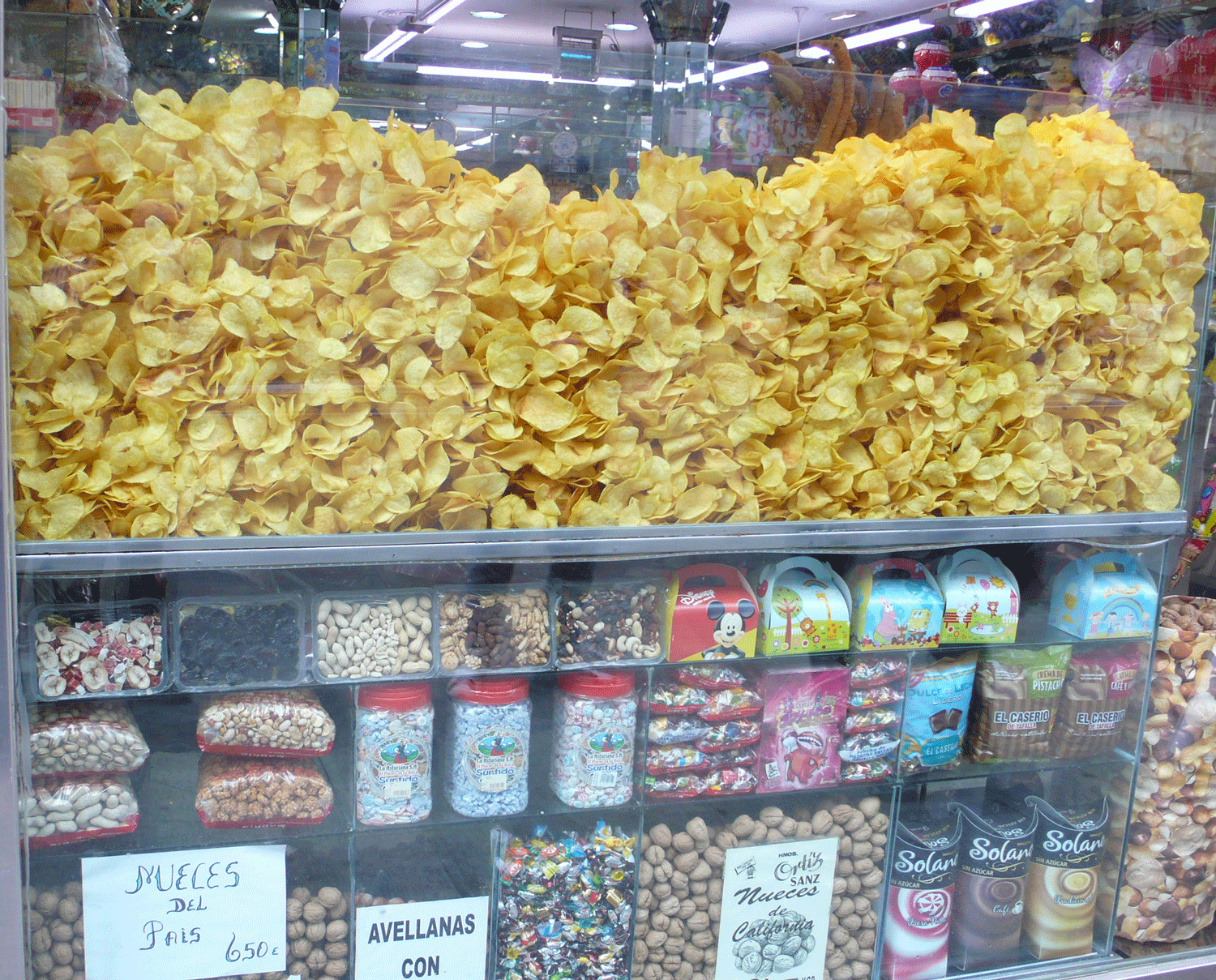
Anyone for crisps?

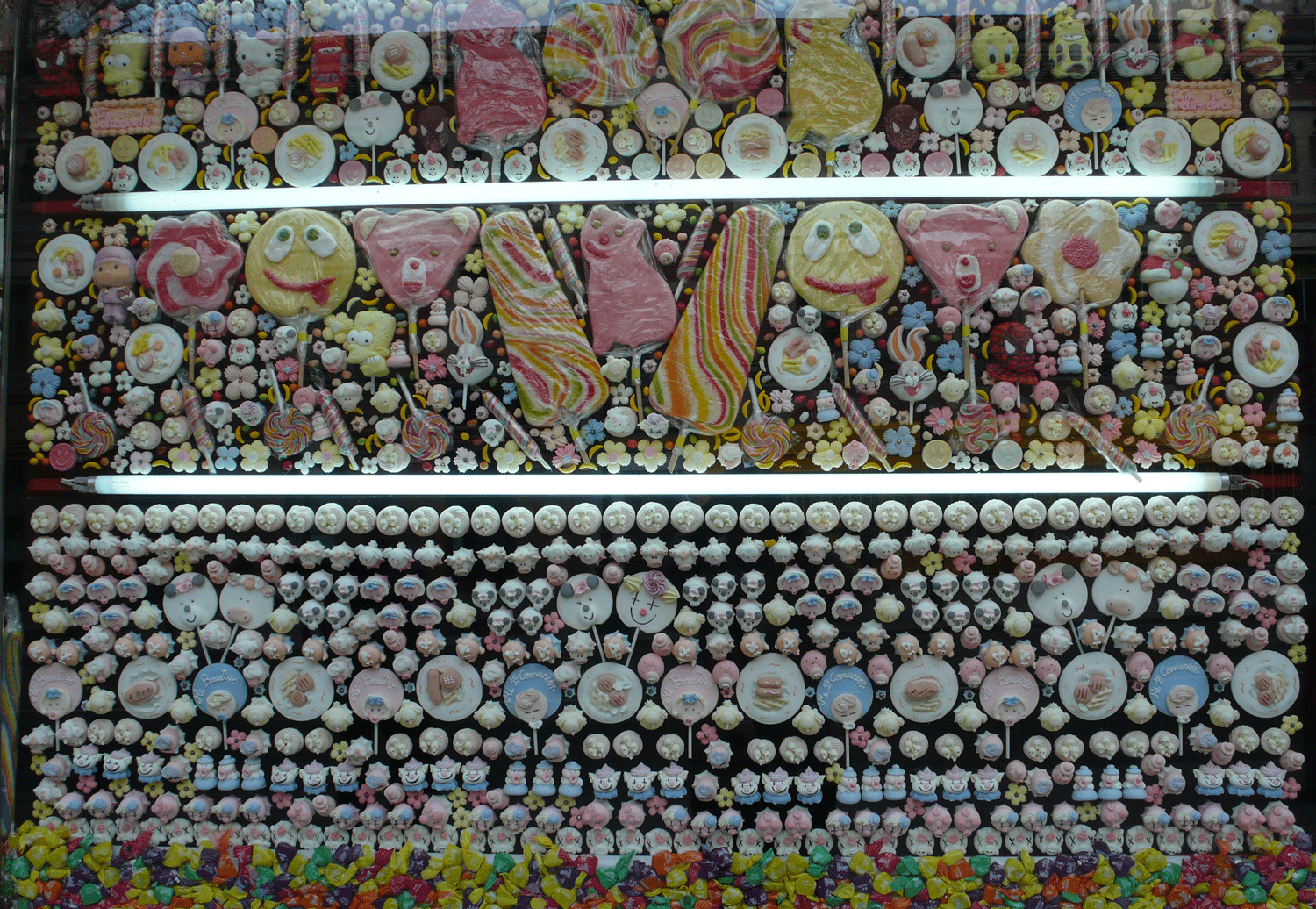
And you can follow them up with sweets …

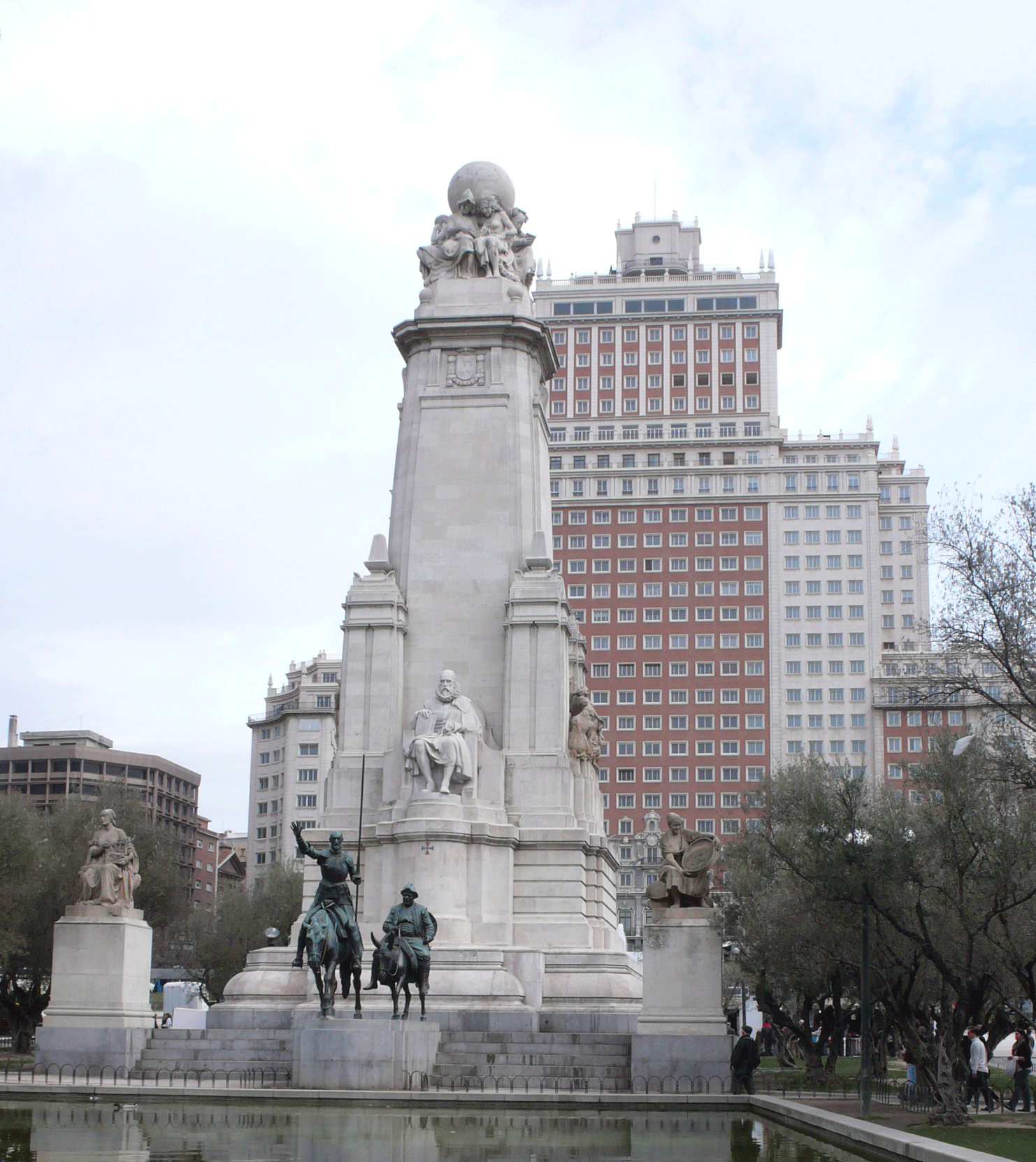
And last, but not least, we have Cervantes with his famous Don Quixote and Sancho Panza with a typical skyscraper from the Franco era (1950s).

The Bacalao in Madrid

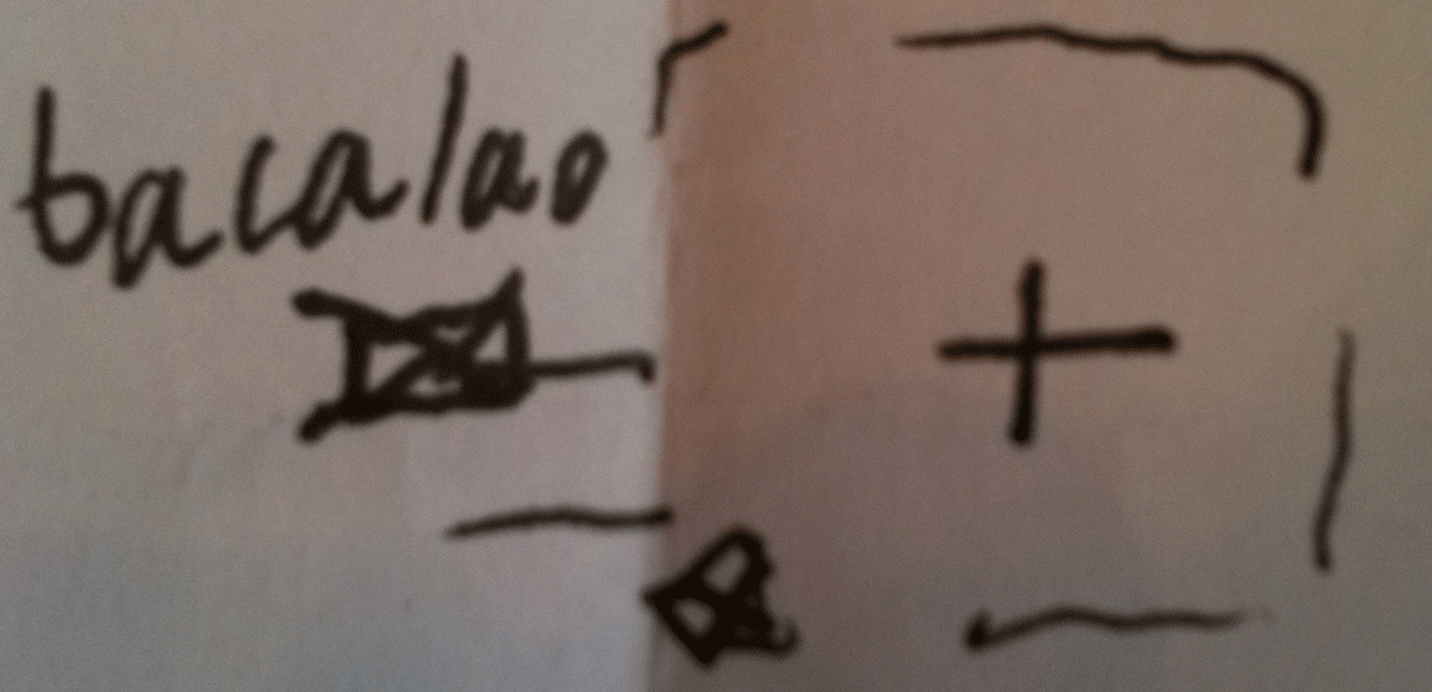
Before we left Paris, Miguel, our Spanish home exchanger, had a look at the list a French friend had given me with places to eat near the Plaza Mayor. The first address was El Madrono. “Ah yes”, he said in Spanish, “El Madrono is good, but just across the plaza, there’s a better one. You like fish? El bacalao. Very good restaurant. If you can’t find it, just ask”. That’s what I understood anyway. So he drew this little mud map with a cross in the middle, showing El Madrono on one side and “bacalao” on the other.
We didn’t get to the apartment until after 9.30 pm, but as we discovered in Sevilla last year, going out to dinner at 10 pm in Spain is not a problem. They do everything about 2 hours later here. I don’t know how Miguel’s going to get on in Paris! Relationnel followed the map to the Plaza Mayor and we started looking for the Bacalao. Lots of other restaurants in sight, still no Bacalao. We asked in a souvenir shop but the girl had never heard of it. We then asked a couple about our age, showing them the paper with El Madrono on it. No problem. They knew where it was. Then I explained (in my Italian-style Spanish) that we didn’t want El Madrono but the Bacalao, which was supposed to be better.
They both laughed. The man got out his business card (he turned out to be a lawyer) and wrote down the name of a good Basque restaurant for the next evening with a phone  number (that he knew off by heart !). After that they showed us the way to what we thought was the Bacalao. Suddenly Relationnel saw a big stone cross. “There’s your cross and look, there’s El Madrono!” So, after consulting the mud map again, we set off the look for the Bacalao.

After at least a quarter of an hour, having tried in every direction, I suggested that we forget the Bacalao and go to El Madrono instead. We went in and were taken through to the dining room which was completely deserted. We consulted the bilingual menu and then it dawned on me. “Bacalao” means “cod”!!! Miguel had obviously said “a good restaurant  to eat cod, better than El Madrono”. No wonder our lawyer and his wife were amused.

We obviously ordered “bacalao”. Every time I thought about the confusion, I laughed. So much for my Spanish!

Sunday’s Travel Photos – Madrid

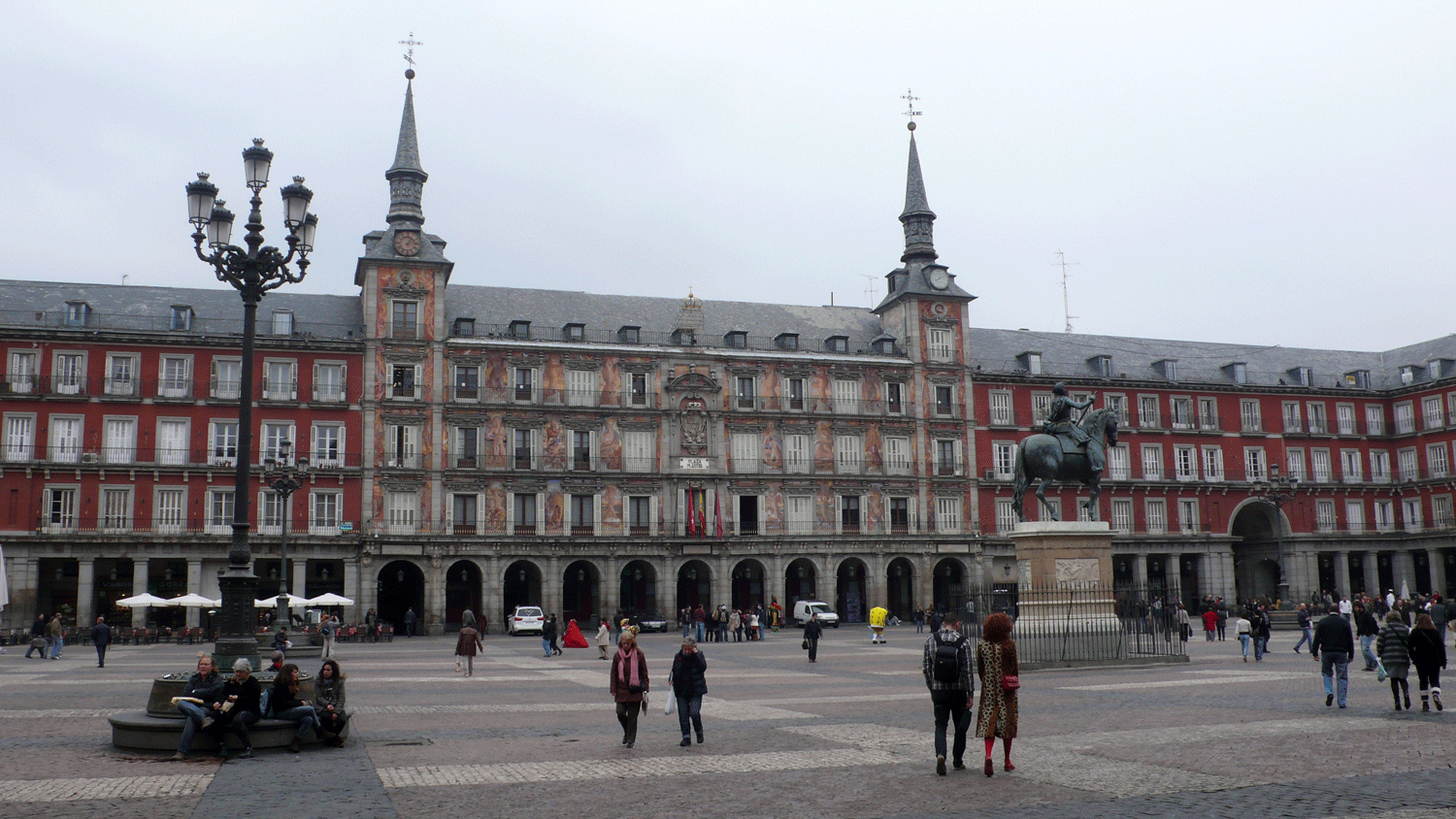
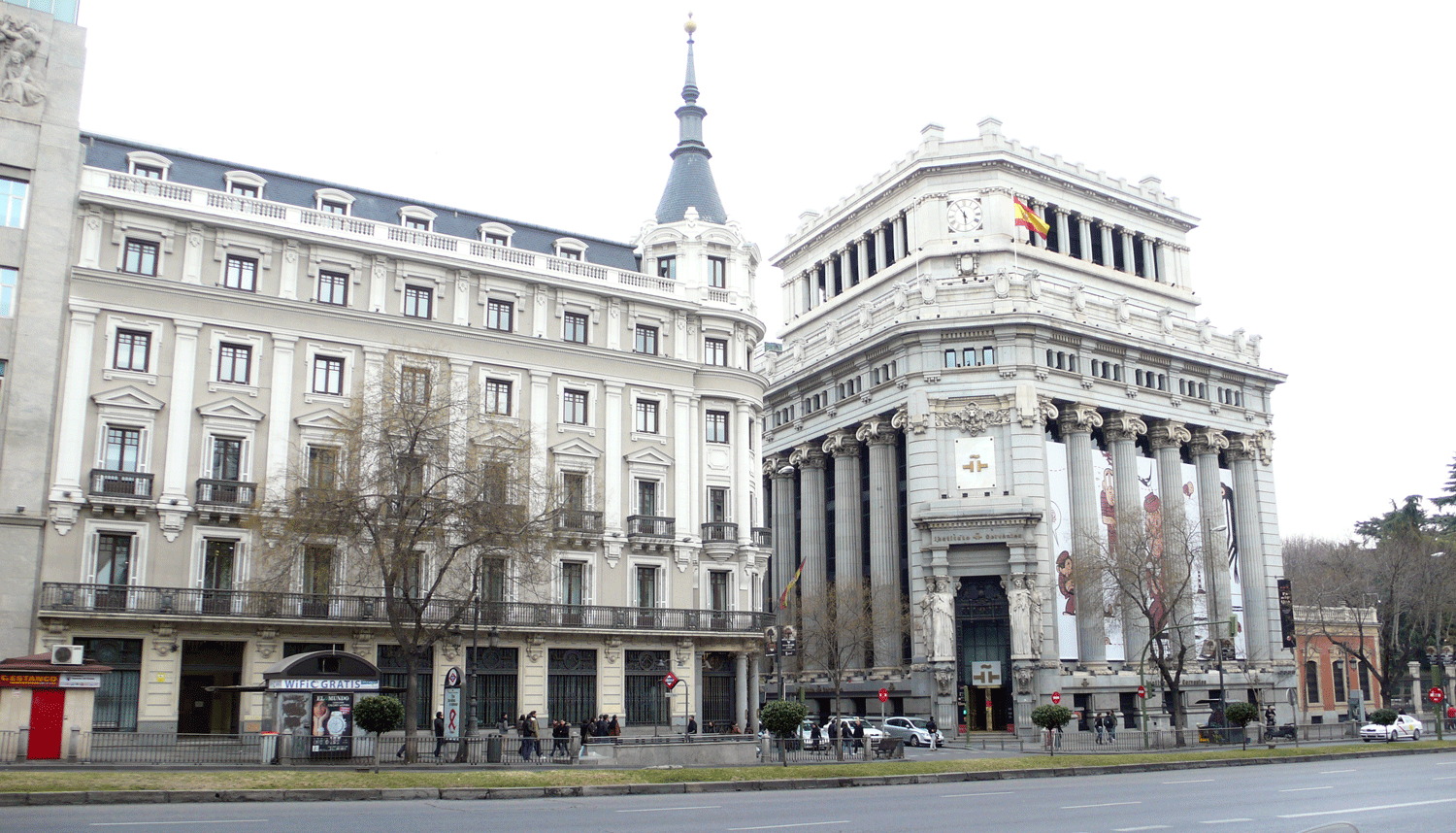
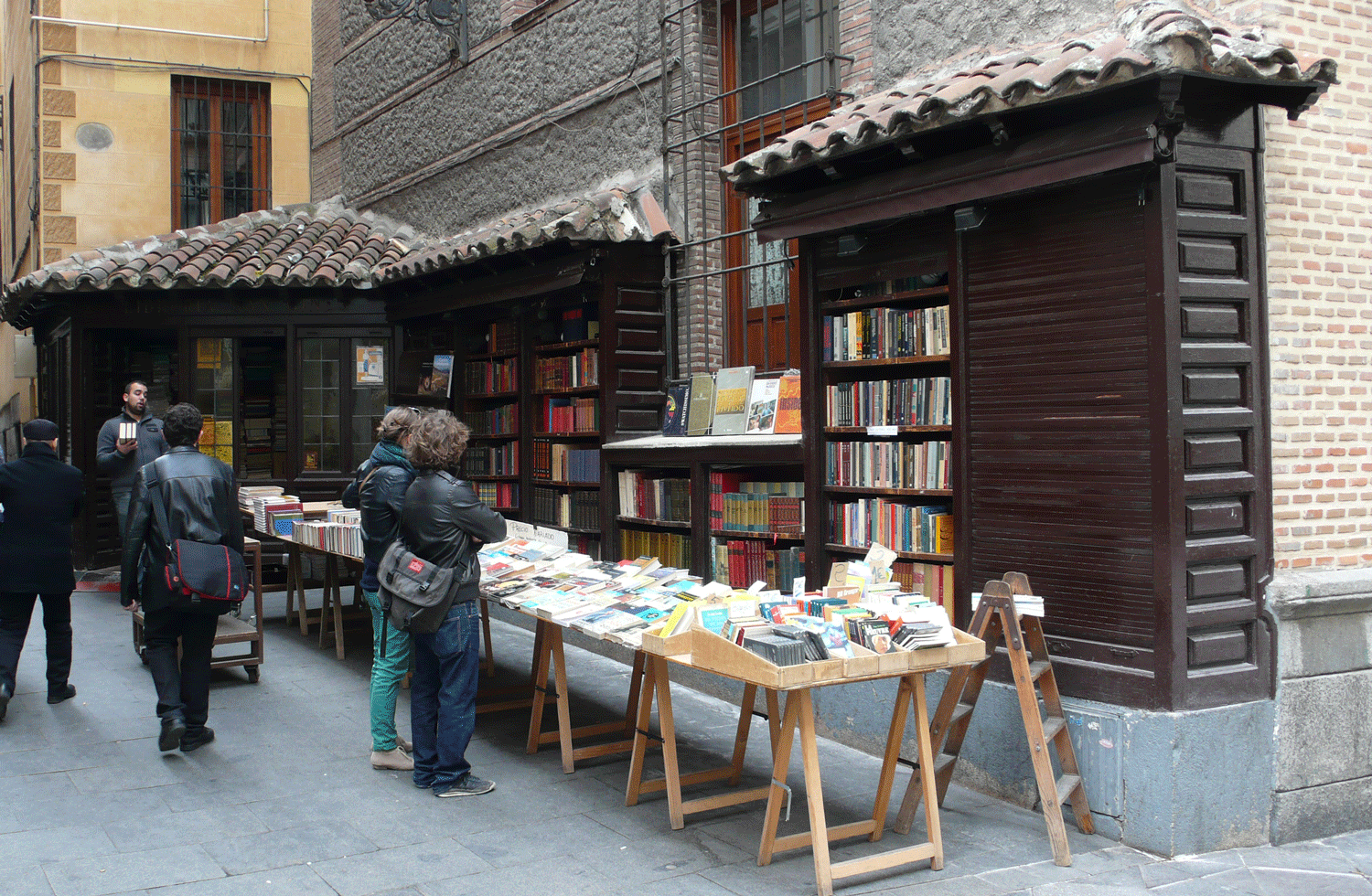
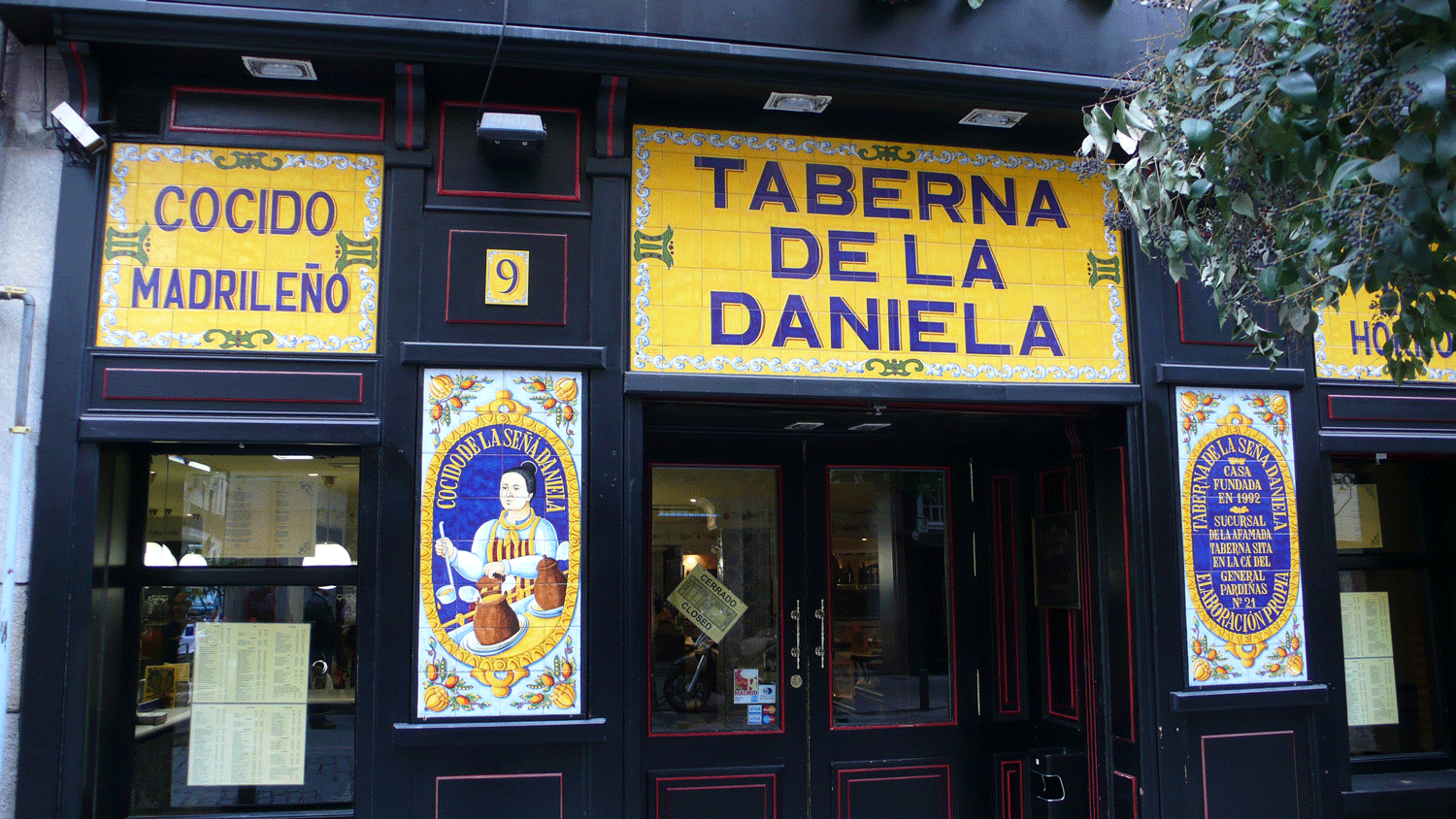
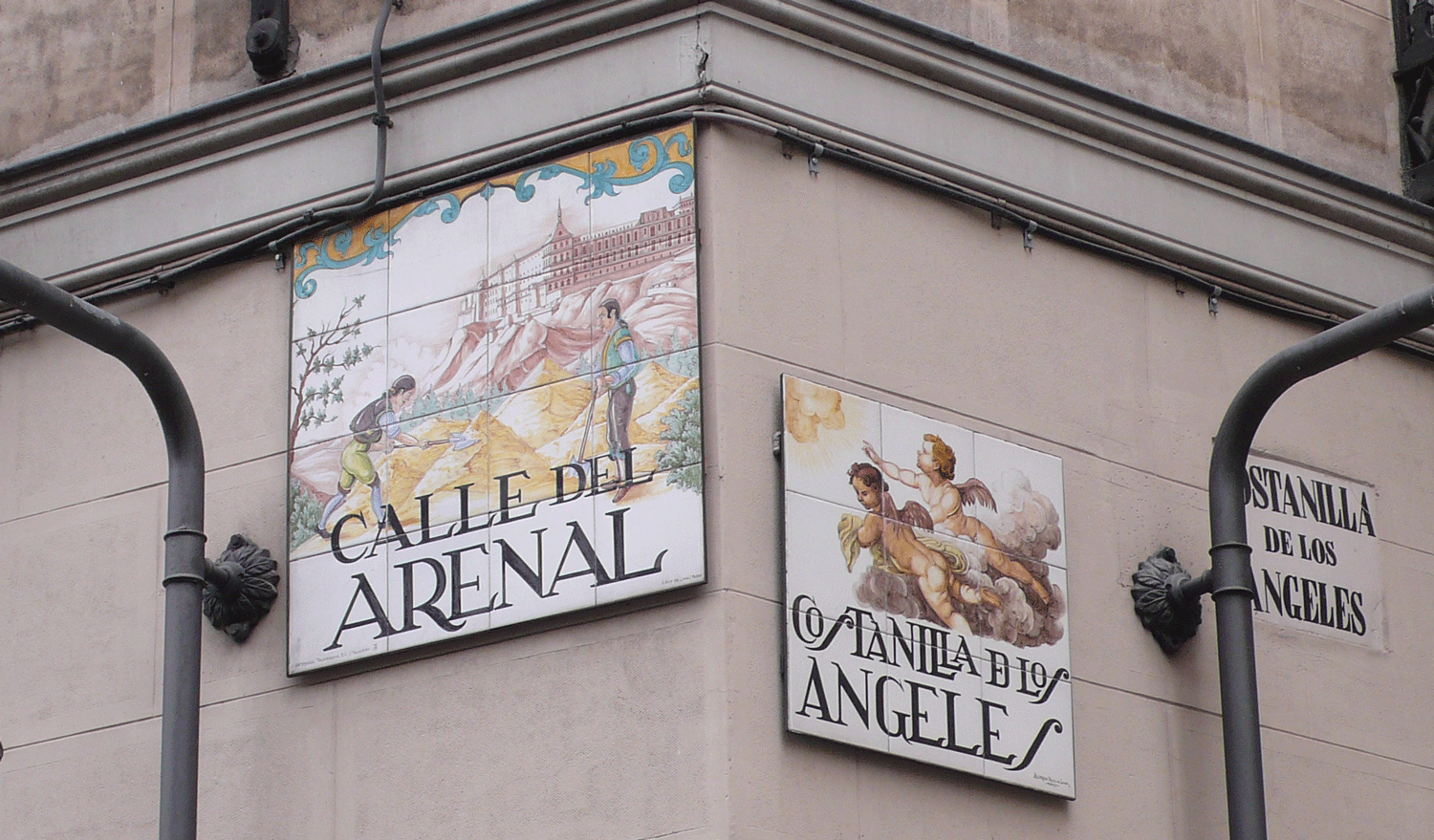
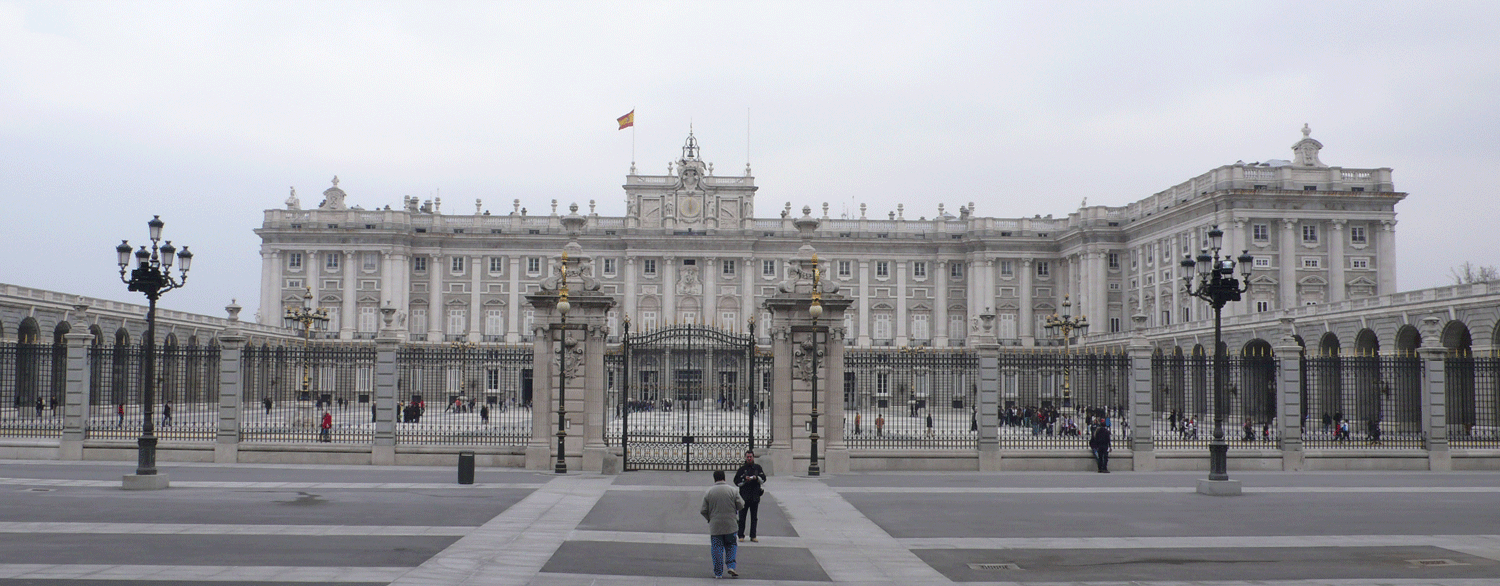
The photos below are representative of my first impressions of Madrid – the Plaza Mayor, which is our neighbourhood for 4 days, long, sweeping avenues with enormous buildings, little shops and restaurants in the old quarter covered in ceramics, ceramic street signs and the Palacio Real, the counterpart of our own Palais Royal.

La Plaza Mayor

Bookshop in the old quarter
Typical Taverna
Ceramic street signs
Palacio Real


from the Tropics to the City of Light