
Summer Time and French Time

Sunset over the Volga

I really love the long summer days in Europe when it doesn’t get dark until 11 pm. Of course the midnight sun is even better. We went to Saint Petersburg a few years ago in July and it was quite magic to actually watch the sun set at midnight. The problem is that on the last Saturday of October, we have to put our clocks back again and it’s so hard to have night suddenly fall at 6 pm even if it’s lighter in the morning. It completely upsets my biological clock and I’m tired for days on end.

Talking about time, that reminds me of another difference between France and Australia. When I was first invited to dinner here, I used to turn up on the dot in good Australian style. However, I soon realised that no one ever seemed ready when I arrived – they even seemed quite surprised to see me – and they certainly didn’t ever turn up on time when I invited them.  It has now been explained to me that if you’re invited at 8, you must get there at 8.20 at the earliest and 8.40 at the latest!

Imprecise versus precise

My own relationship to time is somewhat rigid I must confess. I was brought up by a father who was always on time and a mother who was chronically late – she would have done very well in France.  Relationnel is exactly the same. He doesn’t even wear a watch on weekends. I know why people are late of course. I’ve had time to study it over the years. They always think they can do one more thing before they go, such as shine their shoes or send an email (typing with just two fingers of course), take the rubbish out (not that I really mind, that is one job I am allergic to), while people who are on time know they can’t. It used to exasperate me terribly with Relationnel because there are some things where you need to be on time such as movies and planes.  One day he told me “Je ne suis pas à une heure près” which roughly translates as “give or take an hour”. Five minutes, OK, even ten minutes, but an HOUR? After that I realised that I would have to change my way of thinking altogether.

Among English speakers, we always check when giving a time, “Do you mean French time or English time ?” It’s safer !
Halloween and Pumpkins in France

I can remember being in Troyes one year at Halloween and was surprised to find a restaurant decked out in black and orange because although Leonardo was born on 31st October, I had never seen any sign of Halloween in France. Then I heard the explanation on France Info. I love that radio because it keeps repeating the same news all day. If you get distracted by something else (and I always do), you know you’ll hear it again a little while later. It has lots of lifestyle and other interesting tidbits as well. I get a lot of my scattered knowledge from there. Far better than watching the 8 o’clock news with one of those annoying news readers who wear tons of make-up and carry on like film stars. Also, you don’t get the horrific pictures that you do on TV. I have still not seen any videos of 7/11. I’d be having nightmares if I did.

So, back to Halloween. In 1992, a costume company called Cézar bought out an American firm and found itself with a huge number of Halloween costumes. It opened a mask museum in Saint-Hilaire-Saint-Florent near Saumur in the Loire and did an amazing publicity campaign and that was the beginning of Halloween in France. It boomed in the late nineties before gradually fizzing out, probably because it lacks tradition here.

On Sunday, I heard an English woman at the market asking if there were any appropriately sized pumpkins but no one seemed to know what she was talking about. Speaking of pumpkins, they are excessively disappointing in this country. Usually big and tasteless. I bought a butternut in Romorantin last week – didn’t think you could go wrong with a butternut – but it was just like a bland squash. They only make soup with pumpkins here, but I’m not into soup. Some places have started selling what they call “potimarron”. I looked it up in the dictionary and it says « red hubbard squash, red kuri squash », not that I’ve ever heard of it. It’s not bad, but nothing like the Queensland blue. I still have a scar on one of my fingers from cutting up a pumpkin.

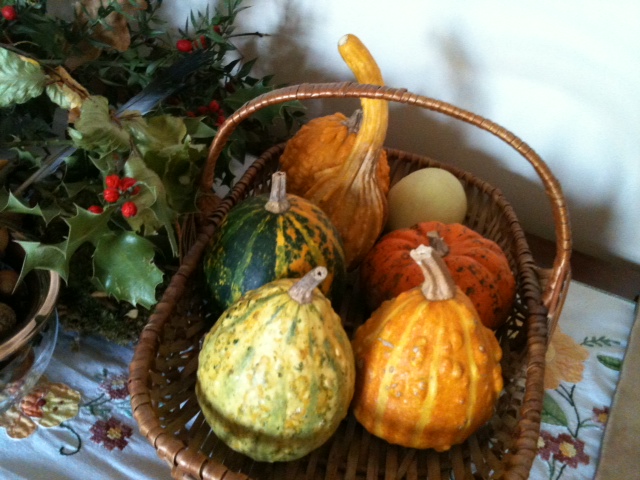
They do sell these neat little inedible squashes though. I found some in the Loire at 0.30 euros a piece. A real bargain. They’ll probably last a couple of months and are great decoration next to my forest floor with its autumn leaves, holly, pine cones and acorns. I even brought some moss home.

One of the first things I’m going to do in my new vegetable garden is plant some Australian pumpkins. That and raspberries.

iPhone Thieves in Paris

Of course, the problem about iPhones is that other people want them too.

When I had lunch at Vilalys in the Palais Royal gardens with my German friend Chris just after I got my iPhone, I naturally had to demonstrate all its wonderful features, particularly since the last time I saw her, I only had my Palm Pilot, cool I must admit but nothing like an iPhone. After lunch, Relationnel and I left for a long weekend and it was not until we were a couple of hours out of Paris that I realised I no longer had my iPhone.  A weekend of anguish. The first thing I did when I got back was to go and see them and, wow, was I lucky! The waitress found it on the table when I left and gave it to the manager. I was so grateful that I bought them all Lotto (lottery) tickets in true Australian style. They were most surprised as it’s an unheard of “thank you” in France.

Recently however, Black Cat phoned me when she got to work, most upset. She had been listening to music on her iPhone in a crowded metro when the music cut out. Her iPhone had disappeared at the same time of course … The only good thing was that she was able to buy an iPhone 4. Now she has less recognisable black earbuds instead of the characteristic white ones and never gets her iPhone out in the metro.

I was careful about mine for a while but I gradually got blasé again and the next time I saw Chris, we had lunch on the terrace of the Autobus Impérial, which, by the way, I can highly recommend, unlike Vilalys which, despite the honesty of its staff, has become a victim of its success. It used to be very good, but last time I went, the salmon was overcooked and the other things on the Vilalys Platter were not up to scratch.

Anyway, I had put my iPhone on the table next to me to show Chris some photos when an unkempt-looking Spaniard came up and threw a sheet of paper on the table, begging. I waved him away and so did the waiter. He picked up the paper and left. It was only then that I realised he had taken my beloved iPhone with him! Chris was most upset, convinced it was her fault. I assured her however it was entirely due to my own carelessness. I used her mobile to phone Orange to cancel the account, which took quite some time as they asked for my “confidential code” which the recorded message said was on my phone bill. Not exactly something you carry around, is it? Fortunately Relationnel was home for lunch and was able to give it to me. It turned out to be my pin code. Why didn’t they just say so for god’s sake?

After an excellent lunch which included the best entrecôte I’ve eaten in a long time, Chris and I went to the Orange boutique nearby. We were looked after by a very nice girl (surprising for Orange) who organised a new iPhone but in the meantime, the old one had been cancelled which meant I had to go to another boutique at Madeleine. To cut a long story short, despite the price of the iPhone, the damage wasn’t too disastrous. I was able to reduce my call plan and get unlimited SMS, a most definite advantage as I was constantly going above my 30 per month limit. A couple of weeks later, I spent an annoying two hours at the local police station making a declaration so that the phone itself could be disabled (see link below). Good thing I had my iPhone with me!

Apparently, the paper trick is well-known. Our real estate agent in Blois said that she’d only had her iPhone one day when a customer came in, sat down and asked about a place to rent. He, too, put a piece of paper on the table and when he left, there was no more iPhone!

This ever happened to you ?

L’Autobus Impérial: in a small street in the Châtelet Les Halles area,  midday menu at 13.50 euros for main course + café gourmand or 15.50 euros including an entrée + main course or main course + dessert + wine + coffee.

How to disable your iPhone and why: http://forums.macrumors.com/showthread.php?t=426564


Blèsoise – a demonym

I think the only thing I don’t like about having bought a 16th century house in Blois is that I’m going to be Blèsoise. I’m a bit put off by all those slippery s-pronounced-z-sounds. When you come from Townsville, the most you can be is a Townsvillean or a Townsvillite. We have Sydneyites and Sydneysiders, Melbournites and Brisbanites. Dare I suggest Darwinians? Surely not! And I wouldn’t know what to call people from Perth (they live on the wrong side of the country anyway) or Adelaide (which isn’t much better).

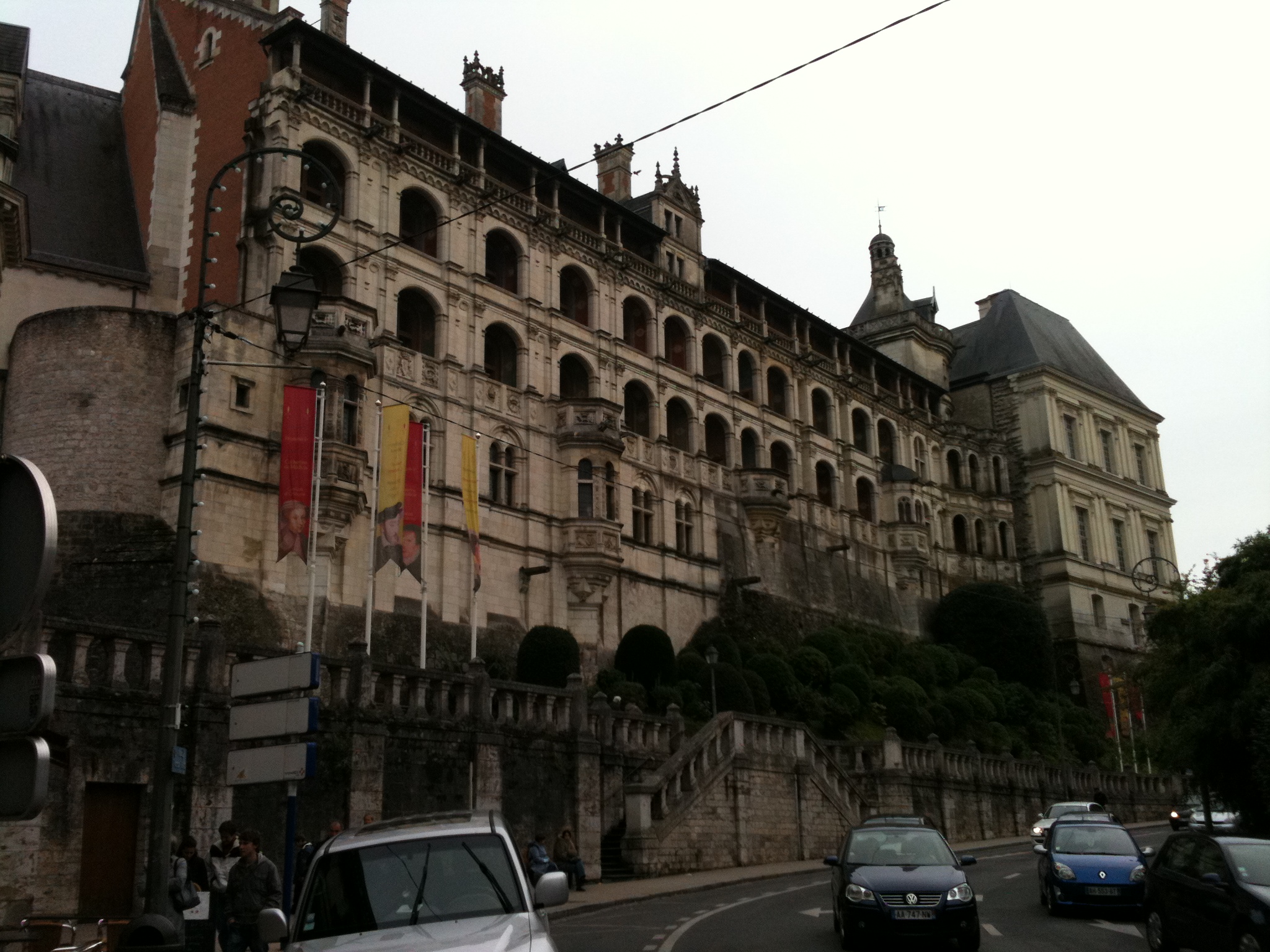
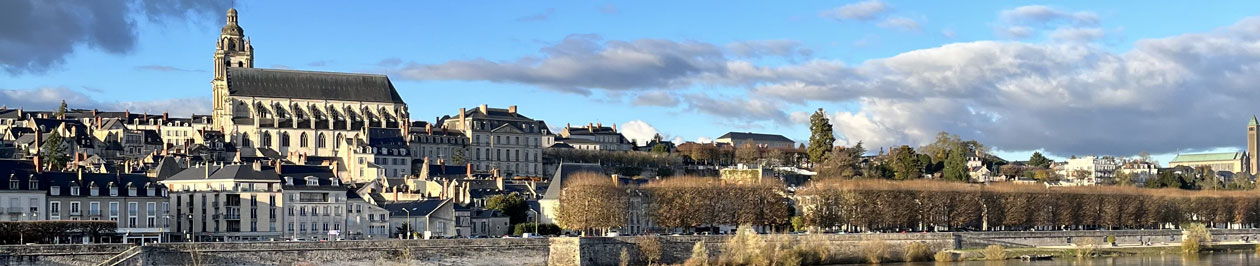
Château de Blois

But in France, every town has its own adjective, called a gentilé (demonym or gentilic in English (bet you didn’t know that one) to describe its inhabitants and there are some real beauties. If you live in Saint Etienne you’re a Stéphanois, for example. It’s all a question of etymology and word origins of course. Somewhere along the way, the “ph” in the middle of Stephanos, the original Greek name, got slurred out and turned into a diphthong to give Estienne (after the “os” disappeared and an extra “e” was added at the beginning as well). The “s” was eventually lost altogether. I don’t know if you’ve ever noticed, but the circumflex in French – that little “hat” ^ – often corresponds to an “s” that disappeared, e.g. château = castle, mât = mast, bête = beast, fête = beast, gîte = guest, hôte = host, moût = must, etc.

The people in Angoulême are called Angoumoisins – see that ê indicating a lost “s” again. If you come from Auberive-en-Royans, you’re an Albaripains.  The inhabitants of Béziers are Biterrois, Réginaburgiens live in Bourg-la-Reine, while Cadurciens come from Cahors. If you hail from Carquegou, you’re a Carquefolien.  Now I don’t know why Jarlandins come from Châteaux-Arnoux but there is surely a reason and I wouldn’t mind being a Bellifontaine (beautiful fountain) from Fontainebleau.

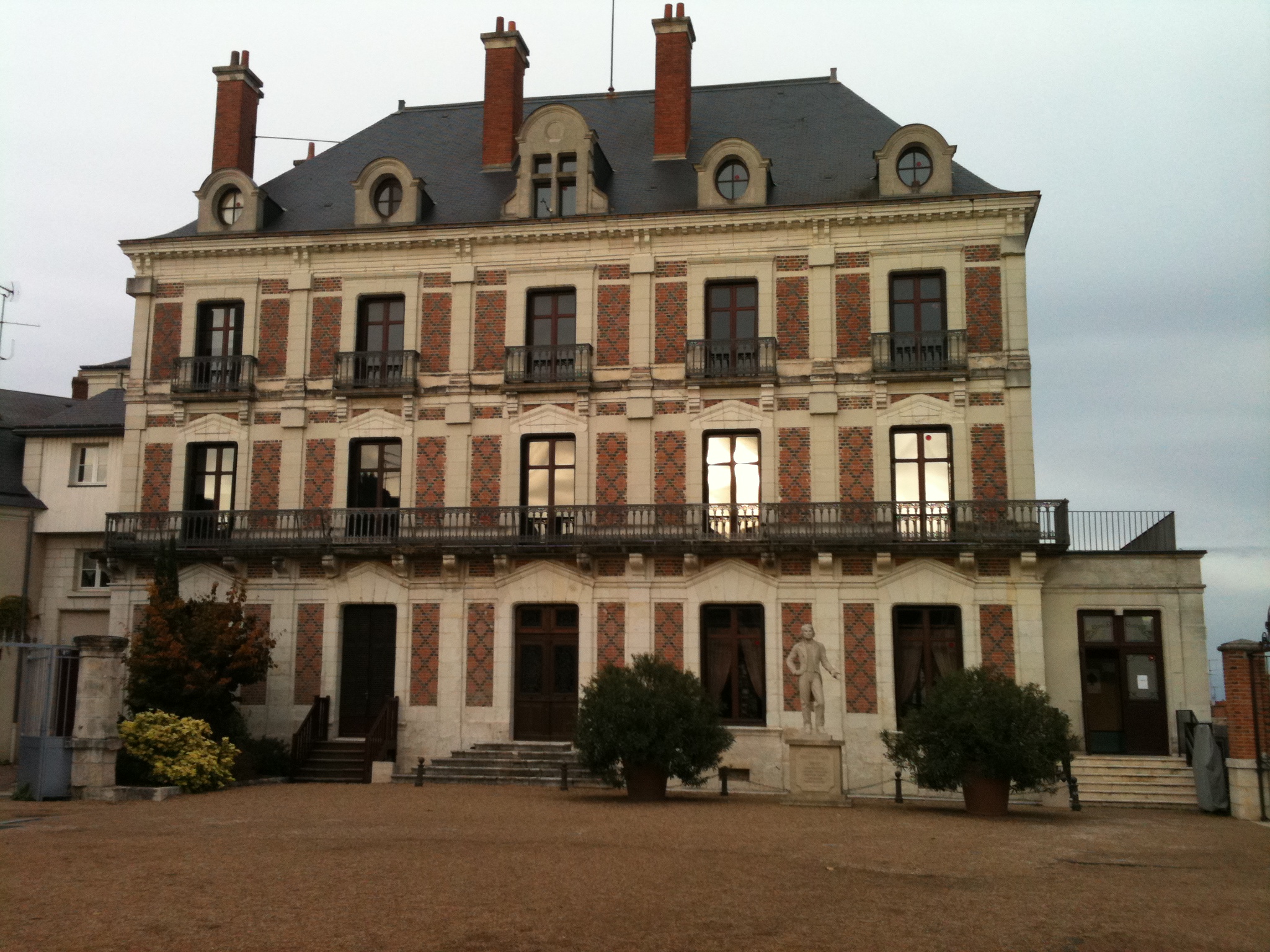
Maison de la Magie

I love the fact that the inhabitants of L’Isle Saint Jourdain are called Lillots and that Radounauds come from Oradour-sur-Glane.  Paimblotins live in Paimboeuf while Pont-à-Mousson has lots of Mussipontains, Pont-Saint-Esprit has Spiripontains and Pont-Sainte-Maxence has Maxipontains!  But it’s the Saints that take the cake each time: Saint-André-Les-Vergers = Dryats, Saint-Brieuc = Briochins (like baby brioches), Saint-Jean-de-la-Ruelle = Stéoruellan and  La Tour-du-Pin = Turripinois. And how about this one? If you come from Villefranche-sur-Saöne, then you are Caladois. I’m not going to pretend I understand that one.

However, the real surprise is Saint-Adresee on the coast of Normandy, whose inhabitants are called Dionysiens, just like 19 other towns in France, but all the others are variants of Saint-Denis, directly derived from Dionysus, the Greek god of the grape harvest, very appropriate for a saint. It turns out that the town was originally called Saint-Denis-Chef-de-Caux. One day, a ship was caught in a fierce storm of the coast; the sailors all but abandoned ship to pray to Saint Denis, and the ship started to drift dangerously into shallow waters. The captain was furious and berated the crew, taking over the helm himself, and saying that only the only thing that could save them was their own astuteness. It woke them from their torpeur and they managed to steer the ship to safety.  So why Sainte-Adresse? Because “adresse” in French means cleverness or astuteness so the “astuteness” of the captain having proved to be more effective than Saint-Denis, the town was renamed Saint-Adresse.

So Blésoise it will be. For the moment, of course, I’m just a plain old Parisienne!

For more French demonyms, go to: http://www.lexilogos.com/noms_habitants_villes.htm

iPhone Crazy

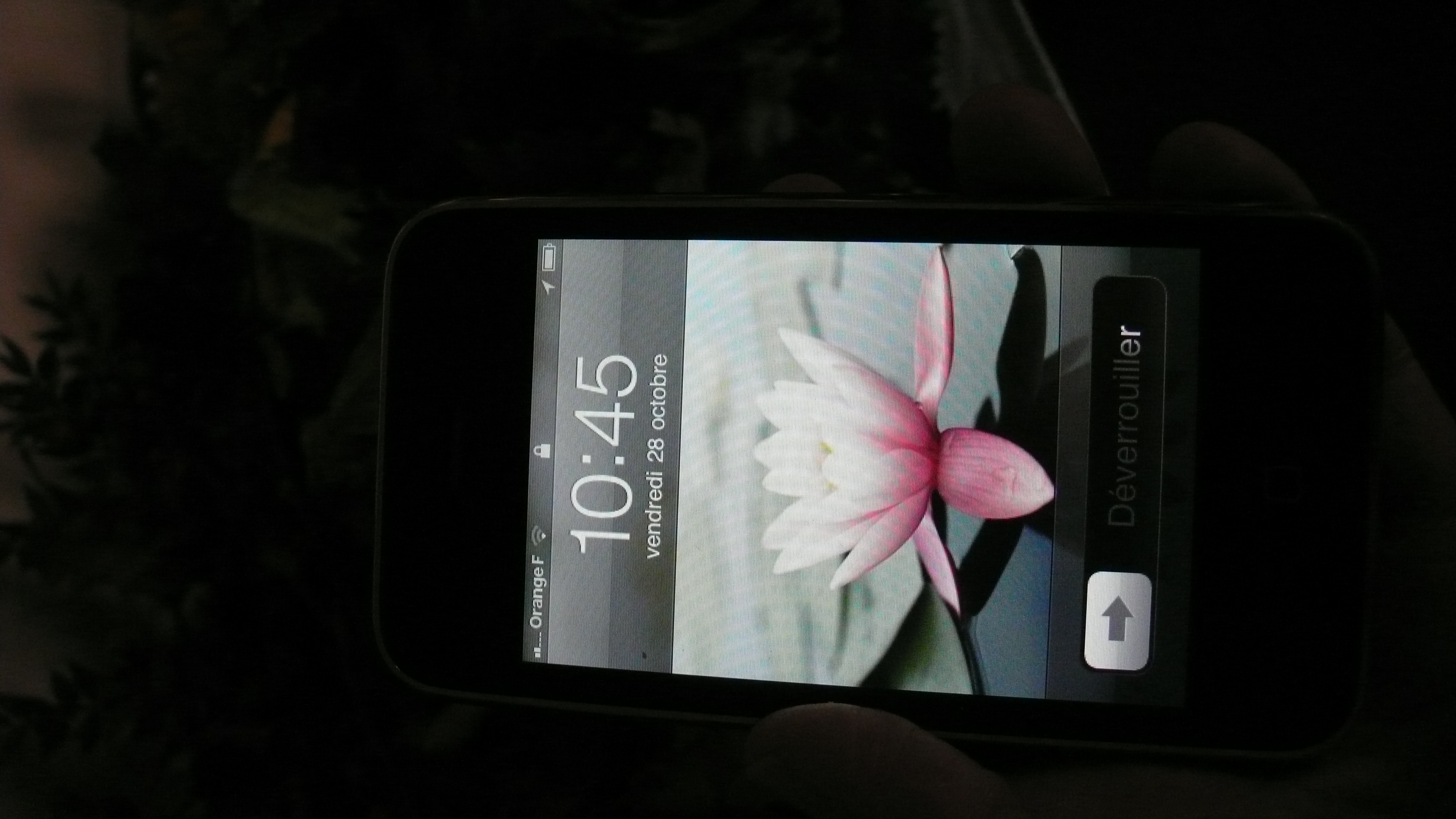
I love my iPhone. Sounds like some corny commercial doesn’t it? But I really do. I used to have an uncool Sony mobile with bluetooth and a cool Palm Pilot. That was before Black Cat dropped her phone in the Seine on the first day of her first real job when she went out onto the gang plank to make a private call. She could see the phone lying on the bottom of the river sinking further into the mud each day until it finally disappeared. But it was a good excuse to get an iPhone.

When she showed me what it could do, I couldn’t wait to have one of my own, particularly as my Palm was no longer performing very well. There was the added bonus that she would be able to explain it all to me. I reckon I’m pretty gadget-literate for my generation but the thought of learning how to work yet another one was a little overwhelming.

Relationnel has a Blackberry which I personally find totally useless. He came home from work one day with this little black thing and told me the others called it a “baignoire”. Why on earth would anyone call a phone a “bathtub”? He thought it might be the shape. Then it suddenly dawned on me. What they were really saying was “baie noire”, the literal translation of Blackberry, which is actually “mûre”. It’s become a standard joke in our house!

But back to the iPhone. I went to the bookshop and bought myself “iPhone pour LES NULS” because it never hurts to be a dummy even though Leonardo scoffed at me. That way I didn’t have to rely on Black Cat totally, particularly as I only see her once or twice a week which is not very often when you get a new gadget. Once I got the hang of the Apps, there was no holding me back. Now I can look up the dictionary or check out something on google whenever I want. I can find out what the weather will be like next day or next week. I can do my banking and take the bus instead of the metro (like a real Parisian) because I don’t have to try and decipher that awful bus map.

I can play WordWarp in the metro or standing in a queue. I can look up the yellow pages and give people directions in the street (instead of sending them in the wrong direction the way I did one night when a lady was looking for the theatre – never ask a foreigner for directions!). I can look up words in foreign languages. I can find out where the traffic jams are and save someone’s life with my Red Cross App (haven’t tried this out for real yet). I can listen to meditation exercises when I can’t go to sleep. I can measure the length of a room (how come I didn’t think of that the other day when we were visiting our new house ?).

I can jot down ideas for my blog and identify unknown mushrooms in the forest (and not be poisoned). I can talk to Leonardo on skype. I can consult my Paris tourist guide or the TV programme (not that there’s ever anything on) and best of all, I can take photos ALL THE TIME. Then post them on Facebook!

You may have noticed that I haven’t mentioned actually talking to people on the phone. It does happen, occasionally, and that’s where having earphones is wonderful. I can talk to Black Cat while I’m making dinner or hanging out the washing or doing some other boring thing. I can consult my emails whenever and wherever I like. And I can flick the screen and make it all big enough to see. And do you know something really strange – it took me two years to realise than when I swap languages from French to English, the keyboard switches from azerty to qwerty!!!

So, tell me, why do you love your iPhone?

Black Cat

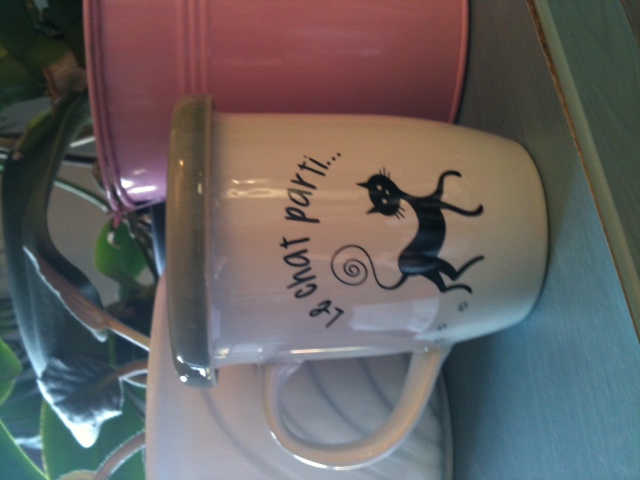
“Black cat entre home. Y’a pas happy moi. Moi pleure. Black cat parti. Moi happy.”  A direct quote from Black Cat at the age of 2 ½ when a stray cat came into the house and upset her. And that is typical of the way she used to talk. Growing up in a family where Mum spoke English to her and her brother and to the occasional English-speaking friend but French to her father, she assumed everyone spoke both languages. So I guess she just took the first word that came into her mind or the easiest to pronounce.

I did wonder whether she would ever manage to speak normally. A few months later, when she started maternelle (the French state-run pre-school that begins at about the age of 3), the teachers had me a bit worried. “She’s obviously very clever and knows how to do a lot of things. It’s a pity we can’t understand what she’s saying though”, they told me. As well as mixing up the two languages, she had a few pronunciation problems such as “fwing” for “swing” and “wabbit” for “rabbit”. I had no trouble understanding her of course, but that’s often the case, isn’t it, even if there’s only one language involved.

By the time she was six, she had become much more comprehensible but had practically stopped speaking English even though she could understand everything I said. We went to Brittany on holidays and met an English family with a little girl the same age. They got on marvellously and her English seemed to reappear out of nowhere. When we left, however, I explained to her that if she continued to talk to me in French, she would forget how to speak in English and wouldn’t be able to talk to her little friend the next year. We struck a bargain. Whenever she spoke to me in French, I would pretend I didn’t understand; she would know that I really did understand, but she would then say it in English. It took about three months. Ever since, she has always spoken to me in English.

When she was born, I asked Leonardo, who was three, to speak to her in English, which he did until one day, about three years later, when we were staying in a camping ground. They were playing with some other children and he was obviously embarrassed about being different. He looked her straight in the eye and said, in French, “From now on, we’re always going to speak to each other in French”, and Leonardo being Leonardo, that was the end of that.

They both went to French schools so didn’t learn English officially until they went to high school at the age of 11. Their English was always way ahead of the others but it didn’t necessarily get them good marks.  Both did German as their second foreign language, but it wasn’t their strongest subject either. I think they imagined that languages just came automatically and you didn’t have to actually learn them the way you did with maths and science.

It was not until Black Cat went to Australia on an exchange in her fourth year of uni that she started to sound a bit Australian. We like to call her accent “mid-ocean”.

Padlocks on the Pont des Arts in Paris

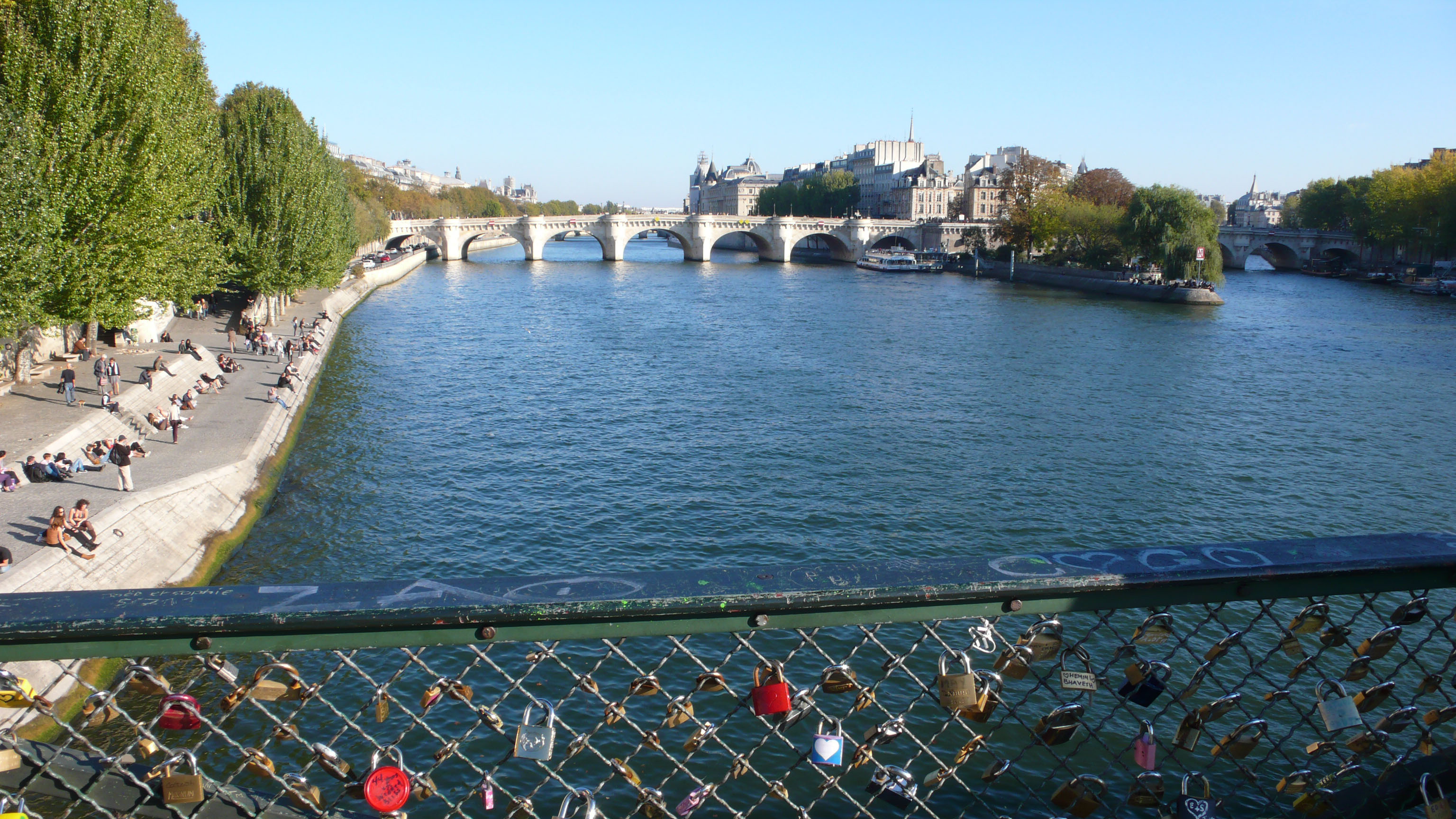
The view from the Pont des Arts footbridge is one of best in Paris, according to Relationnel. Difficult to beat, I must admit. If you stand in the middle and look towards the Left Bank, you have the Institut de France containing the Académie Française with its famous dome in front of you. Behind you, on the Right Bank, is the Louvre. On your left, looking downstream, Ile de la Cité with Notre Dame and  Sainte Chapelle. On your right, the Eiffel Tower which shimmers and shines for 10 minutes every hour, at its best at midnight on 31st December where we join with what seems like half of Paris, champagne bottle and glasses in hand, to welcome in the New Year.

But what I like best are the cadenas. The railings on either side of the bridge are being gradually covered with padlocks of every shape and size. Although the collection was started a few years ago, most are recent. At the beginning of May last year, there were about 1,600, but only about forty of the most resistant were left on 16th May. No one knows who took them off. Neither the town hall nor the police knows anything about it. I didn’t count them but both sides of each railing are now covered in new padlocks!

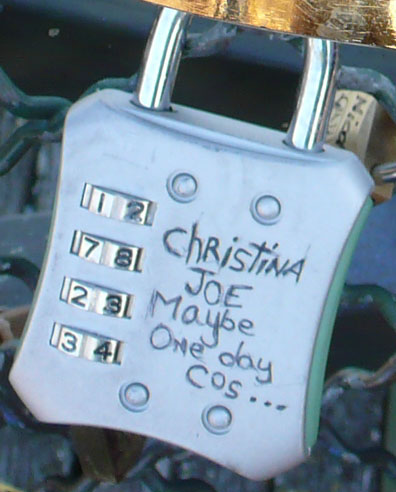
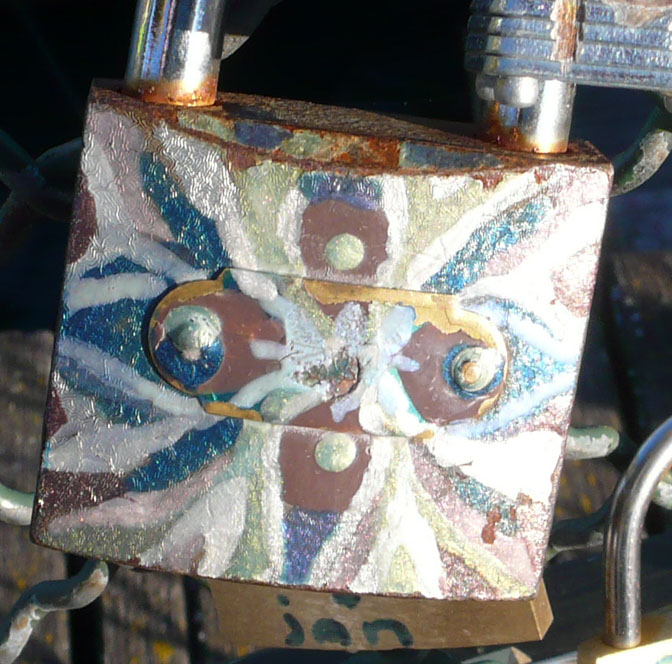
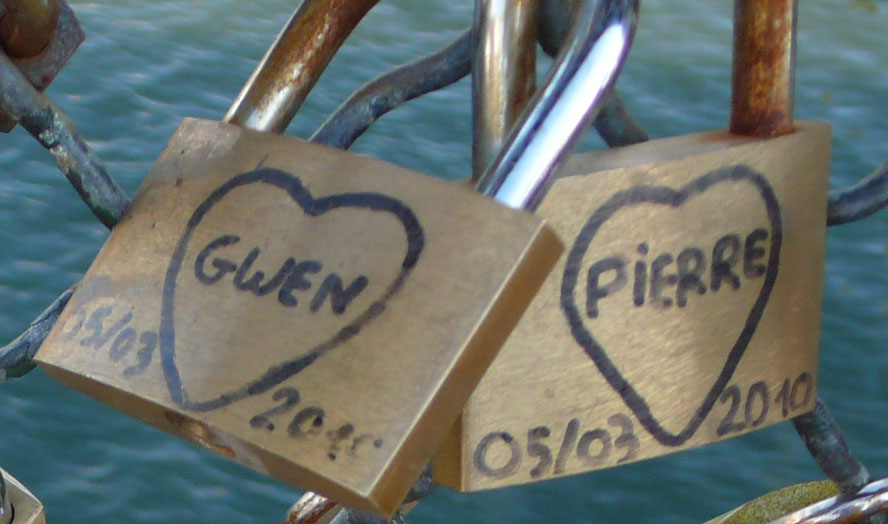
There are big ones and little ones, old ones and new, square locks and round ones, key locks, combination locks and even bike locks. On some, the inscriptions are written with felt pens, others are beautifully engraved. The names come from everywhere – Ana  y Pablo , Lus & Carlos, Monset & Leila, Sacha et Serge, Ruth and Michael, Pedro & McJosé, Fio & Angel, Eliot and Madeleine, Princess Titti & Magic Benoo, Christ &  Natasha, poopy pants & becky,  J. Vilorio & L. Villaverde, the list goes on.  Some of the messages are mundane – a heart or “loves” between the names, “1 an de bonheur” (a year of happiness), “forever” or “Thirty years of wedded bliss”; some are inventive : “Mikaël & Vanessa : une évidence” (perfectly obvious); while others are hopeful of things to come: “Christina Joe Maybe One day cos”.

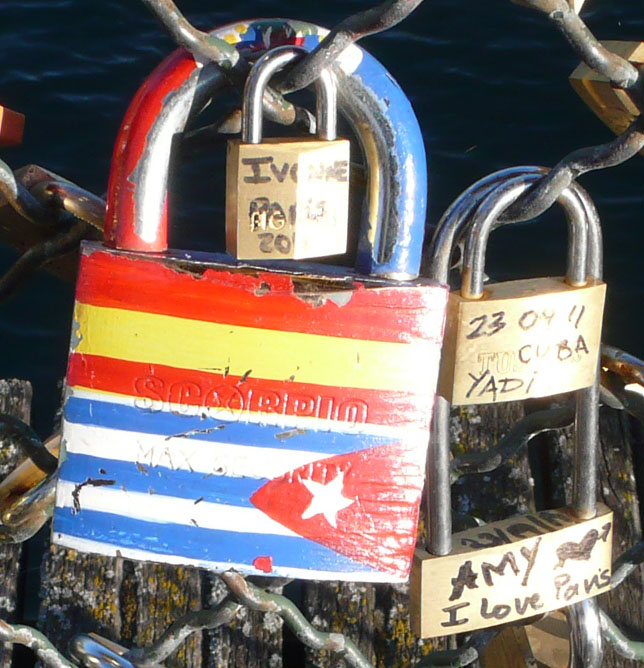
The  enormous “50 mm sécurité” and “Triangle 75 mm” padlocks left me somewhat bemused.  They hardly seem appropriate for a long-term relationship. There’s a little yellow star (on a bridge in Paris?), a bottle opener with “I love Paris”, lots of big red hearts and some smaller ones, a lovely embossed padlock that looks as though it came off a trunk, and one with 3 little coloured hearts glued on. Some are handpainted miniatures and I love the one with the two flags, one red and yellow and the other blue and white with a star on one side, even though I can’t identify the countries. There’s even a plaque with Mona Lisa on it. The most elaborate has three little buttons sewn on. Sometimes, there are two padlocks together, with a name on each. Very economical. Nothing like allowing for a change of partner!  

So where do they all come from? Some are obviously prepared in advance while others are more spontaneous. I noticed that some of the nearby bouquinistes are selling the plainer variety. The basement of the BHV department store on the corner of Place de l’Hôtel de Ville further along the right bank no doubt has quite a selection, but I don’t know where you get those heart-shaped ones. They seem made for meaure! Likes like a thriving business in any case.

Has anyone seen padlocks in other places on their travels?

For more information on the subject in French: http://tempsreel.nouvelobs.com/societe/20100512.OBS3875/qui-a-fracture-les-cadenas-d-amour-du-pont-des-arts.html

Trumpets of Death

One of the things I like best about mushroom picking is that it’s like meditation. You’re so busy looking at the ground that your mind can wander wherever it likes. After saying a tearful goodbye to Leonardo at Gare du Nord on Sunday, we bought some sandwiches for lunch and drove north for about an hour to Senlis forest.

We went to our usual spot, which I won’t describe in detail because mushroom pickers never tell you exactly where they go. Who wants someone else getting there first ? We put on our walking boots and set off. There were a few toadstools along the way, which was promising. Would you believe there is no word for “toadstool” in French? They just talk about “champignons comestibles” and “non comestibles”.  You can either eat them or not. Toadstools are usually far more attractive than mushrooms. Beautiful purples and oranges, not to mention the amanita muscaris or fly agaric – you know, the famous red one with the white spots that’s always in cartoons. The edible ones, apart from the little amethyst deceiver (Laccaria amethystea), are usually various shades of white and brown and sometimes black.

Grisette (Amanita vaginata grisea)

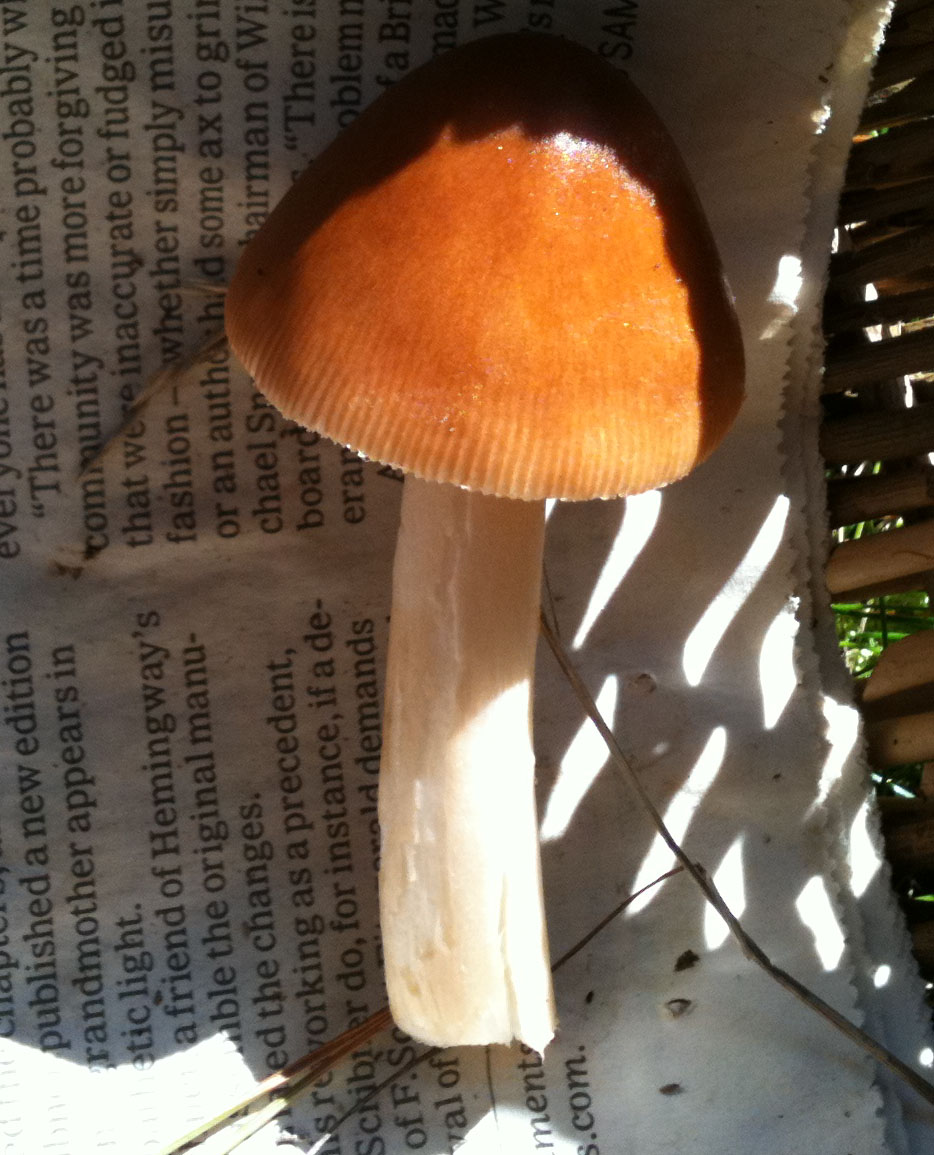
We soon branched off the path, wading through masses of heather and brambles. Get those muscles working again. Relationnel spied an “amanita vaginata grisea” which I had no recollection of whatsoever.  I usually steer clear of amanites which all contain a poisonous substance that fortunately is destroyed by heat. So all you have to do is cook them! But Relationnel assured me the grisette was fine. So I memorised the little stripy bits on the edge of the cap so I wouldn’t mix it up with any others. That’s the advantage of being with someone who knows about mushrooms. There’s always some little detail that distinguishes each mushroom and stops you getting poisoned!

Pine bolete (Boletus pinophilus)

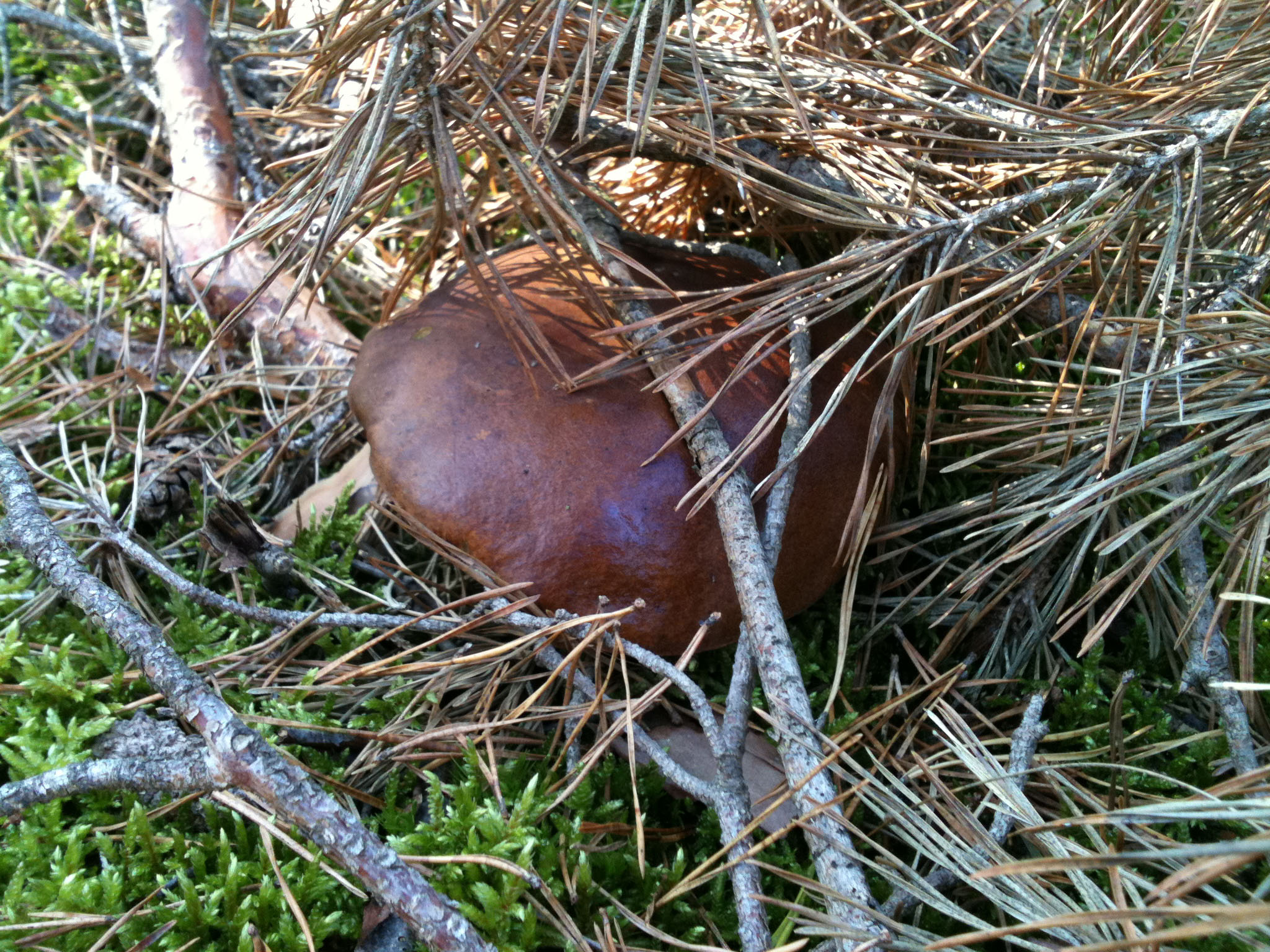
After lunch, with about twenty grisettes, a handful of quite large pine boletes (Boletus pinophilus) that we found hiding under fallen pine tree branches, and one tête de nègre (Boletus aureus), Relationnel suggested we go looking for trompettes de la mort (trumpets of death) called horns of plenty in English. The name in French is not as ominous as it sounds. It’s really because they’re black and found around All Souls’ Day on 1st November! He seemed to know where he was going although I didn’t remember finding them in that part of the forest. We arrived in a clearing and he said that was the place. Horns of plenty, along with chanterelles, are among the hardest mushrooms to find because they look like squiggles on the ground, peeking up from among the fallen leaves of oak trees.  We searched for a while but found nothing.

Horns of plenty half hidden by leaves

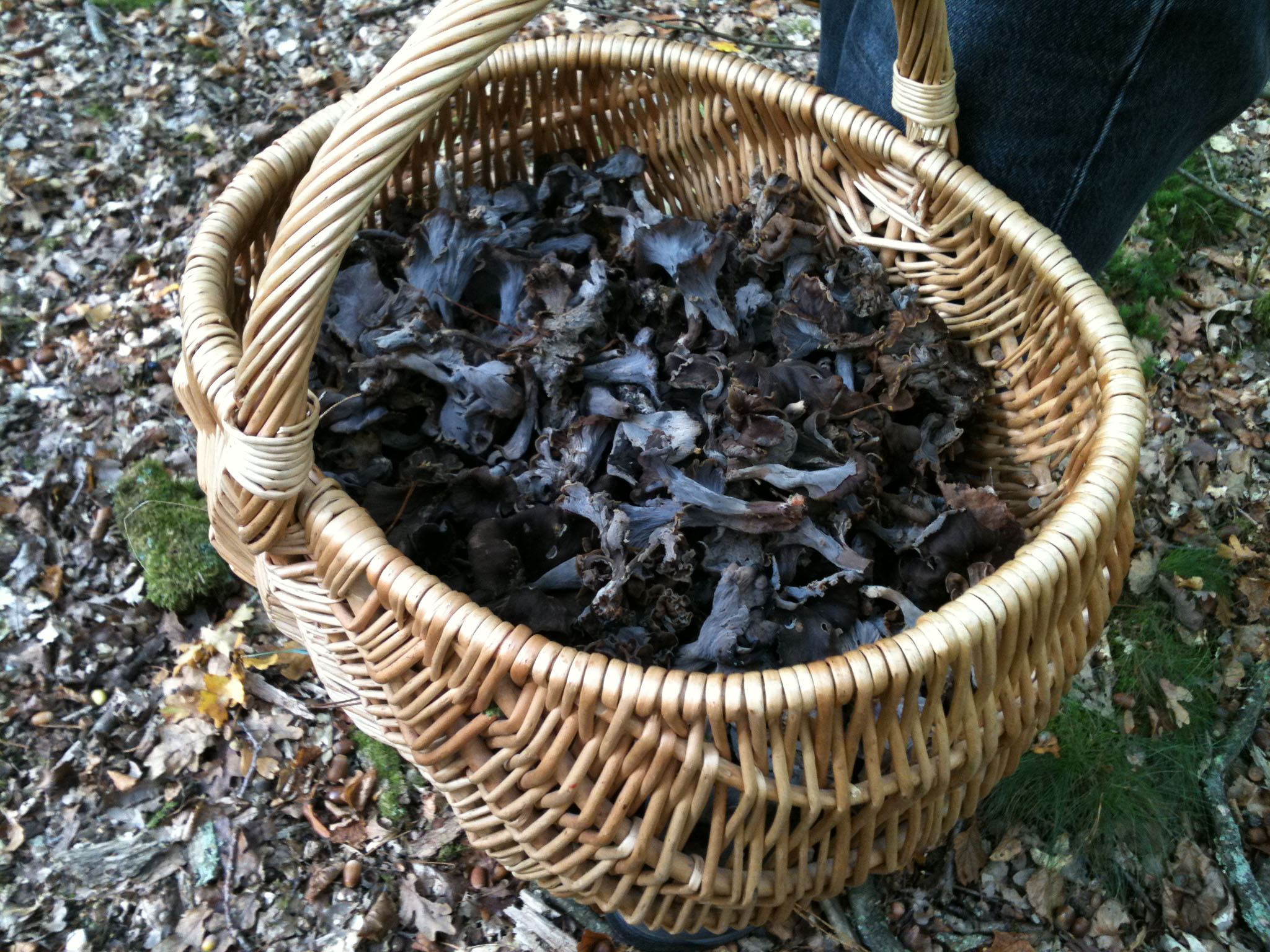
I decided I needed a rest and sat down on a tree stump while Relationnel went searching further. About 100 metres away, he called out, “Come and see”. By the time I got there, he couldn’t find them any more. Then we both saw them at the same time. The most wonderful thing about horns of plenty is that when you find one, there’s bound to be others. I put a plastic bag on the ground to protect my knees (I once spent two days in bed after bending over to gather chanterelles for an hour) and started picking. After ten minutes, we had filled our basket and I’d forgotten all about Leonardo going to Australia on a one-way ticket!

For more information on mushrooms, check out www.rogersmushrooms.com. Recipes coming soon! Any suggestions welcome.

See more photos on my FaceBook page (click link on top right)

A basketful of horns of plenty


Wild Mushroom Picking in France

When Relationnel first mentioned mushrooming, he said you had to get up at the crack of dawn or there wouldn’t be any left. As our only free day was Sunday, I decided to give it a miss. I am not an early bird. But a few years later, the Serbian man who runs the Pergola, a restaurant with a wonderful outdoor eating area along one of our favourite cycling paths, dished up freshly picked wild mushrooms. He told us he’d picked them in the country the afternoon before. Ah ha! Afternoon, not dawn, you will note. So I put mushroom picking on the next Sunday’s  agenda.

Cèpes

Relationnel checked out the lie of the land in a forest about an hour north of Paris. It seems mushrooms grow best on slopes with southern exposure.  He always knows things like that. The weather was fine, about 12 or 13°C and sunny. We waded through acres of knee-high ferns just turning brown at the approach of autumn without finding anything like a mushroom. I didn’t know I had all those thigh muscles before. Not that I really knew what I was looking for. I’ve learnt since that it takes about ten or fifteen minutes to get your “mushroom eyes” working. Edible mushrooms usually blend in remarkable well with the foliage around them. Each type of mushroom also has its own particular habitat so you have to learn to identify the different types of trees and shrubs.

We eventually came to a pinewood and Relationnel excitedly called me over to take a look.  Here was this cute little brown mushroom a couple of centimetres high with a darker cap and a thick stem. “Tête de nègre” (negro’s head) it’s called, would you believe it. He carefully cut it off at the bottom of the stem. You should avoid pulling mushrooms out by the roots if you want to find more in the same place the next year. And Relationnel has this amazing capacity to return to EXACTLY the same place, even a couple of years later. I’m more like Hansel and Gretel. I wouldn’t even be able to get out of the forest again on my own!

He turned it over and showed me the part under the cap which looks kind of spongey. That’s the way you identify boletus mushrooms. They’re called pores. The only variety I’d seen in Australia were agarics, which have gills under the cap.  You may have come across the boletus in your culinary travels. The best known specimen is  called porcini in Italy and cèpe in France. The wonderful thing about the boletus is that it’s never poisonous.  There are a couple of varieties that are bitter.  I’ll never forget the time we spent a whole afternoon collecting, then cooking, an amazing number of boletus with slightly pink pores, but had to throw the lot away after our first taste! Turns out they’re called bitter boletus. There are one or two others, easily recognisable, that will keep you up all night, but none are lethal.

Mushrooming is now one of my favourite activites, particularly in the autumn and right up until New Year (I once found chanterelles under the snow), but I’ve learnt to spot summer boletus, parasols and field mushrooms when we’re cycling in the summer. My biggest find was on cycle path along an old railway track. I found a boletus about 30 centimeters in diameter that I baked in the oven. Absolutely delicious! Anything we don’t eat, we freeze, so we can have them all year round.

Have you ever been mushroom picking?

Check out more on www.rogersmushrooms.com and watch out for the next post on Trumpets of Death.

Alsatian vin nouveau

It’s vin nouveau time in Alsace, the white wine lovers’ mecca. We first tried it a few years ago. We were in Colmar and went into a bakery recommended in our guide book for its antique oven. They had a sign up for pain de vendange (grape-harvest bread) so we bought some of course. It turned out to be made of unbleached flour, walnuts, bacon pieces and raisins. Not bad. The lady in the bakery said we should have it with vin nouveau, the first wine of the season.

She sent us to a winery about ten minutes’ walk away – practically in the town centre! We followed the vigneronne into the cellar which was full of these huge oblong-shaped oak barrels called foudres. She turned on the tap and poured us a couple of small glasses. It was slightly sparkling, a little opaque, the colour of pale apple juice and slightly sweet. We were surprised to see her put the wine straight from the barrel into one of those large bottles you get mineral water in. She then pierced a hole in the lid so the gas could seep out because it was still fermenting. The price was an astonishing two euros a bottle.

We learnt later that you need a special licence to sell it and very few of the wineries bother. It’s always made from the pinot blanc grape, which is the first of the 8 Alsatian grape varieties to be ready for harvest.

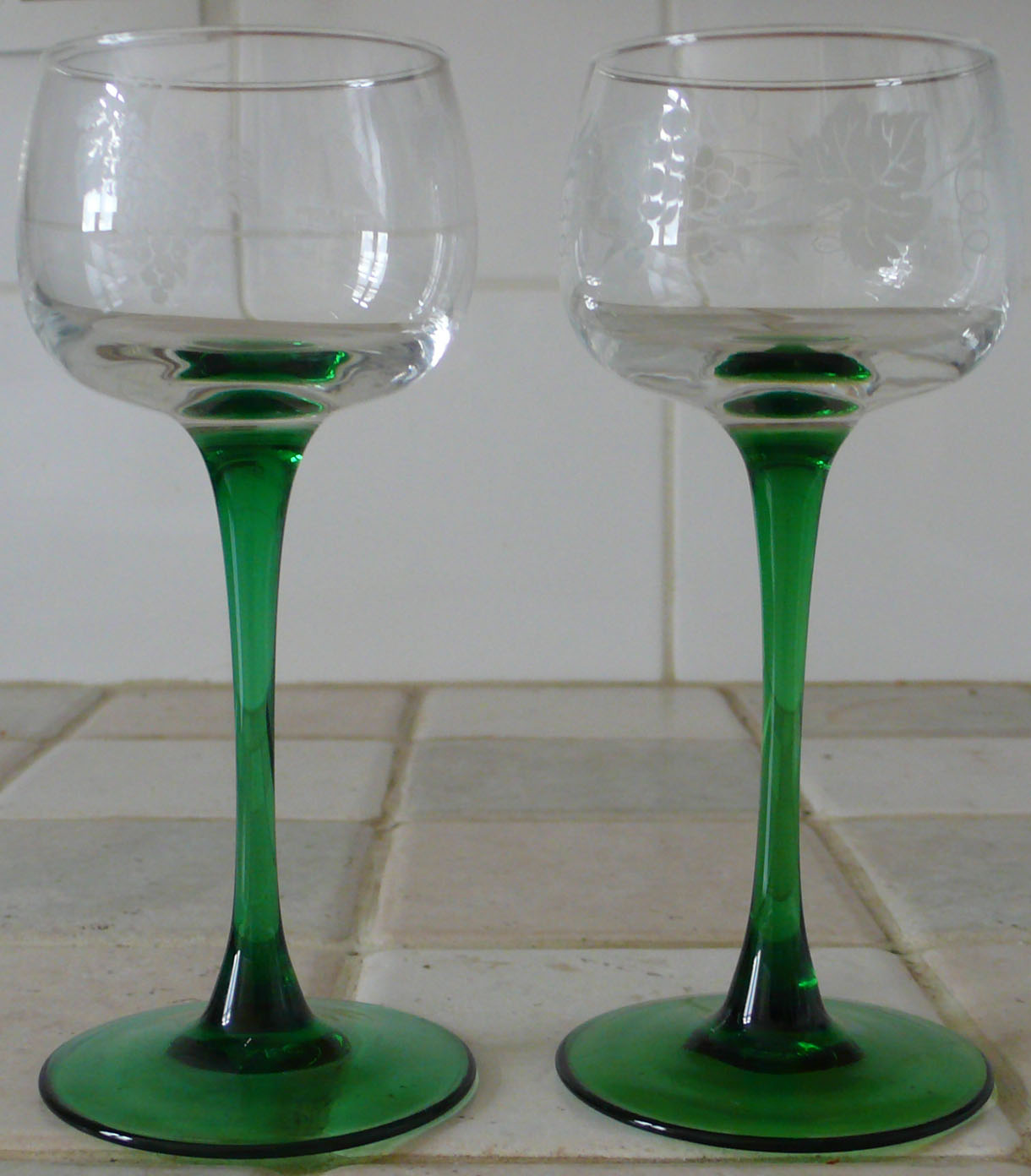
Alsatian wine glasses

We took it home to drink with our pain de vendange in our new long-stemmed, green Alsatian wine glasses, sitting in front of the open-fire in our little Alsatian chalet. Jealous? We didn’t have too much wine though because it seems that large doses usually play havoc with your insides.

The wine and bread soon ran out of course so we had to replenish our stocks. We came across this deserted-looking winery on one side of the village square in Molsheim. There weren’t any signs saying vin nouveau but a man in overalls eventually appeared, looking a little worse for wear. He took our plastic bottle with a grunt and disappeared. This time we only paid €1.50 and there were no holes in the top. It seemed much thicker than the first time and we wondered whether it was the real thing. We couldn’t find any more pain de vendange so we decided to make do with pain de campagne and buy walnuts and raisins to go with it.

When we got home, we put the wine in a jug in the fridge. It was much more opaque than the first lot and sickly sweet. Jean Michel was convinced it was home-made apple-juice and that the man in the overalls was just getting his back on the American tourists because of my accent! So we put it back in the bottle and left it in a crate in the corner of the kitchen to take home to the kids.

A few days later, I went to get some potatoes out of the crate. My god, you should have seen the bottle – it was fat and roly-poly. I started to unscrew the lid very slowly and out came a great whiz of gas. It was now the same pale gold as the vin nouveau from Colmar with the same slightly opaque appearance. We must have been given much “newer” wine the second time. Putting it in the fridge had stopped the fermentation process but putting it back in the bottle in the heated kitchen had got it going again.

I hate to think what could have happened if we’d waited another day. A great explosion in the middle of the night with sticky liquid in every corner of the rented kitchen!

So after that, whenever we bought some wine, we discreetly produced our water bottle and asked if we could have some vin nouveau. One vigneron got us to taste wine from 4 different vats, each harvested a couple of days apart. We thought we were really clever when we managed to rate them from youngest to oldest.

Have you ever tried vin nouveau? Beaujolais nouveau which is a red wine comes out on the third Thursday of November. I’ll give a full report!

from the Tropics to the City of Light