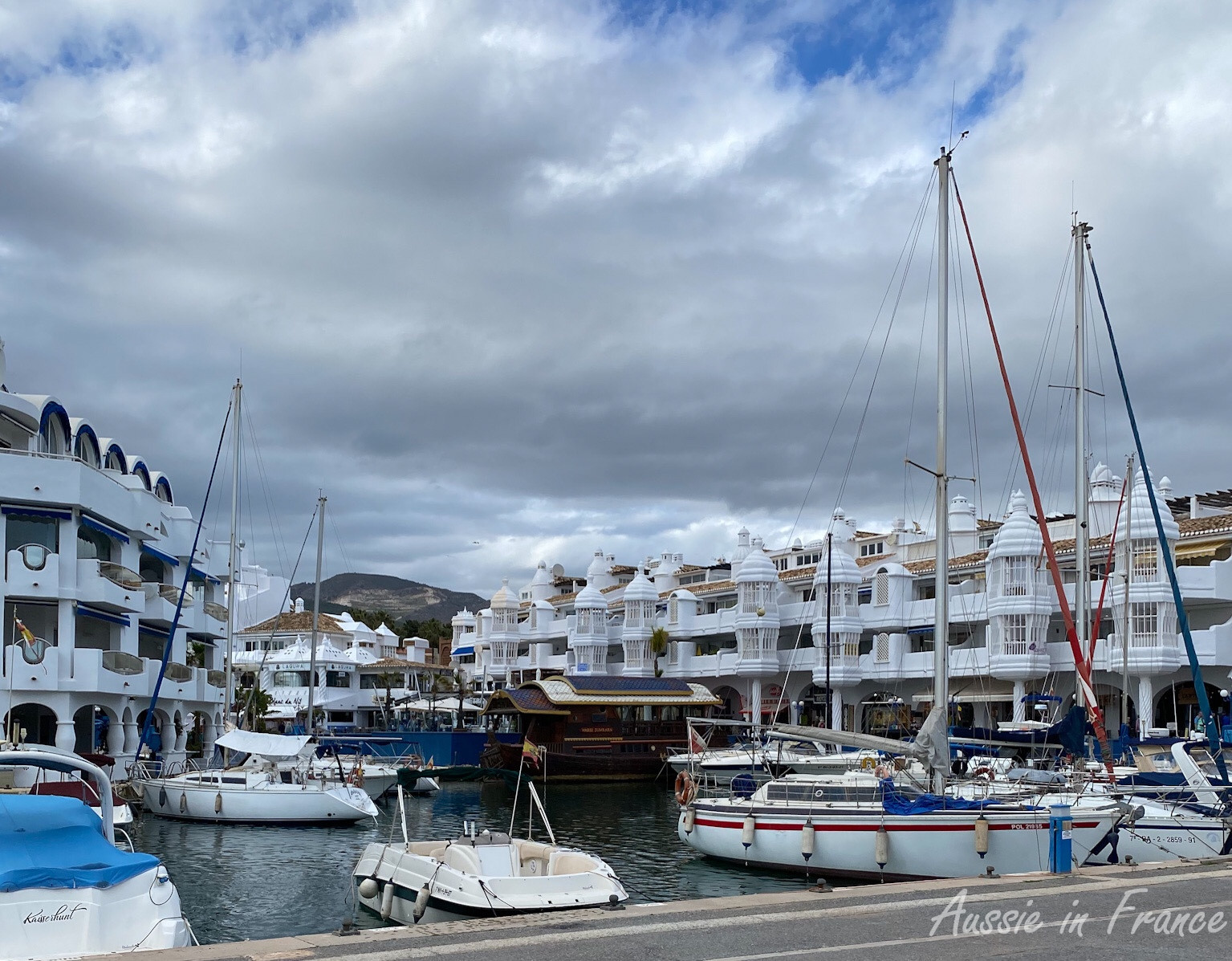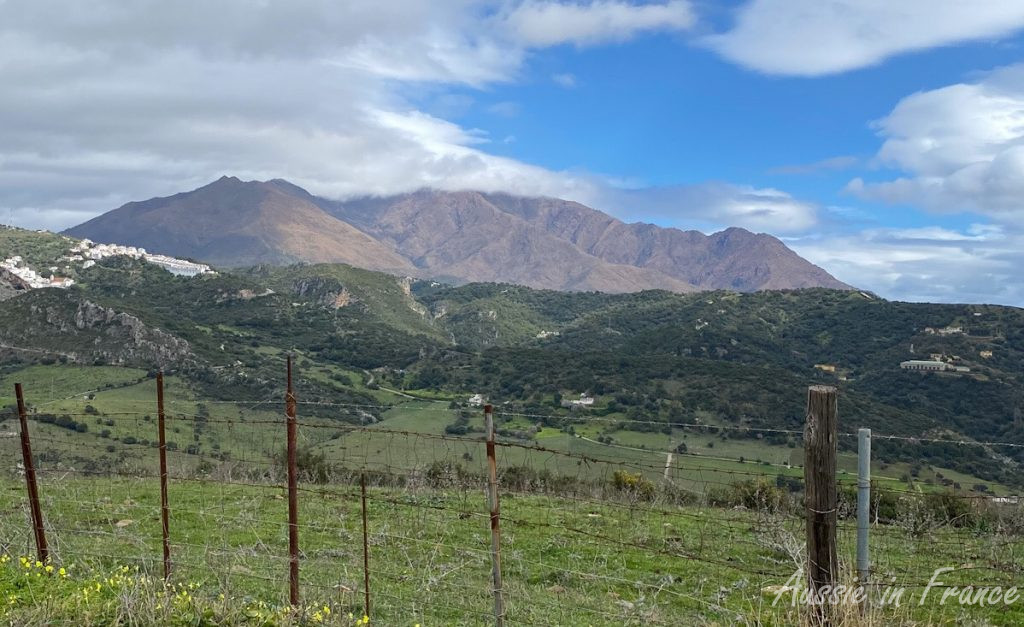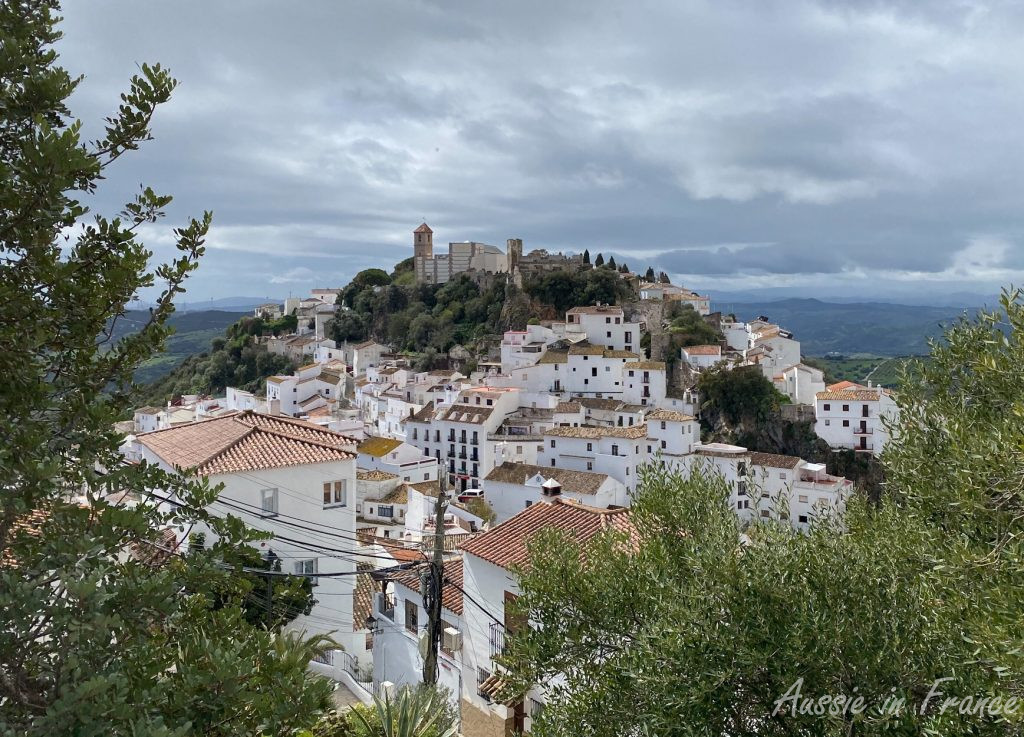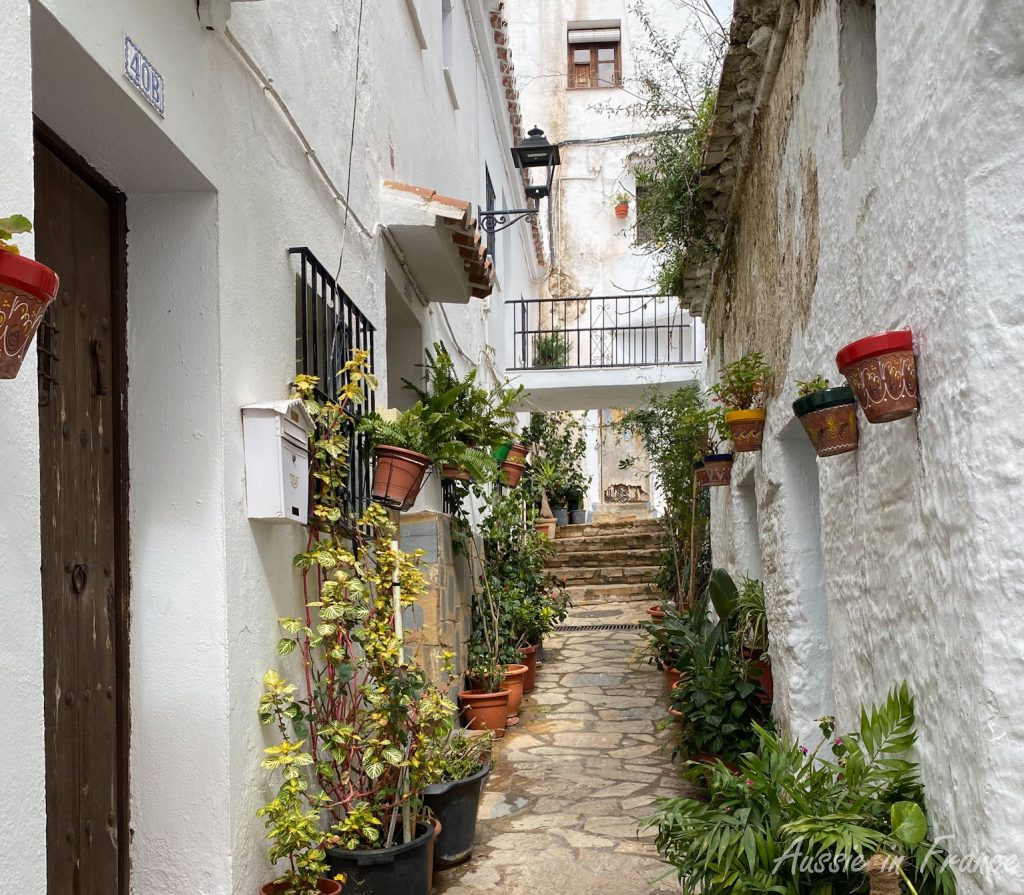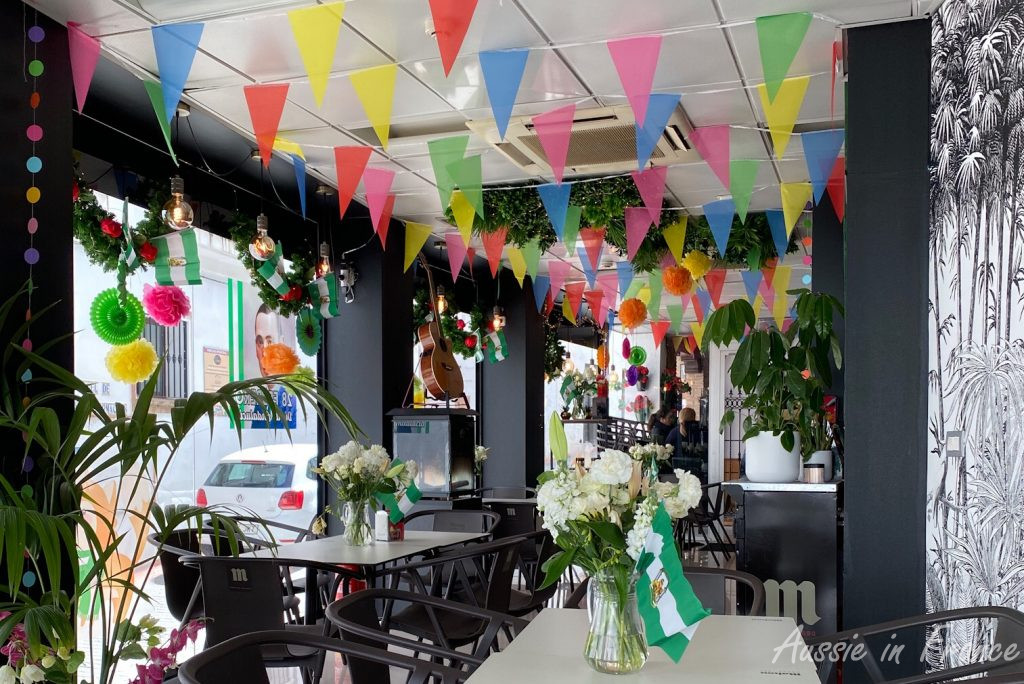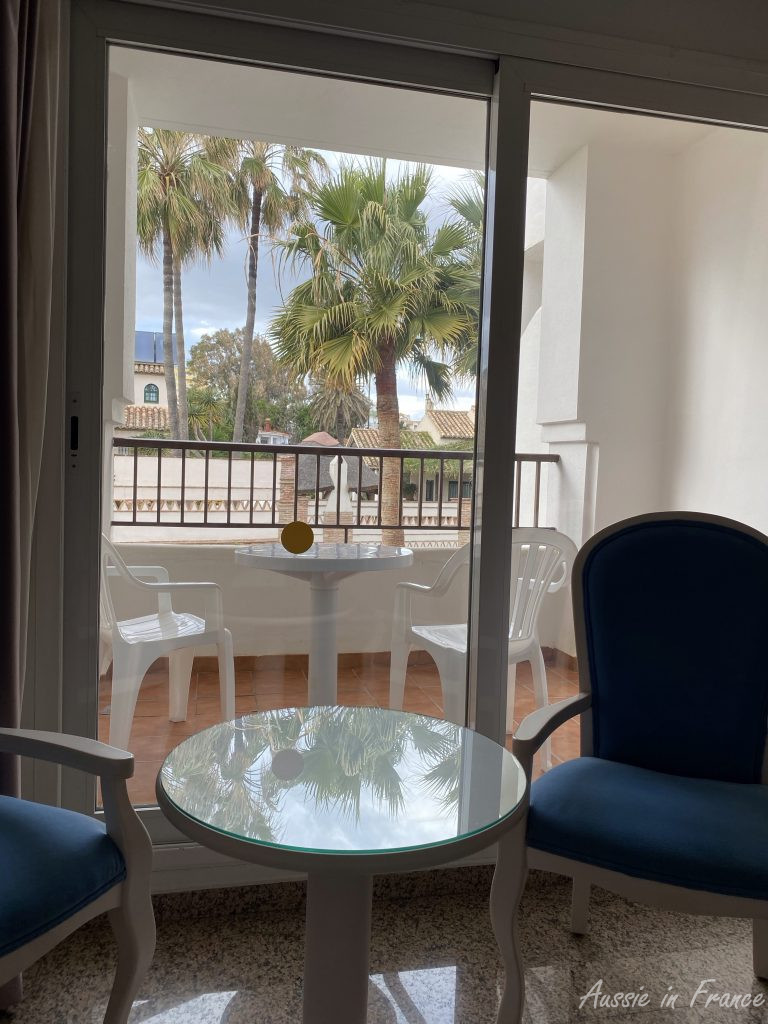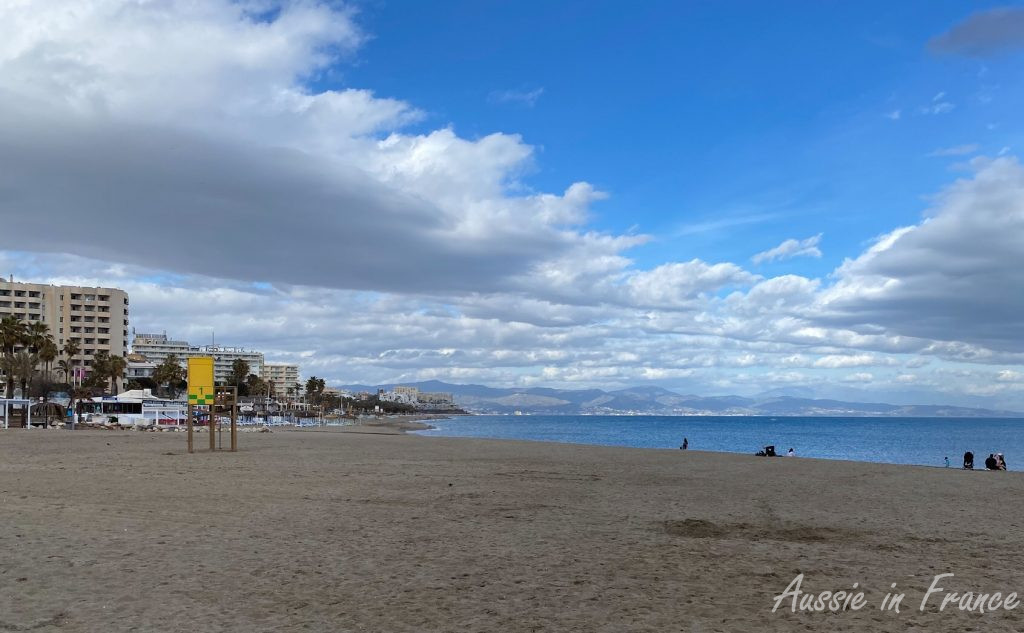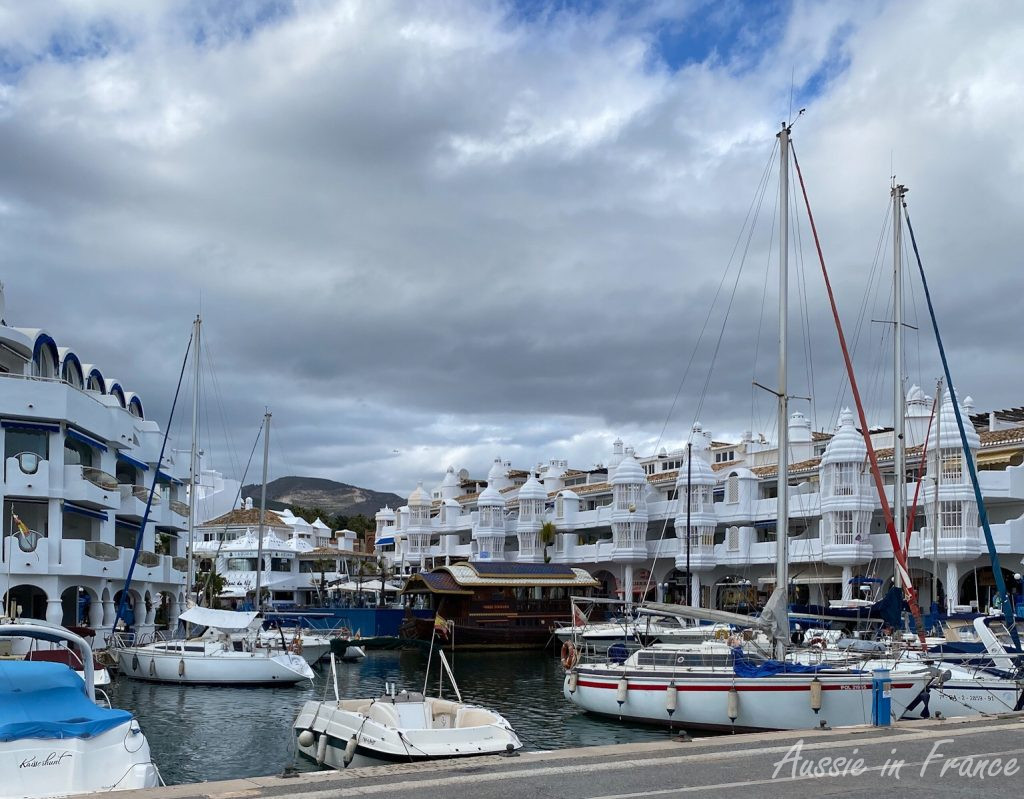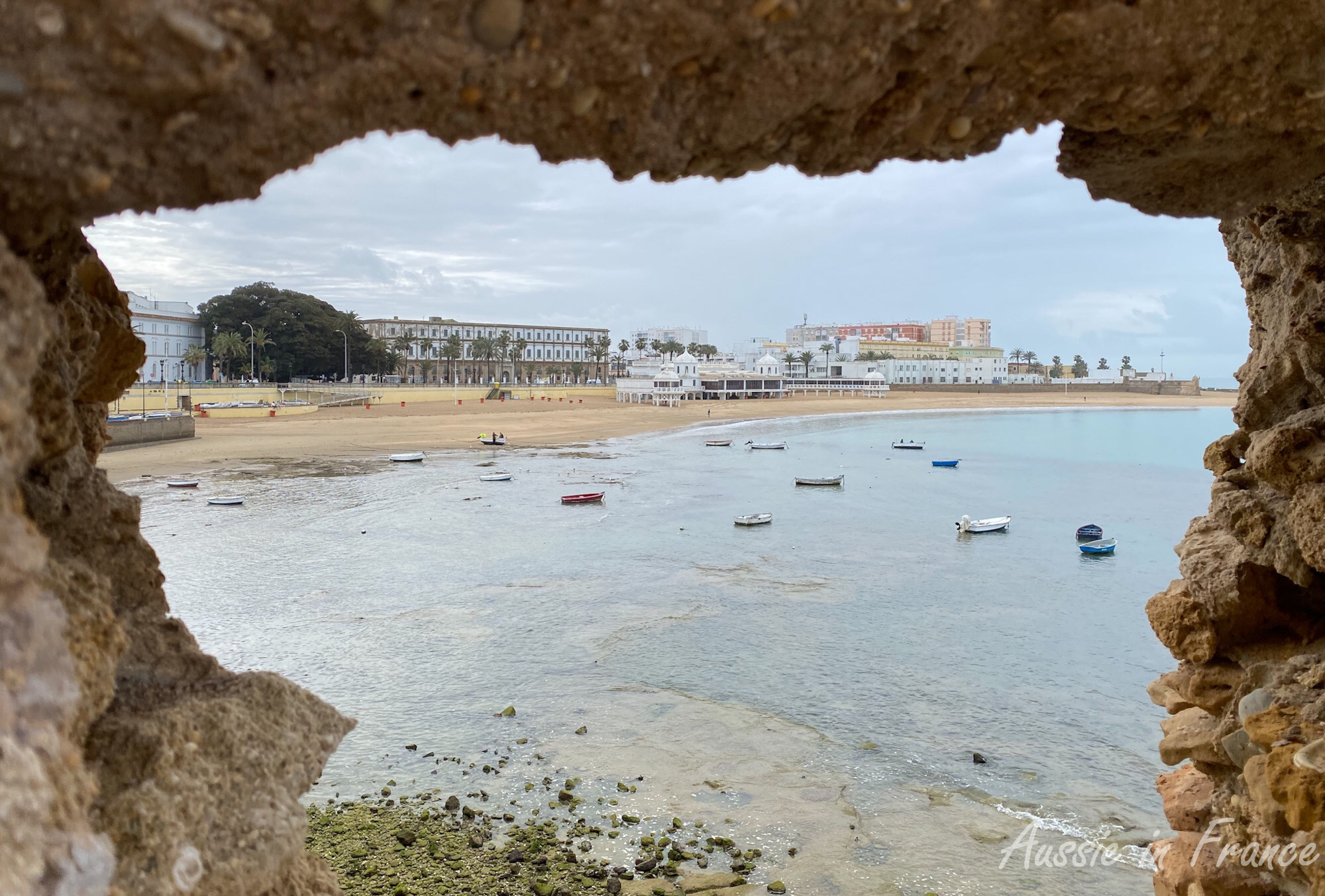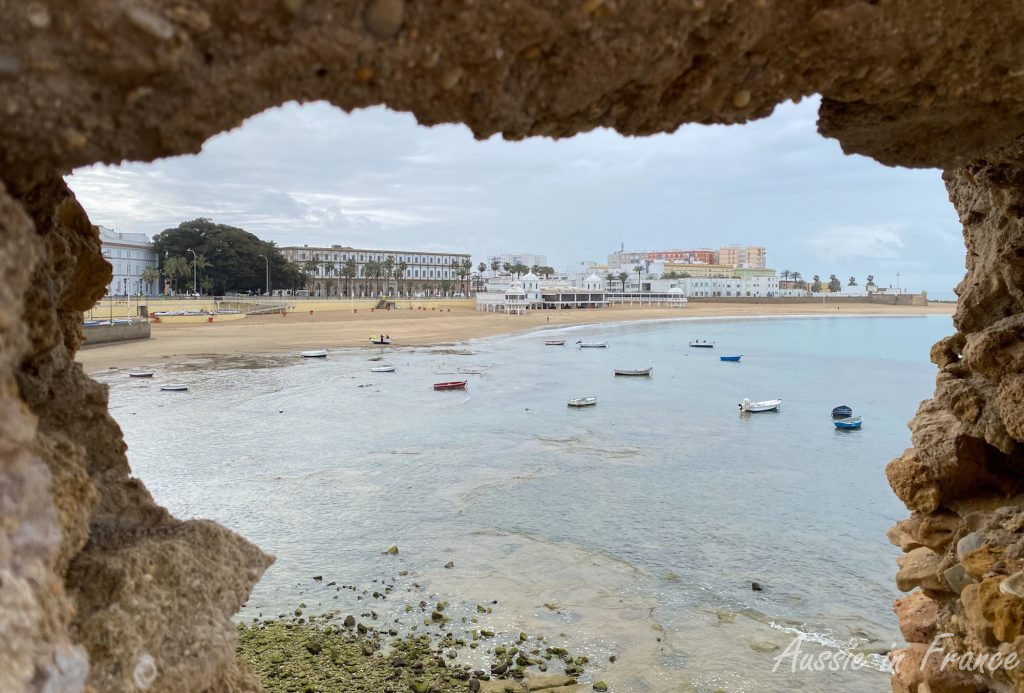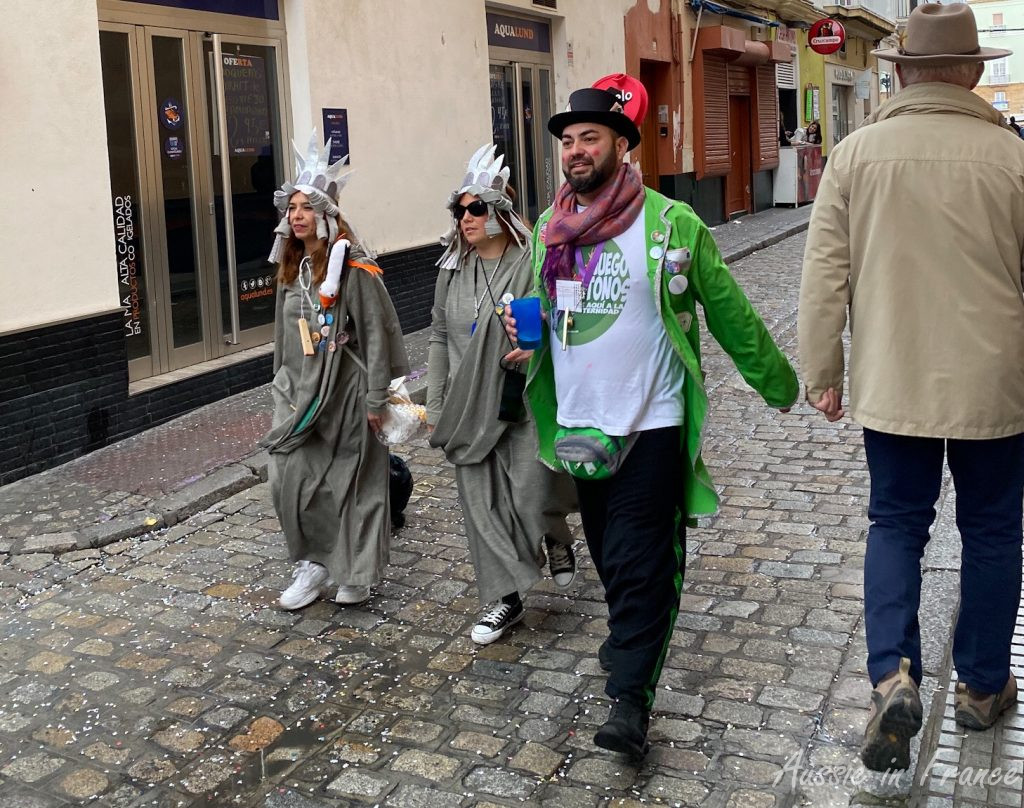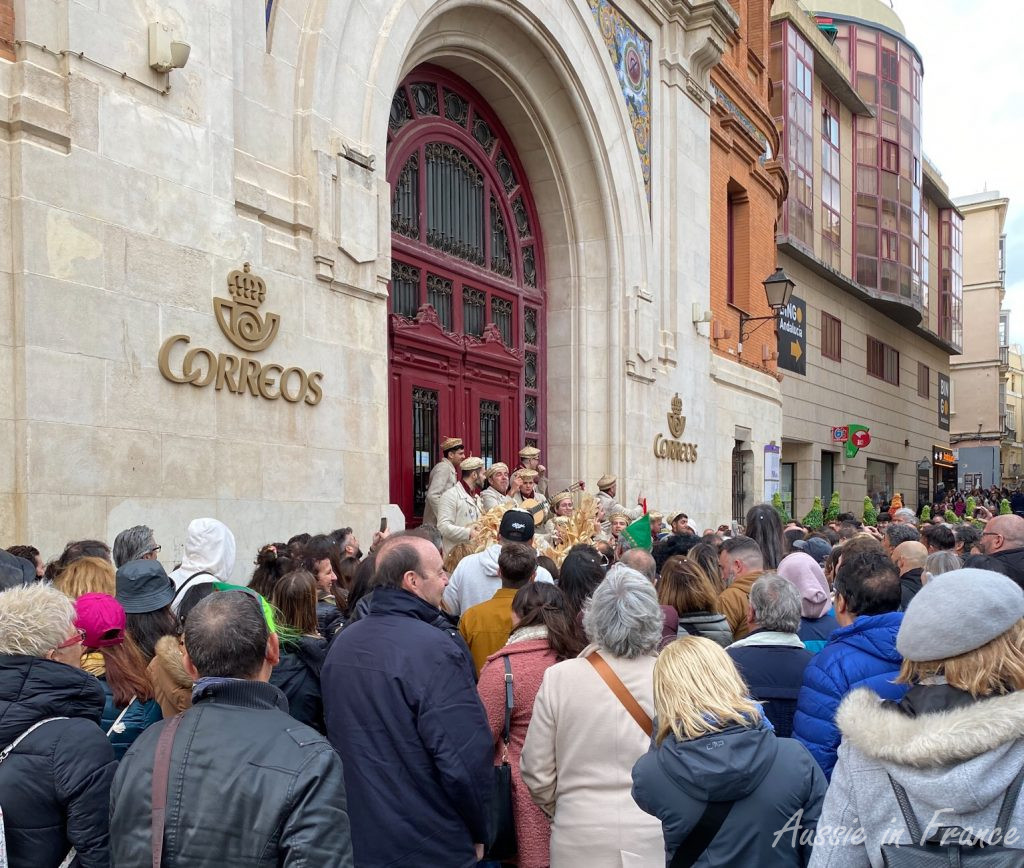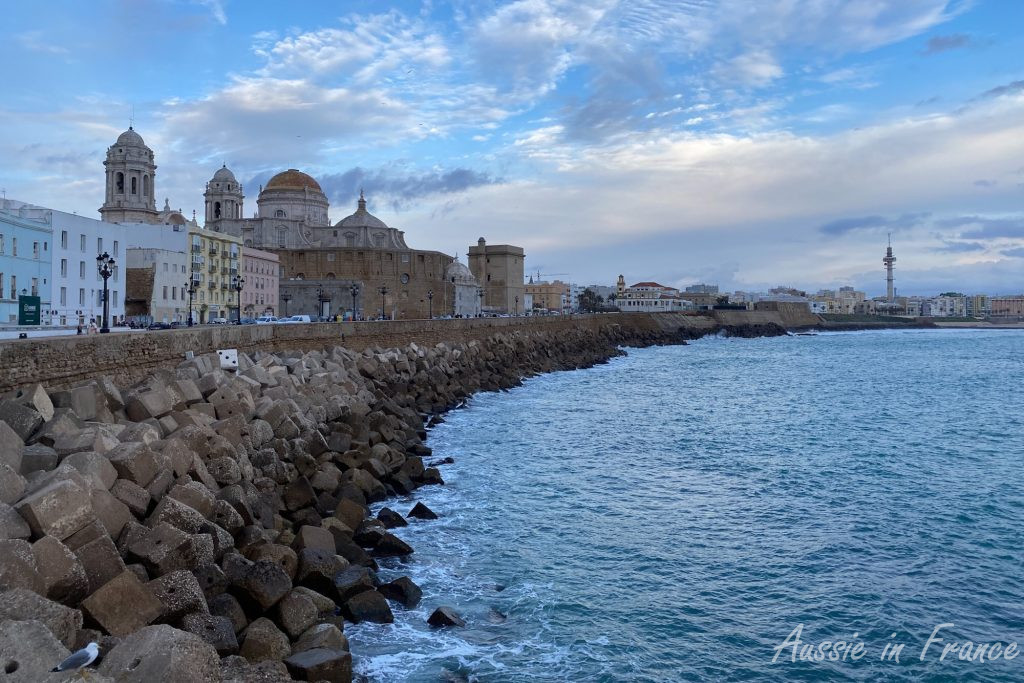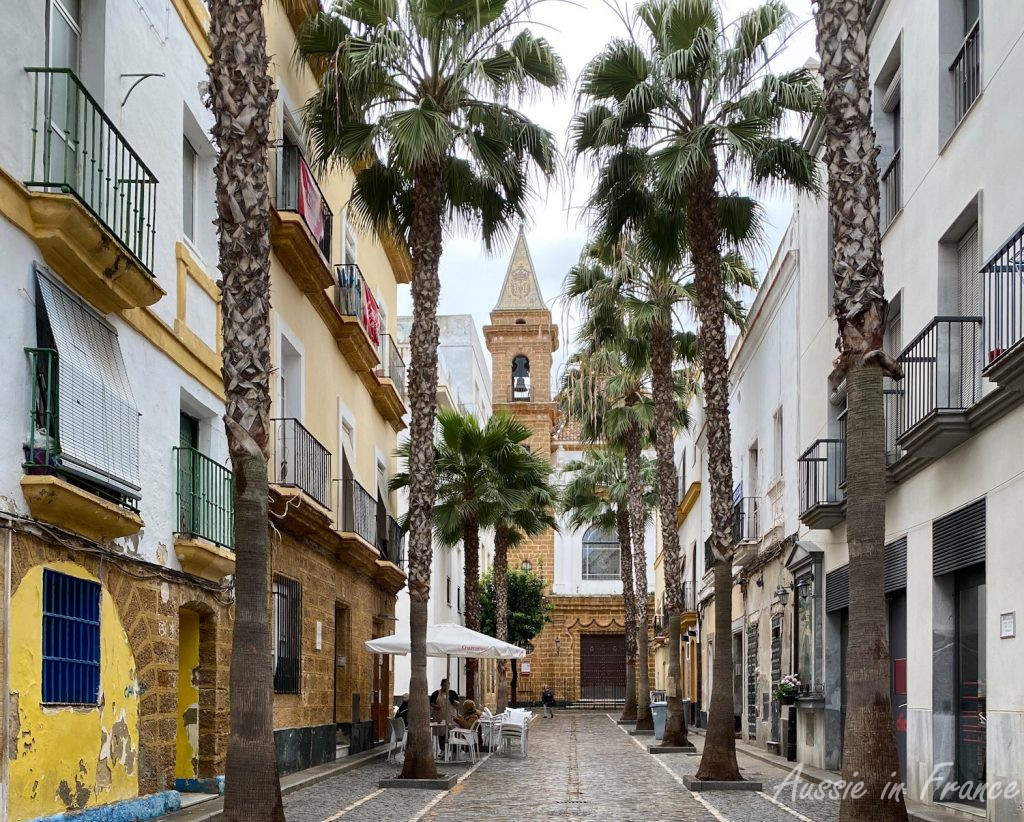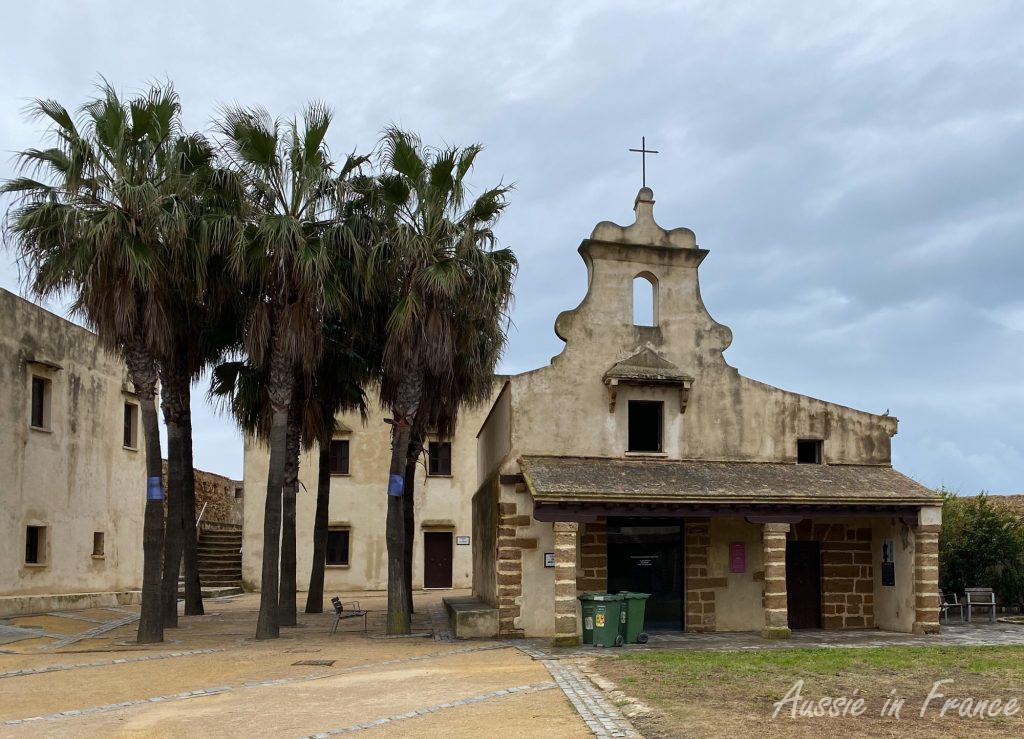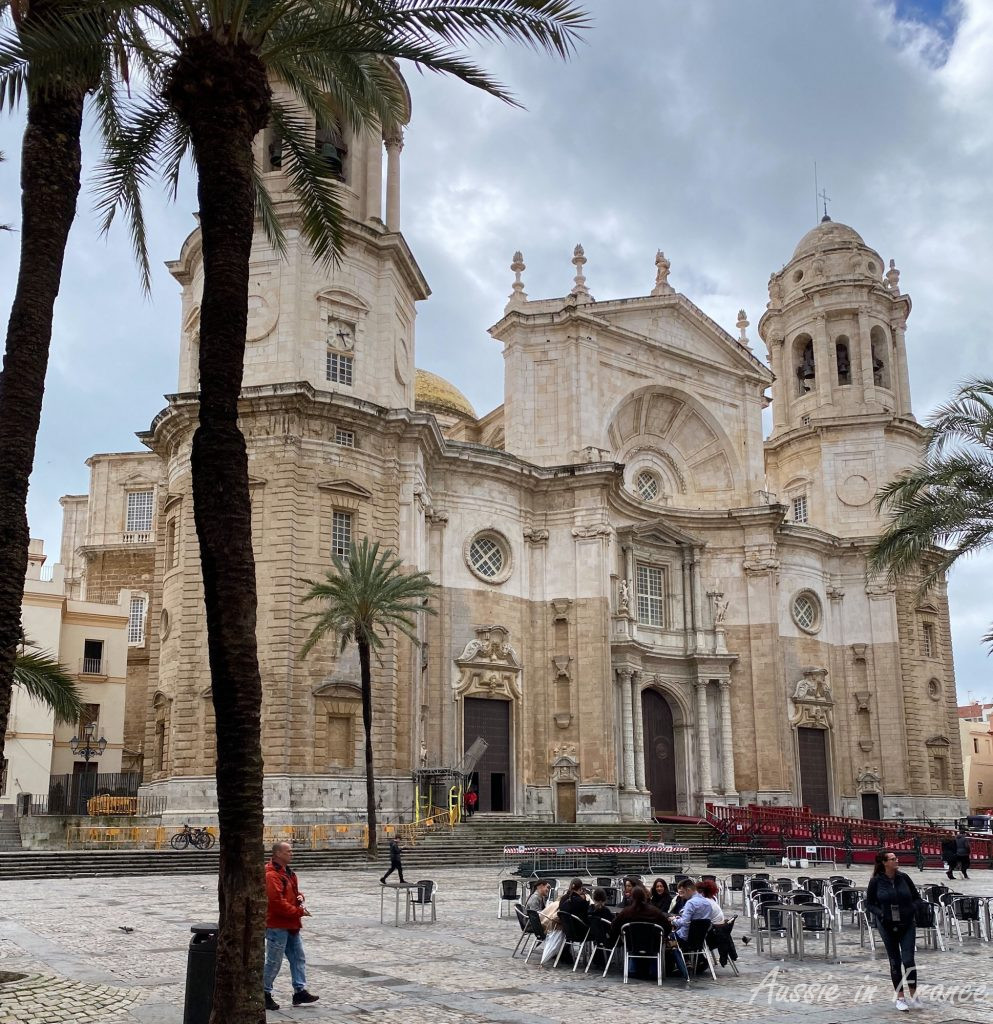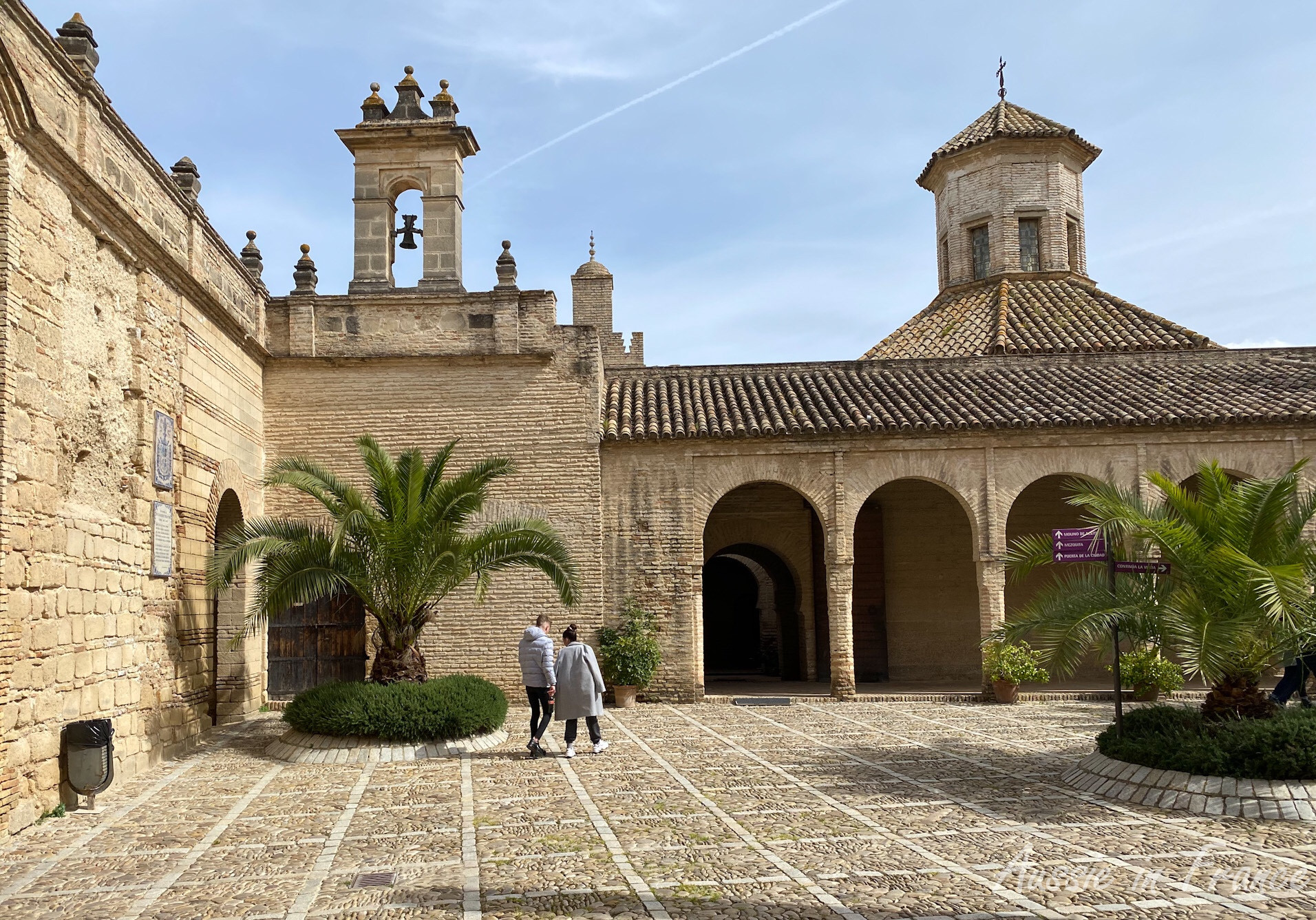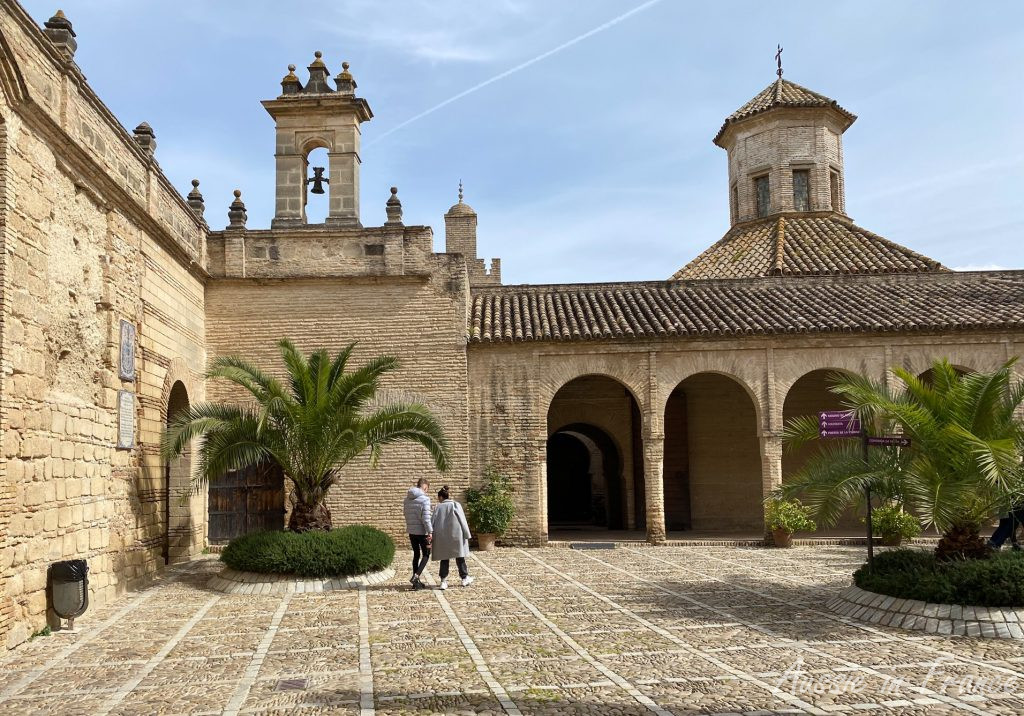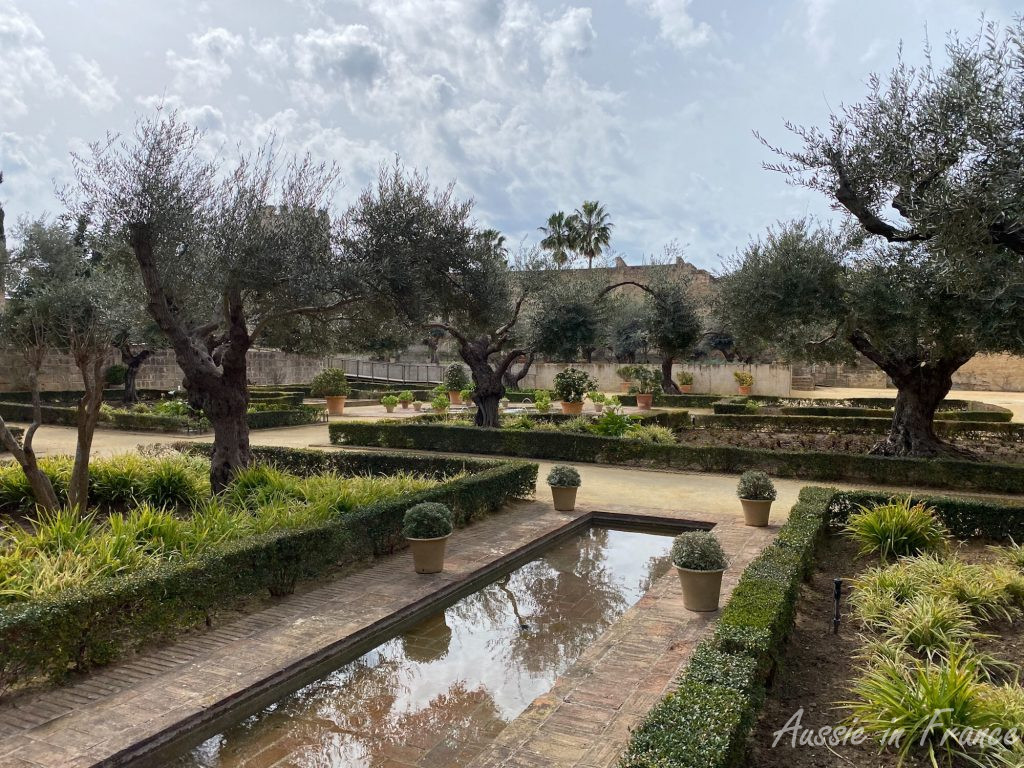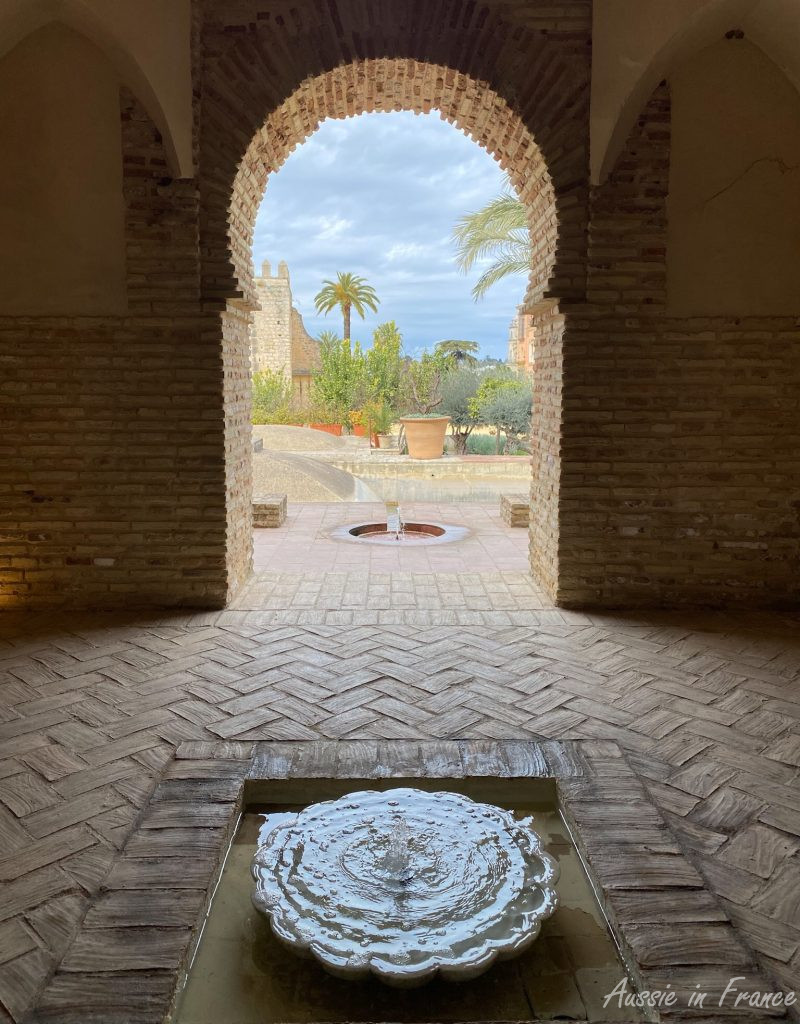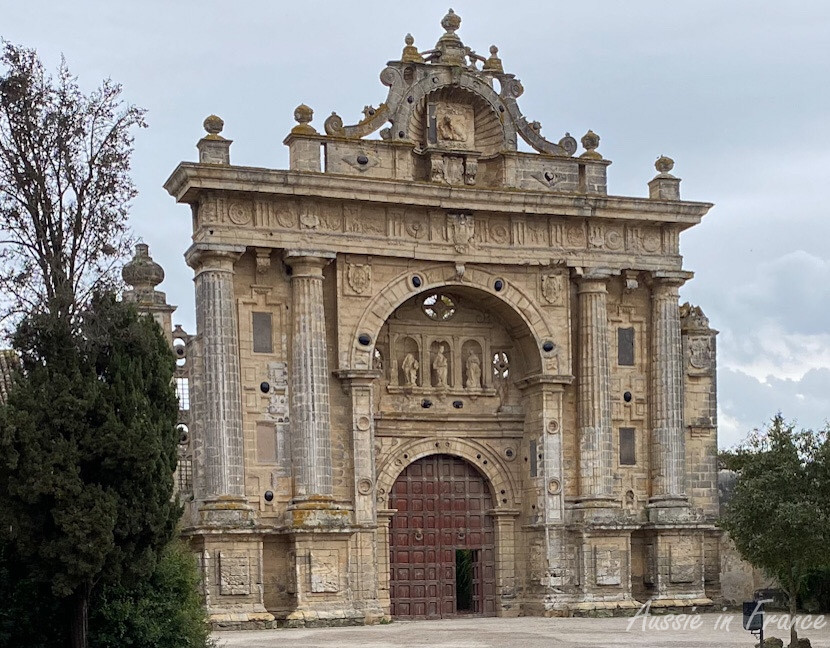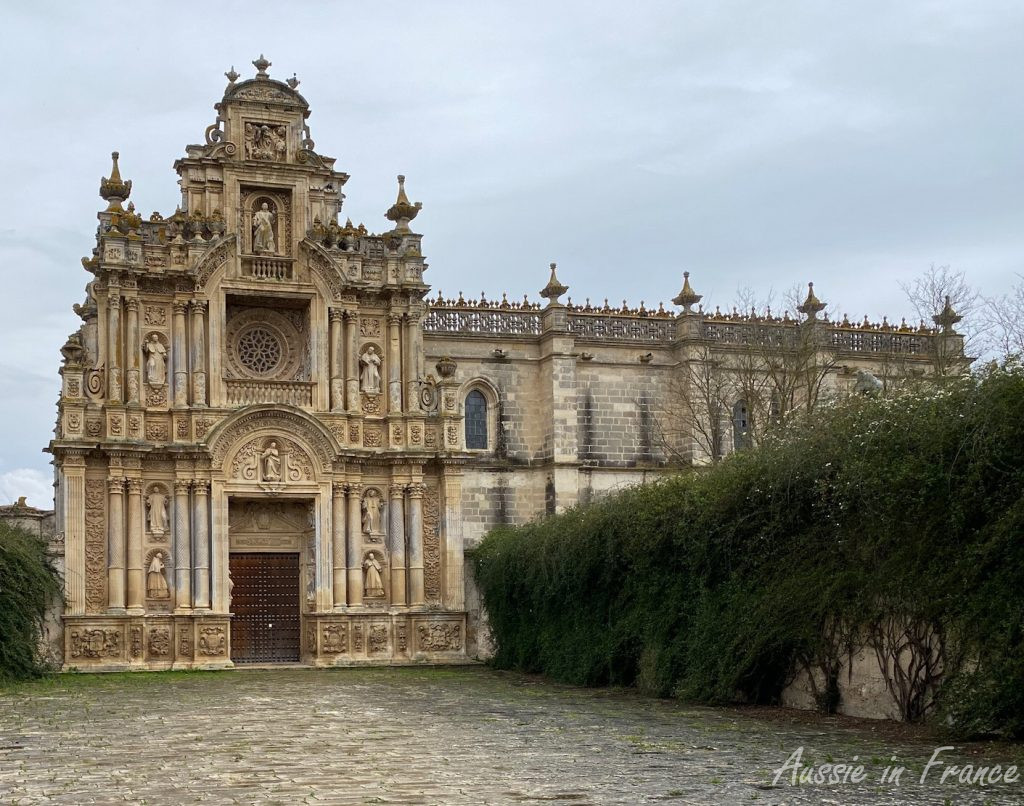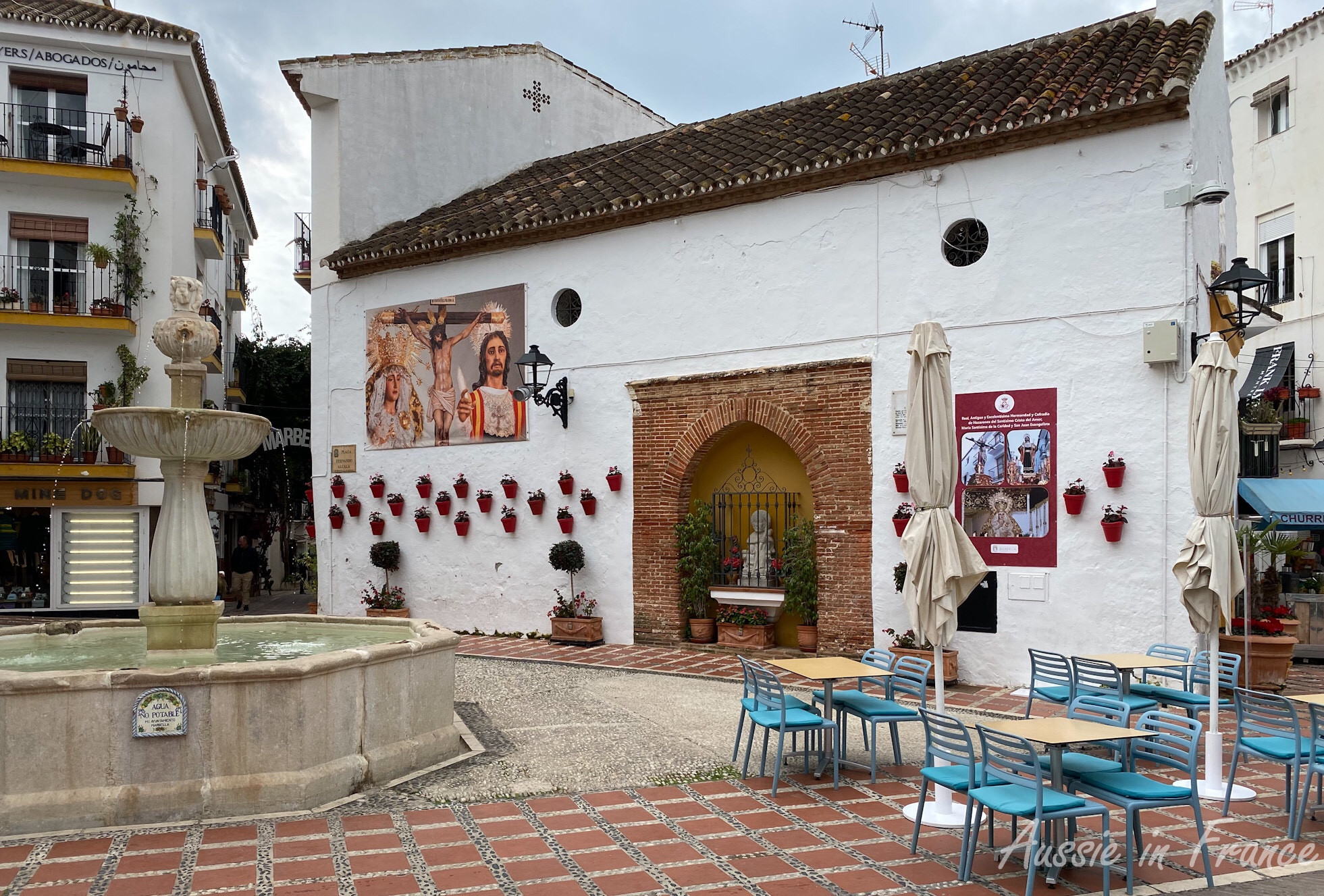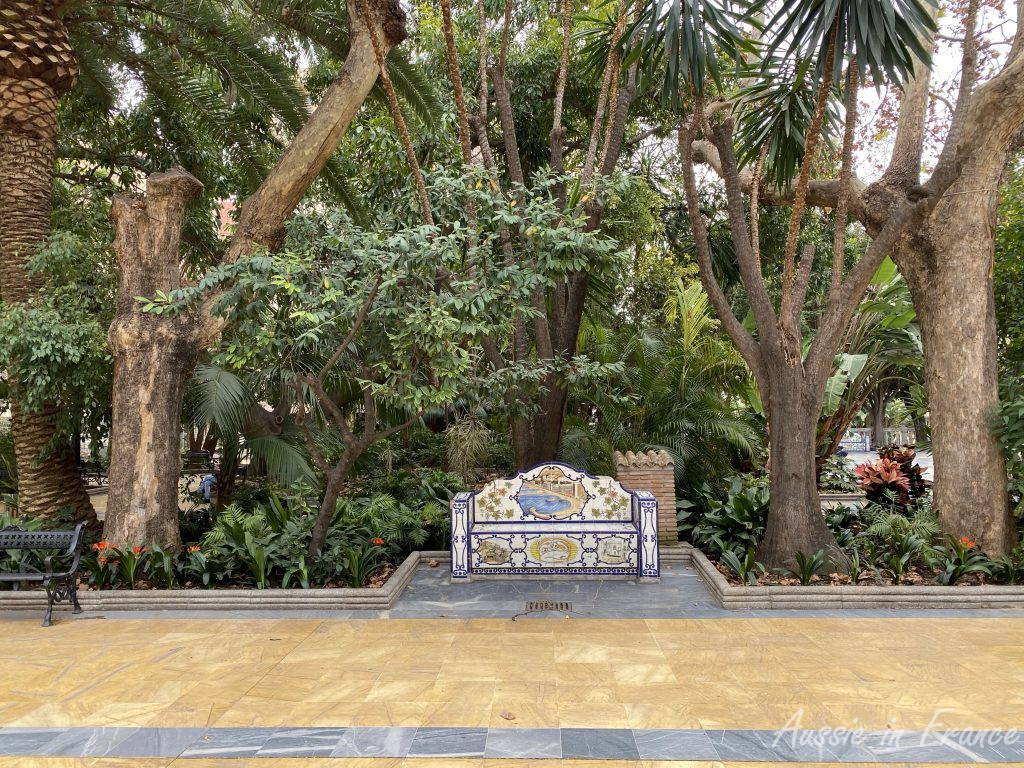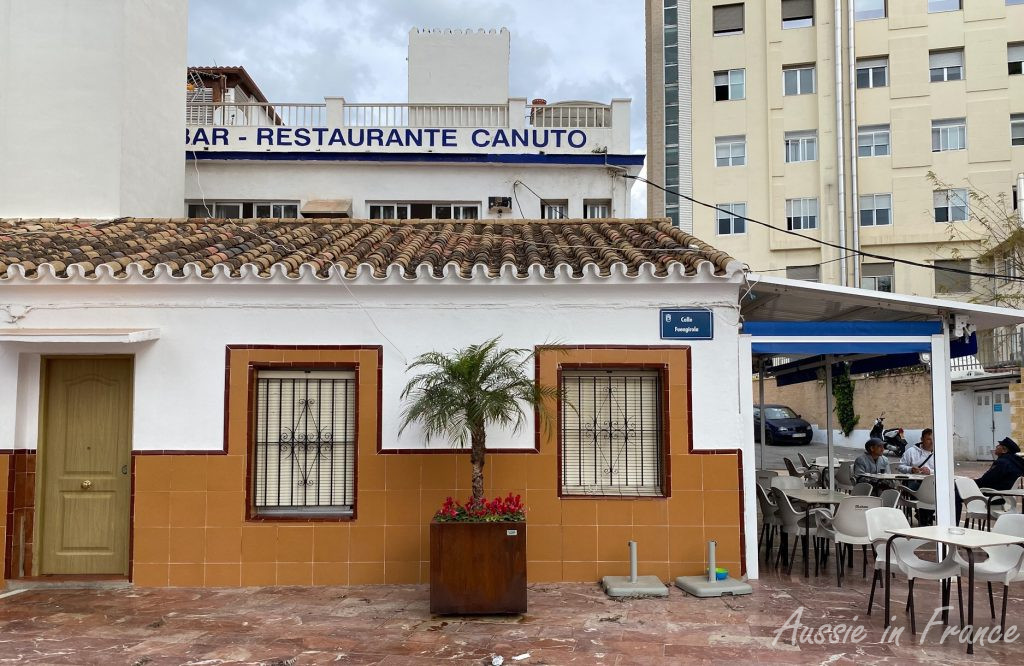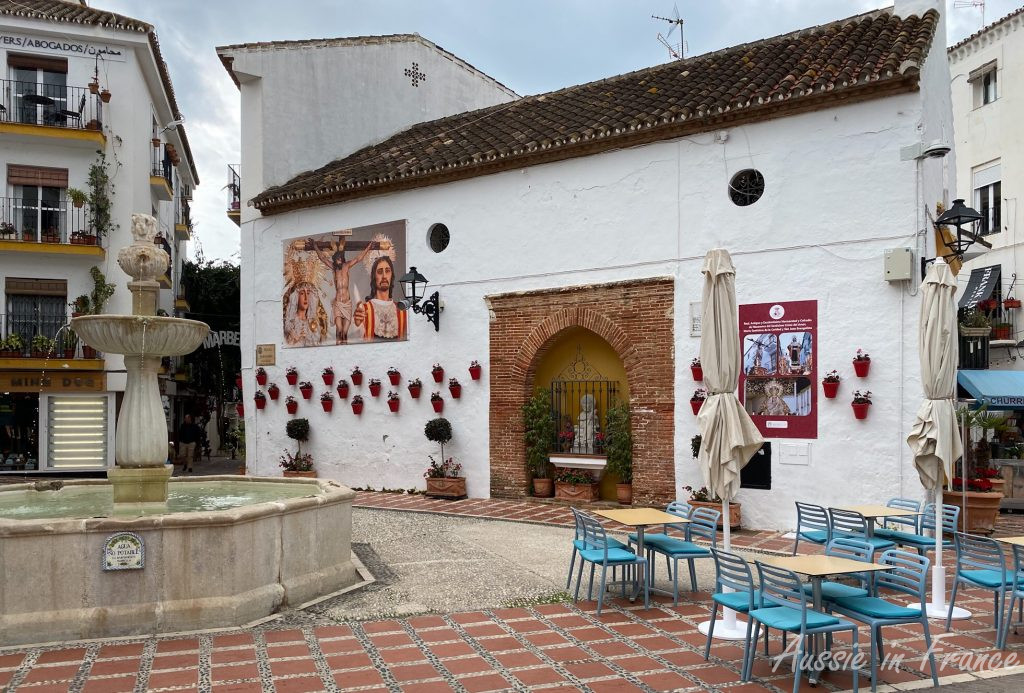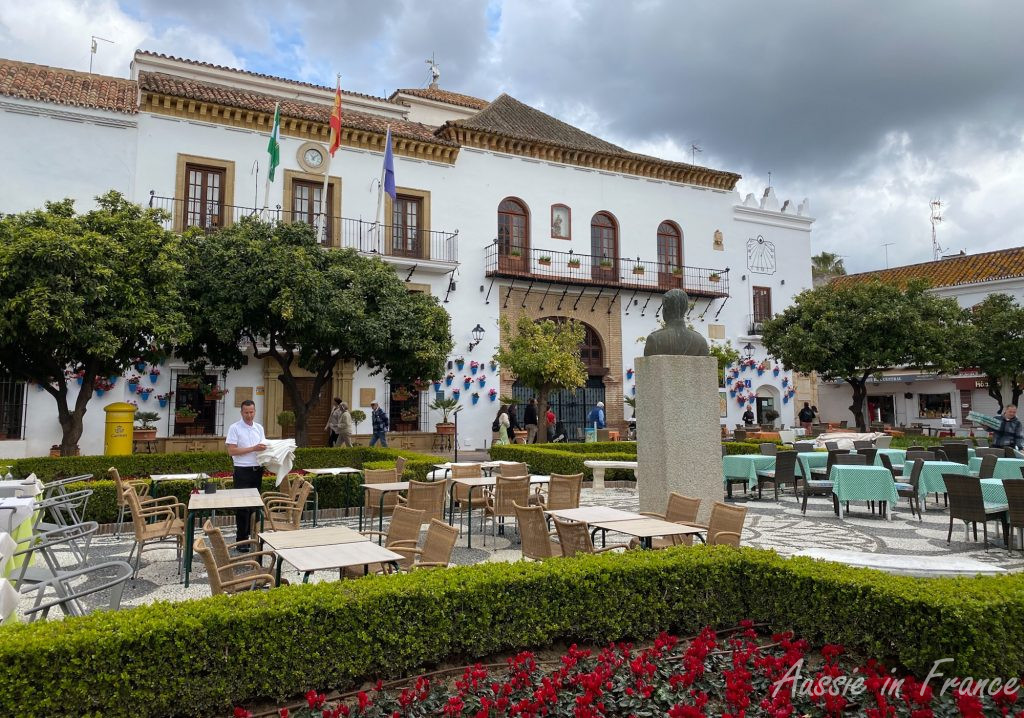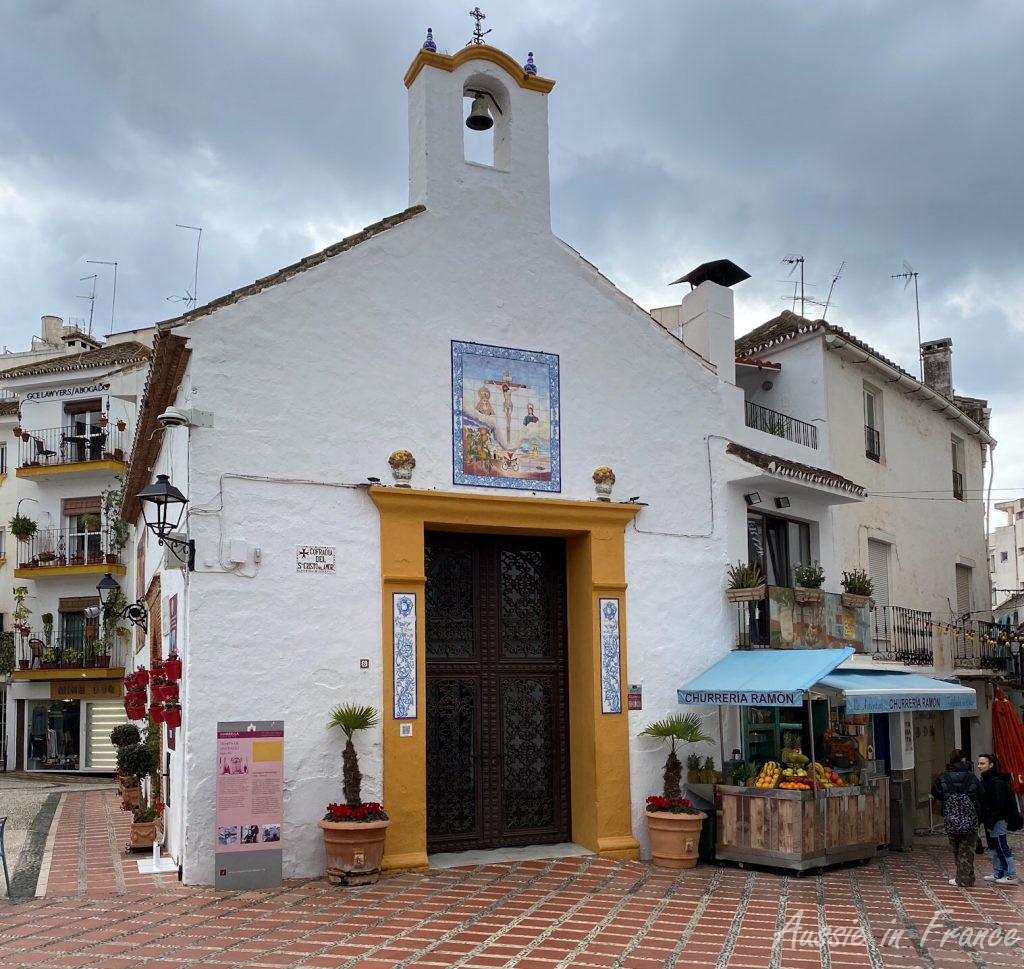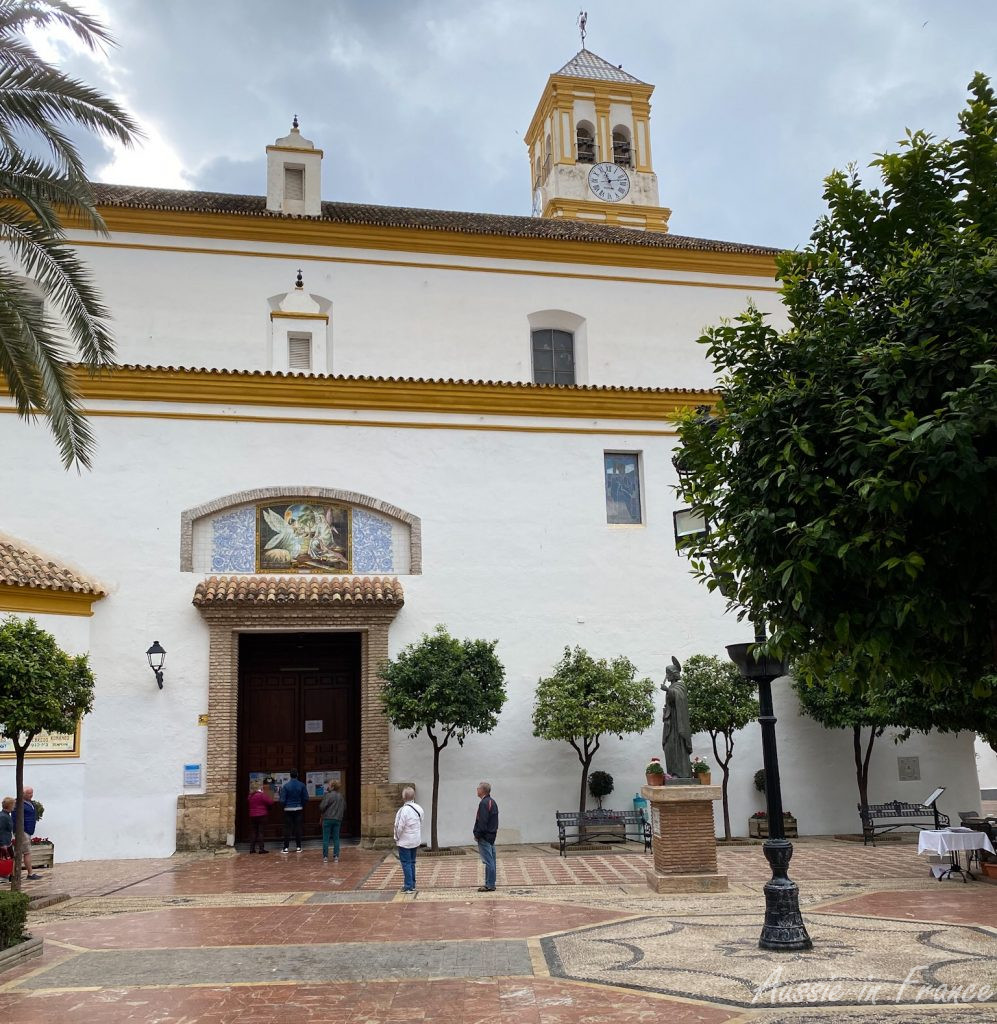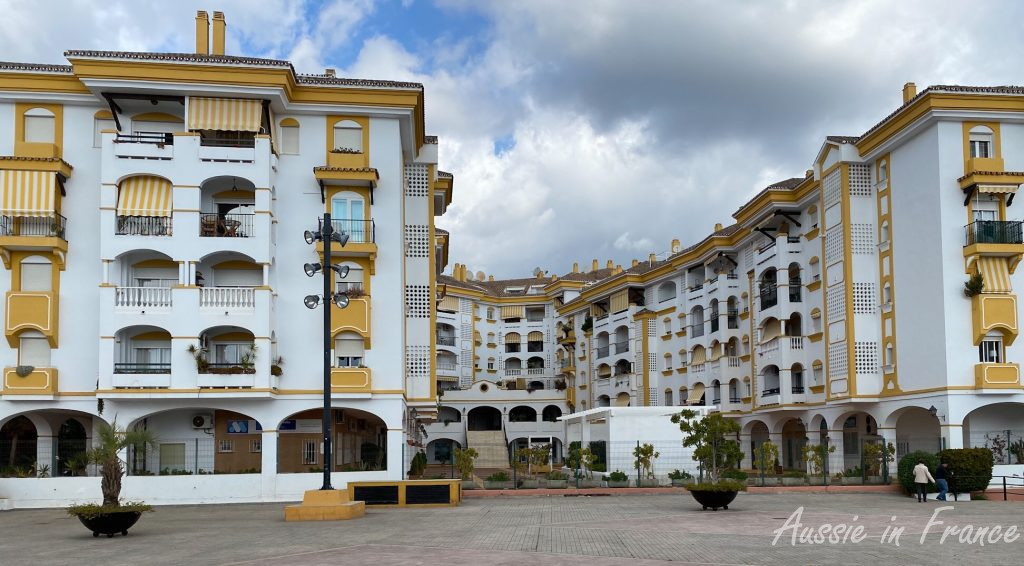
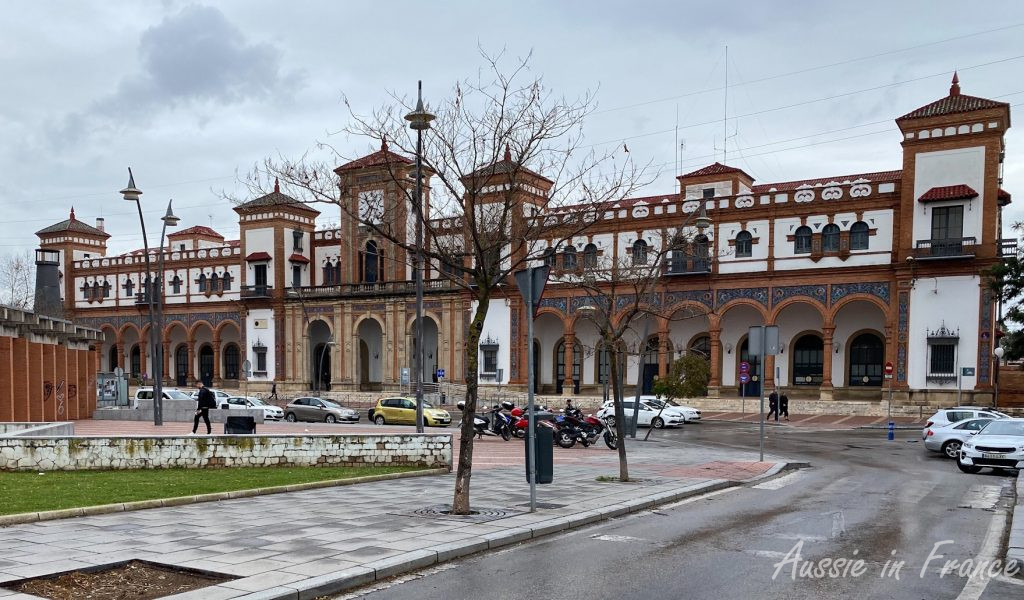
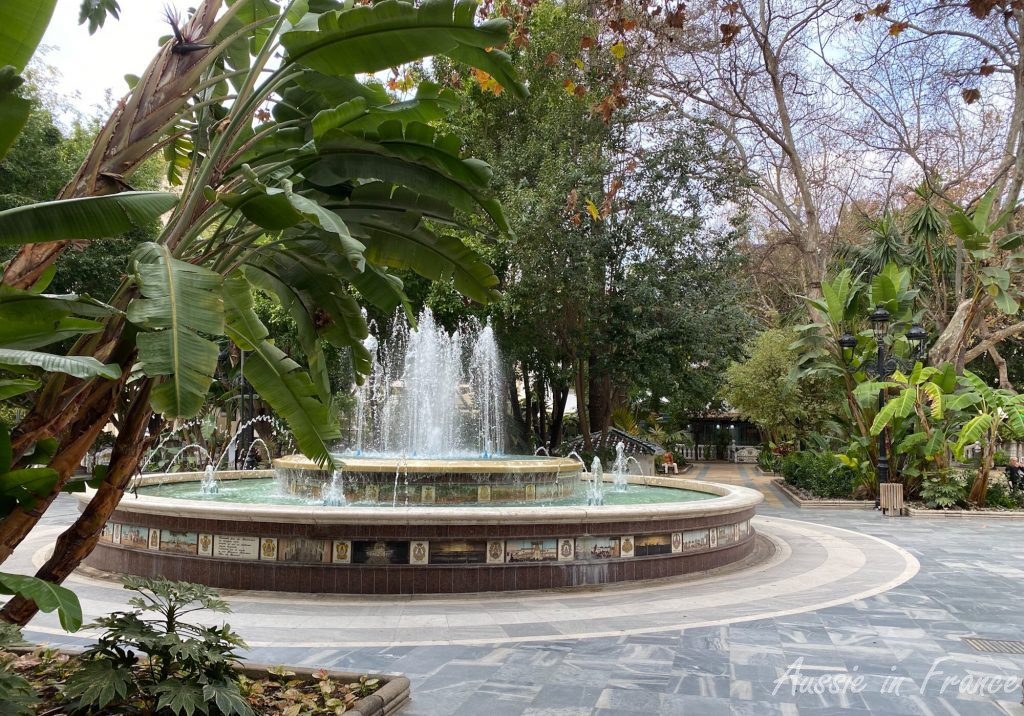
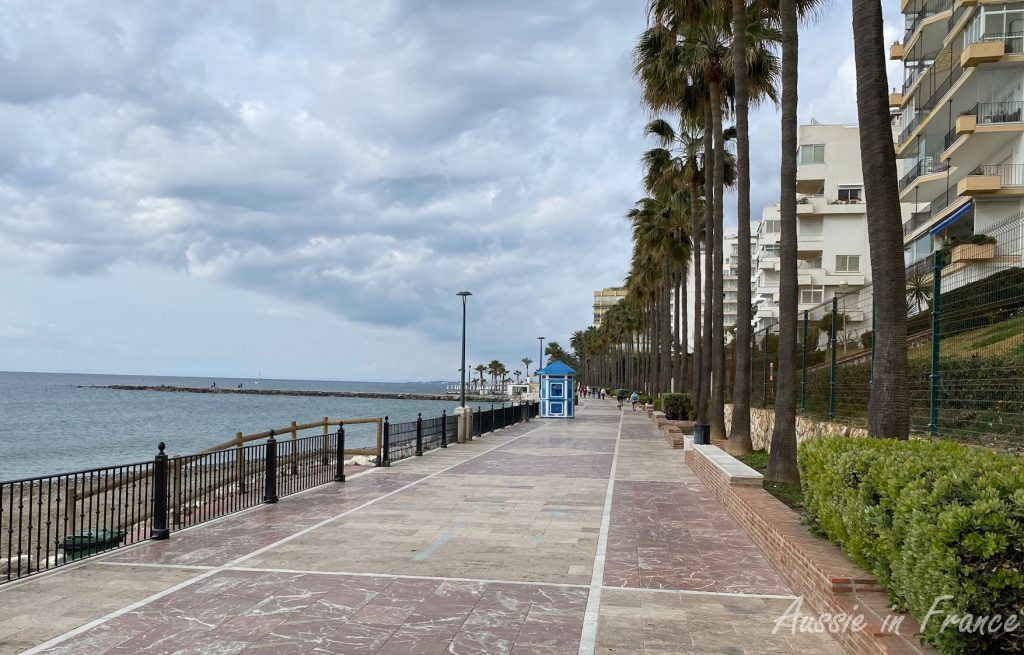
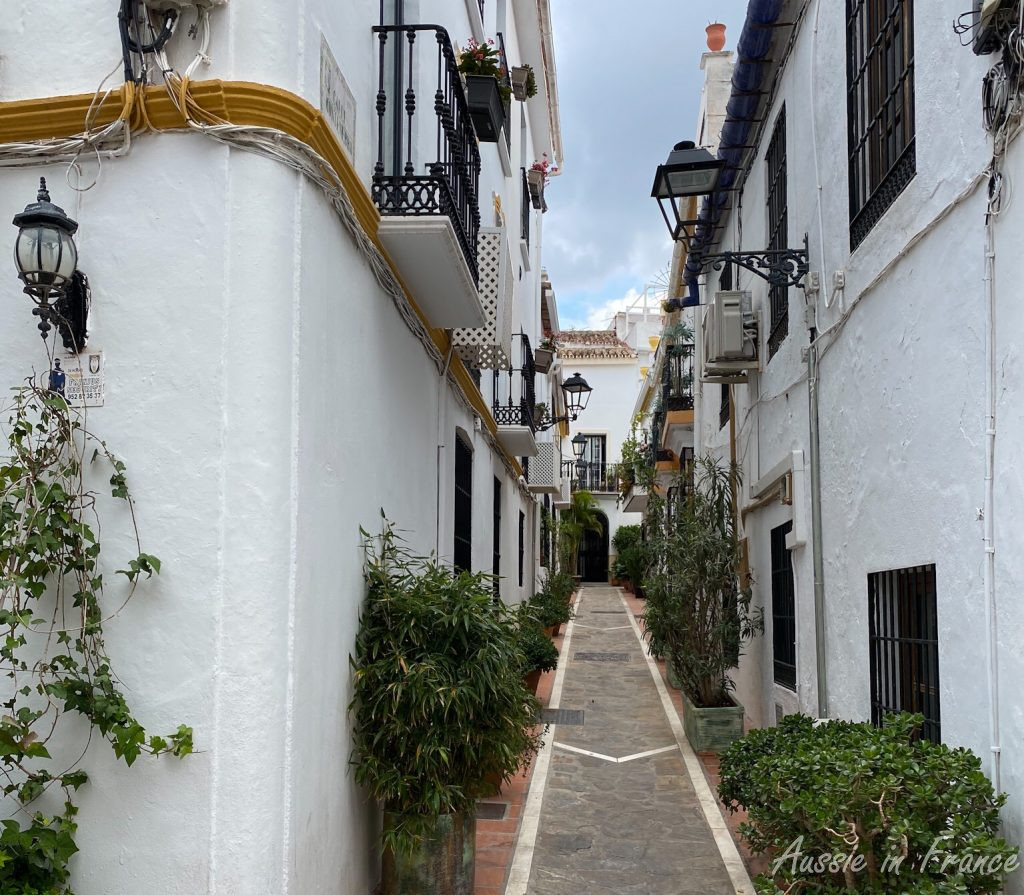
Marbella is like the Saint Tropez of Spain – not that I’ve ever been to Saint Tropez. Not quite my style. But we want to stay a couple of days on the Costa del Sol which we have never seen before going to Cadix and Marbella has an old town which sounds better than endless high rise apartments with balconies overlooking the sea. The historic centre turns out to be rather kitch but we like the little park with its ceramic benches and fountain.
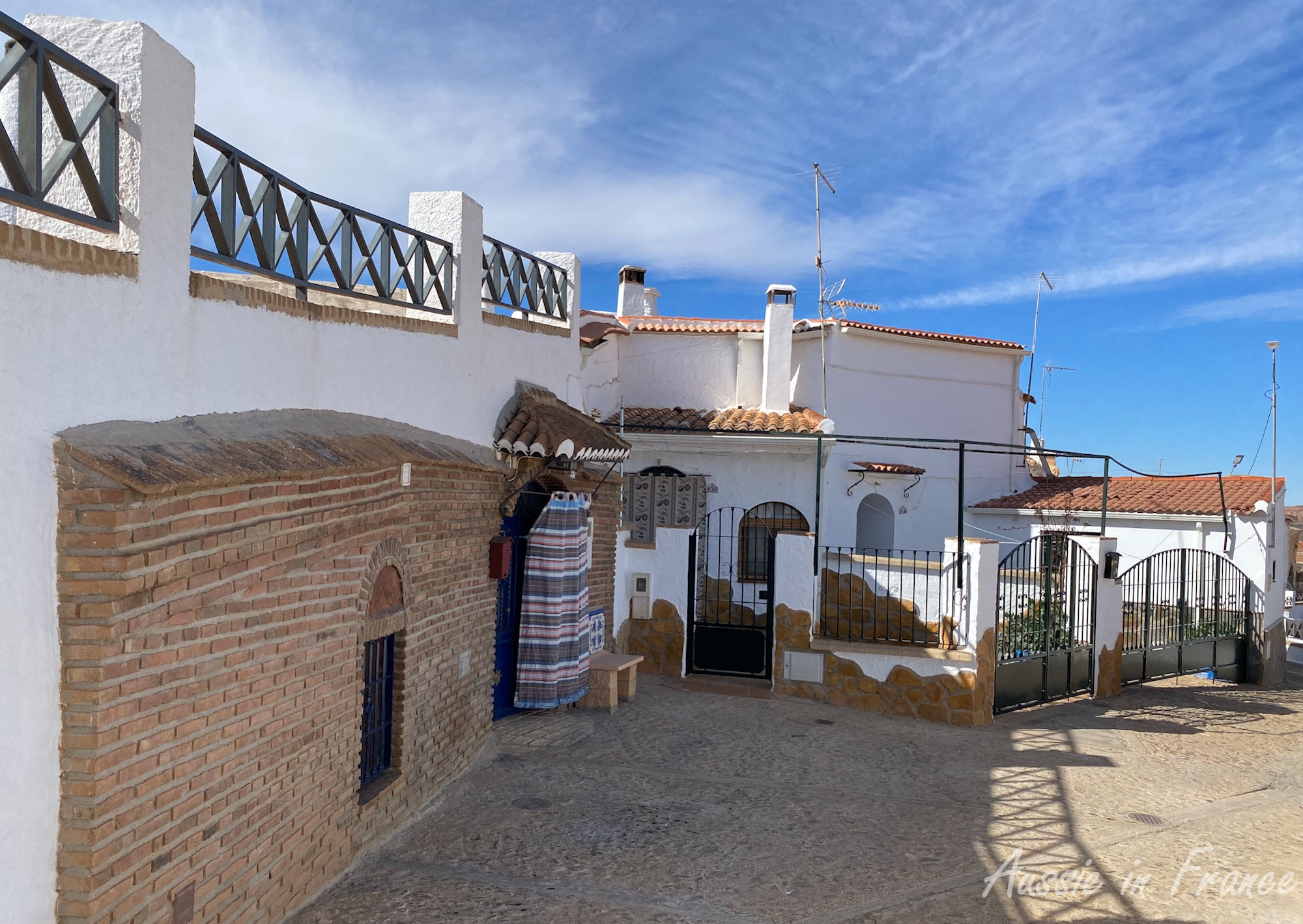
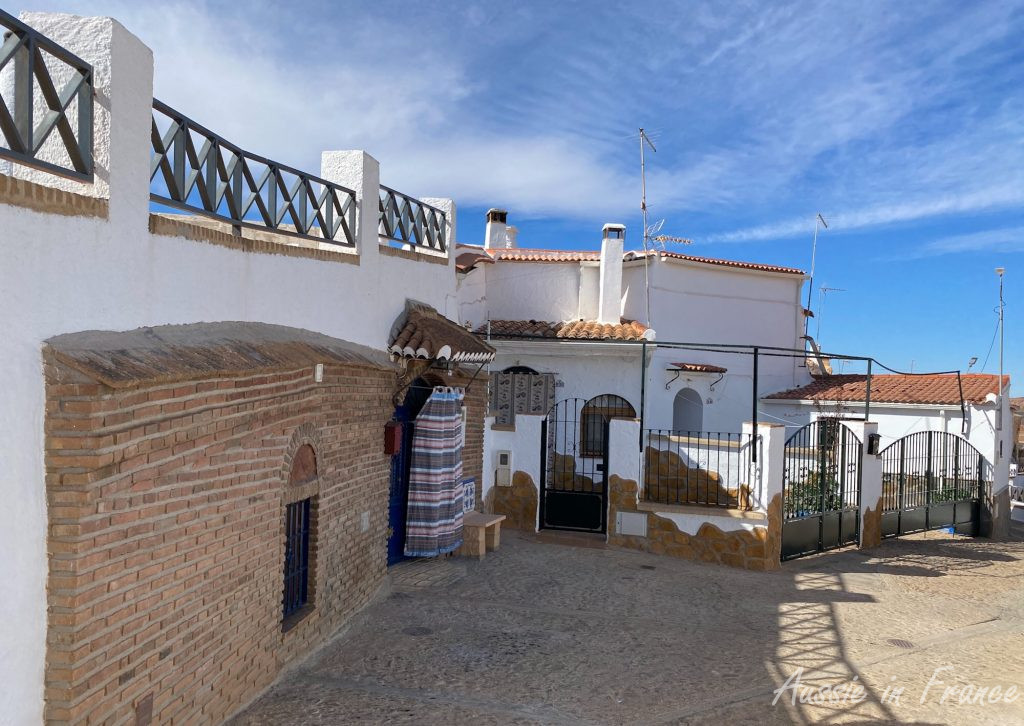
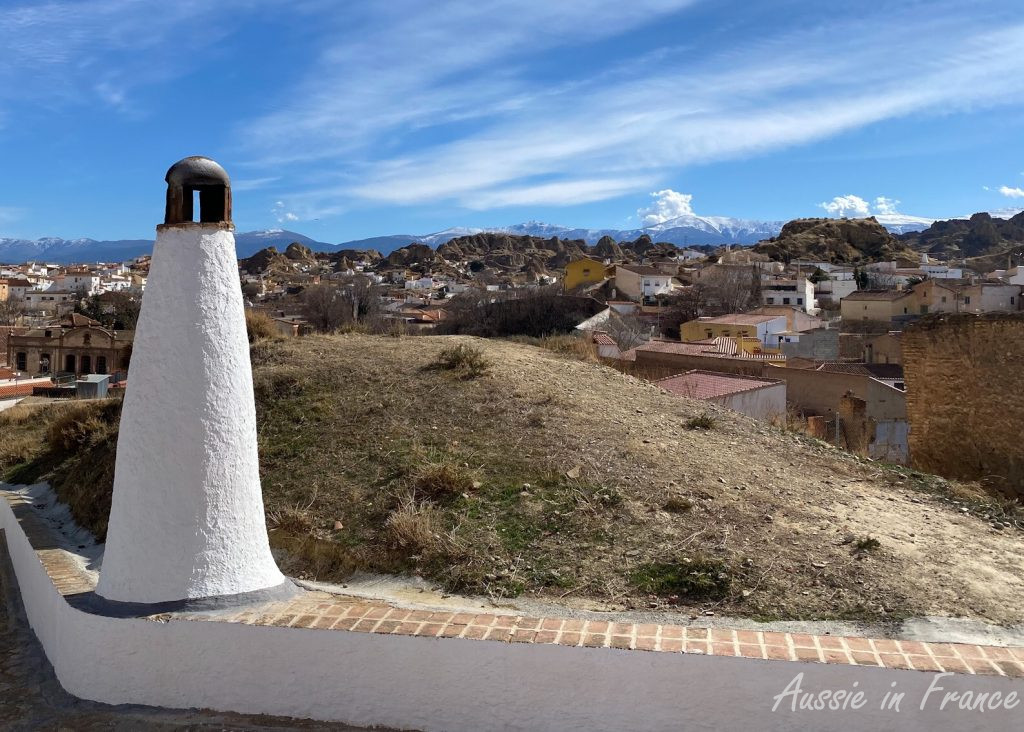
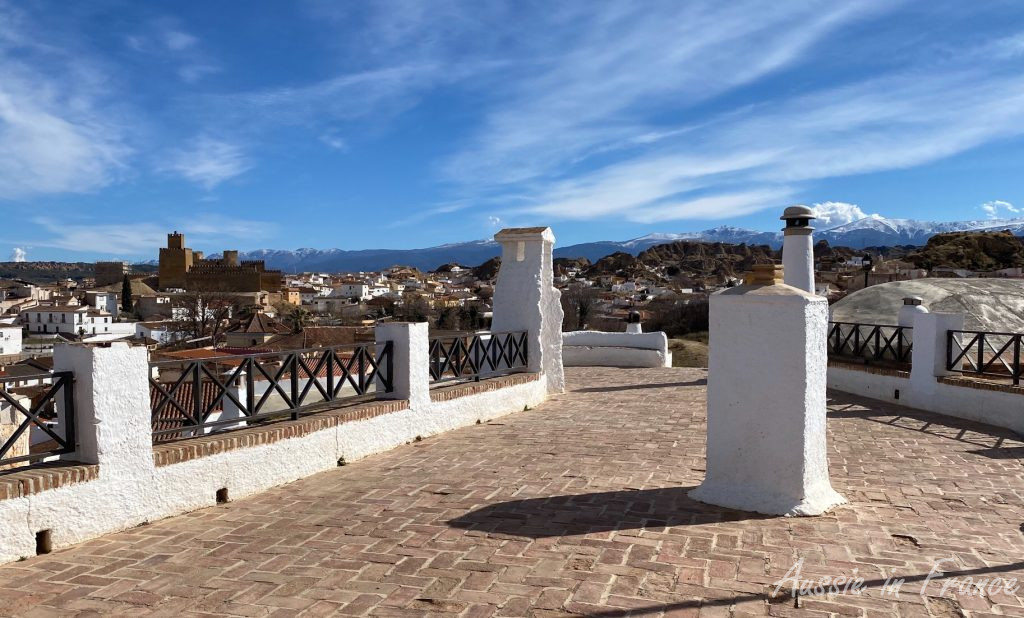
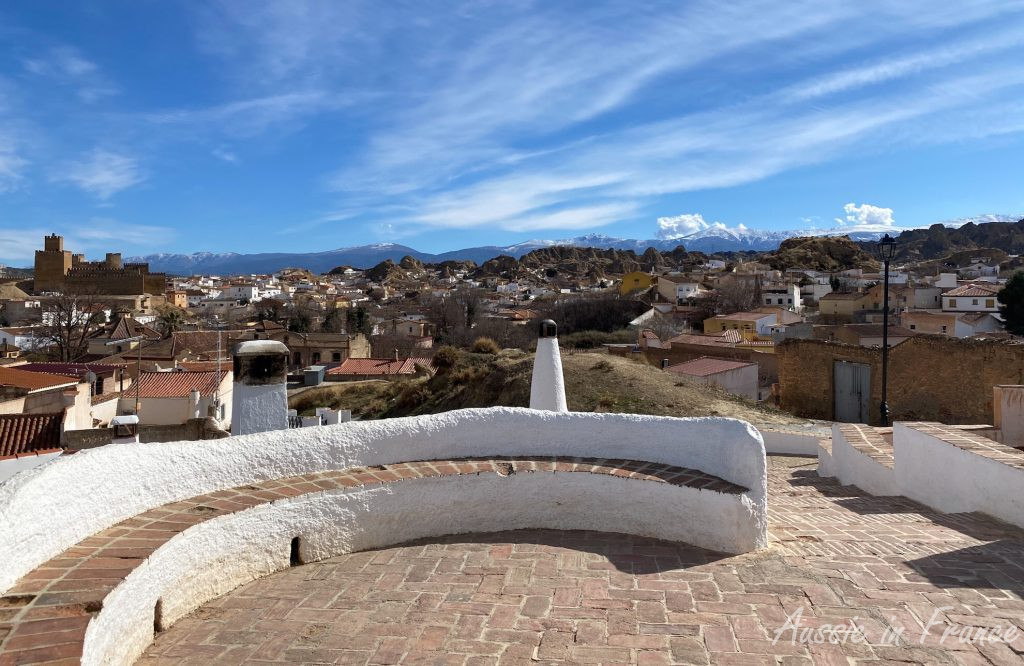
I live in a region in France – the Loire Valley – known for its troglodyte houses so it was rather fun to discover the same concept in Spain, but with an entirely different result. The cliffs here are clay and the cave houses in Guadix have white chimneys. Altogether, there are about 2000 troglodyte houses inhabited by 3000 people. It’s believed they date back to 1492 when Grenada was taken over by the Catholic kings, causing the Moors to flee to the surrounding mountains where they dug houses in the clay hills. The name Guadix comes from the Arabic Wadi Ash meaning the River of life.
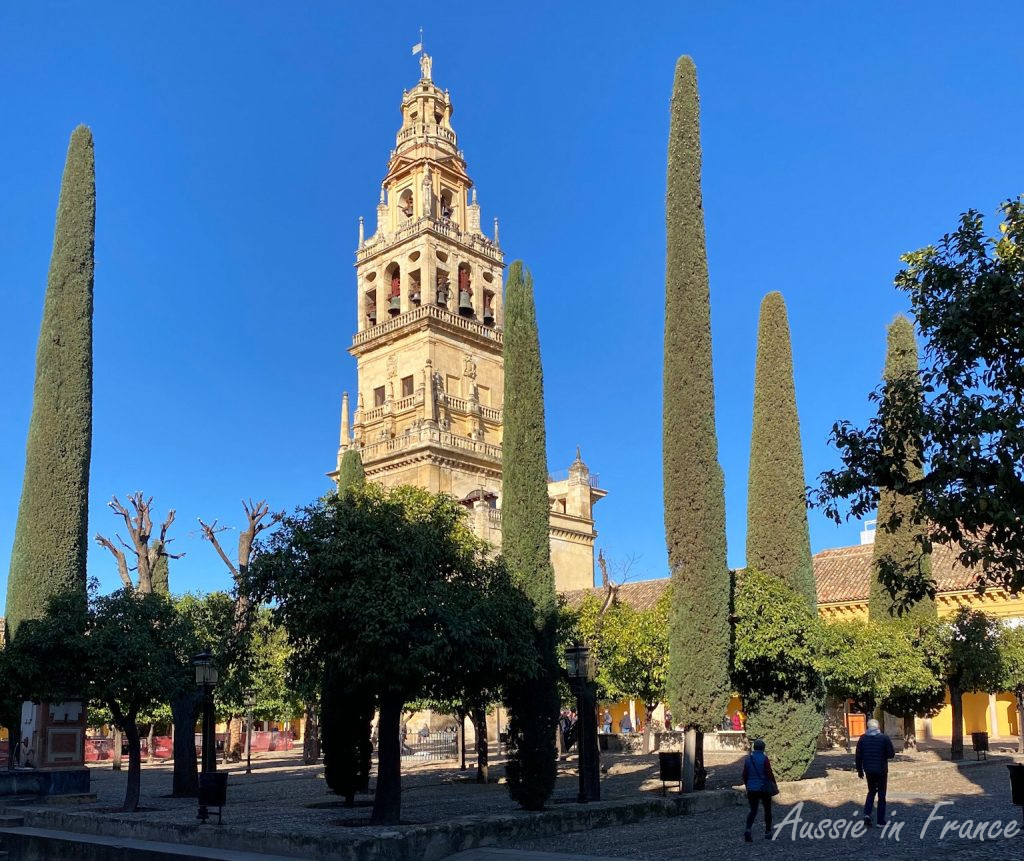
The courtyard in the middle of the cathedral-mosque
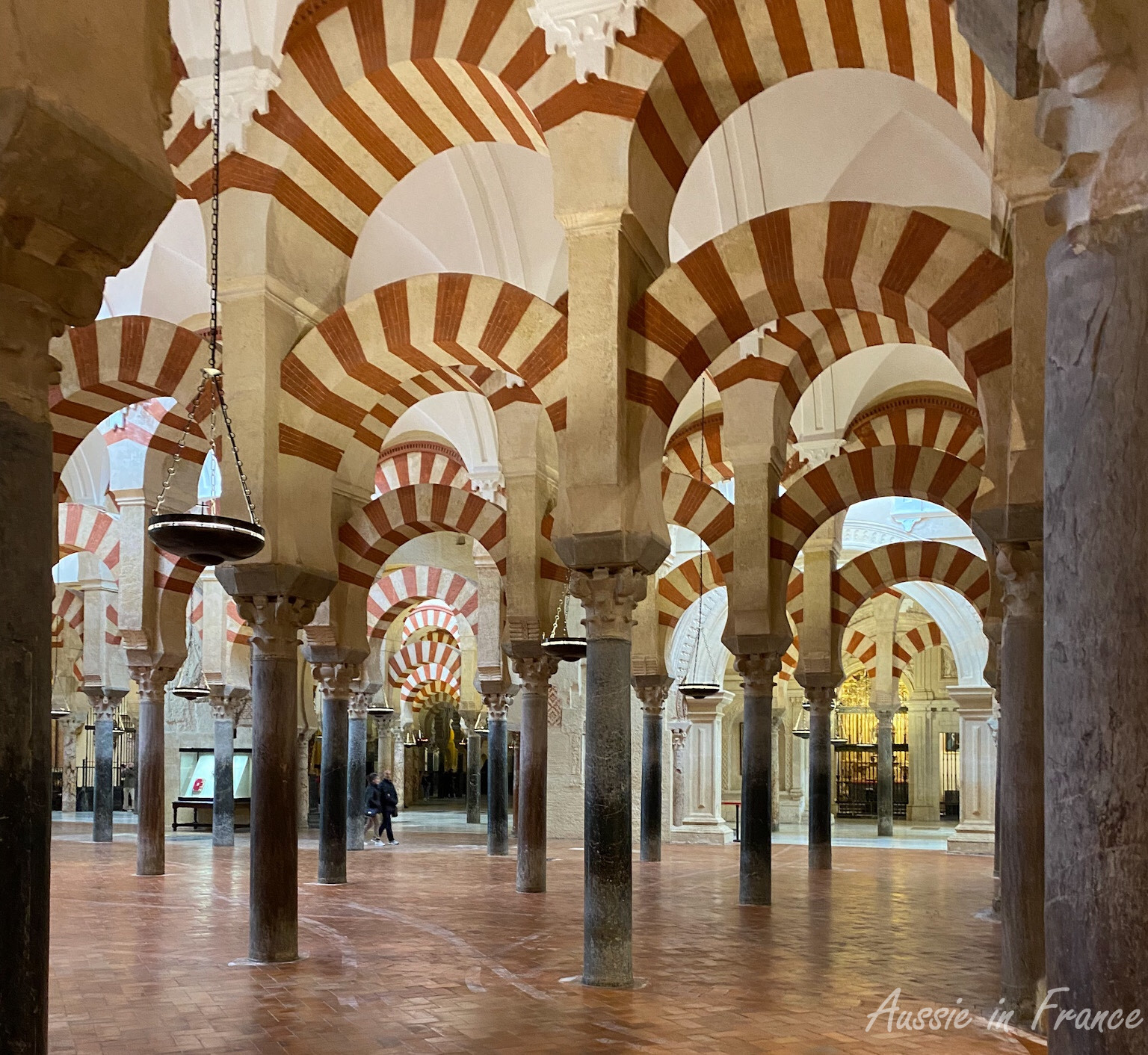
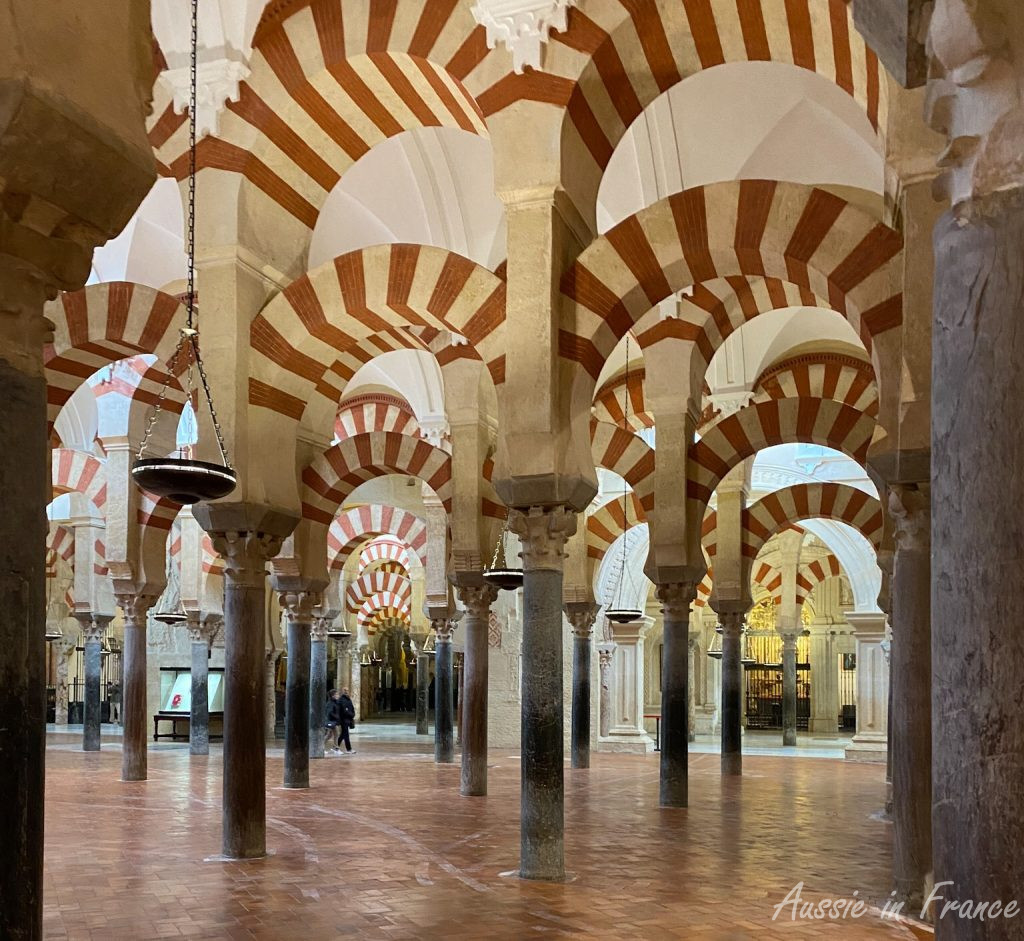
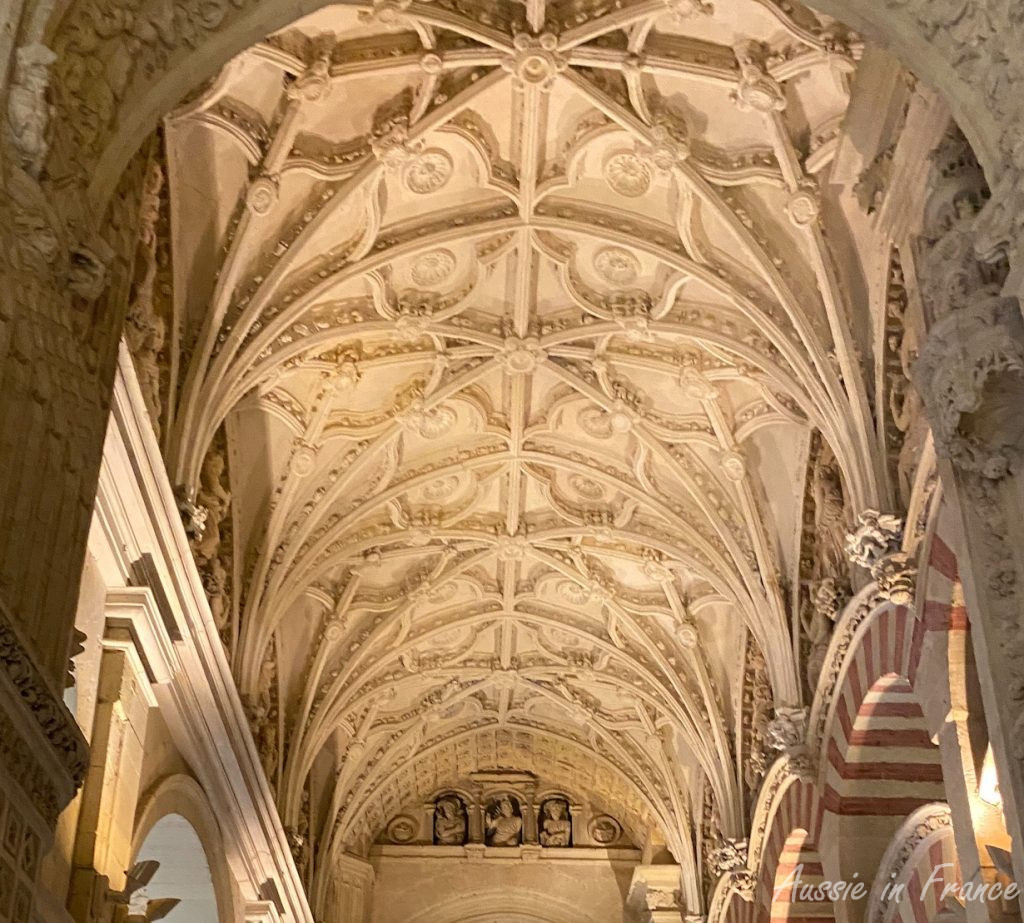
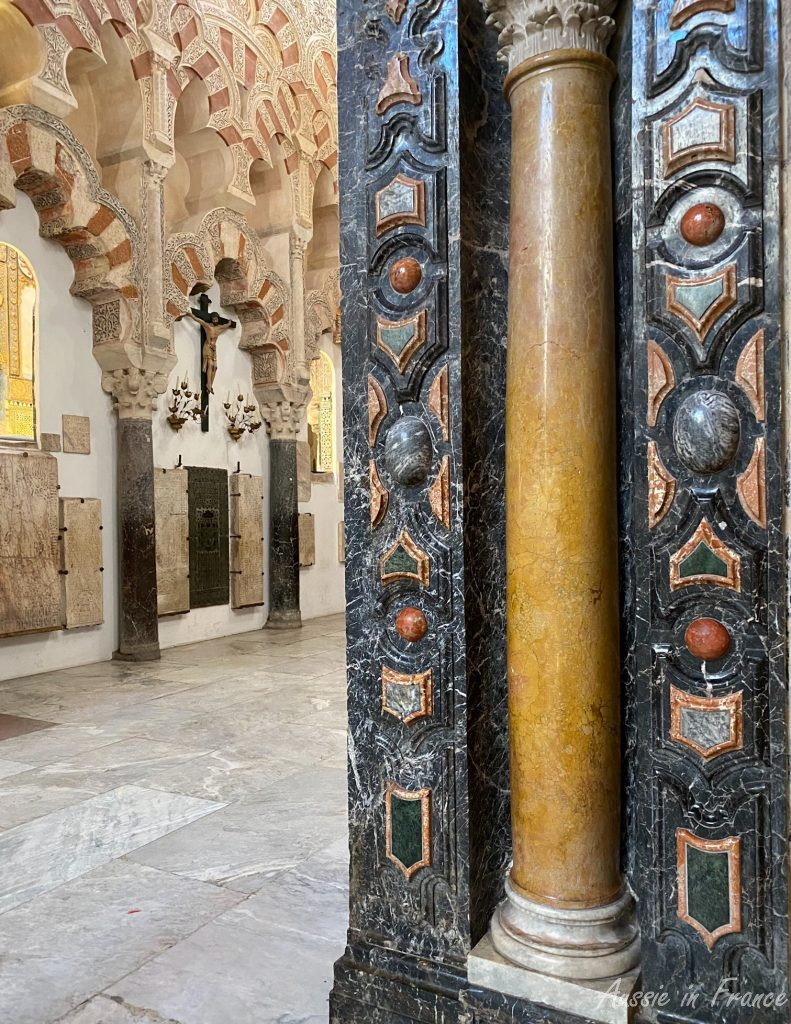
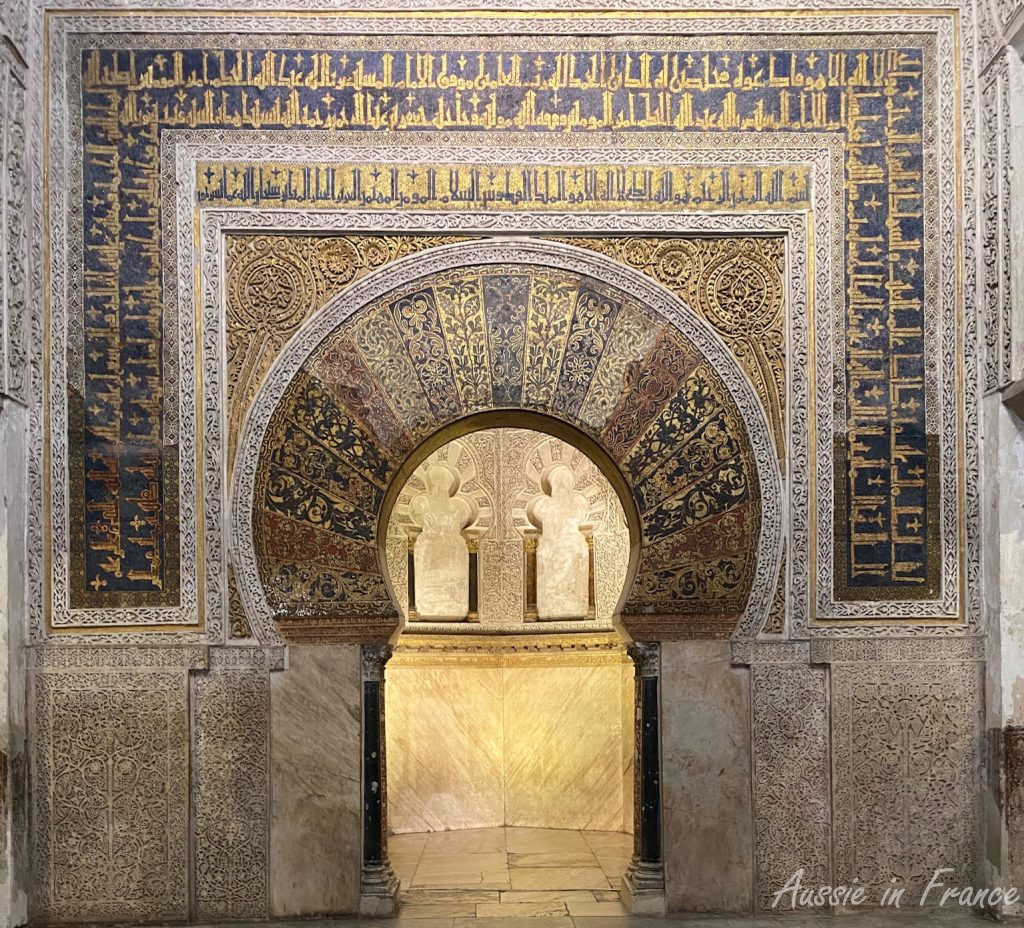
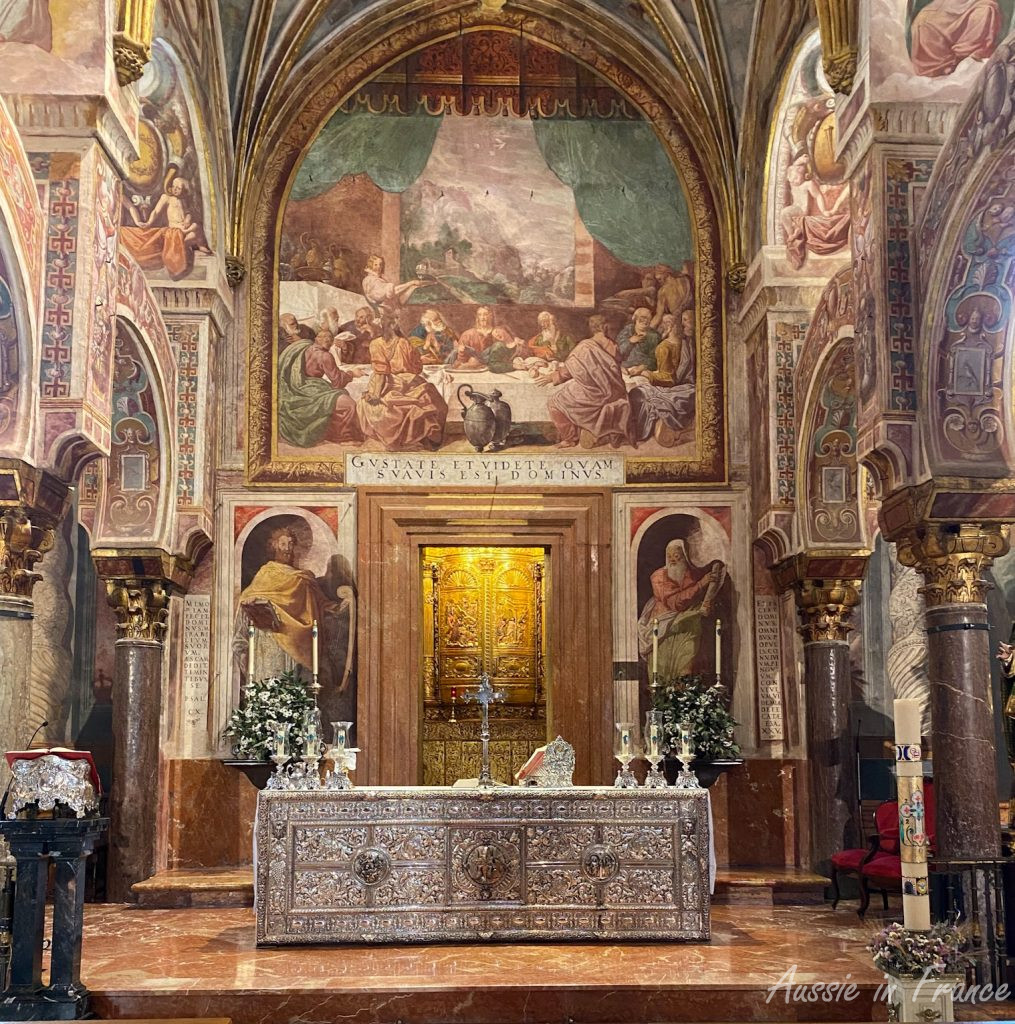
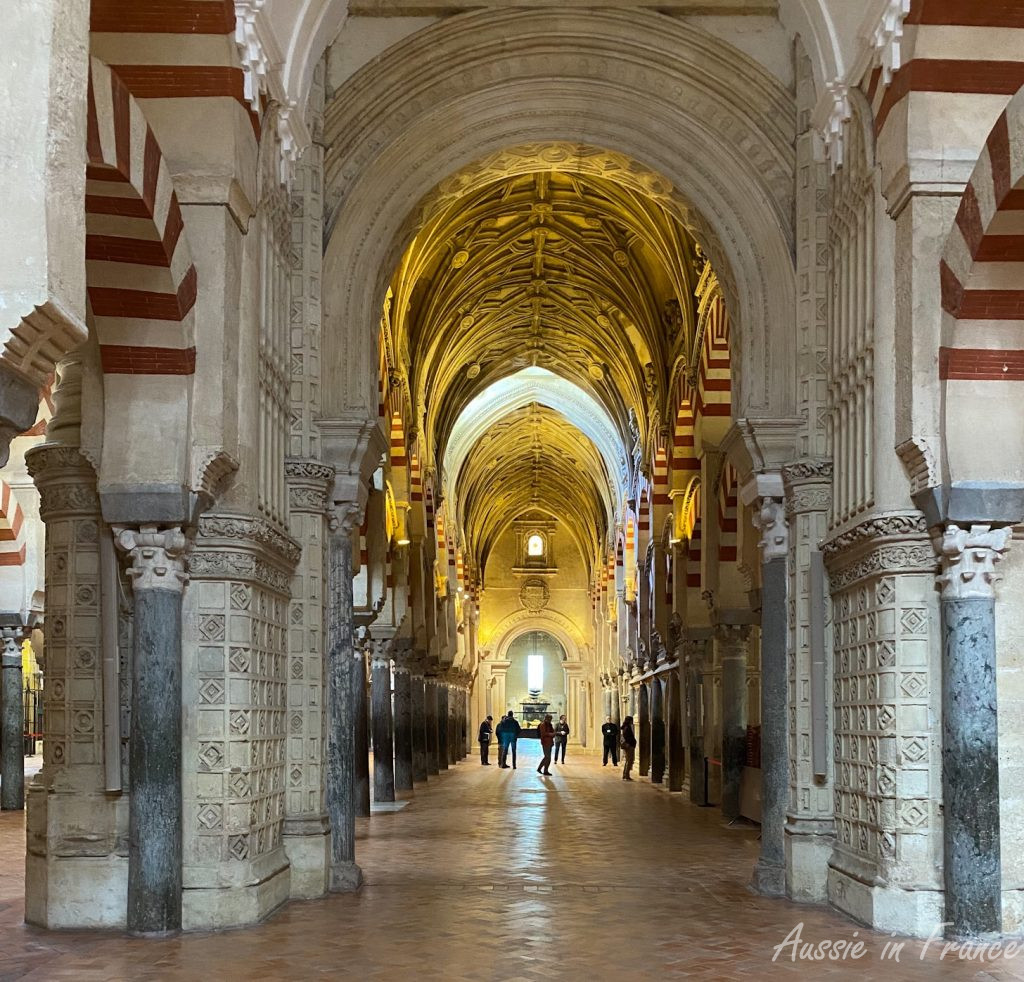
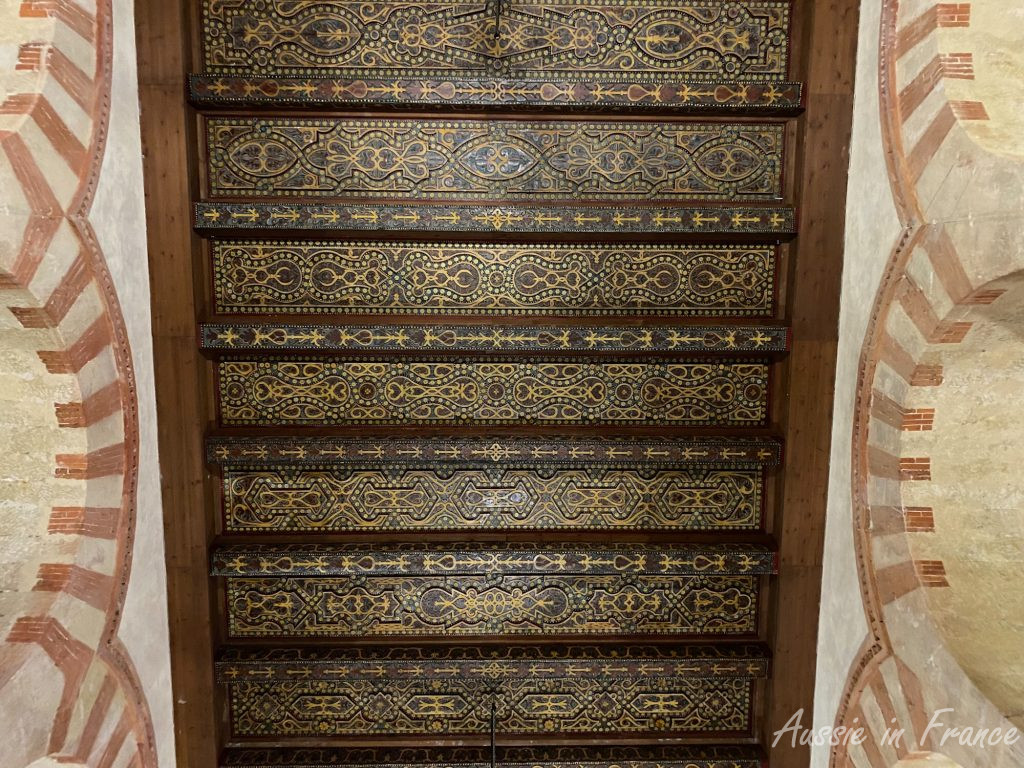
The Cordoba cathedral mosque or mezquita-catedral de Cordoba is quite extraordinary. The architecture and decoration are sumptuous. It has changed religions several times over the centuries and is an incredible mix of Moorish and European architecture. The great mosque was built in 785 on the site of a Visigoth basilica. It was then expanded many times up to the late 10th century until it was able to accommodate 40 000 people. It was turned into a cathedral in 1236. The structure remained much the same until the 16th century when a Renaissance nave and transept were inserted into the middle. I’ve tried to illustrate these changes in the following photos.
In January 2015 we spent a week in Granada and it snowed! The one thing I regretted was not hiring a car to go to Cordoba for a couple of days. So on Monday after a very long day, leaving Blois at 8 am by car for Charles de Gaulle airport to catch a 2 1/2 hour flight to Malaga, where we picked up a car from a local rental firm called Malaga car.com, we were delighted to finally arrive at our rental apartment in the historical centre of Cordoba at 8 pm.
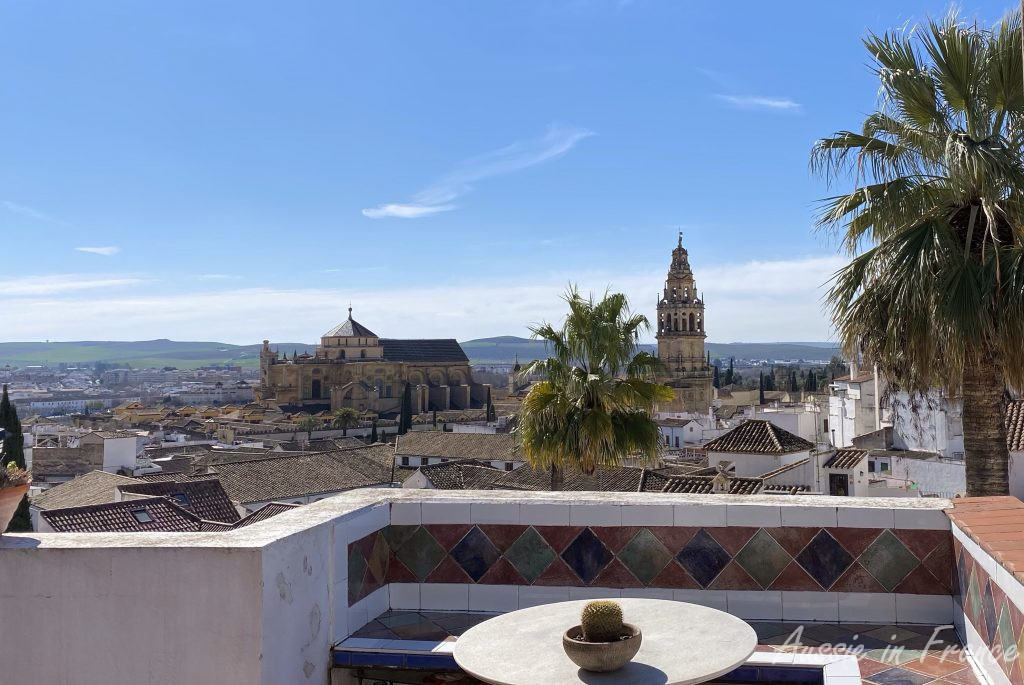
However it was not until next day that we were really able to appreciate the roof terrasse. Cold but sunny (about 12 degrees Celsius in the middle of the day), it proved to be the perfect lunch spot!
Today is the anniversary of our first Covid19 lockdown in France. We arrived home from our holiday in Crete at 2 pm, just two hours after the closure of all non-essential venues, with outings restricted to one hour a day for exercise and essential shopping. At the present, in Blois, mask-wearing is compulsory in built-up areas, while restaurants, cafés, bars, hypermarkets, museums and all cultural venues are closed and there is a curfew between 6 pm and 6 am. Vaccination has begun but we are too young and too healthy to qualify.
The view from the Wedding Room at Blois Town Hall
This morning, I am off to the Town Hall to interpret for a wedding, limited to 30 people, with everyone wearing masks. There are about 15 people present altogether in the big empty “wedding” room with its stunning view of the Loire. In France, marriages must take place at the Town Hall first, even if there is to be a religious ceremony. If either of the spouses does not speak French, an sworn interpreter must be present. The bridegroom today is a professional basketballer from the US and the bride is from Belgium.
I arrive early and park next to the Bishop’s Gardens (the Town Hall used to be the bishop’s palace) and wander through my favourite mauve and white garden, which is beginning to show signs of life with the coming of spring.
Stachys lanata
I notice a flourishing plant that seems to be sprouting up everywhere and take a photo. I’m always looking for new plants for the garden at home and our holiday rental garden.
A little further along, I see a municipal gardener walking towards his truck. I ask him if he can identify a plant for me on my phone. He immediately says, “That’s stachys lanata – rabbit’s ears (oreille de lapin). It has a white flower and grows about 30 to 50 cm high, but it’s mainly used for its decorative leaves. It doesn’t need much watering.” I thank him and repeat the name of rabbit’s ears. He adds that it is also called bear’s ears (oreille d’ours).
The communal compost bins
I ask if it works well in clay soil. He assures me it does. He then proposes to give me some but can’t find his shovel and looks around for a substitute. I explain that I have to go and interpret for a wedding so will hide the plant somewhere so I can get it on the way back. He points to some compost bins at the other end of the garden near where my car is parked and says he’ll put some in a bag for me and leave it behind the bins.
After the wedding, which is a very joyful affair despite the Covid restrictions, I see the gardener again and he tells me the bag is waiting for me.
The rabbits ears with flowers about to open taken last year in the same spot
When I open it, I discover that I have enough plants to cover quite a large stretch of border in my garden! In English, oreille de lapin is known as lamb’s-ear or woolly hedgenettle.
In 2014, I wrote a post about the difference between se rappeler and se souvenir which has remained very popular with readers. However, I have had to update the framework of my blog since then (WordPress) and the answers and comments have disappeared.
I try to remenber not to use “de” with se rappeler = J’essaie de me rappeler qu’il ne faut pas utiliser la préposition “de” avec se rappeler OR J’essaie de penser à ne pas utiliser “de” avec se rappeler.
Which reminds me that rappeler has another meaning = ce qui me fait penser que rappeler a un autre sens OR ce qui me rappelle que rappeler a un autre sens [but the French don’t like repeating the same word in a sentence!]
You probably don’t need to remember that = vous n’aurez sans doute pas à retenirce sens-là OR vous n’aurez sans doute pas à vous rappeler ce sens-là but retenir is more appropriate.
I could never remember whether the word memoire was masculin or feminine = je ne me rappelais jamais si le mot mémoire était masculin ou féminin
A little word about retenir which I forgot to mention the first time. The idea here is to keep something in mind or learn from experience.
Je n’ai pas retenu son nom = I can’t remember his name.
Je retiens de cette aventure qu’il faut toujours avoir un vêtement de pluie lorsqu’on fait du vélo = I’ve learnt from this experience that you should always take rainwear with you when you go cycling.
Retiens bien ce que je t’ai dit = Don’t forget what I told you. Make sure you remember what you were told.
Shared by readers in their comments:
aide-mémoire = memorandum
Q. What about (se) remémorer. When would one use these vs (se) rappeler. * remémorer⇒ vtr (rappeler) remember, recall, look back on La cérémonie avait pour but de remémorer les douleurs du passé. * se remémorer⇒ v pron (se rappeler) look back on, recollect, recall, remember Les anciens amis se remémorent les bons souvenirs.
A. In the first example, I think we’d be more likely to use commemorate, otherwise remember. “The aim of the ceremony was to commemorate the painful events of the past”. For the second example, I think I’d also use remember. We could say recollect or recall, but it’s on a higher register. “Old friends remember the good times together.”
Q. And the difference between remémorer qch and commémorer qch?
A. Well, commémorer is the idea of remembering something with a ceremony (commémorer l’armistice de 1918), as in our English commemorate whereas remémorer is only recall (ce village lui remémorait sa jeunesse). However, in all the years I have lived here (over 40) I have never heard anyone use the word remémorer.
“The best laid plans of mice and men …” John Burns never said a truer word!
We started the year with lots of travel plans and the first was a trip to Crete in March to break the winter blues. Covid 19 at that time was still a minor issue, although we did wear masks in the airport. After three most enjoyable days at a home exchange in Chania, we moved to Agios Nikolaos, by which time bars, restaurants and cultural venues had closed. Even though we were in an apartment, it wasn’t much fun. After visiting a 3500-year-old olive tree, there wasn’t much left to do and lockdown was about to start in France.
Crete
We took the next flight out of Heraklion, getting up at 4 am to do so! We wore masks for the whole trip and arrived back in Blois just two hours after lockdown, did some food shopping and holed up for the next 55 days! Lockdown eased on 11th May and we were no longer restricted to essential shopping and physical activity for one hour within a 1 km radius of our home. We also no longer needed to fill out a form when we did go out. After two weeks, on the 15th June, all restrictions were lifted and we started making holiday plans!
In the meantime, my daughter and her Dutch fiancé, who live in New York, had had to cancel their wedding plans in northern Italy in May while my son and his American girlfriend decided to get married on a ski slope in Vermont in the presence of only two other people! We watched the wedding on Skype but unfortunately there was no sound. We then had a virtual aperitif drinking the same champagne that my son bought on his last trip to France in November when we met his fiancé. We are delighted to welcome her into the family. Since then, the newlyweds have bought a house in Boston while my daughter and her fiancé have tentatively set September 2021 as a wedding date.
Cycling in the Jura
Holiday-wise, Germany seemed the safest as their Covid figures were very low (compared with France, Italy and Spain!) and we knew that we could count on outdoor eating venues and strict observance of hygiene protocols. We chose to avoid hotels and B&Bs and only stay in holiday flats with balconies or gardens, having breakfast and dinner at home. Our top priority was cycling and enjoying Germany’s many beautiful towns and villages. On June 26th, we started our 3-week journey in the Jura mountains in the east of France, discovering an area we didn’t know and which has an impressive number of bike paths.
Lake Constance
Next stop was Austria, from which we were able to visit Gallen with its famous baroque library over the border in Switzerland and cycle along Lake Constance. We followed the good weather as we always do and went back to the beautiful Bavarian mediaeval town of Bamberg, then Nuremberg, before spending four absolutely perfect days on the Forggensee. We had been there before, in our pre-e-bike days. This time we were able to appreciate the absolutely stunning scenery without straining our knees.
The Forggensee
We started heading back to France via the Neckar with some wonderful rides along the Kocher-Jagst Radweg near Heilbronn. Our last stop was the Black Forest. The scenery is beautiful and we had a breath-taking view from our balcony, but the cycling is a disaster! We arrived home on 17th July after driving 3380 K and cycling 773 K!
After we got back, we had a visit from my son who needed a new working US visa for his new job. The story is a bit complicated, but the upshot was that he left Boston wearing a mask (after getting a negative Covid test) and did not take it off until he got in his hire car at Charles de Gaulle airport in Paris. He then came straight to Blois, only doing a same-day return trip to Paris to go to his Embassy appointment. He needed another test in Blois before returning to Boston. It was lovely to see him for a few days.
Château de Chaumont
Otherwise, we have kept ourselves occupied and feel grateful every day for having a large house and garden that we love. While we could, we cycled as much as possible exploring many new areas and making the most of our annual pass to Château de Chaumont.
Our back garden view when dining outdoors
I have continued to work part-time, mainly as a sworn translator (I only just broke even on my holiday rental studio in Blois, which was supposed to supplement my terrible retirement pension), and my husband Jean Michel has completed various projects including two cold frames, two raised vegetable beds and two staircases for the garage and wood shed. There is still another one to go in the barn. We gardened extensively during the warmer months, growing a lot of plants from seed and increasing our collection of drought-resistant perennials. It made up for being so restricted in our movements. I also blogged every day on www.loiredailyphoto.com, especially during the different lockdown periods. It has helped me to stay connected with the outside world.
We did manage another 5-day cycling holiday in September in the Nièvre, based in La Charité-sur-Loire (near Sancerre). The Covid figures were low at the time and we could still count on outdoor eating at lunchtime. It was a welcome break. When we got home, we bought a garden heater so we could continue to enjoy eating outside throughout October. We went back into lockdown on 30th October for a month, followed by a 2-week easing period when non-essential shops opened again under extreme pressure from the public in the warm-up to Christmas.
Cycling along the Nièvre
What I have missed and continue to miss most are my children and friends. I haven’t seen my daughter since November 2019 when we shopped for her wedding dress. I occasionally go walking with a friend and we briefly met up with other friends in December in a park. During Christmas and New Year, which we naturally spent alone, eating home-made foie gras and drinking vouvray wine, we spent a lot of time reading our travel diaries aloud and looking at the corresponding digital photos. We FaceTimed with all the children and their partners on Christmas Day, which cheered us up no end. They are all doing well despite Covid.
If you’ve been tracking the Covid situation in France, you will know that we are not out of the woods. We have a large and somewhat reticent population to vaccinate and we are not in the immediate target group. We have another two months of cold, stay-at-home weather in front of us, then we’ll be able to go back to our outdoor occupations. By then we might be eligible for vaccination. In the meantime, we are exercising maximum precaution, only going to shop once a week at the local market and supermarket and, occasionally, the plant nursery. We buy everything else over the Internet. I continue to make our bread and yoghurts.
The Loire River near our house
Our hopes for 2021 are to see our children again, including Jean Michel’s two sons who live in France, celebrate my daughter’s wedding wherever it may be, visit my son and daughter and partners in Boston and New York and find a safe venue for our annual cycling holiday.
I would like to wish everyone a happier 2021, full of hope, inner strength and new horizons! Thank you for reading my very sporadic blog!
Why can’t I get a proper cup of coffee in France? This is a question I am often asked by disappointed Australians and Americans who are used to a very wide variety of coffee beverages and are surprised to see that France, with its café culture, does not seem to have the coffee they are looking for.
Autumn leaves in front of Café Nemours on Place Colette, one of the most iconic cafés in Paris
Well, the reason is that it’s a café culture, but not a coffee culture. The French don’t walk down the street sipping from a cup. They either drink their coffee standing at the bar or sit down at a table.
Perhaps a little history of Australian coffee might help. To quote Aussie expat Luke Barclay, from Café de la Baie near the Mont Saint Michel : “France doesn’t have a highly developed coffee culture like Australia does. Historically coffee is relatively recent in Australia – we are essentially English in culture up until a point and thus tea was the thing. But with post war immigration came coffee styles from around the world and these blends led to the highly specific style that is found in Australia and New Zealand – quite different to that found in North America and yet composed of pieces from European (and Eurasian) coffee. That said there is a complacency with many businesses and their coffee. I know from my Café de la Baie that the majority of French ask simply for a “café” as if there is only one style available and this is despite café au lait existing here as much as espresso. Thus few varieties are proposed by cafés. Further, the advent of automatic machines in France has reduced the quality. Those that make coffee know less and less about the techniques, quality is lost, machines aren’t cared for (or kept clean!). Temperatures, timing, ratio, grind qualities: all sorts of variables and most cafés just push a button and assume its a good brew.”
In France, in a normal café, you can have expresse (or expresso – note the “x”), café long, café au lait, café crème, café noisette and cappuccino (but not always – I remember a café in a small town in Brittany where we stayed several days where only one person could make it and she wasn’t always there). In more sophisticated cafés, especially in Paris, you might be able to get other types, but they are usually brasseries or cafés catering to tourists.
Baristas, as such, do not exist in France, as they are not considered necessary.
In Paris, a typical expresse is very “serré” which means that it has been tamped to death and is usually very bitter. Outside Paris, it is usually not as strong and therefore not as bitter. It is generally served in a small cup or tasse but not a ½ tasse as it is in Italy. It is considered a must after a meal but is also popular at other times during the day as a pick-me-up.
When I first came to France in 1975, all homes had a drip coffee machine and a coffee grinder but nowadays most people have an espresso machine of some sort and buy pods.
A café long is sometimes called an américain or Americano and served in a bigger cup. It is a weaker version of the expresse and made with a double dose of water.
A café noisette is an expresse to which a teaspoon of foamed milk is added. However, in some bars, they just add a drop of cold milk.
A café crème is an Americano to which a spoon of whipped cream has been added. It is often referred to as a grand crème.
A real cappuccino at Kat’s Coffee in Tours
We all know what a cappuccino is – until we get to France! Here it is considered to be an expresso topped with milk froth and sprinkled with cocoa. Now that automatic espresso machines are widespread, that version has definitely become the norm. If you want a creamy foamed milk cappuccino à l’italienne, you first have to check they have a machine with a wand and even then, as you can see in the photo below, there can be surprises. I rarely order cappuccino because I am invariably disappointed, except for a café in the city of Tours called “Kat’s Coffee” which has the real thing. I haven’t found a real cappuccino in Blois yet. If you don’t want it automatically sprinkled with cocoa you have to say so.
A cappuccino at The French Café in Blois
In Normandy in particular where they put cream in everything they can, a cappuccino is made with whipped cream and not foamed milk.
A café au lait is coffee to which warm milk has been added. It is the traditional French breakfast drink. After childhood, French people rarely drink milk without something in it, such as chocolate or coffee. A café au lait is also a way of introducing children to black coffee. As time goes on, you add less milk.
You can usually have most of these in a decaffeinated version, called déca. If you just ask for a déca it will be the expresse version. Otherwise ask for café au lait déca, grand crème déca, etc.
The word “café” by itself in French always means black coffee. You have to qualify it if you want something else. You always add your own sugar which is often in lump form (even in people’s homes) or in a sachet. You rarely see coffee crystals but you sometimes find brown sugar. Sugar substitutes are becoming more readily available.
Kat’s Coffee in Tours
All these drinks can be ordered simply by saying their names and adding “s’il vous plait” e.g. un expresso s’il vous plait”, “un grand crème s’il vous plait”, etc. If you want to check you are getting (almost) real cappuccino, you can ask “est-ce que vous faites vous-même la mousse de lait?” And if you don’t want cocoa on top “je ne veux pas de cacao dessus ».
The French do, however, appreciate different types of coffee beans, and specialists such as Verlet near the Palais Royal, serve a huge variety of beans. The owners travel the world to select suppliers and roast their own coffee. Closer to home, Jean-François, on Blois market, has a large selection of home-roasted coffee beans where we always buy our coffee. Each week, he has a blend-of-the-day to try on the spot. There is often a coffee menu in gastronomical restaurants. These select coffees are usually served black with no sugar so you get the real taste.
Another notable difference between French and Australian coffee is that robusta coffee (produced for the former French colonies) is mainly used in France rather than the less bitter, more flavoursome arabica variety.
Milk can also make a difference. In France, milk is usually long-life (UHT) and I’ve never seen any other kind in a French café. I don’t know whether this is the case in Italy, home of the cappuccino, but I suspect it is.
A word of advice about iced coffee. This is not something that people drink in France.
Coffee at the market in Blois (during Covid, so distancing)
And I can’t end this post without mentioning the wonderful Café (or Thé) Gourmand available in most French brasseries and restaurants. This is a coffee served at the end of a meal with a variety of four or five mini-desserts that change according to the ingredients the chef has at hand. They are a wonderful end to a meal if you can’t decide which dessert to choose! I have written a separate post about them here.
If you have found any good coffee shops or cafés in France that you’d like to recommend, please tell me and I’ll add them to my list. Many of those mentioned do their own roasting and sell beans.
Amboise: Eight O’Clock, 38 Place Michel Debré
Arles: Café Bazar, 8 place Antonelle
Bordeaux:
Sip Coffee (Aussie-type), 69 bis rue des Trois-Conils
Before I answer the question, a little terminology. Although many people say “sworn translation” and “traduction assementée”, the correct terms are “certified translation” and “traduction certifiée”. It’s the translator who is sworn or assermenté by the court, not the translation.
Standing in front of the Appeal Court of Orléans before being sworn in
First, what exactly is a sworn translator (traducteur assermenté)?
In France, a sworn translator or “traducteur assermenté” is also an “expert judiciaire” and attached to either a Court of Appeal (Cour d’appel) or the Cour de Cassation (Court of Cassation or Final Court of Appeal). There is a second list of translators, known as the “liste du procureur ou TGI” but they are not “experts judiciaires” and mainly used for court work in rare languages.
How do you become a sworn translator?
To become a sworn translator, you must have French nationality and be able to prove that you are capable of translating any documents that may be required by the court, police authorities, etc. You do not have to be a professional translator but knowledge of the legal system in France and the countries in which your foreign language is spoken, is essential. The application process takes a year and candidates are approved by a council of sworn translators at the Appeal Court where the application is made.
There are two separate categories: translation (written) and interpretation (spoken). You can apply for one or the other or both and for just one language or several. Applications are submitted in January and the translators / interpreters are sworn in during December. The initial accreditation is for 3 years, followed by 5-year renewal periods, provided the translator/interpreter has fulfilled their obligations.
Rates for court translations and interpretations are strictly controlled (and not very well-paid).
There are no official rate recommendations concerning certified translations for private individuals. Rates are left entirely up to the translator.
Why do sworn translations always seem so expensive?
A sworn translator is like any other self-employed person in France. They have to pay social contributions in addition to overheads (computer, official stamp, colour printer, paper, envelopes, stamps, wifi connexion, office space, heating, etc.). Some translators have to charge value-added tax of 20%.
The Court also requires that sworn translators attend at least one training session a year.
The documents translated for private individuals vary enormously which makes it impossible to propose a “set rate” for most documents.
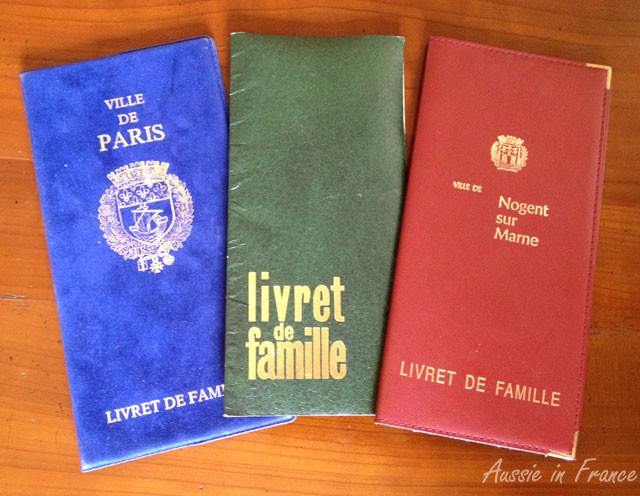
The most time-consuming part of many certified translations is the layout as the translation has to resemble the original insofar as possible. Once you have the templates in your computer, the translation itself may not take very long, but you need to accumulate a lot of templates. For example, there are at least 10 different UK birth certificates and the same number of French driver licences. There is a different birth certificate for each state of the United States, not to mention marriage certificates which often have a licence attached. Each state of Australia also has different documents. Driving licences and driving records vary considerably from one country to another and from one state to another.
Scanning documents to make pdfs can take time as well. First, you have to print the original and translation, then stamp all the pages, add a register number and sign them. You then have to scan them one at a time and create the corresponding pdf files.
So, what about actual prices?
The price of a fairly standard birth or marriage certificate can vary, according to the translator and the origin of the document, from 25 to 65 euros or more. The best solution is to find a translator who is specialised in your country’s documents e.g. UK, Australian, US, etc. as they will be able to offer better rates because they already have a lot of the templates. Some translators offer a discount for a large number of documents (naturalisation application, for example).
For one-off non-standard documents, the translator usually charges per word. It seems that the price ranges from about 18 centimes a word to 25 centimes. For longer, more complex documents, it is best to use a translator whose mother tongue corresponds to the target language.
As a sworn translator, I have come to specialise in UK and Australian civil registration documents (birth, marriage, divorce, adoption certificates), Australian and US driver licences and records, French civil registration documents, French driver licences, French diplomas and transcripts (diplômes and relevés de notes), French real estate documents including promesse/compromis de vente, acte de vente and procurations (power of attorney).
What will you need to give the translator?
In the past, before the existence and widespread use of email and scans, translators asked to see the original documents.
Today, many translators work via email particularly with the increase in on-line applications for applying for titres de séjour and exchanging driver licences, for example. At some stage, the applicant will be required to submit the original documents so the authorities will be able to compare them. A copy of the original always accompanies the translation. It is unusual these days to stamp originals.
If working by email, you will need to send the translator a proper scan of the document, not just a photo with your phone. UK documents, in particular, are often outsize and you may need to go to a printer or photocopy shop and have them scan the document and send you the file.
The translator will then give you a quotation and turnaround time and ask to be paid in advance by bank transfer, PayPal, Revolut, etc.
I usually send a pdf of the translation to the customer to check name spelling and numbers in order to avoid errors.
The translation is then printed out, stamped and signed and assigned a number from a register kept by the translator. The translation and original are then stapled together unless a pdf is required.
If a hard copy is needed, I prefer to send it by “lettre suivie”, which is a tracked letter that arrives in the customer’s letterbox.
The French authorities always require the original translation and not a photocopy unless it’s an on-line application, so you may need to order more than one copy. There will be an extra cost.
Even when you speak the language and have lived your whole life in a country, buying a property can be stressful and challenging. Doing so in a foreign country makes it a little more complicated.
I have lived in France for over 40 years and have been directly or indirectly involved in the sale or purchase of a large number of properties. Real estate rules have evolved over the years and regulations are much stricter than before.
There are basically two ways of buying property in France: you can deal directly with the owner or go through a real estate agent or website. In both cases, the final sale will be handled by the notaire. “A Notaire is a legal specialist with a public authority mission who draws up authenticated contracts on behalf of his clients. He is self-employed”. The notaire himself also sells properties on commission.
1/ Buying through a real estate agent or website:
Real estate agents have to have a licence and a diploma, which requires a minimum of 2 years’ training after the end of high school. Those with higher diplomas (bachelor’s or master’s degrees) are entitled to draw up a promise to sell and manage apartment buildings.
In France, the real estate agent’s fees (usually 5 to 7% of the sales price) are nearly always paid by the buyer. The promise to sell agreement is included in the fee but the buyer and seller can choose to go through a notaire. Agent’s fees are different from notaire’s fees and taxes.
2/ Buying directly from the owner:
With the many possibilities offered by the Internet, more and more people want to avoid the real estate agent’s commission and buy directly, through French websites such as LeBoncoin, SeLoger, Logic-Immo, pap (particulier à particulier), Superimmo, Figaro Immo, SeLoger Neuf (new homes) and Superimmoneuf (also new homes). There are other international websites such as Greenacres.
The buyer can deal directly with the owner and can even sign a promise to sell with going through a notaire if they wish.
3/ Buying through a notaire:
The notaire is often approached by local people when buying or selling as they feel they have a better legal guarantee.
4/ Real estate agents vs private sales
Which should you choose? A real estate agency or a private sale?
If you don’t speak French or have little legal knowledge, a private sale will be more complicated unless you are really sure of the person you are buying from. Despite the fact that there is no commission, it might be more difficult to bring down the price with a private owner who often overvalues their property for sentimental reasons.
For the buyer, it is important not to let the personality of the owner cloud their judgement, even if they speak English.
In the more popular areas of France, real estate agents often speak English themselves which can make life much easier for buyers. They will often take you to view several properties just to get a good understanding of what you are looking for. It is easier for a buyer to say “no” to a real estate agent than to a private owner. Also, it is the agent who negotiates the price, not the buyer. However, some agents are very persuasive. You should make sure you feel comfortable with the person showing you around and don’t feel bullied into buying something you don’t want!
Real estate agencies can be nationwide such as La Foret, Square Habitat, Century 21 orOrpi, which will give you access to all their properties in France, or independant, in which case they may be a member of the real estate agency federation, FNAIM, which will provide you with a better guarantee than a small agency working on its own.
The agency will usually ask you to sign an agreement under which you cannot deal directly with the owner of a property you have viewed.
5/ The next thing is to draw up your criteria, the things that you absolutely must respect such as price, amount of work to be done, location in an urban or rural area, size, aspect, type of flooring, type of heating, etc. Having to replace the roof or put in a new heating system can be very expensive.
Other factors to look out for are the land tax (taxe foncière) which can be quite expensive in some areas, rates (taxe d’habitation, which are being phased out but still applicable for people in higher income brackets), cost of heating (you’ll need to see the actual bills), shared expenses and the financial health of the joint owners if it’s an apartment building (if there is a swimming pool, lift, caretaker, extensive grounds, it will cost more to run).
6/ It can also be helpful to use the services of a person who speaks your language and knows the area, especially if you live far away or are dealing with private owners. This is a service I am happy to offer.
Next step – viewing and signing the promise to sell.
Rosemary Kneipp, sworn translator with the Orléans Court of Appeal. www.kneipp-traduction.com kneipp@kneipp-traduction.com or 06 76 41 99 43