Just a few photos from the sunny Palais Royal Gardens to start the week.
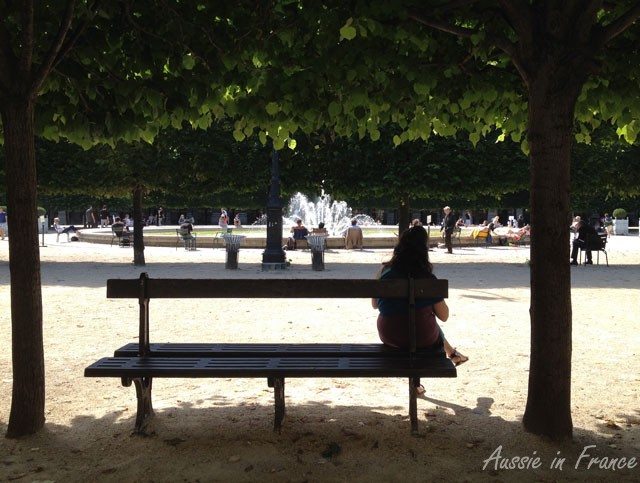
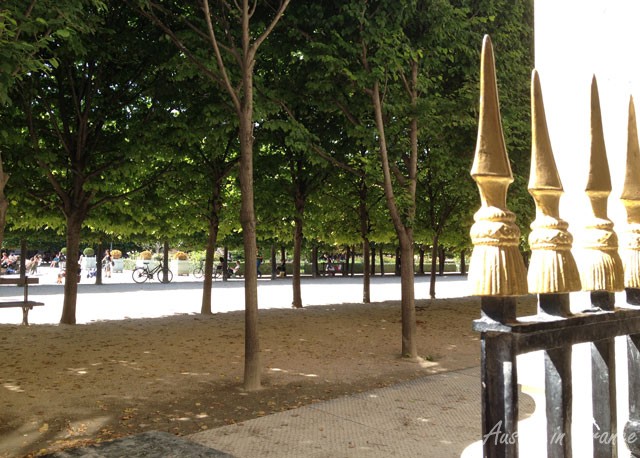
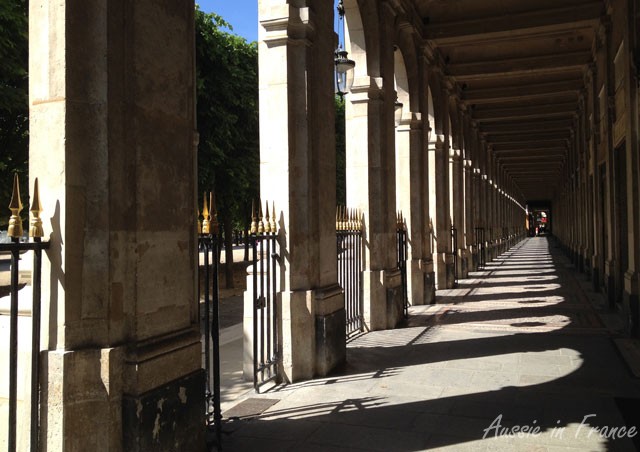
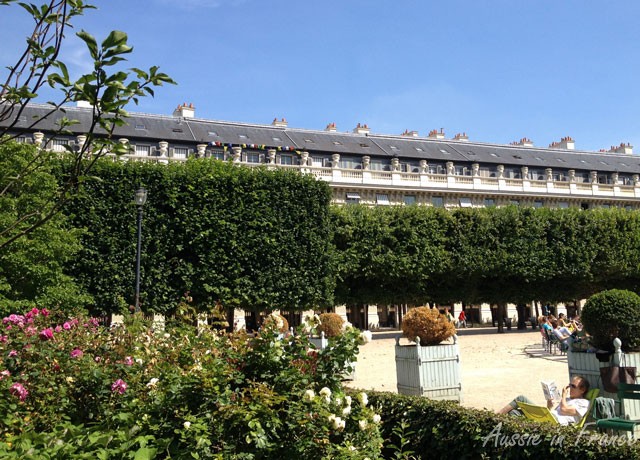
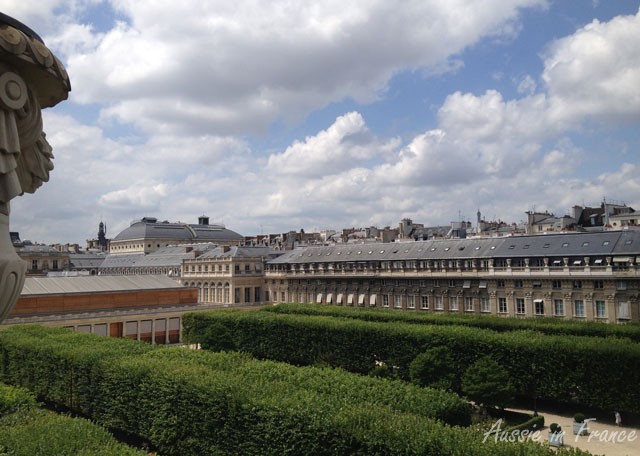
Just a few photos from the sunny Palais Royal Gardens to start the week.
 Breakfast and déjeuner both have the same origin. I don’t mean their Latin root, but their meaning. Jeûne = fast and dés = stop. But déjeuner doesn’t mean breakfast, it means lunch. Breakfast is petit déjeuner.
On the days we practise intermittent fasting our déjeuner really is when we break our fast. I searched around to see why déjeuner is the midday meal in French and came across the unverified information that it is because Louis XIV didn’t get up until noon. It seems that déjeuner still means breakfast in some far-flung corners of rural France. That, too, is unverified.
The expression à jeun which means while fasting is used quite a lot in French to mean not having eaten. For example, for a surgical operation or certain blood tests, you need to be à jeun. We would probably say on an empty stomach.
Funnily enough, the equivalent of letting your children go hungry is faire jeûner ses enfants. Not that you probably need to know such an expression.
Jeune, of course, has another meaning – young – but without a circumflex, and comes from the Latin jovenus while jeûne comes from jejunare meaning to be abstinent. See how important those circumflexes are!
Jeune can be used in contexts other than youth as well. I love the expression donner un coup de jeune which literally means “to give a stroke of youth” and can be used in various ways. Ils ont donné un coup de jeune à l’immeuble = they gave the building a face-lift or they freshened up the building.
La nouvelle lui a donné un coup de jeune = the news gave him a new lease of life.
And while we’re the subject of freshening up, I learnt an interesting expression from my younger brother when he came to visit once. He took himself off to the hairdresser’s with his schoolboy French and when he came back, I asked how he went.
“I just asked for a trim”, he said. “And how did you do that?” “Juste rafraîcher“, he answered. I went into hysterical laughter (that’s an older sister for you) because the only meaning I knew was to freshen up. “I found it in my phrase book”, he said indignantly, “and they understood exactly”.
I appealed to Jean Michel and was somewhat embarrassed to learn that it’s exactly the right expression! So now you can go to the hairdresser’s to get a trim in France.
 Easy. Purchase tickets for you and your bike. User-friendly. No hassles. Fast. No booking fees. No advertising.
For anyone who has ever tried to book French Rail tickets from the USA, none of these words would ever describe the experience! Until now.
A relatively new travel company, Capitaine Train offers travelers an efficient platform for buying train tickets through the French Rail parent SNCF and Deutche Bahn, two of Europe’s largest train carriers. I came upon their website quite by accident, and I am so happy that I did. I’ll definitely be purchasing my train tickets for my summer trip using Capitaine Train. It’s certain to be much faster than purchasing tickets using Voyages-sncf.com, and cheaper than Rail Europe. Read more
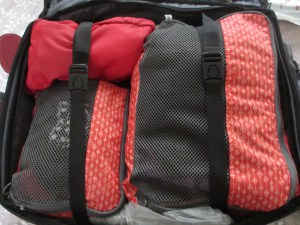 I’ll be the first to admit, I was always dubious about packing cubes. I saw them on websites, I saw them in luggage shops, but I always thought they were a bit of a gimmick. Another way to spend more money on travel accessories I didn’t need. Then I asked my blogger colleagues for their favorite packing tips. Travel blogger after travel blogger raved about packing cubes. I was curious, and decided I really needed to make up my own mind. Read more
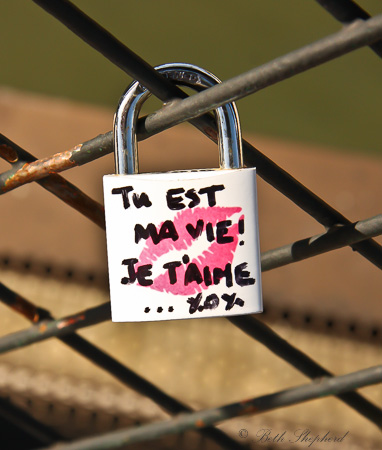 The many bridges crossing the Seine in Paris invoke a certain je ne sais quois, inspiring lovers worldwide to walk amidst their beauty, sharing romantic moments. Around 2008, the walls of several bridges—including the Pont des Arts, with its spectacular view of Île de la Cité—have virtually disappeared from view, covered by swathes of love locks, padlocks symbolizing unbreakable love.
Love locks are not unique to Paris. Bridges in Germany, Taiwan, Canada, and Italy are also festooned with thousands of locks. The tradition, relatively recent in Europe (2000’s), transpires as follows: Sweethearts inscribe their initials, names, or a message of love on a love lock or love padlock. The lock is affixed to a bridge, fence or gate. And then, the sweethearts throw away the key (in this case, into the river Seine) to show their love is forever more. Read more
 We’ve been to Romorantin in Sologne before and loved the fresh produce market. At the bread baking day in Les Grouets, Le Lion d’or was recommended to us as being one of the best restaurants in the region so we’ve decided to try it out for our 16th wedding anniversary.
We’re coming directly from Paris so we’ve timed it to arrive at about 12.30 pm. We leave slightly later than planned and encounter traffic jams. Traffic is obviously being rerouted for the 70th anniversary of D-Day. I’m a bit on edge because I hate being late but as we approach the turn-off to Chartres, things get back to normal.
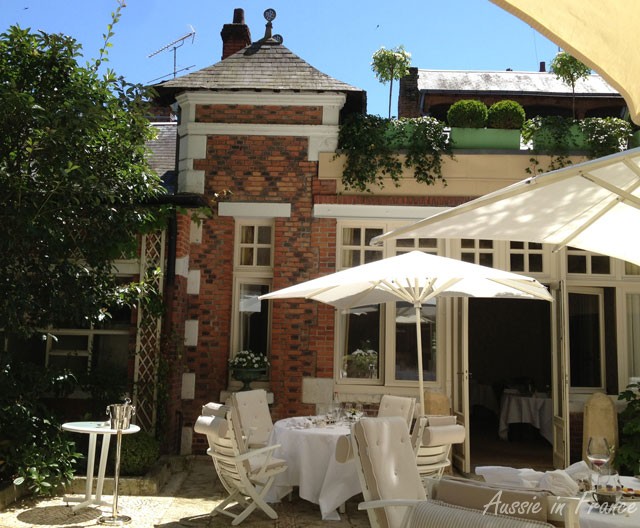
It’s 12.45 when we park outside the hotel restaurant which is perfect. I straighten out my linen skirt which maybe isn’t the best choice for a 2 1/2 hour car ride and we walk in. The garden is visible from the doorway and it looks incredibly inviting. The service is friendly and discreet and remains so throughout.
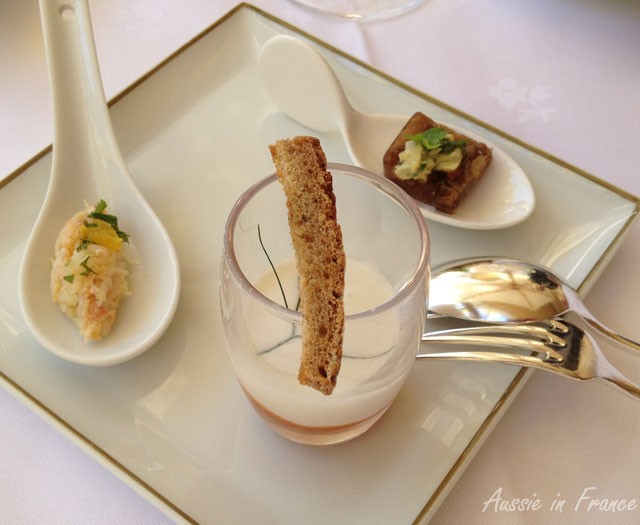
The set menu is 68 euro for 3 set courses (no choice) and doesn’t tempt us. We decide to order from the regular menu and choose local specialities – asparagus, which Sologne is famous for, a chanterelle mushroom vol au vent, rabbit and pigeon.
To accompany them, after our initial glass of champagne, we choose two local whites (a glass each, of course, not a bottle): a cour cheverny with the famous romorantin grape imported by François I and a touraine sauvignon, both of which are excellent. There is only one local red sold by the glass, a respectable saumur champigny, so we take the only other choice, a tarn, to accompany the pigeon.
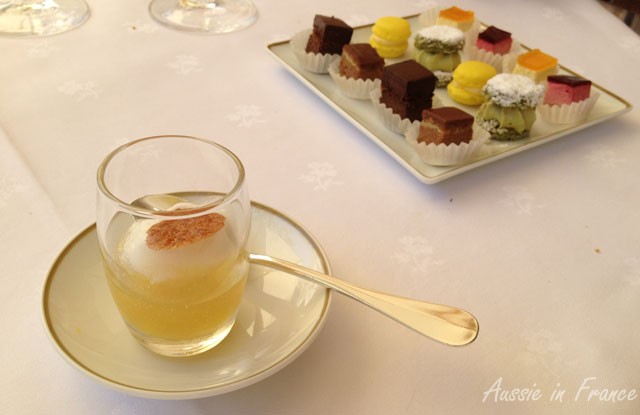
We choose not to have dessert as I notice that the people at the next table have an excellent selection of mignardises with their coffee.
The perfect weather, surroundings and service help us to digest the 328 euro bill. We regret that not one of the dishes we ate flattered our taste buds which is really the only criteria for good cuisine, no matter what the price. In our books, Les Hauts de Loire, at Onzain halfway between Blois and Chaumont, remains by far the best dining experience within an hour’s drive of home.
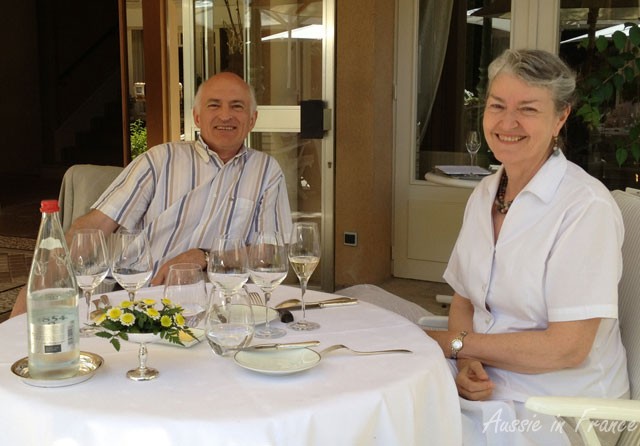
The weather is so beautiful that as soon as we reach Closerie Falaiseau, we unpack the car, change into more comfortable clothes and drive to the bike path on the other side of Blois. By 5 pm, we’re in the saddle.
It’s lovely to be back on our bikes after the awful month of cold and rain we’ve just experienced. We keep to the bike path that is part of Eurovélo 6 (the one that took us along the Danube last summer) and runs along the Loire.
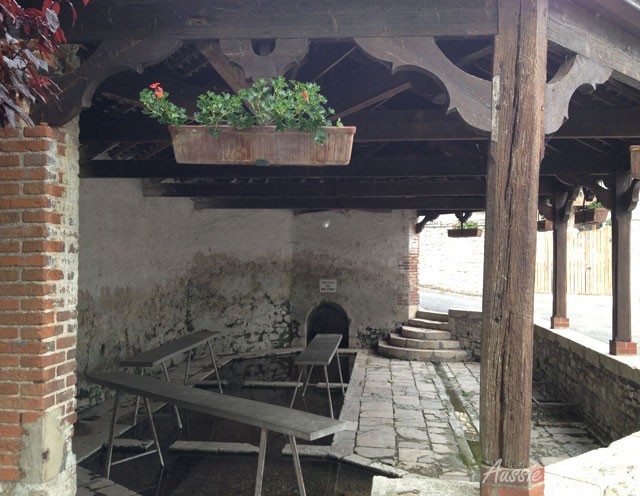
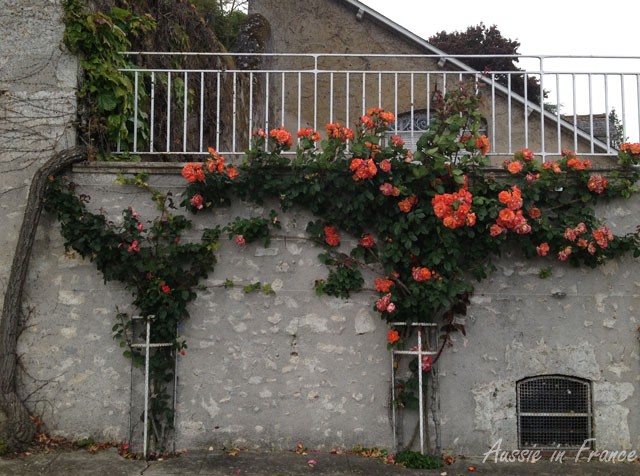
The roses are just stunning in some of the little villages such as Cour sur Loire. We stop to take photos of the lavoir, relieved that it’s not pelting with rain the way it was last time we were here.
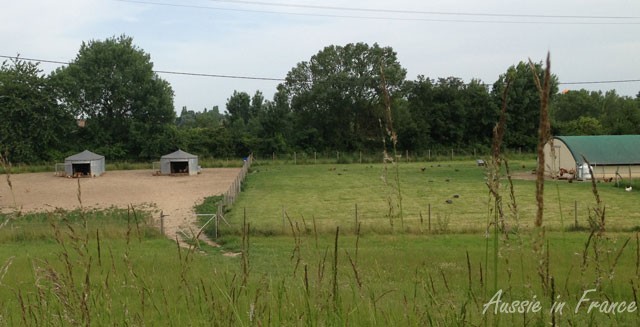
We pass some free-range chickens and guinea-fowls and eventually get to the outskirts of Mer. You’d think with a name like that that it would be on the coast but in fact mer comes from mera meaning marsh.
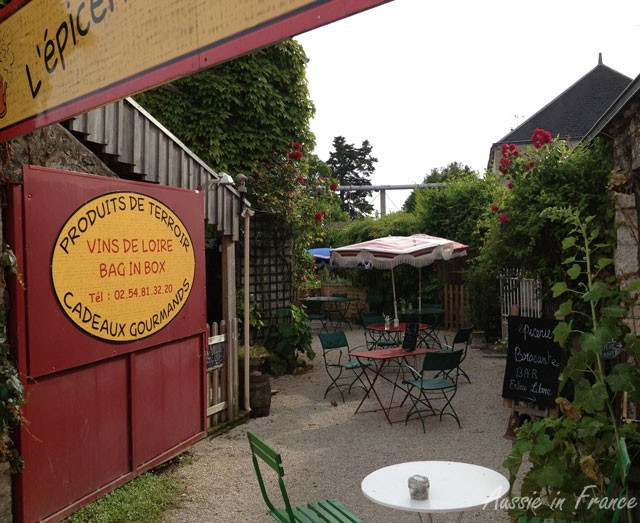
I see a sign advertising a bar/grocery store/local wine store called L’Epicerie and soon see it on the left before we get to the centre of the town. We put our bikes in the racks and make our way to the inviting courtyard. We treat ourselves to a very cold local sauvignon but refuse the Iberian platter. We’re not really hungry, I have to say!
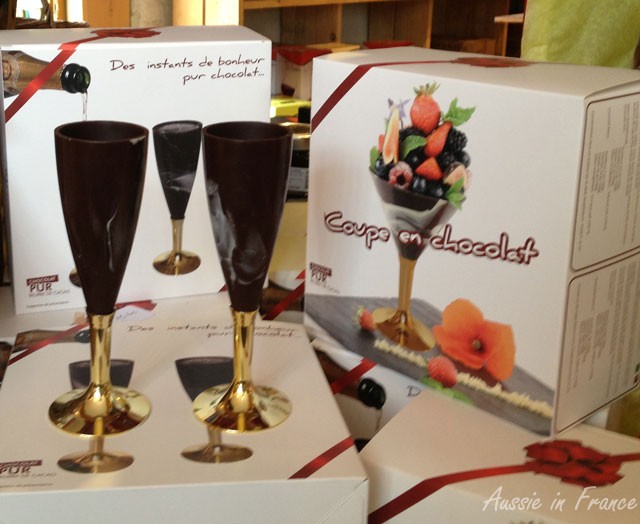
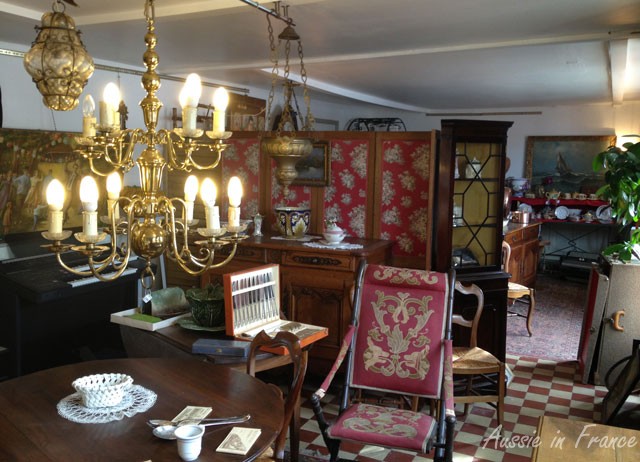
We start chatting with the very friendly owner and learn she also has a brocante. Goodness, what a find! The grocery shop is full of all sorts of local foods and delicacies, including chocolate champagne glasses.
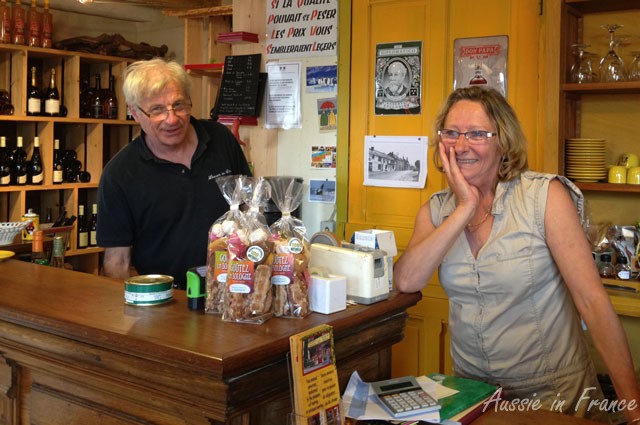
The brocante, which is more like an antique store, is beautifully kept with quite a large range of interesting finds. Unfortunately, nothing takes our eye but we’ll be back another day.
By the time we get back to the car, after 40 k and over 2 ½ hours in the saddle, I’m rather relieved that next day is going to be relâche!
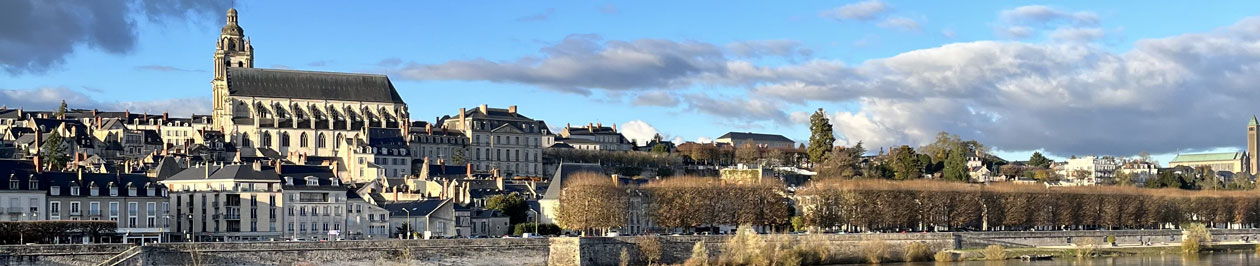
We started the week in Paris and finished up in Blois. We’re moving into summer at last with the return of the warm weather and the lovely long twilight. The first photo was taken at about 7.15 pm and the second around 9 pm. It’s still light at 10.30 as we approach the longest day of the year on 21st June – the summer solstice.
Il a tort – elle a raison : He’s wrong – she’s right.
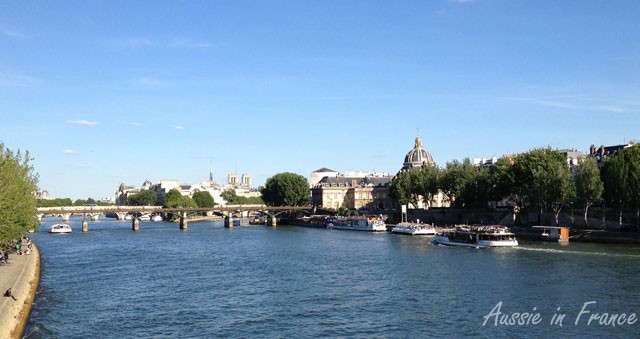
Tort comes from the Latin tortus meaning “twisting” as in tortuous so it’s a sort of deviation from the straight and narrow, isn’t it?
Faire du tort à quelqu’un means to harm someone morally.
Tort also carries the idea of fault. Elle a un tort, c’est de trop parler: her one fault is that she talks too much. (I think a lot of us are inclined that way. The day Jean Michel taught me never to give an excuse for not being able to do something I didn’t want to do, I felt liberated! Saying “I’m afraid I can’t make it” rather than “I can’t come because”then launching into a lengthy explanation is just so much easier once you learn the knack).
Ils ont tous les torts de leur côté: the fault is entirely on their side.
But tort is not usually used to indicate an error or mistake.
I’m in the wrong job – je ne suis pas fait pour ce travail (I’m not made for this job) which shifts the onus, doesn’t it. It’s not really the job that wrong after all.
That’s the wrong kind of plug – ce n’est pas la bonne prise (it’s not the right plug).
She married the wrong man – elle n’a pas épouse l’homme qu’il lui fallait (she didn’t marry the man she needed).
It’s the wrong road for Paris – ce n’est pas la bonne route pour Paris (it’s not the right road for Paris)
He told me the wrong time – il ne m’a pas donné la bonne heure (he didn’t give me the right time).
Interesting, isn’t it ? In all the above examples, the negative is used to express the idea of wrong.
Occasionally however, mauvais (bad) is used to mean wrong just as bon (good) is used to mean right.
You’re going the wrong way – tu vas dans le mauvais sens.
He made the wrong calculation – il a fait un mauvais calcul
The reflexive verb se tromper is often used to mean wrong as well although it literally means to make a mistake.
He took the wrong train = Il s’est trompé de train or Il n’a pas pris le bon train.
“You’re wrong” can be either vous avez tort or vous vous trompez.
I’m sure you have lots of other examples.
In this week’s round-up, Carolyn from Holidays to Europe takes us on a quick food shopping tour of Europe while Adelina from Pack Me To provides an excellent explanation of the beautiful and fastastic bridges of Ljubljana in Slovenia, one of my favourite cities. Enjoy!
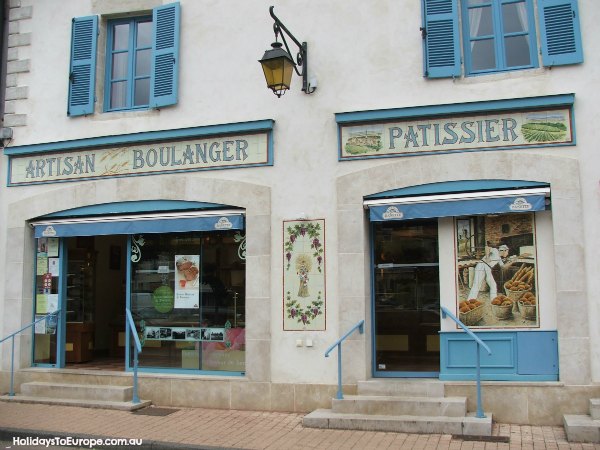 Whether you are on an escorted coach tour or travelling around Europe independently, at some point during your holiday you are going to need to buy something from a shop. It might just be a snack at a convenience store, a gift for a someone back home, or you might even need to stock up on groceries. Whatever it is you’re buying, it’s good to know some basic shopping etiquette and what to expect in stores and at the markets in Europe. Read more
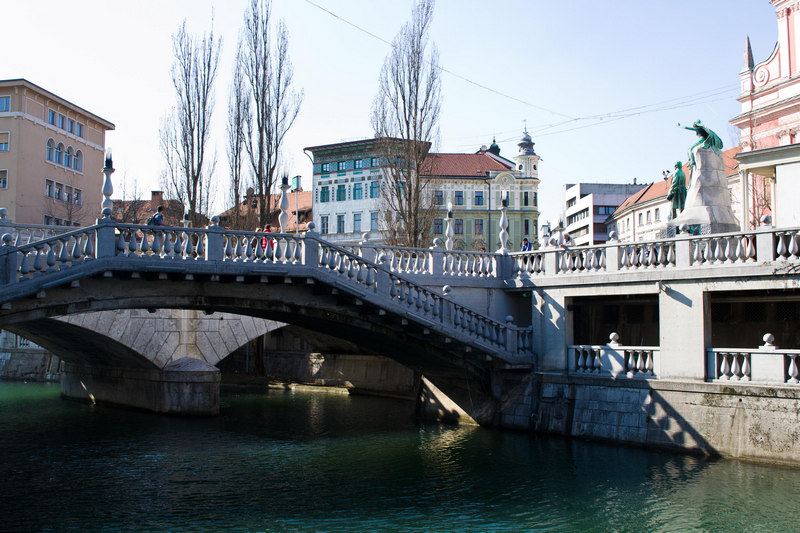 Wandering about Ljubljana, you’d be immediately struck by how many bridges there are connecting parts of the inner city. You’d probably think that there is nothing special about the bridges – they just connect medieval Ljubljana to modern Ljubljana, more a means to an end. However, if you look closely, you can easily tell them apart. Each of them have unique features and have their own stories to tell. Read more
Family events are not always easy, particularly when you are a pièce rapportée as they say in French. The first time I heard the expression, which literally means a patch, to describe an in-law, I was shocked. A patch indeed!
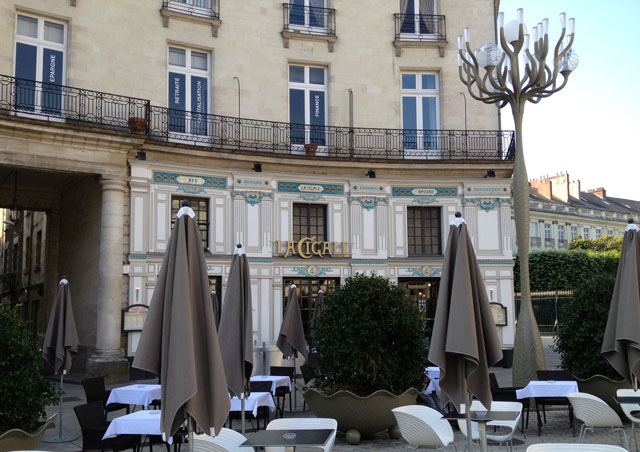
When we finally decided that everything would be much smoother if we took a hotel room in Nantes rather than stay in the family home, our visits became much easier and we always treat ourselves to breakfast La Cigale on the last day.
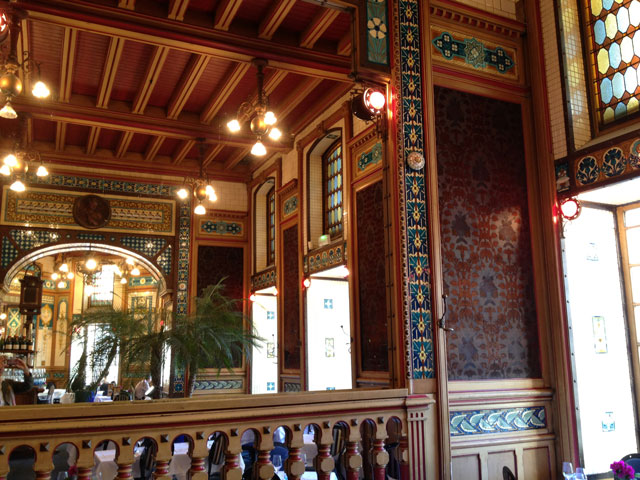
This beautiful Art Deco brasserie built in 1895 which has all the extravagence of the Modern Style is the work of ceramist Emile Libaudière who mostly designed sober bourgeoise homes and religious buildings.
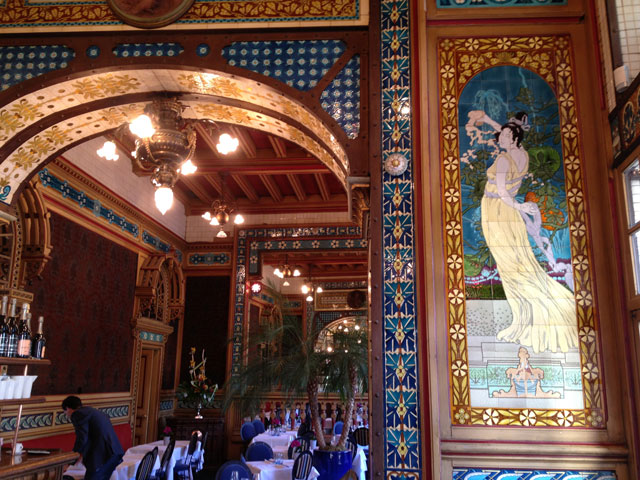
After becoming a listed monument in 1964, it was turned into a cafeteria until it was rescued in 1982 and restored to its former splendour. Its tiled frescoes, myriad mirrors and windows are an absolute delight.
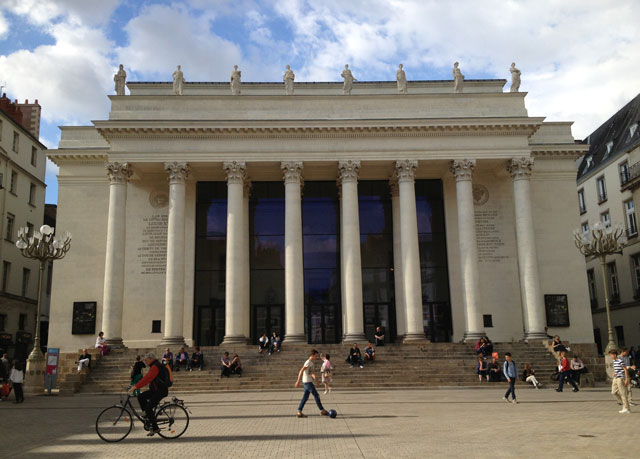
We’ve noticed its increasing popularity over the years, particularly now that Place Graslin is closed to traffic but we always manage to find a table for two in the first room, our favourite. At 15 euro each for a full continental breakfast, it’s excellent value for money – two hot beverages, a mini croissant and mini pain au chocolat, a slice of brioche or cake, toast with butter, jam and honey.
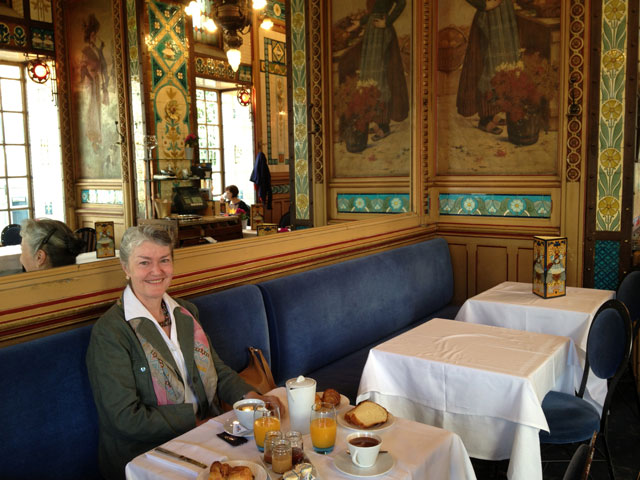
It’s not exactly Angelina’s in Paris or Caffè Florian in Venice, but we love it.
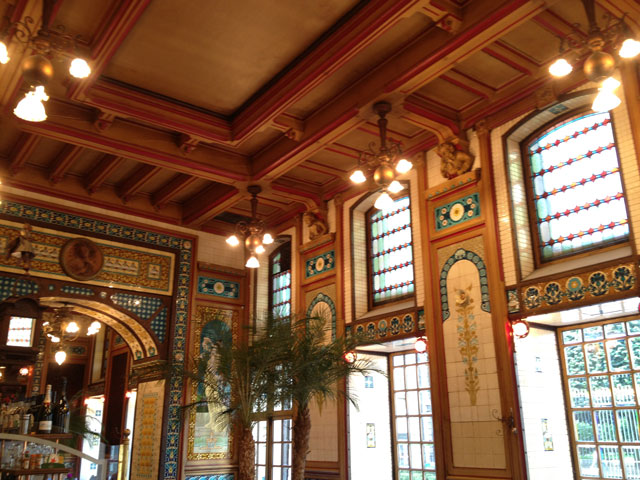
We’ve never eaten lunch or dinner there, because of our family co, but Mary Kay from Out and About in Paris, tried it last winter when she spent New Year in Nantes.
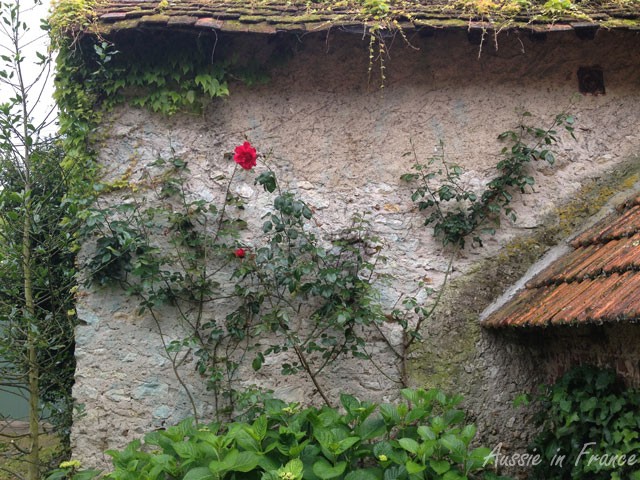
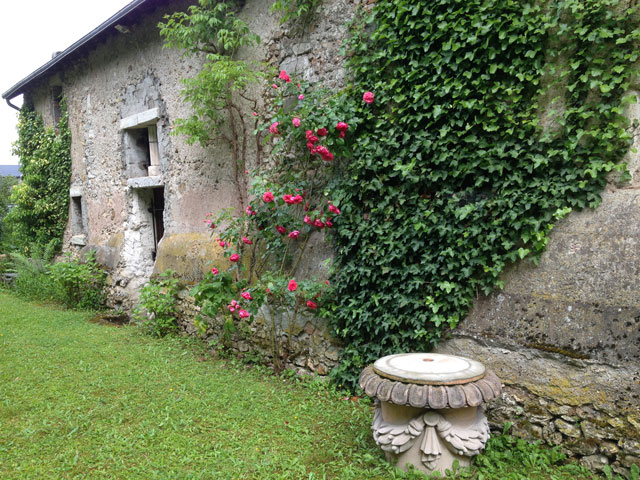
Back in Blois for a week and loving the roses! The previous owners told us the roses on the front steps were Pierre Ronsard, but we now know they are not. We’re trying to track down their name.
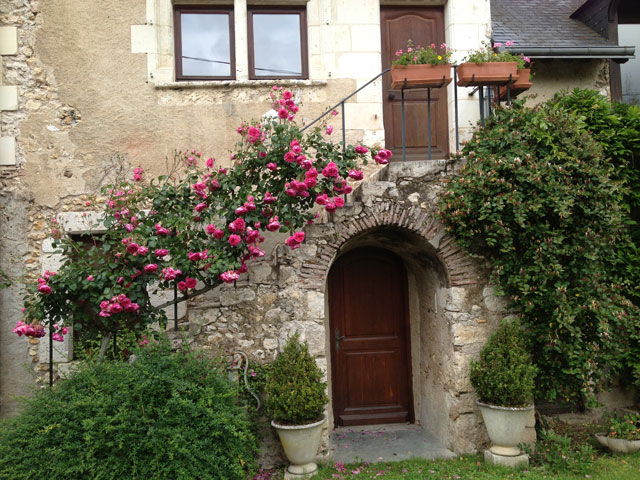
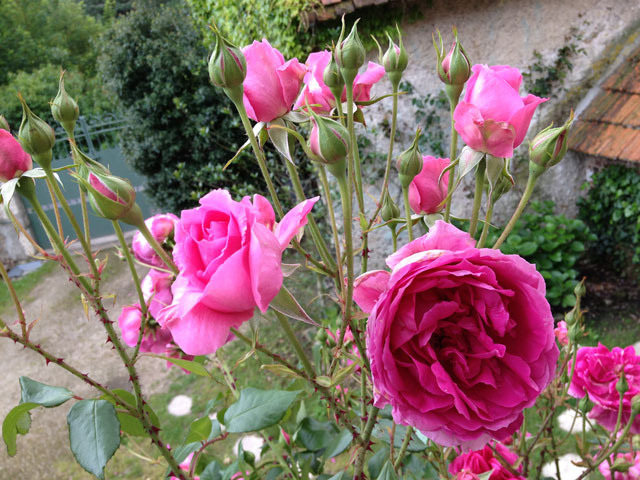
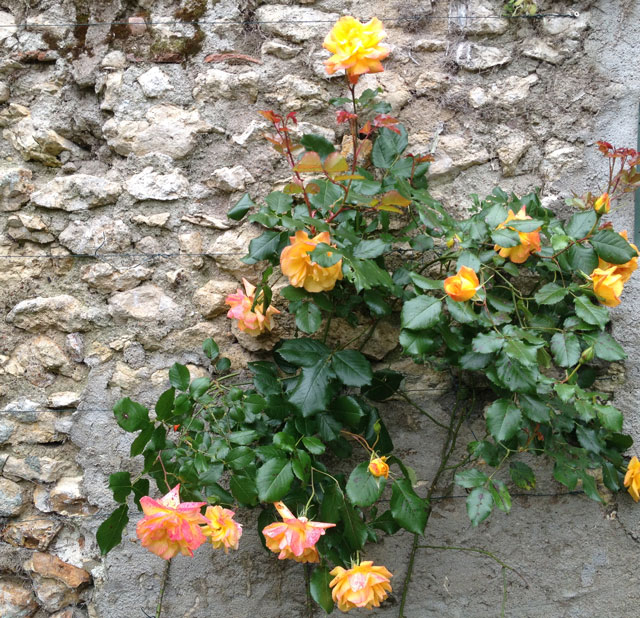
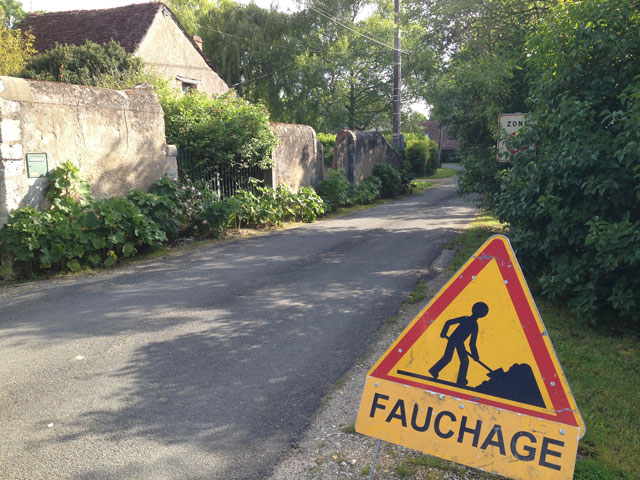
There was a sign in front of our house this week saying fauchage which actually means scything or reaping. The word for scythe is faux. Obviously the council workers were not going to appear with scythes. Fauchage now also means mowing or cutting with machines.
It got me thinking about the word faux which also means false. Faux meaning scythe comes from the Latin falx falcis whereas the adjective meaning false comes from falsus, from fallere, to deceive. I was a little disappointed to learn they actually have nothing in common! I’d worked out my own little scenario.
The verb faucher has a couple of other meanings. One you often (unfortunately) hear on the news has to do with car accidents. Il a été fauché par un bolide = He was knocked over by a car going at top speed.
Il a été fauché par la Mort is a euphemism for death, since the symbol of Death is the scythe.
Faucher is also slang for steal: il m’a fauché mon portefeuille (he stole my wallet) and as a result, je suis fauché means I’m broke ! If you want to go one step further, you can say fauché comme les blés (completely broke), blé meaning wheat.
The noun fauche means thieving. Il y a beaucoup de fauche dans le métro = there’s a lot of thieving in the metro. But it’s not a word you hear often.
Fauchaison is reaping or mowing time (using a scythe, that is) but I don’t imagine it’s the sort of word you would really have much use for.
To go back to the adjective faux, it has a whole lot of other uses, all similar in meaning to false. Un faux billet is a forged or fake banknote while fausse monnaie is forged currency.
Faux marbre is imitation marble while faux bijou is fake or imitation jewellery.
Faux papiers , quite logically are false or forged identity papers.
When someone says c’est faux, they mean it’s wrong or not true not that it’s false.
If you ring a wrong number, it’s a faux numéro, which somehow makes it sound as though you didn’t make the mistake.
An instrument that is faux is out of tune and not a fake which is interesting. Elle chante faux means she sings out of tune which is think is a bit hard.
And we all know about a faux pas, don’t we ?
I’m sure you’ve got other examples of faux.