I was sitting in the dentist’s chair today thinking about the word piqûre as the needle sank slowly and painlessly into my gums (that is why I am willing to go across Paris to see my dentist!). Although injection is the correct term, it is very rarely used.
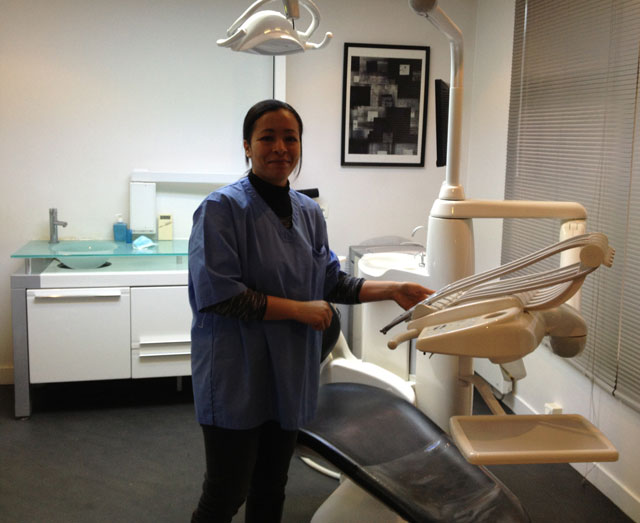
My dentist’s assistant
Piqûre comes from the verb piquer from the low Latin pikkare (1306) meaning to prick and exists in all the Romance languages except Romanian, which is quite astonishing. In English, we can call an injection a “shot” or “jab” but they are much more informal than piqûre.
A few examples of the way in which piqûre is used:
Le médecin m’a fait une piqure: The doctor gave me an injection.
Il s’est fait une injection d’insuline: He injected himself with insulin.
Une piqure de rappel is a booster shot.
Piqûre can also have an entirely different meaning – a mosquito or insect bite or a bee or nettle sting. It’s funny that English should be so precise, isn’t it? The mosquito actually bites us like a dog and the bee stings us like a nettle.
A pinprick is a piqûre d’épingle while the actual hole formed when the needle goes into the skin is a piqûre as well.
Interestingly, piquer doesn’t only mean prick – it also means to sew or stitch; the result – the line of stitching – is also a piqûre. Piquer à la machine is to machine stitch. If someone asks me “Sais-tu piquer à la machine” they are asking if I know how to use a sewing machine (which I do).
There are lots of other expressions using piquer. I’m sure you can suggest a few!
This week’s Blogger Round-Up is a spin-off from my post on the disappearance of père de famille. Bellanda from Bellanda in Paris tweeted a post explaining that women are now legally allowed to wear overalls in France, while Tim from Invisible Bordeaux responded with a famous example of an exception to the rule – Rosa Bonheur. On another fun note, Chrissie from The Riviera Grapevine shares a great party trick that involves bubbly. Enjoy!
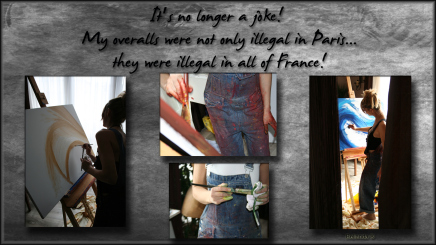
It’s no longer a joke! My overalls were not only illegal in Paris … they were illegal in all of France!
by Bellanda from Bellandainparis, a New York presently living in Paris, doing what she loves: writing/screenwriting, painting, photography & social media managing.
The last several months, I have been joking that wearing my overalls in Paris might be considered illegal. Little did I know how right I was!
Ever since that very first day I ventured out into the streets of Paris wearing overalls, there has been ongoing banter on Twitter and Facebook about the fact that this could possibly be illegal. There were some of you who gasped with laughter saying, “No, you didn’t?” There were others who said things like, “Good for you! Be yourself and be proud.”
In my defense, and yes, I somehow think wearing overalls… more exactly wearing paint stained overalls in a city where people only wear jogging/sports attire if they are actually running, does indeed need defending. Read more
ROSA BONHEUR: THE WORLD-FAMOUS BORDEAUX-BORN ANIMALIÈRE
by Tim Pike, an Englishman in France who, when not writing Invisible Paris can often be spotted riding a vintage yellow bicycle or strumming a guitar. He has also conceived a set of self-guided walking tours around Bordeaux which are available for iDevices.
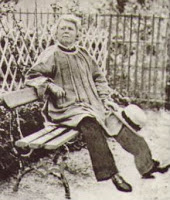
One of the most illustrious of Bordeaux’s daughters is Rosa Bonheur who, throughout her life which spanned much of the 19th century, became a world-renowned “animalière” and is regarded by many as the most famous female painter of her time.
Rosa Bonheur was born Marie Rosalie Bonheur on March 16th 1822 at 29, Rue Saint-Jean-Saint-Seurin (now 55, Rue Duranteau) in Bordeaux. Her father, Oscar-Raymond Bonheur, was a landscape and portrait painter and frequented Spanish artist Francisco Goya during the four years the latter spent in Bordeaux up until his death. Read more
The Party Trick I Wish I Had (And a recommendation for a fantastic wine bar in Piedmonte)
by Chrissie from Riviera Grapevine, a Sydney girl living in Nice with an insatiable thirst for the wines of the Var, Alpes Maritimes and Liguria. She happily sells, drinks and blogs about wine.
Recently, whilst indulging in a spot of social media browsing, I came across this gem of a YouTube clip shared via LinkedIn, Google+, Facebook, Twitter or some other format which all us members of the bloggersphere should apparently be mastering for self promotion!
Now, this is one party trick that I think would seriously impress. Opening a bottle of bubbly with the glass that you’ll serve the liquid in! Class. Especially with a certain nonchalance as conveyed by the guy in this clip. Surely this is a more realistic skill to master than learning how to saber a Champagne bottle with a sword?
Yet I know I could never pull it off. I’d shatter the delicate glass on impact, like a magician who fluffs his tricks. Read more
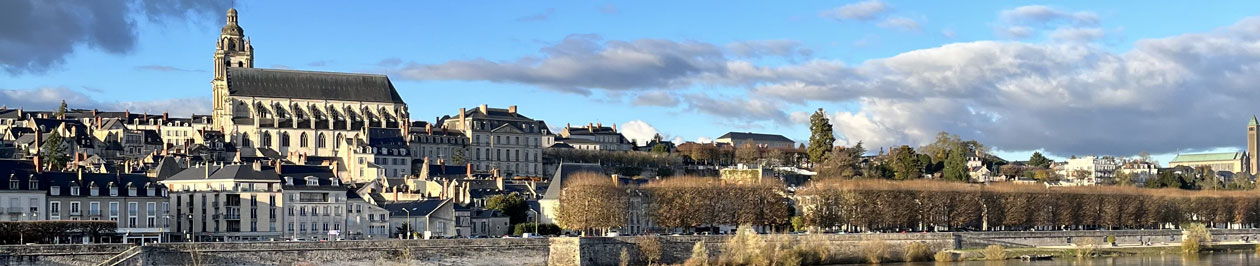
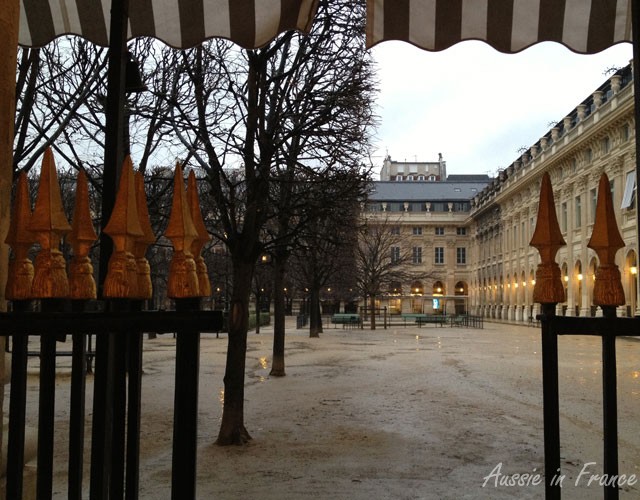
I’m in Nogent sur Marne on the other side of Paris because even after living for 8 years in the Palais Royal, I still go to the dentist I found 15 years ago when I opened my office in Nogent. We’ve even become friends and have lunch together afterwards. I don’t know what I’m going to do when we move to Blois.
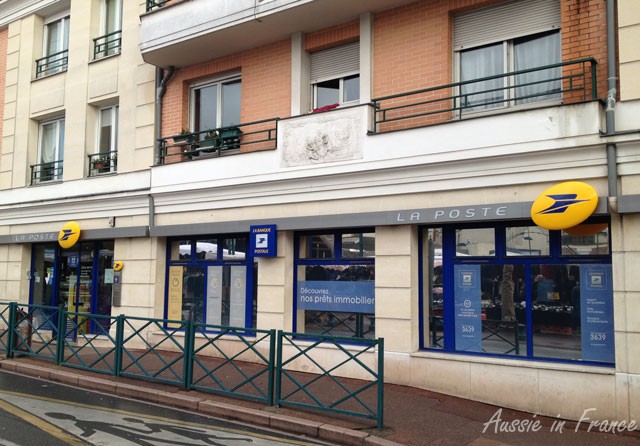
Post Office in Nogent sur Marne
I learn that she’s running a little late so I figure I have time to go to the Post Office to get some stamps. As I explained in another post, I have a love/hate relationship with the French Post Office but I’ve run out of stamps and it’s difficult to do without them altogether.
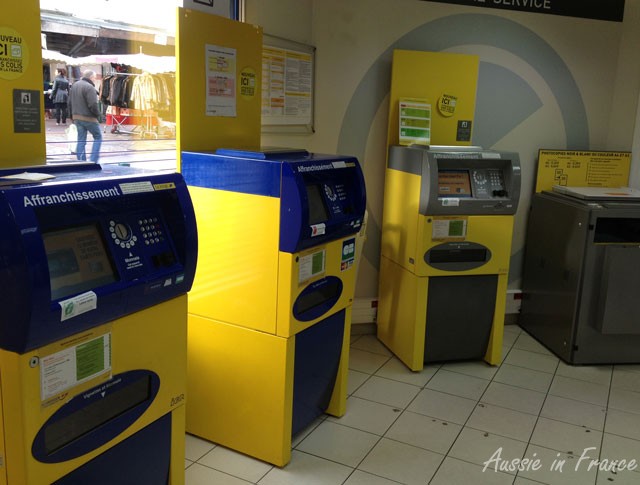
Nowadays they have stamp machines that weigh your letters and take your Visa Card. I walk over to one of the machines but there is nothing to indicate how to buy a book of stamps. So I go and queue. That is another thing I don’t like doing.
When it’s my turn and I ask for a book of stamps, I’m told to go to the machine. “I did that already, but I can’t find the stamp books”. “You’ll see, it’s easy”. I go back to the machines but they are all being used by now. It’s market day. Now there’s another queue at the counter. I storm out swearing, cursing at myself for my less-than-adult reaction.
Stamp machines in the post office in Nogent sur Marne
Two days later, I’m back in Nogent for another visit to the dentist. I’m early this time so I decide that I’ll brave the post office again.
I wait in the queue and a helper comes along and asks me what I want. They introduced helpers to the French post office several years ago. These people walk around the post office showing people like me how to use the stamp machines, choose a post bag or directing them to the right counter. They are usually reasonably friendly, fairly cluey young girls. This is a young man who is neither friendly nor cluey.
“I would like a book of stamps”, I say. “Then go to the stamp machine”. “Well, yes, I tried that last time but I couldn’t make it work. Will you come and show me please?” “Oh, alright, but it’s very simple”.
We get to the machine and he touches the blank screen. Now why didn’t I think of that? I don’t let on though. “Look, there’s the icon for the book of stamps”, he says. I press it, then select the number 2 (I don’t want to come back here in a hurry) and am about to insert my Visa card when he says, “They’re green stamps. The letters get there in two days”, he says offhandedly.
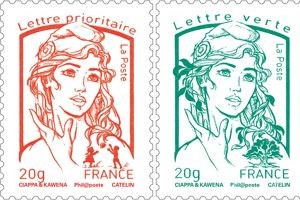
Green and red stamps
“But I don’t want green stamps. I want letters to get there in one day.” “You’ll have to buy them at the counter then.” I don’t believe this! Fortunately, there isn’t a queue so I go back to the counter to the helpful man from the previous visit. “You want red stamps? I don’t have the self-adhesive type though, only collection stamps.” “That’s fine, so long as they’re red”.
He goes over to another counter and brings back the stamps. “You can get these from the machine”, he says. “That’s not what your colleague said”, I reply. “Well, you can.” The colleague is just beside me, talking to another customer. “Well, do you want this card or not”, he asks. My god, he’s talking to a customer like that?
I pay for my stamps and walk out. I feel exchausted. But at least I have my stamps this time.
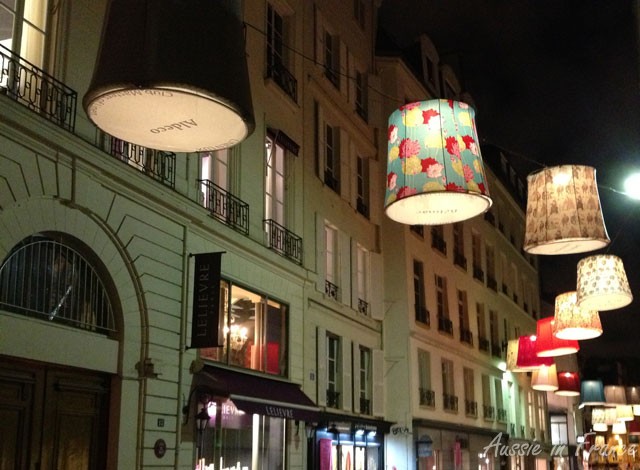
As I turned the corner of rue Aboukir the other evening, I suddenly saw all these wonderful giant lampshades. They were part of a soft-furnishings exhibition during Paris Fashion Week. I thought they were a very clever idea and were certainly very effective.
You may remember another Friday’s French post where I talked about bon père de famille used in the context of a safe investment. Well, the expression is about to disappear!
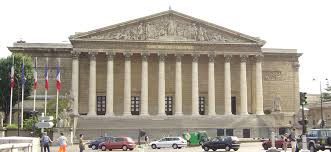
A bill on equality between men and women is being discussed in the national assembly at the moment and an article introduced by the Greenies calls for the elimination of the term en bon père de famille which appears no less than fifteen times in current legislation.
Source: Wiki Commons
Denouncing the expression as being désuète (old-fashioned), particularly with the changing face of the nuclear family, the environmental MPs have suggested raisonnable (reasonable) as a replacement.
The expression comes from the Latin bonus pater familias which existed in Roman law.
We can only applaud the initiative as being … more than reasonable!
Just a short Blogger Round-Up this week as I am still under the weather: Carolyn from Holidays to Europe talks about the importance of travel insurance and Sylvia from Finding Noon explains what a bergamot is. Enjoy!
A Real-Life Travel Insurance Experience
by Carolyn from Holidays to Europe, an Australian based business passionate about sharing their European travel expertise and helping travellers to experience the holiday in Europe they have always dreamed of . Carolyn also has a house to rent in the south of France.
Every time I travel overseas, whether it’s for work or pleasure, I always take out travel insurance before the trip. No-one likes parting with money for something that they may never use, however I have always believed it’s one of those necessary evils that you just have to pay for. In twenty-five years of overseas travel, I’d never made a claim – until my trip to Europe in 2010.
Our family had set off for a four week holiday in Europe – carefully planned between the end of our eldest son’s Year 12 exams and Christmas. As always, I had our itinerary meticulously pre-planned. All travel and accommodation arrangements had been pre-booked and paid in advance as I don’t like to leave anything to chance. We spent the first week in Paris and then another in the south of France and were just about to head to Switzerland, northern Italy and Slovenia when disaster struck! Read more
This morning’s cuppa
by Sylvia from Finding Noon, an American living in Paris who appreciates fine art, good music, succulent food, and breath taking scenery
Earl Grey is my favorite tea. It has been my favorite tea since I first tasted it, so long ago that I can’t even remember when. When I went through my purist Chinese tea and scorned any other flavored teas, I still loved a good Earl Grey.
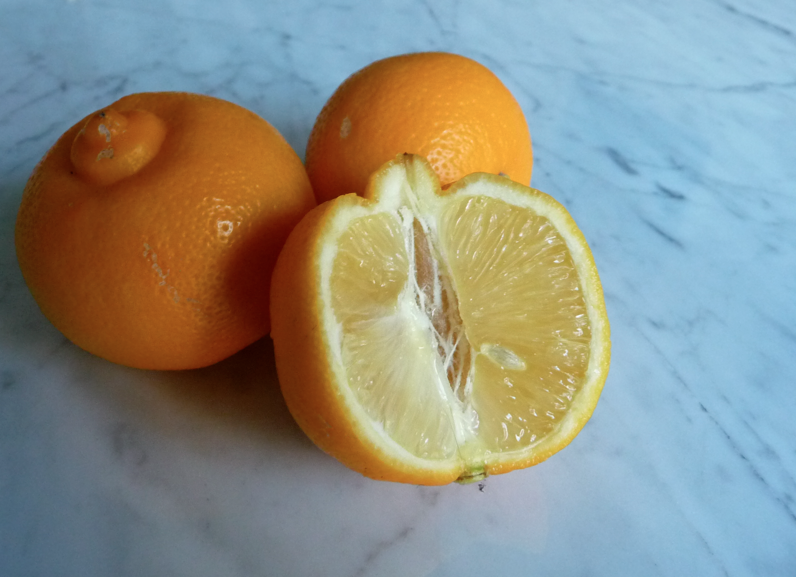
Its the bergamot flavoring that I really love. What’s a bergamot? Its an orange! A tiny little orange from Southern Italy and it taste very much like a lemon. They don’t use the acid fruit of the citrus, but the fragrant oil that is in the skin. Read more
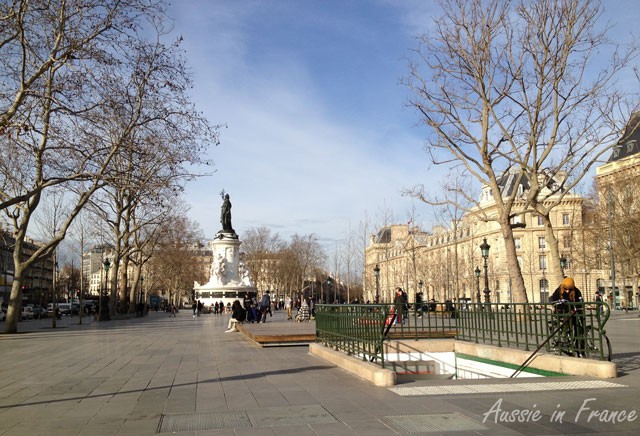
They’ve been fixing up Place de la République for ages but I only saw it finished very recently and I don’t see what they’ve really achieved, except for reducing traffic. It doesn’t look anything like the architectural sketches published by the Mairie de Paris.
But then, maybe the fact that I was feeling under the weather influenced me! This is my sixth day of LA GRIPPE (the flu) and hopefully my last. My translation work is way behind schedule so I’m sure you’ll understand why my posts this week are a little on the light side!
And before I go, a little video link provided by a reader on English accents and accents in English that I’m sure you’ll enjoy, courtesy of A Cup of Jo.
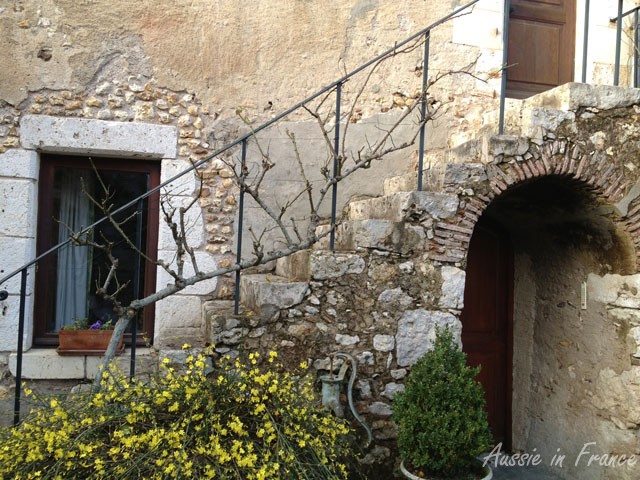
We went to visit Mr and Mrs Previous Owner recently and I wanted to know what they did to get rid of the moss on the front stairs. “Sur le perron“, replied Mr Previous Owner. “No, the front steps”. “Oui, le perron“, he insisted.
Our perron in the winter after pruning the roses
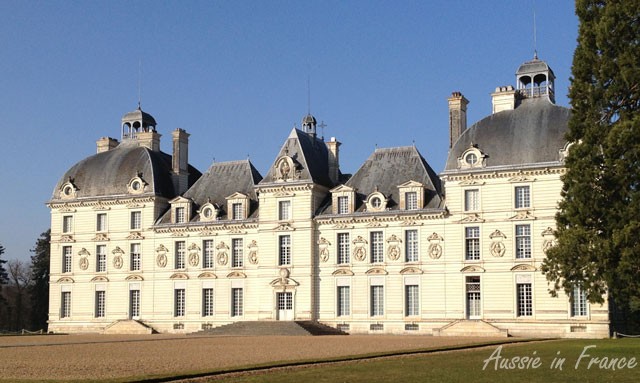
And here I had been labouring under the misconception all these years that the perron was something quite different. According to my Larousse dictionary, it is an outside staircase with a small number of steps ending in a platform leading to a front door, as can be seen in the following photo.
Typical perrons (there are three!) at the front of Château de Cheverny
I check my Dicobat building dictionary and it doesn’t mention anything about the number of steps, so I can now talk about “notre perron”. As far as I know, we have nothing in English to describe this concept.
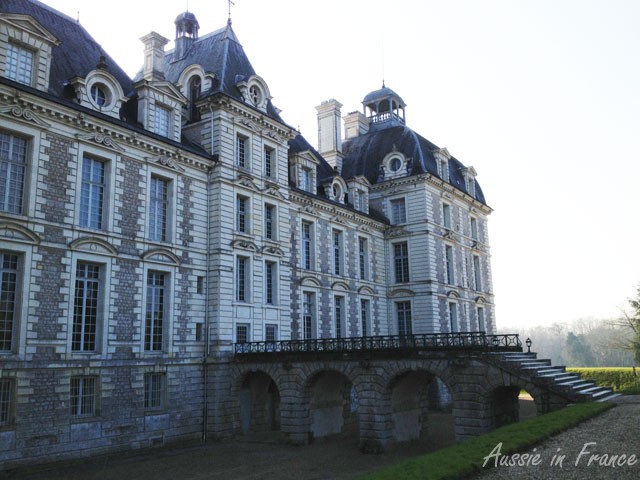
Back perron at Château de Cheverny
On another but slightly related subject, we’ve been looking for a solution for some time to stop treading mud into the house when it rains, particularly in winter. The area in front of the house is a combination of grass and gravel with no clear delineation.
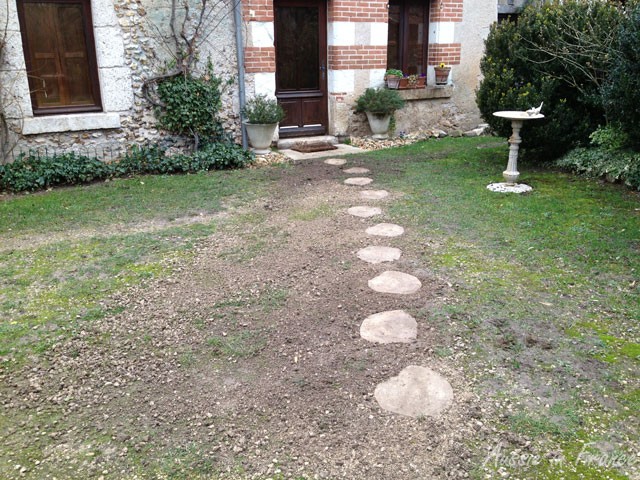
We recently went to Truffaut to see what we could find. There was a large selection of pas japonais (pas meaning step in this context). For some reason, I thought that pas japonais were slightly staggered to the left and right to naturally follow your steps.
Our pas japonais
After buying the last 10 pas we liked, we laid them in light rain and I posted a photo on Facebook. “I would call them stepping stones”, said a friend. She’s right of course. I was so disappointed. We’ve ordered some more for the rest of the garden but I can see we’ll have to lay the other ones again. It’s so annoying trying to remember whether you should be starting with your left leg or your right leg. Sigh.
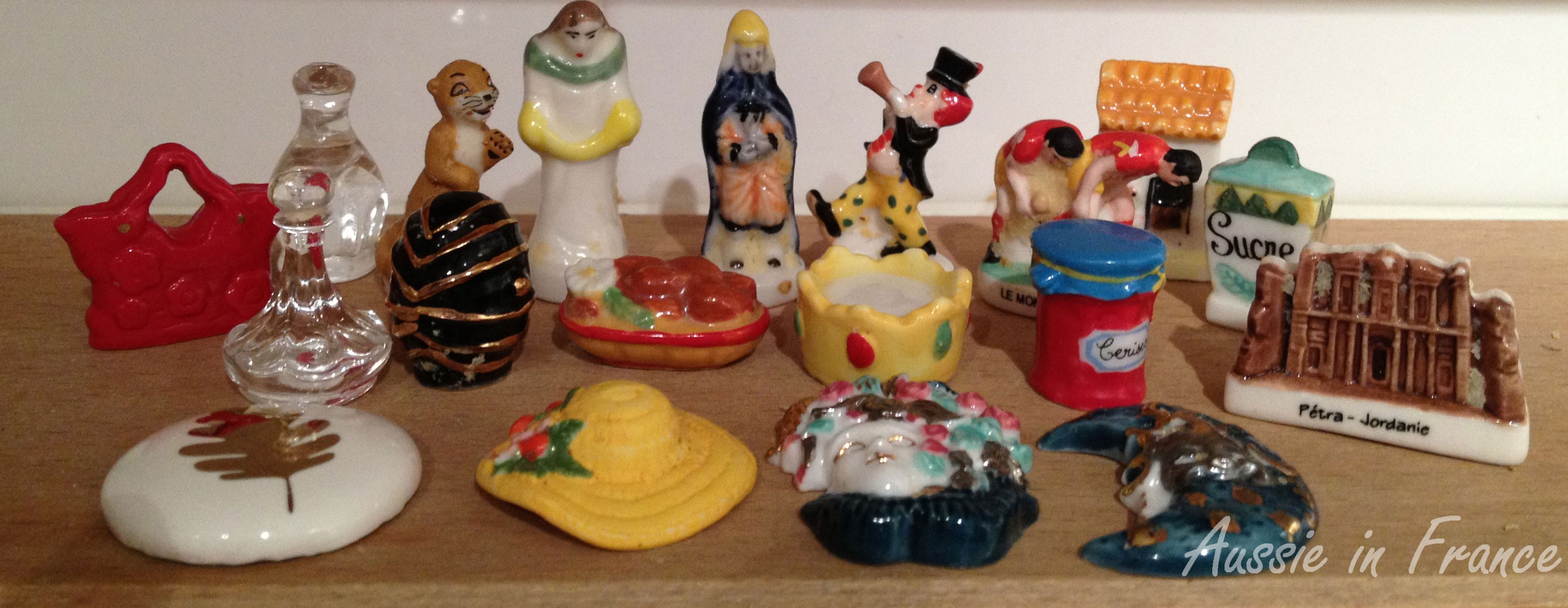
This is a photo of my fève collection from the galette des rois. You can click on it to see the fèves in more detail. You can see that some come from the same bakery (the two see-through carafes, the sugar and jam, for instance). I haven’t kept any of the less interesting white plaster ones. Anyone who wants to make their own galette can buy fèves on ebay and amazon or, alternatively, as someone suggested on Facebook today, you can use a whole almond!
The flat one with the gold leaf is the latest addition, brought home by Jean Michel from work.