Sunday’s Travel Photos – Zadar, Croatia

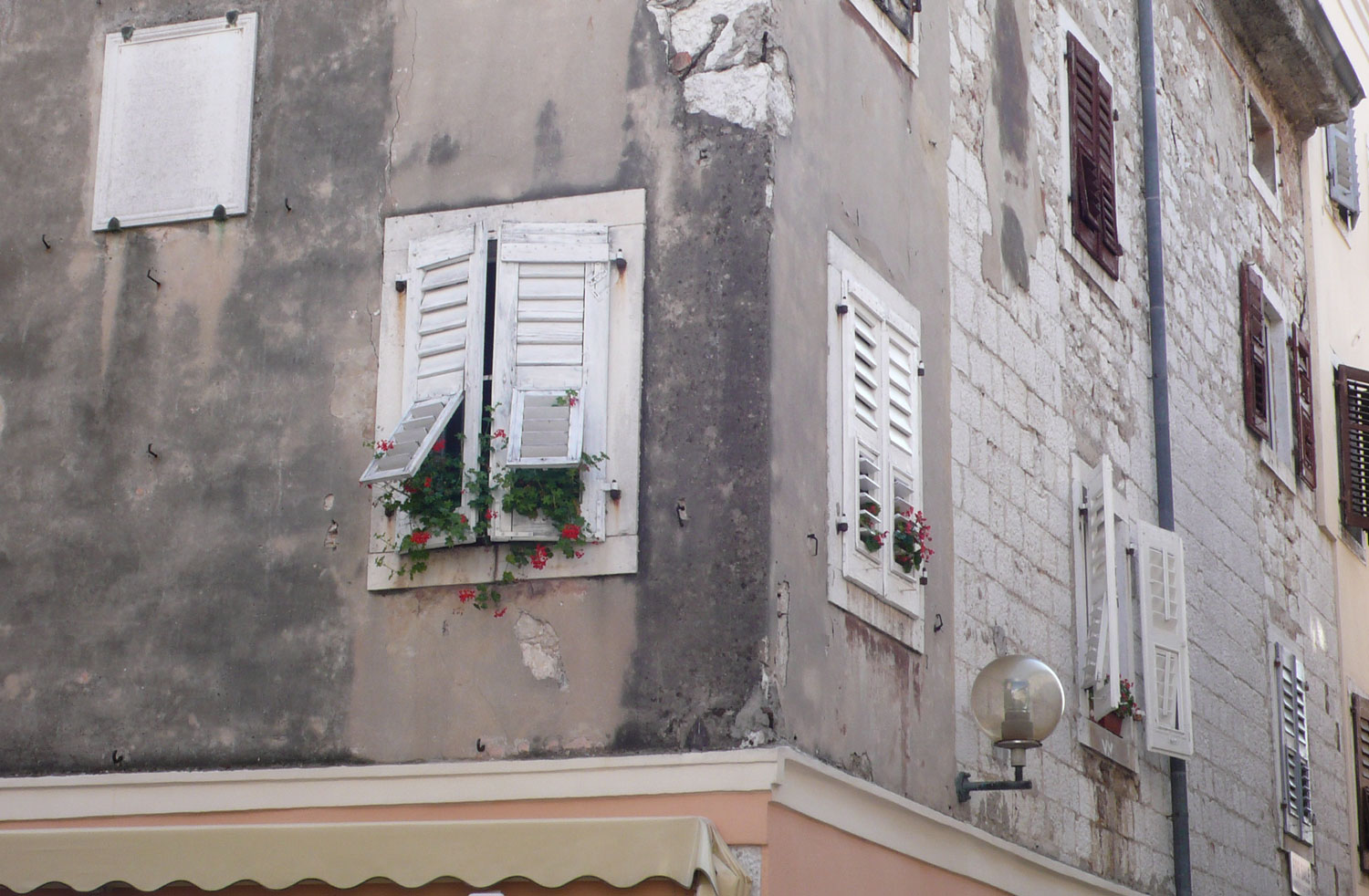
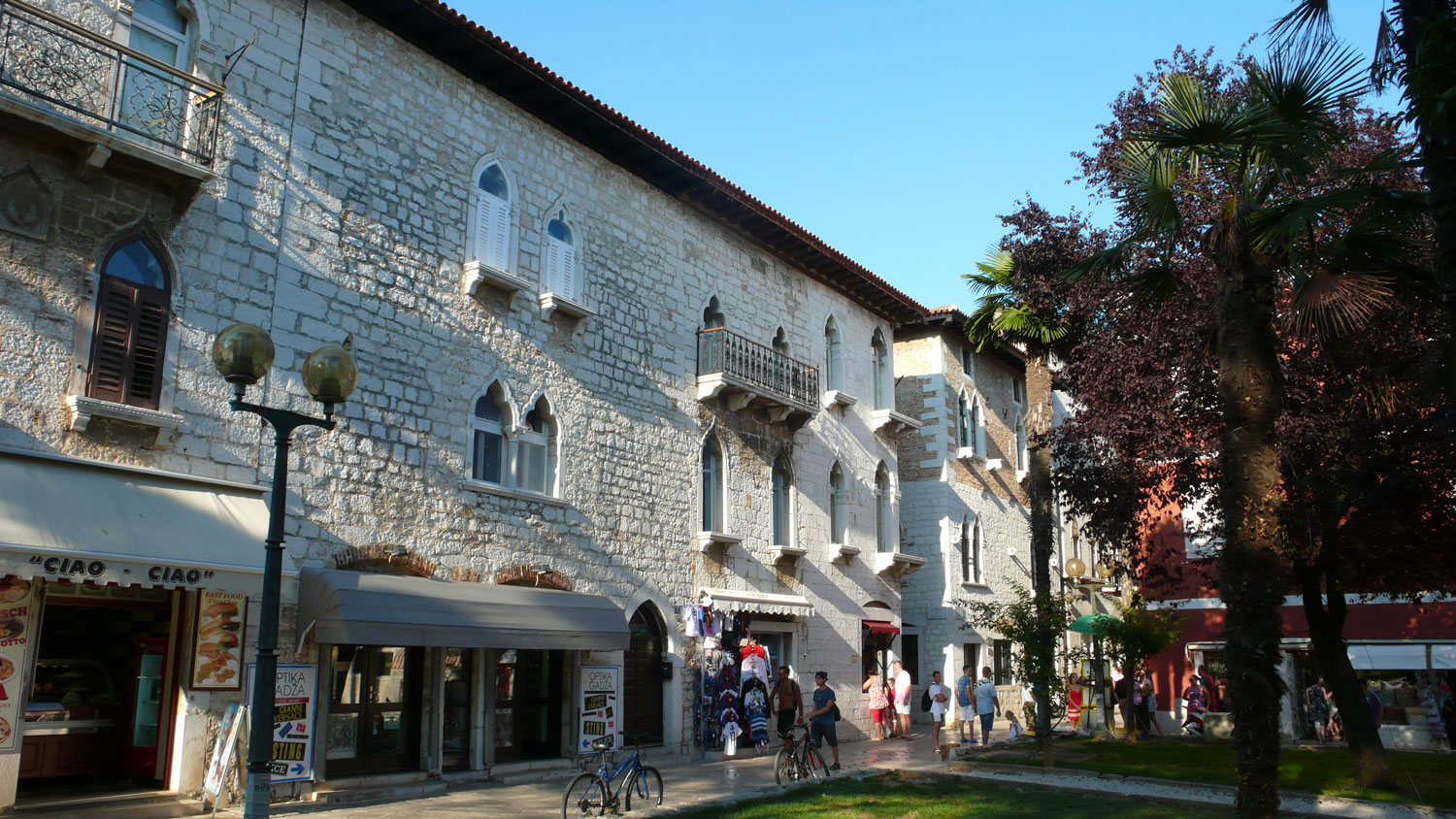
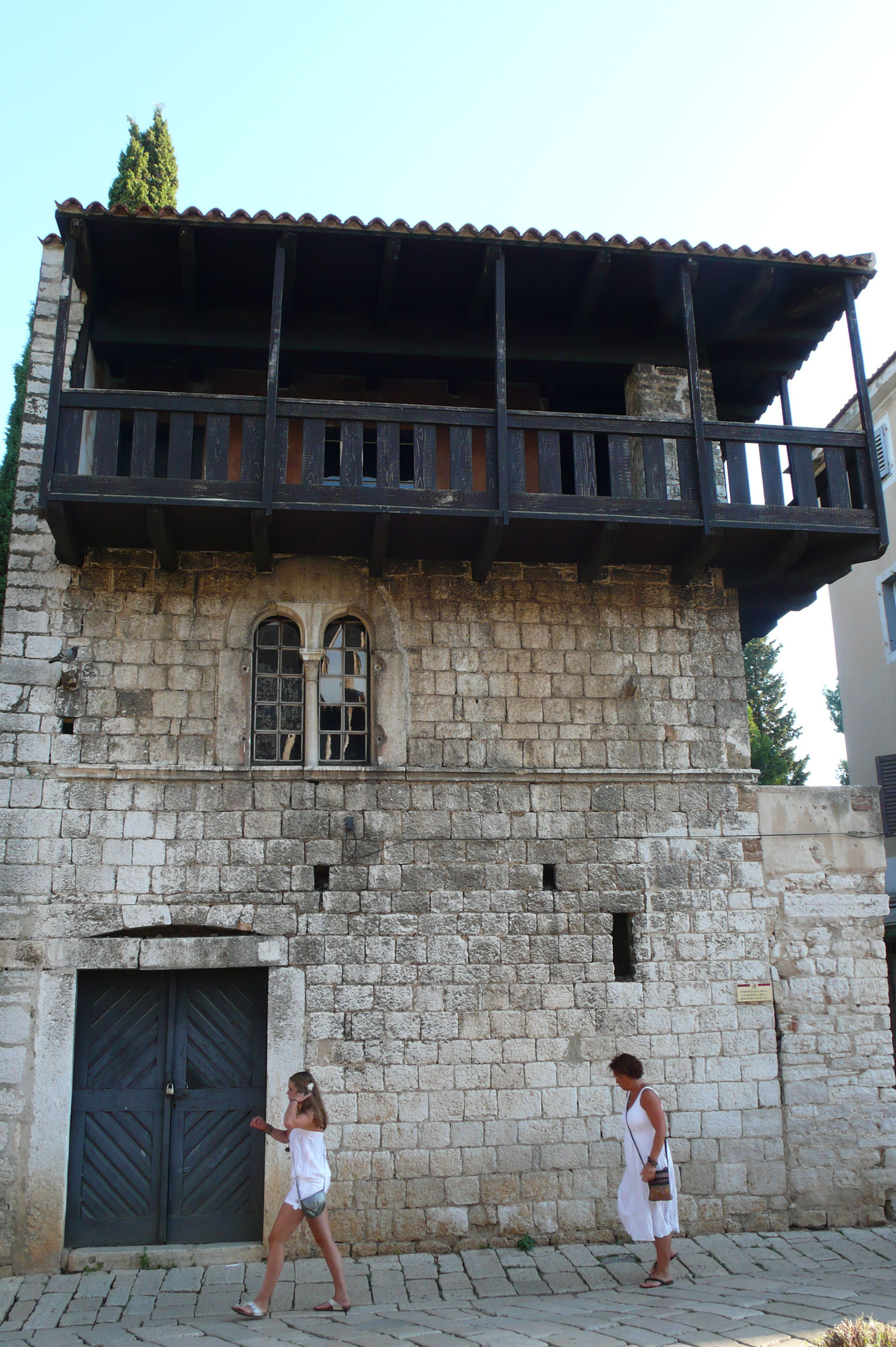
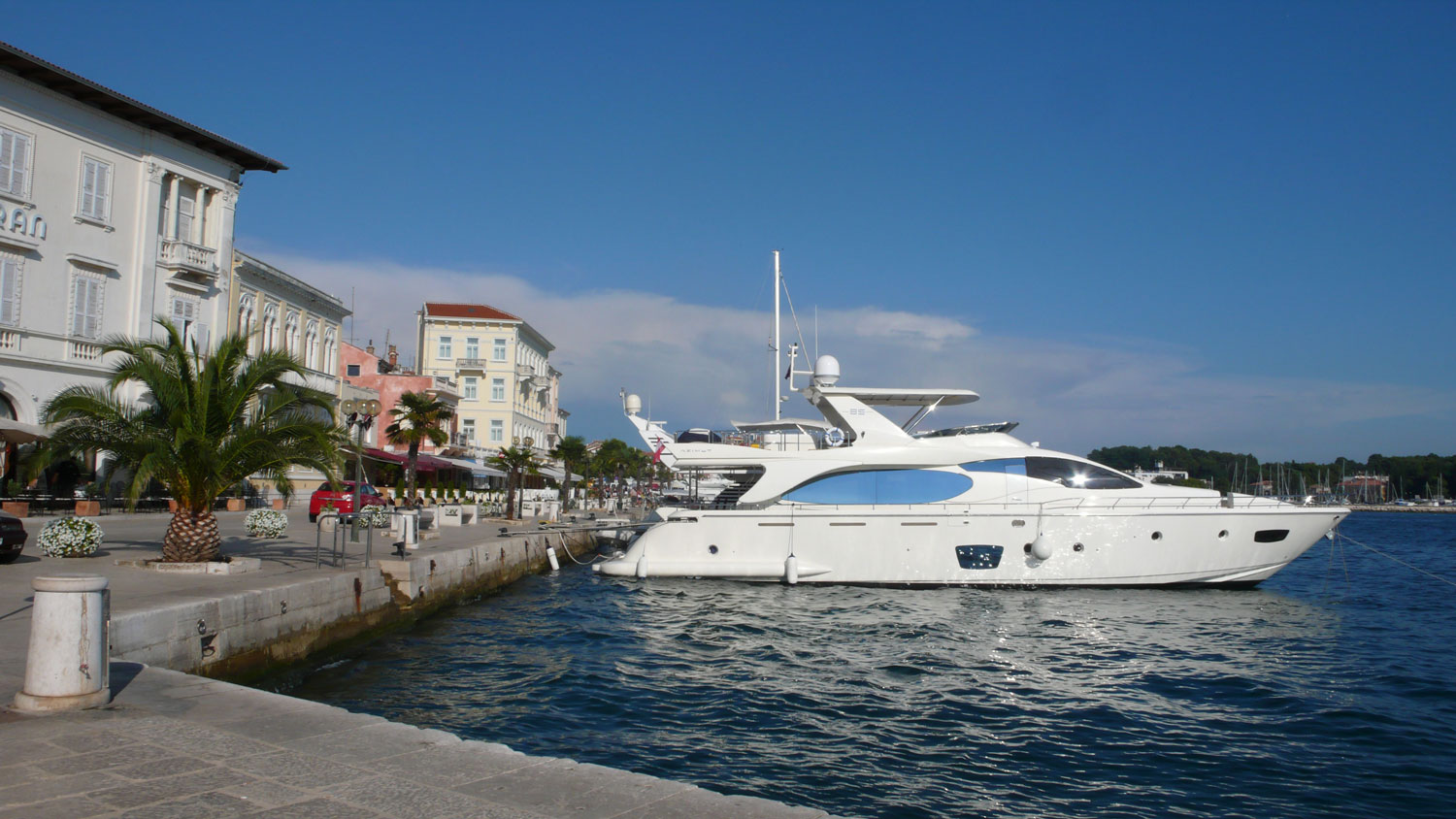
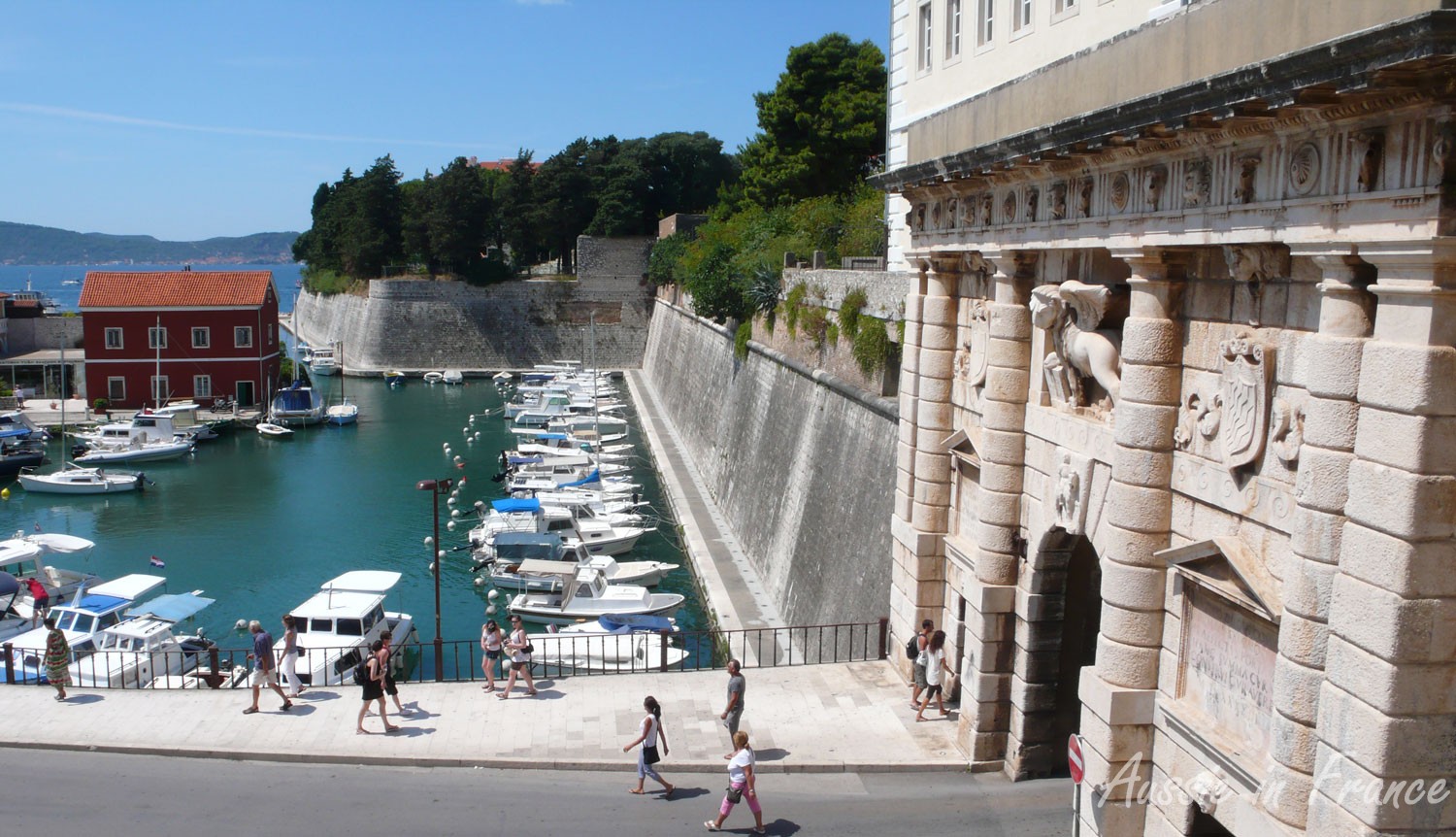
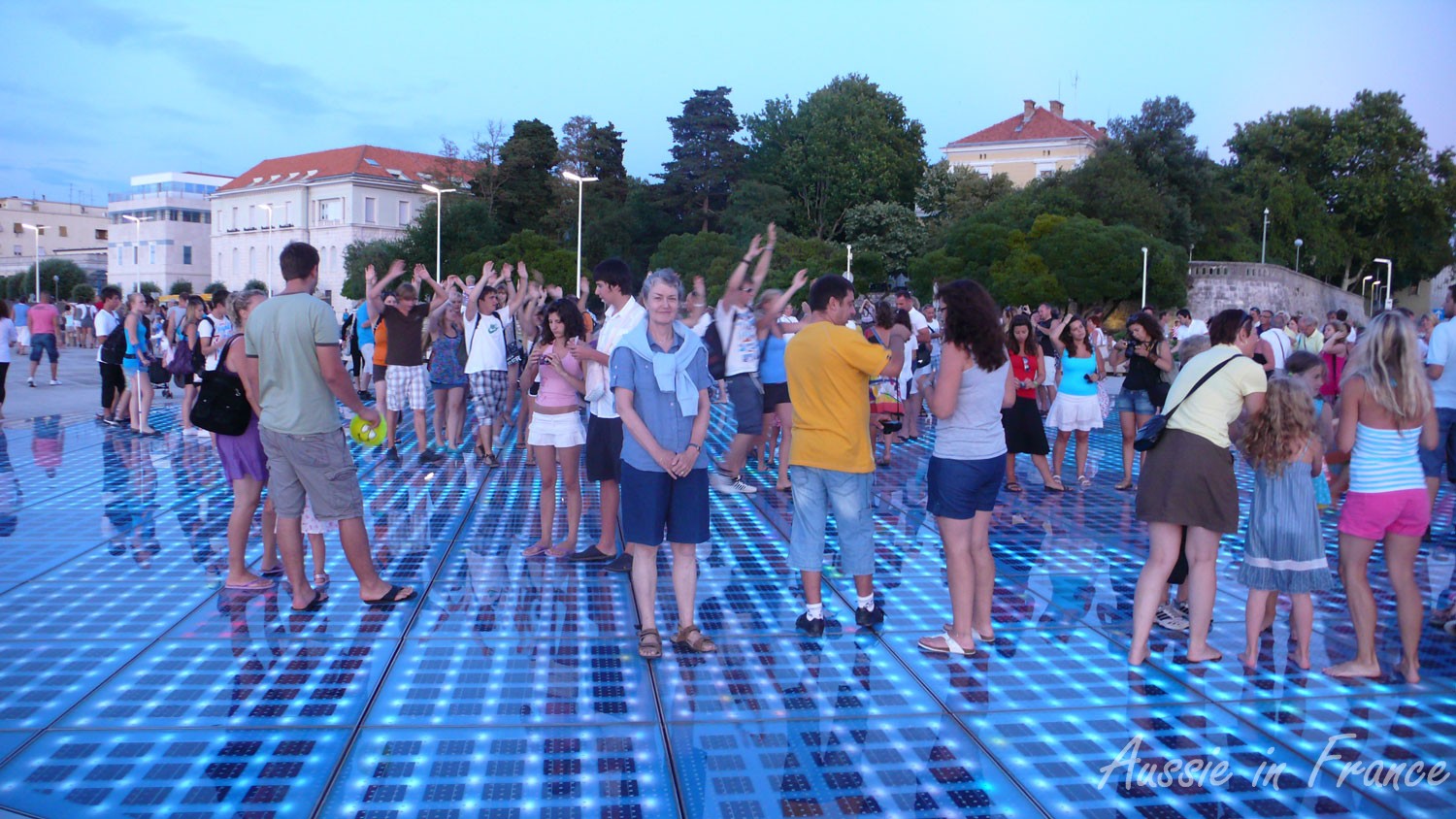
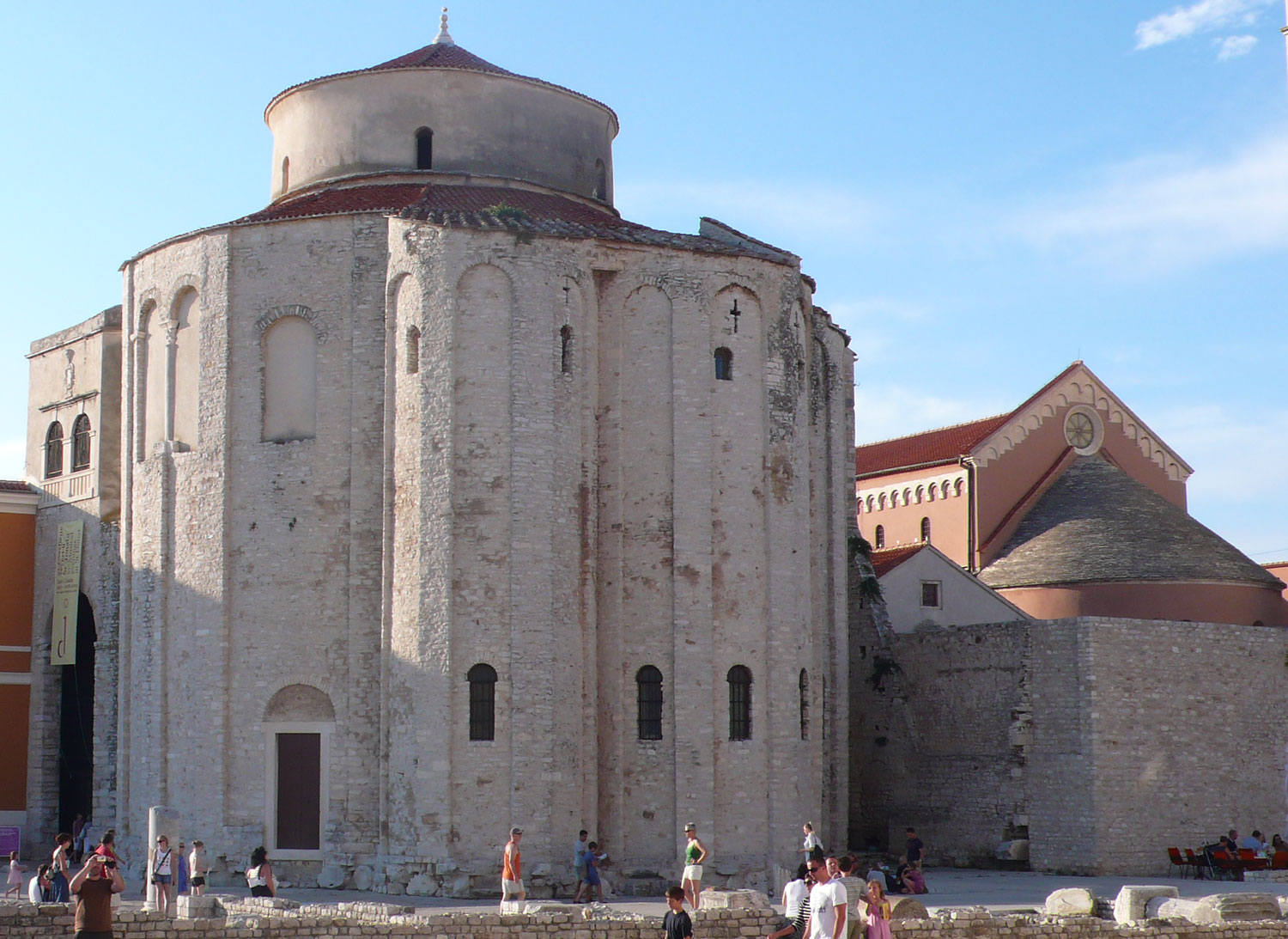
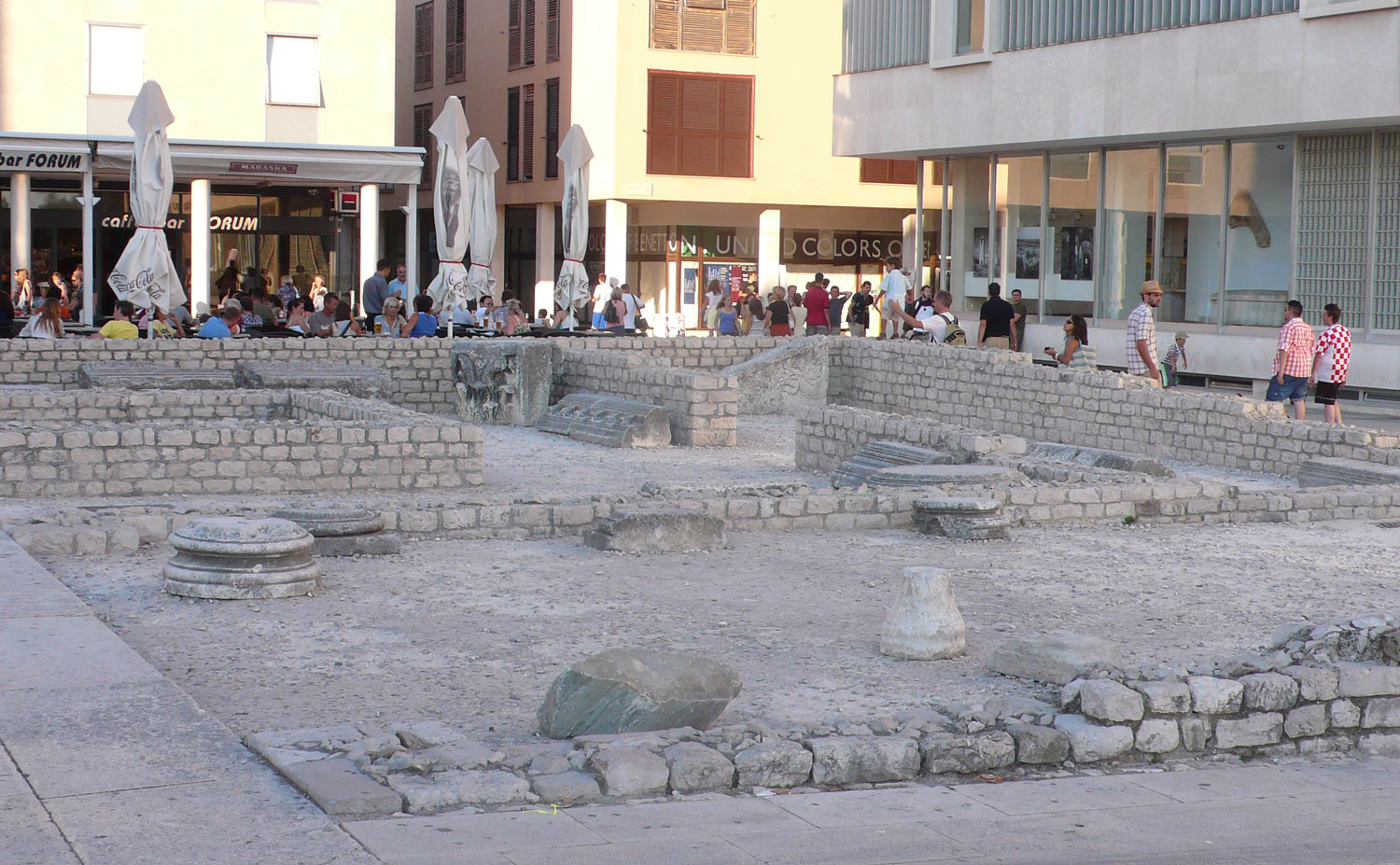
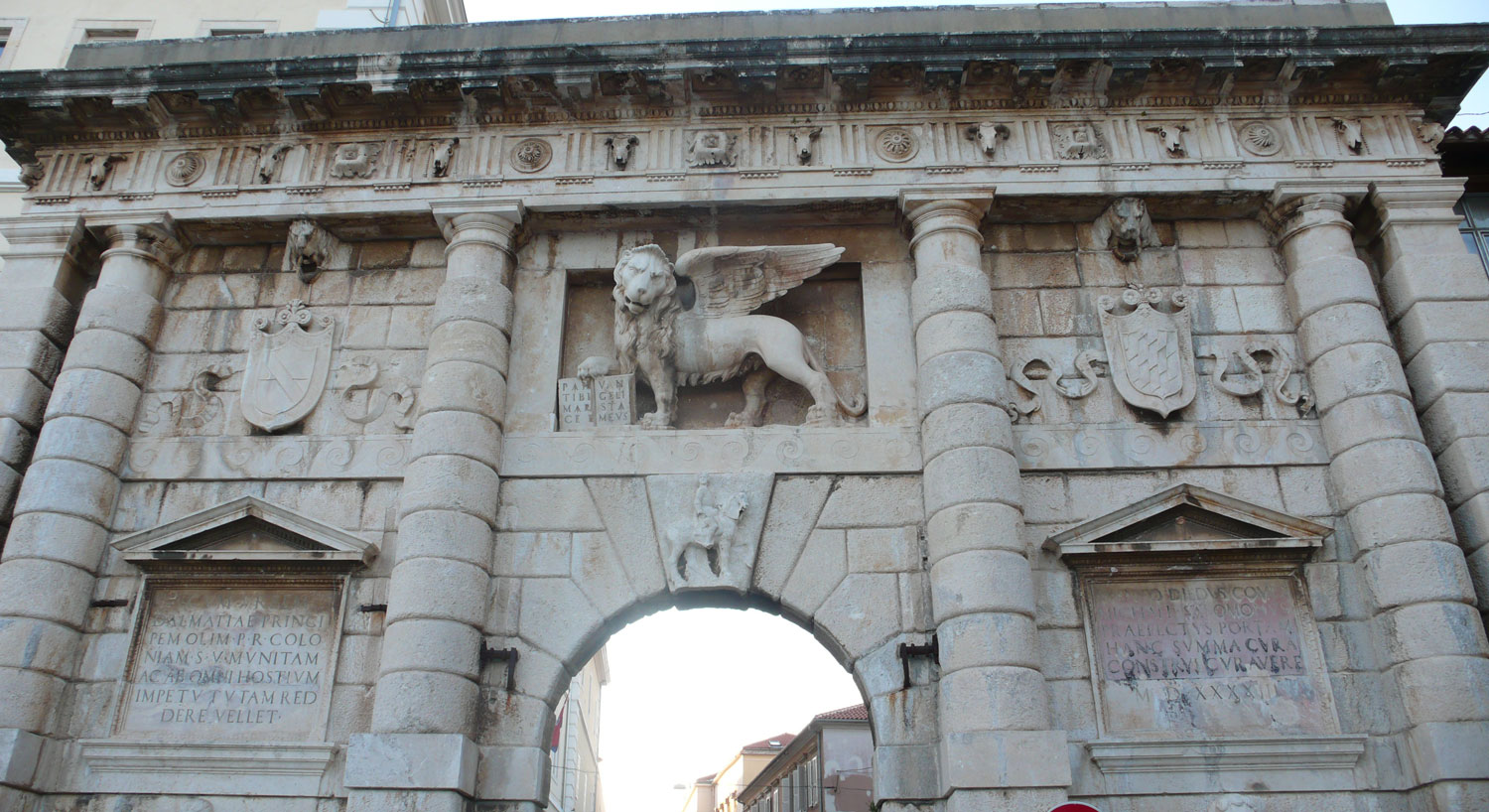
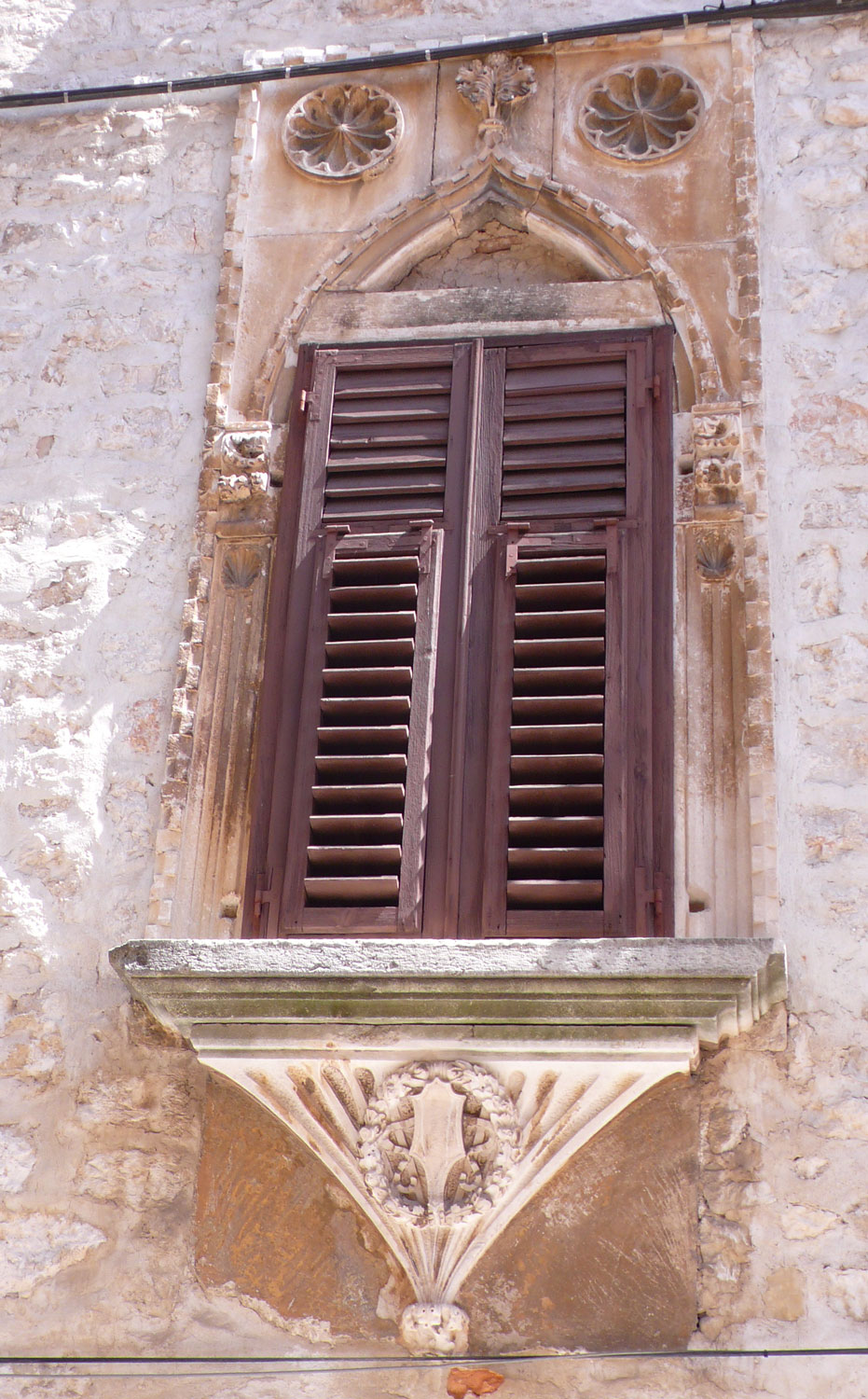
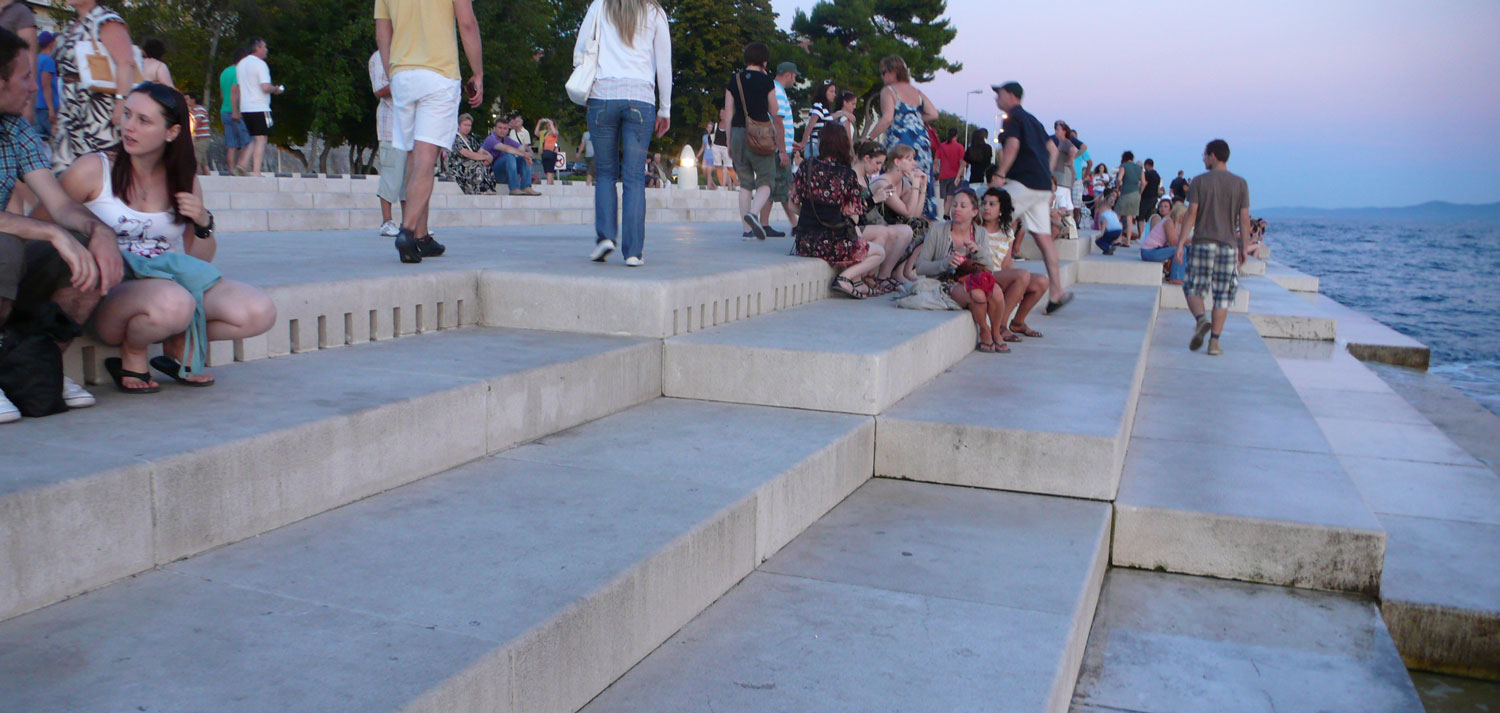
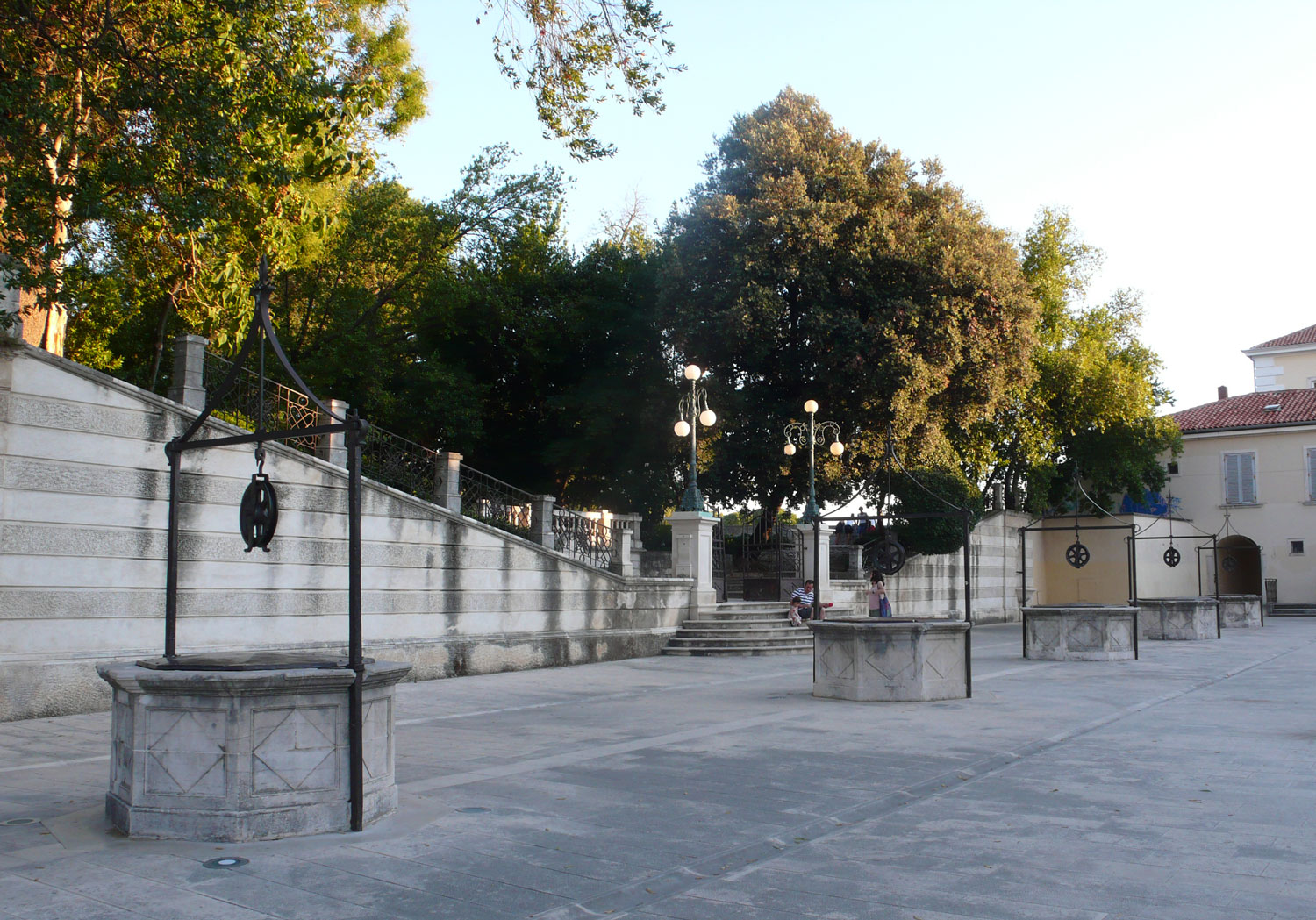
Zadar is a fascinating mixture of old and new, including the Church of Saint Donat built in the 9th century, the remains of a Roman forum from the 1st century, modern shopping streets and the famous sea organ. The sea organ is a musical instrument consisting of tubes located under a set of large marble steps along the waterfront. As boats go by, the waves rush into the pipes and create random but harmonic sounds. It was made by the architect Nikola Bašić as part of a project to rehabilitate the waterfront and was inaugurated on 15th April 2005. It’s a very popular venue for the locals at sunset.

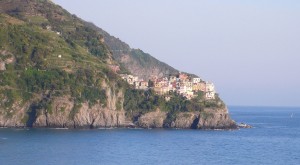
Cinque Terre – Italy

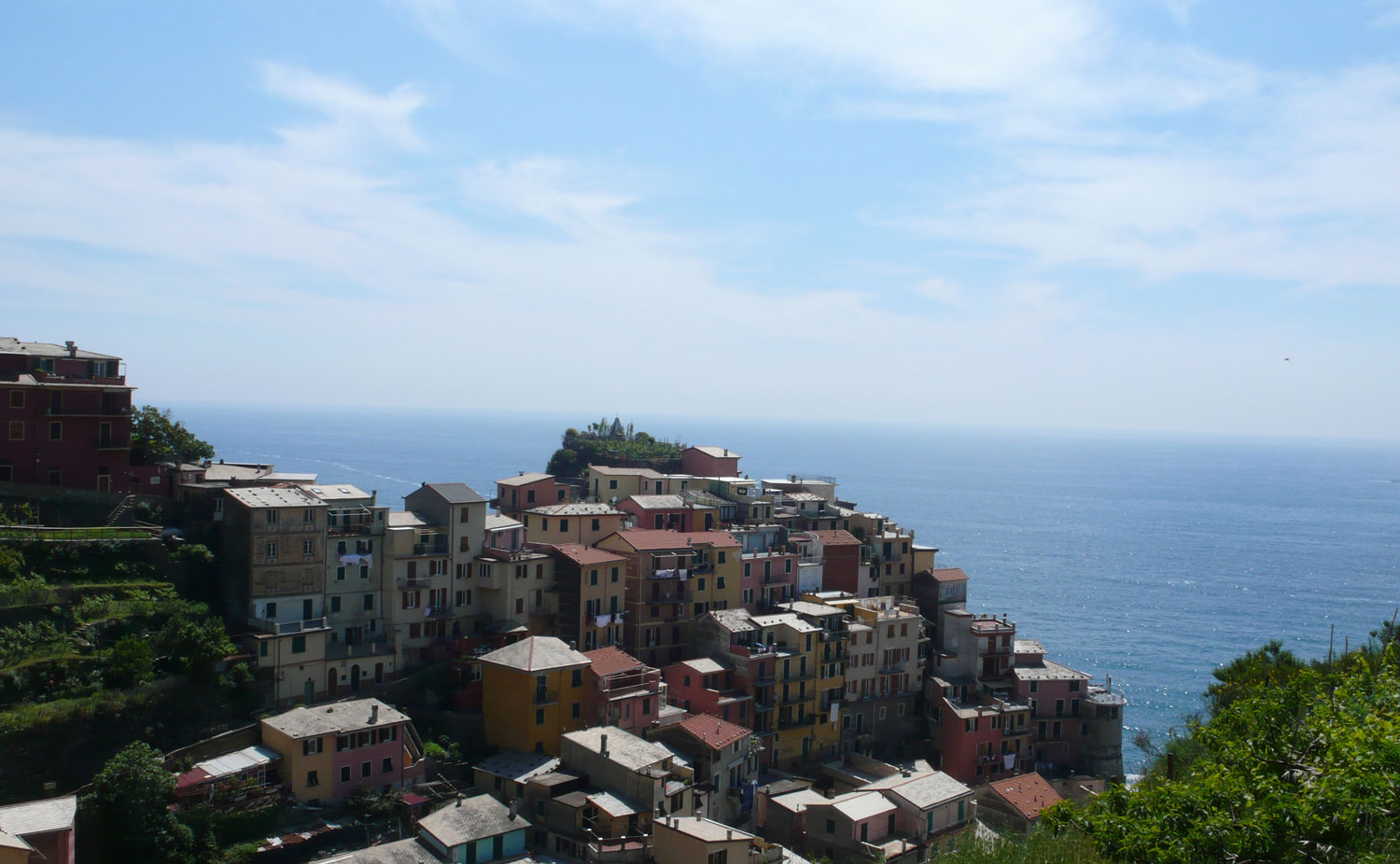
Several times, when holidaying in Italy, we drove down the Italian coast from Genoa along a highway perched far above the sea. It seemed obvious to me that there must be some wonderful little villages and breathtaking scenery down below, if only we could get to them. Once, we tried, but only seemed to find one of those horrible strips of built-up beach front where you crawl along at a snail’s pace with high-rise buildings with balconies on one side and ice-cream parlours and amusement centres on the other.
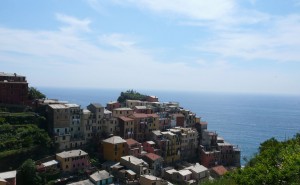
Then one day, someone mentioned Cinque Terre, which is a collection of five water-front villages difficult to access by car, but a breeze by train. I am a little afraid of heights and was rather worried about finding myself in a train perched atop one of those cliffs I could see from the motorway. I even did some hypnosis exercises so that I’d be able to do the trip.
We chose to stay in Levanto rather than one of the five villages, mainly because of the prices and problems parking the car. It turned out to be an excellent choice. We stayed in a B&B called L’Antico Borgo outside the town which I can definitely recommend. After going along a rather scary road full of hairpin bends, we arrived at the village parking lot then walked down through a labyrinth of little streets to the B&B. The room was large, clean and comfortable with free wifi. It was a good breakfast for Italy, served on a terrace with a sweeping view of Levanto and the coast. Our hosts were friendly and helpful.
We then drove back to Levanto and parked at the train station. We later learnt there was free parking further away and that we should have immediately bought a two-day train pass that includes entry to the walking paths. The train actually runs through the mountain so that the villages are only 5 or 10 minutes from each other and there are no scary hilltops. They are also connected by mostly very easy paths provided they’re not closed due to bad weather as heavy rain can cause landslides.
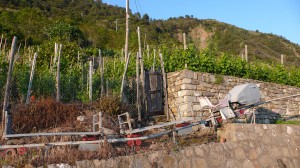
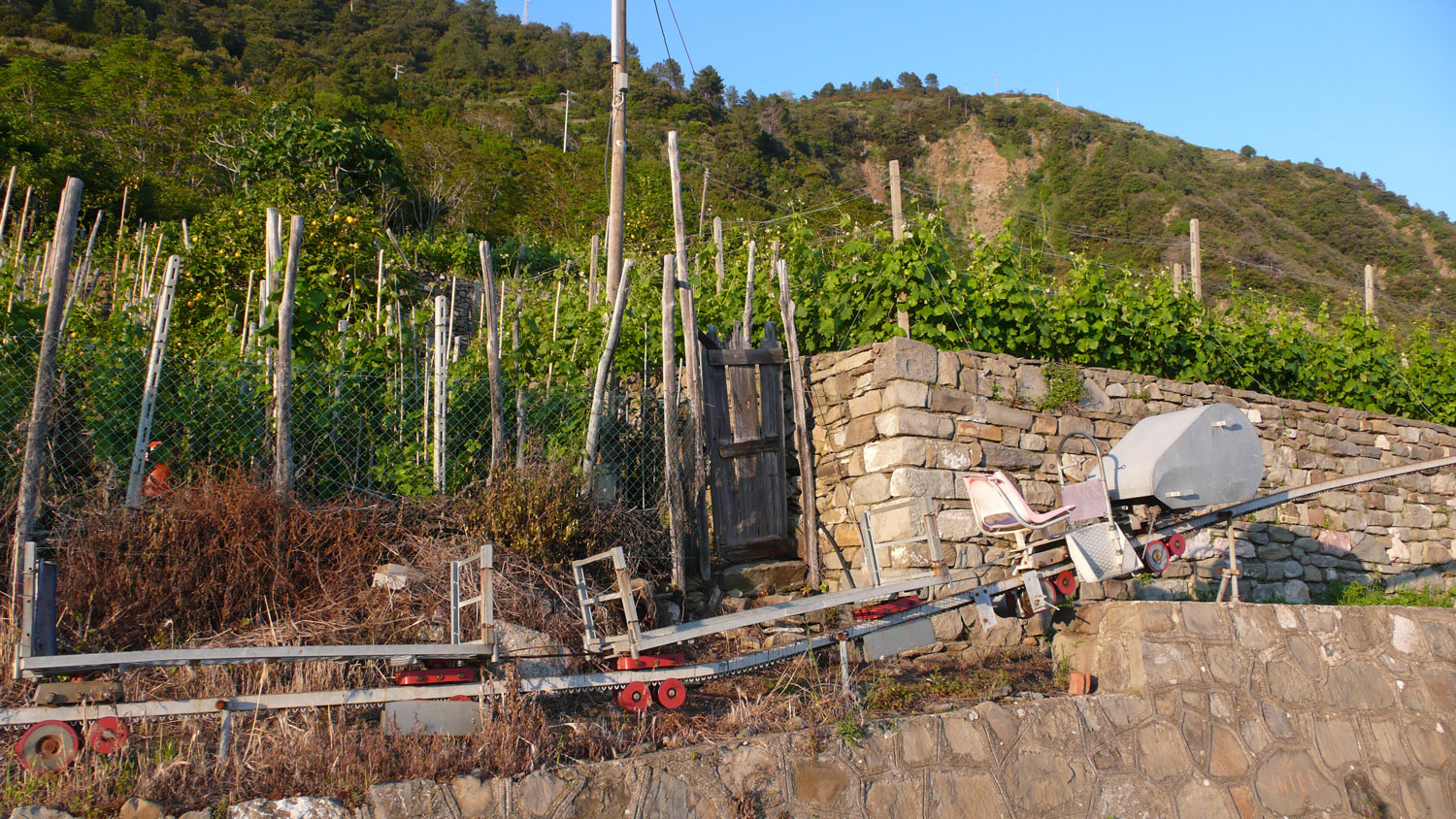
We chose Corniglia, way up on the top of a cliff, for our first evening. From the train station, you can take the stairs – all 282 steps – or walk up the road, which takes  longer but is kinder to the knees. We passed an amazing contraption used for grape harvesting. I booked a table at Intermezzo di Mananan for 8 pm and we went to see the sunset over the villages of Vernazza on the right and Manarola on the left. The restaurant was most entertaining, with the patron ordering everyone around and having a wonderful time. We had an excellent platter of grilled seafood with house wine.
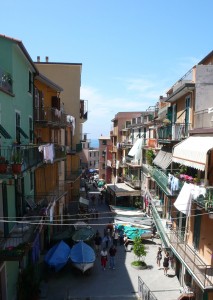
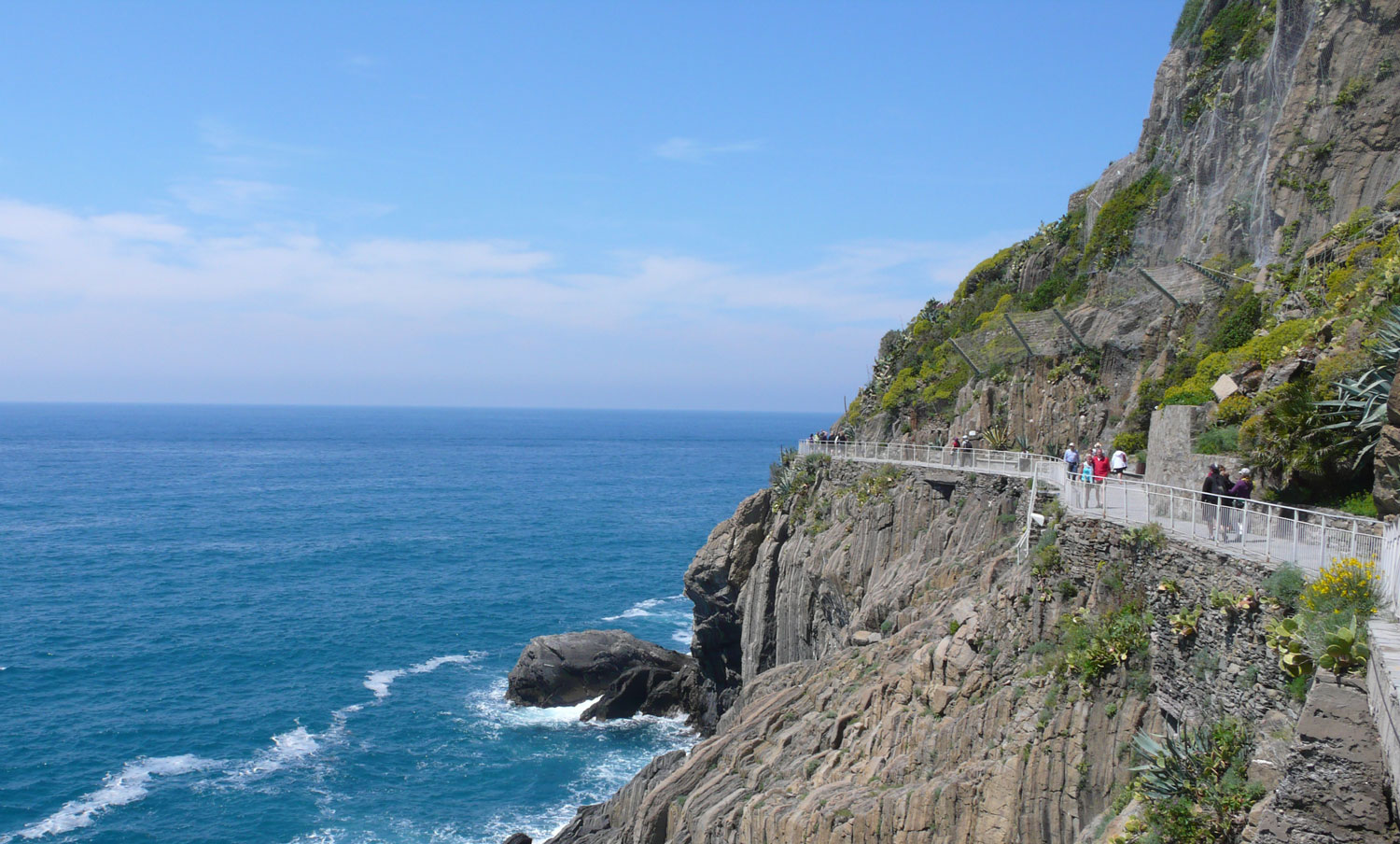
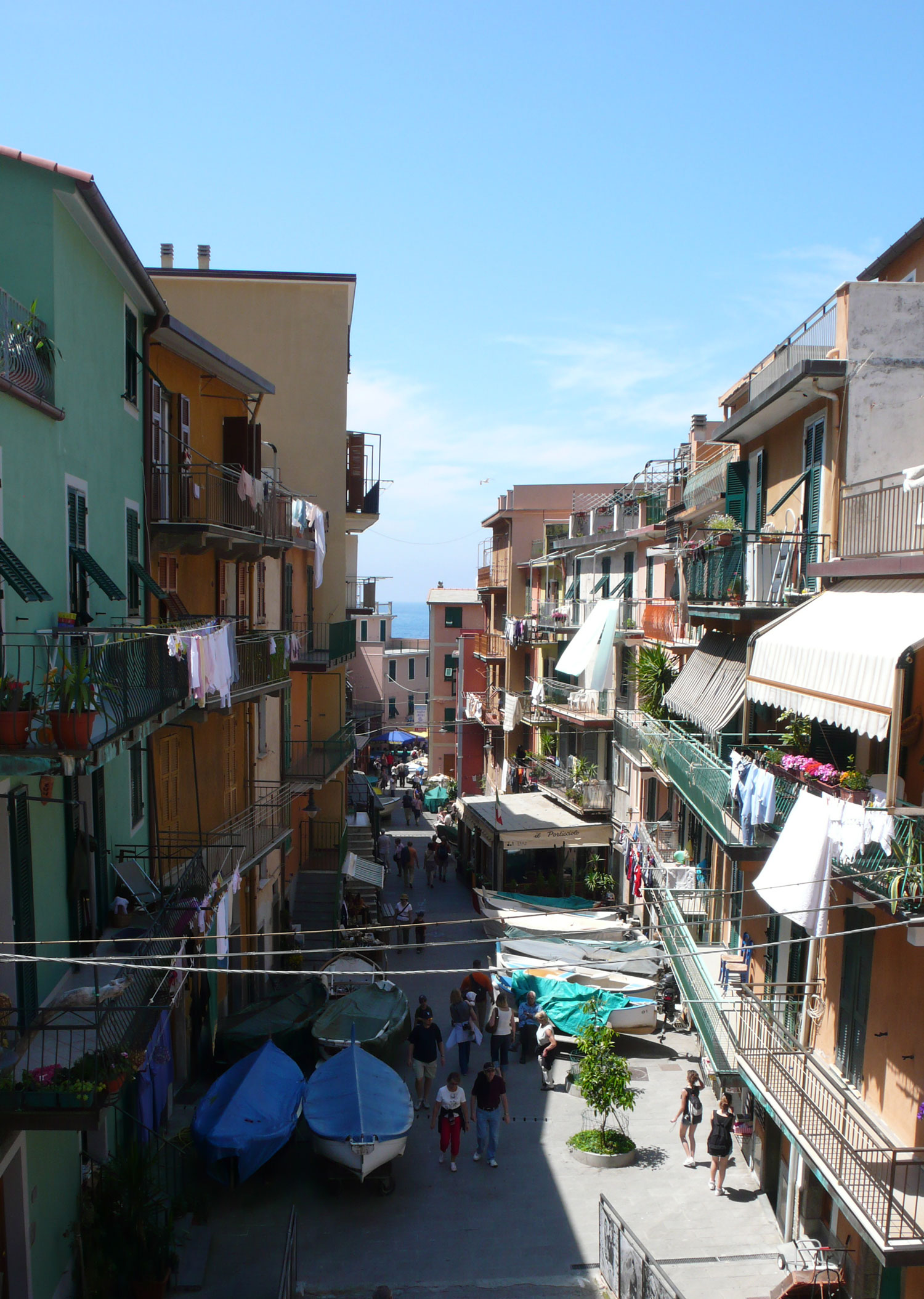
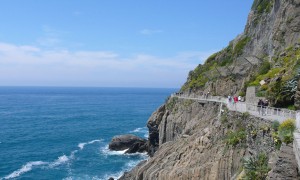
The next day we started with the last village on the train line, Riomaggiore. It proved to be full of tourists despite the fact that it was only May so we climbed up into the vineyards behind the village along a path romantically called “Via dell’amore” and took in the most spectacular scenery. We kept going until we reached the little fishing village of Manarola, only 20 minutes away, with its colourful boats in the main street. There we found a restaurant called La Trattoria La Scogliera on via Birolli where we ate some excellent fresh fish called boghe. After lunch, we went for another walk up through the vineyards.

We had intended to go by boat to Vernazza but it was too windy and the boat was cancelled. The n°2 footpath was also closed so we ended up taking the train. When we got there, we climbed up to the sanctuary from which we had a magnificent view of the village, the church, the fort and the bridge below. Our next and final stop was Monterosso, which is a small town rather than a village and even has beaches.
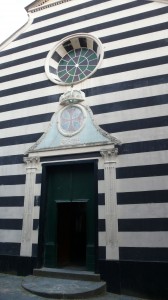
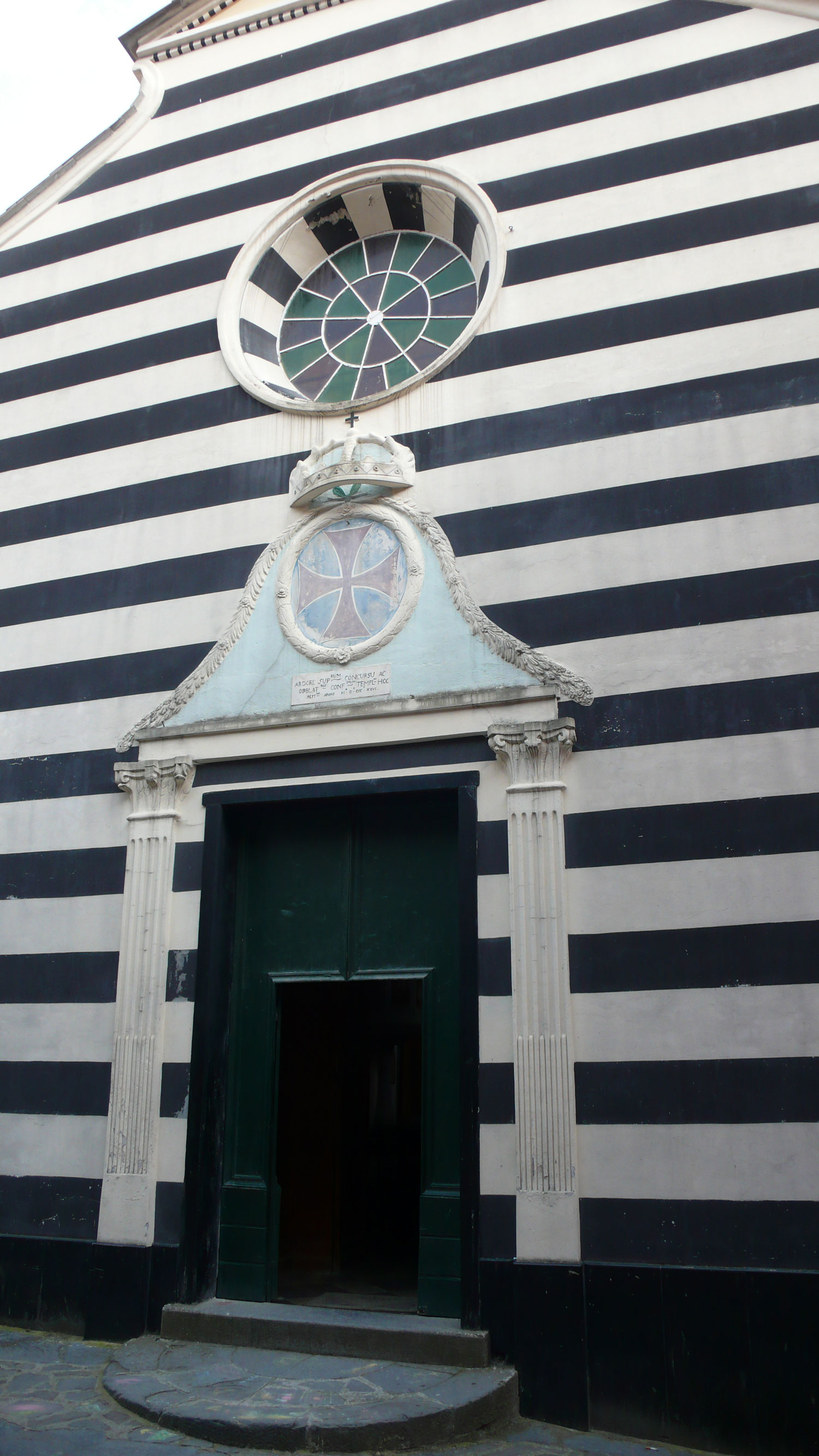
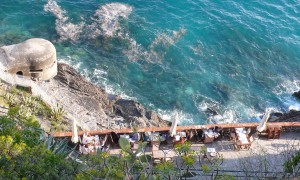
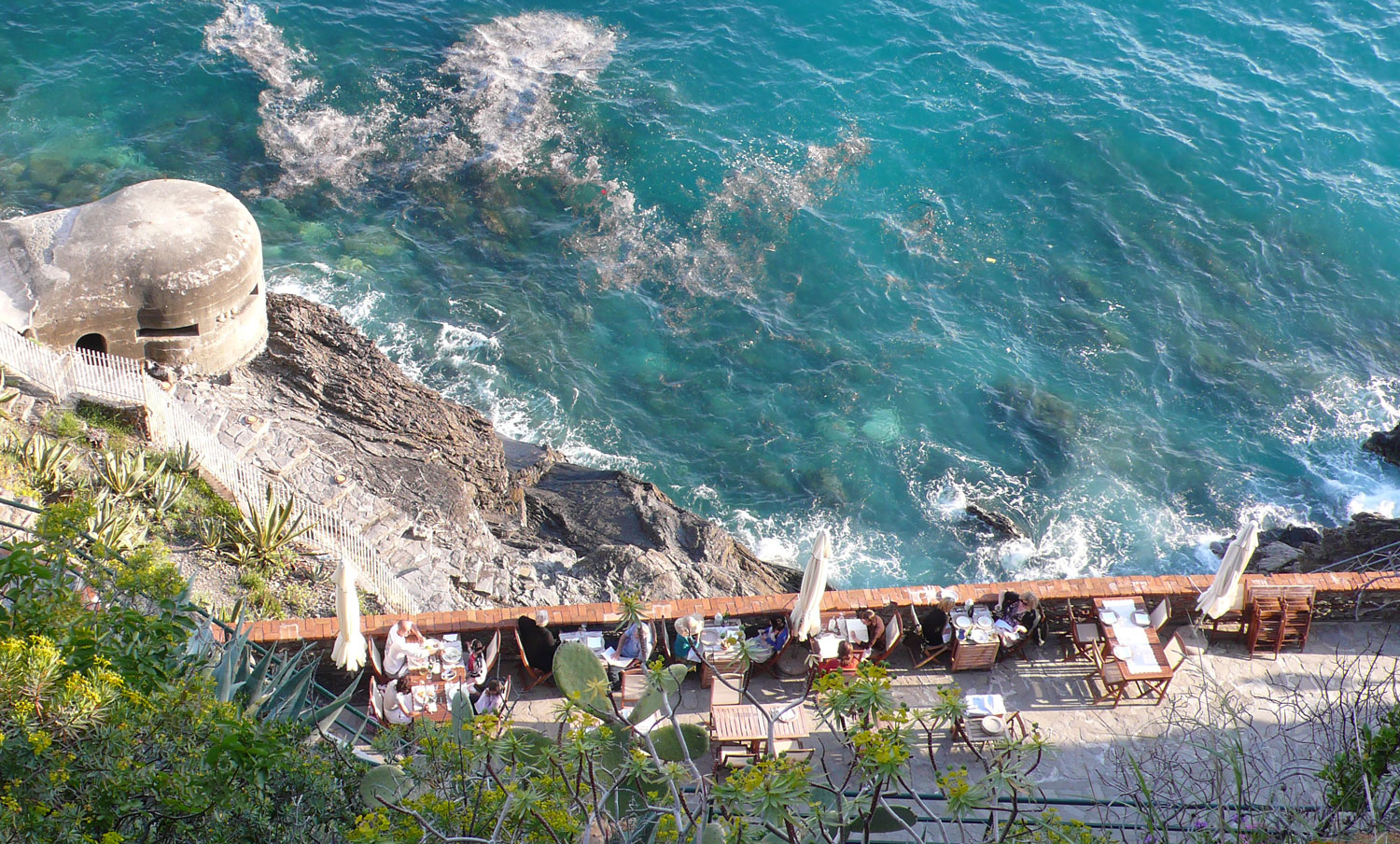
As we walked up the hill to the old town, we saw a restaurant whose tables had a magical seaview so we reserved a table. The centro historico has three churches including Saint John the Baptist with its black and white striped façade. From the Capuchin convent on top of a hill with its statue of Saint Christopher, we could see the other four villages and our restaurant, L’Ancora della Tortuga, below. It proved to be one of our best souvenirs of Italy! We had antipasti della mare and carpaccio pescata followed by octopus and monkfish with a local white wine. Excellent service  and beautifully fresh food.

The next morning, before leaving the area, we visited Levanto with its black sand beach and beautiful summer villas, stopping for a cappuccino with the locals before continuing on our journey.

B&B L’Antico Borga, Levanto, http://www.anticoborgo.net/
Intermezzo di Mananan, via Fleschi, 17, Corniglia, 0187821166
La Trattoria La Scogliera, via Birolli, Manarola
L’Ancora Della Tortuga, Salita Cappuccini, 4  19016 Monterosso al Mare La Spezia, 0187 800065
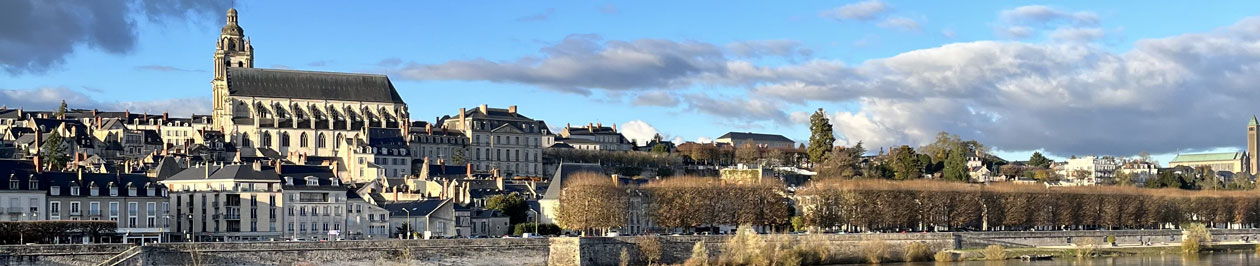
May Day in Blois

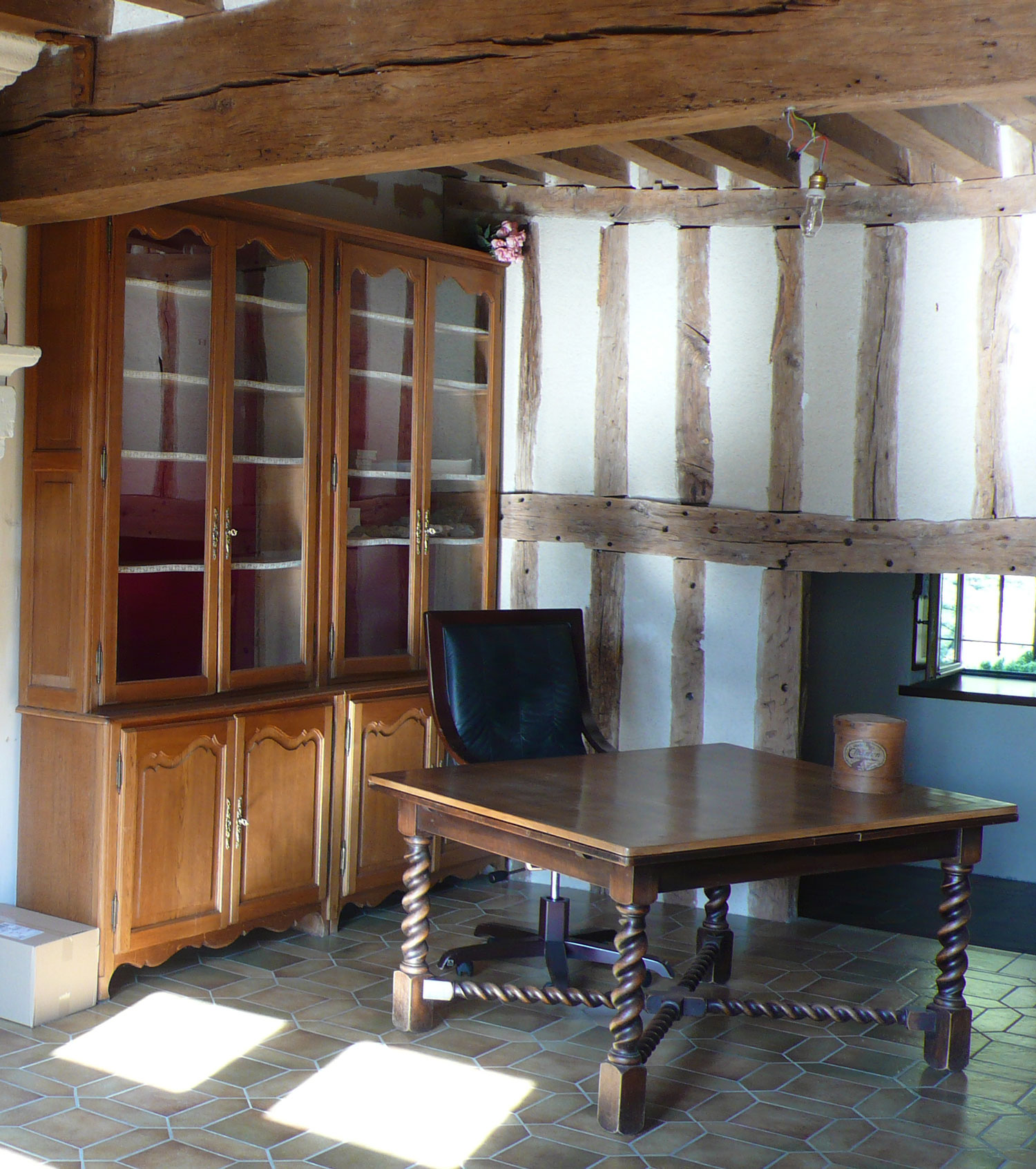
Yesterday was the first time I spent May Day in Blois. It was a good day. I woke up alive for the 3rd day running since I smashed my head into a very low authentic Renaissance beam at Closerie Falaiseau that you are supposed to duck under to go into one of the rooms. The people were on the short side back in those days! It felt as though I had a huge weight on my head and I did wonder for a few days whether it hadn’t been damaged forever. But it seems that I have survived!

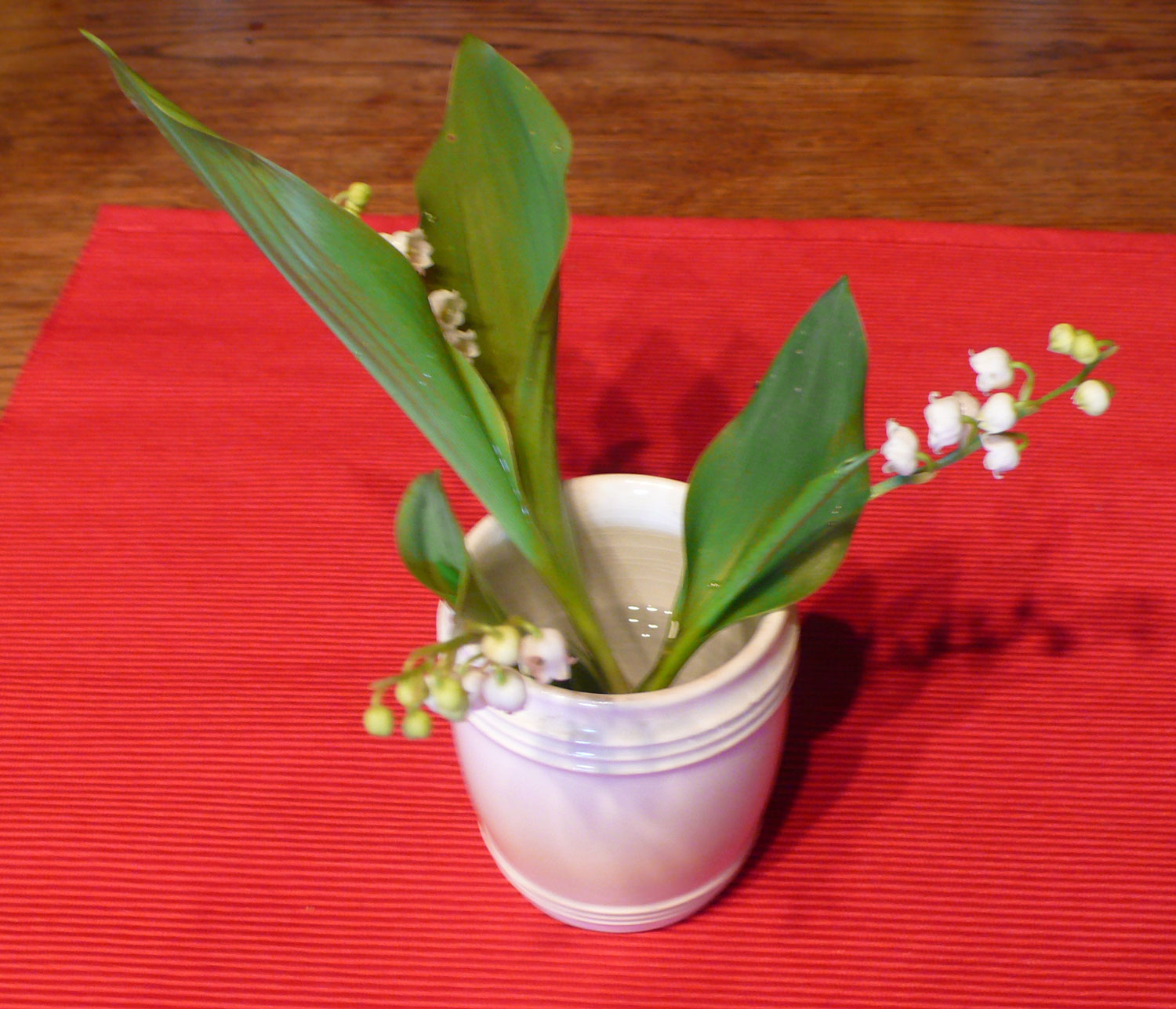
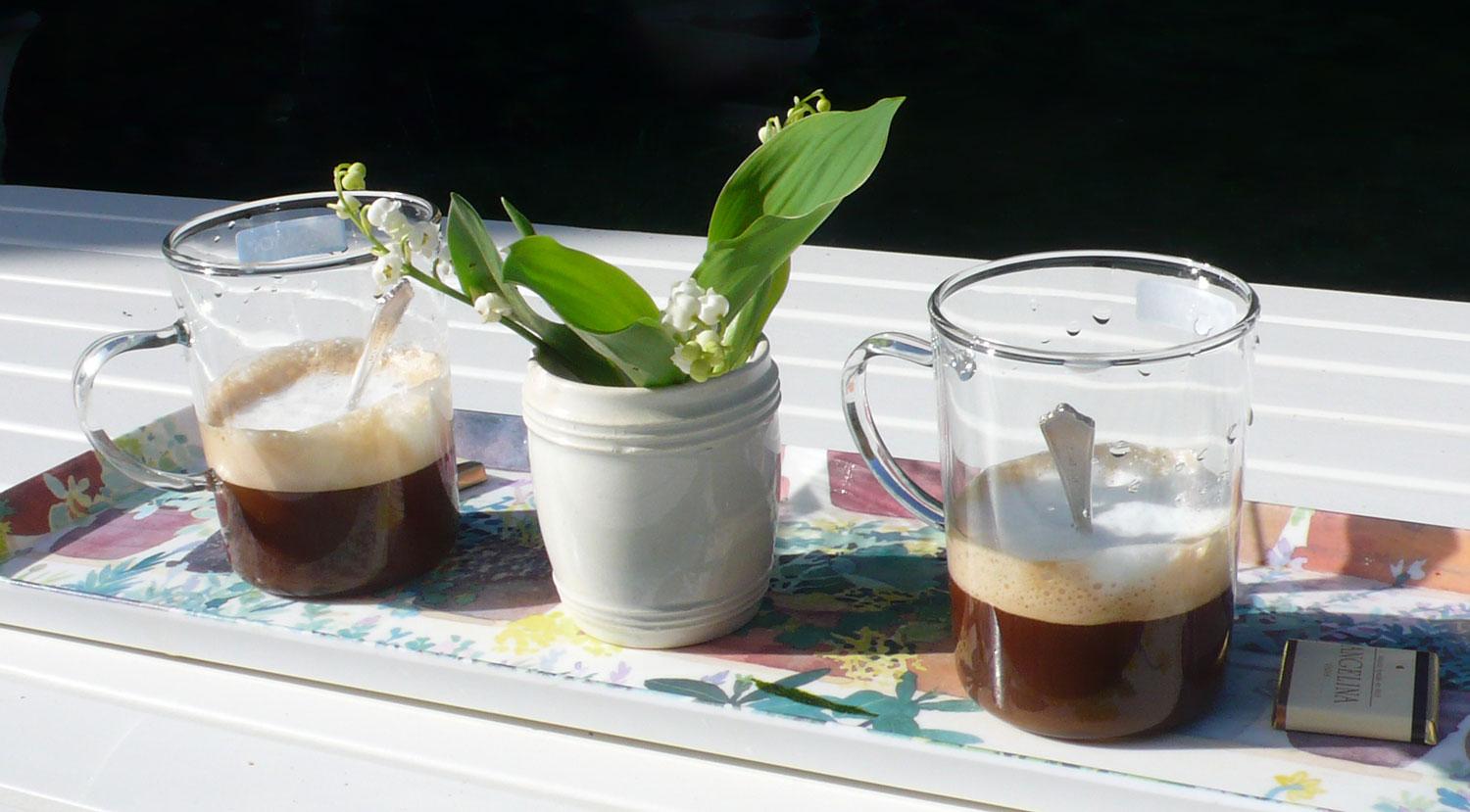
While we were having breakfast, Relationnel suddenly got up, put his cap on and left. I was a bit put out until he came back a few minutes later with three little sprigs of muguet from the garden of our “little house”. It’s the tradition in France to give lily-of-the-valley on 1st May for good luck, especially to your loved ones. You can find it on practically every street corner, mainly sold by charities and similar associations. And because it’s Labour Day, it’s also the one day of the year when anyone can sell on the street without a permit in France.

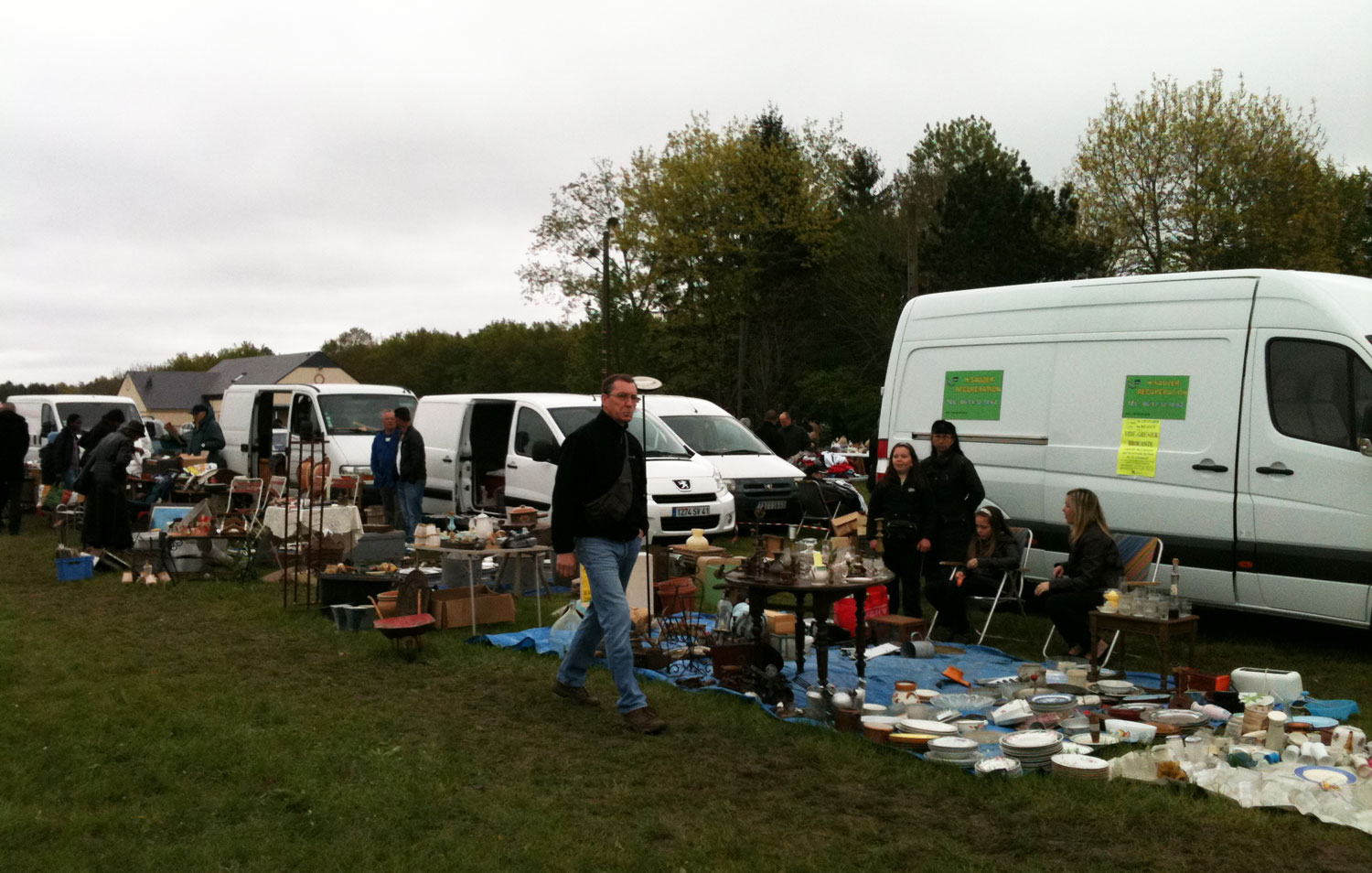
Then we set out for the annual Chambord “brocante” or “vide-grenier” as they call it (attic emptier), the largest in the region, whom Madame Previous Owner  had told me about a long time ago, warning me that we should be there by 7 am! Since we didn’t even wake up until 10.30 am, it was considerably later by the time we left. On the way, we saw a sign for another “vide-grenier” at Maslives so I insisted we stop.

It was very much a local edition, where most of the people obviously knew each other. We wandered around in the wet grass, delighted that we had had the foresight to change into our walking boots. I saw the most amazing child’s tricycle with long handlebars to turn to make it go. Relationnel spied out a  lampshade made of pig’s bladder on top of the most hideous lamp stand imagineable so we paid the full price and left the lamp explaining to the vendor that we wouldn’t be able to use it.  He commisserated saying that he had inherited it from his mother and didn’t have room either – but didn’t bring the price down!

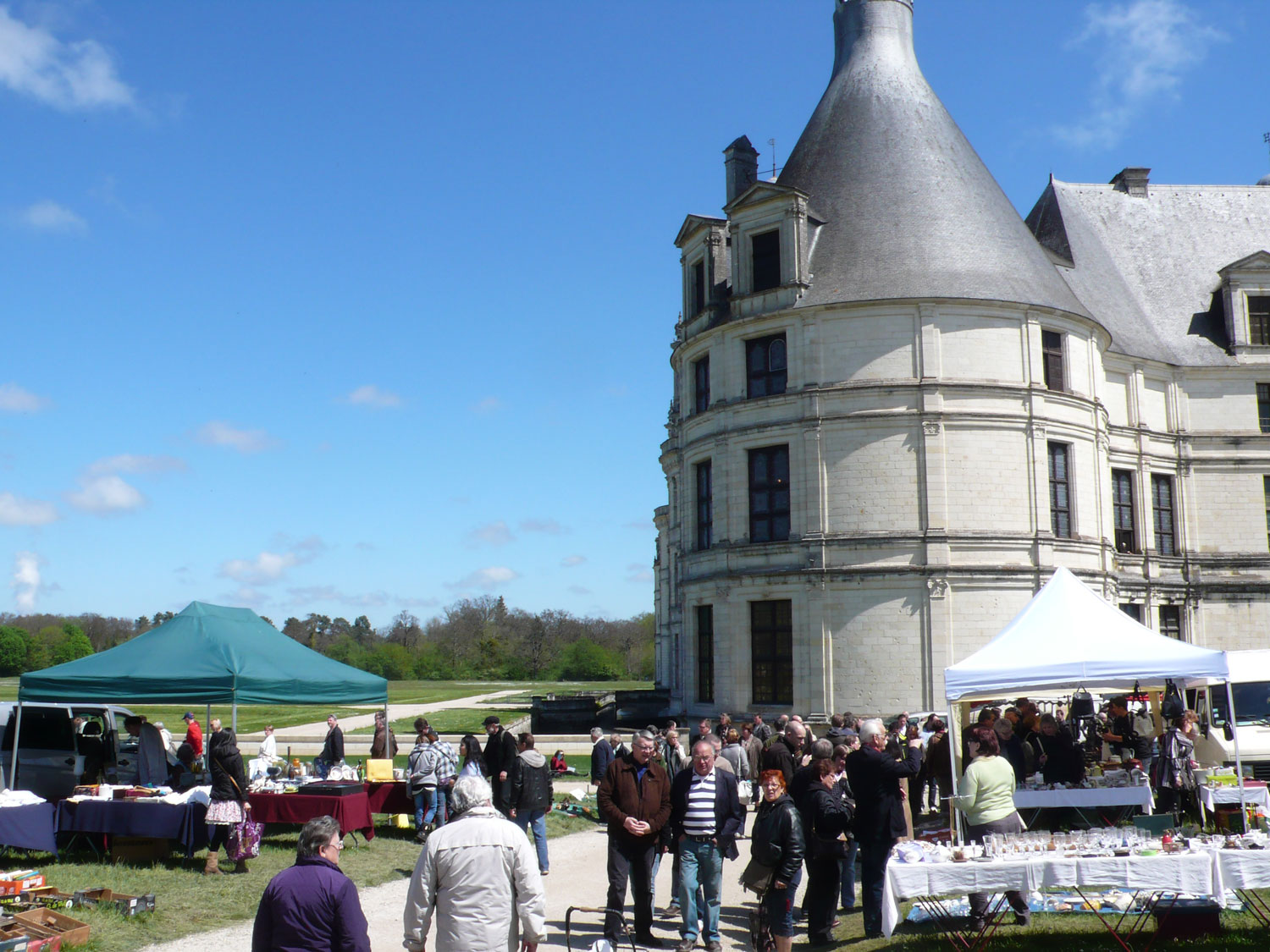
We continued on to Chambord. You could tell from the gendarmes everywhere that it was not on the same scale. We parked, as directed, in a large field and were thankful, once again, that we were wearing our boots. By then, the sun had come out for the first time in 4 days, and we had a lovely time exploring the endless rows of stalls with the majestic Château de Chambord as a backdrop. The prices, however, were much higher, and we didn’t find anything to our liking.

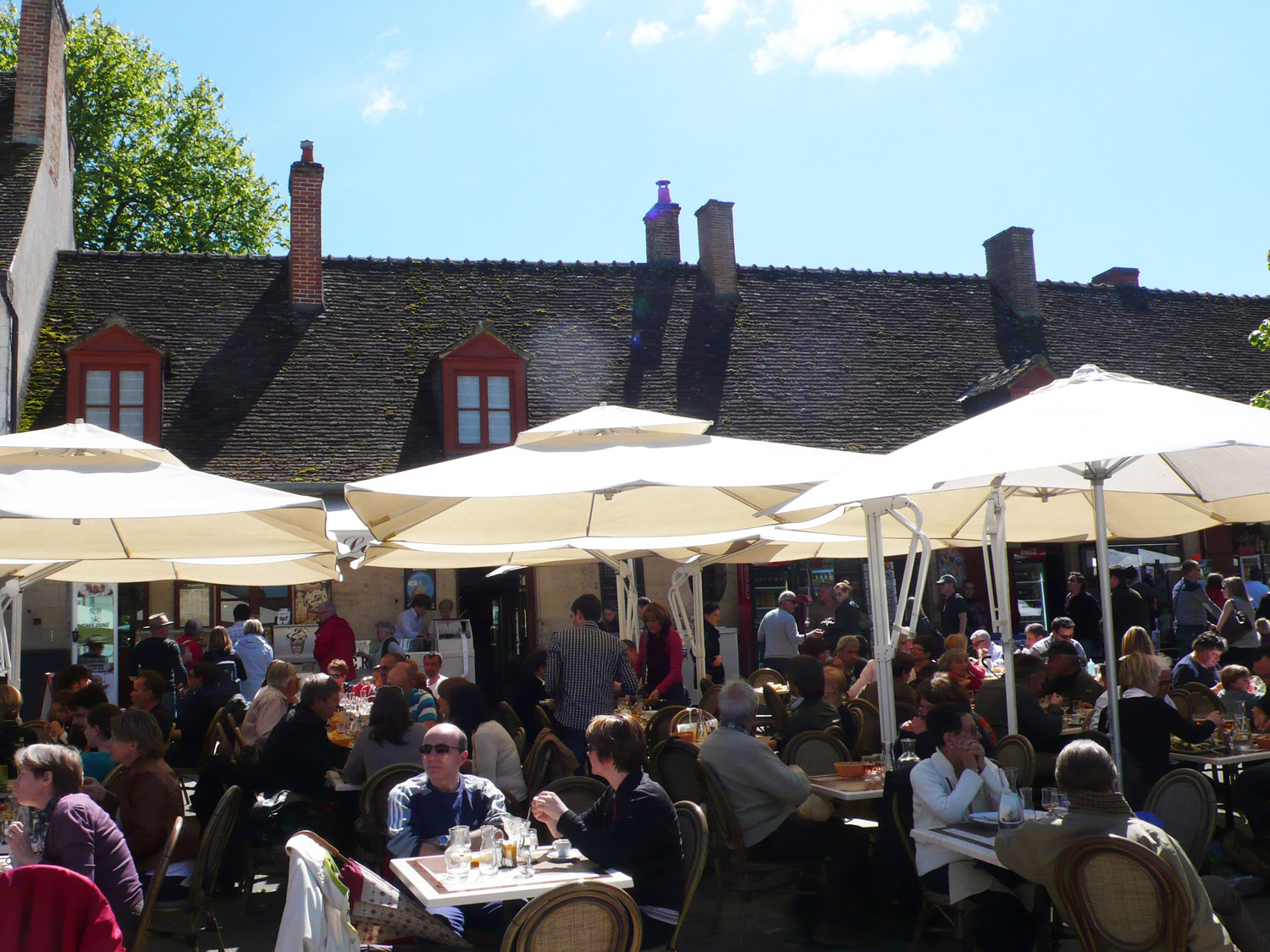
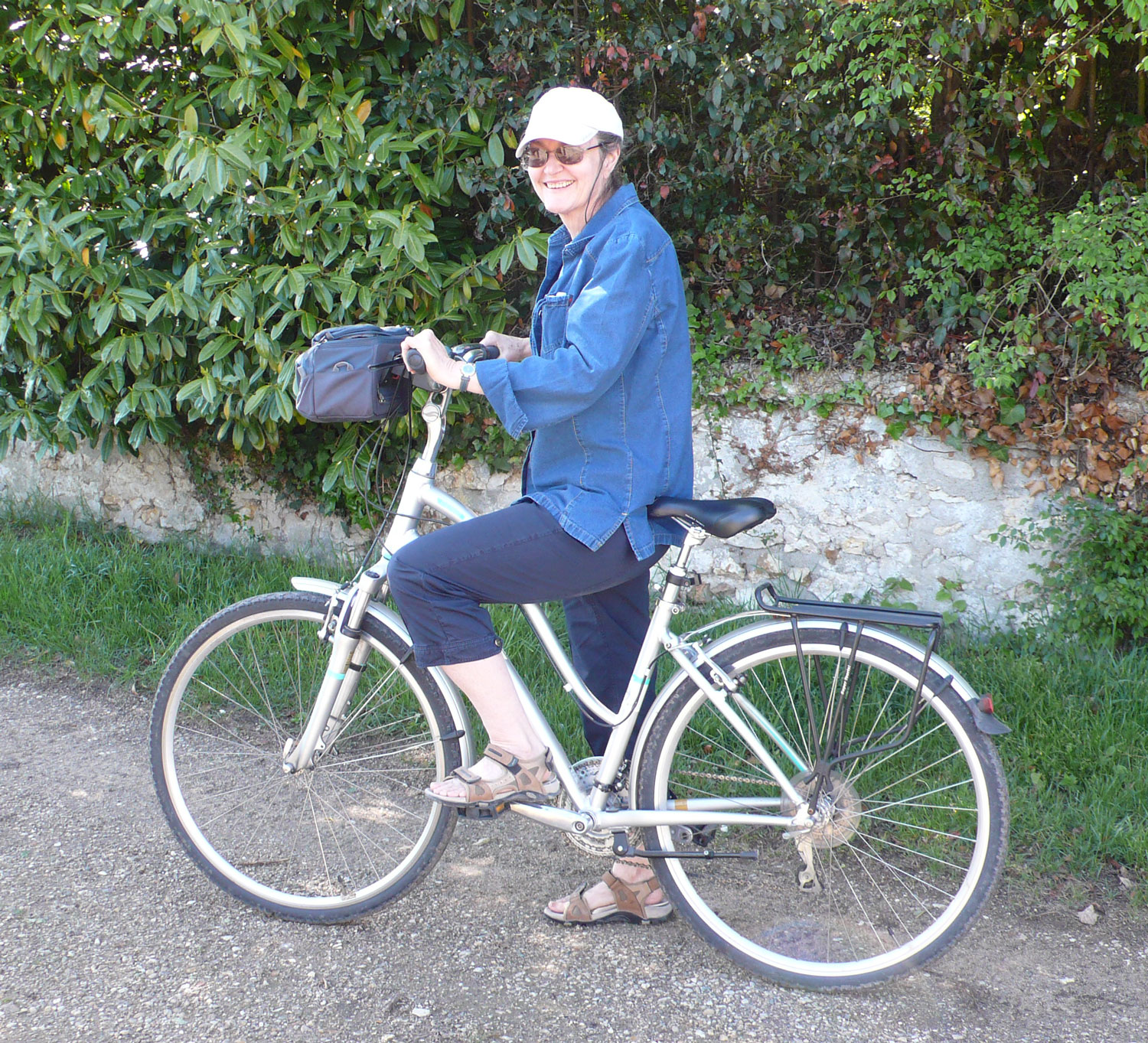
At about 2.30, we decided to have lunch at one of the two restaurants in the castle grounds – Le Saint-Louis – which had both reasonable prices (about 12 euros for a salad) and friendly service. We’d done enough brocanting by then and went home to change into our cycling gear. It was great to be able to ride out the gate and down our country road. Not exactly possible in Paris!

After cycling along a dirt road and through a few puddles, we reached bitumen again, to my relief. We then rode up a very manageable slope to the highest point of Blois which means we’ll be able to cycle into the city centre in the future without too much effort. On the way, my chain came off  and I thought I should learn how to put it back on by myself for when I go cycling without Relationnel. Newfound independence!

When we got home, we attacked the expresso machine again and finally made our first cappuccino!  It was excellent (the coffee came from Verlet, I might add, and was accompanied by chocolates from Anglina’s). And despite the fast-descending temperature, we decided to dine al fresco for the very first time in Blois!

Best Brocantes and Flea Markets in Paris – Tea, wine or cocktails – National Garlic Day

It’s Wednesday again and I’ve found you some more great posts from other people’s blogs, starting with Vingt Paris Magazine giving us the best brocantes and flea markets in Paris, followed by Girls’ Guide to Paris with suggestions of places to have your favourite beverage, and a very interesting description of National Garlic day by Llamalady from Blog in France.

Best Brocantes and Flea Markets of Paris

by Anne at VINGT Paris Magazine, devoted to the 20 arrondissements of Paris and helping you get the most out of the city.

We were so pleased with Meg Gagnard‘s roundup of the best vintage clothing shops in Paris, we invited her back to share some insider secrets of Paris’s flea markets and brocantes -the best places to find vintage goods and antiques around the city. The list is a mix of trinket and furniture shops, as well as where to go to find out about weekly neighborhood brocantes. Thanks, Meg! Read more …

Tea, wine, or cocktails

by Girls Guide to Paris, an all-encompassing online guide to Paris

Here is an assortment of places where you can lounge and enjoy your favorite beverage, often with some excellent food as a bonus. Note: The term wine bar can be a little confusing in Paris. All wine bars feature wine, of course, but the bar part is a little more flexible. Some have a counter and tables, and you can show up anytime for a glass of wine and a snack. Others resemble restaurants more than actual bars. In many cases, reserving in advance is imperative. Some are cavistes (retail wineshops), which is good to know if you need a bottle to go. Read more …

National Garlic Day

by Llamalady from Blog in France who blogs about her life in rural France where, amongst other activities, she raises llamas and alpacas

Today, believe it or not, is National Garlic Day. And since garlic is irrevocably linked in most people’s minds with France, well, I had to blog about it.

Garlic, Allium Sativum, is originally from Asia. China is still the world’s biggest garlic grower, producing more than 12 million tonnes of it a year! Garlic is something of a wonder plant, because not only does it have the blood cleansing properties most of us know about it, it’s also anti-bacterial. Surgeons who ran out of anti-septic during the First World War would use garlic instead. Read more


Coup de coeur – my French house

This month, my guest post on MyFrenchLife, the Australian-based online magazine & global community of French & francophiles, tells how I fell in love with my beautiful Renaissance house in the Loire Valley and takes you on a tour.

Coup de coeur they say in French. Literally a blow of the heart. And it can be used in so many different contexts and translated in so many different ways: “love at first sight”, “a favourite”, “a crush”, “an impulse purchase”, even “kudos” and sometimes there’s no translation at all! Read more


The Bird Bath

The previous owners of Closerie Falaiseau were very keen on birds. When they handed over the keys to the house, they explained how to feed them and left us enough feed to go on with for a week or so, including couscous (these are French birds after all). There are lots of different bird feeders scattered about in the trees with a cute little one on a stand in our little wood behind the house. There are also a couple of recipients on the living room window sill. Oh, yes, and we’re also supposed to put bits of fat in little string bags especially in winter. I asked the butcher to give me some fat off the côte de boeuf for the birds and he seemed to know what I was talking about.

However, because of the weather and all the things we’ve been doing inside the house, we haven’t been able to observe them very much. Another thing Mr Previous Owner left us is an endless collection of pottery so I’ve been putting it to good use to store thyme and rosemary and coarse salt, for example.  I chose an appropriate dish and put it on the window sill at the front end of the kitchen since that is where we usually eat. I filled it with the crumbs from the multi-grain bread we bought from the organic bakery.

And lo and behold! It attracted a little bird. We’re not sure what it is because every time we approach, it flies away, but I’ve ordered a French garden bird poster from the bird association and am hoping that  this little guy will soon become used to us and I’ll be able to get a closer look (and a better photo)! I’m now feeding it crumbs from my home-made multi-grain bread. I’m sure they’re superior and will be much appreciated.

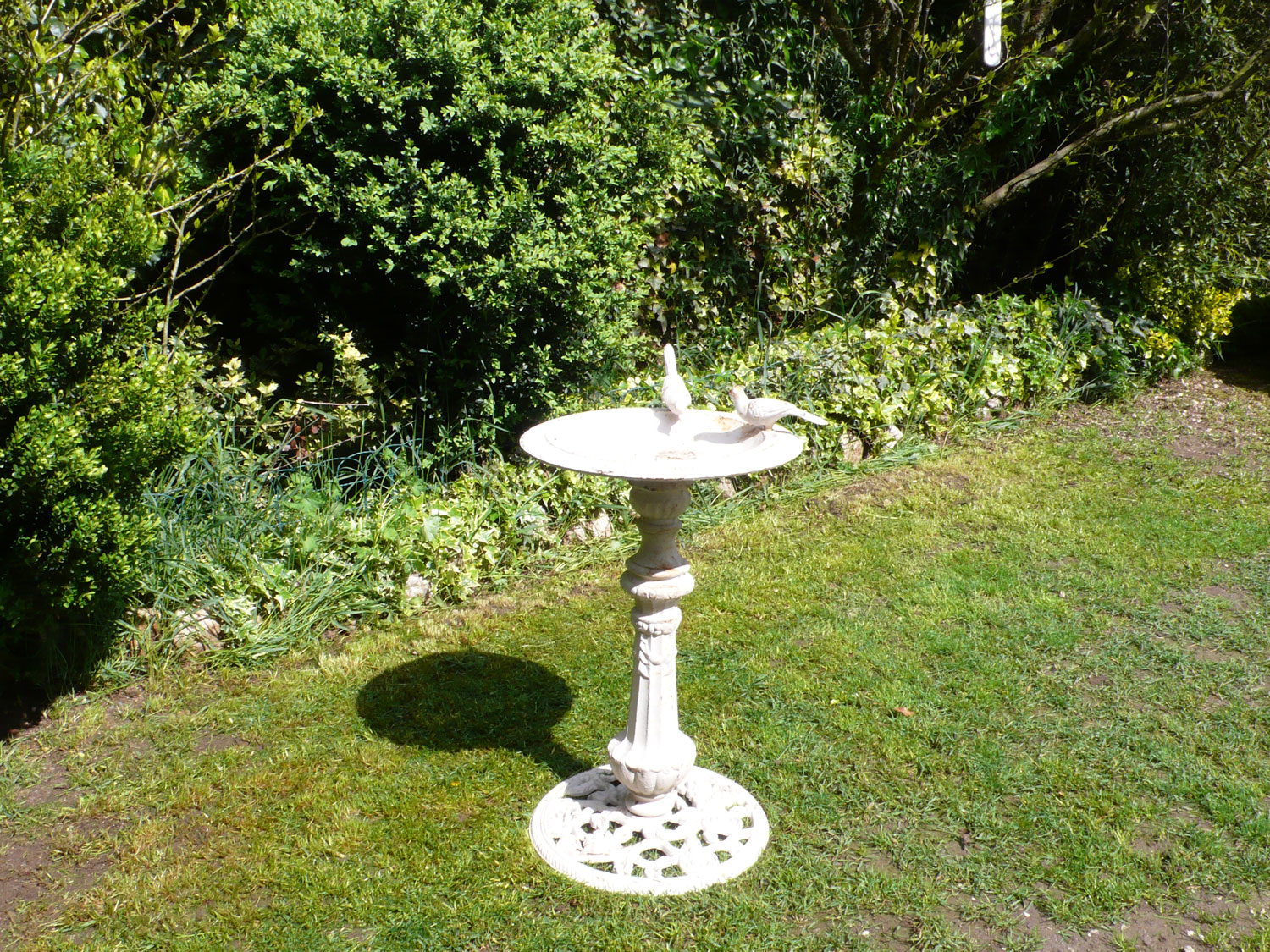
Yesterday, while on yet another excursion to Bricorama (more on why in the next post), we went past a dépôt-vente and I thought I’d have another look for bedside lamps as I haven’t found anything, either old or new, that I like yet. Down the back of the shop, they had an amazing collection of iron garden furniture. The prices were outrageous but I spied a bird bath that didn’t have a price on it.

It turned out to be reasonably priced (it was even on sale!) so Relationnel lugged it out to the car and now it is standing happily next to the kitchen window enticing the birds to use it. Not that they really need it at the moment. There are a lot of puddles to bathe in …

Voting for a New President

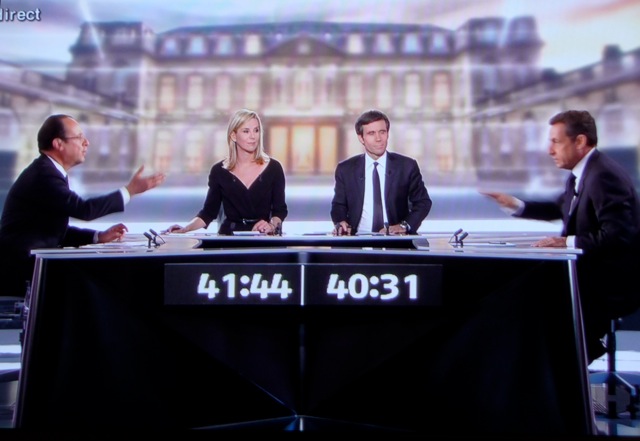
As I explained in Battling with French Administration, I have only  started voting relatively recently and this is only my second French presidential election. The first time, we were here for both rounds. Of course, it would be much easier if they adopted the preferential voting system in France, but having the two rounds is all part of the strategy and I don’t think any of the politicians would agree to eliminating the second one! This time, however, we will be in Blois the second time around. Black Cat will be away on both occasions.

So how do we go about voting? First, I’ll describe the normal voting system. When you become eligible to vote, you have to register with your local town hall. It’s wherever you’re registered on 1st January that counts. We are registered in the 1st arrondissement. Even when they move (provided they don’t go too far away), most people prefer to keep their original voting office rather than spend hours waiting around in queues to change it.

In about March, you receive an electoral card with the address of the polling station (usually a school) that you have to take along with you to vote, together with your ID. You hand them both over to the person sitting behind a table with all the ballot papers (bulletins de vote) in front of them. After they check your ID, they give you a little blue envelope and you take a copy of each ballot paper (10 this time because there were ten candidates) and go into the voting  booth (isoloir – love the name!), put your paper in the envelope and throw the others in the bin. Since we also receive the ballot papers by post, I prefer to select mine before I go. It’s a simple piece of white paper, about 10 cm x 15 cm with the name of the candidate printed in black ink.
Then you go to another table, with your envelope and ID. At our voting station, there are tables on either side of the see-through voting urn with a person at each table. One has the register with half the alphabet and the other has the rest. The person standing behind the urn reads out your name. After it’s located on the register, you sign and the urn keeper pulls back a lever so that you can drop your envelope in. When you have done so, he says in a stenorous voice, “A voté” (has voted). It’s all very formal. I was actually surprised they let me take photos but the urn keeper was very pedagogical, explaining everything to me in detail.

Now if you can’t physically go to your polling station on D-Day, the only solution is to find someone to represent you. They don’t have to be attached to your polling station (they just have to live in the same town), but they do have to go there to vote for you. You have to go along to the police station beforehand with the details of your proxy (full name, birth and place of date), your ID and your electoral card. You’re given a little bit of paper that says “récipisse à remettre au mandant” (receipt to be given to the proxy) that you hand over with your ID. A proxy can vote for one person living in France and one person living overseas.

So with Leonardo in Australia, Black Cat in Thailand and Forge Ahead in Madagascar, there’s only Thoughtful left.  He’s going to vote for Black Cat and Forge Ahead so Relationnel has found two work colleagues to vote for us. And they tell me they’ve simplified matters. We haven’t been to the police station yet …

I’ve Joined the Kindle Community!

I’ve always been a ferocious reader. I had the great fortune to have a father who let me read absolutely anything I wanted from both his own library and the town library (he had to sign a paper saying that I could take books from the adult section when I was still a child) and who encouraged me to use a dictionary. I’d be lying in bed reading at night and call out hopefully “Dad, what does ‘testimony’ mean” and he’d inevitably reply, “Look it up in the dictionary”. So I’d take my trusty Pocket Oxford from the bedhead behind me and look it up.

As a result, I grew up knowing the real meaning of words and how they are used.  And I love words. I loved the Latin at church and I adored learning French at school. And my love of reading has never left me. I remember the very first book I ever read – an abridged version of Peter Pan. I think it probably shaped my whole life. I was fanatical about the Pollyanna series and read and reread them constantly. There was also Anne of Green Gables and Little Women, What Katy Did and The Bobbsey Twins, The Secret Seven and The Famous Five. But I soon left them behind for Gone with the Wind and Anna Karenine.

Dad had the complete collection of Maupassant’s short stories and novels (in English of course) which I devoured. How much I really understood I don’t know, but it introduced me to the fascinating world of France. My love of literature and French led me to an Arts degree with French honours despite my mathematical leanings and I was overjoyed when I came to France to discover that such a thing as a technical translator existed. I went on to get a masters in translation at ESIT in Paris and have been a freelance technical and legal translator ever since. What a wonderful excuse to have a bookshelf full of dictionaries of every kind!

One of my big problems has always been to find enough books to read particularly on a reduced budget when my children were small.  Libraries obviously solved the problem for French books. I also made the wonderful discovery that my beloved Russian novelists translate much better into French than into English. Fortunately I found a library nearby which had a good collection of English novels so I reread all the classics. My taste in reading is very eclectic and I’ve always loved rooting around in other people’s libraries to see what I can find. I’ll read anything that someone recommends.

When I began teaching translation at ESIT, I started swapping books with my students. With the coming of Internet, especially sites like the Book Directory and Amazon where you can get the latest novels (well practically) without having to pay postage, my access to books changed dramatically. I can talk to my aunt in Australia about what she’s reading, order her suggestions off the Net and receive them within a couple of days! When we moved into Paris, I found a wonderful source of second-hand English books at Book-Off on rue Saint Augustin. AT 2 or 3 euros a time, I can fill my carry bag. They also buy the books back again (at 20 centimes!) thus eliminating the problem of where to put all these books once I’ve read them.

But there I was the other night, wandering aimlessly around, sifting through my bookcase and wondering what on earth I could find to read. I was sure I had a whole stack of unread books on a shelf somewhere. Sadly, that was not the case. I finally found Anita Desai’s Clear Light of Day which I had totally forgotten and am thoroughly enjoying.

But now, thanks to Leonardo, I have a Kindle with international 3G so will never be short of reading material EVER AGAIN – provided I remember to charge it of course!

Bruce McAleer, Bike Tour Guide – Travelling to Provence – Crossing the Berlin Wall

This Wednesday’s features from other people’s blogs. Thanks to Judy McMahon from MyFrenchLife, a global community of French and francophiles connecting like-minded people in English & French, for her profile of Bruce McAleer, Vicki Archer, an Australia writer who lives between London and Saint Rémy de Provence and author of French Essence for her tips for travelling in Provence and Andrea from Destination Europe, also an Aussie Expat who’s been living in France for the last 5 years, food and travel blogger for her very informative post on visiting the Berlin Wall.

Profile: Bruce McAleer, Bike Tour Guide

by Judy McMahon from MyFrenchLife

Bruce, can you please describe your business to us?
I offer day trips by bike from Paris to numerous locations in the countryside of Paris. My tours generally include a well-known destination (Chartres, Giverny etc.) but are mostly designed with getting off the beaten path in mind. We bike through scenic countryside, quaint country villages, medieval towns and pass by various châteaux. I take people to unknown places not covered in guidebooks. Read more …

Travelling to Provence

by Vicki Archer from French Essence

I am often asked about travelling to Provence and while I am neither an expert nor a travel guide I do love Provence with all my heart. I spend most of my year getting there, being there and dreaming about there… I thought I would put together a series with travel tips, websites and information that might help when planning a trip… Simple details, that I take for granted… yet if I had known them way back… it would have made all the difference… Read more

And part 2: http://frenchessence.blogspot.fr/2012/03/travelling-to-provence-part-two.html

Crossing the Berlin Wall

by Andrea from Destination Europe

Imagine getting a new job, moving into a new apartment and spending just one last night in your old apartment only to wake up in the morning to find you have been barricaded in by a barbed wire fence with no way in or out. You have no access to your job or belongings.  Read more

from the Tropics to the City of Light