Category Archives: French customs

Must a birth certificate really be less than three or six months old?

Most foreigners living in France are asked at some stage to deliver a full birth certificate that is less than 3 (and sometimes 6) months old. Why three or six months?

If you’ve even seen the French birth certificate of someone who has been married, you will understand why.

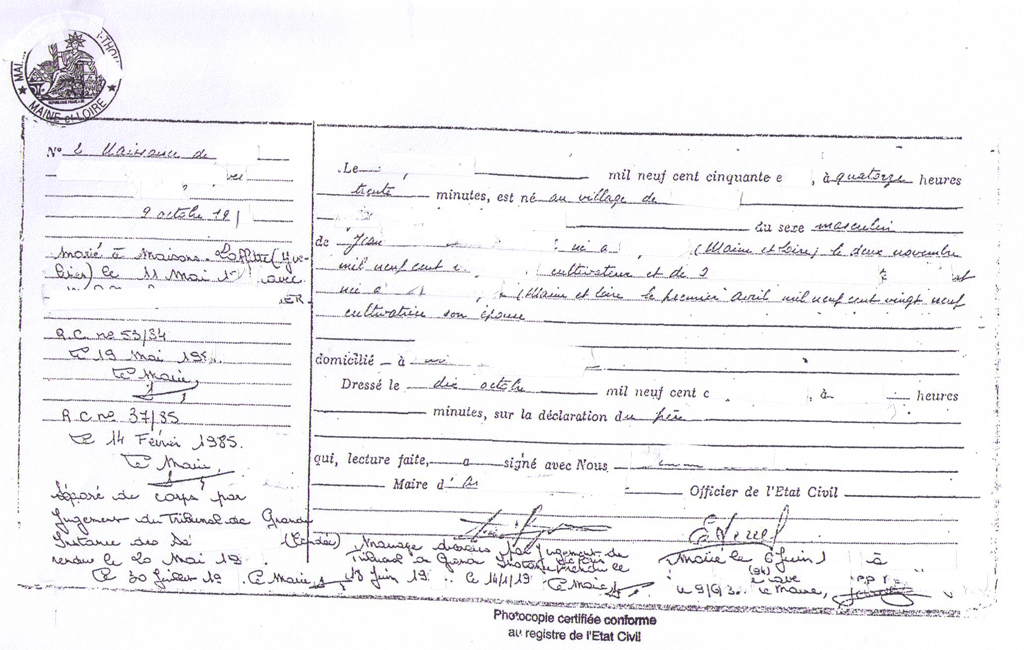
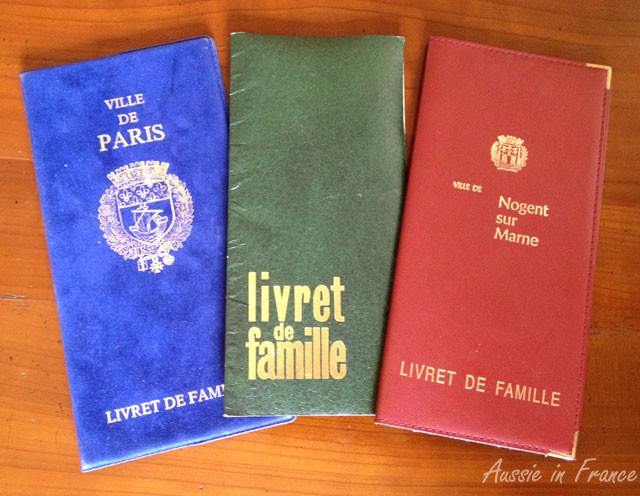
French birth certificates are “annotés” which means that any change in civil status is recorded on the birth certificate itself – marriage, civil union, separation, divorce, remarriage, death … It’s like a personal history rather than a record of a single event. This is also the purpose of the livret de famille*.

French annotated birth certificate

As a result, the French authorities always ask for a recent certificate, which is defined as less than 3 months old in the case of French certificates. Birth certificates are obtained from the town hall of the place of birth and are free of charge. You simply send a photocopy of your identity card and a stamped addressed envelope with a cover letter saying who you are and what you want and they usually arrive in a few days. You can also go to the town hall in person or order them online in larger towns. Since February 15th 2019, birth certificates can also be obtained in multilingual versions (i.e. all the languages of the European Union).

French birth certificates are annotated

In most countries other than France, birth certificates are not annotated. As a result, there is no reason to submit a certificate of less than 3 months, nor a translation of less than 3 months even if the time frame is sometimes extended to 6 months. Unfortunately, a lot of authorities are not aware of this.

I have personally used the same Australian birth certificate for countless cartes de séjour, two marriages, one divorce and a successful application for French citizenship. Each time, I explained that “les actes de naissance en Australie ne sont pas annotés.”

On the French official website service-public.fr, it says:

Un acte de naissance, de mariage ou de décès demeure valable tant que les éléments qui y figurent n’ont pas été modifiés.  https://www.service-public.fr/particuliers/vosdroits/F10449.

If the certificate is issued by a foreign authority, it must be a maximum o f 6 months old for a marriage or PACS. However, there is no time limit if the country concerned does not update its certificates which is the case of Australia i.e. a birth, marriage or death certificate remains valid as long as the information given in the certificate has not been modified.

So that, theoretically, unless your name has been officially changed, all you have to do is quote the above to an authority that asks for a certificate less than 3 months old. Good luck!

*livret de famille: this is a little booklet you are given when you marry. It is added to each time you have a child. It also records divorces and deaths.

Concubinage, PACS and Marriage in France

A few statistics to start with. The population in France at the end of 2025 was 69 million. In 2025, 251 000 marriages were celebrated (7 000 same sex) and 197 000 civil solidarity pacts (PACS) were signed (10 400 same sex). The PACS was created 25 years ago, mainly to protect the rights of same sex couples.

Co-habitation or concubinage

Cohabitation (or concubinage) is a free union, characterised by a stable life together, between two people who live as a couple. Taxation is separate and no procedure is required to break up the relationship. On death, the surviving cohabitant is a third party who can only inherit if a will has been made, with an inheritance tax of 60%. Even with a will, the normal French rules of inheritance apply, with ascendants and descendants receiving the bulk of the inheritance.

PACS or civil solidarity pact

The civil solidarity pact (PACS) is a contract in which the partners owe each other mutual and material assistance. It is registered  at the Town Hall or with a notaire. They can choose between separation of property (the default system) and joint ownership. They submit their tax declaration together. The PACS can be terminated by a simple declaration. On death, the surviving partner may become an heir if a will has been made, with exemption from inheritance tax. Once again, even with a will, the normal French rules of inheritance apply, with ascendants and descendants receiving the bulk of the inheritance.

Marriage

Finally, marriage is a solemn union with duties and rights. It has four regimes. It can only be dissolved by divorce either through a notaire or a court if the partners do not agree on the terms of divorce. In the event of death, the surviving spouse is an heir, benefiting from exemption from inheritance tax, the lifetime right to live in the house occupied by the couple and the survivor’s pension.

Who can be PACSed?

Each partner must be of age. If one of the partners is a foreigner, he or she must have reached the age of majority in his or her country.

The partners must not be married or in another civil union.

They must not have any direct family ties to each other.

How do you go about getting PACSed?

The two people must register a joint declaration of civil partnership either with the civil registrar (at the town hall) of the town in which they live (free of charge) or with a notaire (about 250 euros). If you have your will made at the same time (VERY IMPORTANT if you have any property), the typical cost is 400 euros.

The future partners must appear in person and together.

Note: if one of the partners is unable to attend for a very serious reason, the notaire may come to the couple’s home or hospital to register the PACS.

For further information, click on https://www.service-public.fr/particuliers/vosdroits/F1618

The document you need to fill in can be found on https://www.service-public.fr/particuliers/vosdroits/R51271

You will need of full extract of your birth certificate and its translation by a certified translator.

For information on getting married in France

https://www.service-public.fr/particuliers/vosdroits/F930

If you do not speak French, you will need to have a certified translator present or other approved person during the ceremony at the Town Hall which is the only place you can be married in France. You must have some connection to the Town Hall in question (at least one of the future spouses must be domiciled there).

If you wish to have a religious wedding, it will be in addition to the town hall wedding.

Some town halls require that you have an interpreter present when you submit your pre-marriage documents.

The Secret of Coffee in France

Why can’t I get a proper cup of coffee in France? This is a question I am often asked by disappointed Australians and Americans who are used to a very wide variety of coffee beverages and are surprised to see that France, with its café culture, does not seem to have the coffee they are looking for.

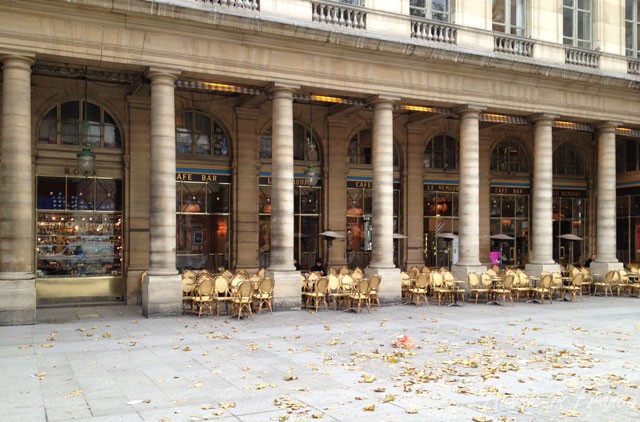
Autumn leaves in front of Café Nemours on Place Colette, one of the most iconic cafés in Paris

Well, the reason is that it’s a café culture, but not a coffee culture. The French don’t walk down the street sipping from a cup. They either drink their coffee standing at the bar or sit down at a table.

Perhaps a little history of Australian coffee might help. To quote Aussie expat Luke Barclay, from Café de la Baie near the Mont Saint Michel :  “France doesn’t have a highly developed coffee culture like Australia does. Historically coffee is relatively recent in Australia – we are essentially English in culture up until a point and thus tea was the thing. But with post war immigration came coffee styles from around the world and these blends led to the highly specific style that is found in Australia and New Zealand – quite different to that found in North America and yet composed of pieces from European (and Eurasian) coffee. That said there is a complacency with many businesses and their coffee. I know from my Café de la Baie that the majority of French ask simply for a “café” as if there is only one style available and this is despite café au lait existing here as much as espresso. Thus few varieties are proposed by cafés. Further, the advent of automatic machines in France has reduced the quality. Those that make coffee know less and less about the techniques, quality is lost, machines aren’t cared for (or kept clean!). Temperatures, timing, ratio, grind qualities: all sorts of variables and most cafés just push a button and assume its a good brew.”

In France, in a normal café, you can have expresse (or expresso – note the “x”), café long, café au lait, café crème, café noisette and cappuccino (but not always – I remember a café in a small town in Brittany where we stayed several days where only one person could make it and she wasn’t always there). In more sophisticated cafés, especially in Paris, you might be able to get other types, but they are usually brasseries or cafés catering to tourists.

Baristas, as such, do not exist in France, as they are not considered necessary.

In Paris, a typical expresse is very “serré” which means that it has been tamped to death and is usually very bitter. Outside Paris, it is usually not as strong and therefore not as bitter. It is generally served in a small cup or tasse but not a ½ tasse as it is in Italy. It is considered a must after a meal but is also popular at other times during the day as a pick-me-up.

When I first came to France in 1975, all homes had a drip coffee machine and a coffee grinder but nowadays most people have an espresso machine of some sort and buy pods.

A café long is sometimes called an américain or Americano and served in a bigger cup. It is a weaker version of the expresse and made with a double dose of water.

A café noisette is an expresse to which a teaspoon of foamed milk is added. However, in some bars, they just add a drop of cold milk.

A café crème is an Americano to which a spoon of whipped cream has been added. It is often referred to as a grand crème.

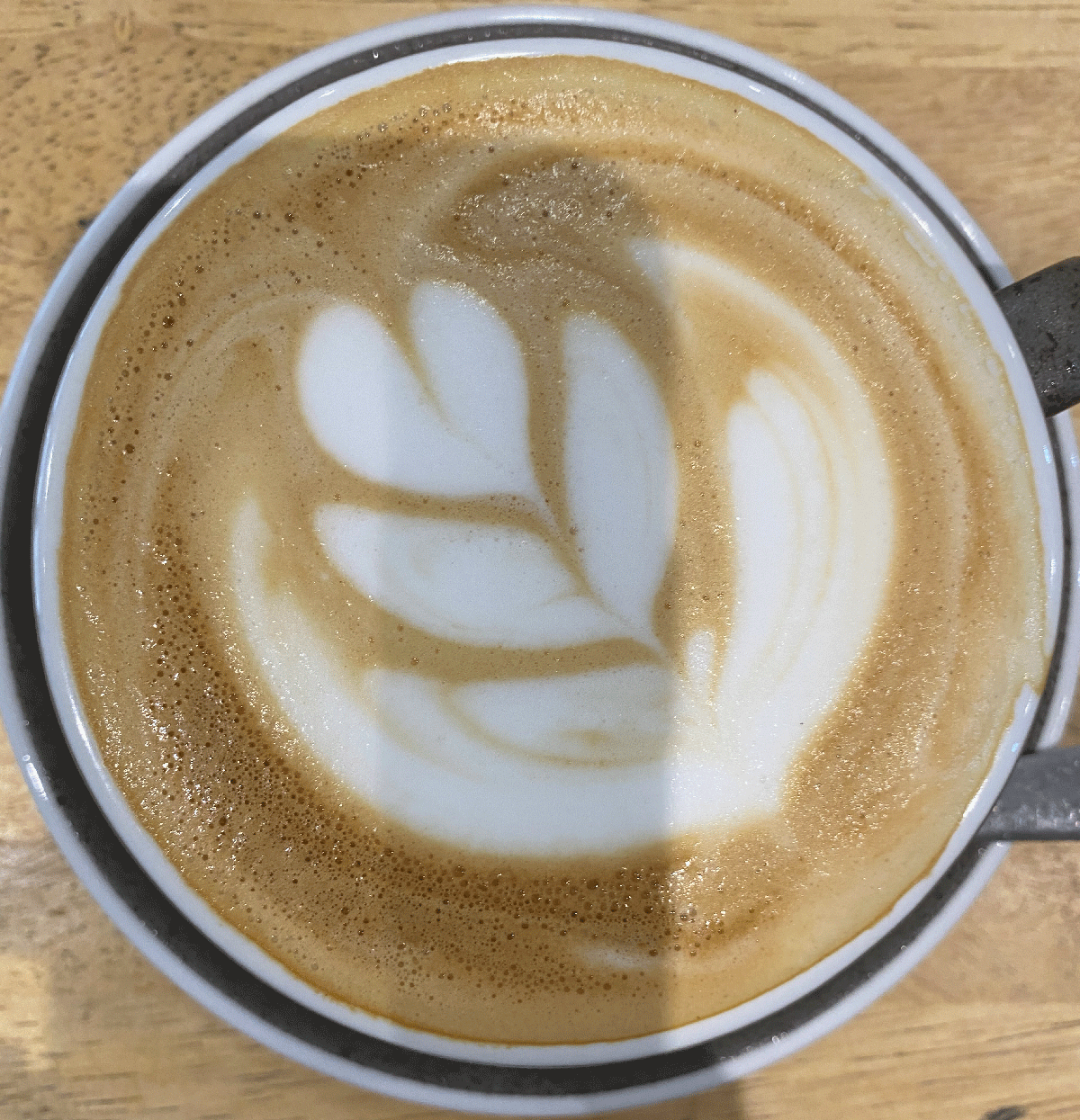
A real cappuccino at Kat’s Coffee in Tours

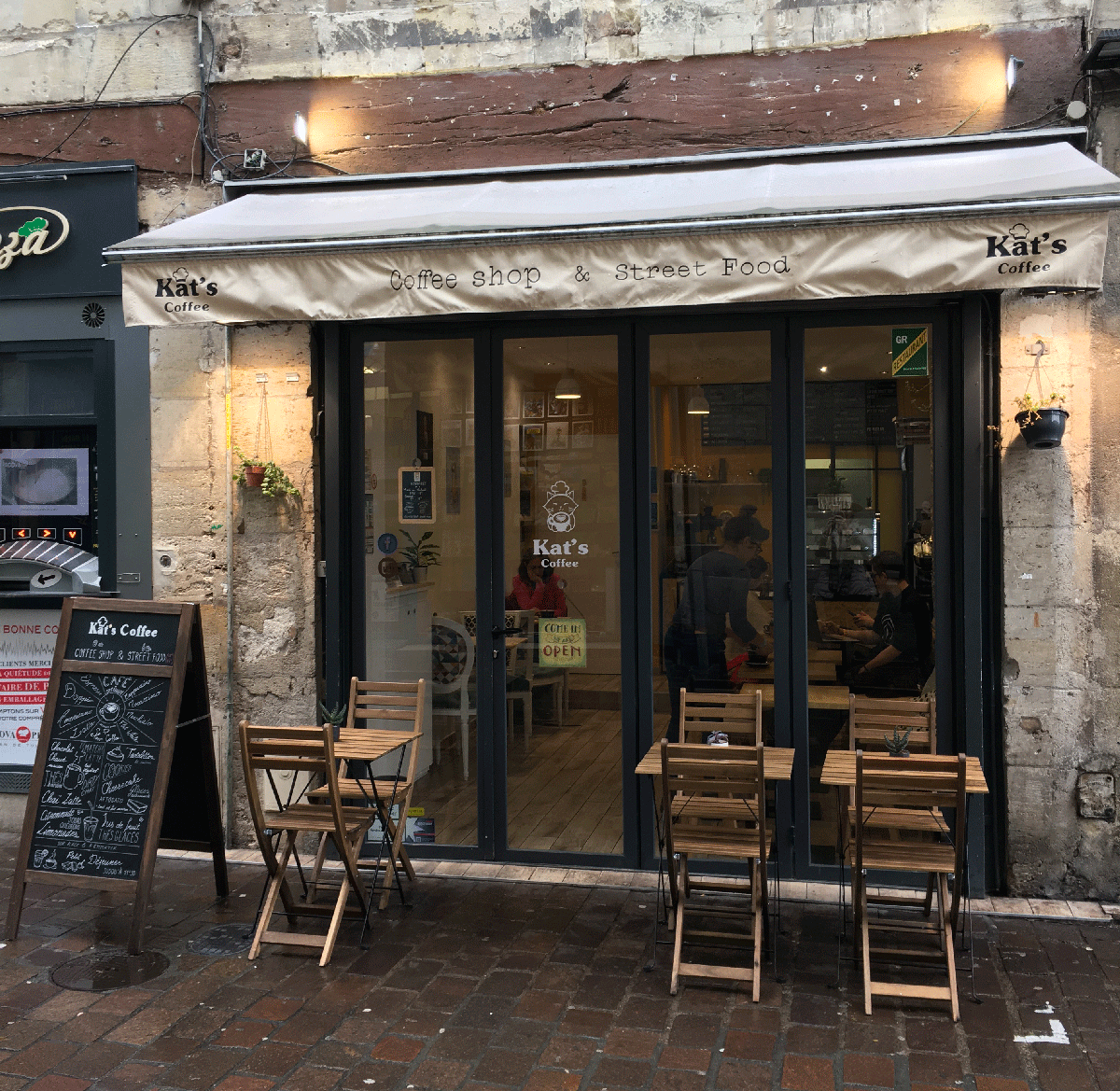
We all know what a cappuccino is – until we get to France! Here it is considered to be an expresso topped with milk froth and sprinkled with cocoa. Now that automatic espresso machines are widespread, that version has definitely become the norm. If you want a creamy foamed milk cappuccino à l’italienne, you first have to check they have a machine with a wand and even then, as you can see in the photo below, there can be surprises. I rarely order cappuccino because I am invariably disappointed, except for a café in the city of Tours called “Kat’s Coffee” which has the real thing. I haven’t found a real cappuccino in Blois yet. If you don’t want it automatically sprinkled with cocoa you have to say so.

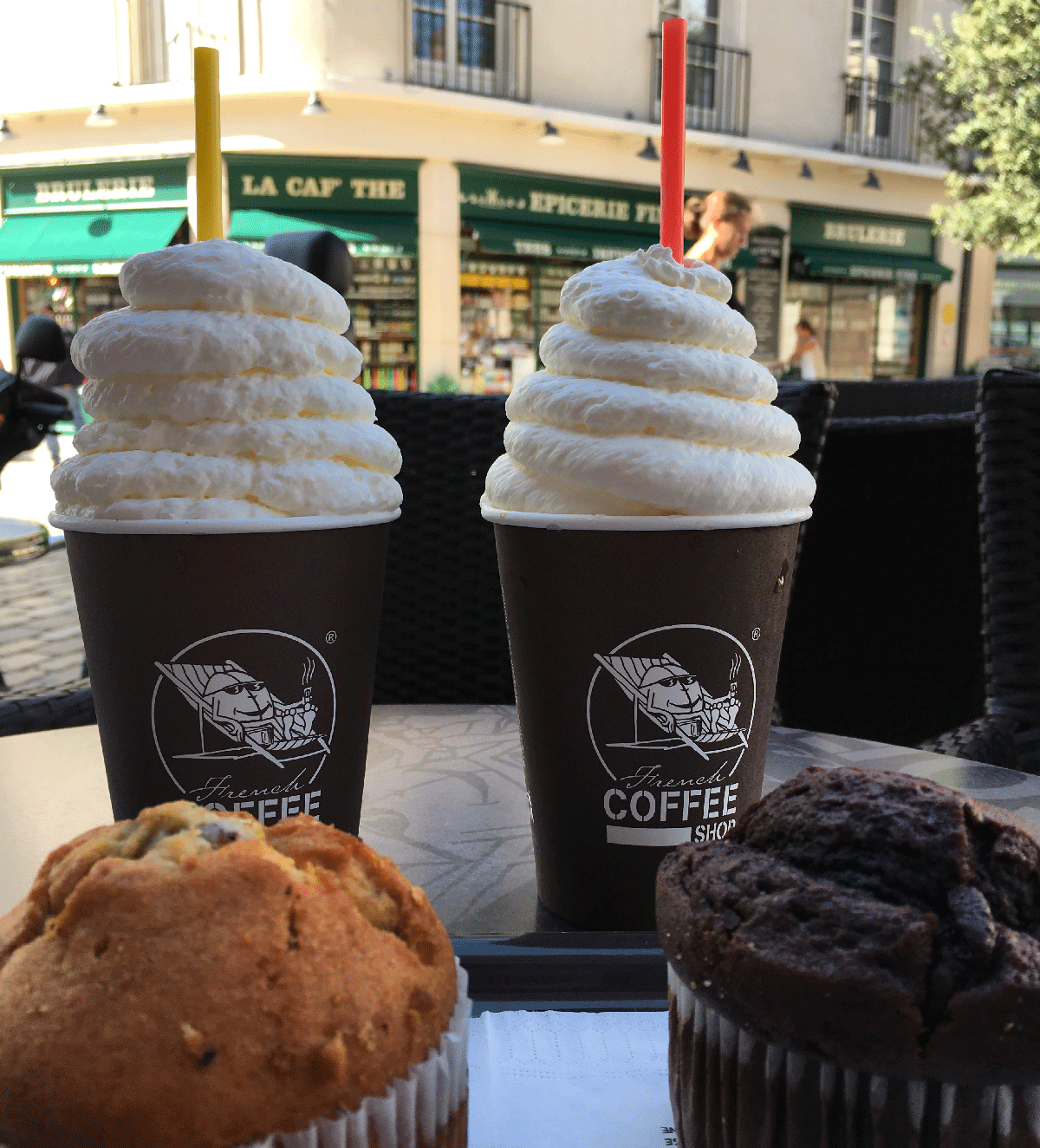
A cappuccino at The French Café in Blois

In Normandy in particular where they put cream in everything they can, a cappuccino is made with whipped cream and not foamed milk.

A café au lait is coffee to which warm milk has been added. It is the traditional French breakfast drink. After childhood, French people rarely drink milk without something in it, such as chocolate or coffee. A café au lait is also a way of introducing children to black coffee. As time goes on, you add less milk.

You can usually have most of these in a decaffeinated version, called déca. If you just ask for a déca it will be the expresse version. Otherwise ask for café au lait déca, grand crème déca, etc.

The word “café” by itself in French always means black coffee. You have to qualify it if you want something else. You always add your own sugar which is often in lump form (even in people’s homes) or in a sachet. You rarely see coffee crystals but you sometimes find brown sugar. Sugar substitutes are becoming more readily available.

Kat’s Coffee in Tours

All these drinks can be ordered simply by saying their names and adding “s’il vous plait” e.g. un expresso s’il vous plait”, “un grand crème s’il vous plait”, etc. If you want to check you are getting (almost) real cappuccino, you can ask “est-ce que vous faites vous-même la mousse de lait?” And if you don’t want cocoa on top “je ne veux pas de cacao dessus ».

The French do, however, appreciate different types of coffee beans, and specialists such as Verlet near the Palais Royal, serve a huge variety of beans. The owners travel the world to select suppliers and roast their own coffee. Closer to home, Jean-François, on Blois market, has a large selection of home-roasted coffee beans where we always buy our coffee. Each week, he has a blend-of-the-day to try on the spot. There is often a coffee menu in gastronomical restaurants. These select coffees are usually served black with no sugar so you get the real taste.

Another notable difference between French and Australian coffee is that robusta coffee (produced for the former French colonies) is mainly used in France rather than the less bitter, more flavoursome arabica variety.

Milk can also make a difference. In France, milk is usually long-life (UHT) and I’ve never seen any other kind in a French café. I don’t know whether this is the case in Italy, home of the cappuccino, but I suspect it is.

A word of advice about iced coffee. This is not something that people drink in France.

Coffee at the market in Blois (during Covid, so distancing)

And I can’t end this post without mentioning the wonderful Café (or Thé) Gourmand available in most French brasseries and restaurants. This is a coffee served at the end of a meal with a variety of four or five mini-desserts that change according to the ingredients the chef has at hand. They are a wonderful end to a meal if you can’t decide which dessert to choose! I have written a separate post about them here.

If you have found any good coffee shops or cafés in France that you’d like to recommend, please tell me and I’ll add them to my list. Many of those mentioned do their own roasting and sell beans.

Amboise: Eight O’Clock, 38 Place Michel Debré

Arles: Café Bazar, 8 place Antonelle

Bordeaux:

Sip Coffee (Aussie-type), 69 bis rue des Trois-Conils

Café Piha (Kiwi-type), 69 rue des Ayres

Alchimiste: 12, rue de la Vieille Tour + 87 Quai Queyries (Darwin)

Contrast: 16 cours du Chapeau-Rouge

Caen: Keys & Co  (Kiwi-owned), 45 avenue 6 juin in Caen

Grenoble:

Brûlerie des Alpes, 56 cours Jean Jaurès

Tower Coffee, 6 place du Docteur Léon Martin

Café Myrö, 12 rue Jean Jacques Rousseau

Kai Iwi (Kiwi-owner), 5 rue des Clercs

Marseille:

7VB Café, 9 rue Caissière (2nd)

Café Piata, 14 rue Breteuil (1st)

Café Coogee (Aussie-owned), 100 Boulevard Baille (5th)

Mont Saint Michel: Café de la Baie, Saint Léonard, Vains

Paris:

Hexagone (Melbourne-style), 121 rue Château (14th)

Coutume, 47 rue Babylone (7th)

Café Obrkof, 41 bd Voltaire (11th)

Café Méricourt, 22 rue Folie Méricourt (11th)

Hollybelly Café (Melbourne-inspired), 5 rue Lucien Sampaix (10th)

KB Cafeshop, 53 avenue Trudaine (9th)

Café Yves Saint-Laurent, Rive Droite, rue du 29 juillet (1st)

Hardware Society Café (Melbourne owners): 10 rue Lamarck (Montmartre just next to Sacré Coeur)

The Good New Coffee Shop (Aussie-owned): 27 bis Rue Mademoiselle (15th)

O’Coffee (Aussie-owned): 23 Rue de Lourmel (15th)

Patrick’s Le Ballon Vert (pub with good coffee): 33 rue de Montreuil (11th)

Café Kitsune, 51 Galerie de Montpensier, Palais Royal (1st)

Toulouse: Café Cerise, 4 quai de la Daurade

Tours:   Kat’s Coffee, 63 rue du Commerce

Versailles: The Stray Bean, 6 rue Royale


Exchanging an Australian driver licence for a French licence

Updated January 2026
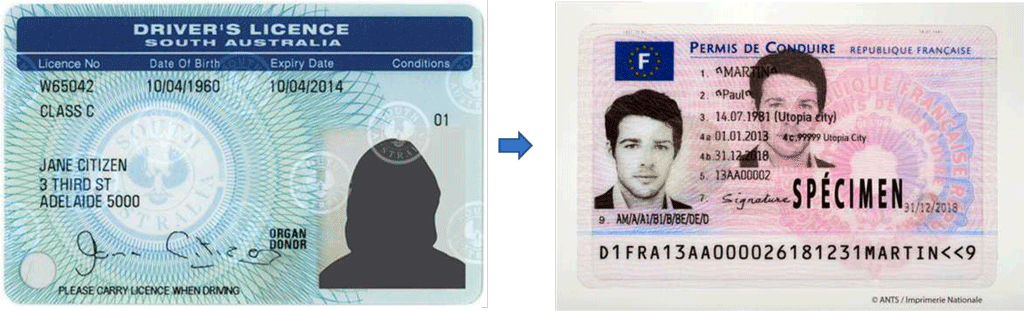
A driver’s licence issued by a country outside France is only recognised for one year once the person has acquired “normal residence” in France, normal residence being defined as the place in which you live for at least six months (185 days) a year due to professional or personal attachments. 

If you are not an EU citizen you need to make your application less than one year after the date on which your resident permit was validated.

If you are a foreign student in France, however, you can drive with your non-European licence during your studies.

If you are a dual national, see below.

If, because of your nationality, you have no way of proving the start of your residency in France, please see below.

Can I use my Australian licence for a short stay?

Yes, if you stay for less than 6 months, provided that:

1/ your licence is valid throughout your stay

2/ you have an international licence or an official translation. If it is translated in France, a certified translator (traducteur assermenté) must be used. If it is translated in another country, it must have an apostille. 

Cost of exchanging a licence

The exchange of a foreign driving licence for a French licence is free of charge.

For licences from countries other than Australia

Not all countries have a reciprocal agreement with France. In the case of the US, for example, only 18 states have an agreement. You can check on the following simulator (scroll down until you reach your country): https://www.service-public.gouv.fr/simulateur/calcul/PermisEtrangerPermisFrancais

Where to apply?

All applications are on-line at https://www.service-public.gouv.fr/particuliers/vosdroits/F1460

See instructions below

Who qualifies?

To qualify, your licence must be valid and issued by the country in which you had normal residence at the time.

You cannot apply to have your licence exchanged if it is currently suspended, withdrawn or cancelled in the country of issue or in France.

If you have an existing driver’s licence that is less than three years old, then your newly issued French licence will also be provisional until a three-year period has elapsed.

Anyone with a driving licence issued by a State outside the European Union and the European Economic Area, must apply to exchange their licence for a French licence within a period of one year following the acquisition of normal residency in France.

Dual nationals

For anyone with the nationality of a member country of the European Union or another country which belongs to the European Economic Area, Switzerland or Monaco, including those who also have the nationality of the State that issued the licence, the date of acquisition of normal residency is defined as being the 186th day following the date of their arrival in France.

This means that if you are European with a driver’s licence issued by a State outside the EU and EEA, you must apply to exchange your licence for a French licence between the end of the 6th month of your stay in France and before the end of the 18th month.

Australian licence issued to non-Australians

If you do not have the nationality of the country in which your licence was issued, you must also prove that you were a normal resident in that country at the time of issue. For example, you only have a Greek passport but you got your licence in Australia. You must prove that you were an Australian resident when the licence was issued. The easiest proof is the declaration of arrival and departure at the consulate, but a tax declaration, pay slip, work certificate, rental agreement, high school diploma or other document proving residence can be used too. 

Anyone who has both French and Australian nationality should apply to exchange their licence as soon as possible after their arrival as the process is considered to be complex.

What about a motorcycle licence?

It is not possible to obtain an open motorbike licence (permis moto A) through an exchange. A restricted motorbike licence (permis moto A2) only will be issued (a power output of less than 35 kW). To have it upgraded to an open licence, you are required to have 2 years of practice and about 7 hours of additional training with a driving school.

Unfortunately, there is no way of getting around this as it applies to all French motorbike licences.

When to apply?

The deadlines are as follows:

1st carte de séjour : Less than one year after your card was issued.

Visa de long séjour valant titre de séjour: Less than one year after the date of validation by OFII.

No residency visa required (EU national, for example) : between the end of the 6th month of your stay in France and before the end of the 18th month.

It’s best to start the process a couple of months ahead of time as some documents may require a little time to acquire.

What do I need?

  • An Australian driver’s licence
  • An Australian driving record or traffic history 

1) An Australian driver’s licence and

2) a driving record or traffic history (droits à conduire) 

In addition to your national driver’s licence (an international licence is not sufficient) you will need an Australian driving record or traffic history (licence details) less than 6 months old, which is normally only available to the driver themselves. It can be ordered on-line but in some States, it must be sent to an Australian address, usually the last one on record. If you haven’t already done so, you’ll need to officially change your address to an address in Australia where the record can be sent. The system is different for each state. If you have a choice between an on-line version and a printed version, you can choose the on-line version. All the relevant links are given at the end of this post. The traffic history (licence details) is called “Droits à conduire” in French and must prove that your licence is currently valid. It must also give the date on which your licence was first issued. A record of traffic infringements is not enough. If you have held more than one Australian licence, it’s the last one that is needed unless the current record does not indicate the date of first issue. Then you will need a record from the corresponding State.

3) A passport photo (see below)

4) Proof of address (see below)

5) Proof of residency (see below)

Translation into French

You will then need to have your national licence and driving record/history translated by a court-certified translator. The official list can be found on the Court de Cassation website  https://www.courdecassation.fr/experts. Click on Télécharger la liste nationale des experts en pdf, then go to TRADUCTION.

This is the official list of certified translators in France. All other lists are usually agencies in disguise. Translation agencies cannot be certified themselves, only the individual translators who carry out the work which is usually outsourced.

You can have the translation carried out by a translator living anywhere in France. There are no fixed prices for certified translations in France so they can vary considerably. Depending on the translator, you will need to take your licence and history to the translator in person or send them a good quality scan by email or a colour photocopy by post. A good quality scan means that it must be done with a scanner/photocopier and not a phone unless you have a special app.

Translators usually ask to be paid in advance by bank transfer, PayPal, etc. The stamped translation is sent back by pdf. A hard copy is not required (information provided by the ANTS website hotline). 

On-line application process

All applications are  on-line at https://www.service-public.gouv.fr/particuliers/vosdroits/F1460 

1/ Register on the website

2/ Follow the steps (you can use Google Translate to help you). Make sure that you are uploading your documents into the correct section.

3/ Photo:

You will need an approved passport photo with a digital code and signature so you do not have to send the actual photo. This can be obtained in most photo booths (see complete list on https://permisdeconduire.ants.gouv.fr/services/geolocaliser-les-photographes-habilites.) Look for a photobooth that says “Agrée ANTS SERVICES EN LIGNE”.

4/ Proof of address: 

The most common documents are your phone bill and electricity bill. The EDF app (and website) provide a “justificatif de domicile” in pdf form.

You can also ask your landlord to write a letter saying that you are being hosted by them (lettre d’hébergement). Don’t forget to include the date you arrived. The person should say you have been continuously living with them since a specific date. You will need a copy of their ID as well.

5/ Proof of residency:

You can use your “titre de séjour“, stamps in your passport, a letter from your landlord, lease receipts, a letter from the town hall in small towns, or anything else that will prove you have been living in France for the specified amount of time, including declaration at the Australian Embassy on arrival.

If you have no way of proving the beginning of your residency in France (perhaps you were living elsewhere in Europe before coming the France and don’t need a “titre de séjour” because you have a second passport), then you should register your arrival at the local town hall or the Australian embassy or declare that your home is your main residence with the local tax office. Then wait six months to make your application to exchange your licence.

6/ Driver’s licence

Two separate files: front and back. I suggest you name them smith_joe_permis_recto [front] and smith_joe_permis_verso [back]

7/ Translation of driver’slicence

One file with the licence and translation both stamped. Just the translation is not sufficient.

I suggest you name the file smith_joe_permis_traduction_certifiee

8/ Droits à conduire (driving history/record, etc. depending on State)

This document must prove that your licence is currently valid and state the date of first issue. It varies from State to State. NSW: driving history (you can order the on-line version) QLD: traffic history, VIC: driver history, SA: driving history, WA: Driver’s Licence Details and Traffic Infringements (2 documents), ACT: driver licence information, NT: driver licence history

I suggest you name it smith_joe_droits_conduire

9/ Translation of droits à conduire

One file with history/record and translation, both stamped. Just the translation is not sufficient. It needs to show that your licence is currently valid, the date of first issue and date of expiry. The ANTS website only allows three pages to be uploaded. In the case of the 3-page Victorian documents which means a 6-page document including the translation, it will be cut off after the translation. You can upload the full 6 pages in the Other Document section.

I suggest you name the file smith_joe_droits_conduire_traduction_certifiee

10/ Special cases – contact ANTS by telephone

You can phone ANTS (in French) on 3400 (not taxed) from within France or 09 70 83 07 07 from outside France from 7.45 am to 7 pm on weekdays and from 8 am to 5 pm on Saturdays.

What happens next?

If any documents are missing, it will be indicated on the ANTS website and you will be requested to upload additional ones. Check the website regularly. VERY IMPORTANT: if you receive a request for additional documents, you must upload a document to ALL the areas with a question mark, especially “Autres types de documents”. It’s a defect in the system. Just upload again (in both modules) one of the documents you have already uploaded. Otherwise, you will not be able to go to the next page.

You will be contacted by the authority concerned and issued a certificate of secure deposit (ADS) for your Australian driver licence, valid for 4 months.

You can use the ADS to drive while waiting for your French licence to issued, within the limit of the date of expiration of your Australian licence. If your licence is about to expire, apply for a new one first!

Once your application has been processed, you will be systematically asked to send in your original licence by registered mail together with your ADS. Your French licence will then be sent to your home address.

How long will it take?

The processing time will vary according to the complexity of your application and mainly depends on how long it takes to check your right to drive (driving history).

How can you track your application?

You can track your application on the ANTS website.

If you are asked to submit further documents and you can’t move on from “Enregistrer” after uploading your document, then upload a document into each section that has a question mark. It doesn’t matter what the document is – just upload documents you have already submitted. This is a technical hitch on the website.

If you move during the process

When requested to send in your Australian licence by registered mail, you can indicate your new address with a new proof of domicile and the ADS (i.e. interim licence) or, if you haven’t received the ADS, your birth name, given names, date of birth and nationality of the licence.

The French licence is then posted to your home address.

What sort of licence will I get?

The licence is not probationary unless the original licence is less than 3 years old.

The issue date indicated on the licence is the issue date of the French licence. The licence is valid for 15 years from the issue date (except when a medical check-up is needed, for drivers of HGVs for example).

What happens if I am refused?

If you are refused, and you cannot understand why, you can appeal to have the decision reviewed. I have noted that many people do not upload their documents under the correct headings which can lead to refusal.

If there is nothing to be done and you wish to obtain a French licence, you can go to the Bureau des Etrangers at your Préfecture and ask for an Attestation dispensing you from the obligatory driving lessons i.e. you will need to sit for the Code (theoretical examination) and a driving test only.

It is possible to sit for the Code with the help of an interpreter who must be a sworn translator or interpretor. However, having provided this service, I strongly recommend that you sit for the test in French by practising until you know all the vocabulary. During the test, the interpretor must stand with their back to the screen. The proctor reads the question and the interpretor translates it. They are allowed to repeat once. Road rules vocabulary varies enormously among English speakers so if you do choose to have an interpretor, make sure you spend at least an hour with them before the test so you can make sure you know all the vocabulary.

Will I get my Australian licence back?

No, you won’t. The French authorities will keep your licence and only give it back in return for the French one. (Arrêté du 12 janvier 2012, Article 13 modifié par l’arrêté du 19 décembre 2017, Article 9). It would seem that the NSW authorities will issue a duplicate of your licence if you declare it lost but that information is not official and not substantiated. An exchange means you surrender the original licence.

Good luck!

All information taken from the official government site https://www.service-public.fr/particuliers/vosdroits/F1460, verified in October 2025.

LINKS TO OBTAIN AN AUSTRALIAN DRIVING HISTORY/TRAFFIC RECORD

NSW https://www.service.nsw.gov.au/transaction/request-driving-record

QLD https://www.service.transport.qld.gov.au/applyformytraffichistory/public/Welcome.xhtml?dswid=-9714

VIC https://billing.vicroads.vic.gov.au/driverhistory(there are three pages; theoretically, only the first is required – Driver licence details – but sometimes the Complete demerit point extract is requested.)

SA https://www.sa.gov.au/topics/driving-and-transport/licences/drivers-licence/check-your-driving-history

WA (two different documents required) https://online.transport.wa.gov.au/ (Driver’s Licence Details) contact.centre@transport.wa.gov.au or www.transport.wa.gov.au/licensing.

Phone +61 8 9320 4656 if you are outside Australia.

https://www.wa.gov.au/service/transport/road-transport/apply-traffic-infringement-notice-record(Traffic Infringements)

TAS 

https://www.transport.tas.gov.au/licensing/requesting_information

ACT

https://www.accesscanberra.act.gov.au/driving-transport-and-parking/licences/licence-records
Why must birth certificates in France be less than 3 months old?

Most foreigners living in France are asked at some stage to deliver a full birth certificate that is less than 3 months old. Why three months?

If you’ve even seen a French birth certificate of someone who has been married, you will understand why.

French birth certificates are “annotés” which means that any change in civil status is recorded on the birth certificate itself – marriage, civil union, separation, divorce, remarriage, death … It’s like a personal history rather than a record of a single event. This is also the purpose of the livret de famille*.

As a result, the French authorities always ask for a recent certificate, which is defined as less than 3 months old. Birth certificates are obtained from the town hall of the place of birth and are free of charge. You simply send a photocopy of your identity card and a stamped addressed envelope with a cover letter saying who you are and what you want and they usually arrive in a few days. You can also go to the town hall in person. Since February 15th 2019, birth certificates can also be obtained in multilingual versions (i.e. all the languages of the European Union).

In most countries other than France, birth certificates are not annotated. As a result, there is no reason to submit a certificate of less than 3 months, nor a translation of less than 3 months. Unfortunately, a lot of authorities are not aware of this. I am a sworn translator (Orléans Appeal Court) and have just translated a UK birth certificate for a British citizen who is getting married in a neighbouring town in the Loire Valley because the local town hall simply knows nothing about the regulations and my client doesn’t want to mess around.

I have personally used the same Australian birth certificate for countless cartes de séjour, two marriages, one divorce and a successful application for French citizenship. Each time, I explained that “les actes de naissance en Australie ne sont pas annotés.”

On the French official website service-public.fr, it says:

“Un acte de naissance, de mariage ou de décès demeure valable tant que les éléments qui y figurent n’ont pas été modifiés.”  https://www.service-public.fr/particuliers/vosdroits/F10449. i.e. a birth, marriage or death certificate remains valid as long as the information given in the certificate has not been modified.

This means that, unless your name has changed (for a reason other than marriage) or there was an error in your initial certificate, you can use any full birth certificate issued since you were born. If questioned (which I very much doubt), all you have to do is quote the above sentence if an authority insists on a certificate less than 3 months old. Good luck!

*livret de famille: this is a little booklet you are given when you marry. It is added to each time you have a child. It also records divorces and deaths.

French-Style Primaries

The first time I voted in the French presidential elections in 2007, there were no primaries. In 2012, the main parties held their own primaries but it was an internal vote and you had to be a party member.

ballot_office

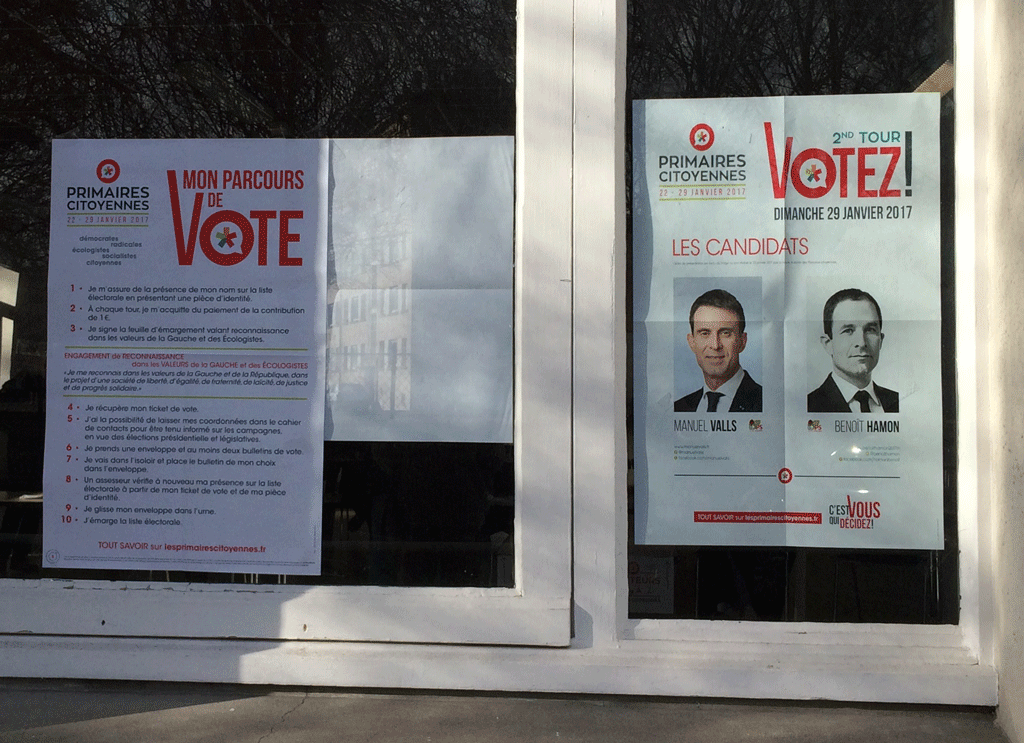
This year, however, someone has thought up a new system. Anyone on the electoral role can participate in the primaires citoyennes as they call them (citizens’ primaries). The centre and right wing parties held theirs in November and the left wing and environmentalists in January.

There is no obligation to participate in the primaires on the part of the presidential candidates (Far Left Wing candidate Marine Le Pen abstained, for one) but those who do participate must agree to respect the outcome. Any political party or group can ask to be part of the primaires and the parties set their own rules about deciding who will represent them.

Voters in the right and centre primaires had to sign the following on their honour: “Je partage les valeurs républicaines de la droite et du centre et je m’engage pour l’alternance afin de réussir le redressement de la France.” (roughly, “I share the republican values of the right and centre and I am committed to the principle of alternation [of political parties in government] for France’s successful recovery”.

To auto-finance the ballot each person contributes 2 euro each time they vote. As in the presidential elections, there are two rounds. A total of 4.27 million people voted in the first round in November. The winner was François Fillon from the Republican Party with 44.1%, followed by Alain Juppé, 28.6% and former president Nicolas Sarkozy, 20.7%. The other 4 candidates obtained less than 7% of the ballots. During the second round, Fillon scored 72.89% while Juppé didn’t do much better than the first time with 27.11%. All but one of the France’s 95 départements (administrative divisions) voted for Fillon.

The left wing and the environmentalists have just held their primaires citoyennes. Once again, the far left wing did not participate. The contribution this time was 1 euro per person per vote. The sentence to be signed was “Je me reconnais dans les valeurs de la Gauche et de la République, dans le projet dune société de liberté, d’égalité, de fraternité, de laïcité, de justice et de progrès solidaire”. (“I agree with the values of the Left Wing and the Republic, in their vision of a society of freedom, equality, fraternity, laicity, justice and progress based on solidarity.”)

A total of 1.65 million people voted in the first round. Benoît Hamon came out on top with 36.03%, followed by Manual Valls, with 31.48% and Arnaud Montebour with 17.52 percent.  All three are members of the Socialist Party. The other four candidates totalled 13.66%. During the second round, Hamon headed the list once again wiht 58.37% and Valls 41.63%. Once again, all but two départements (not the same ones!) voted for Hamon.

The total number of voters on the electoral roll in France is 44.8 million. There would seem to be another 3 million who have not registered.

In both lots of primaires, it would seem that about 15% of the voters were from the other side!

Since then, right wing candidate François Fillon has somewhat tarnished his image. His wife, Penelope, was paid €830,000 to be a phantom parliamentary assistant, his children received another €84,000 as his equally phantomesquechimerical assistants while they were still students; Penelope is also said to have been paid €100,000 as a literary consultant although there is no evidence of any output. Fillon himself may have embezzled funds when he was a senator and he omitted to declare €200,000 in earnings as a senior advisor for a company called Ricol Lasteyrie. He seems to have little choice but to dip out although he has asked for two weeks to make up his mind.

Juppé, the next in line, declared yesterday that he would not be “plan B” after François Fillon. He has a somewhat shady background as well.

Meanwhile, the Socialists are seriously divided about Benoît Hamon’s politics and many are debating about whether to follow Macron, President Holland’s extremely young finance minister from 2014 to 2016 who founded a breakaway party, “En marche” in April 2016 and chose not to participate in the primaires citoyennes.

Where all this will lead to, it’s hard to say. Marine Le Pen is certainly rubbing her hands with glee. The presidential elections are scheduled for 23rd April and 7th May. Vive la France!

AllAboutFranceBadge_bisThis post is a contribution to Lou Messugo’s All About France link-up. 

For other posts about France, click here.

Friday’s French – galette, galet, shingles, gâteau, cake, pancakes, crepes, biscuits

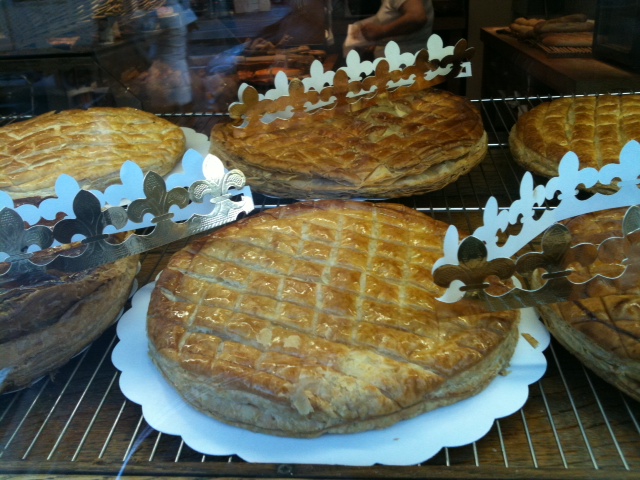
It’s galette des rois time again.  This is the cake used to celebrate the Epiphany in France, the 12th day of Christmas, January 6th, the day on which the three kings reached Bethlehem. It has become an essential part of New Year throughout the country and is practised in different forms that you can read about here and here.

galettes_with_crowns

But I want to talk about the word itself. A galette is a flat cake, based on the word galet or flat stone, the sort you get on beaches in Normandy when they don’t have any sand and which are called shingles in English. Galet is a diminutive of gal meaning rock in Gaul.

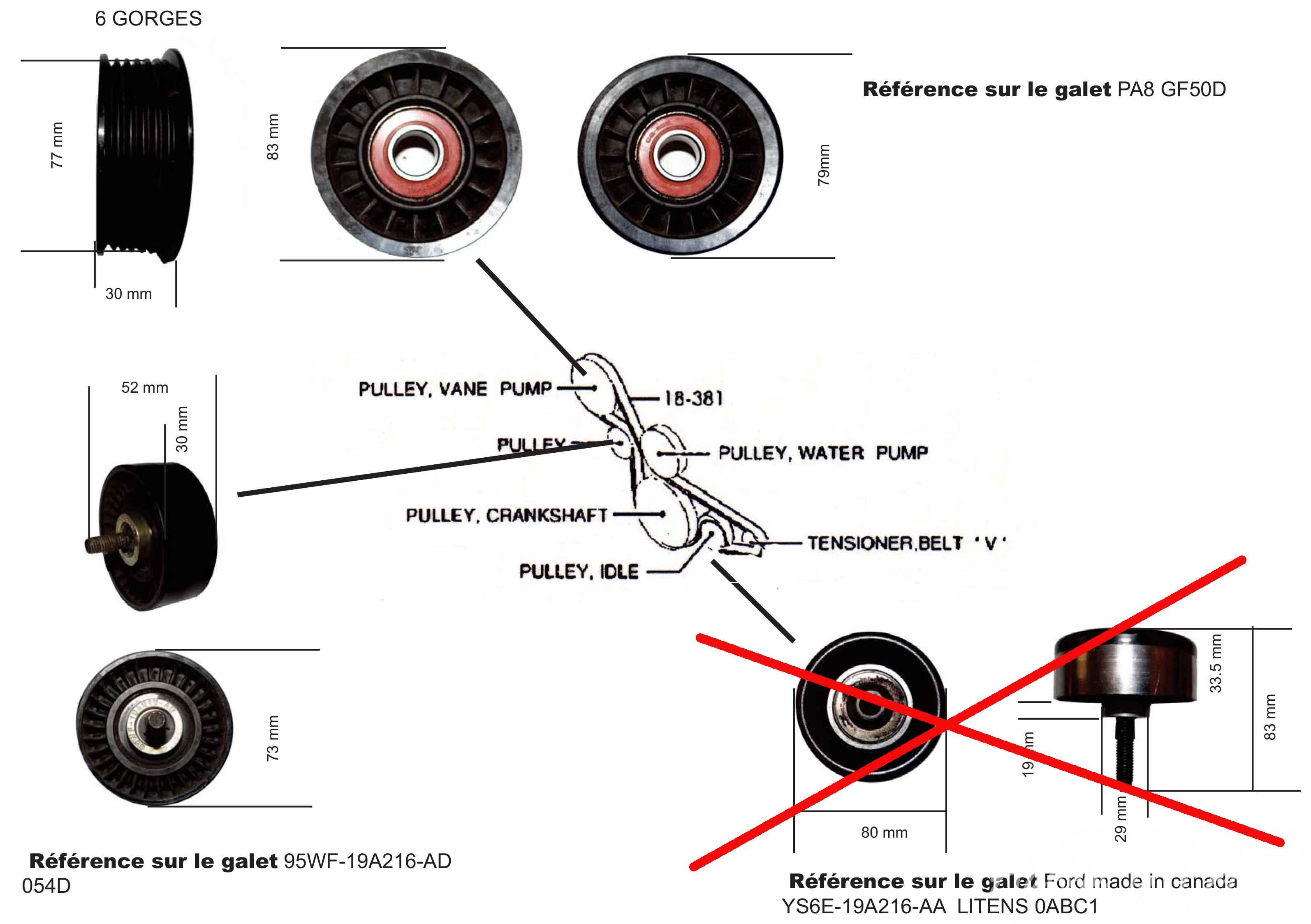
By analogy, a galet is also a small cylindrical or conical wheel used to guide or support a mobile mechanical part. Ah huh, I hear you say. We’d call it a roller or wheel in French. The photo will help you identify it just in case it might come in handy.

galet

A galette is also a buckwheat crêpe as opposed to one made of wheat flour. They are very popular in Brittany in particular and now used almost exclusively for savoury crêpes.

A ship’s biscuit is also a galette because of its shape, not to mention the tortilla which can be called a galette de maïs.

And talking about biscuits, that’s a word that doesn’t have quite the same meaning in French and in English. You can use it to mean our biscuit, which is also called a gâteau sec (literally dry cake). A biscuit salé (salty) is a cracker or cheese biscuit (which the French would never use with cheese, I might add – bread only is the rule!).

A biscuit pour chien is a dog biscuit but surprisingly a biscuit is also a sponge cake. If you want to be precise, you can say biscuit de Savoie. And those sponge fingers (or lady fingers as they say in the US) that you use to make tiramisu (my favourite dessert) are called biscuits à la cuiller because of the fact that you use a spoon to put the pâte à biscuit (cake mixture) onto the tray to cook them.

Cake exists in French but almost exclusively means a fruit cake, but not what we call fruit cake in Australia. A French cake is always cooked in a loaf tin, is quite dry and has a small amount of dried fruit scattered through it. If it is made with olives or something else savoury, it’s also called a cake, as in cake aux olives. The main ingredients are eggs, flour, butter and baking powder (plus sugar if it’s sweet).

Except for gâteaux secs as mentioned before or gâteaux apéritif which are appetizers, the word gâteau is used for all other sorts of cake and even for rice pudding (gâteau de riz).

If you are feeling confused, don’t worry! It takes many years to get it straight. I am still calling dog biscuits “gâteaux de chien” and immediately correcting myself. We bought some recently to try and stop the neighbour’s dogs barking. I’ve yet to test them but my brother swears it will work. He says training dogs is a piece of cake. (C’est du gâteau). Now the opposite of that – ce n’est pas du gâteau is apparently the equivalent of “it’s no picnic”.

AllAboutFranceBadge_bisI’m joining Lou Messugo’s AllAboutFrance link-up today. For other contributions, click here.

Friday’s French – Ecole Normale, normal, standard, norme, norm

The first time I heard the expression école normale was when I took up a post as an assistant English teacher in Nantes many moons ago. I soon discovered that it was a teacher training college. I then heard about the école normale supérieure which is one of the most prestigious and selective university and research institutions, in both the arts and sciences.

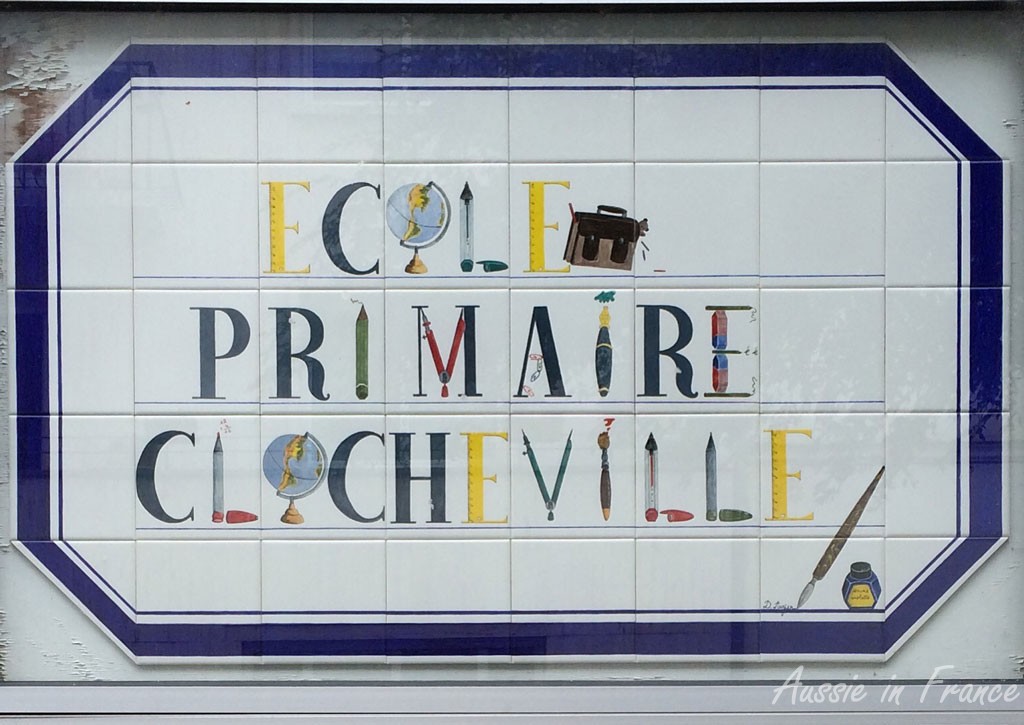
photo_213_clocheville_primary_school

The école normale supérieure is run and financed by the State with the aim of training researchers, university lecturers, teachers of grande école preparatory classes and secondary school teachers.

So I was somewhat astonished when reading Thomas Hardy’s Jude the Obscure to learn that Sue Brideshead had enrolled in a Normal School to become a teacher. It was the first time I had thought about the word “normal” used in this context.

Ecole normale was the term given to the institution set up in French in 1794 to provide teacher training to students selected by means of competitive examinations. Normal in this context refers to the fact that it was to serve as a model for other schools of the same type i.e. to establish teaching standards or norms. The English institution was modelled on the French école normale. The name “Normal School” was gradually replaced by “teachers college” or “teacher training college,” so called because almost all collegiate level education programs are sub-departments of larger colleges and universities.

In France, there are now 4 écoles normales supérieures (ENS) and admission is highly selective: 218 places à Lyon, 205 à Cachan, 191 à Paris Ulm et 50 à Rennes en 2014.

The ordinary école normale no longer exists. Both primary and secondary school teachers are now trained at an E.S.P.E. (Ecole supérieure du professorat et de l’éducation) which replaced a previous institution, the I.U.F.M. (Institut universitaire de formation des maîtres), in 2013. And, incidentally, a primary school teacher is now called a maître des écoles (literally school master) and not an instituteur or institutrice which is amusing when you consider that in English, the old school master has been replaced by teacher.

The word norm or norme in French comes from the Latin norma, meaning a set square in the concrete sense and a rule or standard in the figurative sense.

Norme is the basic word for standard in French:

normes de fabrication – manufacturing standards

normes de sécurité – safety standards

normes françaises (NF) – French standards

Hors norme(s) literally means something that isn’t standard, what we would call unconventional or unusual in English. C’est une voiture hors norme(s) – it’s no ordinary car.

The use of “norm” in English does not usually include the idea of an official standard but rather something that is usual or typical. Its use is more restrictive and much less common than the French norme.

Strikes were the norm – Les grèves étaient la norme.

The norms of good behaviour in the civil service – Les normes de bonne conduite dans le service public

Many teachers themselves believe that 70 hours a week is the norm. – Beaucoup d’enseignants pensent que 70 heures par semaine est la norme.

The French normal can often be rendered by the French “normal”, but not always.

De dimension normale – normal-sized, standard-sized

C’est tout à fait normal – It’s quite normal/usual.

Il n’est pas normal – he’s not normal/there is something wrong with him.

On the other hand, in the case of “ce n’est pas normal“, we would be more likely to say “there must be something wrong”.

Ce n’est pas normal qu’ils aient droit aux soins gratuits – It’s not right that they get free treatment/They shouldn’t be getting free treatment.

Revenir à la normale – to get back to normal

Ses notes sont au-dessus de la normale – His marks are above average.

Similarly, in the other direction, normal in English is not always normal in French.

She bought it for half the normal price – Elle l’a acheté à moitié prix.

Classes will be as normal – Les cours auront lieu comme d’habitude.

Do you have any other examples?

Friday’s French – Trêve des confiseurs

I heard a new expression on France Info this week – “l’entre deux fêtes” – which literally means “between two celebrations”, the first being Christmas and the second New Year. It’s the same construction as ‘l’entre-deux-guerres”, which is what the French call the interwar years.

We're spending the "trève des confiseurs" walking off the confectioners' ware at Chambord
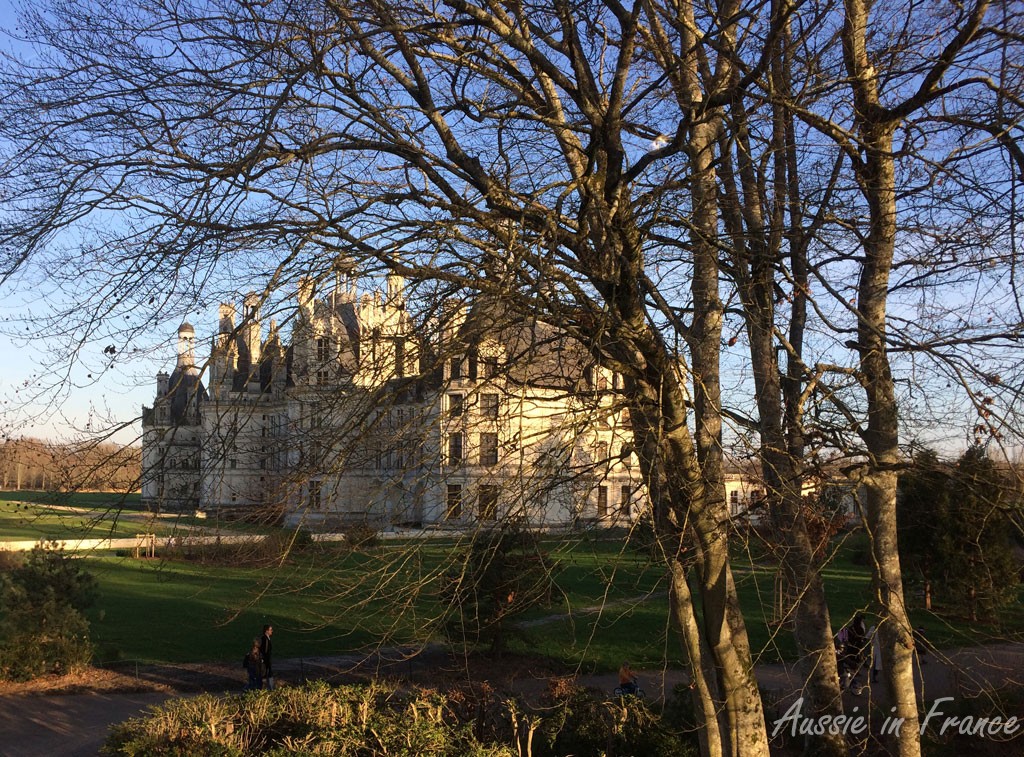
We’re spending the “trêve des confiseurs” walking off the confectioners’ ware at Chambord

When I mentioned it to Jean Michel, he said it wasn’t new but I checked it out on google and “l’entre deux fêtes” only has 4,000 hits whereas “l’entre-deux-guerres” has 576,000 so it can’t be that popular. Then he told me something much more interesting. The period between Christmas and New Year is also called “la trêve des confiseurs“. “the confectioner’s truce”. Now that’s intriguing!

The expression first appeared in France around 1875 during a period of lively discussion in the National Assembly (lower house of parliament) between the monarchists, Bonapartists and republicans about the future of the constitution of the Third Republic. In December 1874, all the groups in the National Assemblee agreed that the New Year was not a good time for this sort of debate. To promote peace and harmony, they decided to go their separate ways and take a holiday until the New Year.

The confectioners were delighted and business boomed! As a result, the satiric press coined the expression “trêve des confiseurs”.

Today, the expression is also used to describe the traditional period of slack on the stock exchange and on the football field at the end of the year.

There is another meaning as well – the period in teaching hospitals when medical students devote their time entirely to caring for the sick and are dispensed from university classes.

I don’t know any similar expressions in English to describe the period between Christmas and New Year. Do you?

And just in case you didn’t know, there is no Boxing Day in France!

AllAboutFranceBadge_bisI’m contributing this post to Lou Messugo’s All About France Link-Up. Click here to find out more about Christmas in France! 

Great Things about Christmas in France

Phoebe from Lou Messugo –  traveller, francophile, expat, mum and foodie now living in Roquefort les Pins near Nice where she runs a gîte after many years of travelling and living in Asia, Eastern Europe and Australia – has come up with the brilliant idea this year of asking other bloggers what they like about Christmas in France.

photo_350_santa_window

The result is a post called 24 Reasons to Love Christmas in France that I’m sure you’ll enjoy immensely. Here’s a little introduction.

Christmas in France, what’s it all about, is it any different to elsewhere and is there anything special to enjoy?  I’ve written about it previously describing how the build up is slow and calm even under normal circumstances, but this year we’ve had to contend with tragic terrorist attacks in Paris, the resulting state of emergency nationwide and potentially worrying regional election results as well, meaning it hasn’t been the most festive of times recently.  Add to this a sense amongst many expats that Christmas is “better” at “home” surrounded by familiar traditions, sights and sounds and rather than feel happy and excited many find themselves feeling low and missing home. Read more.