Category Archives: French language

Friday’s French – s’embrouiller

Well, when I left some homework at the end of last week’s post about “confusing”, I didn’t realise it was so difficult. My apologies.

The last hollyhocks of the season
The last hollyhocks of the season which have nothing to do with s’embrouiller ou confusion!

Two brave souls did, however, take up the challenge. Both found a good solution for the third sentence i.e.

3) Imminent and eminent are easily confused words.

Il est très facile de confondre les mots imminent et éminent.

On confond facilement le mot imminent avec éminent.

But the other two sentences caused a lot of confusion to say the least.

1) Are you still confused about how to use confuse in French?

2) I was confused when nothing happened.

Now, I asked a couple of Frenchies for help and the best we seem to have come up with are the following:

1) Avez-vous toujours du mal à savoir utiliser le verbe “to confuse” en français?

2) J’étais étonné qu’il ne se soit rien passé.

If nothing, it proves that “confusing” can rarely be translated literally.

Both my contributors attempted to use the verb s’embrouiller and I realised that my explications musn’t have been very clear.

The past participle “embrouillé” cannot apply to a person. You can have “une histoire embrouillée”, “des idées embrouillées”, “les paroles embrouillées”, but neither you nor anyone else can be “embrouillé”.

If you want to say you got confused about something or muddled up, you have to use the reflexive verb: je me suis embrouillée en voulant suivre ses explications – I got confused trying to follow his explanations. Il s’est embrouillé dans ses réponses. He got his answers muddled up. It’s all confused in my mind.

François Hollande s’est embrouillé sur la baisse de la TVA pendant de son discours: François Hollande got confused about the drop in VAT/GST during his speech.

Another slightly different meaning can be seen in the following sentence: Autour de vous, tout s’embrouille, les images deviennent floues ou semblent irréelles. All around you, there is confusion, the images became fuzzy or seemed unreal. Tout s’embrouille dans ma mémoire. It’s all mixed up in my memory.

Sometimes people confuse s’embrouiller et se brouiller which can mean to have an argument: je me suis brouillé hier avec ma copine: my girlfriend and I had a fight yesterday.

It can, however, be used to mean “confuse”: tout se brouilla dans sa tête:  everything became confused or muddled in his mind. And guess how you say “scrambled eggs” in French? Oeufs brouillés!

All very confusing, isn’t it?

Wednesday’s Blogger Round-up: Butte aux Cailles – Texting in French – Céléri Rémoulade

This week, Filly di Somma, writing for Guide2Paris, takes us off the beaten track to the Butte aux Cailles in Paris, while Katerina Forrester, in a post for My French Life gives us tips on text messaging in French. Meanwhile, Susan from Days on the Claise tells us about a little-known vegetable – celeriac – and how to prepare it. Enjoy!

Butte aux Cailles – A True Paris Ambiance

by Filly di Somma, a fanatical Paris fan, in one of her regular posts for Guide2Paris, which aims to be the complete source of information in English about the Ile-de-France region of France which includes the city of Paris.  Designed specifically for English speakers visiting Paris or the region of Ile-de-France, contemplating buying property in Paris or those already living in Paris.

020913171859--Butte aux Cailles - PTO - David LefrancDuring my last trip to Paris I had the opportunity to visit a lovely ‘quartier’ which I hadn’t previously discovered on my trips to the city. “The Butte aux Cailles” district is almost like a separate village in the centre of Paris in the 13th arrondissement. Whilst being driven there by a lovely Parisian, I discovered and adored the narrow cobblestone streets featuring original restaurants, cafes and boutiques full of people eating and drinking outside. I loved its art deco architecture and its traditional Paris atmosphere.
Read more

Unlocking French language: text a’grieve’iations

by Katerina Forrester, born in Australia but always longing to be French at heart, currently living the Arts student life in Melbourne, where she is studying to become a Linguist. writing for My French Life, a global community of French and francophiles connecting like-minded people in English & French

Texting_in_trafficLOL is the furthest I will go when writing with text abbreviations. Nothing more, nothing less. When writing texts in English, I write in full, and I write with proper syntactic features. I don’t want to be seen as an over-texting teenager! I want my friends to receive properly articulated sentences with substance. Nevertheless, this is not the case when I text to friends in French. Read more

Céleri Rémoulade

by Susan from Days on the Claise, an Australian living in the south of the Loire Valley, writing about restoring an old house and the area and its history and running Loire Valley Time Travel.

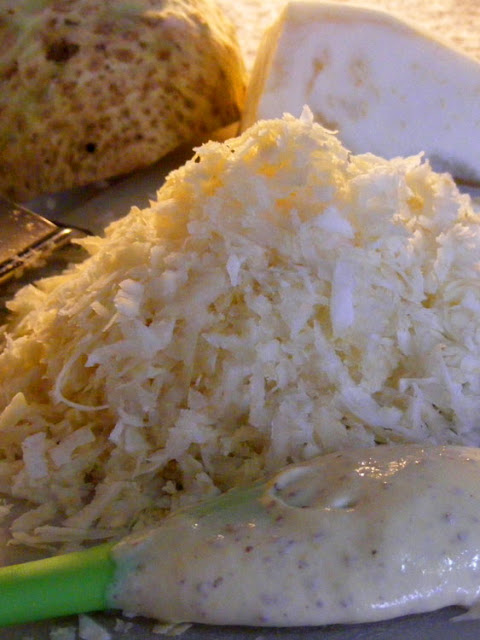
celeri_remouladeThe general appearance of celeriac doesn’t inspire much confidence in it being tasty, and even less so if you consider eating it raw. Nevertheless, the most popular dish using celeriac (céleri-rave in French) does indeed use raw, grated celeriac.

Don’t be fooled into thinking that this is diet food though. This is a dish to which cream is added in order to make it lighter (!!) and easier to digest (!!!) It is tremendously popular in France, but I don’t think many people bother to make it themselves. Most people buy it from their trusted local charcutière traiteur (delicatessen). If you do make it at home, it’s not just a matter of grating some celeriac and coating it with mayonnaise. There’s a trick to getting the deli style céleri rémoulade. Read more

Friday’s French: confondre is confusing!

Confusing is a word we use quite a bit in English to mean that something is unclear and difficult to understand. e.g. “The information he gave me is confusing.” If I confuse John and Paul, it means that I wrongly think that John is Paul and Paul is John. Now I hope I’m not confusing you too much!

Un champignon qu'il ne faut jamais confondre !
Un champignon qu’il ne faut jamais confondre ! The fly agaric – reputed poisonous and hallucinatory – but also said to be edible if cooked the right way.

Now, to say the same thing in French is a little bit complicated. The verb confondre does exist and can be used in the second example: Je confonds toujours John avec Paul. That’s easy. It can also be used without avec as in the caption above where it’s understood that you mustn’t confuse the fly agaric with any other mushrooms (not that you can – it’s very distinctive).

However, to say that “information is confusing” requires a slightly different approach. Les informations sont confuses is not quite the same meaning. [Note the plural in French and the singular in English]. In the first case, the information has not been presented correctly, while in the second, it may be the person’s lack of knowledge of the subject that prevents them from understanding. A bit confusing, huh?

Les informations ne sont pas claires is probably the most usual way of expressing the idea. You may already have noticed that French often uses a negative when a positive would be used in English.

So how are we going to translate “a bit confusing”? I would tend to say difficile à comprendre or  pas vraiment clair but you might have some other ideas.

Now if you say to someone, je suis confuse, it doesn’t mean you are confused at all, but that you are embarrassed about something you’ve said or done! It’s actually a veiled apology.

How about “You’re only confusing the issue”?  Vous compliquez tout! Vous ne faites qu’embrouiller les choses. In fact embrouiller which means obscurcir, compliquer une question, une affaire, y mettre la confusion often conveys the same meaning as the English verb confuse. Tu ne fais que m’embrouiller: you’re confusing me. Il s’embrouille: he gets muddled, he gets confused. We could say les informations sont embrouillées to mean that the information is not presented clearly.

Now it’s over to you. Let’s have some suggestions on how to translate the following sentences:

1) Are you still confused about how to use confuse in French?

2) I was confused when nothing happened.

3) Imminent and eminent are easily confused words.

Are there any other examples of confuse that you don’t know how to say in French?

If you have enjoyed reading this, don’t forget to subscribe to new posts using the subscription form on the top right – that way you’ll get them directly on your smart phone or in your mail box! And I love to hear your comments!

Friday’s French – un truc de ouf!

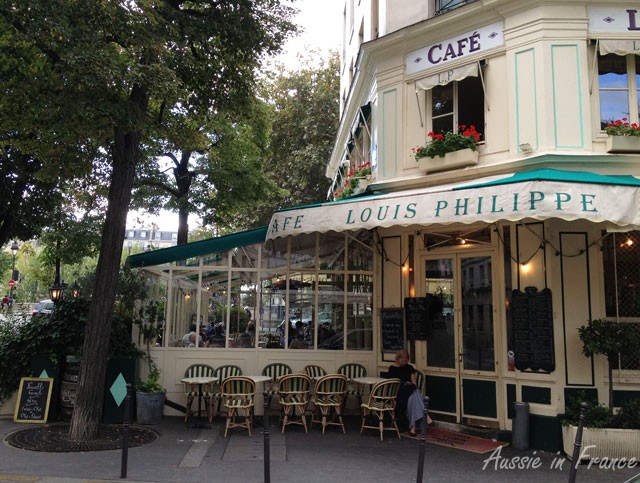
I’m walking along the street near the Louis Philippe Café behind a young man of about 30, talking loudly on his iPhone and madly gesticulating. “600 euros“, he says, “Un truc de ouf!” and I immediately think of my daughter in New York because it’s one of her expressions.

louis_philippe

Truc, truc muche, machin truc, have all been around for a while, but truc de ouf is more recent. So what, exactly, is a truc?

First, it’s a substitute word, like our thingumajig, thingummy, whatsis or even just thing or contraption. Machin is a less trendy synonym. Je trouve pas le truc = I can’t find the whatis. T’as vu le truc de la télé? Have you seen the remote control? Il portait un truc moche. He was wearing something really ugly.

Machin and its feminine, machine, are also used as name substitutes. Le père Machin = Mr what’s-his-name. Machine était là aussi = What’s-her-name was there too.

You can combine it with chouette too, as in machin chouette or go the whole way and say machin truc chouette. You may remember about chouette from my previous post on Spanish cows.

However, truc is also used more specifically, in contexts such as  les trucs du métier, meaning the tricks of the trade, or on le connaît, leur truc = we know what they’re up to.  Il n’a pas compris le truc means he hasn’t got it. Here, it’s no longer a substitute but an actual expression. Il y a un truc! there’s a trick to it! or something’s gone wrong (depending on the context).

Why trucmuche? Muche, it seems, is a (little used) suffix added to any word to make it more incomprehensible. I don’t know what its origin is though.

Truc de ouf is actually verlan, which is a particular kind of French backslang. You invert the syllables and then cut off anything you don’t like to make it sound like a word. Meuf = femme, keuf = flic (slang for police), keum = mec, beur = Arabe.

The word verlan itself comes from à l’envers meaning back-to-front. So truc de ouf = truc de fou = crazy thing.

I may use truc (not often, though, and only when it’s not a substitute, because I’m a maddening purist most of the time), but I would never use truc de ouf or I’d sound like mutton dressed up as lamb, for which I  have never found an equivalent in French, by the way, probably because it doesn’t seem to be a concept here. My grey hair makes me stand out in the crowd!

If you have enjoyed reading this, don’t forget to subscribe to new posts using the subscription form on the top right – that way you’ll get them directly on your smart phone or in your mail box! And I love to hear your comments!

Plant your Language Garden with Memrise – Wonderous mountain train – a day trip from Nice –

Since I have been writing quite a bit about Sofia in Bulgaria recently, I thought you might like a more French focus for this Wednesday’s Bloggers’ Round-up. Kathy Stanford from Femmes Francophiles reviews the phone app Memrise for learning and improving your French vocabulary; Phoebe from Lou Messugo takes us on a day trip by train from Nice to the Valley of Marvels; while Mary Kay from Out and About in Paris explains all about Dijon mustard. Enjoy!

Plant your Language Garden with Memrise

by Kathy Stanford from Femmes Francophiles, an Australian who has an ongoing passion for France and the French language currently on holiday in Europe

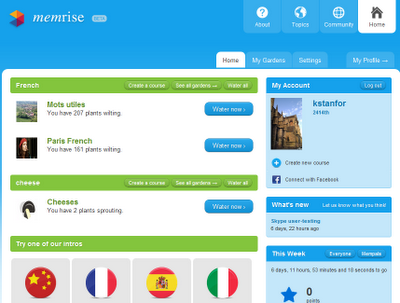
memriseDuring the more than 10 years that I have been learning French I have tried many online applications in my quest to improve my French vocabulary. I have found Memrise particularly effective with its scientific basis and combination of learning with fun. The competitive aspects as you climb leader boards can become addictive. I have even lost track of time sometimes when learning vocabulary (playing). If you love using mnemonics and find them helpful you will love Memrise.

Memrise has been designed to help you connect with the new words that you choose to add to your sets. It does this with mems. Read more

Wonderous mountain train – a day trip from Nice

by Phoebe from Lou Messugo, a traveller, francophile, expat, mum and foodie now living in Roquefort les Pins where she runs a gîte after many years of travelling and living in Asia, Eastern Europe and Australia.

train_des_merveillesTrain journeys are my kind of thing; trains and I, we go way back. Apparently, or so the family folklore says, I was on a miniature train in Delhi when the then Prime Minister Indira Gandhi turned up for a bit of political campaigning and I was chosen to sit next to her for the film shoot. I must have been about 7 years old. Now whether this was the beginning of my love of train travel I can’t say but since then I have taken some pretty interesting and scenic train journeys in Asia, Europe and Australia. So it was with great excitement that we recently took the grandly name “Train des Merveilles” from Nice to Tende and back. Read more

Searching for mustard in Dijon, France

by Mary Kay from Out and About in Paris, an American by birth, Swiss by marriage, resident of Paris with a Navigo Pass for the metro that she feels compelled to use

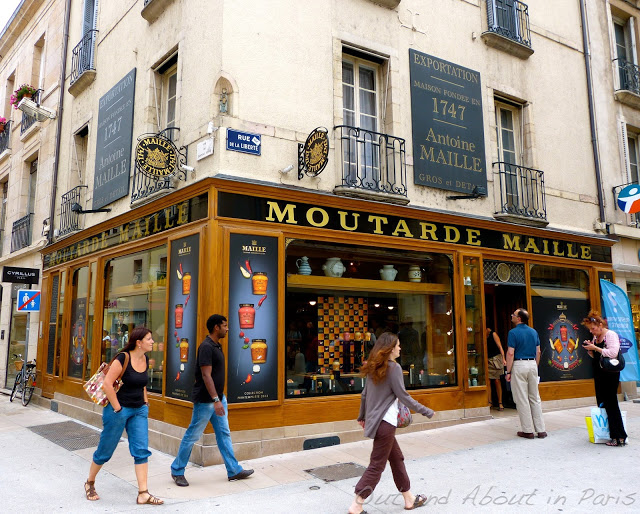
dijon_mustardMustard, Crème de cassis and wine – that’s what popped into my mind when we finally decided that Dijon would be a good place to spend the night on our way home from Switzerland last weekend. Given my mother’s penchant for all kinds of mustard and the fact that an entire shelf of her refrigerator was formerly reserved for the exclusive storage of this yellow condiment, visiting a mustard factory was at the top of my “to do” list. The only problem, as a search of the internet quickly revealed, is that Dijon’s oldest mustard factory was forced to close its doors in 2009 after demand for mustard declined in France. Read more 

If you enjoyed reading this, don’t forget to subscribe to new posts using the subscription form on the top right – that way you’ll get them directly on your smart phone or in your mail box! And I love to hear your comments!

Friday’s French – au revoir and salut

When I first moved to France in 1975, I don’t remember hearing people saying anything other than au revoir and adieu for goodbye. I had learnt that you only said adieu if you weren’t ever going to see the person again or at least for a long time. I was a bit surprised to hear it used as a greeting as well Adieu ! Comment vas-tu ? But it turns out that it is only in use in the south of France and I was in Béarn, near the Pyrenees. (Dieu = god, by the way).

In any case, just having au revoir made things easier (I didn’t ever use adieu). Since then, I’ve come to hear and use other expressions, such as ciao and salut. Ciao is practically universal of course and is very useful in countries such as Bulgaria where everything else is unpronounceable. It’s sometimes doubled here as well: ciao, ciao.

Salut is a different kettle of fish. It used to think it was the beginning of the prayer, Hail Mary: Salut Marie, but it is actually Je vous salue Marie; the verb saluer is used to mean salute, greet, take one’s leave, wave to, pay tribute to, etc. depending the context.

Saluez-le de ma part = give him my regards.

Il salua (le public) = he bowed (to the audience).

Salut has been reintroduced into everyday language with a much less formal register. Kids will say salut to each other both as a greeting and goodbye. Salut les mecs ! (mec is slang for man). Adults use it among friends or at informal gatherings. Salut tout le monde ! You would never use it with a shopkeeper or your doctor or someone you’ve just met. Some people never use it and consider it to be slang.

Given that you can never go wrong with bonjour and au revoir it’s probably best to avoid salut unless the other person has used it first.

If you enjoyed reading this, don’t forget to subscribe to new posts using the subscription form on the top right – that way you’ll get them directly on your smart phone or in your mail box! And I love to hear your comments!


Friday’s French – patrimoine, immobilier, mobilier & immeuble

With the journées du patrimoine coming up, I thought I’d take a look at the word patrimoine. It’s an interesting word because it has so many different meanings all connected with its Latin origin of patrimonium meaning property inherited from a father.

Let’s start with the journées du patrimoine, which is part of the European Heritage Days initiative launched by the Council of Europe in 1991. The meaning is the same as the Unesco World Heritage List except that in French it’s just patrimoine mondial. You don’t need to follow it with “list” or “site” e.g. Capitale de la Chrétienté  au Moyen-âge, Avignon a gardé de son Histoire un patrimoine d’exception dont une grande partie est inscrite au Patrimoine Mondial de l’Unesco. Points for the person who finds a decent translation for that sentence!

The S-bend from the Schlogen blick
Wachau, a  Unesco world heritage site in Austria

Then we have patrimoine héréditaire – inheritance – which obviously means that a patrimoine is not necessarily inherited. Any one can have a patrimoine immobilier, for example, and  it doesn’t have to be inherited. In this case, we’d talk about property or real estate in English. Patrimoine social, on the other hand, designates public housing.

While we’re at it, we can have a look at immobilier which is opposed to mobilier. You’ve no doubt seen “Agence immobilière” on what is obviously a real estate office. The root is mobilis from the very movere to move which means that immobilier can’t be moved. In French, it’s both an adjective and a noun: investir dans l’immobilier  – to invest in real estate.

There’s another word that home owners in France will be familiar with and that’s foncier as in taxe foncière or property tax. The word comes from fonds de terre, fonds having the same root as our fund, and terre meaning earth. A property owner is a propriétaire foncier and income from property is revenus fonciers (note the plural).

Mobilier is the opposite: it can be moved, and is the usual word for furniture. It also has the more technical meaning of personal or movable property. Mobilier de bureau is office furniture, as you would expect and mobilier urban is street furniture, which always seems less strange to me in French than in English.

And what do we with fixtures and fittings in French? The usual term is aménagements intérieurs while fixtures in a building in legal terms is bien immeuble. But you may already have heard immeuble in another context.

In legal terms, it means real estate, but is generally used to mean a block of flats or offices i.e. un immeuble d’habitation or un immeuble de bureaux. Un immeuble de sept étages has a ground floor and seven upper floors, known as an eight-storey building in the US, if I’m not mistaken and a seven-floor building in the UK and Australia. And just in case you are thinking of investing here, an investment property is un immeuble de rapport.

And if you’re in France or Europe on 14th or 15th September, enjoy the journées des patrimoine.

If you enjoyed reading this, don’t forget to subscribe to new posts – that way you’ll get them directly on your smart phone or in your mail box! And I love to hear your comments!

Friday’s French: bonne question

It took me a while to realise what bonne question actually means in French. Initially, I took it to literally mean “good question” as in English. But it’s not exactly the same.

For example, I asked the following question of an American company recently: “Can you tell me the difference between air conditioning and air treatment?”

The answer came back: “Good question! Air Conditioning typically refers to cooling the air while Air Treatment can refer to cooling, heating, filtering, purifying, humidifying or dehumidifying the air.”

I took that to mean that he thought my question was appropriate and that it was important to know the difference and that he knew what it was.

Now, in French, if someone says bonne question, it usually means that they haven’t the foggiest idea of the answer and are playing for time. They may have a stab (typically French, particularly if you are male) but by saying bonne question, they are telling you that it’s only guess work.

Before writing this post, I checked out the internet just to make sure I wasn’t making it up and was surprised to learn on www.urbandictionary.com that it can have the same meaning in English. Here’s the entry:

“That’s a good question: A phrase usually indicating that the speaker has absolutely no idea how to answer said question. Often used to stall for time.

Photography teacher walking in on students who should be at pep rally: What are you doing here?

Sreya: That’s a good question!”

So there you go. I know that whenever Jean Michel says bonne question that the question has never even occurred to him before and he certainly doesn’t know the answer.

How about you? What is your experience in the matter?

If you enjoyed reading this, don’t forget to subscribe to new posts – that way you’ll get them directly on your smart phone or in your mail box! And I love to hear your comments!

Friday’s French – special

Special is a very special word and very rarely translated by spécial in French and vice versa. Special est un mot très particulier qu’on traduit rarement par spécial en français et vice versa. Now that’s an easy meaning to translate. What is more difficult in finding an equivalent term when we want to talk about a special day or a special friend.

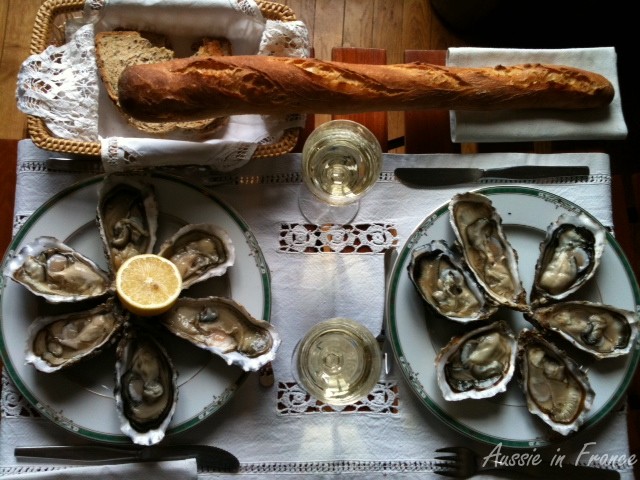
Huîtres spéciales which we eat every Sunday in season

The Chambers Dictionary gives as synonyms: particular, peculiar, distinctive, exceptional, additional to ordinary, detailed, intimate, designed for a special purpose and confined or mainly applied to a particular subject. So first you’ll have to decide why your day or friend is special. You’d probably talk about une journée exceptionnelle and une amie intime.

A special offer, on the other hand, is quite simply une promotion.

So what does spécial mean? Does it ever have the same meaning in French and English?  Yes, in certain cases, it does.

Il a reçu une formation spéciale = He was given special training.

Elle a bénéficié d’une faveur spéciale = She was given a special favour.

Comme il n’y pas de conduite assistée, conduire une voiture ancienne c’est spécial = With no power steering, driving an old car can be challenging.

But spécial can have an entirely different meaning when applied to people. If we were to say elle est vraiment spéciale, I would mean that her mentality or behaviour is not within the norm. She has a strange/bizarre way of acting/looking at things. It is definitely not a compliment!

Spécial can also mean deviant. Il a des moeurs spéciales means that he has certain tendencies not elaborated upon and is a euphemism.

And, of course, huîtres spéciales are those lovely juicy oysters fattened in small numbers in deep oyster parks which have a sort of sweet salty lingering taste called noisette (hazelnut) in French.

Do you have other examples of special and spécial?

Friday’s French – consommer

It’s the next day after a wedding. Everyone’s having a late breakfast, including the groom who’s just joined us. The bride is still upstairs in their bedroom. This, of course, wouldn’t have happened in the olden days. They would have already been off on their honeymoon.

wedding

As-tu consommé?” asks one of the guests. “Yes”, he replies, and everyone laughs. I am shocked! Fancy using the term consommer (to consume) in that context. How vulgar can you get. Then I realise that it must mean “consumate” as well.

I might add that it also means to perpetrate a crime …

It’s one of those French verbs that needs a different translation nearly every time in English. You could conceivably say “consume” in English when talking about food or petrol consumption, for example, but it certainly wouldn’t be natural.

On consomme beaucoup de fruits chez nous – we eat a lot of fruit in our family.

Cette machine consomme beaucoup d’eau – this machine uses up a lot of water

Le lot a été consommé par cette opération – the batch was entirely consumed by this operation

In fact, in English, we usually use the word consumption rather than consume, a typical case of a verb being replaced by a noun.

La voiture consomme 8 litres au 100 km – the gas/petrol consumption is 8 litres per 100 k.

La France est le pays où l’on consomme le plus de vin – France is the country with the highest wine consumption.

Another typical example is à consommer de préférence avant le 10/09/2013 – best before 10/09/2013.

On the opposite end of consummating a marriage, you can say la rupture est consommée, meaning the break-up is complete.

Do you have any other examples?