I have three very disparate subjects for this week’s blogger round-up. Andrea from Rearview Mirror takes us to Lithuania, one of the Baltic States, where she visits Kaunas Castle and experiences her first Baltic sunset. Fellow cyclist, Maggie LaCoste from Experience France by Bike, introduces us to a very efficient website called Biroto for planning bike rides in Europe while Sara from Simply Sara Travel poses the question of our “must-sees” in Paris and comes up with palm trees. Enjoy!
Kaunas Castle and My First Baltic Sunset
by Andrea from Rear View Mirror (formerly Destination Europe), a fellow Australian who, after 6 years of living in France, has given up her Paris apartment to live a nomadic life slowing travelling around Europe, experiencing each destination like a local.
After a slow but scenic drive through the flat Polish countryside we slipped through the abandoned border crossing and I was finally in the Baltic States. I’ve always been curious about this part of Europe. With so few travellers making their way this far east, I wanted to see what everyone was missing out on, if anything. While my road trip was officially starting in thegorgeous capital of Estonia, the drive from Warsaw required a quick stopover in Kaunas, Lithuania’s second largest city. Read more
German Website Biroto – A Great Planning Tool for Cycling in Europe
by Maggie LaCoste from Experience France by Bike, an American who loves biking anywhere in Europe, but especially France, which has the perfect combination of safe bike routes, great food, great weather and history.
The last day of craziness is upon me as I get ready to leave for my bicycling trip to Normandy and Brittany. But before I leave, I wanted to pass along this information about a great bicycle trip planning tool that I discovered recently. I received a note from Ans Leenders from the Netherlands who was having problems trying to download GPS information for an upcoming trip along the Via Rhona. For whatever reason, he was having technical difficulty accessing the GPS files from the Via Rhona website. In the course of trying to find another place to access the GPS data, Ans discovered Biroto and luckily he passed the website on to me. And I am now passing it on to you! Read more
Bring out the bucket list
by Sara from Simply Sara Travel, a girl from New Jersey who traded in her bagels for baguettes and moved to Paris. The aim of her blog is to inspire readers to travel, embrace a new culture, and open their minds to new perspectives.
Paris is a very transient city when you live here as an expat. People constantly come and go, and while it’s a joy to live here and constantly welcome new friends, I’ve also had to become accustomed to saying goodbye.
A close friend of mine just left Paris, and while I could write a month’s worth of posts on how much I will miss her, let’s focus on the positive: The bucket list. While “bucket list” means to most people “a list of things to do before you die,” for any American expat in Paris it has a less tragic meaning: “The list of sights to see, food to eat, and cities to visit before returning to the United States.”
That’s right, I love the bucket list. It’s a way to reflect on what places I love in Paris, discover new things or restaurants that have made it onto other’s lists, and if I’m lucky, I get the opportunity to join a friend in checking off items on their own list before they leave. Read more
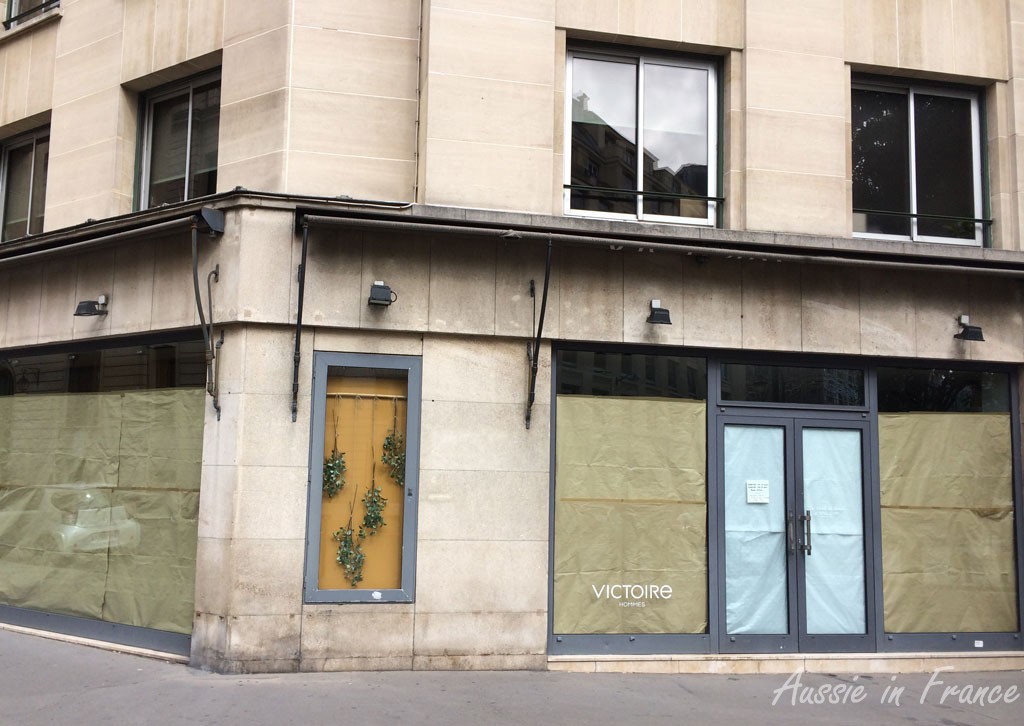
We’re back in Paris. I feel like a côte de boeuf so I go to the butcher’s on rue Montorgueil. Usually there are three open, today there is only one. In fact, only about one shop in five in Paris is open. There are even restaurants that are closed.
Shut-up shop in rue Colonel Driant
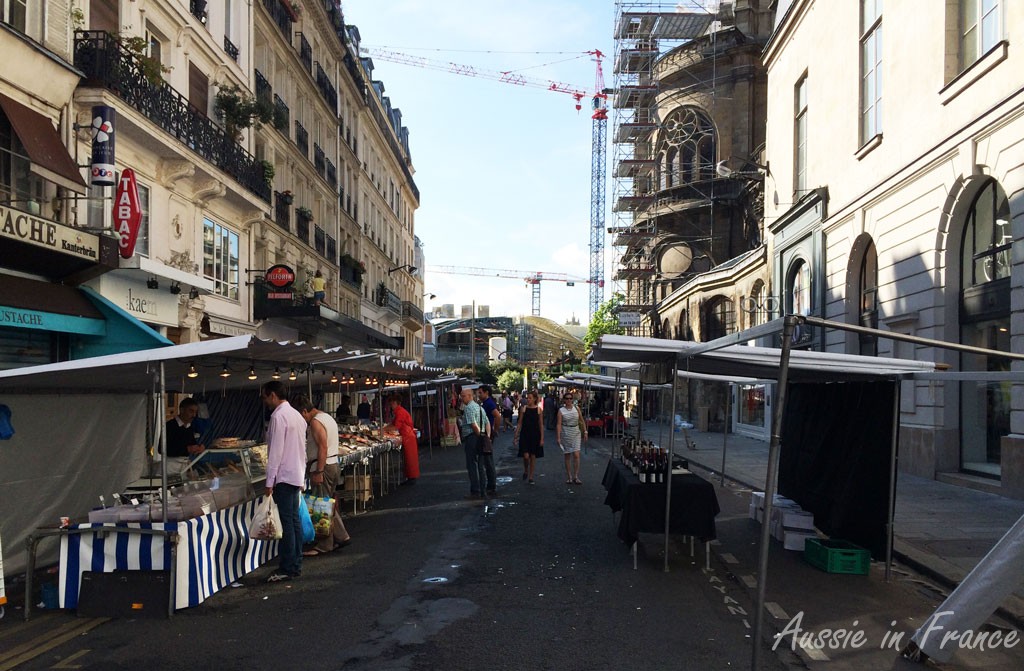
Now it’s Sunday and we’re at the market near Sainte Eustache. There are only about one-third of the usual stalls and even those have limited produce.
Sunday market half-deserted
Most of my clients have shut up shop as well which means I have some free time to see the odd friend who is still in Paris in August!
Free parking space in front of our apartment building
There are spare parking spaces in our street, which is most unusual. Usually, they are bumper-to-bumper. No wonder parking is free.
So where is everybody?
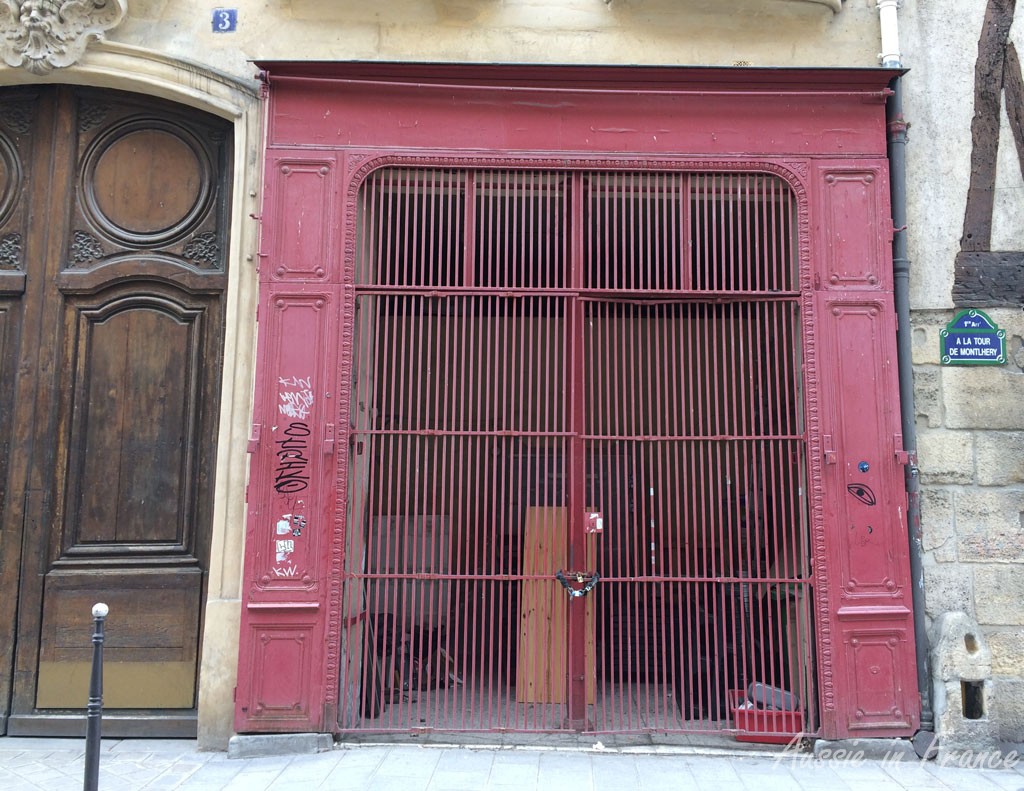
With everything else close, I notice this old butcher’s stall. It seems to be empty now. You can see the meat safe at the back.
The families with beach or country houses are on the coast or in the countryside. If the mother doesn’t work, the father often commutes at weekends. It’s peak time for French holiday makers on the Atlantic and Mediterranean and the airports are over-stretched. Some companies close for the whole of August while others shut down for the week surrounding the 15th August which is a public holiday in France.
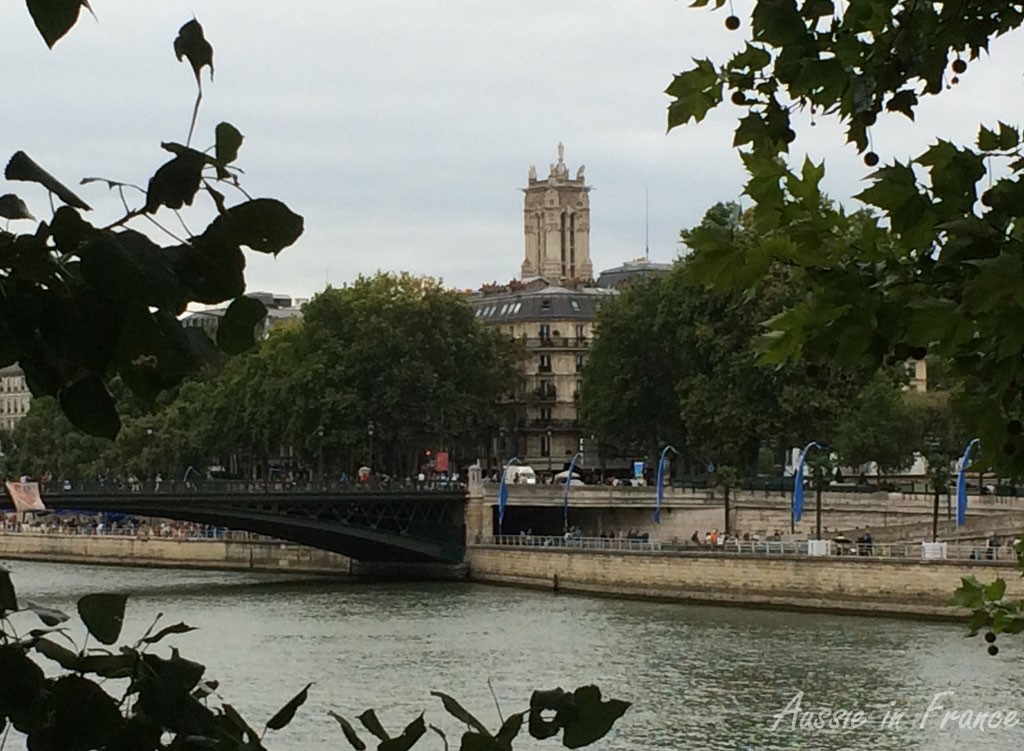
Tour Saint Jacques seen from Ile de la Cité
There is a saying that the weather deteriorates after the 15th August weekend, but this year, it got in early! Looks like the end of August might be finer and warmer.
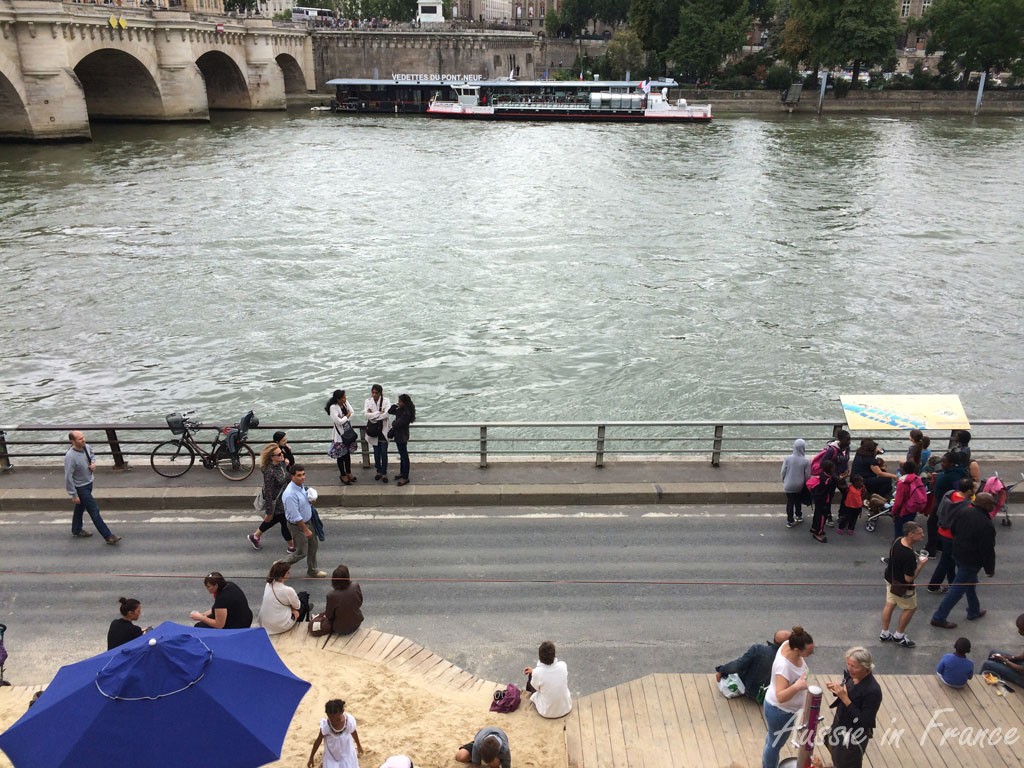
Paris Plage from Quai de la Mégisserie
It’s Sunday afternoon and Jean Michel suggests we go to Paris Plage because we’ve left our bikes in Blois. It’s about 20°C and overcast. We hope it won’t rain.
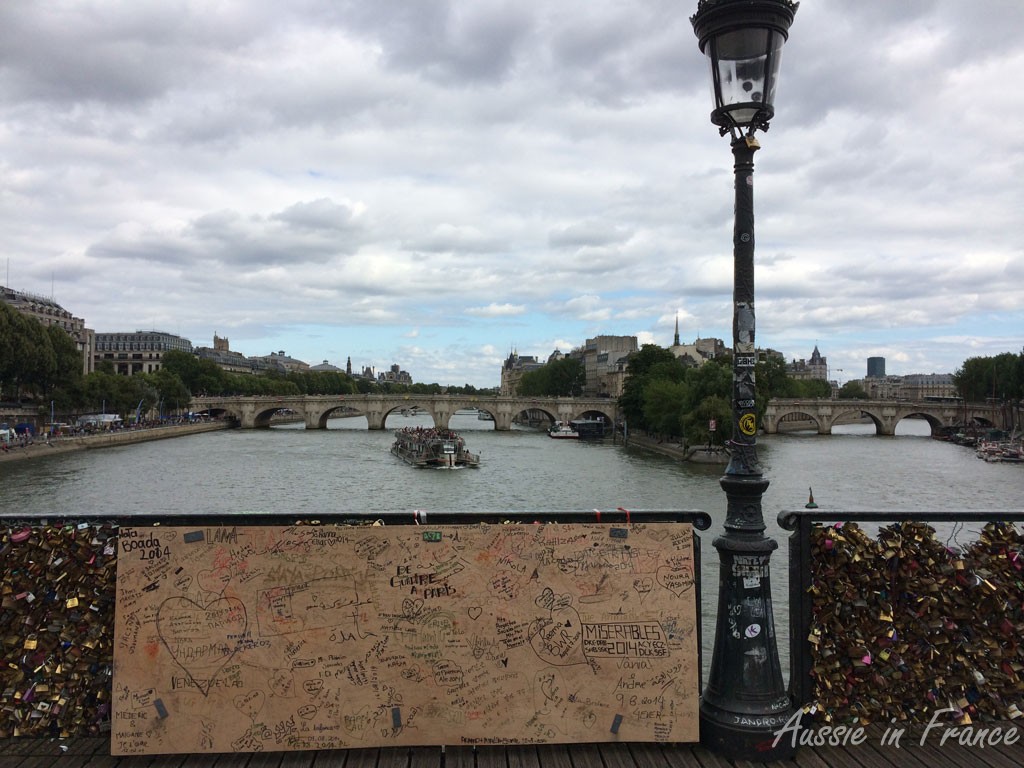
The panels and broken fence on Pont des Arts
I want to see the love lock situation on Pont des Arts. Currently, nearly 10,000 people have signed the No Love Locks lobby’s petition to have them banned but I can’t see the solution, much as I hate them now, though I initially thought they were fun.
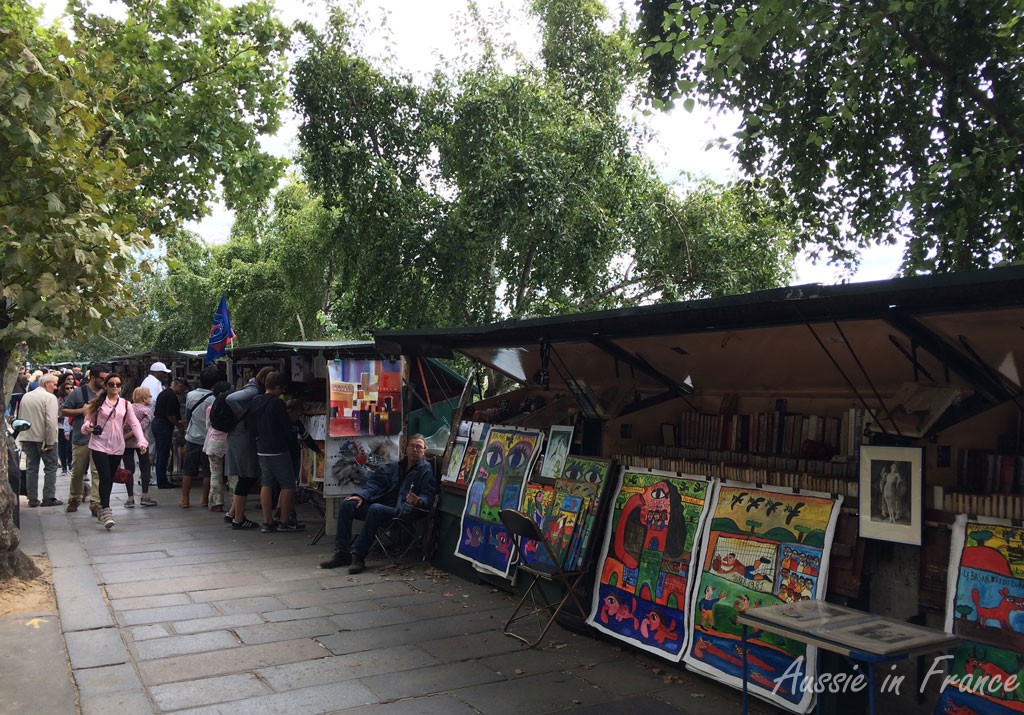
Bouqinistes on Quai de la Mégisserie just before Pont des Arts
It’s easy to find the footbridge – just follow the crowd! The bridge, which used to be one of my favourite places in Paris, is looking sad and ugly, with graffiti-covered panels to replace the sections that have broken off completely and other sections which are moving in that direction.
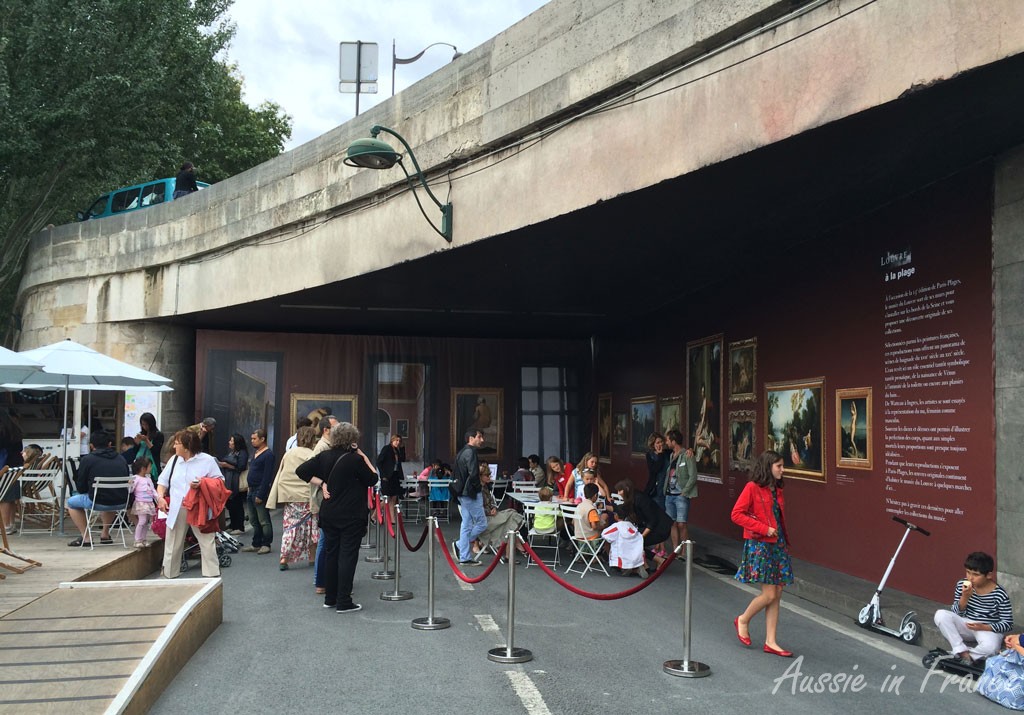
The Louvre at the Beach
We go down onto the Voies sur Berge below and see a new initiative – the Louvre at the Beach with reproductions of paintings in the Louvre relating to bathing.
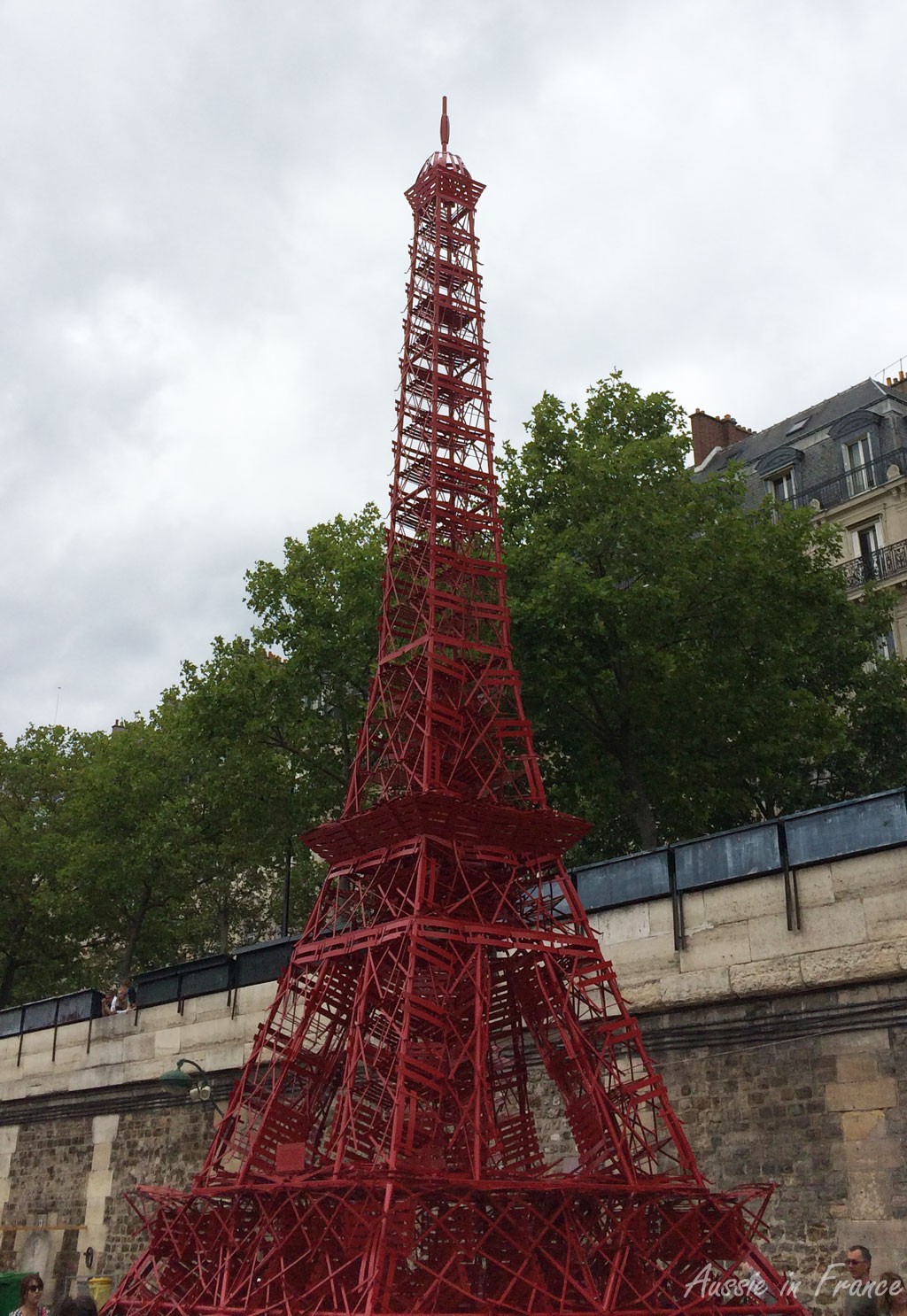
Fermob’s red Eiffel Tower
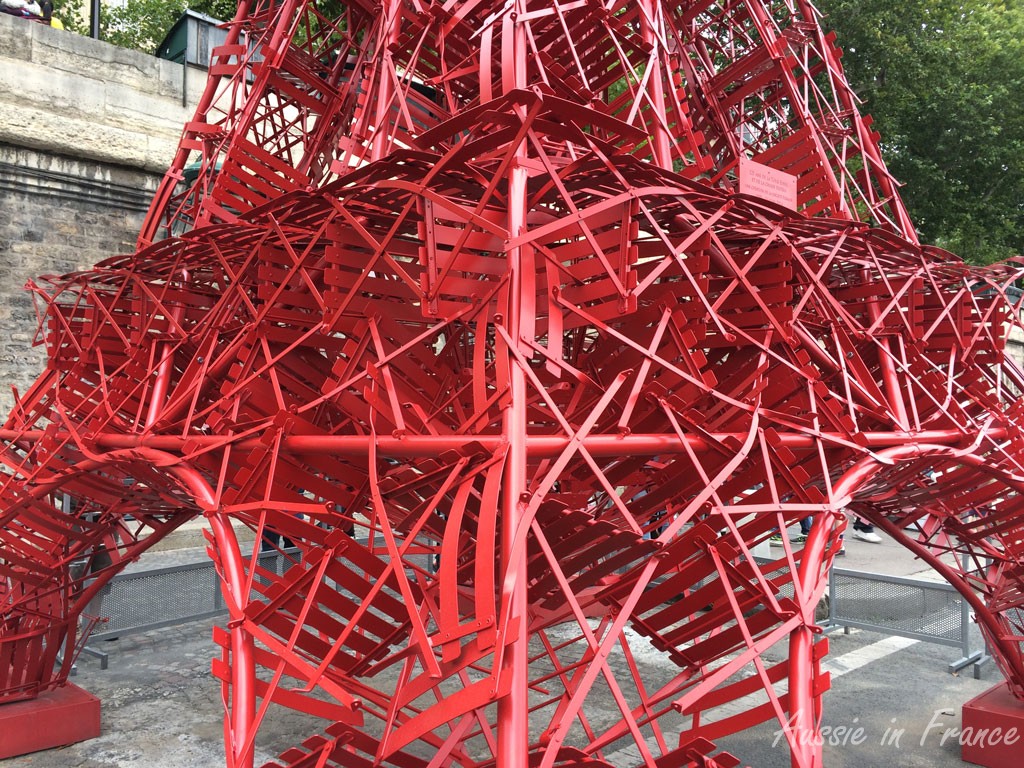
Further along we come to a red Eiffel Tower. When we get up closer, we see that it is made of bistro chairs! The tower, created by Fermob, which has been making chairs since the end of the 19th century, celebrates the Dame de Fer’s 125th anniversary. The 324 folding chairs symbolise the Eiffel Tower’s 324 metres erected for the Universal Exhibition of 1889. It’s a wonder there are no love locks on it yet …
Up close, you can see some of the 324 bistro chairs!
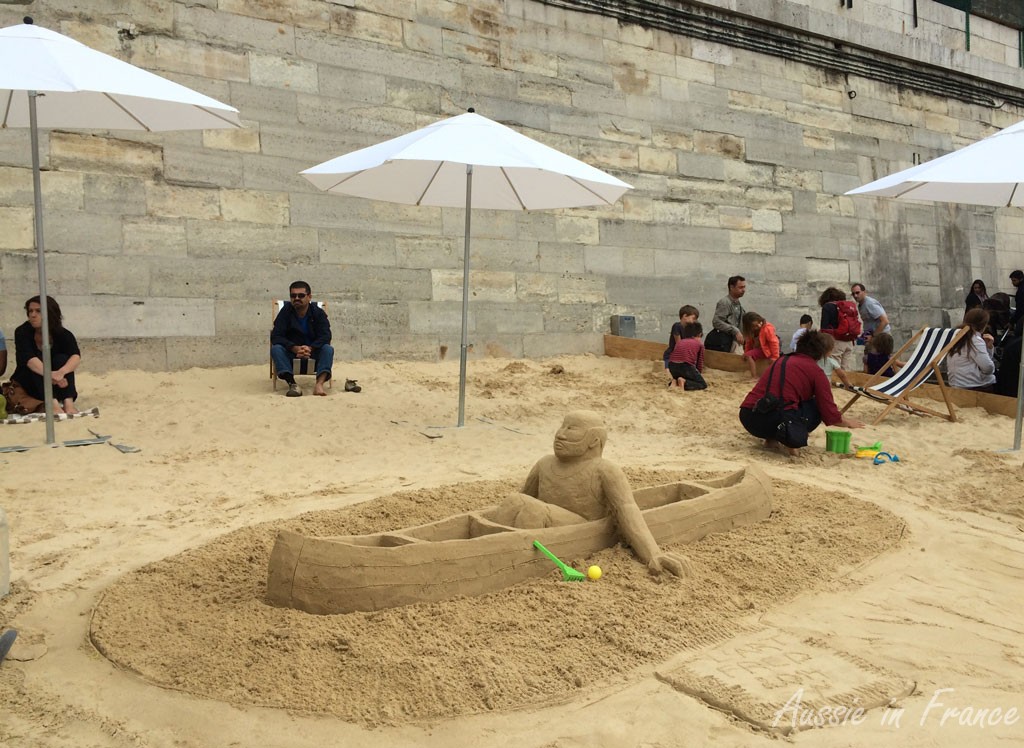
On the whole, there is not much action, but more sand than in previous years. We only see one sculpture.
Sand sculpture at Paris Plage
Right down the end, where there is no more sand, we find a couple of vacant deck chairs so take a selfie before going home via Notre Dame on the other side of the Seine.
Selfie in Paris Plage deck chairs
Maybe next Sunday we’ll visit the other Paris Plage venue near La Villette. We overheard someone saying it was much livelier – though that wouldn’t be hard!
That may seem like a strange combination but an English-speaking friend living in France has suggested I deal with the topic of “this” and “prochain“.
This is what she wrote: “ I just had a confusing text message exchange with a French friend who I’m going to visit this Saturday. And yes, “this Saturday” was the cause of confusion. He speaks English quite well and he likes to practise it when he texts as well. I was confirming my train arrival times with him and he said to me in English “so I’ll see you next weekend then!”
Even though I was pretty certain he was (badly) translating “le weekend prochain”, I still had to make sure we were on the same page and that he’d be there to meet me THIS weekend.”
In English, we make the distinction between “this Saturday”, that is, the one coming, and “next Saturday”, meaning the one after that, whereas in French, “samedi prochain” is the one coming and “samedi en huit” is the one after that. You can’t say “le weekend en huit”, though. You’d have to say something like “je te vois dans dix jours”, with dix being anything between 9 and 13!
But why “en huit”, you may be wondering. A week in English consists of seven days, but in French a week is “huit jours” – even in legal documents – despite the fact that semaine comes from the Latin septimana meaning seventh. But then another way of saying week is huitaine. The same applies to a fortnight, which is “quinze jours” or quinzaine and not quatorze jours as you would imagine.
Where does this all come from? Well, it seems is comes from the Romans who divided the month (30 or 31 days) into four unequal periods. So for a 30-day month, you’d have eight days followed by seven days, twice. A quinzaine was thus an 8-day period plus a 7-day period. This also explains why “huitaine” means week.
In France, the expressions sous huitaine and sous quinzaine (within one week and within two weeks) acquired a legal meaning in the Middle Ages which still exists today.
This is borne out by a similar use in Italian where quindicina is used for a period of two weeks.
I was talking to Jean Michel about huitaine and quinzaine and he said he remembers people using the term lunaison when he was young. I immediately checked my Larousse. It’s a real word and is the interval between two new moons, whose average length is 29 days, 12 hours, 44 minutes and 2.8 seconds (nothing like precision, is there?).
This week’s blogger round-up starts with two very practical posts. First, Carolyn from Holidays to Europe, gives us a step-by-step guide to leasing a vehicle in Europe, which may not be a solution you had thought of. Next, Abby from Paris Weekender, tells us about a phone app you can use to find your way about the city of your choice without roaming charges. And the end up, Andrea from Rear View Mirror takes us on a visit of black & white visit of Stockholm. Enjoy!
A step by step guide to the tax-free vehicle leasing program in Europe
by Carolyn from Holidays to Europe, an Australian based business passionate about sharing their European travel expertise and helping travellers to experience the holiday in Europe they have always dreamed of
I’m heading back to Europe and it’s time to hit the open road. I’ve planned our itinerary meticulously (I hope!!) and have decided that on this trip it will be more convenient to have our own car. There are a few off-the-beaten-track places we’ll be visiting and we’re also looking forward to the spontaneity of making a detour if we feel like it and, hopefully, stumbling across some hidden gems.
We’ll be starting this visit to Europe in Barcelona and finishing in Paris with a route including southern France and the Alps, northern Italy, southern Germany, Slovenia, Austria, Czech Republic and back into northern France. Read more
Lost Without 3G? No longer!
by Abby from Paris Weekender, an American living in Paris who offers suggestions for Paris weekends, either staying put or getting out of town
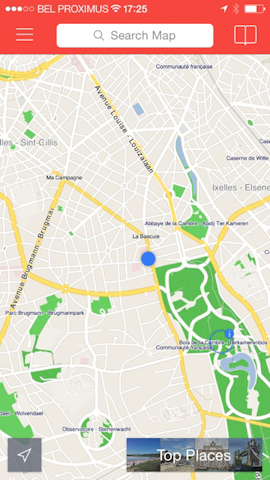
I am visiting friends in Brussels this week and trying to cope with the lack of 3G so as not to rack up roaming charges on my iphone. But thanks to a tip from my friend, my nomadism just got a whole lot easier.
Did you know that there’s an app that not only gives you detailed maps of numerous cities and other regions in the world but it also shows you where on the map you are without the need for roaming? The City Maps 2Go Pro app is the best-spent $2.99 in my recent memory. Read more
A Summery Weekend in Stockholm (Not Really)
by Andrea from Rear View Mirror (formerly Destination Europe), a fellow Australian who, after 6 years of living in France, has given up her Paris apartment to live a nomadic life slowing travelling around Europe, experiencing each destination like a local.
As the clouds parted and the pale blue sky shone through, I thought for sure I was going to have a great summer getaway. But Stockholm was teasing me. Dark clouds rolled in and the freezing temperatures put an end to my plans for island hopping in the archipelago and cycling in Djugården.
Even if I was not prepared for wintery weather in summer, the people of Stockholm are accustomed to it and the cafes quickly fill up. So of course I did as the locals do and enjoyed a little fika time and people watching in hipster/boho neighbourhood Södermalm. This was followed by more drinks, more cake, vegetarian buffets, great sushi, burgers and my favourite Swedish cider. I hadn’t planned on eating my way around Stockholm’s 14 islands but it was turning out that way. Read more
I hate wasting time, probably because I never have enough. To me, the emergency department of a hospital is the epitome of wasted time, to be avoided at all costs. So far, I’ve managed to do so.
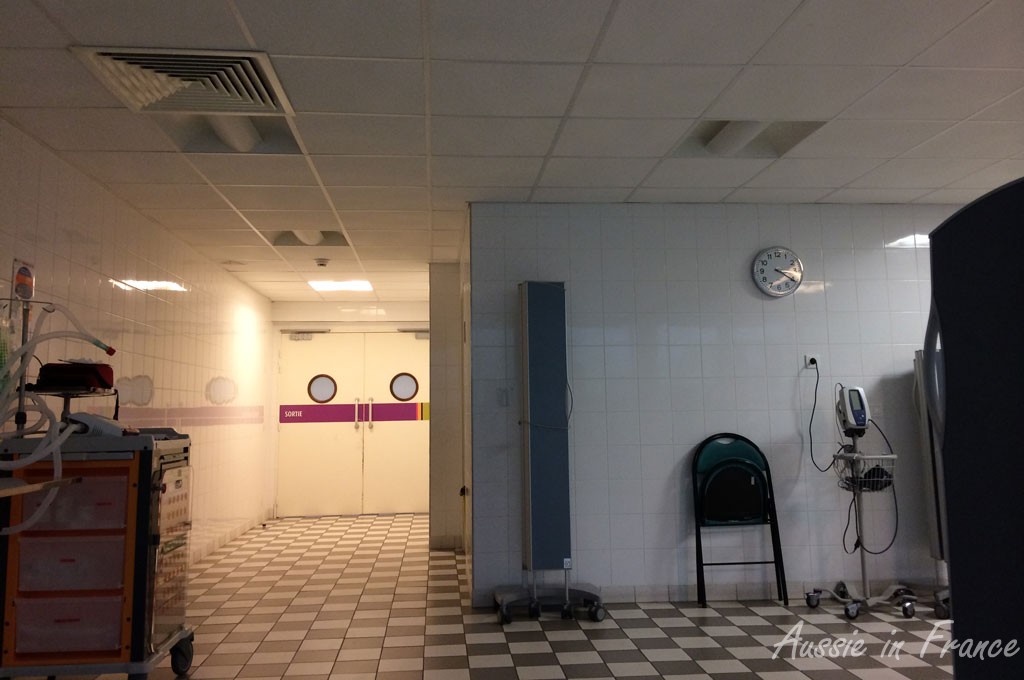
Stage 2 emergency room taken from my bed
I wake up one morning in Blois with slight pain in my middle back. Hmm, that’s a new one. It disappears when I get up. Back in Paris next morning, the pain is more severe, like a bar across my back. I feel a tension in my chest as well. Once again, it goes away quite quickly. It continues for the next 3 days, appearing earlier and earlier in the night and forcing me up well before my usual wake-up time.
I call the doctor but learn she’s on holidays. Of course. It’s August and the great exodus has already taken place. I’m not keen on seeing a locum now that I’ve learnt that 6th year medical students can do the job. I want someone with more experience. I decide to wait and see.
Next day, when I wake up the back pain has disappeared but my chest feels as though it might explode. I call my doctor again and learn there is no locum so I phone SOS Médecins, the French emergency service. I explain my problem and am immediately put through to a doctor. He says he’ll send someone within the hour.
By the time the doctor arrives, the pain has almost disappeared. She examines me and says she doesn’t think it’s a heart problem but more likely to be digestive. However, to rule out the cardiac factor, she takes an electrocardiogram.
“Ah”, she says, “I have a problem. You have an unusual electric signal in your heart that means I can’t be sure of what the electrocardigram is telling me.” She calls the SOS Médecins service and asks if they have a cardiologist available. They don’t, of course. It’s August. “You’ll have to go to the urgences,” she says. “You really do need to check it’s not a heart problem.”
Without hesitation, she sends me to Saint-Antoine Hospital in the 12th arrondissement, which at least is on my metro line. I get ready, try to contact Jean Michel and discover he’s left his mobile phone at home. I leave a message on his work phone. Showing great foresight, I take my Kindle and charger.
The emergency department seems deserted. I hand over my prescription and my Carte Vitale (the French medicare card) and am told to sit down, that I shouldn’t have to wait too long.
Within minutes, I am called in. A friendly male nurse introduces himself and asks me to lie on a gurney (lit à roulettes) while he does an electrocardiogram. I’m feeling quite zen and relieved not to have already spent an hour in the waiting area.
He checks my previous electrocardiogram and says, “There’s something I don’t like. We’re taking you into the emergency ward. Stay put.”
I’m wheeled into a long room next door and parked in a bay next to a nursing station. Several people come and introduce themselves and perform their different tasks: electrocardiogram, drip, chest X-ray, auscultation, including a very timid 6th year student who takes so long to listen to my back with her stethoscope that I get cramps in my feet.
The nurse looking after the drip is having problems with the vein in my hand and it’s very painful. Also, my watch is in the way, so they take it off along with all my other jewellery which they put in a sealed bag with my cash and credit cards to be retrieved later from the front desk. None of this is very encouraging.
My phone rings during the chest X-ray so I can’t answer it. It turns out to be Jean Michel who has now gone off to a business lunch. What if they decide I need to be operated on immediately? I start feeling very sorry for myself.
Eventually, a very jolly doctor, who seems to be in charge of the ward, comes over to see me. She explains that there probably isn’t a heart problem but they need to check it out. She prods me more effectively than the student and I wince (well, it’s probably more like a repressed scream) when she digs into my ribs.
After a couple more prods, she says that she thinks I’ve strained my intercostal muscles. I try to think what could have caused it and can only imagine gardening. After falling off my bike in Germany and crashing into the bushes, I have been saving my knee so maybe I have been stooping over too much.
I ask how long this is going to take. She explains there is an enzyme test that is performed again after six hours which they may have to do. Six hours! But in the meantime, they are going to take me to the stage 2 emergency room, she tells me. I ask for something to relieve my headache and she gives me paracetamol, despite the fact that I tell her it has absolutely no effect on me. I need something with aspirine or codeine. Sigh.
There are about six or eight beds in the next room, all in a row and separated by folding screens. I’m in the one closest to the door and can see relatives coming to visit the patients. I try phoning Jean Michel again but it’s only 2.30 pm and he’s still at lunch. I’m starting to feel hungry myself but can’t have anything to eat.
About fifteen minutes later, he rings to commisserate but can’t come to the hospital because he is doing his technical roster this week and can’t leave the area in which we live. I’m still hoping I won’t have to have the 6-hour enzyme test.
By now, my Kindle is charging on the nursing station but the cord is long enough so I can still read it. I’ve already downloaded a new book. There is no pillow on the emergency bed so despite the pain from the vein in my hand, I manage to fold my blouse and three-quarter pants that had been stuffed uncaringly into a plastic bag and hung on the end of the bed, and place them inside the bag to form a makeshift pillow under the sheet. It’s not very comfortable but it’s better than nothing.
I dose and read, read and dose. I have a FaceBook conversation with a friend but the painful vein makes it difficult to type with my left hand and I’m afraid of dropping the phone with my right hand. She offers to come and see me but I am still hopeful of leaving shortly.
An old man further along the row is arguing with the nurses because he wants to go home (don’t we all?) but he fell and has a brain haemorrhage so they understandably don’t want to let him go. They finally say they’ll phone his son in Germany to see what he has to say. That has the required effect and he calms down.
I need to use the bathroom and don’t want a bedpan so they unsnap all the electrocardiogram leads and put my drip onto a portable stand. I’m dressed in one of those non-woven bedshirts so the nurse makes me a toga with a sheet and I shuffle down the room and into the corridor, wheeling my drip stand with the hand that has the painful vein.
I come back to bed and discover it’s been reorganised and my makeshift pillow removed so I start all over again. My headache is worse than ever so I ask for stronger medication. It’s too soon after the useless paracetamol, I’m told. I lie in my bed feeling very lonely and have a little weep before going back to my Kindle.
At about 6 pm, a nurse comes to check on me and I tell her I’ve had enough and am ready to go. I’ll sign myself out if necessary! She is very understanding and says that the worst is over. Only a bit more and they’ll do the second enzyme test. I ask for a timeframe. Eight o’clock at the latest and you’ll be out of here, she says.
TWO MORE HOURS. I insist on the headache medication again so someone eventually comes along with another drip. This time it works.
At 7 pm, the blood test is carried out and after 20 minutes, since the results are positive, they take out the drip and unsnap my leads. I can get dressed. I take a while to remove all the adhesive snaps from my body (I discover more in the shower that night) and put my wrinkled clothes back on.
The doctor comes along and says I’m clear (but really should have an ultrasound of my heart – you gotta be kidding!), gives me an envelope with my X-rays and cardiograms and a prescription for codeine … There is no doubt in her mind that the problem is due to intercostal strain.
I pick up my jewellery, ring Jean Michel to tell him on my way home, and walk outside. I’m FREE after almost 8 hours! I see a bakery next to the metro station and buy a croissant au beurre. The best I’ve ever tasted!
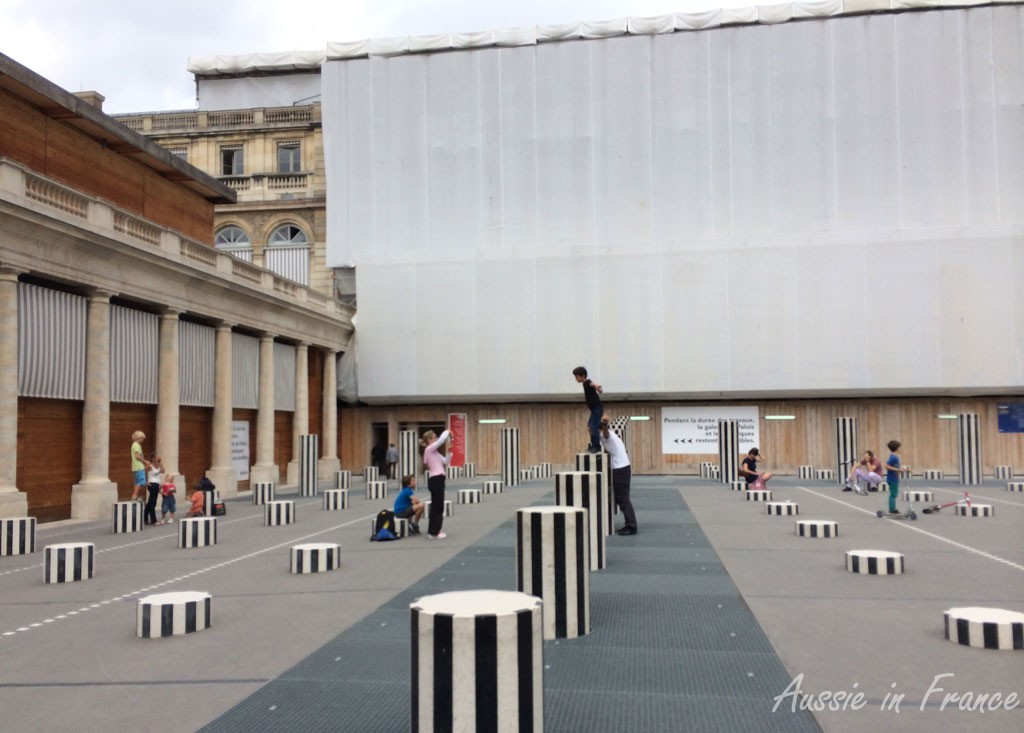
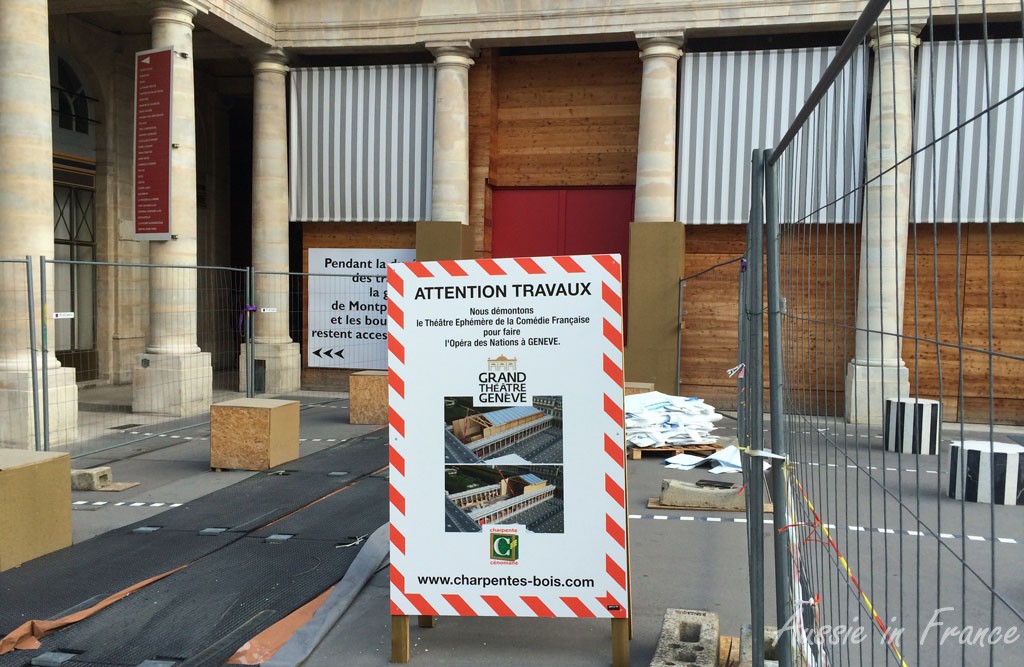
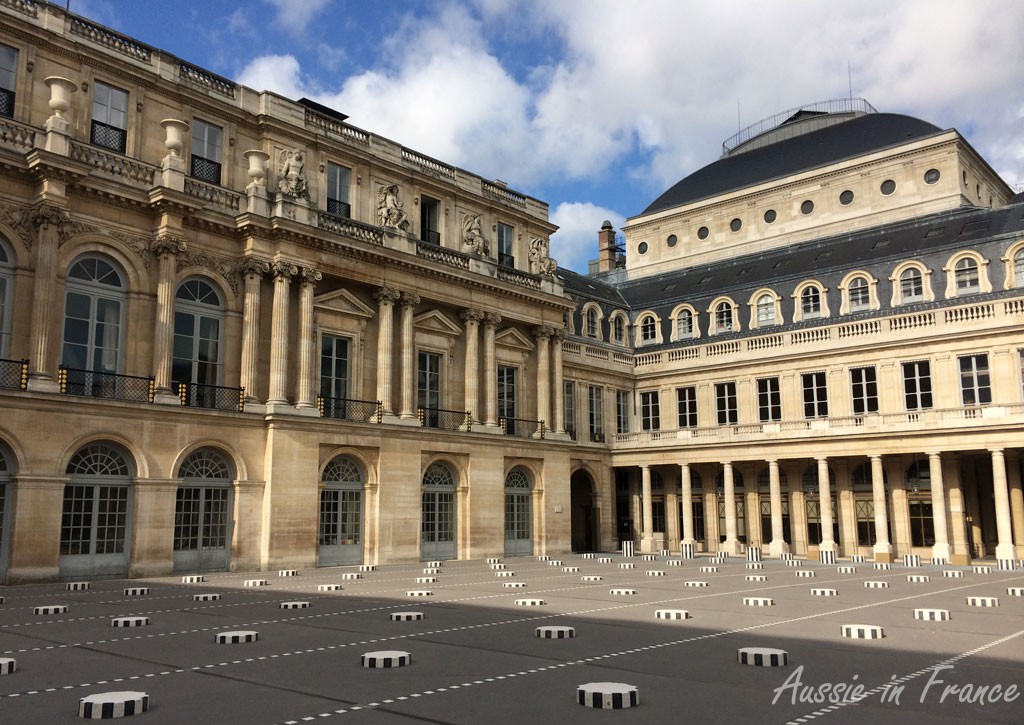
It has taken over 2 1/2 years to renovate the Comédie Française theatre and find a new location for the temporary structure replacing it next to the Buren columns, called the Théâtre Ephémère. Initially, Libya made an offer but it didn’t work out. It is now going to Geneva for the Opéra des Nations, a strange choice in my opinion because the building doesn’t have much to recommend it! But at least it should be taken down by the time we move and I’ll be able to have one last photo of the Buren columns with the Palais Royal Gardens in the background!
You can see the Théâtre Ephémère on the left of the columnsThe sign at the entrance to the dismounting areaThe Comédie Française is on the right
I was surprised recently when a 6th year French medical student told me that there is a difference between a médicin and a docteur : a médecin is able to prescrire but is not qualified whereas a docteur has a Ph.D.
After translating in the field for nearly 40 years and never having witnessed this distinction, I was not convinced and have not found any literature supporting his statement since.
Certainly je vais chez le médecin is exactly the same as je vais chez le docteur. However, you would say bonjour docteur and not bonjour médecin, athough you could say bonjour monsieur le médecin if you wanted to be very polite.
Un médecin généraliste ou just un généraliste is the equivalent of our general practitioner (GP) and definitely qualified!
He was actually speaking about internes who, after 6 years at the faculty of medicine during which they usually do 4 annual 3-month practical periods in a hospital (as externes), spend another 3 years full-time in a hospital before presenting their thesis and becoming a GP or 4 or more years to become a specialist.
A doctor whom you see regularly (what we loosely call my doctor) is docteur or médecin traitant (but not docteur traitant). Qui est votre médecin traitant? Who is your doctor?
When I first arrived in France from Australia, I was surprised to hear people talk about ma gynécologue, mon pédiatre, mon rhumatologue and never about mon docteur, always referred to in any case as le docteur. The system has now changed but until a few years ago anyone could consult a specialist without a referral. You still can but you won’t be reimbursed by social security with the exception of gynaecologists, ophthalmologists, psychiatrists and stomatologists (but only for run-of-the-mill treatment, called acte médical).
My mother-in-law always referred to the doctor as le toubib, borrowed in 1898 from the Algerian word for witchdoctor but which has the same root as medicine. It’s familiar of course and would sound very strange in the mouth of a foreigner!
In English, it is customary to address anyone with a Ph.D. as doctor but docteur is only used to refer to a medical practitioner in France. No distinction is made between a G.P. and a specialist who is also called docteur, unlike the Australian practice of calling a specialist Mr.
When you get higher up on the scale and become a Professor, however, you become le professeur Jacques Dupont, for example.
Among the various specialities, oncologue is used in preference to cancerologue; you go to see a rhumatologue if you’re having back problems , an oto-rhino-laryngologiste, more commonly known as ORL, if you have an ear, nose or throat infection, an angiologue for varicous veins and a pneumologue for lung problems.
The French love using scientific words whenever they can and would consider our more down-to-earth ear, nose and throat specialist, eye specialist and lung specialist almost to be baby talk!
An all-Australian cast for this week’s Blogger Round-Up. Wendy Hollands from Le Franco Phoney talks about a subject dear to my heart – the French language – and the apostrophe in particular. Susan from Days on the Claise takes us to back in time to one of my favourite châteaux – Chenonceau – which served as a military hospital during World War I. And to complete the list, ever-practical Jo Karnaghan from Frugal First Class Travel tells us what to expect in a 3-star hotel in Europe, often a far cry from what Australians are used to. Enjoy!
The French Love Affair with English Words
by Wendy Hollands from Le Franco Phoney, an Australian who writes about all things French in La Clusaz, Annecy and Haute Savoie as seen by an outsider …
Did you know that France is the world’s most popular country for tourism? Despite their reputed gruffness, the French population must be doing something right, right? France is a proud nation of people who (sometimes illogically) support regional food and wine, get a little arty farty at times, and make me feel like a complete frump in comparison to their natural chic.
Their approach to language is no different. Who doesn’t love the sound of a French voice whooshing effortlessly through sentences? The rest of the world loves it and the French know it. They’re keen to preserve their language, as I’ve mentioned before with the Talkie Walkie (seriously) and the Academie français. Regardless, there’s a growing love of mixing English words into sentences. Read more
A Hundred Years Ago at Chenonceau
by Susan from Days on the Claise, an Australian living in the south of the Loire Valley, writing about restoring an old house and the area and its history and running Loire Valley Time Travel.
1914, and Chenonceau became a military hospital.
2254 wounded poilus, for the most part very gravely affected by their injuries, were cared for at the chateau over the course of the conflict and up to 31 December 1918. (The French soldiers were known as ‘hairies’, because of their luxuriant facial hair, especially moustaches.)
From 2 August 1914, the day war was declared, the industrialist and Senator Gaston Menier wanted to participate in the national war effort. He suggested to the War Minister that he could set up a temporary military hospital, at his own expense, in the Chateau of Chenonceau, which he had recently become the owner of, after the death of his brother Henri, who had bought the building in April 1913. Read more
Your First Trip to Europe – What to Expect in a 3-Star Hotel
by Jo Karnaghan from Frugal First Class Travel, an Australian who loves to travel – especially in Europe – and who has gradually learned how to have a First Class trip on an economy budget, without missing out on anything!
You’ve decided to take your first trip to Europe – how exciting! Now you need to make decisions. What airline to book, what to do, and most importantly where to stay! It’s very tempting to stick with the familiar and stay at a chain hotel. You know what to expect, what the room will be like and how the plumbing will work. But because this is frugalfirstclasstravel, a Hilton or Ibis just isn’t going to do it. Small, locally-owned hotels typical of the location are what I actively encourage to add so much enrichment to your trip. So in this post I’m looking at what to expect in a three star hotel in Europe. I’m choosing a 3 star as it’s a good mid-point option for many travellers. Read more
Most of our time in Blois seems to be spent frantically gardening, restoring fireplaces and making laundries, but this time, I’ve checked the weather report and Thursday looks as though it will be bright and sunny. We have breakfast in the garden then, after much searching, unearth our Blois & Chambord bike maps. We decide on itinerary n° 11 & 11 B (total of 50 K) because Jean Michel says we haven’t completed the loop before.
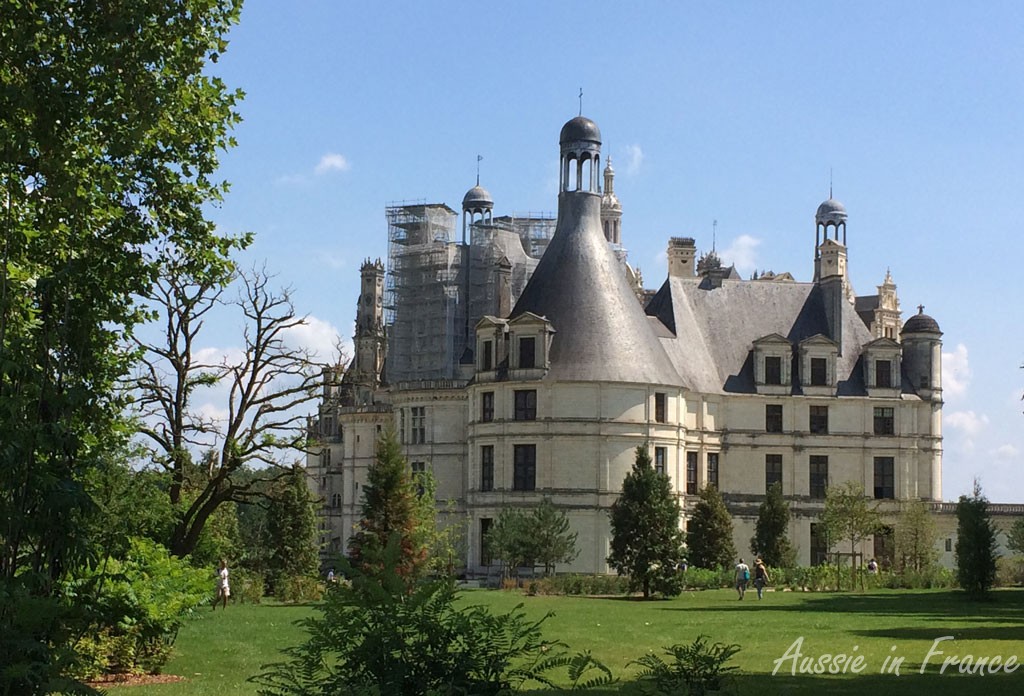
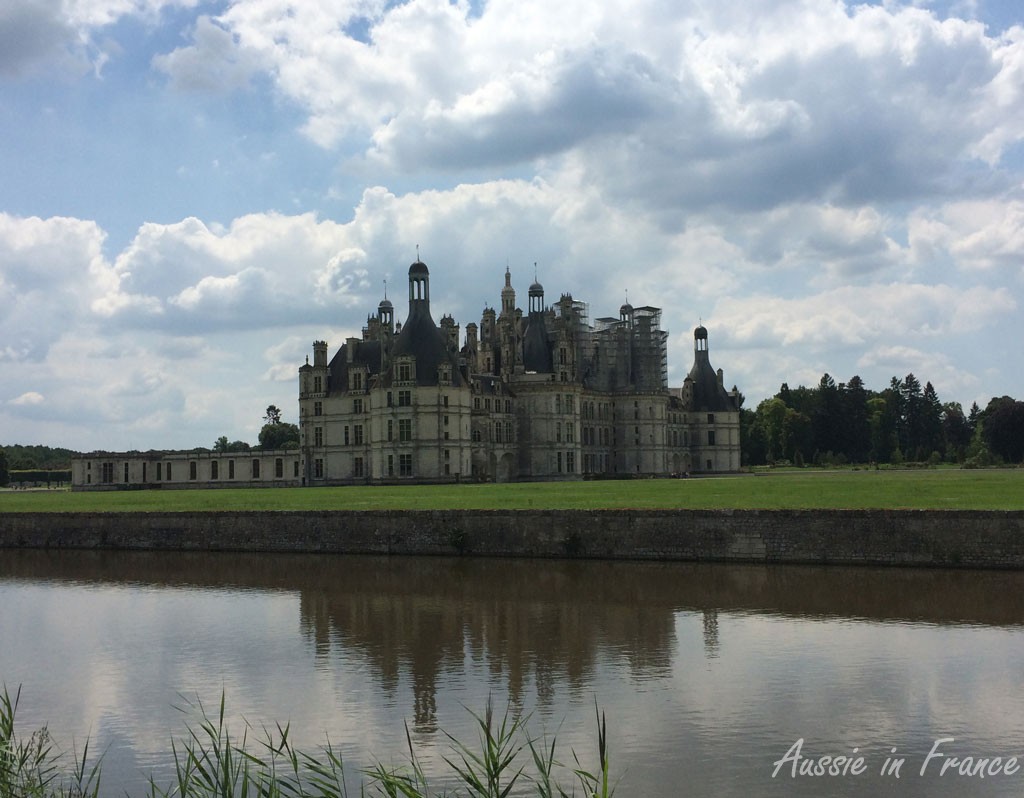
Château de Chambord with more scaffolding
We drive to Saint Dyé sur Loire and park in the church grounds. It’s getting close to midday by the time we start out for Chambord. I’m a bit disappointed when we arrive to see there is more scaffolding.
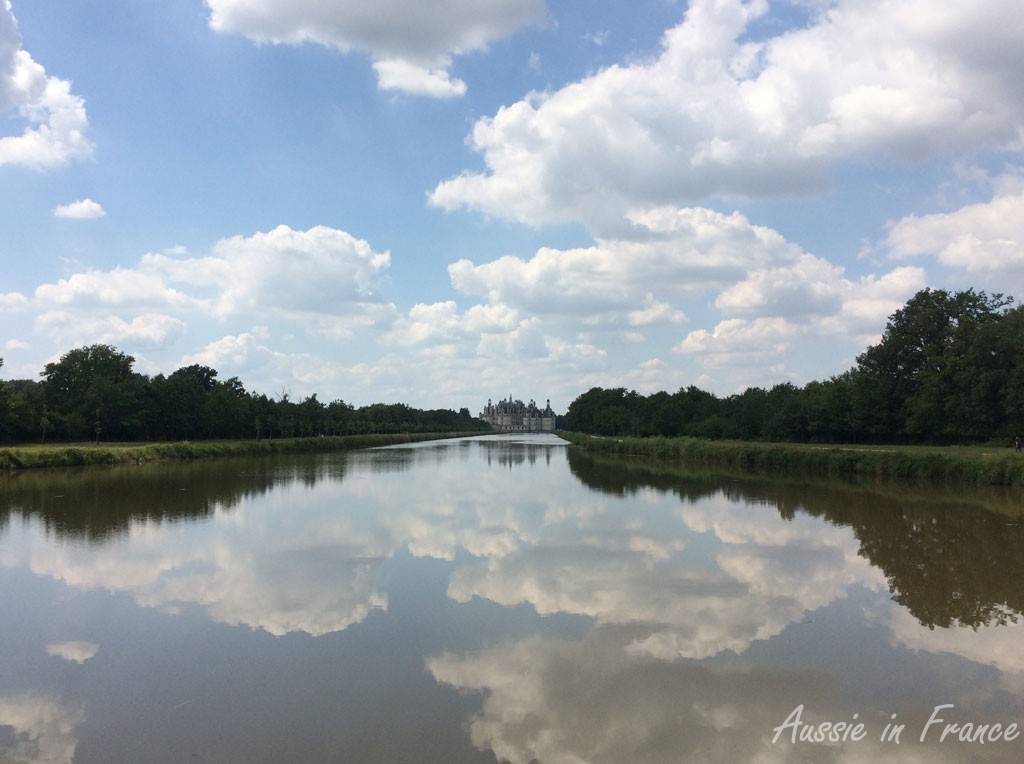
Chambord reflected in the Grand Canal
After lunch at the Saint Louis (dish of the day and café gourmand) we cross the little bridge and set off along the Grand Canal because I want to take a photo of Chambord reflected in the water like my friend Anda from Travel Notes and Beyond. But clouds have appeared and the reflection is not exactly what I was looking for.
Chambord from the little bridge at the end of the Grand Canal
And what do we discover – a completely new view of Chambord from the other end of the canal. This time, the clouds are lighter and their reflection in the canal is spectacular.
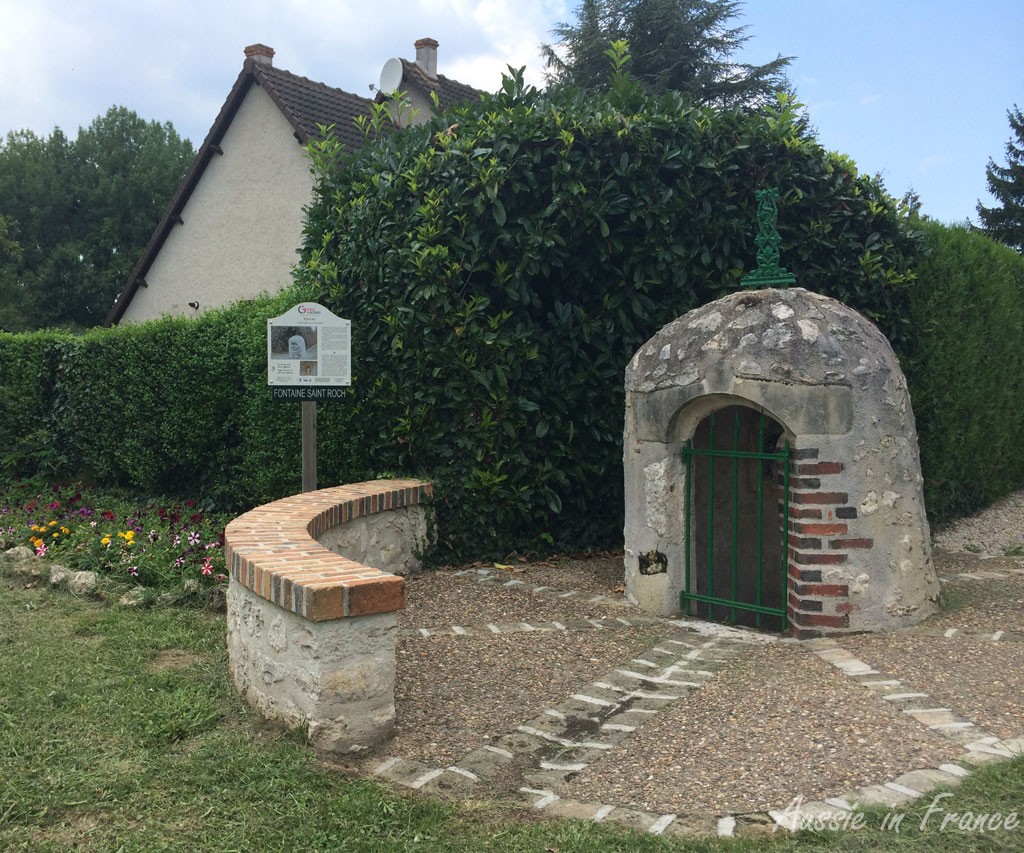
Fontaine Saint Michel well in Thoury
We continue the cycle path towards Saint Laurent de Nouan, our final destination, and find ourselves in the little town of Thoury. I surprise Jean Michel by remembering it from a previous bike ride and he comes to the conclusion that we’ve already done the n° 11 loop (but not the n°11bis. The typical Sologne well of Fontaine Saint Michel has all been spruced up. You can see its little wrought-iron sculpture of a snake coiled around a tree branch.
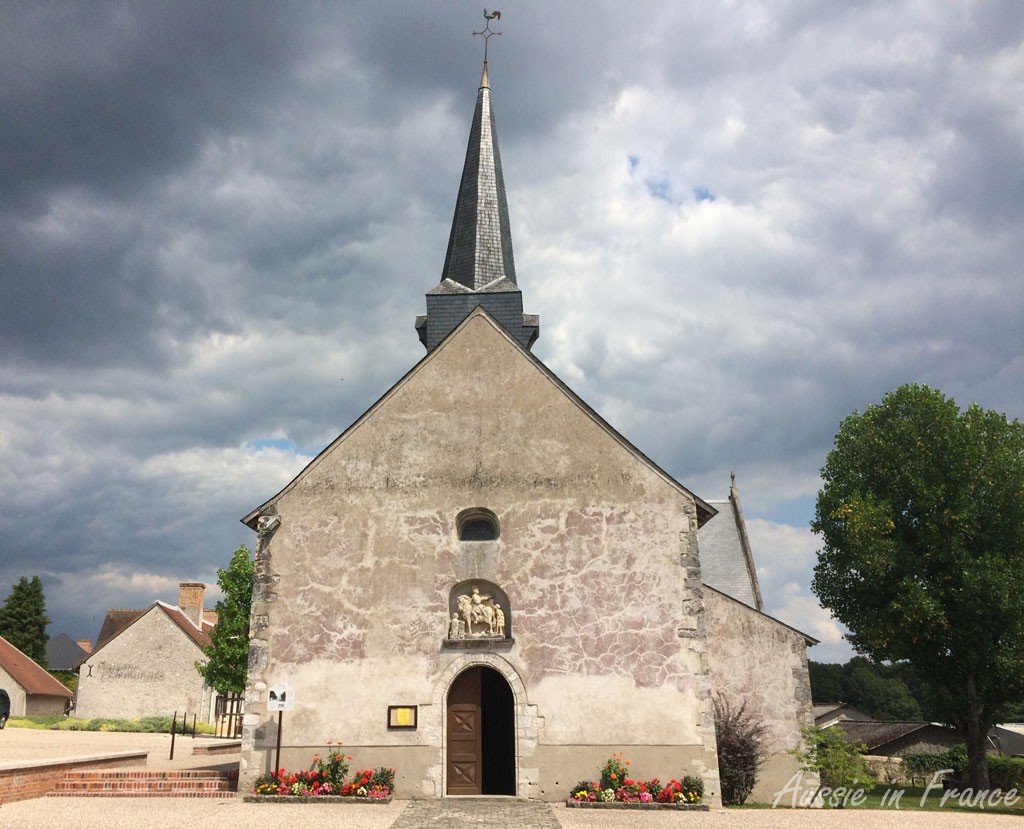
Saint Martin de Crouy
Not long after, we come across the 11th church of Saint Martin de Crouy which coincidentally I published just a few days ago on Blois Daily Photo. Once again I astonish Jean Michel by telling him what’s inside the church! I also take a better photo of the sculpture of Saint Martin on the façade. By now, the storm clouds are looking more threatening.
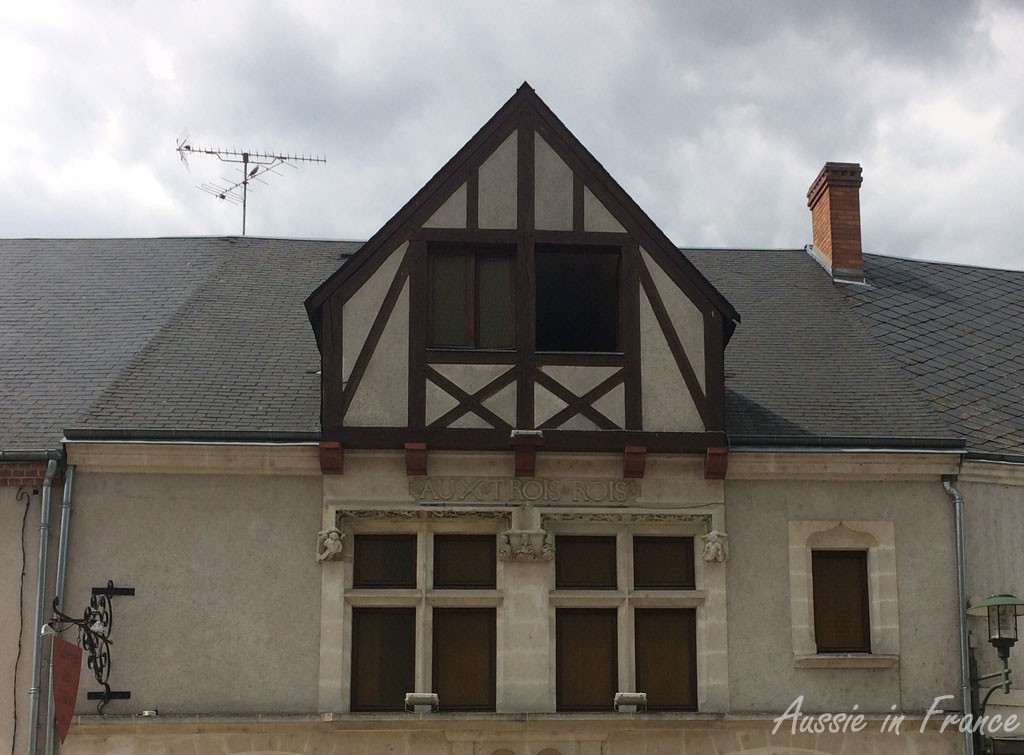
Auberge des Trois Rois
By the time we reach Saint Laurent, we’ve ridden about 25 kilometers straight and I’m well and truly ready for a cold drink. The main street has a couple of interesting buildings, including Aux Trois Rois or the Three King Inn. Built in the 15th century, it welcomed such distinguished guests as Philippe le Bel, Louis IX, Charles VIII, Louis XIV, Alfred de Musset, Jean de La Fontaine, d’Artagnan and maybe even Joan of Arc. Unfortunately, it was dismantled between 1780 and 1781 and sold in several parcels. The mullion windows are copies of the original structure, I’m sad to learn.
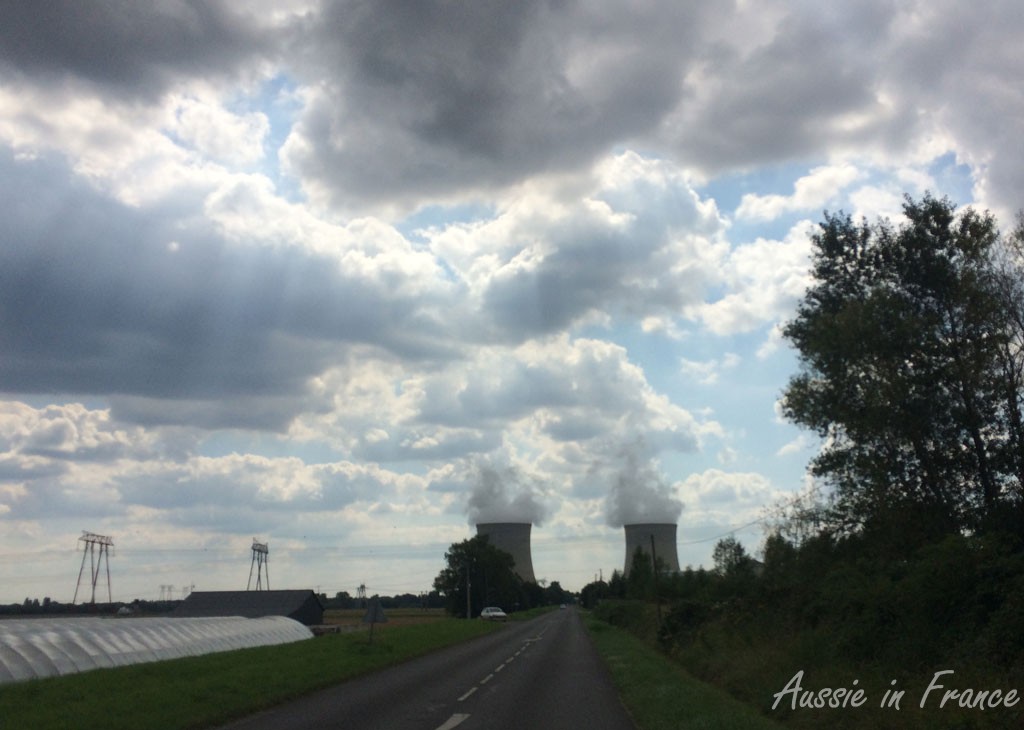
Saint Laurent de Nouans nuclear power plant
To my disappointment, no friendly café comes into sight and instead we find ourselves on a 70 kph road taking us straight towards the Saint Laurent NUCLEAR POWER PLANT. Now why didn’t I realise that before when I looked at the map?
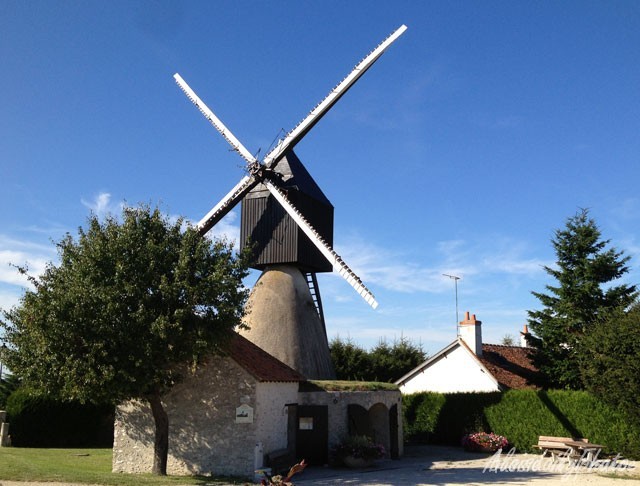
Saint Jacques windmill at Saint Laurent de Noans taken on a previous visit
I rant and rave about the inappropriateness of putting a nuclear power plant on a cycling itinerary and we eventually reach the beautiful Saint Jacques windmill we have already visited on a previous occasion. Still no café …
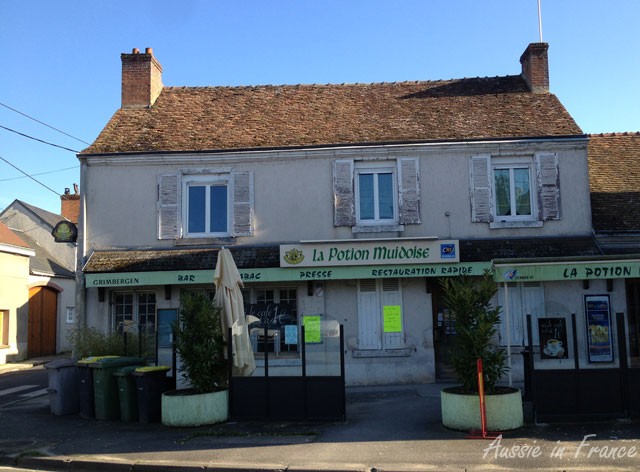
La potion muidoise which is a reference to the druid’s magic potion in Astérix, also taken on a previous occasion
We finally get to Muides after a very bumpy ride along the river thankful that it hasn’t actually rained. By then, we’re so near to our destination that the thought of the only somewhat decrepit café in Muides with its local bar supporters, no longer appeals. Also, it might be closed the way it was last time …
Loire between Muides and Saint Dyé also taken on a previous ride
We cycle the last few kilometers back to Saint Dyé but the sky is muggy and not nearly as nice as the last time. I surprise myself by going straight up the hill next to the church almost effortlessly. I don’t know where that energy suddenly came from. In the future though, we’re going to remember only to do itinerary 11 and ignore 11 bis. A nuclear power plant indeed!
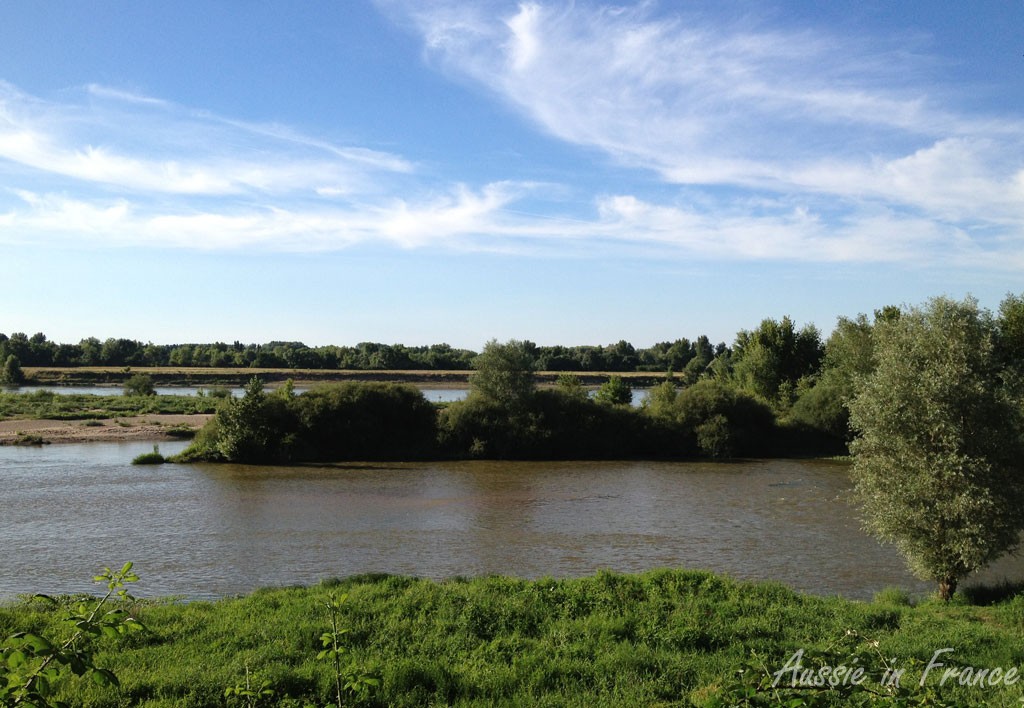
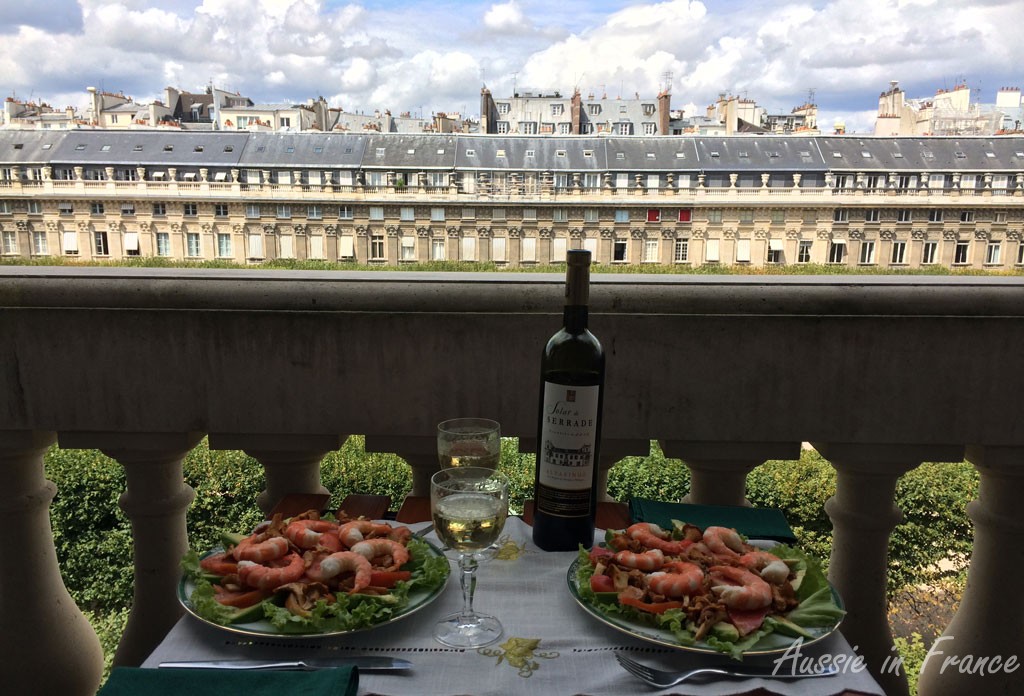
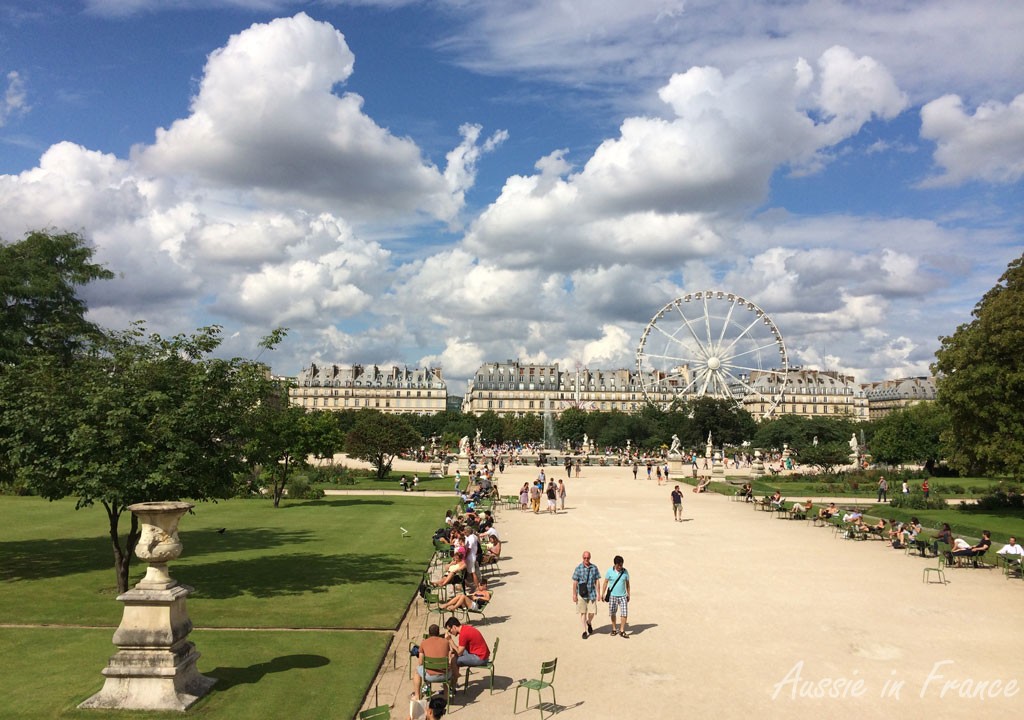
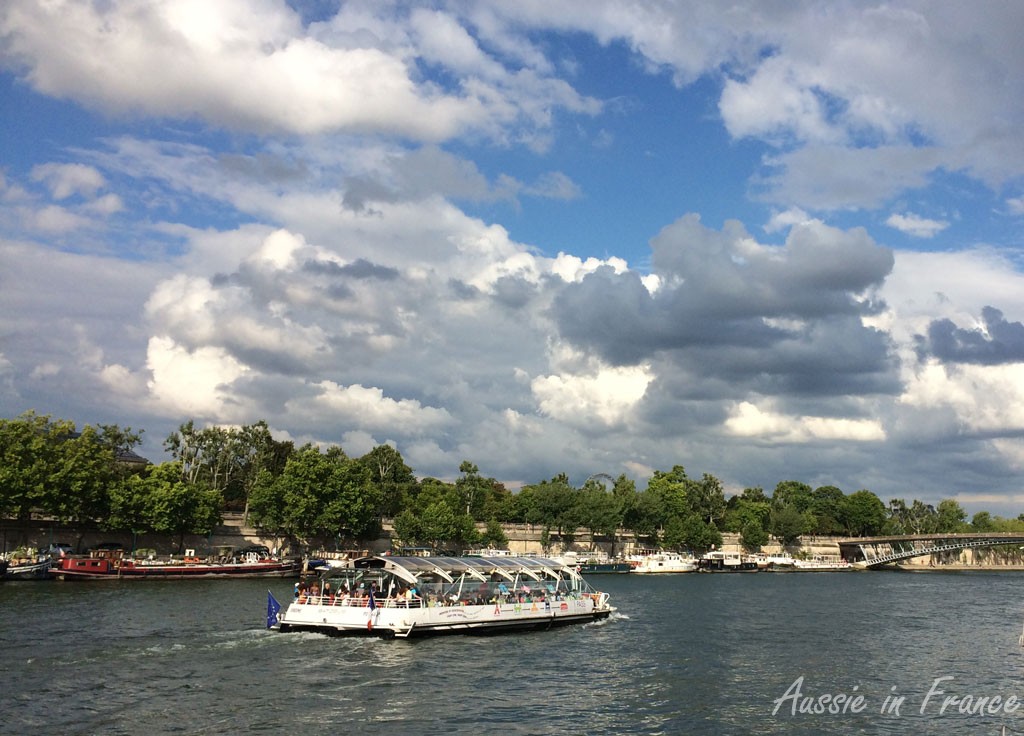
We don’t often find ourselves in Paris on a sunny Sunday in August without our bikes, so after a leisurely lunch on the balcony, testing a new vinho verde, we went for a walk along Berges de Seine from the Orsay Museum to the Floating Gardens. I have to say we were a little disappointed compared with last year, perhaps because there was nothing new. But the sky was amazing.
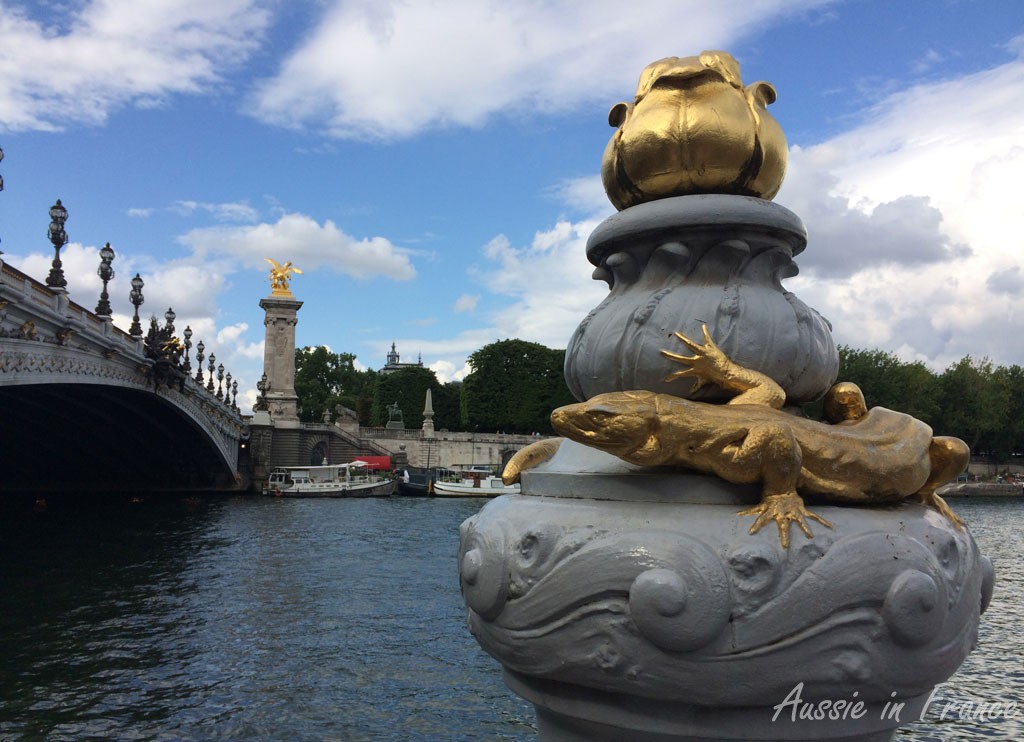
Lunch on our balconyThe Tuileries GardensBoats on the SeineThe Alexandre III Bridge
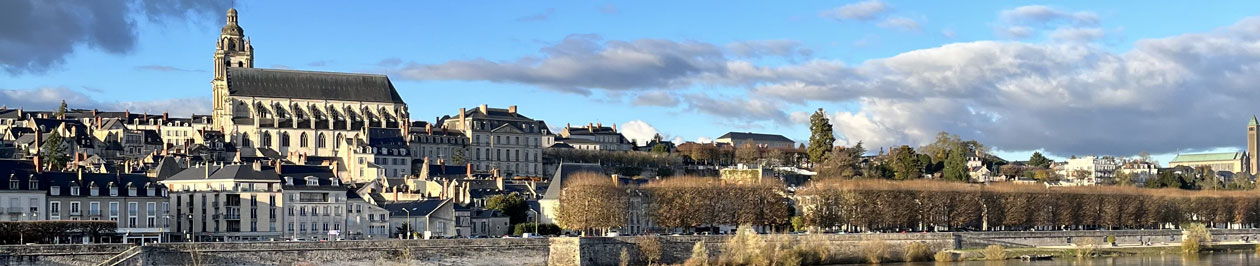
 After a slow but scenic drive through the flat Polish countryside we slipped through the abandoned border crossing and I was finally in the Baltic States. I’ve always been curious about this part of Europe. With so few travellers making their way this far east, I wanted to see what everyone was missing out on, if anything. While my road trip was officially starting in thegorgeous capital of Estonia, the drive from Warsaw required a quick stopover in Kaunas, Lithuania’s second largest city. Read more
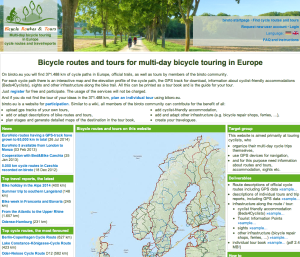 The last day of craziness is upon me as I get ready to leave for my bicycling trip to Normandy and Brittany. But before I leave, I wanted to pass along this information about a great bicycle trip planning tool that I discovered recently. I received a note from Ans Leenders from the Netherlands who was having problems trying to download GPS information for an upcoming trip along the Via Rhona. For whatever reason, he was having technical difficulty accessing the GPS files from the Via Rhona website. In the course of trying to find another place to access the GPS data, Ans discovered Biroto and luckily he passed the website on to me. And I am now passing it on to you! Read more
 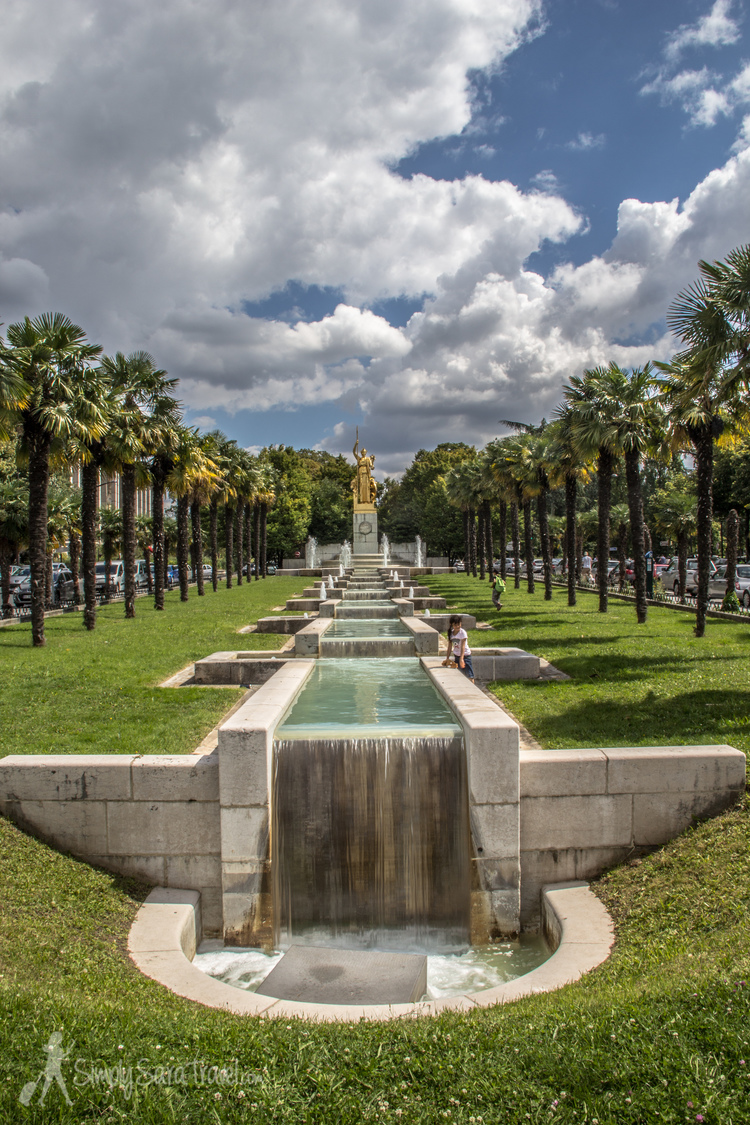 A close friend of mine just left Paris, and while I could write a month’s worth of posts on how much I will miss her, let’s focus on the positive: The bucket list. While “bucket list” means to most people “a list of things to do before you die,” for any American expat in Paris it has a less tragic meaning: “The list of sights to see, food to eat, and cities to visit before returning to the United States.”