Travel Photos – Vendôme

Considering the number of canals that run through it, I’m surprised that the mediaeval town of Vendôme on the Loir River (not the same as the Loire), 35 k from Blois, is not called the Little Venice of Beauce after the surrounding flat wheat country. It turned out to be unexpectedly pretty. Every time we turned a corner, we saw a little canal, an archway or a tiny street lined with architectural marvels. Although it was bombed during World War II and many of its half-timber houses destroyed, much of its mediaeval architecture has survived. Although we started out sunny, clouds came over during the first part of the day but after lunch the blue sky returned and the panorama from the ruined castled above the town was quite striking.

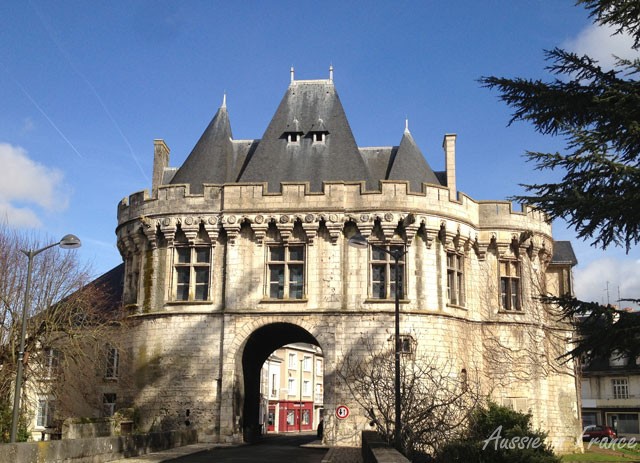
Porte Saint Georges, at the entrance to the town on the Blois side, 15th century. The Renaissance medallions were added in the 16th century


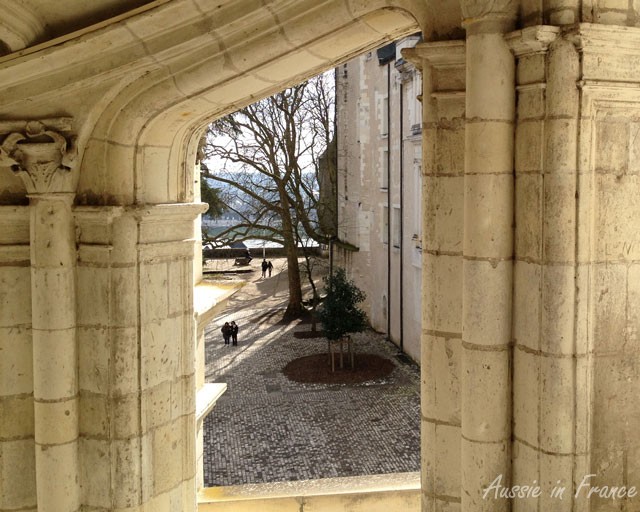
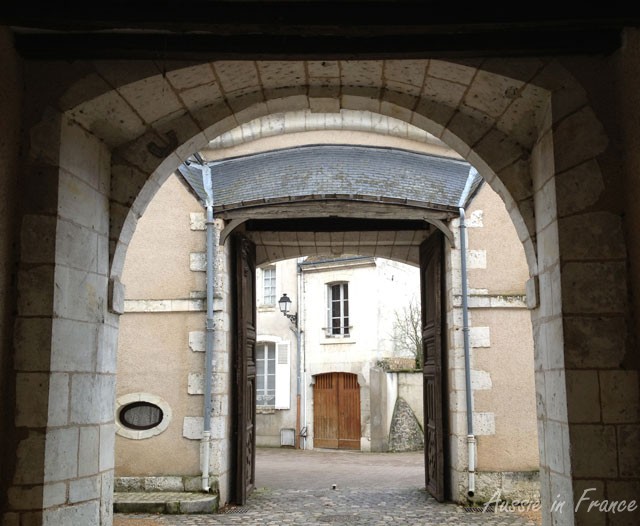
One of the town's many archways. This one leads from the town hall, originally a college, into one of the interesting little streets of Vendôme
One of the town’s many archways. This one leads from the town hall, originally a college, into one of the interesting little streets of Vendôme. Note the low bull’s eye window on the left.


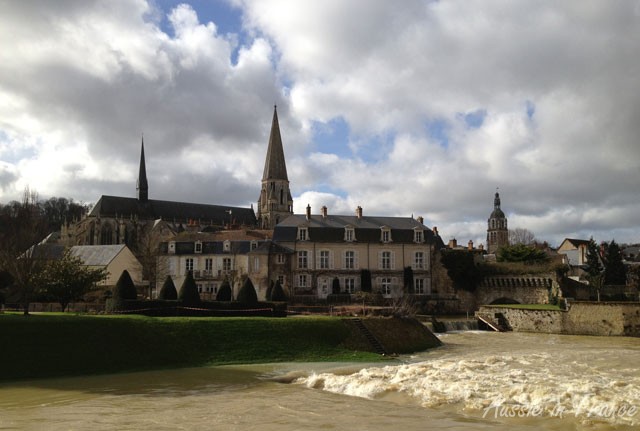
Looking towards Porte d'Eau, fortified in the 13th and 15th centuries. A dam was built to control water for one of the town's many watermills.
Looking towards Porte d’Eau, fortified in the 13th and 15th centuries. A dam was built to control water for one of the town’s many watermills.


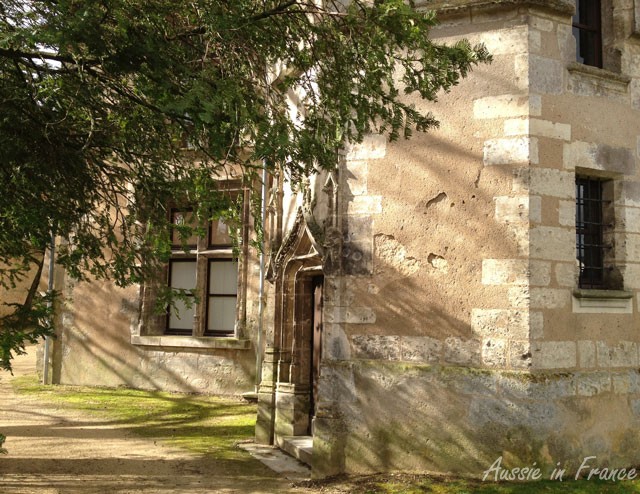
A beautiful Renaissance door next to Trinity Church
A beautiful Renaissance door and mullion window next to Trinity Church


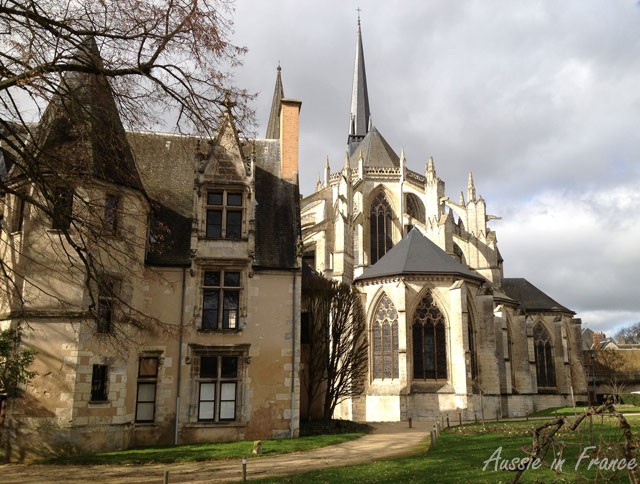
The east end of Trinity Church rebuilt in 1308.  On the left is the building with the Renaissance door.
The east end of Trinity Church rebuilt in 1308. On the left is the building with the Renaissance door and more mullion windows.


The ruins of the 11th century castle
The ruins of the 11th century castle on top of a hill, understandably a favourite promenade for the locals.


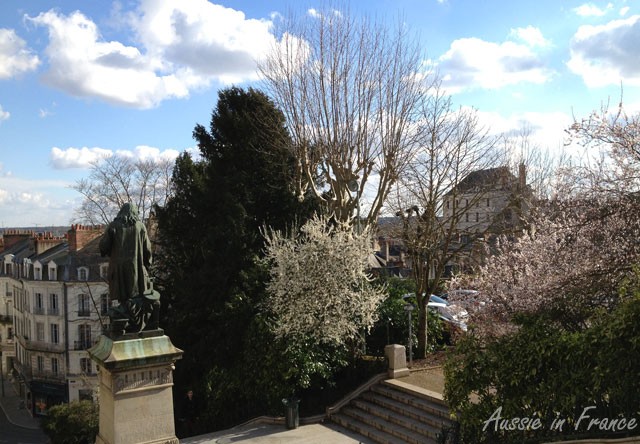
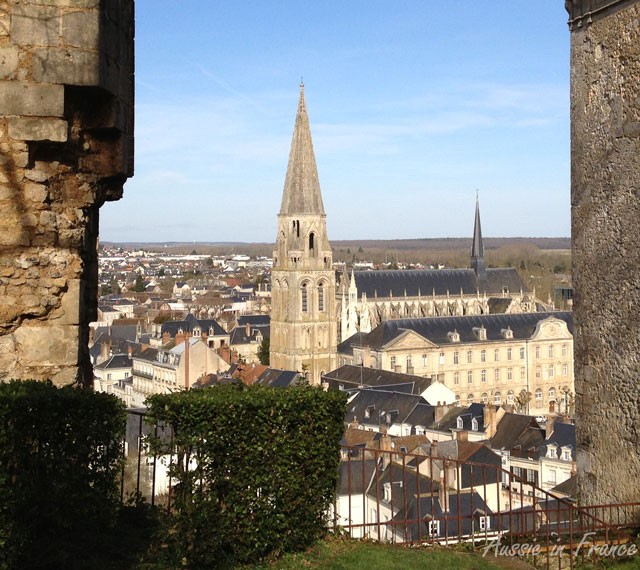
The stunning view of Trinity Church from the castle ruins
The stunning view of Trinity Church from the castle ruins with Trinity Church on the right and Saint Martin’s bell tower on the left with the Loir River in the foreground.


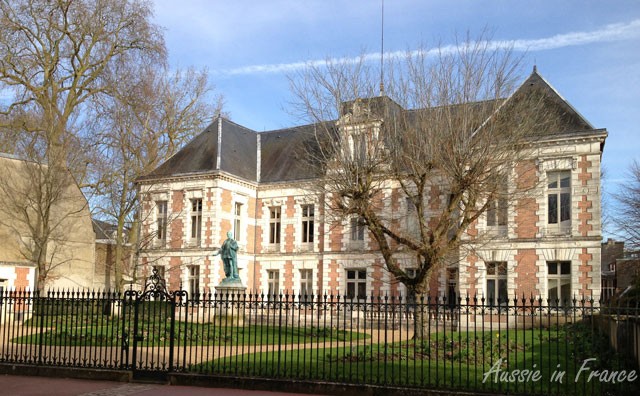
Built in 1866 to house the library, museum and archeological society. Now contains the library.
Built in 1866 to house the library, museum and archeological society. It now contains the library.
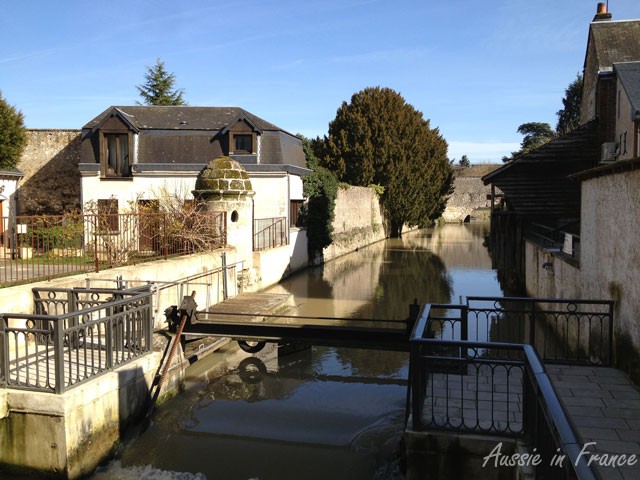
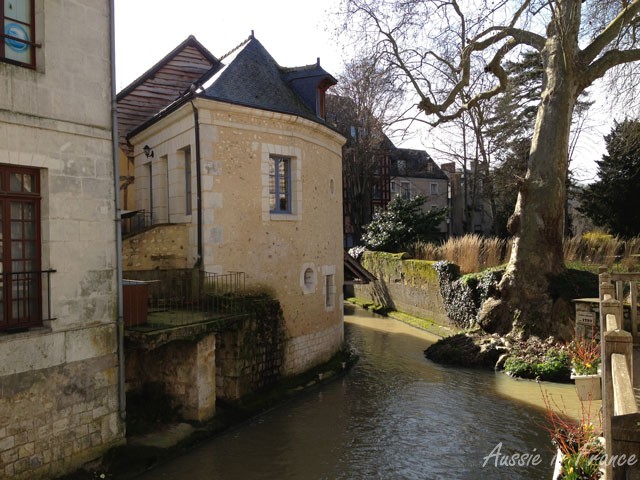
One of the many canal views.
One of the many canal views. Note the round tower on the left.


Another canal view
Another canal view Imagine it in the summer when all the planters are full of flowers.

We had an excellent lunch at Le Rond de Serviette, a recently opened restaurant on Rue Poterie with excellent reviews. Main dish under 10 euro. Friendly service.


Friday’s French – se promener, marcher

Anglosaxons do a lot of walking – well, at least in theory!

Lors d'une promenade le dimanche à Chouzy avec nos amis
Lors d’une promenade le dimanche à Chouzy avec des amis – During a Sunday walk in Chouzy with friends

We walk to the bakery. We go for a little walk. We walk in the country. We do a 10 kilometer walk. We take the dog for a walk. We walk someone home. We go on a long walk to see a castle. We walk home in the dark.

So, with all this walking, many people look for a verb in French which will be just as handy. Only there isn’t one!

On va à la boulangerie à pied. On fait un petit tour. On se promène à la campagne. On fait une promenade de 10 kilomètres. On promène le chien. On accompagne quelqu’un chez lui. On fait une excursion à pied pour visiter un château. On rentre à pied avec la nuit.

Note that unless you’re walking the dog (or someone else, such as a child or your aged grandmother), se promener is always reflexive.

And have you noticed that, so far, we haven’t used marcher which is what we all learn at school to mean “walk”!

So when do we use marcher?

Let’s go back to the bakery. If I were to say, “I walked right to the bakery”, I could use marcher: j’ai marché jusqu’à la boulangerie. I could also say Je suis allé jusqu’à la boulangerie à pied.

You can use promenade for 10 kilometers if you went at a leisurely pace, but you’d say J’ai fait une marche de trois heures if you want to convey the idea that you were getting a lot of exercise. A 6-hour walk becomes a randonnée. I’m not quite sure though what the cut-off point is!

J’ai les jambes lourdes, je vais marcher un peu. My legs feel heavy. I’m going to walk for a bit.

Il marchait sans but. He walked aimlessly.

Elle marche en boîtant. She limps. You can also say Elle boîte but that would be a general statement and give the idea that it’s something permanent. Subtle, huh?

Il marche toujours à grands pas. He always strides along.

Le bébé marchait à quatre pattes. The baby was crawling. Now that’s a good one! And when baby takes her first steps, elle prend ses premiers pas. She walked at 9 months (yes, one of my did!) = Elle a marché à 9 mois.

Avec elle, il marche sur des oeufs. Literally, “with her, he walks on eggs” but we’d be more likely to say something like “He always treats her with great caution” or “He always skirts around her”.

And here’s an interesting proverb to finish up: C’est marche ou crève! It’s sink or swim (literally “it’s walk or die”).

I’m sure you have some other examples to share.

The Saffron Fair in Preuilly sur Claise

It’s our second day in Blois and Susan and Simon from Days on the Claise have invited us to their local saffron fair. I know next to nothing about saffron except that it comes from the pistils ofcrocuses. Even that’s not right – it actually comes from the stigmas which are a part of the pistils.

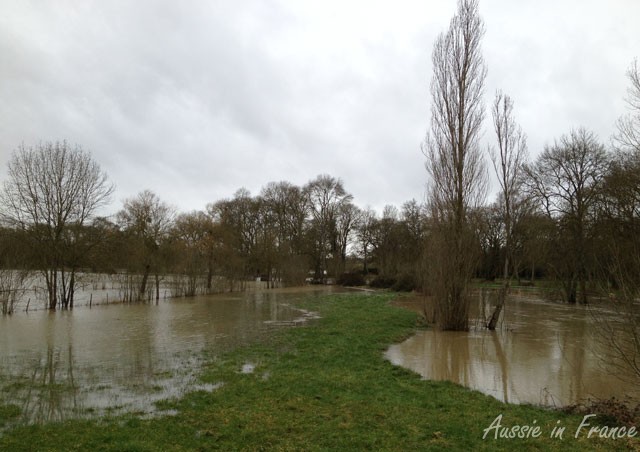
Fields under water on the way to Preuilly sur Claise

The day’s not brilliant but at least it’s not raining. We’re amazed at the high water level in the fields as we get closer to Preuilly which is about an hour and a half from Blois through Montrichard and not far from Loches.

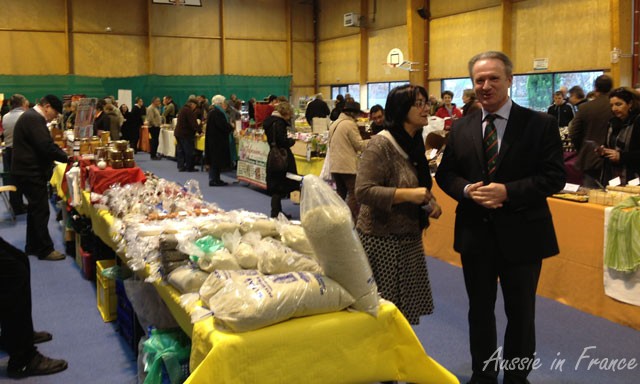
Saffron fair in the local gymnasium in Preuilly

After inspecting Simon’s recent staircase varnishing job, we walk down to the gymnasium. Inside it’s all hustle and bustle with lots of gaily decorated stalls, not all selling saffron, I’m surprised to see, but then, there’s only so much saffron you can use in a year, isn’t there?

Saffron-flavoured verrines

We pay for our saffron-themed lunch (18.50 euro) – Susan has already booked our table – and start sampling some little verrines but we can only remember one of them now:  queen’s scallop in pumpkin soup flavoured with saffron.

Wrought-iron lamp stand

There are all sorts of goods on sale. The first stop is a wrought-iron craftsman. I wouldn’t mind having a lamp post like this one but it’s a little expensive …

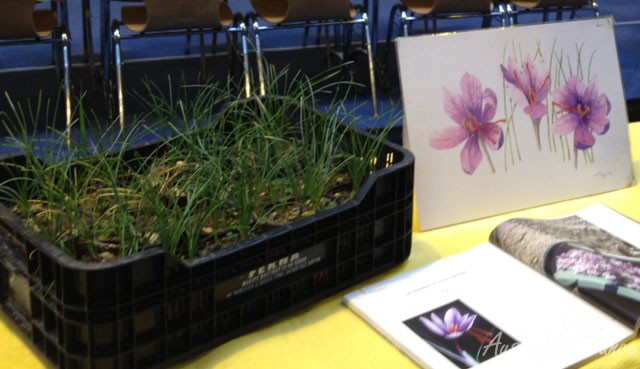
Crocus plants
Crocus plants

The next stand has some crocus plants on display. Although saffron crocuses have been cultivated in Touraine since the Middle Ages, no one really knows where they come from. Some think Tibet. You need 150 to 200 flowers to obtain 1 gram of saffron which explains why you should never buy powdered saffron – it’s probably something else altogether!

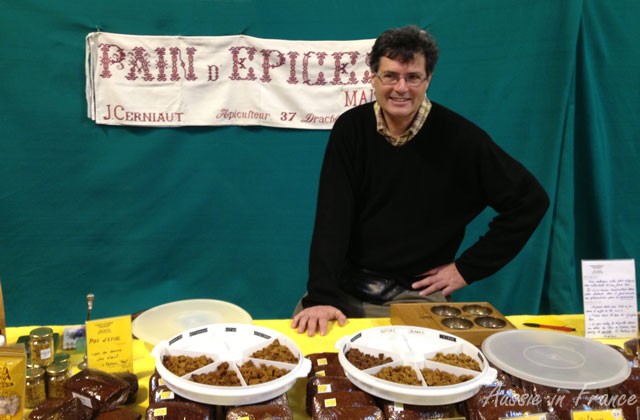
Pain d'épices
Pain d’épices

Several stands are selling pain d’épices flavoured with saffron. I learn that you always infuse the stigmas in a liquid such as water, milk, cream and wine and add them at the end of the cooking time. Too high a heat destroys the aromatic molecules.

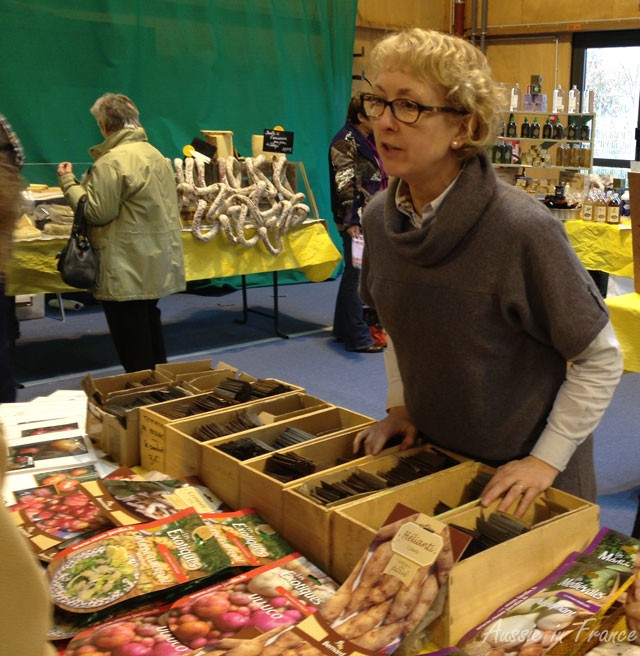
Unusual fruit and vegetable stand

Another lady is selling unusual fruit and vegetable seeds so I buy some tubers called mashua (tropaeolum tuberosum) that were already being served up 5500 years in South America. I’ll let you know how they turn out!

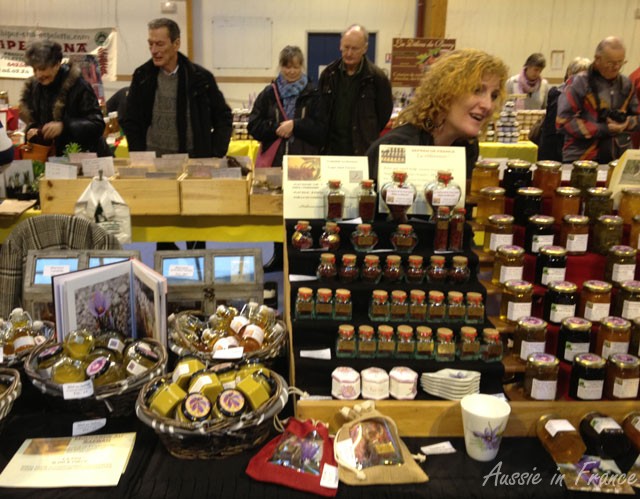
Lots of little saffron-flavoured goodies

Next stop is a stand selling little bottles of saffron-flavoured vinegar, honey, jam, etc. I buy  a few to keep as gifts and am given a neat little jute carry bag.

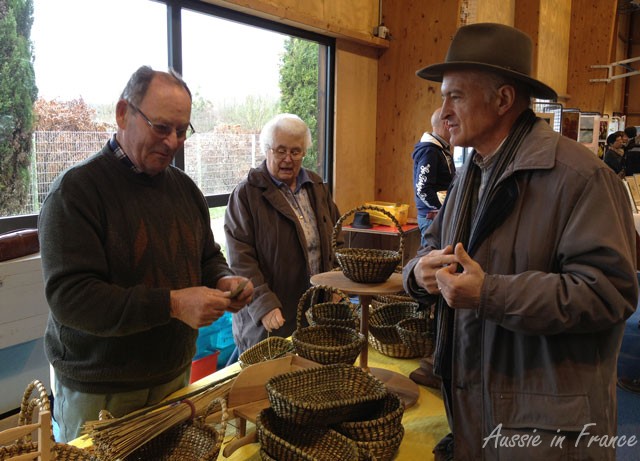
The basket-making pensioner

We are intrigued by a man selling baskets that he makes using local rushes and brambles. They start out green and gradually become brown. The basket-maker explains that it’s a pensioner’s hobby and that he only sells the baskets to make room for more. At 10 euro a basket, it’s a bargain. They are all beautifully finished. I choose one that turns out to be exactly the right size for our local pain aux céréales.

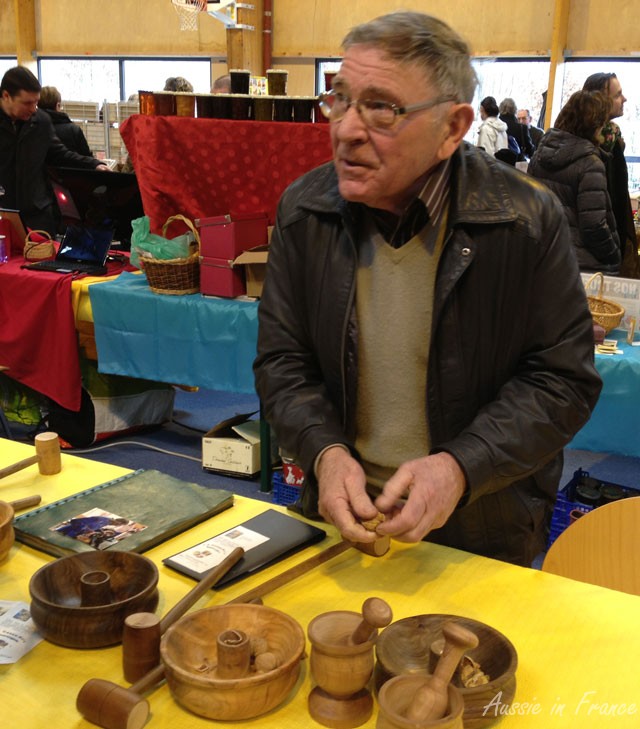
Nutcracker man
Nutcracker man

Another man is selling the same type of nutcracker we have at home that I think is perfectly useless so I get him to demonstrate. Obviously I’ve been using the wrong technique. I can’t wait to get back to Paris to see if I can crack perfect nuts without putting the shells all over the kitchen.

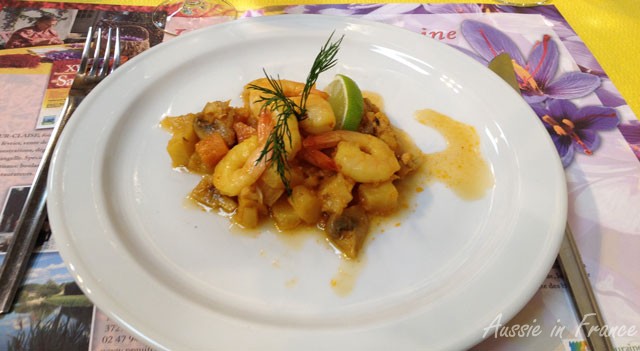
Saffron prawns
Saffron prawns

By now it’s lunchtime and my feet are killing me so we make our way to the dining area. We have a prawn-based entrée with saffron (which is often used to accompany mussels, scallops and fish), followed by guinea-fowl and saffron cream sauce.

Dessert is a local saffron-flavoured version of tiramisu which is one of my very favourite desserts.  We choose a local crémant followed by a local sauvignon.

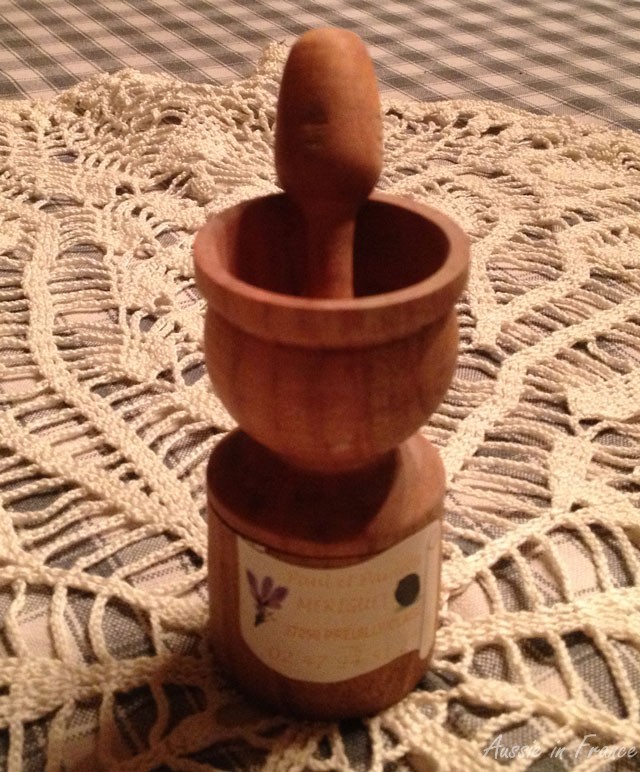
Saffron mortar and pestle with container

We don’t buy any saffron at the fair because Susan gives me a special little saffron container with a mortar and pestle on top made by friends in Preuilly. Jean Michel has picked up various brochures along the way, many of which contain saffron recipes. Since tomorrow is a fast day, I’m going to try an omelette au saffran.

Weekly Blogger Round-Up: Advantages of Paris in Winter – Surprising Things about Istanbul – Eating Rules for French Children

In this week’s Blogger Round Up, Carolyn from My Sydney Paris Life shares nine big reasons to love Paris in winter (even though it hasn’t snowed this year); Jo Karnaghan from Frugal First Class Traveler takes us to Istanbul in the first of a series of posts, while Mind Body Green gives ten very interesting eating rules followed by French children. Enjoy!

Nine Big Reasons to Love Paris in Winter

by Carolyn Barnabo from My Sydney Paris Life, writing about global families and change and life in special geographic places that have captured her heart.

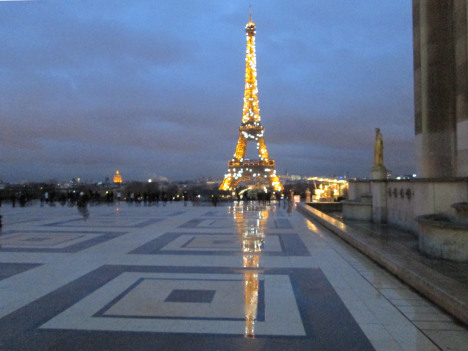
eiffel_tower_reflectionWith our global family and so many destinations on our ‘we should go there’ travel list, I’m often wishing we could physically be in more than one place at one time. I miss family members, I miss my share of special events, and I miss Paris.

Paris is a favourite destination any time of year. Here are nine big reasons I’m missing Paris in winter. Read more
Three things that surprised me about Istanbul

by Jo Karnaghan from Frugal First Class Travel, an Australian who loves to travel – especially in Europe – and who has gradually learned how to have a First Class trip on an economy budget, without missing out on anything!

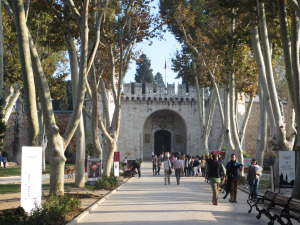
istanbulI don’t know about you, but when I travel to a new place I always some preconceived ideas about what I am going to experience.  My trip to Istanbul was no exception.  I was delighted to discover some of my preconceptions exceeded my expectations, and some of my negative preconceptions were just plain wrong!

Visiting the hammam was heavenly

I wrote previously about how much I enjoyed my hammam experience at Ayasofya Hurrem Sultan Hamami.  While I was looking forward to going to the hammam, I didn’t realise just how enjoyable it would be.  A good session at a reputable hammam really is like a wonderful treat at a very exotic spa.  If you like massages, facials and other spa treatments, I thoroughly recommend a trip to the hammam – there really is no experience like it! Read more

10 Eating Rules French Children Know But Most Americans Don’t

by Rebeca Plantier writing for Mind Body Green, CEO and co-founder of Fit to Inspire, an online and offline community inspiring women to greater fitness and well-being regardless of their age, shape or level of fitness.

How the French eat, age, dress, raise their children and live in general is a real talking point these days. So, as an American mother of three half-French kids, I figured I’d add my two cents to the conversation.

I lived in France before becoming a parent, but eventually it was my kids who taught me everything I need to know about eating like a French person: Eating, and staying slim and healthy, isn’t just about what you eat, but also how, when and why. Yes, French people enjoy junk food occasionally, and sometimes they eat between meals, but people don’t just let loose every day. There’s a code of conduct for food, for big people and little ones alike. Here, in 10 quick life lessons, is what my kids taught me about food. Read more
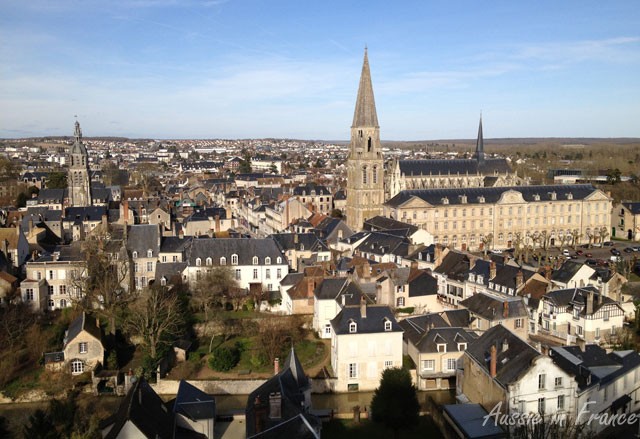
Photo of the Week – Stepping up to Blois

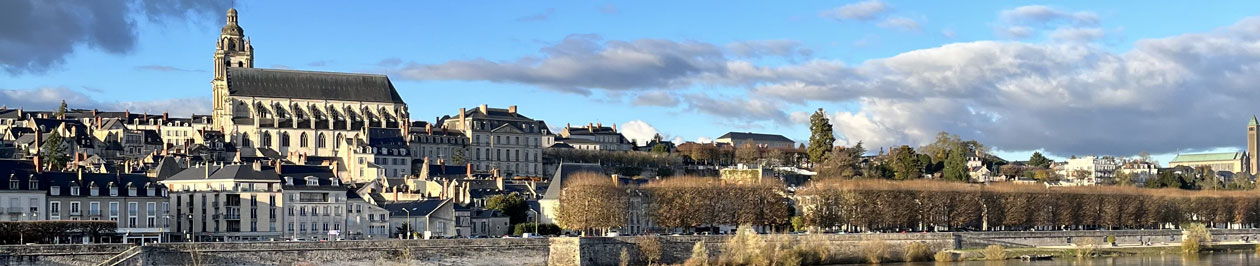
blois_stepsWe arrived in Blois on Friday and are here for a month, the longest we’ve ever stayed. This morning, we were rewarded with bright sun and blue skies so we went for a walk on the other side of the Loire River. The church is that of Saint Nicolas, probably the most noticeable monument in the city while the church in the header photo is the Cathedral.

For more photos of Blois, click on my other blog, Blois Daily Photo, which has a commentary in French and English.

And just to fill you in on the chicken situation: in January, we noticed that the enclosure was open during the daytime and so was the front gate. The half-a-dozen chickens run around the large yard and sometimes out into the street. There was a not-too-annoying rooster last time as well but we haven’t heard it this time. So unless the neighbours change their minds again, the chickens should no longer be a problem. We won’t have a noisy smelly poultry yard next door in the summer. We, have, however, learnt our lesson and will put the garden of the gîte behind it and not in front of it. It will actually be much prettier.

Friday’s French – aimer & adorer

How could I not talk about aimer on Valentine’s Day?

heart

My first French boyfriend, many moons ago, told me that je t’aime beaucoup was not as strong as je t’aime on its own which seemed very strange to me. I already knew that je t’aime bien means “I like you” rather than “I love you” but I was surprised that je t’aime beaucoup didn’t mean “I love you very much”.

I was therefore equally surprised the first time Jean Michel said Je t’aime beaucoup. I explained what I had been told but he said he’d never heard of it. Yet my Collins/Robert bilingual dictionary says that aimer beaucoup means to like very much or to be very fond of. So who am I to believe?

Il l’aime d’amour means he really loves her. Elle est amoureuse means she’s in love. Il l’aime à la folie means he’s crazey about her or he adores her. Ils s’aiment means they love each other or they’re in love. Elle est amoureuse (de lui) = She’s in love (with him).

If je t’aime bien means “I like you”, how do you make the distinction between like and love when you’re not talking about people? For example, how would you say “I like chocolate” as opposed to “I love chocolate”? Well, you could say J’aime bien le chocolat or j’aime le chocolat and j’adore le chocolat.

There is no mistake about the last one – it means you’re a chocoholic (which incidentally is an accro au chocolat, accro being short for accroché meaning addict). J’aime bien le chocolat means you can take it or leave it and j’aime le chocolat means you like eating chocolate.

J’adore is one of the expressions that you hear all the time in French so much so that it is easy to forget that we don’t use “adore” in English in the same sense. You adore your children (well, most of the time), you worship the Lord (if you’re a believer) but you can only love chocolate.

J’adore le cinéma. J’adore le fromage. J’adore tout ce qui est français. J’adore sa façon de s’habiller.  J’adore tremper mes tartines dans le chocolat chaud (I love dunking my bread in hot chocolate). You could go on forever …

If aimer is followed by mieux, it means “prefer”. J’aime mieux lire que d’écrire = I prefer reading to writing.

Love, of course, is amour but love at first sight is a coup de foudre or stroke of lightening, which is much more graphic, isn’t it?

All my love, Patrick = bises, Patrick while love and kisses or xxx = bisous, gros bisous ou grosse bises. However, if you want to say “Mark sends his love”, you’d say Marc t’envoie ses amitiés ou Marc t’embrasse, which is stronger.

In French, passion is often used to express love, but surprisingly, it usually applies to a hobby or passtime. Le théâtre était sa grande passion = the theatre was her (or his) great love. Sa première passion a été le foot = His first love was football.

He is the love of my life = c’est l’homme de ma vie but football is the love of her life = le foot est sa grande passion. Don’t you think that’s funny?

And here’s a proverb before we go. Love me, love my dog = Qui m’aime aime mon chien.

Weekly Blogger Round-Up: Colmar in Alsace – Zadar in Croatia – Saint Valentine’s Day in Paris

In this week’s Blogger Round-Up, Carolyn from Holidays to Europe takes us to Colmar, which is one of my favourites places in Alsace, with its picturesque canals while Chasing the Donkey gives us an insider’s tour of Zadar in Croatia with it’s famous Sea Organ. To finish off, Mary Kay from Out and About in Paris gives us lots of unique ideas for Saint Valentine’s Day in Paris. Enjoy!

A Short Guide to Colmar, France

by Carolyn from Holidays to Europe, an Australian based business passionate about sharing their European travel expertise and helping travellers to experience the holiday in Europe they have always dreamed of

colmar-franceWith only a couple of days in the Alsace region of France, I didn’t have much time to spend in Colmar but in the few short hours I was there, I quickly realised why it is such a popular town with tourists from all over the world – it is absolutely gorgeous!

Thanks to its history as a major trading post and river port in the 16th Century, Colmar is one of the prettiest cities in France. Wealthy merchants built spectacularly colourful houses alongside the canal, and even today, centuries later, they ooze charm. With a mix of French (the window shutters) and German (half-timbered facades) architecture, the houses of the former trading areas of Colmar are a reminder of the heady days when wine from the neighbouring Alsatian vineyards was shipped along the canal. Read more
What to see in Zadar

By Chasing the Donkey,  a Mum & wife, now Australian expat who packed up her very typical Aussie life in May 2013 and shifted it along with her Croatian Husband and Son to rebuild the old house they inherited in Croatia & make it their home.

sea_organ_zadarBe sure to to make a stop in Zadar if you plan to explore Northern Dalmatia, it’s a great destination to spend  time in, its a great choice to use as a base to see Plitvice, Paklenica or Krka National Parks. So, what should you see while you’re in Zadar?  We’ll there is no doubt that you’ll enjoy drinking coffee overlooking the Grand Roman Forum that is over 2,000 years old and the Church of St, Donatus among the many sights – but I guarantee you’ll end up being drawn to 2 of Zadar’s most unique attractions. The Sea Organ & the Greeting to the Sun. Read more
Love is in the air: lots of unique ideas for Valentine’s Day in Paris

by Mary Kay from Out and About in Paris, an American by birth, Swiss by marriage, resident of Paris with a Navigo Pass for the metro that she feels compelled to use

valentineWhether you’re single, married or divorced, there’s a lot happening in Paris on February 14:

Feel like a star – For Valentine’s Day, the RATP is offering you and the person of your choice a FREE glamor shot. Five Harcourt Studio photo cabins will be available from 12:00 – 6:00 pm at the following stations: Gare de Lyon, Denfert-Rochereau, Villejuif-Louis Aragon, La Motte Picquet-Grenelle and Jaurés.

One minute to “spread the love” at the Louvre: At precisely 14h14 (2:14 pm) on February 14, a flashmob will gather in front of the pyramid at the Louvre to kiss their lover, best friend, stuffed animal, dog or bicycle. Couples, families, friends – everyone is invited to share a minute of love. KISS Flashmob in Paris event page. Read more
Melt-in-the-mouth foie gras au sel

I love foie gras. But not just any foie gras. The best foie gras I had ever eaten until recently was at Jean Michel’s parents’ place about 15 years ago. It must have been an important birthday because there were caterers. It just melted in your mouth. I have never forgotten it!

Our melt-in-the-mouth foie gras au sel at New Year

We have been making our own foie gras for some years now and I described how to make it in a previous post which you should also consult if you don’t know how to devein foie gras. Last summer, I went with my Australian friend Kathy Stanford from Femmes Francophiles to Le Mesturet because she wanted foie gras. As luck would have it, they were serving three different types that day, including foie gras au sel which is marinated in salt but not cooked in the oven. It, too, just melted in the mouth, one of the reasons being that not cooking it keeps all the fat inside.

Step 1: Soak foie gras in 1/2 litre of milk with enough water to cover.

So I decided that next time we made foie gras for Christmas, we’d try foie gras au sel. When we went to La Maison d’à côté in Montlivaut near Blois at the beginning of December, the chef, monsieur Laurenty, offered to provide us with fresh foie gras from his special supplier in the south-west of France where they sing to the ducks while force-feeding them.

Step 2. Separate the foie gras into its two lobes.
Step 2. Separate the foie gras into two lobes.

As a result, the quality of our foie gras was irreproachable. Foie gras au sel turned out to be very very easy to make, much easier than part-cooking it in a bain-marie in the oven. It’s often quite difficult to get the cooking time right.

Step 3. Devein the foie gras (see other post). Even if it falls apart, it doesn't matter. You can put it back together again later.
Step 3. Devein the foie gras (see My Foie Gras post). Even if it falls apart, it doesn’t matter. You can put it back together again later.

We used the same recipe as we usually do except that we replaced the white port wine we usually use with pineau des Charentes. The result was excellent.

Step 3. Put a layer of cling-film in the terrine then line the bottom with foie gras. Sprinkle over the spice mixture. Sprinkle with port wine. Add the bits and pieces of foie gras and more spices and wine. Then cover with the remaining foie gras. Sprinkle over the rest of the spices and wine. Wrap tightly make a block.
Step 4. Put a layer of cling-film in the terrine then line the bottom with foie gras. Sprinkle over the spice mixture. Sprinkle with port wine. Add any odd bits and pieces of foie gras and more spices and wine. Then cover with the remaining foie gras. Sprinkle over the rest of the spices and wine. Wrap tightly to make a compact block.
Instead of cooking the foie gras, you wrap it in gauze pads, place it in a box (we used a wooden wine box) and cover it with coarse salt. You store it in a naturally cool place (our tower room is about 10°C) for 17 hours, remove the gauze, press into a terrine, cover and keep in the fridge for about 10 days before eating.
Step 4. Take off the cling film and wrap in two layers of gauze. Place a layer of coarse salt in the bottom of a box. Add the foie gras then cover with more salt. Store in a cool room for 17 hours.
Step 5. Take off the cling film and wrap the foie gras in two layers of gauze. Place a layer of coarse salt in the bottom of a box. Add the foie gras then cover with more salt. Store in a cool room for 17 hours.

The result is OUT OF THIS WORLD. And, unlike last year, we were able to welcome in the New Year in front of our renovated Renaissance fireplace with champagne and melt-in-the-mouth foie gras.

Step 6. Place the foie gras in the terrine, press well and refrigerate for 8 to 10 days before eating.
Recipe
One 500 g lobe of foie gras 
7 g salt
1/2 g of freshly ground pepper
1/2 g of five spices
3 centiliters of white port wine
3 kilos of coarse salt.
A salt-proof box.
Time in salt: 17 hours.

Friday’s French – the subtleties of si

I’ve already talked about the fact that you don’t say oui merci in French but oui, je veux bien, but I didn’t think to mention si.

An Australian friend living in France and attending French lessons asked me the following question:

If someone repeats my order and says pas de lait (no milk) and that is correct I should answer with si not oui. Is this correct? I hope so. It would mean another consolidated learning.

I’m afraid I had to disappoint her. If she answered si it would mean that she DID want milk. She should answer “oui, c’est ça”.

Si, which is not Spanish as I thought the first time I heard it, is used in French to mean “yes” when refuting a negative that has just been used.

I think the best way to explain is by giving examples.

Tu n’en veux plus? (you don’t want any more?). If you say si it means, yes, I do want some more.

Finalement tu ne viens pas? (you’re not coming after all?). If you want to answer “Yes I am”, then you say si ou si je viens. However, if you say “oui je viens” you’d still be understood.

Il n’y a plus personne? (there’s no one left?). If there is someone left, you’d say si but if there is no one, you’d say, “non“.

Tu ne sortiras pas ce soir ! (you’re not going out tonight!). If you want to protest vehemently, you’d reply Si (oh, yes I am!).

You’re standing on a street corner. “Je ne vois pas de restaurant” (I can’t see a restaurant). Your friend says “Si, si, c’est de l’autre côté de la rue“. The si, si used here doesn’t have a literal translation. It’s refuting the fact that you’ve said you can see the restaurant but we’d hardly say “yes, it’s on the other side of the street”.

The rest of the time, si means “if” except when it means “while”, or “whether”. I’ve often noticed that the more subtle “while” is often misunderstood by Anglosaxons.

During the recent Hollande/Triereviller break-up, the Président said the following at his annual new year press conference:

Ce n’est donc ni le lieu, ni le moment de le faire [i.e. discussing his private life). Mais si je ne répondrai à aucune question aujourd’hui sur le sujet, je le ferai avant le rendez-vous que vous avez fixé. 

When I read the same quote in English in the New York Times (among others), I was somewhat surprised:

“This is neither the time nor the place to do so. If I do not go into detail about this today, then I will do so before the meeting which you refer to.”

That is not what he was saying. The “si” in this case does not mean “if”. He had absolutely no intention of speaking about the matter during the press conference. He was saying “While I will not answer any questions about this day, I will do so before the meeting which you refer to”. Not exactly the same, is it!

I agree that it’s very subtle in French which is not the diplomatic language par excellence for nothing. The meaning is probably easier to understand in the following example:

Si lui est aimable, sa femme est arrogante. That does not mean “If he is pleasant, his wife is arrogant” which would express the idea that his wife is only arrogant when he is being pleasant. The sentence actually means “while (ou whereas) he is very pleasant his wife (on the other hand) is arrogant”.

Do you have any other examples?

from the Tropics to the City of Light