Category Archives: French language

Weekly Blogger Round-Up: Apostrophes in French – Chenonceau & the War Effort – 3-star Hotels in Europe

An all-Australian cast for this week’s Blogger Round-Up. Wendy Hollands from Le Franco Phoney talks about a subject dear to my heart – the French language – and the apostrophe in particular. Susan from Days on the Claise takes us to back in time to one of my favourite châteaux – Chenonceau – which served as a military hospital during World War I. And to complete the list, ever-practical Jo Karnaghan from Frugal First Class Travel tells us what to expect in a 3-star hotel in Europe, often a far cry from what Australians are used to. Enjoy!

The French Love Affair with English Words

by Wendy Hollands from Le Franco Phoney, an Australian who writes about all things French in La Clusaz, Annecy and Haute Savoie as seen by an outsider …
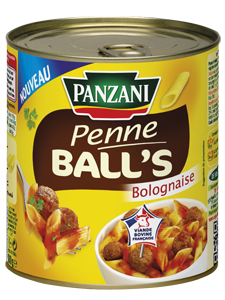
penneballsDid you know that France is the world’s most popular country for tourism? Despite their reputed gruffness, the French population must be doing something right, right? France is a proud nation of people who (sometimes illogically) support regional food and wine, get a little arty farty at times, and make me feel like a complete frump in comparison to their natural chic.

Their approach to language is no different. Who doesn’t love the sound of a French voice whooshing effortlessly through sentences? The rest of the world loves it and the French know it. They’re keen to preserve their language, as I’ve mentioned before with the Talkie Walkie (seriously) and the Academie français. Regardless, there’s a growing love of mixing English words into sentences. Read more

A Hundred Years Ago at Chenonceau

by Susan from Days on the Claise, an Australian living in the south of the Loire Valley, writing about restoring an old house and the area and its history and running Loire Valley Time Travel.
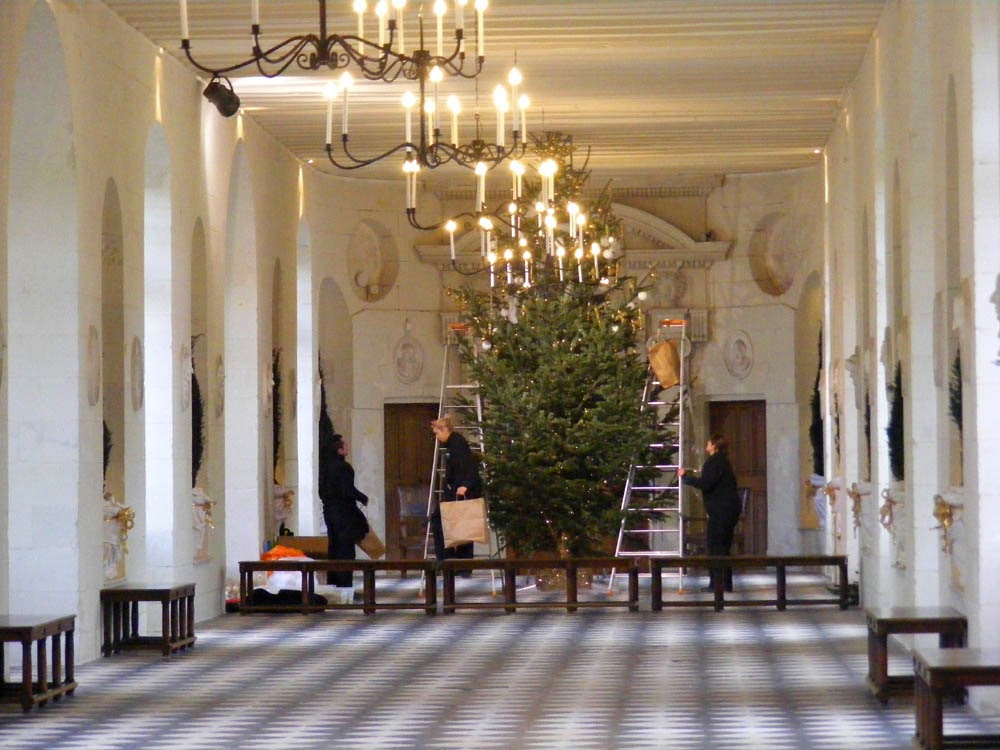
chenonceau_xmastree1914, and Chenonceau became a military hospital.

2254 wounded poilus, for the most part very gravely affected by their injuries, were cared for at the chateau over the course of the conflict and up to 31 December 1918. (The French soldiers were known as ‘hairies’, because of their luxuriant facial hair, especially moustaches.)

From 2 August 1914, the day war was declared, the industrialist and Senator Gaston Menier wanted to participate in the national war effort. He suggested to the War Minister that he could set up a temporary military hospital, at his own expense, in the Chateau of Chenonceau, which he had recently become the owner of, after the death of his brother Henri, who had bought the building in April 1913. Read more

Your First Trip to Europe – What to Expect in a 3-Star Hotel

by Jo Karnaghan from Frugal First Class Travel, an Australian who loves to travel – especially in Europe – and who has gradually learned how to have a First Class trip on an economy budget, without missing out on anything!
hotelsYou’ve decided to take your first trip to Europe – how exciting!  Now you need to make decisions.  What airline to book, what to do, and most importantly where to stay!  It’s very tempting to stick with the familiar and stay at a chain hotel.  You know what to expect, what the room will be like and how the plumbing will work.  But because this is frugalfirstclasstravel, a Hilton or Ibis just isn’t going to do it.  Small, locally-owned hotels typical of the location are what I actively encourage to add so much enrichment to your trip.  So in this post I’m looking at what to expect in a three star hotel in Europe.  I’m choosing a 3 star as it’s a good mid-point option for many travellers. Read more
Friday’s French – frais & fresh

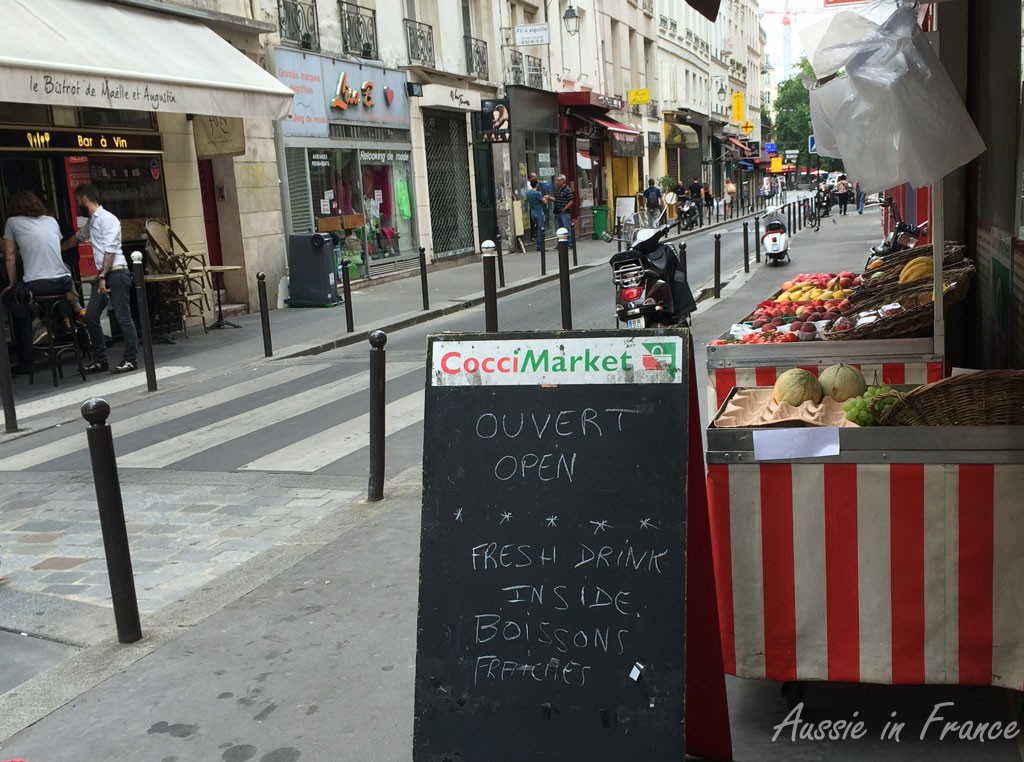
I keep walking past this little grocery store in our neighbourhood and seeing the sign: “fresh drink inside – boissons fraîches” and wondering whether tourists really understand that he’s selling cold drinks.

fresh_drinks

Tu as de l’eau fraîche? does not mean “Do you have fresh water?”, but “Do you have cold water?” L’eau froide is used as opposed to l’eau chaude, that is, cold water out the tap and not hot water. You can also say l’eau glâcée (iced water) to mean cold water out the fridge. And fresh water (as opposed to salty water) is eau douce.

L’air frais, on the other hand, means fresh air while l’air froid means cold air, as you would expect.

You can have légumes frais (fresh vegetables), oeufs frais (fresh eggs), pain frais (fresh bread) and peinture fraîche (fresh paint). However, a fresh coat of paint is une nouvelle couche de peinture.

In fact, nouveau or nouvelle is always used when the intended meaning is new e.g. une nouvelle feuille de papier = a fresh sheet of paper, to make a fresh pot of tea = refaire du thé, to make a fresh start = prendre un nouveau départ, a fresh face = un nouveau visage (as in someone you haven’t seen before) and fresh fields and pastures are nouveaux horizons, which is rather amusing. I wonder to what extent it reflects French and English thinking?

Nouvelles fraîches means recent news – we’d hardly talk about fresh news, would we?

Je ne suis pas très frais ce matin means I’m not feeling the best today (probably as the result of a late night).

Argent frais can mean either ready cash or fresh money depending on the context.

To say it’s cool or chilly, we also use fraisil fait frais. And servir frais means serve cold or chilled.

In weather-related  contexts, grand frais is, surprisingly, used for near gale while joli or bon frais is a strong breeze. But those are nautical terms.

If you’re talking about fresh coffee that has just been ground, you have to say café moulu and not café frais, which means freshly made coffee.

When fresh means cheeky, you never use frais, but rather impertinent or familier. I tried to find out from Jean Michel how to say “don’t get fresh” in French but he couldn’t think of anything. I can imagine a teenager responding with something like, “Ca va pas, non?”

Any suggestions?

Friday’s French – normalement, normal & norme

In a very amusing post, Abby from Paris Weekender talks about her new pet peeve as opposed to her previous one which is normalement that got me thinking about how it is used in French.

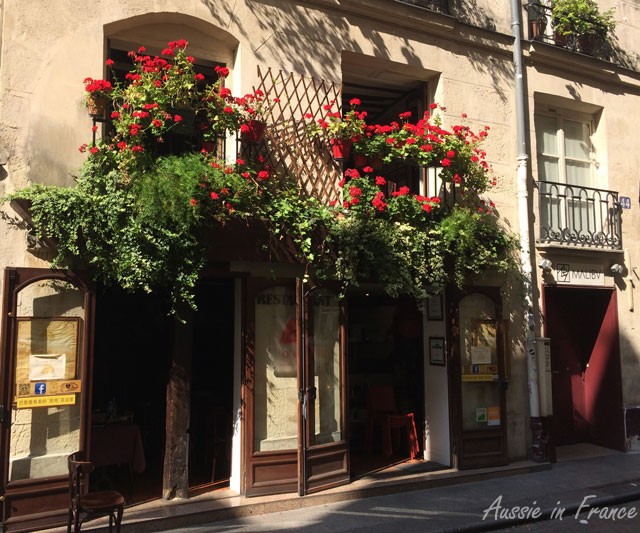
Totally irrelevant photo taken in Rue Tiquetonne. I wish my geraniums would grow like that!

Abby gives the example of normalement meaning that something should happen :

Le magasin est ouvert demain ? Normalement, oui. – The store is open tomorrow?  It should be, yes.

Another context you’ll frequently find is normalement il vient jeudi – he normally/usually/generally comes on Thursday. Alternatives are d’habitude il vient le jeudi and en général il vient le jeudi.

C’est normal and ce n’est pas normal are also common expressions. The first means “it’s only natural” while the second means “there must be something wrong”.

Merci de m’avoir aidé ! C’est normal. – Thank you for helping me. It’s only natural. Or in Australian parlance “No worries, mate!”

Il est en retard. C’est pas normal. – He’s late. Something must be wrong/that’s not like him.

Ce n’est pas normal qu’ils soient libérés de prison si tôt. – It’s not right that they’ve been let out of jail so soon.

Note the use of the subjunctive soient and not sont (not that everyone uses it!)

Sometimes you can avoid the subjunctive without ambiguity, but it’s not always possible.

Il n’est pas normal d’attendre trois semaines pour avoir un RdV chez l’ophthalmo – You shouldn’t have to wait three weeks to get an appointment with the eye specialist.

(Unfortunately in France it always seems to be the case particularly in the country. Same for gynaecologists, I might add.)

So when would we say “normal” in English and not in French ?

He got there at the normal time : Il est arrivé à l’heure habituelle if you mean he got there at the time he usually does and il est arrivé à l’heure précisée/réglementaire if you mean that he got there at the time he was supposed to.

To get back to normal is revenir à la normale and not revenir à normal.

Which makes me think of norm. It’s the norm = C’est la norme.

Norme also has the meaning of standard e.g. normes de fabrication = manufacturing standards

Ce produit n’est pas conforme aux normes françaises : This product does not comply with/conform to French standards.

Have you heard normal or normalement used in other contexts ?

And, normalement, this blog will be back to it’s usual format next week!

Friday’s French – déjeuner, jeûne and jeune

déjeunerBreakfast and déjeuner both have the same origin. I don’t mean their Latin root, but their meaning. Jeûne = fast and dés = stop. But déjeuner doesn’t mean breakfast, it means lunch. Breakfast is petit déjeuner.

On the days we practise intermittent fasting our déjeuner really is when we break our fast. I searched around to see why déjeuner is the midday meal in French and came across the unverified information that it is because Louis XIV didn’t get up until noon. It seems that déjeuner still means breakfast in some far-flung corners of rural France. That, too, is unverified.

The expression à jeun which means while fasting is used quite a lot in French to mean not having eaten. For example, for a surgical operation or certain blood tests, you need to be à jeun. We would probably say on an empty stomach.

Funnily enough, the equivalent of letting your children go hungry is faire jeûner ses enfants. Not that you probably need to know such an expression.

Jeune, of course, has another meaning – young – but without a circumflex, and comes from the Latin jovenus while jeûne comes from jejunare meaning to be abstinent. See how important those circumflexes are!

Jeune can be used in contexts other than youth as well. I love the expression donner un coup de jeune which literally means “to give a stroke of youth” and can be used in various ways. Ils ont donné un coup de jeune à l’immeuble = they gave the building a face-lift or they freshened up the building.

La nouvelle lui a donné un coup de jeune = the news gave him a new lease of life.

And while we’re the subject of freshening up, I learnt an interesting expression from my younger brother when he came to visit once. He took himself off to the hairdresser’s with his schoolboy French and when he came back, I asked how he went.

“I just asked for a trim”, he said. “And how did you do that?” “Juste rafraîcher“, he answered. I went into hysterical laughter (that’s an older sister for you) because the only meaning I knew was to freshen up. “I found it in my phrase book”, he said indignantly, “and they understood exactly”.

I appealed to Jean Michel and was somewhat embarrassed to learn that it’s exactly the right expression! So now you can go to the hairdresser’s to get a trim in France.

Friday’s French – tort & wrong

Il a tort – elle a raison : He’s wrong – she’s right.

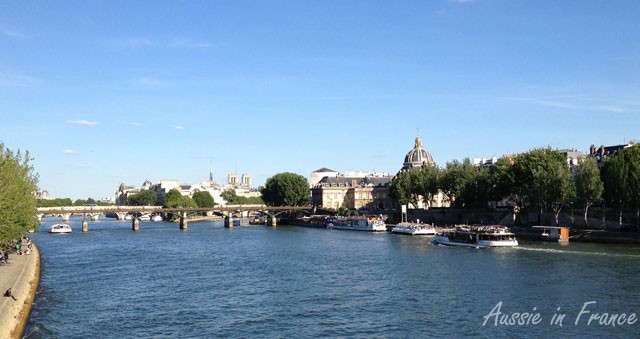
This photo has absolutely nothing to do with the subject of wrong and right. I just like the view!

Tort comes from the Latin tortus meaning “twisting” as in tortuous so it’s a sort of deviation from the straight and narrow, isn’t it?

Faire du tort à quelqu’un means to harm someone morally.

Tort also carries the idea of fault. Elle a un tort, c’est de trop parler: her one fault is that she talks too much. (I think a lot of us are inclined that way. The day Jean Michel taught me never to give an excuse for not being able to do something I didn’t want to do, I felt liberated! Saying “I’m afraid I can’t make it” rather than “I can’t come because”then launching into a lengthy explanation is just so much easier once you learn the knack).

Ils ont tous les torts de leur côté: the fault is entirely on their side.

But tort is not usually used  to indicate an error or mistake.

I’m in the wrong job – je ne suis pas fait pour ce travail (I’m not made for this job) which shifts the onus, doesn’t it. It’s not really the job that wrong after all.

That’s the wrong kind of plug – ce n’est pas la bonne prise (it’s not the right plug).

She married the wrong man – elle n’a pas épouse l’homme qu’il lui fallait (she didn’t marry the man she needed).

It’s the wrong road for Paris – ce n’est pas la bonne route pour Paris (it’s not the right road for Paris)

He told me the wrong time – il ne m’a pas donné la bonne heure (he didn’t give me the right time).

Interesting, isn’t it ? In all the above examples, the negative is used to express the idea of wrong.

Occasionally however, mauvais (bad) is used to mean wrong just as bon (good) is used to mean right.

You’re going the wrong way – tu vas dans le mauvais sens.

He made the wrong calculation – il a fait un mauvais calcul

The reflexive verb se tromper is often used to mean wrong as well although it literally means to make a mistake.

He took the wrong train = Il s’est trompé de train or Il n’a pas pris le bon train.

“You’re wrong” can be either vous avez tort or vous vous trompez.

I’m sure you have lots of other examples.

Friday’s French – fauchage & faux

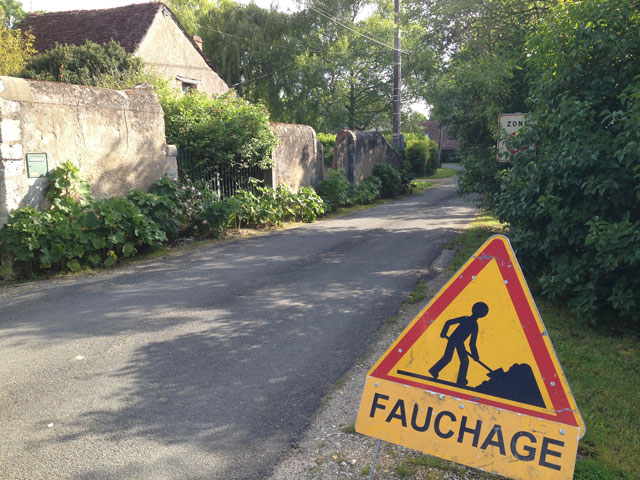
There was a sign in front of our house this week saying fauchage which actually means scything or reaping. The word for scythe is faux. Obviously the council workers were not going to appear with scythes. Fauchage now also means mowing or cutting with machines.

photo_150_fauchage

It got me thinking about the word faux which also means false. Faux meaning scythe comes from the Latin falx falcis whereas the adjective meaning false comes from falsus, from fallere, to deceive. I was a little disappointed to learn they actually have nothing in common! I’d worked out my own little scenario.

The verb faucher has a couple of other meanings. One you often (unfortunately) hear on the news has to do with car accidents. Il a été fauché  par un bolide = He was knocked over by a car going at top speed.

Il a été fauché par la Mort is a euphemism for death, since the symbol of Death is the scythe.

Faucher is also slang for steal: il m’a fauché mon portefeuille (he stole my wallet) and as a result, je suis fauché means I’m broke ! If you want to go one step further, you can say fauché comme les blés (completely broke), blé meaning wheat.

The noun fauche means thieving. Il y a beaucoup de fauche dans le métro = there’s a lot of thieving in the metro. But it’s not a word you hear often.

Fauchaison is reaping or mowing time (using a scythe, that is) but I don’t imagine it’s the sort of word you would really have much use for.

To go back to the adjective faux, it has a whole lot of other uses, all similar in meaning to false. Un faux billet is a forged or fake banknote while fausse monnaie is forged currency.

Faux marbre is imitation marble while faux bijou is fake or imitation jewellery.

Faux papiers , quite logically are false or  forged identity papers.

When someone says c’est faux, they mean it’s wrong or not true not that it’s false.

If you ring a wrong number, it’s a faux numéro, which somehow makes it sound as though you didn’t make the mistake.

An instrument that is faux is out of tune and not a fake which is interesting. Elle chante faux means she sings out of tune which is think is a bit hard.

And we all know about a faux pas, don’t we ?

I’m sure you’ve got other examples of faux.

Friday’s French – livret de famille, fiche, fichier

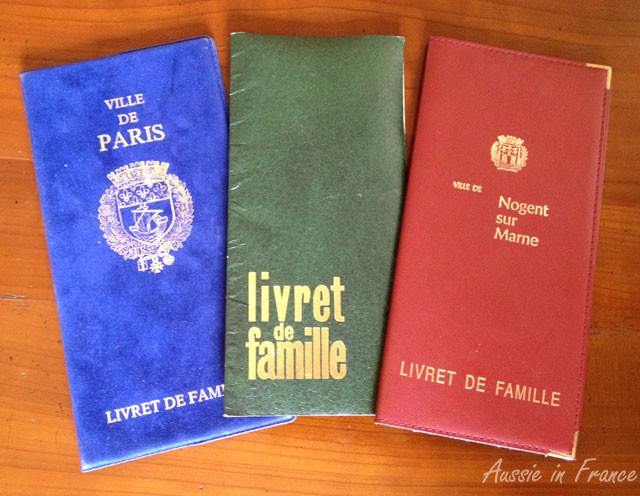
When I first got married in France and saw our livret de famille I thought it was very neat although I didn’t realise its importance. It’s a little book in which the details of your marriage are written and which is completed with each child. When you get divorced, your livret is updated as well. If you are not married, you are issued a livret de famille when your first child is born. If you separate or divorce, you get another one.

Each town hall chooses its own cover. The Paris one is velvet!

The first thing I discovered when my children when to school was the fiche d’état civil which was a piece of paper delivered by the town hall containing the information about an individual child taken from the livret. I even needed one when Black Cat started ballet! What a waste of time. What busy mother (or father) wants to go to the town hall and sit around waiting for a civil servant to copy information by hand onto a piece of paper?

At the time, the only ID in Australia was a drivers licence or passport and children certainly didn’t need ID if they stayed within the country! Fortunately, the fiche d’état civil was abandoned in the year 2000 and the carte d’identité became compulsory and free even for children.

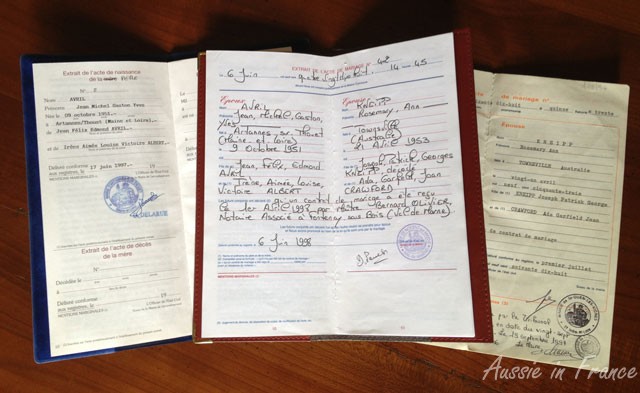
Inside the livret. If you're not married, it starts with the mother's or father's details of birth. If the parents are separated or divorced, each can have a livret.
Inside the livret. If you’re not married, it starts with the mother’s or father’s details of birth. If the parents are separated or divorced, each can have a livret. The one on the right shows my divorce details.

So what exactly is a fiche, you might be wondering (état civil = civil status). It’s one of those funny words that has several meanings and no satisfactory translation usually because we don’t often have an equivalent concept.

The fiche d’état civil was a flimsy bit of A4 paper. A fiche can also be made of stiff paper or cardboard such as a fiche-cuisine which is a recipe card. Those cards we used to take notes on and put in a filing box in the old days were called fiches. Index cards, if I remember rightly.

At the doctor’s, you might be asked to fill out a fiche which I guess we would call a form. But there is also the word formulaire. I asked Jean Michel to explain the difference between fiche and formulaire. “Bonne question”, was his typical reply.

Its seems that a fiche is used to contain basic data whereas a formulaire is used to make a request, such as a passport or enrolment formula (fiche d’inscription).

Another popular fiche is the fiche de paie or pay slip which you are supposed to keep for your entire life if you want to get your pension.

A fiche technique is a specification sheet or spec.

A fichier is a set of fiches and therefore a file and that includes computer files which are also fichiers. If you want to be specific, you can say fichier informatique. Although ordinateur means a computer, the word informatique is used in most other contexts: informatique = computer science; il est dans l’informatique = he’s in computers; l’industrie informatique = computer industry.   By extension fichier d’adresses is a mailing list.

And to go back to livret, when else do we use the word in French? A livret de caisse d’épargne is a savings bankbook (pretty rare these days), and a livret scolaire is a report book, though I don’t know if they have those any more. Livret can also be used to describe any booklet and even a catalogue for an art show, for example.

An opera libretto is a livret d’opéra.

Perhaps you know other meanings of the word fiche?


Friday’s French – terrible & formidable

“I love your blog. It’s terrible”. This comment was left on my daughter’s blog. I’d hate to think what the comment would be if she didn’t like the blog!

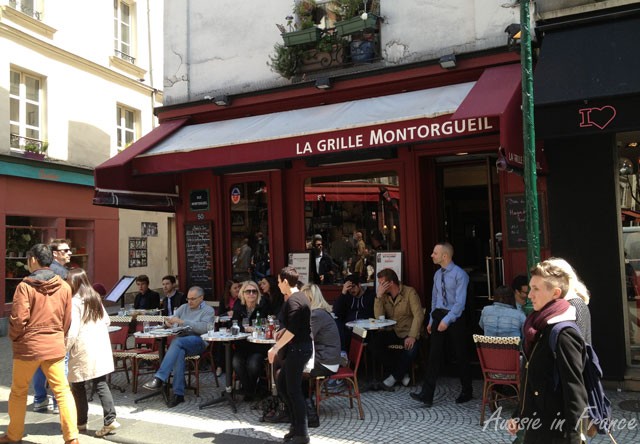
Un restaurant terrible dans la rue Montorgueil

The reader making the comment is French of course and not aware that terrible is something negative in English. Like formidable. Telling someone they are formidable in French means they’re great whereas in English it’s means you wouldn’t like to get on their wrong side. Hardly the same, is it? In French you’d say redoutable or even terrible.

Il est terrible can mean that he’s fantastic or awful depending on the context. That makes it easy to remember, doesn’t it?

Although terrible comes from the Latin terribilis which in turn comes from terrere, to frighten, it now has several meanings in French:

1. Inspiring terror or fear e.g. Une terrible catastrophe

2. Reaching a violent or considerable force e.g. Il s’est produit une terrible secousse – There was a terrible earthquake

3. Very unpleasant e.g. Il a un caractère terrible – He has an awful character

4. Representing a large quantity e.g. J’ai un travail terrible à faire – I’ve got an enormous amount of work to do

5. And more familiarly, out of the ordinary, inspiring admiration or surprise e.g. Il est arrivé avec une fille terrible – He turned up with a terrific girl.

And there you have it – the English version of terrible meaning something positive, namely terrific, which is usually positive in English, except for expressions such as “There was a terrific storm”.

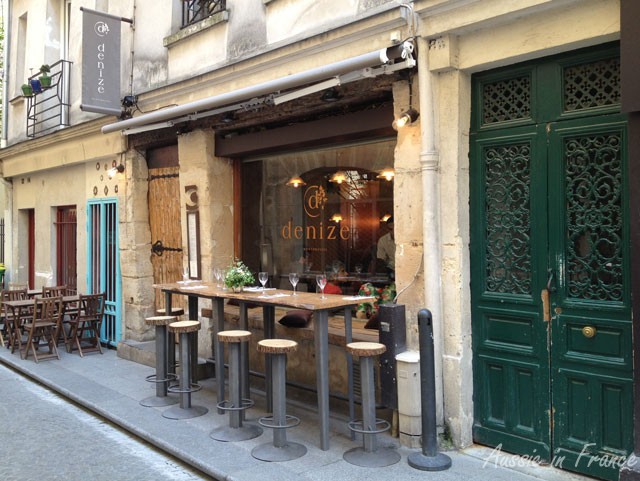
Un autre restaurant dans la rue Montorgueil qui a l'air terrible
Un autre restaurant dans la rue Montorgueil qui a l’air terrible

Formidable, which comes from the Latin formidabilis, which in turn comes from formido, dread or terror, has kept its original meaning in English, whereas as its meaning in French is always positive, whether the idea is colossal or imposing e.g. Une volonté formidable – Incredible determination, inspiring admiration e.g. un type formidable – a terrific person, or something astonishing e.g. C’est quand même formidable qu’il ne vous ait rien dit – It’s really astonishing that he did say anything to you.

So if someone tells you about un restaurant terrible, you can add it to your list of places to go!

Friday’s French – Venetian blinds & persiennes

When you grow up in Australia, you know all about Venetian blinds. They are not nearly as popular in France and most people don’t know how to use them. We had them at the French university where I taught and I began each year with a lesson on how to open and close them! However, I had never really thought about the name until we got to Venice where our home exchange/rental flat had two sets that didn’t close properly.

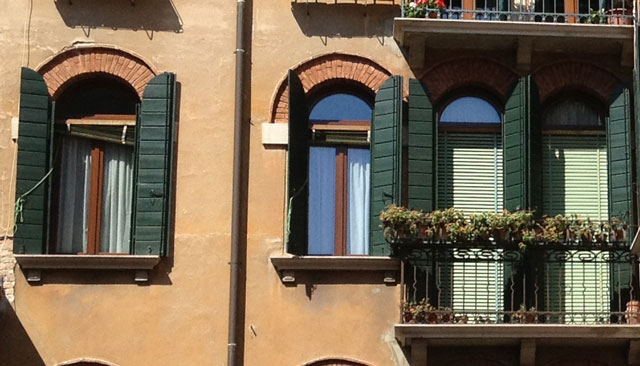
Venetian blinds and shutters in Venice
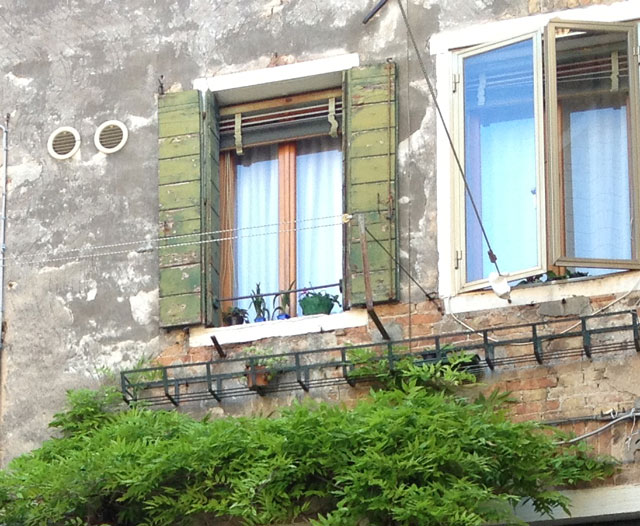
Typical Venetian shutters withVenetian blinds on the right

Our French guide book, Le Routard, mentioned them, giving persiennes as a translation which is rather strange because persiennes are something quite different. They are what I call louvres, which is a funny word when you come to think about it as it comes from the French word open.

Louvres and modern Venetian blinds on the Rialto Bridge

Obviously modern Venetian blinds are adaptations of the original ones. I checked out the windows in Venice but they mostly seemed to have wooden shutters or curtains with only a few Venetians on some older buildings. I found some slatted shutters or louvres on the Rialto bridge but they are hardly what I’d call a Venetian blind.

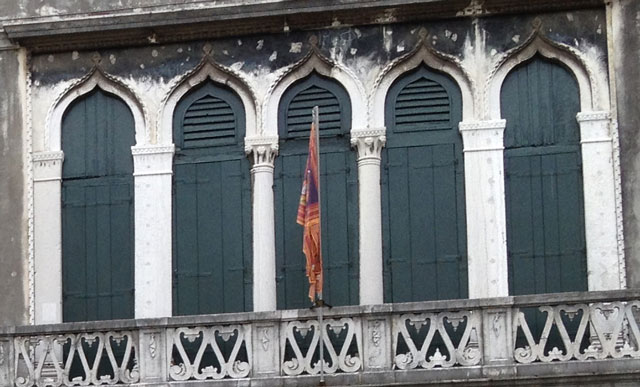
These shutters in Venice would be called persiennes in French

In fact, Venetian blind turns out to be very nebulous terminology and seems to cover various types of blinds, made of different materials (wood, metal, plastic) and consisting of horizontal overlapping slats held together with a cord so they can be rotated open or closed.

Venetian blinds and shutters
Fairly old Venetian blinds and shutters

The generic term for blind in French is store which comes from the Italian stora, meaning mat. It also includes the sort of awnings you have in front of a shop or café in France. Like a blind, a store can be solid or have slats.

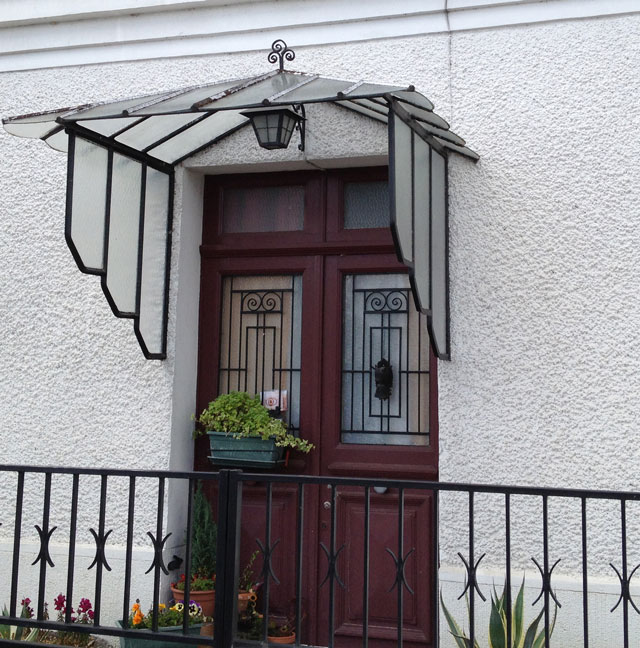
Those metal and glass awnings over front doors are called marquises by the way, which I think is a lovely term but I have no idea where it comes from.

A marquise over a front door

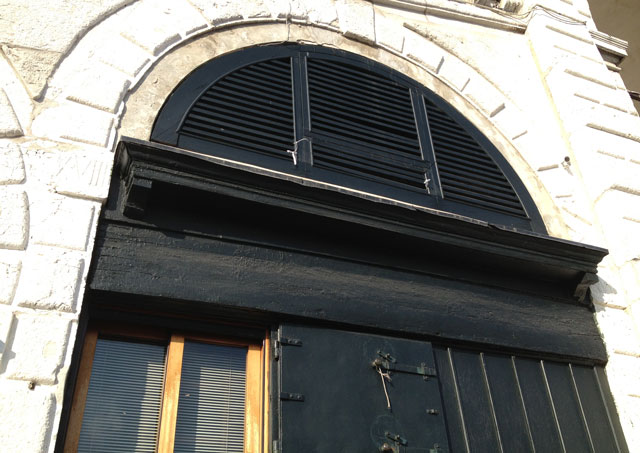
Back to our blinds. Persiennes are mostly wooden but can also be metal with horiziontal and occasionally vertical overlapping slats that are fixed. They can be opened in several ways – outwards or upwards like a window, by sliding across, etc.

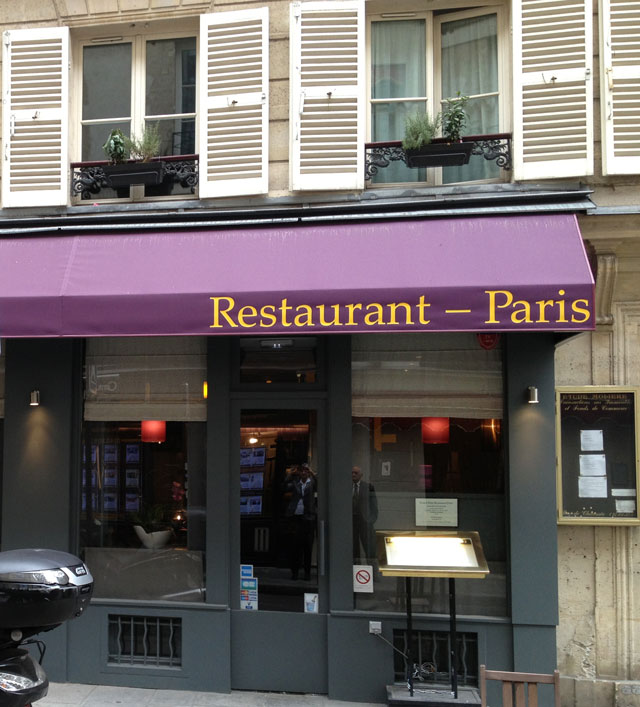
Un store de restaurant avec des persiennes aux fenêtres

Some persiennes are a type of shutter or volet. A volet can also be solid and is defined as a covering over a window to block out the light from either the inside or outside. Most French houses have them and most French people prefer to sleep in almost total darkness.

This was very strange to me when I first moved to France as we only had Venetian blinds in our house and they weren’t necessarily closed. They certainly didn’t block out all the light. Once I got used to sleeping with shutters, I found it very difficult not to have them. Our flat in Paris only has roller blinds so I had curtains made with special light-blocking lining.

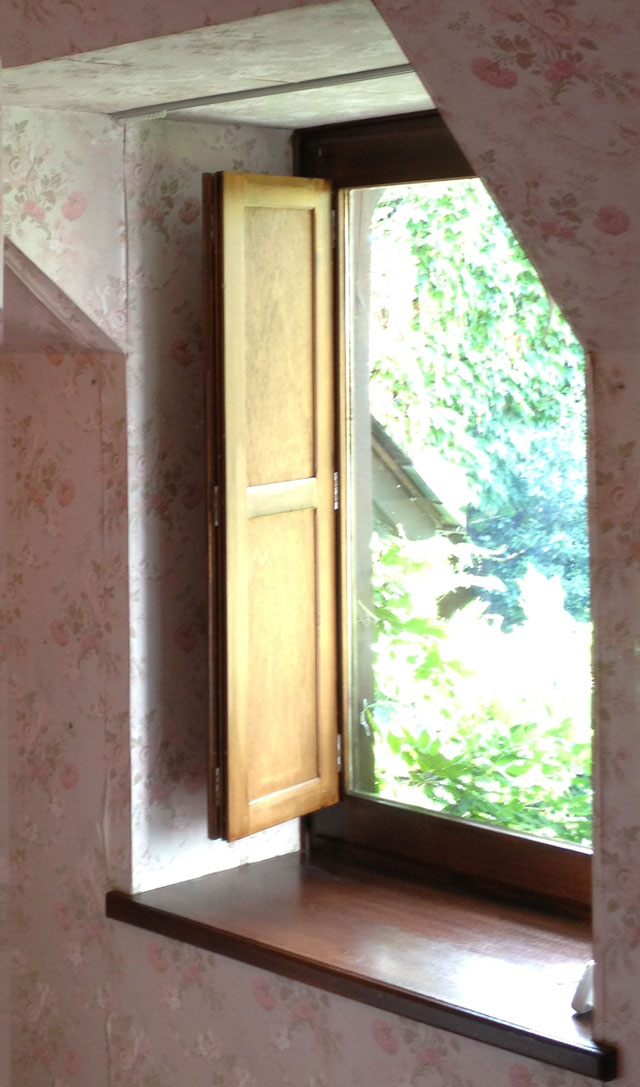
Our folding inside shutters

Our house in Blois has shutters that open and close inside and guarantee total darkness. A recent Australian visitor loved them – she said it was like sleeping in a cave!

A thought has just struck me – what is the Italian meaning of Venetian blinds is not our Venitian blinds at all, but the French persiennes? I hope someone will be able to answer me!

Friday’s French – fenêtre, vitre, baie & vitrail

You’d seriously think that something as simple as a window would have a direct correspondence in French, now wouldn’t you ? Well, it doesn’t . The English word “window” has a much wider connotation than the French fenêtre.

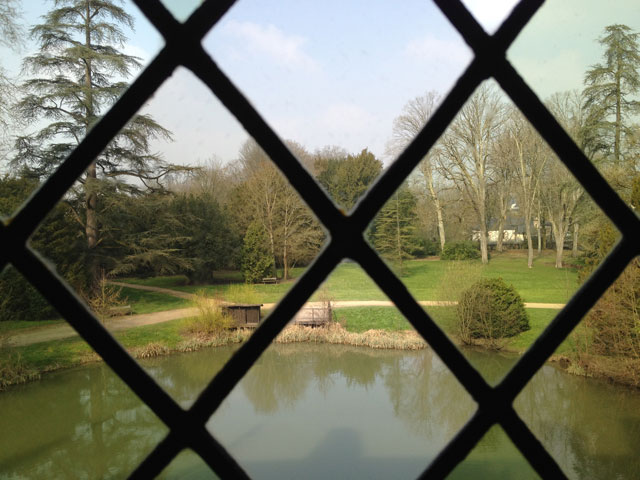
Je regarde par ma fenêtre à croisillons

The comparison starts off simply enough. J’ai regardé par la fenêtre = I looked out the window. Mon appartement a cinq fenêtres = My apartment has five windows. Its when you start getting more specific that it gets more complicated.

The house has a big window overlooking the sea = la maison a une grande baie vitrée qui donne sur la mer. Baie actually means an opening in a wall, a door or a window, and vitré is the adjective from vitre = glass. Fenêtre in fact is generally used to mean the window frame even though the technical word chassis exists.

In English you would say, “I cleaned the windows” but in French you’d say j’ai nettoyé les vitres or even j’ai nettoyé les carreaux (since a lot of window panes are square) and not j’ai lavé les fenêtres. A window with a lot of little panes is a fenêtre à petits carreaux.

Whereas we would say “his ball broke the window”, in French you would say il a cassé la vitre avec sa balle. Verre can be used but it’s not the correct term.

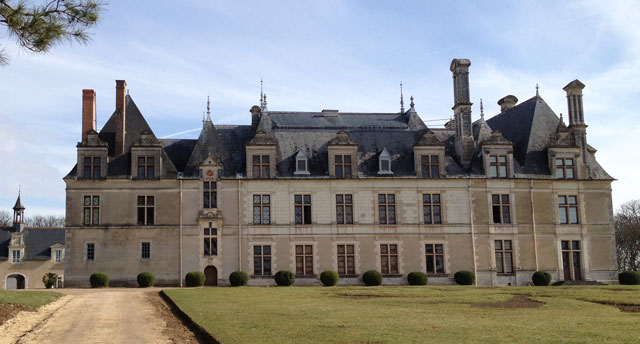
Avec toutes ces fenêtres, le château de Beauregard est très vitré
Avec toutes ces fenêtres, le château de Beauregard est très vitré. Beaucoup de fenêtres à meneaux.

A reader drew my attention to the use of vitré meaning a large number of windows in a TV programme about the Château de Champs sur Marne. La maison est très vitrée, même archi-vitrée. This is not the way the word is usually used and conveys the idea of a large amount of glass.

You would never use fenêtre to describe a large window that doesn’t open. It’s a baie vitrée as above. Note that our bay window is protruding where as baie vitrée is not. The French use the English term bay-window or fenêtre en saillie.

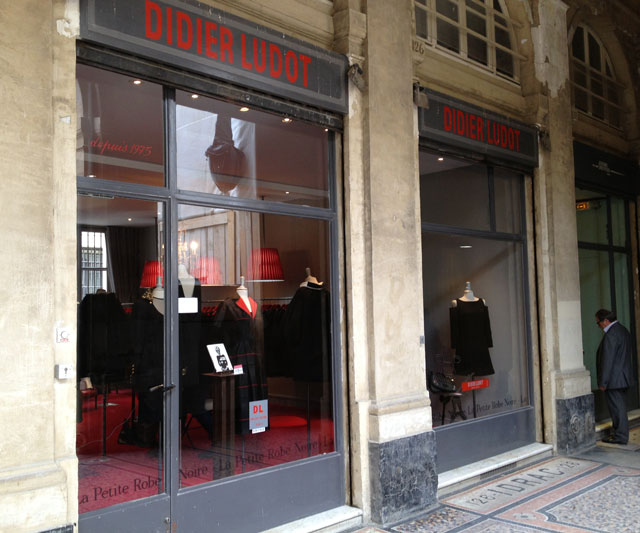
Une belle vitrine et porte vitrée pour faire du lèche vitrine dans la gallérie du Palais Royal

A really big glass window is called a verrière while a shop window is called a vitrine, with lèche-vitrine (lécher = lick) meaning window shopping! A ticket window in a train station, for example, is a guichet and the same word is used for ticket counter.

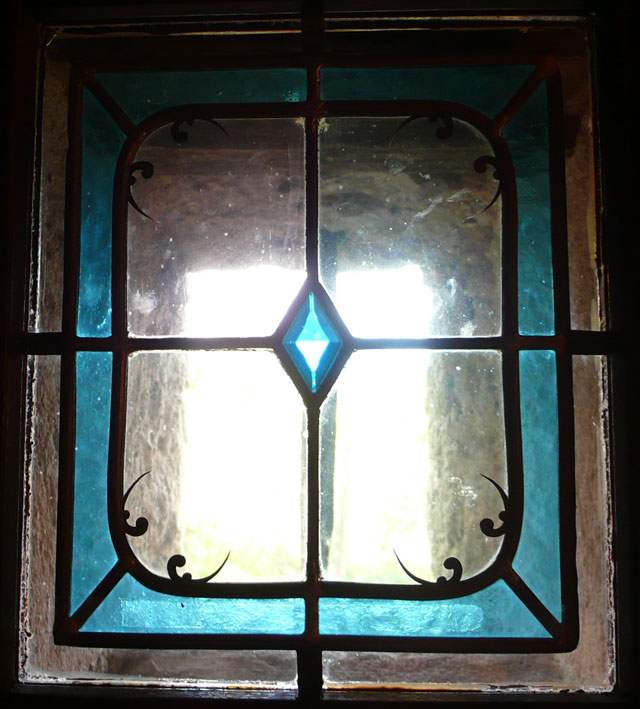
A stained glass or leadlight window is a vitrail in French (plural vitraux) with no distinction between the two in French. Leadlight could actually be used for both in English but stained glass is used traditionally for ornate windows and leadlight for windows of domestic and commercial architecture that are generally simpler.

Notre petit vitrail avec son cabochon de la cathédral de Chartres

One of the most surprising words connected with fenêtre that I know is défenestration. The first time I heard il s’est défenestré du sixième étage on the radio, I had no idea what it meant. I’ve heard it many times since. They never say “he jumped out the window” or “threw himself out the window” but always use the verb défenestrer.

Here are a few other windows to finish off :

fenêtre à guillotine = sash window (typically French, huh?)

fenêtre à battants/à meneau = casement/mullioned window

fenêtre à croisillons = lattice window

porte-fenêtre = French window

And in the world of computers :

fenêtre de dialogue = dialogue box

fenêtre d’aide = help window

fenêtre active = active window

I’m sure you know some more.