Category Archives: French language

Friday’s French – piles, batteries & torches

We’ve just bought a set of telephones and are setting them up. “Est-ce qu’ils ont fourni les piles?” I ask. “Non“, says Jean Michel, “il y a des batteries.”
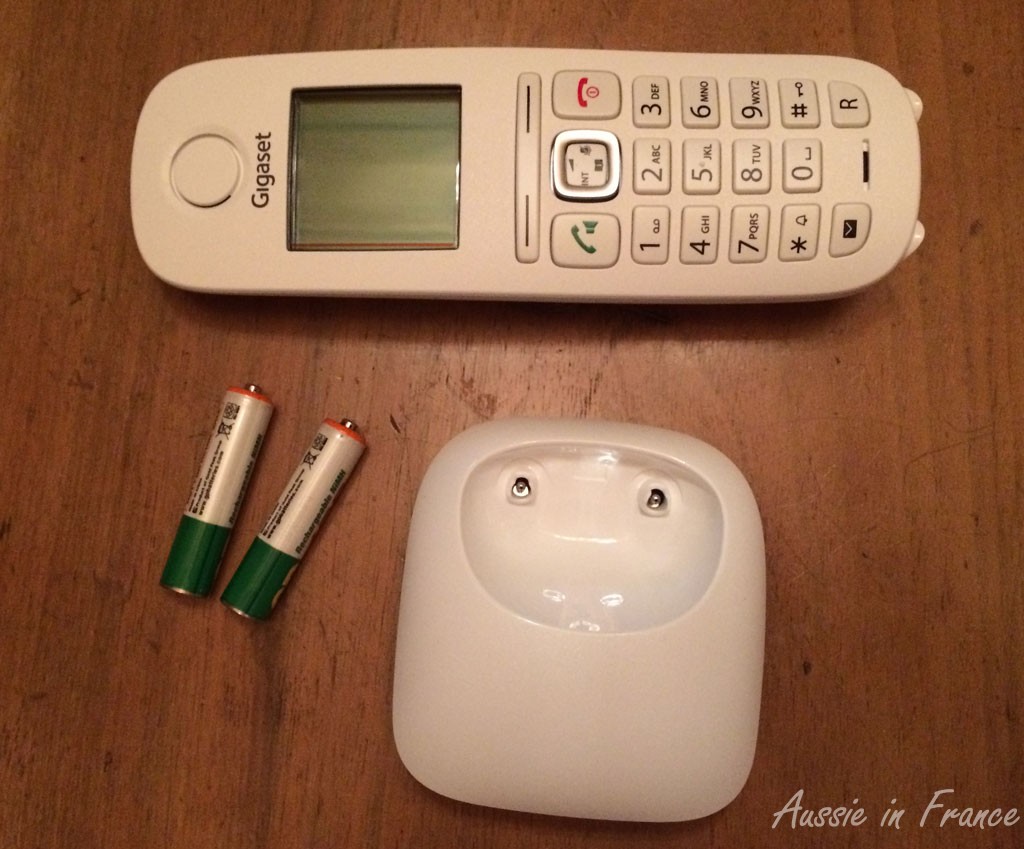
Téléphone avec base à batteries

He is not correcting my French. Pile is the word I first learnt for the English battery back in the seventies and I was surprised when I started hearing people say batterie which has several totally different meanings. I assumed they were just using the English word.

But no, like many English borrowings, it has acquired a specific meaning. A batterie is not just any battery, but a rechargeable battery. It is also correct to say pile rechargeable but batterie is certainly more common in the technical world.
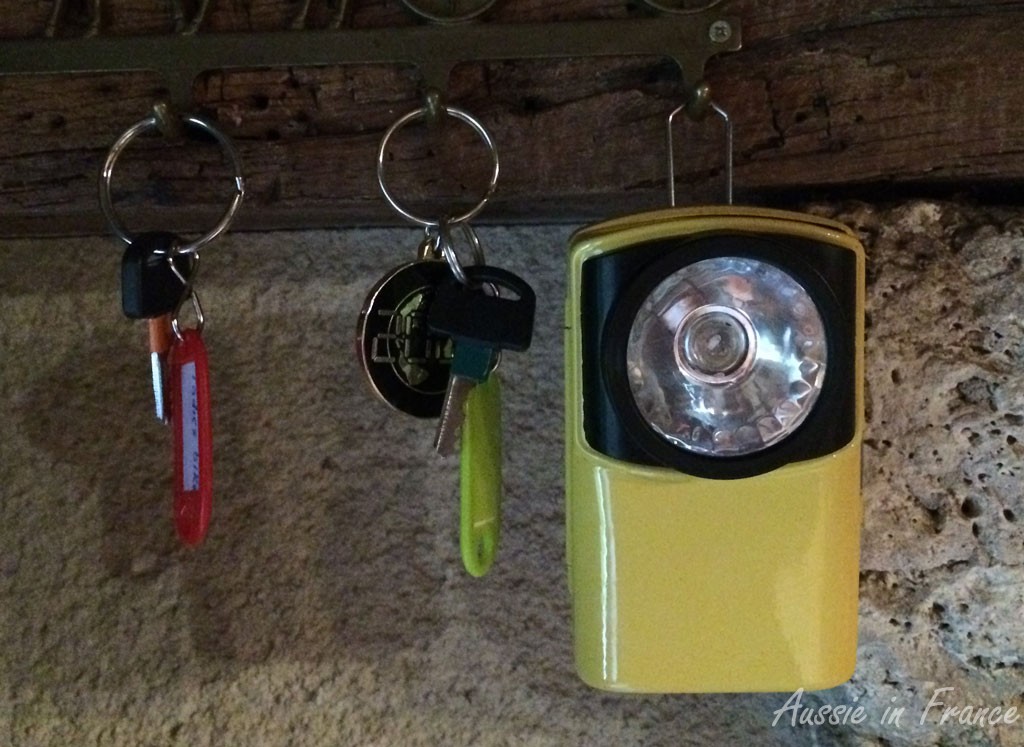
Une pile ou lampe de poche

Another meaning of pile that I learnt early on is a square flashlight or torch as we call it in Australia, in any case. I had never seen them before I came to France. I don’t know if they are common in the other English-speaking countries. It’s real name of course is a lampe de poche, though it’s certainly far too big to put in my pocket!



Une lampe torche or just une torche

A torche or, more correctly, une lampe torche is something else again. It’s a long flashlight, what for me is a normal torch.

Torche also means a torch  in the sense of an Olympic torch and what we call a flare on an oil rig.

Just to make matters more complicated you can have a batterie de piles, which is a serie of batteries, because batterie means a series of apparatus of the same type designed to be used or operated together, such as accumulators, condensers and electric ovens.

Une batterie de cuisine, for example, is a set of saucepans and frying pans.

A drum set is also called a batterie. You’d never say mon frère joue des tambours but mon frère joue de la batterie even though a tambour is an individual drum.

To go back to pile, it also means a pile in the English sense of a pile of dirty washing (une pile de linge sale).

A pile is also a bridge pier and sometimes a bridge pile, but the nuances are too complicated to go into here because some bridges have both piers and piles and others just have piles!

In the electrical sense, it can be a cell as well e.g. une pile solaire = solar cell, une pile bâton = pencil battery, une pile bouton = watch battery (I love that one – bouton literally means button) and une pile atomique = nuclear reactor or atomic pile.

If you want to say that an appliance is battery-operated, you say à piles or fonctionnant sur piles e.g. un jouet à piles (a battery-operated toy).

Et maintenant je vais recharger mes batteries!
Friday’s French – bernache

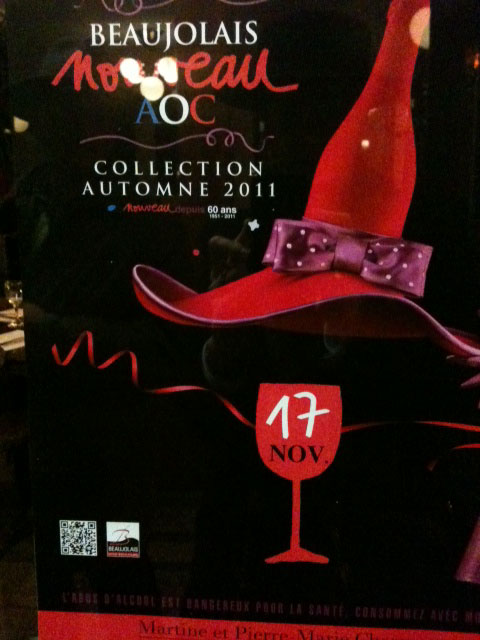
beaujolais_nouveau_5Today I learnt a new word – bernache – used in Touraine and particularly in Anjou, to designate what is known in other parts of France as vin nouveau, i.e. grape juice at the beginning of its fermentation.

I’ve already recounted our experience with vin nouveau in Alsace and the famous beaujolais nouveau tradition that is sadly dying out in France, but I had never heard of bernache.

Like any vin nouveau, bernache is only available for a short period at the end of the grape harvest (vendange), that is, from about the end of October to mid-November and is usually served with roasted chestnuts (marrons grillés).

It is mainly produced in Montlouis and Vouvray. Cloudy, a little sweet and sometimes very bubbly, it can’t be transported very far. It’s a transitional stage of traditional vinification.

In the Saumur area, further along the Loire, where Jean Michel grew up, it’s called beurnoche.

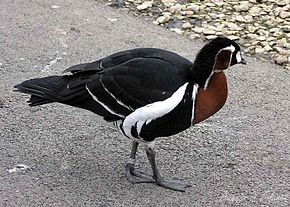
barnacle_gooseBernache has another meaning – a barnacle goose (from the benus Branta . Not that I have ever seen a barnacle goose! Unfortunately, my Robert etymological dictionary is currently in a carton in Paris waiting to be moved to Blois or I might have been able to find out if the two words are connected.


In any case, I am going to try and find a vineyard where I can try some bernache vin nouveau!

Friday’s French – déménager, déménagement, ménager

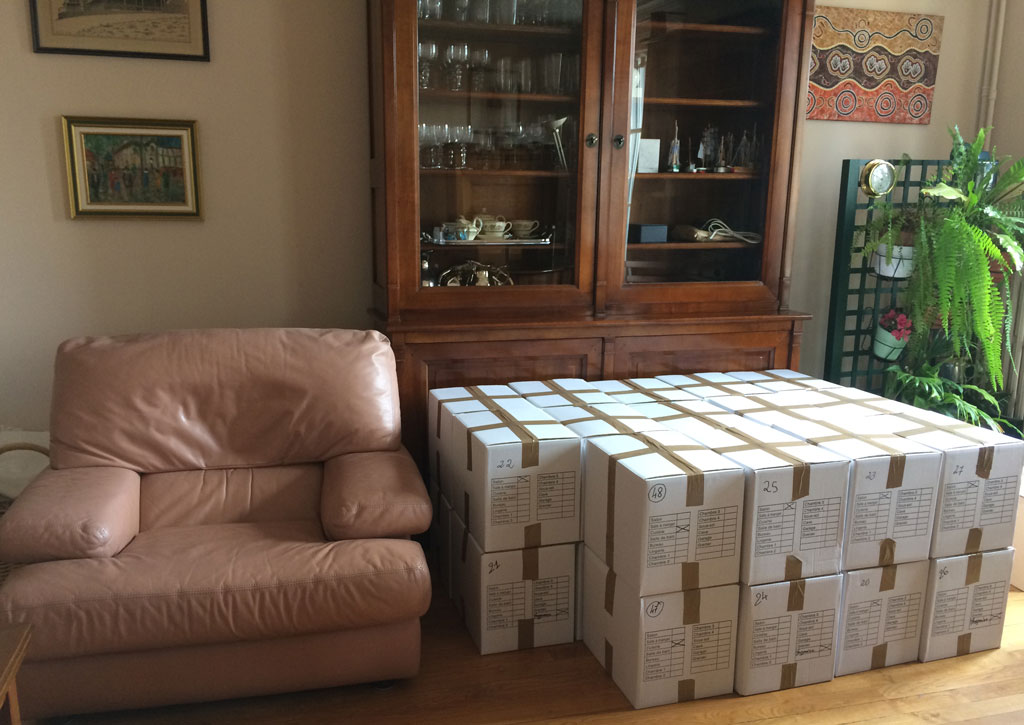
Nos cartons de déménagement

Lundi on déménage ! For some reason, it sounds more specific in French than the English “We’re moving on Monday !” I guess it’s because “move” can be used to mean so many different things but déménager always means moving house (or office or whatever).

A ménage, which comes old French mesnage, a derivative of the Latin mansio (house), is a married couple or a household, so déménager literally means “breaking up the household”. And that is exactly what is happening at the moment as I sort out and pack up our goods and chattels accumulated over the last 9 years (and more).

We’re having déménageurs do the actual moving with a camion de déménagement. Déménageur refers to both the removalist company and the individual person doing the moving. I had 5 devis (quotes) done. The estimated volume ranged from 52 cubic meters to 67 cubic meters, which is astonishing. And the prices ranged from 2,500 euro to 4,700 euro to move our belongings to Blois, 200 kilometers away.

I was so suspicious of the lowest quote that I rang them to find out why. They had made a mistake and quoted for Paris! They increased the quote to 3,000 euro which was still belong the next price of 3,600 euro so we chose Ultimate Déménagement. We’ll see how competent they are!

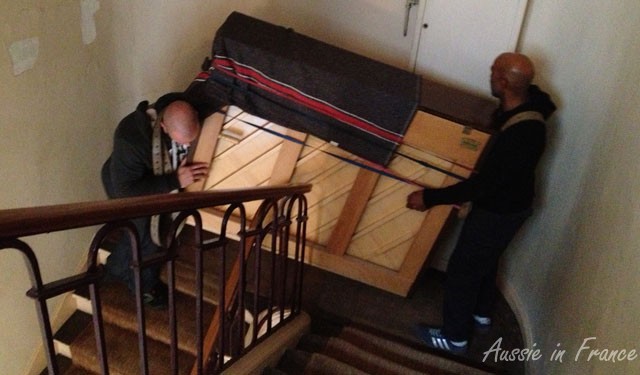
Taking the piano down 4 flights of stairs
Les déménageurs descendent le piano quatre étages

Déménageur has given the expression il a une carrure de déménageur – he’s built like a tank. But the champion of all was the single porteur who originally carried our piano up four flights of stairs on his back. It took two déménageurs to take it down again. They had heard of a porteur but never seen one in action.


Another expression that I like is déménager à la cloche de bois: to sneak off in the middle of the night. Though why there is a wooden bell involved, I don’t know!

Also, ça déménage is slang for “it’s brill/awesome”.

The verb ménager, however, means something totally different. The idea is to make sure a person is not offended.

Il faut vraiment la ménager, elle est très sensible – You have to treat her gently – she’s very sensitive.

Il faut qu’on ménage les deux parties – We have to keep both parties happy.

Si vous ne la ménagez pas, elle va beaucoup souffrir – If you don’t treat her tactfully, she will be very hurt.

Another great expression is ménager la chèvre et le chou (the goat and the cabbage) = to sit on the fence.

When applied to an object, ménager means to treat something with care or sparingly. The most widespread use is ménager ses forces or efforts = to save or conserve one’s strength.

So we can put déménager, déménagement and ménager together in the same sentence:

Un bon déménageur sait ménager ses forces pour mener à bien le déménagement. = A good mover knows how to save his strength so the move will go well.

Now I have to get back to my cartons de déménagement

Friday’s French – taxi, fiacre, taxis de la Marne

parisian_taxiI’m very excited because yesterday, I discovered the origin of the word taxi! And it’s Parisian. Who would have imagined that?

I learnt about it while taking some Australian friends on a walking tour that included the oldest houses in Paris.

Paris has lots of street signs explaining its history and we came across one that talked about the invention of the fiacre.

In 1612, a coach company from Amiens rented a house in rue Saint Antoine in Paris, bearing an effigy of Saint Fiacre, the famous barefoot friar (carme déchaussé, if you’re interested) who predicted that Anne of Austria would have a son (one chance out of two, as my friends pointed out). He’s also the patron saint of gardens.

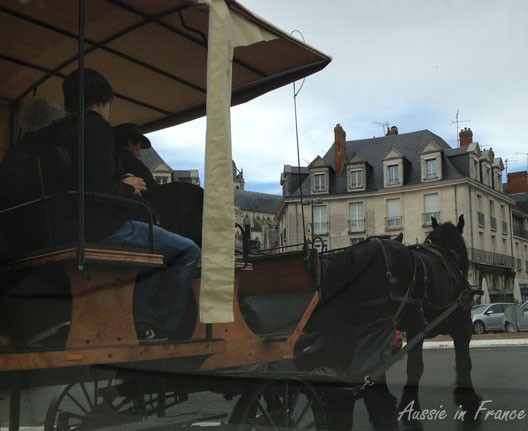
fiacre


In any event, Saint Fiacre eventually became a sort of Saint Christopher and his image was displayed on coaches all over Paris to prevent accidents. Ever since, coaches have always been called fiacres. Just before the French revolution in 1789, there were about 800 of them parked on 33 stations including more than 650 under shelters called remises.

The coach drivers had a terrible reputation and the police did everything they could to control them. Each driver had a number that cost a fortune to buy and a booklet containing their licence to park and drive the coach. After reaching their zenith at the turn of the 20th century, horse-drawn carriages declined and were replaced with the automobile.

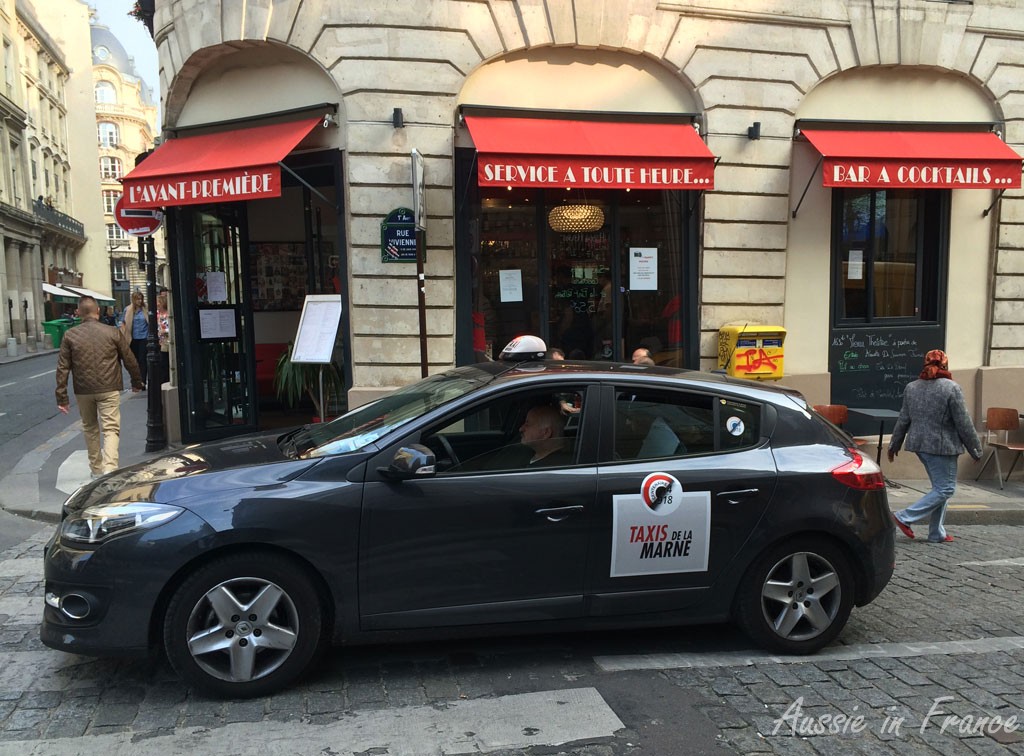
The name of taxauto was soon adopted, followed by taxi, which is an abbreviation of taximètre and designated not the taximeter, but the vehicle containing it. The term taxi took over completely after a famous historical event in the first world war known as the “Taxis de la Marne“.

taxis_marne

On 7th September 1914, in order to reinforce the Maunoury army, General Galliéni requisitioned 700 Parisian taxis to ferry the 7th division troups from Sevran, Livry and Gagny in the east of Paris (i.e. the Marne) to Nanteuil-le-Haudouin and Plessis-Belleville in Picardy, which represented a distance of about 40 kilmeters . The meeting point was boulevard des Invalides.

During the night, with four men to a taxi, most of the division was transferred, totalling more than 5,000 combatants, a somewhat modest number compared with the Maunoury army’s total of 140,000, but the story has gone down in history. You can find more details here.

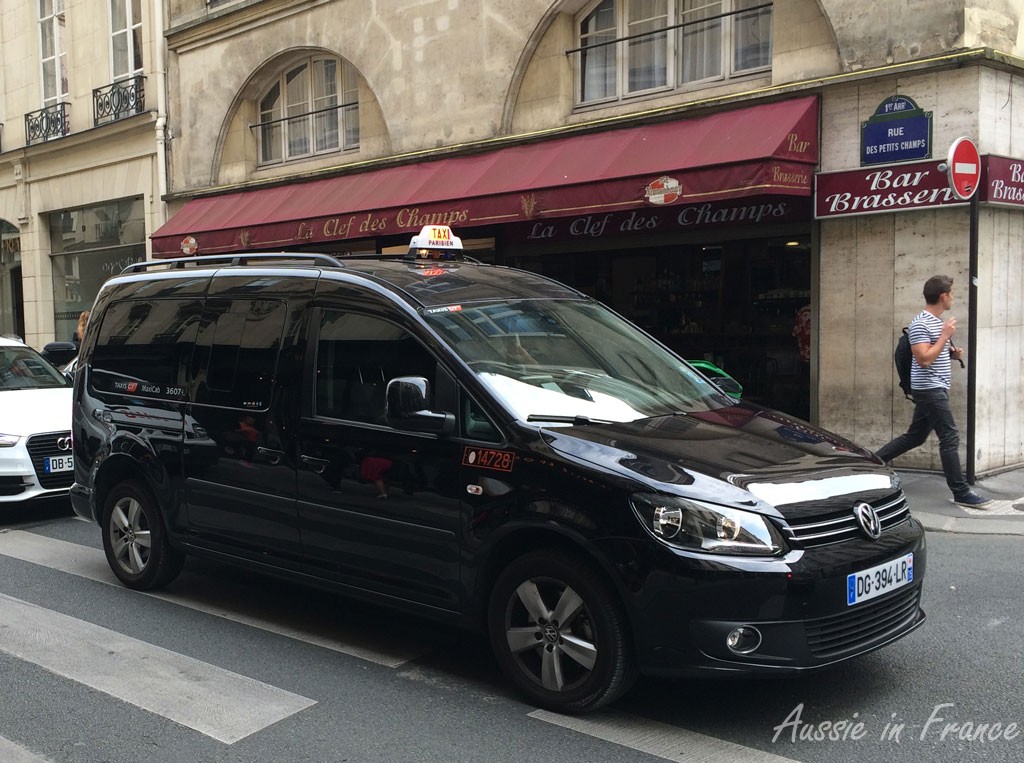
And would you believe, when I was taking my photo of a Parisian taxi, I accidentally took one of a Taxi de la Marne, even though I had never heard of it before! But since it’s a modern cab, I checked it out and learnt that during the recent centenary – 7th September 2014 – a reconstitution took place with 10 originals taxis and 120 modern ones bearing the  insignia shown on the photo as well as a number of military vehicles as you can see from the video below on the France 3 regional television website.

I wish I’d known at the time!

Friday’s French in Portugal

fire_signMy first contact with Portuguese was during my honours year of university in Australia when I studied and fell in love with Romance Linguistics, which is the story of how Latin turned into Italian, French, Spanish, Portuguese and Romanian. It was like a jigsaw puzzle – and I had always liked jigsaws.

I found it absolutely fascinating to learn that flos, the word for flower in Latin should have become fleur in French, fiore in Italian, flor in Spanish and Portuguese and floare in Romania. Castellum turned into château, castello, castillo, castelo and castel. Not only that, but the changes are systematic: fl in Latin nearly always gives fl in French, fi in Italian, fl in Spanish and Portuguese. And ditto for ca which remains the same in all the languages except French where it becomes ch.

I have since studied French, Italian and Spanish in greater detail and still get a kick out of the systematic changes you can see: blanc, bianco, blanco for white ; pluie, pioggia, lluvia for rain, and so on. But this is my first real contact with Portuguese.

The first thing I noticed is that the “l” has disappeared from definite articles : o, a, os, as and not il, la et les.

N often becomes m : jardim, im, bem (bien), bom.

Otherwise it often seems a mixture of Spanish and Italian when it’s written – but not when it’s spoken.

I’m kicking myself for not having at least learnt some basics with the help of my Portugueuse cleaner before I left!

I’ve now mastered obrigada (thank you) which is like saying (I’m) obliged. As a result, Jean Michel has to say obrigado.

I downloaded an app on my iPhone (not lost or stolen yet) to help with pronunciation. We weren’t sure how to say azulejos (those beautiful ceramic tiles they have everywhere). It sounds like a-zu-lie-si (with s being pronunced like the s in Asia). I can tell you, it’s going to take me a lot longer than a week to master that one!

I also learnt something very interesting about the days of the week. Unlike the other Romance languages, Portugueuse has a totally different system. Sabado (Saturday) and domingo (Sunday) correspond to most of the others but Monday to Friday are a different kettle of fish: segunda-feira, terça-feira, quarta-feira, quinta-feira and sexta-feira meaning second, third, fourth, fifth and sixth feast day.

There are a couple of explanations, one being that they were called according to the fair (feira) that used to take place on that day many moons ago. A feira is a set of tents pitched in the street where you can buy vegetables, fruits, and other foods.

Another explanation is that, because of the pagan origin of the original names of the days of the week, Martinho de Dume, a sixth-century bishop of Braga, in what is Portugal today, changed them to correspond to the full observance of an Easter week.

Domingo (Sunday) has its origin in the Latin expression for the Day of the Lord, sabado was named for the Hebrew word Shabbat while the other days come from the Latin terms for “second/third/fourth/fifth/sixth day on which one shouldn’t work” (in observance of Easter week).

Whatever the explanation it’s a bit confusing when reading a bus timetable!

Friday’s French – littoral, cotière & rivage

In last week’s Friday’s French, I talked about côte meaning coast (among other things). A reader said he thought that littoral meant coast so I thought I should do a second post!

Le littoral espagnol sur la Côte basque

I checked out my trusty Larousse which tells me that le littoral is a sinuous area where the sea or a lake comes into contact with land. Then it goes on to say that it has a wider meaning than either rivage or côte which concern the area directly or indirectly affected by the action of the sea.

It also gives a second meaning i.e. littoral is used when speaking of all the côtes of a country, region, ocean or sea.

OK, so, in practical terms, what exactly does that mean? Examples of use are probably the best indication.

The first that comes to mind is conservation du littoral which means coastal conservation.

Here are some other examples:

Sur le littoral, une maison sur deux est une résidence secondaire. – One house out of two along the coast is a second home.

Avec ses milliers de kilomètres de littoral, la France offre une extraordinaire diversité. – With its thousands of kilometers of coastline, France offers extraordinary diversity.

Les Sauveteurs en Mer contribuent à diminuer le nombre des accidents sur le littoral français. – Lifesavers help to reduce the number of accidents along the coast of France.

Côte, often in the plural, could also be used in all these examples:

Une maison sur deux sur la côte est une résidence secondaire.

Avec ses milliers de kilomètres de côtes, la France offre une extraordinaire diversité.

Les Sauveteurs de Mer contribuent à diminuer le nombre des accidents sur les côtes françaises.

But the register is different. Littoral is more appropriate in a written context.

So when wouldn’t you use littoral? You wouldn’t say Je vais passer mes vacances sur le littoral or Il faut beau sur le littoral or J’adore le littoral. You would need to use côte in all these examples.

Côtier, the adjective from côte, is used in contexts such as bâteau côtier (coaster), région côtière (coastal region), ville côtière (coastal town) and pêche cotière (inshore fishing).

And what about rivage, which I mentioned earlier?

This is closer to our word “shore”, namely, that part of the land subjected to the action of waves and tides. It can be used for both the sea and lakes. Apart from names of camping grounds, restaurants and hotels (Beau Rivage), it’s practically never used. An example would be la baleine a échoué sur le rivage – the whale was beached on the shore.

So, in general, you can just use côte and côtière unless your context is specific.

And while I’m on the subject, when the French are talking about the Atlantic Ocean, they use the word “océan” and if they are talking about the Mediterranean, they use “mer”. whereas in Australia, we tend to use “sea” all the time. Tous les matins je cours ou je joue au tennis et après je me baigne dans l’océan – Every morning I go for a run or play tennis and afterwards, I swim in the sea. We would NOT say “I swim in the ocean” now, would we?

Friday’s French – cote, côte, coteau

These words all look fairly similar but they’re not, of course, or I wouldn’t be talking about them.

Une côte sur la piste cyclable

To start off with, cote and côte are not even remotely related and not even pronounced in the same way! Cote is pronounced much like the English “cot” whereas côte is almost like “caught” but not quite. To an untrained Anglo-Saxon ear, they sound pretty much the same of course but they’re not!

Cote comes from the mediaeval Latin quota pars meaning each one’s share, which gives a whole range of derivative meanings such as a quotation on the stock market, a school grade, someone’s rating or standing (la cote de popularité du président = the president’s popularity rating (very low at the moment), elle a la cote = she’s very popular at the moment) and even dimension (as-tu pris toutes les cotes = have you taken all the measurements?).

Côte, with its circumflex indicating a dropped “s” you may remember, comes from the Latin costa meaning “flank” and has even more meanings than cote.

First we have the ribs in our body (j’ai mal aux côtes = I have sore ribs), leading to expressions such as côte à côte = side by side.

Côtes premières et côtes découvertes
Côtes premières et côtes découvertes – the top one is découverte and bottom première

Then we have animal ribs with côte d’agneau = lamb chop, côte première = loin chop, because it’s among the first ones on the rib and côte découverte, my favourite which is the ones streaked with fat further along the rib. I don’t, however, know what they are called in English. Any suggestions?

Another meaning of côte is the sort of ribbing you get in velvet (velours à larges côtes = wide rib corduroy, velours côtelé being regular corduroy) or knitting (j’ai fait les poignets en côtes = I did the cuffs in ribbing).

But doesn’t côte mean “coast”, I can hear you saying. How do you get from rib to coast? Well, the coast flanks the sea or ocean, doesn’t it? So we have Côte d’Azur = the French Riviera. Also, there is no separate word for coastline. Une côte rocheuse = a rocky coastline while a coast road = une route qui longe la côte but more often than not it is called une corniche (or route en corniche).

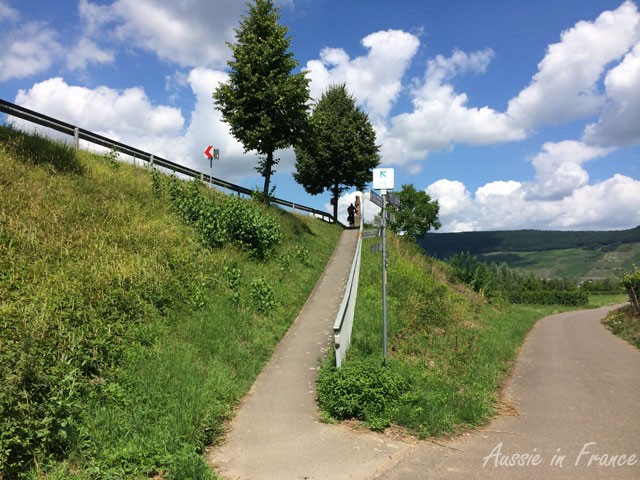
An entirely different meaning, but still attached to the idea of flank, is slope or hillside. This is one you need to know when you’re cycling (si la côte est trop dure, je descends du vélo = if the hill is too steep, I get off my bike).

A hillstart in a car is un démarrage en côte.

But coteau also means a slope or hillside and can even mean a hill only it’s not used in the same way.

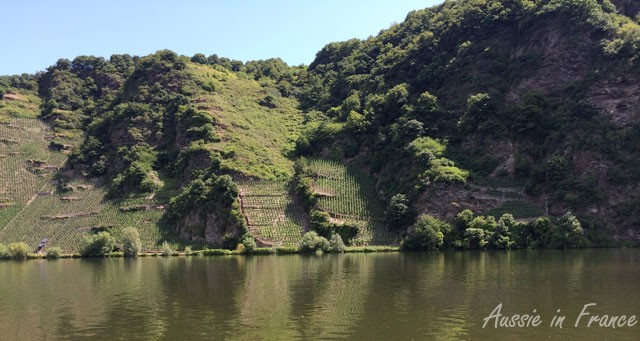
Les vignes poussent sur un coteau

A coteau is a hillside or slope on which vineyards are grown to start with. You may remember some really steep ones we saw in Germany this summer along the Moselle. Les vignes poussaient tout au long du coteau = There were vines growing all along the hillside/slope BUT Je suis arrivée en haut de la côte sans m’arrêter = I got to the top of the hill without stopping (yes, it does happen!)

In fact, the slopes on either side of a river are always called coteaux. Il habite sur le coteau = He lives on the side of the hill and not Il habite sur la côte which means he lives on the coast. Now, isn’t that confusing?

The only way I can really explain is that coteau gives the idea of a surface area whereas côte indicates height. I think the first and last photos illustrate the difference well. Are you with me?

Friday’s French – prune and other metaphorical colours   

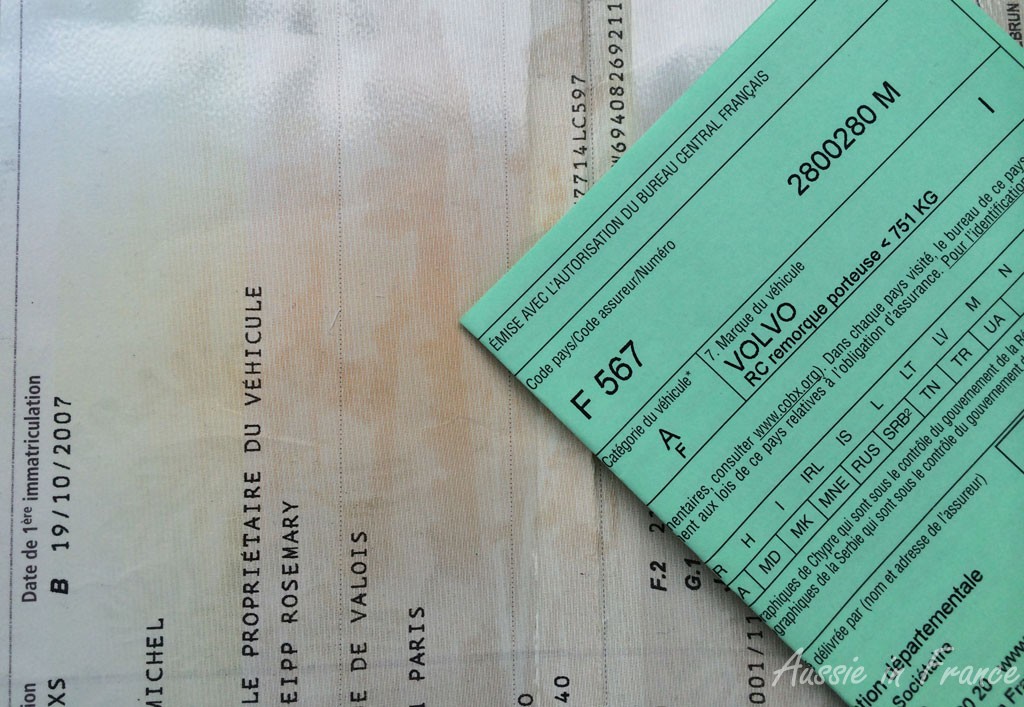
carte_grise_verteI’m reading a book in French and come across an expression I don’t know (which doesn’t often happen – I’m a translator after all). “C’est quoi, prendre une prune”, I ask Jean Michel. “Une amende”. So why would you call a speeding or a parking ticket a plum? Maybe it’s the colour of the ticket, he surmises, like a carte verte or carte grise. Prune incidentally corresponds to what we call burgundy.


This is very typical of French – designating something by its appearance rather than its purpose. Carte grise is what EVERYONE calls car registration papers and the carte verte is the insurance certificate and not a working visa.

However, I checked out prune and the expression doesn’t seem to have anything to do with the colour but rather the fruit. Back in the 13th century, prune already had several metaphorical meanings: a blow, bad luck, something worthless, all of which correspond pretty well to a speeding or a parking ticket.

The actual reason why prune developed these meanings is obscure but one legend has it that the crusaders brought back plum trees from Damask after the second crusade which they lost, prompting the king to say, “Don’t tell me you only went there for plums” (i.e. for nothing).

Another ticket-related colour is aubergine which later became pervenche or periwinkle blue used to designate traffic wardens after the colour of their uniforms. Their official name is contractuelle because they are employed on a contractual basis and are not regular civil servants.

The real name for a ticket is a PV or procès-verbal, which is really the strangest thing because it literally means a verbal process, yet it’s written down.

Many years ago, I accidentally went through a red light (I didn’t see it – it was one of those very low ones and I was turning right) and was stopped by a policeman. He asked for my carte grise, carte verte and permis de conduire (which used to be pink but was never called a pinkie which, incidentally, is petit doigt or auriculaire in French because it is the only one small enough to be inserted into the ear).

I did the “excusez-moi monsieur, je suis vraiment désolée, je n’ai pas vu le feu” bit and he answered “je ne vais pas vous verbaliser” which I assumed meant I wasn’t going to get away with a spoken reprimand and that he was giving me a ticket. But he waved me away instead! Verbaliser actually means to give someone a procès-verbal. Very disconcerting.

Do you know any more expressions based on colour?

Friday’s French – prochain, next, this,  huitaine & quinzaine

That may seem like a strange combination but an English-speaking friend living in France has suggested I deal with the topic of “this” and “prochain“.

lune

This is what she wrote: “ I just had a confusing text message exchange with a French friend who I’m going to visit this Saturday. And yes, “this Saturday” was the cause of confusion. He speaks English quite well and he likes to practise it when he texts as well.  I was confirming my train arrival times with him and he said to me in English “so I’ll see you next weekend then!”

Even though I was pretty certain he was (badly) translating “le weekend prochain”, I still had to make sure we were on the same page and that he’d be there to meet me THIS weekend.”

In English, we make the distinction between “this Saturday”, that is, the one coming, and “next Saturday”, meaning the one after that, whereas in French, “samedi prochain” is the one coming and “samedi en huit” is the one after that. You can’t say “le weekend en huit”, though. You’d have to say something like “je te vois dans dix jours”, with dix being anything between 9 and 13!

But why “en huit”, you may be wondering. A week in English consists of seven days, but in French a week is “huit jours” – even in legal documents – despite the fact that semaine comes from the Latin septimana meaning seventh. But then another way of saying week is huitaine. The same applies to a fortnight, which is “quinze jours” or quinzaine and not quatorze jours as you would imagine.

Where does this all come from? Well, it seems is comes from the Romans who divided the month (30 or 31 days) into four unequal periods. So for a 30-day month, you’d have eight days followed by seven days, twice. A quinzaine was thus an 8-day period plus a 7-day period. This also explains why “huitaine” means week.

In France, the expressions sous huitaine and sous quinzaine (within one week and within two weeks) acquired a legal meaning in the Middle Ages which still exists today.

This is borne out by a similar use in Italian where quindicina is used for a period of two weeks.

I was talking to Jean Michel about huitaine and quinzaine and he said he remembers people using the term lunaison when he was young. I immediately checked my Larousse. It’s a real word and is the interval between two new moons, whose average length is 29 days, 12 hours, 44 minutes and 2.8 seconds (nothing like precision, is there?).

Now isn’t that interesting?

Friday’s French – docteur, médecin, toubib, doctor

Doctor Antoinette Séjean
Doctor Antoinette Séjean, nutritioniste

I was surprised recently when a 6th year French medical student told me that there is a difference between a médicin and a docteur : a médecin is able to prescrire but is not qualified whereas a docteur has a Ph.D.

After translating in the field for nearly 40 years and never having witnessed this distinction, I was not convinced and have not found any literature supporting his statement since.

Certainly je vais chez le médecin is exactly the same as je vais chez le docteur. However, you would say bonjour docteur and not bonjour médecin, athough you could say bonjour monsieur le médecin if you wanted to be very polite.

Un médecin généraliste ou just un généraliste is the equivalent of our general practitioner (GP) and definitely qualified!

He was actually speaking about internes who, after 6 years at the faculty of medicine during which they usually do 4 annual 3-month practical periods in a hospital (as externes), spend another 3 years full-time in a hospital before presenting their thesis and becoming a GP or 4 or more years to become a specialist.

A doctor whom you see regularly (what we loosely call my doctor) is docteur or médecin traitant (but not docteur traitant). Qui est votre médecin traitant? Who is your doctor?

When I first arrived in France from Australia, I was surprised to hear people talk about ma gynécologue, mon pédiatre, mon rhumatologue and never about mon docteur, always referred to in any case as le docteur. The system has now changed but until a few years ago anyone could consult a specialist without a referral. You still can but you won’t be reimbursed by social security with the exception of gynaecologists, ophthalmologists, psychiatrists and stomatologists (but only for run-of-the-mill treatment, called acte médical).

My mother-in-law always referred to the doctor as le toubib, borrowed in 1898 from  the Algerian word for witchdoctor but which has the same root as medicine. It’s familiar of course and would sound very strange in the mouth of a foreigner!

In English, it is customary to address anyone with a Ph.D. as doctor but docteur is only used to refer to a medical practitioner in France. No distinction is made between a G.P. and a specialist who is also called docteur, unlike the Australian practice of calling a specialist Mr.

When you get higher up on the scale and become a Professor, however, you become le professeur Jacques Dupont, for example.

Among the various specialities, oncologue is used in preference to cancerologue; you go to see a rhumatologue if you’re having back problems , an oto-rhino-laryngologiste, more commonly known as ORL, if you have an ear, nose or throat infection, an angiologue for varicous veins and a pneumologue for lung problems.

The French love using scientific words whenever they can and would consider our more down-to-earth ear, nose and throat specialist, eye specialist and lung specialist almost to be baby talk!