I wrote a short post last week about travaux so I thought I should talk about travail today. You may remember that travail comes from the low Latin trepalium, instrument of torture, derived from the Latin tres, three, and palus, stake.
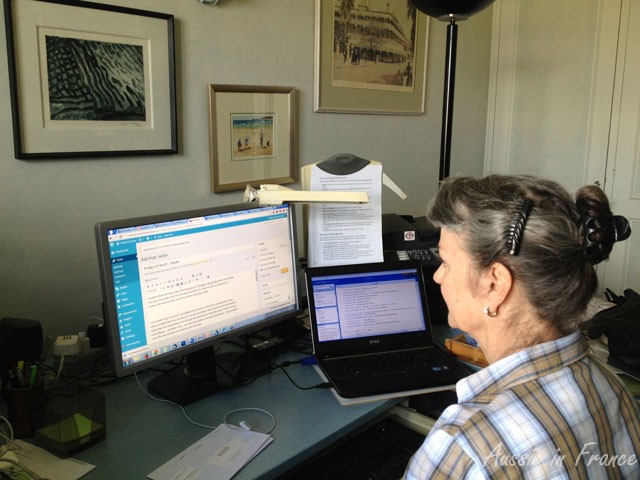
En plein travail intellectuel
I was about to give travaux scientifiques and travaux manuels as examples of travaux when I realised that you can also say travail scientifique and travail manuel and it doesn’t quite mean the same thing, even though the translation is often the same. In fact, travaux scientifiques – scientific work – are often the product of travail scientifique – also scientific work! But the line between them can be very fine.
C’est un travail scientifique original = It’s an original scientific work
Il vient de publier les résultats de ses travaux scientifiques. = He’s just published the results of his scientific work.
Il a fait un travail scientifique extraordinaire = The scientific work he carried out was extraordinary (though this can be translated in many different ways depending on the context).
The distinction between travail manuel and travaux manuels is a little easier.
Il aime le travail manuel = He likes manual work.
Les travaux manuels occupent les enfants et aident à leur développement = Manual work occupies children and helps them to develop.
But the main meaning of travaux manuels is arts and crafts.
Travail intellectual is intellectual work in the sense of brainwork or mental work while travaux intellectuels corresponds to the work produced and is often opposed to travaux manuels.
Il fait un travail intellectuel = He does intellectual work.
Jean Michel often says “Qu’est-ce que c’est que ce travail?” to mean“what’s going on here?”
And here are a couple of expressions to finish off:
Le travail c’est la santé which approximately means that work is good for you.
“à travail égal, salaire égal” = equal pay for equal work.
This is going to be a very short post because we are up to our necks in travaux. Travaux, the plural of travail is, interestingly enough, from the low Latin trepalium, instrument of torture, derived from the Latin tres, three, and palus, stake.
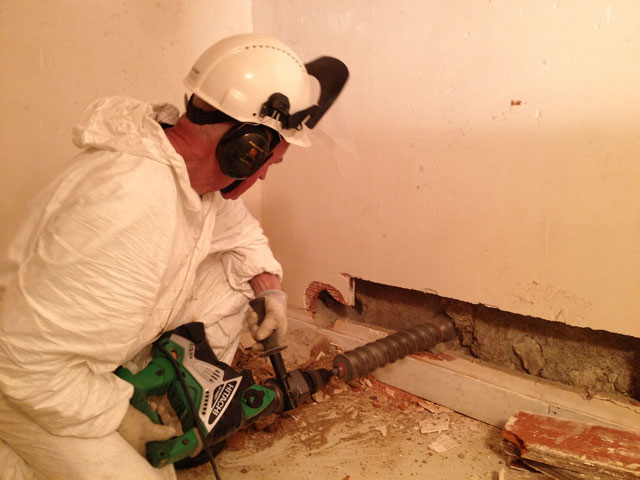
Jean Michel en pleins travaux : percement d’un mur de 70 cm.
Well, I can tell you, the pain in both my hands (being left-handed I am fairly ambidextrous) from wielding spatulas, trowels, paint brushes and rollers for the last week certainly makes it feel like torture! The end result will be a laundry, initially without a sink.
Travaux is a very useful word and covers practically anything. Note that in French, it is always used in the plural and never in the singular, in this context. And you can use it by itself without any explanation. Nous faisons des travaux = We doing renovation works/alterations/plumbing and so on.
renovation work = travaux de rénovation
roadworks = travaux routiers
woodwork = travaux sur bois
plumbing work = travaux de plomberie
alterations = travaux d’aménagement
major projects = grands travaux
farm work = travaux de la ferme
metalwork = travaux sur métal
I’m sure you can find plenty of others! Je dois reprendre mes travaux de peinture!
I am a firm believer in learning vocabulary if you want to speak another language with any fluency. However, it has the disadvantage of giving the impression that A always equals B. Which is not true of course.
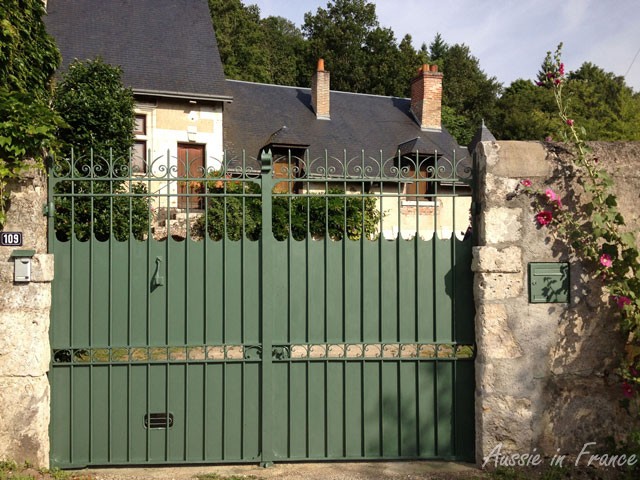
Notre portail vert qu’on a repeint pendant une vague de chaleur
I still remember learning that gate = barrière = and fence = clôture and find it difficult not to automatically say “barrière” and “clôture” each time The problem is that they are not always equivalents !
Our house in Blois has a portail (which we repainted in a heat wave), which is used to designate a large metal or wooden gate. The bits on either side of our portail are murs or walls because they are made of stone. Our little house also has a portail but it’s wooden.
No barrières in sight! So I asked Jean Michel , “qu’est-ce que c’est qu’une barrière“. He thought about it and very helpfully said “Je ne sais pas”. So I’ll tell you what I think it is. As far as I can see, it refers to a barrier, such as the Great Barrier Reef in Australia (grande barrière de corail), a safety gate or a crowd barrier (une barrière de sécurité), a language barrier (barrière de la langue – now that’s useful!) and more important still, a level crossing gate (barrière de passage à niveau) – you may remember my close shave in Germany last summer.
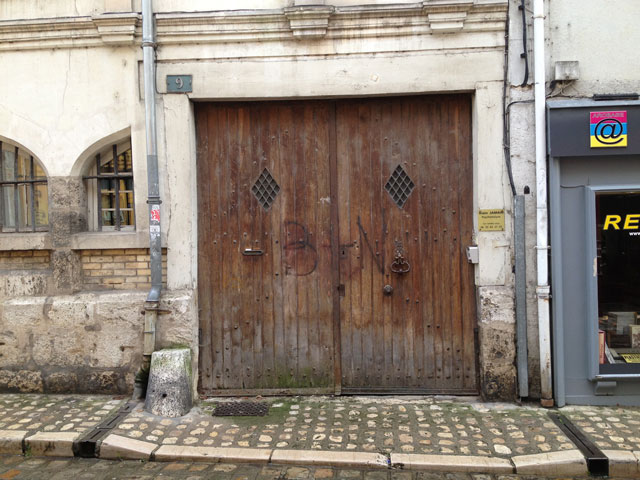
Une porte cochère
A gate can also be a porte, such as the town gates or gate to a castle or even a garden gate if it looks like a door. Those enormous gates that you see on the façade of many buildings in France originally designed to take a horse and carriage through are called portes cochère.
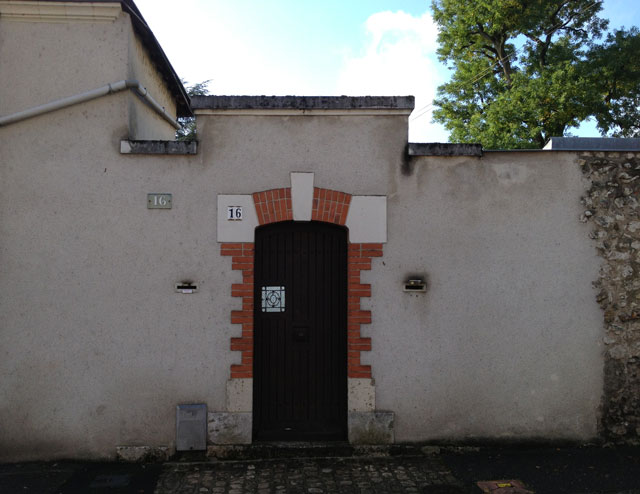
Une porte de jardin
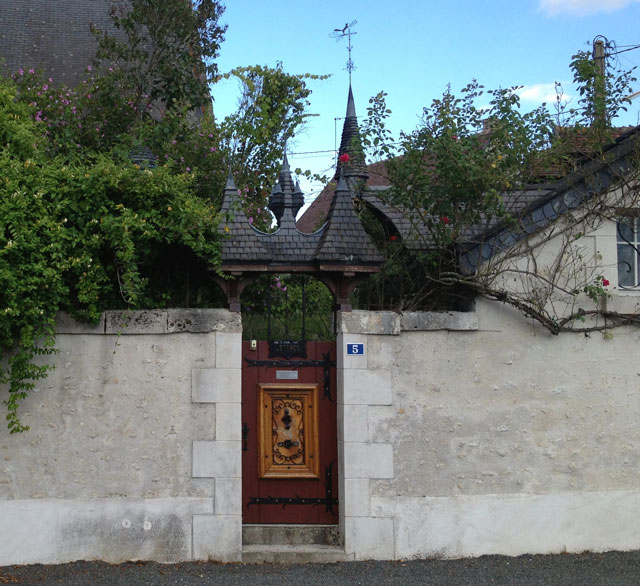
If it’s not enclosed on all sides by a wall and not big enough to let a vehicle through, it’s a portillon.
Un portillon
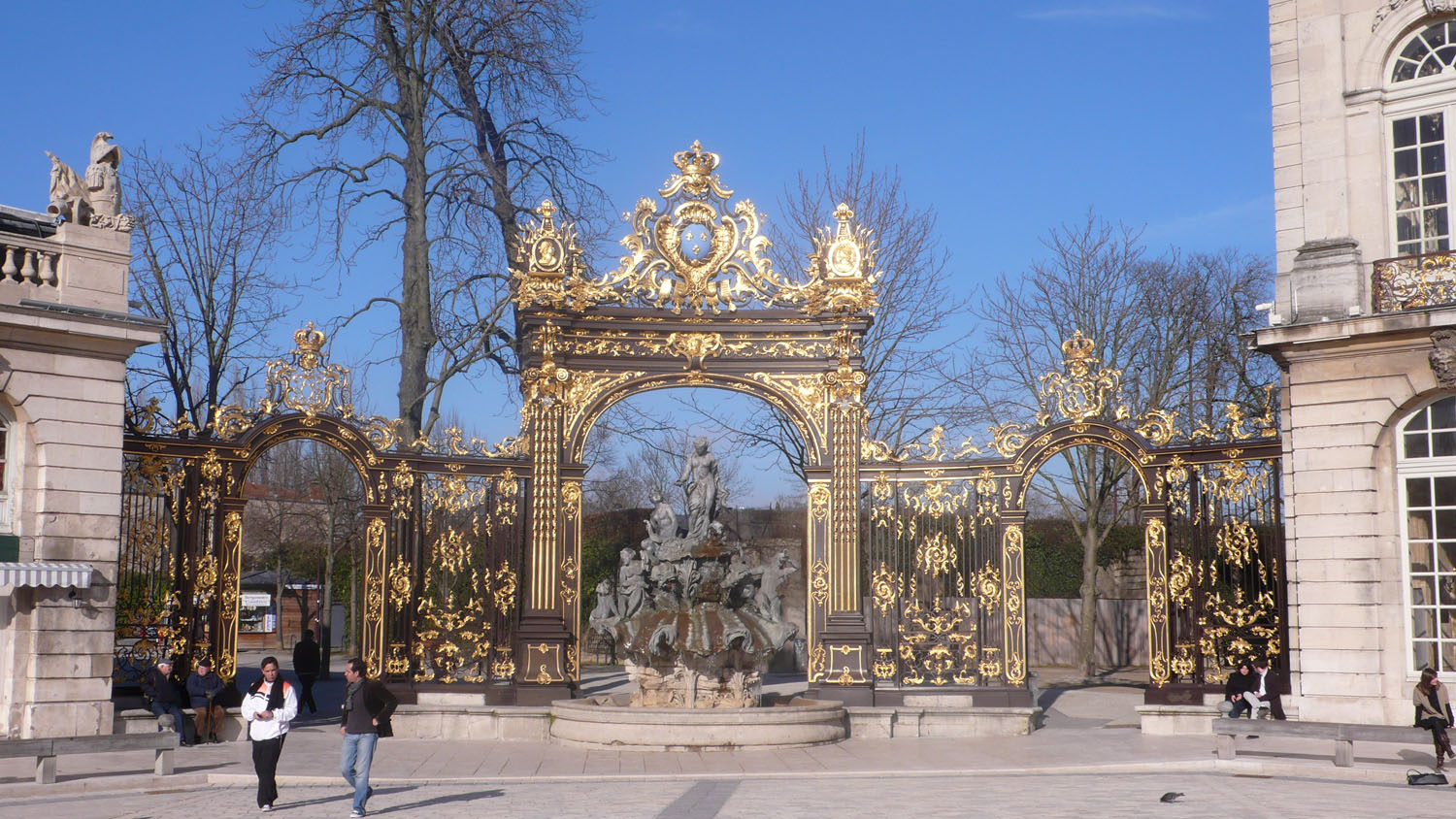
A large metal gate that doesn’t have any solid parts the way our green gate does is called a grille d’entrée.
Une grille d’entrée à la Place Stanislas in Nancy (though the actual gates are missing!)
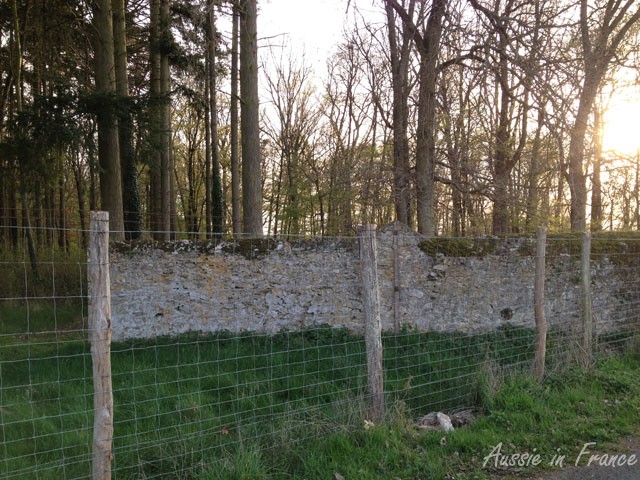
Fortunately, fence isn’t quite as complicated. Below, you can see a clôture which is definitely a fence, but the stone wall behind it is a mur d’enclos.
Une clôture en fer devant un mur en pierre
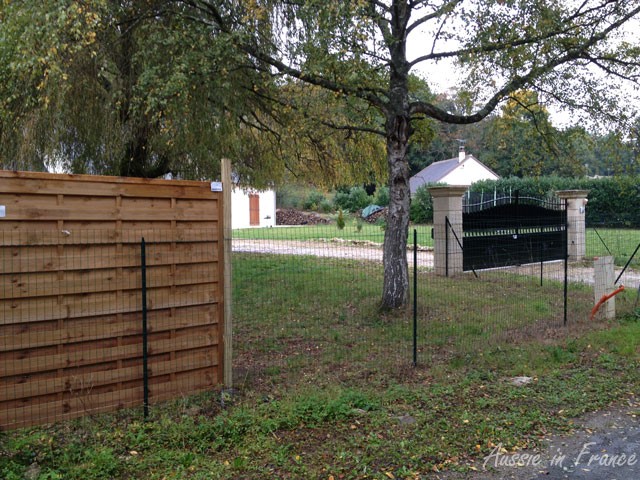
Theoretically, you can have a clôture en bois such as the one the neighbours used for their chicken yard below, but most people would call it a palissade. The wire fence next to it is a clotûre though.
Une palissade, suivie d’une clôture, suivie d’un portail.
So next time you want to say “fence” or “gate”, I hope you’ll do better than me!
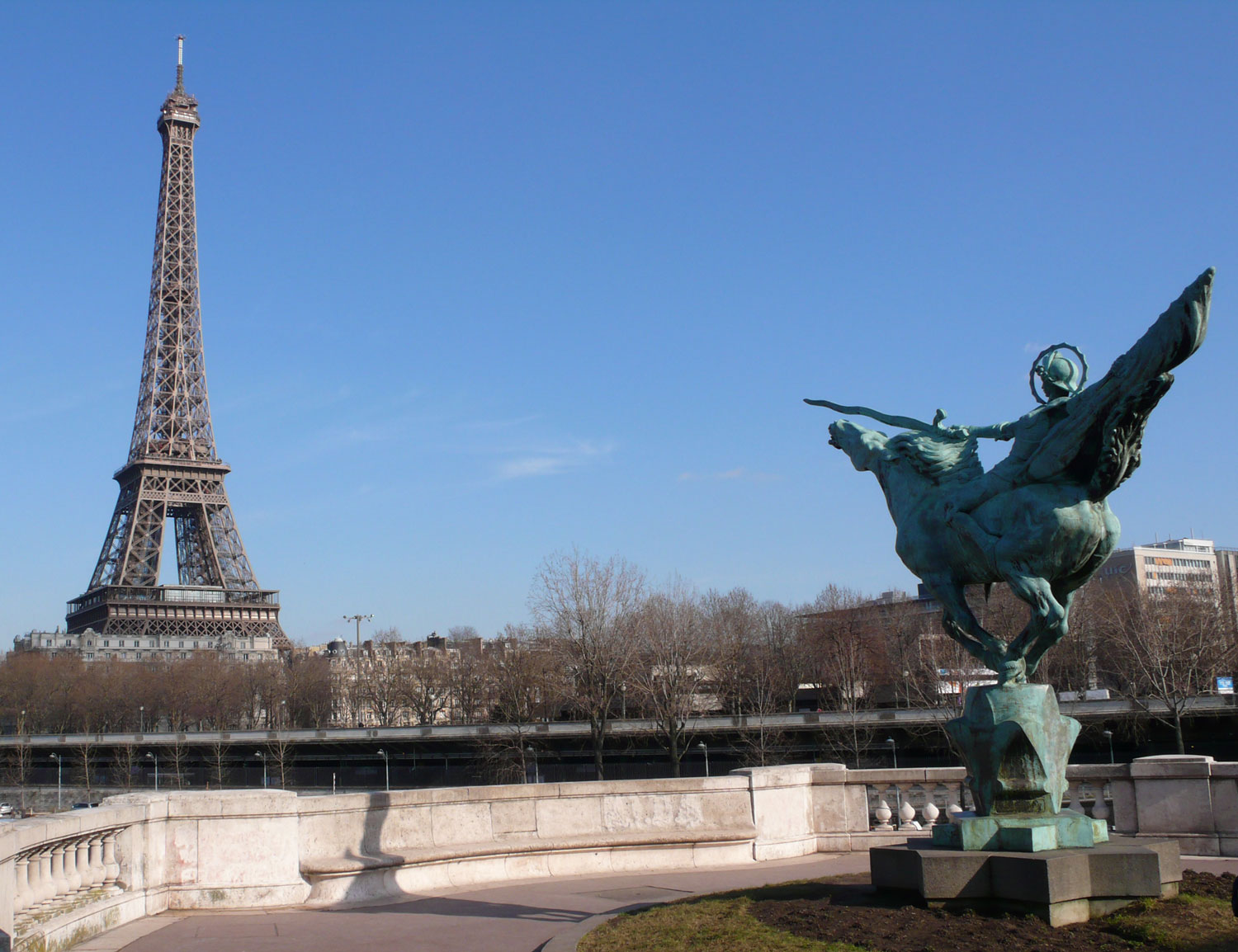
Viens ! Je t’emmène à la Tour Eiffel. Apporte des sandwichs, nous pouvons faire un pique-nique sur place. J’amènerai ma cousine avec moi.
Come on! I’ll take you to the Eiffel Tower. Bring some sandwiches – we can have a picnic there. I’ll bring my cousin with me.
Ce bus vous emmènera jusqu’à la Tour Eiffel
Now before we go any further, I’d just like to mention that the differences between these three verbs in French can be very subtle. Also, in English “bring” and “take” are not always used correctly e.g. “bring me the ball” but not “take me the ball”. “He took me to the cinema” and not “he brought me to the cinema”.
Emmener is fairly simple and corresponds to “take” used correctly in English:
Le bus vous emmènera jusqu’à la Tour Eiffel = The bus will take you to the Eiffel Tower
Je vous emmène dîner au restaurant = I shall take you out to eat
Il a emmené un livre dans sa chambre = He took a book to his room.
Amener and apporter are a diffcrent kettle of fish.
Apporter is used in the following cases:
N’oubliez pas d’apporter vos CD = Don’t forget to bring your CDs.
Un jeune homme a apporté ces fleurs = A young man brought these flowers.
Je vous apporte des bonnes nouvelles = I have some good news for you (literally I’m bringing you some good news).
Il doit nous apporter des preuves = He has to bring us proof.
Cette réforme apportera des changements = This reform will bring changes.
What do you notice about all the above sentences (taken straight out of my Larousse French dictionary, I might add)? They all refer to things such as CDs, flowers, proof, changes and sandwiches, and not people.
If people are involved, then amener must be used and not apporter.
Amenez votre ami à la maison = Bring your friend home
Dites-moi ce qui vous amène = Tell me what brought you.
Ce bus vous amène à la gare = This bus takes you to the station.
I can hear you jumping up and down! What about the other bus, the one that takes you to the Eiffel Tower? Ce bus vous emmènera jusqu’à la Tour Eiffel. All I can say is that if there is a difference, it’s so subtle that you won’t ever have to worry about it!
Most of the other uses of amener correspond to the idea of provoking a result.
Cette crise économique risque d’amener des problèmes sociaux = This economic crisis could cause social problems.
Amener l’eau à ébullition = Bring water to the boil.
Il a amené la conversation sur le problème de chomage = He steered the conversation towards the problem of unemployment.
Vous nous avez amené le beau temps = You brought us the good weather.
You might wonder with this last one why you wouldn’t say Vous nous avez apporté le beau temps. It’s because you can’t literally bring good weather the way you can with sandwiches, but cause the good weather to happen.
I wrote this post at the request of a reader so will be interested to know whether it has helped!
In this week’s Blogger Round-Up, Gigi from French Windows explains her love/hate relationship with French articles, while Maggie LaCoste from Experience France by Bike gives us a detailed explanation of French rail’s new site for cyclists in English. To finish off, Anda from Travel Notes and Beyond takes us to a most unusual place in Dresden that has singing pipes. Enjoy!
Feminine Articles
By Gigi from French Windows, failed wife and poet, terrible teacher and unworthy mother of three beautiful girls, who has lived in France for over twenty years and gives glimpses of her life with a bit of culture thrown in.
It’s International Women’s Day so I thought I’d write a piece about my struggle, here in France, with all things feminine.
Well, not all things feminine. Nouns mostly. After twenty-seven years in this country, you’d think I’d have got the hang of this le/la, un/une business but pas du tout. I provide endless amusement for my French friends and colleagues because I still get it wrong.
I mean, some words just sound feminine to my worryingly gender-stereotyped (I’ve just realized) mind. Like nuage…soft and fluffy, it’s actually masculine. Or pétale, which is also masculine. And then there is victimeand personne, which are feminine. So when the newsreader refers to a male murder victim as ‘elle’, I get terribly confused. Read more
New French Rail Website for Bicyclists
by Maggie LaCoste from Experience France by Bike, an American who loves biking anywhere in Europe, but especially France, which has the perfect combination of safe bike routes, great food, great weather and history.
SNCF, operator of France’s national rail service has a new website designed to help bicyclists navigate the train network. The website is easy to navigate, is full of information you should know if you plan to carry a bike on a train while bicycling in France and it’s in English. The website doesn’t make it any easier to take your bike on a train, it does help you understand the rules. Since there has never been a centralized source of information for travel on French trains with bikes, this website is a huge step forward.Whether you need information on bringing a bike into France on a train, traveling via train with a bike while in France, where to rent a bike near a train station or where to ride, this website will provide you with the basic information you need. Here’s a basic rundown of information on the website, and quick links if you need more information. Read more
The Singing Drain Pipes of Kunsthofpassage
by Anda from Travel Notes & Beyond, the Opinionated Travelogue of a Photo Maniac, is a Romanian-born citizen of Southern California who has never missed the opportunity to travel.
I didn’t know anything about this site before our trip to Germany. One day, as I was searching the net for places of interest in Dresden, I stumbled upon a picture of a strange, funny building with a big giraffe on it. It was the Kunsthofpassage. I tried to find out more about this curious spot, but the information at hand was scarce and very conflicting: some called it a “masterpiece”, others “a waste of time”. But the picture of that building was very intriguing so I wanted to visit it. Read more
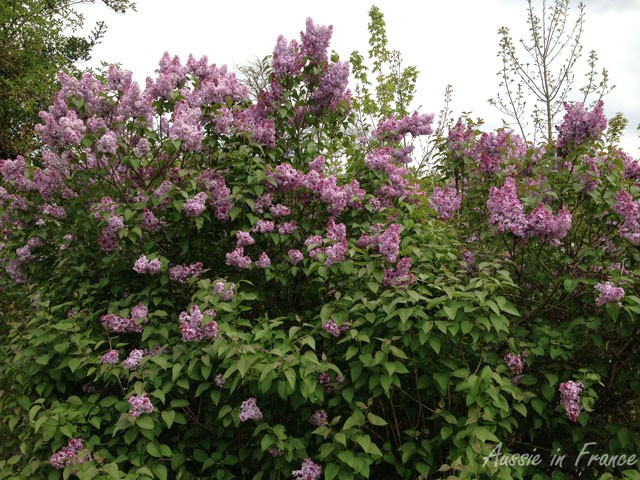
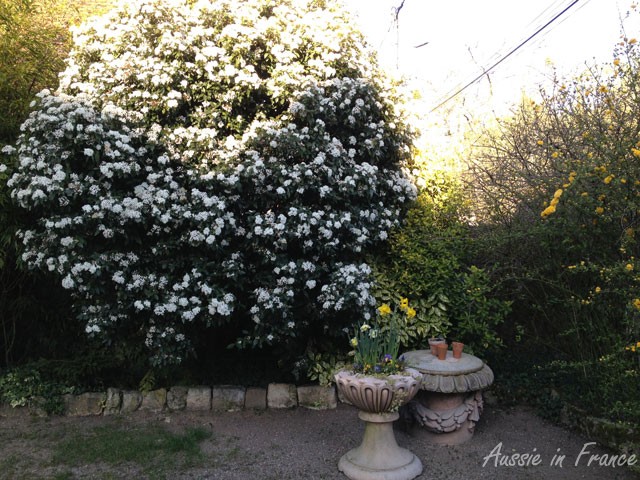
I originally thought the equation was arbre = tree, arbuste = shrub and buisson = bush. Well, I was wrong. The first time I saw a lilac bush, I thought it was a tree. It looked like a tree to me and certainly not like a bush (a lot of the flowers are way above my head), but when I used the word arbre I was immediately corrected. Non, c’est un arbuste.
Le lilas est un arbuste
With the arrival of spring, there are lots of flowering shrubs, so I asked Jean Michel to define arbuste for me. “Un petit arbre“, he replied. “No it’s not.” I replied, “You could call a young conifer un petit arbre but it still wouldn’t be an arbuste.” So I checked my Larousse app. An arbuste is a woody perennial plant less than 10 metres in height whose branches don’t grow from the base.
Then it says in brackets that a young arbuste looks like an arbrisseau (oh dear, I hadn’t even thought of that one !) then starts looking like a tree when it loses its lowest branches.
An arbrisseau has branches coming from the base and doesn’t grow more than 4 metres high. No examples given for either of course.
Le laurier tin est un arbrisseau
According to my Longman Dictionary of Contemporary English, a shrub is a small bush with several woody stems. A bush is a plant with many thin branches growing up from the ground.
Guess what an arbre is ? A woody perennial plant with branches that grows to at least 7 metres (where did they pull that one from?) and has permanent branches that only start a certain distance from the ground. It’s all relative, isn’t it ?
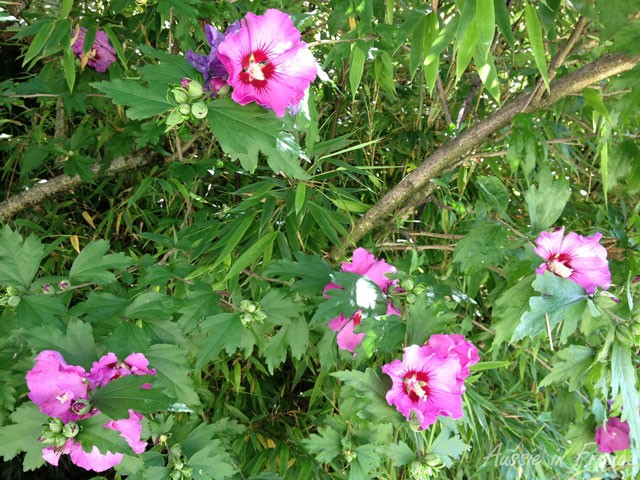
L’althéa est un arbuste.
A tree is a very tall plant that has branches and leaves and lives for many years, to quote the Longman. That’s a definition? “Very tall”? “Many years”? Hardly precise.
I then consulted my New Shorter Oxford in two volumes just in case it’s more cluey. Well, it’s not. A bush is a shrub or clump of shrubs with stems of moderate length. A shrub is a woody plant, smaller than a tree. A tree is a woody perennial plant, typically having a single stem or trunk growing to a considerable height and bearing lateral branches at some distance from the ground.
But listen to the next bit : More widely, any bush or shrub of erect growth with a single stem. Which explains my confusion between trees, shrubs and bushes!
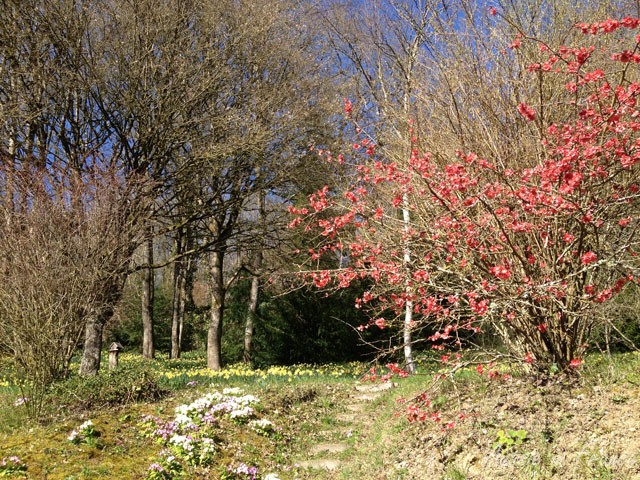
Le cognassier japonais est un arbuste mais peut être taillé en buisson
I went through a few plants with Jean Michel to see what category he would put them in. Let’s see. Lilac is an arbuste, Japonica quince is either an arbuste or an arbuste buissonnant. Oh no, not something else! I’d forgotten about buisson.
The Larousse says it’s an arbuste or group of arbustes with branches growing up from the ground and is difficult to get through. Hey, that sounds like a hedge, doesn’t it ? I thought hedge was haie. Haie is a line of arbres or arbustes forming a limit between two parcels of land. A hedge is a row of small bushes or trees growing close together, usually dividing one field or garden from another. So we can safely say hedge = haie.
I think we’ll just have to forget about the English and concentrate on the correct words to use in French, don’t you ?
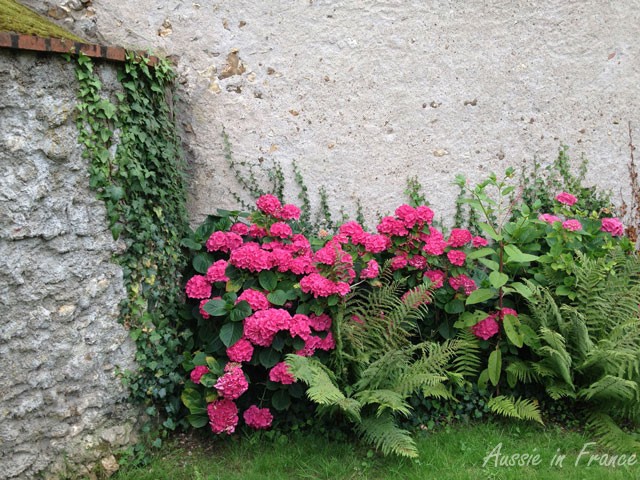
L’hortensia est un arbuste.
So, an arbuste looks like a tree only it’s smaller and has low-growing branches e.g. a lilac bush or a holly bush. An arbrisseau has branches growing up from the ground e.g. viburnum tinus (laurier tin), only no one ever says arbrisseau so we can call them arbustes as well, like Japonica quince (cognassier du Japon) and weigela or arbustes buissonnants or even buissons if they are small enough and are trimmed to form a hedge.
If you want to say arbre, check the plant is at least three times your height and has no low branches!
It’s actually Saturday, but we’ve had two days away cycling around Saumur and are now gardening like mad so this is going to be a very quick post.
Relâche is what you say when there is no performance. If a cinema is closed on Mondays, for example, you’d say, le lundi est le jour de relâche du cinéma.
Prendre un peu de relâche means to take a short break, which is what we have just done. Sans relâche means relentlessly (without letting up).
The verb relâcher comes from the Latin relaxare which obviously gave us the verb relax.
Alors, j’ai pris un peu de relâche après avoir travaillé sans relâche pendant presqu’un mois. Résultat: c’est relâche pour Friday’s French.
Se rappeler and se souvenir are almost complete synonyms. I can’t really think of any occasion on which one can’t replace the other. However, there is a grammatical difference which fewer and fewer people observe these days. Se rappeler takes a direct object and se souvenir doesn’t. So what does that mean?
A pair of chairs in Vendôme – nothing to do with memory but I like the photo.
I remember my grandparents well = Je me rappelle bien mes grand-parents OR Je me souviens bien de mes grand-parents.
The difference is that little “de” which most people also tack on to se rappeler.
I remember him = Je me le rappelle OR Je me souviens de lui. But, you mostly hear Je me rappelle de lui which is totally incorrect.
I try to remember not to use “de” with se rappeler but when everyone else around me is using it without the slightest hesitation, it’s not easy because it sounds odd. So I usually use se souvenir!
You can use rappeler without the reflexive, but not souvenir.
While se rappeler means to remember, rappeler means to remind someone of something. Note that while we say “of” in English, THERE IS NO DE IN FRENCH.
Tu me rappelles ma tante = You remind me of my aunt.
Cela ne vous rappelle rien ? = Doesn’t that remind you of something?
Rappelez-moi votre nom = [Literally: remind me of your name] and really corresponds to “Sorry – can you tell me your name again” which is a VERY useful phrase to know if you forget names the way I do.
Another verb that can also be used for “remember” is penser à.
Tu me fait penser à ma tante = You remind me of my aunt.
Cela ne vous fait pensé à rien ? = Doesn’t that remind you of something?
Fais-moi penser à rappeler mon frère = Remind me to ring my brother back.
Which reminds me that rappeler has another meaning i.e. to call back, where the “r” is like “re”, widely used in French to mean again.
Ses affaires l’ont rappelé à Paris = He was called back to Paris on business.
Ma mère a été rappelée au chevet de mon grand-père malade = My mother was called back to my sick grandfather’s bedside. [which is interesting because a chevet is a bedside table).
Souvenir is also a noun of course, with the meaning we know in English, as in souvenir shop.
But its main meaning is “memory”.
Elle a gardé de lui un bon souvenir = She has good memories of him.
Ce n’est plus qu’un mauvais souvenir = It’s just a bad memory now.
Je n’ai qu’un vague souvenir de l’incident = I only have a vague recollection of the incident.
Il m’a raconté ses souvenirs d’enfance = He recounted his memoires of his childhood.
But isn’t mémoire a French word, I can hear you saying. Doesn’t it mean memory? First, it can’t be used in any of the above examples. Souvenir is used when it means “something remembered” while mémoire is used when talking about what our brain does.
Elle a une bonne mémoire = She has a good memory.
Il a une mémoire d’éléphant = He has a memory like an elephant.
Je cite de mémoire = I’m quoting from memory.
C’est inquiétant, elle perd la mémoire = It’s very worrying – she’s losing her memory.
A very useful little phase is pour mémoire which means “as a matter of interest”, “for the record”, “in passing” e.g. Mais tout indique que le sujet n’a, en fait, été mentionné que pour mémoire. = But everything would indicate that the subject was, in fact, only mentioned in passing.
Mémoire is also the term used for a computer memory.
And just to make matters easy, there is a another word mémoire, but this time it’s masculine and it has a completely different meaning!
It can be used for a memorandum, a report, a statement of all the money owed by a customer to a company (you probably don’t need to remember that!), someone’s memoirs and, most importantly for me, a master’s thesis or dissertation.
For about six years during my career as a university lecturer, I was in charge of the dissertations at ESIT and I could never remember whether the word mémoire was masculine or feminine! I devised all sorts of strategies so I wouldn’t reveal my lack of certainty! For example, instead of saying “Son mémoire est en retard” (her dissertation is late), I would say “Elle a dépassé la date limite” (she’s gone over the deadline).
Now who would like to have a try at translating the four phases in bold in the post? Click here for the answers!
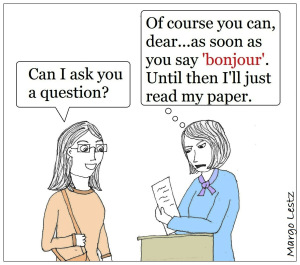
This week’s Blogger Round-Up takes us to Lisbon in Portugal with Jenny and John in Brittany, a place that is definitely on my shortlist while Adelina from Pack Me To visits the inside of the Parliament Building in Budapest which we didn’t see on our visit to Hungary last summer. Margo Letsz from The Curious Rambler, whom you met last week explains the importance of being polite in France, which you may remember from my post on bonjour. Enjoy!
Things to see and do in Lisbon, Portugal
by Jenny and John in Brittany, who recently left Stockport, England to live in France where they are renovating a house to create a B&B.
Lisbon is an amazing city, there is so much to do and so many places to visit, I am not going to go into much detail as the pictures say more than a thousand words.
The one thing I would recommend though is to go on the trams, we did not work them out and just jumped on one we saw, you can pay on the tram or get a day pass (the day pass is highly recommended as this allows you to travel all day and costs approx the same as two rides when you pay on the tram).
We travelled to the end of the line and then back again, the tram ride is fascinating as at times you can touch the buildings you are passing it gets so close. Read more
Inside the Hungarian Parliament Building
by Adelina from Pack Me To, a Chinese American who’s been traveling for as long as she can remember and has lived in the Netherlands and Hungary. She loves telling stories, and eating and exploring her way around the world.
Visiting the Parliament building in Budapest has been on my to do list for a long time. I had seen photos of the inside of the Hungarian Parliament building, which looked spectacular, and I wanted to see it for myself. A building that looks so magnificent on the outside is sure to look glorious inside right? I was not wrong.
I had a bit of a false start on my visit to the Parliament. The first time I went, I was informed that the tour for the day was only 30 minutes long instead of the regular 45 minutes, but the price was the exactly same. I decided to go back another day. Read more
It pays to be polite in France
by Margo Letsz from The Curious Rambler, who lives in Nice, France where she likes to bask in the sunshine, study the French language and blog
At this café in Nice, France, minding your manners can significantly reduce the price of your coffee.
Of course, this was meant as a humorous way to remind customers to be polite, but it’s a great illustration of the French attitude toward good manners.
In France the “courtesy words and phrases” are very important and NOT optional. Fortunately, they’re easy to master, but if you can’t manage them in French, at least say them in English. More than likely, the French will understand you and think that you’re a polite person who doesn’t speak French – which is, of course, much better than being thought of as a rude person who doesn’t speak French. So if you want to be polite in France (and I’m sure you do), here are some easy words and phrases (along with my attempt at phonetic pronunciation) to help you on your way. Read more
“She’s very mundane”, a bilingual French-English speaker said to me recently, obviously thinking that mundane means the same thing as mondain. To start off with, in English, we wouldn’t use mundane to describe a person, but rather something more abstract such as life or existence. Mundane means dull and ordinary or relating to ordinary life on earth rather than to spiritual things.
Une boutique pour les mondaines
Mondain, on the other hand, relates to the social life of what the French now surprisingly call people and what we call celebrities. It also refers the social habits of the bourgeoisie in which relations and conversations are always superficial.
What my friend really meant to say is “She’s a socialite”. Whenever we want to express the idea of mondain, we nearly always need to have society or social in there somewhere.
Elle mène une vie mondaine = She’s a socialite.
Il a le goût pour la vie mondaine = He has a taste for society life (or the high life).
Ce festival est l’évènement mondain de l’année = The festival is the society event of the year.
“Mundane”, on the other hand, probably needs a different translation every time.
On a more mundane level = au niveau pratique
Mundane task = tâche courante
A mundane concern = préoccupation terre-à-terre
I’ve kept “mundane existence” for last because it’s a bit trickier as it has two meanings. A mundane existence can refer to a non-spiritual existence in which case it would be une existence terrestre or profane. However if we’re just referring to the fact that it’s dull and ordinary, we would say une existence banale ou une vie banale.
Speaking of banal, that’s another word which doesn’t mean quite the same in French and in English. Actually, it’s not the meaning that differs so much as the usage. Banal in English means commonplace or trivial, which is more or less what it means in French, particularly when it refers to a lack of originality. However, in English, we don’t say people are banal as we do in French; we say they’re ordinary or run-of-the-mill.
Un personnage peu banal = an unusual character
Une conversation or une idée banale = a trite or banal conversation or idea
Une vie banale could also be translated as a humdrum life.
Une grippe banale = a common case of flu
And to finish up, here’s a very common expression in French: Ce n’est pas banal.
How would you say it in English? And maybe you have some other examples (with their translations!) of mundane, mondain and banal.