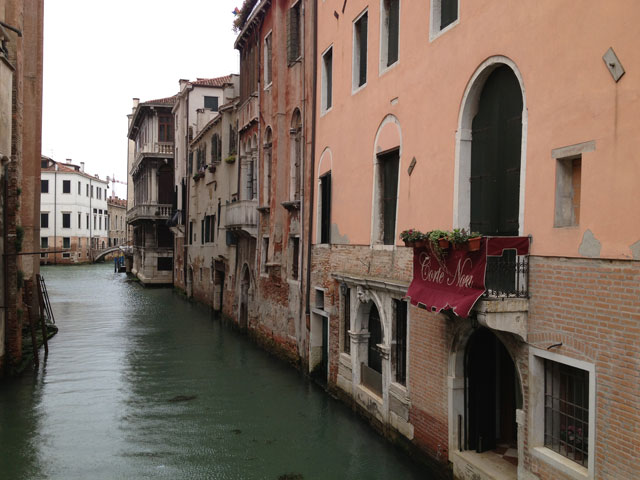
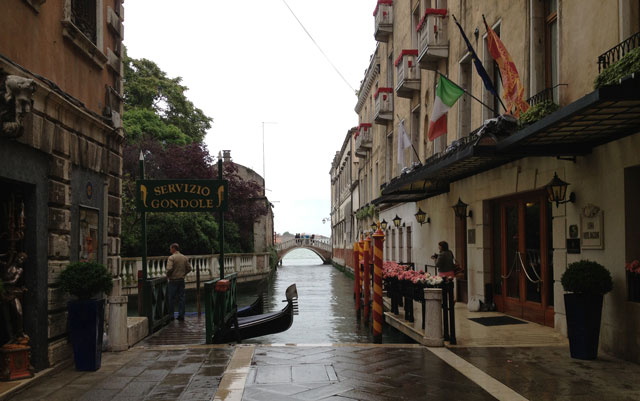
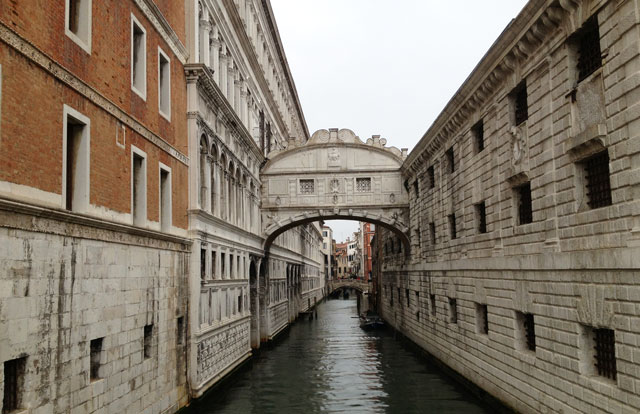
The first time we came to Venice 7 years ago, at about the same period, we had stunning weather. This time, we arrived in the rain and it seems it may last quite a few days. But the moment we started walking through the tiny streets from Ospedale vaporetto to our home exchange in Castello just behind Piazza San Marco, I felt the magic of Venice descend upon me. Here are my first impressions.
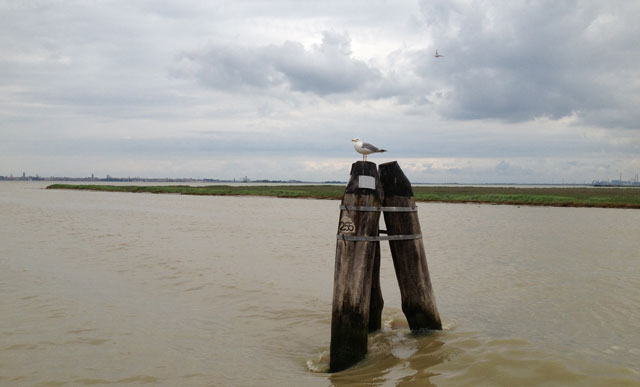
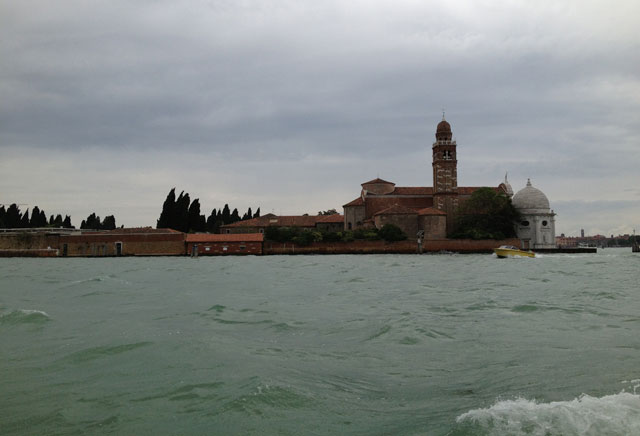
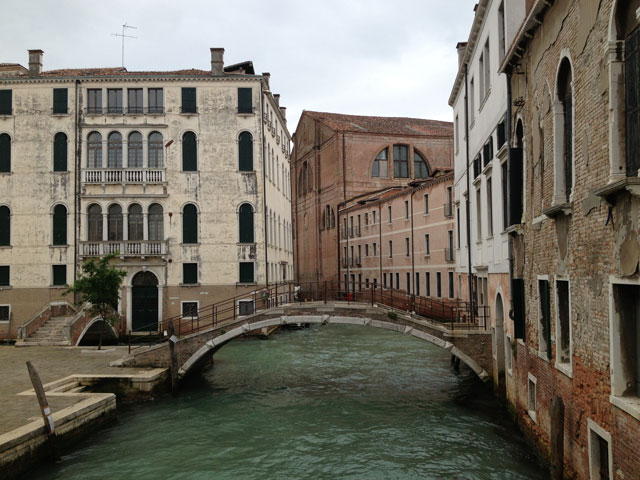
First sightning of Venice from the vaporetto that took us from the airportSan Michele Cemetary on an island just opposite VeniceiThe arched bridges so typical of VeniceOne of the typical palaces on a minor canalThe gondolas didn’t do much business while it was raining but each time there was a lull, the canals were full!The famous Bridge of Sighs, with an unusually empty canal beneath due to the rainThe Fenice opera house o on the right with two different palaces on the left
You’d seriously think that something as simple as a window would have a direct correspondence in French, now wouldn’t you ? Well, it doesn’t . The English word “window” has a much wider connotation than the French fenêtre.
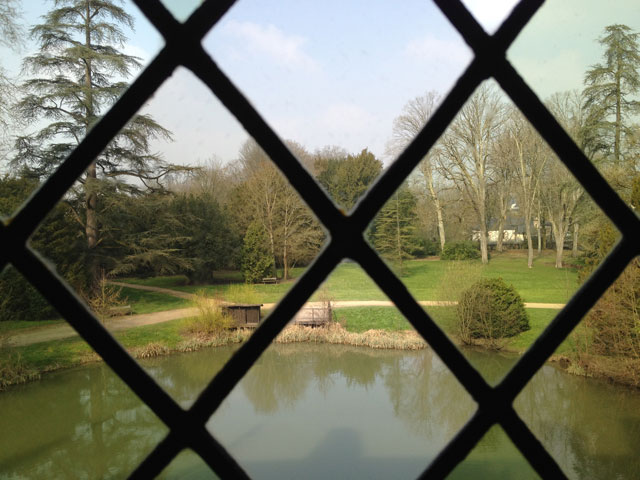
Je regarde par ma fenêtre à croisillons
The comparison starts off simply enough. J’ai regardé par la fenêtre = I looked out the window. Mon appartement a cinq fenêtres = My apartment has five windows. Its when you start getting more specific that it gets more complicated.
The house has a big window overlooking the sea = la maison a une grande baie vitrée qui donne sur la mer. Baie actually means an opening in a wall, a door or a window, and vitré is the adjective from vitre = glass. Fenêtre in fact is generally used to mean the window frame even though the technical word chassis exists.
In English you would say, “I cleaned the windows” but in French you’d say j’ai nettoyé les vitres or even j’ai nettoyé les carreaux (since a lot of window panes are square) and not j’ai lavé les fenêtres. A window with a lot of little panes is a fenêtre à petits carreaux.
Whereas we would say “his ball broke the window”, in French you would say il a cassé la vitre avec sa balle. Verre can be used but it’s not the correct term.
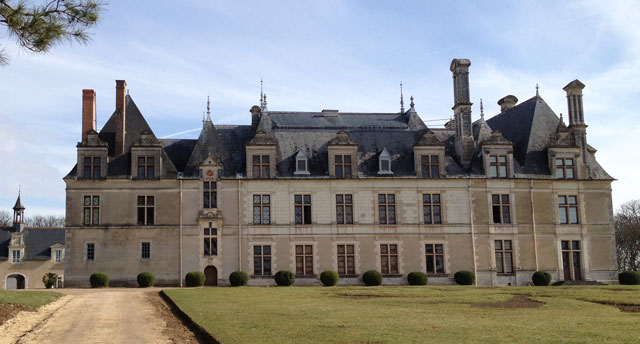
Avec toutes ces fenêtres, le château de Beauregard est très vitré. Beaucoup de fenêtres à meneaux.
A reader drew my attention to the use of vitré meaning a large number of windows in a TV programme about the Château de Champs sur Marne. La maison est très vitrée, même archi-vitrée. This is not the way the word is usually used and conveys the idea of a large amount of glass.
You would never use fenêtre to describe a large window that doesn’t open. It’s a baie vitrée as above. Note that our bay window is protruding where as baie vitrée is not. The French use the English term bay-window or fenêtre en saillie.
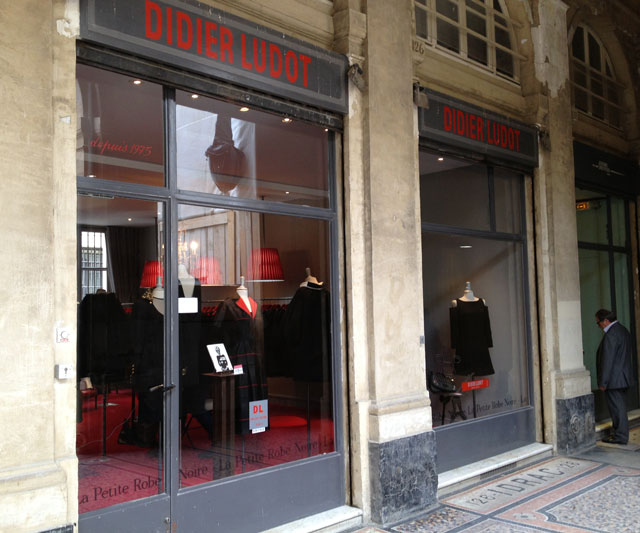
Une belle vitrine et porte vitrée pour faire du lèche vitrine dans la gallérie du Palais Royal
A really big glass window is called a verrière while a shop window is called a vitrine, with lèche-vitrine (lécher = lick) meaning window shopping! A ticket window in a train station, for example, is a guichet and the same word is used for ticket counter.
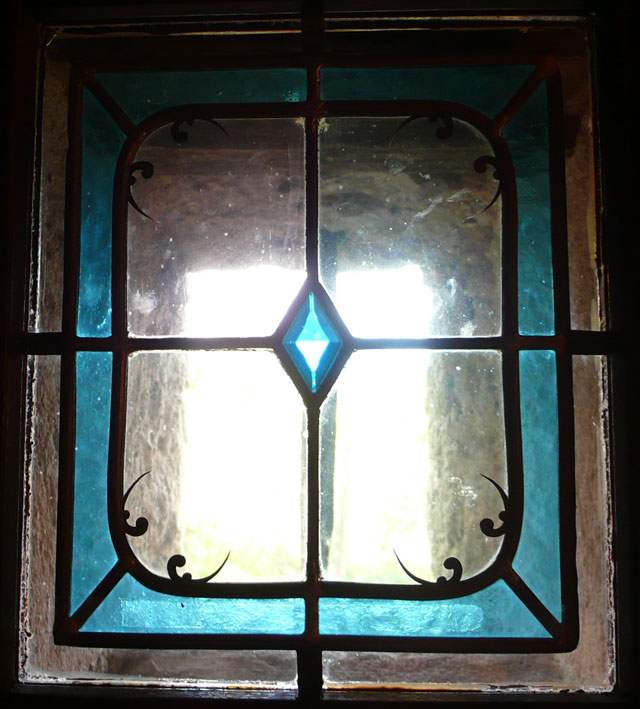
A stained glass or leadlight window is a vitrail in French (plural vitraux) with no distinction between the two in French. Leadlight could actually be used for both in English but stained glass is used traditionally for ornate windows and leadlight for windows of domestic and commercial architecture that are generally simpler.
Notre petit vitrail avec son cabochon de la cathédral de Chartres
One of the most surprising words connected with fenêtre that I know is défenestration. The first time I heard il s’est défenestré du sixième étage on the radio, I had no idea what it meant. I’ve heard it many times since. They never say “he jumped out the window” or “threw himself out the window” but always use the verb défenestrer.
Here are a few other windows to finish off :
fenêtre à guillotine = sash window (typically French, huh?)
fenêtre à battants/à meneau = casement/mullioned window
Jean Michel usually takes me to a Michelin-star restaurant for my birthday but it’s Easter Monday which is a public holiday in France and there isn’t much open so we’ve postponed it until Wednesday. Instead, he surprises me by suggesting we go for breakfast at Angelina’s. I’m secretely a little disappointed because it means I’ll miss out on talking to my brothers and nephews but can I refuse breakfast at Angelina’s?
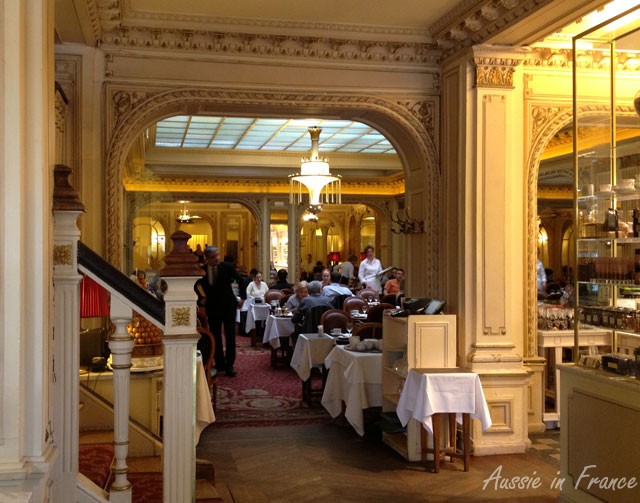
Entrance to Angelina’s on rue de Rivoli
It’s spitting very slightly as we walk down Rue de Rivoli and we hope it will eventually clear up. At 9.30 am, the beautiful turn-of-the-century dining room is still half-empty and we order a full Angelina breakfast with mini croissants, pains au chocolat and pains au raisin, fresh bread rolls, thick hot chocolate (its speciality), scrambled eggs and fresh fruit salad. We can skip lunch!
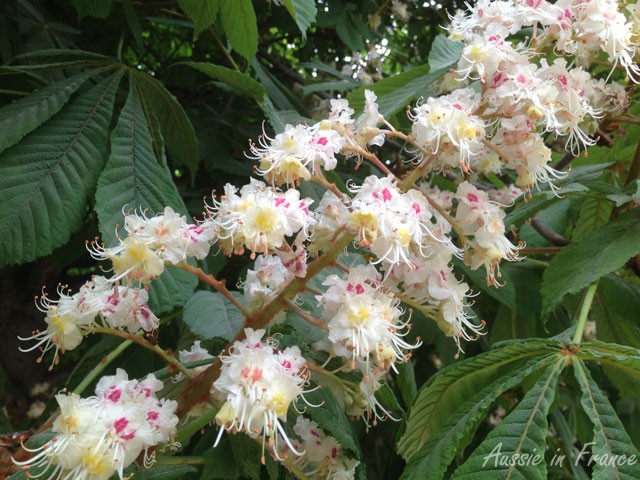
White chestnut flowers
After breakfast, we wander through the Jardin des Tuileries and discover a large stone arch we’ve never seen before. Yet we must have passed it countless times. We notice the chestnut trees are in bloom. Jean Michel has always told me they’re the first trees to flower in spring but this year they are certainly not. I had never noticed the delicately-coloured flowers up close before – you can have white, pale yellow and pink.
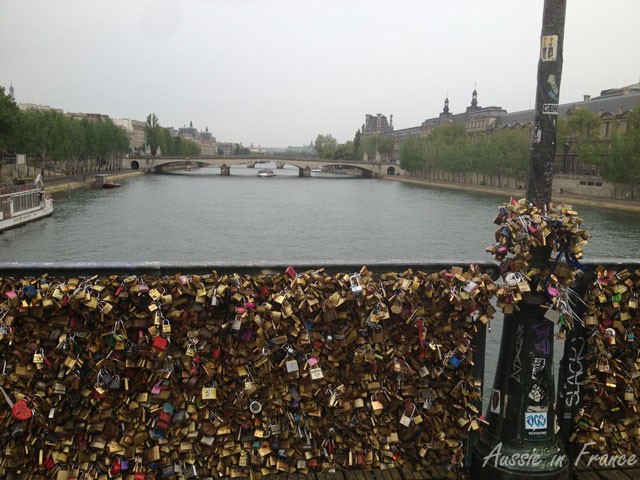
Ponts des Arts weighted down with lovelocks now crawling up the lamp posts
We cross the pedestrian bridge that leads to Orsay Museum which we’d love to visit but Monday is closing day so we continue on to the Pont des Arts where the number of lovelocks seems to have doubled since the last time we were there. They are even climbing, clematis-like, up the lamp-posts! It’s seems that as soon as they are removed, new ones appear.
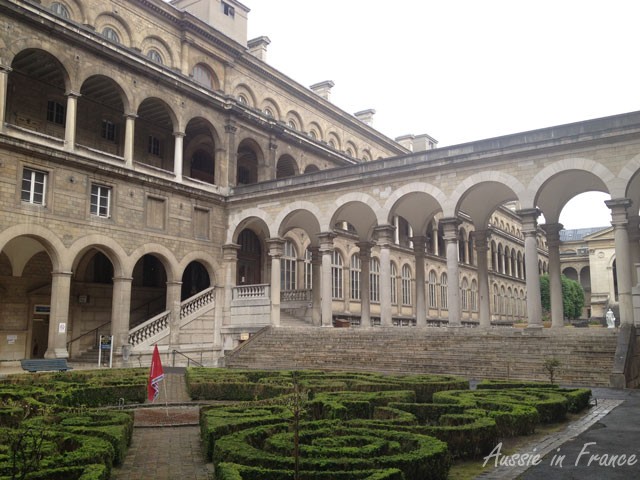
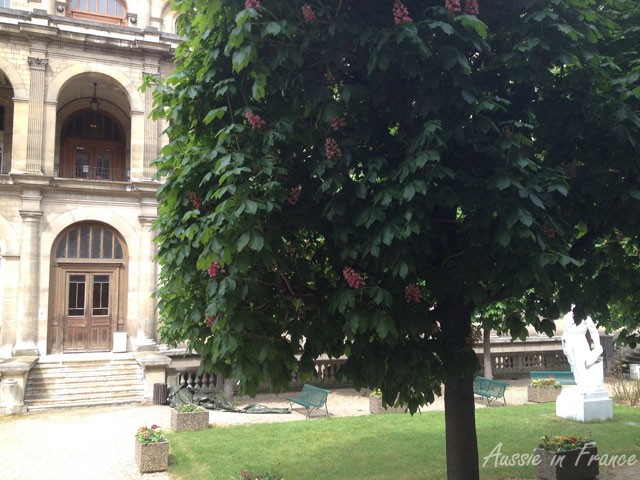
Courtyard of Hôtel Dieu hospital
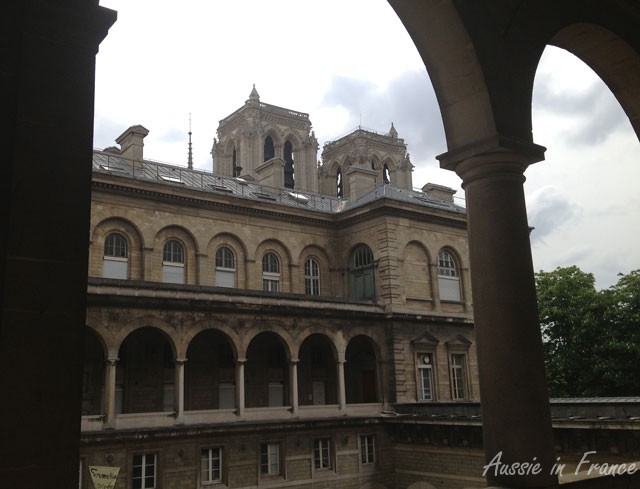
Jean Michel suggests we walk down to Ile Saint Louis for lunch (as though we’re hungry!). On the left, just before Notre Dame, I see a sign for Hôpital Dieu (God’s Hospital), the oldest hospital in Paris, which we’ve never visited. Despite the overcast day (I always prefer a blue sky!), the entrance looks very attractive. We walk in and it’s like an oasis of silence in the noise and bustle of Paris, almost deserted. We are the only ones in the garden.
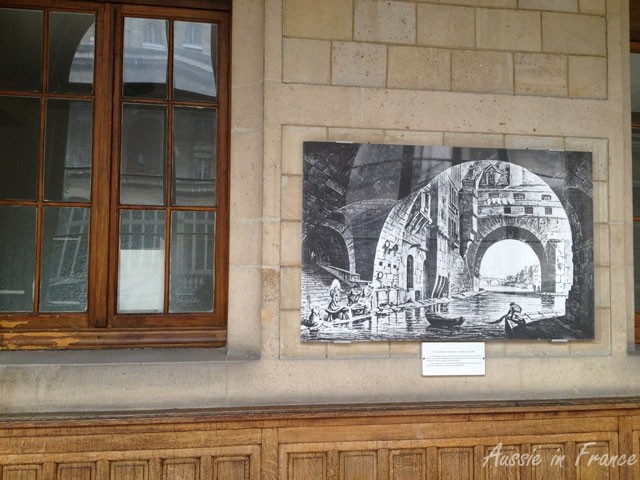
Etching on the first floor gallery of Hôtel Dieu
As we walk along the upstairs gallery, etchings of the past tell us the hospital’s story. It was built as a charity hospital in 651 and was added to over the centuries. The two original buildings were joined by two bridges, one of which collapsed from a fire caused by a barge overloaded with hay. Another fire destroyed most of the hospital in 1772.
View of Notre Dame from the second floor gallery
The current buildings were constructed between 1864 and 1872 at the initiative of Baron Hausmann within the new perimeter of Notre Dame and completed at the end of the 19th century with the main entrance at 1, place du Parvis.
Pink chestnut tree in the Hôtel Dieu garden
The etchings show the extreme youth of some of the novices – they look like mere children – and how the patients were lodged – often two to a bed. They had two meals a day – 11 am and 6 pm – which I find interesting. A visit from the Duchess of Orleans and her retinue one day caused such excitement that several patients died. Hmm.
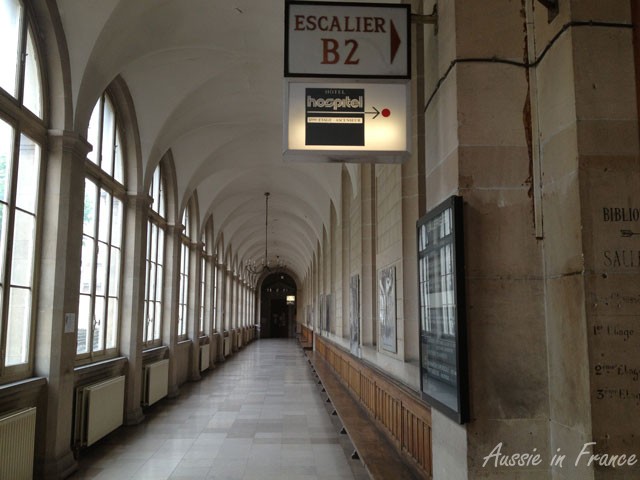
Discreet hotel sign inside the Hôtel Dieu
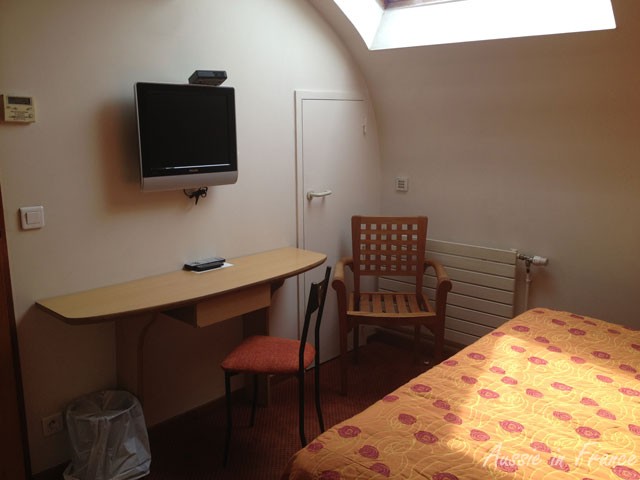
Then I remember that there is supposed to be a hotel here somewhere. We go down to the desk and ask. Yes, Hôtel Dieu Hospitel is in wing B2 on the 6th floor. There is a lift, fortunately, and when we get there, the lady very kindly offers to show us one of the rooms. They are all under the eaves, small, very clean, with an en-suite bathroom and wifi. I wonder about the heat in summer but all have air-conditioning. Two of the 14 rooms are suitable for people with reduced mobility.
Typical room in L’Hospitel
The hotel was initially built for outpatients and their families, but there is no restriction on guests and if you’re looking for somewhere peaceful in the heart of Paris, this could be the perfect solution. However, the hospital is threatened with closure so the hotel may not last for much longer.
Outside again, the sun is starting to appear and we come across a jazz band on the little bridge leading to Ile Saint Louis. We sit down on the edge of the pavement to listen. Ah, this is Paris!
Hôtel Dieu Hospitel, www.hotel-hospitel.com, 1, place du Parvis Notre Dame, Galerie B2, 6th floor, 75004 Paris
Singles are 139 euro and doubles 150 euro a night with breakfast from 4.50 euro.
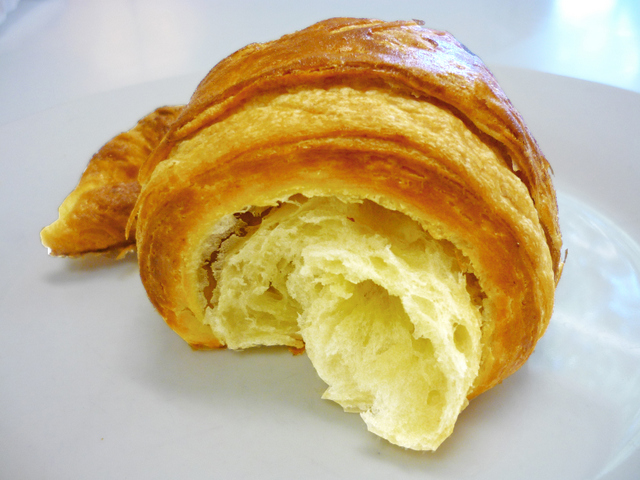
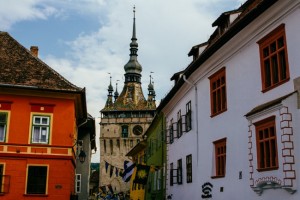
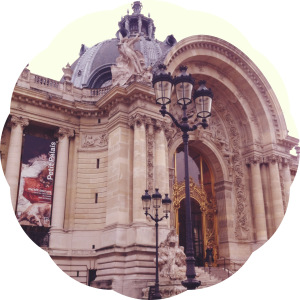
This week’s Blogger Round-Up is all Australian. French Moments shares the story of the croissant with us which is more Turkish orAustrian than French while Andrea from Rear View Mirror takes us on the ultimate road trip to Romania, a country that is definitely on my wish list. Gemma King from Les Musées de Paris, a newcomer on these pages, takes us through Le Petit Palais, one of my favourite museums in Paris. Enjoy!
The Formidable Story behind the French croissant
by French Moments, a Sydney-based organisation with an international focus which promotes the French language and culture to English-speakers worldwide. Their French team is all about the language, culture and experience
France is known for its “croissants”. It is up there with the Eiffel Tower and beret as a French icon. Here in Sydney, most people know that the croissant is a true French delicacy and it is loved in all its forms: plain croissant, chocolate croissant (“pain au chocolat” in France), almond croissant, ham and cheese croissant and more…
The idea of researching the croissant came to me in June 2011 when one of our French students asked me the meaning of the French verb “croître” (to grow). While explaining this word in French, I wrote on the board another word using the same root: “la croissance”. Immediately, the man pointed out: “then it’s like ‘croissant’!”. Read more
The Ultimate Romanian Road Trip
by Andrea from Rear View Mirror (formerly Destination Europe), a fellow Australian who, after 6 years of living in France, has given up her Paris apartment to live a nomadic life slowing travelling around Europe, experiencing each destination like a local.
I don’t know why I had such a poor opinion of Romania before visiting. I was expecting it be more like the Balkans and less like Eastern Europe. I was thinking it would be more than a little rough around the edges but in actual fact the cities are much like elsewhere in Europe with their beautiful historic centres, delicious traditional and modern cuisine plus some very cool castles. Read more
Le Petit Palais
By Gemma King, from Les Musées de Paris, self-proclaimed muséophile, and an Australian PhD student working between Melbourne and Paris. She writes on movies for work and goes to museums for fun.
Many Paris museums work because they adopt a single point of interest and run with it. Le Musée du parfum features nothing but perfume, but it investigates the topic like nowhere else. The good people of Le Musée Clémenceau seem to think nobody on earth has ever mattered as much as Président Georges, but by the end of your visit, you’ll probably agree. Paris museums go to all manner of extremes, favouring the most precise of objects (ahem, Museum of Eyeglasses) and exploring that object, its history and its specificities, with incredible dedication. These extremes of passion are often what make Paris museums so special. Read more
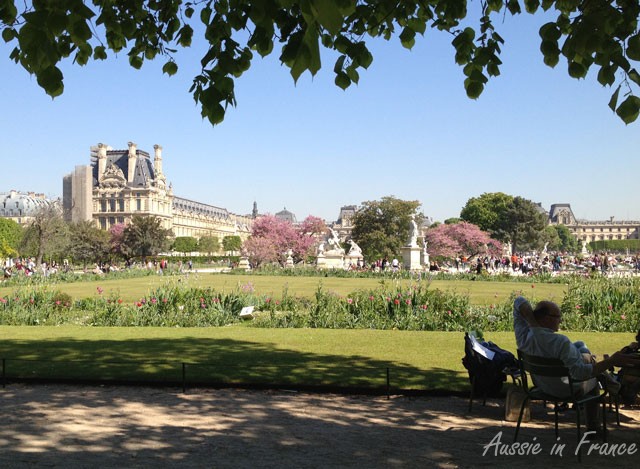
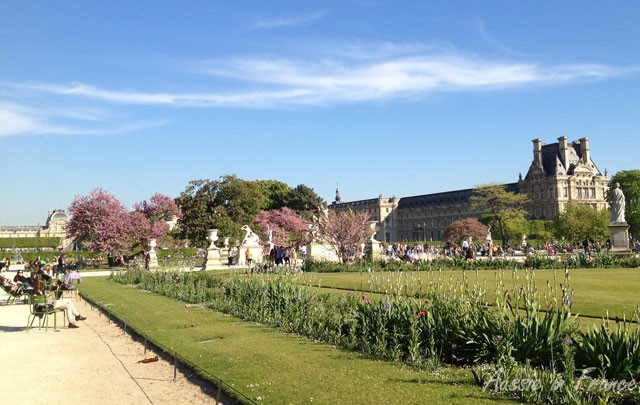
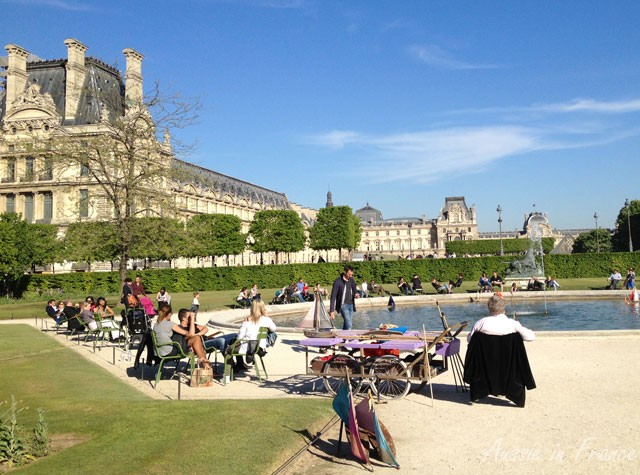
Back in Paris this week, trying to recover from our renovation stint! A favourite cousin came through Paris so we spent a delightful afternoon catching up in the Tuileries at Café Diane because it really does have the best view.
My favourite view from Café DianeThe irises are about to bloomThe boatman is back!
I wrote a short post last week about travaux so I thought I should talk about travail today. You may remember that travail comes from the low Latin trepalium, instrument of torture, derived from the Latin tres, three, and palus, stake.
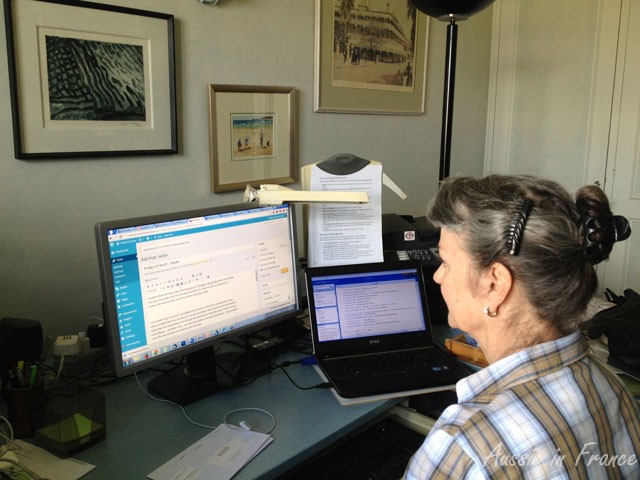
En plein travail intellectuel
I was about to give travaux scientifiques and travaux manuels as examples of travaux when I realised that you can also say travail scientifique and travail manuel and it doesn’t quite mean the same thing, even though the translation is often the same. In fact, travaux scientifiques – scientific work – are often the product of travail scientifique – also scientific work! But the line between them can be very fine.
C’est un travail scientifique original = It’s an original scientific work
Il vient de publier les résultats de ses travaux scientifiques. = He’s just published the results of his scientific work.
Il a fait un travail scientifique extraordinaire = The scientific work he carried out was extraordinary (though this can be translated in many different ways depending on the context).
The distinction between travail manuel and travaux manuels is a little easier.
Il aime le travail manuel = He likes manual work.
Les travaux manuels occupent les enfants et aident à leur développement = Manual work occupies children and helps them to develop.
But the main meaning of travaux manuels is arts and crafts.
Travail intellectual is intellectual work in the sense of brainwork or mental work while travaux intellectuels corresponds to the work produced and is often opposed to travaux manuels.
Il fait un travail intellectuel = He does intellectual work.
Jean Michel often says “Qu’est-ce que c’est que ce travail?” to mean“what’s going on here?”
And here are a couple of expressions to finish off:
Le travail c’est la santé which approximately means that work is good for you.
“à travail égal, salaire égal” = equal pay for equal work.
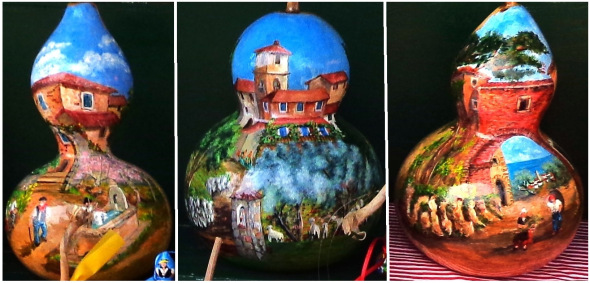
In this week’s Blogger Round-Up, Mary Kay from Out and About in Paris takes us to Bergamo in Italy where she was given a special guided tour of the San Pellegrino art nouveau building, while Janine Marsh from The Good Life France takes us to a flea market in Le Crotoy in the lovely Somme Bay on the coast of Normandy, one of our favourite cycling spots. To end up, Margo Lestz from The Curious Rambler introduces us to the gourd festival in Nice, “the perfect place to see all things Niçois”. Enjoy!
The Casino of San Pellegrino Terme – a magnificent Art Nouveau building reminiscent of La Belle Époque
by Mary Kay from Out and About in Paris, an American by birth, Swiss by marriage, resident of Paris with a Navigo Pass for the metro that she feels compelled to use
If you’ve ever ordered a bottle of San Pellegrino sparkling mineral water while seated on the terrace of a Parisian café or purchased a six-pack of the distinctive green bottles from your local grocery store, you may have noticed the elegant building on its label and wondered about its history. Thanks to a special guided tour of the Casino (Grand Kursaal) of San Pellegrino Terme yesterday afternoon, I now know that the building is one of the most famous examples of Art Nouveau (or Liberty Style as it’s called in Italy) structures in Europe. Recently restored at a cost of 10 million euros, it’s also one of the most impressive buildings that I’ve ever had the pleasure of visiting. Read more
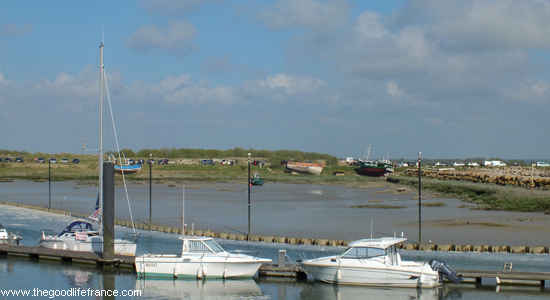
Le Crotoy on the Somme France
Written by Janine Marsh from The Good Life France, an independent on-line magazine about France and all things French, covering all aspects of daily life including healthcare, finance, utilities, education, property and a whole lot more.
It was a lovely spring weekend in the north of France – perfect to indulge in the national French pastime of visiting a brocante. France is famous for its second hand markets, bric-a-brac markets, marche au puces, braderies and vide greniers – flea markets are known by several names and they are held in all regions.
They take place throughout the year but the majority are from March to October when better weather means stalls can be laid out in the streets of towns and villages. Some are small with just a few sellers and some are huge like the Lille Braderie with 10,000 stalls. Read more
Celebrating the Gourd in Nice
by Margo Lestz from The Curious Rambler, who lives in Nice, France where she likes to bask in the sunshine, study the French language and blog
Nice is a French city, of course, but it also has a strong and proud culture all its own. It was Niçois long before it was French and the people work hard to keep their Niçois traditions alive. It has its own language, anthem, traditional costumes, dances, songs, and food. The language is taught in schools and there are dance groups that perform at many events throughout the year. These associations ensure that the traditions are passed from generation to generation. And the calendar is dotted with several events each year that are typically Niçois. Read more
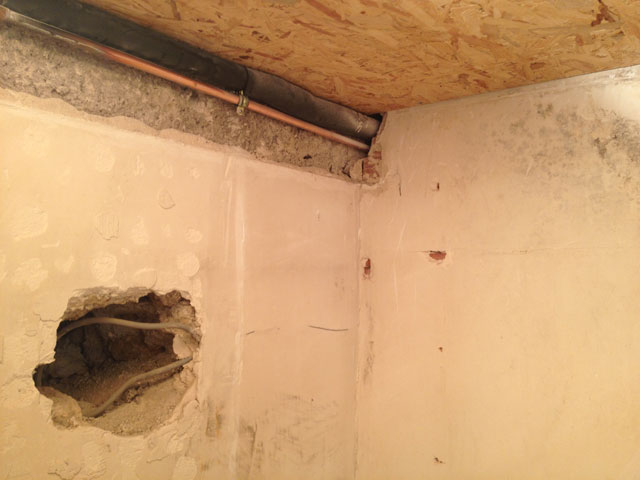
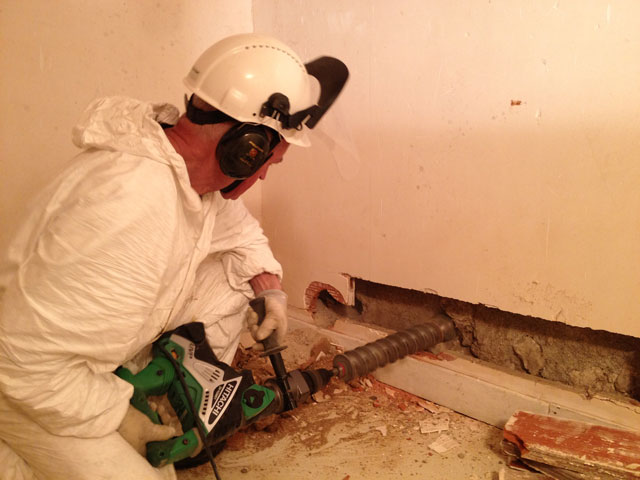
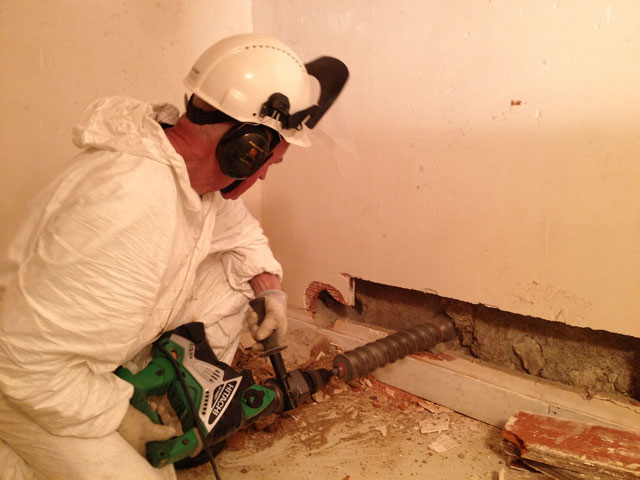
We’ve set aside two weeks to make a laundry at Closerie Falaiseau. Like most French houses, it doesn’t have one. I’ve talked about this before. In fact, Jean Michel has already drilled a 10 cm diameter hole through a 70 cm wall to evacuate the water from the washing machine in the downstairs bathroom into the drain and not the shower!
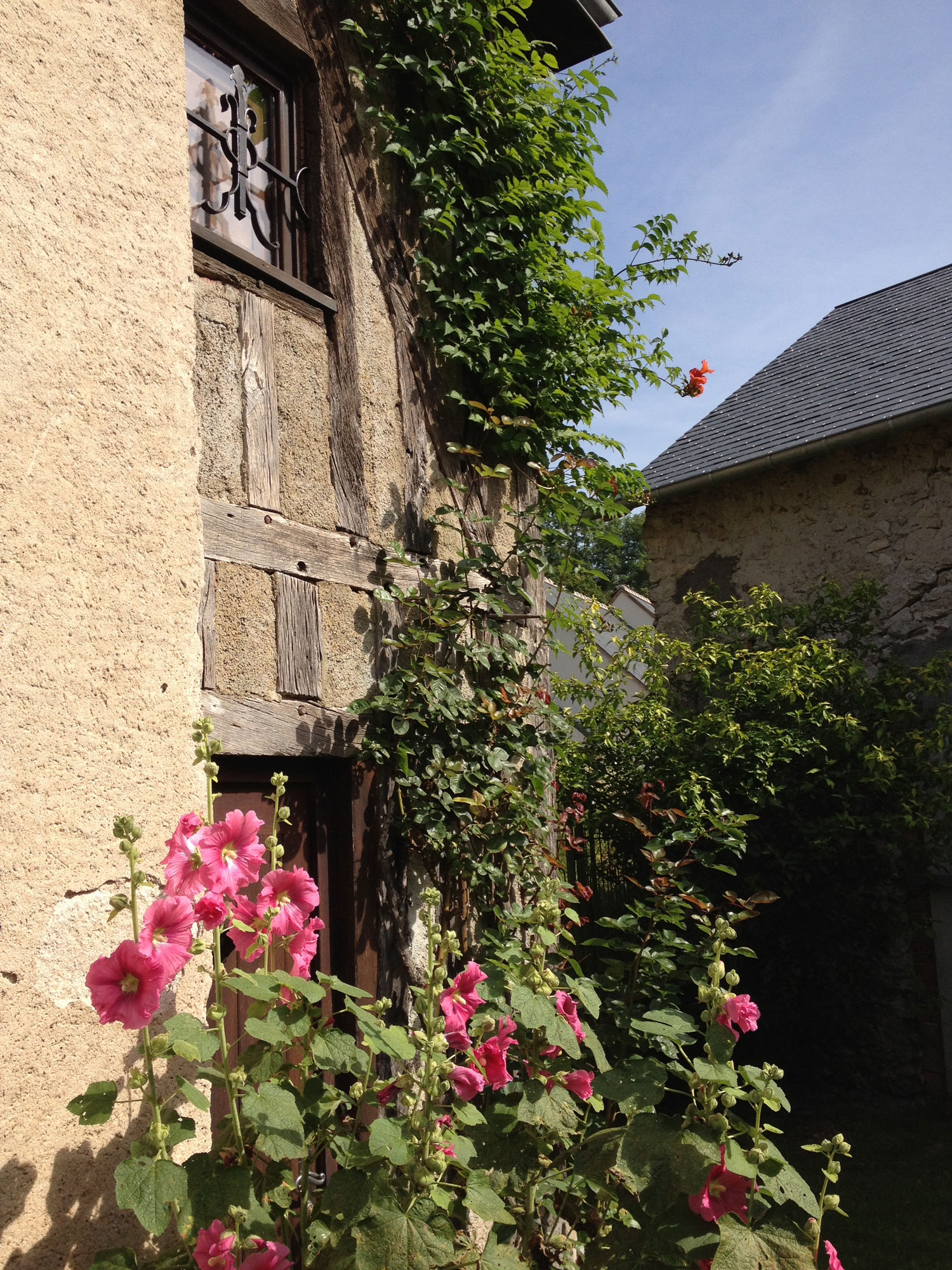
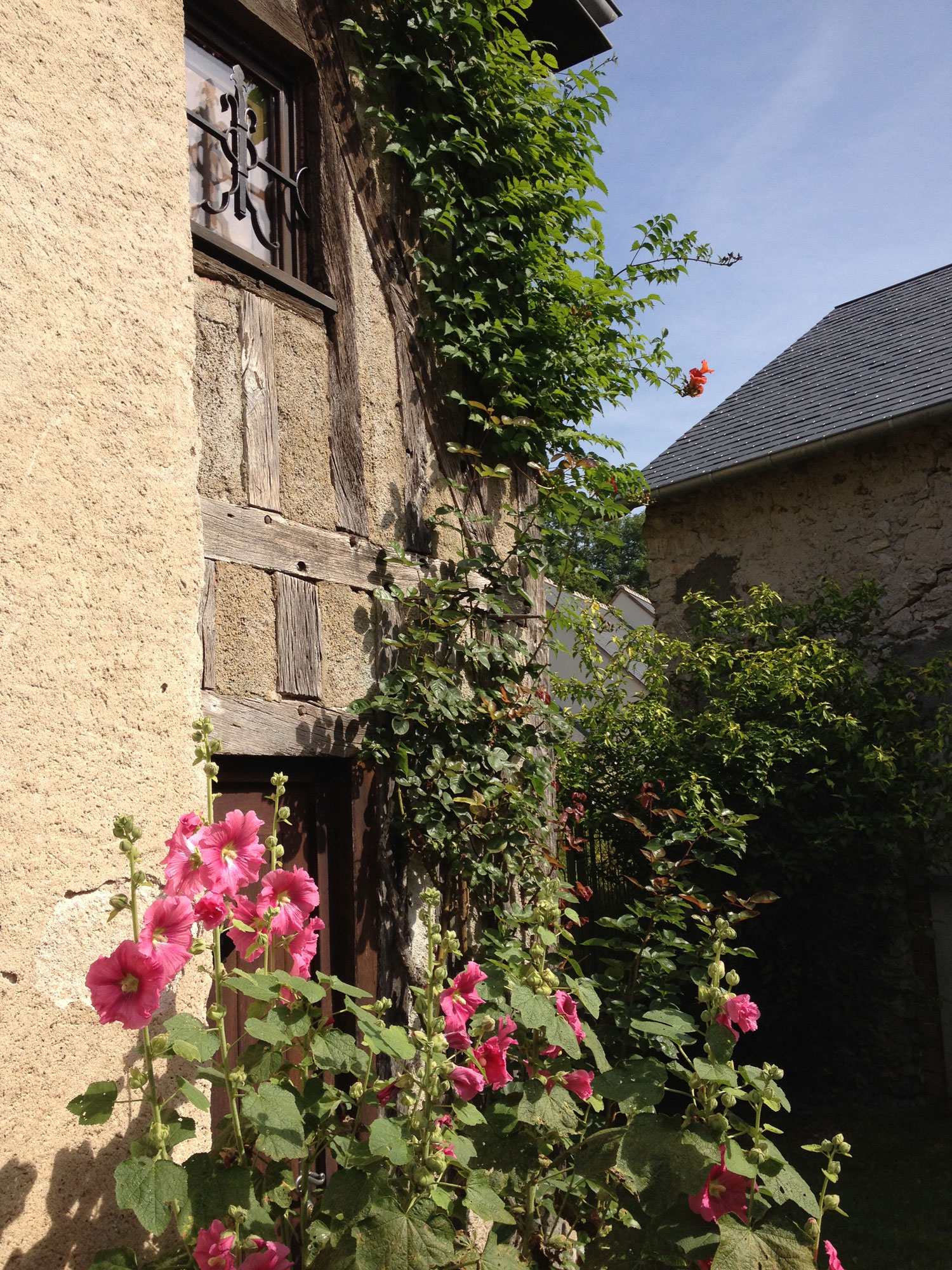
The walls of our half-timbered tower would have originally been made of wattle and daub.
So far, we’ve been using the little house as a laundry but it’s not very practical for the cleaners when they are washing and drying two full sets of sheets and towels, including bathrobes, for the next gîte guests.
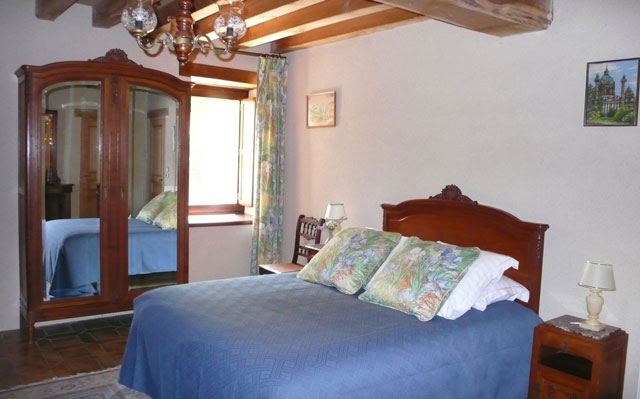
The bedroom in the gîte
We have a small room at the end of the workshop that seems perfect. There is a door that leads directly into the far end of the workshop from the gîte bedroom with its en-suite bathroom (with the first washing machine).
Traditional wattle and daub ceiling
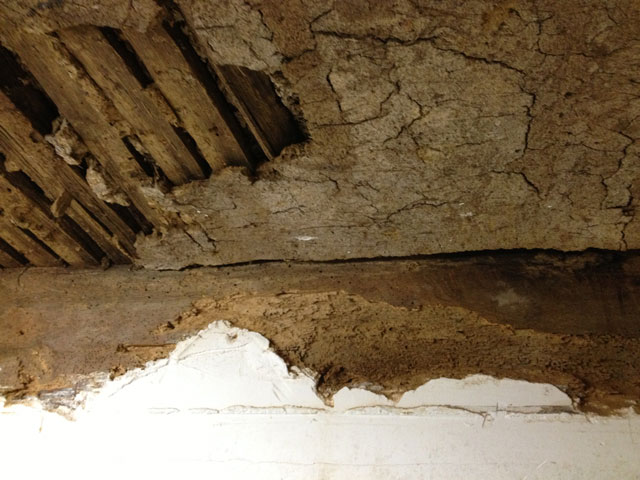
The ceiling is wattle and daub which is a traditional way of constructing walls and ceilings in which vertical /horizontalwooden stakes, or wattles, are woven with horizontal/vertical twigs and branches, and then daubed with clay or mud. Ours is probably about 400 years old. At present, most of it is propped up with two large storage cupboards.
Jean Michel poking at the beams
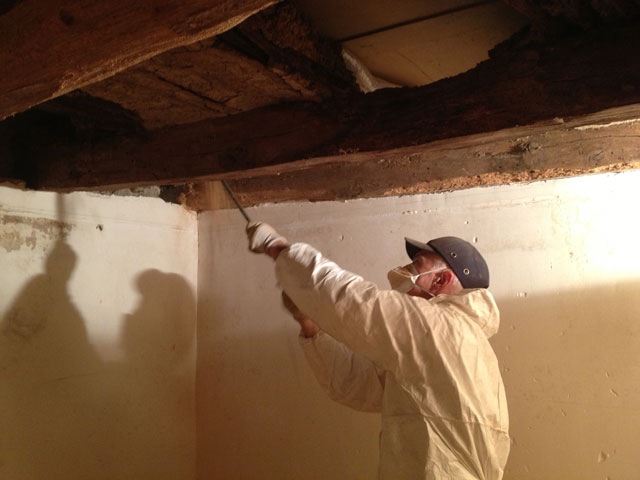
We dismantle the cupboards, which are large and heavy, and cart them off to the little house. Jean Michel then attacks the ceiling and starts letting out ominous sounds through his face mask. As he uses a poker affair to pull down the rotten bits of clay, he discovers that parts of some of the beams are rotten as well.
Painting the beams with limewash
This requires an extra step not included in the initial programme. First treatment with a product called Crésyl, based on cresol, which probably poisons the user as much as any lurking insects and spiders. It smells foul in any case.
Spraying with limewash after putting up the beams
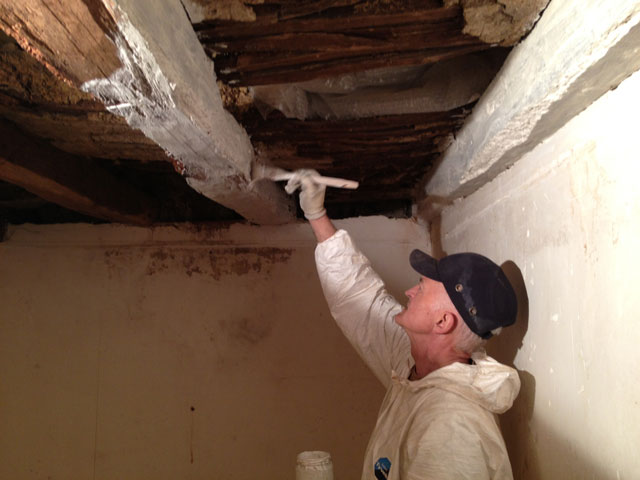
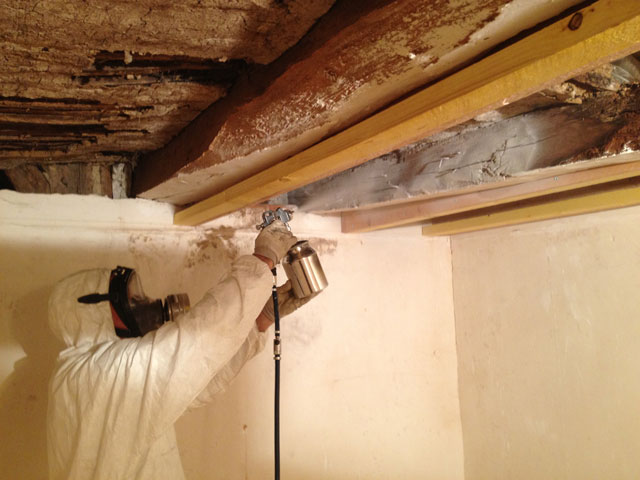
After that, the original beams are painted with limewash before adding secondary beams to support the ceiling. The wattle and daub is then sprayed with limewash, which is a much more environment-friendly product altogether. It should all last another 20 or 30 years, which is all we need anyway.
Preparing the floor panels for the ceiling
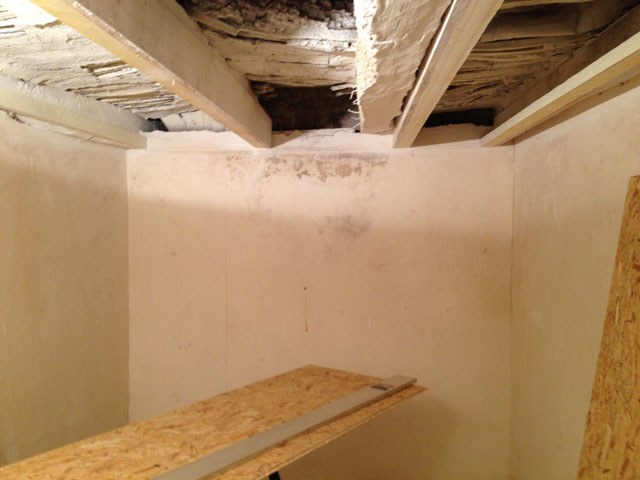
Jean Michel then puts up a ceiling made of thick particle-board floor panels. He can’t use normal plasterboard ceiling panels because they are not strong enough to hold up any falling mud and daub.
Large hole to be filled with stones balanced on top of each other and wedged into place
I then don my throwaway overall (though I can’t find my cap) and take over the ceiling by painting it, first a primer, then a second coat. I also use filler to plug up any holes in the wall, particularly a couple of very large ones (about 10 cm in diameter) that seem to come from a previous attempt to drill holes in the wall.
I learn the technique of balancing stones on each other until the hole is filled vertically in order stop the render coming out. Jean Michel neglected to inform me of this step so I’ve already had to redo one of the holes. Trial and error is the best teacher, he tells me. I prefer not to waste time personally.
Jean Michel using the percussion drill – we’re both wearing earplugs
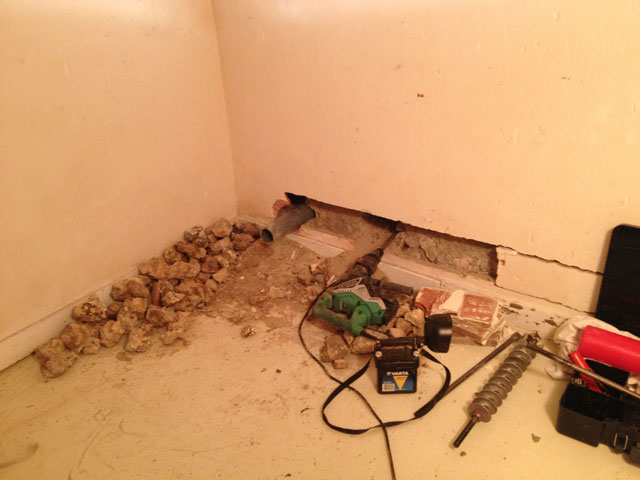
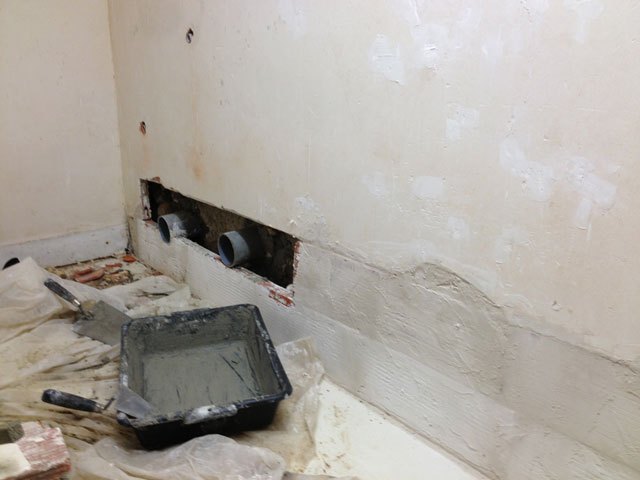
Meanwhile, Jean Michel starts drilling the first 8 cm diameter hole to evacuate air from the clothes dryer. The second serious problem kicks in. As he uses the percussion drill on a different wall from the one in the bathroom, the clay and stones inside the wall start collapsing from the vibration. This wall is obviously of inferior quality.
Some of the stones that are supposed to be inside the wall
He then discovers that for some reason, there is a beam between the wall and the concrete floor slab that is rotten as well. The plaster wall starts breaking up. Another visit to Brico Depot proves necessary to buy thin bricks to hold up the plaster and replace the beam. He spends a lot of uncomfortable time half-lying on the floor.
The plaster wall after filling with bricks and plastering
By then, we are well into the second week and decide to extend our stay by a third week, having our tea break in the garden and feeling sorry that we can’t be out on our bikes using the weather to better advantage and, in particular, seeing all the tulips in Château de Cheverny.
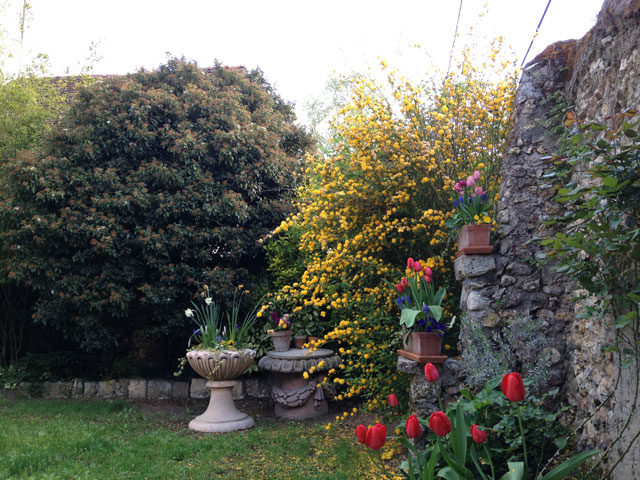
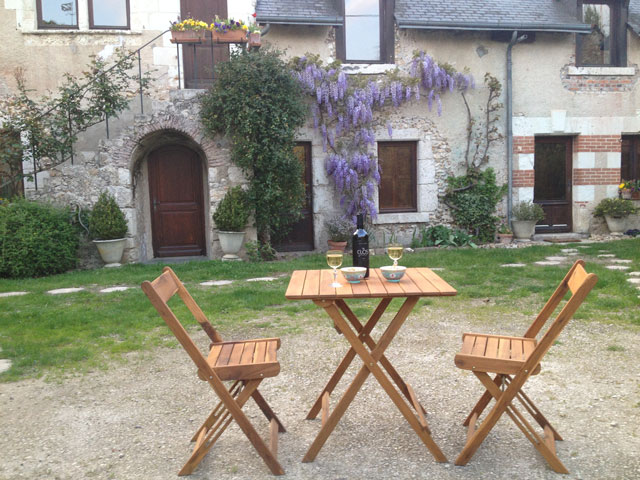
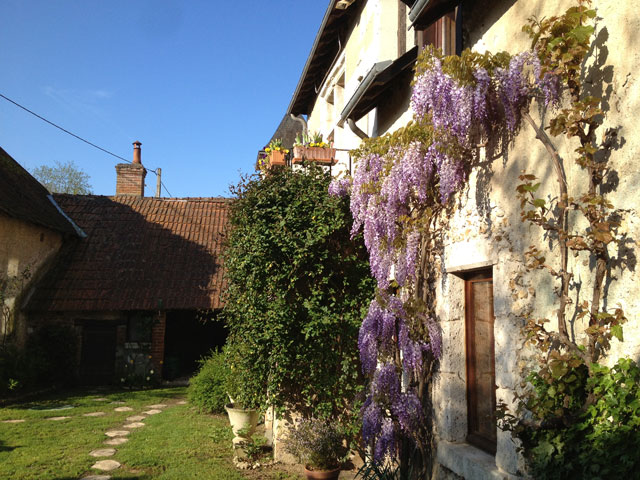
We have been enjoying spring so much in Blois that we are sad to go back to Paris even though it will be a break from our travaux! We can’t get enough of our wisteria at Closerie Falaiseau. We also love the wisteria at the entrance to the house in our original John Modesitt oil painting. I’ve posted a photo of the house on Blois Daily Photo.
Aperitif time in the garden
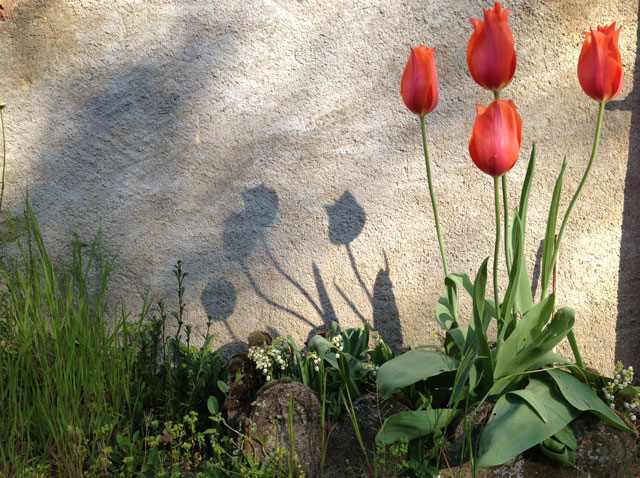
Our wisteria taken from the side, Jean Michel’s favourite viewNot wisteria this time, but early lilies of the valley nexxt to equally early tulips!
This is going to be a very short post because we are up to our necks in travaux. Travaux, the plural of travail is, interestingly enough, from the low Latin trepalium, instrument of torture, derived from the Latin tres, three, and palus, stake.
Jean Michel en pleins travaux : percement d’un mur de 70 cm.
Well, I can tell you, the pain in both my hands (being left-handed I am fairly ambidextrous) from wielding spatulas, trowels, paint brushes and rollers for the last week certainly makes it feel like torture! The end result will be a laundry, initially without a sink.
Travaux is a very useful word and covers practically anything. Note that in French, it is always used in the plural and never in the singular, in this context. And you can use it by itself without any explanation. Nous faisons des travaux = We doing renovation works/alterations/plumbing and so on.
renovation work = travaux de rénovation
roadworks = travaux routiers
woodwork = travaux sur bois
plumbing work = travaux de plomberie
alterations = travaux d’aménagement
major projects = grands travaux
farm work = travaux de la ferme
metalwork = travaux sur métal
I’m sure you can find plenty of others! Je dois reprendre mes travaux de peinture!