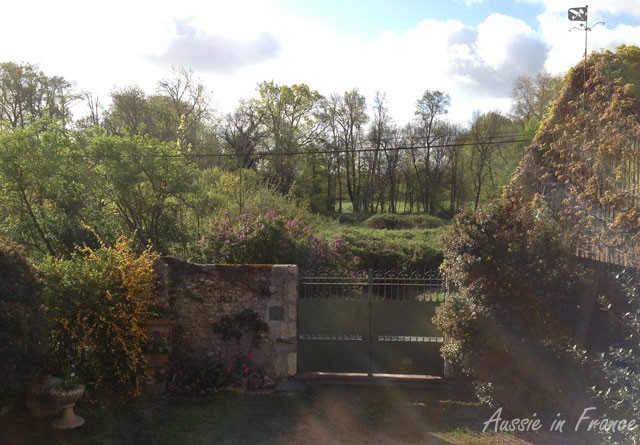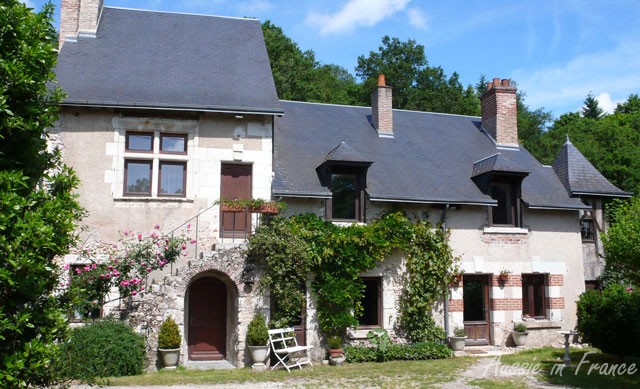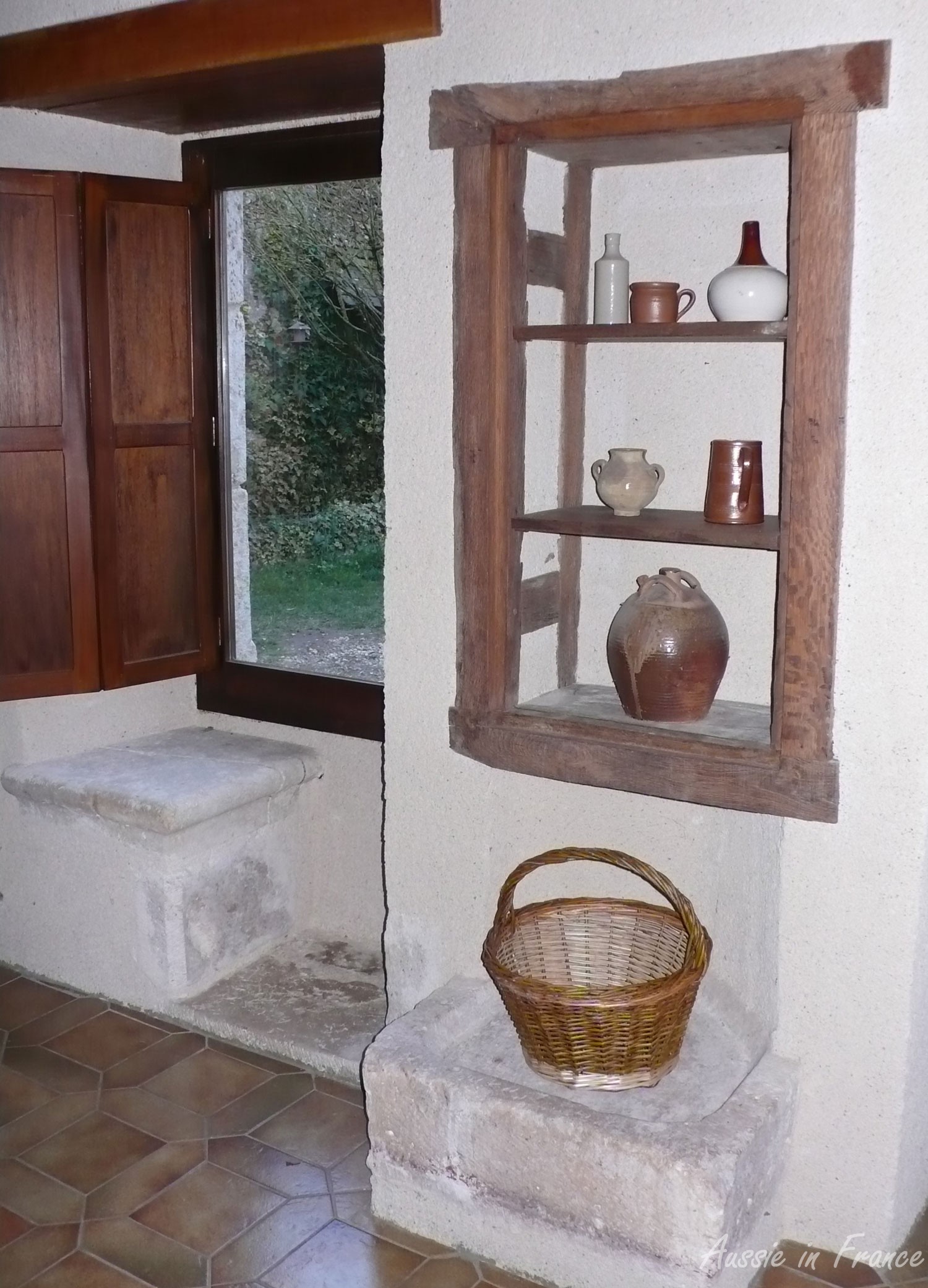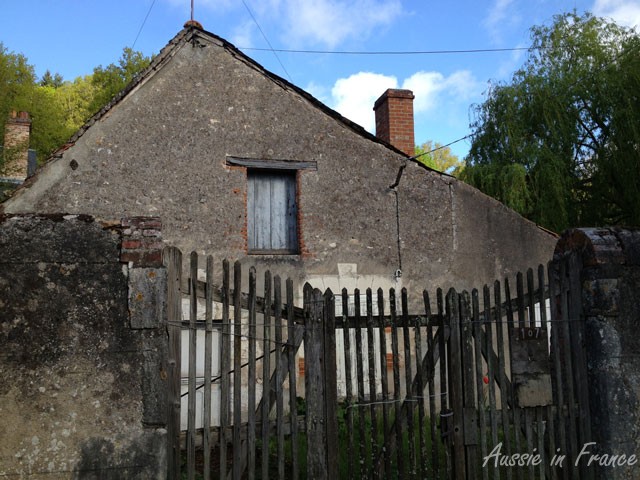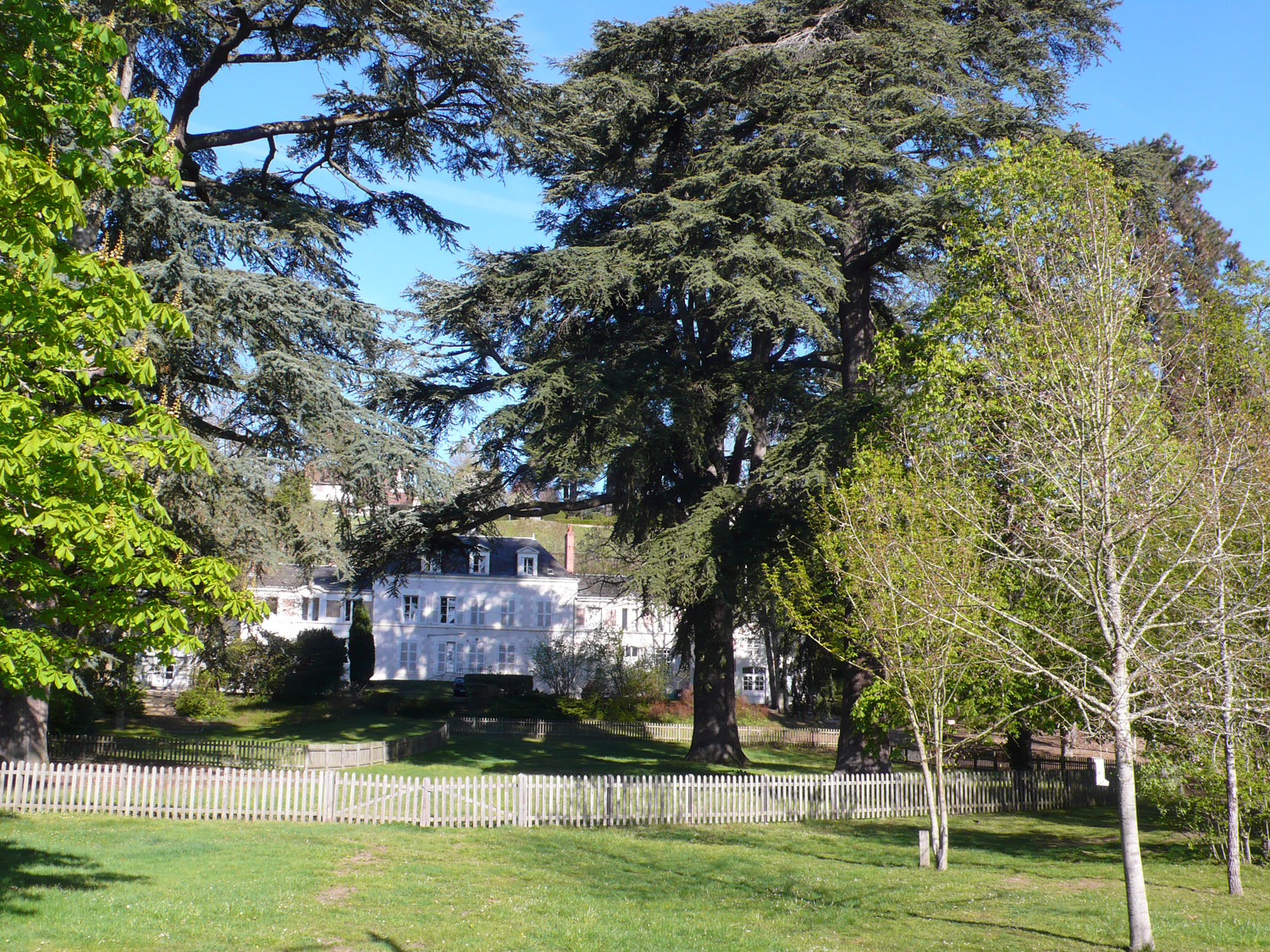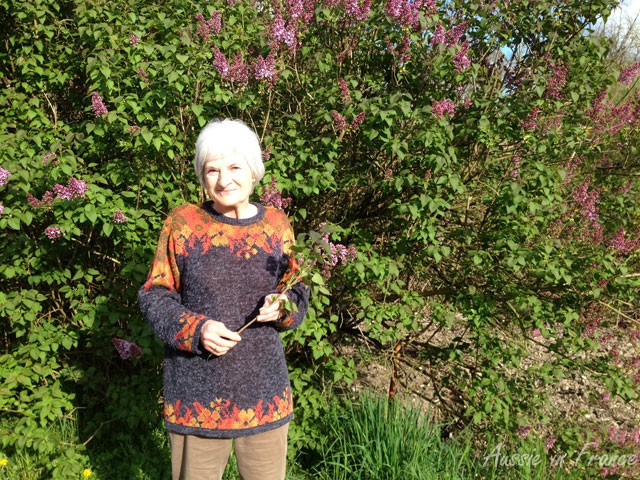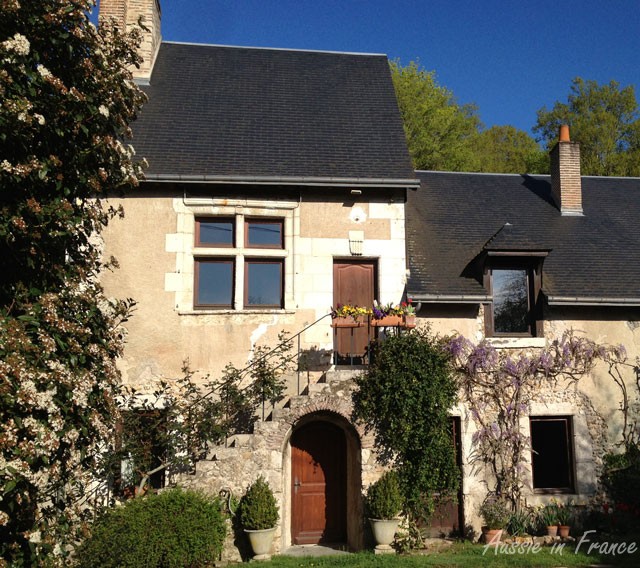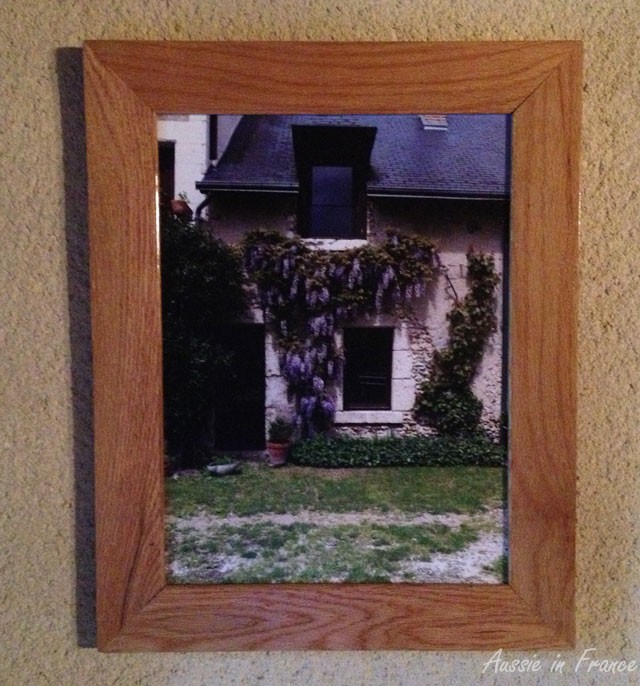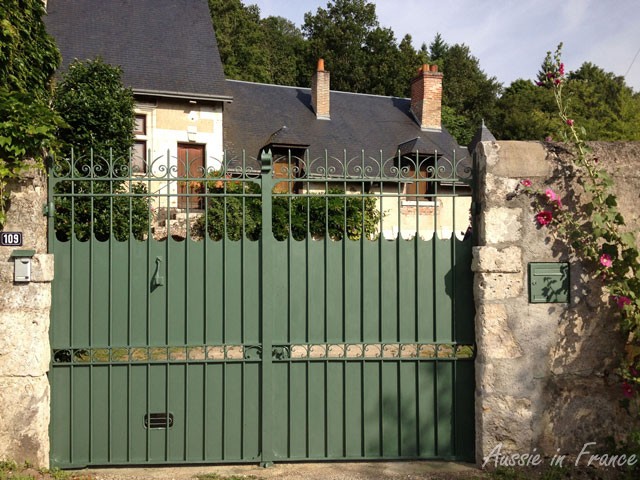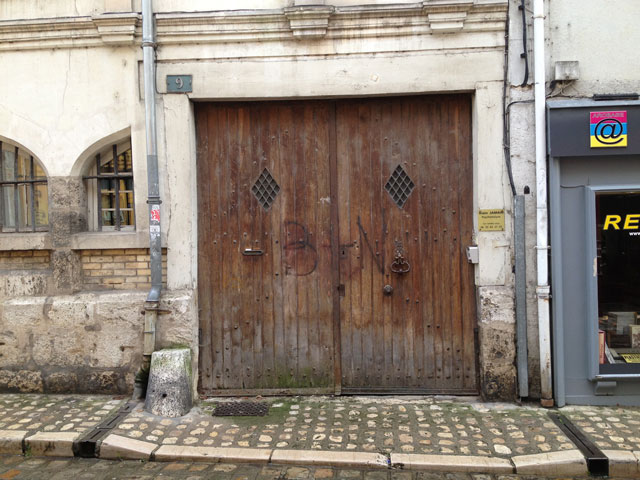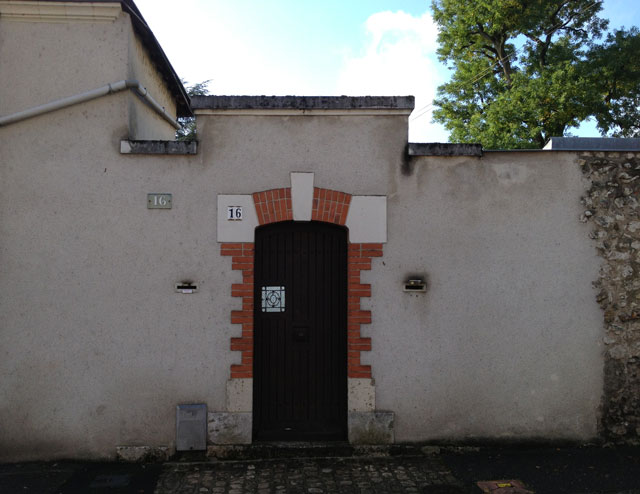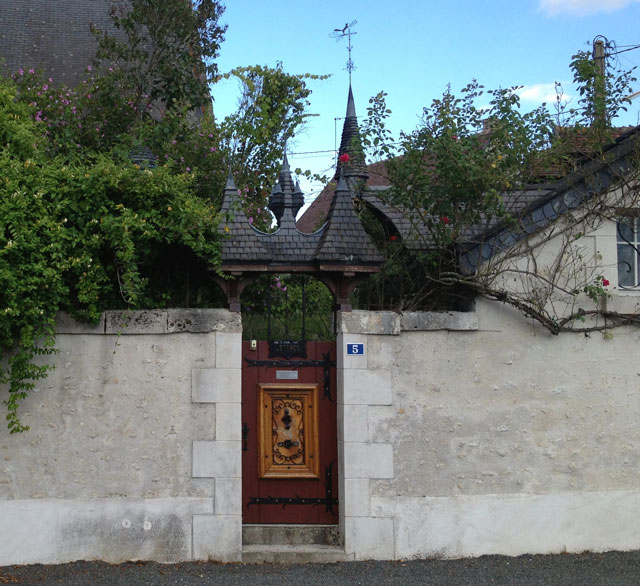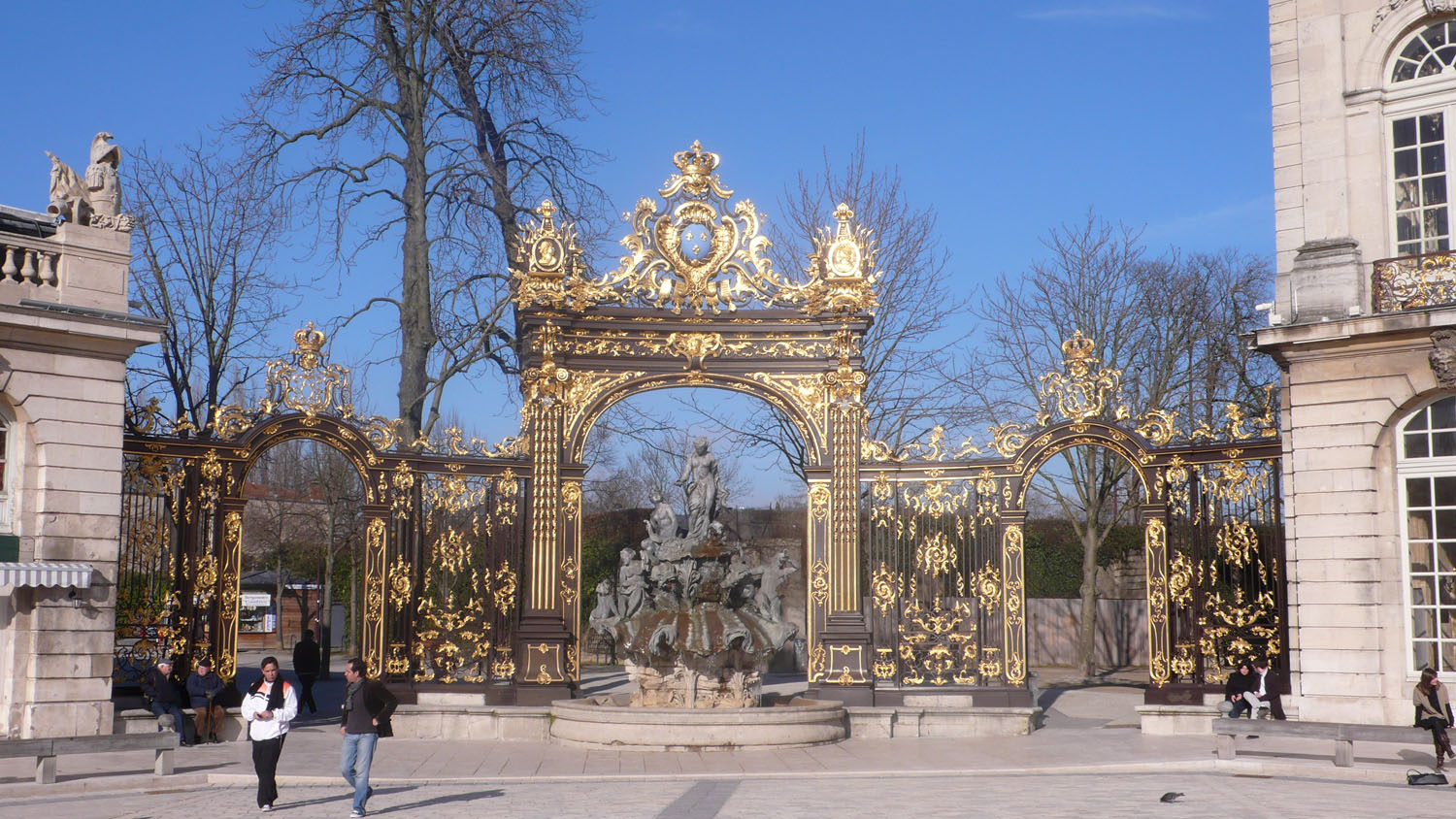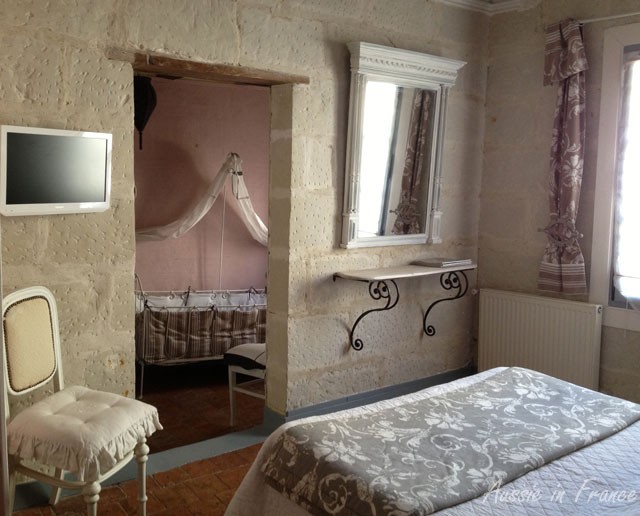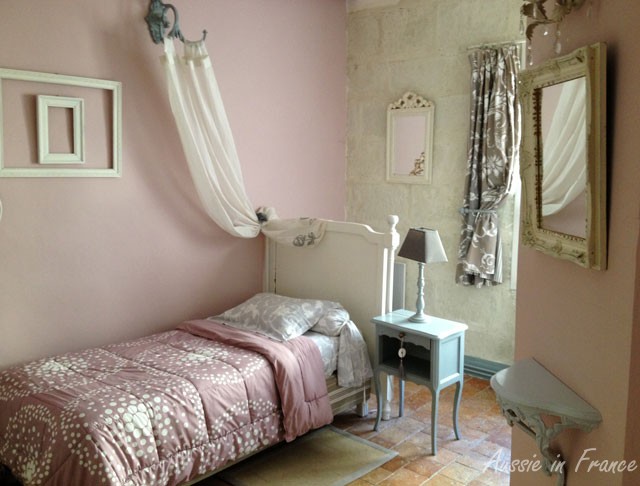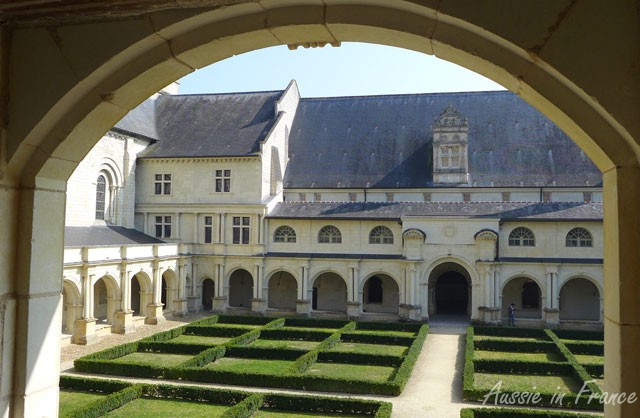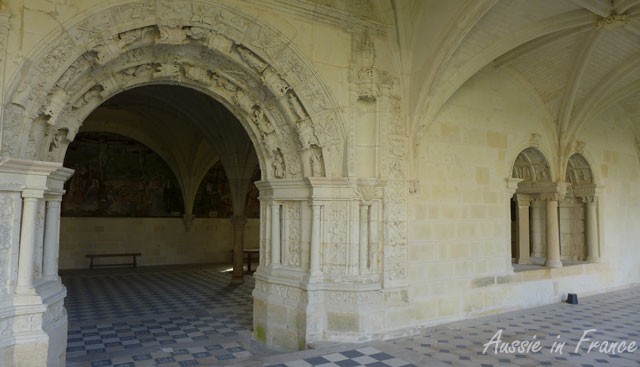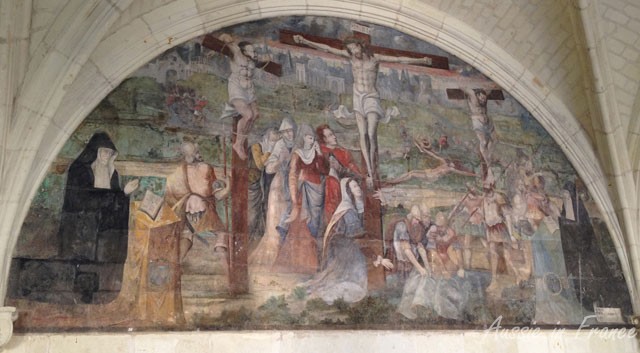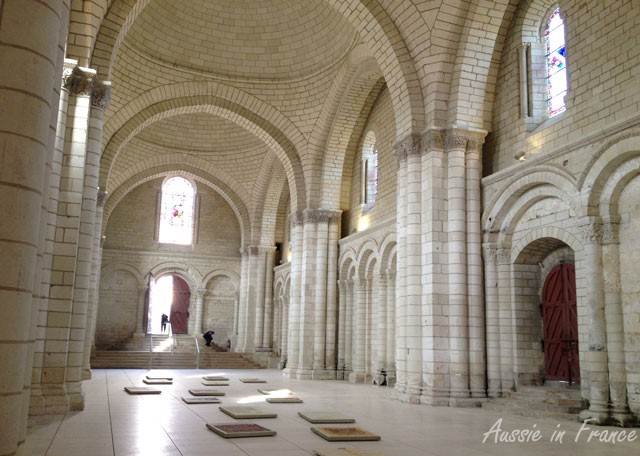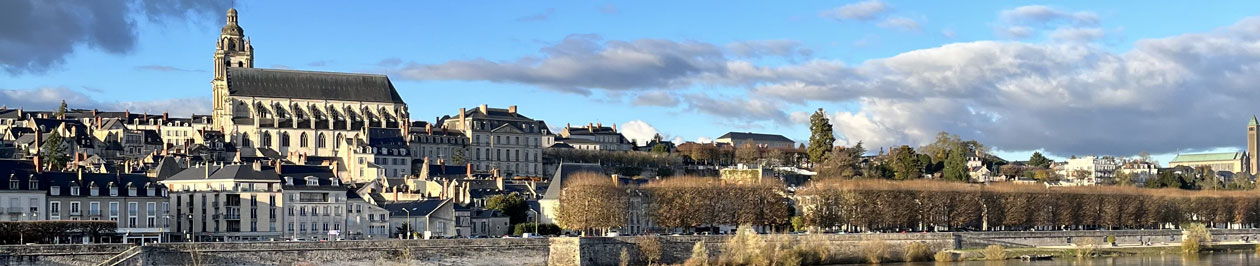
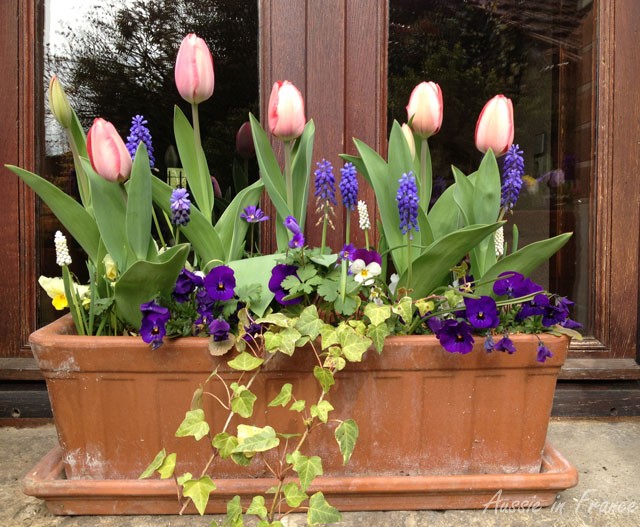
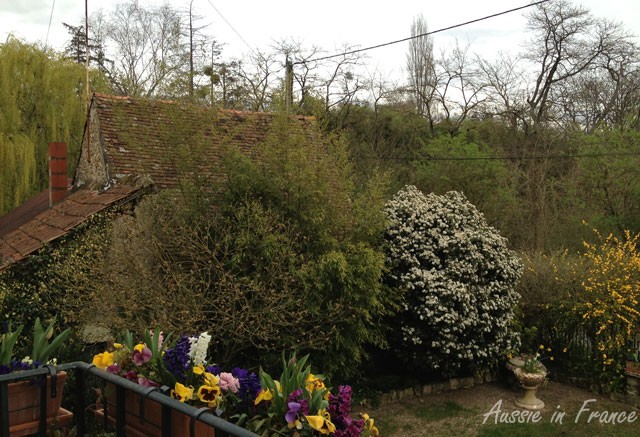
It’s now officially spring and we’re back in Blois for another couple of weeks. We couldn’t get over the difference in how many leaves have appeared on the trees in such a short time. The tulips are out as well so a visit to Château de Cheverny is scheduled for this week to see the 60,000 tulips planted every year. In the meantime, here are my favourites at Closerie Falaiseau and the view from upstairs.
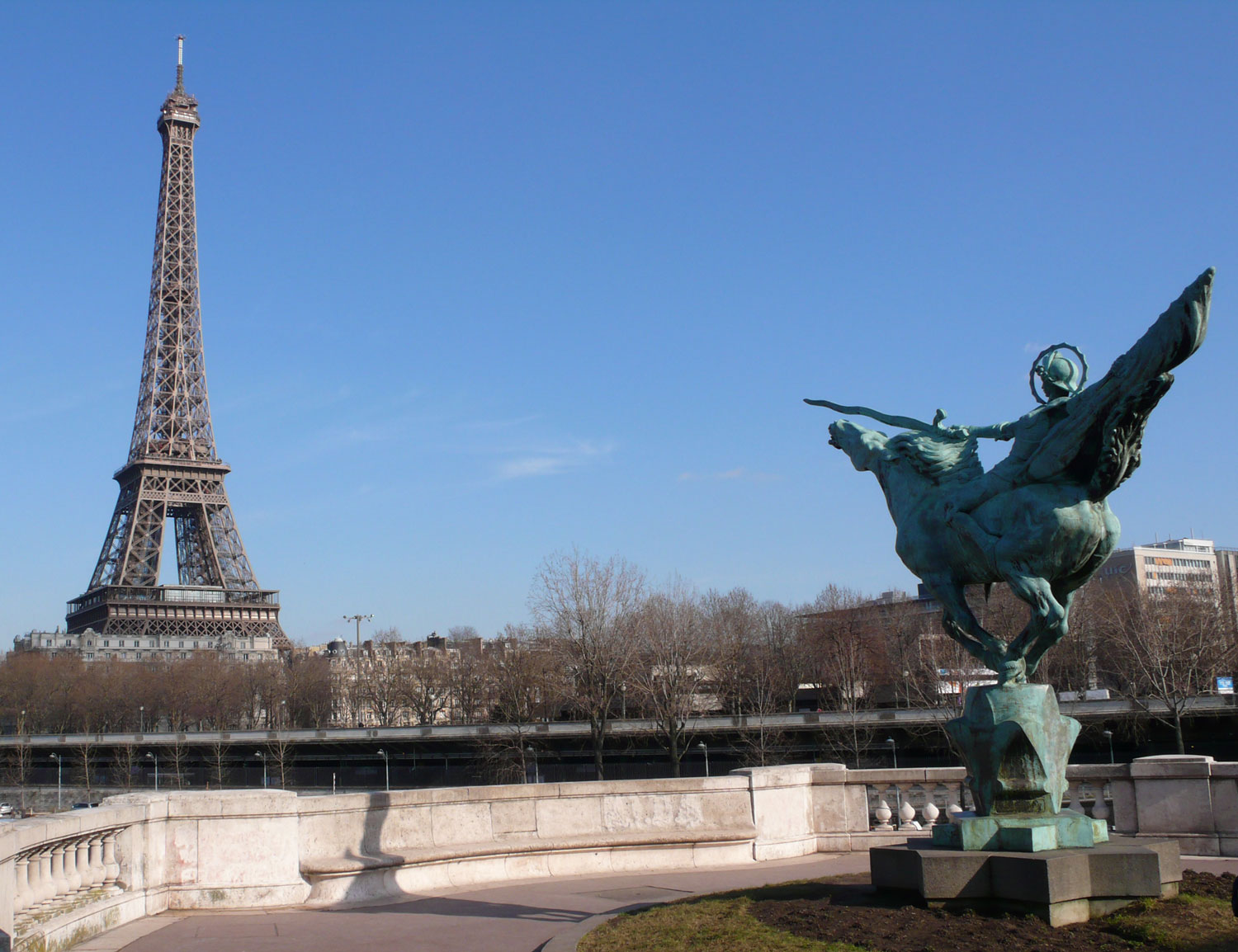
Viens ! Je t’emmène à la Tour Eiffel. Apporte des sandwichs, nous pouvons faire un pique-nique sur place. J’amènerai ma cousine avec moi.
Come on! I’ll take you to the Eiffel Tower. Bring some sandwiches – we can have a picnic there. I’ll bring my cousin with me.
Ce bus vous emmènera jusqu’à la Tour Eiffel
Now before we go any further, I’d just like to mention that the differences between these three verbs in French can be very subtle. Also, in English “bring” and “take” are not always used correctly e.g. “bring me the ball” but not “take me the ball”. “He took me to the cinema” and not “he brought me to the cinema”.
Emmener is fairly simple and corresponds to “take” used correctly in English:
Le bus vous emmènera jusqu’à la Tour Eiffel = The bus will take you to the Eiffel Tower
Je vous emmène dîner au restaurant = I shall take you out to eat
Il a emmené un livre dans sa chambre = He took a book to his room.
Amener and apporter are a diffcrent kettle of fish.
Apporter is used in the following cases:
N’oubliez pas d’apporter vos CD = Don’t forget to bring your CDs.
Un jeune homme a apporté ces fleurs = A young man brought these flowers.
Je vous apporte des bonnes nouvelles = I have some good news for you (literally I’m bringing you some good news).
Il doit nous apporter des preuves = He has to bring us proof.
Cette réforme apportera des changements = This reform will bring changes.
What do you notice about all the above sentences (taken straight out of my Larousse French dictionary, I might add)? They all refer to things such as CDs, flowers, proof, changes and sandwiches, and not people.
If people are involved, then amener must be used and not apporter.
Amenez votre ami à la maison = Bring your friend home
Dites-moi ce qui vous amène = Tell me what brought you.
Ce bus vous amène à la gare = This bus takes you to the station.
I can hear you jumping up and down! What about the other bus, the one that takes you to the Eiffel Tower? Ce bus vous emmènera jusqu’à la Tour Eiffel. All I can say is that if there is a difference, it’s so subtle that you won’t ever have to worry about it!
Most of the other uses of amener correspond to the idea of provoking a result.
Cette crise économique risque d’amener des problèmes sociaux = This economic crisis could cause social problems.
Amener l’eau à ébullition = Bring water to the boil.
Il a amené la conversation sur le problème de chomage = He steered the conversation towards the problem of unemployment.
Vous nous avez amené le beau temps = You brought us the good weather.
You might wonder with this last one why you wouldn’t say Vous nous avez apporté le beau temps. It’s because you can’t literally bring good weather the way you can with sandwiches, but cause the good weather to happen.
I wrote this post at the request of a reader so will be interested to know whether it has helped!
In this week’s Blogger Round-Up, Gigi from French Windows explains her love/hate relationship with French articles, while Maggie LaCoste from Experience France by Bike gives us a detailed explanation of French rail’s new site for cyclists in English. To finish off, Anda from Travel Notes and Beyond takes us to a most unusual place in Dresden that has singing pipes. Enjoy!
Feminine Articles
By Gigi from French Windows, failed wife and poet, terrible teacher and unworthy mother of three beautiful girls, who has lived in France for over twenty years and gives glimpses of her life with a bit of culture thrown in.
It’s International Women’s Day so I thought I’d write a piece about my struggle, here in France, with all things feminine.
Well, not all things feminine. Nouns mostly. After twenty-seven years in this country, you’d think I’d have got the hang of this le/la, un/une business but pas du tout. I provide endless amusement for my French friends and colleagues because I still get it wrong.
I mean, some words just sound feminine to my worryingly gender-stereotyped (I’ve just realized) mind. Like nuage…soft and fluffy, it’s actually masculine. Or pétale, which is also masculine. And then there is victimeand personne, which are feminine. So when the newsreader refers to a male murder victim as ‘elle’, I get terribly confused. Read more
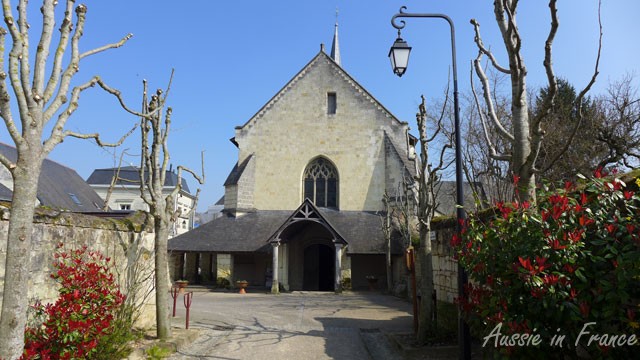
New French Rail Website for Bicyclists
by Maggie LaCoste from Experience France by Bike, an American who loves biking anywhere in Europe, but especially France, which has the perfect combination of safe bike routes, great food, great weather and history.
SNCF, operator of France’s national rail service has a new website designed to help bicyclists navigate the train network. The website is easy to navigate, is full of information you should know if you plan to carry a bike on a train while bicycling in France and it’s in English. The website doesn’t make it any easier to take your bike on a train, it does help you understand the rules. Since there has never been a centralized source of information for travel on French trains with bikes, this website is a huge step forward.Whether you need information on bringing a bike into France on a train, traveling via train with a bike while in France, where to rent a bike near a train station or where to ride, this website will provide you with the basic information you need. Here’s a basic rundown of information on the website, and quick links if you need more information. Read more

The Singing Drain Pipes of Kunsthofpassage
by Anda from Travel Notes & Beyond, the Opinionated Travelogue of a Photo Maniac, is a Romanian-born citizen of Southern California who has never missed the opportunity to travel.
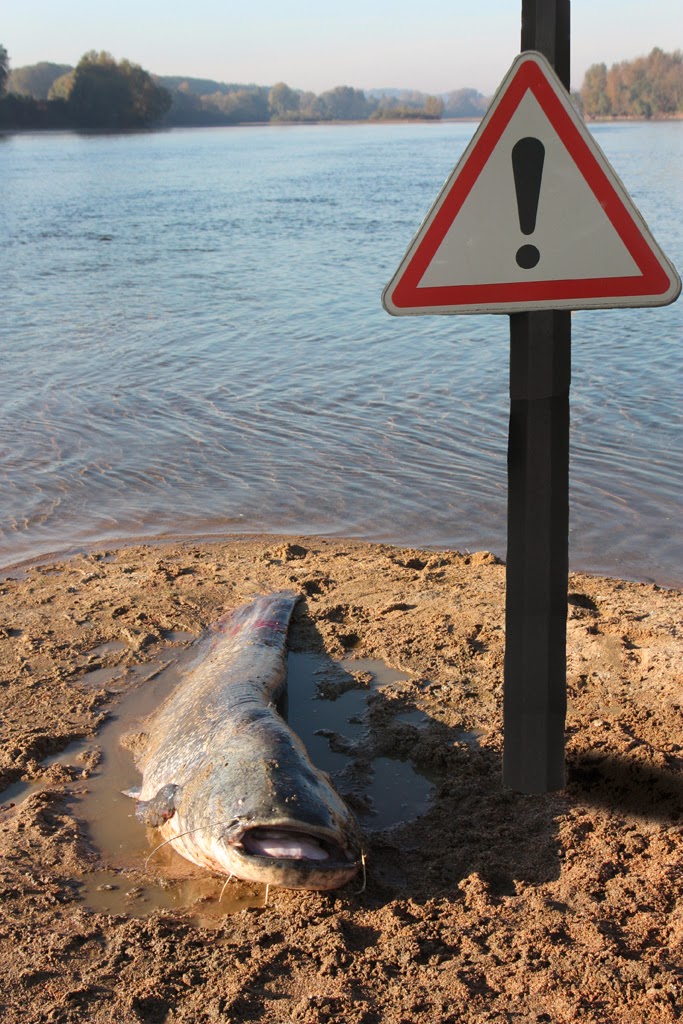
I didn’t know anything about this site before our trip to Germany. One day, as I was searching the net for places of interest in Dresden, I stumbled upon a picture of a strange, funny building with a big giraffe on it. It was the Kunsthofpassage. I tried to find out more about this curious spot, but the information at hand was scarce and very conflicting: some called it a “masterpiece”, others “a waste of time”. But the picture of that building was very intriguing so I wanted to visit it. Read more
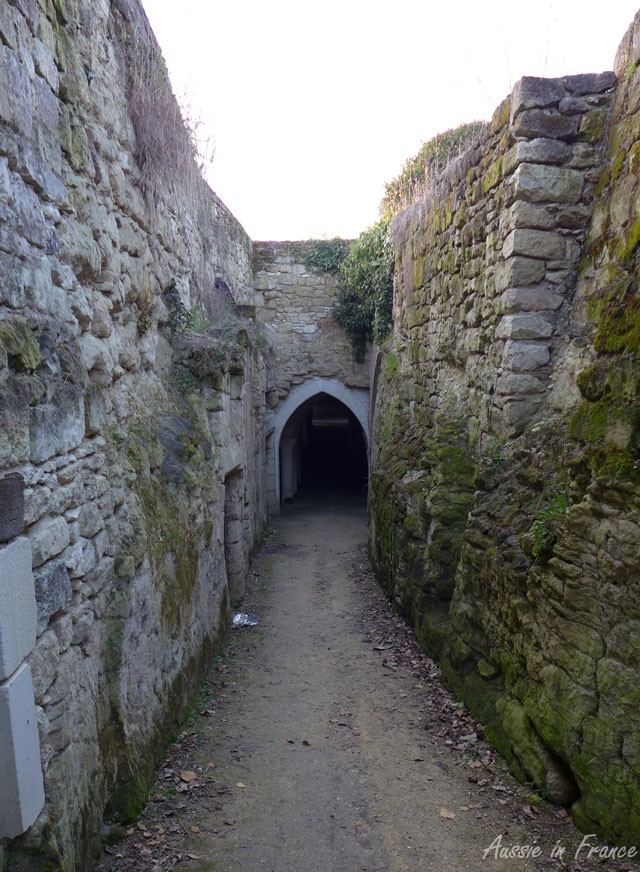
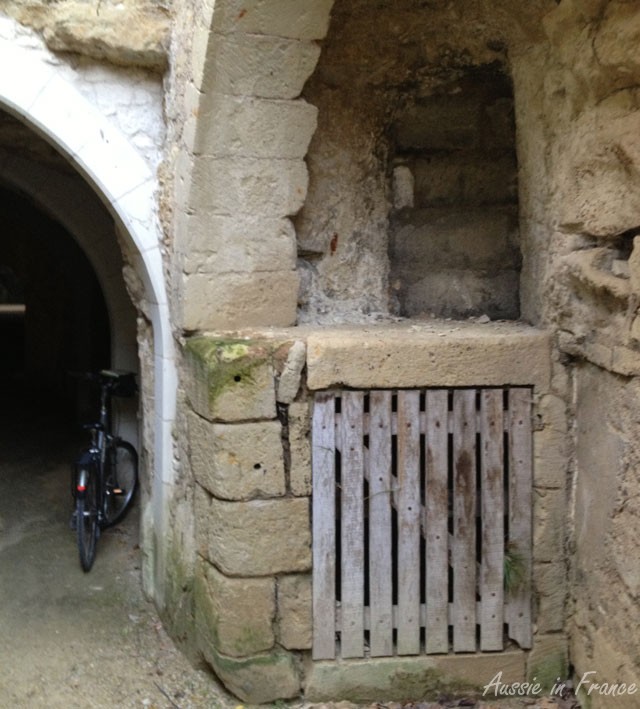
We’re on our way back from Saumur to Turquant, having just cycled up hill and down dale in the opposite direction. We’re on the riverside cycle path on the Loire à Vélo route, which has just taken us through a series of troglodyte houses parallel to the river when another hilly path takes us up a winding street on the other side of the village of Souzay.
The tunnel on our cycle bath
We have doubts – are we really supposed to go through that tunnel?
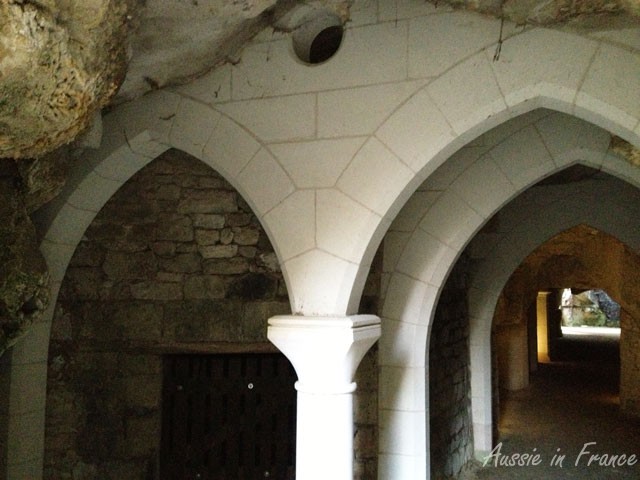
Vaulting at the entrance to the 11th century troglodyte shopping centre
We stare in amazement as we get closer. A vaulted troglodyte village!
Wine press shaft called a “jitte de pressoir”
The first thing we see is a “jitte de pressoir”, a sort of stack through which grapes were poured onto the wine presses below. Jean Michel explains that his grandfather used to have one.
Village well now fenced off
The next thing we see is the village well which was shared by the villagers
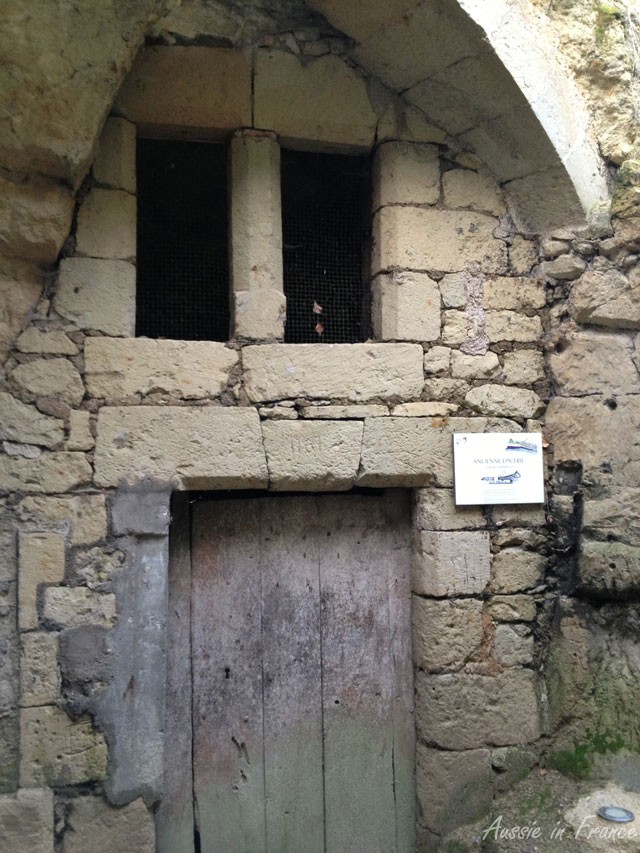
Mediaeval troglodyte grocery shop
We then come to a mediaeval grocery shop with mullion windows on rue de Commerce which, the sign tells us, operated as a busy trading street from the 11th to the 19th century! More shops follow. A troglodyte shopping centre!
A typical platform
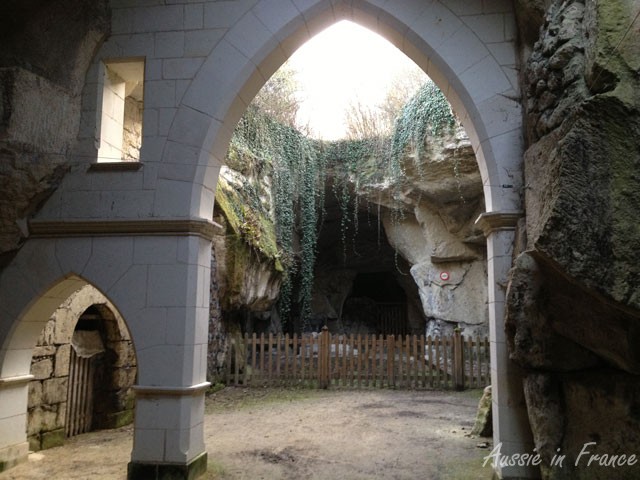
We continue through the underground labyrinth, with its many empty shops and overhead caves. It’s very eerie as it is late afternoon in spring and not another soul in site.
Subsidence has endangered some of the caves
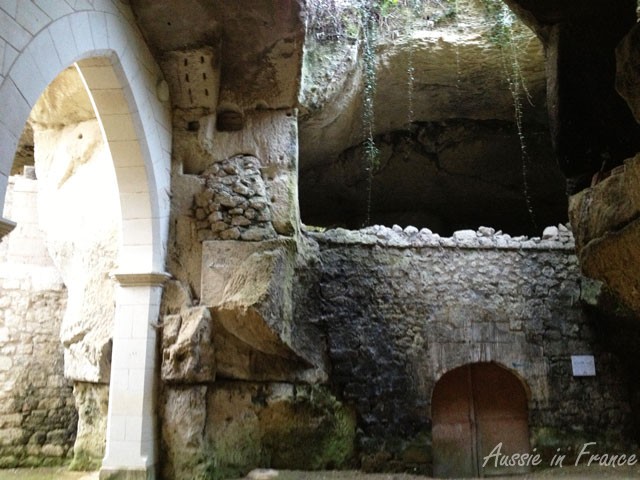
A more open area follows with an 18th century pigeon house. There is an oven with a long table and benches.
An 18th century pigeon house
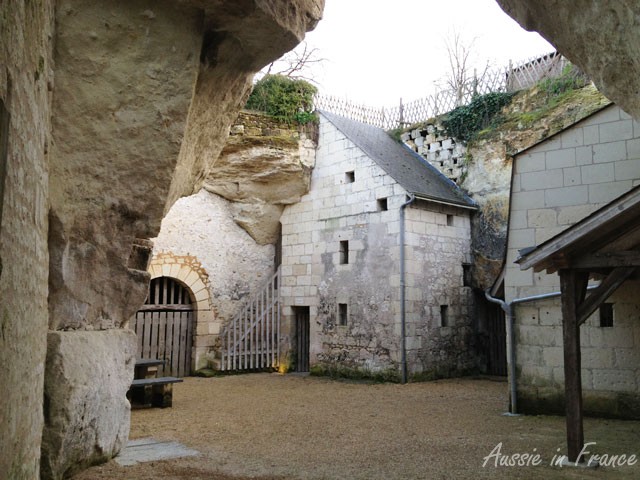
Signs along the way explain consolidation techniques used since renovation began in 2002, the subsidence that produced the open areas and the quarrying of local tufa stone for construction, which is how the village originated .
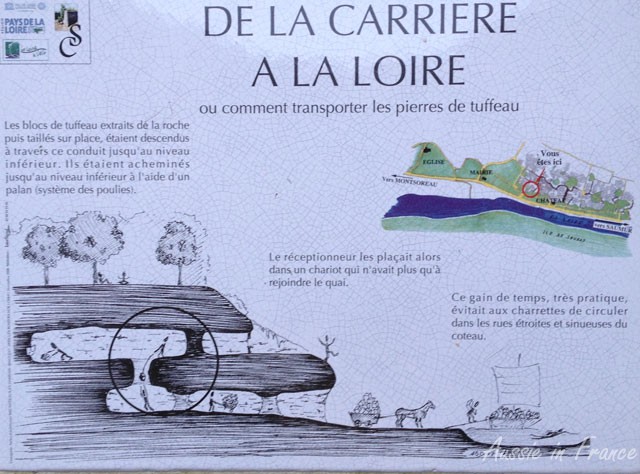
Taking quarried stone down to the Loire
The blocks of tufa extracted from the rock and cut to size were taken out through a shaft to the level below using a pulley system. The next person in line placed them in a cart that took them down to the river. This very practical timer saver meant the carts didn’t have to jostle their way through the narrow, winding hillside streets.
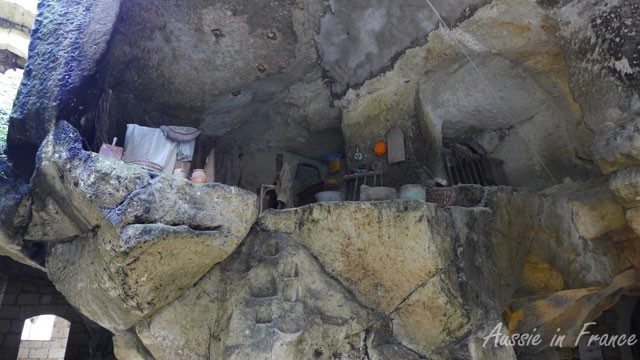
If you look closely, you can see table and chairs, cooking utensils and even a bed!
It’s easy to understand why the villagers quickly took over the resulting cavities once the stone had been removed. Certainly a cheap way to get a house. I’d like to know how they got across the shaft in the sketch though!
This post is an entry in Lou Messugo’s All About France montly link-up. For more posts about France from other bloggers, click here.
We have just spent a week in Paris and are returning to Blois tomorrow for two weeks. I’m so looking forward to it! Although spring is present in Paris, it pales in comparison with the Loire Valley! Here are some spring photos anyway!
This is one of the magnolias in the Palais Royal Gardens, among the first flowers to bloomWe had several spectacular sunsets during the week. This is taken from my baloncy.I was watching the Night Revellers’ Kiosk, amused at how many fathers took photos of their children sitting on the seat when the light suddenly changed and all the glass baubles started twinkling
For more on the Night Revellers’ Kiosk, click here.
Here’s a photo for those who only saw the piazza in front of Saint Eustache under renovation.
You can see the Bourse du Commerce (Commodities Market) in the back ground.
I originally thought the equation was arbre = tree, arbuste = shrub and buisson = bush. Well, I was wrong. The first time I saw a lilac bush, I thought it was a tree. It looked like a tree to me and certainly not like a bush (a lot of the flowers are way above my head), but when I used the word arbre I was immediately corrected. Non, c’est un arbuste.
Le lilas est un arbuste
With the arrival of spring, there are lots of flowering shrubs, so I asked Jean Michel to define arbuste for me. “Un petit arbre“, he replied. “No it’s not.” I replied, “You could call a young conifer un petit arbre but it still wouldn’t be an arbuste.” So I checked my Larousse app. An arbuste is a woody perennial plant less than 10 metres in height whose branches don’t grow from the base.
Then it says in brackets that a young arbuste looks like an arbrisseau (oh dear, I hadn’t even thought of that one !) then starts looking like a tree when it loses its lowest branches.
An arbrisseau has branches coming from the base and doesn’t grow more than 4 metres high. No examples given for either of course.
Le laurier tin est un arbrisseau
According to my Longman Dictionary of Contemporary English, a shrub is a small bush with several woody stems. A bush is a plant with many thin branches growing up from the ground.
Guess what an arbre is ? A woody perennial plant with branches that grows to at least 7 metres (where did they pull that one from?) and has permanent branches that only start a certain distance from the ground. It’s all relative, isn’t it ?
L’althéa est un arbuste.
A tree is a very tall plant that has branches and leaves and lives for many years, to quote the Longman. That’s a definition? “Very tall”? “Many years”? Hardly precise.
I then consulted my New Shorter Oxford in two volumes just in case it’s more cluey. Well, it’s not. A bush is a shrub or clump of shrubs with stems of moderate length. A shrub is a woody plant, smaller than a tree. A tree is a woody perennial plant, typically having a single stem or trunk growing to a considerable height and bearing lateral branches at some distance from the ground.
But listen to the next bit : More widely, any bush or shrub of erect growth with a single stem. Which explains my confusion between trees, shrubs and bushes!
Le cognassier japonais est un arbuste mais peut être taillé en buisson
I went through a few plants with Jean Michel to see what category he would put them in. Let’s see. Lilac is an arbuste, Japonica quince is either an arbuste or an arbuste buissonnant. Oh no, not something else! I’d forgotten about buisson.
The Larousse says it’s an arbuste or group of arbustes with branches growing up from the ground and is difficult to get through. Hey, that sounds like a hedge, doesn’t it ? I thought hedge was haie. Haie is a line of arbres or arbustes forming a limit between two parcels of land. A hedge is a row of small bushes or trees growing close together, usually dividing one field or garden from another. So we can safely say hedge = haie.
I think we’ll just have to forget about the English and concentrate on the correct words to use in French, don’t you ?
L’hortensia est un arbuste.
So, an arbuste looks like a tree only it’s smaller and has low-growing branches e.g. a lilac bush or a holly bush. An arbrisseau has branches growing up from the ground e.g. viburnum tinus (laurier tin), only no one ever says arbrisseau so we can call them arbustes as well, like Japonica quince (cognassier du Japon) and weigela or arbustes buissonnants or even buissons if they are small enough and are trimmed to form a hedge.
If you want to say arbre, check the plant is at least three times your height and has no low branches!
Already time for my Weekly Blogger Round-Up. I’m sure you know about the love locks on the Pont des Arts in Paris. Lisa Anselmo and Lisa Taylor Huff, guest posting for Out and About in Paris, explain why they are causing a problem. Chrissie from Riviera Grapevine gives us very helpful information on developing our palate in the world of wine, while Bread is Pain reflects on the differences between Anglosaxons and French when it comes to clothing and physical exercise. Enjoy!
Why We Need to Unlock Our Love from the Bridges of Paris (Guest post by Lisa Anselmo and Lisa Taylor Huff of No Love Locks™)
by Mary Kay from Out and About in Paris, an American by birth, Swiss by marriage, resident of Paris with a Navigo Pass for the metro that she feels compelled to use
You’re in Paris on the Pont des Arts with your sweetheart. Maybe it’s your anniversary. You hang a lock engraved with your initials on the bridge, and toss the key in the Seine. Then you walk away.
It’s a year later and that lock is corroded by rust, buried under thousands of other locks and covered in graffiti. The piece of the parapet where you hung your lock gives way, over-burdened by the tonnage it was never designed to hold, and lands squarely on a sightseeing boat passing below, full of tourists. Read more
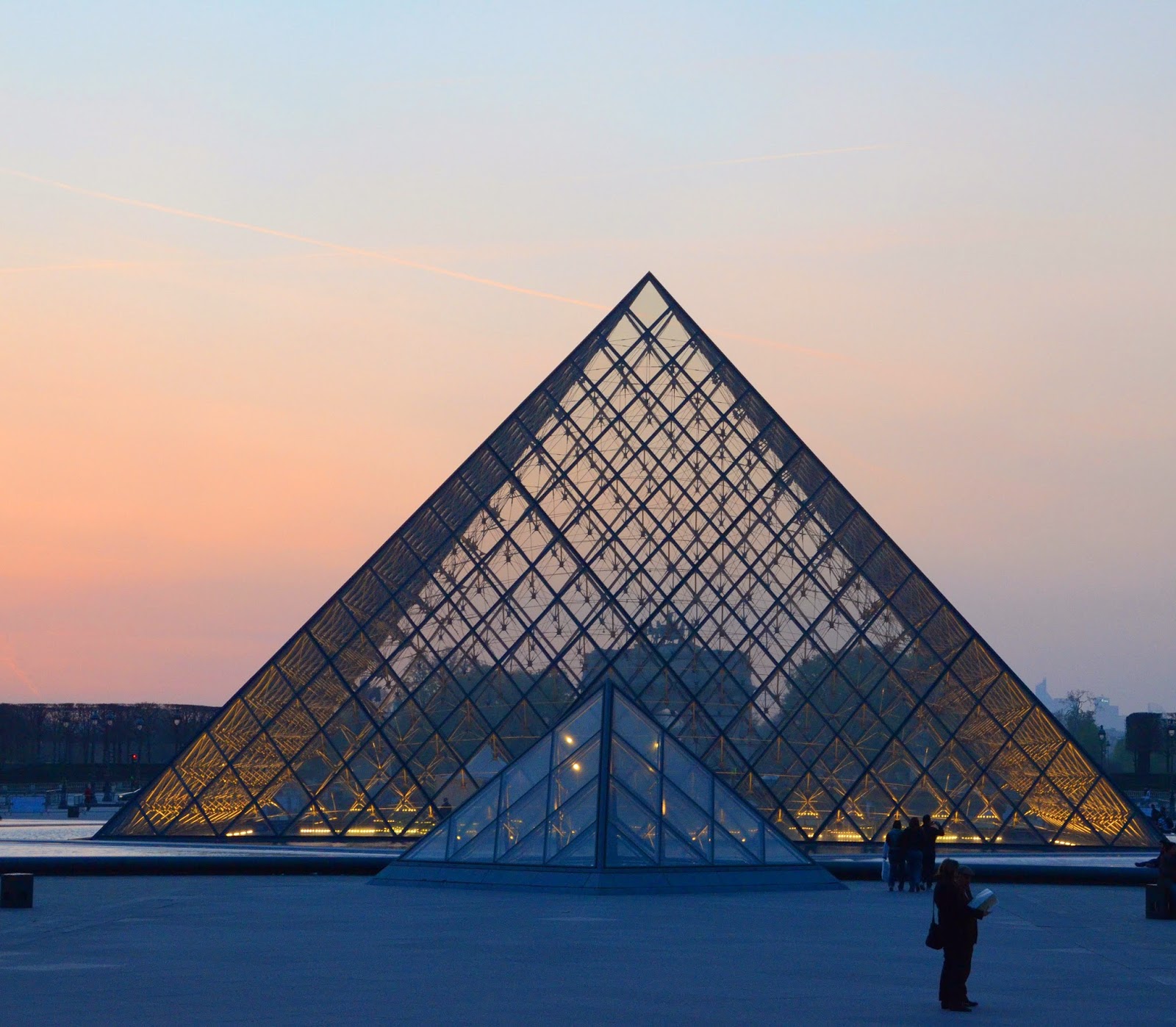
Help, I’ve lost my palate!
by Chrissie from Riviera Grapevine, a Sydney girl living in Nice with an insatiable thirst for the wines of the Var, Alpes Maritimes and Liguria. She happily sells, drinks and blogs about wine
Pallet, palette, palate: Three of the English language’s most commonly confused words, which all have a place in our wine vocabulary.
For instance, if you sell wine in Southern France, it’s not inconceivable that you may order a pallet of rosé from the AOC Palette in Provence. Yep, definitely confusing.
Of the three, however, the one which has the most resonance with wine lovers worldwide is palate, or that part of our mouth which receives and defines taste sensations.
by Bread is Pain, a 30-something American living in the Rhone-Alps, getting her master’s degree, learning French and slowly eating and drinking herself through the country
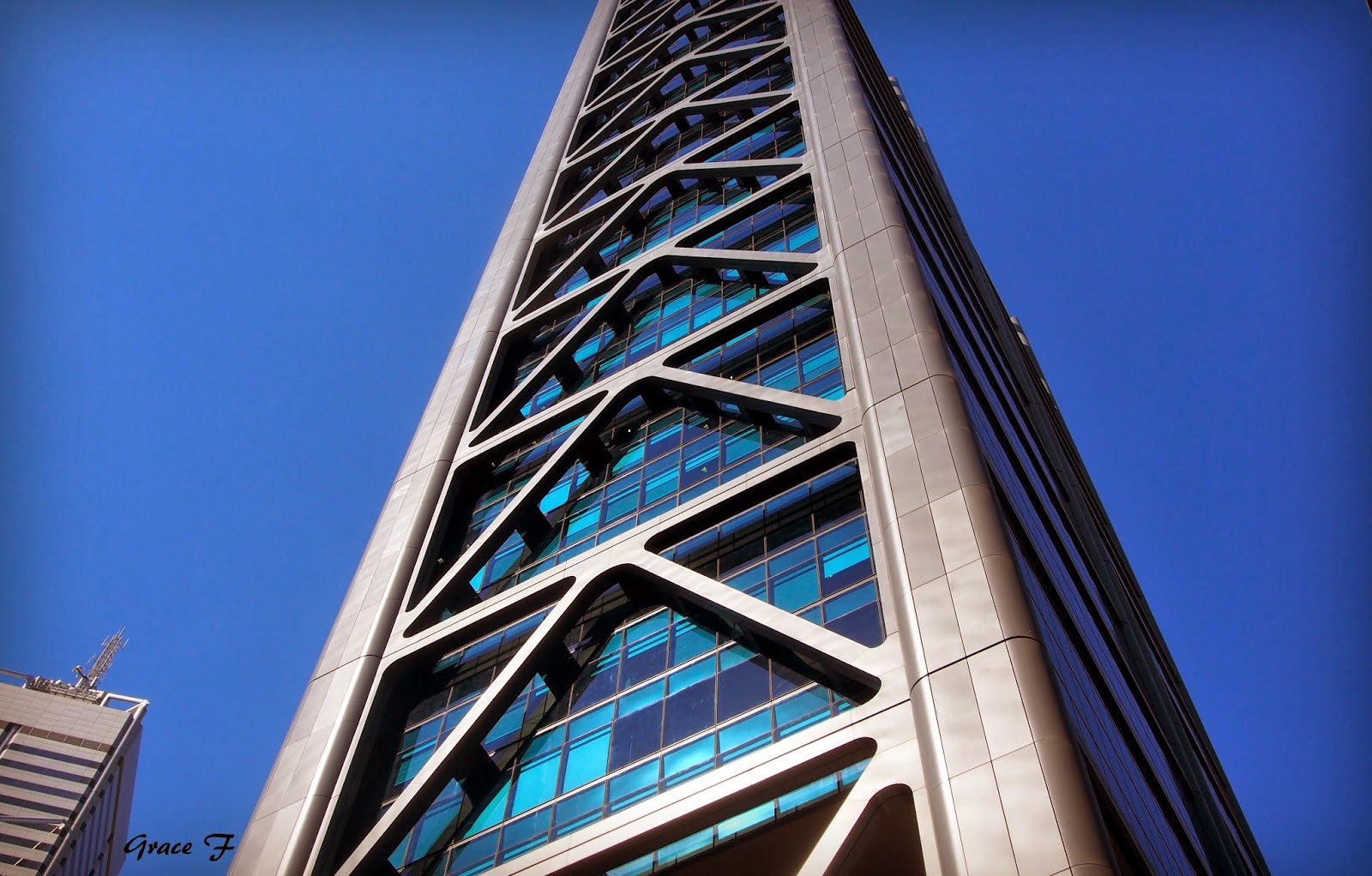
“Oh. Okay,” I think to myself as I wave at the friend I am meeting. “So THAT is what we are wearing.” I walk across the street, briskly, in my spandex pants, sports bra top, and tennis shoes.
After the obligatory kisses hello, we begin our stroll towards the Bastille.
“Are you going to be able to hike in those,” I ask her, looking at her feet. She is wearing ballet flats, skinny jeans, a fashionable sweater, and a floral scarf whereas I look like I’m about to rip open a protein pack with my teeth while simultaneously checking my heart rate. Read more
We’ve decided to take advantage of the wonderful spring weather and do some more cycling further along the Loire. I’ve been wanting to go back to Fontevraud Abbey for some time so we book a chambre d’hôte in Turquant which is on the Loire about two hours west of Blois.
Montsoreau
We have a picnic lunch in nearby Montsoreau which was a thriving port for the transport of tufa stone, wine, timber and grain until the railways took over in the mid 19th century. Today, it’s a sleepy little village with a château that livens up in the summer.
Panorama near Candes overlooking the confluence of the Vienne and Loire Rivers
Then we drive up to one of our favourite panoramas just outside the neighbouring village of Candes overlooking the confluence of the Vienne and the Loire. Not as striking as it is in the summer, but still breathtaking.
Le Balcon Bleu, chambre d’hôte in Turquant
After checking into our lovely chambre d’hôte, Le Balcon Bleu, we take the bikes off the back of the car and set off for Saumur where Jean Michel lived from the age of 3 to 17. We take the “high” cycle route overlooking the Loire which takes us past an amazing collection of troglodyte dwellings that have been converted into artists’ and artisans’ studios.
Troglodyte dwellings converted into artists studios in Tursquant
We cycle through the vineyards of saumur champigny and up and down an exhausting number of hills with an occasional stunning view of the river such as the vista from the narthex of the little church of Saint Pierre in Parnay built in the 10th century.
Saint Pierre de Parnay
Some time later, I spy a picnic table and suggest a pause. I’ve remembered the biscuits and water this time, which is a good thing because there is no other sustenance along the cycle route. Jean Michel says we are very close to his old home and tells me who owns the surrounding vineyards. A little further on, there are a lot of new houses which he’s never seen before.
The back of Jean Michel’s house showing the original cavier mill
We arrive at his old home which was originally a cavier windmill like the one in Bléré and he shows me the roof he used to climb up on to read and look at the panoramic view. I can’t see any sign of a windmill but at the back of the house, he shows me part of the circular wall. Many additions have been made over the years so the house is quite a hotchpotch.
After turning right into the aptly named Rue des Moulins, we see the remains of several similar windmills, before coming out on Jean Michel’s favourite view of Saumur, the Loire and 14th century château. Unfortunately, it’s being renovated so the view is marred by scaffolding.
The bike path leads through a surprising mix of old and new buildings, including the beautifully renovated Maison des Compagnons (guild house) where the apprentice stone cutters are all chipping away in the open courtyard.
Maison des Compagnons (guild house)
We cycle through Place Saint Pierre with its half-timbered houses and down to the Loire then turn right along the river, with the castle towering above us until we reach the imposing 17th century church of Notre Dame des Ardilliers which I remember from a previous visit.
Notre Dame des Ardilliers
The cycle route takes us up another hill and through a sort of tunnel, then past a series of troglodyte houses, much more sophisticated this time. Signs along the path point out architectural features such as mullion windows, watchtowers and arrow slits.
The cycle path goes through a tunnel
One of the troglodyte dwellings is actually a feudal castle owned by Marguérite d’Anjou, the French wife of Henri VI of England, in the 15th century!
Semi-troglodyte castle
Just when I think the cycle route is going to join the river again and spare my knees, another hilly path takes us up a tiny winding street and we begin to have doubts. But an amazing sight is awaiting us! Stay tuned.
Imagine coming down to breakfast after a night in a chambre d’hôte and finding this beautiful room! Le Balcon Bleu in Turquant in the Loire Valley near Saumur is a collector’s delight! And this was only the dining area. The next photo shows the other half of the room. When I asked the owner (she and her husband are artists) if she was a collector, she said she just accumulated things! More about the rest of the B&B in the next post.
It’s actually Saturday, but we’ve had two days away cycling around Saumur and are now gardening like mad so this is going to be a very quick post.


Relâche is what you say when there is no performance. If a cinema is closed on Mondays, for example, you’d say, le lundi est le jour de relâche du cinéma.
Prendre un peu de relâche means to take a short break, which is what we have just done. Sans relâche means relentlessly (without letting up).
The verb relâcher comes from the Latin relaxare which obviously gave us the verb relax.
Alors, j’ai pris un peu de relâche après avoir travaillé sans relâche pendant presqu’un mois. Résultat: c’est relâche pour Friday’s French.