One of the unexpected spinoffs of writing a blog is making new friends. I started blogging last October and I’ll never forget the thrill when I received an email just before Christmas from Barb in Sydney, whom I didn’t know, telling me how much she enjoyed my blog. We tried to meet up last summer in Paris but the dates just never worked out. However, despite all the odds, we managed to have a quick glass of champagne at Barb’s place while we were in Sydney three weeks ago. Our only regret was that the visit was so short. I hope we’ll do better next time.
Jill and her Devonshire Tea
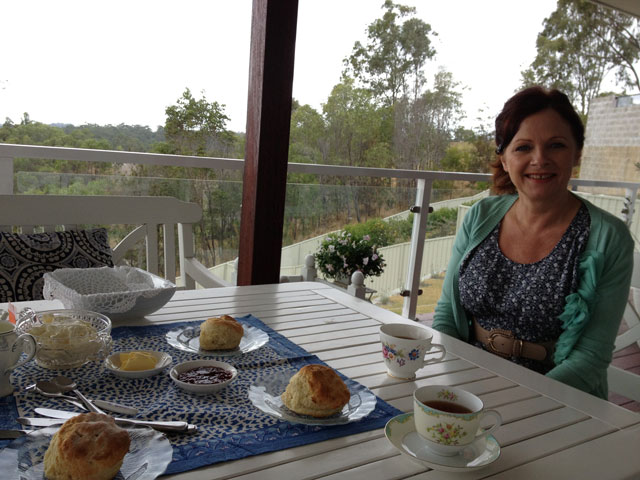
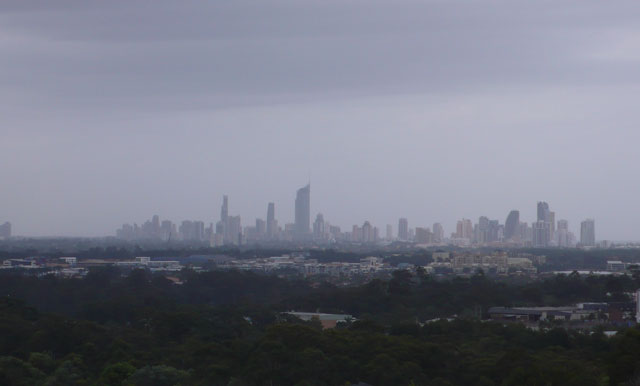
When Jill from the Gold Coast mentioned in a comment on Aussie in France that she was coming to Paris with her two bridesmaids in May, I suggested we meet up. We had a very pleasant morning tea at A Priori Thé near the Palais Royal. And today, Jill served us Devonshire Tea in her lovely new home in Reedy Creek with its wide-sweeping view of the Gold Coast. For those who don’t know what Devonshire Tea is, it’s fresh scones, butter, jam and cream. Delicious.
Jill’s view on a rather muggy day
She was very nervous about speaking French before a “pro” but once she got going, she did very well and Relationnel was able to have a real conversation for the first time since we left Sydney with someone apart from me and my children! When we got in the car afterwards, he said how fortunate he was to reap the benefits of my blog. I was delighted of course. Jill’s immense joie de vivre and love of everything French were a wonderful antidote for my sadness at having said goodbye to Leonardo and my brother and family.
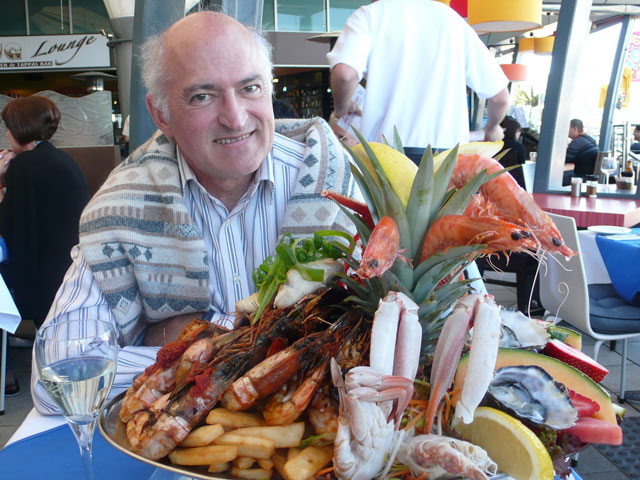
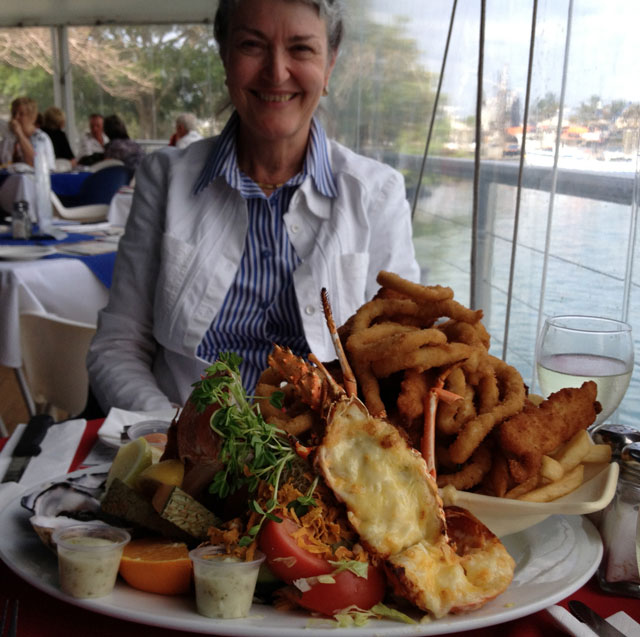
Seafood basket at the Aqua Broadwater Restaurant at Labrador
On the way home, we went past Regatta in Tweed Heads South, a seafood restaurant on the Tweed River and found a table with a lovely view of the water. The last time we were on the Gold Coast – three years ago – we had an unforgettable seafood basket further up the coast at what used to be the Aqua Broadwater Restaurant at Labrador. The Regatta’s wasn’t quite as good but we still enjoyed it.
Regatta restaurant in Tweed Heads South
Tomorrow we move onto the last leg of our journey: Brisbane.
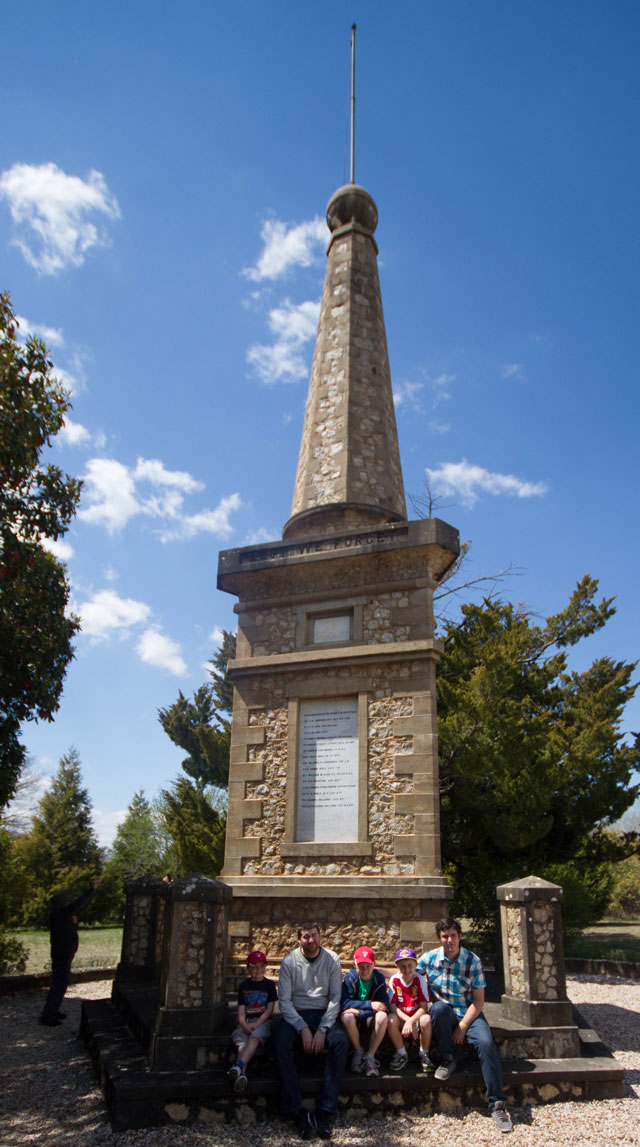
On the day of our family picnic to Dangars Falls near Armidale, we stopped on the way at a unique war memorial which was presented to us by Graeme, the historian in our party. The Dangarsleigh War Memorial is unique in that it was a private memorial erected by the Perrott family in memory of their oldest son, Harold, killed at Passchendale Ridge in the First World War. The local community joined in, making various contributions, including ceramic tiles from the Catholic Cathedral, and the other veterans were added to the list. Building commenced on October 6th 1920 and the monument was unveiled on Empire Day May 24th the next year.
Dangarsleigh War Memorial
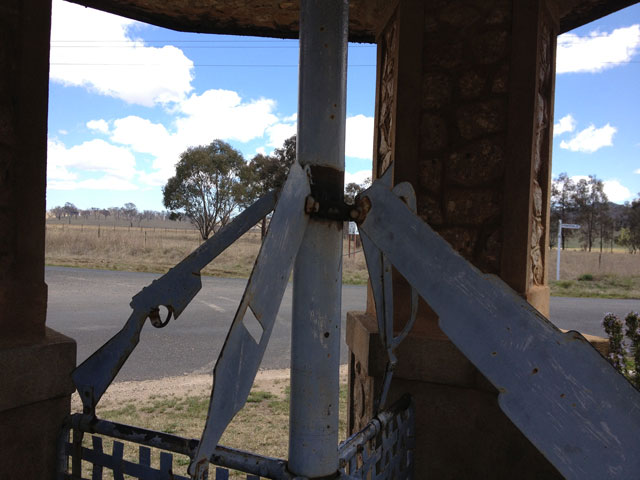
Harry Court, an Armidale blacksmith, made and donated the turnstile and worked symbols of the Navy and the Army into the handles. Each of the elements of the monument has a symbolic meaning, determined by Mr Perrott: • the large circle surrounding the monument “represents the world, with the inlaid stones showing the rough path of life”; • the three-sided base “represents ‘Mother’ England with Ireland and Scotland; • the five smaller pillars, each with five sides represent the ‘Children’ of the British Empire – Australia, Canada, India, New Zealand and South Africa”; and • the eight-sided obelisk “unifies England with Ireland and Scotland, and the five Dominions to form the British Empire, above which is the globe to represent the world.”
Gun, bugle, whistle and cannon on the turnstile at Dangarsleigh War Memorial
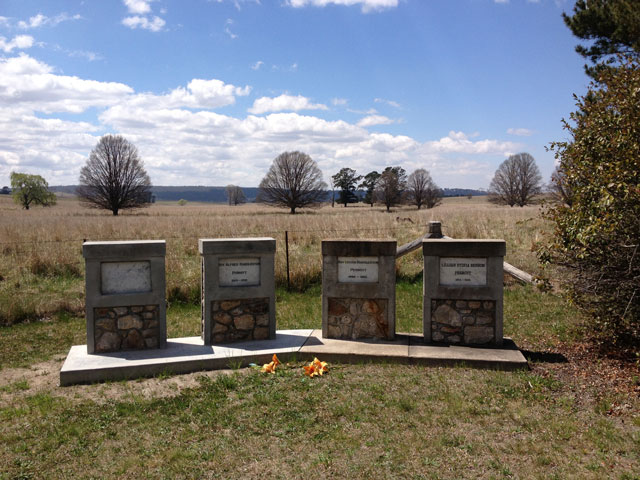
“The entrance is in the form of an eastern temple and invites people to ‘Nirvana’, the Place of Peace and is surmounted by a bell, which calls the souls to rest. The turnstile has handles fashioned into shapes of a military bugle, service rifle, Naval bosun’s whistle and a cannon.” The Perrot family graves are nearby.
Perrott family graves
I wish I had had Graeme to talk to me about Australian history when I was growing up. “Social studies” as we called it then seemed very dry and full of dates and I dropped it as soon as I could in high school. It was not until I went to England for the first time in 1975 that history became a reality. I’ve learnt to look at the whole picture and see how different things fit together, but I still have trouble with dates.
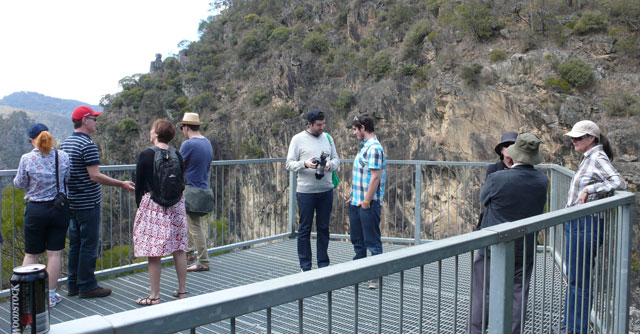
Family interaction on the viewing platform at Dangars Falls
We then went on to Dangars Falls and our family party took over the viewing platform altogether. I learnt that one of Graeme’s friends was killed in the terrible massacre in the 1960s at Port Arthur in Tasmania, which we visited a week or so ago. He also had a student who jumped off the cliff above the falls. Such terrible tragedies.
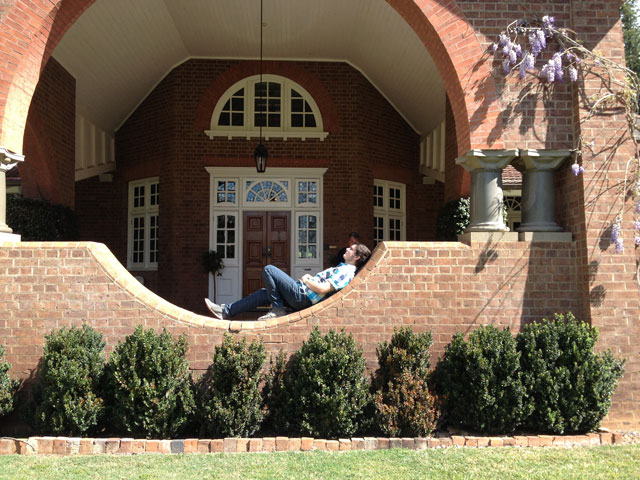
Chilling out at Petersons Wineries
After the picnic, we went to visit Petersons Wineries, with their lovely old guest house built in 1911 featuring a distinctive archway that the younger generation found most enticing! After tasting a couple of wines at the cellar door, which is in the old stables, we bought a glass of wine each and sat under the shady trees outside. These are the moments with family that I miss most when I’m in France.
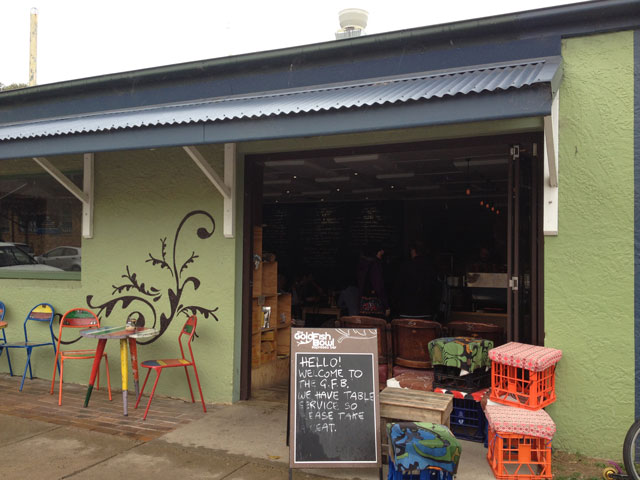
One thing I’ve discovered this time is the Australian breakfast cult. I can’t remember when I lived here before (I left in 1975) that people went out for breakfast. I only remember morning and afternoon tea.The day of the Big Family Reunion was also my sister-in-law’s birthday so my brother thought breakfast would be a good idea. I looked up the Internet and found the Goldfish Bowl in Armidale which seemed to have a lot of good comments. Despite its popularity, we managed to seat 10 people.
The Goldfish Bowl Cafe in Armidale
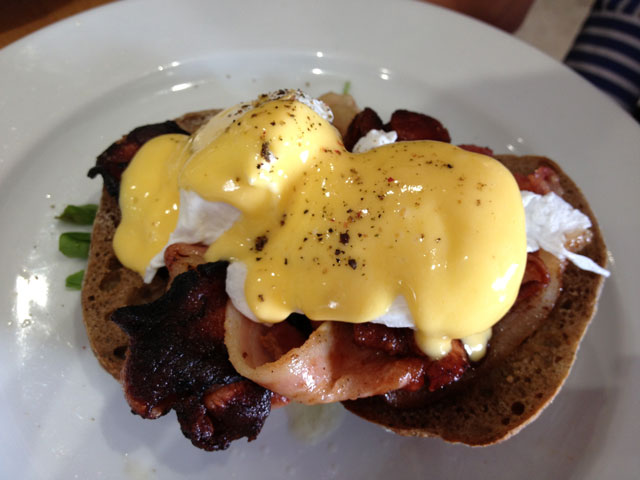
Eggs Benedict with Hollandaise sauce and pancakes seemed to be the most popular choices at our table. The coffee and cappuccino were good and they even gave us plates for the birthday cake my brother had brought along, something totally unheard of in France. Another time in a café, a woman came in and said she had “a gluten issue” and asked if they could make toasted sandwiches with the bread she had brought with her. Not only did they do so, but they charged less!
Eggs Benedict at the Goldfish Bowl
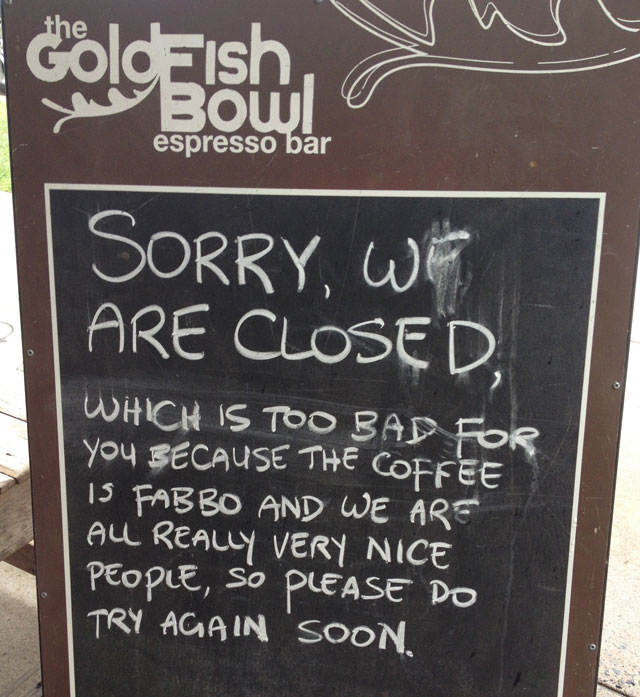
The decor was very unusual at the Goldfish Bowl, with upturned packing cases providing extra seating. It was a very relaxed atmosphere and the service and food were good. A great way to start the day and celebrate a birthday. I also loved the sign they put outside when it’s closed.
Sign outside the Goldfish Bowl
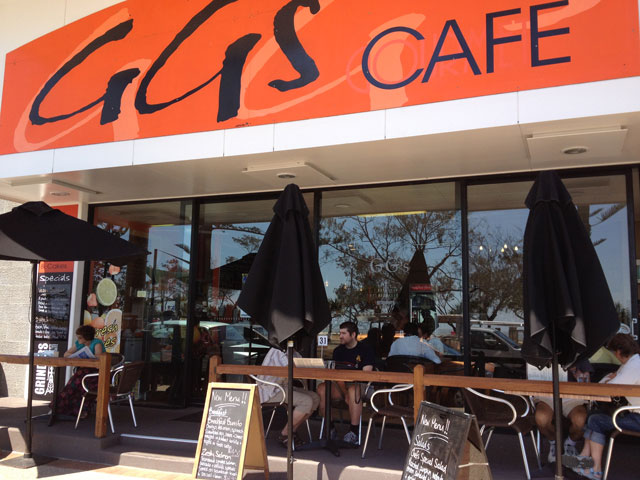
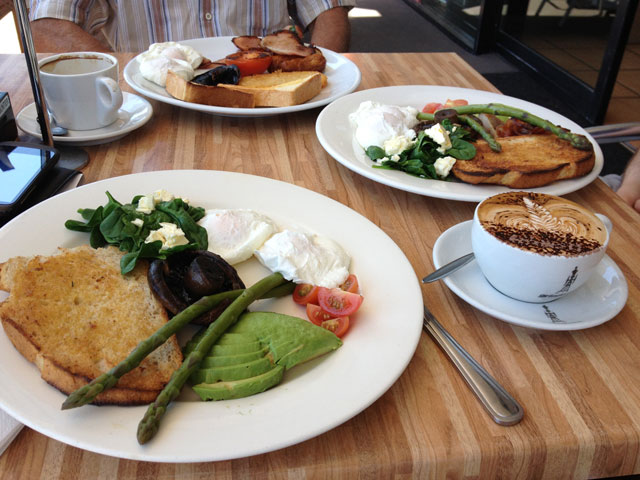
But our best experience so far is GGs at Coolangatta on the Gold Coast. The day my brother and family left to go back to Sydney after spending three lovely days with us, Leonardo suggested we join him there after his workout. They had an even better choice of dishes including a “veggie” breakfast with poached eggs, spinach, feta cheese, avocado, cherry tomatoes, asparagus, mushrooms and toast which we both took.
GGs cafe at Kirra on the Gold Coast
Relationnel chose the traditional Big Brekkie (Australians love to shorten words), with poached eggs, bacon, sausages, tomatoes, vegetable fritter and mushrooms. He also had the best coffee he’s had yet in Australia. I had a good cappuccino too. Australians will go a long way to get a good coffee. It’s something of a cult here and many people will stop off on their way to work to get a take-away coffee. That’s also something that has happened in recent time.
Veggie breakfast and Big Brekkie at GGs cafe
The Goldfish Bowl, 3/160 Rusden Street Armidale NSW 2350, Australia (02) 6771 5533
GGs Café, 48 Musgrave Street, Kirra, Queensland 4225, Australia
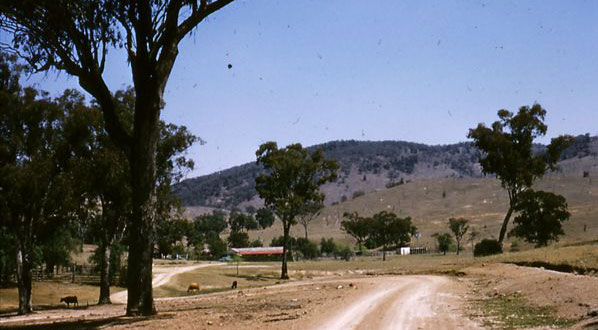
When we were in Australia 3 years ago, I took Jean Michel on a pilgrimage to the sheep country where my father was born – Bonshaw, near Glen Innes and Tenterfield in northwestern New South Wales. The Kneipp family originally comes from a little village called Winkel along a small section of the Rhine River in Germany where vineyards and wineries still flourish.
Glenmore, the sheep property where my father grew up
The first ancestor that can be traced was called Johann, probably born in the early 1640s. He and his wife Katarina had five children, born between 1667 and 1675. Their third child, also called Johann, was born in 1672. He married Margerthe and they had ten children. The oldest boy was Christan, born in 1694. He and his wife Maria Eva only had two children, Wendelin and Susanne. Wendelin, our ancestor, was born in 1723 and died in 1790. He married Ursula and they also had two children, Franz and another Wendelin. Franz married Clara and they had just one son, Wendel, born in 1779.
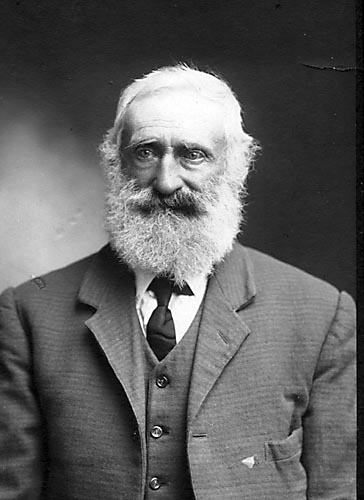
Johann Kneipp (photo: http://www.halenet.com.au/~jvbryant/kneipp3.html)
Now Wendel (this is sixth generation here) married Mary Ann and they had five children, including another Johann, born in 1831. He was my great great grandfather and came out to Australia as a young man, in 1856, bringing 5 rams with him. In Australia, Johann married a fellow German, Caroline Utz, born in 1842 in Stuttgart. He died in 1914 in Glen Innes while Caroline lived for another ten years. They had 11 children, the first of whom was born in 1862.
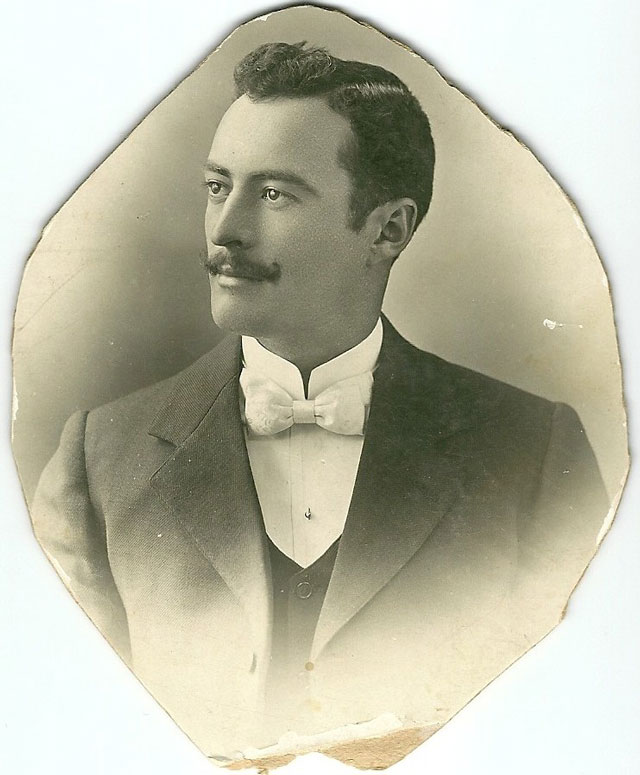
The dashing and debonnaire Matey Kneipp, my great grandfather
George, eighth in line, was born in 1873. Known to everyone as Matey, he married Helena Lennon, of Irish extraction, from Armidale and they had five children: Anthony George, Dom, Mary, Joseph and Frank. Their property, just outside Ashford, was called Beaumont.
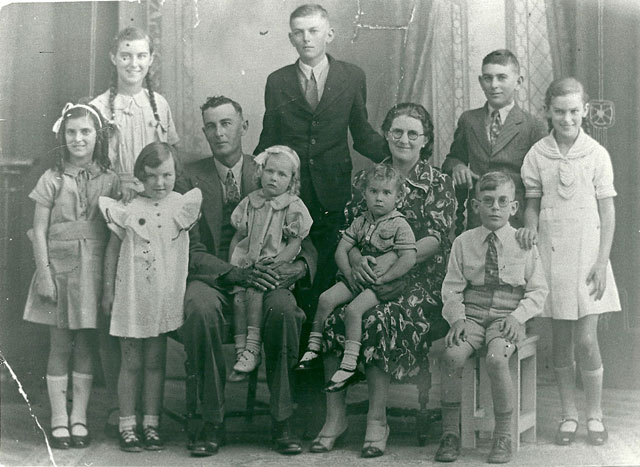
My father, George Kneipp, the oldest, with his mother and father, 3 brothers and 5 sisters
Anthony George, known as George, born in 1901, married Kathleen McHugh and they lived on a sheep property called Glenmore. He died young, at the age of 49 so I never met him. Kathleen, my grandmother, died in Inverell in 1972 at the age of 72, having brought up 9 children – four sons and five daughters. Their home was declared a primary school and the teacher lived with them all year round. When they reached high school age, they went off to boarding school.
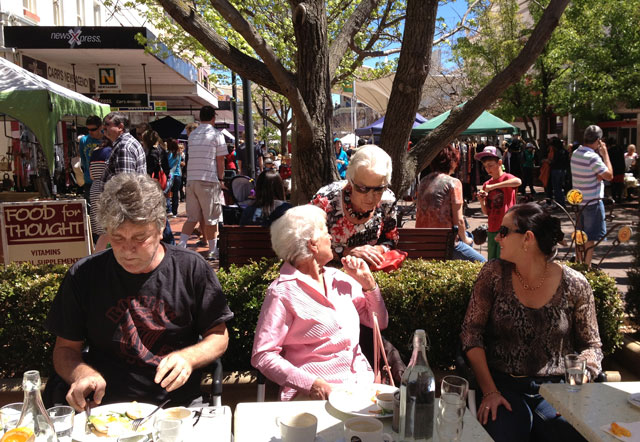
Mixture of generations in Armidale Mall
My father, also known as George, was the oldest. One brother and three sisters are still alive. My own parents died in 1993 and 2000. In my generation, there are 40 first cousins, of whom only 14 are women (three deceased) and we have had 44 children between us, but this time half are women. So far, there are six members of the next generation.
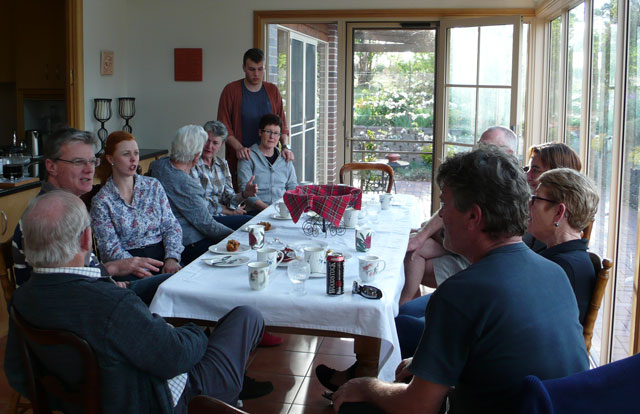
My cousins are spread across Australia and last time, we covered many miles to catch up with them which is why I came up with the idea of a family reunion this time. Unfortunately, many live far away (Perth, Melbourne, Mackay, Darwin, etc.) but there were still nearly 50 of us at the family dinner.
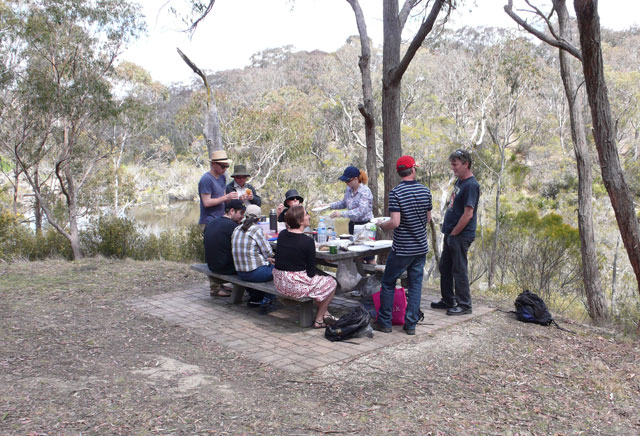
A bush picnic
All my immediate family was present – my two brothers and their four children and my son and daughter. My uncle, two of my aunts and an aunt by marriage were also there as well as many cousins. Both before and after the main get-together, we met up at our home exchange and in the mall in Armidale, where we took over one of the main cafés for breakfast, at Dangar Falls where we picnicked and at the homes of friends and family.
Catching up a last time
It was heart-rending for me to say goodbye to the different members of the family as they left one by one during the long weekend, particularly the “oldies” as we won’t be back for another three years. But it was a wonderful experience and the next date has already been set – January 2015 – for an 80th birthday on a sheep property. Jean Michel will be given a taste of the “real Australia” and has promised to be more fluent in English by then!
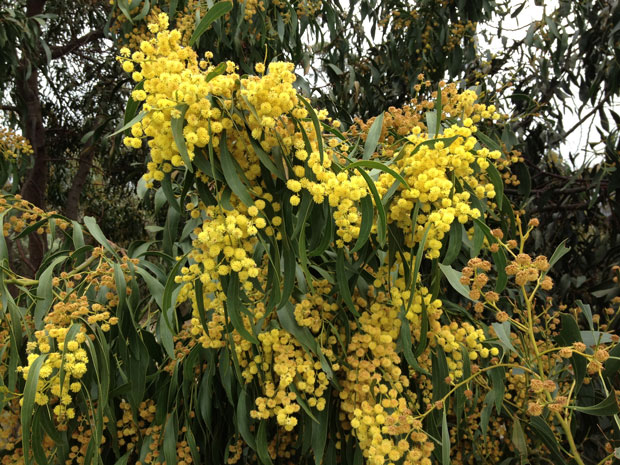
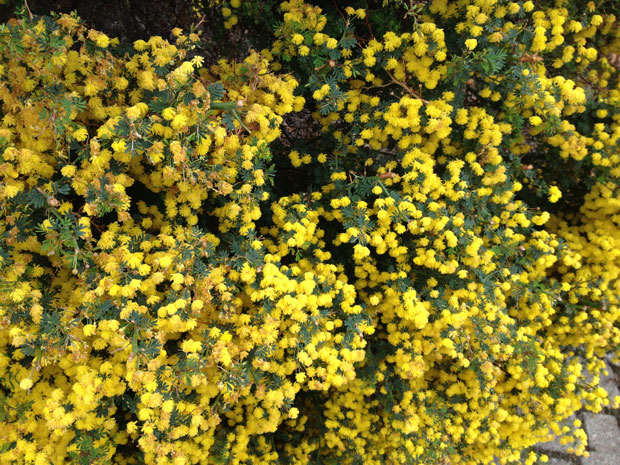
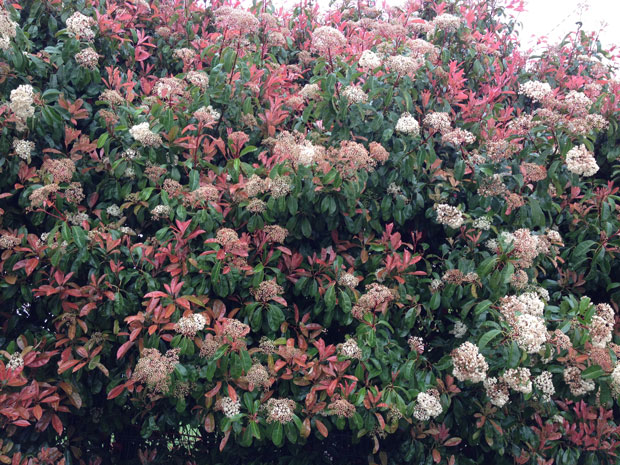
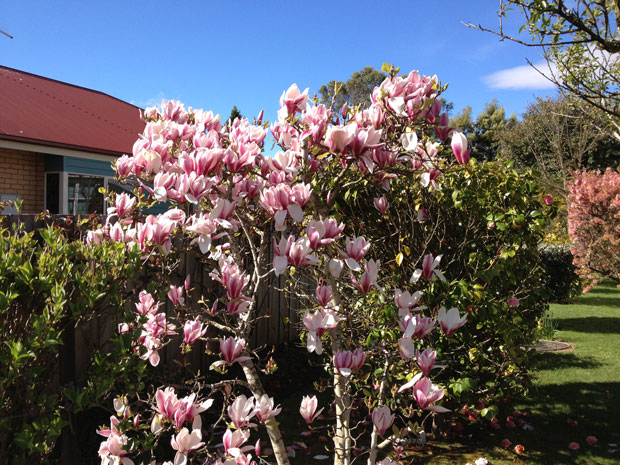
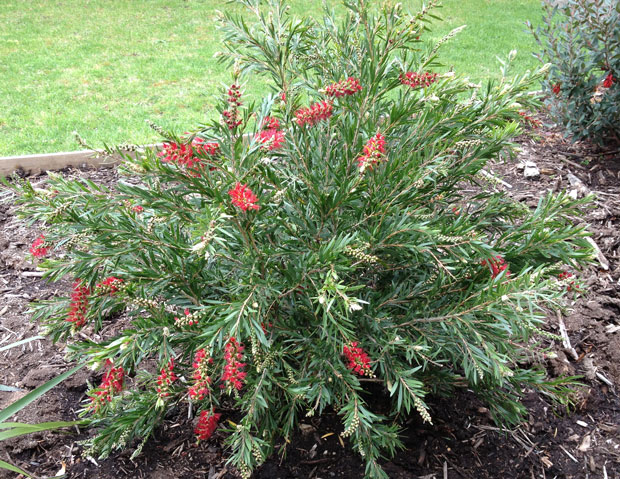
As you already know, I love flowers and gardens. We have just spent twelve days in Tasmania and I just loved the spring blossoms, particularly the “natives”, including one of my great favourites – the wattle, Australia’s national flower – of which there are many varieties. The flowers below are not necessarily indigenous to Tasmania or to Australia, for that matter, but we saw them everywhere. Perhaps some of my readers can identify the species that I’m not sure of below.
Wattle 1Wattle 2 – Golden Wattle?Wattle 3Bush with white flowers and new red leavesMagnoliaTasmanian LavendarKangaroo Paw, endemic to Western AustraliaBottle BrushEchium
I’m always fascinated by stories of why people choose to leave Australia and go to live in France. My latest contribution to My French Life, the global community & magazine for francophiles & French, tells the story of Gabriella whom I met at a soirée run by My French Life in Paris.
I’m in Paris, where I live, attending a soirée organised by My French Life™. I’ve spoken to a lot of very interesting people, including the magazine’s fondatrice Judy MacMahon, whom I’ve met for the first time. It’s getting late and I’m thinking of leaving, but Sylvie, who’s organising the soirée, wants to introduce me to some more people. Read more
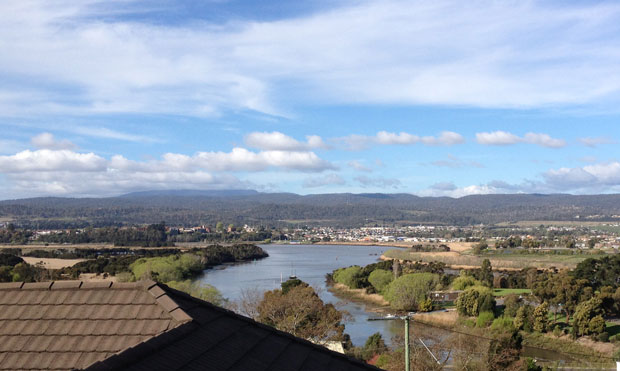
Today was our last day in Tasmania and since we have become rather attached to the wonderful view of the Tamar River we have from our window, we took the advice of our home exchange hosts and drove east up the estuary and back down the other side. The scenery was rather pastoral on the way there, but although the sun was out (it was the balmiest day we’ve had yet), the sky was not very clear so I couldn’t take any photos. I saw lots of frisky little lambs though.
View of Tamar from Riverside
When we reached George Town, Hobart’s oldest town (there is always something oldest here), I asked at the service station where we could have lunch by the sea. “Go out and turn right”, began the first woman. “Are you sending her to Susie’s (it wasn’t really Susie’s but I didn’t get the name) ?”, said another woman. “Yes, why ?” “Well, her mother died so it’s shut”. “Oh, she died, did she ? When was that?” “Oh, dunno.” “Well, then she can go to Pumpkin’s (not it’s real name either)”. “Nah, that’s too expensive”, and turning to me, “Why don’t buy some nice salad sandwiches at Dino’s Milk Bar (that is its real name) and drive down to the memorial. Got a good view of the sea there.”
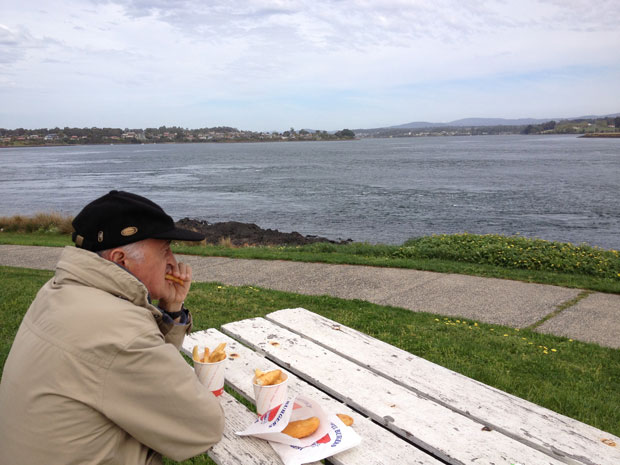
Relationnel delecting his fish & chips
So that’s what we did, only we bought the ubiquitous (though somewhat lukewarm) Australian fish & chips – flathead, whitehead and flake (which is really shark) and dripping with calories – and found a table looking out onto the estuary, a little bit windy, but very pretty.
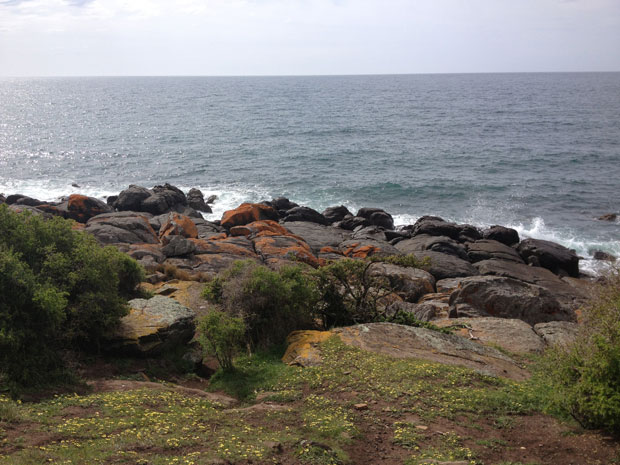
Daisies at Dotterel Point
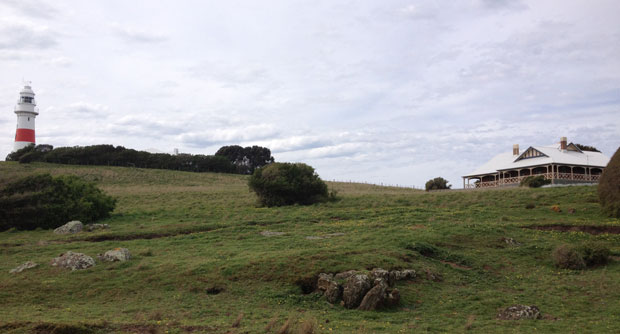
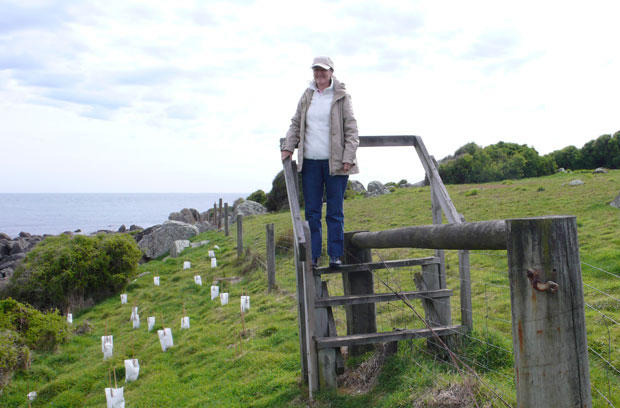
After that, we drove to Low Head Lighthouse and Dotterel Point in Bass Strait and walked around the headland through the masses of daisies and red rocks before coming upon a beach with orange-coloured sand. To reach the car, we had to go up and down the most amazing turnstile.
Low Head Lighthouse
And there was a sort of bandstand on the other side of the beach. I discovered afterwards that it was a fairy penguin viewing stand used for nighttime tours. Like at Bicheno. Relationnel said regretfully that we could have kept an eye out for nests had we known which I thought was a bit optimistic.
Turnstile at Dotterel Point
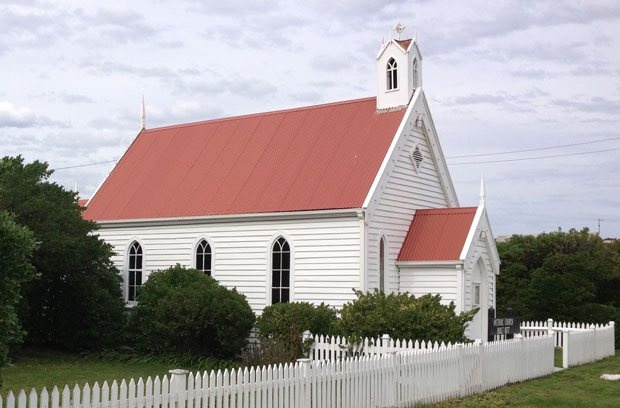
On the way back, we passed a quaint little white clapboard church built in 1887, along the George Town historic route. It didn’t quite look real it was so pristine, more like something out of a children’s book.
Historic church in George Town
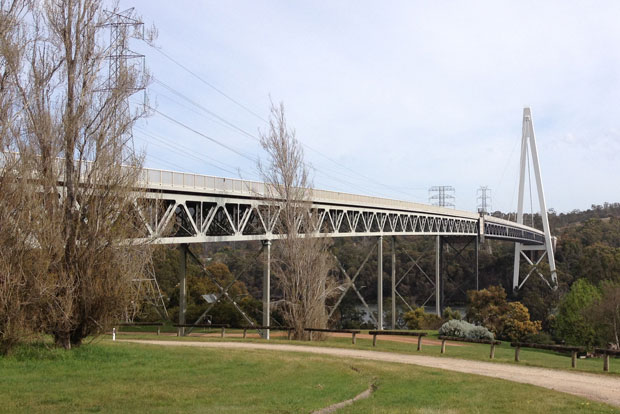
Then we drove back over Batman’s Bridge, which we were able to photograph from the road below. Another first – Australia’s first cable-stayed bridge and one of the first of its kind in the world – with a single tower 91 metres high.
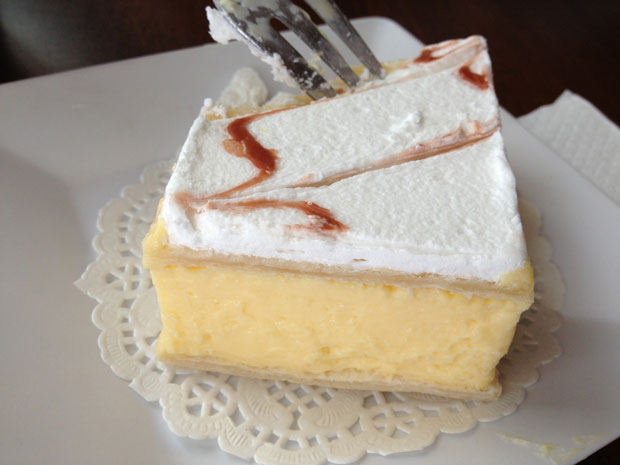
We stopped for coffee (and incidentally bought some T-bones at the butcher’s – two giant slabs for a mere 12 dollars, much cheaper than fish) at a little place that had a French vanilla slice with very strange topping and pastry and awful coffee. While we were there, three people came in for toasted sandwiches, one of whom has a gluten-free diet and had brought her own bread. Not only did they accept the bread without batting an eyelid – they also charged less! We are definitely not in France.
A very unFrench French vanilla slice
As we left, I saw the sign for a bakery which even has four stars in Trip Advisor so I discovered when I got home. Oh well, we had to have an awful coffee somewhere. We’ve been lucky so far!
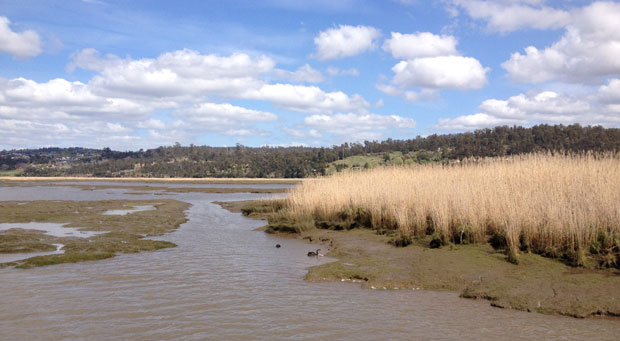
Had a rather quiet day today. We had originally decided to go to Cradle Mountain to do the Dove Walk but the thought of driving 150 K each way on Tasmanian roads, where you usually average about 60 K, was a bit daunting. From the window of our home exchange, we have a wonderful view of the Tamar River so we thought we should get up close and personal as they say here.
View from our window in Launceston
Just a couple of kilometers down the road is the Tamar River Conservation Area with a 1 ½ hour board walk which takes you through the wetlands. It was very pleasant, mostly sunny and not too cold. We mainly saw black swans including some cygnets but with our binoculars (which we always carry with us), we were able to see some Cape Barren geese ans purple swamp hens, a cormorant and a superb fairy wren (the superb is part of the name).
Tamar River Conservation Area
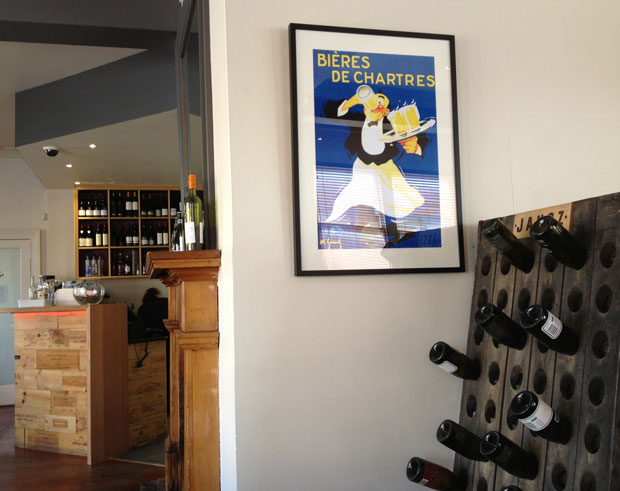
We drove back into town to have lunch on Charles Street and settled on Sporties Bistro which turned out to be “French” because we only had 55 dollars on us. That bought a smoked salmon salad and a bistro beef salad which, although very nice, were about enough to feed a starling, and certainly not amateur hikers, plus a glass of chardonnay each. We are still reeling at the prices in Australia this time. Paris is going to seem ultra-cheap when we get back!
Sporties Bistro in Launceston
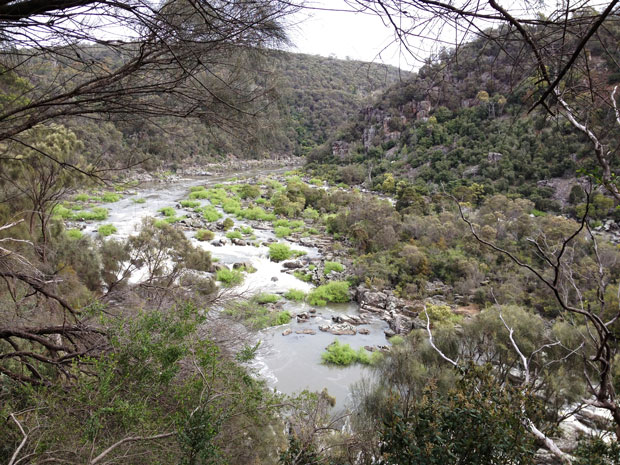
After going back home to get some more dollars, we stopped along the way to watch the pelicans on the river. Then we headed for Cataract Gorge Reserve, also very close and a wonderful nature walk for the locals. I had a special thought for my high-school friend Bonny and her husband Clyde who came here 36 years ago. Unfortunately, the sun had disappeared, but we still enjoyed the hour’s walk which took us to the Second Basin and back.
Cataract Gorge
Now we’re back home and are going to try some of the spring lamb that we frisking around the fields wherever we go.
When we decided to holiday in Tasmania, the one place I knew I wanted to go to was Port Arthur. As children, we learn a lot about the early days of Australia at school, particularly the convicts and early settlers. Van Dieman’s Land, as Tasmania was first called, was reputed to have taken the worst convicts who were repeat offenders from all the other Australian colonies. I don’t know what I was expecting, but it was not what I found.
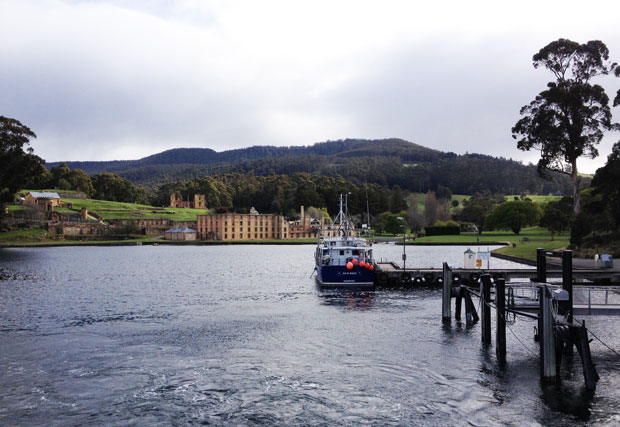
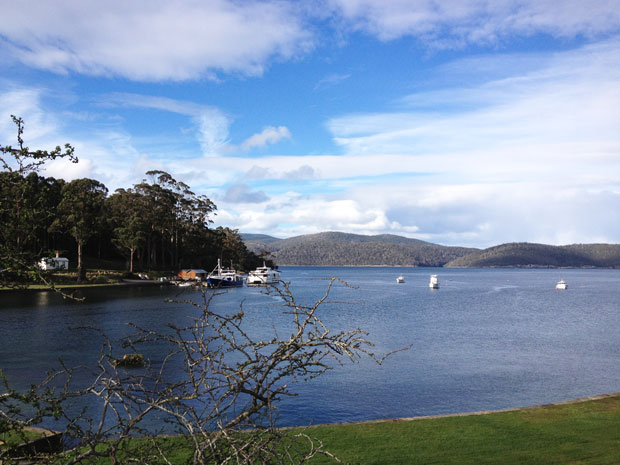
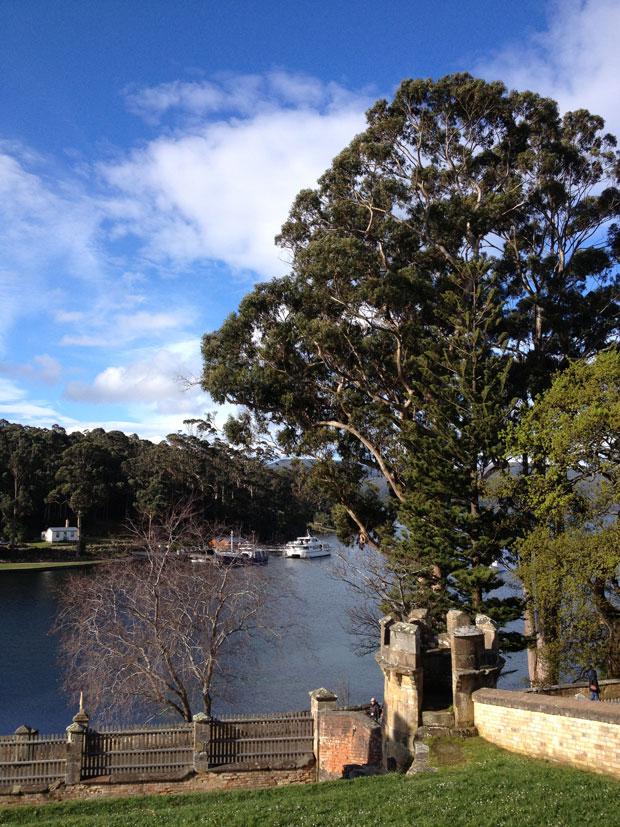
Boats in Port Arthur
It was a beautiful day, especially compared with the previous ones, and after visiting the Blow Hole, Tasman’s Arch and the Devil’s Kitchen, we arrived at the Port Arthur Historic Site. The visitors’ centre is modern and highly organised. You choose between three passes according to the time you intend to spend there. For us, it was half a day and a bronze pass, giving us entry to all the buildings on the site and a 20-min cruise on the Bay past Point Puer and the Isle of the Dead.
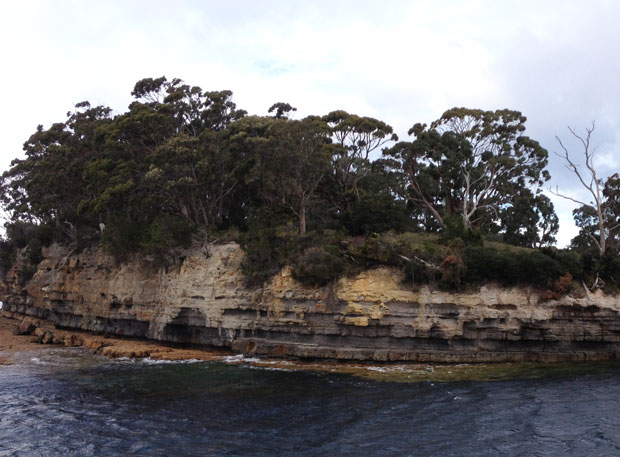
The Isle of the Dead, Port Arthur
It was mostly sunny and quite cold (8°C) but we decided to stay on deck to take photographs. It turns out that Port Arthur was quite a model prison with a separate section called Point Puer for boys under 18 who were considered to be entirely responsible for their acts. It was nevertheless renowned for its stern discipline and harsh punishment but all the boys received an education and some acquired a trade.
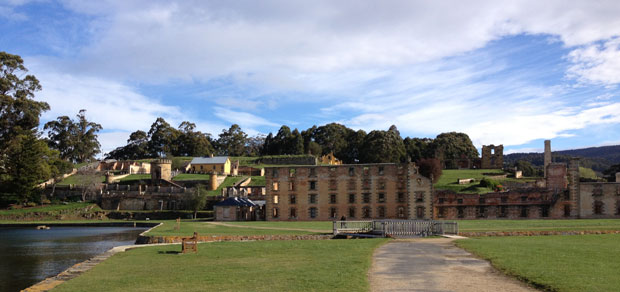
Port Arthur penitentiary
The Port Arthur prison only operated for a short period, from 1833 to 1853, but in that time, an entire community grew up so the buildings from that period include the penitentiary, Point Puer, a police station, law courts, Commandant’s House, Officers’ Quarters, a hospital, a church and parsonage, government cottage and gardens, a dockyard slipway, lime kiln and shipwright’s house. Other buildings, including St David’s Church, were added later on.
Port Arthur Bay
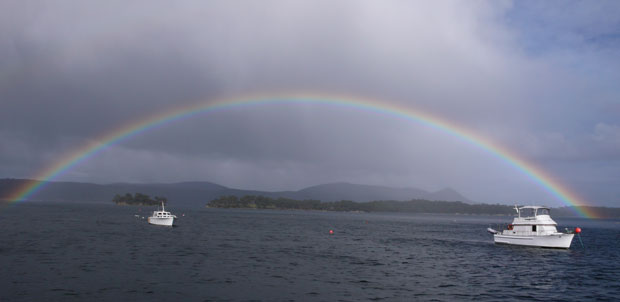
Maybe because of the sun (though we got some light rain and a complete rainbow at the end of the boat ride), I found the site very beautiful and peaceful. Because the main prison was gutted by fire at the end of the 19th century, the prisoners’ cells didn’t seem daunting at all. The Commandant’s House looked very comfortable with furniture and other items imported from England.
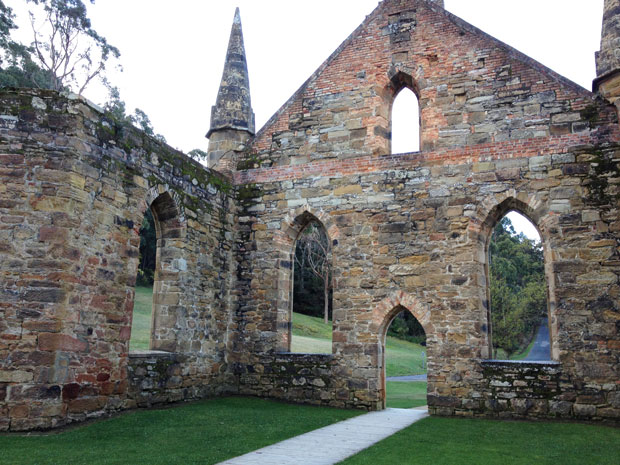
The church, Port Arthur
Only the walls of Government House are still standing, also due to fire, but the formal gardens in front are full of spring flowers. The size of the Church, also gutted, is impressive – it was attended by up to 1100 people every Sunday and has a set of large bells. Once again I found it very peaceful.
Large gum in Port Arthur
Quite by accident, we missed the Separate Prison, which was designed to deliver a new method of punishment, reforming convicts through isolation and contemplation by locking them up alone for 23 hours a day, with just one hour of exercice in a high-walled yard. Perhaps it would have given us a better idea of the prisoners’ conditions had we seen it.
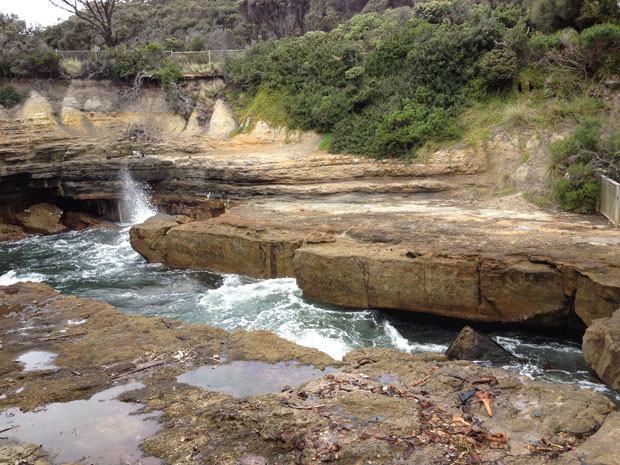
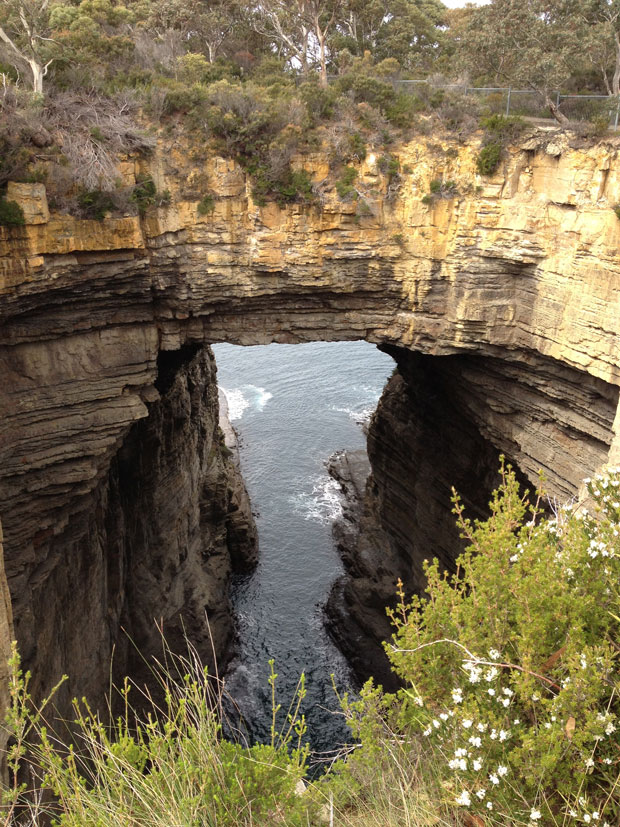
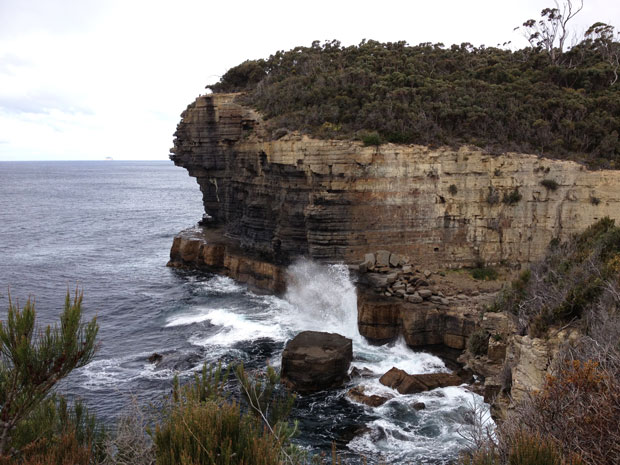
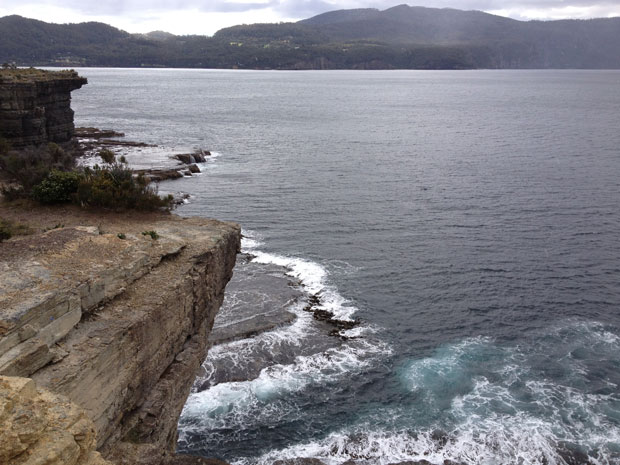
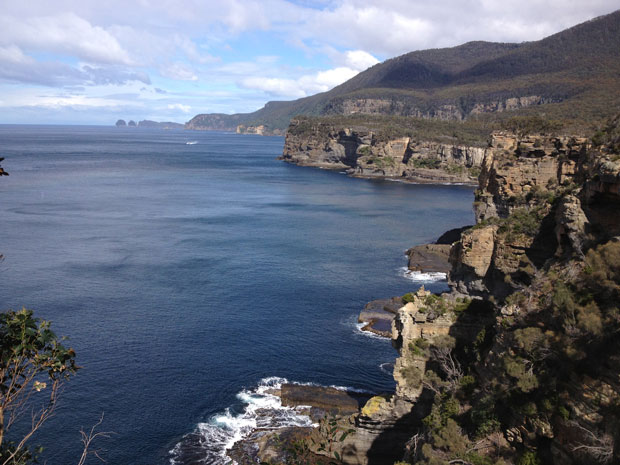
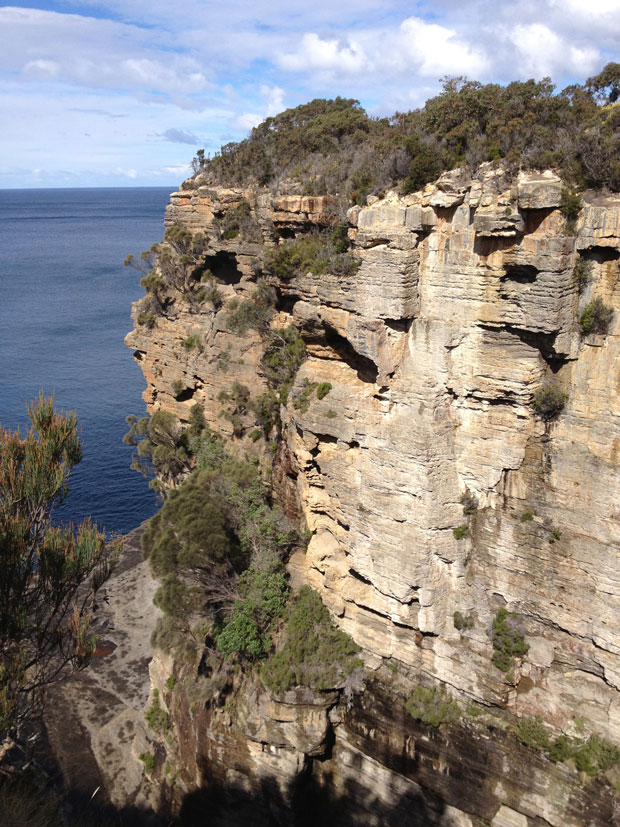
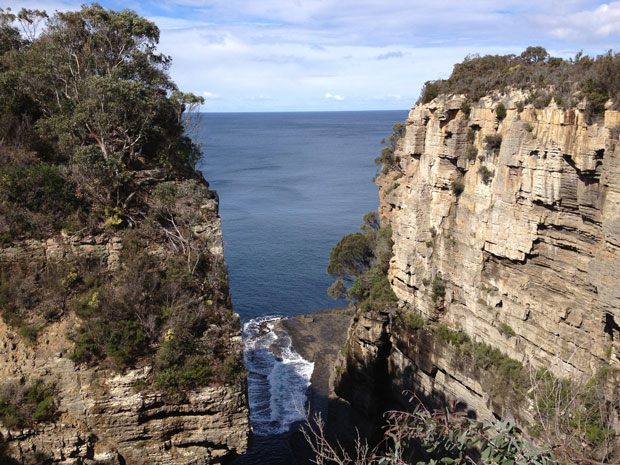
Tasmania has redeemed itself! Today THERE WAS SUN. Not sun all the time, mind you, because there was intermittent rain and it was about 8°C, but it was an enormous improvement over yesterday and all the other days since we arrived in Tasmania a week ago. So we went to Port Arthur. On the way, I saw a sign: Blow hole: 4, Devil’s Kitchen: 4, Tasman’s Arch: 4. None of these were mentioned in our guide book but I told Relationnel that with names like those, we had to follow the sign.
AND THIS IS WHAT WE SAW. It was mind-blowing. The photos are only a reminder of the sensations we actually experienced.
Blow holeTasman’s ArchView from first lookout at Tasman’s ArchView from second lookoutView from next lookout – absolutely breathtakingDevil’s Kitchen lookout
And we nearly missed the next one. The sign says “Devil’s Kitchen Car park” but it should saw “Car park and viewing area”. Good thing Relationnel insisted.
View from Devil’s Kitchen car park
And, at Port Arthur, which I’ll talk about in another post, we had a full rainbow!
Rainbow at Port Arthur
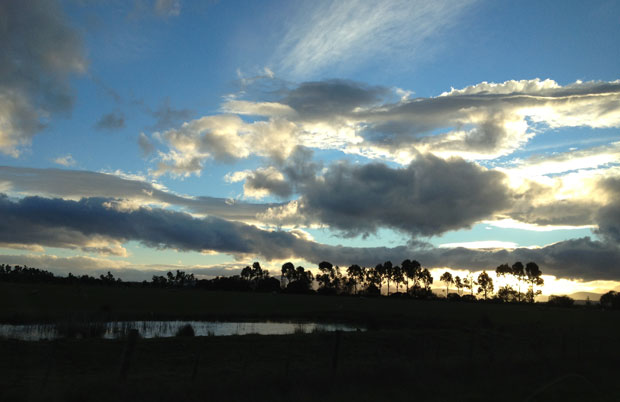
Then, during the whole of our drive back to Hobart (1 1/2 hours), we were treated to a spectacular sunset.