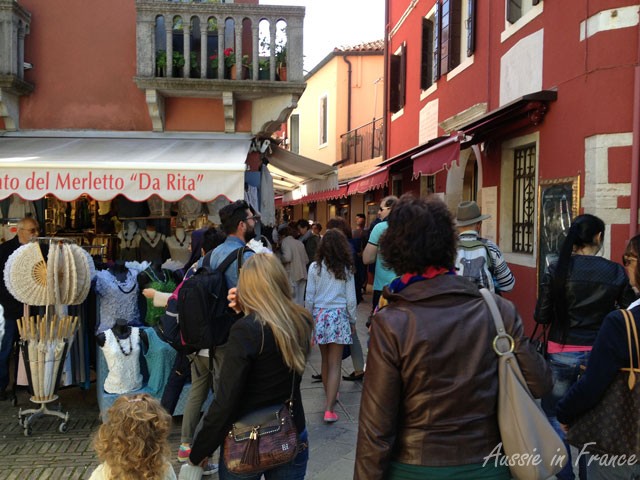
After visiting Erasmo and having lunch in Treporti, we are on the vaporetto to Burano along with a lot of other people. They all get out and we join the throng. I didn’t remember it being this crowded seven years ago.
Crowded streets in Burano near the vaporetto
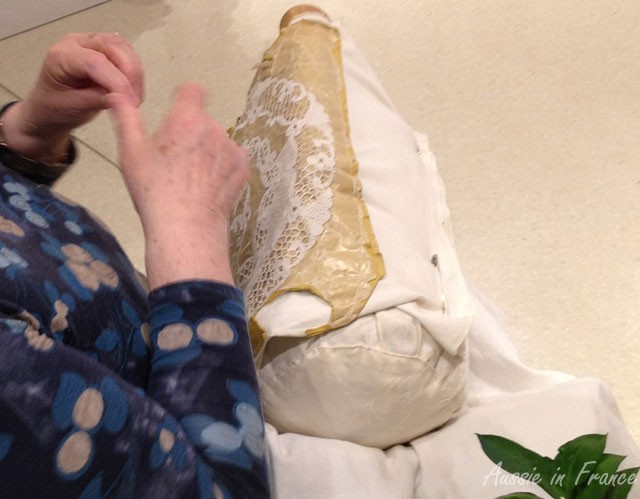
We enter what looks like a very expensive lace and household linen shop and see a lady making lace by hand. Burano claims to have the oldest tradition in Europe for embroidered/needle lace which was created in about 1500 using a needle and thread.
Lace making in a shop in Burano
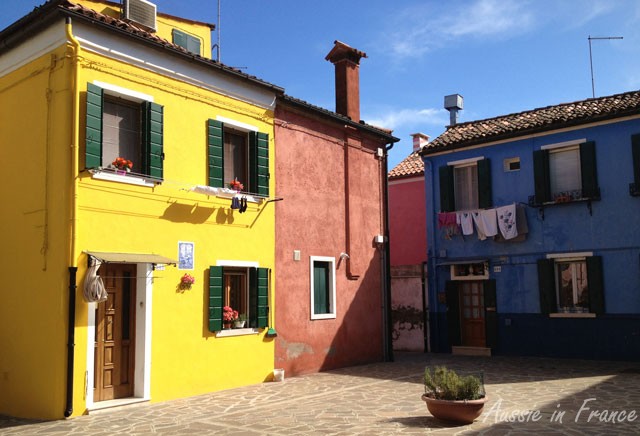
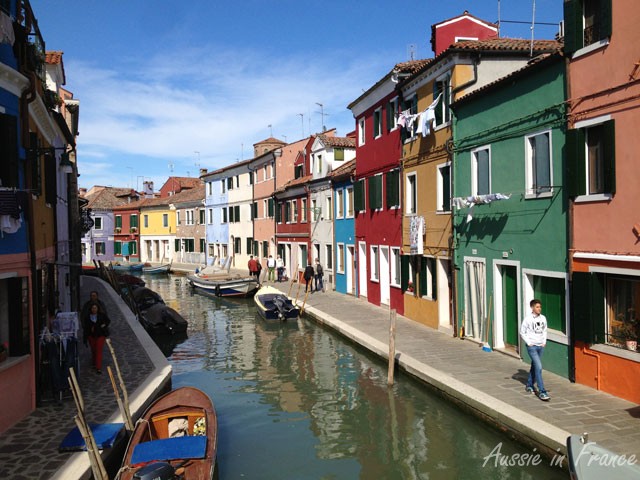
When we come out, we take the first turn to the right and find ourselves surprisingly alone. This is the Burano I remember from seven years ago, with its gaily coloured houses and quiet streets.
Gaily coloured houses in the back streets of Burano
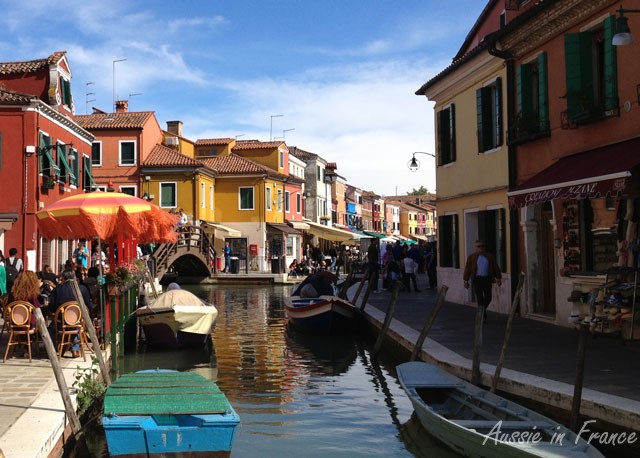
We wander around the back streets for a while then down to the lagoon and back through the canal until we rejoin the main square Piazza Galuppi. I want to visit a shop we went to last time that has a lace museum inside but we can’t seem to find it.
One of the canals in Burano
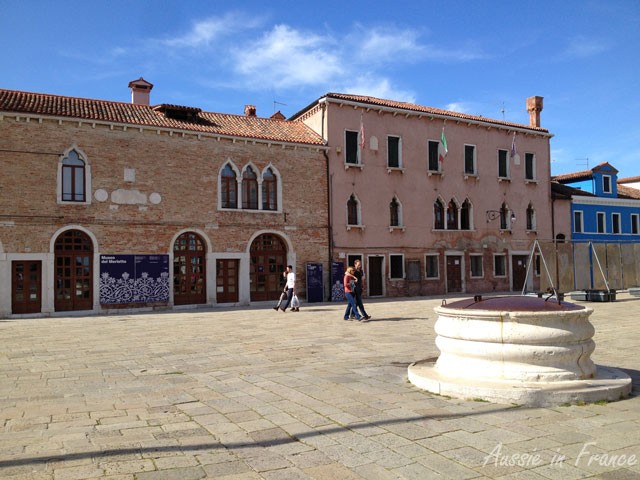
On the right there is a sign for the Venetian Museo del Merlotto housed in the historic palace of Torcello which houses the Burano Lace School from 1872 to 1970, but it’s not what we’re looking for. All I can remember from last time is that it was about midday and was very hot!
Burano lace museum
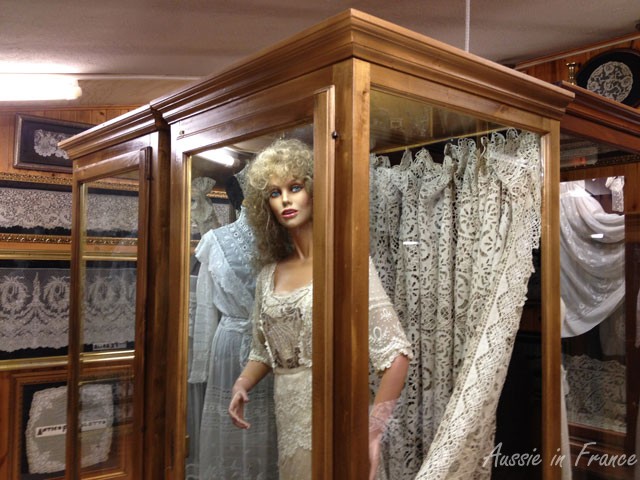
I decide to ask so we go into a shop called Dalla Lidia Merletti and I explain what I’m looking for. Yes, the museum is down the back of the shop! Cabinets containing lace line the long corridor and at the end is a room full of more lace ncluding lace dresses.
A lace dress made of traditional Burano lace
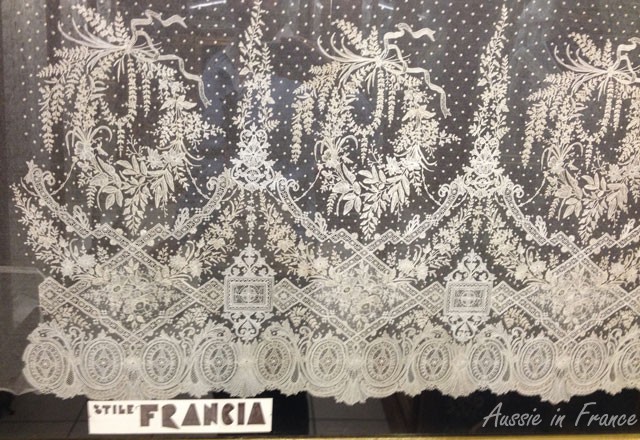
At the top of a wooden staircase is another part of the collection, including French lace. In the 1600s Burano embroidery became increasingly complicated and it soon spread through the rest of Europe. France imported Burano lacemakers to work in the lacemaking areas of France, particularly Normandy. We see an example of French lace.
French lace
Back in the shop, we are asked in French if we want to buy anything. I would like to find a piece of local lace to make a fabric panel to use as a bedhead in Blois. A table runner would seem to be a good solution. We finally settle on a very expensive piece but Jean Michel easily manages to bring the price down by one-third! The shop is not very busy and we are soon talking about home exchanges with the entire staff.
We walk out very pleased with ourselves and make our way back towards the ferry. A crowd has gathered around a band of gondoliers with accordeons and other instruments, all singing very loudly, particularly one man in ordinary clothes wearing a gondolier’s hat. At the end, the gondoliers all applaud and he walks off into the crowd. He was just a passer-by!
Another canal
An ice-cream seems a fitting way to end the day while waiting for the vaporetto to go back to Venice.
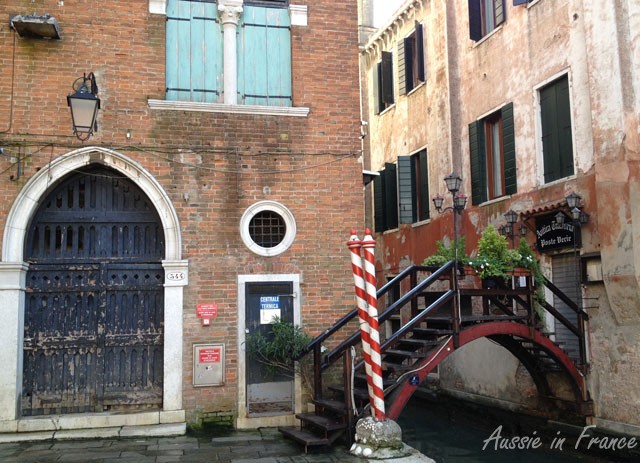
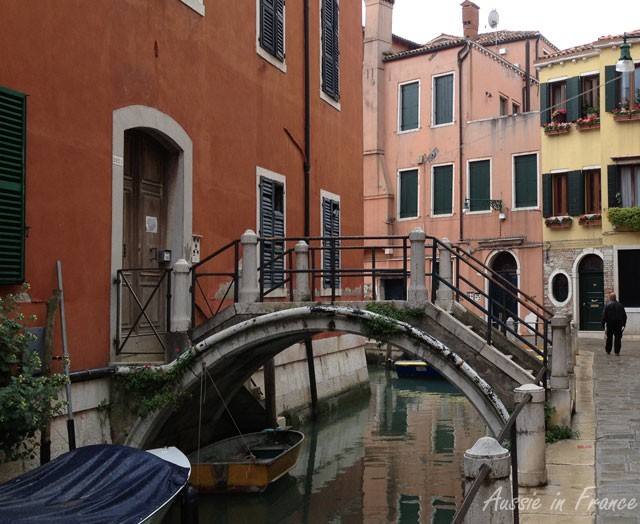
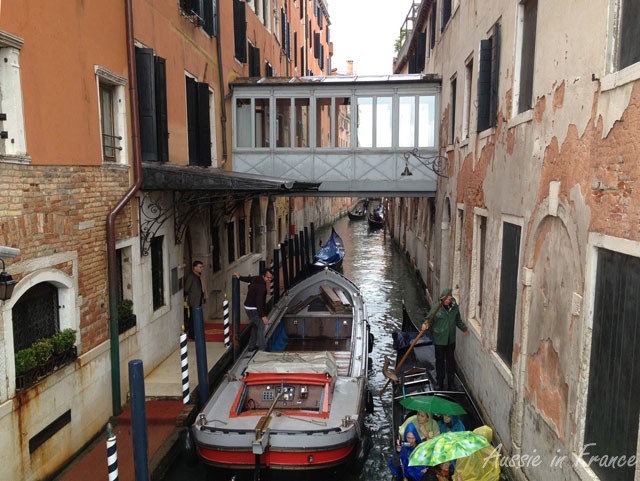
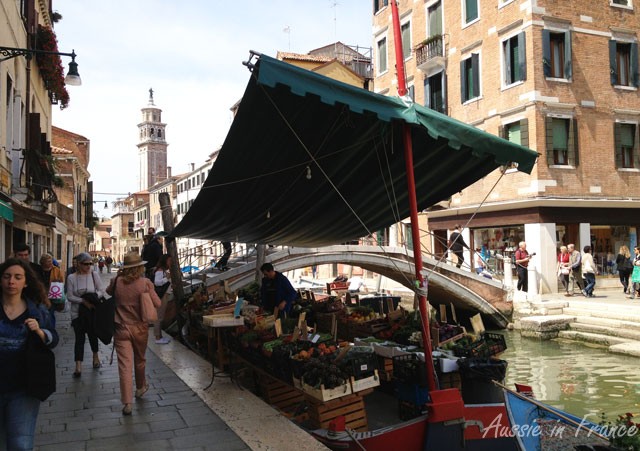
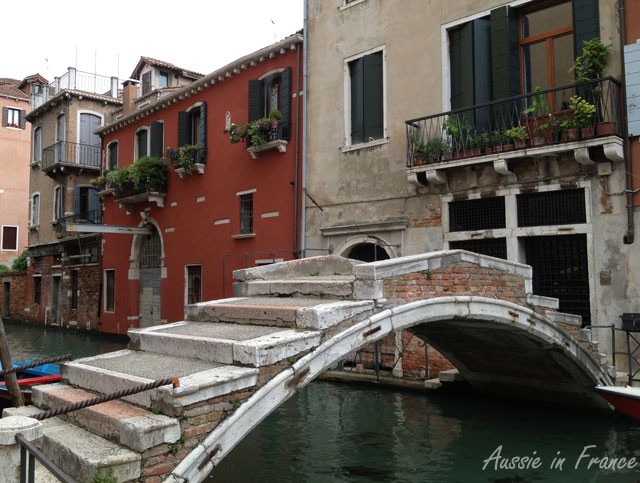
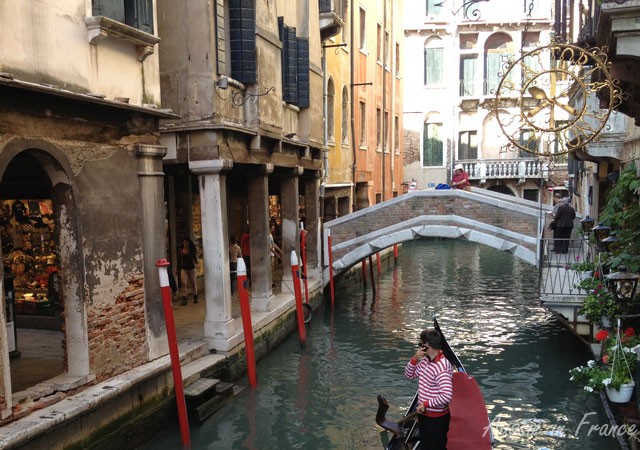
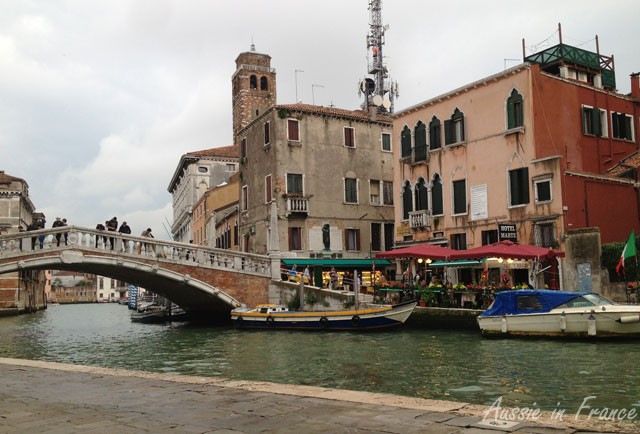
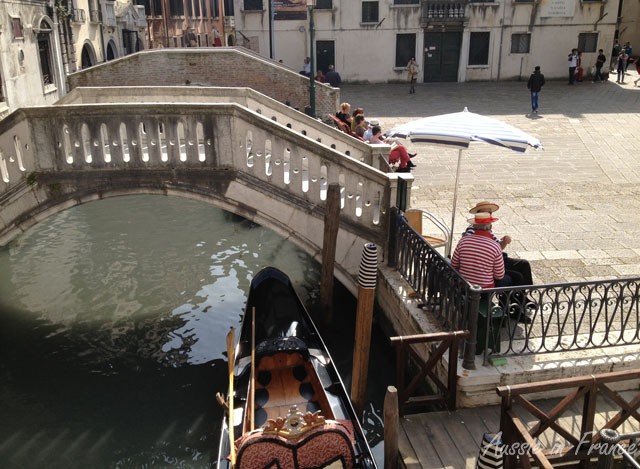
You can’t think of Venice without bridges and the ones at canal-level all humpbacked to let the gondolas and other boats through. I loved them all! These are a few of my favourites.
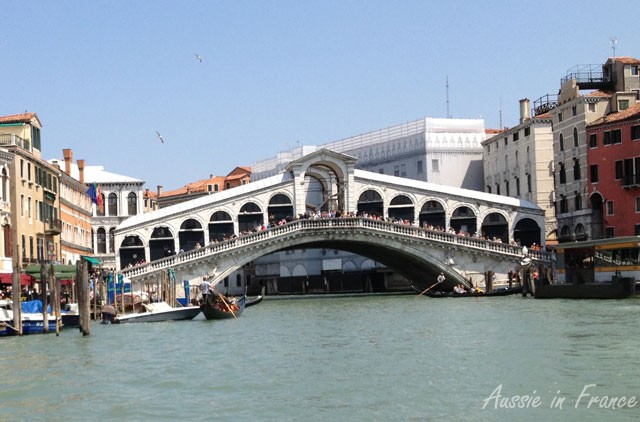
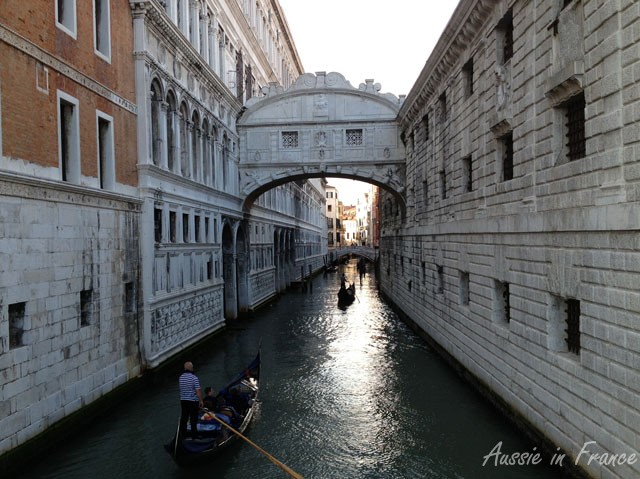
The iconic Rialto Bridge on the Grand CanalOne of the smallest bridgesImagine walking out your front door onto a bridge!Two bridges side by side. The one in the foreground is private of course and has its own little gate.Washing over the canal.There are fewer overhead bridges that you would imagine – it’s a tight squeeze for the gondolaA market boat with a sail!The bridge at Campo Santi Giovanni e PaoloI was surprised to see so many parents with strollers rather than baby carriersLook, no railings!Another gondolier on his cell phone!Bridge in the old ghetto quarterA favourite resting place for gondoliersThe Bridge of Sighs from the canal sideThe greenery on the right is wisteria. Unfortunately it was no longer in flower when we were there!
“I love your blog. It’s terrible”. This comment was left on my daughter’s blog. I’d hate to think what the comment would be if she didn’t like the blog!
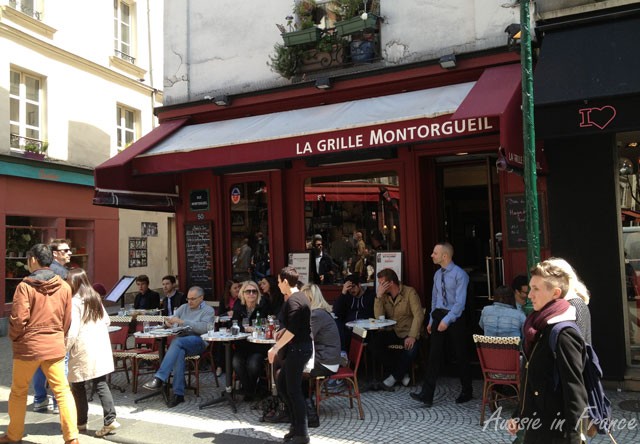
Un restaurant terrible dans la rue Montorgueil
The reader making the comment is French of course and not aware that terrible is something negative in English. Like formidable. Telling someone they are formidable in French means they’re great whereas in English it’s means you wouldn’t like to get on their wrong side. Hardly the same, is it? In French you’d say redoutable or even terrible.
Il est terrible can mean that he’s fantastic or awful depending on the context. That makes it easy to remember, doesn’t it?
Although terrible comes from the Latin terribilis which in turn comes from terrere, to frighten, it now has several meanings in French:
1. Inspiring terror or fear e.g. Une terrible catastrophe
2. Reaching a violent or considerable force e.g. Il s’est produit une terrible secousse – There was a terrible earthquake
3. Very unpleasant e.g. Il a un caractère terrible – He has an awful character
4. Representing a large quantity e.g. J’ai un travail terrible à faire – I’ve got an enormous amount of work to do
5. And more familiarly, out of the ordinary, inspiring admiration or surprise e.g. Il est arrivé avec une fille terrible – He turned up with a terrific girl.
And there you have it – the English version of terrible meaning something positive, namely terrific, which is usually positive in English, except for expressions such as “There was a terrific storm”.
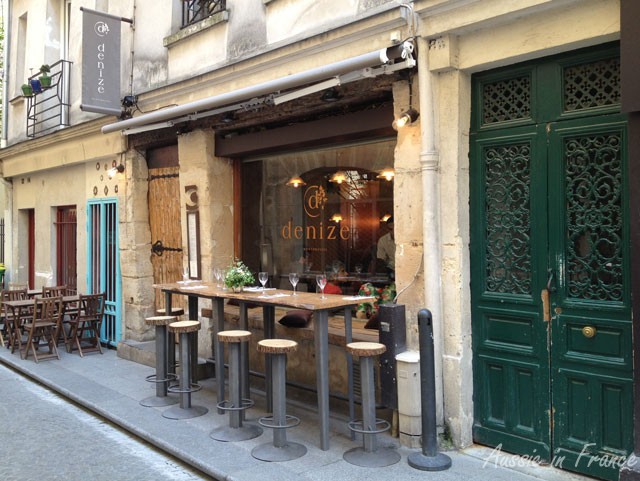
Un autre restaurant dans la rue Montorgueil qui a l’air terrible
Formidable, which comes from the Latin formidabilis, which in turn comes from formido, dread or terror, has kept its original meaning in English, whereas as its meaning in French is always positive, whether the idea is colossal or imposing e.g. Une volonté formidable – Incredible determination, inspiring admiration e.g. un type formidable – a terrific person, or something astonishing e.g. C’est quand même formidable qu’il ne vous ait rien dit – It’s really astonishing that he did say anything to you.
So if someone tells you about un restaurant terrible, you can add it to your list of places to go!
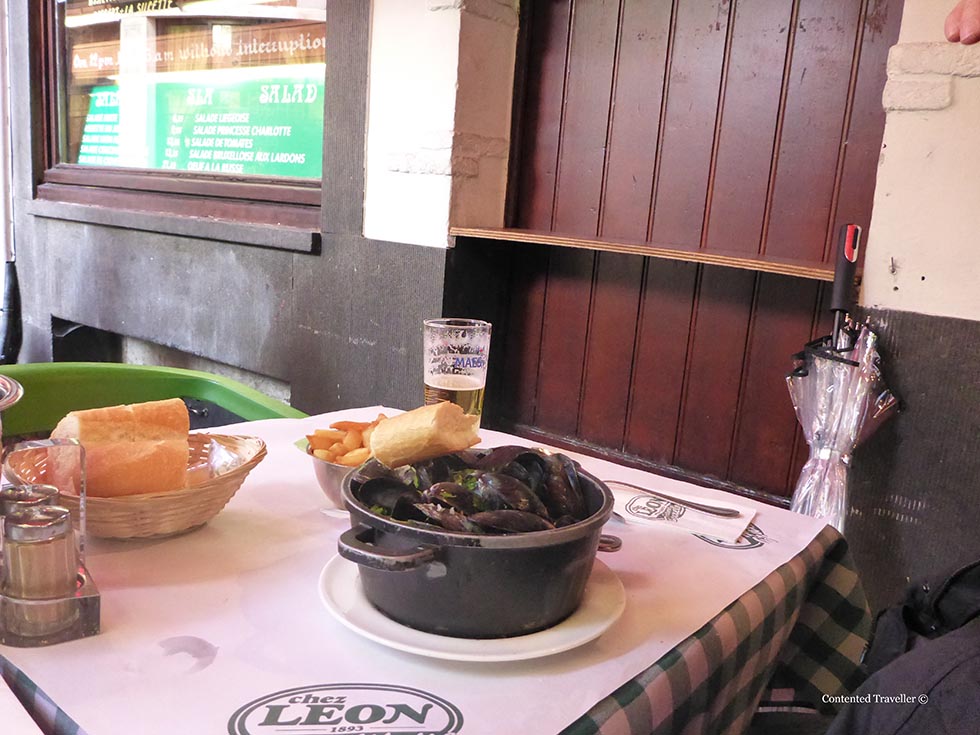
This week’s blogger round-up is all about food. Paula McInerney from Contented Traveller reports on eating mussels in Brussels, which it’s a very popular food in France as well. We buy them on the Sunday market. And it’s the Fête du Pain in France, so I have two posts for you: first we have an historical explanation by The Good Life France then the ever-active Mary Kay from Out and About in Paris gives us Paris’ take on the bread festival including the best baguette competition. Enjoy!
Mussels in Brussels
by Paula McInerney from Contented Traveller. When they are not living in Australia, she and her husband Gordon travel the world, trying out houseboats, tatami mats, cave houses and over water bungalows, with serendipity as their watchword
I had to use the phrase Mussels in Brussels because it is a term that we have heard often and one that is quite amusing in a strange way. When we hear of a countries signature dish, we want to try it and we did.
I think that we fell for Brussels pretty much straight away and wondered at why so many people are so sceptical of this city as a destination. These are 2 posts where I stand up for Brussels as being a new hot spot for travellers Brussels: the new hot spot for travellers and Brussels – a little taste leaves me hungrier. Add to the mix that you get to try the mussels in Brussels and you cannot go wrong in my opinion. Read more
Celebrating Bread in France
by The Good Life France, an independent on-line magazine about France and all things French, covering all aspects of daily life including healthcare, finance, utilities, education, property and a whole lot more
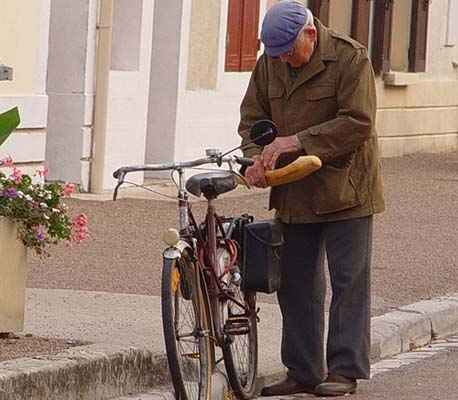
Bread, as everyone knows, plays a big part in the daily life of the French people – in fact 12 million people a day in France visit a bread shop.
From baguettes to boules – the long thin sticks of light bread, to the round tasty balls of bread, bread in France is part of the daily fabric of life.
Since 1996 a festival of bread has been held to celebrate the art of making real, traditional French breads. Taking place across France the festival runs for a week each May starting on the Monday before the 16th May – which is the Saint’s day of Saint-Honoré – the Patron Saint of bakers. Read more
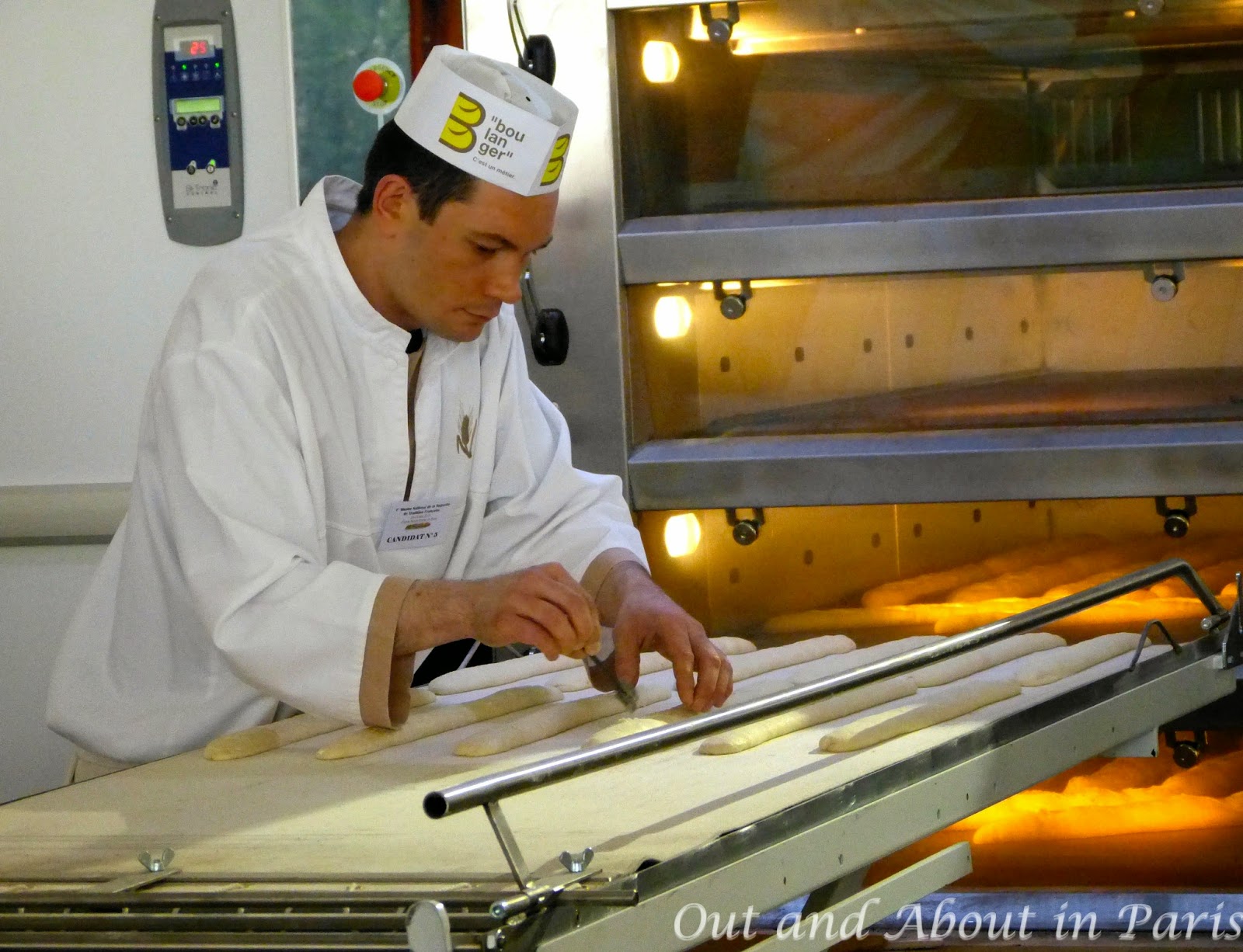
Follow Your Nose to the Annual “Fête du Pain” (Bread Festival) in Paris
by Mary Kay from Out and About in Paris, an American by birth, Swiss by marriage, resident of Paris with a Navigo Pass for the metro that she feels compelled to use
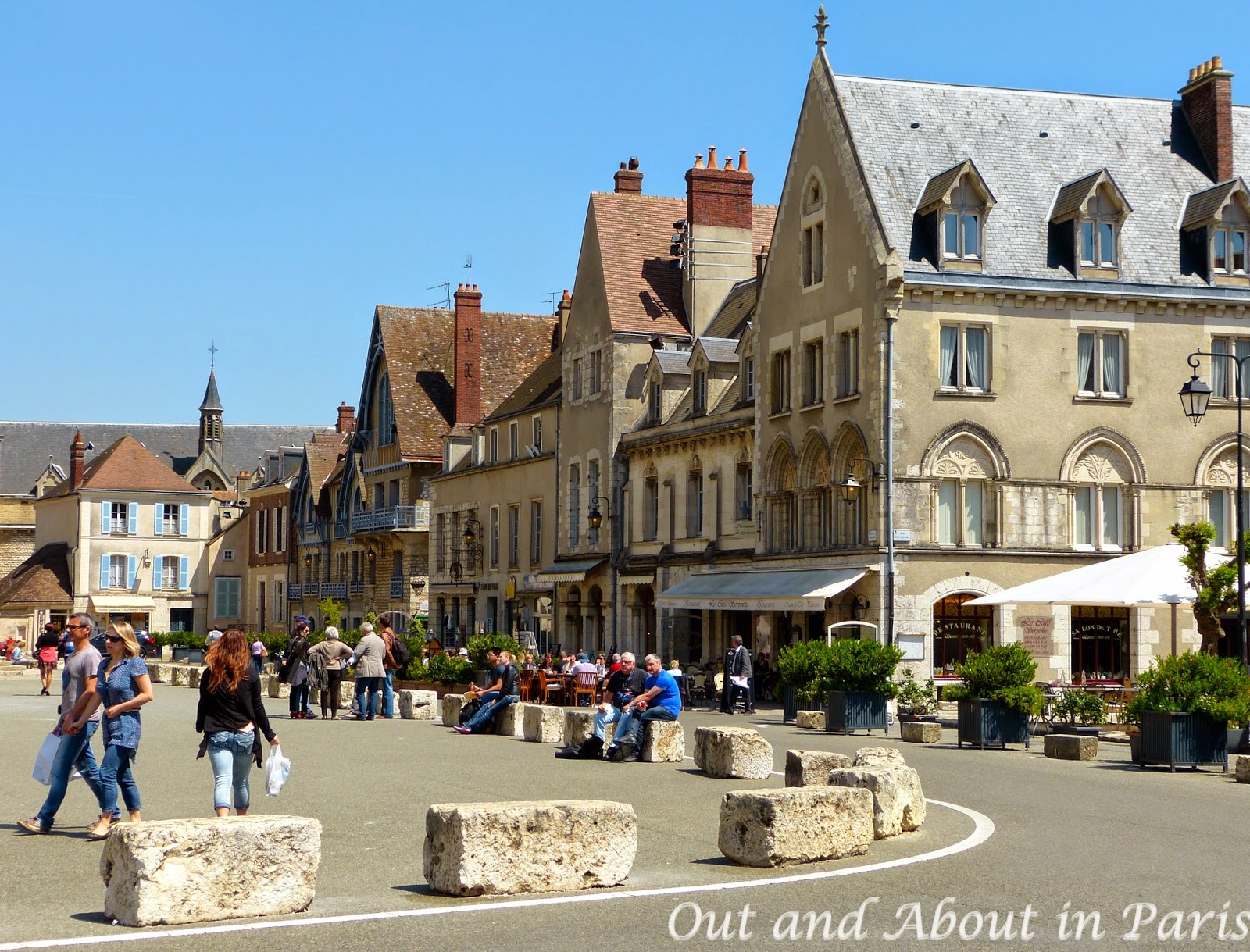
Mmmm! If you’re planning to attend the annual “Fête du Pain” (Bread Festival”) in Paris, just follow your nose to the large tent in front of Notre-Dame Cathedral from May 8 to 18. It’s where French bakers and pastry chefs invite visitors to learn about one of France’s most revered professions. Not surprisingly, the celebration coincides with the name day of Saint-Honoré, the profession’s patron saint. Read more
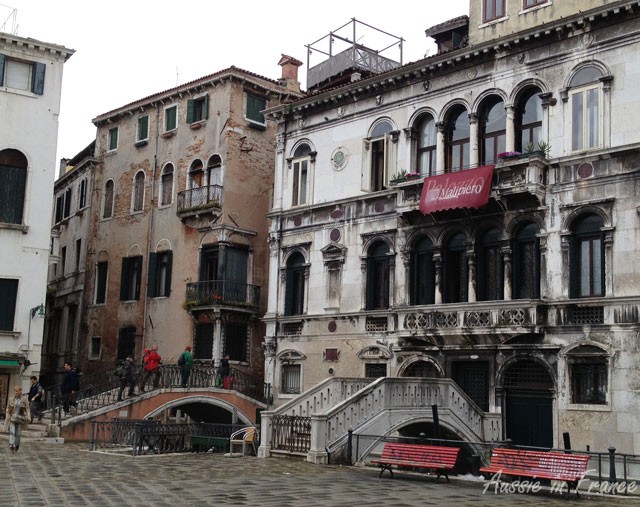
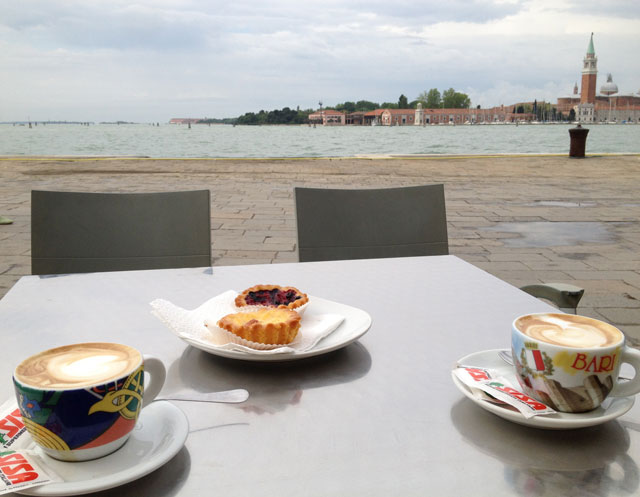
If you have been reading this blog for a while, you’ll know that I am a cappuccino freak and have finally managed to produce something fairly decent at home. In most French cafés, however, the cappuccino leaves something to be desired. So you can imagine how much I was looking forward to a good cappuccino in Venice.
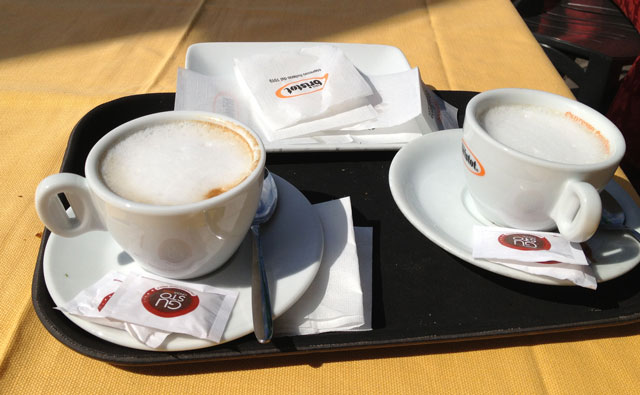
First cappuccino near the Maritime Museum
My first experience entirely lived up to expectation. We chose a small café opposite the lagoon, just down from the Maritime Museum. At the first sip, I knew it was good. Smooth and creamy the way I like it. Jean Michel had chosen some little cakes to go with it. Delicious.
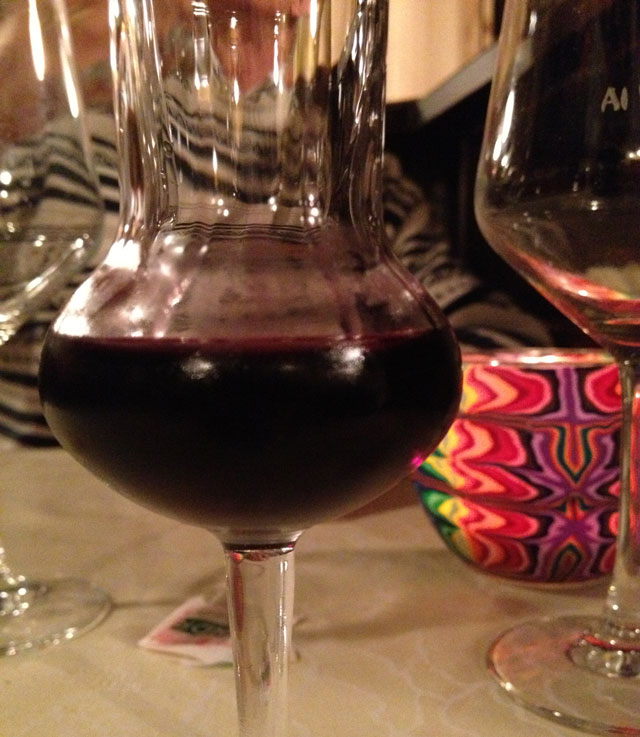
Our complimentary liqueur in its cute little glass
So I was not prepared for the awful frothy one I got in one of our favourite restaurants, but since Italians don’t have cappuccino after midday, I forgave them. I did mention it however when we paid so they gave us some complimentary liqueur.
Disastrous frothy cappuccino
The next cappuccino was also a disaster. Instead of going back to the first place, we stopped at bigger café/restaurant next to the Zaccharia vaporetto station. As soon as I saw it, with that awful froth on top, I knew it was not the real stuff. We ate our cakes, paid the bill (which was twice that of the first place) and left.
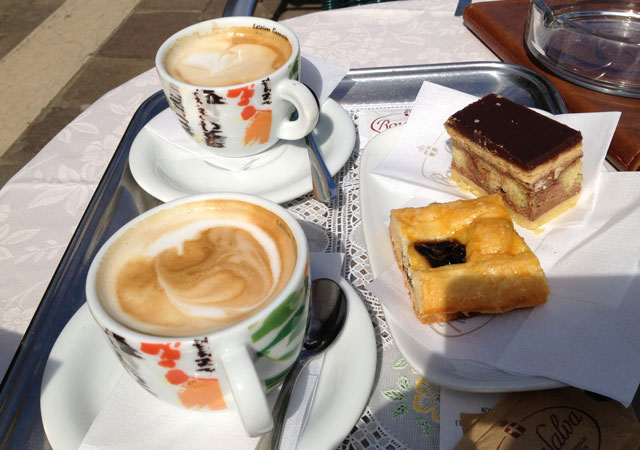
Cappuccino at the pasticceria
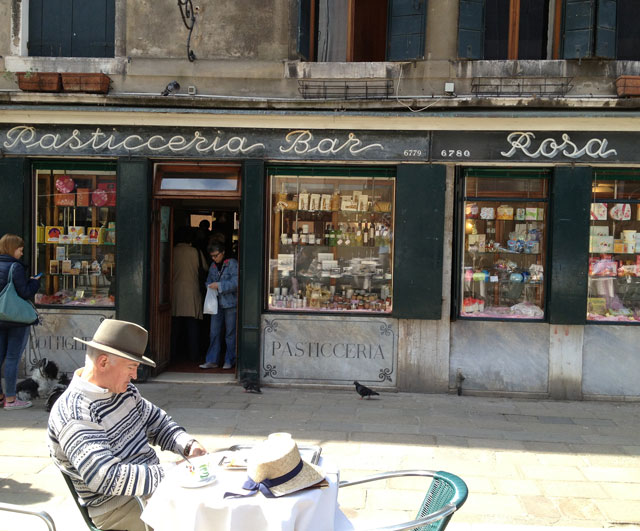
The next place we tried was a pasticceria bar near the Ospedale. I went in and asked if they had “cappuccino vero“. The waiter looked askance but a second waiter – the one using the espresso machine said “si, cappuccino vero” – and it was!
Jean MIchel in front of the pasticceria near the Ospedale
So if you want real cappuccino in Venice, go to a small bar or a pasticceria and don’t order it after noon! Of course, now that I’ve tasted the real stuff again, I am no longer satisfied with my own efforts. I need to find an instructor!
We did a lot of walking in Venice and saw a lot of doors with often intricate decorations. These are just a few!
This was my favourite, that we passed several times. I’d love to know who he is!We saw quite of few of these – the traditional forcula or oarlock from the gondolasTypical intercom cum letter box, with only one letter box, as usual.Love these heads!Two very intricate doors on a very old façadeIron door flanked by wrought-iron oculiMetal door with two laughing heads
When you grow up in Australia, you know all about Venetian blinds. They are not nearly as popular in France and most people don’t know how to use them. We had them at the French university where I taught and I began each year with a lesson on how to open and close them! However, I had never really thought about the name until we got to Venice where our home exchange/rental flat had two sets that didn’t close properly.
Typical Venetian shutters withVenetian blinds on the right
Our French guide book, Le Routard, mentioned them, giving persiennes as a translation which is rather strange because persiennes are something quite different. They are what I call louvres, which is a funny word when you come to think about it as it comes from the French word open.
Louvres and modern Venetian blinds on the Rialto Bridge
Obviously modern Venetian blinds are adaptations of the original ones. I checked out the windows in Venice but they mostly seemed to have wooden shutters or curtains with only a few Venetians on some older buildings. I found some slatted shutters or louvres on the Rialto bridge but they are hardly what I’d call a Venetian blind.
These shutters in Venice would be called persiennes in French
In fact, Venetian blind turns out to be very nebulous terminology and seems to cover various types of blinds, made of different materials (wood, metal, plastic) and consisting of horizontal overlapping slats held together with a cord so they can be rotated open or closed.
Fairly old Venetian blinds and shutters
The generic term for blind in French is store which comes from the Italian stora, meaning mat. It also includes the sort of awnings you have in front of a shop or café in France. Like a blind, a store can be solid or have slats.
Those metal and glass awnings over front doors are called marquises by the way, which I think is a lovely term but I have no idea where it comes from.
A marquise over a front door
Back to our blinds. Persiennes are mostly wooden but can also be metal with horiziontal and occasionally vertical overlapping slats that are fixed. They can be opened in several ways – outwards or upwards like a window, by sliding across, etc.
Un store de restaurant avec des persiennes aux fenêtres
Some persiennes are a type of shutter or volet. A volet can also be solid and is defined as a covering over a window to block out the light from either the inside or outside. Most French houses have them and most French people prefer to sleep in almost total darkness.
This was very strange to me when I first moved to France as we only had Venetian blinds in our house and they weren’t necessarily closed. They certainly didn’t block out all the light. Once I got used to sleeping with shutters, I found it very difficult not to have them. Our flat in Paris only has roller blinds so I had curtains made with special light-blocking lining.
Our folding inside shutters
Our house in Blois has shutters that open and close inside and guarantee total darkness. A recent Australian visitor loved them – she said it was like sleeping in a cave!
A thought has just struck me – what is the Italian meaning of Venetian blinds is not our Venitian blinds at all, but the French persiennes? I hope someone will be able to answer me!
Paula McInerney from Contented Traveller, whom I’ve already featured in my weekly blogger round-up, is publishing a series of posts entitled “Outside my front door”. I was delighted when she asked me to contribute and I’ve been enjoyinghearing from other bloggers as well.
Outside My Front Door
Outside my front door is a large expanse of trees and grass and on the other side is the Loire River, flanked by two levees, first mentioned in 1584, which is the exact same year in which my Renaissance house was built.
If I go left five kilometers along the river, I will come to the city of Blois, with its royal castle, built on a promontory overlooking the Loire, and former home of Louis XII, François I, the star of the French Renaissance, and his son Henri II. Read more
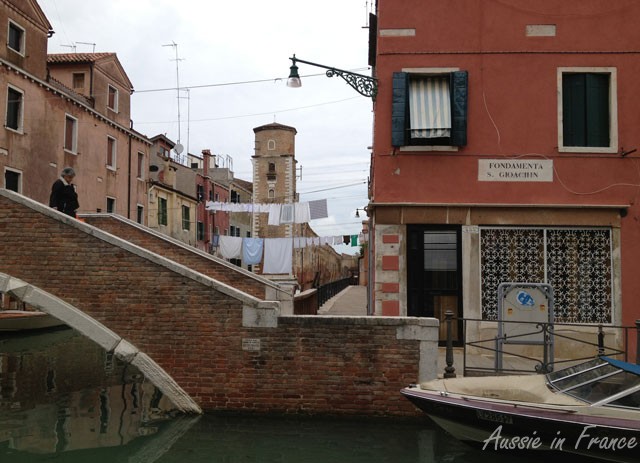
On our last trip to Venice seven years ago, we chose not to go on a gondola ride – it seemed too much of a cliché. Instead we took the little traghetto ferry across the Grand Canal.
The tragetto (ferry) across the Grand Canal
This time, however, I am fascinated with water traffic in general and our home exchange host tells us that the building we are staying in was once a workshop for making gondola oars and oarlocks (forcula) so I start taking a greater interest in Venice’s iconic boat.
Oars and forcula in one of the last workshops in the Castelo quarter
First, we learn there is a difference between the 11-metre long gondola with its typical figurehead and slightly asymetrical shape designed to row on one side only and turn in a very small space, and the sandolo, which is shorter, symmetrical and originally from Burano.
The sandolo, originally from Burano Island, is shorter than the gondola and symmetrical
The gondoliers have to wear black trousers, black shoes and a striped top. They also have a straw hat but don’t have to wear it while rowing. Considering the height of some of the bridges, it’s not surprising though some manage. We observe various collars and tops but the older gondoliers wear a white pea jacket with a sailor collar and elasticised waist over their stripes.
Gondolier ducking under a low bridge
The basic price for a gondola ride is fixed by the gondoliers’ federation at 80 euro for 35 minutes. If you want to change the itinerary, extend the time or be serenaded, it’s more expensive. Our French guidebook, Le Routard, recommends a gondolier who speaks French and takes you through the back canals rather than the Grand Canal so we go looking for him, but to no avail.
Gondoliers waiting for custom
I check out a few websites but the price instantly climbs to 100 euro or more for an on-line booking, and since you have to book ahead, you need to be sure of the weather. A gondola ride in the rain does not look much fun!
Gondoliers in their traditional garb
It’s a bright sunny morning so we decide to try one of the piazzas rather than the Grand Canal and head for Campo dei Santi Giovanni e Paolo where the Ospedale is.
Alessio, our gondolier, coming to meet us
On the way, as we cross a bridge, I see an empty gondola with a whistling gondolier. We do not want a half-hearted young man talking on his cell phone all the time. “E libero?” I ask. “Si, yes, oui, English, Français?” “Français,” I reply, as Jean Michel would like to be able to communicate as well. “I’ll meet you at Santi Giovanni e Paolo,” he says.
Sitting in Alessio”s gondola with his credentials displayed
He pulls up and before we get in, he takes the protection off the seat, makes sure everything is spick and span and asks if we know the price: 80 euro for 35 minutes with part of the ride through the smaller canals and the other part on the Grand Canal. Otherwise, we can have a longer ride with trimmings for 120 euro an hour. We settle for the regular 35 minutes.
The current gondola price is 80 euro for 35 to 40 minutes with a maximum of 6 people (you can always share to make it cheaper)
“Je m’appelle Alessio“, he says, and hands me down. Jean Michel follows. Ensconced in our seats and very pleased with ourselves at having found a genial French-speaking gondolier, we set off. “Walking around Venice is wonderful,” says Alessio, “but seeing it in a gondola is magnificent.” We have to agree.
The 17th century gondola repair yard in Dorsoduro on Fondamenta Nani
He fills us in on life as a gondolier. Both his father and grandfather were gondoliers (we know that our home exchange host’s son unsuccessfully tried to break into the profession). A gondola costs 30 000 euro and lasts about 20 years, after which time it starts to lose its curve. We’ve already been to the gondola repair yard in Dorsoduro.
Three gondolas at once and the gondoliers are all calling out to each other
He comments on life in Venice and the various buildings we pass. Then, to our delight, he starts singing. Whenever we pass another gondola, he launches into a conversation in Venetian. He’s obviously well known and a lot of bantering seems to be going on.
Approaching the San Sofia traghetto stop near the fish market
We turn into the Grand Canal and after a fairly short time, we pull over next to the traghetto stop near the fish market. Jean Michel and I look at each other – time’s up already? But Alessio alights and greets a young man who places a punnet of strawberries in his hand. He offers us some. I apologise as I don’t eat strawberries but Jean Michel takes one and says they’re delicious.
Approaching the Rialto Bridge
At one stage, we point to the sandolo and ask if it’s a real gondola. Alessio laughs and says that most tourists don’t know the difference but it’s like comparing a Fiat 500 and a saloon car.
An ancient gondola on the quayside near Ospedale vaporetto stop showing the typical figureheadwith a bar for each quarter (sestiere) of Venice
We continue on our way, down towards the Rialto Bridge, then back into the smaller canals, with Alessio cheerfully alternating comments, singing and whistling. When we arrive back at Ospedale, he takes our photo, telling us to say spaghetti, which is very successful with Jean Michel, who’s not usually very photogenic.
Saying “spaghetti” at the end of our wonderful gondola ride
We give a tip and he is very surprised – Jean Michel gets the rest of the strawberries! Definitely worth the cliché … And a little piece of advice – forget about taking photos or videos while you’re in the gondola. You can get exactly the same ones on the vaporetto or walking along the canals. Just sit back and enjoy a one-off experience.
We have already visited Burano, Murano and Tortello, the best known islands in the Venetian lagoon. We want to return to Burano and Murano but also go to Erasmo via the Lido and Treporti. The sun is shining when we depart from Fondamenta Nuove at 11.15 on line 14 and after an enjoyable one-hour ride seated at the back of the vaporetto, we arrive at Treporti.
Forte Massimiliano, on the way to Treporti
During the fifteen minutes we’re there, we admire the terrace of the only restaurant in sight and hope we’ll find something similar in Erasmo, which is Venice’s orchard and vegetable garden, according to Le Routard. As we haven’t been getting many vegetables apart from our 5:2 fast days, we’re hoping to make up for it.
The marshland between Treporti and Erasmo Chiesa
Our little vaporetto takes us past marshy land with decoy ducks on the posts instead of the usual seagulls, and Burano and the snow-capped peaks of the Dolomites in the distance.
The inviting terrace at Antica Dogana in Treporti
It takes us twenty minutes to get to Erasmo Chiesa and we are almost the only ones to alight. Apart from a couple of those little three-wheeled pick-ups they have in Italy and a few bikes, there’s no one in sight. We walk about 5 minutes along the water to the right and decide it doesn’t look like restaurant material so we start walking in the other direction.
The church on Erasmo
After the constant throng in Venice, we’re amazed at the tranquillity. We pass fields of artichokes, zucchini and rosemary and can smell a barbecue somewhere but no sign of a ristorante or a trattoria or even a bar. After a half an hour we reach the Punta Vela vaporetto stop just as the boat arrives and waive to the driver so he’ll wait for us.
Three-wheeled pick-up next to an artichoke field on Erasmo
By now it’s 1.15 and we’re wondering how long the Antica Dogana in Treporti will keep serving. A few sunny tables are occupied on the terrace but it’s windy and a little chilly. We find a spot at a small round bare table close to the wall and ask if we can eat there. The waiter looks askance and goes off to find his boss. Other people arrive at the same time and suddenly the two waiters are moving laid tables in every direction. Our round one is whisked away and replaced with a square one.
Waiting for our table at Antica Dogana
After a short time, the first waiter arrives with a cold bottle of water, one menu (they’re short today because there are a lot of people inside) and a basket of grissini (bread sticks) and bread. Fortunately, we have a great view with a lot of boating activity because we don’t get to order for another 30 minutes!
Lots of activity on the lagoon including kayaks
We choose an excellent soave wine and a house welcome turns up consisting of fried baby prawns and polenta.
Strozzapreti – priest stranglers!
We then share strozzapreti with Dublin Bay prawns, queen scallops and asparagus and fresh egg pasta with cuttlefish. I check my iPhone app to see what strozzapreti means and think I must have misunderstood but at home I learn that it does indeed mean priest stranglers, one explanation being that that gluttonous priests found the hand-rolled pasta so delicious that they ate too quickly and choked themselves, sometimes to death.
Antica Dogana from the vaporetto
By the time we are served it’s nearly 3 pm so we finally take the 3.44 boat to Burano after an excellent meal and very friendly (if not speedy) service – and no choking – promising ourselves desert in the form of a gelato on Burano, which turns out to be another interesting story!