Friday’s French – se rappeler, se souvenir, mémoire, souvenir

Se rappeler and se souvenir are almost complete synonyms. I can’t really think of any occasion on which one can’t replace the other.  However, there is a grammatical difference which fewer and fewer people observe these days. Se rappeler takes a direct object and se souvenir doesn’t. So what does that mean?
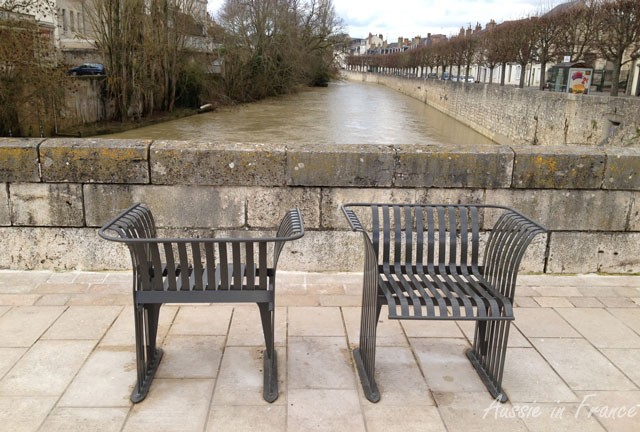
A pair of chairs in Vendôme - nothing to do with memory but I like the photo.
A pair of chairs in Vendôme – nothing to do with memory but I like the photo.

I remember my grandparents well = Je me rappelle bien mes grand-parents OR Je me souviens bien de mes grand-parents.

The difference is that little “de” which most people also tack on to se rappeler.

I remember him = Je me le rappelle OR Je me souviens de lui. But, you mostly hear Je me rappelle de lui which is totally incorrect.

I try to remember not to use “de” with se rappeler but when everyone else around me is using it without the slightest hesitation, it’s not easy because it sounds odd. So I usually use se souvenir!

You can use rappeler without the reflexive, but not souvenir.

While se rappeler means to remember, rappeler means to remind someone of something. Note that while we say “of” in English, THERE IS NO DE IN FRENCH.

Tu me rappelles ma tante = You remind me of my aunt.

Cela ne vous rappelle rien ? = Doesn’t that remind you of something?

Rappelez-moi votre nom = [Literally:  remind me of your name] and really corresponds to “Sorry – can you tell me your name again” which is a VERY useful phrase to know if you forget names the way I do.

Another verb that can also be used for “remember” is penser à.

Tu me fait penser à ma tante = You remind me of my aunt.

Cela ne vous fait pensé à rien ? = Doesn’t that remind you of something?

Fais-moi penser à rappeler mon frère = Remind me to ring my brother back.

Which reminds me that rappeler has another meaning i.e. to call back, where the “r” is like “re”, widely used in French to mean again.

Ses affaires l’ont rappelé à Paris = He was called back to Paris on business.

Ma mère a été rappelée au chevet de mon grand-père malade = My mother was called back to my sick grandfather’s bedside. [which is interesting because a chevet is a bedside table).

Souvenir is also a noun of course, with the meaning we know in English, as in souvenir shop.

But its main meaning is “memory”.

Elle a gardé de lui un bon souvenir = She has good memories of him.

Ce n’est plus qu’un mauvais souvenir = It’s just a bad memory now.

Je n’ai qu’un vague souvenir de l’incident = I only have a vague recollection of the  incident.

Il m’a raconté ses souvenirs d’enfance = He recounted his memoires of his childhood.

But isn’t mémoire a French word, I can hear you saying. Doesn’t it mean memory? First, it can’t be used in any of the above examples. Souvenir is used when it means “something remembered” while mémoire is used when talking about what our brain does.

Elle a une bonne mémoire = She has a good memory.

Il a une mémoire d’éléphant = He has a memory like an elephant.

Je cite de mémoire = I’m quoting from memory.

C’est inquiétant, elle perd la mémoire = It’s very worrying – she’s losing her memory.

A very useful little phase is pour mémoire which means “as a matter of interest”, “for the record”, “in passing” e.g. Mais tout indique que le sujet n’a, en fait, été mentionné que pour mémoire. = But everything would indicate that the subject was, in fact, only mentioned in passing.

Mémoire is also the term used for a computer memory.

And just to make matters easy, there is a another word mémoire, but this time it’s masculine and it has a completely different meaning!

It can be used for a memorandum, a report, a statement of all the money owed by a customer to a company (you probably don’t need to remember that!), someone’s memoirs and, most importantly for me, a master’s thesis or dissertation.

For about six years during my career as a university lecturer, I was in charge of the dissertations at ESIT and I could never remember whether the word mémoire was masculine or feminine! I devised all sorts of strategies so I wouldn’t reveal my lack of certainty! For example, instead of saying “Son mémoire est en retard” (her dissertation is late), I would say “Elle a dépassé la date limite” (she’s gone over the deadline).

Now who would like to have a try at translating the four phases in bold in the post? Click here for the answers!

Weekly Blogger Round-Up: Visiting Lisbon – Parliament House in Budapest – Being Polite in French

This week’s Blogger Round-Up takes us to Lisbon in Portugal with Jenny and John in Brittany, a place that is definitely on my shortlist while Adelina from Pack Me To visits the inside of the Parliament Building in Budapest which we didn’t see on our visit to Hungary last summer. Margo Letsz from The Curious Rambler, whom you met last week explains the importance of being polite in France, which you may remember from my post on bonjour. Enjoy!

Things to see and do in Lisbon, Portugal

by Jenny and John in Brittany, who recently left Stockport, England to live in France where they are renovating a house to create a B&B.

lisbonLisbon is an amazing city, there is so much to do and so many places to visit, I am not going to go into much detail as the pictures say more than a thousand words.

The one thing I would recommend though is to go on the trams, we did not work them out and just jumped on one we saw, you can pay on the tram or get a day pass (the day pass is highly recommended as this allows you to travel all day and costs approx the same as two rides when you pay on the tram).

We travelled to the end of the line and then back again, the tram ride is fascinating as at times you can touch the buildings you are passing it gets so close. Read more

Inside the Hungarian Parliament Building

by Adelina from Pack Me To, a Chinese American who’s been traveling for as long as she can remember and has lived in the Netherlands and Hungary. She loves telling stories, and eating and exploring her way around the world.

budapest_parliamentVisiting the Parliament building in Budapest has been on my to do list for a long time. I had seen photos of the inside of the Hungarian Parliament building, which looked spectacular, and I wanted to see it for myself. A building that looks so magnificent on the outside is sure to look glorious inside right? I was not wrong.

I had a bit of a false start on my visit to the Parliament. The first time I went, I was informed that the tour for the day was only 30 minutes long instead of the regular 45 minutes, but the price was the exactly same. I decided to go back another day. Read more

It pays to be polite in France

by Margo Letsz from The Curious Rambler, who lives in Nice, France where she likes to bask in the sunshine, study the French language and blog

At this café in Nice, France, minding your manners can significantly reduce the price of your coffee.

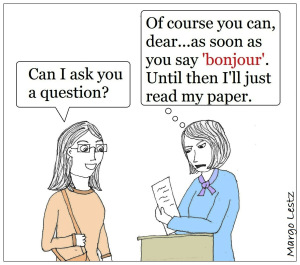
question-010Of course, this was meant as a humorous way to remind customers to be polite, but it’s a great illustration of the French attitude toward good manners.

In France the “courtesy words and phrases” are very important and NOT optional.  Fortunately, they’re easy to master, but if you can’t manage them in French, at least say them in English.  More than likely, the French will understand you and think that you’re a polite person who doesn’t speak French – which is, of course, much better than being thought of as a rude person who doesn’t speak French. So if you want to be polite in France (and I’m sure you do), here are some easy words and phrases (along with my attempt at phonetic pronunciation) to help you on your way. Read more

An Orchid Exhibition and our Perfect New Neighbours

I was delighted when I discovered we had orchids in our garden in Blois. I had thought they were strictly tropical plants but it turns out that France has quite a large number of wild orchids and our region alone has about sixty. We have found three different ones in our little wood. So when Susan from Days on the Claise, who is quite a specialist in the field, suggested we go together to an orchid fair in Blois, I didn’t hesitate.

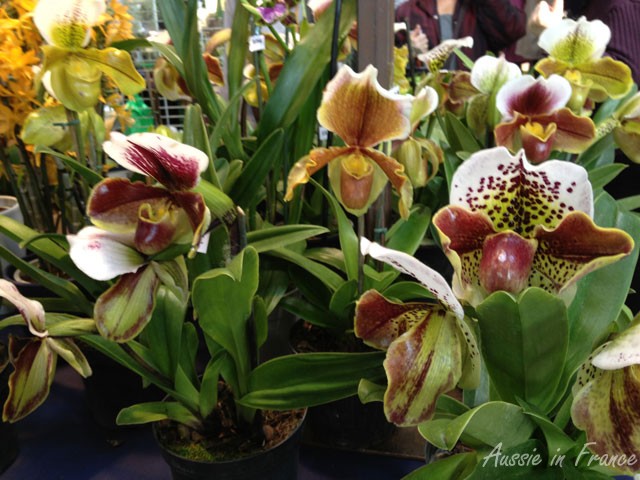
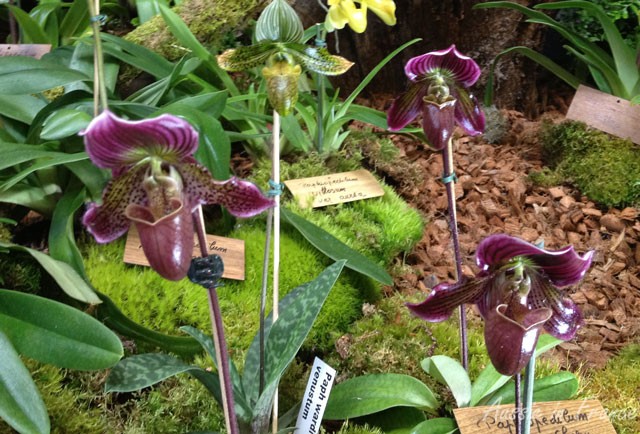
Cultivated orchids on display

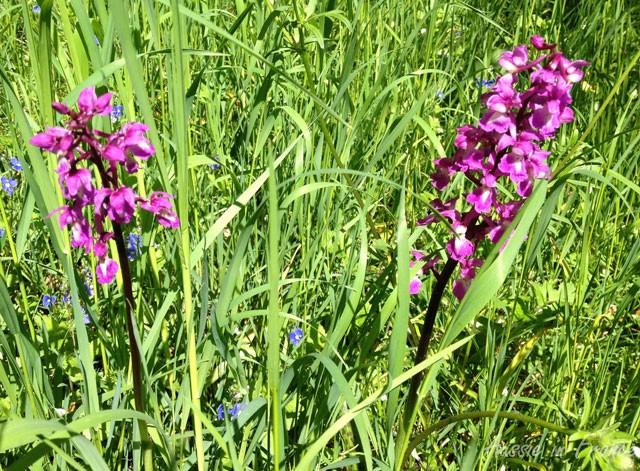
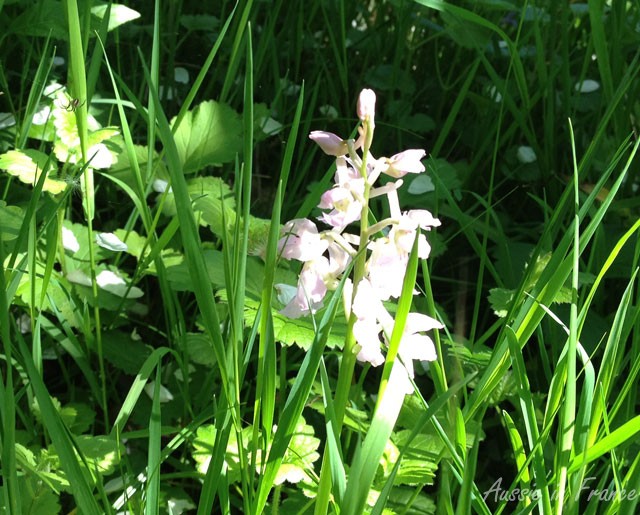
All the orchids on display were of the cultivated variety of course. I learnt that it’s virtually impossible to grow the local orchids. Either they turn up in your garden or they don’t because they need a special kind of fungus to grow. So I’m very honoured that orchis mascula and two other varieties I have yet to identify, have chosen our garden.

Purple orchis in our little wood in May last year

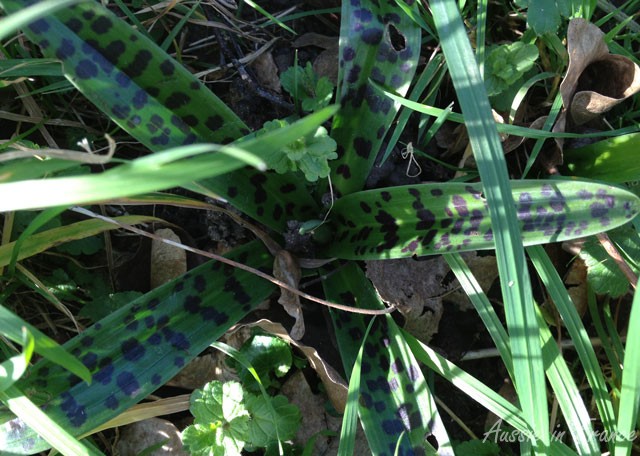
I also learnt the orchis mascula, or purple orchis, derives its name from the testicle-like formation underneath the roots. In English, it’s also called Gethsemane because it is said to have grown at the foot of the Cross and received drops of blood on its leaves!

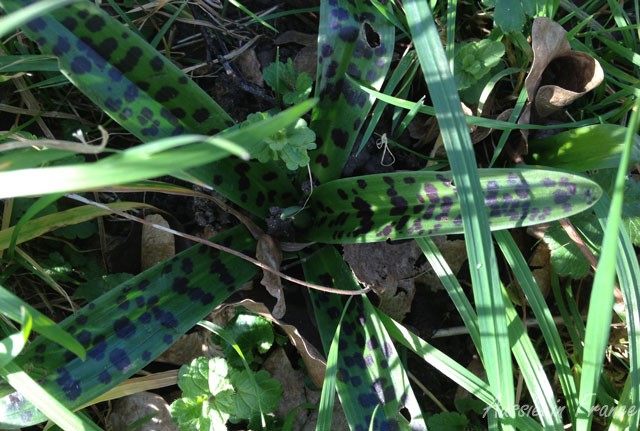
Purple orchid leaves with their blood spots in February

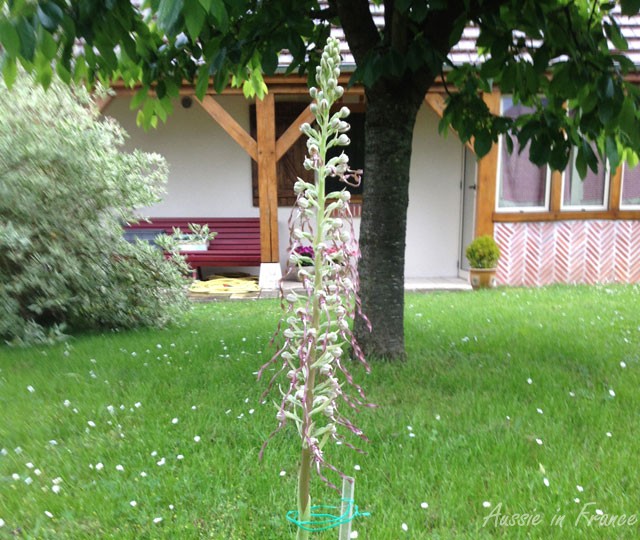
Mr and Mrs Previous Owner have an orchis bouc (bouc means billy goat) in their garden, so-named because of its smell. In English, it’s called a lizard orchid, which is much nicer! It has the most amazing flowers and grows to be very tall.

A white orchid in our wood

Most of the exhibitors at the Orchid Exhibition were Dutch with a couple of local growers thrown in. There was a stunning collection that drew a very large crowd and also an excellent poster exhibition where I learnt all sorts of interesting things. Vanilla, for example, is an orchid, to my amazement.

I think these look like dolls on a stick, like the ones we used to get at the Show when I was a child in Australia
I think these look like dolls on a stick, like the ones we used to get at the Show when I was a child in Australia 

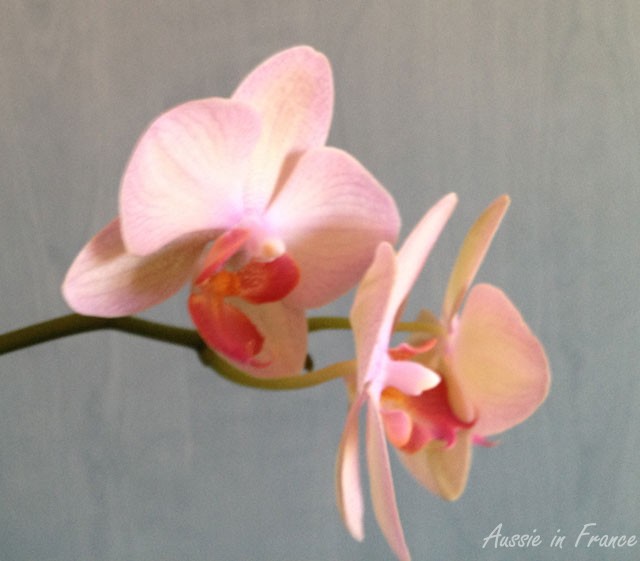
When we are living in Blois permanently and I have found the best location in the house for my cultivated orchid collection, I’ll venture into some more exciting ones. At present, the only ones that I get to rebloom are phalaenopsis or moth orchids.

My latest reflowering moth orchid in Paris

After the orchid exhibition, the first thing we saw as we got home was that our new neighbours had moved in. The moment of truth! Chicken yard or not chicken yard ? I went into our vegetable garden pretending to be checking out the sorrel (it being the only thing growing at the moment) and saw a friendly-looking blond woman a few years younger than us.

Mrs Previous Owner's photo of their lizard orchid. The stem is as long as the flower and you can see they've staked it.
Mrs Previous Owner’s photo of their lizard orchid. The stem is as long as the flower and you can see they’ve staked it. 

I waved and she came over the say hello. She and her Spanish husband both have grown children and are at work all day. The chicken coop will eventually be turned into a garage and they had already been informed that they would need to keep their willow pruned so that it won’t damage the new slate roof of our barn.

We both called our husbands over and by the end of the conversation we’d established that we were all the perfect new neighbours! Great relief all round.
Another excellent piece of news is that I have also found a Portuguese cleaner for the gîte which opens again in April. It turns out that she used to own the house next door, and that her husband, also Portuguesue, actually built the house himself. Thank you Mr and Mrs Previous Owner for the tip!

Friday’s French – mondain, mundane & banal

“She’s very mundane”, a bilingual French-English speaker said to me recently, obviously thinking that mundane means the same thing as mondain. To start off with, in English, we wouldn’t use mundane to describe a person, but rather something more abstract such as life or existence. Mundane means dull and ordinary or relating to ordinary life on earth rather than to spiritual things.

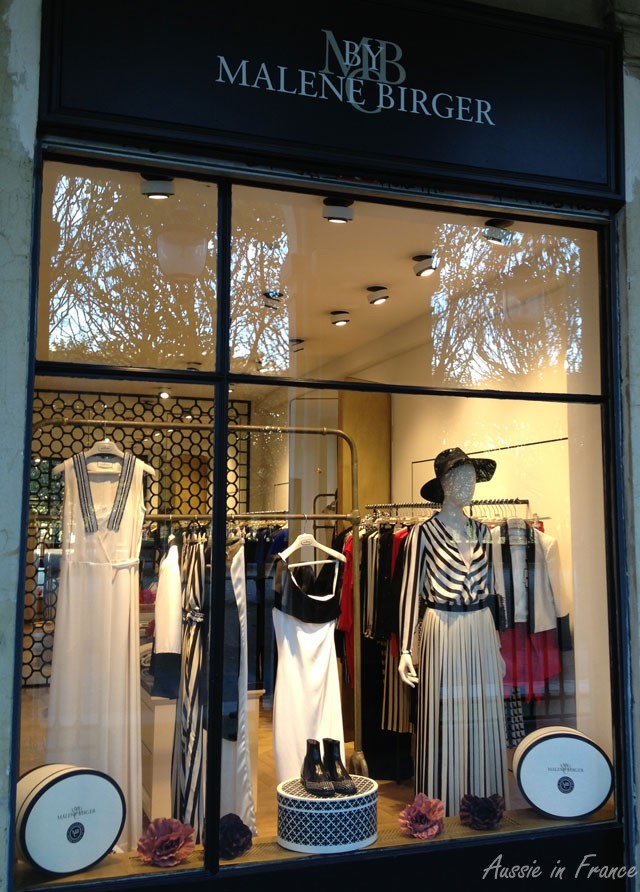
Une boutique pour les mondaines

Mondain, on the other hand, relates to the social life of what the French now surprisingly call people and what we call celebrities. It also refers the social habits of the bourgeoisie in which relations and conversations are always superficial.

What my friend really meant to say is “She’s a socialite”. Whenever we want to express the idea of mondain, we nearly always need to have society or social in there somewhere.

Elle mène une vie mondaine = She’s a socialite.

Il a le goût pour la vie mondaine = He has a taste for society life (or the high life).

Ce festival est l’évènement mondain de l’année = The festival is the society event of the year.

“Mundane”, on the other hand, probably needs a different translation every time.

On a more mundane level = au niveau pratique

Mundane task = tâche courante

A mundane concern = préoccupation terre-à-terre

I’ve kept “mundane existence” for last because it’s a bit trickier as it has two meanings. A mundane existence can refer to a non-spiritual existence in which case it would be une existence terrestre or profane. However if we’re just referring to the fact that it’s dull and ordinary, we would say une existence banale ou une vie banale.

Speaking of banal, that’s another word which doesn’t mean quite the same in French and in English. Actually, it’s not the meaning that differs so much as the usage. Banal in English means commonplace or trivial, which is more or less what it means in French, particularly when it refers to a lack of originality. However, in English, we don’t say people are banal as we do in French; we say they’re ordinary or run-of-the-mill.

Un personnage peu banal = an unusual character

Une conversation or une idée banale = a trite or banal conversation or idea

Une vie banale could also be translated as a humdrum life.

Une grippe banale = a common case of flu

And to finish up, here’s a very common expression in French: Ce n’est pas banal.

How would you say it in English? And maybe you have some other examples (with their translations!) of mundane, mondain and banal.

Weekly Blogger Round-Up: Carnival time in Nice – The Bay of Angels in Nice – Van Loos’ The Three Graces

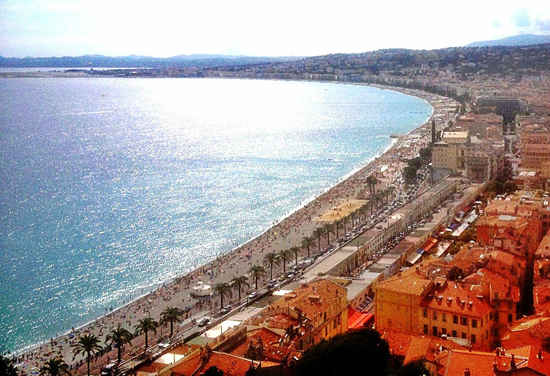
This week’s Blogger Round-Up starts in the city of Nice on the French Riviera with Phoebe from Lou Messugo who shares her stunning photos of Nice Carnival. And to give you another view of Nice, Margo Lestz, writing for The Good Life France, explains the origin of The Bay of Angels and other place names. In a different part of the country altogether, Susan from Days on the Claise tells us the fascinating history of Van Loos’ painting of The Three Graces in Chenonceau. Enjoy!

Nice Carnival 2014 – a photo essay

by Phoebe from Lou Messugo, a traveller, francophile, expat, mum and foodie now living in Roquefort les Pins where she runs a gîte after many years of travelling and living in Asia, Eastern Europe and Australia.

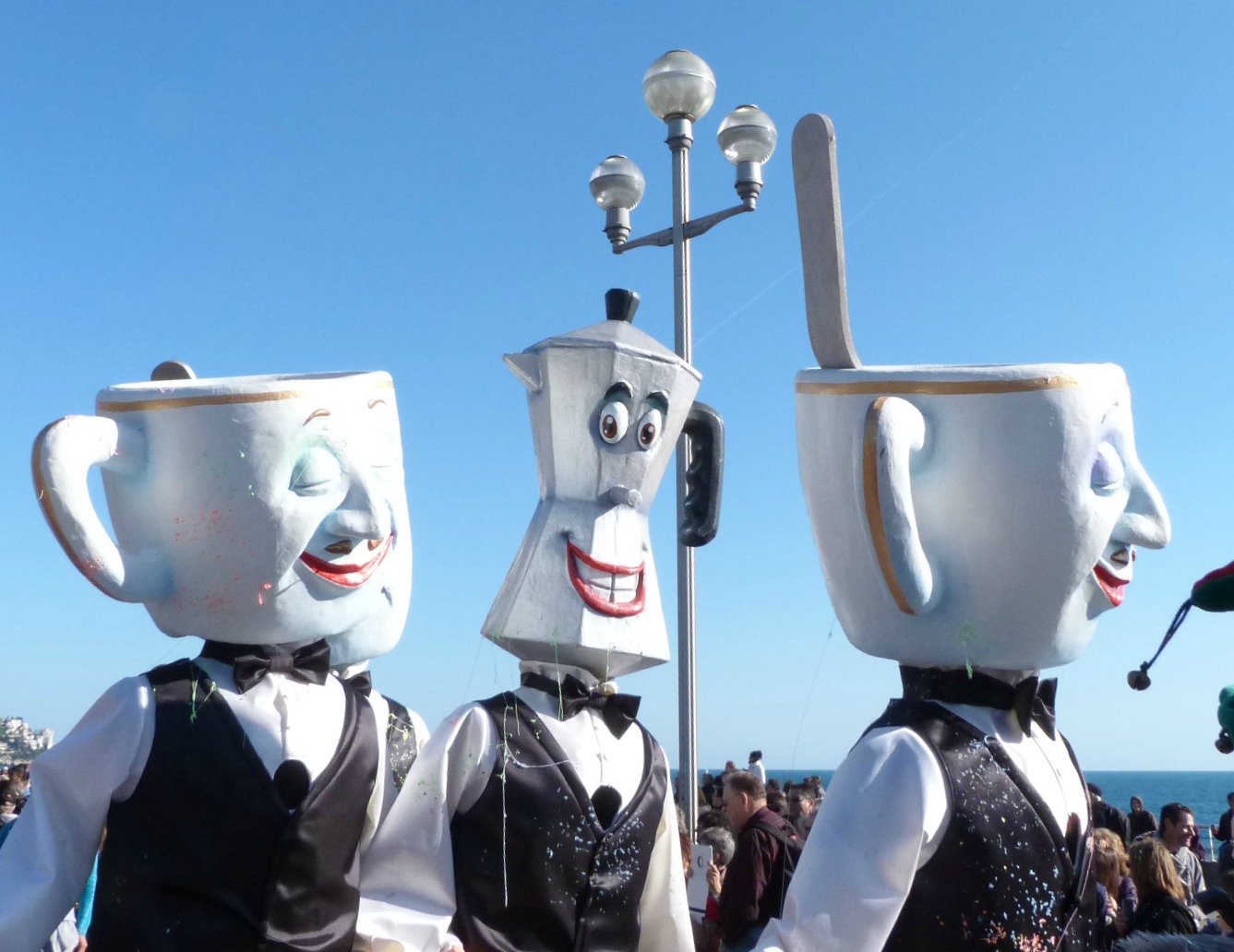
carnival23We couldn’t have asked for a more perfect day to go to Nice Carnival 2014.  Under the bluest of blue skies we spent a fun afternoon watching the the creative, witty and satirical floats pass by united under the theme of gastronomy.  Being our 5th or 6th time at Carnaval we recognised some of the regulars – the roaring dragon, the confetti seller who comes to the school fête, the OGCN (Nice football team) supporters with balloon boobs, the man dressed as a caveman hauling a ragdoll around, the Italian flag throwers – we felt like real locals.  As always the floats represented contemporary issues and cultural icons. Amongst others Angela Merkel could be seen devouring Portugal, Spain and Greece. Read more

Adam and Eve in the Bay of Angels, Nice

by Margo Lestz writing for The Good Life France, an independent on-line magazine about France and all things French, covering all aspects of daily life including healthcare, finance, utilities, education, property and a whole lot more. Margo  lives in Nice, France where she likes to bask in the sunshine, study the French language and blog as thecuriousrambler

bay-of-angels-the-bayMany rich and famous tourists visit Nice every year, but according to a legend, the first visitors were actually Adam and Eve – yes, the ones from the Bible.

As the story goes, after they were kicked out of Paradise for being naughty, they were standing outside the locked gates looking at their new hostile surroundings.  Everywhere was barren and inhospitable. They had no idea where to go or what to do. Then they heard the sound of rustling wings, looked up to see a band of angels flying overhead motioning to them.  The angels flew across the waters and hovered over a certain spot – they were showing the couple a glorious bay, in front of a land that was as lush and beautiful as the Eden they could no longer enter. Read more

The Notorious De Nesle Sisters

by Susan from Days on the Claise, an Australian living in the south of the Loire Valley, writing about restoring an old house and the area and its history and running Loire Valley Time Travel.

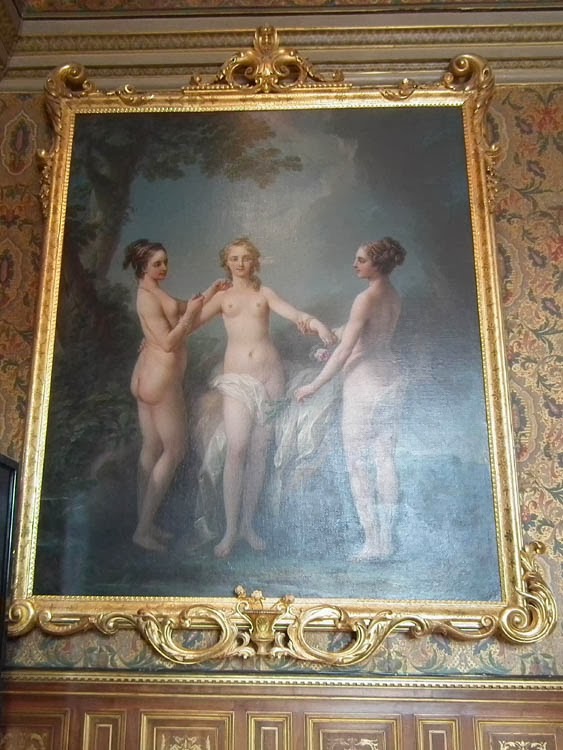
graces_vanlooThere is a large painting depicting three naked women hanging in one of the salons of Chenonceau. It’s called The Three Graces and is by Carle Van Loo (not his brother Jean-Baptiste, despite the frequency you will find it attributed to him on the internet). It is widely believed to depict three of the five de Nesle sisters, but since it is clearly a picture of three attractive young women, there is a certain amount of debate about the identification of the notorious sisters and the subject of this painting. The de Nesle sisters, with the exception of the youngest, were not considered to be beauties, were all long dead by the time the picture was painted and Van Loo wasn’t known for being kind to his subjects. Read more

Early Spring and Ponderings on our New Life

It’s been the strangest winter. I don’t think the temperature has gone below zero more than a couple of times and there has been absolutely no sign of snow. As a result, spring seems to have come a couple of weeks early.

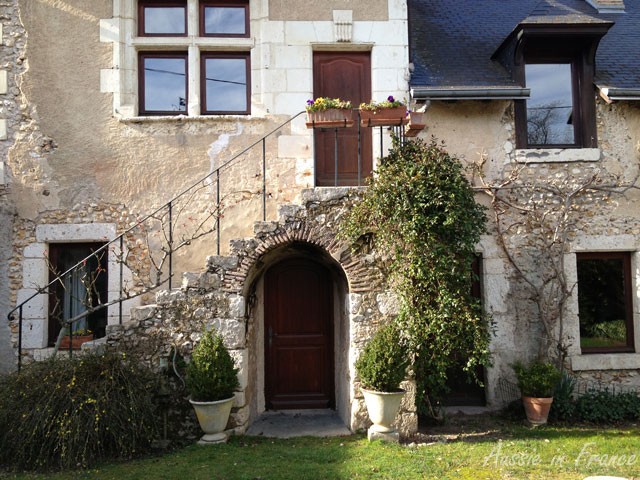
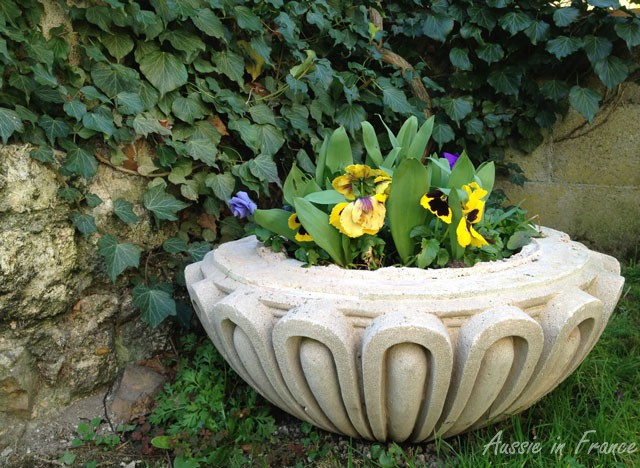
Our house at the moment, with pansies and bulbs on the railing, the last of the winter jasmin on the left and our evergreen honeysuckle on the right.

We are in Blois for a month this time, the longest period yet so it feels more permanent. Things are starting to get more organised but I’m still finding it hard to reconcile my translation work and doing more interesting things such as gardening.

Jean Michel cleaning the moss. Our new paving stones are waiting to be made flush with the ground.

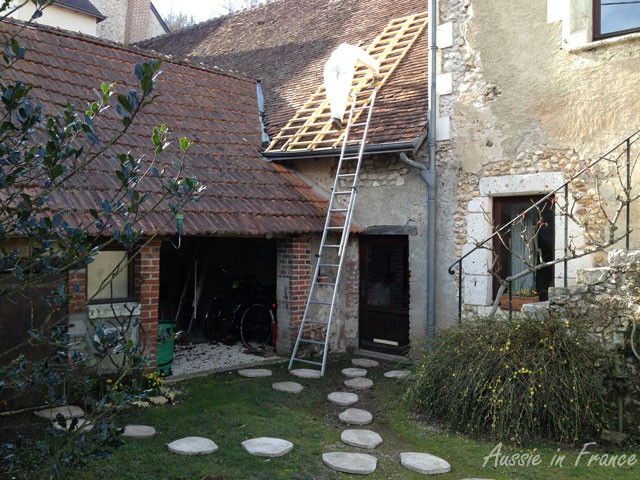
Also, having one person working and the other free to do what he wants with his time is not easy. Not that Jean Michel is lazing around – quite the opposite. Among other things, he has chopped firewood, completed the electricity in our upstairs kitchen, made two roof ladders and cleaned the moss off one of the roofs.

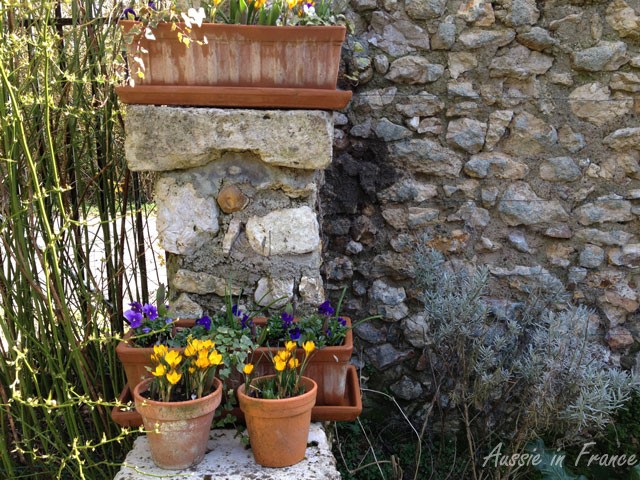
Crocuses and pansies against the front fence

But we are having to adjust to a different pattern. In Paris, Jean Michel gets up earlier than me during the week – often around 7, and has his breakfast alone. I get up around 8.30, get dressed, have a quick breakfast and am in my office by 9.

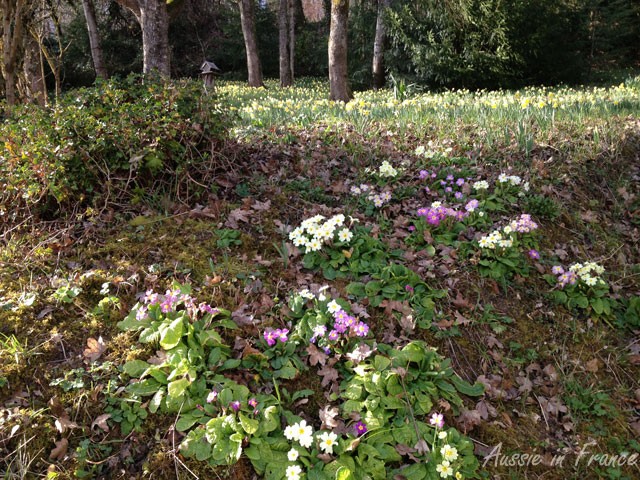
Primroses on the way up to our little wood

Here, if we get up at 8.30, I’m not sitting in front of my computer until closer to 10 because Jean Michel needs to take his time in the morning. I’ve been making an effort to get up at 8 but I only gain a half an hour and I’m tired! On intermittent fast days, it’s much easier as we skip breakfast. We’ve talked about it together and Jean Michel is also frustrated because he is a morning person and has the impression that he’s wasting his whole day if he doesn’t get up until eight (but he hasn’t suggested getting up earlier).

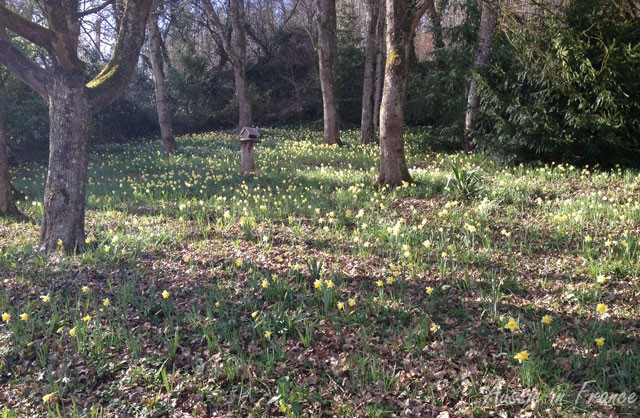
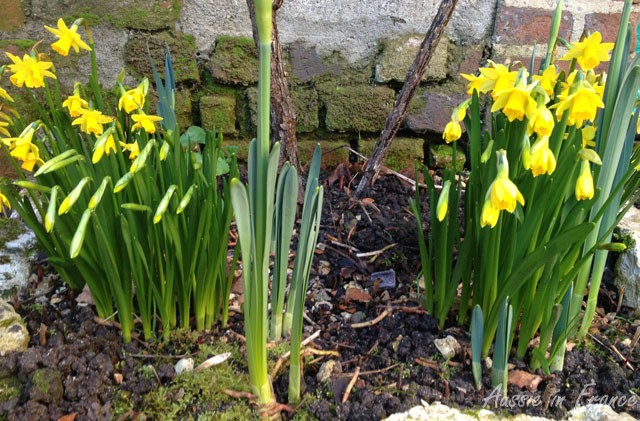
Our little wood full of daffodils

So I’m trying to schedule our two fast days for Monday and Friday and maybe I won’t eat on Wednesday mornings either. Then on the other two days, as soon as I’ve finished my breakfast I’ll leave him to it instead of taking time over tea together. The weekend’s not a problem of course.

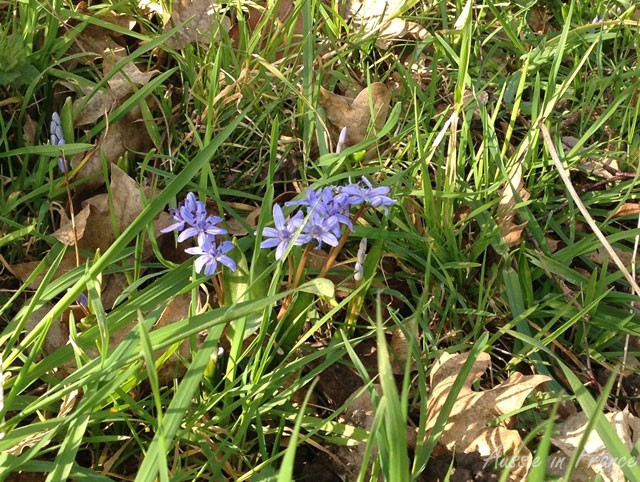
Wild hyacinths
Wild hyacinths

Jean Michel also has a short nap after lunch and goes to sleep before I do at night, so all in all, I’m not getting enough sleep, and am exhausted! I hope we’ll have solved the problem soon. At least having a whole month in Blois means that we can get into better sync before the final move in October.

Pansies and bulbs
Pansies and bulbs

The fact that it rained most days last week didn’t help either. We were nice and wet by the time we finished the market on Saturday morning then spent the afternoon chasing after things like bottle racks and mats to scrape the mud off our shoes. By that evening we were feeling a little jaded.

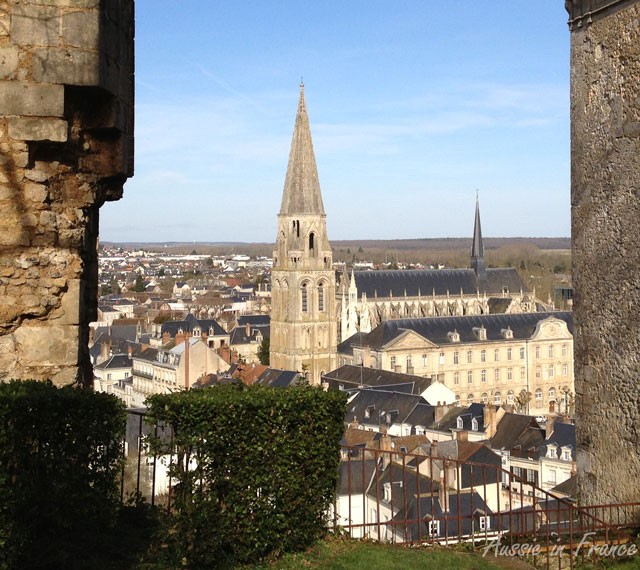
View of Trinity Church from the top of the hill overlooking Vendome

However, Sunday dawned fine and sunny and after a leisurely breakfast, we drove to Vendome which is really pretty. Clouds came over around midday, to our disappointment. But by the time we had finished a very good lunch at Le Rond de Serviette, the sky was blue again and we walked up the hill to see the stunning panorama.

The daffodils I bought from the Red Cross stand on Place Colette and replanted
The daffodils I bought from the Red Cross stand on Place Colette in Paris and replanted in Blois

We arrived back home just in time for a late tea and macarons in front of the fire. It felt as though we were on holidays because it’s exactly the way we used to spend the day when we stayed in a gîte with a fireplace in winter before we bought Closerie Falaiseau.

Our local orchids are looking good. They'll bloom
Our local orchids are looking good. They’ll bloom in April.

Oh, and I nearly forgot – the annoying neighbours with the poultry yard have packed up, lock, stock, barrel and chickens. We couldn’t believe our luck! We expect that someone else will move in soon, perhaps at the end of the month. Let’s keep our fingers crossed.

Travel Photos – Vendôme

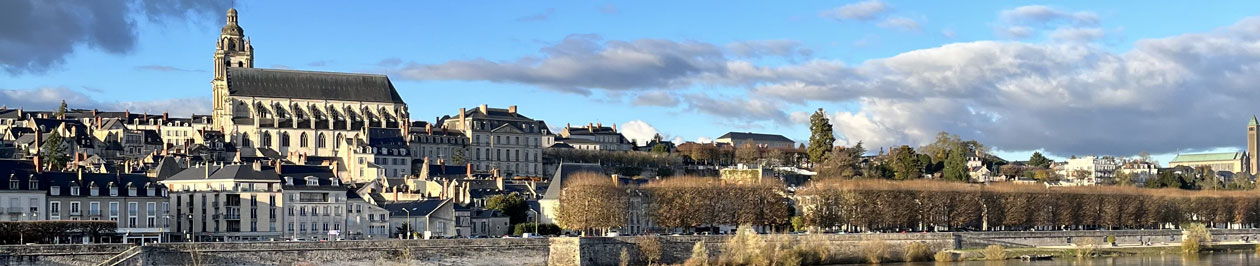
Considering the number of canals that run through it, I’m surprised that the mediaeval town of Vendôme on the Loir River (not the same as the Loire), 35 k from Blois, is not called the Little Venice of Beauce after the surrounding flat wheat country. It turned out to be unexpectedly pretty. Every time we turned a corner, we saw a little canal, an archway or a tiny street lined with architectural marvels. Although it was bombed during World War II and many of its half-timber houses destroyed, much of its mediaeval architecture has survived. Although we started out sunny, clouds came over during the first part of the day but after lunch the blue sky returned and the panorama from the ruined castled above the town was quite striking.

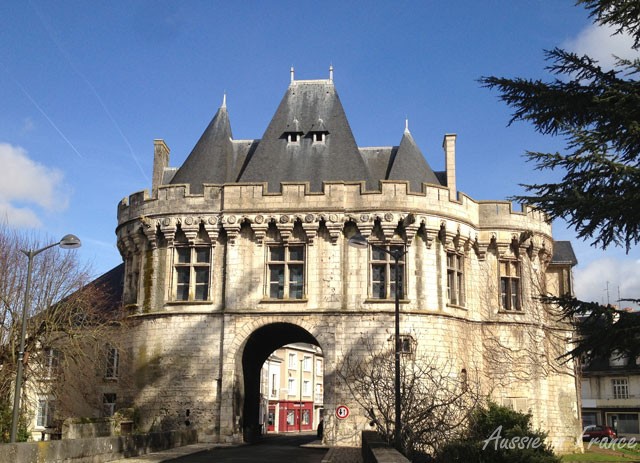
Porte Saint Georges, at the entrance to the town on the Blois side, 15th century. The Renaissance medallions were added in the 16th century


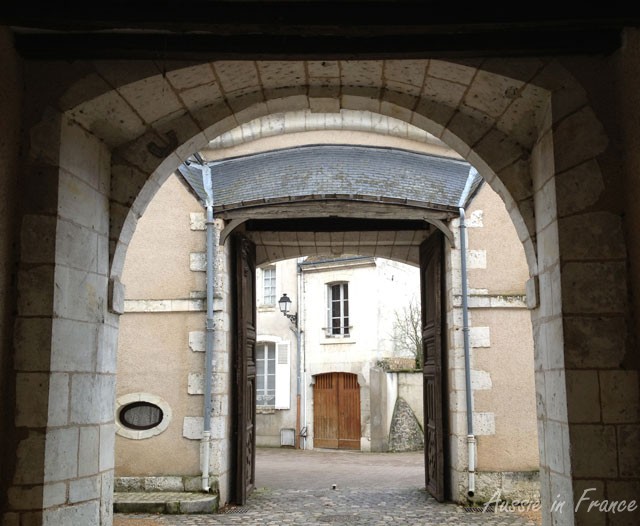
One of the town's many archways. This one leads from the town hall, originally a college, into one of the interesting little streets of Vendôme
One of the town’s many archways. This one leads from the town hall, originally a college, into one of the interesting little streets of Vendôme. Note the low bull’s eye window on the left.


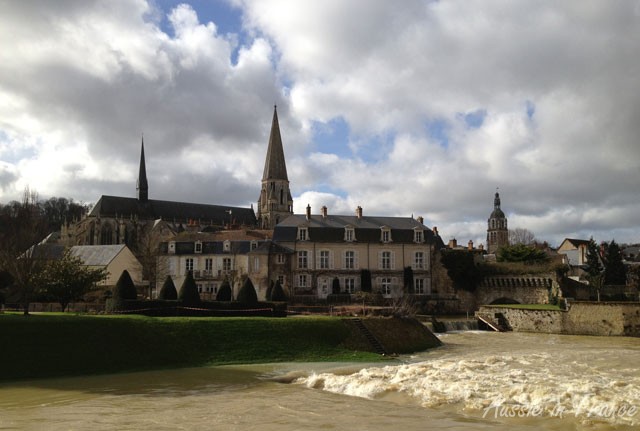
Looking towards Porte d'Eau, fortified in the 13th and 15th centuries. A dam was built to control water for one of the town's many watermills.
Looking towards Porte d’Eau, fortified in the 13th and 15th centuries. A dam was built to control water for one of the town’s many watermills.


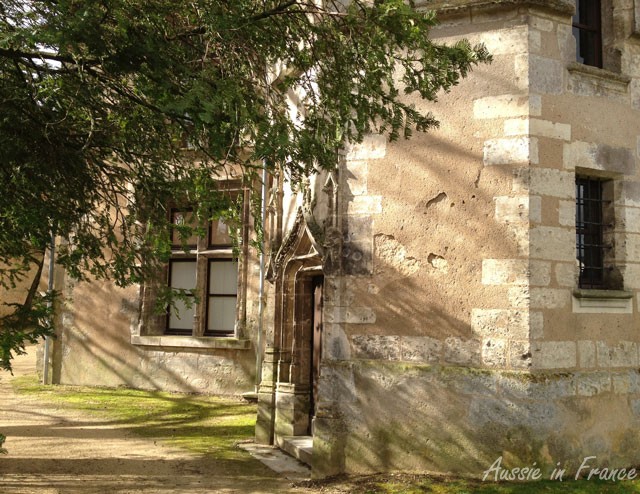
A beautiful Renaissance door next to Trinity Church
A beautiful Renaissance door and mullion window next to Trinity Church


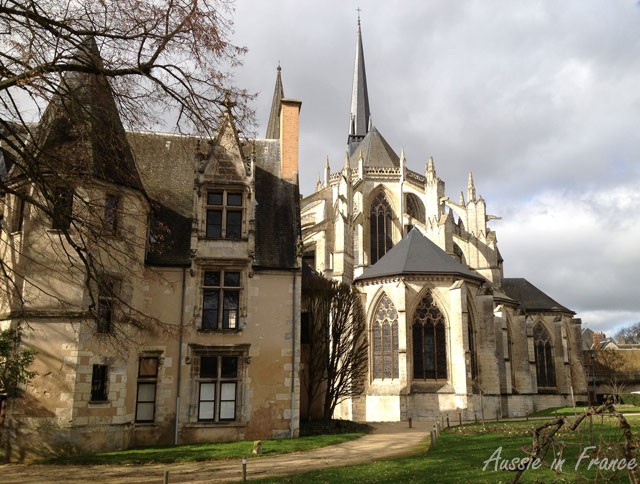
The east end of Trinity Church rebuilt in 1308.  On the left is the building with the Renaissance door.
The east end of Trinity Church rebuilt in 1308. On the left is the building with the Renaissance door and more mullion windows.


The ruins of the 11th century castle
The ruins of the 11th century castle on top of a hill, understandably a favourite promenade for the locals.


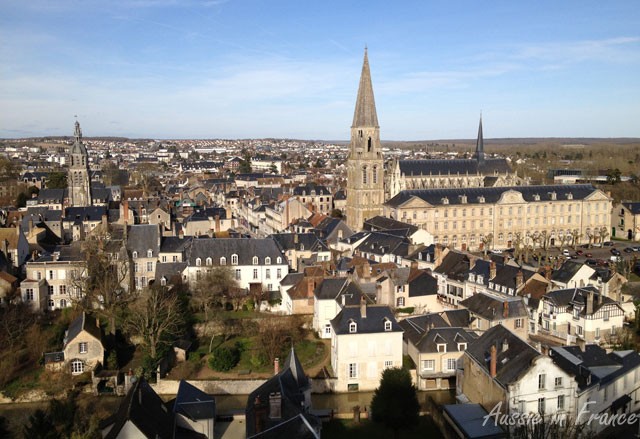
The stunning view of Trinity Church from the castle ruins
The stunning view of Trinity Church from the castle ruins with Trinity Church on the right and Saint Martin’s bell tower on the left with the Loir River in the foreground.


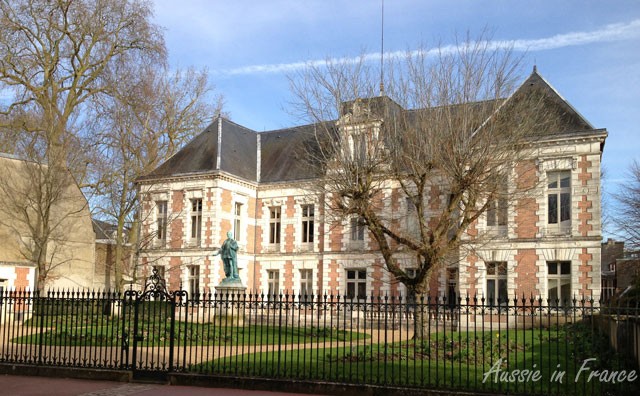
Built in 1866 to house the library, museum and archeological society. Now contains the library.
Built in 1866 to house the library, museum and archeological society. It now contains the library.
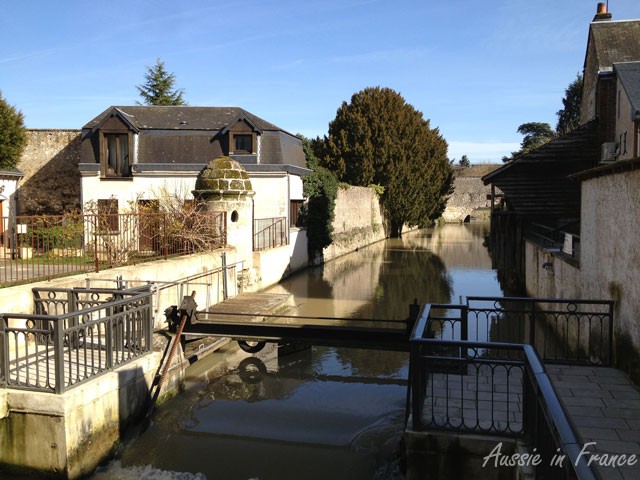
One of the many canal views.
One of the many canal views. Note the round tower on the left.


Another canal view
Another canal view Imagine it in the summer when all the planters are full of flowers.

We had an excellent lunch at Le Rond de Serviette, a recently opened restaurant on Rue Poterie with excellent reviews. Main dish under 10 euro. Friendly service.


Friday’s French – se promener, marcher

Anglosaxons do a lot of walking – well, at least in theory!

Lors d'une promenade le dimanche à Chouzy avec nos amis
Lors d’une promenade le dimanche à Chouzy avec des amis – During a Sunday walk in Chouzy with friends

We walk to the bakery. We go for a little walk. We walk in the country. We do a 10 kilometer walk. We take the dog for a walk. We walk someone home. We go on a long walk to see a castle. We walk home in the dark.

So, with all this walking, many people look for a verb in French which will be just as handy. Only there isn’t one!

On va à la boulangerie à pied. On fait un petit tour. On se promène à la campagne. On fait une promenade de 10 kilomètres. On promène le chien. On accompagne quelqu’un chez lui. On fait une excursion à pied pour visiter un château. On rentre à pied avec la nuit.

Note that unless you’re walking the dog (or someone else, such as a child or your aged grandmother), se promener is always reflexive.

And have you noticed that, so far, we haven’t used marcher which is what we all learn at school to mean “walk”!

So when do we use marcher?

Let’s go back to the bakery. If I were to say, “I walked right to the bakery”, I could use marcher: j’ai marché jusqu’à la boulangerie. I could also say Je suis allé jusqu’à la boulangerie à pied.

You can use promenade for 10 kilometers if you went at a leisurely pace, but you’d say J’ai fait une marche de trois heures if you want to convey the idea that you were getting a lot of exercise. A 6-hour walk becomes a randonnée. I’m not quite sure though what the cut-off point is!
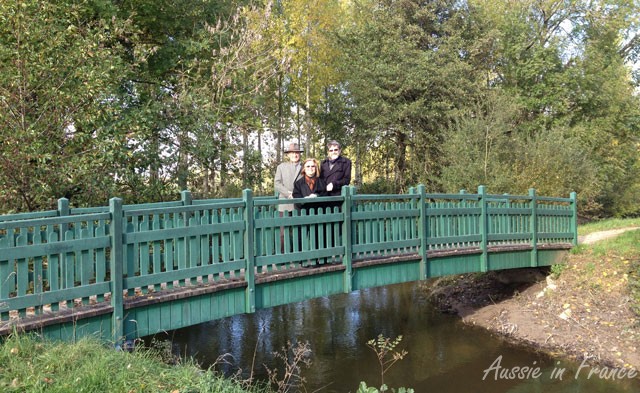
J’ai les jambes lourdes, je vais marcher un peu. My legs feel heavy. I’m going to walk for a bit.

Il marchait sans but. He walked aimlessly.

Elle marche en boîtant. She limps. You can also say Elle boîte but that would be a general statement and give the idea that it’s something permanent. Subtle, huh?

Il marche toujours à grands pas. He always strides along.

Le bébé marchait à quatre pattes. The baby was crawling. Now that’s a good one! And when baby takes her first steps, elle prend ses premiers pas. She walked at 9 months (yes, one of my did!) = Elle a marché à 9 mois.
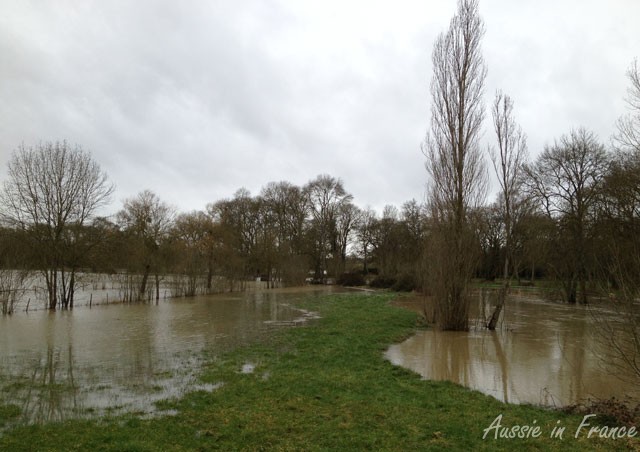
Avec elle, il marche sur des oeufs. Literally, “with her, he walks on eggs” but we’d be more likely to say something like “He always treats her with great caution” or “He always skirts around her”.

And here’s an interesting proverb to finish up: C’est marche ou crève! It’s sink or swim (literally “it’s walk or die”).

I’m sure you have some other examples to share.

The Saffron Fair in Preuilly sur Claise

It’s our second day in Blois and Susan and Simon from Days on the Claise have invited us to their local saffron fair. I know next to nothing about saffron except that it comes from the pistils ofcrocuses. Even that’s not right – it actually comes from the stigmas which are a part of the pistils.

Fields under water on the way to Preuilly sur Claise

The day’s not brilliant but at least it’s not raining. We’re amazed at the high water level in the fields as we get closer to Preuilly which is about an hour and a half from Blois through Montrichard and not far from Loches.

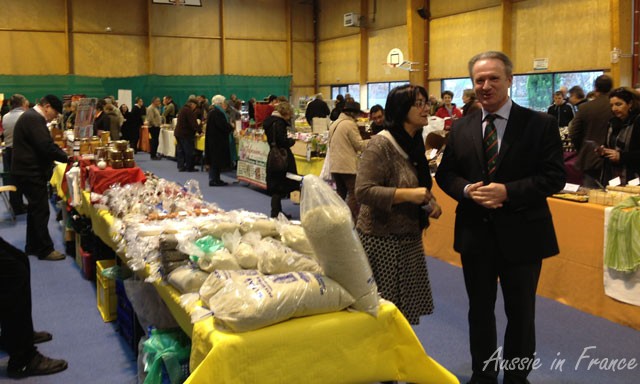
Saffron fair in the local gymnasium in Preuilly

After inspecting Simon’s recent staircase varnishing job, we walk down to the gymnasium. Inside it’s all hustle and bustle with lots of gaily decorated stalls, not all selling saffron, I’m surprised to see, but then, there’s only so much saffron you can use in a year, isn’t there?

Saffron-flavoured verrines

We pay for our saffron-themed lunch (18.50 euro) – Susan has already booked our table – and start sampling some little verrines but we can only remember one of them now:  queen’s scallop in pumpkin soup flavoured with saffron.

Wrought-iron lamp stand

There are all sorts of goods on sale. The first stop is a wrought-iron craftsman. I wouldn’t mind having a lamp post like this one but it’s a little expensive …

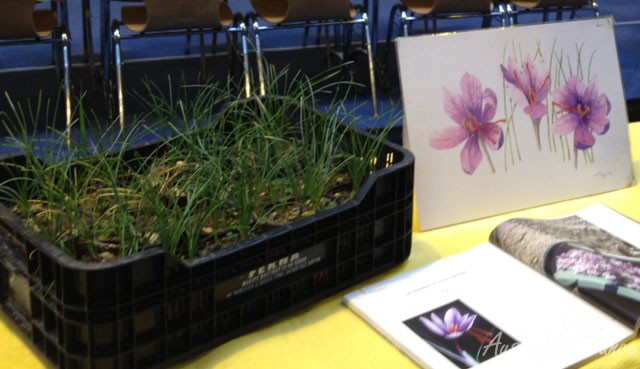
Crocus plants
Crocus plants

The next stand has some crocus plants on display. Although saffron crocuses have been cultivated in Touraine since the Middle Ages, no one really knows where they come from. Some think Tibet. You need 150 to 200 flowers to obtain 1 gram of saffron which explains why you should never buy powdered saffron – it’s probably something else altogether!

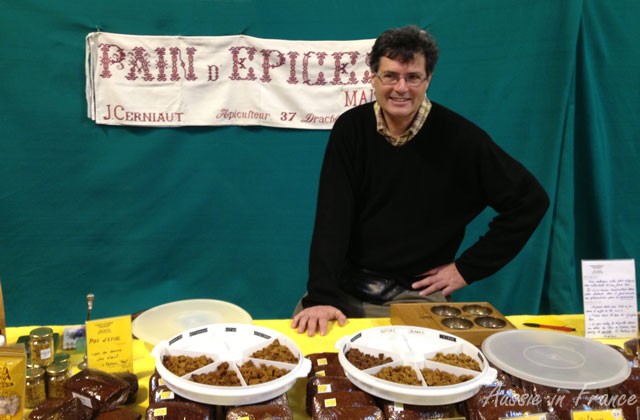
Pain d'épices
Pain d’épices

Several stands are selling pain d’épices flavoured with saffron. I learn that you always infuse the stigmas in a liquid such as water, milk, cream and wine and add them at the end of the cooking time. Too high a heat destroys the aromatic molecules.

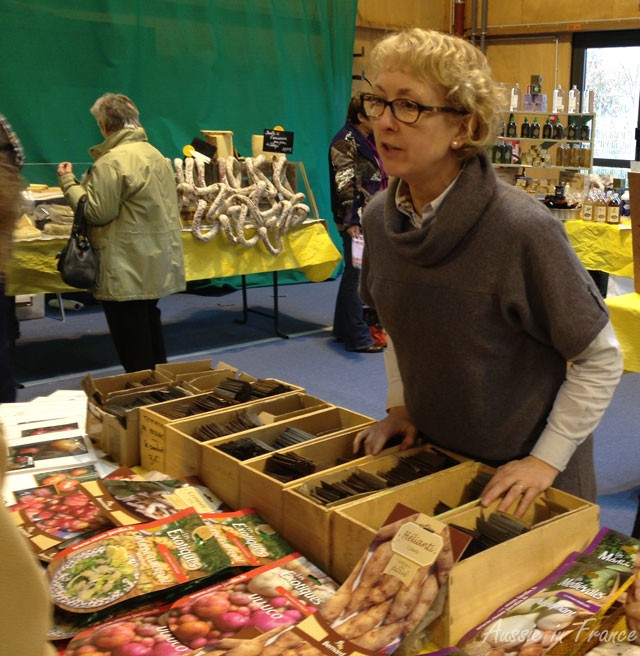
Unusual fruit and vegetable stand

Another lady is selling unusual fruit and vegetable seeds so I buy some tubers called mashua (tropaeolum tuberosum) that were already being served up 5500 years in South America. I’ll let you know how they turn out!

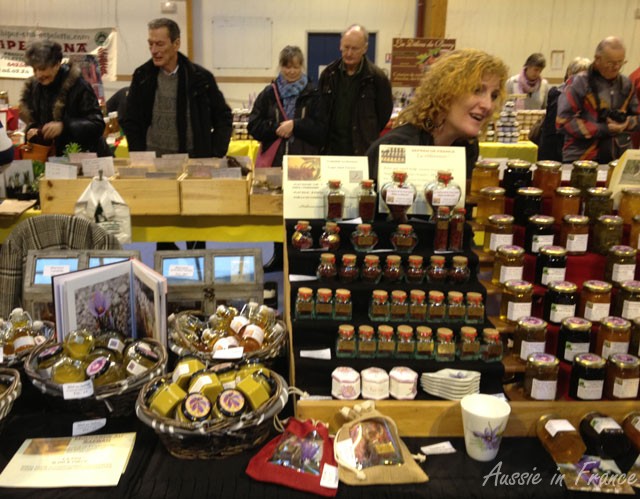
Lots of little saffron-flavoured goodies

Next stop is a stand selling little bottles of saffron-flavoured vinegar, honey, jam, etc. I buy  a few to keep as gifts and am given a neat little jute carry bag.

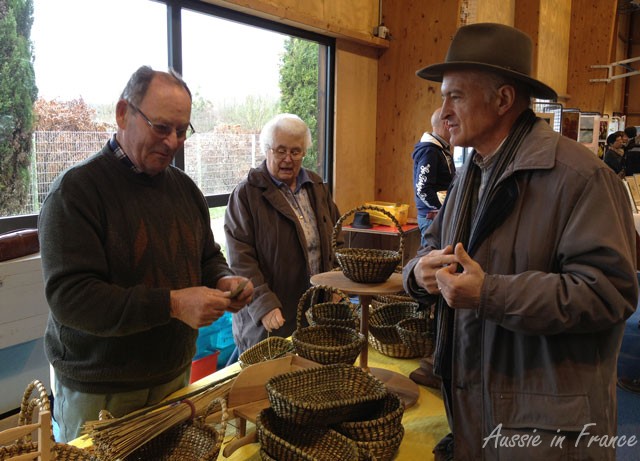
The basket-making pensioner

We are intrigued by a man selling baskets that he makes using local rushes and brambles. They start out green and gradually become brown. The basket-maker explains that it’s a pensioner’s hobby and that he only sells the baskets to make room for more. At 10 euro a basket, it’s a bargain. They are all beautifully finished. I choose one that turns out to be exactly the right size for our local pain aux céréales.

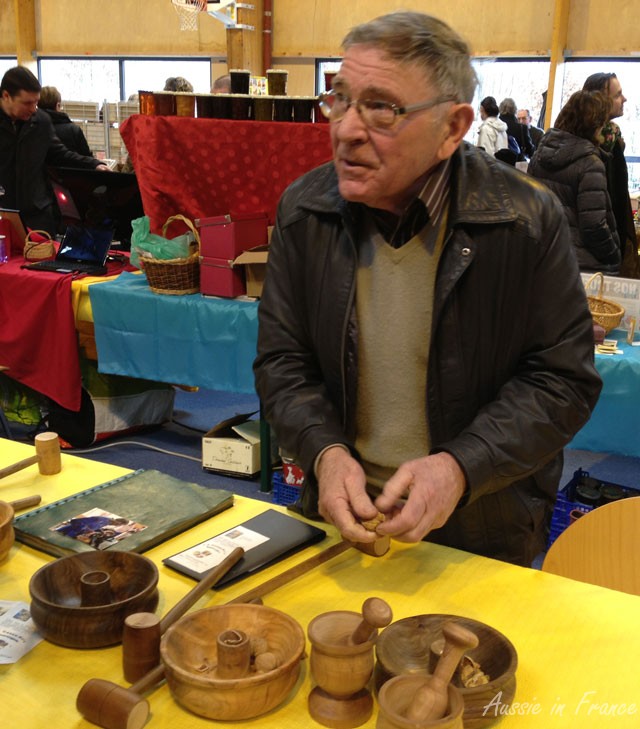
Nutcracker man
Nutcracker man

Another man is selling the same type of nutcracker we have at home that I think is perfectly useless so I get him to demonstrate. Obviously I’ve been using the wrong technique. I can’t wait to get back to Paris to see if I can crack perfect nuts without putting the shells all over the kitchen.

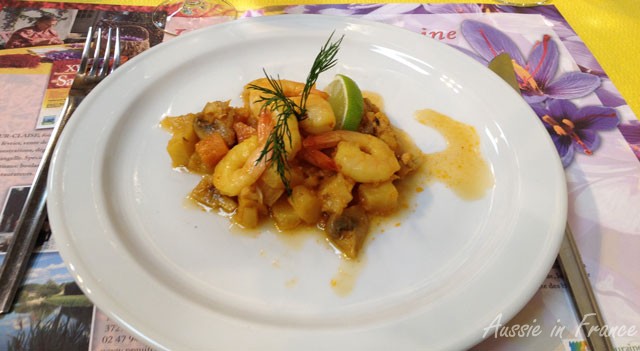
Saffron prawns
Saffron prawns

By now it’s lunchtime and my feet are killing me so we make our way to the dining area. We have a prawn-based entrée with saffron (which is often used to accompany mussels, scallops and fish), followed by guinea-fowl and saffron cream sauce.

Dessert is a local saffron-flavoured version of tiramisu which is one of my very favourite desserts.  We choose a local crémant followed by a local sauvignon.

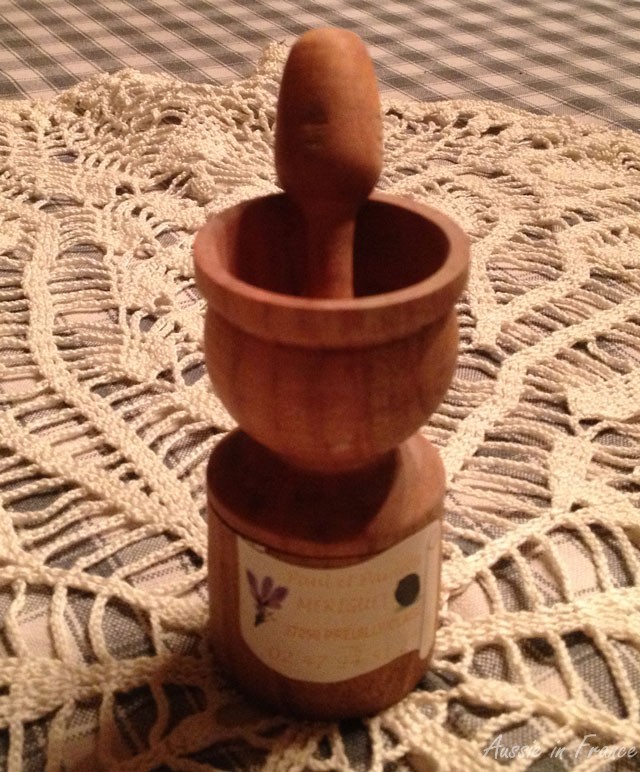
Saffron mortar and pestle with container

We don’t buy any saffron at the fair because Susan gives me a special little saffron container with a mortar and pestle on top made by friends in Preuilly. Jean Michel has picked up various brochures along the way, many of which contain saffron recipes. Since tomorrow is a fast day, I’m going to try an omelette au saffran.

from the Tropics to the City of Light