Yesterday’s five New Year resolutions didn’t mention Aussie in France despite the fact that it is now an integral part of my life.
After more than two years of blogging I’m still enjoying it as much as ever and never have writers’ block . However, there is no denying that it’s time-consuming even though I’ve become more proficient with regards to the technical side of things.
From my original seven posts a week, I cut down to five then to four. I gradually introduced regular features : Sunday’s then Monday’s Photo of the Week/Travel Photos, Wednesday’s Blogger Round-Up, now the Weekly Blogger Round-Up and Friday’s French.
I’ve been invited to guest post on several sites : My French Life, Home Exchange, Holidays to Europe, Frugal First Class Travel, Expat Blogs, The Good Life France and Contented Traveller (though the last two are still in the making).
I’ve made new friends among other bloggers and have had the great pleasure of meeting some of my readers. I’ve now published nearly 600 posts which has attracted over 8600 comments.
Blogging not only satisfies my creative urge, it also makes me appreciate my surroundings more and get more out of everything I do because I know I’ll be able to share my photos and stories.
Sometimes I get discouraged and wonder whether it’s worth it. Inevitably I receive a comment or an email from someone I don’t know telling me how much they enjoy my posts and my batteries are recharged.
I would like to ask you, my readers, which posts you enjoy most: travel photos, photos of Paris or the Loire, the blogger round-up, Friday’s French, posts on visits to châteaux and exhibitions, stories about life in France, our renovations, cooking, dieting, cycling, more personal posts, more factual posts …
Would you like to see posts on other subjects in particular?
Also, how many posts do you have the time or inclination to read each week?
Another question that interests me is how you came upon Aussie in France and what made you keep reading it.
After a discussion with Leonardo, I have a new feature in the making that I hope will be ready very soon.
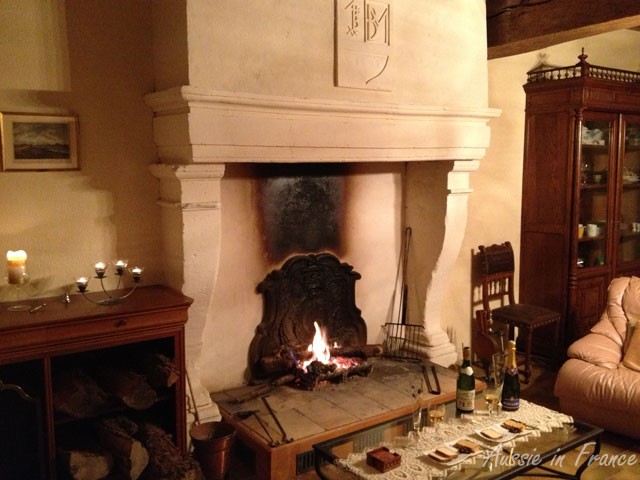
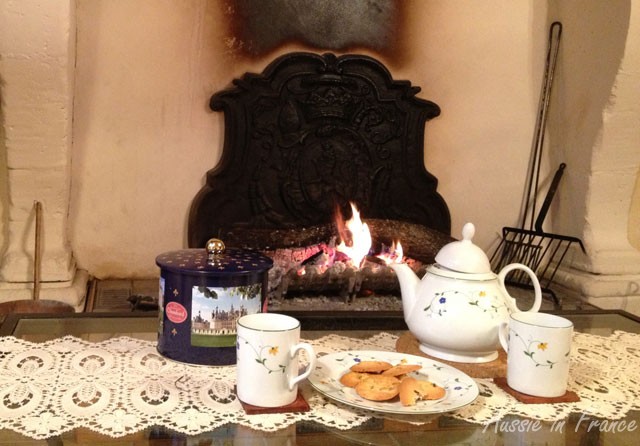
This year we ARE sitting in front of a roaring fire in the renovated upstairs fireplace, unlike last year when we decided not to herald in the New Year until the renovation was finished. We finally lit our first fire on February 28 only to the discover it smoked. The problem was eventually solved in March when the roofer opened up the top of the chimney. By then it seemed a little late to welcome in the New Year.
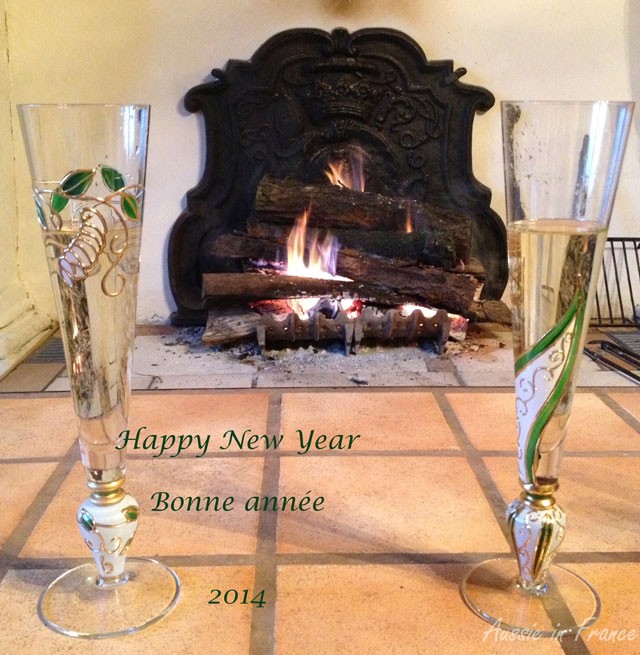
Celebrating New Year in front of the renovated fireplace on 31st December 2013
Having just reread my resolutions, plans and expectations for 2012, I see that I have failed miserably with the first, which was NO MORE RENOVATION until we move here permantly. Yes, well, I haven’t mentioned it because it isn’t finished (ha! ha!) but Jean Michel is making an upstairs kitchen because once we got the fire going in October, we decided it would be cool – or should I say warm – to have breakfast and apéritifs dinatoires in the upstairs living room.
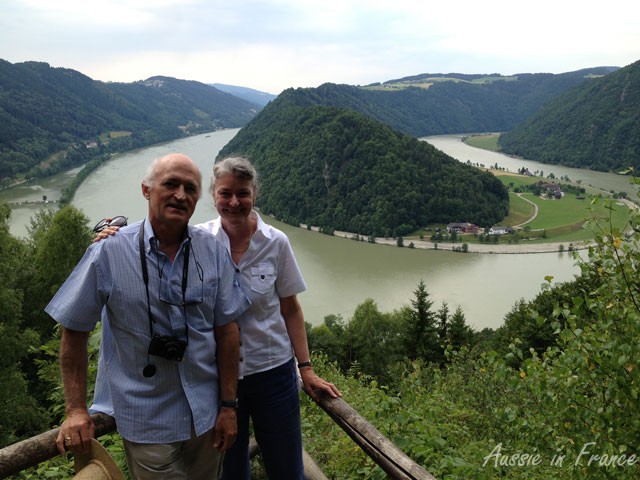
The S-bend in the Wachau in Austria
I’ve done better with the second resolution to travel more in Europe. We loved Barcelona and our cycling trip along the Danube in the summer which included Germany, Austria, Slovakia, Hungary and Switzerland, was undoubtedly my best holiday ever. We also unexpectedly went to Sofia and Plovdiv (which reminds me I still have a post to write …).
My third resolution was to go back to fitter occupations and lose the 3 or 4 kilos I’d gained. No problem about that one – our 1,100 kilometers of cycling along the Danube plus all the other shorter cycling holidays have certainly made me fitter. Discovering the 5:2 fast diet is now a way of life. I lost the extra kilos and am now able to enjoy foods I thought I had banished forever.
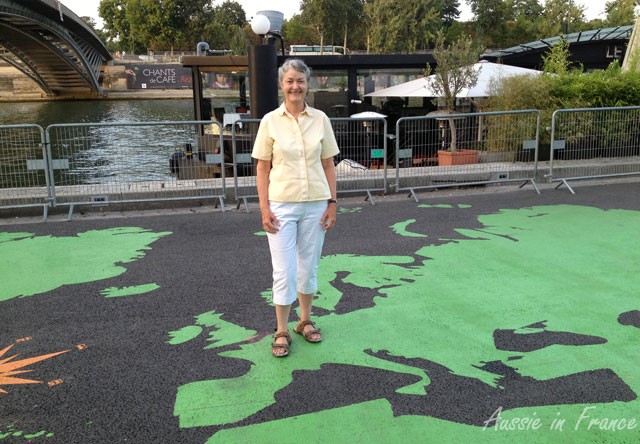
An Aussie in France on Berges de Seine which opened in summer 2013
I’m not sure about my fourth resolution of getting out and about in Paris more. I certainly did during the summer months particularly on the banks of the Seine, but as the days get shorter, so does my resolve. I do have the excuse of being in Blois a lot during the winter!
The last resolution was to make the most of my iPhone camera particularly at night. I did learn to do fashion shoots when Black Cat was setting up her sewing blog and I created a second photo blog, Blois Daily Photo, in July but I haven’t made any progress with night photography so I can put that back on the list!
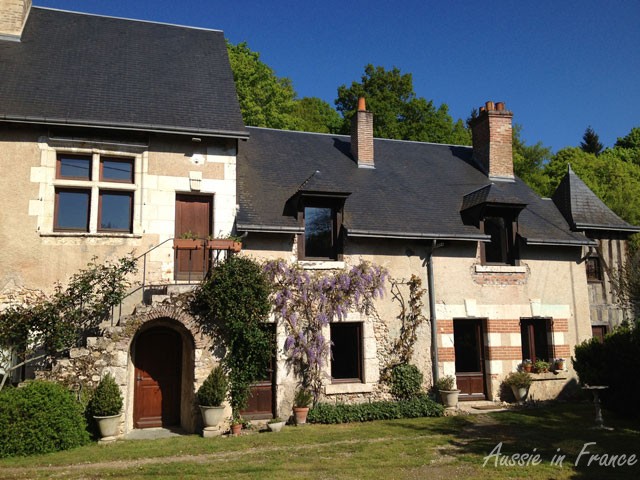
Lilac time at Closerie Falaiseau
My first resolution for 2014 is to have a maximum number of holiday bookings for Closerie Falaiseau between 1st April and 30th September. We rented for a total of 19 weeks in 2013 so are not far off our goal. All our guests were lovely and gave us wonderful reviews. One extremely nice American couple came back again and have already booked for 2014.
The second resolution is a bit tougher. I’d like to diversify into some sort of tourist-related activity in Blois but it still needs a lot of defining and requires more energy than I seem to have at the moment. Maybe along the lines of the THATlou treasure hunt, walking tours, visits to châteaux, mushroom picking, organisation of short stays in the Loire Valley …
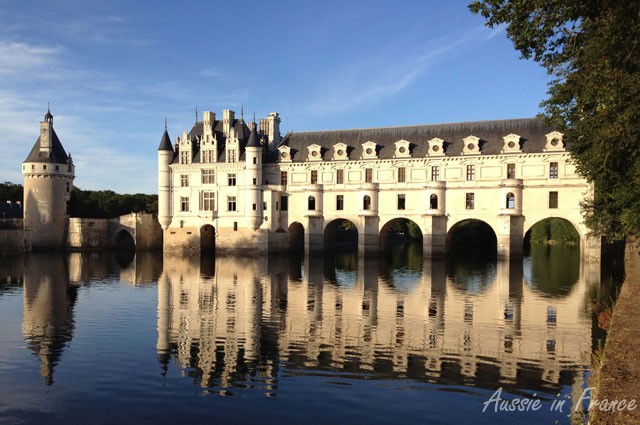
Château de Chenonceau from the cycle path
Another long cycling holiday is my third resolution so we’ve started looking at the map. Perhaps in the northern part of Germany along the Rhine. In the meantime, we have organised a home exchange in Venice at the end of April!
My fourth resolution is to discover the secret of getting enough sleep. Maybe if I set it as a goal, I might actually be able to do something about it! Who knows?
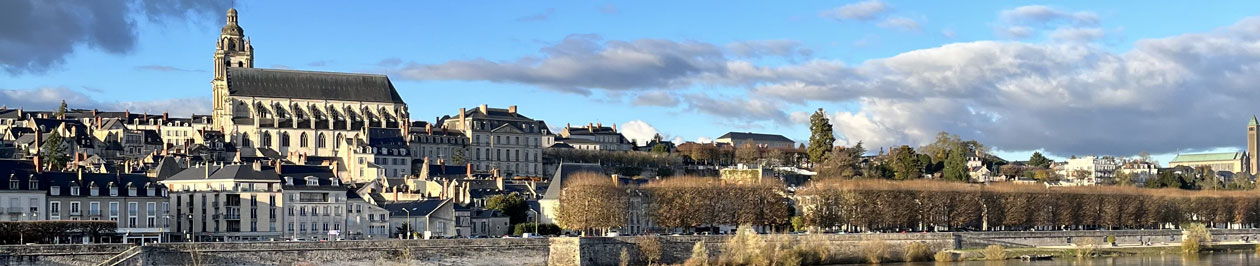
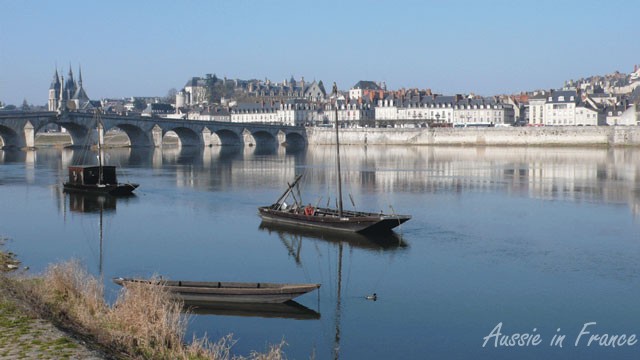
My favourite view of Blois with the traditional gabarre boats in the foreground
And the 5th is improving my night photography skills.
How about you? What are your new year’s resolutions for 2014?
As one of my friends so cleverly put it: may 2014 bring what 2013 forgot!
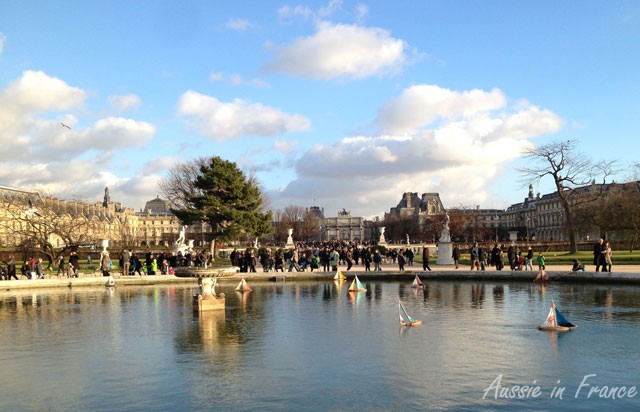
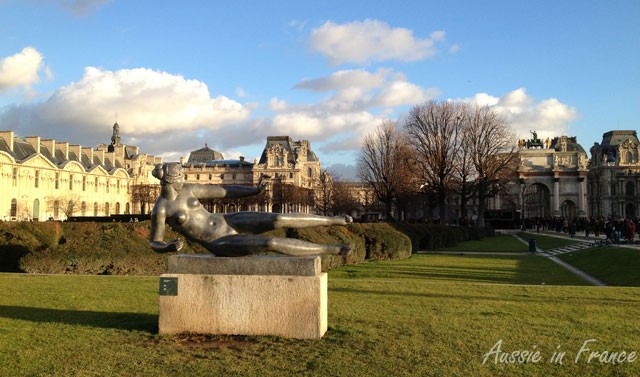
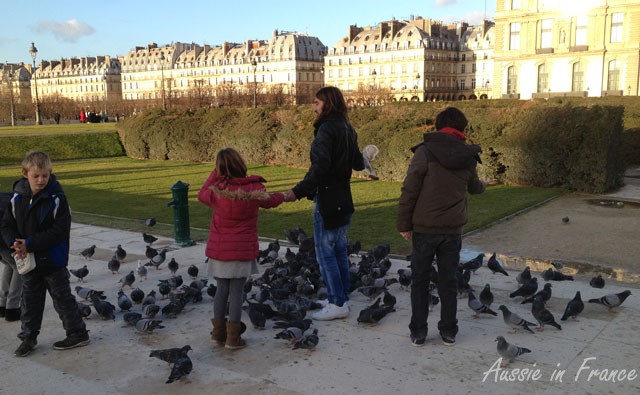
My favourite sailing boats in the TuileriesMaillol’s “Air” (1939) basking in the sun with the Louvre in the backgroundThe big wheel at ConcordeThe man in the middle of the photo kept inviting children to come and hold out their arm so that the pigeons could alight on them.
I’m telling someone about our little wood and explain that the biches ate all our medlars. “We don’t have any biches“, says Jean Michel. “We only have chevreuils“. “Isn’t it the same thing”, I ask. “No, it’s not. The only thing in common is that they’re all cervidés“, he replies. “Well, they are all deer to me”, I answer.
And there you go. It’s one of those words where the generic is used in English with something tagged on to describe the individual species. Remember nuts? I then asked what the difference was between a biche and a chevreuil. “The biche is much bigger”, I’m told. So we turned on the iPad and this is what we found.
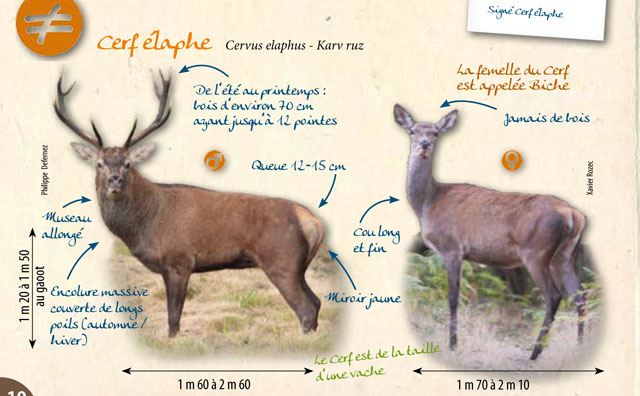
First, the word biche is sometimes used incorrectly. It should only be used to designate the female of a cerf. But I thought a cerf was a stag which is a male deer so there is obviously something wrong. You can hardly talk about a female stag, can you? I then find a wonderful document on www.gmb.asso.fr by the Groupe Mammalogique Bréton.
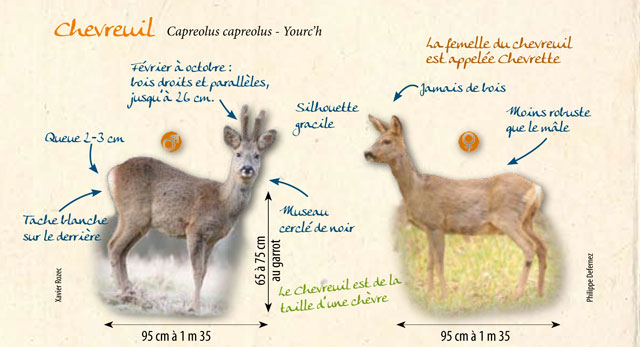
Chevreuil is capreolus capreolus and when I look for that in English I find European roe deer, also known as western roe deer, chevreuil or just roe deer. We now have the size: 65 to 75 cm high, and learn they have a white patch on their rear (bean shaped for males and heart-shaped for females). The tail is 2 to 3 cm long and the males have antlers of up to 26 cm, called bois which literally means “wood”, but we’ll come back to that later. The female is called a chevrette.
From www.gmb.asso.fr/Atlas/Cerf-Chevreuil.pdf
Here we have our cerf élaphe or cervus elaphus, red deer in English, one of the largest deer species. It is much taller, 1 m 20 to 1 m 50, has a 12 to 15 cm tail, yellow rear, massive neck and 70 cm antlers with up to 12 points. It specifically says, “The red deer is the size of a cow”. No, I have to agree, we don’t have any biches in our wood!
Since the stag and doe question is bothering me, I do some more research. In English, I find various sorts of deer such as fallow deer, reindeer and elk. I learn that the word “deer” was originally broader in meaning and meant a wild animal of any kind as opposed to cattle.
Usually, the male is a “buck” and the female a “doe” but there are regional variations. “Stag” is used for many larger deer and sometimes even “bull” and “cow” are used. The male red deer is a “hart” and the female a “hind”. Young deer can be called fawn for the smaller species and calf the the bigger ones. A castrated male deer is a havier, which I have never heard of before.
Now let’s have a look in French. A fallow deer is a daim and the female is daine. The female of renne (reindeer) is renne femelle which isn’t very exciting, is it? Elk is élan and follows the same rule. The names for the young are much more complicated: faon is used for the cerf, chevreuil, daim and renne; hère for a young cerf aged 6 months to one year with no antlers; daguet applies to a young cerf with his first set of antlers and brocard is a male chevreuil more than one year old. I’m sure I’ll remember all that!
To sum up, they are all called deer in English and all called cervidés in French but you need to make the distinction in French between the different species. The term “cervids” exists in English but is a scientific term and most lay people probably wouldn’t know what it was.
And to quote Susan from Days on the Claise in her comment: “Really big deer (American elk, moose) are bull and cow; big deer (red) are stag (cerf) and hind (biche); small deer (fallow, roe) are buck and doe. The only red and fallow deer you will see here are captive (farms or deer parks) although they would once have roamed freely as wild animals. Roe deer are common in the wild (too common, in fact, and need culling). Hart is an old fashioned word for stag that you won’t really find used these days.”
Since antlers are called bois, I checked what they are made of. They are an extension of the animal’s skull and are actually bones. Velvet covers a growing antler and provides it with blood, supplying oxygen and nutrients. Fascinating. Surprisingly, antler comes from Old French antoillier (from ant-, meaning before, oeil, meaning eye and -ier, a suffix indicating an action or state of being, so kind of loosely “behind the eye”. But in fact there is another word relating to antlers in French – andouillers are the branches of the antlers, called tine in English which, as we all know (knew?) are also the prongs of a fork or comb.
Next time I mention the medlars I shall definitely talk about chevreuils.
For this week’s Blogger Round-Up, I have two posts related to Christmas and one from a new member of the blogosphere on Budapest. Phoebe from Lou Messugo explains the do’s and don’t’s of wishing people a merry Christmas and happy new year in France while Susan from Days on the Claise takes us to the last market before Christmas – but it’s not too late because the same scenario will be repeated for New Year. Our new blogger is Anda from Travel Notes and Beyond whom you have already seen in one of my earlier posts. You’ll love her suggestions for authentic restaurants in Budapest. Enjoy!
Merry Christmas, don’t mention New Year
by Phoebe from Lou Messugo, a traveller, francophile, expat, mum and foodie now living in Roquefort les Pins where she runs a gîte after many years of travelling and living in Asia, Eastern Europe and Australia.
It’s the build-up to Christmas and every time I see someone I won’t see again until after the new year I wish them a Merry Christmas and Happy New Year…if I’m speaking in English to a non-French friend. However, if it’s in French to a French friend then it’s a more generalised greeting “bonnes fêtes de fin d’année” which means happy end of year celebrations and is more like the American “Happy Holidays”. I could say “joyeux noël” (happy Christmas) though it’s less common but I mustn’t wish them a Happy New Year. It’s considered bad luck to wish Happy New Year before midnight on the 31st. Read more
The Last Market Day Before Christmas
by Susan from Days on the Claise, an Australian living in the south of the Loire Valley, writing about restoring an old house and the area and its history and running Loire Valley Time Travel.
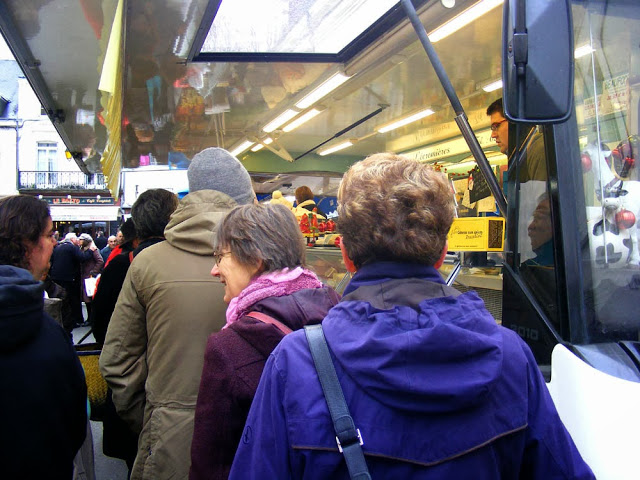
Saturday was the last market day in Loches before Christmas. I took a few pictures to try and give a sense of market shopping, but to be honest, it isn’t easy to take photos and shop at the same time.
Standing in line at the cheese stall. Note the pair in the background exchanging the standard cheek kisses in greeting. The cheese stall had twice as many staff as usual and there was still a queue, so they were doing good business. Read more
Restaurants in Budapest
by Anda from Travel Notes & Beyond, the Opinionated Travelogue of a Photo Maniac, is a Romanian-born citizen of Southern California who has never missed the opportunity to travel.
Budapest is not short of good restaurants, cafés, and bistros, but finding real authentic ones that are also a good value for your money is not easy. As in any big city with a plethora of choices, visitors get confused by the internet reviews and recommendations, often sponsored by the restaurants themselves. Like many others ahead of me, I had my fair share of disappointments and paid my price for the knowledge I gained in this field. Below is my list of recommendations, based on what I feel makes a good value restaurant. Read more
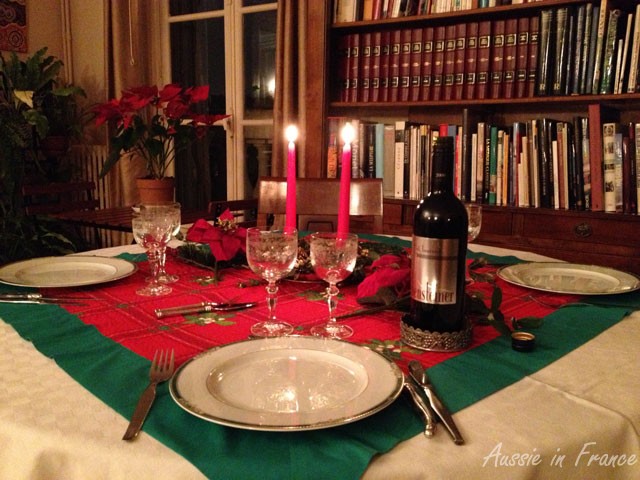
Merry Christmas to all my lovely readers from our somewhat reduced Christmas table this year – only Leonardo was able to be with us on Christmas Eve. It’s the last year we’ll be celebrating it in Paris – next year, Blois!
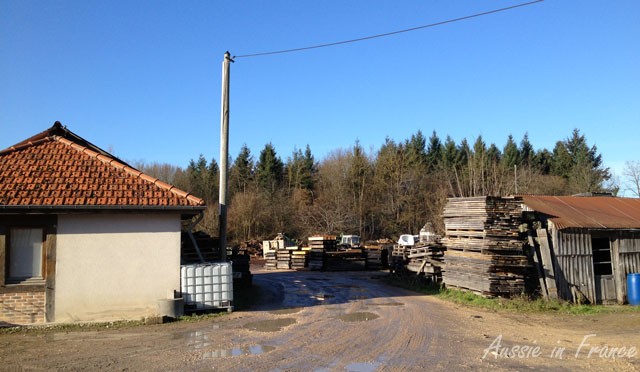
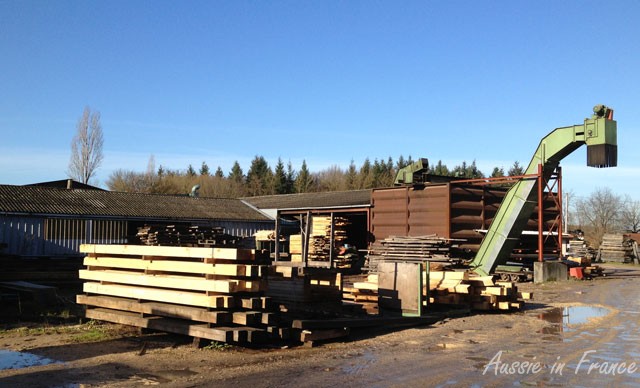
We arrive at the sawmill in the middle of Cheverny forest just before midday and not at 11.30 am as planned. We can hear machinery but can’t see any people. We finally see a man pull up in a large truck and get out. Jean Michel goes over to talk to him.
Arriving at the sawmill with not a soul in sight
I can see them arguing. Oh dear. They both come towards me and I learn that the man knows nothing about the wood we ordered on the phone at 10 am. I check my trusty iPhone to tell him the number we rang. “Yeah, well”, he says (in French, of course), “it’s the right number but it’s up at the office along the road a bit and no one told me anything about someone wanting firewood. And we’re about to knock off for lunch.”
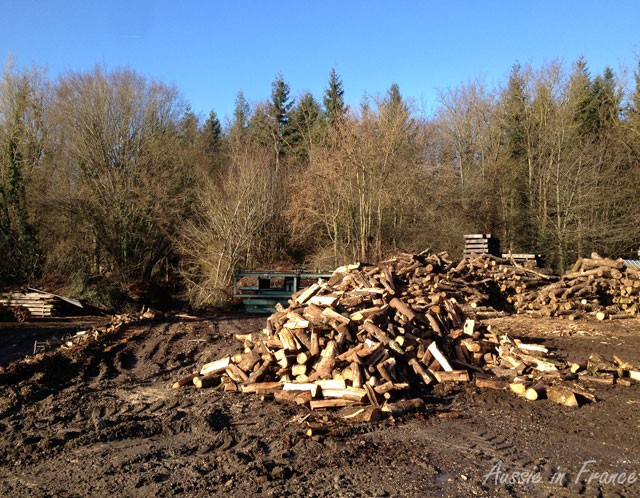
The pile of wood we are to help ourselves to
In the end, he calms down and so does Jean Michel and we are shown a large pile of 50 centimeter logs. Wood in this country is sold by the stère which is a cubic metre of wood usually cut to 50 cm lengths. He has a look at the trailer and tells us that when we’ve filled it we can go over to the work canteen and get someone to come and measure it.
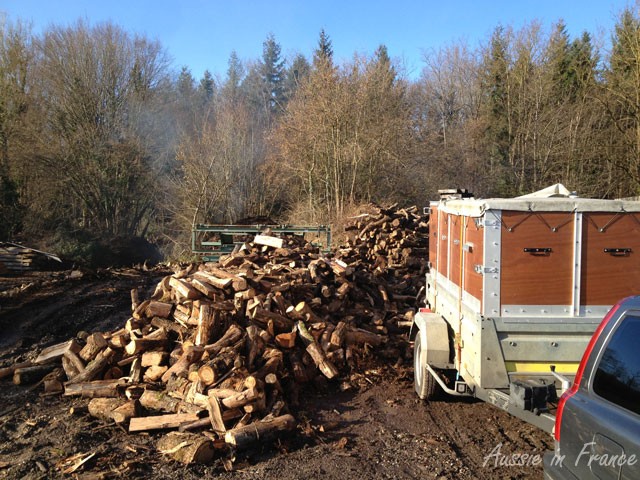
The trailer backed up as far as possible to the woodpile
Jean Michel backs up the trailer as close as he can to the wood pile without getting it stuck in the mud. I’m glad I’m wearing my big boots, thick socks, a polar fleece windcheater, anorak, cap with ear flaps and working gloves. It’s about 5°C but sunny. Another man arrives, much more cheerful than the last, and measures the trailer. We come to the conclusion that it can take 2.40 stères at 51 euro a stère. He leaves us to it.
Some of the equipment in the sawmill
We start picking up logs. Jean Michel explains I mustn’t take whole logs. They have to be split at least once. After we’ve sorted through the ones closest to the trailer, he climbs into it to start stacking them up. Some of my logs get rejected. Too short apparently – some are only about 40 cm. I’m instructed to get the tape measure out of the car. I can’t find it of course which doesn’t go over well. How come I don’t automatically understand what sort of logs I’m supposed to be getting? I tell him to stop being so snakey (well, my language was maybe a little bit stronger than that …).
Thinking about teatime in front of fire gives me extra energy to move the logs
By then, I have removed the anorak, the windcheater and the cap. When he’s finished stacking he gets the tape measure (on the floor was the instruction he failed to give me) and I keep measuring the logs until I’m sure I can judge the size correctly, ignoring him as best I can. He has to climb up onto the woodpile and throw logs down to the bottom near the trailer. I start collecting some others (carefully measured) from the back of the pile so I won’t be (accidentally) struck by the logs.
Throwing the logs around seems to have a positive effect on his mood and he surprises me by apologising for his snakiness.
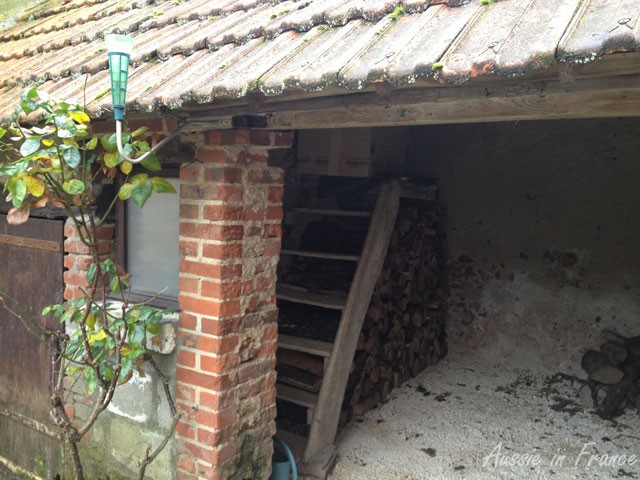
Our nicely stacked woodpile in the bike shed (and former pigsty)
It takes us about an hour to fill the trailer. The friendly man wanders over and measures our pile. We write out a check and off we go.
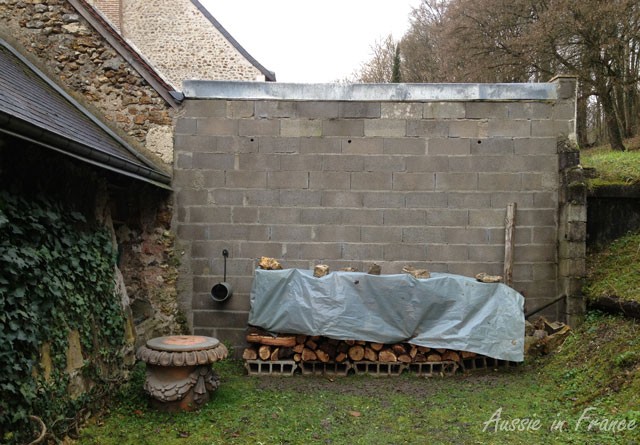
The woodpile at the back against the ugly wall that is waiting to be rendered …
After a well-deserved lunch, I go back to my translating while Jean Michel spends the next three hours unloading the wood and stocking it in two piles, one behind the house and one under the steps in the bike shelter. The woodpile has a lovely oaky smell. We’re waiting to see how long the wood will last before we have to go back to the sawmill. But it now seems that we need smaller bits of wood as well …
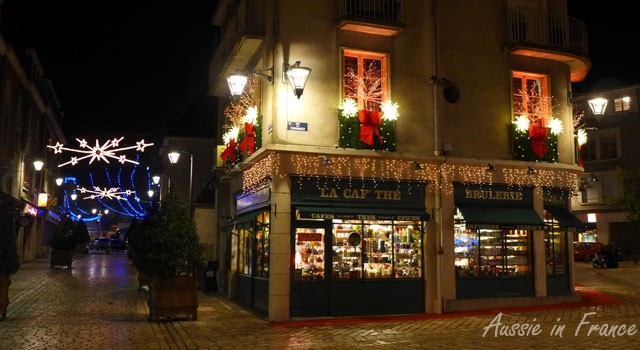
It is surprisingly difficult to take photos of Christmas decorations at night. Many of the streets in Blois have the blue and white decorations on the left. My favourite shop window is La Caf’Thé tea and coffee shop.
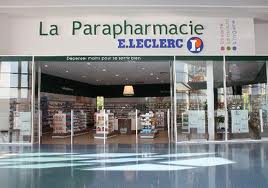
I was doing a translation today and had to find a solution for the word parapharmacie. A parapharmacie is a shop that sells everything you would find in a French pharmacy except medication, and you usually pay a lot less.
From my FaceBook research today, it seems that there is nothing similar in the UK. I don’t know about the US. Parapharmacies also sell certain brands of dermocosmetics that are not sold in department stores or large supermarkets.
I go there to buy shampoo, skincare products, bandaids and make-up.
In France, there are no pharmacy chains such as Boots the Chemist although some pharmacies may use a central buying office. Most pharmacies are independently owned. The parapharmacies, however, are usually chains. The Leclerc hypermarket and supermarket chain has its own parapharmacie.
The suffix para comes from Ancient Greek παρά meaning beside; next to, near, from; against, contrary to” which means that there are a lot of very different words starting with para.
Take the word paramédical in French. It applies to healthcare professionals with the except of physicians i.e. ambulance drivers, nurses, nurse’s aides, dental assistants, chiropodists, dental technicians, physiotherapists, opticians, occupational therapists, osteopaths, dieticians, nutritionists, medical secretaries, medical reps, medical laboratory technicians and so on.
A paramedic in English however is a healthcare professional who works in emergency medical situations which means that most paramedics are based in the field in ambulances, emergency response vehicles and specialist mobile units. In the hospital, they may treat injuries. So not the same thing at all. Paramedics are all paramédical but not the opposite is not true.
Parachute, which comes from para and chute (fall) is actually a French word.
A parapluie keeps off the rain. When he was little, my son called it a rainbrella in English which we thought was very cute of course.
So, what did I do about parapharmacie in my translation? Since it was a didactic text aimed at instructors, I was able to explain the term then use parapharmacie in Italics, but it’s not always that simple!
This week’s Blogger Round-Up starts with two expats talking about their experience in France. Wendy from Random Ramblings describes a major breakthrough in French while Bread is Pain shares her top 7 moments in France as part of the Expat Blog Award which I didn’t have time to enter this year. After you read her post, don’t forget to write a comment and help her win an award. Finally, Claire from Word by Word, source of many of the books I read, takes us around the media library in Aix-en-Provence and talks about the contemporary French literary scene. Enjoy!
Getting tough
by Wendy, an Australian Photographer and Psychologist living in Paris, enjoying life and working hard. Random Ramblings is where she shares a story or two.
Walking in the forest recently, I came across an elderly lady walking her dog. It was a little dog, playful and excitable a puppy perhaps. As the puppy ran towards me I bent down to pat it, to only hear the lady calling out ‘ne touchez pas’ french for don’t touch.
As I approached the lady she began to tell me the dog was young and needs to learn to not jump. I responded that I had thought she was telling me not to touch the dog. Read more
Top 7 “Moments in France”
by Bread is Pain, a 30-something American living in the Rhone-Alps, getting her master’s degree, learning French and slowly eating and drinking herself through the country
Being an expat has moments that are difficult, funny, exciting, even terrifying and no two countries are alike. Here are a few of the moments that France has to offer:
# 7: The Language Moment: The time you accidentally offend people.
Speaking in a different language is always complicated, no matter how long you have studied it. Every language has subtle nuances and phrases that are cultural not just linguistic. You may be able to understand every single grammatical rule of a particular language but still be lost when you are in a country that actually speaks it…and French is no exception. Read more
They’re Reading Thousands of Great Books Here, Cité du Livre – A Local French Cultural Centre and Library
by Claire from Word by Word, Citizen of Planet Earth, Anglosaxon by birth, living and working in France, who loves words, language, sentences, metaphors, stories long and short, poetry, reading and writing
Yesterday via a link on twitter, I read a provocative article in BBC News Magazine by Hugh Schofield entitled Why don’t French books sell abroad? It was an interesting, if superficial article, that made a few observations without going into any depth to understand the contemporary literary scene in France. It asked questions, reminded us of some old provocative stereotypes and did little to enlighten us on the subject of what excites French readers and why the English-speaking world aren’t more aware of their contemporary literary gems. Read more