Pigeon Houses in France

When we were cycling in the Loire Valley last weekend, we stopped in the little town of Thenay, just in front of an unusual pigeonnier which is a place where you keep pigeons so the name varies in English according to the type of abode. It’s not really something I knew much about in the north of Australia where I was more familiar with parrots, parakeets and bower birds.

Pigeon house in Thenay in the Loire Valley

Pigeonnier is actually a more recent word in the French language and came into vogue in the 19th century. Before that, they were called colombiers although a colombe is really a dove but it comes from the Latin columbarium. It seems the Romans brought the tradition to France. Now why, you might ask, would anyone want to breed pigeons ? I naively thought they were all carrier pigeons but it’s really because they produce excellent fertilizer. When the crops were being sown, though, they had to be closed into the pigeon house to stop them eating all the seeds.

Inside, there were niches, one per couple. Now, isn’t that romantic? In some parts of France, such as Normandy and Brittany, only the nobles and clergy could have pigeon houses. But that was before the French revolution. After that, they became an important adjunct to any self-respecting farmhouse, signifying the end of feudal rights. Smooth walls and a row of varnished tiles were designed to stop rodents and other predators from getting in. When there were two stories, only the second floor was used for the pigeons.

Our first real experience of pigeonniers was in the south-west of France, near Gaillac, also home to an excellent wine. Once we had seen a couple of pigeon houses, we started “collecting” them and would walk for miles to visit a new one. That was in our pre-cycling days. As you can see from the photos, the variety is astounding. Some are stand-alone, often in the middle of a field, while others are part of the house. Some are in a state of decay while others have been beautifully restored.

There were a few safety rules to be followed. They had to be built away from large trees to keep birds of prey at bay and out of the prevailing winds. The largest could house over 2000 pigeons! We started our own little collection of miniatures but haven’t got very far.

Our nascent collection of pigeon houses

Which Travel Money Card is best? – Getting to and from the Paris Airports – Road Trip Paris to Berlin

On this week’s list are two very pratical posts for those who will be travelling to France shortly. Holidays to Europe looks at the question of the best travel money card to take with you while Abby from Paris Weekender explains the best way to get to and from the different airpots in Paris. And, on a very different subject, Andrea from Rear View Mirror (who is also the author of Destination Europe) and taken to living the life of a nomad, describes a road trip to Berlin.

Which Travel Money Card is best?

by Holidays to Europe, an Australian based business passionate about sharing their European travel expertise and helping travellers to experience the holiday in Europe they have always dreamed of.

I’ve written previously about the various ways of accessing your spending money whilst overseas but after my most recent trip to Europe and a report by CANSTAR, I thought it timely to provide some more information about travel money cards. Read more.

Getting to and from the Paris Airports

by Abby from Paris Weekender, an American living in Paris who offers suggestions for Paris weekends, either staying put or getting out of town

Unfortunately there is no perfect way of getting to and from the Paris airports, but below are my suggestions.  Note that for the Air France bus (Car Air France) to and from Charles de Gaulle and Orly you can now purchase tickets online, and doing so will save you 10%. Read more

Road Trip Paris to Berlin

by Andrea from Rear View Mirror (formerly Destination Europe), a fellow Australian who, after 6 years of living in France, has given up herParis apartment to live a nomadic life slowing travelling around Europe, experiencing each destination like a local.

Driving directly from Paris to Berlin would normally take around 10 hours but there are so many fantastic places worth visiting along the way that you can make a great one to two week road trip out of it or even more if you prefer to travel slowly. I took around 15 days for the trip and stopped in seven cities between Paris and Berlin. The road trip looked like this:

Paris – Trier – Bacharach – Heidelberg – Schwabisch Hall – Nuremberg – Leipzig – Dresden – Berlin. Read more


Troglodytes in the Loire Valley and Vouvray wine

The first time I heard someone use the word troglodyte in France, I was a little surprised. It conjured up cave dwellers for me. But apparently I was going to be shown their houses – cave dwellers have houses? However, it turns out that in French, it also means a house dug out of a cliff.

Typical troglodyte cellar along the Cher River

The Loire Valley is very old and in many places both the Loire and Cher rivers are flanked by tufa hills. If someone needed a house or a cellar, they simply dug into the tufa, which is a fairly soft stone. It was then relatively easy to add doors and windows. Ventilation is a problem of course but not insurmountable. I really was intrigued when I saw them. It reminded me of Peter Pan and Wendy and their underground house.

Troglodyte house with a cellar in the middle

The photos here were taken as we rode from  Montou along the Cher River to Montrichard. Don’t you just love the details? One even has a TV antenna. And the doors are so low. They weren’t very tall in those days of course.

A troglodyte house with a TV antenna!

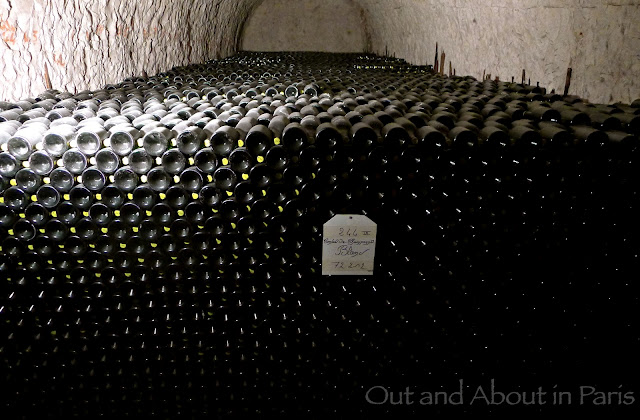
Another area in the Loire Valley well-known for its troglodyte houses is Vouvray, the home of a very good natural sparkling wine made with a local grape called chenin blanc. It may not be champagne but it’s still very palatable – and much cheaper. Most of the cellars have been dug out of the tufa cliffs. We once visited the most extraordinary vouvray cellar with very, very old wines, that seemed to go on forever. The label on the bottle shows the door of their troglodyte cellar. Vouvray is also a very pleasant sweet wine made with the same grape.

Sparkling and sweet vouvray from Domaine Freslier

After the visit, we went for lunch in a troglodyte restaurant, which is also a local speciality! Very atmospheric with its rough-finished walls and candles in their niches. Unfortunately, it was a few years ago, so I don’t remember the name …

Vouvray wine
Domaine Freslier Jean Pierre
90 – 92, rue de la Vallée Coquette – 37210 Vouvray 02.47.52.76.61

Monday’s Travel Photos – Abu Simbel, Egypt

The French love Egypt. They study it at school several times during their scolarity which means that they end up knowing quite a lot about it. Ancient Egypt, I mean, with the mummies and pharoahs. As a result, Black Cat had her heart set on going to Egypt so when she was about 12, I promised I’d take her there for her 18th birthday. Due to the political situation at the time, we didn’t go until the following year but when we did, she absolutely loved it.

The Great Sphinx of Giza and the Pyramid of Khafre

We started in Cairo with the Pyramids, which disappointed me a little – I found them overrated – then went to Abu Simbel which I thought was absolutely magnificent. The absolutely collossal statues suddenly appeared out of nowhere on the edge of Lake Nasser.

One of the twin temples originally carved out of the mountainside during the reign of Pharaoh Ramesses II in the 13th century BC for his queen Nefertari.

However, not knowing anything about Egyptian history at all, it took me a while to soak it in. After a week on the lake which was created as a result of the construction of the Aswan High Dam across the waters of the Nile between 1958 and 1971, visiting many historical sites that had been relocated when the valley was flooded to form the lake, I was ready to go back to Abu Simbel and see it all again. But we were scheduled to go to Luxor then up the Nile to the Valley of the Kings and Queens. Abu Simbel remains my favourite, particularly in the late afternoon when there are fewer tourists. I’m sure you can see why from the photos.

A close-up of the Nefertari temple in Abu Simbel
The temple built by Pharaoh Ramesses II as a lasting monument to himself to impress his southern neighbours. I’m sure they were!
Close-up of the Ramesses II temple which along with the rest of the complex was relocated in 1968, on an artificial hill made from a domed structure, high above the Aswan High Dam reservoir.
Crops growing on the banks of Lake Nasser. From the 6th century until 1815, the temples were entirely covered by sand.

Bread Ovens in the Loire Valley

Well, I shall start with my own! Closerie Falaiseau, our lovely house in Blois, has its own beautiful bread oven, unfortunately no longer in use, but Relationnel has every intention of turning it at least into a working fireplace.

Our bread oven in the kitchen with the door open


The day we were given the keys, Mr Previous Owner opened the door to the oven and we were able to look inside. It has a beautifully renovated inside vault which it is a pity to hide.

The inside vault of our bread oven

Among the things that Mr and Mrs Previous Owner left us are two utensils related to the oven – one for raking the cinders and the other for putting the bread into the oven and removing it. Now, the wooden pincers that you can see on the left have nothing to do with bread. Do you remember those old-fashioned woolen mattresses with grey and white striped covers that had a sort of roll around the edges? Well, the pincers were used to pinch them into shape.

Our oven utensils

I doubt if you can guess what the next photo represents. According to Mr Previous Owner, the baker used a poker to check when the oven was hot enough. He’d put it in the oven, leave it for a few minutes, then test it on the beam above! I find this a little difficult to believe because if it were true, there would theoretically be a lot more burn marks, wouldn’t there ? It’s a nice story anyway …

Burn marks on our oven


Mrs Previous Owner, who is one of those people with the knack for finding authentic objects, managed to salvage three bread baskets when the local bakery closed down several years ago. They were used to shape the loaf as it rose.

Bread baskets

Up on the hill behind us is a house with a lovely little village bread oven, that is, it’s not inside a house but separate. Baking day was usually once a week and all the villagers would prepare their bread and bring it along to cook because only the bigger houses like ours had their own oven.

Bread oven in Les Grouets in Blois

When we were cycling to Chaumont one day, we came across another type of village oven as we left the little village of Candé sur Beuvron. As you can see, it’s a much bigger and more sophisticated affair than the one in Blois.

Bread oven in Candé sur Beuvron

I currently make my own bread with a bread-making machine, you may remember, so I have high hopes of one day being able to bake it in my own wood-fired oven!!!

Our bread oven from the back

Café Gourmand – A French Speciality

My monthly contribution to My French Life, the global community of French and francophiles connecting like-minded people in English & French has just been published, this time in the Gastronomie section.

One of the best inventions in French cuisine in recent years, in my opinion, is the café gourmand.

I’m not big on desserts. Also I think that the best and most inventive dishes in French restaurants are the entrées. By the time dessert comes, I’ve usually had enough to eat. What I really prefer is a cup of coffee with a little tidbit on the side. And that is exactly what a café gourmand is, except that there are usually three or four different little tidbits. Read more

Where do you ride your bicycle? Velib in Paris and Hubway in Boston want to know! – escaping the tourist trail in Paris

In this week’s Bloggers’ Round-up, Mary Kay from Out and About in Paris compares Vélib in Paris and Hubway in Boston while Caroline Lee from Escape to Paris shares her experience of staying in an unusual and little-known place in Paris. Let’s join them!

Where do you ride your bicycle? Vélib in Paris and Hubway in Boston want to know!

by Mary Kay from Out and About in Paris, an American by birth, Swiss by marriage, resident of Paris with a Navigo Pass for the metro that she feels compelled to use

With over 20,000 bicycles, the Vélib public bike sharing system is well on its way to becoming as synonymous with Paris as the Eiffel Tower. No matter the time of year or the weather, it’s easy to spot enthusiastic cyclists crossing the Pont St. Louis or making their way precariously around the Place de la Concorde. Whenever I see an impeccably dressed woman in a skirt and high heels or a man balancing a large musical instrument on the back of his bicycle, I always want to ask where they’re headed. It seems that I’m not the only one who wants to know because the official website for the city of Paris recently posted a slide show of people who responded to the question, “Tu vas où avec ton Vélib’?” (Where do you go with your Velib?”). My favorite answer was by a couple from New York who said, “We’re wandering around without a precise destination today. Maybe we’ll go to the Luxembourg or the Tuileries, we’ll see.” Read More

escaping the tourist trail in Paris…

by Carolyne Lee, from Escape to Parisan Australian writer, teacher, and researcher who tries to spend every spare moment in France.

Passing through Paris not long ago, on my way to Toulouse, I needed a bed for a night, and stayed in a miniscule but lovely studio in a three-storey house in a street which my Paris friends later told me they had never heard of! It also seemed that tourists hadn’t heard of it, although as well as L’Hotel Particulier, where I stayed, I noticed another of the houses functions as a hotel, Hotel Mignon, mignon translating as ‘cute’. That certainly describes the whole street. It’s rue Cremieux, close to the Gare de Lyon, a street of former workers’ houses, now gentrified, all painted different colours–some quite startling. Some even had various quirky decorations, and the whole effect was sublime. Many of the houses are owned and lived in by families, so even though it looks a bit theme-parky, it wasn’t like that at all. Children were playing in the street, neighbours were chatting, a few people even said ‘bonjour’ to me. My pictures will tell the story much more eloquently… Read more


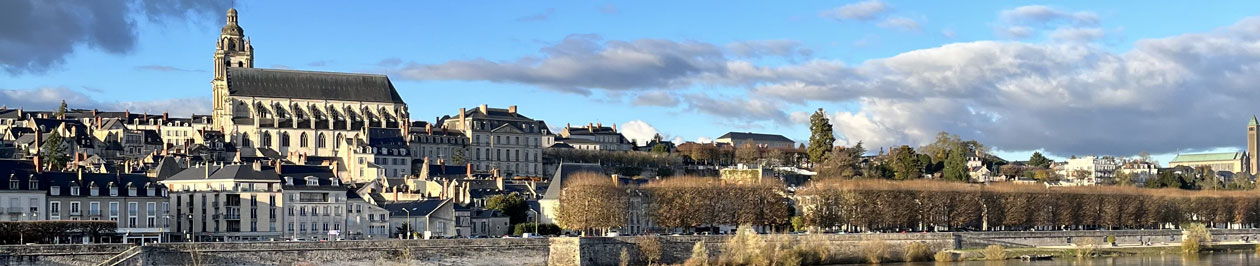
Back to Blois

When we packed up the weekend before last, we thought we’d just be spending one more weekend in Blois before going to Australia for five weeks on 10th September. But on Friday, I was working away in my apartment in Paris (I’m a freelance technical and legal translator) when a large set of scaffolding suddenly hove into sight.  I knew it was coming because I’ve been subjected to all sorts of banging and shouting and music and dust for the last nine weeks from  my neighbours’ balcony. But I had been told our turn was the end ofAugust.

Scaffolding on my balcony at the Palais Royal

So I had a long chat to the worksite boss, who soon appeared in front of the window. “But it is the end of August !” Well, not quite. I thought I had at least another week to go. He told me the worst would be during the next two weeks, starting Tuesday, when they would be demolishing the large vases and balustrades using their pneumatic drills, from 8 am to 5 pm.

Fellow bloggers before the scaffolding – A Man and a Woman in Paris, Femmes Francophiles and Out and About in Paris

During that time, the wooden shutters and windows have to be kept closed at all times, leaving practically zero light in my office and the living room. Fortunately, the other side (bedroom and kitchen) won’t be affected. I find it difficult to be deprived of light at the best of times, but 10 weeks of darkness day and night is like a nightmare, not to mention the noise. I’m one of those people who are allergic to radio music when I’m working and these particular workers are very keen on loud rap.

Balusters about to be replaced

So here I am in the train, on the way to Blois where I’ll stay until the Friday before we leave for Australia. Fortunately I have everything set up to work there, except for my specialised dictionaries, but these days, you can find most of what you want on the Internet and I can always get Relationnel to look something up for me if necessary. He’s coming for three days this weekend and then I’ll  only have another few days before I go back to Paris. I would really rather he were with me …

Cycle path opposite Blois

At least I’ll be able to do some gardening and cycling, especially this week, because it looks as if the good weather’s here for a little while longer.

Monday’s Travel Photos – Vienna, Austria

I have to confess that Vienna is not one of my favourite cities. I found it too clean and stark. But I still think it’s worth a visit. We went there in early June 2008 just when the World Football Cup was starting, without realising the date. The town hall was topped with a huge soccer ball and there were giant screens up everywhere. We had difficulty finding a good restaurant for our wedding anniversary and finally settled on an excellent Italian ristorante called Barbaro in Schauflergasse. We did enjoy having an aperitif at Zum Schwarzen Kameel with the rest of Vienna though.

Vienna Rathaus (town hall) completed in 1883
Vienna State Opera, completed in 1869
Saint Stephen’s Cathedral, 13th century, with its beautiful multi-coloured tiled roof reminiscent of Burgundy
Karlskirche (St Charles’ Church) completed in 1737
The very baroque interior of Karlskirche
Karlsplatz Station with its typical Jugendstil architecture, 1899
The Austrian Parliament Building, completed in 1883
A typical Viennese street
The Hoffburg Palace in the city centre, the Habsburgs’ winter residence, 13th to 19th centuries
Gloriette at Schönbrunn Palace, the Habsburgs’ rococco summer residence, completed in 1643 and home of the famous Empress Elizabeth alias Sisi


Sunset on the Tuileries

I’ve already talked about the sunset in Paris but my very favourite spot is in the Tuileries Gardens. I don’t usually post this many photos at a time but I happened to be there recently when the sun and the sky were just perfect! They’re not of the sunset itself but of the changing light over the surrounding buildings and fountains. So come with me as I walk from the Concorde end of the gardens down to the Louvre and then we’ll have a drink at Café Marly!
The Grand Bassin at the Concorde end of the Tuileries
Now who would expect a goat in the Tuileries Gardens?
Small pool on the right of the gardens with the  Pavillion de Flore
The sailing boats are being carted off to the children’s disappointment
The Rue de Rivoli wing of the Louvre, Pavillion de Marsan
OId versus new
The Louvre Pyramid with the Carrousel Arch on the right
The Pyramid with the Pavillion de Flore on the right
Last rays on the Pavillion de Marsan

Café Marly at sunset
Related Posts Plugin for WordPress, Blogger...

from the Tropics to the City of Light