Category Archives: Sightseeing

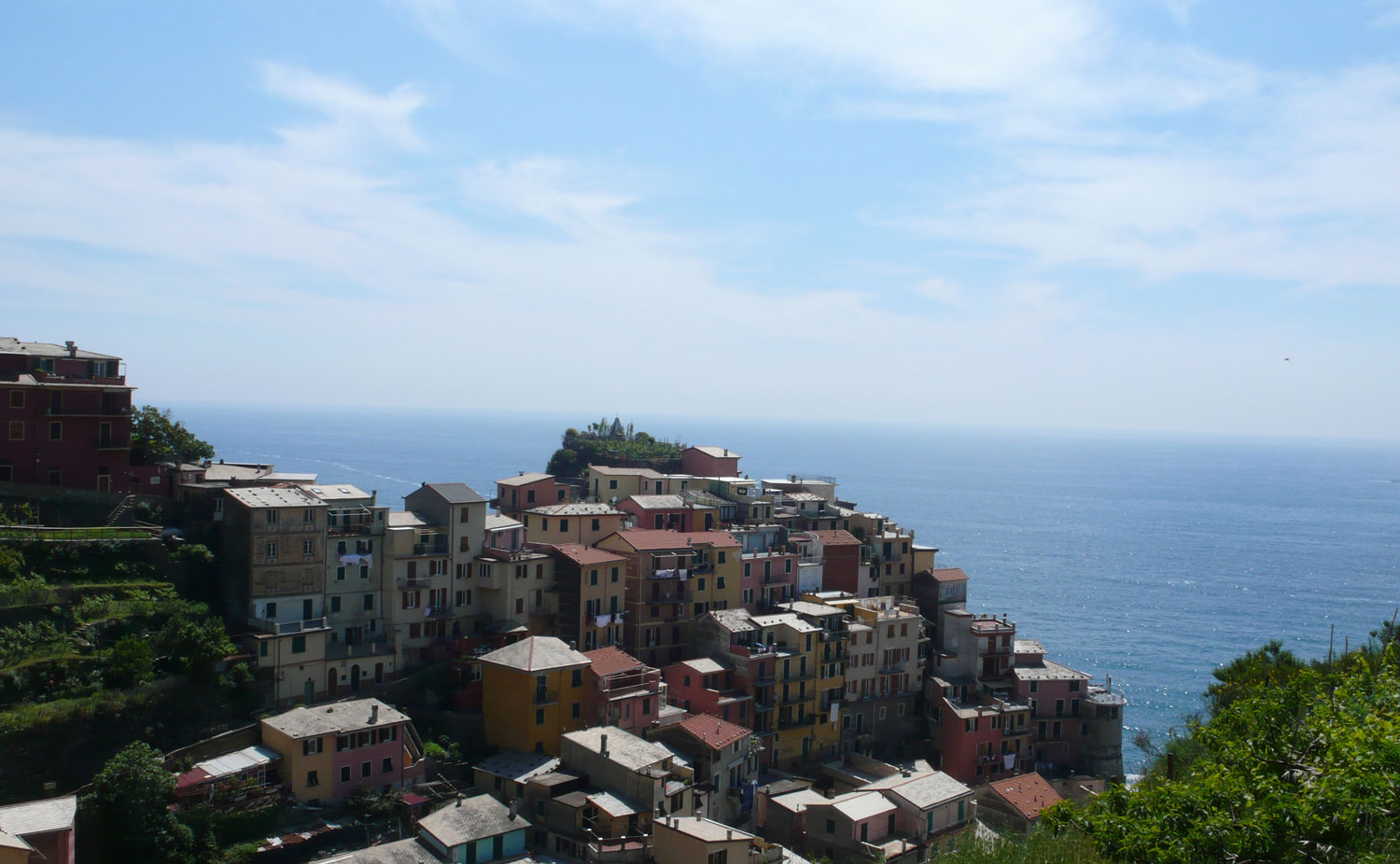
Cinque Terre – Italy

Several times, when holidaying in Italy, we drove down the Italian coast from Genoa along a highway perched far above the sea. It seemed obvious to me that there must be some wonderful little villages and breathtaking scenery down below, if only we could get to them. Once, we tried, but only seemed to find one of those horrible strips of built-up beach front where you crawl along at a snail’s pace with high-rise buildings with balconies on one side and ice-cream parlours and amusement centres on the other.
Then one day, someone mentioned Cinque Terre, which is a collection of five water-front villages difficult to access by car, but a breeze by train. I am a little afraid of heights and was rather worried about finding myself in a train perched atop one of those cliffs I could see from the motorway. I even did some hypnosis exercises so that I’d be able to do the trip.
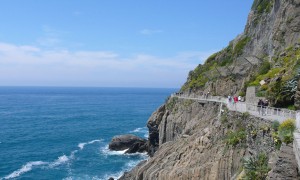
We chose to stay in Levanto rather than one of the five villages, mainly because of the prices and problems parking the car. It turned out to be an excellent choice. We stayed in a B&B called L’Antico Borgo outside the town which I can definitely recommend. After going along a rather scary road full of hairpin bends, we arrived at the village parking lot then walked down through a labyrinth of little streets to the B&B. The room was large, clean and comfortable with free wifi. It was a good breakfast for Italy, served on a terrace with a sweeping view of Levanto and the coast. Our hosts were friendly and helpful.
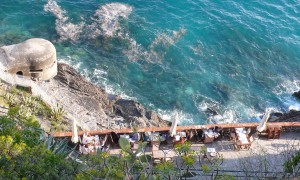
We then drove back to Levanto and parked at the train station. We later learnt there was free parking further away and that we should have immediately bought a two-day train pass that includes entry to the walking paths. The train actually runs through the mountain so that the villages are only 5 or 10 minutes from each other and there are no scary hilltops. They are also connected by mostly very easy paths provided they’re not closed due to bad weather as heavy rain can cause landslides.
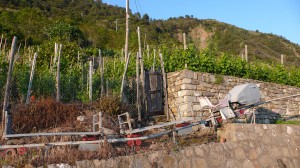
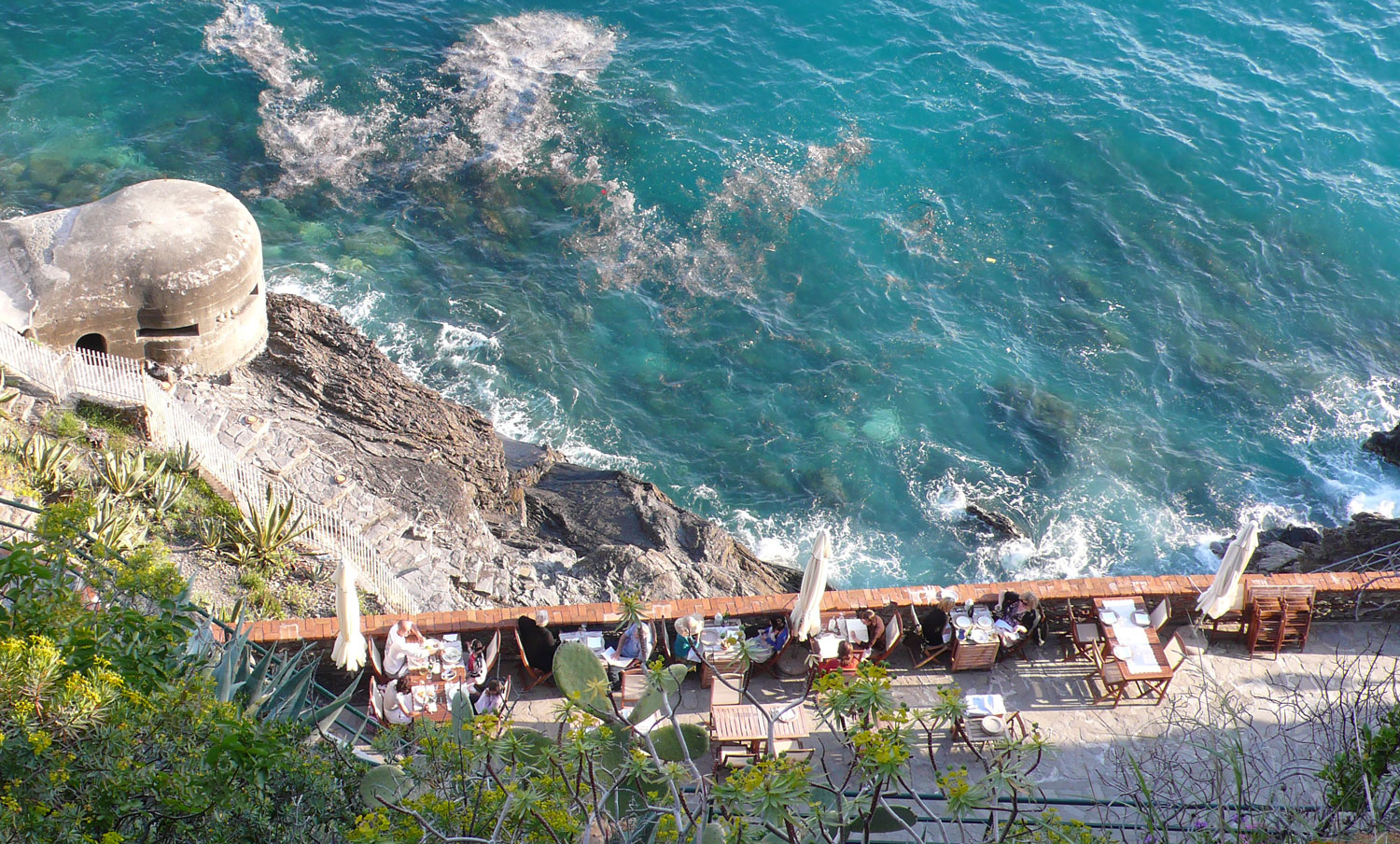
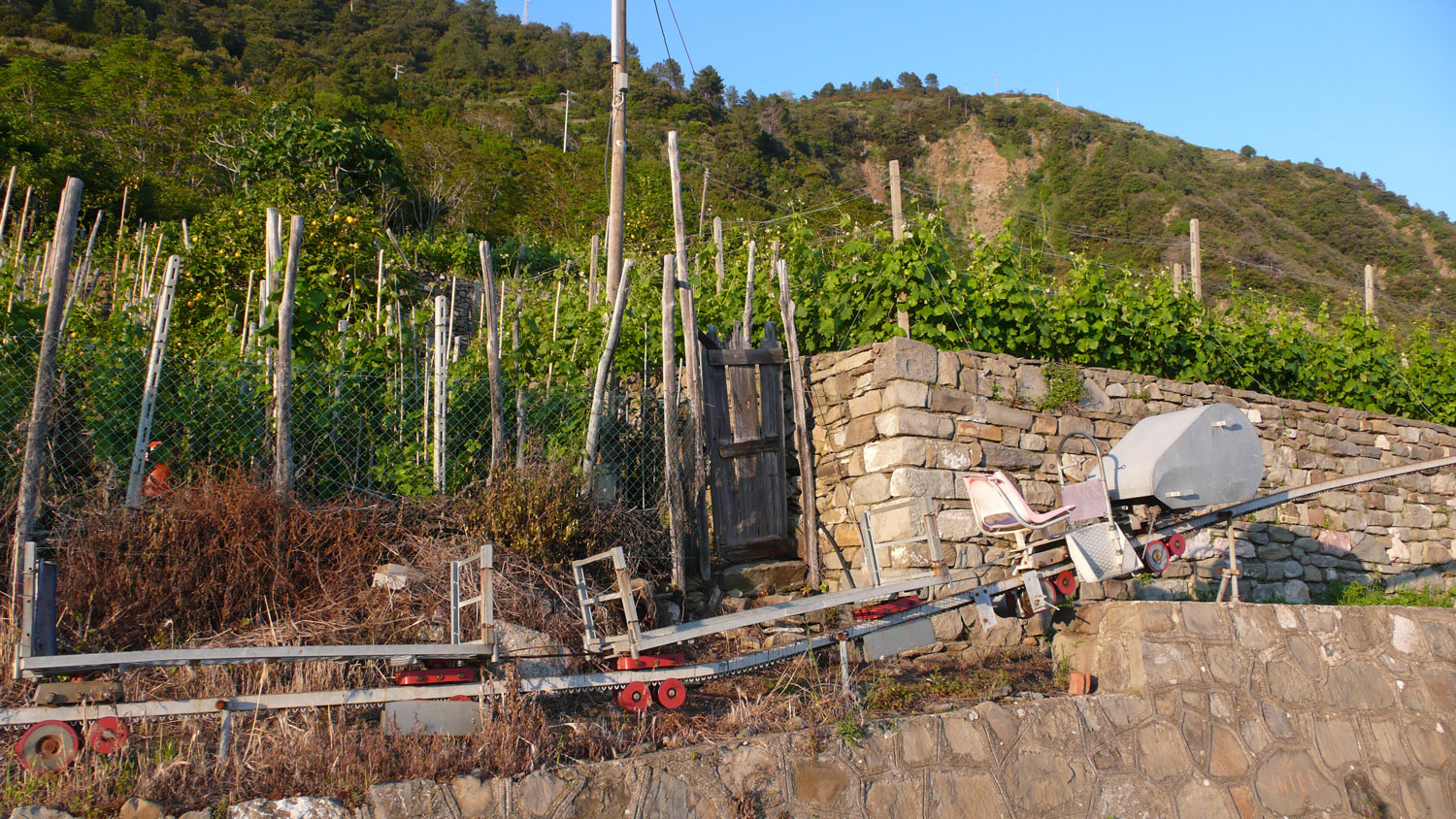
We chose Corniglia, way up on the top of a cliff, for our first evening. From the train station, you can take the stairs – all 282 steps – or walk up the road, which takes  longer but is kinder to the knees. We passed an amazing contraption used for grape harvesting. I booked a table at Intermezzo di Mananan for 8 pm and we went to see the sunset over the villages of Vernazza on the right and Manarola on the left. The restaurant was most entertaining, with the patron ordering everyone around and having a wonderful time. We had an excellent platter of grilled seafood with house wine.
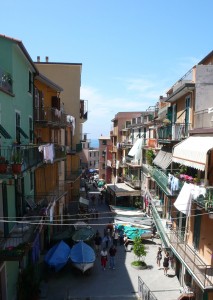
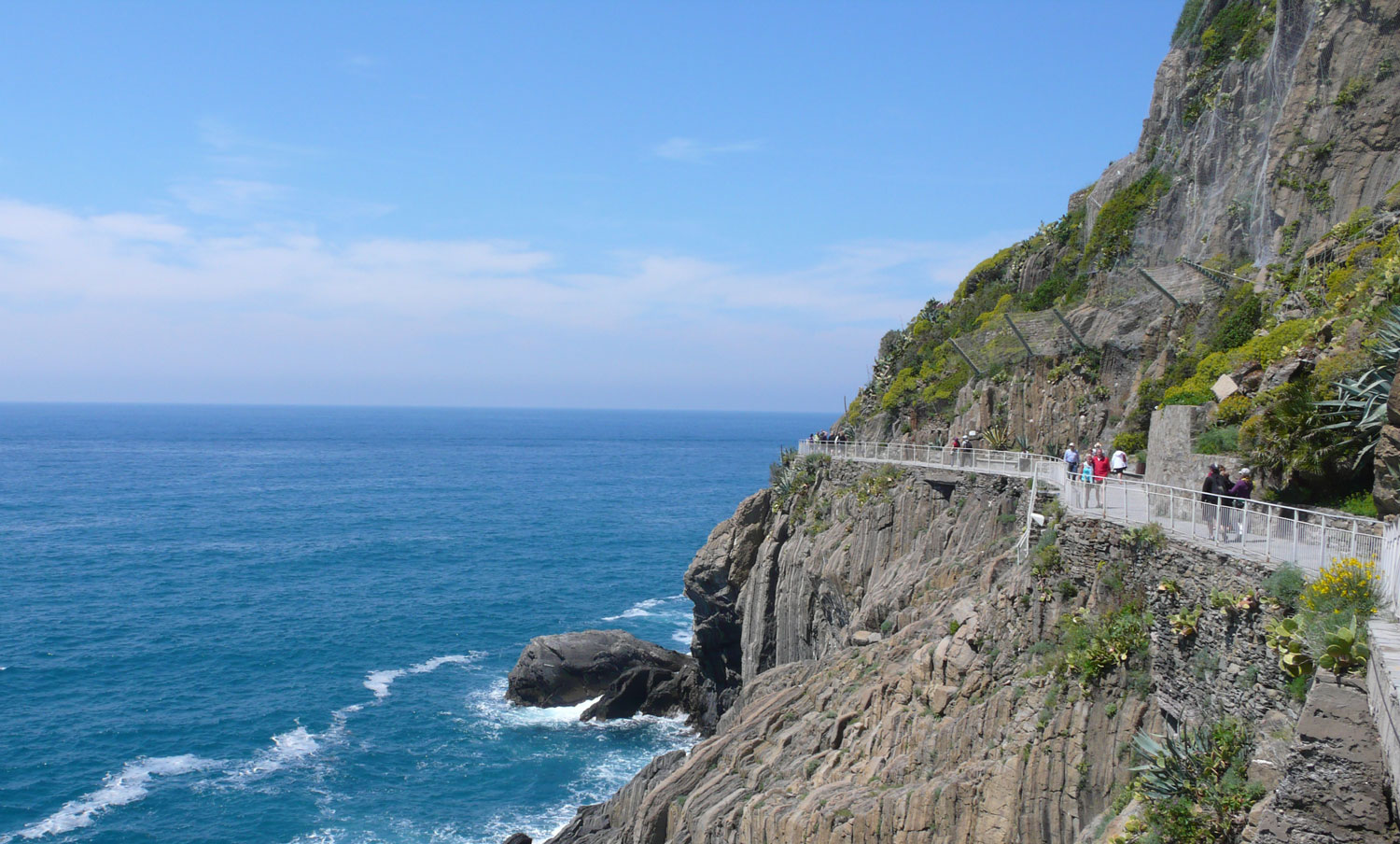
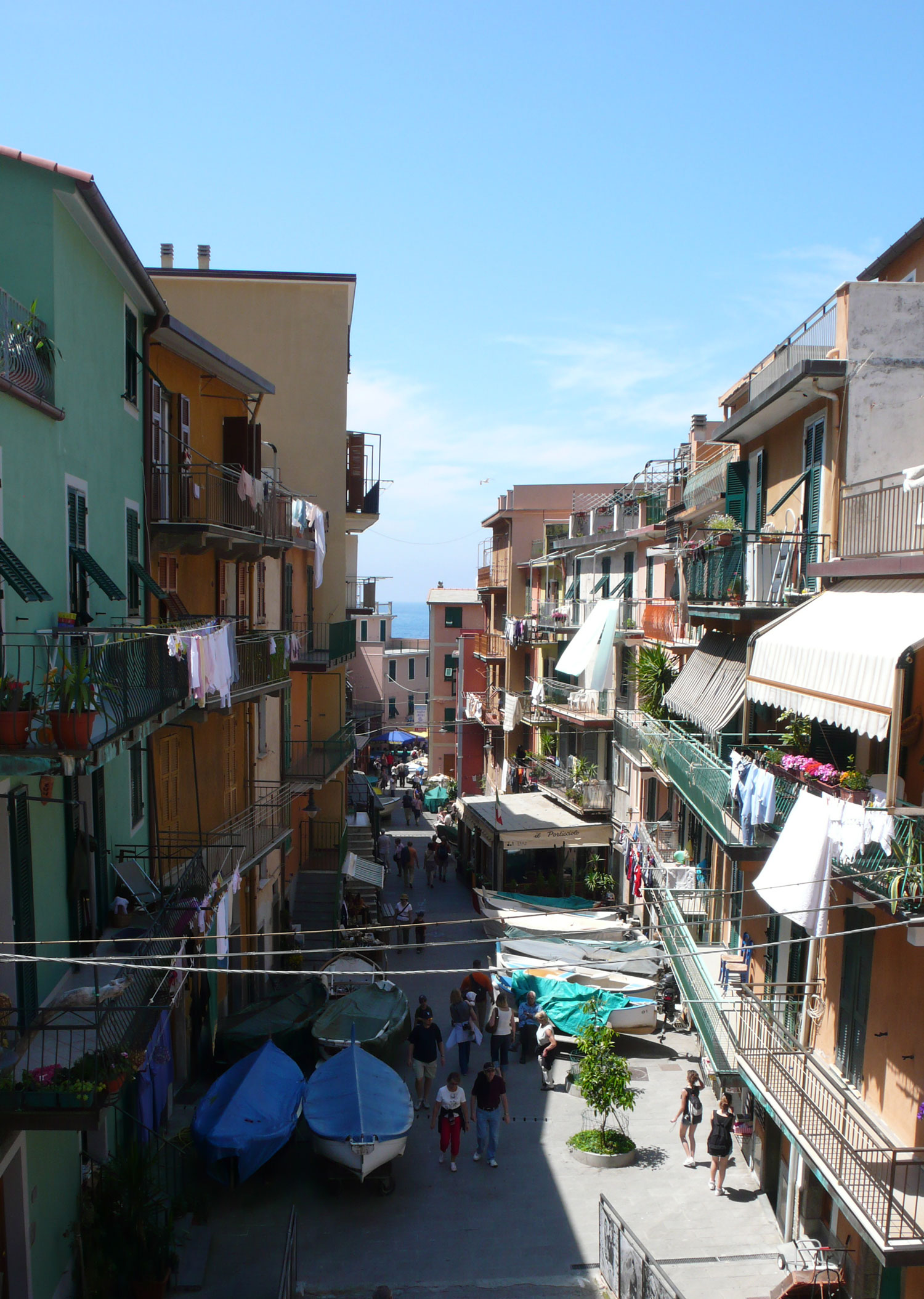
The next day we started with the last village on the train line, Riomaggiore. It proved to be full of tourists despite the fact that it was only May so we climbed up into the vineyards behind the village along a path romantically called “Via dell’amore” and took in the most spectacular scenery. We kept going until we reached the little fishing village of Manarola, only 20 minutes away, with its colourful boats in the main street. There we found a restaurant called La Trattoria La Scogliera on via Birolli where we ate some excellent fresh fish called boghe. After lunch, we went for another walk up through the vineyards.

We had intended to go by boat to Vernazza but it was too windy and the boat was cancelled. The n°2 footpath was also closed so we ended up taking the train. When we got there, we climbed up to the sanctuary from which we had a magnificent view of the village, the church, the fort and the bridge below. Our next and final stop was Monterosso, which is a small town rather than a village and even has beaches.
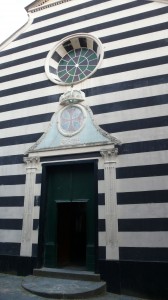
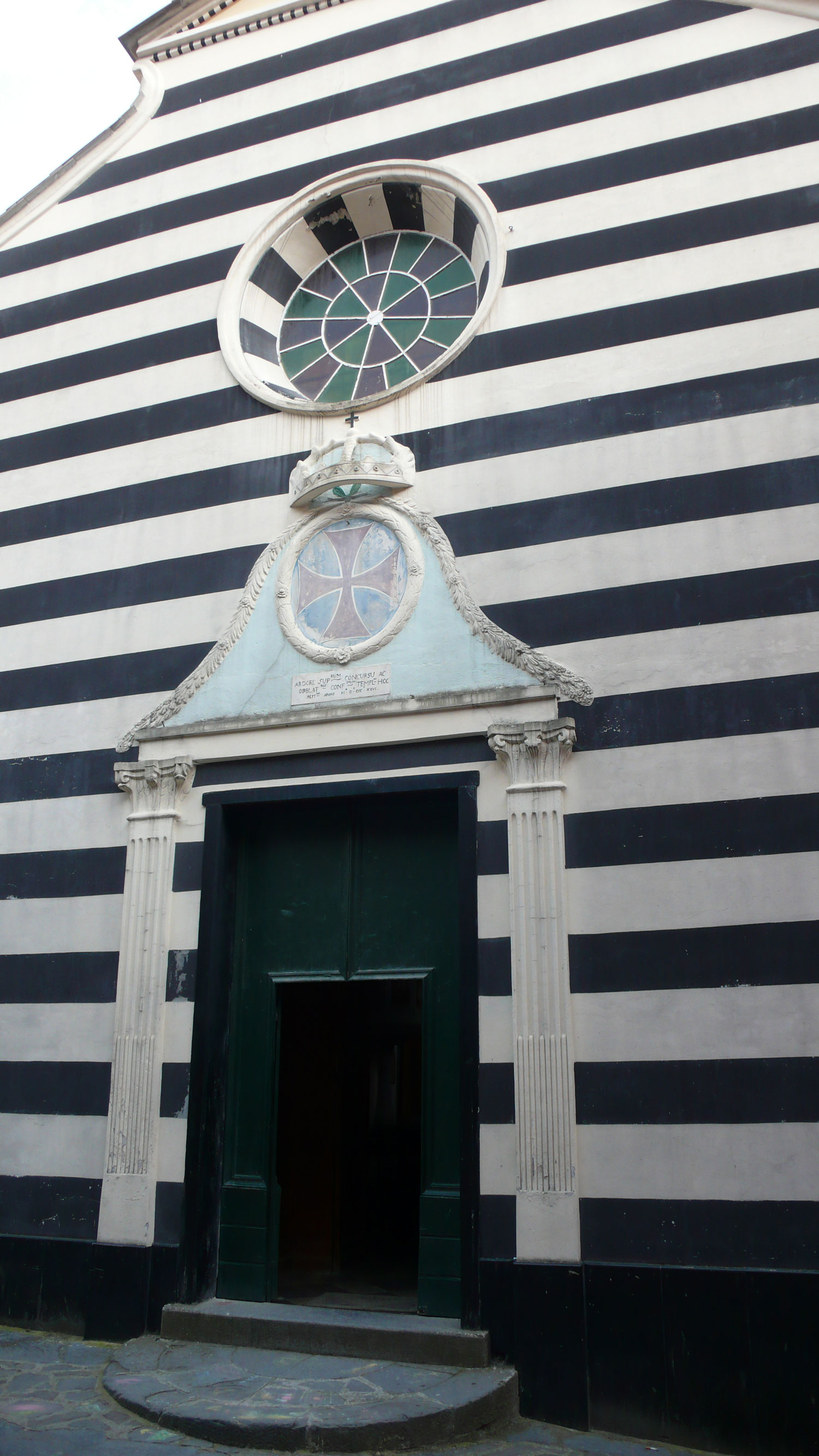
As we walked up the hill to the old town, we saw a restaurant whose tables had a magical seaview so we reserved a table. The centro historico has three churches including Saint John the Baptist with its black and white striped façade. From the Capuchin convent on top of a hill with its statue of Saint Christopher, we could see the other four villages and our restaurant, L’Ancora della Tortuga, below. It proved to be one of our best souvenirs of Italy! We had antipasti della mare and carpaccio pescata followed by octopus and monkfish with a local white wine. Excellent service  and beautifully fresh food.

The next morning, before leaving the area, we visited Levanto with its black sand beach and beautiful summer villas, stopping for a cappuccino with the locals before continuing on our journey.

B&B L’Antico Borga, Levanto, http://www.anticoborgo.net/
Intermezzo di Mananan, via Fleschi, 17, Corniglia, 0187821166
La Trattoria La Scogliera, via Birolli, Manarola
L’Ancora Della Tortuga, Salita Cappuccini, 4  19016 Monterosso al Mare La Spezia, 0187 800065
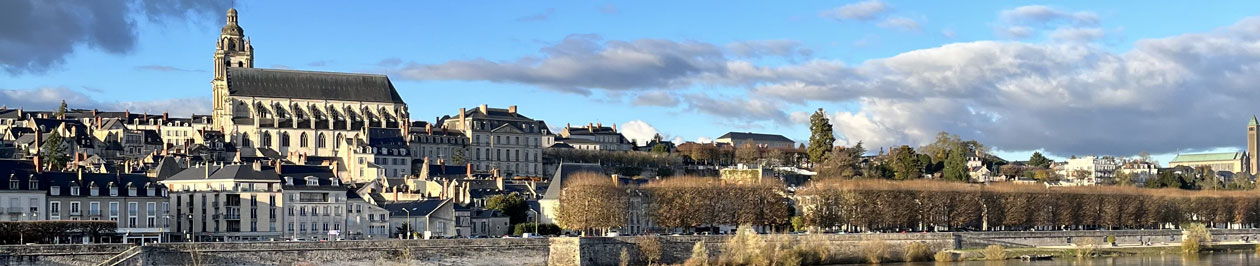
Sunday’s Travel Photos – Mostar – Bosnia Herzegovina

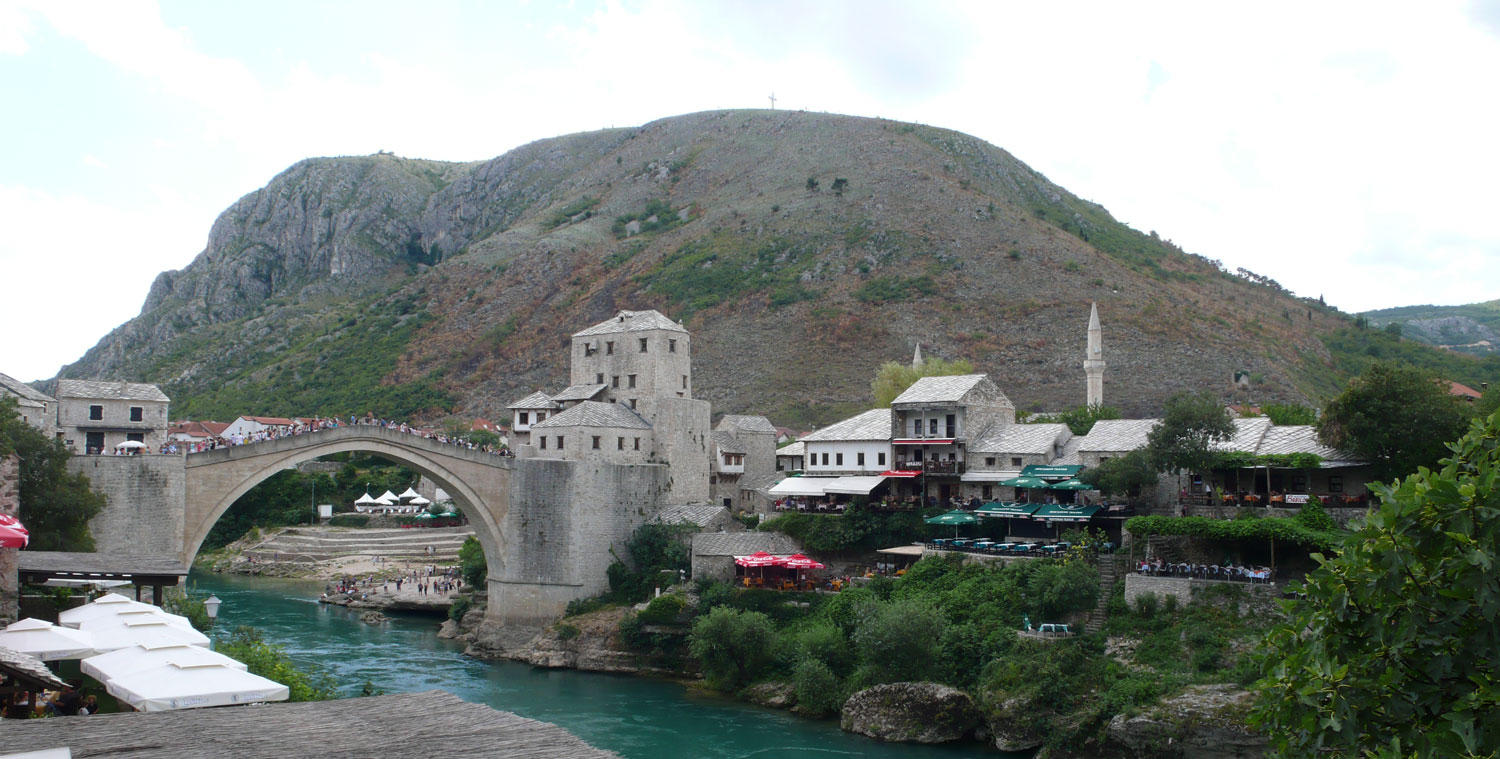
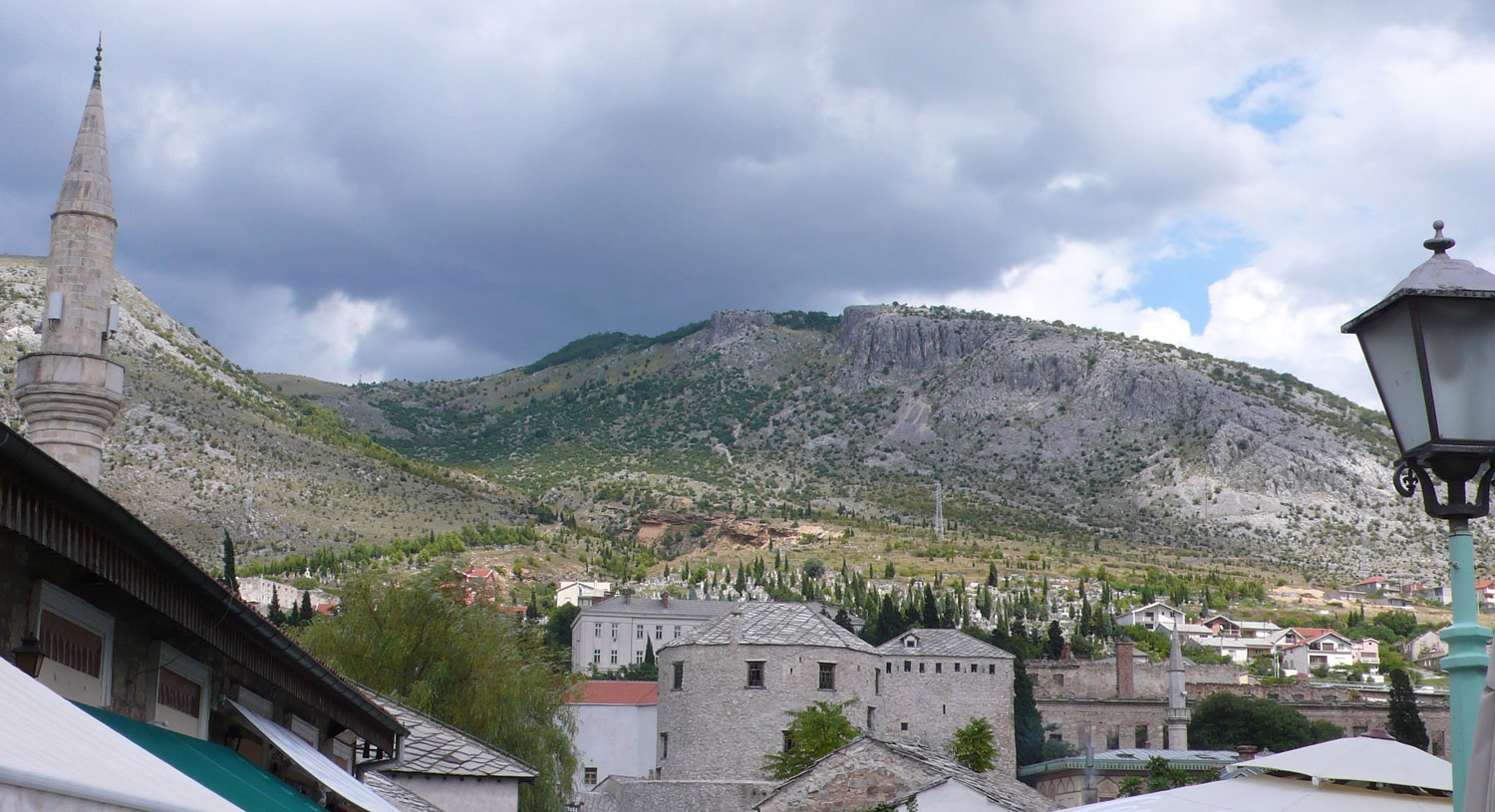
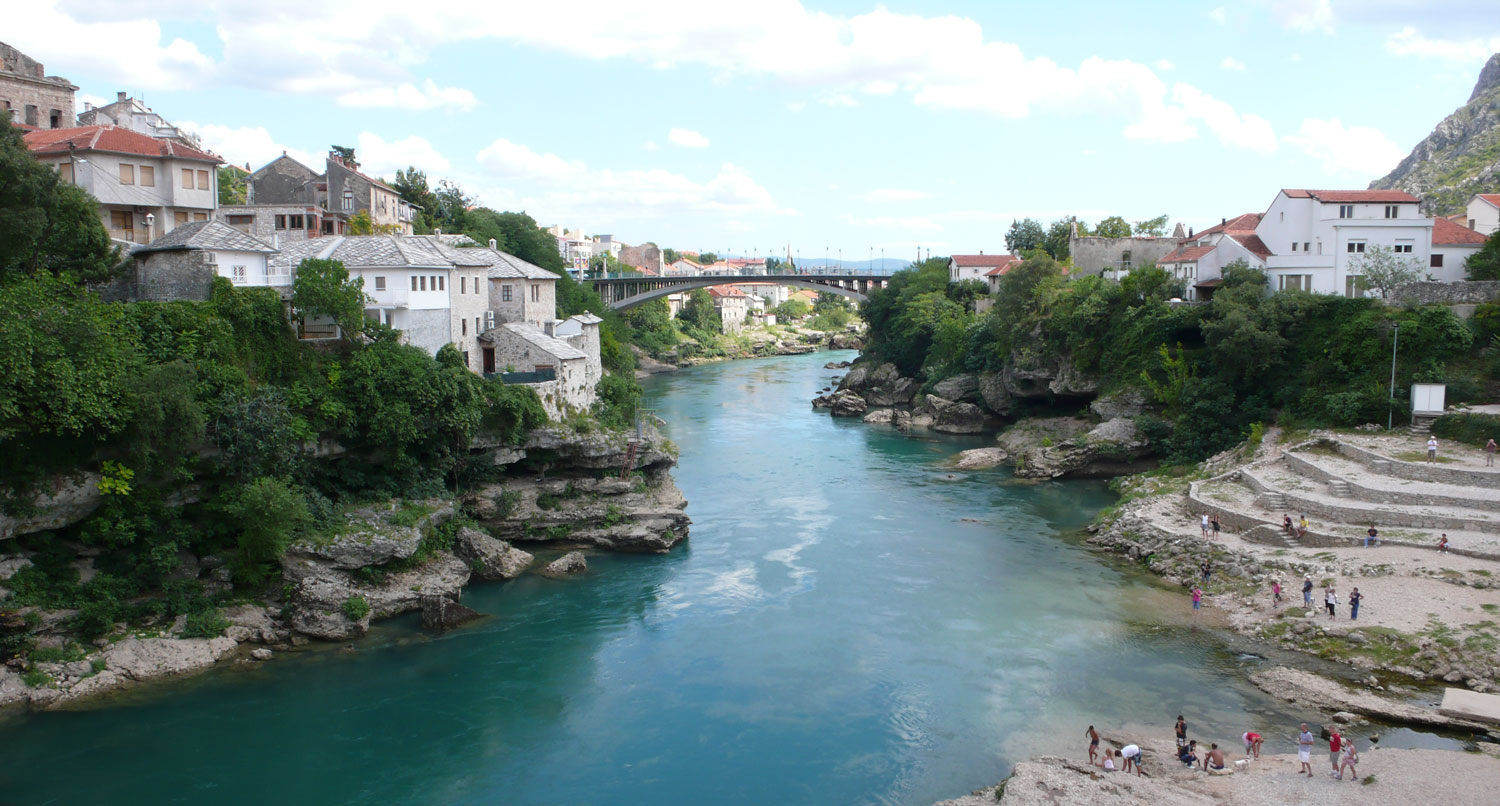
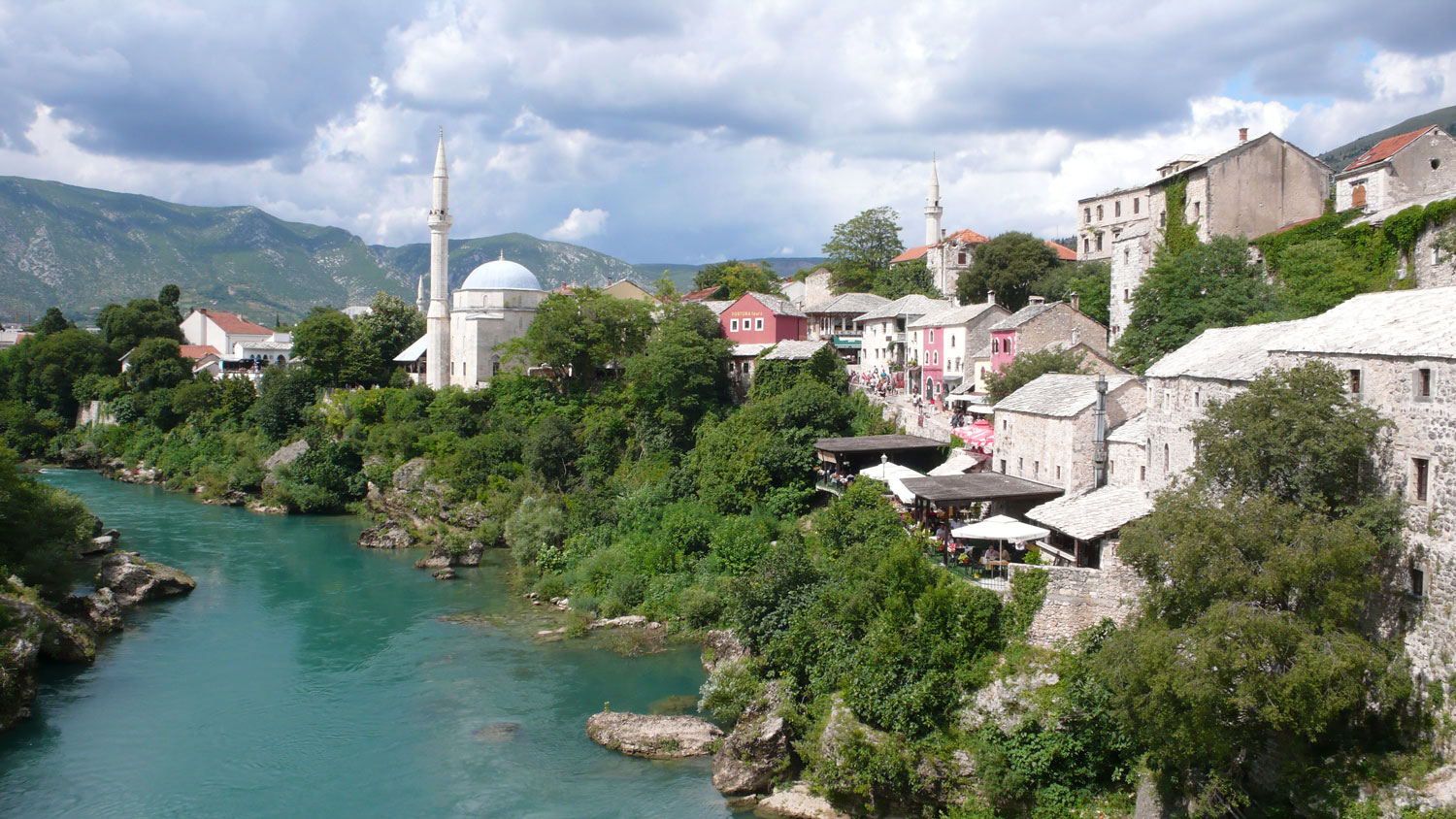
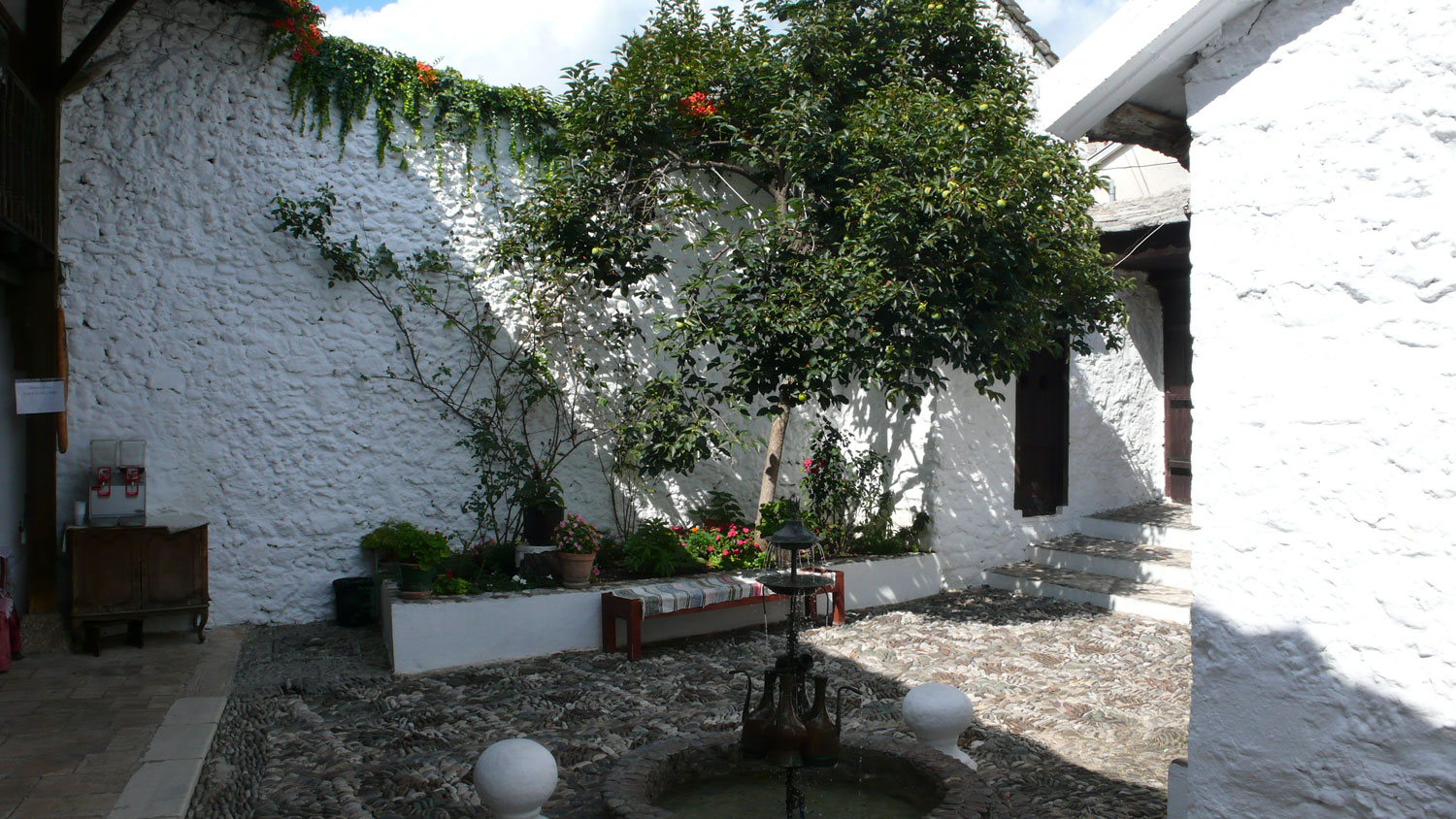
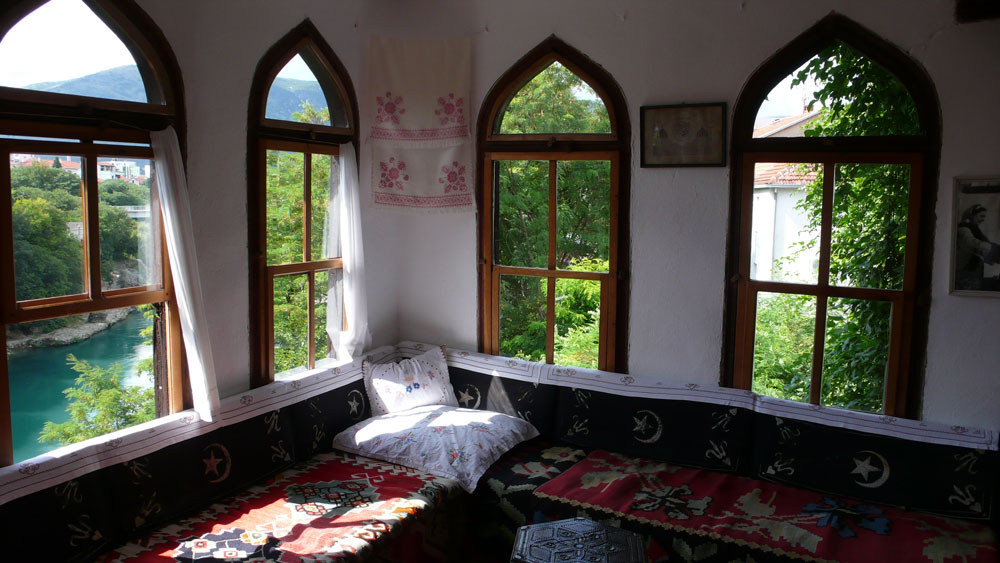
I described our visit to Mostar in Part 4 of My Croatian Itinerary series. It was a terribly hot murky day and it felt as though we had reached the end of the earth, but the little cobbled street leading up to the famous arch bridge and over the other side was absolutely full of tourists. It was so wonderful when we finally reached the shady inner courtyard of the Ottoman house and had it to ourselves.

My Croatian Itinerary – Part 4: Split, Mostar & Dubrovnik

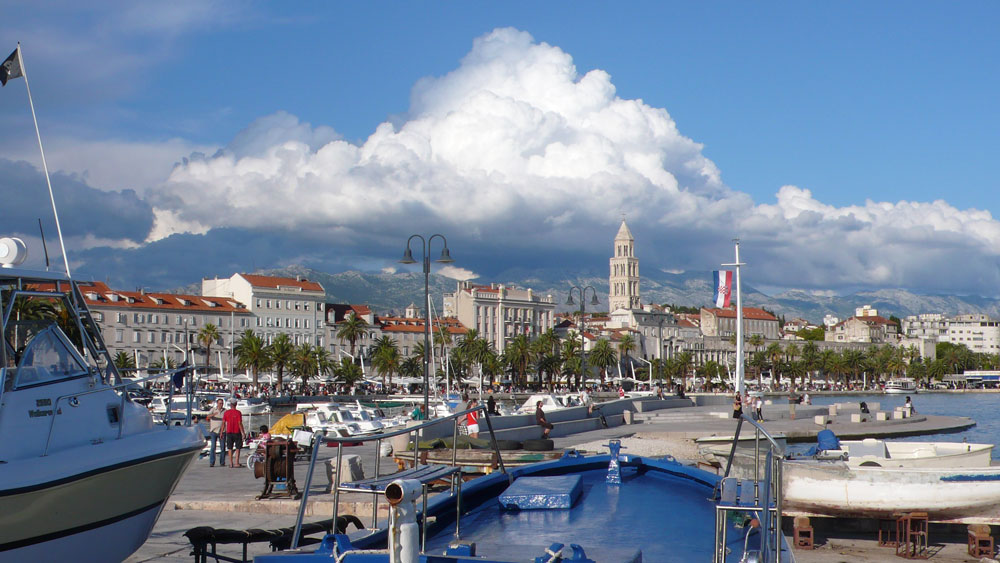
When we got to Split from Ancona in Italy, we drove off the ferry and were immediately searched. Maybe the customs official found it strange we should have so much luggage. Well, the car fridge already takes up a fair amount of room and then there’s the bike gear and stuff. Anyway, she finally waved us on and we followed the Tom Tom to our rental flat. Unfortunately, the entire street was being dug up and we eventually decided to drive through the roadworks to get there despite protests from the workers at the other end but our hostess Antonela was waiting for us and explained the situation. The up side was that Antonela said we could park in the courtyard.

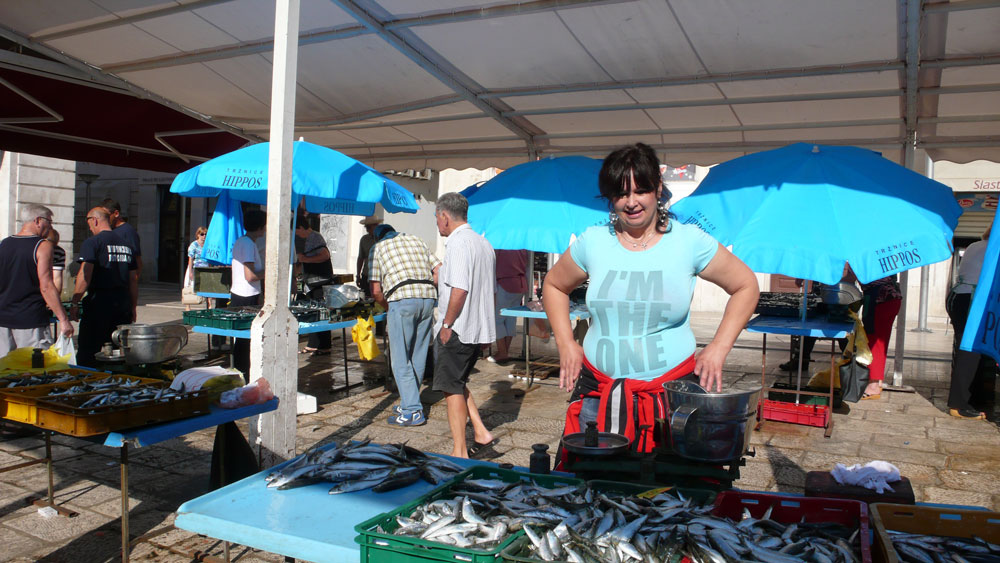
The flat was clean and comfortable with free wifi and a washing machine. It was also very well located, just a short walk from all the sights. We couldn’t use the terrace with the seaview because of the roadworks but it didn’t really matter. We really enjoyed Split. There were lots of historical places to visit, we found a restaurant on the edge of the bay with an excellent “fish plate” (Atlantida) went to the early-morning fresh fish and fresh produce markets and had a wonderful bike ride on Marian Hill which I have described in Cycling in Croatia.

After two nights in Split, we went to Dubrovnik via Mostar in Bosnia Herzegovina where it was shockingly hot. We went through border control twice and waited in long queues each time for no apparent reason.The speed was limited to 60 kph most of the time, also for no apparent reason. We saw shell-shocked buildings along the way and walked over the famous arch bridge built by Suliman the Magnificent which was destroyed during the Yugoslavian war and rebuilt, bought a souvenir for the Christmas tree, had lunch in a very friendly restaurant called Hindin Han and visited Biscevica House, a traditional Ottoman home.

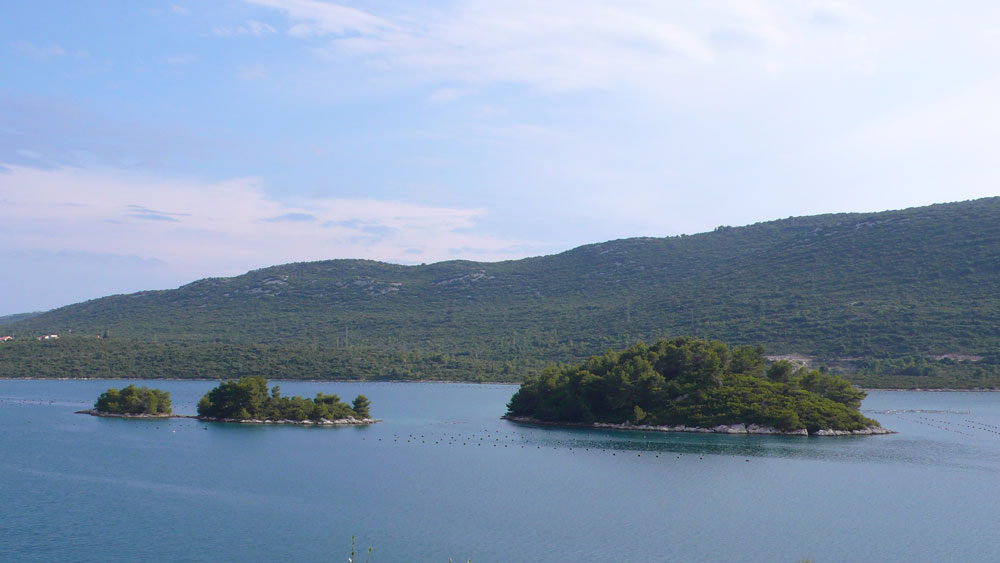
The drive along the coast to Dubrovnik was quite stunning, with little islands everywhere. We went through a small stretch that is part of Bosnia Herzegovina, its only coastal section, waiting in long lines at the border once again. When we got to Dubrovnik, we had parking problems. We hadn’t realised you can’t take your car into the walled city, not even to drop off your luggage. We finally parked in an extremely extensive parking lot near one of the entrances, grabbed a minimum amount of stuff and went to find our flat.

The apartment we stayed in was recommended to us by Black Cat and it was perfect. A large comfortable room with a basic kitchen and a shower room, right in the middle of the old town, but in a tiny street up several flights of steps, a haven from the noise and bustle of the tourist trade and very reasonably priced. The owner’s son, Matko Jelic, who  speaks both French and English (his wife is Irish) was very kind and helpful and even found us a free parking place outside the city walls from which we were able to take a bus back to the city. There wasn’t a wifi connection but Matko indicated a café in the old town called the Skybar with free wifi. The connection code is on the bill – you just have to order a drink.

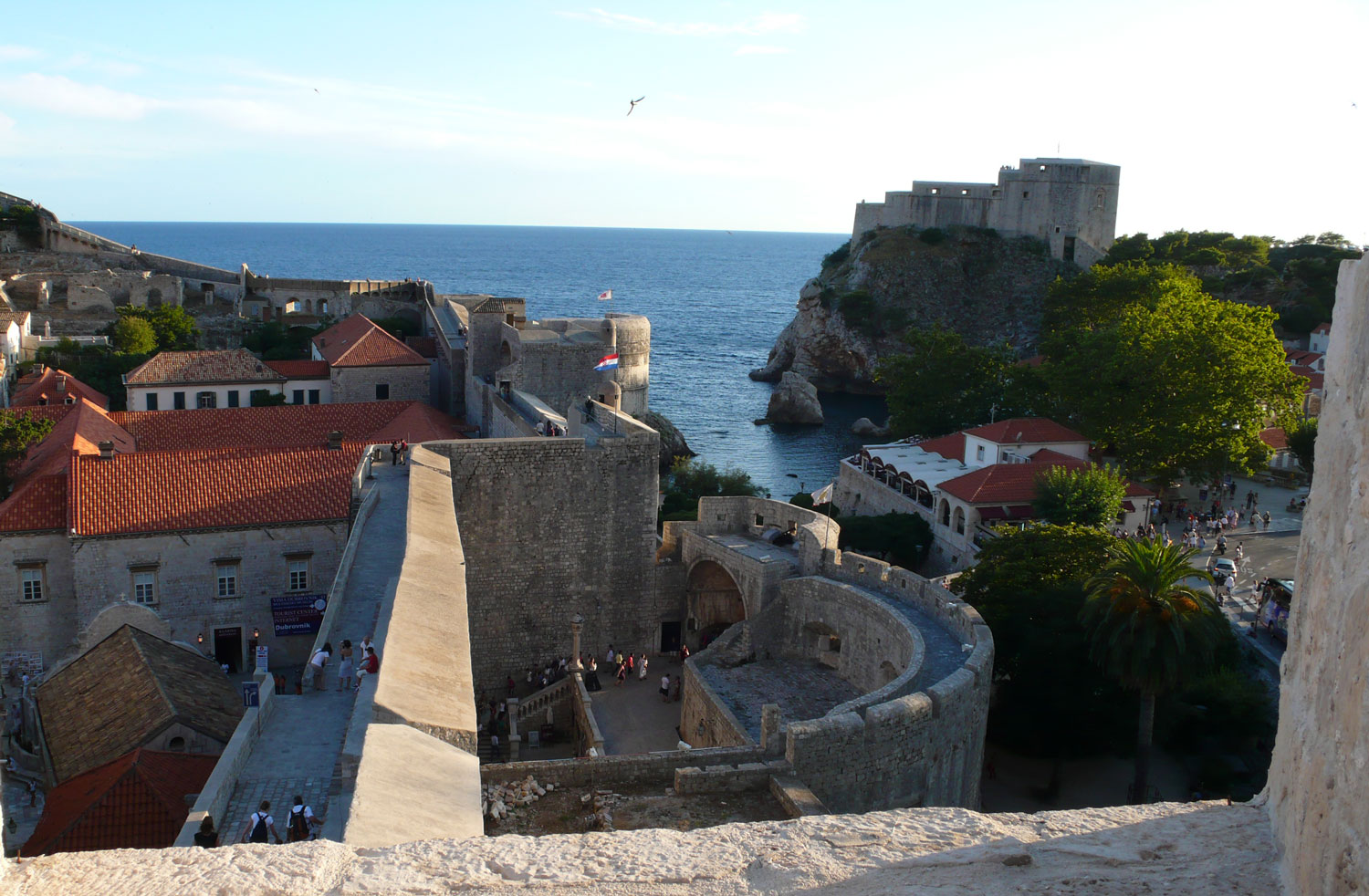
We stayed three nights in lovely old city of Dubrovnik and I particularly enjoyed the rampart walk at sunset. Unfortunately, it was there that I ate some unsavoury prawns and got the infamous “turista” that kept me indoors and close to the bathroom for most of the time we were there. We had booked an all-day boat ride to some of the islands but I wasn’t up to going. But one day we’ll go back!

Next instalment – Zadar. The itinerary so far: Paris – Annecy – Milan – Ancona – Split – Mostar – Dubrovnik.

Antonela Cmrlec
Apartman Riva
Branimirova Obala 6
SPLIT
+385 (0)98 937 0942      
apartman.riva@gmail.com
 
Konoba “ATLANTIDA”,
Obala Ante Trumbica 13,
21000 Split
 
Matko Jelic
Zvijezdiceva
DUBROVNIK
www.apartmentsdubrovnik.com
matko@apartmentsdubrovnik.com
 
Restoran Hindin Han
Jusovina bb
88 000 MOSTAR
Tel/Fax: 00387 36 581 054      
Mob. 00387 61 153 924      
 
The Skybar
Pridvorje 5,
20217 Dubrovnik

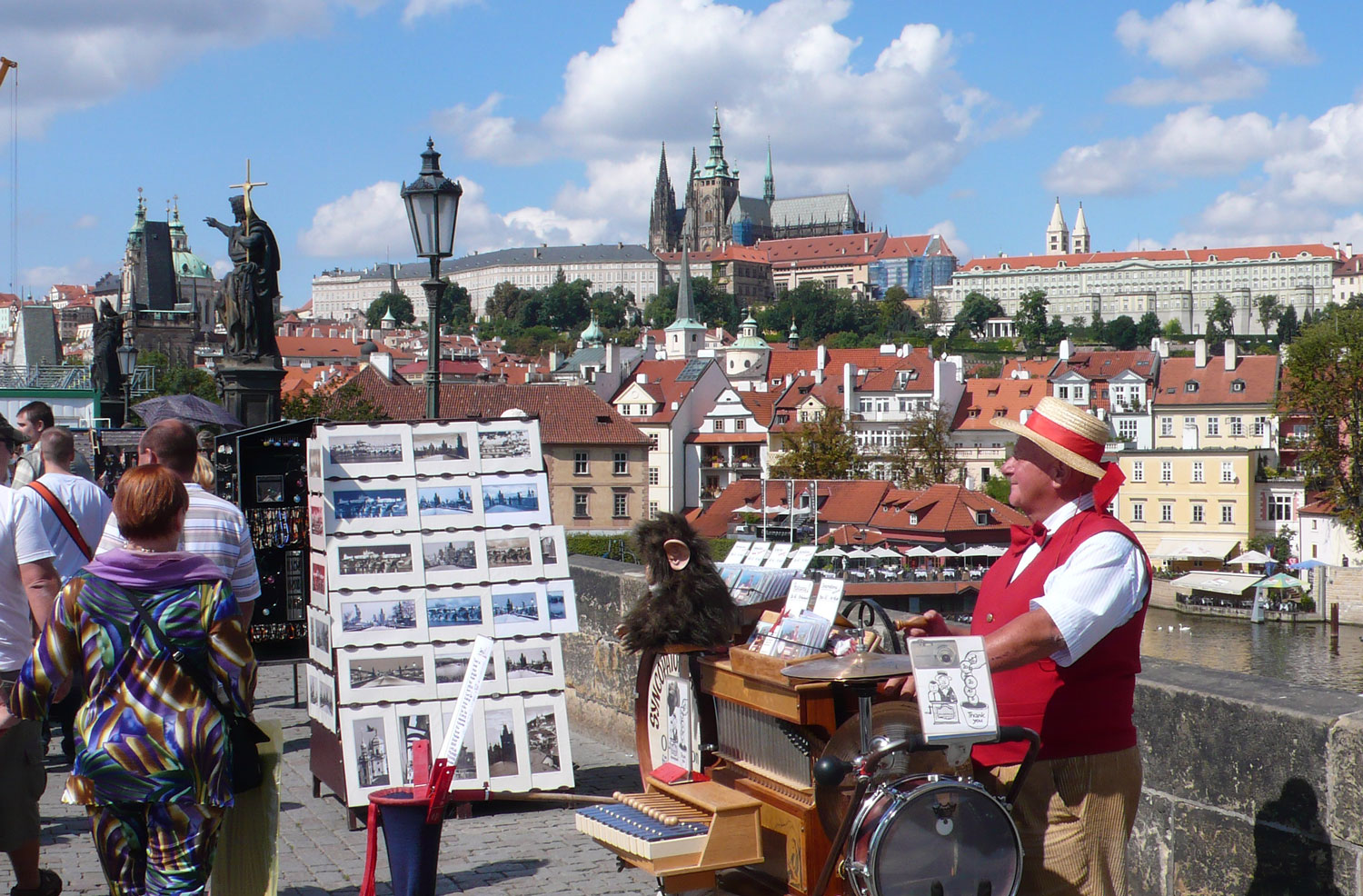
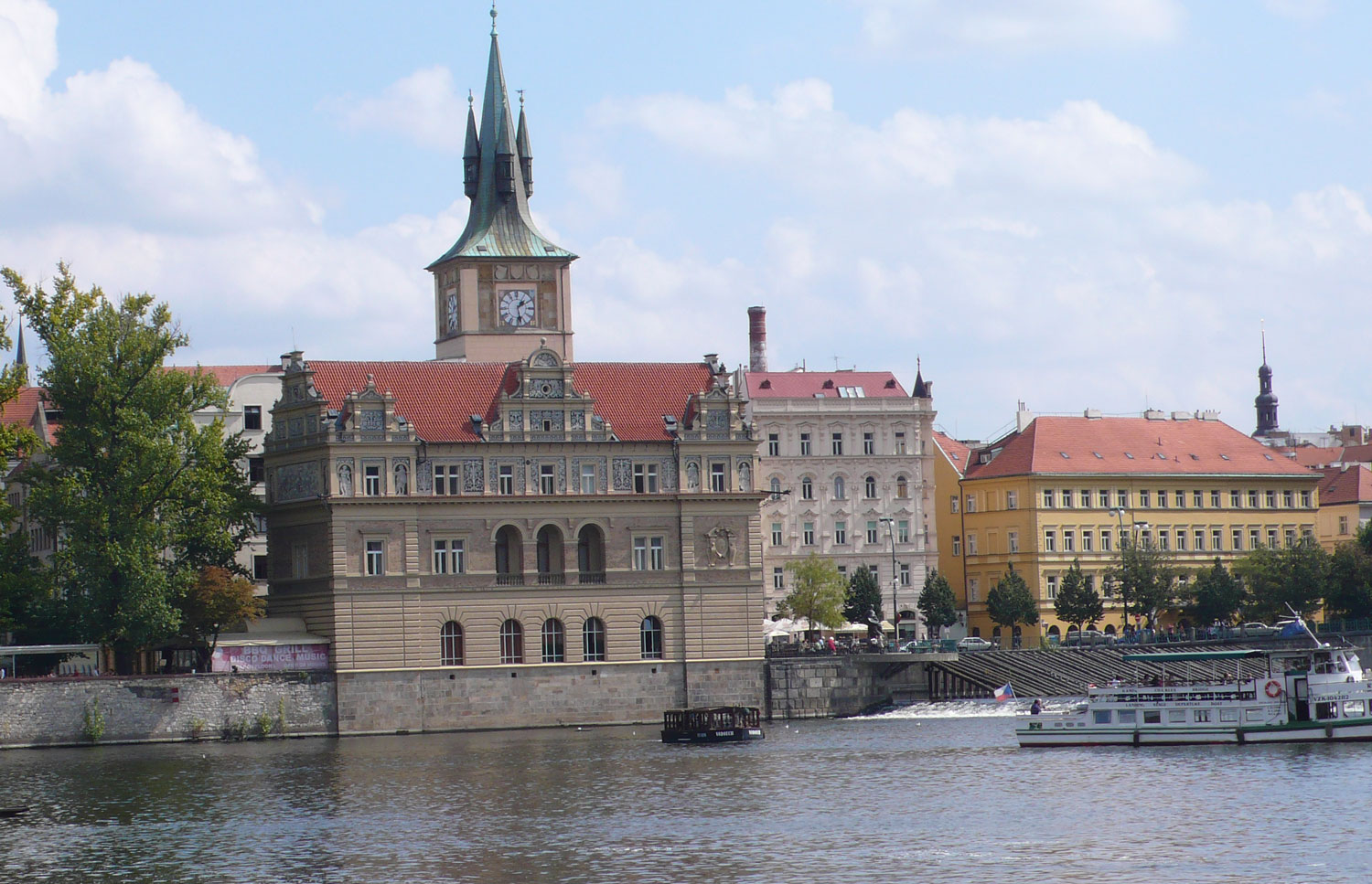
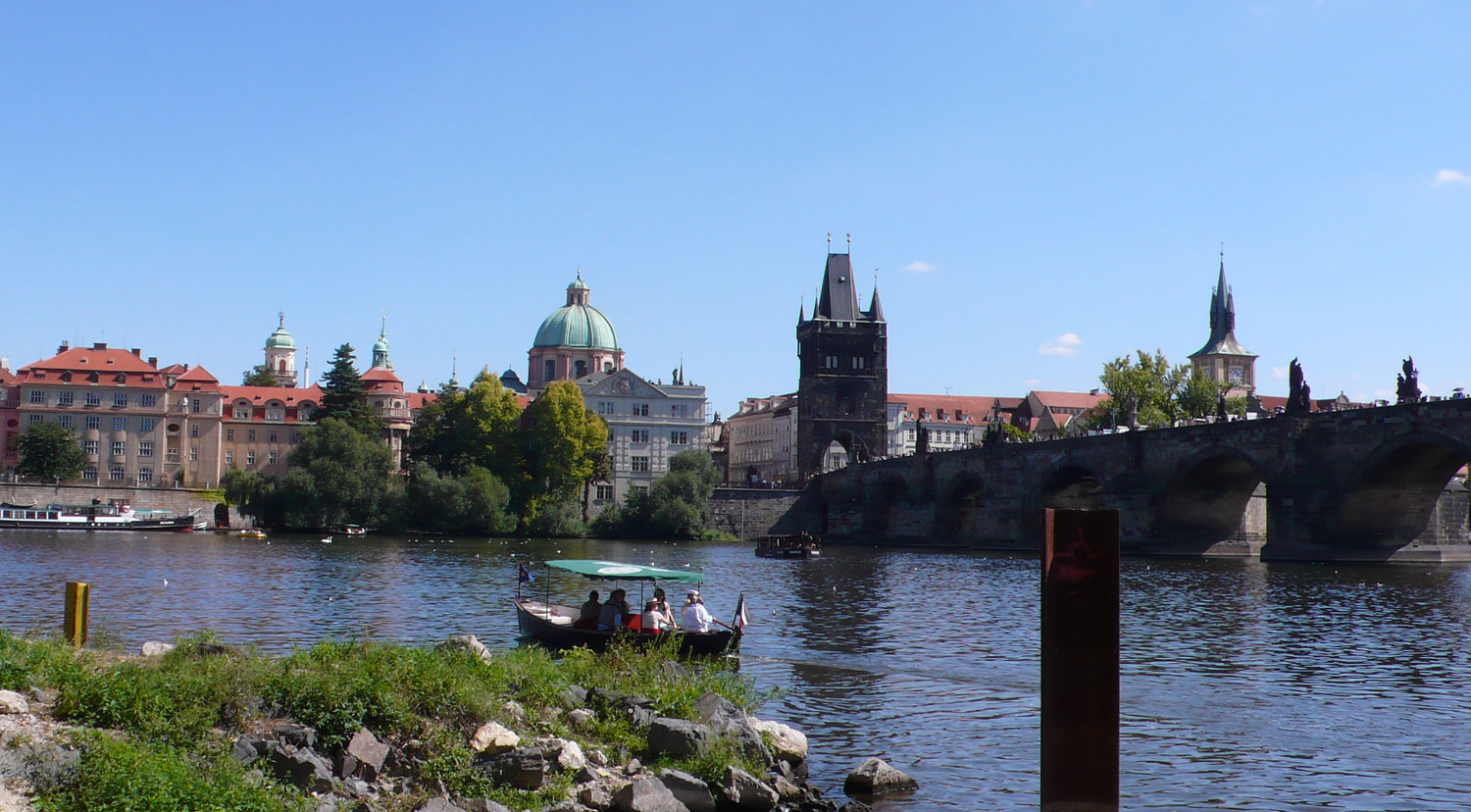
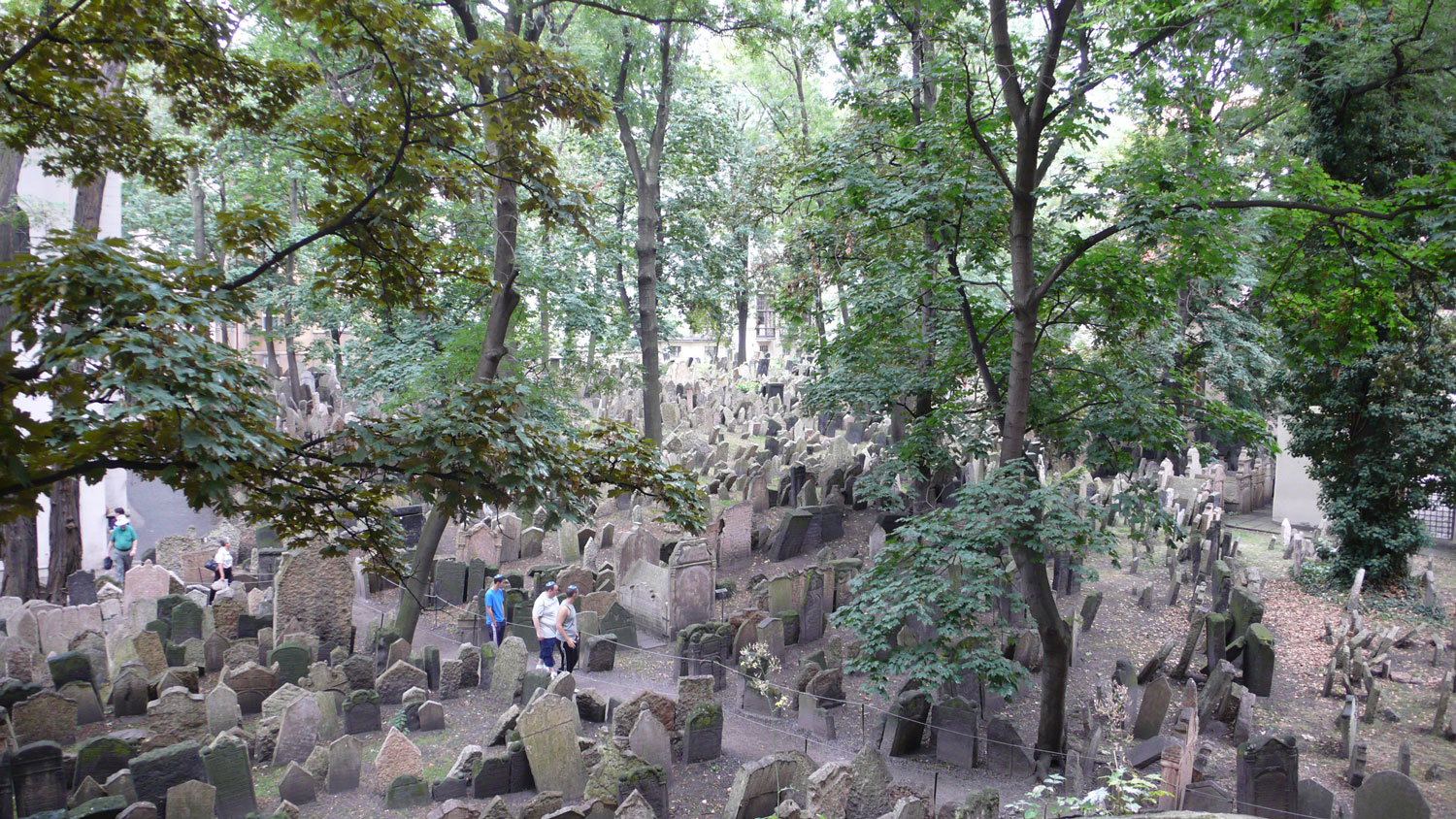
Sunday’s Travel Photos – Prague

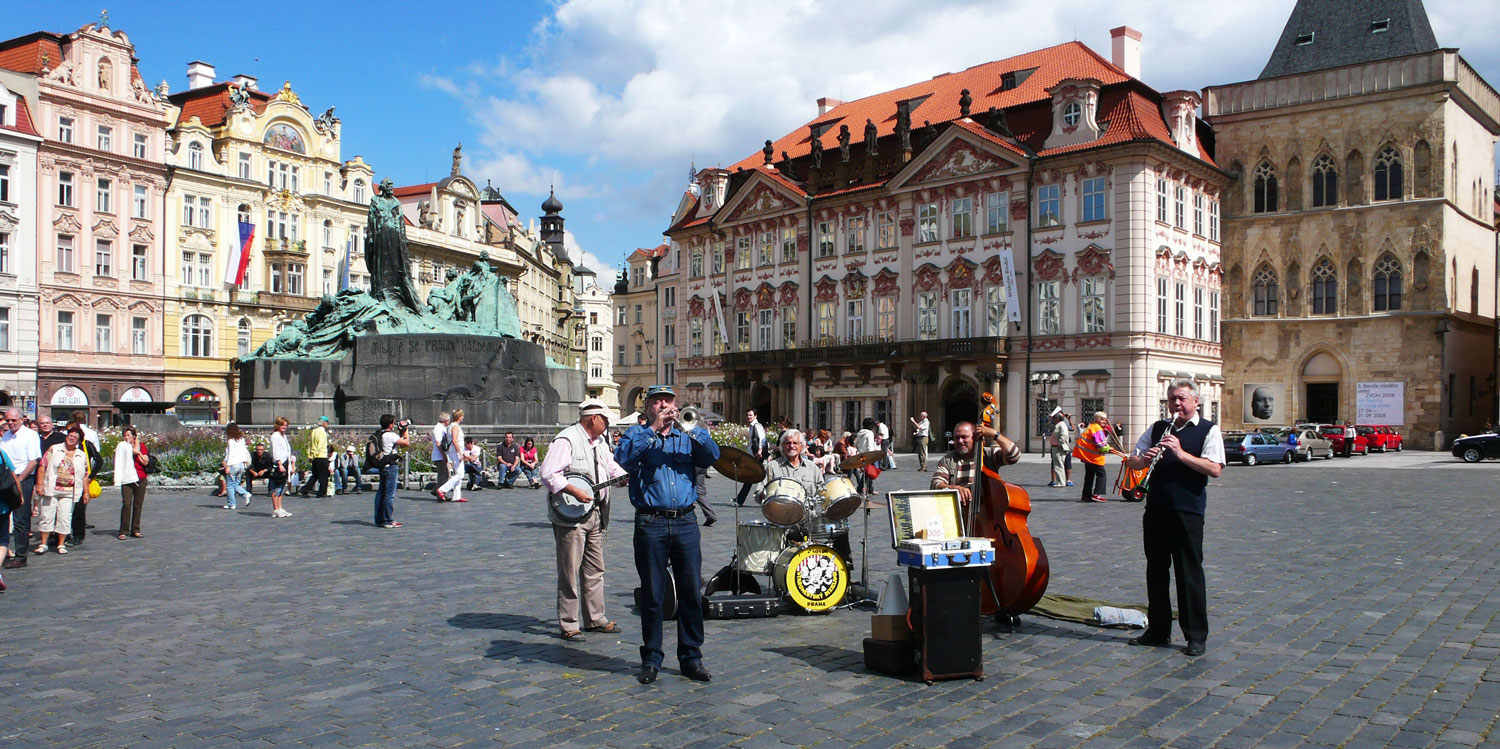
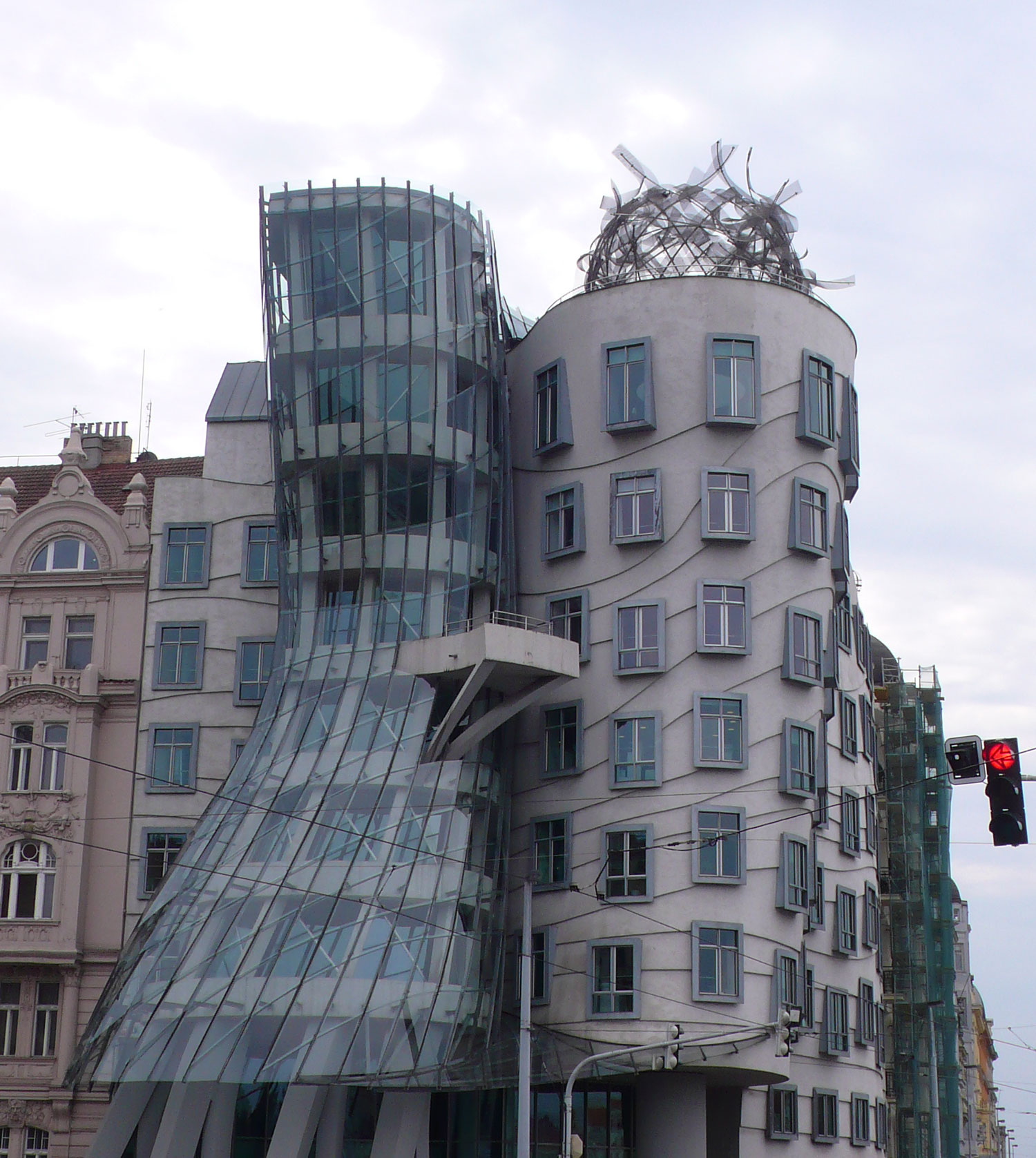
Prague is one of my very favourite cities. I love the architecture, the atmosphere, the mixture of old and new, the fact that you can find wonderful places on the river to eat, the buskers, the people in general. Our hotel was slightly outside the main area, which meant we had to take a tram to get reach the centre. I think it’s better to be able to walk everywhere. Perhaps you have some suggestions? We were there early September which was just perfect.

Easter Sunday in Blois

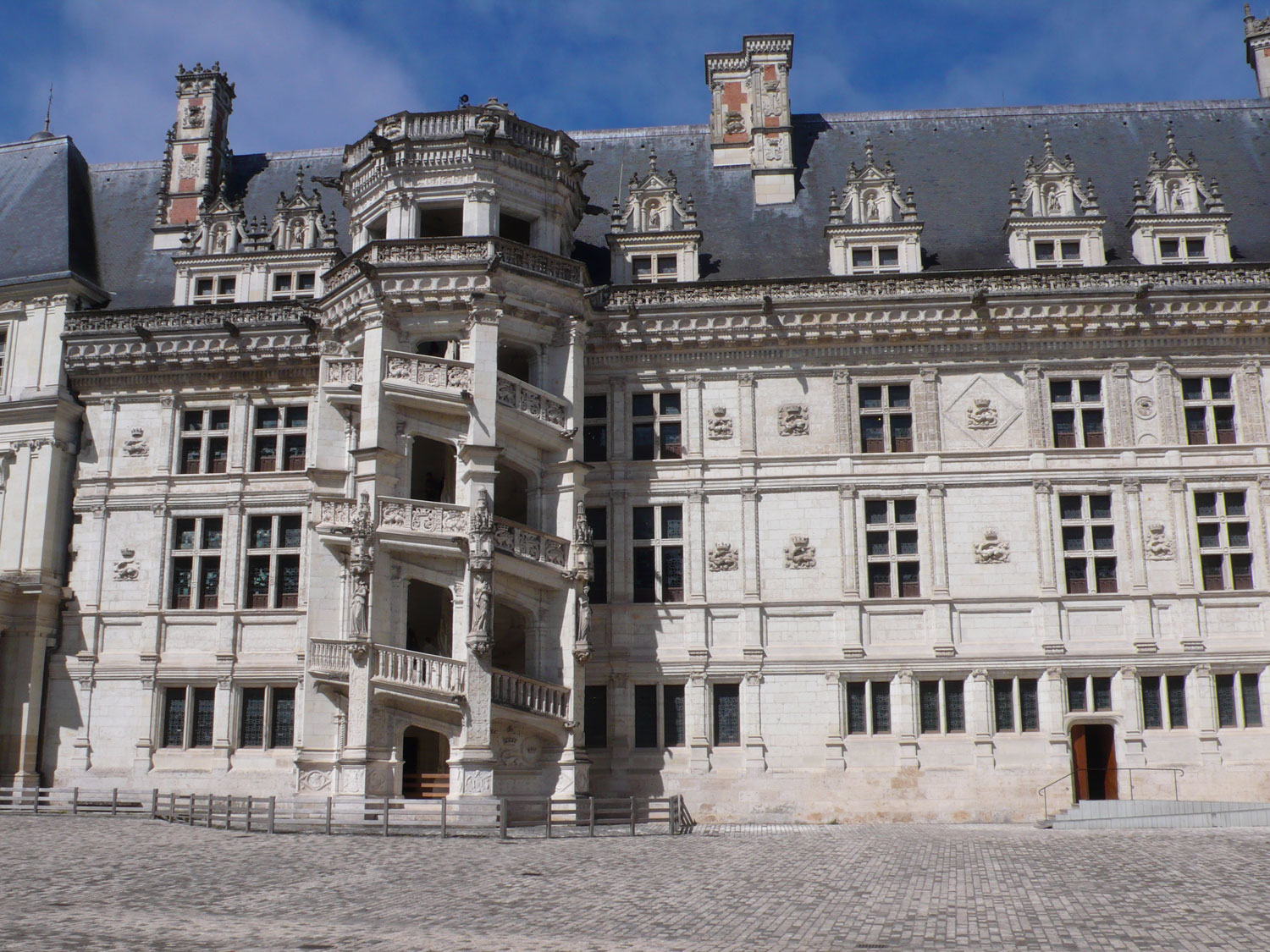
Sunday being a day of rest, we decided to have a late brunch then visit one of the many châteaux in the Loire Valley with Thoughtful and Brainy Pianist who had come to spend the weekend with us. In the end, we decided to go to Blois Castle, particularly as it was open between 12 and 2 pm, in order to escape the Easter weekend crowds. Once we got there, Relationnel and I were both amazed that we hardly remembered it at all from our last visit a few years ago.

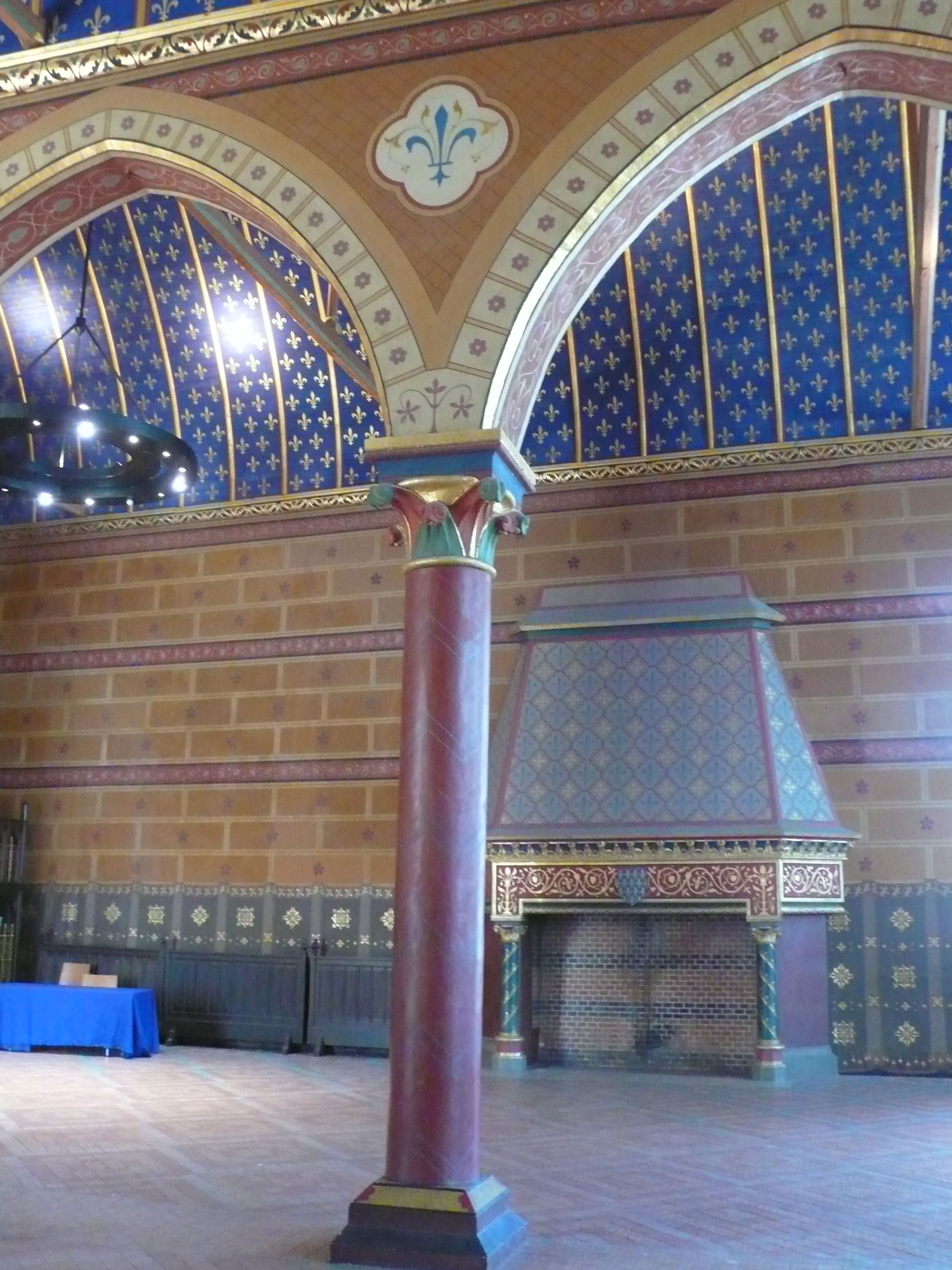
The château is right in the middle of the town, overlooking the Loire River, and encompasses several different architectural styles from mediaeval times to the 17th century. I won’t go into its very complicated history. Suffice to say that it all began in about the year 1000 with a rather horrible fellow called Thibaud the Trickster. Three of the original mediaeval towers still remain. One of the main features of the period is the magnificent hall of justice or Salle des Etats built in the early 13th century.


At the end of the 14th century, the château was bought by the Orleans family and nearly a century later, Duc Louis d’Orleans became Louis XII and brought his wife, Anne de Bretagne, and his court to Blois. They modernised it all, so to speak, with stairs at each end and balconies  on the first floor and decorated it with their emblems, the porcupine for Louis and the hermine for Anne.

François 1er, whose salamander is ever-present, lived in the château after he ascended to the throne in 1515. The Duc de Guise was assassinated in the King’s Chambers on the orders of Henri III in 1588 after plotting to take over the throne and Catherine de Medicis, wife of Henri II (son of François 1er) and mother of Henri III, died there the next year at the age of 70.

The interior is extremely rich and colourful with many fine fireplaces and majestic pieces of Renaissance furniture. We could see how they inspired the Henri II (or Neo-Renaissance) buffet, sideboard, tables and chairs now decorating our new Renaissance house !  I particularly liked the toad-foot feature on one of the buffets and the many beautiful firebacks. Any one of them would look just perfect in our upstairs fireplace.

There is also a lapidary section with gargoyles, statues, pediments and other bits and pieces taken from buildings on the site.

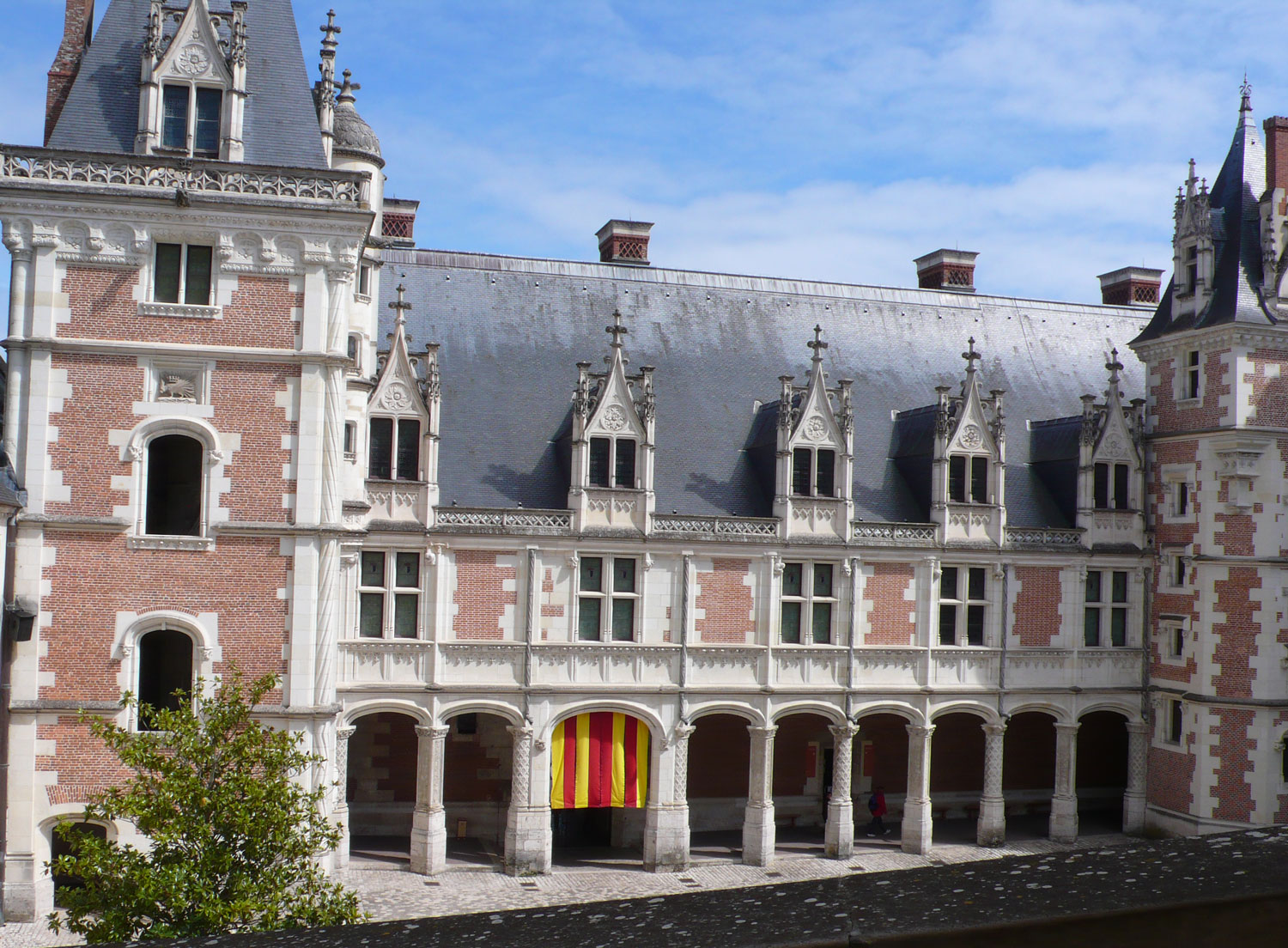
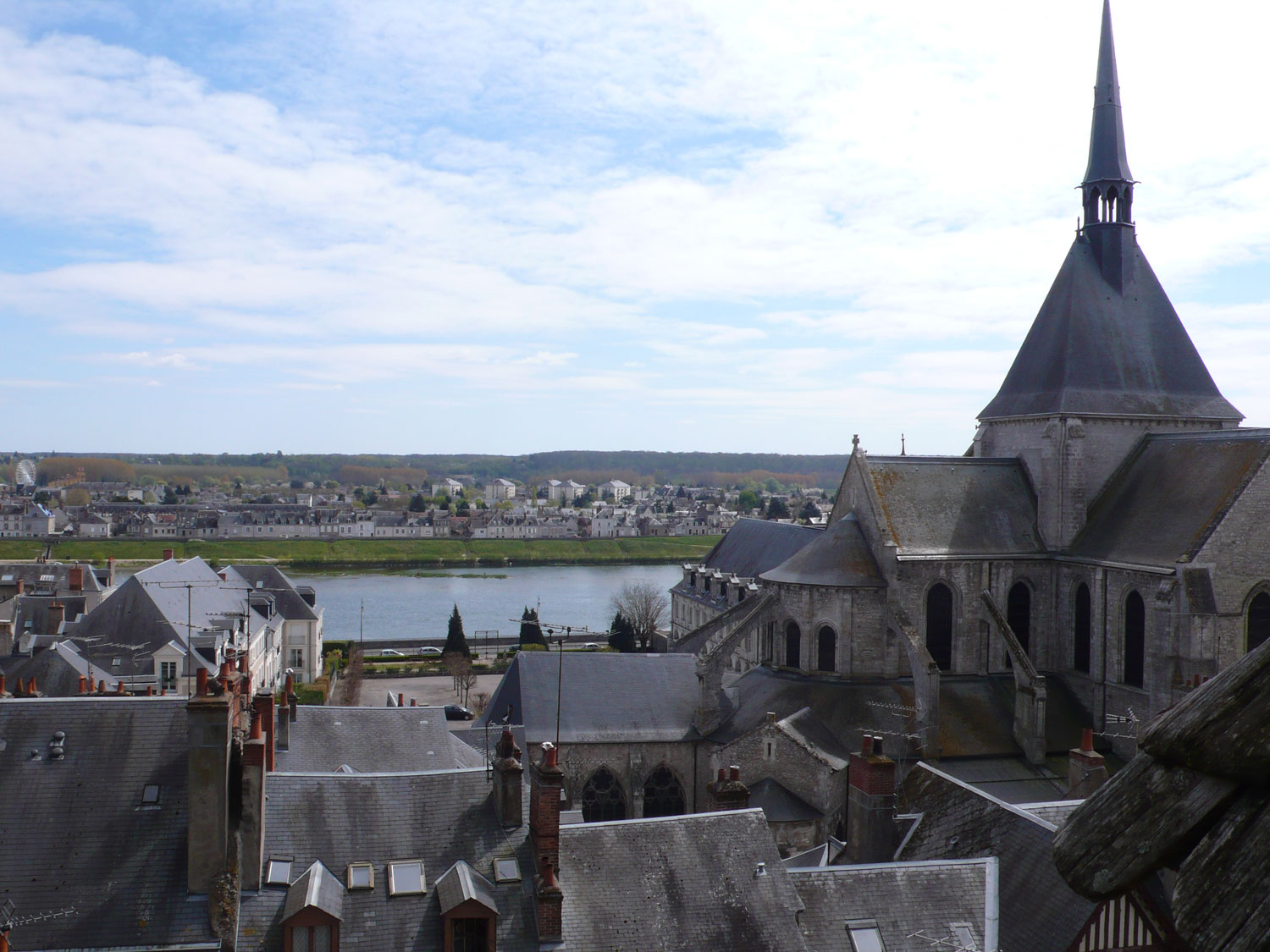
The grounds around the château offer wonderful views of the rooftops of the city of Blois and the Loire River and an excellent view of the city’s most interesting church – that of Saint Nicolas, built in the 12th and 13th centuries, a combinationof both Romanesque and Gothic. We couldn’t quite see our house because of the trees but we could pick out the general direction.


After our visit we discovered a brocante on the esplanade along the river which takes place on the second Sunday of every month. Relationnel was not keen because he said there were obviously only professionals. But we managed to find a walnut bedside table for our bedroom and three long-handled gardening tools. While he went off to get the car, we rooted around but didn’t find anything else worth buying.

Favourite Paris Wine Shops – Phone App: Google Translate – Creating a Healthy French Pantry

Where to buy wine in Paris, a helpful traveller’s phone app and healthy eating the French way are  the subjects featured in my Wednesday’s Other Blogs this week.  Thank you to Like Home in Paris (vacation apartment rentals in Paris), Femmes Francophiles (fellow Australian blogger with an ongoing passion for France and the French language) and Mademoiselle Slimalicious (a young Sydney-based French blog writer who promotes healthy eating, fitness and exercise based on the principles of the French Paradox).

Sipping on Saturday – Favourite Paris Wine Shops

from Like Home in Paris

I know who I go to ask when I have a wine question or can’t decide which glass to take – Preston Mohr, that’s who. Our favorite drinking partner tells us about his favorite wine shops in Paris and believe me you’ll want to take note. Read more
Phone Application: Google Translate

from Femmes Francophiles

Translation apps are a growing market. No longer do we need to fossick in back packs or handbags for our bilingual dictionary or phrasebook. No doubt there are now young international travellers who have never had to worry about the weight associated with carrying these books with their dog-eared pages.  Read more 

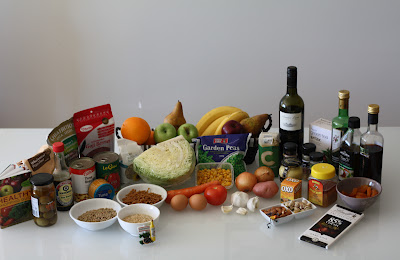
Creating a Healthy French Pantry

from Mademoiselle Slimalicious 

Cooking at home (rather than ordering take-away) enables you to be fully in control of what you eat by being aware of the nutritive value of your meals. In order to manage your weight efficiently (the way French women do), it is important to make cooking everyday one of your priority.  Read more.

Sunday’s Travel Photos – Burano Island in Italy

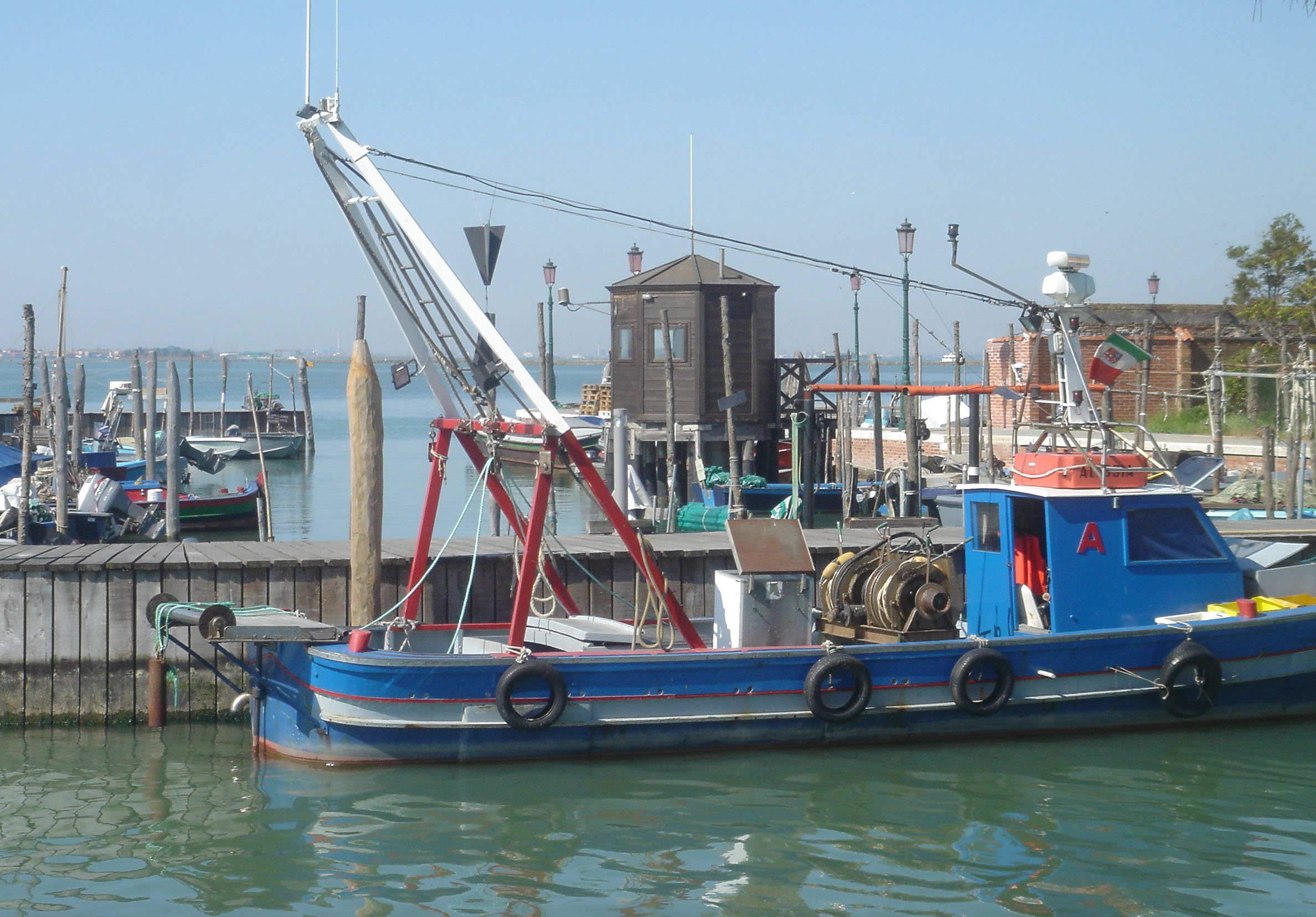
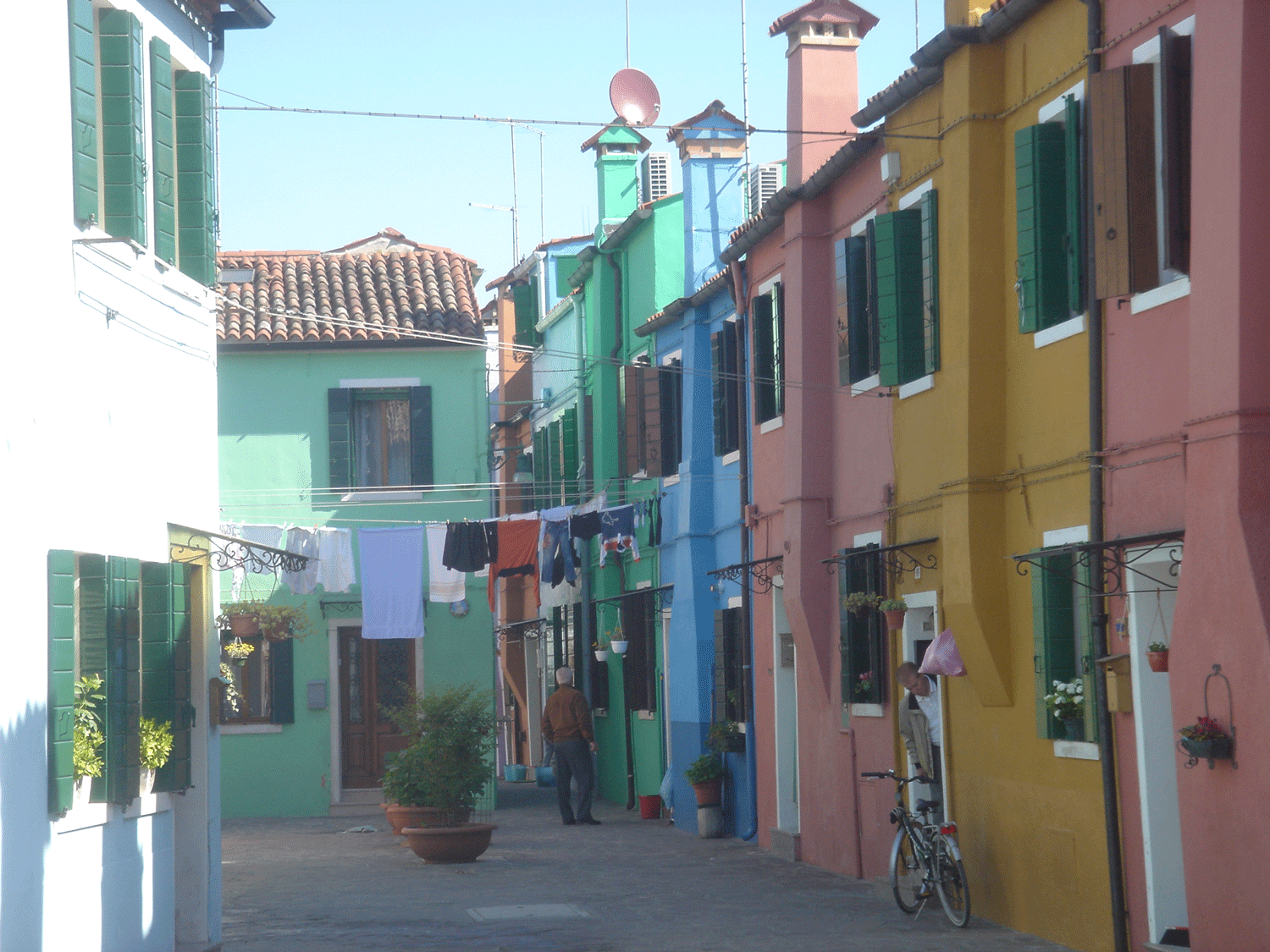
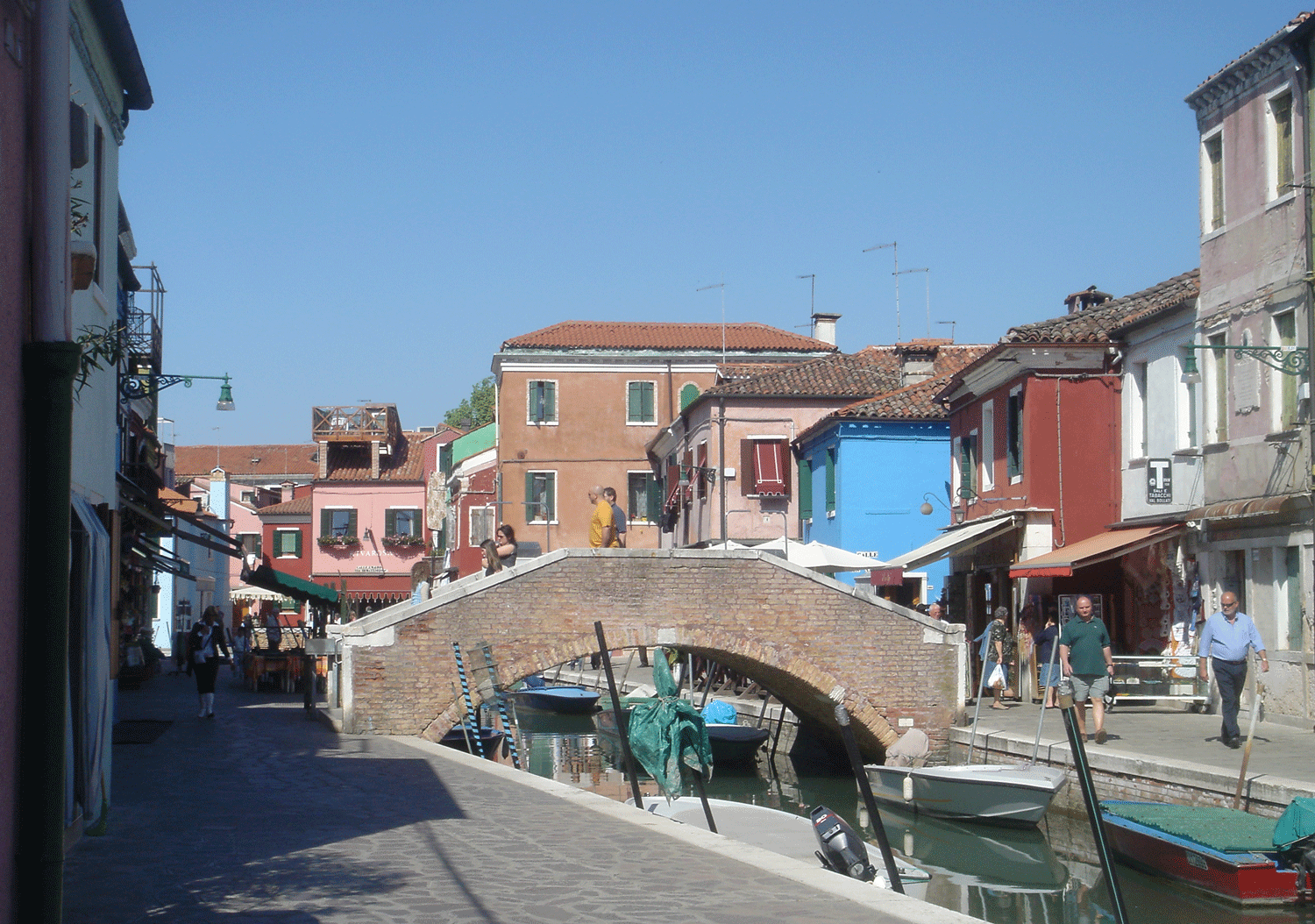
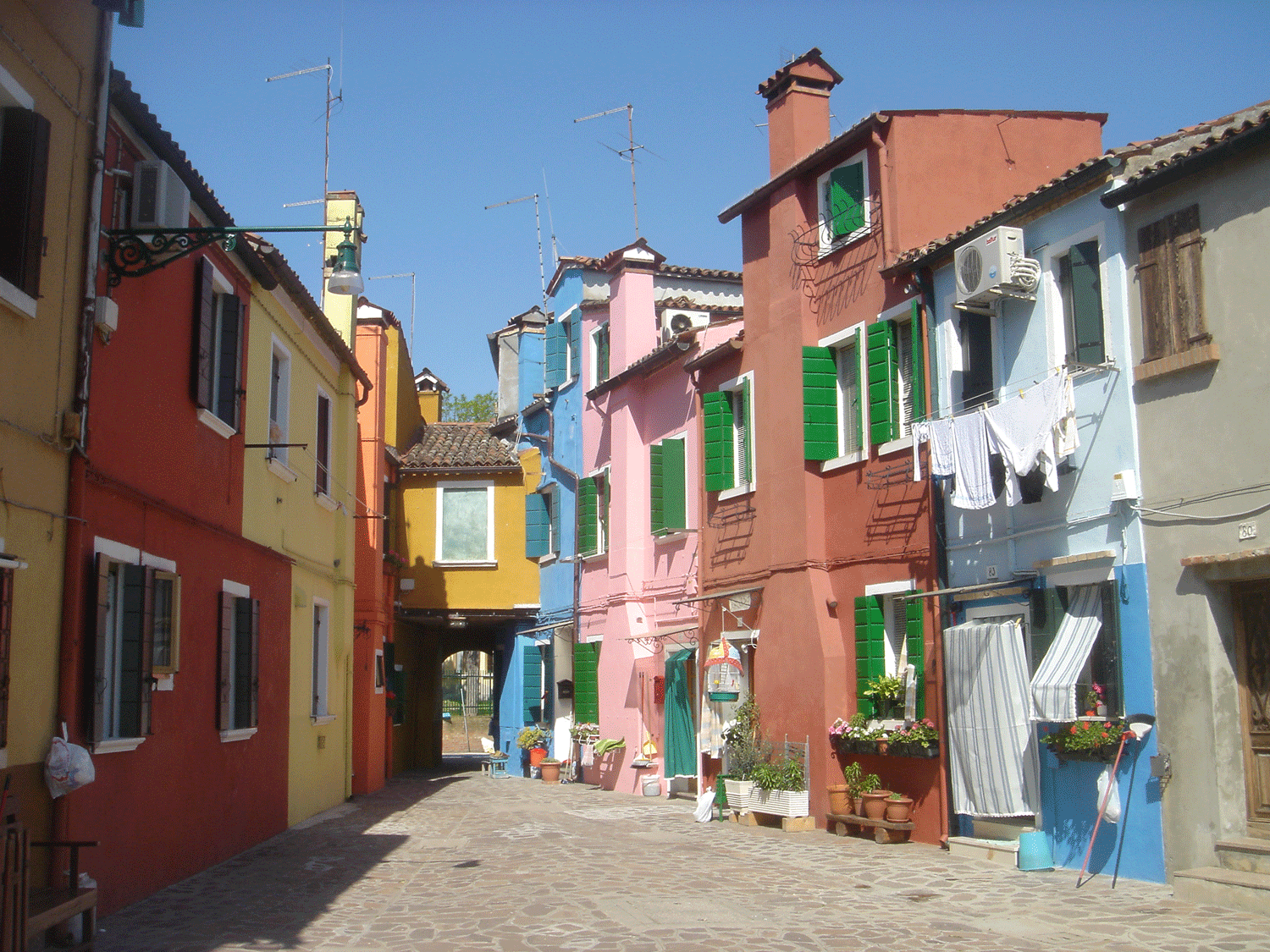
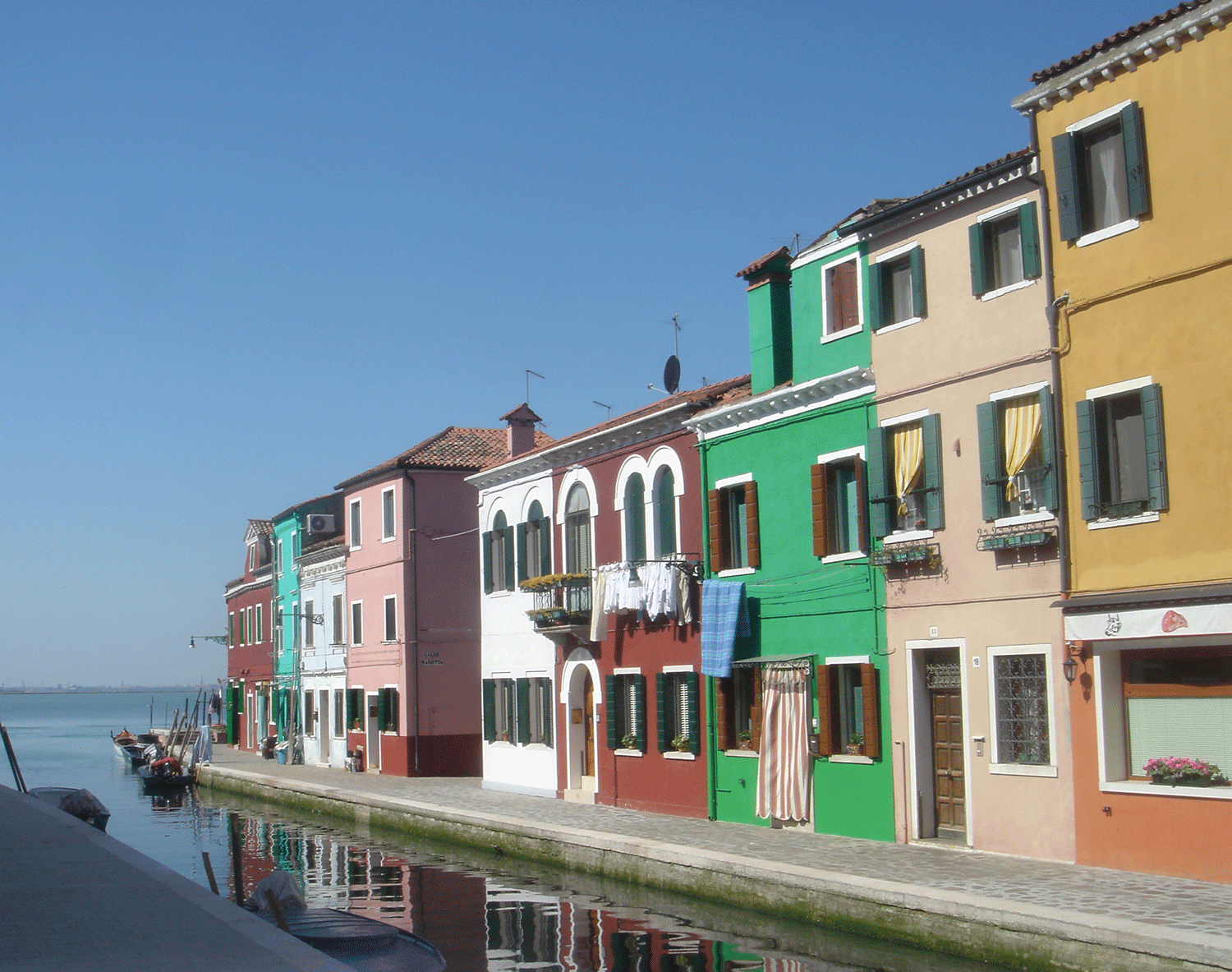
It’s easy to take a day trip to the little islands on the other side of the Venetian lagoon – Torcello, Burano and Murano. The most picturesque is Burano, which is actually a little achipelago of four islands, known for its brightly coloured homes and beautiful lacework. We succumbed to the charm of both. Even the dish antenna is painted pink in one of the photos!

Pickpockets on the Metro in Paris – Siena – an Italian escape – Burgundy at a Glance

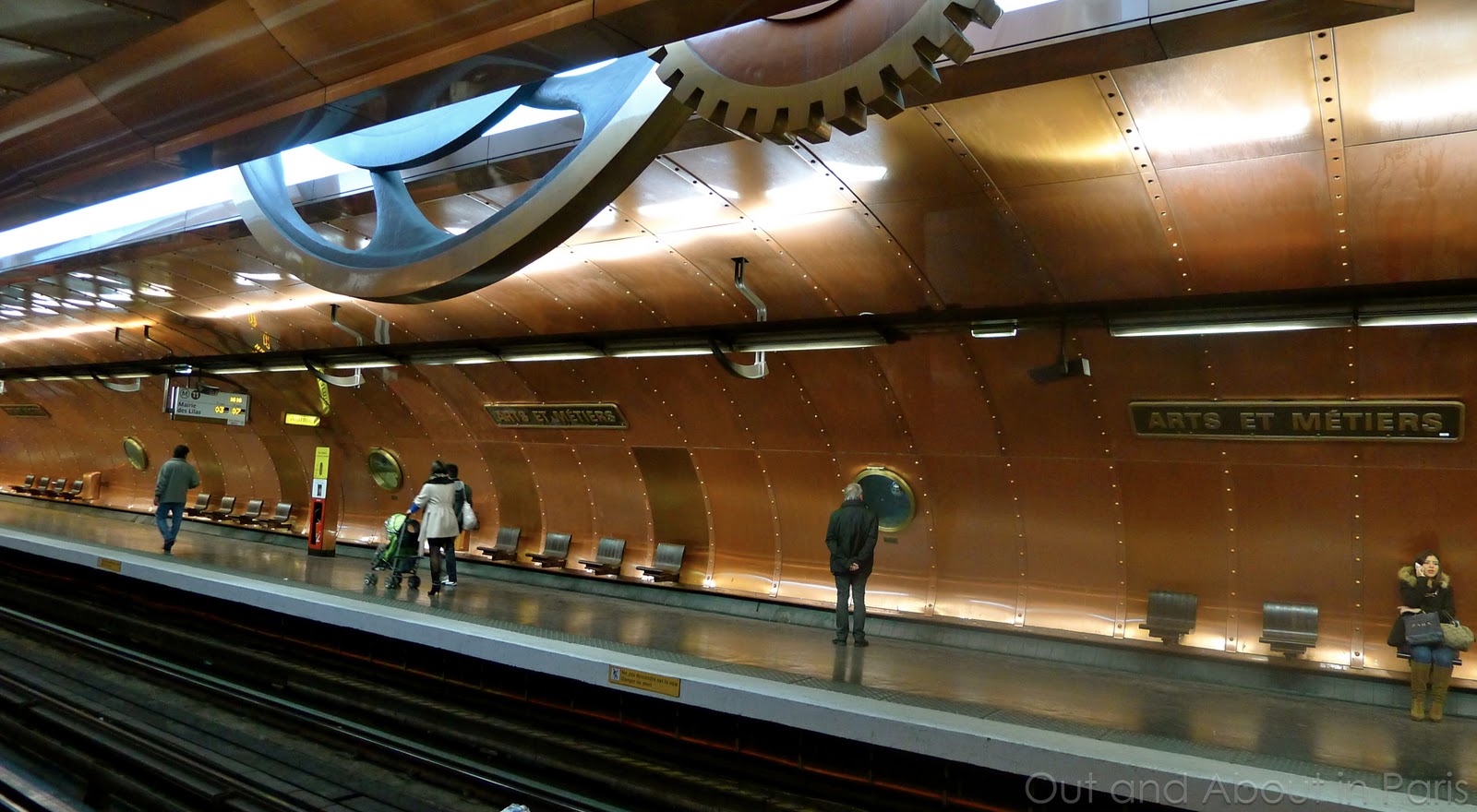
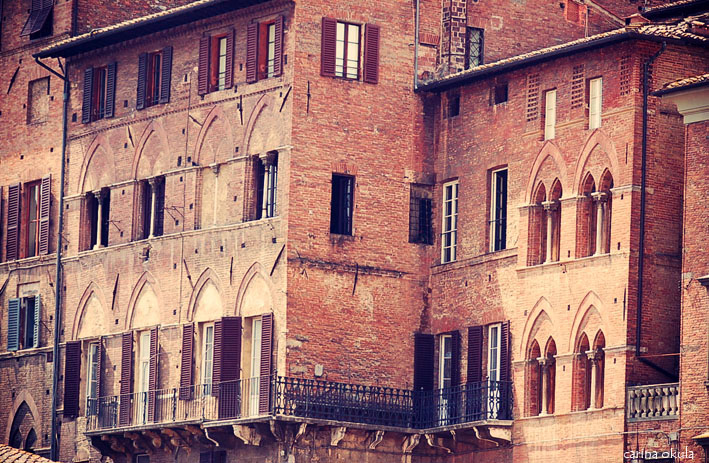
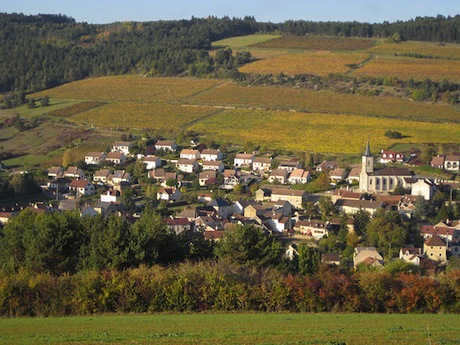
The posts from other blogs that I’m featuring this Wednesday are by American blogger Mary Kay, from Out and About in Paris, who is a fund of useful and interesting information and will help you have a pickpocket-free holiday, fellow Australian and photographer Karina from Carams who takes us to Siena in Tuscany and Doni Belau from Girls’ Guide to Paris who recommends a visit to Burgundy as a day trip or weekend out of Paris. Thanks to them all!

Monday Morning Musings on Pickpockets on the Metro in Paris

by Mary Kay, from Out and About in Paris

After dodging holiday shoppers and having my foot run over by a renegade baby stroller while visiting the Christmas Market on the Champs-Elysées yesterday, Stéphane, Sara and I decided to take metro line 1 from George V to Tuileries to have some hot chocolate. As we always seem to arrive at Angelina’s just after it has closed for the night, I stood on the metro platform with my back to the wall to check their opening hours on my iPhone. Stéphane and Sara were facing me, we were speaking English and for all anyone knew we were tourists in Paris. Read more.

Siena – an Italian escape

by Carina at Carams

Up until last year when we found ourselves in the area, Siena had never been near the top of my travel list. Yet there we were one morning, driving winding roads through Tuscan valleys, following signs to the old city, named (according to legend) after Senius, son of Remus, of the Remus & Romulus duo. Read more
Le Petit Weekend: Burgundy at a Glance

by Doni Belau from Girls Guide to Paris

As much as all Parisians love Paris, they also adore a petit weekend—a getaway, either a day trip from Paris or an entire weekend. Recently, during autumn, I hightailed it out of the city for a wine-tasting trip to Burgundy. My friend Kelly and I headed for Beaune, which is perfectly situated to explore both côtes, Côte de Nuits and Côte de Beaune. Read more

Sunday’s Travel Photos – Venice

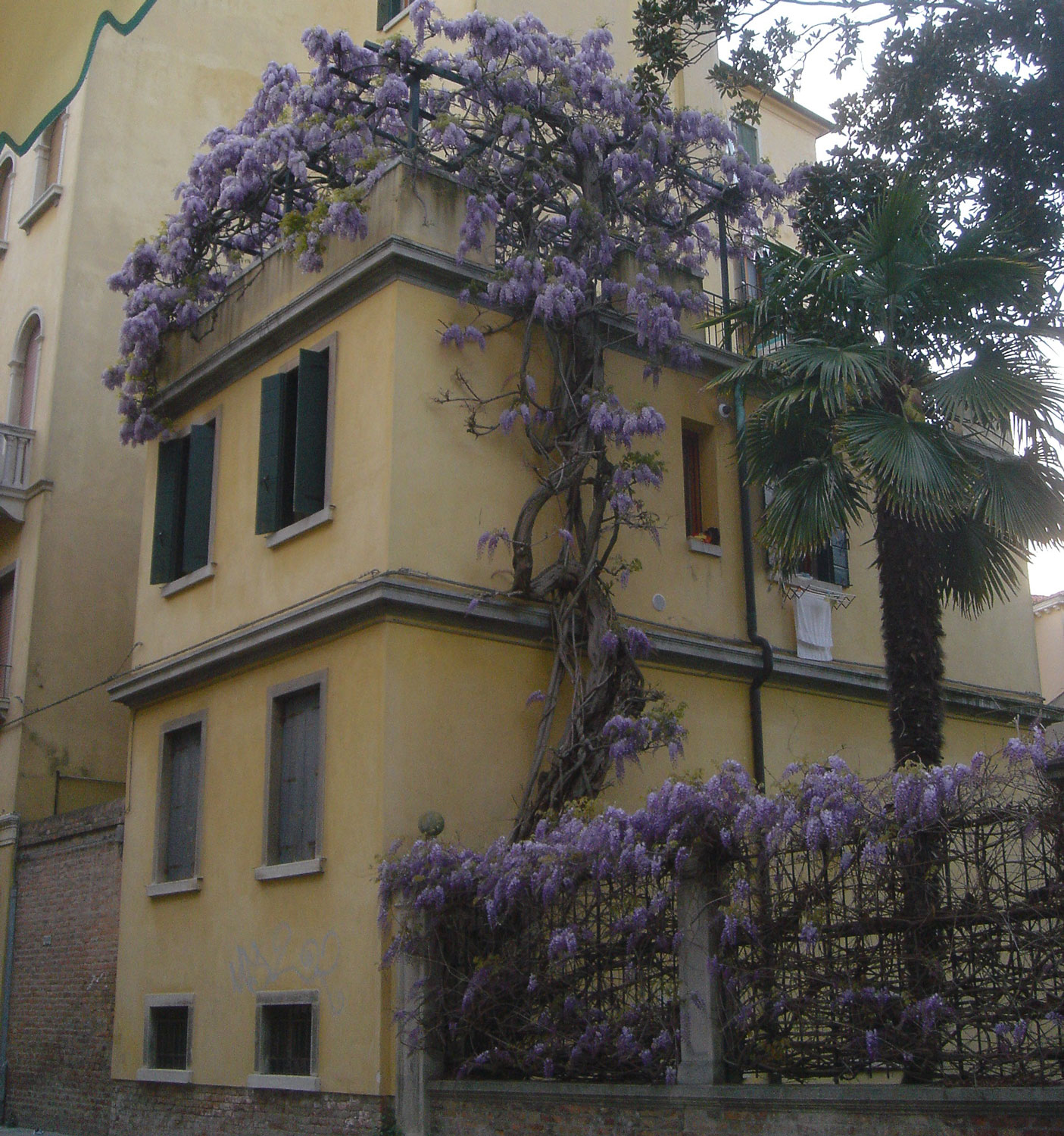
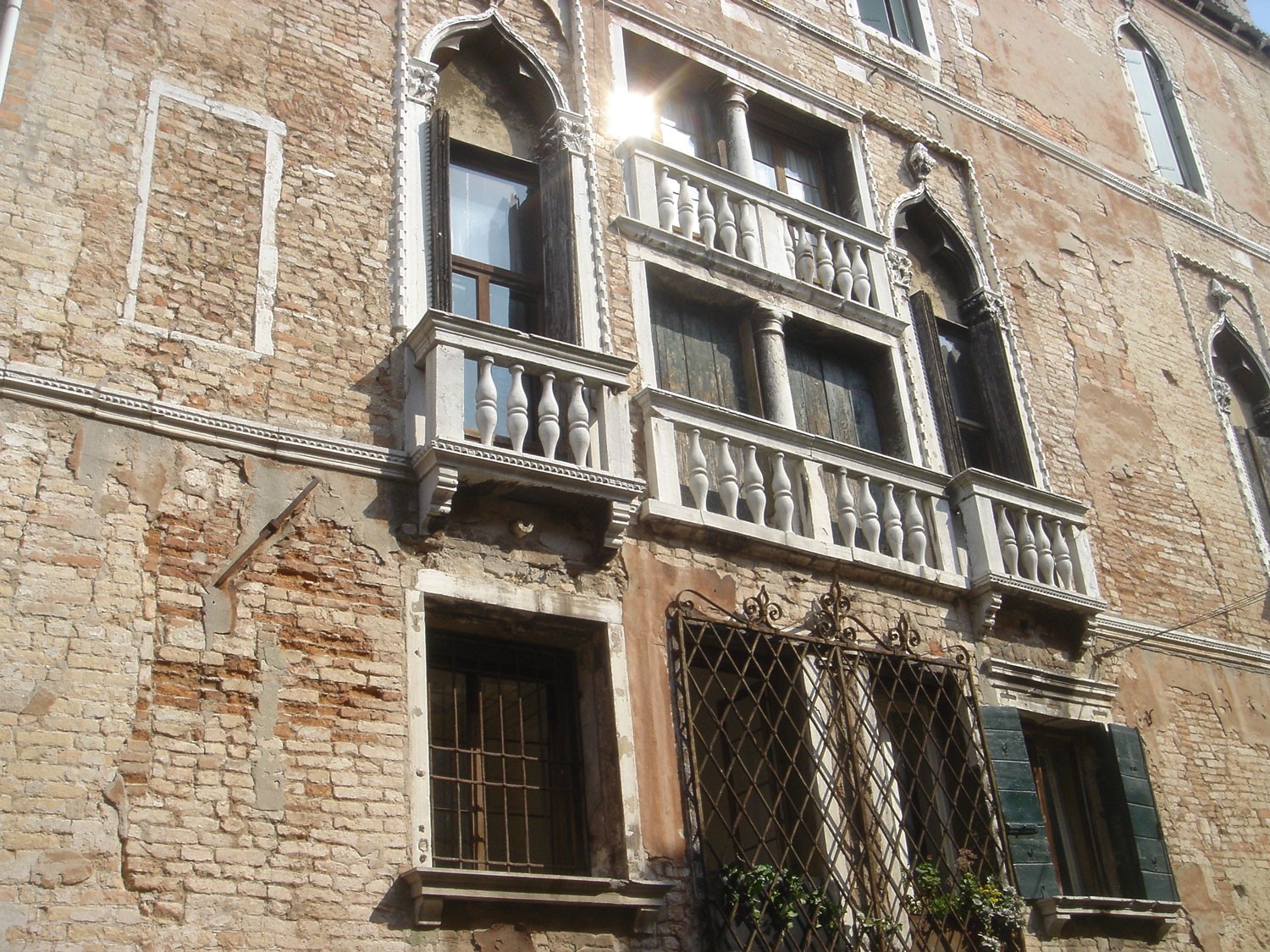
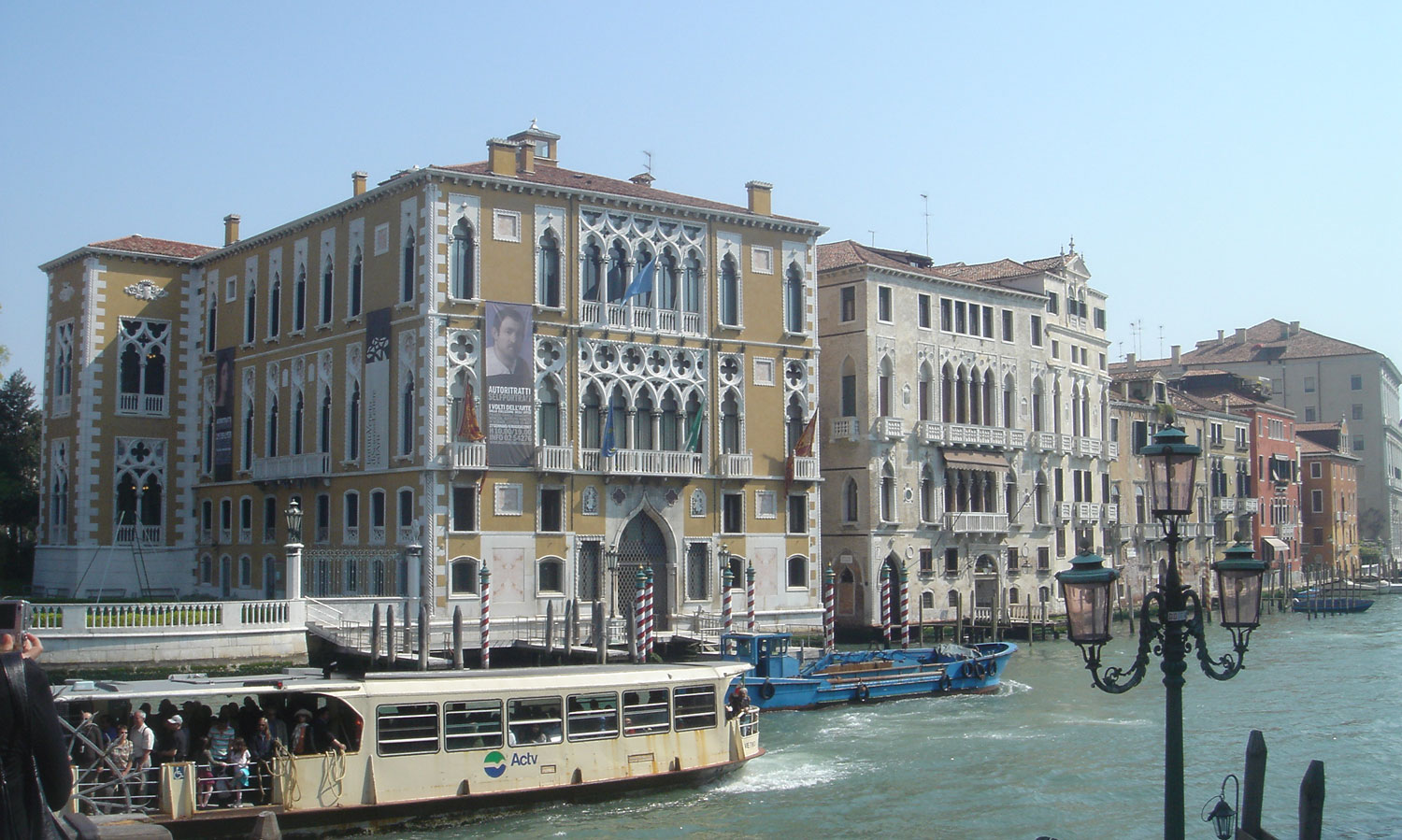
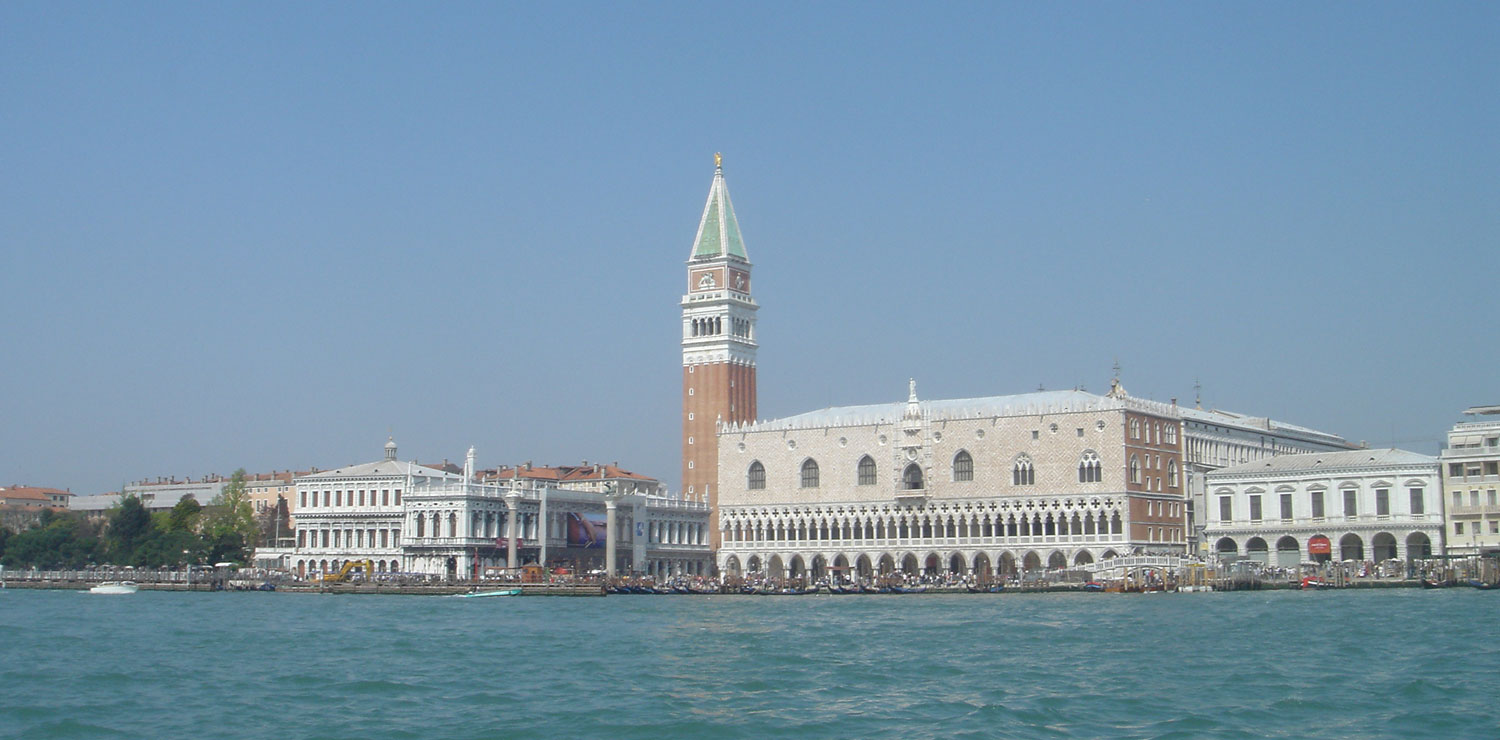
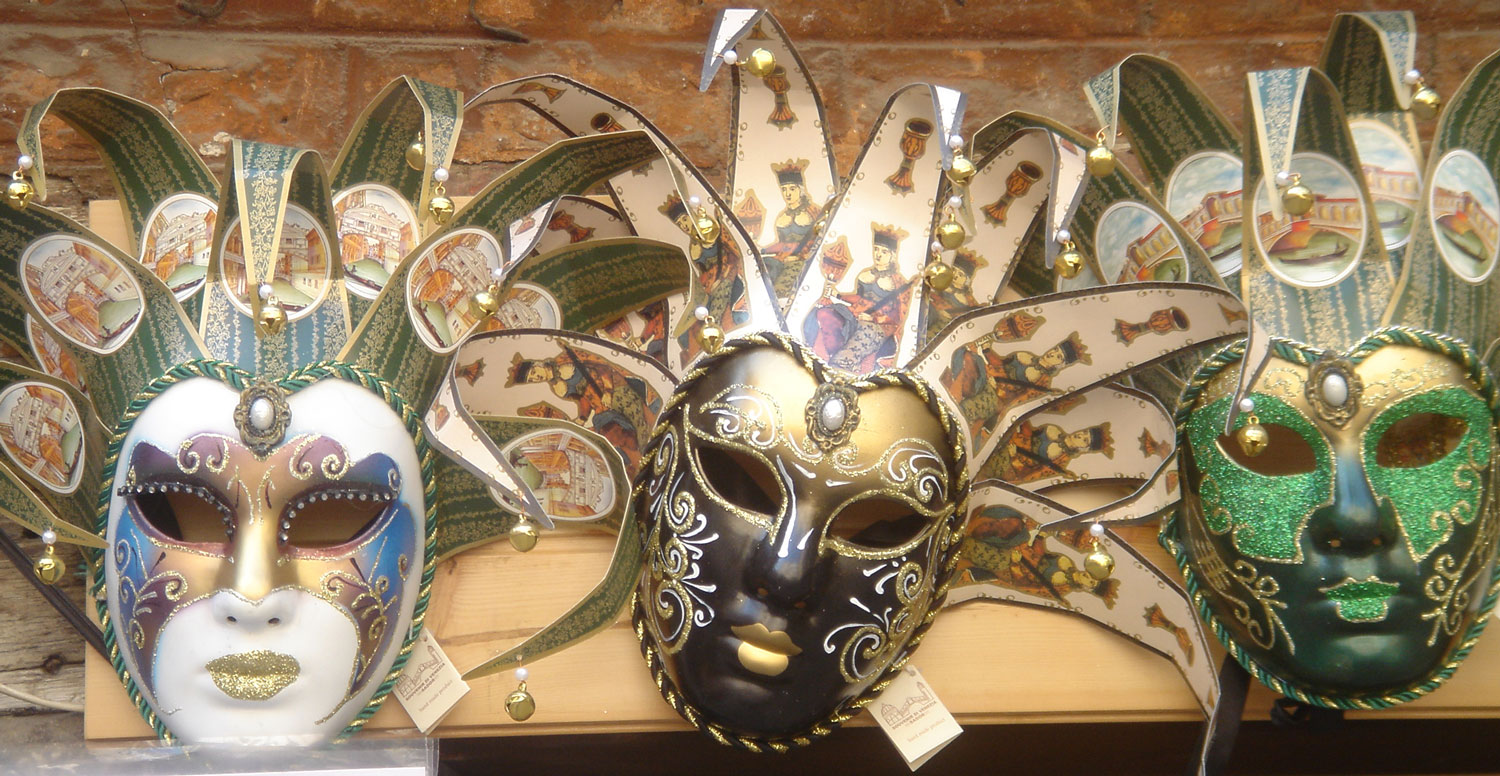
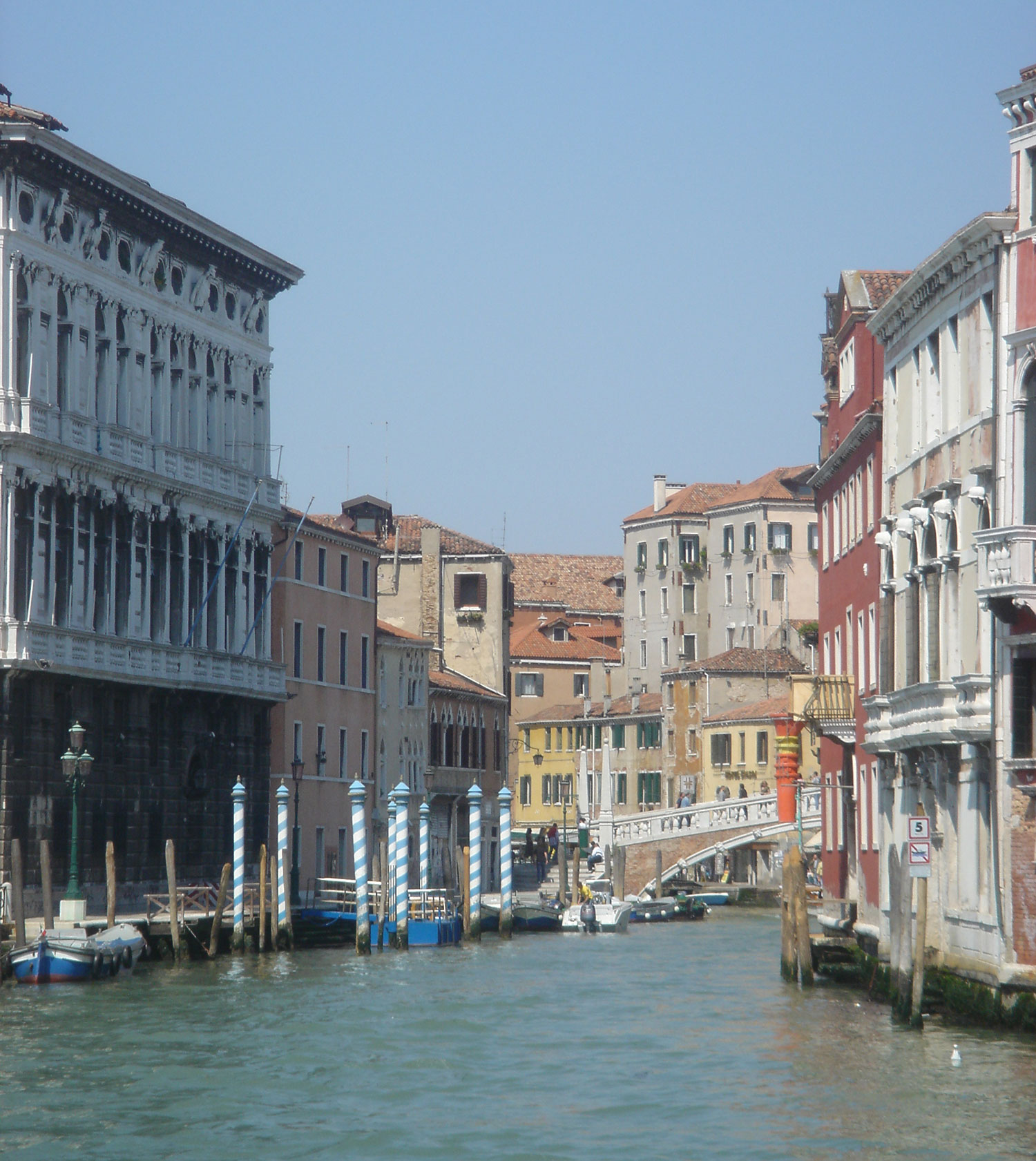
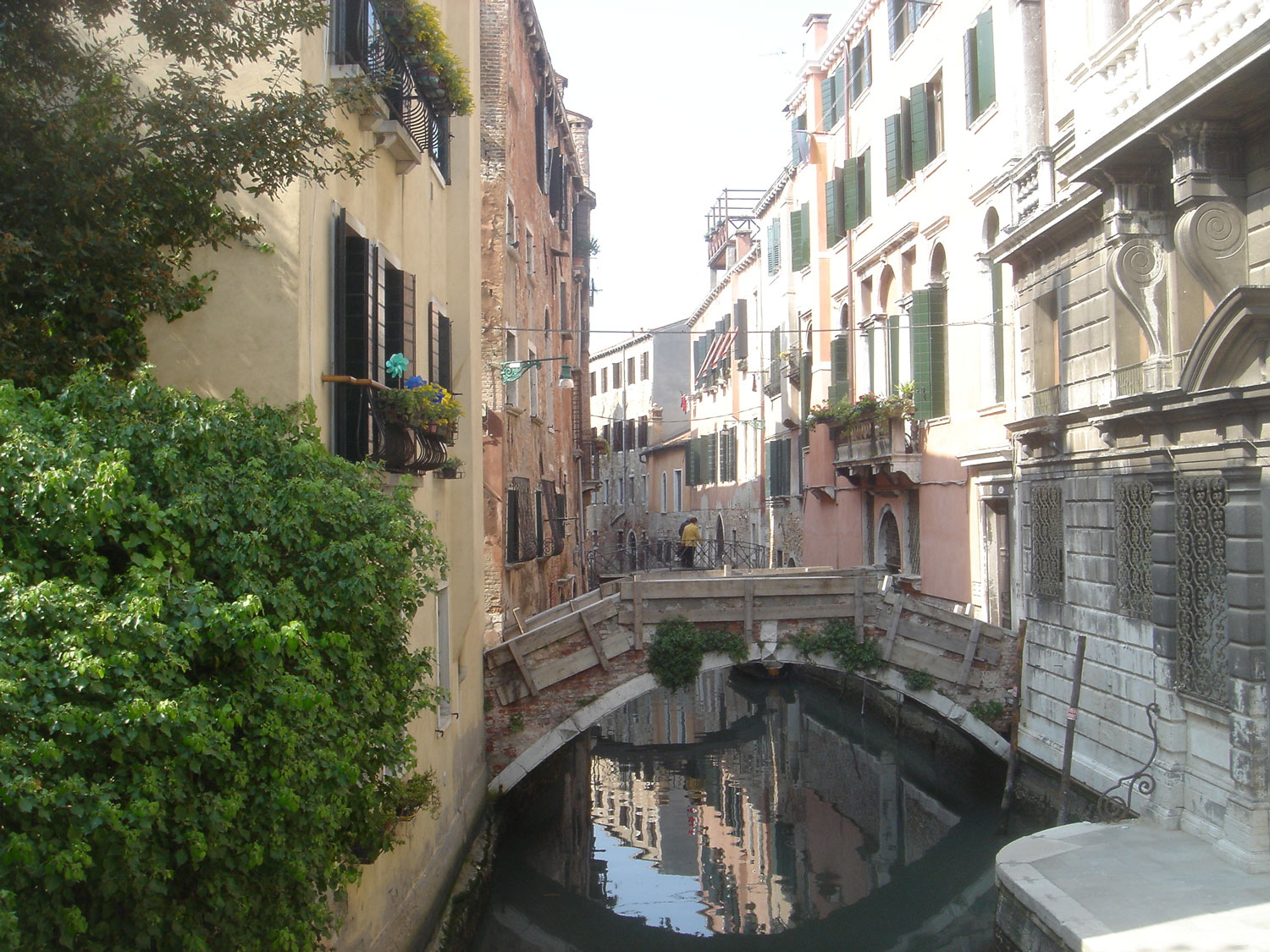
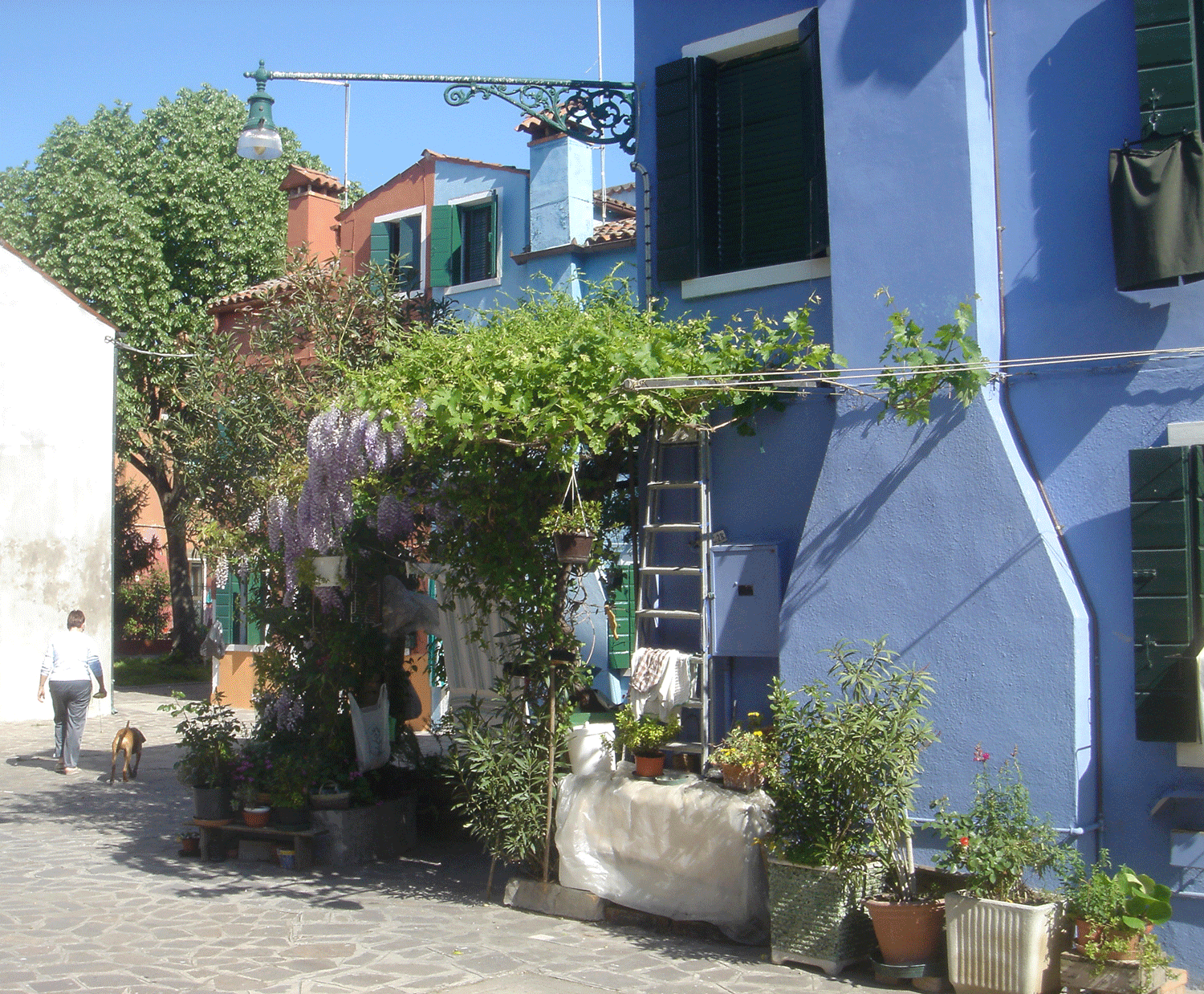
Spring is without doubt the best time to go to Venice. The wisteria is out everywhere in April and it’s quite splendid. The photos below capture the essence of my Venice. Since we were there for a week and had a vaporetto pass, we took the time to venture outside the main tourist areas. One thing I remember is the somewhat misty light that pervades most of my photos. I also loved the slightly decrepit look of many of the palaces. And I absolutely adored the masks.
Off the Beaten Track in Madrid

Apart from the Prado, Madrid’s main attraction to me are all the unusual things you keep coming across that I’ve never seen anywhere else. These are just some of them.

You can just see a building on the left that’s a squat and has signs up that seem to indicate the people have been evicted. During the day, all their clothes and furniture are gathered together in the middle of the square (Santa Cruz) and at night, they line up their mattresses under the nearby arches.

How to keep warm in a terrace café!

We saw a lot of cartoon characters in various places throughout Madrid posing for photos and asking for money.

Particularly in front of the Palacio Real, various invisible men were to be seen. This was my favourite.

The “living statue” is a well-known attraction everywhere in Europe but we were not convinced that this “escapee from Vesusius” was really alive. I think he might just set up his plaster cast and collect the money at the end of the day!

There are many shops with this type of fashion. Always very colourful. Lots of fabric shops as well which have virtually disappeared in Paris outside the Quartier Saint Pierre.

We came across seemingly hundreds of these queues and couldn’t work out what they were all about until we eventually came to a church that was bursting with people already.

Another indication of how alive religion still is in Spain is this stall on the Sunday flea market.

And on the same flea market, just look at this sofa!

On the same market, the dummies are obviously having a whale of a time.

I don’t know whether the emergency medical service is a colourful in the rest of Spain!

Our Plaza Mayor turned into a very busy and eclectic collectors’ market on Sunday.

Anyone for crisps?

And you can follow them up with sweets …

And last, but not least, we have Cervantes with his famous Don Quixote and Sancho Panza with a typical skyscraper from the Franco era (1950s).