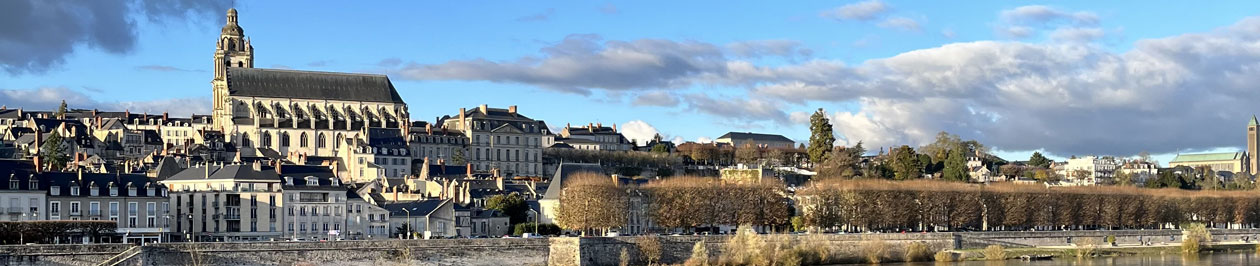
A Restaurant for Two and Lavardin

It’s that time again – the anniversary of the day Jean Michel and I met. We’re up to nineteen years. I have friends celebrating their 40th wedding anniversaries but not everyone is lucky enough to meet the right person the first time round. Last year, we tried out some new wave cuisine at Pertica in Vendôme but were not impressed although we did like the pâtisseries at Rodolphe’s. We’d also like to have a little village or a château to visit after lunch which restricts the choice somewhat in winter as lots of places close between All Saints (31st October) and Easter (beginning of April), so we’re starting to realise.
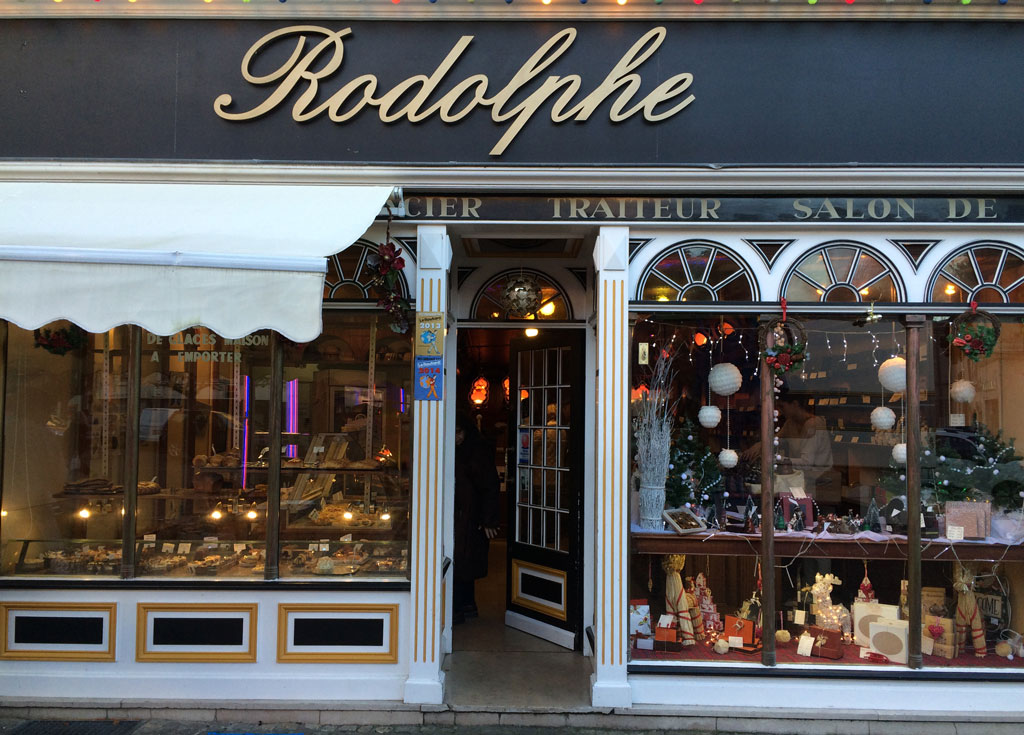
Rodolphe's which looks as though it might be the best pâtisserie in town
Rodolphe’s which looks as though it might be the best pâtisserie in town

Friends have told us that Lavardin and Chateaudun are worth a visit. The only possible restaurant near Chateaudun (we’re looking for a little gastronomy here, which excludes pizzerias, crêperies and coussousseries) is closed on Sundays and Mondays. Le Manoir de Saint Quentin which isn’t far from Lavardin keeps popping up but the menu on the website doesn’t look very interesting. In the end, all the positive reviews we keep seeing (plus the absence of any other likely restaurant) convince us. We phone and leave a message, backing it up with an email. Next day we receive confirmation.
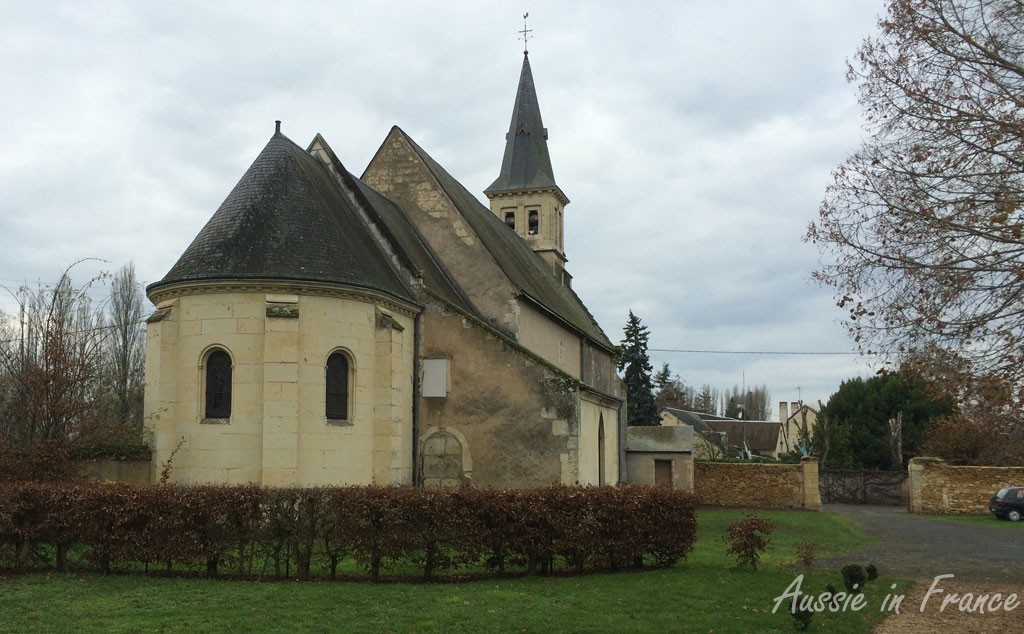
The church near the restaurant in Saint-Quentin-les-Trôo

The restaurant is in a town with the impossible name of Saint-Quentin-les-Trôo. We rightly assume that it is connected to the word troglodyte as Trôo is the undisputed troglodyte capital of Loir-et-Cher. It turns out that Trôo is derived from the pronunciation of trou (hole)  by English occupants during the reign of the Plantagenets  in the 12th century.
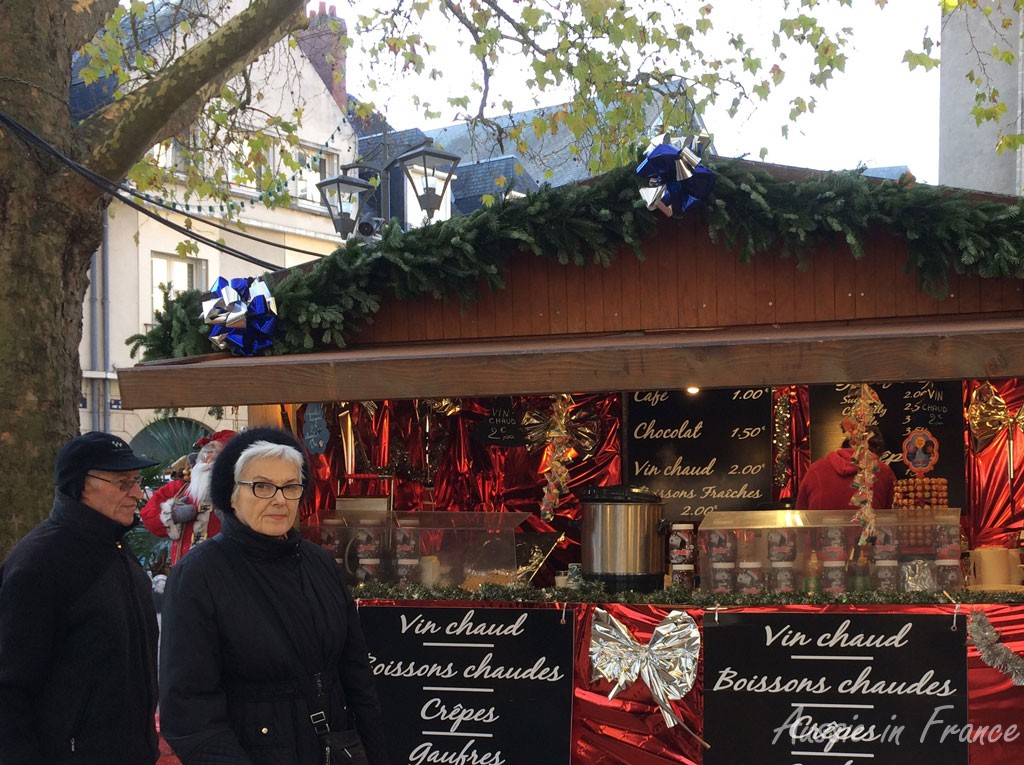
The traditional mulled wine stall at Blois Christmas market which is probably part of a chain!

As we drive through Lavardin on the way, we see a very large number of cars parked along the road which can only mean some sort of festivity. The fact that it’s the first round of the regional elections today can’t possibly be an explanation. Sure enough, there is a marché de noël this weekend. We don’t know whether that is good or bad. Most of the Christmas markets we’re seen in recent years in Paris and the Loire have been very dismal.
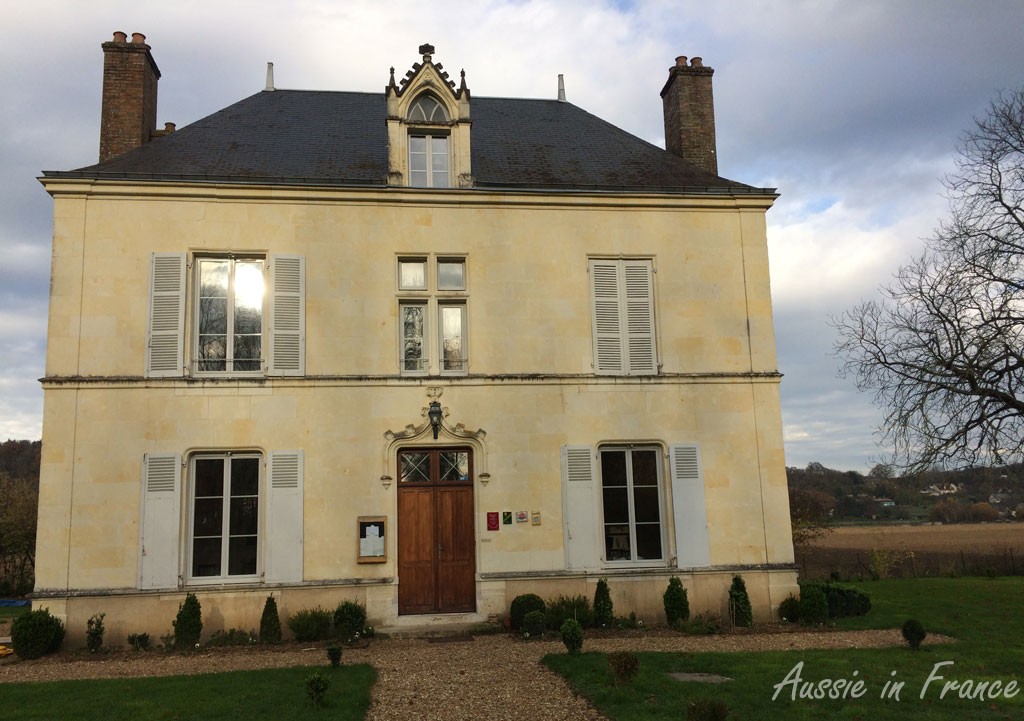
Le Manoir de Saint Quentin

We arrive at the restaurant a bit early – 12.15 (it’s a little less than an hour from Blois) – and there is not a soul in sight. The weather is not conducive to staying outdoors and the door is locked so we ring the bell. A tall, harried looking Asian man answers and we apologise for our early arrival. That’s OK, he says, in heavily accented French, adding apologetically, “we’re not very busy at the moment”.
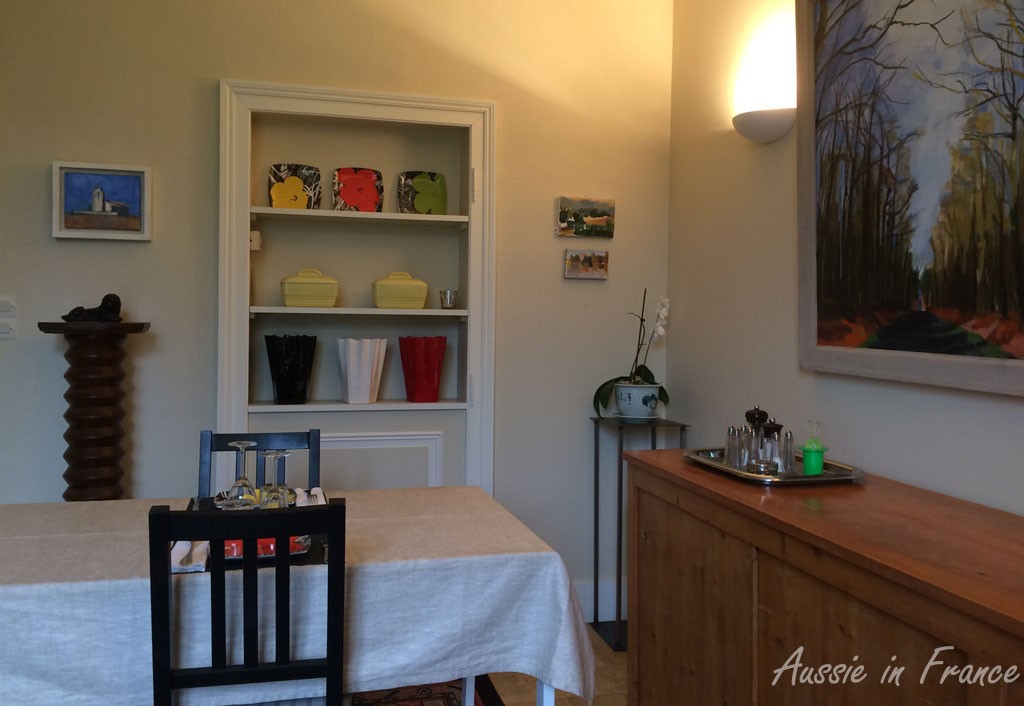
The minimalist interior

He takes us through to a room where two tables are laid and we choose the one next to the window. That’s when I remember why I bought a woollen pullover a couple of years ago – it’s to put under a woollen jacket and over my Damart when we go to restaurants in the country in winter. Unlike Parisian restaurants, they are not overheated. The large radiator is on though so I assume it will get warmer as time goes by.
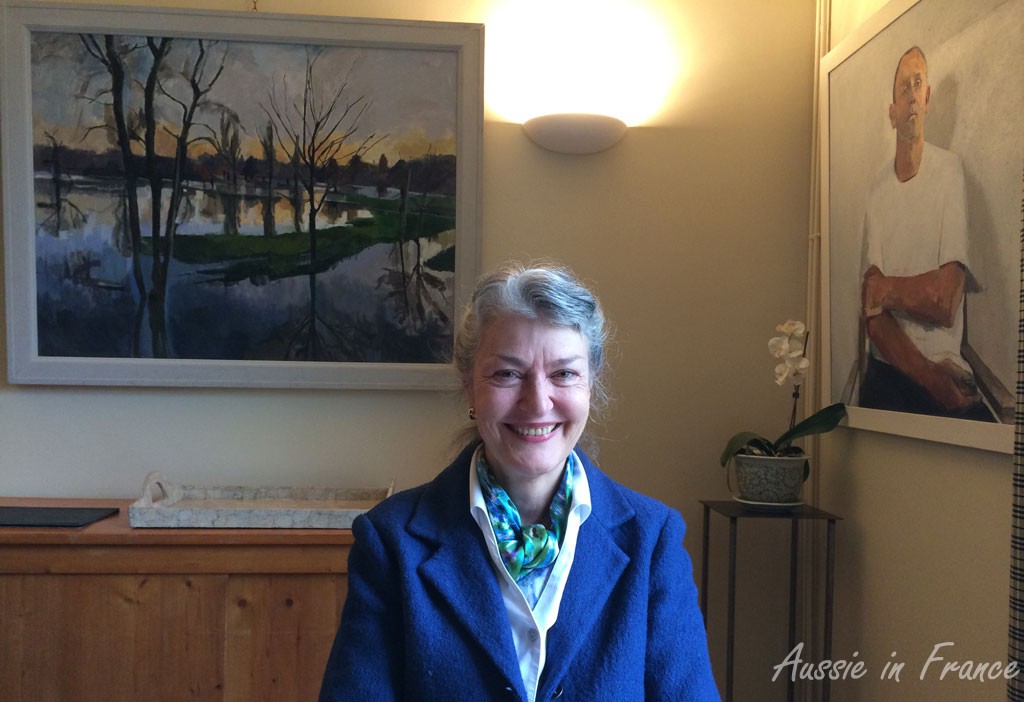
Me in front of two of the acrylic paintings

The decor is minimalist. The tablecloths are plastic simili-linen with plastic woven mats and melamine Andy Warhol plates. The serviettes are good-quality fabric. There are several large acrylic paintings on the wall and some more Andy Warhol plates in a niche. There are no menus.
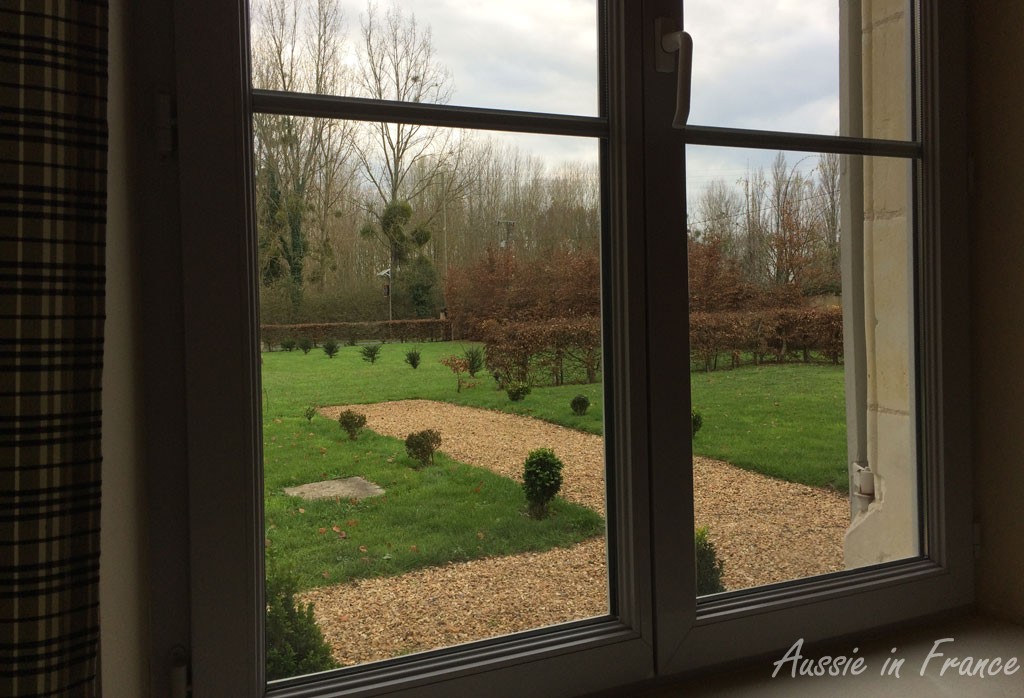
The view from the restaurant window

Jean Michel orders our usual celebratory glass of champagne before I have a chance to remind him that we have decided to always order local bubbly when we eat out in the Loire Valley. Our host/chef/waiter brings back a half bottle of Rothschild which gives me the chance to change the order. I learnt the first time I visited a champagne cellar in Reims that you should never buy half bottles (even though they sell them) because the champagne can’t mature properly and develop good fizz in a half bottle. We ask for a bottle of champenoise method vouvray instead and happily stay with it for the rest of the meal.
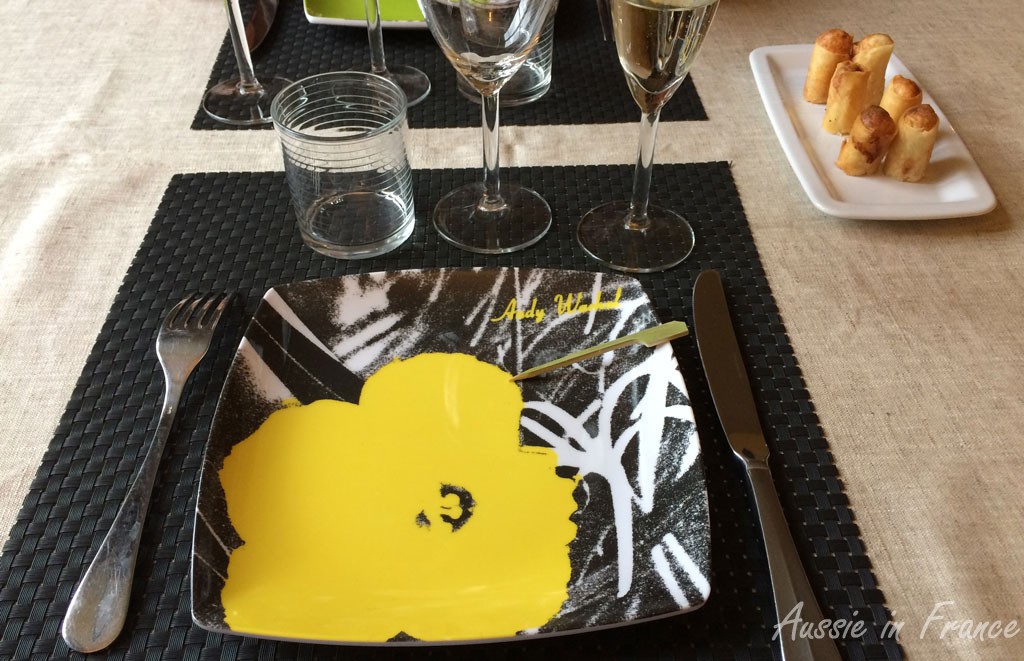
The Andy Warhol plate and little amuses-gueules on the right

The chef, who turns out to be from Hong Kong and does not recognise my pronunciation of Cheung Chau island, tells us that he will be serving a dégustation menu. He then describes the different dishes with some difficulty as his French is a little basic. He says that cheese is optional. We say it won’t be necessary considering the rest of the menu which seems to have an amazing number of courses.

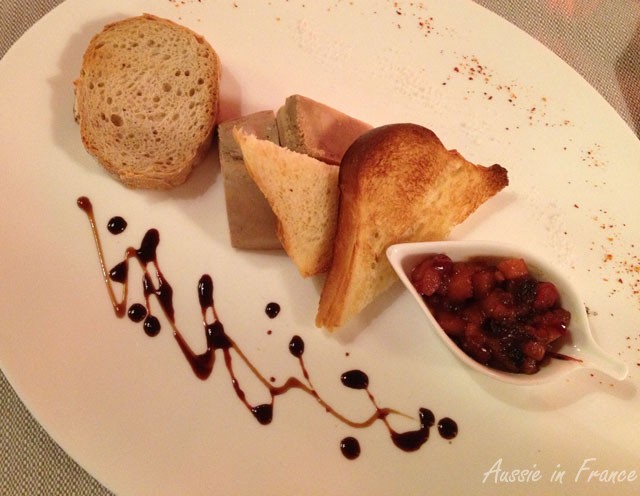
To accompany our first glass of vouvray, we are given a little slice of the chef’s own foie gras on a small piece of toast, followed by some little vertical spring rolls that we don’t manage to identify.
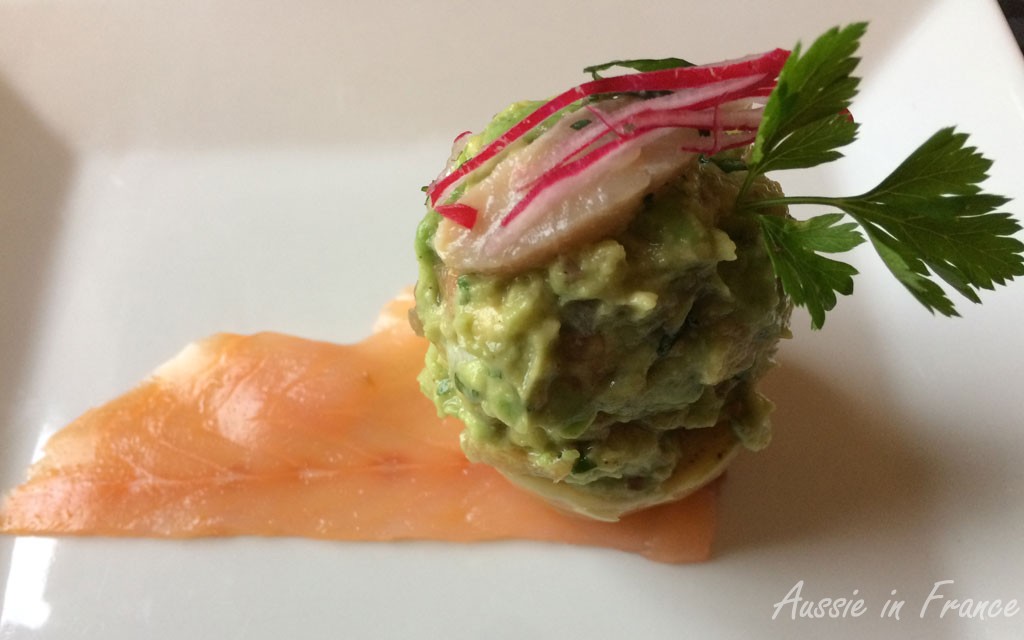
The artichoke and guacamole snail

The two amuses-gueules are followed by no fewer than five starters: pumpkin soup, mackerel rillettes, cold prawns with curly lettuce, artichoke hearts topped with guacomole on a smoked salmon bed arranged to look like a snail, and foie gras which isn’t bad but we prefer our own salt-cooked melt-in-the-mouth Christmas foie gras that we’ll be making on Thursday with our friends as we did last year.
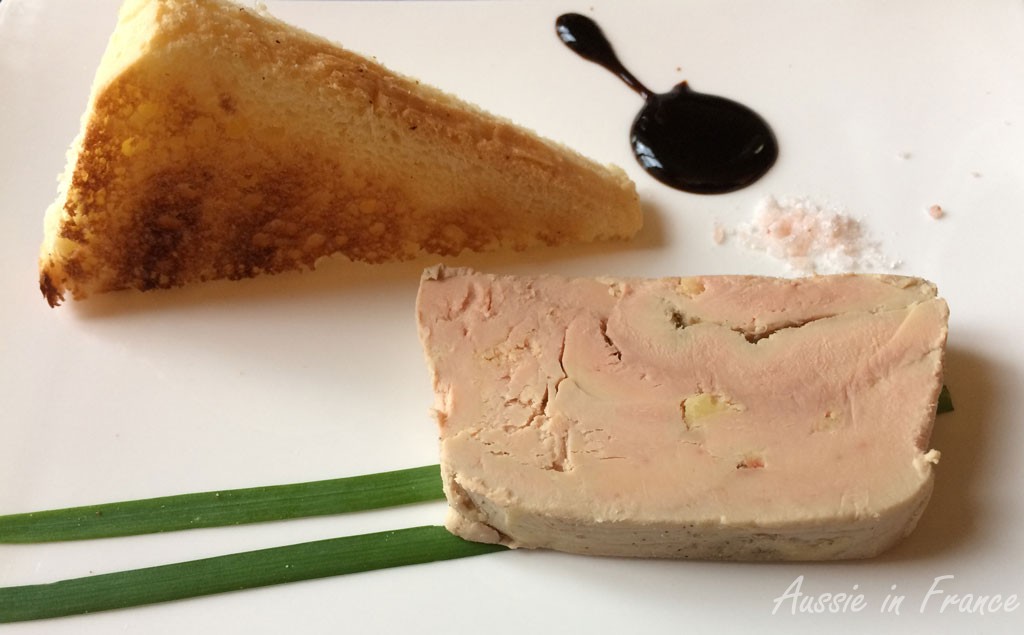
Chef's foie gras
Chef’s foie gras

By the time the main course  arrives, we know we will have the restaurant to ourselves. A very tender breast of guinea-fowl is served with potato purée, turnip and carrot and a tasty foie gras sauce.

By now, I don’t think I can eat another morsel. We refuse the cheese once again and wait for the dessert. Jean Michel says there are three. Fortunately they all turn out to be on the same plate. First, homemade raspberry ice-cream which we don’t manage to identify because we’ve never had it before. In France, they only have raspberry sorbet. I prefer the ice-cream. Second, a delicious chestnut soft-centred cake. Third, several lightly caramelised  slices of apple.
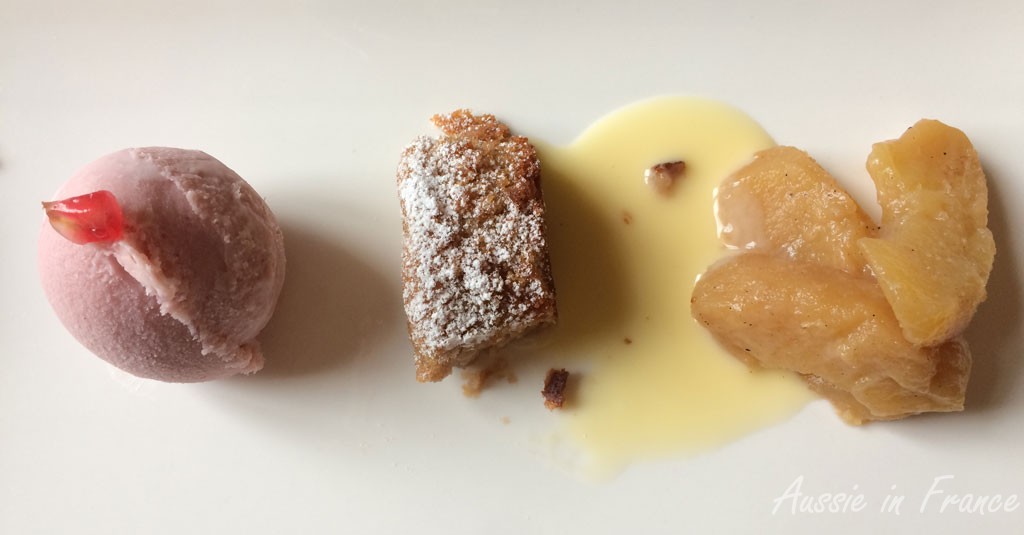
Desert: raspberry ice-cream, soft-centred chestnut cake and caramelised apples

We finish off with an excellent espresso. The bill comes to 97 euro, which we declare is very good value for money (36 euro each for the menu, 20 euro for the Vouvray and 2.50 for the coffee). We’re glad we didn’t have any breakfast and are now going to get a bit of exercise walking around Lavardin.

We both agree that it was an excellent choice for an anniversary lunch due to its originality. All the food is made by the chef and fresh – we even saw him go out in the garden to pick some fresh herbs; there were no strange combinations, but nothing was outstanding.
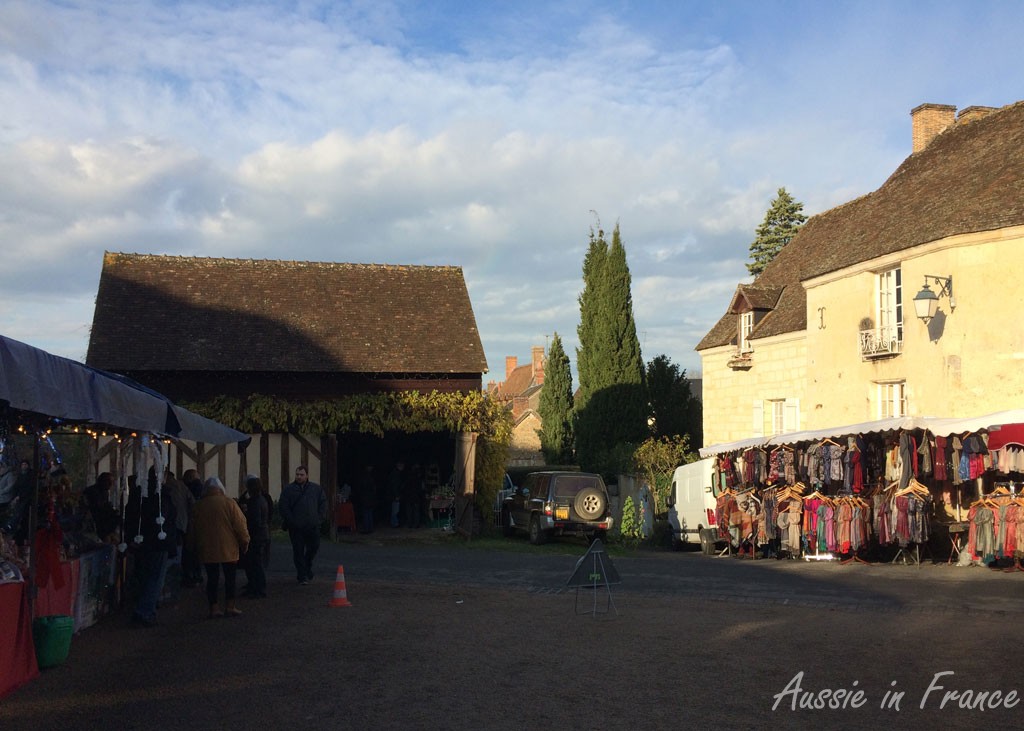
Christmas market at Lavardin

The sun is starting to come out when we leave the restaurant, which is a relief. We arrive at Lavardin by a back road, which is fortunate, because it means we can park quite close to all the activity instead of miles away on the main road. Lavardin immediately strikes us as being a pretty little town, especially with the ruined castle on the hill, 45 metres above the Loir River (not to be confused with its second cousin, the Loire).
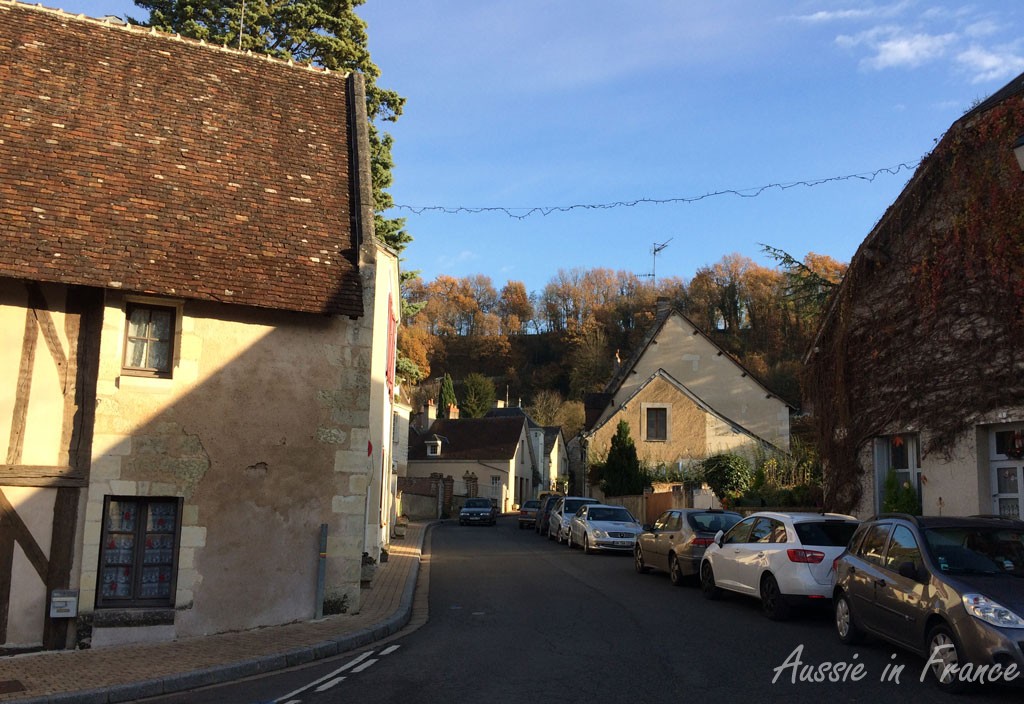
A street in Lavardin

The Christmas market, however, has little to offer. The stalls are spread out through the town, including the castle, which is a good idea, but prevents us from having a proper visit though we do see a bread oven hollowed out from the limestone. There is nothing original at the market and very little is handmade. We are not tempted to buy.
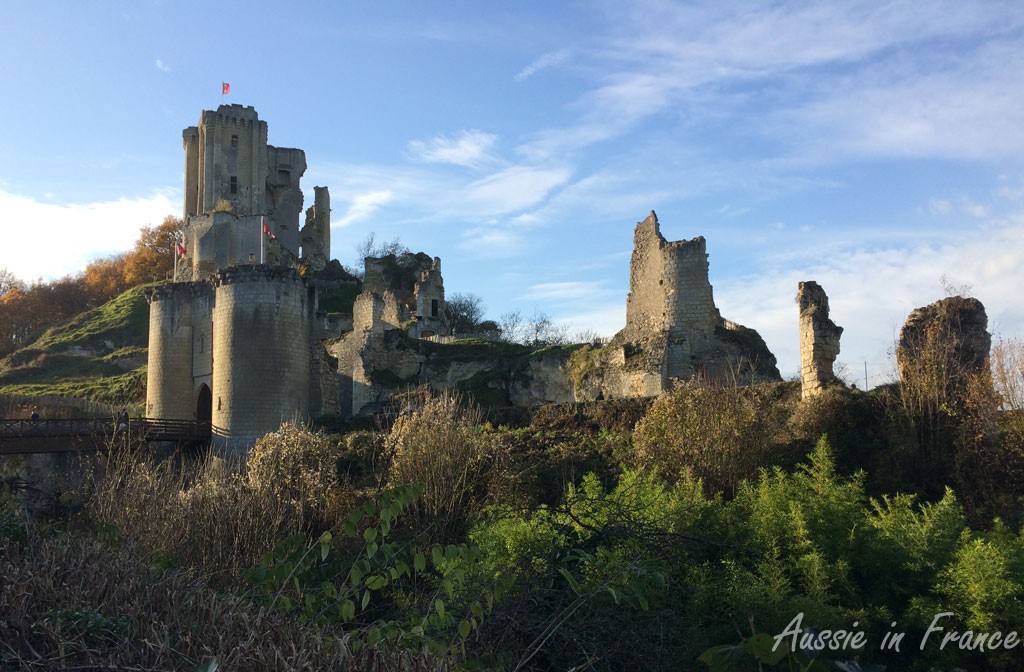
The castle ruins above Lavardin

Founded by the Counts of Vendôme in the 9th century, the feudal castle was rebuilt in the 14th and 15th century by John 1st of Bourbon-Vendôme. After being occupied by members of the Catholic league, it was captured and dismantled on the orders of Henri IV in 1590.
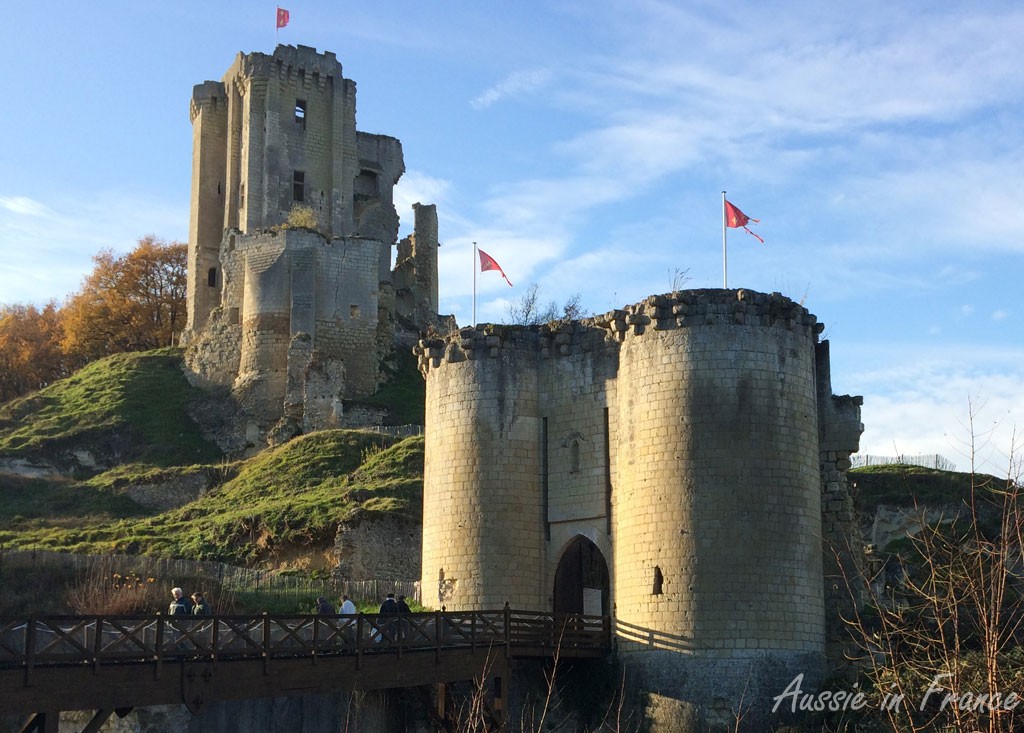
The drawbridge up close

All that is left of the castle is a 26-metre high ectangular keep with flat buttresses topped with crenallations. The only remaining part of the two walls built in the 14th and 15th centuries is the entrance flanked by two circular towers and a drawbridge over a moat.
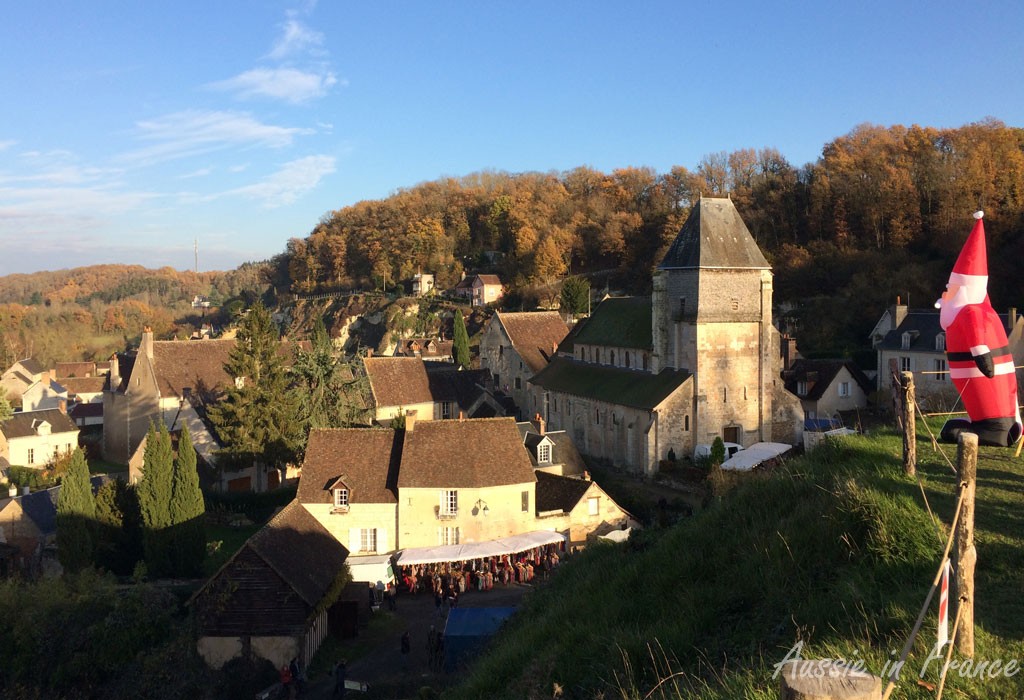
The promontory with its blow-up Santa

We walk up the hill to the castle and out onto the promontory. Unsurprisingly, the blow-up Santa Claus does not seem to appeal to many of the children present. A couple of teenagers try to hug it while their mother takes a photo.

And somehow, I can’t really imagine that the real one with his terrible white dreadlooks sauntering down the street talking to his mates is very convincing either.
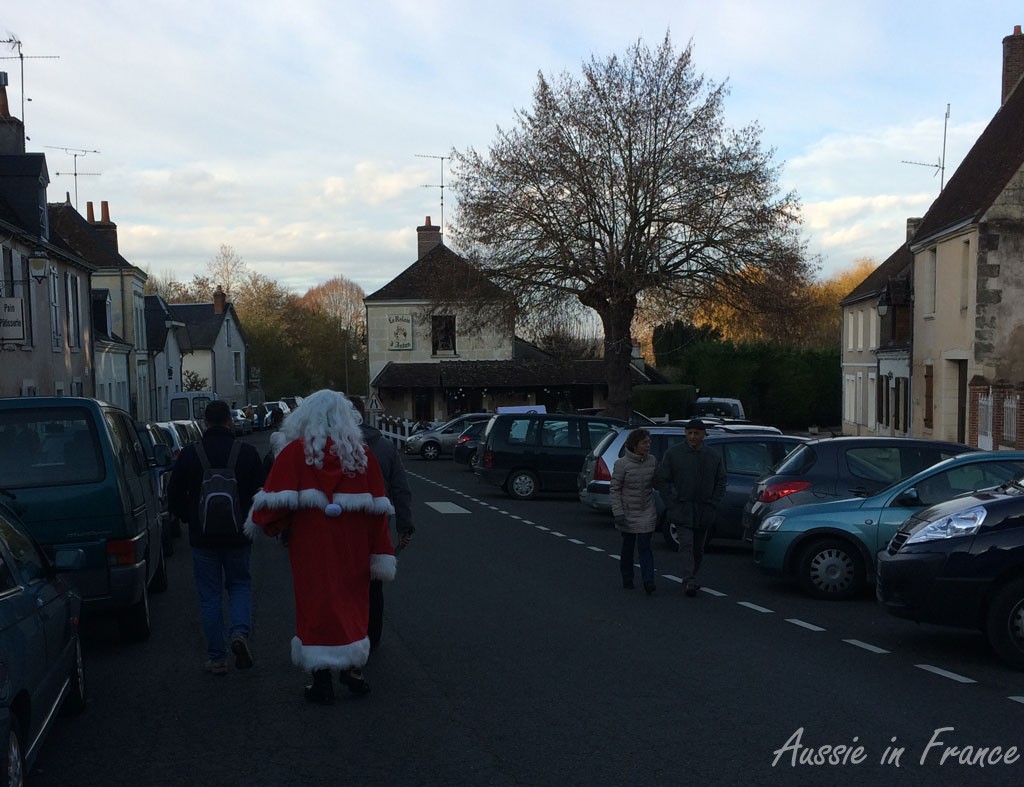
An unconvincing santa

However, Lavardin certainly has potential. We’ll come back on our bikes in the spring and cycle around the area, maybe starting in Vendôme, less than 20 km away, as there are several places to visit, including nearby Montoire-sur-Loir, the manor house where Pierre Ronsard, the Renaissance poet, was born, the historical train station in Montoire where Pétain and Hitler met up during the second world war, the Saint Gilles chapel with  its beautiful frescoes and the troglodyte village of Trôo. Perhaps you’d like to join us?
Chickens with Blue Legs – Introducing Susie Kelly

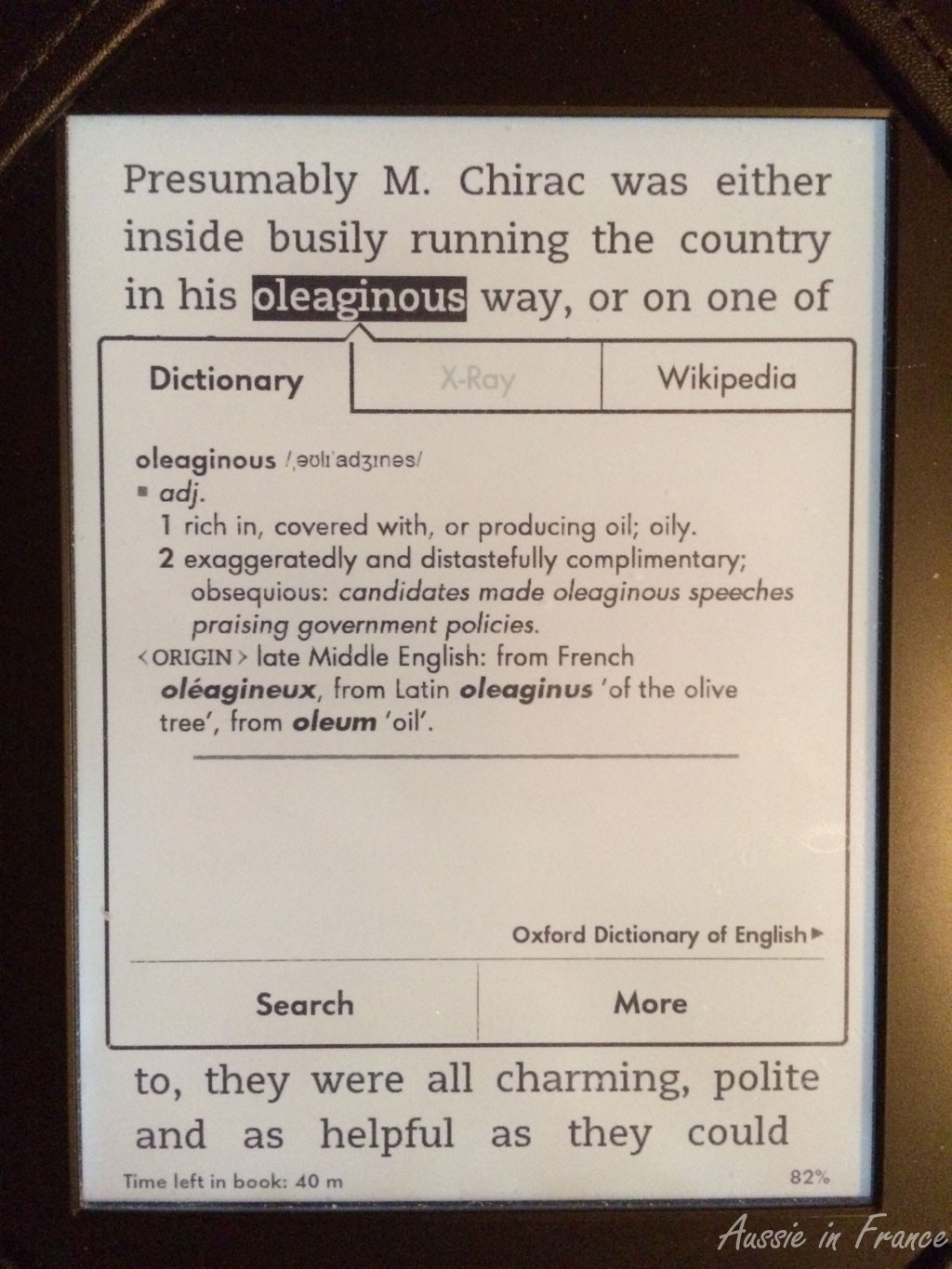
I am an avid reader and being a translator gives me every excuse to indulge my passion. If I didn’t read at least one or two books a week, I could lose my English. Not that I haven’t lost it a bit anyway. Speaking and hearing French all day has a tendency to contaminate my native tongue and I end up writing things like “vigilante” instead of “security men”.

kindle


So, I am utterly addicted to my Kindle Paperwhite 3G because it means I am never short of reading material because no matter where I am in the world, I can download another book. It has a built-in dictionary, I can look up Wikipedia and adjust the size of the letters. I finally decided to subscribe to the Kindle Unlimited programme where I pay 9.90 euro a month to borrow an unlimited number of  books. Jean Michel, whose Kindle is connected to the same Amazon account, can also benefit from my subscription. Not all books are included – far from it – and it’s not always easy to track down good reading material but every so often I come across a new author whose books I devour.

susie_kelly

That is the case of Susie Kelly, who was born in post-war London, grew up in Kenya and has been living near Poitiers since 1995. I started with her biography, “I wish I could say I was sorry”, the fascinating story of a misfit child who suddenly finds herself transported to Kenya with her parents at the age of eight. She loves her new life : “Cinderella must have felt like this when the glass slipper fitted. I was no longer a little bundle in a liberty bodice and leggings, but a princess in pretty cotton frocks in a land of perpetual sunshine.”

susie_kelly_autobiography

Unfortunately it doesn’t last. Cinderella finds herself having to choose between her mother and father after their marriage falls apart. So she chooses the house and the country she loves – and indirectly her father – and doesn’t see her mother for another 17 years. In the meantime, she is sent to live with her paternal grandparents in England, where she is not wanted. When she finally returns to Nairobi, her father has remarried and she has a half sister.

Her stepmother, Helen, is psychologically unfit to be around children of any sort, and Susie finds herself truly in the role of Cinderella. However, when she is 14, another Cinderella provides an escape route, “an Arab-Somali cross … a sparky and unpredictable ride” whom she loved “as I had never loved before, instantly and overwhelmingly”.

I’m not going to tell you any more, because I also want to talk about some of her other books and resuming someone’s life story can’t possibly do it justice. “Bon Voyage” is a good place to start because it is a collection of the first chapters of several books, namely “Travels with Tinkerbelle – 6,000 miles around France in a mechanical wreck”, “Best Foot Forward – A 500-mile walk through hidden France”, “The Valley of Heaven and Hell – Cycling in the Shadow of Marie Antoinette” and “Swallows & Robins – The Guests in my Garden”.

best_foot_forward

After my appetite had been whetted by “Bon Voyage, I read “Best Foot Forward” and am now nearly finisihed “The Valley of Heaven and Hell”. I could have waited until I had read all Susie’s books before writing this post, but I think it’s a pity not to share my enthusiasm right now. Susie has an inimical way of writing, both poetical and down-to-earth at the same time.

Her factual account of her travels is interspersed with highly readable historical information about people and places. In “Best Foot Forward”, she walks across France by herself, from La Rochelle to Geneva, with a heavy backpack, a tent without a fly (a mistake I once made myself), a set of outdated maps and badly blistered feet despite her excellent boots.

“There was a narrow strip of grass beside the road”, she tells us when she can’t find a hiking path, “and it looked pretty scattered with daisies, 19 buttercups, dandelions already turned to fairy colonies, bluebells and cowslips, cow parsely still green, and purple vetch all struggling not to get onto the tarmac and be crushed. It was just their luck that I came along in the gigantic hiking boots, because I am pretty certain that very few people had ever been stupid or misguided enough to walk on the side of this particular road.”

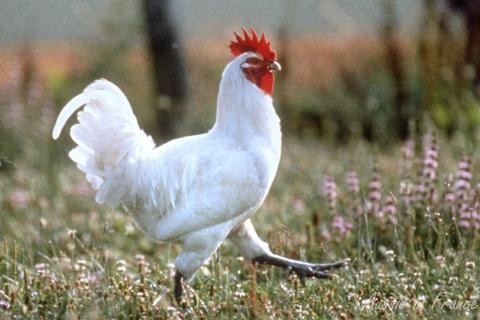
Her journey takes her through the town of Bresse famous for its chickens, “with their snowy white plumage, blue legs and little golden toenails”. With their red crests, they are highly patriotic. Now that is the sort of little tidbit that I love. I know about and have eaten poulet de Bresse but I did not know about the blue legs.

AOC-poulet-de-bresse

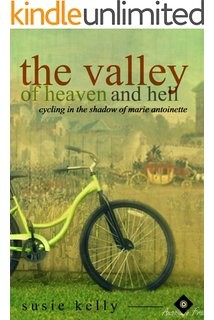
The aim of the cycling trip recounted in “The Valley of Heaven and Hell”, in the company of her husband Terry, a far more intrepid cyclist than Susie, is to follow the “identical route taken by Marie-Antoinette and Louis XVI when they tried to escape from the Revolution, and their journey back to their executions”.

valley_heaven_hell

Her account of their trip includes an historical account of the flight of the royal couple who finally come to a standstill when they are recognised by a postman, the famous Mr Drouet.

“The royal family spent the night in the grocery shop of the aptly named M. Sauce. Louis did almost nothing to help himself and his family, accepting his situation stoically, unable to make up his mind, or uninterested enough to take a possible escape route proposed by the Duc de Choisel. He did at least have the presence of mind to ask for a bottle of wine and some bread and cheese. He was not a man to let adversity spoil his appetite.”

Some of her cycling adventures remind me of our own predicaments when cycling paths suddenly disappear, for example. One day, they find themselves too close to the Marne. “Terry was going into the river, with his bike, camera, all our clothes and money. Unable to do anything useful, I shrieked to show moral support. He somehow managed to find a space for his left foot on a sliver of firm ground and gingerly pushed himself to the right, away from the edge, while I held my breath as if doing so would somehow be helpful.”

I’ve nearly reached the end of the book, which ends with a visit to the prison where Marie-Antoinette’s lived her last days in Paris.

Next on the list is “Travels with Tinkerbelle”. Why don’t you join me?
All her books are, of course, available in paperback*.

Oh, and don’t let me forget. Susie also has a blog called No Damn Blog.

All the books can be ordered in paperback from bookstores worldwide, or direct from any Amazon outlet. The ISBNs are as follows:
9780993307010 Swallows and Robins
9780993092299 The Valley of Heaven and Hell
9780993092275 Best Foot Forward
9780993092282 Travels with Tinkerbelle
9780993092220 I Wish I Could Say I Was Sorry

A Little Trip to Paris Two Weeks after the Terrorist Attacks

We’ve been planning to go to the Independent Wine Growers’ Fair in Paris for some time. During our two-day stay, I’ve lined up three routine medical appointments and organised to see two lots of friends. We decide not to let the terrible attacks on 13th November dissuade us from going. You may wonder why I am seeing doctors in Paris when I live in Blois but it’s hard to change medical pratitioners you’ve been seeing for twenty years or more …

Stade de France
Stade de France

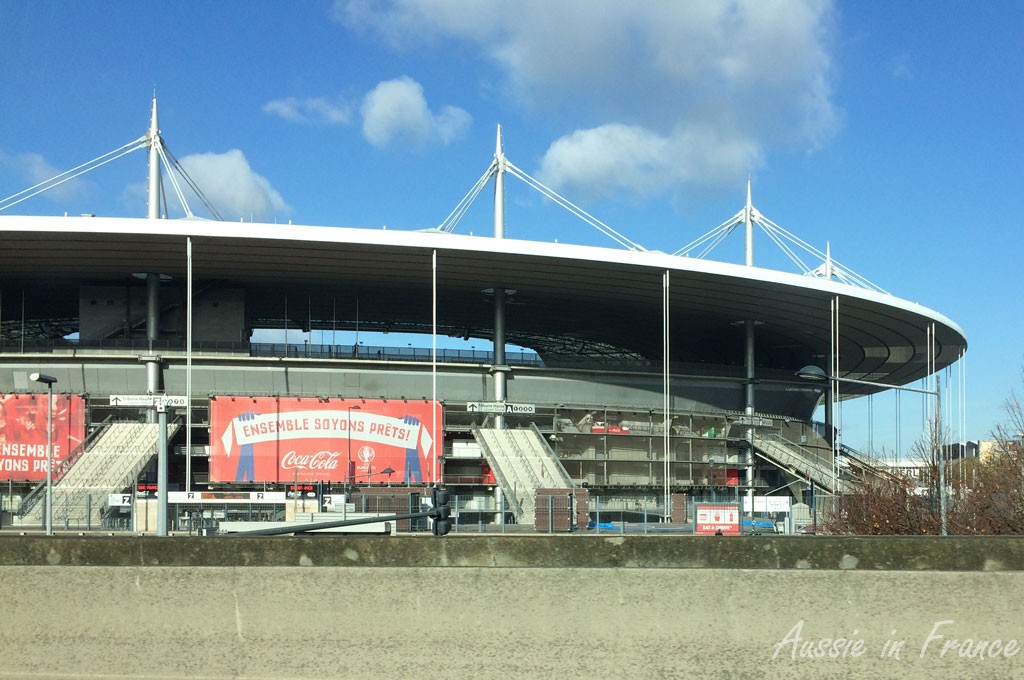
We leave home at 8 am on Thursday on a clear, bright day and arrive in Fontenay sous Bois where we used to live many moons ago with 20 minutes to spare for the first appointment at 11.15 am. From there we go across to the other side of Paris, past the Stade de France, which was the scene of one of the attacks. The sun’s out and it’s hard to imagine that is was the site of such devastation.

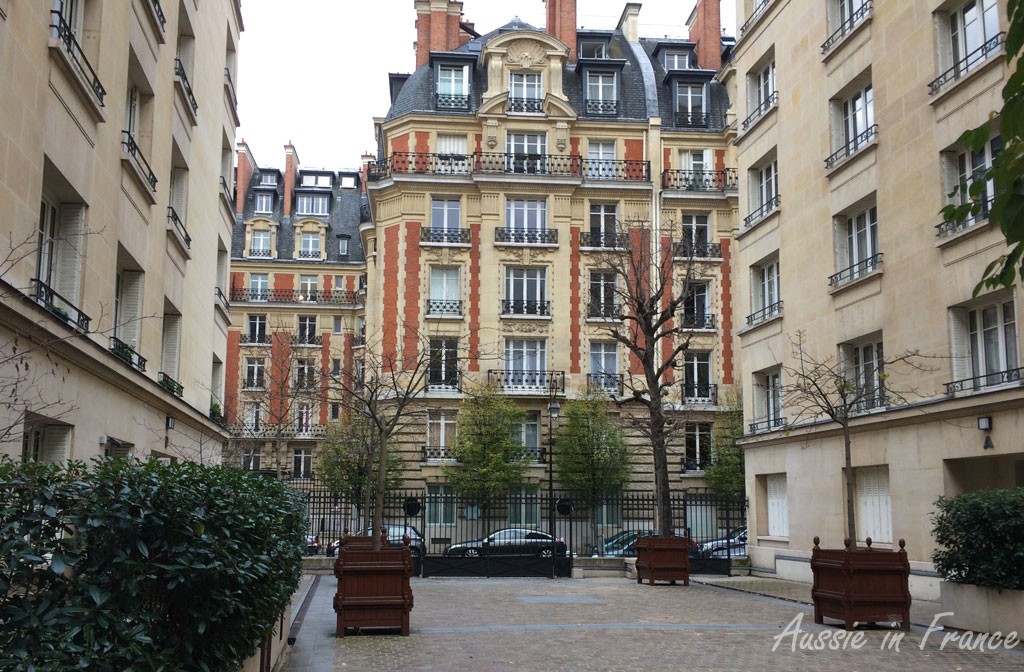
Typical apartment buildings in Neuilly sur Seine

In Neuilly, we visit our good friends Maryse and Claude who have invited us for a delicious lunch. We talk about the attacks but then move resolutely onto other subjects. I keep my eye on the clock because our next appointment is at 3.30 pm in the 16th arrondissement where I have a dermatologist who knows all about sunspots and skin cancer. This is important if you are an Australian as so many of us were exposed to the tropical sun as children without receiving adequate protection. I am reassured that I don’t have a sunspot just a solar keratosis. Dr Jeanmougin burns it off with dry ice.

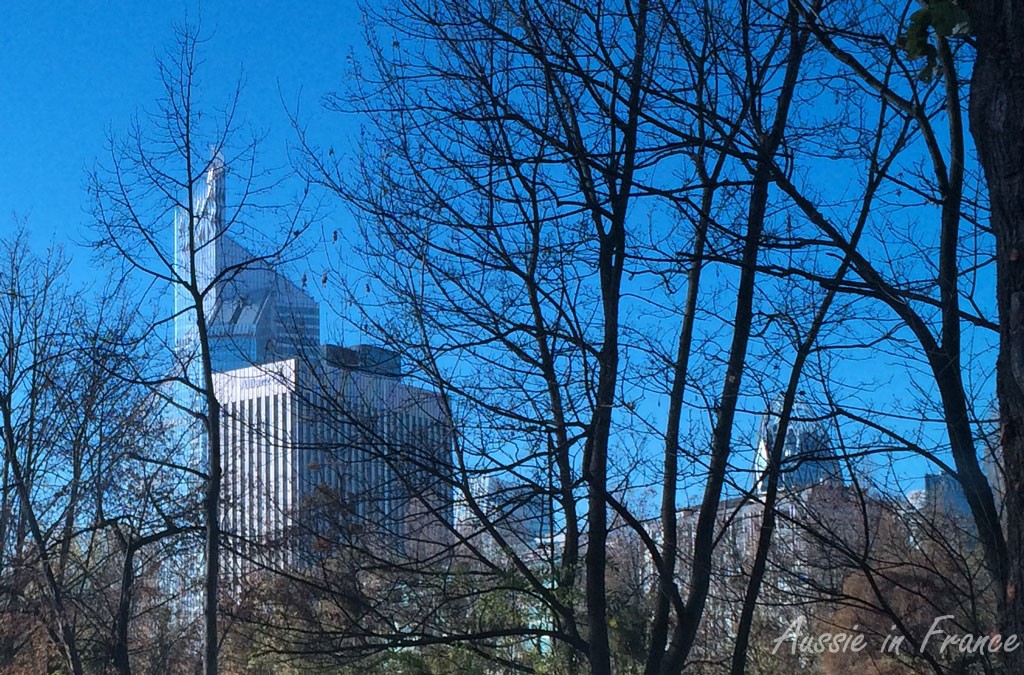
La Défense as we arrive in Neuilly

We then head for the outlet stores in the north of Paris where I want to buy some Blanc des Vosges sheets. The underground parking lot is closed and we wonder whether the stores are open. Yes, they are, so we park in front of the complex. The security guys ask to look in my handbag but their check is only very cursory. There is practically no one in the huge shopping centre. We find the sheets and a woollen blanket which has become a very rare item (everyone uses duvets these days) but are sad to discover that the Sym boutique where I have bought practically all my trousers for the last 20 years has closed.

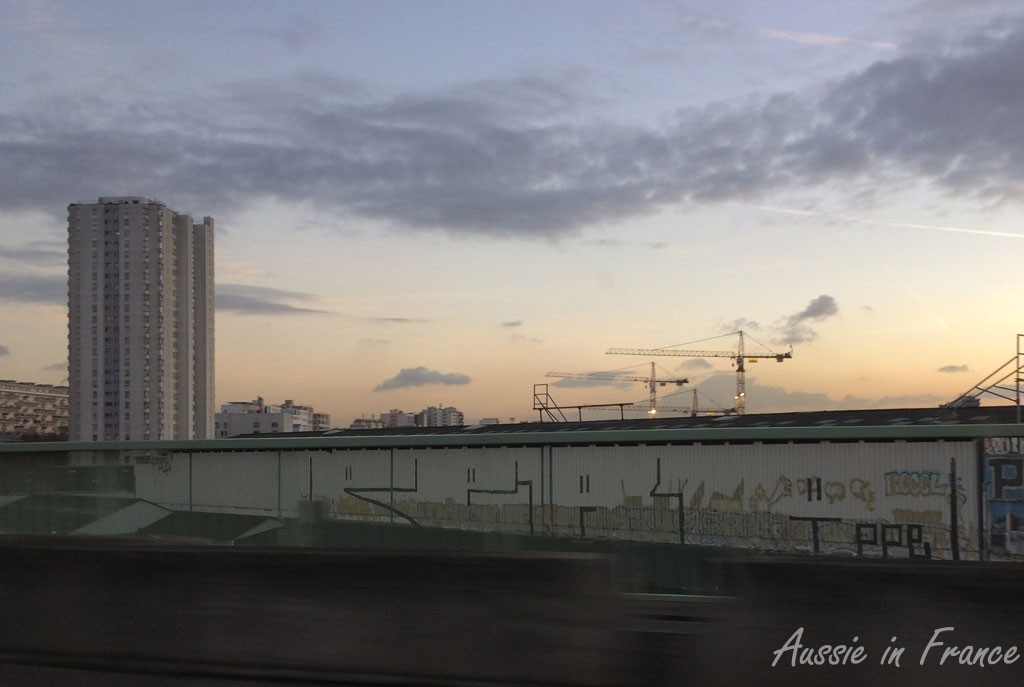
Sunset over Paris :) on our way back from Paris Nord
Sunset over Paris 🙂 on our way back from Paris Nord

Next stop is Vincennes where we are having dinner in a Thai restaurant with our friend Anne. I order some delicious little chicken parcels followed by Peking duck (which is probably not very Thai I have to admit). After two forkfuls, my mouth is on fire. It turns out I’ve eaten a tiny chili. Not even in India did I taste food this spicy. The staff rushes over to see what’s happening to me. After downing a bottle of water the pain starts to subside. The rest of the duck is not spicy at all!

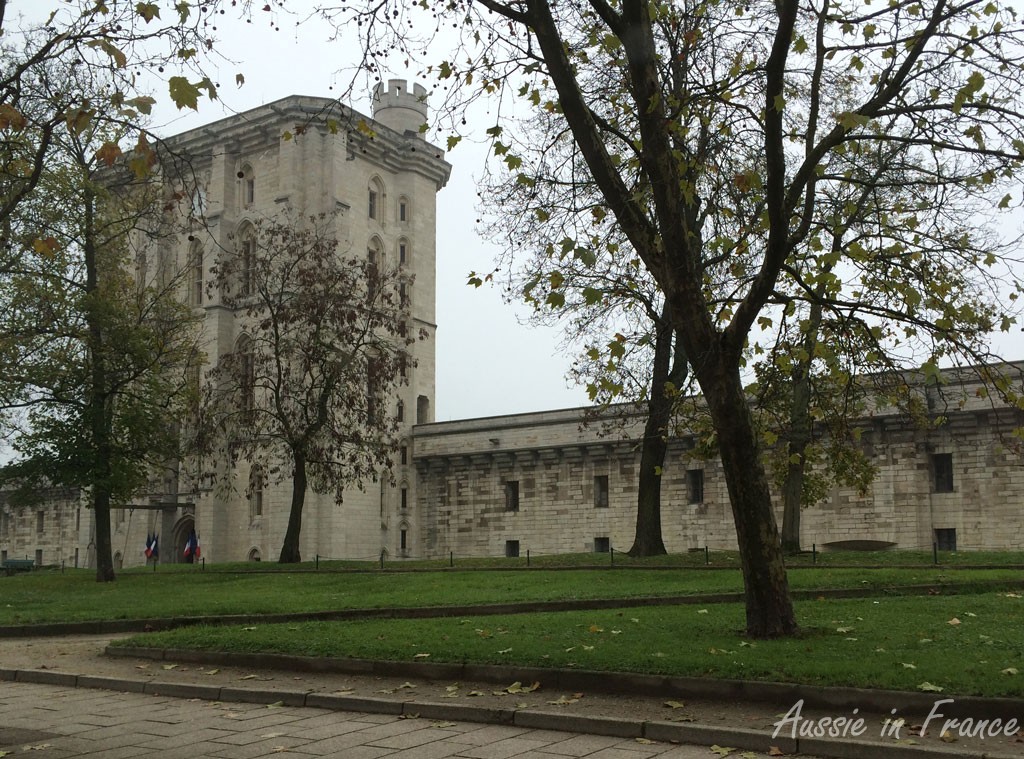
Château de Vincennes

We finally reach our hotel on avenue Daumesnil in the 20th arrondissement at nearly 11 pm. I chose it on booking.com by asking for a 3-star hotel with a rating of at least 8/10 for less than 100 euros. I didn’t have a very big choice … The man at reception is very friendly. The room is minute, with a double bed, a single bed, a small wardrobe, a bedside table, a mini-bar that doubles as a second bedside table, a table and chair with an electric jug, 3 cups, several sachets of coffee and tea, and a luggage stand. You have to step over the end of the bed to get out on the window side. The bathroom has a shower bath, a toilet and wash basin. All very clean and functional. The bed and pillows are comfortable and there are good quality sheets. The only other negative point (apart from the size) is the metro which we can hear rumbling in the background. Fortunately it stops between 1.15 am and 5.30 am.

Our hotel in Avenue Daumesnil

It’s next morning and we’re down at reception by about 9.30 am. The man at the desk greets us in English to my surprise. Jean Michel says he can speak to us in French. It must be the Australian hats. I ask him whether they have lost a lot of custom since 13th November and he tells me that it’s not the foreign tourists who have cancelled, but the French!

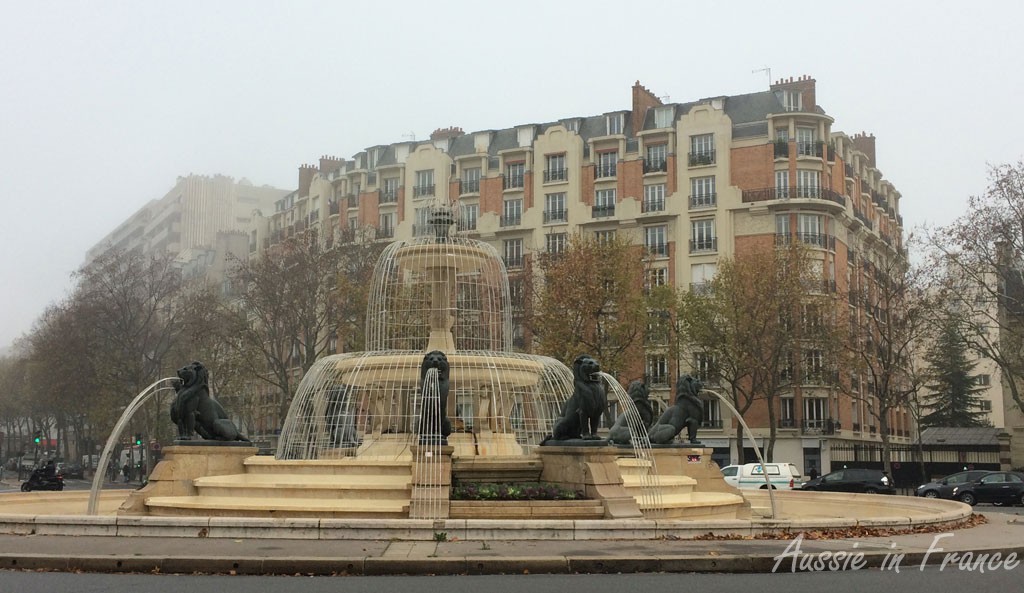
Place Félix Eboué
Place Félix Eboué

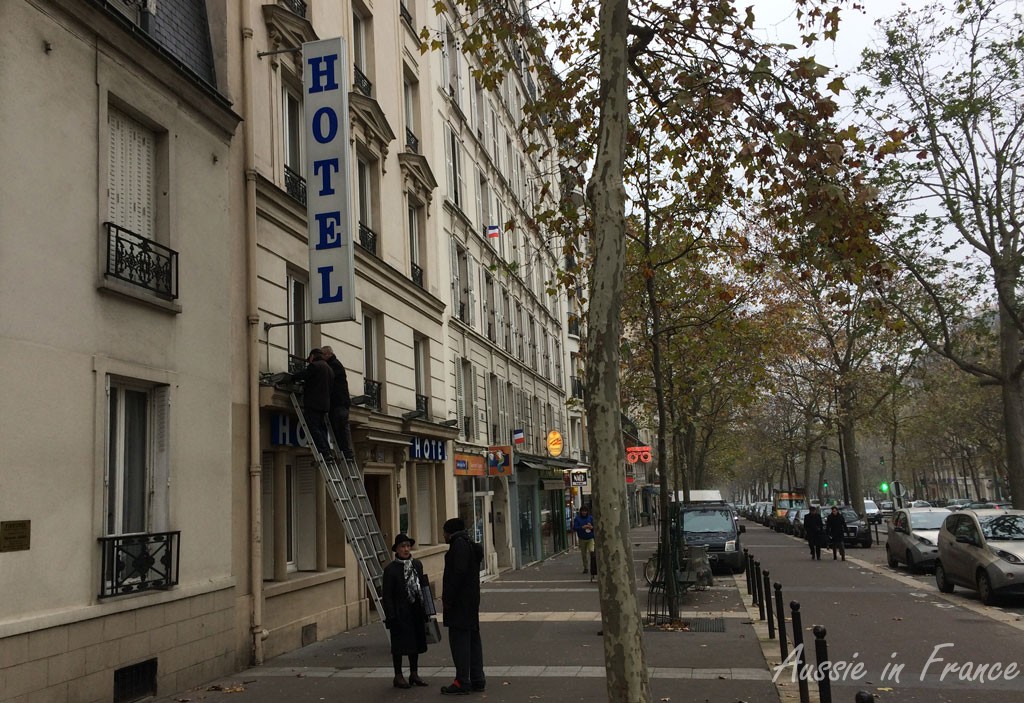
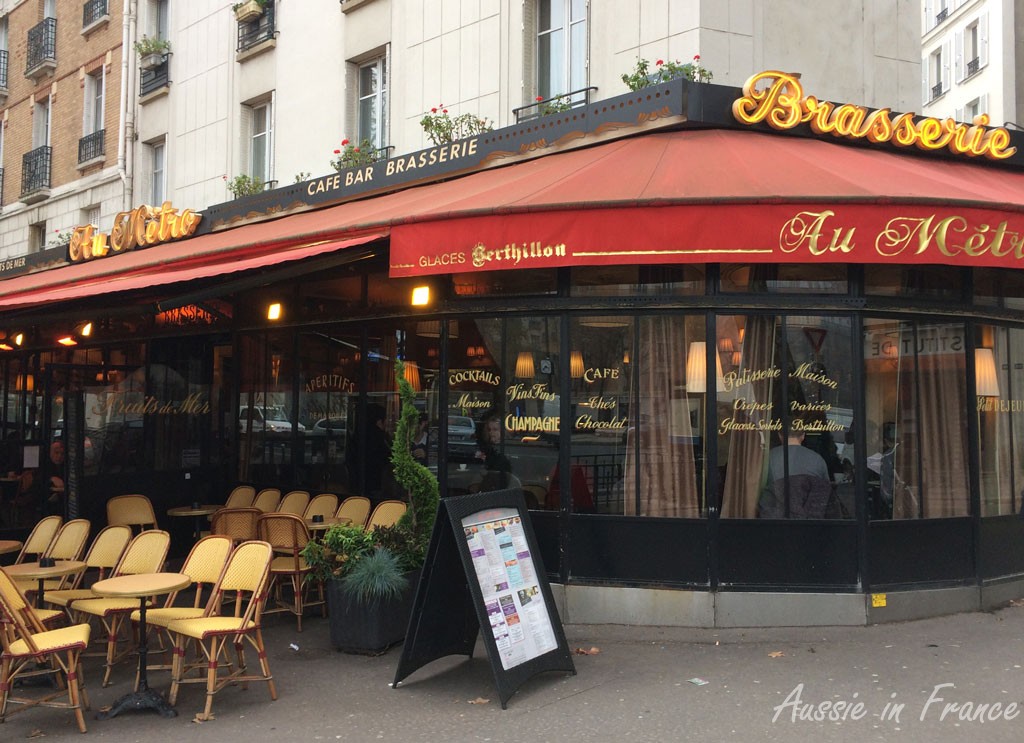
We put our overnight bags in the car which is parked just across the street and look for a likely place for breakfast. There is a thick fog. We see a brasserie next to a street market on Place Félix  Eboué. It’s very busy but we’re told there are no croissants or even baguette left because of the market so we leave again. The moral of this is that you can’t count on croissants after 9 am …

The brasserie where there are no croissants left

Fortunately we find a smaller place down the road run by some Asians who instantly go off to the nearby baker’s to buy us some croissants. They are excellent.

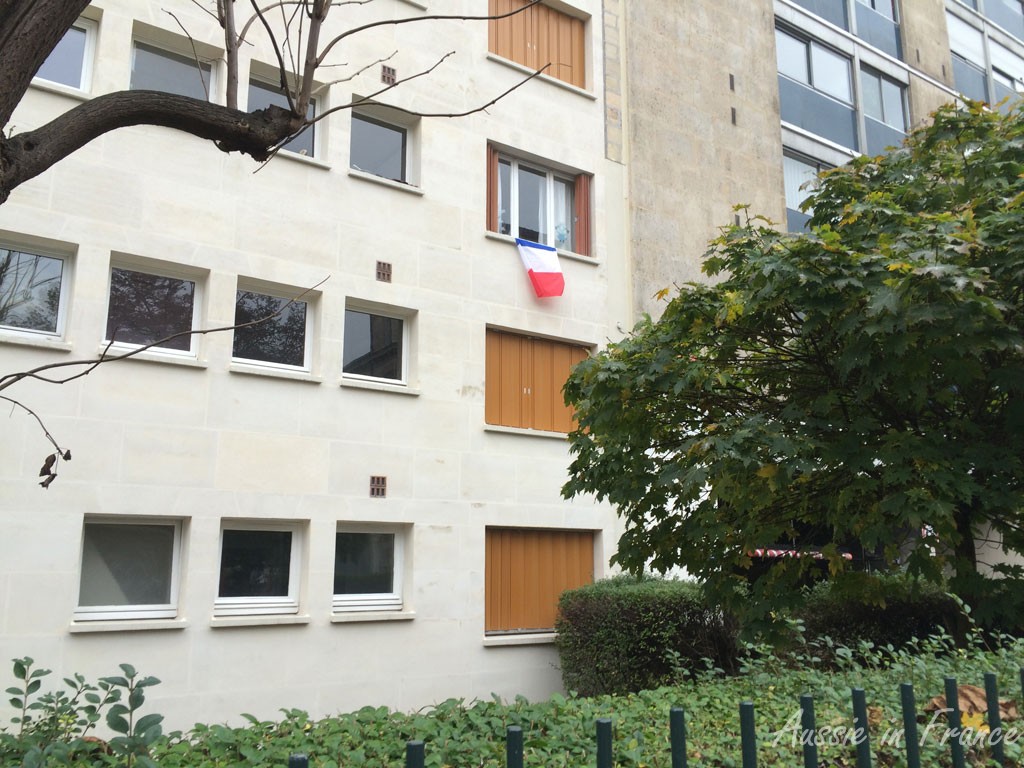
A remembrance flag on a  window in the 20th arrondissement
A remembrance flag on a window in the 20th arrondissement

Back in the car, we turn on the radio and hear that there are 2,000 people attending the commemoration ceremony for the victims of the 13th November and their families. President Hollande has asked people to hang flags out of their windows as a sign of solidarity. We look around but don’t see very many. We personally don’t have a French flag and have no idea where we could buy one so we guess many people are in the same predicament.

The underground car park at Printemps Nation is completely closed off so we find some street parking. Once again, my handbag is checked when we enter the store and Jean Michel is asked to open up his anorak.

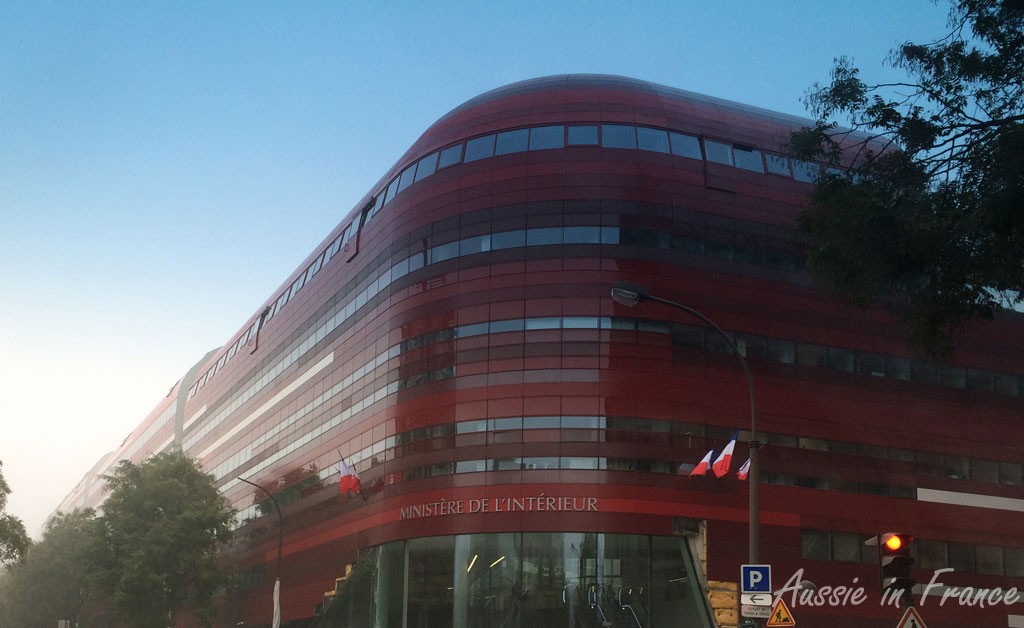
The new Ministry of the Interior near Porte de Vincennes
The new Ministry of the Interior near Printemps Nation

We manage to buy most of what we need then head for Nogent-sur-Marne where I am meeting up with a dentist friend for lunch and a check-up. Before I moved to the Palais Royal in Paris ten years ago and was still living in Fontenay-sous-Bois, I had my office in Nogent. I wander around for a bit and discover that many of the shops have changed. It feels a little odd. However, the man at the Italian restaurant remembers me and welcomes me with open arms!

Jean Michel has gone off on his own in the meantime and comes back for his 2.30 pm appointment after which we set off for our last venue, the Independent Wine Growers’ Fair at Porte de Versailles. We park in one of the side streets (we do not want to brave the underground parking lot even if it’s open) and are surprised (and reassured) to see that all the exits are manned and there is a very serious body search at the entrance. This is the only place I’ve been worried about because the hall is enormous and if there is a terrorist attack, there will be little chance of escape.

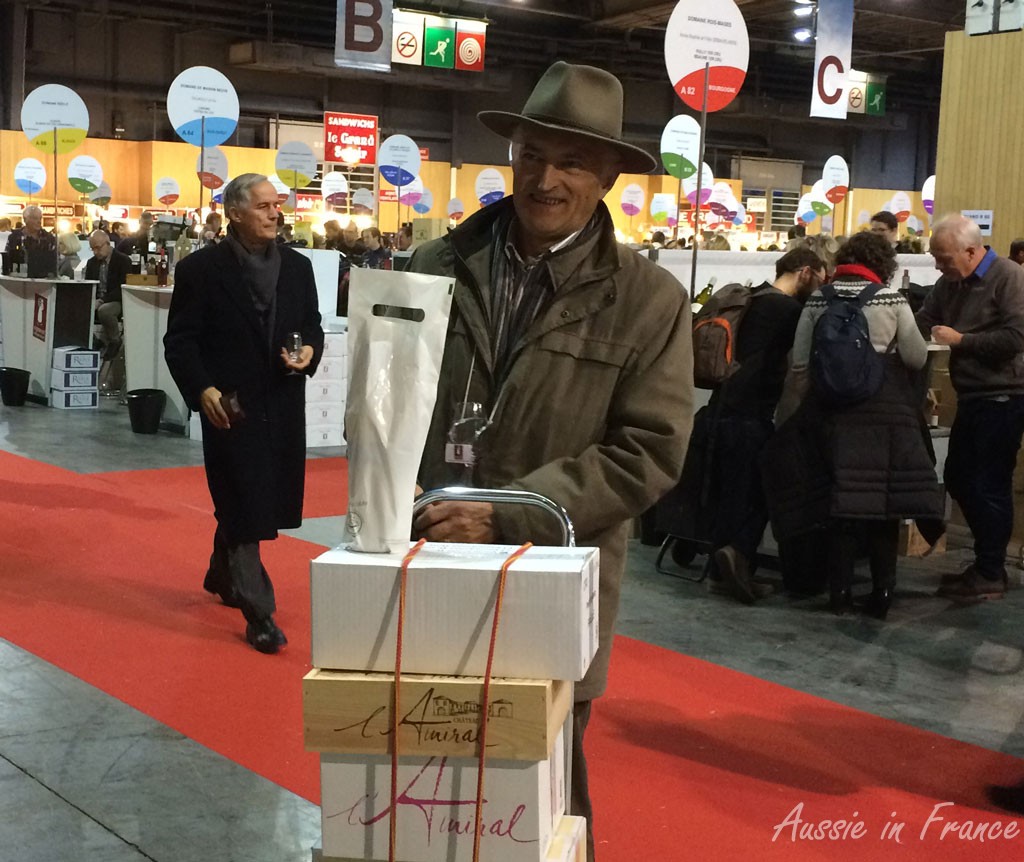
Jean Michel at the end of the wine fair

Once we’re inside, we forget about possible terrorists and concentrate on rebuilding our depleted wine stock. Only one wine grower, from Alsace (Adam), tells us that he seems to have fewer customers this year. We buy his pinot auxerrois and riesling then head to the next name on our list – a minervois (L’Amiral) where we spend quite a bit of time discovering their different wines. We buy some full-bodied vacqueras from Le Pont de Rieu, and order 18 bottles of our favourite sancerre (Domaine de la Rossignol) to be delivered before Christmas. We discover a new petit chablis (Domaine du Colombier) because our former supplier has hiked up his prices.

We buy another carton of corbière from Domaine du Grand Arc (Cuvée des 40). Our trolley is now full so we decide to give the quincy a miss but go and talk to another minervois wine-grower (Malys-Anne) whom we missed the last couple of times we came to the fair. We have a long conversation with him and taste all his wines again. We promise to visit him at the next wine fair in Orléans with an empty trolley.

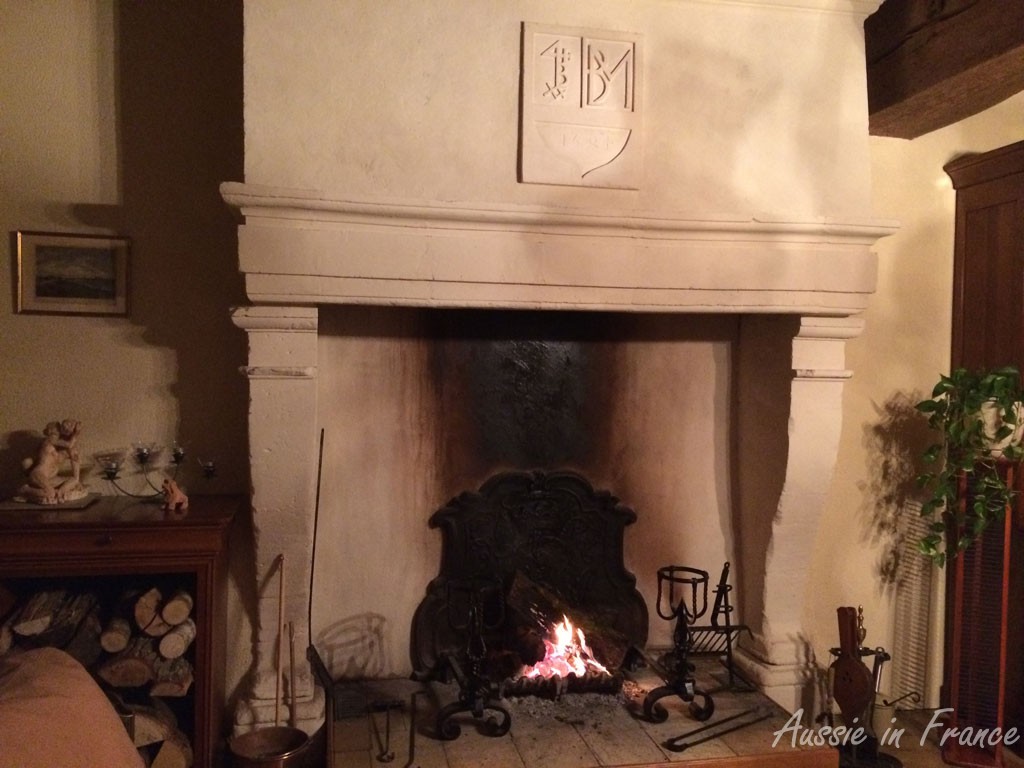
We love our fireplace!

After a very busy two days, we are pleased to be back on the road to Blois. By 9 pm, we are in front of the fire with a relaxing glass of our local cour cheverny. Many people ask me whether I miss Paris. The answer is a resounding “NO”. I have become a very happy “provinciale” !!!

Friday’s French – bis, ter and encore!

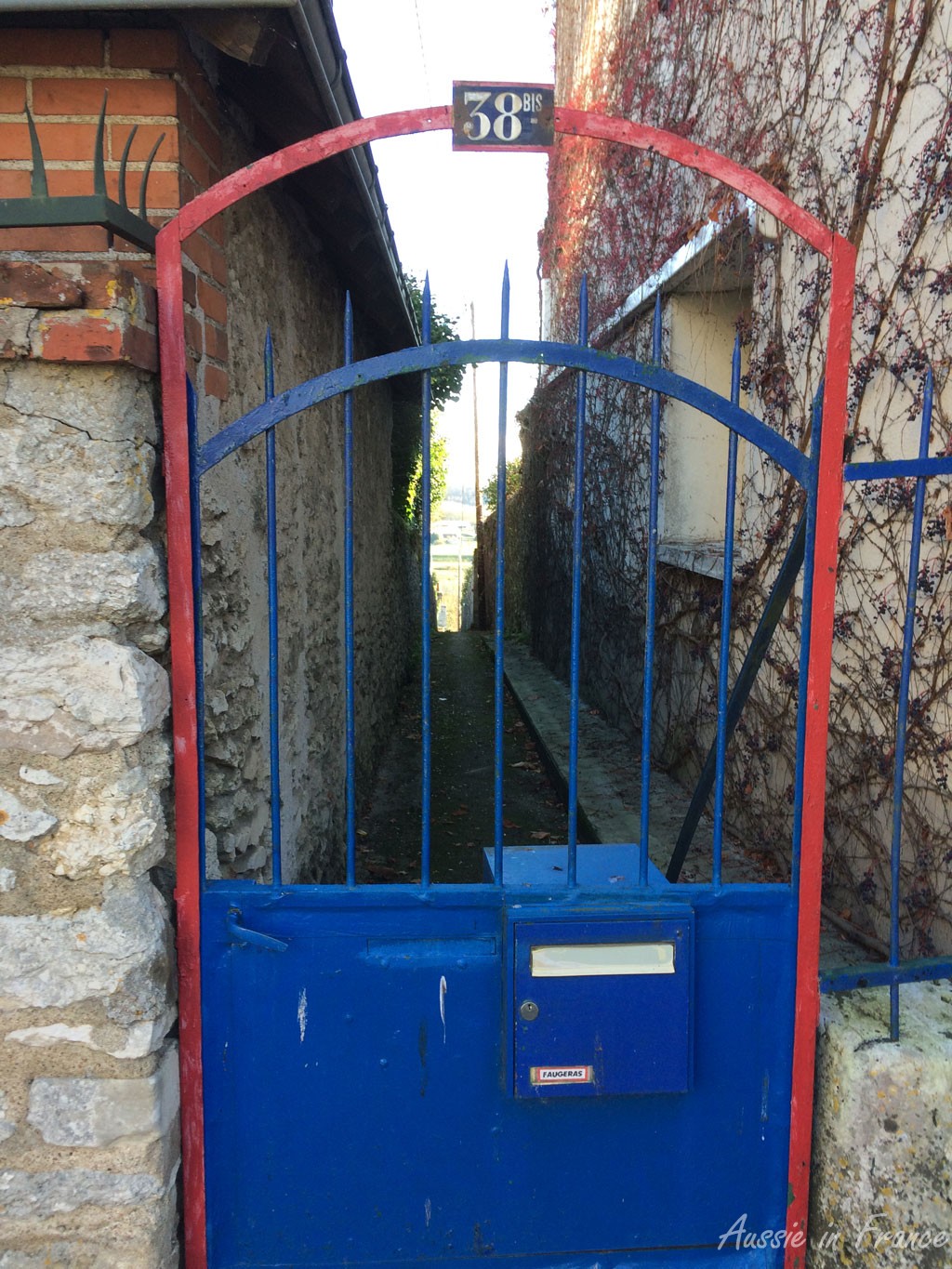
Have you ever noticed a number in France followed by bis or ter, particularly on an entrance or gate? Well, it means that a house or property has been divided up, so it’s like our a or b.  He lives at 3a = Il habite au 3bis. Bis comes from Latin – twice – while ter means three times.
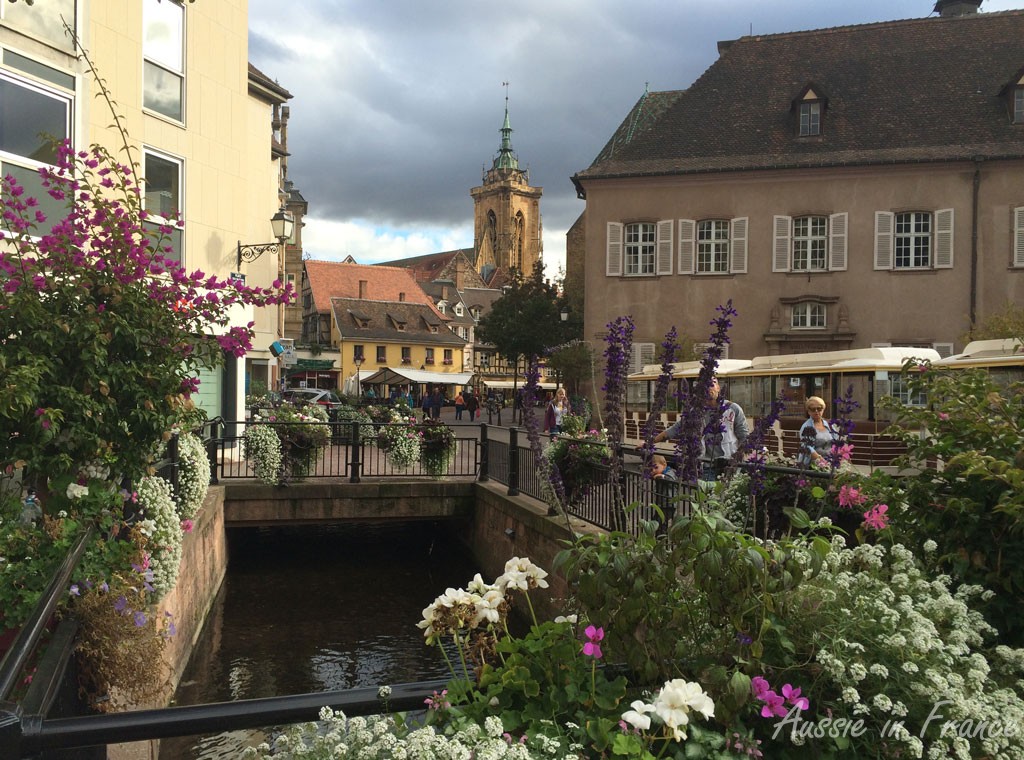
photo_334_gate_with_view

An American friend living in France told me the following: “As far as I know, there is no equivalent in the States. Every property has its own street number. I guess this is possible because all the steets and properties are relatively “new” as compared to European ones. When a street is created, all the properties and their numbers are assigned (even if there are no buildings yet on them). And in some cases there may even be some gaps in the numbering to allow for properties being subdivided. But I can’t ever recall the same street number being “shared” as here with the “bis”. Of course, it’s a different matter with apartment numbers which may have a an “A” or “B” etc.”

An Australian friend living in Australia adds: “We have 3a as well as 3 when it is a battle-axe block i.e. a house built in the back half of the property. We have a lot in our street.” Don’t you just love “battle-axe block”?

Another friend, living in France this time, lives at 64a and not 64bis. When they bought their house a few years ago, the previous owner kept some of the land and wanted to keep the number 64 for practical reasons. The municipality assigned our friends the number 64a and not 64bis. However, this is most unusual.

What is the system in your country?

Bis is used in other contexts in French as well. At the theatre, bis means encore which is interesting because in English, we use the French word for again. You can also say rappel from rappeler ,to call back.

To call for an encore is bisser or crier “bis”. Elle a été bissé trois fois = She had three encores. To play an encore is jouer or faire un bis. The pianist gave several encores = le pianiste  donné plusieurs bis.

An itinéraire bis is an alternative route, not exactly a detour which is déviation, but a route to avoid peak traffic, for example.

To go back to encore in French. It doesn’t just mean again. It can also mean still, only, more, even and also – just to mention a few.

Elle s’est encore trompée de rue = She took the wrong street again.

Il restait encore du fromage = There was still some cheese left.

Ce matin encore, il me parlait de son petit fils = Only this morning, he was telling me about his new grandchild.

Encore un peu de thé ? = A little more tea?

Il est encore plus bête que je ne pensais = He’s even sillier than I thought.

Ce n’est pas seulement triste mais encore ridicule = It’s not just sad; it’s also ridiculous.

I’m sure you have lots of other examples with different words in English.

A Peaceful Walk in Les Grouets

We are still reeling from the news of the terrible terrorist attacks in Paris on the evening of Friday 13th November. Our vegetable vendor  at the market on Saturday receives a call from her son at 11 am while she is serving us. He lives with other students in the area where the killings took place but she hasn’t been able to get onto him. You can imagine her relief when she learns he is safe and sound. We have been listening to the news on the radio and reading details on the iPad. We don’t have a television set and I am careful not to watch any videos. By Sunday afternoon, we need to commune with nature. Fortunately it’s reasonably warm and sunny.

Start of the track along the Loire

We walk down our street, Rue Basse des Grouëts, towards Blois until we get to Rue des Blanchets with its little hothouse. We cross the busy highway and go down the path towards the Loire. We’ve already explored to the right on an earlier occasion, so this time we turn left. We are pleasantly surprised by how lovely the path is.

Down to the left, we can just make out the city of Blois.

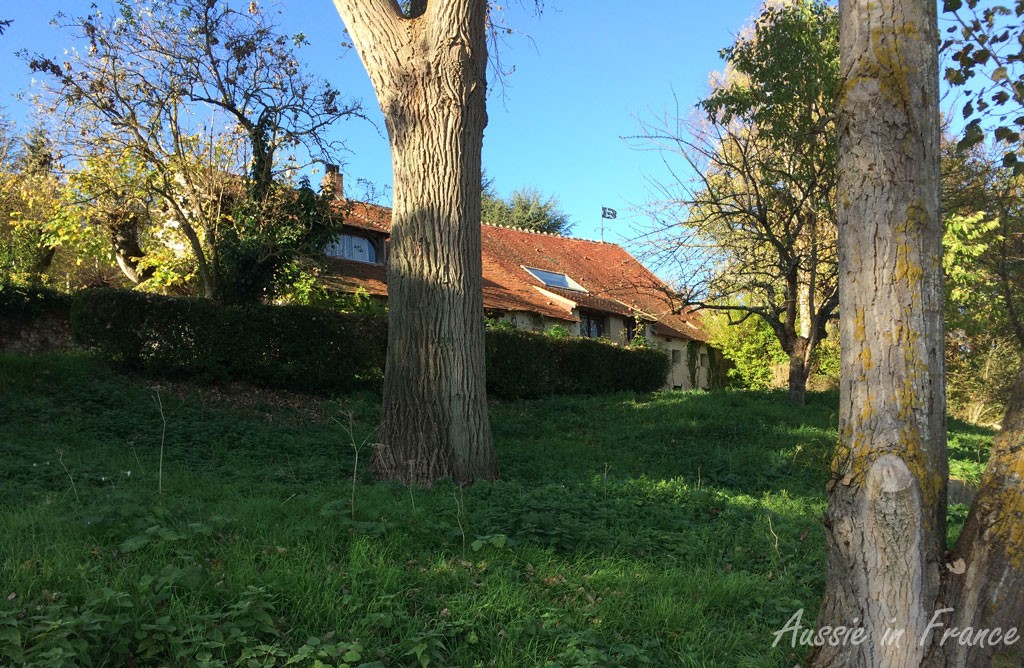
We eventually come to a house on the left that we have only seen from the main road. We would never have imagined what it’s like from the other side. Lots of large windows have been added to make the most of the view.

03_low_house

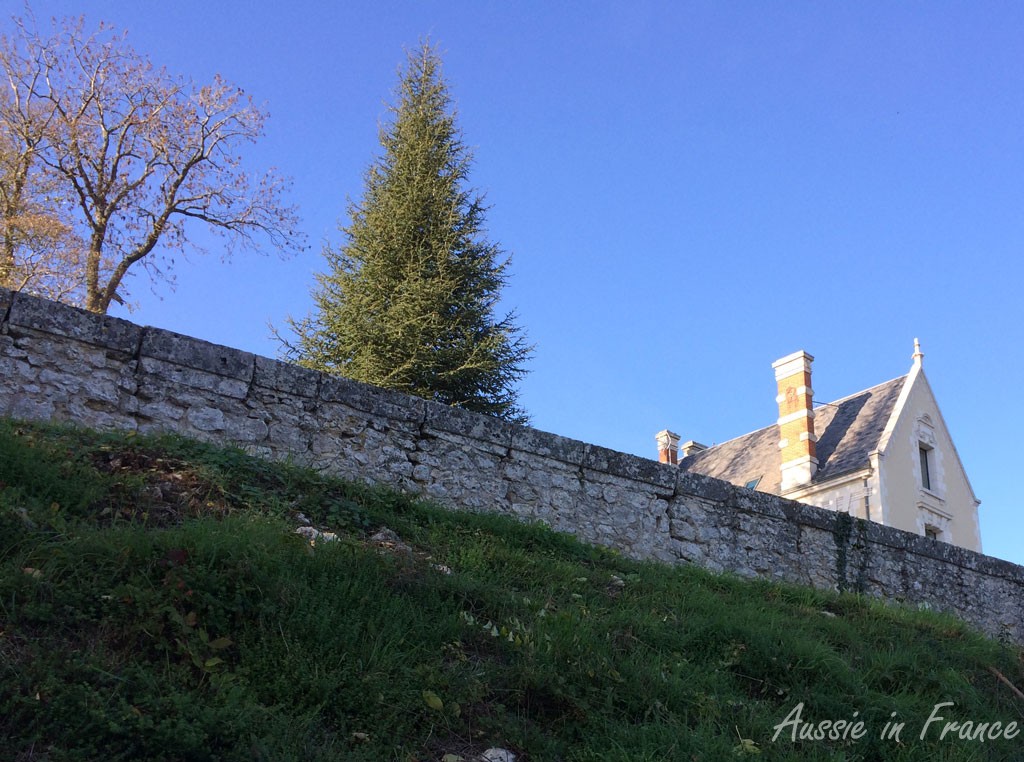
Further along the path we see another house that we have also only seen from the road. We’re surprised at the intricate sculpting on the gable.

04_corner_house

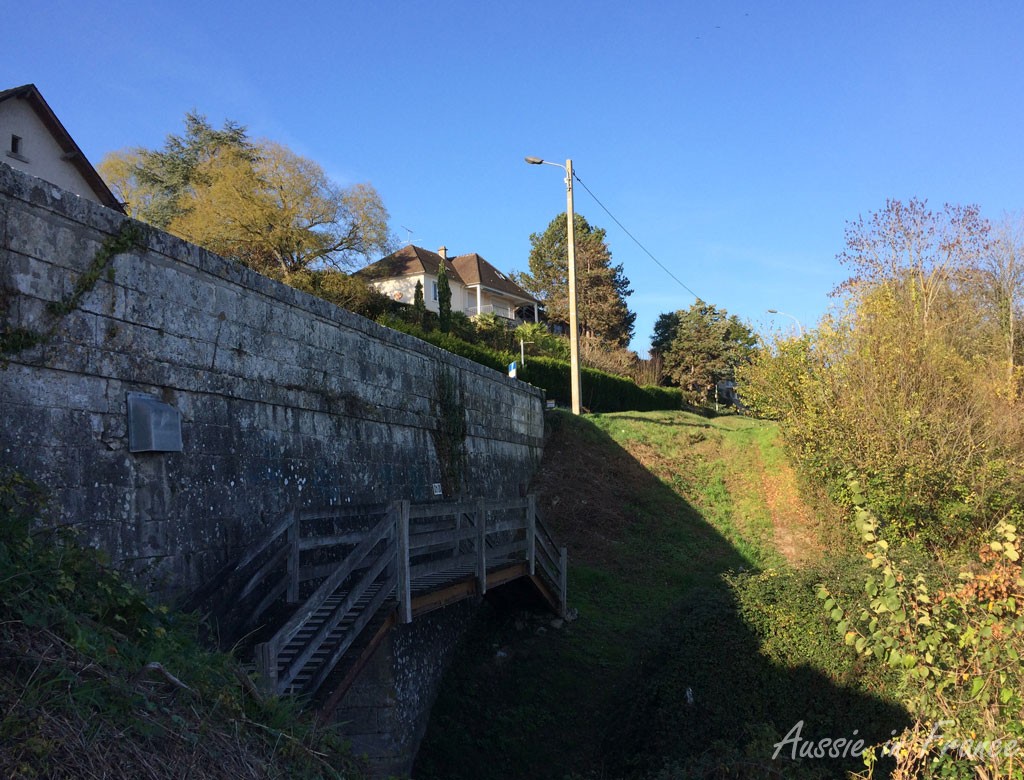
Next, to our great surprise, we come across a bridge near to a culvert. The path is quite steep on the other side. We certainly couldn’t have cycled here!

The wooden bridge next to the culvert

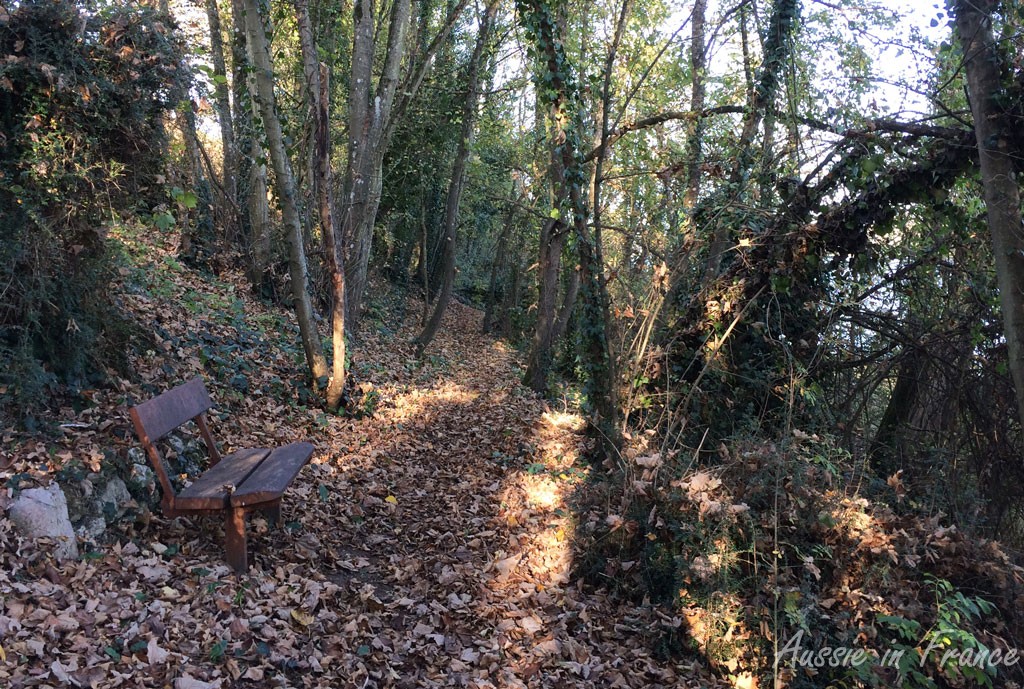
Jean Michel tells me we’ve come to the end of the track, but we haven’t. It veers off again to the right so we keep following until we come to a little bench among the trees.

A bench to rest on and watch the river!

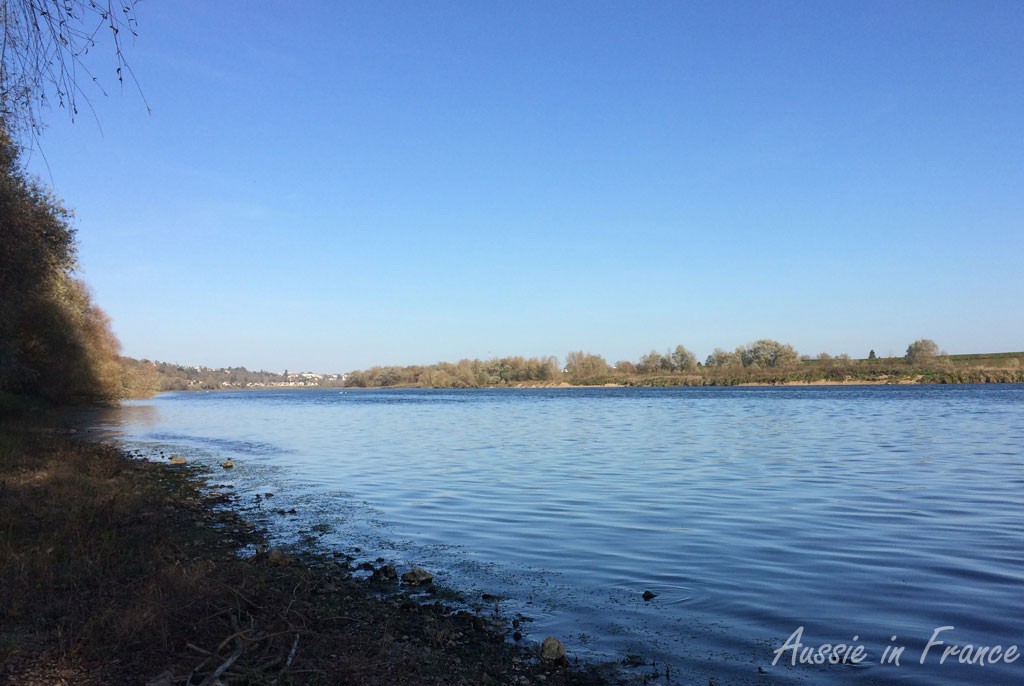
We come out of the little wood and can see swans on the river. We’re impressed this year at just how many there are.

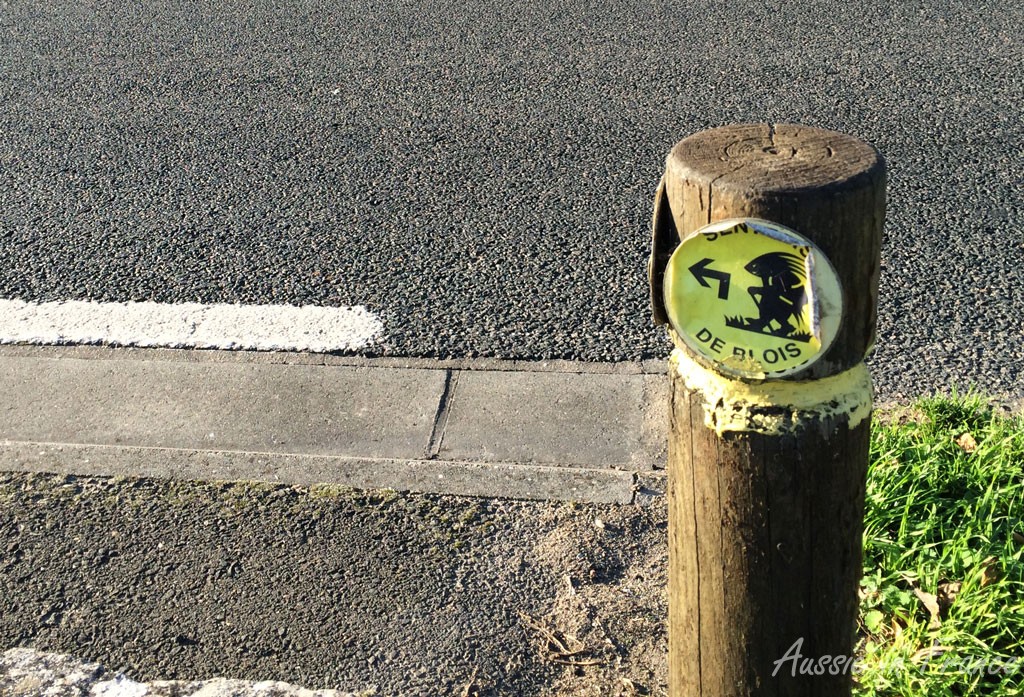
The Blois walking sign indicating we are to cross the main road.

By now we’ve walked for about an hour and a quarter so we’ll need to start on our way back if we want to get home by dark. The walking path takes us across the main road again and onto Chemin du Petit Pont (little bridge path).

The sign at the start of Chemin du Petit Pont

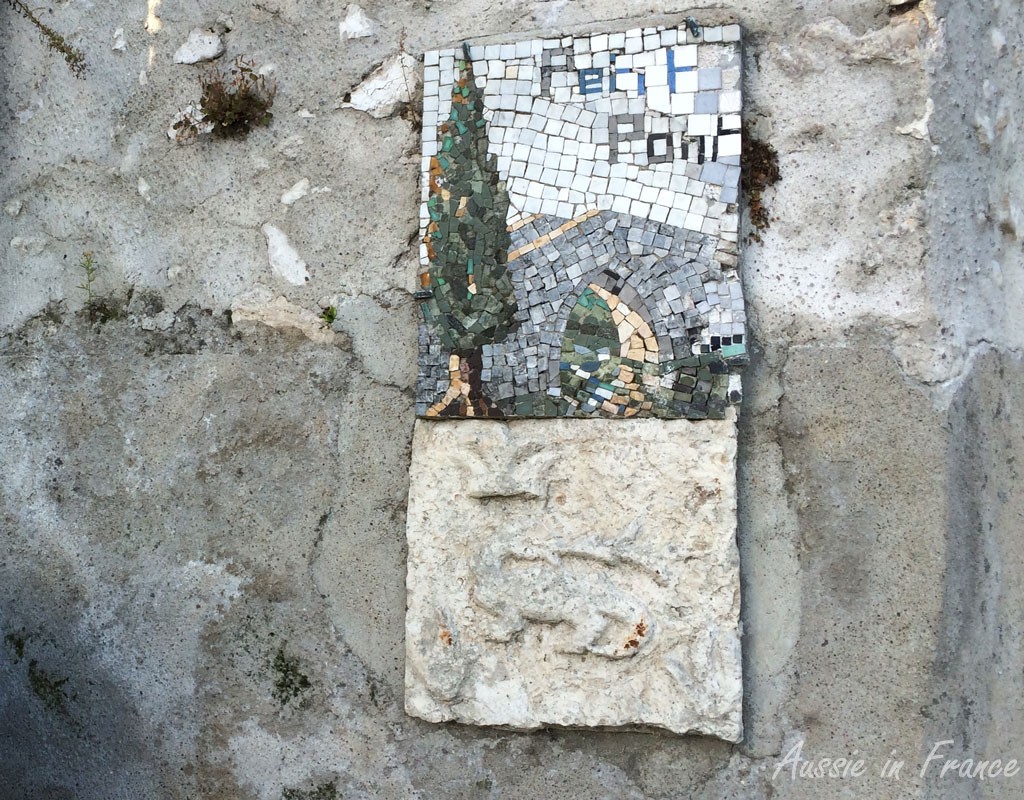
The house on the corner has a very interesting mosaic with the “little bridge” at the top and François I’s salamander and crown at the bottom.

11_tunnel_entrance

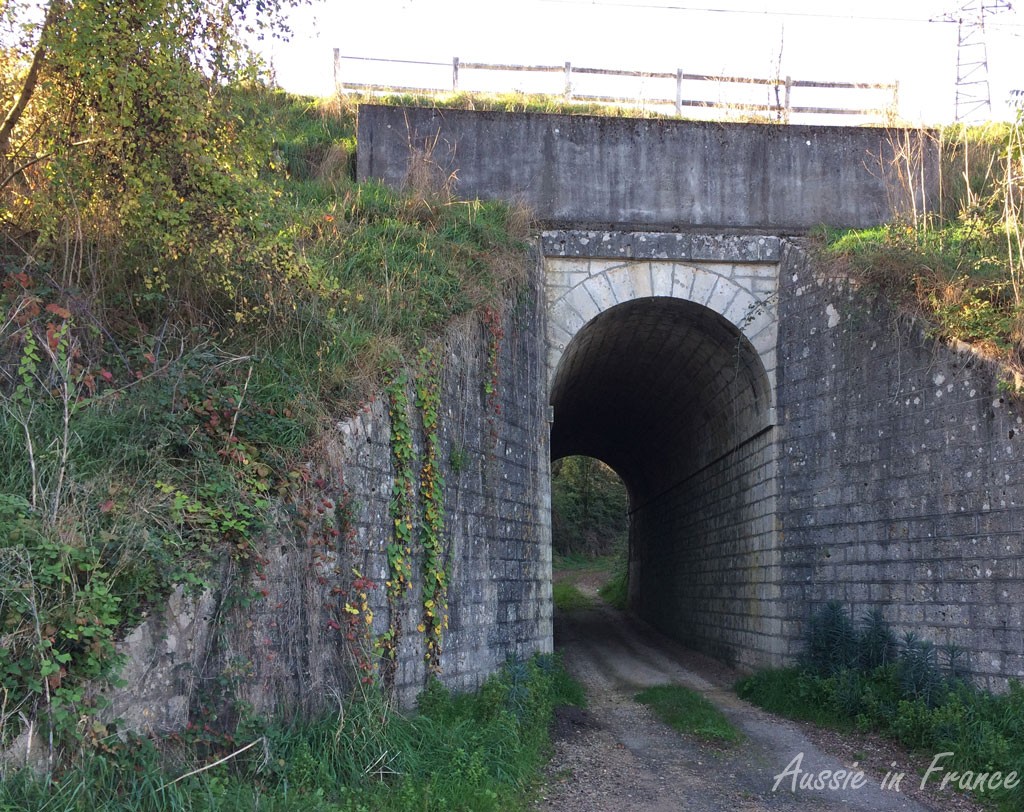
We walk through the tunnel under the railway line and come out on a grassy area.

Signpost indicating a sharp left

Fortunately, there is a sign telling us to take a sharp turn left onto a path leading to Chemin du Saut aux Moines (monks’ leap path?) which we would never have found otherwise.

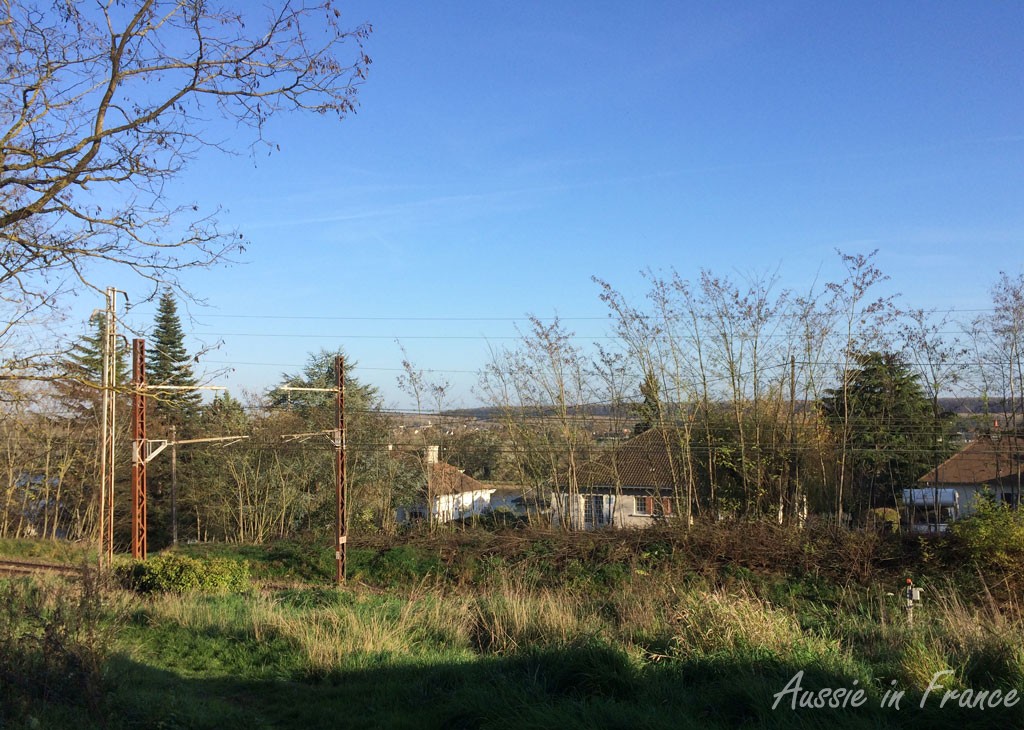
View from the railway line

We climb the path thtat takes us up to the Paris to Tours railway line that runs behind our house. The path moves away from the tracks until we turn left on Chemin de Pomone.

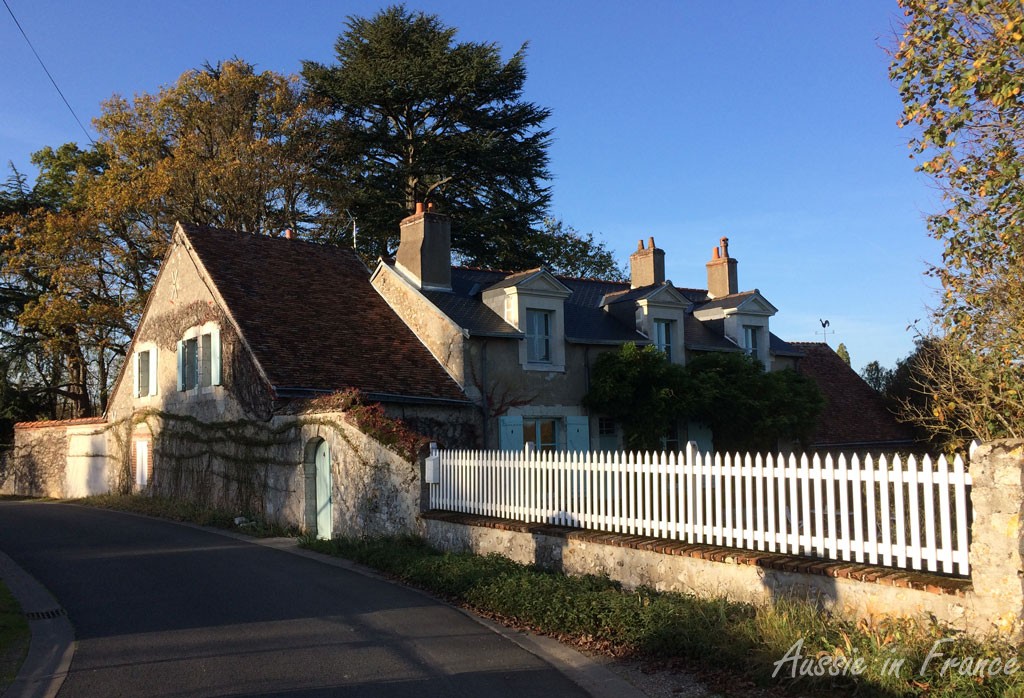
A very old house at the top of the hill just before rue Pomone

At the end of Chemin de Pomone we turn left into Rue des Moriers.

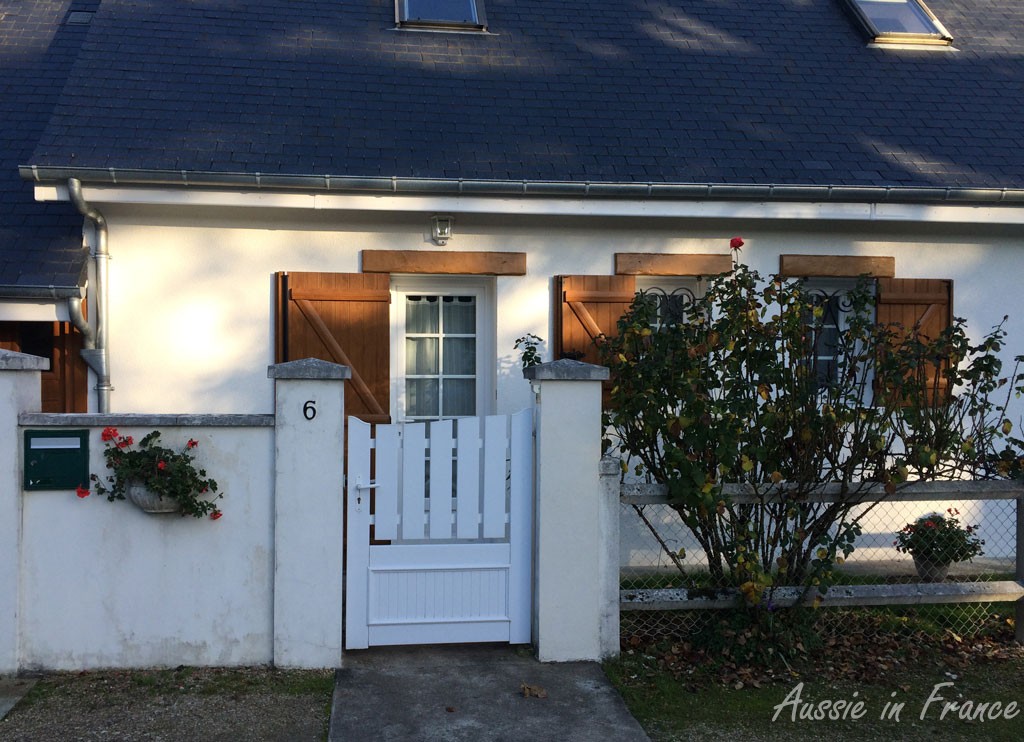
A white gated house in Rue des Moriers

We take the next right into Rue des Poutils, which has an orchard on one side and a very large house in the distance.

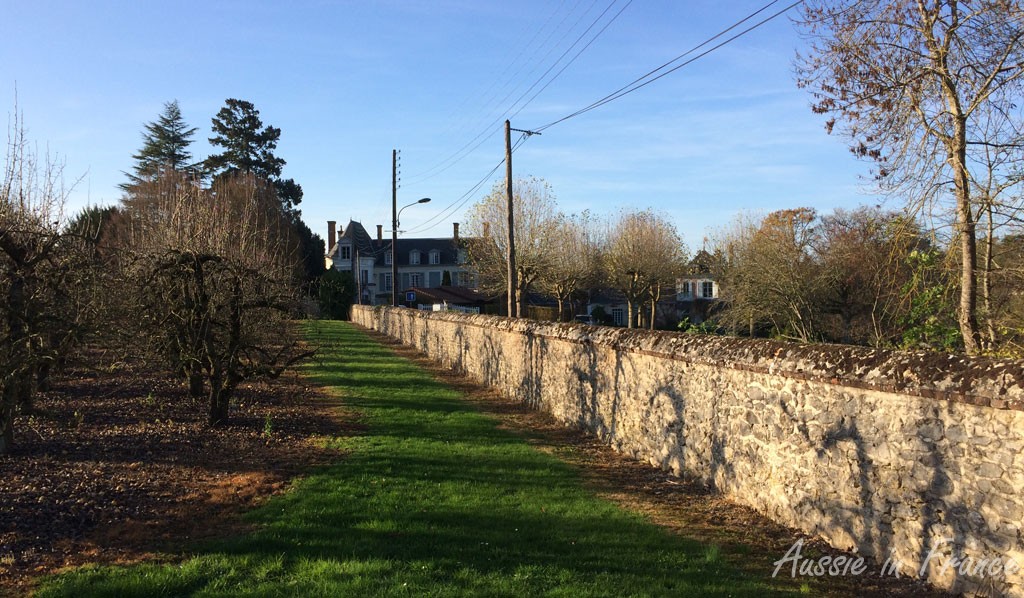
An orchard and large house on the corner of Rue Poutils

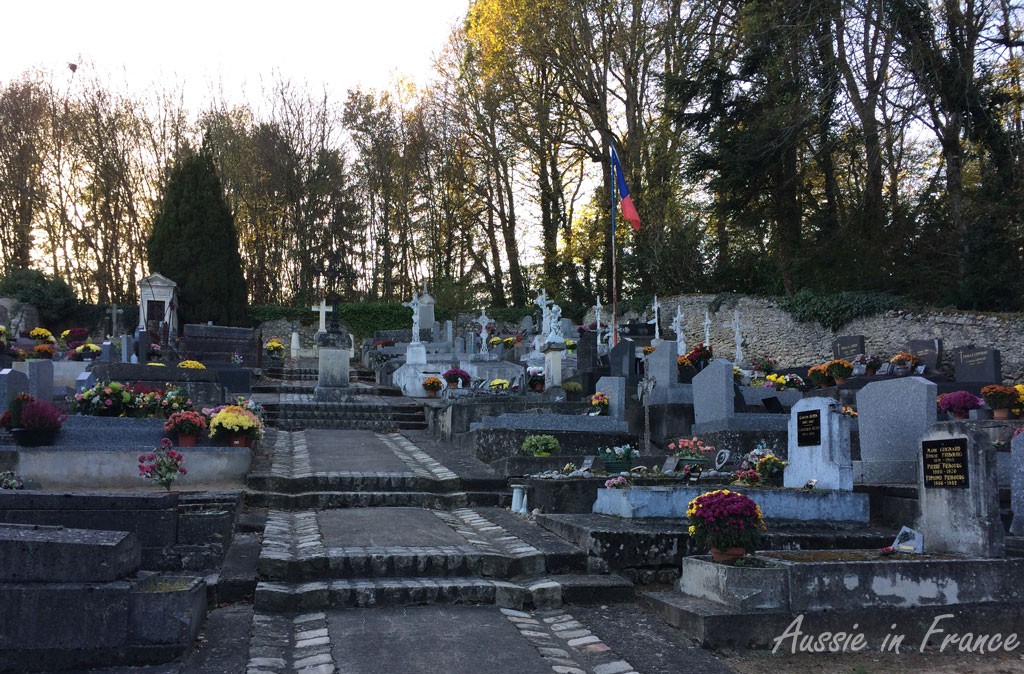
At the end of Rue des Poutils we turn right into Rue Galandeau where Jean Michel wants to show me the cemetary. I didn’t even know we had one in Les Grouets!

18_cemetary

It’s very quiet and peaceful. We wander through and I recognise some local names but am surprised to see that most of the tombs are 20th and 21st century. I later learn that it’s because the time has run out on some of the plots and they haven’t been renewed.

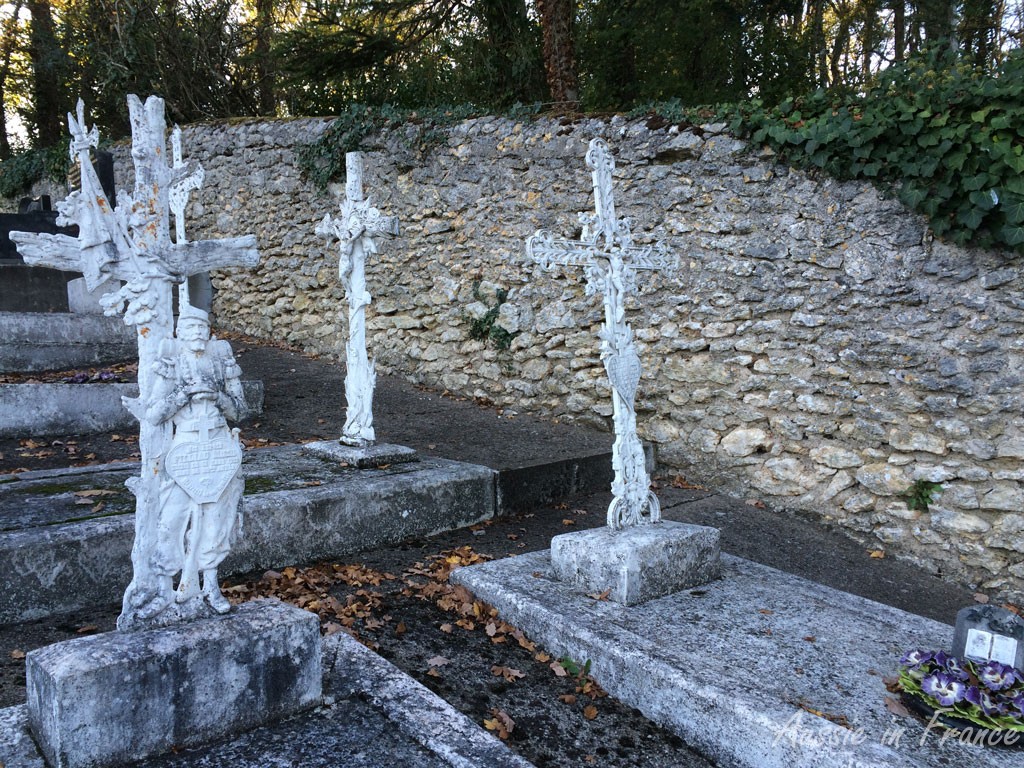
White crosses in the cemetary depicting soldiers

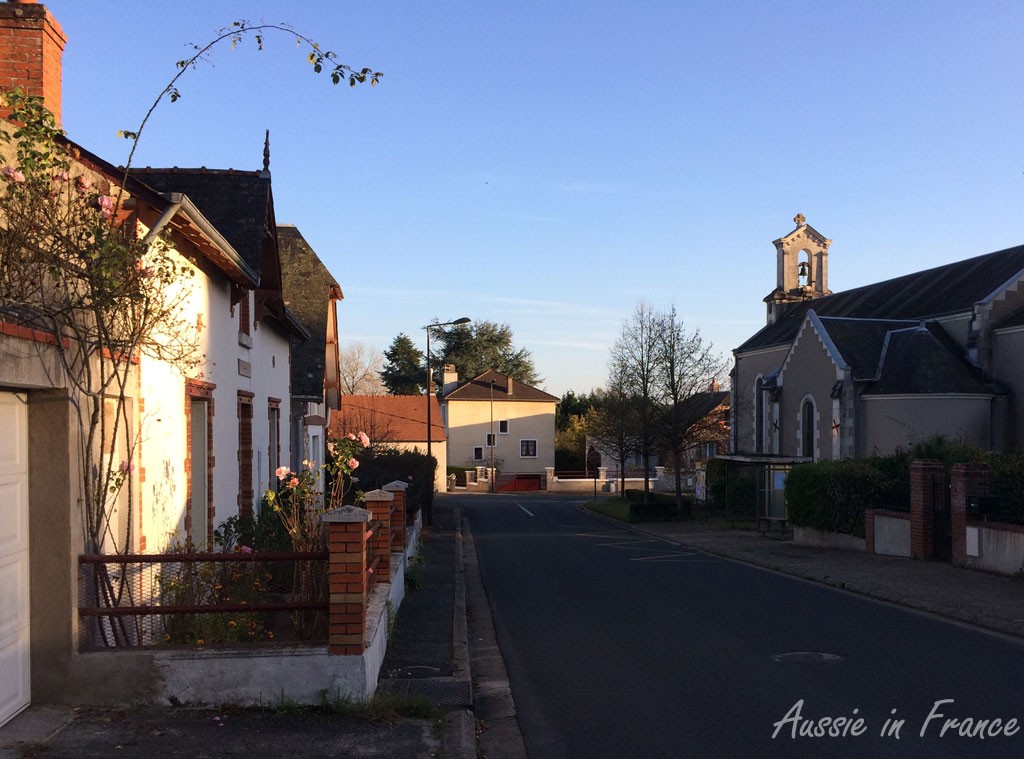
I’m particularly taken with the white metal crosses, several of which have soldiers on them. We come out of the cemetary and continue along Rue Galandeau until we reach Rue de l’Hôtel Pasquier, which is known terrain. It leads into our own street, Rue Basse des Grouëts, with the local church on the corner.

Our local church on the corner of Rue de l'Hôtel Pasquier and Rue Basse des Grouëts
Our local church on the corner of Rue de l’Hôtel Pasquier and Rue Basse des Grouëts

The return journey has taken us an hour, so the entire loop is 2 1/4 hours, about 7 k altogether. We get home in time for afternoon tea in front of the fire feeling much better than when we set out – but, even so, it takes me a week to write this post!

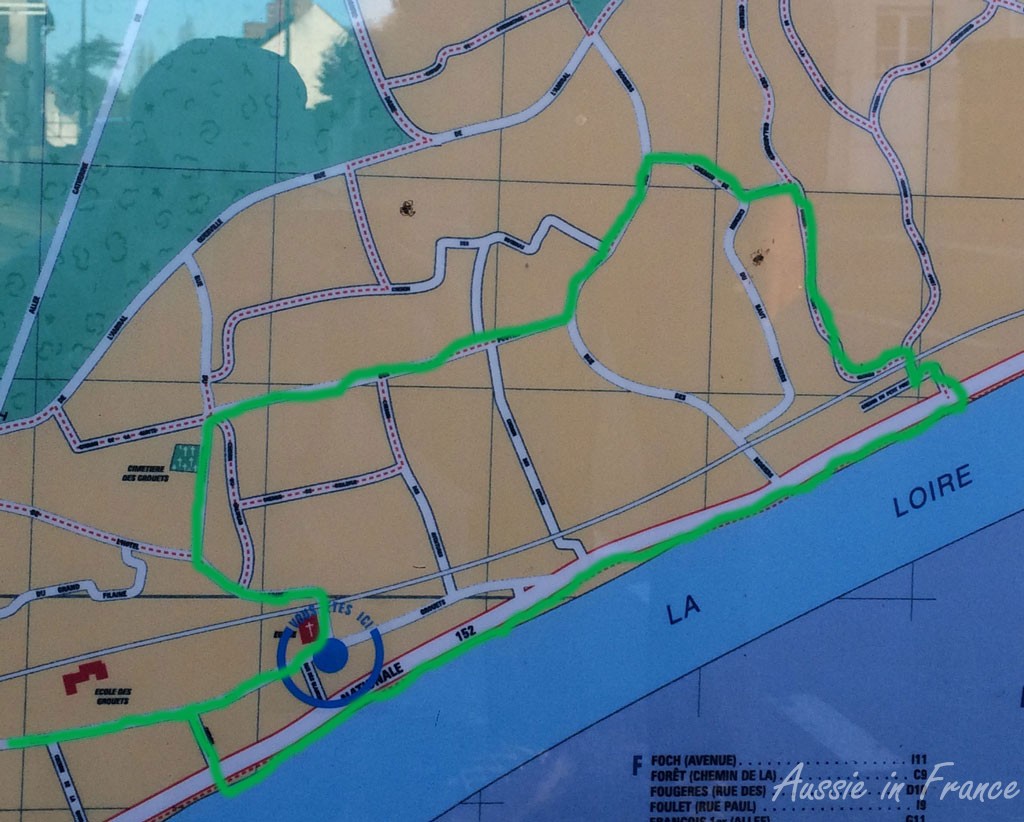
The map on the corner of Rue Basse des Grouëts and Rue de l'Hôtel Pasquier. The circle shows the church. The wriggly green line is the path we took.
The map on the corner of Rue Basse des Grouëts and Rue de l’Hôtel Pasquier. The circle shows the church. The wriggly green line is the path we took.

Loire à vélo: Cycling from Tours to Château de Villandry

Another beautiful sunny autumn day when it’s warm enough to cycle. I’ve been wanting to see the gardens at Château de Villandry ever since Susan from Days on the Claise mentioned that the late summer planting was at its peak and the famous potager garden looking splendid. There is a dedicated bike route from Tours to Villandry that is about 20 K and flat all the way. As it runs along the Cher River most of the time, it should also be well exposed to the sun.

The beginning of the bike route
The beginning of the bike route at Centre Aquatic du Lac

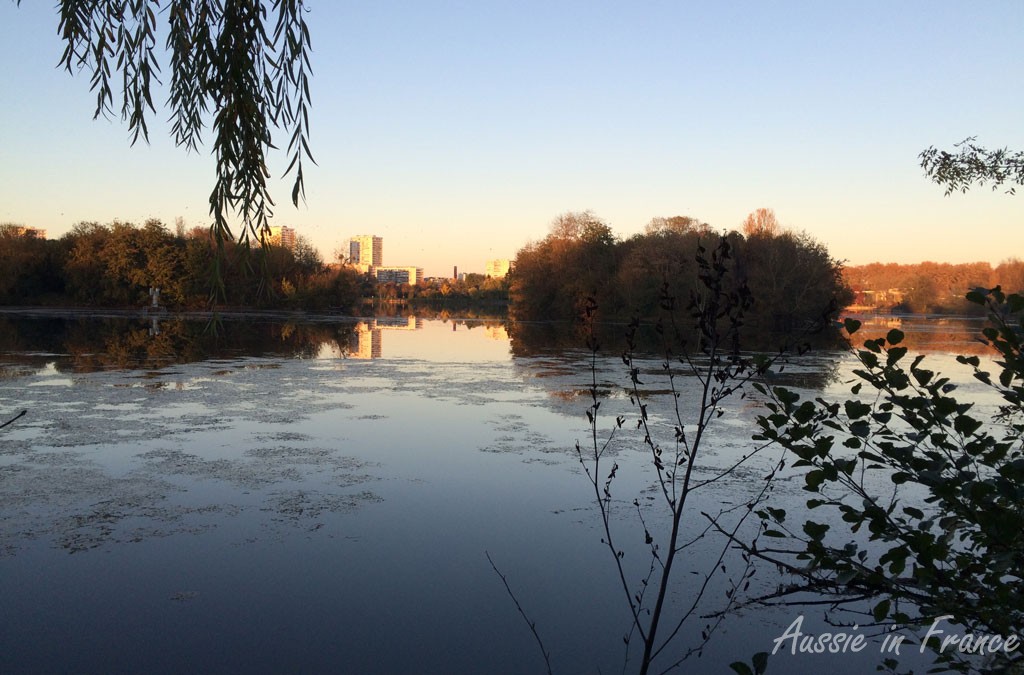
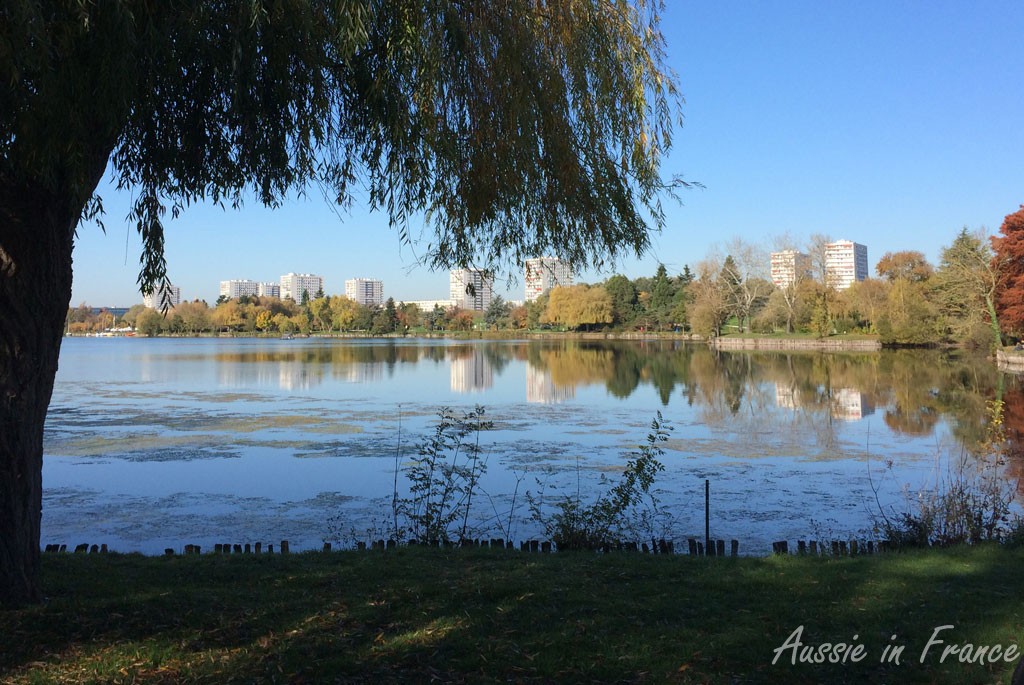
It takes us about 50 minutes to get to the Centre Aquatic du Lac. At midday, it’s a little nippy but with caps, windcheaters, jeans, gloves and a scarf, (most of which we later discard), it’s very pleasant. Our path takes us through a park with a lake in the middle – Lac de la Bergonnerie – which is obviously very popular with the locals which is not surprising when you see all the high-rise buildings on the other side.

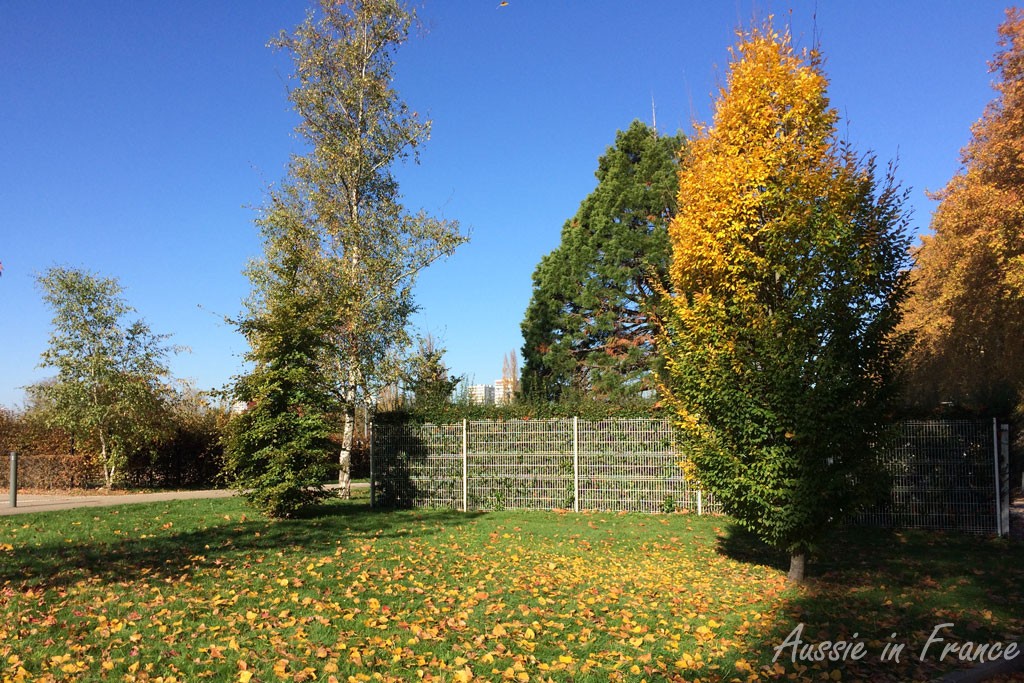
View of the lake from the bike path
View of Lac de la Bergonnerie from the bike path

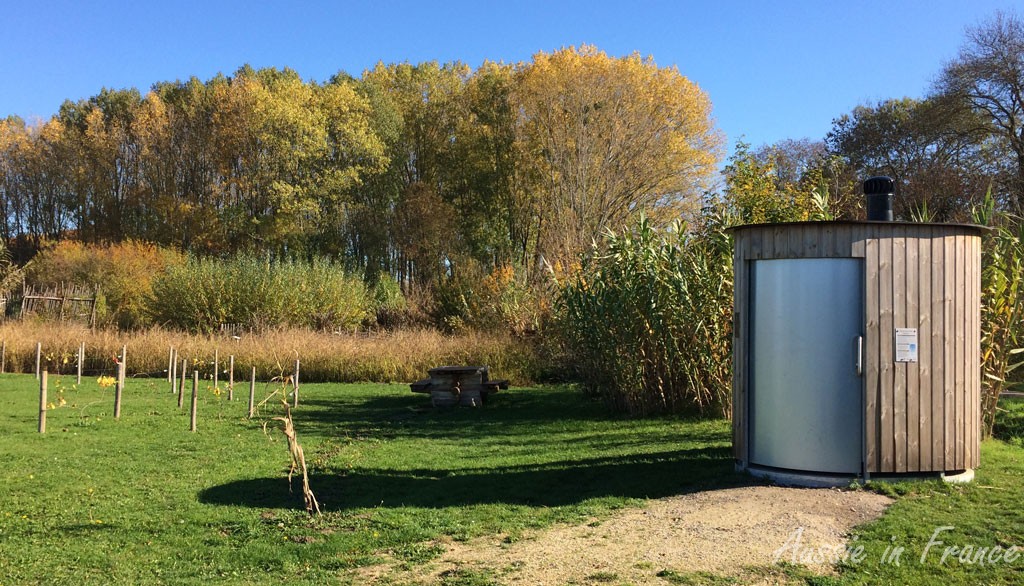
After the lake, we go past a series of allotments that even have “dry” public toilets. I wonder why there aren’t more of these along the Loire à Vélo bike route (which is part of Eurovélo 6 from the Atlantic to the Dead Sea)? Clean, fresh smelling, right next to the bike path.

The very practical dry toilets near the allotments

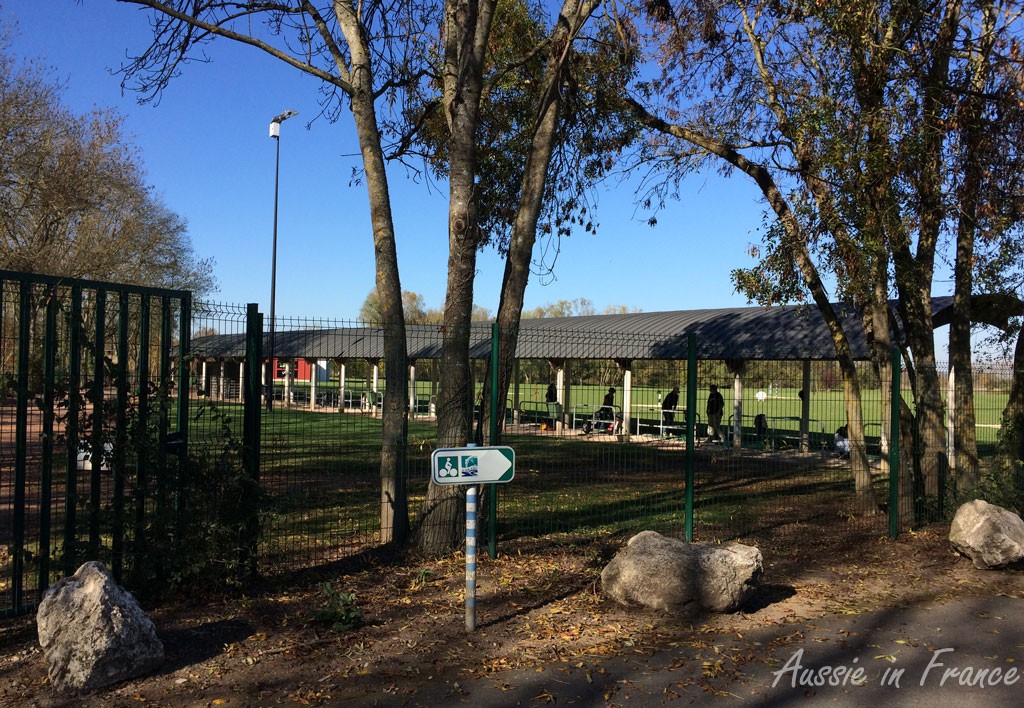
A little further on, we ride through a 9-hole golf course which has a 18-hole putting green, Golf de la Gloriette, which seems rather less sophisticated than most golf courses. I check it out later and see that the green fees are about half what you pay at La Carte golf course near Chouzy-sur-Cisse. I’m not a golfer myself but I think it’s good to make the game more accessible.

The putting green at the golf course

After a while, we join the Cher and the Port du Pavé du Roy, reinstated a few years ago and the site of various riverside activities in the summer and, in particular, a trip on La Jocondie* to discover the wildlife and flora of the Cher.

Port du Pavé du Roy
Port du Pavé du Roy

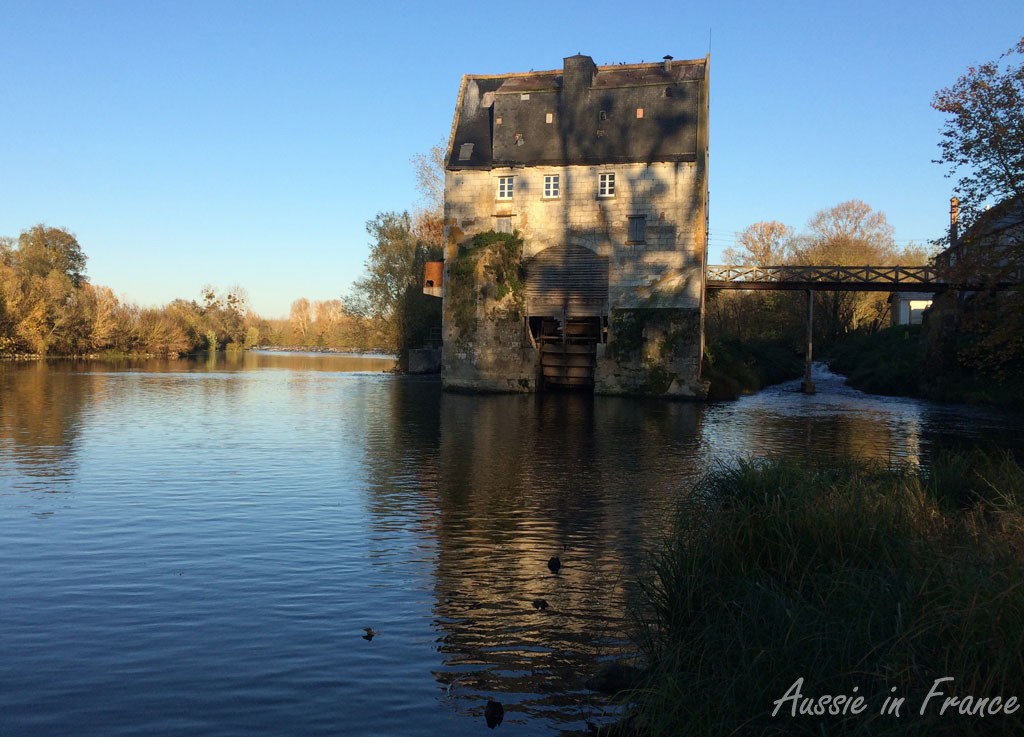
Further along we come to an small industrial flour mill, Grand Moulins de Ballan, and behind it, we discover the old mill house with its wheel still intact.

The old mill at Grands Moulins de Bassan - the photo was taken on the return journey which explains all the shadows
The old mill at Grands Moulins de Bassan – the photo was taken on the return journey which explains all the shadows

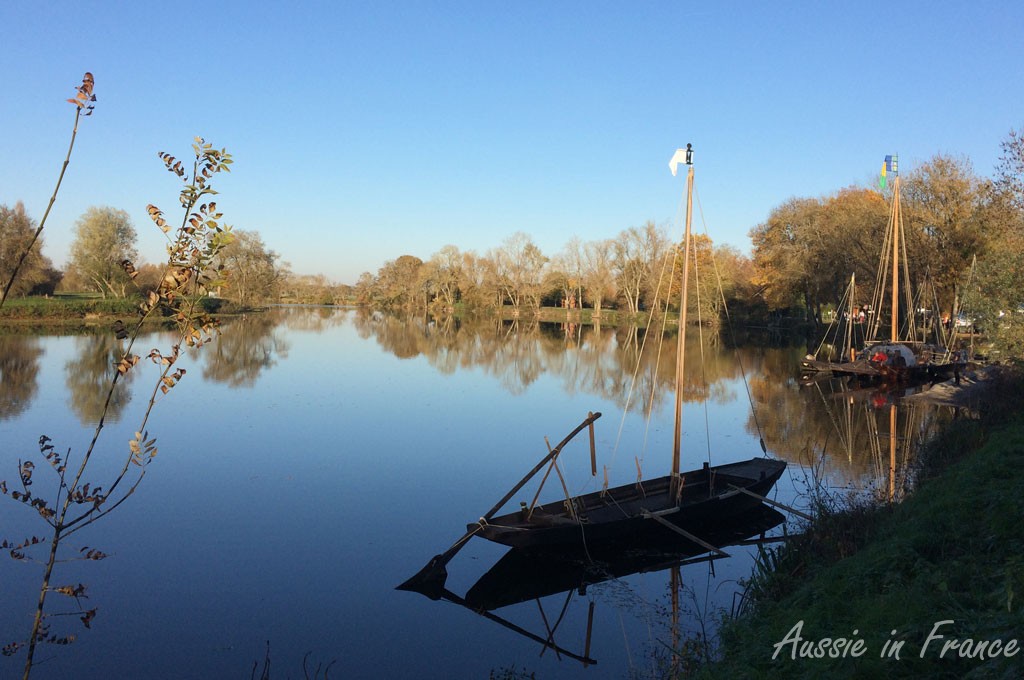
We soon arrive at the little port of Savonnières with several traditional flat-bottomed gabarre boats resting serenely on the water.

Flat-bottomed boats on the Cher at Savonnières near Villandry

Since we’re hoping to eat here, we leave the bike path and join the main road at the little church with its beautiful sculpted archway. The only restaurant open is way above our price range so we go back down onto the 3-kilometer bike path leading to Villandry.

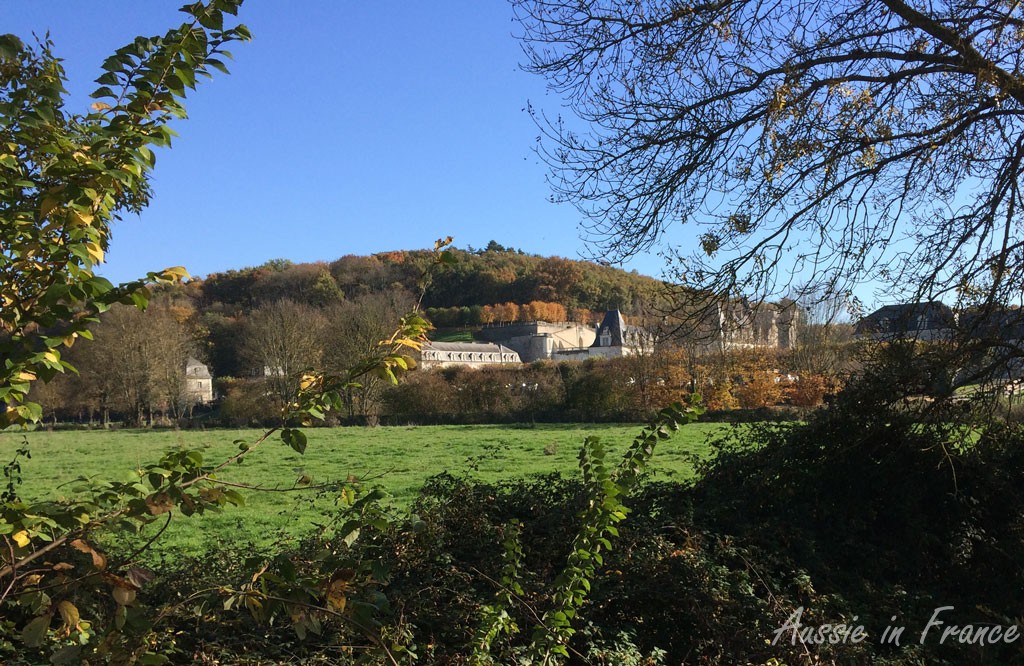
Villandry from the bike path

Château de Villandry soon comes into sight after we turn left away from the river.

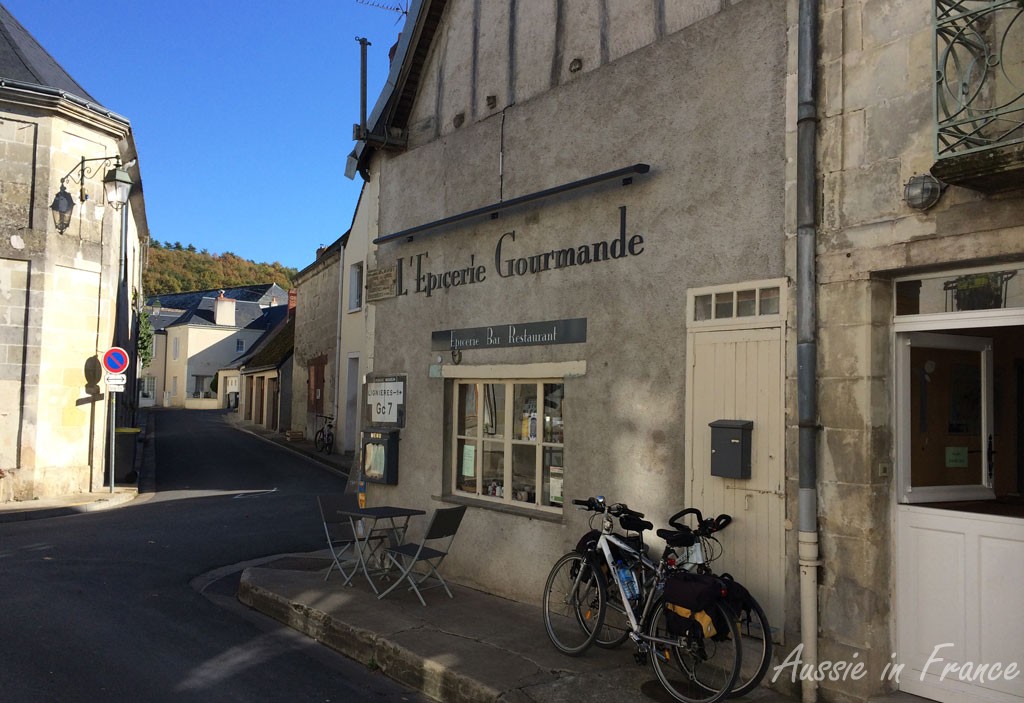
L'Epicerie from the outside
L’Epicerie from the outside

There are several restaurants on the main road at Villandry but none of them appeal to us. I see a sign pointing to a “tea room” in a side street, that takes us to “L’Epicierie Gourmande” (the gourmet grocery”). We see several bikes in front which is promising.

Inside l'Epicerie
Inside l’Epicerie on the restaurant side

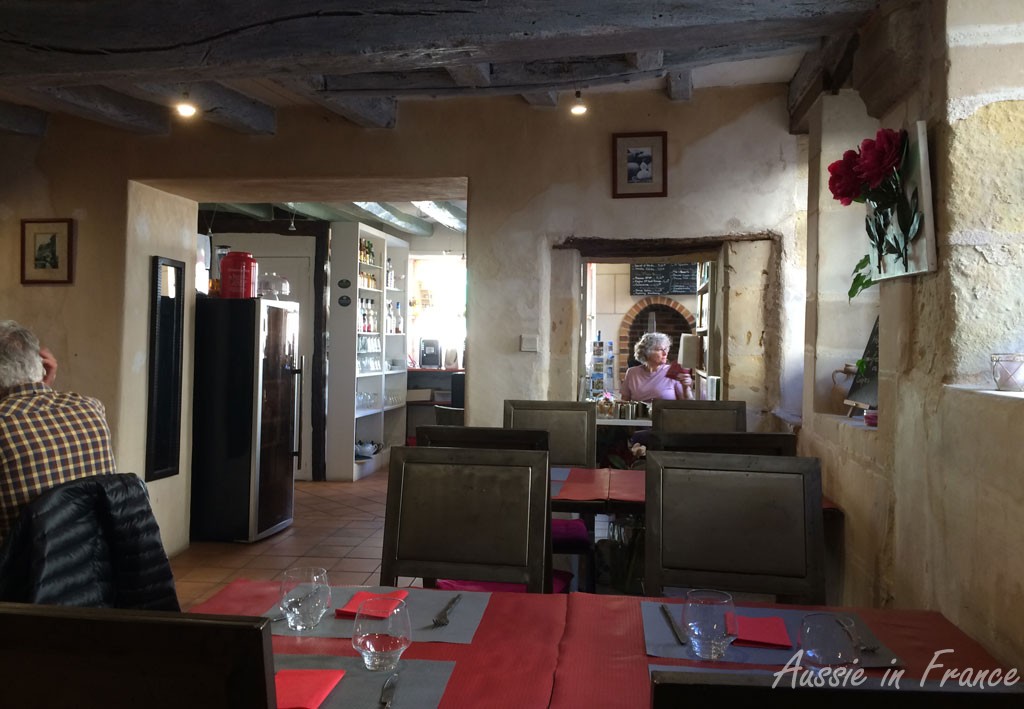
Inside, the décor is very simple and attractive, with exposed beams, stone walls and a large open fireplace. We have an excellent lunch – terrine de foie gras (copiously served) and a quiche, accompanied by a local wine (of course). There are no cooked dishes as such. Everything comes from the grocery section except for the dessert which is supplied by a local pastry shop. Exactly what we wanted! You can of course buy supplies from the grocery and have a picnic outside in the summer.

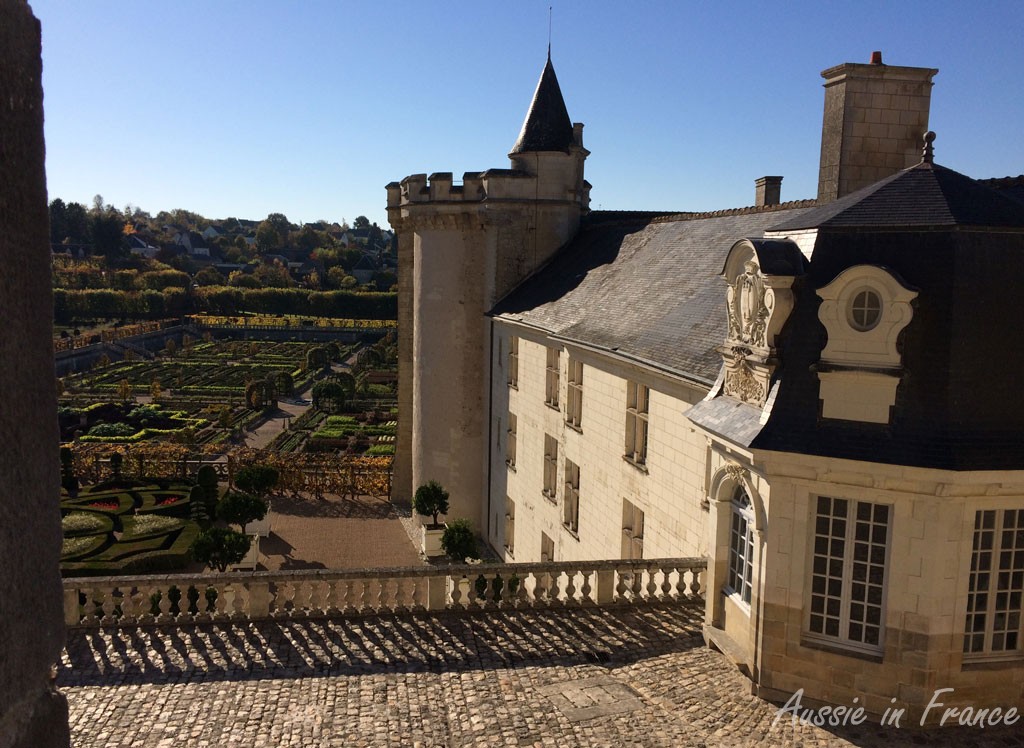
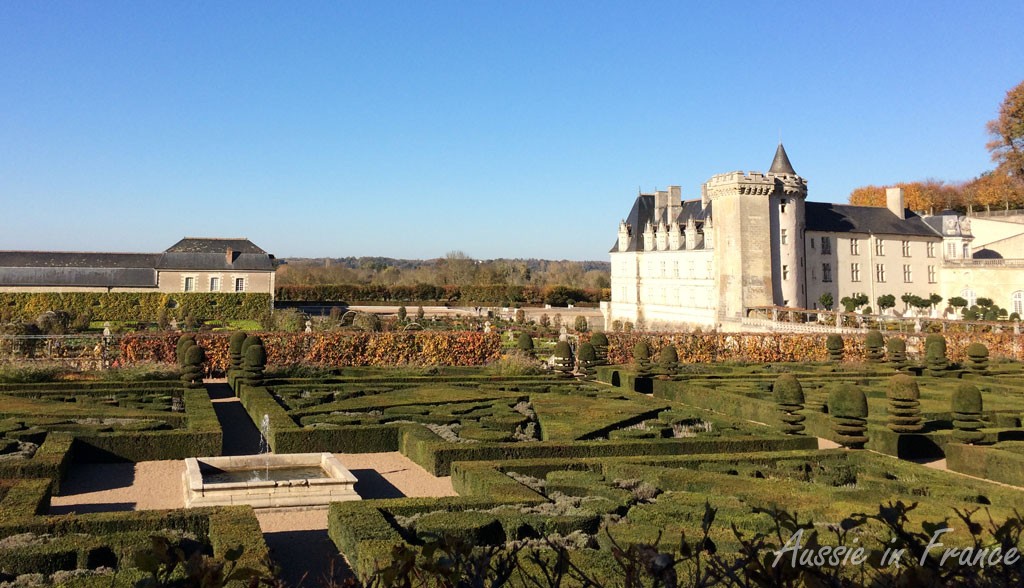
The château and gardens from the terrace

We continue on to the château and buy tickets to the garden only. We’ve visited the inside before but it’s not very interesting. However, we discover that there is an amazing terrace at the back of the château that affords a breathtaking view of the gardens.

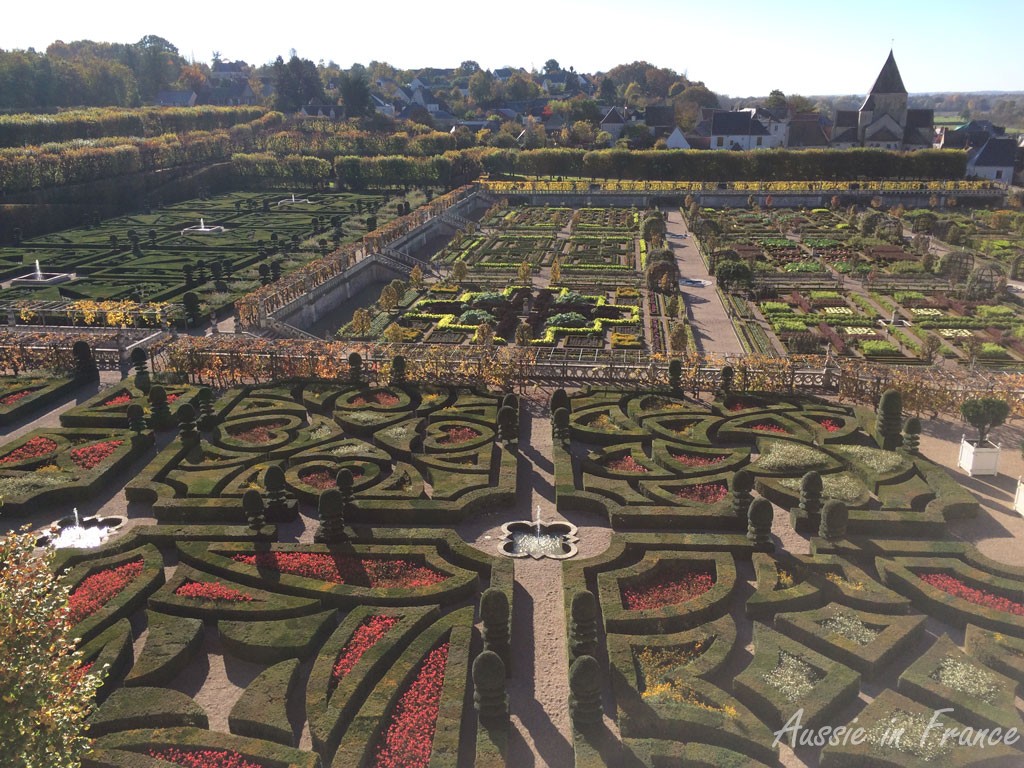
The love gardens at Villandry

Just below is the four-part “garden of love”, seen in the foreground in the photo. From top left in a clockwise direction: “Tender love” is symbolised by hearts separated by flames of love in the corners of the square. In the middle are the masks used during balls to disguise the wearer. “Passionate love” still has hearts but this time, they are broken by passion. The boxwood bushes forms a labyrinth to evoke the giddy round of dance and passion. “Fickle love” is next: the four fans in the corners symbolise the transient nature of love while between the fans are the cuckold’s corns. In the middle there are love letters. “Tragic love” comes last with the daggers and swords used for the duels of rival lovers. In summer, the flowers are red to symbolise the blood spilt during combat. I can hear a group of teenage girls nearby discussing the symbolism.

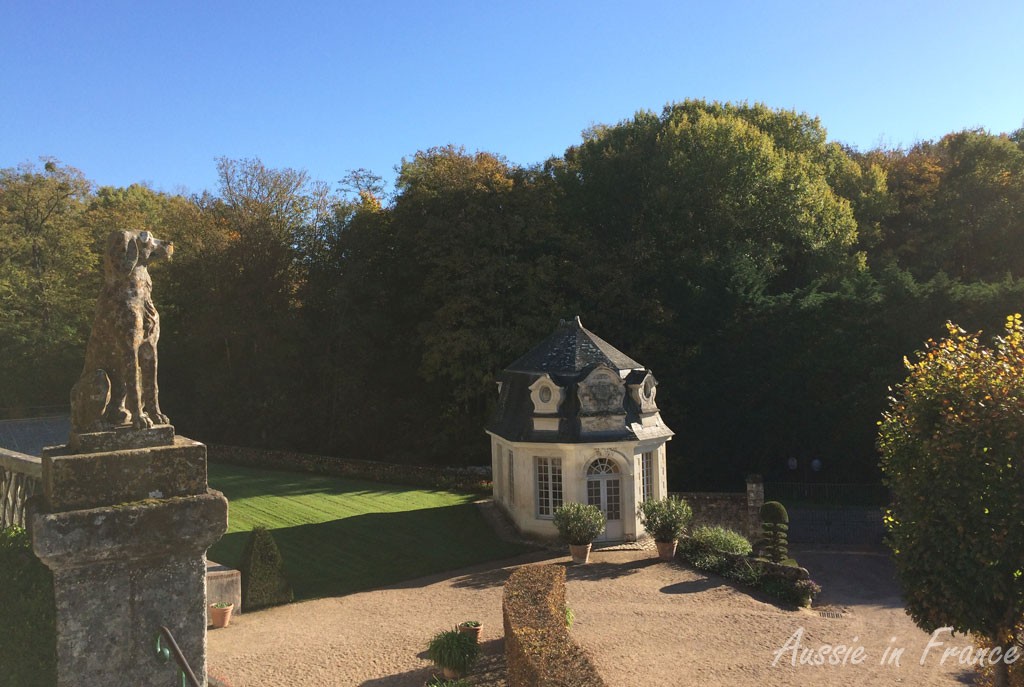
The watchdog and little pavillon

We walk along the path overlooking the gardens until we come to a narrow flight of steps guarded by a very friendly-looking dog, with a little pavillion at the bottom.

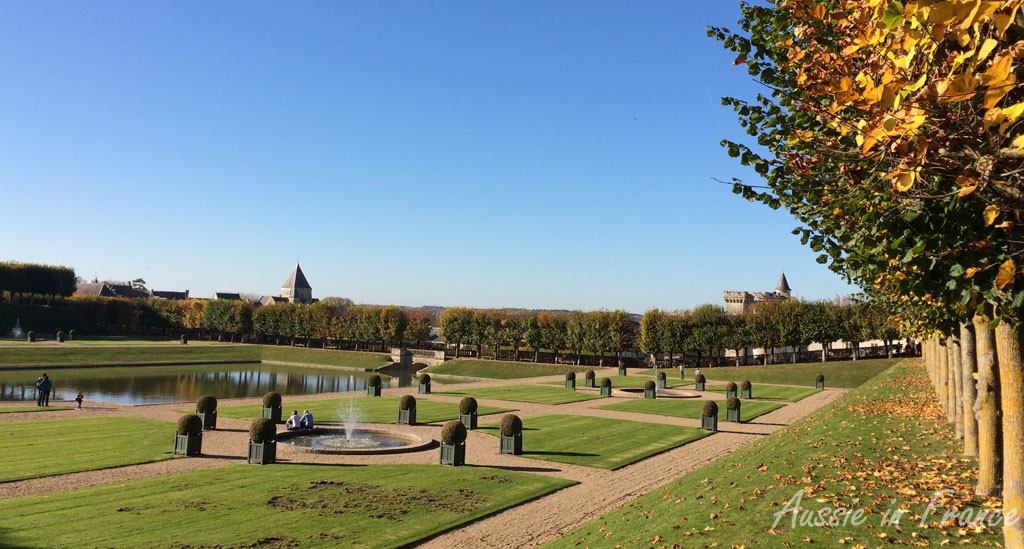
The formal garden and canal at Villandry

The formal garden below looks very serene with its little fountains and central canal.

The gardens at Villandry with the vegetable gardens in the background

Beyond the canal is the famous vegetable garden and the other façade of the château.

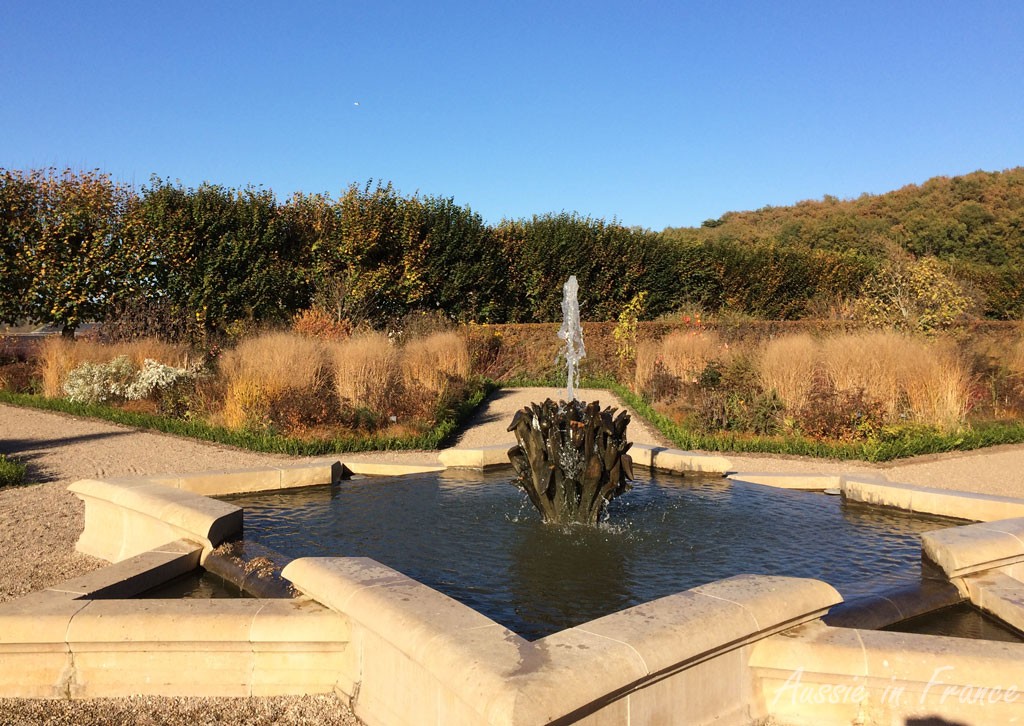
The perennials garden in Villandry

But first we go to the hardy perennials because we’re trying to find plants to decorate the slope leading up to our little wood. We identify a few specimens we can try out.

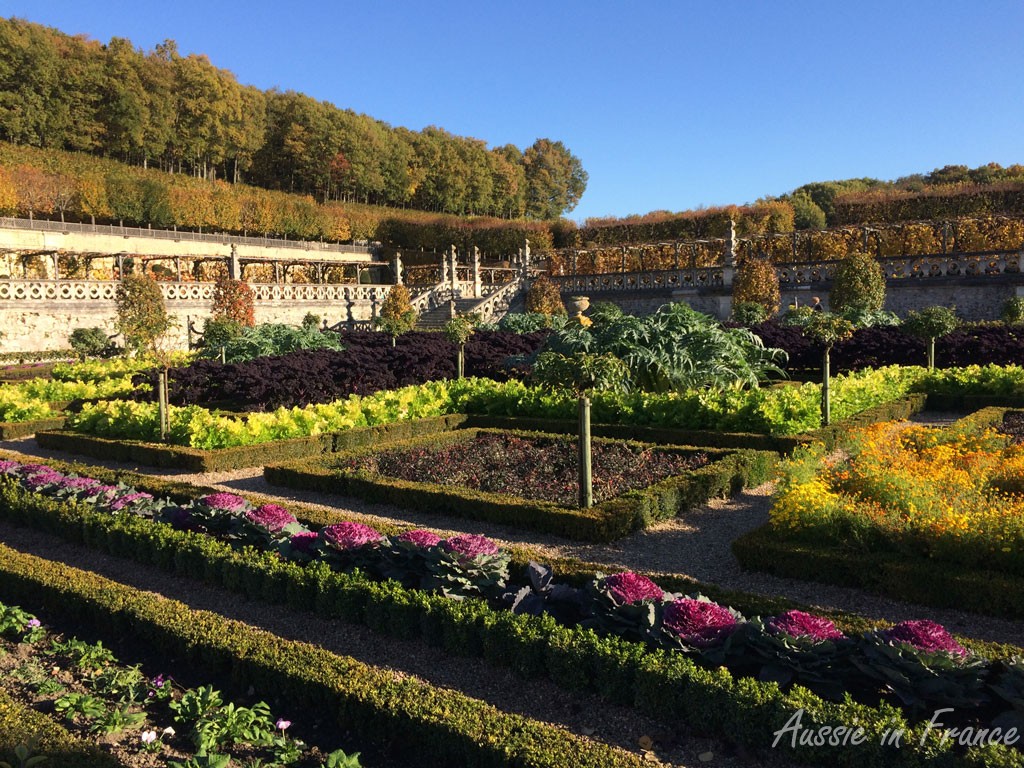
The vegetable garden in Villandry with its decorative cabbages

We then spend a lot of time in the vegetable garden, with its colourful cabbages, luxuriant asparagus ferns (the real thing), capsicum, celery, leeks and other decorative yet edible vegetables.

The lake at the end of the bike path at sunset

A quick tour of the garden shop and we’re back on the bike path, as daylight saving is now over and we have to be back at the car by 5.30 at the latest. We arrive just in time, as usual.

We’re delighted to have added another great bike itinerary to our already large collection. We’ll be back in the spring!

*La Jocondie, 12-seat boat. Landing: Port du Pavé du Roy, Joué-les-Tours. Les Mariniers du CAJC : 7, rue Descartes. Joué-les-Tours – 37300

Detailed map: click here

Le Jeune Intermittent – The 5:2 Fast Diet

Ce blog est normalement en anglais mais j’ai eu tellement de demandes concernant notre pratique du jeûne intermittent de la part de nos amis français que j’ai décidé de leur dédier un post. [This blog is usually in English but I have had so many requests for information on the 5:2 Fast Diet from our French friends that I am dedicating this post to them in French. You will find plenty of information on the subject in English if you click on the Category “Dieting” in the column on the right. You can start with “The 5:2 fast diet: fast and feast and still lose weight“.]

1/4 protéine, 1/4 féculents et 1/2 légumes

J’ai commencé le jeûne intermittent lorsque j’avais repris quelques kilos deux ou trois ans après avoir perdu 20 kilos en suivant un régime basé sur une assiette divisée en quatre: 1/4 de protéines, 1/4 de féculants et 1/2 de légumes. J’avais réduit ma consommation de vin à une ou deux fois par semaine à la place d’un verre ou deux à chaque repas. J’avais également éliminé les frites et autres mets très caloriques. Pendant les trois premières semaines du régime j’avais également éliminé tous les produits à base de blé les remplaçant par le quinoa, la polenta, etc.

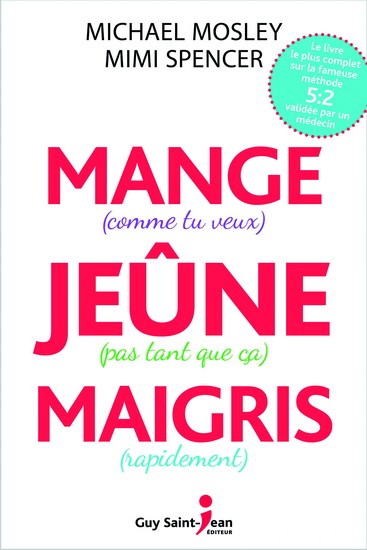
Pendant la période du régime qui a duré 18 mois, je n’avais pas trop de mal, mais une fois que j’avais retrouvé la ligne, il était plus difficile de constamment “faire attention” et je n’arrivais plus à reperdre les trois ou quatre kilos que j’avais repris petit à petit pendant deux ans. C’est à ce moment-là que j’ai entendu parler du jeûne intermittent élaboré par le docteur Michael Mosley après ses recherches poussées sur les différents types de jeûne.

livrre_mosley

Sa méthode,  appelée 5:2 (cinq jours “normaux” et deux jours de jeûne), a eu tellement de succès que la caisse d’assurance maladie en Grande Bretagne a lancé des études très sérieuses sur ce sujet. Cette méthode qui vise à perdre du poids et à ne pas en reprendre a désormais fait ses preuves.

Et ce n’est pas uniquement une question de poids. Le mauvais cholestérol s’en va, on a une meilleure santé et le facteur “cancer” est réduit, ce qui augmente l’espérance de vie.

Mon mari Jean Michel était hésitant au début mais maintenant c’est un grand adepte. Nous pratiquons le jeûne intermittent deux fois par semaine, le lundi et le jeudi (mais on peut moduler les jours comme on veut), depuis plus de deux ans. Il n’y a aucune restriction sur les activités pratiquées les jours de jeûne – nous faisons 70 km de vélo sans problème et Jean Michel a fait de gros travaux physiques cet été -, il faut juste boire beaucoup d’eau. C’est même bien de pratiquer un sport ou d’avoir une activité intensive le jour du jeune.

Attention: Si vous avez un problème de santé, comme le diabète, par exemple, il faut absolument consulter un médecin avant de démarrer.

Alors, comment faire  les jours de jeûne ? C’est très simple: on prend 500 calories pour les femmes et 600 calories pour les hommes, répartis de préférence entre deux repas. J’ai essayé “petit déjeuner + dîner” mais j’avais mal à la tête dans l’après-midi. Je préfère donc ne pas prendre de petit déjeuner, ce qui favorise une plus longue période de jeûne (entre 21 heures le soir d’avant et 13 heures le lendemain = 16 heures) en prenant simplement un café noir non sucré le matin. Au début j’hésitais car j’avais appris à ne jamais sauter de repas mais finalement cela ne pose aucun problème.

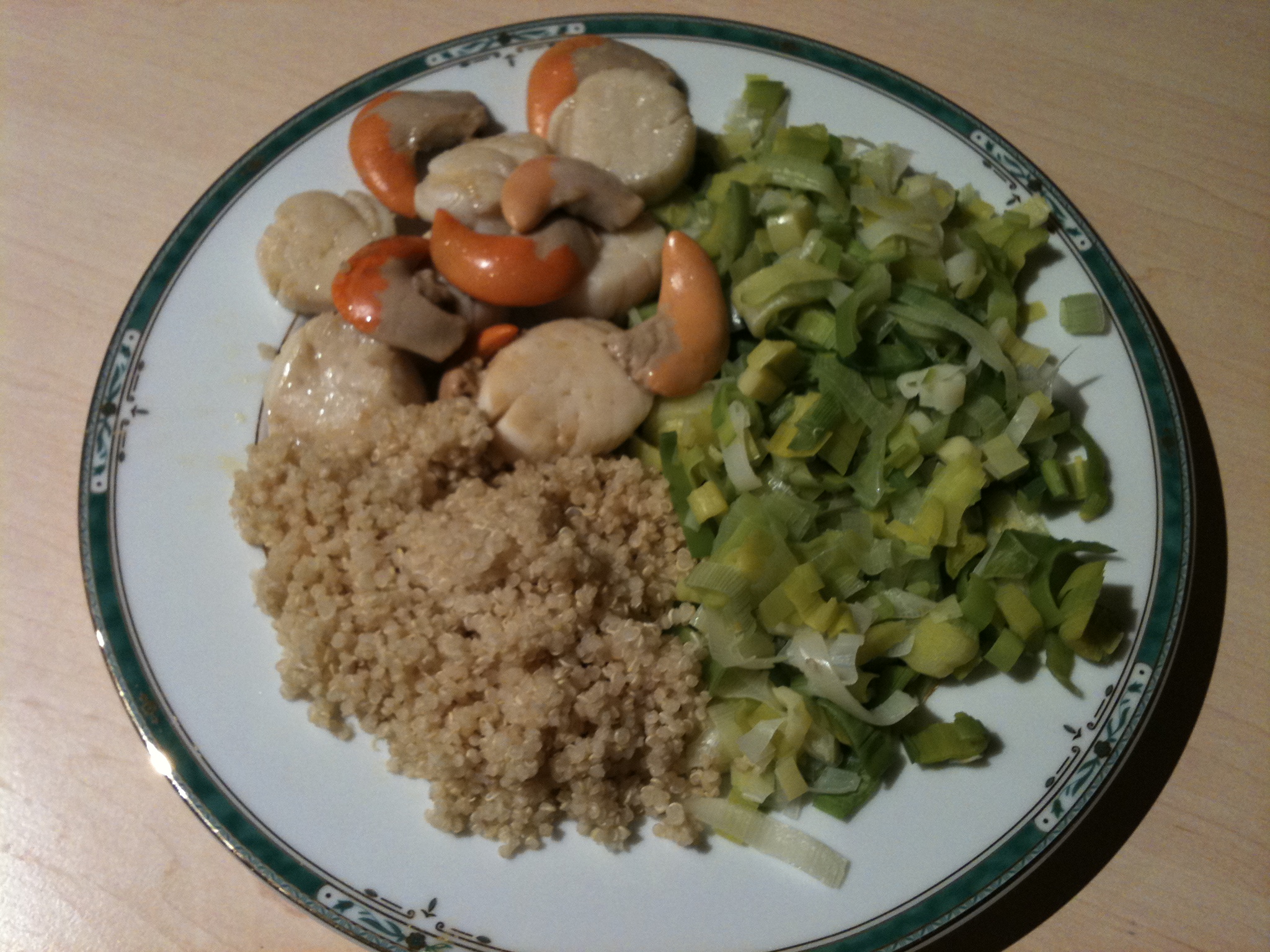
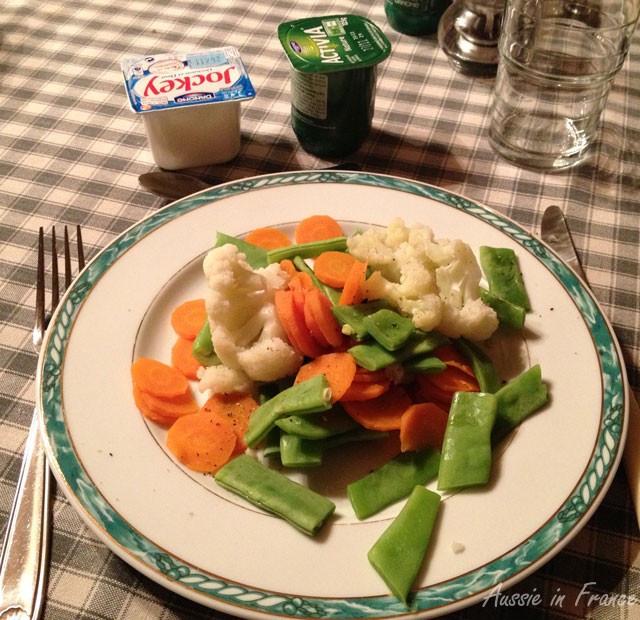
Aux repas de jeûne, il faut prendre plutôt des protéines et légumes pour éviter la perte de muscle. Pour des raisons de simplicité, nous mangeons toujours la même chose les jours de jeûne. Comme ça, on n’a pas besoin de compter les calories chaque fois ni de réfléchir à ce que nous allons manger.

Repas typique un jour de jeûne intermittant
Repas typique un jour de jeûne intermittent (+ fruit)

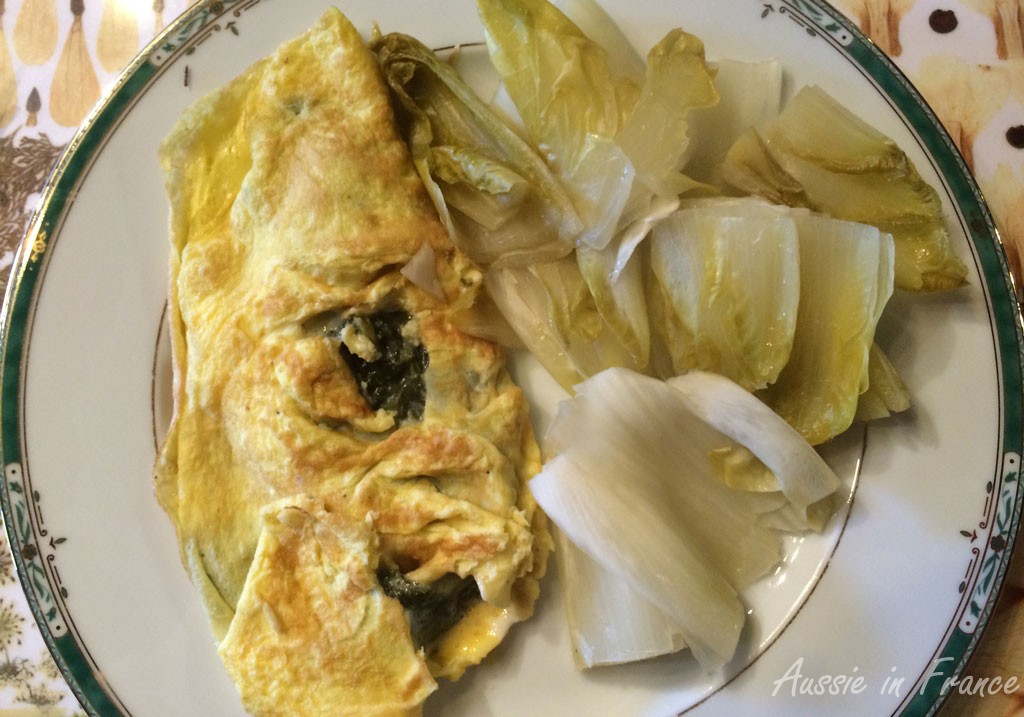
A midi nous prenons deux oeufs (omelette sans matière grasse, oeufs durs, etc.), des crudités ou légumes cuits à la vapeur nature (juste sel et poivre) et un fruit. Jean Michel rajoute une tranche de pain équivalente à 100 calories.

Le soir, on mange un fromage blanc à 20%, un yaourt Activia nature, des légumes à la vapeur et un fruit.

Déjeuner typique: omelette à l'oseille accompagnée d'endives vapeur
Déjeuner typique: omelette à l’oseille accompagnée d’endives vapeur (+ fruit)

Il faut choisir des légumes basses calories : tomates, concombres, brocolis, haricots verts, courgettes, poivrons, carottes, choux-fleurs, endives, etc. Il faut tout peser la première fois pour s’assurer du nombre de calories.

Il faut savoir que la sensation de faim n’est jamais continue. On va avoir faim, puis on fait quelque chose pour se distraire, on boit un verre d’eau et la sensation disparaît.

Après quelque temps, on n’y pense même plus les jours de jeûne! C’est même agréable d’avoir une vraie sensation de faim de nouveau plutôt qu’une envie de manger ou de grignoter.

Et les autres jours, qu’est-ce qu’on fait ?

Eh bien, vous mangez comme vous voulez. D’abord, le fait de jeûner va sûrement réduire votre appétit. Ensuite, sans prendre les frites à tous les repas suivies de gros gâteaux, il n’y a pas de restrictions. Si vous constatez qu’il n’y a pas de perte de poids après plusieurs jours de jeûne,  vous pouvez essayer de ne pas dépasser 1200 calories par jour (pour une femme de taille moyenne) ou bien faire une troisième jour de jeûne dans la semaine ou juste sauter le petit déjeuner une ou deux fois de plus.

Foie gras from time to time is no longer excluded

Puisqu’on a le “droit” de manger des petits gâteaux et du foie gras sans culpabiliser, l’envie de trop manger ou de grignoter est moins forte. Le cerveau semble s’adapter rapidement à cette nouvelle façon de manger.

Pour moi, le jeûne intermittent est la meilleure solution pour garder la ligne. L’idée d’être obligée de faire attention toute la vie me déprimait. Par contre, jeûner deux jours par semaine jusqu’à la fin de mes jours ne me pèse pas du tout. On est même content de jeûner, étonnant que cela puisse sembler. On a l’impression de mettre le corps au repos et de retrouver sa dynamique.

Alors, bon courage et n’oubliez pas de me tenir au courant de vos progrès !

Cycling along the Loire in Autumn

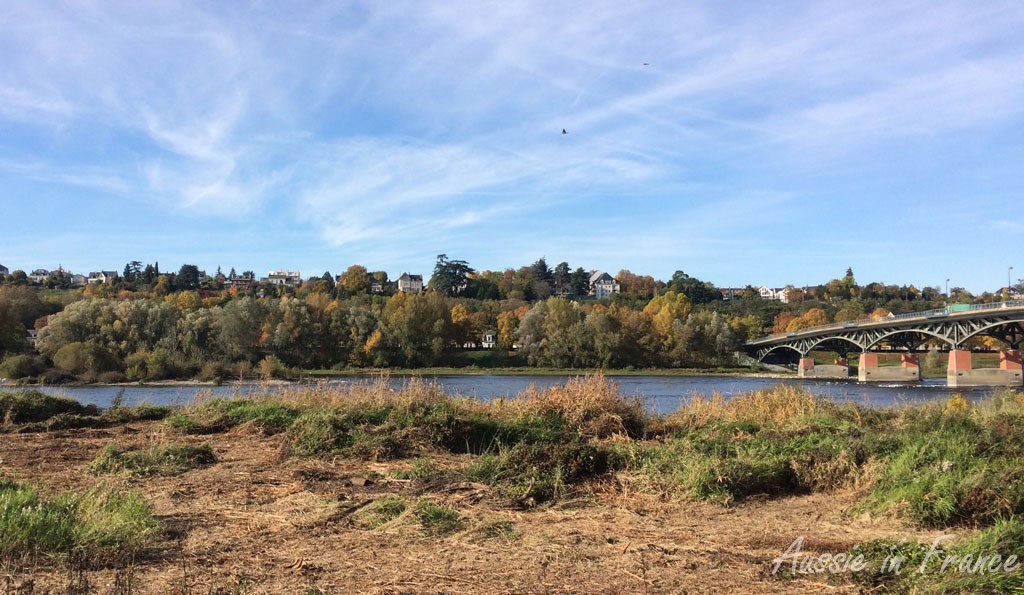
The last time we were on our bikes was when we cycled from Ybbs to Grein in Austria on October 3rd. Jean Michel has cleaned them and we have put away all our gear but an unusually warm sunny day with 20°C maximum is predicted so we decide to make the most of it. We drive the three kilometers along the Loire to François Mitterand Bridge, cross over and park along the banks of the Loire, just next to the bike path. It’s about 3 pm.

Starting point on the other side of Mitterand Bridge

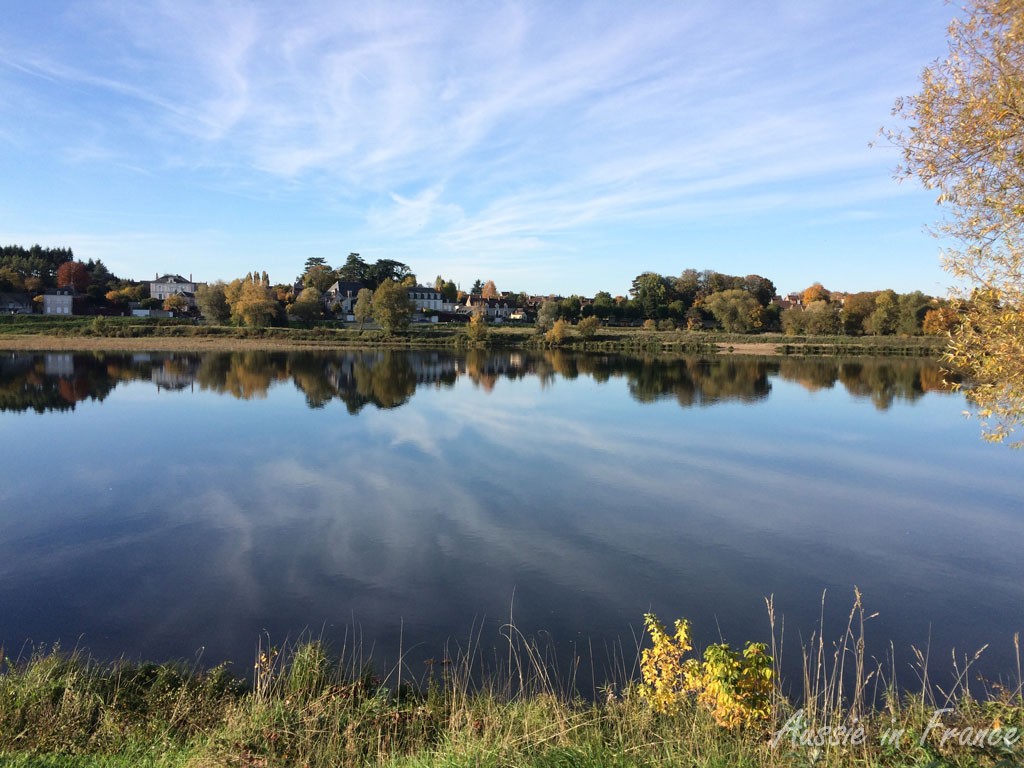
We can’t get over how balmy it is. I keep having to get off my bike to take photos. The light is wonderful and the sky is a beautiful blue.

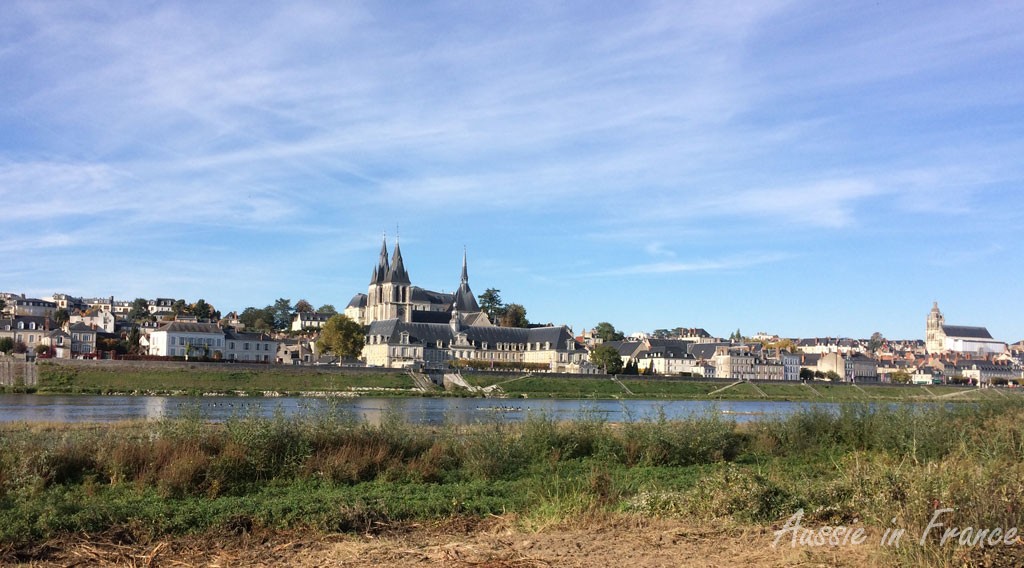
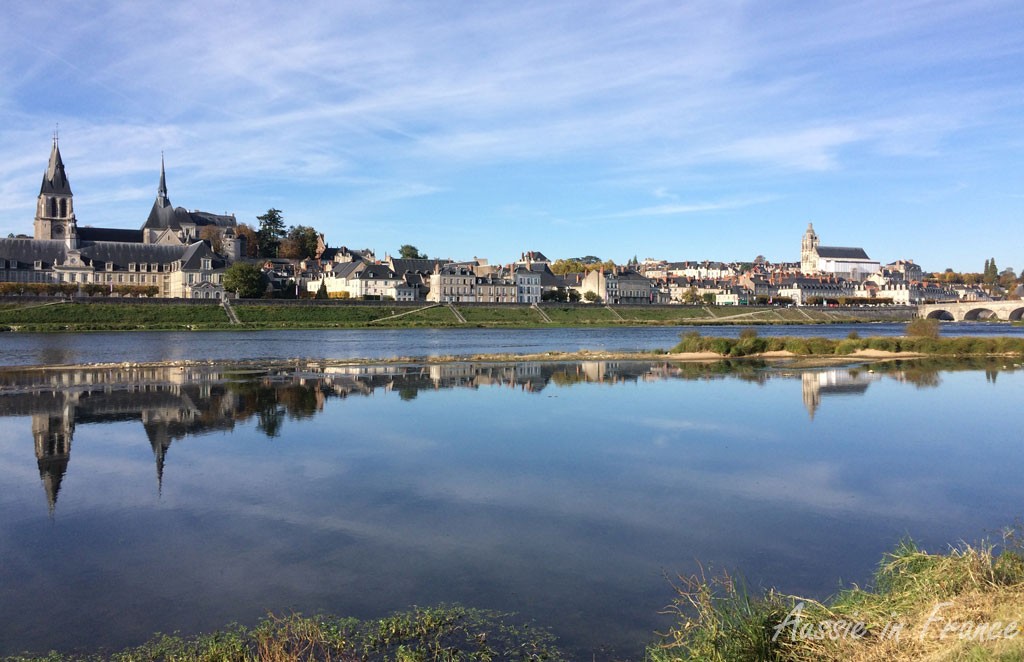
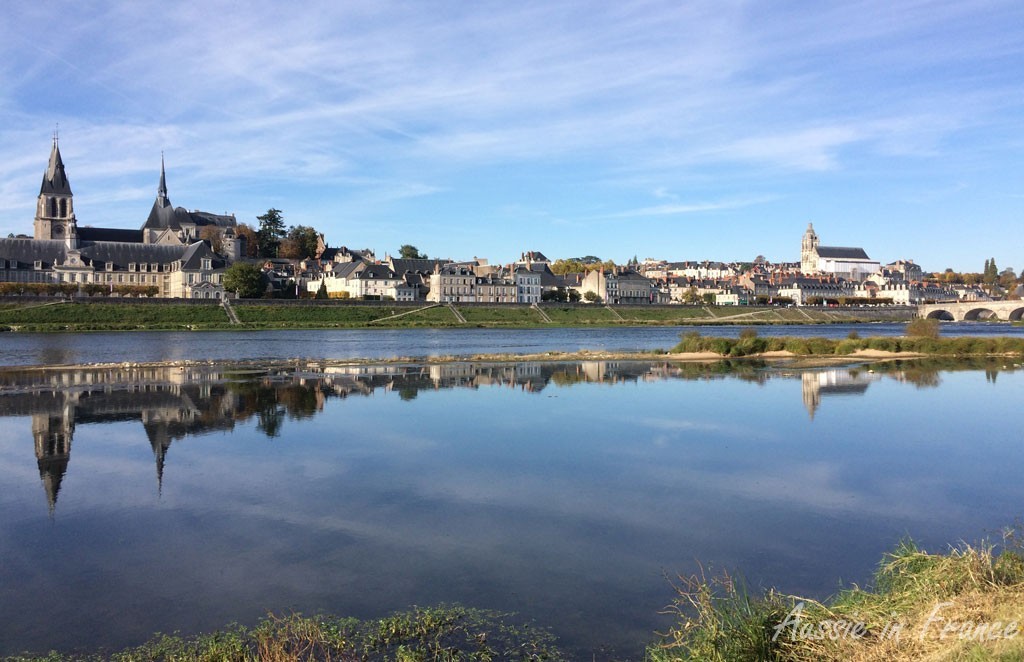
First view of Saint Nicolas and the castle
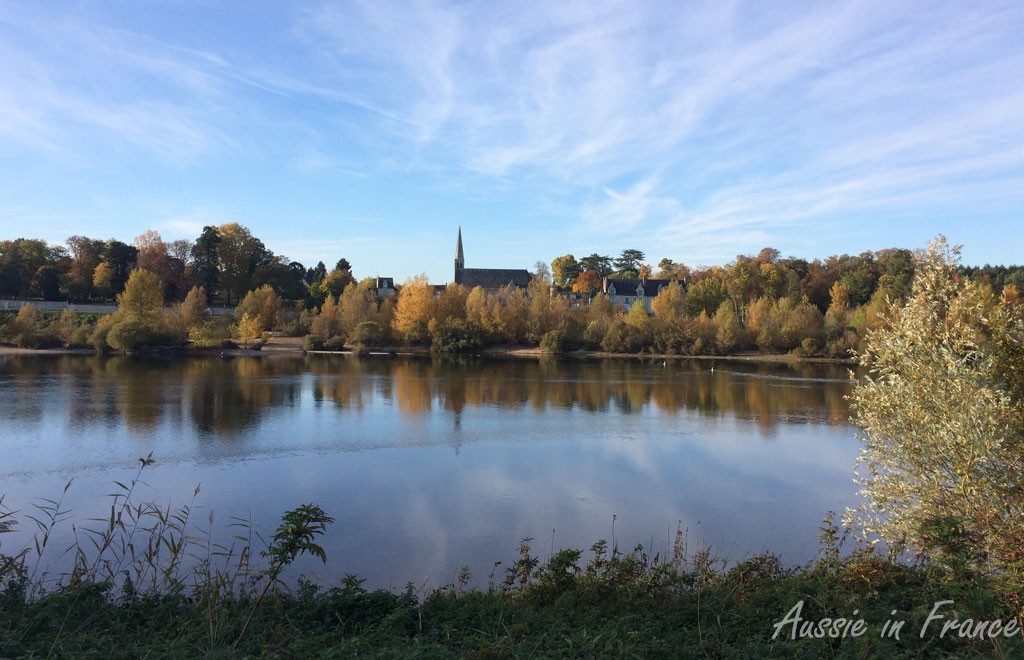
The castle and cathedral reflected in the Loire
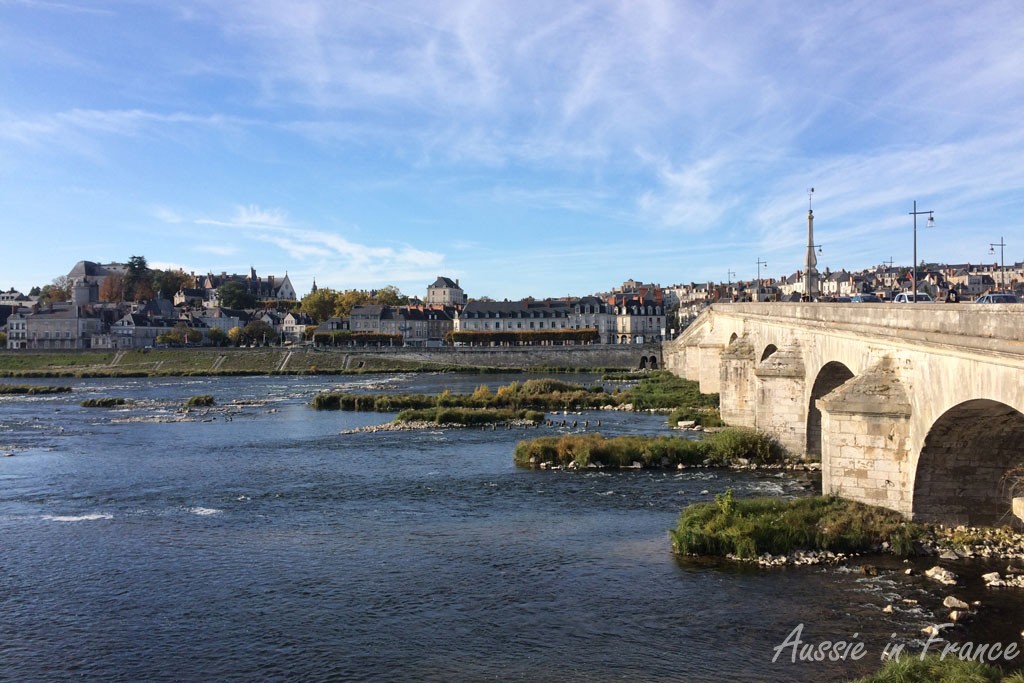
Gabriel Bridge
Gabriel Bridge
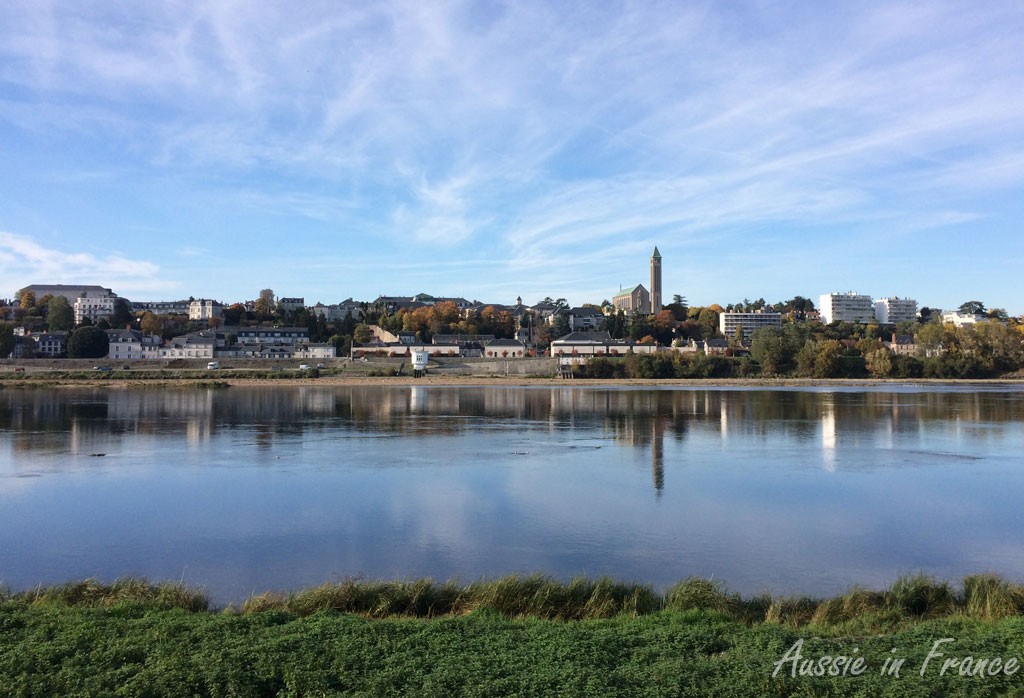
The modern church on the other side of the bridge

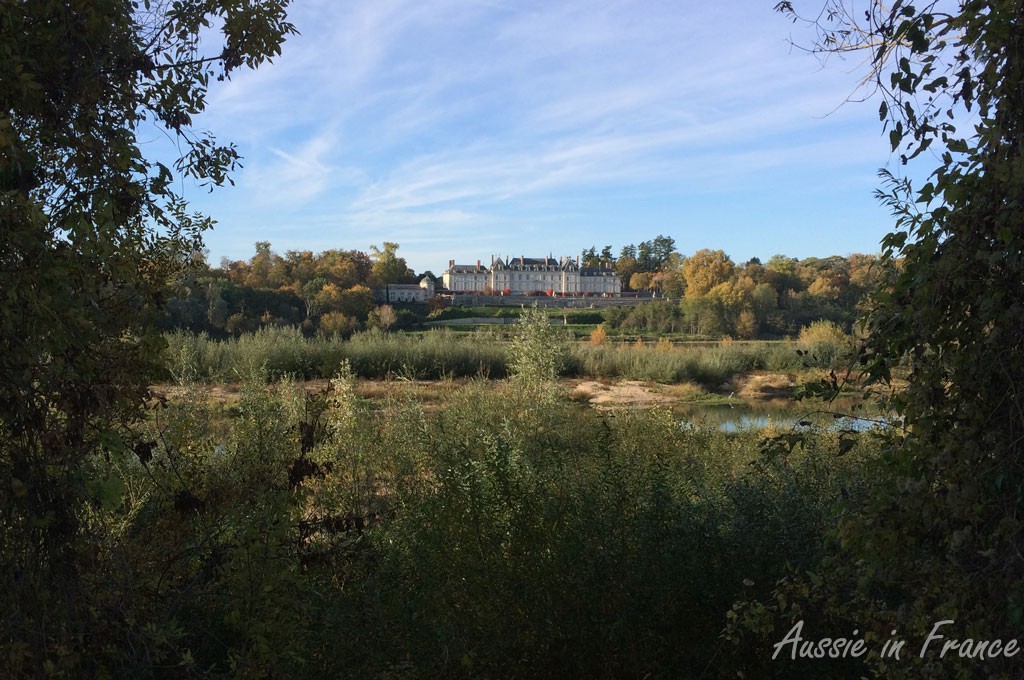
We continue along the new bike path towards Saint Dyé that takes us past Château Menars.

Château de Menars
Château de Menars

Then on past the pretty little village of Cour-sur-Loire which you may remember we reached via bike ferry during the summer.

The church in Cour-sur-Loire
The village of Cour-sur-Loire

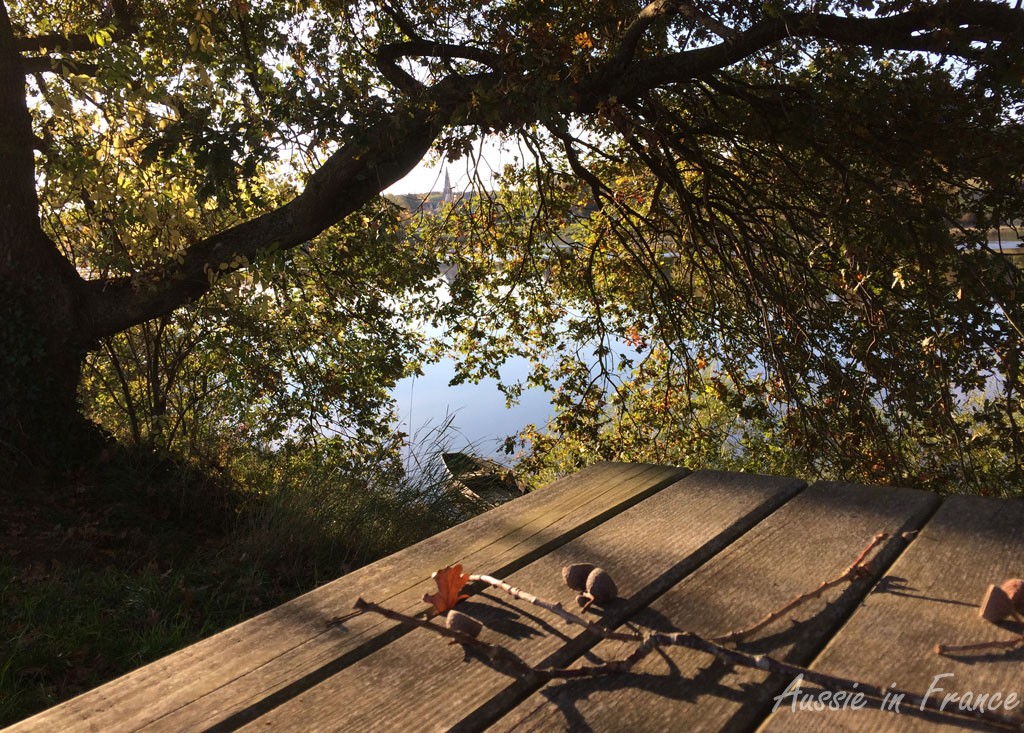
We have our pause at the picnic table just opposite Cour-sur-Loire, then turn back- 25 kilometers and 1 hour 40 minutes of sheer pleasure.

The picnic table with acorns and an old boat


Visit the Loire without a Car based in Blois

Updated November 2026

The Loire Valley, with its magnificent châteaux, beautiful gardens and historic towns, is a wonderful part of France to explore. And you don’t necessarily need a car to do it!

Blois makes an excellent base for exploring the area by public transport. It has a railway station in the centre of town, bus services to several of the main châteaux, and even a free shuttle service around the town itself.

The castle and cathedral reflected in the Loire

Of course, having a car gives you more freedom, particularly if you want to explore some of the smaller villages and less accessible sights. But if you prefer not to drive, or simply don’t want the expense and inconvenience of hiring a car, you can still have a very enjoyable holiday here. You just need to plan ahead, as some bus services are seasonal and departures can be limited.

Getting to Blois by train

Blois is easily reached by train from Paris. Trains leave from either Gare Austerlitz or Gare Montparnasse and the journey takes about an hour and a half (direct train), depending on the service.

The station is called Blois-Chambord and is conveniently situated in the centre of town, within walking distance of the Château Royal de Blois and the old town.

Once you arrive, you will find the bus station (gare routière) just outside the railway station. This is where many of the buses to the Loire châteaux depart.

Getting around Blois itself – a free shuttle!

One of the great things about Blois is that you don’t have to walk everywhere, although the old town is very pleasant to explore on foot.

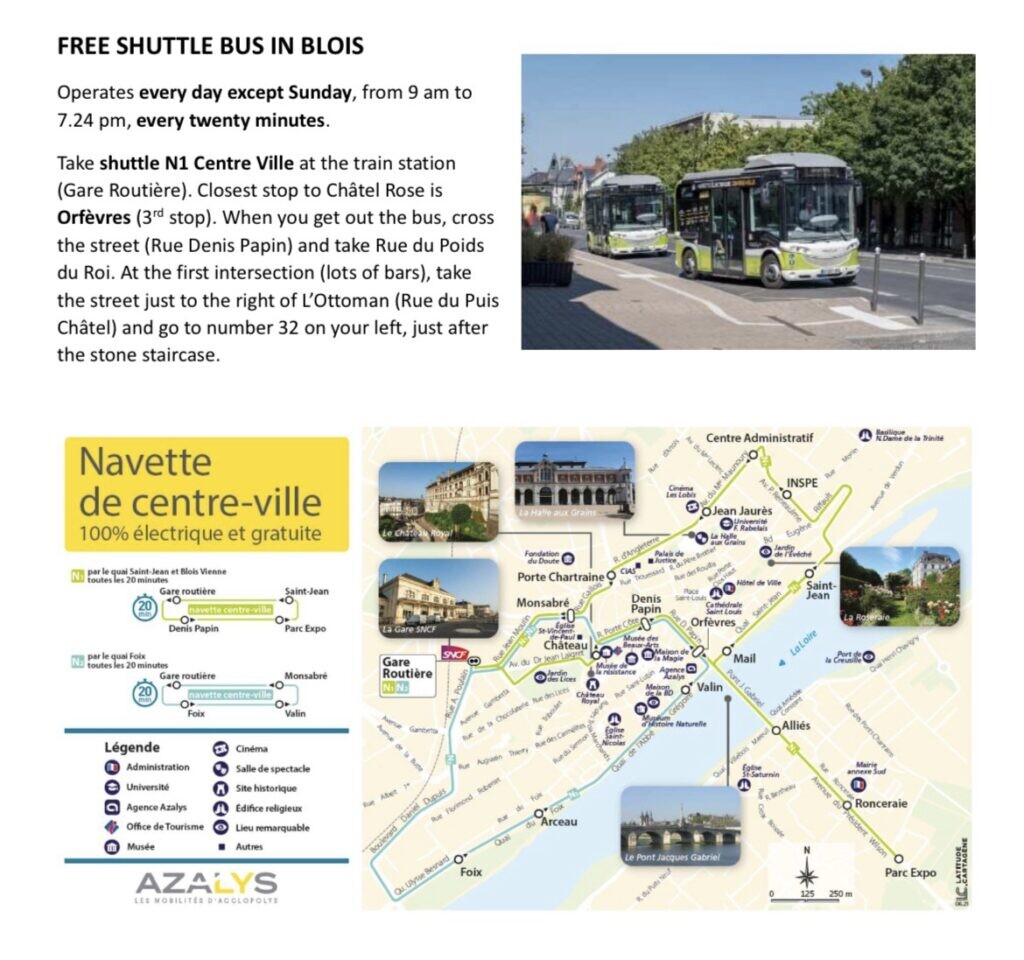
The Azalys network operates two free electric shuttle buses, N1 and N2, around the town centre. They serve different parts of Blois, including the railway station, the historic Puits Châtel quarter and the Vienne quarter across the river.

They are particularly handy if you want to get around without having to climb the hills or walk long distances.

The shuttles operate Monday to Saturday. You can find the routes and current timetables on the Azalys website⁠.

Visiting the châteaux without a car

The four châteaux I would particularly recommend visiting from Blois are Chambord, Cheverny, Chaumont-sur-Loire and, a little further away, Chenonceau.

Château de Chambord

Chambord is probably the most famous of the Loire châteaux, and it is certainly one of the most spectacular.

Chambord in the Loire Valley

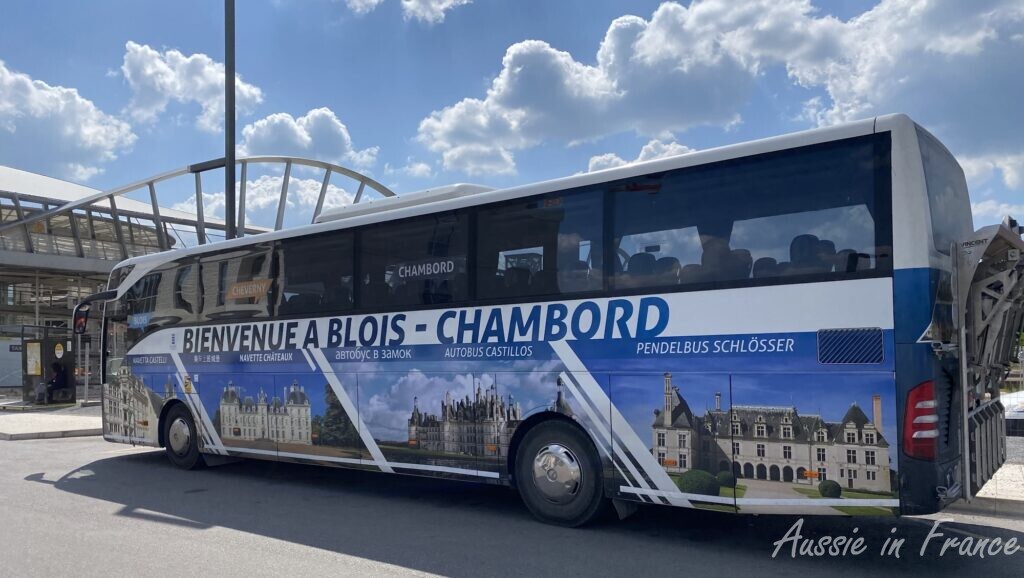
The Rémi line 2 bus runs from Blois to Chambord throughout the year. It takes around 40 minutes, and the bus leaves from the bus station outside Blois-Chambord railway station. There is also a stop near the Château Royal de Blois.

The fare is currently €3.40 each way. There are a limited number of departures, so check the timetable carefully before planning your visit.

You can find the information and timetable on the Rémi website⁠.

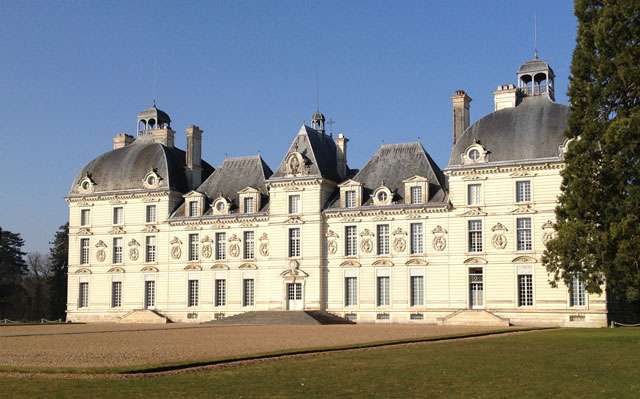
Château de Cheverny

Cheverny is a very different château from Chambord. It is beautifully furnished and still inhabited by the same family. Its gardens are lovely, too, and there is plenty to see.

Château de Cheverny

During the main tourist season, a special Azalys shuttle connects Blois with Cheverny and Beauregard. The service is seasonal, so check the dates and timetable before setting off.

Outside the seasonal period, Rémi line 4 provides a more limited service to Cheverny. Do check the days and times, as it is not a service you can simply turn up and take whenever you like.

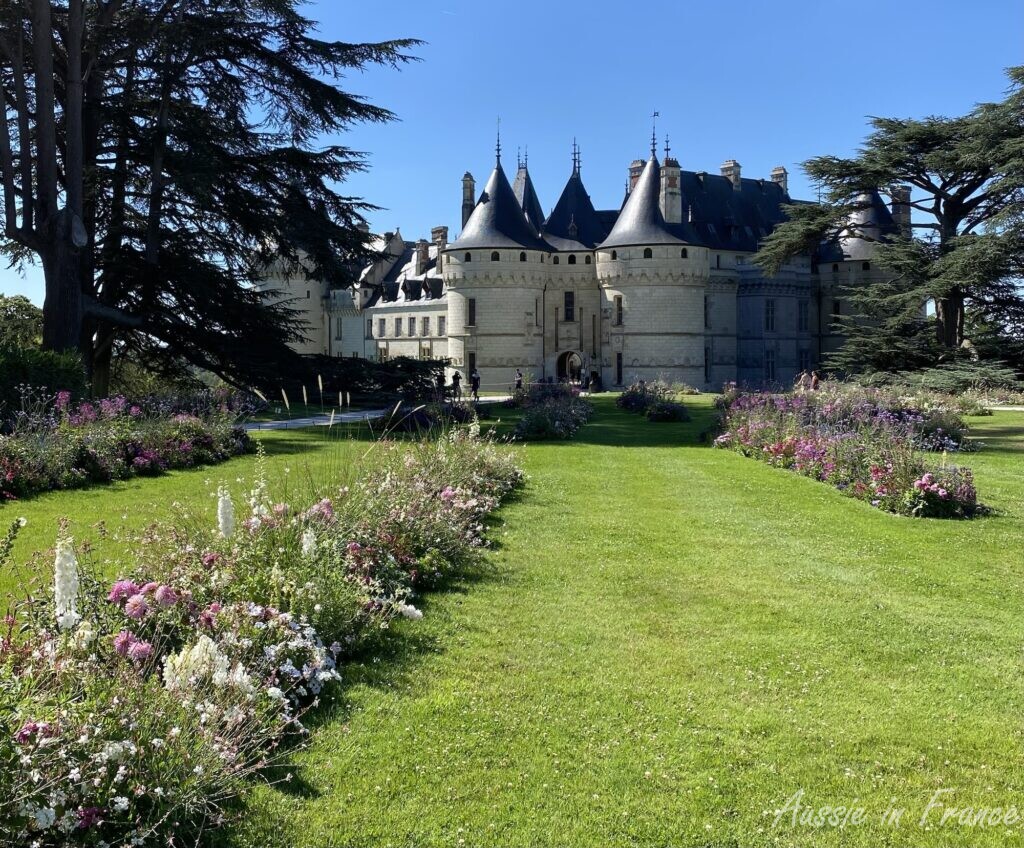
Château de Chaumont-sur-Loire

Chaumont is particularly worth visiting if you enjoy gardens. Its International Garden Festival from April through October is a highlight of the year, and the château itself has a wonderful position overlooking the Loire.

Approaching Château de Chaumont

A special bus service operates from Blois during the main season. It also serves the railway station at Onzain, which is the station for Chaumont-sur-Loire.

Another possibility is to take the train from Blois to Onzain and walk to the château. It is approximately 2 km from the station, including a lovely walk across the bridge with views of the Loire. There is also a shuttle service.

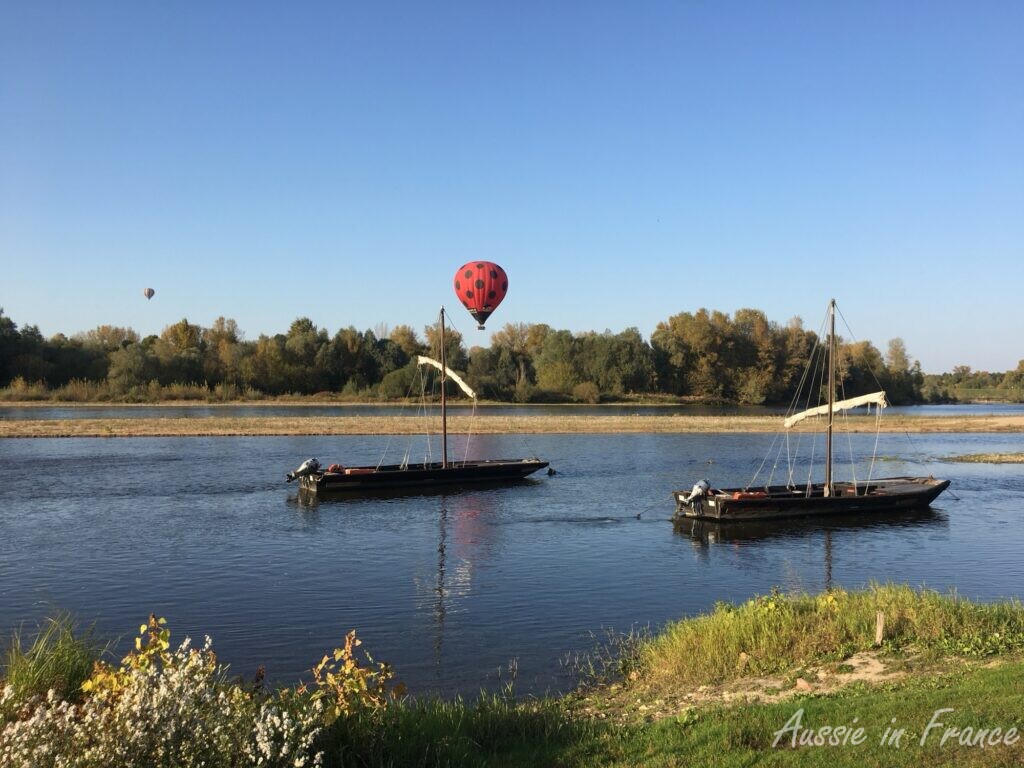
Flat-bottomed boats called gabares on the Loire at Chaumont

Château de Chenonceau

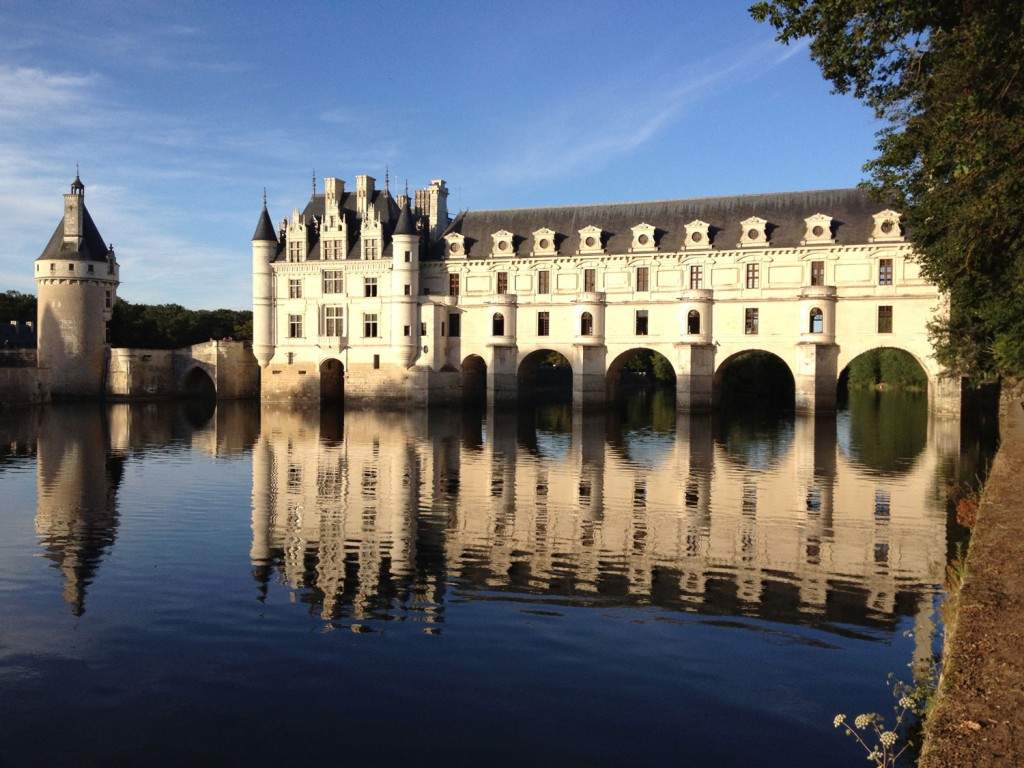
Chenonceau is one of my favourite Loire châteaux. It is built across the River Cher and is particularly beautiful when seen reflected in the water.

Château de Chenonceau reflected in the Cher at dusk

You can visit it by train from Blois. Depending on the train service, you may need to change trains, so check the journey carefully when planning your day.

The station at Chenonceaux is very close to the château, making this one of the more convenient château visits by train.

Other places to visit

There are plenty of other places worth exploring if you have more time.

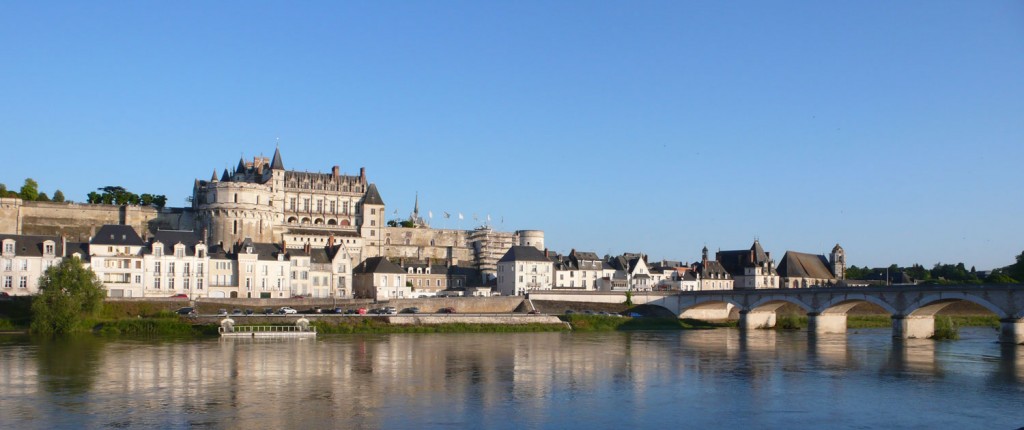
Amboise is an attractive historic town with a château overlooking the Loire, and Leonardo da Vinci’s former home, the Clos Lucé, is also well worth a visit. It is easily reached by train from Blois.

Château d’Amboise seen from Île d’Or

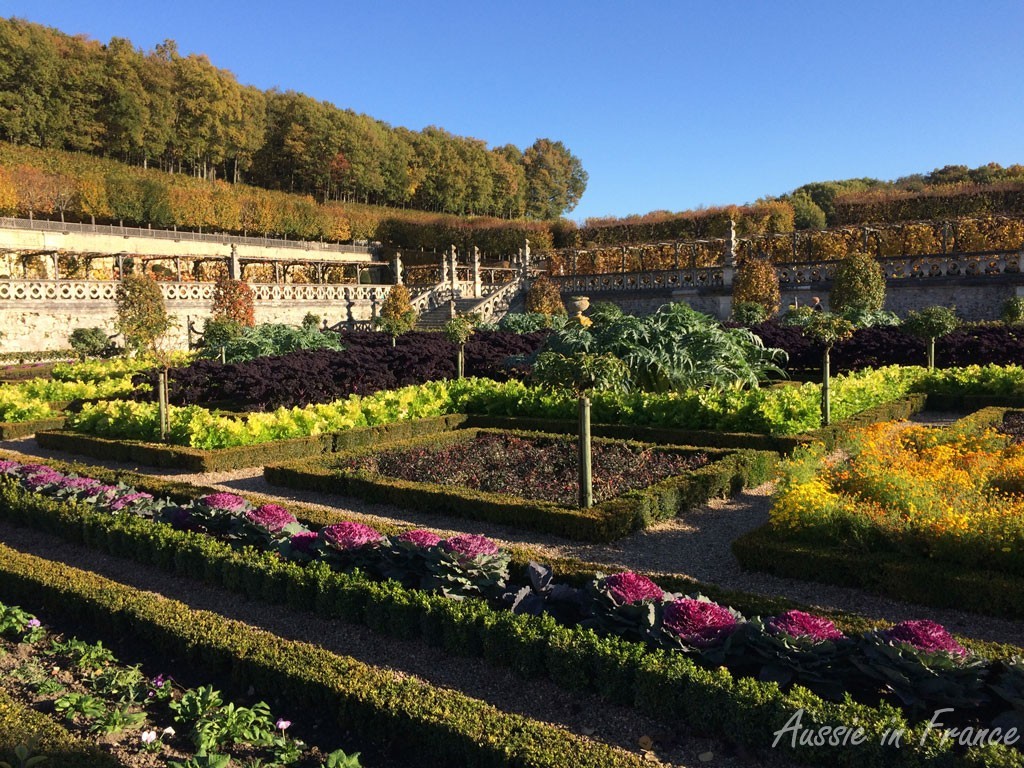
Tours is another possibility for a day out (40 minutes by train). It has a beautiful old quarter, interesting shops and restaurants, and makes a good base if you want to explore further west in the Loire Valley and visit Azay-le-Rideau (30 minute train ride) or Villandry (35 minutes by train and 40 minutes by Fil Bleu bus line 32 departing Lycée Grandmont). The 20 k bike path from Tours to Villandry is a pleasant, easy ride.

The vegetable garden in Villandry with its decorative cabbages

How long should you stay?

I would allow at least three full days if you want to visit several of the main châteaux, as well as Blois itself.

  • Day 1: Chambord and, if the seasonal shuttle timetable allows, Cheverny.
  • Day 2: Explore Blois, including the Château Royal, the old town and the riverside.
  • Day 3: Visit Chenonceau or Amboise by train.

For example:

If you want to visit Chaumont-sur-Loire and its gardens, allow another day. There is no need to rush. The Loire Valley is best enjoyed at a leisurely pace!

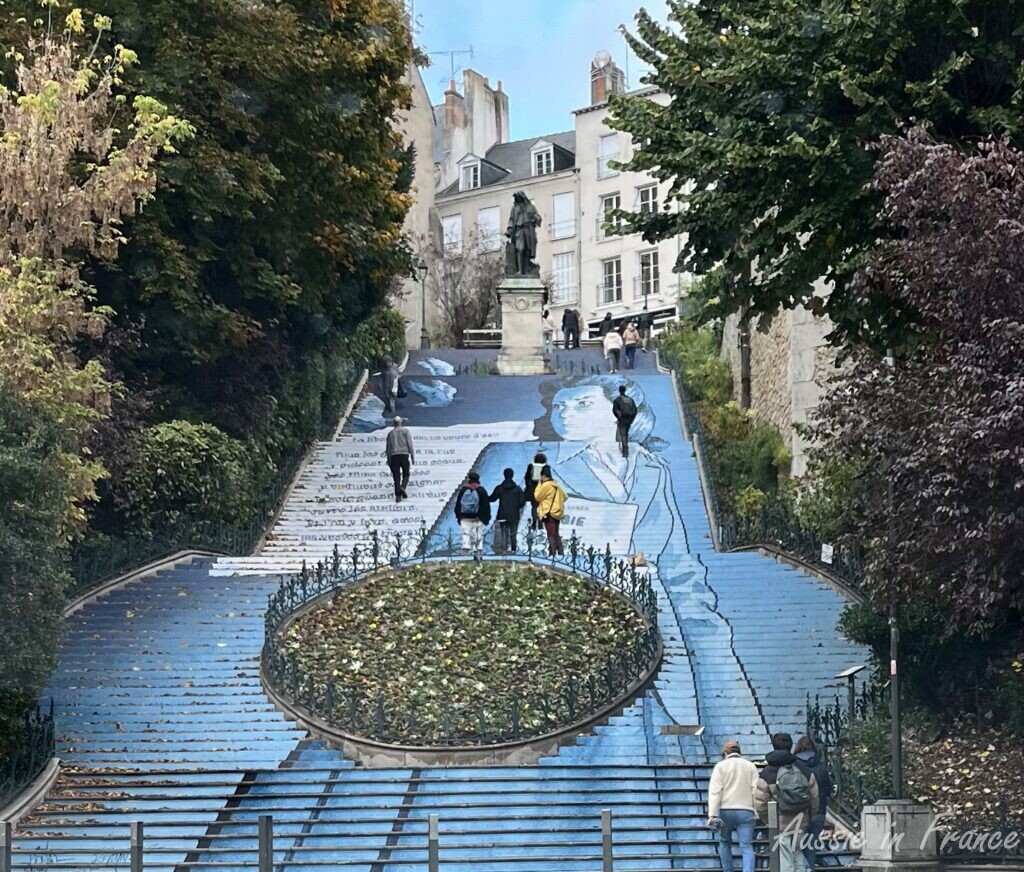
The Denis Papin staircase in Blois. The décor is regularly renewed.

Where to stay in Blois

If you are visiting the Loire Valley without a car, I think it makes sense to stay somewhere central, within walking distance of the railway station, château, restaurants and the historic town.

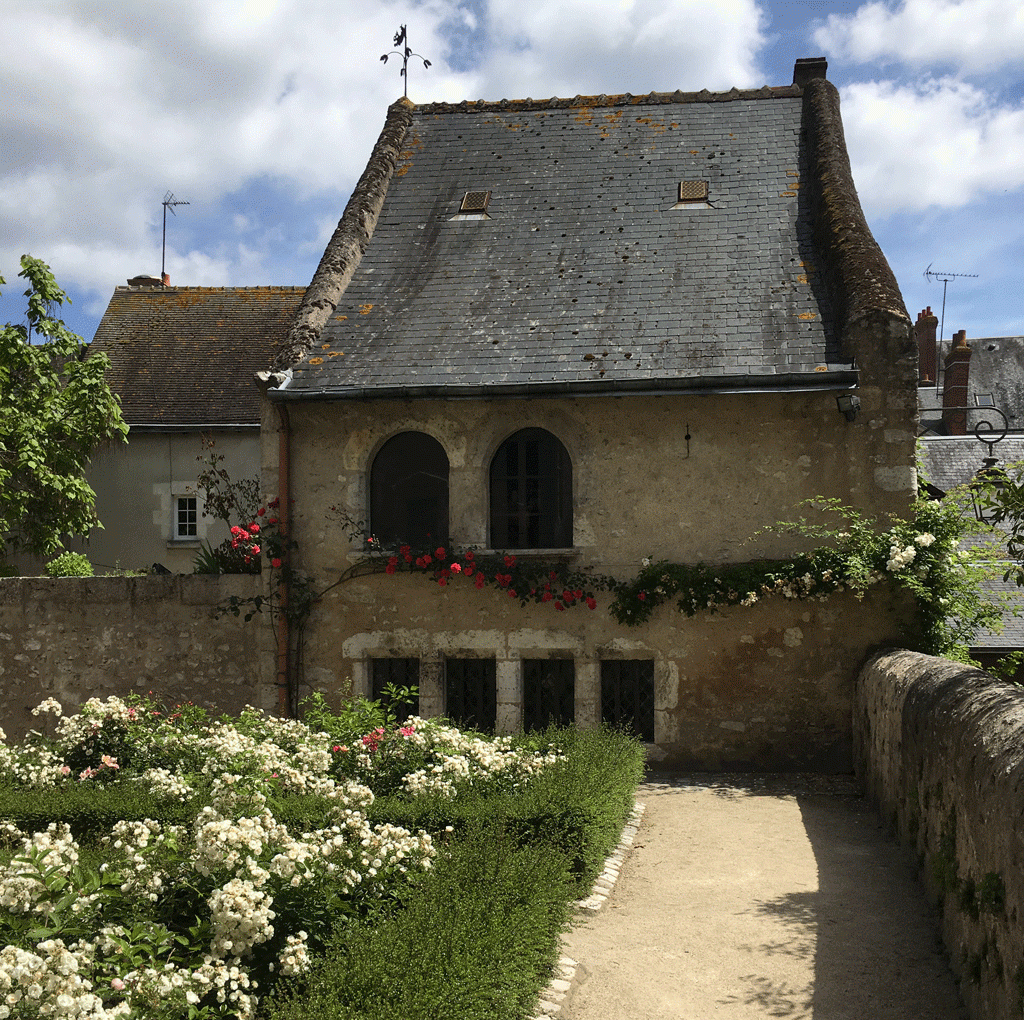
Typical house in the historical quarter of Blois near the rental Châtel Rose

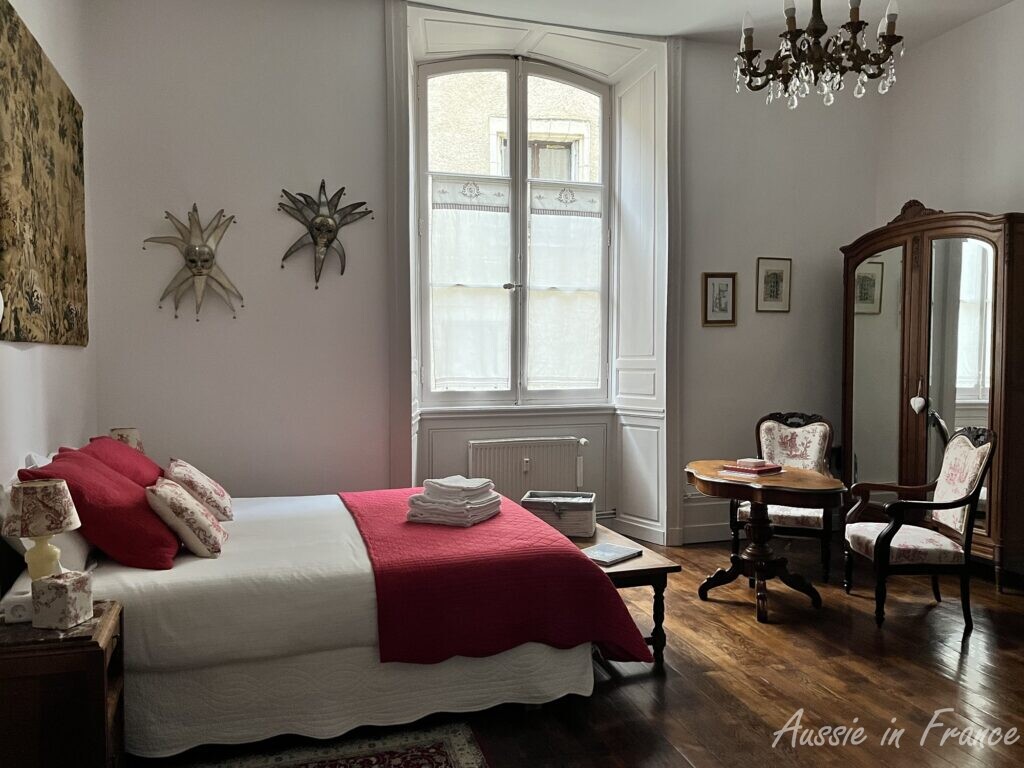
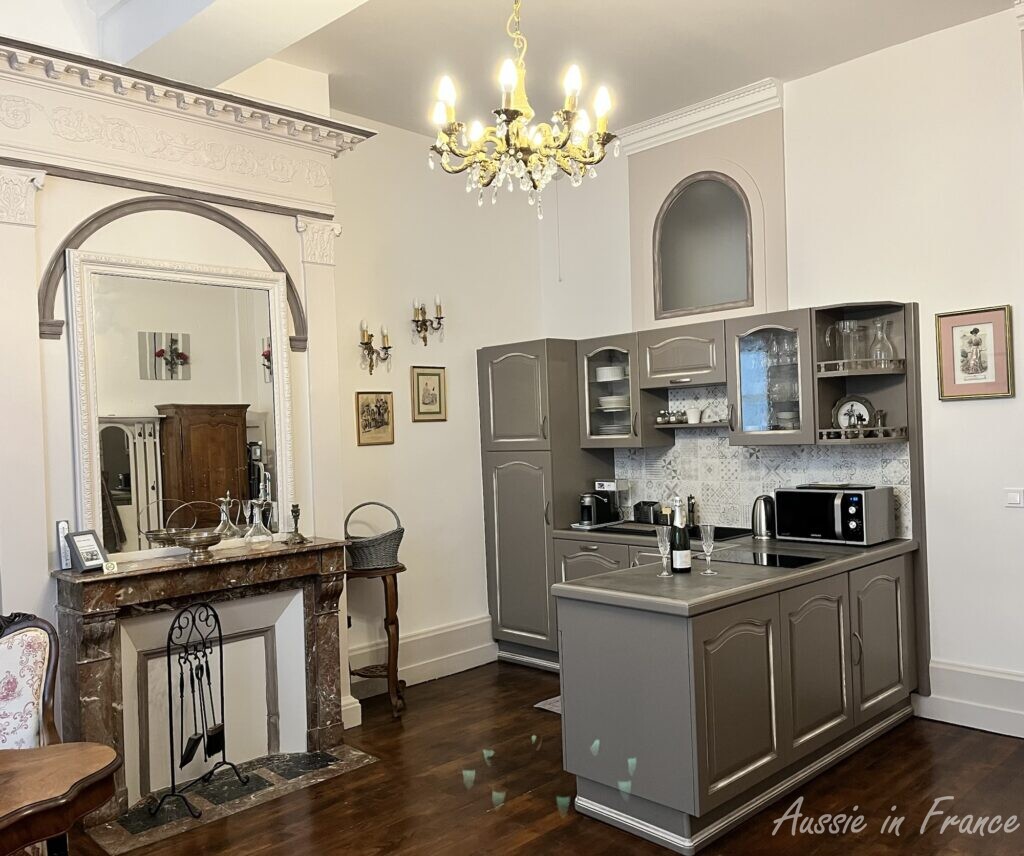
We have a small holiday apartment, Châtel Rose, in the medieval Puits Châtel quarter of Blois. It is on a quiet pedestrian street, has access to a shared garden and combines the atmosphere of an 18th-century building with modern comforts.

It makes a lovely base for exploring the Loire Valley, and you can walk into town for dinner after a day visiting the châteaux.

You can find out more and book directly on our website: www.chatelrose.com⁠.

A final word

Visiting the Loire Valley without a car is perfectly possible, but it does require a little organisation. Bus services to the châteaux are not always frequent, and some only operate during the tourist season.

My advice is to check the train and bus timetables before deciding which château to visit on which day. Don’t try to squeeze too much into one day, either. There is so much to enjoy in this part of France that it would be a shame to spend your holiday rushing from one place to another!

For up-to-date information, I recommend the Blois Chambord Tourist Office⁠, the Rémi regional transport network⁠ and Azalys⁠.

Cycling to the châteaux

There is another way to visit the châteaux – by bike. A network of bike paths called Loire à Vélo links up all the châteaux and towns in the Loire Valley. Once again, Blois is a good base for Chambord, Cheverny, Chaumont and Beauregard, and, with an e-bike, can even include Amboise and Chenonceau.

If you need further information, I will be happy to add to this post. Just write a comment!

Click here to access the details.

AllAboutFranceBadge_bis

I’m contributing this post to Lou Messugo’s All About France link-up. For more posts from bloggers across the country, click here.

Colmar – the Magic of Alsace

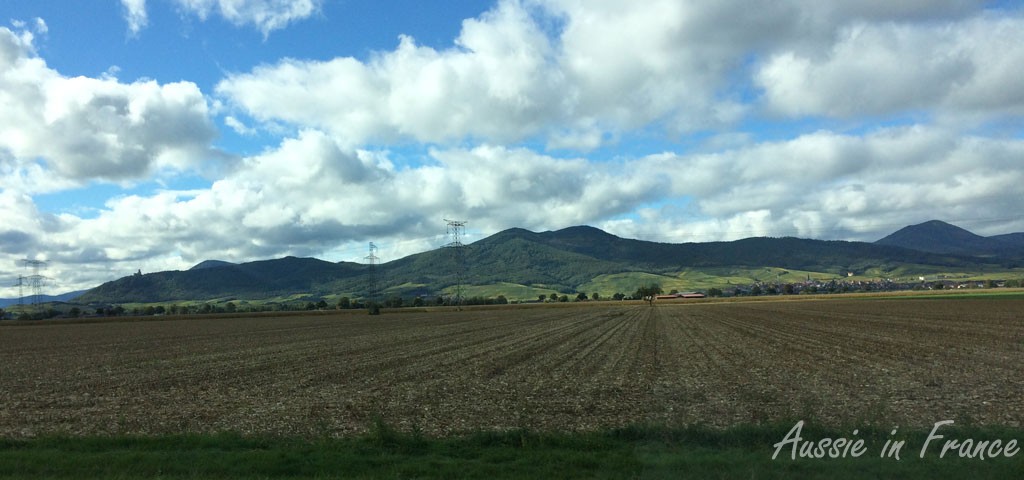
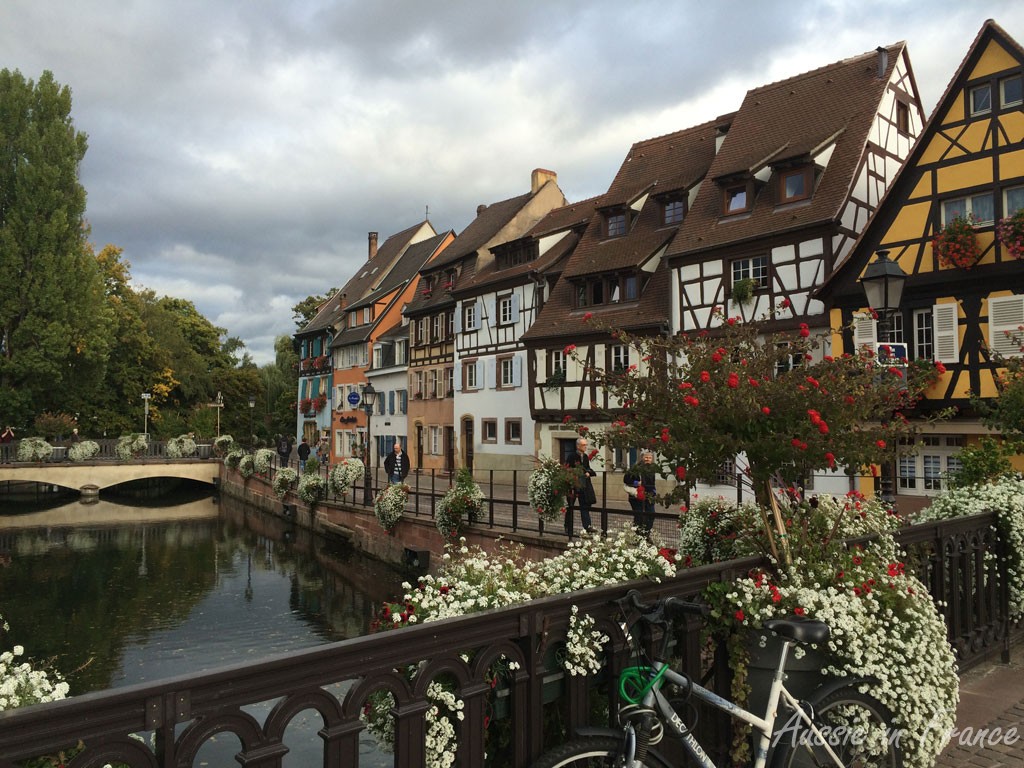
Alsace is one of France’s most picturesque regions and has a lot in common with its neighbour, Germany, in terms of architecture, customs, cuisine and even language. It is famous for its white wines and the vineyards grow at the foot of the gently sloping Vosges mountains.

The slopes of the Vosges mountains

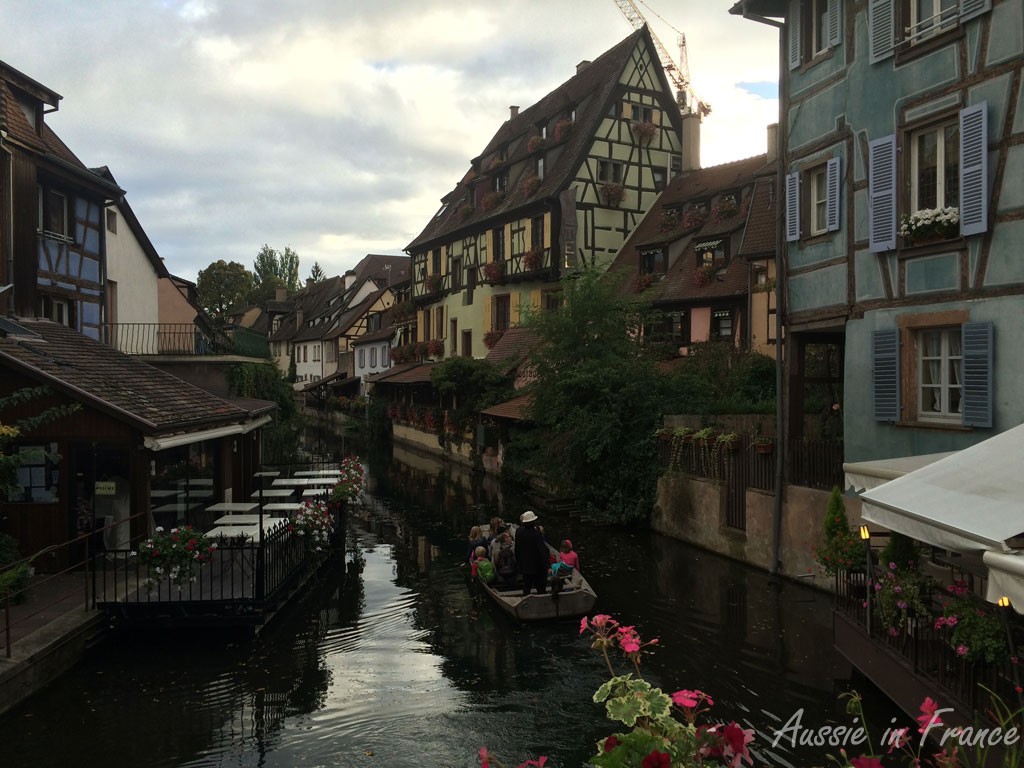
I have been to Colmar twice before, once with Black Cat when she was thirteen (18 years ago) and once with Jean Michel, 14 years ago, when we spent two weeks visiting such lovely little villages as Roquewihr and Haut Koenigsbourg and tasting wine. I remember liking it on both occasions, but am a bit worried that I can’t remember it at all except for one particular place on the canal. Jean Michel only remembers a couple of things as well.

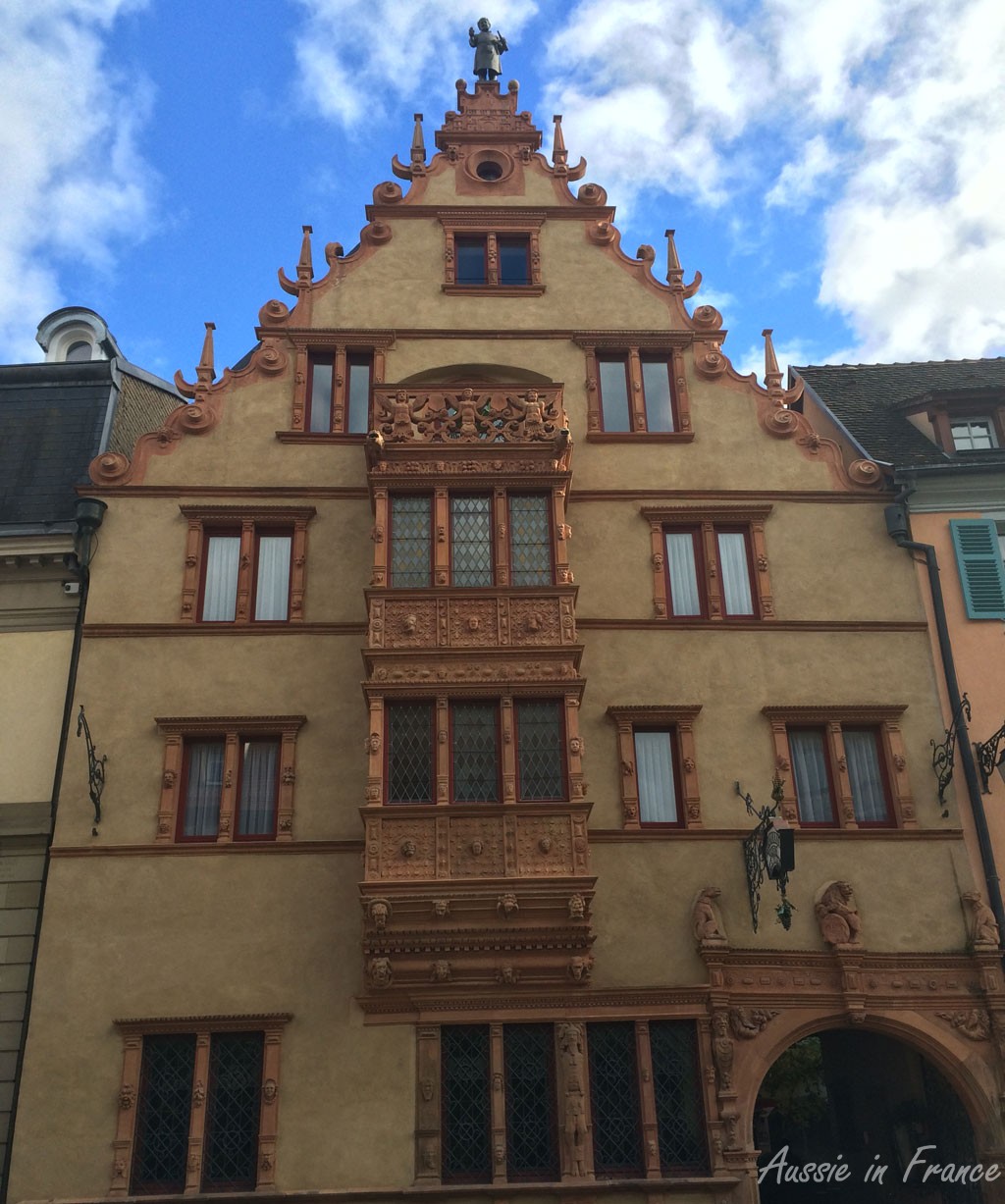
Built in 1609, La Maison des Têtes (House of Heads) owes its name to the large number of masks and grimacing faces which decorate the façade. The magnificently sculpted oriel rises to three levels. The statue of hte Alsace barrel maker was placed at the top of the gable when the building was used as a wine exchange.
Built in 1609, La Maison des Têtes (House of Heads) owes its name to the 110 masks and grimacing faces which decorate the façade. The magnificently sculpted oriel rises to three levels. The statue of the Alsace barrel maker was placed at the top of the gable when the building was used as a wine exchange.

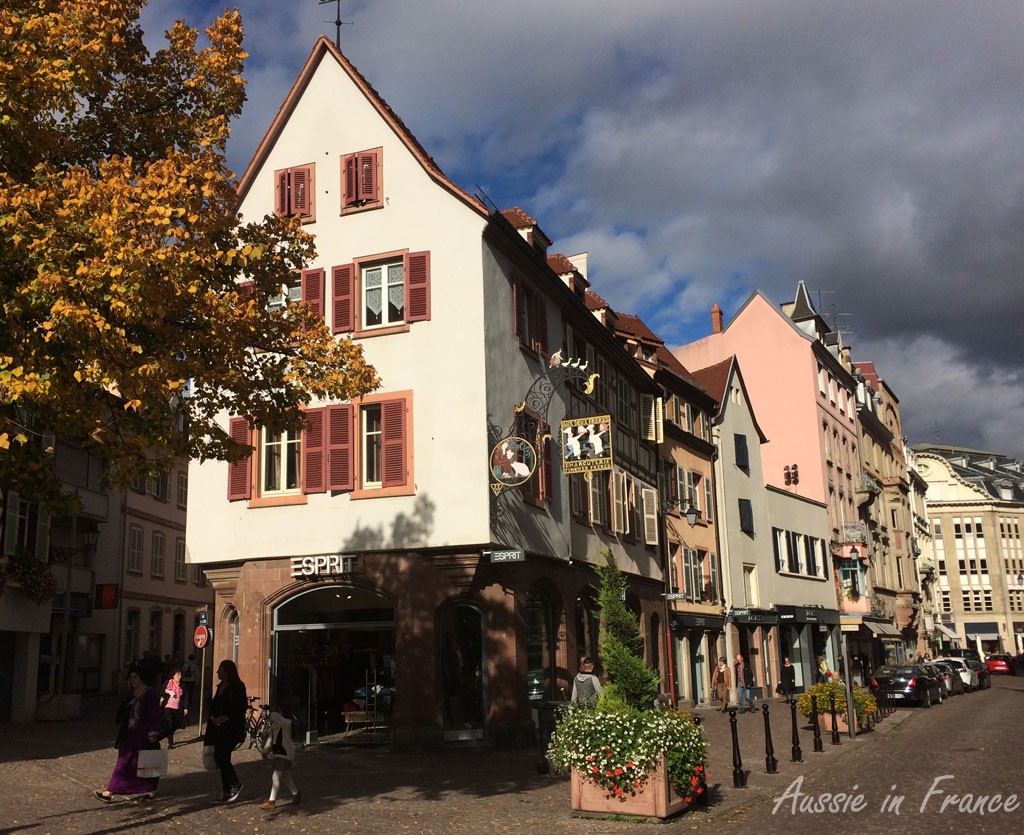
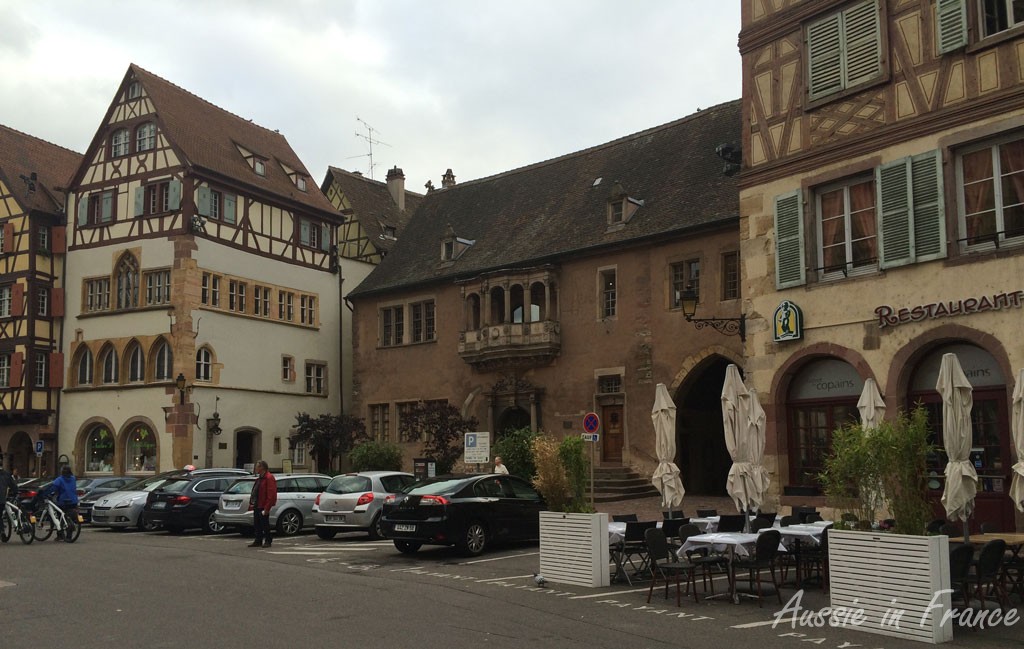
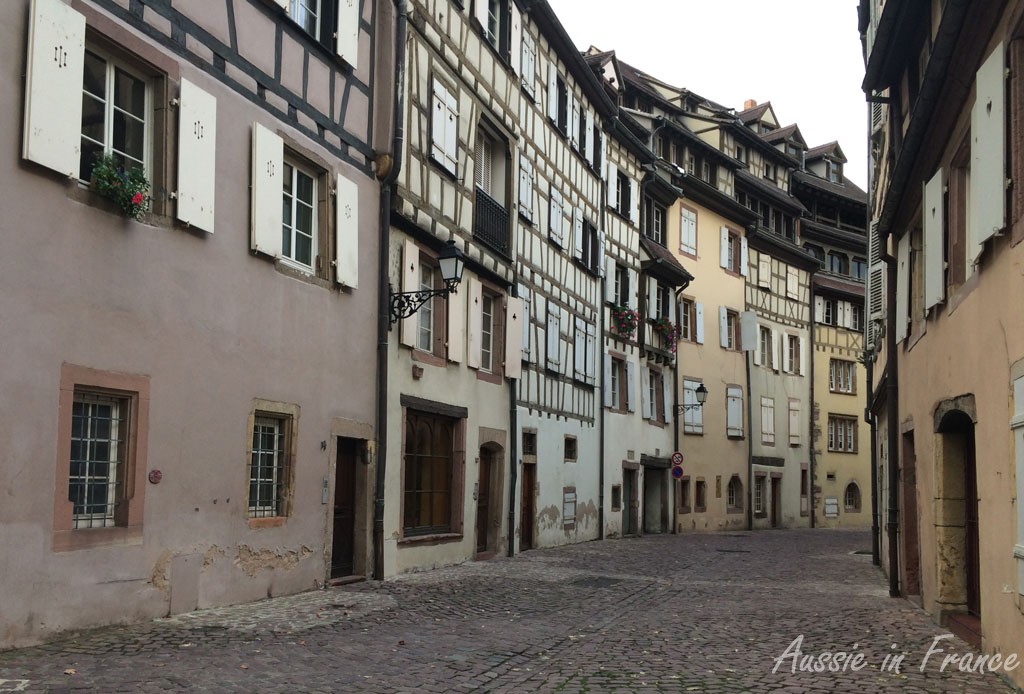
A typical street in Colmar

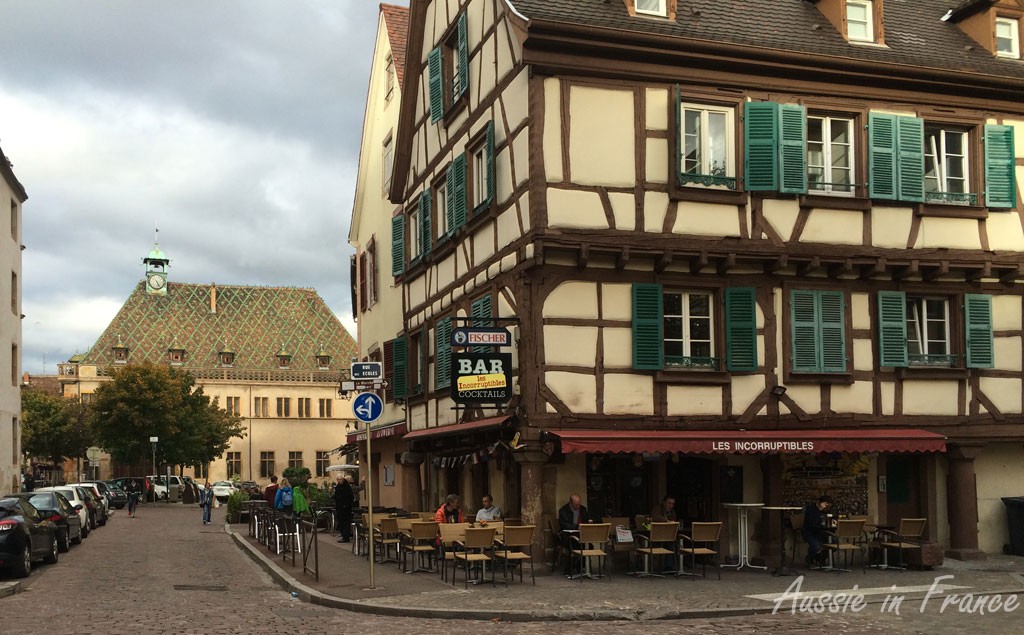
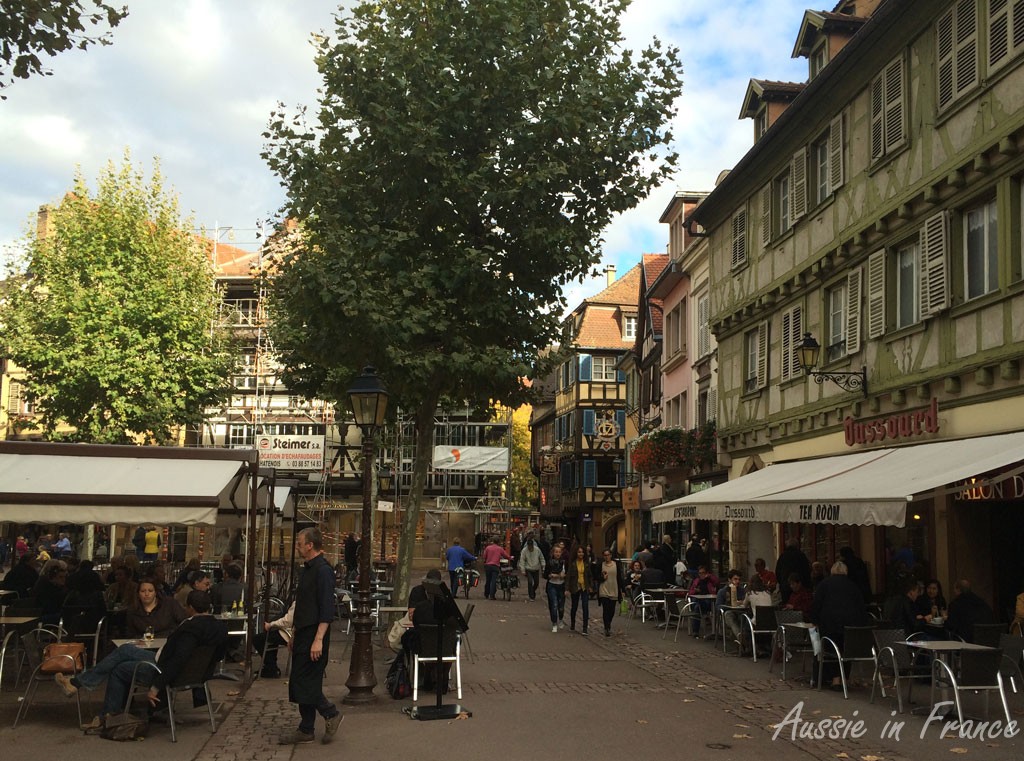
With a little over two hours before sunset, we head straight for the tourist office after checking into our hotel and follow the itinerary proposed in the brochure. A more leisurely visit would have been better just to soak up the atmosphere and appreciate all the lovely half-timbered houes. We are also surprised by how busy the centre is. Lots of school children and their parents suddenly flood the streets.

14th century weinhof or corn loft

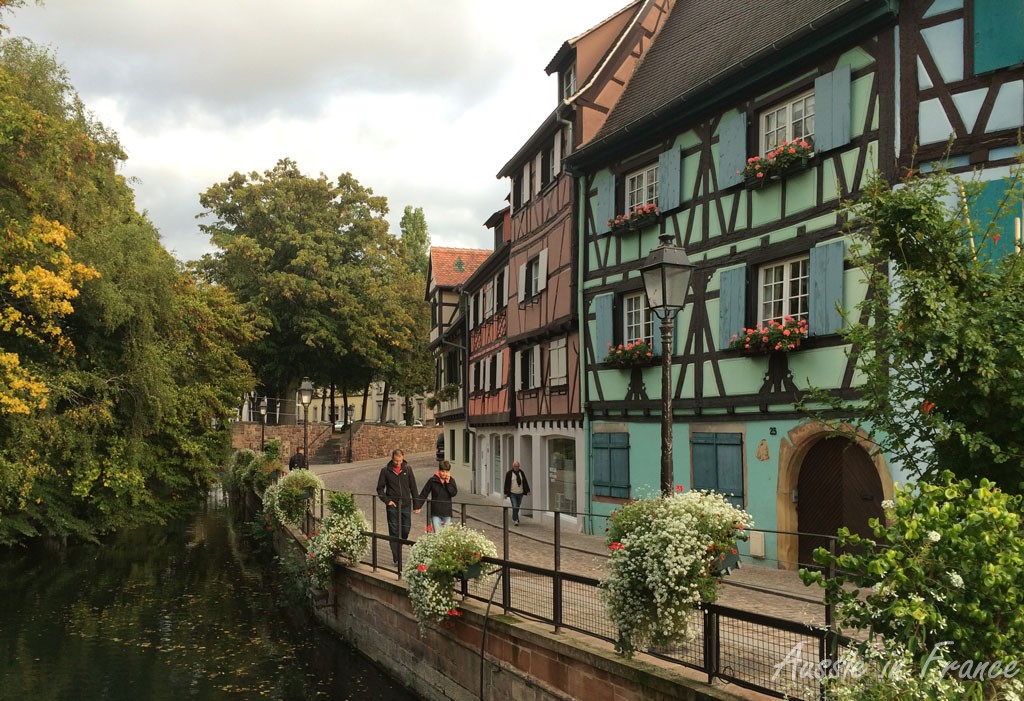
Houses along the canal

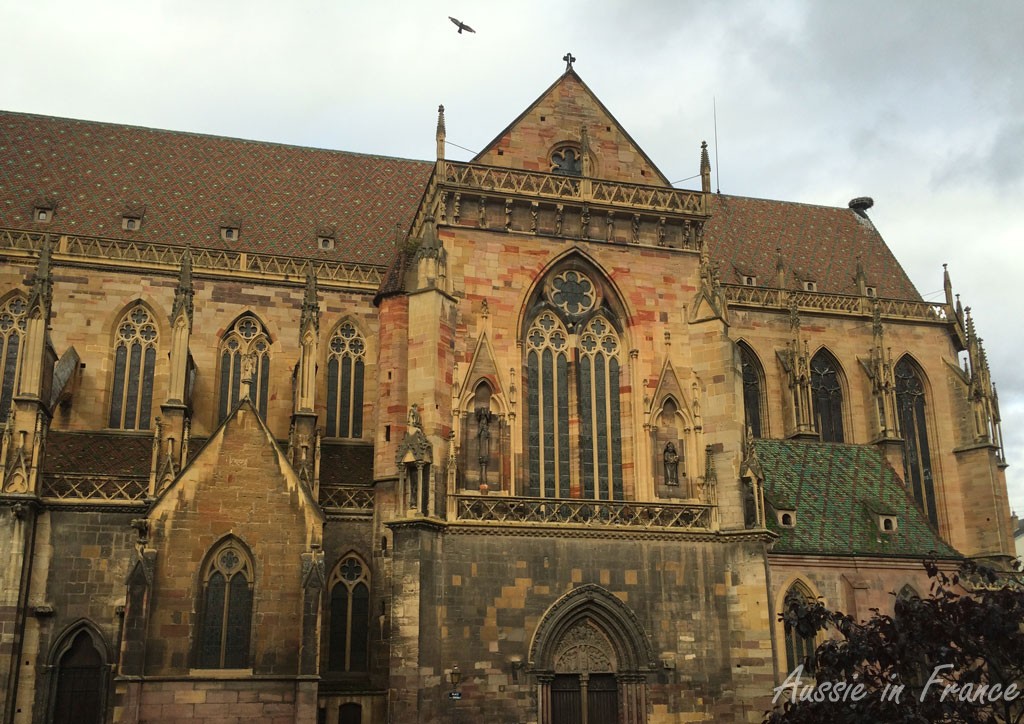
The multi-coloured pink sandstone of the Cathedral

The inner courtyard
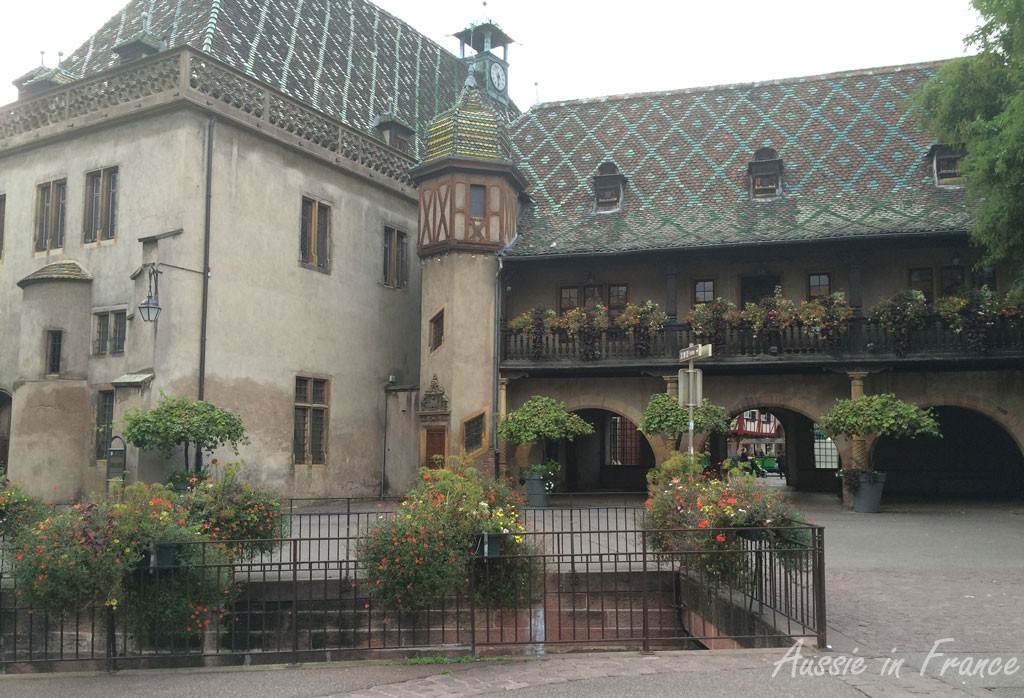
The inner courtyard of the old customs house built in 1480

More houses along the canal

The other end of the canal

The varnished roo of
The glazed tile roof of the old customs house

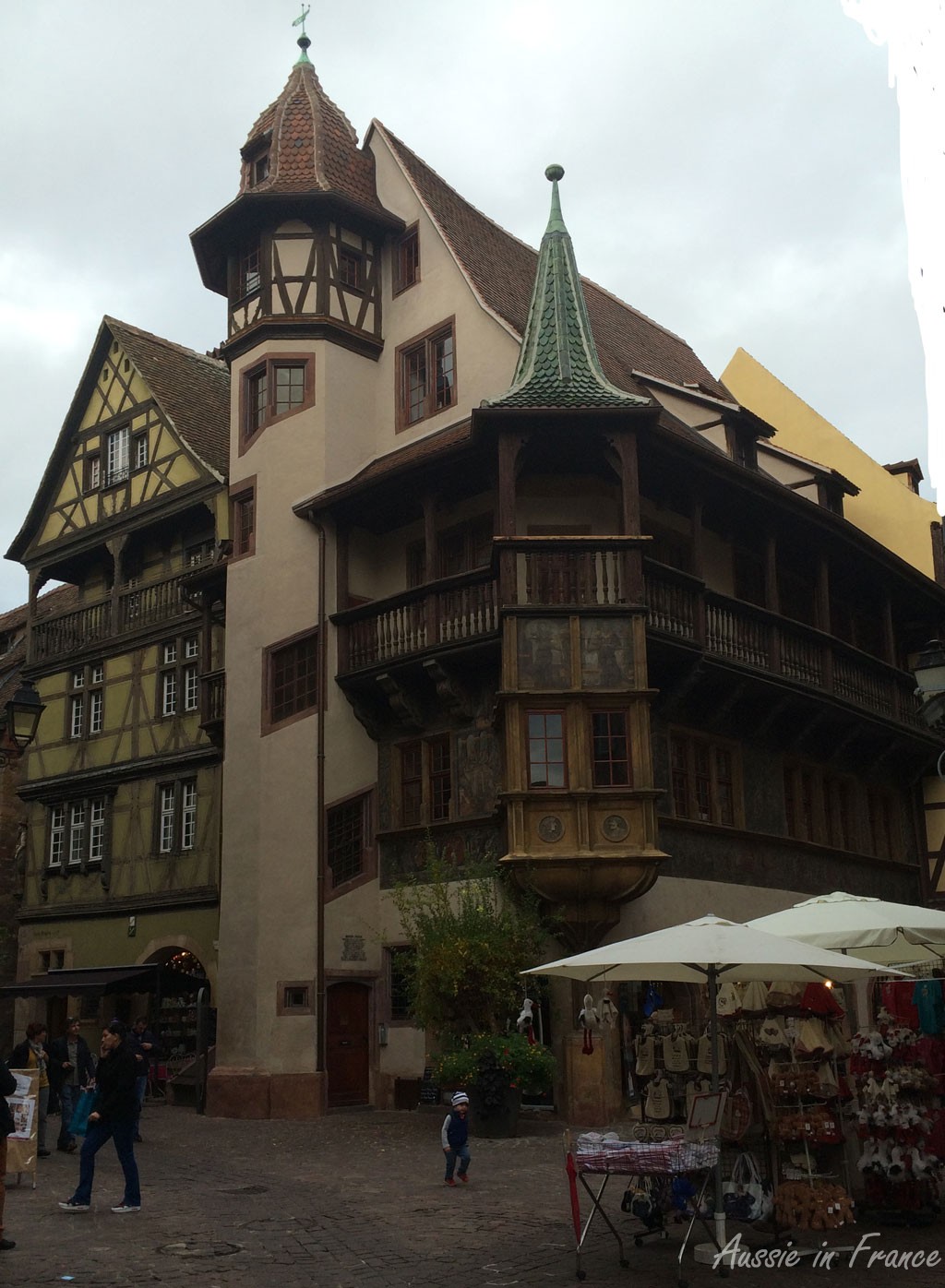
Pfister House built in 1537, probably the best-known monument in Colmar
Pfister House built by a silver merchant in 1537, probably the best-known monument in Colmar

Far left, Maison Adolph, probably the oldest house in Colmar built in about 1350, with gothic pointed arch windows. Left, le corps de garde,, built in 1575. The loggia was used by the magistrate to hand down sentences.
Left, Maison Adolph, probably the oldest house in Colmar built in about 1350, with its gothic pointed arch windows. Right, the guard building, constructed in 1575. The loggia was used by the magistrate to hand down sentences.

A busy street in Colmar

A little canal in the middle of the town

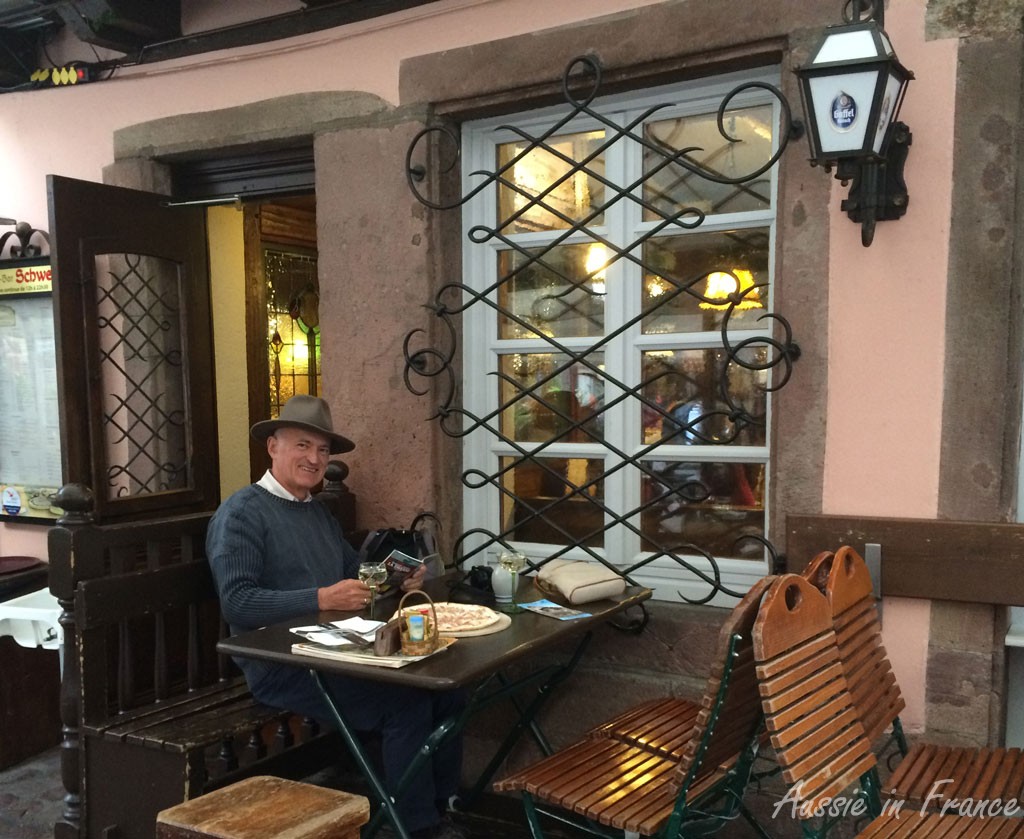
At 6.30 pm, we have finished the tour and can have a well-earned glass of local riesling and a flammekeusche, the thin-crust onion, bacon and cream tart so popular in the area.

Drinking wine in Alsacian glasses accompanied by flammekeuche
Drinking wine in Alsacian glasses accompanied by flammekeusche

We find another venue for dinner and another well-known local dish: sauerkraut, pork and potatoes followed by an ice-cream kugelhof. By now, the streets are nearly deserted.

Rue des Tanneurs
Rue des Tanneurs

No sign of any harvest bread or vin nouveau. Next time maybe! Tomorrow we’ll be back in Blois.

AllAboutFranceBadge_bisThis post is my November contribution to Lou Messugo’s All About France link-up. For other posts about France, click here.

from the Tropics to the City of Light