Friday’s French – avoir le droit & entitlement

In a comment on last Friday’s French, Conrad from Canada asked me how I would translate the word “entitlement”. His example was “The community lost their vistas because of a new housing project; they were convinced that they were entitled to these vistas, so it created great stress for years to come.”
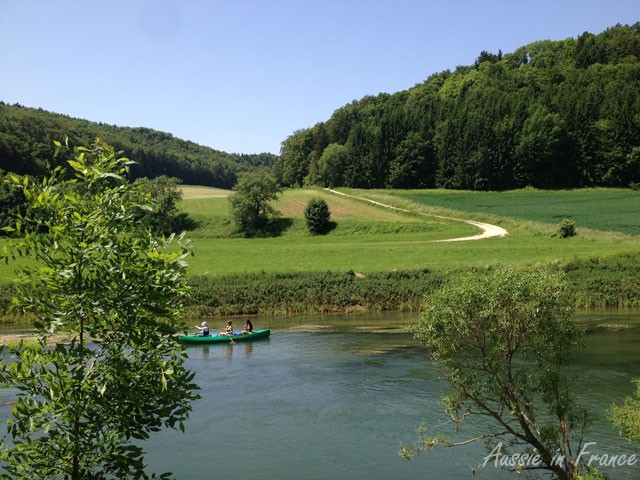
The sort of vista where you wouldn't like a hospital to appear.
The sort of vista where you wouldn’t like a hospital to appear.

I would have spontaneously found a solution using droit but Conrad feels that it doesn’t incorporate the idea of an historic right that entitlement does.

So I asked my translators’ community TLSFRM for some ideas. There were several suggestions such as il leur revenait de (plein) droit de conserver leurs vues; ils pensaient qu’il était légitime de conserver leur vues; ils pensaient qu’ils étaient fondés à conserver leurs vues and ils pensaient qu’ils étaient en droit de conserver leurs vues.

Another possibility is ils estimaient qu’ils n’auraient jamais dû être privés de leur vue which means turning the sentence around completely – another prime example that words in one language rarely overlap in another and that it’s often the context that provides the full meaning.

There are other everyday contexts in which avoir droit à or donne droit à is used in the meaning of entitlement:

Elle a droit à une bourse: she’s entitled to a scholarship.

Cette carte vous donne droit à des places gratuites: this card entitles you to free seats.

The meaning, of course, is that of having the right to something, except that we use a different word in English. The same applies to the following examples:

“J’ai droit à deux morceaux ?”, a child would ask if he wants two squares of chocolate. An English-speaker would say “Can I have two pieces?” or “Am I allowed to have two pieces”.

Tu n’as pas le droit de le taper: you’re not allowed to hit him or you musn’t hit him.

So, can we always use droit when we want to say “allow”. Of course not, that would be far too easy !

She allowed me to borrow her shoes – elle m’a permis d’emprunter ses chaussures.

Smoking is not allowed : il est interdit or défendu de fumer.

The teacher allowed me to go early : le professeur m’a autorisé de partir de bonne heure.

You need to allow 28 days for delivery : Il faut prévoir un délai de livraison de 28 jours.

We are not allowed much freedom : on nous accorde peu de liberté.

I could go on and on and find a different French verb each time! I’m sure you have lots of other examples.
Moving from Paris to the Loire

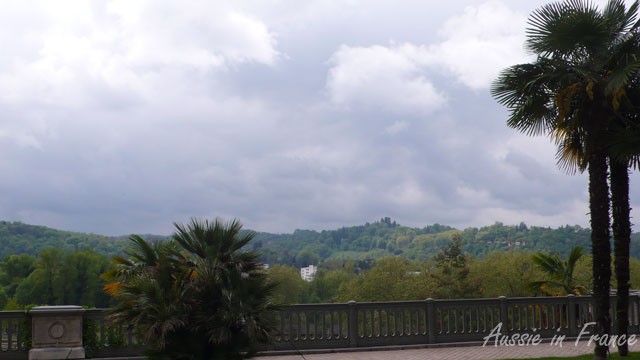
At 20, I lived in Townsville on the north-east coast of Australia and dreamed of living in France. When I arrived here for good at 22, I spent a week in Paris then went to an assistant teaching post in a town called Pau in the south-west of France which has a population of 100,000, very similiar to that of Townsville,  because I wanted to be close to Spain to improve my Spanish.

View of the Pyrenees from the Boulevard des Pyrénées in Pau

The next year I was posted to Nantes, on the tip of Brittany and the Loire Valley, which had a population of 400,000. My next move, a year later, was to Fontenay sous Bois in the eastern suburbs of Paris. I stayed there for nearly twenty years, after which I moved into the very centre of Paris 8 years ago, just near the Louvre.

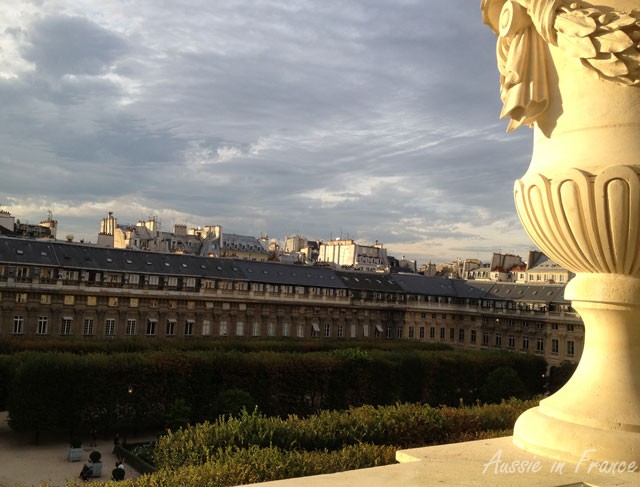
A view from our balcony in the centre of Paris

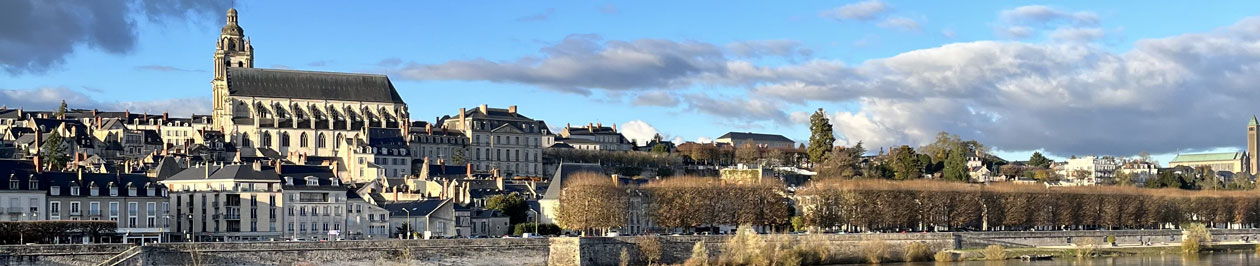
This time next year, I’ll be living full time in Blois because Jean Michel is retiring on 10th October and we will have to vacate our apartment in the Palais Royal because it is part of his job. There is no way we can afford to buy or rent similar accommodation. While I was still teaching part-time at university (ESIT), we thought we’d find something in the Yvelines to the west of Paris so I could commute once a week.

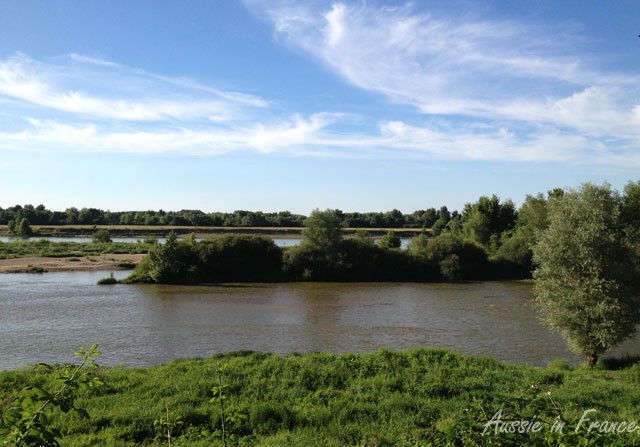
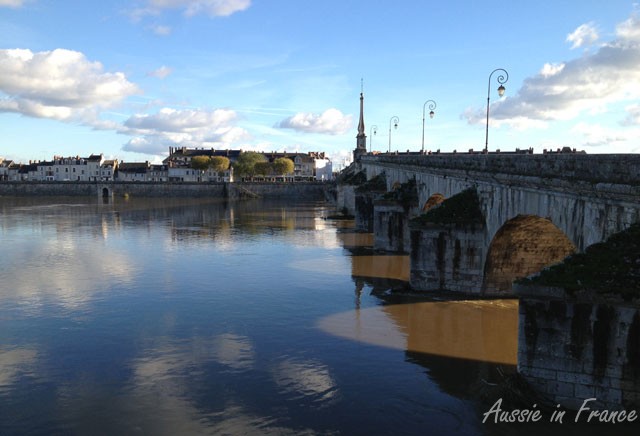
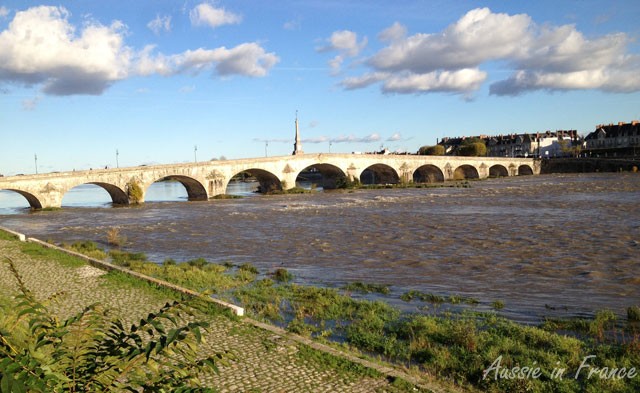
Typical view of the Loire River with its many sandbanks

Then I decided to stop teaching after fifteen years and go back to freelance translation full time which changed our options entirely. After friends bought a house in Amboise we started looking at possibilities in the Loire Valley and fell in love with Closerie Falaiseau in Blois, a full three years before retirement – it was the very first house we visited.

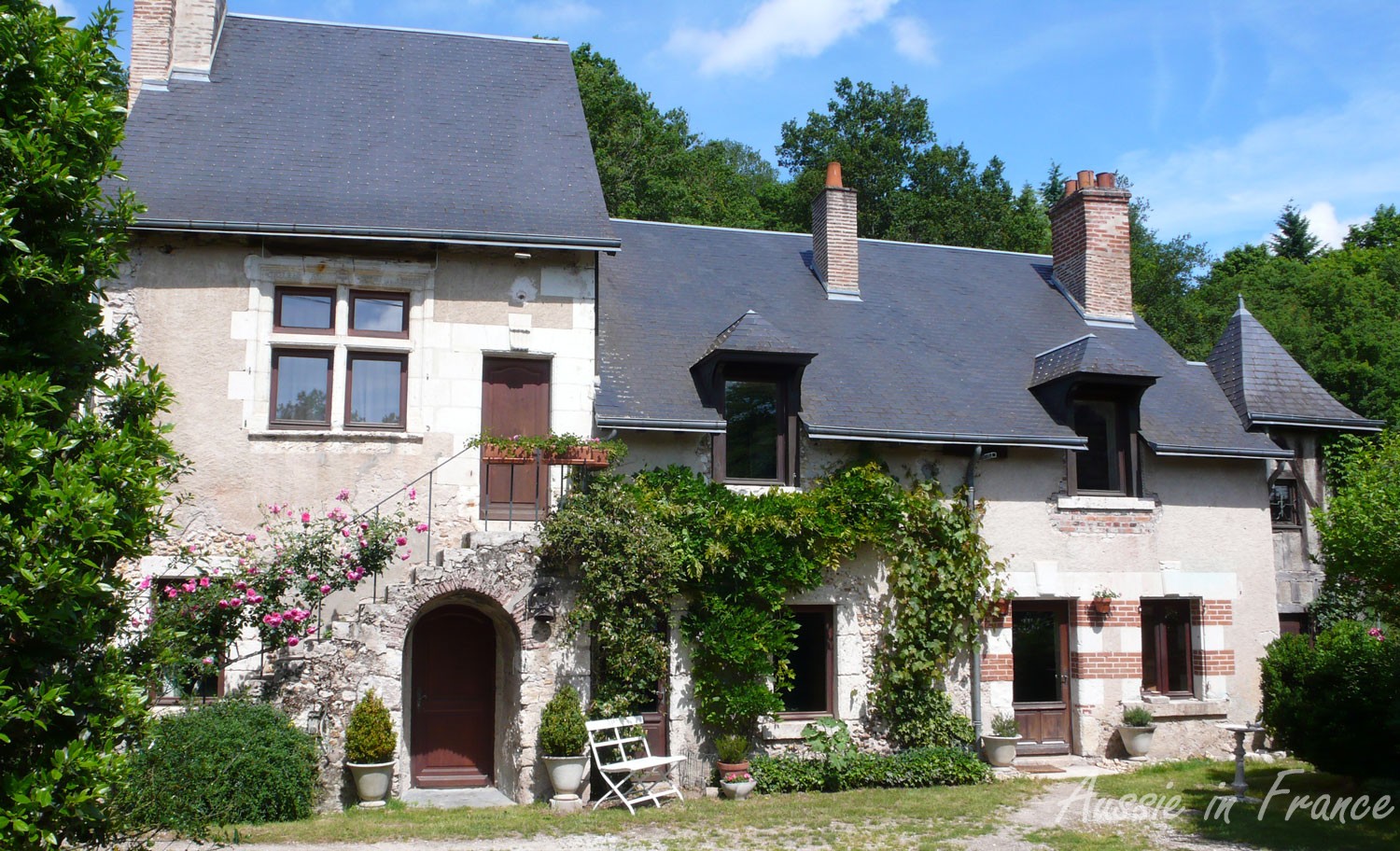
Closerie Falaiseau in June 2012

The house itself is much bigger than we intended to buy and has several other buildings – two barns, an old pigsty, a workshop, a wood shelter and a smaller house which we originally thought we’d turn into a gîte for holiday rental. For various reasons, one of the barns will now become the gîte.

The pigsty which now houses the rubbish bins

In the meantime, we have turned the bottom part into a gîte for two people so that the house won’t be left empty for long periods and we can finance conversion of the barn which is currently only four walls and a roof. The gîte has been doing well and we’ve had excellent reviews. We’ve also met some wonderful people.

View from the house
View from the house

So for the past two years, we’ve been psychologically making the move from the centre of Paris to a small provincial town of 50,000 people.

Will we be bored ? That is the question. Judging from our time in Blois so far, I don’t think so although the longest we have stayed at a time is two weeks even if I came here by myself very often last winter while our balcony in Paris was being refurbished. This winter, with no one staying in the gîte, we’ll be coming down one or two weeks a month and for the whole of March before the next rental season begins.

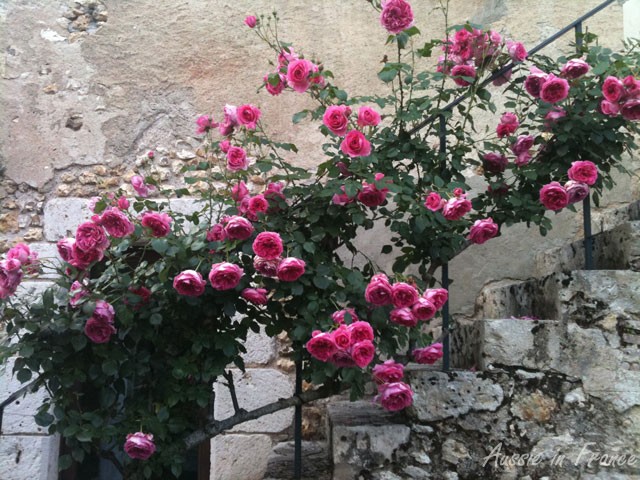
Front steps in June when the roses are in full bloom

As I get older, my interests have changed considerably. I used to go to every exhibition that was on. We often went to the theatre and cinema and out to dinner with friends. Now we focus a lot more on holidays and rarely go to exhibitions. Many of our friends are retiring and moving away from Paris as well.

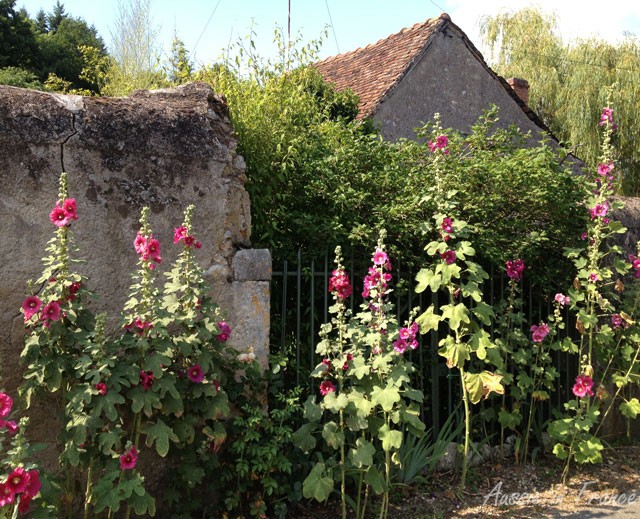
Hollyhocks in front of the little house

We’ve already made new friends in Blois and in other parts of the Loire through the Loire Connexion. We spend a lot of time cycling when the weather permits, gardening, mushroom picking, taking photos and visiting châteaux and castles – not to mention renovating of course. This year, we’re able to make the most of our Renaissance fireplace that we spent a long time refurbishing last winter.

And we’ll never be far from Paris – it’s only a couple of hours by car and 1 ½ hours by train.

Wednesday’s Blogger Round-up: Scammers – Winter in Northern Germany

This Wednesday, we have two Australians on the list – Carolyn from Holidays to Europe, warning us of various scammers you may encounter when travelling and Andrea from Rear View Mirror, who takes us across the north of Germany in winter. Enjoy!

Don’t be caught out by scammers when travelling

by Carolyn from Holidays to Europe, an Australian based business passionate about sharing their European travel expertise and helping travellers to experience the holiday in Europe they have always dreamed of

???????????As happens everywhere in the world, tourists are prime targets for scammers and pickpockets and it pays to keep your wits about you whenever you are out and about. Security should be of the highest priority when travelling, not only in Europe but wherever you choose to travel.

When I’m travelling, my husband always carries our valuables (passports, credit cards, bank cards and cash) in a moneybelt around his waist and hidden under his shirt. We prefer a flat moneybelt, not the old ‘bum bag’ style. Touch wood, we’ve never had anything stolen but I’ve heard plenty of horror stories including people having the straps of their backpacks cut whilst they are wearing them. On my first trip to Europe 25 years ago, I did a Contiki tour and I can still remember the tour guide telling us to wear our backpacks on our front so that we could see them at all times. “You might look stupid,” she said, “but it just might mean you keep your valuables.” It’s advice I still heed to this day. Read more

A Winter Drive Across Northern Germany

by Andrea from Rear View Mirror (formerly Destination Europe), a fellow Australian who, after 6 years of living in France, has given up herParis apartment to live a nomadic life slowing travelling around Europe, experiencing each destination like a local.

dusseldorf-snow-3The Germans often complain of their cold, snowy winters but I love a bit of chill in the air and I love Germany in winter. Indulging at the Christmas markets with a semi-sweet hot cider (I can’t stand mulled wine) is a daily event when there as is enjoying the country’s most famous sights surrounded by few tourists. Most of all I simply love the snowy landscapes.

My recent travels around the Balkans have given me a new found appreciation for German roads. When driving in Germany I don’t have to concern myself with potholed roads, cars driving the wrong way down the highway and wild dogs getting in my way. I miss the relaxing days cruising down the autobahn at 180km per hour. Thankfully this 1000km road trip from Cologne to Berlin is an easy, stress free drive and it takes in a mix of big and small cities along the way. Read more 

Top Tips for Wine Tasting

You may remember a post about Michelin-star restaurants that I included in my last Wednesday’s Blogger Round-up written by The Good Life France, an independent on-line magazine about France and all things French, covering all aspects of daily life including healthcare, finance, utilities, education, property and a whole lot more.

As a result, the editor, Janine Marsh, asked me to write a guest post, and here it is!

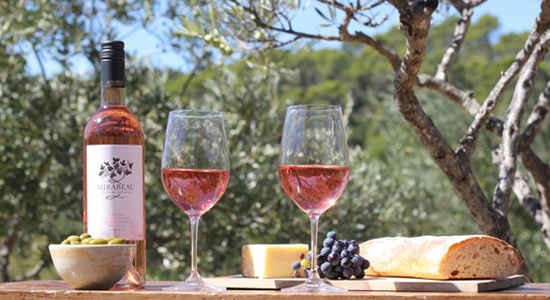
wine-tasting-5

Top Tips for Wine Tasting

Just in case you’re wondering about my credentials for giving tips on wine tasting, Jean Michel and I have spent the last 15 years wine tasting and attending numerous beginners’ and advanced wine classes. As members of a cercle oenophile (wine buffs’ club) we have developed an efficient strategy for wine tasting in many of France’s wine-growing regions.

For many people, the wine experience is an integral part of a holiday in France but there are so many varieties that they often don’t know where to start and many visitors hesitate to visit a winery (vignoble) on their own.

The cellar door (chez le propriétaire) in France is usually just that – right on the vineyard – except in larger establishments where there may be a store in the closest town. When wines are bottled by the wine grower, Mise en bouteille à la propriété (or au chateau) will be indicated on the bottle.

If you want personal contact and a more authentic experience, it’s best to aim at the smaller vineyards. Read more

LOIRE VALLEY VINEYARDS

And just to get you started, here are a few addresses:

Blois
Chez Laurent, cellar, wine tasting lessons, 5 rue Saint-Martin, 41000 Blois, 02 34 89 13 23 contact@chezlaurent.fr http://www.chezlaurent.fr/
Vinomania, cellar, restaurant, wine bar, wine tasting lessons, Place ave Maria, 12 rue du Poids du Roi, 41000 Blois, 02 54 90 17 66
Les Forges du Château, tearoom, cellar, 21 Place du Chateau, 41000 Blois
 
Vouvray 
Domaine Freslier,  cellar door, 92 rue de la Vallée Coquette 37210 Vouvray, 02 47 52 76 61
 
Touraine
Domaine du Prieuré, cellar door, 41120 Valaire, 02 54 44 14 62
 
Chinon
Domaine de La Roche Honneur, cellar door, 1, rue de la Berthelonnière, 37420 SAVIGNY EN VERON , 02 47 58 42 10, roche.honneur@club-internet.fr


Friday’s French – capital soleil

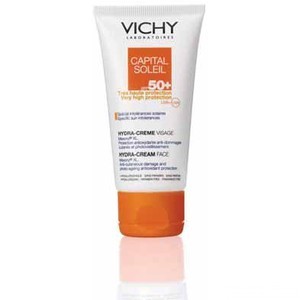
vichyIt’s interesting that such a wonderful expression should exist in French and not in English, or at least in Australian English where it would be very useful, given all the sun there compared to what we get in France (it’s a very rainy day today).

Your capital soleil is the amount of sun that your body can be exposed to during your lifetime without causing something disastrous like skin cancer. It’s used very widely in advertising for sunscreens in France. Vichy even has a brand called Capital Soleil.

When I’m translating for cosmetic brands, I usually have to rewrite the sentence completely:

Chaque individu dispose d’un capital soleil déterminé à la naissance becomesEach person can only absorb so much ultraviolet radiation during their lifetime without developing cancer”, for example.

Close in meaning is capital santé which is sort of health and fitness combined. Surprisingly, there is no word for “fitness” in French so salle de fitness and centre de fitness are used.

Yet the French go on fitness kicks as much as anyone else. Maybe the idea could be expressed using forme. J’ai retrouvé la forme means that I got back in shape or got fit again and il a la forme means he’s very fit (well, in the physical sense anyway – it can also mean “he’s in great form”).

So back to capital. Here are some other examples of capital in French where we wouldn’t use “capital” in English (examples from the Robert-Collins dictionary which, if you’re going to use a bilingual dictionary, is probably the best because Harraps has become outdated and the others are pitiful):

le capital de connaissances acquises à l’école = the stock or fund of knowledge acquired at school

la connaissance d’une langue constitue un capital appréciable = knowing a language is a major asset

le capital artistique d’une région = the artistic wealth or resources of a region

elle a su bâtir un capital confiance = she managed to win everybody’s trust

Capital is used in the financial sense of course and we have all sorts of lovely expressions there as well, sometimes using “capital” and sometimes not:

capital circulant = working capital, circulating capital

capital décès = death benefit

capital d’exploitation = working capital

capitaux fébriles = hot money (I love that one!)

capital initial = start-up money

capitaux propres = equity capital (where propre = own and not clean! “Dirty money” is argent noir or sale)

capital social = share capital

Any more suggestions?

Rethinking our projects in the Loire

I was very encouraged by all the sympathetic comments on the post I wrote a couple of weeks ago called War declared by next-door neighbours. Thank you for your support. I have to confess that I have been depressed ever since because it looked like we might have to give up our gîte project altogether. It’s hard enough to change our lifestyle completely – moving from the Palais Royal in the centre of Paris to a 400-year old house in the Loire Valley, where you can’t do anything without a car – without having to rethink our plans for the last two years, even though we really love the house and the area.

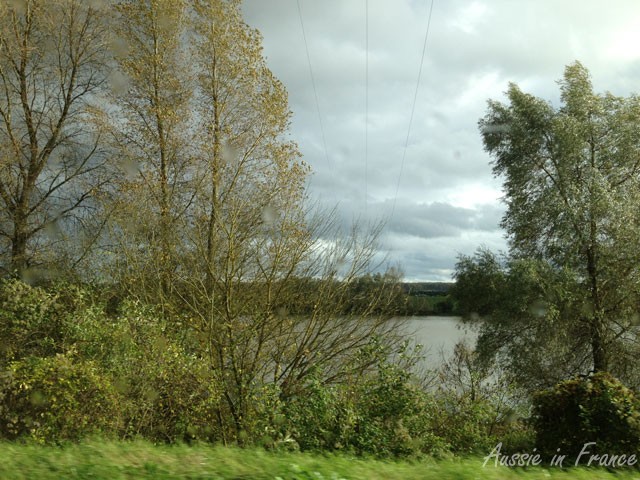
View of the Loire with a storm brewing

However, yesterday, we invited Mr and Mrs Previous Owners for tea and told them all about it. They agreed that we won’t get anywhere by approaching the neighbours – it could just make matters worse.

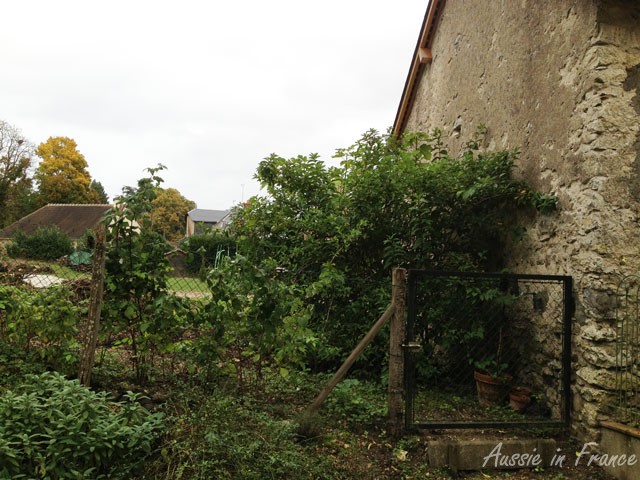
You can see the chicken coop on the left of the barn at the vegetable garden end

They suggested that we might be able to get the poultry house (or whatever you call it) taken down since it’s built up against the wall of our barn. But that would just leave us open to all sorts of retaliation, I would imagine, particularly with respect to our future guests.

The vegetable patch on the right of the barn

But later, when we were talking about his new  vegetable patch, Mr Previous Owner asked Why don’t you use your vegetable patch for the gîte garden? I had suggested this to Jean Michel originally but he said it wasn’t a good idea because the ground is sloping and we forgot all about it.

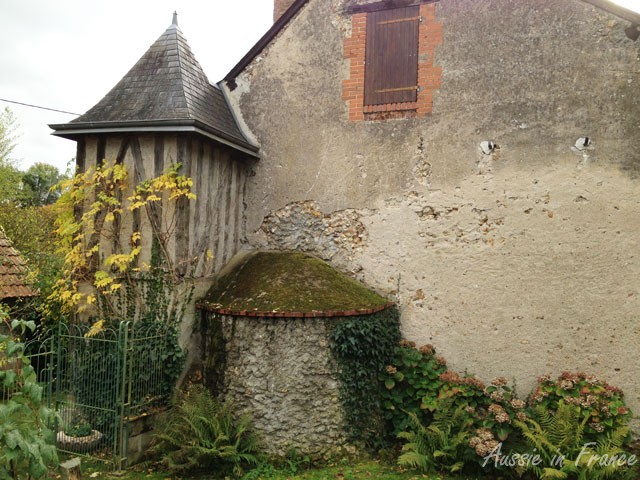
The half-timbered tower and back of the bread oven taken from the vegetable patch

We talked about it again later and it might well be the solution. The vegetable patch is on the other side of the barn, as you can see in the photo, which means that even though you can still hear the goose from time to time, there wouldn’t be the problem of the smell in summer. We’d put up a wall to make the gîte completely separate from the neighbours.

There would be a few steps up from the back door of the gîte to the garden, but I don’t think that’s a problem, do you?

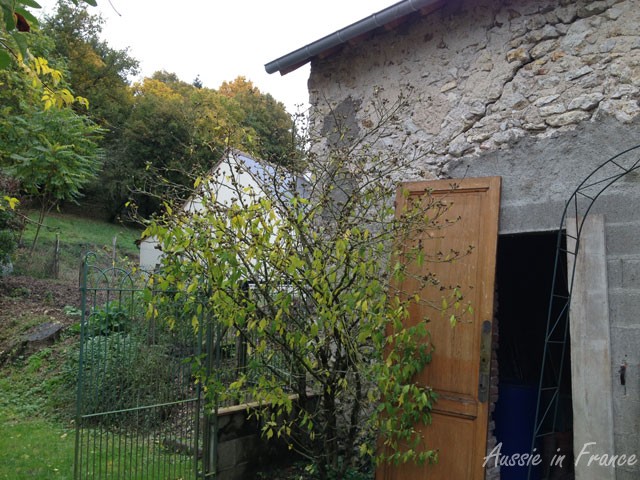
The side of the barn with the vegetable patch on the left

It would mean that the little house could still be used to provide a two-car garage and we could even have a vegetable patch next to the poultry yard if we still want one.

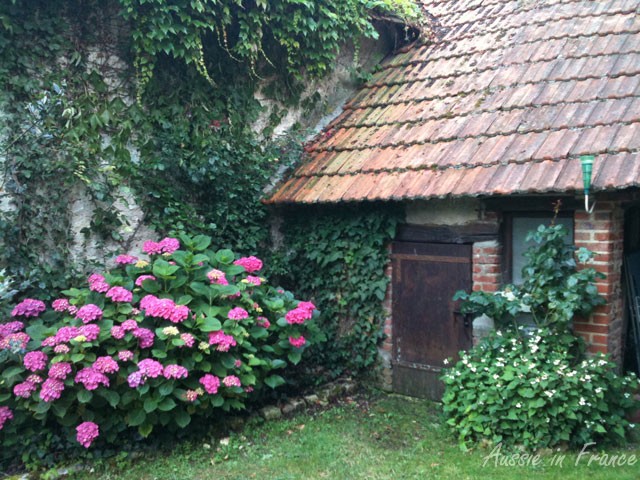
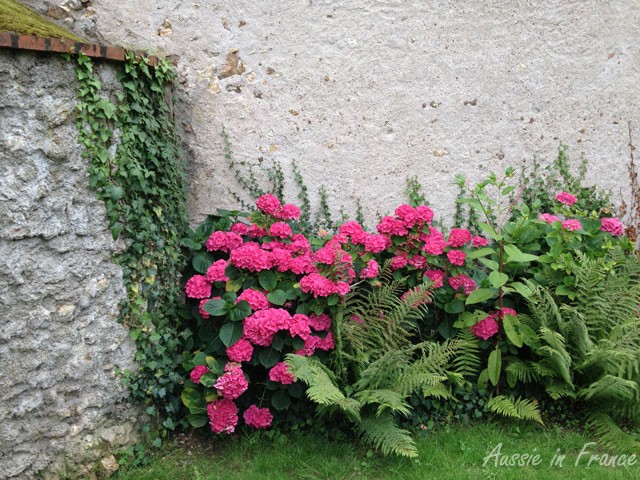
Hydrangeas in summer

It’s probably even a better solution than the original one of having the garden in front of the gîte, because guests would have the lovely view of our tower, bread oven and hydrangeas in the summer.

Today, my depression has lifted.

Wednesday’s Blogger Round-Up: Michelin star restaurants – Chrysanthemums in France – All Saints’ Day

This week, The Good Life France, appearing for the first time in my Wednesday’s Blogger Round-Up, explains the origin of the Michel star award to French restaurants, while two Aussies, whom I’ve often quoted here – Wendy Hollands from Le Franco Phoney and Phoebe from Lou Messugo – share their experience of the chrysanthemum tradition in France. Enjoy!

What does Michelin star restaurant mean?

Written by The Good Life France, an independent on-line magazine about France and all things French, covering all aspects of daily life including healthcare, finance, utilities, education, property and a whole lot more.

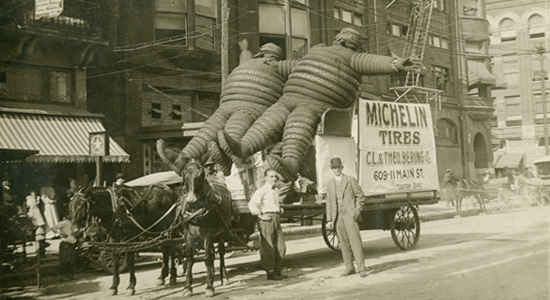
Michelin-Tires-Houston-Texas1Most people are aware of Michelin the tyre company and their famous logo Michelin Man the roly-poly tyre man – or Monsieur Bibendum which is his real name. His image is known the world over and he does an excellent job of promoting the company’s tyres.

Michelin is also famous for ranking restaurants – achieving a Michelin star status is like the Holy Grail for chefs – to have one is to be acknowledged as amongst the elite, to have reached the pinnacle of one’s profession. For customers it is in an indication that the restaurant that has been awarded a Michelin star status will almost certainly guarantee an epicurean experience, a high quality meal, a great ambience. Read more

Chrysanthemums and Death in France

by Wendy Hollands from Le Franco Phoney, an Australian who writes about all things French in La Clusaz, Annecy and Haute Savoie as seen by an outsider 

frenchchrysanthemumsThere’s a reason that faux pas is a French phrase. As a non-French person, I’m constantly making mistakes with both the language and the culture. I reckon they invented it for foreigners.

As mortifying as it can be to mix up ‘chiot‘ (puppy) and ‘chiottes‘ (toilets), or ‘canard‘ (duck) and ‘connard‘ (idiot), failing at French cultural etiquette can be equally as bad.

For example, a French breakfast with friends is no fast meal. Expect to spend hours absorbing your food — dunk your croissant into your bowl (yes, bowl) of coffee and break off a bit more baguette while you all catch up. That butter, jam and Nutella is on the table for the baguette, not the croissant. Do not apply these products to the croissant! They might not say anything, but they’ll think you’re weird: croissants are eaten without spreads in France. Read more

All Saints Day – Flowers and French traditions

by Phoebe from Lou Messugo, a traveller, francophile, expat, mum and foodie now living in Roquefort les Pins where she runs a gîte after many years of travelling and living in Asia, Eastern Europe and Australia

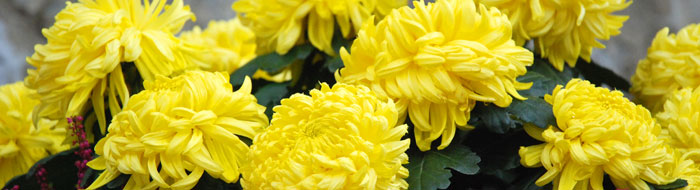
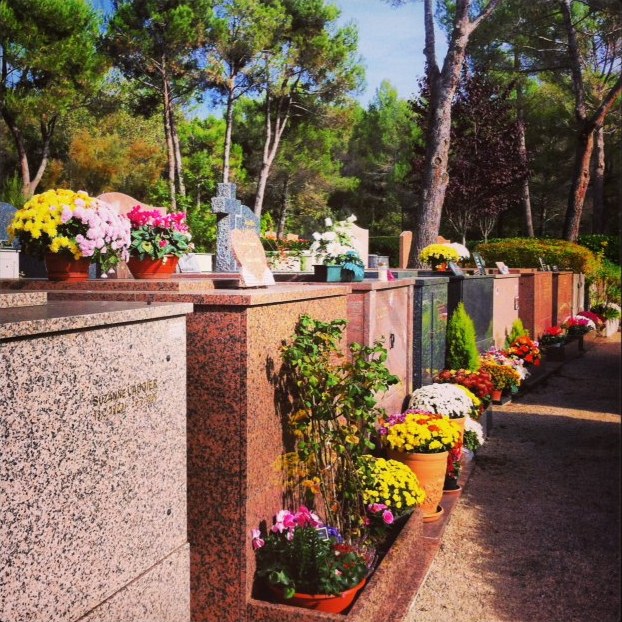
Toussaint_chrysanthèmeThis weekend has been all about Toussaint, a Catholic holiday honoring all Saints. It is a time when French pay respect to their deceased relatives.  All Saints’ Day, the 1st of November, sees families gathering to visit cemeteries to clean and decorate tombs.  And they decorate them mainly with chrysanthemums.

The tradition of using chrysanthemums is a relatively recent one, dating from 1919 when the then President, Raymond Poincaré, declared that all war memorials should be decorated with floral tributes.  As one of the rare flowers still in bloom in November it became the flower of choice for cemeteries, with hundreds of thousands of widows laying blooms at their fallen husbands’ memorials. Read more

Douceur and Le Coup de Fourchette in Blois – two new places to try!

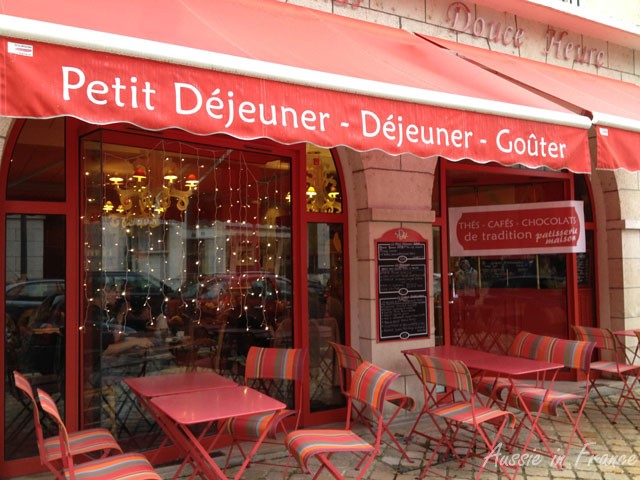
It’s a rainy Sunday afternoon and we’ve finally taken the time to collect our Blésois passes so we’ll have free entry to Blois Royal Castle and the Magic Museum plus lots of other places. The pass will also give our friends a reduction if we’re with them. “So, where do we go for afternoon tea?” says Jean Michel. A Facebook friend from the Loire Connexion has told me about Douce Heure (literally Sweet Time and a pun on Douceur meaning something sweet to eat) on the Loire side of Place Louis XII, so we decide to go there.

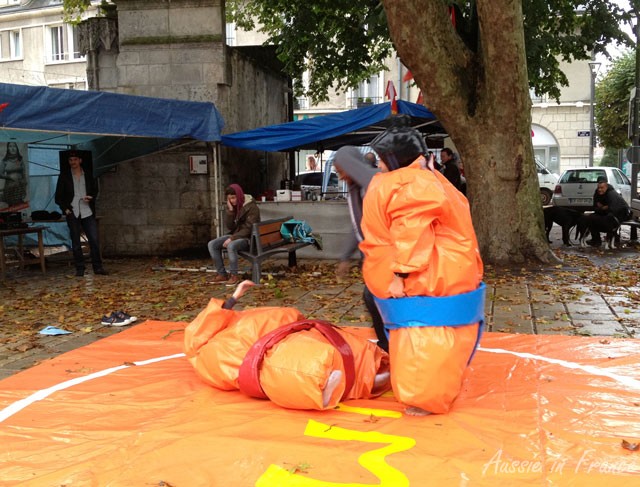
Pseudo sumos on Place Louis XII

As we’re coming down the steps from the castle, a child says, “Look – a duck!” but in fact it’s a mosaic swan which I had never noticed before. We go past some pseudo sumos that are part of a Community Party festival of some sort. We watch for a while. They are exceedingly funny. Now why didn’t I take a video?

Terrace at Douce Heure

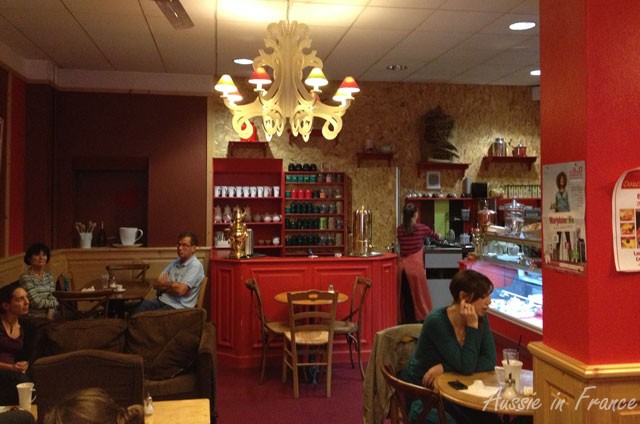
We arrive at Douce Heure and regret that we can’t use the attractive lollipop terrace but we go inside and it feels very inviting and cosy after the awful weather outside.

Cosy interior of Douce Heure

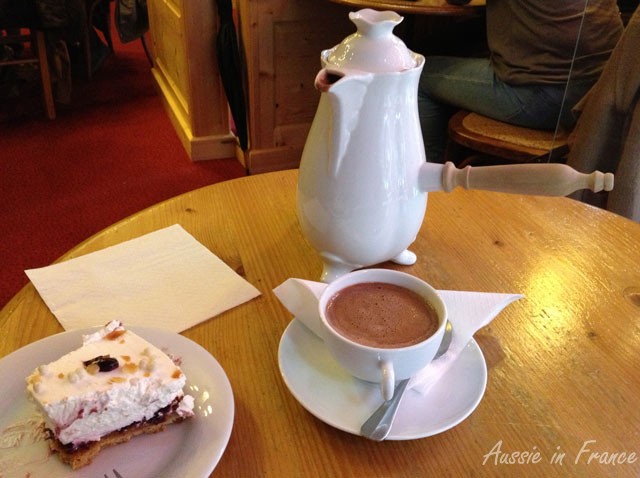
There is a large choice of tea, coffee and hot chocolate. We choose a cake each – a candied fruit cheese cake and a fruit tart – and are halfway through eating them when it occurs to me to take a photo!

Chocolate and cheesecake

We both order hot chocolate. It comes in a special chocolate pot and is thick and creamy. We have two very decadent cups each! That solves the problem of what to have for dinner tonight – nothing!

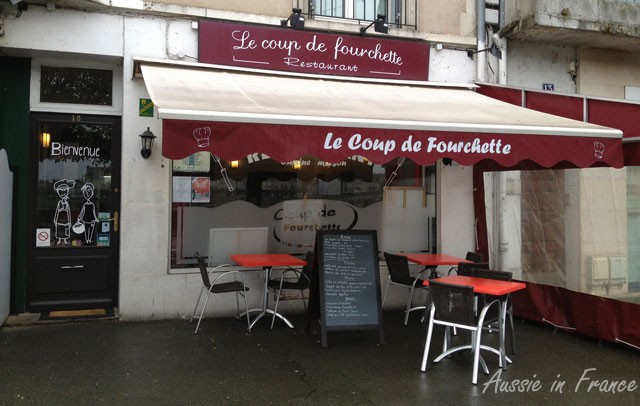
Le Coup de Fourchette on arrival

It’s a little more than a week later and we’re back in Blois with nothing in the fridge for lunch. It’s raining again. “Let’s try that restaurant our last guests suggested,” I say. “The one near the market on the river side.” I phone Le Coup de Fourchette to make sure there’s a table.

We park in the underground parking lot so we don’t get too wet going to the restaurant. Its red, white and black décor is very inviting and there is a large Bienvenue on the door. Inside there is a perroquet (parrot – why parrot?) coat stand. What an excellent idea. I hate having to sit with my coat draped on the back of my chair.

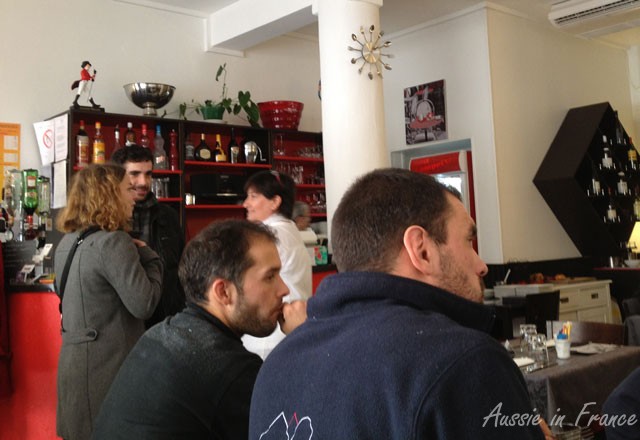
Interior of Le Coup de Fourchette

The welcome is warm and friendly and we are shown to our table. For the moment, the dining room is fairly empty but it soon fills up with locals – mainly men – with big appetites as befits a restaurant whose name means “a hearty appetite”.

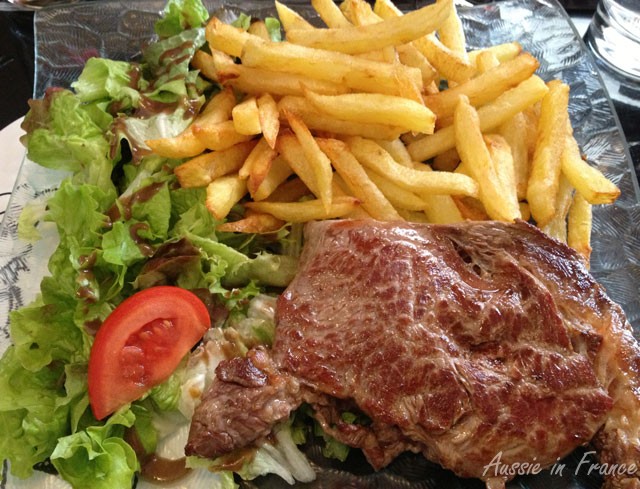
Entrecôte at Le Coup de Fourchette

The waitress explains the menu and shows us the blackboard with the day’s specials. Prices start at about 10 or 11 euro for starter plus main course or main course plus dessert. We choose an entrecôte + French fries + green salad + dessert (café gourmand) each and a ½ bottle of local Touraine Vieilles Vignes red wine for a total of 39 euro.

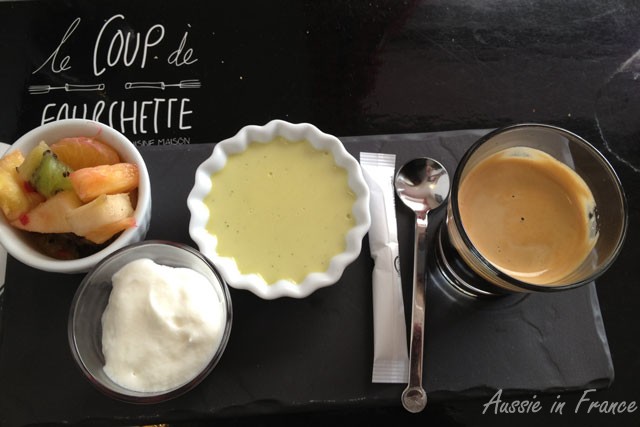
The French fries are excellent and the meat is tasty. We have three mini-desserts with our café gourmand.

Café gourmand
Café gourmand

This is not a gastronomical restaurant. It’s a local eatery, frequented by locals all year round and savvy tourists during the summer, attracted by the terrace. It’s been open for just a little over a year and has already earned the Trip Advisor Certificate of Excellence, ranked 2 out of 103 restaurants in Blois, just after Les Planches which is next on our list!

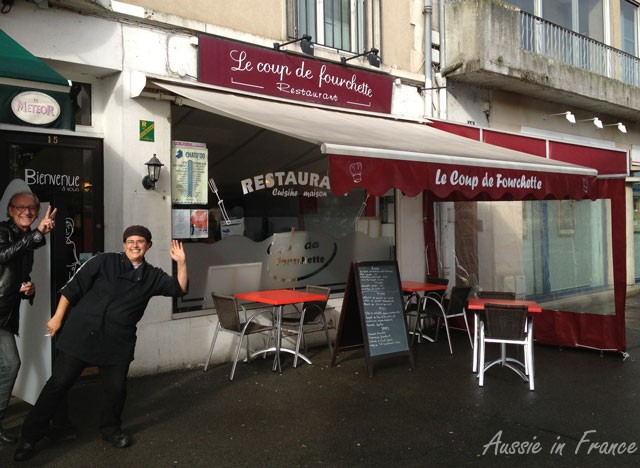
Chef outside Le Coup de Fourchette as we leave

The service and atmosphere are friendly, the food is simple but good and hearty. The servings are copious. Excellent value for money. We’ll definitely be back!

Douce Heure, place Louis XII, 41000 Blois. Open all year round. 10 am to 7 pm. Closed Mondays.
 
Le Coup de Fourchette, 15 Quai de la Saussaye, 41000 BLOIS, 02 54 55 00 24. Open Monday to Wednesday, lunchtime only and Thursday to Saturday, lunchtime and evening.

Monday’s Photo of the Week – Double Rainbow

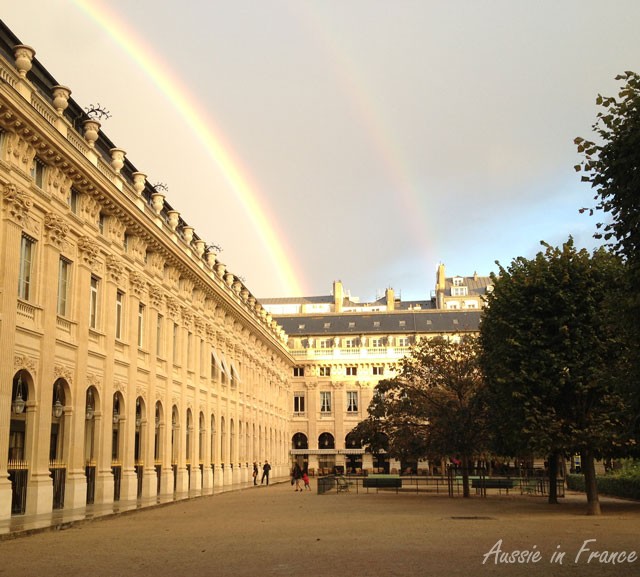
rainbow_palais_royalThis photo owes its existence to Australian photographer Wendy Smith who is currently living in France. We were walking along chatting in the Palais Royal after a sudden shower chased us off the terrace of the Café Nemours. Suddenly, Wendy said, “the light – it’s really amazing! look over there!”. I rushed to the fence and slipped my iPhone through. It was not until I saw the photo on Instagram that I realised there were TWO rainbows!


from the Tropics to the City of Light