I finally retired at the end of 2024 after semi-retirement 5 years earlier. I worked full-time for 40 years in France as a freelance technical and legal translator, in the days before AI. I also lectured in the Masters programme at ESIT, which for many years the only state-run translation and interpretation school. I was there for 15 years, including 6 years in a part-time position.
Our house in Blois
After I retired, I continued to work part-time as an auto-entrepreneur, mainly as a sworn translator. I loved my profession and the transition to part-time sworn translator kept me in contact with a lot of interesting people as my main work was translating documents such as birth certificates, naturalisation applications, driver’s licence exchanges and real estate transactions. Last year, I did two interpretations for property sales at the notaire’s. I am happy to be finally retired but I would still be happy to do the odd interpretation.
When I get up in the morning, I can take my time. It’s a wonderful feeling! No more deadlines to meet! And it’s surprising how much time it takes to do nothing in particular. Do I get bored, you may ask? NO!! I have plenty to occupy me. First, I have a long list of things I’ve been meaning to do for a long time such as updating this blog :). I am currently making digital photo albums to have them turned into a printed book.
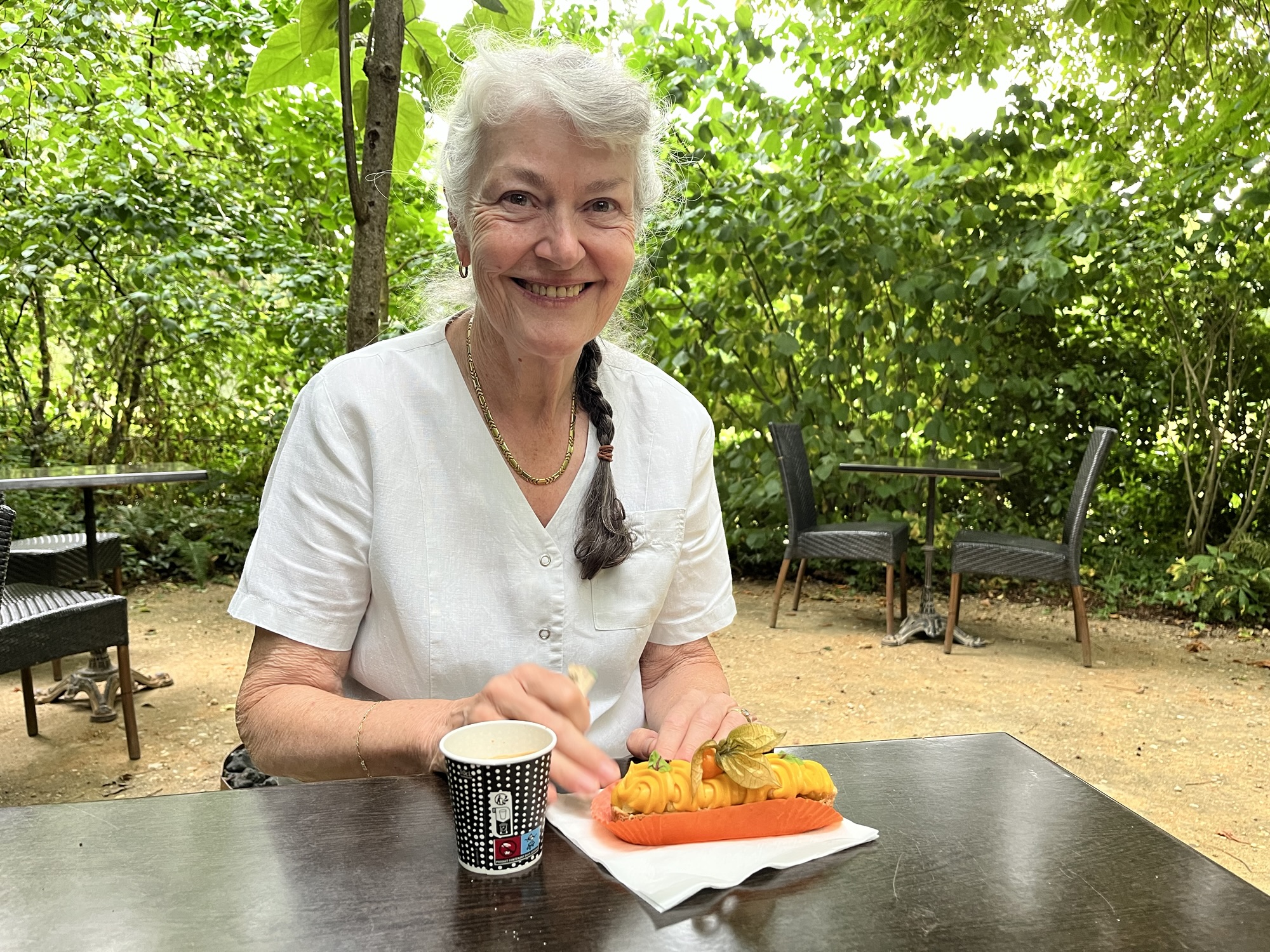
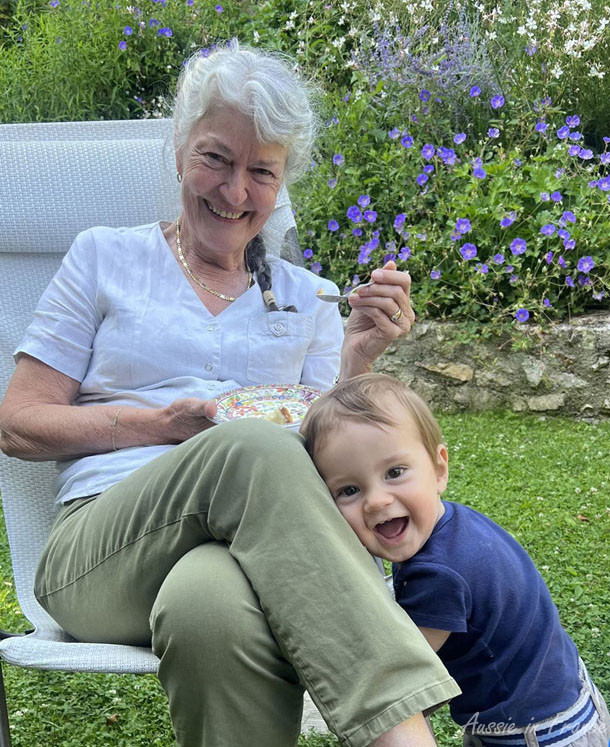
Enjoying a house-made cake at Château de Chaumont on a Sunday morning
One of our great pleasures is our daily wordle – 2 wordles and one quordle in French and the New York Times wordle for me, which I play with friends from my old school days in Townsville where I was born and brought up.
Apart from our own garden, I look after a shared garden that is attached to Châtel Rose, my holiday rental studio in Blois. It’s a very different sort garden – completely flat – unlike our own garden which is clay and mainly on sloping ground. I practically started the shared garden from scratch, with flowering perennials that need very little water as we don’t have a water supply. So far, it’s doing very well. It keeps me busy as I am virtually the only gardener! Our garden at home is practically a full-time job but I am working towards less maintenance as it becomes more established. We have a watering system from a well at the back of the house.
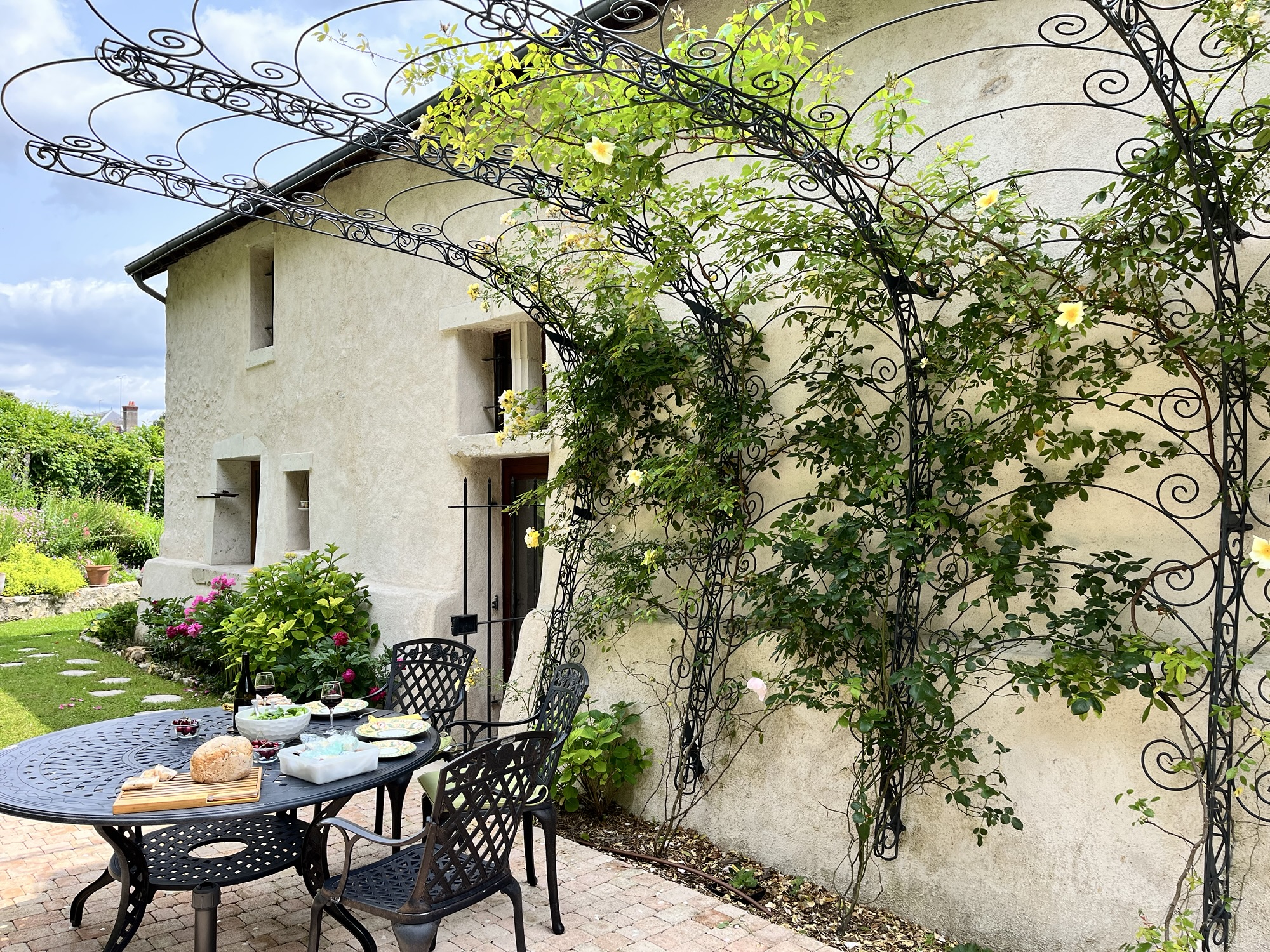
Jean Michel is an extraordinary renovator. We have added a paved terrace and wrought-iron pergola behind our house which will soon be covered in climbing roses. My talented husband has also made a laundry, added custom-built staircases to the garage and wood shelter and redone the entire rear façade of the house. His current project is renovating the barn and adding a greenhouse to the back of the non-functional little house on one side of our property. I help when I can but concentrate more on the garden.
Lunch on the terrace in the summer
We do a lot of travelling, especially to Boston where my darling little grandson, Eric (five in August) and beautiful little granddaughter Sophie (2 in March) live with my son and his American wife. My daughter and her Dutch husband live in New York with Lucas who turned one in October. We have been doing a lot of home exchanges for which we are very thankful as it really the only viable way we can visit for three or four weeks at a time.
After living in the Palais Royal in the middle of Paris for ten years, we moved to a beautiful house in Blois in the Loire Valley when Jean Michel retired 11 years ago. The house, built in 1584, was in excellent condition on the whole. We (and this means mostly Jean Michel) have mainly renovated the monumental fireplace in the upstairs living room, completely redone the downstairs kitchen, adding a picture window, fitted out a small upstairs kitchen and added skylights.
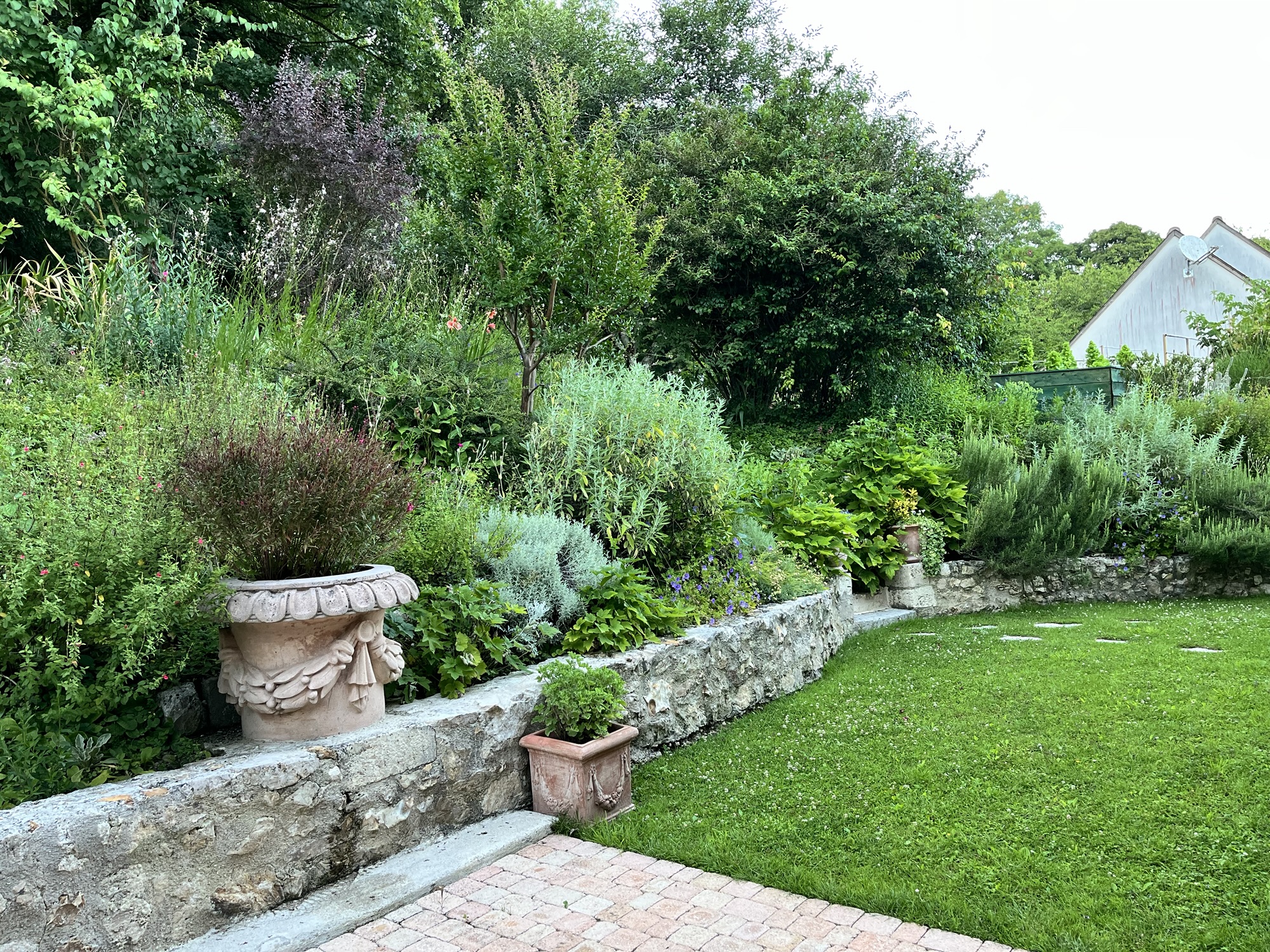
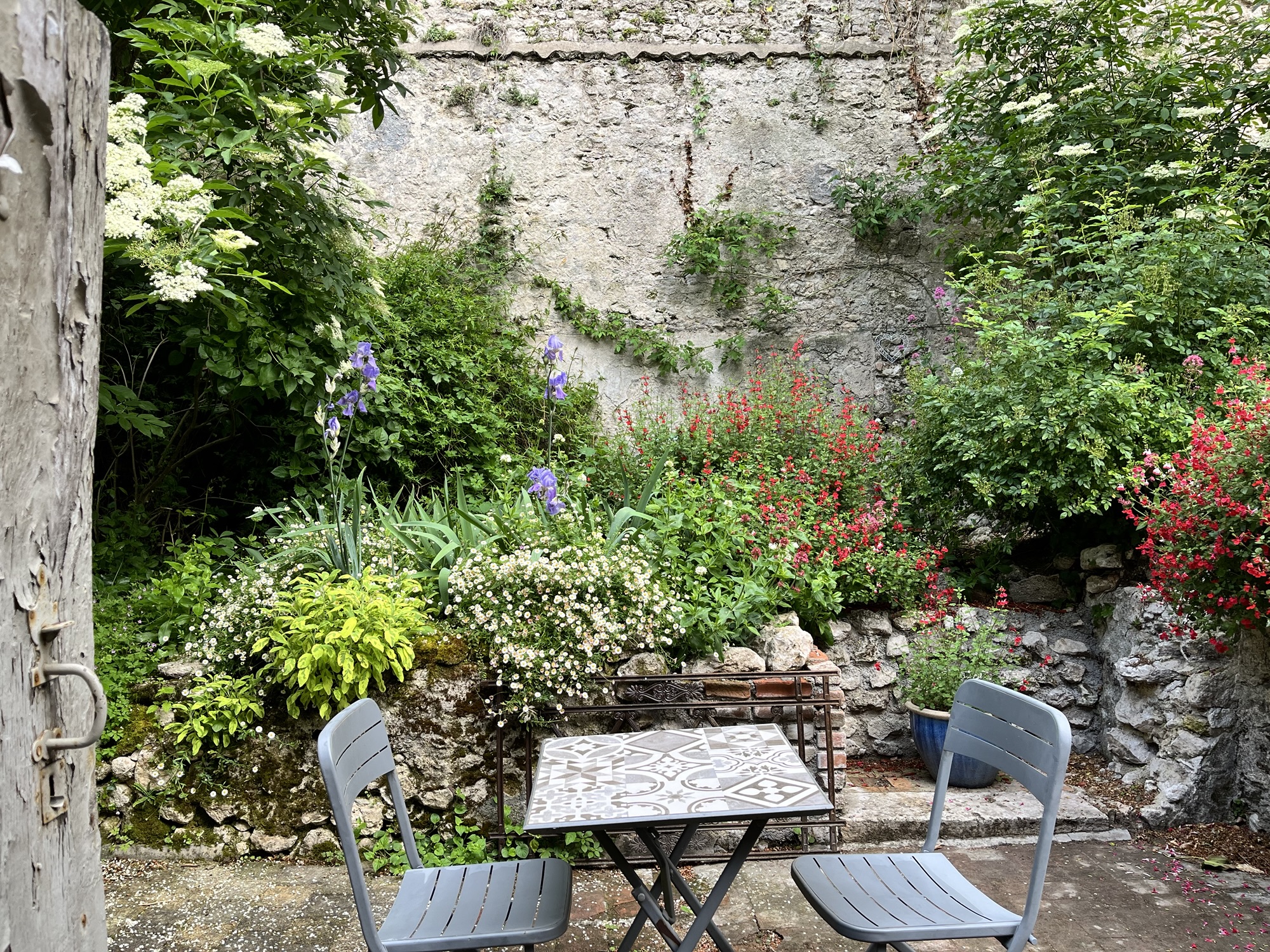
Our back garden
To keep fit and healthy, we both practice 5:2 intermittent fasting twice a week and I walk briskly for an hour every day. I try to get the household chores, including making my own yoghurts and bread, out of the way by 11 am. Fortunately I have a cleaner.
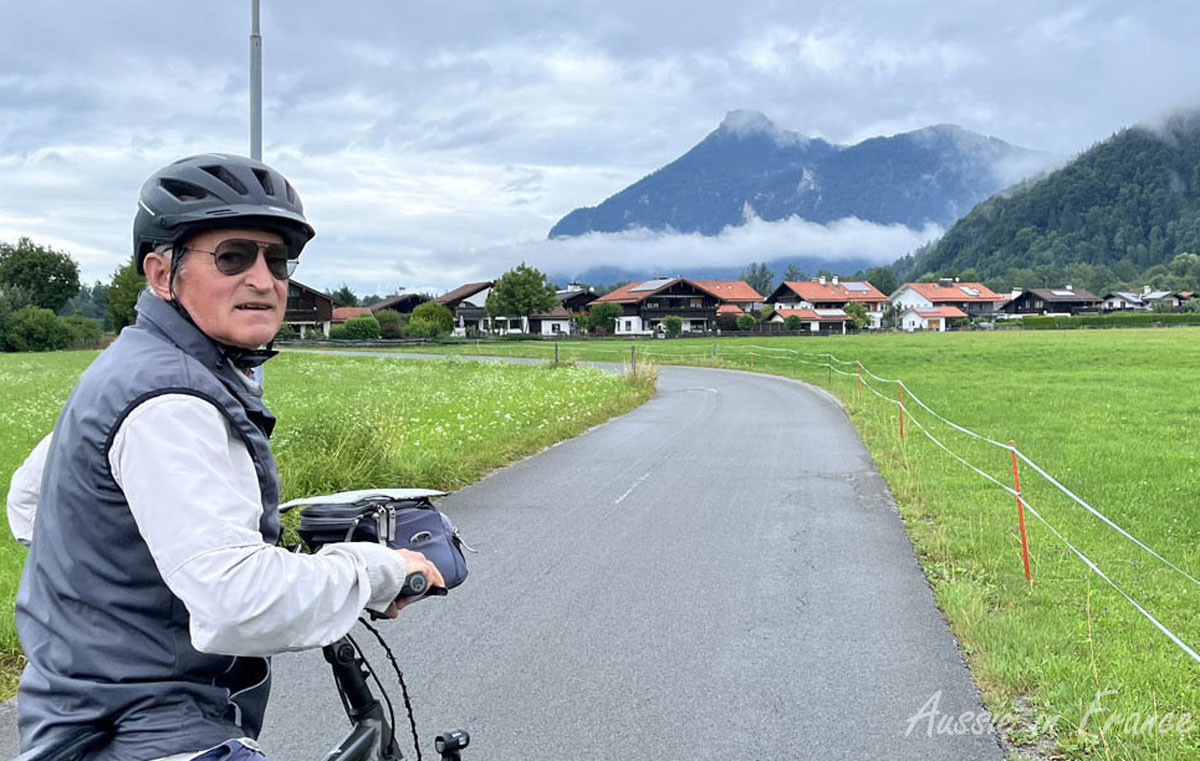
When the weather gets warmer, we cycle on our e-bikes as much as we can, sometimes driving to further locations with the bikes on a rack at the back of the car. We have now visited all the main châteaux in the region and most of the smaller ones. There are many bikes routes in the area but with our e-bikes, we are not limited. We have favourite places such as the rose village of Chédigny that we visit a couple of times a year.
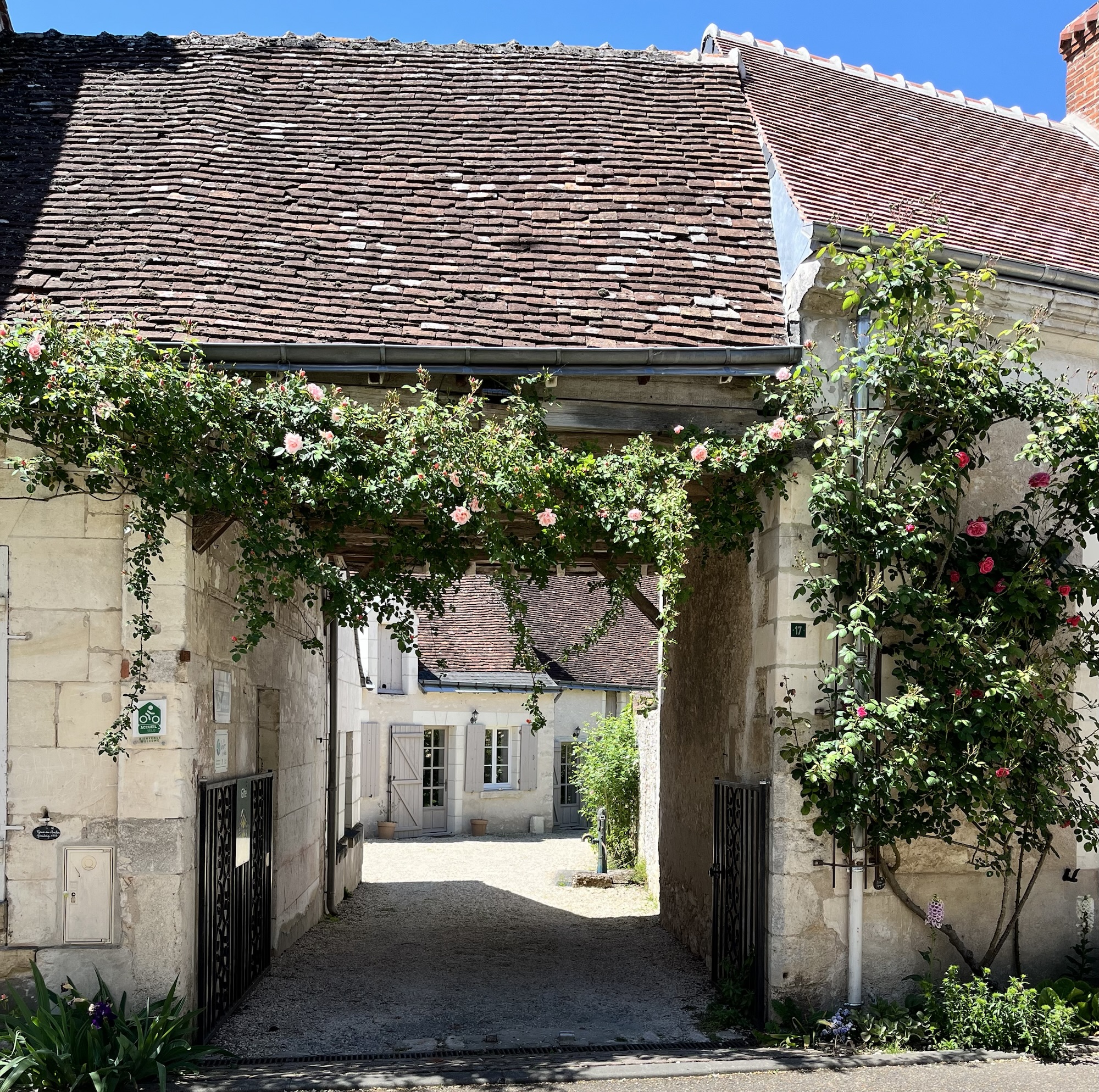
The rose garden in the village of Chédigny
We have annual passes to Château de Chaumont and go there for coffee, cakes and a walk every Sunday morning we are in Blois. From April to the end of October, there is an annual garden festival in the château grounds which gives us endless variety from one season to the next. The château has frequent photography and art exhibitions.
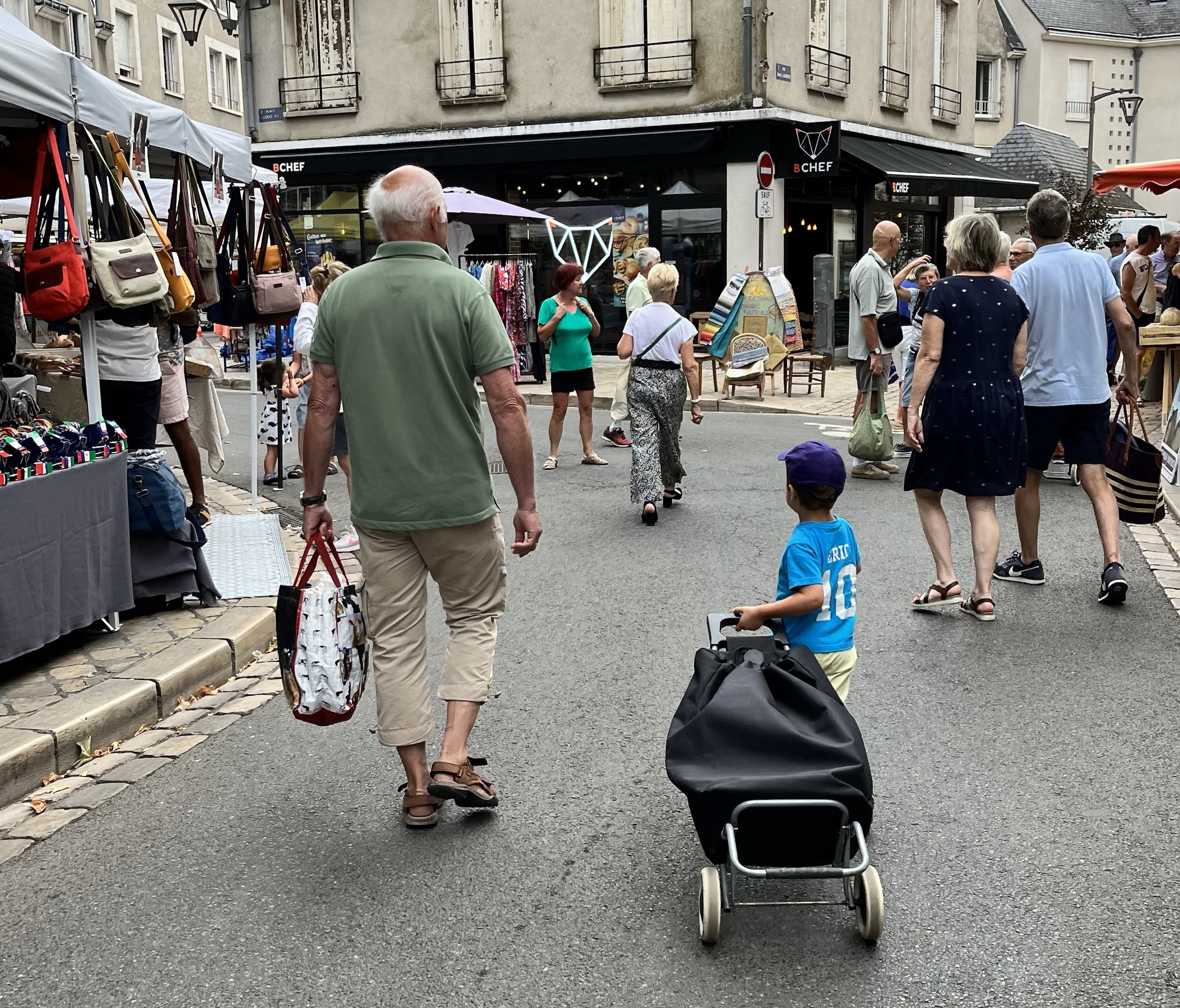
Every Saturday morning we go to the local produce market in Blois which gives us the opportunity to catch up with locals we have come to know over the years. We have coffee at Jeff’s outdoor stand in warmer weather and at Le Baroque on the corner of Place Louis XII the rest of the time. From October to April we buy oysters to take home for lunch.
The Saturday morning market on Place Louis XII in Blois
As you can see, we are creatures of habit! We usually find a warmer destination in February or early March to spend a week exploring other European countries. In recent years, we’ve been to Rome, Cyprus, Malta, Sicily, Andalucia and Crete. We track the weather and book our airline tickets and accommodation at the last minute.
Towards the end of June, we usually set off on a 3 or 4-week cycling holiday, choosing the destination and departure date according to the weather, once again. We do not like cycling in the rain although an occasional rainy day can give us some R&R! We have now covered most of Europe. Our method is to rent an appartment for 3 or 4 nights and cycle in different directions.
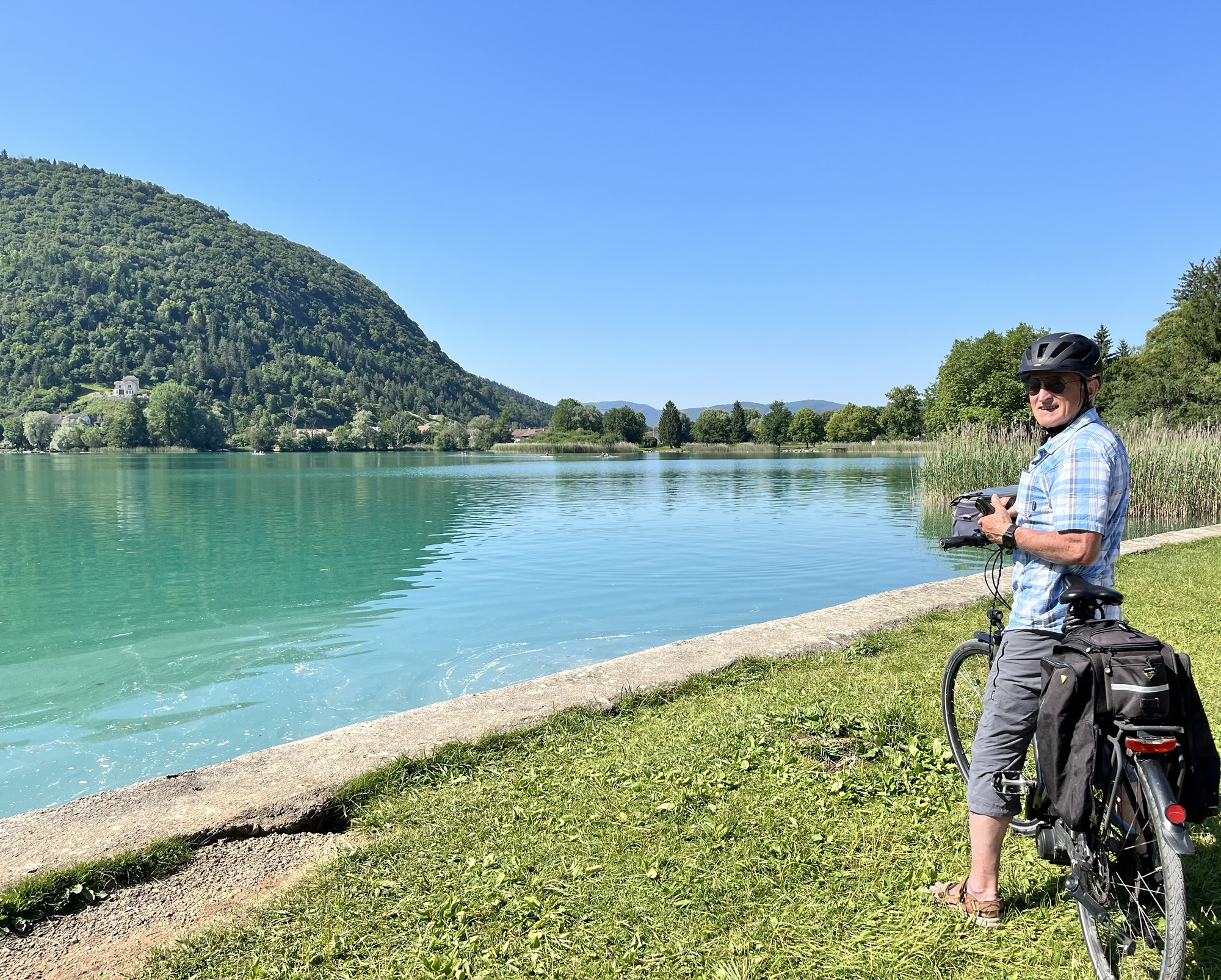
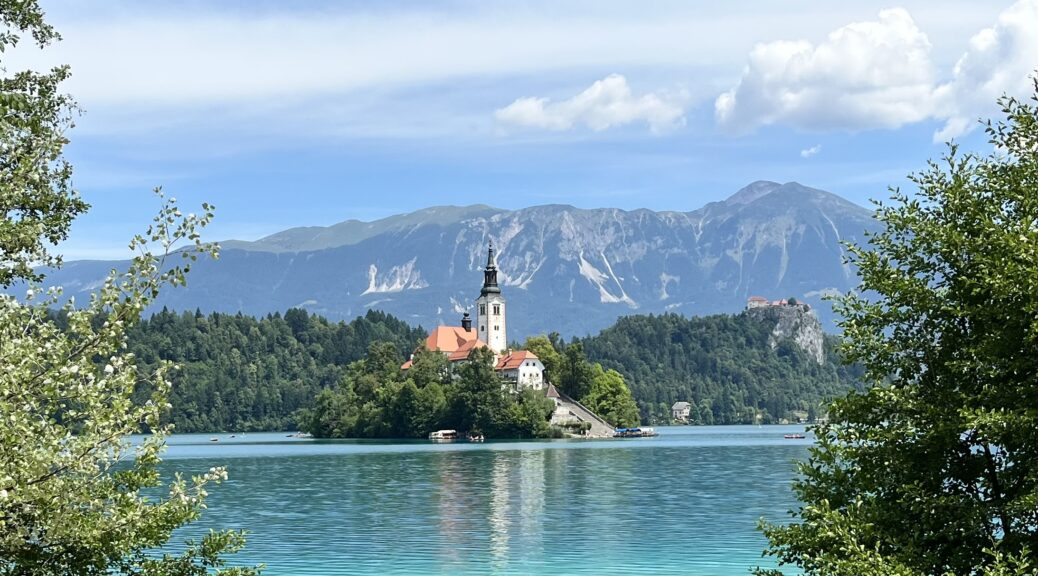
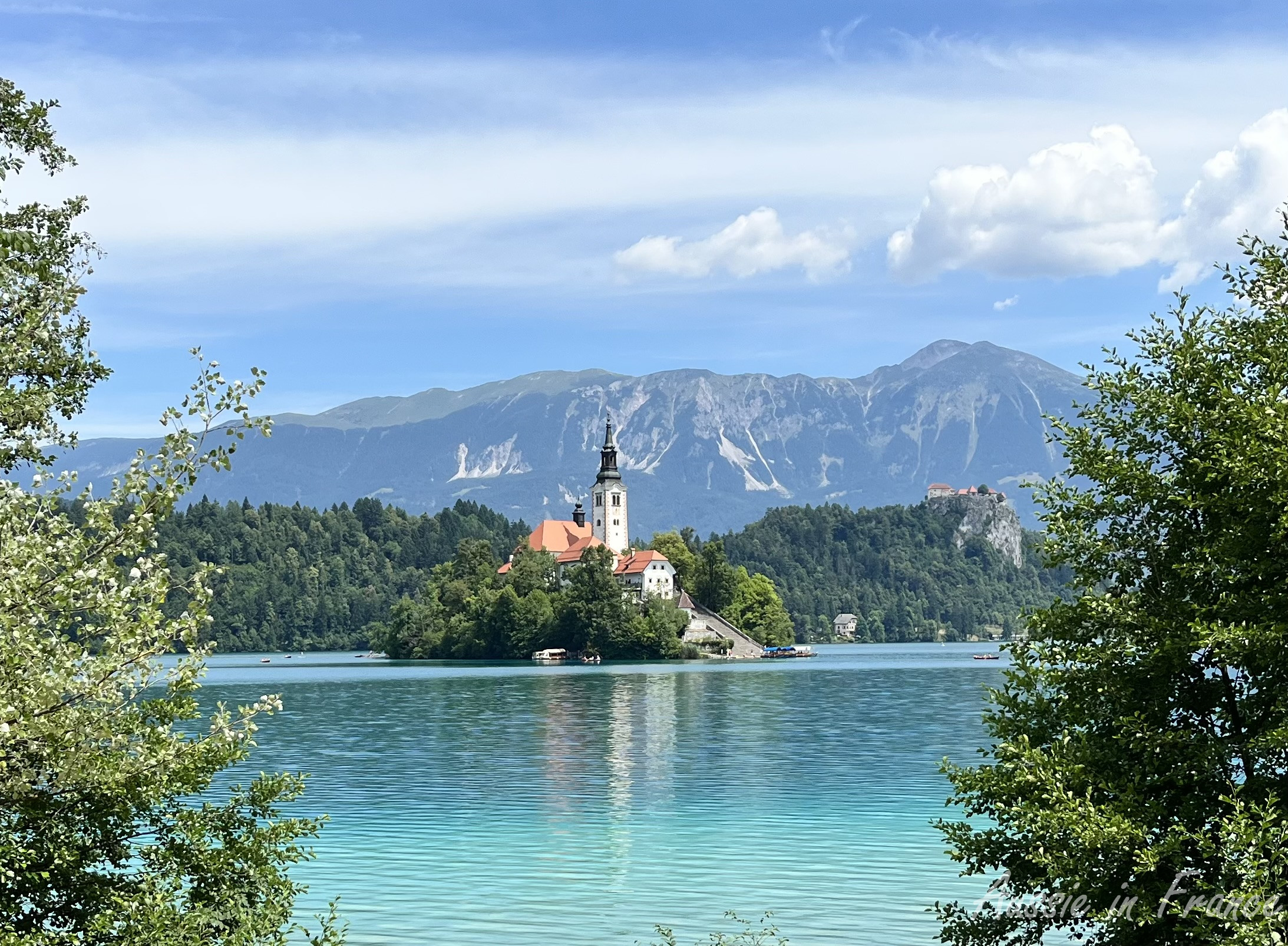
Cycling around Lake Bled in Slovenia
Last year, for example, the ultimate destination was Lake Bled in Slovenia. We went via Cerdon in the Jura mountains in France, Lake Iseo in Italy, Porec on the Istrian peninsula, then Lake Bled itself. We returned via Radovlijica in eastern Slovenia, Ebbs in Austria and Saint-Hippolyte in Alsace. We usually book the next apartment on the second day of our stay in each place. That way, we can make the best choice weather-wise!
The rest of the summer is spent making the most of our garden, interspersed with cycling excursions.
As there is a severe lack of medical practitioners in Blois, we go to Amboise or Tours if we need to see a specialist. We usually make a day of it to catch up with some shopping and take in a restaurant.
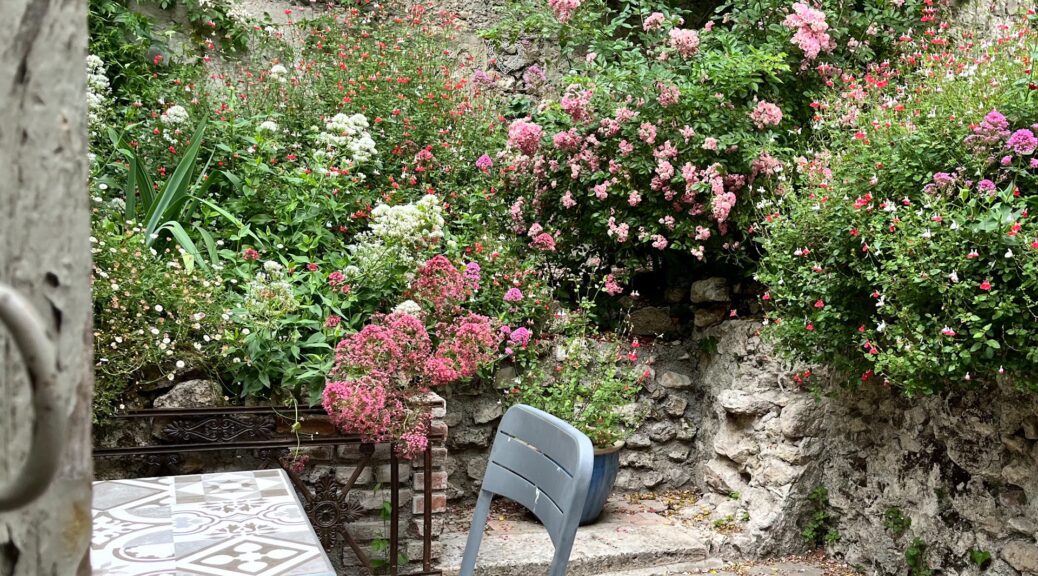
The shared garden of my holiday rental in Blois
One of our great pleasures is making the most of the local gastronomy. We choose a Michelin-starred restaurant in the area four times a year to celebrate our birthdays and anniversaries. Fortunately, they are well spaced out – April, June, October and December! At the other end of the scale, we go to “workers’ restaurants” when we are cycling. There are plenty of other occasions to enjoy all the other great restaurants in between!
I realise that overall, we are not very social beings but we do see friends from time to time and have had quite a few visits from our children and grandchildren in the last couple of years. I have a lot of virtual contact with friends as well, some from my childhood.
All I can say is that we are never bored and that our days are always full!
I see that I have not published a New Year post since 2021! Life has kept getting in the way.
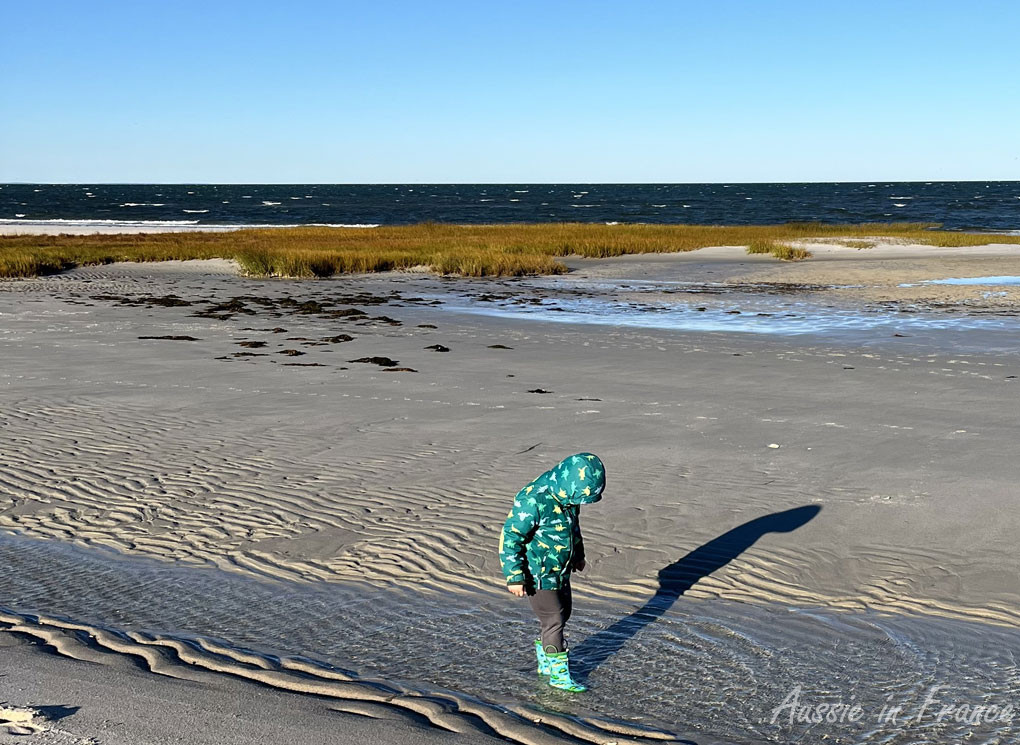
This, my first full year of retirement was very much focused on grandparenting with a 5-week visit in February/March from my baby Lucas and his mum, 3 weeks in Boston in April to visit my son, his Amercan wife and two children Eric (now 4) and Sophie (nearly 2). I was joined by Lucas and his parents for a week. Lucas and his mum came back to Blois at the end of July and stayed for 6 wonderful weeks! We then went back to Boston in October and looked after Eric in Cape Cod during his school holidays. We stayed a total of three weeks, during which time Lucas and his parents joined us for a week.
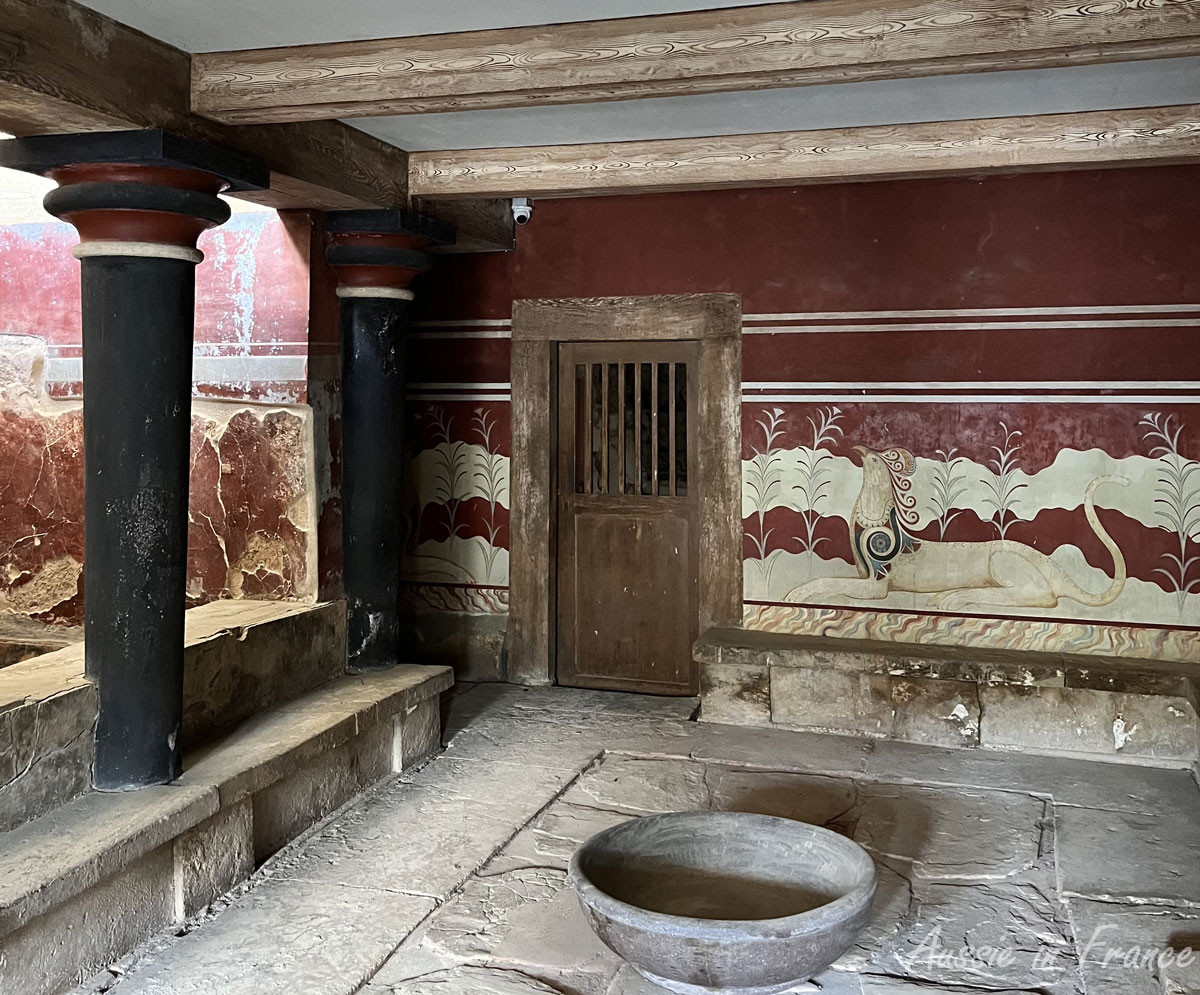
We still did some real travelling, starting with a week in Crete in February, where we took up from where we left off in February 2020, when we had to cut short our visit due to Covid. It was great to have a change of scenery and some sun but apart from the visit to Knossos, it seems that we had already seen the best of Crete the first time.
The end of June saw us heading off on our annual cycling holiday, with Lake Bled in Slovenia as the ultimate destination. We started in the Jura, followed by Lake Iseo in Italy and on to the Slovenian side of the peninsula of Istria (we had already been to Porec and Pula in Croatia on a previous trip). The weather was very very hot and we continued to have high temperatures throughout our stay. We restricted our cycling hours to the morning whenever possible. Fortunately we had air-conditioning in all the apartments we rented. We no longer stay in hotels, preferring this option with a 3 to 4 night stay each time. As we don’t like riding in the rain, we usually book the next accommodation on the second day of each stay. This may limit our choice, but we always suitable accommodation.
We had fond memories of Slovenia from our past trip fifteen years ago but it has now become a favourite tourist destination for Europeans and we were disappointed with the over-exploitation of the Lake Bled region. The lake itself, however, was picture-perfect and we had an apartment at the top end of the lake with a mountain and garden view. After visiting the Tomin Gorges, where we accidentally found ourselves in the middle of a marathon, we headed for Radece in the south east, on the Sava River, touted as having the country’s best cycling paths. Apart from the fact that we made the acquaintance of cvicek, a unique Slovenian red wine, which has a maximum alcohol content of 10 degrees and is always served chilled – perfect for the hot summer – and the best folk museum I have ever been to in Brezice, there was not much to see and the bike paths were way below German or Austrian standards, let alone Dutch!
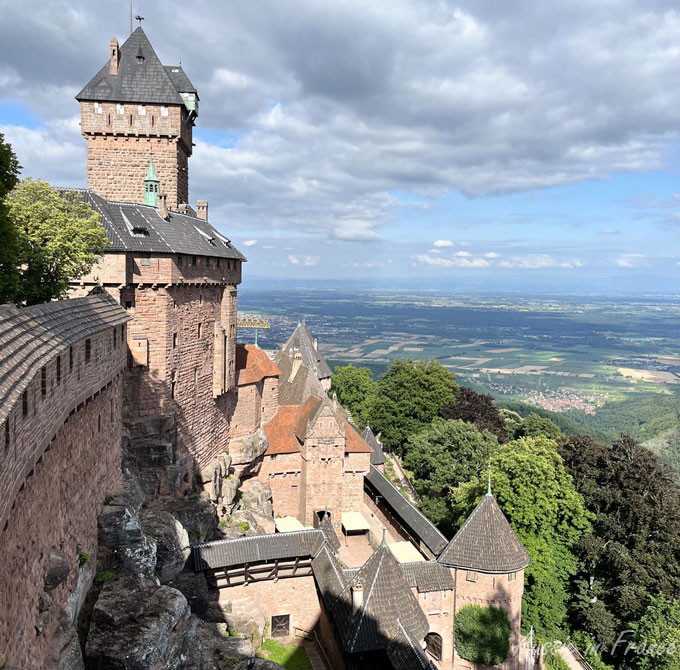
We left Slovenia and moved onto the Tyrol area of Austria. These were our best cycling days, drinking in the beautiful mountain vistas, painted houses and baroque churches. Even the many climbs did not diminish our appreciation of the region. Our last stop was near Selestat in Alsace, where we cycled through vineyards and visited the amazing castle of Haut-Koenigsbourg.
After the constant heat, we were delighted to come home to our beautiful garden!
We have continued to be active members of Home Exchange, mainly so that we can visit the family in the US. We stayed for the sixth time with Matt and Jery in Belmont, near Boston. My son now has a new home with a guest room so we will not be staying with them anyone. We will however be visiting them as they have become good friends. We also took Eric to a wonderful home exchange on Cape Cod for four days. We will be returning there in April.
Healthwise, we spent most of January at the physotherapist’s – JM for a back problem and me for a shoulder problem, but I did manage to avoid surgery thanks to shock waves and physiotherapy. Unfortunately, 2 days before we left Boston in October, I tripped over a root and landed with my shoulder on another root, dislocating it very painfully. It was put back in place in the E&R– a pain far greater than childbirth: – and only now, more than two months later, am I pain-free. At least it didn’t make the existing problem any worse and I do not need surgery as the Boston specialist predicted. As a result, I am making sure that I walk briskly for at least one hour a day and doing senior stabilizing exercises so that this will not happen again!! I do not recommend getting older …
Our plans for the coming year are a week in Athens in February, a month in New York and Boston in April/May, a cycling holiday somewhere in Europe in the summer (Ireland or Portugal perhaps), and another visit to the US in October. The summer choice is very restricted theses days as we have now cycled extensively in France, Germany, Italy, Spain, Austria, Belgium, the Netherlands, Denmark, Czech Republic, Poland, Slovakia, Hungary, Slovenia, Croatia and Romania. I don’t know how much longer we will be able to have this type of holiday, but we will keep going as long as our energy and health permit. We no longer cycle all day, every day, and our e-bikes definitely help but we still find this is the best way to get to know a country and its people outside the main tourist areas.
I would like to wish everyone a healthy, happy and fulfilling 2026.
Paula McInerney from Contented Traveller, whom I’ve already featured in my weekly blogger round-up, is publishing a series of posts entitled “Outside my front door”. I was delighted when she asked me to contribute and I’ve been enjoyinghearing from other bloggers as well.
Outside My Front Door
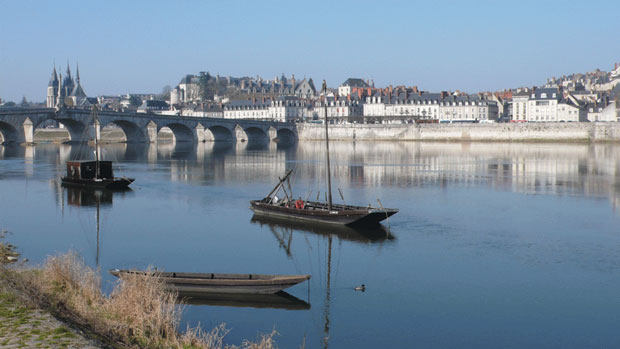
Outside my front door is a large expanse of trees and grass and on the other side is the Loire River, flanked by two levees, first mentioned in 1584, which is the exact same year in which my Renaissance house was built.
If I go left five kilometers along the river, I will come to the city of Blois, with its royal castle, built on a promontory overlooking the Loire, and former home of Louis XII, François I, the star of the French Renaissance, and his son Henri II. Read more
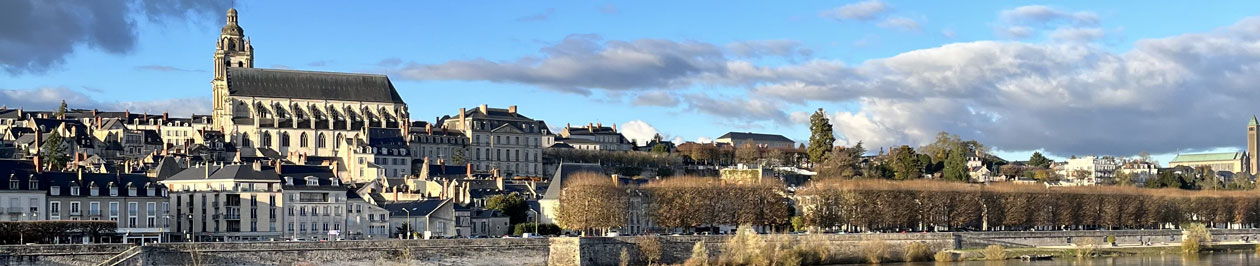
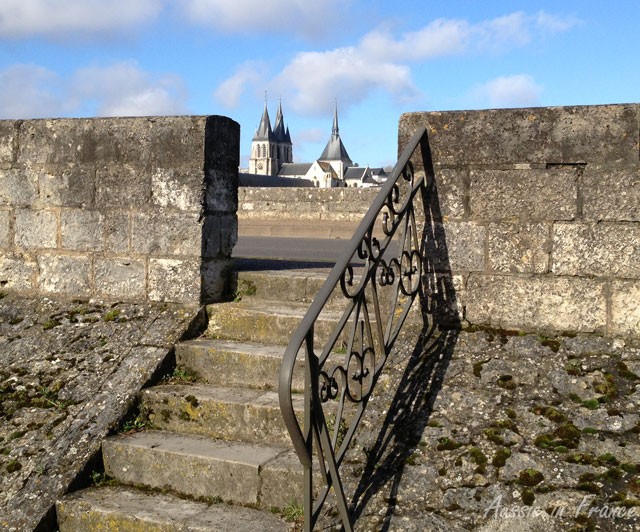
We arrived in Blois on Friday and are here for a month, the longest we’ve ever stayed. This morning, we were rewarded with bright sun and blue skies so we went for a walk on the other side of the Loire River. The church is that of Saint Nicolas, probably the most noticeable monument in the city while the church in the header photo is the Cathedral.
For more photos of Blois, click on my other blog, Blois Daily Photo, which has a commentary in French and English.
And just to fill you in on the chicken situation: in January, we noticed that the enclosure was open during the daytime and so was the front gate. The half-a-dozen chickens run around the large yard and sometimes out into the street. There was a not-too-annoying rooster last time as well but we haven’t heard it this time. So unless the neighbours change their minds again, the chickens should no longer be a problem. We won’t have a noisy smelly poultry yard next door in the summer. We, have, however, learnt our lesson and will put the garden of the gîte behind it and not in front of it. It will actually be much prettier.
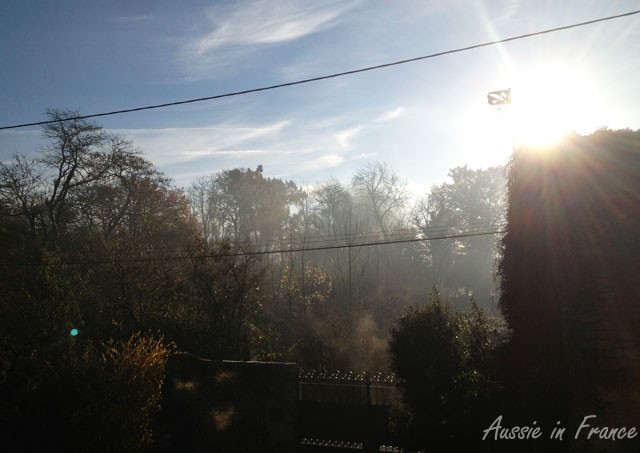
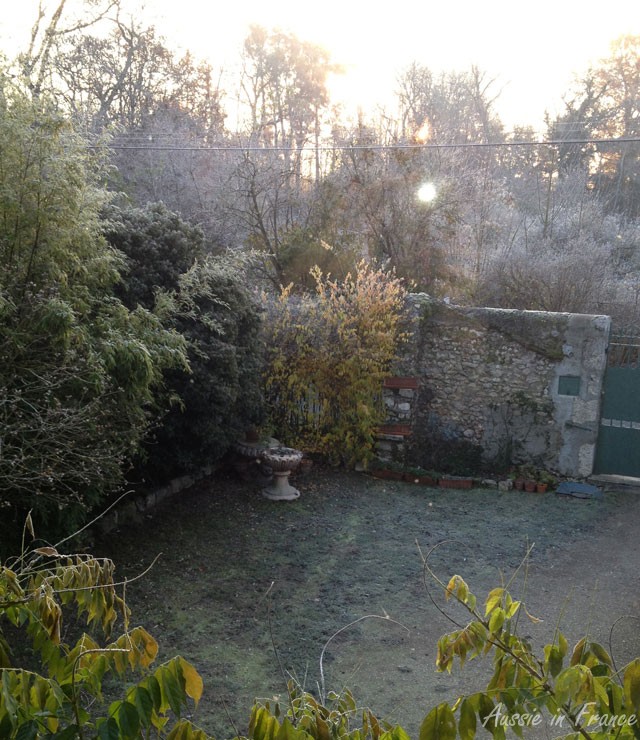
We’ve been having lovely weather in Blois – very cold, with minus temperatures at night and sometimes throughout the morning followed by bright sun and blue skies. The view from my office window is unfortunately marred by those horrible cables. They’re supposed to go underground in a couple of years’ time.
For more photos of Blois, you can visit my photo site Blois Daily Photo.
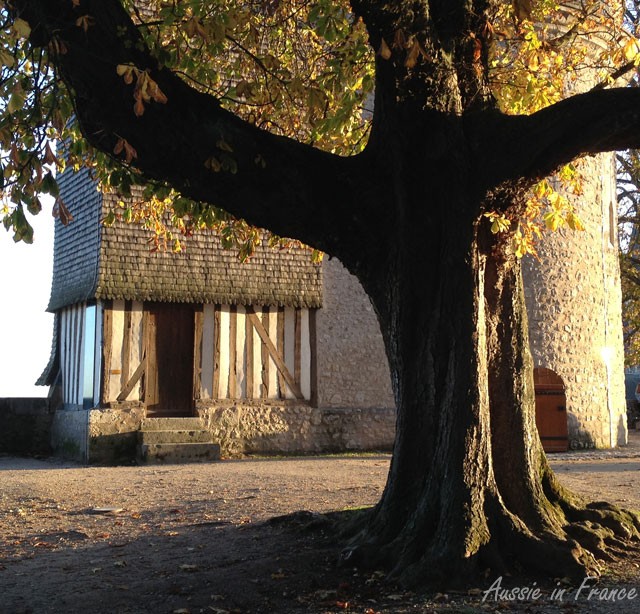
This photo was taken just before sunset from the area behind Blois Castle overlooking the Loire River. The Tour du Foix is part of the old 13th century fortifications.
There are so many wonderful places to visit in the Loire Valley that newcomers to the region often need guidance. It’s pointless saying “Chenonceau is my favourite. You should go there” or “Forget about Chambord, there’s nothing to see”. Each of the châteaux is different and visitors will be attracted to one or the other according to their own individual tastes. My aim here is to give an idea of what each has to offer so you can make your own choice.
Château de Chenonceau
I only intend to talk about the “pleasure castles” here, and not fortified castles such as Chinon and Loches, or religious edifices such as Fontevraud l’Abbaye, or mansions such as Clos Lucé. I’ll start with the four “Cs”: Chenonceau, Chambord, Cheverny, Chaumont, followed by the royal castles of Amboise and Blois, all of which are located in the same general area, then Azay le Rideau, Ussé, and Villandry, which form another geographical group, with Valençay off on its own to the south. You can see more photos and further detail about each château by clicking on the corresponding name.
Chambord
Château de Chambord
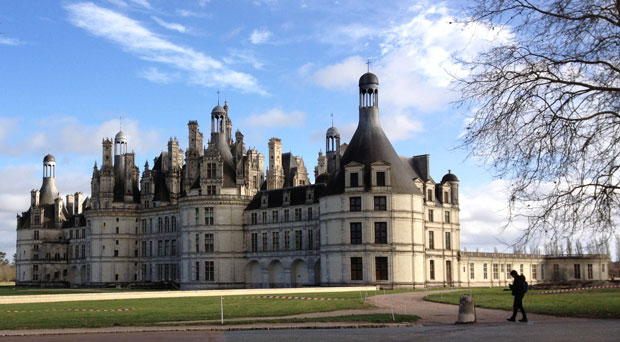
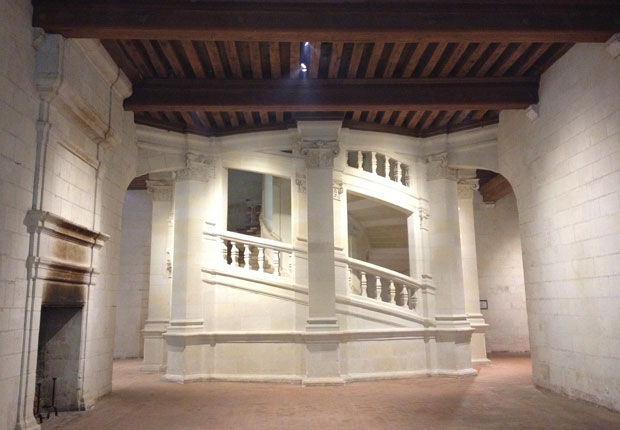
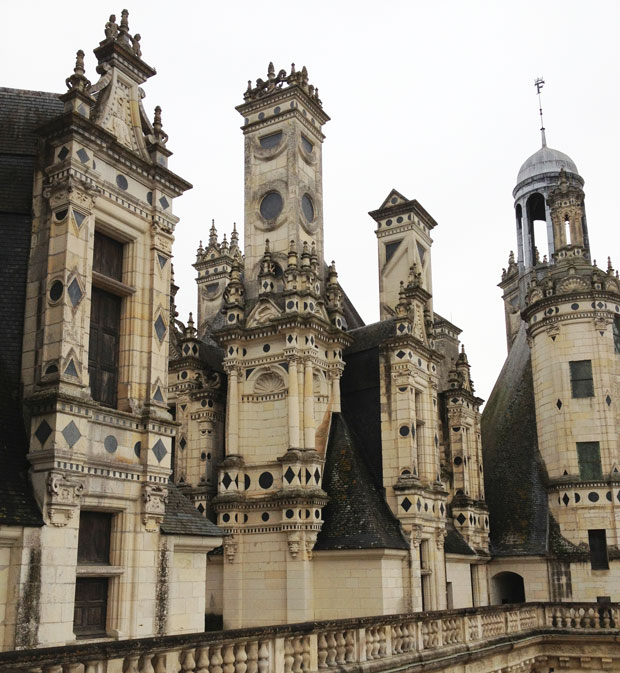
The rooftops of Château de Chambord, along with its famous double staircase, are its best known features and must be one of the most stunning examples of architecture I’ve ever seen. François I, the star of the French Renaissance, was only 25 when he commissioned the château in 1519. Unfortunately, despite the presence of 2000 workmen, it wasn’t completed in his lifetime and he only stayed there for 72 days out of his 32 years on the throne! He used it as a hunting lodge of course and it was not furnished – he used to travel around with everything and everyone he could possibly need. But his son, Henri II, as well as Louis XIV, who also loved hunting, turned it into the château we know today.
Double staircase in Château de Chambord
There is a series of furnished rooms in one wing that can be visited as well. In the mid-nineteenth century, the Count of Chambord decided to open the château to the public and furnish some of the apartments with his own private collection, mainly consisting of royal portraits and other rather disparate pieces of furniture. On 1st May every year, there is a wonderful antique and second-hand fair in the extensive castle grounds that is certainly worth attending. There are several restaurants and souvenir shops in view of the château.
Rooftops of Château de Chambord
Open all year except 1st January, 31st January, 25th December. From 20/01 to 31/03 and 01/10 to 31/12: 10 am to 5 pm; 01/04 to 30/09: 9 am to 6 pm. 16 euros.
Le Saint Louis, Place Saint Louis – 41250 CHAMBORD
Au Fil du Temps, 11 Halle, 41250 Bracieux, France Tel. 0254460384 (8 km from Chambord)
Chaumont
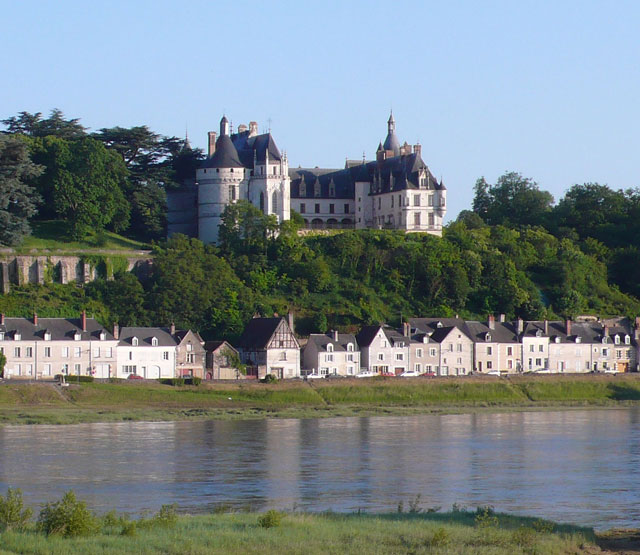
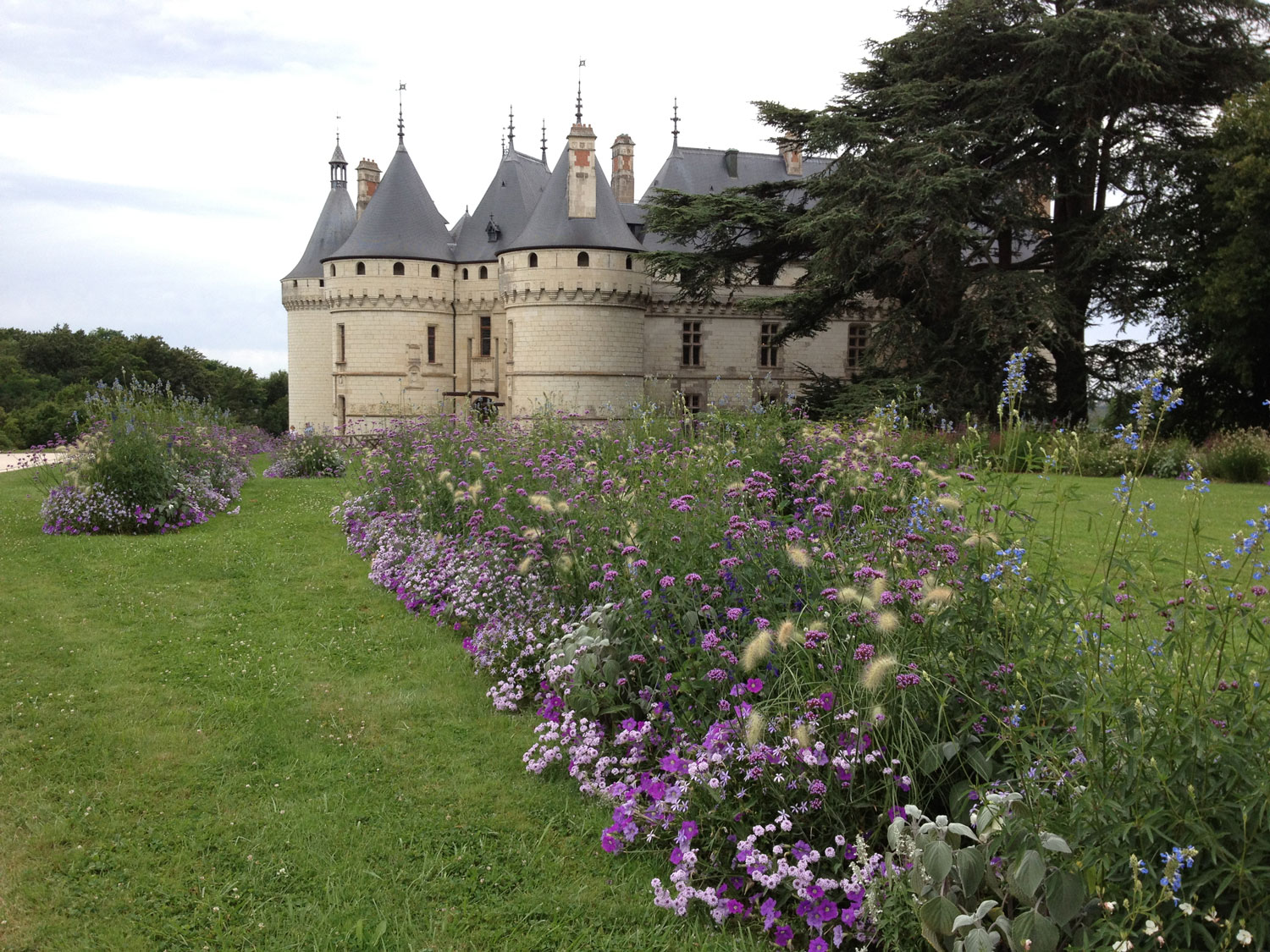
Château de Chaumont
Château de Chaumont stands in a prize position overlooking the Loire and is best seen from the other side of the river. From April to October, it hosts a wonderful garden festival with a different theme each year. The château as it stands today was rebuilt from 1468 to 1511. It was bought by Catherine de Medicis, wife of Henri II (son of François I) in 1550. On his death, she forced her husband’s paramour, Diane de Poitiers, to swap Chenonceau, a gift from Henri, for Chaumont.
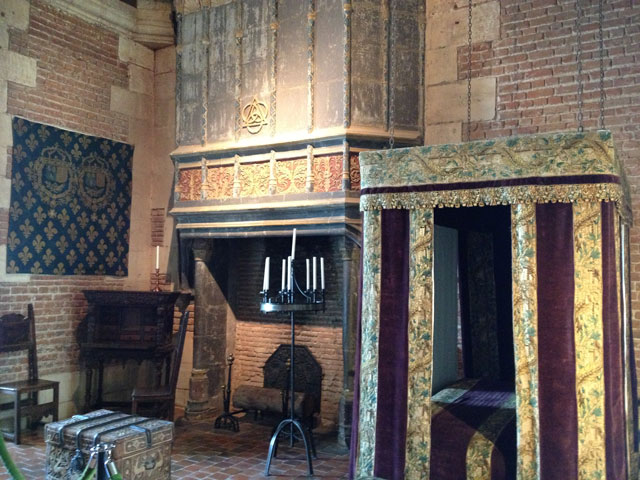
The bedroom of Cosimo Ruggieri, one of Catherine de Medicis’ astrologists, at Chaumont
The château was later restored by Prince de Broglie between 1875 and 1900, including the beautifully furnished state rooms and luxury stables with their exercise ring. The top floor of the château, currently in a somewhat derelict state, can also be visited, as well as the basement kitchens. Between the château, the stables, the grounds and the garden exhibition, you can easily spend the day on the Domain, which has no fewer than four different restaurants.
Chaumont from the garden
Open all year round, from 10 am to 4.30, 5.30 or 6.30 depending on the season. 15 euro for the château, park and stables, and 20 euros if you include the garden festival.
Places to eat
If you want to combine your visit to Chaumont with a gastronomic experience in one of the finest restaurants in the region.
Domaine des Hauts de Loire, Route de Herbault, 41150 Onzain (across the Loire from Chaumont), 02 54 20 72 57, hauts-loire@relaischateaux.com, www.domainehautsloire.com
Chenonceau
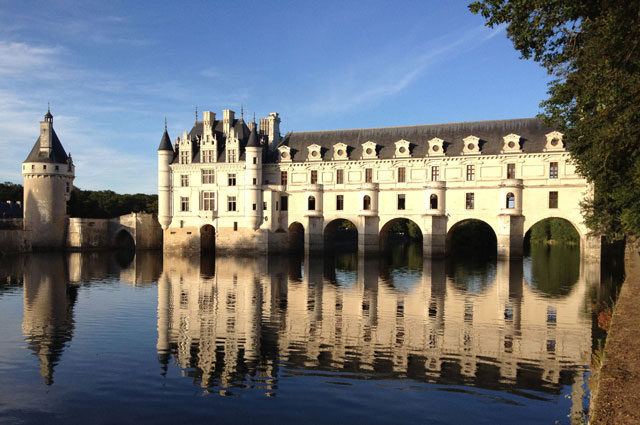
Château de Chenonceau
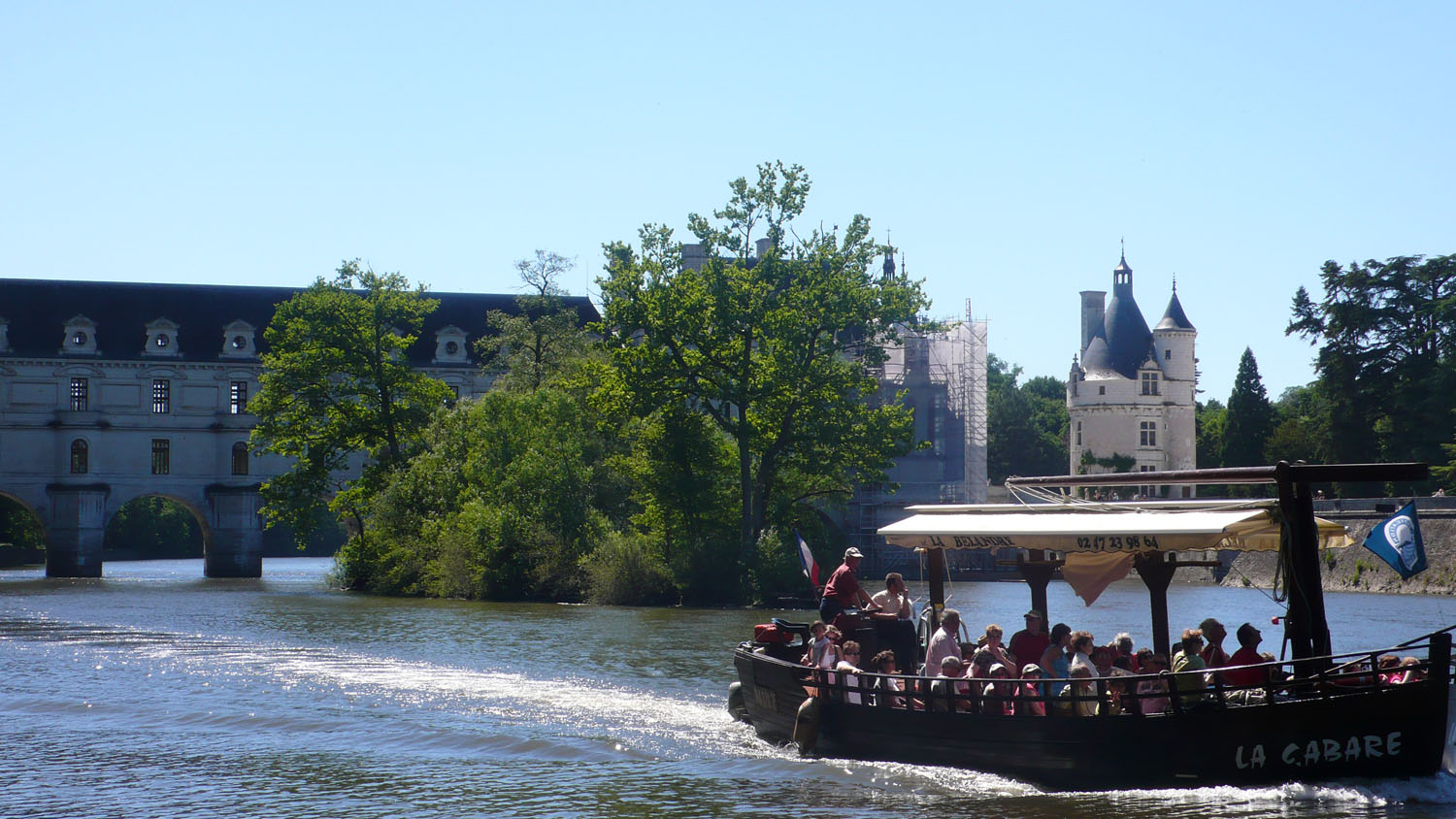
Built from 1513 to 1521 and celebrating 500 years of existence this year, Château de Chenonceau spans the Cher River. It’s a ladies’ castle, built in 1513 by Katherine Briçonnet, decorated by Diane de Poitiers, extended by Catherine de Médicis and saved by Louise Dupin during the French Revolution! All four are featured in a wax museum in a separate building. The château should be viewed from all sides, so you should allow time to walk around the grounds themselves, which include Diane’s and Catherine’s gardens, a vegetable garden and a labyrinth. You can also walk (or cycle) along the south bank of the Cher River or hire a rowing boat in summer.
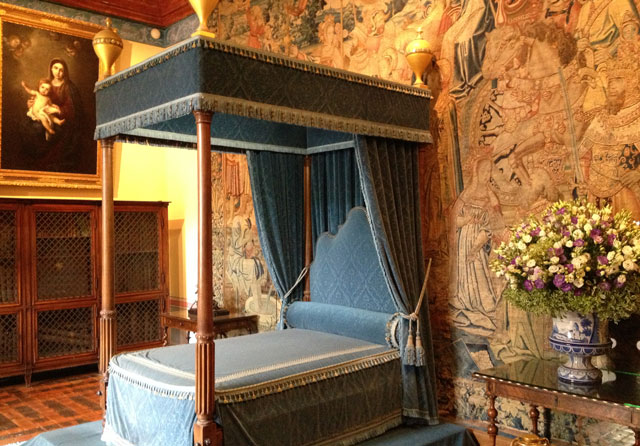
Diane de Poitier’s Bedroom
The sumptuous inside is completely furnished with several masterpieces and includes a visit of the basement kitchens. A free iPhone app (Découvrir Chenonceau) offers an introductory visit in 11 languages! You can taste the château’s own wine in one of the restaurants inside the grounds. Every weekend in June and every evening in July and August, the gardens are illuminated at night.
Open all year round, 9 or 9.30 am to 5 to 8 pm, depending on the season. 11 euros for the château and grounds, 13 euros including the wax museum, plus 2 euros for an audioguide.
Cheverny
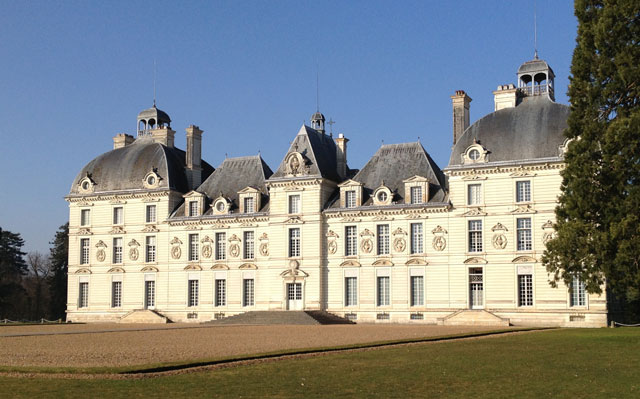
Château de Cheverny
Château de Cheverny is another experience altogether. The domain has been in the same family for more than six centuries and open to the public since 1922. The château as we know it today was built between 1624 and 1640 by Count Henri Hurault and his wife Marguerite Gaillard de la Marinière. The sumptuous interior decoration is by Jean Monier from Blois. It is the only major château to have retained its original furniture and furnishings. Fifteen thousand bulbs are planted in the gardens each year, so if you can, time your visit for spring!
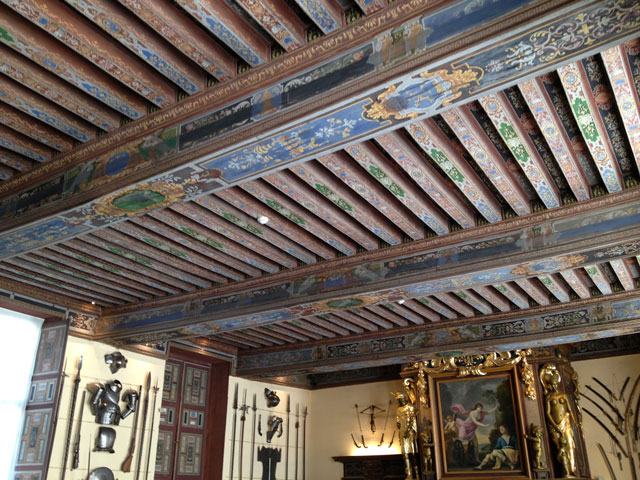
Painted ceiling in the grand dining room at Cheverny
Cheverny has two other attractions. The feeding of its 100 hunting dogs is very popular with visitors during the summer (although the kennels are currently closed for refurbishment) and there is a Tin Tin exhibition – Cheverny was used as a model by Hergé for Marlinspike Hall, Captain Haddock’s residence in the Tin Tin comic books.
Just next to the château is the Maison des vins de Cheverny et Cour-Cheverny, where you can taste and buy the local wines.
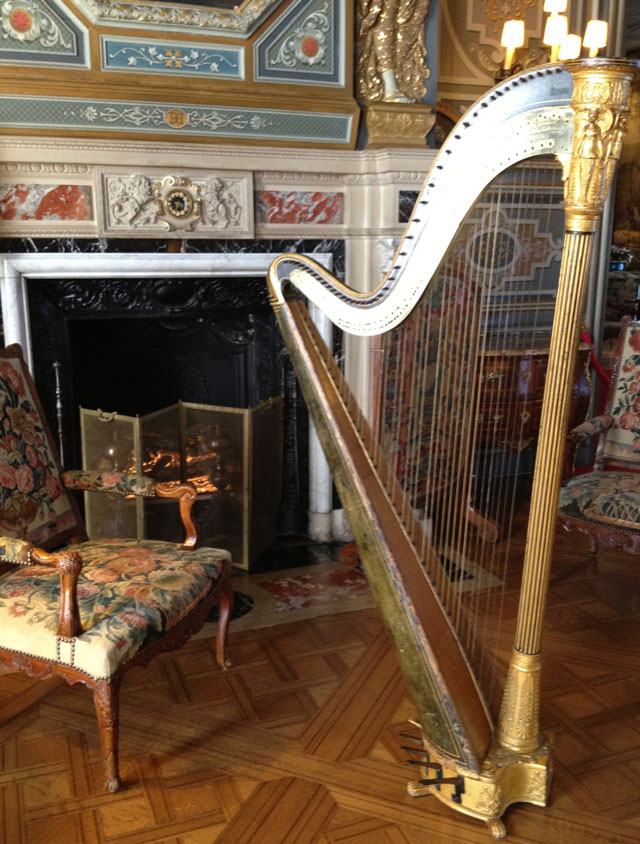
Late 18th century Erard harp in perfect working order
Open all year round. 9.15 to 9.45 am to 5 pm to 18.45 pm depending on the season. The dogs are fed from 1/04 to 15/09 every day at 5 pm and from 01/01 to 31/03 and 16/09 to 31/12 at 3 pm on Tuesdays, Wednesday, Thursdays and Fridays. Château and gardens, 14.50 euro, with Marlinspike museum 19 euro, with boat and electric car trips 19.50 euro, plus Marlinskpike 24 euro.
Amboise
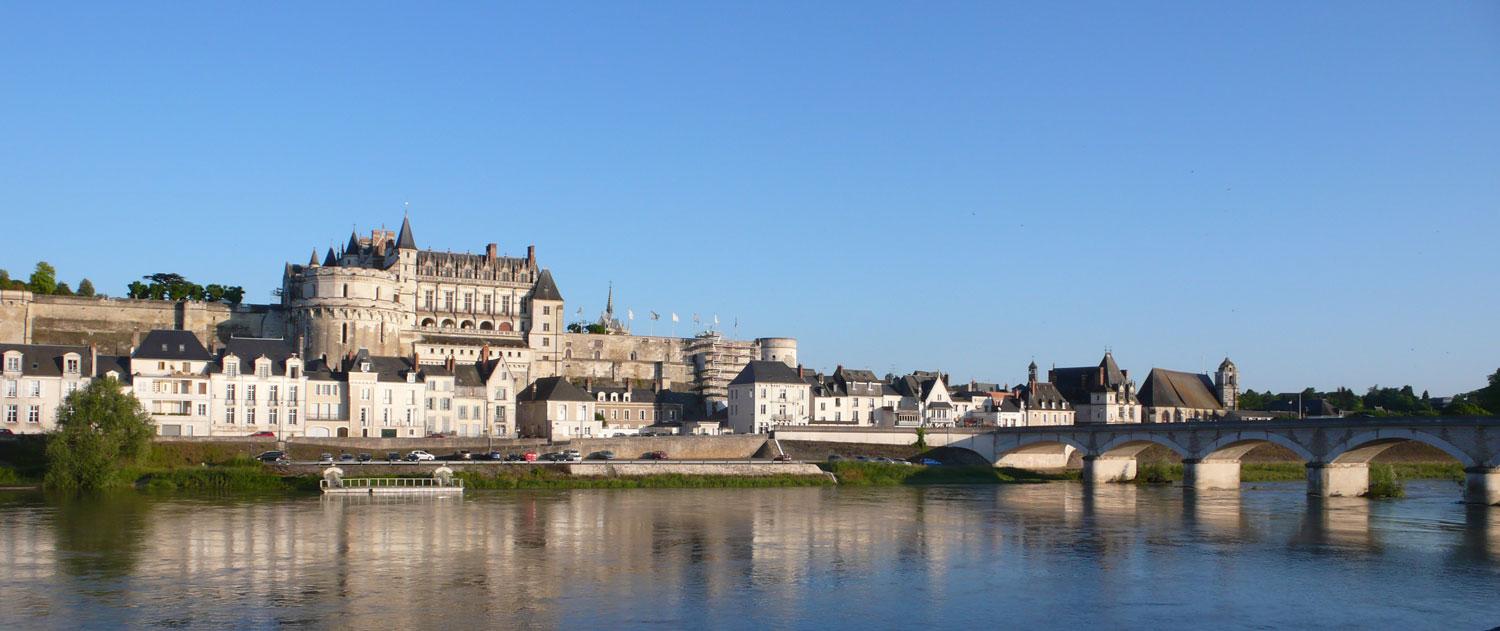
Château d’Amboise
The Royal Château of Amboise stands in a stunning position overlooking the Loire, best seen from the little island called l’Ile d’Or in the middle of the river. It became a royal residence in the mid-14th century and was a favourite with many French kings, from Louis XI to François I. It has an exceptional collection of Gothic and Renaissance furniture. An unusual feature is a wide ramp inside the château used directly by horses and carriages. Saint Hubert’s chapel is thought to be the last resting place of Leonardo da Vinci whose home in Amboise, Le Clos Lucé, contains scale models of many of his inventions.
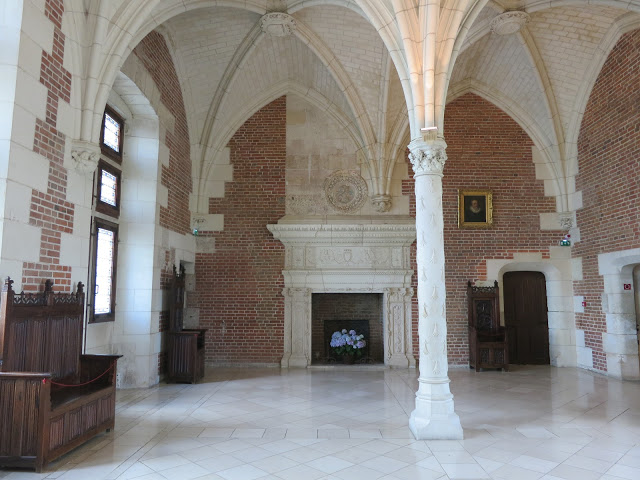
Amboise interior – photograph by Kathy Stanford
The beautiful panoramic gardens afford wonderful views of the Loire, the old town with its half-timbered houses and the surrounding countryside. The very extensive Friday and Sunday morning market along the river is one of the best in the area.
Open all year round from 9 am to 12.30 pm and 2 pm to 4.45 pm from 15/11 to 28/02 and from 9 am to 5.30 to 7 pm from 1st March to 15th November. 14.60 euro.
Places to eat
Chez Bruno, 38-40 Place Michel Debré 37400 Amboise, tel 0247577349, cell 0620562551 or 0617844228, http://www.bistrotchezbruno.com (just opposite the château)
Le Shaker, 3 Quai François Tissard, 37400 Amboise, 0247232426 (on l’Ile d’Or, the island in the middle of the Loire with a breathtaking view of the château)
Blois
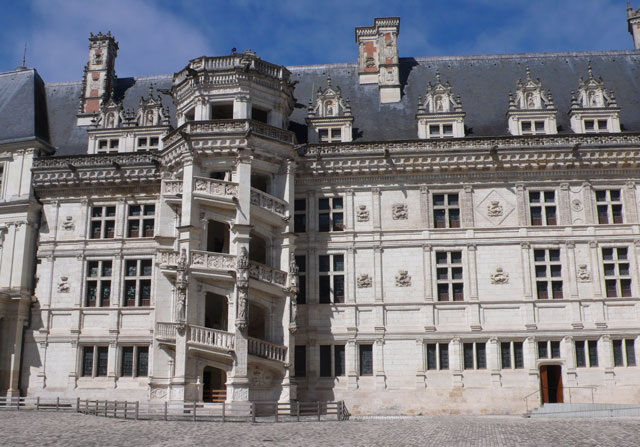
Château de Blois
Like Amboise, the Royal Château of Blois is built on a promontory right in the middle of the town overlooking the Loire River, and encompasses several different architectural styles from mediaeval times to the 17th century. At the end of the 14th century, the château was bought by the Orleans family and nearly a century later, Duc Louis d’Orleans became Louis XII and brought his wife, Anne de Bretagne, and his court to Blois. They modernised it all, so to speak, with stairs at each end and balconies on the first floor, decorating it with their emblems, the porcupine for Louis and the ermine for Anne.
Guardroom in Blois
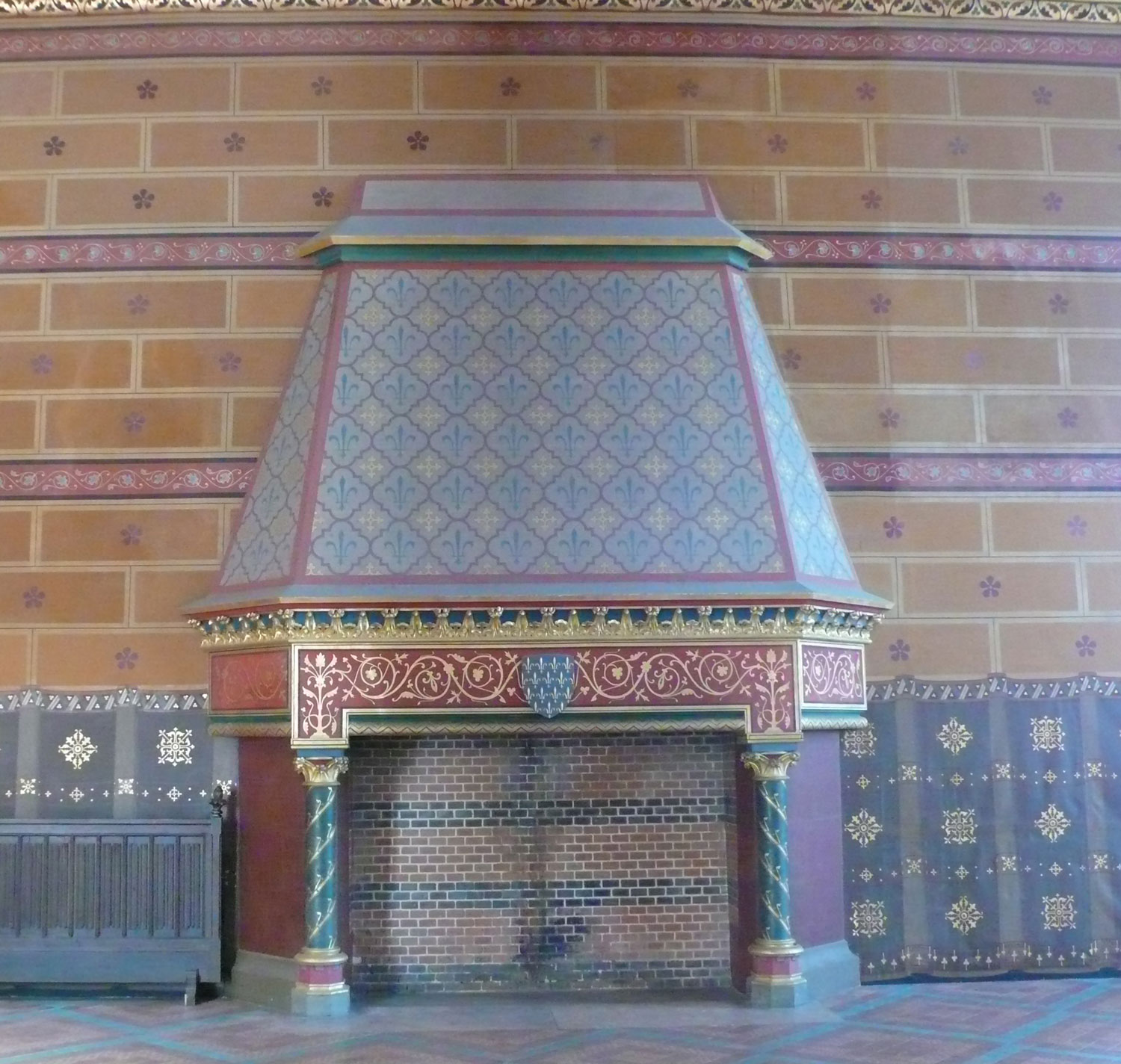
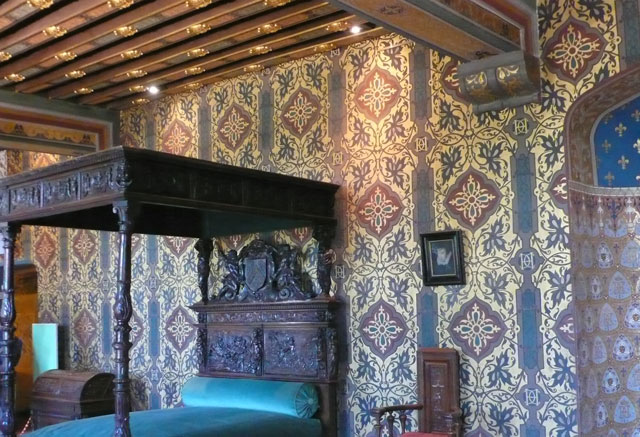
François I, whose salamander is a recurring theme, lived in the château after he ascended to the throne in 1515. The Duc de Guise was assassinated in the King’s Chambers on the orders of Henri III in 1588 after plotting to take over the throne and Catherine de Medicis, wife of Henri II (son of François I) and mother of Henri III, died there the next year at the age of 70. The interior is extremely rich and colourful with many fine fireplaces and majestic pieces of Renaissance furniture. There is also a lapidary section with gargoyles, statues, pediments and other bits and pieces taken from buildings on the site. There is a sound and light show in the summer.
One of the sumptuously decorated bedrooms in Château de Blois
Open all year round from 9 am to 12.30 pm and 1.30 to 5.30 pm in the winter months and 9 am to 6 or 7 pm from 01/04 to 31/10. Sound and light show at 10 or 10.30 pm. Château 14 euro; château + sound and light show 21 euro.
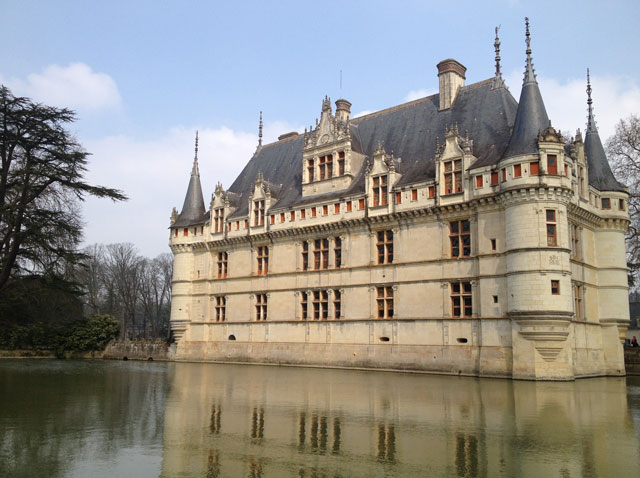
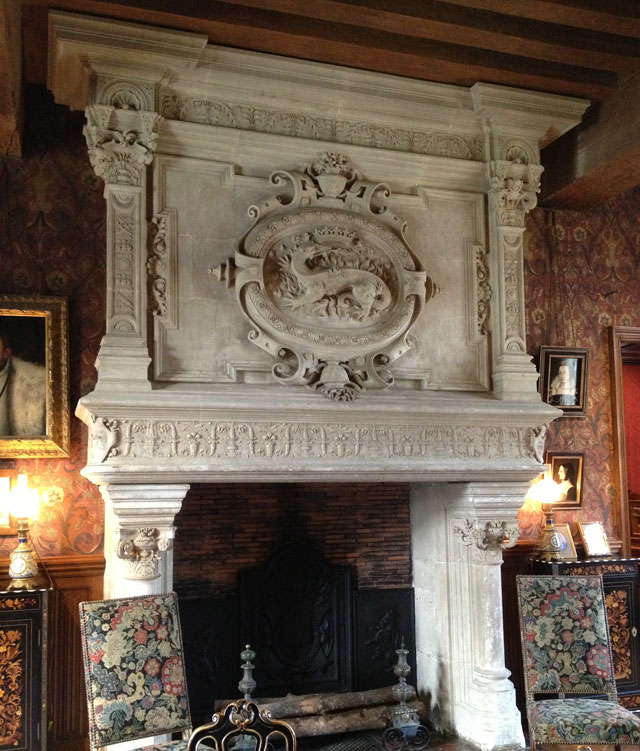
Considered by many to be a “jewel of the French Renaissance”, Château d’Azay le Rideau was built on an island in the Indre River by a rich financier in the early 16th century during the reign of François I and combines the Italianate and French styles. It is more sober than the larger châteaux and one of its most striking features is its monumental fireplaces. The château was abandoned after the French revolution and redecorated by the Marquis de Biencourt. In 1898, the 4th Marquis had to sell out and it was not until it was bought by the State in 1905 that renovation began.
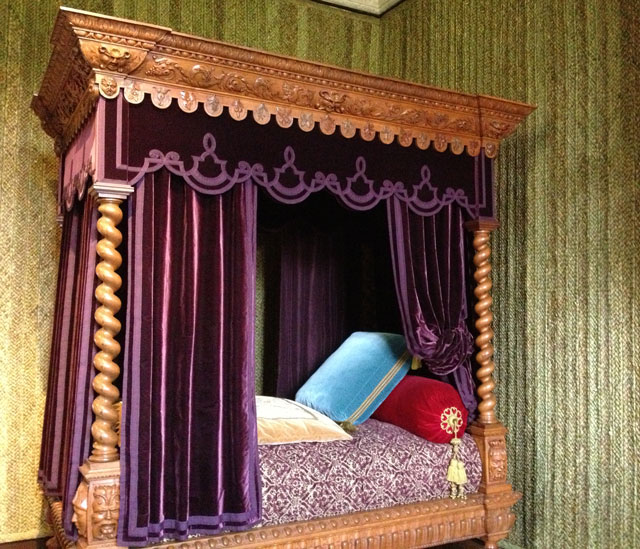
Philippe Lezbahy’s Renaissance bedroom in Azay-le-Rideau
Now most of the rooms are decorated in the 19th century neo-Renaissance style, but the royal apartments still have some older pieces. A wonderfully reconstructed Renaissance bedroom with copies of authentic soft furnishings and rush-matting on the walls is accompanied by a very instructive video. The roof space, opened a couple of years ago after major restoration, is the most remarkable example of Renaissance master carpentry now on show.
One of the monumental fireplaces with François I’s emblem, the salamander, in Azay-le-Rideau
The natural moat forms two “mirrors of water” reflecting the ornately sculpted frontons and pointed roofs of the château. The lovely jardin à l’anglaise or landscaped garden is the perfect place to wander on a fine day and affords stunning views of the château.
Open all year round. Every day from 10 am to 5.15 from October to March, from 9.30 to 6 pm in April, May, June and September, from 9.30 to 7 pm in July and August. Closed 1st January, 1st May, 25th December. 13 euro.
Places to eat
Le Lavoir in the castle grounds and a large choice of restaurants in the town itself.
Ussé
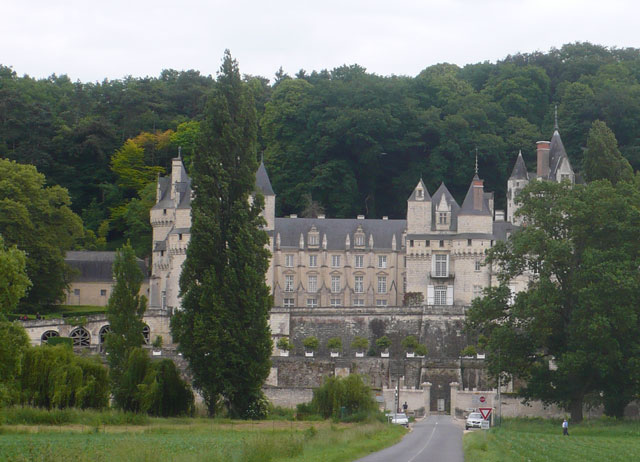
Château d’Ussé
Known as “Sleeping Beauty’s castle” because it was one of the châteaux that inspired Walt Disney, Château d’Ussé overlooks the Indre River. Cycling towards it in summer with sunflower fields on either side is an unforgettable experience. The original 11th century castle has been rebuilt several times, which explains its 16th-17th century aspect today. The grounds were redesigned in the 17th century by André le Notre, Louis IV’s landscape architect, who masterminded the gardens of Versailles.
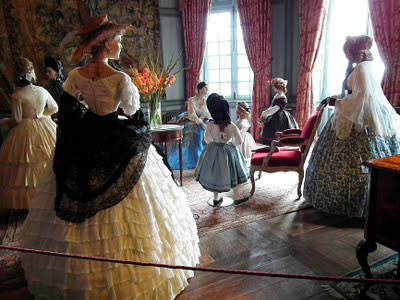
Costume exhibition at Ussé – photograph by Loire Valley Time Travel
Inside, monumental fireplaces and beautiful 18th century furniture and tapestries offer a backdrop to a life-like exhibition of mannequins in period costume which changes each year. The parapet walk offers access to rooms containing scenes from Sleeping Beauty and everyday life in the 19th century. A lovely Renaissance chapel stands outside the château.
Open from mid-February to mid-November, 10 am to 6 pm 17/02 to 31/03 and 1/09 to 11/11, and 10 am t 7 pm 01/04 to 31/08. 14.50 euros.
Valençay
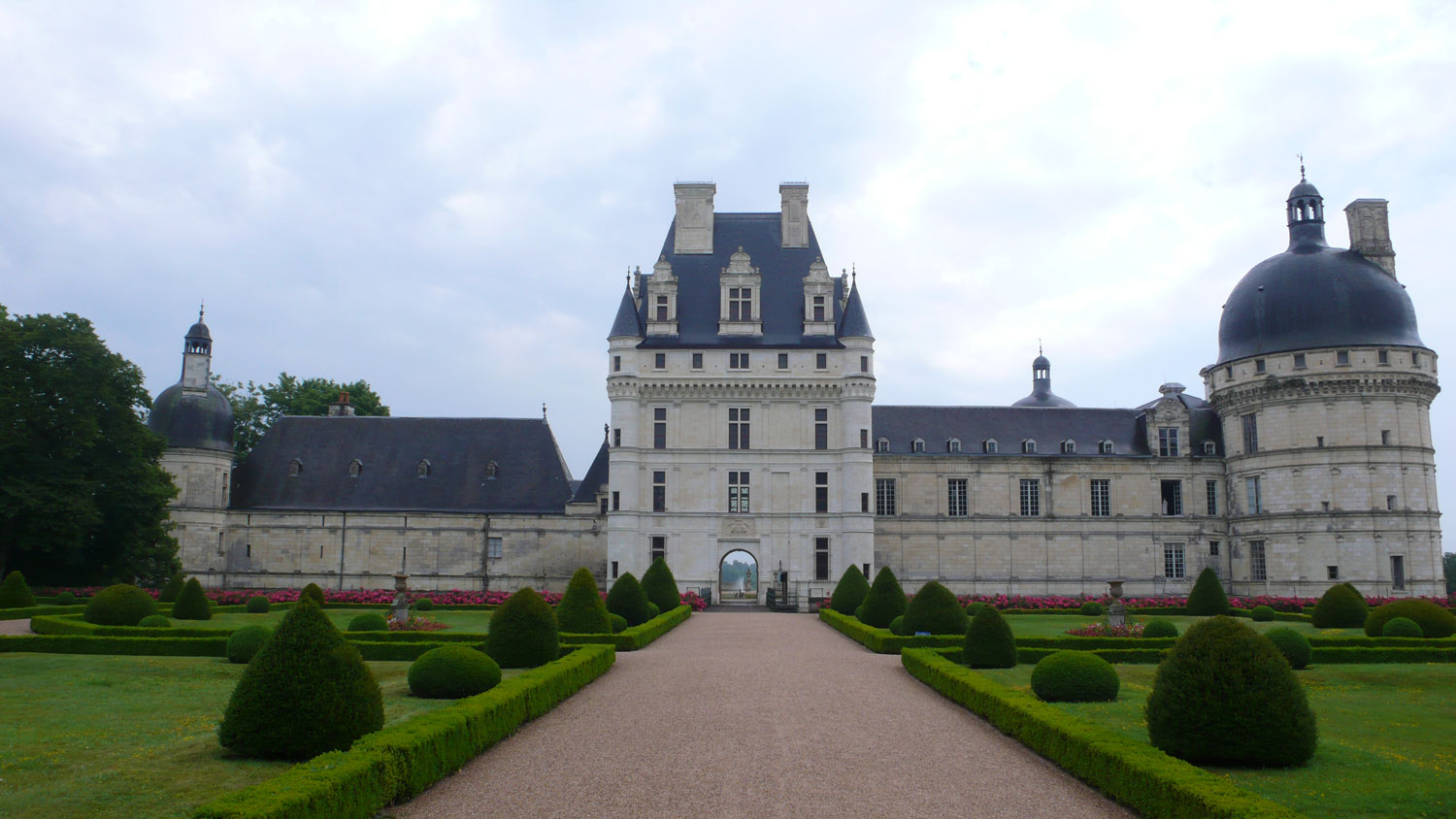
Château de Valançay
Valençay, rebuilt in 1520 by Jacques 1er d’Estampes and extended in the 17th and 18th centuries, was bought by Talleyrand in the 19th century at the instigation of Napoleon to welcome foreign dignitaries. Its sumptuous Italian arcaded gallery makes it a reference in the field of Renaissance architecture while its domed towers, dormer windows and bull’s eyes are perfect examples of the neo-classical style.
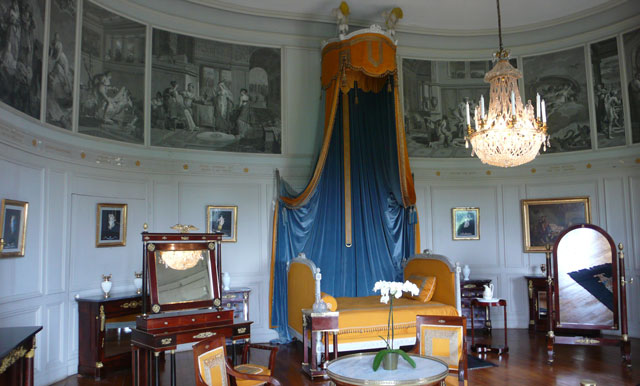
The King of Spain’s Chamber at Château de Valançay
The inside is furnished just as it was during Talleyrand’s time, with elaborately embroidered Empire chairs, ornate tables and sumptuous chandeliers. Magnificent vaulted cellars house the kitchen, pantry and cellar in which one of the best tables of Europe was prepared.
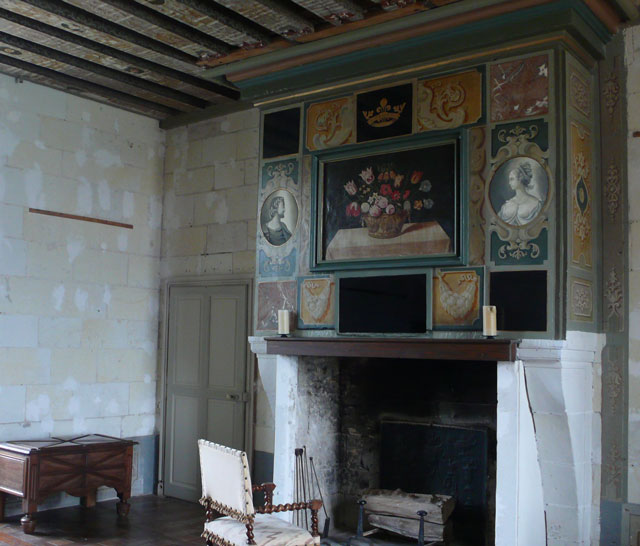
Renaissance Room in Château de Valançay
The château is surrounded by a lovely formal garden and a landscape garden. Two nights each summer, the château is illuminated with 3,000 candles, and costumed actors and trumpeters revive the imperial celebrations of the past.
Open all year round. Every day from 16/03 to 11/11 from 9.30 to 10.30 am to 5.30 to 7 pm. 14.50 euros.
Villandry
Château de Villandry
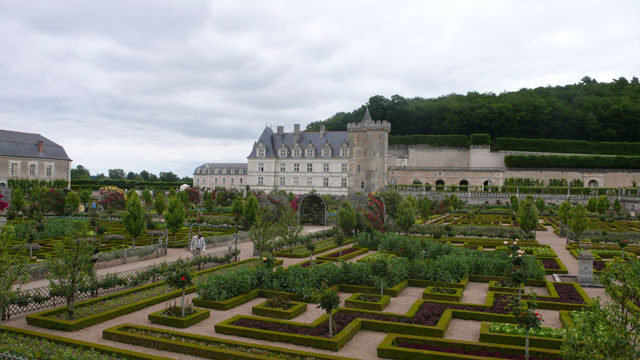
Also built overlooking the Loire, Château de Villandry is a château for garden lovers and the last of the major Renaissance castles to be built in the Loire Valley. It was the home of neither a king nor a courtesan but of Jean Le Breton, François I’s finance minister. He demolished the old feudal fortress, except for the keep, in 1532 and replaced it with an extremely elegant and richly decorated purely French Renaissance château. When the Marquis of Castellane bought it in 1754, he revamped the interior in the neo-Classical style. Unfortunately, he also destroyed the harmony of the outside, adding balconies, balustrades and trompe l’œil windows.
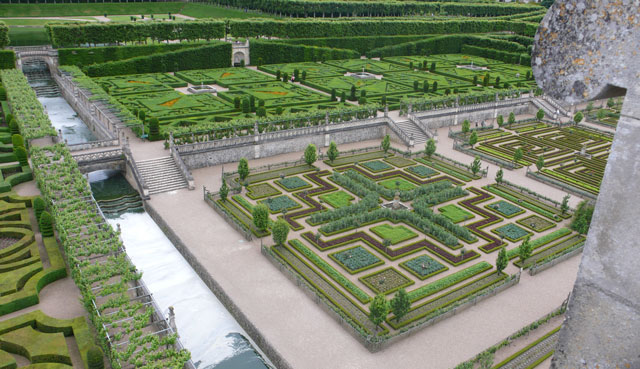
Villandry gardens
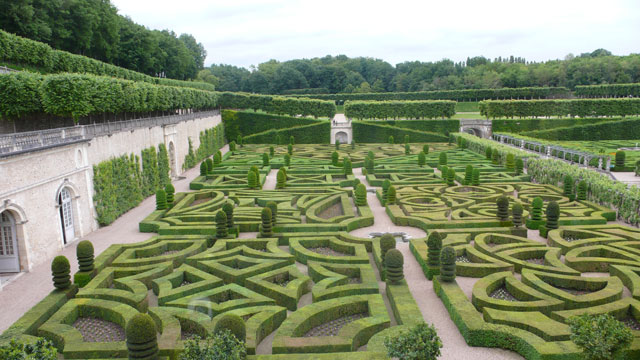
The gardens were much more successfully refurbished in the early 20th century to recreate the ambiance of a Renaissance garden. An arbour of grape vines leads to a large parterre, designed as a Garden of Music. The Garden of Love is on the other side of the canal. The garden combines flowers and vegetables and its true glory can best be experienced from the top of the château. A shop sells seeds and plants and other garden-related items.
Another view of the gardens at Villandry
Open all year round. The gardens are open every day from 9 am to 5 pm to 7.30 pm depending on the season. The castle is open from 9 am to 9.30 am to 4.30 to 6.30 pm from 16/02 t 11/11 and during the Christmas holidays. 13 euro, gardens only 8 euro.
ACCOMMODATION
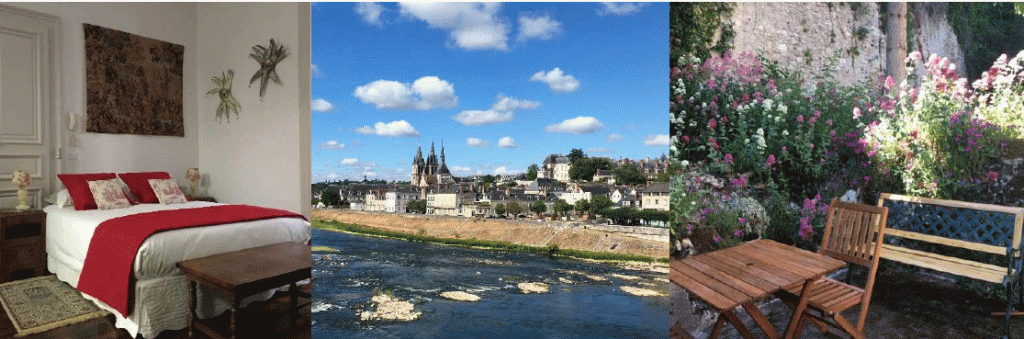
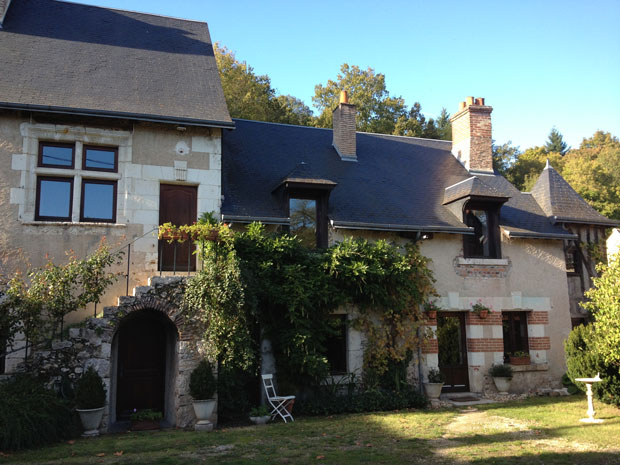
And if you’re looking for an authentic place to stay in a central location, why not check out our rental accommodation for two in the mediaeval quarter of Blois – Châtel Rose. Click here for more information.
FURTHER READING
For more articles about France from other bloggers, see All About France
The sun’s shining outside and we’ve just had lunch. Instead of getting back to work on a very boring translation and the Big Fireplace Operation respectively, I suggest to Relationnel that we go for a walk. What’s the point of living in the country if we can’t make the most of autumn? Relationnel immediately agrees so I put on my big thick walking shoes and off we go.
Closerie Falaiseau in autumn
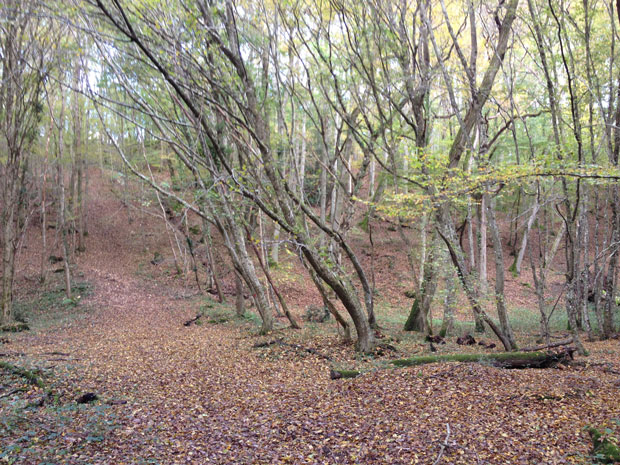
We turn right out of the gate and walk down the road until we get to the railway underpass. We turn right again, up the hill, to the forest. I see there is a sort of path on the right, so we walk along that. Then I see a cyclist bearing off to the right once more and suggest we follow him. We keep going until we come to a sort of clearing.
Forest clearing
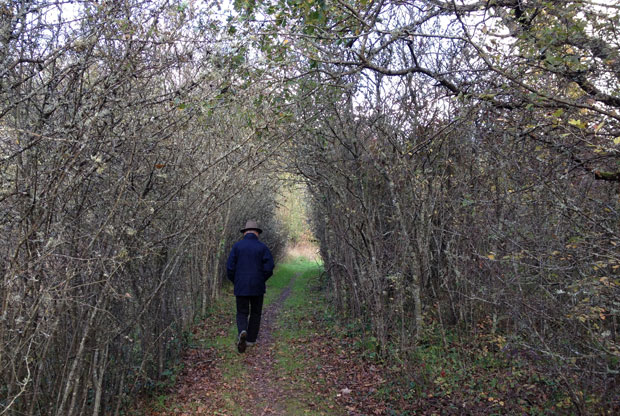
In front of us is a fairly steep slope and I realise this must be what Alain meant when he talked about being in the forest and seeing the tree tops. The light is amazing and it really is very beautiful and peaceful. We come out of the forest and past a field of stubble, then through a bower of trees that have already lost their leaves.
Natural archway of trees
At the end of the path, instead of continuing straight ahead, we turn right to explore the houses which Relationnel tells me overlook ours. I’m amazed that he knows where we are as I have lost all notion of geography by this time. We then start walking through brambles and Relationnel lets slip that “according to the satellite photo, this should take us back to the other path”. Ah, now the secret’s out ! He’s been checking out Google maps.
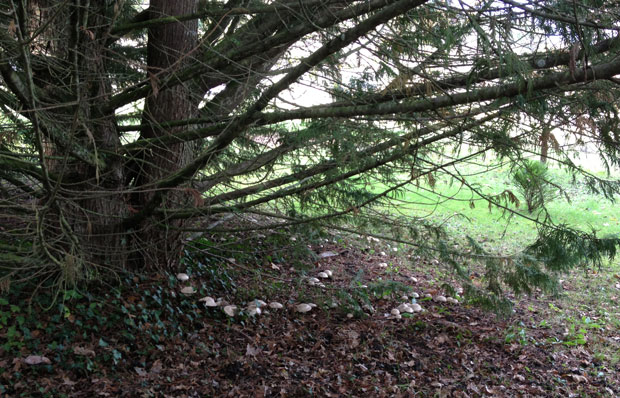
Ring of agaric mushrooms
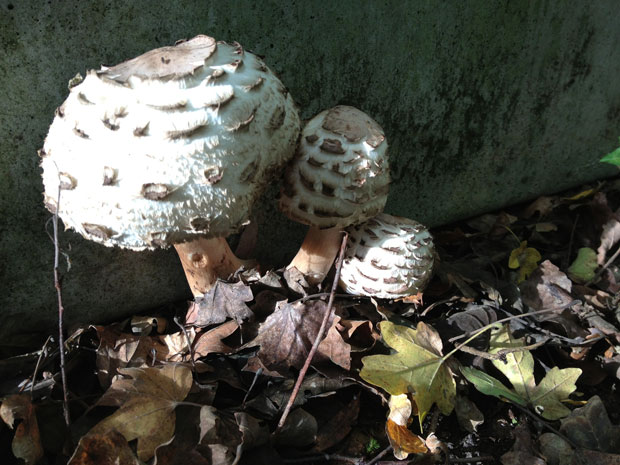
We finally have to turn back because the brambles are getting too thick and I am wearing my only decent anorak. We connect up to the field of stubble again and Relationnel finds a Marasme des Oréades (Marasmius oreades) but there’s only one so we don’t keep it. Then we see a whole ring of agarics but they’re on private property which means we obviously can’t pick them even if there’s no fence. A little further on, we see a little group of parasol mushrooms somewhat past their prime huddling together in the sun.
Parasol mushrooms huddling together
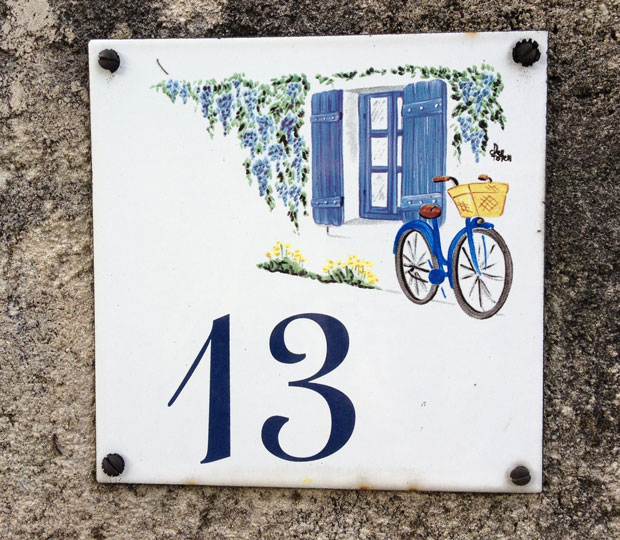
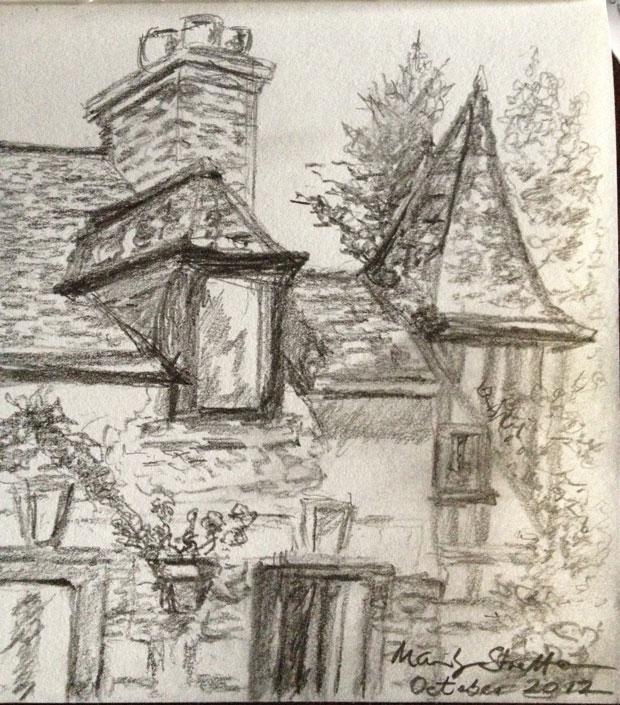
We go past a few more houses and I see a delightful little number plaque with blue shutters and a blue bike. Now, I wonder what sort of plaque I could find for a house that’s 400 years old and has mullioned windows and a half-timbered tower? And I wonder whether Mei Lun’s beautiful drawing of Closerie Falaiseau could be made into a plaque.
N° 13
Suddenly I recognise where we are – we’re walking down a road called Rue de la Grande Filaire that I’ve never wanted to take because we usually approach it from the bottom on our bikes and it looks like a long haul up ! So we turn right and walk down Rue de l’Hôtel du Grand Pasquier that eventually meets up at the church on the corner of our road. Another 15 minutes and we’re home, delighted with our lovely autumn walk and ready to get back to work.
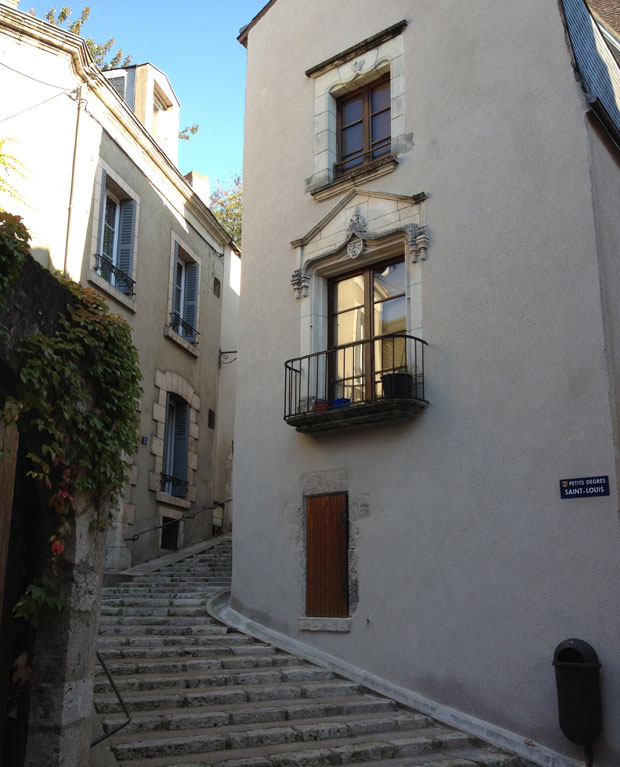
It’s Mei Lun and Alain’s last day in Blois. The sun is shining brightly even though it’s four degrees. We decide to go into Blois and visit the Cathedral area. We park on the mail, so-called because of a game called mail, from maillet meaning mallet, that was very popular in the Loire Valley. We cross the road and walk up a little street that leads to a set of stairs called petits degrés because they are shallow, as opposed to the steeper grands degrés near the château. We keep going until we come out behind the cathedral. I’m enjoying myself as I’ve never taken this route before.
Petit degrés steps
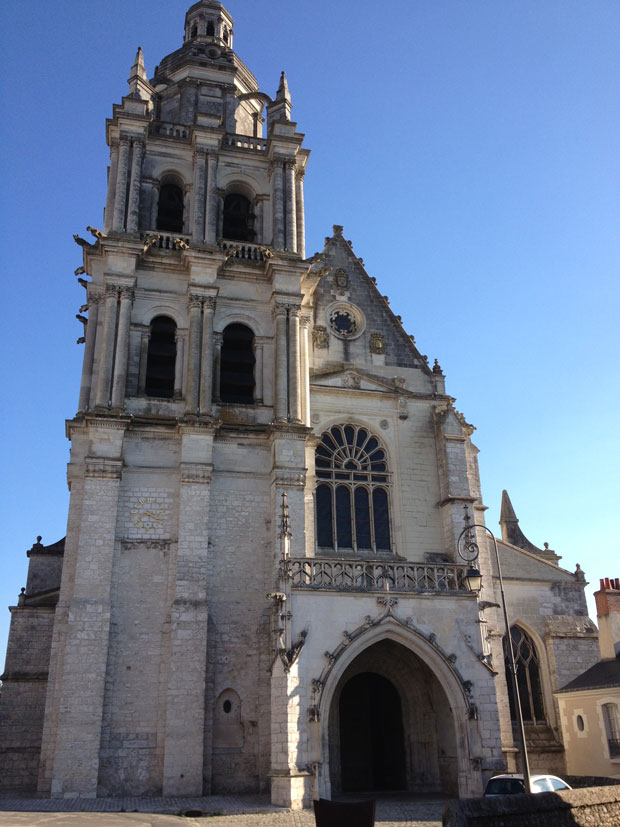
We visit the cathedral , which has had a chequered existence. The original sanctuary, built during the reign of the Merovingians (5th to 8th century), was dedicated to Saint Peter. A second church was built there in the 12th century, this time under the patronage of Saint Solenne. In 1678, “a hurricane forced its way inside and lifted the roof” (I love the translation !), destroying the nave. Gothic restorations were carried out between 1680 and 1700 and the new cathedral was dedicated to Saint Louis after Louis XIV presented the church with an organ.
Cathedral of Saint Louis
Like many of the churches in the area, most of the stained-glass windows were destroyed by American bombs in the Second World War. Chartres was an exception, because all the windows were taken down before the bombing started. A new set of 33 windows, inaugurated in 2000, was designed by the Dutch artist Jan Dibbets and made by the French stained-glass artist, Jean Mauret.
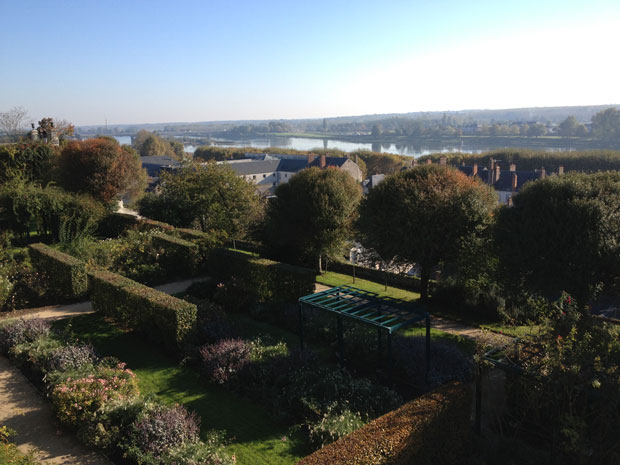
Sweeping view of the Loire from the terrace above the rose garden
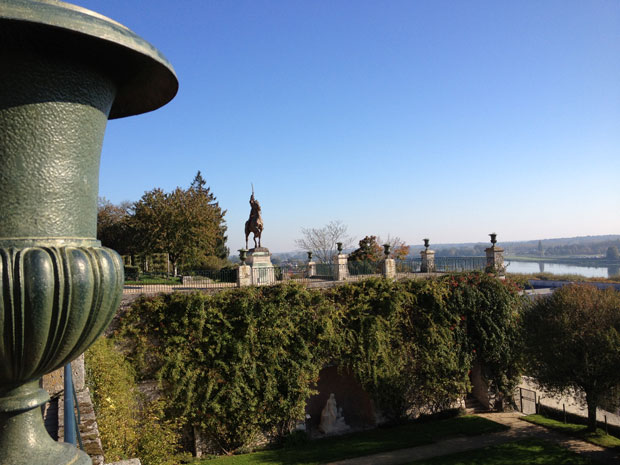
We turn right as we walk out the church and past the Town Hall. Just opposite is a beautiful, though inaccurate, sun dial, which reminds me that I need to go to Italy again to find one for Closerie Falaiseau! We continue walking until we come out on the terrace overlooking the Loire. The last time I came here, it was freezing cold and difficult to really appreciate the wide-sweeping view. The large urns remind me of my balcony in Paris.
View of Joan of Arc’s equestrian statue
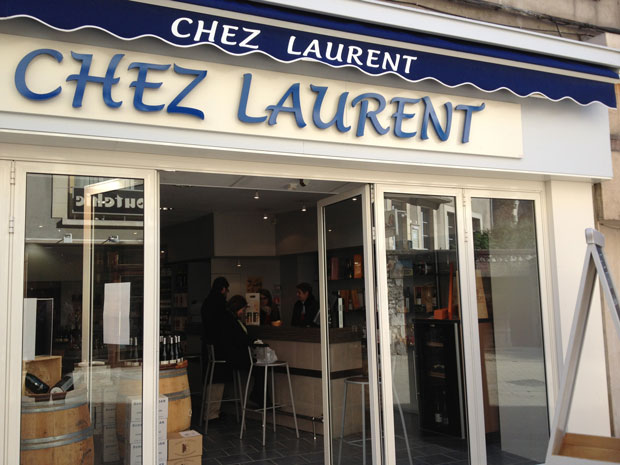
We go back in the other direction and wander down the hill until we come to the Denis Papin steps. At the bottom we turn right and keep following the little streets in the general direction of the château, eventually arriving at Place Louis XII. Alain is keen to find some vouvray moelleux and has noticed a wine shop called Chez Laurent on one side of the Place.
Chez Laurent wine store in Blois
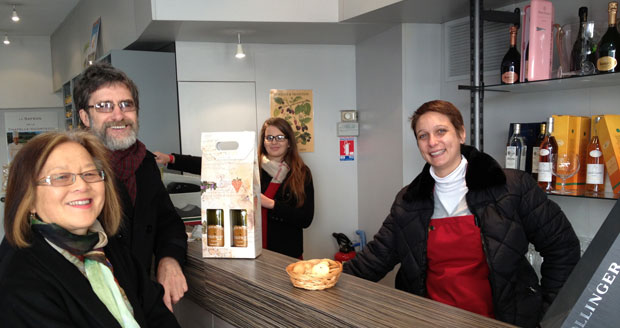
As we walk in, who do I see? Virginie, the sommelier, from Vinomania, with whom Kathy Standford and I did our wine tasting in June. I knew that she was going to another location because she wanted to be more involved in the wine-buying and tasting process, but hadn’t been able to locate her. She welcomes us in and although she doesn’t have the wine Alain is looking for, she suggests we try two other vouvrays. We prefer the 2005 tendre from Domaine du Viking so Alain buys a couple that she puts in an attractive carry box. They’re only sorry they won’t have time to have a Loire Valley wine historical tasting – it’s a good incentive for next time.
Chez Laurent with Virginie
Our last stop is L’Appart’thé, where Mei Lun and Alain want to sample a café/thé gourmand, as I’ve told them it’s one of the best in Blois. We ask if we can just have a tea or coffee, but the owner explains that it’s lunch time, so we decide to have an early lunch. Alain and I have the goat’s cheese and zucchini tart while Mei Lun has the spinach and salmon. Both are delicious.
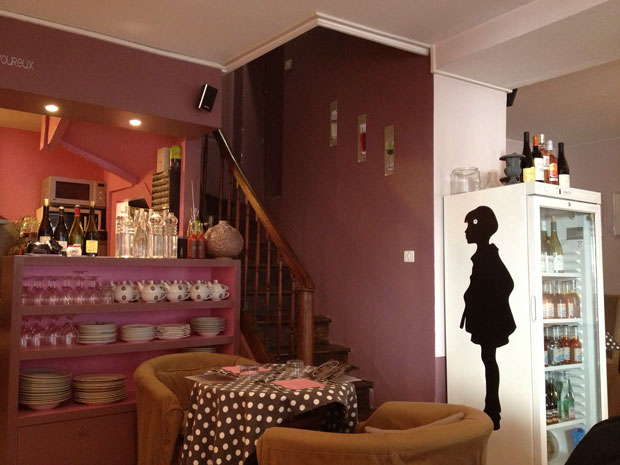
Inside L’Appart’thé
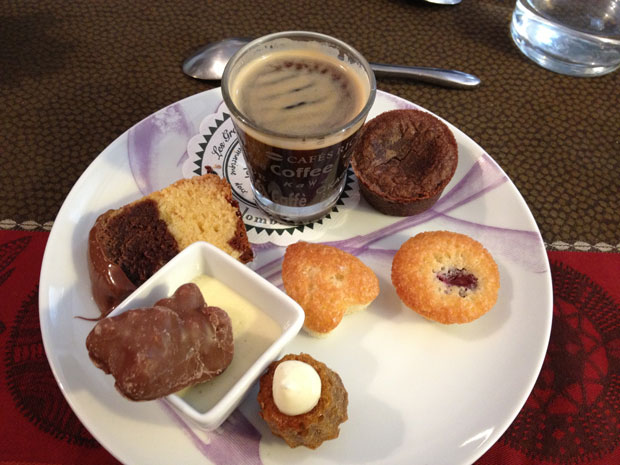
The thé/café gourmand lives up to expectations with a lovely selection of baked goods, including a mini cannelé, a moelleux au chocolat, a panna cotta and a chocolate and vanilla sponge cake. In the car on the way home, we all agree that Blois is a great place to live!
Miraculously, the sun has come out so I suggest to my Australian friend Mei Lun, who’s staying with me for a few days, that we go into Blois for coffee and maybe find some ginger tea. It’s warm for late October – 15°C – and the sky is bright blue, certainly not time to be working!
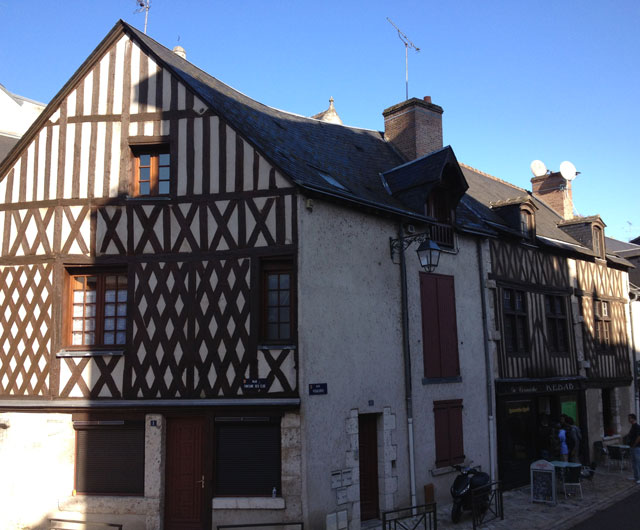
Half-timbered houses in Blois
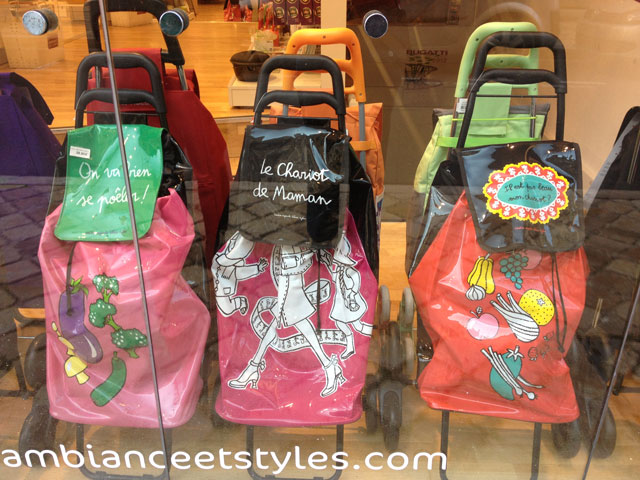
We park on the “Mail” along the Loire River and walk into the centre of town admiring the half-timbered houses in the sun. Mei Lun remarks on how clean everything looks. It’s almost 12 so most of the shops are shutting up. We’re in the provinces after all. We go past the most amazing collection of shopping trolleys. There’s a black one that says Le Chariot de Maman. “Are they really called chariots?” says Mei Lun. And I suddenly realise how funny the name is!
Chariots in Ambiancestyle.com
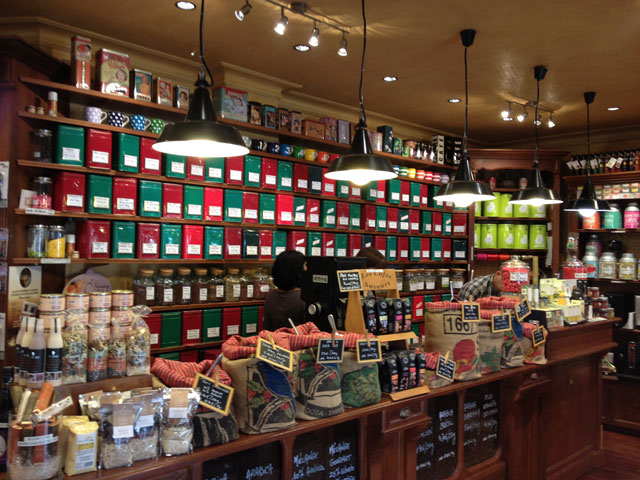
We arrive at the tea shop in time. The man behind the counter is very welcoming and finds us the tea we are looking for. We wander around looking at all the wonderful things connected with tea and coffee in the shop, including some Chambord biscuits, which are the local speciality.
Tea shop in Blois
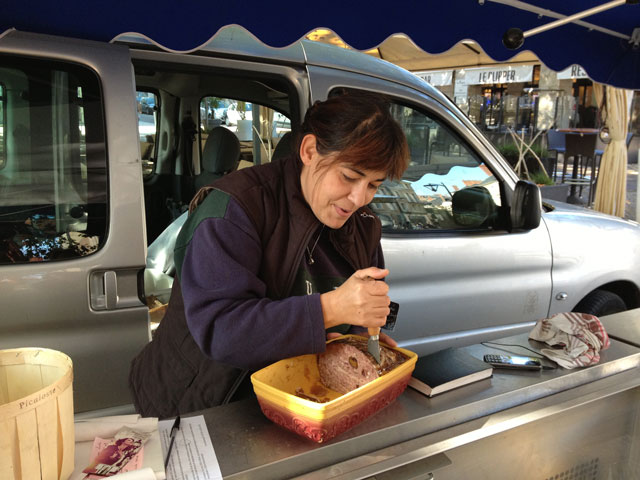
We walk towards Place Louis 12 where “The Clipper” has great lounge chairs but awful coffee, so I discovered a few days ago. Much better for an apéritif which is accompanied by some great tapas. There are a few market stalls. A lady calls us over, vaunting her wares. She has various sorts of pâté, local honey and Cheverny wine. She suggests we taste the wild boar and prune pâté, explaining it comes from Sologne, which is the big hunting area around Chambord castle which you may remember from my bike ride with Jane in the summer.
Our slice of wild boar and prune pâté
It’s delicious so we ask for a slice. She then suggests that we try another one – duck foie gras and truffle pâté (not to be confused with foie gras), saying she only has two left and that she’s willing to cut it in half if a whole one is too much. I remark on her excellent sales technique which makes her laugh. We try the pâté and it’s divine but I’m thinking about those extra holiday kilos so I check that it will keep until Relationnel arrives on Thursday. It will, so we buy half. It turns out she’s there every Tuesday and Thursday so I promise to come back another time.
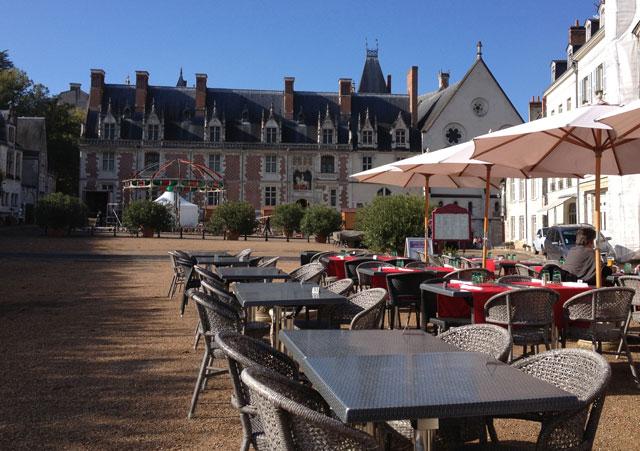
Le Marignan on Place du Château in Blois
We climb the many steps up to Blois castle and come out on the esplanade. I had planned to go to Les Forges du Château which opened at the beginning of the summer, but it’s closed, so we go down to Le Marignan, which is near the Maison de la Magie. We order our coffees, which are not too bad and enjoy the sun, with the beautiful façade of the castle as a backdrop. And I’m so glad that we found our beautiful Renaissance home in Blois!