Now I bet most of you don’t know what this post is about. Père de famille, you say, “father of the family”? Don’t all fathers have families? And why not mère de famille? Aren’t père and mère enough?
Well, there is an added meaning. Of course. Un père de famille ne doit pas prendre de risques means that a man who has a wife and family to think about shouldn’t be taking any risks. We could say a family man as well in English. Une mère de famille pense toujours à ses enfants. Funny, but we don’t say a “family woman”. I can think of a “woman with a family” or maybe “a wife and mother” and even “housewife” in some contexts. You may have other suggestions.
But that’s not really what I want to talk about. Believe it or not, père de famille and more specifically, bon père de famille, is also a financial term, which always amuses me.
Yesterday, I came across it when I was translating a takeover bid: gestion de la Société en bon père de famille. “Management of the company like a good family man” would be a literal translation but you certainly wouldn’t find it in a contract! I decided on “good, safe management of the Company”.
The expression often goes hand-in-hand with investment: placement de père de famille is what we call a gilt-edged or safe investment. Valeurs de père de famille are gilt-edged or blue-chip securities.
The masculinity of the expression is not surprising – French women were kept out of money matters for a very, very long time. It was not until 1965 that women no longer needed their husband’s consent to choose their own profession or open a bank account. Astonishing, isn’t it?
And it was much later – only I can’t find the date – that women were finally entitled to see and sign the family’s tax declaration. Up until then, the husband en bon père de famille, n’est-ce pas declared both his and his wife’s revenue and could refuse to even show her the declaration!
Women were given voting rights in New Zealand in 1893, in Australia in 1902, in the UK in 1918 (but you had to be 30, equal suffrage only came in 1928) and in the US in 1919 (though women could vote in Wyoming as early as 1868) while French women finally voted in 1944. Enough said.
Adventure means going out of your comfort zone. That’s what my son would say anyway.
For me, that means experiencing a new culture, a new language, a new place.
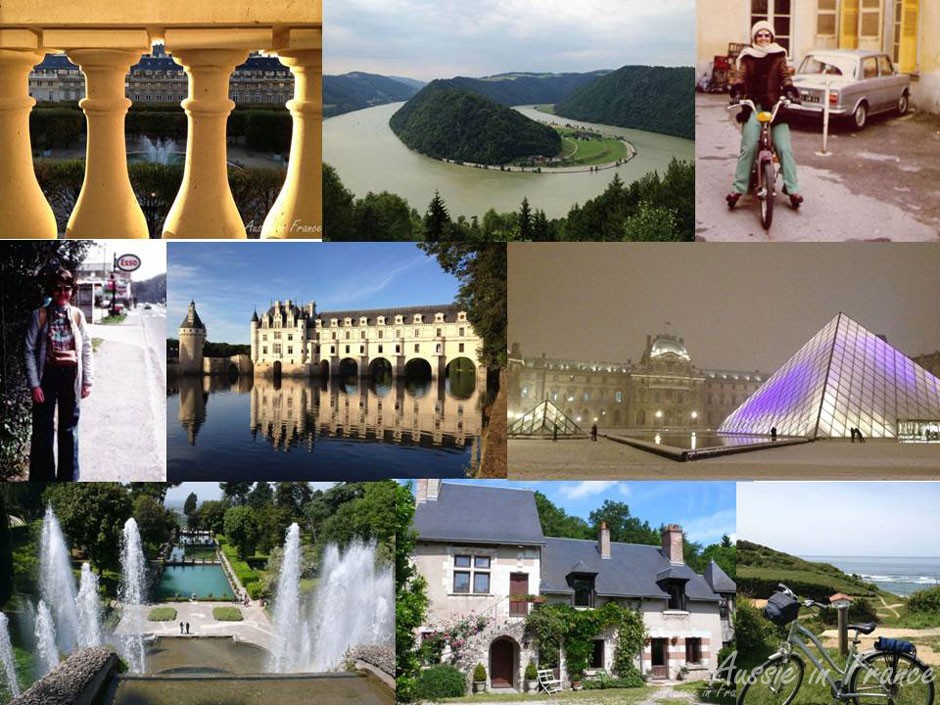
So my first adventure was going to Noumea for six weeks to work in a snack bar when I was 19.
My next adventure was leaving Australia behind me forever when I was 22. I cleared my room of all my belongings, packed my trunk and left with not a glance behind me. No internet and mobile phones in those days.
I landed in the south of France with not an English speaker in sight. It was exhilarating! I woke up every day to a new adventure. I bought a moped and learnt to ski.
I hitchhiked all over France, then took off to Morocco, Greece, Spain and Italy. I trekked in the mountains and was saved by helicopter.
Then I went to live in the centre of Paris in an historical building just near the Louvre with a view to die for. What’s that if it’s not an adventure ?
Travelling the world has always been an adventure but it took on a new dimension last summer when we cycled 1100 kilometers along the Danube, through Germany, Austria, Slovenia and Hungary – a totally new experience that I’m eager to repeat.
Now we’re about to retire and are embarking on perhaps the greatest adventure of all. Living in a 400-year old house amongst the famous châteaux of the Loire Valley. Wish us luck!
This week’s Blogger Round-Up starts in a museum and ends in a cemetary. Daisy de Plume, whom you may remember from the THATLou treasure hunt I participated in recently, tells us all about the Orangerie Museum; Bread is Pain, in her usual humouristic musings, recounts the difficult ascension of the potato in France; while fellow Aussie Susan from Days on the Claise reports on a new French appellation, the lapin gris de Touraine. Enjoy!
Musée de l’Orangerie
by native New Yorker Daisy de Plume, who has lived in Paris for nearly a decade and created THATLou to share her passion for art and her unique approach toward making the museum experience fun and accessible to all
Now that’s a great photo, no? Lilian Lau is a jack of many trades: from an École normale supérieure post-doc science researcher to a wonderful travel writer (links to a sampling are below). After first meeting her at last January’s THATd’Or created in conjunction with theAFMO, Lilian generously put me in touch with Camille Breton, of Science Académie, for whom I built the Arts + Sciences hunt. Since then we’ve been having lovely lingering lunches between her globetrotting flights. Here she picks up on the Museum Musings(which I had initially intended to be a “monthly” museum musing, but alas time has required that first M to be dropped!). Without further ado: Read more
Plus ça change plus c’est la même chose
by Bread is Pain, a 30-something American living in the Rhone-Alps, getting her master’s degree, learning French and slowly eating and drinking herself through the country
“What tha…why is there a potato on that tombstone,” I turn, looking at MB questioningly. We are on a tour of Pere Lachaise cemetery in Paris.
“Quoi,” he asks, looking towards the grave, apparently he doesn’t know why either.
“Ah,” our tour guide walks over and joins us, bringing the rest of the group. “This is the grave of Parmentier, the man who introduced potatoes into French cuisine.” Read more
Le Lapin Gris de Touraine
by Susan from Days on the Claise, an Australian living in the south of the Loire Valley, writing about restoring an old house and the area and its history and running Loire Valley Time Travel.
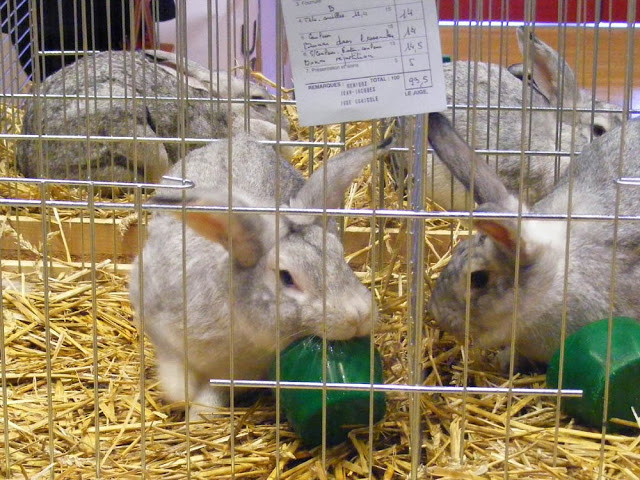
History: This type of grey rabbit used to be well known to the inhabitants of Indre et Loire and by the early 1900s it had begun to be called le lapin gris de Touraine. They were raised for meat and fur, but although still common on farms in the area in the 1950s, by the end of the 20th century they had almost disappeared. It has just received official recognition as a breed, after a group of enthusiasts worked on saving the rabbit from extinction. Read more
I am a sporadic cook at best these days. When my children were at home, I used to cook a lot more but most of the time, I serve up the same old dishes that are easy and quick to make and that Jean Michel and I both like. However, now that we have started to go to the Saturday market in Blois where they are a lot of market gardeners I find myself with ingredients that I don’t usually buy.
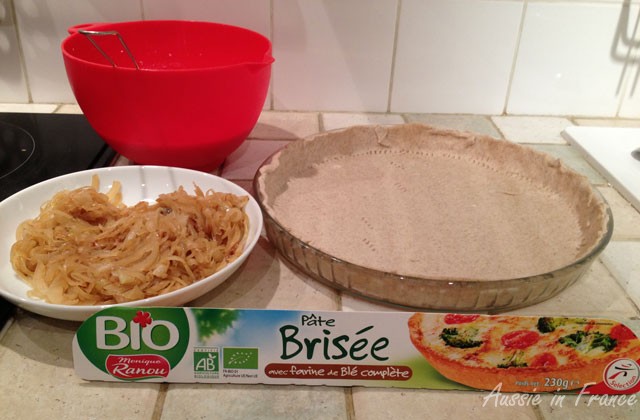
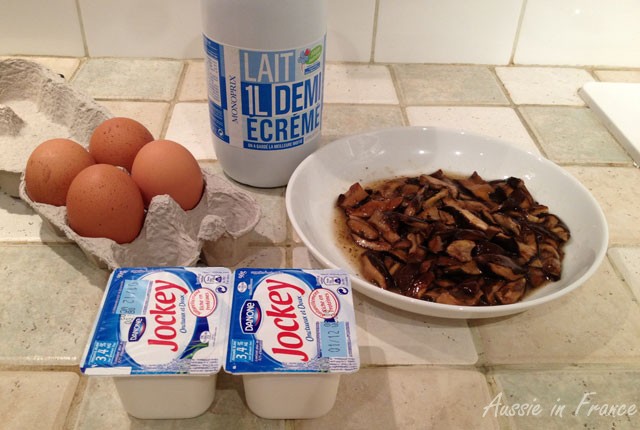
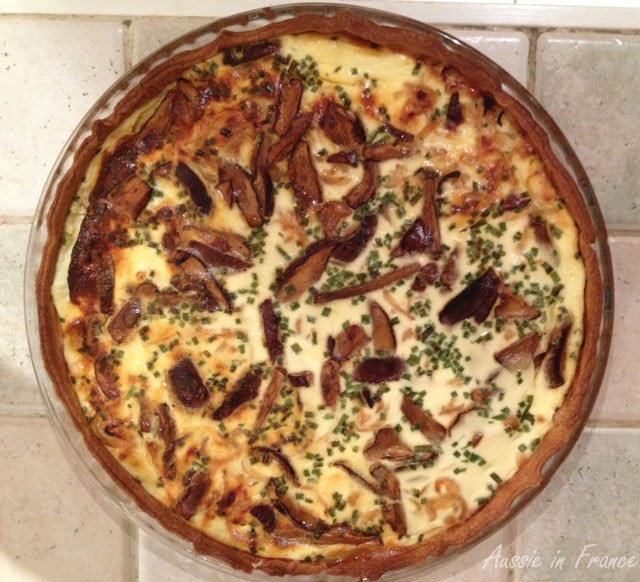
I usually make my own pastry but recently I bought some fresh pie crust pastry to make a leek or a spinach quiche and promptly forgot all about it. Today, I had a look at the use-by date and saw it was my last chance before I’d have to throw it away. I obviously had no spinach or leeks left so I rooted around the cupboard and came up with some onions. I had some boletus mushrooms in the freezer from our last forage plus some chives so I figured I could combine them all.
Quiche is traditionally made with fresh cream but I usually make it with fromage blanc which I always have in the fridge because I eat it for breakfast every day. If I buy cream it goes off before I remember to use it.
Do you have a favourite quiche recipe?
Ingredients
1 pie crust
2 very large onions
Wild or cultivated mushrooms
2 pots (about 1 cup) of fromage blanc
2 pots (about 1 cup) of milk
4 eggs
fresh (or frozen) chives
Slice the onions thinly and cook in olive oil until brown and soft. Beat the fromage blanc or fresh cream, milk and eggs together. Season and add the chives.
Cook the pie crust for 5 minutes at 225°C in the oven. I use a convection oven so you will need to add a few minutes if you’re using a regular one.
Line the bottom of crust with an even layer of onions. Place the cooked, sliced mushrooms on top then pour over the egg mixture.
Cook for about half an hour at 200°C. It’s cooked when it puffs up and is slightly brown.
When I was a child I loved singing but unfortunately I was constantly told that I was singing out of key or that I was tone deaf. I had no idea what that meant of course and still sang along gustily with my more gifted siblings when we spent whole days in the car going down to Brisbane for the holidays. I still have our little song book from that period with Bell Bottom Trousers, A Bicycle Built for Two, The Old Grey Mare and other songs of that ilk. Only my father, who was not very musical, defended me.
When I was about 6 or 7, we acquired a stereogram and my mother gradually collected the popular musical comedies of the time, particularly those of Rogers and Hamerstein. I still know all the words to Oklahoma, Carousel, South Pacific, The King and I and The Sound of Music. But my favourite was Salad Days written by Julian Slade and Dorothy Reynolds as a summer musical for the Bristol Old Vic’s resident company. It’s one of the London West End’s longest running musicals even though the music and lyrics are nothing sensational.
My request to learn the piano was turned down and I was put into Speech and Drama classes instead. I went on to get my licentiate (teaching diploma), the significance of which you’ll see later on. I was told by my mother many years later that she didn’t want any of us to learn the piano because she used to spend most of her celibate evenings out playing so that the rest of the company could dance! She didn’t want that to happen to us.
My youngest brother turned out to have a wonderful singing voice so had private lessons and won prizes at the local eistedfodd. No one realised that I should have had singing lessons too! But I didn’t know then that it was possible to learn to sing in key. I sang in the shower, I sang when I took my dog for walks, I sang in the car with the window wide open as we whizzed along at 90 miles an hour and no one could hear me.
Townsville, taken from Magnetic Island
The most embarrassing moment was being voice-tested for the school choir, especially the year when I was school captain. I developed a sneeze that I could bring out at will so no one at school actually heard my singing voice. I just said I was alto and sung under my breath. For many years, there was an annual school performance starring all the music pupils. I was so envious the year they put on The King and I and I couldn’t even participate.
When my children were born, I sang to them all the time and even made up songs for them and they never complained about my voice. They liked my singing. Recently, I played some Peter, Paul and Mary songs for Black Cat on my iPad and she looked at me in amazement, “Is that Puff the Magic Dragon I’m hearing?”
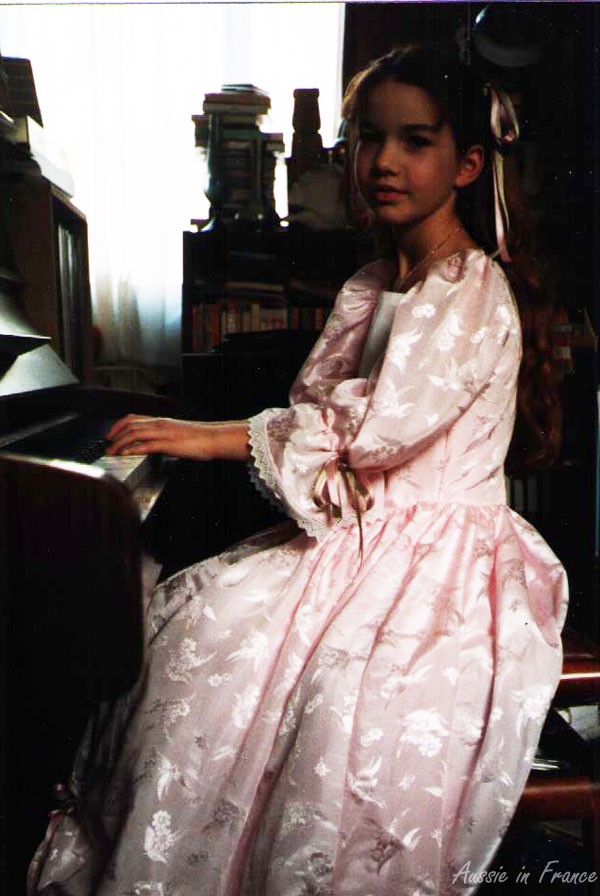
Black Cat wearing her princess dress at a musical afternoon
Somewhere in the back of my mind, the lyrics from Salad Days remained with me and when Black Cat was 6, I started “looking for a piano, not just any old piano, the one that makes you sing“. The words are actually “the one that makes you laugh” but that’s how I remembered it. I had also realised by then that the methods I used to teach children to pronounce words correctly could be applied to singing. Once you hear the sound correctly, you can pronounce it.
So I went to a piano shop and bought a beautiful new German piano and Black Cat and I both started learning privately with an Australian woman and it worked – I did learn to sing on key! I later joined the choir at the local music academy (conservatoire) and was able to participate in a number of live performances from which I derived great satisfaction.
Proud mums at a musical afternoon
I loved learning the piano. I spent hours practising and managed to make reasonable progress. However, an adult doesn’t have the same capacity as a child and it required a lot of hard work. After my divorce, Black Cat and I went to the consevatoire as it was cheaper and I had to sit for an exam each year. The piece I could play perfectly for my teacher’s ears alone dissolved as soon as the examiner walked into the room and my fingers went to jelly.
In the meantime, I started organising musical afternoons for my friends and their children who sang or played instruments. We had a cello, a violin, two clarinettes and a trombone. I found sheet music for several instruments and all the little brothers and sisters of the instrument players had xylophones and triangles. Leonardo took up the clarinette so was able to participate as well. I often played duets with Black Cat, with me always playing the easier part of course.
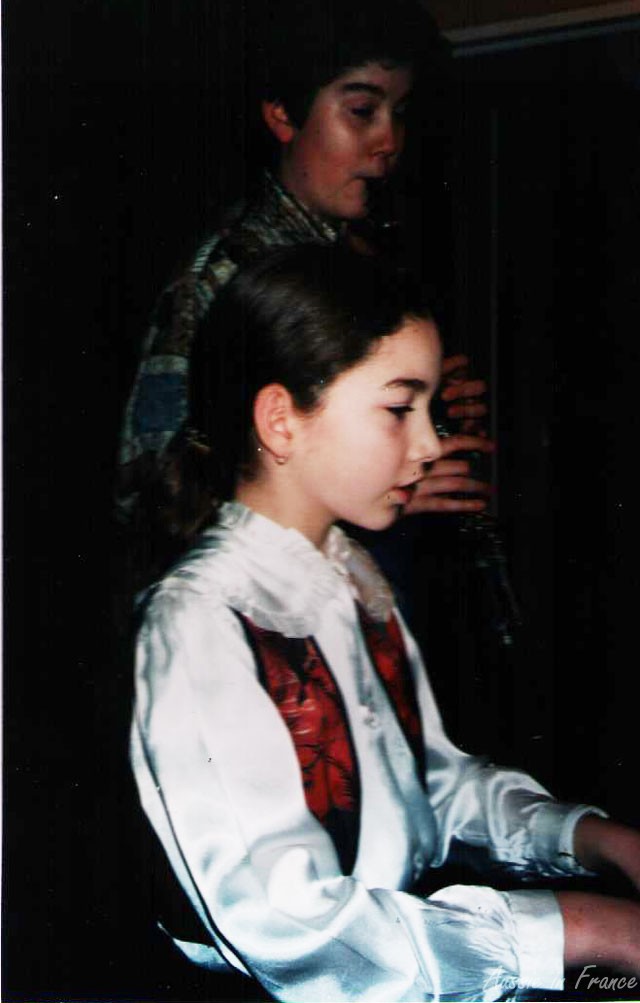
Leonardo at the clarinette and Black Cat at the piano one Christmas
I eventually stopped playing when I realised that the hours I would have to spend praticising would not lead to any great improvement in my level. I had achieved what I really wanted – I had learnt to sing – and even though I am still reticent about singing in front of other people, I think I can actually hold a tune these days.
Black Cat became busy with other things and no longer had time for lessons. I occasionally had the piano tuned but it mainly stayed closed until two years ago, when Brainy Pianist from Sydney spent a year with one of Jean Michel’s son on an exchange. When I learnt that he played the piano, I immediately had it tuned and on Wednesday nights, before the family dinner, he would come and play for a half an hour while we were preparing the meal, breathing new life into the piano.
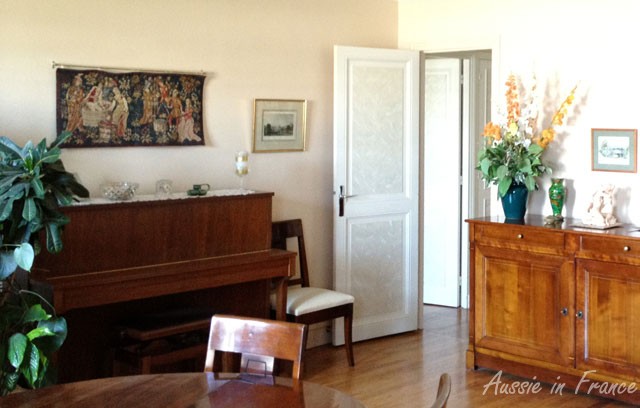
The piano before it was taken away
As our move to Blois gets closer, we are working out how everything will fit into the new house. I thought a lot about the piano and finally decided it was pointless keeping an instrument that no one plays and that is getting older every year. I mentioned it to the mother of Céline, the cello player from our musical afternoons one day and the next thing, I had an email from Céline.
She now has three little boys. She brought them along so she could try out the piano. The second little boy in particular seems to have an aptitude and Céline herself plays both piano and cello, which has kept up over the years.
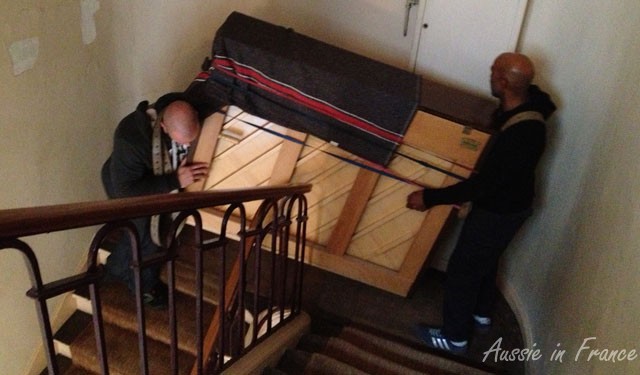
Taking the piano down 4 flights of stairs
So when the piano left yesterday, in the capable hands of two movers, who carried it carefully down our four flights of stairs (it was brought up 8 years ago by a single person called a porteur), I was sad and happy at the same time. Sad because the piano represents so much to me and happy because it will now be used and loved every day.
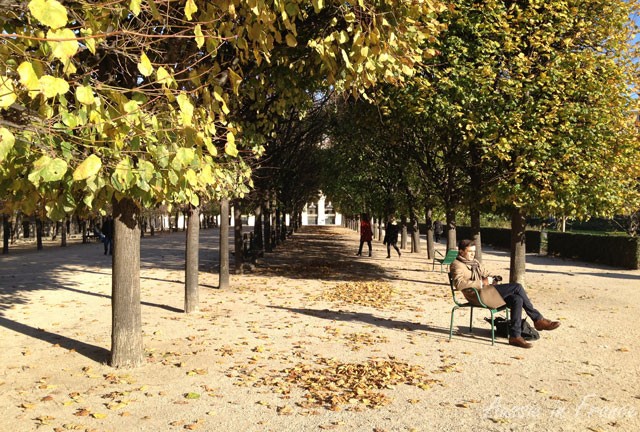
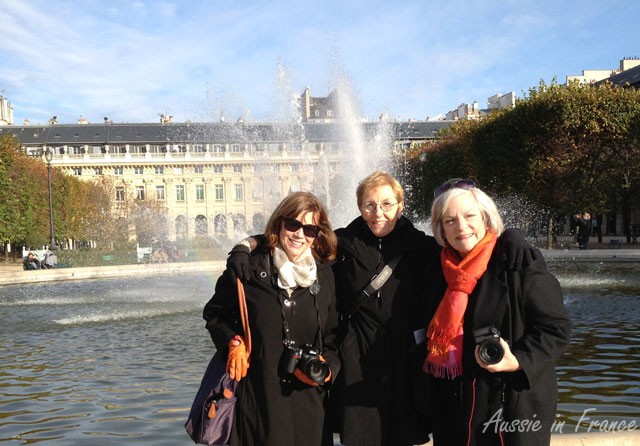
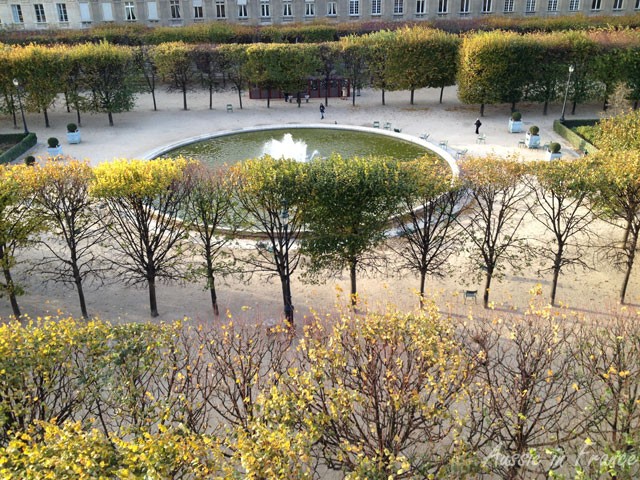
It’s turning out to be a very rainy autumn. We don’t often seem to get much sun these days, but when we do, the Palais Royal garden is a good place to soak it up! I spent a couple of hours there last week with three new American blogger friends, all of whom have photo blogs. I’m sure you’ll love their different visions of Paris.
Quelle chance ! Quelle mauvaise chance ! Quelle chance !
That’s right, it’s not a mistake – quelle chance twice – because you don’t say quelle bonne chance in French. You can say bonne chance all by itself though to wish someone good luck. Otherwise, chance is always good.
J’ai de la chance d’avoir cette vue – I’m lucky (or fortunate) to have this view
In English we have three words to mean more or less the same thing – chance, fortune and luck.
Fortune in French usually has a financial meaning as in il a fait fortune, which means he made his fortune.
In literary contexts, fortune can be used in our sense of luck or fortune but I’ve never heard anyone use it.
My Larousse gives the expression La fortune sourit aux audacieux which means “Fortune favours the bold or strong or brave”. They are all translations of the Latin proverb Audentes fortuna iuuat, Fortes fortuna adiuuat, Fortuna audaces iuua or Fortes fortuna iuuat.
In most contexts, chance is used in French to convey the English luck or lucky or fortunate. There is an adjective, chanceux and its antonym malchanceux or malencontreux but they’re rarely used in comparison with lucky. Jean Michel couldn’t find any examples of chanceux in normal speech.
Quelle chance tu as d’habiter le Palais Royal = You’re so lucky to live in the Palais Royal.
Tu as de la chance d’habiter le Palais Royal = You’re lucky or fortunate to live in the Palais Royal.
Il n’a jamais de chance = He’s always unlucky.
J’avais de la chance de trouver ce que je cherchais = I was lucky to find what I was looking for.
Elle avait de la chance d’être là au bon moment = She was fortunate in being there at the right time.
Just for the record, il est fortuné has nothing to do with being lucky – it means he’s wealthy.
So what about “chance” in English? For example, how do you say “I didn’t get a chance to talk to him”? Well, here “chance” means “opportunity” or “possibility” so we would say je n’ai pas eu l’occasion (ou la possibilité) de lui parler.
But if it means “luck” e.g. he hasn’t much chance of winning, you’d use chance but in the plural: il n’a pas beaucoup de chances de gagner.
“Chance” in English is used in a lot of different contexts that I won’t bore you with. Just a couple that might be useful though.
I went there on the chance of seeing him = j’y suis allé dans l’espoir de le voir. Here, “chance” means “hope”.
No chance! not a chance = jamais ! jamais de la vie !
Alors bonne chance in your future use of chance! And if you have any questions, don’t hesitate!
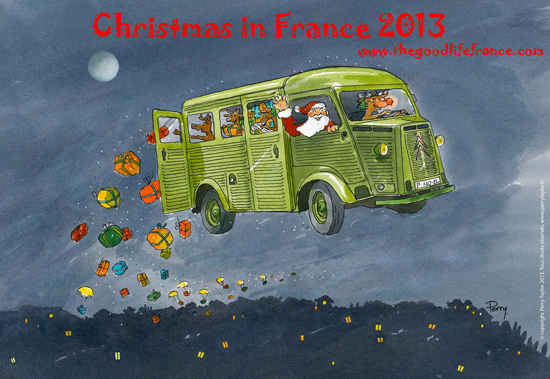
Three entirely different subjects this week. Ever pratical Jo Karnaghan from Frugal First Class Travel takes us on a day trip to Reims which is not only famous for its champagne; Maggie La Coste from Experience France by Bike gives tips on how to take the train with a bike and panniers; while Janine from The Good Life France has compiled a very interesting and useful guide to Christmas in France in 2013 that you can download. Enjoy!
How to make a day trip to Reims
by Jo Karnaghan from Frugal First Class Travel, an Australian who loves to travel – especially in Europe – and who has gradually learned how to have a First Class trip on an economy budget, without missing out on anything!
Reims (pronouned “rance” as in France) is an easy and convenient day trip from Paris, being only 45 minutes away by TGV. What most visitors will find surprising is that Reims is about more than champagne. Here’s my take on a great way to do a day trip to this pretty and friendly city, that includes more than just champagne!
Arriving in Reims
Reims is only 45minutes by TGV from Gare de l’Est in Paris. Make sure you book a TGV rather than a stopping all stations train that will take you 2hours. Read more
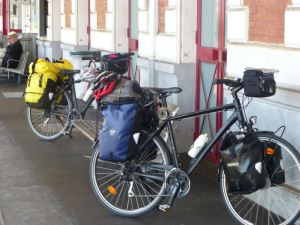
Navigating train stations in France with bicycle panniers
by Maggie LaCoste from Experience France by Bike, an American who loves biking anywhere in Europe, but especially France, which has the perfect combination of safe bike routes, great food, great weather and history.
Nothing can ruin a day for a bicyclist more than having to maneuver stairs at a rail station! Sometimes, no matter how well you plan a trip, you need to take a train to connect to another cycling itinerary, to avoid a bad part of a route or oftentimes to return a rental bike. Regardless of the reason, managing stairs when your bike is loaded down with all your gear is tough. I’ll never forget the first time we arrived at a train station, bought our tickets and then patiently waited for our track announcement. Of course the track was announced literally as the train was coming into the station and getting to it required going down and then up two very long sets of stairs! Read more
Christmas in France in 2013
by Janine from The Good Life France, an independent on-line magazine about France and all things French, covering all aspects of daily life including healthcare, finance, utilities, education, property and a whole lot more
Christmas in France 2013 – a free guide to the best Christmas markets in Paris, Alsace, for day trips, near Calais… things to do and where to see the best window displays and beautiful illuminations in Paris, the City of Light. Lots of French festive facts… and top recipes from celebrity chefs Michel Roux Jr, Raymond Blanc and Rachel Khoo.
From us to you at Christmas… Christmas in France 2013 the book…
To download your free Christmas in France 2013 guide click on this link or right click “save link as” Christmas in France 2013. Read more
Well, it’s going wonderfully! I’ve lost the 5 kilos I put back on after my initial diet three years ago when I lost 20 kilos, despite the fact that I am now eating a lot of foods I had thought I’d have to give up forever.
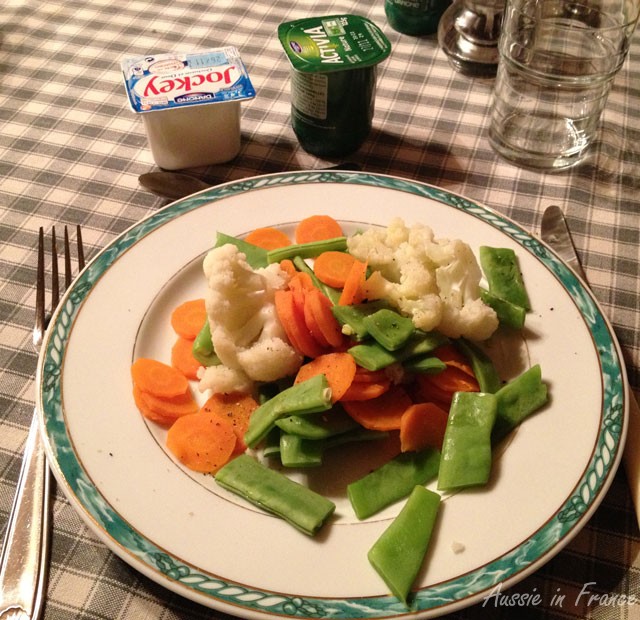
I actually look forward to our fast days, when I have 500 calories and Jean Michel has 600, and which we plan according to what’s going on that week but which are usually 3 or 4 days apart. Mondays and Thursdays or Fridays are typical choices, but the beauty of the 5:2 fast is that there are no fixed days. We continue to always eat the same thing on those days, as it suits us that way.
The amazing thing is that I am not hungry on fast days. I even forget it’s a fast day until lunch and dinner come around (we don’t have breakfast).
The day after a fast day, though, we’re usually pretty hungry. I’ve found that having a good breakfast is the most effective solution to feeling ravenous mid-morning. I’d really rather not get into the habit of snacking again.
After my initial diet, I had eliminated foods such as fresh ravioli, quiche and French fries. We had reduced our wine intake to about once or twice a week which was rather sad because we are both wine buffs. If we went out to dinner, I tried to be reasonable and only order low-calorie foods. I felt guilty if I indulged AND I STILL PUT THOSE FIVE KILOS BACK ON.
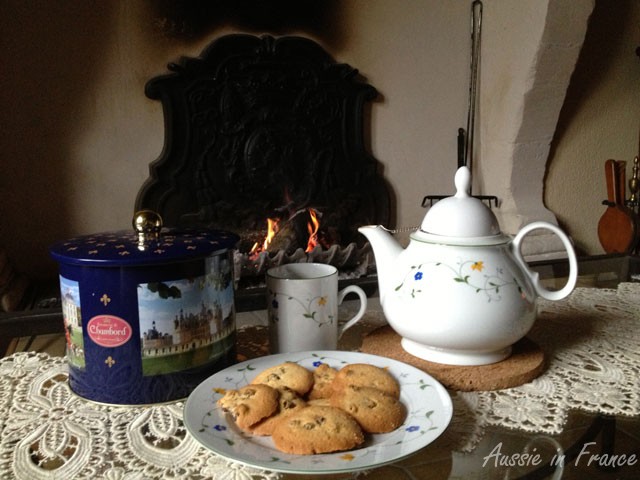
Biscuits made at the Chambord biscuit factory – I prefer the traditional “solognots”
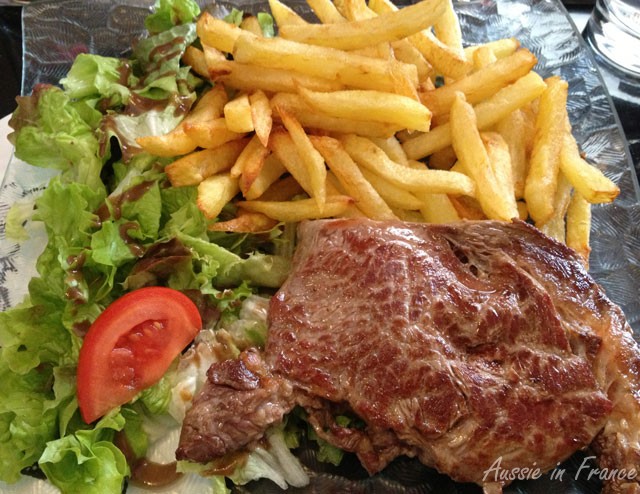
Now I can order French fries, foie gras and fish with beurre nantais and enjoy them without compunction! If we do have a heavy lunch or dinner, we just skip the next meal. I can have those very moorish Chambord biscuits with afternoon tea and a glass of wine with my meal if I feel like it.
We do, however, continue to have well-balanced meals for health purposes. If we have ravioli, I serve it with a tossed salad, for example, followed by fresh fruit. We still more or less respect the “plate-divided-into-four” principle though I’m more likely to spread it out over two meals, with more protein at one and less carbs and vice versa.
Jean Michel was convinced that he would not be able to continue fasting when doing a lot of physical work such as heavy gardening and renovation. I didn’t insist even though I couldn’t see the problem. When we were cycling 50 to 60 kilometers a day along the Danube last summer, we had as much energy on fast days as we did on feast days. But he said it was not the same.
However, as it turns out, he has no trouble fasting when we’re in Blois, despite a much more active life style. He just has make sure he drinks a lot of water to prevent hydration.
The 5:2 fast diet doesn’t suit everyone of course. We have French friends who prefer to reduce the period of nutrition to 8 hours, skipping breakfast, having lunch around 1 pm and dinner before 9 pm, thus leaving a period of 16 hours between the last and first meal each day. Their reference is Le Fasting by JB Rives.
I’d be interested to hear other people’s experience.
You might be interested in my other posts on dieting:
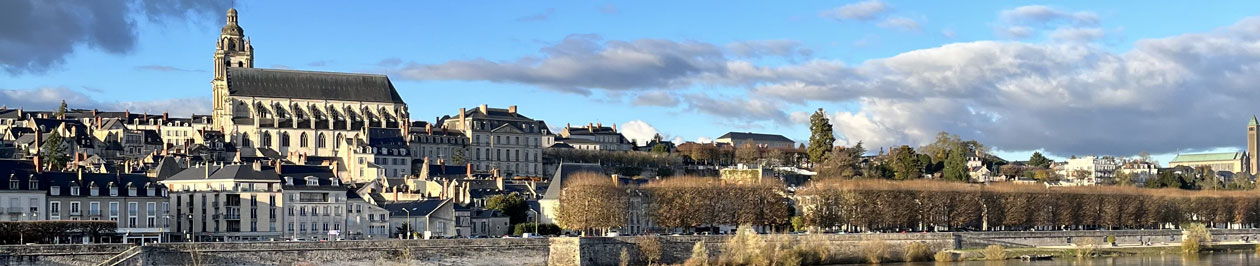
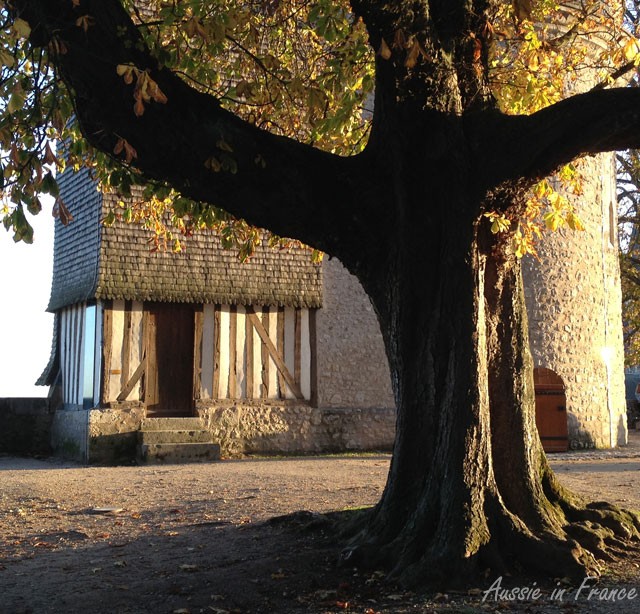
This photo was taken just before sunset from the area behind Blois Castle overlooking the Loire River. The Tour du Foix is part of the old 13th century fortifications.