There was a time when we used to eat quite a lot of foie gras. In the winter, we would often rent a gîte for a long weekend somewhere in the country within a couple of hours from Paris and set off with a few slices of foie gras from the traiteur, a côte de boeuf, lamb chops, champagne, a vintage red or two, a couple of dozen of spéciale oysters and a bottle of sancerre. However, after we bought Closerie Falaiseau four years ago and renovated our Renaissance fireplace, we started coming down here instead. Now we only eat foie gras in restaurants occasionally and at Christmas. when we make our own.
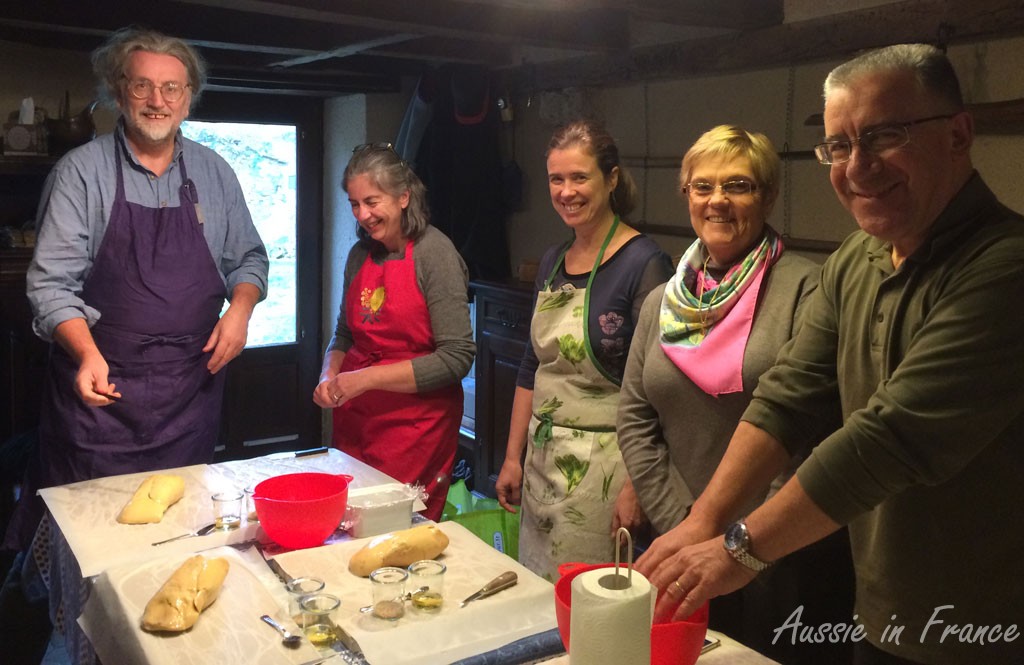
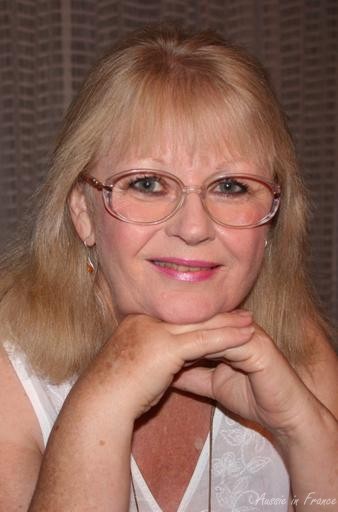
Simon and Susan from Days on the Claise, Janet, Françoise and Paul
Today, for the second time, we had a “foie gras workshop” with our friends Susan and Simon from Days on the Claise and our neighbours Françoise and Paul. Susan picks up the foie gras (ordered well in advance) from a local farm. Another friend from Amboise joined us this time. Up until now her French mother-in-law has always made the foie gras and she (understandably) didn’t want to compete. But this year, her mother-in-law won’t be present so she thought she’d have a try.
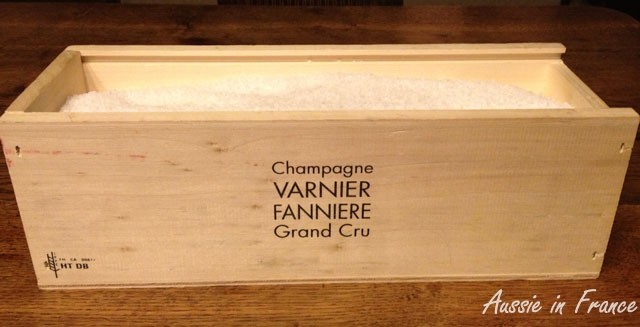
The foie gras in its wooden wine box
The foie gras we make these days doesn’t require cooking. After deveining it and adding spices and vouvray, you wrap it in gauze, put it in a wooden wine box on a layer of coarse salt, cover it with salt and store it in a cool place (10 to 12°C) for 17 hours. You take it out of the salt and gauze, put it in a terrine and keep it in the fridge for at least 10 days. Perfect timing for Christmas. It’s melt-in-the-mouth! If you’d like a full explanation, just click here.
It’s that time again – the anniversary of the day Jean Michel and I met. We’re up to nineteen years. I have friends celebrating their 40th wedding anniversaries but not everyone is lucky enough to meet the right person the first time round. Last year, we tried out some new wave cuisine at Pertica in Vendôme but were not impressed although we did like the pâtisseries at Rodolphe’s. We’d also like to have a little village or a château to visit after lunch which restricts the choice somewhat in winter as lots of places close between All Saints (31st October) and Easter (beginning of April), so we’re starting to realise.
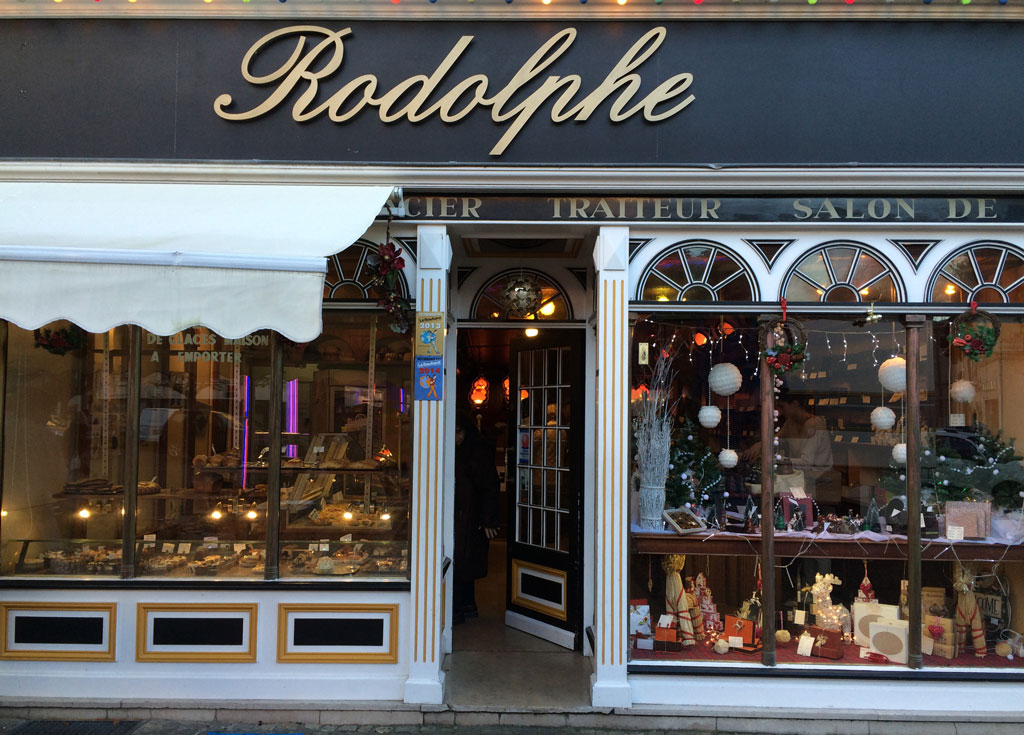
Rodolphe’s which looks as though it might be the best pâtisserie in town
Friends have told us that Lavardin and Chateaudun are worth a visit. The only possible restaurant near Chateaudun (we’re looking for a little gastronomy here, which excludes pizzerias, crêperies and coussousseries) is closed on Sundays and Mondays. Le Manoir de Saint Quentin which isn’t far from Lavardin keeps popping up but the menu on the website doesn’t look very interesting. In the end, all the positive reviews we keep seeing (plus the absence of any other likely restaurant) convince us. We phone and leave a message, backing it up with an email. Next day we receive confirmation.
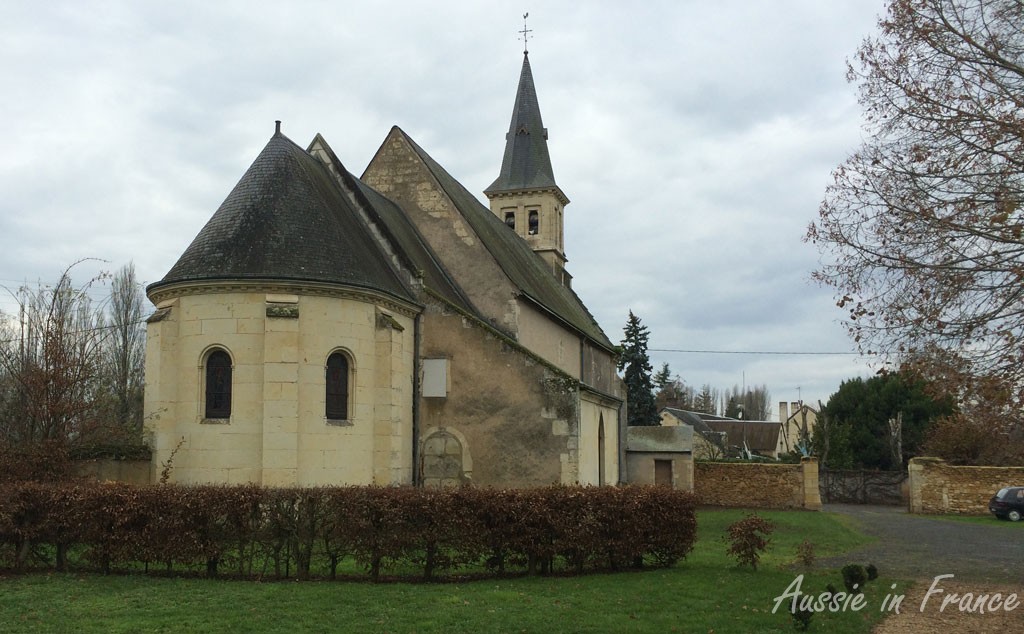
The church near the restaurant in Saint-Quentin-les-Trôo
The restaurant is in a town with the impossible name of Saint-Quentin-les-Trôo. We rightly assume that it is connected to the word troglodyte as Trôo is the undisputed troglodyte capital of Loir-et-Cher. It turns out that Trôo is derived from the pronunciation of trou (hole) by English occupants during the reign of the Plantagenets in the 12th century.
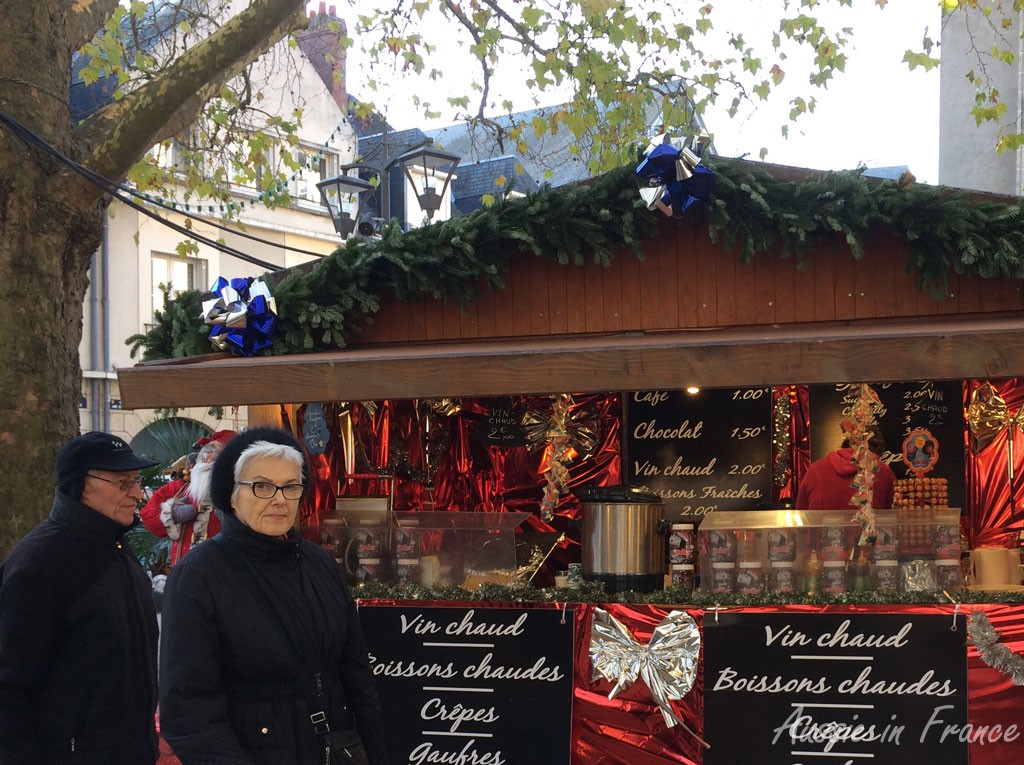
The traditional mulled wine stall at Blois Christmas market which is probably part of a chain!
As we drive through Lavardin on the way, we see a very large number of cars parked along the road which can only mean some sort of festivity. The fact that it’s the first round of the regional elections today can’t possibly be an explanation. Sure enough, there is a marché de noël this weekend. We don’t know whether that is good or bad. Most of the Christmas markets we’re seen in recent years in Paris and the Loire have been very dismal.
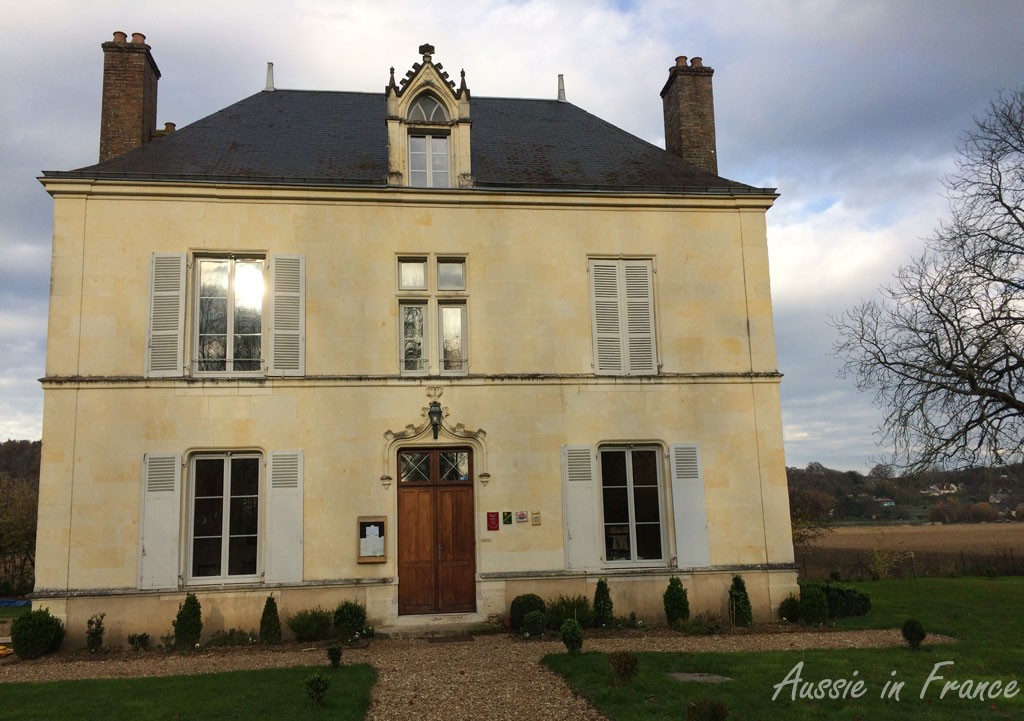
Le Manoir de Saint Quentin
We arrive at the restaurant a bit early – 12.15 (it’s a little less than an hour from Blois) – and there is not a soul in sight. The weather is not conducive to staying outdoors and the door is locked so we ring the bell. A tall, harried looking Asian man answers and we apologise for our early arrival. That’s OK, he says, in heavily accented French, adding apologetically, “we’re not very busy at the moment”.
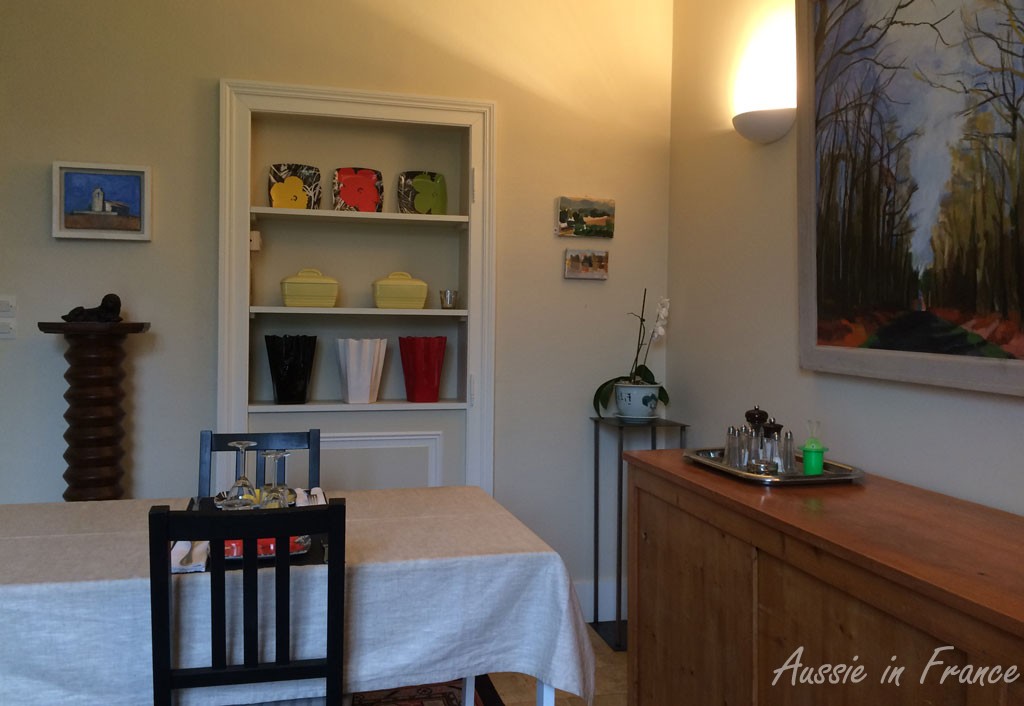
The minimalist interior
He takes us through to a room where two tables are laid and we choose the one next to the window. That’s when I remember why I bought a woollen pullover a couple of years ago – it’s to put under a woollen jacket and over my Damart when we go to restaurants in the country in winter. Unlike Parisian restaurants, they are not overheated. The large radiator is on though so I assume it will get warmer as time goes by.
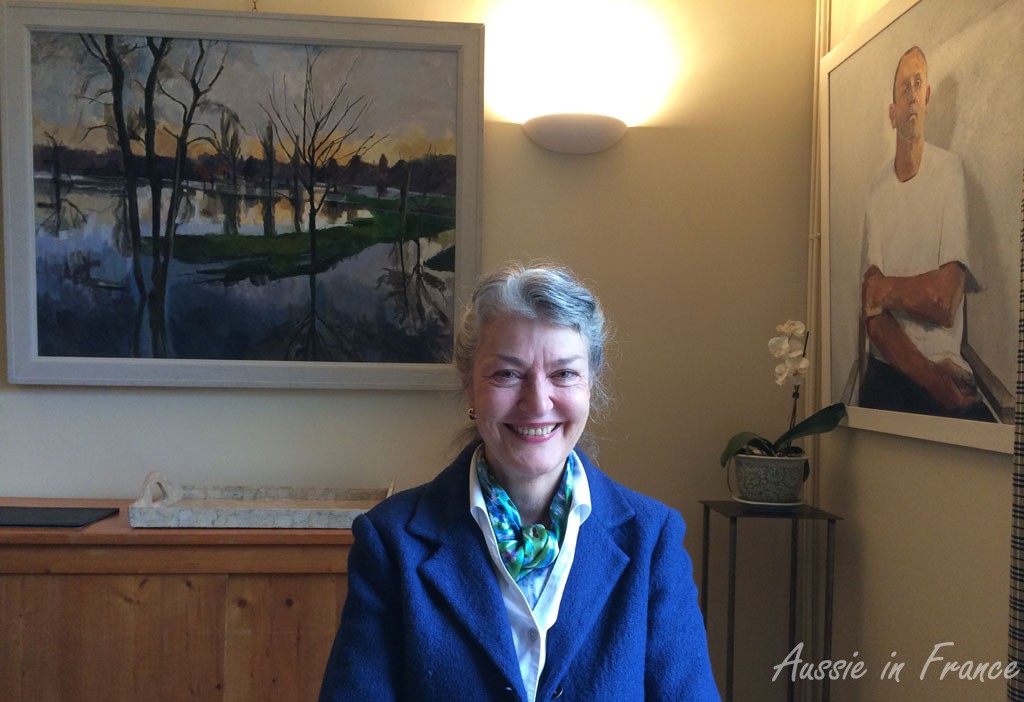
Me in front of two of the acrylic paintings
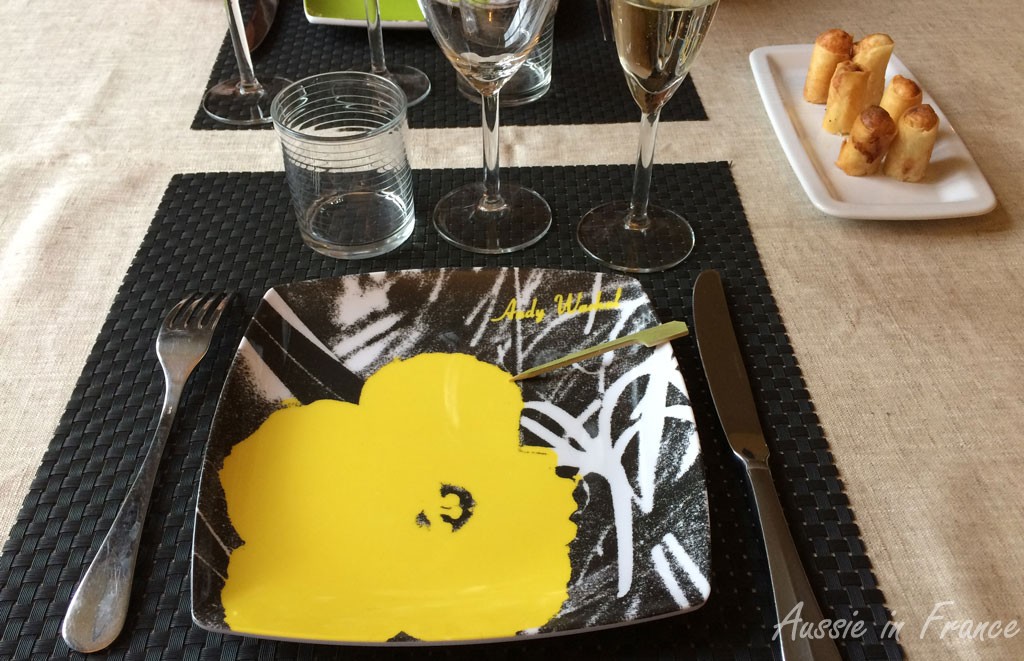
The decor is minimalist. The tablecloths are plastic simili-linen with plastic woven mats and melamine Andy Warhol plates. The serviettes are good-quality fabric. There are several large acrylic paintings on the wall and some more Andy Warhol plates in a niche. There are no menus.
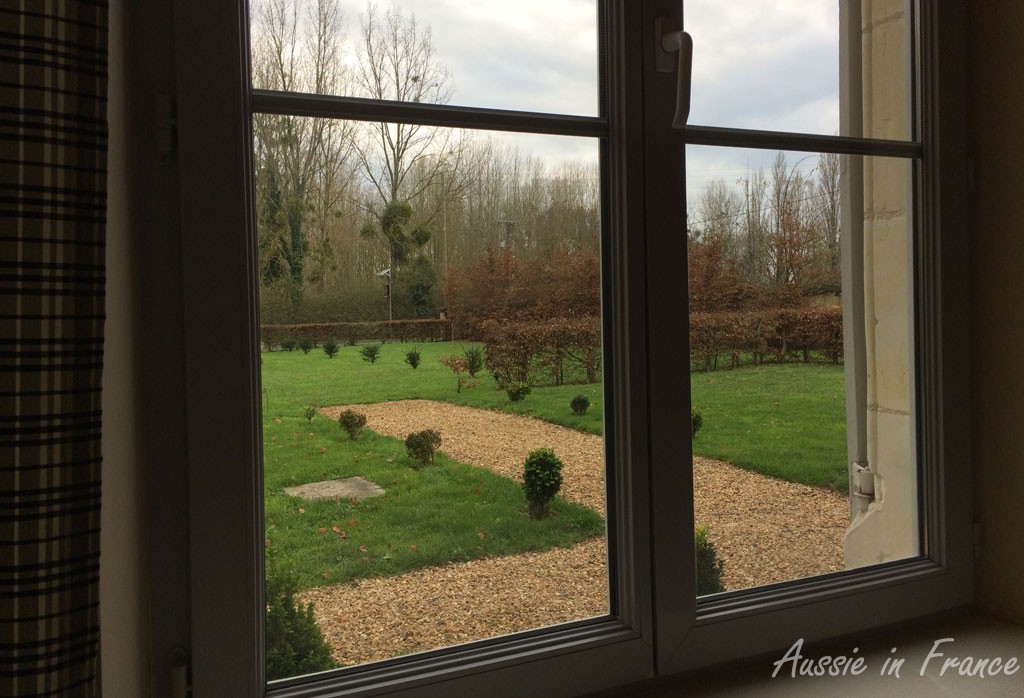
The view from the restaurant window
Jean Michel orders our usual celebratory glass of champagne before I have a chance to remind him that we have decided to always order local bubbly when we eat out in the Loire Valley. Our host/chef/waiter brings back a half bottle of Rothschild which gives me the chance to change the order. I learnt the first time I visited a champagne cellar in Reims that you should never buy half bottles (even though they sell them) because the champagne can’t mature properly and develop good fizz in a half bottle. We ask for a bottle of champenoise method vouvray instead and happily stay with it for the rest of the meal.
The Andy Warhol plate and little amuses-gueules on the right
The chef, who turns out to be from Hong Kong and does not recognise my pronunciation of Cheung Chau island, tells us that he will be serving a dégustation menu. He then describes the different dishes with some difficulty as his French is a little basic. He says that cheese is optional. We say it won’t be necessary considering the rest of the menu which seems to have an amazing number of courses.
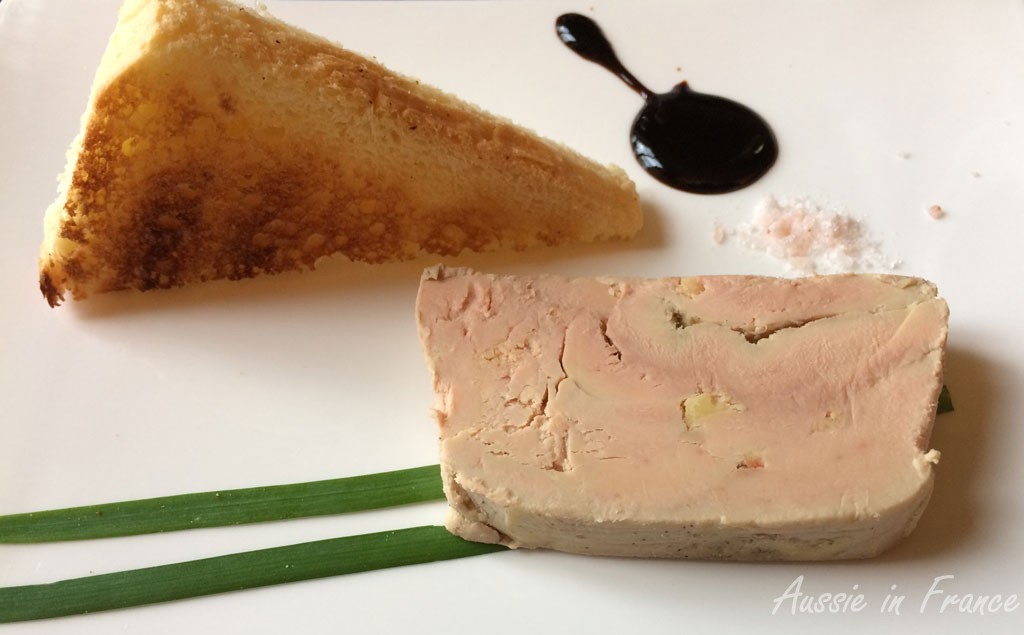
To accompany our first glass of vouvray, we are given a little slice of the chef’s own foie gras on a small piece of toast, followed by some little vertical spring rolls that we don’t manage to identify.
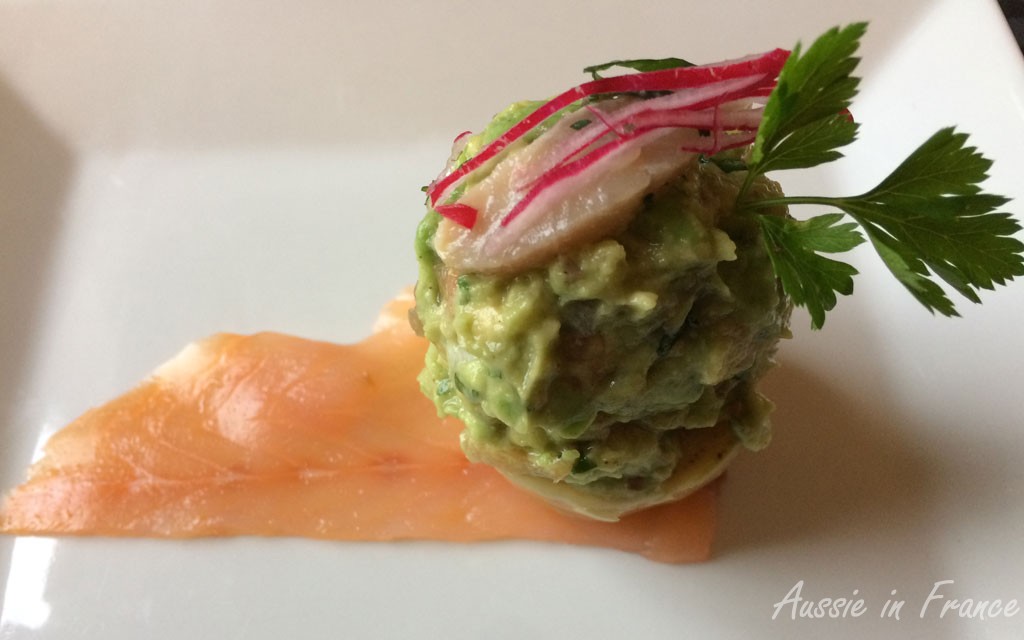
The artichoke and guacamole snail
The two amuses-gueules are followed by no fewer than five starters: pumpkin soup, mackerel rillettes, cold prawns with curly lettuce, artichoke hearts topped with guacomole on a smoked salmon bed arranged to look like a snail, and foie gras which isn’t bad but we prefer our own salt-cooked melt-in-the-mouth Christmas foie gras that we’ll be making on Thursday with our friends as we did last year.
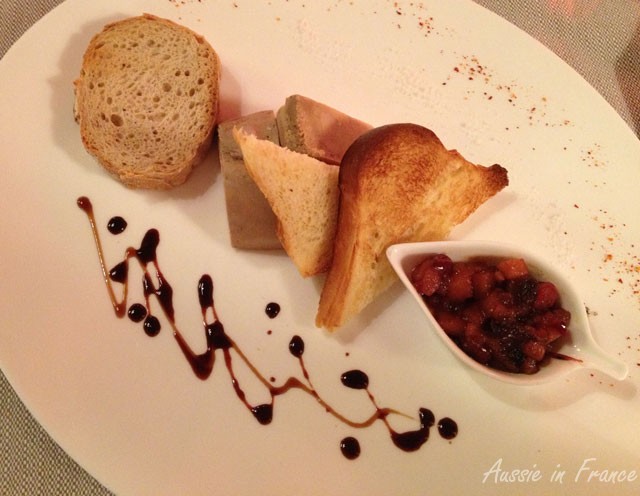
Chef’s foie gras
By the time the main course arrives, we know we will have the restaurant to ourselves. A very tender breast of guinea-fowl is served with potato purée, turnip and carrot and a tasty foie gras sauce.
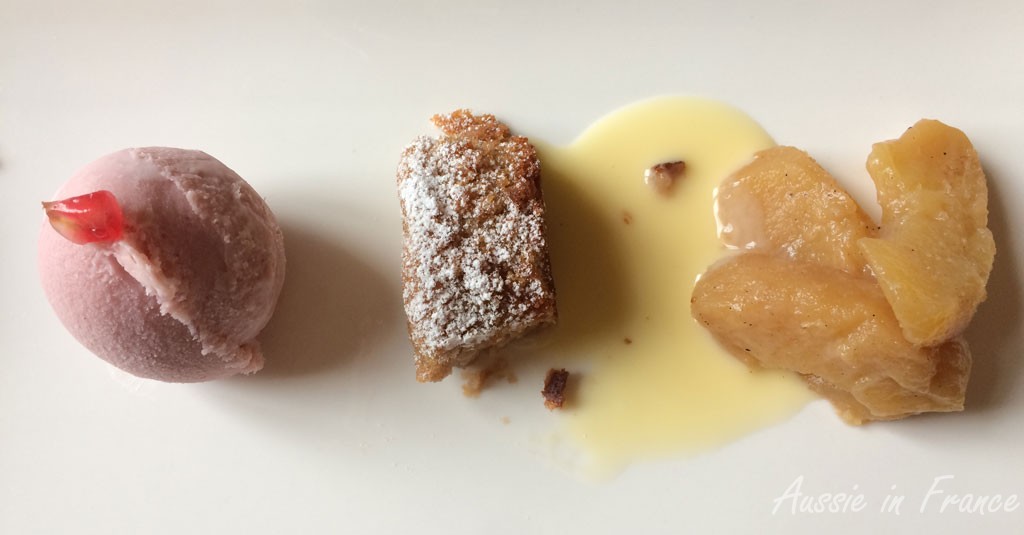
By now, I don’t think I can eat another morsel. We refuse the cheese once again and wait for the dessert. Jean Michel says there are three. Fortunately they all turn out to be on the same plate. First, homemade raspberry ice-cream which we don’t manage to identify because we’ve never had it before. In France, they only have raspberry sorbet. I prefer the ice-cream. Second, a delicious chestnut soft-centred cake. Third, several lightly caramelised slices of apple.
Desert: raspberry ice-cream, soft-centred chestnut cake and caramelised apples
We finish off with an excellent espresso. The bill comes to 97 euro, which we declare is very good value for money (36 euro each for the menu, 20 euro for the Vouvray and 2.50 for the coffee). We’re glad we didn’t have any breakfast and are now going to get a bit of exercise walking around Lavardin.
We both agree that it was an excellent choice for an anniversary lunch due to its originality. All the food is made by the chef and fresh – we even saw him go out in the garden to pick some fresh herbs; there were no strange combinations, but nothing was outstanding.
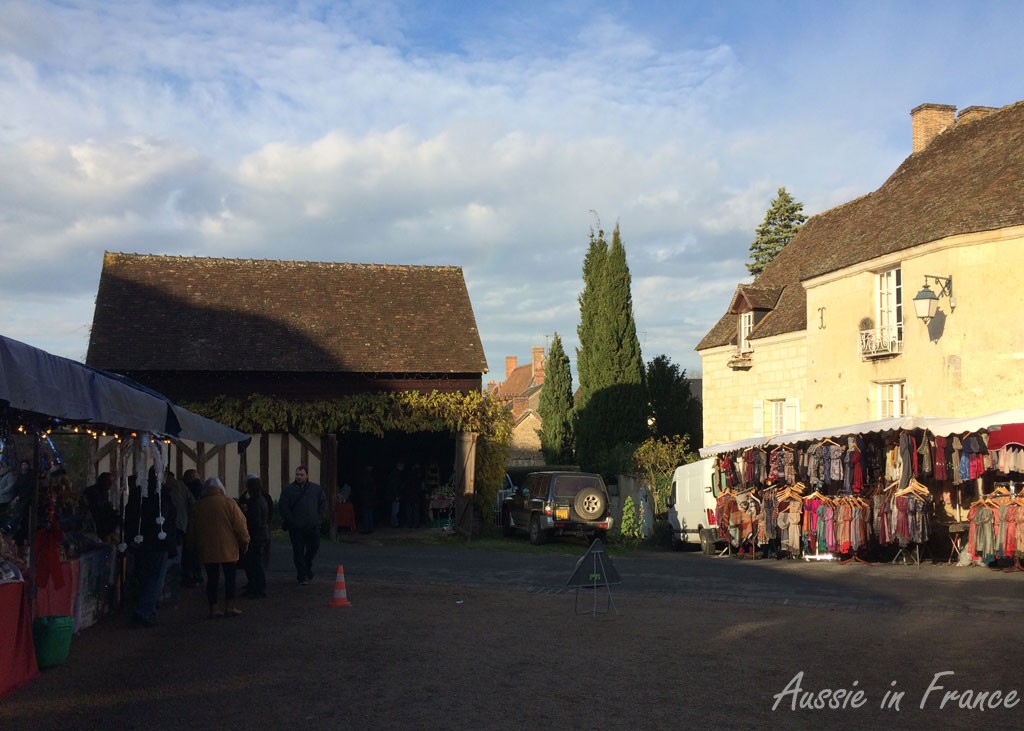
Christmas market at Lavardin
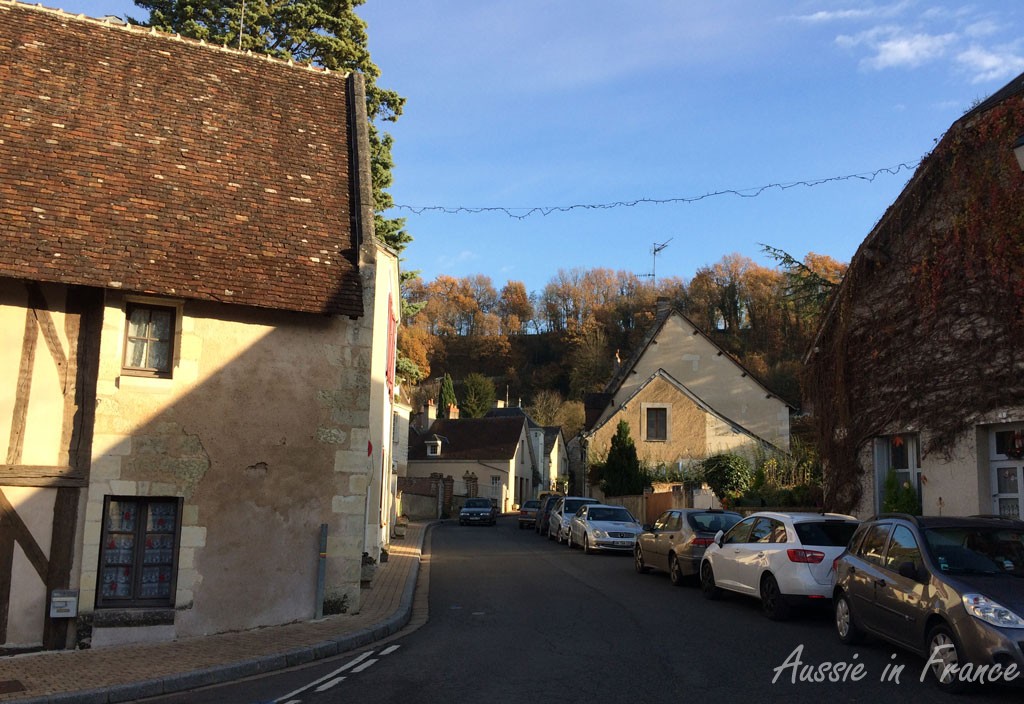
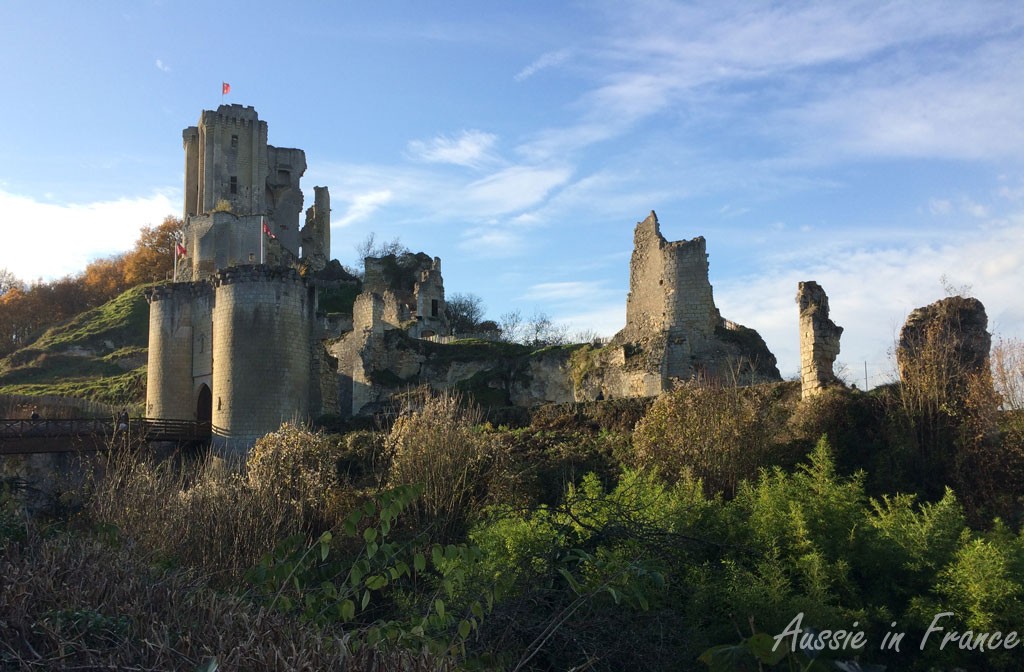
The sun is starting to come out when we leave the restaurant, which is a relief. We arrive at Lavardin by a back road, which is fortunate, because it means we can park quite close to all the activity instead of miles away on the main road. Lavardin immediately strikes us as being a pretty little town, especially with the ruined castle on the hill, 45 metres above the Loir River (not to be confused with its second cousin, the Loire).
A street in Lavardin
The Christmas market, however, has little to offer. The stalls are spread out through the town, including the castle, which is a good idea, but prevents us from having a proper visit though we do see a bread oven hollowed out from the limestone. There is nothing original at the market and very little is handmade. We are not tempted to buy.
The castle ruins above Lavardin
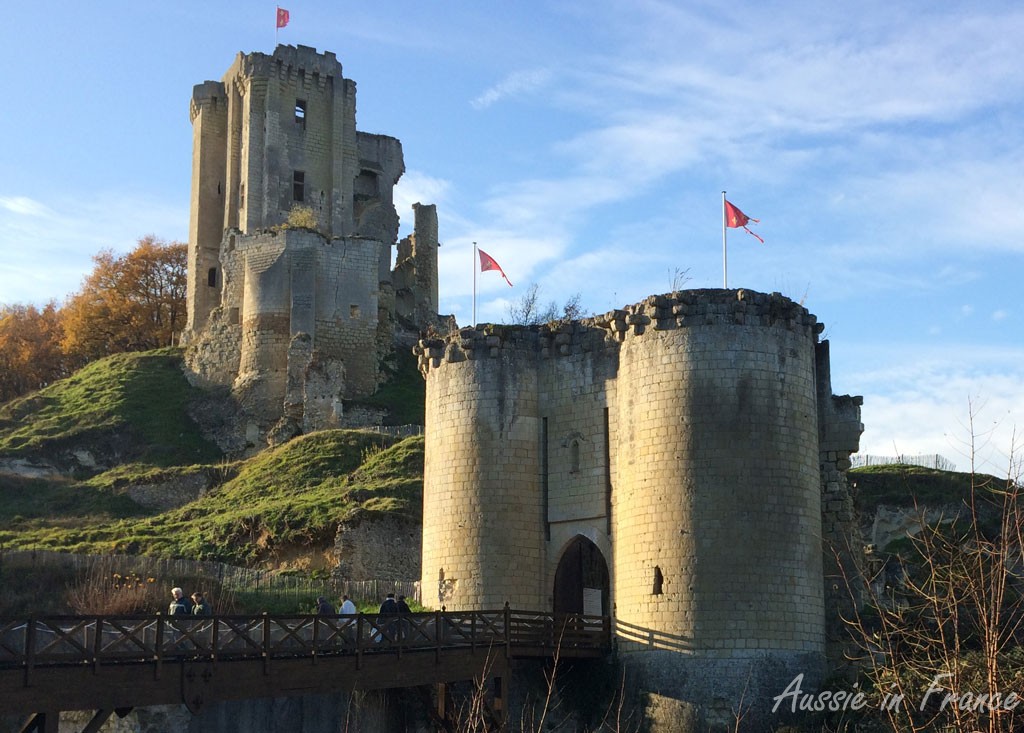
Founded by the Counts of Vendôme in the 9th century, the feudal castle was rebuilt in the 14th and 15th century by John 1st of Bourbon-Vendôme. After being occupied by members of the Catholic league, it was captured and dismantled on the orders of Henri IV in 1590.
The drawbridge up close
All that is left of the castle is a 26-metre high ectangular keep with flat buttresses topped with crenallations. The only remaining part of the two walls built in the 14th and 15th centuries is the entrance flanked by two circular towers and a drawbridge over a moat.
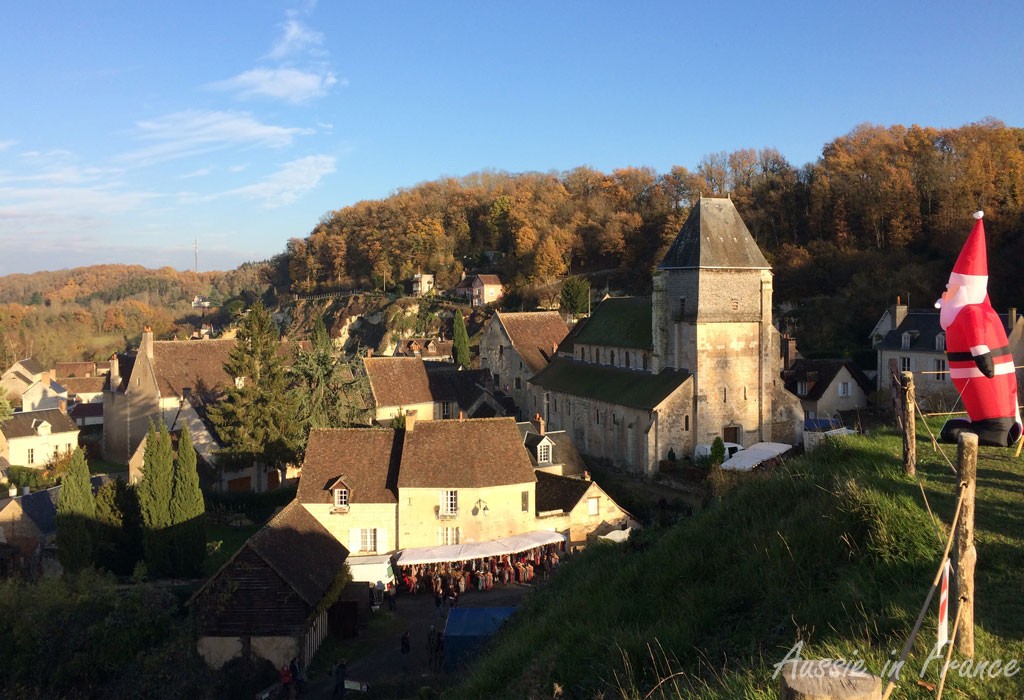
The promontory with its blow-up Santa
We walk up the hill to the castle and out onto the promontory. Unsurprisingly, the blow-up Santa Claus does not seem to appeal to many of the children present. A couple of teenagers try to hug it while their mother takes a photo.
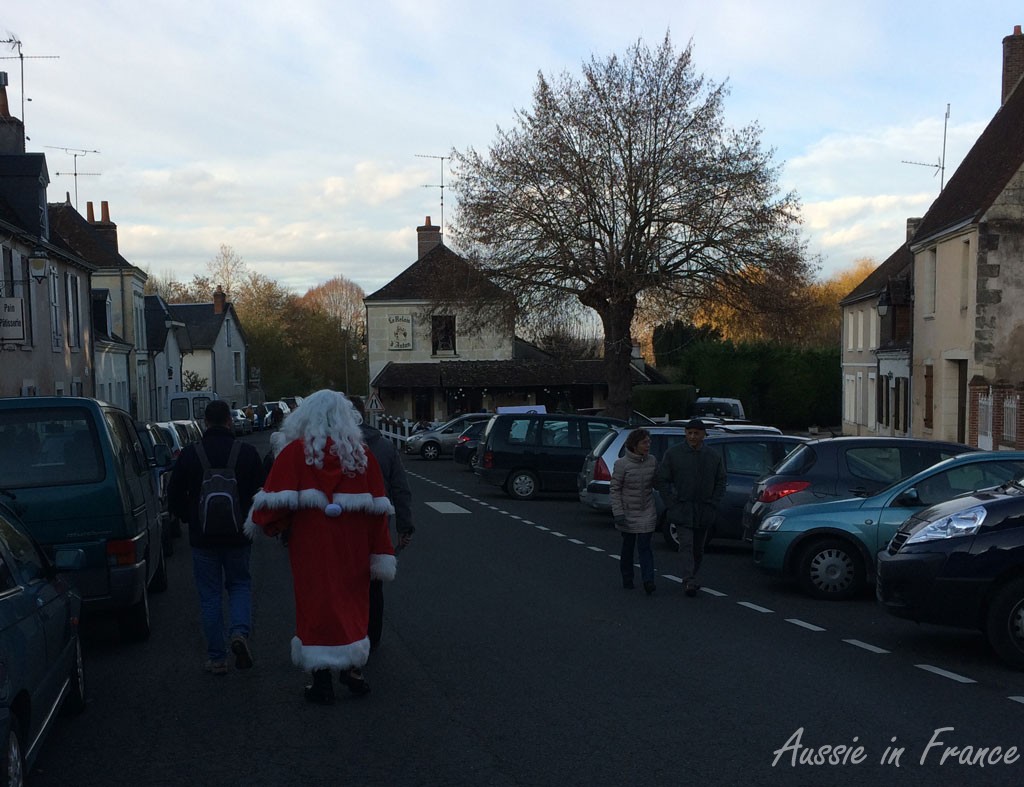
And somehow, I can’t really imagine that the real one with his terrible white dreadlooks sauntering down the street talking to his mates is very convincing either.
An unconvincing santa
However, Lavardin certainly has potential. We’ll come back on our bikes in the spring and cycle around the area, maybe starting in Vendôme, less than 20 km away, as there are several places to visit, including nearby Montoire-sur-Loir, the manor house where Pierre Ronsard, the Renaissance poet, was born, the historical train station in Montoire where Pétain and Hitler met up during the second world war, the Saint Gilles chapel with its beautiful frescoes and the troglodyte village of Trôo. Perhaps you’d like to join us?
I am an avid reader and being a translator gives me every excuse to indulge my passion. If I didn’t read at least one or two books a week, I could lose my English. Not that I haven’t lost it a bit anyway. Speaking and hearing French all day has a tendency to contaminate my native tongue and I end up writing things like “vigilante” instead of “security men”.
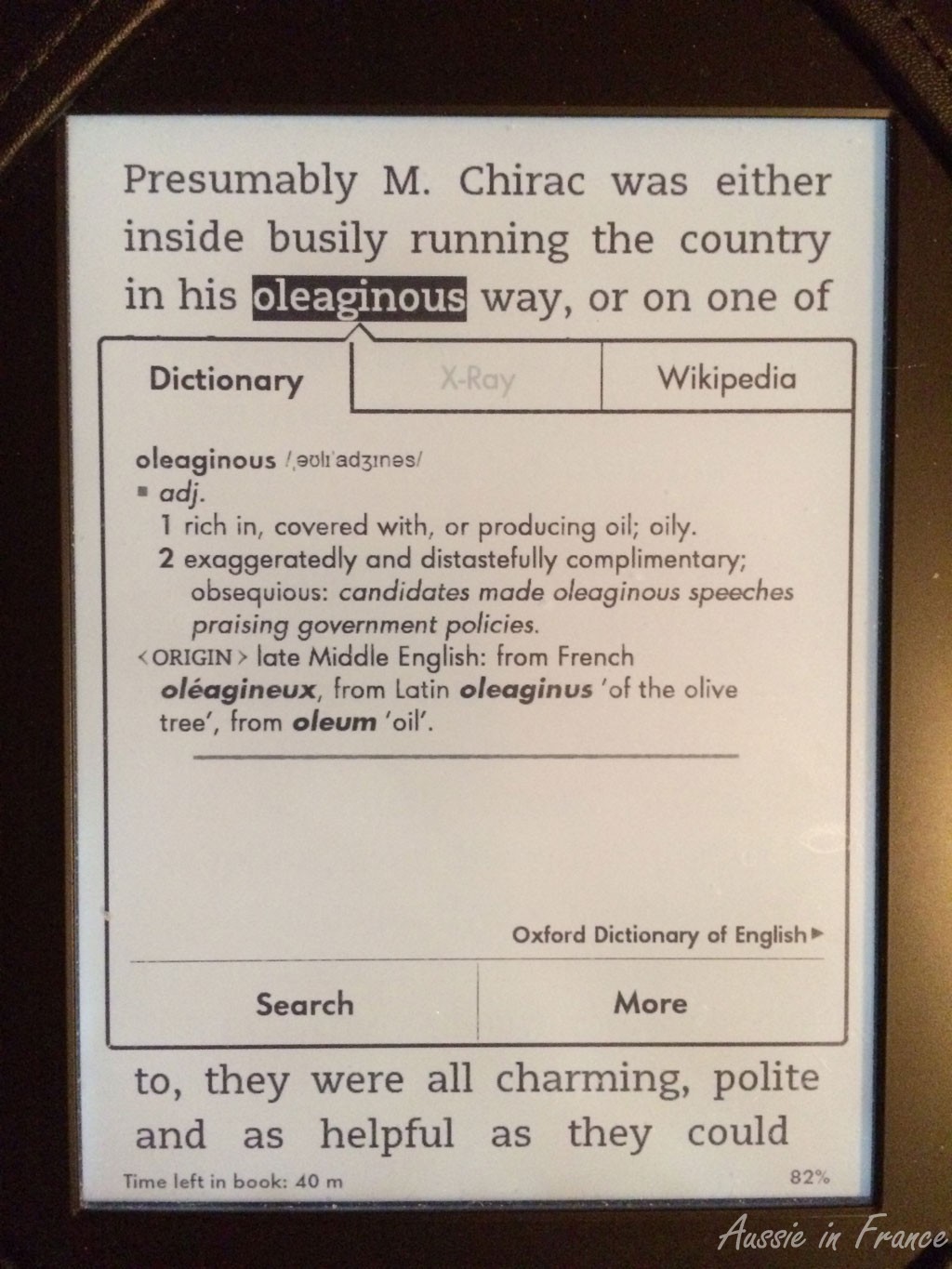
So, I am utterly addicted to my Kindle Paperwhite 3G because it means I am never short of reading material because no matter where I am in the world, I can download another book. It has a built-in dictionary, I can look up Wikipedia and adjust the size of the letters. I finally decided to subscribe to the Kindle Unlimited programme where I pay 9.90 euro a month to borrow an unlimited number of books. Jean Michel, whose Kindle is connected to the same Amazon account, can also benefit from my subscription. Not all books are included – far from it – and it’s not always easy to track down good reading material but every so often I come across a new author whose books I devour.
That is the case of Susie Kelly, who was born in post-war London, grew up in Kenya and has been living near Poitiers since 1995. I started with her biography, “I wish I could say I was sorry”, the fascinating story of a misfit child who suddenly finds herself transported to Kenya with her parents at the age of eight. She loves her new life : “Cinderella must have felt like this when the glass slipper fitted. I was no longer a little bundle in a liberty bodice and leggings, but a princess in pretty cotton frocks in a land of perpetual sunshine.”
Unfortunately it doesn’t last. Cinderella finds herself having to choose between her mother and father after their marriage falls apart. So she chooses the house and the country she loves – and indirectly her father – and doesn’t see her mother for another 17 years. In the meantime, she is sent to live with her paternal grandparents in England, where she is not wanted. When she finally returns to Nairobi, her father has remarried and she has a half sister.
Her stepmother, Helen, is psychologically unfit to be around children of any sort, and Susie finds herself truly in the role of Cinderella. However, when she is 14, another Cinderella provides an escape route, “an Arab-Somali cross … a sparky and unpredictable ride” whom she loved “as I had never loved before, instantly and overwhelmingly”.
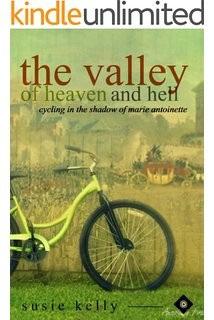
I’m not going to tell you any more, because I also want to talk about some of her other books and resuming someone’s life story can’t possibly do it justice. “Bon Voyage” is a good place to start because it is a collection of the first chapters of several books, namely “Travels with Tinkerbelle – 6,000 miles around France in a mechanical wreck”, “Best Foot Forward – A 500-mile walk through hidden France”, “The Valley of Heaven and Hell – Cycling in the Shadow of Marie Antoinette” and “Swallows & Robins – The Guests in my Garden”.
After my appetite had been whetted by “Bon Voyage, I read “Best Foot Forward” and am now nearly finisihed “The Valley of Heaven and Hell”. I could have waited until I had read all Susie’s books before writing this post, but I think it’s a pity not to share my enthusiasm right now. Susie has an inimical way of writing, both poetical and down-to-earth at the same time.
Her factual account of her travels is interspersed with highly readable historical information about people and places. In “Best Foot Forward”, she walks across France by herself, from La Rochelle to Geneva, with a heavy backpack, a tent without a fly (a mistake I once made myself), a set of outdated maps and badly blistered feet despite her excellent boots.
“There was a narrow strip of grass beside the road”, she tells us when she can’t find a hiking path, “and it looked pretty scattered with daisies, 19 buttercups, dandelions already turned to fairy colonies, bluebells and cowslips, cow parsely still green, and purple vetch all struggling not to get onto the tarmac and be crushed. It was just their luck that I came along in the gigantic hiking boots, because I am pretty certain that very few people had ever been stupid or misguided enough to walk on the side of this particular road.”
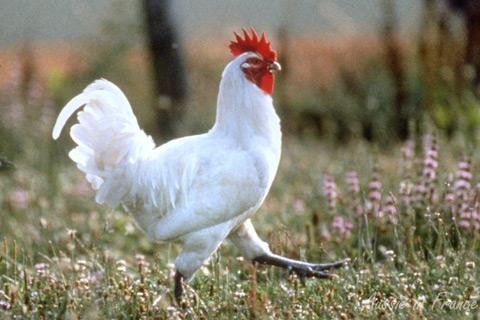
Her journey takes her through the town of Bresse famous for its chickens, “with their snowy white plumage, blue legs and little golden toenails”. With their red crests, they are highly patriotic. Now that is the sort of little tidbit that I love. I know about and have eaten poulet de Bresse but I did not know about the blue legs.
The aim of the cycling trip recounted in “The Valley of Heaven and Hell”, in the company of her husband Terry, a far more intrepid cyclist than Susie, is to follow the “identical route taken by Marie-Antoinette and Louis XVI when they tried to escape from the Revolution, and their journey back to their executions”.
Her account of their trip includes an historical account of the flight of the royal couple who finally come to a standstill when they are recognised by a postman, the famous Mr Drouet.
“The royal family spent the night in the grocery shop of the aptly named M. Sauce. Louis did almost nothing to help himself and his family, accepting his situation stoically, unable to make up his mind, or uninterested enough to take a possible escape route proposed by the Duc de Choisel. He did at least have the presence of mind to ask for a bottle of wine and some bread and cheese. He was not a man to let adversity spoil his appetite.”
Some of her cycling adventures remind me of our own predicaments when cycling paths suddenly disappear, for example. One day, they find themselves too close to the Marne. “Terry was going into the river, with his bike, camera, all our clothes and money. Unable to do anything useful, I shrieked to show moral support. He somehow managed to find a space for his left foot on a sliver of firm ground and gingerly pushed himself to the right, away from the edge, while I held my breath as if doing so would somehow be helpful.”
I’ve nearly reached the end of the book, which ends with a visit to the prison where Marie-Antoinette’s lived her last days in Paris.
Next on the list is “Travels with Tinkerbelle”. Why don’t you join me?
All her books are, of course, available in paperback*.
Oh, and don’t let me forget. Susie also has a blog called No Damn Blog.
All the books can be ordered in paperback from bookstores worldwide, or direct from any Amazon outlet. The ISBNs are as follows:
We’ve been planning to go to the Independent Wine Growers’ Fair in Paris for some time. During our two-day stay, I’ve lined up three routine medical appointments and organised to see two lots of friends. We decide not to let the terrible attacks on 13th November dissuade us from going. You may wonder why I am seeing doctors in Paris when I live in Blois but it’s hard to change medical pratitioners you’ve been seeing for twenty years or more …
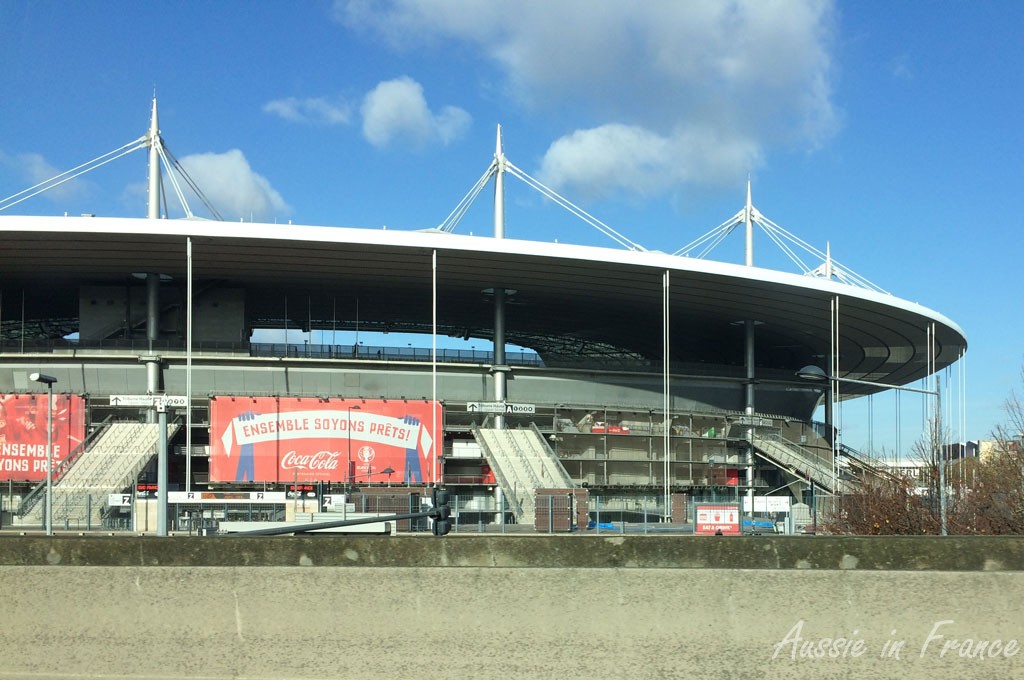
Stade de France
We leave home at 8 am on Thursday on a clear, bright day and arrive in Fontenay sous Bois where we used to live many moons ago with 20 minutes to spare for the first appointment at 11.15 am. From there we go across to the other side of Paris, past the Stade de France, which was the scene of one of the attacks. The sun’s out and it’s hard to imagine that is was the site of such devastation.
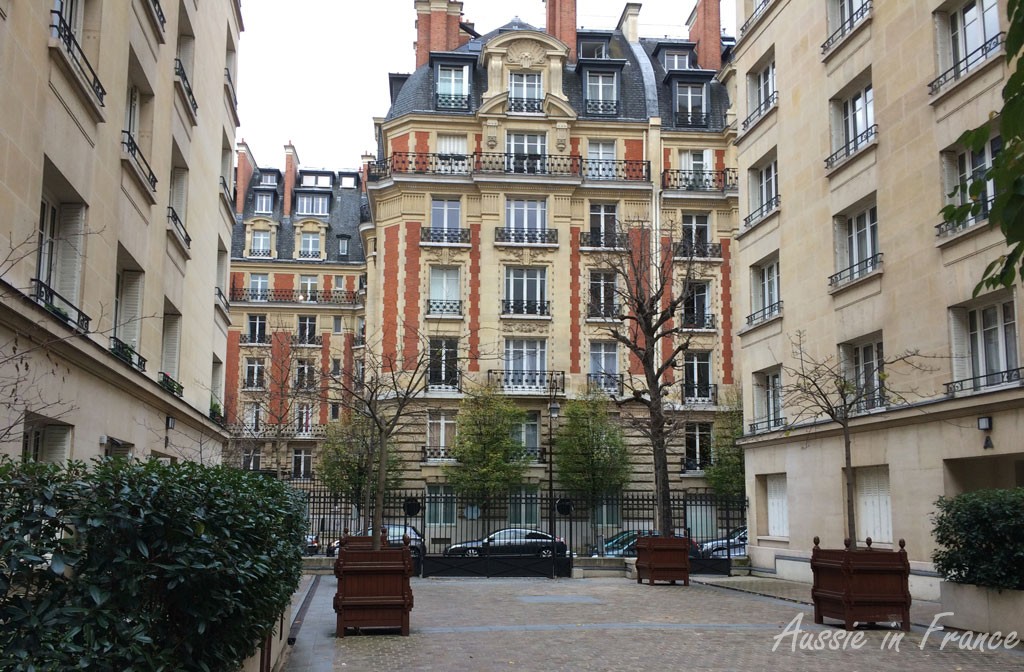
Typical apartment buildings in Neuilly sur Seine
In Neuilly, we visit our good friends Maryse and Claude who have invited us for a delicious lunch. We talk about the attacks but then move resolutely onto other subjects. I keep my eye on the clock because our next appointment is at 3.30 pm in the 16th arrondissement where I have a dermatologist who knows all about sunspots and skin cancer. This is important if you are an Australian as so many of us were exposed to the tropical sun as children without receiving adequate protection. I am reassured that I don’t have a sunspot just a solar keratosis. Dr Jeanmougin burns it off with dry ice.
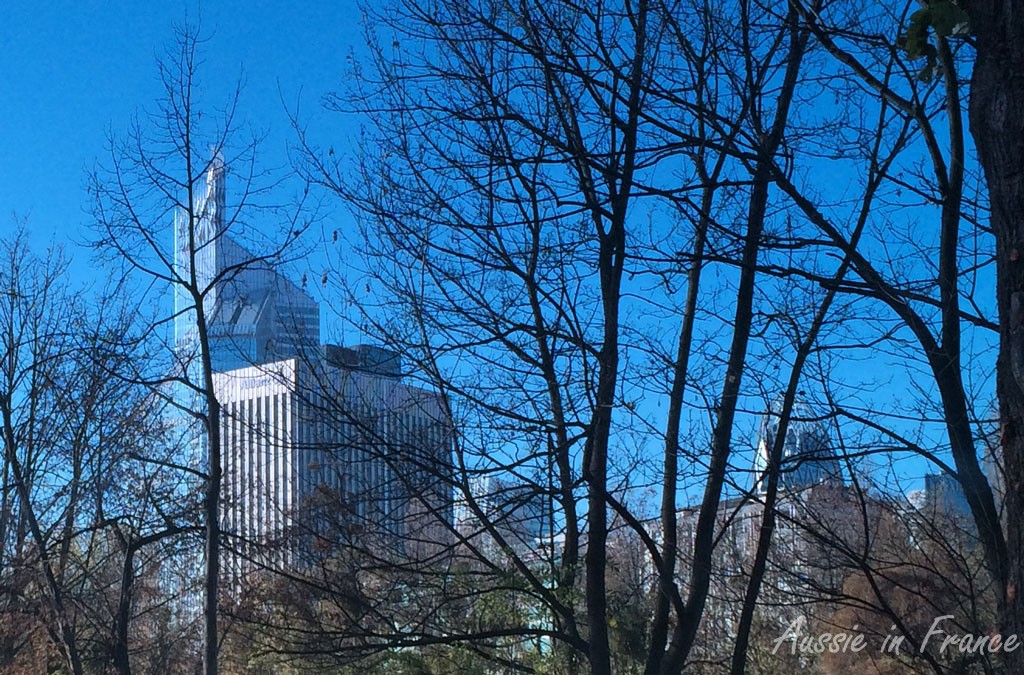
La Défense as we arrive in Neuilly
We then head for the outlet stores in the north of Paris where I want to buy some Blanc des Vosges sheets. The underground parking lot is closed and we wonder whether the stores are open. Yes, they are, so we park in front of the complex. The security guys ask to look in my handbag but their check is only very cursory. There is practically no one in the huge shopping centre. We find the sheets and a woollen blanket which has become a very rare item (everyone uses duvets these days) but are sad to discover that the Sym boutique where I have bought practically all my trousers for the last 20 years has closed.
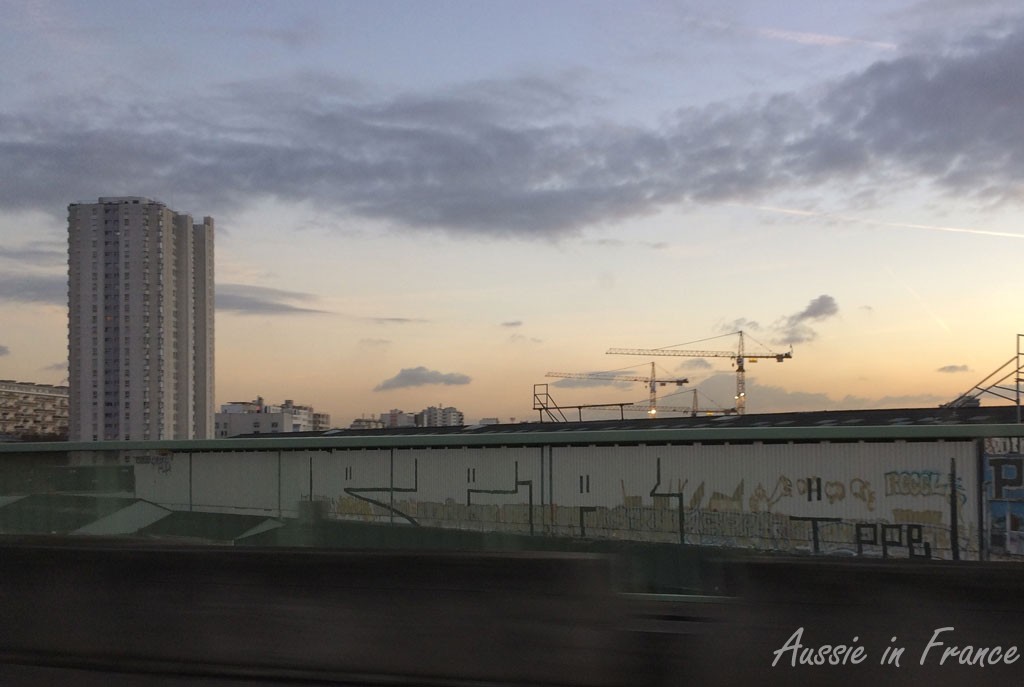
Sunset over Paris 🙂 on our way back from Paris Nord
Next stop is Vincennes where we are having dinner in a Thai restaurant with our friend Anne. I order some delicious little chicken parcels followed by Peking duck (which is probably not very Thai I have to admit). After two forkfuls, my mouth is on fire. It turns out I’ve eaten a tiny chili. Not even in India did I taste food this spicy. The staff rushes over to see what’s happening to me. After downing a bottle of water the pain starts to subside. The rest of the duck is not spicy at all!
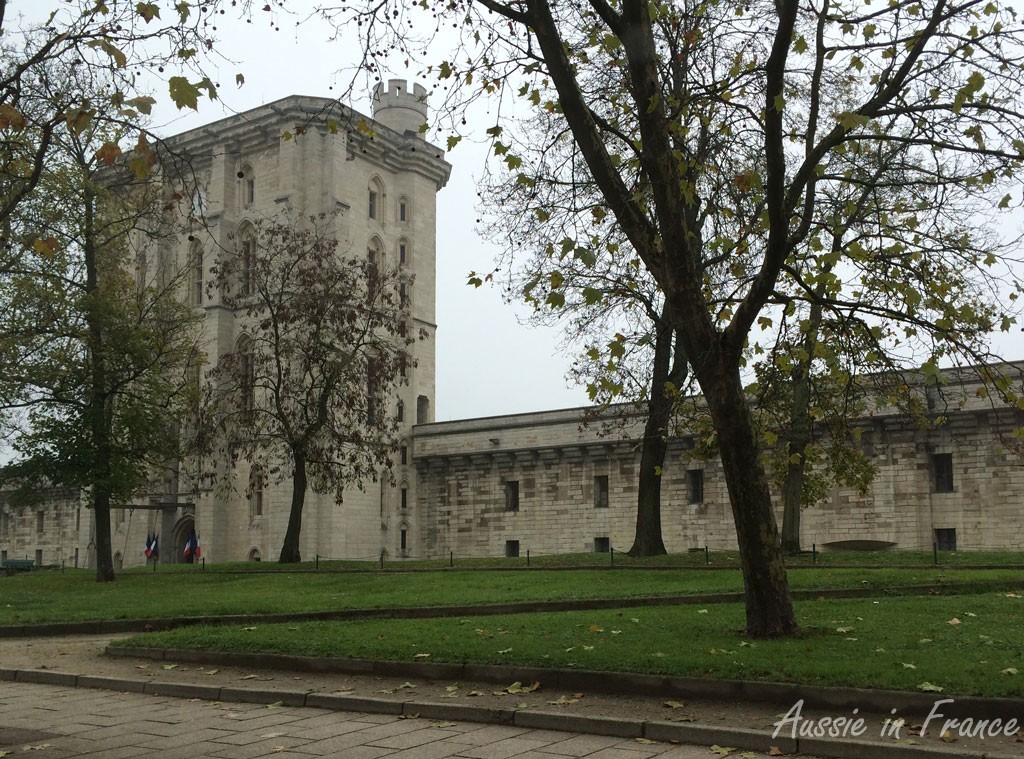
Château de Vincennes
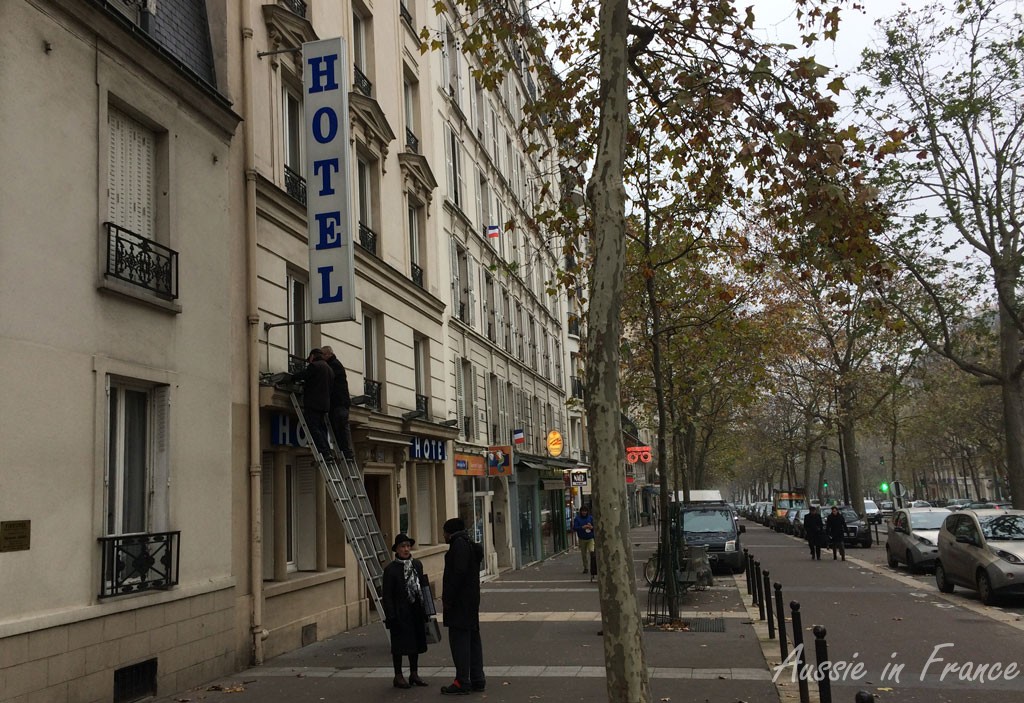
We finally reach our hotel on avenue Daumesnil in the 20th arrondissement at nearly 11 pm. I chose it on booking.com by asking for a 3-star hotel with a rating of at least 8/10 for less than 100 euros. I didn’t have a very big choice … The man at reception is very friendly. The room is minute, with a double bed, a single bed, a small wardrobe, a bedside table, a mini-bar that doubles as a second bedside table, a table and chair with an electric jug, 3 cups, several sachets of coffee and tea, and a luggage stand. You have to step over the end of the bed to get out on the window side. The bathroom has a shower bath, a toilet and wash basin. All very clean and functional. The bed and pillows are comfortable and there are good quality sheets. The only other negative point (apart from the size) is the metro which we can hear rumbling in the background. Fortunately it stops between 1.15 am and 5.30 am.
Our hotel in Avenue Daumesnil
It’s next morning and we’re down at reception by about 9.30 am. The man at the desk greets us in English to my surprise. Jean Michel says he can speak to us in French. It must be the Australian hats. I ask him whether they have lost a lot of custom since 13th November and he tells me that it’s not the foreign tourists who have cancelled, but the French!
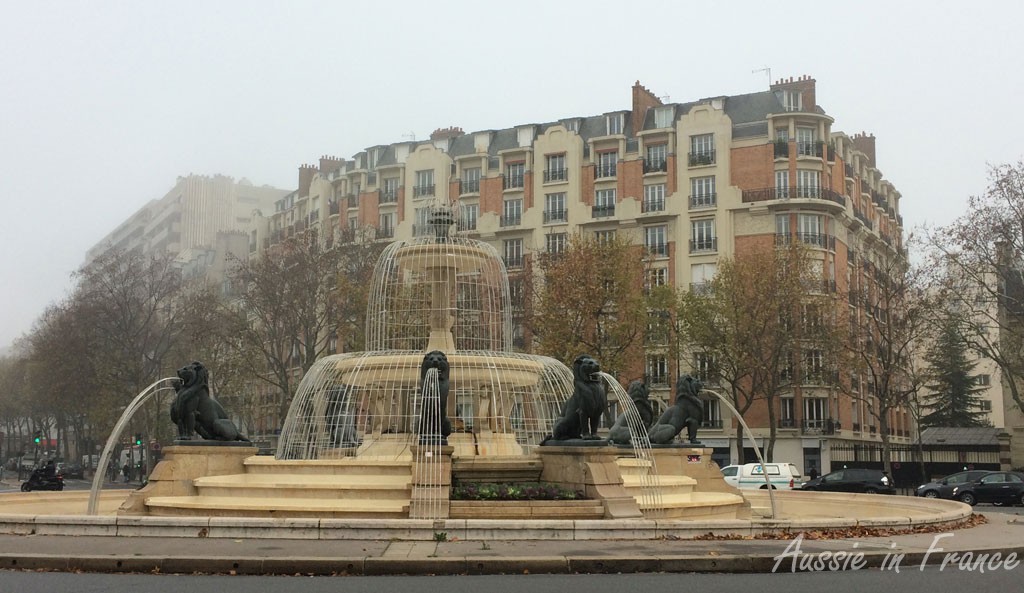
Place Félix Eboué
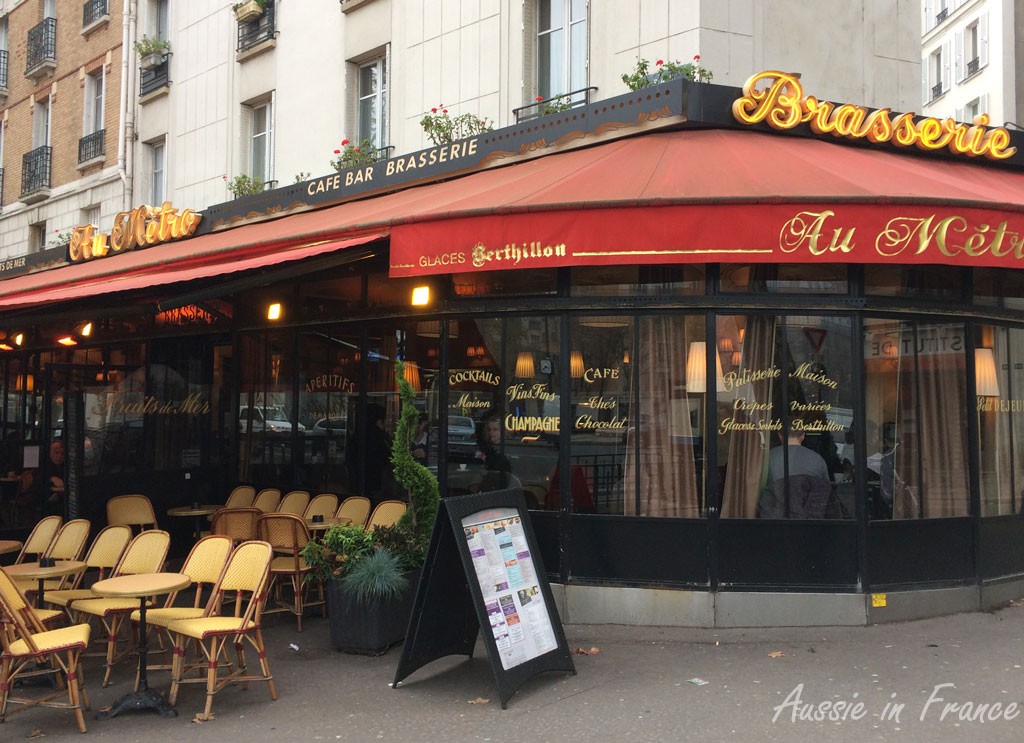
We put our overnight bags in the car which is parked just across the street and look for a likely place for breakfast. There is a thick fog. We see a brasserie next to a street market on Place Félix Eboué. It’s very busy but we’re told there are no croissants or even baguette left because of the market so we leave again. The moral of this is that you can’t count on croissants after 9 am …
The brasserie where there are no croissants left
Fortunately we find a smaller place down the road run by some Asians who instantly go off to the nearby baker’s to buy us some croissants. They are excellent.
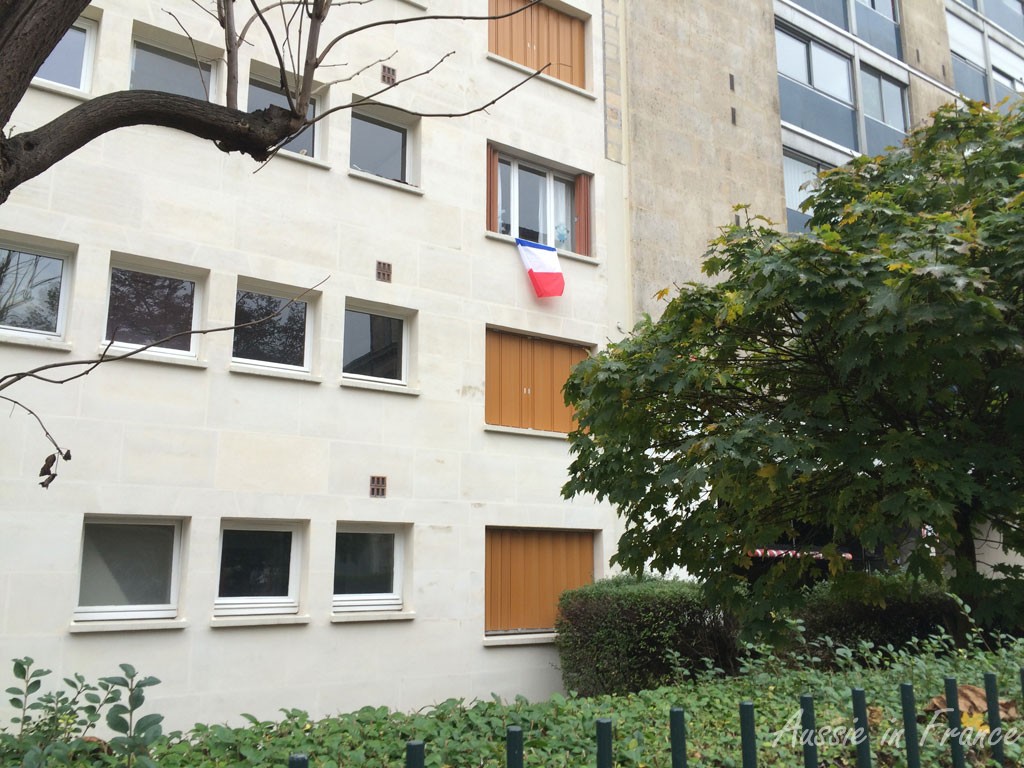
A remembrance flag on a window in the 20th arrondissement
Back in the car, we turn on the radio and hear that there are 2,000 people attending the commemoration ceremony for the victims of the 13th November and their families. President Hollande has asked people to hang flags out of their windows as a sign of solidarity. We look around but don’t see very many. We personally don’t have a French flag and have no idea where we could buy one so we guess many people are in the same predicament.
The underground car park at Printemps Nation is completely closed off so we find some street parking. Once again, my handbag is checked when we enter the store and Jean Michel is asked to open up his anorak.
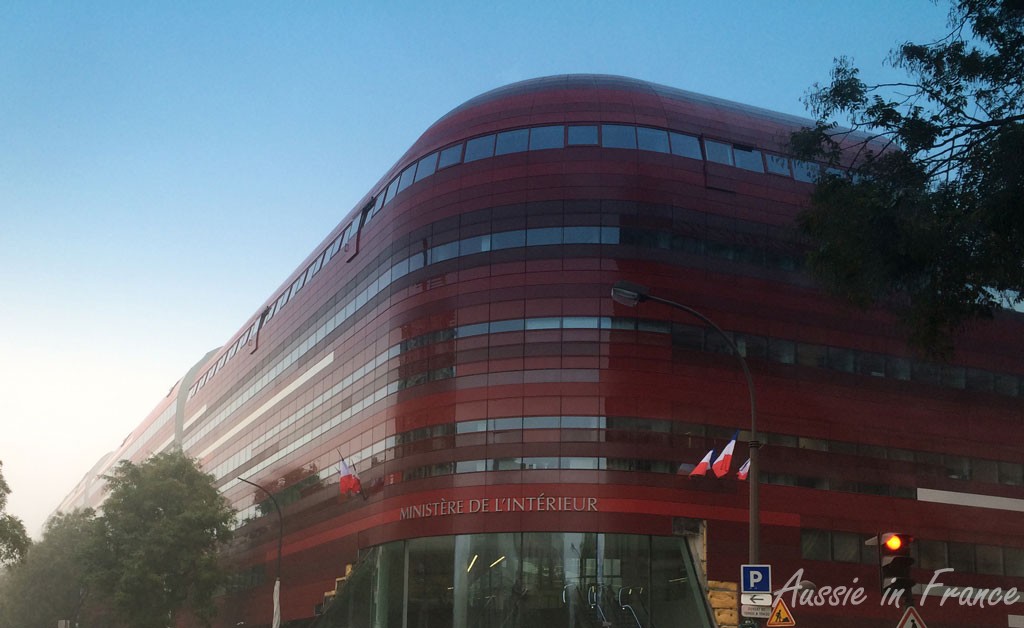
The new Ministry of the Interior near Printemps Nation
We manage to buy most of what we need then head for Nogent-sur-Marne where I am meeting up with a dentist friend for lunch and a check-up. Before I moved to the Palais Royal in Paris ten years ago and was still living in Fontenay-sous-Bois, I had my office in Nogent. I wander around for a bit and discover that many of the shops have changed. It feels a little odd. However, the man at the Italian restaurant remembers me and welcomes me with open arms!
Jean Michel has gone off on his own in the meantime and comes back for his 2.30 pm appointment after which we set off for our last venue, the Independent Wine Growers’ Fair at Porte de Versailles. We park in one of the side streets (we do not want to brave the underground parking lot even if it’s open) and are surprised (and reassured) to see that all the exits are manned and there is a very serious body search at the entrance. This is the only place I’ve been worried about because the hall is enormous and if there is a terrorist attack, there will be little chance of escape.
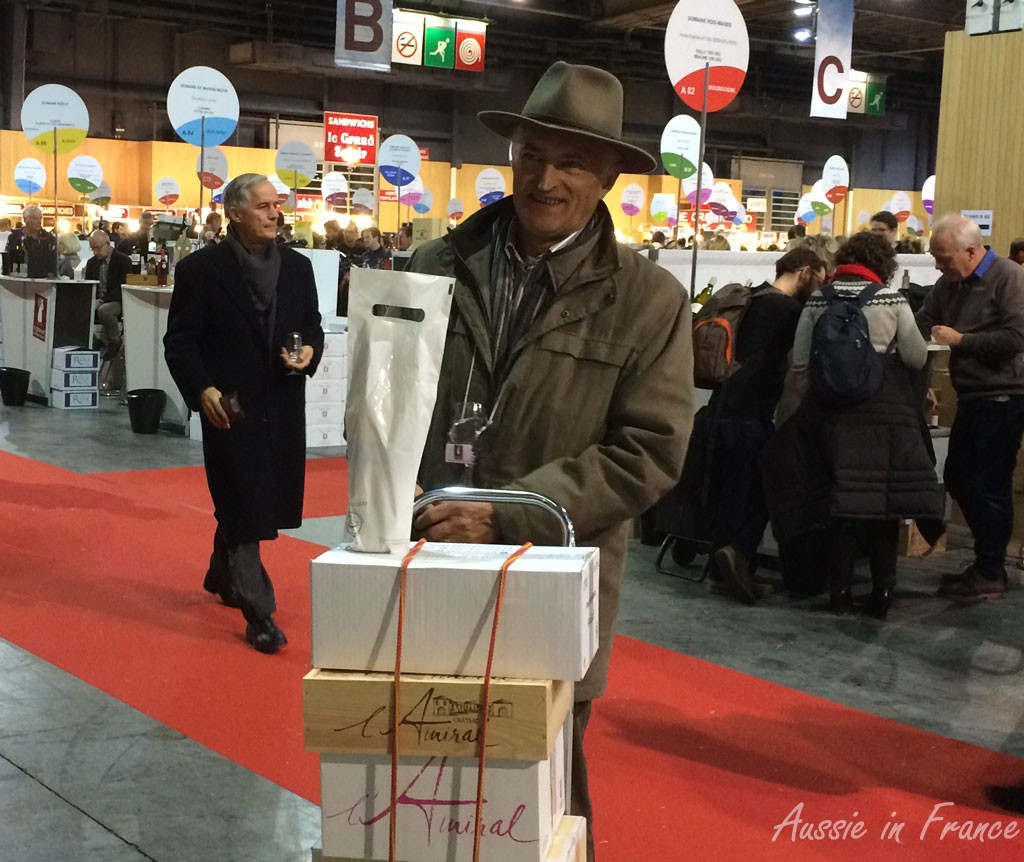
Jean Michel at the end of the wine fair
Once we’re inside, we forget about possible terrorists and concentrate on rebuilding our depleted wine stock. Only one wine grower, from Alsace (Adam), tells us that he seems to have fewer customers this year. We buy his pinot auxerrois and riesling then head to the next name on our list – a minervois (L’Amiral) where we spend quite a bit of time discovering their different wines. We buy some full-bodied vacqueras from Le Pont de Rieu, and order 18 bottles of our favourite sancerre (Domaine de la Rossignol) to be delivered before Christmas. We discover a new petit chablis (Domaine du Colombier) because our former supplier has hiked up his prices.
We buy another carton of corbière from Domaine du Grand Arc (Cuvée des 40). Our trolley is now full so we decide to give the quincy a miss but go and talk to another minervois wine-grower (Malys-Anne) whom we missed the last couple of times we came to the fair. We have a long conversation with him and taste all his wines again. We promise to visit him at the next wine fair in Orléans with an empty trolley.
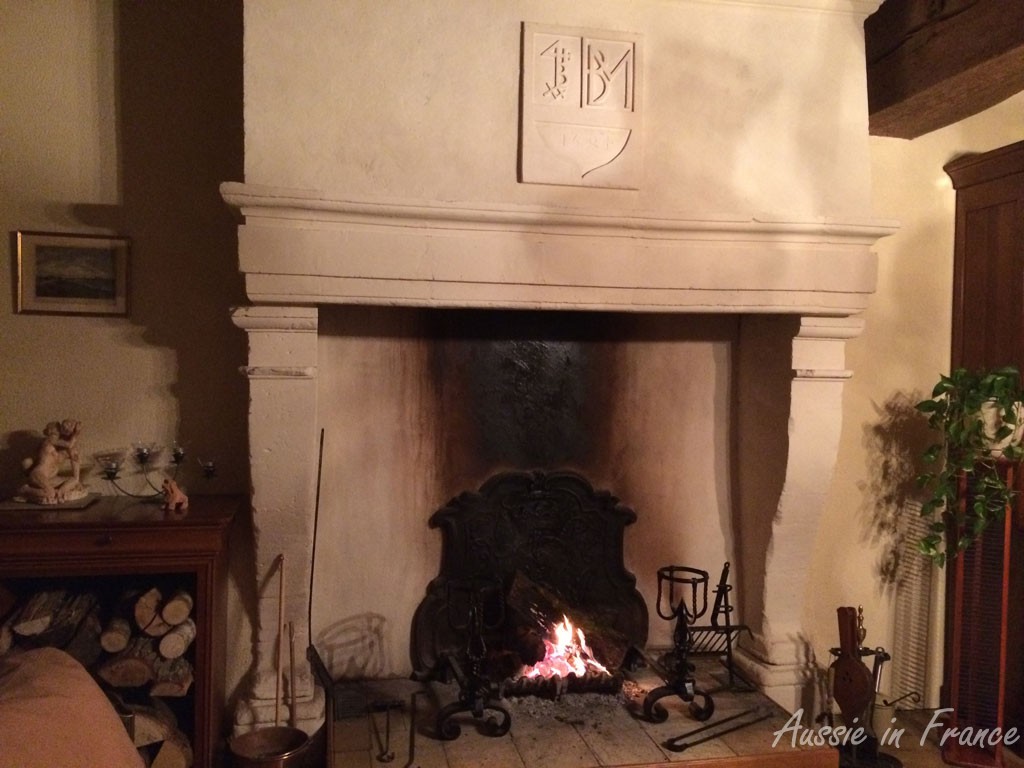
We love our fireplace!
After a very busy two days, we are pleased to be back on the road to Blois. By 9 pm, we are in front of the fire with a relaxing glass of our local cour cheverny. Many people ask me whether I miss Paris. The answer is a resounding “NO”. I have become a very happy “provinciale” !!!
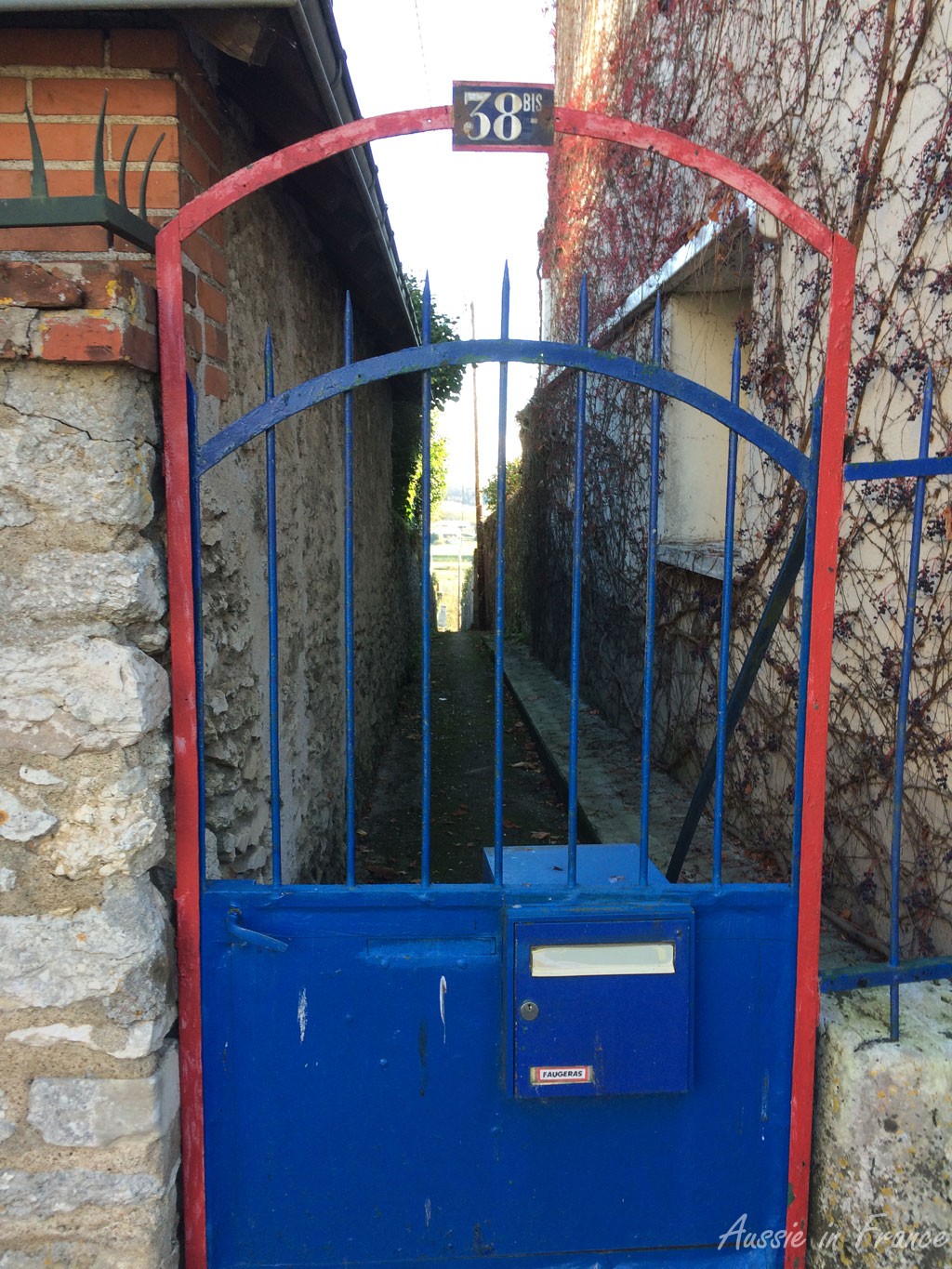
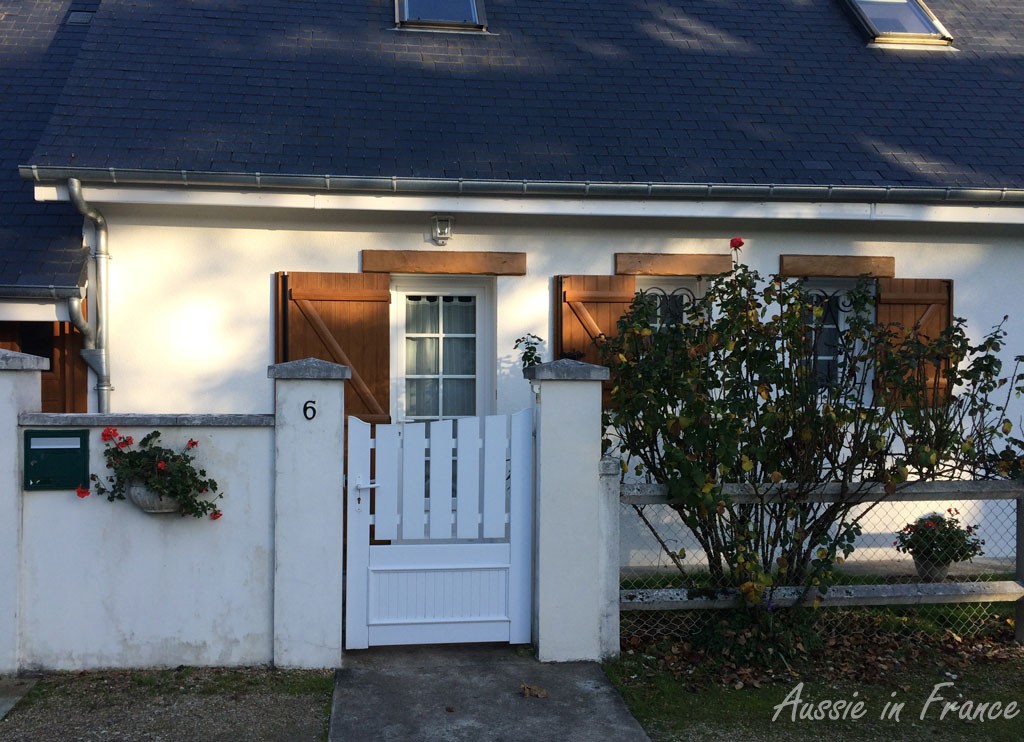
Have you ever noticed a number in France followed by bis or ter, particularly on an entrance or gate? Well, it means that a house or property has been divided up, so it’s like our a or b. He lives at 3a = Il habite au 3bis. Bis comes from Latin – twice – while ter means three times.
An American friend living in France told me the following: “As far as I know, there is no equivalent in the States. Every property has its own street number. I guess this is possible because all the steets and properties are relatively “new” as compared to European ones. When a street is created, all the properties and their numbers are assigned (even if there are no buildings yet on them). And in some cases there may even be some gaps in the numbering to allow for properties being subdivided. But I can’t ever recall the same street number being “shared” as here with the “bis”. Of course, it’s a different matter with apartment numbers which may have a an “A” or “B” etc.”
An Australian friend living in Australia adds: “We have 3a as well as 3 when it is a battle-axe block i.e. a house built in the back half of the property. We have a lot in our street.” Don’t you just love “battle-axe block”?
Another friend, living in France this time, lives at 64a and not 64bis. When they bought their house a few years ago, the previous owner kept some of the land and wanted to keep the number 64 for practical reasons. The municipality assigned our friends the number 64a and not 64bis. However, this is most unusual.
What is the system in your country?
Bis is used in other contexts in French as well. At the theatre, bis means encore which is interesting because in English, we use the French word for again. You can also say rappel from rappeler ,to call back.
To call for an encore is bisser or crier “bis”.Elle a été bissé trois fois = She had three encores. To play an encore is jouer or faire un bis. The pianist gave several encores = le pianiste donné plusieurs bis.
An itinéraire bis is an alternative route, not exactly a detour which is déviation, but a route to avoid peak traffic, for example.
To go back to encore in French. It doesn’t just mean again. It can also mean still, only, more, even and also – just to mention a few.
Elle s’est encore trompée de rue = She took the wrong street again.
Il restait encore du fromage = There was still some cheese left.
Ce matin encore, il me parlait de son petit fils = Only this morning, he was telling me about his new grandchild.
Encore un peu de thé ? = A little more tea?
Il est encore plus bête que je ne pensais = He’s even sillier than I thought.
Ce n’est pas seulement triste mais encore ridicule = It’s not just sad; it’s also ridiculous.
I’m sure you have lots of other examples with different words in English.
We are still reeling from the news of the terrible terrorist attacks in Paris on the evening of Friday 13th November. Our vegetable vendor at the market on Saturday receives a call from her son at 11 am while she is serving us. He lives with other students in the area where the killings took place but she hasn’t been able to get onto him. You can imagine her relief when she learns he is safe and sound. We have been listening to the news on the radio and reading details on the iPad. We don’t have a television set and I am careful not to watch any videos. By Sunday afternoon, we need to commune with nature. Fortunately it’s reasonably warm and sunny.
Start of the track along the Loire
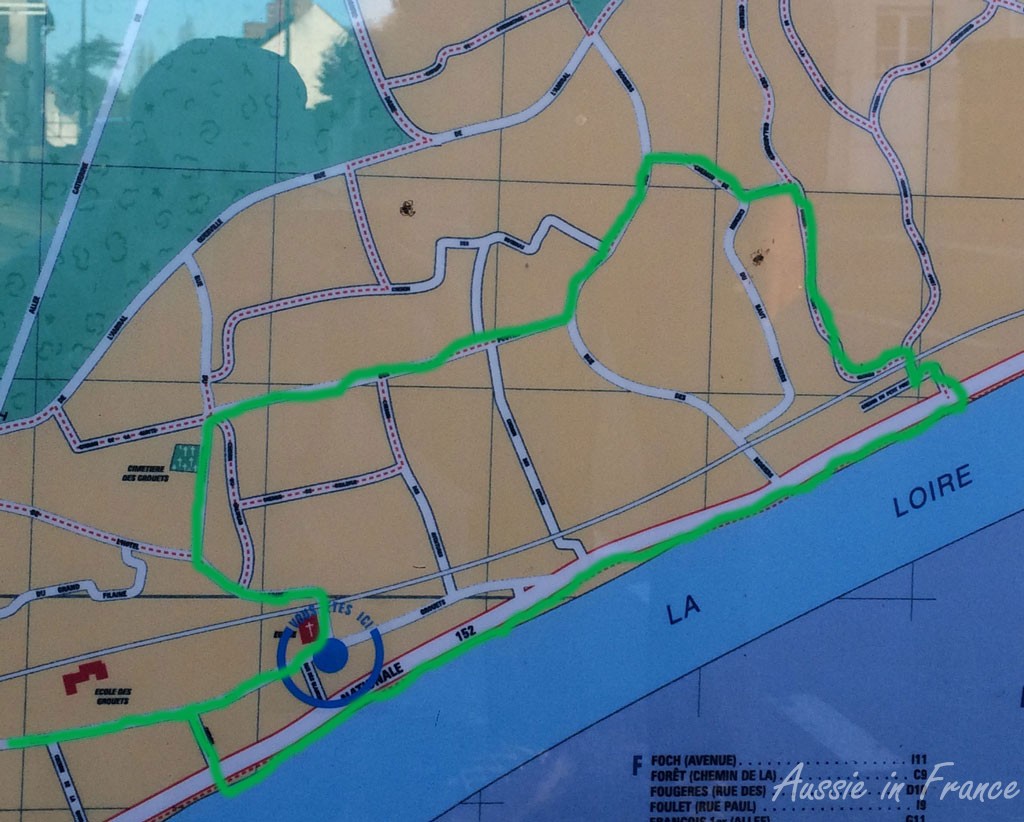
We walk down our street, Rue Basse des Grouëts, towards Blois until we get to Rue des Blanchets with its little hothouse. We cross the busy highway and go down the path towards the Loire. We’ve already explored to the right on an earlier occasion, so this time we turn left. We are pleasantly surprised by how lovely the path is.
Down to the left, we can just make out the city of Blois.
We eventually come to a house on the left that we have only seen from the main road. We would never have imagined what it’s like from the other side. Lots of large windows have been added to make the most of the view.
Further along the path we see another house that we have also only seen from the road. We’re surprised at the intricate sculpting on the gable.
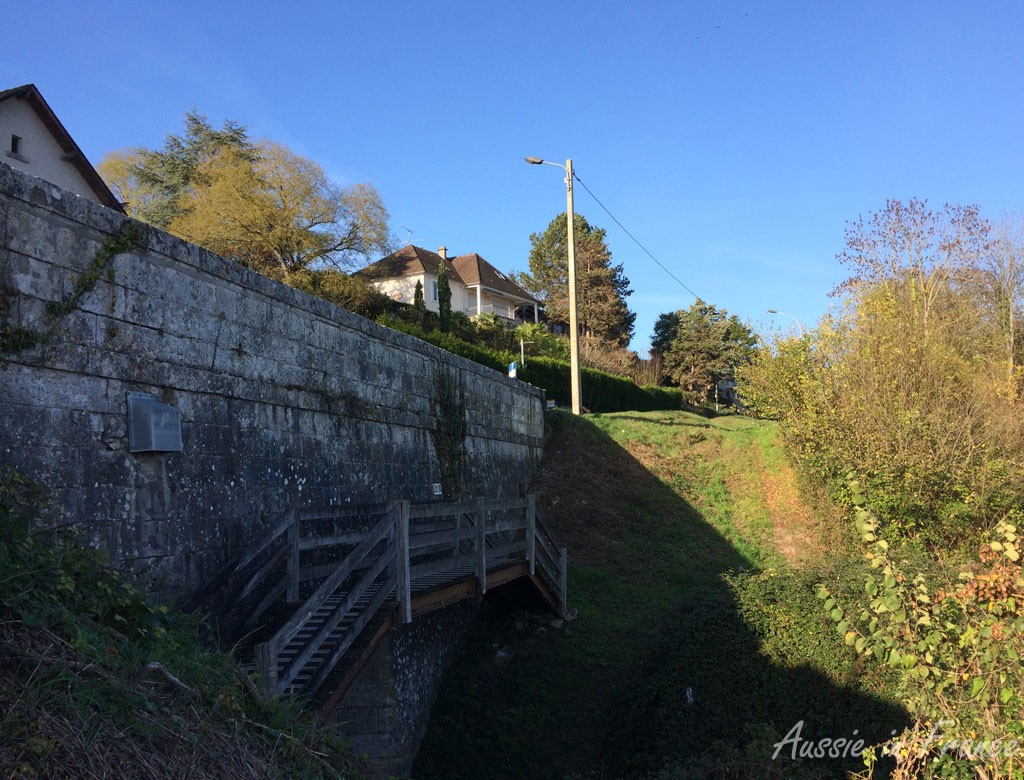
Next, to our great surprise, we come across a bridge near to a culvert. The path is quite steep on the other side. We certainly couldn’t have cycled here!
The wooden bridge next to the culvert
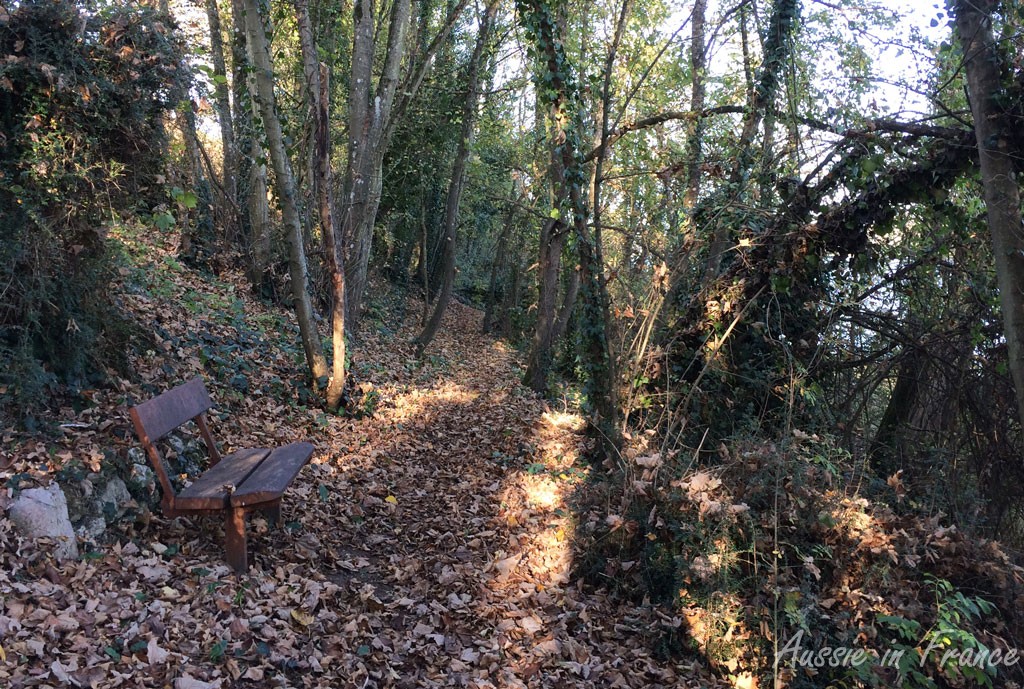
Jean Michel tells me we’ve come to the end of the track, but we haven’t. It veers off again to the right so we keep following until we come to a little bench among the trees.
A bench to rest on and watch the river!
We come out of the little wood and can see swans on the river. We’re impressed this year at just how many there are.
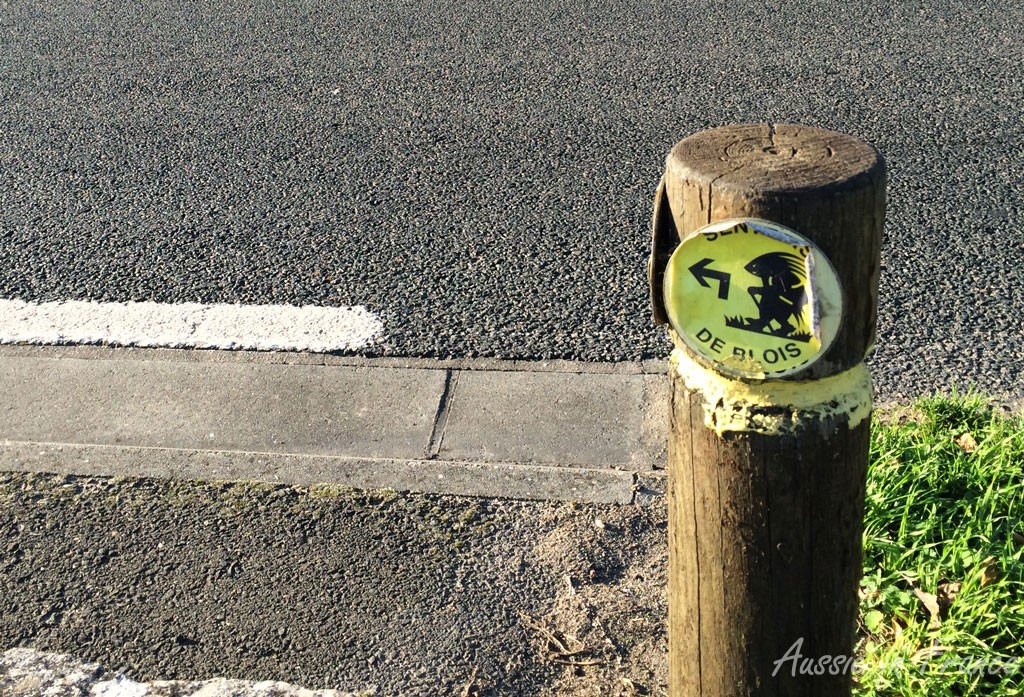
The Blois walking sign indicating we are to cross the main road.
By now we’ve walked for about an hour and a quarter so we’ll need to start on our way back if we want to get home by dark. The walking path takes us across the main road again and onto Chemin du Petit Pont (little bridge path).
The sign at the start of Chemin du Petit Pont
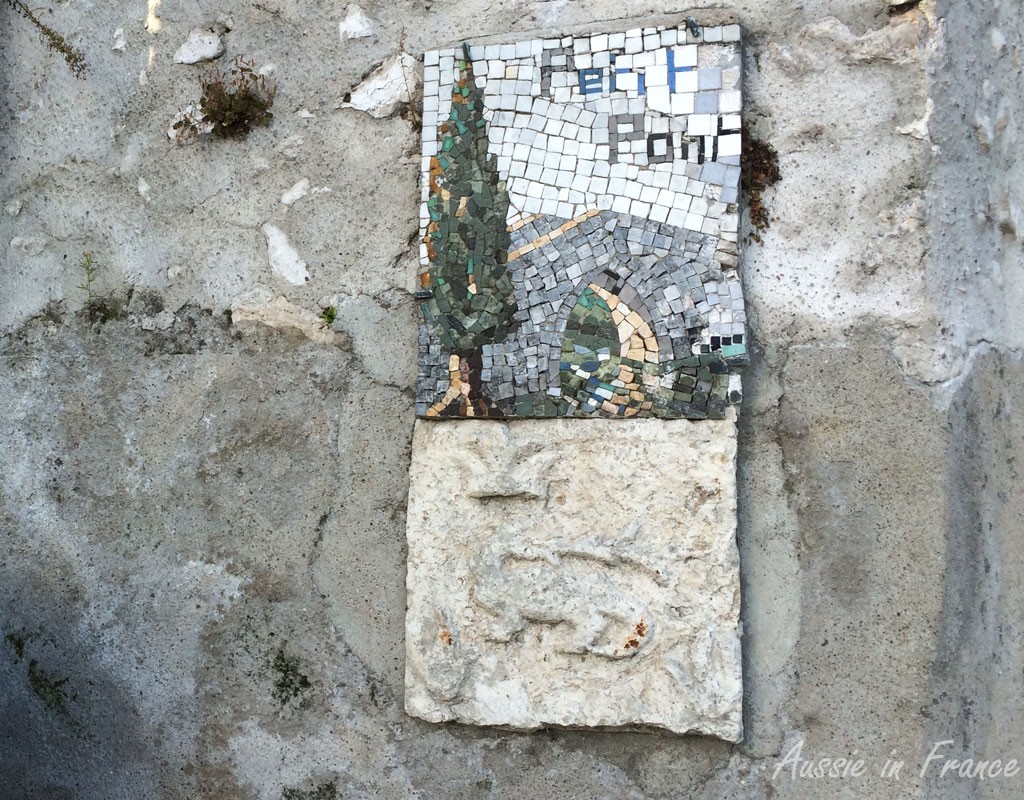
The house on the corner has a very interesting mosaic with the “little bridge” at the top and François I’s salamander and crown at the bottom.
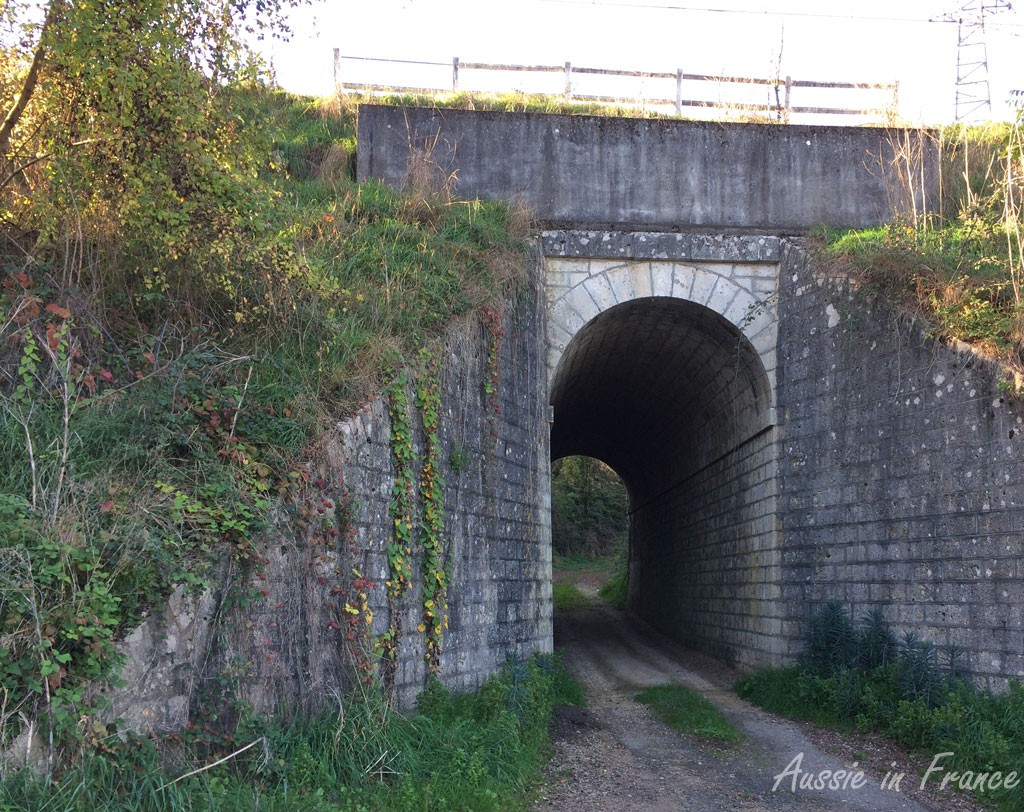
We walk through the tunnel under the railway line and come out on a grassy area.
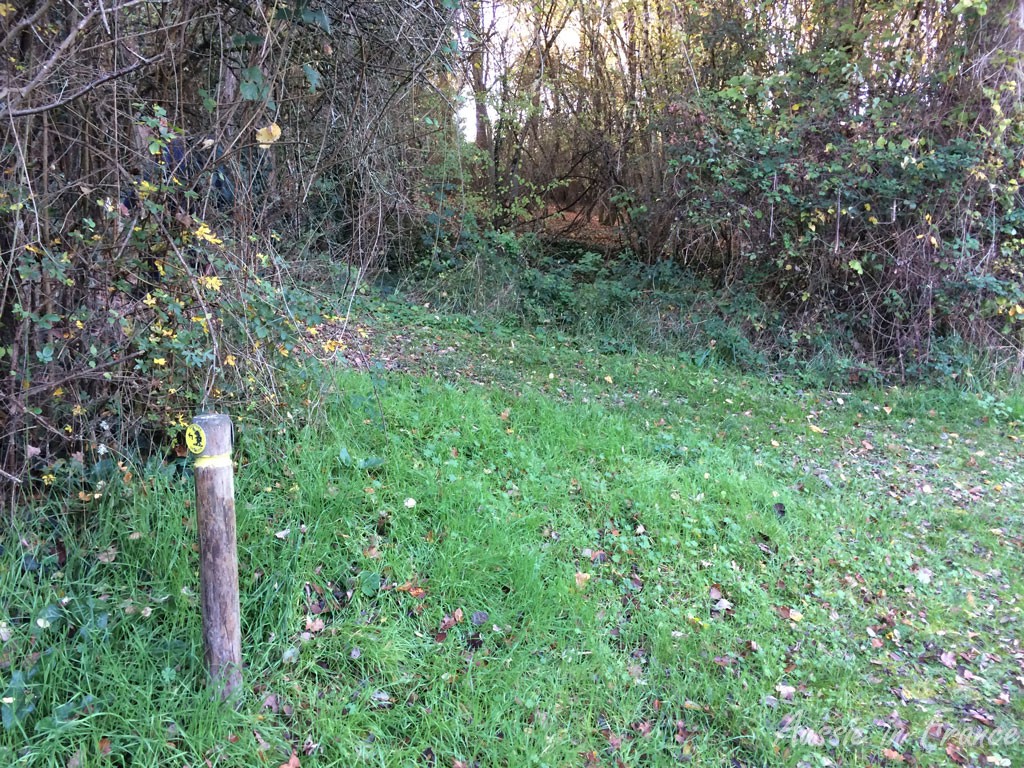
Signpost indicating a sharp left
Fortunately, there is a sign telling us to take a sharp turn left onto a path leading to Chemin du Saut aux Moines (monks’ leap path?) which we would never have found otherwise.
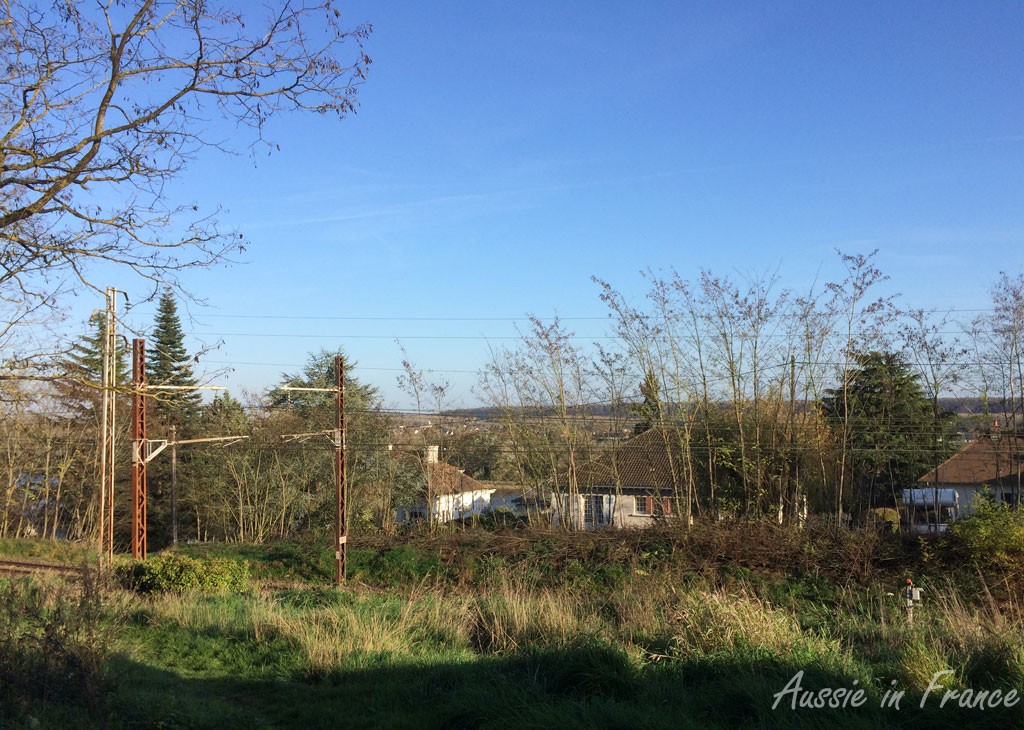
View from the railway line
We climb the path thtat takes us up to the Paris to Tours railway line that runs behind our house. The path moves away from the tracks until we turn left on Chemin de Pomone.
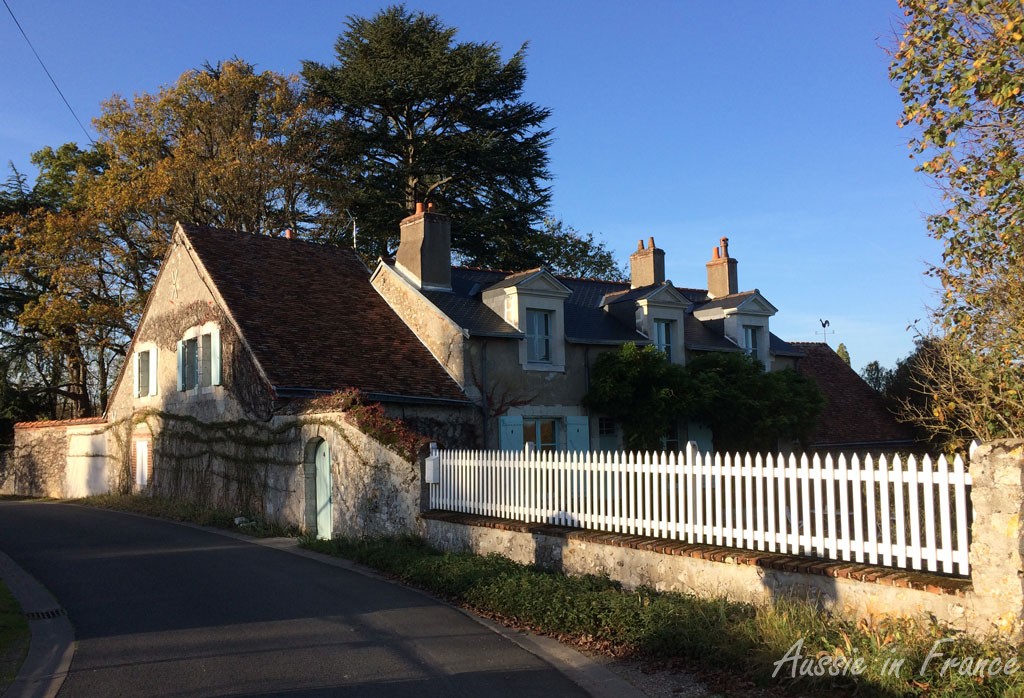
A very old house at the top of the hill just before rue Pomone
At the end of Chemin de Pomone we turn left into Rue des Moriers.
A white gated house in Rue des Moriers
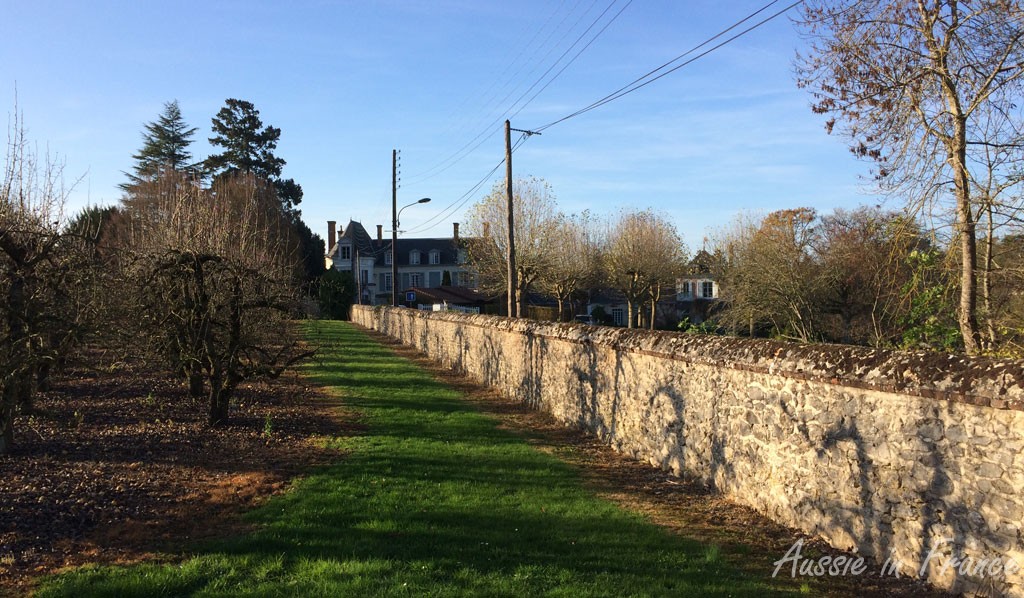
We take the next right into Rue des Poutils, which has an orchard on one side and a very large house in the distance.
An orchard and large house on the corner of Rue Poutils
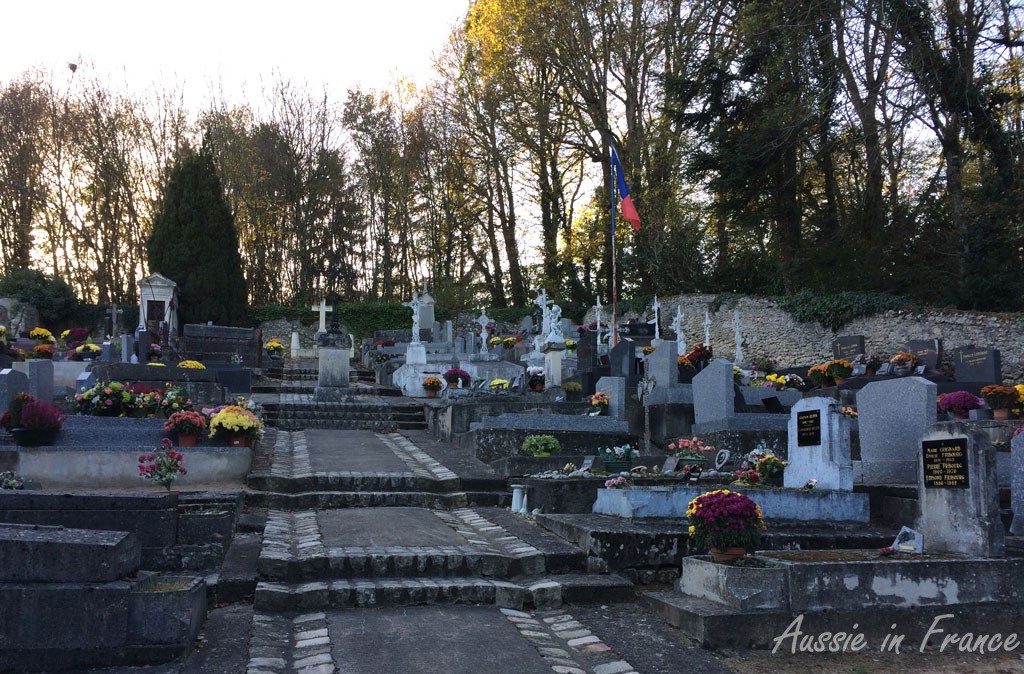
At the end of Rue des Poutils we turn right into Rue Galandeau where Jean Michel wants to show me the cemetary. I didn’t even know we had one in Les Grouets!
It’s very quiet and peaceful. We wander through and I recognise some local names but am surprised to see that most of the tombs are 20th and 21st century. I later learn that it’s because the time has run out on some of the plots and they haven’t been renewed.
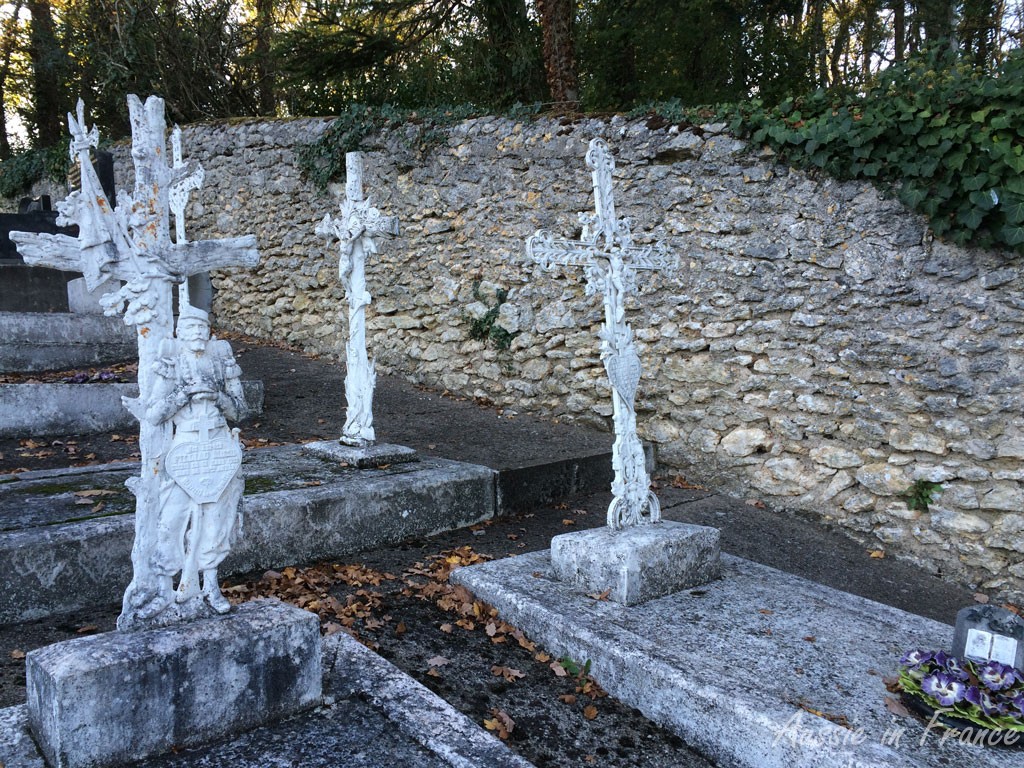
White crosses in the cemetary depicting soldiers
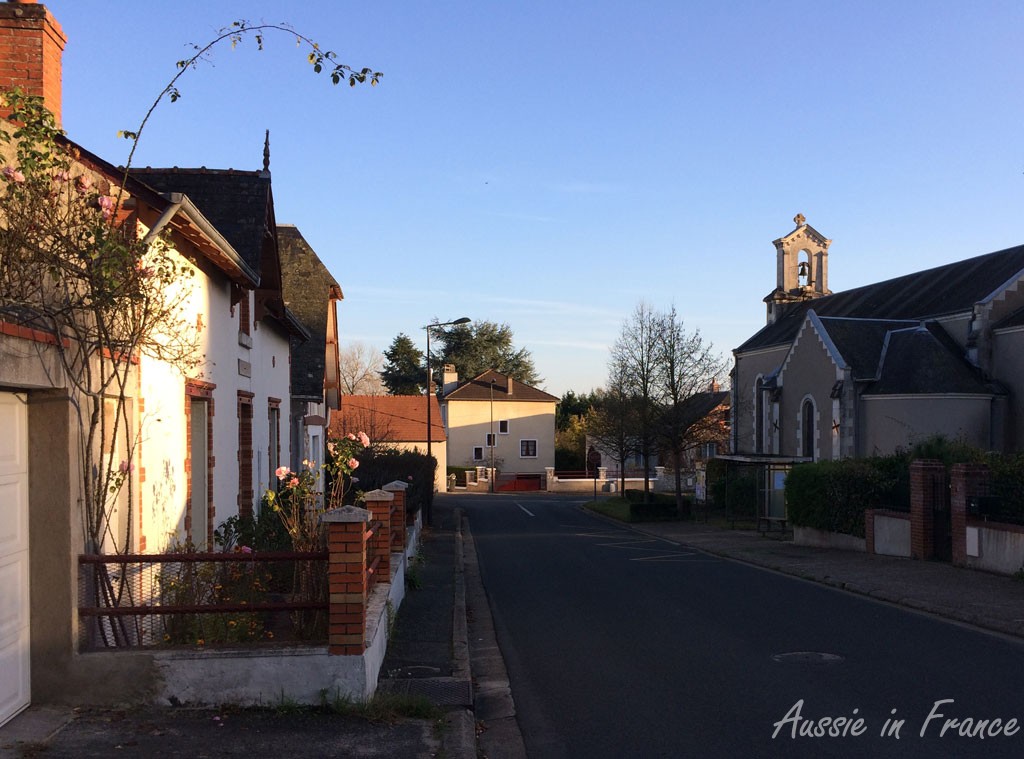
I’m particularly taken with the white metal crosses, several of which have soldiers on them. We come out of the cemetary and continue along Rue Galandeau until we reach Rue de l’Hôtel Pasquier, which is known terrain. It leads into our own street, Rue Basse des Grouëts, with the local church on the corner.
Our local church on the corner of Rue de l’Hôtel Pasquier and Rue Basse des Grouëts
The return journey has taken us an hour, so the entire loop is 2 1/4 hours, about 7 k altogether. We get home in time for afternoon tea in front of the fire feeling much better than when we set out – but, even so, it takes me a week to write this post!
The map on the corner of Rue Basse des Grouëts and Rue de l’Hôtel Pasquier. The circle shows the church. The wriggly green line is the path we took.
Another beautiful sunny autumn day when it’s warm enough to cycle. I’ve been wanting to see the gardens at Château de Villandry ever since Susan from Days on the Claise mentioned that the late summer planting was at its peak and the famous potager garden looking splendid. There is a dedicated bike route from Tours to Villandry that is about 20 K and flat all the way. As it runs along the Cher River most of the time, it should also be well exposed to the sun.
The beginning of the bike route at Centre Aquatic du Lac
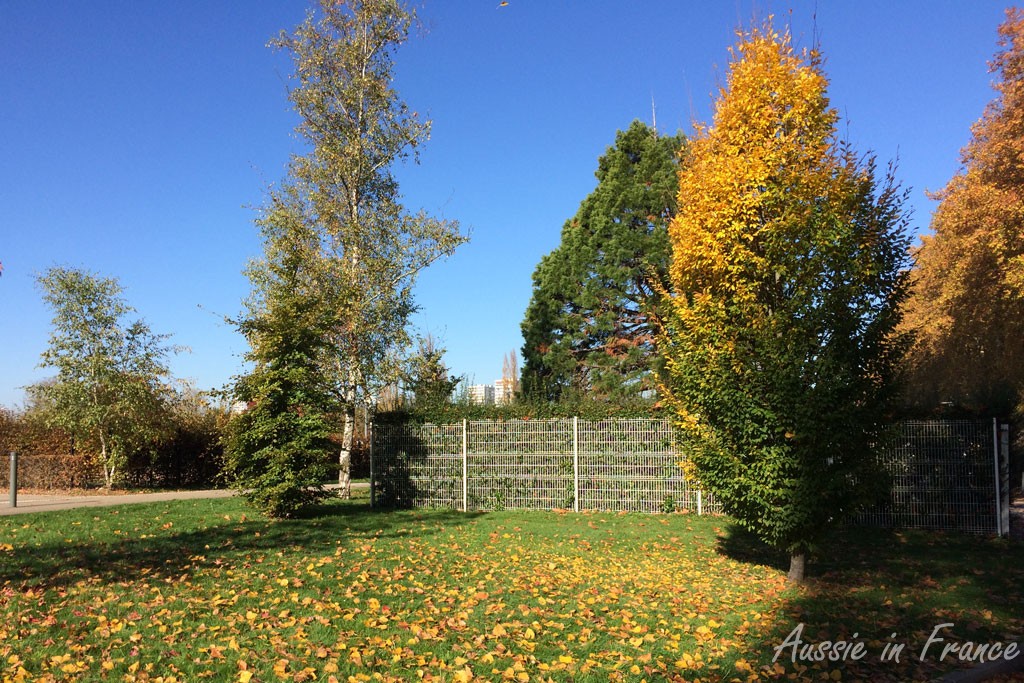
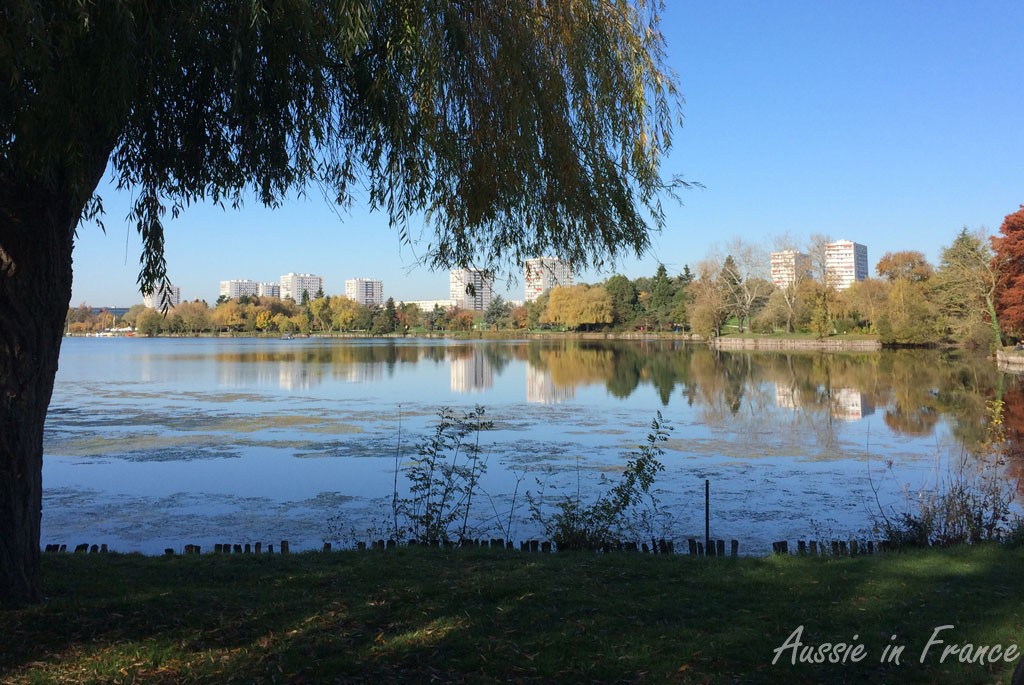
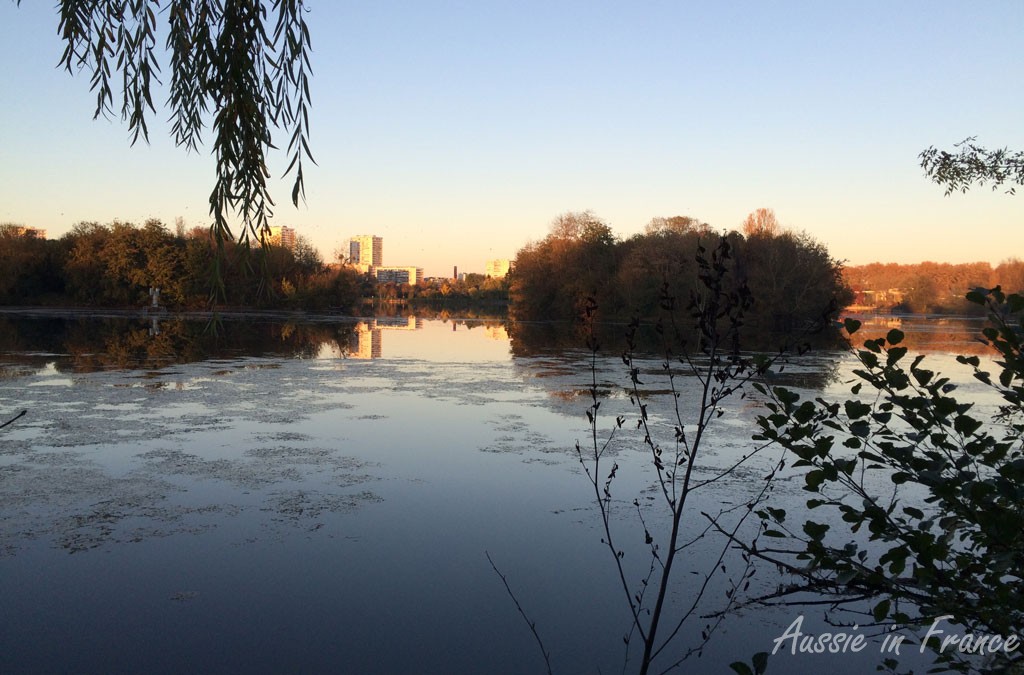
It takes us about 50 minutes to get to the Centre Aquatic du Lac. At midday, it’s a little nippy but with caps, windcheaters, jeans, gloves and a scarf, (most of which we later discard), it’s very pleasant. Our path takes us through a park with a lake in the middle – Lac de la Bergonnerie – which is obviously very popular with the locals which is not surprising when you see all the high-rise buildings on the other side.
View of Lac de la Bergonnerie from the bike path
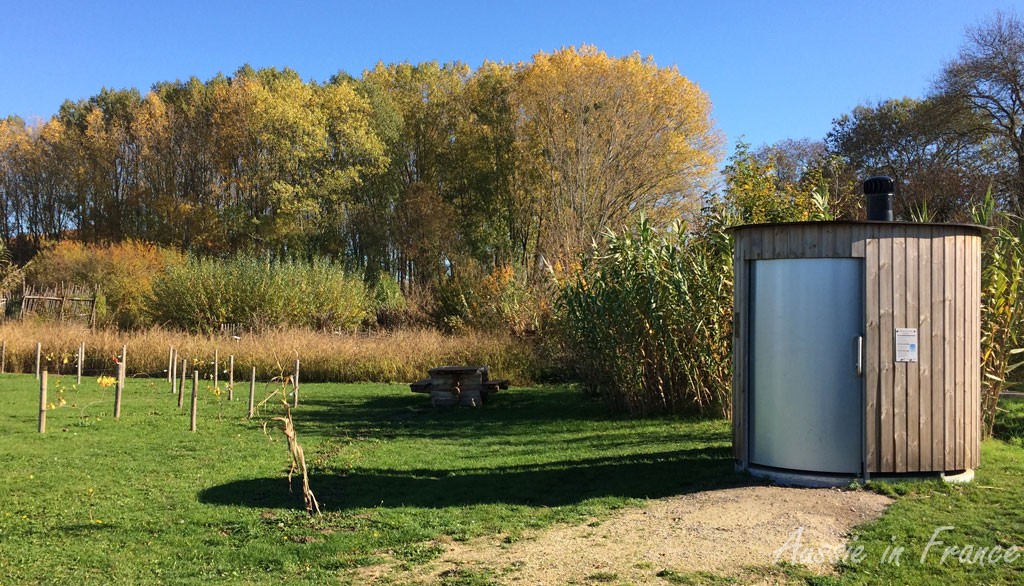
After the lake, we go past a series of allotments that even have “dry” public toilets. I wonder why there aren’t more of these along the Loire à Vélo bike route (which is part of Eurovélo 6 from the Atlantic to the Dead Sea)? Clean, fresh smelling, right next to the bike path.
The very practical dry toilets near the allotments
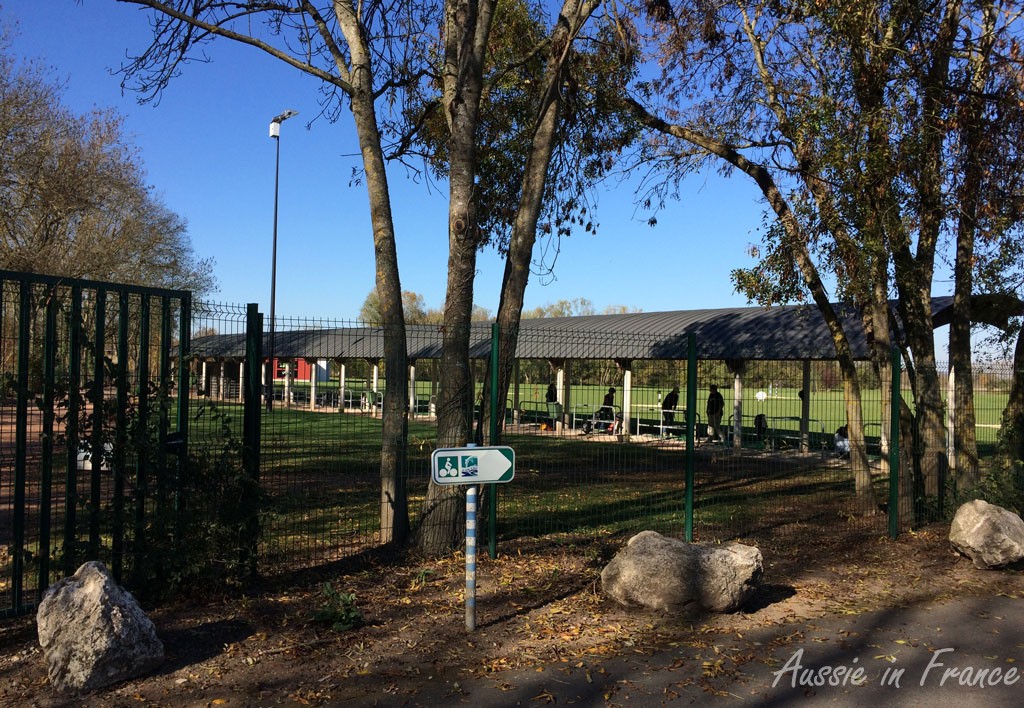
A little further on, we ride through a 9-hole golf course which has a 18-hole putting green, Golf de la Gloriette, which seems rather less sophisticated than most golf courses. I check it out later and see that the green fees are about half what you pay at La Carte golf course near Chouzy-sur-Cisse. I’m not a golfer myself but I think it’s good to make the game more accessible.
The putting green at the golf course
After a while, we join the Cher and the Port du Pavé du Roy, reinstated a few years ago and the site of various riverside activities in the summer and, in particular, a trip on La Jocondie* to discover the wildlife and flora of the Cher.
Port du Pavé du Roy
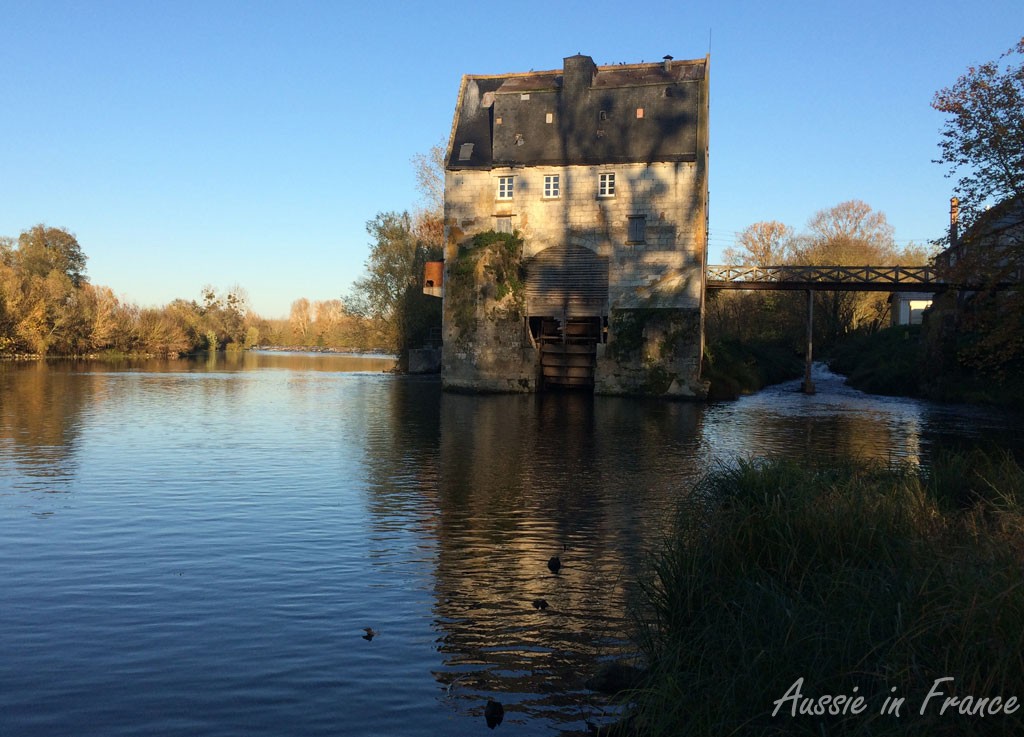
Further along we come to an small industrial flour mill, Grand Moulins de Ballan, and behind it, we discover the old mill house with its wheel still intact.
The old mill at Grands Moulins de Bassan – the photo was taken on the return journey which explains all the shadows
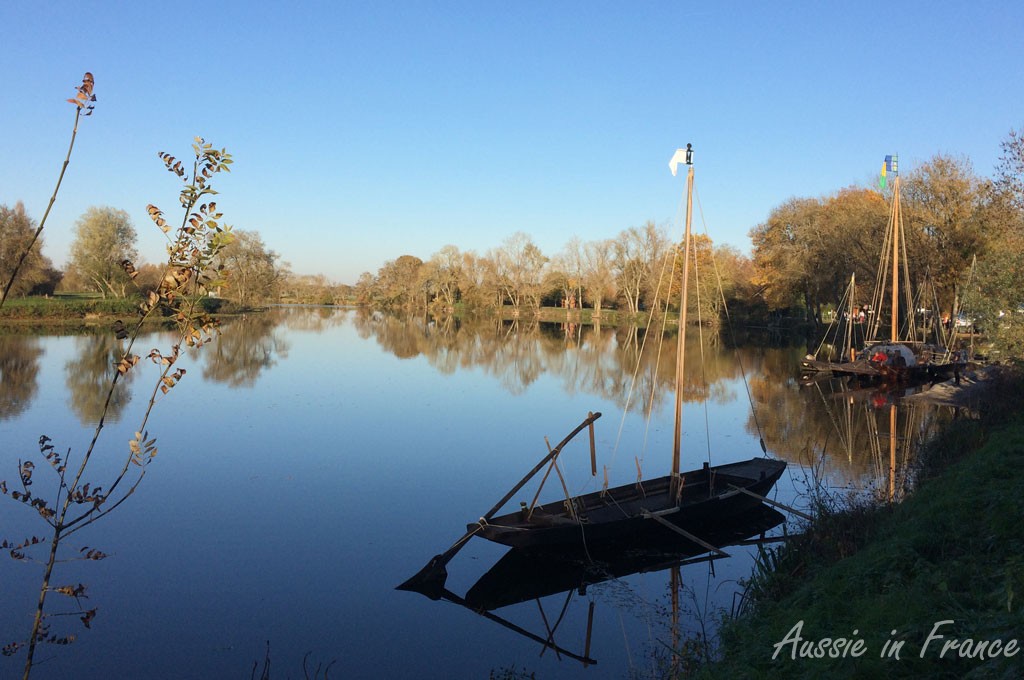
We soon arrive at the little port of Savonnières with several traditional flat-bottomed gabarre boats resting serenely on the water.
Flat-bottomed boats on the Cher at Savonnières near Villandry
Since we’re hoping to eat here, we leave the bike path and join the main road at the little church with its beautiful sculpted archway. The only restaurant open is way above our price range so we go back down onto the 3-kilometer bike path leading to Villandry.
Villandry from the bike path
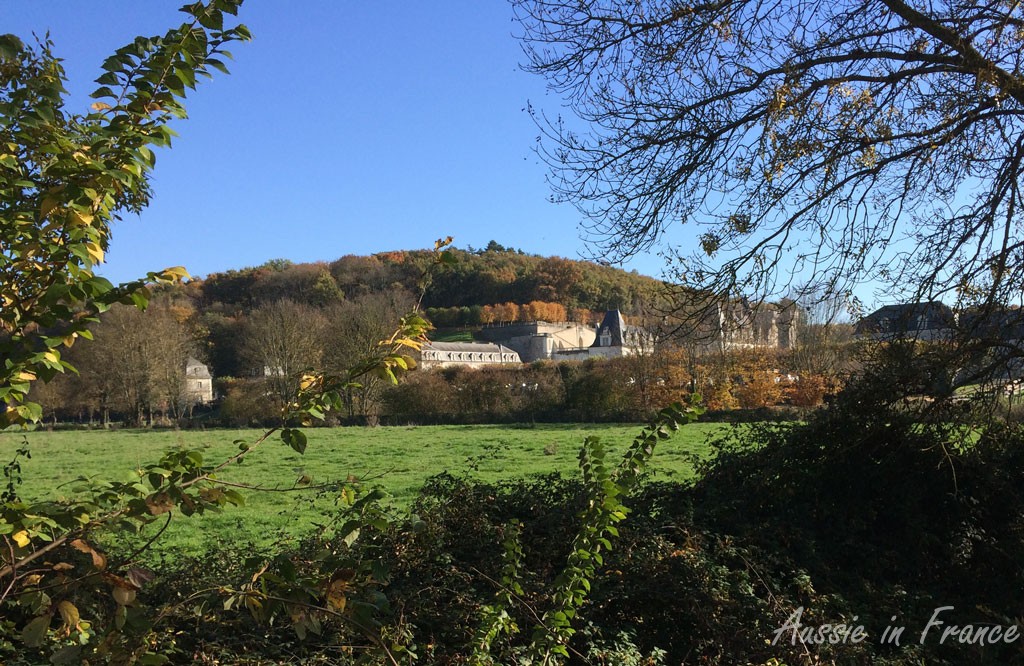
Château de Villandry soon comes into sight after we turn left away from the river.
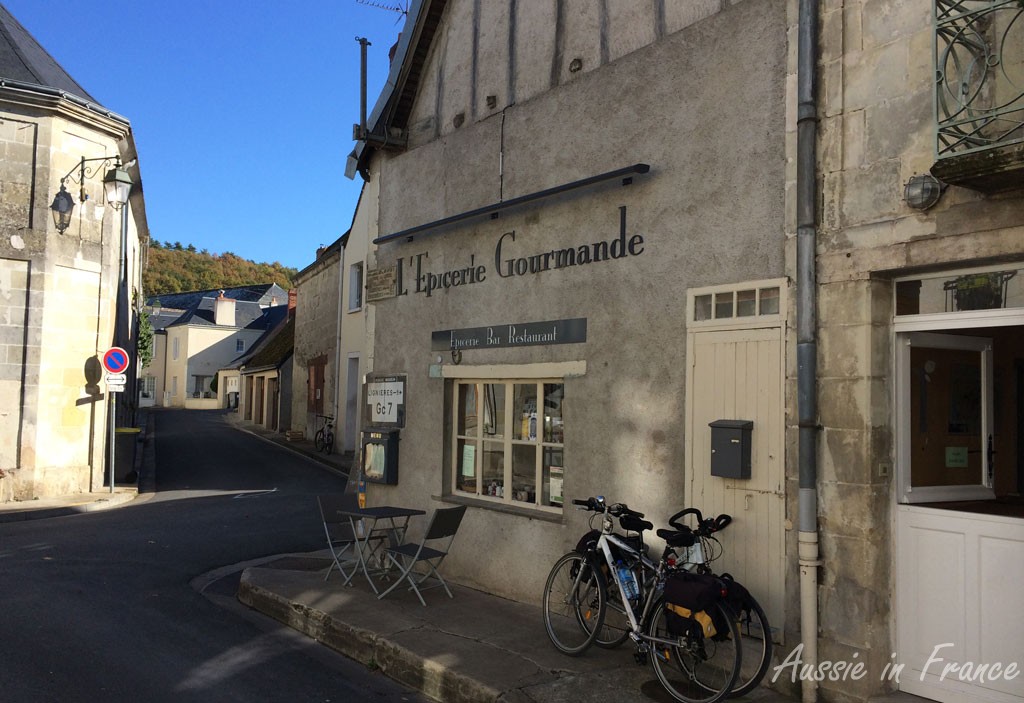
L’Epicerie from the outside
There are several restaurants on the main road at Villandry but none of them appeal to us. I see a sign pointing to a “tea room” in a side street, that takes us to “L’Epicierie Gourmande” (the gourmet grocery”). We see several bikes in front which is promising.
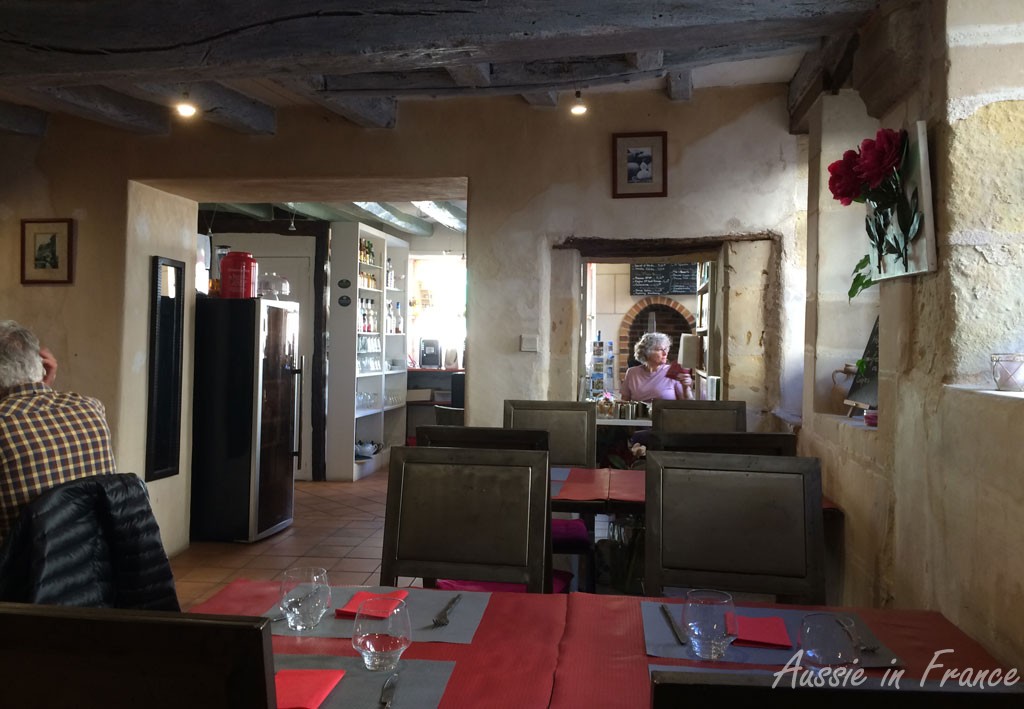
Inside l’Epicerie on the restaurant side
Inside, the décor is very simple and attractive, with exposed beams, stone walls and a large open fireplace. We have an excellent lunch – terrine de foie gras (copiously served) and a quiche, accompanied by a local wine (of course). There are no cooked dishes as such. Everything comes from the grocery section except for the dessert which is supplied by a local pastry shop. Exactly what we wanted! You can of course buy supplies from the grocery and have a picnic outside in the summer.
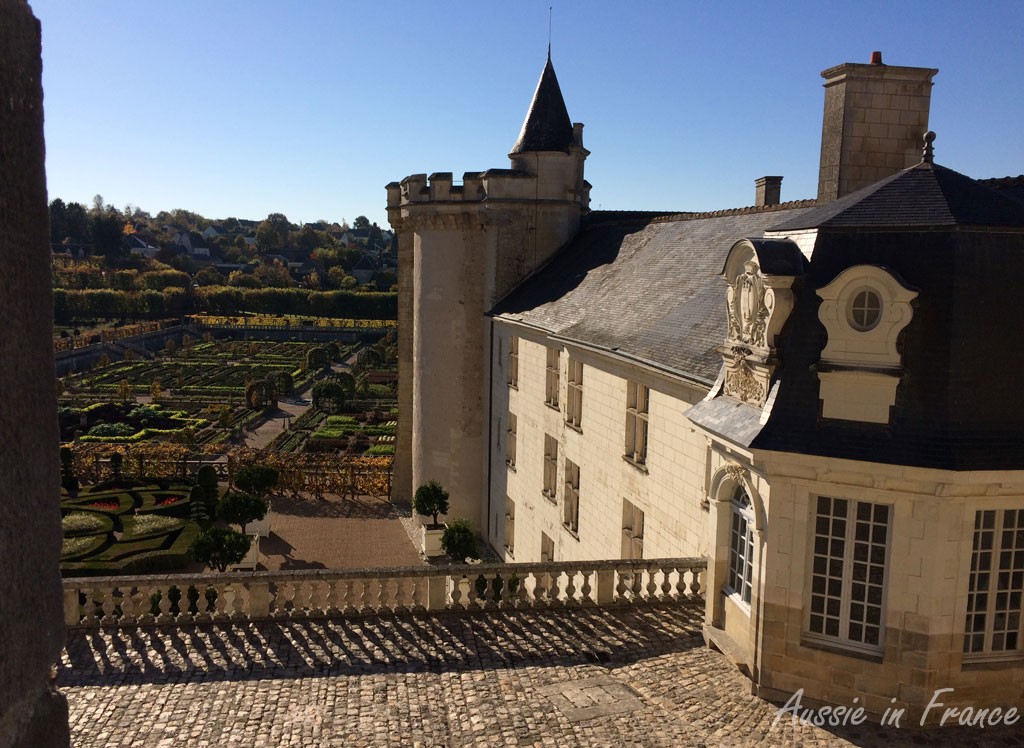
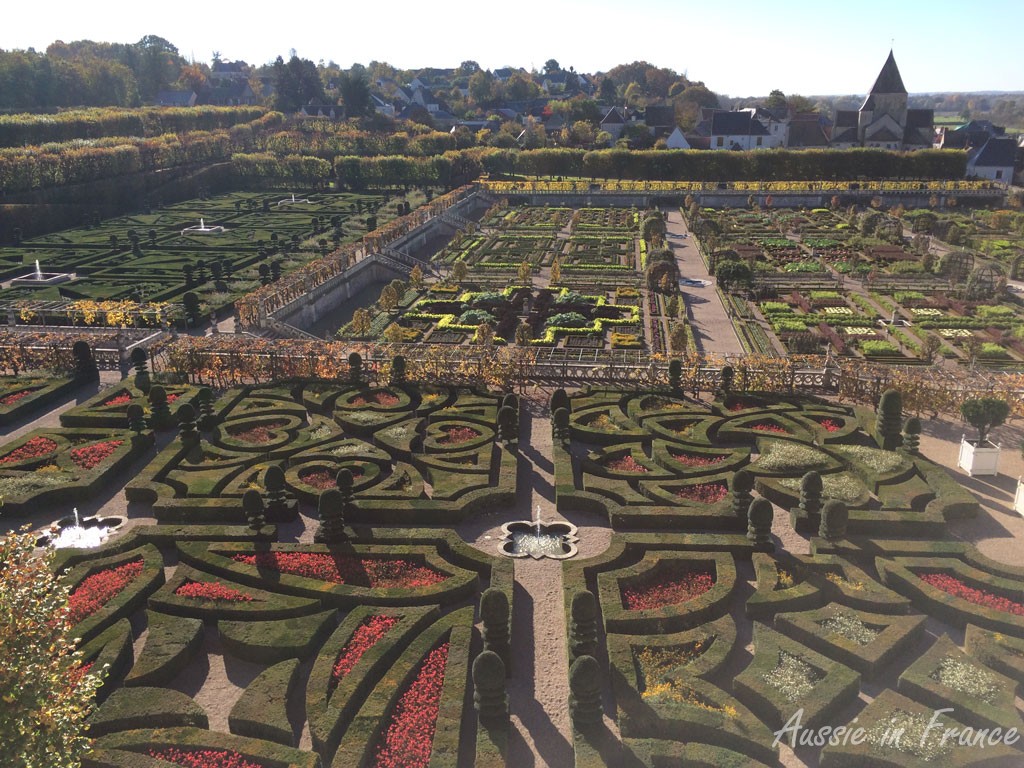
The château and gardens from the terrace
We continue on to the château and buy tickets to the garden only. We’ve visited the inside before but it’s not very interesting. However, we discover that there is an amazing terrace at the back of the château that affords a breathtaking view of the gardens.
The love gardens at Villandry
Just below is the four-part “garden of love”, seen in the foreground in the photo. From top left in a clockwise direction: “Tender love” is symbolised by hearts separated by flames of love in the corners of the square. In the middle are the masks used during balls to disguise the wearer. “Passionate love” still has hearts but this time, they are broken by passion. The boxwood bushes forms a labyrinth to evoke the giddy round of dance and passion. “Fickle love” is next: the four fans in the corners symbolise the transient nature of love while between the fans are the cuckold’s corns. In the middle there are love letters. “Tragic love” comes last with the daggers and swords used for the duels of rival lovers. In summer, the flowers are red to symbolise the blood spilt during combat. I can hear a group of teenage girls nearby discussing the symbolism.
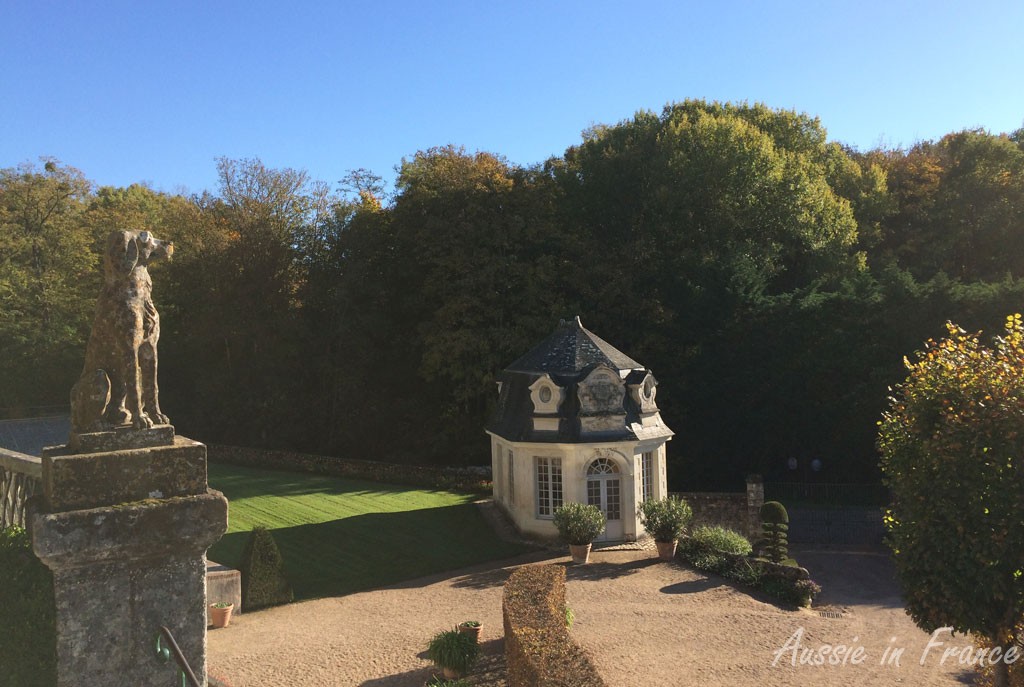
The watchdog and little pavillon
We walk along the path overlooking the gardens until we come to a narrow flight of steps guarded by a very friendly-looking dog, with a little pavillion at the bottom.
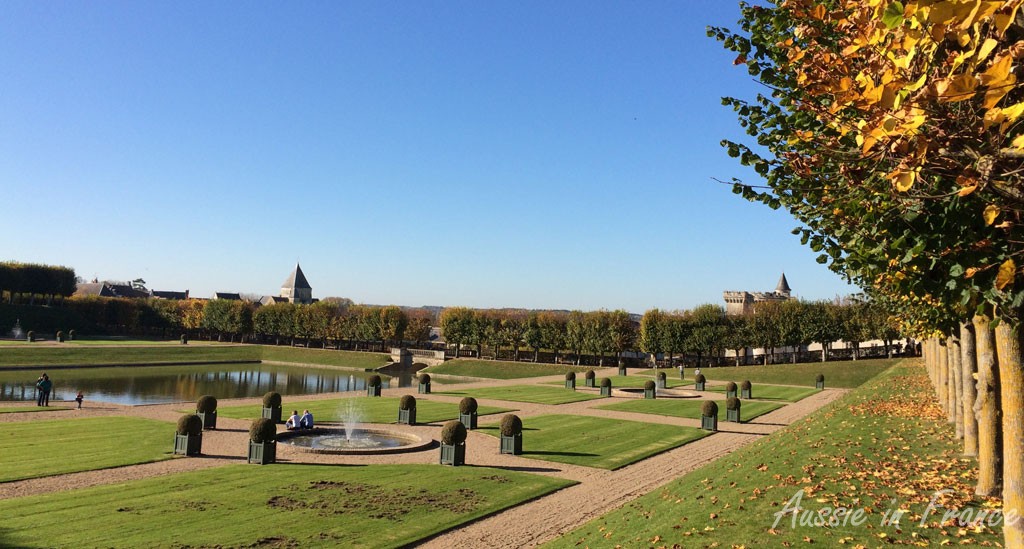
The formal garden and canal at Villandry
The formal garden below looks very serene with its little fountains and central canal.
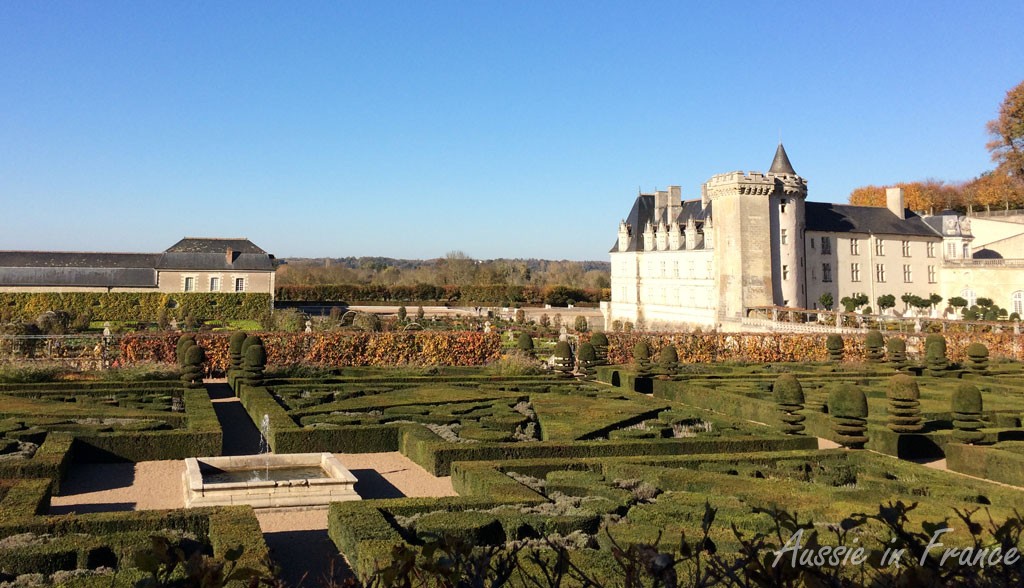
The gardens at Villandry with the vegetable gardens in the background
Beyond the canal is the famous vegetable garden and the other façade of the château.
The perennials garden in Villandry
But first we go to the hardy perennials because we’re trying to find plants to decorate the slope leading up to our little wood. We identify a few specimens we can try out.
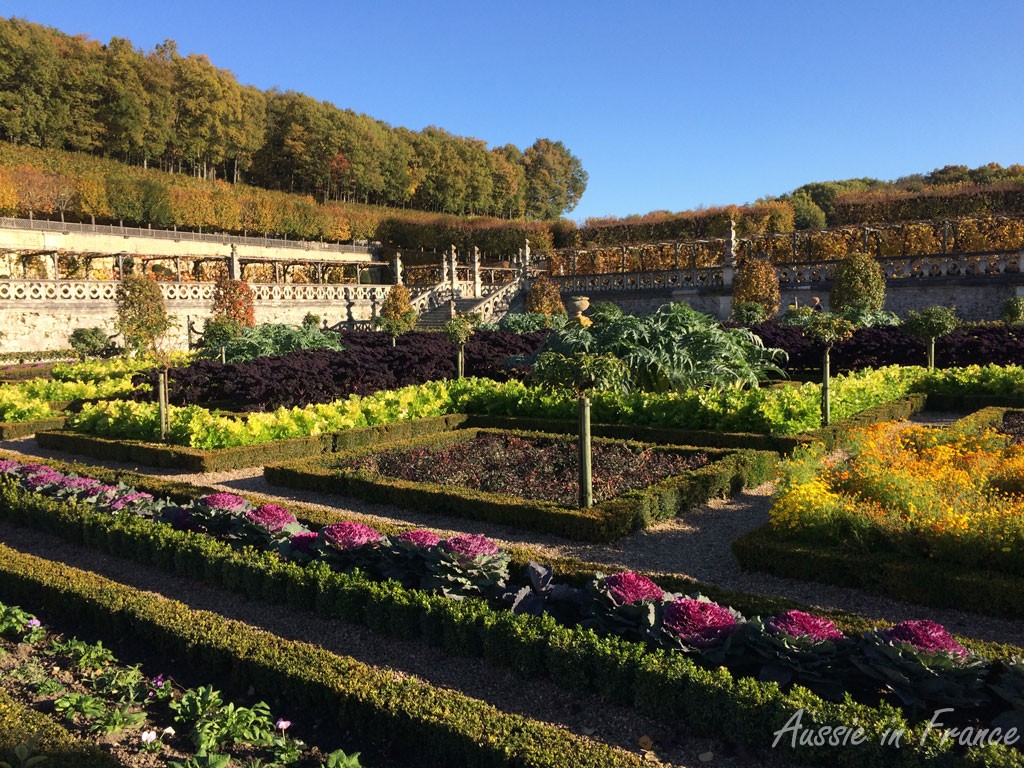
The vegetable garden in Villandry with its decorative cabbages
We then spend a lot of time in the vegetable garden, with its colourful cabbages, luxuriant asparagus ferns (the real thing), capsicum, celery, leeks and other decorative yet edible vegetables.
The lake at the end of the bike path at sunset
A quick tour of the garden shop and we’re back on the bike path, as daylight saving is now over and we have to be back at the car by 5.30 at the latest. We arrive just in time, as usual.
We’re delighted to have added another great bike itinerary to our already large collection. We’ll be back in the spring!
*La Jocondie, 12-seat boat. Landing: Port du Pavé du Roy, Joué-les-Tours. Les Mariniers du CAJC : 7, rue Descartes. Joué-les-Tours – 37300
Ce blog est normalement en anglais mais j’ai eu tellement de demandes concernant notre pratique du jeûne intermittent de la part de nos amis français que j’ai décidé de leur dédier un post. [This blog is usually in English but I have had so many requests for information on the 5:2 Fast Diet from our French friends that I am dedicating this post to them in French. You will find plenty of information on the subject in English if you click on the Category “Dieting” in the column on the right. You can start with “The 5:2 fast diet: fast and feast and still lose weight“.]
1/4 protéine, 1/4 féculents et 1/2 légumes
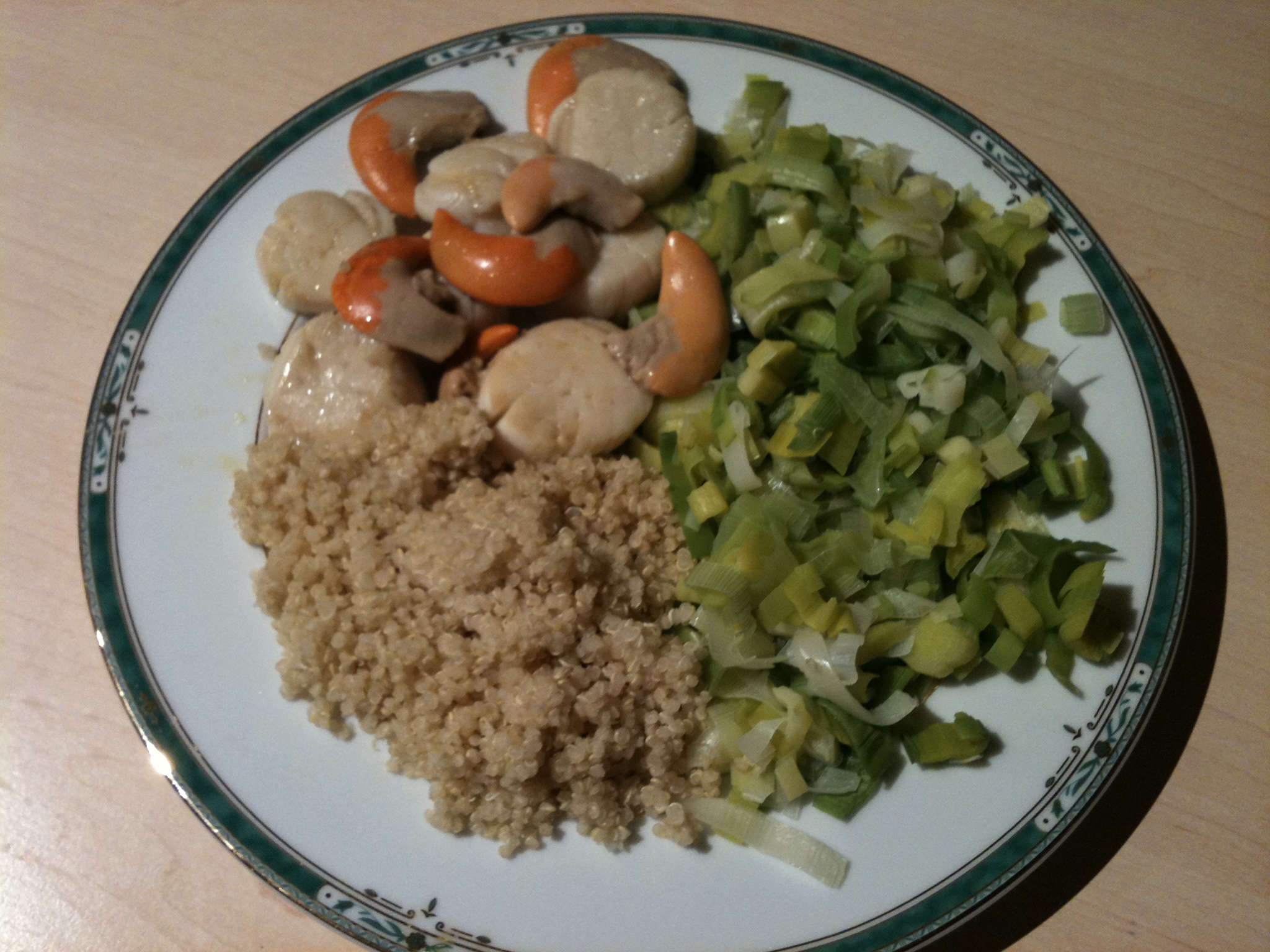
J’ai commencé le jeûne intermittent lorsque j’avais repris quelques kilos deux ou trois ans après avoir perdu 20 kilos en suivant un régime basé sur une assiette divisée en quatre: 1/4 de protéines, 1/4 de féculants et 1/2 de légumes. J’avais réduit ma consommation de vin à une ou deux fois par semaine à la place d’un verre ou deux à chaque repas. J’avais également éliminé les frites et autres mets très caloriques. Pendant les trois premières semaines du régime j’avais également éliminé tous les produits à base de blé les remplaçant par le quinoa, la polenta, etc.
Pendant la période du régime qui a duré 18 mois, je n’avais pas trop de mal, mais une fois que j’avais retrouvé la ligne, il était plus difficile de constamment “faire attention” et je n’arrivais plus à reperdre les trois ou quatre kilos que j’avais repris petit à petit pendant deux ans. C’est à ce moment-là que j’ai entendu parler du jeûne intermittent élaboré par le docteur Michael Mosley après ses recherches poussées sur les différents types de jeûne.
Sa méthode, appelée 5:2 (cinq jours “normaux” et deux jours de jeûne), a eu tellement de succès que la caisse d’assurance maladie en Grande Bretagne a lancé des études très sérieuses sur ce sujet. Cette méthode qui vise à perdre du poids et à ne pas en reprendre a désormais fait ses preuves.
Et ce n’est pas uniquement une question de poids. Le mauvais cholestérol s’en va, on a une meilleure santé et le facteur “cancer” est réduit, ce qui augmente l’espérance de vie.
Mon mari Jean Michel était hésitant au début mais maintenant c’est un grand adepte. Nous pratiquons le jeûne intermittent deux fois par semaine, le lundi et le jeudi (mais on peut moduler les jours comme on veut), depuis plus de deux ans. Il n’y a aucune restriction sur les activités pratiquées les jours de jeûne – nous faisons 70 km de vélo sans problème et Jean Michel a fait de gros travaux physiques cet été -, il faut juste boire beaucoup d’eau. C’est même bien de pratiquer un sport ou d’avoir une activité intensive le jour du jeune.
Attention: Si vous avez un problème de santé, comme le diabète, par exemple, il faut absolument consulter un médecin avant de démarrer.
Alors, comment faire les jours de jeûne ? C’est très simple: on prend 500 calories pour les femmes et 600 calories pour les hommes, répartis de préférence entre deux repas. J’ai essayé “petit déjeuner + dîner” mais j’avais mal à la tête dans l’après-midi. Je préfère donc ne pas prendre de petit déjeuner, ce qui favorise une plus longue période de jeûne (entre 21 heures le soir d’avant et 13 heures le lendemain = 16 heures) en prenant simplement un café noir non sucré le matin. Au début j’hésitais car j’avais appris à ne jamais sauter de repas mais finalement cela ne pose aucun problème.
Aux repas de jeûne, il faut prendre plutôt des protéines et légumes pour éviter la perte de muscle. Pour des raisons de simplicité, nous mangeons toujours la même chose les jours de jeûne. Comme ça, on n’a pas besoin de compter les calories chaque fois ni de réfléchir à ce que nous allons manger.
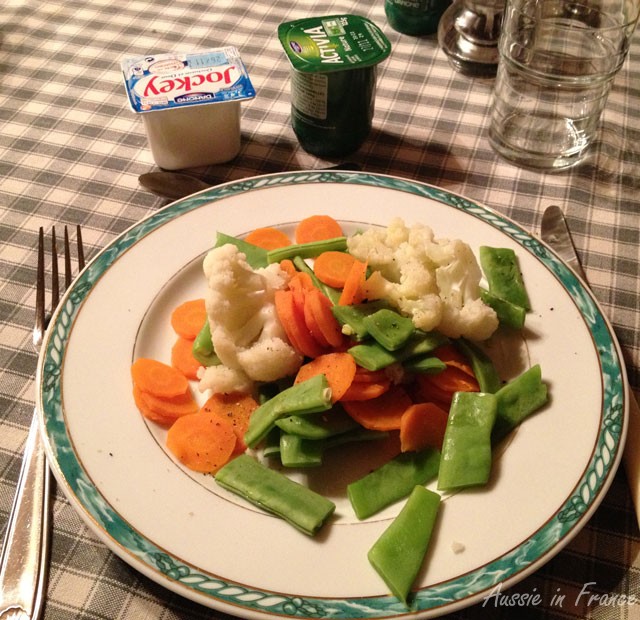
Repas typique un jour de jeûne intermittent (+ fruit)
A midi nous prenons deux oeufs (omelette sans matière grasse, oeufs durs, etc.), des crudités ou légumes cuits à la vapeur nature (juste sel et poivre) et un fruit. Jean Michel rajoute une tranche de pain équivalente à 100 calories.
Le soir, on mange un fromage blanc à 20%, un yaourt Activia nature, des légumes à la vapeur et un fruit.
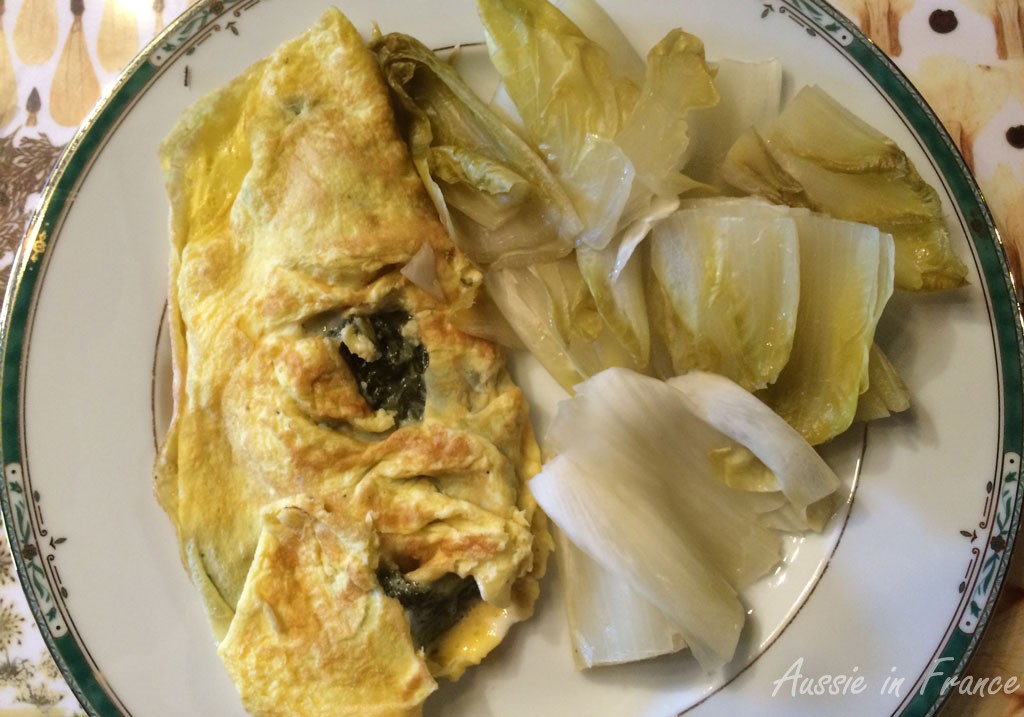
Déjeuner typique: omelette à l’oseille accompagnée d’endives vapeur (+ fruit)
Il faut choisir des légumes basses calories : tomates, concombres, brocolis, haricots verts, courgettes, poivrons, carottes, choux-fleurs, endives, etc. Il faut tout peser la première fois pour s’assurer du nombre de calories.
Il faut savoir que la sensation de faim n’est jamais continue. On va avoir faim, puis on fait quelque chose pour se distraire, on boit un verre d’eau et la sensation disparaît.
Après quelque temps, on n’y pense même plus les jours de jeûne! C’est même agréable d’avoir une vraie sensation de faim de nouveau plutôt qu’une envie de manger ou de grignoter.
Et les autres jours, qu’est-ce qu’on fait ?
Eh bien, vous mangez comme vous voulez. D’abord, le fait de jeûner va sûrement réduire votre appétit. Ensuite, sans prendre les frites à tous les repas suivies de gros gâteaux, il n’y a pas de restrictions. Si vous constatez qu’il n’y a pas de perte de poids après plusieurs jours de jeûne, vous pouvez essayer de ne pas dépasser 1200 calories par jour (pour une femme de taille moyenne) ou bien faire une troisième jour de jeûne dans la semaine ou juste sauter le petit déjeuner une ou deux fois de plus.
Foie gras from time to time is no longer excluded
Puisqu’on a le “droit” de manger des petits gâteaux et du foie gras sans culpabiliser, l’envie de trop manger ou de grignoter est moins forte. Le cerveau semble s’adapter rapidement à cette nouvelle façon de manger.
Pour moi, le jeûne intermittent est la meilleure solution pour garder la ligne. L’idée d’être obligée de faire attention toute la vie me déprimait. Par contre, jeûner deux jours par semaine jusqu’à la fin de mes jours ne me pèse pas du tout. On est même content de jeûner, étonnant que cela puisse sembler. On a l’impression de mettre le corps au repos et de retrouver sa dynamique.
Alors, bon courage et n’oubliez pas de me tenir au courant de vos progrès !
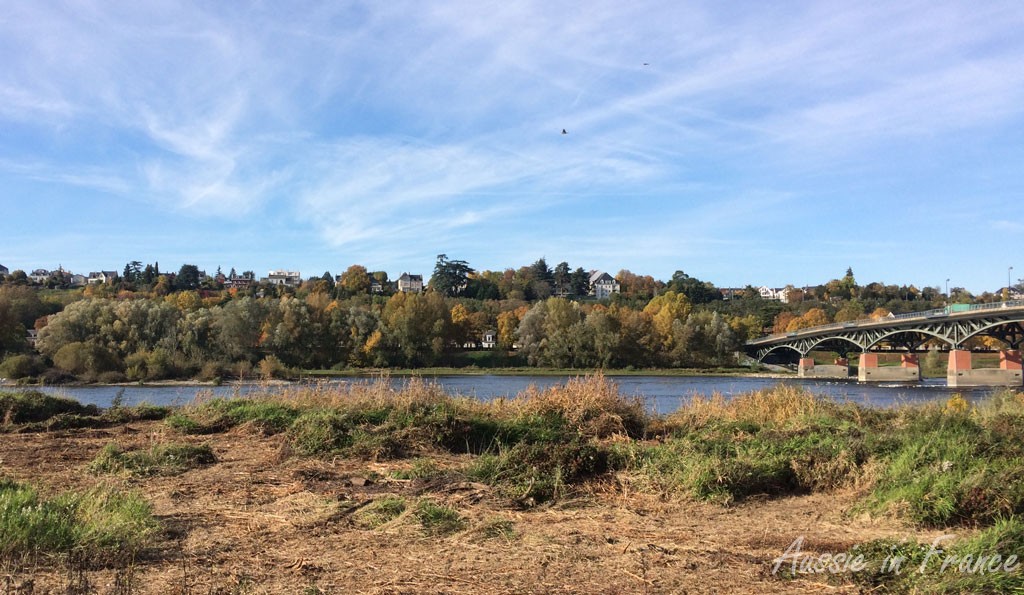
The last time we were on our bikes was when we cycled from Ybbs to Grein in Austria on October 3rd. Jean Michel has cleaned them and we have put away all our gear but an unusually warm sunny day with 20°C maximum is predicted so we decide to make the most of it. We drive the three kilometers along the Loire to François Mitterand Bridge, cross over and park along the banks of the Loire, just next to the bike path. It’s about 3 pm.
Starting point on the other side of Mitterand Bridge
We can’t get over how balmy it is. I keep having to get off my bike to take photos. The light is wonderful and the sky is a beautiful blue.
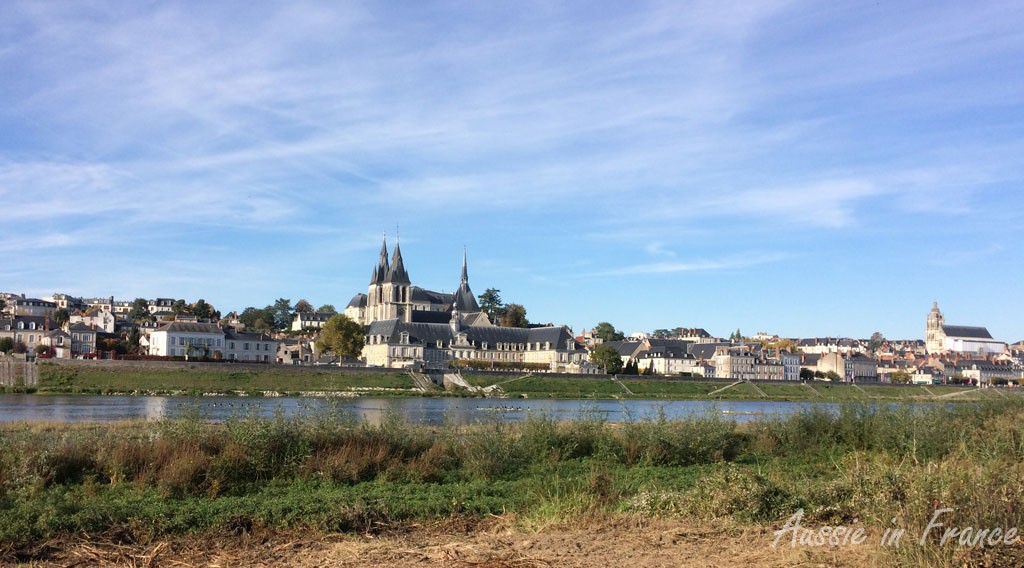
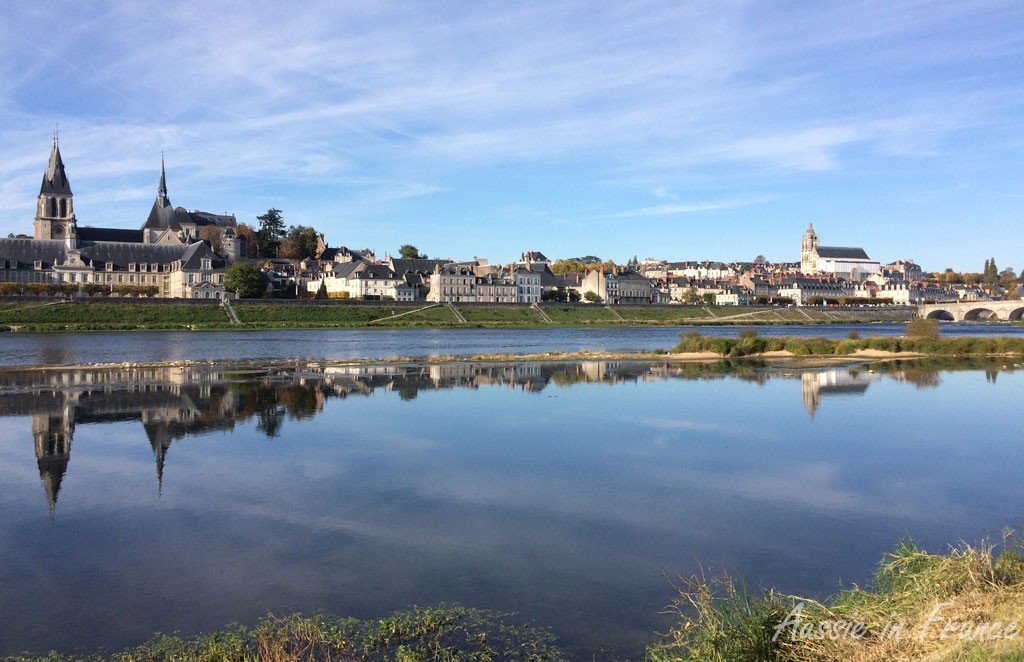
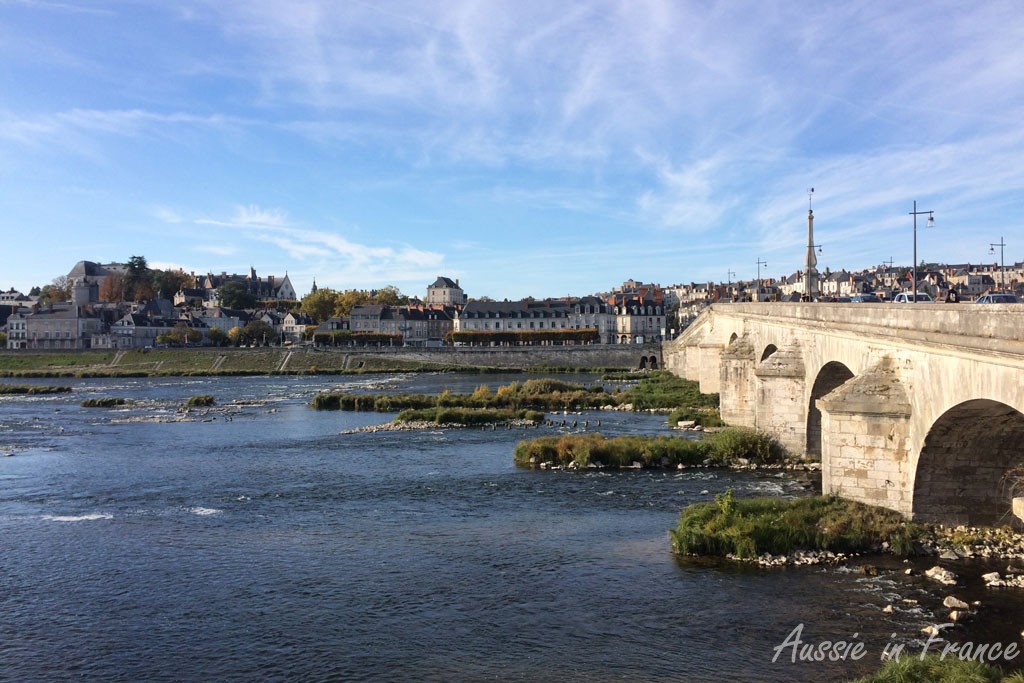
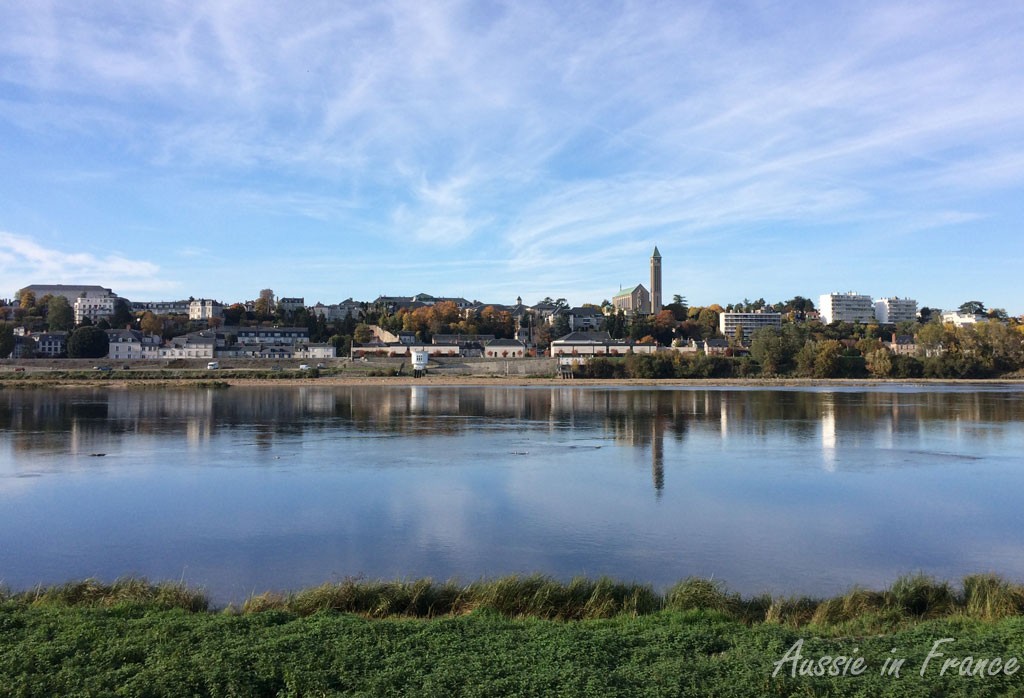
First view of Saint Nicolas and the castleThe castle and cathedral reflected in the LoireGabriel BridgeThe modern church on the other side of the bridge
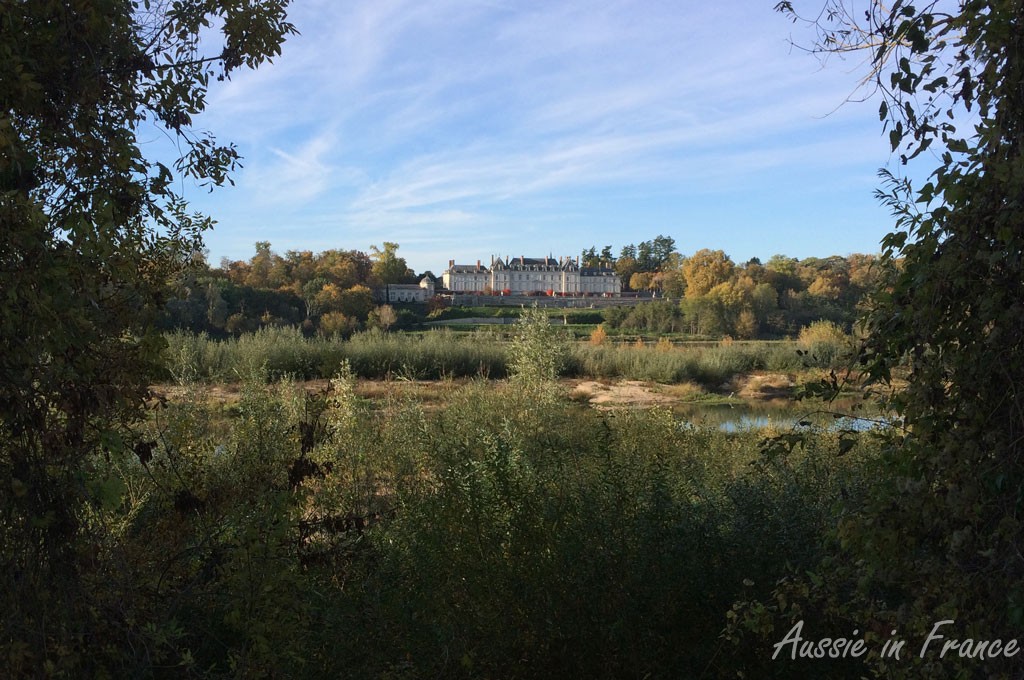
We continue along the new bike path towards Saint Dyé that takes us past Château Menars.
Château de Menars
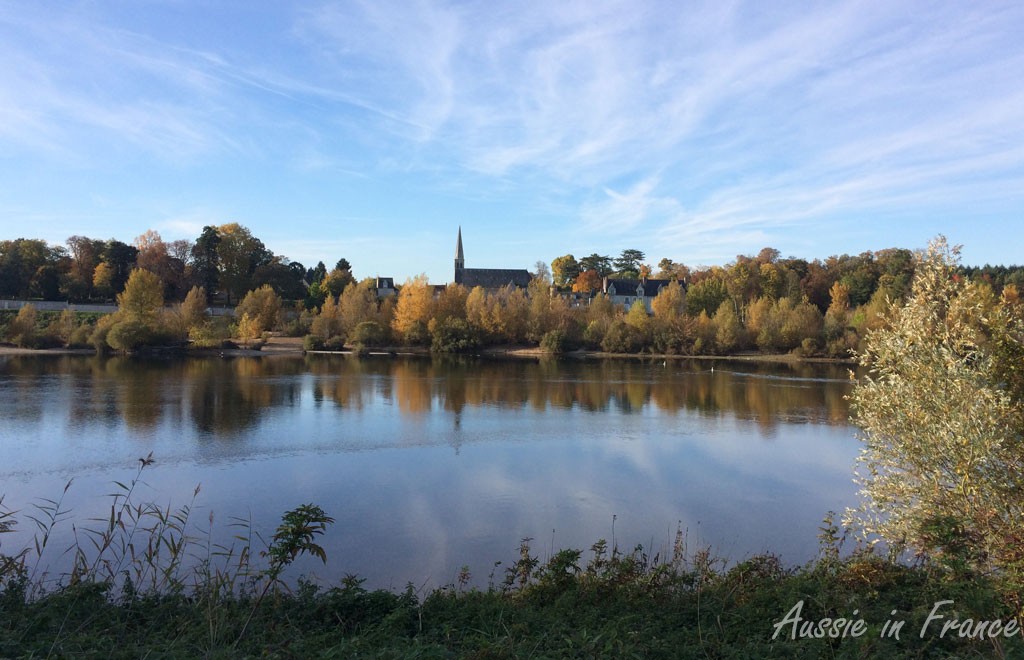
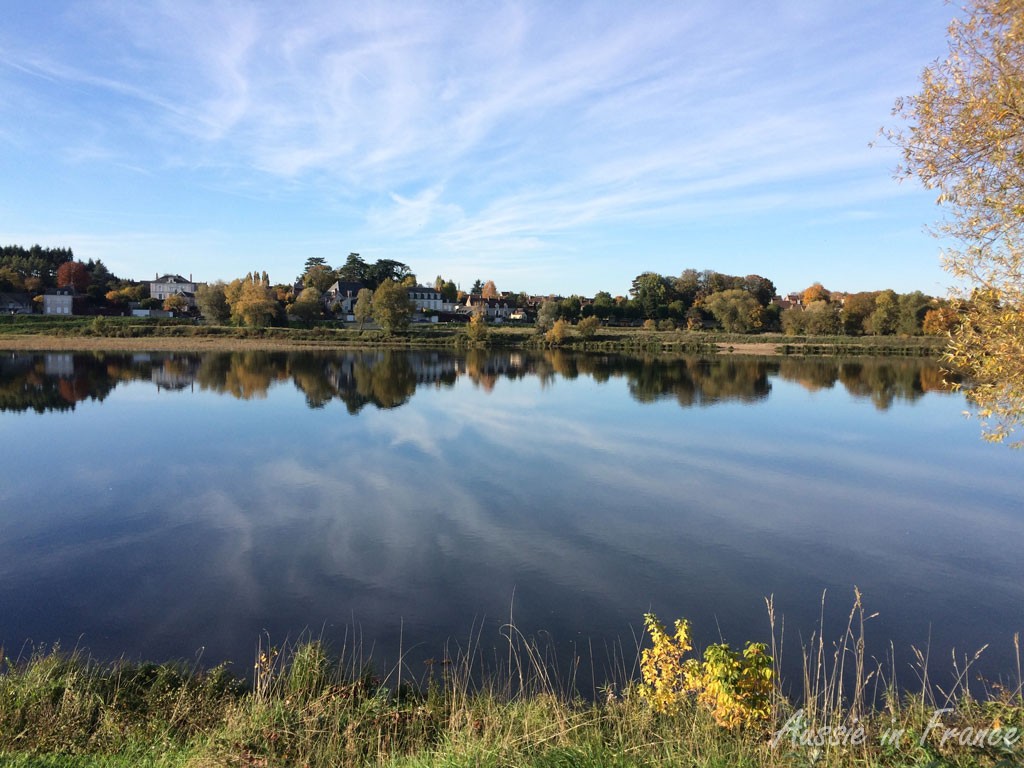
Then on past the pretty little village of Cour-sur-Loire which you may remember we reached via bike ferry during the summer.
The church in Cour-sur-LoireThe village of Cour-sur-Loire
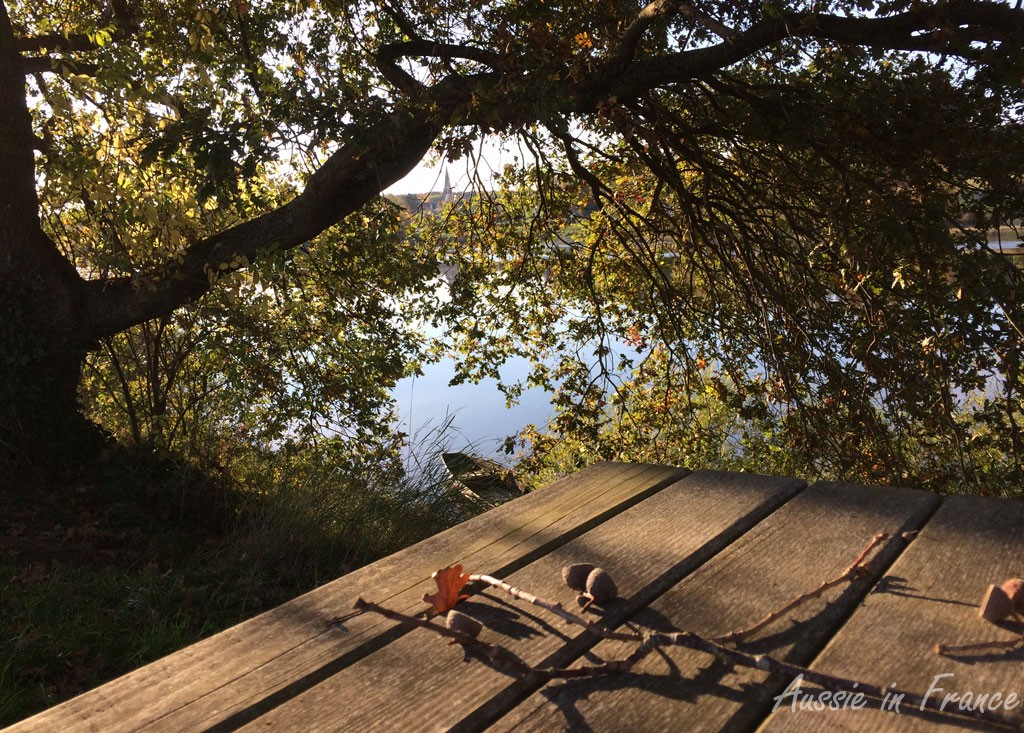
We have our pause at the picnic table just opposite Cour-sur-Loire, then turn back- 25 kilometers and 1 hour 40 minutes of sheer pleasure.
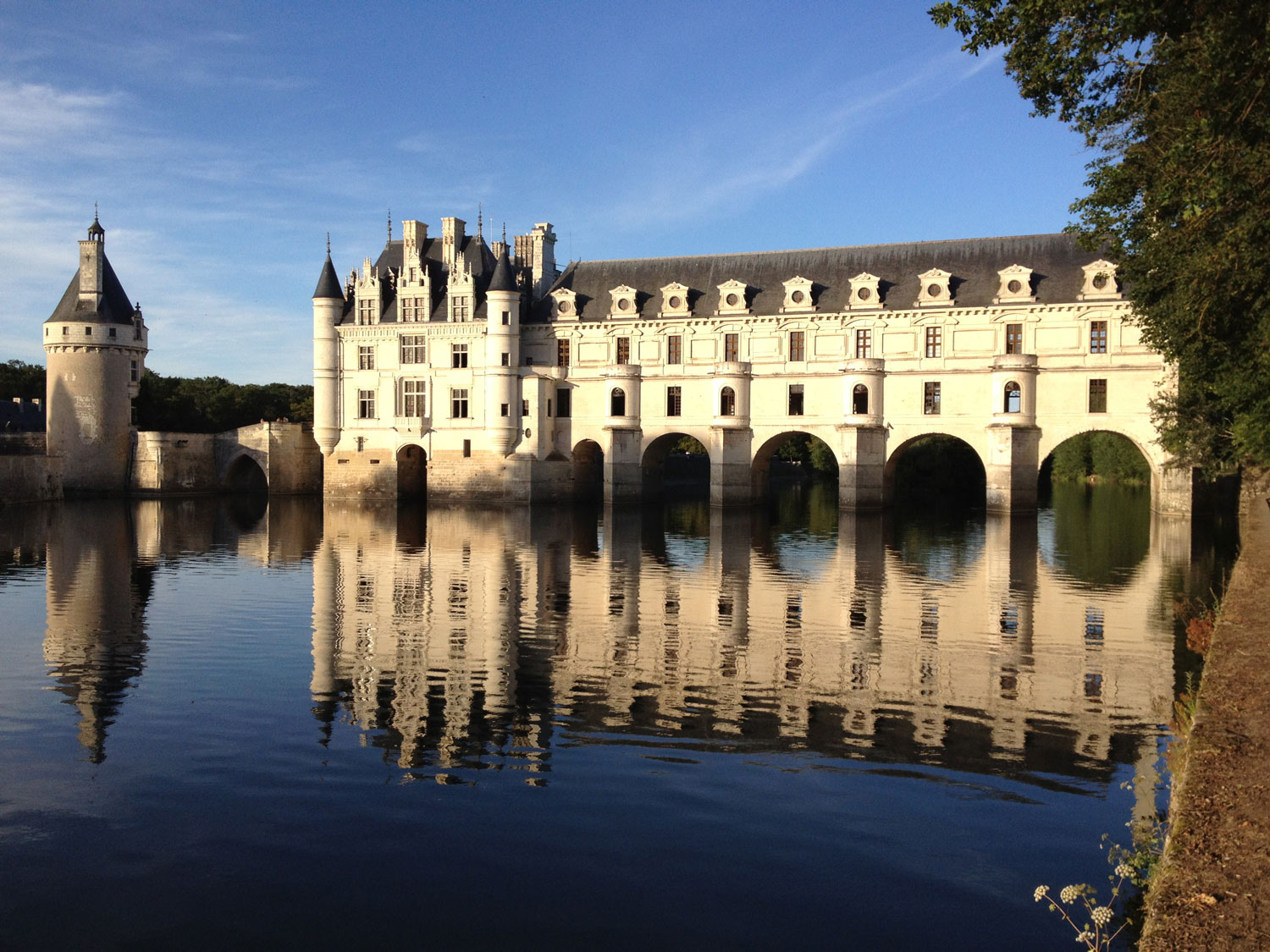
The Loire Valley with its famous châteaux, especially Chenonceau, Chambord, Chaumont and Cheverny, is only a couple of hours from Paris by train or car. Visiting the area by car provides the greatest freedom but not everyone wants the added expense or bother of hiring a car. Fortunately, public transport is available to get around the main châteaux. You simply need to choose the best base and plan in advance as departure times are often limited.
The train from Paris Austerlitz goes to Orléans, Beaugency, Blois, Onzain (Chaumont), Amboise and Tours. Trains can be direct or stop at several stations along the way. The direct train to Blois takes just under 1 ½ hours. A good train for a day trip to visit Chambord and Cheverny, for example, would be the 7.38 am from Paris arriving in Blois at 9.01 am.
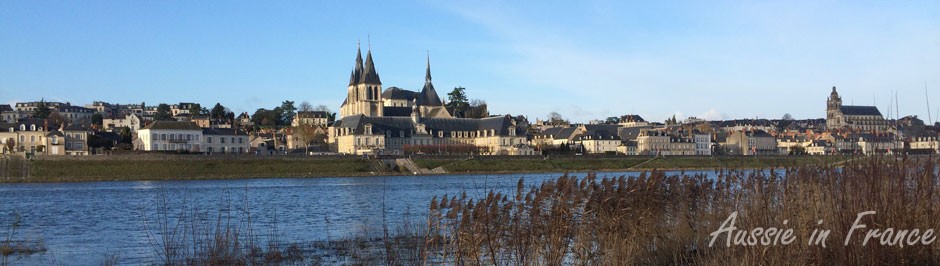
Blois in winter
Blois would seem to offer the best base for visiting the four C’s without a car because it has a special shuttle (Navette Route 41) that takes you from the train station or Blois Castle to Chambord (40 mins), Cheverny and Beauregard. The current price is €6 for the day (adults and children are the same price) whatever the journey and also gives you a reduction to the different châteaux. For the timetable in French click here (timetable in English below).
The shuttle operates from the beginning of April to the end of October on Wednesdays, weekends and school holidays, leaving Blois around 9.30 and 11.30. It also operates every day from mid-July to the end of August. There are regular lines that operate during the winter (information on www.tlcinfo.net). The shuttle times are organised so you can visit Chambord in the morning and Cheverny in the afternoon. If you just want to go to Cheverny, for example, there is a shuttle leaving at 11.30, arriving at Chambord at 12.10 then at Cheverny at 12.34 (see timetable below).
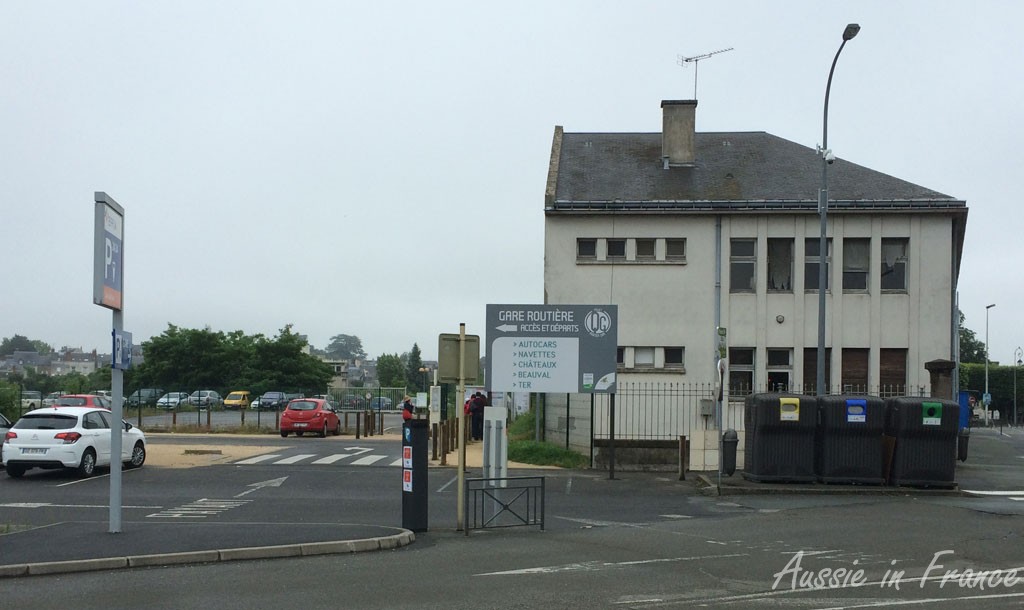
Even in peak season, there are plenty of seats. However, the bus is not very well indicated at Blois station. When you walk out, look diagonally to the left and you’ll see a large sign indicating “Gare Routière” “Châteaux”. The bus stop is just behind it (you can see a small queue in the photo below) to the right of the red car).
All year round, there is a regular coach service called Rémi that goes from Blois station to Chambord and back, once a day, line n° 2, leaving at 12.29 pm, arriving at 1 pm, then returning at 5.10 pm, arriving in Blois at 5.50 pm.
A second shuttle (Navette Azalys) takes you from Blois to Chaumont (€2.15 one way, €4.15 return), leaving at 9.25 am and 2.05 pm from the train station and two minutes later from Blois Castle and arriving in Chaumont at 10.05 am and 2.45 pm (see timetable below).
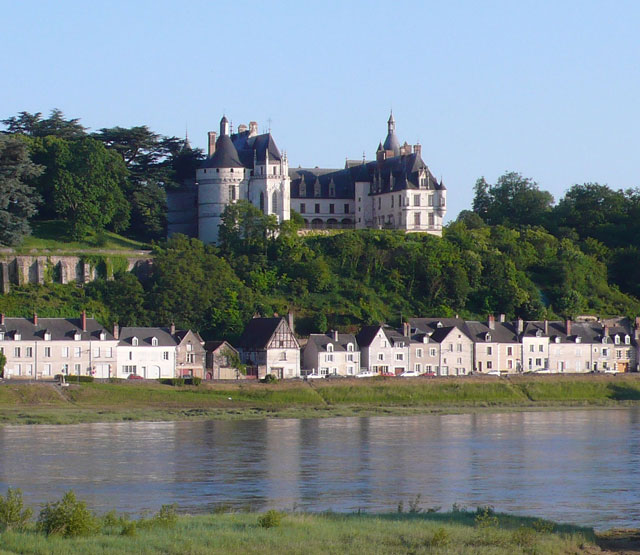
Château de Chaumont
To access Chenonceau from Blois, you first need to go Amboisewhich is an easy 16 to 20 minute train ride (7.20 €). A half-hour bus ride then takes you to Chenonceau which can also be reached by a half-hour train ride from Tours.
To go to Azay le Rideau, you need to take a 40-minute trip to Toursby train from Blois (€11.20) and allow another ½ hour train ride from Tours. Tours also offers the possibility of going to Villandry (35 minutes by train or Fil Bleu bus n° 117 leaving at 9 am and returning at 1 pm which is plenty of time to visit the garden as the château isn’t very interesting) and could provide a second base if you have more time in the Loire. The 20 K bike path from Tours to Villandry is also a pleasant, easy ride and quite feasible even if you don’t normally cycle that far.
So, to sum up, if you want to visit the Chambord, Cheverny, Chaumont, Chenonceau, Blois and Amboise castles, you will need at least three full days based in Blois: Chambord and Cheverny the first day (Wednesday, Saturday or Sunday except from mid-July to end of August when the day doesn’t matter), Chaumont and Blois the second day (Saturday or Sunday, except from mid-July to end of August when the day doesn’t matter) and Chenonceau and Amboise the third day. If you are interested in also visiting Villandry and Azay le Rideau, Tours would be a good second base.
There is another way to visit the châteaux – by bike. A network of bike paths links up all the châteaux and towns in the Loire Valley. Once again, Blois is a good base for Chambord, Cheverny, Chaumont and Beauregard, with comfortable distances, but Amboise would be a better base for Chenonceau.
Day Trip from Paris – both suggestions should be good with kids
Chambord and Cheverny (train and bus with only short walks)
Take the 7.38 am train from Paris Austerlitz, arriving at 9.01 am. Take the 9.30 shuttle from the station, arriving in Chambord at 10.10 am. Have lunch in Chambord (many choices including sandwiches and a picnic ground). Leave Chambord at 2.05 pm arriving in Cheverny at 2.29 pm. Leave Cheverny at 4.09 pm or, if you want to watch the 5 pm feeding of the hounds, leave at 6.30 pm, arriving at Blois station at 7.15 pm. There are trains for Paris at 4.17 pm (going to Montparnasse), 4.41 pm, 6 pm, 6.43 pm (all going to Austerlitz), 7.19 (Montparnasse) with the last train at 8.37 pm (arriving at 10.34 pm in Austerlitz). You can also get out of the bus at Blois Castle if you would like to include a third castle or walk down into the old town to visit or have dinner.
Amboise Castle and Clos Lucé, Chaumont (train and bus with long walks especially if you include Chaumont)
Take the 7.38 am train from Paris Austerlitz arriving at Amboise at 9.17 am. Visit the castle, then walk to Clos Lucé (10 mins). Have lunch in Amboise and walk to the station which is across the Loire (20 mins) to take the 2.22 pm train to Onzain, arriving 2.31 pm. Alternatively, take the 12.58 train to Onzain, arriving at 1.08 pm and have lunch in either Onzain or Chaumont (there are places to eat in the castle grounds as well as in the town). Walk to the castle (about 1/2 hour from the station but a great walk across the bridge with a fantastic view of Chaumont). Visit the castle. Take the 5.28 shuttle back to Onzain (or walk) and catch the 6.30 train to Paris. You can also take the same shuttle to Blois, arriving at 6.06 pm and have dinner in Blois and visit the old town (train times above).
If you need further information, I will be happy to add to this post. Just write a comment!
SHUTTLE ROUTE 41 – Blois Chambord Cheverny Beauregard (ticket from bus driver – there is always room on the bus)
4 April to 30 August > Wednesdays, weekends, public holidays and school holidays (every day in July and August).
31 August to 1 November > Wednesdays and weekends.
BLOIS
TRAIN STATION
9.30 AM
11.30 AM
BLOIS
CASTLE
9.33 AM
11.33 AM
CHAMBORD
CASTLE
10.10 AM
12.10 PM
2.10 PM
4.10 PM
BRACIEUX
Camping
12.20 PM
2.20 PM
4.20 PM
CHEVERNY
CASTLE
12.34 PM
2.34 PM
4.34 PM
6.34 PM
BEAUREGARD
CASTLE
12.52 PM
2.52 PM
4.52 PM
6.52 PM
BLOIS
CASTLE
3.18 PM
5.18 PM
7.18 PM
BLOIS
TRAIN STATION
3.20 PM
5.20 PM
7.20 PM
AZALYS SHUTTLE – Blois Chaumont-sur-Loire (tickets from bus driver)
April to June > Saturday, Sunday and public holidays (except 1st May)
July and August > every day
September to October > Saturday, Sunday and public holidays
BLOIS
TRAIN STATION*
9.25 AM
2.05 PM
BLOIS
CASTLE
9.27 AM
2.07 PM
ONZAIN
TRAIN STATION
9.55 AM
2.35 PM
CHAUMONT
CASTLE**
10.05 AM
2.45 PM
CHAUMONT
CASTLE**
2.55 PM
5.10 PM
ONZAIN
TRAIN STATION
3.05 PM
5.20 PM
BLOIS
CASTLE
3.52 PM
5.48 PM
BLOIS
TRAIN STATION*
3.35 PM
5.50 PM
*Azalys bus stop opposite the station
** Parking lot at top entrance to castle
A Few Distances in the Loire (km)
Tours
Amboise
Azay-le-Rideau
Chenonceaux
Chinon
Langeais
Loches
Villandry
Angers (49)
130
155
107.7
161.5
89.6
98.9
161.2
110.1
Saumur (49)
73.8
98.7
51.5
105.2
30.6
42.6
105
53.9
Montsoreau (49)
63
88
40
94.5
18.6
31.9
78.1
43.1
Fontevraud-l’Abbaye (49)
66.7
91.7
41.7
98.2
20.3
35.6
79.8
46.8
Montrichard (41)
45.2
19.1
68
11.7
97.7
73.2
33.5
58.2
Chaumont-sur-Loire (41)
44.3
20
71.6
24.6
91.8
76.7
51.3
70.1
Blois (41)
65.6
36
92.9
44.7
113.1
98
66.5
91.4
Cheverny (41)
78.7
53.6
106
40.8
126.2
111.1
62.6
104.5
Chambord (41)
78.9
51.9
105.3
59.7
125.5
110.5
81.5
103.8
Orléans (45)
116.4
103.5
143.7
114.5
163.8
148.8
165.6
142.2
Gien (45)
189.7
176.8
216.9
171.3
237.1
222.1
193.7
215.4
Briare (45)
197.9
185
225.1
196
245.3
230.3
197.3
I’m contributing this post to Lou Messugo’s All About France link-up. For more posts from bloggers across the country, click here.