Le Jeune Intermittent – The 5:2 Fast Diet

Ce blog est normalement en anglais mais j’ai eu tellement de demandes concernant notre pratique du jeûne intermittent de la part de nos amis français que j’ai décidé de leur dédier un post. [This blog is usually in English but I have had so many requests for information on the 5:2 Fast Diet from our French friends that I am dedicating this post to them in French. You will find plenty of information on the subject in English if you click on the Category “Dieting” in the column on the right. You can start with “The 5:2 fast diet: fast and feast and still lose weight“.]

1/4 protéine, 1/4 féculents et 1/2 légumes

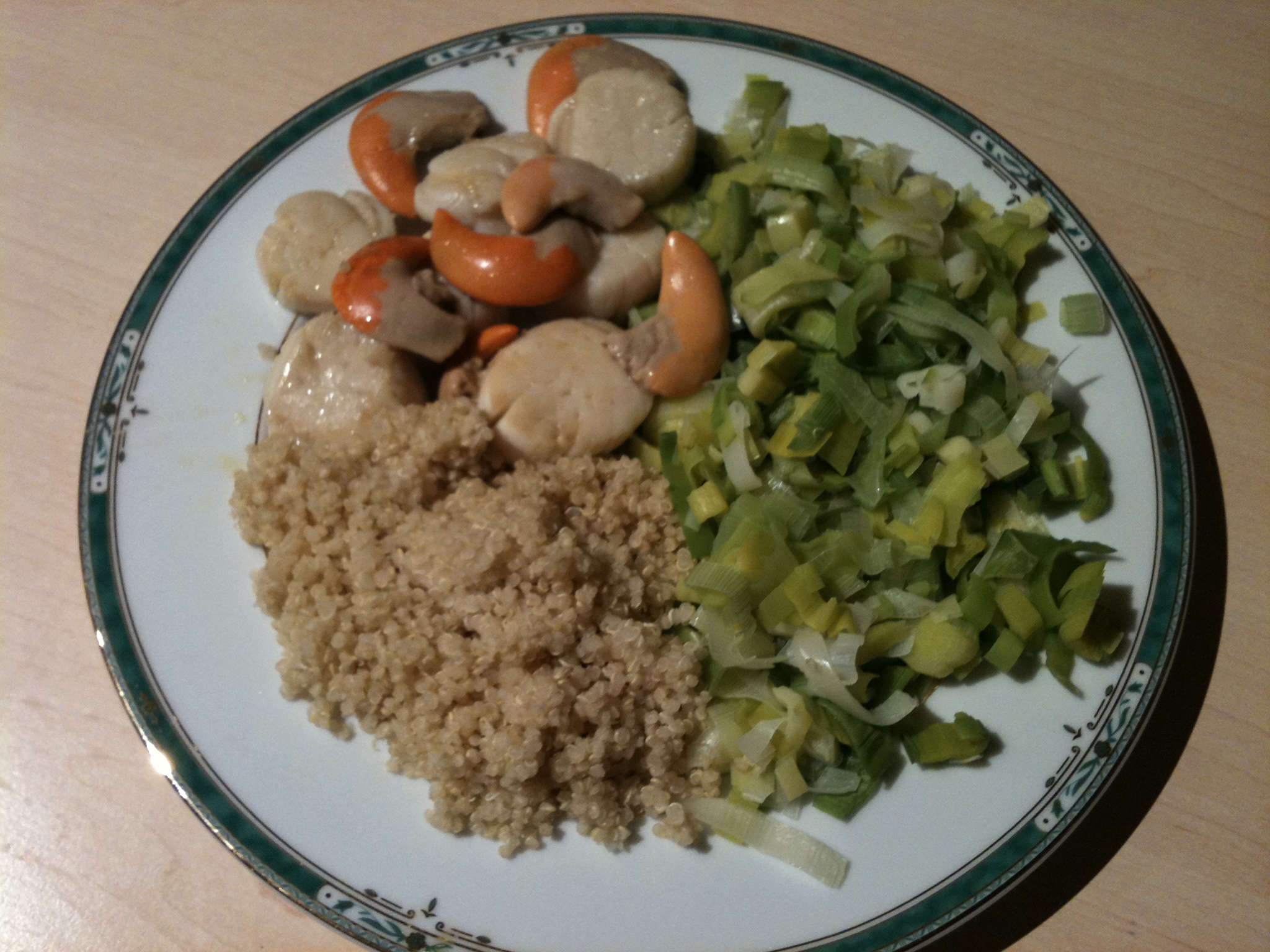
J’ai commencé le jeûne intermittent lorsque j’avais repris quelques kilos deux ou trois ans après avoir perdu 20 kilos en suivant un régime basé sur une assiette divisée en quatre: 1/4 de protéines, 1/4 de féculants et 1/2 de légumes. J’avais réduit ma consommation de vin à une ou deux fois par semaine à la place d’un verre ou deux à chaque repas. J’avais également éliminé les frites et autres mets très caloriques. Pendant les trois premières semaines du régime j’avais également éliminé tous les produits à base de blé les remplaçant par le quinoa, la polenta, etc.

Pendant la période du régime qui a duré 18 mois, je n’avais pas trop de mal, mais une fois que j’avais retrouvé la ligne, il était plus difficile de constamment “faire attention” et je n’arrivais plus à reperdre les trois ou quatre kilos que j’avais repris petit à petit pendant deux ans. C’est à ce moment-là que j’ai entendu parler du jeûne intermittent élaboré par le docteur Michael Mosley après ses recherches poussées sur les différents types de jeûne.

livrre_mosley

Sa méthode,  appelée 5:2 (cinq jours “normaux” et deux jours de jeûne), a eu tellement de succès que la caisse d’assurance maladie en Grande Bretagne a lancé des études très sérieuses sur ce sujet. Cette méthode qui vise à perdre du poids et à ne pas en reprendre a désormais fait ses preuves.

Et ce n’est pas uniquement une question de poids. Le mauvais cholestérol s’en va, on a une meilleure santé et le facteur “cancer” est réduit, ce qui augmente l’espérance de vie.

Mon mari Jean Michel était hésitant au début mais maintenant c’est un grand adepte. Nous pratiquons le jeûne intermittent deux fois par semaine, le lundi et le jeudi (mais on peut moduler les jours comme on veut), depuis plus de deux ans. Il n’y a aucune restriction sur les activités pratiquées les jours de jeûne – nous faisons 70 km de vélo sans problème et Jean Michel a fait de gros travaux physiques cet été -, il faut juste boire beaucoup d’eau. C’est même bien de pratiquer un sport ou d’avoir une activité intensive le jour du jeune.

Attention: Si vous avez un problème de santé, comme le diabète, par exemple, il faut absolument consulter un médecin avant de démarrer.

Alors, comment faire  les jours de jeûne ? C’est très simple: on prend 500 calories pour les femmes et 600 calories pour les hommes, répartis de préférence entre deux repas. J’ai essayé “petit déjeuner + dîner” mais j’avais mal à la tête dans l’après-midi. Je préfère donc ne pas prendre de petit déjeuner, ce qui favorise une plus longue période de jeûne (entre 21 heures le soir d’avant et 13 heures le lendemain = 16 heures) en prenant simplement un café noir non sucré le matin. Au début j’hésitais car j’avais appris à ne jamais sauter de repas mais finalement cela ne pose aucun problème.
Aux repas de jeûne, il faut prendre plutôt des protéines et légumes pour éviter la perte de muscle. Pour des raisons de simplicité, nous mangeons toujours la même chose les jours de jeûne. Comme ça, on n’a pas besoin de compter les calories chaque fois ni de réfléchir à ce que nous allons manger.

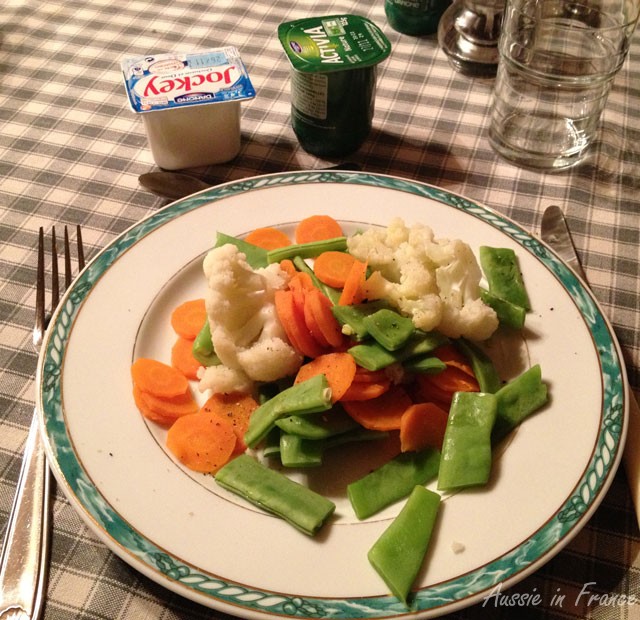
Repas typique un jour de jeûne intermittant
Repas typique un jour de jeûne intermittent (+ fruit)

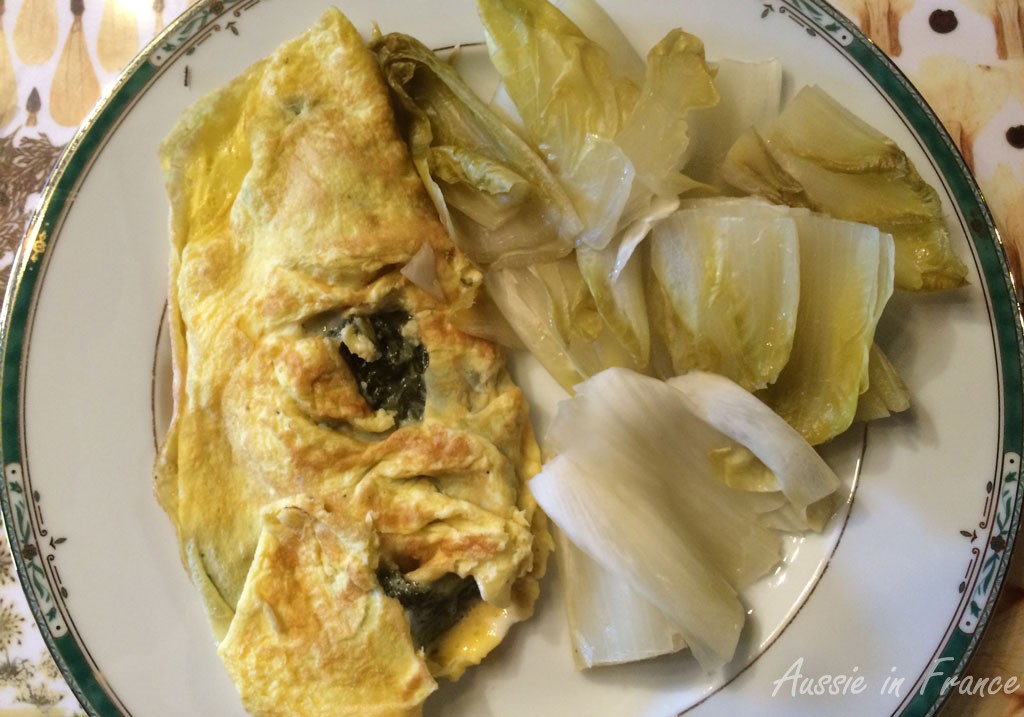
A midi nous prenons deux oeufs (omelette sans matière grasse, oeufs durs, etc.), des crudités ou légumes cuits à la vapeur nature (juste sel et poivre) et un fruit. Jean Michel rajoute une tranche de pain équivalente à 100 calories.

Le soir, on mange un fromage blanc à 20%, un yaourt Activia nature, des légumes à la vapeur et un fruit.

Déjeuner typique: omelette à l'oseille accompagnée d'endives vapeur
Déjeuner typique: omelette à l’oseille accompagnée d’endives vapeur (+ fruit)

Il faut choisir des légumes basses calories : tomates, concombres, brocolis, haricots verts, courgettes, poivrons, carottes, choux-fleurs, endives, etc. Il faut tout peser la première fois pour s’assurer du nombre de calories.

Il faut savoir que la sensation de faim n’est jamais continue. On va avoir faim, puis on fait quelque chose pour se distraire, on boit un verre d’eau et la sensation disparaît.

Après quelque temps, on n’y pense même plus les jours de jeûne! C’est même agréable d’avoir une vraie sensation de faim de nouveau plutôt qu’une envie de manger ou de grignoter.

Et les autres jours, qu’est-ce qu’on fait ?

Eh bien, vous mangez comme vous voulez. D’abord, le fait de jeûner va sûrement réduire votre appétit. Ensuite, sans prendre les frites à tous les repas suivies de gros gâteaux, il n’y a pas de restrictions. Si vous constatez qu’il n’y a pas de perte de poids après plusieurs jours de jeûne,  vous pouvez essayer de ne pas dépasser 1200 calories par jour (pour une femme de taille moyenne) ou bien faire une troisième jour de jeûne dans la semaine ou juste sauter le petit déjeuner une ou deux fois de plus.

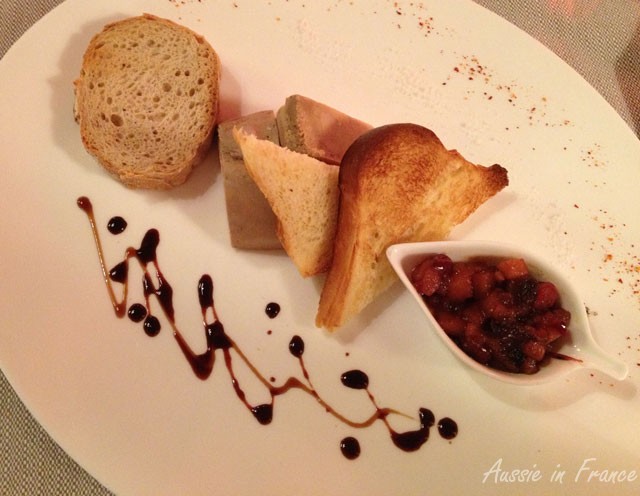
Foie gras from time to time is no longer excluded

Puisqu’on a le “droit” de manger des petits gâteaux et du foie gras sans culpabiliser, l’envie de trop manger ou de grignoter est moins forte. Le cerveau semble s’adapter rapidement à cette nouvelle façon de manger.

Pour moi, le jeûne intermittent est la meilleure solution pour garder la ligne. L’idée d’être obligée de faire attention toute la vie me déprimait. Par contre, jeûner deux jours par semaine jusqu’à la fin de mes jours ne me pèse pas du tout. On est même content de jeûner, étonnant que cela puisse sembler. On a l’impression de mettre le corps au repos et de retrouver sa dynamique.

Alors, bon courage et n’oubliez pas de me tenir au courant de vos progrès !

Cycling along the Loire in Autumn

The last time we were on our bikes was when we cycled from Ybbs to Grein in Austria on October 3rd. Jean Michel has cleaned them and we have put away all our gear but an unusually warm sunny day with 20°C maximum is predicted so we decide to make the most of it. We drive the three kilometers along the Loire to François Mitterand Bridge, cross over and park along the banks of the Loire, just next to the bike path. It’s about 3 pm.

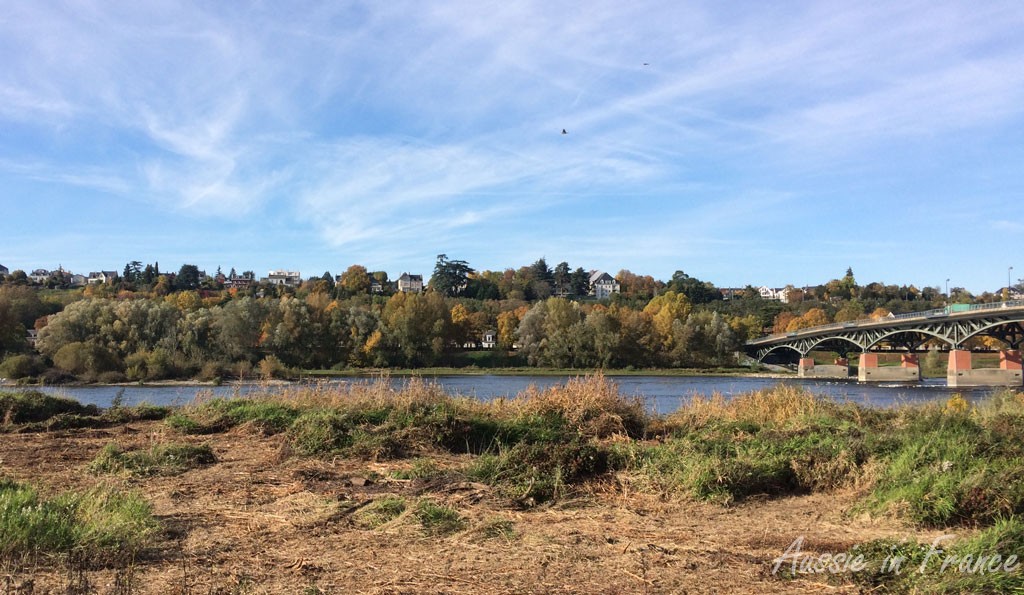
Starting point on the other side of Mitterand Bridge

We can’t get over how balmy it is. I keep having to get off my bike to take photos. The light is wonderful and the sky is a beautiful blue.

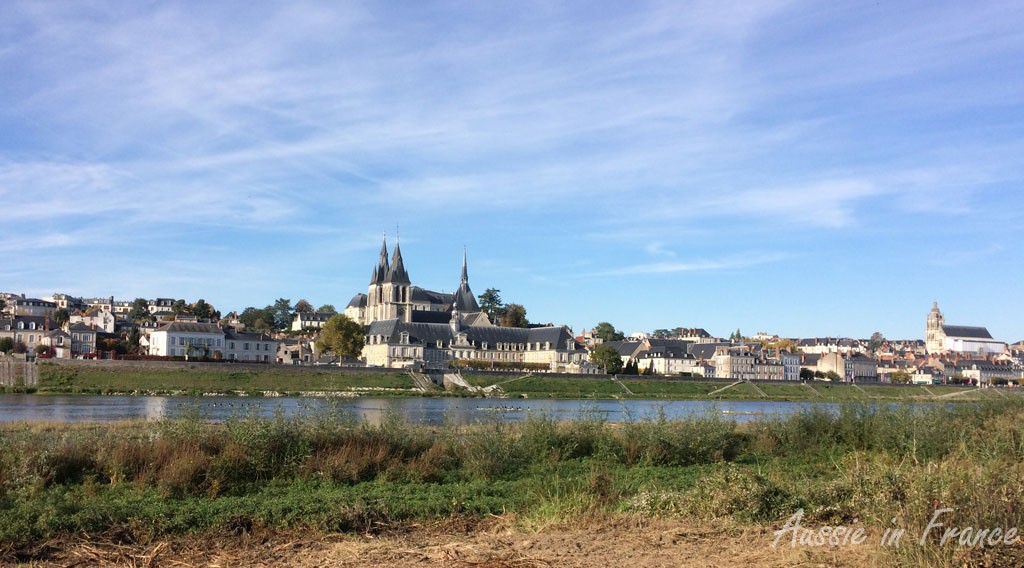
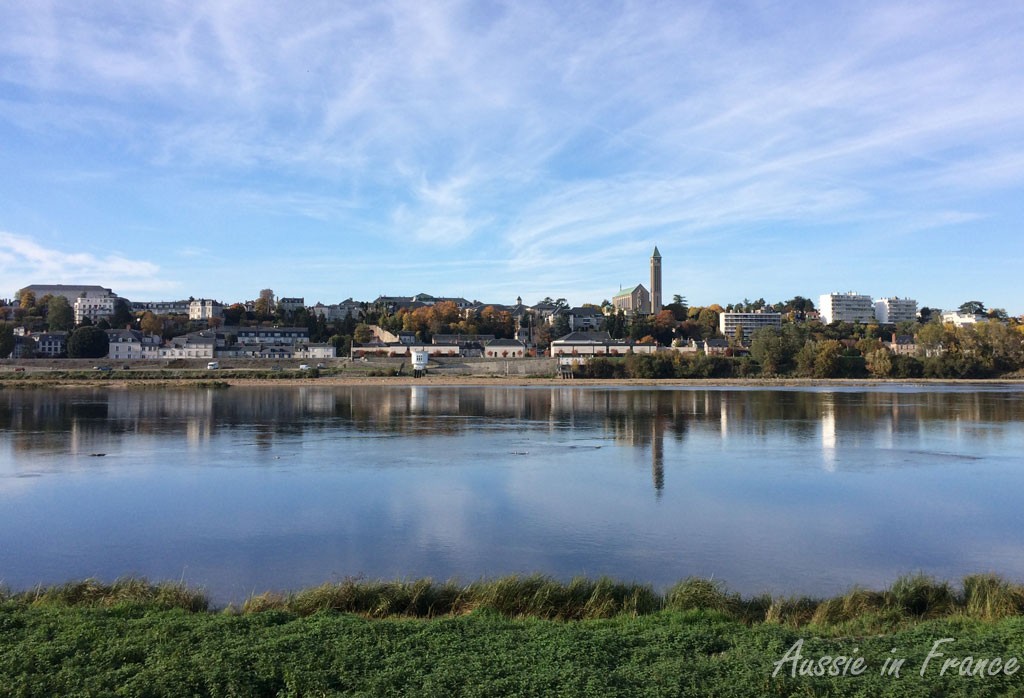
First view of Saint Nicolas and the castle
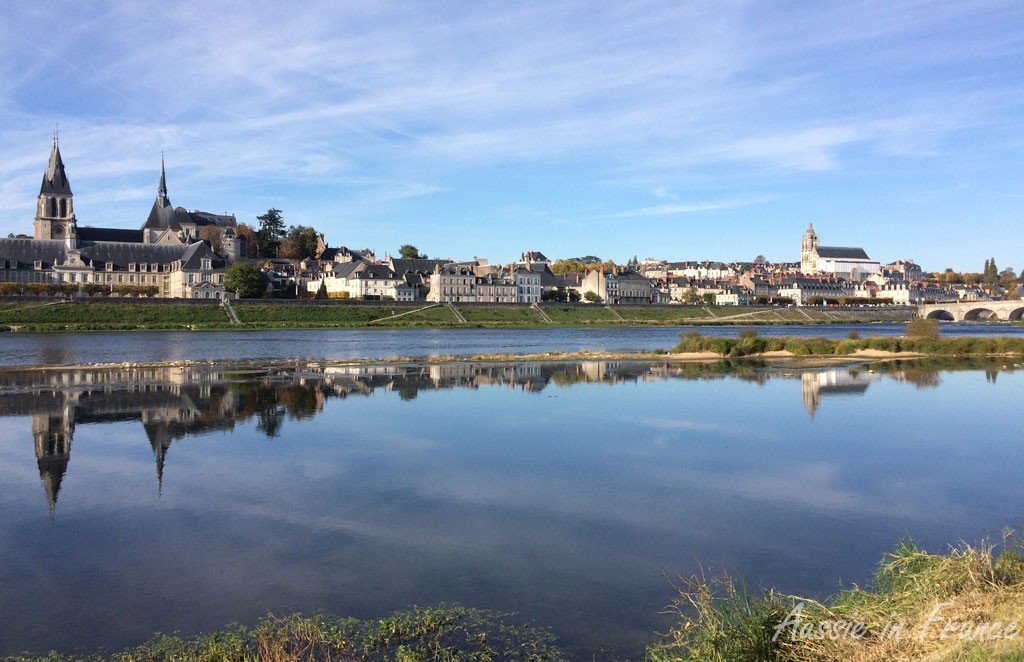
The castle and cathedral reflected in the Loire
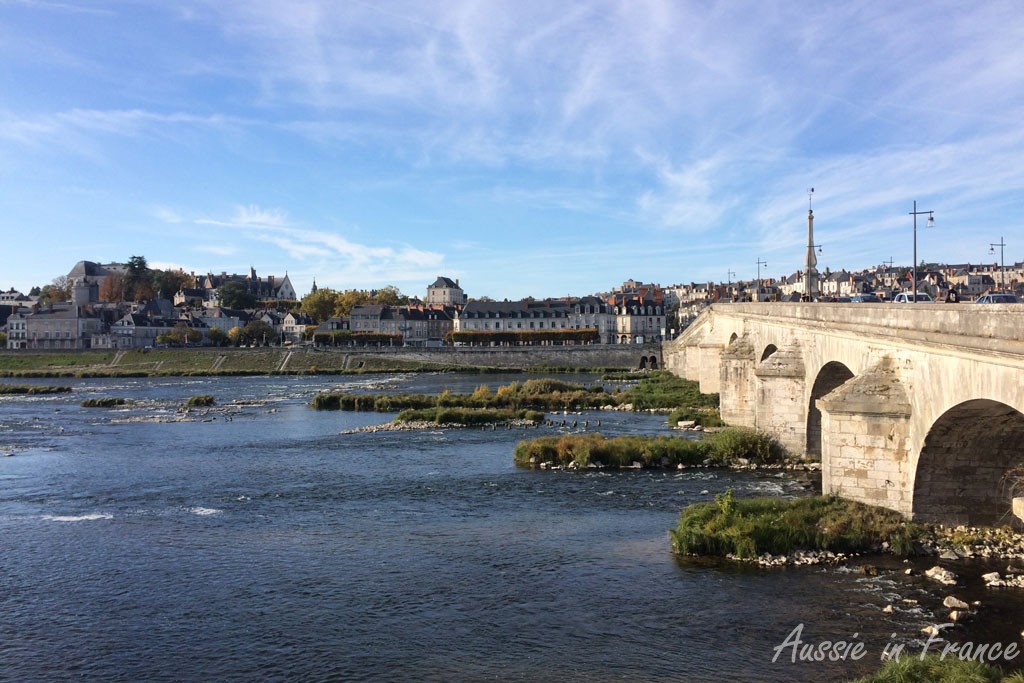
Gabriel Bridge
Gabriel Bridge
The modern church on the other side of the bridge

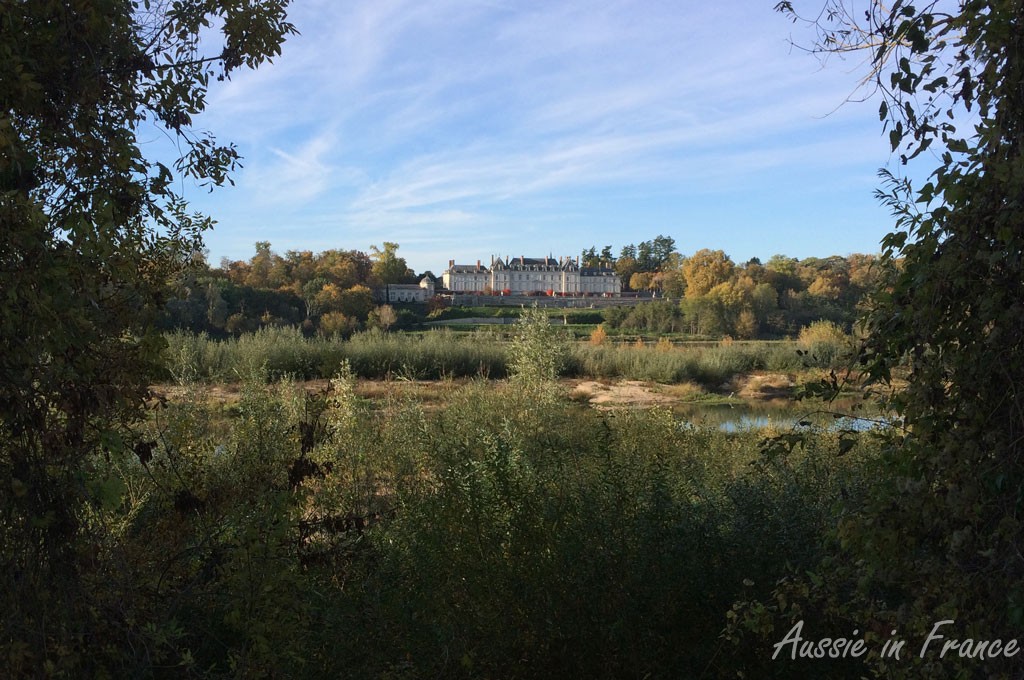
We continue along the new bike path towards Saint Dyé that takes us past Château Menars.

Château de Menars
Château de Menars

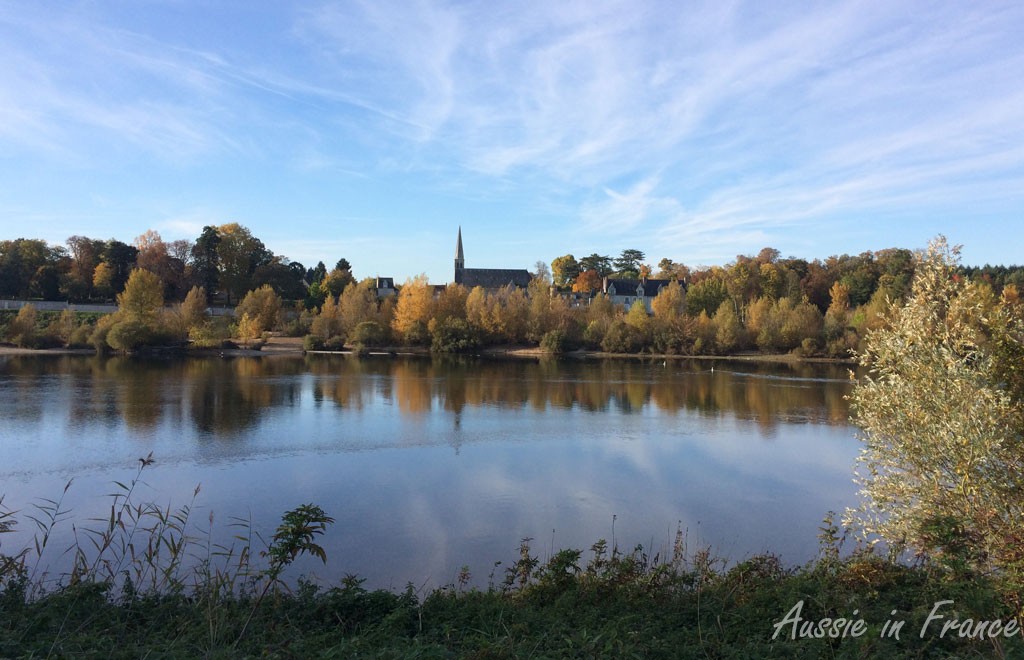
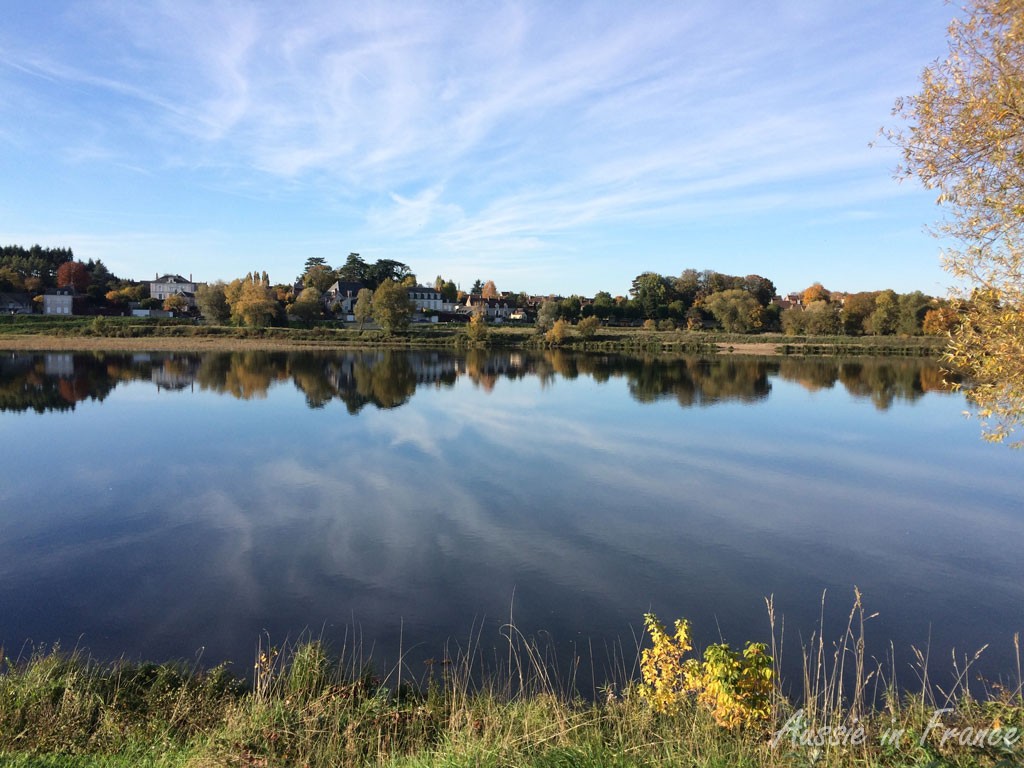
Then on past the pretty little village of Cour-sur-Loire which you may remember we reached via bike ferry during the summer.

The church in Cour-sur-Loire
The village of Cour-sur-Loire

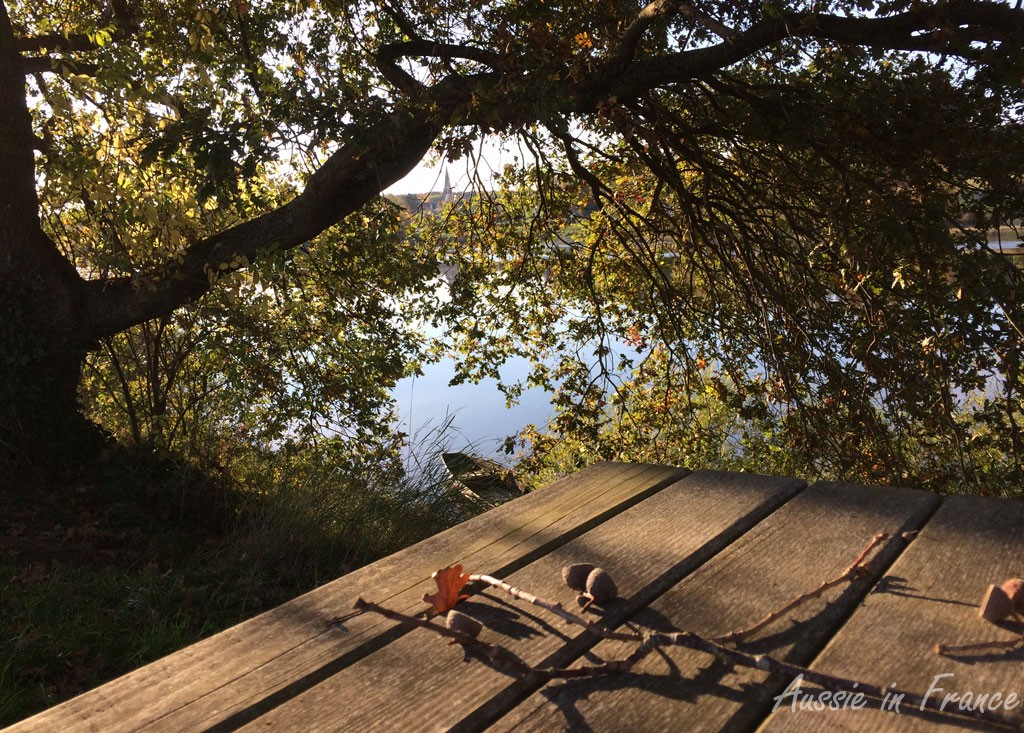
We have our pause at the picnic table just opposite Cour-sur-Loire, then turn back- 25 kilometers and 1 hour 40 minutes of sheer pleasure.

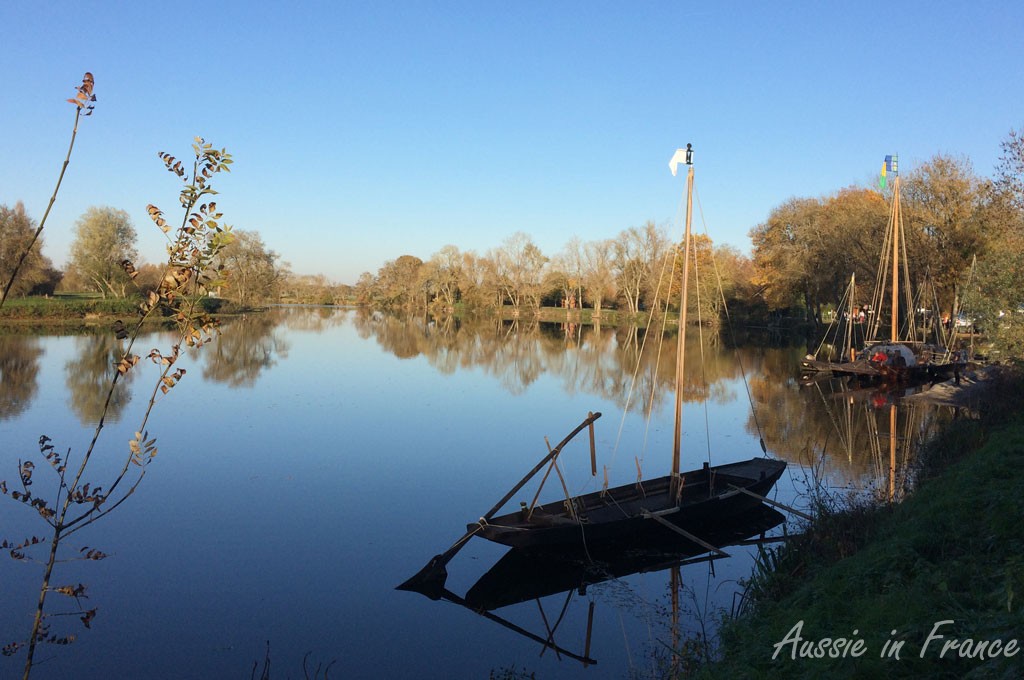
The picnic table with acorns and an old boat


Visit the Loire without a Car based in Blois

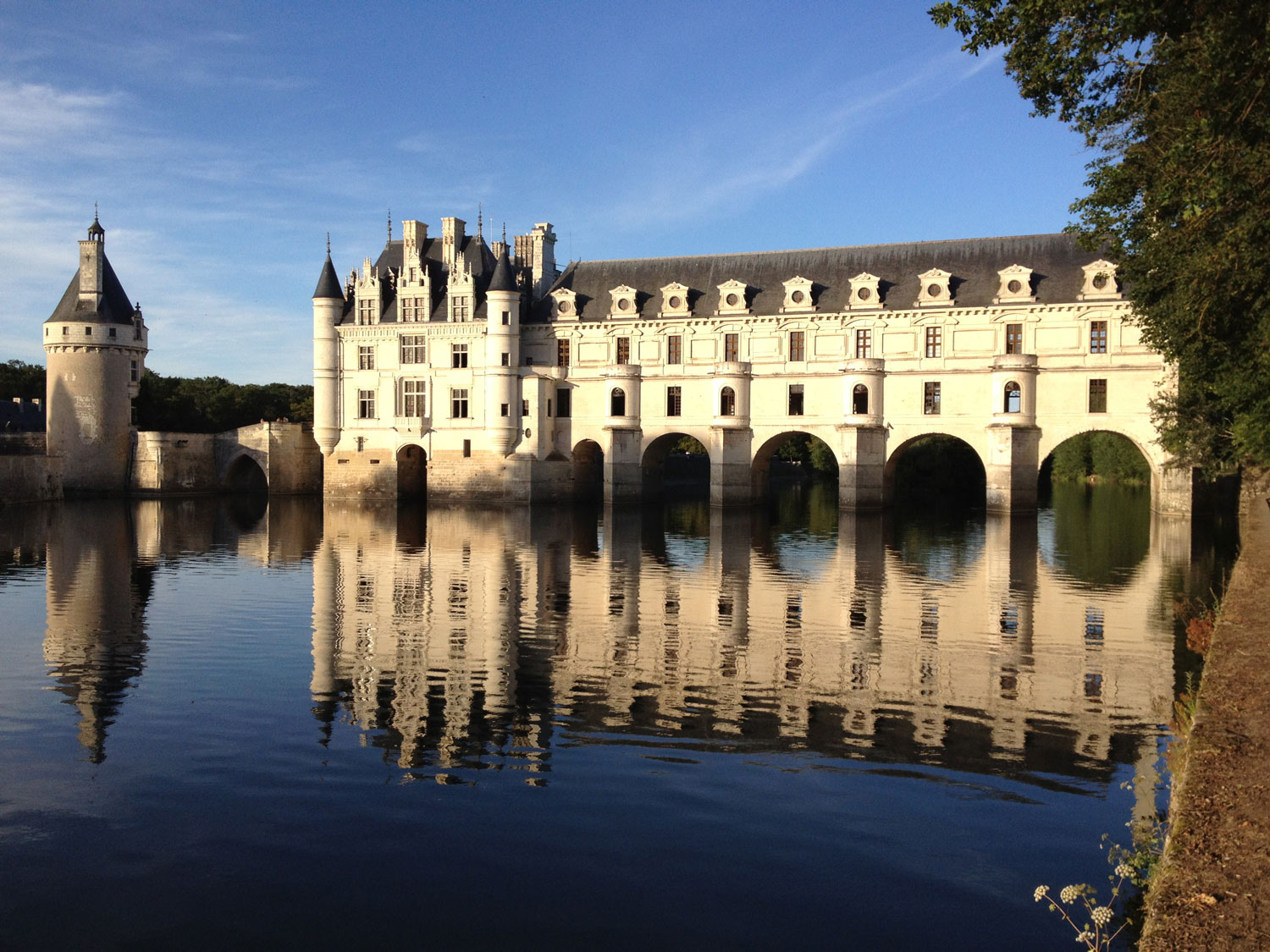
The Loire Valley with its famous châteaux, especially Chenonceau, Chambord, Chaumont and Cheverny, is only a couple of hours from Paris by train or car. Visiting the area by car provides the greatest freedom but not everyone wants the added expense or bother of hiring a car. Fortunately, public transport is available to get around the main châteaux. You simply need to choose the best base and plan in advance as departure times are often limited.

Chenonceau reflected in the Cher at dusk

Start by deciding which towns and châteaux you are interested in. I have written several posts that might help you particularly Ten Top Châteaux in the Loire Valley and Secret Châteaux of the Loire : Langais, Montsavin, Montpoupon and Beauregard.

The train from Paris Austerlitz goes to Orléans, Beaugency, Blois, Onzain (Chaumont), Amboise and Tours. Trains can be direct or stop at several stations along the way. The direct train to Blois takes just under 1 ½ hours. A good train for a day trip to visit Chambord and Cheverny, for example, would be the 7.38 am from Paris arriving in Blois at 9.01 am.

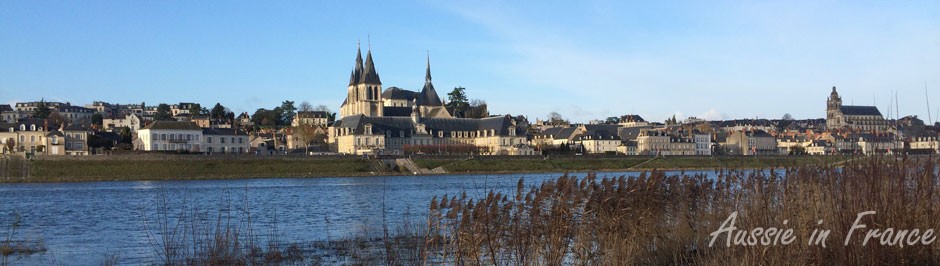
Blois in winter
Blois in winter

Blois would seem to offer the best base for visiting the four C’s without a car because it has a special shuttle  (Navette Route 41) that takes you from the train station or Blois Castle to Chambord (40 mins), Cheverny and Beauregard. The current price is €6 for the day (adults and children are the same price) whatever the journey and also gives you a reduction to the different châteaux. For the timetable in French click here (timetable in English below).

The shuttle operates from the beginning of April to the end of October on Wednesdays, weekends and school holidays, leaving Blois around 9.30 and 11.30. It also operates every day from mid-July to the end of August. There are regular lines that operate during the winter (information on www.tlcinfo.net). The shuttle times are organised so you can visit Chambord in the morning and Cheverny in the afternoon. If you just want to go to Cheverny, for example, there is a shuttle leaving at 11.30, arriving at Chambord at 12.10 then at Cheverny at 12.34 (see timetable below).

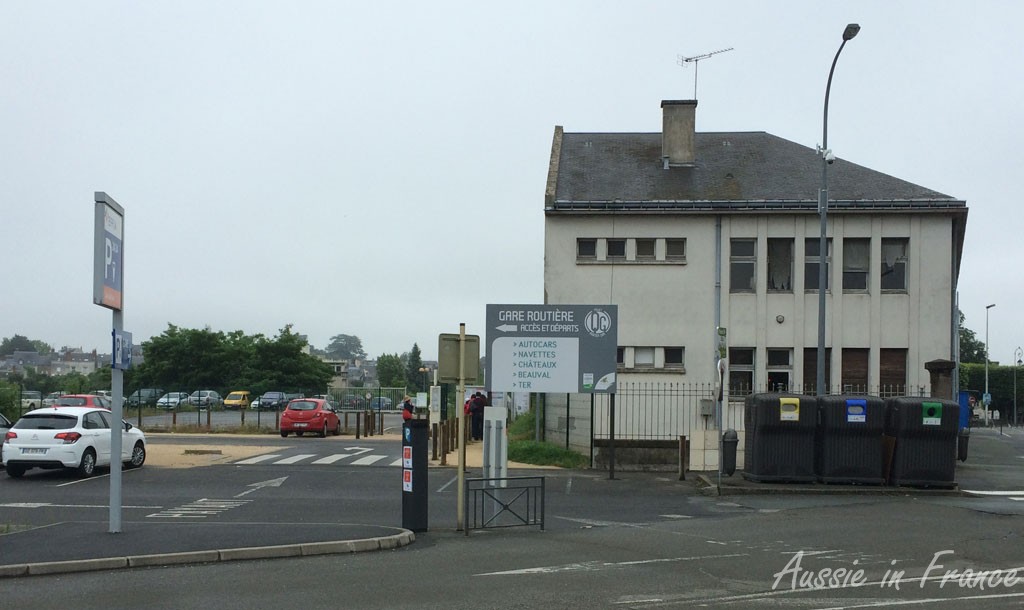
Even in peak season, there are plenty of seats. However, the bus is not very well indicated at Blois station. When you walk out, look diagonally to the left and you’ll see a large sign indicating “Gare Routière” “Châteaux”. The bus stop is just behind it (you can see a small queue in the photo below) to the right of the red car).

All year round, there is a regular coach service called Rémi that goes from Blois station to Chambord and back, once a day, line n° 2, leaving at 12.29 pm, arriving at 1 pm, then returning at 5.10 pm, arriving in Blois at 5.50 pm.

bus_stop_chambord_blois_stationA second shuttle (Navette Azalys) takes you  from Blois to Chaumont (€2.15 one way, €4.15 return), leaving at 9.25 am and 2.05 pm from the train station and two minutes later from Blois Castle and arriving in Chaumont at 10.05 am and 2.45 pm (see timetable below).

Château de Chaumont
Château de Chaumont

To access Chenonceau from Blois, you first need to go Amboise which is an easy 16 to 20 minute train ride (7.20 €). A half-hour bus ride then takes you to Chenonceau which can also be reached by a half-hour train ride from Tours.

To go to Azay le Rideau, you need to take a 40-minute trip to Tours by train from Blois (€11.20) and allow another ½ hour train ride from Tours. Tours also offers the possibility of going to Villandry (35 minutes by train or Fil Bleu bus n° 117 leaving at 9 am and returning at 1 pm which is plenty of time to visit the garden as the château isn’t very interesting) and could provide a second base if you have more time in the Loire. The 20 K bike path from Tours to Villandry is also a pleasant, easy ride and quite feasible even if you don’t normally cycle that far.

So, to sum up, if you want to visit the Chambord, Cheverny, Chaumont, Chenonceau, Blois and Amboise castles, you will need at least three full days based in Blois: Chambord and Cheverny the first day (Wednesday, Saturday or Sunday except from mid-July to end of August when the day doesn’t matter), Chaumont and Blois the second day (Saturday or Sunday, except from mid-July to end of August when the day doesn’t matter) and Chenonceau and Amboise the third day. If you are interested in also visiting Villandry and Azay le Rideau, Tours would be a good second base.

There is another way to visit the châteaux – by bike. A network of bike paths links up all the châteaux and towns in the Loire Valley. Once again, Blois is a good base for Chambord, Cheverny, Chaumont and Beauregard, with comfortable distances, but Amboise would be a better  base for Chenonceau.

Day Trip from Paris – both suggestions should be good with kids

Chambord and Cheverny (train and bus with only short walks)

Take the 7.38 am train from Paris Austerlitz, arriving at 9.01 am. Take the 9.30 shuttle from the station, arriving in Chambord at 10.10 am. Have lunch in Chambord (many choices including sandwiches and a picnic ground). Leave Chambord at 2.05 pm arriving in Cheverny at 2.29 pm. Leave Cheverny at 4.09 pm or, if you want to watch the 5 pm feeding of the hounds, leave at 6.30 pm, arriving at Blois station at 7.15 pm. There are trains for Paris at 4.17 pm (going to Montparnasse), 4.41 pm, 6 pm, 6.43 pm (all going to Austerlitz), 7.19 (Montparnasse) with the last train at 8.37 pm (arriving at 10.34 pm in Austerlitz). You can also get out of the bus at Blois Castle if you would like to include a third castle or walk down into the old town to visit or have dinner.

Amboise Castle and Clos Lucé, Chaumont (train and bus with long walks especially if you include Chaumont)

Take the 7.38 am train from Paris Austerlitz arriving at Amboise at 9.17 am. Visit the castle, then walk to Clos Lucé (10 mins). Have lunch in Amboise and walk to the station which is across the Loire (20 mins) to take the 2.22 pm train to Onzain, arriving 2.31 pm. Alternatively, take the 12.58 train to Onzain, arriving at 1.08 pm and have lunch in either Onzain or Chaumont (there are places to eat in the castle grounds as well as in the town). Walk to the castle (about 1/2 hour from the station but a great walk across the bridge with a fantastic view of Chaumont). Visit the castle. Take the 5.28 shuttle back to Onzain (or walk) and catch the 6.30 train to Paris. You can also take the same shuttle to Blois, arriving at 6.06 pm and have dinner in Blois and visit the old town (train times above).

If you need further information, I will be happy to add to this post. Just write a comment!

SHUTTLE ROUTE 41 – Blois Chambord Cheverny Beauregard (ticket from bus driver – there is always room on the bus)

4 April to 30 August > Wednesdays, weekends, public holidays and school holidays (every day in July and August).

31 August to 1 November > Wednesdays and weekends.

BLOIS TRAIN STATION 9.30 AM 11.30 AM
BLOIS CASTLE 9.33 AM 11.33 AM
CHAMBORD CASTLE 10.10 AM 12.10 PM 2.10 PM 4.10 PM
BRACIEUX Camping 12.20 PM 2.20 PM 4.20 PM
CHEVERNY CASTLE 12.34 PM 2.34 PM 4.34 PM 6.34 PM
BEAUREGARD CASTLE 12.52 PM 2.52 PM 4.52 PM 6.52 PM
BLOIS CASTLE 3.18 PM 5.18 PM 7.18 PM
BLOIS TRAIN STATION 3.20 PM 5.20 PM 7.20 PM

AZALYS SHUTTLE – Blois Chaumont-sur-Loire (tickets from bus driver)

April to June > Saturday, Sunday and public holidays (except 1st May)

July and August > every day

September to October > Saturday, Sunday and public holidays

BLOIS TRAIN STATION* 9.25 AM 2.05 PM
BLOIS CASTLE 9.27 AM 2.07 PM
ONZAIN TRAIN STATION 9.55 AM 2.35 PM
CHAUMONT CASTLE** 10.05 AM 2.45 PM
CHAUMONT CASTLE** 2.55 PM 5.10 PM
ONZAIN TRAIN STATION 3.05 PM 5.20 PM
BLOIS CASTLE 3.52 PM 5.48 PM
BLOIS TRAIN STATION* 3.35 PM 5.50 PM

*Azalys bus stop opposite the station

** Parking lot at top entrance to castle

A Few Distances in the Loire (km)

Tours Amboise Azay-le-Rideau Chenonceaux Chinon Langeais Loches Villandry
Angers (49) 130 155 107.7 161.5 89.6 98.9 161.2 110.1
Saumur (49) 73.8 98.7 51.5 105.2 30.6 42.6 105 53.9
Montsoreau (49) 63 88 40 94.5 18.6 31.9 78.1 43.1
Fontevraud-l’Abbaye (49) 66.7 91.7 41.7 98.2 20.3 35.6 79.8 46.8
Montrichard (41) 45.2 19.1 68 11.7 97.7 73.2 33.5 58.2
Chaumont-sur-Loire (41) 44.3 20 71.6 24.6 91.8 76.7 51.3 70.1
Blois (41) 65.6 36 92.9 44.7 113.1 98 66.5 91.4
Cheverny (41) 78.7 53.6 106 40.8 126.2 111.1 62.6 104.5
Chambord (41) 78.9 51.9 105.3 59.7 125.5 110.5 81.5 103.8
Orléans (45) 116.4 103.5 143.7 114.5 163.8 148.8 165.6 142.2
Gien (45) 189.7 176.8 216.9 171.3 237.1 222.1 193.7 215.4
Briare (45) 197.9 185 225.1 196 245.3 230.3 197.3

AllAboutFranceBadge_bisI’m contributing this post to Lou Messugo’s All About France link-up. For more posts from bloggers across the country, click here.

Colmar – the Magic of Alsace

Alsace is one of France’s most picturesque regions and has a lot in common with its neighbour, Germany, in terms of architecture, customs, cuisine and even language. It is famous for its white wines and the vineyards grow at the foot of the gently sloping Vosges mountains.

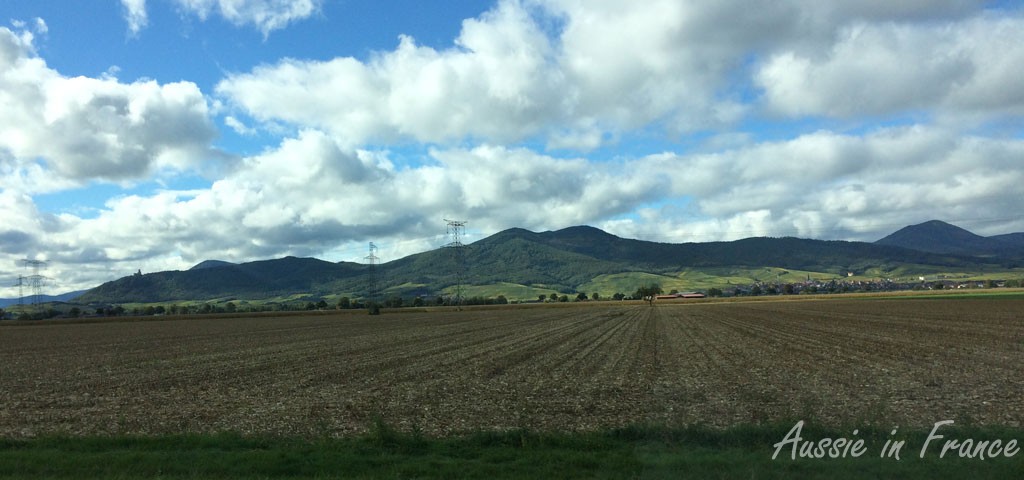
The slopes of the Vosges mountains

I have been to Colmar twice before, once with Black Cat when she was thirteen (18 years ago) and once with Jean Michel, 14 years ago, when we spent two weeks visiting such lovely little villages as Roquewihr and Haut Koenigsbourg and tasting wine. I remember liking it on both occasions, but am a bit worried that I can’t remember it at all except for one particular place on the canal. Jean Michel only remembers a couple of things as well.

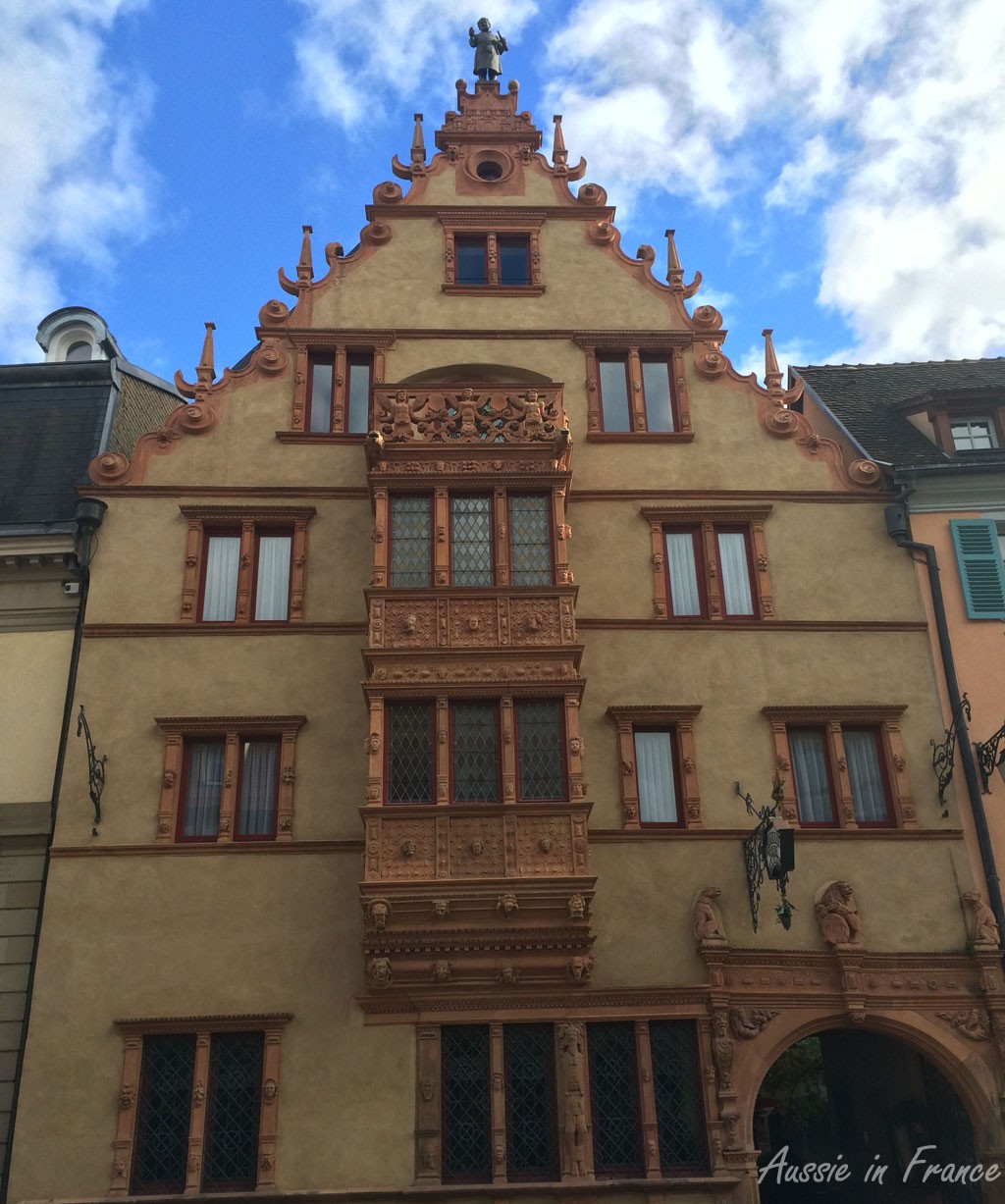
Built in 1609, La Maison des Têtes (House of Heads) owes its name to the large number of masks and grimacing faces which decorate the façade. The magnificently sculpted oriel rises to three levels. The statue of hte Alsace barrel maker was placed at the top of the gable when the building was used as a wine exchange.
Built in 1609, La Maison des Têtes (House of Heads) owes its name to the 110 masks and grimacing faces which decorate the façade. The magnificently sculpted oriel rises to three levels. The statue of the Alsace barrel maker was placed at the top of the gable when the building was used as a wine exchange.
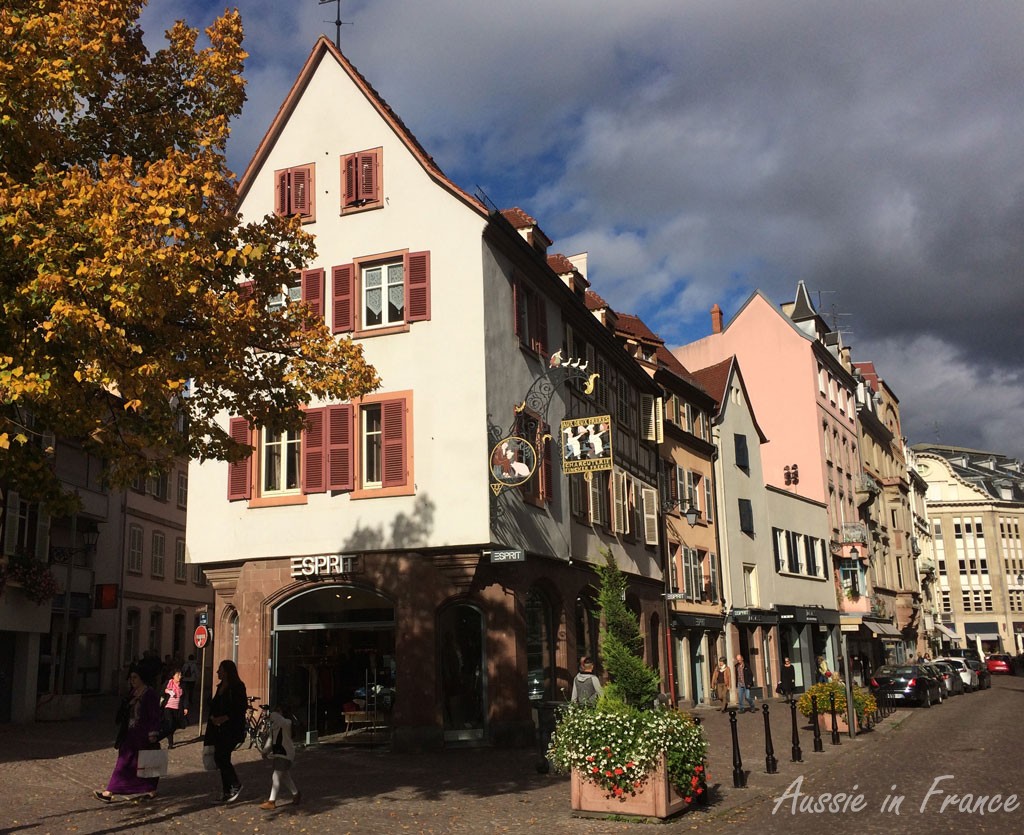
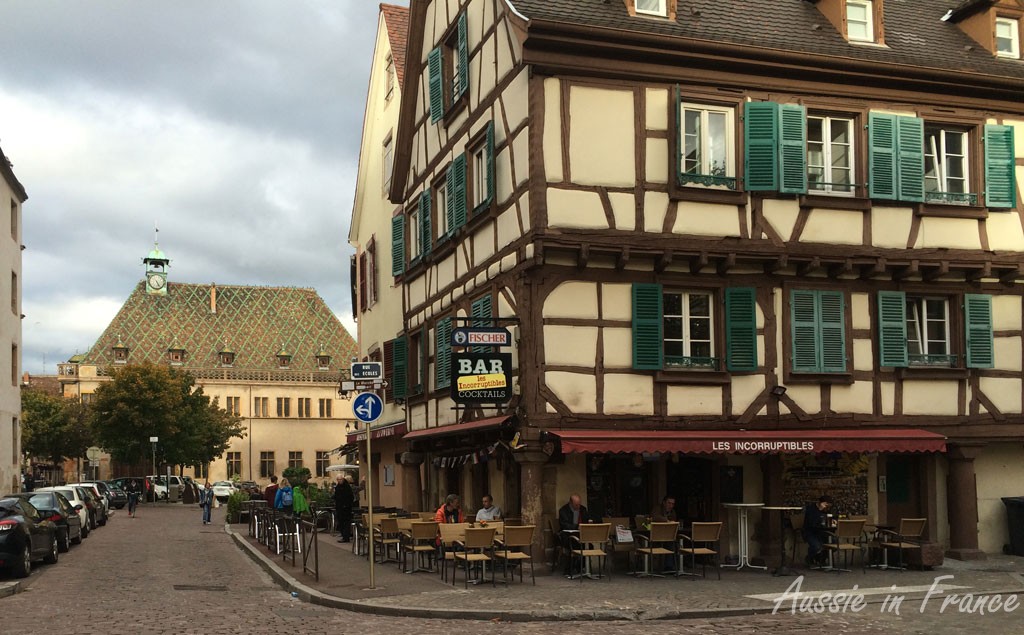
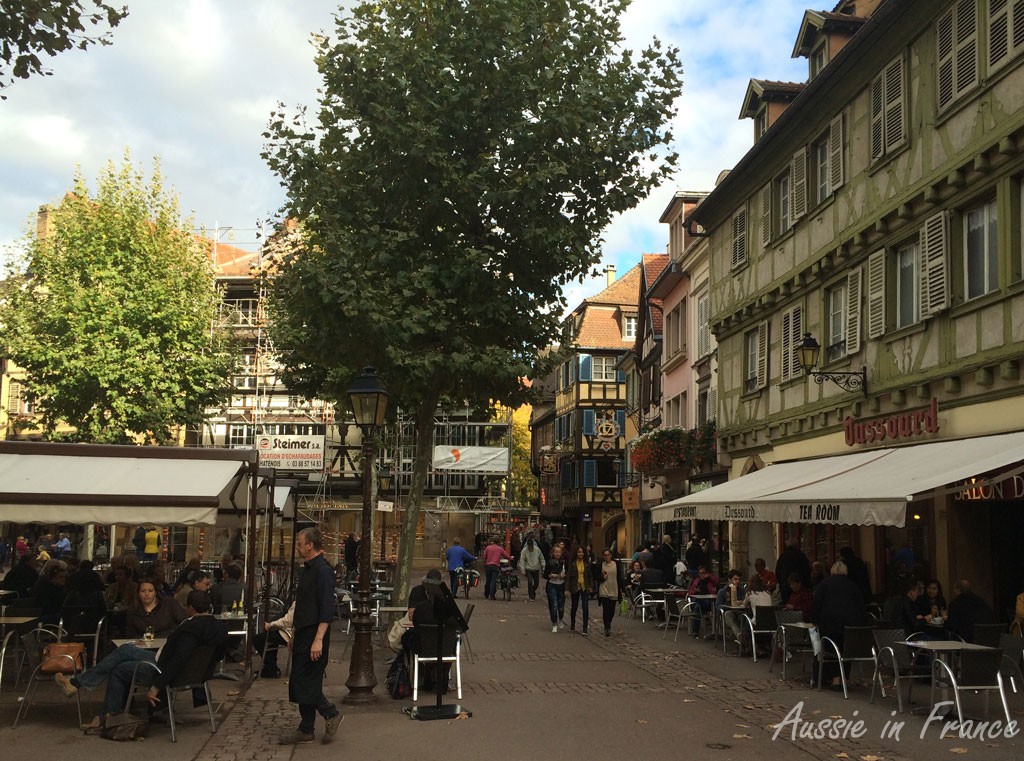
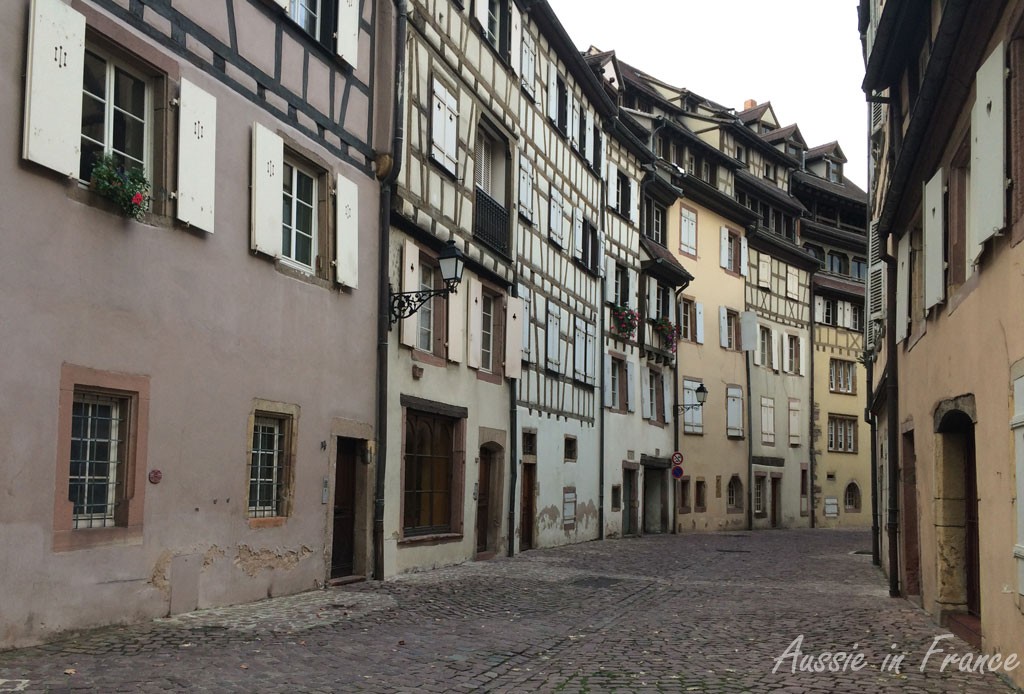
A typical street in Colmar

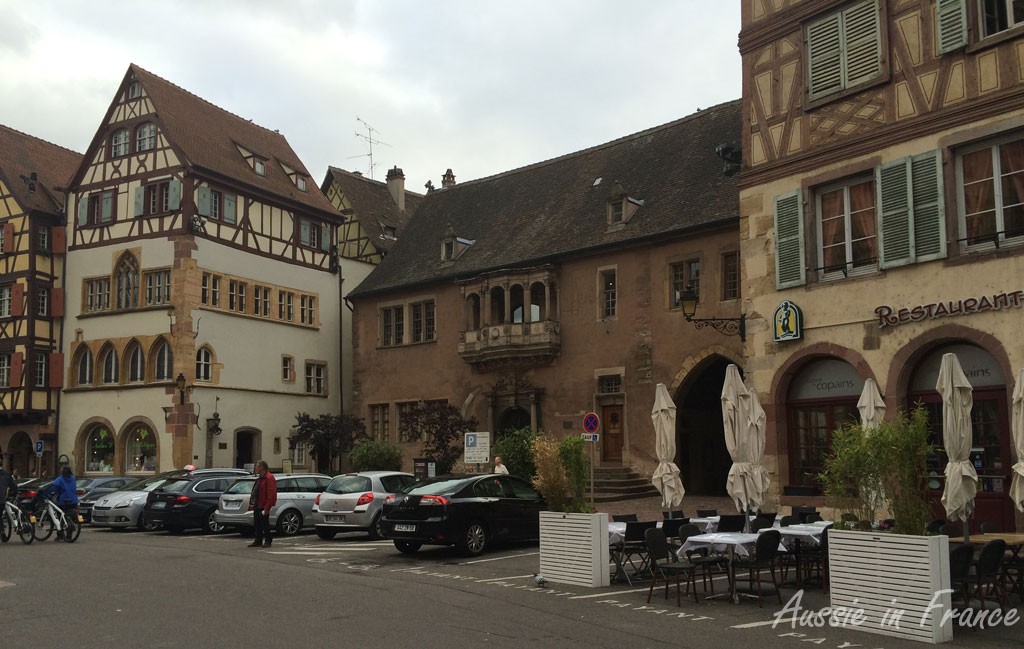
With a little over two hours before sunset, we head straight for the tourist office after checking into our hotel and follow the itinerary proposed in the brochure. A more leisurely visit would have been better just to soak up the atmosphere and appreciate all the lovely half-timbered houes. We are also surprised by how busy the centre is. Lots of school children and their parents suddenly flood the streets.

14th century weinhof or corn loft
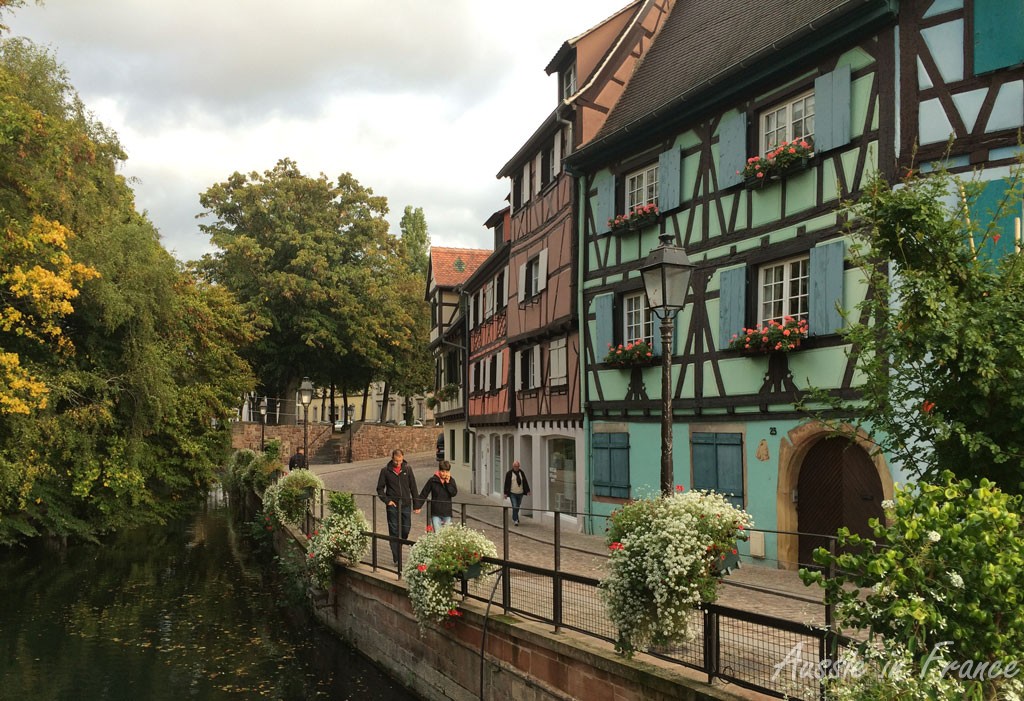
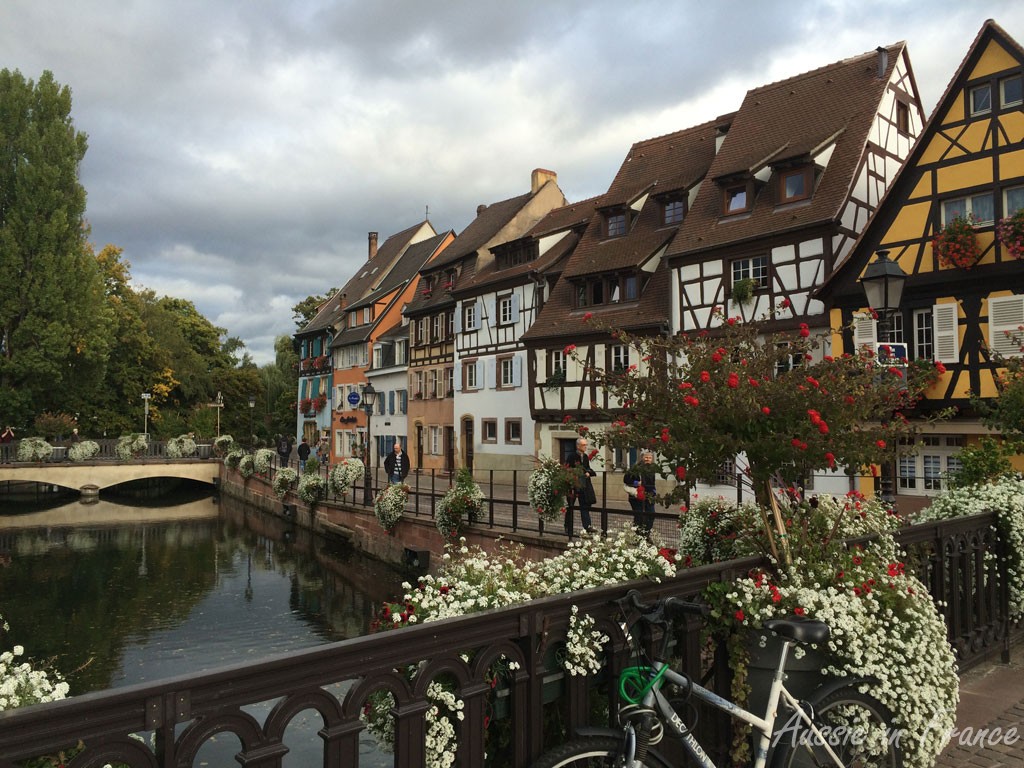
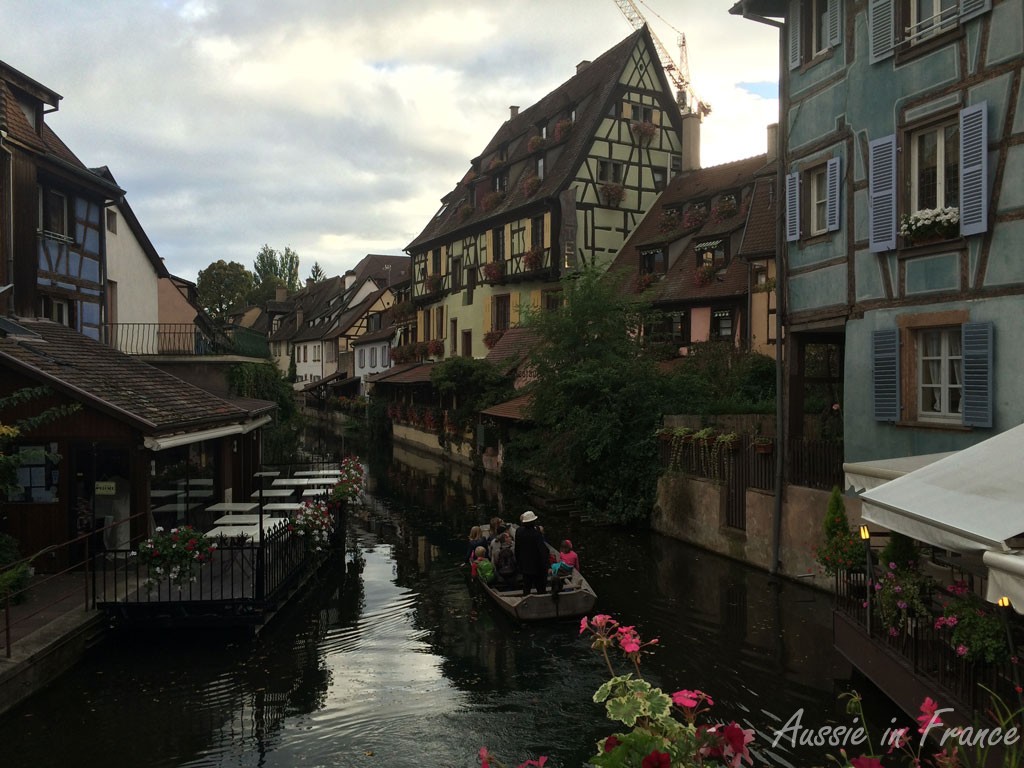
Houses along the canal
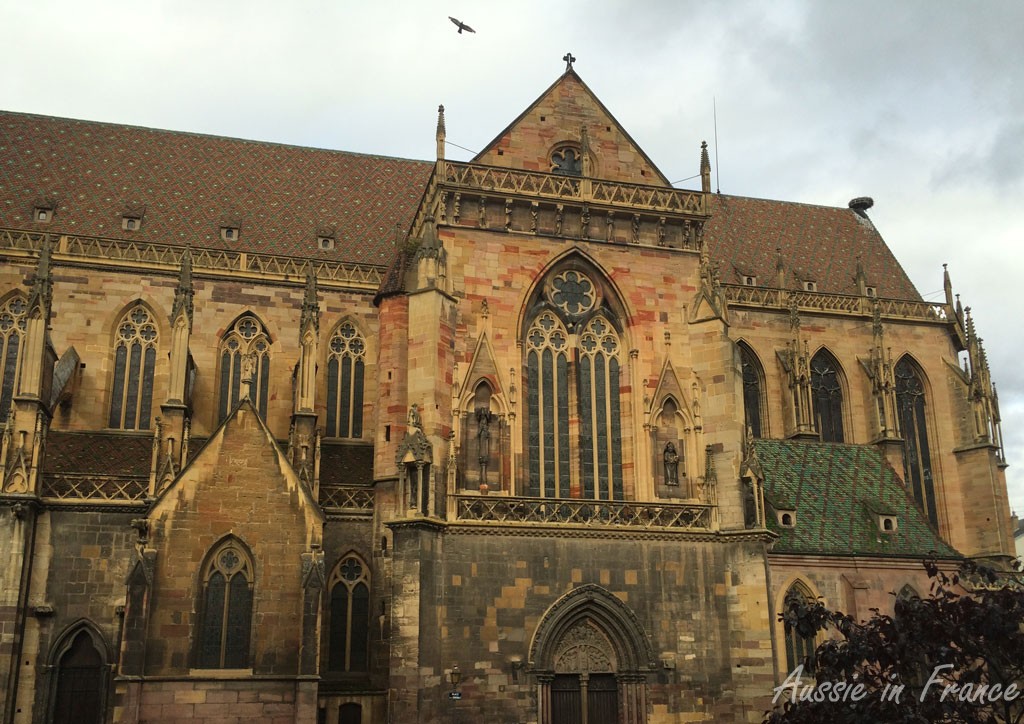
The multi-coloured pink sandstone of the Cathedral
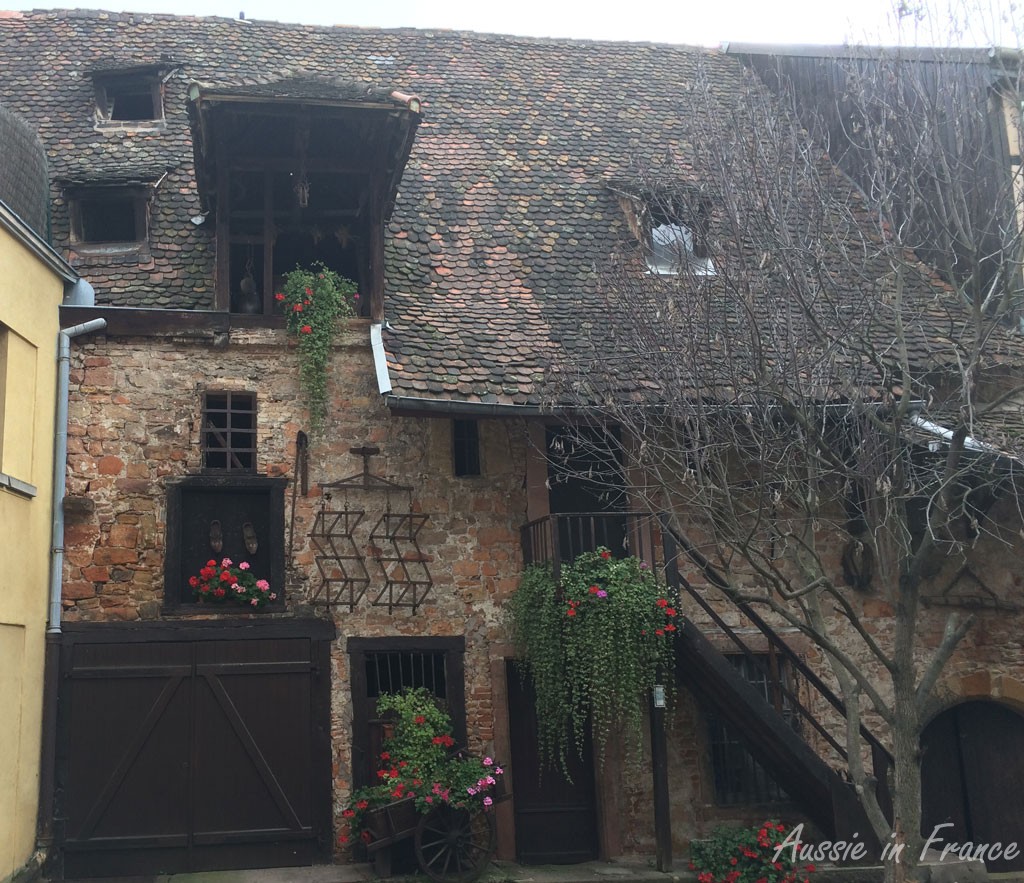
The inner courtyard
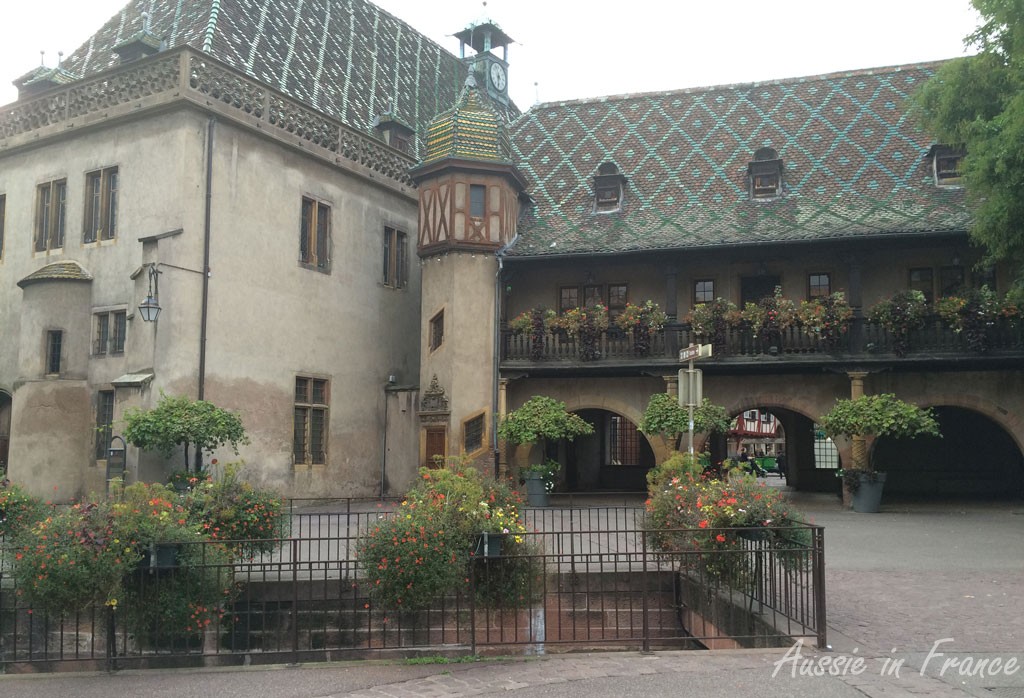
The inner courtyard of the old customs house built in 1480
More houses along the canal
The other end of the canal
The varnished roo of
The glazed tile roof of the old customs house
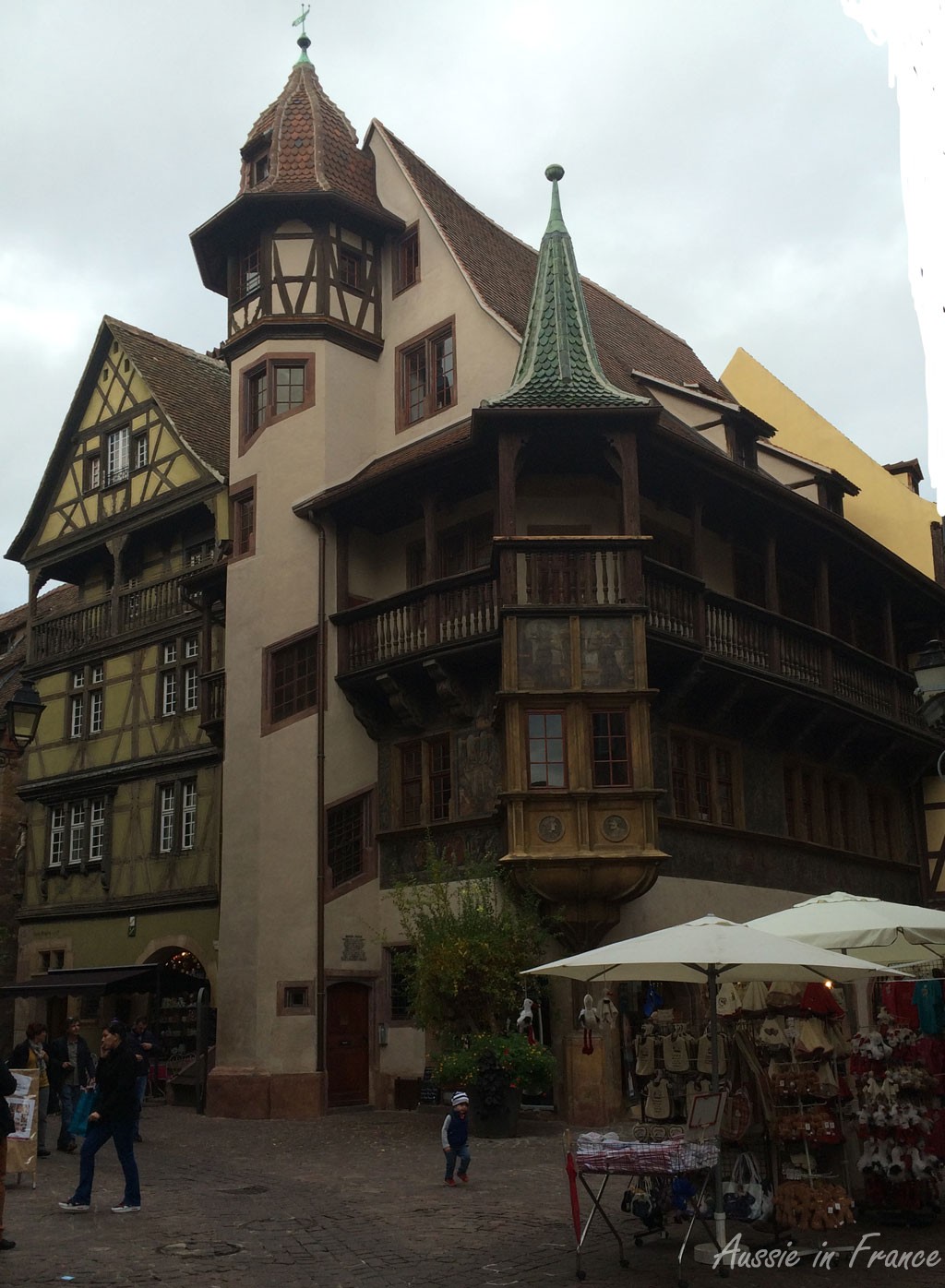
Pfister House built in 1537, probably the best-known monument in Colmar
Pfister House built by a silver merchant in 1537, probably the best-known monument in Colmar
Far left, Maison Adolph, probably the oldest house in Colmar built in about 1350, with gothic pointed arch windows. Left, le corps de garde,, built in 1575. The loggia was used by the magistrate to hand down sentences.
Left, Maison Adolph, probably the oldest house in Colmar built in about 1350, with its gothic pointed arch windows. Right, the guard building, constructed in 1575. The loggia was used by the magistrate to hand down sentences.
A busy street in Colmar
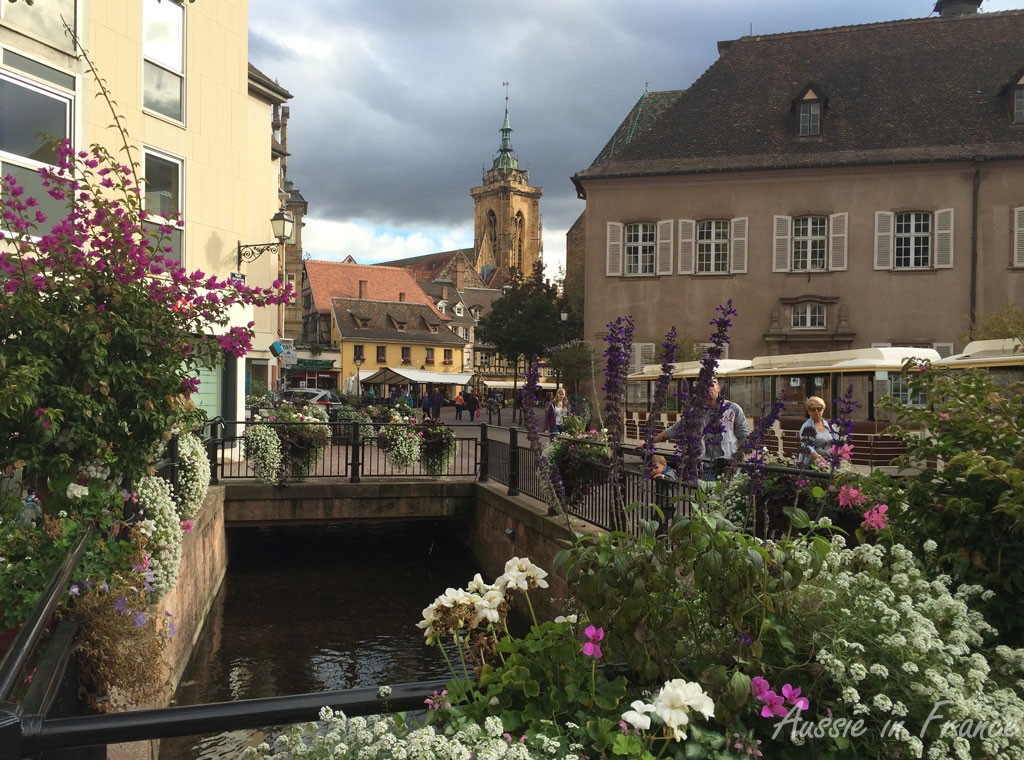
A little canal in the middle of the town

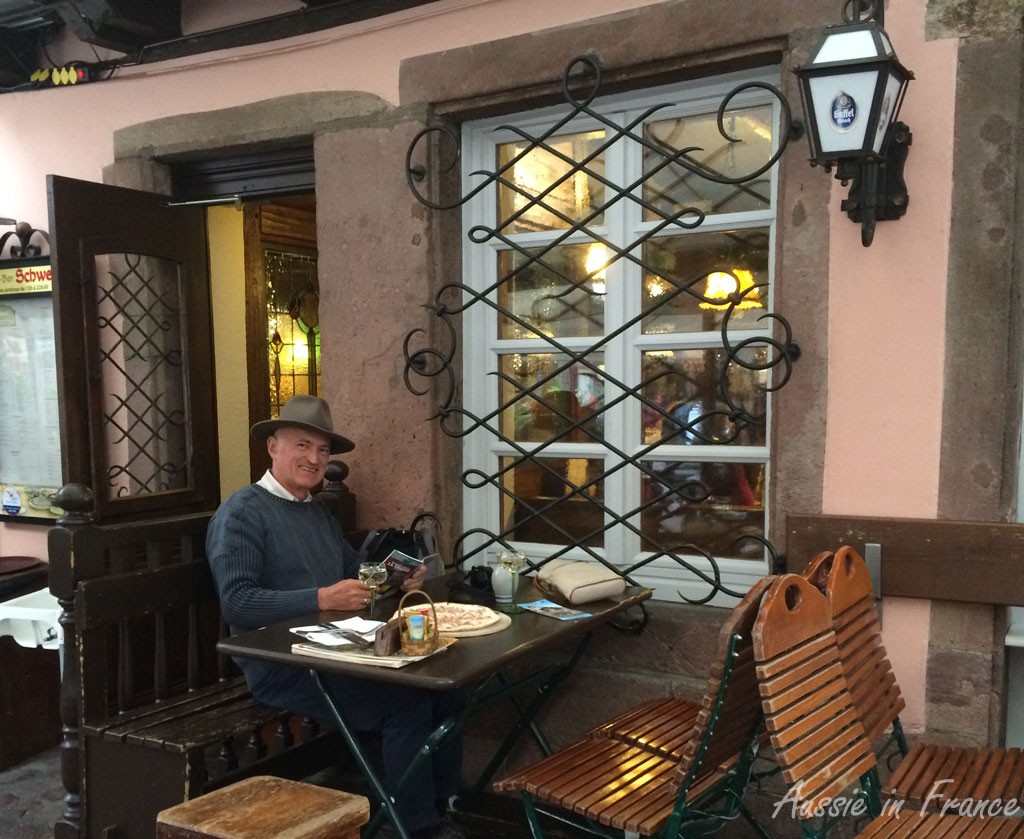
At 6.30 pm, we have finished the tour and can have a well-earned glass of local riesling and a flammekeusche, the thin-crust onion, bacon and cream tart so popular in the area.

Drinking wine in Alsacian glasses accompanied by flammekeuche
Drinking wine in Alsacian glasses accompanied by flammekeusche

We find another venue for dinner and another well-known local dish: sauerkraut, pork and potatoes followed by an ice-cream kugelhof. By now, the streets are nearly deserted.

Rue des Tanneurs
Rue des Tanneurs

No sign of any harvest bread or vin nouveau. Next time maybe! Tomorrow we’ll be back in Blois.

AllAboutFranceBadge_bisThis post is my November contribution to Lou Messugo’s All About France link-up. For other posts about France, click here.

 Bamberg – A World Heritage Site in Germany

My Australian friend Jane first told me about Bamberg a couple of years ago but although it’s still in Bavaria, it’s a lot further north than the Danube. However, my iPhone says that the shortest route from Melk to Blois is via Nuremberg and Bamberg is only 40 minutes further north which makes it a good stopover on our way home. The weather forecast is also reasonable for visiting although it is not warm enough for cycling especially now that Jean Michel has a sinus infection.

The Altes Rathaus, Bamberg's most well-known building
The Altes Rathaus, Bamberg’s most well-known building

I find an apartment through booking.com that’s close to the historical centre and appears to be spacious. We haven’t been doing so well with out accommodation recently so I’m keeping my fingers crossed. As soon as we arrive in Bamsberg, we know we’re going to love it. The check-in for the apartment is at the Weierich Hotel. We can park in front of the apartment which is just opposite the hotel to drop off our luggage then park in a public car park about 10 minutes on foot for 8 euro per 24 hours which is very reasonable, especially after Hungary.

Our living room in Bamberg Apartments on the second floor, Lugbank 5

Jean Michel loves the apartment which is in a building constructed in 1510 (even older than our house in Blois) and has a bedroom, a large living room with 5 windows and a properly equipped kitchen at one end, a sort of sitting room and a bathroom, not to mention a small terrace with two gnomes. I’m relieved since I’m the one who chose it!

The frescoes on the wall of the Altes Rathaus. Have a close look on the right bottom.

The historical centre of Bamberg was added to the Unesco World Heritage list in 1993 because of its beautifully preserved mediaeval architectural ensemble. The first thing we see is the Altes Rathaus, or old town hall, Bamberg’s most emblematic construction built in the 14th century and rebuilt by the people of Bamburg after a fire in 1440. It is just a stone’s throw from our apartment. It was given  a Baroque and Rococco conversion in the mid-18th century and frescoes were added on both sides. We photograph it from every possible angle.

The Cathedral, showing two of its four steeples

We then walk up to the Imperial Cathedral of Saint Peter and Saint George on one of Bamberg’s seven hills. The second and present-day building was completed in 1237 and combines both late Romanesque and Gothic elements.

The new residence
The new residence

It fronts onto a large square with the turn of the 18th century New Residence on one side and the Old Court on the other.

The lovely inner courtyard of the Old Court

We walk through to the splendid inner courtyard of the Old Court with its half-timbered buildings decorated with red geraniums. Now why can’t I grow geraniums like that?

The fishermens' quarter with its quaint houses
The fishermens’ quarter with its quaint houses

We walk back down to Bamberg’s Little Venice with its quaint fishermen’s houses along the towpath of the Regnitz River.

Front façade of the Altes Rathaus

From there, we go back to the Altes Rathaus and walk through the arch and over the bridge from which we can see the frescoes on the other side.

Wild mushrooms in the green market
Wild mushrooms in the green market – the ones we don’t know are on the bottom right in the top corner of the box

The Green Market is next with its many fruit and vegetable stalls, including wild mushrooms we’ve never seen before.

Maximilienplatz
Maximilienplatz

From there we go to Maximiliansplatz, the largest square in the town centre, dominated by the present-day town hall with its Baroque façade built from 1732 to 1737.

The café opposite Harmony Garden

We work our way back to the apartment via Harmony Garden where we stop for a drink. My feet are starting to burn – we’ve walked 10 kilometers in about 2 ½ hours, mostly on paving stones, but every corner reveals another beautiful or quaint building and we want to make the most of the sun. We know that it’s going to be partly overcast next day.

Hotel Weier
Hotel Weierich

Back in our apartment, we have dinner (it’s an intermittent fast day) and I discover there is no hot water to wash up. Jean Michel checks the radiators and tells me two of them are not working, including the one in the bedroom. We go across to the hotel and explain the problem to the night watchman who only has very basic English but is very helpful. He finds the solution to the hot water (it has to be turned on under the sink) but it’s too late to do anything about the heating. He offers us a room in the hotel instead so at bedtime, we take what we need for the night across the street to the hotel.

Breakfast at Hotel Weierich - best yet!
Breakfast at Hotel Weierich – best yet!

Next morning the girl at the desk tells us someone will look after our heating during the day. She asks if we’d like to have breakfast in the hotel (no extra charge). We accept and have the best breakfast we’ve had since we left home nearly a month ago! The brioche loaf is exceptionally delicious.

Back in the apartment we find the heating is working again and wonder whether the renovation work next door has anything to do with the problem. As we leave the apartment, the sun comes out and we cross a different bridge over the river and get another superb view of the very photogenic Altes Rathaus.

The broom and brush vendor on Maximilienplatz

We head for Maximiliansplatz to find a bookshop to buy a guidebook in French as our tourist brochure isn’t very adequate. On the way, we come across a brush and broom vendor, very similar to the one we found in Dresden last year. We buy a new broom for our hearth in Blois and put it in Jean Michel’s backpack.

The building we used to find the gardens

The sky clouds over and we decide to head for Bamberg’s market garden district owned by a dozen or so families on the other side of the river and which was responsible for Bamberg’s considerable commercial development in the middle ages. However, we have trouble finding it because of the poor indications but by studying one of the photos in the guide book, we are finally able to locate it. We climb up a leaning metal platform to get a bird’s eye view.

The view of Saint Otto's and the surrounding gardens from the viewing platform
The view of Saint Otto’s and the surrounding gardens from the viewing platform

Unfortunately the little market gardeners’ museum is not open on Tuesdays so we eventually work our way back to the island in the middle of the city, having a cappuccino on the way to give my feet a rest.

The market garden museum closed on Tuesdays

We follow the suggested itinerary in the guide book which includes several of the places we visited yesterday, but only from the outside. Near a lock and an old watermill, we come across a little ferry and cross the river . We are reminded of all the little ferries along the Danube and Rhine. Throughout the day we see lots of local cyclists and regret that the weather is not warmer.

The ferry crossing the river from the old watermill

Our path takes us to the Imperial Cathedral and this time we go inside. Jean Michel starts reading the guidebook out loud but it is so detailed that I can’t take in any more. I gather there are three main things to see : a statue of an unknown horseman, circa 1250, the tomb of the imperial couple, Heinrich II and Kunigunde (1513), and the Marienaltar (1523).

The incredibly detailed and finely sculptured bas reliefs depicting Kunegonde

The Bamberg horseman is a little high up to appreciate the details but the Kunigunde carvings are quite fascinating. I consult the guidebook to find out more.

Scheiners Gastuben
Scheiners Gastuben

We’re now ready for lunch so walk down a flight of steps to the centre and find ourselves in a street with several possibilities. We choose Scheiner’s Gaststuben with its typical wooden benches and find ourselves a seat next to a German couple. We have a mixed sausage grill (gemischter bratwurstteller), sauerkraut and fried potatoes for 8.90 euro, very good value for money, and have a glass of local white wine to go with it.

The state room in the new residence

Back up the stairs to the cathedral square after lunch to visit the New Residence whose Baroque wings were built under Prince Lothar Franz von Schönborn at the end of the 17th century. Unfortunately, we have to follow a guided tour in German and it is not until the second half that our tour guide realises that we need the brief guides in French!

The white room with its white enamel stove
The white room with its beautiful stucco work and white enamel stove

We are able to admire the beautiful painted ceilings and ceramic stoves though – there isn’t much furniture.

The rose garden
The rose garden

The rose garden behind the New Residence offers a wonderful view of the city but, more especially, takes us down a tree-lined path that gives us a superb view of the cathedral. with its four spires.

You can see the four spires on the cathedral

We follow our guidebook itinerary until  we reach the 12th century Carmelite monastery converted, like everything else it seems, to the Baroque style at the end of the 17th century. Its late Romanesque cloisters from the 13th century remain unchanged.

The cloisters of the Carmelite Monastery with their finely carved capitals and painted sundial

The Upper Parish church (Obere Pfarre) with its Tintoretti painting and white Baroque interior is the only purely Gothic church in Bamberg. The high chancel is supported with flying buttresses which make it very impressive from the outside.

The interior of the Obere
The interior of the Obere Pfarre

We debate about whether to climb another hill to see Saint Michael’s Monastery founded in 1015. The photos in the guidebook showing the painted ceiling with its 578 flowers and medicinal herbs convince us and we make a final effort. It’s closed for renovation. Sigh.

Saint Michael's Monastery
Saint Michael’s Monastery

The view as we go down the hill along a small pathway to the historical centre makes up for the disappointment.

The view  pf Saint Michael's Monastry and vineyard from the path
The view pf Saint Michael’s Monastry and vineyard from the path

An ice-cream in front of the Altes Rathaus gives us enough stamina to call in at Kathe Wohlfahrt Christmas decoration store where we buy a little set of bells for the Christmas tree. We usually buy something for the tree in each new country we visit but we totally forgot to do so when we were in Serbia and Romania.What a pity!

An inviting cafe along the canal
An inviting cafe along the canal in Bamberg

Back at our apartment, after having walked 15 kilometers (according to the health app on my iPhone), we check the weather and the map for a last one-night stopover on the way hope. We decide on Colmar, another Little Venice with its pretty canals and Alsatian decor. Maybe we’ll be lucky enough to find some vin nouveau and harvest bread like we did last time !

Maria Taferl Basilica overlooking the Danube in Austria

On Saturday morning, the weather forecast for Sunday promised bright sun, blue skies and 19°C (even better than Saturday) so we intended to cycle from our Radlerpension in Hagsdorf to Melk for lunch then drive up to the Maria Taferl basilica to save our knees – it’s at the end of 4 km of winding road.

Saturday's blue sky and blue Danube
Saturday’s blue sky and blue Danube

However, by Saturday evening, the forecast has changed – a maximum of 15°C with fog all day. I guess yesterday was our last day of cycling for the year. We go to the local village for bread and other supplies but soon discover that even in the bigger towns around us, Sunday is a day of rest. We manage to buy some bread though at a place that has a breakfast café attached to it. Each time we go past a church, we see families in their traditional Sunday best which we remember from the last time we were here.

The dining room at Pichler's
The dining room at Pichler’s

After spending some time looking for a hotel in our next location, Bamberg, we drive towards Melk for lunch but stop on the way at a likely-looking hotel/restaurant called Pichler’s in Emmersdorf. Inside, the waitresses and some of the patrons are also in traditional dress – certainly a far cry from the ultra-tight highly revealing apparel we have seen in other parts of Europe recently.

The konditorei where we have coffee and cake

By the time we finish lunch, the sky has cleared to a pale blue and the temperature is 14°C, certainly not cycling weather but we should get a good view from Maria Taferl, which is the second most important place of pilgrimage in Austria. We’re a little bit worried about the crowds, but it’s not very busy and we are able to park very close to the basilica just opposite a Konditorei.

Maria Taferl Basilica
Maria Taferl Basilica built from 1660 to 1710

The current baroque church was built from 1660 to 1710 on the site of a shrine to the Virgin Mary celebrating several miraculous recoveries. Its construction also gave the local inhabitants renewed courage after the bubonic plague.

The Danube from the panoramic terrace in front of Maria Taferl Basilica

We go onto the panoramic terrace first. The view of the Danube and surrounding countryside is quite superb despite the lack of blue sky.

The main altar and painted ceilings

The Inside of the church is standard gilt baroque and beautifully painted pastel ceilings.

The holy picture collection at Maria Taferl Basilica

We notice a side door and wander into an exhibition of holy pictures that covers the walls of three flights of stairs. I’m surprised there aren’t more people.

An unusual coffee grinder

After visiting the basilica, we have coffee and some sort of cream cake in the Konditorei. Like the restaurant at lunchtime, there is a lot of beautiful polished wood everywhere. It also has an unsual porcelain coffee grinder.

Maria Taferl on top of the hill

On the way back, Jean Michel chooses a different route and we find ourselves opposite a stunning view of the basilica which looks very romantic through the slight haze.

The rest of the day is given over to R&R and finding an apartment in Bamberg in Germany, whose historical centre is on the Unesco World Heritage list. It is one of the few places we haven’t visited in Bavaria. It will be a good place to finish off our holiday.

 Cycling along the Danube – from Ybbs to Grein in Austria

We know we’re in Austria because the host at our Radlerpension (radler = cyclist) greets us with Grüss Gott which literally means “may God greet you”. The first time we heard it was in Bavaria as we climbed the hill to the stunning Baroque church of Wies. Every person we passed said Grüss Got to us. When we got back to the hotel, I asked what it meant and was told “it’s just a thing they say here”. Hmm.

Melk Abbey
Melk Abbey from the bike path

It’s already October and the days are getting shorter and cooler. We’re having trouble finding places along the Danube to cycle but the Eurovelo 6 bike route to the west of Melk, famous for its Benedictine Abbey built in the early 18th century and affording a stunning view of Wachau Valley and the Danube, seems promising.

Our Radlerpension Leebs in Hagsdorf

Our Radlerpension Leebs is right on the Eurovelo 6 path and well situated. The only problem is that the wifi cuts out at about 8 pm and doesn’t return until midnight by which it’s too late of course. I mention it next morning to our hostess and she is surprised. We hope it won’t happen again. This evening, it’s working perfectly so everything seems in order.

Ybbs from the bike path

By 10 am, it’s warm enough (15°C and promising to be sunny) to set out on our bikes. We are happy to be on a real bike path such as those we have always experienced in Germany and Austria, usually right on the edge of the Danube.

The view from the bridge between Persenbeug and Ybbs

However, the signs are not that clear and we cross the bridge at Persenbeug on  the road instead of the bike path! After that, we follow a small sealed road along the Danube for about 10 kilometers. It’s not a bike path but the occasional car is not a problem.

A fishing competition on the Danube

We go past a number of fishermen evenly spaced along the riverside and Jean Michel says that with such sophisticated equipment, it has to be a competition.

A great place for a cappuccino

When we get to Willersbach we’re ready for a cappuccino and Gasthof Zur Ruine Freyenstein has a terrace overlooking the Danube.

The Danube from the bike path

The scenery is not as stunning as it is on the S-bend and the Wachau but it’s still very pleasant and the temperature is gradually getting warmer.

Grein from the bike path

We reach the bike ferry that goes to Grein after about 20 K but unfortunately, it stopped running at the end of September so we continue for a couple more kilometres to the bridge.

The historical centre of Grein

The little town of Grein has a very attractive historical centre, including Austria’s oldest theatre.

Austria's oldest theatre, built in 1791 in the former granary of the town hall built in 1563
Austria’s oldest theatre, built in 1791 in the former granary of the town hall built in 1563

We find an excellent place to eat with a terrace overlooking the main square. We order the schnitzel of the day – breaded with almonds – and have a buffet salad and a glass of wine for less than 30 euro. More expensive than Hungary of course, but less expensive than France.

The Danube on the way back

We decide to go back along the way we came rather than stay on the Grein side and do a loop because although there is a bike path, it is mostly along the main road. The light has changed and gives us another view of the Danube.

The Radler Station with its imbiss

On the way back, we see that the Radlerstation we noticed earlier also has a bar – an imbiss. I think it’s great that so much is done for cyclists here.

Autumn colours along the Danube

The fishermen are still fishing and we still don’t see any fish but friends have joined them in some places and there are a lot of barbecues and beer around.

The mediaeval building in Ybbs

We cycle into Ybbs but are somewhat disappointed. It’s not nearly as pretty as Grein and everything is closed. We were hoping for an ice-cream. On the edge of the Danube, however, we see some older buildings, including what appears to be a mediaeval construction (the tourist office is closed and we seem to have forgotten our guide book to Austria) – but still no ice-creams.

Persenbeug centre
Persenbeug centre

We manage to find the bike path to cross the river this time and cycle down into the centre of Persenbeug. I immediately see a café with Italian ice-cream so we are rewarded for our 59 K in 4 hours. At least this time we weren’t stressed about nightfall. We got back to our Radlerpension in Hagsdorf at an unprecedented 4.30 pm.

The view from the bike path into Hagsdorf

The weather forecast for tomorrow was supposed to be sunny and 19°C but all those Grüss Gotts don’t seem to be working. It’s now going to be overcast and 15°C. We may have to move on instead of staying another night. Sigh.

A Lunch Stop at Gyor, Hungary

We’re on our way to Ybbs an der Donau in Austria and Gyor seems like a good  halfway point. We arrive at 12.30 just in time for lunch. We find an indoor parking lot so we won’t be restricted with regard to time (we still have our two parking tickets from Szeged) and set out to discover the historical centre of Gyor which is Hungary’s third largest industrial town.

03_gyor


05_gyor

We are immediately attracted by the centre. It’s spacious, clean and bright with many typical baroque buildings – the blue sky and sun help of course. We debate about whether to eat at what looks like the largest tourist restaurant in town  – Palffy’s – on the main square, Szechenyi Ter, and wander down to the Danube, taking photos on the way.

02_gyor

Matroz Czarda with its vaulted ceiling and open door beckons to us (the temperature is not quite high enough to eat outside comfortably) and we are given a table for six as it’s the only one left. We both choose Hungarian ribs which turn out to be some sort of pork (no sign of ribs) with a tomato, onion and paprika sauce, served with French fries.  I’m happy with it but Jean Michel regrets the ribs.

07_gyor

11_gyor_restaurant

09_gyor

I see there are three different red house wines by the glass so I ask the waiter the difference. On is a wine and soda mix, one a cola and soda mix and the other straight wine. I later learn soda water was invented in Gyor.

01_gyor_1

Next stop, the cathedral, Bazilika Szent Laszlo Herma, nearly a thousand years old, consecrated in 1033. Its neoclassic façade dates from 1823 and its baroque interior including a marble pulpit from 1743. What a mixture!

06_gyor

12_gyor_cathedral08_gyor

I am keen to see the Xantus Janos Museum, which is said to house a good ethnic collection. Unfortunately it’s closed but we can’t find out why.

10_gyor04_gyor

We have a cup of coffee at Palffy’s for the view then return to the car park by which time it’s 3.30 pm. Next stop, Ybbs.

Cycling in Hungary – An experience

It’s finally going to be warm enough to cycle – 16°C at 1 pm going up to 19°C at 3 pm. Jean Michel has checked all our Eurovelo 6 maps, plus the local map from the Tourinform office. We can cycle from Baja to Dunafalva, and back, he tells me, a round trip of about 40 K.  There are two villages along the way. I can already see myself cycling leisurely along the Danube and having a rest stop in a café or two along the way. with a view of the river traffic.

The Danube in Baja
The Danube in Baja

We set off from our hotel at 2 pm naively imagining that the itinerary will follow the river, but we can’t find the Eurovelo 6 signs. After a few wrong turns, we’re finally on the right road – an ordinary sealed road leading out of town that proves to be dead boring for about 8 K. We could be anywhere in the world – a levee with maize on one side and trees on the other, totally obscuring the Danube from sight and one flock of sheep.

A flock of sheep alongside the levee

Szeremle creates a small diversion with two churches and a stork’s nest on top of one of them.

You can just make out the stork's nest over the nave on the left
You can just make out the stork’s nest over the nave on the left of the white church

The levee road turns into gravel with quite a lot of pot holes but improves a little bit after about 5 K before becoming an easy sealed road that we share with cars. There is no real improvement in the scenary except for a couple of glimpses of the Danube.

The levee road with its potholes

We reach at sign saying Dunafalva/Danaudorf to the left but continue to the ferry that crosses the Danube to the village of Dunaszekcso opposite. However, time is getting on and the path on the other side of the river that will take us back to Baja is entirely along a forest and in the shade.

The ferry is close to the opposite bank, in the middle of the photo

We try to find the centre of Dunafalva but we can’t even locate a church. It looks very rural. We have to navigate around chickens and kittens on the road. The pigs are behind a fence though. We see paprika drying on the farmhouse walls.

Paprika drying on the farmhouse wall
Some little porkies along the way

We eventually come to a café. called the Red Moon. I’m very excited because there is a sign on the wall saying Coca Cola, Coca Light and Coca Zero. About 7 or 8 are sitting in a sort of beer garden next to it and all have glasses in front of them. They look as though they’ve been there for a while. They greet us with bemused stares. Jean Michel goes inside the café and comes out with the news that they only have ordinary coke which is no good on an intermittent fast day.

The Blue Moon in Dunafalza
The Blue Moon in Dunafalzva

There is one other café further on, opposite a  new concrete church without a steeple. No one understands what we want.

An occasional glimpse of the Danube

We’ve now clocked up 27 K and decide to cycle the 22 K back without stopping so that we’ll make it to the hotel before dark. We take a rest at a picnic table in a park opposite an outdoor way of the cross and get on our bikes again. As we’re riding along the levee a dog starts running along beside me. It suddenly speeds up and crosses the path in front of my bike. I brake quickly and hear the dog squeal. Fortunately no one is hurt! We then take a very bad road instead of the gravel levee road and immediately regret our choice.

The outdoor way of the cross in Dunafalva

It’s getting cooler so I add socks to my sandals and we both put our windcheaters on. It’s a long, boring ride back with the exception of a horse and cart in Szeremle. I’m still hoping for a Coca Zero but the only possibility doesn’t have a terrace which means it will be full of smoke. Smoking is still allowed in bars and cafés in Hungary.

A horse and cart in the main road of Szemble

Tomorrow we are going to Austria and hope to find more attractive scenery along the Danube. I’m trying not to keep my hopes too high with regard to riverside gasthofs and gasthauses because we know it’s off season. Perhaps that way we won’t be disappointed. The last time we cycled on the Danube in Austria was along the S-bend in the beautiful Wassau region. which was absolutely stunning.

Baja and Pecs – a few surprises

After our wonderful visit to Szeged with its beautiful Art Nouveau buildings, we arrive in Baja, our Danube destination for the next three nights.  We follow the Tom-Tom and arrive at Hotel Kaiser Panzio (pension) where we’ve booked an apartment as we would like a bit more space and the possiblity of doing a little microwave cooking for a couple of days. We are barely greeted by a sulky-looking woman at reception. She finds our booking and takes us to our ground-floor apartment. It looks like the photos on booking.com (including the strange bed) so we tell her it’s fine.

Our apartment with its strange bed

Before unpacking, I check the kitchen cupboards to see what we need to bring in from the car. They are completely empty. No crockery, no cutlery, no saucepans. Yet there is a stove, a sink, a refrigerator and an electric jug (no micro-wave). How very odd. We go back to reception and I explain in clear basic English that we won’t be able to cook. The woman brings us two plates, two cups and one set of cutlery.  She disappears again and brings back a greasy frying pan, two large flat saucepans and a soup ladle.

Still mystified, we unpack quickly and go shopping because it’s nearly 5 pm. We arrive at a bus station and are totally disconcerted. This is NOT what we were expecting. We manage to buy some white bread and yoghurt but can’t find anything resembling a supermarket. Then I spy an information panel. “Ah”, says Jean Michel, after examining it, “we went the wrong way.”

The fruit and vegetable store

We head in the other direction and find the centre of the town which is much more reassuring. We catch a fruit and vegetable store just as they’re closing and a bakery that has wholemeal bread. I ask where we’ll find cheese. The lady says CBA as though it’s given and points the way. It turns out to be a supermarket where we find some Danish and Dutch cheese and a few other things to sustain us until tomorrow.

The main square in Baja at dusk

Back in our apartment, we find a few other annoying things such as the lack of space (there is furniture everywhere and you have to pull out the table to sit down). There are only three chairs although the apartment can sleep four. You have to have gorilla arms to reach the toilet paper and be over 2 metres not to drown in the shower. The dark red frayed towels are non-absorbent and there is nowhere close to the shower to hang them.

Because we carry out own wine glasses, corkscrew, plates, kitchen knives, bread knife, cutting board, salt & pepper, oil & vinegar, tea towels and washing up liquid we are able to have our aperitif and dinner and wash up afterwards. On the positive side, the bed is comfortable (not the pillow, but I always bring my own) and the apartment is clean and quiet.

The Eurovelo 6 bike route
The Eurovelo 6 bike route along the main square of Baja

Next morning, we go back into the centre of the town and are able to appreciate it more. It’s only 11°C  but it’s not rainy and should be 15°C and sunny in the afternoon. It’s 10 am and I am amazed to hear the chimes of the local church playing the Seekers’ Pierrot and Columbine song . I check it out later.

Baja church with the chimes

Tom Springfield wrote it for the Seekers in 1953 based the melody on the Russian folk song Stenka Razin (or Stenka Rasin). Stenka Razin was a Cossack rebel leader who led a major Cossack and peasant rebellion on Russia’s southeastern frontier in 1670-71. You can listen to the Seekers singing it here if you’re not familiar with the tune.

Tourinform closed!
Tourinform closed!

Our first destination is the tourist office as the Hotel Kaiser Panzio does not provide any maps or brochures. A sign indicates it’s the main square. We can’t find it. I ask at the Wellness Hotel and am sent to the other side of the square. After a long search we find a door that says “closed” and indicates that the Tour nform is on the other side of the bridge, 500 metres away.

Our cappuccino café
Our cappuccino café – we sat inside

This calls for a cappuccino. Jean Michel takes me back to the street on the other side of the square where he has a seen a likely-looking café with local ladies eating cakes. I have a mille feuilles that isn’t bad while he has a rocher. The cappuccino isn’t exactly Italian but it’s better that what you usually get in France and we pay a total of 4 euro.

View  of the Danube from the bridge
View of the Danube from the bridge – you can see we’re off season

We set off over the bridge to the tourist office. The girl is very friendly and helpful and gives me a brochure and map that she explains in English although she has a little difficulty in explaining anything I say. I think she might be more used to foreign English!

The market in Baja
The market in Baja

As we are walking back to the main square to buy more fruit and vegetables I see a man with parsnips sticking out of his shopping bag which makes me suspect a fresh produce market. Sure enough, over to the left, we find a large market with a lot of local producers. We do the rounds and finally buy tomatoes, capsicum, coleslaw  eggs and grapes.

Fruit and vegetable stalls at the market

We also find a cheese stall. The vendor helpfully says “sheep” in English, which I don’t understand at first because I think she’s saying cheese. She tells me the other cheeses are cow.

Our communication is a little rudimentary but all the prices are displayed and I demonstrate how much I want. Everyone gives us a little bit extra produce after telling us the total amount.  We smile a lot and try and manage to get our tongues around thank you (koszonom) and goodbye (isten veled). Unlike all the other European languages, Hungarian, along with Finnish and Basque, is not an Indo-European language which means it’s out on its own and doesn’t ressemble anything else.

Paprika at the market

We also buy a white lace doily for the chest of drawers in our guest room.  I’m sure that 4000 florint (13 euro) is far too much but the lady and her husband look as though they need a bit of extra money so I don’t mind. She throws in a small doily as well.

A sculpteur seen from the road on the way to Pecs

Delighted with our purchases we walk back to our hotel to put them away before driving to Pecs, about an hour away from Baja. But first, I need an external hard drive because my excessive number of photos (past and present) is clogging up my laptop. We go into a little out-of-the-way computer shop and are offered a hard case for  the equivalent of 10 euro into which we are to insert a 70 euro hard drive. I can’t  believe the prices and the fact that he doesn’t have one that’s already mounted. We decide to try somewhere else.

One of the mosques in Pecs

According to the Routard, Pecs is a “little jewel  of a city”. We are rather disappointed after Szeged although we there are lots of Austro-Hungarian buildings and the sun comes out which helps.

A church in Pecs
A church in Pecs

We start with lunch at Matyas Kiraly Vendeglo, which offers a set daily menu at 990 florints (3.30 euro). We have a very palatable egg soup and pork schnitzel with coleslaw and a sort of fried rice.

Tourinform in Pecs - hidden in an arcade as usual
Tourinform in Pecs – hidden in an arcade as usual

We eventually find the Tourinform, which is just as difficult to locate as anywhere else! A young girl rattles off the list of things to do in English but doesn’t really understand what I say to her.

Pecs’ main claim to fame is the Cella Septichora, which contains the remains of a 4th century early Christian burial ground. Apart from Pompei and Herculaneum I’m afraid I find it difficult to relate to ruins, especially when you can’t get an idea of the building as a whole.

The mediaeval university in Pecs

There is also Hungary’s first university founded by Louis the Great in 1367.

The cathedral in Pecs

The history of the cathedral, of impressive size, also dates back to the 4th century. Its present form is a Neo-Romanesque reconstruction that took place at the end of the 19th century.

The statue of Liszt commemorating a concert he gave in Pecs in 1846

By the time our parking metre runs out, my feet are killing me so we decide to forego a visit to Zsolnay Museum’s porcelain collection which I later learn is definitely worth a visit.

The inside of the cathedral in Pecs

Before taking the motorway (we didn’t take it on the way to Pecs), we stop to buy our obligatory vignette in a Shell service station. A Gestapo-like lady gets quite annoyed with our dithering, especially when we don’t know our car registration number . I dash out and take a photo. The 10-day vignette costs 10 euro and allows us to go on all of Hungary’s motorways.

The only Art Nouveau building we saw in Pecs

We also stop off at the Tesco hypermarket in the hope of finding a hard drive. We come across the same problem as before although they do have an all-in-one hard drive for 80 euro. I buy a 10 euro memory stick instead. We kill two birds with one stone and stock up on yoghurt and local wine as we’ve come to the end of our Italian stock.

The main square in Pecs

Tomorrow, we’re cycling on the Danube at last because the temperature will be 18°C in the afternoon.

from the Tropics to the City of Light