As usual on a Wednesday, here are some snippets from other blogs. Thank you to the authors: Femme Francophil, Petite Paris and Experience France by Bike!
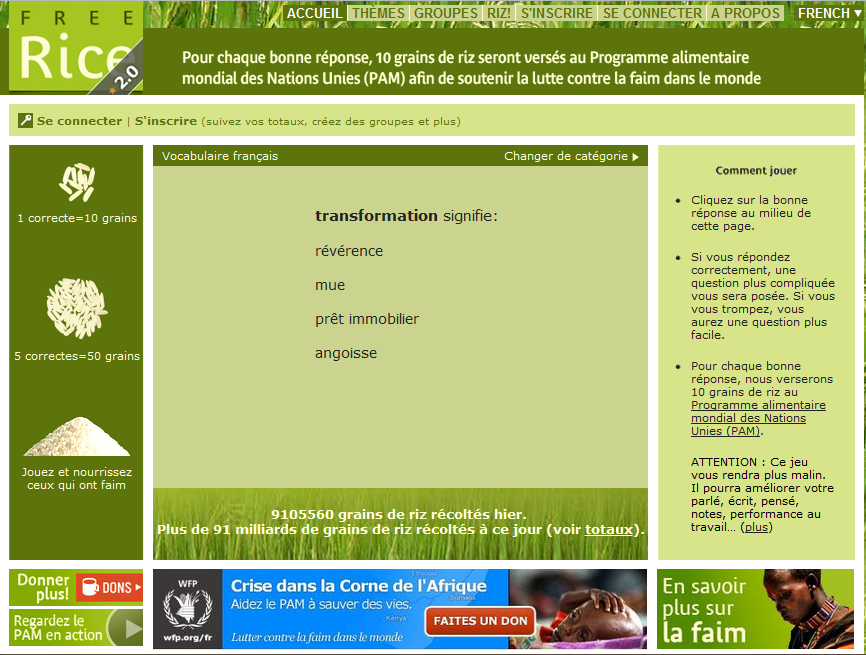
Each year, on 20 March, French-speakers around the world celebrate the International Day of Francophonie.
This year to mark the day the Organisation internationale de la Francophonie (OIF) and the United Nations’ Programme alimentaire mondial (PAM), known in English as the World Food Programme (WFP), provides you with the opportunity to not only extend your knowledge of the French language and the French-speaking countries but at the same time help those who are hungry. Read more
Paris for Lunch
by Petite Paris bed & breakfast accommodations in Paris
Bonjour Petite Friends. It’s 2.30pm and I havent had lunch yet. Looks like im going to work straight through AGAIN; picking away at an emergency (don’t have time to step away from le bureau) stash off tuna and crackers at my desk! If I were in Paris, I would eat at: Read more
The Atlantic Coast of France, My Destination for Spring 2012
This is my 100th post about biking in France, and I thought it was the perfect occasion to reveal the destination for my upcoming trip to France. Having spent the last two years exploring the Loire Valley, Burgundy, Brittany and the Dordogne, this spring I will finally journey back to the Atlantic Coast of France. Read more
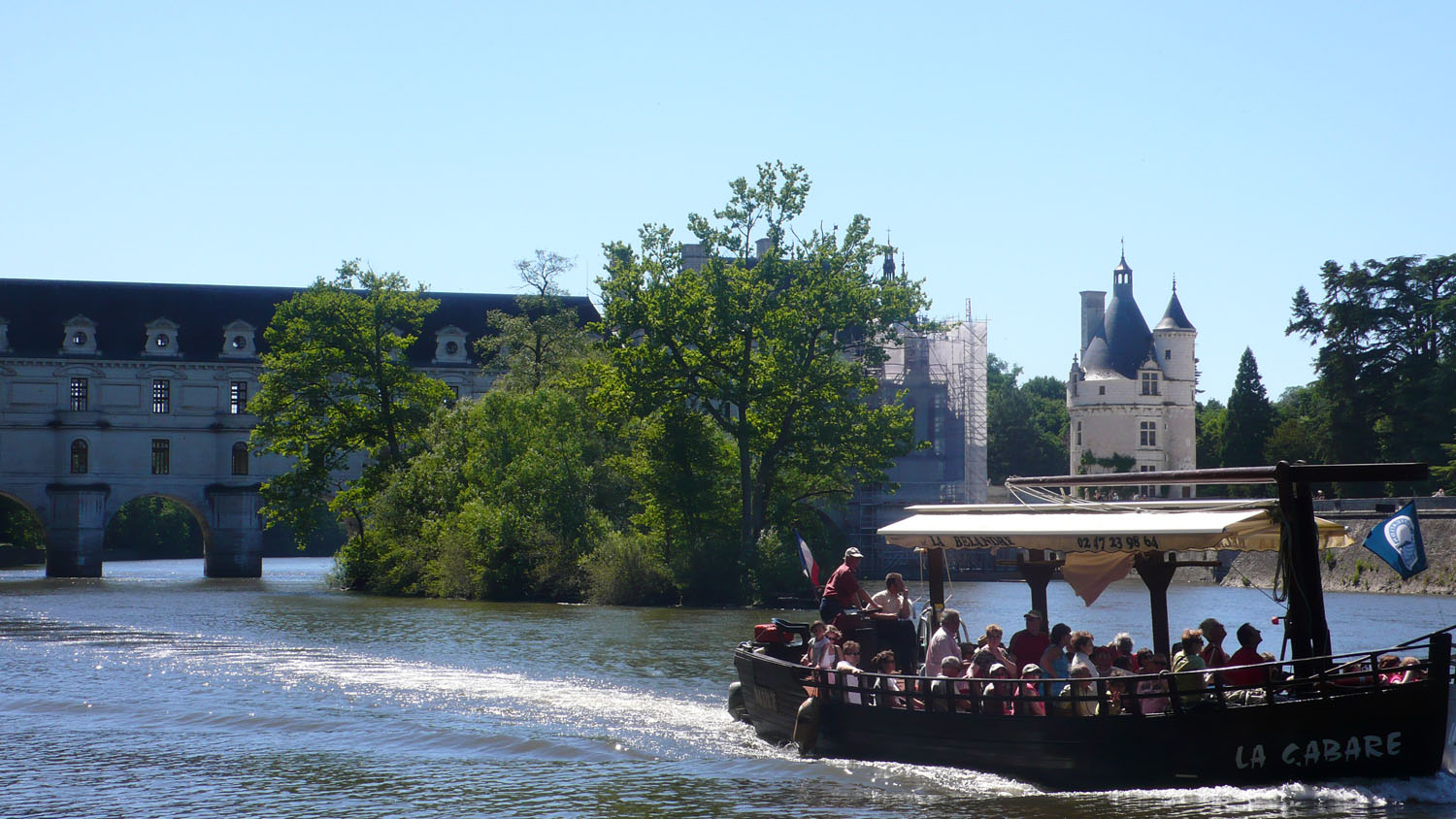
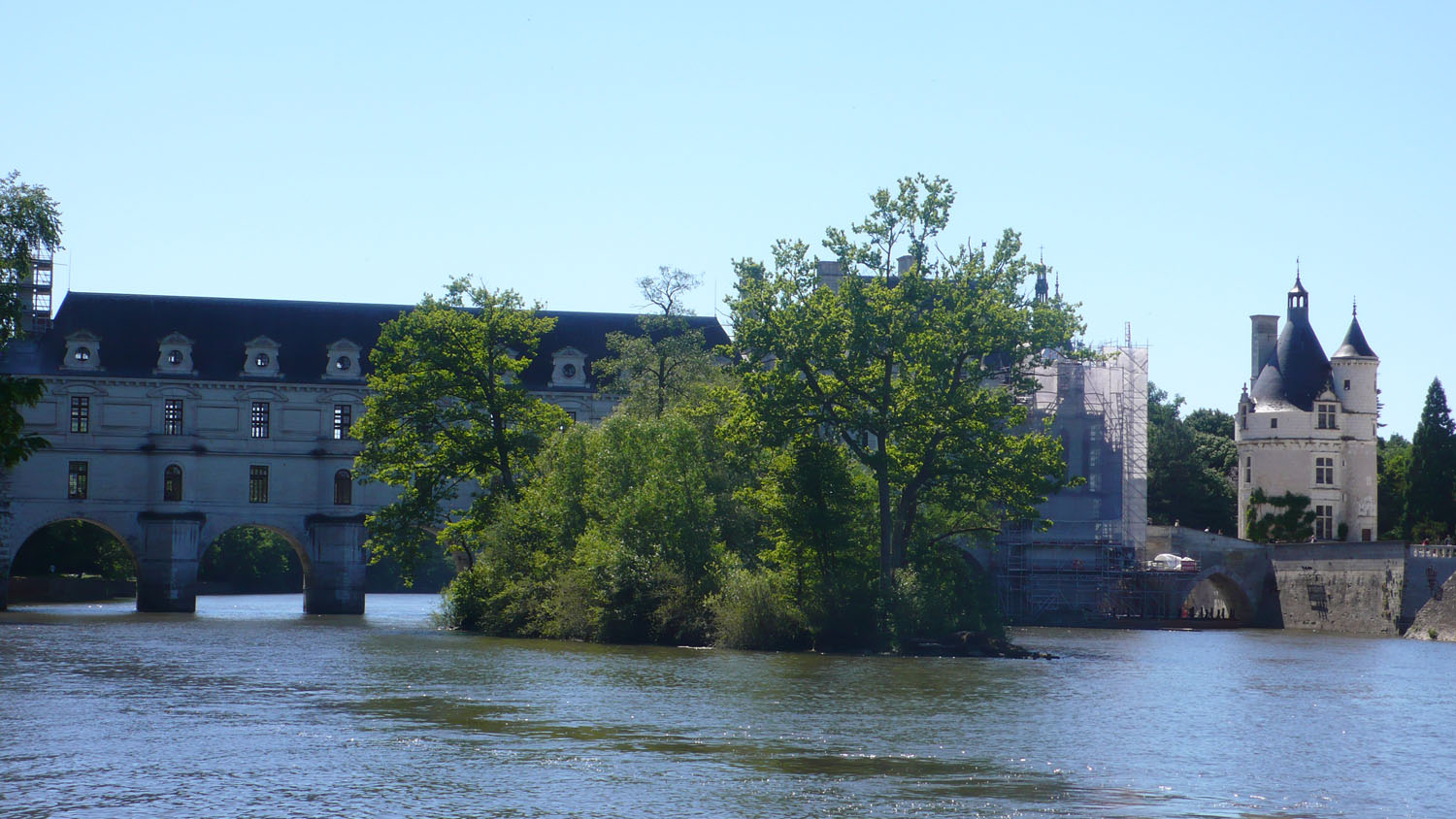
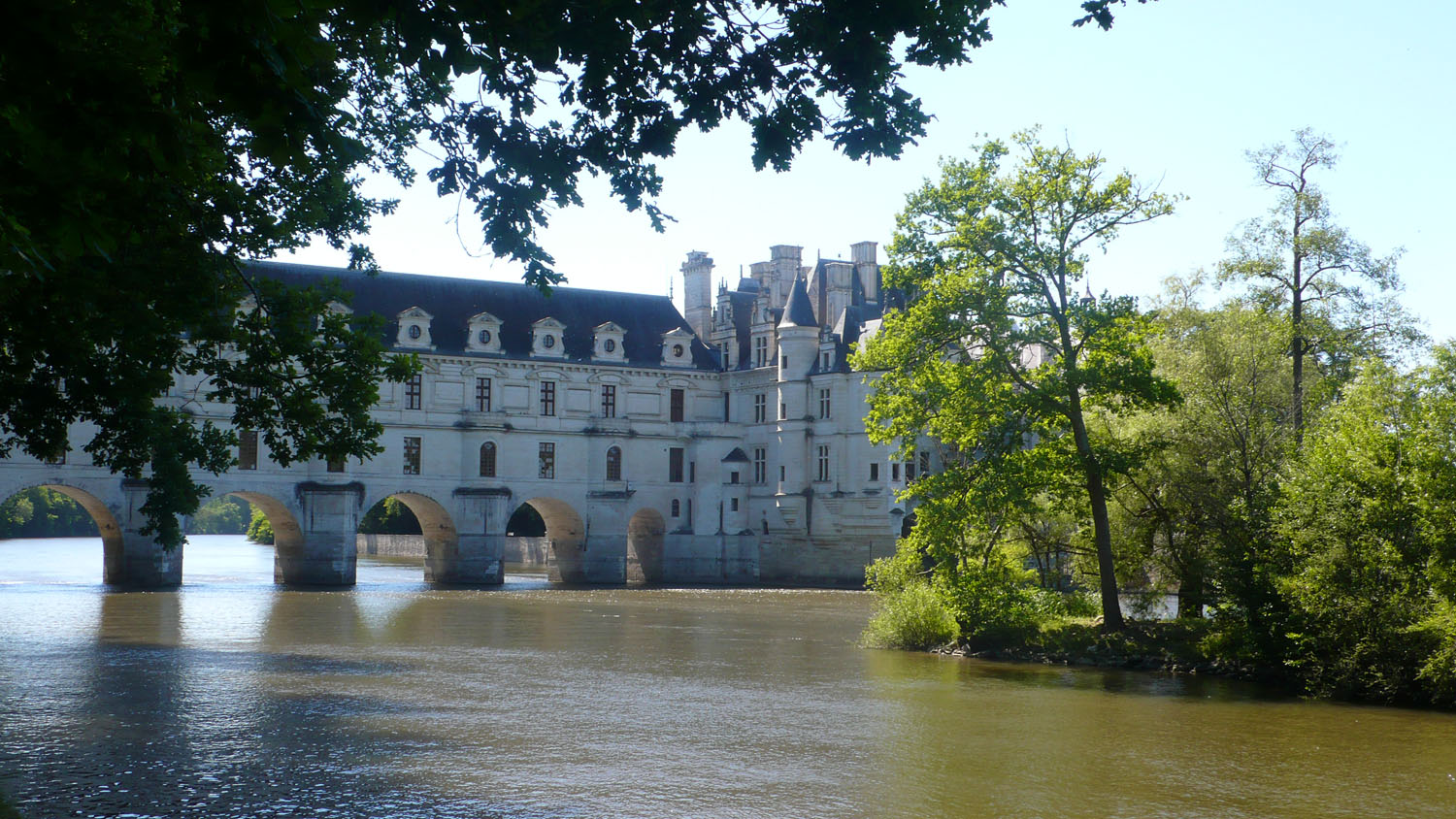
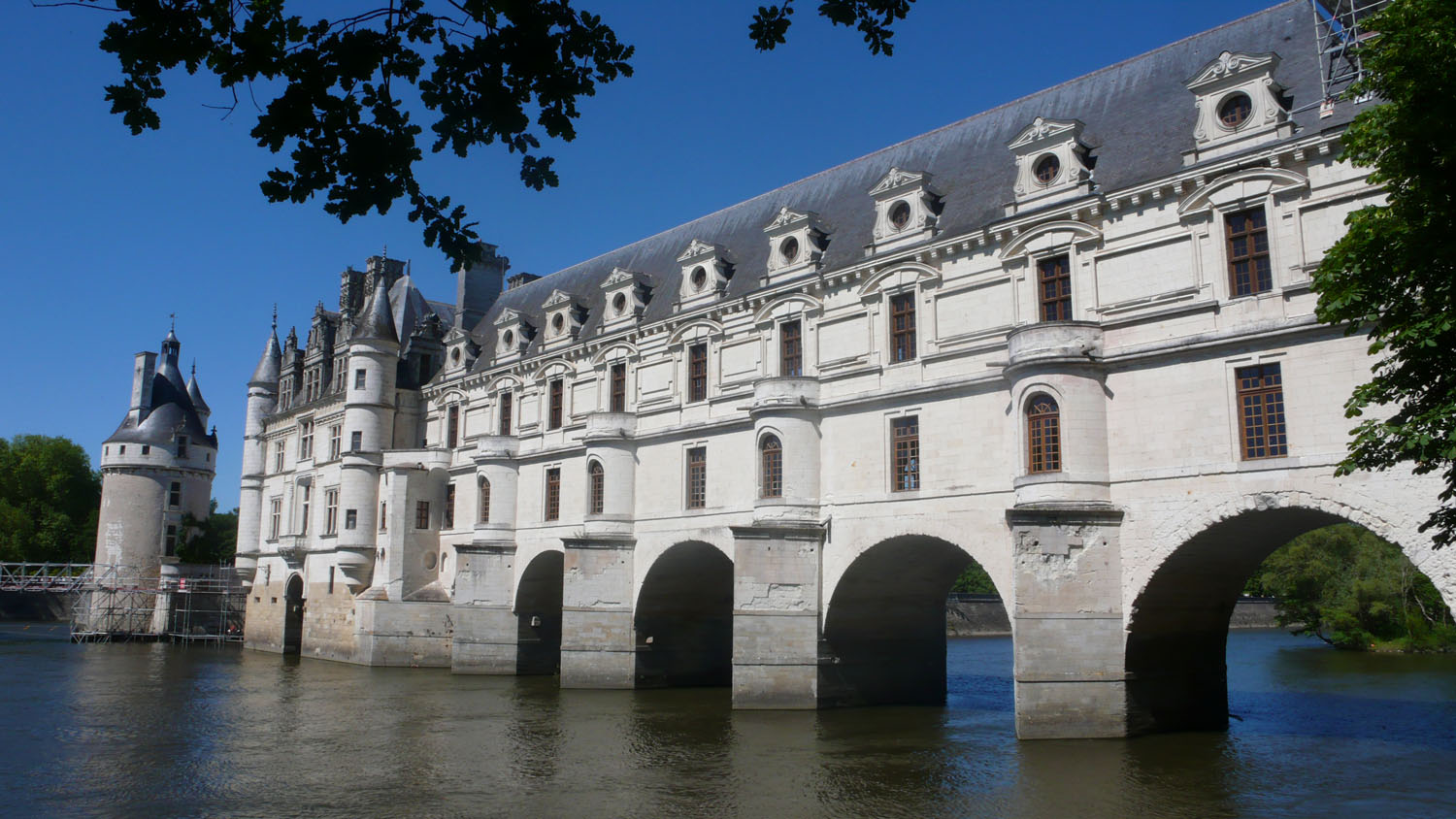
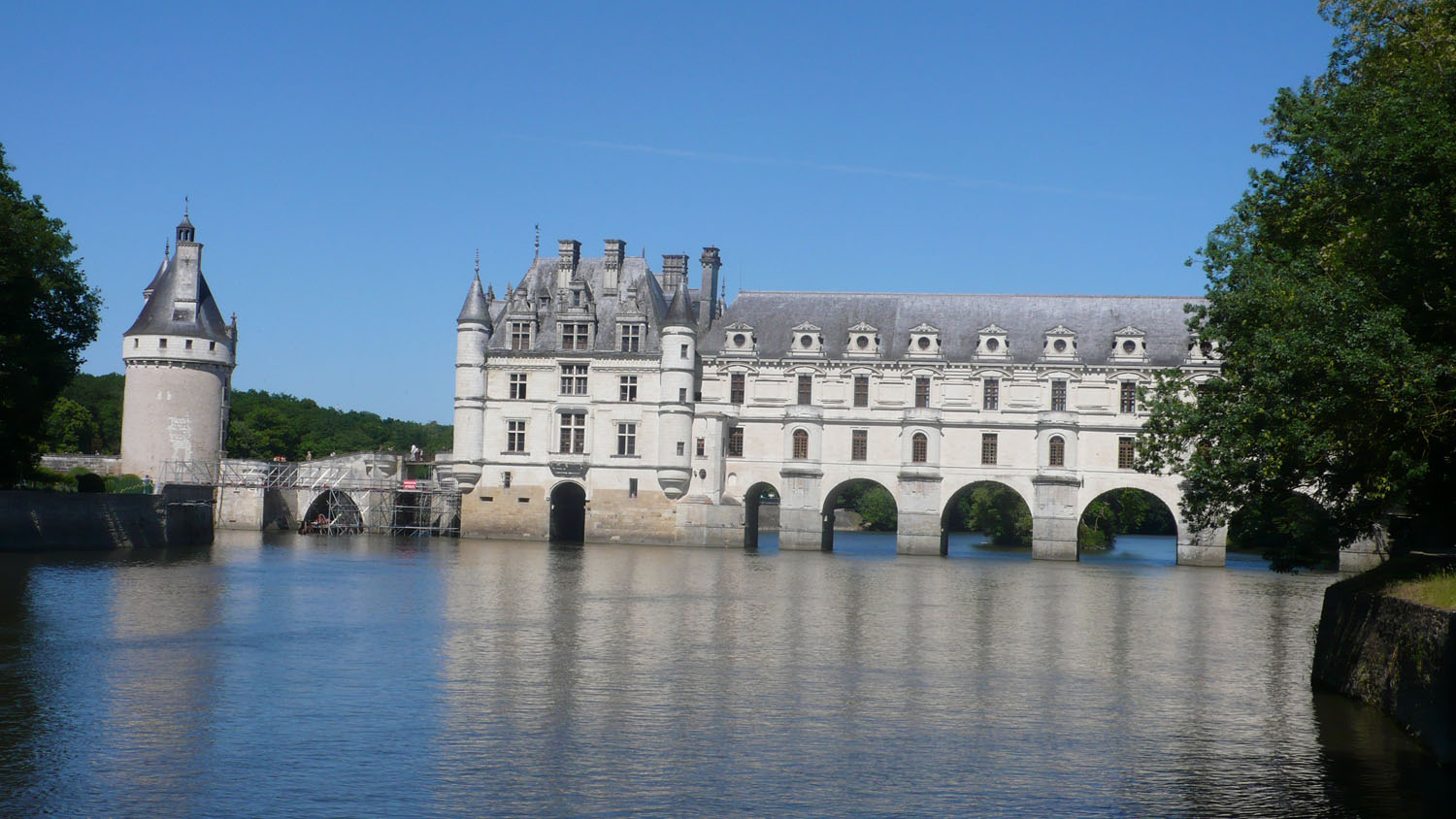
Chenonceau castle is one of the 3 Big C’s in the Loire Valley – Chenonceau, Chambord and Cheverny – and it’s definitely my favourite. A ladies’ castle, built in 1513 by Katherine Briçonnet, decorated by Diane de Poitiers, extended by Catherine de Médicis, and saved by Louise Dupin during the French Revolution!
We have discovered a wonderful cycle path that runs behind the castle and definitely gives you the best view. On leaving the castle, take the main road in the direction of Montrichard, take the first turn on your right and just over the bridge, you’ll see a path on your right that runs along the south bank of the Cher river. You may have to get off once or twice, but you’ll be able to get through and continue over to the other side of the château. These photos were taken in May, a perfect time to visit.
Don’t forget to subscribe to new posts – that way you’ll get them directly on your smart phone or in your mail box! And I love to hear your comments!
Enjoy my A to Z and don’t forget to click on the links for more …
A – Aussie: How else could I begin? Aussies come from Oz or the Land Downunder where I was born and bred.
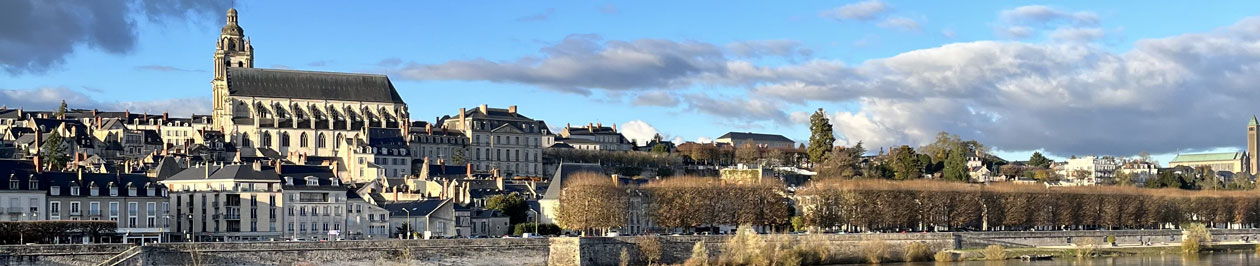
B – Blois: In the middle of the Loire Valley, where we’re in the process of buying a house built in 1584 which we’ll be renting out as self-catering holiday accommodation until the NEW ADVENTURE in my life starts in June 2014.
C – Cycling: Our favourite activity from April until October in France and wherever. Next trip: Paris to London once they’ve completed the bike route for the London Olympic Games.
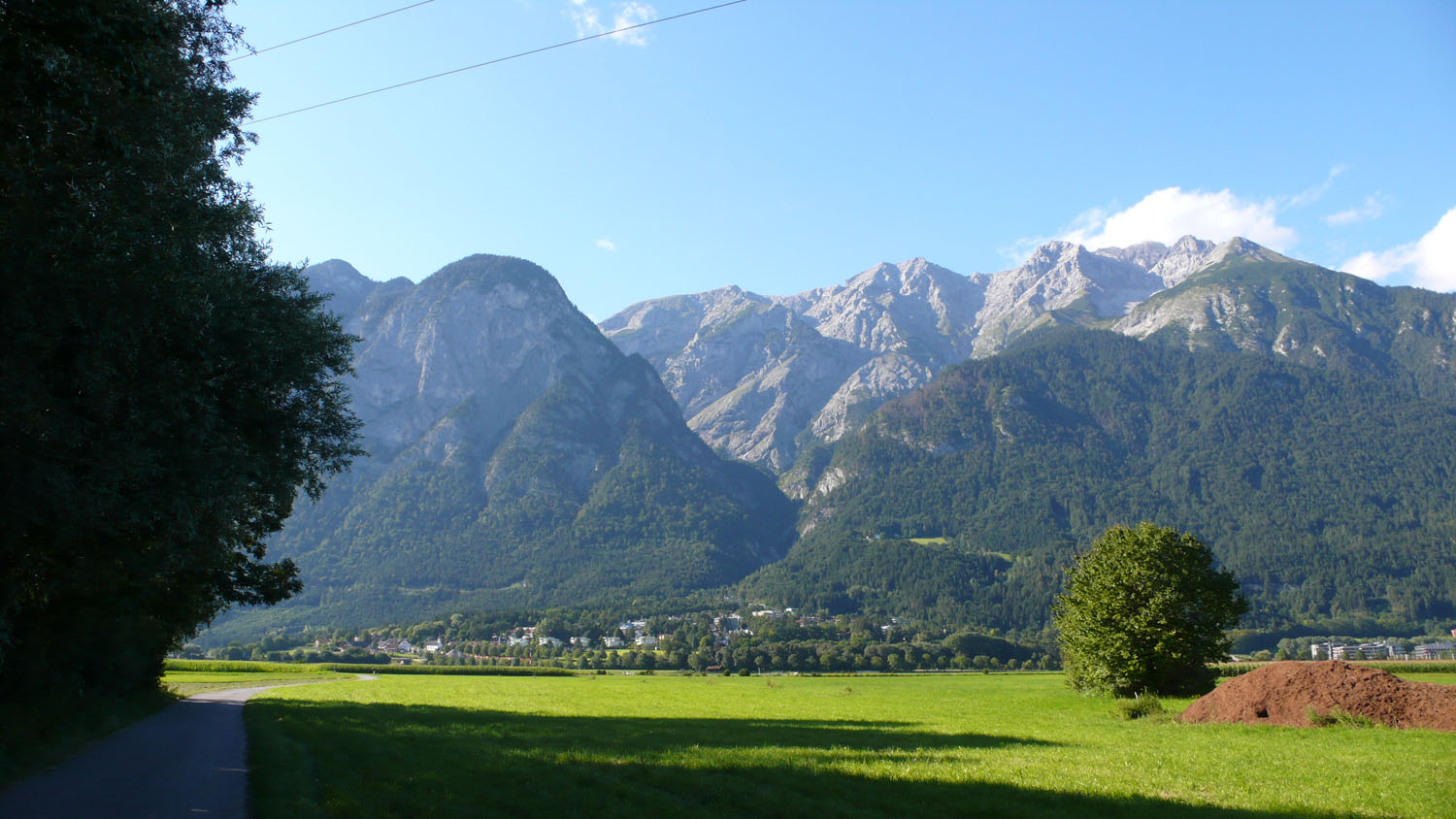
A bike path around the city of Innsbruck
D – Down Under: Not the Land, but the book by Bill Bryson. Full of clichés, but most of them are just so true! And a good read any time.
E – Early bird: Which I’m not, but it’s the only way to beat the tourists and I hate standing in line! And that’s what siestas are for.
F – Foie Gras: One of my very favourite foods and that I now know how to make.
G – Garret: Where I thought I was living when I first moved to France, even though it was just a room in a third floor apartment.
H – Home Exchange: Our new way of holidaying. First stop Madrid and lots of exchanges planned for Australia, some simultaneous, some not.
I – iPhone: Something I’m crazy about and which can certainly make life easier on holidays. Perfect for Twitter and Facebook too.
J – Jam-packed: The metro at peak hour so why not take the bus instead and be a real Parisienne?
K – Kilos: The 20 I have lost and never intend to put back on!
L – Loire Valley: Land of kings and queens and castles. Our future home. Less than 2 hours’ drive from Paris.
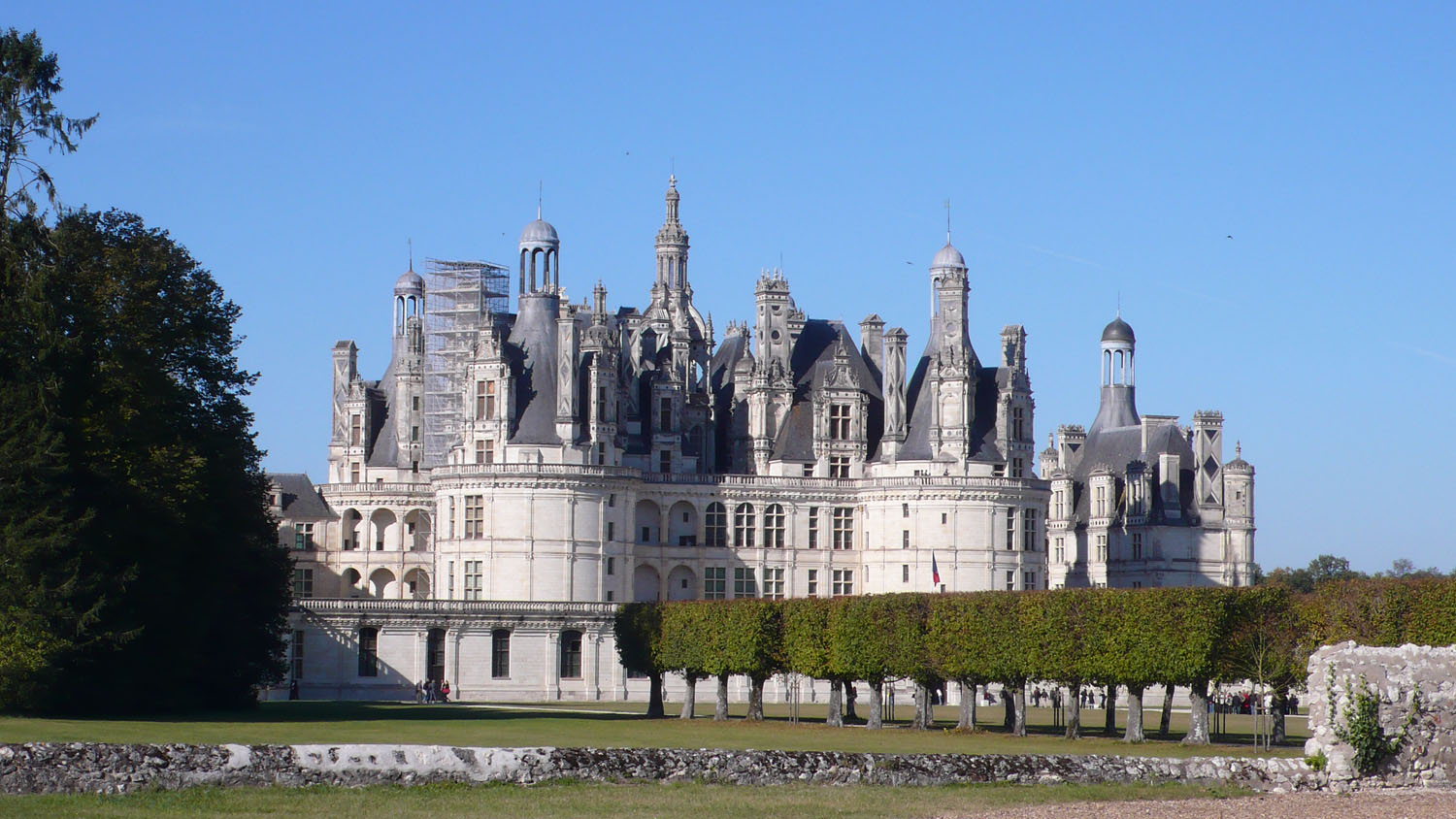
Chambord in the Loire Valley
M – Mushrooms: Our second favourite activity after cycling, from April to December. But next year we’re heading for Provence in January to check out the truffle market!
N – Natural skinnies: The people who don’t ever have to lose 20 kilos.
O – Oysters: Another of my favourite foods, especially on Sundays – “spéciales” with fresh homemade bread and a lovely cold bottle of Sancerre.
P – Palais Royal: My home for another two years and for the last seven. Right in the middle, with a view of fountain from my balcony, directly above Miss Bibi!
Q – Queensland: Where I was born, in the tropics, a true-blue Banana Bender!
R – Relationnel: My very French husband whom I cycle, pick mushrooms and travel with. Among other things.
S – Summer time: The very best time of the year, when it’s still light at 11 pm and the days seem to go on forever.
U – University: Where I’m still teaching translation, despite the sad lack of equipment and outdated installations.
V – Vélib’: Paris’ rent-a-bike system that’s immensely popular with Parisians and great fun along the Seine on Sundays when the road’s closed to traffic.
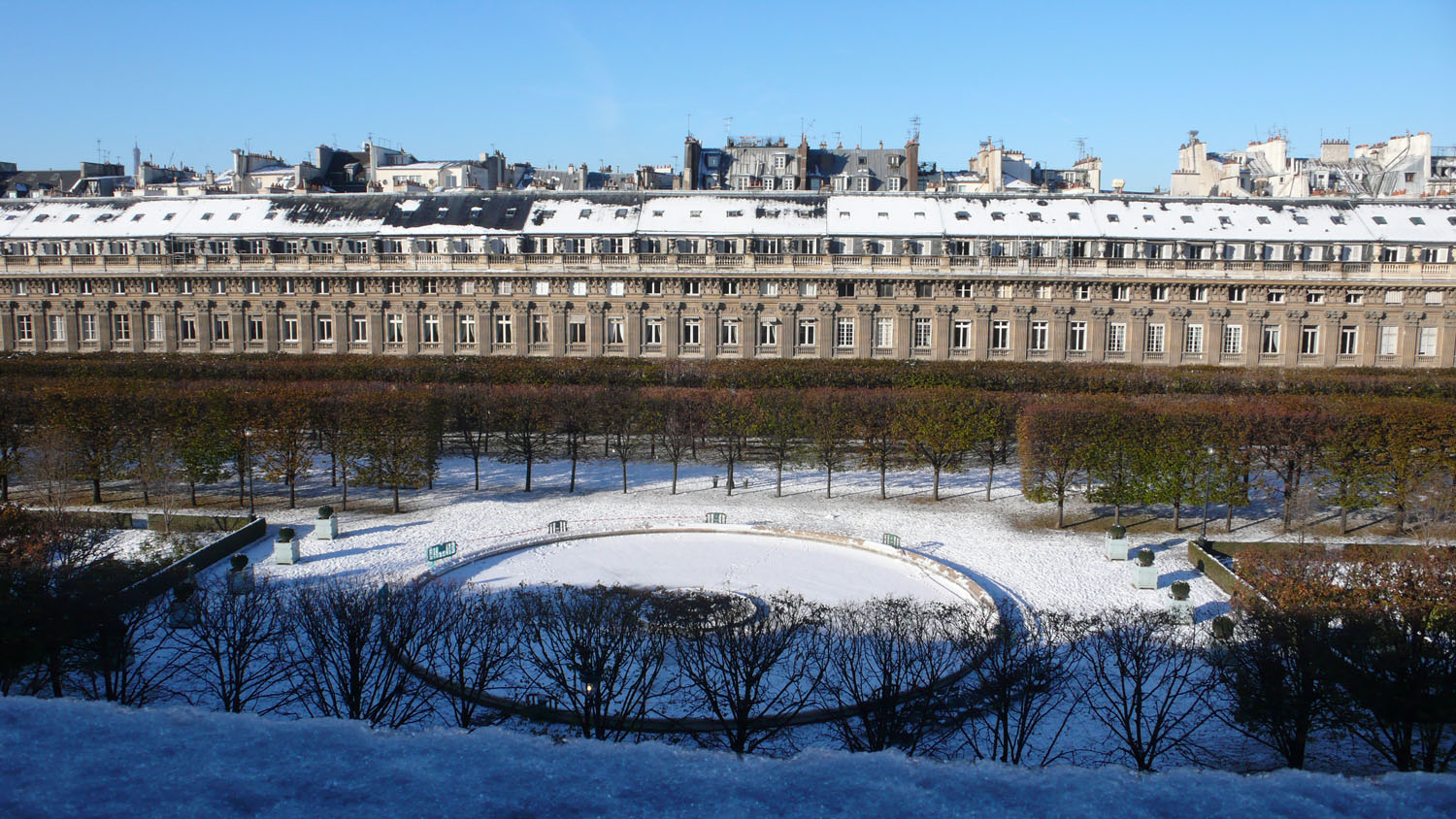
W – Wolves: To be found in the Palais Royal only when it snows.
Snow in the Palais Royal Gardens in December 2010
X – Xtraordinary: What everyone in Australia thinks my life is, what with living in a Royal Palace and speaking French all the time, but they don’t know how hard it really is!
Y – You-tube: The very best way to learn anything these days, particularly all that new technology and how to set up a blog.
Z – Ze only way most French people know how to say “th”, including Relationnel, giving them a highly recognizable accent.
When I first talked to Relationnel about cycling in Croatia, he was most dubious. It’s full of mountains. But in the end, he agreed and we started organising the trip. I love cycling when I travel because I think you go at just the right pace. You aren’t stuck with the other tourists in the town centre and you’re able to experience places you wouldn’t get to in a car. You ride through the suburbs and out into the countryside. You see into people’s back yards and can observe them in their everyday lives. One of the things I noticed most in Croatia, for example, was that you always saw older people with babies and small children in their arms. You rarely see that in France. Babies are usually in prams.
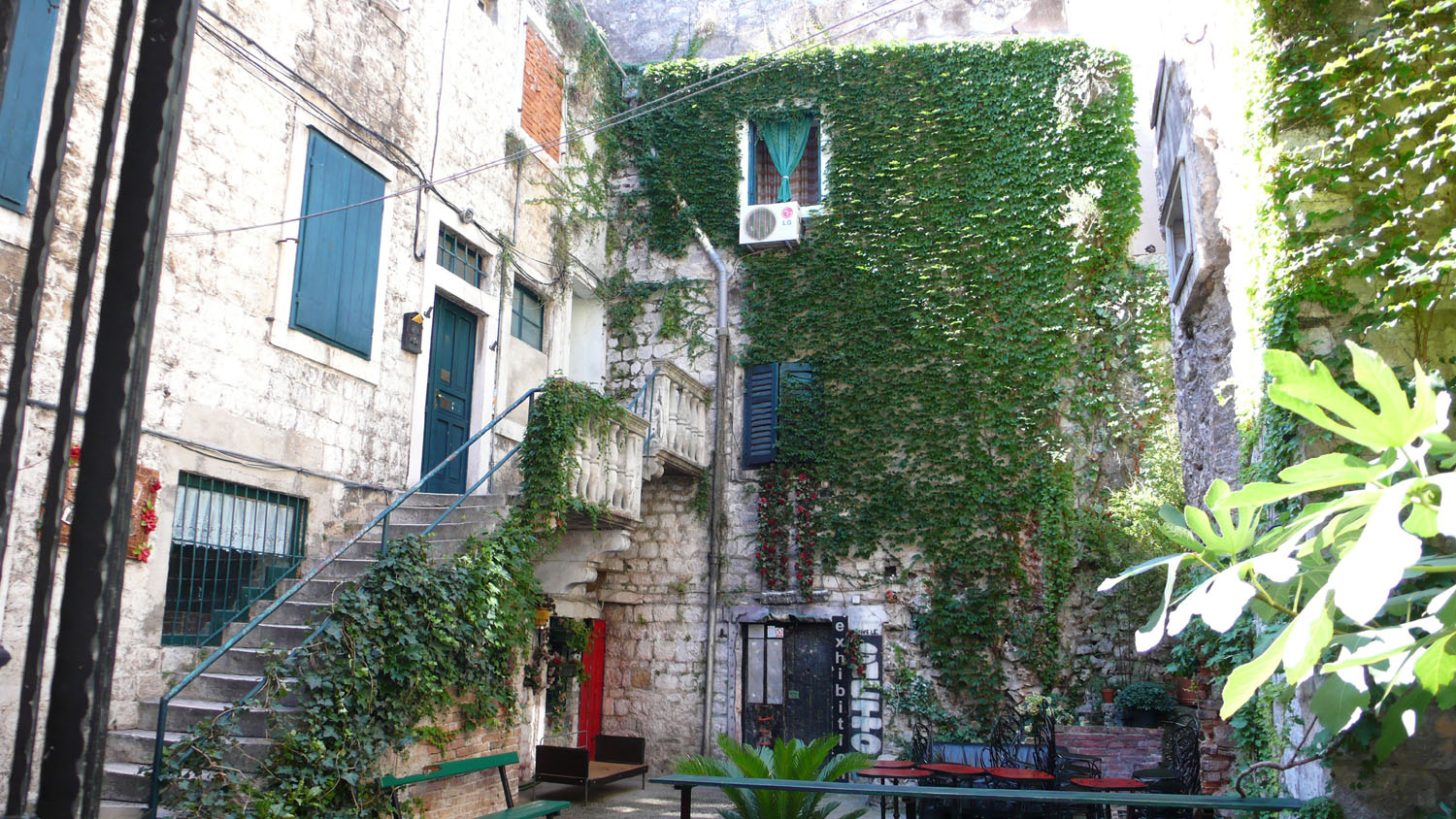
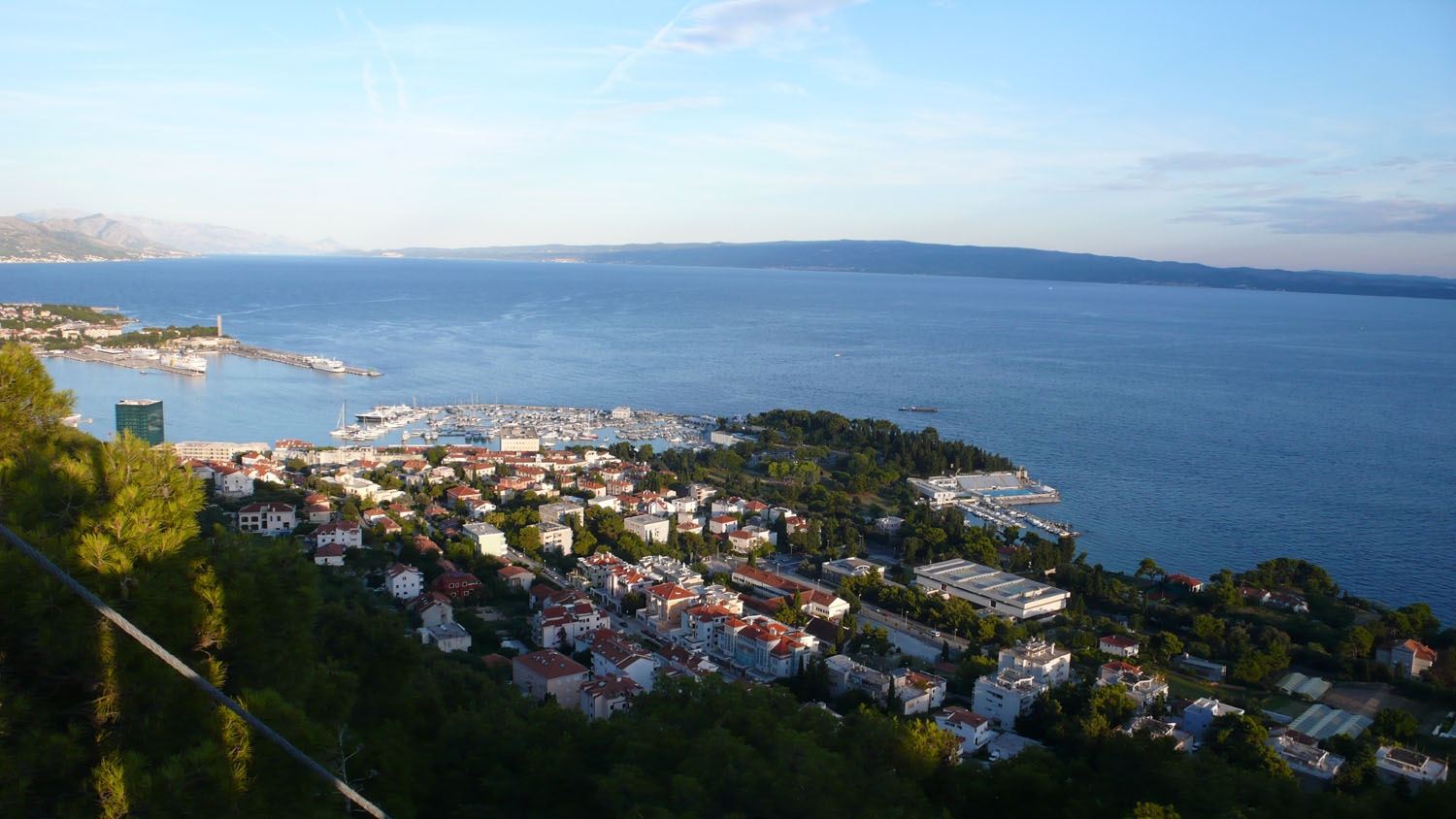
Our first cycling experience in Croatia was perfect. We had found a very handy appartment on the western side of Split, with a cycle path along the road leading directly to Marjan Hill which is on a peninsula and closed to cars. The first, very easy circuit around the hill took us past breathtaking views of the coast. We had stupidly not taken our swimsuits so couldn’t cool off in the many little inlets like the Croatians for whom it was obviously a popular family outing. When we completed the circle we saw a second path leading further up the hill. We looked at each other and decided the view would be worth the effort. It was a long hard steady climb but I actually made it without having to get off my bike. There was a marvellous lookout up the top which literally gave us a 360° view. We made the most of it with our trusty binoculars. The ride was only 20 K but took longer than we expected. We arrived back in Split as the sun was setting.
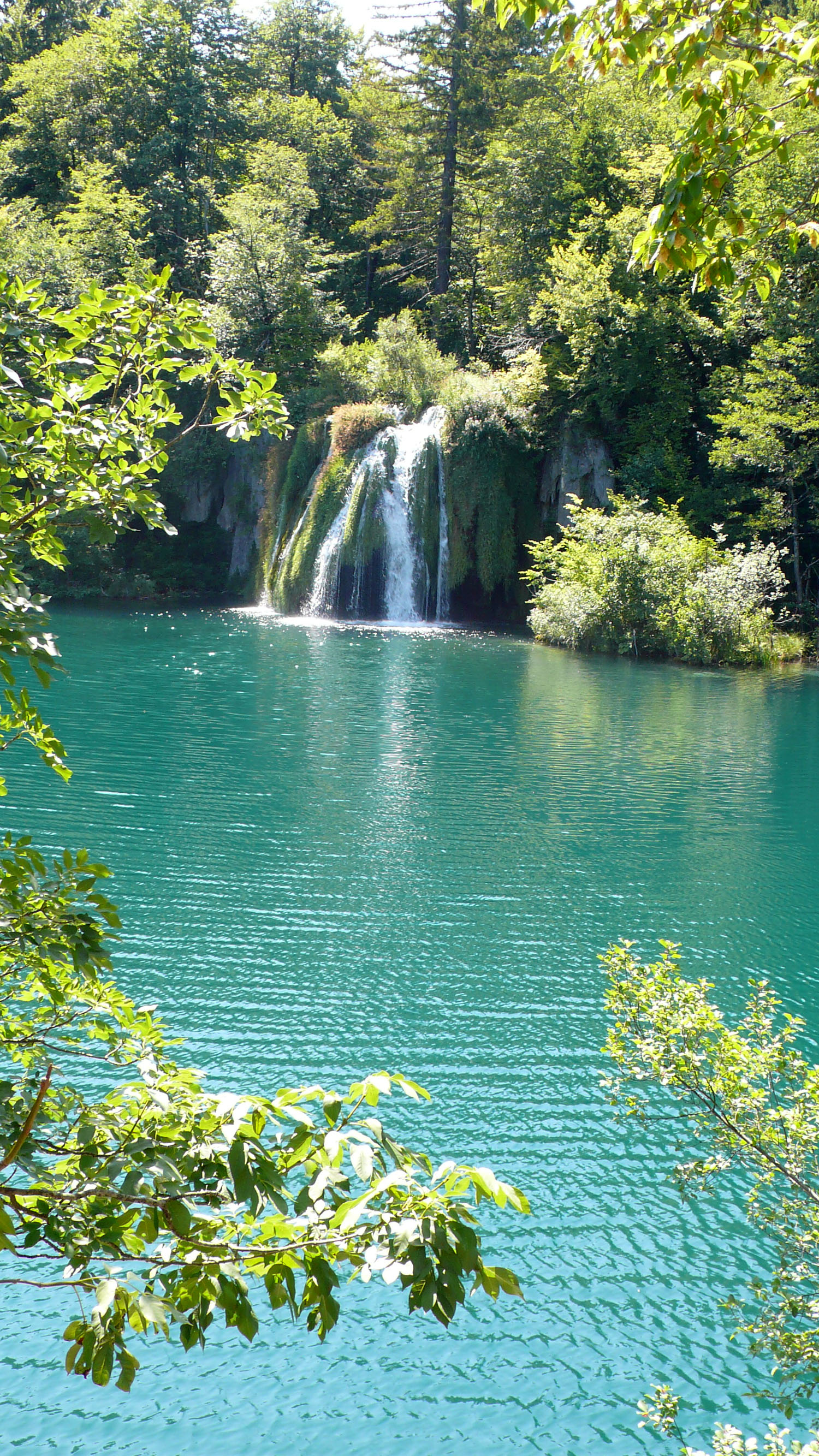
No possibility of cycling in Dubrovnik, although it was one of our favourite venues, but Zadar would have been perfect if I hadn’t picked up the famous turista from eating suspect prawns in Dubrovnik. The paths around the spectacular lakes and waterfalls at Plitvicka were not accessible to bikes so we walked. I definitely recommend going in the morning. While I was still recovering from my turista, Relationnel did the lower lakes, by far the most beautiful, in 2 hours in single file in the late afternoon. When I decided to make up for lost time two days later, we started at 10 am and it only took a little over an hour! The site is quite magical and the colours unbelievable.
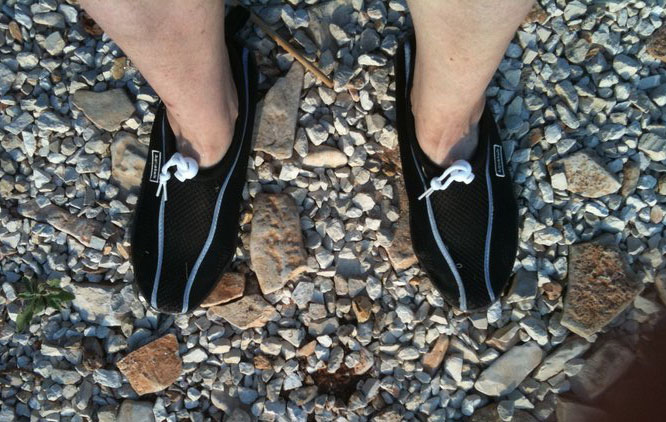
The next stop was the peninsula of Istria. There was a cycling route around our hotel but it didn’t look very interesting so we found another circuit outside Pula with its magnificent amphitheatre. We started out at the Marina and tried to follow the signs but it was not always easy. There were often steep hills and lots of stones. But the views were certainly worth it. There are very few beaches in Croatia but they have lots of little “landings” everywhere so that you can get in and out the water. During the ride, I had spied what looked like a beach but was really like an amphitheatre with the steps going down into the water so we came back by car after our siesta to have a late afternoon swim, wearing the special shoes we’d bought the day before to stop your feet getting cut on the rocks. Afterwards we sat and watched everyone pack up and leave. The whole “beach” was covered with deck chairs that all had to be put away and chained together. There were even two changing tents that were folded up and stored in the bar across the road.
Then we went on to Slovenia, but that’s another story that I’ve already told.
Apartman Riva
Branimirova Obala 6
SPLIT
+385 (0)98 937 0942
apartman.riva@gmail.com
Antonela Cmrlec
Matko Jelic
Zvijezdiceva
DUBROVNIK
www.apartmentsdubrovnik.com
matko@apartmentsdubrovnik.com
Apartmani Lipa
Plitvice Selo 62
PLITVICKA JEZERA
Stanislav Mihinjac
385(0)53 891 0386
385(0)98 389 492 (mobile)
We were in Taipei on a 24-hour stopover on our way to Australia and Black Cat must have been about twelve. The language barrier was not easy as very few people spoke English once you set foot outside the hotel. Black Cat was quite scandalised at my lack of preparation. She was used to being able to communicate with people in two languages. “Mum, we don’t even know how to say hello, goodbye, please and thankyou!”. It was a lesson to me. I’ve made sure ever since that I can say those four words in the language of whatever country I visit. And I’ve added “excuse me” and “do you speak English” for good measure. They certainly open many doors.
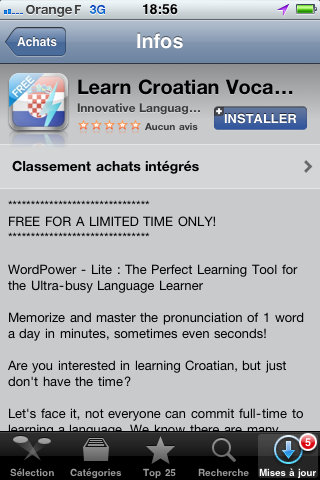
Being able to download dictionaries and automatic translation apps on your iPhone and computer definitely makes things easier. There are a lot of apps to teach you basic words and phrases along with pronunciation. Definitely a bonus when we went to Croatia last summer. I practised away beforehand saying “dober dan” and “dobro jutro”, “hvala” and “molim” until I felt comfortable with them. I was delighted to learn that I could use them in Slovenia too.
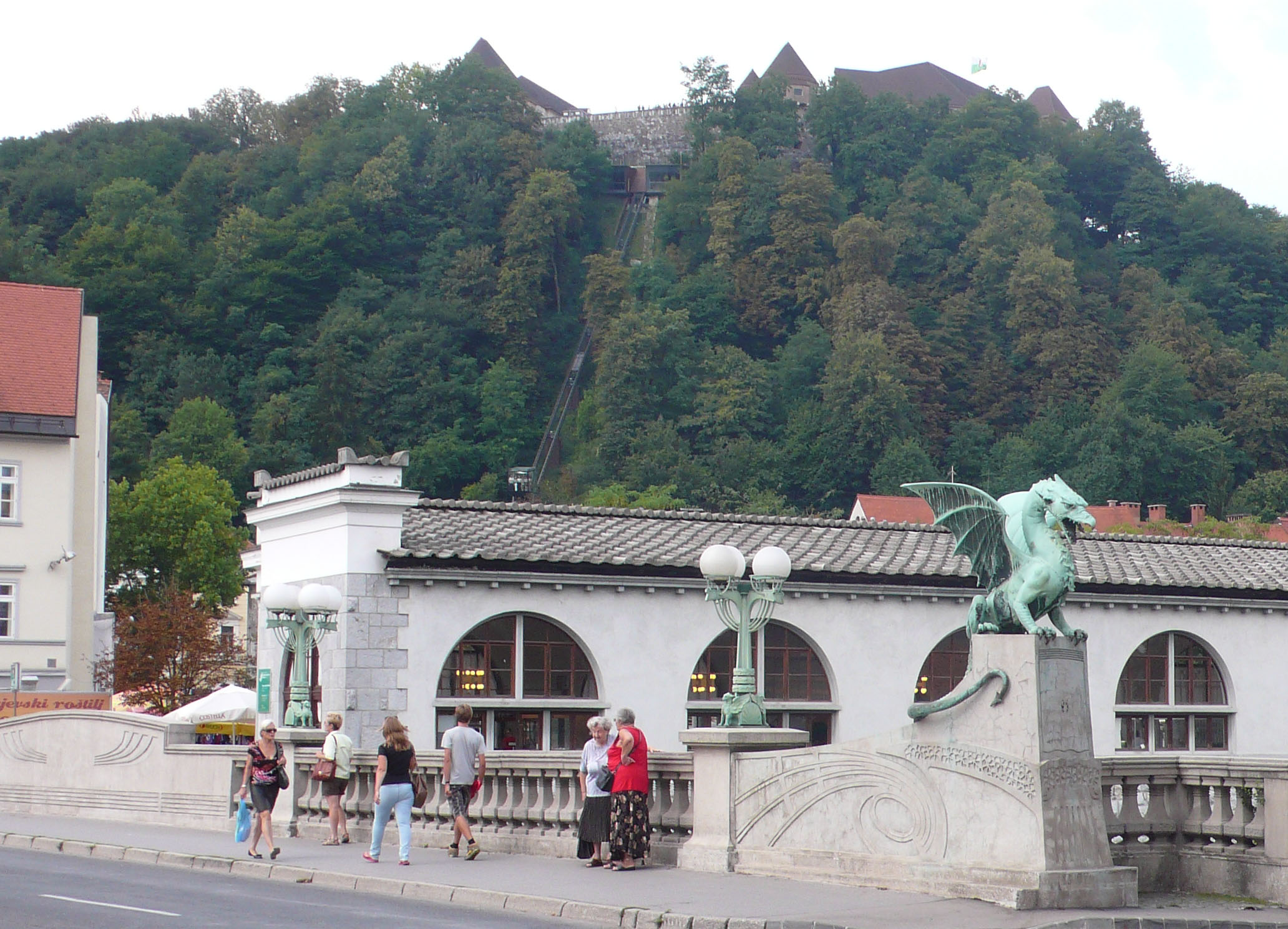
The French have a terrible reputation with languages. I had a funny experience twice last summer in Ljubljana in Slovenia. We were in the tourist office waiting for a cycling map and I was speaking to Relationnel in French. When it was my turn, I spoke to the young man behind the desk in English. After a few exchanges he asked me where I was from. “France”. “Are you a teacher then ?” “Why ?” “Your English is too good to be French”. I had to laugh! So I explained I was really Australian. He looked reassured.
Dragon Bridge with Ljubljana's mascot
On another occasion, we were pushing our bikes up a steep hill that definitely shouldn’t have been part of the bike route, particularly at the end of the day, when a young woman asked if she could help me. I thanked her but thought I should really push the bike myself. However, she kept me company and chatted as we went along. She asked if I was Canadian. She had heard me speaking French with Relationnel but after hearing my English couldn’t believe I was French. What a reputation …
A word about the Slovenia biking experience while we’re on the subject. Ljubljana is really set up for bikes. They have rent-a-bikes in the street like they do in Paris and there are lots of bike paths in the city. But, for some reason, they don’t have a proper bike map. However, the young man in the tourist office found me a map that had a little dotted line around the city that was supposed to be a bike route. It was a bit worrying to see that it went off the map at times but we decided to give it a try. It was supposed to be 34 K so we left at 3.30 pm, following signs marked POT (and sometimes 88). Very occasionally, the letters PS were indicated on the ground showing a change of direction. We liked those.
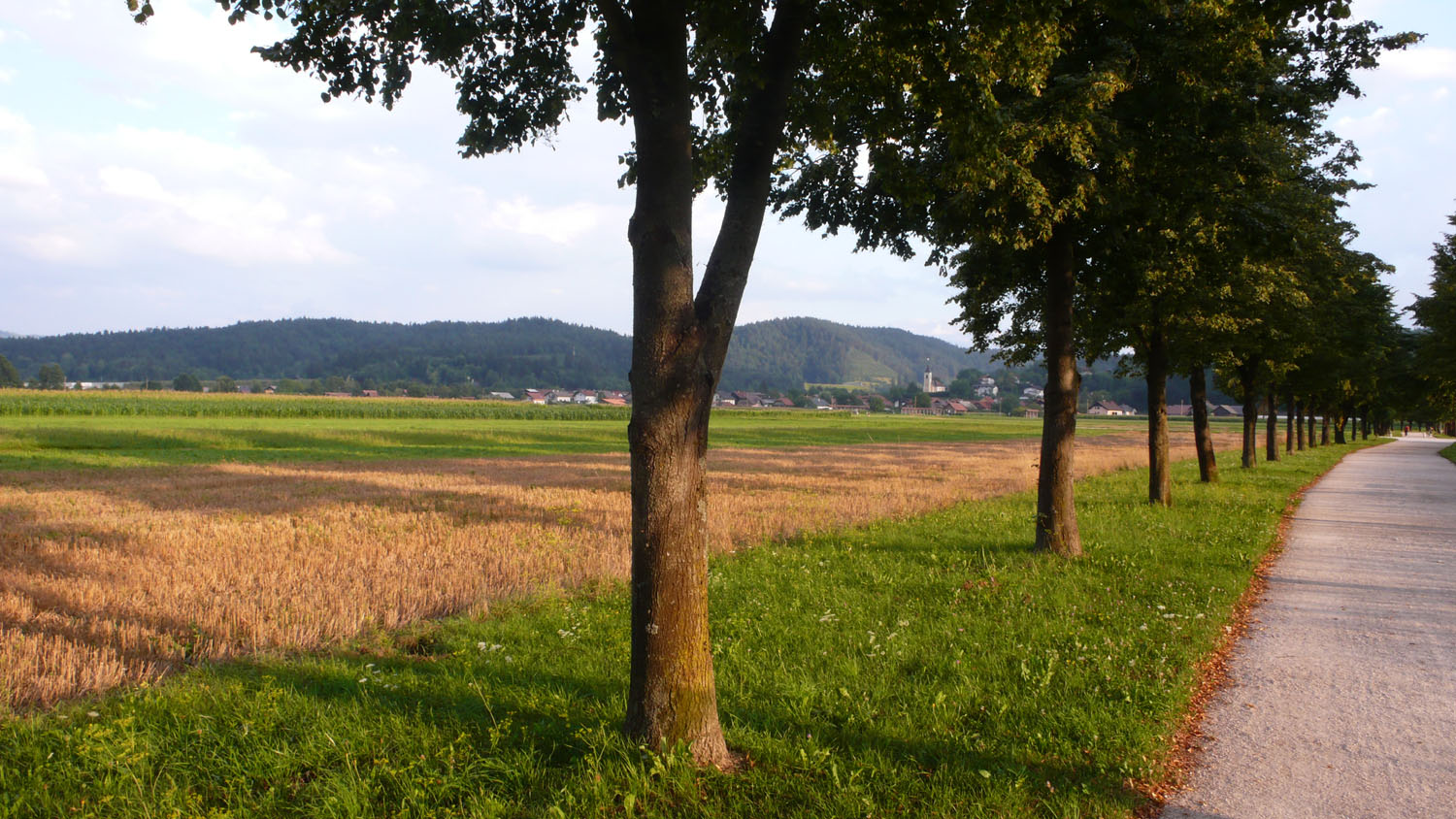
Well, we started out on flat ground, riding past weeping willows and beautiful gardens and really enjoying ourselves. Twice we had to take shelter from showers of rain but otherwise the weather was fine and warm. We wound our way through residential areas, industrial estates and low income housing all surrounded with lots of trees and shrubs. Sometimes we had to backtrack because we’d loose the POT and 88 and PS signs. As a result, it took much longer than it was supposed to.
The real challenge came when we suddenly found ourselves out in the countryside, riding past fields of wheat and saw to our dismay that the road led into a forest and up a steep hill. The path had horizontal logs about every meter practically all the way along to stop the ground sliding when it rains I imagine. I don’t know how you are supposed to ride a bike up there. Even coming down on the other side was a bit dicey. I had to keep getting off so that I wouldn’t go head first over the logs. Of course, when we got out of the forest, we discovered we could have taken a road around and not up the hill. It ended up being 42 K and we didn’t get home until 9 pm by which time I was exhausted! We found a lovely place for dinner though. And I forgot to mention – Ljubljana is one of my favourite places.
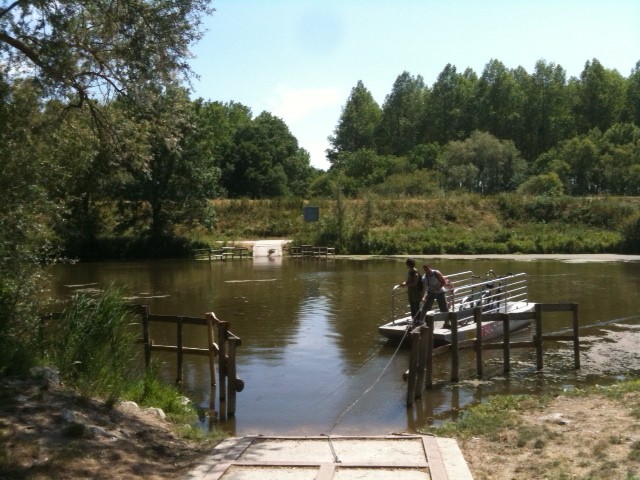
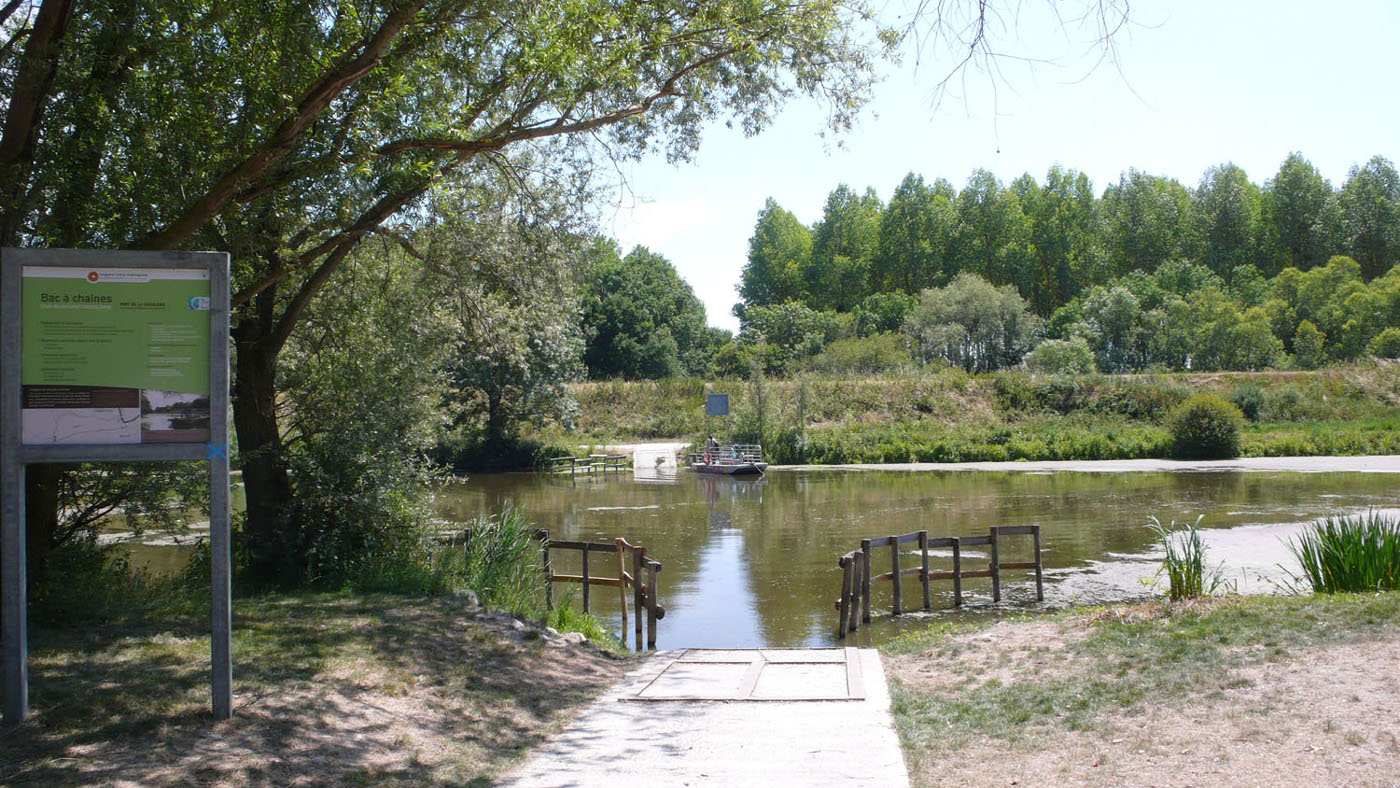
Writing about cycling along the canals in Brittany and the Loire reminded me of another trip in the Loire Valley. We have this book called (in French) Freewheeling from the Atlantic to the Black Sea and one of the bike paths really took my eye. In the photo, you could see this couple, with their bikes, crossing the Authion River on a little chain-operated barge. I wasn’t going to miss that!
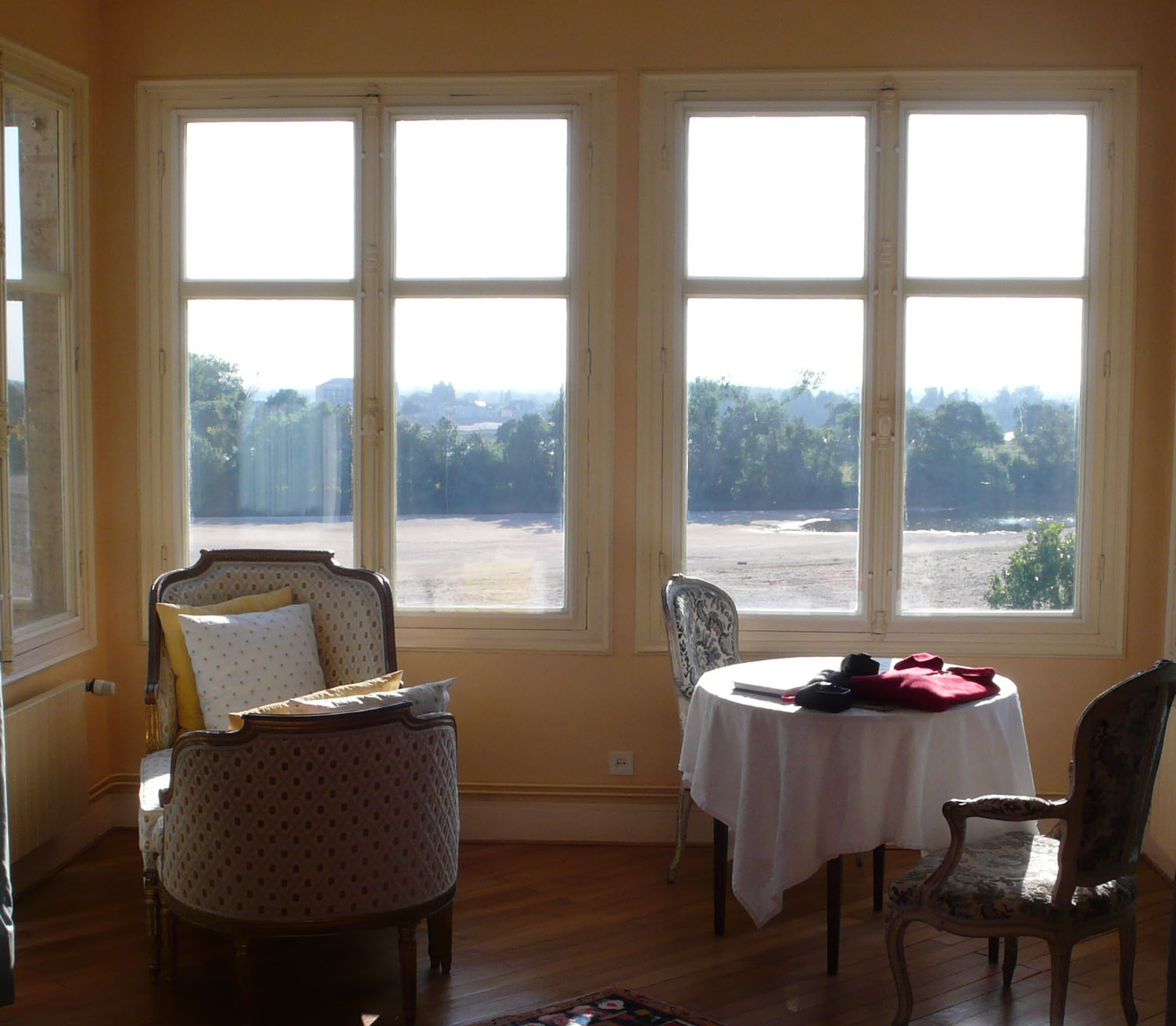
So we found ourselves a lovely B&B called Le Beauregard at Cunault. Mme Tonnelier was away so her husband looked after us and proved an excellent host. The only other guests, a family of 6, were charming. Our room, down the other end of the house, had an oriel window with a spectacular view of the Loire. The next day we visited the castle in Angers which has a wonderful tapestry of the Apocalypse. We left the car there and set out on our bikes. We started off in a rather desolate-looking old slate mining area with enormous pieces of slate all over the ground and quite a bit of dust.
Then came the exciting bit when we got to the banks of the Authion. We could see a young couple in the barge about halfway across, pulling frantically on the chain but the barge seemed to be going further and further down the river instead of across, pulled by the current and the strong wind. Relationnel took charge and shouted instructions on how to get the barge over to our side. It eventually worked and the couple invited us onboard to my surprise; I was expecting them to get off. But in fact they were trying unsuccessfully to get across to the other side when we arrived. There wasn’t much rain in spring this year and the low water level had caused too much slack on the chain.
So, with the four of us tightly backed onto the barge, the stronger members of the party pulled us across to the other side with no further mishap.
We continued down past La Daguenière, Saintes Gemmes sur Loire and Bouchemine. We stopped for a welcome drink and a rest in a café and then went back to Angers via the lake rather than going through the slate again. The round trip was about 40 K.
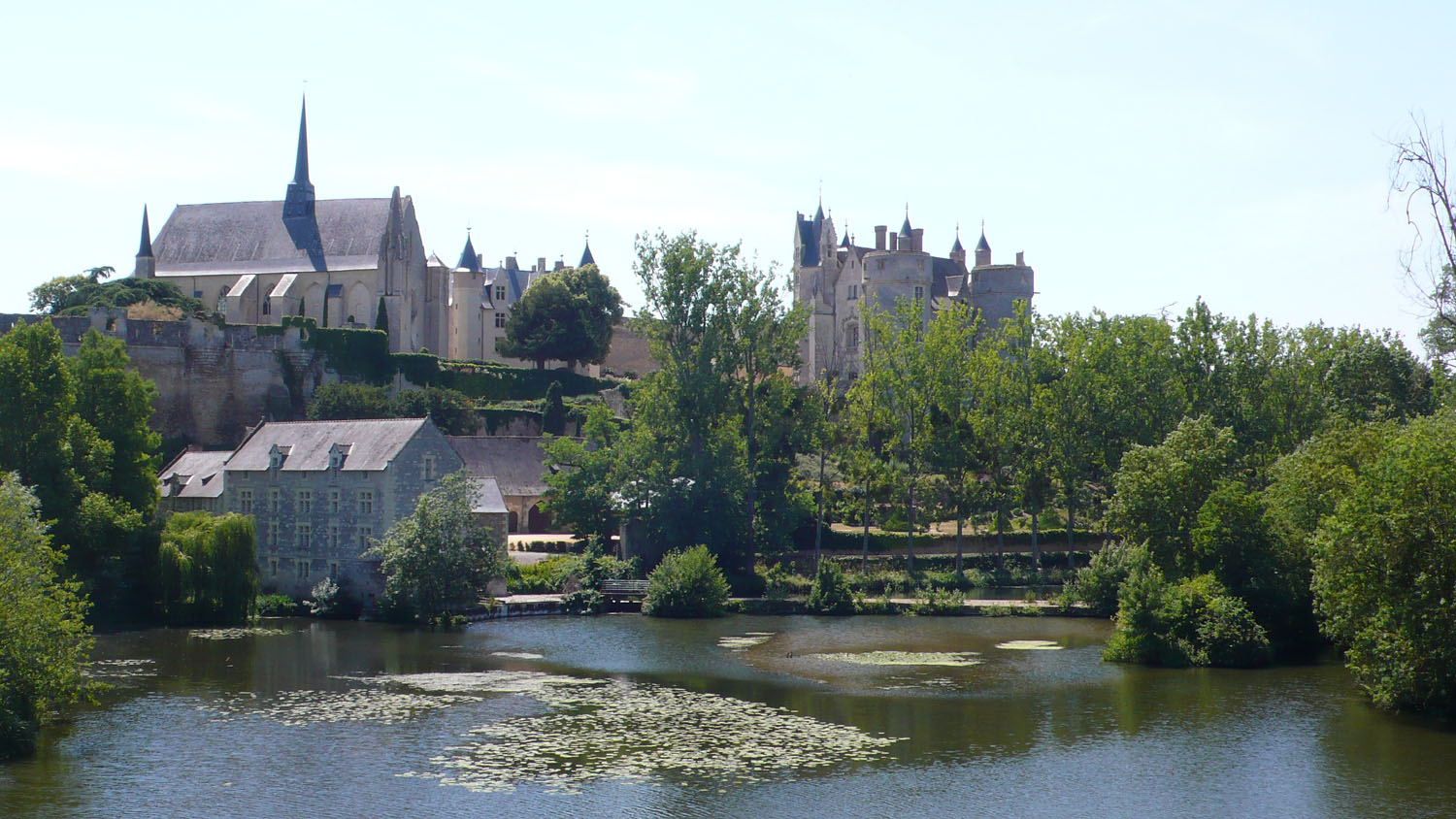
The next day, we set off from Artannes sur Thouet near Saumur where Relationnel was born, in the direction of Montreuil Bellay. It was a pleasant ride with a lovely surprise at the end. The view of the Thouet River from the bridge as we reached the mediaeval town was absolutely stunning. And then this wonderful new outdoor restaurant called Auberge des Iles was just waiting for us! We weren’t the only ones though so we attached our bikes and reserved a table and went off to explore the little town. Still no table on our return so we sat down in the shady armchairs provided and enjoyed the view of the river.
Rose-covered ladies’ tower
After lunch we visited the very beautiful castle with its century-old Lebanese cedar and its rose-covered towers then continued on our way to Saint Martin de Sanzay where, miraculously, we found another café open. Quite often in the smaller villages in France, the cafés have all shut down. By the time we had clocked up our usual 40 ks, we were back to our starting point.
The next day, we moved onto Loches, but that’s another story!
B&B Le Beauregard
Fanny et François TONNELIER
22, rue Beauregard
49350 CHENEHUTTE-TREVES-CUNAULT
hmcbeauregard1@club-internet.fr
http://beauregard49.com/index2.htmlAuberge des Isles
312 rue de Boëtie
49200 Montreuil-Bellay
02 41 50 37 37
www.auberge-des-isles.fr
When I learnt French at school, we used to watch a programme on TV once a week about a family of four who lived on a barge and used to travel throughout France along the canals. They had bikes and would go off and visit the neighbouring towns and villages whenever they stopped. It looked like heaven to me. I knew all about locks that raise and lower the boats when there’s a difference in the level of the water. Imagine that you are going from a higher to a lower area. The lock is like a big rectangular open tank. They close off both ends, using winding gear, fill the tank with water, then open the sluice gate in front of you. You take your boat in and they close the gate behind you. Then they empty the water until it’s low enough to open the gate on the other side (your boat goes down as the water does) and you sail out. If you’re coming in the other direction, the process is obviously reversed. It seems that Leonardo da Vinci invented this type of lock.
A summer's day on the Rance
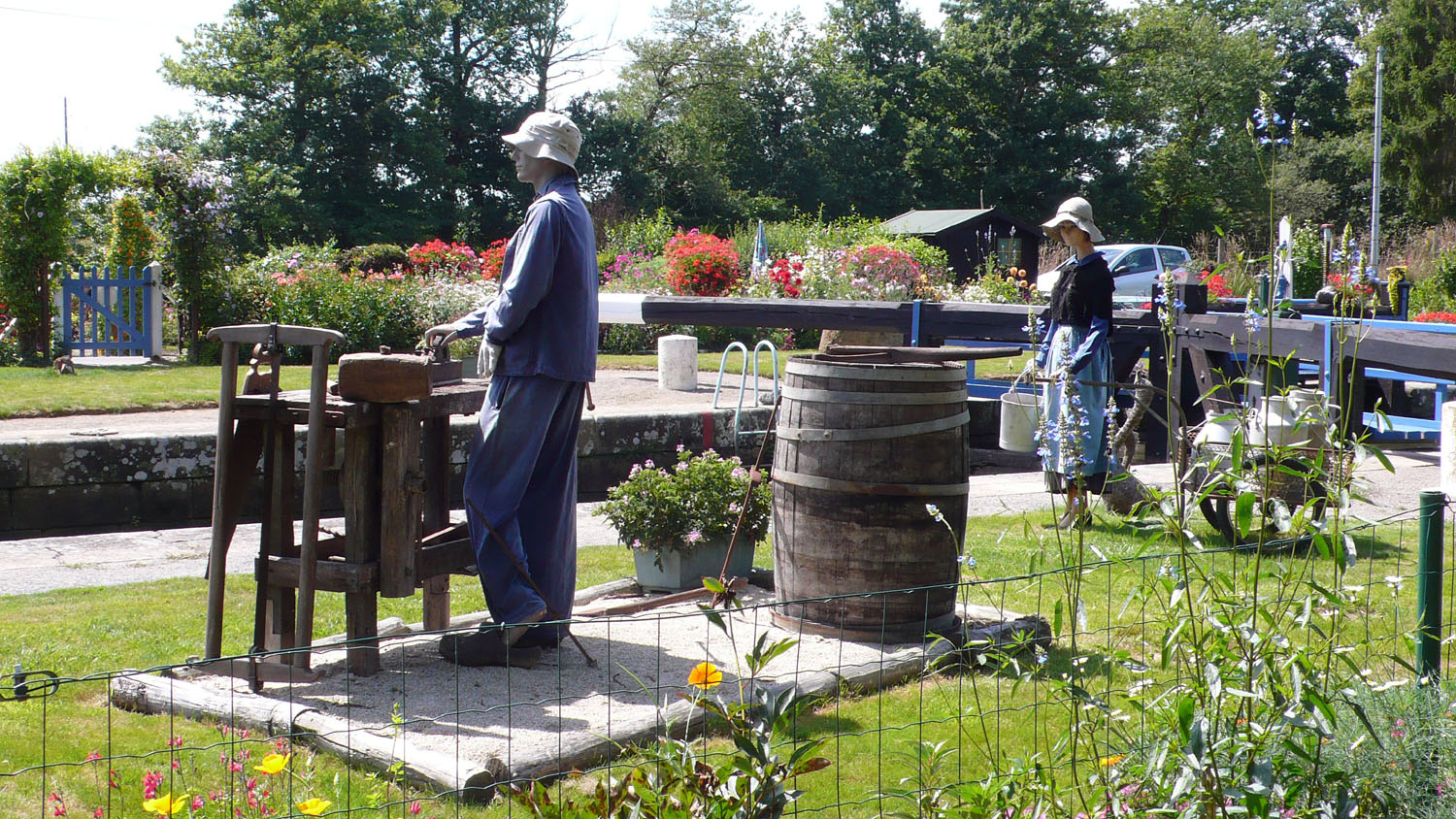
Sadly, I’ve never fulfilled my dream to spend a week or two on a house boat, but we’ve cycled along many canals. The most interesting for the spectator is probably the Ille-et-Rance Canal in Brittany. No doubt hell for the boats though because at Hédé, there are eleven locks over a distance of just 2 km. You can imagine the time it must take filling up and emptying all the locks. The canal was actually built during the first half of the 19th century by volunteers during the reign of Napoleon 1st. It seems that a few Spanish war prisoners and quite a large number of convicts and deserters were roped in as well. Sounds like Australia, doesn’t it? The locks on this canal are still hand-operated. The lock houses are beautifully decorated with masses of flowers and some have realistic outdoor scenes from the olden days.
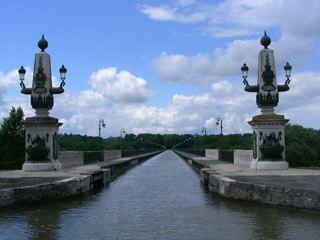
Canal at Briare
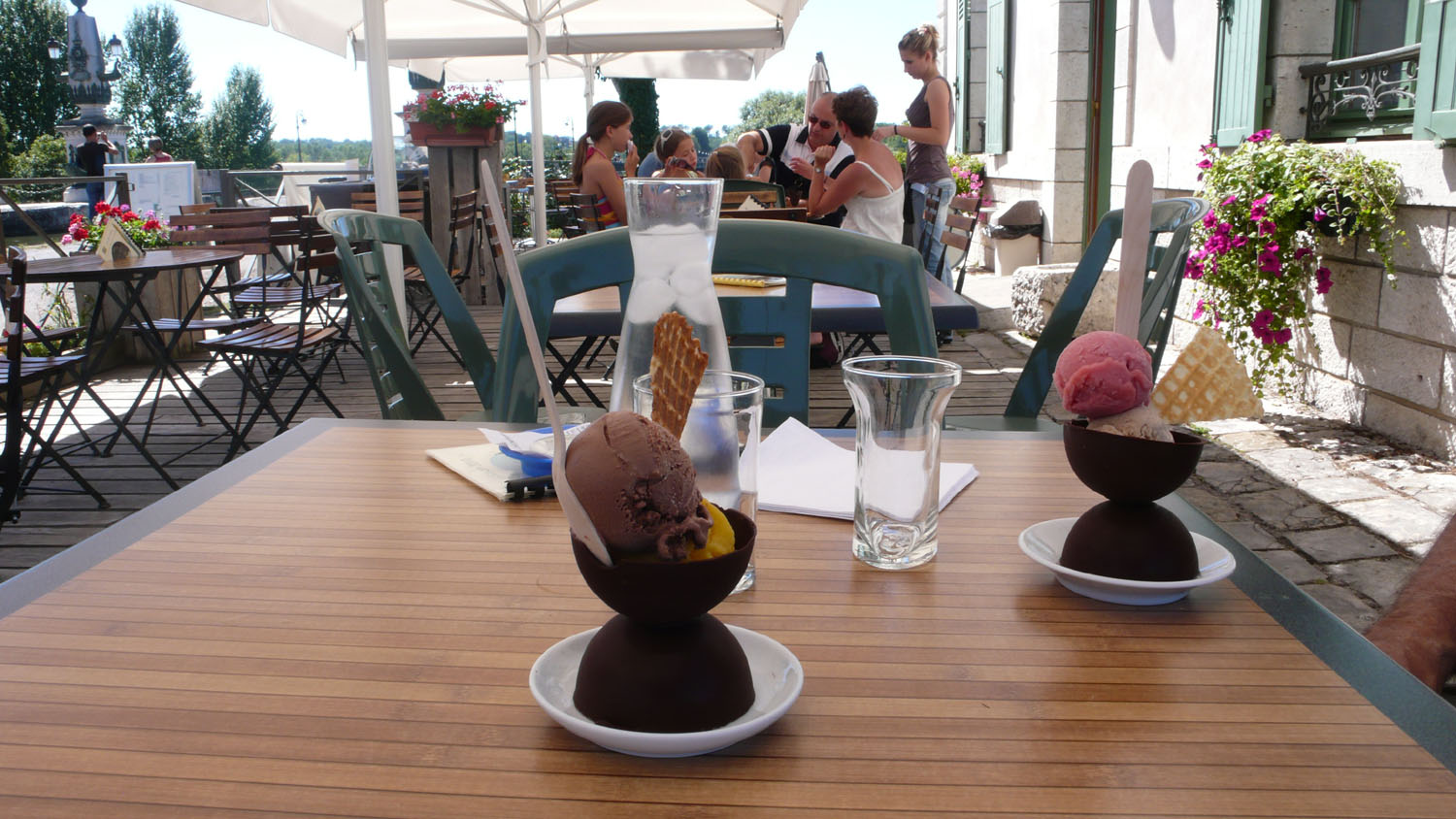
Another place where we cycled along a canal is Briare on the eastern end of the Loire Valley. There’s actually a bridge to take the canal over the Loire River, designed and built by Gustave Eiffel no less. There’s a footpath on each side so we cycled across it several times. Stunning at sunset. I was a bit worried about falling into the canal, which is rather stupid because the footpath is actually quite wide. They have a wonderful ice-cream parlour at one end of the bridge where they serve the ice-cream in edible chocolate dishes. Plus a highly appreciated jug of iced water. We were staying in a B&B right on the edge of the canal that even had a barbecue we could use. So, côte de boeuf, ice-creams, cycling along the canal at sunset, having picnics on the water-edge at lunchtime. Not bad.
Ice-cream next to the bridge canal
Since I haven’t had the boat experience myself yet, I’d like to share a blog written by a Canadian couple, Marnie and Graham Scholes, who spent two weeks on a boat on the Baise Canal, which is a branch of the Midi Canal system, in September 2007 and then another eight weeks in 2008 on the Nivernais and Loire canals, including Briare. Lots of wonderful photos including a series on bridges, one on doors, another on ducks, one on wells and so on. My favourite shows fishermen (and women) along the canal and their more or less sophisticated installations. Not to mention the beautiful watercolours and sketches at the end. The first trip they took was a 50th anniversary cruise! So all hope is not lost …
 Each year, on 20 March, French-speakers around the world celebrate the International Day of Francophonie.
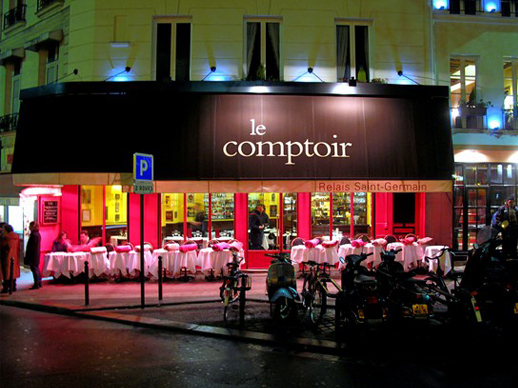 Bonjour Petite Friends. It’s 2.30pm and I havent had lunch yet. Looks like im going to work straight through AGAIN; picking away at an emergency (don’t have time to step away from le bureau) stash off tuna and crackers at my desk! If I were in Paris, I would eat at: Read more
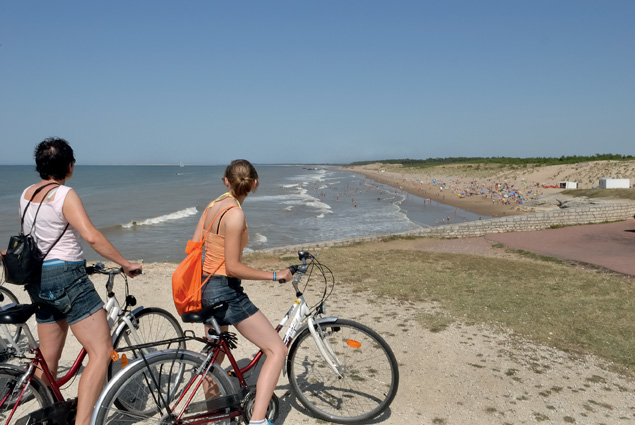 This is my 100th post about biking in France, and I thought it was the perfect occasion to reveal the destination for my upcoming trip to France. Having spent the last two years exploring the Loire Valley, Burgundy, Brittany and the Dordogne, this spring I will finally journey back to the Atlantic Coast of France. Read more