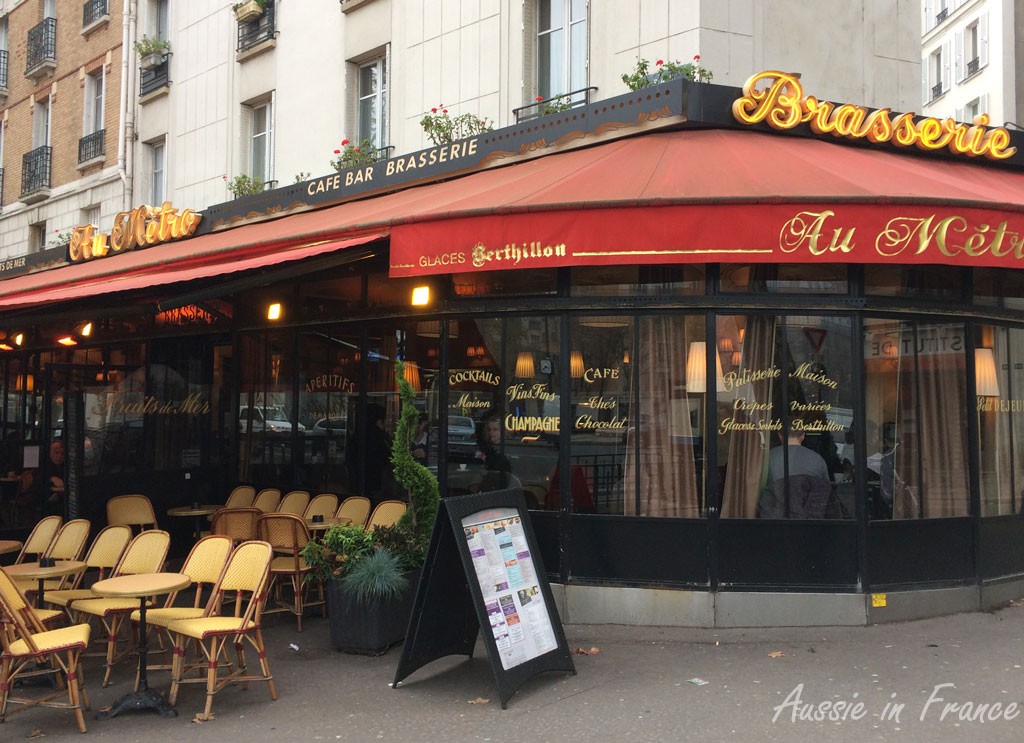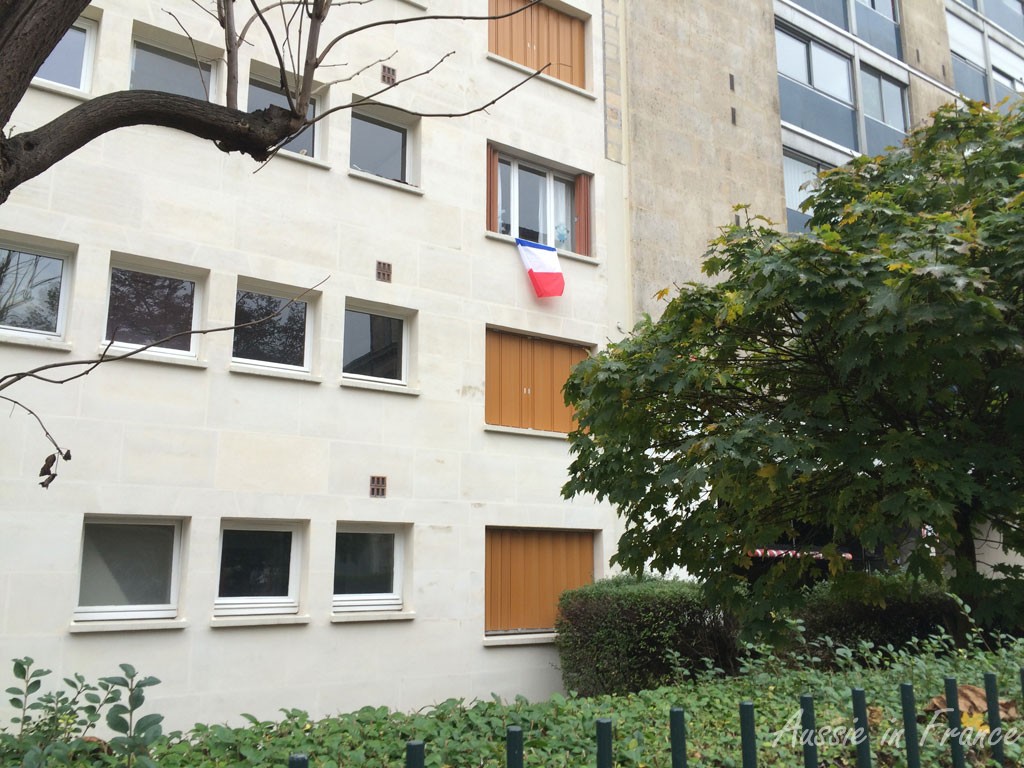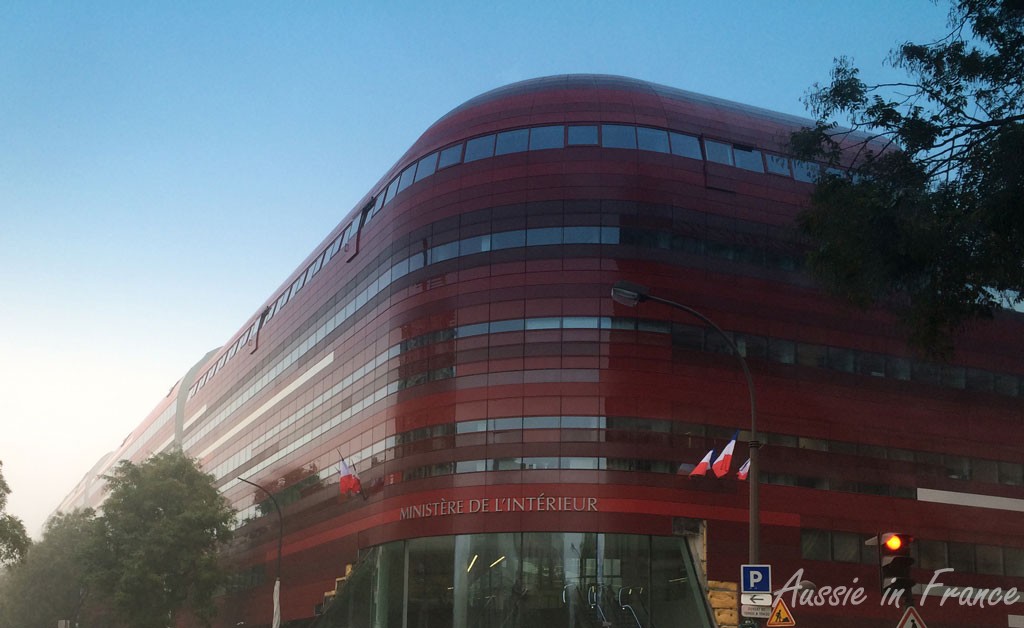
We are still reeling from the news of the terrible terrorist attacks in Paris on the evening of Friday 13th November. Our vegetable vendor at the market on Saturday receives a call from her son at 11 am while she is serving us. He lives with other students in the area where the killings took place but she hasn’t been able to get onto him. You can imagine her relief when she learns he is safe and sound. We have been listening to the news on the radio and reading details on the iPad. We don’t have a television set and I am careful not to watch any videos. By Sunday afternoon, we need to commune with nature. Fortunately it’s reasonably warm and sunny.
Start of the track along the Loire
We walk down our street, Rue Basse des Grouëts, towards Blois until we get to Rue des Blanchets with its little hothouse. We cross the busy highway and go down the path towards the Loire. We’ve already explored to the right on an earlier occasion, so this time we turn left. We are pleasantly surprised by how lovely the path is.
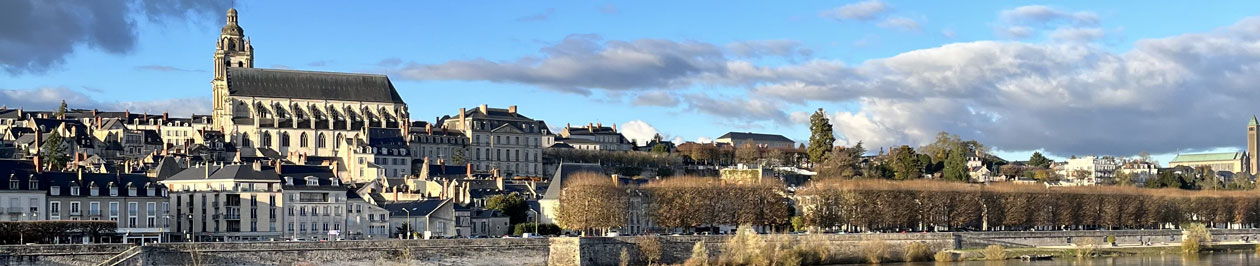
Down to the left, we can just make out the city of Blois.
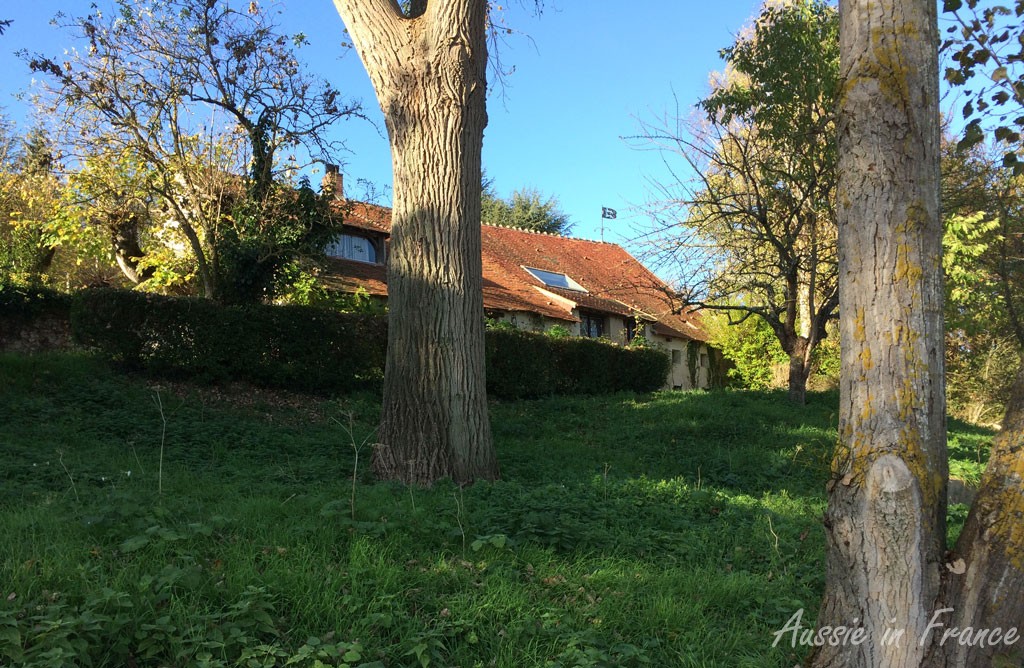
We eventually come to a house on the left that we have only seen from the main road. We would never have imagined what it’s like from the other side. Lots of large windows have been added to make the most of the view.
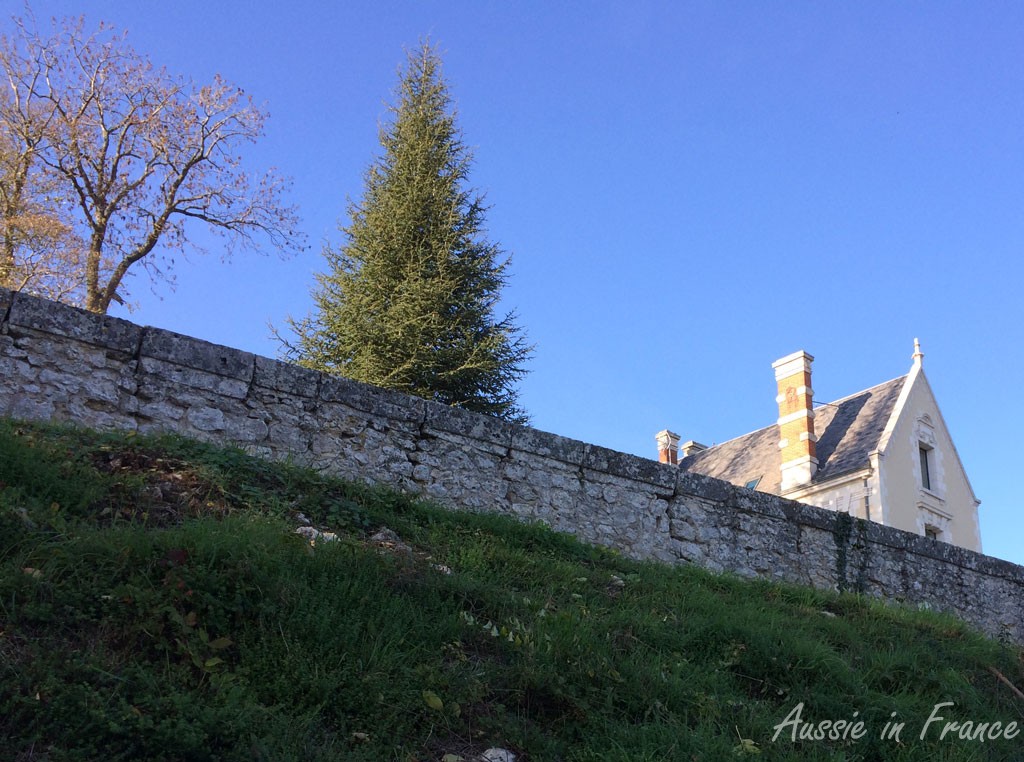
Further along the path we see another house that we have also only seen from the road. We’re surprised at the intricate sculpting on the gable.
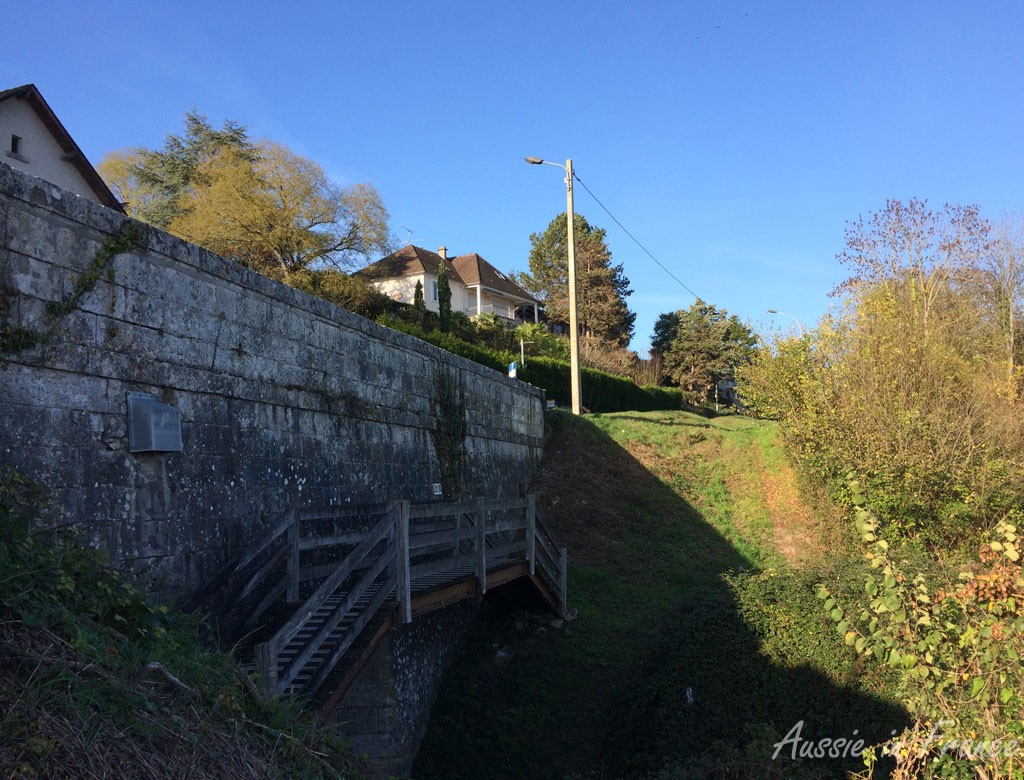
Next, to our great surprise, we come across a bridge near to a culvert. The path is quite steep on the other side. We certainly couldn’t have cycled here!
The wooden bridge next to the culvert
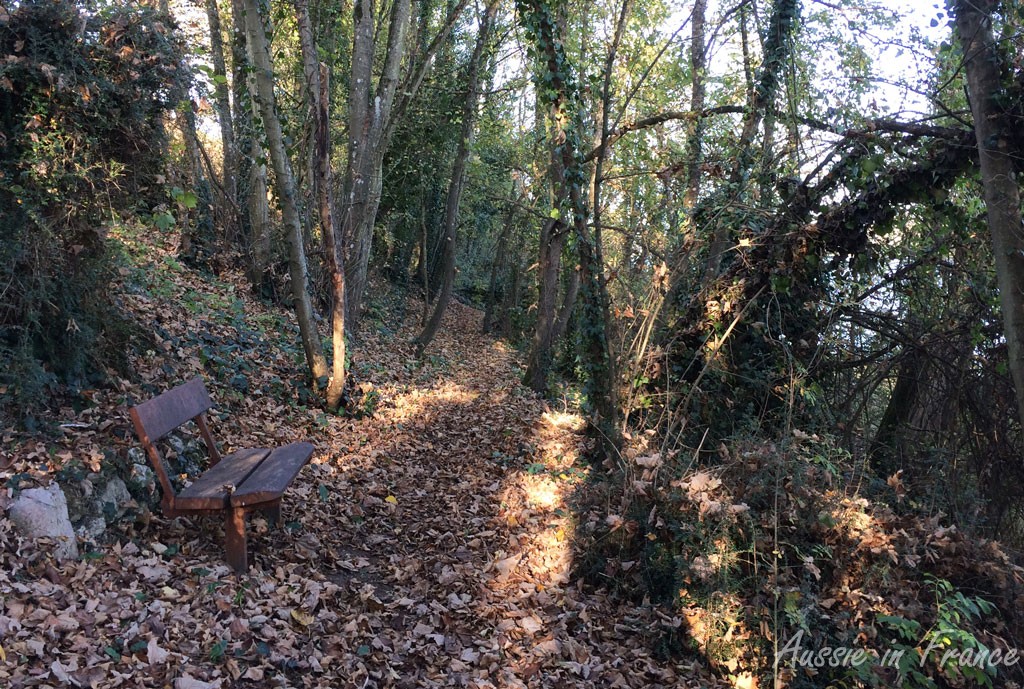
Jean Michel tells me we’ve come to the end of the track, but we haven’t. It veers off again to the right so we keep following until we come to a little bench among the trees.
A bench to rest on and watch the river!
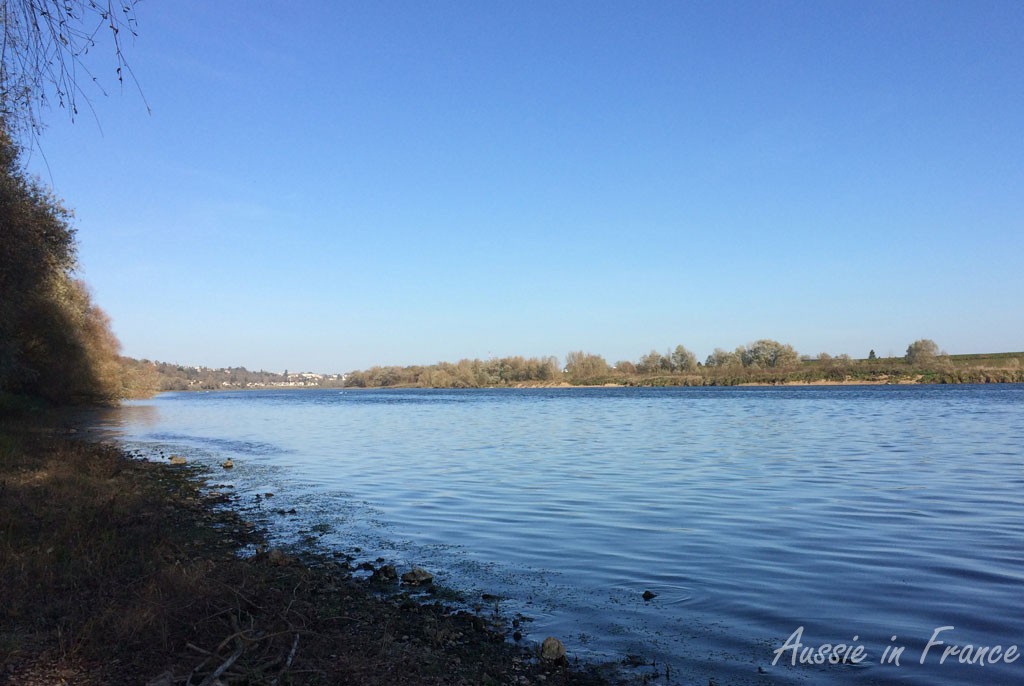
We come out of the little wood and can see swans on the river. We’re impressed this year at just how many there are.
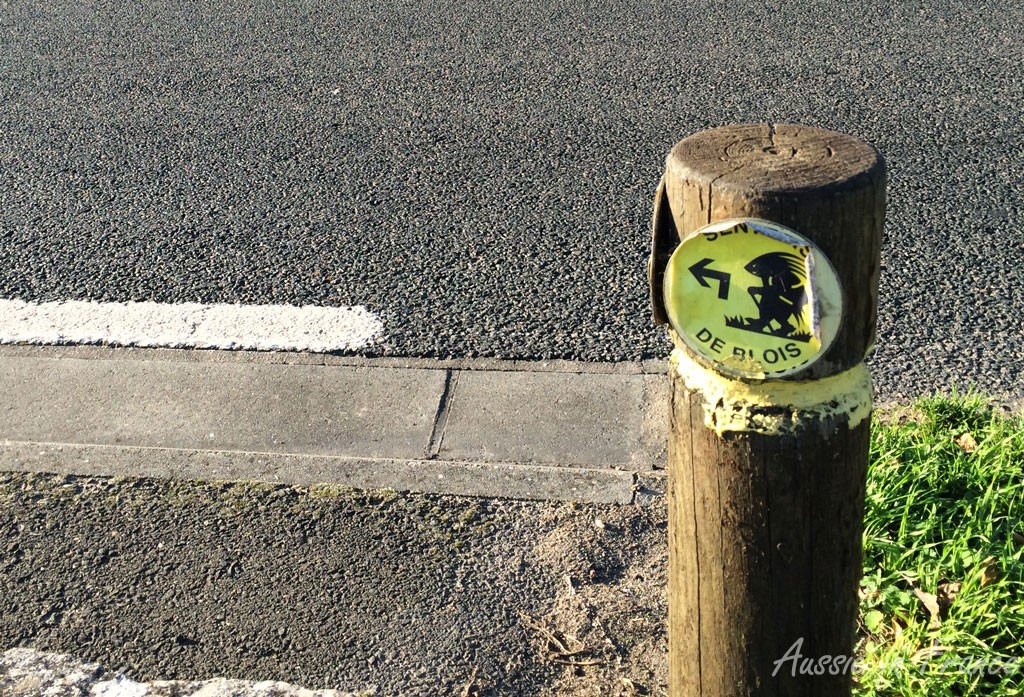
The Blois walking sign indicating we are to cross the main road.
By now we’ve walked for about an hour and a quarter so we’ll need to start on our way back if we want to get home by dark. The walking path takes us across the main road again and onto Chemin du Petit Pont (little bridge path).
The sign at the start of Chemin du Petit Pont
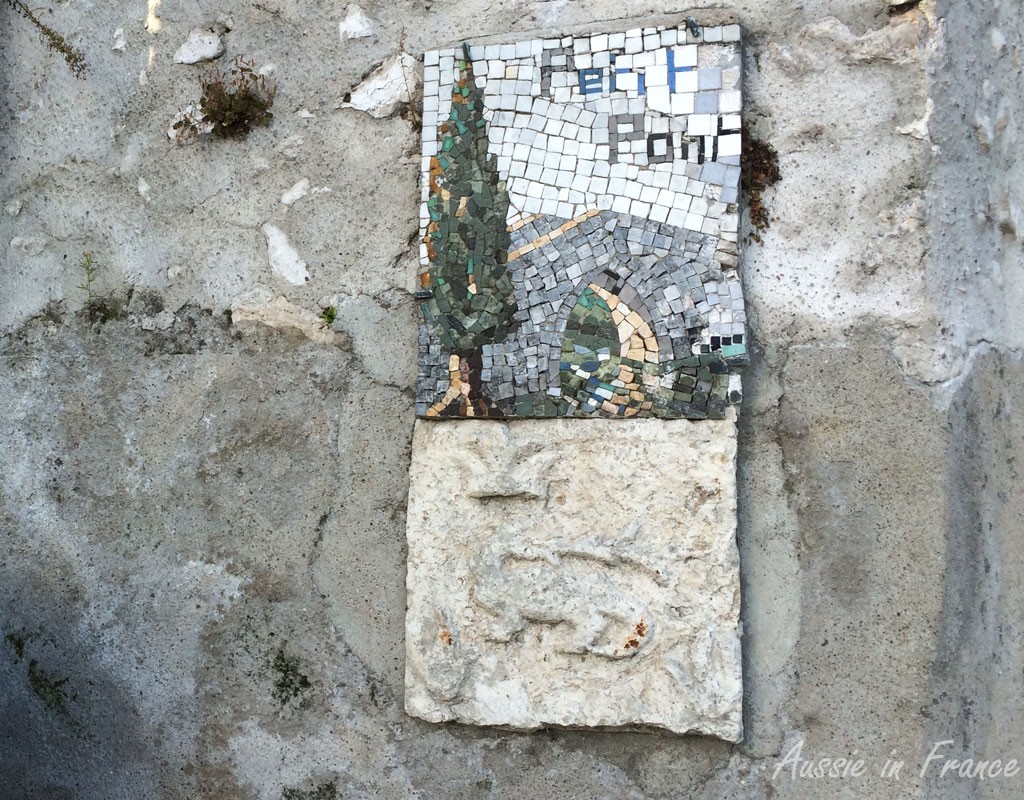
The house on the corner has a very interesting mosaic with the “little bridge” at the top and François I’s salamander and crown at the bottom.
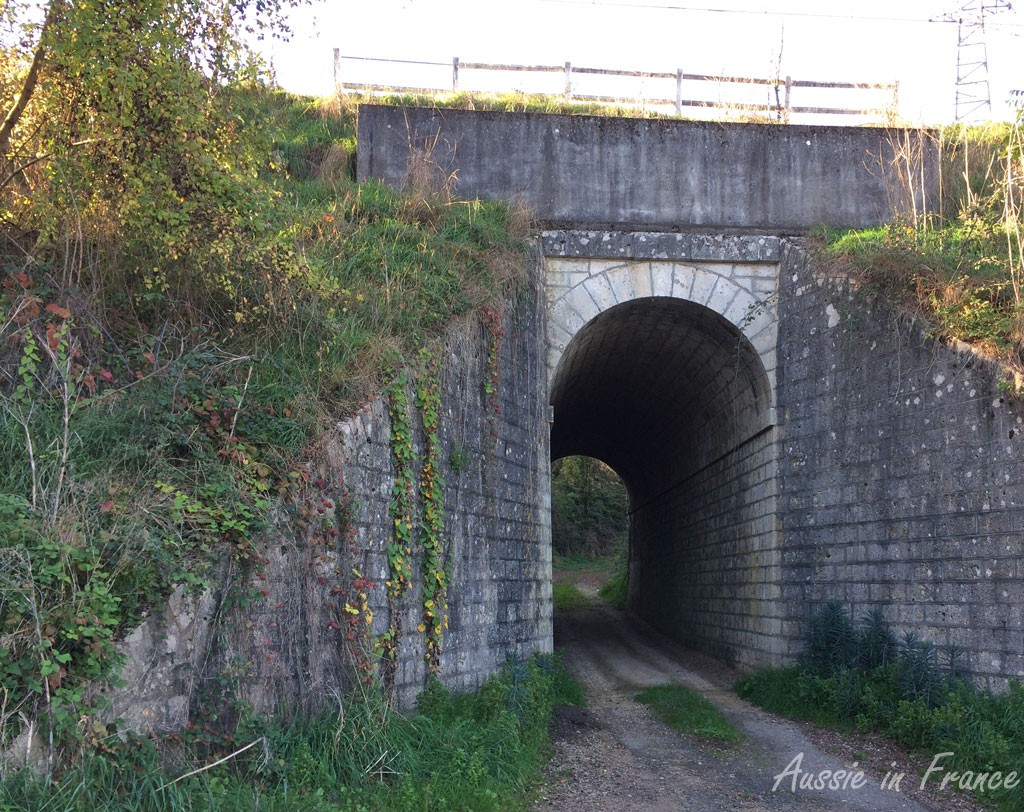
We walk through the tunnel under the railway line and come out on a grassy area.
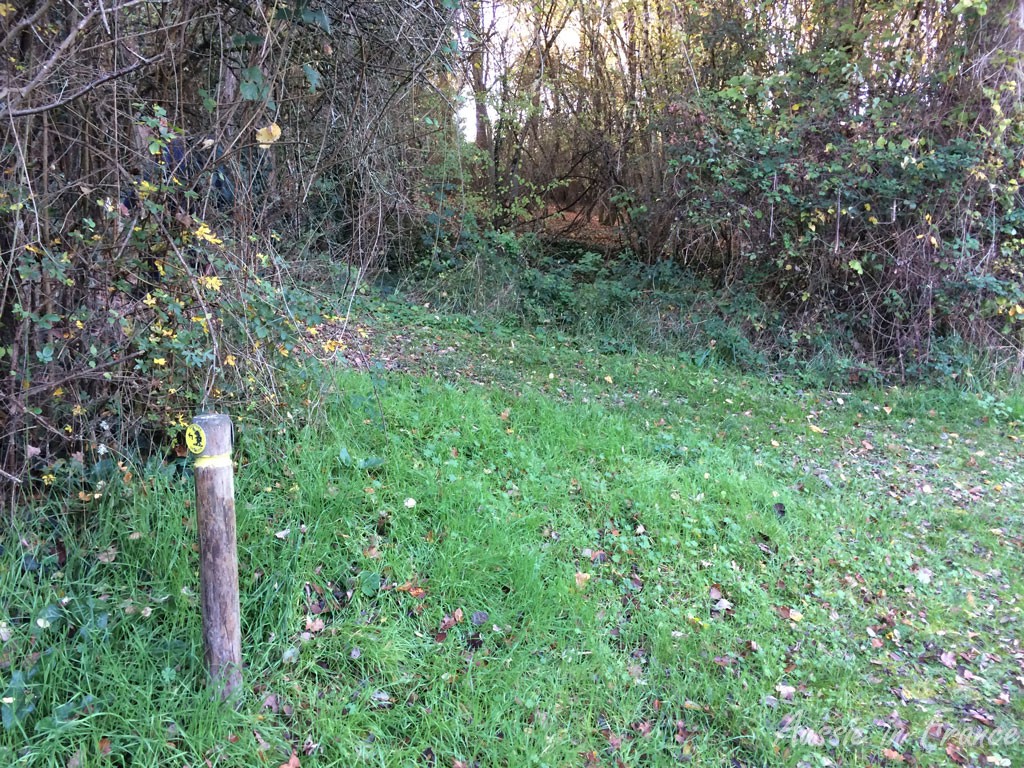
Signpost indicating a sharp left
Fortunately, there is a sign telling us to take a sharp turn left onto a path leading to Chemin du Saut aux Moines (monks’ leap path?) which we would never have found otherwise.
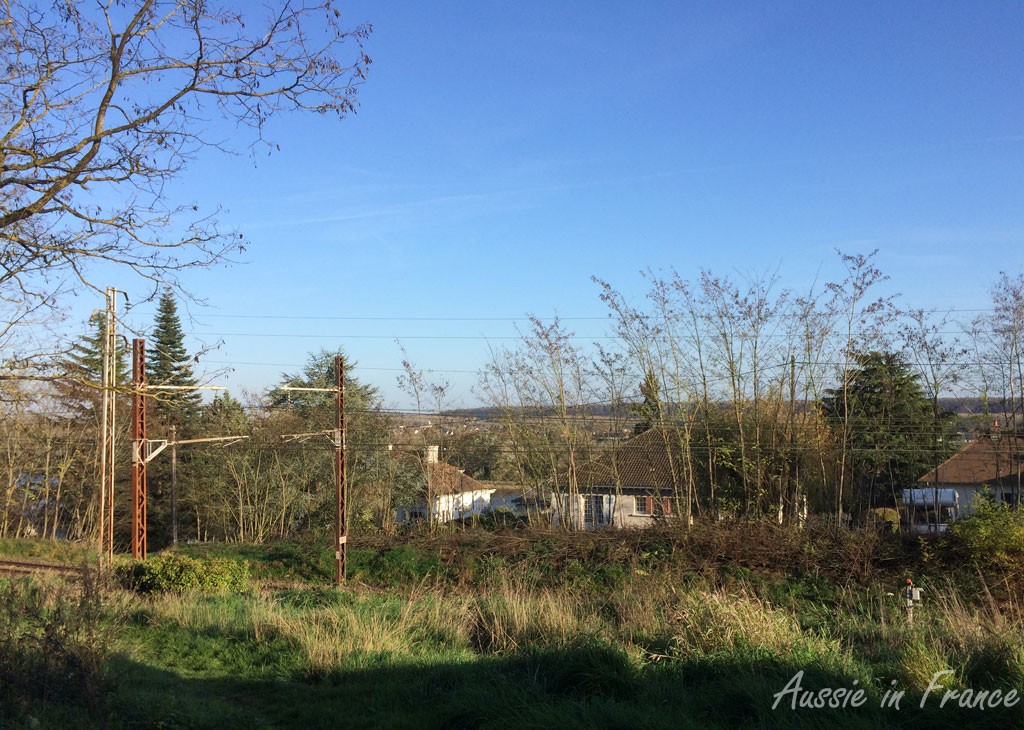
View from the railway line
We climb the path thtat takes us up to the Paris to Tours railway line that runs behind our house. The path moves away from the tracks until we turn left on Chemin de Pomone.
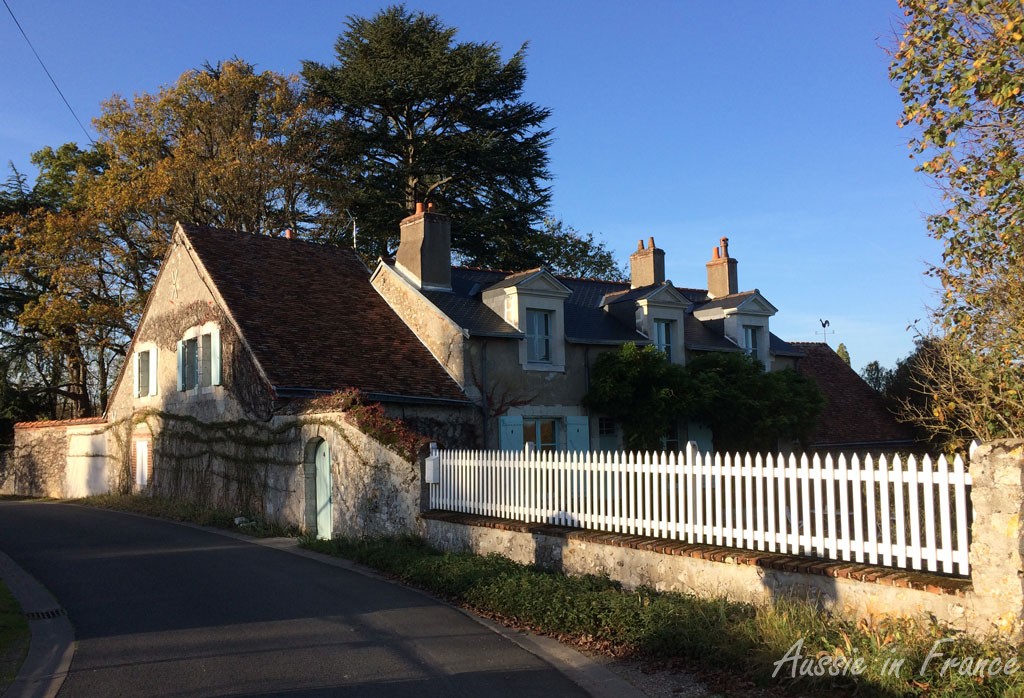
A very old house at the top of the hill just before rue Pomone
At the end of Chemin de Pomone we turn left into Rue des Moriers.
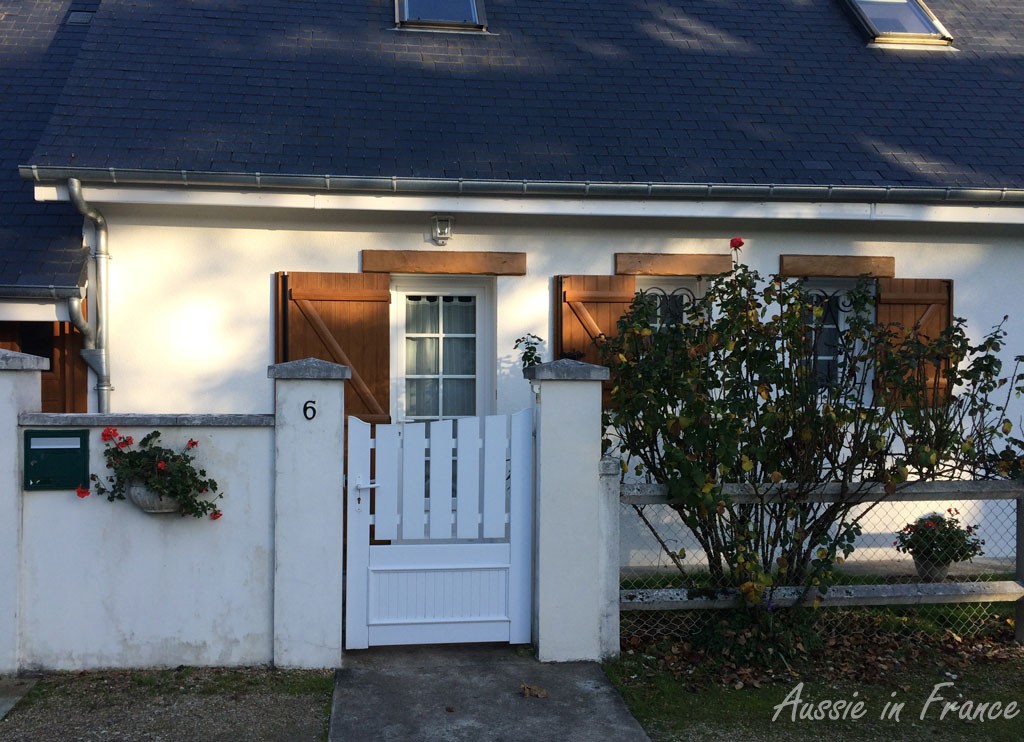
A white gated house in Rue des Moriers
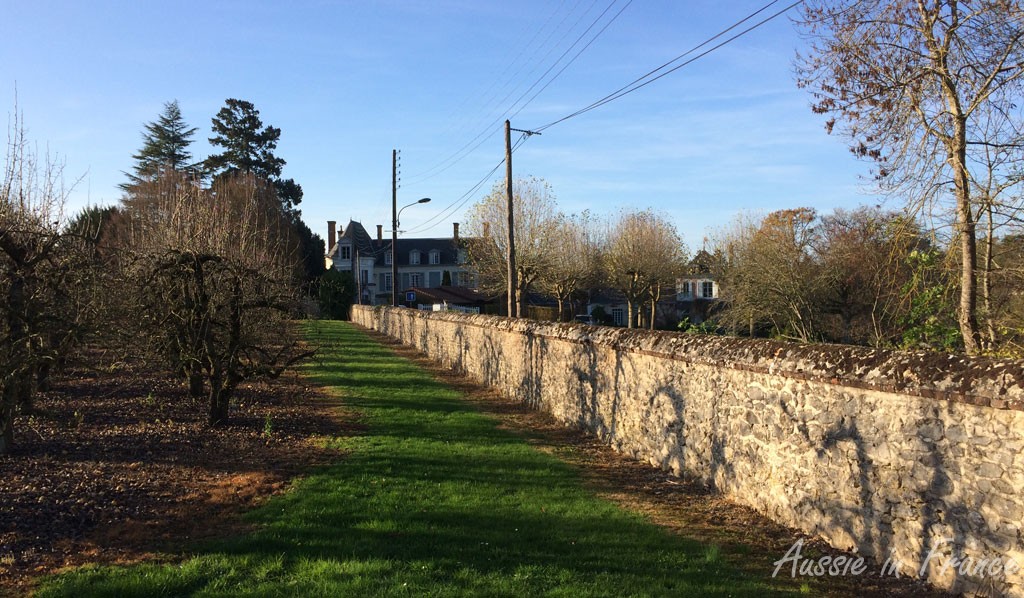
We take the next right into Rue des Poutils, which has an orchard on one side and a very large house in the distance.
An orchard and large house on the corner of Rue Poutils
At the end of Rue des Poutils we turn right into Rue Galandeau where Jean Michel wants to show me the cemetary. I didn’t even know we had one in Les Grouets!
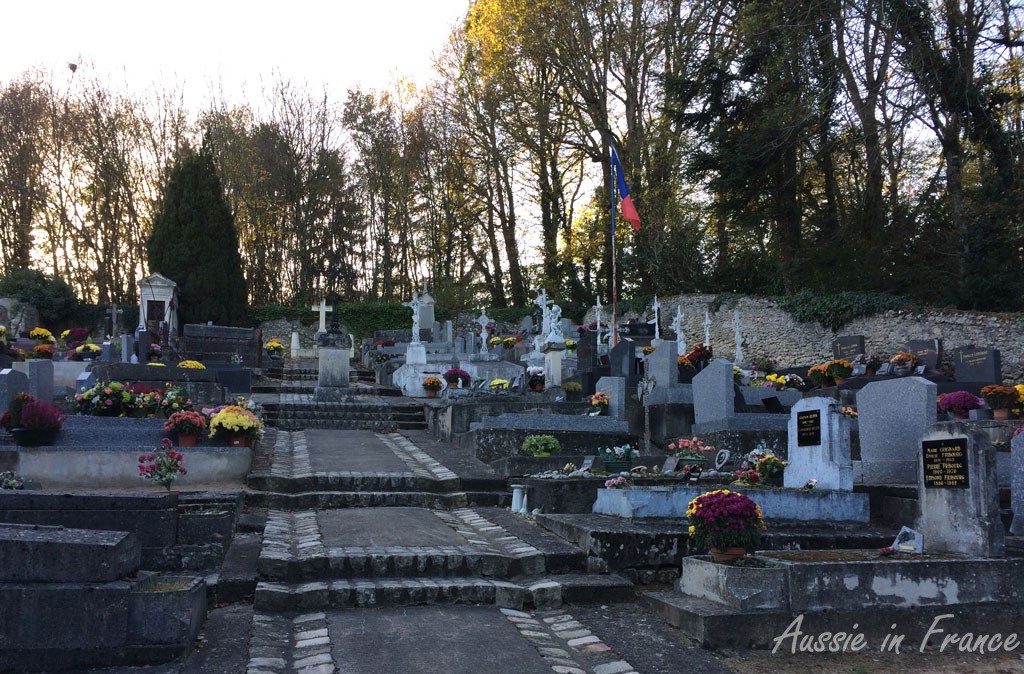
It’s very quiet and peaceful. We wander through and I recognise some local names but am surprised to see that most of the tombs are 20th and 21st century. I later learn that it’s because the time has run out on some of the plots and they haven’t been renewed.
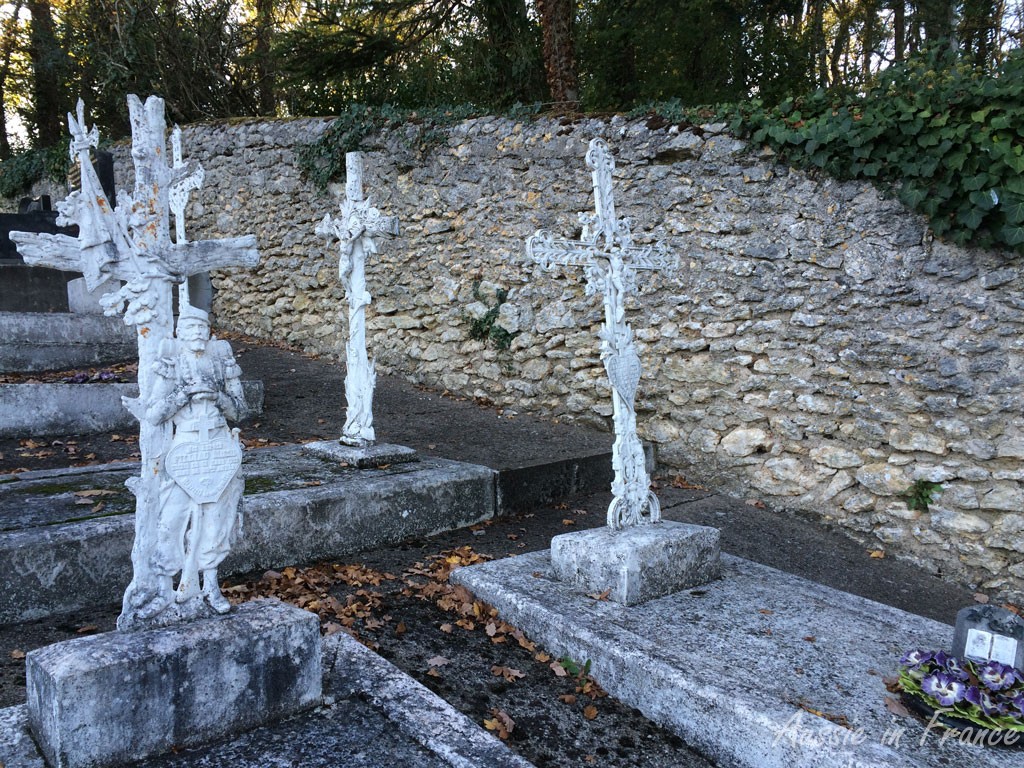
White crosses in the cemetary depicting soldiers
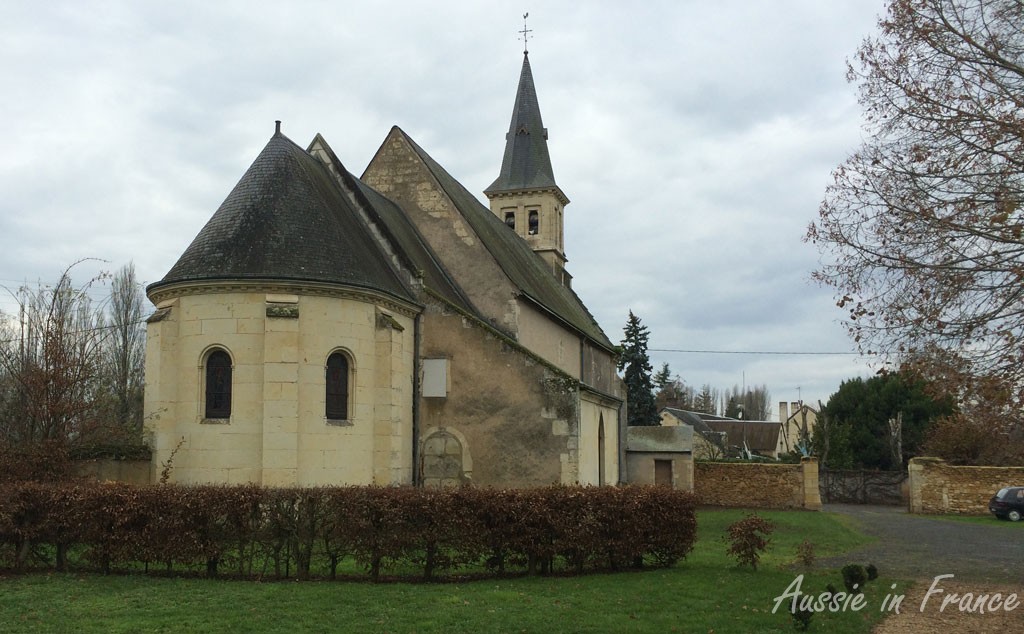
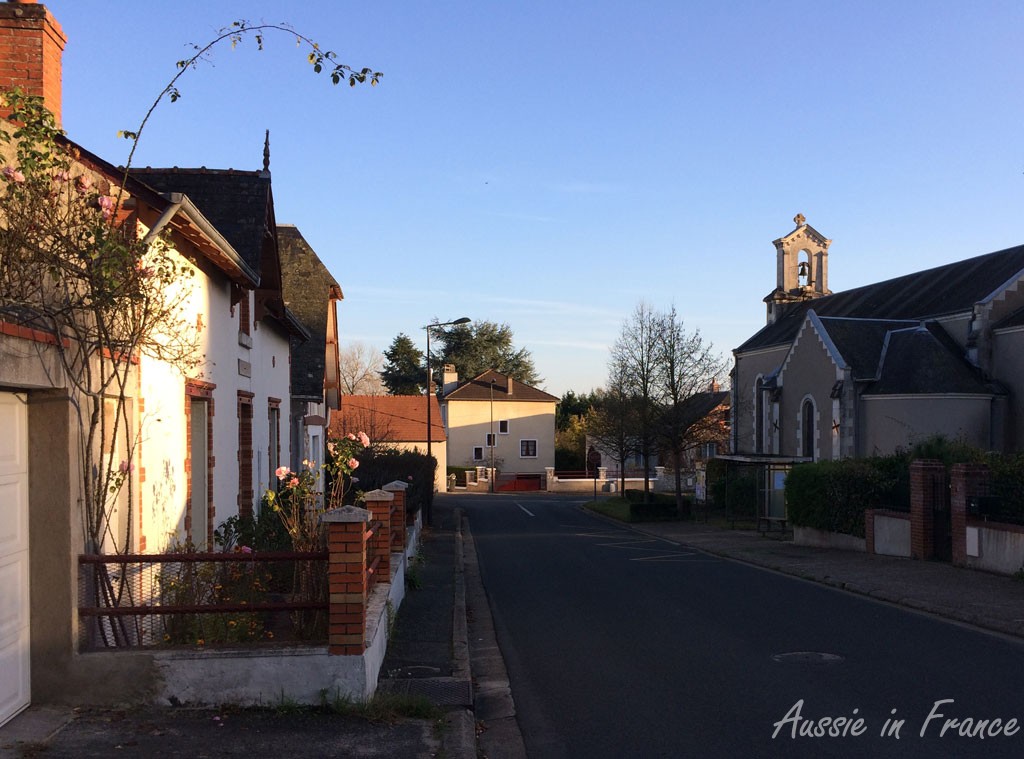
I’m particularly taken with the white metal crosses, several of which have soldiers on them. We come out of the cemetary and continue along Rue Galandeau until we reach Rue de l’Hôtel Pasquier, which is known terrain. It leads into our own street, Rue Basse des Grouëts, with the local church on the corner.
Our local church on the corner of Rue de l’Hôtel Pasquier and Rue Basse des Grouëts
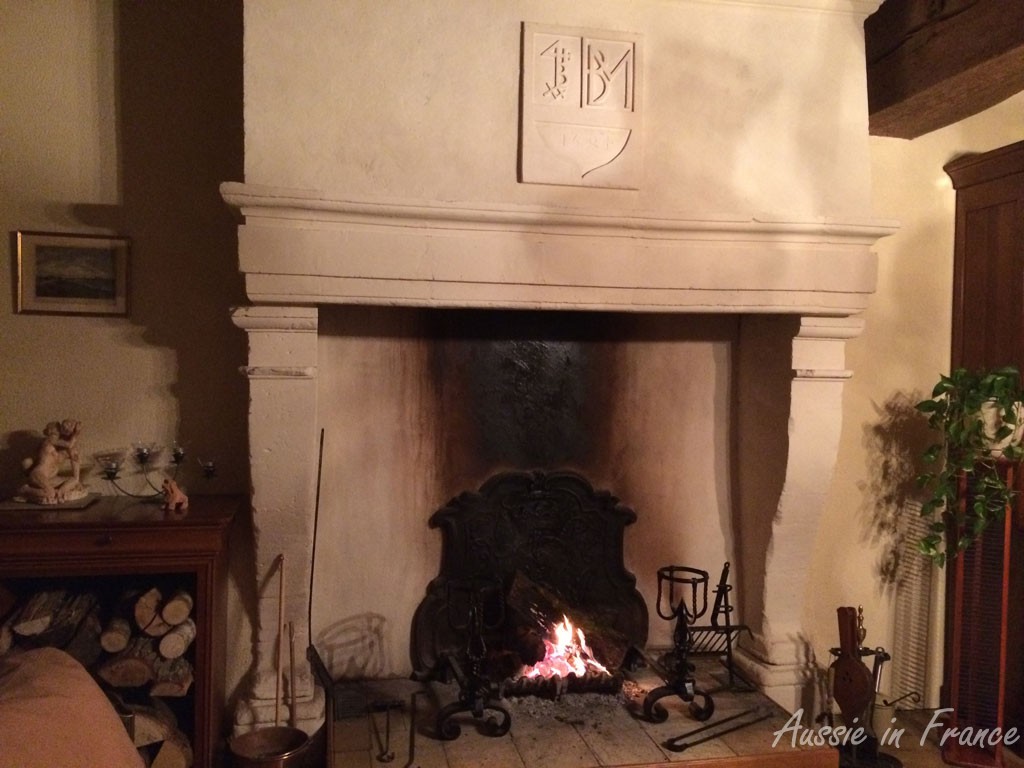
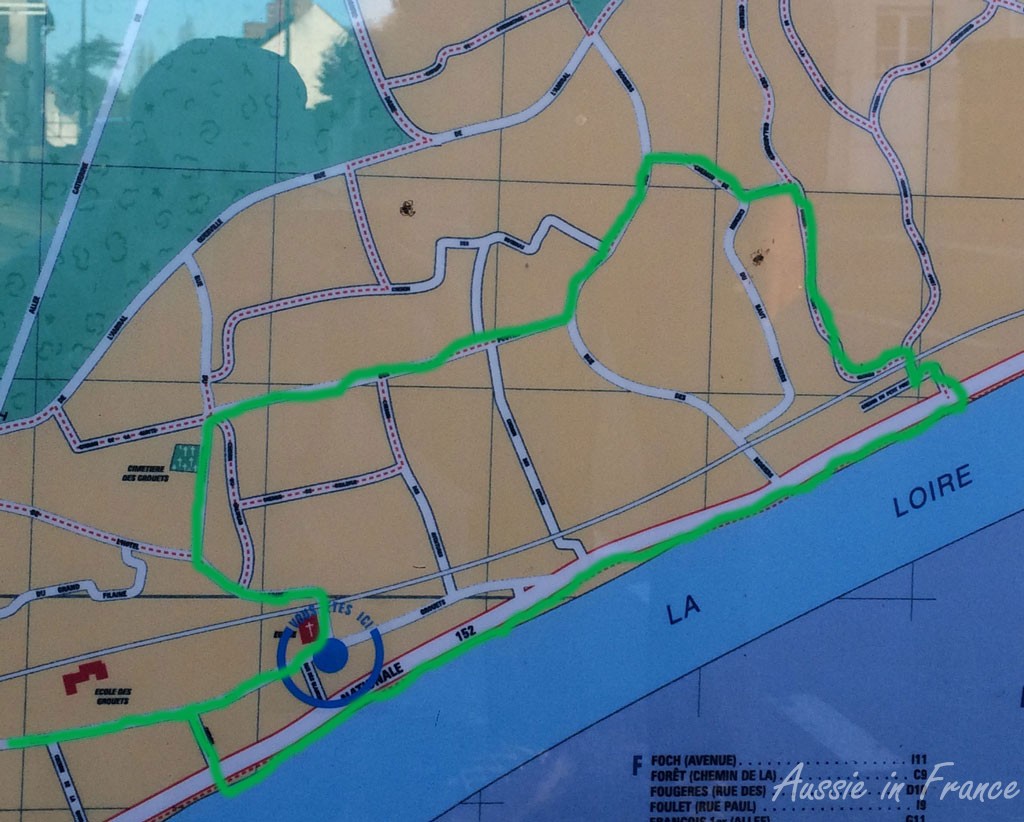
The return journey has taken us an hour, so the entire loop is 2 1/4 hours, about 7 k altogether. We get home in time for afternoon tea in front of the fire feeling much better than when we set out – but, even so, it takes me a week to write this post!
The map on the corner of Rue Basse des Grouëts and Rue de l’Hôtel Pasquier. The circle shows the church. The wriggly green line is the path we took.
Another beautiful sunny autumn day when it’s warm enough to cycle. I’ve been wanting to see the gardens at Château de Villandry ever since Susan from Days on the Claise mentioned that the late summer planting was at its peak and the famous potager garden looking splendid. There is a dedicated bike route from Tours to Villandry that is about 20 K and flat all the way. As it runs along the Cher River most of the time, it should also be well exposed to the sun.
The beginning of the bike route at Centre Aquatic du Lac
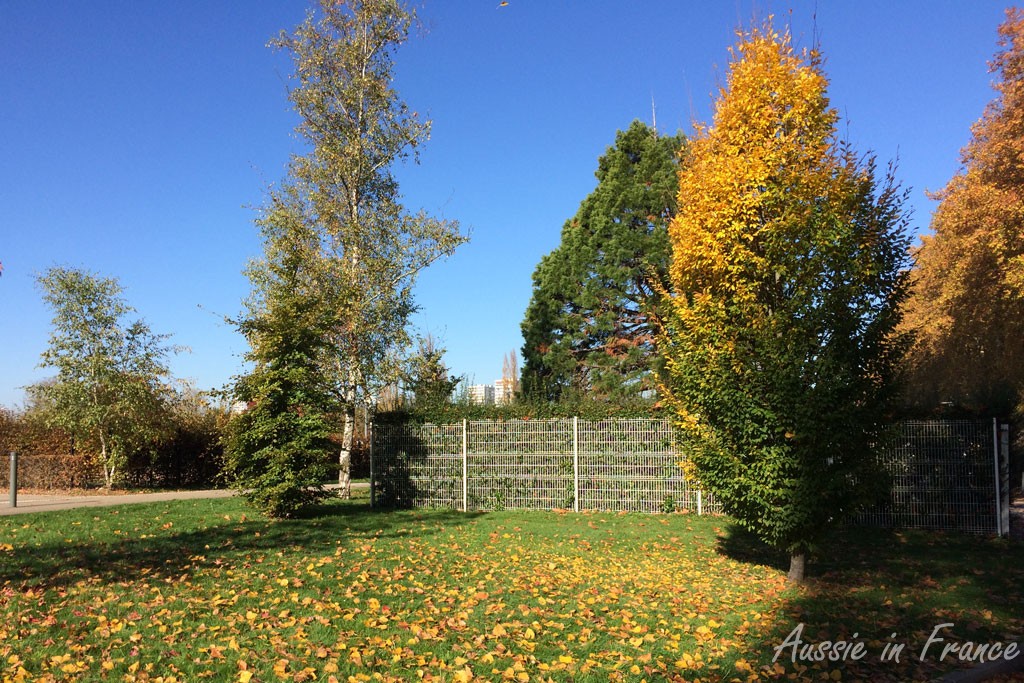
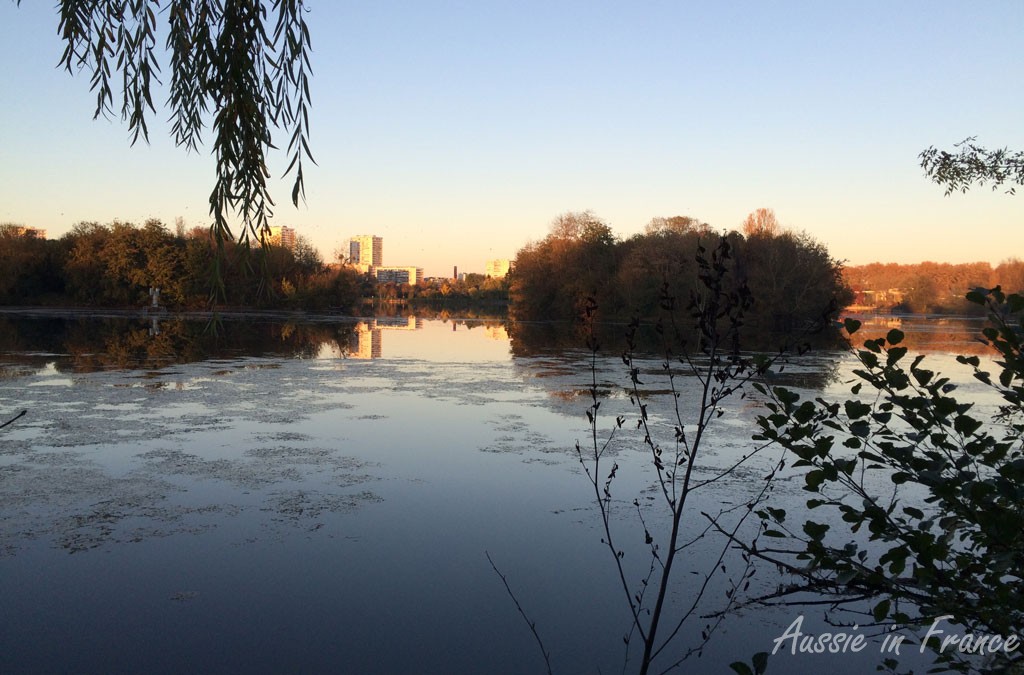
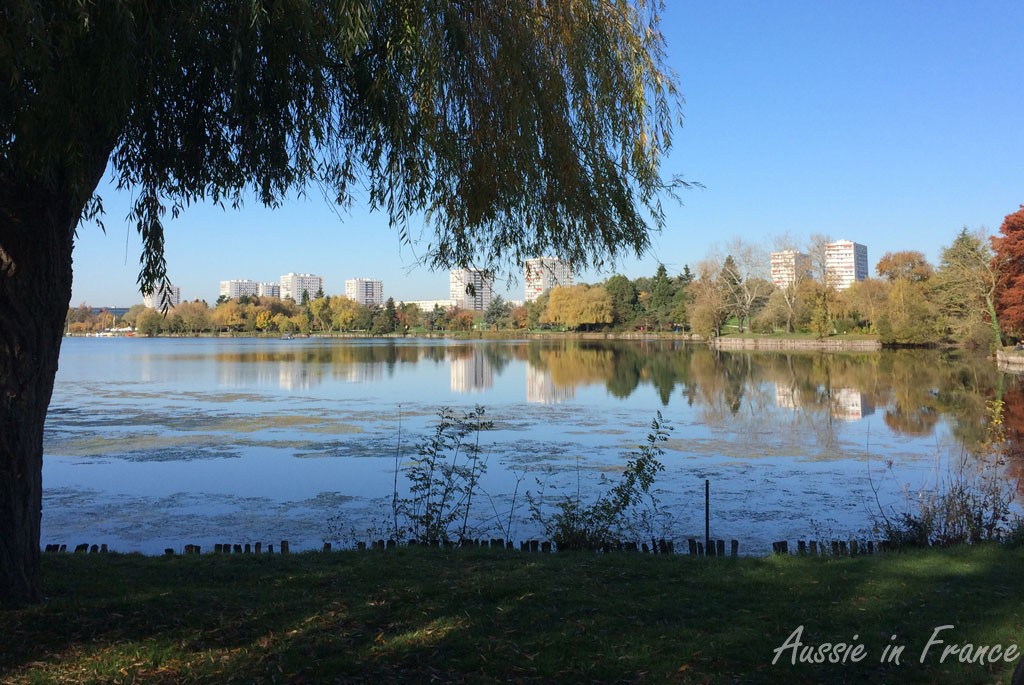
It takes us about 50 minutes to get to the Centre Aquatic du Lac. At midday, it’s a little nippy but with caps, windcheaters, jeans, gloves and a scarf, (most of which we later discard), it’s very pleasant. Our path takes us through a park with a lake in the middle – Lac de la Bergonnerie – which is obviously very popular with the locals which is not surprising when you see all the high-rise buildings on the other side.
View of Lac de la Bergonnerie from the bike path
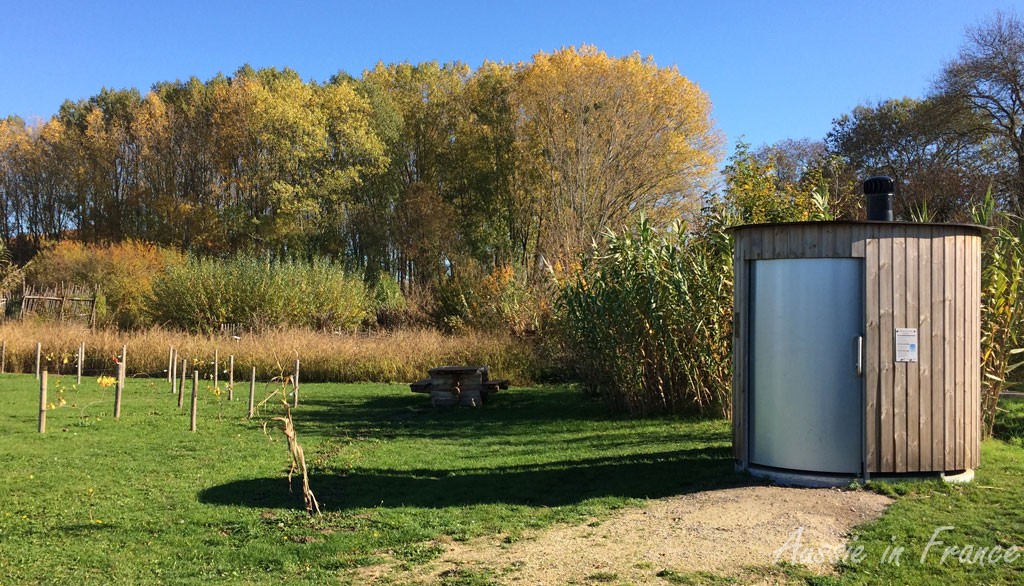
After the lake, we go past a series of allotments that even have “dry” public toilets. I wonder why there aren’t more of these along the Loire à Vélo bike route (which is part of Eurovélo 6 from the Atlantic to the Dead Sea)? Clean, fresh smelling, right next to the bike path.
The very practical dry toilets near the allotments
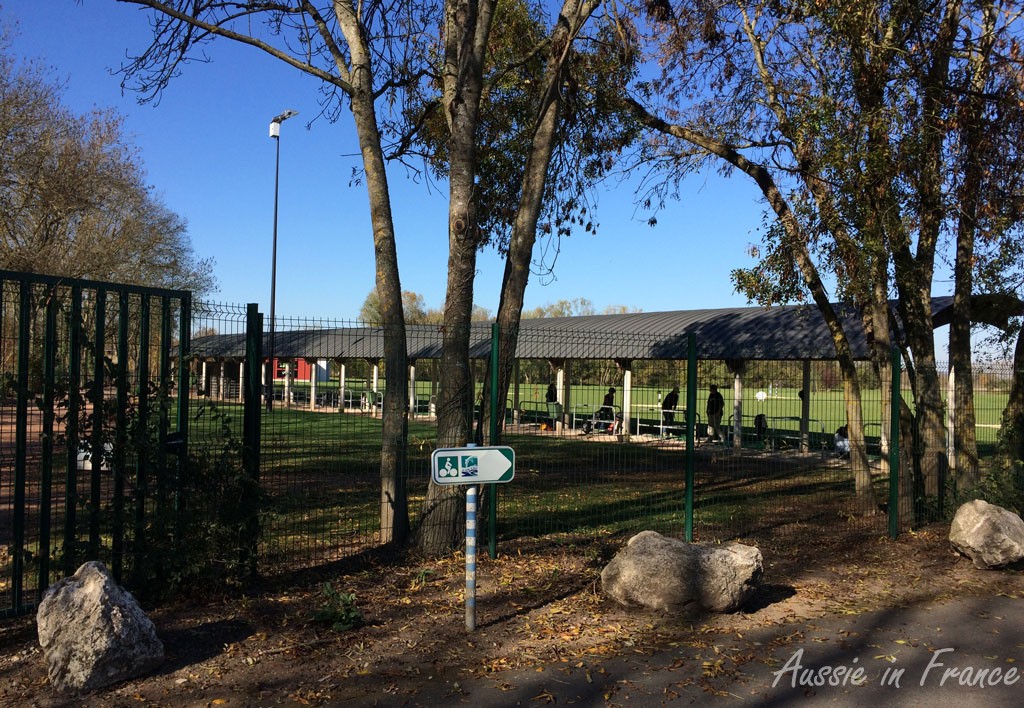
A little further on, we ride through a 9-hole golf course which has a 18-hole putting green, Golf de la Gloriette, which seems rather less sophisticated than most golf courses. I check it out later and see that the green fees are about half what you pay at La Carte golf course near Chouzy-sur-Cisse. I’m not a golfer myself but I think it’s good to make the game more accessible.
The putting green at the golf course
After a while, we join the Cher and the Port du Pavé du Roy, reinstated a few years ago and the site of various riverside activities in the summer and, in particular, a trip on La Jocondie* to discover the wildlife and flora of the Cher.
Port du Pavé du Roy
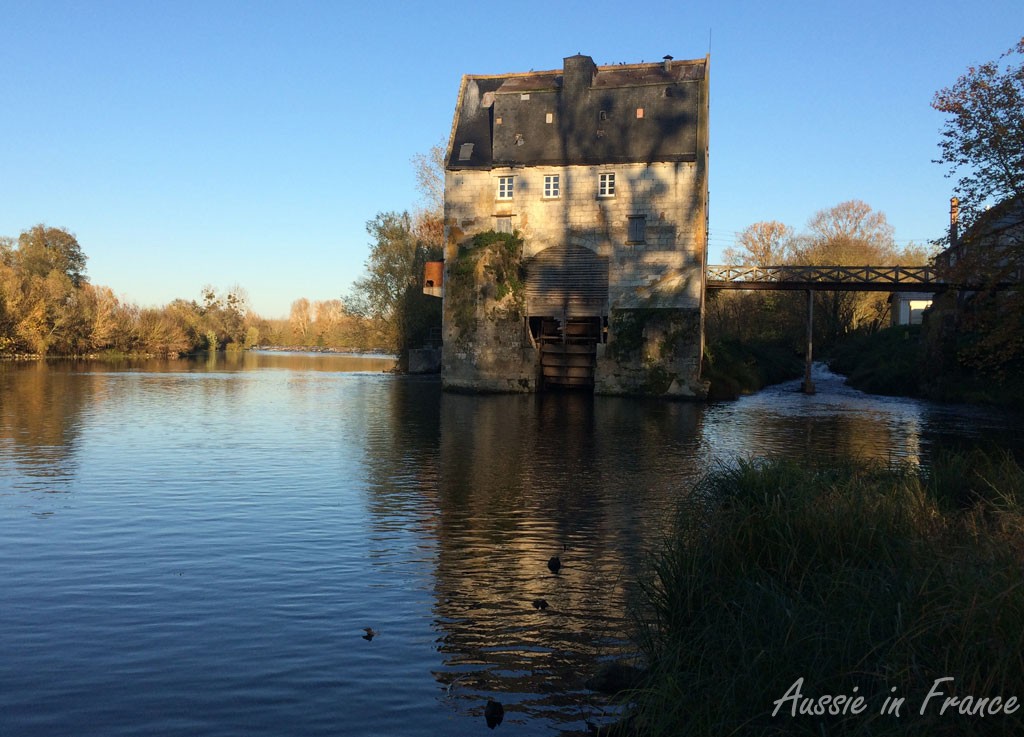
Further along we come to an small industrial flour mill, Grand Moulins de Ballan, and behind it, we discover the old mill house with its wheel still intact.
The old mill at Grands Moulins de Bassan – the photo was taken on the return journey which explains all the shadows
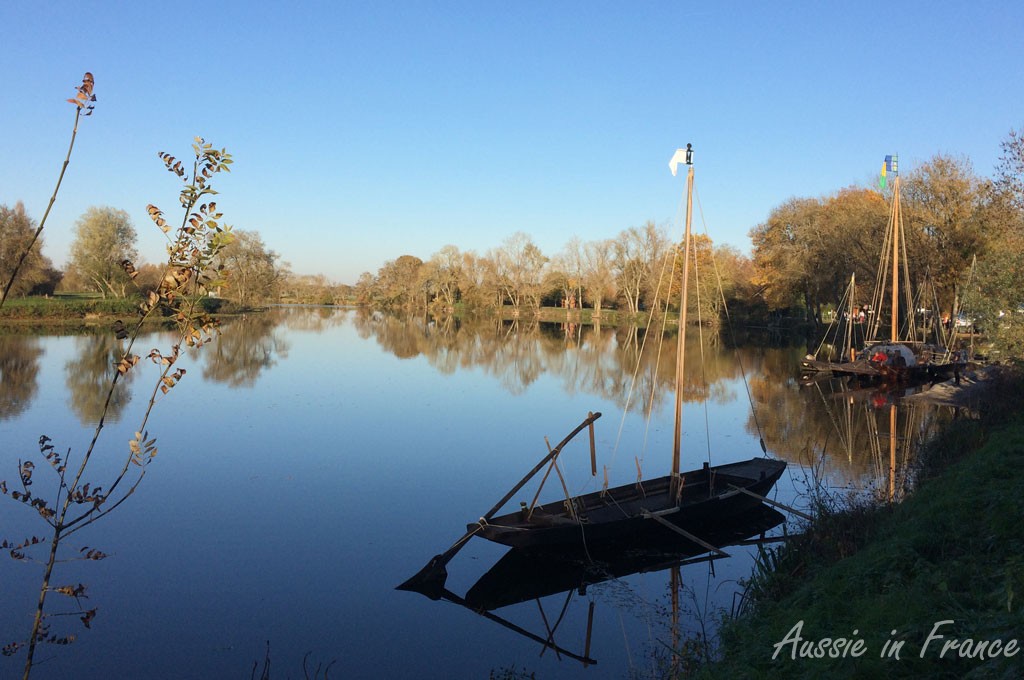
We soon arrive at the little port of Savonnières with several traditional flat-bottomed gabarre boats resting serenely on the water.
Flat-bottomed boats on the Cher at Savonnières near Villandry
Since we’re hoping to eat here, we leave the bike path and join the main road at the little church with its beautiful sculpted archway. The only restaurant open is way above our price range so we go back down onto the 3-kilometer bike path leading to Villandry.
Villandry from the bike path
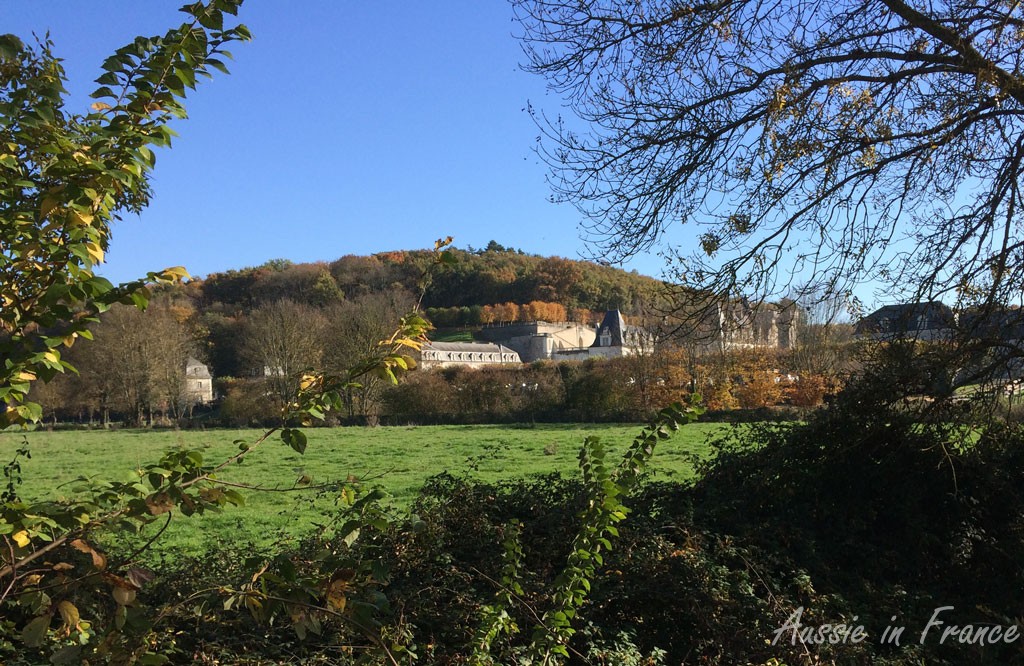
Château de Villandry soon comes into sight after we turn left away from the river.
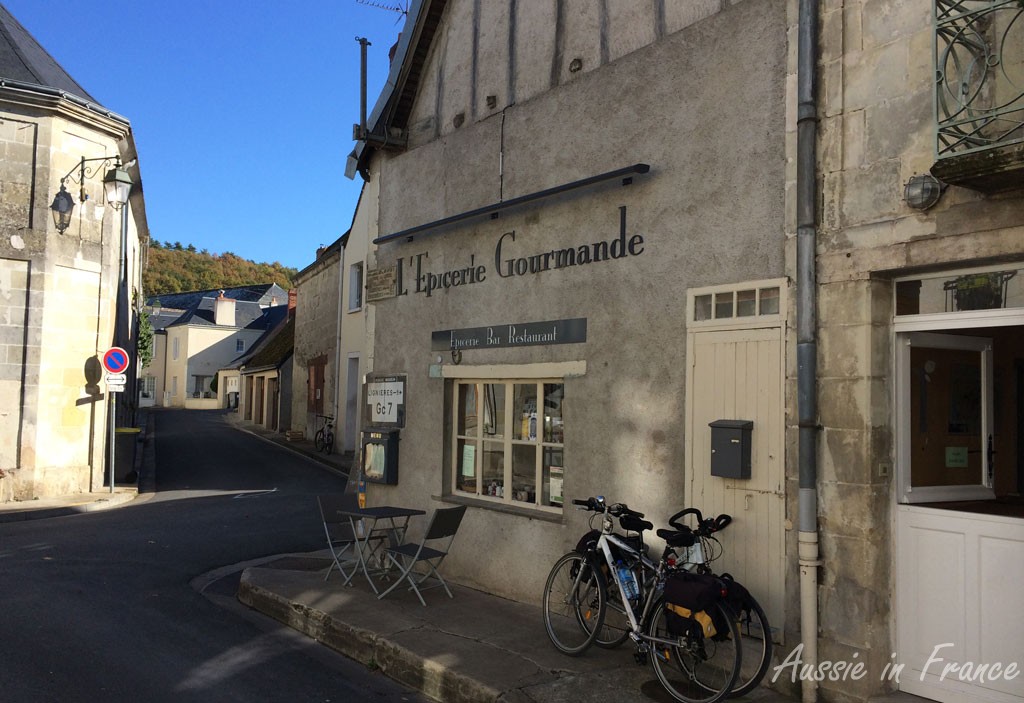
L’Epicerie from the outside
There are several restaurants on the main road at Villandry but none of them appeal to us. I see a sign pointing to a “tea room” in a side street, that takes us to “L’Epicierie Gourmande” (the gourmet grocery”). We see several bikes in front which is promising.
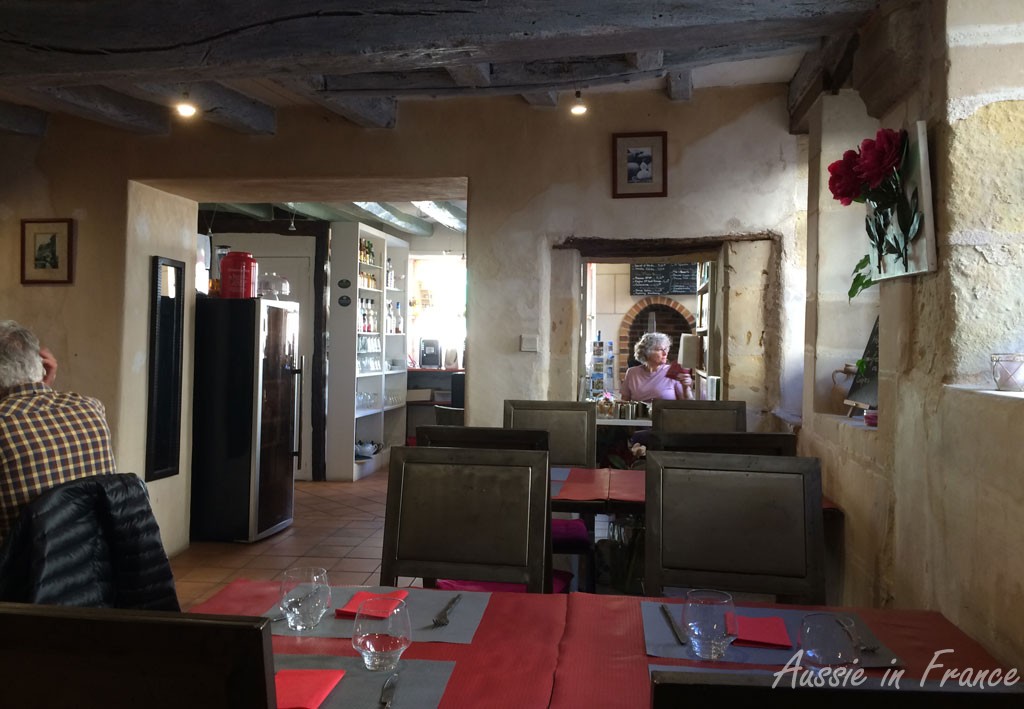
Inside l’Epicerie on the restaurant side
Inside, the décor is very simple and attractive, with exposed beams, stone walls and a large open fireplace. We have an excellent lunch – terrine de foie gras (copiously served) and a quiche, accompanied by a local wine (of course). There are no cooked dishes as such. Everything comes from the grocery section except for the dessert which is supplied by a local pastry shop. Exactly what we wanted! You can of course buy supplies from the grocery and have a picnic outside in the summer.
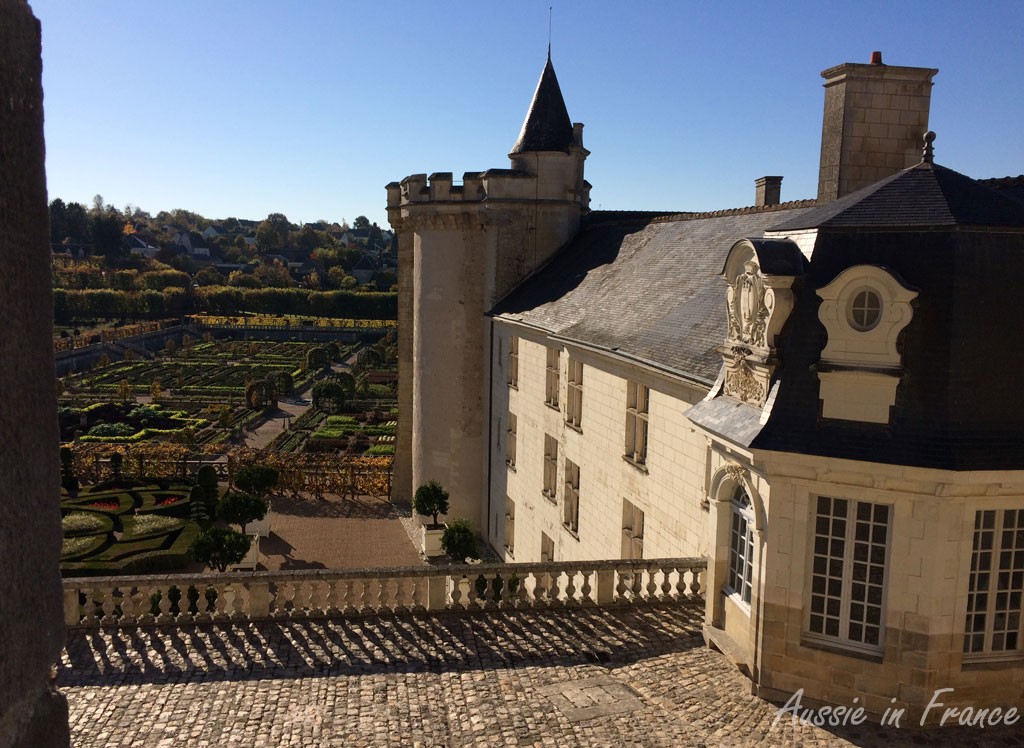
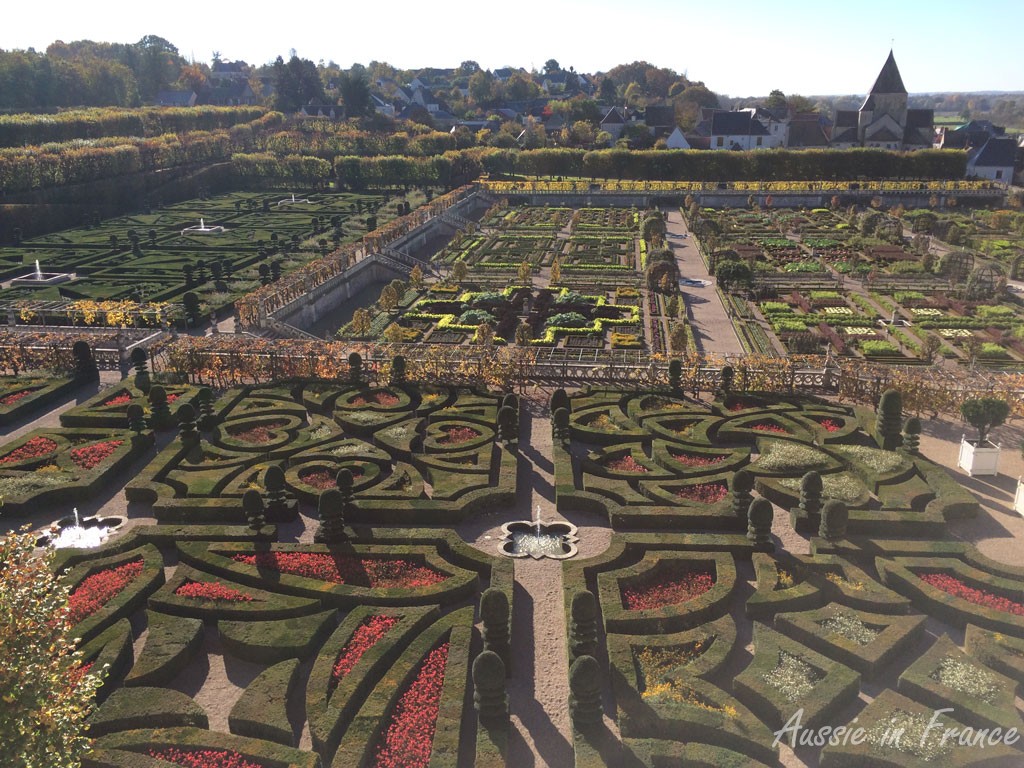
The château and gardens from the terrace
We continue on to the château and buy tickets to the garden only. We’ve visited the inside before but it’s not very interesting. However, we discover that there is an amazing terrace at the back of the château that affords a breathtaking view of the gardens.
The love gardens at Villandry
Just below is the four-part “garden of love”, seen in the foreground in the photo. From top left in a clockwise direction: “Tender love” is symbolised by hearts separated by flames of love in the corners of the square. In the middle are the masks used during balls to disguise the wearer. “Passionate love” still has hearts but this time, they are broken by passion. The boxwood bushes forms a labyrinth to evoke the giddy round of dance and passion. “Fickle love” is next: the four fans in the corners symbolise the transient nature of love while between the fans are the cuckold’s corns. In the middle there are love letters. “Tragic love” comes last with the daggers and swords used for the duels of rival lovers. In summer, the flowers are red to symbolise the blood spilt during combat. I can hear a group of teenage girls nearby discussing the symbolism.
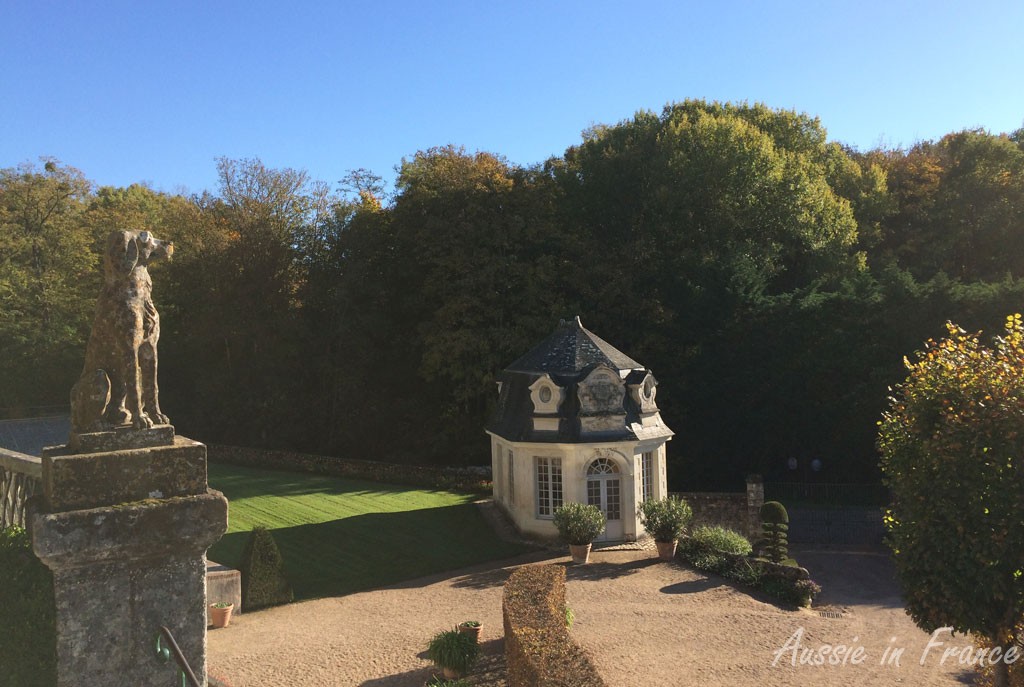
The watchdog and little pavillon
We walk along the path overlooking the gardens until we come to a narrow flight of steps guarded by a very friendly-looking dog, with a little pavillion at the bottom.
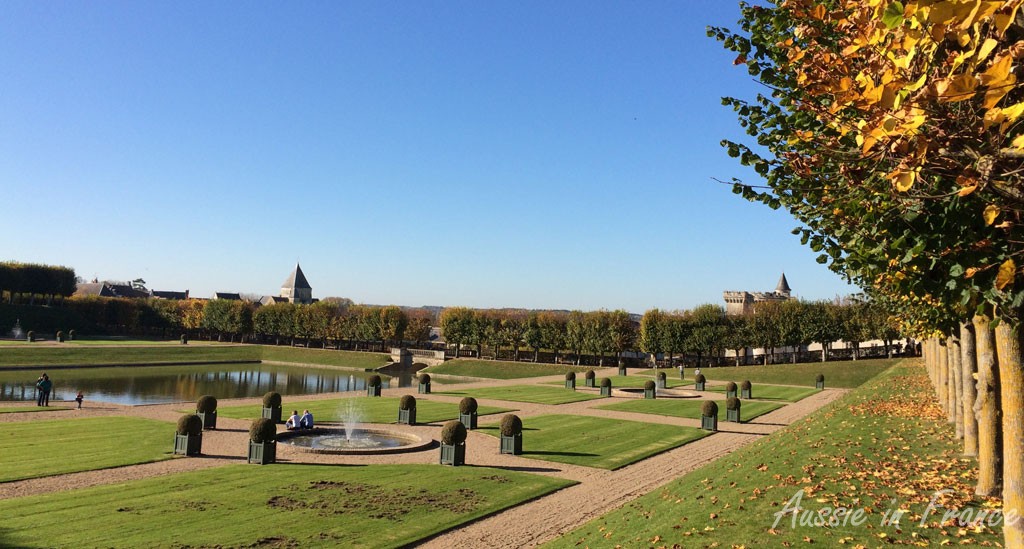
The formal garden and canal at Villandry
The formal garden below looks very serene with its little fountains and central canal.
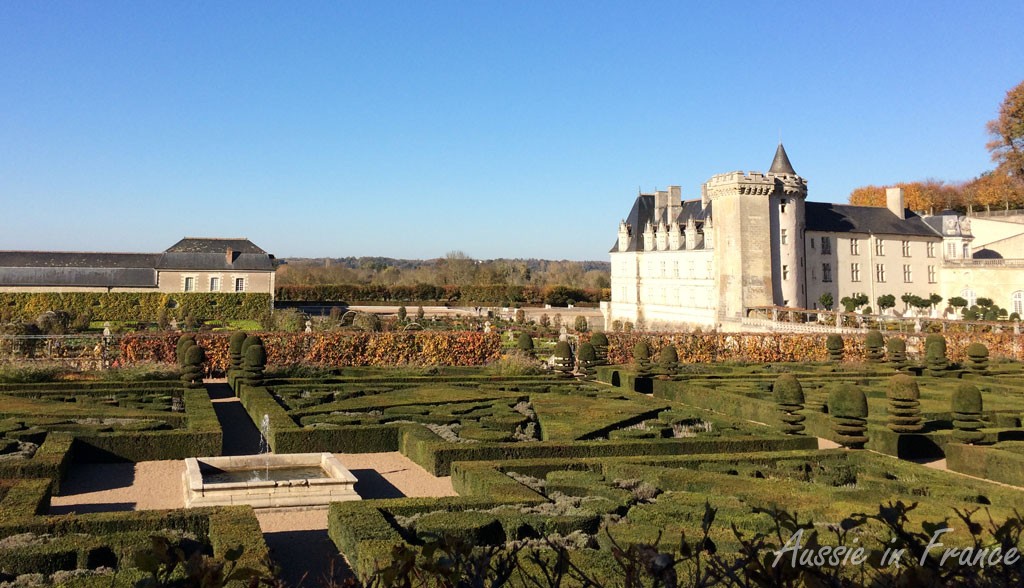
The gardens at Villandry with the vegetable gardens in the background
Beyond the canal is the famous vegetable garden and the other façade of the château.
The perennials garden in Villandry
But first we go to the hardy perennials because we’re trying to find plants to decorate the slope leading up to our little wood. We identify a few specimens we can try out.
The vegetable garden in Villandry with its decorative cabbages
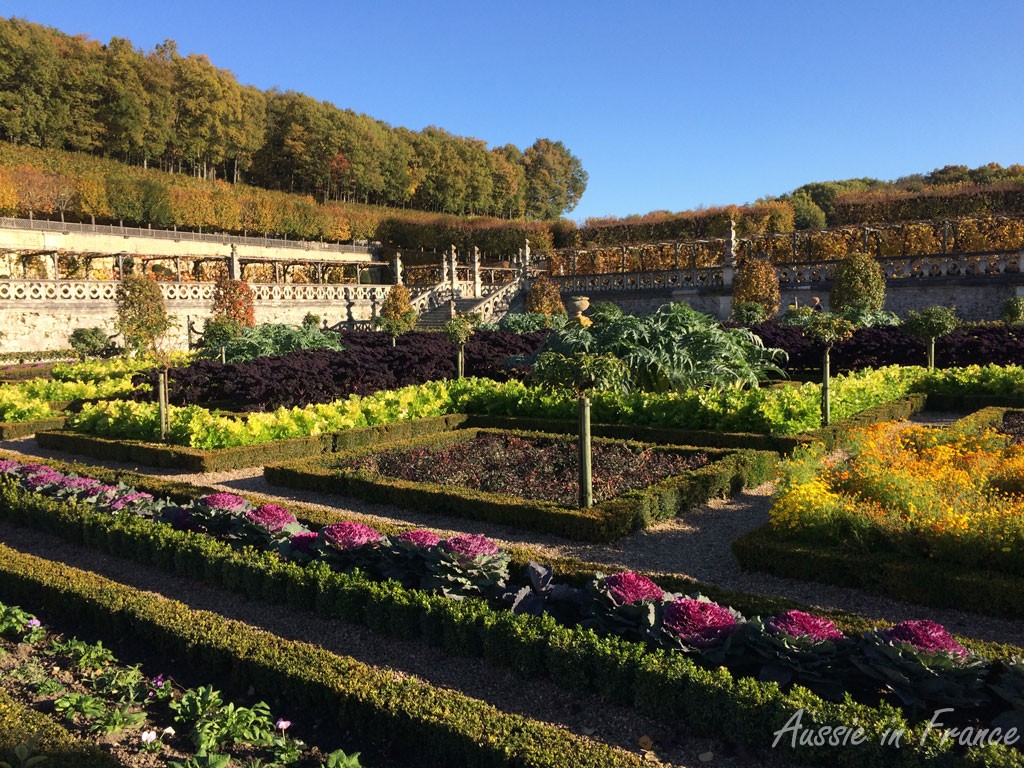
We then spend a lot of time in the vegetable garden, with its colourful cabbages, luxuriant asparagus ferns (the real thing), capsicum, celery, leeks and other decorative yet edible vegetables.
The lake at the end of the bike path at sunset
A quick tour of the garden shop and we’re back on the bike path, as daylight saving is now over and we have to be back at the car by 5.30 at the latest. We arrive just in time, as usual.
We’re delighted to have added another great bike itinerary to our already large collection. We’ll be back in the spring!
*La Jocondie, 12-seat boat. Landing: Port du Pavé du Roy, Joué-les-Tours. Les Mariniers du CAJC : 7, rue Descartes. Joué-les-Tours – 37300
Ce blog est normalement en anglais mais j’ai eu tellement de demandes concernant notre pratique du jeûne intermittent de la part de nos amis français que j’ai décidé de leur dédier un post. [This blog is usually in English but I have had so many requests for information on the 5:2 Fast Diet from our French friends that I am dedicating this post to them in French. You will find plenty of information on the subject in English if you click on the Category “Dieting” in the column on the right. You can start with “The 5:2 fast diet: fast and feast and still lose weight“.]
1/4 protéine, 1/4 féculents et 1/2 légumes
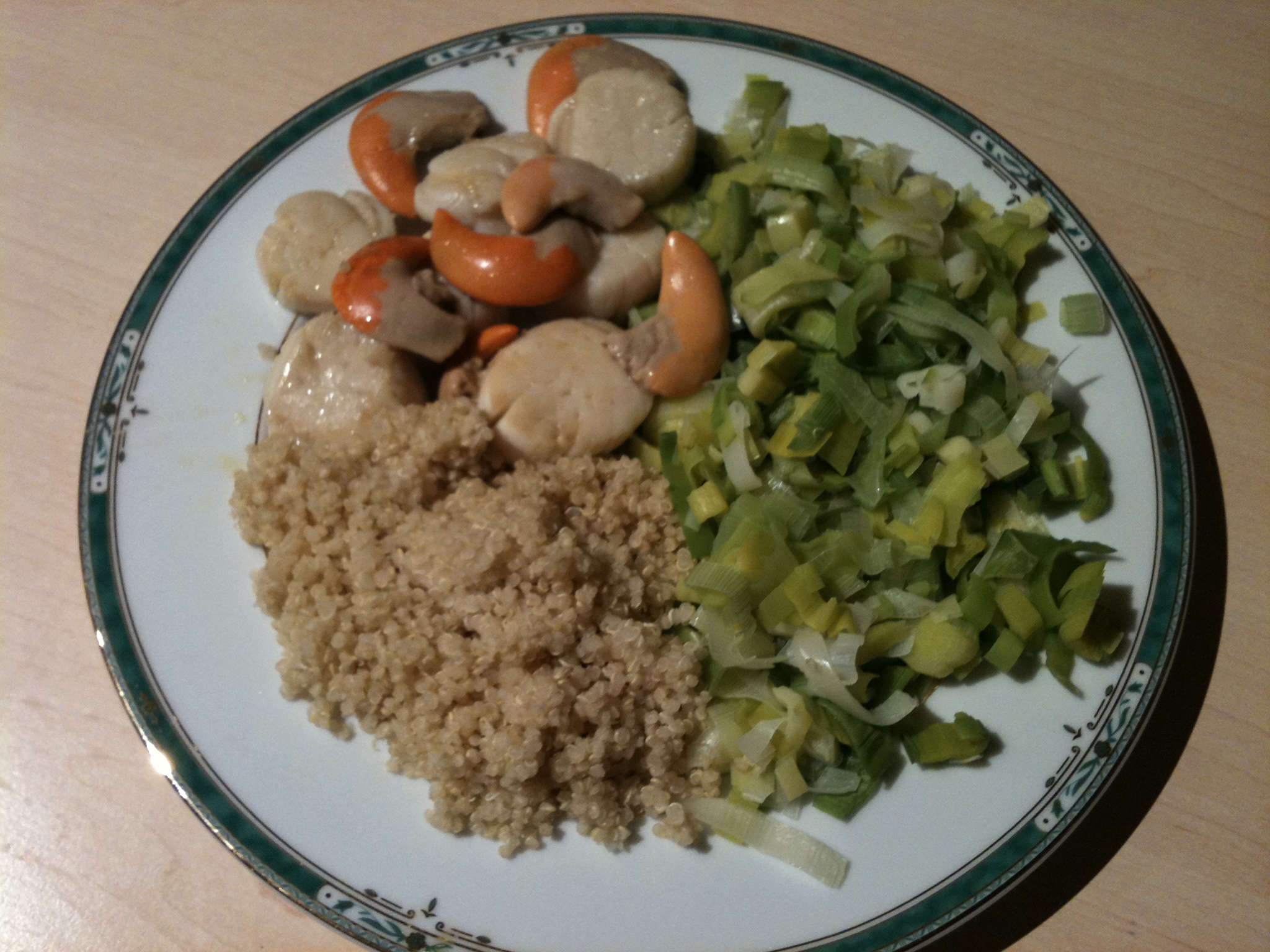
J’ai commencé le jeûne intermittent lorsque j’avais repris quelques kilos deux ou trois ans après avoir perdu 20 kilos en suivant un régime basé sur une assiette divisée en quatre: 1/4 de protéines, 1/4 de féculants et 1/2 de légumes. J’avais réduit ma consommation de vin à une ou deux fois par semaine à la place d’un verre ou deux à chaque repas. J’avais également éliminé les frites et autres mets très caloriques. Pendant les trois premières semaines du régime j’avais également éliminé tous les produits à base de blé les remplaçant par le quinoa, la polenta, etc.
Pendant la période du régime qui a duré 18 mois, je n’avais pas trop de mal, mais une fois que j’avais retrouvé la ligne, il était plus difficile de constamment “faire attention” et je n’arrivais plus à reperdre les trois ou quatre kilos que j’avais repris petit à petit pendant deux ans. C’est à ce moment-là que j’ai entendu parler du jeûne intermittent élaboré par le docteur Michael Mosley après ses recherches poussées sur les différents types de jeûne.
Sa méthode, appelée 5:2 (cinq jours “normaux” et deux jours de jeûne), a eu tellement de succès que la caisse d’assurance maladie en Grande Bretagne a lancé des études très sérieuses sur ce sujet. Cette méthode qui vise à perdre du poids et à ne pas en reprendre a désormais fait ses preuves.
Et ce n’est pas uniquement une question de poids. Le mauvais cholestérol s’en va, on a une meilleure santé et le facteur “cancer” est réduit, ce qui augmente l’espérance de vie.
Mon mari Jean Michel était hésitant au début mais maintenant c’est un grand adepte. Nous pratiquons le jeûne intermittent deux fois par semaine, le lundi et le jeudi (mais on peut moduler les jours comme on veut), depuis plus de deux ans. Il n’y a aucune restriction sur les activités pratiquées les jours de jeûne – nous faisons 70 km de vélo sans problème et Jean Michel a fait de gros travaux physiques cet été -, il faut juste boire beaucoup d’eau. C’est même bien de pratiquer un sport ou d’avoir une activité intensive le jour du jeune.
Attention: Si vous avez un problème de santé, comme le diabète, par exemple, il faut absolument consulter un médecin avant de démarrer.
Alors, comment faire les jours de jeûne ? C’est très simple: on prend 500 calories pour les femmes et 600 calories pour les hommes, répartis de préférence entre deux repas. J’ai essayé “petit déjeuner + dîner” mais j’avais mal à la tête dans l’après-midi. Je préfère donc ne pas prendre de petit déjeuner, ce qui favorise une plus longue période de jeûne (entre 21 heures le soir d’avant et 13 heures le lendemain = 16 heures) en prenant simplement un café noir non sucré le matin. Au début j’hésitais car j’avais appris à ne jamais sauter de repas mais finalement cela ne pose aucun problème.
Aux repas de jeûne, il faut prendre plutôt des protéines et légumes pour éviter la perte de muscle. Pour des raisons de simplicité, nous mangeons toujours la même chose les jours de jeûne. Comme ça, on n’a pas besoin de compter les calories chaque fois ni de réfléchir à ce que nous allons manger.
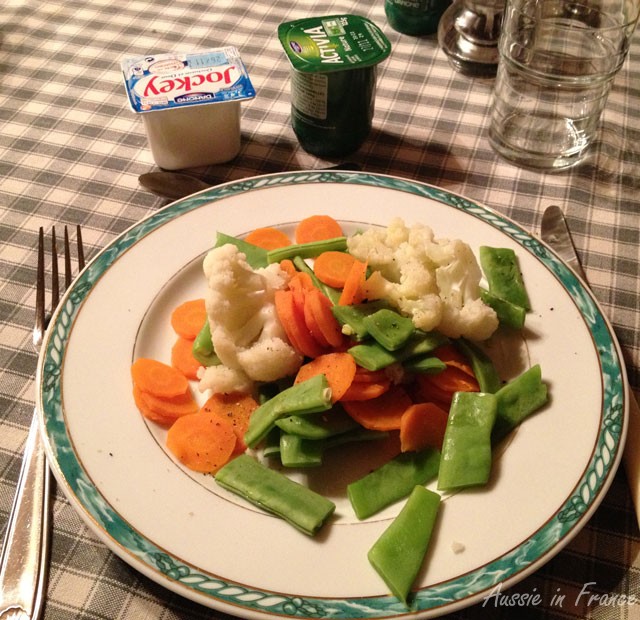
Repas typique un jour de jeûne intermittent (+ fruit)
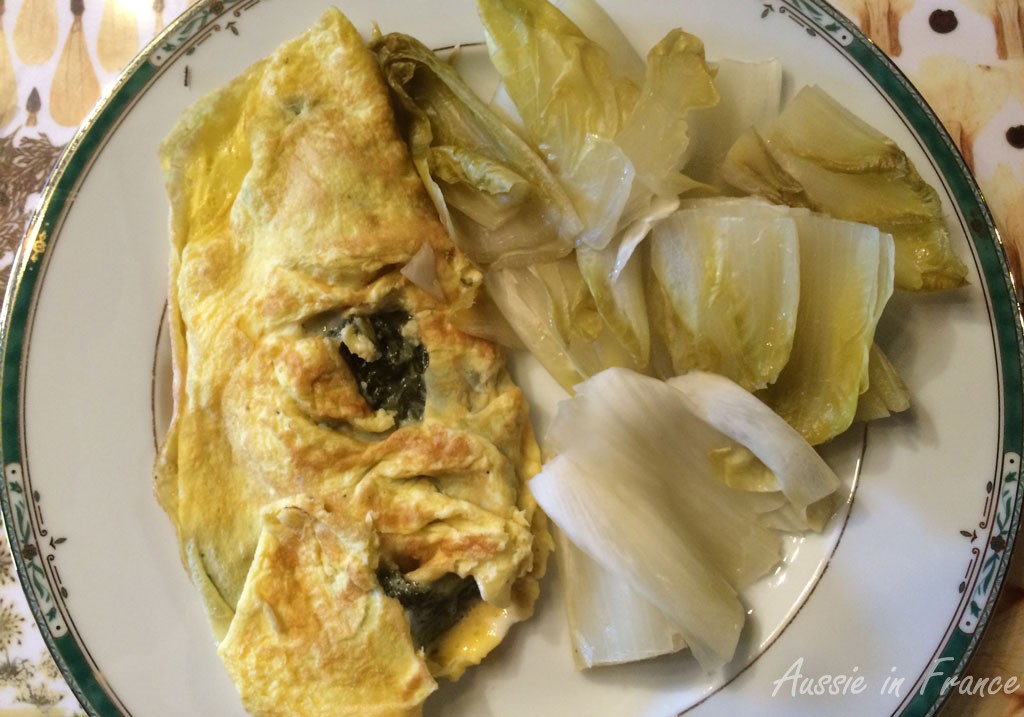
A midi nous prenons deux oeufs (omelette sans matière grasse, oeufs durs, etc.), des crudités ou légumes cuits à la vapeur nature (juste sel et poivre) et un fruit. Jean Michel rajoute une tranche de pain équivalente à 100 calories.
Le soir, on mange un fromage blanc à 20%, un yaourt Activia nature, des légumes à la vapeur et un fruit.
Déjeuner typique: omelette à l’oseille accompagnée d’endives vapeur (+ fruit)
Il faut choisir des légumes basses calories : tomates, concombres, brocolis, haricots verts, courgettes, poivrons, carottes, choux-fleurs, endives, etc. Il faut tout peser la première fois pour s’assurer du nombre de calories.
Il faut savoir que la sensation de faim n’est jamais continue. On va avoir faim, puis on fait quelque chose pour se distraire, on boit un verre d’eau et la sensation disparaît.
Après quelque temps, on n’y pense même plus les jours de jeûne! C’est même agréable d’avoir une vraie sensation de faim de nouveau plutôt qu’une envie de manger ou de grignoter.
Et les autres jours, qu’est-ce qu’on fait ?
Eh bien, vous mangez comme vous voulez. D’abord, le fait de jeûner va sûrement réduire votre appétit. Ensuite, sans prendre les frites à tous les repas suivies de gros gâteaux, il n’y a pas de restrictions. Si vous constatez qu’il n’y a pas de perte de poids après plusieurs jours de jeûne, vous pouvez essayer de ne pas dépasser 1200 calories par jour (pour une femme de taille moyenne) ou bien faire une troisième jour de jeûne dans la semaine ou juste sauter le petit déjeuner une ou deux fois de plus.
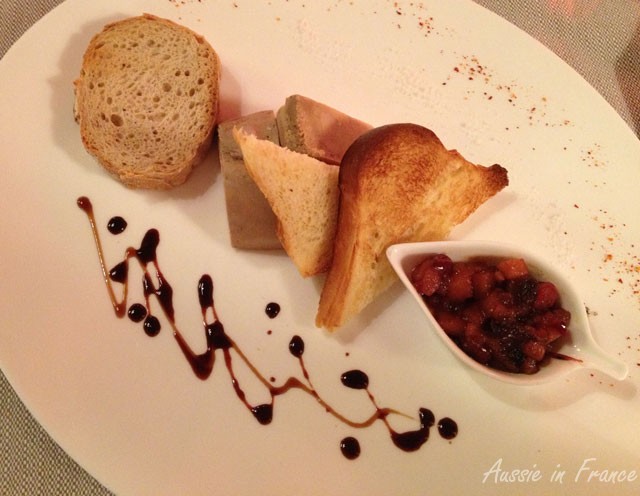
Foie gras from time to time is no longer excluded
Puisqu’on a le “droit” de manger des petits gâteaux et du foie gras sans culpabiliser, l’envie de trop manger ou de grignoter est moins forte. Le cerveau semble s’adapter rapidement à cette nouvelle façon de manger.
Pour moi, le jeûne intermittent est la meilleure solution pour garder la ligne. L’idée d’être obligée de faire attention toute la vie me déprimait. Par contre, jeûner deux jours par semaine jusqu’à la fin de mes jours ne me pèse pas du tout. On est même content de jeûner, étonnant que cela puisse sembler. On a l’impression de mettre le corps au repos et de retrouver sa dynamique.
Alors, bon courage et n’oubliez pas de me tenir au courant de vos progrès !
The last time we were on our bikes was when we cycled from Ybbs to Grein in Austria on October 3rd. Jean Michel has cleaned them and we have put away all our gear but an unusually warm sunny day with 20°C maximum is predicted so we decide to make the most of it. We drive the three kilometers along the Loire to François Mitterand Bridge, cross over and park along the banks of the Loire, just next to the bike path. It’s about 3 pm.
Starting point on the other side of Mitterand Bridge
We can’t get over how balmy it is. I keep having to get off my bike to take photos. The light is wonderful and the sky is a beautiful blue.
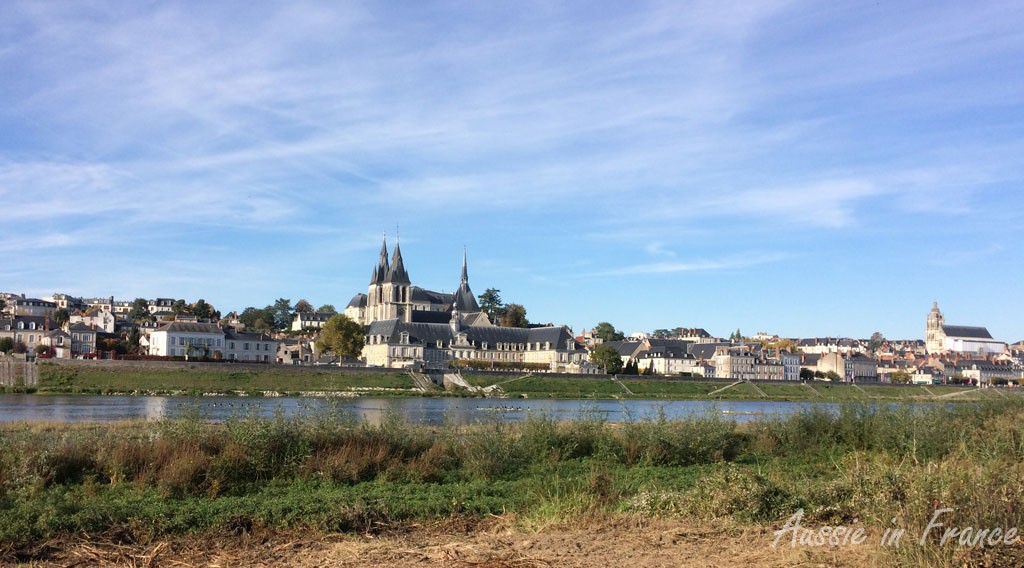
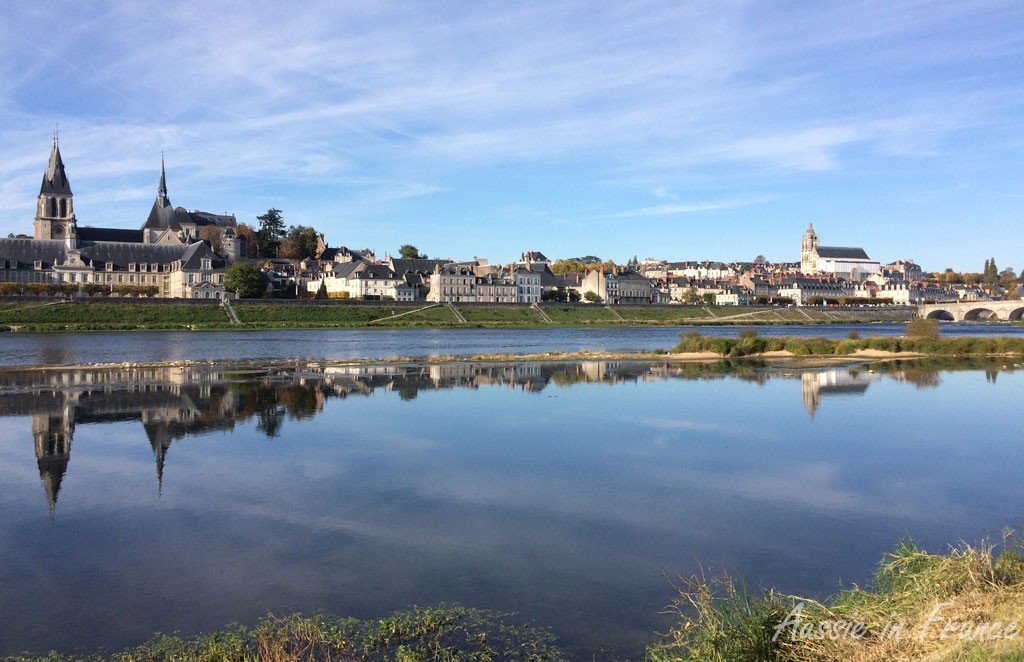
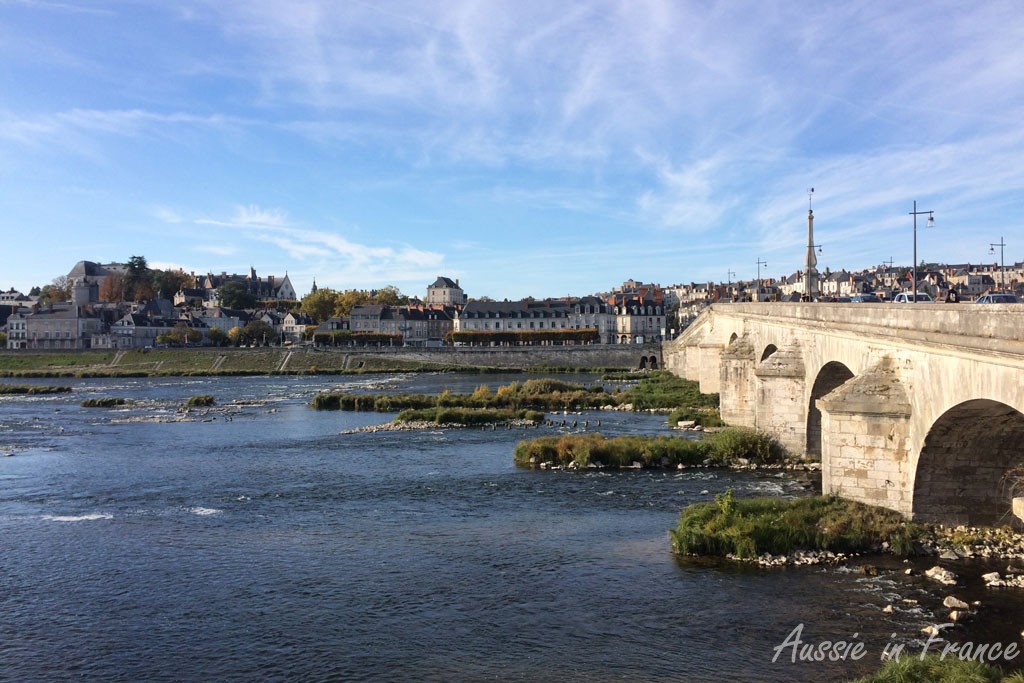
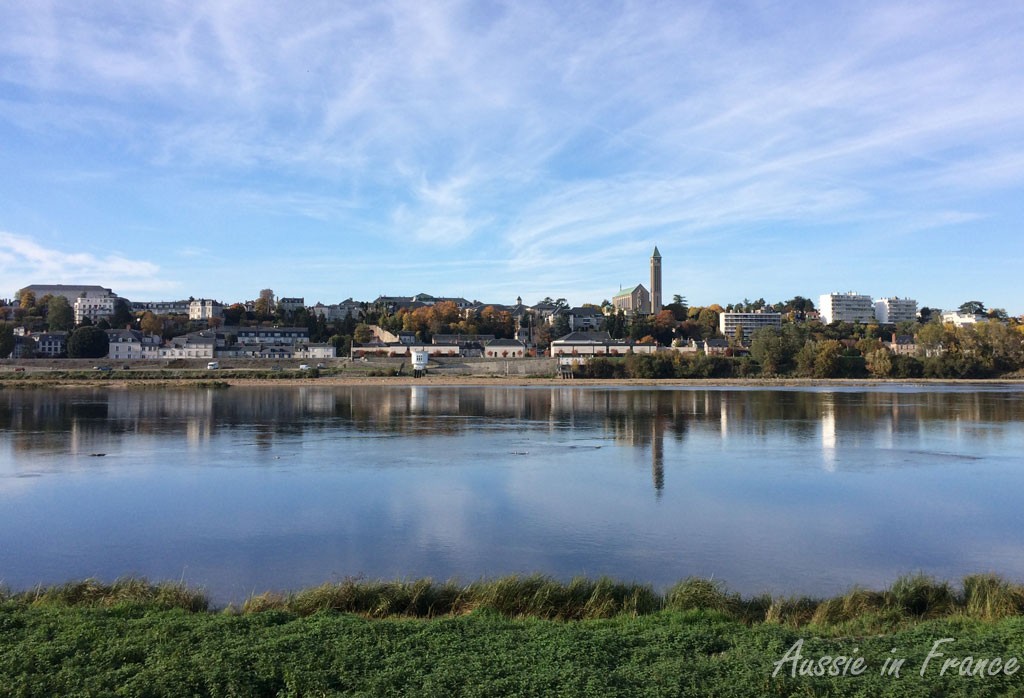
First view of Saint Nicolas and the castleThe castle and cathedral reflected in the LoireGabriel BridgeThe modern church on the other side of the bridge
We continue along the new bike path towards Saint Dyé that takes us past Château Menars.
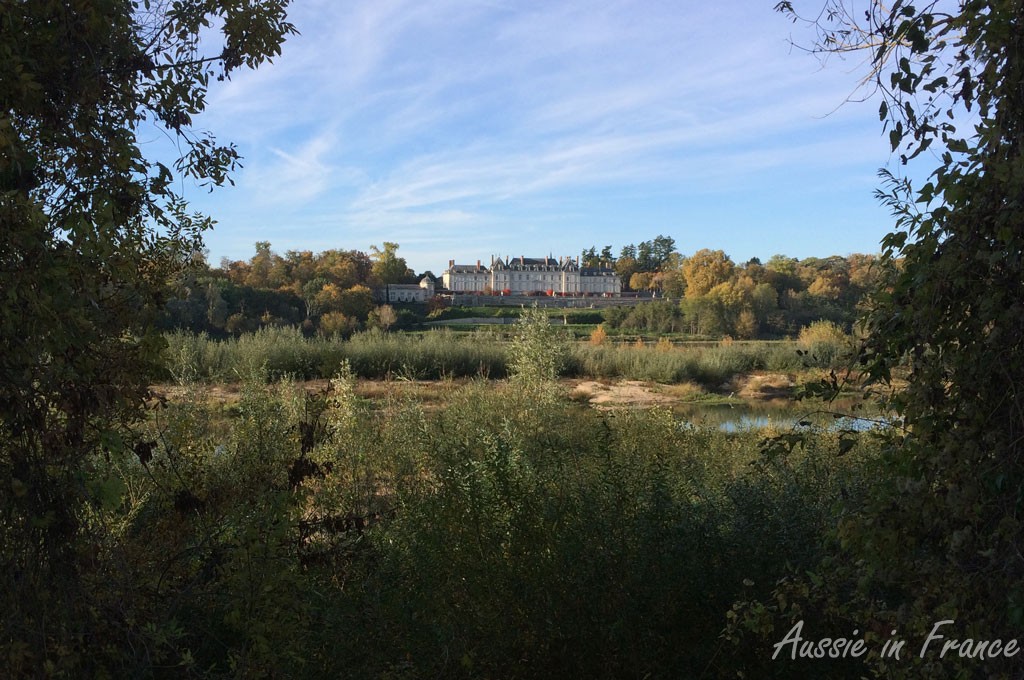
Château de Menars
Then on past the pretty little village of Cour-sur-Loire which you may remember we reached via bike ferry during the summer.
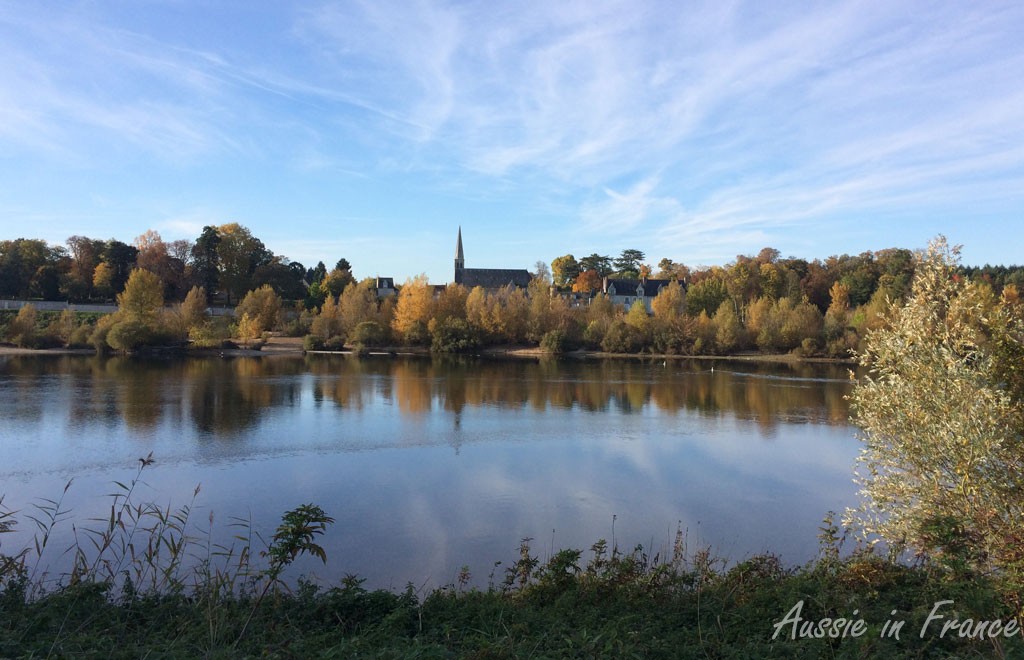
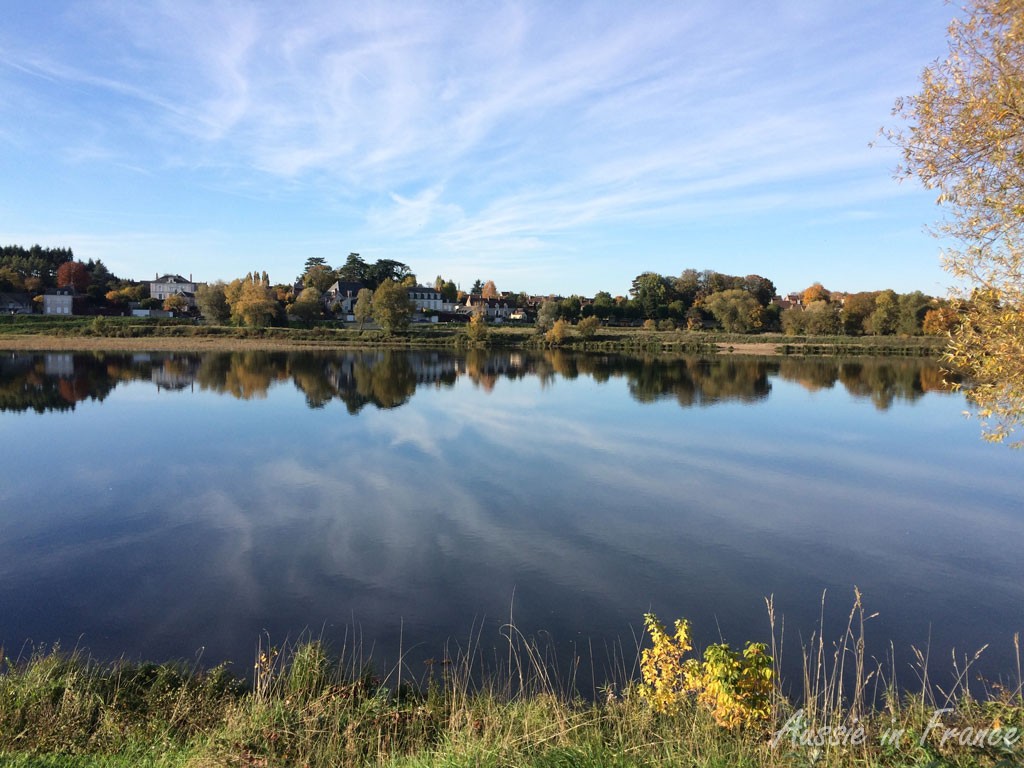
The church in Cour-sur-LoireThe village of Cour-sur-Loire
We have our pause at the picnic table just opposite Cour-sur-Loire, then turn back- 25 kilometers and 1 hour 40 minutes of sheer pleasure.
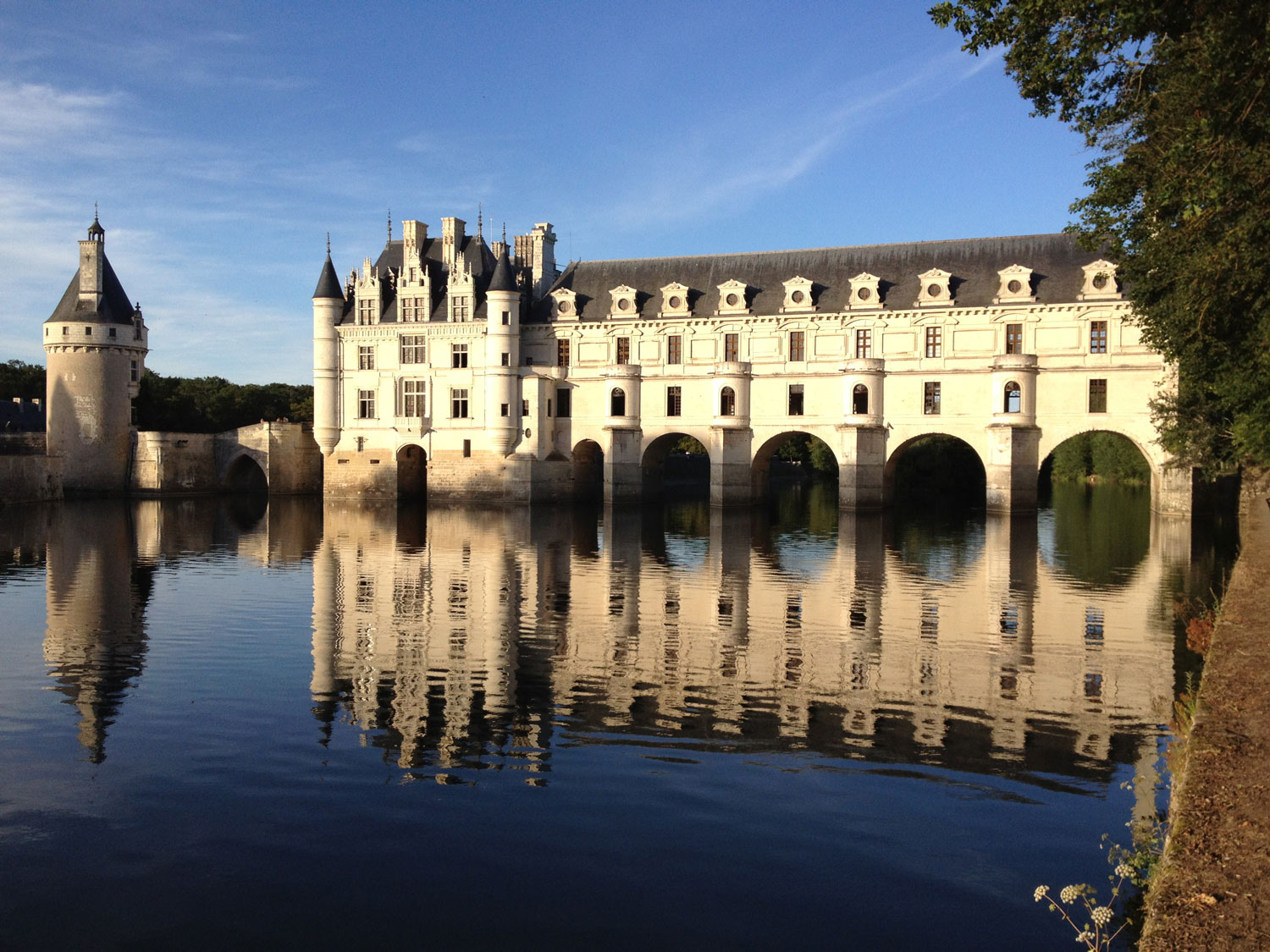
The Loire Valley with its famous châteaux, especially Chenonceau, Chambord, Chaumont and Cheverny, is only a couple of hours from Paris by train or car. Visiting the area by car provides the greatest freedom but not everyone wants the added expense or bother of hiring a car. Fortunately, public transport is available to get around the main châteaux. You simply need to choose the best base and plan in advance as departure times are often limited.
The train from Paris Austerlitz goes to Orléans, Beaugency, Blois, Onzain (Chaumont), Amboise and Tours. Trains can be direct or stop at several stations along the way. The direct train to Blois takes just under 1 ½ hours. A good train for a day trip to visit Chambord and Cheverny, for example, would be the 7.38 am from Paris arriving in Blois at 9.01 am.
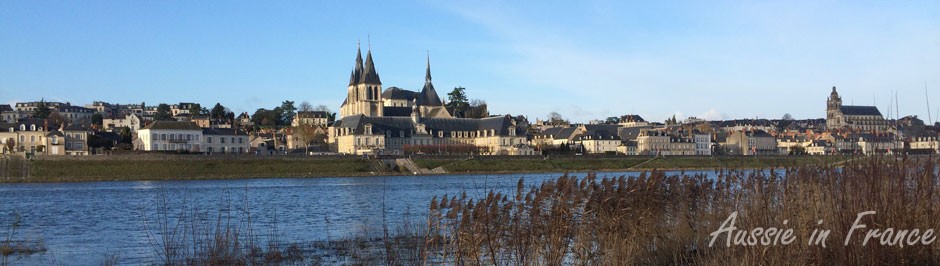
Blois in winter
Blois would seem to offer the best base for visiting the four C’s without a car because it has a special shuttle (Navette Route 41) that takes you from the train station or Blois Castle to Chambord (40 mins), Cheverny and Beauregard. The current price is €6 for the day (adults and children are the same price) whatever the journey and also gives you a reduction to the different châteaux. For the timetable in French click here (timetable in English below).
The shuttle operates from the beginning of April to the end of October on Wednesdays, weekends and school holidays, leaving Blois around 9.30 and 11.30. It also operates every day from mid-July to the end of August. There are regular lines that operate during the winter (information on www.tlcinfo.net). The shuttle times are organised so you can visit Chambord in the morning and Cheverny in the afternoon. If you just want to go to Cheverny, for example, there is a shuttle leaving at 11.30, arriving at Chambord at 12.10 then at Cheverny at 12.34 (see timetable below).
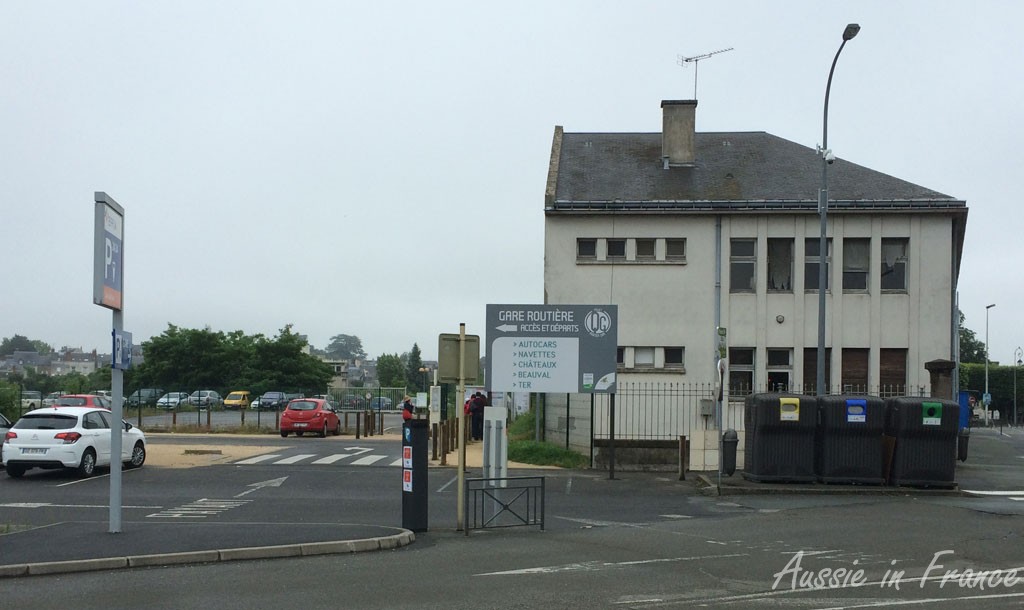
Even in peak season, there are plenty of seats. However, the bus is not very well indicated at Blois station. When you walk out, look diagonally to the left and you’ll see a large sign indicating “Gare Routière” “Châteaux”. The bus stop is just behind it (you can see a small queue in the photo below) to the right of the red car).
All year round, there is a regular coach service called Rémi that goes from Blois station to Chambord and back, once a day, line n° 2, leaving at 12.29 pm, arriving at 1 pm, then returning at 5.10 pm, arriving in Blois at 5.50 pm.
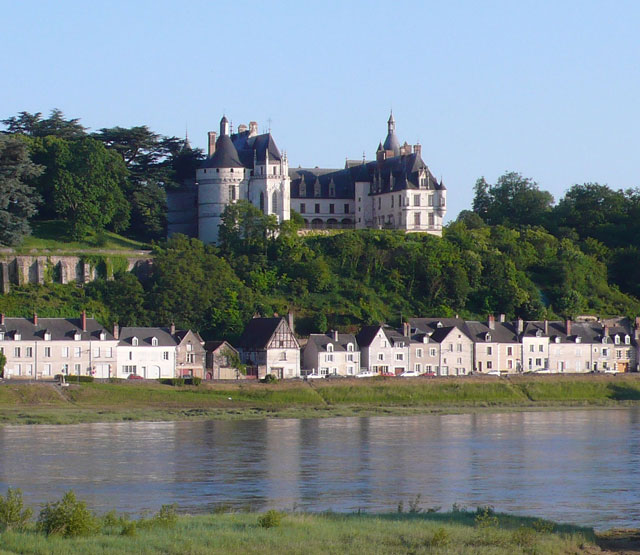
A second shuttle (Navette Azalys) takes you from Blois to Chaumont (€2.15 one way, €4.15 return), leaving at 9.25 am and 2.05 pm from the train station and two minutes later from Blois Castle and arriving in Chaumont at 10.05 am and 2.45 pm (see timetable below).
Château de Chaumont
To access Chenonceau from Blois, you first need to go Amboisewhich is an easy 16 to 20 minute train ride (7.20 €). A half-hour bus ride then takes you to Chenonceau which can also be reached by a half-hour train ride from Tours.
To go to Azay le Rideau, you need to take a 40-minute trip to Toursby train from Blois (€11.20) and allow another ½ hour train ride from Tours. Tours also offers the possibility of going to Villandry (35 minutes by train or Fil Bleu bus n° 117 leaving at 9 am and returning at 1 pm which is plenty of time to visit the garden as the château isn’t very interesting) and could provide a second base if you have more time in the Loire. The 20 K bike path from Tours to Villandry is also a pleasant, easy ride and quite feasible even if you don’t normally cycle that far.
So, to sum up, if you want to visit the Chambord, Cheverny, Chaumont, Chenonceau, Blois and Amboise castles, you will need at least three full days based in Blois: Chambord and Cheverny the first day (Wednesday, Saturday or Sunday except from mid-July to end of August when the day doesn’t matter), Chaumont and Blois the second day (Saturday or Sunday, except from mid-July to end of August when the day doesn’t matter) and Chenonceau and Amboise the third day. If you are interested in also visiting Villandry and Azay le Rideau, Tours would be a good second base.
There is another way to visit the châteaux – by bike. A network of bike paths links up all the châteaux and towns in the Loire Valley. Once again, Blois is a good base for Chambord, Cheverny, Chaumont and Beauregard, with comfortable distances, but Amboise would be a better base for Chenonceau.
Day Trip from Paris – both suggestions should be good with kids
Chambord and Cheverny (train and bus with only short walks)
Take the 7.38 am train from Paris Austerlitz, arriving at 9.01 am. Take the 9.30 shuttle from the station, arriving in Chambord at 10.10 am. Have lunch in Chambord (many choices including sandwiches and a picnic ground). Leave Chambord at 2.05 pm arriving in Cheverny at 2.29 pm. Leave Cheverny at 4.09 pm or, if you want to watch the 5 pm feeding of the hounds, leave at 6.30 pm, arriving at Blois station at 7.15 pm. There are trains for Paris at 4.17 pm (going to Montparnasse), 4.41 pm, 6 pm, 6.43 pm (all going to Austerlitz), 7.19 (Montparnasse) with the last train at 8.37 pm (arriving at 10.34 pm in Austerlitz). You can also get out of the bus at Blois Castle if you would like to include a third castle or walk down into the old town to visit or have dinner.
Amboise Castle and Clos Lucé, Chaumont (train and bus with long walks especially if you include Chaumont)
Take the 7.38 am train from Paris Austerlitz arriving at Amboise at 9.17 am. Visit the castle, then walk to Clos Lucé (10 mins). Have lunch in Amboise and walk to the station which is across the Loire (20 mins) to take the 2.22 pm train to Onzain, arriving 2.31 pm. Alternatively, take the 12.58 train to Onzain, arriving at 1.08 pm and have lunch in either Onzain or Chaumont (there are places to eat in the castle grounds as well as in the town). Walk to the castle (about 1/2 hour from the station but a great walk across the bridge with a fantastic view of Chaumont). Visit the castle. Take the 5.28 shuttle back to Onzain (or walk) and catch the 6.30 train to Paris. You can also take the same shuttle to Blois, arriving at 6.06 pm and have dinner in Blois and visit the old town (train times above).
If you need further information, I will be happy to add to this post. Just write a comment!
SHUTTLE ROUTE 41 – Blois Chambord Cheverny Beauregard (ticket from bus driver – there is always room on the bus)
4 April to 30 August > Wednesdays, weekends, public holidays and school holidays (every day in July and August).
31 August to 1 November > Wednesdays and weekends.
BLOIS
TRAIN STATION
9.30 AM
11.30 AM
BLOIS
CASTLE
9.33 AM
11.33 AM
CHAMBORD
CASTLE
10.10 AM
12.10 PM
2.10 PM
4.10 PM
BRACIEUX
Camping
12.20 PM
2.20 PM
4.20 PM
CHEVERNY
CASTLE
12.34 PM
2.34 PM
4.34 PM
6.34 PM
BEAUREGARD
CASTLE
12.52 PM
2.52 PM
4.52 PM
6.52 PM
BLOIS
CASTLE
3.18 PM
5.18 PM
7.18 PM
BLOIS
TRAIN STATION
3.20 PM
5.20 PM
7.20 PM
AZALYS SHUTTLE – Blois Chaumont-sur-Loire (tickets from bus driver)
April to June > Saturday, Sunday and public holidays (except 1st May)
July and August > every day
September to October > Saturday, Sunday and public holidays
BLOIS
TRAIN STATION*
9.25 AM
2.05 PM
BLOIS
CASTLE
9.27 AM
2.07 PM
ONZAIN
TRAIN STATION
9.55 AM
2.35 PM
CHAUMONT
CASTLE**
10.05 AM
2.45 PM
CHAUMONT
CASTLE**
2.55 PM
5.10 PM
ONZAIN
TRAIN STATION
3.05 PM
5.20 PM
BLOIS
CASTLE
3.52 PM
5.48 PM
BLOIS
TRAIN STATION*
3.35 PM
5.50 PM
*Azalys bus stop opposite the station
** Parking lot at top entrance to castle
A Few Distances in the Loire (km)
Tours
Amboise
Azay-le-Rideau
Chenonceaux
Chinon
Langeais
Loches
Villandry
Angers (49)
130
155
107.7
161.5
89.6
98.9
161.2
110.1
Saumur (49)
73.8
98.7
51.5
105.2
30.6
42.6
105
53.9
Montsoreau (49)
63
88
40
94.5
18.6
31.9
78.1
43.1
Fontevraud-l’Abbaye (49)
66.7
91.7
41.7
98.2
20.3
35.6
79.8
46.8
Montrichard (41)
45.2
19.1
68
11.7
97.7
73.2
33.5
58.2
Chaumont-sur-Loire (41)
44.3
20
71.6
24.6
91.8
76.7
51.3
70.1
Blois (41)
65.6
36
92.9
44.7
113.1
98
66.5
91.4
Cheverny (41)
78.7
53.6
106
40.8
126.2
111.1
62.6
104.5
Chambord (41)
78.9
51.9
105.3
59.7
125.5
110.5
81.5
103.8
Orléans (45)
116.4
103.5
143.7
114.5
163.8
148.8
165.6
142.2
Gien (45)
189.7
176.8
216.9
171.3
237.1
222.1
193.7
215.4
Briare (45)
197.9
185
225.1
196
245.3
230.3
197.3
I’m contributing this post to Lou Messugo’s All About France link-up. For more posts from bloggers across the country, click here.
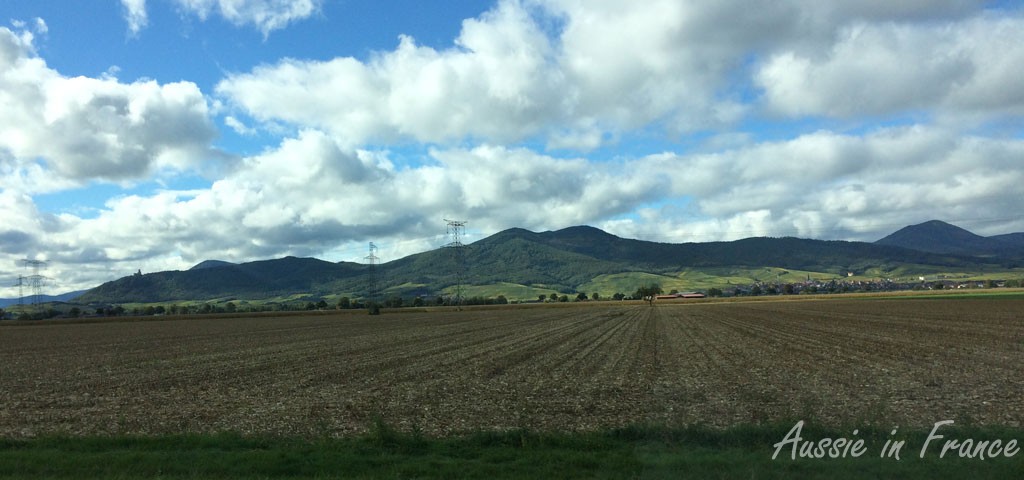
Alsace is one of France’s most picturesque regions and has a lot in common with its neighbour, Germany, in terms of architecture, customs, cuisine and even language. It is famous for its white wines and the vineyards grow at the foot of the gently sloping Vosges mountains.
The slopes of the Vosges mountains
I have been to Colmar twice before, once with Black Cat when she was thirteen (18 years ago) and once with Jean Michel, 14 years ago, when we spent two weeks visiting such lovely little villages as Roquewihr and Haut Koenigsbourg and tasting wine. I remember liking it on both occasions, but am a bit worried that I can’t remember it at all except for one particular place on the canal. Jean Michel only remembers a couple of things as well.
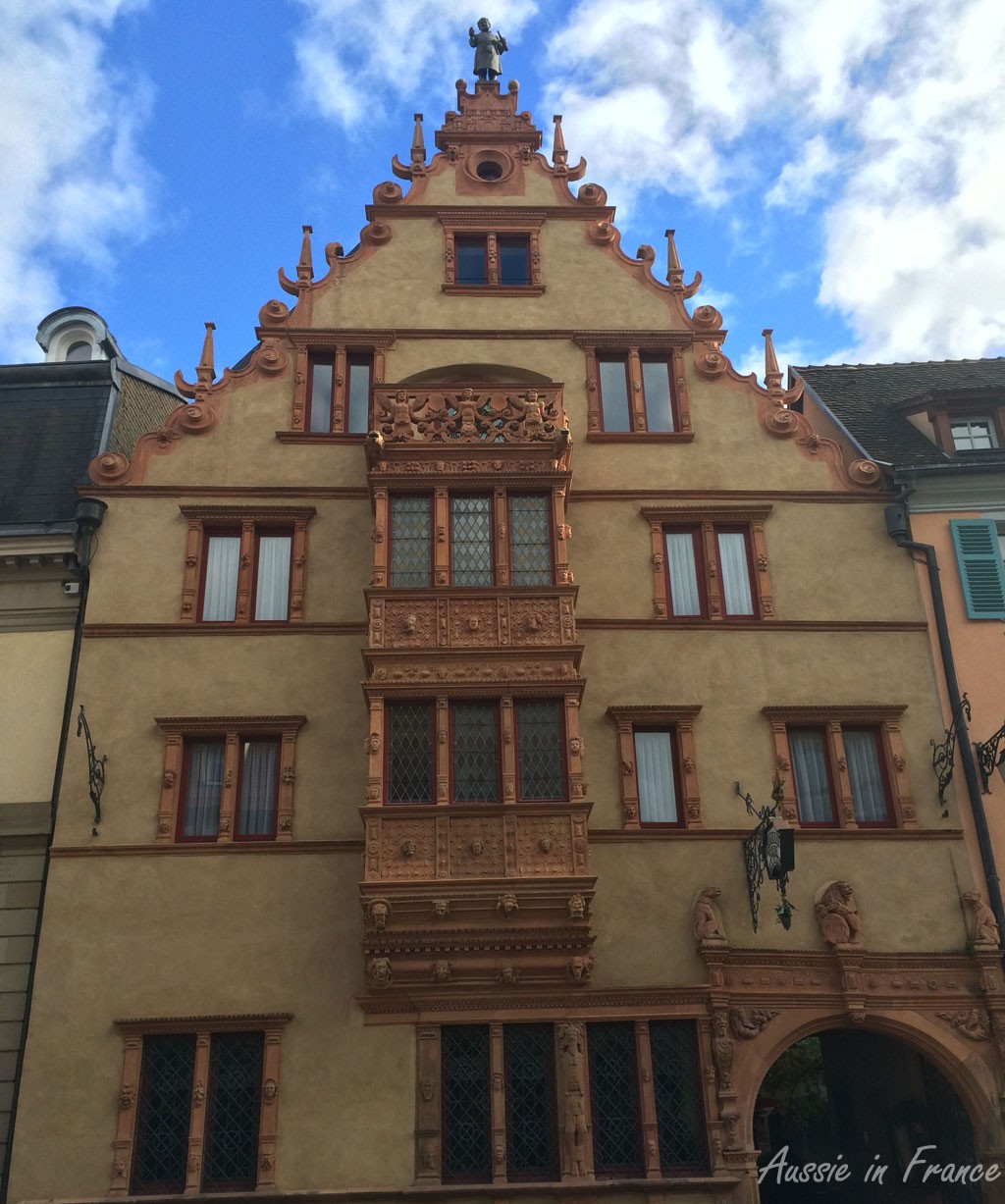
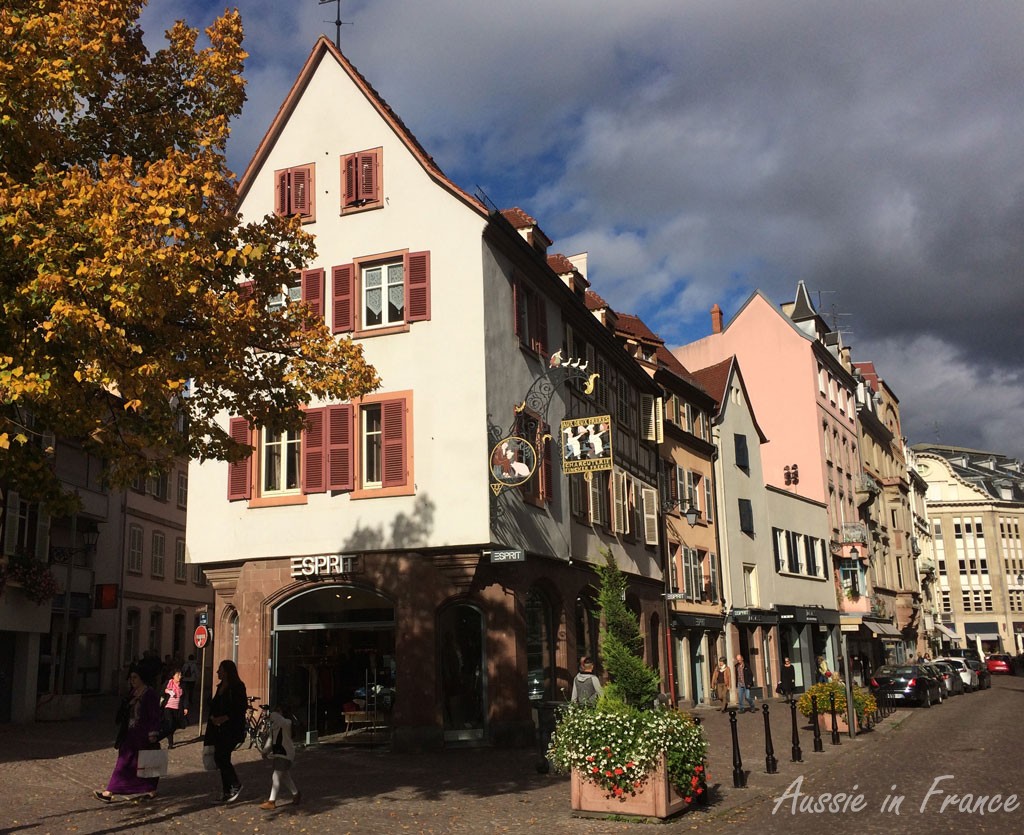
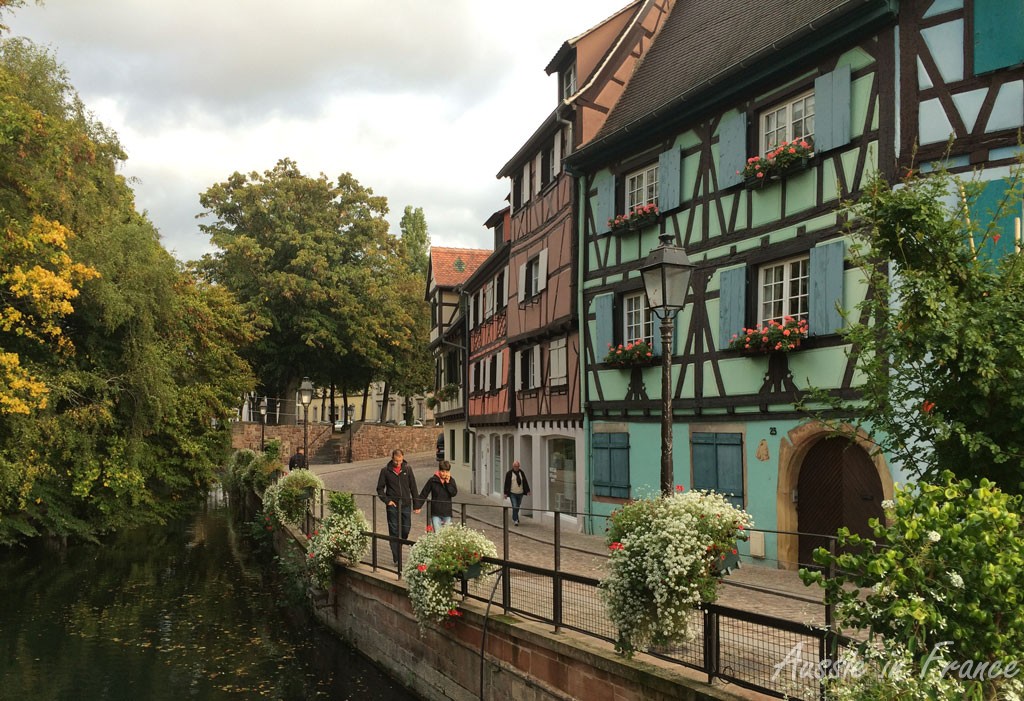
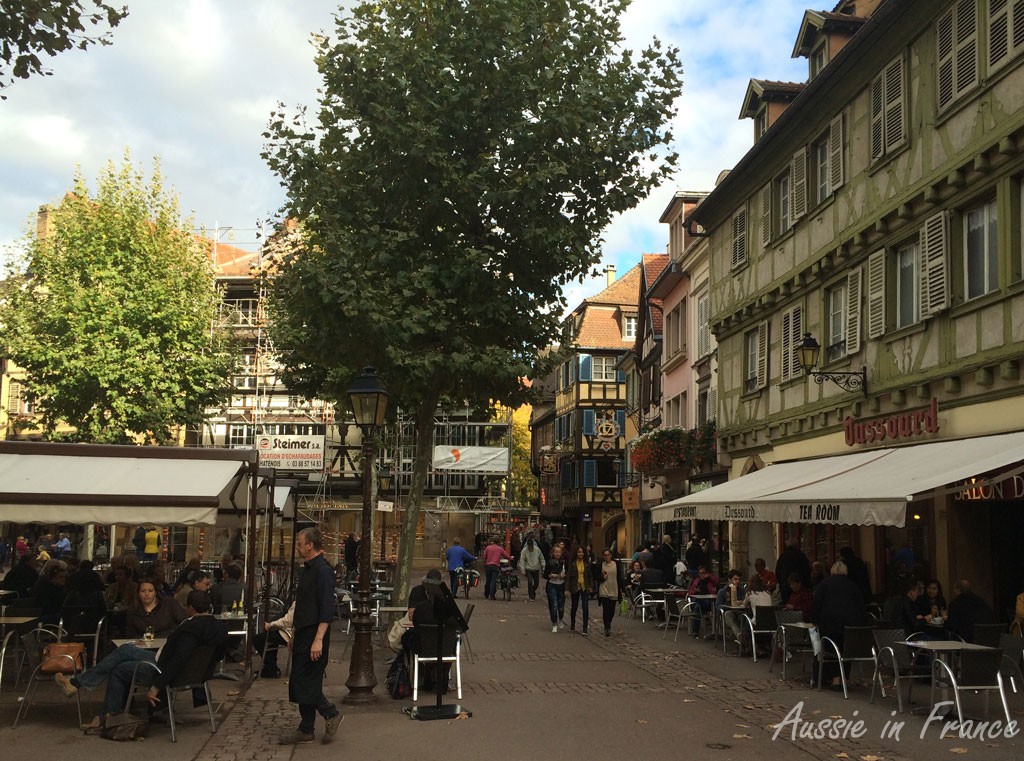
Built in 1609, La Maison des Têtes (House of Heads) owes its name to the 110 masks and grimacing faces which decorate the façade. The magnificently sculpted oriel rises to three levels. The statue of the Alsace barrel maker was placed at the top of the gable when the building was used as a wine exchange.A typical street in Colmar
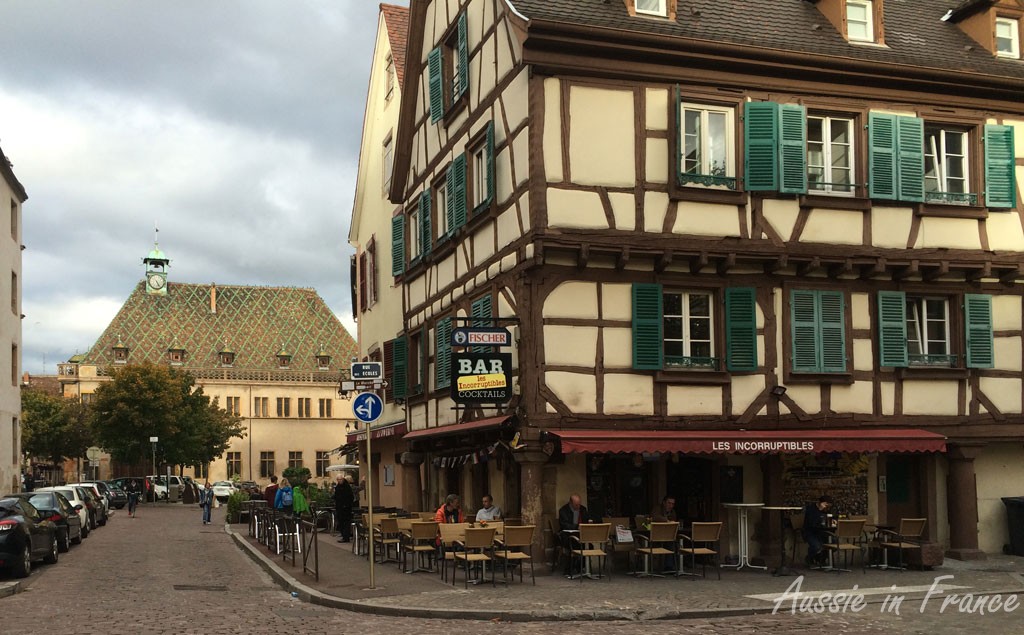
With a little over two hours before sunset, we head straight for the tourist office after checking into our hotel and follow the itinerary proposed in the brochure. A more leisurely visit would have been better just to soak up the atmosphere and appreciate all the lovely half-timbered houes. We are also surprised by how busy the centre is. Lots of school children and their parents suddenly flood the streets.
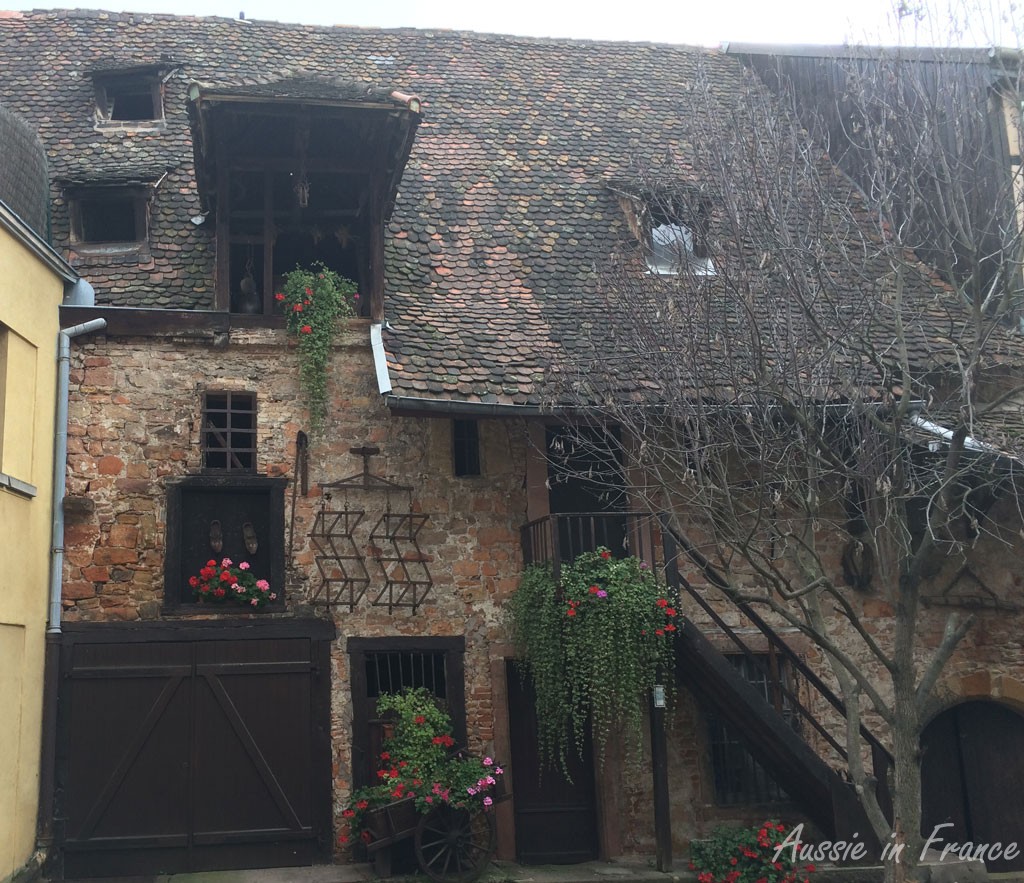
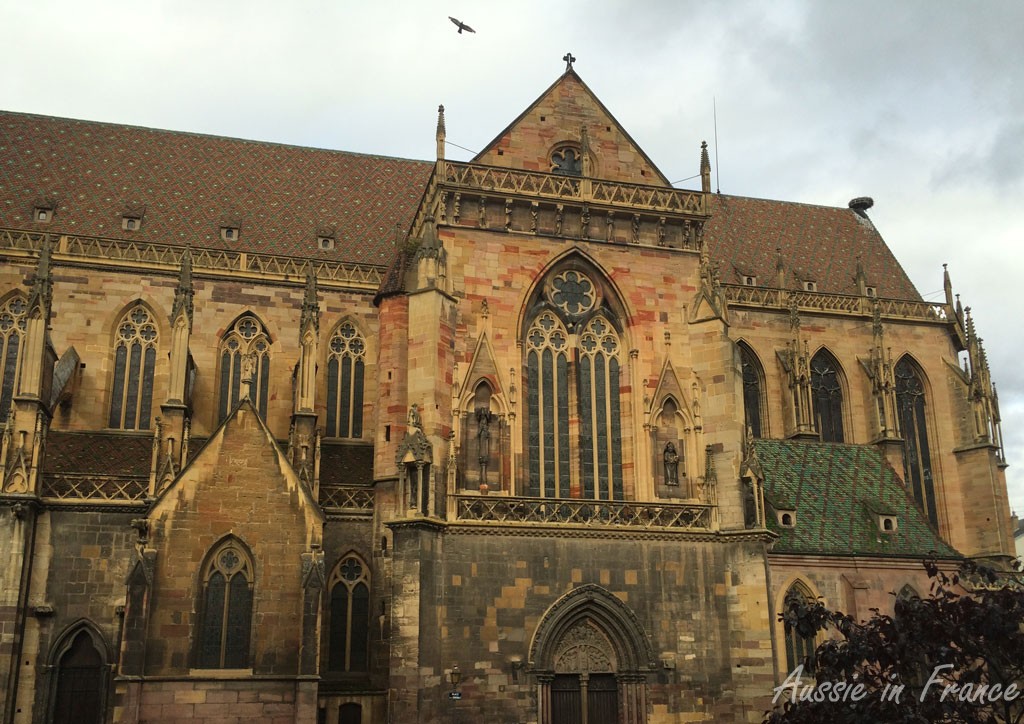
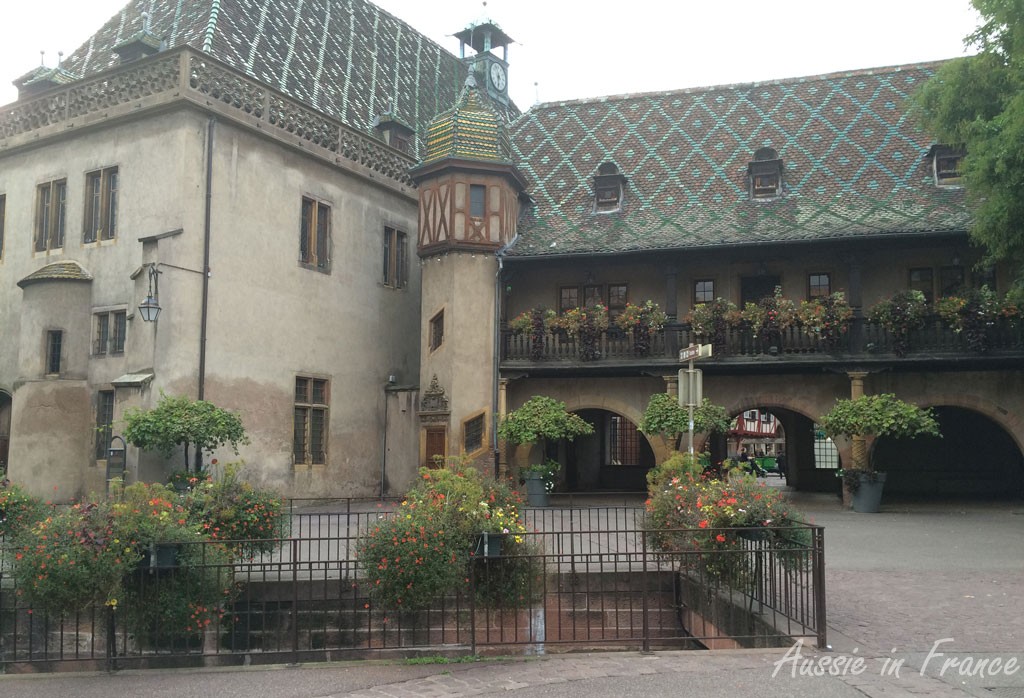
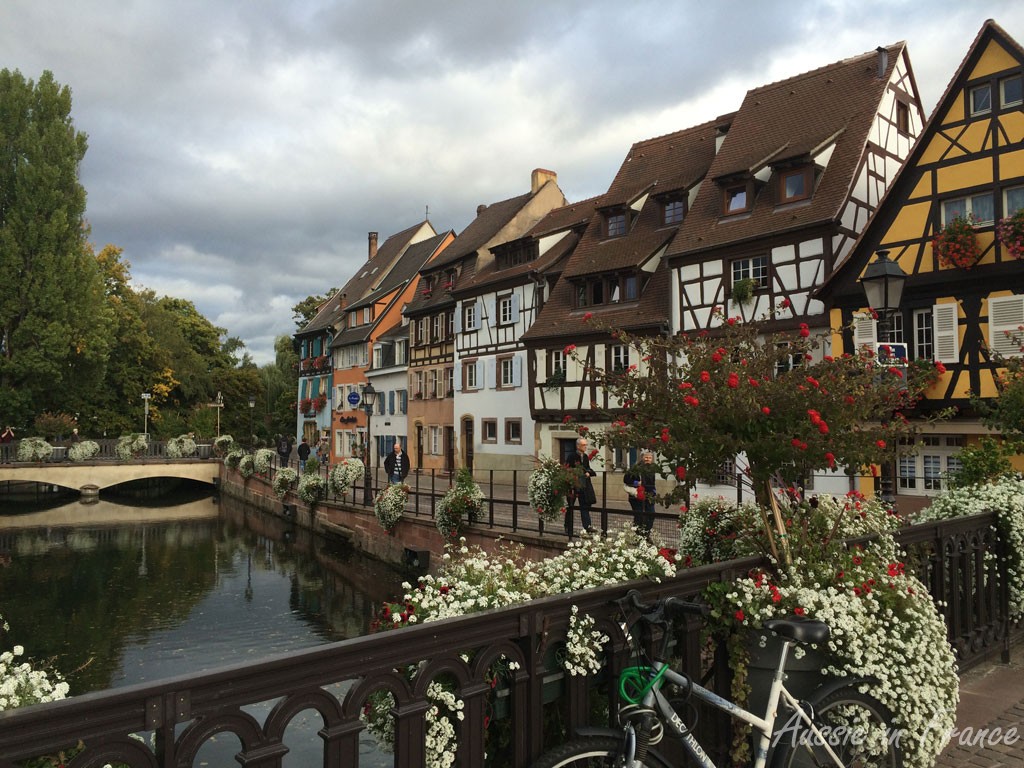
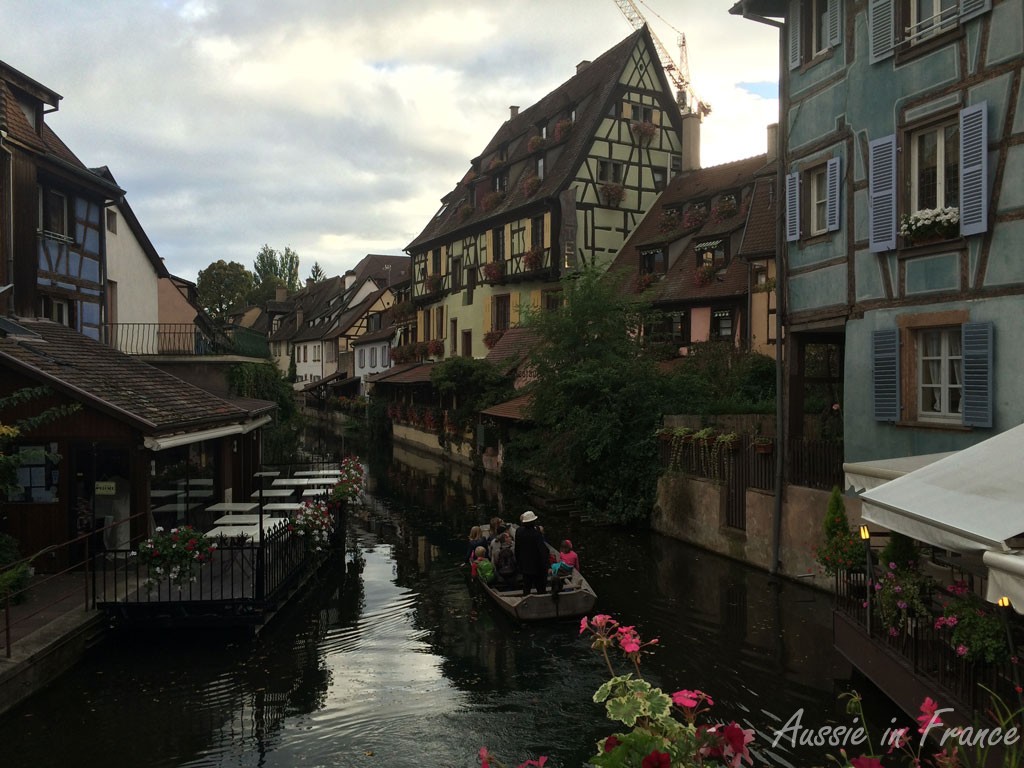
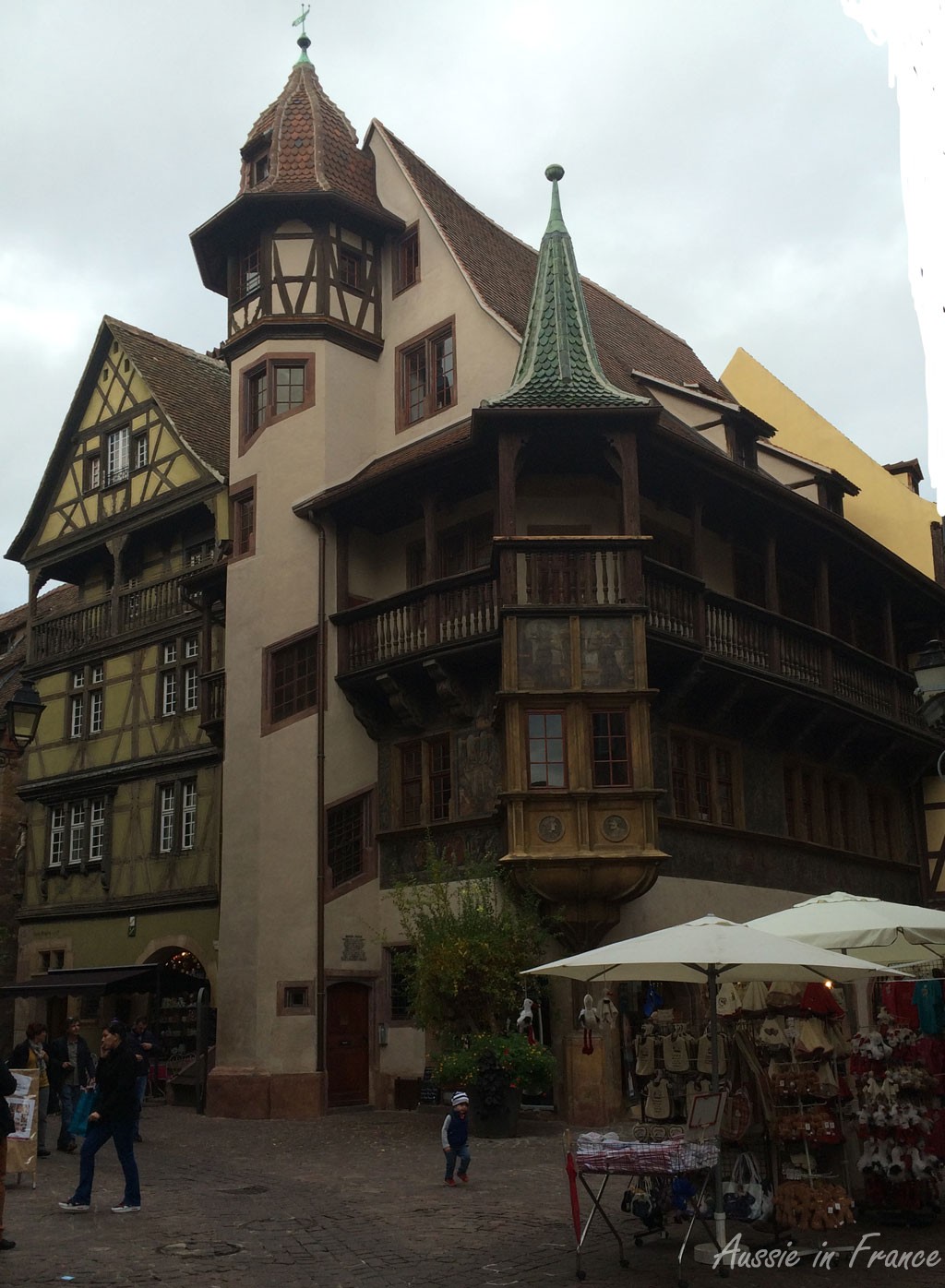
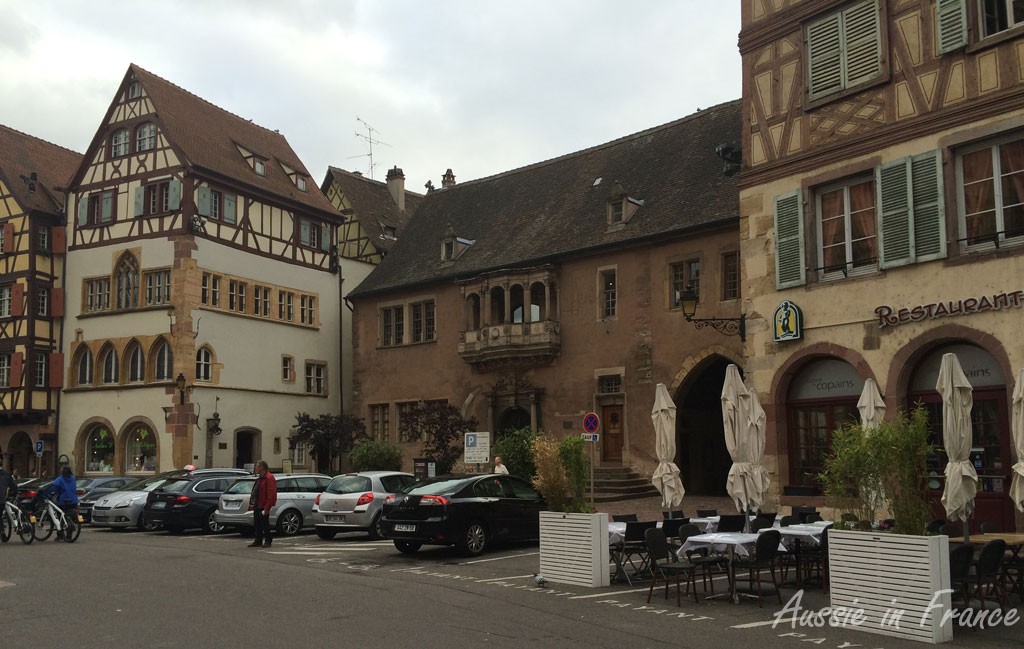
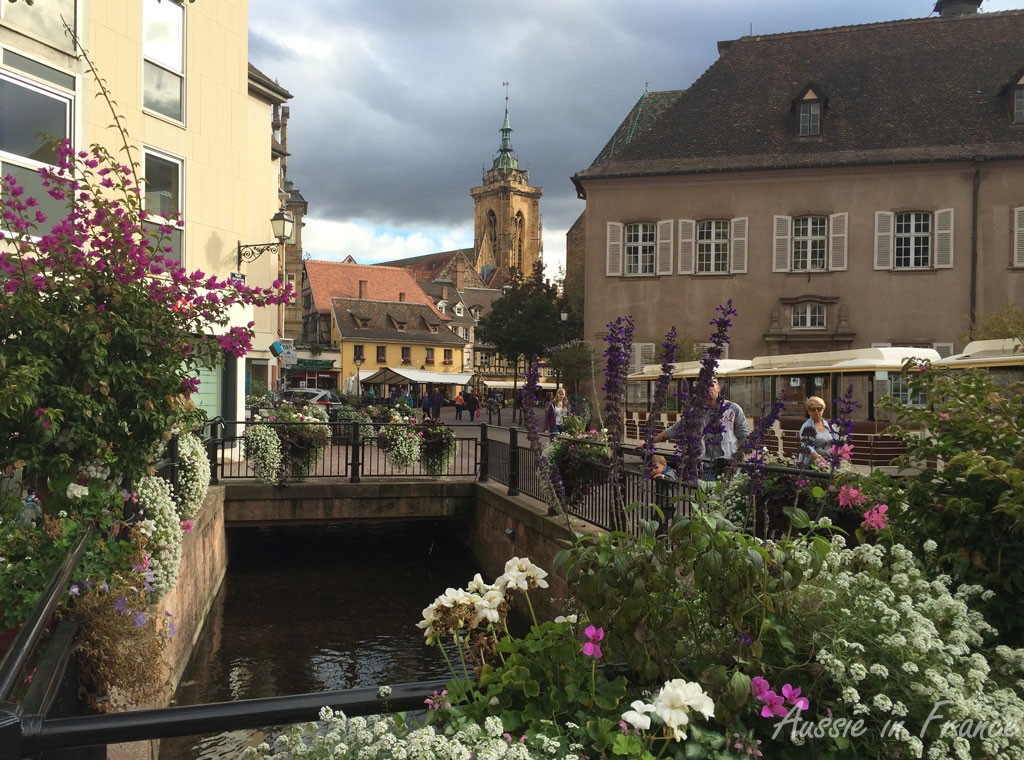
14th century weinhof or corn loftHouses along the canalThe multi-coloured pink sandstone of the CathedralThe inner courtyard of the old customs house built in 1480More houses along the canalThe other end of the canalThe glazed tile roof of the old customs housePfister House built by a silver merchant in 1537, probably the best-known monument in ColmarLeft, Maison Adolph, probably the oldest house in Colmar built in about 1350, with its gothic pointed arch windows. Right, the guard building, constructed in 1575. The loggia was used by the magistrate to hand down sentences.A busy street in ColmarA little canal in the middle of the town
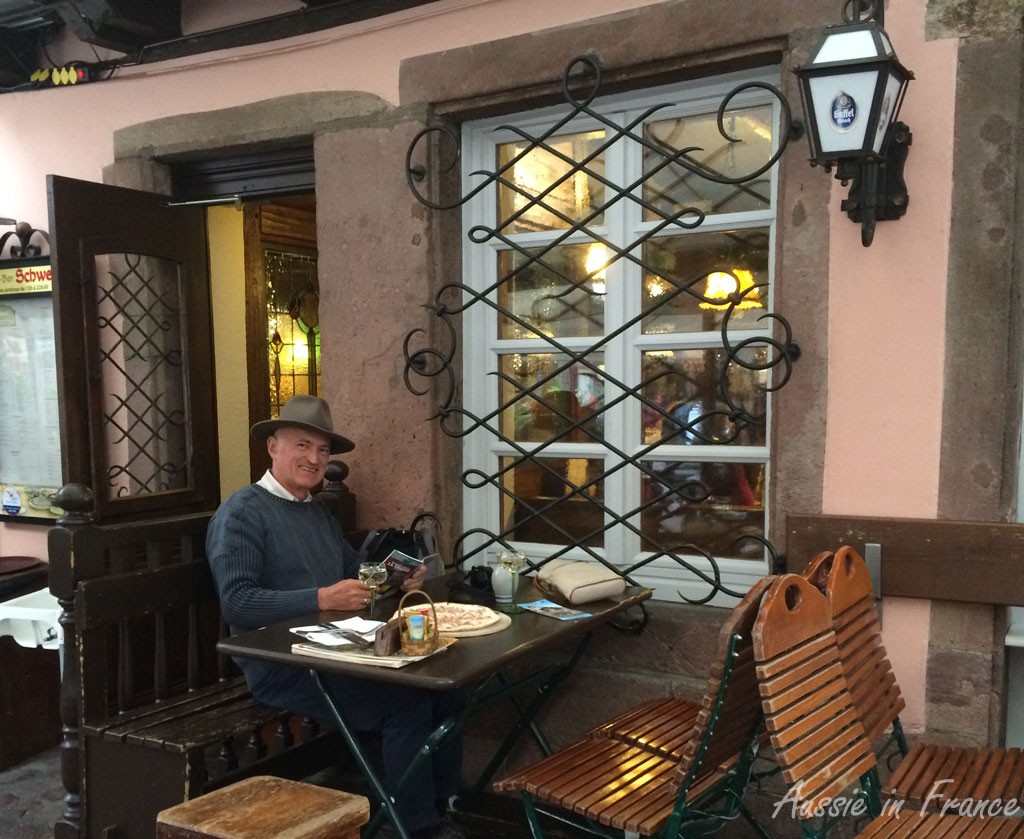
At 6.30 pm, we have finished the tour and can have a well-earned glass of local riesling and a flammekeusche, the thin-crust onion, bacon and cream tart so popular in the area.
Drinking wine in Alsacian glasses accompanied by flammekeusche
We find another venue for dinner and another well-known local dish: sauerkraut, pork and potatoes followed by an ice-cream kugelhof. By now, the streets are nearly deserted.
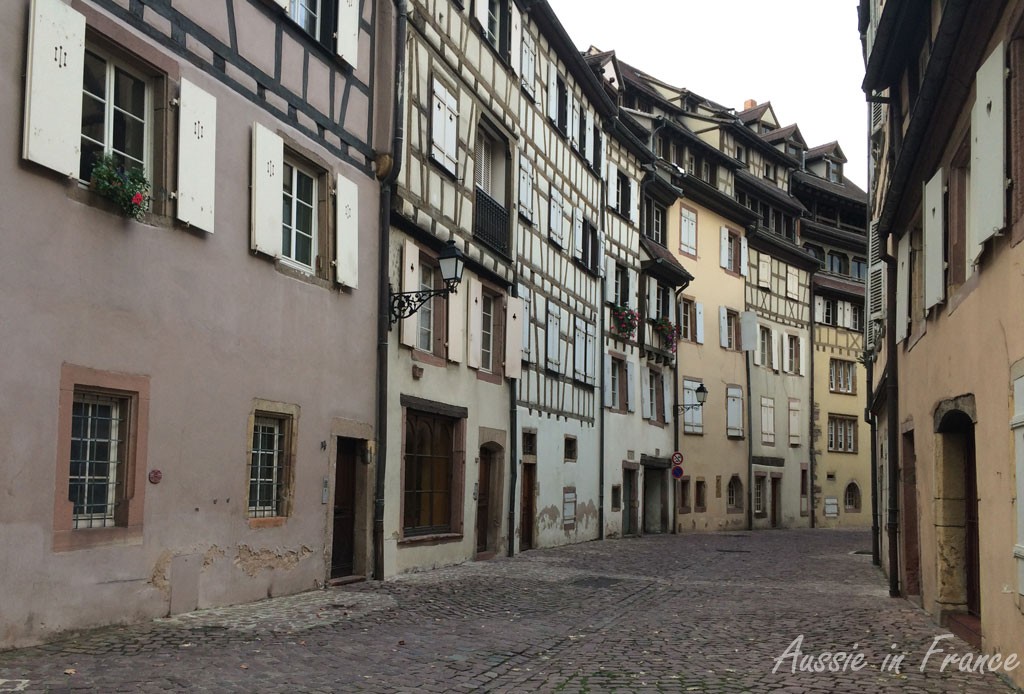
Rue des Tanneurs
No sign of any harvest bread or vin nouveau. Next time maybe! Tomorrow we’ll be back in Blois.
This post is my November contribution to Lou Messugo’s All About France link-up. For other posts about France, click here.
My Australian friend Jane first told me about Bamberg a couple of years ago but although it’s still in Bavaria, it’s a lot further north than the Danube. However, my iPhone says that the shortest route from Melk to Blois is via Nuremberg and Bamberg is only 40 minutes further north which makes it a good stopover on our way home. The weather forecast is also reasonable for visiting although it is not warm enough for cycling especially now that Jean Michel has a sinus infection.
The Altes Rathaus, Bamberg’s most well-known building
I find an apartment through booking.com that’s close to the historical centre and appears to be spacious. We haven’t been doing so well with out accommodation recently so I’m keeping my fingers crossed. As soon as we arrive in Bamsberg, we know we’re going to love it. The check-in for the apartment is at the Weierich Hotel. We can park in front of the apartment which is just opposite the hotel to drop off our luggage then park in a public car park about 10 minutes on foot for 8 euro per 24 hours which is very reasonable, especially after Hungary.
Our living room in Bamberg Apartments on the second floor, Lugbank 5
Jean Michel loves the apartment which is in a building constructed in 1510 (even older than our house in Blois) and has a bedroom, a large living room with 5 windows and a properly equipped kitchen at one end, a sort of sitting room and a bathroom, not to mention a small terrace with two gnomes. I’m relieved since I’m the one who chose it!
The frescoes on the wall of the Altes Rathaus. Have a close look on the right bottom.
The historical centre of Bamberg was added to the Unesco World Heritage list in 1993 because of its beautifully preserved mediaeval architectural ensemble. The first thing we see is the Altes Rathaus, or old town hall, Bamberg’s most emblematic construction built in the 14th century and rebuilt by the people of Bamburg after a fire in 1440. It is just a stone’s throw from our apartment. It was given a Baroque and Rococco conversion in the mid-18th century and frescoes were added on both sides. We photograph it from every possible angle.
The Cathedral, showing two of its four steeples
We then walk up to the Imperial Cathedral of Saint Peter and Saint George on one of Bamberg’s seven hills. The second and present-day building was completed in 1237 and combines both late Romanesque and Gothic elements.
The new residence
It fronts onto a large square with the turn of the 18th century New Residence on one side and the Old Court on the other.
The lovely inner courtyard of the Old Court
We walk through to the splendid inner courtyard of the Old Court with its half-timbered buildings decorated with red geraniums. Now why can’t I grow geraniums like that?
The fishermens’ quarter with its quaint houses
We walk back down to Bamberg’s Little Venice with its quaint fishermen’s houses along the towpath of the Regnitz River.
Front façade of the Altes Rathaus
From there, we go back to the Altes Rathaus and walk through the arch and over the bridge from which we can see the frescoes on the other side.
Wild mushrooms in the green market – the ones we don’t know are on the bottom right in the top corner of the box
The Green Market is next with its many fruit and vegetable stalls, including wild mushrooms we’ve never seen before.
Maximilienplatz
From there we go to Maximiliansplatz, the largest square in the town centre, dominated by the present-day town hall with its Baroque façade built from 1732 to 1737.
The café opposite Harmony Garden
We work our way back to the apartment via Harmony Garden where we stop for a drink. My feet are starting to burn – we’ve walked 10 kilometers in about 2 ½ hours, mostly on paving stones, but every corner reveals another beautiful or quaint building and we want to make the most of the sun. We know that it’s going to be partly overcast next day.
Hotel Weierich
Back in our apartment, we have dinner (it’s an intermittent fast day) and I discover there is no hot water to wash up. Jean Michel checks the radiators and tells me two of them are not working, including the one in the bedroom. We go across to the hotel and explain the problem to the night watchman who only has very basic English but is very helpful. He finds the solution to the hot water (it has to be turned on under the sink) but it’s too late to do anything about the heating. He offers us a room in the hotel instead so at bedtime, we take what we need for the night across the street to the hotel.
Breakfast at Hotel Weierich – best yet!
Next morning the girl at the desk tells us someone will look after our heating during the day. She asks if we’d like to have breakfast in the hotel (no extra charge). We accept and have the best breakfast we’ve had since we left home nearly a month ago! The brioche loaf is exceptionally delicious.
Back in the apartment we find the heating is working again and wonder whether the renovation work next door has anything to do with the problem. As we leave the apartment, the sun comes out and we cross a different bridge over the river and get another superb view of the very photogenic Altes Rathaus.
The broom and brush vendor on Maximilienplatz
We head for Maximiliansplatz to find a bookshop to buy a guidebook in French as our tourist brochure isn’t very adequate. On the way, we come across a brush and broom vendor, very similar to the one we found in Dresden last year. We buy a new broom for our hearth in Blois and put it in Jean Michel’s backpack.
The building we used to find the gardens
The sky clouds over and we decide to head for Bamberg’s market garden district owned by a dozen or so families on the other side of the river and which was responsible for Bamberg’s considerable commercial development in the middle ages. However, we have trouble finding it because of the poor indications but by studying one of the photos in the guide book, we are finally able to locate it. We climb up a leaning metal platform to get a bird’s eye view.
The view of Saint Otto’s and the surrounding gardens from the viewing platform
Unfortunately the little market gardeners’ museum is not open on Tuesdays so we eventually work our way back to the island in the middle of the city, having a cappuccino on the way to give my feet a rest.
The market garden museum closed on Tuesdays
We follow the suggested itinerary in the guide book which includes several of the places we visited yesterday, but only from the outside. Near a lock and an old watermill, we come across a little ferry and cross the river . We are reminded of all the little ferries along the Danube and Rhine. Throughout the day we see lots of local cyclists and regret that the weather is not warmer.
The ferry crossing the river from the old watermill
Our path takes us to the Imperial Cathedral and this time we go inside. Jean Michel starts reading the guidebook out loud but it is so detailed that I can’t take in any more. I gather there are three main things to see : a statue of an unknown horseman, circa 1250, the tomb of the imperial couple, Heinrich II and Kunigunde (1513), and the Marienaltar (1523).
The incredibly detailed and finely sculptured bas reliefs depicting Kunegonde
The Bamberg horseman is a little high up to appreciate the details but the Kunigunde carvings are quite fascinating. I consult the guidebook to find out more.
Scheiners Gastuben
We’re now ready for lunch so walk down a flight of steps to the centre and find ourselves in a street with several possibilities. We choose Scheiner’s Gaststuben with its typical wooden benches and find ourselves a seat next to a German couple. We have a mixed sausage grill (gemischter bratwurstteller), sauerkraut and fried potatoes for 8.90 euro, very good value for money, and have a glass of local white wine to go with it.
The state room in the new residence
Back up the stairs to the cathedral square after lunch to visit the New Residence whose Baroque wings were built under Prince Lothar Franz von Schönborn at the end of the 17th century. Unfortunately, we have to follow a guided tour in German and it is not until the second half that our tour guide realises that we need the brief guides in French!
The white room with its beautiful stucco work and white enamel stove
We are able to admire the beautiful painted ceilings and ceramic stoves though – there isn’t much furniture.
The rose garden
The rose garden behind the New Residence offers a wonderful view of the city but, more especially, takes us down a tree-lined path that gives us a superb view of the cathedral. with its four spires.
You can see the four spires on the cathedral
We follow our guidebook itinerary until we reach the 12th century Carmelite monastery converted, like everything else it seems, to the Baroque style at the end of the 17th century. Its late Romanesque cloisters from the 13th century remain unchanged.
The cloisters of the Carmelite Monastery with their finely carved capitals and painted sundial
The Upper Parish church (Obere Pfarre) with its Tintoretti painting and white Baroque interior is the only purely Gothic church in Bamberg. The high chancel is supported with flying buttresses which make it very impressive from the outside.
The interior of the Obere Pfarre
We debate about whether to climb another hill to see Saint Michael’s Monastery founded in 1015. The photos in the guidebook showing the painted ceiling with its 578 flowers and medicinal herbs convince us and we make a final effort. It’s closed for renovation. Sigh.
Saint Michael’s Monastery
The view as we go down the hill along a small pathway to the historical centre makes up for the disappointment.
The view pf Saint Michael’s Monastry and vineyard from the path
An ice-cream in front of the Altes Rathaus gives us enough stamina to call in at Kathe Wohlfahrt Christmas decoration store where we buy a little set of bells for the Christmas tree. We usually buy something for the tree in each new country we visit but we totally forgot to do so when we were in Serbia and Romania.What a pity!
An inviting cafe along the canal in Bamberg
Back at our apartment, after having walked 15 kilometers (according to the health app on my iPhone), we check the weather and the map for a last one-night stopover on the way hope. We decide on Colmar, another Little Venice with its pretty canals and Alsatian decor. Maybe we’ll be lucky enough to find some vin nouveau and harvest bread like we did last time !
On Saturday morning, the weather forecast for Sunday promised bright sun, blue skies and 19°C (even better than Saturday) so we intended to cycle from our Radlerpension in Hagsdorf to Melk for lunch then drive up to the Maria Taferl basilica to save our knees – it’s at the end of 4 km of winding road.
Saturday’s blue sky and blue Danube
However, by Saturday evening, the forecast has changed – a maximum of 15°C with fog all day. I guess yesterday was our last day of cycling for the year. We go to the local village for bread and other supplies but soon discover that even in the bigger towns around us, Sunday is a day of rest. We manage to buy some bread though at a place that has a breakfast café attached to it. Each time we go past a church, we see families in their traditional Sunday best which we remember from the last time we were here.
The dining room at Pichler’s
After spending some time looking for a hotel in our next location, Bamberg, we drive towards Melk for lunch but stop on the way at a likely-looking hotel/restaurant called Pichler’s in Emmersdorf. Inside, the waitresses and some of the patrons are also in traditional dress – certainly a far cry from the ultra-tight highly revealing apparel we have seen in other parts of Europe recently.
The konditorei where we have coffee and cake
By the time we finish lunch, the sky has cleared to a pale blue and the temperature is 14°C, certainly not cycling weather but we should get a good view from Maria Taferl, which is the second most important place of pilgrimage in Austria. We’re a little bit worried about the crowds, but it’s not very busy and we are able to park very close to the basilica just opposite a Konditorei.
Maria Taferl Basilica built from 1660 to 1710
The current baroque church was built from 1660 to 1710 on the site of a shrine to the Virgin Mary celebrating several miraculous recoveries. Its construction also gave the local inhabitants renewed courage after the bubonic plague.
The Danube from the panoramic terrace in front of Maria Taferl Basilica
We go onto the panoramic terrace first. The view of the Danube and surrounding countryside is quite superb despite the lack of blue sky.
The main altar and painted ceilings
The Inside of the church is standard gilt baroque and beautifully painted pastel ceilings.
The holy picture collection at Maria Taferl Basilica
We notice a side door and wander into an exhibition of holy pictures that covers the walls of three flights of stairs. I’m surprised there aren’t more people.
An unusual coffee grinder
After visiting the basilica, we have coffee and some sort of cream cake in the Konditorei. Like the restaurant at lunchtime, there is a lot of beautiful polished wood everywhere. It also has an unsual porcelain coffee grinder.
Maria Taferl on top of the hill
On the way back, Jean Michel chooses a different route and we find ourselves opposite a stunning view of the basilica which looks very romantic through the slight haze.
The rest of the day is given over to R&R and finding an apartment in Bamberg in Germany, whose historical centre is on the Unesco World Heritage list. It is one of the few places we haven’t visited in Bavaria. It will be a good place to finish off our holiday.
We know we’re in Austria because the host at our Radlerpension (radler = cyclist) greets us with Grüss Gott which literally means “may God greet you”. The first time we heard it was in Bavaria as we climbed the hill to the stunning Baroque church of Wies. Every person we passed said Grüss Got to us. When we got back to the hotel, I asked what it meant and was told “it’s just a thing they say here”. Hmm.
Melk Abbey from the bike path
It’s already October and the days are getting shorter and cooler. We’re having trouble finding places along the Danube to cycle but the Eurovelo 6 bike route to the west of Melk, famous for its Benedictine Abbey built in the early 18th century and affording a stunning view of Wachau Valley and the Danube, seems promising.
Our Radlerpension Leebs in Hagsdorf
Our Radlerpension Leebs is right on the Eurovelo 6 path and well situated. The only problem is that the wifi cuts out at about 8 pm and doesn’t return until midnight by which it’s too late of course. I mention it next morning to our hostess and she is surprised. We hope it won’t happen again. This evening, it’s working perfectly so everything seems in order.
Ybbs from the bike path
By 10 am, it’s warm enough (15°C and promising to be sunny) to set out on our bikes. We are happy to be on a real bike path such as those we have always experienced in Germany and Austria, usually right on the edge of the Danube.
The view from the bridge between Persenbeug and Ybbs
However, the signs are not that clear and we cross the bridge at Persenbeug on the road instead of the bike path! After that, we follow a small sealed road along the Danube for about 10 kilometers. It’s not a bike path but the occasional car is not a problem.
A fishing competition on the Danube
We go past a number of fishermen evenly spaced along the riverside and Jean Michel says that with such sophisticated equipment, it has to be a competition.
A great place for a cappuccino
When we get to Willersbach we’re ready for a cappuccino and Gasthof Zur Ruine Freyenstein has a terrace overlooking the Danube.
The Danube from the bike path
The scenery is not as stunning as it is on the S-bend and the Wachau but it’s still very pleasant and the temperature is gradually getting warmer.
Grein from the bike path
We reach the bike ferry that goes to Grein after about 20 K but unfortunately, it stopped running at the end of September so we continue for a couple more kilometres to the bridge.
The historical centre of Grein
The little town of Grein has a very attractive historical centre, including Austria’s oldest theatre.
Austria’s oldest theatre, built in 1791 in the former granary of the town hall built in 1563
We find an excellent place to eat with a terrace overlooking the main square. We order the schnitzel of the day – breaded with almonds – and have a buffet salad and a glass of wine for less than 30 euro. More expensive than Hungary of course, but less expensive than France.
The Danube on the way back
We decide to go back along the way we came rather than stay on the Grein side and do a loop because although there is a bike path, it is mostly along the main road. The light has changed and gives us another view of the Danube.
The Radler Station with its imbiss
On the way back, we see that the Radlerstation we noticed earlier also has a bar – an imbiss. I think it’s great that so much is done for cyclists here.
Autumn colours along the Danube
The fishermen are still fishing and we still don’t see any fish but friends have joined them in some places and there are a lot of barbecues and beer around.
The mediaeval building in Ybbs
We cycle into Ybbs but are somewhat disappointed. It’s not nearly as pretty as Grein and everything is closed. We were hoping for an ice-cream. On the edge of the Danube, however, we see some older buildings, including what appears to be a mediaeval construction (the tourist office is closed and we seem to have forgotten our guide book to Austria) – but still no ice-creams.
Persenbeug centre
We manage to find the bike path to cross the river this time and cycle down into the centre of Persenbeug. I immediately see a café with Italian ice-cream so we are rewarded for our 59 K in 4 hours. At least this time we weren’t stressed about nightfall. We got back to our Radlerpension in Hagsdorf at an unprecedented 4.30 pm.
The view from the bike path into Hagsdorf
The weather forecast for tomorrow was supposed to be sunny and 19°C but all those Grüss Gotts don’t seem to be working. It’s now going to be overcast and 15°C. We may have to move on instead of staying another night. Sigh.
We’re on our way to Ybbs an der Donau in Austria and Gyor seems like a good halfway point. We arrive at 12.30 just in time for lunch. We find an indoor parking lot so we won’t be restricted with regard to time (we still have our two parking tickets from Szeged) and set out to discover the historical centre of Gyor which is Hungary’s third largest industrial town.
We are immediately attracted by the centre. It’s spacious, clean and bright with many typical baroque buildings – the blue sky and sun help of course. We debate about whether to eat at what looks like the largest tourist restaurant in town – Palffy’s – on the main square, Szechenyi Ter, and wander down to the Danube, taking photos on the way.
Matroz Czarda with its vaulted ceiling and open door beckons to us (the temperature is not quite high enough to eat outside comfortably) and we are given a table for six as it’s the only one left. We both choose Hungarian ribs which turn out to be some sort of pork (no sign of ribs) with a tomato, onion and paprika sauce, served with French fries. I’m happy with it but Jean Michel regrets the ribs.
I see there are three different red house wines by the glass so I ask the waiter the difference. On is a wine and soda mix, one a cola and soda mix and the other straight wine. I later learn soda water was invented in Gyor.
Next stop, the cathedral, Bazilika Szent Laszlo Herma, nearly a thousand years old, consecrated in 1033. Its neoclassic façade dates from 1823 and its baroque interior including a marble pulpit from 1743. What a mixture!
I am keen to see the Xantus Janos Museum, which is said to house a good ethnic collection. Unfortunately it’s closed but we can’t find out why.
We have a cup of coffee at Palffy’s for the view then return to the car park by which time it’s 3.30 pm. Next stop, Ybbs.