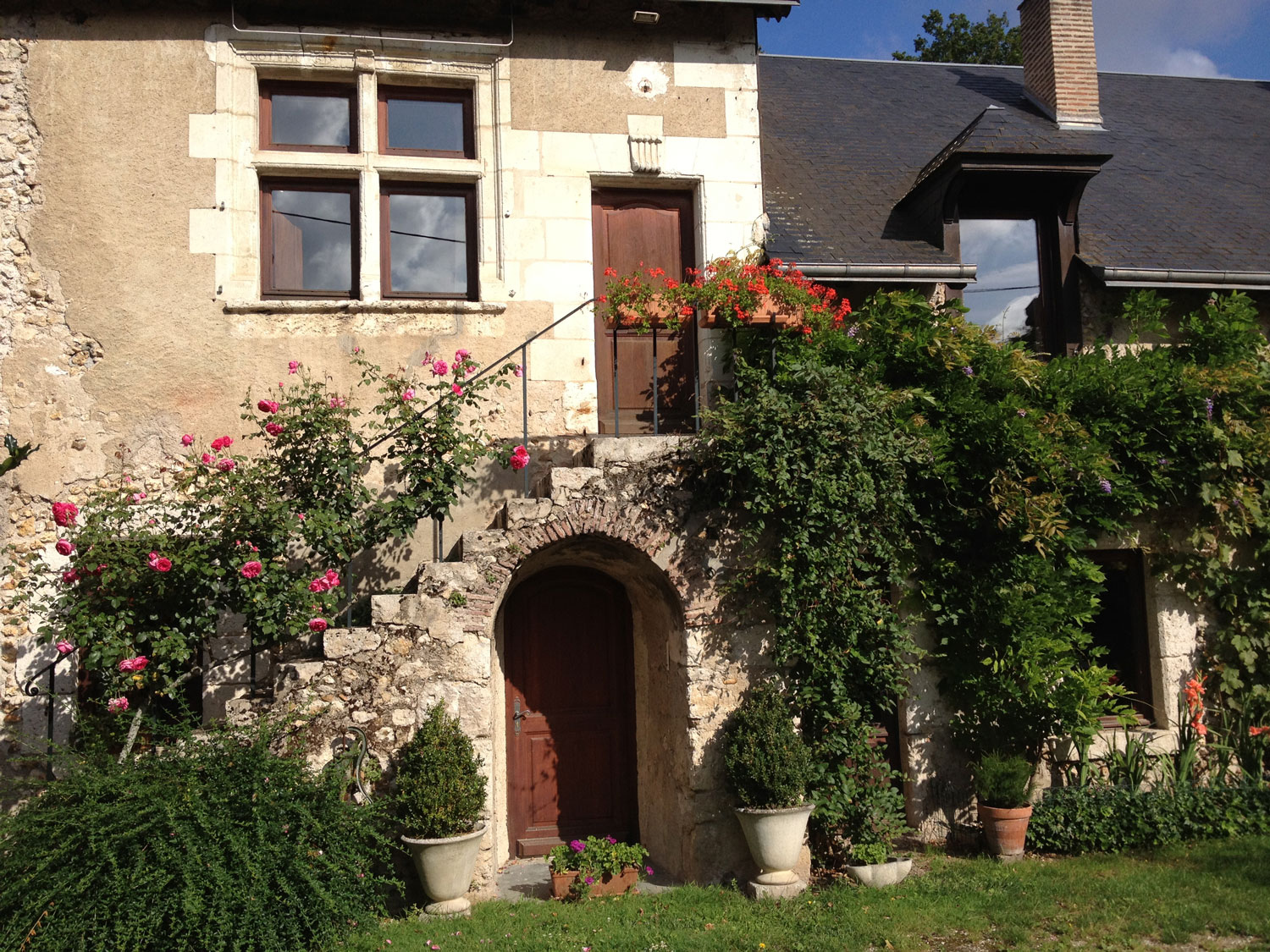
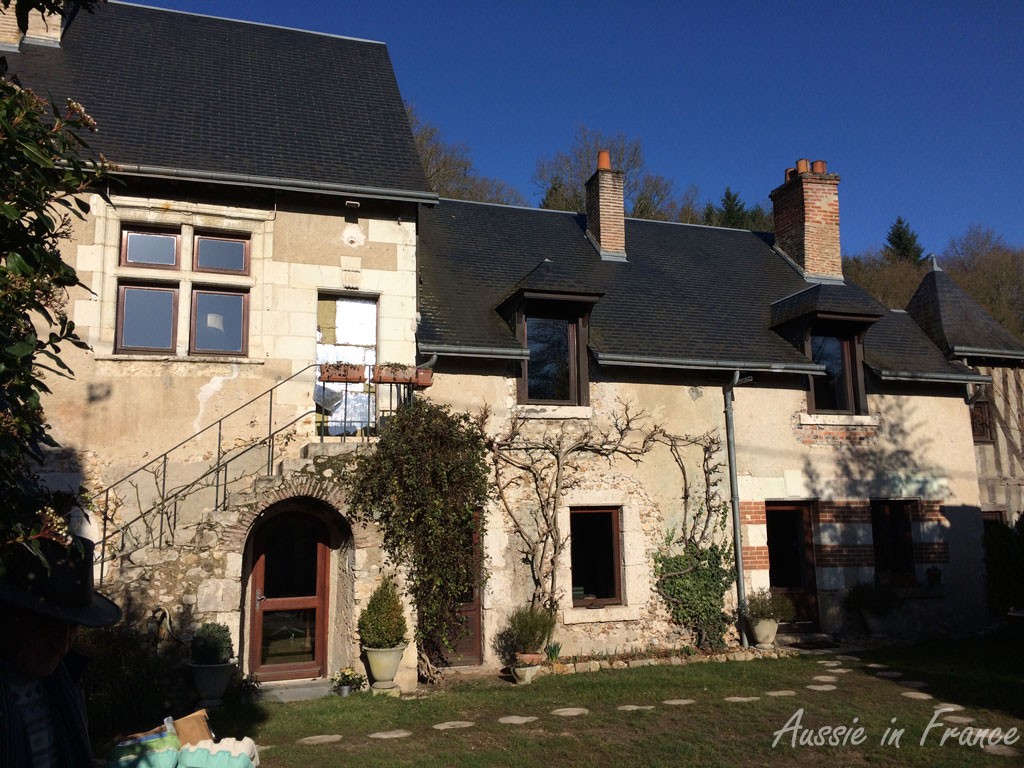
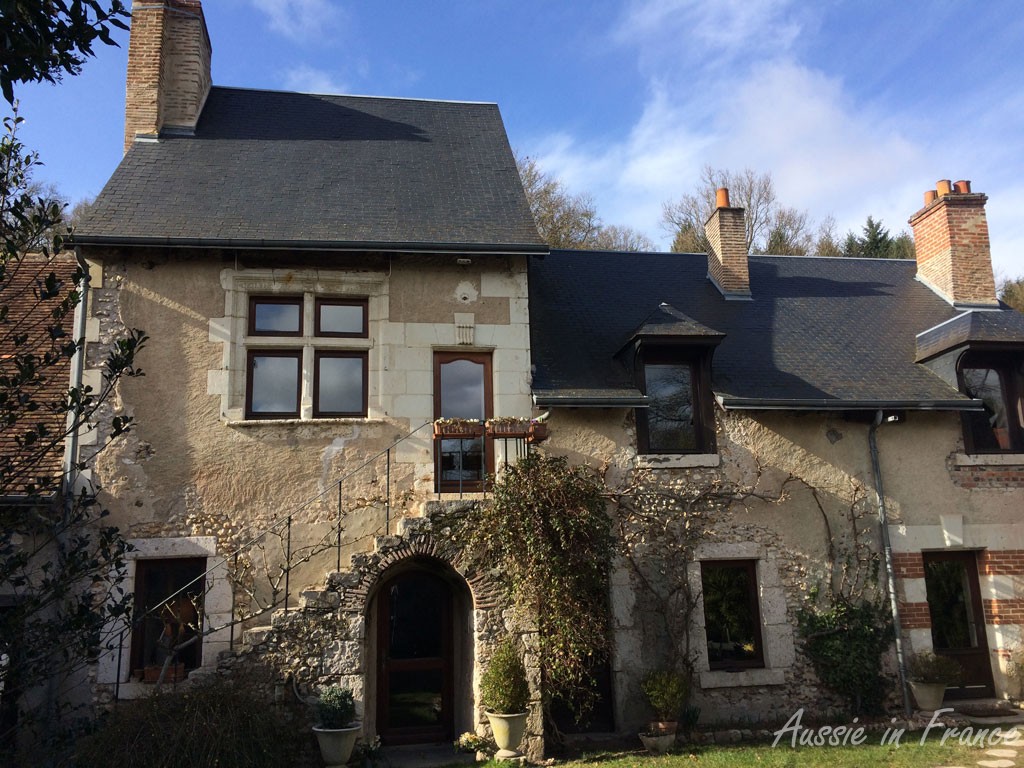
Jean Michel’s first retirement project is finished. All five doors on the front façade of Closerie Falaiseau now have glass panels instead of three glass and two solid wood doors. The difference in light is amazing!
Closerie Falaiseau, with the two solid wood doors seen from the outside
The first step in November is to order the new glass. The next step, in December, is to block up the ground floor doorway with glass wool insulation while the first door is being converted. It’s winter after all!
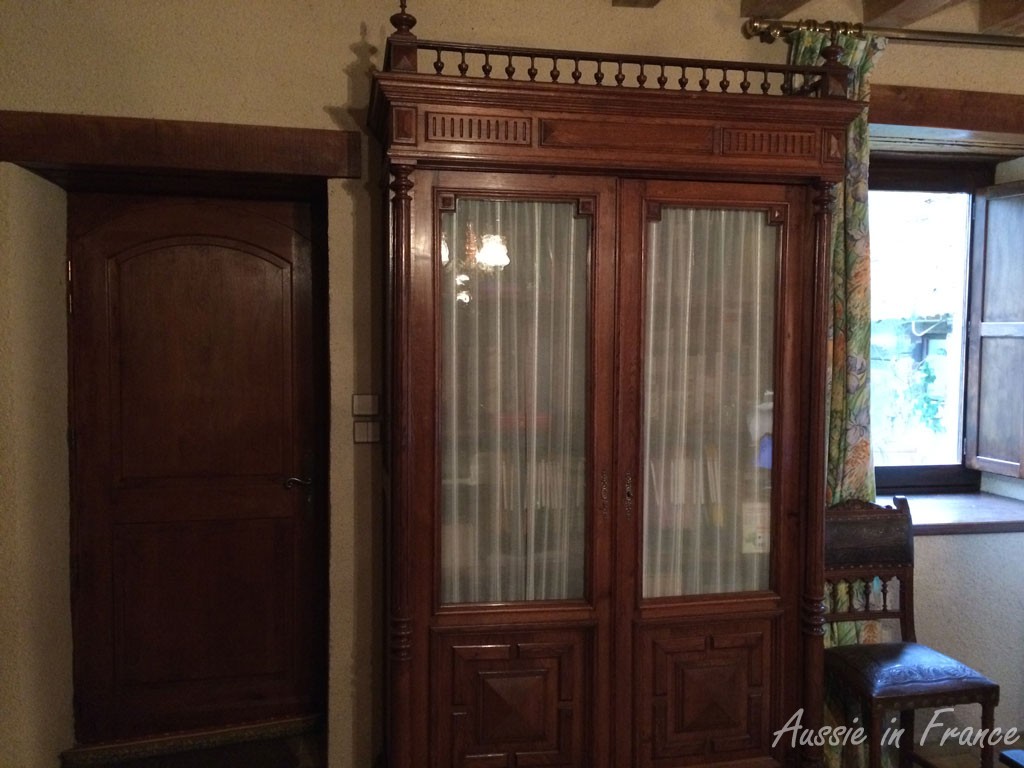
The door in the office with its wooden panels
To replace the solid panels with glass, the surrounds have to be removed. Jean Michel is hoping to be able to use them again but he soon realises that it won’t be possible. He’ll have to make new ones.
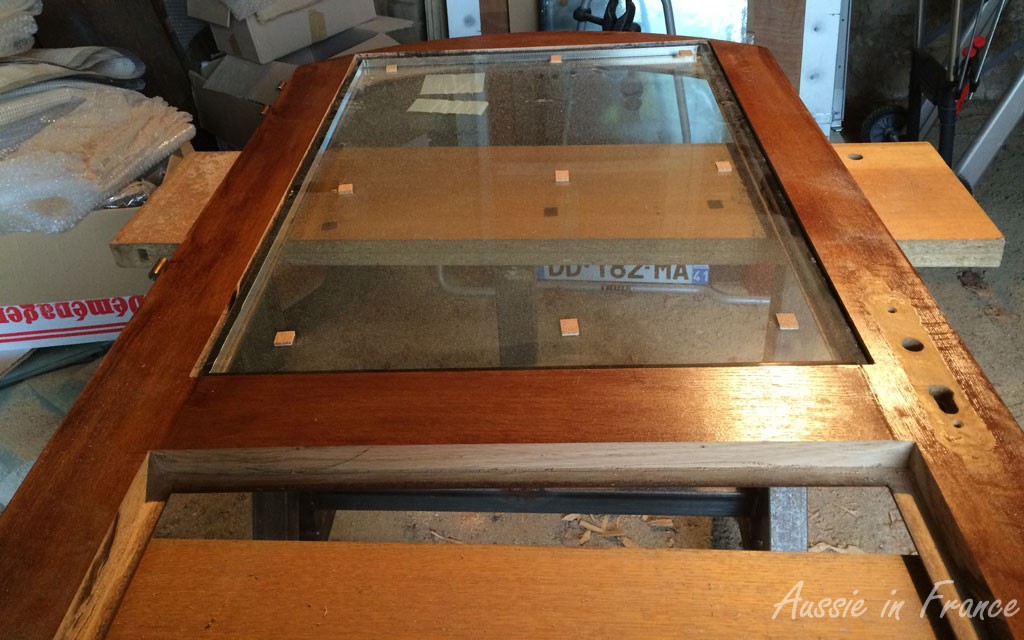
The door with one glass pane
After the surrounds and solid panels have been removed, the glass panels are fitted and work on the new surrounds begins. This door is quite tricky because the top is curved to go under the arch. The glass has a straight edge of course but there isn’t a lot of leeway because it’s regulation double glazing and very thick.
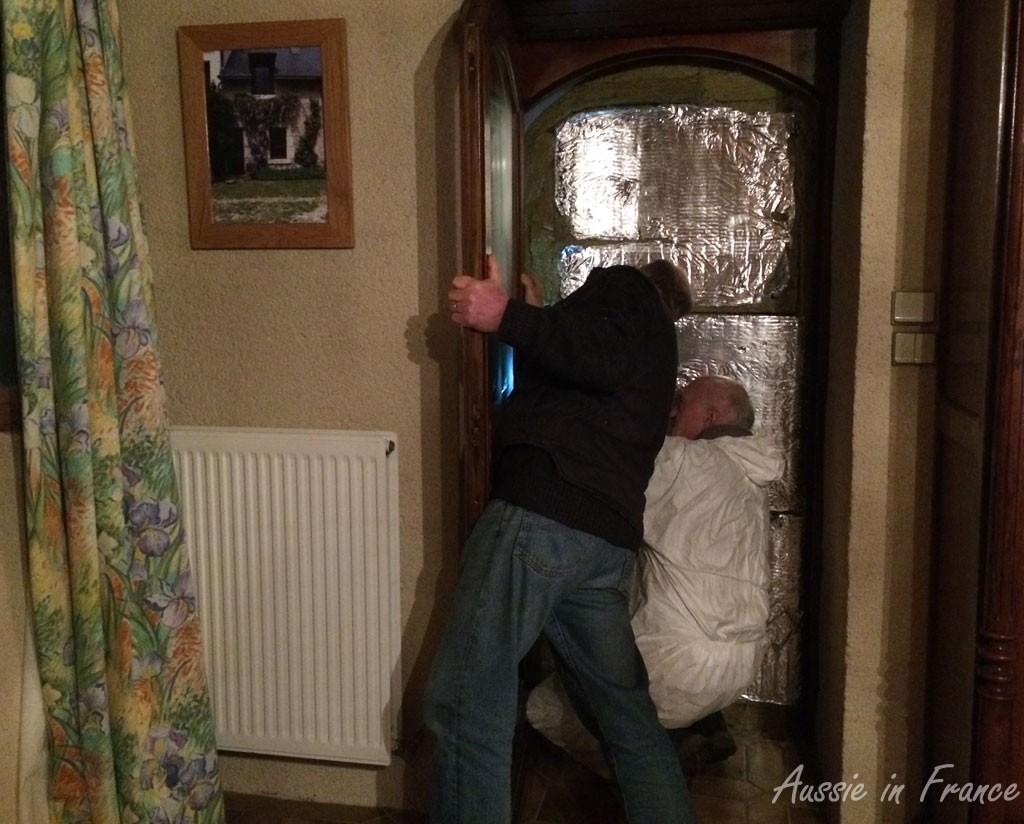
Alain arrives just in time to help Jean Michel hang the door
The first door is now finished and ready to be hung. I’m just about to help Jean Michel carry it across the courtyard when our helpful neighbour Alain walks past and lends a welcome hand.
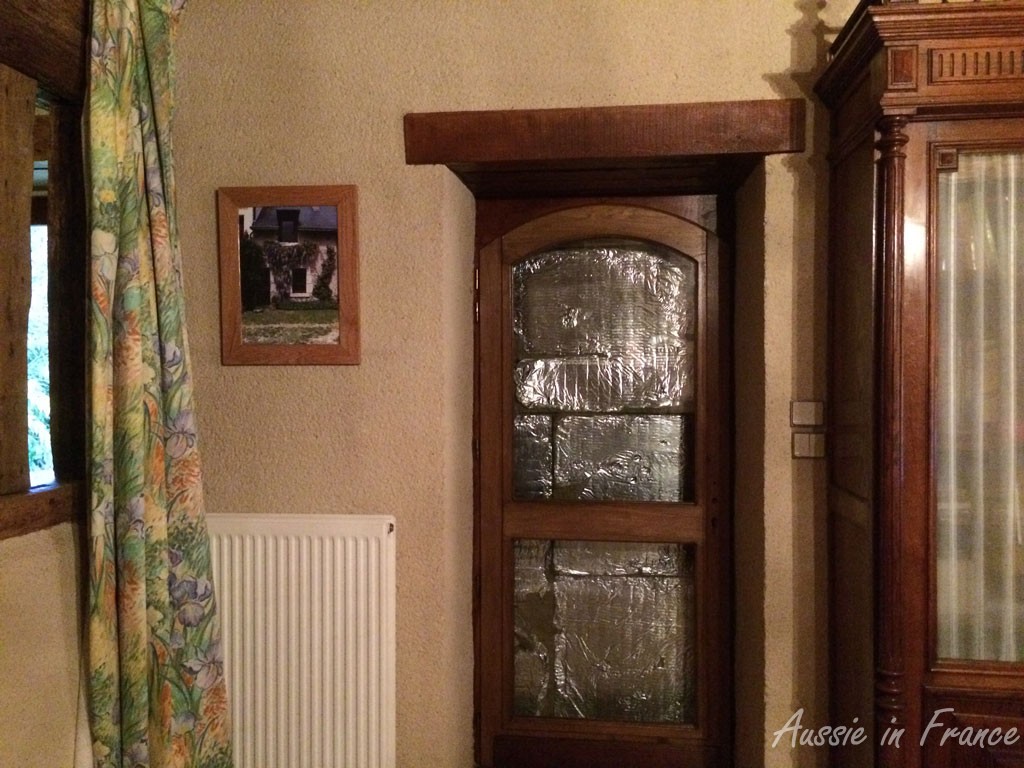
Door in place with the glass fibre insulation behind
The door’s up and looking good. All that has to be done now is to remove the glass fibre insulation outside for the light to come streaming through into the office.
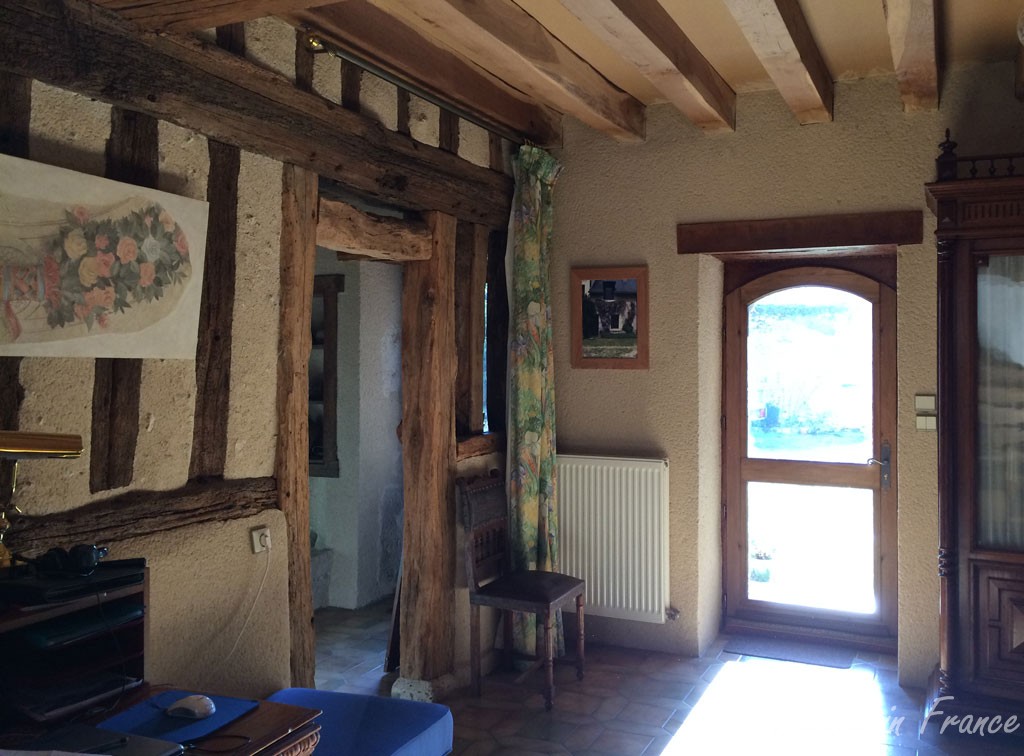
Light flooding into the office in the morning
The final step is to make the wooden shutter that will protect us from burglary and keep out the cold at night in winter. It obviously has to be identical to all the others in the house.
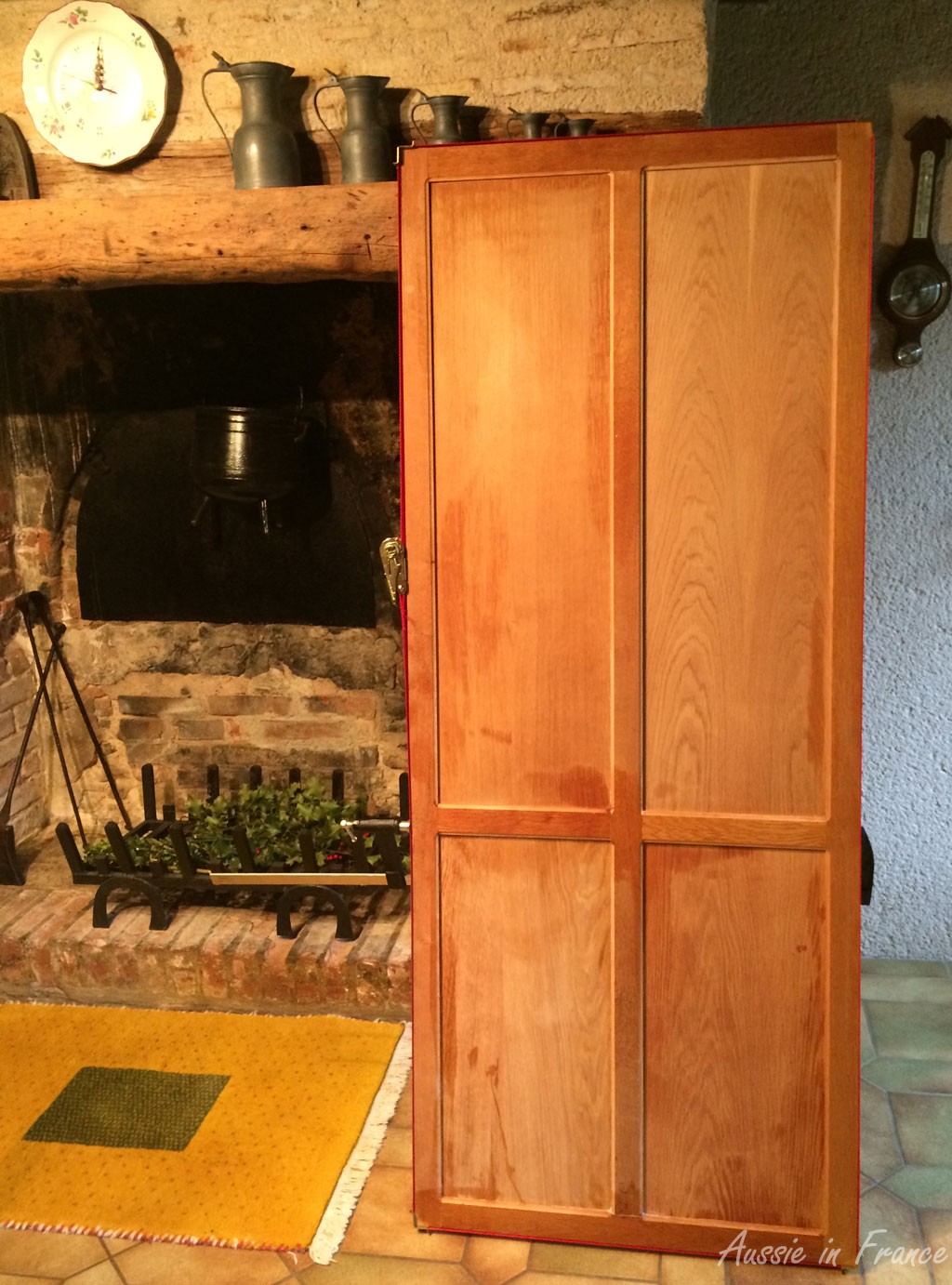
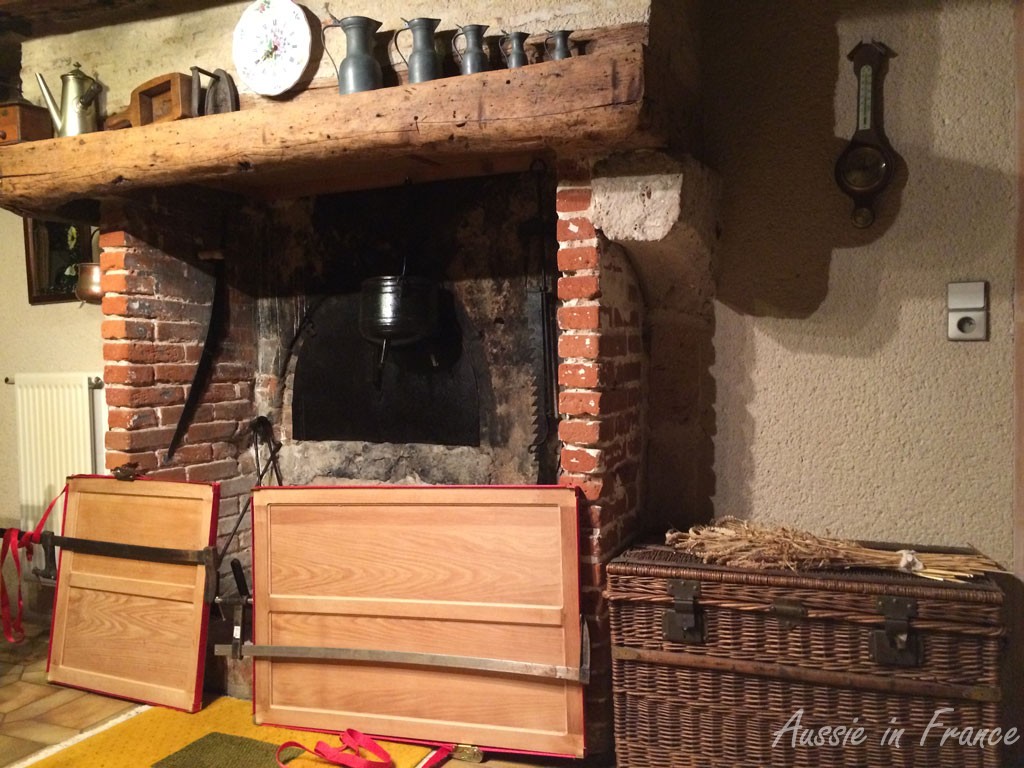
Downstairs shutter drying in the kitchen after the first coat of varnish
Once he has finished making it and put on the first coat of varnish, Jean Michel brings it into the kitchen to dry as the temperatures are going down fast.
Now the glass wool is on the upstairs door into the living room
Various events get in the way – my flu,Granada, etc. – before he is able to start the second door. Initially it goes much faster because he has already gained experience. He knows he won’t be able to re-use the surrounds so doesn’t have to take such care removing them.
Staining the door in the kitchen out of the cold
However, it’s February and it’s much colder outside so the even the varnish on the door has to be done in the kitchen or it won’t dry. It’s also very cold in the garage where Jean Michel is working.
Alain to the rescue again
This time, since the door has to be carried upstairs, he makes an apointment with Alain to come by rather than trust to luck.
The house with the two new glass doors
We’re delighted with the result of course, but we’re surprised to see that the door looks narrower than it did before.
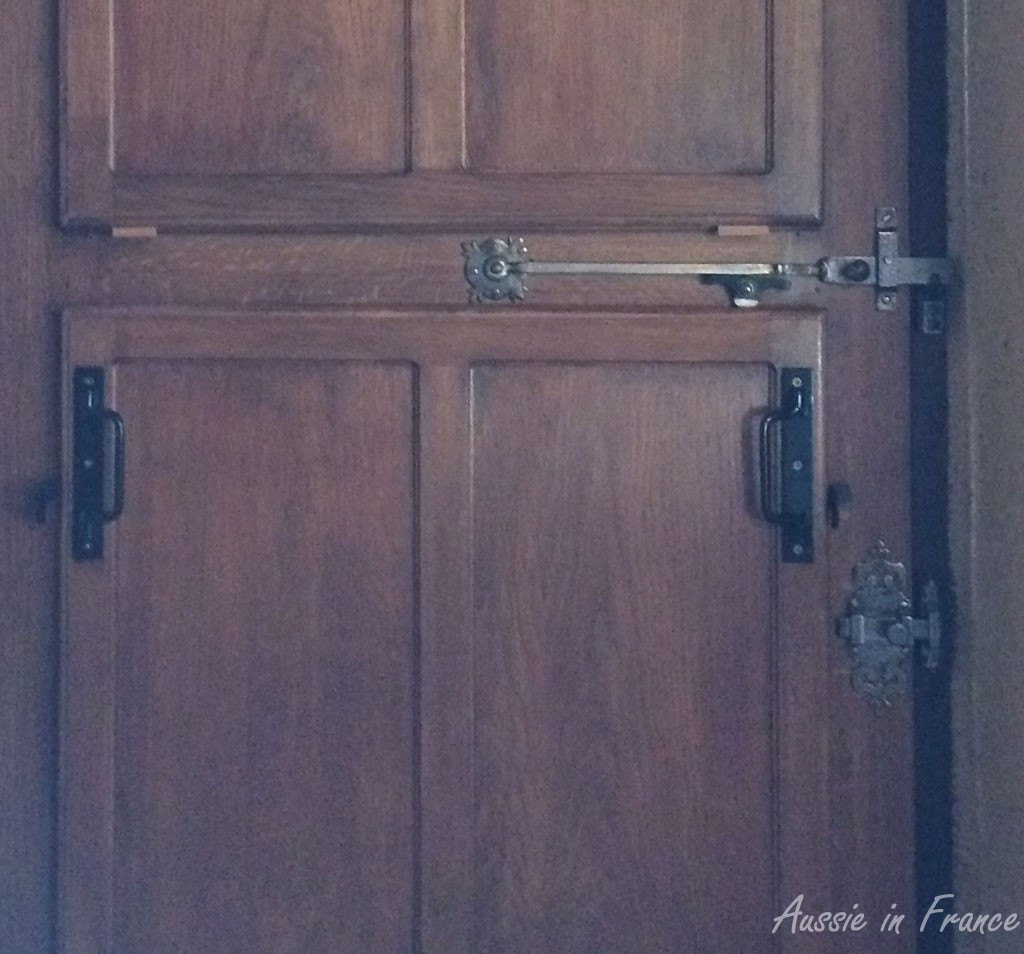
Upstairs lock with the two shutters
Inside, you can see the locks and bolts better.
The two upstairs shutters being held together while the glue is drying
Because of the position of the lock, two shutters are needed this time. But as I explained in an earlier post, a little problem arises when Jean Michel is using the plunge router to make the profile on the edge of the surrounds. A screw comes loose and causes a bigger hollow than he intends. Fortunately, though, after a short rest, he’s able to rectify matters.
The delinquent plunge router that lost its screw
I volunteer to help with the varnishing this time but it’s a technique I’ve never used before (very different from painting) and I’m afraid I’ll make a mess of it so I leave it to Jean Michel who has a lot more practice.
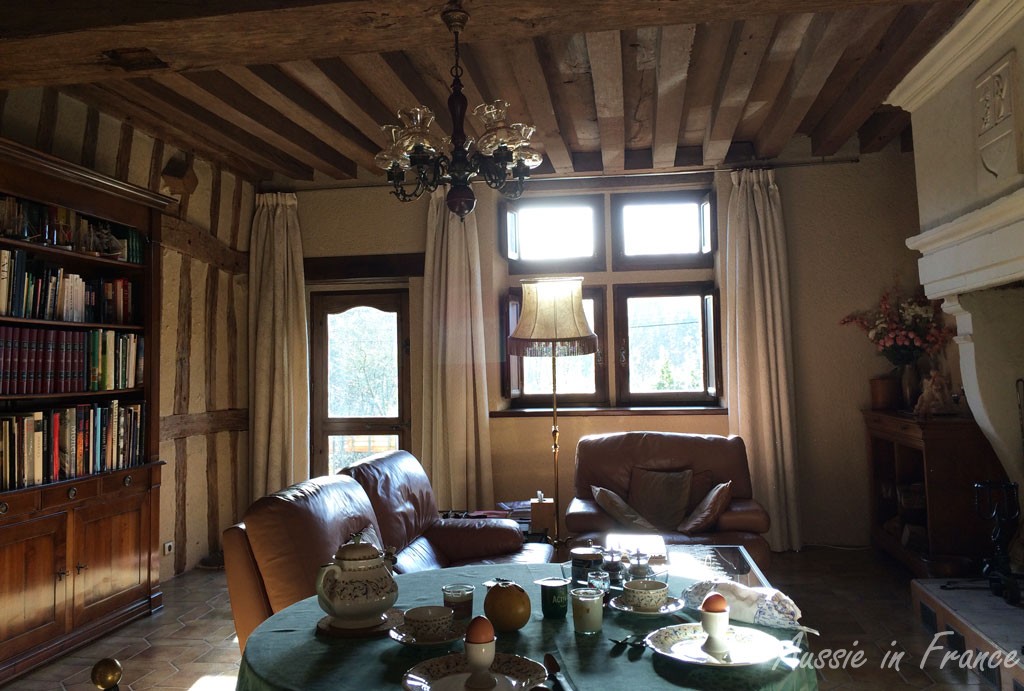
Breakfast in the upstairs living room so we can look through the new door
Initially we’re not used to having the glass panels and the corresponding light and we keep thinking we’ve left the door open! Now in the morning when we have breakfast in the upstairs living room, we don’t turn our chairs in the direction of the fireplace as we do at night, but towards the door and the countryside beyond. More light at last!
People learning French seem to find it difficult to know how to translate the word people! It’s because there are several different words that can be used depending on the context and meaning: gens, personnes, monde, peuple, people. Aïe!
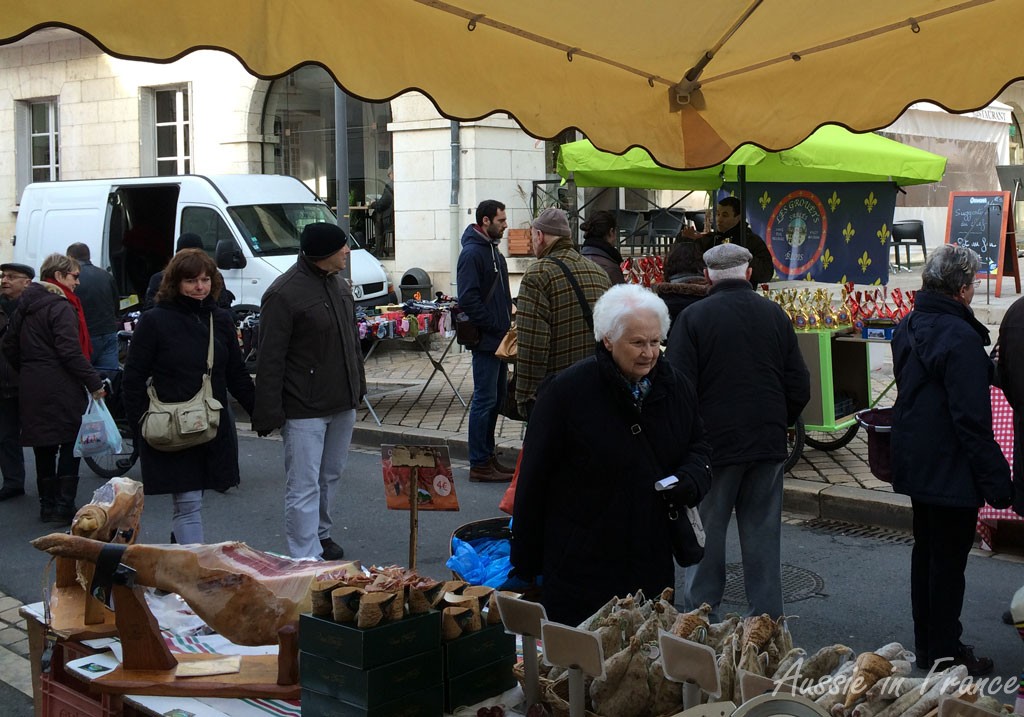
Il y avait beaucoup de monde au marché. Il y avait plusieurs personnes habillées en noir. Les gens avaient l’air content parce qu’il faisait soleil. – There were lots of people at the market. Several people were dressed in black. People looked happy because it was sunny.
Let’s start with a few examples and see how they are used.
Les gens intelligents = clever people
Les personnes âgées = old people
Les jeunes (gens) = young people
Beaucoup de gens/monde = a lot of people
Il y avait beaucoup de monde = the place was full of people
Plusieurs personnes m’ont parlé de l’accident. = Several people told me about the accident.
Combien de personnes ? = How many people?
Ce sont de drôles de gens = They’re strange people.
Que vont penser les gens ? = What will people think
Le peuple australien = the Australian people
Les gens de la campagne = country people
Can you see a pattern emerging? Well I can’t !
Why don’t we say les personnes intelligentes and les gens âgés ? And why not les jeunes personnes ?
I checked my Larousse dictionary to see if I could find a difference
GENS :
Personnes en nombre indéterminé – People when there is an indeterminate number [Les gens flânaient dans la rue – People were wandering in the streets]
Les hommes en général – Men in general [Les gens sont influencés par la publicité – People are influenced by advertising]
Telle ou telle personne, ou la personne qui parle – Such and such a person, or the person speaking [Vous avez une façon de recevoir des gens ! – You have a way of welcoming people!]
Personnes appartenant à un état, à une profession – People belonging to a state or profession. [Les gens du spectacle – People in show business]
OK, it’s clear for n° 4 and maybe fore n°2 but it doesn’t really explain why we talk about personnes intelligentes but gens âgés.
So I asked the question on my French translators’ list and got some very different answers, some of which are contradictory which just goes to show that even the French don’t agree on usage!
1. It’s always better to use personnes when you can.
2. Les gens intelligents et les personnes intelligentes sont différents. Maybe, but if it is, it’s very subtle. I googled the two expressions and in most of the examples they seem pretty interchangeable to me, with 30,900 hits for personnes intelligentes and 165,000 for gens intelligents!
4. Personnes is used when it could be perceived negatively such as personnes âgées, personnes handicapées (yes, handicapped is politically correct in French!) and gens when it’s positive : jeunes gens, braves gens. Ok, but what about les gens tristes?
5. Semantically, when using personnes the human dimension is stronger while gens is a neutral term. Personnes âgées shows respect for the elderly.
6. Jeunes gens is the plural of jeune homme and excludes jeunes filles.
7. Jeunes gens can also mean jeunes filles.
8. Personnes is used to distinguish a particular group such as grandes personnes (adults), personnes sourdes (the hearing impaired).
9. Correct French always “sounds” right. Yes, but only if you are brought up hearing correct French in my opinion!
10. Maybe gens is more difficult to use with an adjective because it can be either masculine or feminine or both.
My personal feeling is that it is mostly a question of what people usually use. In French, personnes âgées is by far the more prevalent expression (17,300,00 hits on google as opposed to gens âgés).
If you’re talking about a nebulous group – sad people, happy people, clever people, people in the street, people who live alone – you would use gens: les gens tristes, les gens heureux, les gens intelligents, les gens dans la rue, les gens qui habitent seuls.
If the group is more specific (with the exception of personnes âgées which is the more usual term as state above), such as the people on my left, the people who arrived late, the people concerned, you would use personnes: les personnes à ma gauche, les personnes qui sont arrivées en retard, les personnes concernées.
But despite all this, personnes and gens are not always interchangeable. I started writing this post after hearing an English speaker use the wrong one but now I can’t for the life of me remember what it was!
However, in the initial set of phrases, it is not possible to say plusieurs gens, combien de gens, que vont penser les personnes or les personnes de la campagne. It would just sound odd!
And one last word before I finish off. People is used in French to mean celebrities.
This week’s blogger round-up is focussed on Eastern Europe, a destination I find quite fascinating. To start off, Anda from Travel Notes & Beyond tells us what you should know about Romanians before you travel to the country where she was born. Next, Australian-born Jo Karnaghan from Frugal First Class Travel takes us to mediaeval Slovenia as part of an Adriatic sea cruise. To finish off, Andrea from Rear View Mirror, an Australian married to an Albanian, answers a question she is often asked: “Is it safe to travel to Albania?” Enjoy!
What you should know about Romanians before you travel to Romania
by Anda from Travel Notes & Beyond, the Opinionated Travelogue of a Photo Maniac, is a Romanian-born citizen of Southern California who has never missed the opportunity to travel
As a tourist in Romania, you may easily feel at home and forget that you are in a foreign country. But the welcoming and friendly spirit of the Romanian people will not help you bridge the cultural differences and understand their values. So in order to avoid a culture shock, there are some things you should know about Romanians before you travel to their country. Of course, Romanians are not all the same, but there are some cultural characteristics that most of them share. Read more
Explore Medieval Slovenia on an Adriatic Sea Cruise
by Jo Karnaghan from Frugal First Class Travel, an Australian who loves to travel – especially in Europe – and who has gradually learned how to have a First Class trip on an economy budget, without missing out on anything!
Slovenia is a country famed for its Gothic architecture and medieval towns, the most fascinating of which is arguably the coastal city of Koper in the south-west. If you’re looking to go medieval in a big way then this city provides many old town historic sights as well as easy access to the country’s popular capital city.
Ports of call on an Adriatic Sea cruise will almost always include Croatia’s famous walled-city of Dubrovnik but if you’re looking to step back in time then ensure that Slovenia’s Koper is listed on your itinerary. Read more
Is it safe to travel in Albania?
by Andrea from Rear View Mirror (formerly Destination Europe), a fellow Australian who, after 6 years of living in France, has given up her Paris apartment to live a nomadic life slowing travelling around Europe, experiencing each destination like a local.
Since returning from an extended stay in Albania and publishing my guide to visiting the country, I’ve been receiving regular emails from readers wanting to know more.
Surprisingly, for me, one of the most common questions I’m asked is whether it’s safe to travel to Albania. I admit to finding this question a little perplexing. Aside from a brief period of unrest in 1997, Albania hasn’t been in a conflict since WWII.
Even during the Communist period when the country was mostly closed to outside visitors, it was still possible to safely travel around the country.
Random acts of violence are practically unheard of and even pickpocketing is uncommon. Read more
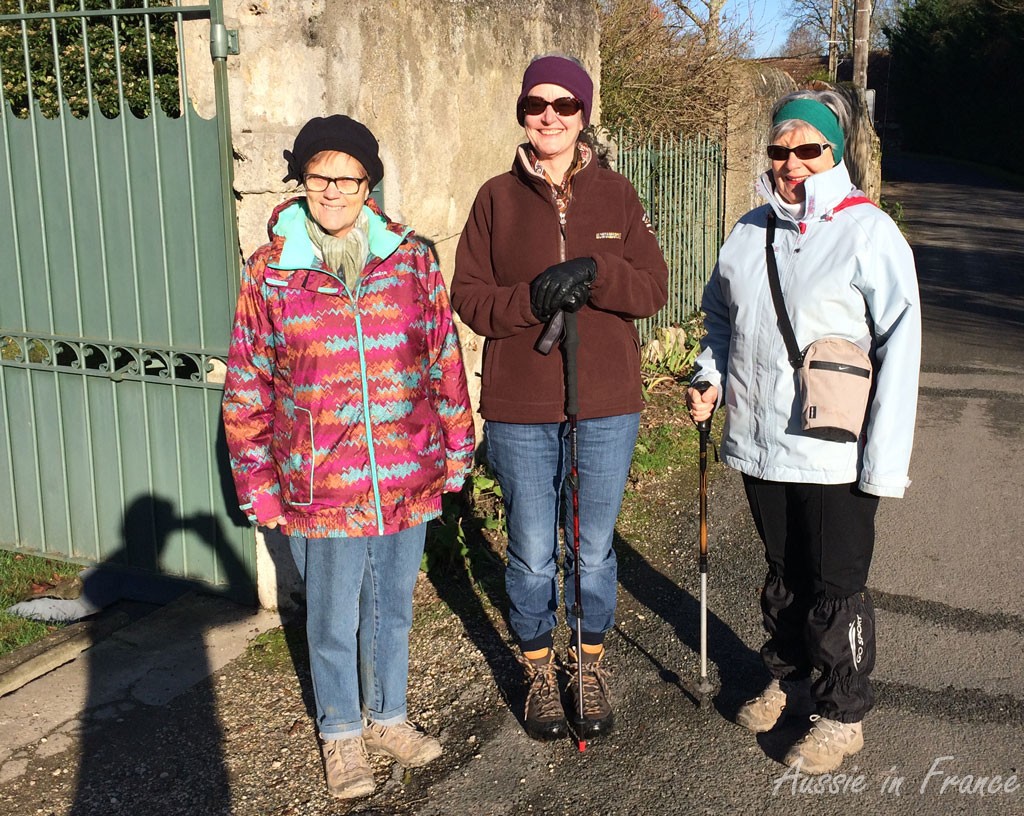
I’m still getting over the flu that I’ve shared with several MILLIONS of people in France this year. My recovery after 5 weeks is remarkably slow and annoying. Every time I think I’m better, I seem to have a mini relapse. My friends and neighbours are faring no better than me and we still haven’t resumed our Nordic walking.
The three walkers (and the photographer’s shadow) before we succombed to the flu
So we decide to have tea together instead. I think I should get a bit of exercise anyway so I decide to walk to the post box halfway down our street to post two letters and stop for tea on the way back. Even though the post box is in the same street, it’s a good fifteen to twenty minute walk from our house.
Chaenomeles japonica just coming into flower
I set out at a fairly brisk pace as it is spitting slightly and I don’t want to get too wet. I keep my eyes open for a photo on the theme of ageing for the City Daily Photo theme day this month, to which I usually contribute with my second blog, Loire Daily Photo. Not a theme I feel particularly keen on at the moment.
Local school in our street that has now closed
I come across a few possibilities including the local school which, after serving generations of children in Les Grouets, our neighbourhood in Blois, closed last year because there weren’t enough pupils. However, my iPhone photos of it are a little disappointing.
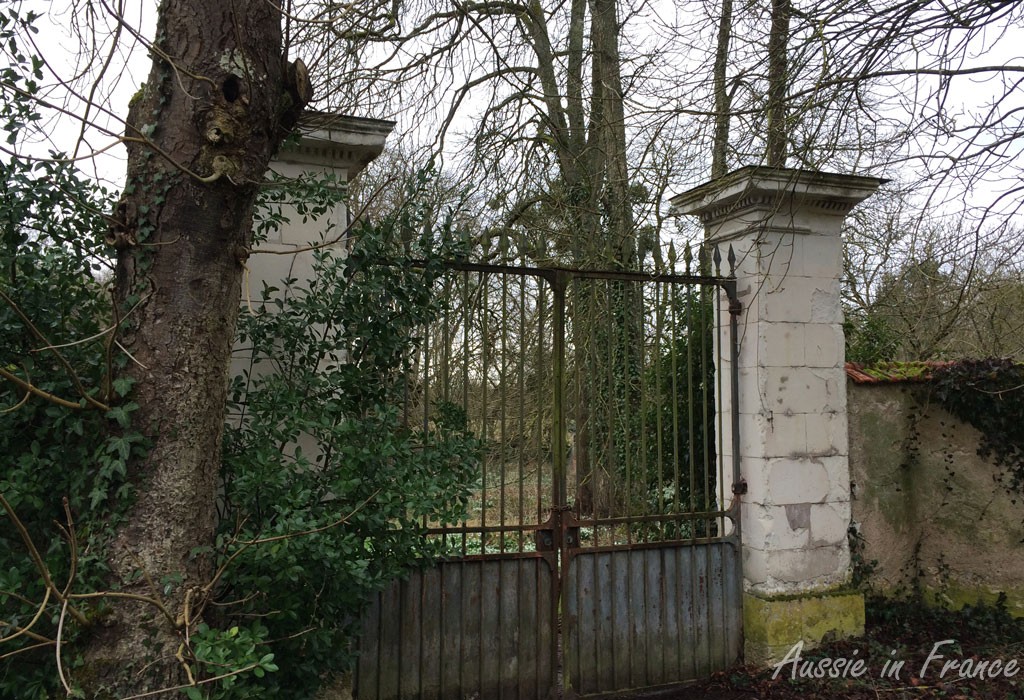
The ageing gate
I find a like-looking gate which doesn’t look as though it has been opened for a very long time. The surrounding trees, wall and tiles also look are though they are ageing fast as well.
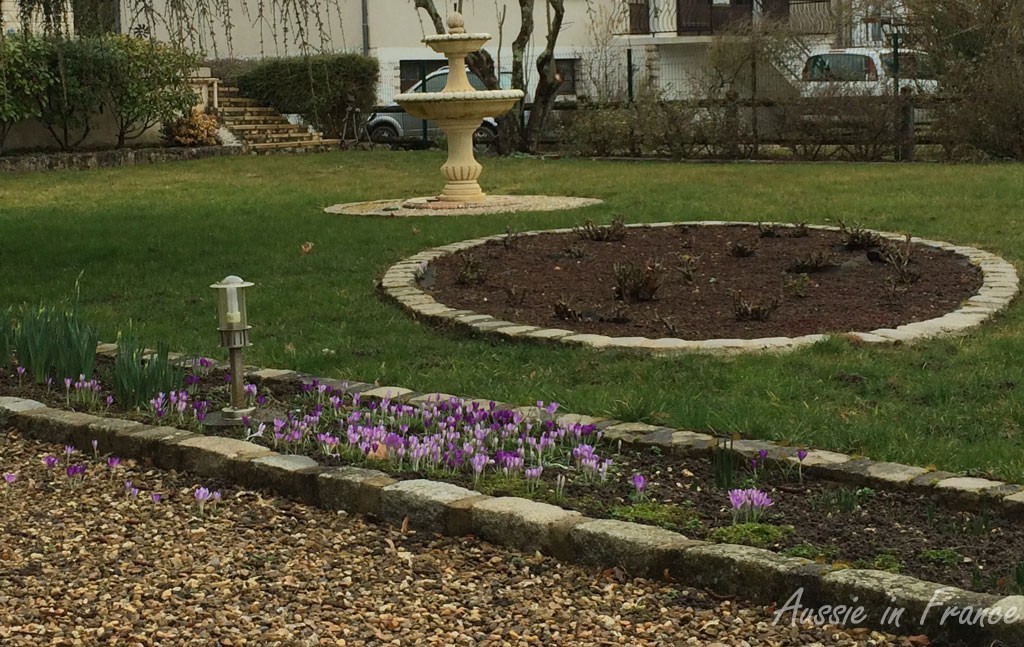
Purple crocuses, some growing through the gravel
A little further along, I stop, absolutely enchanted by a whole bed of purple crocuses, some of which are growing through the gravel. The gate is open so I go as close as I can without actually setting foot in the property. I don’t want to be found trespassing.
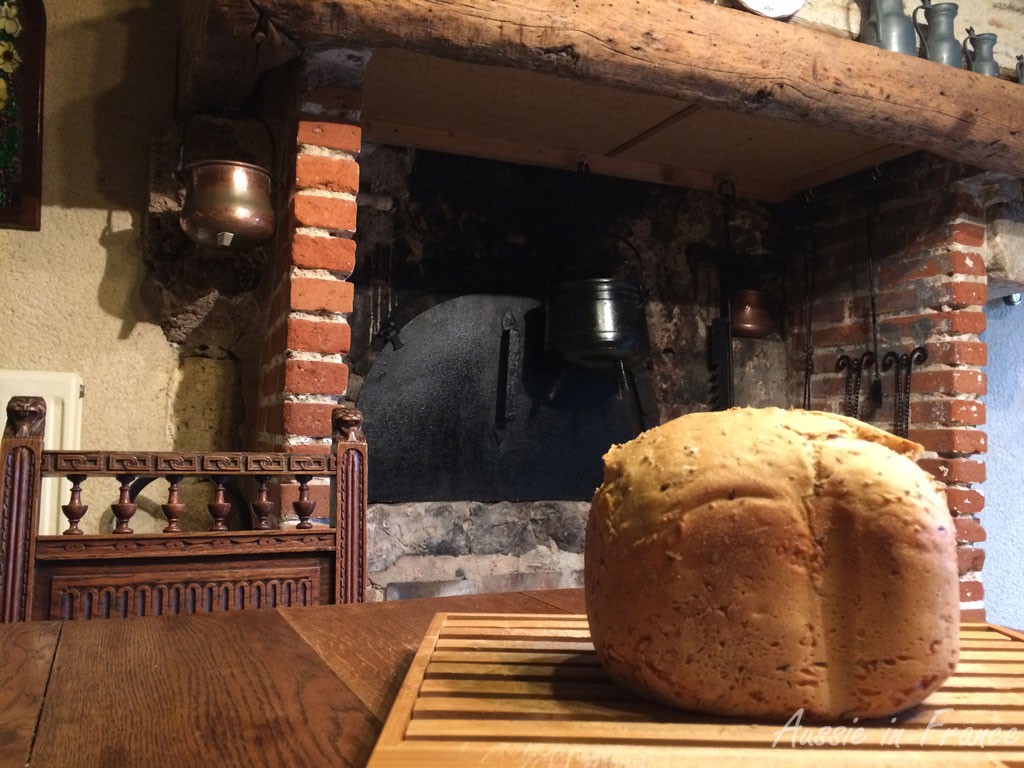
Freshly baked bread in front of our (non-functioning) bread oven
Happy with my find, as it has really brightened a very grey day, I continue towards to mail box, which is just after the organic bakery that unfortunately closed not long after the school. The baker still uses the kitchen but sells his bread elsewhere. It’s also where I buy 5-kilo sacks of flour and smaller amounts of grains to make my multi-grain bread.
Our closest mail box
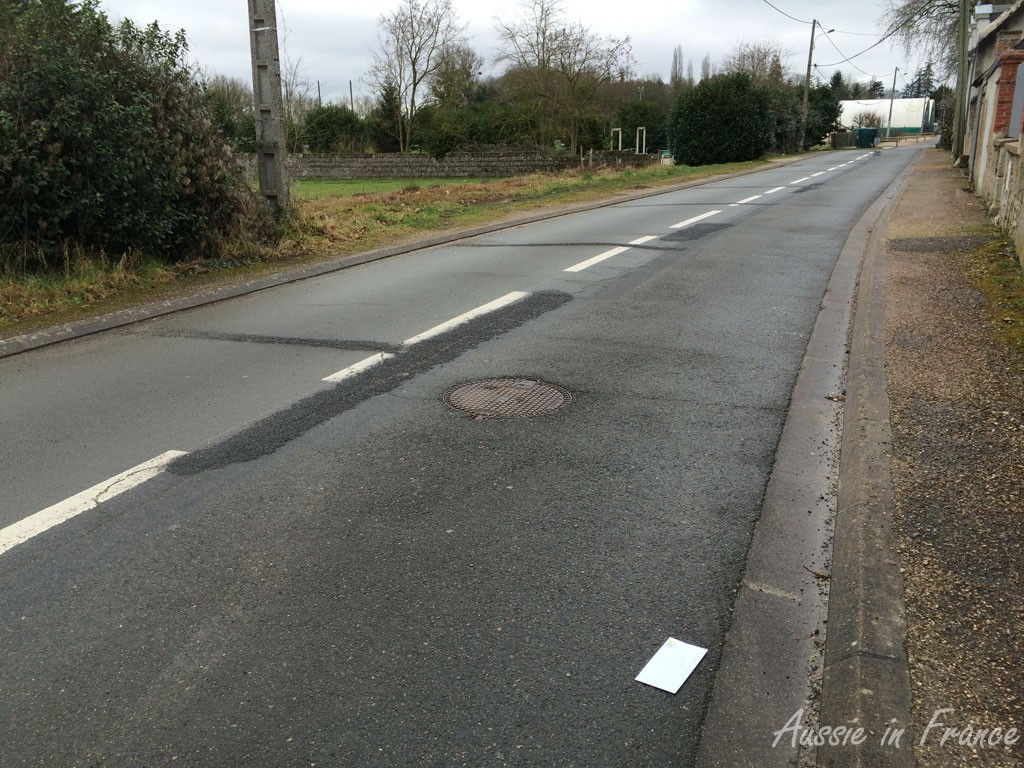
As I go to post my letters, I discover one’s missing. Oh dear ! What’s more, it’s Jean Michel’s chez for Renault who accidentally charged him 1.01 euro on his Visa card instead of 101 euro and obviously wants him to pay the difference … I start walking back, hoping that the letter has fallen face up and not face down in the mud and that no one has run over it!
The lost letter
Fortunately I eventually spy it on the road. It’s the right way up and the letters aren’t smudged. I go back to the post box wishing it wasn’t so far away.
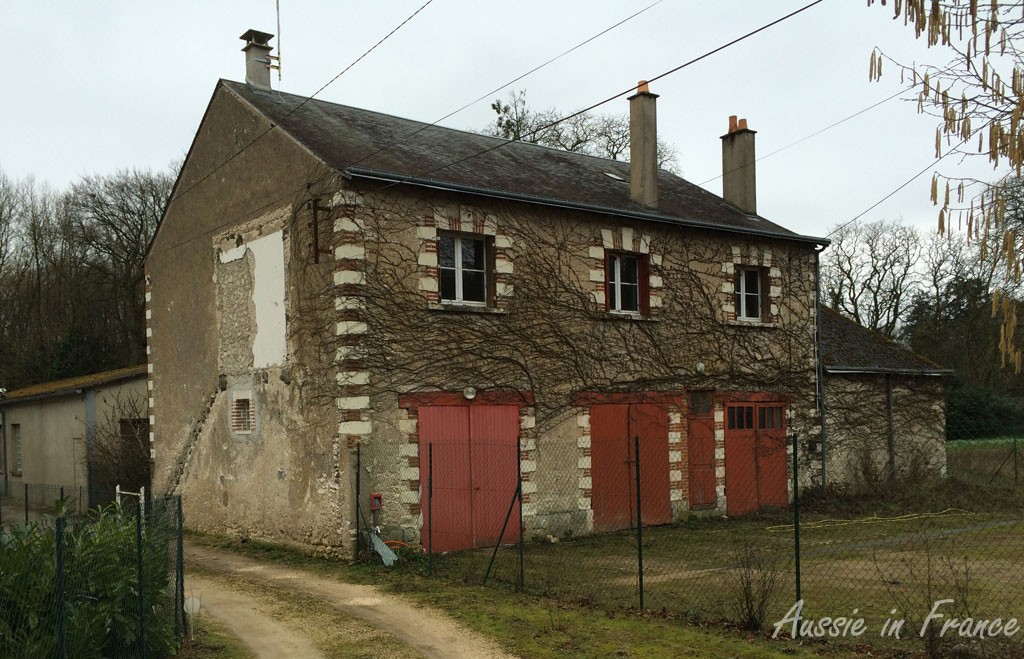
Three barn doors
On the way back I notice a barn with three doors which we might be able to use as inspiration for our barn which Jean Michel is going to turn into a garage as part of our renovation plan.
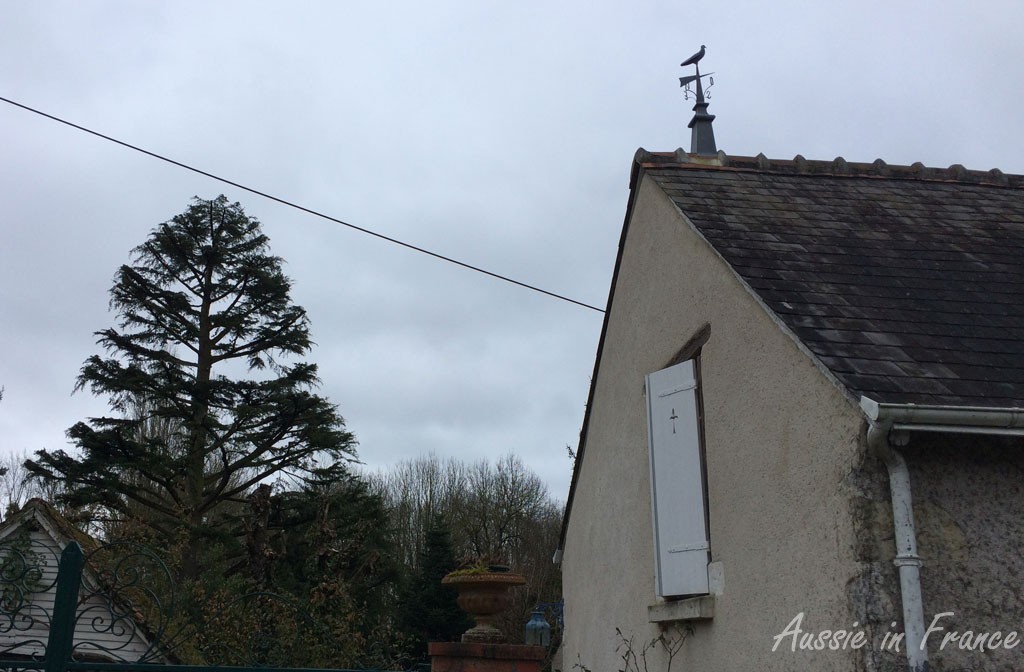
A windvane on my walk
I arrive exactly on time at Françoise’s house. Liliane is already there so we play ladies and drink our tea in yet another set of Françoise’s many porcelain teasets which she inherited from her mother. I am just so fortunate to have made such wonderful friends in the same street before even moving to Blois. It can take years to be part of a community when you move.
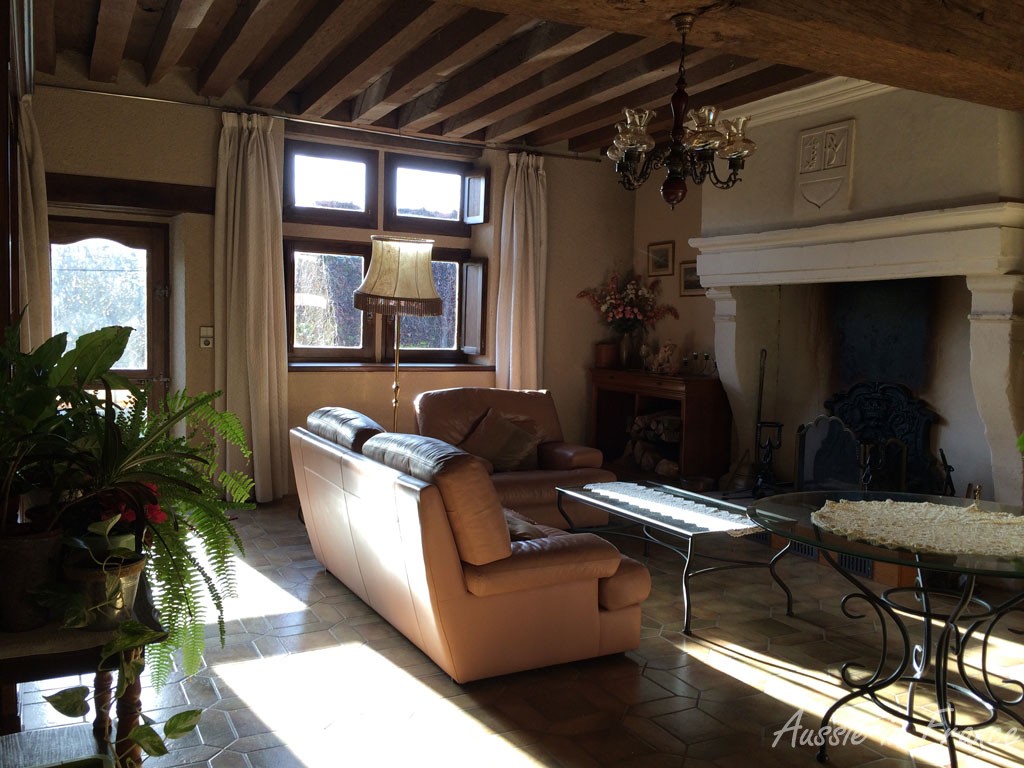
The living room sofa on a sunny day
After about an hour, I go home to have a second pot of tea with Jean Michel who’s working on the shutters for our glass doors. I can’t find him although I can hear him answering me. I eventually realise he’s inside the house but since there are no lights on, I find it a bit strange. It turns out that he’s lying in the half-dark on the sofa in living room.
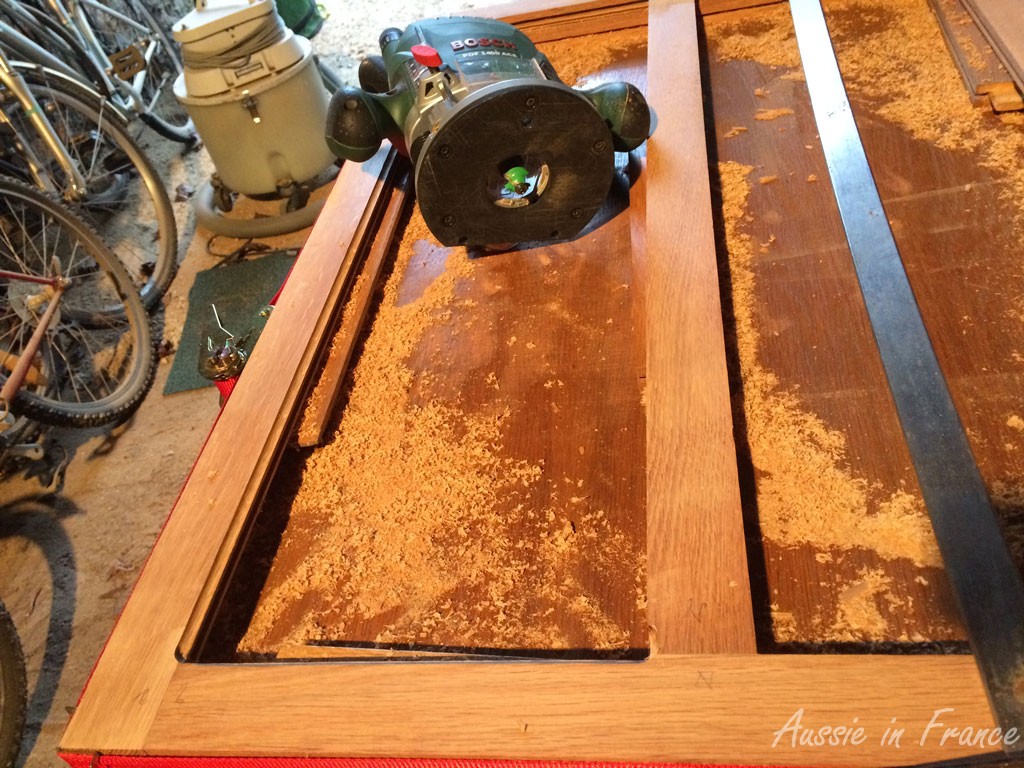
The delinquent plunge router that lost its screw – it is used to make that hollowed out big you can see on the left
This is so unlike him that I am immediately worried. He explains that he’s been using the plunge router on the new shutters. A screw came loose and caused a bigger gouge than he intended. Since using the plunge router requires considerable concentration and creates a lot of physical tension, he decided to stop and lie down for bit. (Just in case you’re wondering what a plunge router is, it’s a power tool used to rout or hollow out an area in the face of a woodpiece, typically wood or plastic as in the photo above).
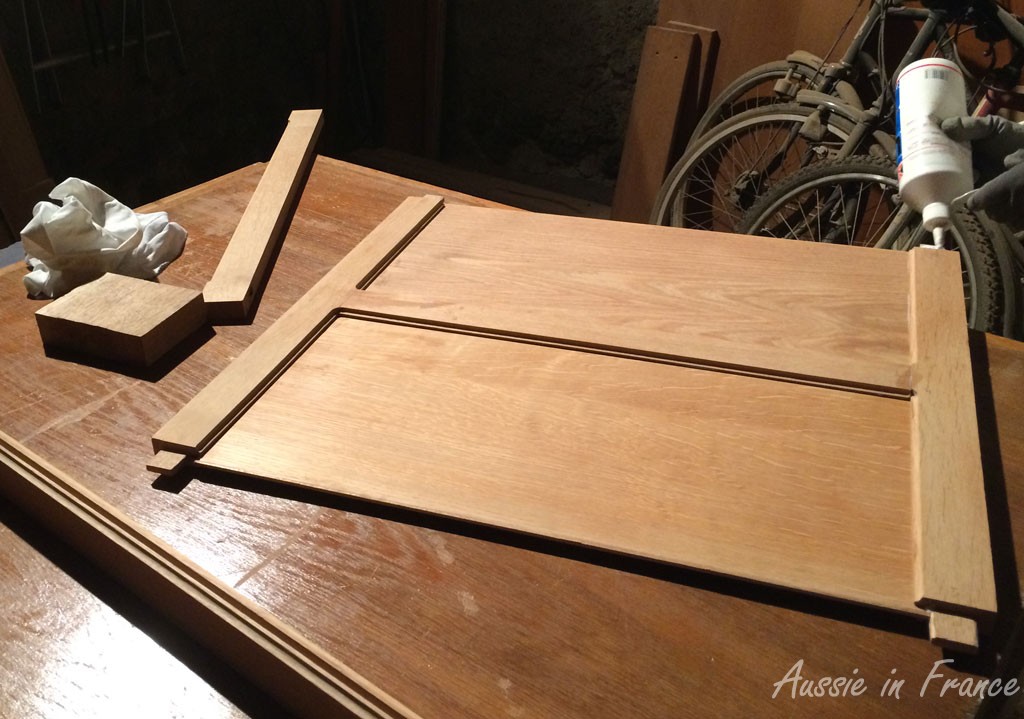
Almost finished – the shutter being glued together
I make a pot of tea but don’t have any myself or I’ll be totally water logged. I then go with him to inspect the gouge which doesn’t look that catastrophic. By then, he’s feeling better and is able to finish the shutter without any further problems.
The glass doors and shutters are now finished. I’ll tell you about them in detail in another post.
My Weekly Blogger Round-Up hasn’t been very regular recently but I’m hoping things will start to return to normal soon. This week, it begins with a new blogger whom I discovered through Lou Messugo’s link-up last week. Susan from Our French Oasis introduces us to the huge churches that are monumental landmarks in Charente Maritime where she lives; Mary Kay from Out and About in Paris shares some some surprisingly modern photos of 4th century AD mosaics she took in Sicily, while Sara from Simply Sara Travel takes us to Malbork Castle which she visited during a day trip from Gdańsk in Poland. Enjoy!
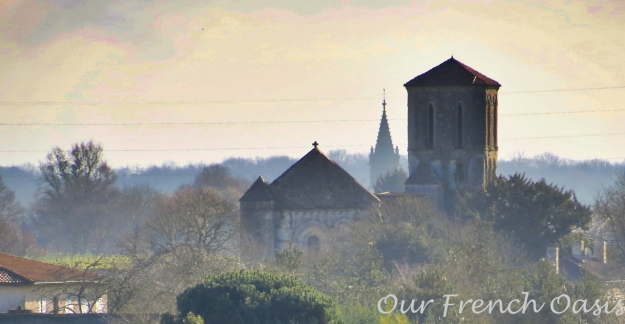
A Pilgrim’s Skyline
by Susan from Our French Oasis, born in England and now living with her family in Charente Maritime, passionate about fishing, nature and food, eager to share the pleasures of living and eating through the Seasons and the simply beauty that surrounds us in everyday life.
Every day I take the same route to school. I leave our village and take the long straight road that cuts its way through open farmland, climbs a gentle sloping hill and then slithers down into the valley where in an ancient village a narrow bridge across a small river forces cars to cross alternately in single file. Each morning the old lady who lives in the old stone house on the corner by the river-wall will open her shutters and upstairs windows to let the air in – come rain or shine; it is a route I am coming to learn well.
The seasons transform the landscape too, as it changes from fields of sunflowers in summer to bare ploughed soil in winter. The light flickers moodily and the weather caresses and spits, depending on its whims. But there is one thing that remains unchanged – on a centuries-old skyline are the spires and towers of the area’s many churches. Read more
The Villa Romana del Casale and its captivating fourth century AD Roman mosaics
by Mary Kay from Out and About in Paris, an American by birth, Swiss by marriage, resident of Paris with a Navigo Pass for the metro that she feels compelled to use
Wouldn’t it be incredible to unearth photographs from the fourth century AD imparting little-known details about ancient Roman life? We would learn about the clothes worn for an outdoor banquet, games that children played and revered mythological creatures.
Unique for their narrative style, vivid colors and range of subject matter, the Unesco-listed Roman floor mosaics at the Villa Romana del Casale also give a rare glimpse into the daily life of the man most scholars believe to be the former owner of the sumptuous villa, Marcus Aurelius Maximianus, Rome’s co-emperor during the reign of Diocletian (AD 286-305). Read more
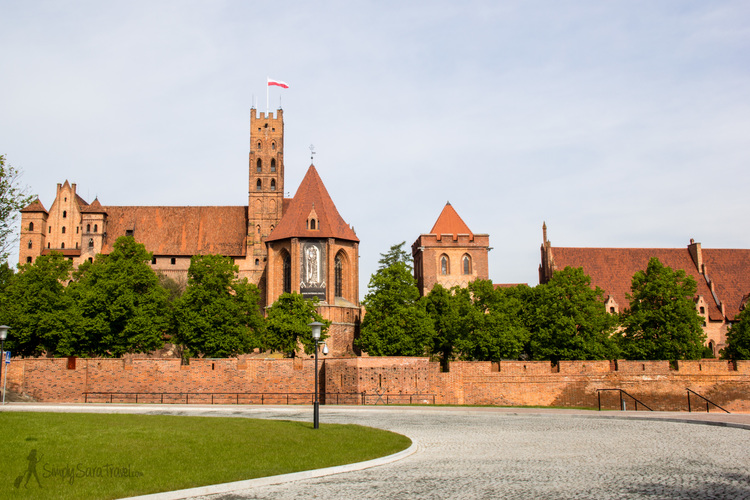
Day Trip from Gdańsk: Malbork Castle
by Sara from Simply Sara Travel, a girl from New Jersey who traded in her bagels for baguettes and moved to Paris. The aim of her blog is to inspire readers to travel, embrace a new culture, and open their minds to new perspectives.
I have to apologize. I’ve done a bait-and-switch of sorts. Here I was last week, giving a teaser of our time in Gdańsk, and the only thing I’ve revealed so far is one of the side-trips we took from Gdańsk to the beach town of Sopot. The Jersey Shore parallels excited me, what can I say? (If you missed it, read more in my post on how Sopot is the Atlantic City of the East.)
My apology is going to seem a bit empty in a moment though, because instead of getting to Gdańsk, I’m again going to divert over to our other day trip we took while in the area: to Malbork Castle. The truth is that as I try to grasp all we did in Gdansk, there are so many elements and facets to this city that I want to share, and it is overwhelming! But I will get to it soon, I really will.
Today though, it’s all about Malbork Castle. Read more
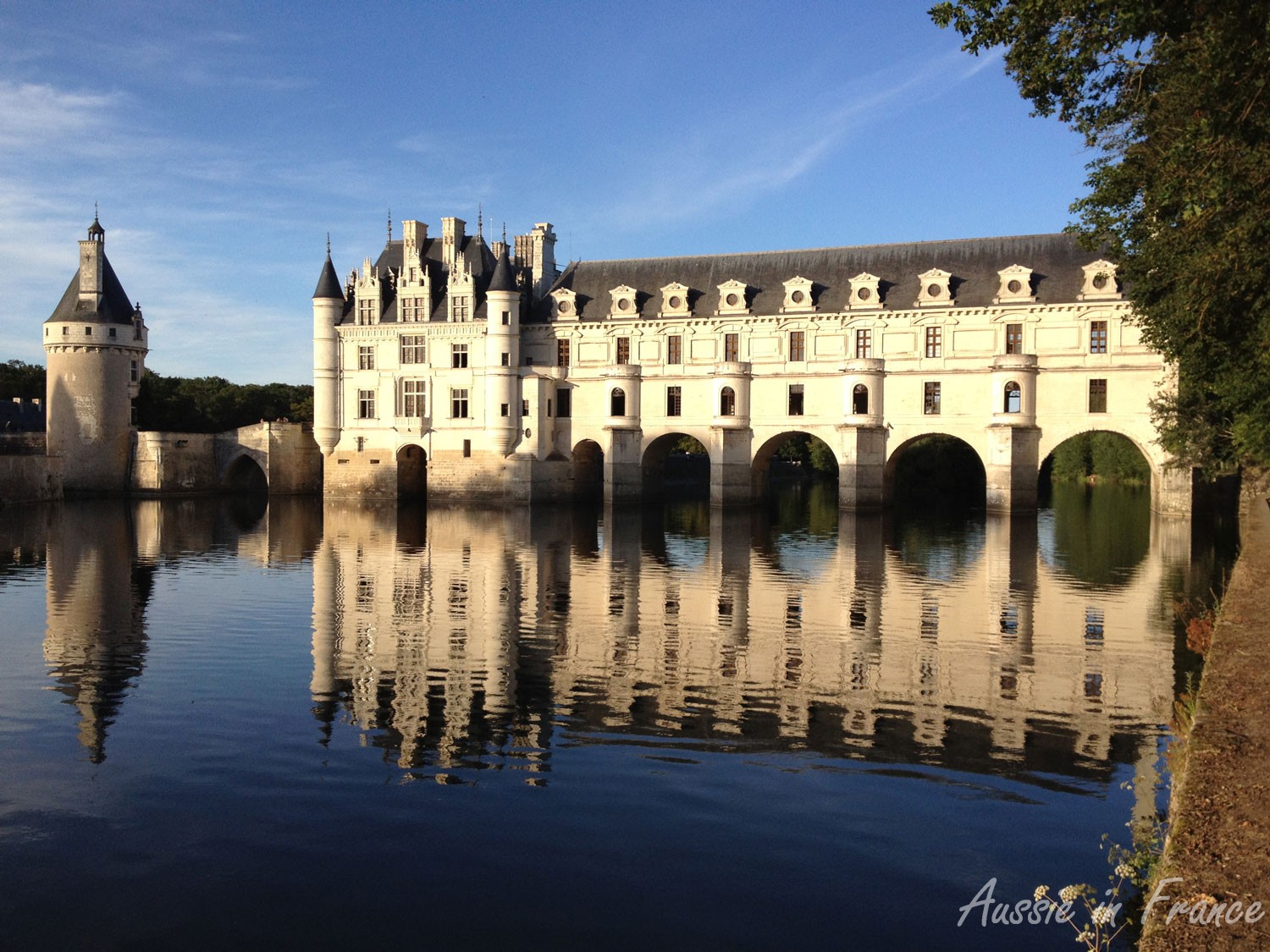
My top ten châteaux and castles in the Loire Valley are the four “Cs” – Chenonceau, Chambord, Cheverny and Chaumont – followed by the royal castles of Amboise and Blois, all of which are located in the same general area, then Azay le Rideau, Ussé and Villandry, which form another geographical group, and Valençay, out on its own.
Chenonceau, undoubtedly the most beautiful of all the châteaux
But there are many others, all with different appeal, that are well worth a visit. Langeais is a royal castle and fortress, while Villesavin, Montpoupon and Beauregard are châteaux.
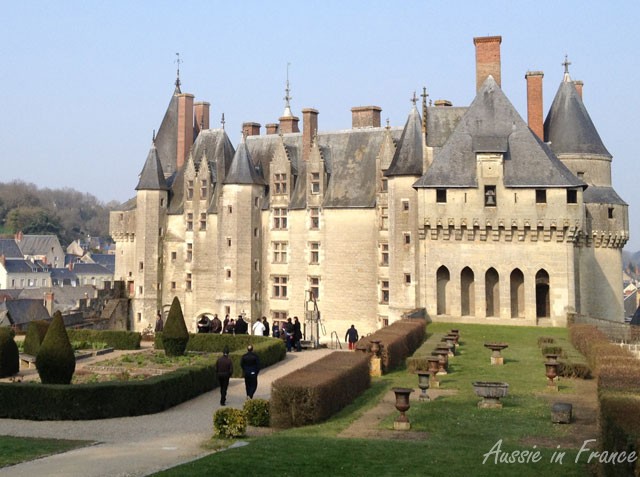
Royal Castle of Langeais
The Royal Castle of Langeais, built in 1465 by King Louis XI, is an excellent example of a late mediaeval fortress, with a drawbridge in working order and a parapet walk with stunning views open to visitors.
The rear façade of Langeais
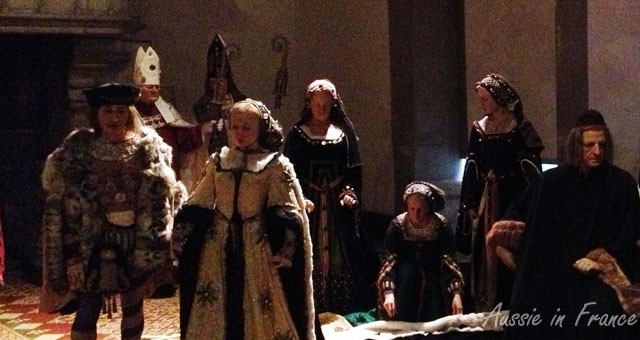
The interior furnishing is typical of the period, with sculpted wooden chests and fine tapestries. Fifteen wax figures give a lifelike representation of the secret marriage of Charles VIII and Anne de Bretagne in 1491 when Charles was 21 and Anne only 16.
The secret marriage of Charles VIII and Anne de Bretagne
A large park behind the château offers an excellent view of the Loire and even has (reconstructed!) mediaeval scaffolding. In the summer, pageants are often performed and we were lucky enough to witness a simulated wedding between a young lady called Raoulette and a man whom she had never seen, chosen by her upwardly mobile parents for his wealth.
You can have tea and cakes or a light lunch at La Maison de Rabelais just opposite the castle. It’s also a bakery and patisserie. 2 Place Pierre de Brosse, 37130 Langeais, France
+33 2 47 96 82 20
Château de Langeais (25 min from Tours, 1hr 15 from Blois, 15 mins from Villandry)
Open: February & March 9.30 am to 5.30 pm, April, May, June, September, October to November 11, 9.30 am to 6.30 pm, July & August, 9 am to 7 pm, November 12 to 31 January, 10 am to 5 pm, December 25, 2 pm to 5 pm.
Prices: Adults, 9 €, aged 18 to 25, €7.50, aged 10 to 17, €5, children under 10, free.
Château de Villesavin
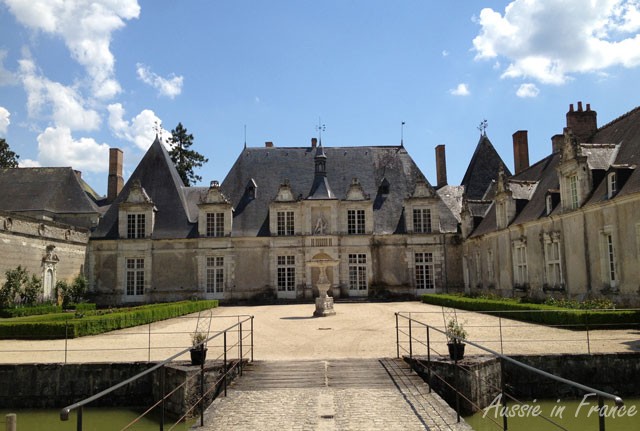
Château de Villesavin, which isn’t really a castle, is an hour’s ride on horseback from Château de Chambord and was actually a glorified worksite hut built at the beginning of the 16th century by Jean Le Breton who was François I’s minister of finance and in charge of the construction of his “hunting lodge”.
The front façade pf Villesavin
The inside of the building isn’t particularly interesting, except for the “try-out” for the monumental staircase at Chambord and the kitchen, which has a few original features. Photographs of the interior are not allowed, unfortunately.
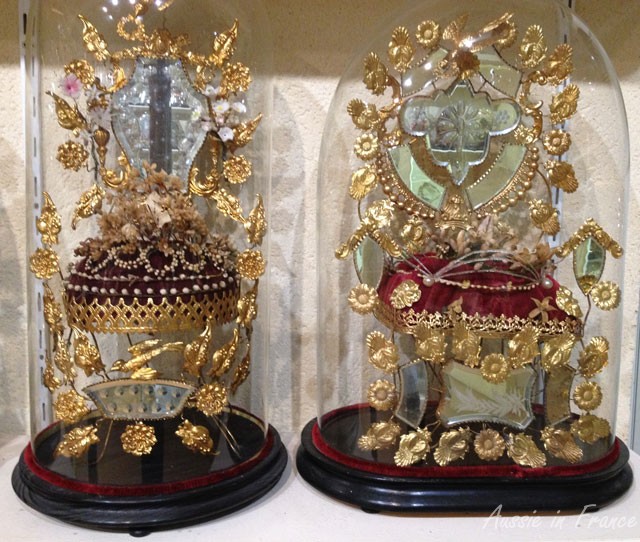
Far more interesting is the 19th century wedding museum with its large collection of wedding dresses, headdresses and globes!
Wedding globes
In the grounds there is well-preserved dovecote with a spiral ladder and 1,500 dove cells. A second museum contains horse-drawn carriages and a large number of children’s carriages. The annual chocolate fair is held duringthe third weekend in October.
Château de Villesavin, 41250 Tour-en-Sologne (17 km de Blois, 9 km de Chambord et 6 km de Cheverny)
Open: March 1 to May 31, 10 am to noon and 2 pm to 7 pm (closed on Thursday in March); June 1 to September 30, 10 am to 7 pm every day; October 1 to November 15, 10 am to noon, 2 pm to 6 pm (closed on Thursdays in November).
Prices: Adults including guided tour + grounds + wedding museum €8, grounds + wedding museum €6, aged 10 to 16, €6.50 & €4.50, aged 6 to 9 €4.50, free under 6.
Château de Montpoupon
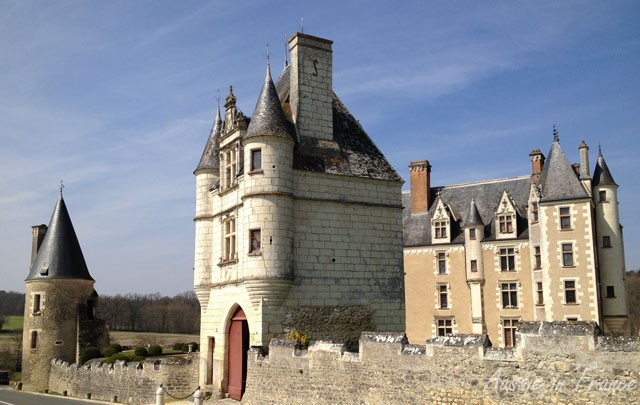
Château de Montpoupon, just 10 minutes from Château de Chenonceau, is an excellent example of what can be done to make a small family château attractive to the public. A recorded conversation between a young girl and her father, for example, is used to take the visitor through the living and dining rooms and King’s Bedroom downstairs and the family bedrooms upstairs.
fMontpoupon as you see it from the approach
Initially a mediaeval castle built by a Germanic clan at the time of Charlemagne, it has been converted over the centuries into a château. The towers from the original castle are 13th century, the main block is 15th century but built in a somewhat older style, and the gatehouse 16th century.
The extensive 19th century outbuildings contain several exhibitions relating to the Hunt, which was and still is, one of the main activities of the various owners down the centuries.
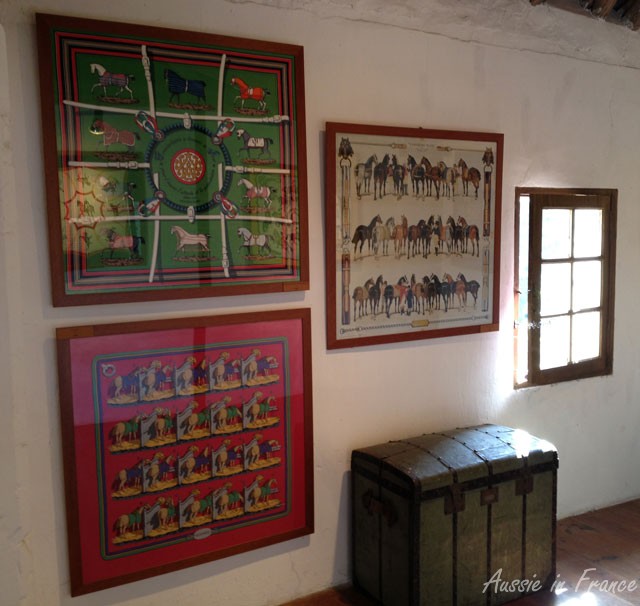
The lovely collection of Hermes scarves at Montpoupon
In particular there is a large display of Hermès scarves which were originally an integral part of the hunting scene. A most enjoyable visit.
The Auberge de Montpoupon next door is open from 1st April but there are also several places to eat in Chenonceau with a view of the château, and other possibilities in Montrichard.
Château de Montpoupon(10 minutes from Chenonceau, 15 minutes from Montrichard, 20 minutes from Chambord)
Open: April to September, every day, 10 am to 7 pm. October, every day, 10 am to 1 pm and 2 pm to 5 pm. 16 February, March and November, weekends and school holidays, 10 am to 1 pm and 2 pm to 5 pm. Closed in January and December.
Prices: Adults €8.50, students & seniors €7.50, aged 6 to 15 €5.
Château de Beauregard
The châteaustarted off as a manor house in the 15th century and was confiscated from the owner, François Doulcet, by Louis XII when he was found guilty of embezzlement. François I used the house as a hunting lodge before giving it to his uncle René de Savoie who sold it to Jean du Thier, Henri II’s finance minister in 1545. Work carried out between 1553 and 1559 turned Beauregard into one of the finest châteaux in the Loire Valley. A gallery and an L-shaped wing were added to the original building.
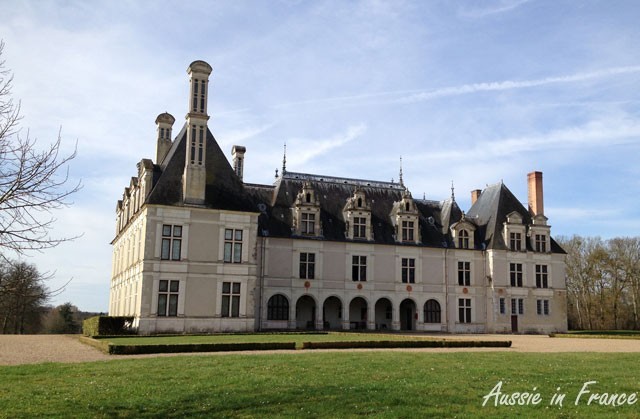
The rear façade of Beauregard
The harmonious Italianised architecture includes arcades in the gallery surmounted by terracotta medallions. Its high white chimneys “à la Chambord” are incrusted with slate. All that remains of Jean du Thier’s interior decoration, however, is the Cabinet des Grelots, his work cabinet, with its delicately sculpted caisson ceiling completed in 1554 by the royal cabinetmaker Scibec de Carpi.
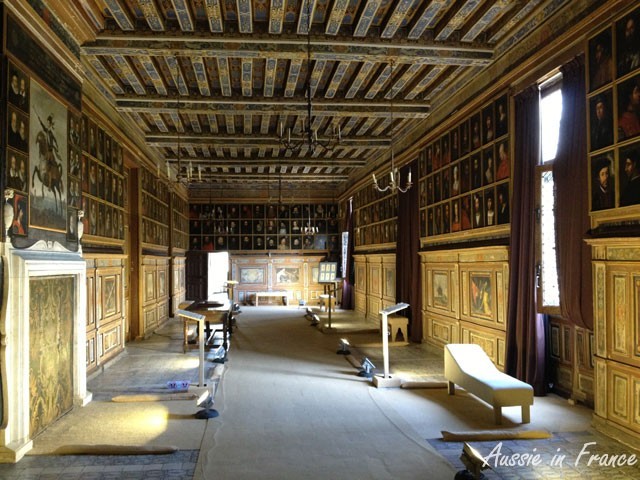
The stunning portrait gallery at Beauregard
But it was Paul Ardier, Louis XIII’s minister who was responsible for its most prominent feature. After retiring from political life, he decorated the Grand Gallery between 1620 and 1638 with 327 portraits spanning three centuries (1328 to 1643), forming the largest collection of historical portraits in Europe. They are not all works of art, of course, but the collection is impressive.
There is a restaurant in the grounds open from 10.30 am to 6 pm from 1st to 29th May, July and August.
Château de Beauregard, Cellettes (15 mins from Blois, 25 mins from Chambord, 15 mins from Cheverny)
Open: 18th November to 14th February, by reservation only (groups), 15th February to 30th March 11 am to 5 pm, 31st March to 29th June, 10 am to 6 pm, 30th June to 31st August, 10 am to 7 pm, 1st September to 2nd November, 10 am to 6 pm, 3rd November to 11th November, 11 am to 5 pm.
Prices: Park and château : 12.50 euro (park only : 9 euro); children from 5 to 13 : 5 euro (park only : 5 euro)
We’re up at the crack of dawn (well, for a Saturday anyway) to join Susan and Simon from Days on the Claise at our first truffle fair in Touraine, a couple of hours away. Not chocolate truffles, but the mythical mushrooms.
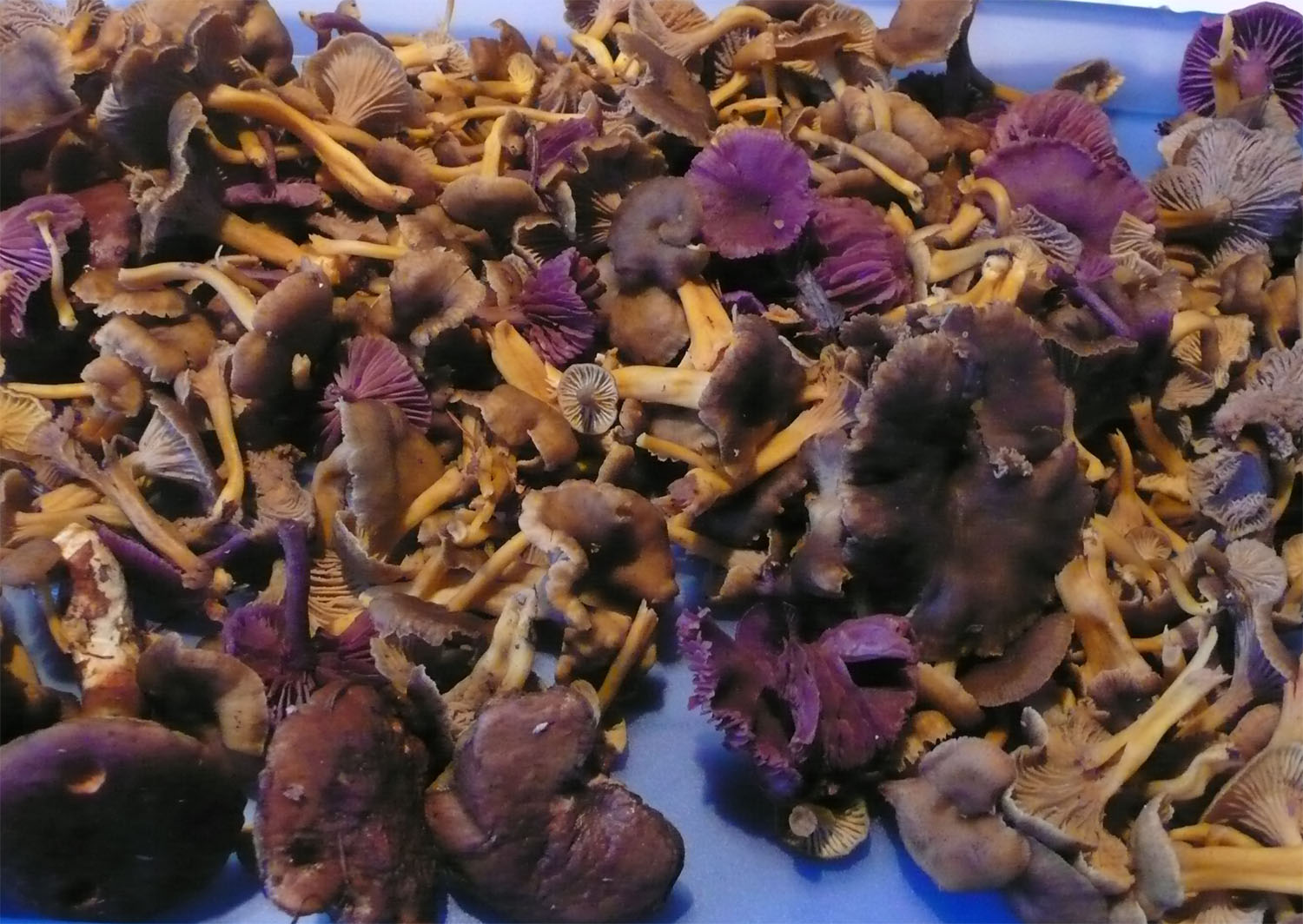
Chanterelles and amethysts found in the State forest
As you know we are keen mushroom pickers. The proximity of a State forest was even one of our criteria when we started looking for an area to retire to. Blois stood out because it is surrounded by forests in which we have the right to go mushroom gathering, unlike Sologne where you can be chased out of the woods.
But we never find truffles. Only carefully-trained pigs and dogs can do so. They are mostly found under truffle oaks which can be planted but it takes six or seven years before the first crop appears.
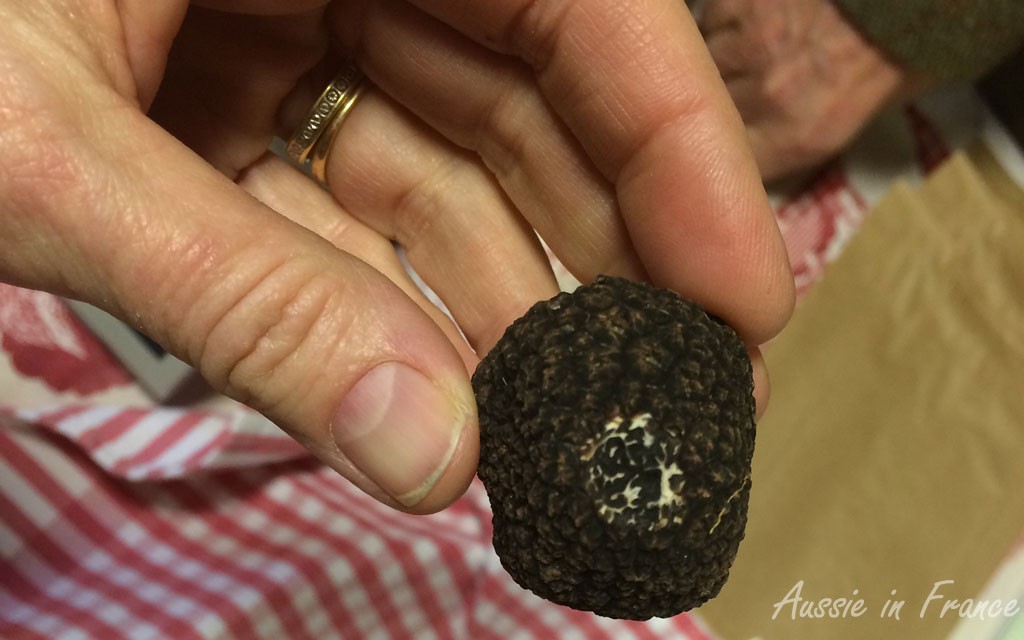
First category truffle
We arrive in the little village of Marigny-Marmande but there are no signs indicating a truffle fair. We see some other people walking around so ask them. They, too, are looking for the truffle fair. We park next to the church and send a message to Susan. Within a few minutes, Simon turns up and tells us to get back in the car and follow them.
Still no signs indicating the way. We turn left down a very unlikely road and come to a sort of community hall. When we get out, Susan tells us that when they have the truffle markets before Christmas, the whole parking area is full of vendors.
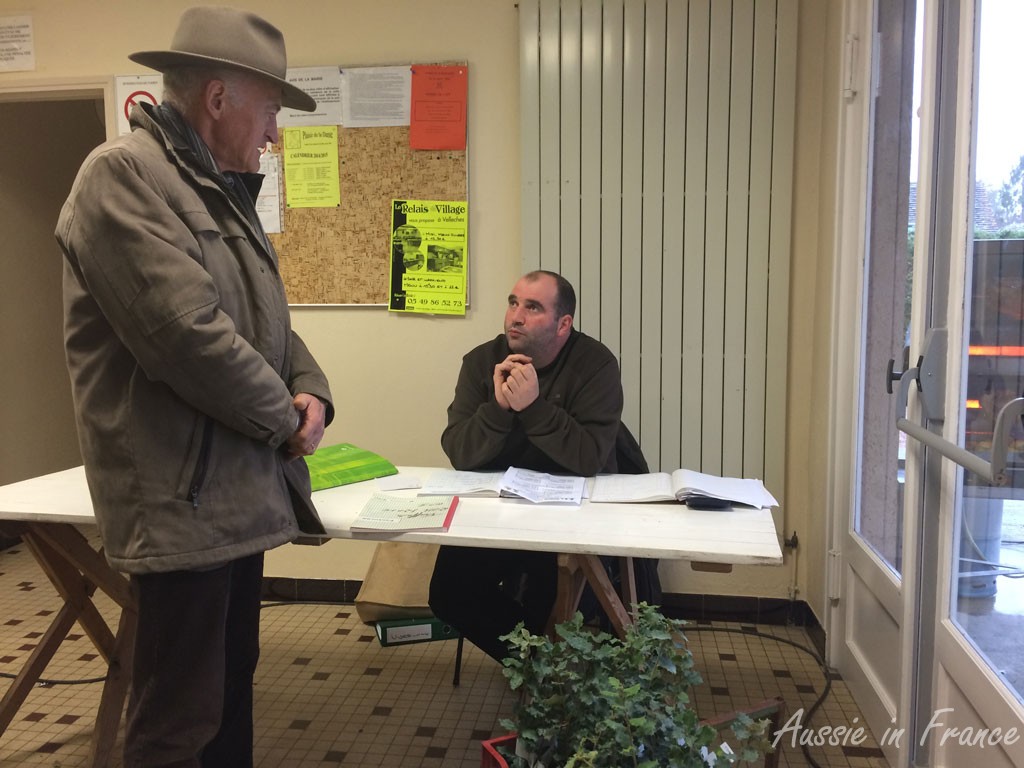
Talking to the truffle oak vendor
We enter and see a man sitting at a trestle table so I assume we have to pay to get in. No, he laughs, he’s selling truffle oaks. I am immediately interested but the waiting time for the first crop seems a little far ahead (several years) and we probably don’t have the right soil. Neither do we have a truffle dog. We could hire one but the distance might prove a little prohibitive.
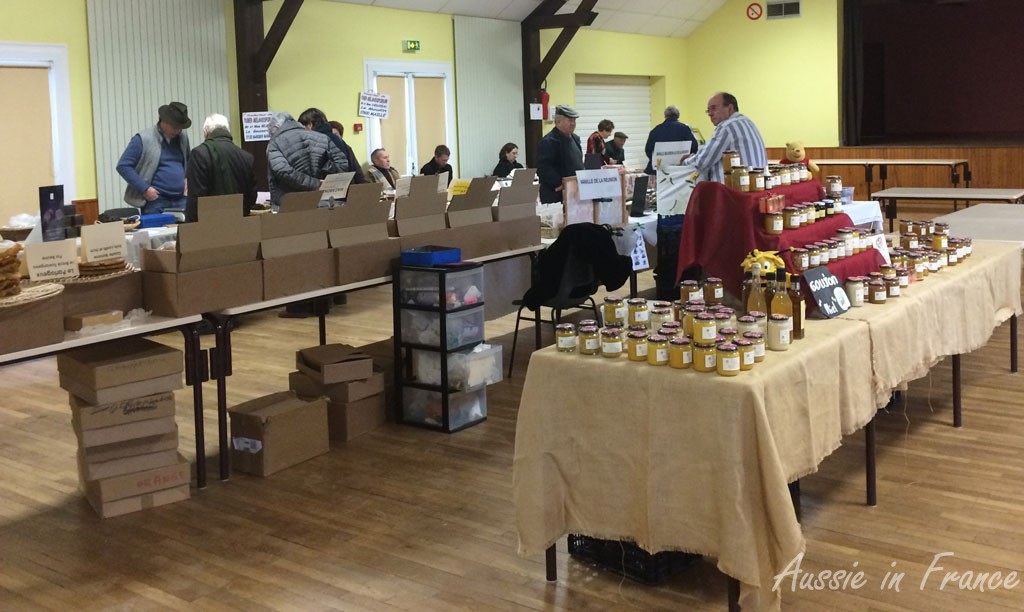
I leave Jean Michel to it and go into the hall. There are about six or seven truffle stands, a beekeeper, a spice seller, a saffron vendor and a couple of other stands that I can’t remember.
Inside the truffle fair
Susans tells me that the Marigny-Marmande truffles are black truffles Tuber melanosporum, or truffes in French, which are found in France, Italy and Spain, growing in the earth in a symbiotic relationship with broadleaf deciduous trees, mainly oak. They are harvested from November to January.
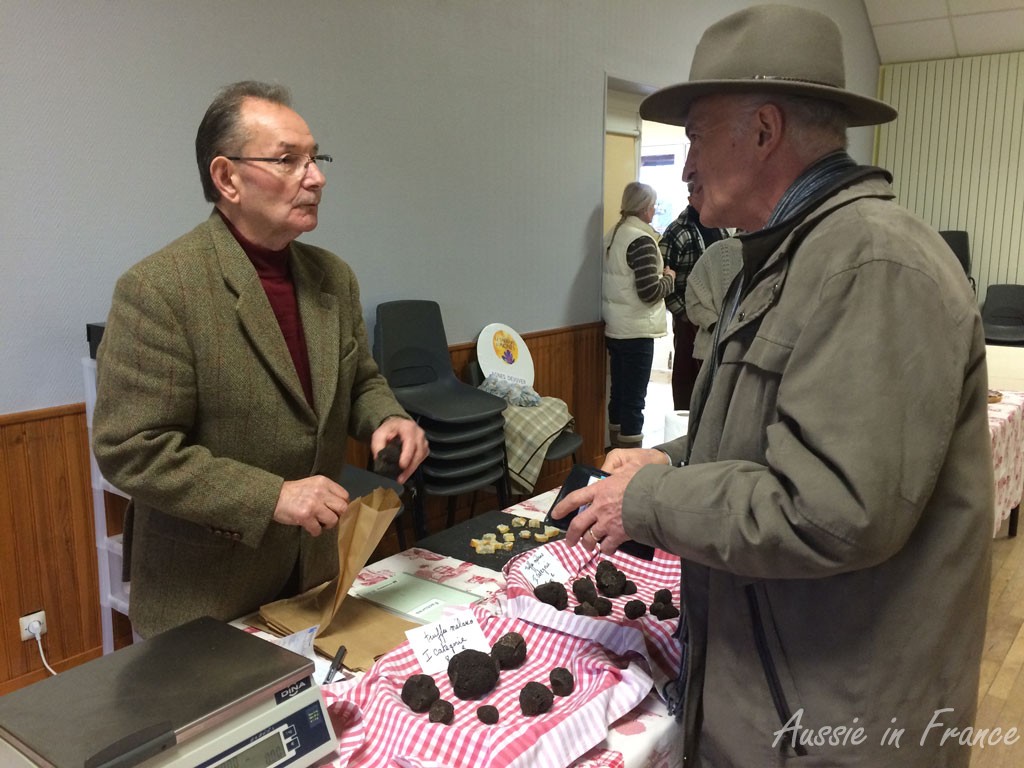
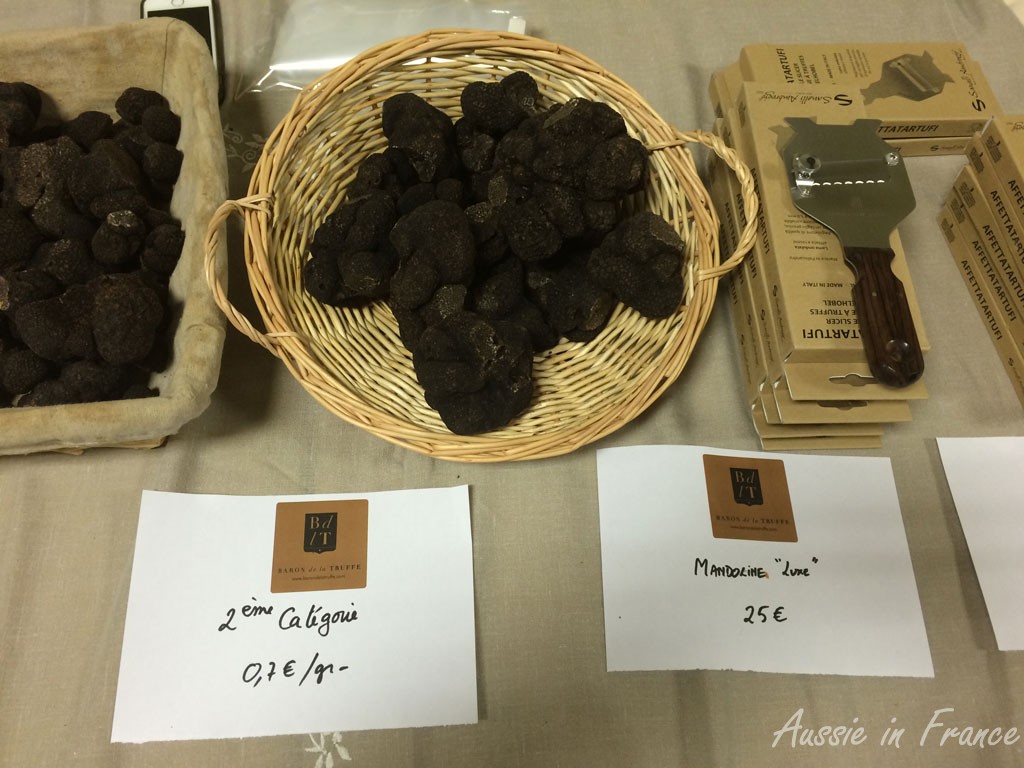
The first truffle vendor is very friendly and willing to answer all our questions. We see there are two qualities of truffles. He explains that the more expensive ones (first category), which cost a mere 800 euros a kilo, are whole, wheras the second category, at 700 euros a kilo, are missing bits but the actual taste is the same. At the Christmas markets, Susan tells us, the prices are higher – 800 to 1000 euros a kilo.
Jean Michel buying our two truffles
He cuts us off a shaving to taste. He also explains that once they are dug out the ground, they only stay fresh for about a week. They should be firm and not soft. We can freeze them, he reassures us.
We wander around the other stands. At one of the them, a man accosts me and asks me if I know the difference between first and second category. I reel off my explanation without hesitation and he is suitably impressed, but I don’t like being sollicited. We’ll buy our truffles from the first man. They are also selling truffle slicers but I don’t think we’ll be buying enough truffles to need a special slicer!
Second category truffles and the truffle slicer
Another stand is selling books about truffles. There is an explanation about how they train the dogs. One lady used to always hide three truffles when she was teaching the dog the find them. Once it had learnt what to do (and didn’t eat the truffles!), she took him to the truffle plantation. However, as soon as he found three truffles, he would stop for the day!
We eventually return to our truffle vendor and choose two small truffles, one to use fresh and the other to freeze. We’re intending to put some in next year’s foie gras! The total cost is about 70 euros which is a bit extravagant but I have fond memories of little bottles of truffles in oil we bought in Umbria and used to put in mashed potato. Delicious!
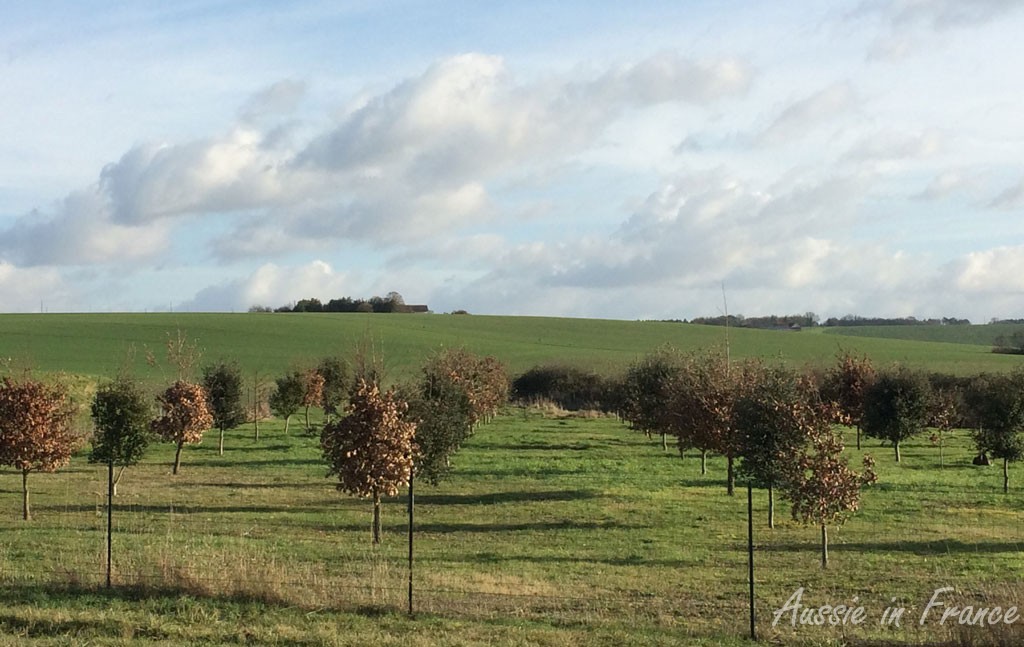
A young truffle oak field
When we’ve bought our truffles we set off for Richelieu where we’re meeting up with two other English speakers for lunch. On the way, we go past several fields of young truffle oaks.
We have visited Richelieu before and enjoyed it. It was designed by Cardinal Richelieu in the 17th century as an ideal city and is based on a grid plan.
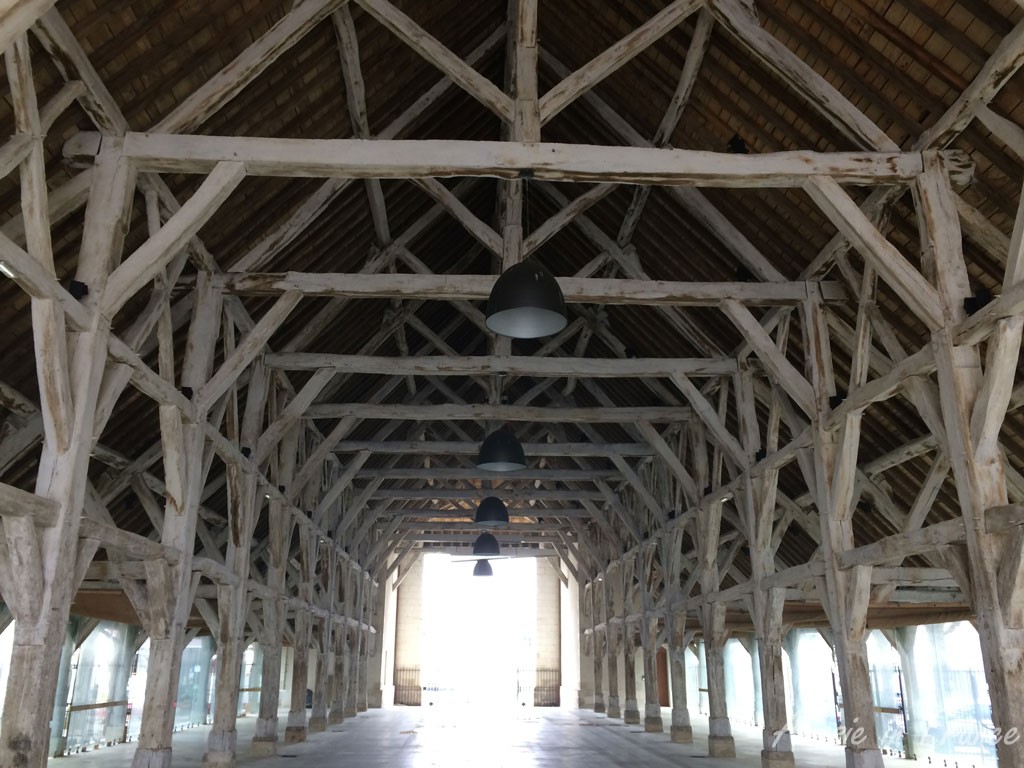
The renovated market hall in Richelieu
Many of the houses, unfortunately, need renovating but the overall impression is interesting. The rafters of the big market hall have been completely refurbished and are most impressive.
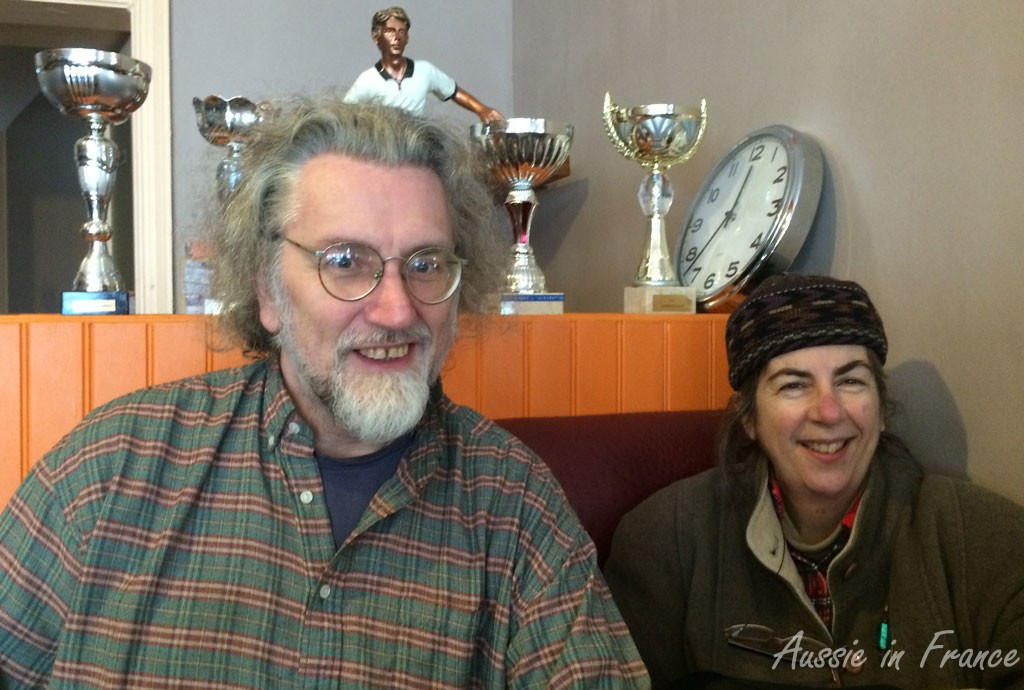
It’s really a little cold to linger in the streets for long so we go to a likely-looking café for an aperitif. It’s obviously a favourite with the soccer crowd.
Simon and Susan in front of the soccer trophies
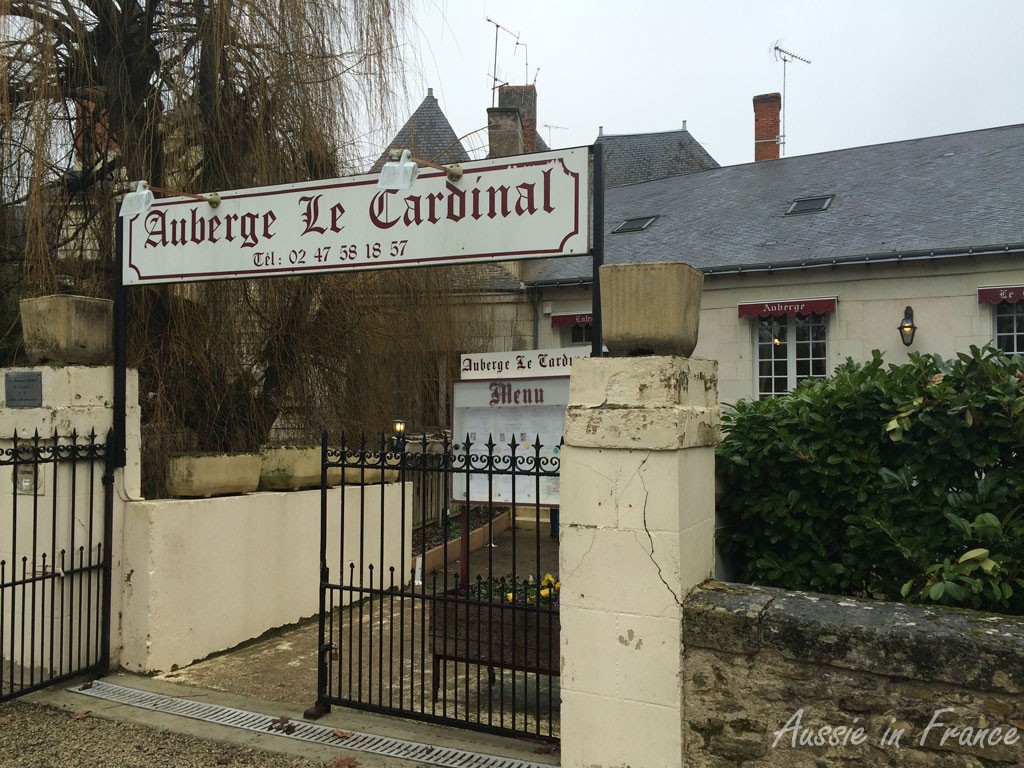
We make our way to the Auberge Le Cardinal for lunch. Nothing wonderful, but there isn’t much culinary choice in Richelieu. As the lunch continues, I start feeling very much under the weather. I swap places at dessert and sit next to Susan, unfortunately for her, because you may have guessed it – I’m coming down with the flu and probably at my most contagious. She and I are both still worn out and coughing a whole month later.
Auberge Le Cardinal in Richelieu where we had lunch
We forego the visit of the lovely gardens that we cycled through last time we were here and I go home to bed. We end up freezing both of the truffles because I am certainly not up to appreciating them and it seems a great pity to waste such gourmet, not to mention, expensive ingredients, on someone with the flu …
You are all familiar with Phoebe from Lou Messugo who lives in Nice and has often been featured in this weekly blogger round-up.
Today, she is beginning a new monthly link-up focussing on posts about France from bloggers across the glob. I’ve contributed my post on the Ten Top Châteaux in the Loire Valley. As I’m writing she already has 16 other participants, including such diverse subjects as the 2CV, the tooth fairy, how to talk to your Muslim kids about Charlie Hebdo and the beautiful Alsatian village of Colmar. Enjoy!
All About France #1
by Phoebe from Lou Messugo, a traveller, francophile, expat, mum and foodie now living in Roquefort les Pins where she runs a gîte after many years of travelling and living in Asia, Eastern Europe and Australia.
Welcome to the first All About France blog linky (and my first time hosting a link-up). I’ve been thinking about starting this for a few months now and keep getting side tracked, but there’s no time like the present….So if you write or have written about France in any shape or form then please join in. You don’t have to write regularly about France, an old post about a holiday is perfectly appropriate, for example. Feel free to link old or new posts, as long as they’re about France or French they’re welcome. Read more.
You may remember our poultry yard dilemma that got in the way of our project to renovate our “little house” to make a gîte (self-catering holiday rental accommodation). We thought we might have to drop the idea altogether. The next idea was to convert our second barn instead. Then the neighbours sold their house to a lovely couple who has no intention of pursuing the barnyard theme.
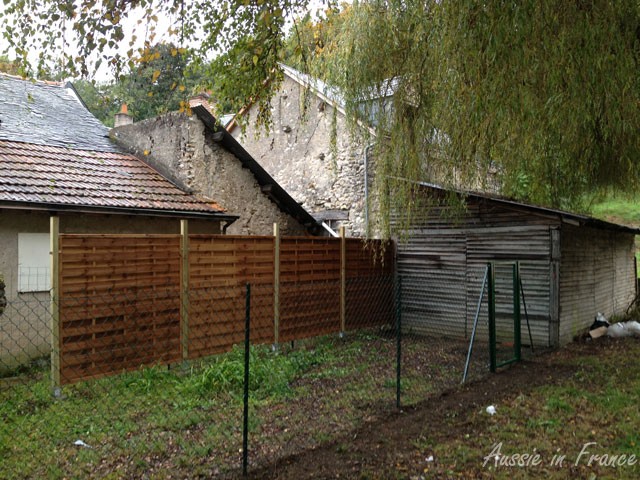
The enclosure, with the lean-to on the right which is up against our barn and the house that is going to be pulled down to form a garden for the gîte
Jean Michel has been pondering the question for some time and has now decided that we should go back to the original idea of refurbishing the little house. He explains it to me but I am one of those people who finds it difficult to change something that I like and I can’t imagine in my mind what he wants to do. I love the side view of the little house which Jean Michel simply cannot undertand.
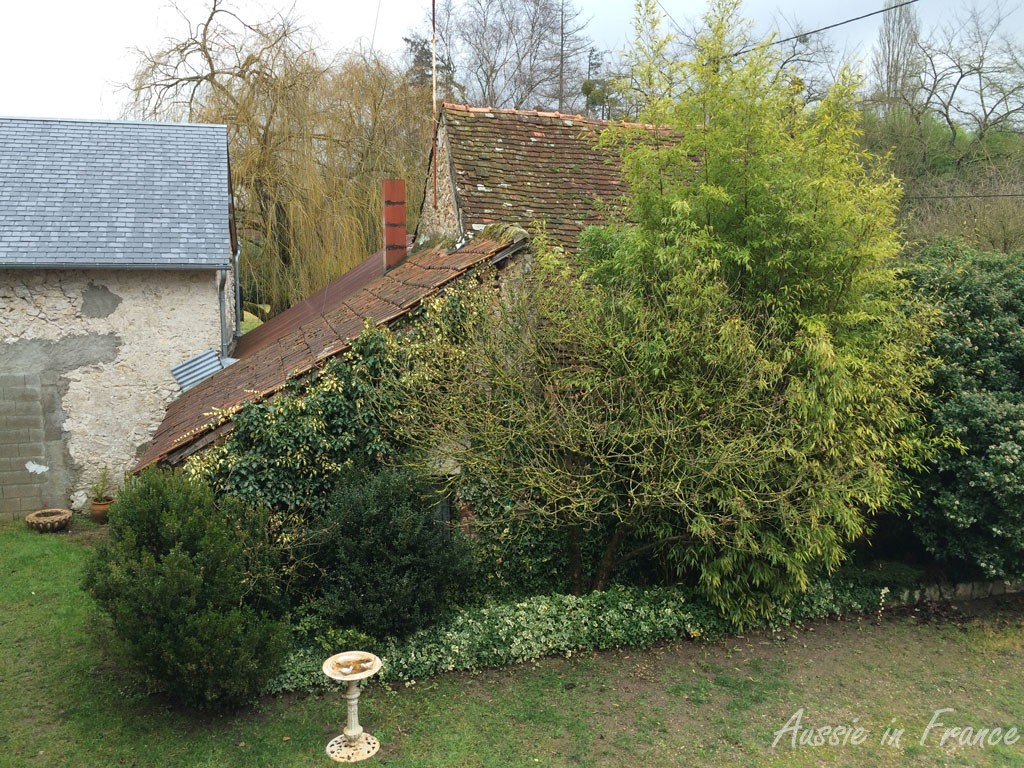
The corner view of the little house seen from our garden
He starts getting annoyed with me and I can see we’re heading for an argument so I say I’ll make a scale model. Whatever you want, he replies. I just need all the dimensions. I have the dimensions. I’ve drawn the floor plans of little house to scale, he says. Well, can I have them? It’s after dinner and he thinks it’s a bit late to be embarking on model-making but he gets them anyway.
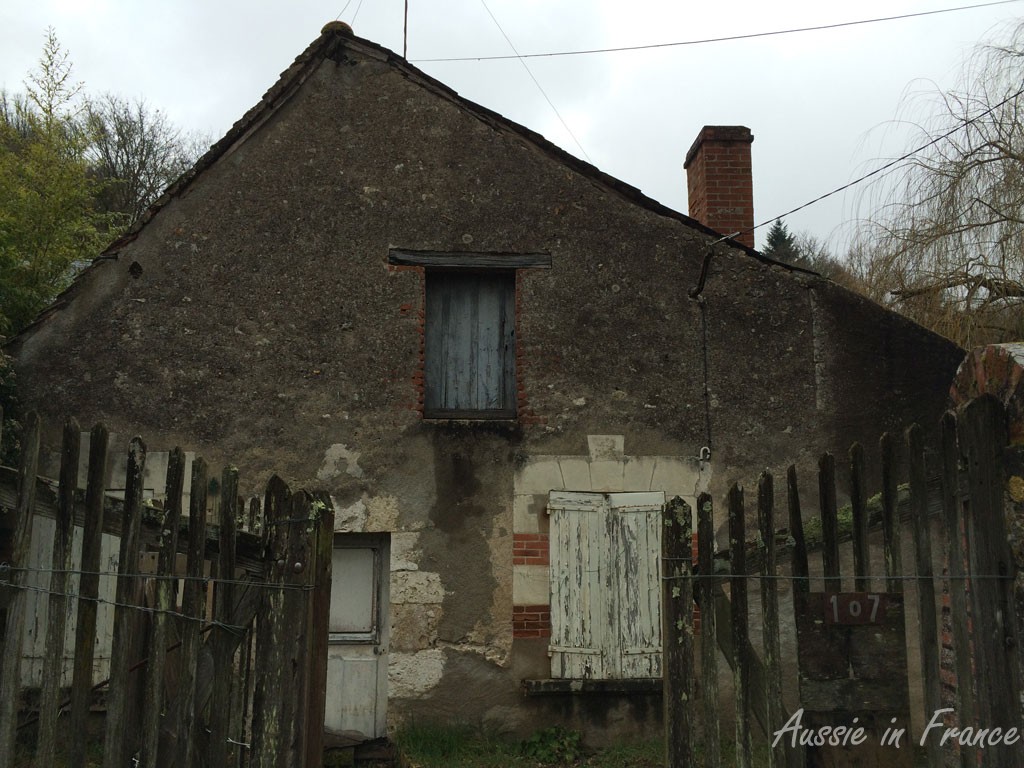
The façade of the little house at the moment, which is rather ugly, you will agree!
I go and find some coloured cardboard, sticky tape, scissors, pen and a ruler. He looks on amazed as I proceed to rule lines and cut out pieces of cardboard. Well, I can see this isn’t your first scale model, he says. It is actually the first one that I’ve made myself but I loved making models when I was a child. Dad once bought Buckingham Palace for me and my sister and we spent hours putting it together on Magnetic Island.
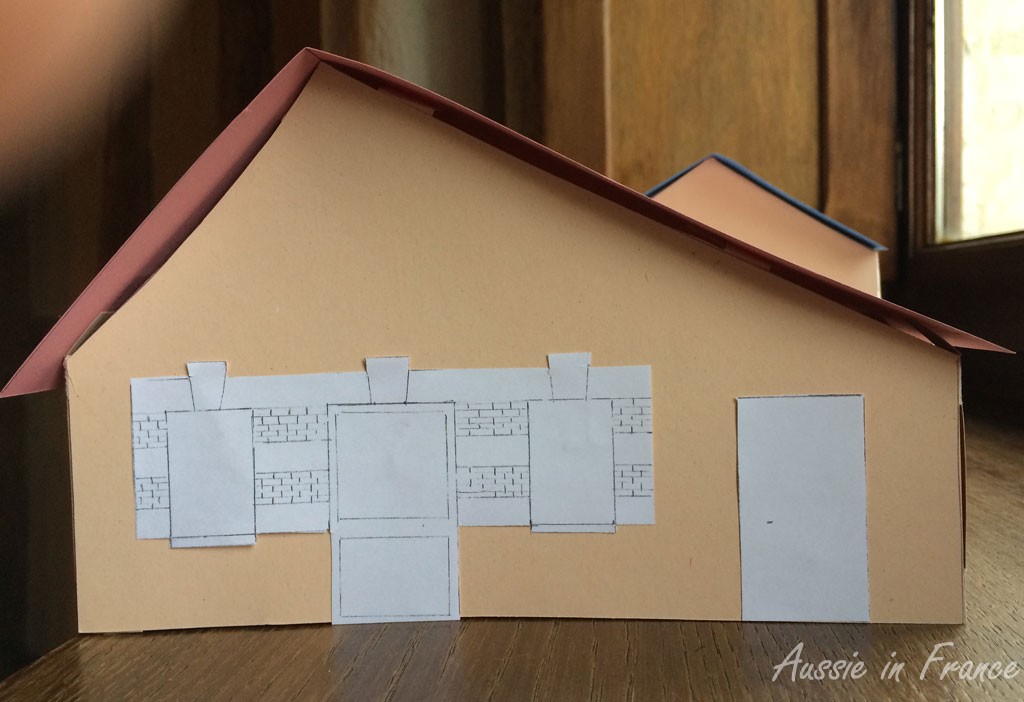
The façade of the little house on our mock-up, a replica of our own façade
I make the little house, except for the new roof at the back, as this is the part I can’t understand. Jean Michel, who is now itching to get his hands on the cardboard and scissors too, takes over. I am amazed when I see the result. Never in a thousand years could I have imagined it without a physical model to help me.
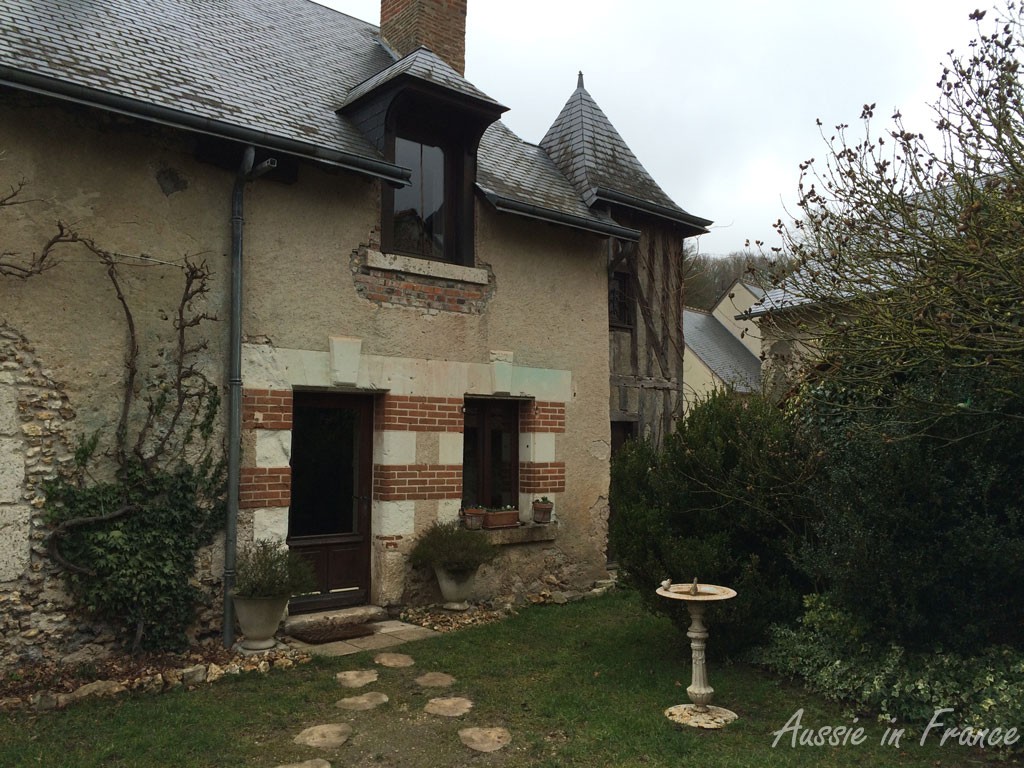
The brick and stone façade of our house at the kitchen end
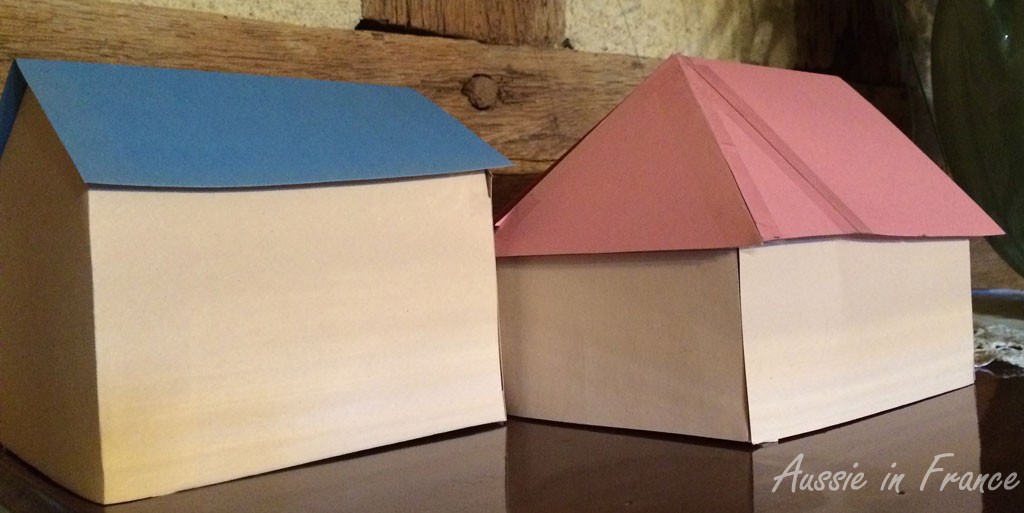
So where does the barn fit in, I ask. We need to make the barn as well. So I go and find some more buff-coloured cardboard. We decide on a blue roof to represent the slate because we used pink for the tiles. We fit the two together and I am at last able to imagine the result. We start discussing the floor plan of the inside of the little house and come up with several interesting ideas. But by then it’s nearly midnight so we go to bed.
The barn on the left and the back of the little house on the right, with its new roof
Next day, I have another look at the existing roof and see that Jean Michel’s idea isn’t so bad after all. We’ll lose a boxwood bush and a small althea but the new roof is actually quite attractive.
The back of the little house whose roof will disappear
One of the things we can add is an outside toilet which I’m very happy about. There is nothing worse than working in the garden and having to stop and change your muddy shoes to go to the other end of the house to the toilet, wash your hands or even get a glass of water.
The division between the kitchen and dining area in the big house that I would like to reproduce in the little house
Making the scale model has inspired me. I’m now thinking about how to organise the inside so that it will be as attractive and practical for holiday makers as possible. All this won’t be happening for a few years yet, but we need to ask for planning permission and incorporate the future plans into any other work we do on the house in the meantime (such as installing a heat pump, renovating the barn to take the current content of the little house and providing a garage for our second car which has mainly been parked across the street for the last three years !)
Wish us luck and if you have any criteria you think are essential for rental accommodation, please share!
We pick up our car at the long-term parking lot near Orly Airport at 10.30 pm after our flight back from Malaga and drive the two hours back to Blois with no mishaps. Closerie Falaiseau is safe and sound with no break-ins (you never know in this day and age what might happen) so we unload the car and turn on the electric blankets. The temperature in the bedroom is 15°C. Jean Michel brings up the portable oil heater.
You can see the round window on the right just opposite the street light!
I sleep like a log, most unusual for me, but there are no cars going over the cobblestone outside our house on the Double Hill and no light streaming into the enormous round unshuttered bedroom window from the street light as there was in Granada. Everything is perfectly still and quiet.
Bright sunshine in our bedroom – after we open the shutters!
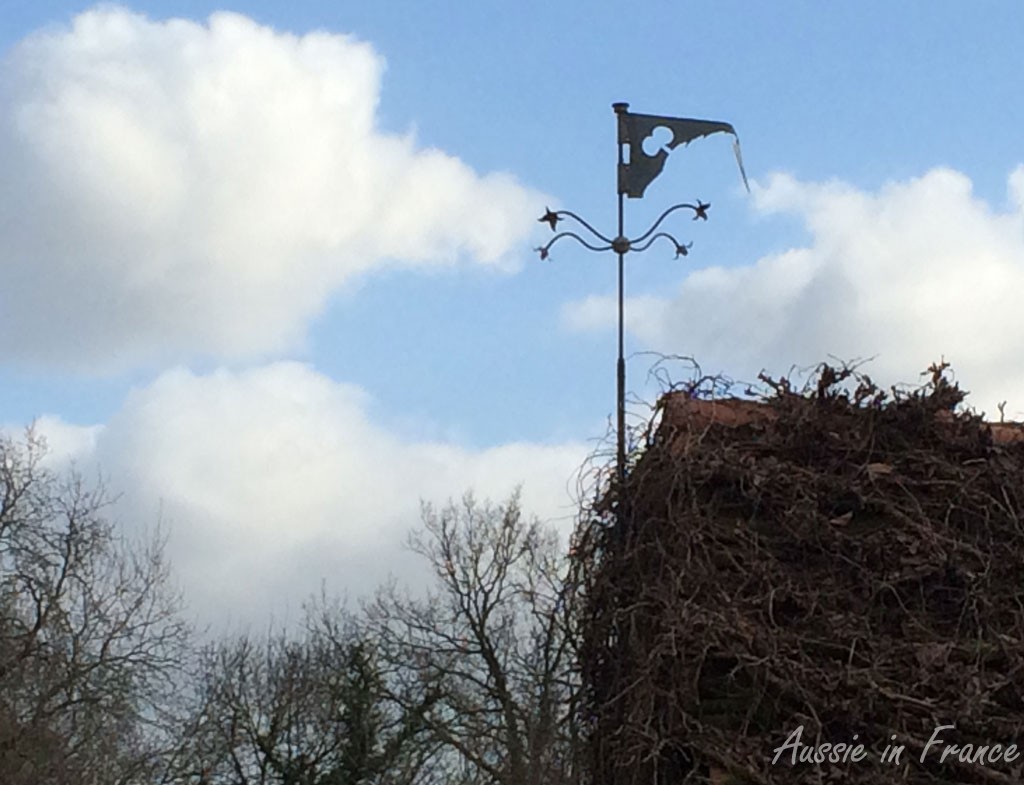
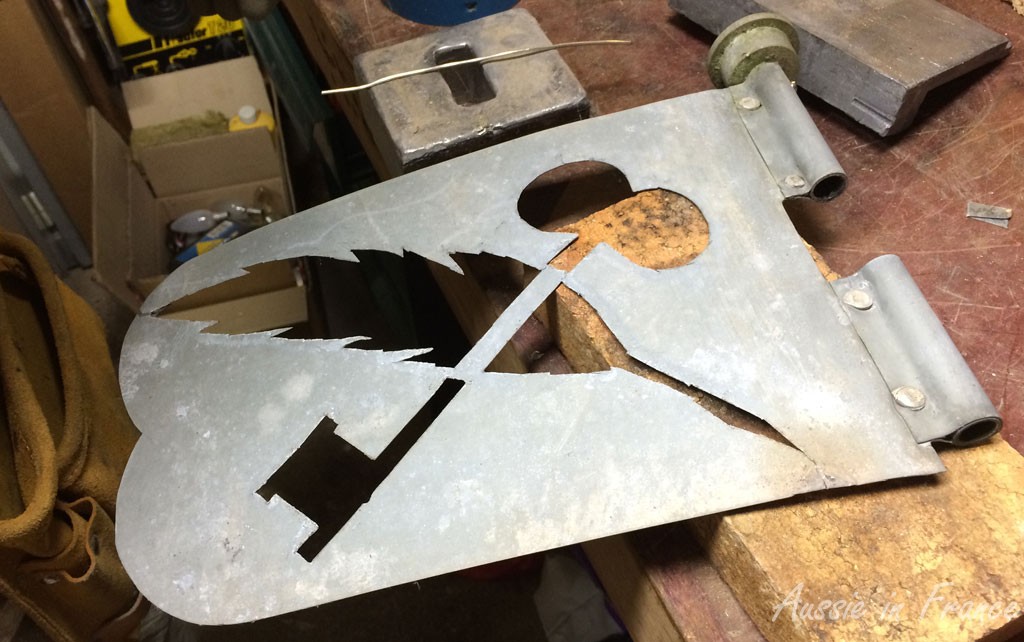
The first thing Jean Michel notices when he opens the window in the morning to bright sunshine is that our weather vane is broken. We have a beautiful, unique weather vane on one of our barns, made by our previous owner who was a locksmith. It has a key to represent his trade and a feather to symbolise that of his wife, who was a secretary.
The broken weather vane
Both are perfect symbols for us as well. We can also see the weather vane from the upstairs living room so can check which way the wind’s blowing when we’re having breakfast. In France, north winds are chilly and south winds are warm.
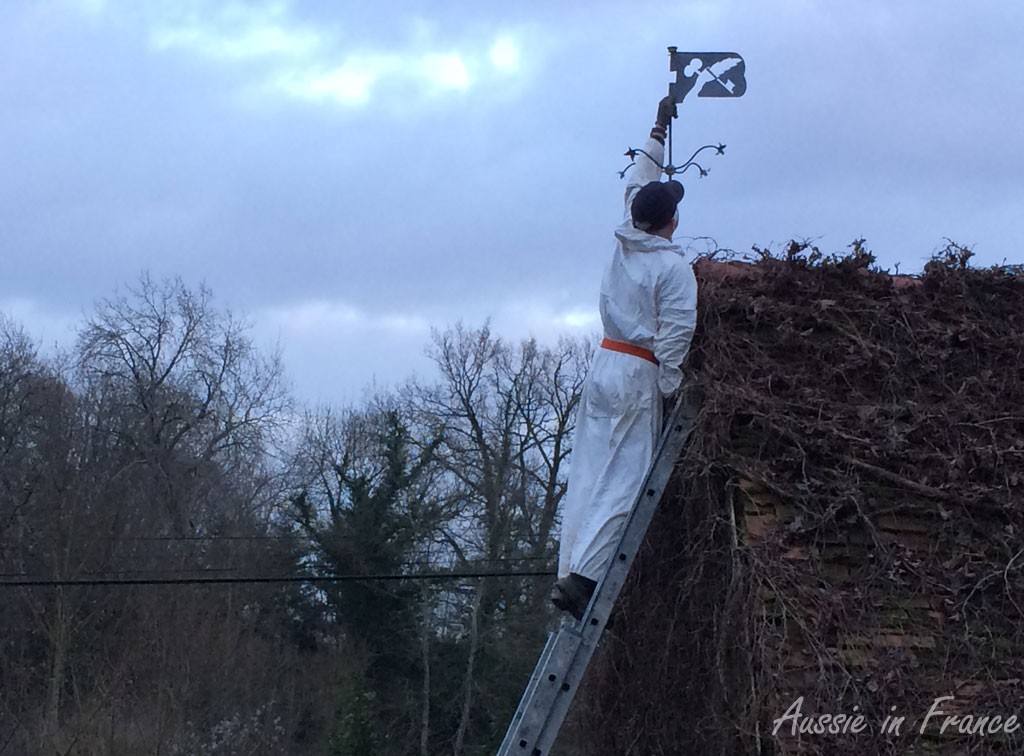
Jean Michel removing the broken weather vane
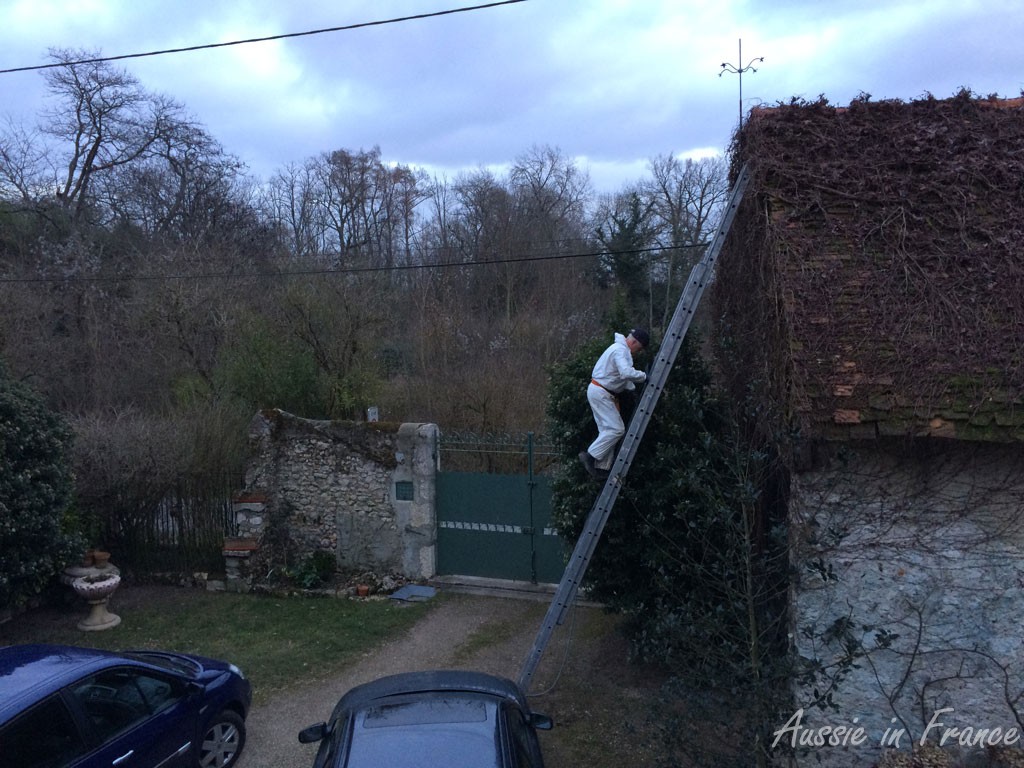
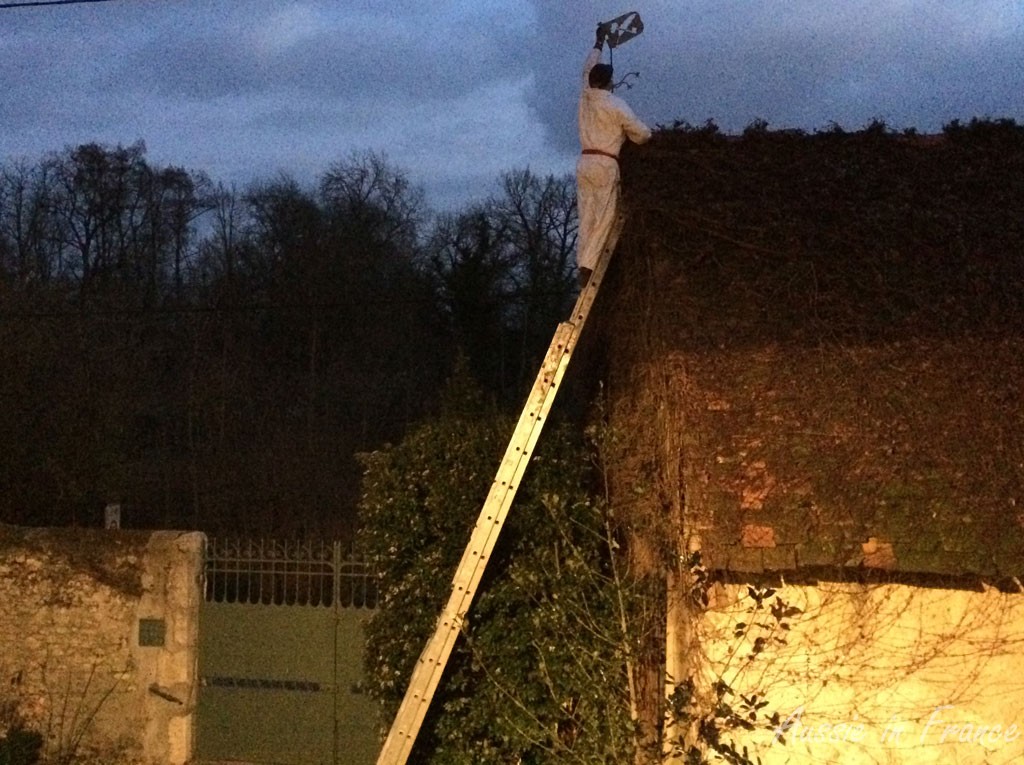
But one side of the weather vane is now looking as though it might fall off altogether. Jean Michel waits until late afternoon when the wind dies down and it’s a bit warmer so he can climb up his big ladder and bring the weather vane down for repairs.
Coming down the ladder
I don’t like heights but he has even done a special course in climbing up on roofs so I’m not too worried. He unscrews the weather vane from its little pole and climbs carefully down the ladder.
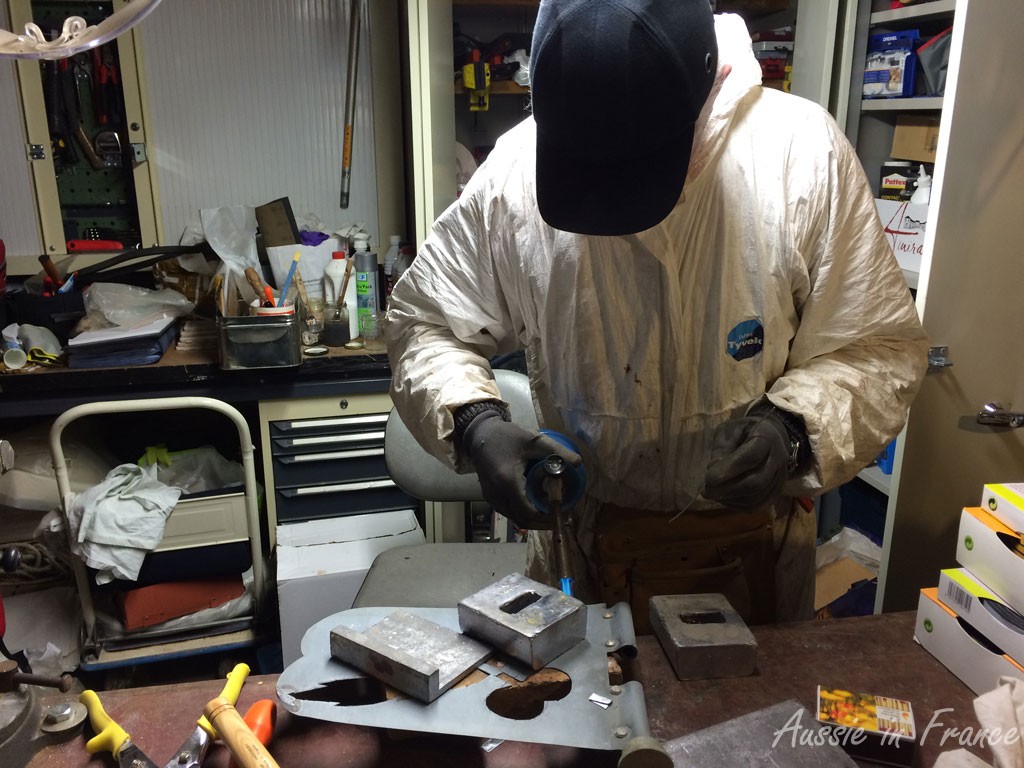
Soldering the weather vane
The repairs prove to be a bit more difficult than expected because the weather vane is zinc and he is using galvanised iron to fix it so the solder isn’t behaving very well. However, he eventually finds the solution and it is soon repaired.
You can see the broken bit at the bottom of the feather stem
However, it is nearly dark by the time he climbs up the ladder again and I’m just a little worried this time. But all goes well and it’s soon in place again.
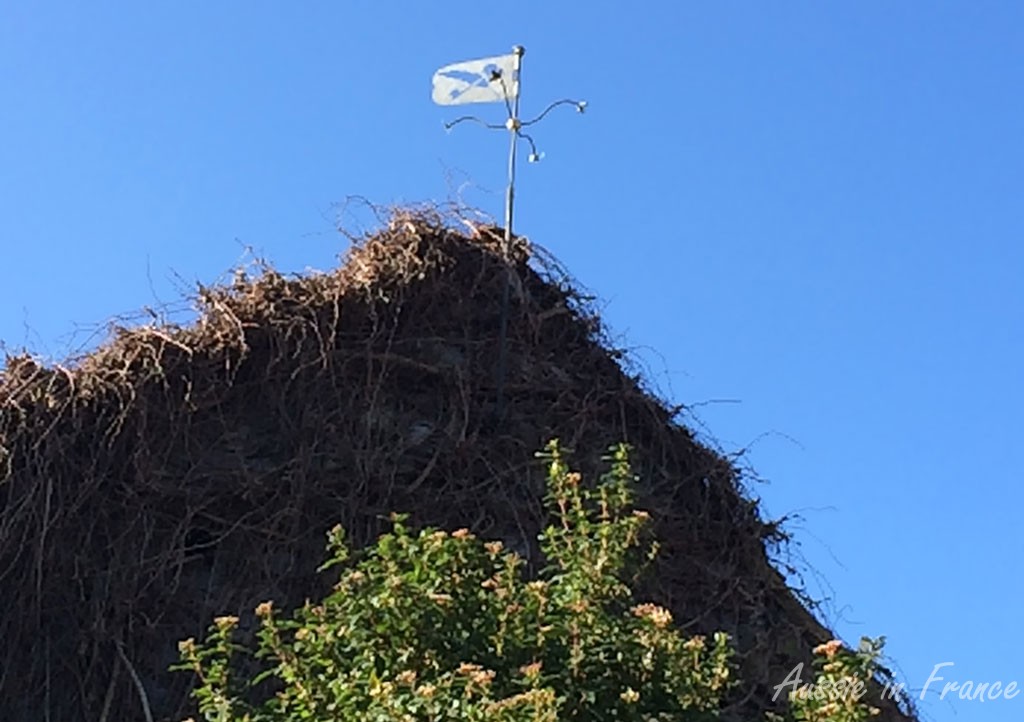
Putting the repaired weather vane back on its pole
I have to say that I am extremely lucky to have such a talented husband. He really does seem to be able to fix anything!
Good as new next morning
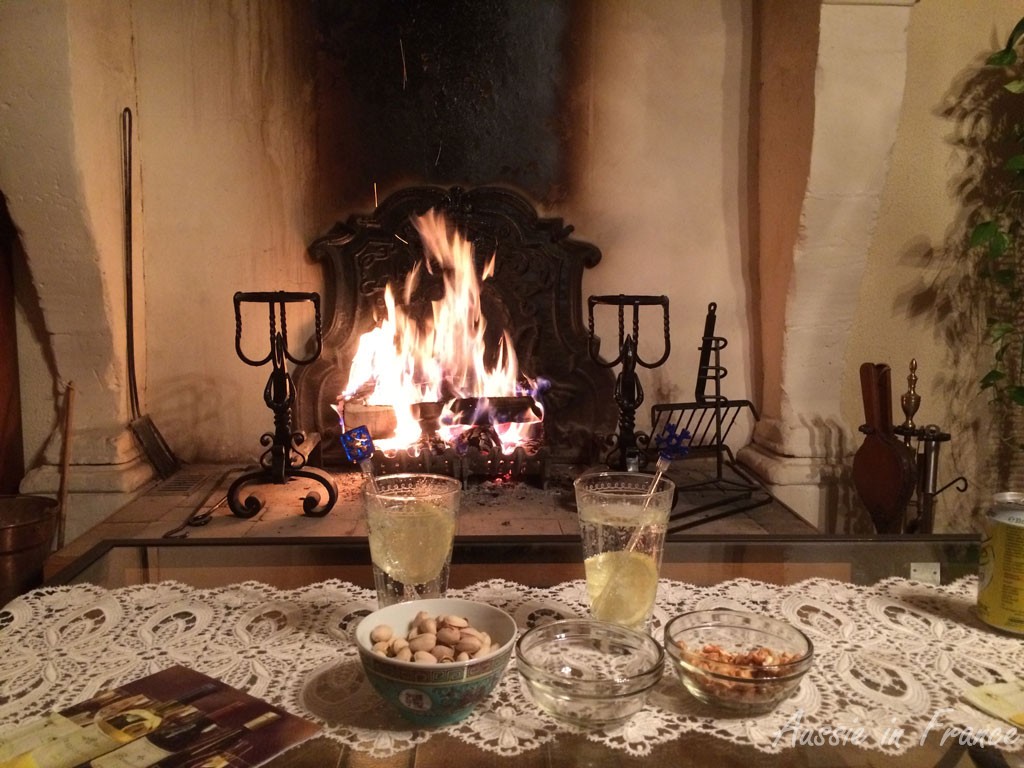
He certainly deserves a gin and tonic in front of the fireplace after his hard work.
Gin & tonic to make up for the one that Transavia airlines doesn’t serve in-flight!
And just in case you’re wondering how I am health-wise, this awful flu is still not completely finished even after nearly three weeks. I’m still very tired and have a cough but am able to translate and rake the moss off the lawn when I need a break. However, I’ve fared better than my neighbour who still isn’t out and about. I hope that next week we’ll both be back to Nordic walking together.