Cycling along the Danube – a Renaissance Festival in Neuburg, Bavaria

In one of our guidebooks, there was mention of an annual Renaissance festival in Neuburg,, west of Regensburg, but I could find no information in English or French about dates on the Internet so we thought we should go there on a Saturday or Sunday just in case it was on.
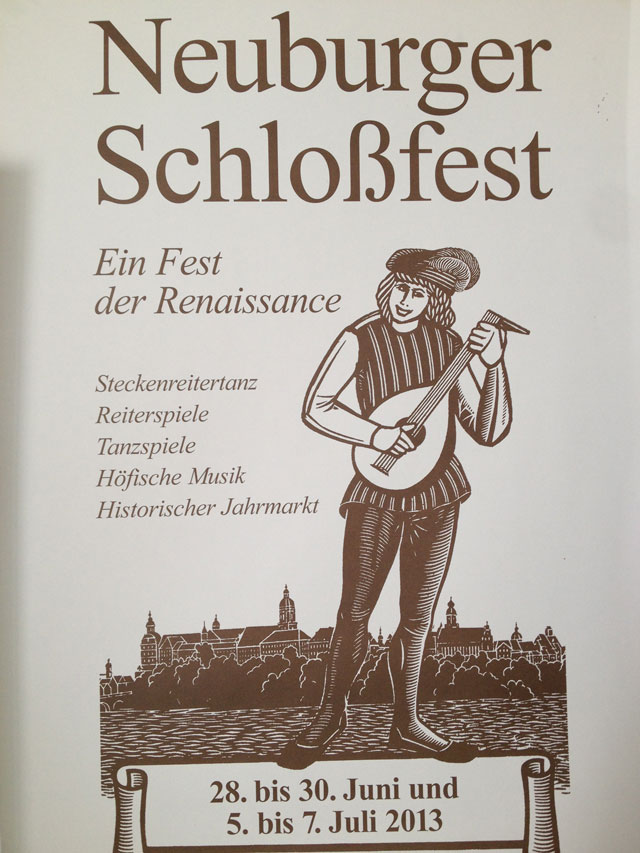
Neuburger Schlossfest

When we cycled into the town on Saturday afternoon, we initially saw no sign of any festivities but while having a cold drink at a gasthof near the river, I saw a young man leaning over the parapet of the bridge above me dressed in a floppy velvet hat so I knew something was going on. It turns out the festival, which is actually called the Neuburger Schlossfest, is held on the last weekend of June and first weekend of July.
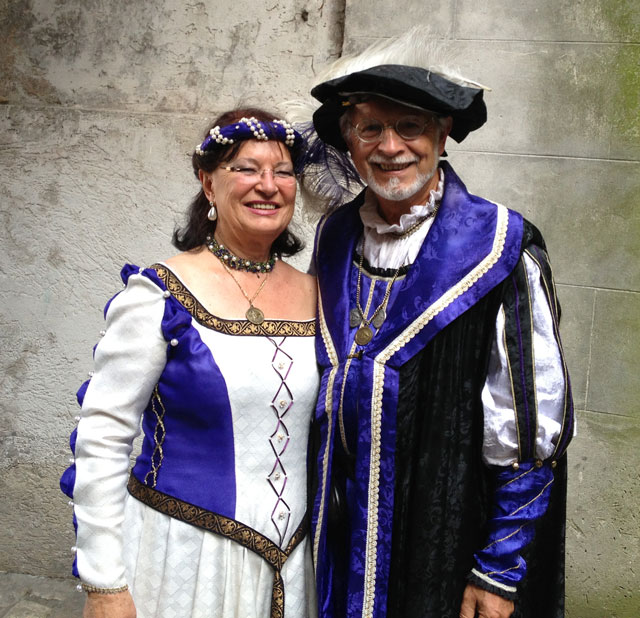
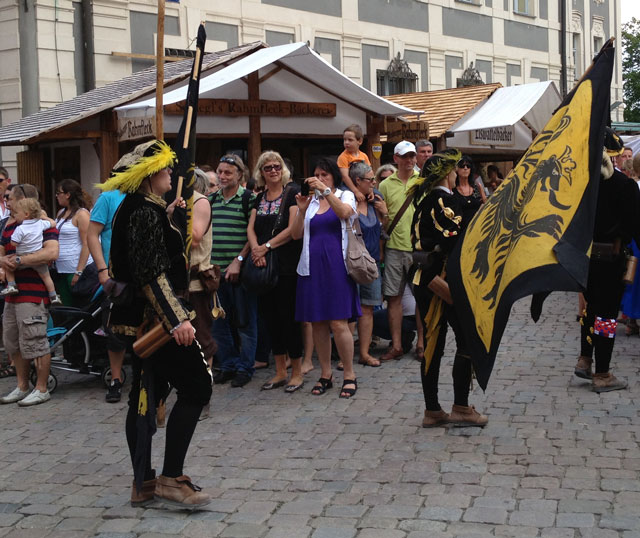
The matching couple at the town gate

At the entrance to the walled town, you pay 4 euro and are given a badge.  The thing that appealed to me most is that all the locals obviously join in every year and people of every age are dressed in Renaissance costumes, from the most sophisticated to the simplest and enjoying themselves immensely.
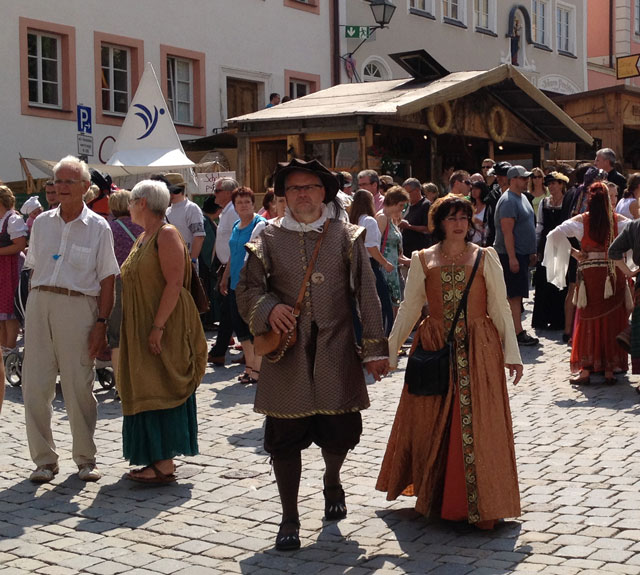
The elegant couple
The elegant couple with full accessories

Some go all the way, with matching bodkins and tankards strapped to their waists.
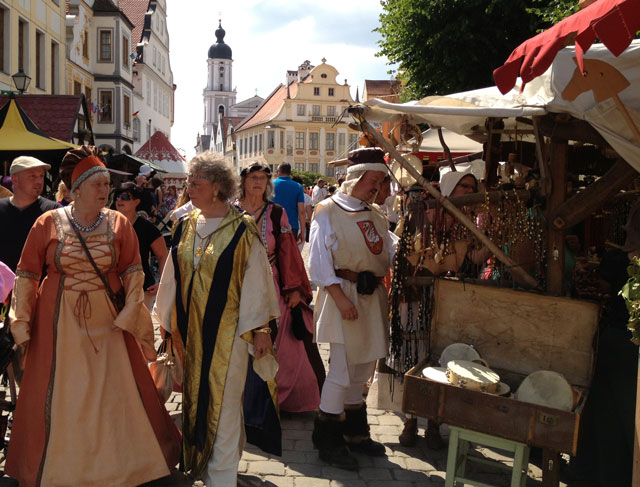
Typical street scene

There are stalls selling all sorts of Renaissance produce and products and lots of food and drink stalls of course.
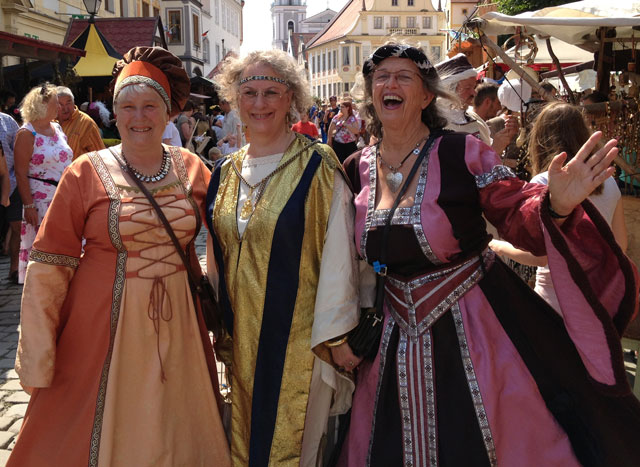
The three friends
The three friends

No one is the slightest bit shy of having their photograph taken!
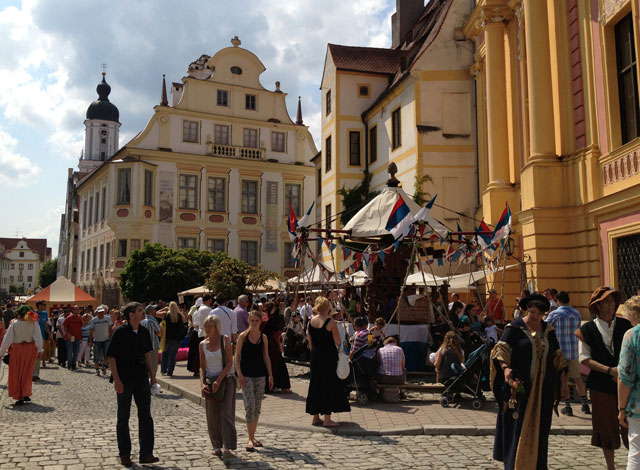
Merry go round
Merry go round

There is even a mediaeval merry-go-round that is popular with both the parents and children.
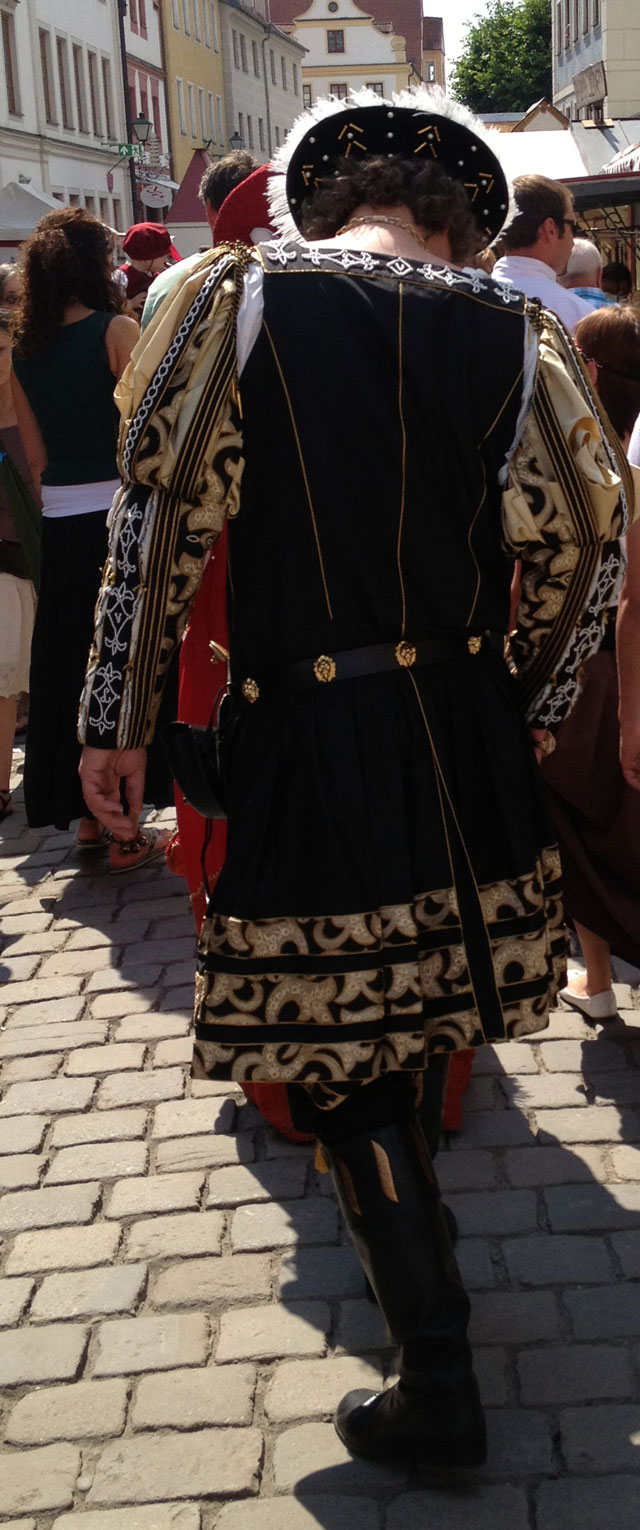
My favourite man's costume
My favourite man’s costume

I just loved this man’s velvet costume. What detail! But I didn’t quite dare to dash round in front of him for the photo.
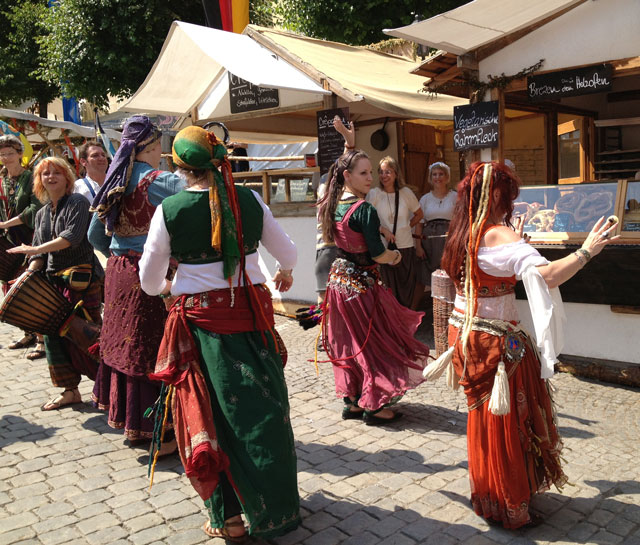
The gypsy dancers
The gypsy dancers

Various performers were to be seen on the streets. These gypsy dancers had their own music.
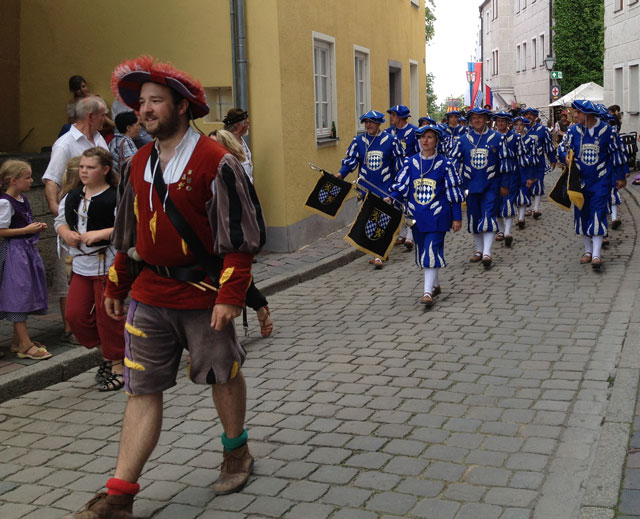
The blue drummers
The blue marchers

There were groups in similar costumes though we didn’t know their significance of course.
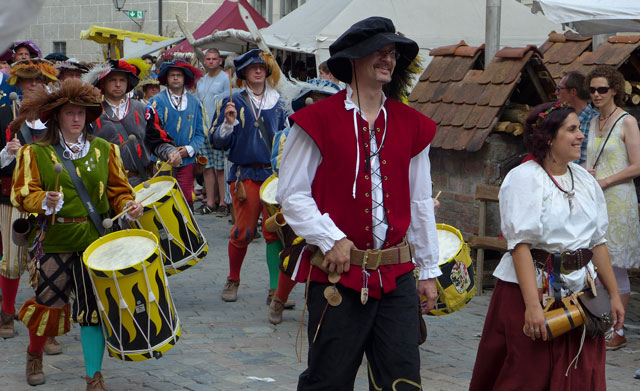
Yellow drums
Yellow drums
Flag waving
Flag waving
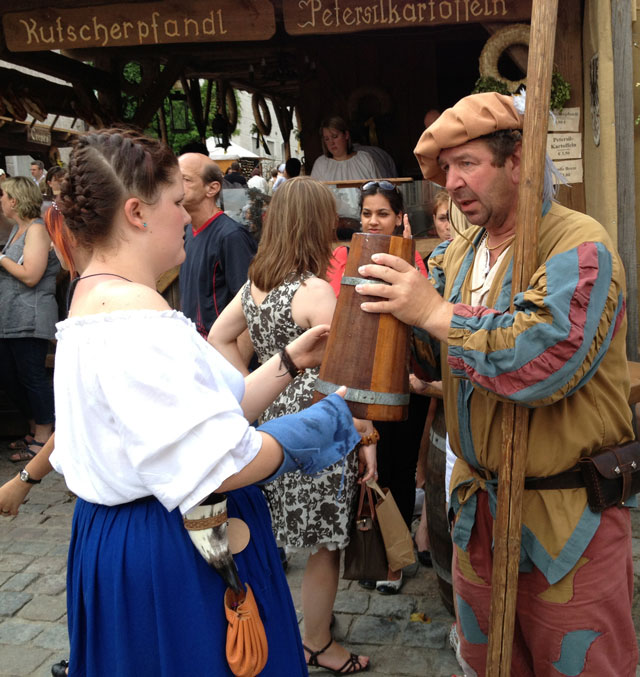
The giant tankard
The giant tankard

From what I could gather, this tankard was passed around from one person to another!
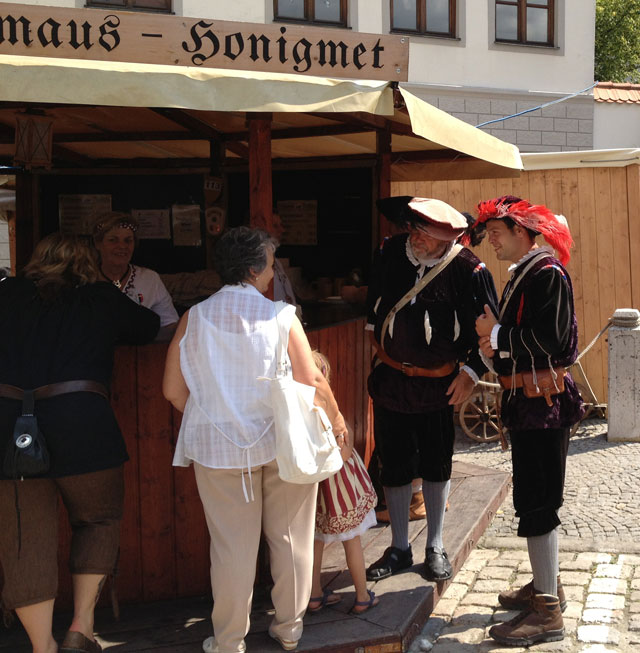
The hat stall
The hat stall

There were also a lot of costume stalls. I’d love to have bought one!

Father and son
Father and son


OTHER POSTS ABOUT CYCLING IN GERMANY

Cycling in Germany – Tips & Tricks
Cycling in Germany #1 – Kobern-Gondorf on the Moselle
Cycling in Germany #2 – Rhine from Saint Goar to Lorch
Cycling in Germany #3 – Cochem to Zell on the Moselle
Cycling in Germany #4 – Koblenz where the Moselle meets the Rhine
Cycling in Germany #5 – Bad Schaugen to Pirna along the Elbe
Cycling in Germany #6 – Bastei Rocks, Honigen and over the border to Czech Republic 
Cycling in Germany #7 – Dresden: accommodation & car trouble and Baroque Treasure  
Cycling in Germany #8 – Dresden Neustadt: Kunsthof Passage, Pfund’s Molkerei, a broom shop & trompe l’oeil
Cycling in Germany #9 – Country roads around Niderlommatzsch on the Elbe
Cycling in Germany #10 – Meissen on the Elbe
Cycling in Germany #11 – Martin Luther Country: Torgau on the Elbe
Cycling in Germany #12 – Martin Luther Country: Wittenberg on the Elbe
Cycling in Germany #13 – Wörlitz Gardens and the beginning of neo-classicism in Germany
Cycling in Germany #14 – Shades of Gaudi on the Elbe: Hundertwasser
Cycling in Germany – Turgermünde, the prettiest village on the Elbe
Cycling in Germany #16 – Celle & Bremen
Cycling in Germany #17 – Windmills & Dykes
Cycling in Germany #18 – Painted façades from Hann. Münden to Höxter
Cycling in Germany #19 – Bernkastel on the Moselle: a hidden treasure
Cycling in Germany #20 – Trier & the Binoculars Scare
 
Cycling along the Danube – A Renaissance festival in Neuburg, Bavaria
Cycling along the Danube – Watch out for trains!
Cycling along the Danube – Regensburg & Altmuhle
Cycling along the Danube –  The Weltenburg Narrows
Cycling along the Danube – from its source to Ehingen
Cycling along the Danube – Ehingen to Ulm
Cycling along the Danube – Singmarigen to Beuron
Cycling along the Danube – Binzwangen to Mengen including  Zwiefalten
Eurovelo 6 – Cycling around Lake Constance
Eurovelo 6 – Moos to Stein am Rhein and Steckborn on Lake Constance
Heading home to France after a month’s cycling holiday
 

Eurovelo 6 – Cycling around Lake Constance

We’ve left the Danube and are now staying in Moos on Lake Constance, which is called the Bodensee in German. However, we’re still on the Eurovelo 6 route from the Atlantic to the Black Sea. Two years ago, on our way home from Croatia, we spent a few days cycling around Schaffhausen and Stein am Reim, where the famous Reinfall waterfalls are to be found.

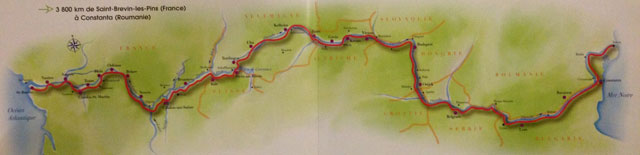
The Eurovelo 6 route from the Atlantic Coast to the Dead Sea
The Eurovelo 6 route from the Atlantic Coast to the Black Sea

We arrived late afternoon yesterday and had time to cycle to Hornstaad for dinner and back. Our hotel, Gasthaus Schiff, is so close to the cycle path that we can see it from the terrace! It’s wonderful to be able to be able to set out directly on our bikes and not have to take the car. When we were staying in Niederleierndorf, it took us thirty to sixty minutes to get to the cycle path, depending on where we wanted to go.  We now realise that we shouldn’t stay more than 3 nights in one place.

Our hotel from the Eurovelo 6 bike path - 1st floor on the right
Our hotel from the Eurovelo 6 bike path – 1st floor on the right

Initially, we were supposed to stay in Moos five nights, but we were able to cancel the last two so we can go further along the bike path, this time in France, near Dole where our chambre d’hôte is also very close to the Eurovelo 6 route. We’re very happy with Gasthaus Schiff, which is spacious, has a desk, a sofa, a low table and a terrace. It also has excellent soundproofing and opaque curtains that keep the light out. In Niederleierndorf, we were woken by daylight at 4.30 am! It also has the best breakfast we’ve had yet.

Breakfast on the terrace of Gasthaus Schiff

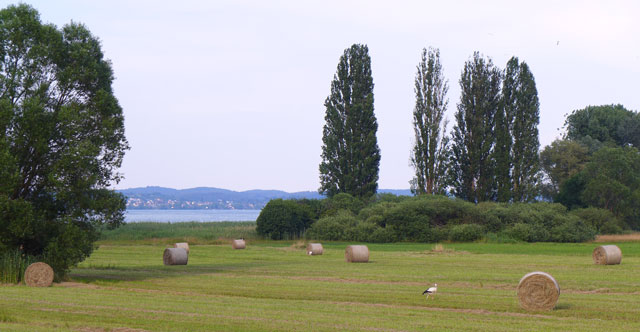
The village of Moos is very quiet and peaceful and reminds me of Magnetic Island, even though they are nothing alike. To get to our restaurant last night, we rode through hay fields full of storks, with reeds and Lake Constance in the distance.

Hayfield full of storks with the lake in the distance

We rode back into a magnificent sunset.

Sunset over Lake Constance

Today we went to the town of Konstanz, which is nothing out of the ordinary, but our ride back along the Swiss side of the lake was very pretty.

The pretty village of Ermatingen

We took the ferry over to Reichenau Island after having a very expensive lunch in Ermatingen because it was 2.30 pm by then and the normal, already pricey, menu of the only restaurant we could find was no longer available. We then discovered that the ferries only run every two hours, unlike the little ones on the Danube that cross when they see someone waiting on the other side.

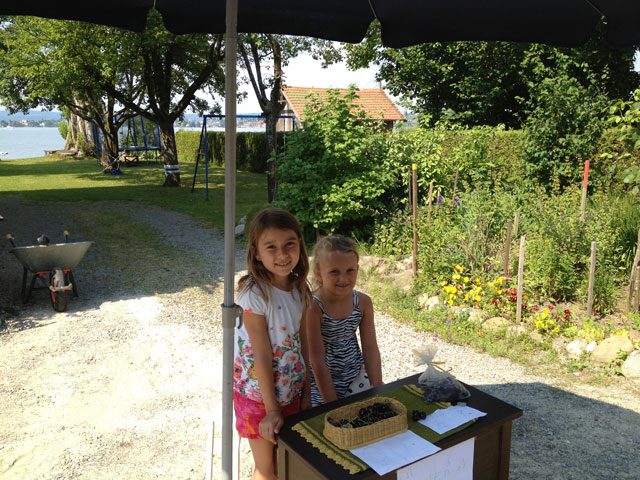
Two little Swiss girls selling cherries in front of their house - with Mum sunbathing in the background!
Two little Swiss girls selling cherries in front of their house – with Mum sunbathing in the background!

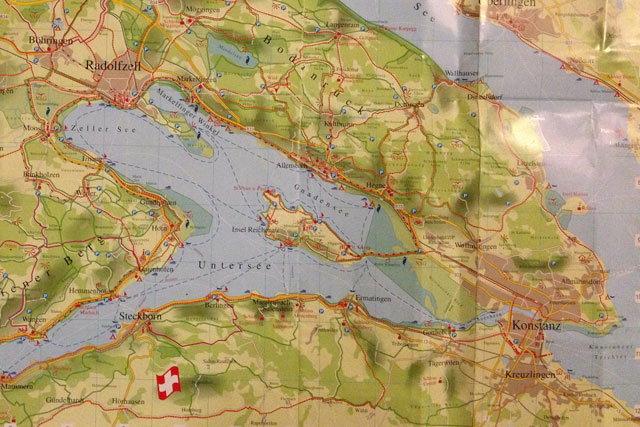
So we continued on to Mannebach where there was a ferry at 4.40 pm, buying cherries on the way from two little Swiss girls with their own little stall. As soon as we reached the Island, I checked we’d have a ferry to take us back to Iznang, which is only a couple of kilometers from Moos. Reinenau is connected by a bridge to the mainland on the east so we wouldn’t have been stuck on the island but it would have meant a 40 km trip back home and we’d already clocked up over 50 by then.

Our corner of Lake Constance, with Moos on the left and Konstanz on the right. The main lake is to the east of Konstanz.

And it’s a good thing I did check because the last ferry left at 6.40 pm. The island was a little disappointing. It mainly seems to consist of market gardens and nondescript villages. I was looking forward to visiting a church with 1000 year-old  wall paintings but it’s only open for a few hours a day for guided tours in German and we were obviously too late.

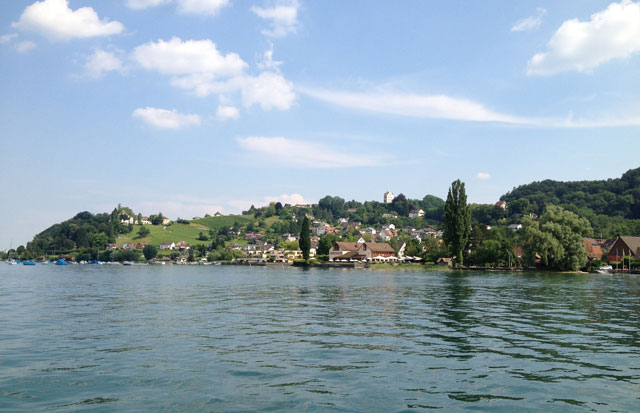
The Swiss side of Lake Constance from the ferry

We enjoyed the 30-minute ferry ride back across the lake even though and by the time we got back to Gasthaus Schiff, we had ridden a total of 968 kilometers since starting our holiday on 17th July so we will definitely be reaching the 1000 kilometer mark.

Cycling along the Danube – Watch out for trains!

Today I nearly got run over by a train when on my bike. When I heard the blast just next to me, a searing pain shot through my head and my legs turned to jelly. I immediately backtracked and got out of its way. Then I burst into tears.

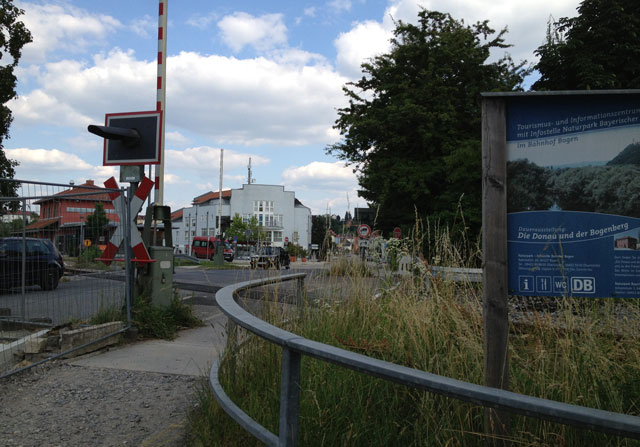
The dangerous level crossing

Now how could this happen, you may well ask. It’s because level crossings in Germany don’t always have boom gates and when they do, they don’t necessarily extend to bike and pedestrian paths. I was a little sluggish this morning when we set out on our bikes from Riebersdorf near Straubing and had trouble keeping up with Jean Michel.

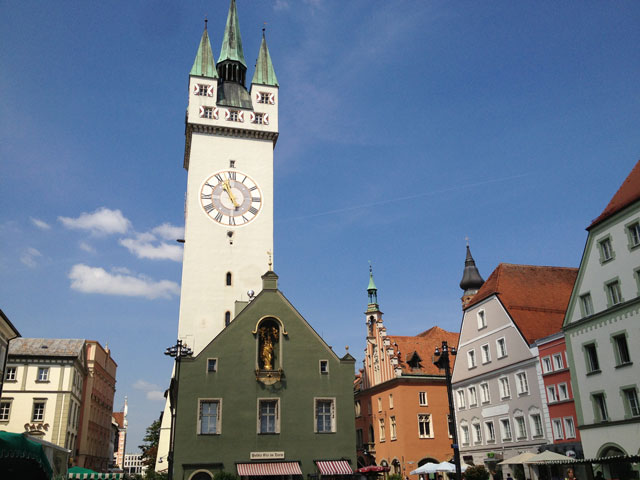
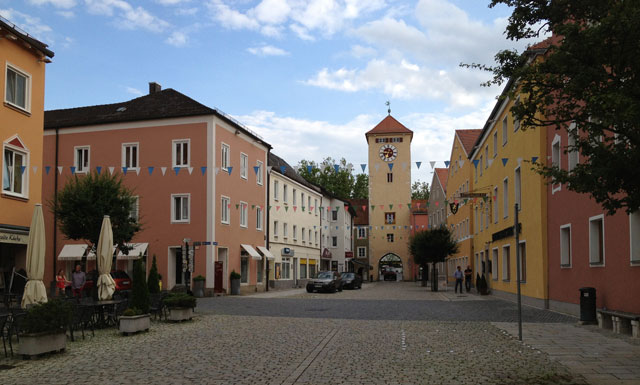
The clock tower in Straubing

He got to the level crossing in Bogen before me and crossed the tracks, without noticing the flashing  red light over to the left. When I rounded the corner of the bike path and saw him across the tracks, I didn’t even look to see if there was a train – there are a lot of disused train tracks in this part of Germany – and followed him. That was when I heard the blast.

I looked right and saw the train coming along the track VERY FAST. I have never been so frightened in my life. After a near accident that you have successfully avoided, the important thing is to remember that it didn’t happen and not imagine the consequences. We went to a pharmacy to get some aspirin to relieve my horrendous headache which gave me something practical to do.

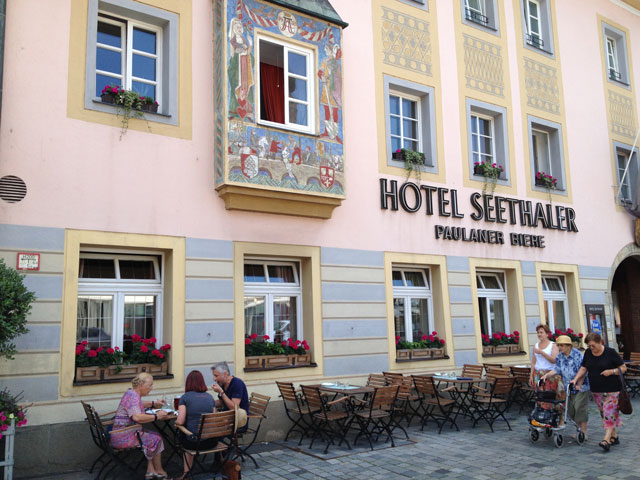
The hotel in Straubing we may have stayed in 15 years ago

I don’t know what the girl in the pharmacy thought was wrong, but she discreetly gave me a packet of tissues which I thought was very sweet of her. The pharmacy also had a water distributor and paper cups which is very civilised.

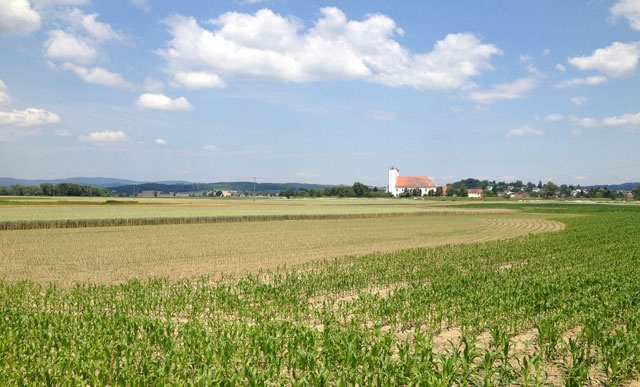
Typical scenery between Straubing and Mariaposching

By then I had calmed down and could get on my bike again but it was not our most successful day. There are usually gasthofs all along the Danube, but the few we found were all closed on Monday, including the radler freundlisch one which I didn’t think was very cyclist-friendly at all! What’s more, we hardly ever saw the Danube, just fields of crops.

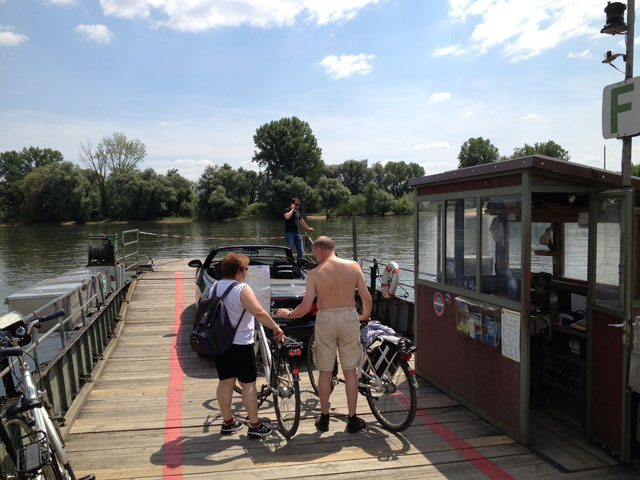
Crossing on the ferry - the couple is not us
Crossing on the ferry – the couple is not us

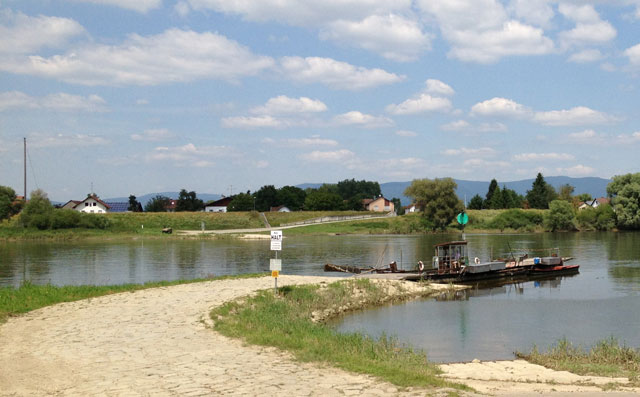
We hoped that Mariaposching, the village from which the ferry was to take us across the Danube might have something open, but all I saw were a couple of radler zimmer signs (rooms for cyclists) which weren’t much use. However, we got to the ferry just in time so at least we didn’t have to wait around in the boiling sun. It was the most rudimentary ferry we’ve seen so far – and the cheapest at 3 euros for us and our bikes.

The ferry from the banks of the Danube

Stephans-posching on the other side was much bigger but nothing was open there either so since it was 3 pm by then, we sat on a shady bench with a harvesting machine droning opposite and ate all our emergency biscuits.

Lunch break at Stephans-posching
Biscuit break at Stephans-posching

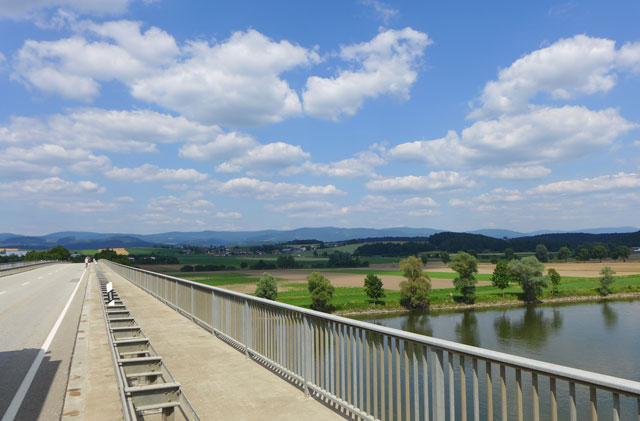
An hour later, having ridden along a very busy road and over a very long bridge whose bike/pedestrian section was closed for some unknown reason, we were back in Bogen where all we could find to eat was a cheese and tomato sandwich and an ice-cream sunday. At least the ice-cream was good and the chairs had padded seats because 50 kilometers of flat paths without a proper lunch break take their toll.

The bridge over the Danube with its pedestrian/cycle lane closed

Now it’s 8 pm and we’re waiting for our Rheingraf feinherb riesling 2009 bought in Straubing this morning to be cold enough to drink.

OTHER POSTS ABOUT CYCLING IN GERMANY

Cycling in Germany – Tips & Tricks
Cycling in Germany #1 – Kobern-Gondorf on the Moselle
Cycling in Germany #2 – Rhine from Saint Goar to Lorch
Cycling in Germany #3 – Cochem to Zell on the Moselle
Cycling in Germany #4 – Koblenz where the Moselle meets the Rhine
Cycling in Germany #5 – Bad Schaugen to Pirna along the Elbe
Cycling in Germany #6 – Bastei Rocks, Honigen and over the border to Czech Republic 
Cycling in Germany #7 – Dresden: accommodation & car trouble and Baroque Treasure  
Cycling in Germany #8 – Dresden Neustadt: Kunsthof Passage, Pfund’s Molkerei, a broom shop & trompe l’oeil
Cycling in Germany #9 – Country roads around Niderlommatzsch on the Elbe
Cycling in Germany #10 – Meissen on the Elbe
Cycling in Germany #11 – Martin Luther Country: Torgau on the Elbe
Cycling in Germany #12 – Martin Luther Country: Wittenberg on the Elbe
Cycling in Germany #13 – Wörlitz Gardens and the beginning of neo-classicism in Germany
Cycling in Germany #14 – Shades of Gaudi on the Elbe: Hundertwasser
Cycling in Germany – Turgermünde, the prettiest village on the Elbe
Cycling in Germany #16 – Celle & Bremen
Cycling in Germany #17 – Windmills & Dykes
Cycling in Germany #18 – Painted façades from Hann. Münden to Höxter
Cycling in Germany #19 – Bernkastel on the Moselle: a hidden treasure
Cycling in Germany #20 – Trier & the Binoculars Scare
 
Cycling along the Danube – A Renaissance festival in Neuburg, Bavaria
Cycling along the Danube – Watch out for trains!
Cycling along the Danube – Regensburg & Altmuhle
Cycling along the Danube –  The Weltenburg Narrows
Cycling along the Danube – from its source to Ehingen
Cycling along the Danube – Ehingen to Ulm
Cycling along the Danube – Singmarigen to Beuron
Cycling along the Danube – Binzwangen to Mengen including  Zwiefalten
Eurovelo 6 – Cycling around Lake Constance
Eurovelo 6 – Moos to Stein am Rhein and Steckborn on Lake Constance
Heading home to France after a month’s cycling holiday
Monday’s Travel Photos – Passau, Germany

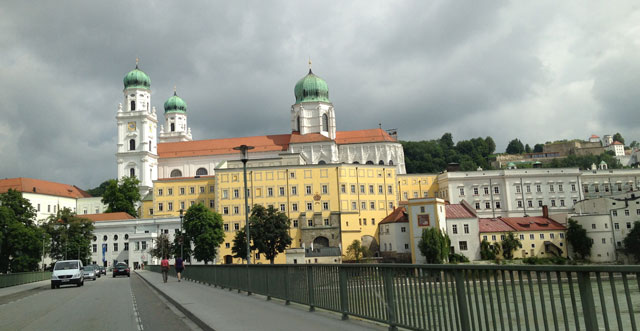
Passau, built on the Danube, is almost on the Austrian border. It’s also known as the Dreiflüssestadt or “City of Three Rivers” because the Danube is joined by the Inn from the south (as in Innsbruck) and the Ilz from the north. It’s a pretty town and a very popular stop for river  cruises along the Danube. It suffered badly during the recent floods in June 2013 but most of the city has been cleaned up. It could also be called the City of Clock Towers – there seems to be one at the end of every street.

Passau from the bridge over the Danube


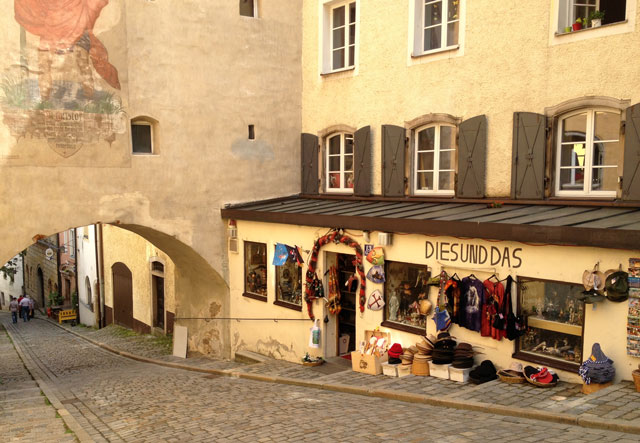
Mediaeval street in Passau
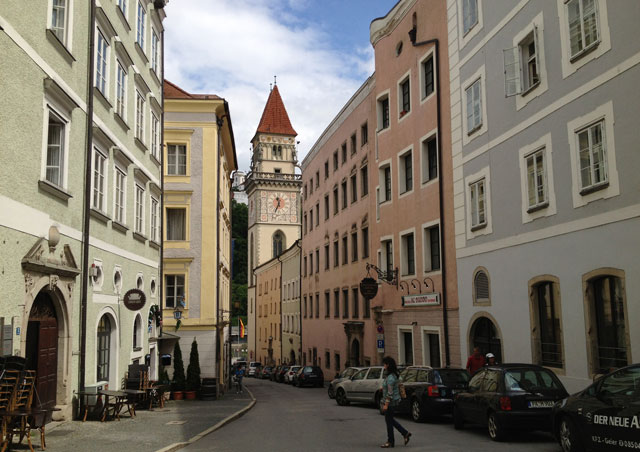
Nearly every street seems to have a clock tower or steeple at the end
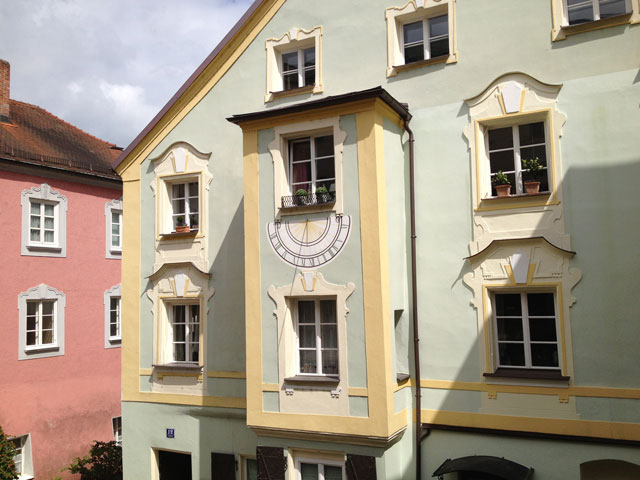
Sun dial on a typical painted façade
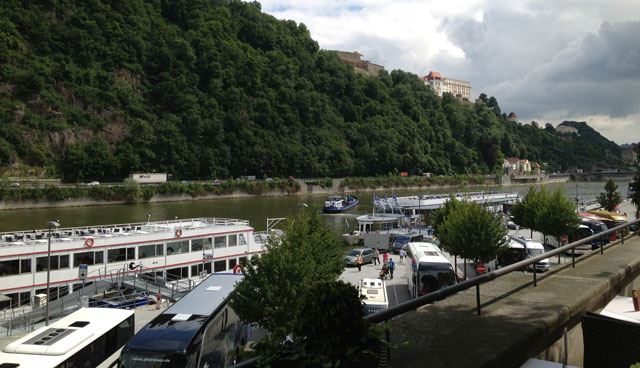
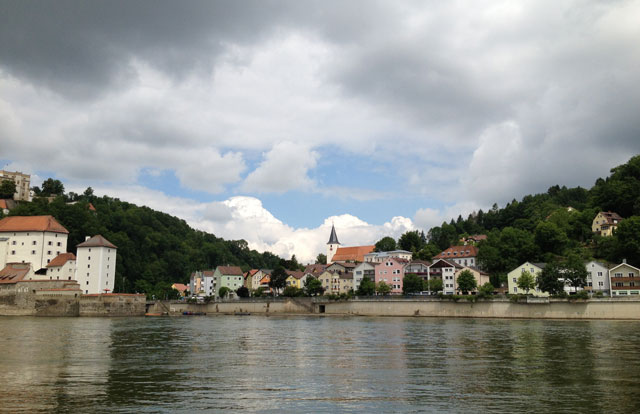
View of Veste Oberhaus fortress built in 1219, seen from the banks of the Danube
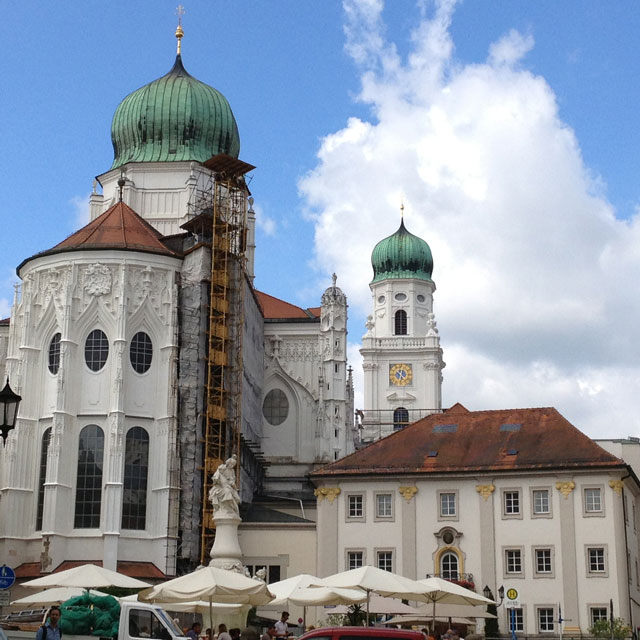
Dom St Stephan
Dom St Stephan
Looking at the Danube, you can see the Ils on the far side
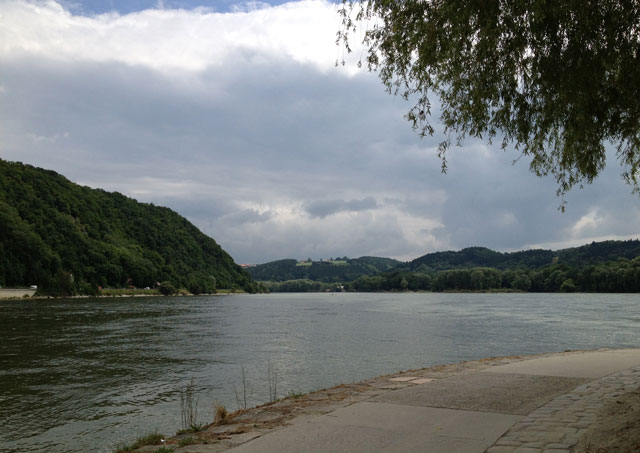
Where the Danube and Inn join
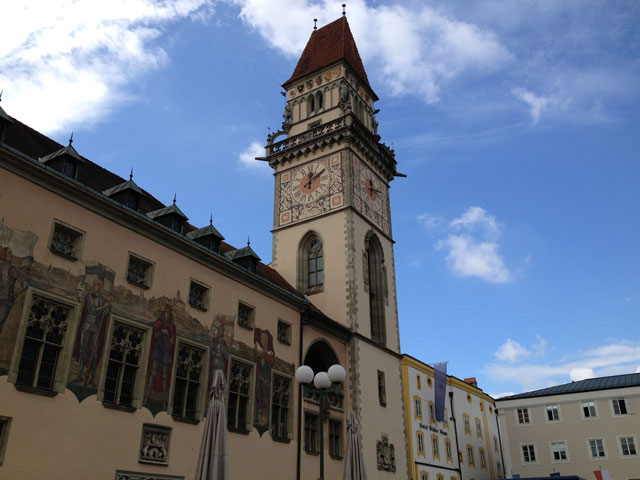
Clock tower on the Town Hall in Passau
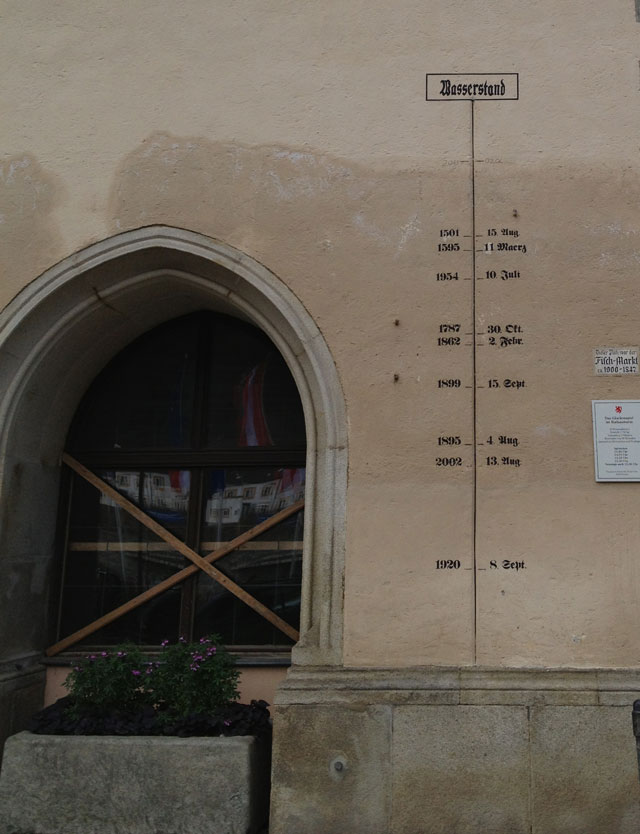
The highwater mark on the Town Hall.
The highwater mark on the Town Hall. 


Cycling along the Danube – Regensburg and the Altmuhle

The only thing Jean Michel remembers about Regensburg when we went there about 15 years ago is eating sausages and sauerkraut in the oldest roast sausage restaurant in Germany on the banks of the Danube! He wants to go there again. I vaguely remember the restaurant episode but have no other images in my head.

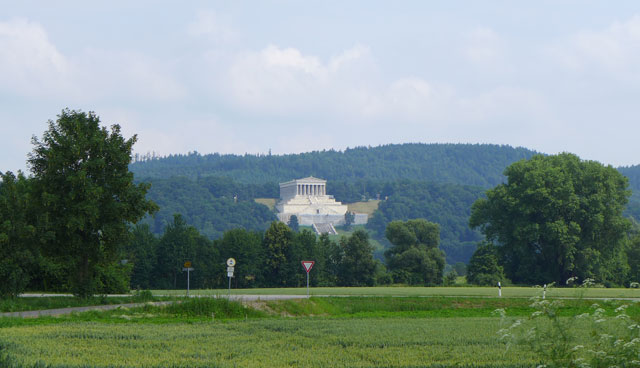
The Walhalla overlooking the Danube

On the way, we drive past the Walhalla, which we both remember, because we passed it several times on our previous trip. Built at the instigation of King Ludwig I of Bavaria between 1830 and 1847 overlooking the Danube, it is a hall of fame for distinguished people in German history.

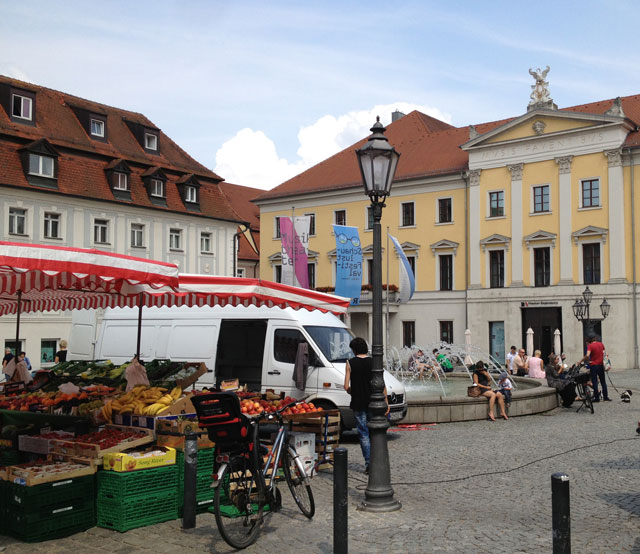
Bismarckplatz market in Regensburg

We arrive in Regensburg late morning and park in Bismarckplatz where there is a fresh food market. We buy cherries, raspberries (himbeeren) and cheese and leave them in the car. Unfortunately no one is selling wine.

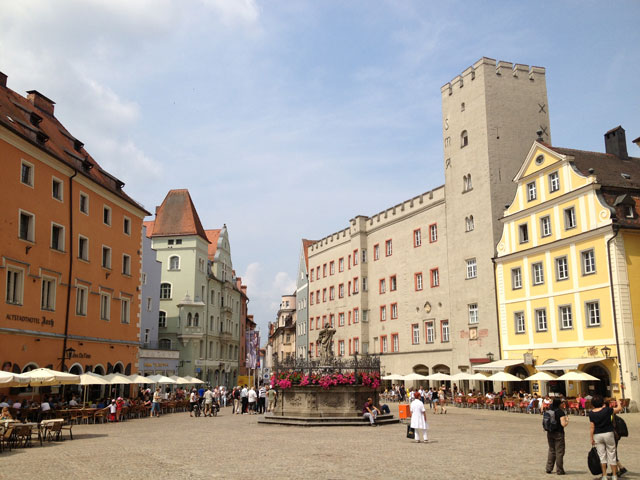
Haidplatz in Regensburg

Following the Michelin Guide’s itinerary, we visit the town, as we no doubt did the first time. Neither of us remembers a single thing! What, you may wonder, is the point of travelling if you have forgotten it all fifteen years later. Yet we loved that trip and remember other parts of it, thank goodness so maybe not all is wasted …

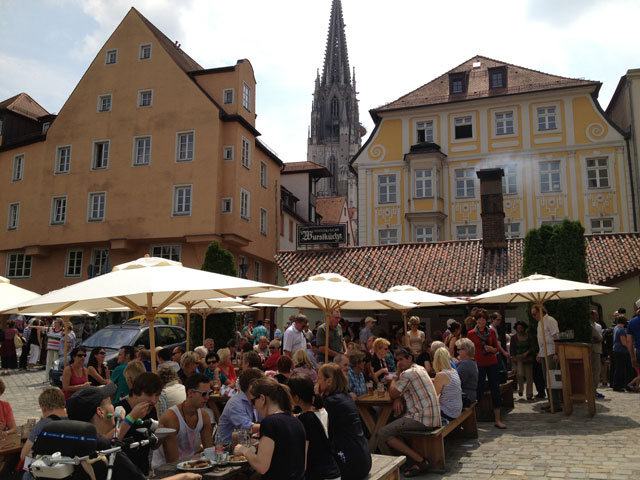
The outside eating area of the Wurstkurchl

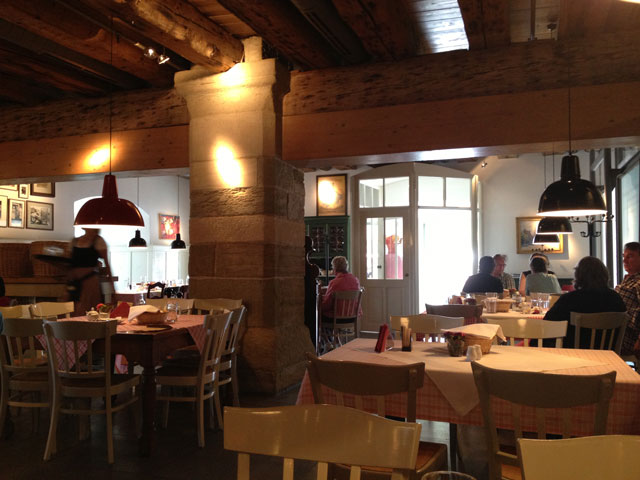
Our visit culminates in the famous restaurant, Historische Wurstkuchl, built in the 12th century to feed the local dockers and builders. Despite the fact that it’s 1.30 pm, the outside tables are crowded so Jean Michel suggests we eat inside.

Inside the Wurstkurchl with its enormous pillars
Inside the Wurstkuchl with its enormous pillars*

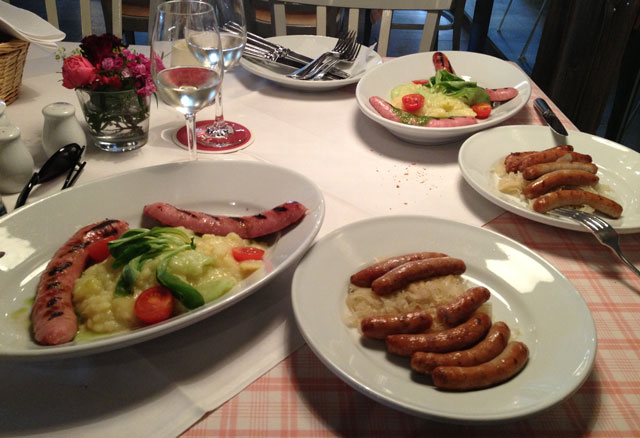
The menu is in German so with the help of my less than usefu dictionary on my l iPhone, we decide we’ll have the basic dish of six little sausages with sauerkraut and another dish which appears to include salad. The waiter, who speaks only very basic English, is rather dubious about our choice, but he checks we want everything at the same time and off he goes.

Double rations!
Double rations!

When four plates arrive, two with little sausages and two with two large sausages and a large amount of potato salad with a couple of leaves of lamb’s lettuce on top, I understand his reticence! We laugh and eat them anyway. We’ll just have vegetables and fruit for dinner.

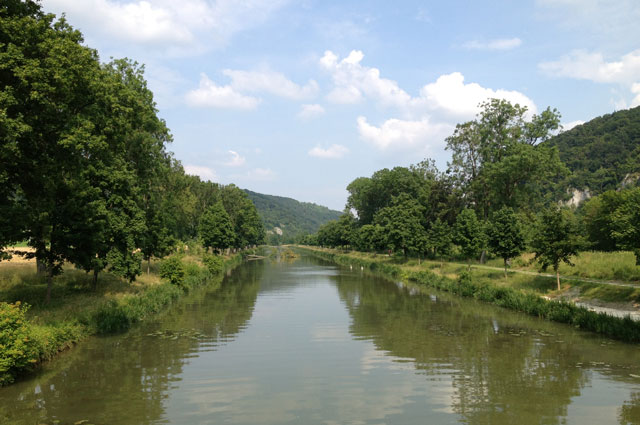
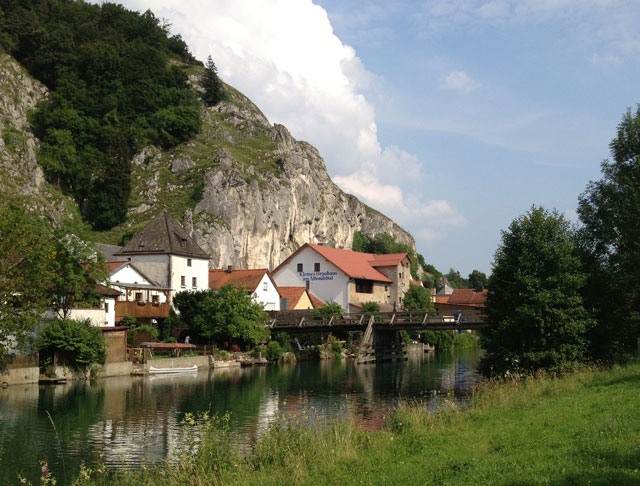
The Altmuhle between Essing and Kelheim

It’s 2.30 by the time we leave to cycle along a tributary of the Danube, the Altmuhle. I doze in the car after the 25 cl glass of reisling and all that food. Between Kelheim, where it meets the Danube, and Dietfurt, the bed of the Altmuhle was straightened and incorporated into a canal connecting the Main and the Danube.

The wooden bridge at Essing

It’s a favourite with local Germans and tourists, so we aren’t the only ones on the bike path. We stop off at the pretty little village of Essing to see the wooden bridge and have a coffee at Gasthof Schneider, which is famous for its local beer.

Riedenburg on the Altmuhle

We then push on to Riedenburg, which offers a plunging view of the Danube, after unnecessarily riding up a long hill due to poor signage again. Finding our way back is much easier.

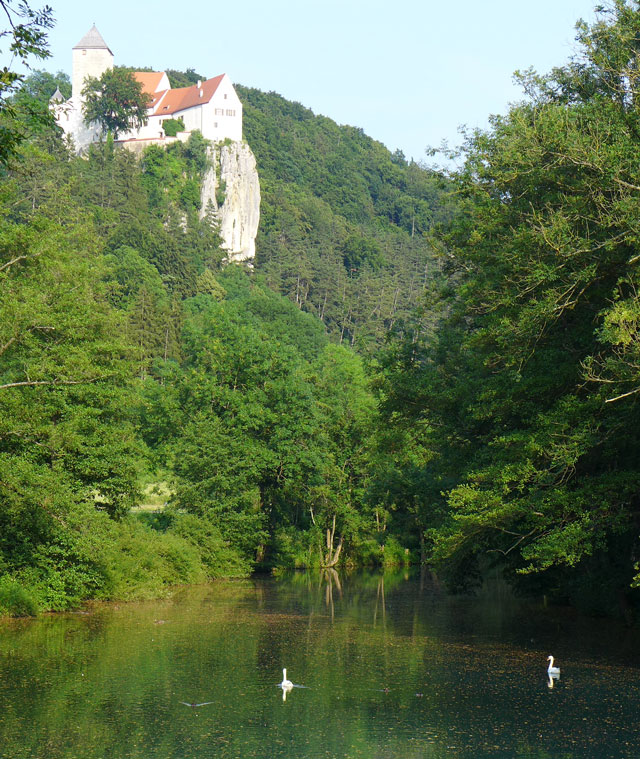
Prunn overlooking the Altmuhle

We stop at least six times before Jean Michel takes what he considers is the definitive photo of Prunn castle we can see high up on a hill.

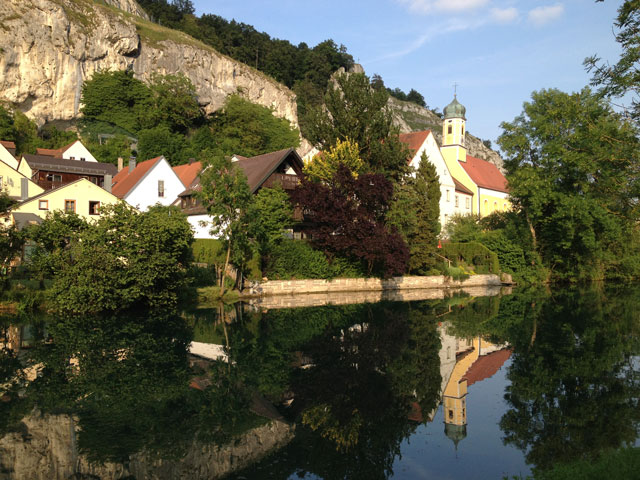
The little church at Essing reflected in the water

The path takes us past the bridge on the opposite side of the village of Essing and the six o’clock light gives a perfect reflection of the little church in the water. Once again, we marvel at how many different experiences our cycling trip along the Danube has to offer.

OTHER POSTS ABOUT CYCLING IN GERMANY

Cycling in Germany – Tips & Tricks
Cycling in Germany #1 – Kobern-Gondorf on the Moselle
Cycling in Germany #2 – Rhine from Saint Goar to Lorch
Cycling in Germany #3 – Cochem to Zell on the Moselle
Cycling in Germany #4 – Koblenz where the Moselle meets the Rhine
Cycling in Germany #5 – Bad Schaugen to Pirna along the Elbe
Cycling in Germany #6 – Bastei Rocks, Honigen and over the border to Czech Republic 
Cycling in Germany #7 – Dresden: accommodation & car trouble and Baroque Treasure  
Cycling in Germany #8 – Dresden Neustadt: Kunsthof Passage, Pfund’s Molkerei, a broom shop & trompe l’oeil
Cycling in Germany #9 – Country roads around Niderlommatzsch on the Elbe
Cycling in Germany #10 – Meissen on the Elbe
Cycling in Germany #11 – Martin Luther Country: Torgau on the Elbe
Cycling in Germany #12 – Martin Luther Country: Wittenberg on the Elbe
Cycling in Germany #13 – Wörlitz Gardens and the beginning of neo-classicism in Germany
Cycling in Germany #14 – Shades of Gaudi on the Elbe: Hundertwasser
Cycling in Germany – Turgermünde, the prettiest village on the Elbe
Cycling in Germany #16 – Celle & Bremen
Cycling in Germany #17 – Windmills & Dykes
Cycling in Germany #18 – Painted façades from Hann. Münden to Höxter
Cycling in Germany #19 – Bernkastel on the Moselle: a hidden treasure
Cycling in Germany #20 – Trier & the Binoculars Scare
 
Cycling along the Danube – A Renaissance festival in Neuburg, Bavaria
Cycling along the Danube – Watch out for trains!
Cycling along the Danube – Regensburg & Altmuhle
Cycling along the Danube –  The Weltenburg Narrows
Cycling along the Danube – from its source to Ehingen
Cycling along the Danube – Ehingen to Ulm
Cycling along the Danube – Singmarigen to Beuron
Cycling along the Danube – Binzwangen to Mengen including  Zwiefalten
Eurovelo 6 – Cycling around Lake Constance
Eurovelo 6 – Moos to Stein am Rhein and Steckborn on Lake Constance
Heading home to France after a month’s cycling holiday
Cycling along the Danube – the Weltenburg Narrows

Every time we move onto a different section of the Danube, we tell ourselves that it can’t be better than the last one, yet we are never disappointed. After leaving the Austrian S-bend yesterday, we moved to a little village near Kelheim in Bavaria with the unpronounceable name of Niederleierndorf where we are renting an appartment for 5 days.

The little village of Niederleierendorf
The little village of Niederleierndorf

It’s not as conveniently located as our other accommodation has been, but it is quiet and comfortable (if you exclude the impossible down pillows and creaky floor) and at least I’ve been able to do my washing again!

One of the gate towers in Kelheim

We’ve been to Bavaria and Kelheim before – we can’t remember exactly when but we think it was in 1998 or 1999. In any case it was before we started our travel journal or  had a digital camera which means that we don’t remember a lot of the places we have already been.

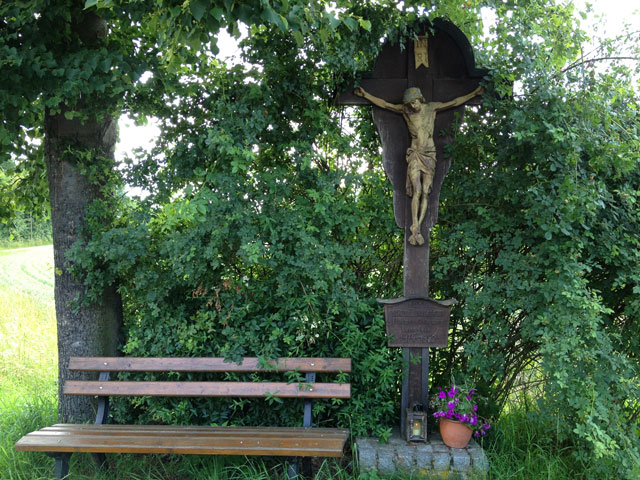
A wayside crucifix on the bike path

After unpacking the car and doing some shopping, we drove a half an hour to the Danube and cycled 15 kilometers upstream Kelheim, having a few problems finding our way as we got closer to the town. We’ve discovered that the Eurovelo 6 bike route isn’t nearly as well indicated here as it is in Austria and at the source of the Danube. We made a wrong turn and I misinterpreted what Jean Michel said and we both went off in opposite directions. Good thing we had our mobile phones.

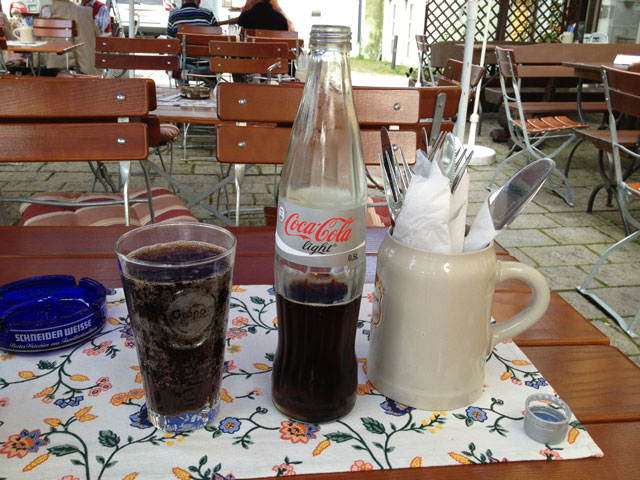
50 cl coke in Kelheim

I had absolutely no recognition of Kelheim and its four town gates. Otherwise there isn’t much to see. We had a giant diet coke at a riverside gasthof (all drinks are served in large quantities here: 50 cl for beer and coke, 20 cl for wine) and cycled back to the car.

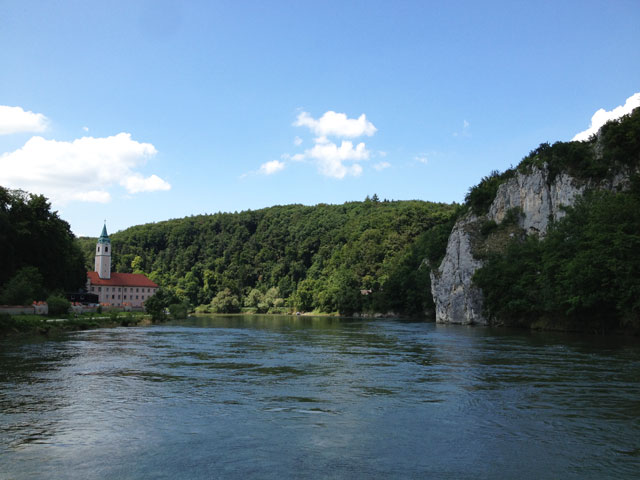
Kloster Weltenburg
Kloster Weltenburg

Today, we drove to another town on the Danube, Neustadt an der Donau, to begin our cycling itinerary, this time downstream to the famous Weltenburg Abbey, founded by Irish or Scottish monks in about 620, and held to be the oldest monastery in Bavaria but nowadays more famous for its beer. We took the cycle path along the Danube which was mostly gravel and not very comfortable.

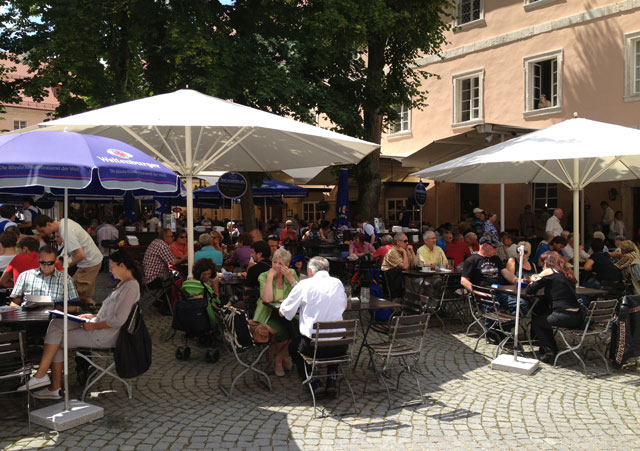
Beer garden at Weltenburg

We did remember the Abbey from last time even though we’re not beer drinkers. It’s a very festive place with a big biergarten and much activity on the river. Last time we saw a sort of floating party boat with everyone singing and drinking beer.

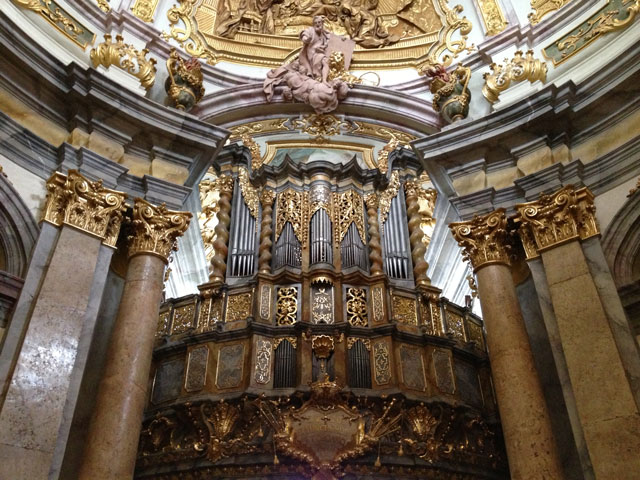
The organ at Weltenburg Abbey Church

We visited the abbey church with its many angels and cherubs and its ever-present gold, marble and stucco.

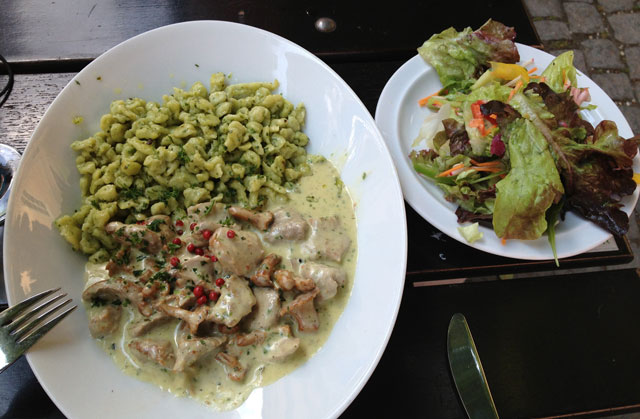
Pfifferlings und kalb
Pfifferlings, knodels und kalb

We had lunch in the beer garden, sharing a long table with a group of Bavarians, and selected two dishes from the menu, all in German, hoping for the best. Mine, which I had identified as having chanterelle mushrooms (Pfifferling), veal (kalb) and potato noodles (knodels), was excellent, but Jean Michel’s suckling pig  turned out to be vol-au-vent and not nearly as good (I have a German dictionary app on my iPhone but it doesn’t run to such complicated vocabulary). We shared, which was a good thing because we had pratically finished my dish before his even arrived!

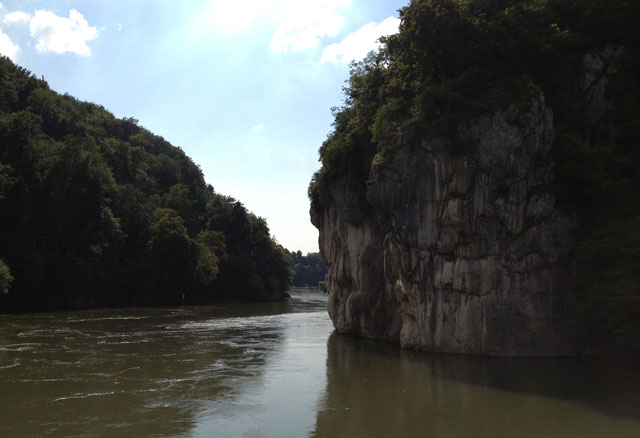
Weltenburg Narrows also called the Danube Gorge

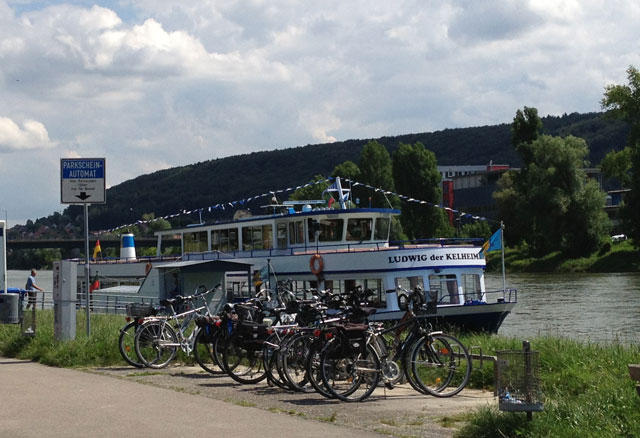
We then took a 20-minute boat ride down the river to Kelheim, through the narrowest and deepest part of the Danube. River traffic is regulated and the engine makes very little noise. You feel as though you are gliding along the river.

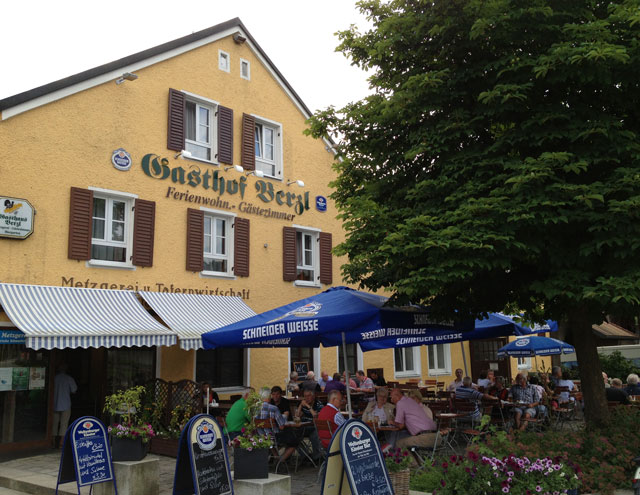
Gasthof Berzl in Kelheim

After coffee at our riverside gasthhof in Kelheim we tried to find a wooden boat to take us back to the Abbey as the cycle path is not able to follow the river so you have to ride up a lot of steep, uninteresting hills on a busy road.

Boat with its silent engine on the Danube

No wooden boats were in sight however so we gave up and took the same boat back (well, a larger, more luxurious one). This time it took 40 minutes – we were going against the current – and we had more time to appreciate our surroundings. Jean Michel spied some cyclists on a path along the river bank and was starting to get upset that we might have missed out on something, but the path which in fact was an old tow path, petered out when it got to a large rock at the beginning of the gorge.

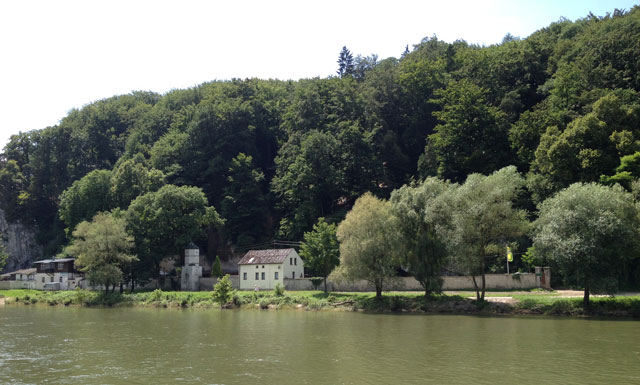
A smaller monastery on the banks of the Danube with a troglodyte church

Before engines were invented, horses on the tow paths used to pull the boats upstream. A rope bundled up in hay so it would float was attached to horses waiting on the other side of the rock, thrown into the river and floated downstream to the boats so they could be pulled around the rock. Now isn’t that clever?

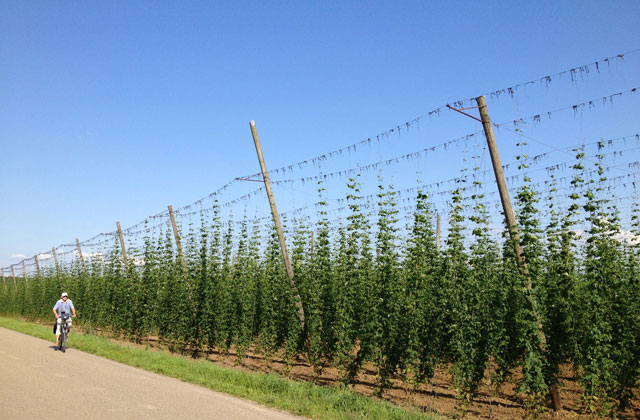
A field of hops
A field of hops

To avoid the gravel road again, we chose another bike route back to the car but due to the deficient signposting and despite two different cycling maps we took a few wrong turnings through the never-ending hop fields. We got back to the car just in time to buy some more speisequark at the supermarket. Now I bet you don’t know what that is!

OTHER POSTS ABOUT CYCLING IN GERMANY

Cycling in Germany – Tips & Tricks
Cycling in Germany #1 – Kobern-Gondorf on the Moselle
Cycling in Germany #2 – Rhine from Saint Goar to Lorch
Cycling in Germany #3 – Cochem to Zell on the Moselle
Cycling in Germany #4 – Koblenz where the Moselle meets the Rhine
Cycling in Germany #5 – Bad Schaugen to Pirna along the Elbe
Cycling in Germany #6 – Bastei Rocks, Honigen and over the border to Czech Republic 
Cycling in Germany #7 – Dresden: accommodation & car trouble and Baroque Treasure  
Cycling in Germany #8 – Dresden Neustadt: Kunsthof Passage, Pfund’s Molkerei, a broom shop & trompe l’oeil
Cycling in Germany #9 – Country roads around Niderlommatzsch on the Elbe
Cycling in Germany #10 – Meissen on the Elbe
Cycling in Germany #11 – Martin Luther Country: Torgau on the Elbe
Cycling in Germany #12 – Martin Luther Country: Wittenberg on the Elbe
Cycling in Germany #13 – Wörlitz Gardens and the beginning of neo-classicism in Germany
Cycling in Germany #14 – Shades of Gaudi on the Elbe: Hundertwasser
Cycling in Germany – Turgermünde, the prettiest village on the Elbe
Cycling in Germany #16 – Celle & Bremen
Cycling in Germany #17 – Windmills & Dykes
Cycling in Germany #18 – Painted façades from Hann. Münden to Höxter
Cycling in Germany #19 – Bernkastel on the Moselle: a hidden treasure
Cycling in Germany #20 – Trier & the Binoculars Scare
 
Cycling along the Danube – A Renaissance festival in Neuburg, Bavaria
Cycling along the Danube – Watch out for trains!
Cycling along the Danube – Regensburg & Altmuhle
Cycling along the Danube –  The Weltenburg Narrows
Cycling along the Danube – from its source to Ehingen
Cycling along the Danube – Ehingen to Ulm
Cycling along the Danube – Singmarigen to Beuron
Cycling along the Danube – Binzwangen to Mengen including  Zwiefalten
Eurovelo 6 – Cycling around Lake Constance
Eurovelo 6 – Moos to Stein am Rhein and Steckborn on Lake Constance
Heading home to France after a month’s cycling holiday
Cycling along the Danube – the Aussie Cyclists

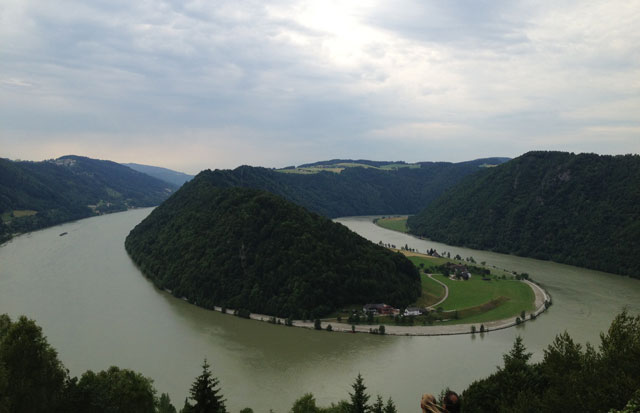
Due to our change of plans because of bad weather near Linz a couple of weeks ago and our accommodation problems in Budapest, we have an extra two days after Wachau without any planned accommodation. The weather is looking much more promising and we’re planning to cycle around the S-bend or loop in the Danube between Passau and Linz.

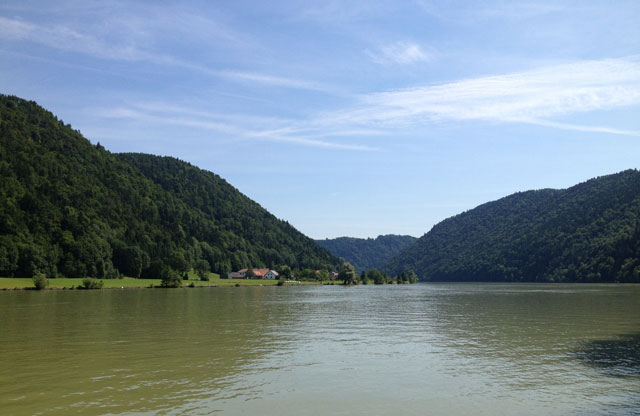
The S-bend from the Donaublick

We’ve narrowed down the possibilities to a couple of villages. I rule out the large hotel/camping complex in Schlogen and the first gasthaus in Wesenufer is closed no doubt as a result of the flooding. The next gasthof can only accommodate us for one night due to a seminar. So we cross the river to Niederranna where we come across Gasthof Dexler which advertises itself as a radler (cyclists) stop.

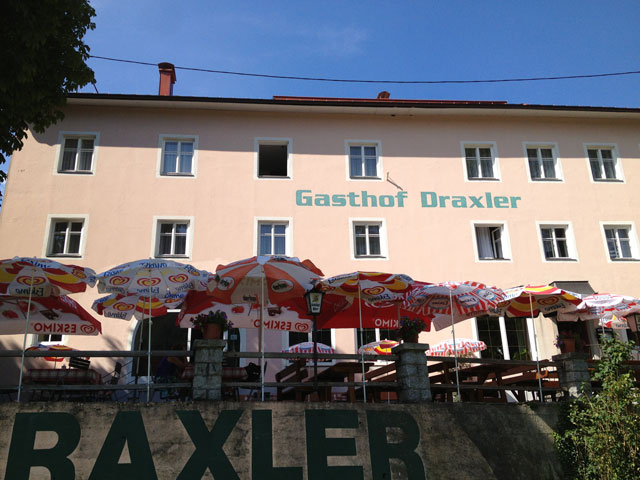
Gasthof Draxler from the Danube side

The young woman who seems to be looking after the restaurant as well says there’s a room vacant for 32 euro per person and I ask to see it. It’s spacious and has two armchairs and a low table.  We later discover it has a terrace. We take it and ask if we can have lunch. As it’s already 2.30 pm, she says there is a small menu only. That’s fine by us.

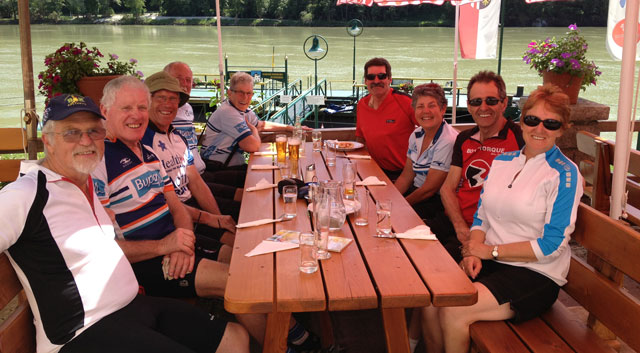
The Aussie cyclists
The Aussie cyclists

As we walk out onto the terrace along the Danube, a man with an Aussie accent who’s with a group of 8 other cyclists asks me if I speak English. I say that I do. He explains that he has won his bet as the others were remarking on the absence of English speakers in this neck of the woods. “Not only do I speak English, but I’m also an Aussie”, I reply which is greeted with a round of surprised laughter.
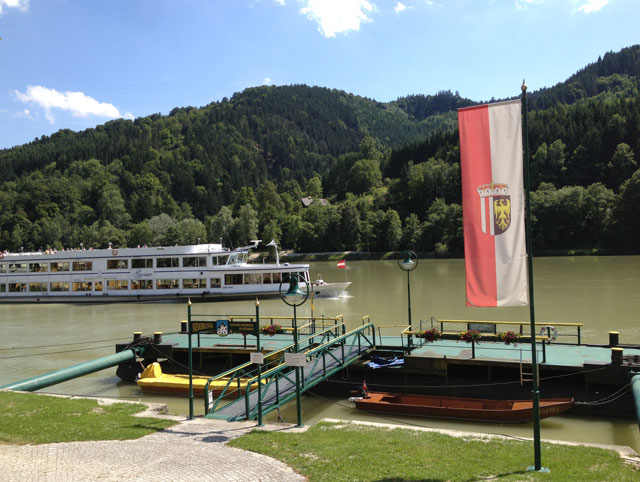
River traffic from the restaurant terrace at Gasthof Draxler

I explain that Jean Michel is French and that we live in Paris and that I have been living in France for 37 years. It turns out they all belong to a cycling club near Geelong and are either retired or semi-retired. They’ve just spent two weeks cycling in the Cotswolds in England and have started their Danube trip at Passau that morning. They’re going to Vienna.

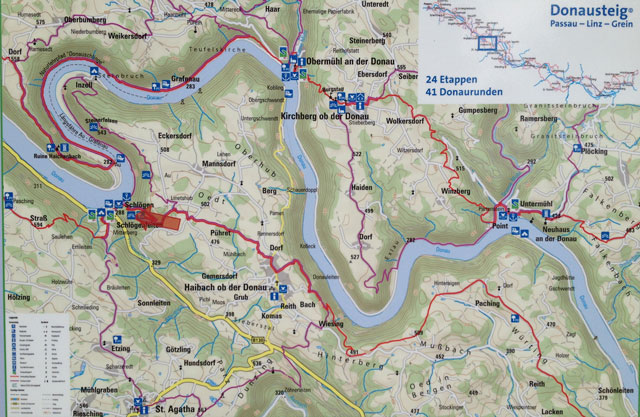
The S-bend is on the left of the map

They’ve organised their trip with an agency that does the hotel bookings, transports their luggage from one stop to the next and plans their route. After lunch, they’re off to visit the Donaublick (lookout over the Danube) which, unfortunately, they don’t find.

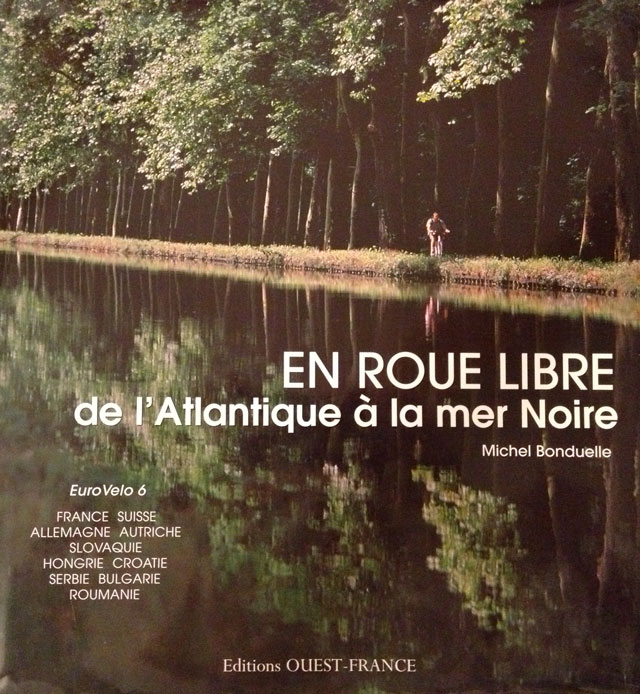
Freewheelling from the Atlantic to the Black Sea

Next day, we learn that though they are all Aussies, one comes from the Netherlands, another from Greece and another from the UK. Jean Michel shows them our Eurovelo 6 book so they can see where we’ve been and where we’re going. We highly recommended the Wachau Heritage site we’ve just left.

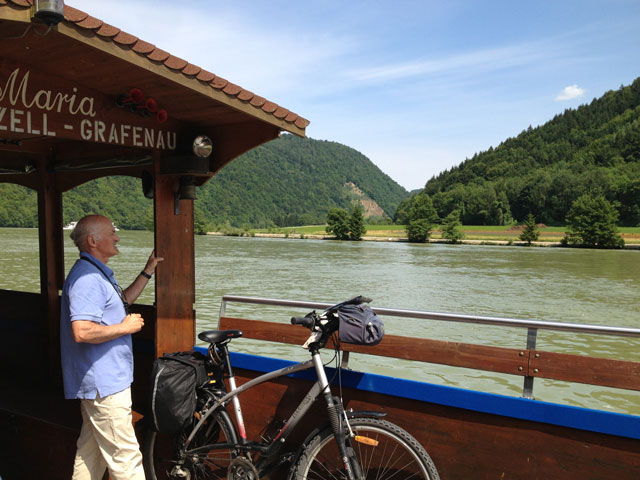
Jean Michel on the scenic ferry down the loop

They are off to Linz via the S-bend and tell us about a ferry that their agency has recommended, that offers a very scenic ride through one part of the bend. We decide to include it on our way back.

Perfect weather for cycling around the S-bend

The weather is perfect – about 22 or 23°C with bright sun. So much better than the first time we were here. I think of the Aussie cyclists. That is the only problem with a pre-arranged trip – what do you do if it’s cold and rainy?

Cycling along the Danube – Wachau in Austria, a World Heritage Site

We nearly missed out on one of the highlights of our trip. If our home exchange in Budapest hadn’t fallen through, we would have passed over Washau altogether. It was Jean Michel’s fault, of course (he organised the itinerary and read the guide books!) but he he hadn’t realised it’s a Unesco World Heritage Site.

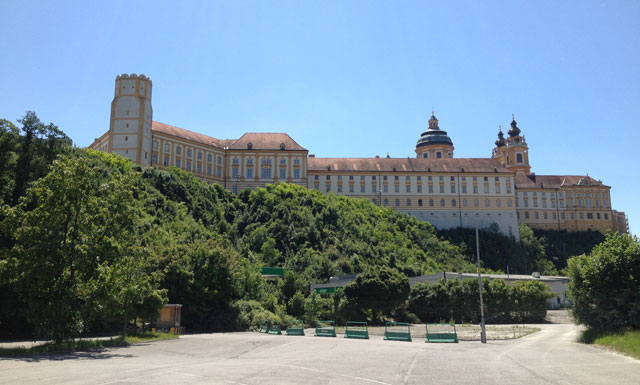
Melk Abbey
Melk Abbey

Melk and its famous abbey were on our list when we were in Aschach but in fact they were further than we thought – 125 K by bike – so after leaving Aschach early due to bad weather, I suggested we stop off at Melk on the way back from Budapest.

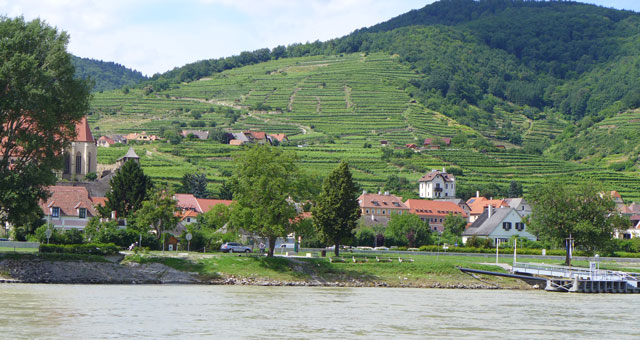
Vineyards on the hills in the Wachau

After consulting the Routard and checking the website, I phoned Weingasthof Donnauwirt at Weissenkirchen to see if they had a room for 2 nights. Bingo! As we neared our destination, we became more and more delighted. Quaint little villages, lovely scenery dotted with vineyards, panoramic views of the Danube. Exactly like the photos in our book and such a relief after the river banks around Budapest.

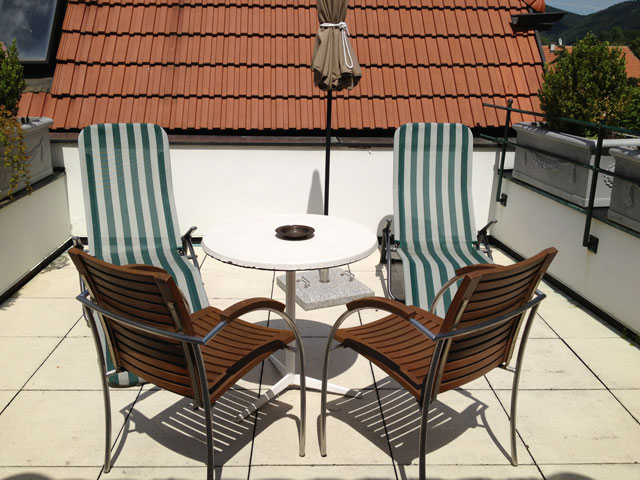
Our sunny terrace with a corner view of the Danube

Our room in the gastfhof is beautifullly decorated and has a table and chairs in one corner which is much better than the last one where I had to use the laptop sitting up in bed and we had to have dinner perched on one side making sure we didn’t get the sheets dirty, but best of all, it has its own terrace.

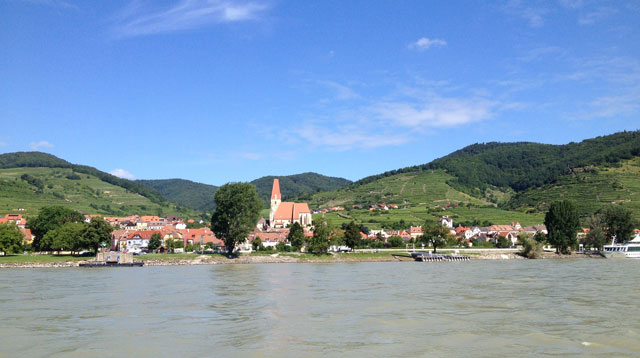
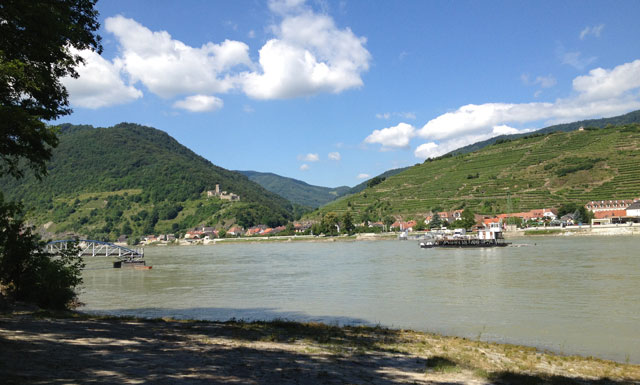
The village of Weissenkirchen from the ferry

Weissenkirchen is perfectly located. Just opposite the hotel is the ferry that takes you across the Danube. There are bike paths on either side which meant we could cycle along one bank and back along the other.

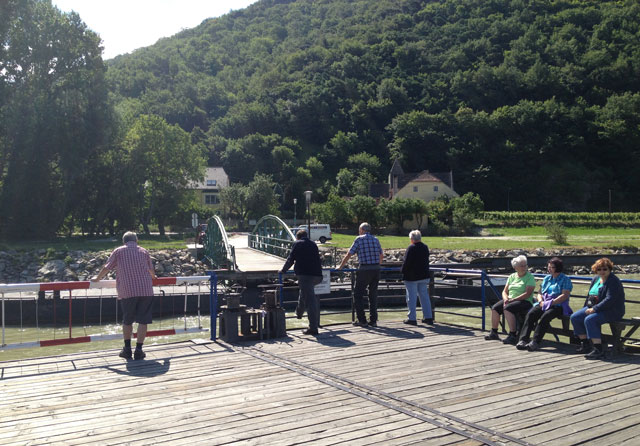
Crossing the Danube on the ferry

Since we arrived at the gasthof around 2 pm, we had time to book in, get changed, go across on the ferry and ride to Krems which is on the eastern tip of the Wachau.

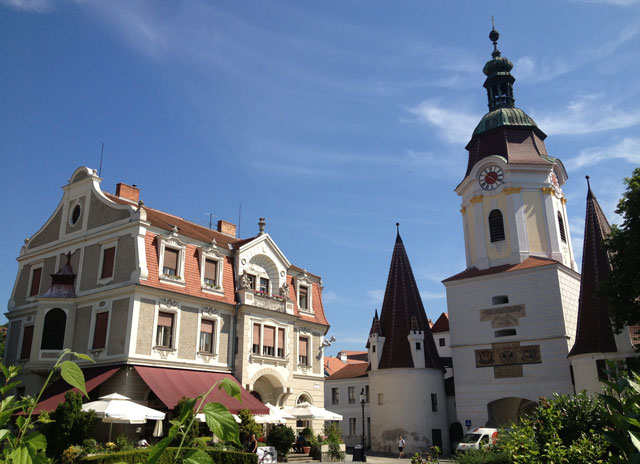
The main entrance to Krems
Steiner Tor, the main entrance to Krems

The entrance to Krems is via the Steiner Tor, built in the late 15th century, the only one of the four town gates still standing. There are various other buildings of interest including two churches and a mediaeval quarter worth visiting.

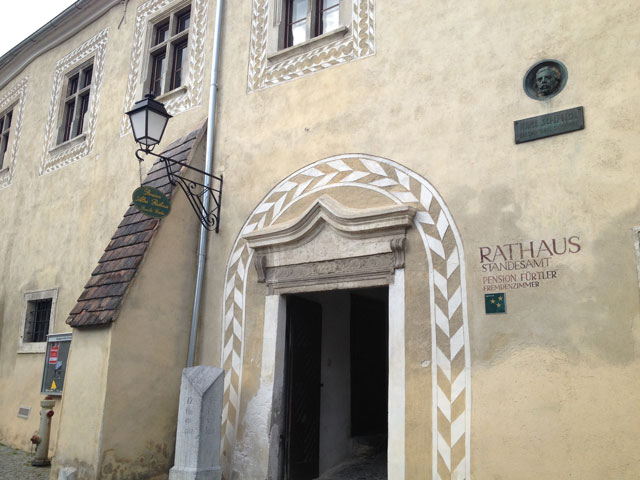
The rathaus (town hall) in Durstein

On the way back, we visited Durnstein, one of the most popular villages in the area. By then we had completely fallen in love with the area.

On the banks of the Danube in the Wachau

Next day, we crossed on the ferry again and rode 26 kilometers west this time, to Melk. We were definitely on the right side of the river because the prettiest villages are across the other side.

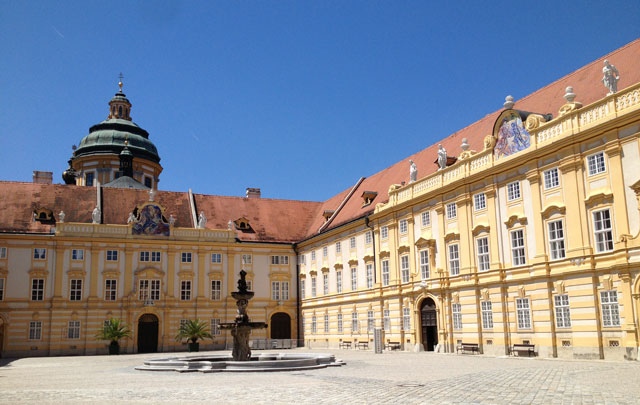
Inner courtyard of Melk Abbey

At Melk, we rode up to the Baroque Benedictine abbey built in the early 18th century which overlooks the entire valley and left our bikes in a bike shelter that even had lockers to leave our paniers.  The Austrians are very organised.

The entrance was expensive at 9.50 euro each and we weren’t that taken with all the religious exhibitions.

melk_library

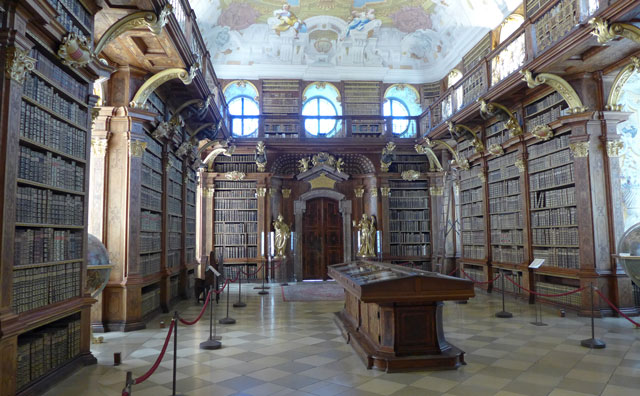
However, the library  with its numerous mediaeval manuscripts, including 750 incunables (books printed before 1501) was very impressive, though not nearly as extravagant as the one in Wiblingen Abbey in Germany.

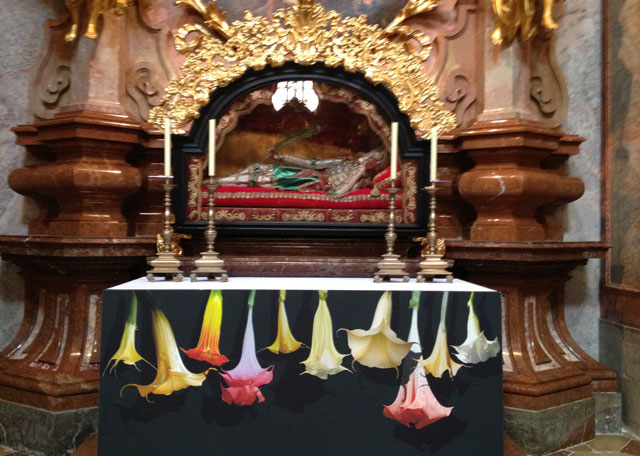
Modern painting on a side altar in Melk abbey church

The baroque church, whose renovation was completed about thirty years ago, is absolutely dripping with gold. There was even a lady polishing up the main altar to make it even brighter. There are also some unfortunate modern paintings on the side altars.

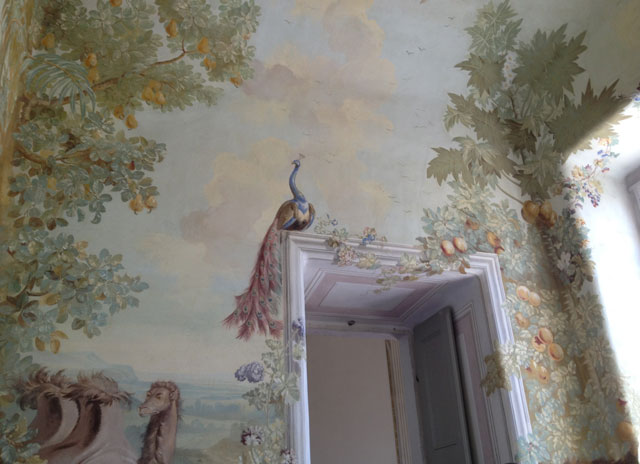
Wall paintings in the pavillion of Melk Abbey

We had a cold drink in the summer house with its beautiful frescoes and admired the view from the garden behind. The Benedictines certainly picked a wonderful spot.

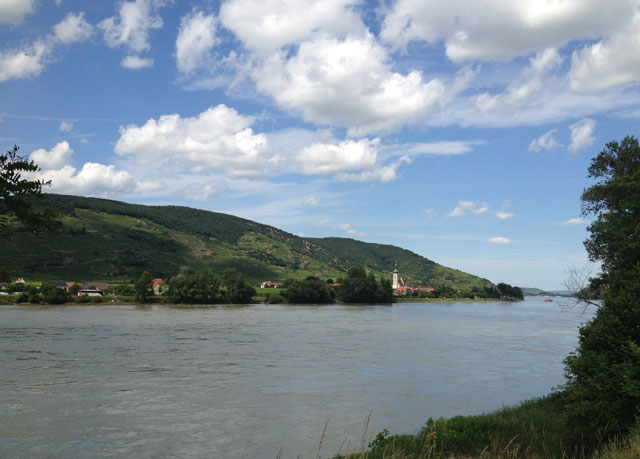
Another typical view of the Danube

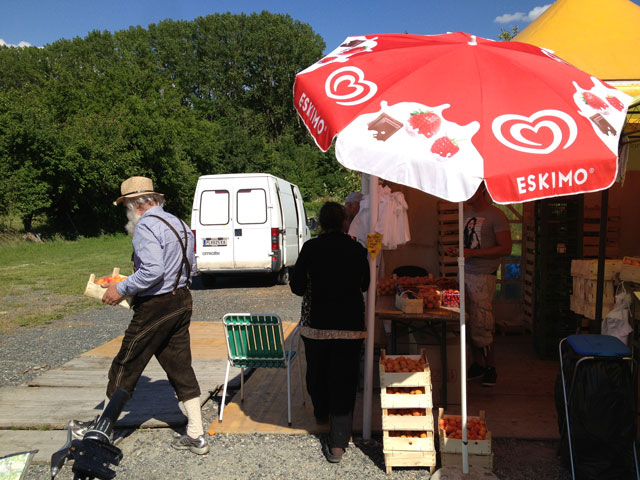
The trip back along the other side of the Danube was not nearly as exciting. Most of it wound through vineyards and apricot and cherry orchards. We even bought some fruit from a sulky wayside vendor. While we were there, a man pulled up in his truck and got out, wearing ledenhosen! They were even better from the front but I couldn’t take a discreet photo.

Man in lederhosen buying fruit

In the evening we dined al fresco in the hotel restaurant. The meal was expensive and disappointing, except for the wine which was excellent, reinforcing our usual practice of eating in middle-of-the-range family-run restaurants that cater to the locals.

Budapest, the City of Baths

Everyone who goes to Budapest tells you that you have to experience the baths. However, there are so many that it is difficult to choose. Also, many seem to have separate pools (and even separate days) for men and women. Neither of us can see any point in going there on our own.

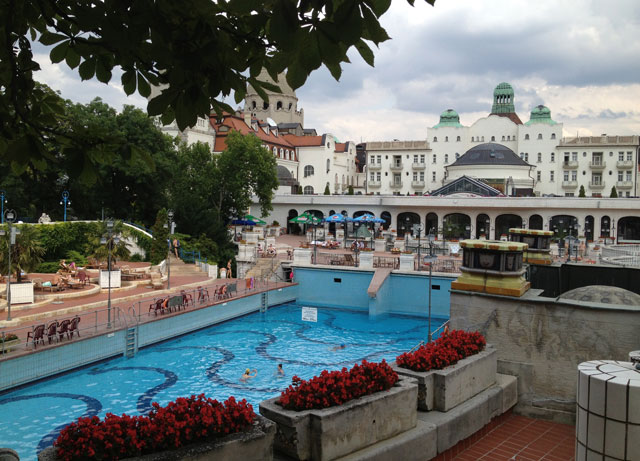
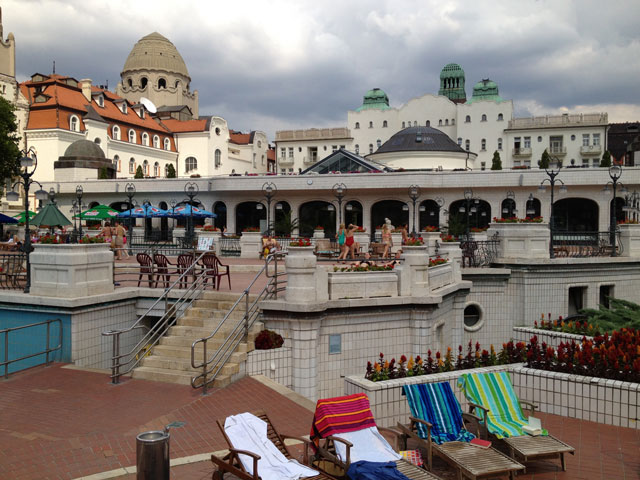
Large outdoor pool
Large outdoor pool

So I ask the lady at our hotel to recommend one that is mixed. She suggests Gelert built in 1918, which introduced mixed bathing at the beginning of 2013 which explains the contradicting reviews on Trip Advisor! I check out the Gelert website and learn that we can have a locker or a private cubicle. We can also have a tub bath for two for 63 euro or a chocolate spa (???) for 40 euro.

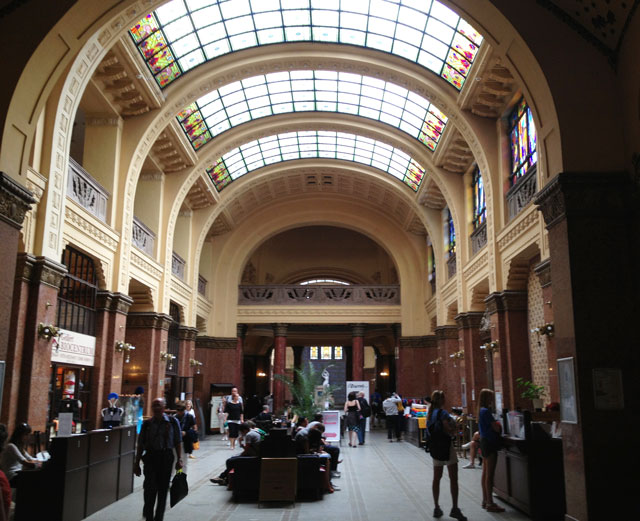
The lobby at Gelert Baths

We manage to find parking in the street behind the baths, which has parking meters. We have enough coins for two hours. A man walks past and explains in English that our car is parked in the wrong direction and we could get fined. In Paris, all that matters is having a ticket!

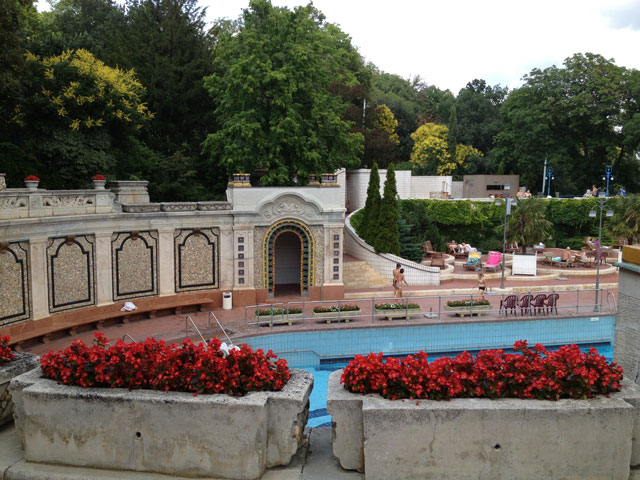
Outside pool on one side

We opt for a private cubicle for two for a total of 10,200 forints (about 34 euro) which is already quite expensive. We’re given a plastic watch each and told to go to the second gate on the right. There our watches which contain an electronic chip are scanned and we go through a turnstile.

Outside pools  facing towards Gelert hotel
Outside pools facing towards Gelert hotel

We follow a very long and winding corridor up and down stairs until we find ourselves in an area with private changing cubicles. A lady takes my watch and holds it up in front of a cubicle identifier and tells me it’s number 134.

The cubicles are actually very small but I’m reassured to see there is wire-netting above and I can leave my valuables there without having to worry about theft. We have to leave by separate doors but join up again outside.

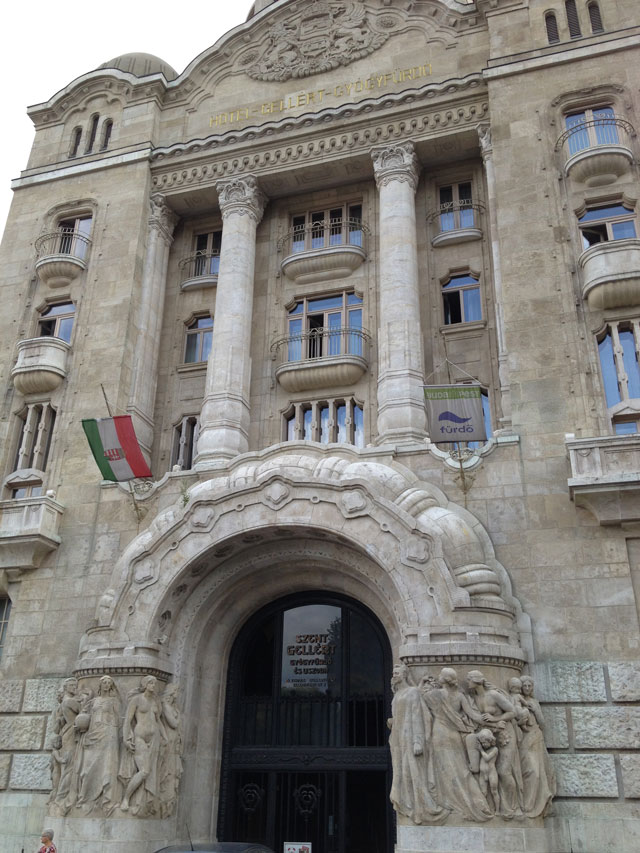
Entrance to Gelert Baths and Spa

There is a large pool in the middle at 26°C and a smaller one on the far side at 36°C. The air temperature has dropped to about 21°C and the sky is now overcast. The pool is lovely and warm. A group of American teenage girls decide to try out the very cold tub next to us. Just watching them is dissuasive. The Hungarians remain stoic.

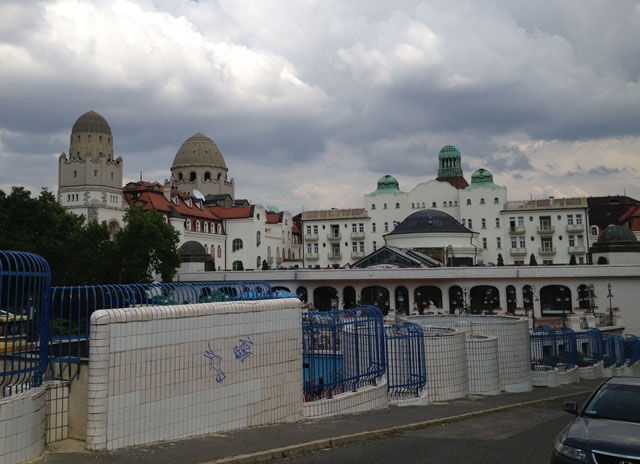
Pool from the outside

After a while, we get out and go to the larger pool. It’s feels very cold compared to the 36° and we have to swim to keep warm. We’ve soon had enough and think it’s time to go. I’m convinced the same pools must exist inside so we go searching.

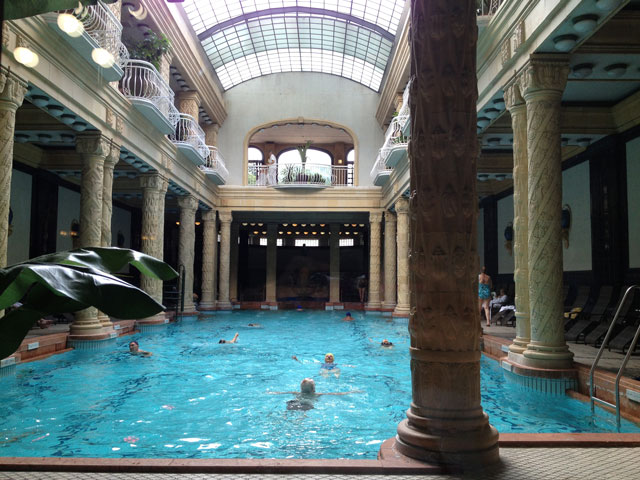
Main indoor pool
Main indoor pool

And they do. A few more corridors take us to the main inside pool. This time, I wear goggles and cap so I can swim properly. I do the first length and start swimming back again. There is pratically no one in the pool. Someone grabs my arm. I eventually realise what the man is trying to tell me. You won’t believe this but the direction in which you are supposed to swim is AROUND the pool and not up and down!

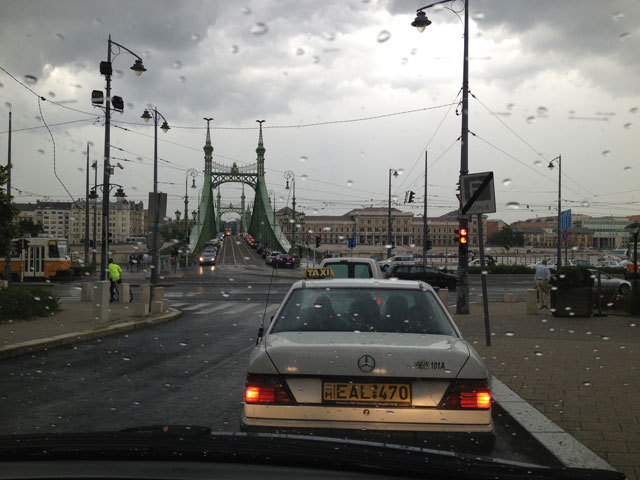
Going home in the rain

There is a smaller 36° pool so we try that for a while then get out. We can’t find the showers so we go back to our cubicle and get dressed. We make it back to the car just in time.

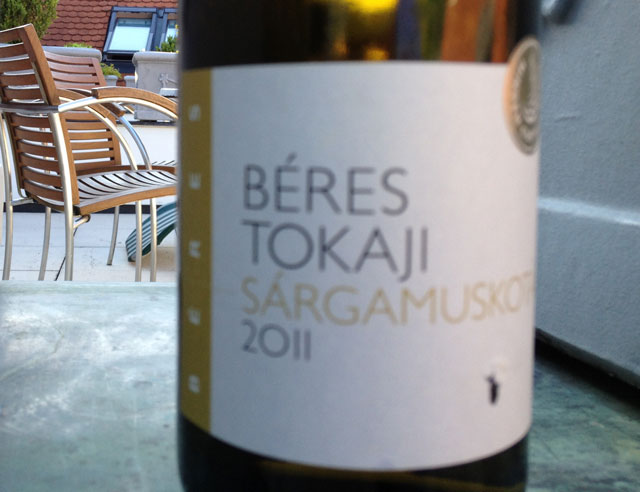
Hungarian tojaji
Hungarian tojaji

Great big fat raindrops start falling and don’t stop for about another hour by which time we are back in our hotel, having stopped off on the way at Auchan (one of France’s most popular hypermarkets!) to buy some tokai wine, cheese, tomatoes and bread for dinner.

However, I have to say that I much preferred the wonderful spa experience we had, quite by accident, in Switzerland a couple of years ago near Lake Constance. There were ten or so baths at different temperatures with lots of whirlpools and even one with rapids. We felt really great when we finally got out.

Budapest – Beautiful Buda

Pest has not prepared me for Buda. Although we can see it from the other side of the Danube, I have no idea of what is awaiting us.

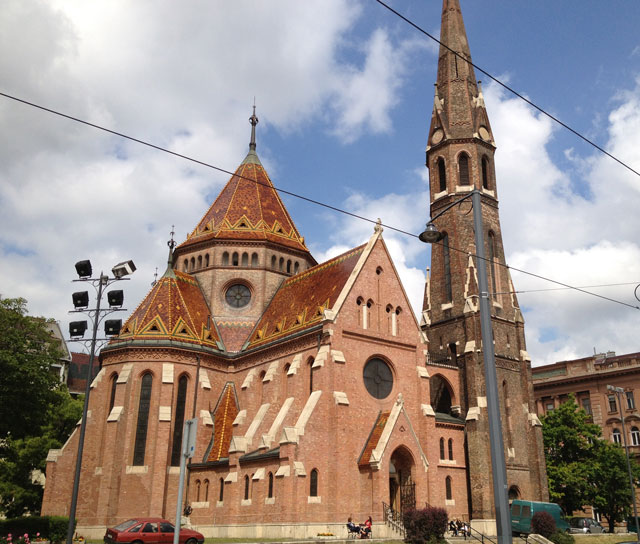
Unidentified church
Buda Calvinist Church

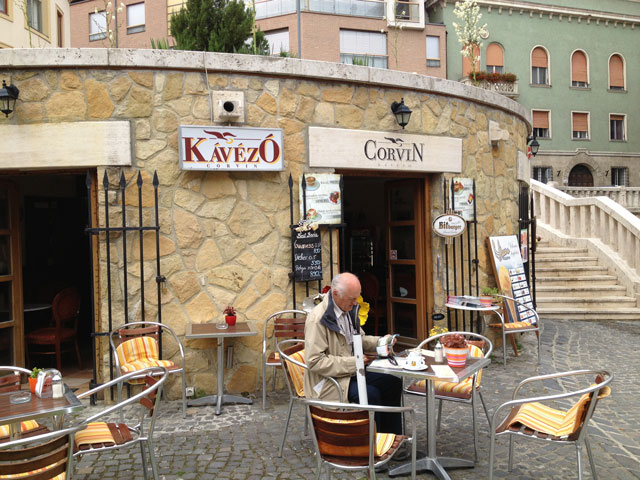
We park the car next to an unidentified red brick church with colourful varnished tiles, put our remaining coins in the parking metre and go off to find a café to get some more change. The Corvin Café on Corvin Ter is just opening and the lady is unstacking chairs and tables in one corner of a deserted square. She is obviously very taken with Jean Michel so I let him deal with getting the change.

The Corvin Café
The Corvin Café

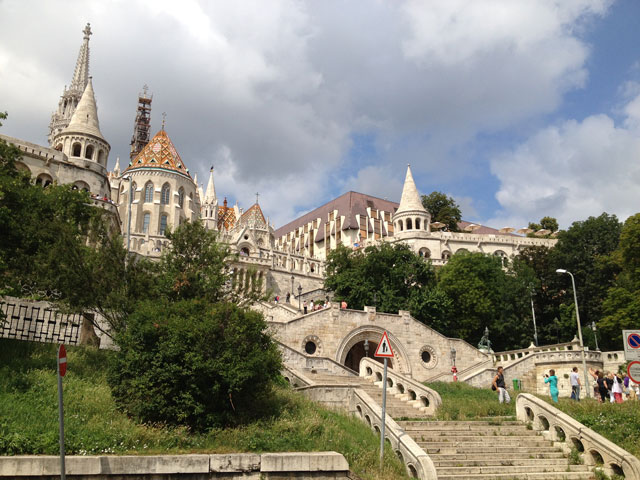
We walk up a couple of quiet streets and a flight of stone steps and suddenly, Buda’s Castle District is before us, like something out of the Knights Templar. It is quite stunning.

Castle Hill
Castle District

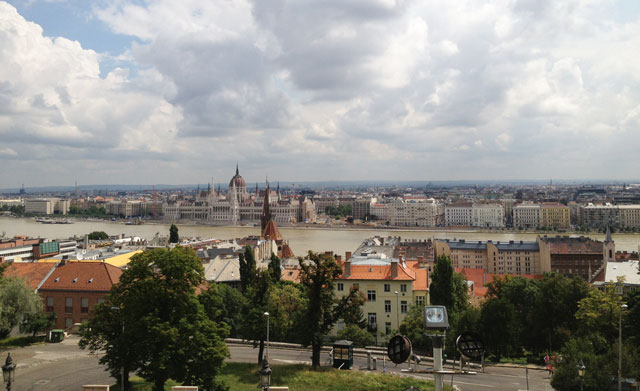
As we climb, each step gives us an even better view of Pest.

View of Pest from the Fishermen's Bastion
View of Pest from the Fishermen’s Bastion

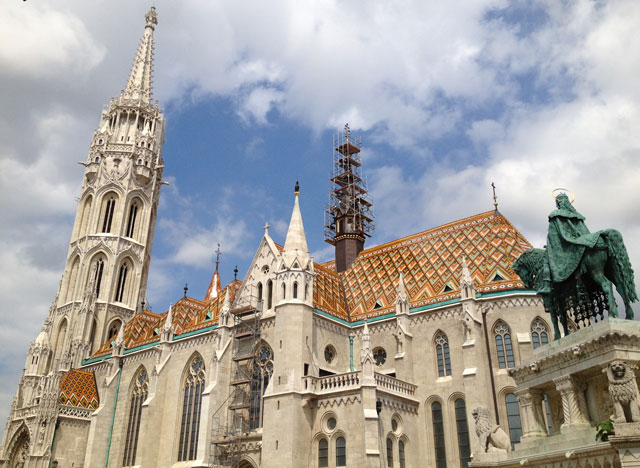
On the other side of the ramparts known as the Fishermen’s bastion, built in the early 1900s as a homage to the mediaeval fishermen in charge of defending this side of the ramparts, stands a white church with people milling around. There is something quite magical about the whole scene.

Mathias Church
Mathias Church

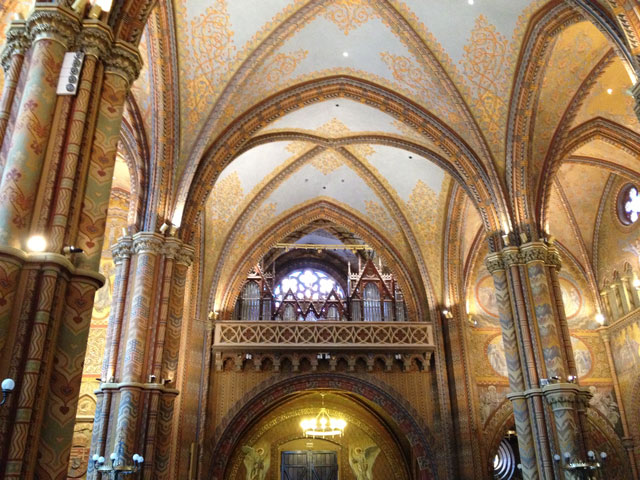
The inside of the church is something entirely new to us. Not the rococco style we’ve seen up until now. The colours are muted with intricately painted walls and ceilings of Arabic influence though very different from the Moorish art in Spain. Although the church dates back to the 13th century, it has been remodelled and restored over the ages.

Painted interior of Mathias Church

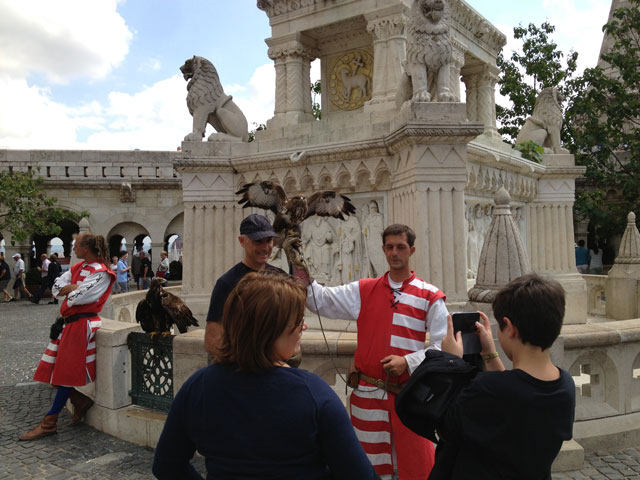
When we come outside there are two men in mediaeval costume, one with dreadlocks, with hawks. There is Hungarian music playing somewhere.

The hawk
The hawk

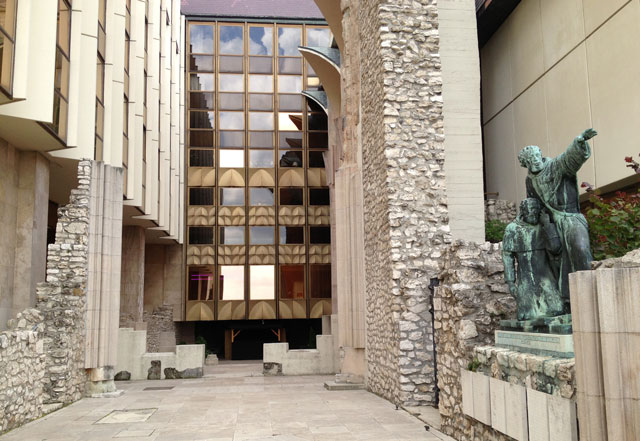
One building stands out like a sore thumb – the Hilton Hotel, an entirely new construction whose presence is totally incomprehensible, despite the “integration” of a few mediaeval ruins. You really do wonder how it was every allowed.

The Hilton Hotel
The Hilton Hotel

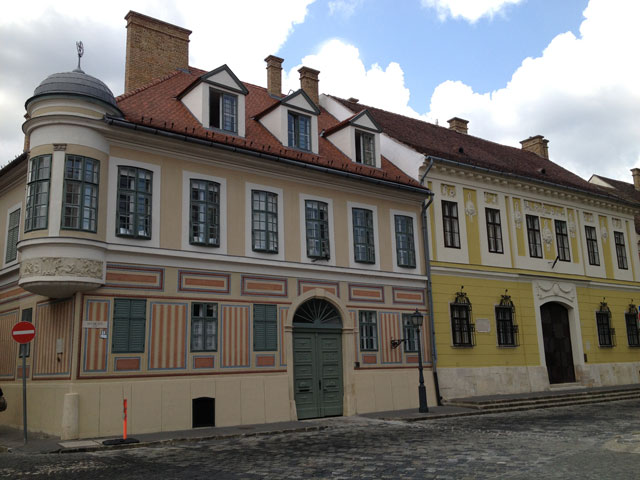
We wander through the streets, delighting in the painted façades on some of the oldest buildings in the capital. By then we have left the tourists behind.

Painted façades
Painted façades

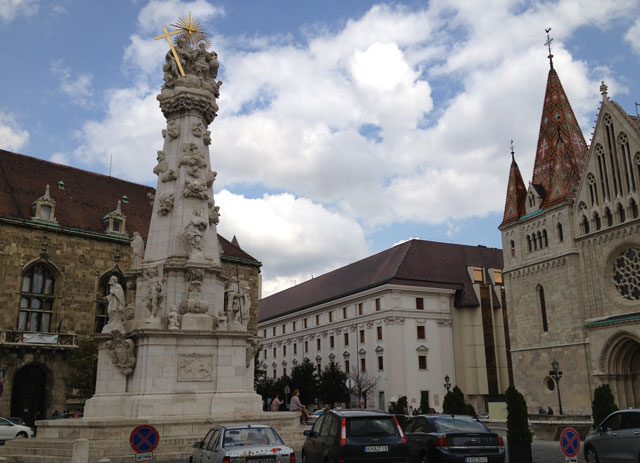
We loop back to the other side of the church, past Holy Trinity Column, was built to celebrate the end of the plague in the hope that it would provide protection from another epidemic.

Holy Trinity Column
Holy Trinity Column

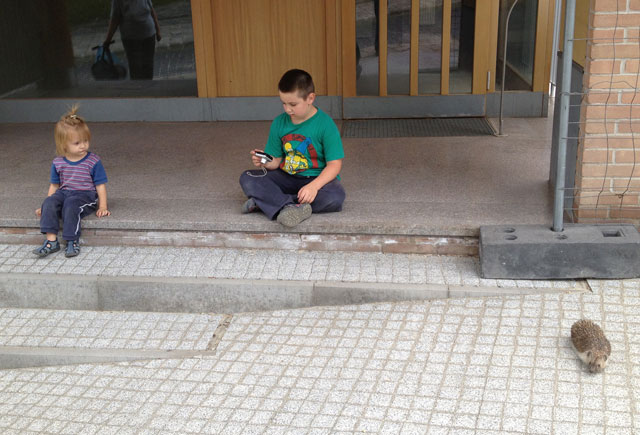
Then we go back down to the Danube by the same route as before. I see a family with a little girl and boy looking at something on the ground. It turns out to be a hedgehog which, suprisingly, is not rolled up in a ball, and is coming towards us!

The hedgehog
The hedgehog

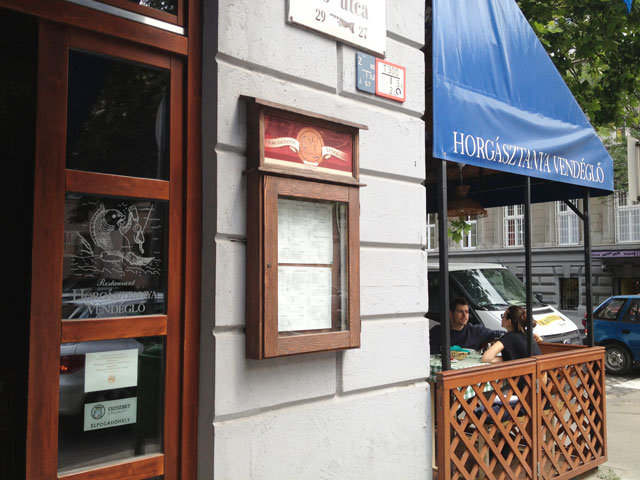
By then it is after one, so we feed the metre again and go to look for a fish restaurant with an impossible name indicated by the trusty Routard. We both order pike-perch (zander) prepared in two different ways. We’re not convinced it is the same fish on both plates.

Our restaurant
Our restaurant

Jean Michel has read that Hungarian tokay wine is worth tasting but the waiter says we can’t buy it by the glass and that the half bottles are too expensive so we order another Hungarian dry white instead which is very pleasant.

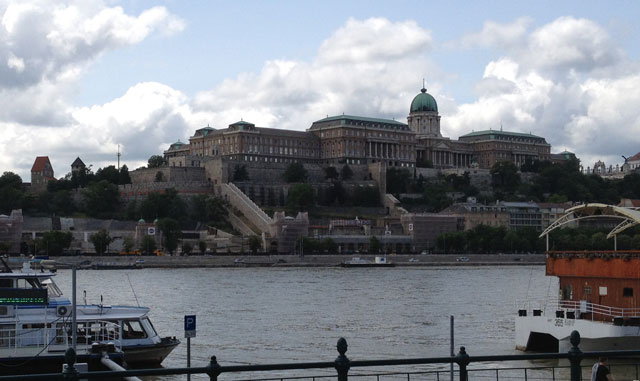
Royal Palace in Budapest

We decide not to visit the Royal Palace, which has been completely gutted and rebuilt over the years and now contains two museums.

Instead we move onto the next item on the day’s programme – one of Budapest’s famous baths which I shall tell you about in my next post.

from the Tropics to the City of Light