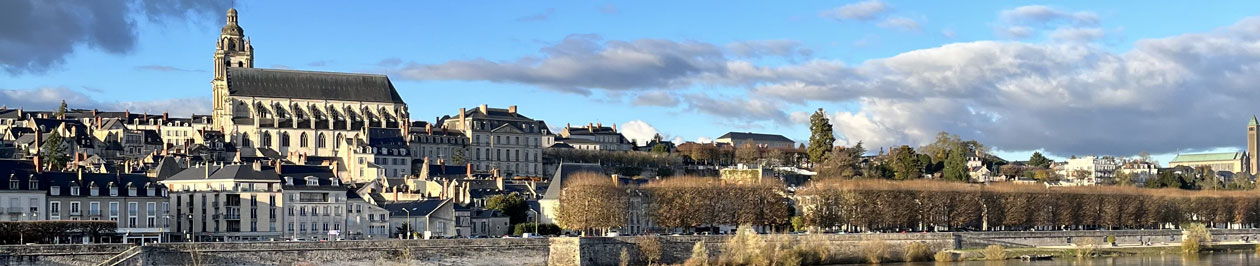
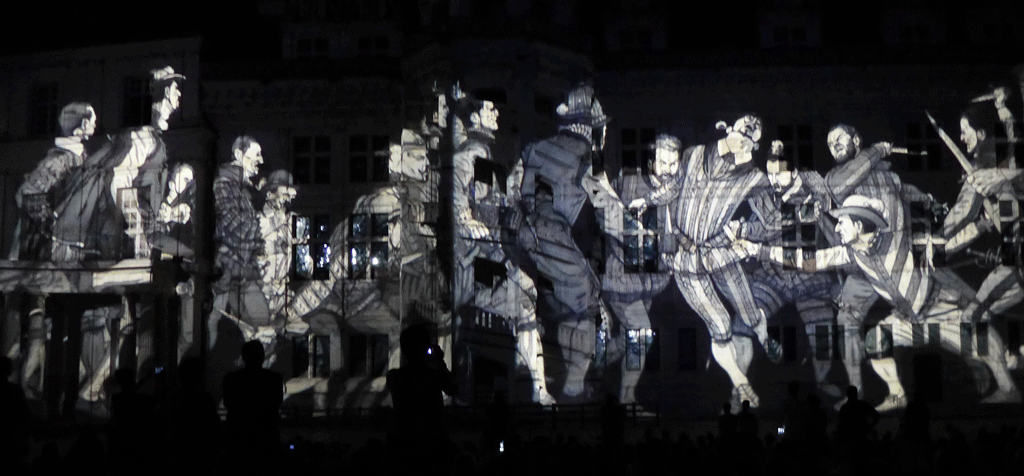
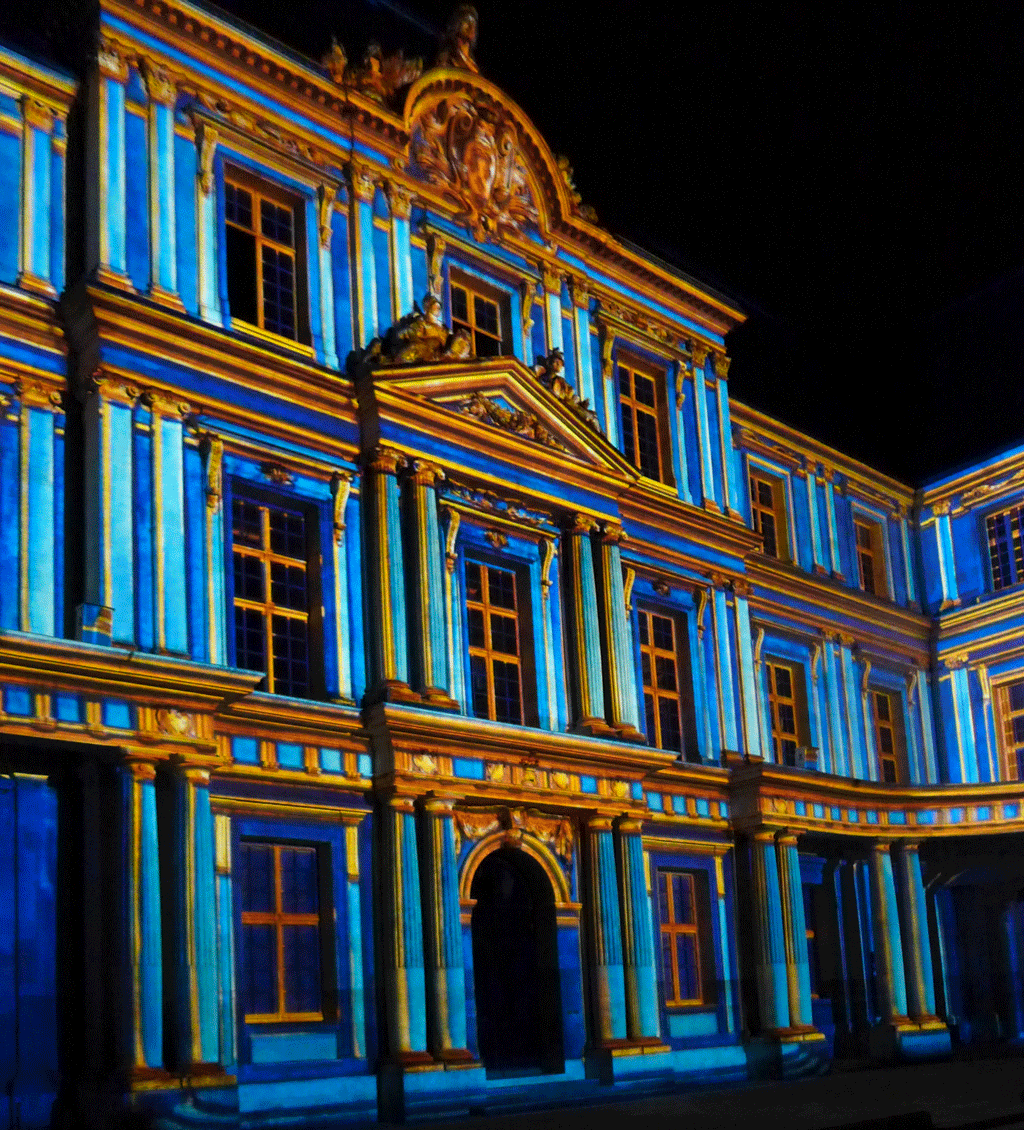
I am not a great fan of sound & light shows but I think I should go to the one at Blois Castle so I can recommend it (or not) to visitors. As residents of Blois, we have free passes to the castle and the weather is very warm so it seems the ideal time.
The beginning of the sound and light show
We park where we always do along Gambetta Avenue between the train station and the castle. It’s only a five-minute walk. In June, July and August, the show starts at 10.30 pm and lasts for 45 minutes (10 pm in March, April, May and September). We’re about 15 minutes early so we get our free tickets by showing our passes and ID and go into the main courtyard. We are told to stay in the centre.
One of the castle’s illustrious inhabitants
We see that lots of people have come with blankets and cushions. I have passed the age of being comfortable sitting on the ground so we find a place on the steps around the perimeter of the courtyard in front of the Gaston d’Orléans wing but the steps are a bit shallow. We think it might be better in front of the Royal Chapel (on the left as you walk in) and find a place there. It’s a little bit better.
The State Room
At 10.30 pm, an announcement is made that everyone has to go into the middle of the courtyard as images will be projected on all four façades. A man comes and shoos everyone off the steps. I tell him I can’t stand up for any length of time (my foot starts burning due to an unoperable hallux valgus). He tells me that after the first fifteen minutes, I’ll be able to come back and sit down again on the steps.
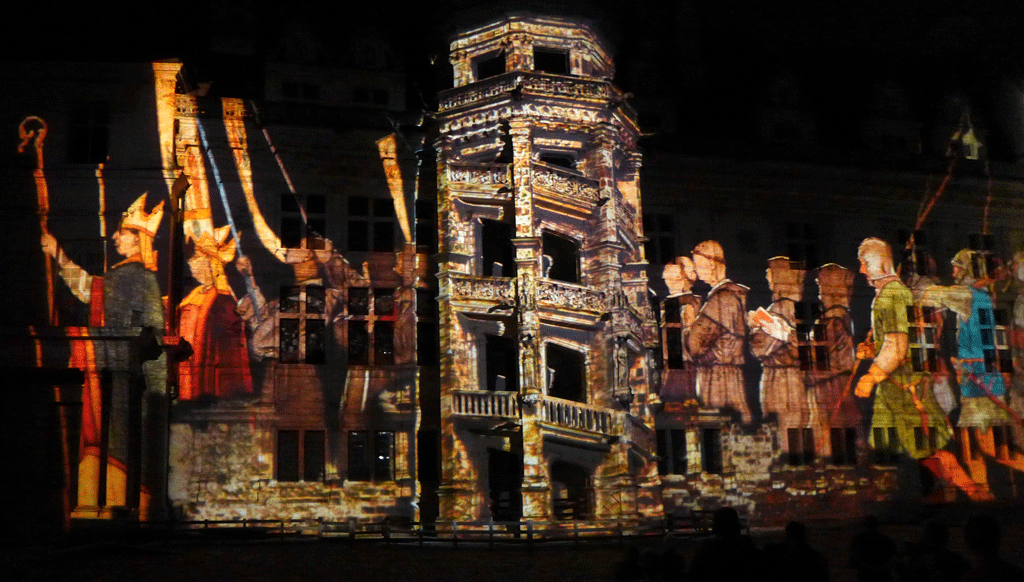
Joan of Arc arrives in Blois
That’s OK, I figure, I can walk around for that amount of time. The only problem is that the people sitting down in the centre don’t want other people standing in front of them! In the end, I see there is a group of people standing in front of the Gaston d’Orléans wing so I join them.
Joan of Arc becomes a warlord in Blois before departing for Orleans
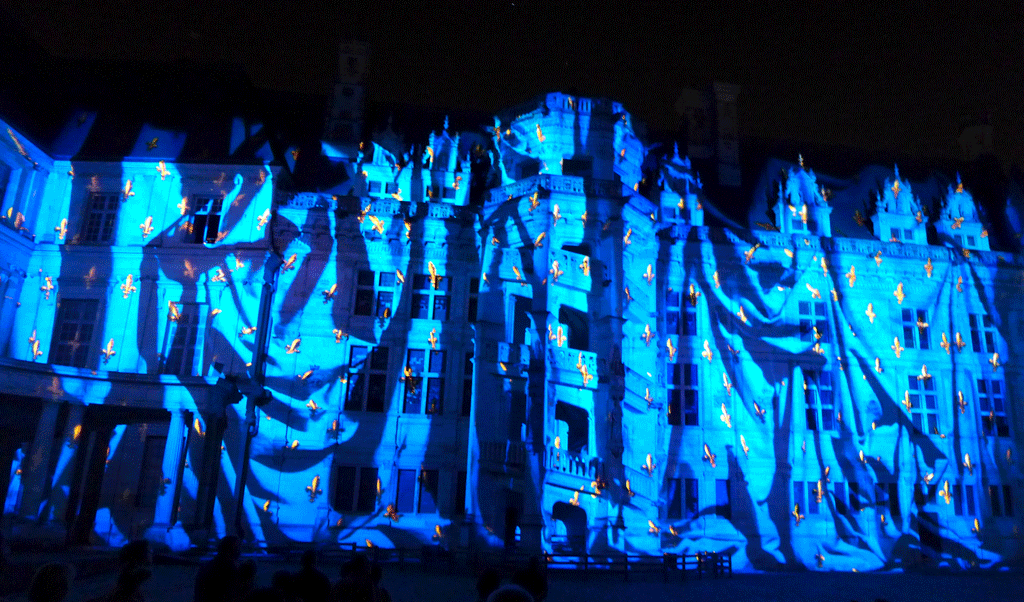
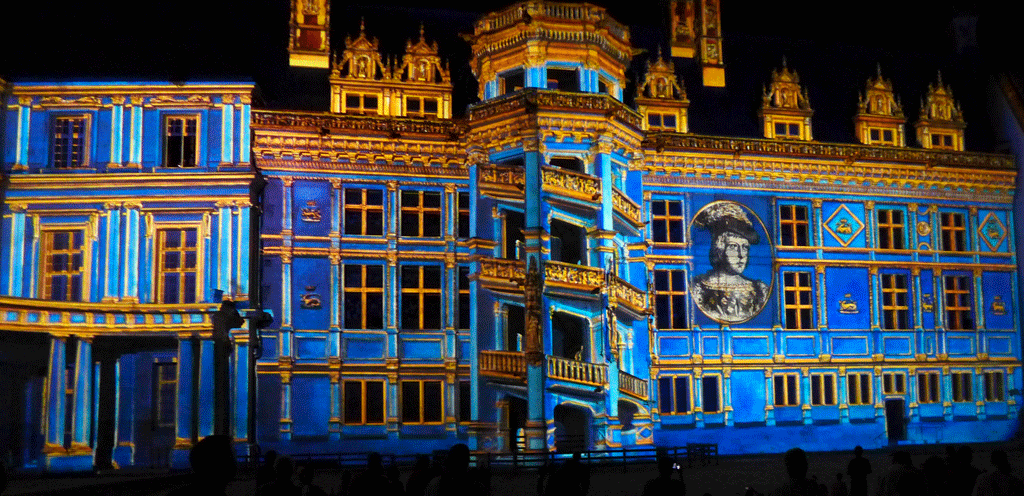
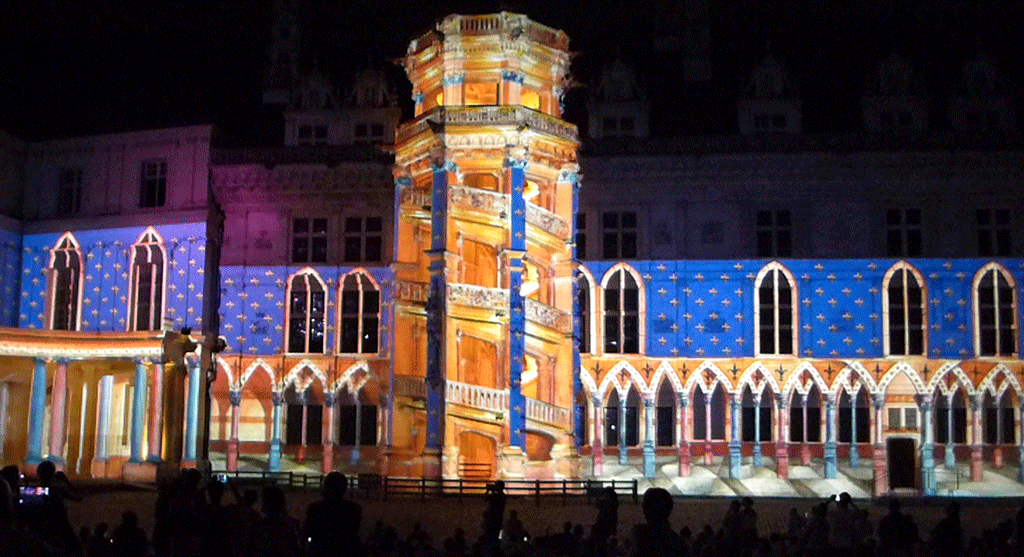
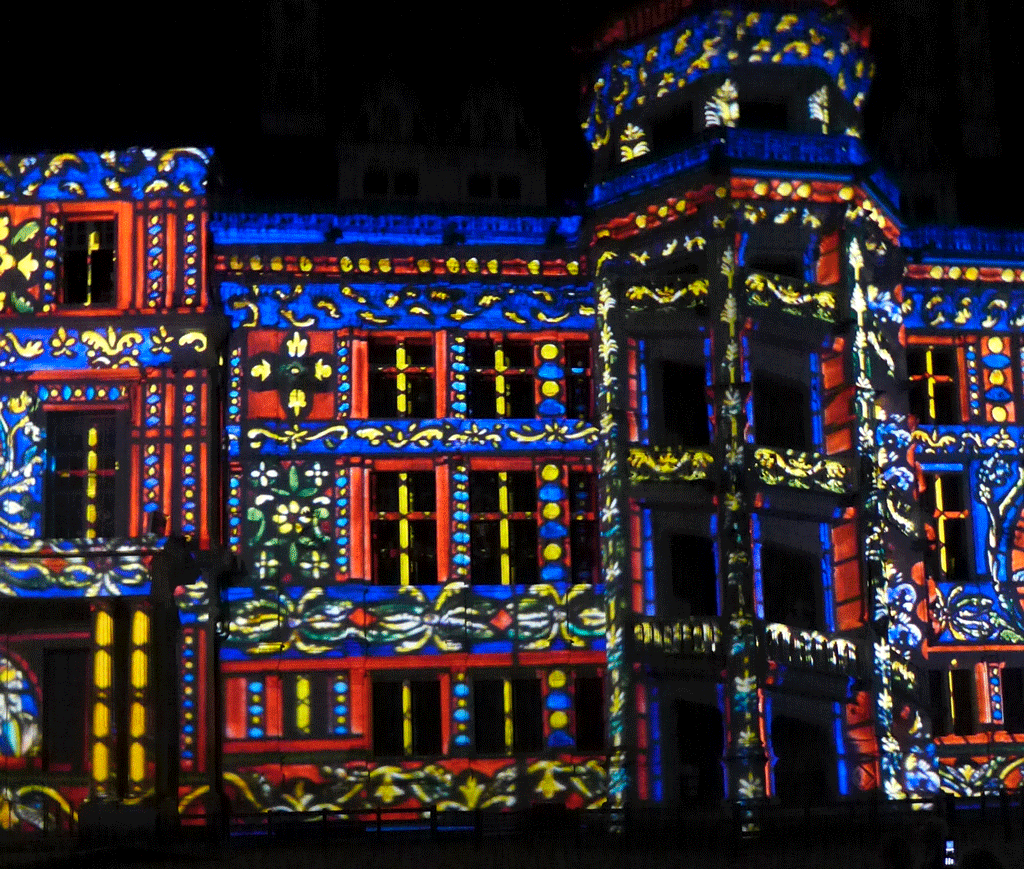
The show starts so I move around according to the façade on which the images are being projected. A dramatic backdrop of blue with gold fleur-de-lys appears on the François I façade. The Louis XII and Gaston d’Orléans wings are then lit up followed by the chapel. The main events in the history of the castle are then recounted.
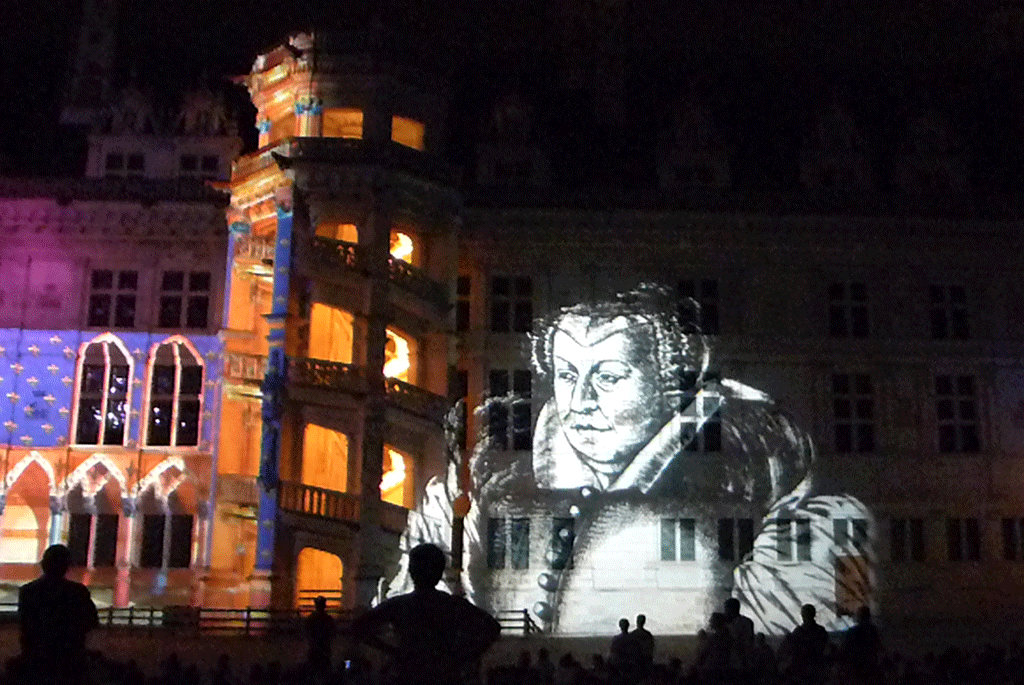
Catherine de Médicis
The sound is very loud and distorted and I have trouble understanding what is being said. An audioguide is available for foreign visitors free of charge but it didn’t occur to me that I might need one. It would certainly have helped.
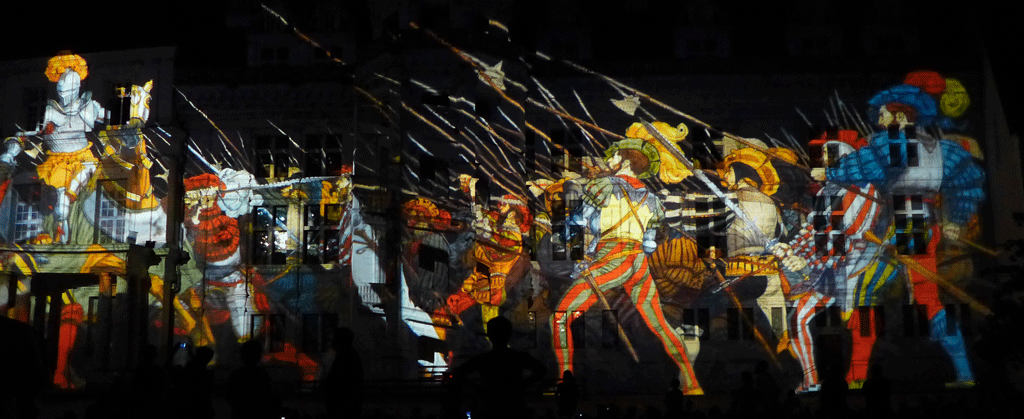
François I at war
After the first twenty minutes (and more specifically after the story of Joan of Arc’s visit to Blois is finished), all the action takes place on either the François I or Gaston d’Orléans wings so we are able to sit down again in front of the chapel. I thank my lucky stars that the man at the beginning was so helpful!
Henri III
The rest of the programme is taken up with the story of the Duc de Guise who was assassinated in the King’s Chambers on the orders of Henri III in 1588 after plotting to take over the throne.
The Duc de Guise being assassinated
It’s all very dramatic but the only voice I can really understand is that of Fabrice Luchini, one of France’s best-known actors. I’m surprised he’s among the cast but then I remember that Jacques Lang, the French minister of culture from 1981 to 1991 and incidentally the founder of the “Fête de la Musique“, the very popular music festival held in France on the summer solstice each year, was also the mayor of Blois from 1989 to 2000 so I imagine that had something to do with it.
Technically, the sound and light show is a bit of a disappointment though some of the effects are interesting. I particularly like the Joan of Arc procession which moves right across the François I wing. Unless the English text is easier to understand, I’m not sure I’d be willing to pay 8.50 euro per person (or 15 euro in a combined castle + light & sound ticket – the castle by itself is 10 euro) particularly if you don’t find it very comfortable to stand in the same place or sit on paving stones (even with a cushion) for 45 minutes. I don’t think we’ll be tempted to go again although we are glad we’ve seen it.
At the end of Secret Blois #1, I left you in Place Louis XII, the most animated part of Blois and home to a twice-weekly fresh produce market. You may have noticed a certain uniformity in the buildings around you. During World War II, Blois was occupied by the German army which invaded the city on 18th June 1940. It was liberated by American soldiers during the last two weeks of August 1944. On both occasions, the town was bombed for several days particularly after the Normandy landings, destroying more than 1500 buildings, especially in the area around Place Louis XII, the railway bridge over the Loire and Gabriel Bridge.
The entrance to Rue Saint Lubin flanked by two postwar buildings
The château was saved by a pragmatic decision taken by the local authorities. The German bombs started fires in the city and the chateau was in danger so some of the mediaeval houses around the chateau were deliberately blown up by the locals to form a firebreak to protect the château. The Germans were aiming for the bridge in order to stop people fleeing south. In those days there was a steady stream of refugees crossing at Blois and other places.
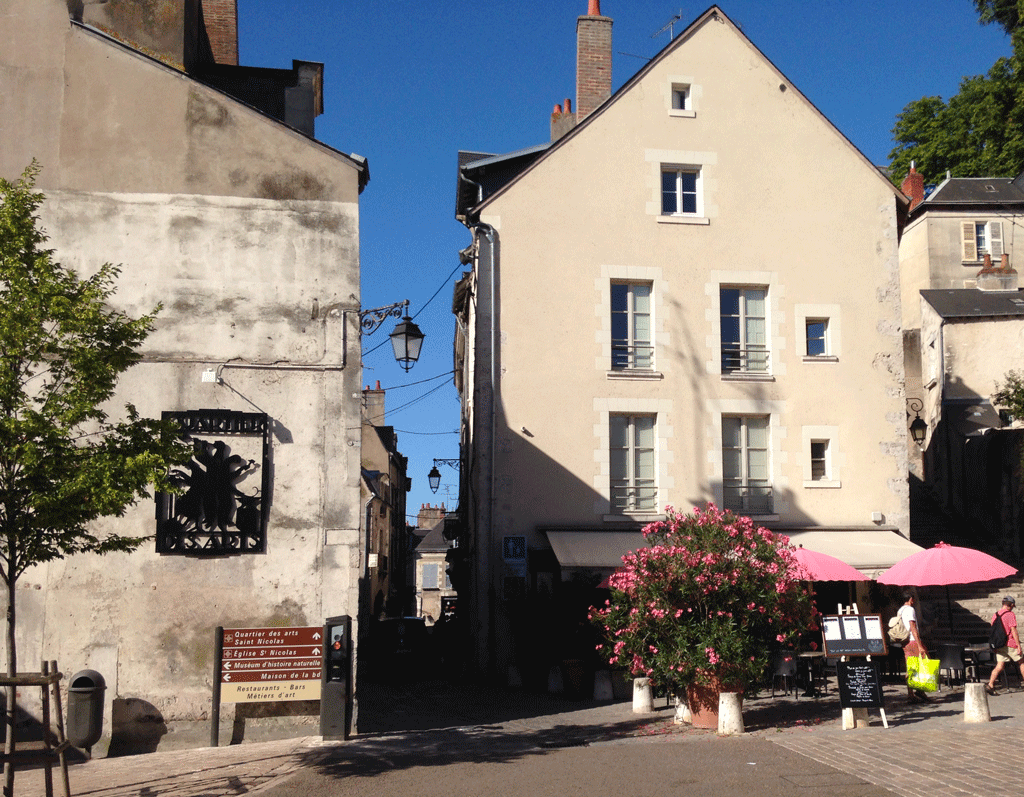
However, if you continue along the narrow street of Rue Saint Lubin keeping the Loire on your left and the castle on your right, you will find yourself in a much older area dominated by the 13th century Romanesque church of Saint Nicolas with its tall spires. Follow Rue des Trois Marchands noting all the little speciality shops along the way, many of which are on the ground floor of half-timbered houses that fortunately survived the war.
Continue along Rue des Trois Marchands to n°11. Initially called Auberge du Cigne, this inn, which was built in 1573, became Auberge des Trois Marchands in 1669 and gave its name to the street which was full of hostels and inns: l’Ecrevisse (opposite the pharmacy at n° 17), La Fontaine (the site of the Tuile d’Or, today n° 19), La Croix Blanche (n° 21) and many more which have now disappeared.
Fontaine de Saint-Laumer or Fontaine de Foix next to Saint Nicolas Church with Laumer Abbey through the door on the right
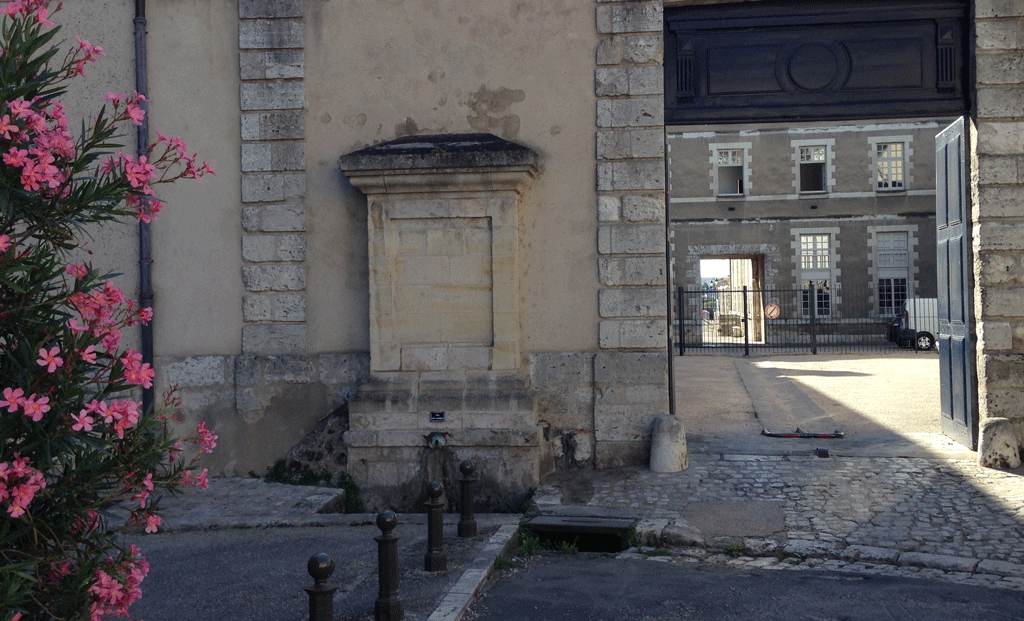
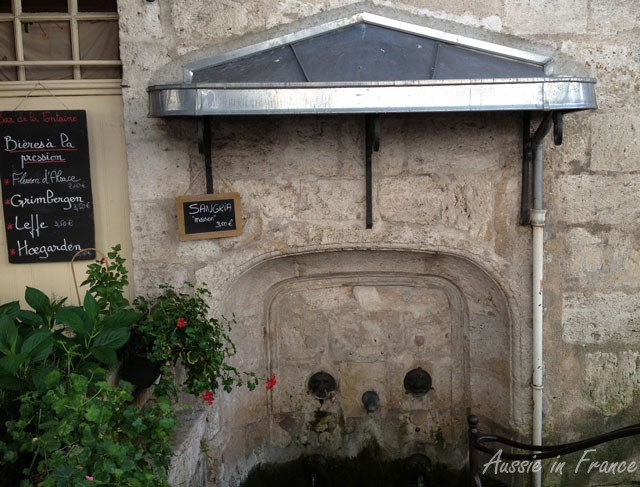
On the right of the church of Saint Nicolas when you are facing the entrance, you can see a fountain built into the wall of the cloisters of the old Saint Laumer Abbey. Foix or Saint-Laumer Fountain was the only one not supplied by the Gouffre, a reservoir gouged out of rock to which a 529-metre long aqueduct brought rainwater and seepage water collected on the limestone plateau. The Gouffre is at the bottom of the staircase called Degrés du Gouffre which we will visit on another occasion. This is the third fountain we have seen so far out of the seven that still remain in a city once renowned for its “glorious fountains” to quote the historian Noël Mars, writing in 1646.
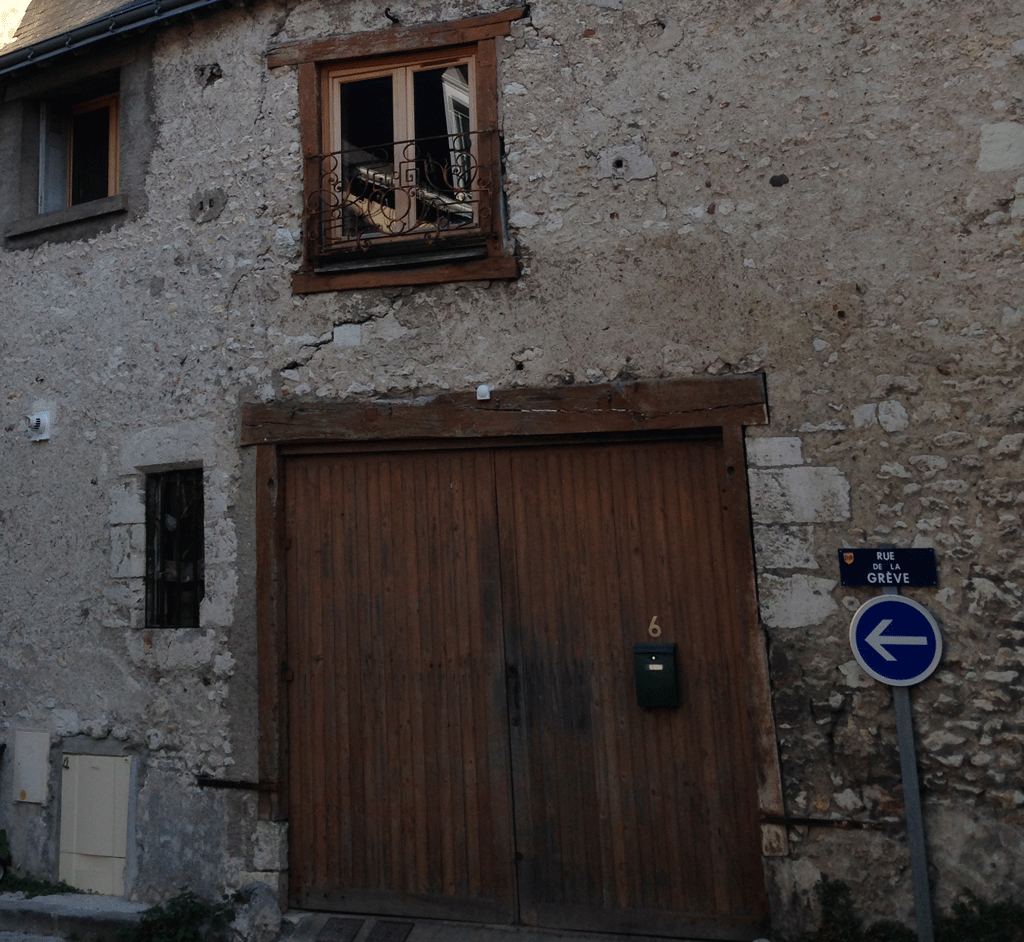
On the next corner on the right is the Musée de la Résistance, another reminder of Blois’ war history. Turn right in front of the Auberge Ligérienne Hotel and onto Place de la Grève to find the best-known and most elegant place to stay in the 17th and 18th centuries: Hôtellerie de la Galère. At that time, it was right on the quay, near the old river port of Grève. at 3 place de la Grève. It was first mentioned in 1611 and finally disappeared in 1825. Its illustrious guests include Nicolas Fouquet (Louis XIV’s finance minister who got too big for his boots and built Vaux-le-Vicomte), Madame de Sévigné, James II of England, Philippe V, the Prince of Wales in 1711, Mehemet Effendi and the Spanish Infanta. Sadly, all that is left today is a window with a balcony and a carriage entrance at 6 rue de la Grève.
The rear façade of Hôtellerie de la Galère on Rue de la Grève
Back on Place de la Grève, turn left to walk along the river towards Pont Gabriel bridge and past Saint-Laumer Abbey which now houses the region’s administrative offices.
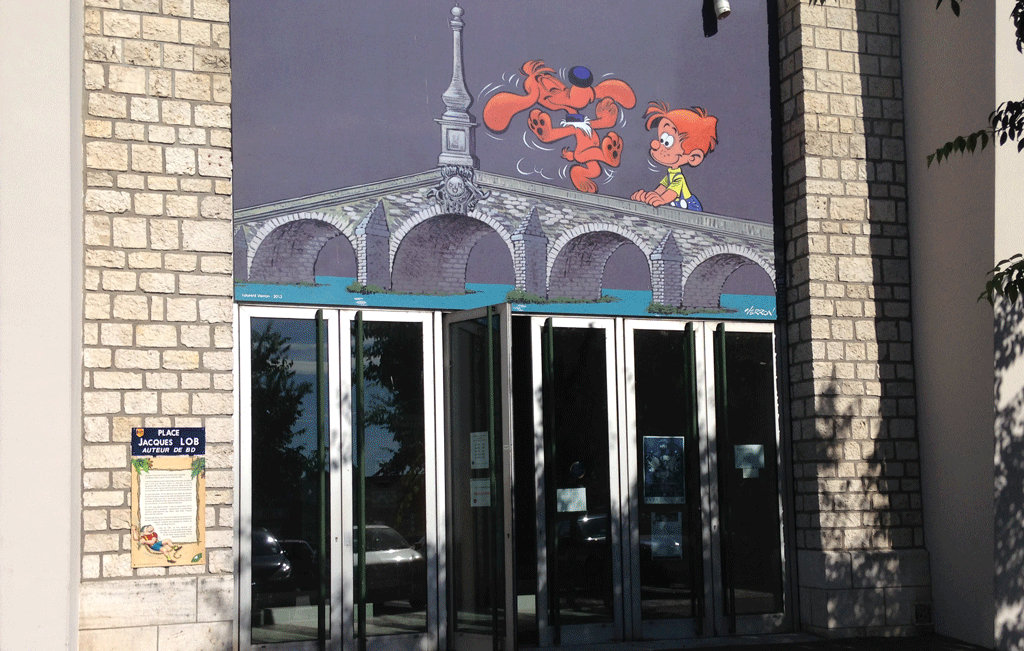
A little further on, on Place Jacques Lob, you’ll see a building with two comic characters on the front – La Maison de la BD. A BD is a bande dessinée ou comic strip, an art form that is extremely popular in France among both children and adults. Blois holds a comic festival every year called BD Boum. This year (2016), it will take place on 17 and 18 November. The characters, Bill & Boule, first appeared in a Belgian comic book called Spirou in 1959.
Boule and Bill on La Maison de la BD
If you take a short deviation left into Rue des Jacobins on the left, you will see the front entrance with a drawing by François Bourgeon. Millions of copies of Bourgeon’s albums have been sold. He’s particularly well-known for his heroines. The BD centre runs temporary exhibitions and comic strip classes for teenagers and adults.
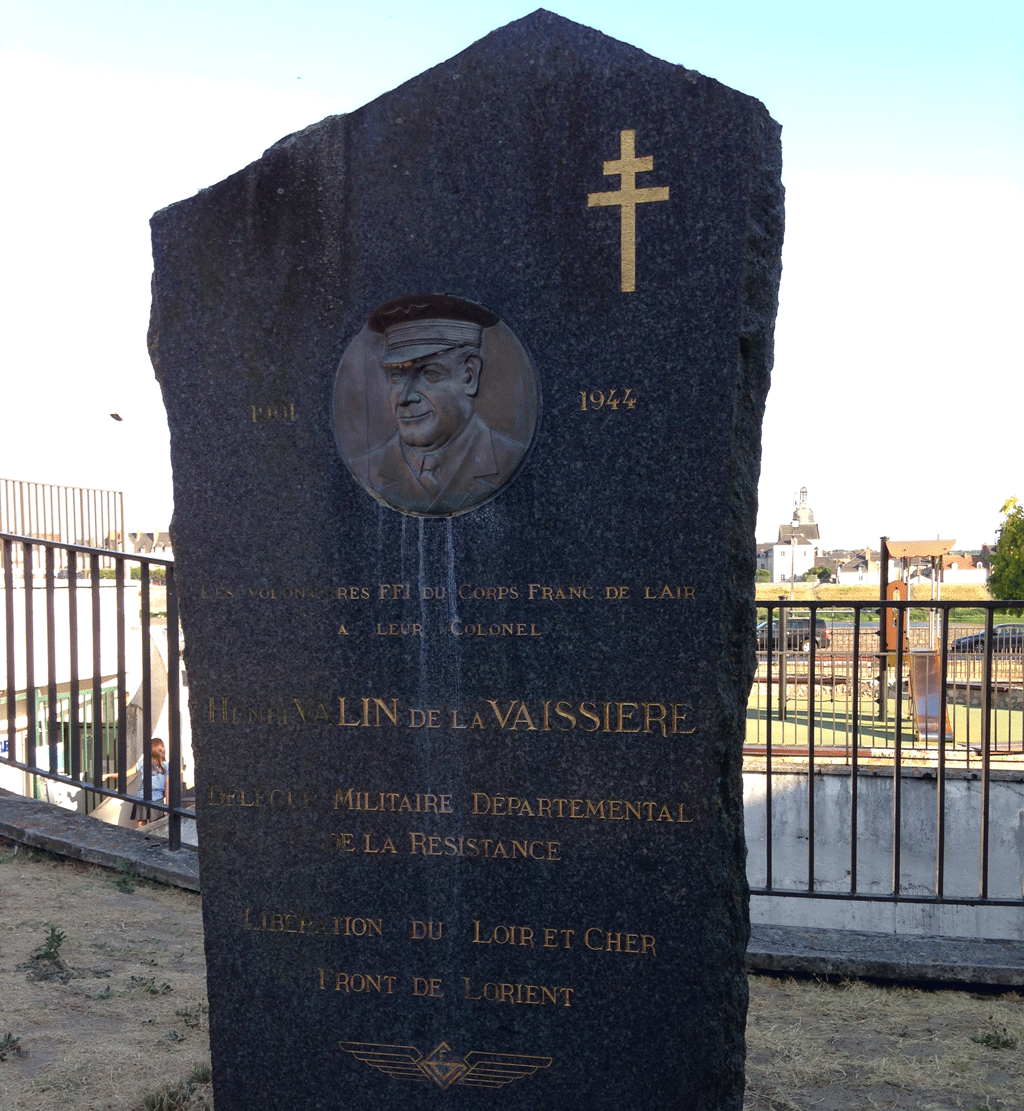
Back on Quai de la Saussaye, you will come to Square Valin de la Vaissière on top of an underground parking lot. A black marble monument to Colonel Henri Valin de la Vaissière on the edge of the square closest to Place Louis XII is yet another reminder of World War II. Born in 1901, Vallin initially trained as an air force officer. After his unit was disbanded in 1942, he joined the ORA (Organisation de résistance dans l’armée) where he was known as “Valin”. Unfortunately, he was assassinated by a deranged subaltern in December 1944, after a regiment of Resistance fighters under his orders expelled the Germans from their barracks and liberated Blois on 16th August 1944.
War memorial to Valin de la Vaissière
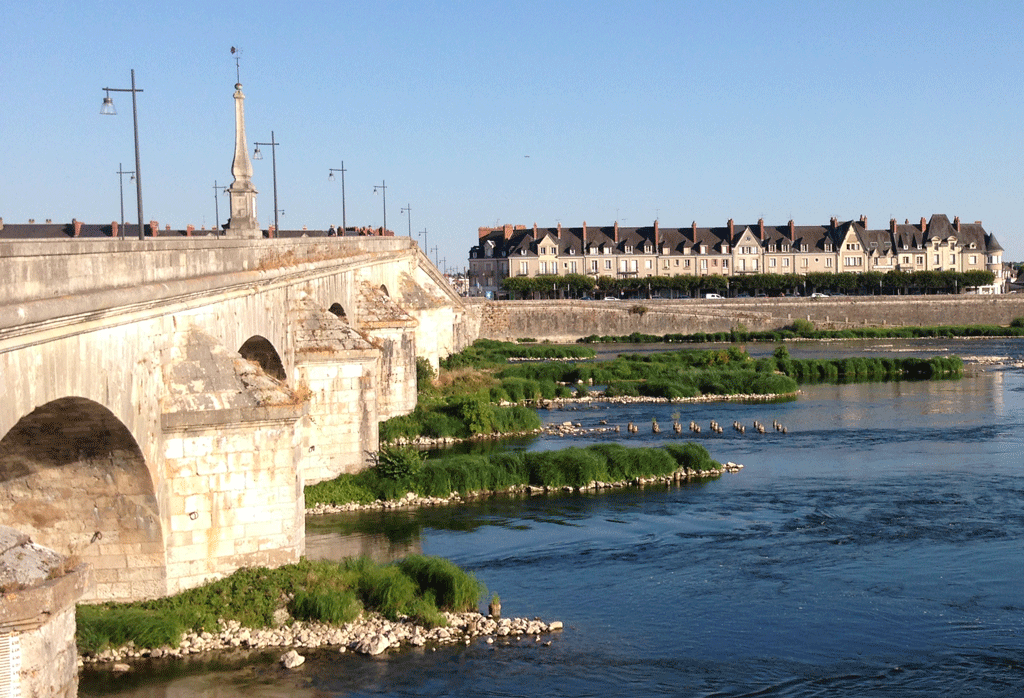
Before the Germans left, they decided to blow up Jacques Gabriel Bridge which you can see on your right. Two piers and three arches collapsed but the rest of the 18th century bridge resisted. The only way that the daily traffic of 1000 vehicles and 4000 pedestrians could cross the river was by ferry. As a result, a temporary wooden bridge was built in less than 3 weeks. It was used for a year while a second wooden bridge capable of carrying greater loads was being built next to the stone bridge.
Despite enormous problems– flooding, lack of materials, very cold weather, etc., construction of the second wooden bridge began during the winter of 1944 and was completed on 2nd September 1945 on the 1st anniversary of the total liberation of the city. The new bridge was pronounced safe by the engineers but vehicles were asked to limit their speed to 15 kph and only trucks under 10 tonnes were allowed to cross. After three years of good and faithful service, the wooden bridge was finally replaced by the newly reconstructed stone bridge. If you cross over to other side of the road just to the right of the bridge, you can see the remains of the wooden bridge during low water periods next to the central arch.
You can see the remains of the wooden piers of the temporary bridge near the centre stone arch
Cross back again and turn left just after the Société Générale bank into Rue Emile Laurens. Take the first street on the right, Rue du Commerce, the main shopping street of Blois. On the first corner, you’ll see a couple of half-timbered houses that miraculously survived the Second World War.
At the top of Rue du Commerce, turn right into Rue Denis Papin and you’ll see a sunken fountain on your right on Place du Marché au Beurre, once the butter market. The original street level has now been raised, and the fountain is partially hidden by the terrace of the Saint Jacques Restaurant. It was given to the town by Louis XII under the somewhat uninventive name of “Neighbourhood Well Fountain” and renamed Saint-Jacques Fountain after a collegiate church that has now been destroyed. Since its construction, it has been fed by the Gouffre mentioned above. That is our fourth fountain.
The fifth is located further along Rue Denis Papin just before you get to the corner, on the opposite side of the street almost at the foot of the stairs. It has an interesting history. Called the Hôtel de Ville (Town Hall) Fountain, it used to be located on the wall of the old 15th century town hall, on Rue Foulerie. which was destroyed in June 1940. The fountain was found among the ruins and kept in the Lapidary Museum across the river in Vienne until a local historical association, Association des amis du Vieux Blois, financed its re-installation at the foot of Denis Papin stairs in 2005.
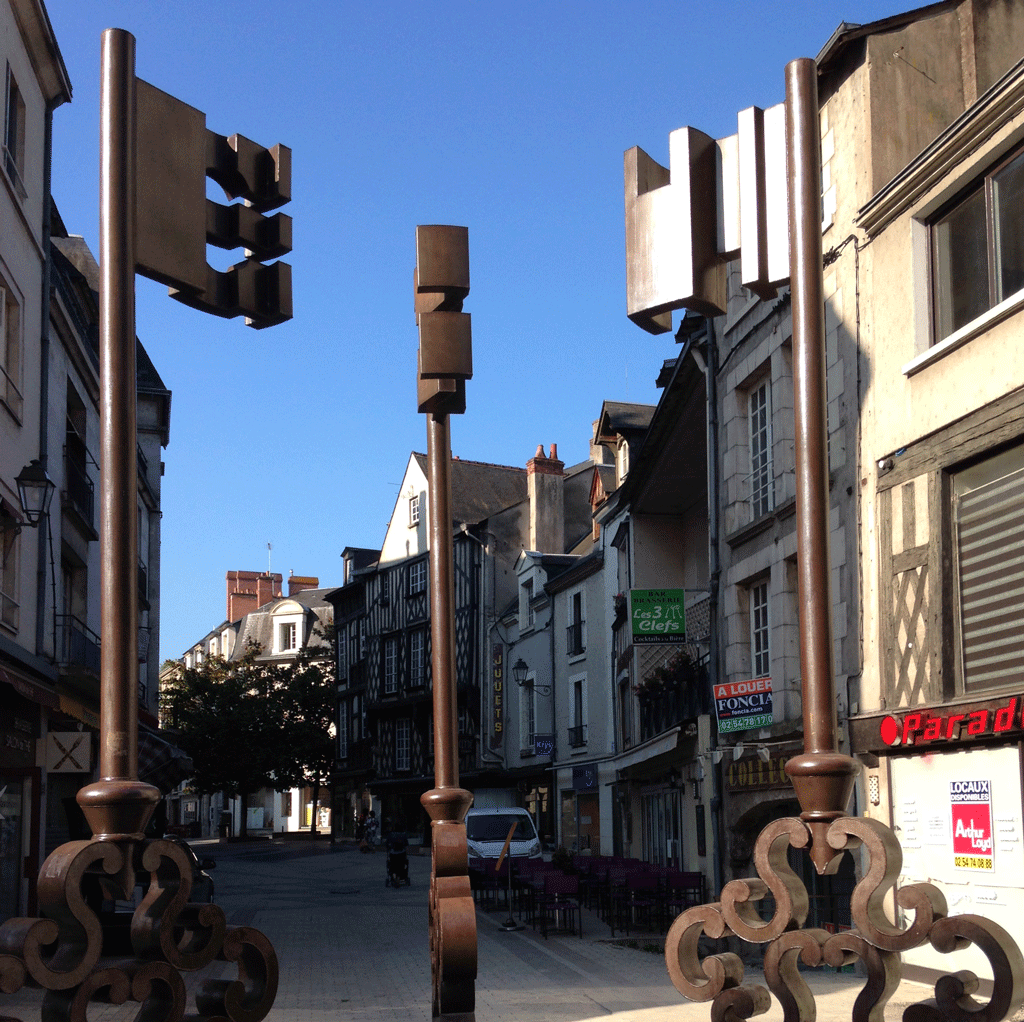
Now walk down Rue Denis Papin towards the river, staying on the right-hand side. You’ll come to three enormous metal keys on the corner of Rue des Trois Clefs (Three Keys Street), so named because of the many locksmiths who had their shop fronts on this once narrow street, widened after the 1940 bombings. It was in 1979, when the pedestrian precinct was created, that the municipal workshops produced the monumental metal sculpture consisting of three keys, 3 metres high and each weighing 420 kilos, in less than three months.
The Three Keys sculpture in Rue des Trois Clés
We’ve come to the end of our second tour of Secret Blois. Next time, we’ll cross Denis Papin and explore another old quarter of Blois with its many mediaeval façades, winding streets and staircases.
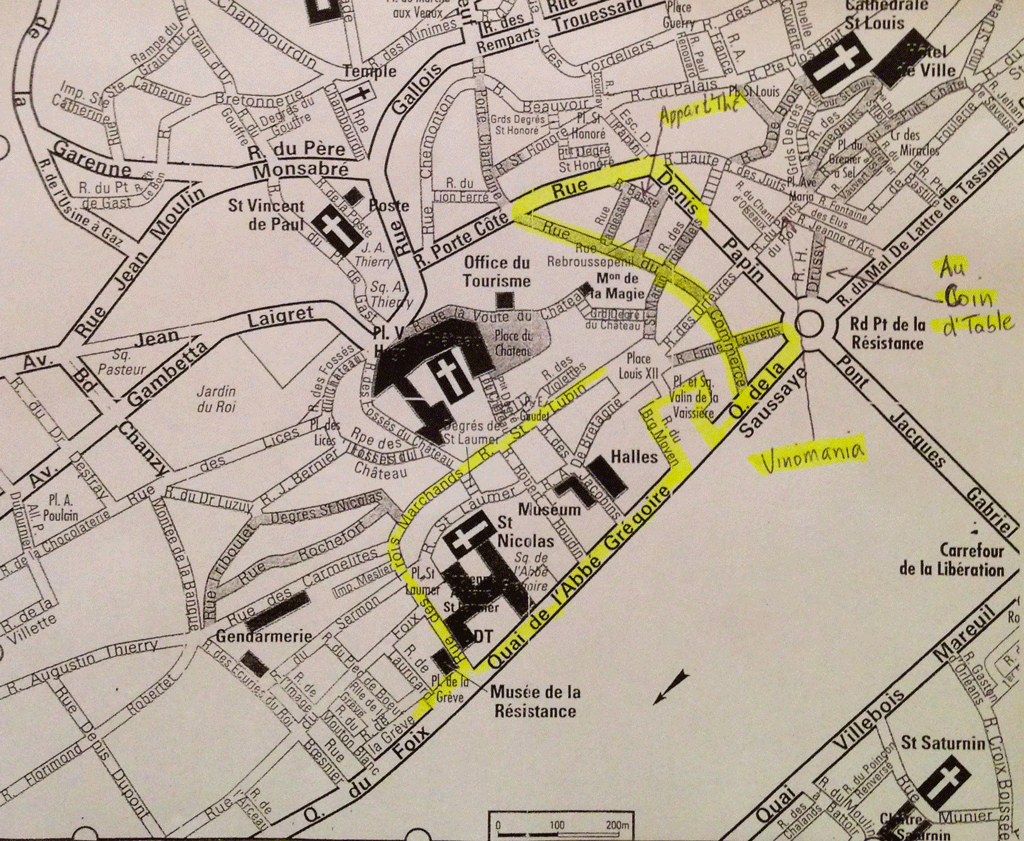
If you’re looking for something to eat or drink close by, you can go to Appart’Thé for tea/coffee or lunch at 12-14 rue Basse (Rue Basse forms a triangle with Rue Denis Papin when it turns the corner), dinner or lunch at Au Coin d’Table, 9, rue Henri Drussy or for lunch, dinner or a drink at Le Douze which is a cellar, restaurant and wine bar, Place Ave Maria, 12 rue du Poids du Roi, or F&B opposite, all of which are on the other side of Rue Denis Papin.
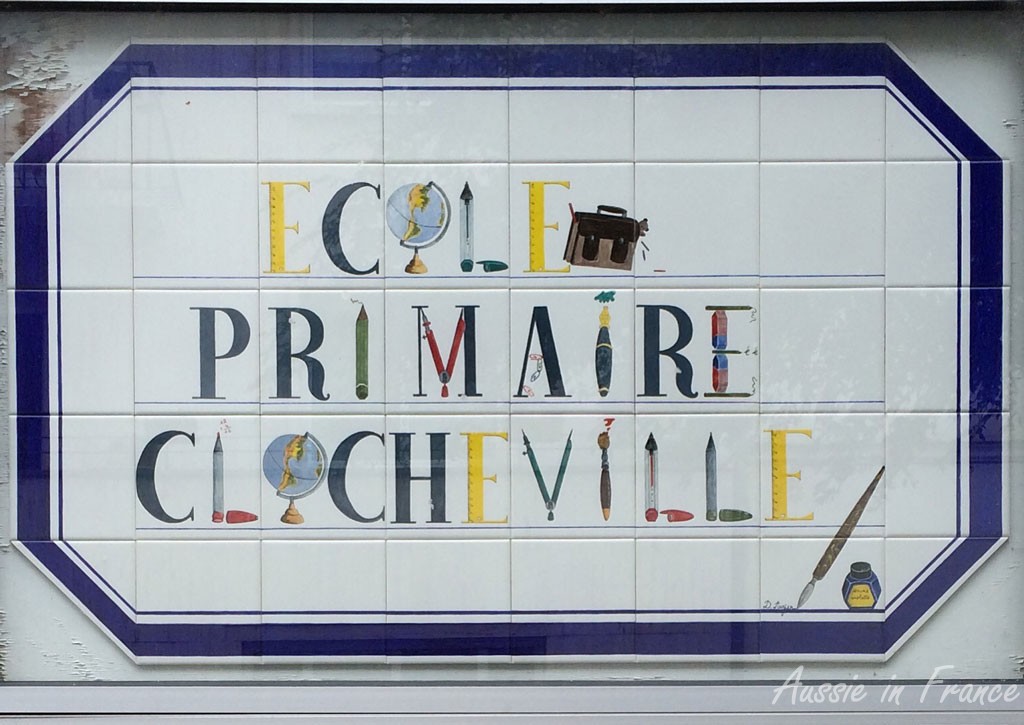
The first time I heard the expression école normale was when I took up a post as an assistant English teacher in Nantes many moons ago. I soon discovered that it was a teacher training college. I then heard about the école normale supérieure which is one of the most prestigious and selective university and research institutions, in both the arts and sciences.
The école normale supérieure is run and financed by the State with the aim of training researchers, university lecturers, teachers of grande école preparatory classes and secondary school teachers.
So I was somewhat astonished when reading Thomas Hardy’s Jude the Obscure to learn that Sue Brideshead had enrolled in a Normal School to become a teacher. It was the first time I had thought about the word “normal” used in this context.
Ecole normale was the term given to the institution set up in French in 1794 to provide teacher training to students selected by means of competitive examinations. Normal in this context refers to the fact that it was to serve as a model for other schools of the same type i.e. to establish teaching standards or norms. The English institution was modelled on the French école normale. The name “Normal School” was gradually replaced by “teachers college” or “teacher training college,” so called because almost all collegiate level education programs are sub-departments of larger colleges and universities.
In France, there are now 4 écoles normales supérieures (ENS) and admission is highly selective: 218 places à Lyon, 205 à Cachan, 191 à Paris Ulm et 50 à Rennes en 2014.
The ordinary école normale no longer exists. Both primary and secondary school teachers are now trained at an E.S.P.E. (Ecole supérieure du professorat et de l’éducation) which replaced a previous institution, the I.U.F.M. (Institut universitaire de formation des maîtres), in 2013. And, incidentally, a primary school teacher is now called a maître des écoles (literally school master) and not an instituteur or institutrice which is amusing when you consider that in English, the old school master has been replaced by teacher.
The word norm or norme in French comes from the Latin norma, meaning a set square in the concrete sense and a rule or standard in the figurative sense.
Norme is the basic word for standard in French:
normes de fabrication – manufacturing standards
normes de sécurité – safety standards
normes françaises (NF) – French standards
Hors norme(s) literally means something that isn’t standard, what we would call unconventional or unusual in English. C’est une voiture hors norme(s) – it’s no ordinary car.
The use of “norm” in English does not usually include the idea of an official standard but rather something that is usual or typical. Its use is more restrictive and much less common than the French norme.
Strikes were the norm – Les grèves étaient la norme.
The norms of good behaviour in the civil service – Les normes de bonne conduite dans le service public
Many teachers themselves believe that 70 hours a week is the norm. – Beaucoup d’enseignants pensent que 70 heures par semaine est la norme.
The French normal can often be rendered by the French “normal”, but not always.
De dimension normale – normal-sized, standard-sized
C’est tout à fait normal – It’s quite normal/usual.
Il n’est pas normal – he’s not normal/there is something wrong with him.
On the other hand, in the case of “ce n’est pas normal“, we would be more likely to say “there must be something wrong”.
Ce n’est pas normal qu’ils aient droit aux soins gratuits – It’s not right that they get free treatment/They shouldn’t be getting free treatment.
Revenir à la normale – to get back to normal
Ses notes sont au-dessus de la normale – His marks are above average.
Similarly, in the other direction, normal in English is not always normal in French.
She bought it for half the normal price – Elle l’a acheté à moitié prix.
Classes will be as normal – Les cours auront lieu comme d’habitude.
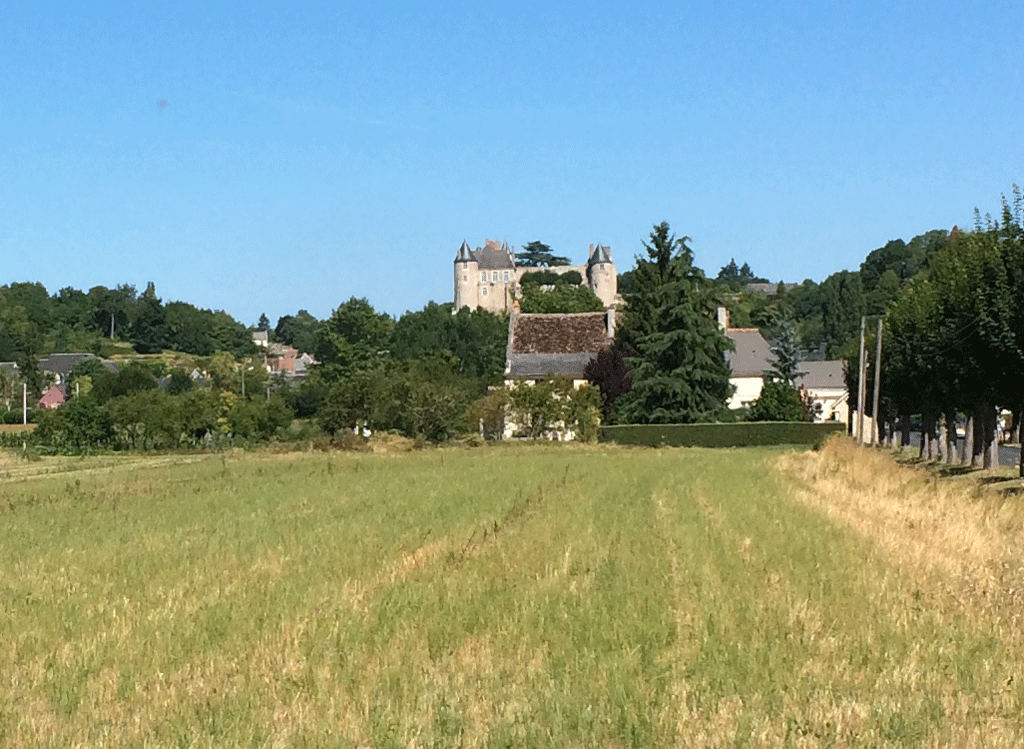
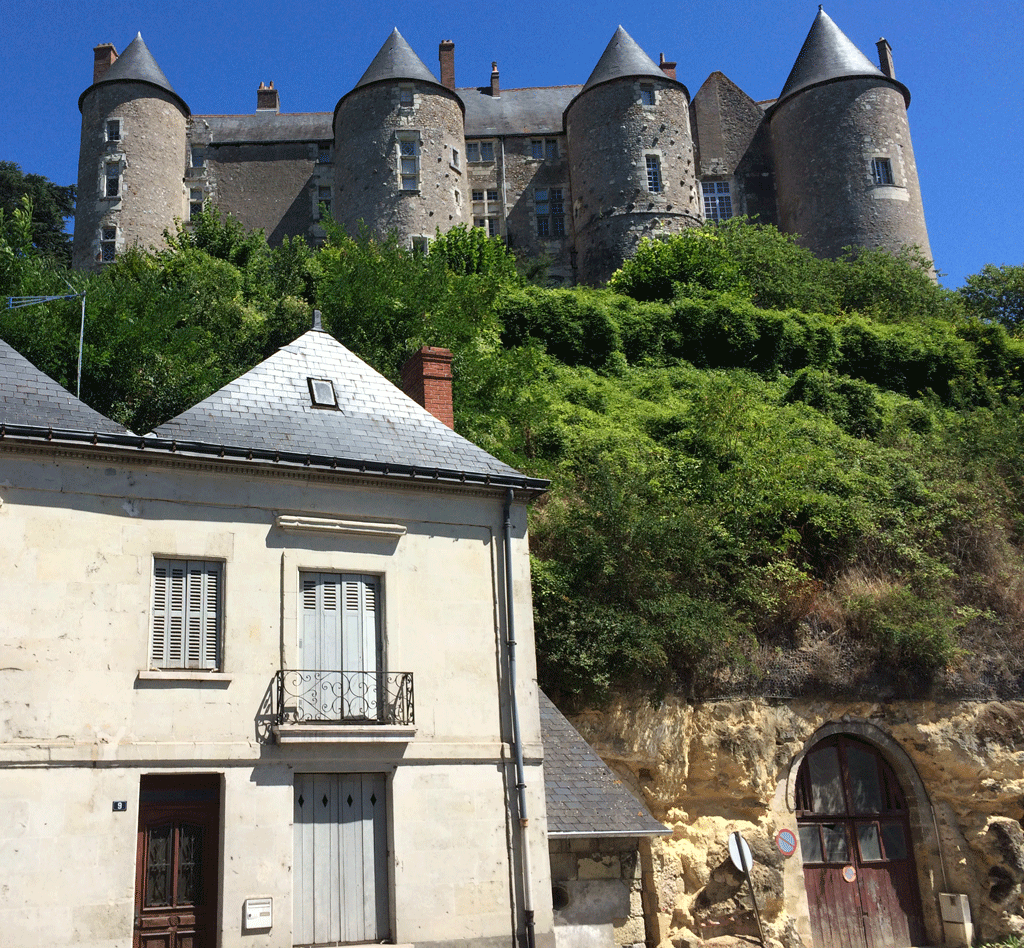
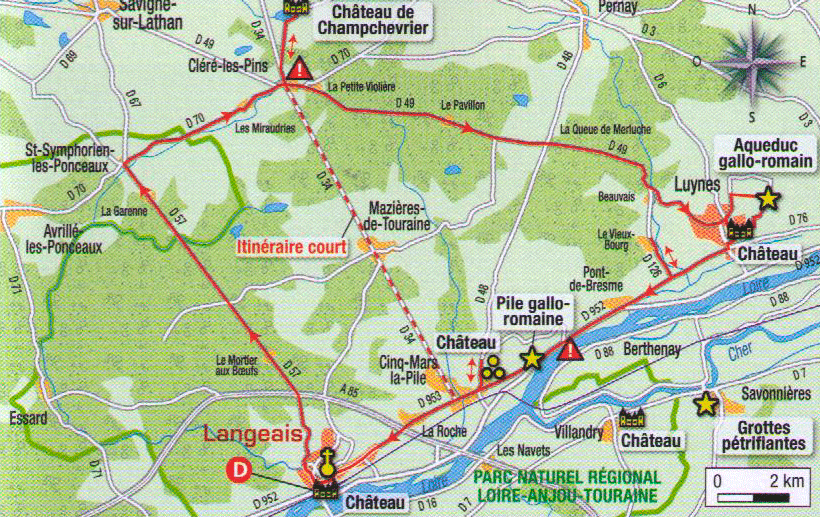
It’s one of those perfect summer days in the Loire Valley and we’ve chosen to cycle from Luynes to Langeais via a loop we’ve found in our La Touraine à vélo book. Luynes is about 50 minutes from Blois by car. You can see the castle as you approach the village.
Luynes Castle in the distance as you approach the village
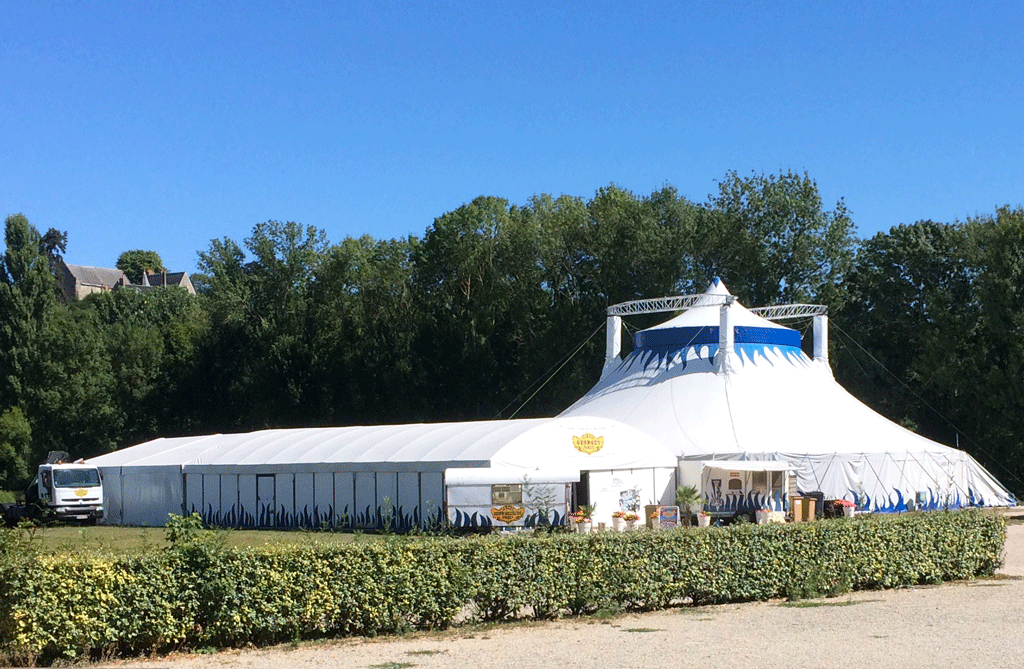
We park in the public parking lot at the entrance to the town just opposite the itinerant circus. I heard on the radio the other day that there are now very few municipalities that have adequate grounds to house a circus. As a result they have downscaled and are forced to stay in the same spot for too long for business to be brisk.
The itinerant circus in Luynes
Le Saint Venant on the main road is the perfect spot for a coffee before we start the day. It’s very busy, as it also sells cigarettes and lottery tickets. We notice there are several small restaurants open for lunch but we’ve brought a picnic today.
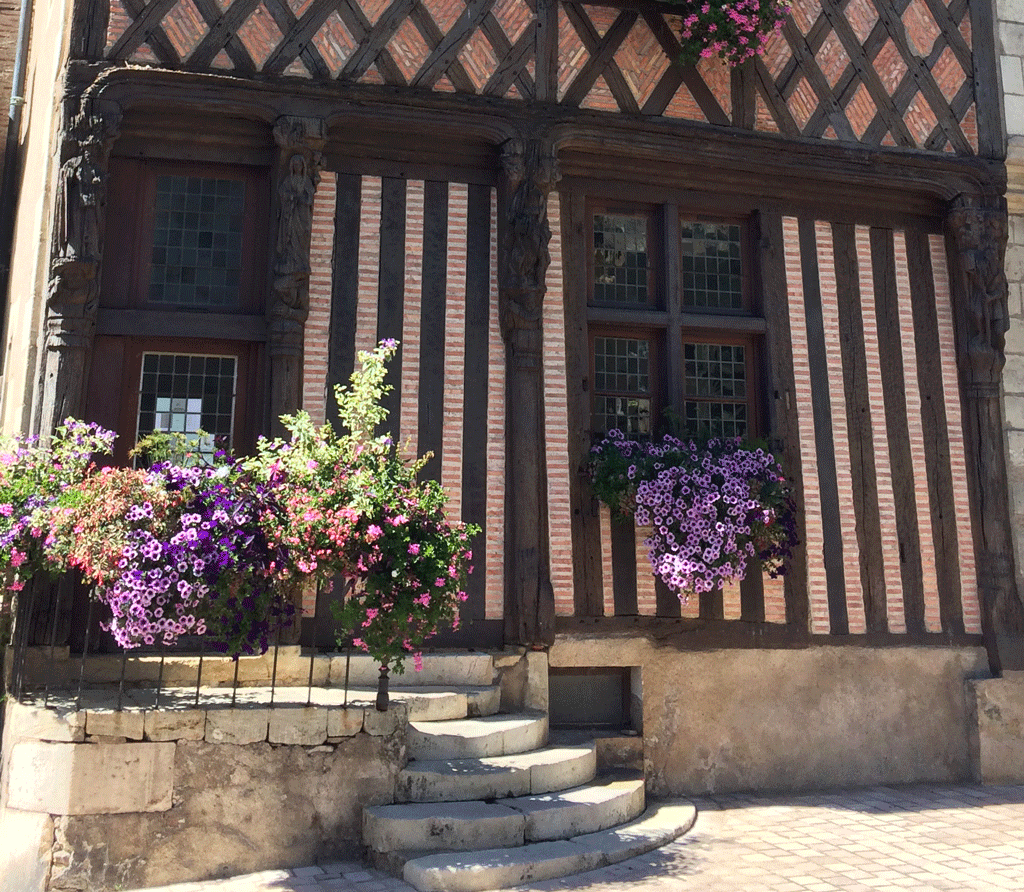
15th century half-timbered house with sculptures around the doors and windows
Luynes is a very attractive little town. In particular there is a beautifully preserved 15th century half-timber house the front of which used to have two entrances. The present door was the private entrance while the other door opened onto the shop. There are four sculptures: Saint James, Saint Geneviève, the local patron saint, a Pietà and Saint Christopher.
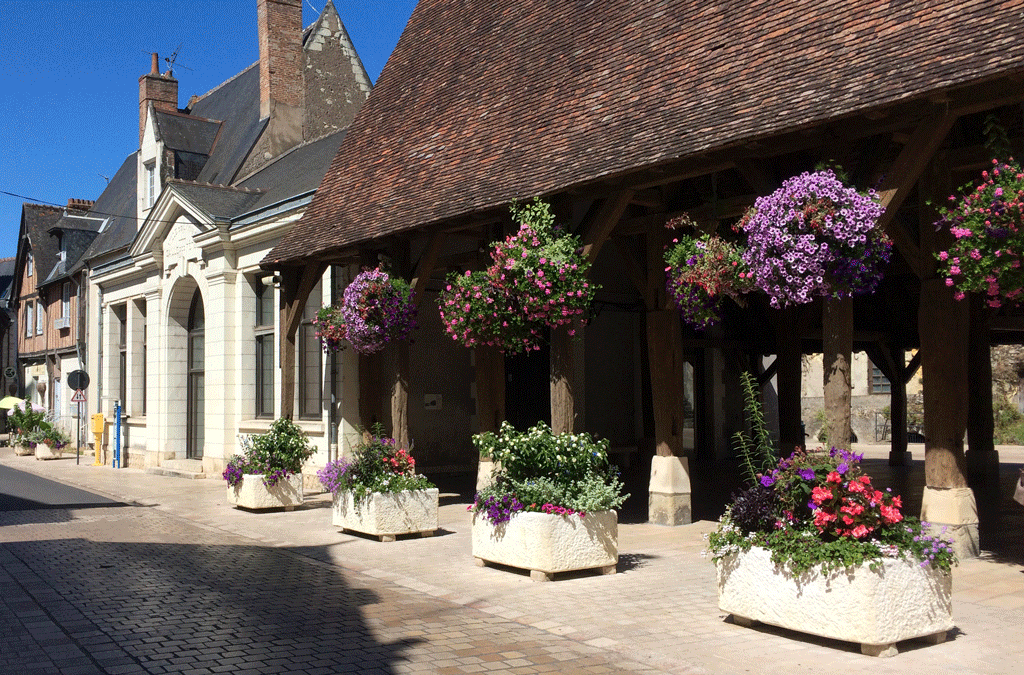
The covererd market in Luynes
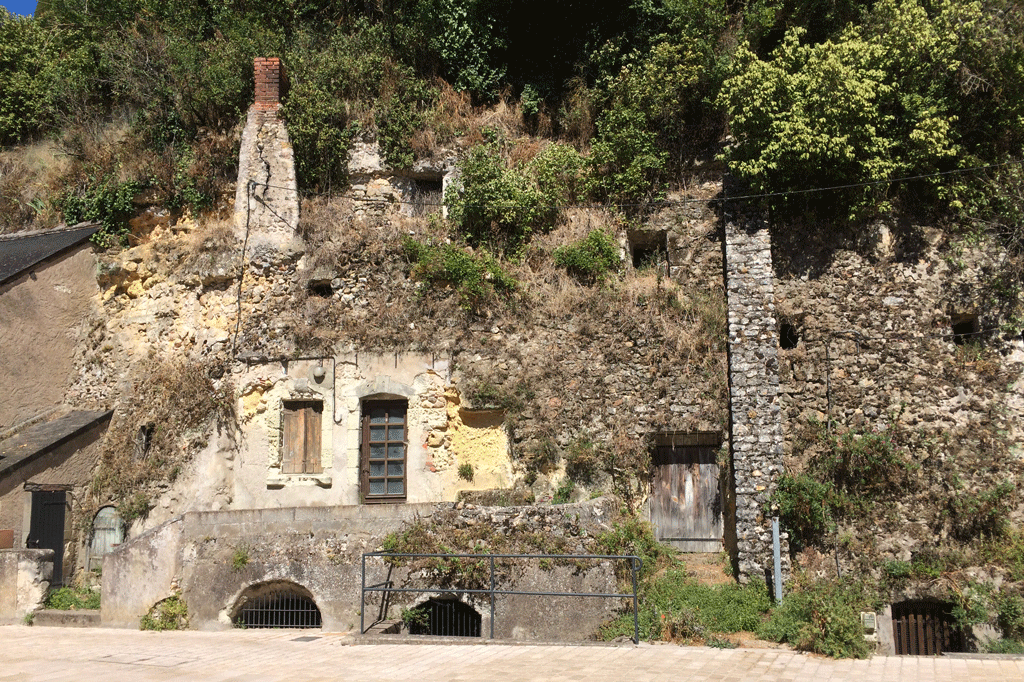
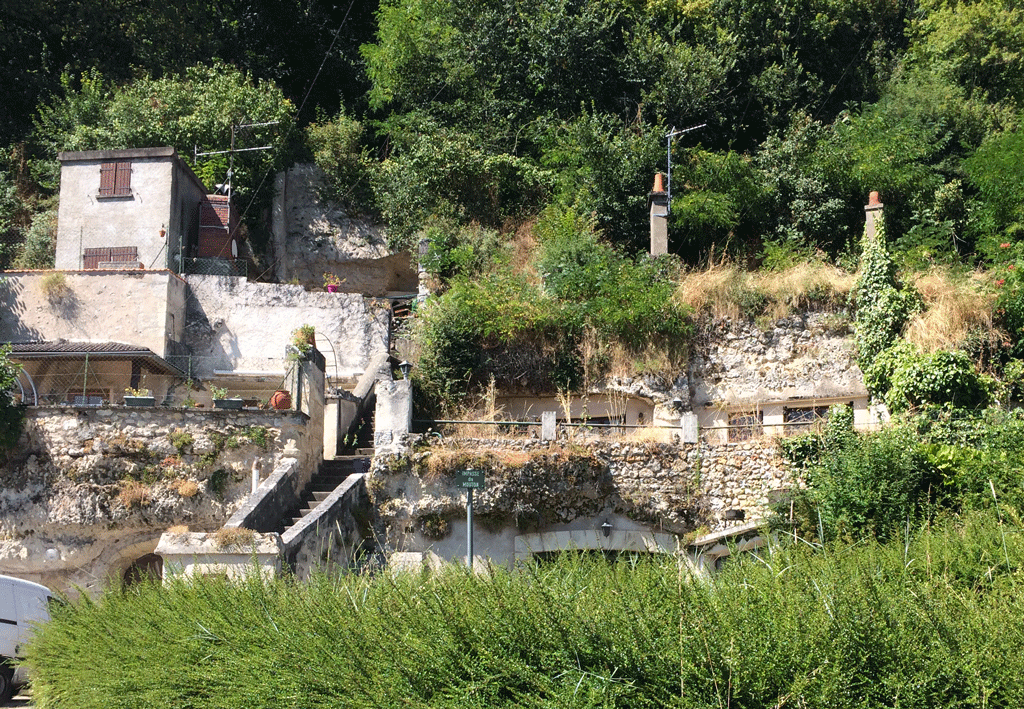
There is also a covered market with a very old troglodyte dwelling right next to it.
The very old troglodyte dwelling in Luynes just opposite the covered market
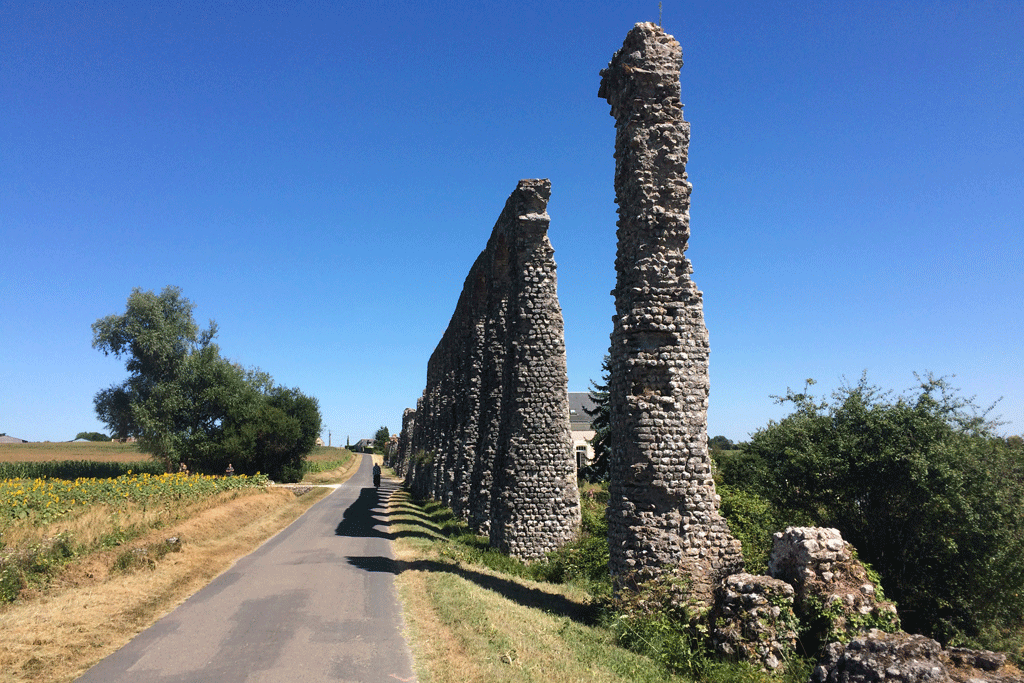
We ride out of town northwards to find a second century aqueduct. The signs are not that easy to find and are also quite low, obviously aimed at hikers and cyclists.
The approach to the aqueduct from the road
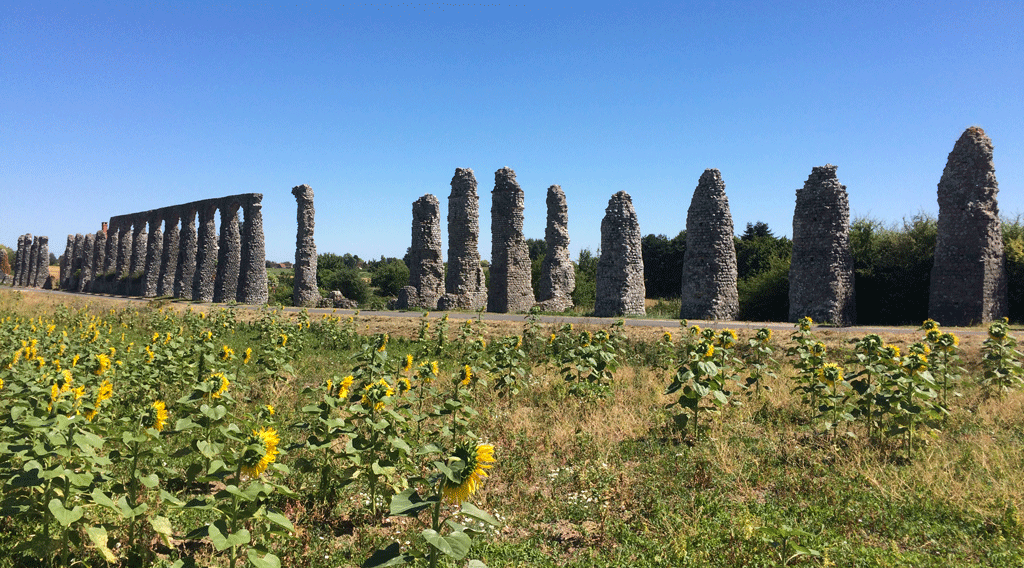
The pillars suddenly loom up in the middle of nowhere. I trample through the sunflower field opposite to get a good view of the 300-metre Gallo-Roman aqueduct.
The aqueduct from the sunflower field opposite
There is a bench just opposite so we park our bikes and have lunch there with a perfect view of the nine arches, six of which are the original construction.
Luynes Castle, now closed to visitors, with troglodyte cellars below
On our way back into Luynes, we can see the four towers of the castle but can’t get any closer. It’s been closed since June 2016 because it doesn’t respect today’s safety and disability standards. The owner says the outlay is two great for him to make the investment. Only time will tell whether State aid is forthcoming.
Troglodyte house with blue doors and shutters
We continue on our way towards Langeais past lots of interesting troglodyte houses and take a detour to Vieux Bourg, a delightful little village with several old half-timbered and stone houses, outside bread ovens and the little church of Saint Etienne which is unfortunately closed for repairs.
A half-timbered house with an outside bread oven in the foreground in Vieux Bourg
As we approach Saint Etienne, we see a man and his wife coming out of a little troglodyte house and we say “hello, looks like a great house”. “Would you like to come in and visit? You look as though you are interested.” Jean-Michel starts politely refusing but I immediately say “Yes, please! We’d love too.”
A troglodyte house that was originally a wine cellar
They explain that the house was originally a wine-cellar which means it’s quite deep and not easy to ventilate. The main problem is in summer when it remains very cool and has a lot of condensation which is not great for anything electronic. They have ceiling fans to direct the heat towards the lower part of the rooms when heating in the winter. They are trying to find a way to solve the problem.
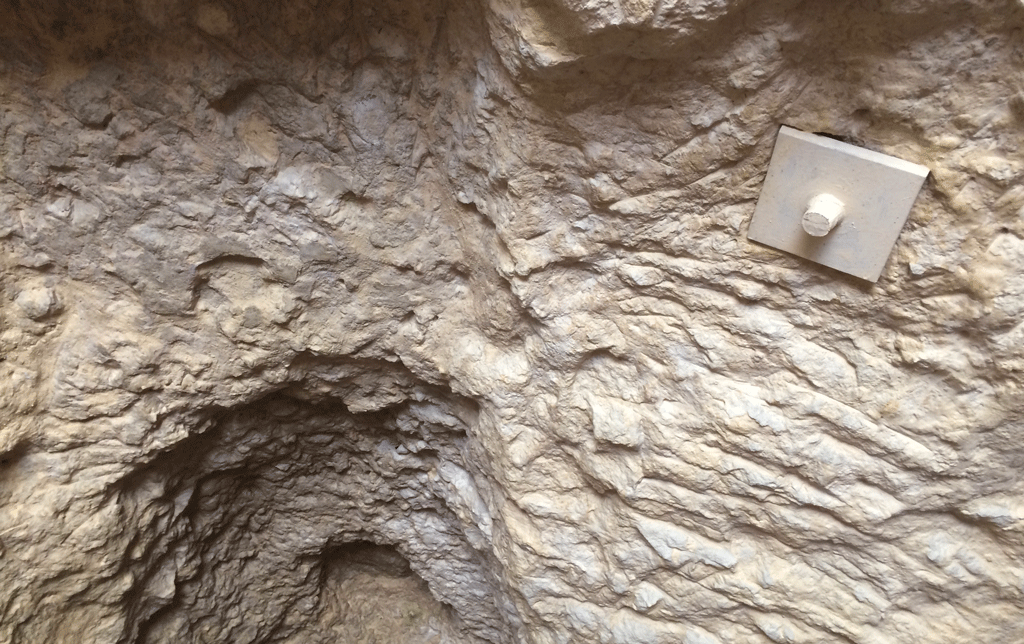
You can see the end of the steel tie on the right
I would love to take photos but feel it wouldn’t be polite. The only one I take is of the ceiling in the main room which shows where steel ties have been used to make sure the ceiling doesn’t cave in!
More troglodyte houses along the way
They are both retired and happy with their choice but admit there is a lot of work to be done and a lot of problems to overcome. Troglodyte houses that started off as houses are not as deep and don’t have the same problems. I have to confess that I don’t particularly like the idea of living under the earth!
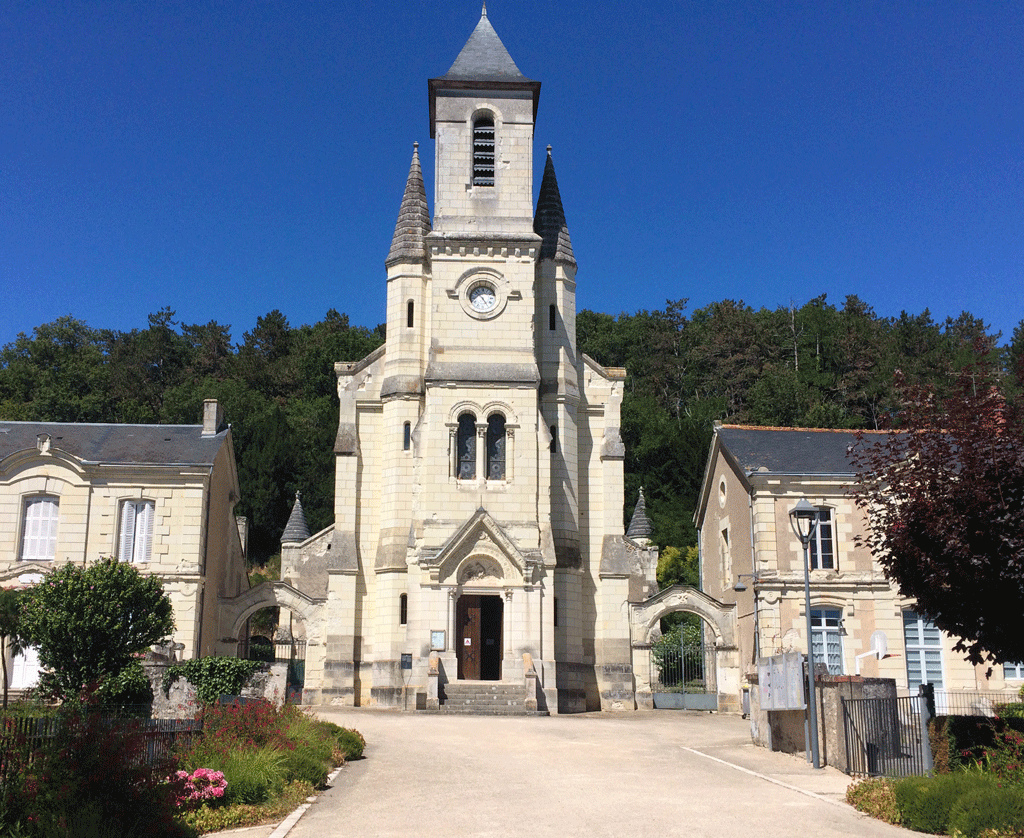
The “modern” church of Saint Etienne built in 1860
We thank them for their visit and continue onto the town of Saint Etienne which has a very attractive, although quite modern church built in 1860.
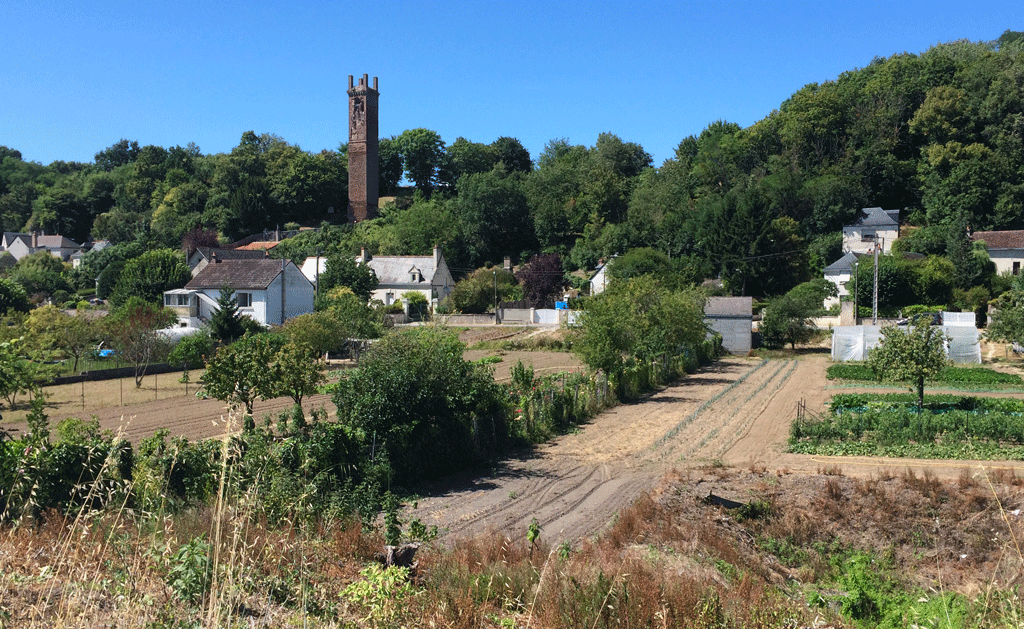
Cinq-Mars funerary tower built in the 3rd century A.D.
We go past more troglodyte houses until the Cinq-Mars funerary tower or pile looms into view. We’ve seen it often in the past but never visited it. We lug our bikes up an excessively steep hill so that we can see it up close.
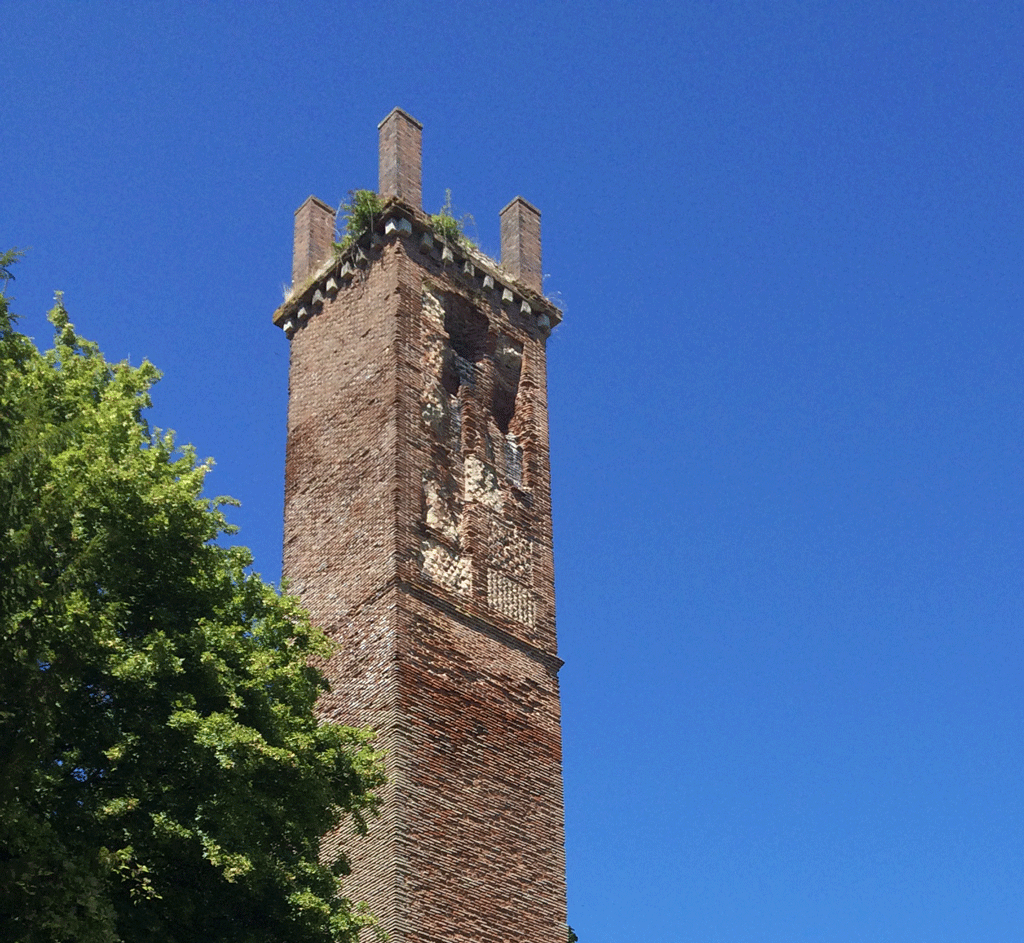
A close-up of Cinq-Mars tower with its decorative brick and stone panels
Built between 150 and 200 A.D. it is a type of funerary tower well-known in Roman times. It is the best preserved and highest funerary stack still extant (29.50 metres) while its brick veneer is rare in Gaul. At the top, twelve decorative brick and white stone panels replace the traditional niche seen on other stacks.
The houses with their decorative friezes in Cinq-Mars
The town of Cinq-Mars is only a few kilometers further. We’re hoping for a coffee but there is nothing open. It must have been quite a thriving town once from the look of the stone friezes on the houses opposite the church.
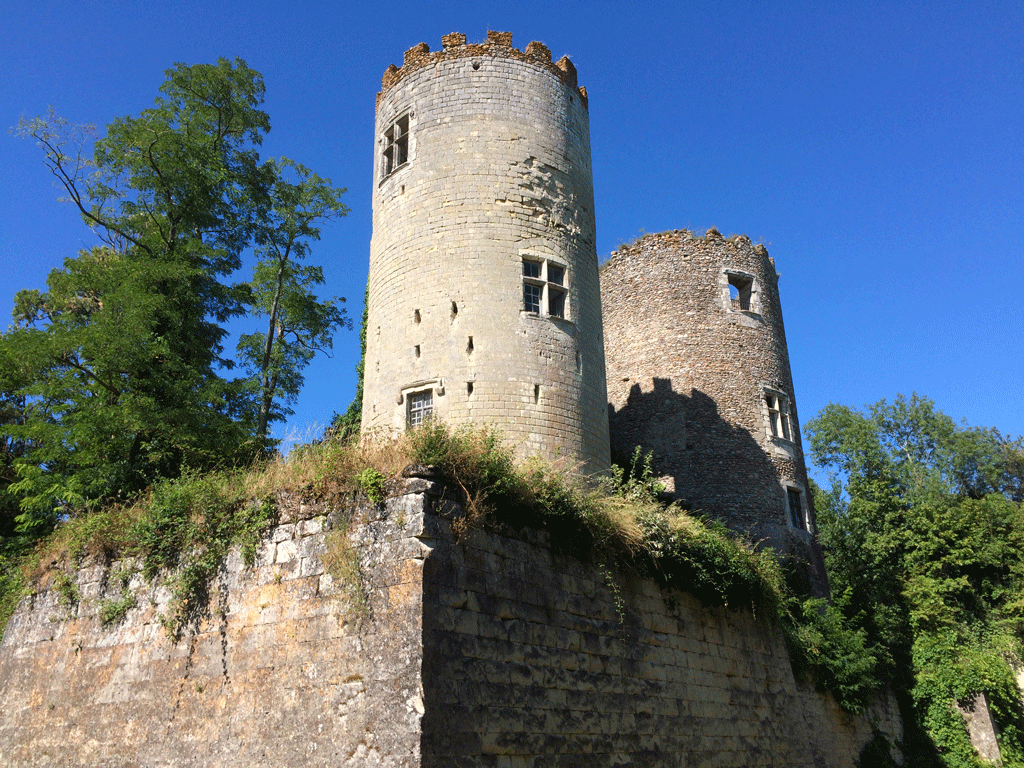
Our first view of Cinq-Mars castle – this part is a B&B
We’ve decided to visit the Cinq-Mars castle even though there isn’t much left of the original feudal castle. I don’t quite manage to get to the top of the hill on my bike. It’s one of those day when I think that an electrically-assisted bike might be a good idea.
The very deep dry moat
The owner, a retired architect, turns out to be a mine of information and very willing to talk. The price is a reasonable five euro each.
The stone bridge taken from the bottom of the moat
We visit the dry moat which is extremely deep, then walk across the magnificent stone bridge with its three arches that replaced the 15th century drawbridge.
The two 12th to 15th century towers
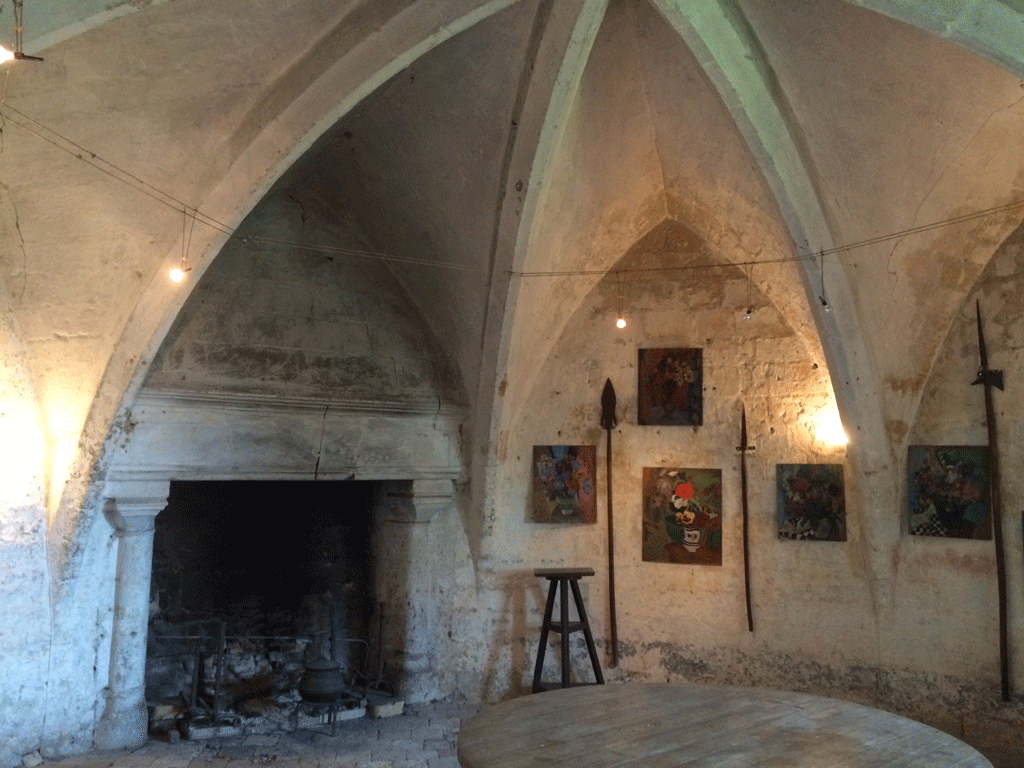
The two 12th to 15th century towers each have three vaulted rooms one on top of the other, but only one tower is open to visitors.
A vaulted room inside the tower on the right in the photo above
The name itself is derived from the name of the first known owner, Geoffroy de Saint Médard. It became Saint-Mars after André de Saint-Médard died in the Holy Land in 1210 then for some unknown reason turned into Cinq-Mars in the 16th century.
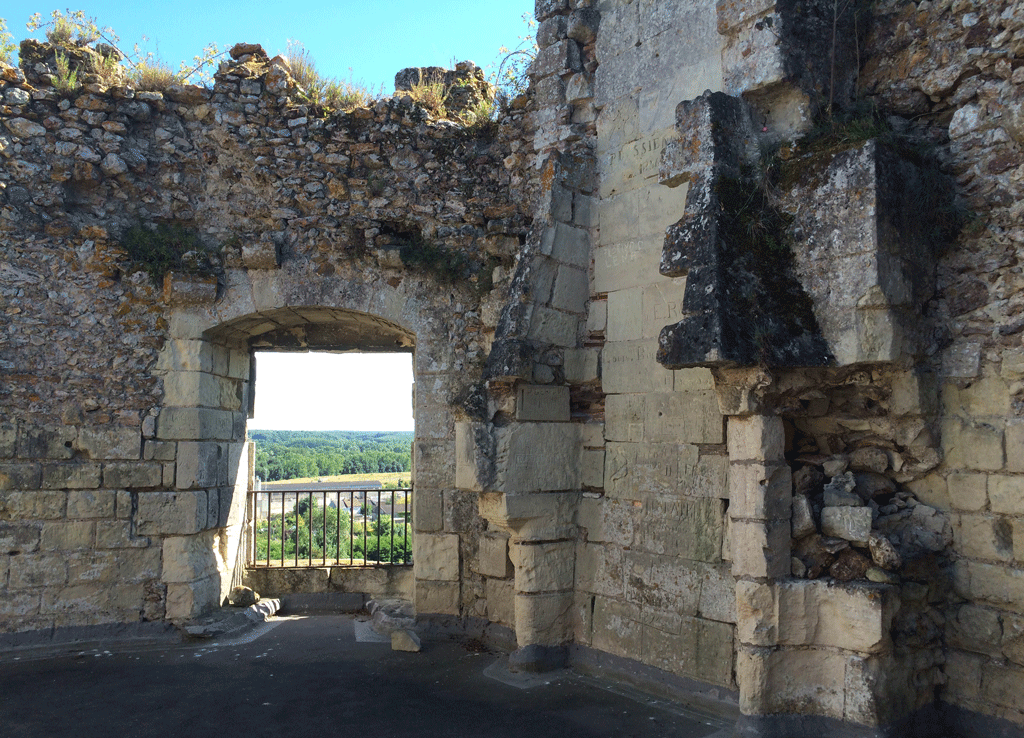
What remains of the top floor
The castle’s most famous character is Henri Ruzze d’Effiat, Marquis of Cinq-Mars, favourite of Louis XIII, who was beheaded for treason at the age of 22. According to local legend, the castle itself and even the trees were decapitated. His tragic end inspired Alfred de Vigny’s novel, “Cinq Mars” which I’ve never read. Maybe I should.
The area known as the Juiverie at Cinq-Mars castle, overlooking the church
It’s nearly 5 pm and we are not even halfway along our itinerary. Jean Michel suggests we go to Langeais and follow an alternate much shorter route back to Luynes.
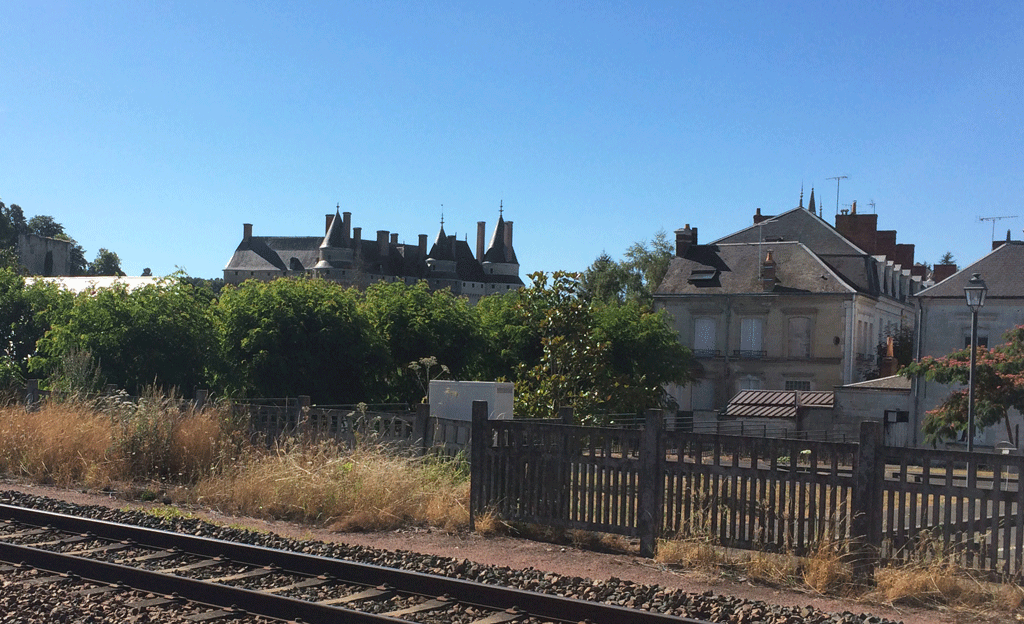
Langeais Castle from the wrong side of the railway track
We find ourselves on a main road but can see the bike route over to the right which means scrambling up and down an embankment. It’s a very rough path but it’s better than having traffic whizzing past at 90 kph! We finally see Langeais on the other side of the railway track. Somehow we’ve missed our exit and the path gives out. We squeeze past a post and return to the main road but fortunately we only have to take it a short distance.
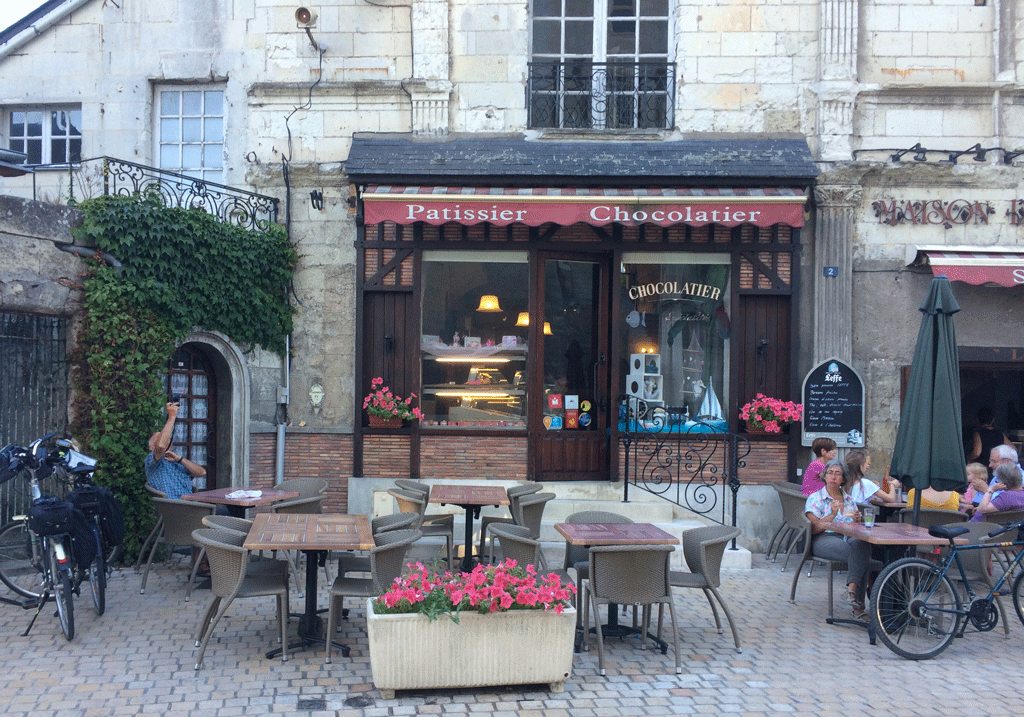
One of our favourite teashops – La Maison de Rabelais just opposite Langeais Castle
Five minutes later we’re sitting in front of one of our favourite teashops – La Maison de Rabelais, just opposite the castle (which we’ve visited several times before), which is a combined patissier, chocolatier and glacier. After restoring ourselves with an excellent ice-cream, we return via another route which is also a main road. I think I preferred the bumpy path.
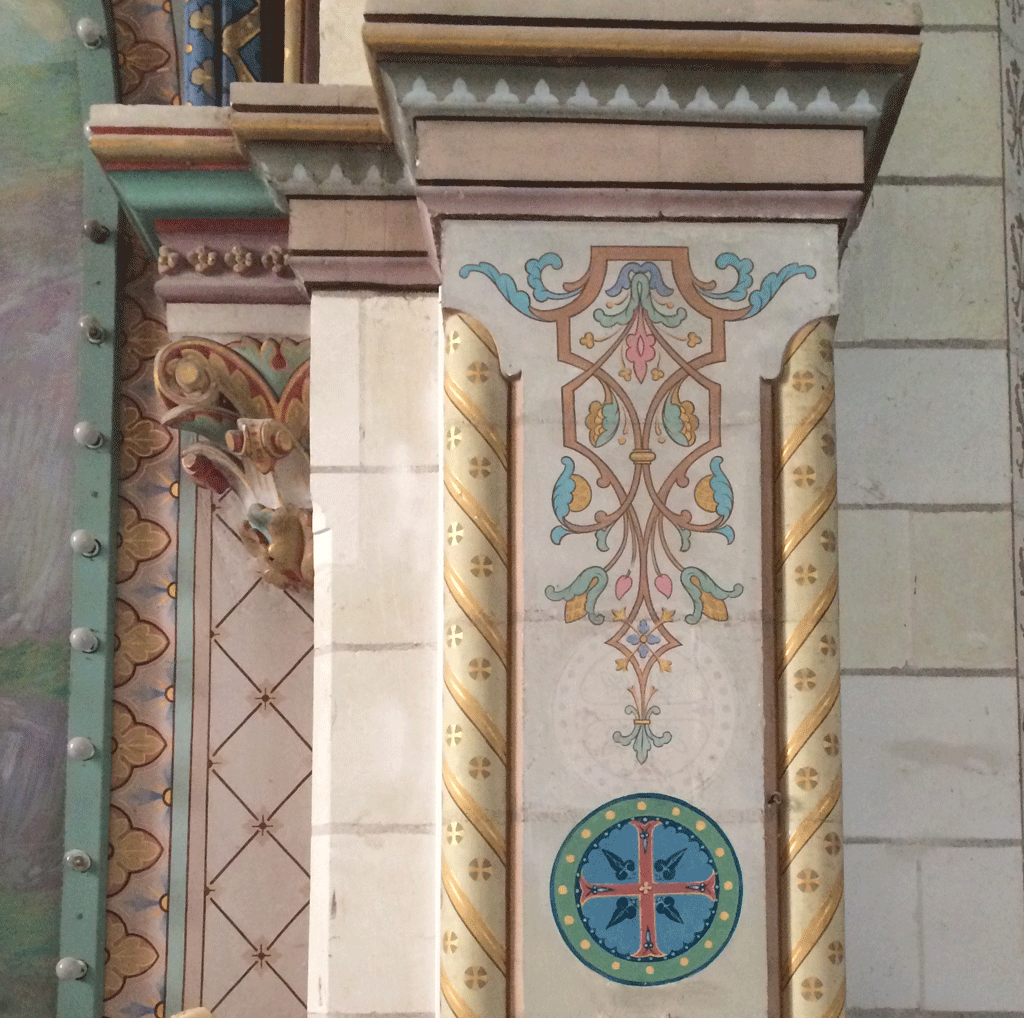
Painted pillars in Saint-Etienne
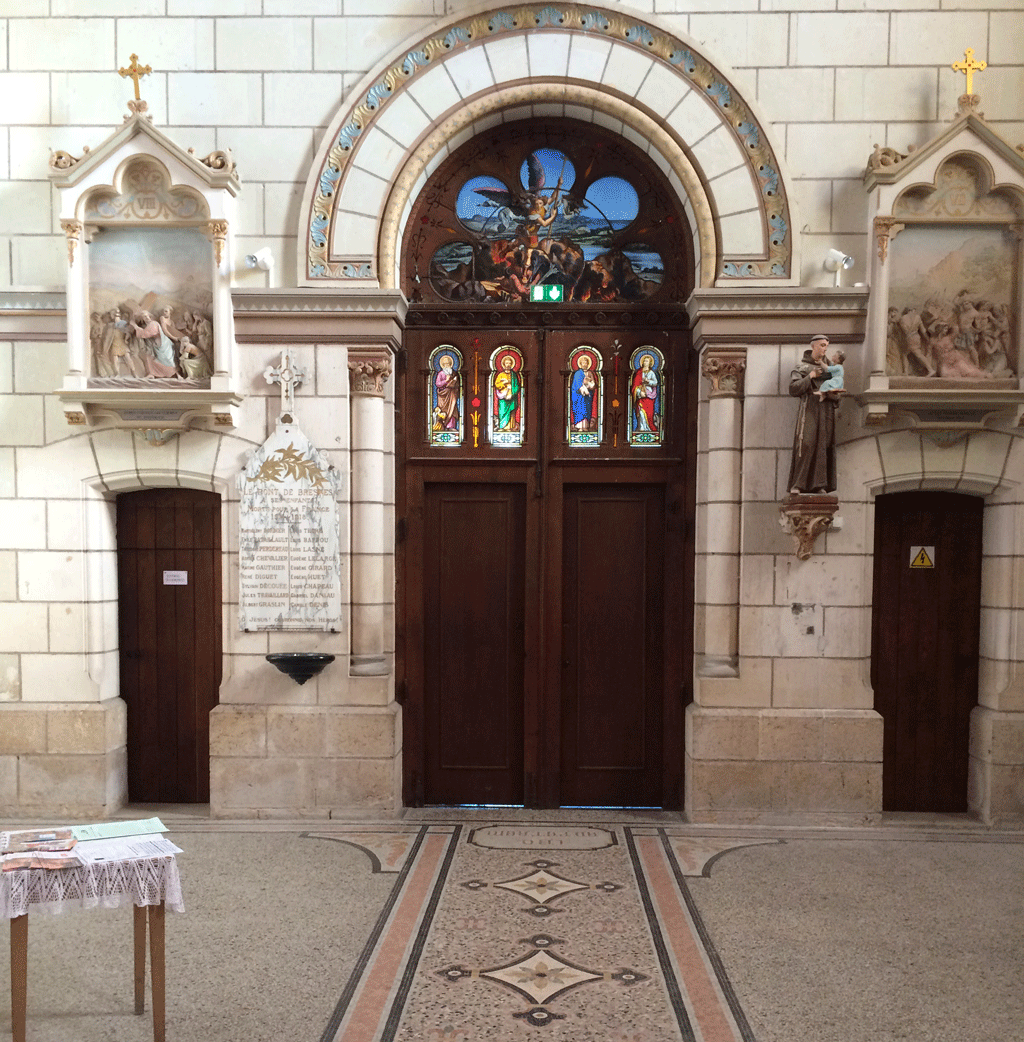
At Saint-Etienne I ask for a break and we visit the church. Although it is recent – 1860 – I find the inside very harmonious and attractive with its painted pillars and mosaic floors.
The back of the entrance of Saint-Etienne with its mosaic floor
We arrive back at the car around 7.30 pm and it’s still full daylight. We didn’t get to Château de Champchevrier but we can go there another time. It’s one of the most interesting and enjoyable rides in the Loire we’ve had in a long time!
The bike map showing the original itinerary. We only went from Luynes to the aqueduct then onto Langeais.
I’m entering this post in Lou Messugo’s All About France monthly blog link-up. For other posts about France, click here.
Before I begin, just a little note to say that I really am talking about the Loir and not its cousin, the Loire River. We’ve been to Lavardin before – on a cold winter’s day in December last year during the Christmas markets – and promised we’d come back and cycle around the area in the summer.
The imposing entrance to Louis Gatien school in Villiers-sur-Loir
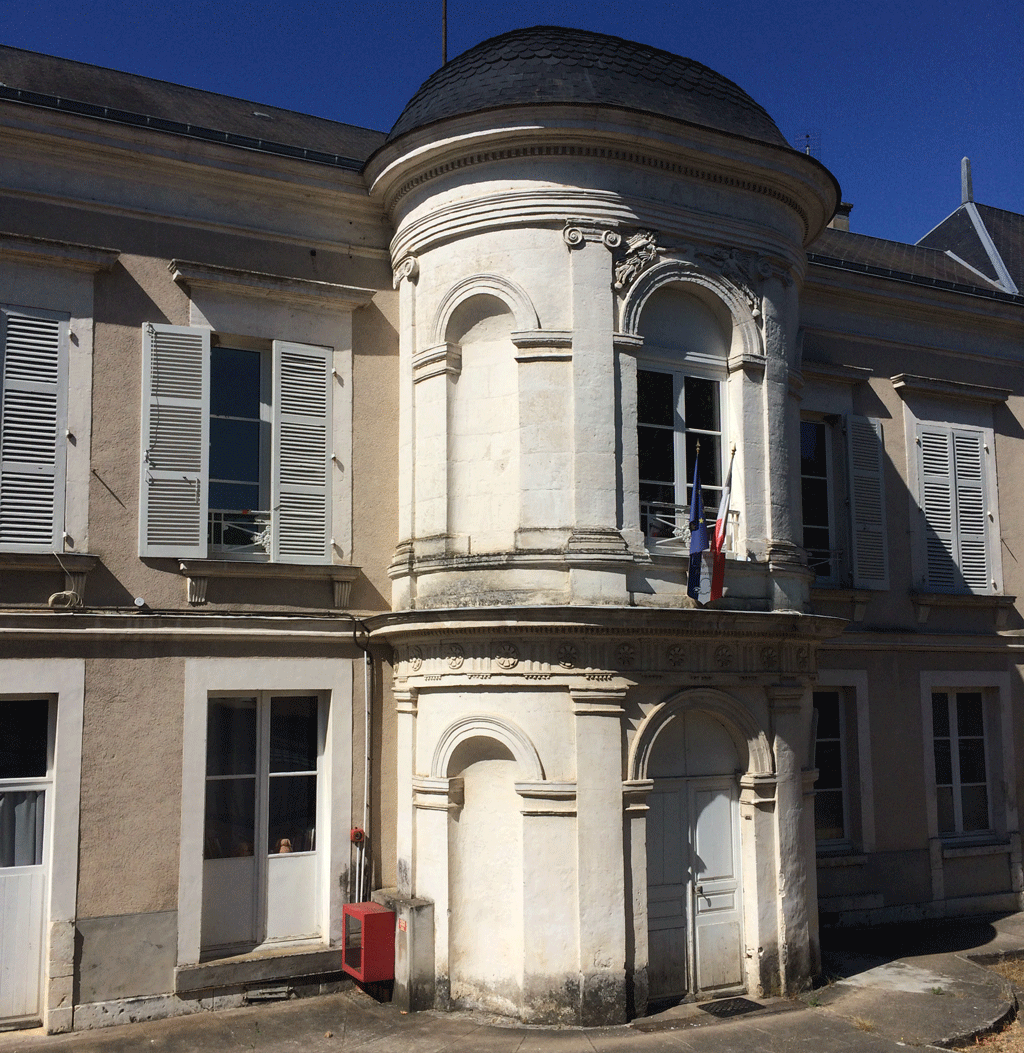
We’ve found an itinerary on the web that we’ve printed out and are starting at Villiers which is the closest point to Blois (50 mins away by car). We park in front of a school called Louis Gatien which must surely have been something else in its heyday. Nothing else could explain the entrance!
The water tower designed by Mr Fortier in 1868
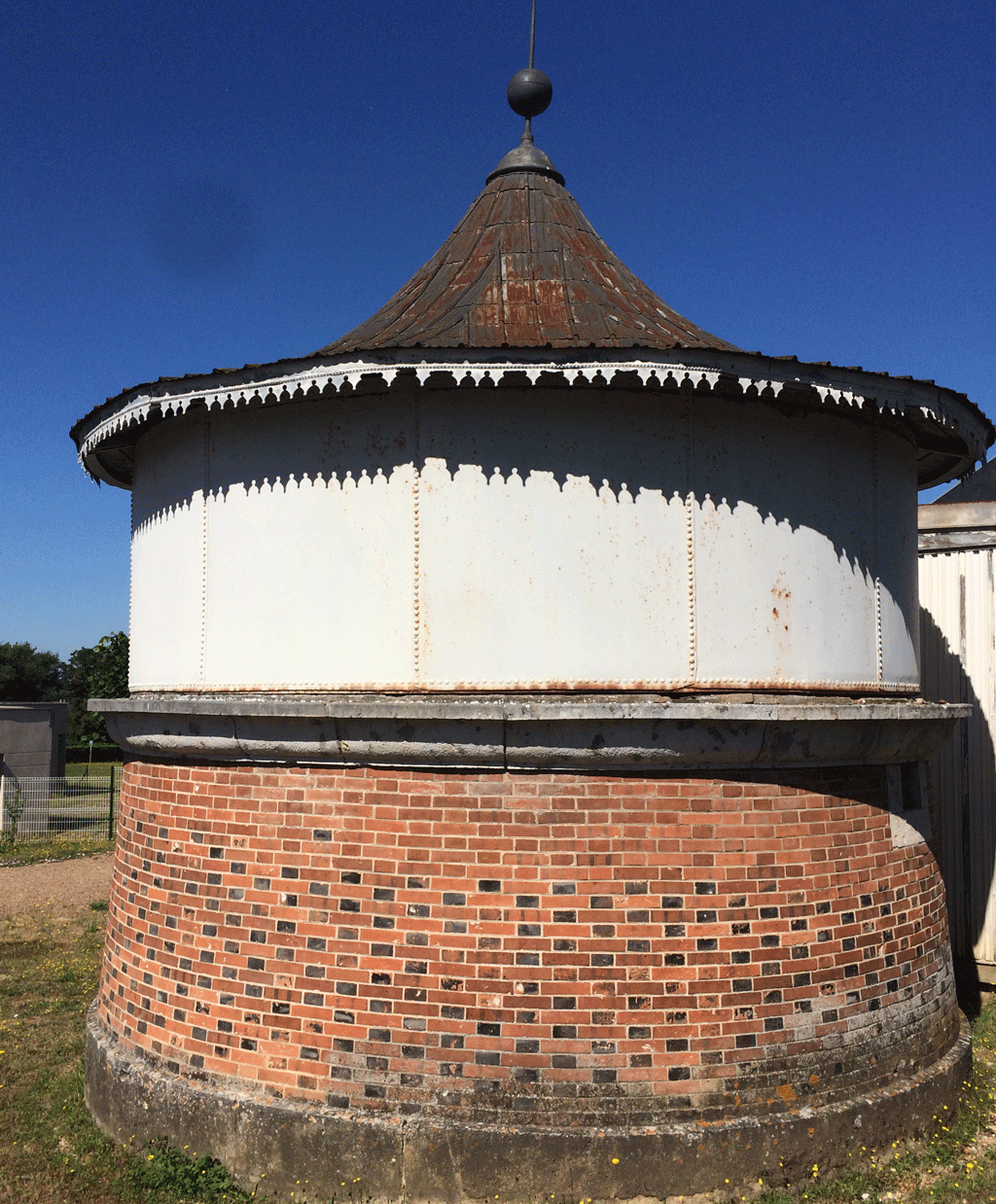
It has a large round building at one end that I later discover is a water tower with an artesian bore built by a Mr Fortier in 1868 for his personal use. It also supplied water to a wash-house; any surplus water was taken via a ditch to the Loir. Maybe the school was his house.
The town hall in Villiers-sur-Loir with its 2-metre diameter monumental clock
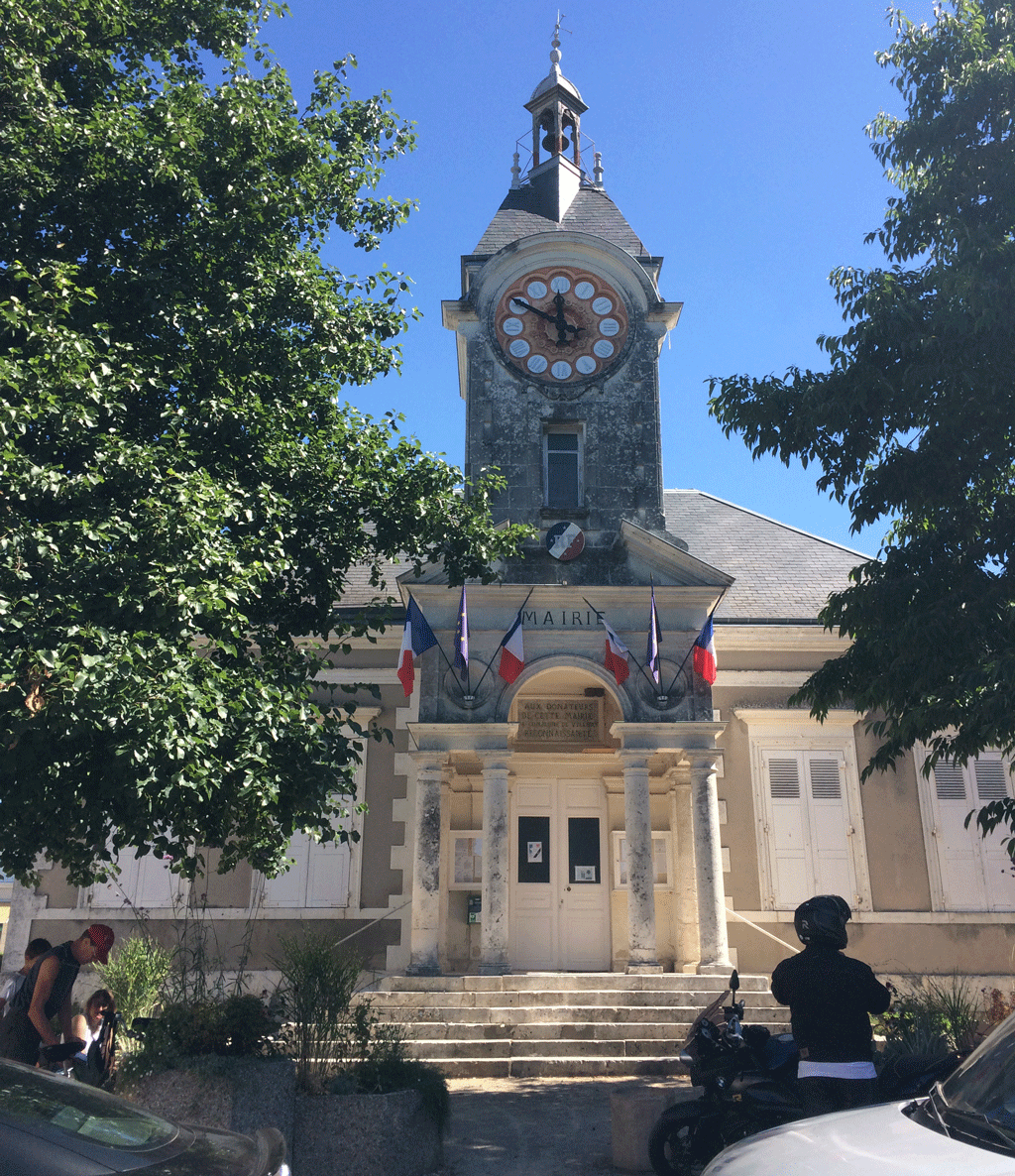
The centre of little town of Villiers, which has a population of just over 1,000, seems to be thriving. Around the central square is a church, a town hall with a 2-metre diameter monumental clock, a baker, a butcher, a Proxi supermarket, a bar, a restaurant and a hair-dressing salon. It’s Sunday morning and bustling with people.
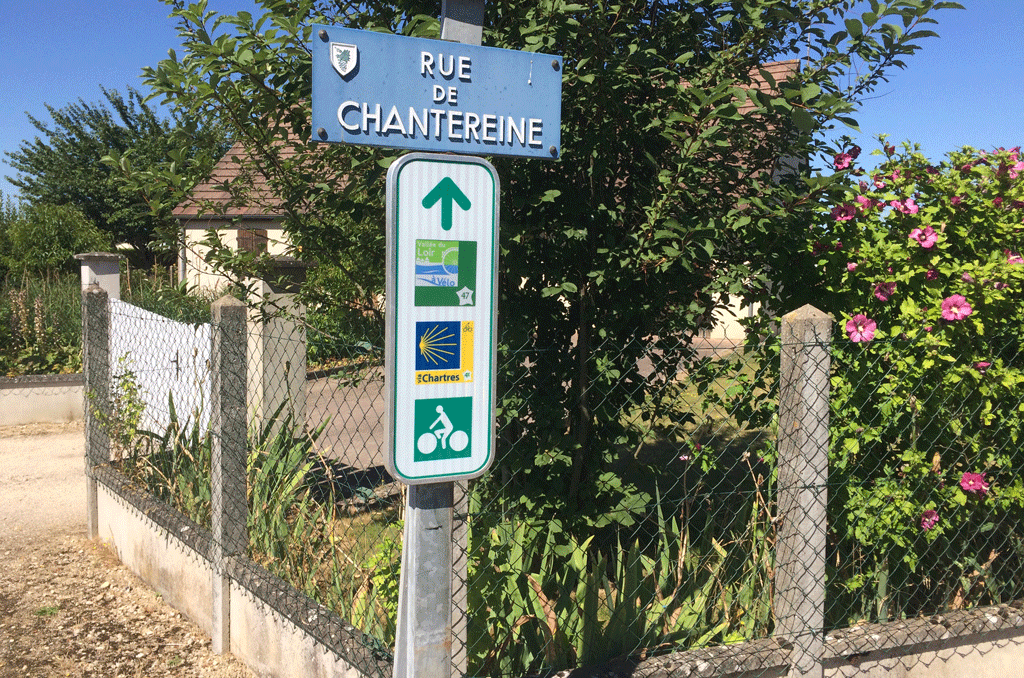
The bike and camino signs at Villiers-sur-Loir
We see the little green and white bike route sign indicating Loire à Vélo and start following it. We are also on the Camino path. We go past an amazing number of troglodyte dwellings, some of which are quite sophisticated. One even has crenellations and bull’s eyes!
A troglodyte castle
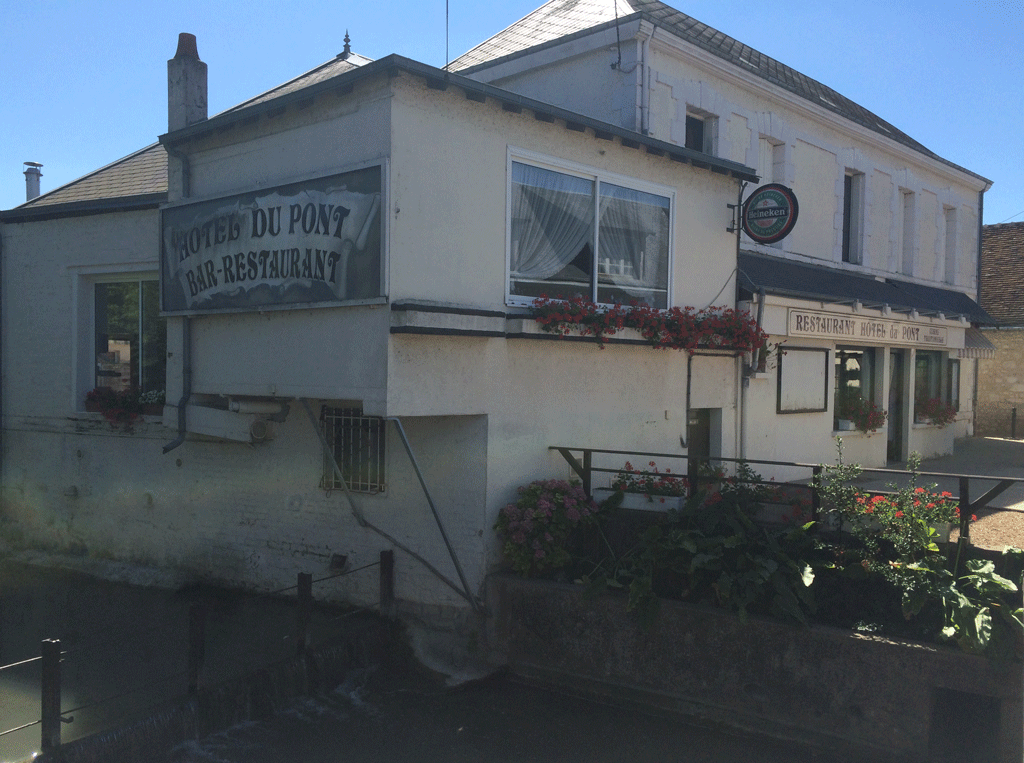
The first village is Thoré la Rochette built over the river. It has a hotel/bar/restaurant that is actually open (but it’s too soon for a capuccino stop).
Hôtel du Pont bar and restaurant in Thoré la Rochette
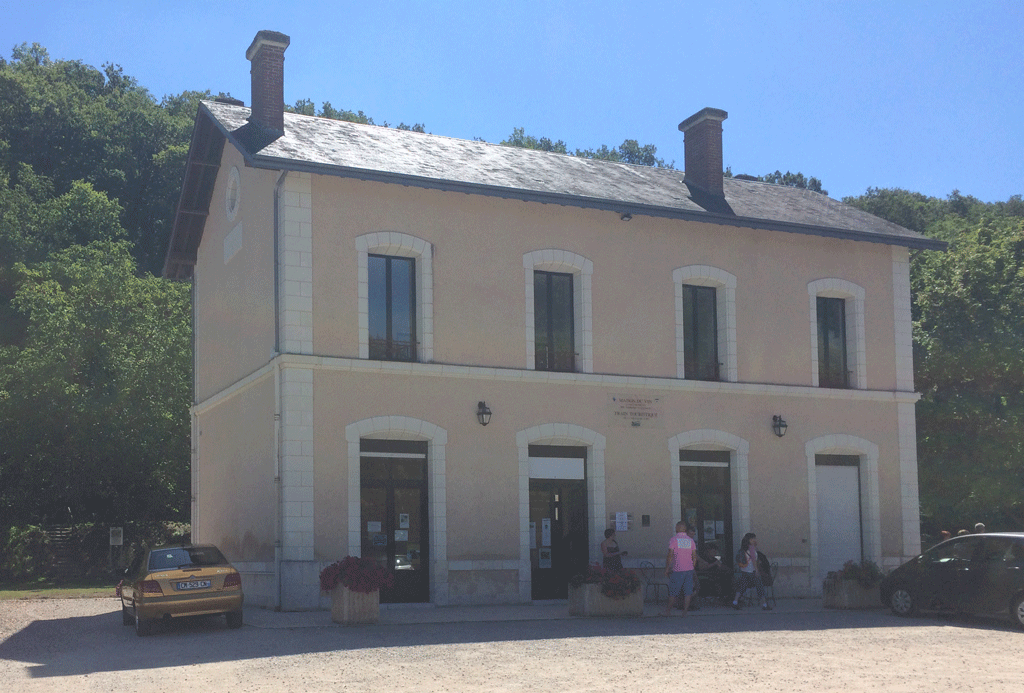
We keep following the little bike signs until we come to another very busy place: a train station that doubles as a wine-tasting venue. The red and white wine produced in the area is vendomois, made with chenin and pinot d’aunis grapes, a cousin of chenin blanc. The room is full of people so we don’t taste any wine.
The Loir Valley Tourist Train station at Thoré la Rochette
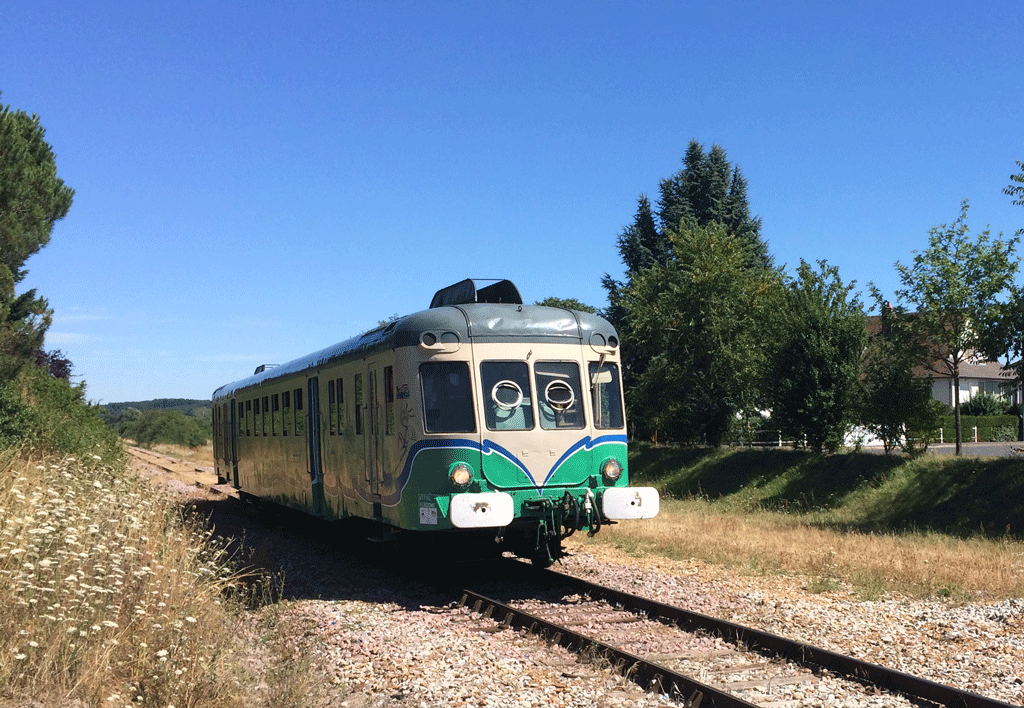
The station has been rehabilitated for the Loir Valley tourist train, a rural railcar from the 1950s. The 2 ¾ hour trip stops at the troglodyte village of Tröo and the “tunnel of history” in Montoire where Pétain and Hitler met up during the Second World War. I try out the “dry toilets” and wonder why there aren’t more along the bike paths in France.
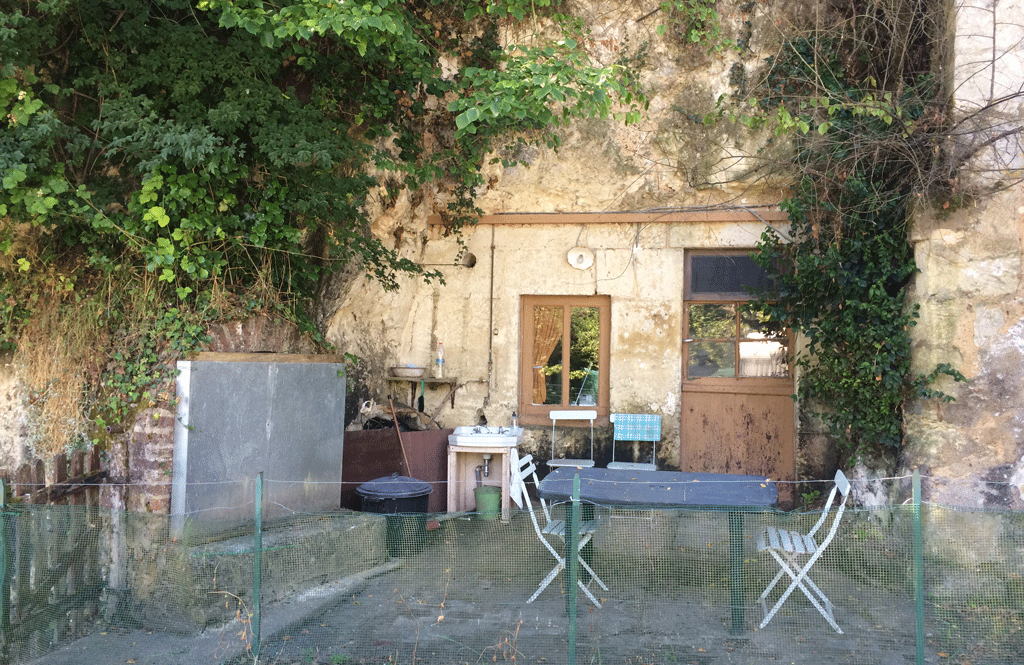
A less sophisticated troglodyte house
We continue towards Rimay past more troglodyte houses. What a pity we can’t have our picnic at this one!
The castle of Lavardin in the distance
At one point we can see the ruined castle of Lavardin in the distance. With some difficulty regarding signage (our itinerary no longer coincides with the Loire à Vélo bike route), we arrive in Montoire. We should have gone to the left of the roundabout with the waterwheel and not to the right.
The waterwheel intersection where we should have gone left
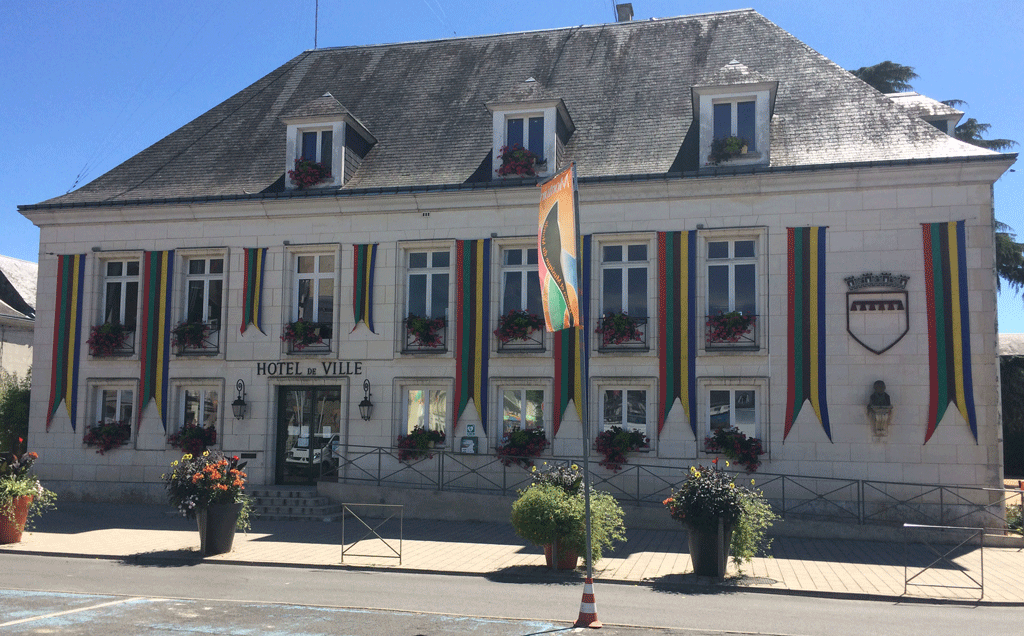
I don’t know the reason behind the flags on the town hall in Montoire but I find them very attractive.
The town hall in Montoire with its colourful flags
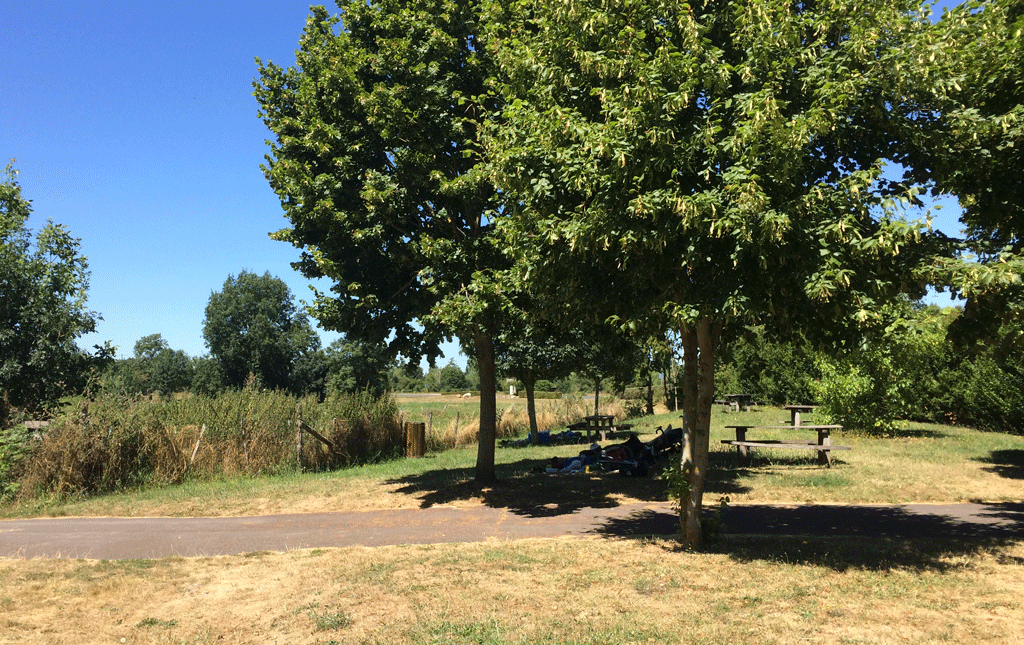
We finally reach Lavardin where we’re hoping to find some shady picnic tables. We find the tables – 8 of them, but only two are in the shade and both are occupied. Everyone else is picnicking on rugs on the ground.
Picnic tables in Lavardin
As we continue on to Lavardin, we see the perfect place to picnic – shady tables on the banks of the Loir. Sigh.
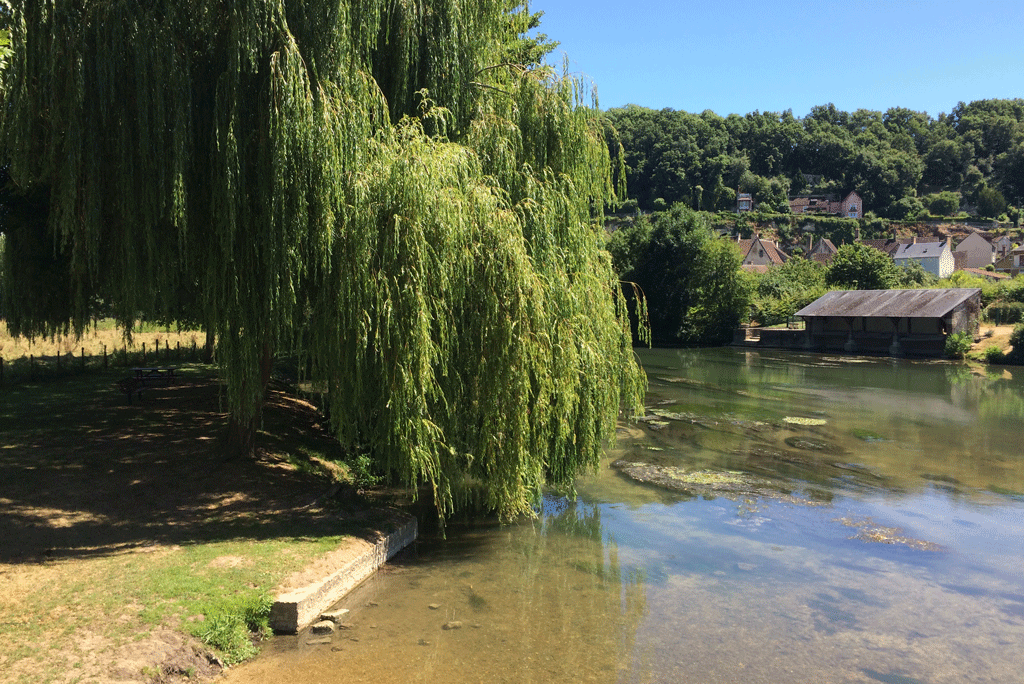
Alongside the river in Lavardin
Lavardin itself is much prettier without the Christmas market. We have a café gourmand in an open-air restaurant with a view of the castle. There is a stand with tourist leaflets on it and I pick up one mentioning the murals and frescos in the church of Saint Genest which we were not able to visit last time.
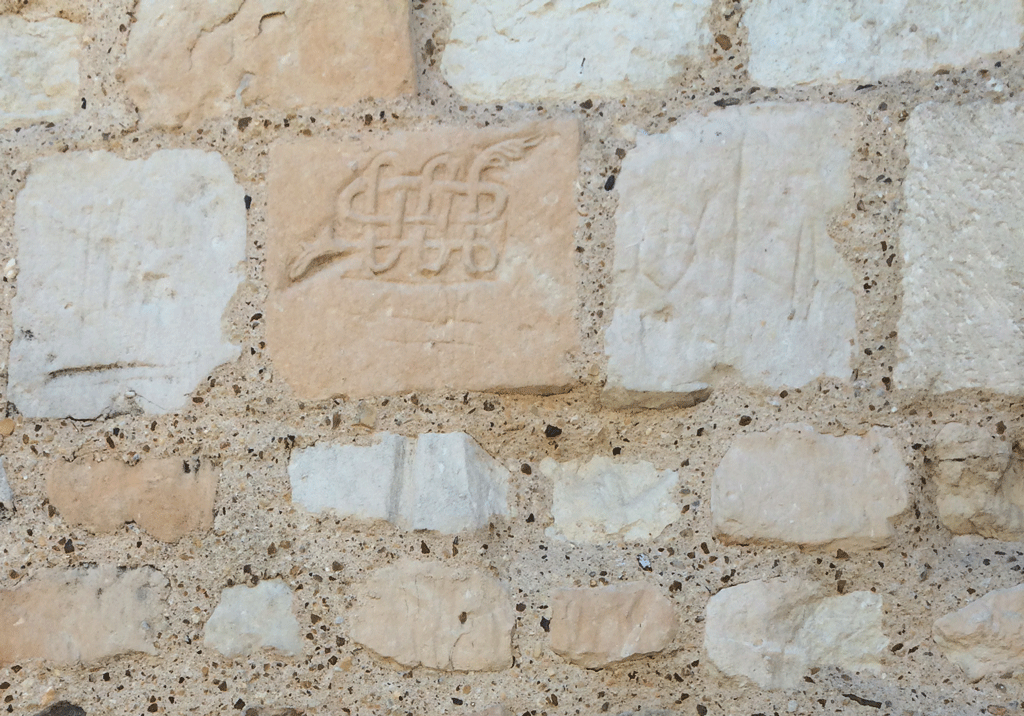
A curious sculpture of a snake on one of the façade stones of the church
We walk around it as directed to find the sculpted stones that were included in the façade when it was built.
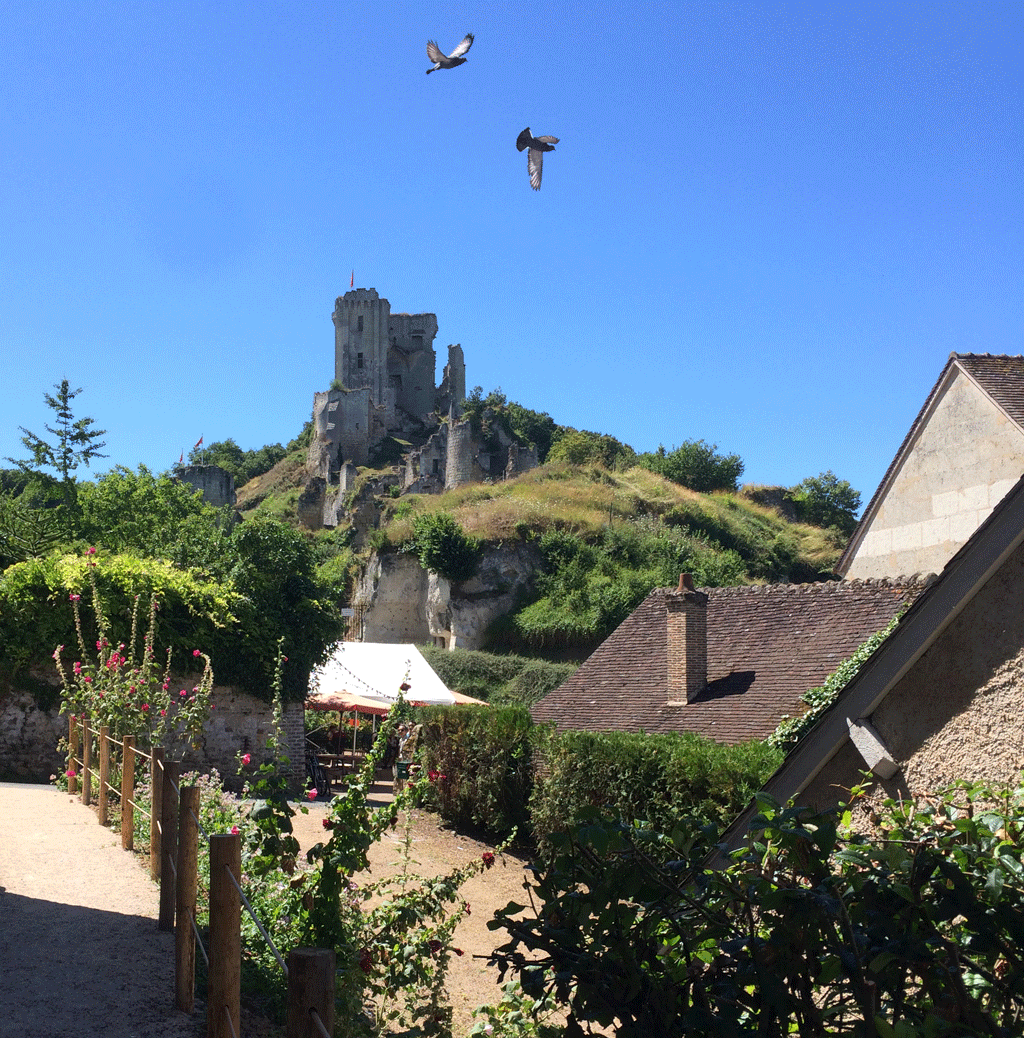
The castle seen from the side of the church
It proves to have a perfect view of the castle as well.
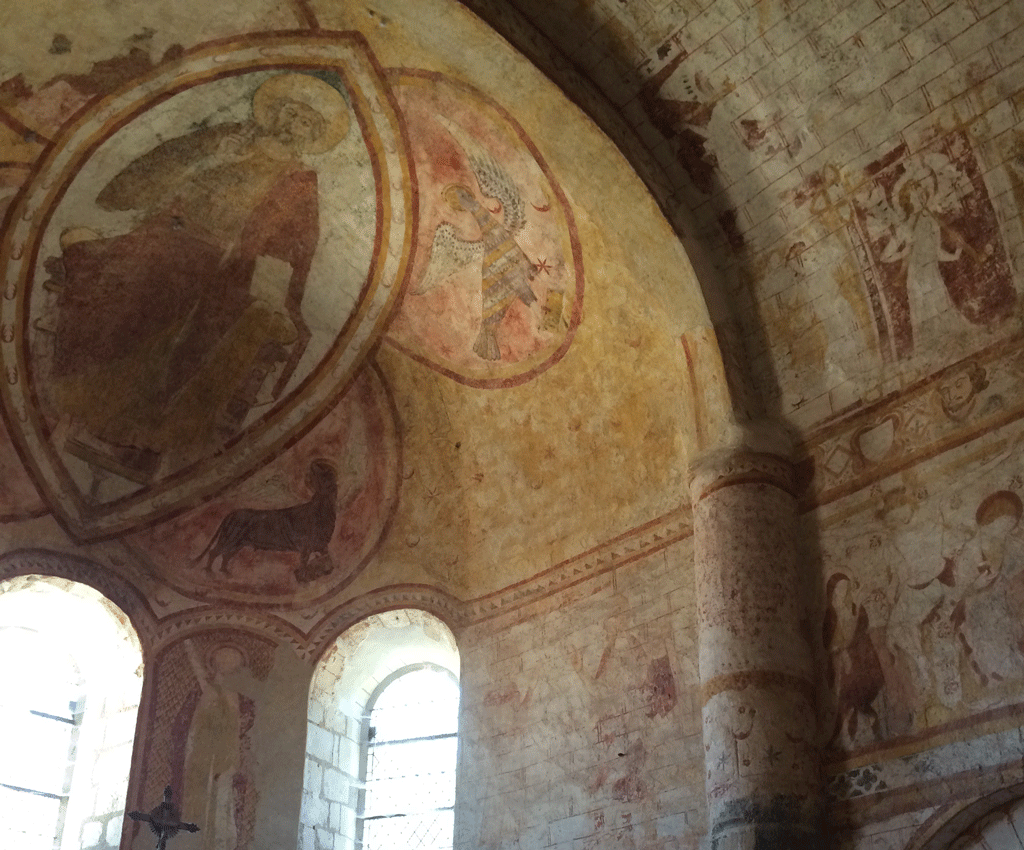
Paintings on the ceiling of the apse depicting Christ in Majesty
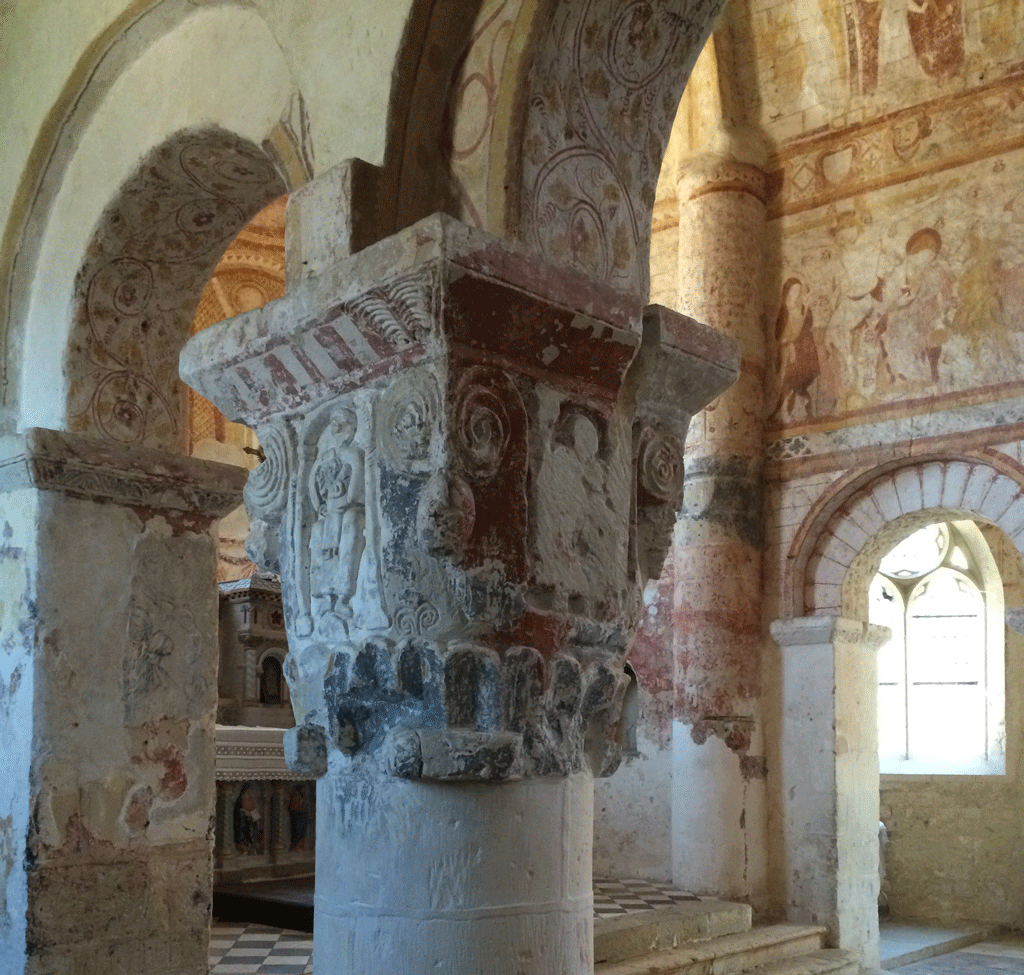
Inside we discover a magnificent series of wall paintings, two frescos and painted capitals that are well worth a visit.
One of the painted pillars
Afterwards, we walk up the hill towards the castle so I can take some more photos. We can now see the church of Saint Genest in full.
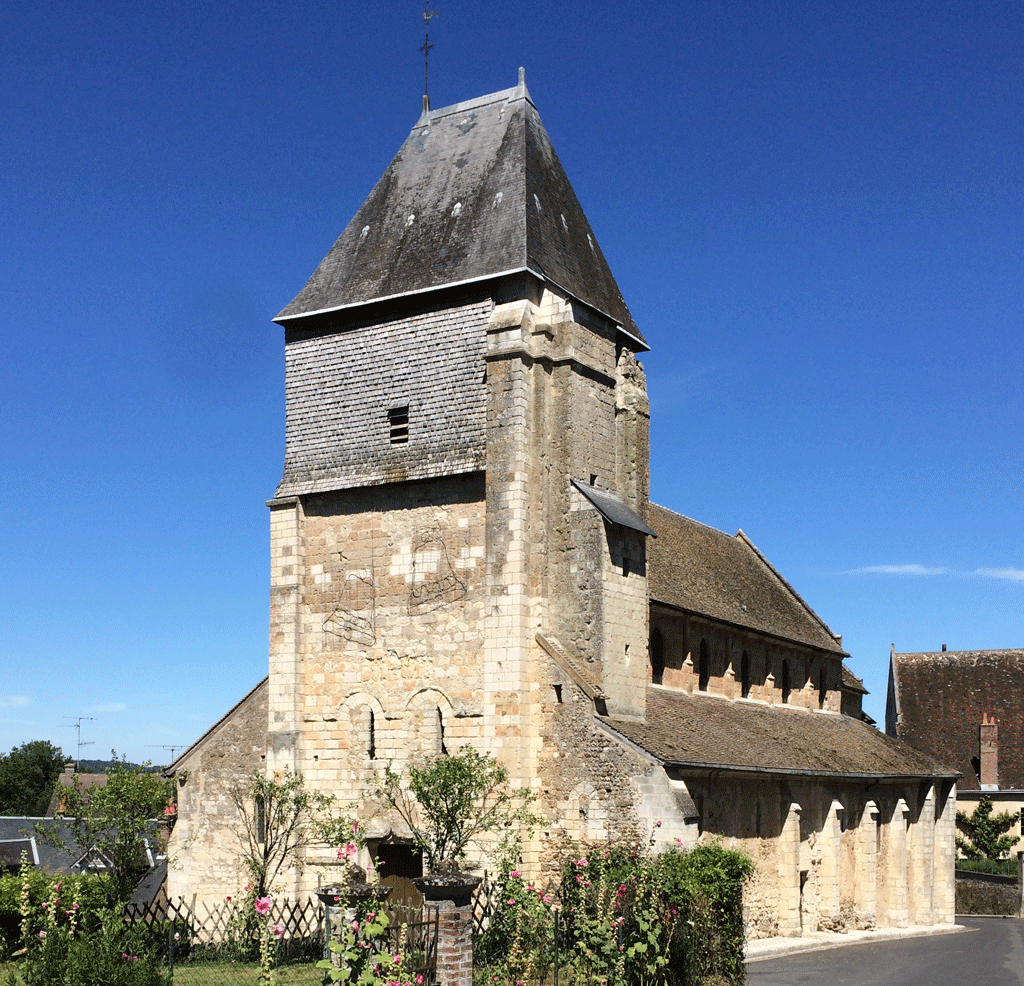
The Romanesque churcvh of Saint Genest probably built at the end of the 11th century
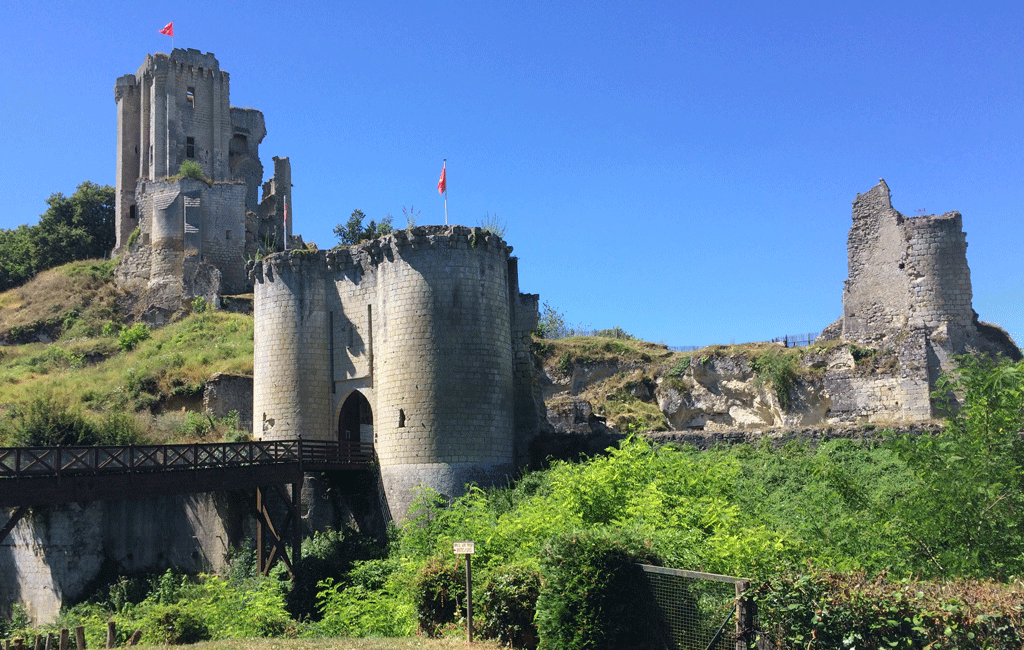
The castle is certainly photogenic. Founded by the Counts of Vendôme in the 9th century, it was rebuilt in the 14th and 15th century by John 1st of Bourbon-Vendôme. After being occupied by members of the Catholic league, it was captured and dismantled on the orders of Henri IV in 1590. All that is left of the feuldal castle is a 26-metre high rectangular keep with flat buttresses topped with crenallations. The only remaining part of the two walls built in the 14th and 15th centuries is the entrance flanked by two circular towers and a drawbridge over a moat.
Lavardin Castle with its keep and moat
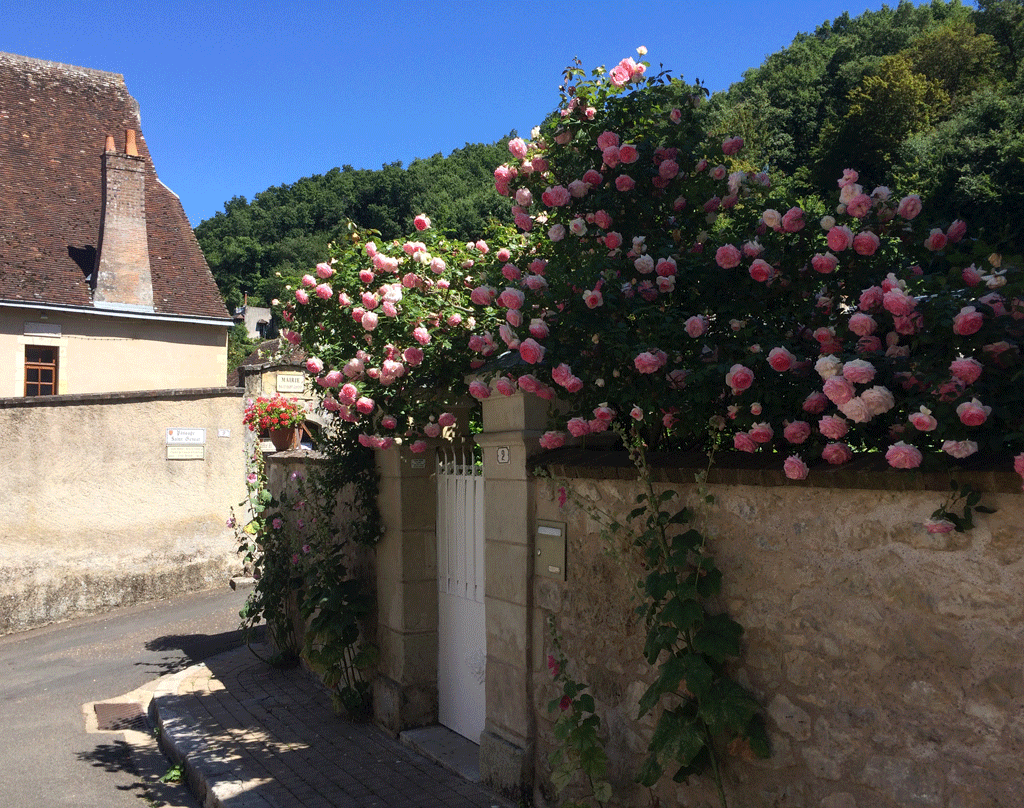
We head out of town and past a magnificent Pierre Ronsard rose bush and a church for sale, then have to backtrack. We’re in the wrong direction again.
Magnificent Pierre Ronsard roses in Lavardin
We arrive at the waterwheel roundabout just in time to see the tourist train go by.
The Loir Valley tourist train
Our itinerary takes along the Loir and past more troglodyte houses.
Another variation of troglodyte houses – these could almost be at the seaside!
We come to the little town of Les Roches d’Evêque whose church has an unusual buttress and see another shady picnic table that we now no longer need.
The church with its unusual buttresses
After more troglodyte houses, one of which is three stories high, we find ourselves on a busy road with cars speeding past at 90 kph. I see a sign off to the right saying Château Mézière so suggest we follow it.
A three-storey troglodyte house!
It’s worth the detour! There is a beautiful Renaissance porch, a moat, a stately main building, a chapel, a boat landing and an orangery, all very romantic and used today as a wedding venue.
Château de Mézière with its Renaissance porch
Unfortunately the upkeep must be enormous and much of the main building is very dilapidated.
The moat and boat landing at Château de Mézière
There is a sign under the porch saying that visitors are welcome to walk around the outside without charge.
Château de Mézière from inside the courtyard. You can see the Orangery on the left, with the church in the middle and porch on the right.
By the time we arrive back at Villiers, we are ready for an ice-cream. I know there is no hope of finding anything that might resemble a German Eiscafé but I’m hoping they might have a Miko.
The church of Saint Hilaire in Villiers
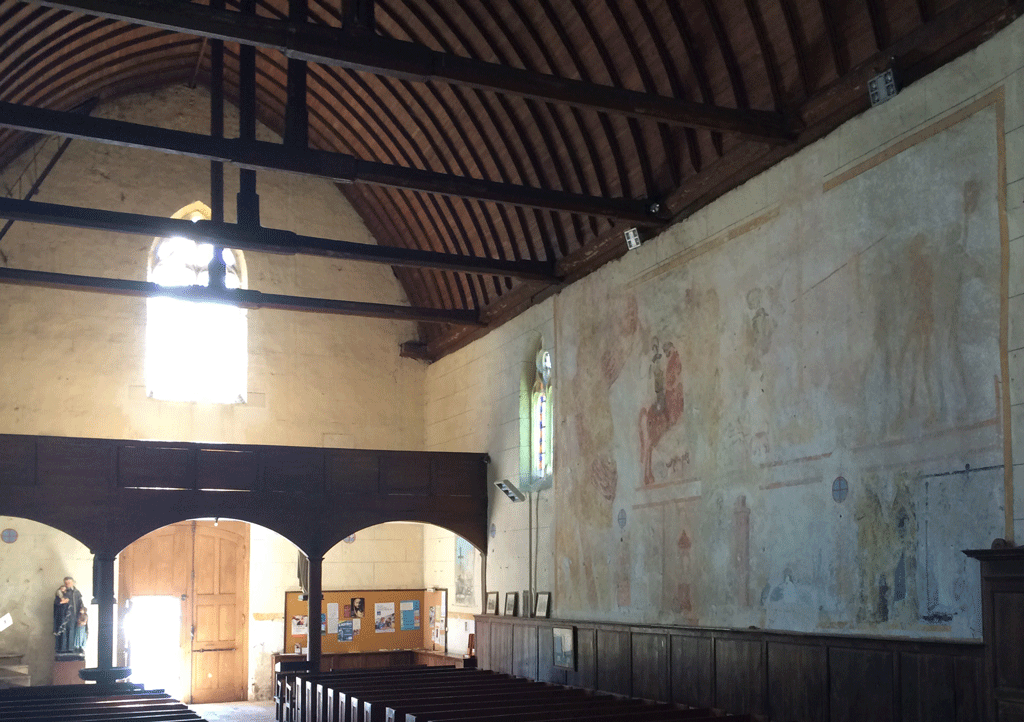
The main square in Villiers is TOTALLY deserted. Nothing is open. So we visit the inside of the church of Saint Hilaire which has 16th century wall paintings along one side known as the “three living and the three dead”: three young rakes are called into a cemetery by three dead who remind them of the brevity of life and the importance of saving their souls.
The mural in Saint Hilaire in Villiers depicting the Three Living and Three Dead
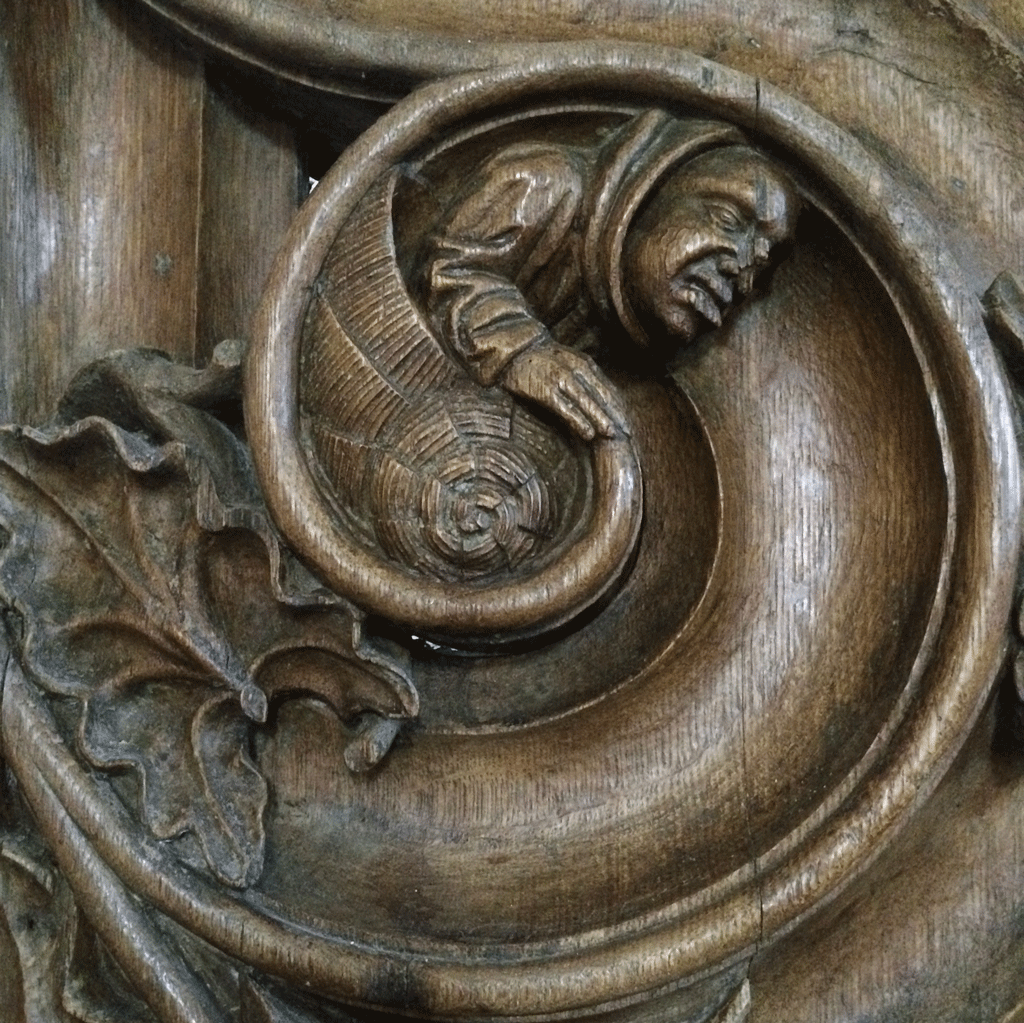
The stalls in the chancel have some interesting sculptures as well.
One of the scuptures on the stalls in Saint Hilaire
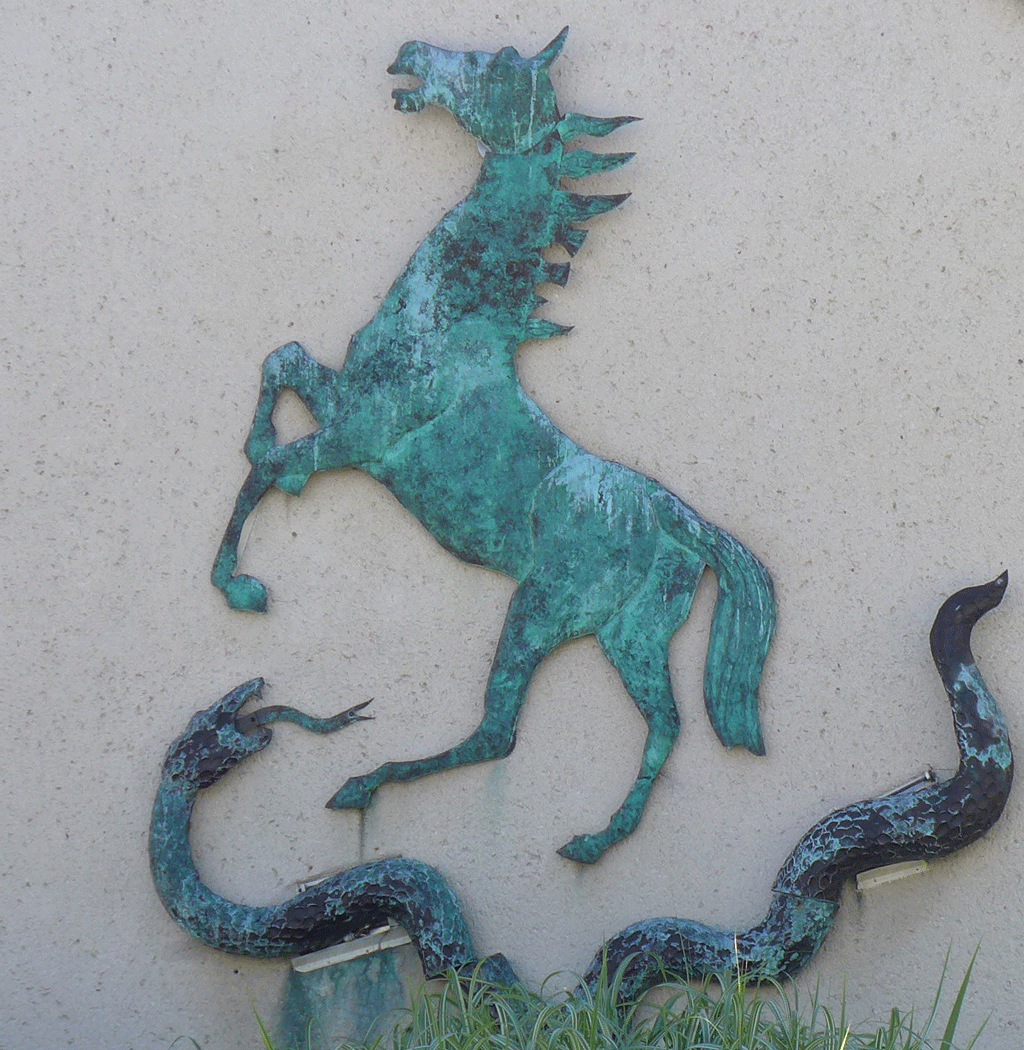
Jean Michel takes a photo of a curious motif on a wall which turns out to be a clock jack made by Alain Henry, a copper manufacturer in Villiers, with the help of a fellow craftsman from Bourges. It recalls the legend of the Serpent’s Hole. Unfortunately, it is no longer in operation.
The clock jack in Villiers sur Loir
According the legend, in the time of the Merovingian king, Childebert I, who lived in the area, a dragon was terrorizing the population. Its den was a cave honed out of rock in Saint-André. The king ordered one of his prisoners, Brayanus, to kill the monster, in exchange for his freedom. Brayanus, mounting a chariot with long sharp steel blades attached to the wheels, charged at the monster while it was slaking its thirst in the river and cut it into three pieces.
The cathedral seen from Saint Martin’s Bar on Place Saint Martin in Vendôme
We ride back to the car having clocked up 38 km and 2 hours 40 minutes and Jean Michel suggests we go to Vendôme for an ice-cream as it’s only 10 minutes by car. We find a vendor on Place Saint Martin that only has about six uninteresting flavours so we go looking for somewhere else.
The inner courtyard of the Town Hall, built in 1623 as a college by a religious congregation
Although we enjoy walking through the streets of Vendôme, which we have visited several times in the past, we do not find any other ice-cream vendors so go back to Place Saint Martin.
The sun setting over the buttresses of the Cathedral
The result if very disappointing. Even Carte d’Or ice-cream is better! But we eat them in the cathedral cloisters and enjoy the view of the sun setting over the buttresses.
Porte Saint Georges in Vendôme
I later discover, to my great dismay, that we missed two major monuments along the bike path – Saint Rimay tunnel where Pétain and Hitler meet up during the Second World War and St Gilles Chapel in Montoire which was the priory of the poet Ronsard from 1566 until his death in 1585. It is said to have murals of exceptional symbolism painted in the 11th to 13th century. We’ll have to go back! But next time, we shall start in Vendôme and follow the little green and white bikes the whole time. That way, we won’t keep getting lost. Or maybe we should just take the tourist train.
We are on our way back to Blois from our cycling holiday in Germany and are looking for a stopover in France. There is nothing interesting midway but Troyes is about 3/5 of the way which is fine. We book a hotel that is a bit higher than German prices but seems to be well located.
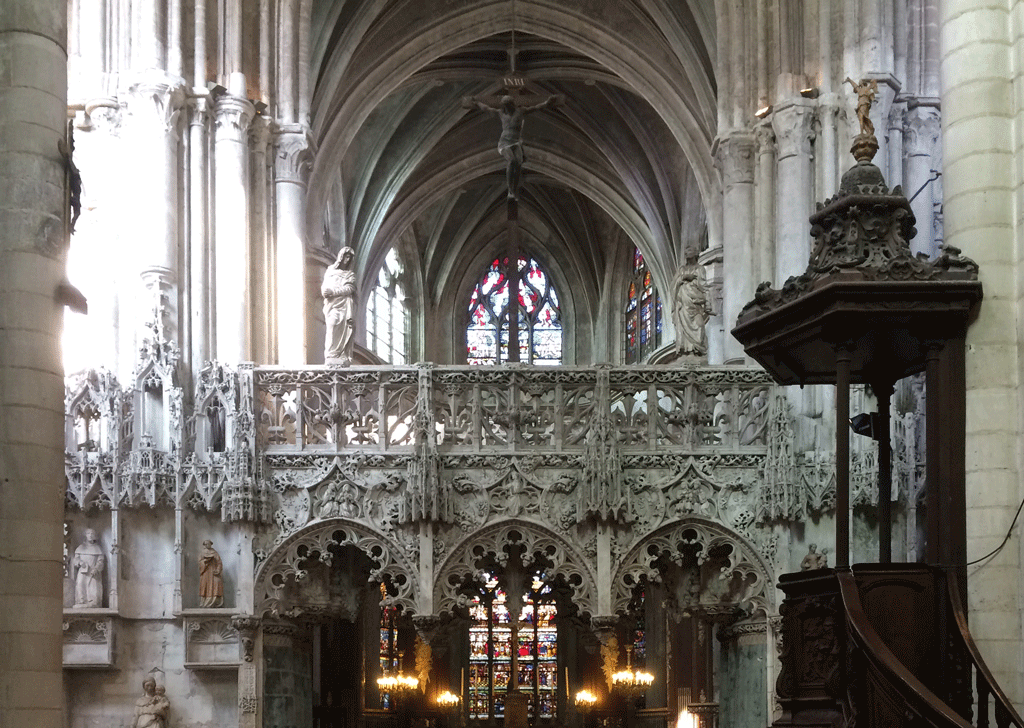
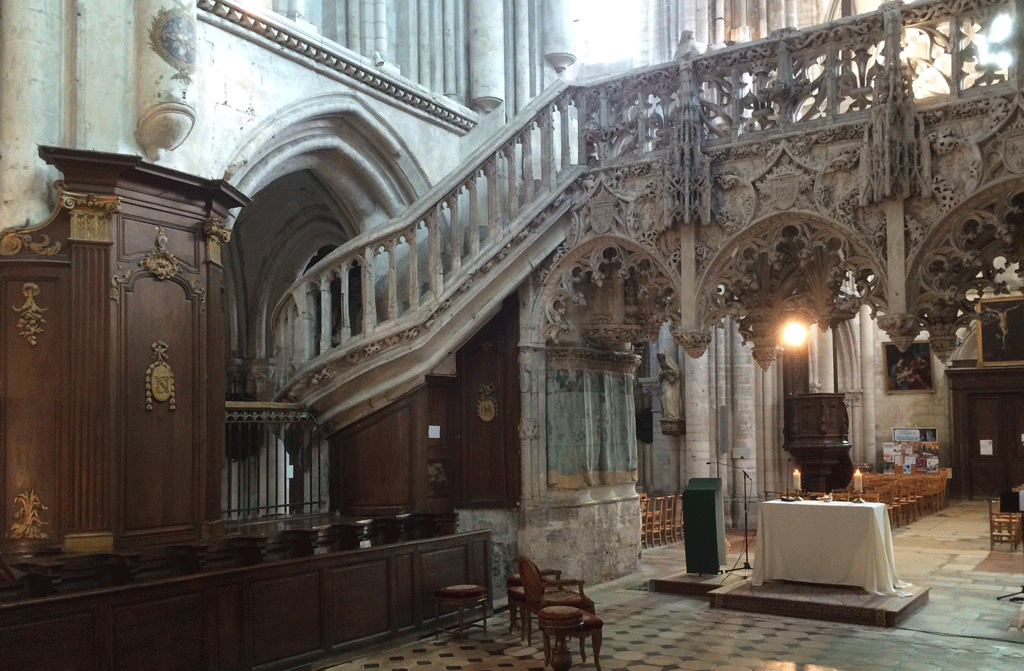
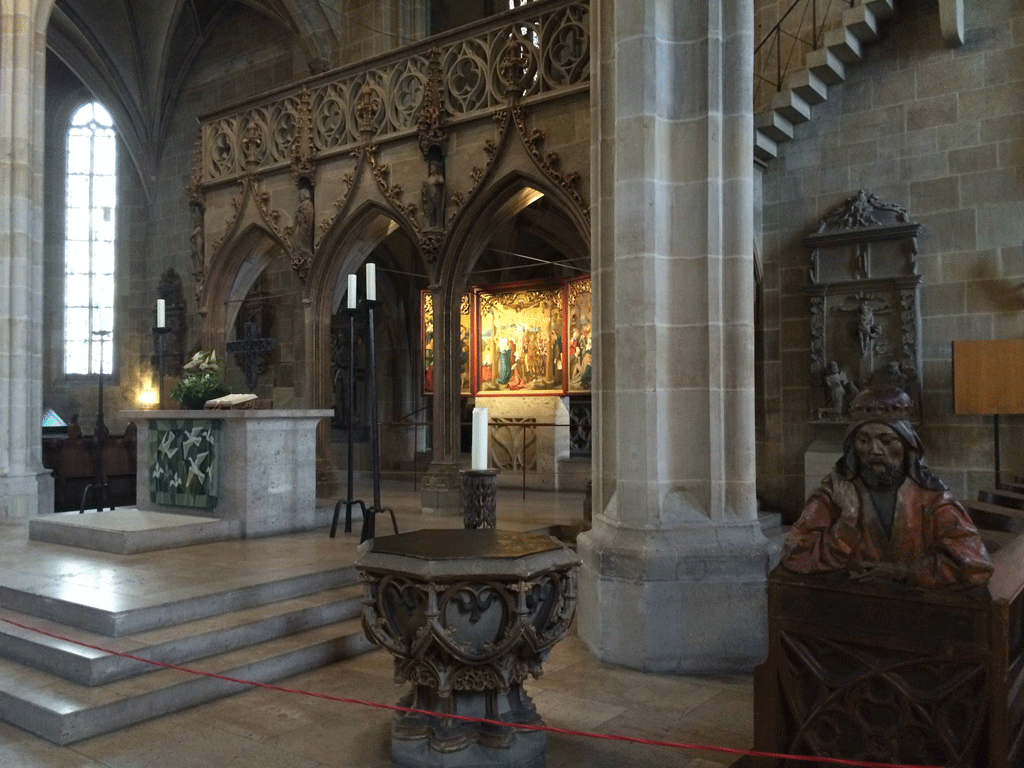
The rood-screen in the church of Saint Madeleine as you enter the church
We have been to Troyes already several times and I particularly want to go back to see the rood screen in one of the churches, after seeing one recently in Tübingen in Germany. Much of the city’s architecture also corresponds to more or less the same period of history that dominates the towns in Germany that we have just visited.
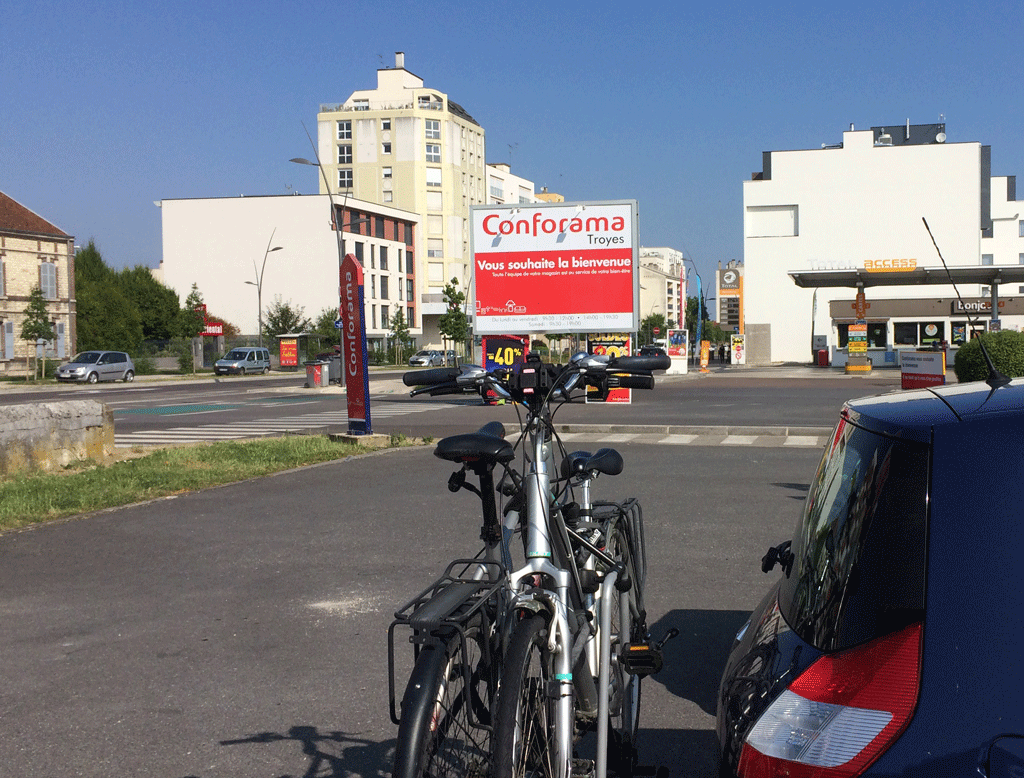
The parking lot in front of Conforama with our hotel on the right (white building)
I’m a little nonplussed when I see the hotel, which is a Kyriad, a chain we have never used before. It’s three stars so I figured it would be like a Mercure. It looks very modern and ugly. Still, we only want a bed. It’s next to Conforama, a furniture chain. There is a bike path just in front of the hotel so we can’t even pull up there. Jean Michel waits in the Conforama parking lot while I go in. The girl at reception is friendly enough but does not seem to have learned to rules of polite conversation. “Do you want a bill or what?” she asks the person before me in French.
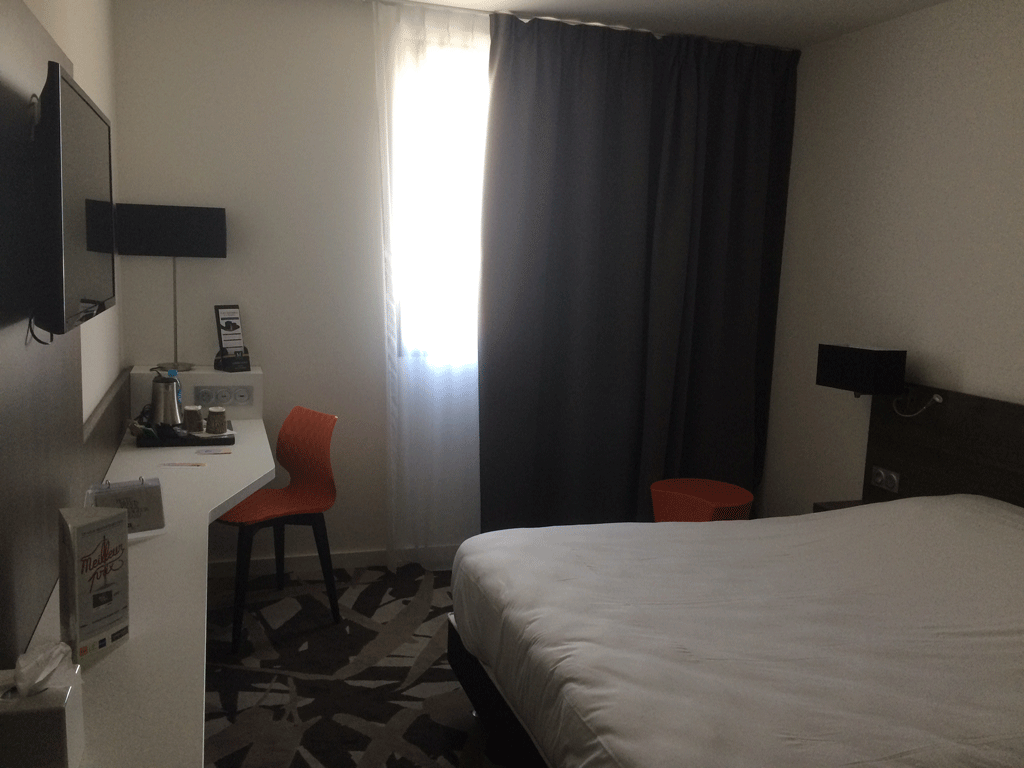
Our bedroom at the Kyriad
There is an extra charge for underground parking which I didn’t see on booking.com. The receptionist tells me we can park for free at Conforama which has cameras operating all night so I choose that. When we get up to the room, I decide I am striking Kyriad off my list forever. It is just too ugly and shoddy.
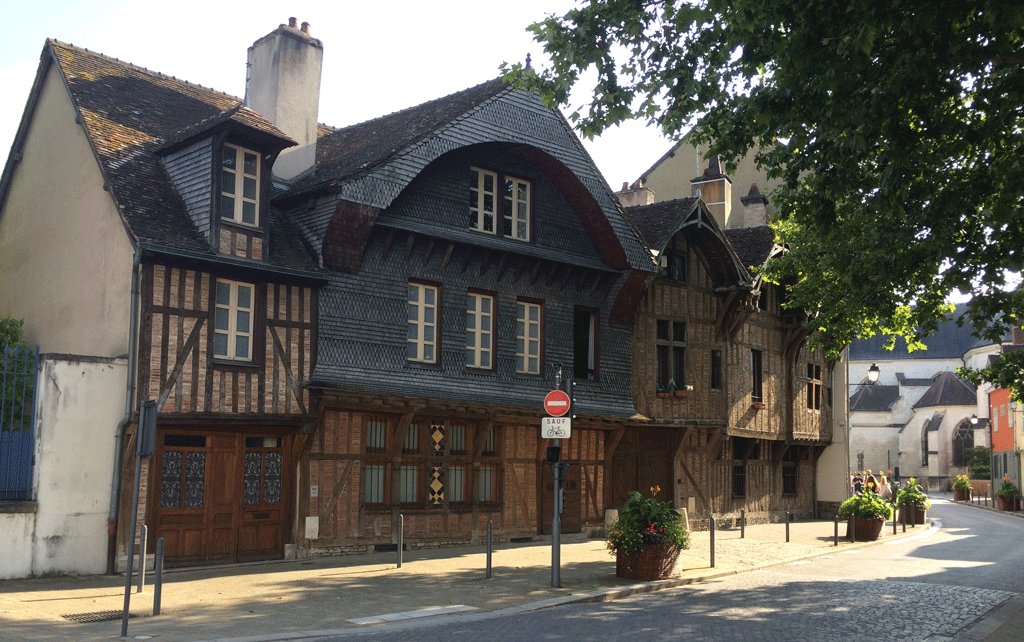
Some beautifully renovated half-timber houses in Troyes
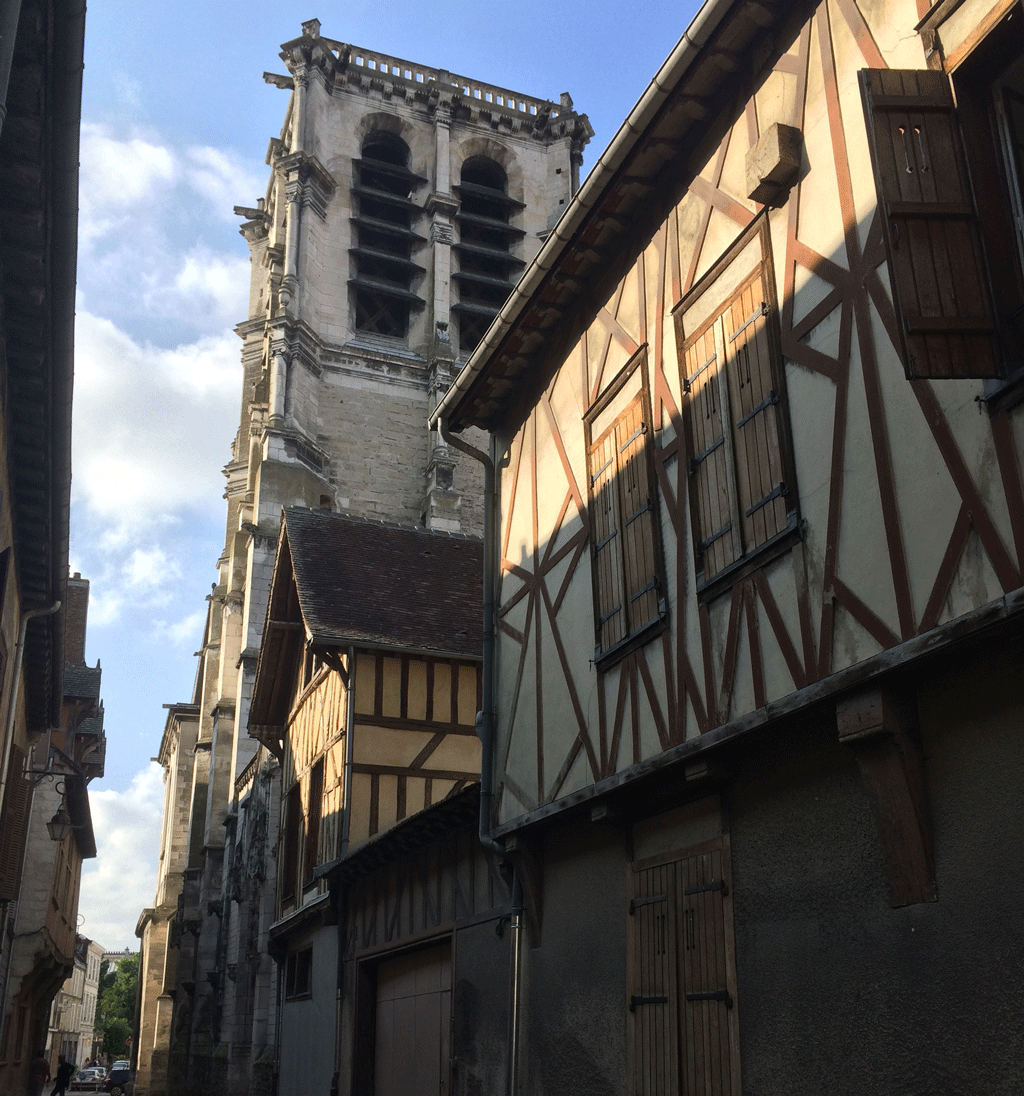
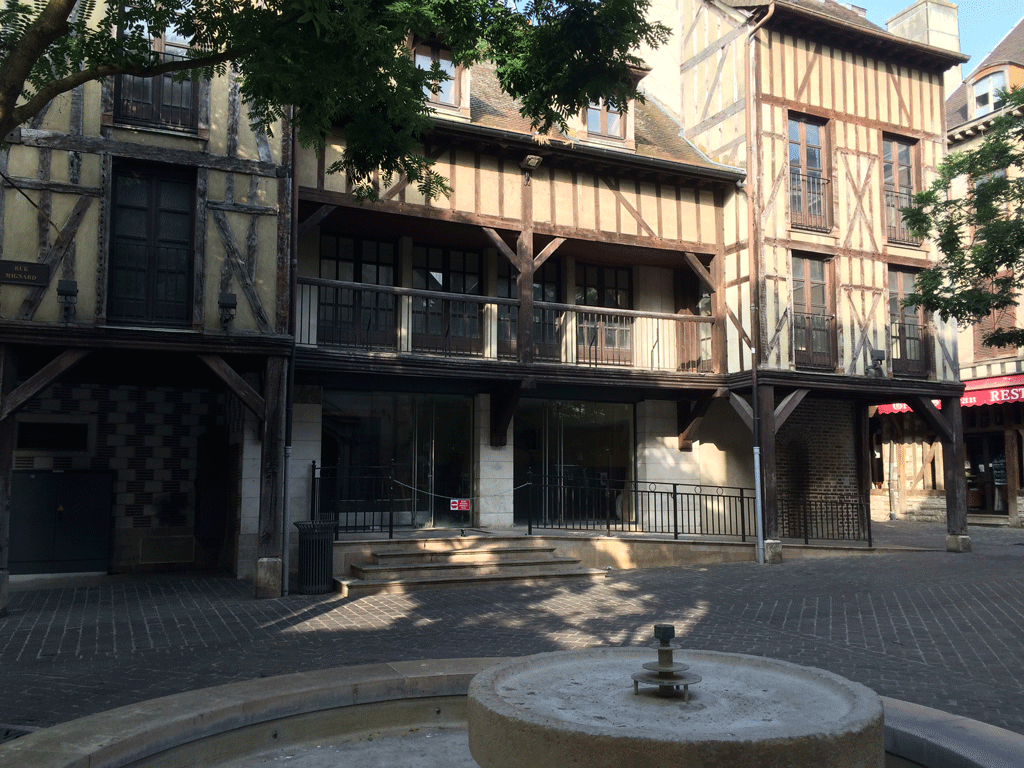
After resting from the 5-hour drive, we walk into the old town, which really is only 10 minutes away. The first thing we see is a set of beautifully renovated half-timbered houses that we don’t remember seeing before. Troyes, with its rich history, has a large number of 16th and 17th century Renaissance-style half-timbered houses that have gradually been restored since the 1990s, especially in rue Passerat.
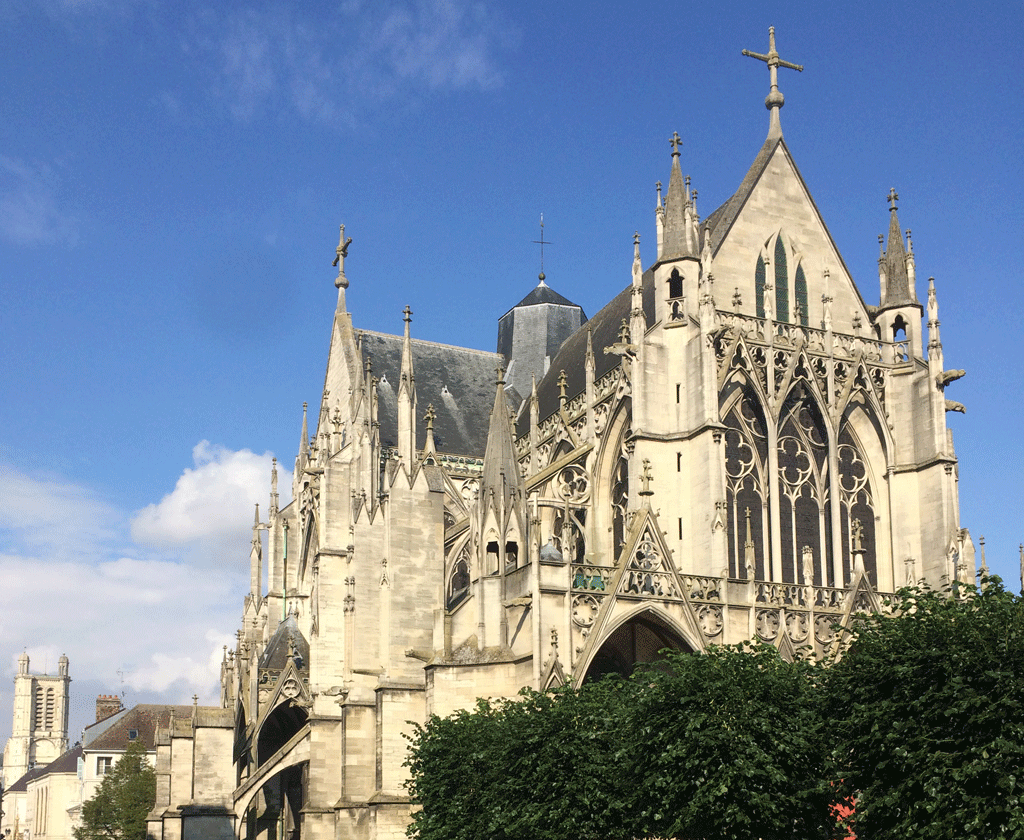
Troyes Cathedral
Next, the cathedral, which I certainly don’t remember.
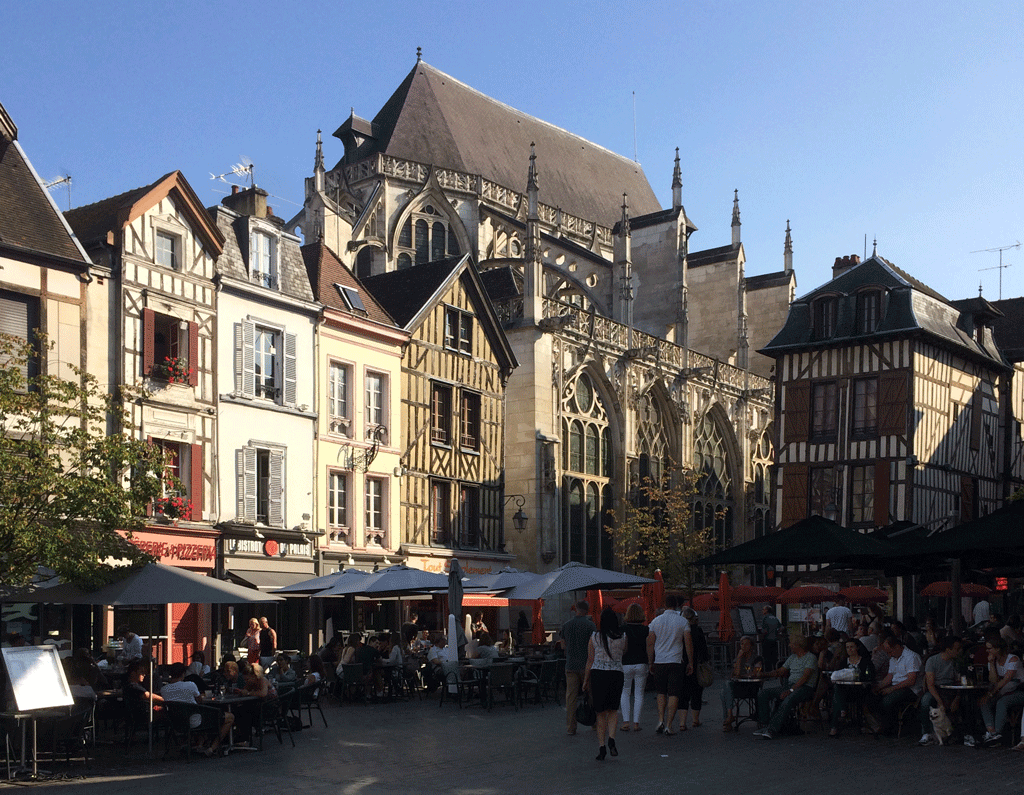
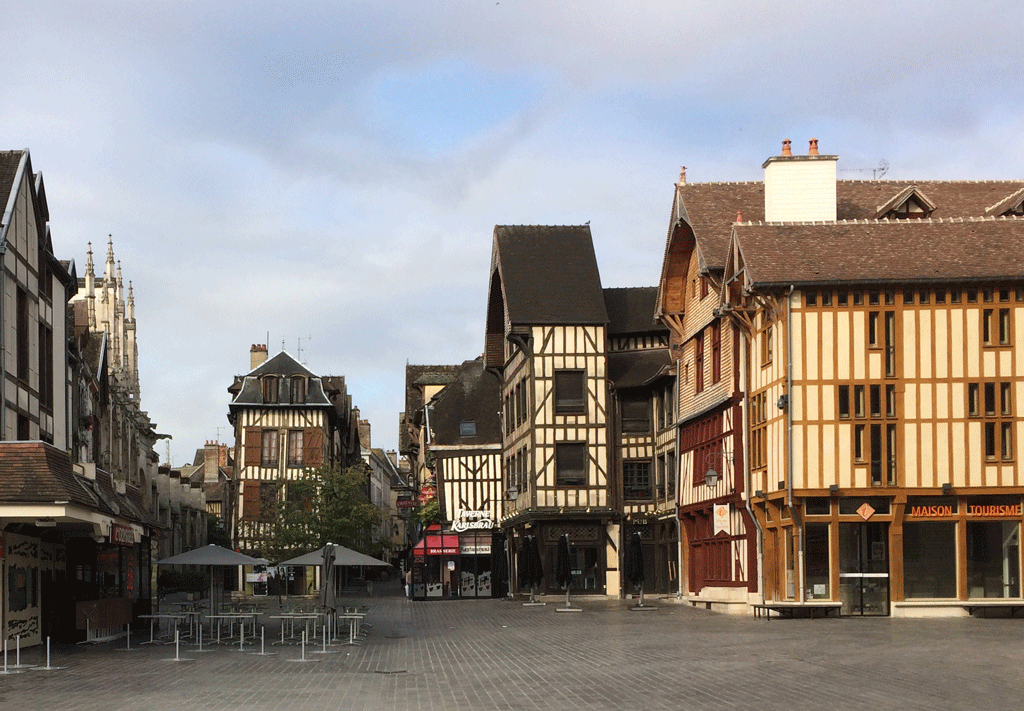
The main square at 5 pm on a Saturday in summer
I do remember the main square, Place Maréchal Foch, but it was not this animated on our previous visits. We don’t think we’ve ever been here during the summer. Everybody looks are though they are enjoying themselves.
Saint Madeleine’s from the outside
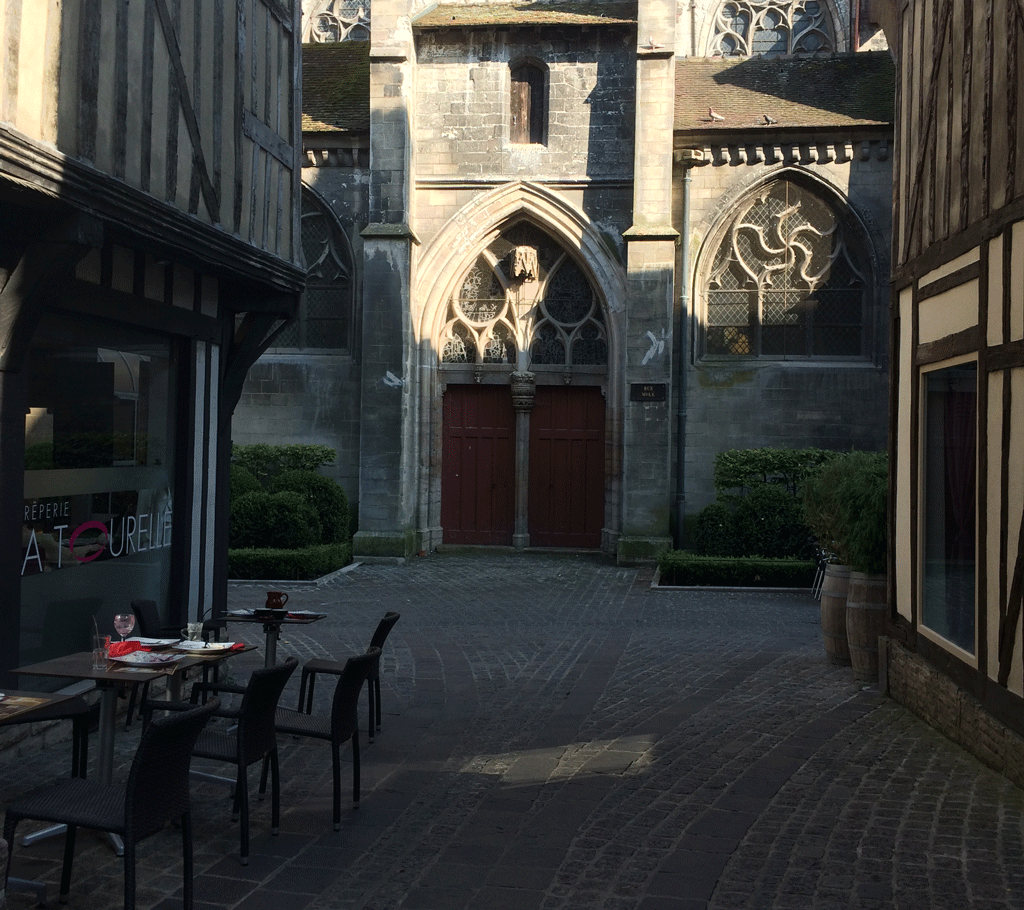
We head down the main street which is full of restaurants until we find Ruelle aux Chats on the right, which leads to Saint Madeleine’s church which has the rood-screen. The nave of this gothic church, which claims to be the oldest in Troyes, was built in the 13th century, while the chancel and apse were built in the 16th century and the tower in the 17th century. It is one of the rare churches to have preserved its Renaissance stone rood-screen finely sculpted by Jehan Gailde.
The rood-screen from the chancel
It is as magnificent as I remember. There is only one person in the church so we are able to take plenty of photos.
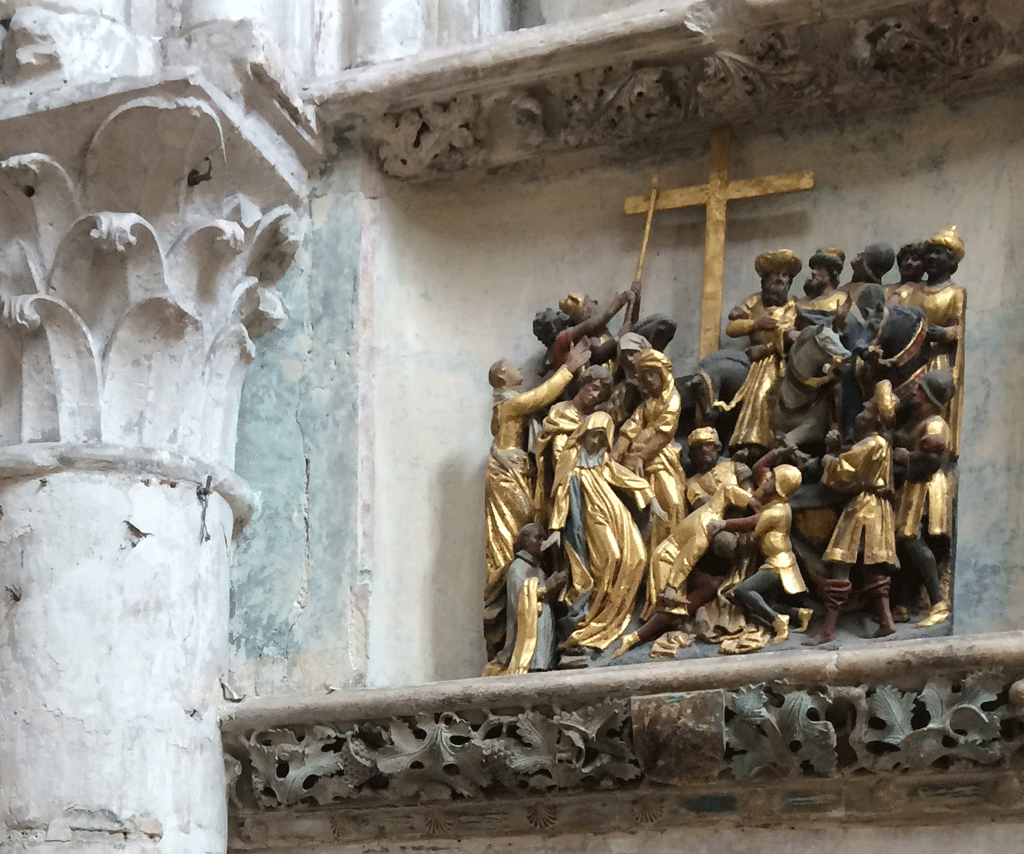
The painted wood calvary in Saint Madeleine church probably dates from the mid 16th century
I particularly like the gold-painted calvary on one side of the rood-screen.
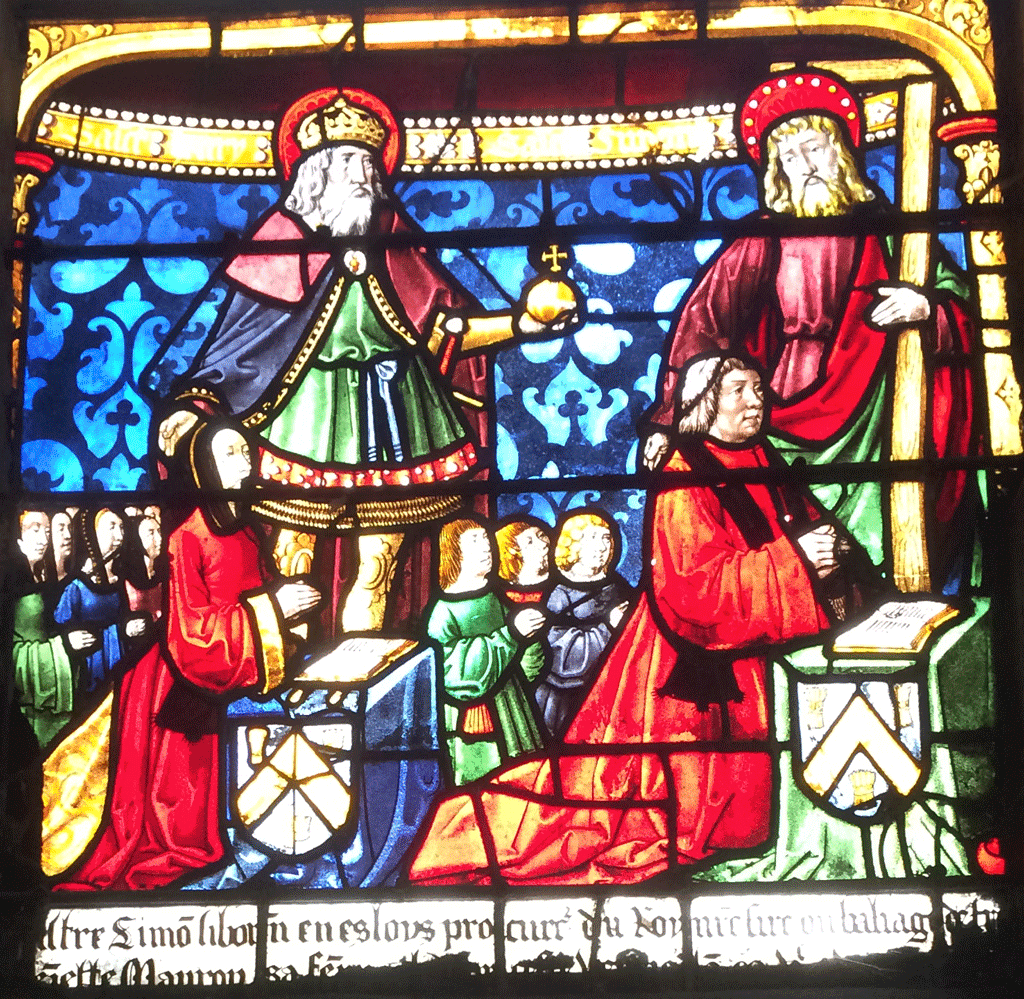
Early 16th century stained glass window in the church of Saint Madeleine
The ambulatory has a magnificent set of beautifully-coloured stained glass windows from the same period (around 1500) that show considerable technical skill.
The view of Saint John’s church from the terrace of the restaurant taken earlier
After visiting the church we join the throng on the main square for an aperitif. We then have dinner in a street parallel to the main restaurant street. What I didn’t see is that our restaurant has a terrace on the other side which means that there are a lot of customers and obviously not enough kitchen staff! Our meal takes a very long time to come. But it doesn’t matter – we’re not in a hurry.
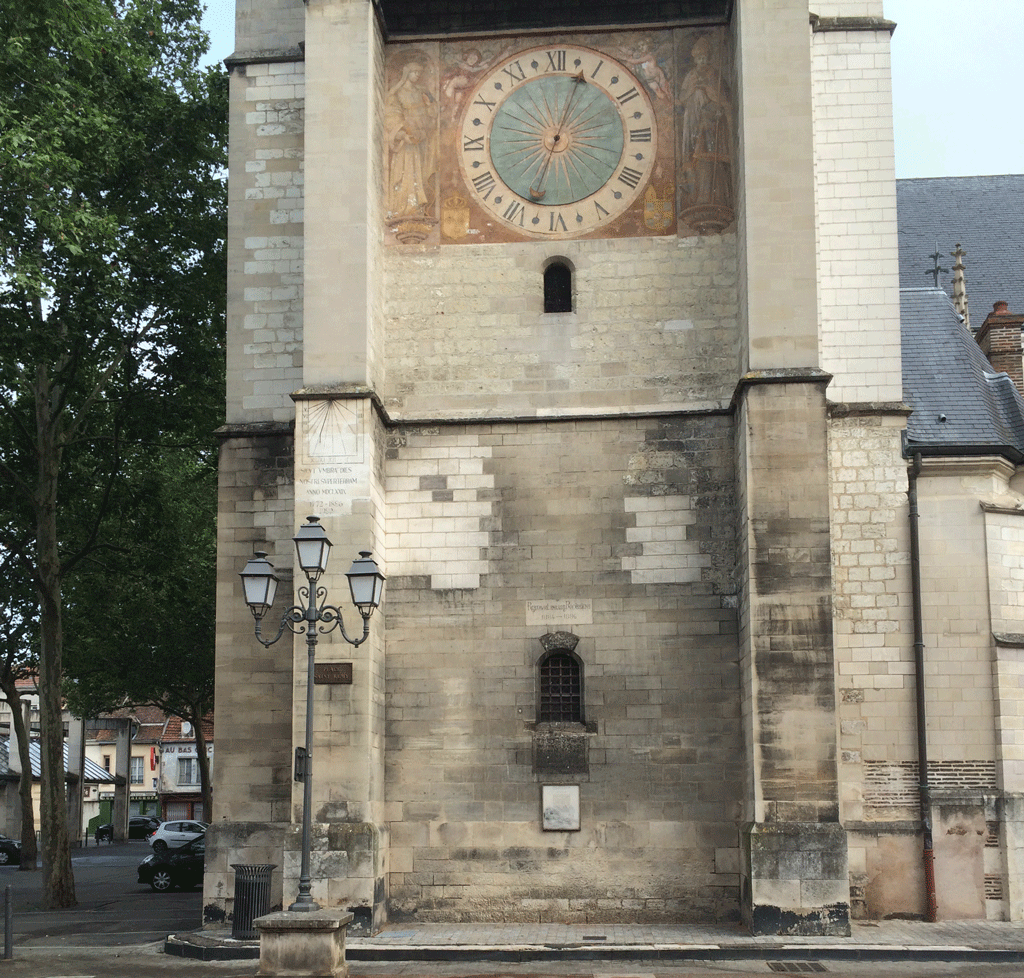
Saint Rémi, rebuilt in the 14th century is thought to be one of the oldest churches in Troyes, despite its more modern look. The fresco was painted in 1772.
Next morning, after a good night’s sleep (at least the beds are comfortable), we leave our ugly hotel (the man on reception has more personal skills than the girl yesterday) and walk into the centre for breakfast as neither of us wants to have it at the hotel.
The main square on a Sunday morning with not a soul in sight
Visiting Troyes on a Sunday morning is a different experience. There is practically no one around and I am able to take more photographs. It’s even quite difficult to find somewhere for breakfast.
Half-timbered houses on the other side of the square from Saint John’s
We go past the church of Saint Jean in front of which there is plaque dedicated to Marguerite Boureoys, the founder of public schooling in Montreal and “apostle of French culture in Canada” born on 17 April 1620 in one of the nearby houses and baptized the same day in the church. She died in Quebec in 1700, was beatified in 1950 and canonized in 1982 as the first female saint of Canada. If you would like to know more about her very interesting life, click here. https://en.wikipedia.org/wiki/Marguerite_Bourgeoys
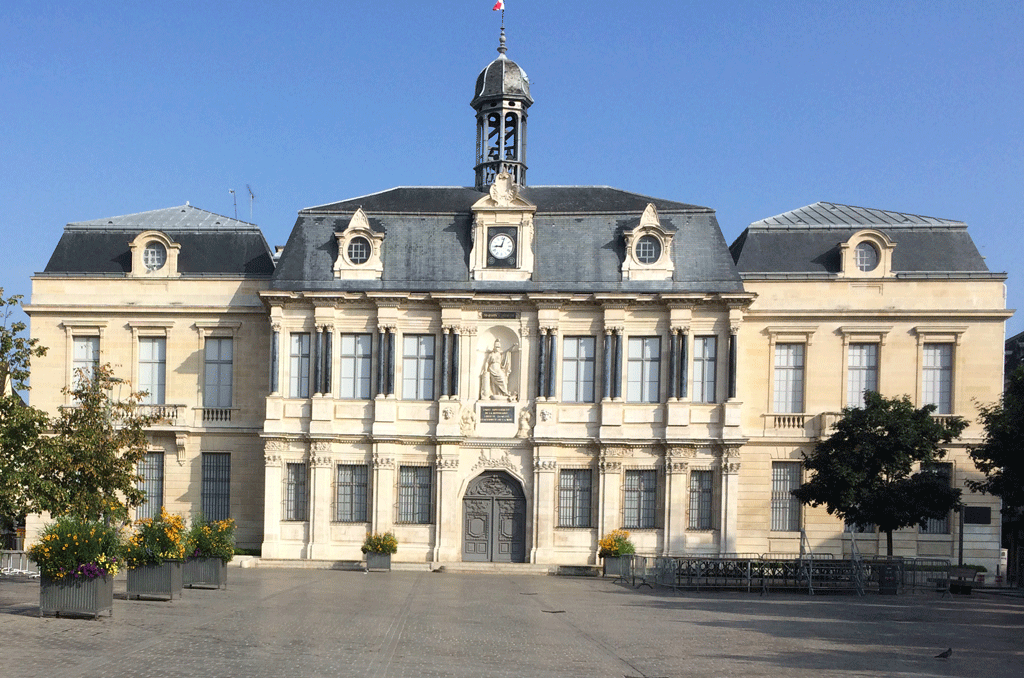
Troyes City Hall built during the second half of the 17th century
We finally have breakfast looking out onto the main square, with the Town Hall on the left and some of Troyes’ colourful old half-timbered houses on the left.
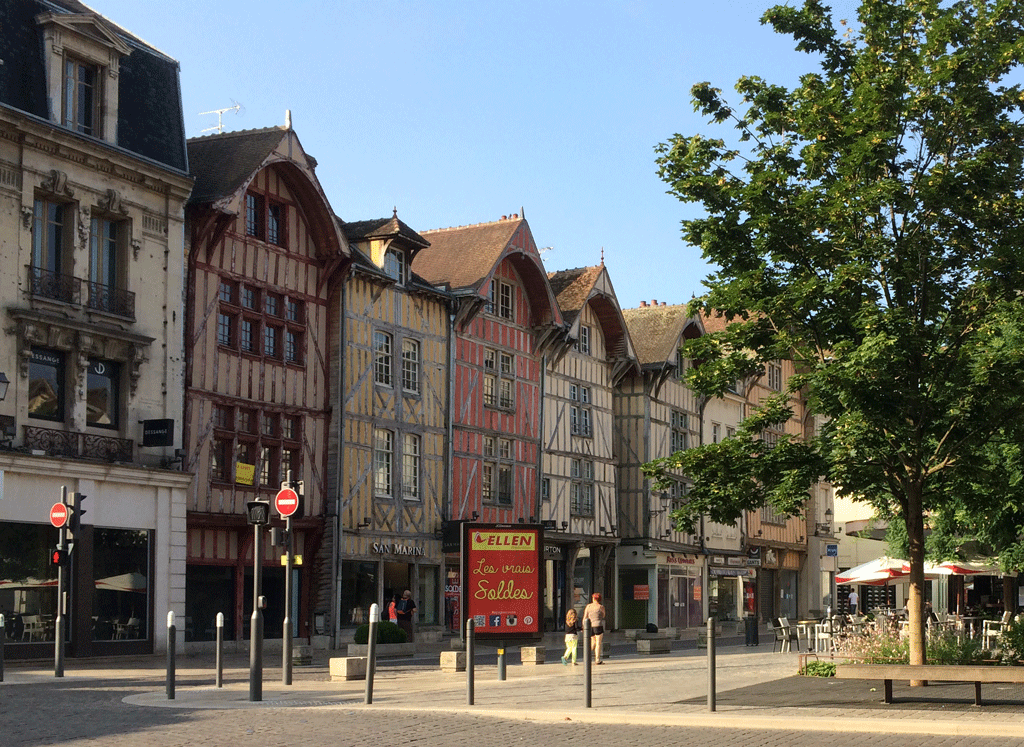
Our breakfast view of typical painted half-timbered houses in Troyes
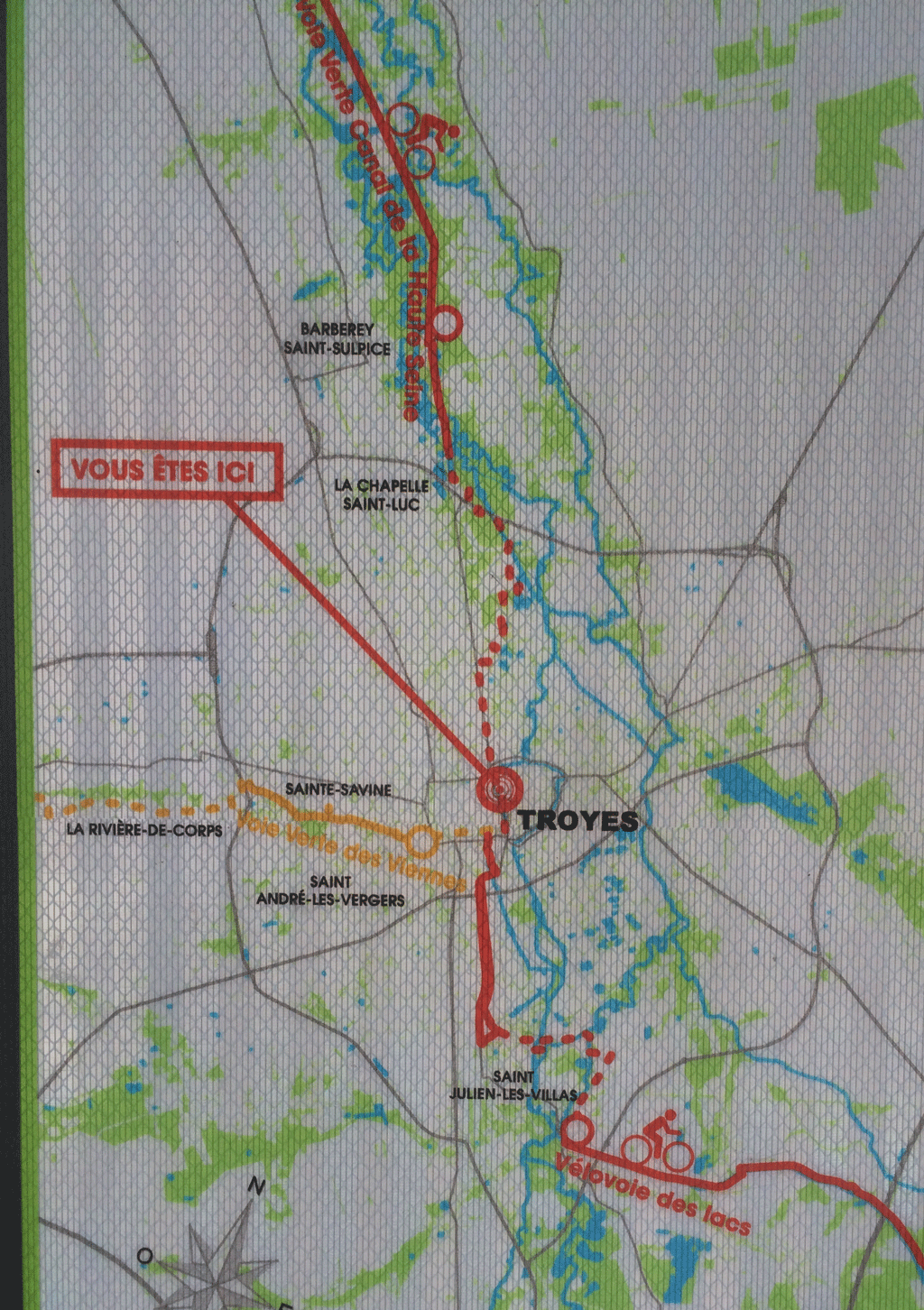
Our return to the car takes us past the Haute-Seine canal next to the 27-km long 3-meter wide asphalt bike path joining up nine of the surrounding villages. It’s part of a route that will eventually take cyclists to Paris. We regret that we didn’t try it out the previous day.
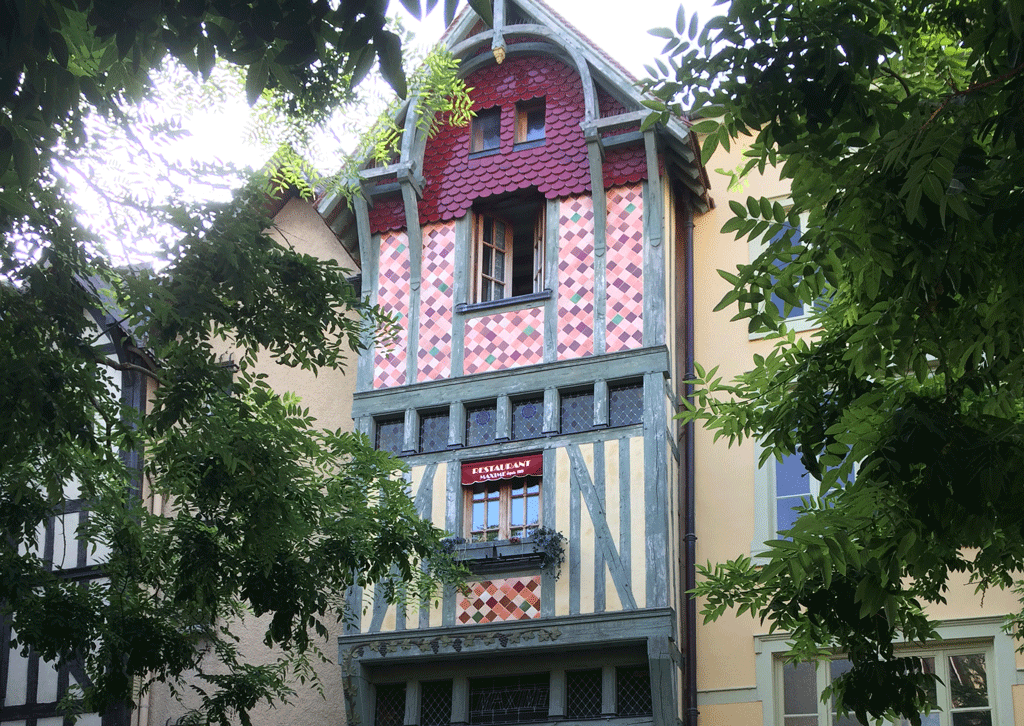
A delightfully pink house!
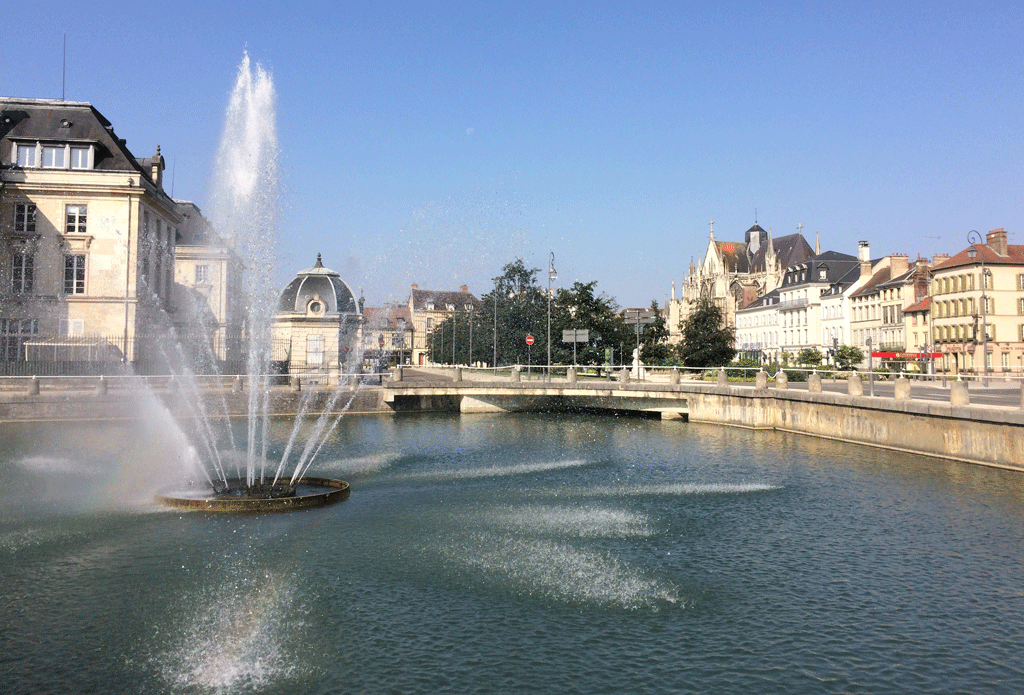
We discover the very attractive fountain in front of the Préfecture (Troyes is the “capital” of the Aube département, one of France’s 96 administrative divisions).
The fountain and préfecture
Oh, and I nearly forgot to say that the old town of Troyes, which is part of the Champagne region, is in the shape of a champagne cork!
The Voie Verte bike route
Troyes, once a thriving drapery centre, is also known for its outlet stores – McArthur Glen, Marques Avenue and Marques City http://www.troyesmagusine.com/ – which we visited many times in the past until they were developed in the Paris region. However, now that we no longer live in Paris and Jean Michel is retired, our vestimentary requirements have changed and we do our clothes shopping during the sales in nearby Tours.
This post is my August contribution to Lou Messugo’s All About France link-up. For other posts about France, click here.
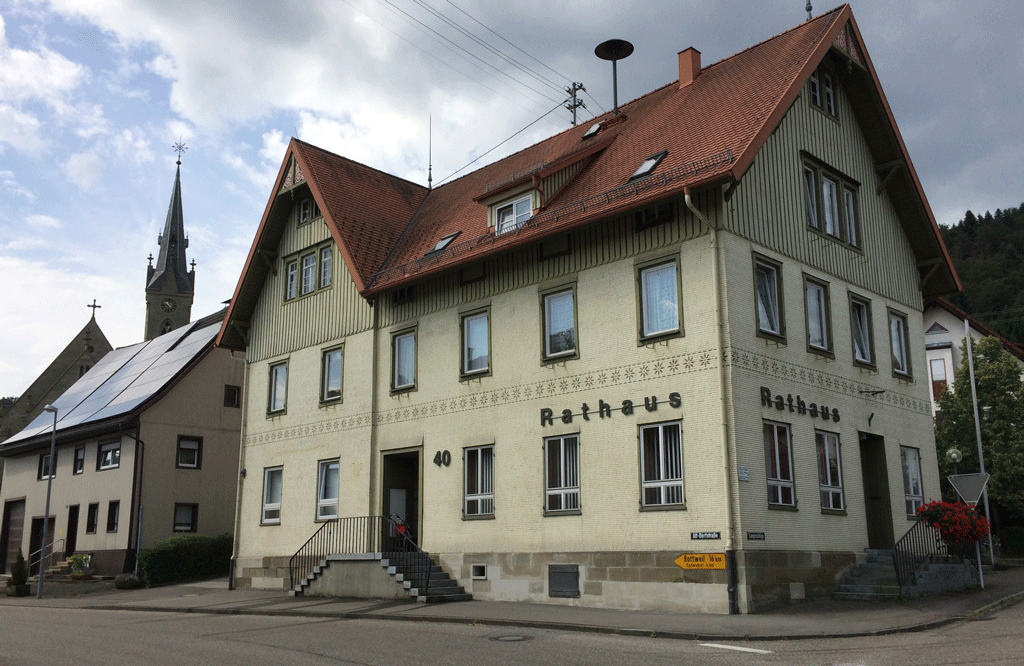
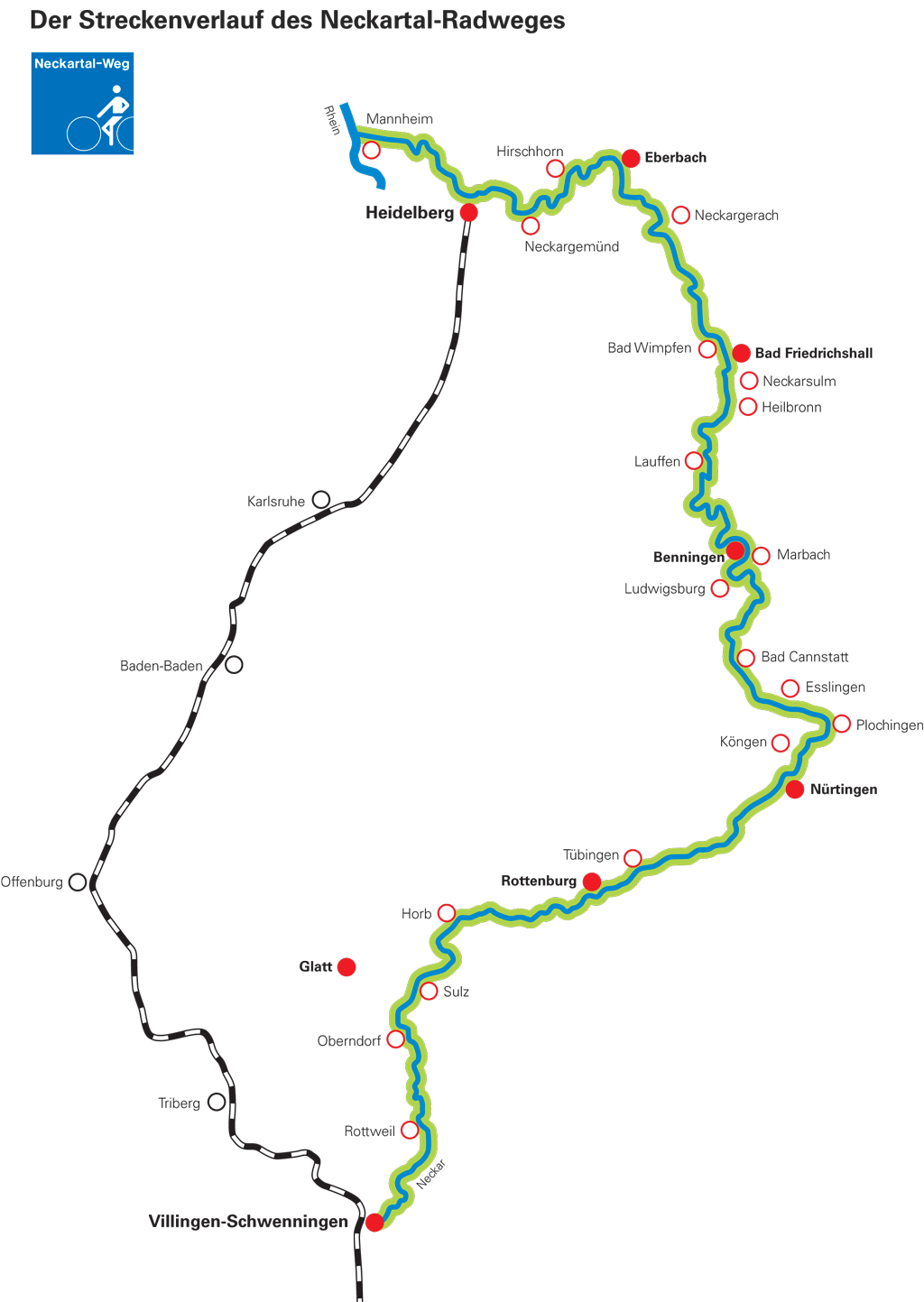
It’s the last day of our cycling holiday in Germany. We’ve checked a few on-line sources and studied the cycling map and are driving to Altoberndorf a half an hour away so that we can cycle along the Neckar to Rottweil and Oberndorf. After an excellent breakfast at the Martinhof, Hotel including Spiegel ei, we are off.
The rathaus in Altoberndorf
There are roadworks on the motorway (again!) so we take an earlier exit than planned along very small roads. Since Germany developed a free motorway system very early on, there are few major roads otherwise. Some of the time, we are driving along the recommended bike route.
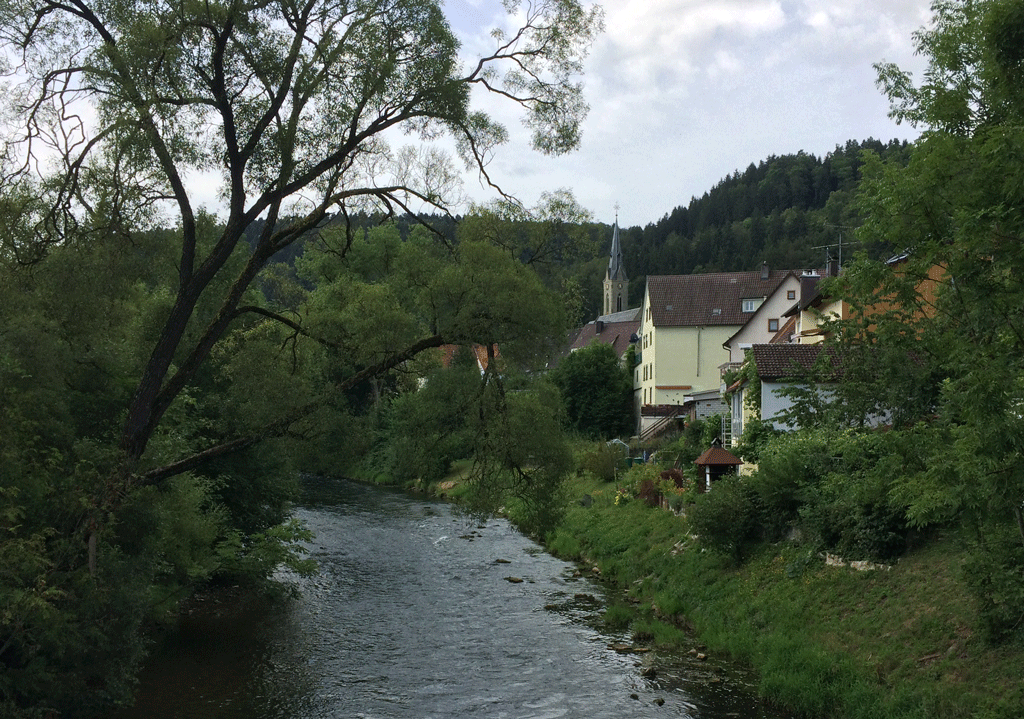
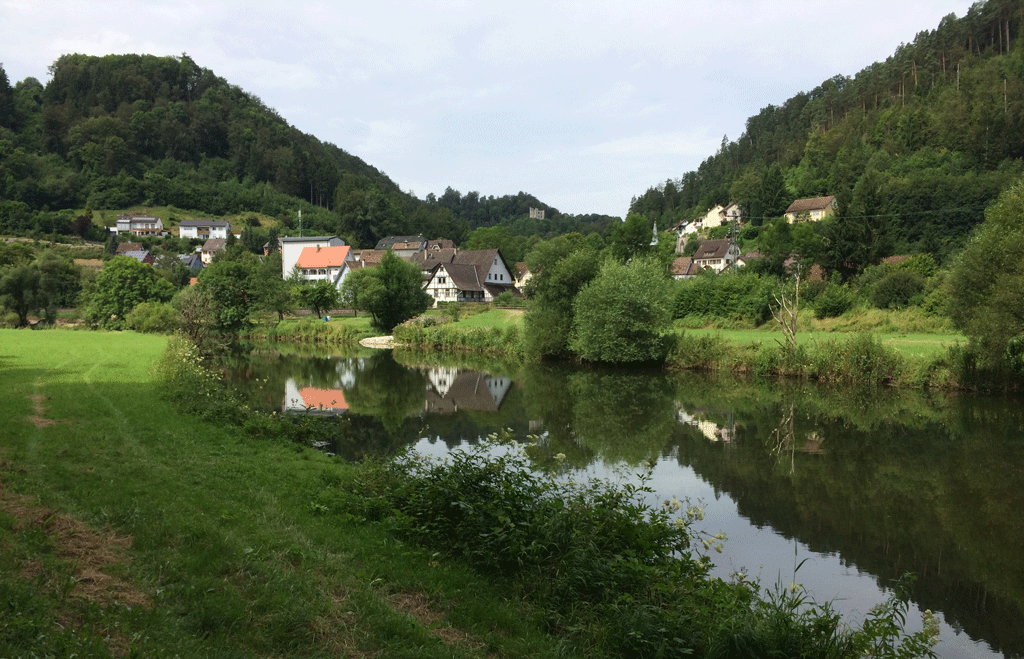
Altoberndorf and the Neckar
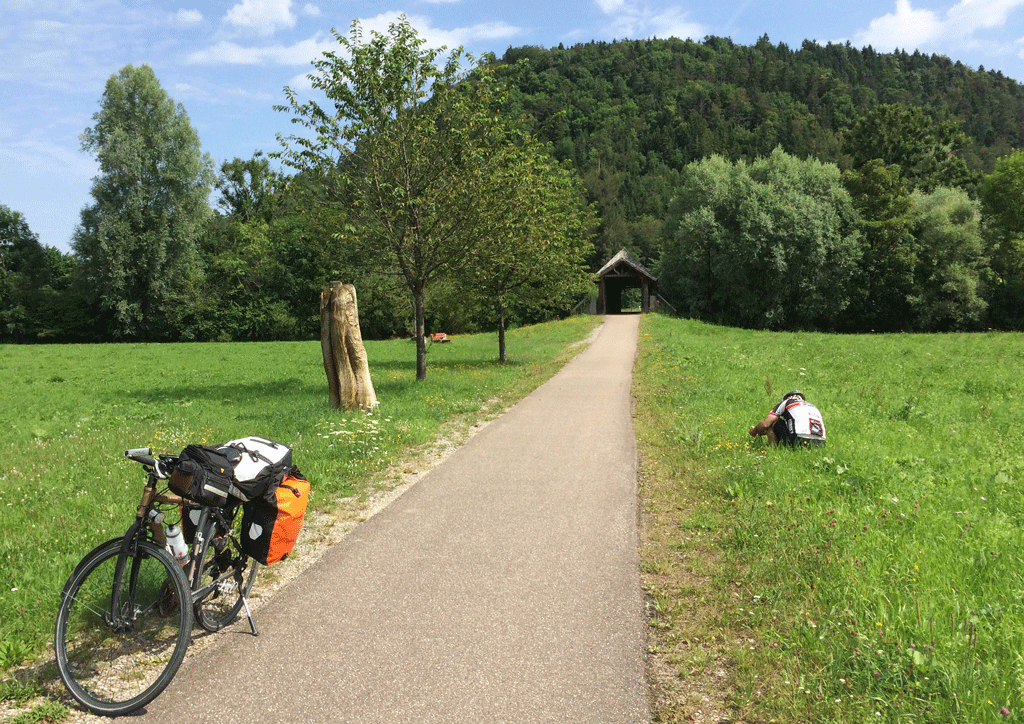
At Altoberndorf we park near the new rathaus. We are soon in pretty countryside, in a very narrow valley. We come to the first covered bridge of the day. On the other side there are two wooden sculptures – and a very devoted photographer. His wife is waiting patiently further on. I wonder how often she has to do so.
A very devoted photographer at the first covered bridge
The route then runs along the railway line. So far, it’s quite flat but we know we have a steep climb before we get to Rottweil.
The pretty little village of Talhausen from the bike path
At Talhausen, it’s cappuccino time so we go into the village. Nothing. I suggest we try further up the hill because I can see a sign that looks promising. At the top, there is a bar with a view. The only problem is that it’s closed on Friday’s until 4.30 pm.
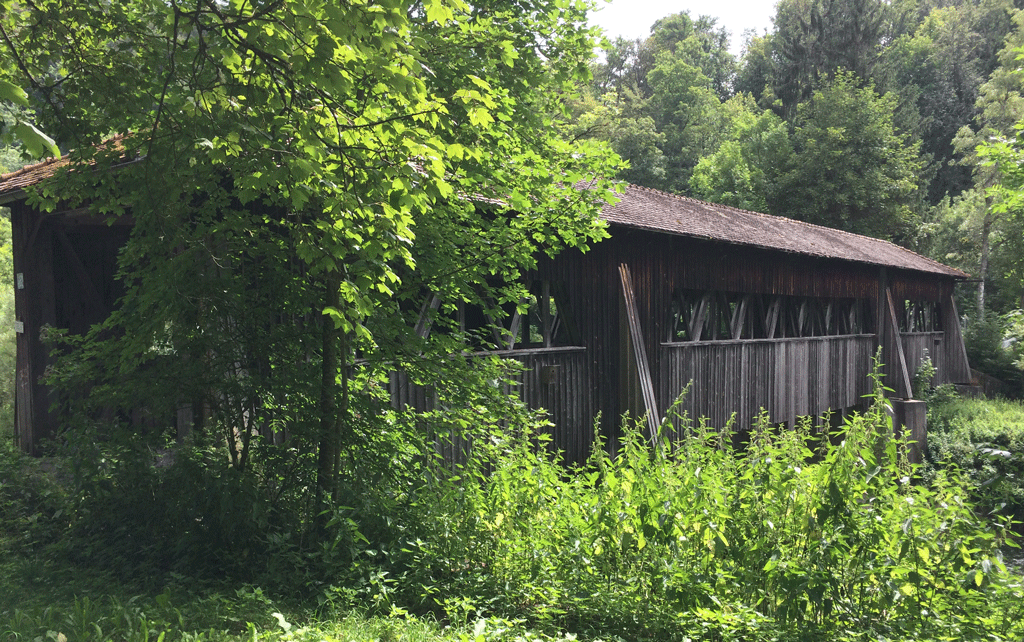
The second covered bridge of the day, taken from the side
We go back down the hill to join the bike path again and soon come to our second covered bridge. We have seen these in other parts of Germany but are not sure of their purpose.
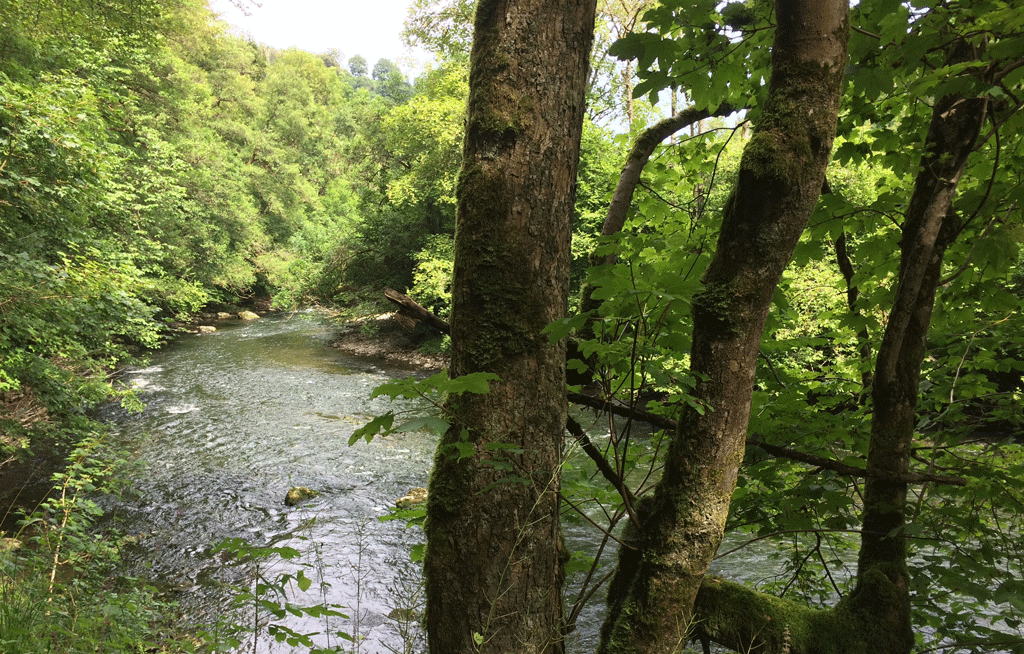
Following the Neckar
We follow the Neckar for a while until we pass under the motorway bridge. Not soon after that, we come to our long climb – 1.7 kilometers. I can see Jean Michel far ahead of me on the next bend. The road seems never-ending but once I find my pace I work my way steadily up. There is a wonderful view over to my left but I do not stop for photos or I’ll never make it to the top.
The motorway bridge in the distance as we climb the hill
I think the end is in sight, but can’t see Jean Michel, so I assume the climb isn’t finished. When I am almost at the top, I see a group of four German cyclists resting in front of me. One is even lying down on the grass. I put on my best smile and say “Hallo” very energetically. I am a little disappointing that no one says “Bravo”. I later learn that only one of them cycled up the hill and she had an electric bike.
Me as I get to the top of the hill
Just round the corner I see Jean Michel waiting for me. He takes a photo and congratulates me. This is most definitely the longest climb I’ve ever done. He says he expected me to walk at least part of the way. I’m very proud of myself.
The first painted house we see in Rottweil
We cycle the last few kilometers into Rottweil and each time we freewheel I think of how hard it’s going to be after lunch – even with the 1.7 km descent to look forward to.
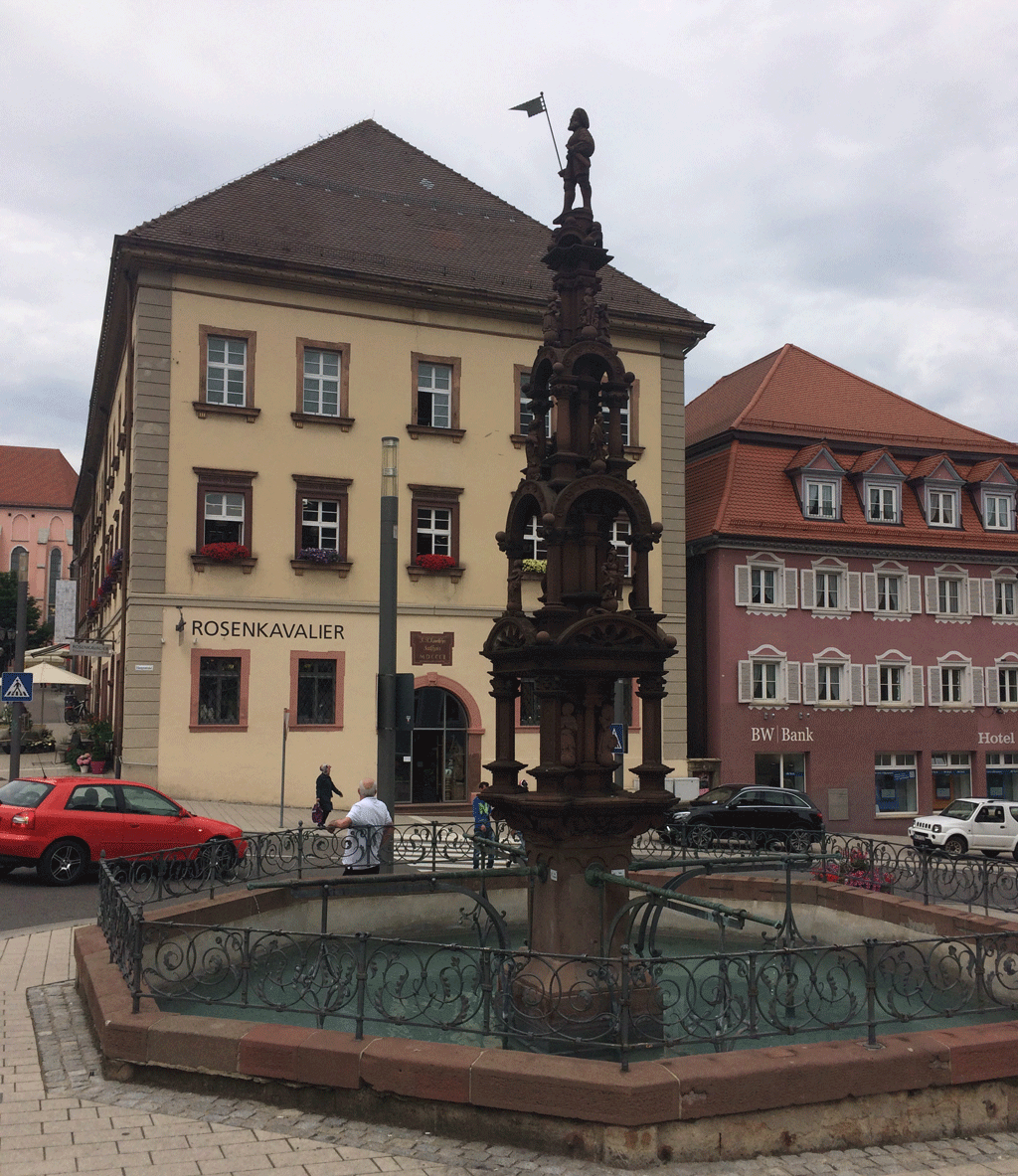
The fountain in the main square in Rottweil
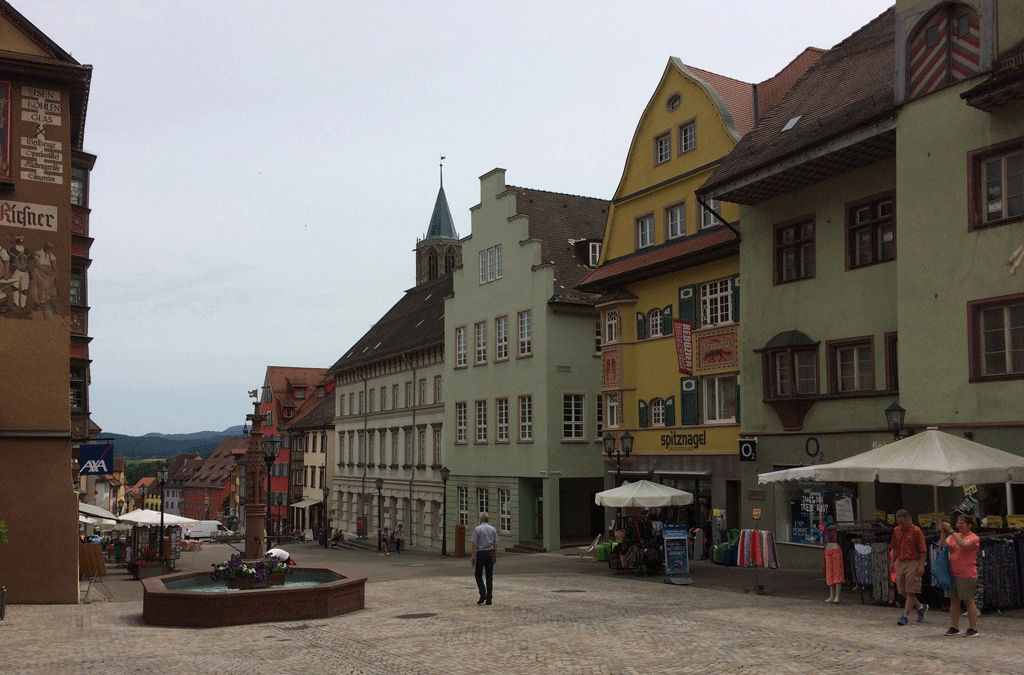
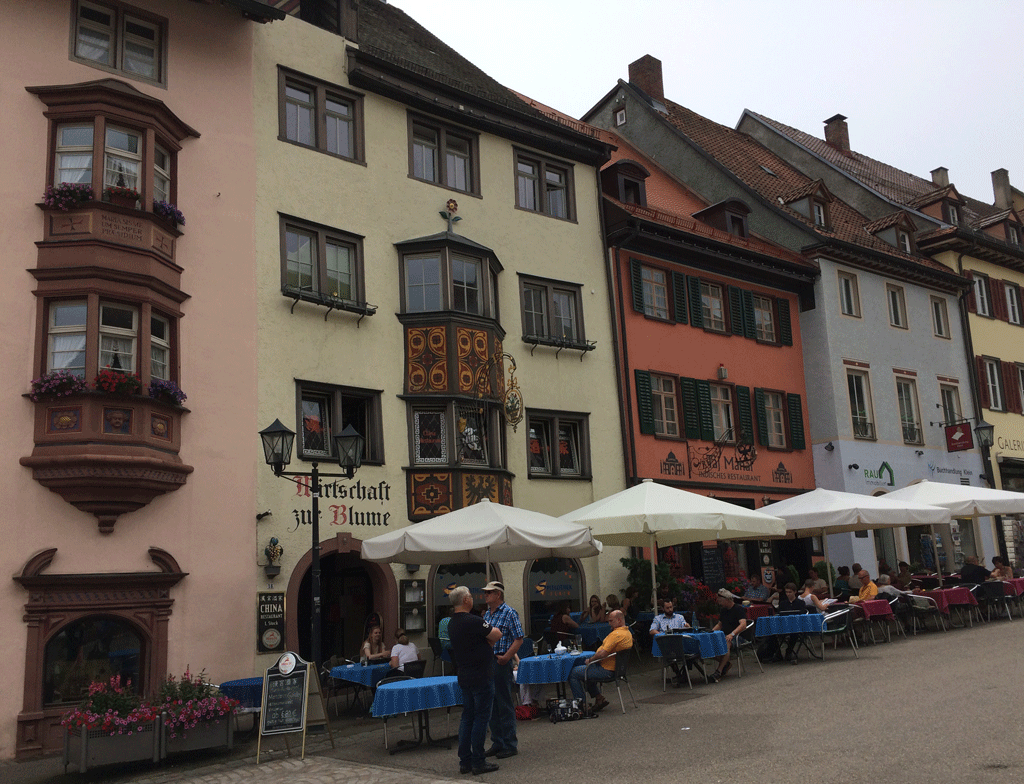
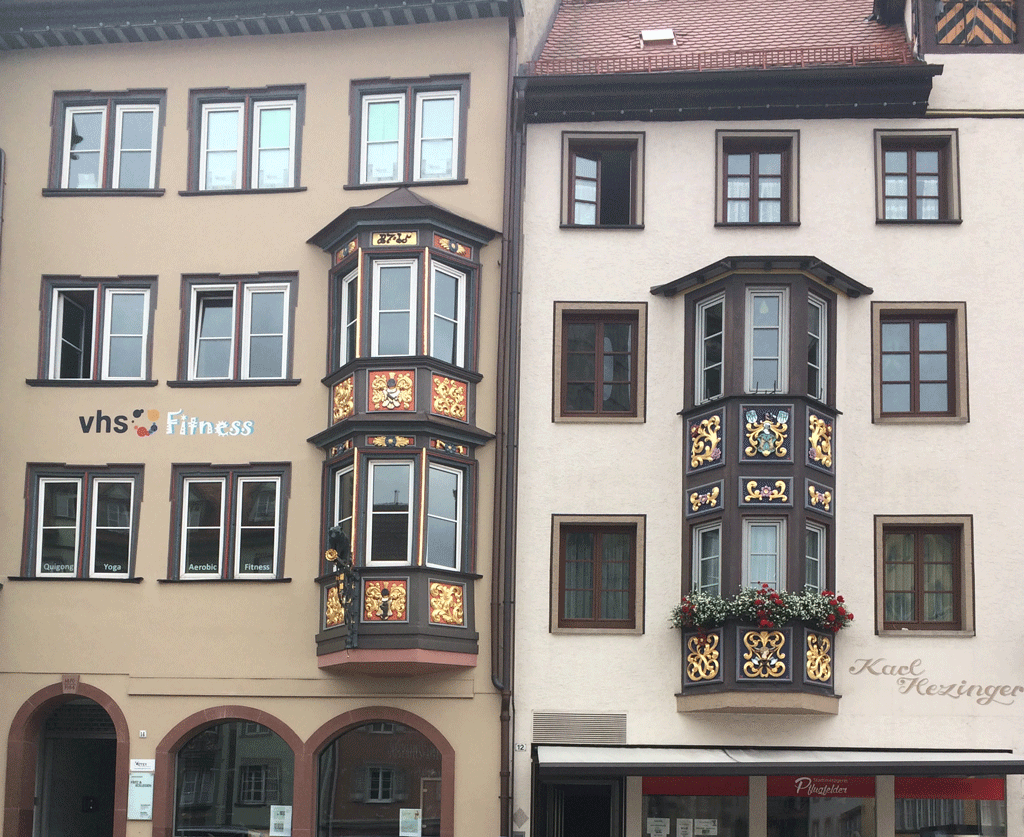
Rottweil is a delight to the eye with painted façades and decorated oriel windows everywhere. I am only sorry that the sky has been gradually filling with clouds.
The other side of the square in Rottweil
We call in at the tourist office and I ask whether there are restaurants other than the Greek, Chinese and Italian ones we can see on the main square. She says to go into the side streets.
More oriel windows in the main street
Jean Michel finds a terrace next to the church but is soon told that the kitchen is closed – it’s 1.15 pm.
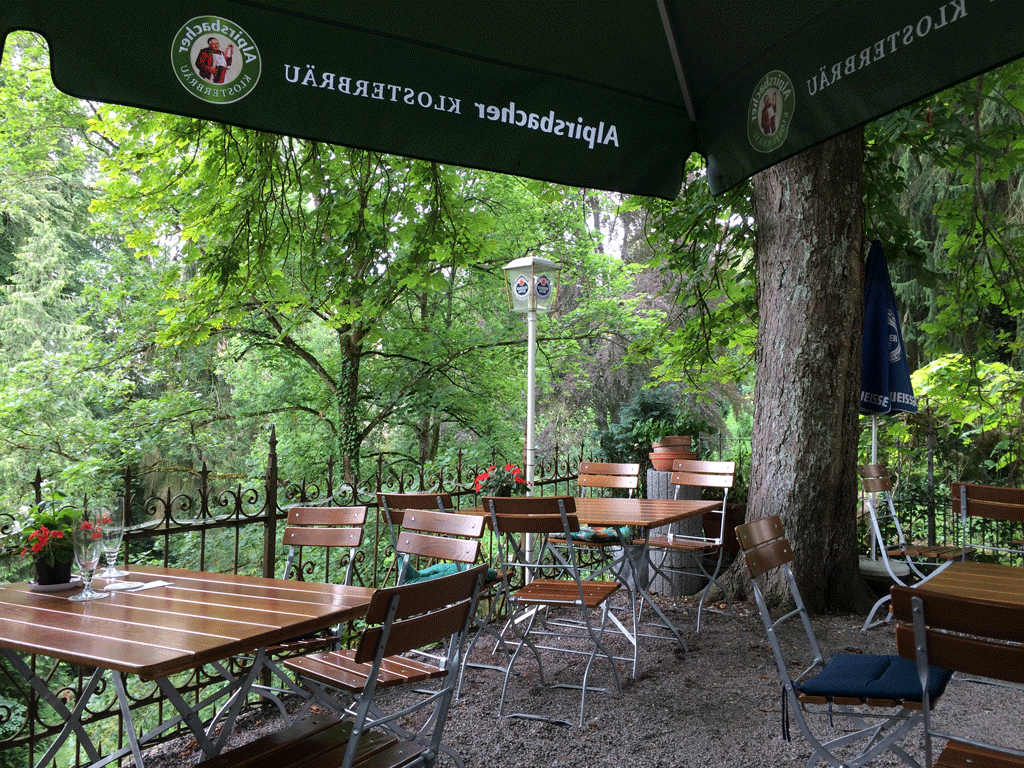
Our shady lunch terrace
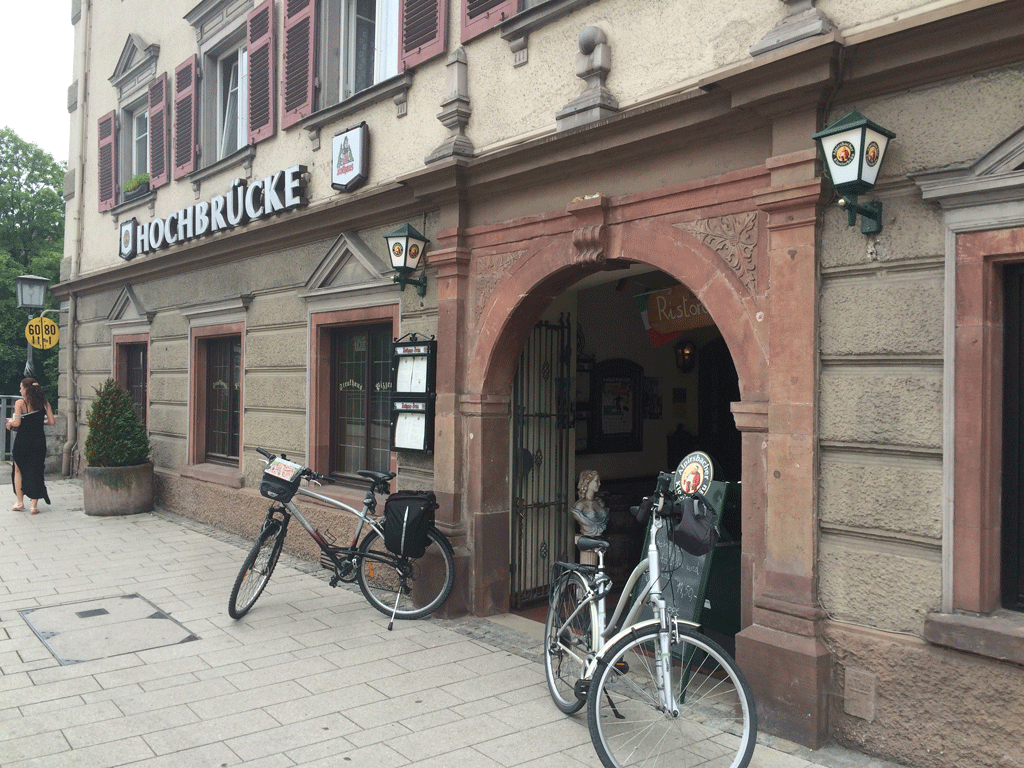
I suggest we go down to the bottom of the square and turn right as there is a park. Just before the bridge, we see a terrace but aren’t sure how to access it. I walk through a porch and out into a courtyard with a little tree-covered biergarten at the end. It’s an Italian restaurant as it turns out – but who cares? The setting is perfect. So is the food and the Italian wine.
Outside the restaurant – Hochbrücke – it looks German but is actually an Italian pizzeria
We see there is nothing in particular to visit in the town – we are not really interested in the Rottweiler dog museum – so go back to the main square to take some more photos.
The second fountain in the main street
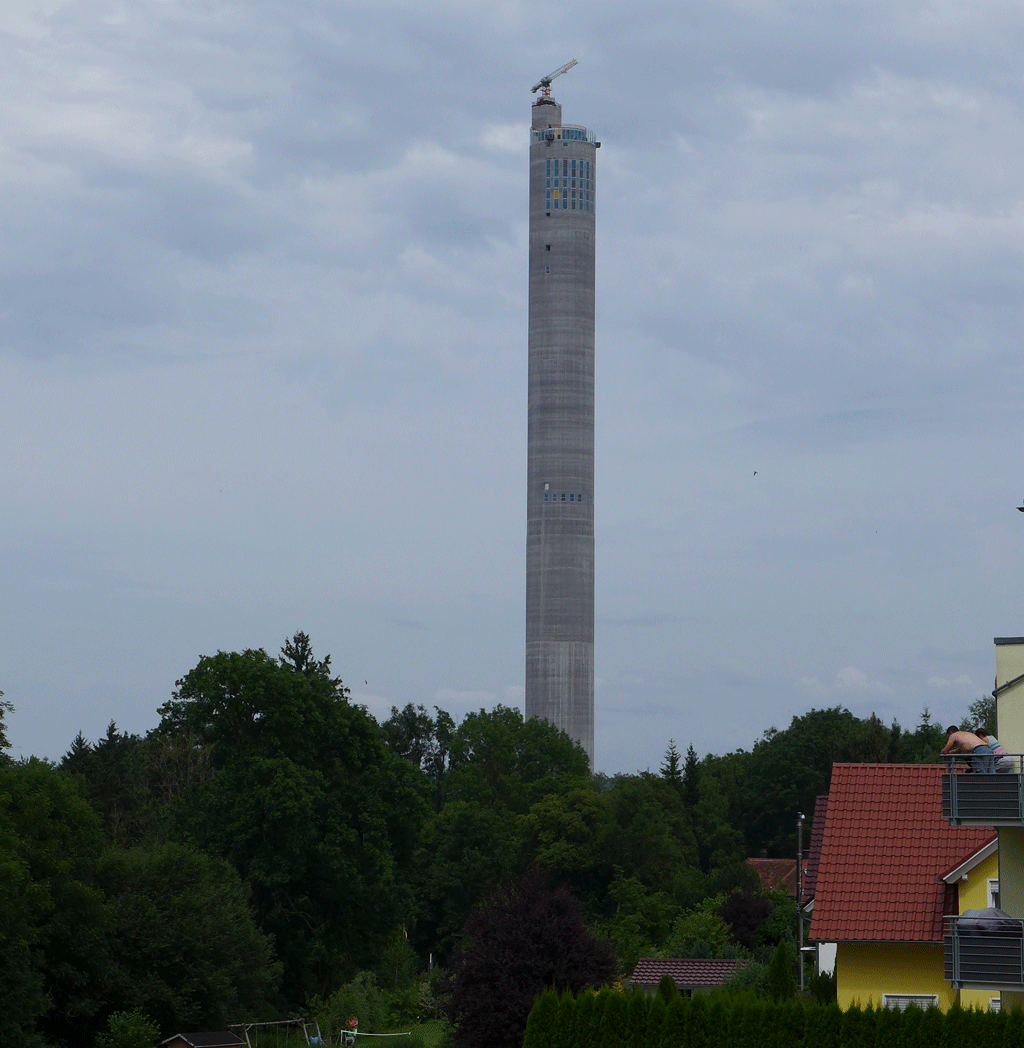
Jean Michel checks the map so we don’t have too many ups and downs before we get to our 1.7 km descent. We go past a tower-like construction we noticed before called Test turm. We later check it out on the Internet. The 246 metre high Tower of Light is a lift test tower whose construction began on 2nd October 2014.
The “Tower of Light” test tower just outside Rottweil
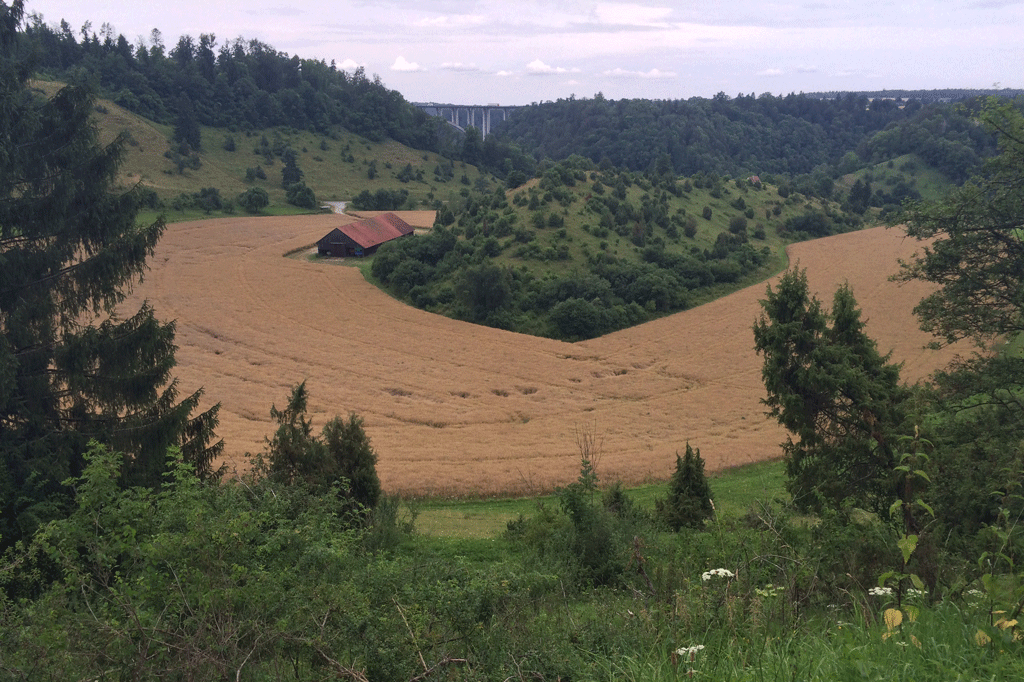
We arrive at the 1.7 km descent at 3.30 pm and this time, I can stop for photos! You can just see the motorway in the distance.
The view from the hill on the way down
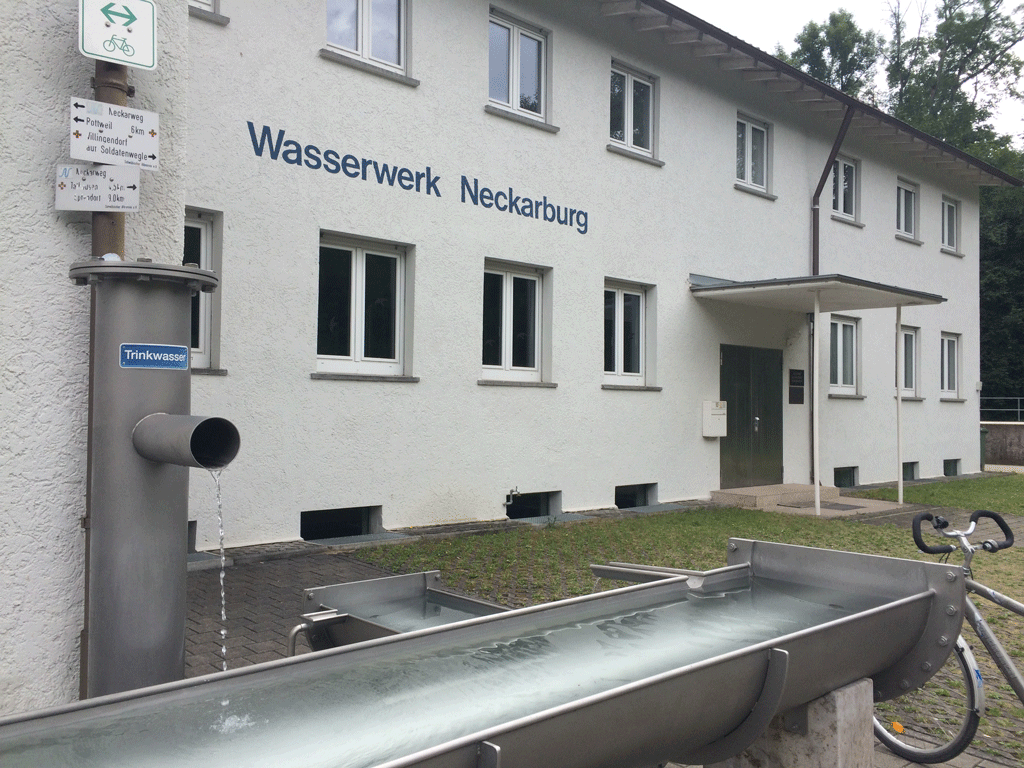
At the bottom we stop to fill our water bottles at a fountain provided by the local waterworks for cyclists and hikers. The water is nice and cold. We manage to keep it fairly cool with our Australian stubby coolers.
The waterworks where we fill up our water bottles
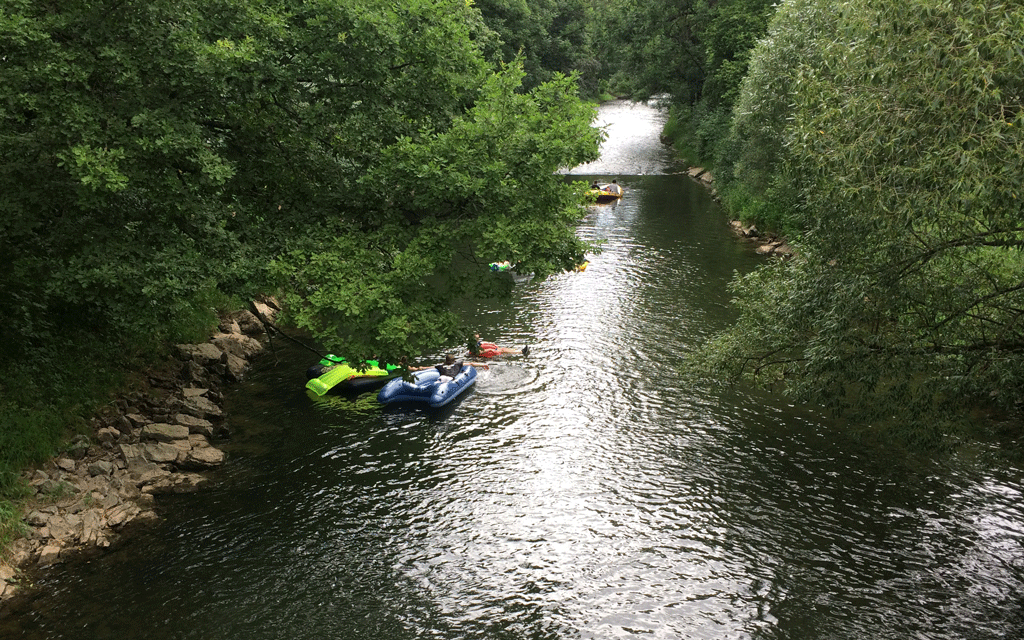
We ride past Altoberndorf and on to Oberdorf where we see our fourth covered bridge. There are riotous kids on rubber rafts floating along the river below.
Kids on rafts under the fourth covered bridge just outside Oberndorf
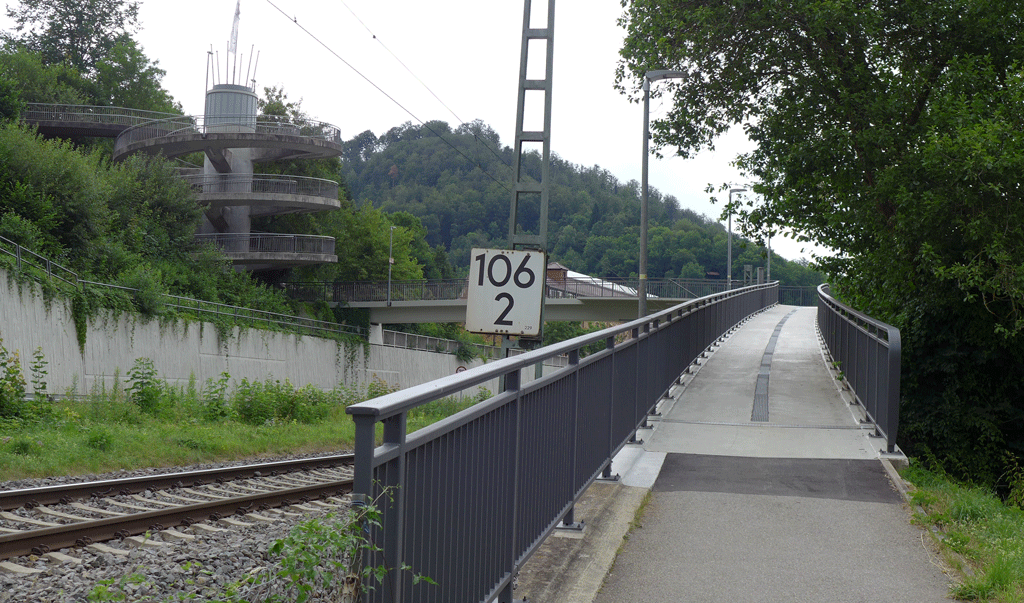
It looks as though the town is up on a hill. Oh dear. Our cycle path takes us onto a ramp that ends in a spiral. I’m walking this!
You can see the spiral bike ramp on the right
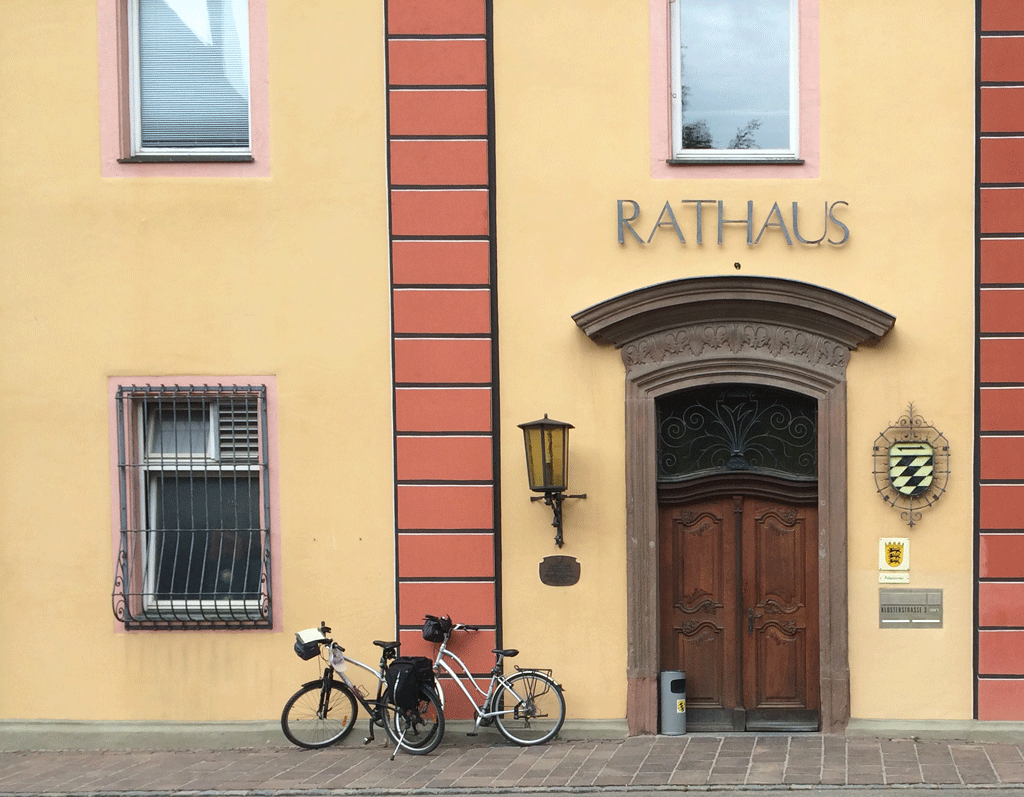
However, before we reach the spiral, there is a sign on the right directing us to the rathaus, Information Office and a church. It’s nearly 5 pm and no sign of life. I stay downstairs with the bikes while Jean Michel goes into the rathaus. I start looking at a guide book in French on the Black Forest that we bought in Rottweil. A man comes up and asks in English if I need help. I explain I’m waiting for my husband who is in the rathaus.
Outside the Rathaus in Oberndorf
“Have you visited the church?” “No, not yet.” “It’s nearly 5 o’clock, it’s going to close soon. Come with me”. I follow him, leaving the bikes behind unattached and hoping Jean Michel will not worry when he doesn’t find me. “Where are you from?” he asks. “Well, I’m Australian, my husband is French and we live in France”, I explain. He then says a few words in French because he had noticed the book I was reading.
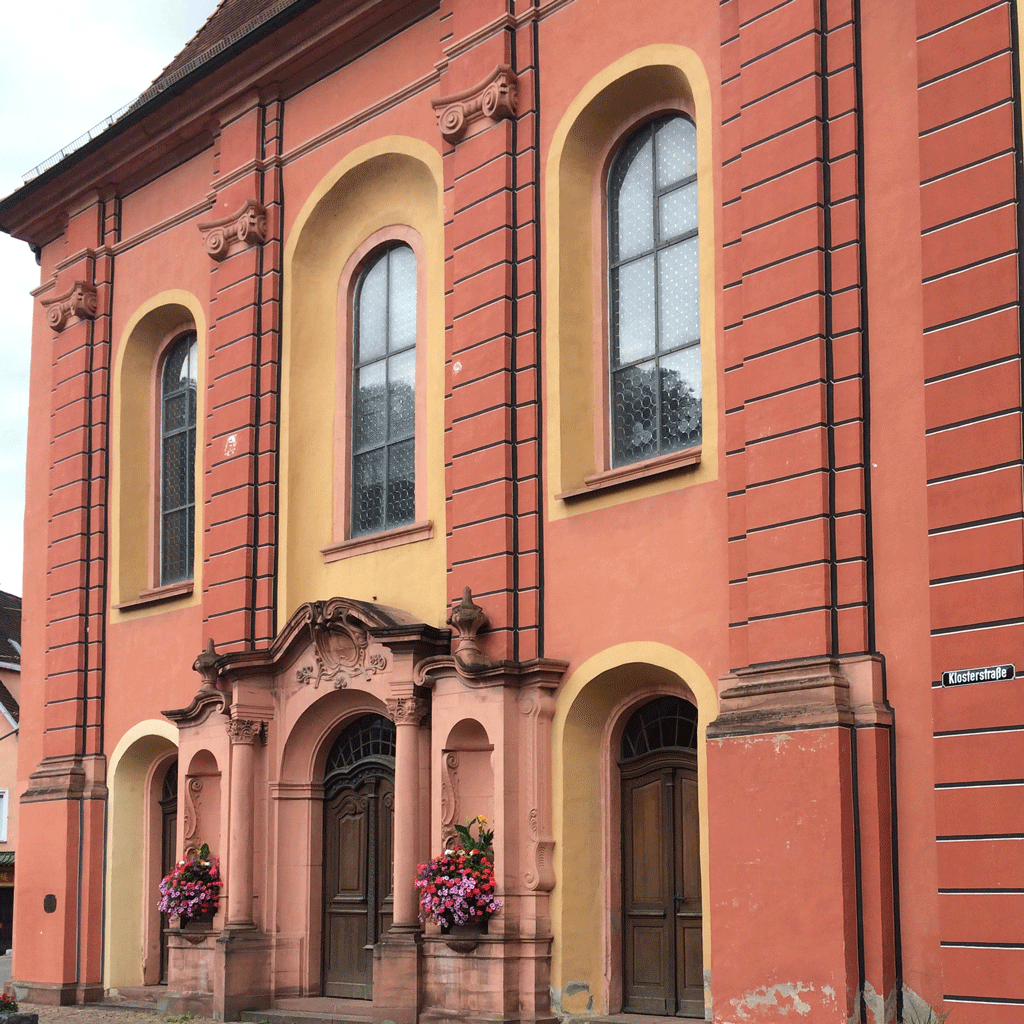
The church near the rathaus in Oberndorf
We can go into the church but only the narthex is open. The wrought iron gates leading into the nave are closed. “This is our town’s most famous place”, he says. “It’s a Christmas scene on the ceiling and a crucifixion at the end.” Jean Michel arrives at this point and I explain in French what’s going on. The man offers to find a key to get into the nave but we say we can see well enough from the narthex.
Inside the church in Oberndorf
He then explains that the town is famous for its church and the manufacture of Mauser weapons. No wonder it was bombed during the war!
The old town of Oberndorf
At my insistence we go up to the old part of the town although Jean Michel is not convinced there is anything up there. However, there are several pretty houses and, more importantly, an eis café. We choose our flavours (we know all the vocab now) and sit down on a nearby bench in a sort of kiosk to eat them. Two other people are sitting there as well and start asking us questions about our holiday, where we live, etc. This is probably the first time we’ve had a real conversation in Germany.
The fountain in the old town of Oberndorf
The sky is getting darker and darker and it’s also getting very windy. “Do you have rain clothes?” asks the lady. “Yes, we have our capes”, I reply. Thank goodness. We are just finishing our ice-creams when the first drops start to fall.
The owner of the eis cafe quickly putting down the parasols while Jean Michel puts his paper in the bin
We hastily put our capes on (Jean Michel does not refuse this time) and head for the ramp. I walk my bike down as I’m afraid it might be slippery. By the time we leave the town, it’s absolutely pelting down and doesn’t look as though it will let up soon. Suddenly, we realise that we’ve gone too far and don’t know where we are.
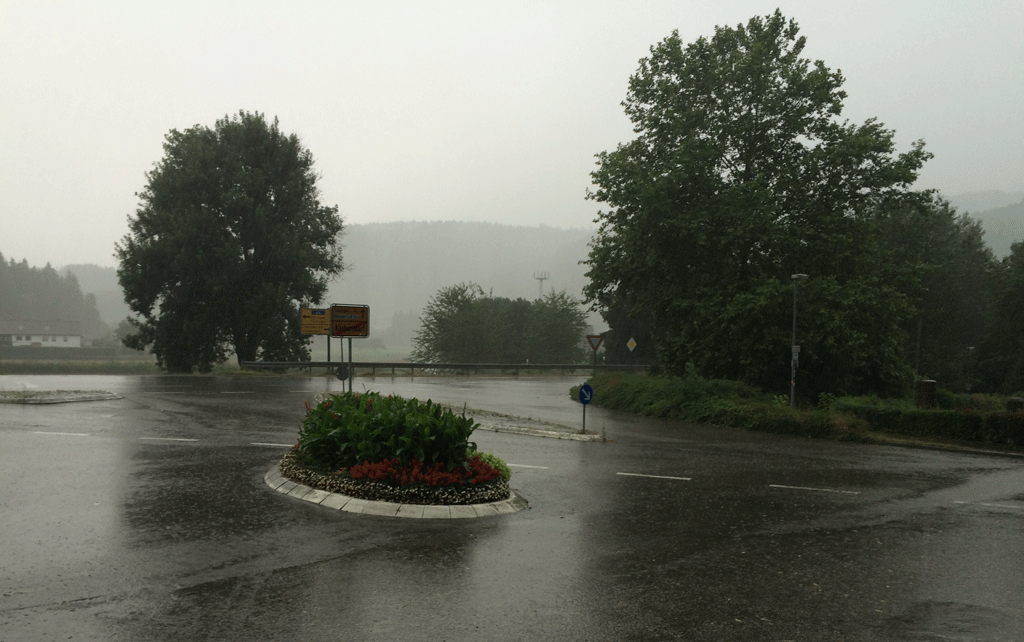
The rain pelting down while I am in the bus shelter
I see a bus shelter and we wait there for a bit. Jean Michel goes off to reconnoiter and eventually locates the underpass into Atloberndorf. that we missed It’s still raining heavily and the gutters are still flooded when we approach the car. I see a place where we can park the car while we put the bikes on without getting even wetter.
We are soaked from the thighs down and our sandals are swimming with water. Fortunately we have a suitcase of clean clothes in the car plus a second pair of sandals so are able to change before going home. It’s still raining when we leave. I make a mistake when entering the address in the Tom-Tom and we end up in Freundstadt. It takes another ¾ hour to get home.
Our cycling holiday in Germany is over and the weather seems to agree that it’s time to go back to Blois where the temperatures have improved considerably.
We have now cycled along the Danube, the Rhine, the Moselle, the Elb, the Romantic Road (the Tauber), the polders in Friesland, Lake Constance and the Neckar in Germany on four different occasions. The Danube and Lake Constance remain our favourites.
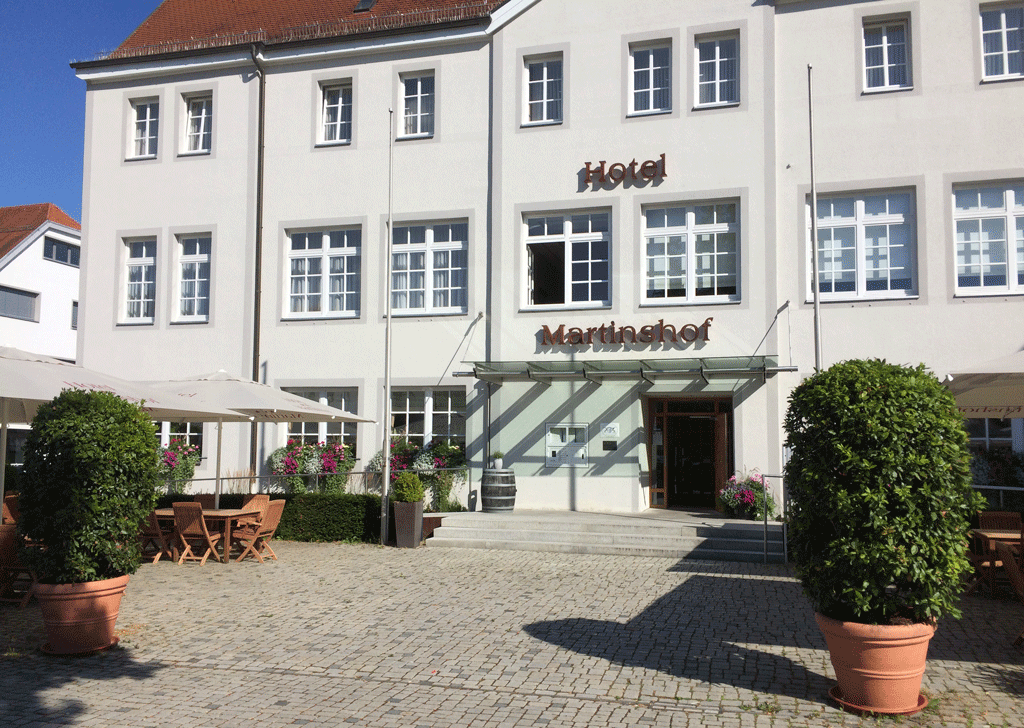
We seem to have scored with our hotel at last. It is well-located, right on the bike path, the room is spacious with a sofa, two chairs and a desk, the bed is comfortable (and there is even a double bed unlike most accommodation in Germany where two single beds are usually pushed together), it has black-out curtains, the floor doesn’t creak, the shower doesn’t have water spiking out every which way, it has real towels, the breakfast is excellent and the staff is friendly and accommodating. It’s called Martinshof in Rottenburg am Neckar and I can recommend it! We are staying four nights.
The Martinshof Hotel in Rottenburg am Neckar
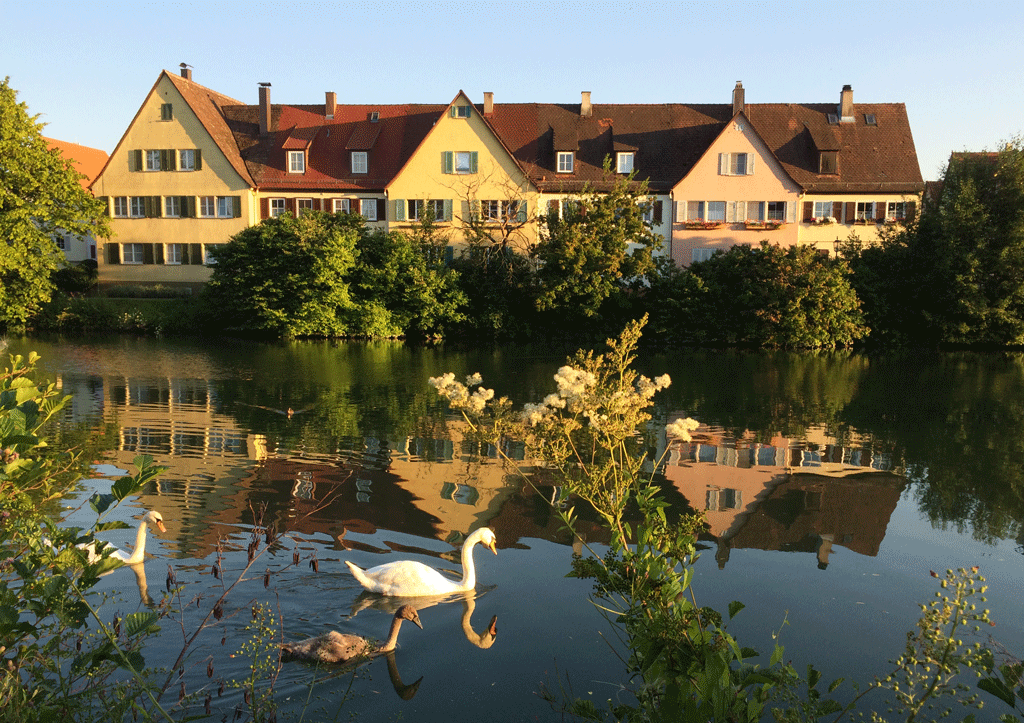
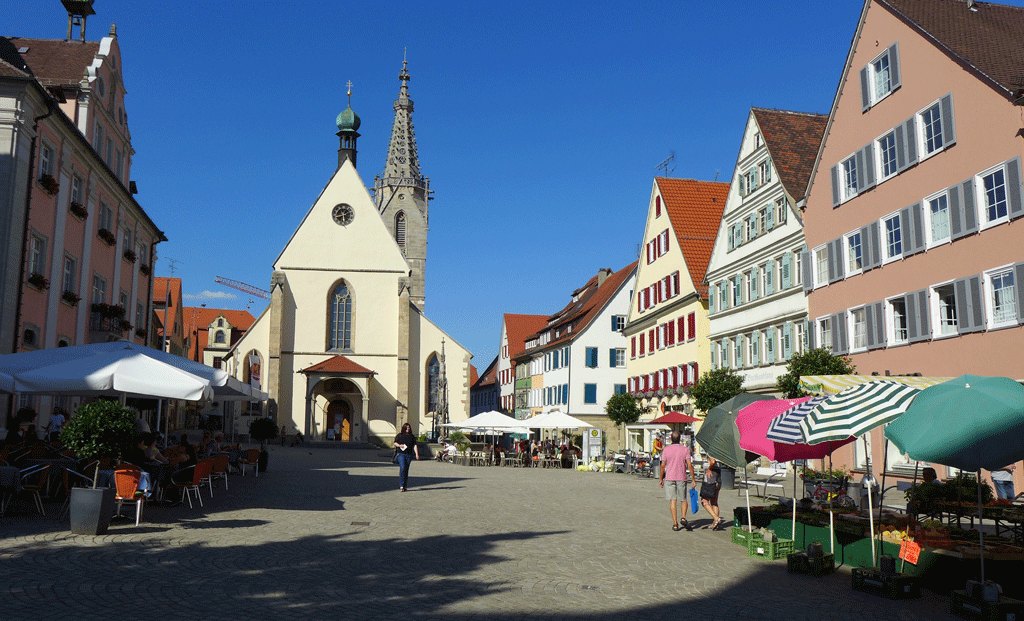
The little town of Rottenburg am Neckar has a marktplatz with several historical buildings and a path along the Neckar where we go to have our picnic dinner each evening as we don’t have a terrace. The light is perfect the first time we go there and I manage to take several stunning photos. It also has one of the best ice-cream parlours we’ve been to in Germany. The dark chocolate is to die for.
Along the Neckar in Rottenburg
The weather prediction for the three days we are staying here is warm and sunny, even very hot the first day. We make the effort to get up early (8 am) and are on our way by 9.30.
The marktplatz in Rottenburg
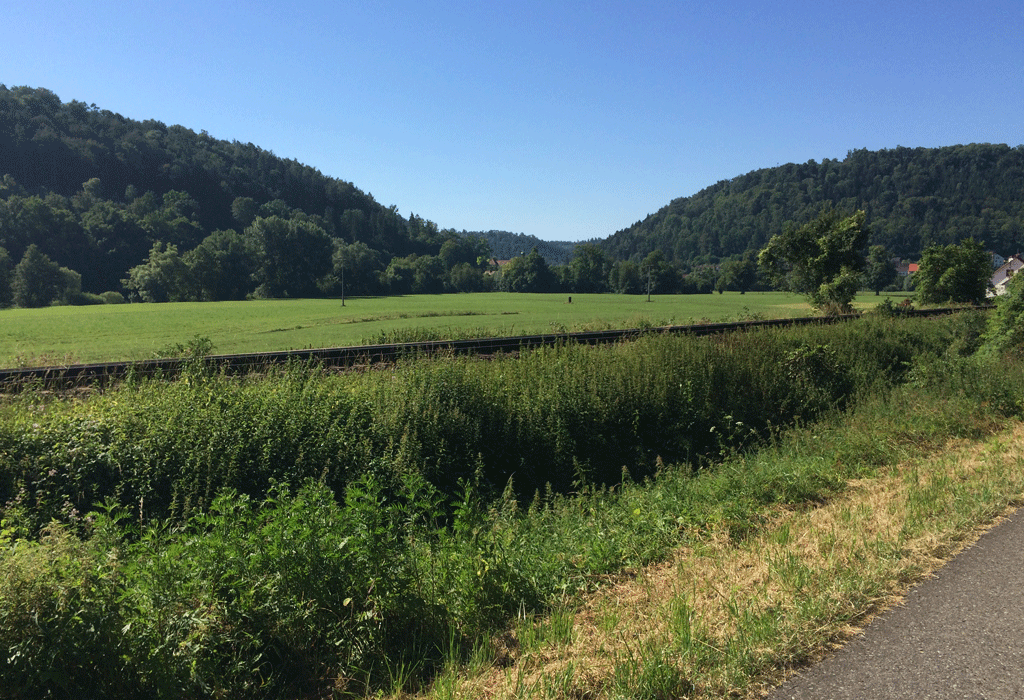
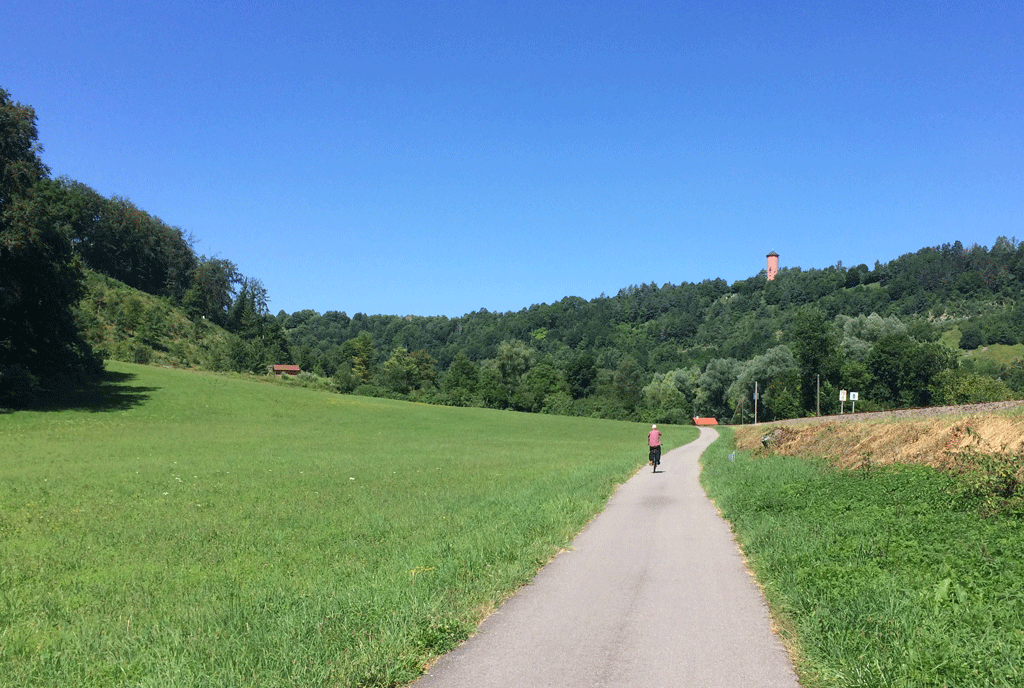
The Neckartal-Radweg path takes us through pretty countryside and is mostly flat. We look for a café in the first village, Obernau, to no avail, so push on to Bieringen which has a seemingly non-descript bakery/open air café that is obviously known for miles around as people keep pulling up in their cars and dashing in to pick up boxes and packets.
Cycling country outside Rottenburg
We enjoy our cappuccino but aren’t hungry enough for cake. By now it must be about 28°C.
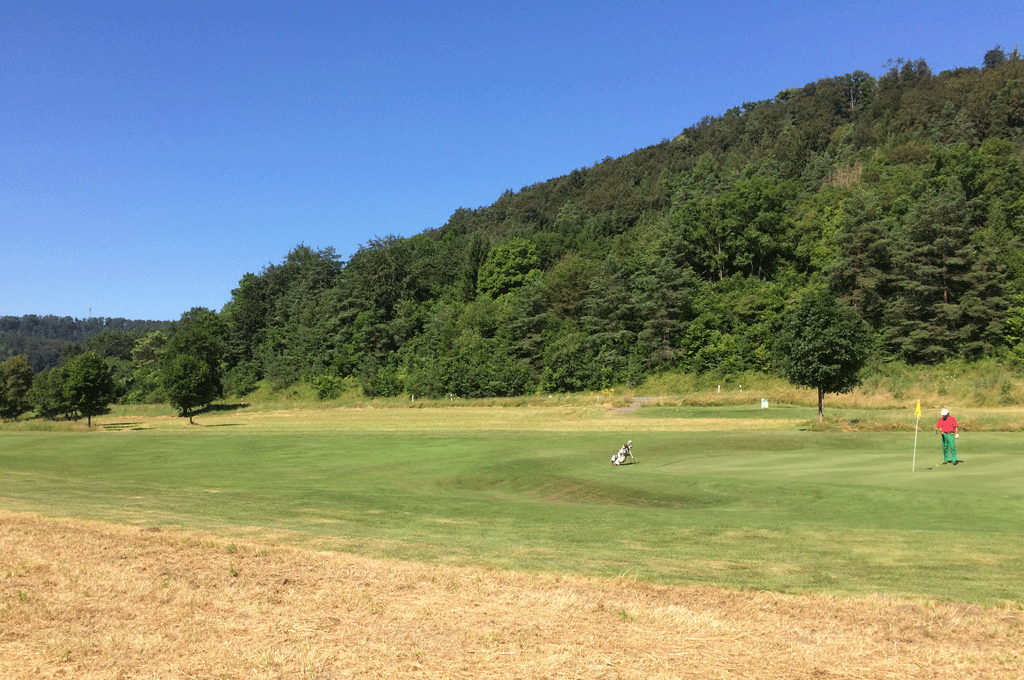
A golf course literally in the middle of nowhere
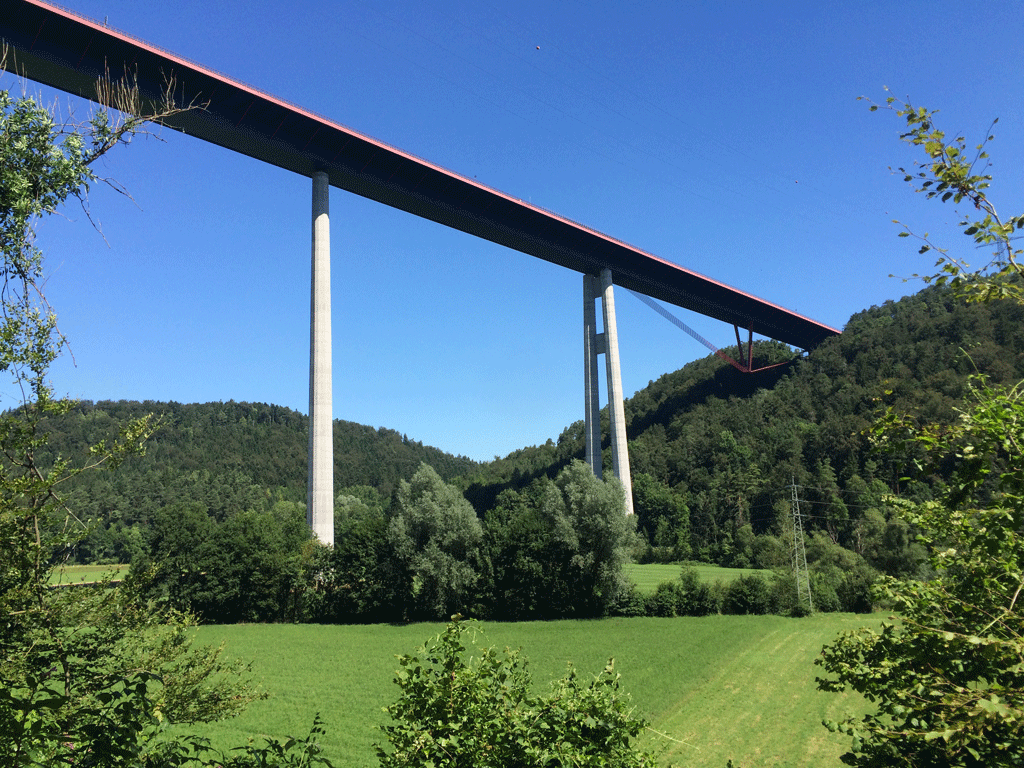
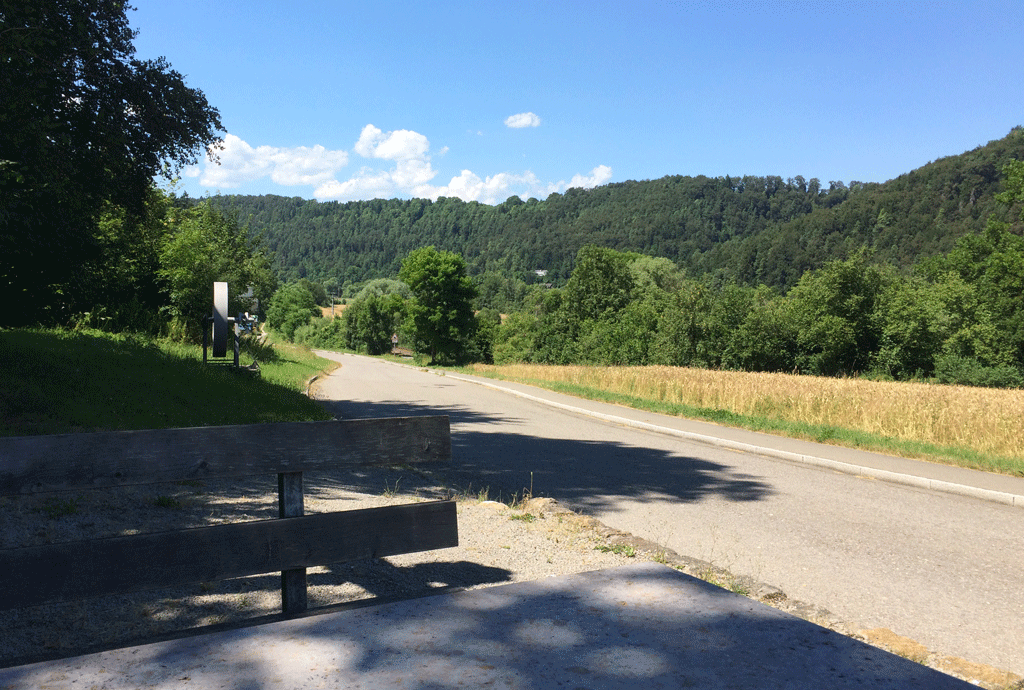
To our immense surprise, we go past a golf course. You’d wonder where the people come from. It’s getting hotter and hotter and we are positively sweltering by the time we reach Eutingen Im Gäu. From then on, we spend most of our time going up and down hills. When we see the motorway bridge above us, we’re not surprised.
The motorway bridge above the bike path
Fortunately, we then go through a wooded area or we may not have survived! We keep stopping to drink water which we keep chilled with our Aussie stubbie coolers.
The tower on the hill near Horb
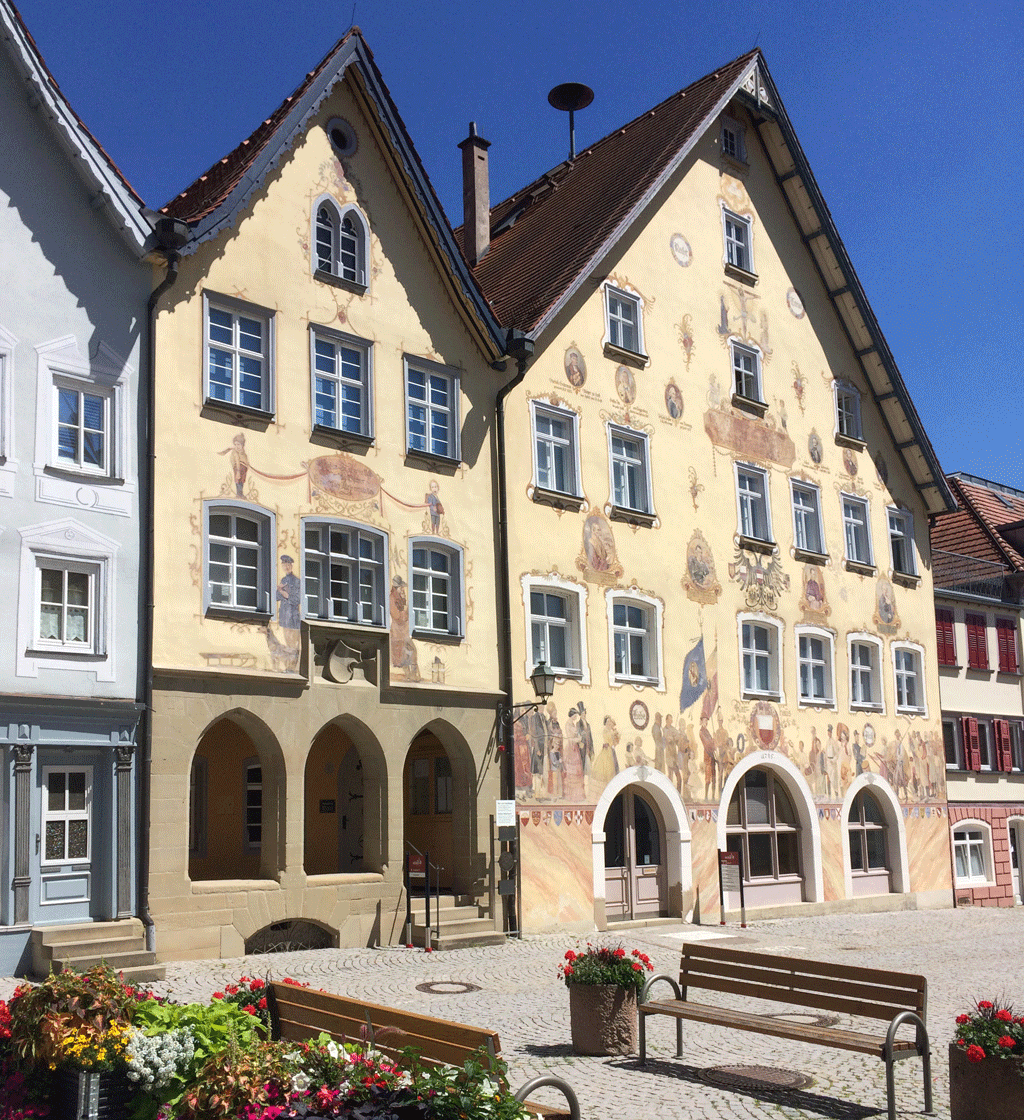
Our destination, Horb, is not exactly what we expected. First, it is on top of a VERY HIGH HILL which we walk up, of course. At the top, we see the painted rathaus and church but no restaurants so we go back down the hill.
The painted rathaus in Horb am Neckar
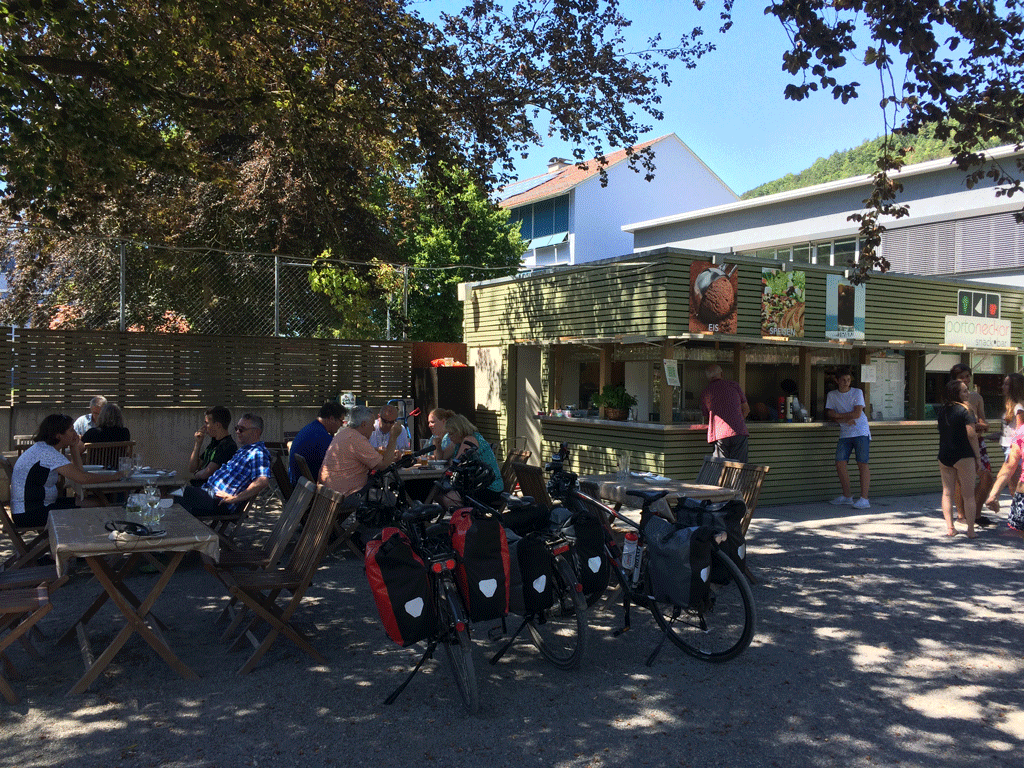
I suggest we ride along the river in the opposite direction to see what we can find. Jean Michel is very dubious but I insist. Suddenly we come across an outdoor Italian restaurant under shady trees. It has a very basic menu but we don’t care.
The shady Italian eatery
There is a high school just behind and the students are all cooling themselves off in the river a hundred metres on. We order wiener schnitzel to be on the safe side with French fries and they are excellent. Jean Michel tells me everyone is calling them “pommice”. We later learn it is the German pronunciation of pommes short for pommes frites, which means French fries in French. I feel sorry for the Italian mamma who’s cooking today. We are reasonably cool in the shade.
Chilling out on the roadside bench
I am dreading the ride back because of all those hills but in fact, they are not so steep in this direction. After an hour, though, I am happy to stretch out on a conveniently located wooden bench to recuperate.
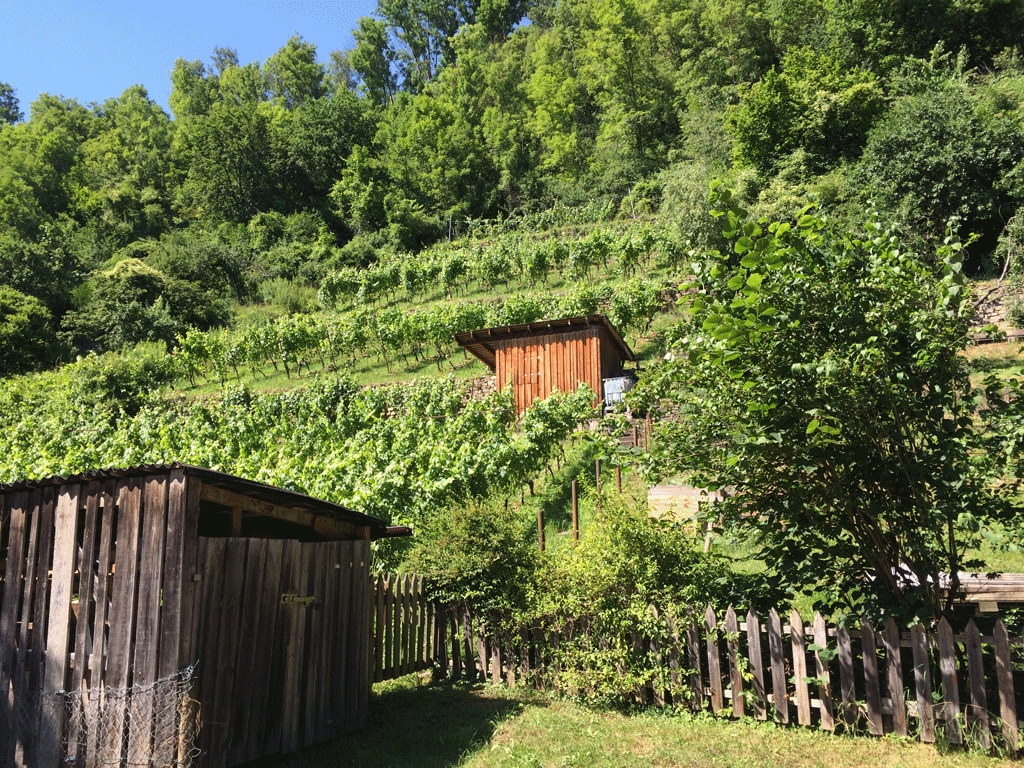
A vineyard on the way home
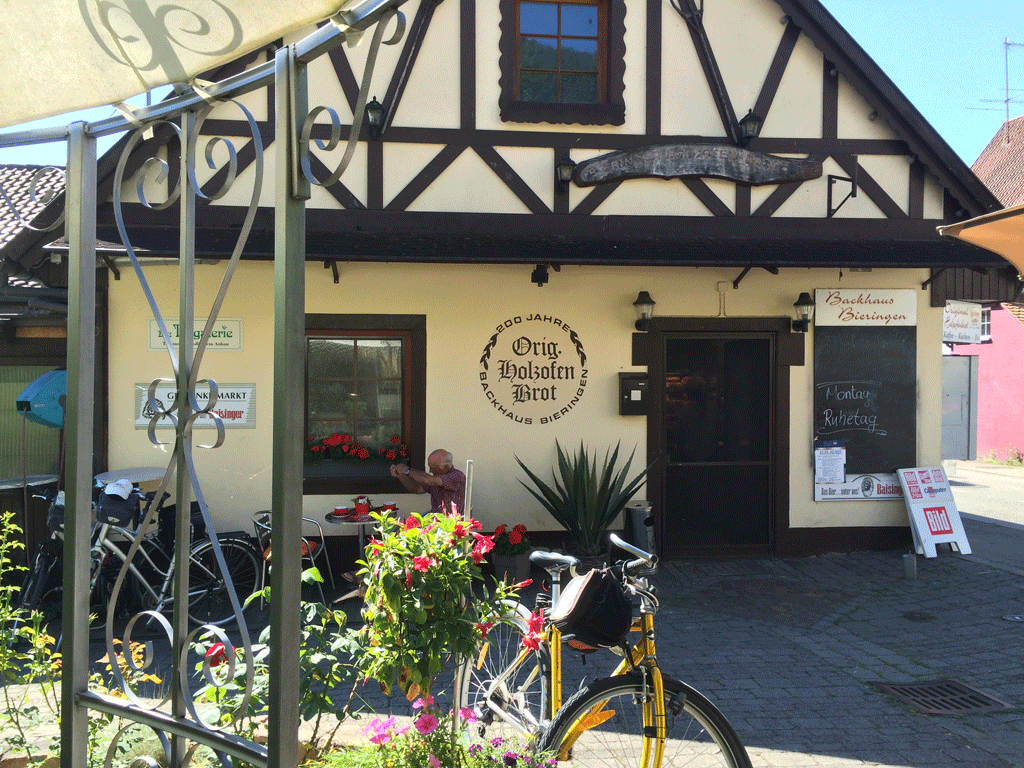
We call in again at the bakery in Bieringen. By now it is 32°C in the shade and we need to cool off again. Business continues to be brisk but we still don’t feel like eating cream cakes and my dictionary does not tell me what holzofen brot is.
The bakery in Bieringen
All we want when we get back after cycling 55 km in 4 hours is a cold shower. Our room does not have air-conditioning but we cool off along the river with an ice-cream. On the way home, we hear an impromptu concert in one of the squares.
It’s next morning and an intermittent fast day. Fortunately, it isn’t as hot and the temperature is only expected to get to 28°C. We shall have to drink a lot of water though.
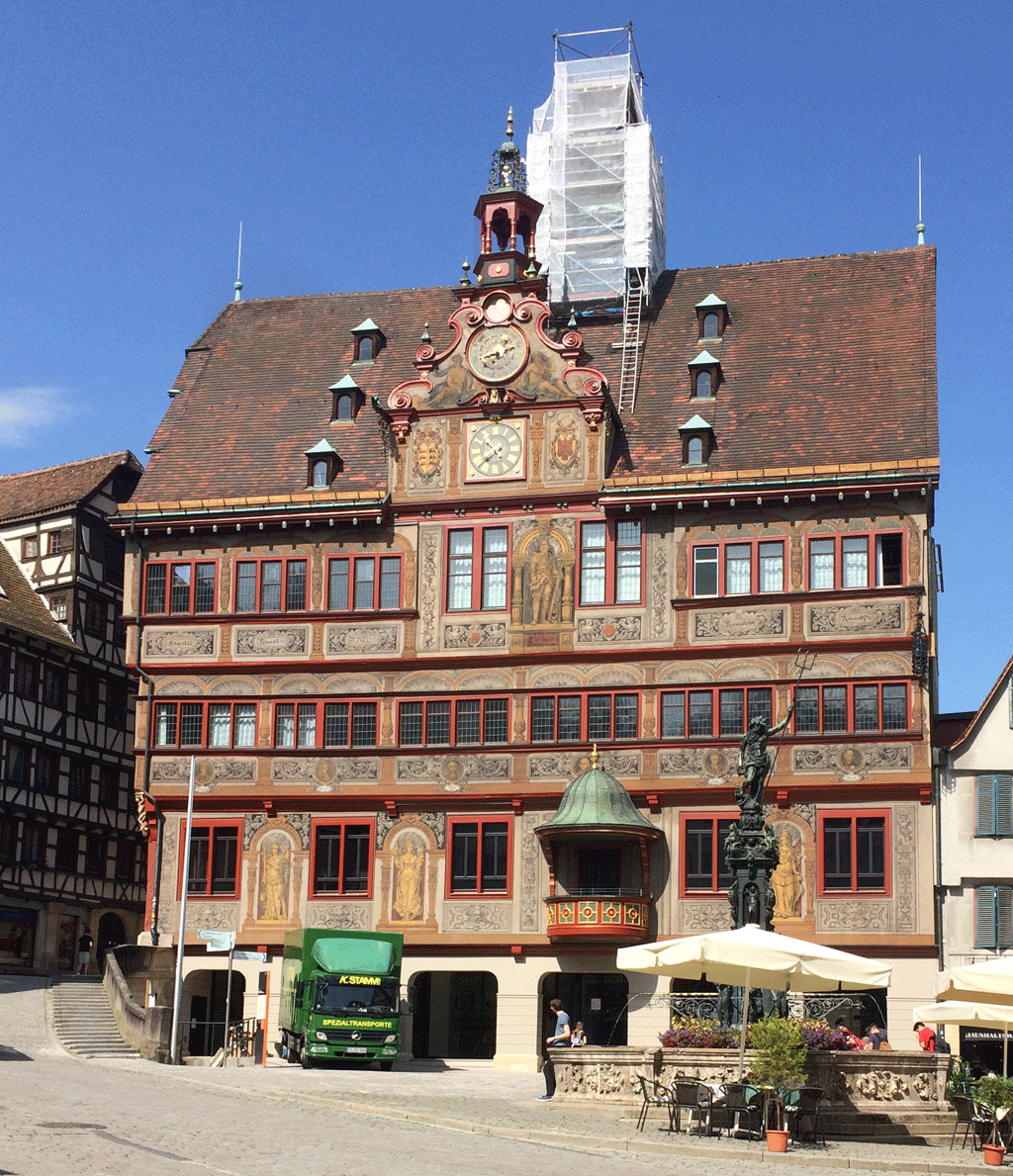
The beautifully painted rathaus in Tübingen – unfortunately it’s delivery time
We pack our picnic lunch and set out at 9.30 am. Initially, the route is not very exciting, but at least it’s flat. Tübingen, our main destination, is only 12 km away. Since it was not bombed during World War II, most of the houses are very old, many are half-timbered and some are painted.
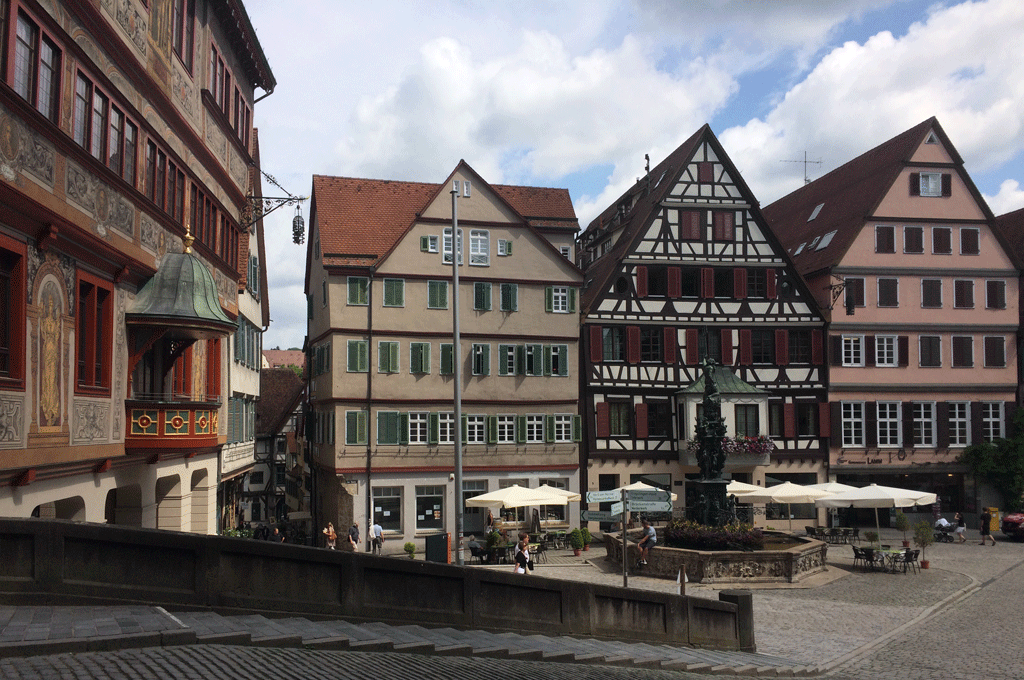
Marktplatz in Tübingen
The rathaus with its oriel window is particularly attractive.
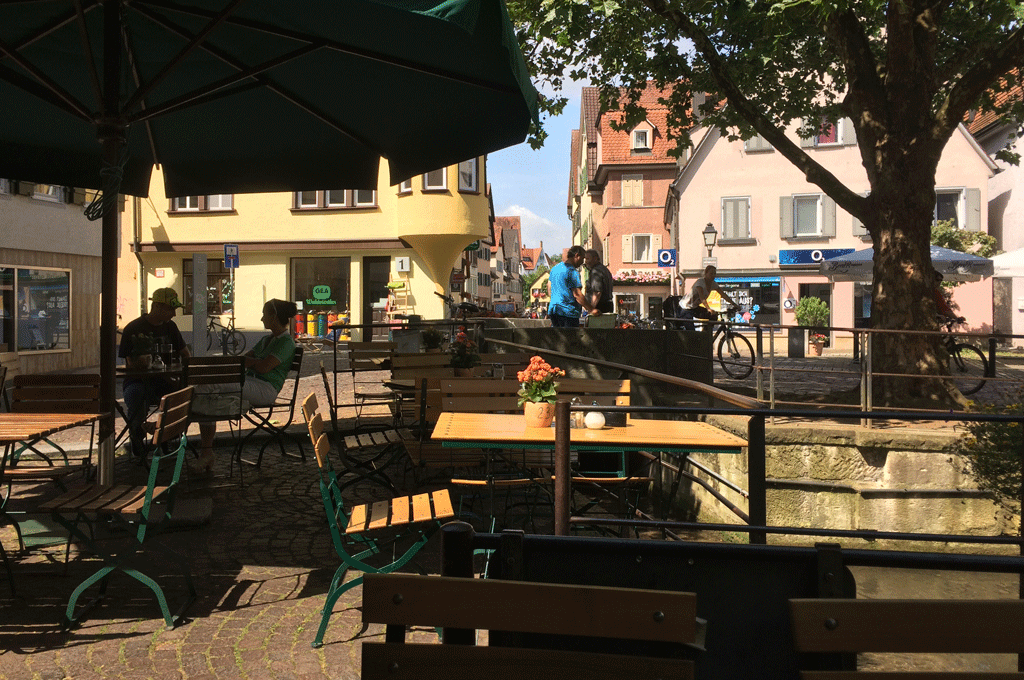
Having coffee next to the canal
We have an espresso next to a little canal to the accompaniment of live music from Budapest and watch two enormous trucks try to get past each other.
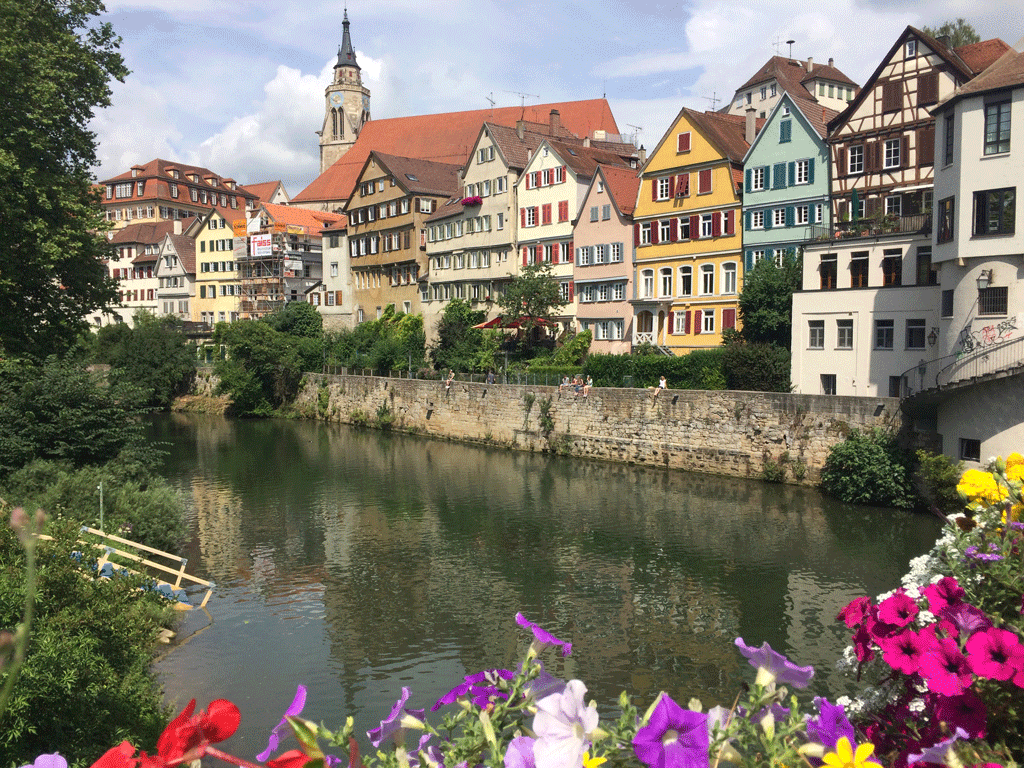
Houses along the Neckar in Tübingen
After visiting the main sights in the upper part of the town, we cycle down to the tourist office just next to the Neckar Bridge. Tübingen has a population of 66,000 people, one third of whom are university students. They seem to be everywhere!
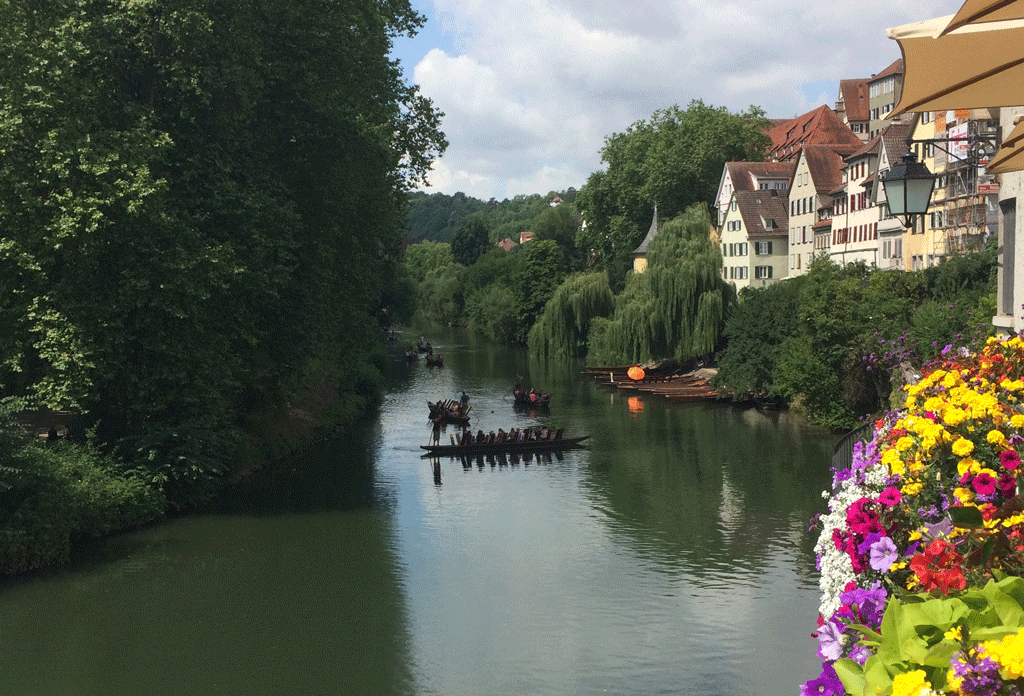
Punts on the Neckar
We see gondola-like boats on the river which apparently are the local tourist attraction.
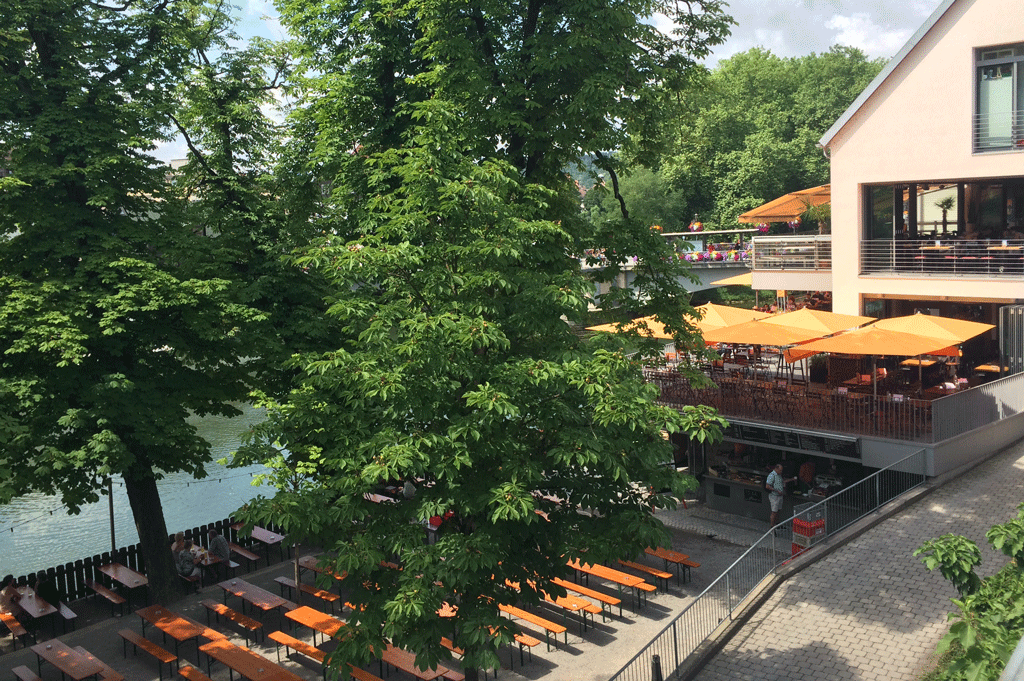
A biergarten along the Neckar. What a pity it’s an intermittent fast day!
As we haven’t determined where we are going next, I ask the man in the tourist office to suggest something to visit within a radius of 10 km. He gives me a brochure on Bebenhausen monastery and castle which is 6 km out of town.
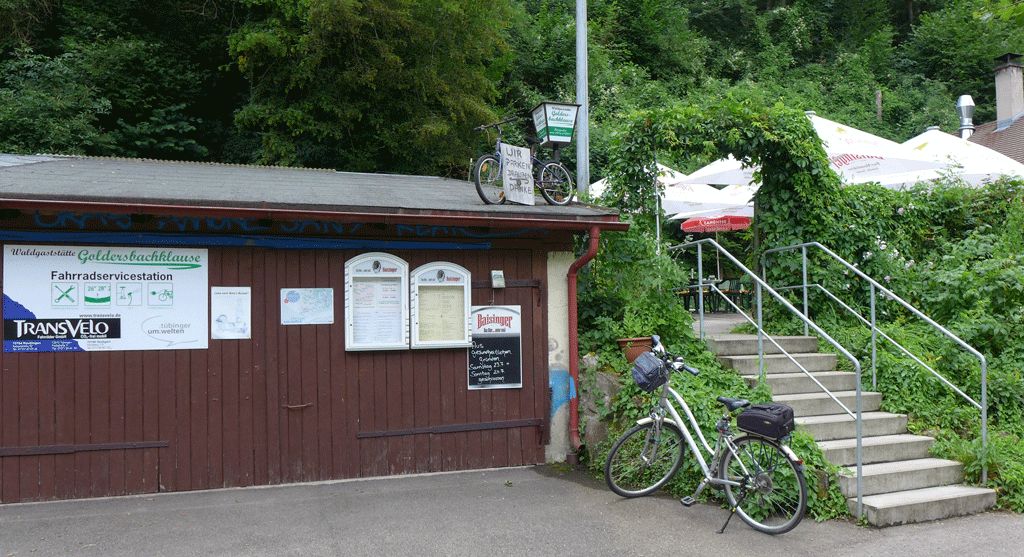
The bike café on the way to Bebenhausen
On the way, we come across a little café on the bike path and have an espresso. Dark rain clouds are threatening and I haven’t packed our rain capes. In the little wood just after the café, there are definite signs that a shower that has already taken place. Let’s keep our fingers crossed.
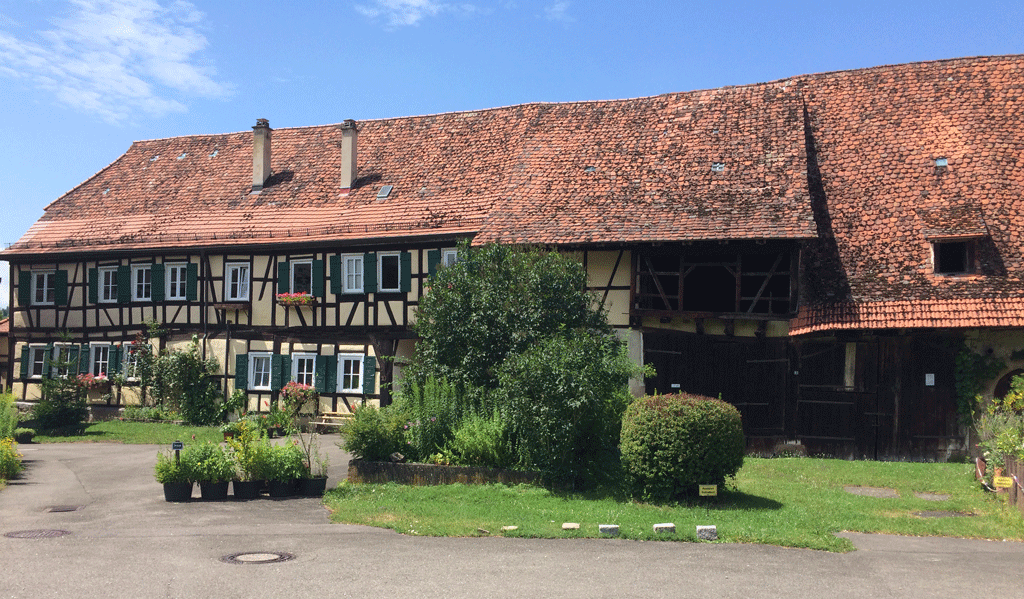
One of the houses in the village of Bebenhausen
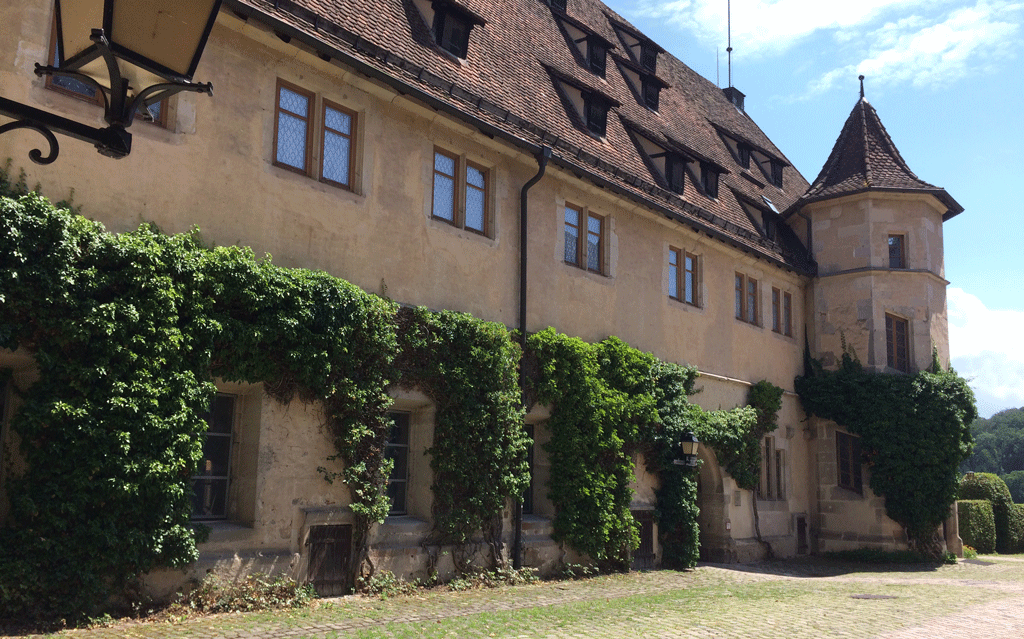
When we reach Bebenhausen, we are enchanted. I don’t understand why the brochure only shows the rather drab inside of the castle and church when the village itself is so pretty.
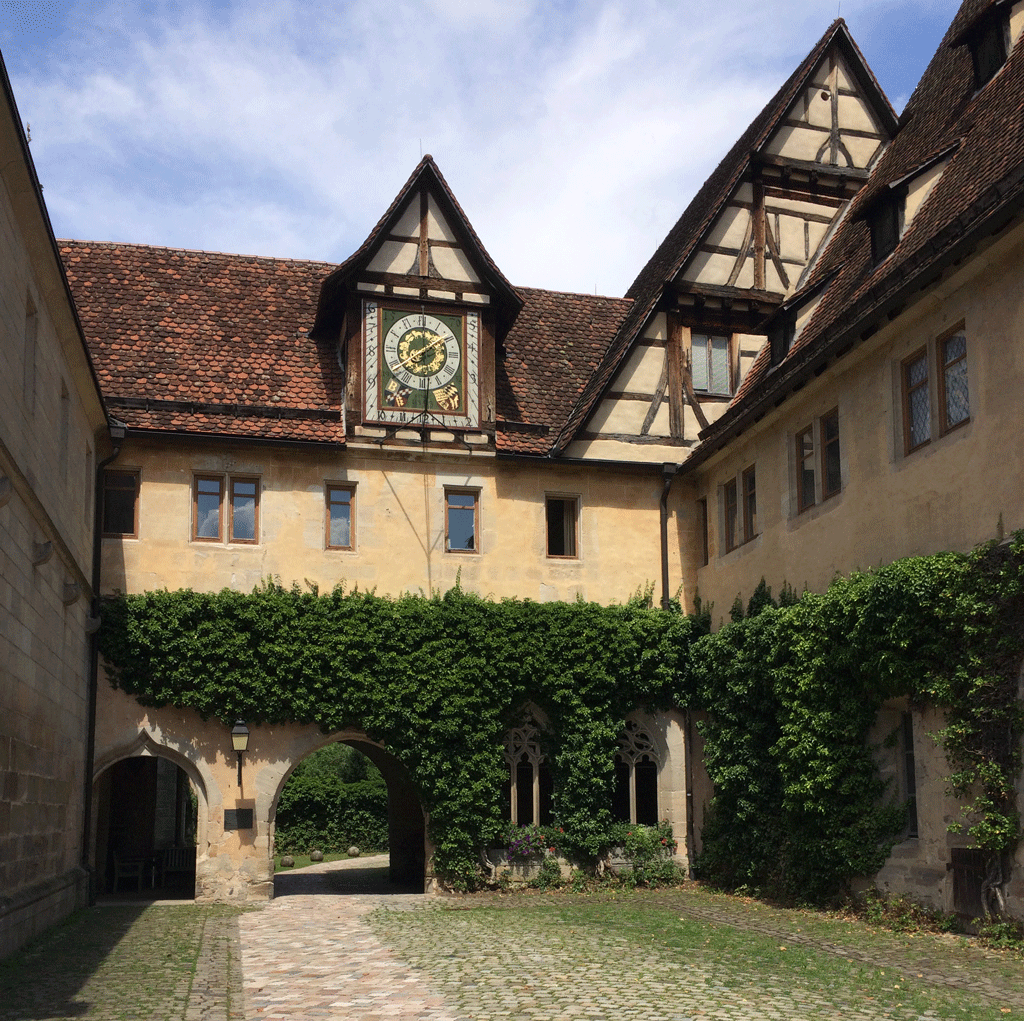
The clock on one side of the abbey
Although it is not teeming with tourists we are not on our own. There are two groups of schoolchildren and two groups of adults which makes it difficult to take photographs!
Another view of Bebenhausen
We stop off at Tübigen on the way back to visit the cathedral because it has a flamboyant gothic jubé. There are some interesting wooden statues at the end of some of the pews.
The jube in Tübingen cathedral
We’re back at our hotel by 4 pm, having cycled 42 km in 3 hours 20 minutes in near-perfect weather.
Traditional music in Rottenburg am Neckar
We have dinner along the river as usual, but no ice-cream because it’s an intermittent fast day. As we reach the marktplatz we can hear music. We’ve arrived at the tail end of some sort of organised event but it’s good to know that our little town is so active.
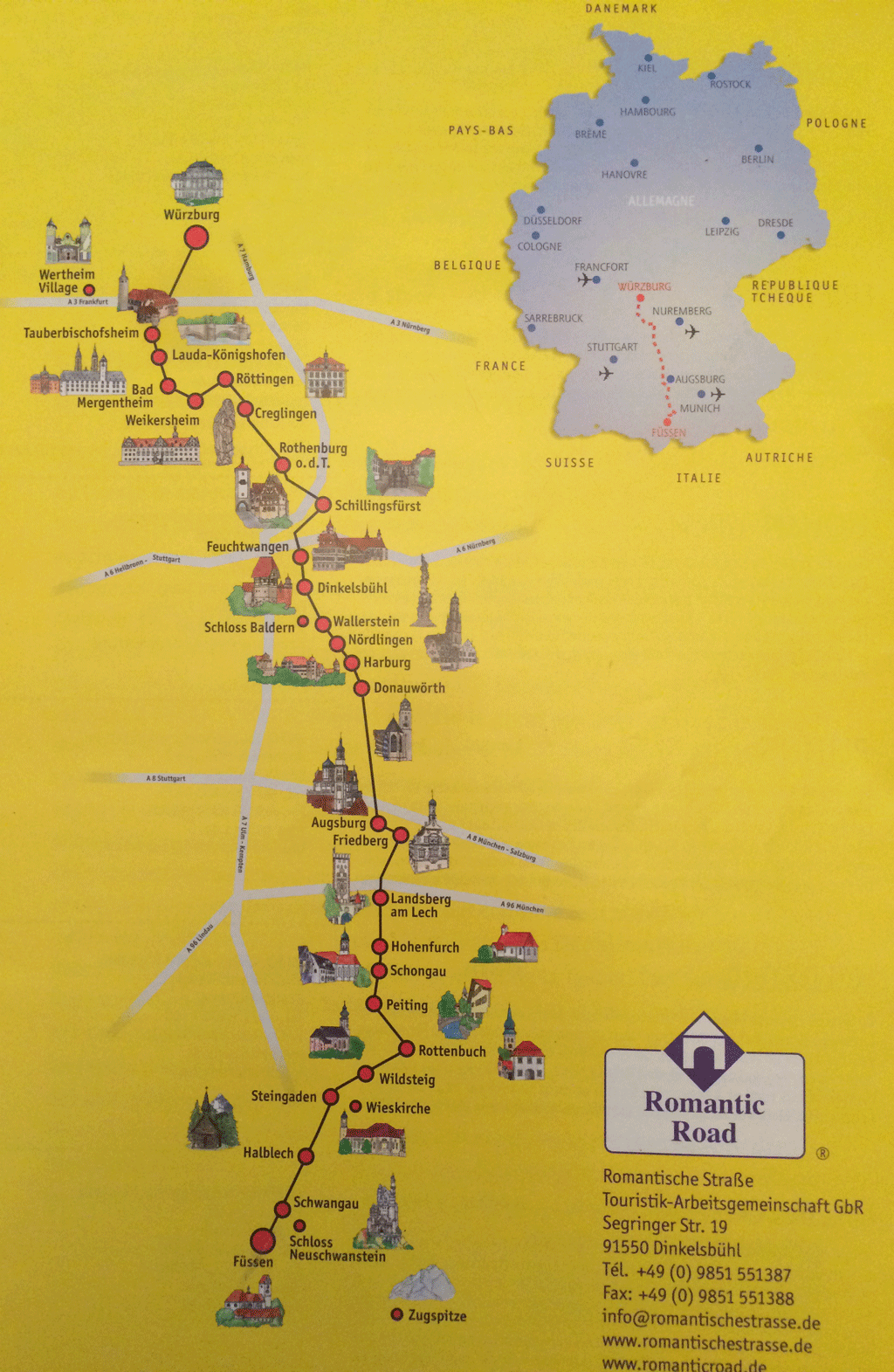
We have come to the end of our cycling tour of the Romantic Road and have a week left before we have to be back home in Blois. We look at the map to see where we can do some more exploring by bike. The Neckar river starts in Villingen-Schwenningen in the Black Forest and joins the Rhine in Mannheim. We manage to find a Bikeline map of the Neckar Valley and decide that Rottenburg am Neckar looks like a good base for four nights.
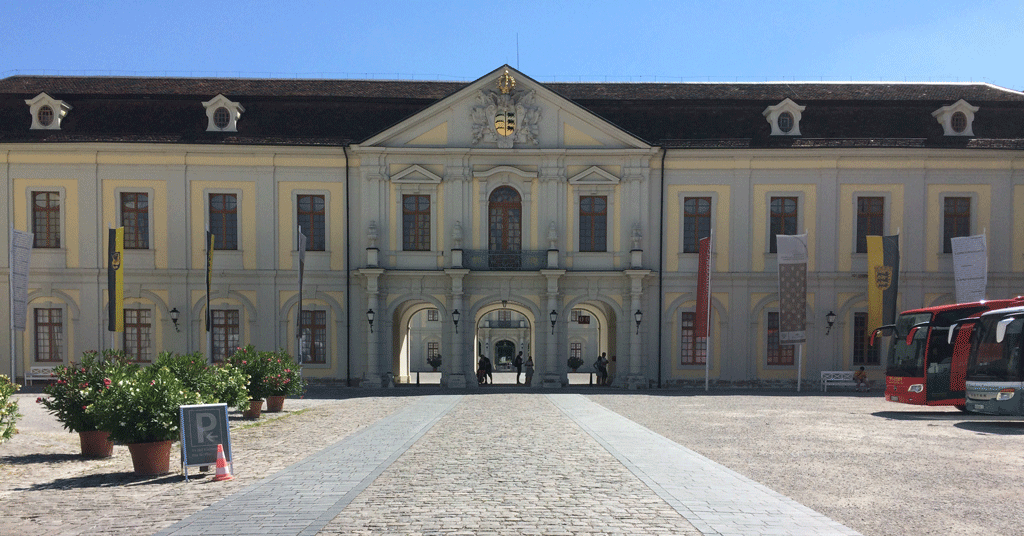
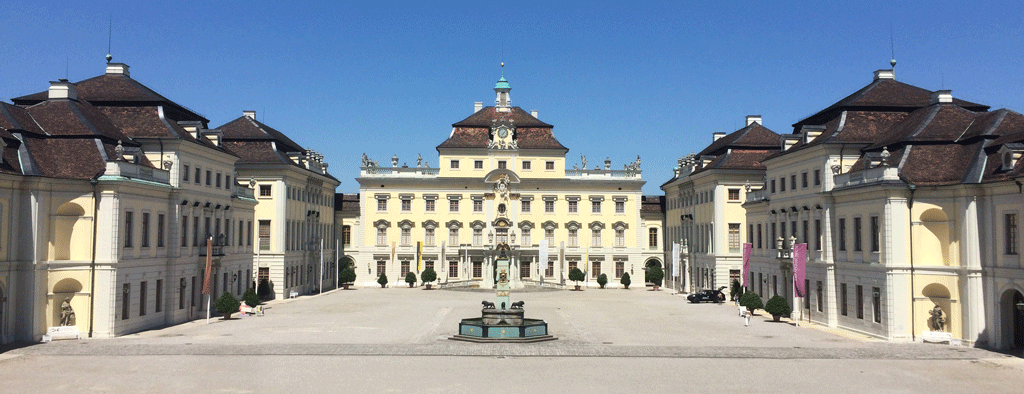
The main façade of Ludwigsburg Palace when you first see it
Ludwigsburg which is on the Neckar just north of Stuttgart looks like a good lunch stop. It has one of Germany’s largest Baroque palaces. It started off as a hunting lodge built by Ludwig of Württemberg at the beginning of the 18th century. Over the years it was expanded and improved until it became a royal residential palace.
Cappuccino time
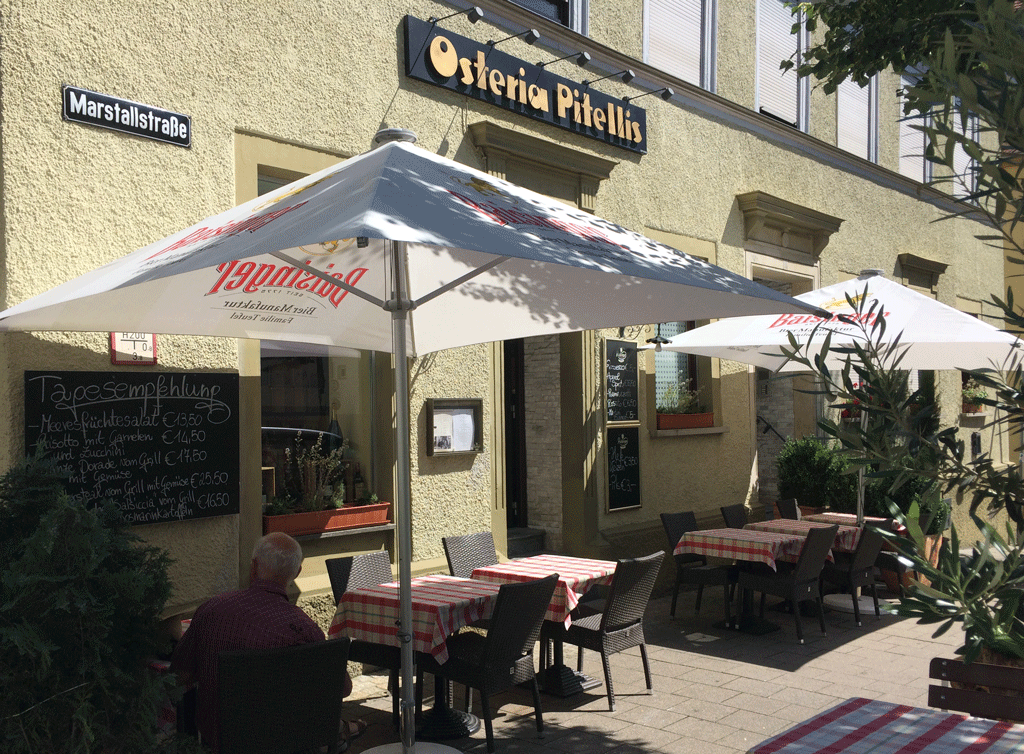
After parking in the covered carpark in the large shopping centre opposite the palace we have an excellent cappuccino in an Italian osteria where everyone speaks to us in Italian. When we arrive at the palace at about 11.30 am, we learn that we have to join a one-hour guided tour. The next one in English is at 1.30 pm, which is a little annoying. We buy our tickets at 7 euro a piece and decide to have lunch into the very extensive gardens. But the entry is another 8.50 euro each which sounds ludicrous so we go into the little town centre instead. The heat is excruciating by now.
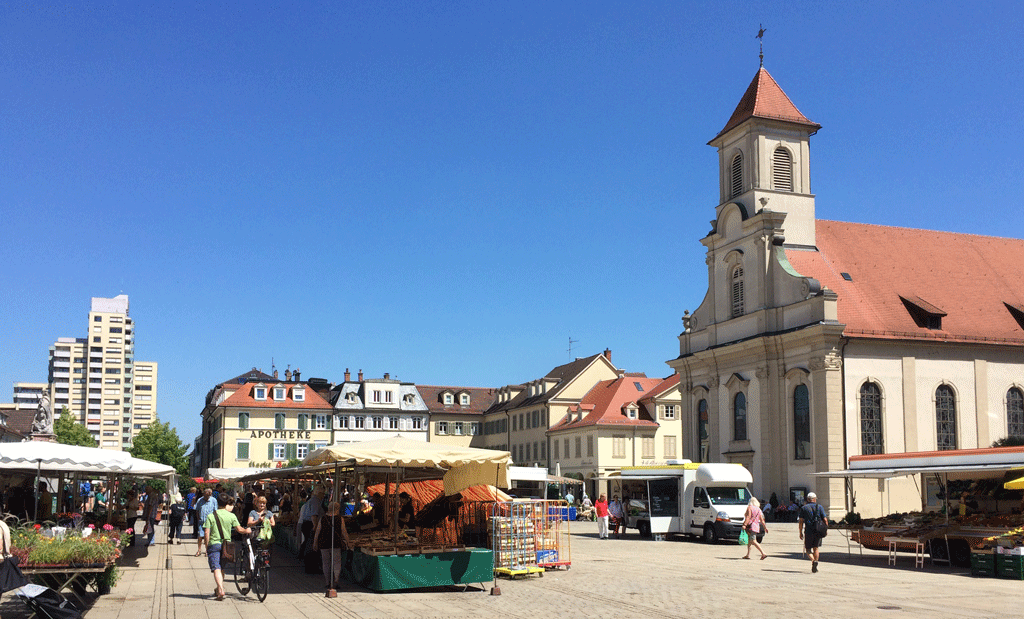
The marktplatz in Ludwigsburg on market day
There is a fresh market in the main square which only seems to have cafés and no restaurants but we eventually find one that serves salads and pasta and settle for that. Its main recommendation is that it is on the shady side of the square. We buy some tomatoes and fruit before we leave. The vendor’s daughter tells us that her cousin is going to Australia for a year.
The other side of marktpltaz showing the modern buildings behind
Our tour begins on time and our guide speaks good English and is very knowledgeable. Considering the time he spends on each room and in answering people’s questions, I don’t see how it can only take an hour. We can’t take photos, as usual, and Jean Michel has a description of the visit in French.
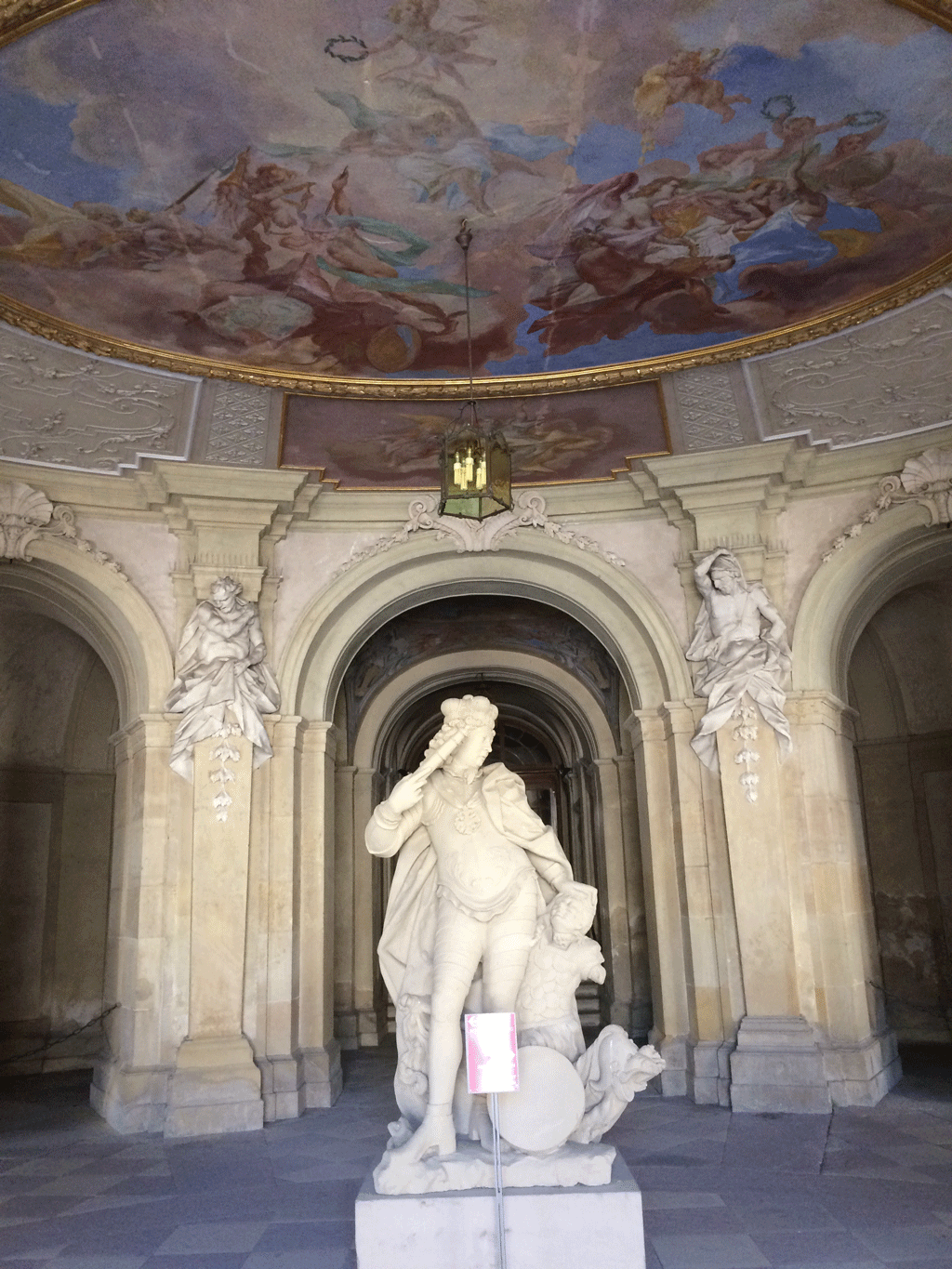
One of the baroque ceilings that still remains on the ground floor
The castle consists of 452 rooms and 18 buildings but we are only visiting the Queen’s rooms and theatre. The main building has a series of rooms that connect up and form an enfilade that is 150 metres long. During the Empire period, the Baroque décor was considered to be outdated and the beautiful ceilings painted over. We find this part very boring although I hear some other people saying how pretty it is.
The best view of the original building from the new wing
However, in the oldest part (the hunting lodge), the original Baroque decoration remains and is much livelier.
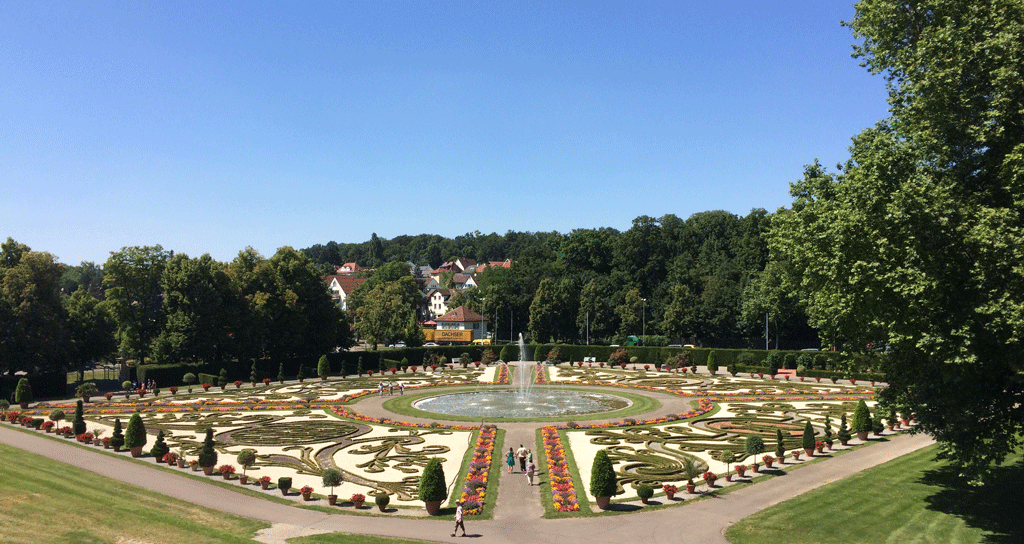
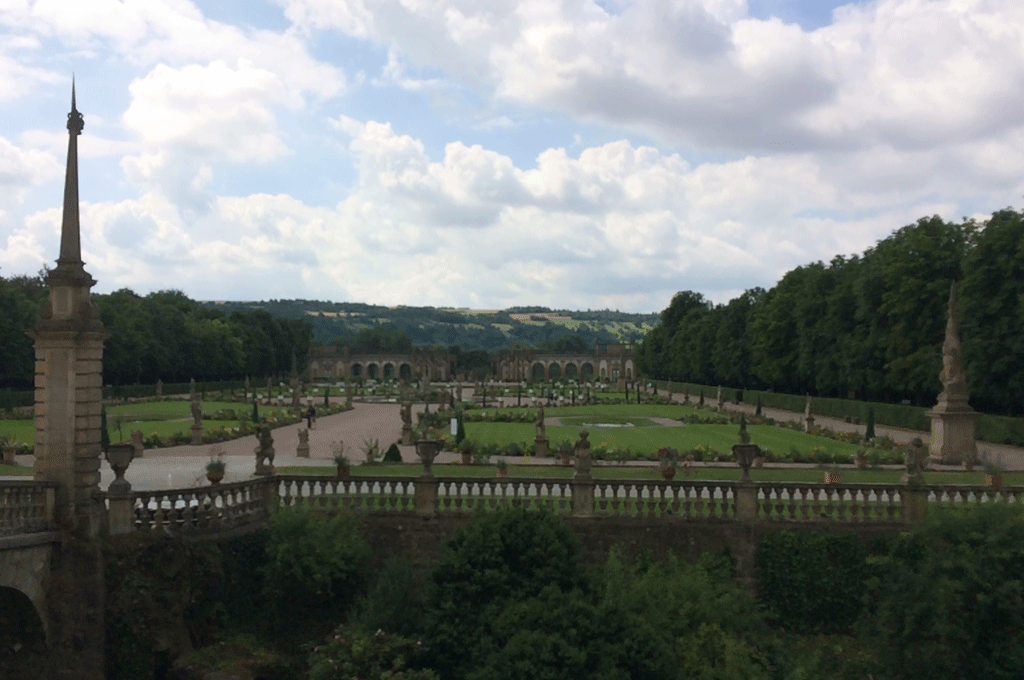
We are able to see the formal garden from the terrace of the palace. We learn that the gardens total 30 acres and are very beautiful. Maybe another time!
The formal gardens seen from the first floor of the original palace building
Although the Empire rooms seem very dull after all the Baroque and rococo we have been seeing along the Romantic Road, we still feel the visit is worthwhile.
Bike signs in Rottenburg – we are on a lot of bike routes!
Back in the car, we encounter a lot of road work along the way, something we have often experienced on the motorways in Germany. We get to Rottenburg around 5 pm and are looking forward to 3 days of cycling.
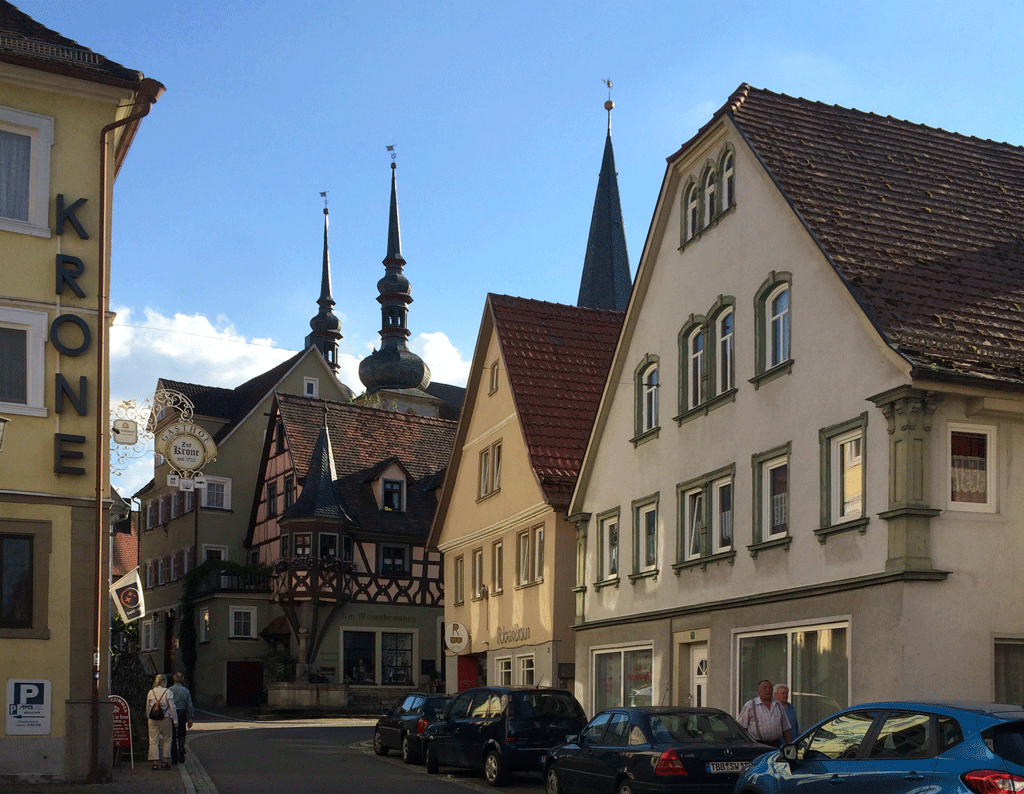
After a refreshing sleep in our sccond hotel room in Tauberbishofsheim and Spiegel ei for breakfast, we are ready to go. We’re on our bikes by 9.45 am and it’s already 17°C and expected to get to 22°C in the afternoon. This is the best weather we’ve had for several days. As we ride through Tauberbishofsheim, we take a few more photos and are soon out in the country. This is what we’ve been waiting for!
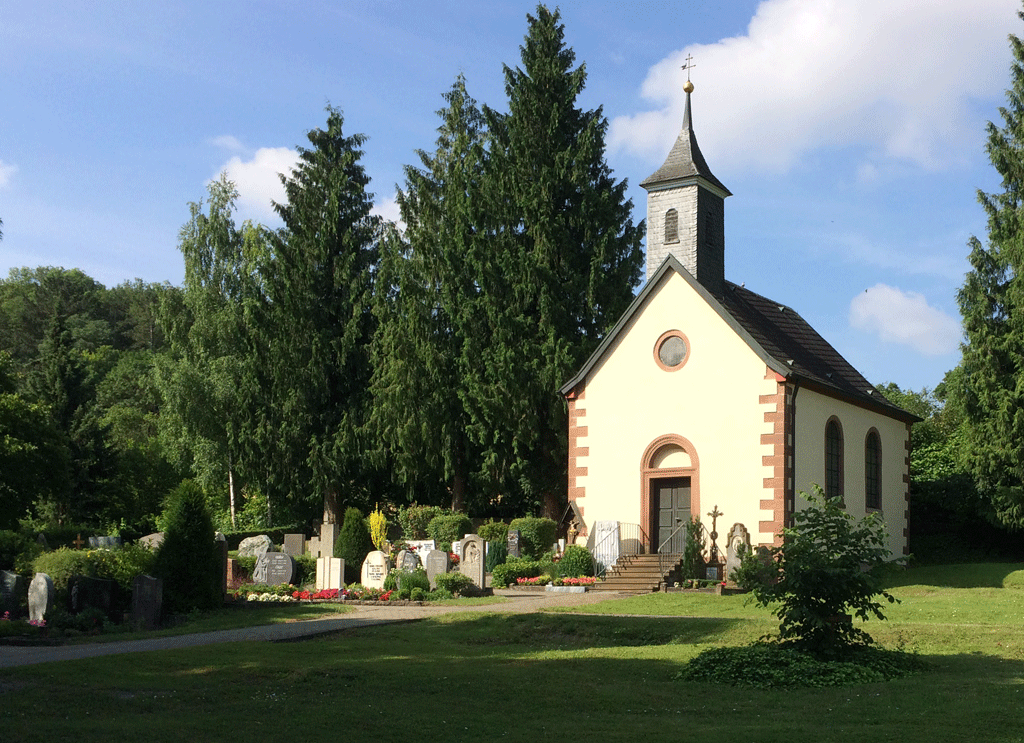
Little chapel just outside Tauberbishofsheim
It’s Sunday morning and we see people milling around the church and cemetery but in this area, no one is dressed in traditional costume. Just out of town, there is a little chapel with a cemetery which is also popular this morning.
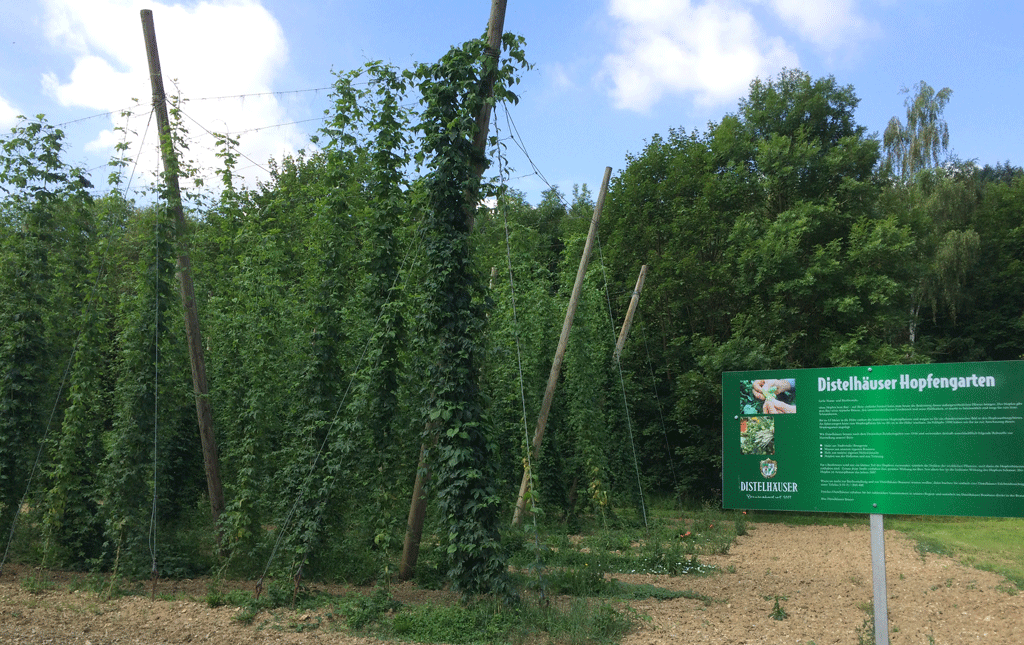
Hops growing
We go past a field of hops which seems to have an educational purpose and remember all the hop fields when we cycled along the Danube.
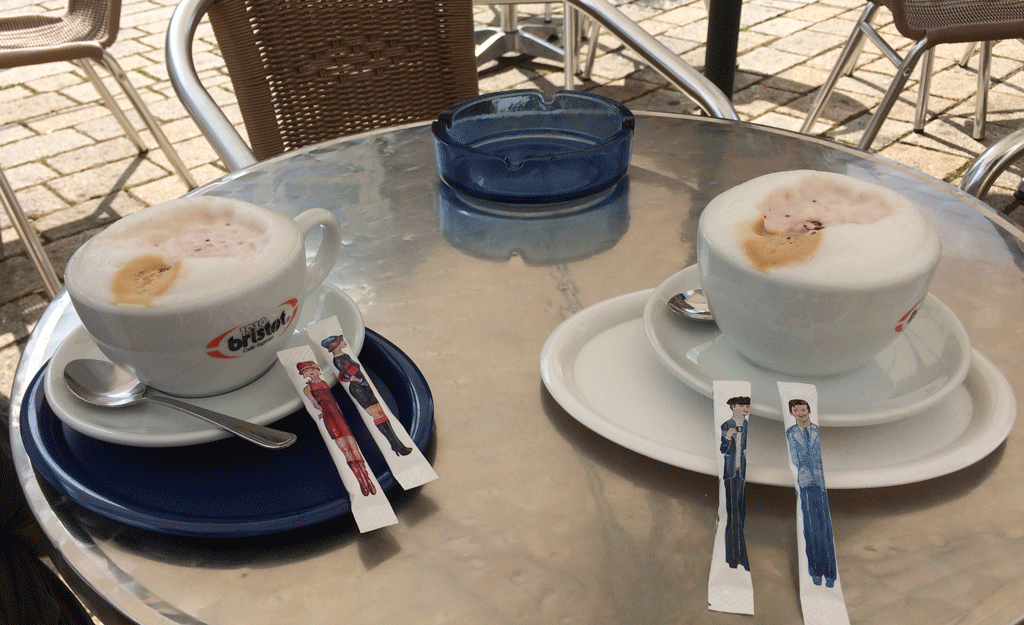
Our “special” cappuccino in Lauda-Königshofen
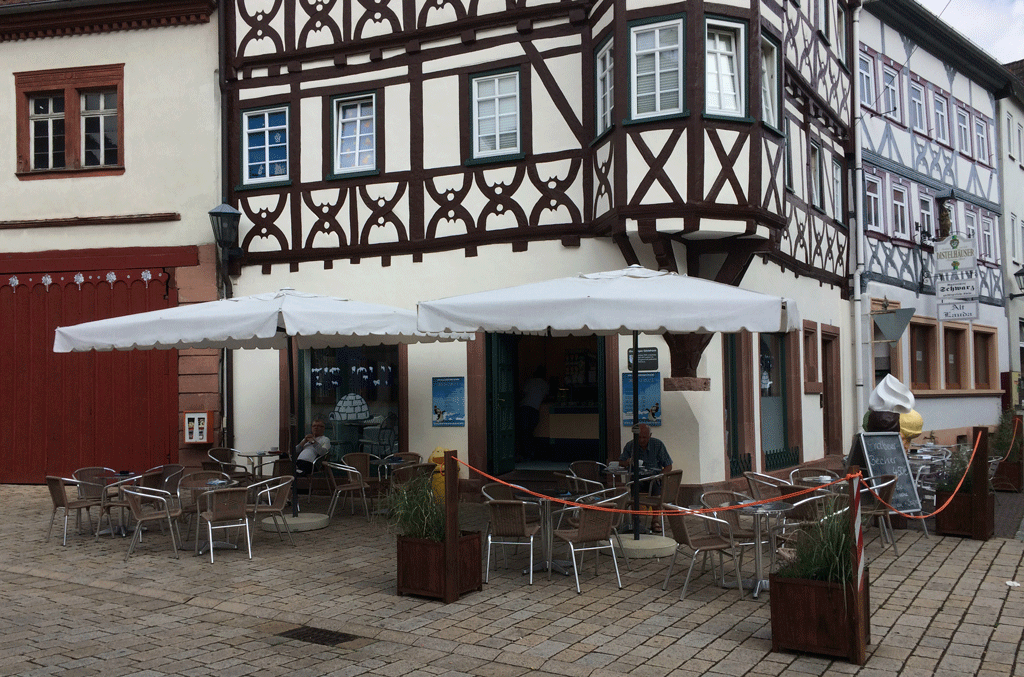
In Lauda-Königshofen, our first stop, we have a cappuccino at an eis café and the owner talks to us in Italian. Nearly all the eis cafés we’ve been to here are run by Italians. When he brings out the coffee, he shows us the sugar sticks – men for me, women for Jean Michel.
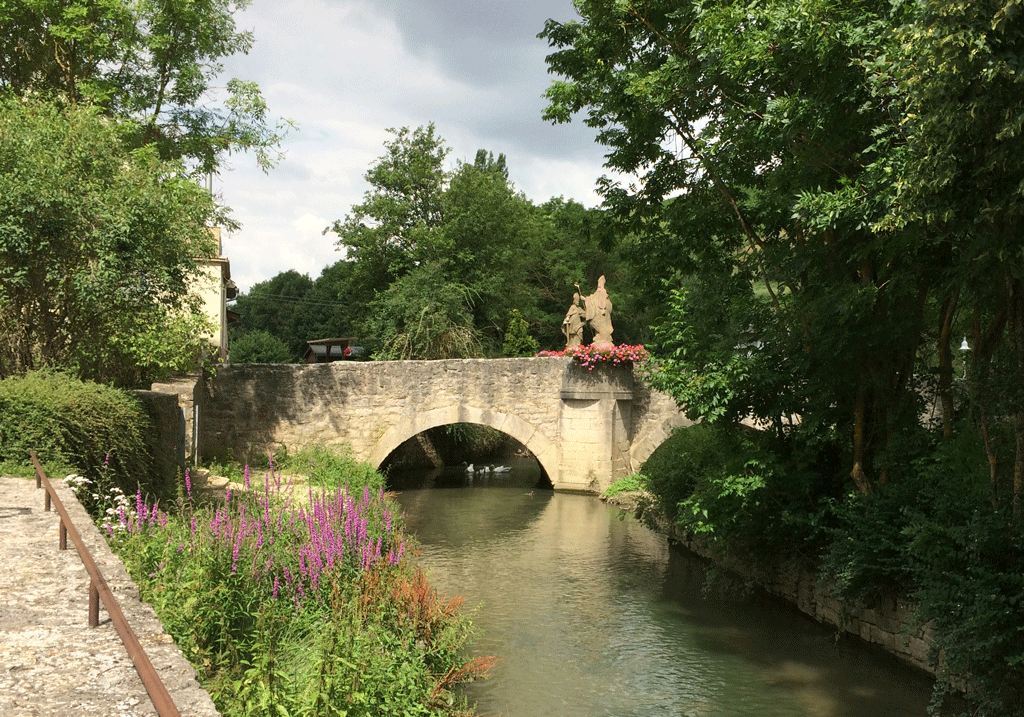
Baroque bridge over the Grünbach in Gerlasheim
There are several attractive 17th and 18th centuries houses but Lauda-Königshofen’s main claims to fame are its vineyards, the little baroque bridge over the Grünbach with its larger-than-life statues of Holy Kilian, Burkhard, Michael and Nepomuk at nearby Gerlasheim which also has an abbey church.
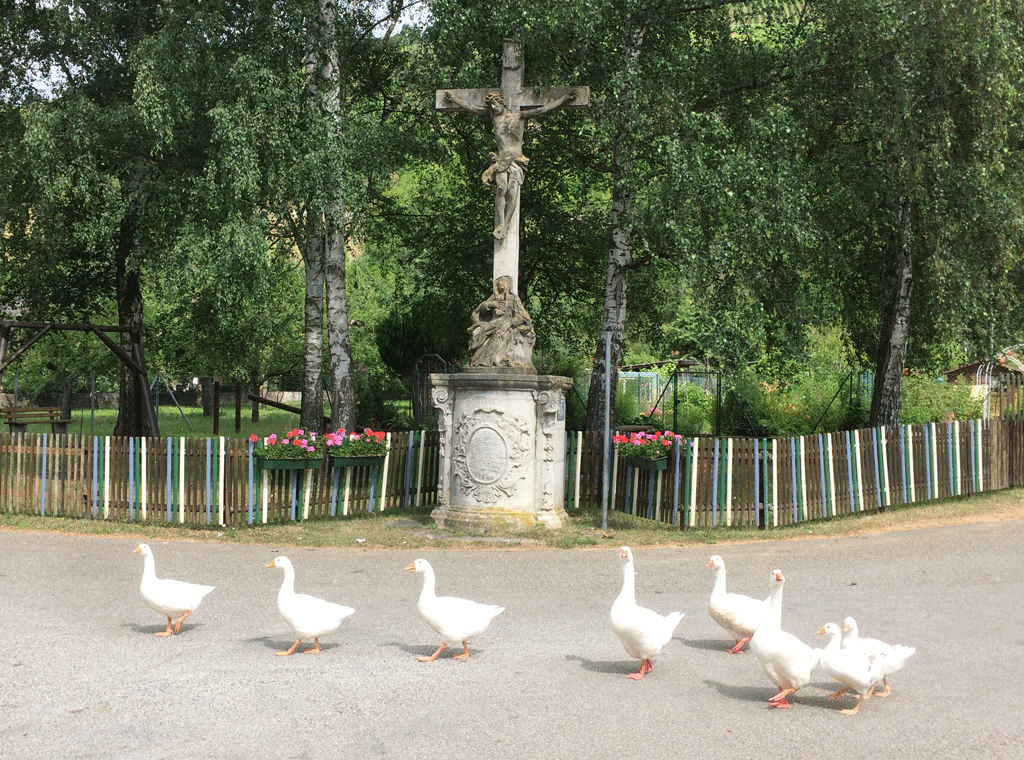
Geese grossing in front of the calvary on the other side of the bridge
The bridge is as romantic as the guide book says and just as I’m crossing it, I see a flock of geese walk timidly across the road in front of a calvary.
18th century baroque church of Heilig Kreuz with its blue stucco pillars
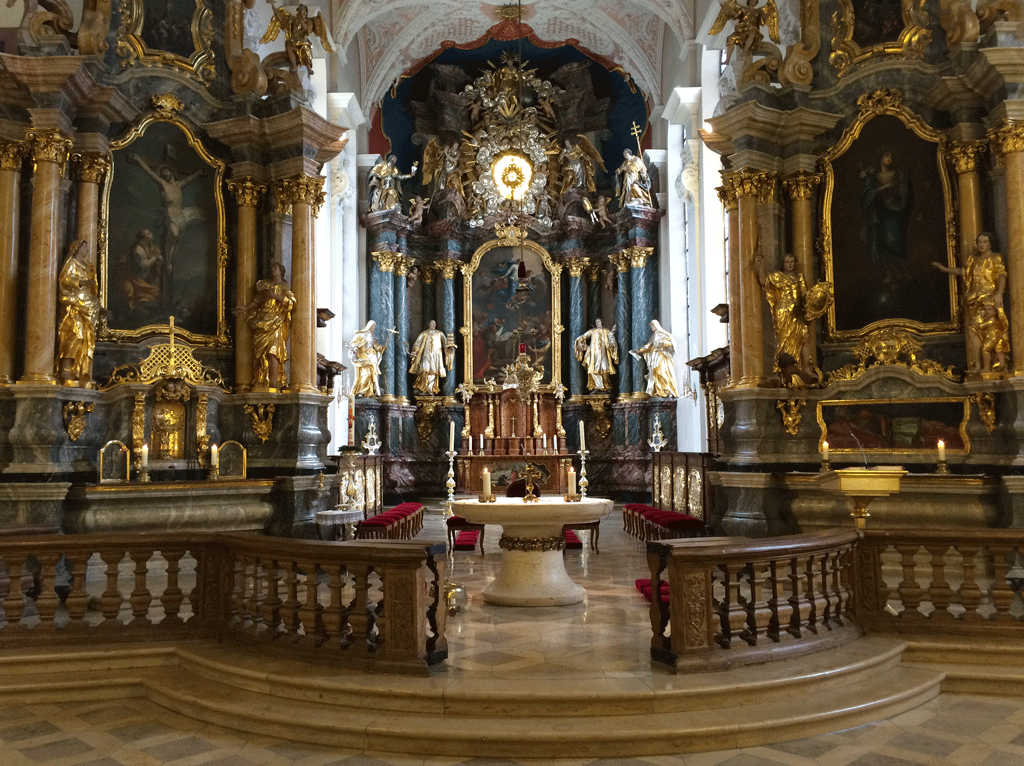
We arrive at the 18th century baroque church of Heilig Kreuz, built as an abbey church in 1723 – 1730, just as mass is over which means we can also visit inside. The apse is blue, which is unusual. Pastel pinks are more common.
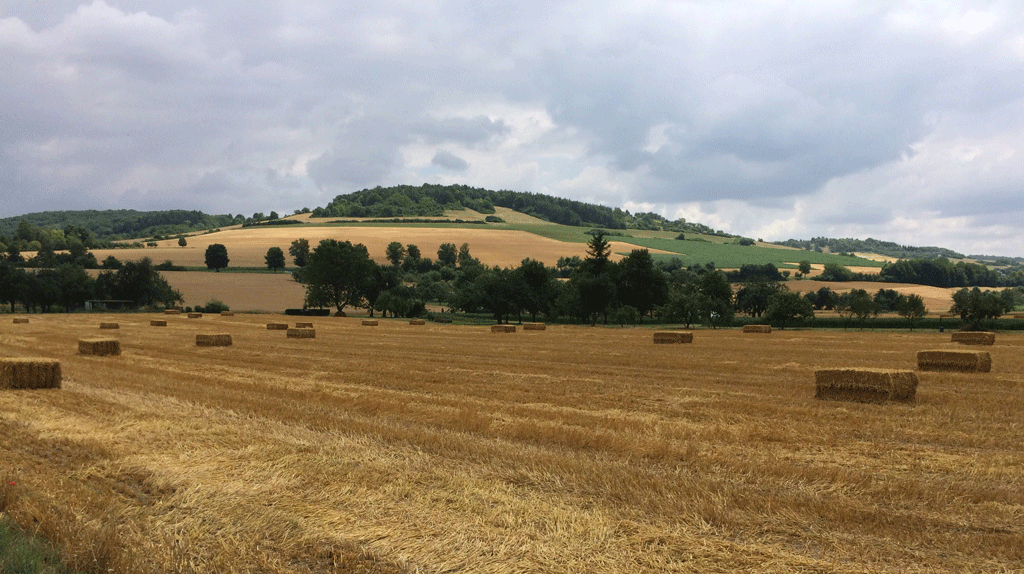
Rectangular hay stacks
The ride, which is mostly flat, continues to be very pleasant, following the Tauber and passing in between fields of hay, maize and wheat, with vines on the hillslopes.
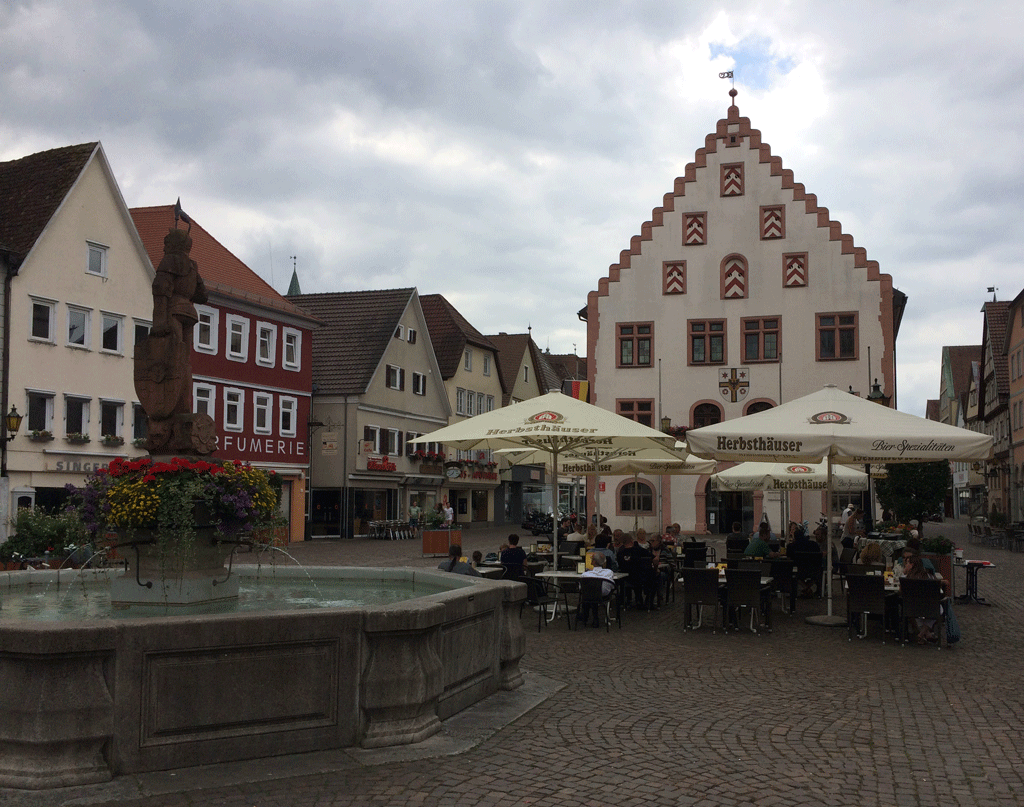
Marktplatz in Bad Mergentheim
Our furthest destination today is Bad Mergentheim which is a spa town. The marktplatz is very similar to many others, with a fountain in the middle and the rathaus at one end flanked by several half-timbered houses.
Our Greek restaurant in Bad Mergentheim
We cycle around a bit looking for a restaurant for lunch but there are mostly only cafés and after going to the tourist information office we end up in a Greek restaurant that looks anything but!
The somewhat amateur 1920s event in Bad Mergentheim
We have been told at the tourist office that there is an event at the spa with a 1920s theme. It seems very amateurish and somewhat of a disappointment so we don’t stay long.
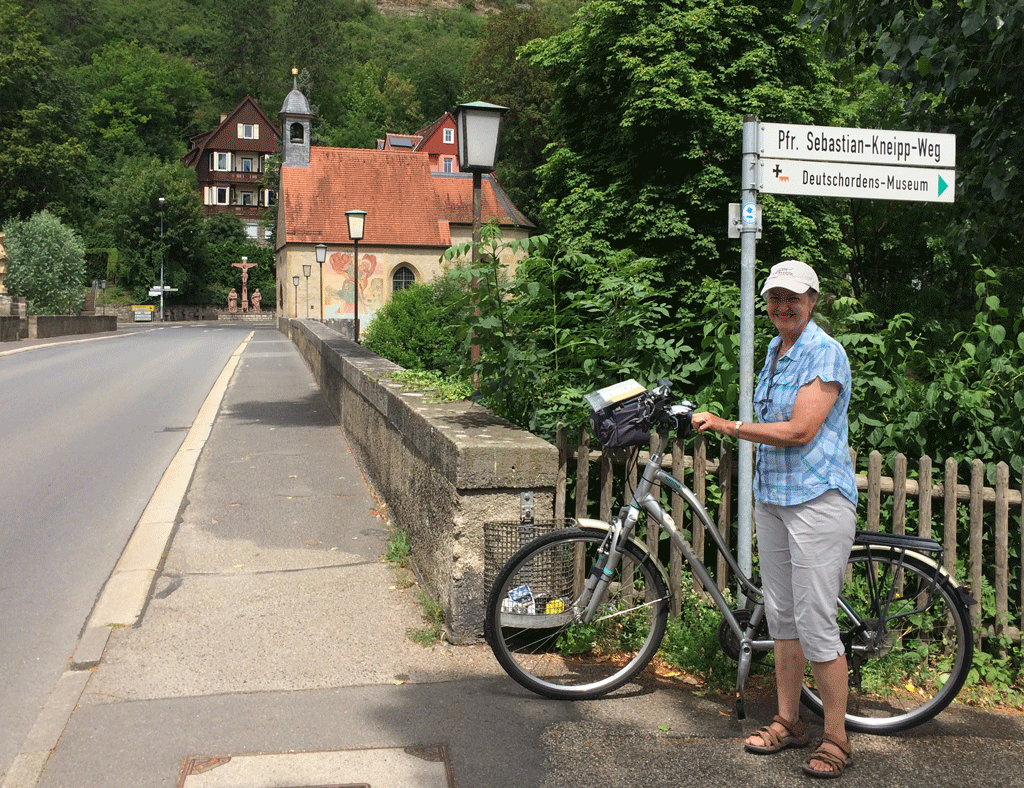
Signs of my ancestor Dr Sebastian Kneipp
I have seen on the map that there is a walking path called Pfr Sebastian-Kneipp who is one of my ancestors so we set off to find it.
The Italian eis cafe in Lauda-Königshofen
On our way back to Tauberbishofsheim, we stop off to visit the little baroque church of Lauda-Königshofen where we had our cappuccino. We were not able to visit it earlier because there was a mass. It’s no different from any of the others except for maybe it’s blue draperies above the altar.
The little baroque church in Lauda-Königshofen
After 46 km and 3 hours of cycling and more sun than we expected, we’re glad to relax on our balcony at the hotel. We are still having internet problems though.
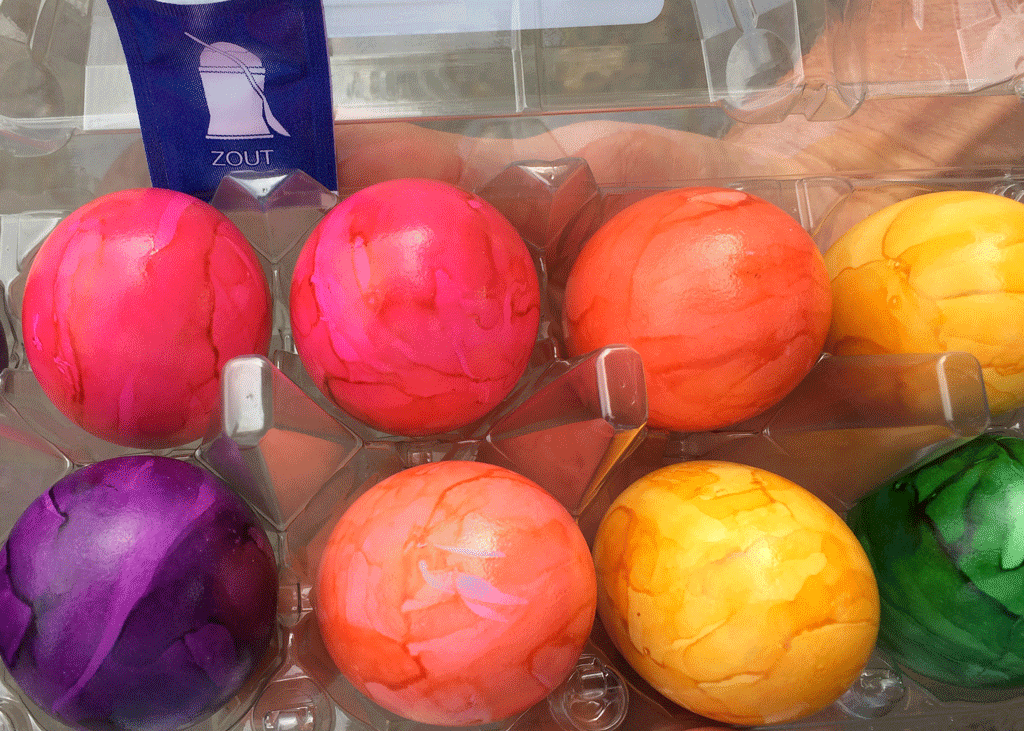
Colourful hard-boiled eggs that you can buy in the supermarket
Next morning, it’s an intermittent fast day and we need to pay a visit to the supermarket. One of the things on my list is hard-boiled eggs, which you cannot buy in France, but which are readily available in Germany. You can recognize them by their bright colours.
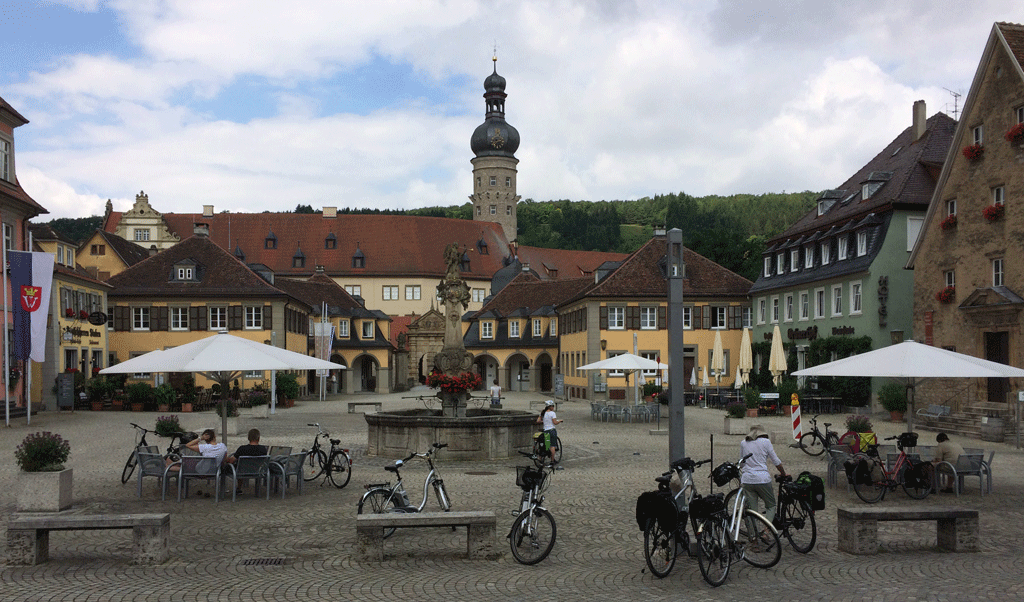
Marktplatz in Weikersheim
We then drive to the little village of Elpersheim which is just a few kilometers from Weikersheim, the next village mentioned on our Romantic Road map and renowned for its castle, once the residence of the princes of Hohenlohe. We are on our bikes by 11 am and arrive at Weikersheim fifteen minutes later. It is already 23°C and, as you can see in the photo, we are not alone!
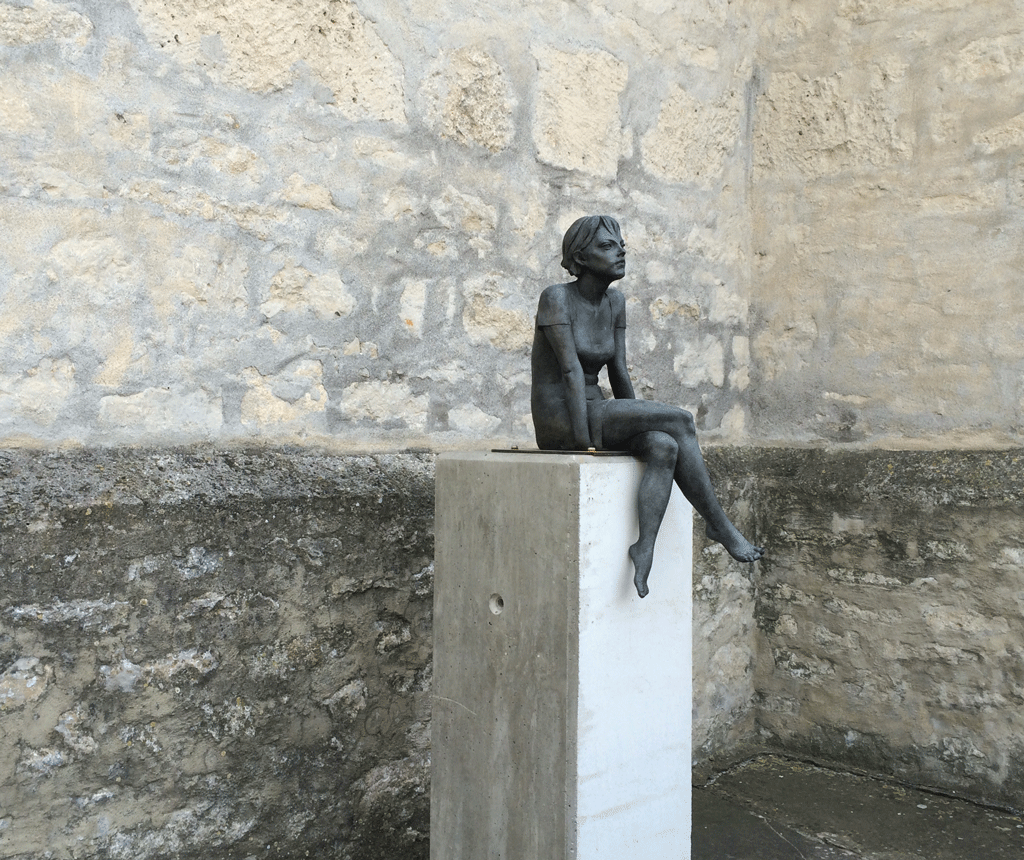
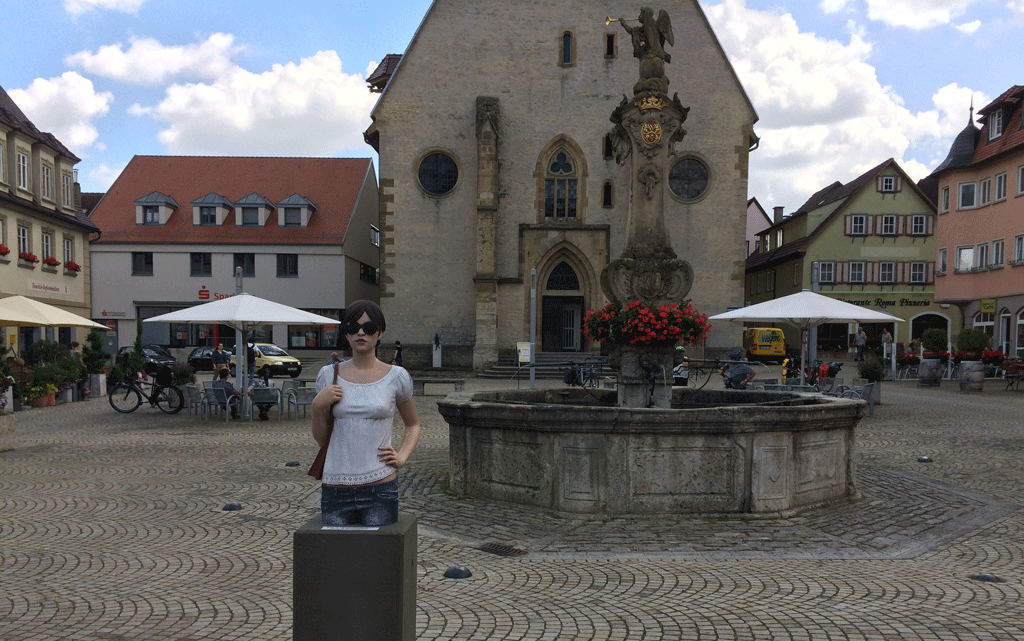
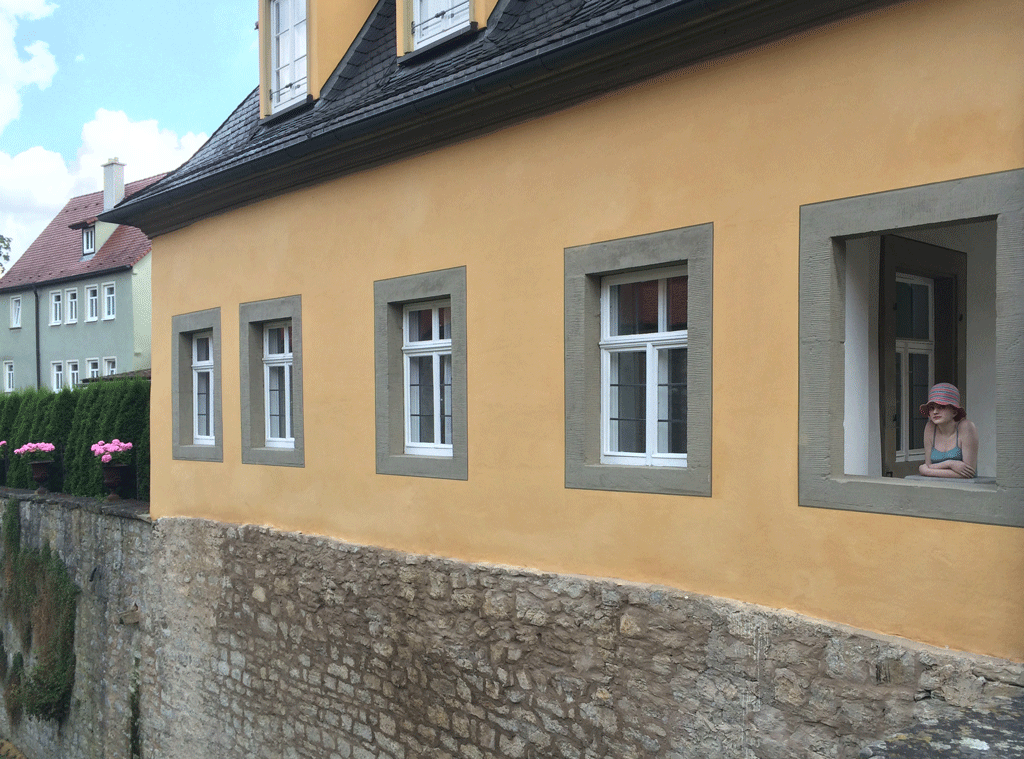
One of the contemporary statues in Weikersheim – I love the attitude!
The marktplatz has a church at one end with gabled houses around it. It also has a number of contemporary statues of young girls which are the second attraction after the castle and very life-like.
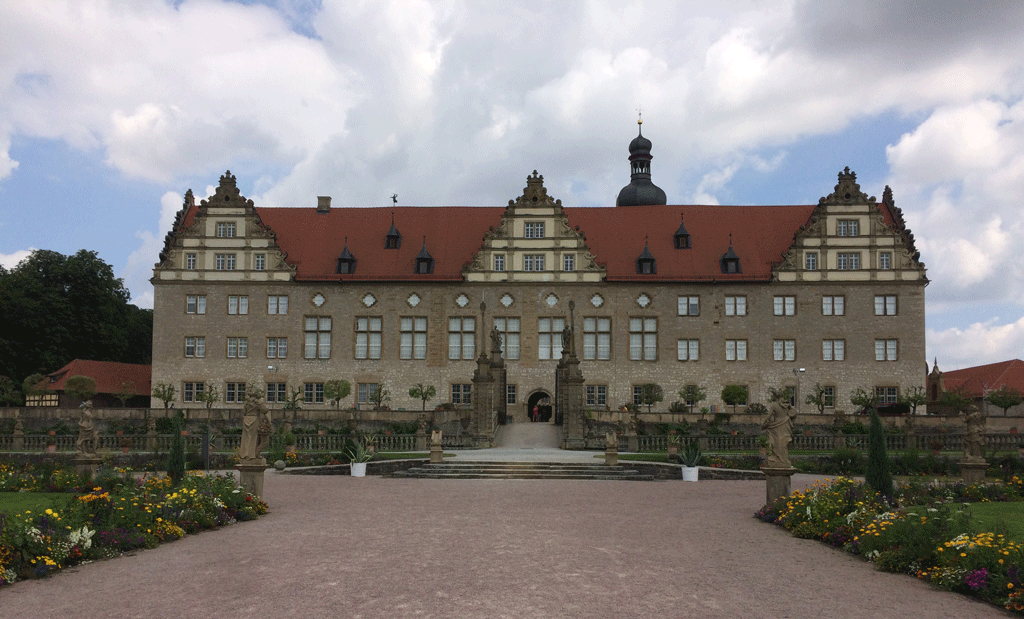
Weikersheim Castle from the garden
The castle itself is extremely interesting. Unfortunately, there are only guided tours and they are all in German but we are given brochures in French so we won’t get bored. No photos unfortunately. It is one of the rare Renaissance castles that still has its original furniture. The plan is always symmetrical with the male quarters on one side and the female quarters on the other, organized so that you can see right through from one end to the other.
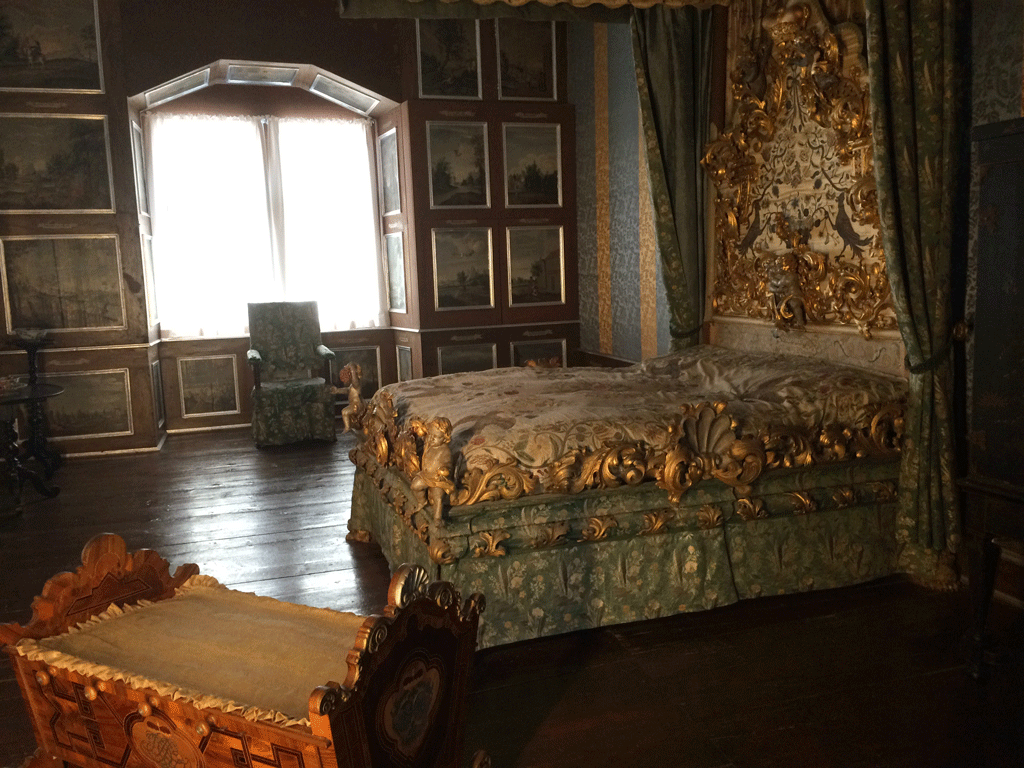
The bedroom with the golden cradle in Weikersheim
I take a sneak photo of the most prestigious bedroom with its golden cradle.
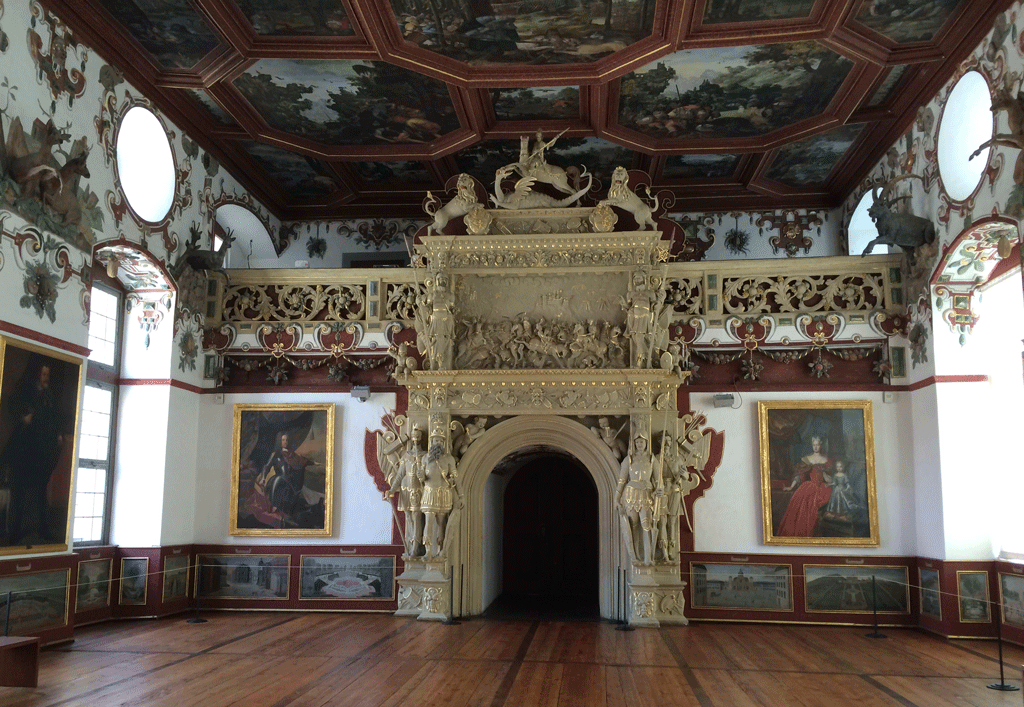
The fireplace and ceiling in the Knights’ Hall in Weikersheim
We then go into the Knights’ Hall which is quite overwhelming and most unusual. Completed in around 1600, it is 40 metres long with a painted caisson ceiling to match the three-dimensional stucco figures of hunting trophies.
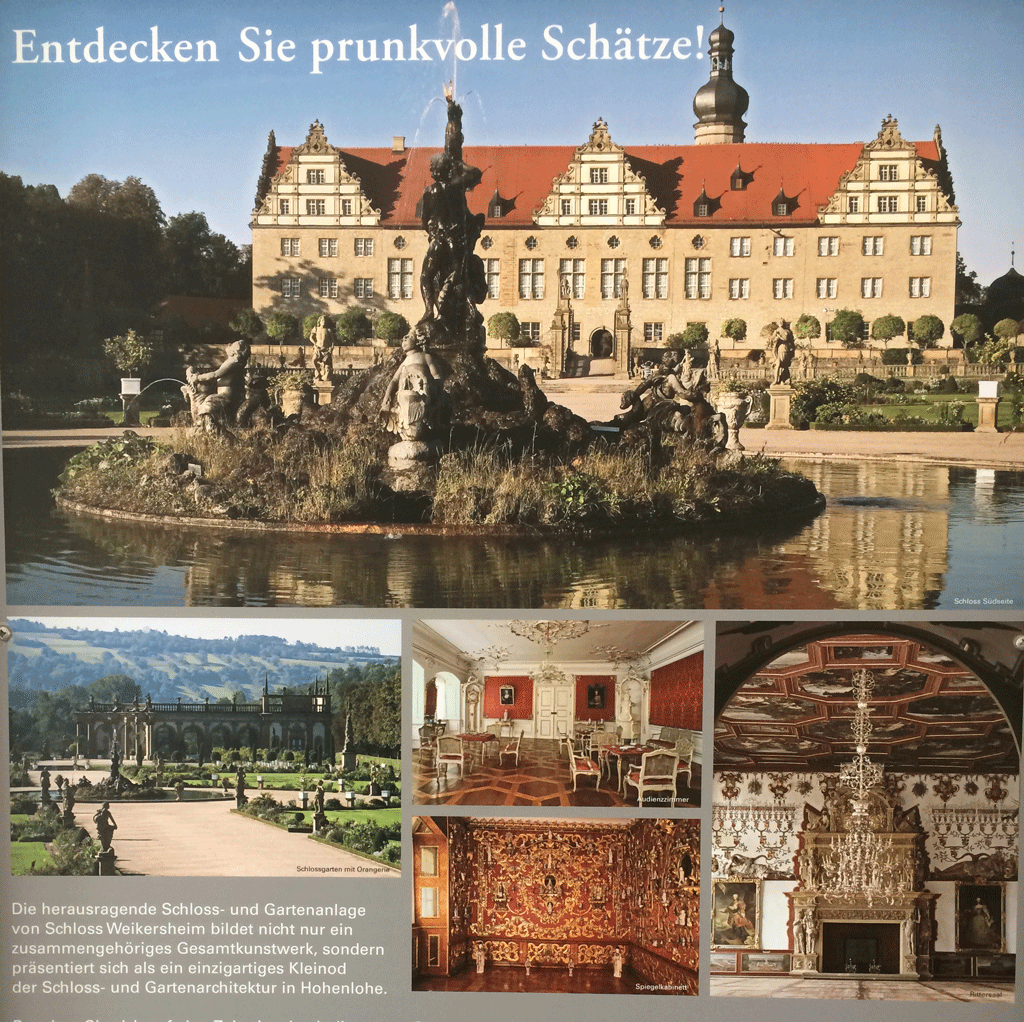
The poster outside the castle
One of the people in the group starts taking photos and the guide explains in English that he has special permission and that, as a result, we, too, can use our cameras. We don’t hesitate of course!
The gardens at Weikersheim
After the visit, we take photos of the gardens then find a bench in the nearby park to eat our lunch under the linden trees which are very common in Germany.
One of the other sculpturess in the marktplatz at Weikersheim
It has turned very hot and at 2 pm, we are only just beginning our 45 kilometer round trip.
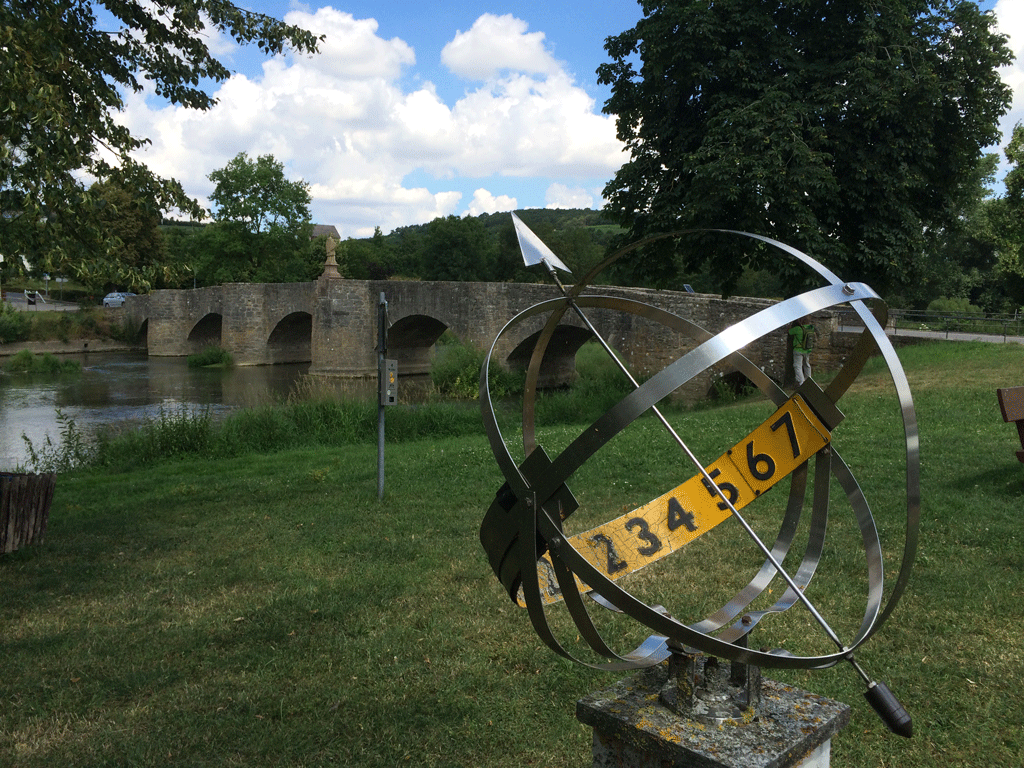
The sundial and bridge at Tauberrettersheim
At Tauberrettersheim, the next village, there is an old stone bridge with figures of saints and an unusual sundial.
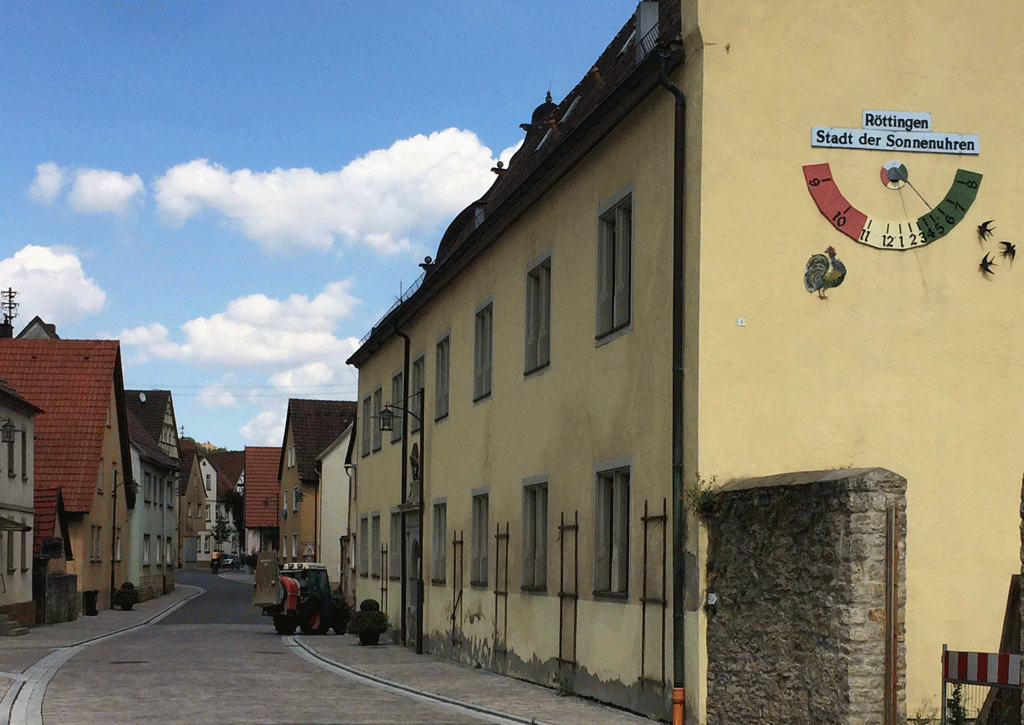
One of the more traditional sundials in Röttingen
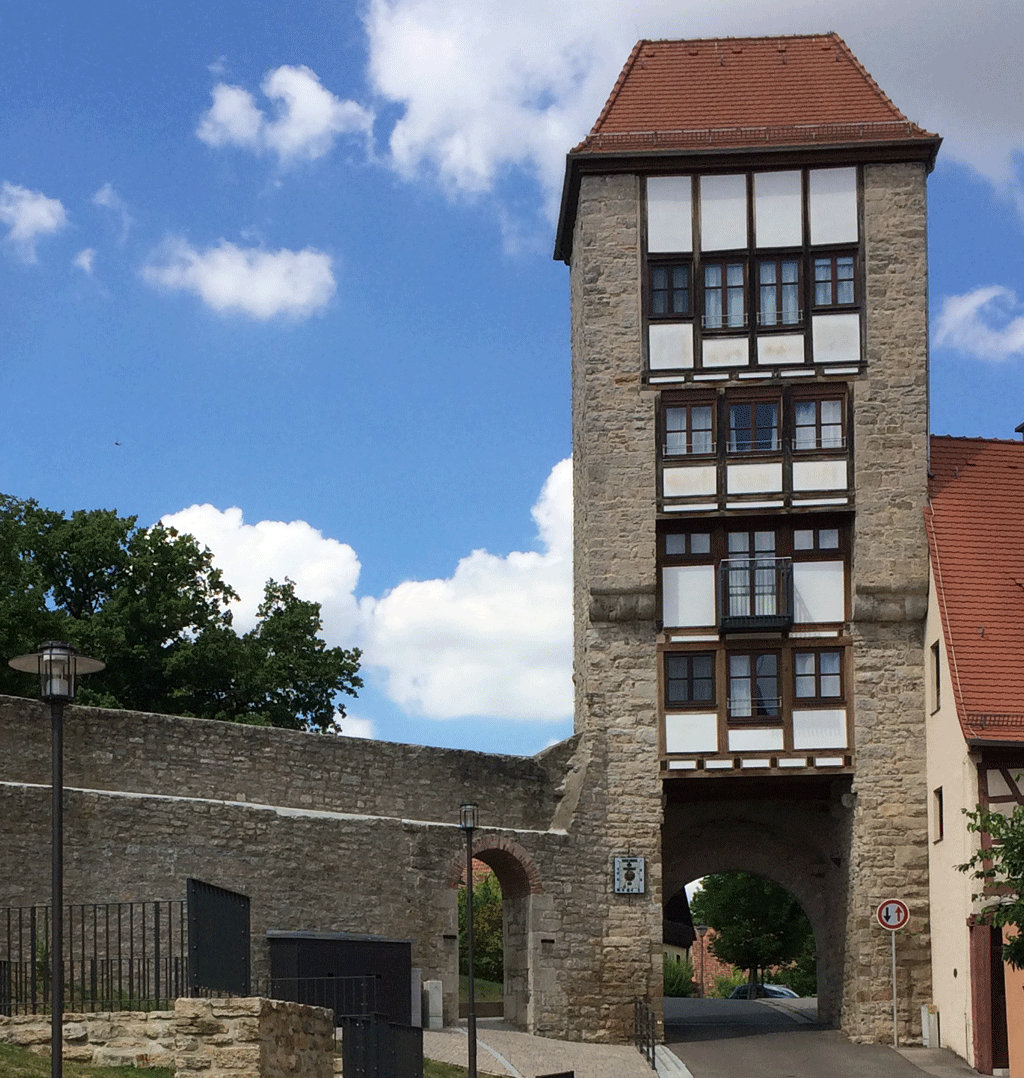
But the sundials really begin with the next village of Röttingen which they have become a speciality.
The apartment tower in Röttingen
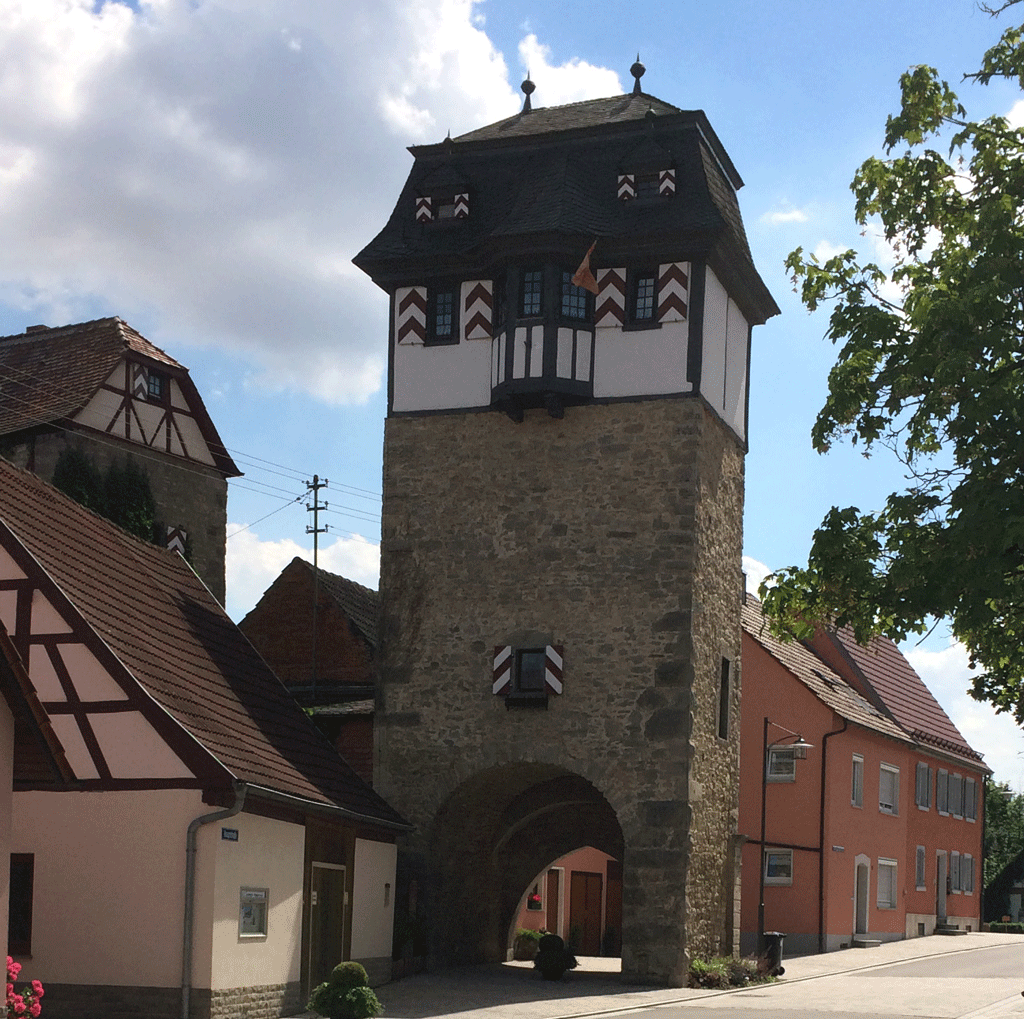
The village also has several towers, one of which has been rehabilitated and turned into holiday flats!
Another town in Röttingen
By the time we get to our destination of Creglingen after a steady though not very steep climb of 4 kilometers, we need a cold drink, but have to content ourselves with a Coca Cola Light. No ice-creams allowed on a fast day!
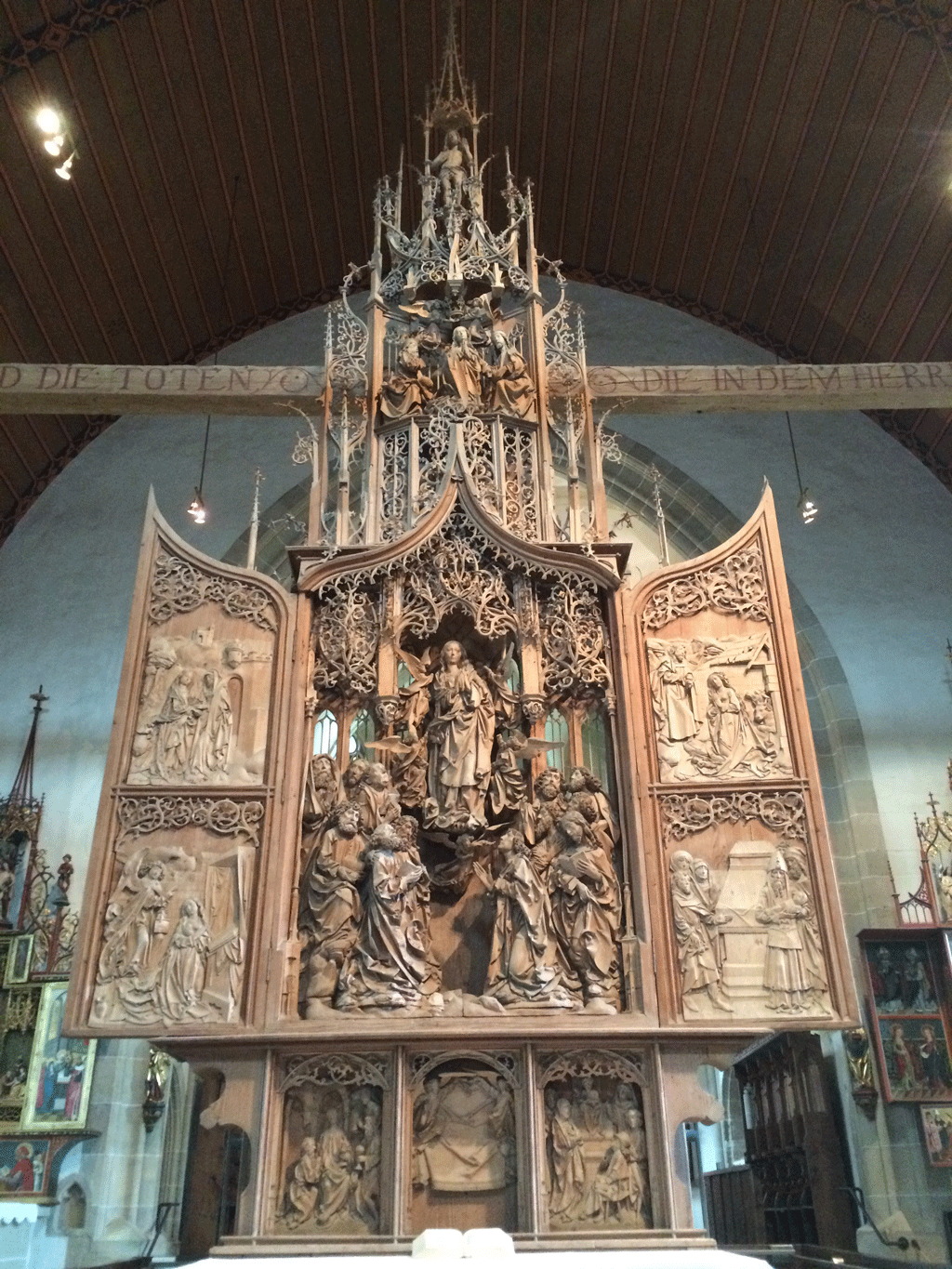
The wooden altar at Herrgott
Creglingen itself doesn’t have much to offer but a couple of kilometers further on, up a steep hill this time, is the church of Herrgott which has a famous 11-metre high early 16th century wooden altar. We decide it’s worth the climb!
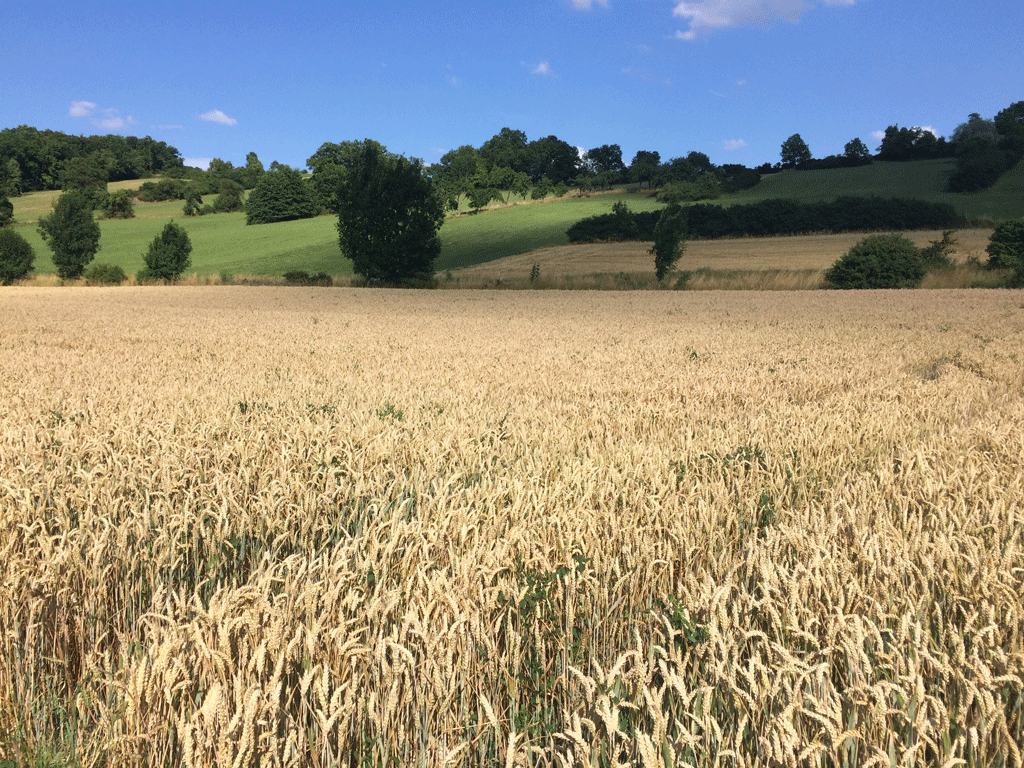
Barley fields
As we leave Creglingen, I’m looking forward to 4 kilometers of freewheeling but Jean Michel suggests we take an alternative route. I stupidly agree. So much for coasting down the hill. On the other side of the Tauber it’s up and down all the time.
We have a rest next to the bridge in Tauberrettersheim and are amused by the second hand dealer opposite.
The other side of Weikersheim
In Weikersheim, we discover a tower we didn’t see on our way through and take some more photos of the main square.
This sculpture is opposite the castle exit
We are very happy with our two days of cycling and have now completed the main sights along the Romantic Road. We would have liked to visit more on our bikes, but the weather did not permit – it’s no fun cycling when it’s cold and rainy.
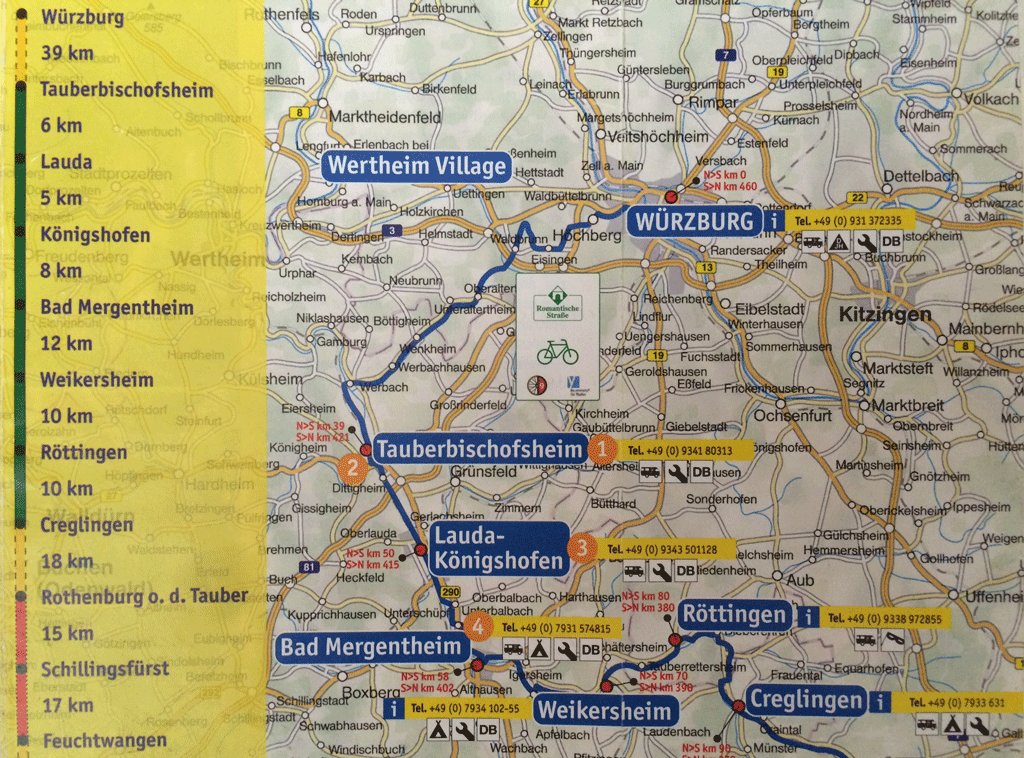
The tourist officde bike map (We used Bikeline as well)
Tomorrow, we’re moving to the Neckar Valley, starting with Rottenburg am Necker which is about 170 km southwest of Tauberbishofsheim. So stay with us on our last week of cycling in Germany.