On-line restaurant bookings and museum tickets Paris

There’s nothing worse than waiting in long queues outside museums or missing out on a restaurant because it’s full when you get there, particularly when you’ve only got a few days in the City of Light.

The wisest thing is to buy museum tickets on-line and book restaurants ahead of time.

RESTAURANTS – mytable.com

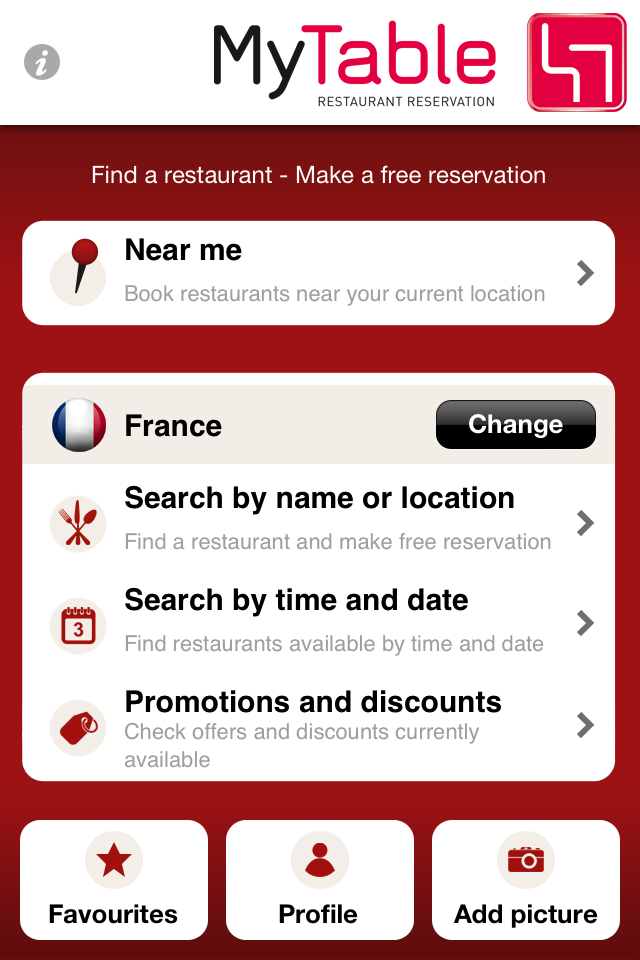
my_tableA number of websites can be used to book restaurants. I recently tested www.mytable.com. It has a smart phone app and features Trip Advisor reviews. It also has a selection of the week, the latest promotions and latest reviews.

You can key in the country, restaurant name or location. In Advanced Search, you can indicate price range, region and type of cuisine, special cuisine such as gluten-free or vegetarian, and amenities such as free wifi, terrace, air-conditioning, handicapped accessible and so on.

A map is displayed with red pins to indicate restaurants. Click on the pin and the type of cuisine and price range will be shown. If you click on the name, you’ll be given more detailed information and any reviews on Trip Advisor.

Simply select your date, time and number of people and click on Make Free Reservation. Enter your details and you’ll receive confirmation by email. Nothing could be easier!

MUSEUMS

wheel_louvreMany English websites exist where you can book on-line museum tickets but you often pay a hefty commission. I’ve chosen FNAC because it is the most popular and trustworthy French site, often chosen by the museums themselves. There is also digitik.com but I find it very confusing.

All public museums in Paris are free on the first Sunday of the month.

FNAC

FNAC is a chain of media stores across France. They also have an on-line booking service with an English translation: http://www.fnactickets.com/. The commission is usually one or two euros. Simply key in the name of the museum in the search box.

Once you have paid with your credit card, you can either print the ticket (which might be a problem if you’re already travelling), have it sent to you if you have an address in France (an extra 3.55 euro), abroad (an extra 13.50 euro!) or pick it up at one of the stores on the list.

In Paris itself, you will need to go to one of the FNAC stores listed. In the suburbs and provinces, many of the larger supermarkets offer a pick-up service: Hyper U, Casino, Intermarché, Carrefour, etc. and some tourist offices.

PARIS TOURIST OFFICE (CONVENTION AND VISITORS’ BUREAU)

The main “welcome” centre of the Paris Tourist Office is at 25 rue des Pyramides (between Louvre and Opéra just near Monoprix). It’s perfect for tickets that don’t have a time restriction since there is no price mark-up. You can pick them up at one of their six “welcome” centres including the Gare de Lyon, Gare du Nord and Gare de l’Est train stations.

However, not all museums or combined tickets are available. They also handle tickets and bookings for Eurodisney and the main cabarets. http://booking.parisinfo.com for more details. You may have to queue for 20 minutes or so. Choose opening time (10 am) or lunchtime (12 to 2 pm). Open from 10 am to 7 pm every day.

Musée du Louvre (11 euro at museum)

FNAC: 12.60 euro, valid one year, no restriction on days or times. MUST DE COLLECTED. You don’t have to go through the security queue, which is the main advantage. Direct entry under the arch opposite the pyramid or using the fast queue above the pyramid.

Musée d’Orsay  (9 euro at museum)

FNAC: 10.70 euro, valid one year, no restriction on days or times. CAN BE PRINTED OR COLLECTED. Direct entry C.

Combined ticket with Musée de l’Orangerie (Monet’s waterlilies): 17.70 euro

Combined ticket with Musée Rodin: 16.70 euro

Musée de l’Orangerie (7.50 euro at museum)

FNAC: 9.10 euro, valid one year, no restriction on days or times. CAN BE PRINTED OR COLLECTED. Direct entry.

Combined ticket with Musée d’Orsay: 17.70

Musée de Rodin (10.80 euro at museum)

Single tickets for the museum, currently valid until 01/09/2013, are only available on-line at http://www.digitick.com/index-css5-museerodin-lgen-pg1.html. TO BE DOWNLOADED ON MOBILE.

FNAC: Combined with Musée d’Orsay only: 16.70. CAN BE PRINTED OR COLLECTED.

Palais de Versailles (15 euro at palace)

FNAC: 16.80 CAN BE PRINTED OR COLLECTED. You must choose a specific day and time slot.

Eiffel Tower (14.50 at tower)

Not sold by FNAC, but on the official website of the Eiffel Tower: http://www.tour-eiffel.fr/en/preparing-your-visit/buying-your-tickets.html

Specific date and time (book at least 48 hours ahead of time). CAN BE PRINTED OR DOWNLOADED ON YOUR PHONE.

MUSEUM PASS http://en.parismuseumpass.com/.

You can book on-line or buy the pass at Charles de Gaulle and other outlets including the Paris Tourist Office: 2 days for 39 euro, 4 days for 54 euro, 6 days for 69 euro.

The full list includes Sainte Chapelle, Arc de Triomphe, Cluny, etc. It does not include the Eiffel Tower.

A brief calculation shows that it is worth buying a pass if you intend to go to at least 4 museums in 2 days, 5 museums in 4 days or 7 museums in 6 days.

Monday’s Travel Photos – Everyday Paris

We’re about to leave on a one-month holiday, cycling along the Danube from Ulm to Budapest. Fortunately, the floods have subsided and most of the bike paths should be open again. So this Monday’s photos are of Paris – just shots I’ve taken over the last few days, mainly in my neighbourhood, the sort of “everyday” Paris that is a part of my life.

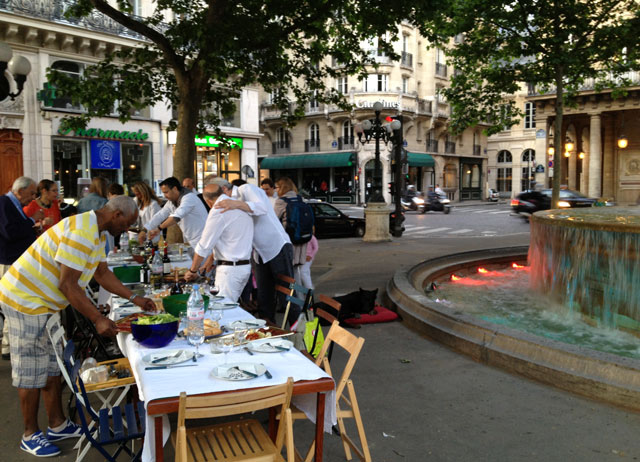
A neighbourhood spread at Place Malraux, opposite the Louvre
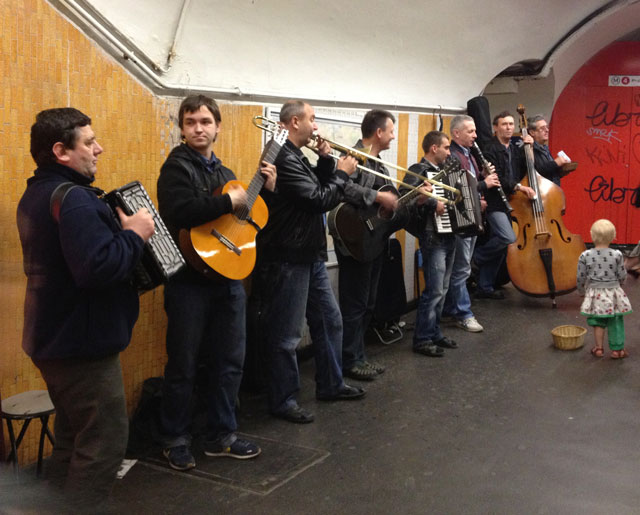
East European buskers who are often in the metro
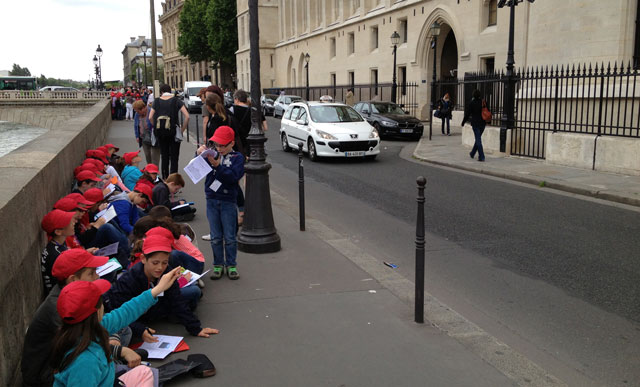
French children on a school excursion drawing the law courts opposite


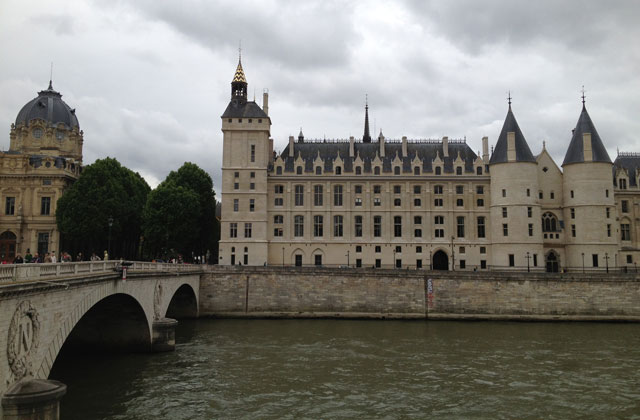
The conciergerie which has now been completely renovated.
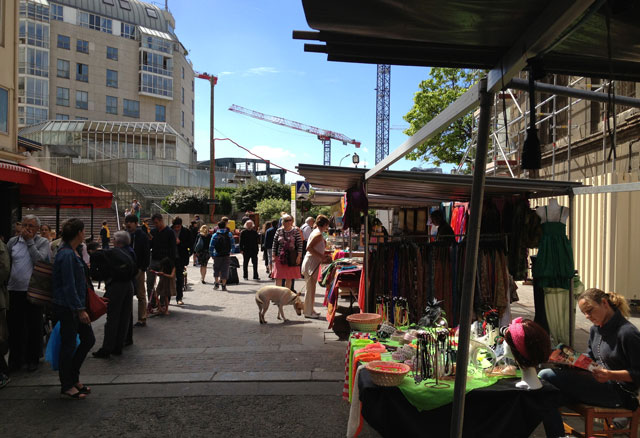
 My Sunday morning market at Sainte Eustache
My Sunday morning market at Sainte Eustache
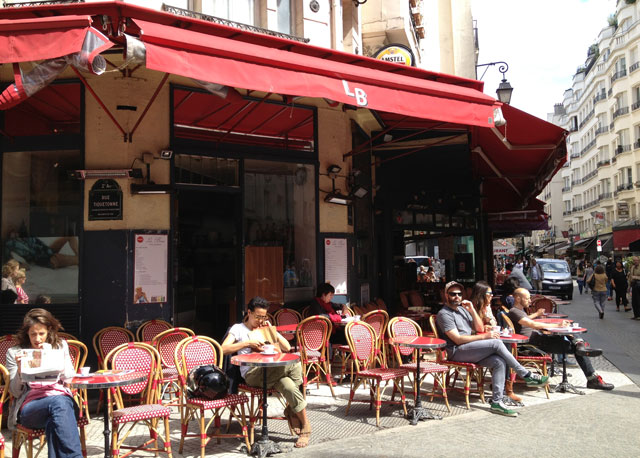
A café in rue Montorgueil on a Sunday morning
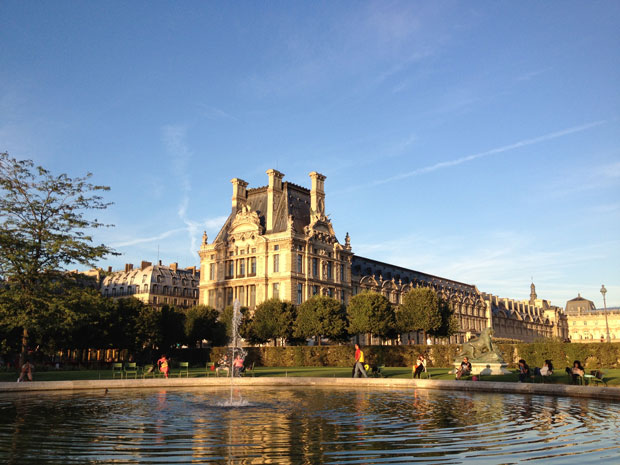
The Louvre at sunset


Friday’s French – chateaux and castles

When is a castle not a castle? When it’s a chateau.

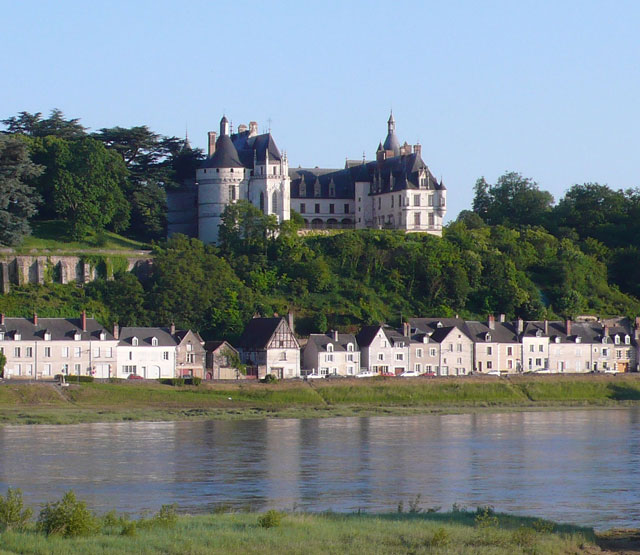
Château de Chaumont
Château de Chaumont

The two words have the same Latin origin – castellum, meaning fortress. The transformation from ca to cha in French is very common : cat/chat, cauldron/chaudron, cart/charrette, etc. In château, the “s” has done its usual disappearing act and turned into a circumflex e.g. pasta/pâte, feast/fête, master/maître. Then the “l” has been vocalised which means that it has become a vowel, which is another typical change, witness by camel/chameau and cauldron/chaudron above.

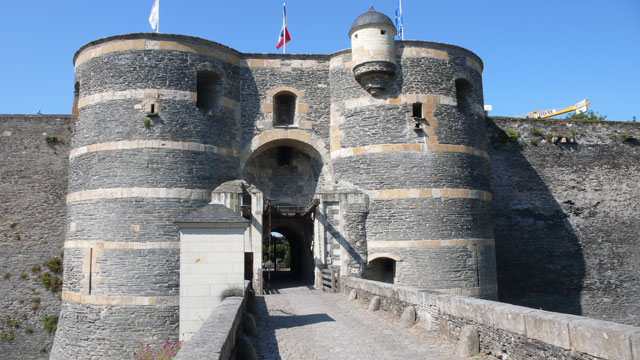
What is generally called a castle in English is actually a château fort in French. Prime examples are Chinon and Angers. Fort means strong and is obviously at the origin of fort/fort and fortress/forteresse. We have our Anglosaxon word stronghold. Châteaux forts had moats/fosses, ramparts/ramparts, towers/tours and keeps/donjons.

Château d'Angers
Château d’Angers

A château does not have to be fortified, nor even be royal, so what can and cannot be described in French as a château is somewhat nebulous.

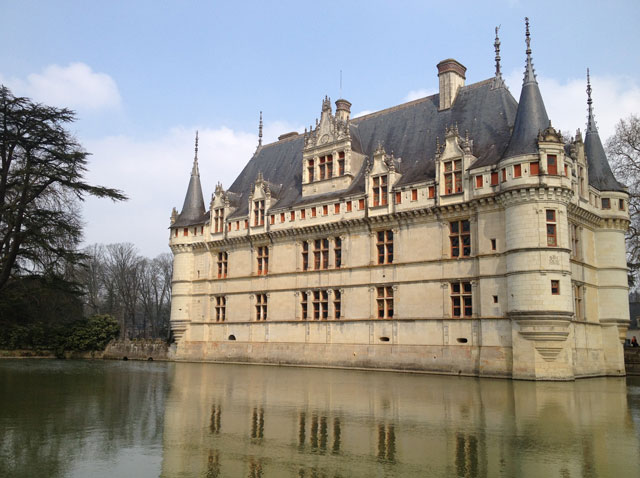
The châteaux in the Loire Valley, such as Chenonceau, Chaumont and Chambord, were never built to offer protection but they were mostly owned and built by royalty. Others, such as Azay le Rideau and Villandry, were often stately homes built by rich financiers and such like with all the trappings of a château. I guess they could roughly be described as pleasure castles.

Château d'Azay le Rideau
Château d’Azay le Rideau

The plural of château in French is châteaux, but in English you can choose between châteaux and chateaus and there’s no obligation to keep the circumflex or chapeau as it’s often called in French.

There are two other common uses of the word château. In the Bordeaux area (bordeaux wine is written with a small letter, by the way, in both French and English), all vineyards are châteaux whether big or small. The same does not apply to other wine-growing areas in France (but the small letter still applies – champagne from Champagne, burgundy/bourgogne from Burgundy/Bourgogne, chinon from Chinon).

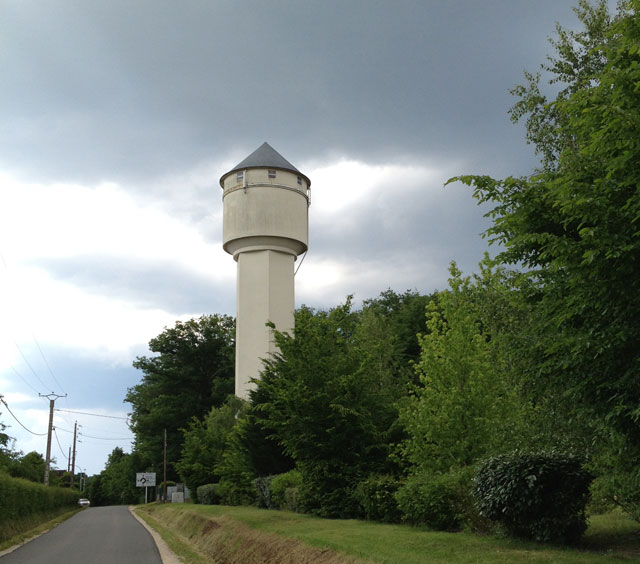
Château d'eau
Château d’eau

Then there is the château d’eau which is a water tower and, to me, is the strangest use of the word. They certainly don’t look like castles. I have to be honest and say that I had never noticed any water towers in Australia but in France, you can’t miss them!

Last, by not least, we have the château de cartes which is our humble house of cards.

The 5:2 fast diet – fast and feast and still lose weight!
Success at last ! I can now wear most of my summer clothes again! I just love the 5:2 eat fast diet that I told you about last week. I’ve had two more fast days and lost a kilo in weight and 3 cm at the waist in 10 days. Also I am no longer getting headaches.
Celebrating our annivesary at Domaine des Hauts de Loire

After celebrating our wedding anniversary in style at Domaine des Hauts de Loire on Thursday night, we thought Friday would be a good day to fast. Not only did we have no problem skipping breakfast which we ate at 2 pm, but we also cycled 40 K in the afternoon.

Ok, it was flat ground but we still cycled for 2 ½ hours, drinking lots of water of course. We stopped  at a little café in Muides for a cold drink but they didn’t have any zero Coke or zero anything, for that matter, so Jean Michel had a normal one and discovered how much sugar it contains while I drank an unsweetened expresse for the first time in my life – not great but no way was I going to use up 139 of my 500 calorie allowance on coke.

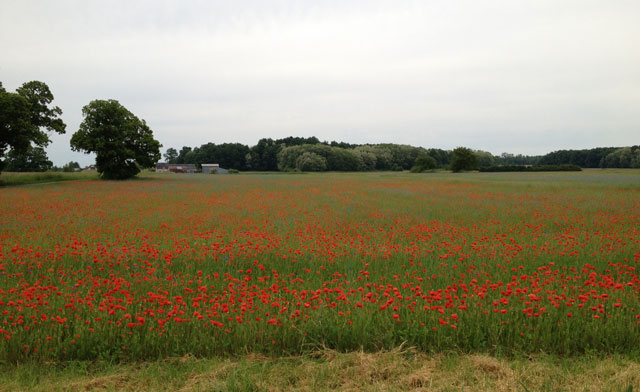
Poppies along the bike path

For dinner, we shared a small tin of tuna with a raw fennel and mushroom salad which, as Jean Michel pointed out, had the advantage of giving an impression of quantity. We finished off with an orange and, surprisingly, did not feel hungry.

I had no hunger pangs, even though I went to sleep quite late and, better still, NO HEADACHE like the first time. And the great thing is that next day, I didn’t feel particularly hungry and ate a normal breakfast and light lunch.

We cycled another 30 kilometers in the afternoon, with lots of hills this time and didn’t even have our usual (healthy) biscuit snack halfway through although Jean Michel claimed it when we got back in the car.

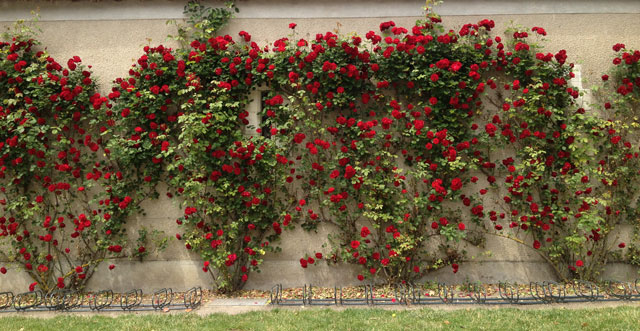
A wall of roses at Château de Cheverny on our bike route

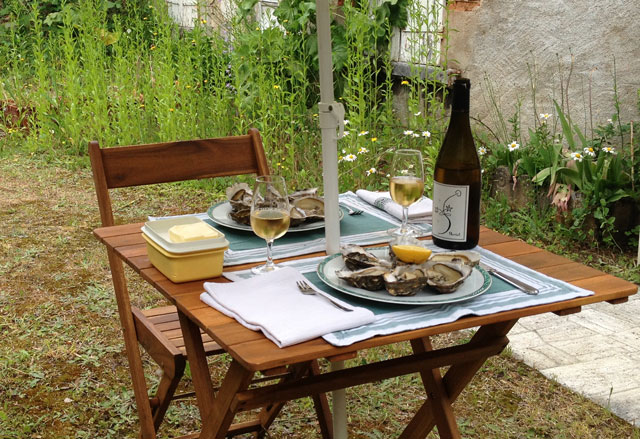
For dinner, we ate côte de bœuf, baked potatoes and our favourite eggplant, zucchini and bell pepper bake  plus a couple of glasses of wine each. On Sunday, we had oysters as usual and it was wonderful to be able to eat bread and butter and drink wine without having to worry about the calories.

I scheduled the next fast for Monday but Jean Michel is doing his roster this week, which entails a certain amount of stress and more physical activity than usual so he declined.  I decided to try the no-breakfast system again as it seems to suit me better. The only thing I can’t do is drink tea because it always makes me feel nauseous on an empty stomach.

My overall impression was not of hunger but of a certain lightheadedness which first peaked around 11.45 am. I had my usual high-protein breakfast at  12.30 (280 calories) and began to feel seriously lightheaded again about 5 pm. I had a black coffee with sweetener and felt instantly better.

Oysters on Sunday in our little house

By 7.30 pm I was feeling hungry, but not inordinately so. We had dinner about 8 pm (220 calories – cucumber, white fish, spinach and cherries, which are still horrendously expensive but I reckon you should treat yourself on fast days!).

I started feeling slightly hungry around 11.30 pm, but not enough to bother me and went to sleep around 1 am.

I woke at 7 and couldn’t go back to sleep so got up and weighed and measured myself – down 400 grams and 2 cm at the waist since the day before. I had my usual breakfast, then fish, vegetables and some quinoa and more cherries at lunch. I had no desire to eat any more.

I joined a friend for an aperitif in the evening (a glass of white wine) then an Asian meal including dim sums, kebabs and rice. Once again, I didn’t have a very big appetite.

Next morning, I had lost another 300 grams! I’ve had several exchanges on Facebook concerning the 5:2 diet and have learnt that it is becoming increasingly popular and most people seem satisfied. So, who’s game?

Other posts on dieting

The Natural Skinnies and Us
How I lost 20 kilos after 50 – for good: Part 1
How I lost 20 kilos after 50 – for good: Part 2
How I lost 20 kilos after 50 – for good: Part 3
How I lost 20 kilos after 50 – for good: Part 4
How I lost 20 kilos after 50 – for good: Part 5
How I lost 20 kilos after 50 – for good: Part 6
How I lost 20 kilos after 50 – for good – well, almost: Part 7
Where do all those extra kilos come from?
Appetite suppressants anyone? Some natural solutions
Intermittent fasting – for better health and less fat

How to Experience France on a Budget – Cycle Path from D-Day Beaches to Mont-Saint-Michel Open – Two books that take you off the beaten track in Paris

Welcome to Wednesday’s Blogger Round-up.  To start, Petite Paris gives tips on how to experience Paris on a budget, with a list of free things to do. Maggie LaCoste from Experience France by Bike then takes us from the D-Day beaches to Mont Saint Michel by bike while Mary Kay from Out and About in Paris takes us off the beaten track in Paris, first by bike and then by metro. Enjoy!

How to experience Paris on a Budget. Without compromising quality or quantity. And free!!!

by Petite Paris, an Australian-based service for Australian travellers and fellow Francophiles 
portedauphine1Here are our local tips and secrets on how to cut corners (and lines), avoid expensive tourist traps and overall save your precious Paris pennies with some smart, practical city advice.

TIP: sometimes a glass of red is more worthwhile than a coffee. 3-4euro per cup/glass.

a. Museum Madness

·       Free entrance to museums: On the first Sunday of each month for all major museums run by the City of Paris Includes: The Louvre; Musee moyen Age; Musee d’Orsay; Musee National Picasso; Musee Rodin; Musee Quai Branly and Centre Pompidou. Read more

Cycle Path From D-Day Beaches to Mont-Saint-Michel Open

by Maggie LaCoste from Experience France by Bike, an American who loves biking anywhere in Europe, but especially France, which has the perfect combination of safe bike routes, great food, great weather and history.

mont_saint_michelJust in time for the summer season, a new bicycling path has opened from the D-Day beaches to Mont Saint Michel.  On this route through Normandy, cyclists will have the opportunity to pass through the Regional Park of the Cotentin and the Bessin wetlands and test their athletic skills on the itinerary that runs through the Gorges of the Vire Valley.  The reward at the end of the route, the magnificent Mont-Saint-Michel. The complete itinerary is about 120 miles, passing through the beautiful medieval town of Bayeux and the Abbey of Juaye-Mondaye. Read more

Two books that will take you off the beaten track: “Paris by Bike” and “Discover Paris by Metro”

by Mary Kay from Out and About in Paris, an American by birth, Swiss by marriage, resident of Paris with a Navigo Pass for the metro that she feels compelled to use

discover_paris_bike_metroI haven’t done a lot of cycling in Paris, mainly because I’m afraid of all the crazy drivers, but one of my best memories is of a magical afternoon when Joseph the Butler, Stéphane and I biked to the Bois de Boulogne for a picnic. Circling around the Lac Inférieur with a backpack full of cheese, foie gras, champagne and a baguette, we paused for a moment to watch a small boy diligently rowing his father across the placid lake and a family playing croquet on the shore. It felt as if we were a million miles away from the hustle and bustle of the city streets.

Beyond the Eiffel Tower: An Insider’s guide to Paris with Frugal First Class Travel

Regular readers will already be familiar with Jo Karnaghan and her Frugal First Class Travel blog from my Wednesday’s Blogger Round-up series. She recently asked me if I would agree to an interview and here is the result. And click on some of her other posts while you’re there – Jo has some wonderful suggestions and information for those who like to “travel in the most luxurious way we can afford, at the cheapest price – spending money on the things that are important to us, but saving money on the things that are less important”.

BEYOND THE EIFFEL TOWER: AN INSIDER’S GUIDE TO PARIS

tuileries_gardens

Hi Frugalistas!

Do you wish you had a best friend who lived in Paris?  One who could fill you in on all those places that only locals know about?  Or are you someone who is terrified at the thought of tackling Paris on your own?  Either way, help is at hand!  Rosemary of the blog Aussie in France agreed to an interview with me recently to share some of her favorite secrets with we Frugalistas.  Having lived in Paris since 1975, Rosemary is the perfect person to help us find the best of Paris beyond the Eiffel Tower and I was delighted she was willing to share her experience with us. Read more

Monday’s Travel Photos – Château de Villesavin

Château de Villesavin, which isn’t really a castle, is an hour’s ride on horseback from Château de Chambord and was actually a glorified worksite hut built at the beginning of the 16th century by Jean Le Breton who was François I’s minister of finance and in charge of construction of his “hunting lodge“.  The inside of the building isn’t particularly interesting, except for the “try-out” for the monumental staircase at Chambord and the kitchen, which has a few original features. Photographs of the interior are not allowed, unfortunately. More interesting is the 19th century wedding museum with its large collection of wedding dresses, headdresses and globes!

Château de Villesavin
Château de Villesavin – the roof is higher than the building itself
Chapel on left of Villesavin
Chapel on left of Villesavin with Florentine vasque made of Carrare marble in the centre
Painted chapel inside
Collection of baby carriages
Wedding dresses
Wedding dresses
Church ceremony
Church ceremony
Bridal globes or cloches
Dovecote
Dovecote
Inside the dovecote
Inside the dovecote


Friday’s French – cloche

One of the most significant differences between French and English technical vocabulary is that the French terms often describe appearance while the English terms refer to purpose or use.

A prime example is cloche. It’s original meaning is bell, as in church bell, with clochette used to signify the smaller version. Church bells live in clochers, there being no distinction between the pointy ones (steeples) and the square ones (church towers).

cheverny_clocher

However, it is also means the lid used to cover a plate to keep the contents hot or to cover a cheese platter, because it roughly looks like a bell.

This has given rise to derivatives such as déclocher, to uncover a plate.

There is a verb clocher that actually has nothing to do with cloche and derives from low Latin clocca, whereas clocher comes from the popular Latin cloppicare meaning “to limp”. It has given a series of familiar expressions meaning that something isn’t right.

Qu’est-ce qui cloche? = what’s up ? what’s gone wrong ?

Il y a quelque chose qui  cloche (in which someone is saying) = Something’s not right. That doesn’t make sense.

Il y a quelque chose qui cloche dans le moteur = There’s something wrong with the engine.

Yesterday we were visiting Château de Villesavin near Chambord and came across another type of cloche or globe in the bridal museum.

cloche_room

At first glance, I thought they were graveyard flowers, which seemed an odd thing to collect, but Jean Michel said his grandmother had one so I took a second look. They were used to keep the bride’s headpiece after the wedding and have a high symbolic content.

It was the bride’s mother who designed and gave the globe to her daughter.

two_cloches

Nearly all of them had mirrors. A mirror means sincerity, only reflecting what it sees. The large mirror in the middle is the marriage mirror, the reflection of life. The small rectangular mirrors are the number of years the couple courted. The small losenge-shaped mirrors are the number of children wanted I (don’t know who decided that though, the bride or the bride’s mother!)

newly_weds

Inside the globes, doves are the symbol of peace, ivy leaves of attachment, grapevine leaves of abundance and prosperity ; oak symbolises strength, love and health, linden fidelity (which is why linden trees are often planted at the entrance of a property), clover means happiness, a sheaf of wheat is to remind the husband that he has to work every day of his life to keep his wife and children happy and daisies are the traditional flowers of lovers.

Does these exist in English-speaking countries?

Intermittent Fasting – for better health and less fat!

You know those people who get carried away with new ideas and can’t seem to stop talking about them? Well, I’m one of them. It’s part of my enthusiastic nature I guess. For the more naturally cautious – like Jean Michel! – it can seem a bit overwhelming and give the impression that I have no discernment.

fast_diet_book

But I do! So be reassured. I have given due thought to what I am about to embark upon.

Last week, I told you about Dr Saldman’s natural appetite suppressants. The second chapter is about stimulating your organism. First he talks about the importance of physical exercise – no breaking news there – followed by a section on fasting, intermittent fasting, to be more precise.

Back in the days of cavemen, our ancestors had to face periods during which they didn’t have enough food so our body is programmed to draw from our stored fat when we don’t eat. Intermittent fasting is based on this principle.

When I posted about appetite suppressants, I got a lot of clicks from a site called 52fastdiet.co.uk, so I went and had a look. What I discovered set me thinking. First I watched a BBC TV programme called Eat, Fast and Live Longer. Then I bought the book written by the author of the programme, Dr Michael Mosley, and a nutritionist called Mimi Spencer The Fast Diet, the simple secret of intermittent fasting: lose weight, stay healthy, live longer.

http://www.dailymotion.com/video/xvdbtt_eat-fast-live-longer-hd_shortfilms

I’m obviously not going to condense an entire book and a one-hour TV programme into a short post. The idea is that you can lose weight (and considerably improve your health in relation to diabetes, cholesterol, heart attacks, cancer and many more) by eating normally for 5 days a week and fasting for two non-consecutive days. Once you reach your ideal weight, you can reduce the fasting to one day a week.

Fasting technically begins when you haven’t eaten for 6 hours. Fasting in Michael Mosley’s programme means consuming about 25% of your normal calorie intake i.e. 500 calories for women and 600 for men, during a 24-hour period, usually in one or two small meals, with lots of non-calorie fluids throughout the day (water, tea, coffee without milk or sugar obviously).

I find this much more appealing than having to continually limit my calorie intake every day for the rest of my life! During the diet that led to my losing 20 kilos eighteen months ago, I changed my eating habits and totally stopped snacking.  For a year, my weight stabilised, then 5 kilos gradually crept back on.

It was very discouraging because I don’t ever snack, but it’s not always easy to regulate meals, particularly going back and forward between two houses . We began having a glass of wine with our meal more often and an aperitif a couple of times a week. After working in the garden or cycling, we’d have a couple of biscuits with our tea.

I went back to my initial diet two or three weeks ago and the weight has been slowly coming off but I feel deprived and, in particular, not very enthusiastic about having to watch my weight all the time.

I was slightly hesitant about the idea of skipping meals because I have always been told that your body then goes into fast recovery mode and stores more fat for the next missed meal. However, both Dr Mosley and Dr Saldman assure readers that fasting does not have that effect.

So yesterday, I went on my first fast. I had breakfast about 7.30 am (a boiled egg, yoghurt, fromage blanc and a small glass of orange juice). As I had slept badly the night before, I decided to have a short nap about 12.30 and woke up two hours later! I didn’t feel at all hungry but at 3 pm, I decided to have a small serving of cooked octopus, a little oil and some spinach to make up my 500 calories as I had to drive over the other side of Paris and back and was worried about being hungry while stuck in peak hour traffic.

In the evening, Jean Michel and I went to the movies so that we wouldn’t think about food. He had been to a retirement party at work at lunchtime so was happy to skip dinner as well. I didn’t start feeling hungry until about 11.30 pm, and even then, I felt a little lightheaded rather than hungry but the sensation disappeared and I went to sleep.

During the night however, I up woke several times (as I always do), but each time with a headache. I finally took some aspirin but when I woke this morning at 6.30 am, the headache was still there so I decided to get up and have breakfast. Surprisingly, I didn’t feel particularly hungry. The headache disappeared after I had eaten. It seems it may have been due to dehydration, though I thought I was drinking a lot of water.

At lunchtime, I couldn’t eat the amount of food I usually do and it was the same at dinner. I certainly didn’t feel like eating anything extra. I’ve scheduled my next fast day for Monday. Anyone else willing to give it a try?

Other posts on dieting

The Natural Skinnies and Us
How I lost 20 kilos after 50 – for good: Part 1
How I lost 20 kilos after 50 – for good: Part 2
How I lost 20 kilos after 50 – for good: Part 3
How I lost 20 kilos after 50 – for good: Part 4
How I lost 20 kilos after 50 – for good: Part 5
How I lost 20 kilos after 50 – for good: Part 6
How I lost 20 kilos after 50 – for good – well, almost: Part 7
Where do all those extra kilos come from?
Appetite suppressants anyone? Some natural solutions
Intermittent fasting – for better health and less fat

A Neighbourhood Party – New French Words – Holidaying in the Loire Valley

For this Wednesday’s Bloggers Round-up, I’ve chosen a description of France’s neighbours’ day by Phoebe from Lou Messugo, the latest French words to be included in the Larousse and Robert dictionaries by Stéphanie from Blog in France and, to finish up, a guest post I wrote on visiting the Loire Valley for Carolyn from Holidays to Europe. Enoy!

A Neighbourhood Party

by Phoebe from Lou Messugo, a traveller, francophile, expat, mum and foodie now living in Roquefort les Pins where she runs a gîte after many years of travelling and living in Asia, Eastern Europe and Australia

neighbourhood_partyIt was around 9 o’clock on a lovely sunny evening at the end of May when four young Singaporeans appeared at the end of the lane, dragging heavy suitcases and dodging the potholes in the gravel.  It was an unusual sight as 40 or so of us were enjoying an outdoor aperitif.  Our lane is not made for suitcase dragging – it’s barely made for 4 wheel-drive cars – and nobody ever attempts to navigate it on foot with large luggage.  That was from our point of view.  As from these strangers’ point of view, I imagine they didn’t expect quite such a public arrival at Lou Messugo nor so much going on in a quiet village street.  Yes, these were the latest guests turning up several hours late and without their car right in the middle of the annual neighbourhood street party! Read more

New French words

by Stephanie, the Llamalady, from Blog in France, an Irish llama and alpaca breeder living in the centre of France, who also runs a carp fishery and a holiday gite

The 2014 editions of Le Petit Larousse and Le Petit Robert will be coming out in early June and here are a few of the new words you’ll find in them.

chelou: this is the verlan (French slang that reverses the two halves of a word) for louche = shifty, seedy, weird

choupinet = cute, sweet

flash-mob = well, flash-mob ie a group of people who organise via the internet or mobile phone some sort of display in a public place

Googliser = to use Google to find information

nomophobe: great word this! It describes someone who is addicted to their mobile and can’t cope with being without it.

textoter = to communicate by text

Read more

Holidaying in the Loire Valley

by Rosemary Kneipp guest posting for Holidays to Europe, an Australian based business passionate about sharing their European travel expertise and helping travellers to experience the holiday in Europe they have always dreamed of

chaumont_outsideChenonceau, Chambord, Chaumont, Cheverny. Do these names mean anything to you? They are just four of the many pleasure castles or châteaux in the rich undulating landscape of the Loire Valley, just 200 kilometres south of Paris, many of them overlooking France’s longest river, which runs from Ardèche in the Massif Central to Saint Nazaire on the Atlantic seaboard.

The Loire, with its many sandbanks, is no longer navigable and much is untamed. Because it easily overflows its banks, a long dyke runs along each side, with very few constructions. Charming villages dot the countryside in between larger towns such as Amboise and Blois each of which has its own château. Read more

from the Tropics to the City of Light