How I lost 20 kilos after 50, for good – Part 3

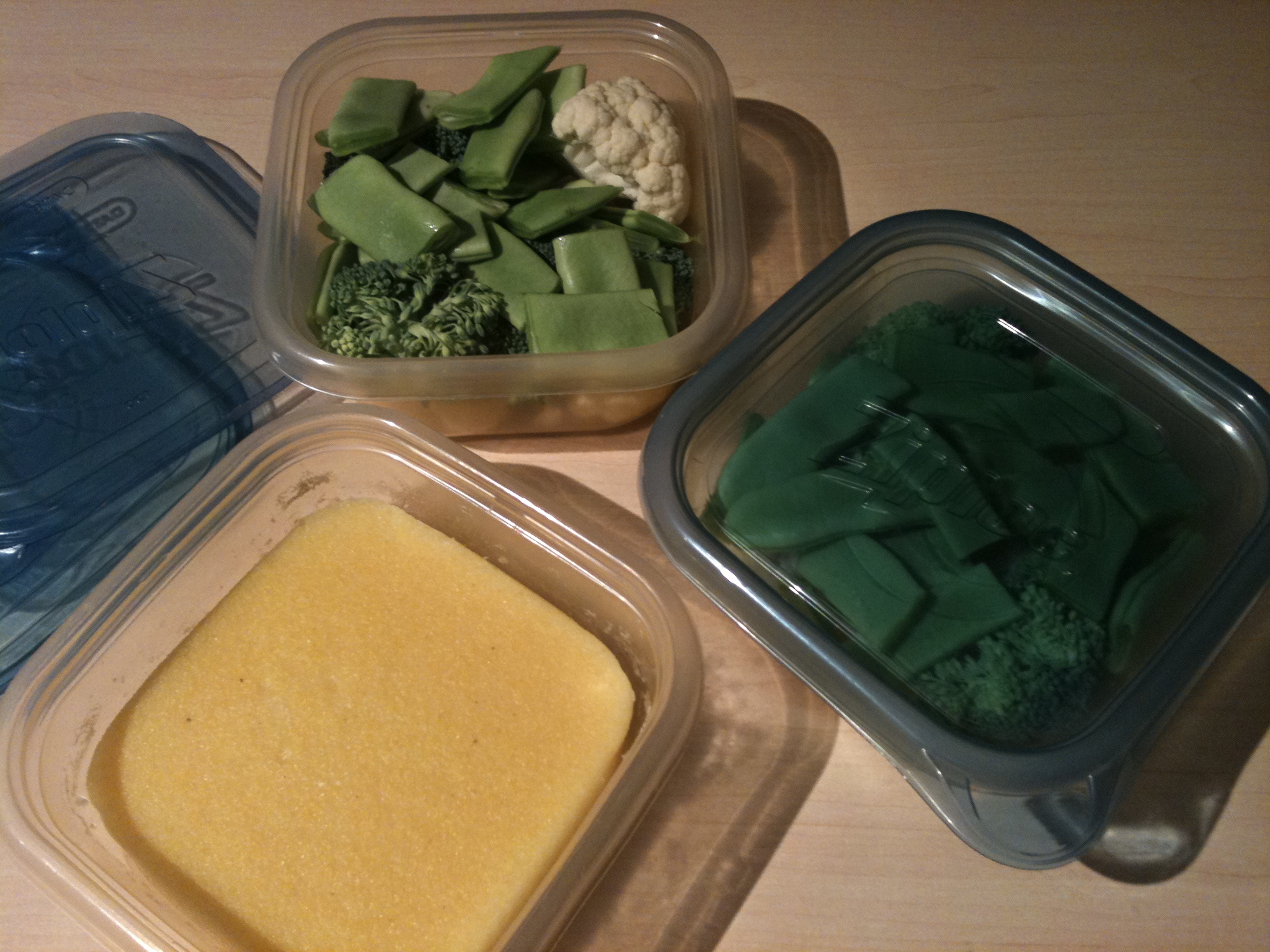
Fresh vegetables and polenta in zip locks

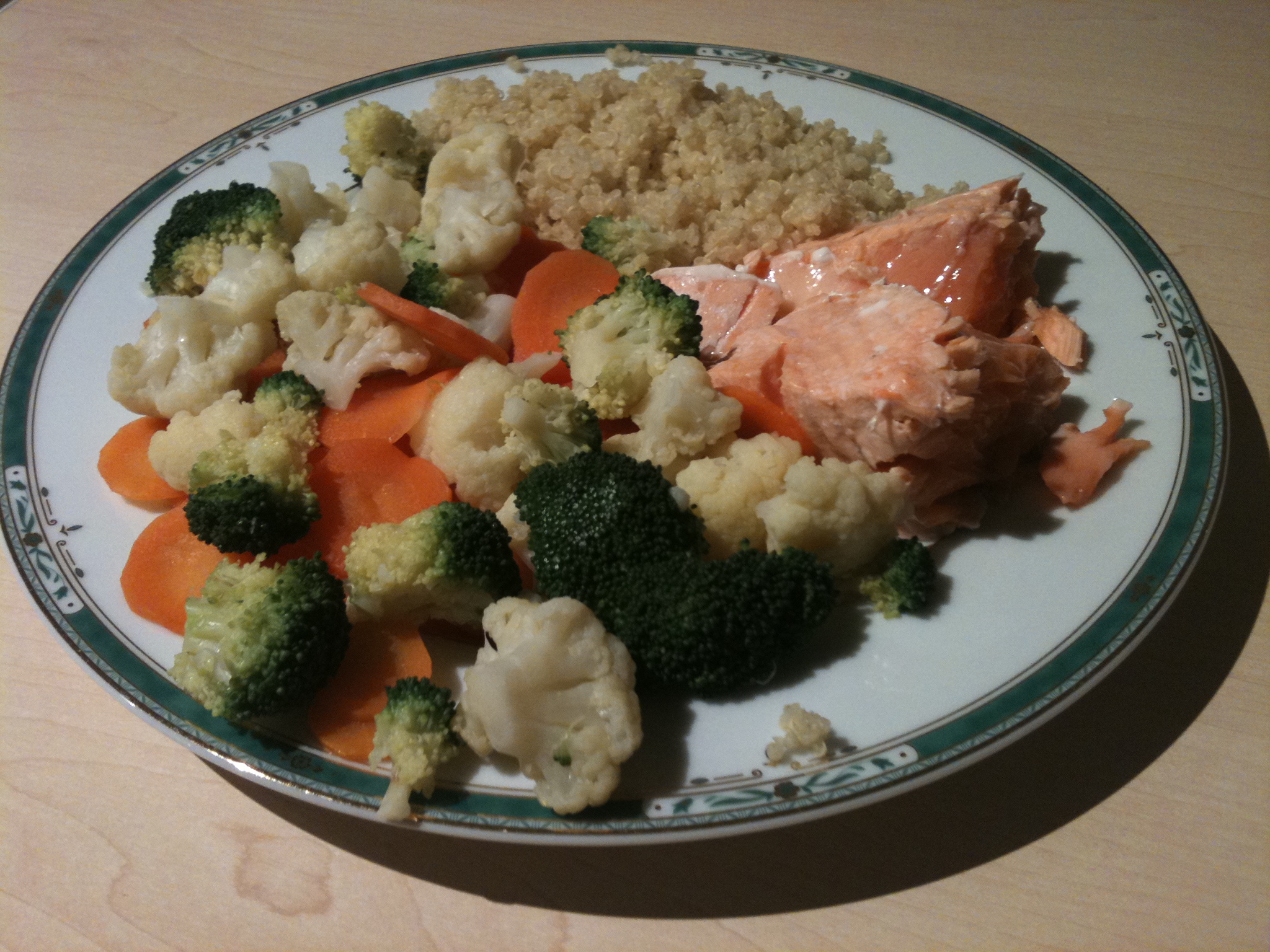
Do you remember in Part 2 that my nutritionist said that I should divide my plate into 4, with ¼ protein, ¼ carbs and ½ cooked vegetables? Well, I haven’t heard anyone say, “I don’t like vegetables” or “It’s too much of a nuisance to make vegetables”, which is surprising when you see what most people actually eat. And restaurants are certainly not into serving vegetables, not in France anyway unless you also go to the more expensive restaurants.

I like good food and will occasionally get pleasure out of spending hours in the kitchen, but it’s not something I like doing two or three times a day. Everyday cooking, in my opinion, is boring. But vegetables obviously don’t appear out of nowhere. In France, we have Picard, of course. This is a concept that doesn’t seem to exist in Oz, to Leonardo’s great disappointment because he’s very keen on whole leaf spinach. It’s a frozen food supermarket where you can buy practically anything, including unadulterated vegetables, and that’s where I got my best vegetable idea from.

They have these plastic bowl affairs, a bit bigger than a Chinese bowl, containing three or four different vegetables e.g. broccoli, cauliflower and carrots, or peas, zucchini, broccoli and cherry tomatoes, or carrots, green beans and cauliflower. It has a transparent plastic seal so you can just put it in the microwave for a few minutes and, lo and behold, there are your vegetables, all ready to eat.


Doesn’t sound very appetising? You’d be surprised how tasty they actually are. One of the problems with vegetables is that they’re often over-cooked. And a half a plate of carrots or zucchini or green beans is sort of boring. Combining a small number that you can vary at each meal and cook to perfection solves that problem. Buying them from Picard though is expensive and time-consuming at 1.40 euro for 250 grammes so I looked around to see what else I could find.

And I did! Ziploc freezer containers by Albal are the answer. These are square plastic containers with expandable lids that contain just the right amount of vegetables for one person and can be washed in the dishwasher. On Sundays at the market, I buy a range of vegetables (whatever’s available) and store them in my green bags. I bet you don’t know what they are. My mother discovered these many long years ago and I stock up on them whenever I go back to Australia because you can’t buy them in France. The funny thing is, I haven’t found any Australians who know about them!

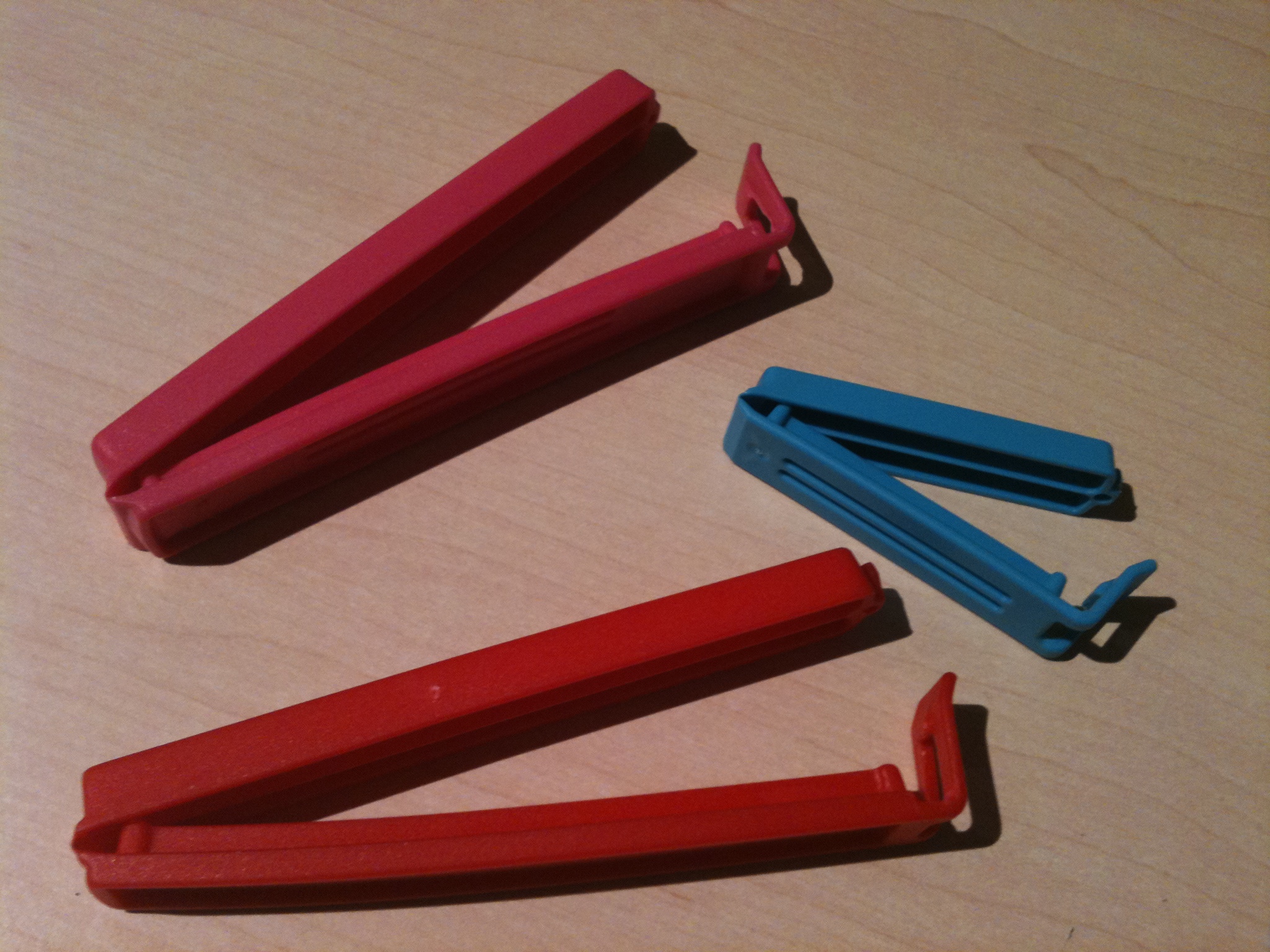
According to the blurb, they “contain natural ingredients which slow down the ageing process of fruit and vegetables by allowing them to breathe more easily. This process decreases the rate of ripening and preserves freshness, vitamins and flavour”. You use a different bag for each type of vegetable. You then expell the air by pressing on them and seal with a twist though I prefer those coloured clip-things you buy from Ikea. You can also wash out the bags after use and keep using them until they get holes in them. This is important if your stock comes from the other side of the world!

I could do one of those with and without ads, but I wouldn’t like to waste my broccoli. You know how broccoli goes brown then yellow almost as soon as you buy it? Well, you can easily keep it in a green bag for a week without it changing colour. It’s quite amazing. That way you only have to shop every 8 or 10 days and still have a store of fresh vegetables in your fridge. By the way, it takes about 4 minutes in the micro-wave to cook one container of cut-up vegetables. You have to slice carrots very thinly, zucchini into 1/2 cm slices and the cauliflower and broccoli into 2/3 cm pieces.

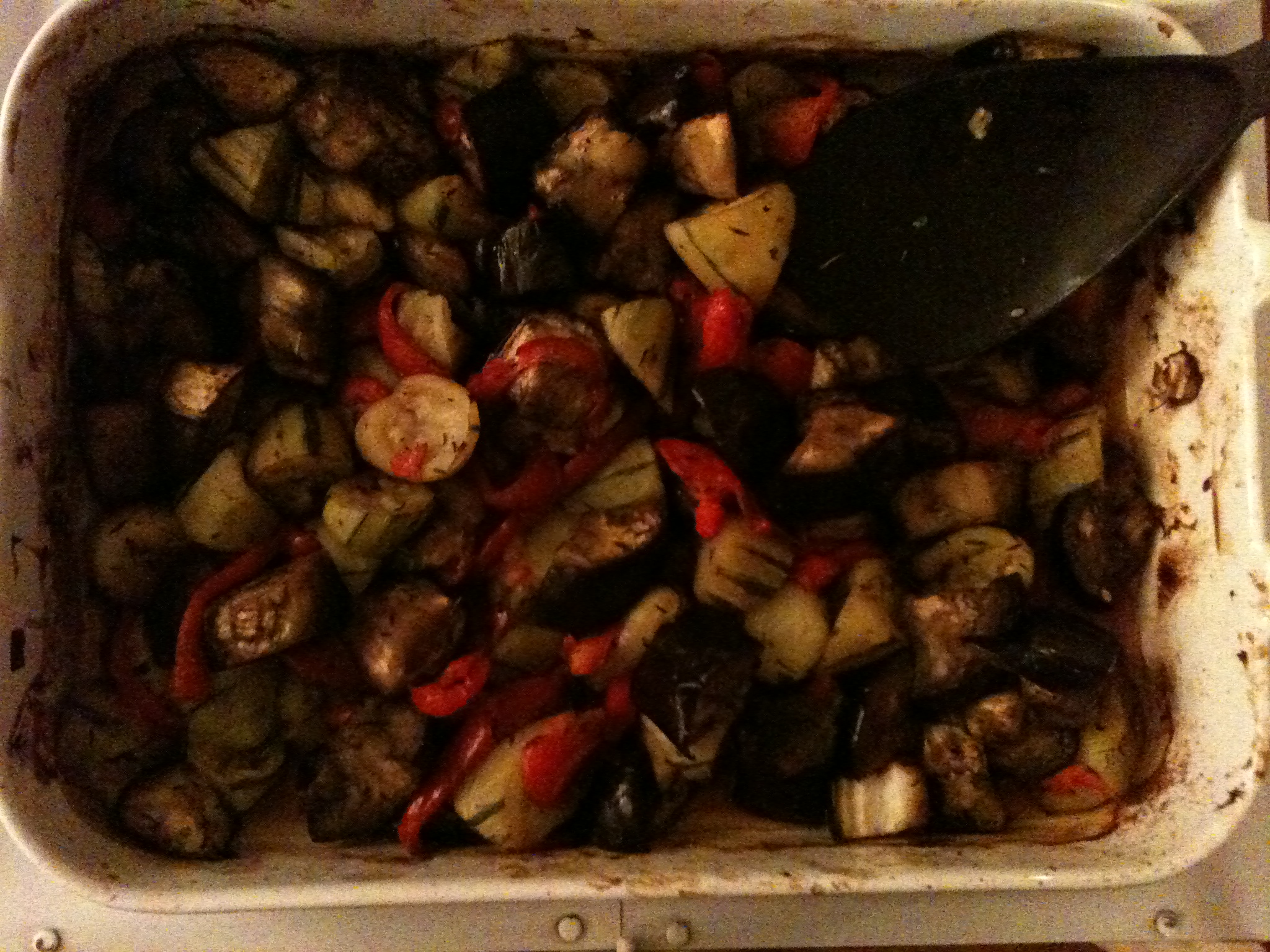
These taste better than the photo would have you believe

The other way I like cooking vegetables is in the oven. For example, I cut up a couple of eggplants, a few zucchini and and two or three capsicums into chunks (aubergines, courgettes and bell peppers for the non-Aussies), put them all in a large baking dish with a few teaspoons of olive oil and lots of thyme, then into in a 200° C oven. After half an hour, I stir well, then  put the dish back in the oven, stirring every 10 minutes (usually another 30 minutes) until the vegetables are cooked.  Delicious hot or cold. Also works for potatoes, sweet peas and real pumpkin (as opposed to the sort you find in France).

Happy vegetable cooking!

The Natural Skinnies and Us
How I lost 20 kilos after 50 – for good: Part 1
How I lost 20 kilos after 50 – for good: Part 2
How I lost 20 kilos after 50 – for good: Part 4
How I lost 20 kilos after 50 – for good: Part 5
How I lost 20 kilos after 50 – for good: Part 6

A to Z in the Life of an Aussie in France

Enjoy my A to Z and don’t forget to click on the links for more …

A – Aussie: How else could I begin? Aussies come from Oz or the Land Downunder where I was born and bred.

B – Blois: In the middle of the Loire Valley, where we’re in the process of buying a house built in 1584 which we’ll be renting out as self-catering holiday accommodation until the NEW ADVENTURE in my life starts in June 2014.

C – Cycling: Our favourite activity from April until October in France and wherever. Next trip: Paris to London once they’ve completed the bike route for the London Olympic Games.

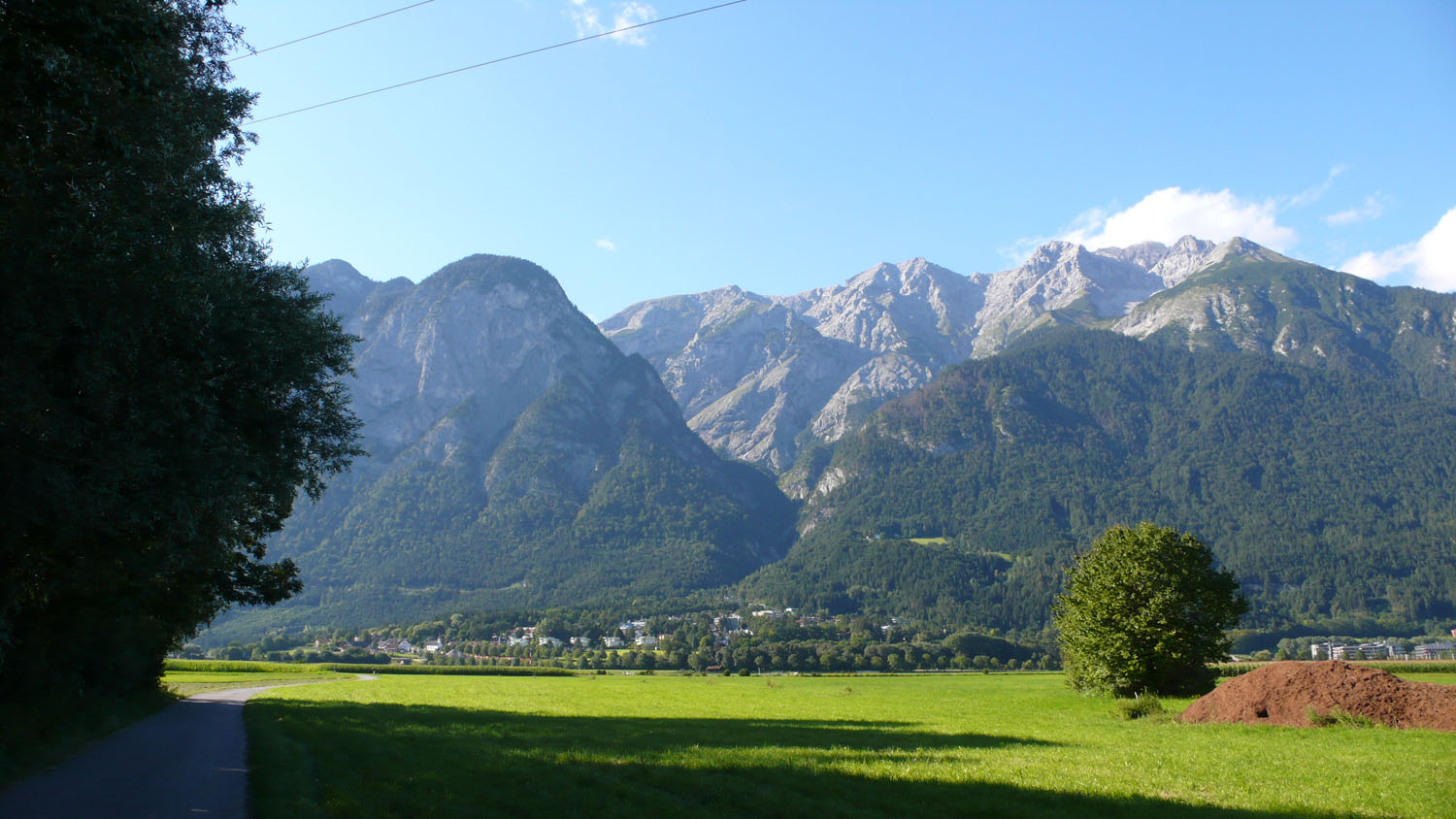
A bike path around the city of Innsbruck

D – Down Under: Not the Land, but the book by Bill Bryson. Full of clichés, but most of them are just so true! And a good read any time.

E – Early bird: Which I’m not, but it’s the only way to beat the tourists and I hate standing in line! And that’s what siestas are for.

F – Foie Gras: One of my very favourite foods and that I now know how to make.

G – Garret: Where I thought I was living when I first moved to France, even though it was just a room in a third floor apartment.

H – Home Exchange: Our new way of holidaying. First stop Madrid and lots of exchanges planned for Australia, some simultaneous, some not.

I – iPhone: Something I’m crazy about and which can certainly make life easier on holidays. Perfect for Twitter and Facebook too.

J – Jam-packed: The metro at peak hour so why not take the bus instead and be a real Parisienne?

K – Kilos: The 20 I have lost and never intend to put back on!

L – Loire Valley: Land of kings and queens and castles. Our future home. Less than 2 hours’ drive from Paris.

Chambord in the Loire Valley

M – Mushrooms: Our second favourite activity after cycling, from April to December. But next year we’re heading for Provence in January to check out the truffle market!

N – Natural skinnies: The people who don’t ever have to lose 20 kilos.

O – Oysters: Another of my favourite foods, especially on Sundays – “spéciales” with fresh homemade bread and a lovely cold bottle of Sancerre.

P – Palais Royal: My home for another two years and for the last seven. Right in the middle, with a view of fountain from my balcony, directly above Miss Bibi!

Q – Queensland: Where I was born, in the tropics, a true-blue Banana Bender!

R – Relationnel: My very French husband whom I cycle, pick mushrooms and travel with. Among other things.

S – Summer time: The very best time of the year, when it’s still light at 11 pm and the days seem to go on forever.

T – Tuileries Gardens: Where I power walk, lunch with friends and Relationnel, and watch the sun set over the Louvre.

U – University: Where I’m still teaching translation, despite the sad lack of equipment and outdated installations.

V – Vélib: Paris’ rent-a-bike system that’s immensely popular with Parisians and great fun along the Seine on Sundays when the road’s closed to traffic.

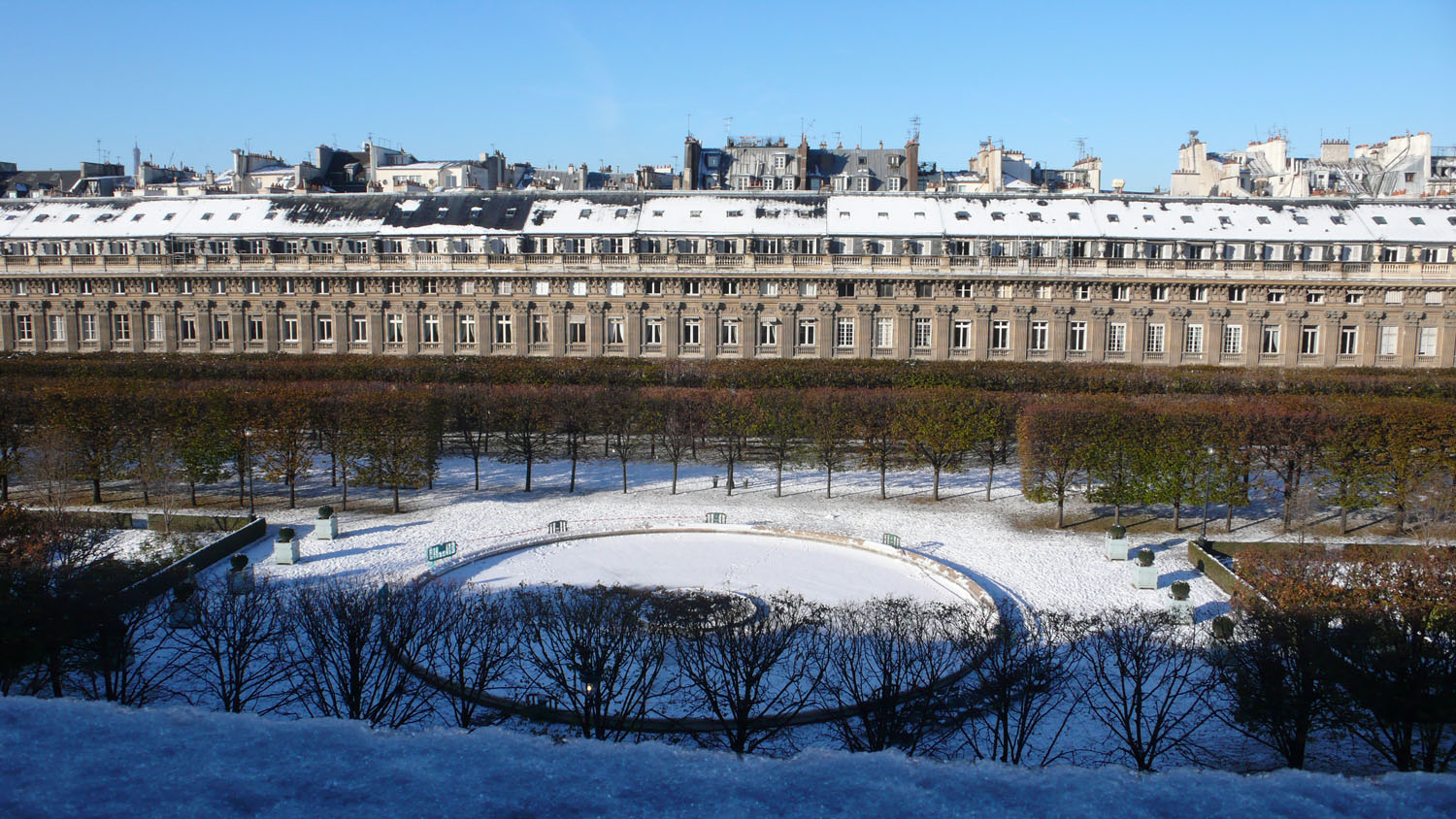
W – Wolves: To be found in the Palais Royal only when it snows.

Snow in the Palais Royal Gardens in December 2010

X – Xtraordinary: What everyone in Australia thinks my life is, what with living in a Royal Palace and speaking French all the time, but they don’t know how hard it really is!

Y – You-tube: The very best way to learn anything these days, particularly all that new technology and how to set up a blog.

Z – Ze only way most French people know how to say “th”, including Relationnel, giving them a highly recognizable accent.


An Aussie in France on My French Life

Corner of the Théâtre Royal

I’m delighted to have joined the My French Life team of contributing authors, photographers, interviewers and talented people who live all around the world.

My French Life /Ma Vie Française – online magazine & global community of French & francophiles – Connect, Share, Inspire, Aspire, Learn…

Local  Events/Réunions monthly in Paris & soon elsewhere   –  7 every month in Ville de Melbourne, Australia

Click here for my introductory post.

“Maybe it was the Latin mass that started it all. I loved chanting away in a language that wasn’t my own even if I didn’t know what I was saying. So when I started to learn French at high school, I was delighted. And it all fitted together so well, just like a puzzle. I actually liked learning verb tenses and vocabulary. I even talked to my dog in French! We had a TV programme at school about a family of four that lived on a barge on a French canal. From Townsville suburbia, it looked like paradise”. Read more

Me and My Tom Tom

How come I don’t understand what my Tom Tom’s telling me to do? I bought one a few years ago for Relationnel but I’ve hardly ever used it. Now that we live in the middle of Paris, I rarely drive because it’s mostly just as fast to take the metro or the bus inside the city and when we go into the country, Relationnel always takes the wheel. I’d much rather look at the scenary or talk to Black Cat or snooze. So I’m used to hearing the Tom Tom but not to following the  instructions.

I practically turned round in circles in the 16th arrondissement the other day trying to understand where I was supposed to be going and yesterday, when I was going to the sales at Usine Center in the north of Paris, I overshot the turnoff completely. Relationnel tells me I should be watching the screen as well. But I have to confess it doesn’t really help! Maybe it’s just a question of practice. I certainly hope so because once we start going down to Blois more often I’ll be driving to a lot more in places I don’t know, not like in Paris where I can usually navigate pretty well, even around Place de l’Etoile.

In French, they call it a “GPS” but I noticed when some friends friends came over from Australia recently, they called it a Tom Tom. I must say it’s extremely useful when we travel to other countries. I can remember some terrible arguments in Italy especially when I didn’t manage to direct us where we should, one of the main reasons being that Relationnel follows his sense of direction which doesn’t work too well when there are one-way streets. I remember one horrendous day in Pisa when the river kept getting in the way.

But now that he’s got the Tom Tom to talk back to, I don’t have to navigate any more. “Faites demi-tour dès que possible” it says imperiously (I’ve got the voice down to a pat) when we’re going in the opposite direction. “Vous êtes arrivé” (with the liaison and all) when we reach our destination. “Tournez immédiatement à gauche. Tournez à gauche. Tournez à gauche!” in desperation when you’re about to miss the turn. The trouble is I miss it anyway. The voice sounds so real that we start explaining what we’re doing! “Hang on. We need to get petrol.” or “We’re going to the supermarket first” (me) or “That couldn’t possibly be right” or “No way. I’m not taking that direction” (Relationnel).

We tried using a man’s voice but neither of us liked it. I’ll let you look for the psychology behind that.

I could try putting it in English I suppose. Maybe I would understand better.  Do you have problems with your Tom Tom?

Don’t forget to subscribe to new posts – that way you’ll get them directly on your smart phone or in your mail box! And I love to hear your comments!
Twitter Twitter Little Star

Until I started blogging last October, I didn’t even know what Twitter was. Not that I’d taken much interest. But my “how to become an expert blogger” course said it was important to sign up to as many social media as possible. So I asked Black Cat about it (she’s a communications manager after all so she should know) and started checking it out. Basically the purpose of Twitter is to write short updates on your life/job in 140 characters or less including spaces. To do so, you have to have a Twitter account and a Twitter handle. My is AussieFrance, for example.

Who reads the tweets, as they are called? Your “followers” do. Whose tweets do you read? Those that you are “following”. How do you follow people and how do they follow you? Well, after you’ve created your Twitter account, by going on www.twitter.com, you fill in your profile. The idea is to introduce yourself in a few snappy words. My profile is “Insights into the French way of life by Fraussie, an Australian living in France. Love reading, writing, travelling, wine, cycling & mushrooms.” followed by Paris, and my blog address.

I don’t know how “snappy” it is but I figure it contains most of the information people need to know about me. Now, if you go onto # Discover, you’ll get a few prompts such as “Who to follow” and “Find friends”. The “Who to follow” is based on people with similar profiles. You can click on one of the little icons and see their profile. If you think you’d like to hear what they have to say, you click “Follow”. They will be notified by email and can either follow you in turn or not. They can be individuals such as me or organisations such as the NY Times or the Guardian, in which case, you’ll see Tweets about the latest news, etc.

If they are bloggers, they will probably be tweeting about their latest posts or something they sell. Once you are following someone, you can tweet them by name, using @. For example, if I want to check whether varieties of wine take a capital letter in English e.g. merlot or Merlot, I can check with Guardian style guide by selecting them and asking the question. They’re pretty good at answering even though they have 19,000 followers! One can only assume there’s more than one person … To reply, you simply click on reply!

There are other ways of finding followers but once you get the hang of it, it’s fairly simple. Once you’re following someone, you can check out who they’re following and follow suit. Another thing you can do is “Retweet” which is similar to the Facebook “Like”. You like someone else’s tweet so you retweet it to all your followers. Using a smart phone is the most useful way of reading and sending tweets. There are lots of applications. I use the official Twitter one. I downloaded TweetDeck as well but haven’t really taken the time to see how it works. Twitter seems more intuitive.

Then there are hashtags as in #. They’re used to mark keywords or topics in a Tweet so users can categorise messages e.g. if I’m tweeting about a restaurant in Paris, I can put a hash next to and other users can then click on it to find another tweets on the same restaurant. I don’t use hashtags much for the moment, but it’s my next move!

All that to explain that the new heading on the right of the blog “What I’m Doing” actually corresponds to my Tweets. The funny website addresses are a shortened form that happens automatically when you type in an URL. You can also use Bitly, for example, to do it for you. It saves a lot of space when you have very long addresses such as http://www.aussieinfrance.com/2012/01/washing-machines-i-have-known/ shortened to http://t.co/5g1LLC53!

My latest Twitter experience is a Tweet-up organised in Paris among English speakers. It was held at O-Chateau, a wine bar in rue Jean Jacques Rousseau, just down the road from me. It was great meeting up with people whom I’d already seen on Twitter, including two Australians – Andrea from www.destinationeurope.net and Carina from http://www.carams.fr/blog/. Don’t forget to check out the other blogs and sites in the column on the right from time to time.

And I’d love you to follow me on Twitter by clicking on the Follow AussieFrance button on the top right of the page.

Follow-up post: Little Bo Tweep

Washing Machines I Have Known

I grew up in North Queensland with one of those enormous top loading agitator washing machines that could wash huge loads in record time. We had a drip dry cycle which meant that the machine stopped after the last rinse and you could remove whatever you wanted, such as a drip-dry shirt, drain it on the draining board over the huge aluminium sink next to the machine, put it on a hanger and then hang it up under the house (our house was on stilts), dripping water over the concrete floor and yourself in the process. All of which was of no importance because the water had disappeared within an hour. You didn’t even get your shoes wet because you were bare foot anyway.

This is not my mother! Photo credits : see link below


When we went on holidays to the Island, we stayed in Kooyang Flats which had a laundry down the back with a wringer machine. My sister and I were coopted into helping Mum with the washing. We loved turning the wringer and it was really quite a game, provided it didn’t last too long. Except for Mum of course. She must have hated it! Back breaking work for the woman who actually had to wash clothes for six people when she was on holiday, knowing that her huge agitator machine was sitting idle at home.

As I told you in a recent post, my experience with washing machines when I moved to France was somewhat different. Initially, I just used a laundromat. Speed Queens are used worldwide I’ve discovered. My first machine was a front loader tumble machine and I’ve never had anything else. It was in the kitchen though. I was horrified the first time I saw a washing machine next to someone’s fridge. There’s no real reason it shouldn’t be there, but it seemed strange. There are three basic reasons for this: practically no one in an apartment has a laundry room, the bathroom’s usually too small and you need a water connection.

I always made sure I washed the clothes when Leonardo was awake because he used to sit mesmerised in front of the machine the whole time. We didn’t have a TV then. He’s always been mechanically minded. I like to think that I was partly responsible for that. If you’ve ever used one of those machines in France, you’ve probably wondered why the cycles are so long. My normal 40° cycle is 1 hour 17 minutes (my current machine has an electronic display) and the 60° cycle is 2 hours 15 minutes. Well, the reason is very simple even though it took me ages to discover it. They are all connected to a cold water supply so they have to  heat up the water which obviously takes time.

When my parents used come to my place on holidays in the winter (I was living in a house in the suburbs of Paris at that time with a sort of back veranda next to the kitchen that had very handy lines that I used during the summer months), they would insist on drip drying their clothes. The only thing they didn’t seem to be able to quite comprehend was that, number one, it was cold outside which meant that it would take days for the clothes to dry, and number two, the dripping water didn’t magically disappear the way it did in North Queensland. I didn’t have any drip-dry clothes myself.

But there are other types of washing machines in France that I have experienced when on holidays in the country. They are top-loading tumble machines. Inside, there is a drum that revolves clockwise from the back to the front of the machine which means that the drum has to be tightly closed or the clothes will fall out. It comes with a unique opening/closing system where you have to match up some catches that are not easy to identify, then press on a not-always-obvious button. Of course few people really know how to manoeuvre the closing system and the opening has to be in the right place for you to do so. When the machine stops, the opening is usually at the bottom of the machine. Then as you take the clothes out, you can be absolutely sure that a baby sock will slip down the side of the drum, unbeknown to you, and cause the mechanism to seize up next time the machine is used. This is not necessarily your baby sock of course. You may just happen to be the next guest. For a long time, these machines were incomprehensibly the most popular in France. They still are to a certain extent because you can get ones that are 40 cm wide instead of the usual 60, a big boon in small bathrooms and kitchens. N’est-ce pas Leonardo?

Kooyang Holiday Units, 13 Hayles Avenue, Arcadia, Qld 4819, 07 4778 5570
Photo credit (not my mother!): http://www.yourememberthat.com/media/10392/Wringer_Washing_Machine/
 

Don’t forget to subscribe to new posts – that way you’ll get them directly on your smart phone or in your mail box! And I love to hear your comments!
How I lost 20 kilos after 50, for good – Part 2

In Italy six months after the diet began & 12 kilos lighter

Last week, in Part 1, I told you about the first nutritionist I saw when I decided to go on a diet (after listening to weight-loss hypnosis tapes first, remember),  a guilt-inducing naturally skinny Asian doctor. The second person I saw was much better – a very smiley touchy-feely doctor from Martinique, Marie-Antoinette Séjean, who is the author of two diet and nutrition books, and who, although slim, was obviously not a natural skinny. I told her about my previous experience and she said not to worry, that we’d work something out together. She told me to write down everything I ate during the next two weeks. She also reassured me that I wouldn’t have to give up anything permanently, including red meat, prunes and foie gras.


In the meantime, she suggested several things I could do to lose weight:

  1. Chinese bowl with quinoa

    Cut out all wheat-based foods for 3 weeks because wheat has a bloating effect. She suggested rice, quinoa (I’d never heard of it but now really like it), buckwheat and polenta instead. She reassured me that it was only for three weeks.

  2. Cut out raw vegetables for 3 weeks for the same reason.
  3. Divide my plate into four: ¼ protein, ¼ carbs, ½ cooked vegetables.
  4. Don’t worry about actual quantities, except for the carbs, which should correspond to the contents of a Chinese bowl (when cooked) and should be eaten at every meal.
  5.  Make sure I was getting 200 g of protein for breakfast. This is because the protein stops you getting hungry mid-morning and when you lose weight, you lose fat and not muscle. We decided on an egg, a yogurt (they come in individual 90 g pots here) and a 100 g pot of fromage blanc (this is a soft, fresh cheese, vaguely like cottage cheese but not salty, with roughly the same nutritional value and consistency as yogurt), 2 pieces of buttered Swedish bread (even though it contains some wheat, but I’d been eating that for breakfast for years and couldn’t bear the thought of giving it up) and a piece of fresh fruit or small glass of fresh orange juice, eaten AFTER the protein.
1/4 protein 1/4 carbs 1/2 cooked vegetables

It all seemed very reasonable and manageable. I had told her I wasn’t interested in losing weight quickly, but I did want it to be permanent. I asked about exercise (long-forgotten apart from cycling in the summer) but she said not to worry about it for the moment. She weighed me and took all my measurements. She explained that it’s important to look at body measurements as well and not just weight, because you stay the same weight on the scales but lose centimetres around your body. I made an appointment for two weeks’ time, just before Christmas! It was only when I got home that I realised I hadn’t mentioned the wine. So I decided to cut down to one glass at lunch and two at dinner, except for oysters on Sundays when we usually drank a bottle of sancerre between us.

Next installment in two weeks’ time! You can start writing down what you’re eating every day as well. Be honest with yourself and don’t leave anything out. Remember, the aim is not to eliminate anything, just to be really aware of what you’re eating. But you might just find that you’re cutting down anyway …
Dr Marie-Antoinette Séjean, 81 rue des Belles Feuilles, 75116 Paris. 01 44 05 16 15
Don’t forget to subscribe to new posts – that way you’ll get them directly on your smart phone or in your mail box!

I am not a real Parisienne

Le Bon Marché founded in 1838 by the Videau brothers

Today, it was proved, once and for all, that I am not a real Parisienne. Primo (as the French say), I am not a shopper. Secundo, I went into Le Bon Marché department store in the chic 7th arrondissement for the first time and had never heard of 90% of the brand names in the women’s fashion department. Tertio (that’s even more suave), I took the bus home in the wrong direction. And worse, I asked the lady next to me which direction it was going in and STILL got it wrong. I obviously didn’t realise my mistake until I looked up and saw the Montparnasse Tower. I got out, crossed the road and missed the right bus by about 1 minute. Sigh. I cheered myself up by using my Mobiletag iPhone app to see when the next bus was coming.

The elegant escalators inside Le Bon Marché

I’ve thought about the shopping thing quite a lot and have come to the conclusion that it skips a generation. My mother adored shopping and Black Cat thrives on it as well. I get bored after I’ve looked at a couple of racks of clothes and trying on two items is about my maximum for the day. I’m always hot in the shop and to try something on you have to peel off endless layers in tiny cubicles that you can hardly turn around in and that never have enough hooks. I can put up with it if I go with Relationnel because he’s much more patient than me and will bring me things to try on so I don’t have to get dressed again to go outside the cubicle and have another look. The worst are trousers because you have to take your shoes off and lace them back on again.

Sad-looking sales dummies wearing "Soldes" round their necks.

It was OK last year after I’d finally taken off my 20 kilos because I got a kick out of the fact that most of the clothes I tried on fitted me and I didn’t look like a sack of potatoes any more. But, sadly, the novelty has worn off. It’s not that I don’t care about the clothes I wear – I do, and there’s the rub. What I prefer is to see something I immediately like in the window on a dummy, preferably with a head and more or less my shape so that I can immediately imagine what it will look like on me. Then I go in, ask for my size, try it on, see that it looks perfect, pay and leave. That has occasionally happened and when I set off, I’m always convinced it will happen again and sadly disappointed when it doesn’t.


Inside garden and café terrace at Le Bon Marché

As far as department stores go – and I am not a fan – Au Bon Marché isn’t bad. They play Mozart concertos over the PA system, all the shop assistants say “hello” to you even when you’re about the bump into them, they have an exhibition called “Lieux d’amour” or Places of Love, a reading room for impatient spouses and a swish-looking Salon de Thé with a garden terrace. I couldn’t believe it when I looked out the first floor windows. It was more like an apartment building than a shop.

But I couldn’t see anything I wanted to buy, especially not the fur jackets.

Places of Love exhibition at Le Bon Marché

When I was little, my mother used to buy things “on appro”. That meant that either she went into the shop, chose a few outfits she liked, got them all packed into bags and took them home with her, or else, she rang up the owner of the shop, told her what sort of occasion she needed the outfit for, and a taxi would arrive a half an hour later at the door with several large bags. I’d then lie on her bed and watch while she tried on everything, in the comfort of her room, with no other shoppers around and no annoying sales people telling her that she looked great even if see didn’t. She could put on the shoes or hat to match and decide in her own good time what she was and wasn’t going to keep.

Now, that’s the way I really want to shop ….

Au Bon Marché, 38 rue de Sèvres, 75007 Paris, 01 45 44 15 48
 
Don’t forget to subscribe to new posts – that way you’ll get them directly on your smart phone or in your mail box!

from the Tropics to the City of Light